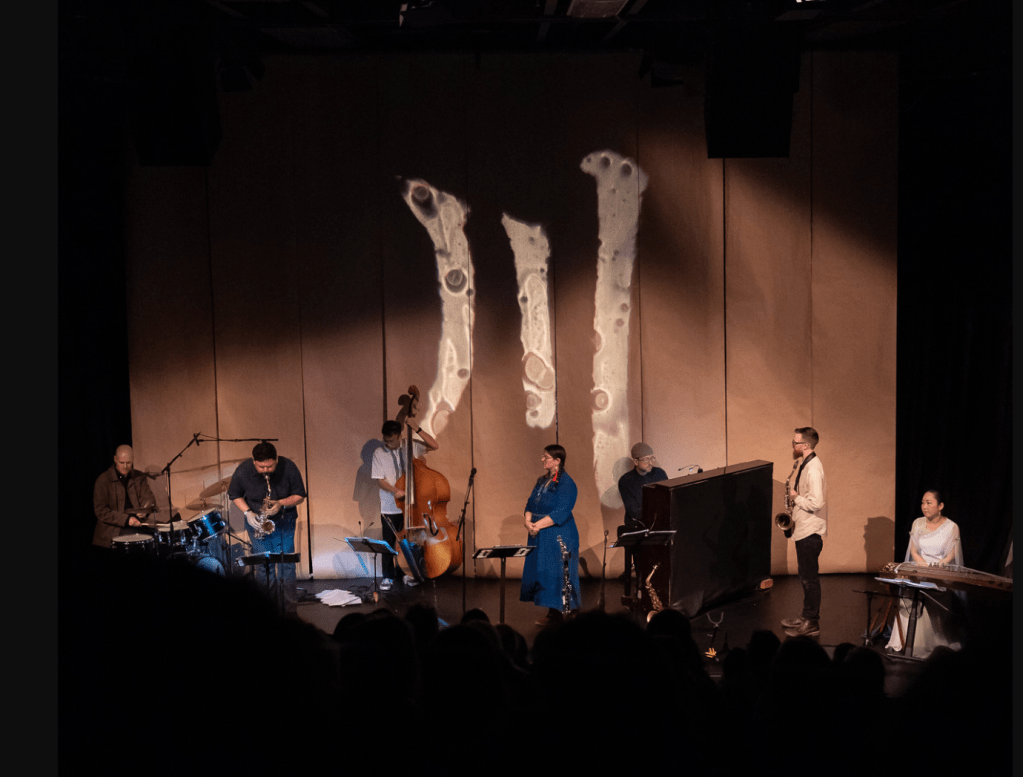
Those lucky enough to attend any of Jake Baxendale’s ‘Waypeople’ concerts last year will have anxiously awaited the release of this album and his release tour. It is music brimming with exotic textures and tasteful arrangements, but it is more besides. When I attended the concert, I sensed that I was hearing something important. It made a statement about the maturity and evolution of Aotearoa’s improvised music scene and also conveyed a message that the world needs to hear right now. This spoke to our times and cut deep.
Before the advent of written language, and for a good while after, important stories were poetised and sung. This enabled generations to memorise and pass on vital cultural knowledge. In fact, poems were sung and accompanied by musicians long after the arrival of the written word, and the practice of silent reading didn’t occur in the West until well into the Middle Ages (sometime between 900-1200 BCE), and in China, during the Song Dynasty (around 1100 CE).
To the ancients, reading was a communal activity, and so it was with the Tao Te Ching. It spread through oral transmission much like Homer’s epics. Therefore, while various texts are available today, hearing it with musical accompaniment feels right. To the Taoists, music deepened the connection with the natural world and awakened ancient memories. As the Tang Poet Li Bai wrote:
‘The monk from Shu with his green silk lute . . .
Has brought me by one touch of the strings,
The breath of pines in a thousand valleys’
‘Waypeople’ is an album that joins a journey begun over 2,500 years ago, and in doing so, it incorporates the cultural expressions and voices found on that journey. Here, the ancient wisdom of the Tao Te Ching is clothed in a contemporary jazz idiom, utilising the oldest of instruments, the human voice and accompanied by saxophones, clarinets, piano, vibraphone, trumpet, drums, flute, oboe and guzheng. The use of the guzheng is particularly relevant here, as it dates back to the time of Tao Te Ching itself.
Throughout the album, selected passages of the Tao Te Ching are sung or intoned. Some verses are urgent and imploring, others reflective–opposites are brought into balance. It is therefore entirely appropriate that the translation is that of beloved contemporary author, Ursula Le Guin. What these musicians have captured is the ebb, flow and essence of these important verses. A balance has been found between the old and new, and the ‘old master’ Lao Tzu would surely smile on this endeavour.
Our world today is like it was in the Warring States (475-221 BCE)– it is out of balance. It is obvious that humanity has again taken many wrong turns, so now is the time to retrace our steps and heed this ancient wisdom. Choose peace over war, quiet and reflection over clamour. So, attend the gig if it comes to your town, buy the album on Bandcamp, listen deeply and reflect. There is no time to lose. https://jakebaxendale.bandcamp.com/album/waypeople – or check out the teaser on YouTube
The musicians are from Wellington and Auckland. Chelsea Prastiti (voice), Jia Ling, (guzheng), Jake Baxendale (compositions, alto, tenor & baritone saxophones, clarinet & bass clarinet), Callum Passells (sopranino & alto saxophones), Daniel Hayles (piano & vibraphone), Johnny Lawrence (double bass), Cory Champion (drums & effects), Louisa Williamson (flute tk 2), Ben Hunt (trumpet tk 5), Kaito Walley (trombone tks 2 & 5), J Y Lee (flute tk 10), Millie Mannins (oboe tk 10) – btw how nice to see Roger Manins daughter in this lineup.
“No competition, no blame” – Tao Te Ching
JazzLocal32.com was rated as one of the 50 best Jazz Blogs in the world by Feedspot. The author is a professional member of the Jazz Journalists Association, a Judge in the 7VJC International Jazz Competition, and a poet & writer. Some of these posts appear on other sites with the author’s permission.
News that a live recording of Alice Coltrane’s previously unreleased 1971 Carnegie Hall concert was about to drop caused excitement in Jazz circles. 2024, designated by Impulse ‘The Year of Alice’, will see other Alice projects realised, and Shiva Loka is the opener. The quality is great, even though it doesn’t have the degree of sound separation a studio recording has, but that is no bad thing. Being live, the album captures the excitement in the moment and invites us to breathe the spiritual air surrounding Coltrane. And as you take in what is unfolding, the sheer joy of it, it is impossible not to picture the audience sitting about you in rapt absorption. This is an immersive experience and, as such, it reveals the beating heart of Spiritual jazz.
There are four tracks and from the first note played you are present in that great hall. Track one ‘Journey in Satchidananda’ is a tranquil, mesmerising piece. At first, gentle cymbals reminiscent of a temple gong, then a long vamp on bass and with drums answering; out of nowhere, harp strings, Coltrane making them sing like a choir of celestial angels. At that point, you discern voices quietly chanting, followed by flute, then saxophone. The magic has arrived and it never leaves throughout.
The second track, while also tranquil, has a questioning spirit. Arpeggiating harp, arco bass, tiny percussion instruments and then the saxophones keening. Archie Shepp and Pharoah Sanders interact conversationally, as new sonic textures are opened up. An intensity develops as the album unfolds with the tranquil opening tunes followed by incrementally wilder, ecstatic pieces.
We hear two sides of Alice Coltrane in this recording. Both are astonishing in different ways and there is never a moment of doubt about who holds the musical centre. On the first two tracks, she reigns as a peaceful goddess; on the last two, surrounded by an army of titans, she is the epicentre of an ecstatic storm. There was a time when she was primarily regarded as the keeper of John’s flame, but here, she is revealed as the unrivalled queen of Spiritual Jazz, extending his legacy and claiming her own.
The last two tracks ‘Africa’ and ‘Leo’ are compositions by John Coltrane, but it would be wrong to regard these as mere covers as they transform the material into something not heard before. For these last two numbers, Coltrane switches from harp to piano and the fiery goddess radiates her power. She is percussive, with stinging chords, and snatches of chromaticism. Here, and in the last track especially, the rawness and power of the band has been fully unleashed. Thunderous percussion and pounding bass, staccato utterances from the horns and raining down on the keys, Coltrane’s hands.
It is hardly surprising that she chose these particular musicians as they have all been associated with her or John at some point. Coltrane on harp, piano and vocals, Pharoah Sanders on saxophones and flute (at times chanting through the flute), Archie Shepp on saxophones and flute, Jimmy Garrison and Cecil McBee on bass, Ed Blackwell and Clifford Jarvis on drums, Tulsi Reynolds on tamboura, Kumar Kramer on harmonium. As you listen you marvel at the beauty and raw power. It is an album that will stay with you for a long time. It is out on Impulse too, which explains the warm embrace of the sound.
The concert was recorded the year she released ‘Journey to Satchidananda’, her fourth Impulse album and not long after another acknowledged masterpiece ‘Ptah, the El Daoud’. My first thought was, why wait so long to release such an exceptional album, but on reflection, it was a good decision. Now is the time to fully acknowledge Alice Coltrane’s legacy. Available online or from the better local retail outlets.
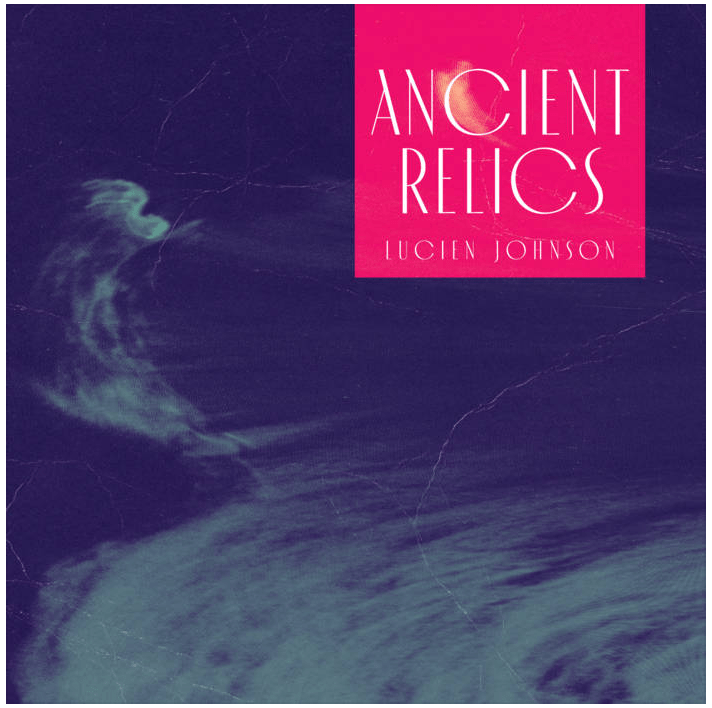
Ancient Relics ~ Lucien Johnson
As ‘The Year of Alice’ gets underway it is great to acknowledge this release by Aotearoa/New Zealand saxophonist-composer Lucien Johnson. It is fresh material that references the tradition of Astral/Spiritual Jazz and it does so with reverence while bringing a local perspective. It is natural for those born under our South Pacific skies to gaze upward; far-dreaming Pacific star-gazers discovered our islands. That sense of worlds beyond is evident throughout, as it references space clutter and objects left over from the past. It could also reference the cluttered inner orbits of our minds.
As the album begins, the unhurried pace appeals instantly, informing you that this is a place for deep listening. On the title track, ‘Ancient Relics’, Johnson’s effortless melodicism floats over texturally rich vamps reminiscent of drones while piano and harp shimmer, and merge. This opener is unmistakably Alice-like and wonderfully so. The languid measured bass lines are perfect too, anything more would have spoiled the mood, with the gentle pulse from percussion and drums, whispering, quietly through the mix.
My favourite tracks are ‘Space Junk’ and ‘Satellites’, evoking the wonders of space while reminding us of our responsibilities as galactic sojourners. Space is the theme, but closer to home than the distant stars. If ‘Ada’ refers to the protocol of distance between objects in orbit, then all of the tunes appear to reference space junk; the ever-increasing proliferation of satellites circling the Earth. A recent report pointed out that every reentry leaves debris and puts the Earth’s magnetic field at risk.
This is an exceptional group of musicians and the right ones to bring Johnson’s vision home. All are from Aotearoa/New Zealand, some receiving accolades beyond our shores. Johnson is better known in Europe where he gained a reputation playing in free-jazz ensembles and composing for theatre. Since returning he has quickly established himself as an important local recording artist, recently receiving a Jazz Tui for composition.
Jonathan Crayford on piano (also a Jazz Tui recipient), has a solid international reputation, often playing in London, New York and across Europe. Percussionist Julien Dyne is another internationally recognised artist as is harpist Natalia Lagi’itaua Mann. Rounding off the ensemble bassist Tom Callwood, and drummer Cory Champion, both respected musicians. I was especially delighted to see improvising harpist Mann in the lineup as it has been a while since I saw her perform. Her World-Jazz Rattle album ‘Pasif.Ist’ is an absolute gem.
The album is available at Rattle Records, Bandcamp
JazzLocal32.com was rated as one of the 50 best Jazz Blogs in the world by Feedspot. The author is a professional member of the Jazz Journalists Association, a Judge in the 7VJC International Jazz Competition, a contributor to All About Jazz, poet & writer. Some of these posts appear on other sites with the author’s permission.
The term inside outside has a specific meaning in Jazz theory. There are well-delineated subcategories like side-stepping or side-slipping and in the hands of jazz writers, it can simply imply the comfort with which a player moves between playing the changes and free improvisation within a tune. Then there is the where. The joy of entering a club as you descend a winding staircase and feeling your heart skip a beat as you cross the threshold. That particular inside is about belonging and it is the salt being rubbed into the wound of a deprived club-goer.
Inside is about the clubs, where the music has intensity and the physicality of the experience communicates directly; bypassing the mundane and teasing the senses one by one. The rawness brings everything straight to the heart and to the gut; the magic and the mistakes; it’s visceral, and you can feel the pulse beating against your body.
When the pandemic hit, clubs closed the world over and we wondered how we would survive. We were sound junkies suddenly deprived of our fix. We missed the warmth. We missed being able to whisper our enthusiasm to the stranger beside us as a phrase took our fancy. We missed the ‘hang’ with the musicians during breaks, and above all, we missed that moment when the band hit the pocket and an involuntary sigh escaped our lips. That blissful experience of bathing in refined sound.
Inside Outside ~ Komeda ~ Astigmatic 1965
We were lucky in New Zealand as we eradicated the first round of the virus swiftly and thereafter we lived in splendid isolation for much longer than most. It was a time of normal life, sans travel or travellers. It was a time when the clubs remained open and when local music was the only and best game in town. That freedom lasted for the best part of two years and with only minor interruptions. Overseas, the death knell of iconic clubs was grimly sounding out.
Then Omicron sneaked past the watchtower and took hold in the shadows. We paused, adjusted and looked outwards again. We are open to the world but the virus is the snake in the grass. It is back to normal and not back to normal because after the pandemic comes ‘the great forgetting’ as the young resume their lost lives and leave behind the silent ones. The cohort of the risk-averse, the older ones who are not yet ready to enter a subterranean venue. I am one of those.
The older you are the more likely you are to be immune-compromised (or have a partner who is). Having experienced live jazz since my youth I am doing it tough and I am not alone. For a while, I thought that I was an outlier, but one by one, friends have outed themselves. Jazz radio DJs, record producers, journalists and musicians; the older ones. As if admitting to a crime, they drop their voices and whisper that they haven’t been inside a jazz club for ages. Perhaps it’s the fear of being mocked by the young and brave?
The thing about music is that it flows like water, seeping through the cracks and finding new levels. It is the law of physics that sound will find a willing ear so all is never lost. And although the clubs are temporarily off-limits the outside venues beckon. Open-air festivals are being planned and there are numerous bars with outside seating. Places where a person can bask in the winter sun and idle away an afternoon. And as one door closes another opens so we follow new music as it pops up online. Find time to think and to write about music, disappearing behind noise-cancelling headphones; listening to the new with fresh ears and to the old as if hearing for the first time. Pushing hard against the listening boundaries. Listening deeper and hearing more.
Inside
Despite missing live music, my life is music rich. Review copies pour into my inbox daily and live-streamed concerts vie for my attention. I scan Bandcamp for the edgier improvised hybrid offerings, conduct interviews with musicians and hang with them over lazy lunches, I write reviews, judge musical competitions and involve myself in musicians’ causes. Biding my time until it’s safe enough to head down a staircase again.
Footnote: Staying away from the upcoming CJC Wax///Wane concert with Lucien Johnson, Jonathan Crayford, Tom Callwood and Cory Champion will sorely test my resolve. I truly love that album and Lucian’s work. It’s my sort of thing and the musicians are quite extraordinary.
JazzLocal32.com is rated as one of the 50 best Jazz Blogs in the world by Feedspot. The author is a professional member of the Jazz Journalists Association, poet & writer.Some of these posts appear on related sites.
Devils Gate Outfit was recorded live at Wellington’s Meow two months ago. The album is bursting with restless spirits, and I am not surprised that such a powerful genie was let out of the bottle so quickly. There are multitudes of spirits hovering over the recording, fragmentary echoes of Ornette and Miles, but the predominant voices are those which haunt the ragged windy Wellington coastline. All are paid their due, but the album is unconfined by the many streams that feed it. It is above all a succinct commentary on the breadth of improvised music that is thriving in Aotearoa right now.
The album is out on Kiwi Jahzz, a natural home for adventurous and original free music. And it captures a particular night at Meow where the band holds a residency. The playing is great, and so is the overarching vibe. Delivering great performances without defaulting to any ‘look at me’ moments. It is a band uncoupled from tired old formulas and thus able to move as freely as it desires. Sometimes this results in tantalisingly fleeting glimpses of the past, then just as suddenly you are plunged into the forward-looking improvised groove music favoured by younger audiences.
The album is loosely programmatic but does not follow a linear storyline. It establishes a theme, then drops kaleidoscopic images. letting the music paint evocative sound pictures. There is a wealth of musicianship evident here as well. I am familiar with most of the players (apart from Steve Roche and David Donaldson). Although new to me, I am delighted to hear both for the first time. It was also good to hear Cory Champion expanding his percussion role to Vibes.
I am picking that drummer/composer Anthony Donaldson is the nominal leader in this outfit and around him are a truly formidable crew. The interactions between them are impressive as they navigate that fine line between spontaneity and cohesion. The slow-burning bluesy Wood Drift is the closest thing to straight ahead and it is a delightfully spacious piece of music – it could (and should) find cut-through with any Jazz taste. And I can never hear enough of Blair Latham’s playing. On Wood Drift, his woody sonority and captivating lines caress the melody against a gentle background of Daniel Beban’s understated guitar and Callwood’s bass, setting up Champion, Roache and Beban for solos, such a languid and appealing groove tune.
Contrasting nicely, The Portal to Red Rocks is a burner and a showcase for Latham on saxophone and the very capable Roche. Here the bass and drums provide propulsive energy as they navigate the shifting rhythms and washes of electronic effects. If I had to pick a tune that best exemplifies the album it would be the opener Storm of the Century. Anthony Donaldson owns this track and it is his pulse that sets the others free. I will be surprised if this isn’t a contender for Tui Jazz Album of the year.
The Devils Gate Outfit: Anthony Donaldson (drums), Tom Callwood (double bass), Steve Roche (cornet, baritone horn, Cassio), Blair Latham (saxophones, bass clarinet, David Donaldson (bass banjo, percussion), Daniel Beban (guitar, electronics), Cory Champion (vibes, percussion, synthesizer) It was released 19 October 2021, on Kiwi Jahzz and is available digitally on Bandcamp: kiwijahzz.bandcamp.com
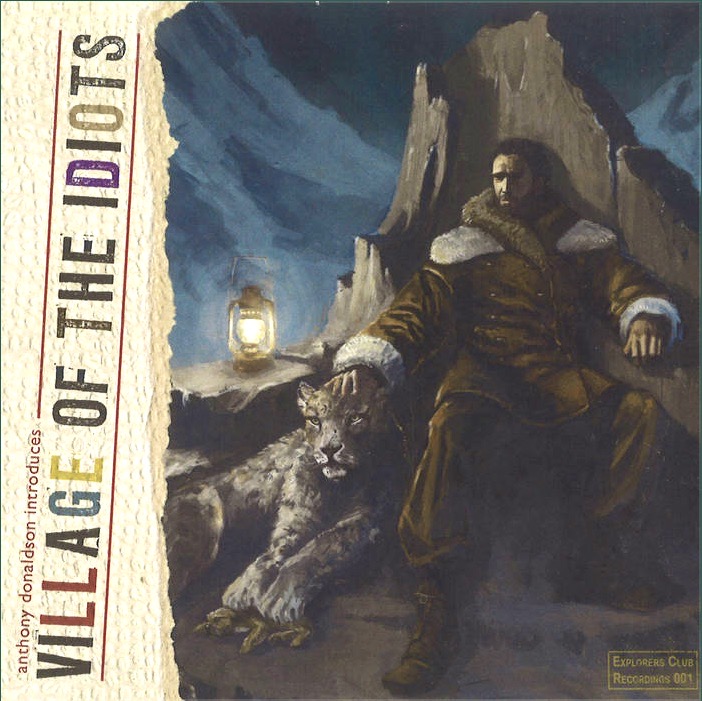
School of Hard Nocks ~ by Village of The Idiots
This amazing recording is extracted from a number of live shows organised by the visionary drummer Anthony Donaldson. Among the shows referenced are ‘Seven Samurai’ ‘Oils of Ulan’ Po Face’ and others. The overarching implied theme is the Samurai film genre. This is an album where open conversations occur between two art forms. It belongs to an interesting subgenre of improvised music and in my view an avenue worthy of continued exploration. You encounter it convincing in Zorn’s Filmworks. These were reimagined soundtracks, or more accurately, soundtracks to reimagined movies. Music aligned to the essence and untethered from any strict narrative form. Auckland/Canadian guitarist Keith Price did just this with his reimagined The Good the Bad and the Ugly score. Jazz has always been associated with the cinema, but extending the brief and pushing into clearer air is where the gold lies.
The album is painted on a vast canvas and has a cast that must rival that of a Spaghetti Western (or Carla Bley/Paul Haines Escalator Over the Hill). Thirty-one musicians are credited here and a significant number of them are high profile improvisers. Throughout, they come and go, as larger and smaller ensembles change places, with some artists like Jonathan Crayford appearing on a single track. The mood can shift at lightning speed, as a tune ends abruptly and a fresh exploration emerges. Another aspect that can’t be overlooked is the underlying humour. Music like this is not pitched at the serious-faced, dinner suit/ball gown-clad denizens of dress circles (although I’d love to see that attempted). It is anarchic and plays with imagery. The open-eared will quickly grasp this point and every piece of mind-fuckery will bring them joy.
There are so many good performances and so many great musicians here that it is beyond my scope to enumerate them all. When you see names like Anthony Donaldson, Jeff Henderson, Bridget Kelly, Daniel Beban, John Bell, Patrick Bleakley, Lucien Johnson, Jonathan Crayford, Chris O’Connor, Steve Cournane, Riki Gooch, Richard Nunns and Tom Callwod on a setlist, you check it out immediately. The way the units are configured creates a unique set of textures and there can be no doubt that this is a drummers band. Donaldson’s drumming leaves a powerful impression, but he leaves plenty of space for other percussionists. A glance at the lineup tells that story best, as I counted seventeen drummers and percussionists on the album. As they come and go, they never get in each other’s way and this is a tribute to the arranging. Some of course are doubling on percussion instruments (e.g. Noel Clayton plays guitar, bass banjo and punching bag, while Maree Thom plays electric bass, upright bass, bass drum and accordion). And to complete the illusion of filmic authenticity, Donaldson adds foley to his drum/percussion roles.
For a full listing of the musicians involved check out Donaldson’s site. Better yet buy immediately. The album was digitally released on Bandcamp in early November 2021 and it can be located at anthonydonaldson.bandcamp.com
JazzLocal32.com is rated as one of the 50 best Jazz Blogs in the world by Feedspot. The author is a professional member of the Jazz Journalists Association, poet & writer.Some of these posts appear on related sites.
The pandemic hasn’t stopped the music, and while it is true that the clubs, bars and concert halls are placed out of reach for many, music has the qualities of water. It will flow through the cracks until it has found its own level. The recent Kiwi lockdown was mercifully short, and in random and serendipitous ways new music found me. As always, I was happy when it did. Below are three very different albums – check them out.
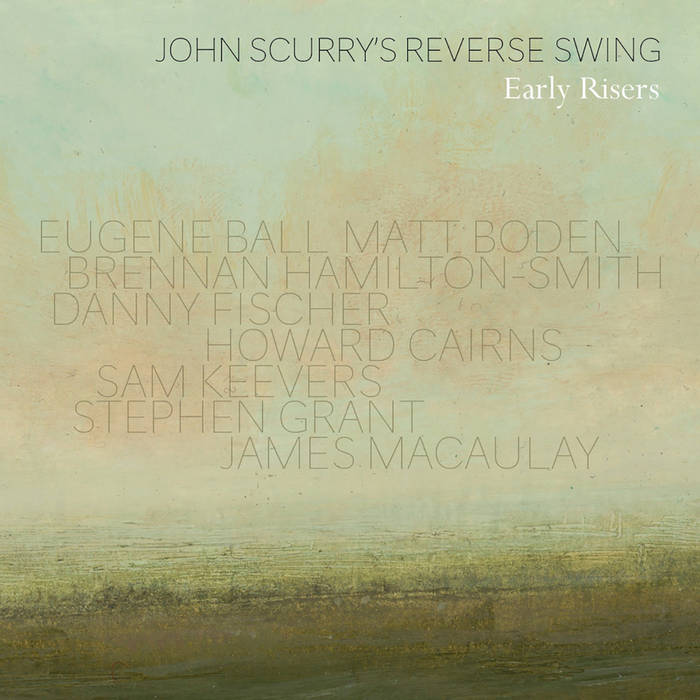
Early Risers ~ John Scurry’s Reverse Swing
During our recent lockdown I received an album in the post from Lionsharecords. The album, ‘Early Risers’ is John Scurry’s Reverse Swing ensemble, his second such release. Scurry’s earlier Reverse Swing album ‘Post Matinee’ was showered with praise, with one American reviewer describing it as ‘Ellingtonian’. The 2020 album has 19 original tunes spread over two CD’s and we are invited to view each volume as distinct but complementary.
Having recently travelled to New Orleans, I detected those influences in this band immediately. When you spend any time in NOLA, you realise that that city’s influences are very broad indeed. Everything from swing to soulful gator-funk, from Sun Ra to the various free jazz offshoots. It is a living, breathing up to the minute music and one with its own flavour. So it is with ‘Early Risers’, and with this album there are also a multiplicity of rich local influences.
I loved the album for its warmth and approachability. It is instantly engaging, but this is not a nostalgic romp. There is real depth here and many treasures are revealed to the deep listener. The interplay between the musicians is simply stunning and their time feel beyond caveat. Track one on the first album is my favourite and while comparisons can be odious, this gave me the same feeling as I had when first hearing the Cy Touff Octet & Quintet album. Perhaps there is even a hint of ‘West Coast’ as well – Sheldon ?
There are many moods and whether a gentle ballad or a hotter number, all contribute uniquely to the whole. Underpinning each number are the quiet urgings of leader John Scurry’s guitar. We hear swing style guitar infrequently these days and more’s the pity. The tunes here were all penned by Scurry and he is also the co-arranger and producer. He has been a popular feature of the Australian scene for many years and I wonder what took him so long to launch this particular project. to listen go to Early Risers Lionsharecords
The other arranger (and horn arranger) is trumpeter Eugene Ball. Ball is another veteran of the Melbourne scene and a Bell award winner. I associate him with the moderism of Andrea Keller. Here you are overwhelmed by the richness of his sound. His tone production is often reminiscent of the latter-day swing trumpeters like Harry Sweets’ Edison and Henry ‘Red’ Alan.
I have also encountered James McCauley, and again I associate him with Keller. He is perfect in these very different rolls. The band members here are John Scurry (guitar, arrangements), Eugene Ball (trumpet, arrangements), Brennan Hamilton-Smith (clarinet), Stephen Grant (alto sax), Matt Boden (piano) Howard Cairns (bass), Danny Fischer (drums), + Sam Keevers (piano). The textures, tunes and uncanny interplay render this a terrific album. It may have its roots in traditional swing, but I defy anyone, whatever their taste in jazz, not to love this. It is released on Julien Wilson’s lionsharecords.com and on bandcamp. All art-work by John Scurry.
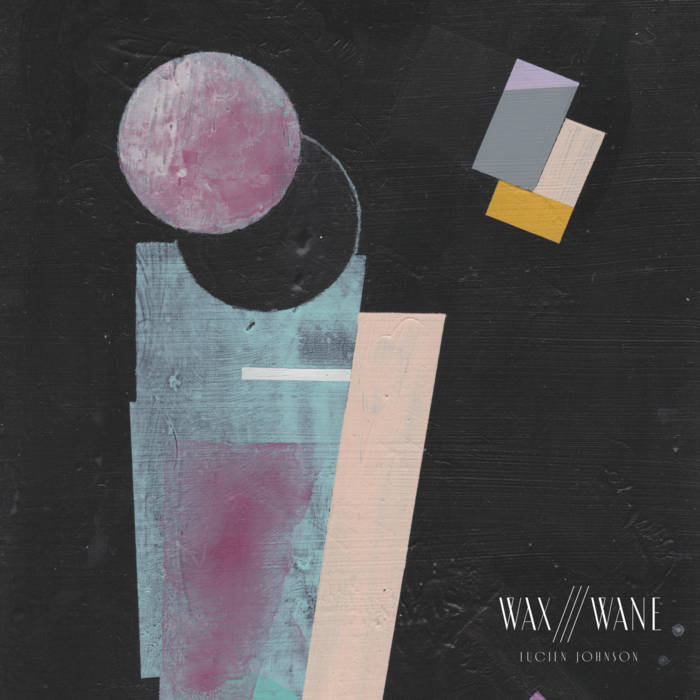
Wax///Wane ~ Lucien Johnson
Wax///Wane was released over summer and I’ve just caught up with it. I am always keen to check out gigs or albums featuring Lucien Johnson, so I downloaded it on Bandcamp. There was no information about the band or the recording on the album page, but my ears began to fill in the gaps. John Bell had to be the vibes player, surely it was him (an online search confirmed that)? Few south of the equator punch out modal grooves quite as convincingly as Bell. Of the remaining four musicians, two were known to me and two not. Michelle Velvin was on harp, Tom Callwood on upright bass, Cory Champion on drums and Riki Piripi on percussion (listed under the undividual tks).
The album features six compositions and each of these has an evanescent quality. They hint at places we think we might know, but can’t quite remember. Blue Rain, Forest Rendezvous, and Rubicon appear as if in a dream and as with the missing liner notes, we are encouraged to fill in the gaps with our imagination.
Blue Rain
Johnson has chosen his bandmates well. Bell and Callwood are genre defying and have open-ears, and as with Johnson are well immersed in the freer regions of improvised music. I have seen Cory Champion several times, but never heard him in this context; very impressive. Adding a harp player and percussionist added texture in finely hued layers, and this gave the album that delightful Alice Coltrane feel. It’s great to see the harp revived as an improvisers instrument and especially with the vibes. They could get in each others way, but in skilled hands this is avoided and a shimmering pulse arises to good effect.
Johnson is a musician we most often associate with the Wellington scene, but these days he is perhaps better termed an international musician. Like all modern saxophonists, there is a foundation of Coltrane in his sound. There is also an airy freedom. Here, he has curated a groove fest. The sort of grooves that Bobby Hutcherson, Alice and John Coltrane, Julian Priester and others explored. It is what might be loosely termed spiritual Jazz. Music defying the mundane, an invitation to a better place where gravity is abandoned. In times like this we need music, and actually, we need more music like this. Music that stimulates the imagination and doesn’t preach. The playing here is superb but don’t over think the experience, sink into it and enjoy the trip. The cover-art is by Julien Dyne. Available on Bandcamp Lucienjohnson.bandcamp.com
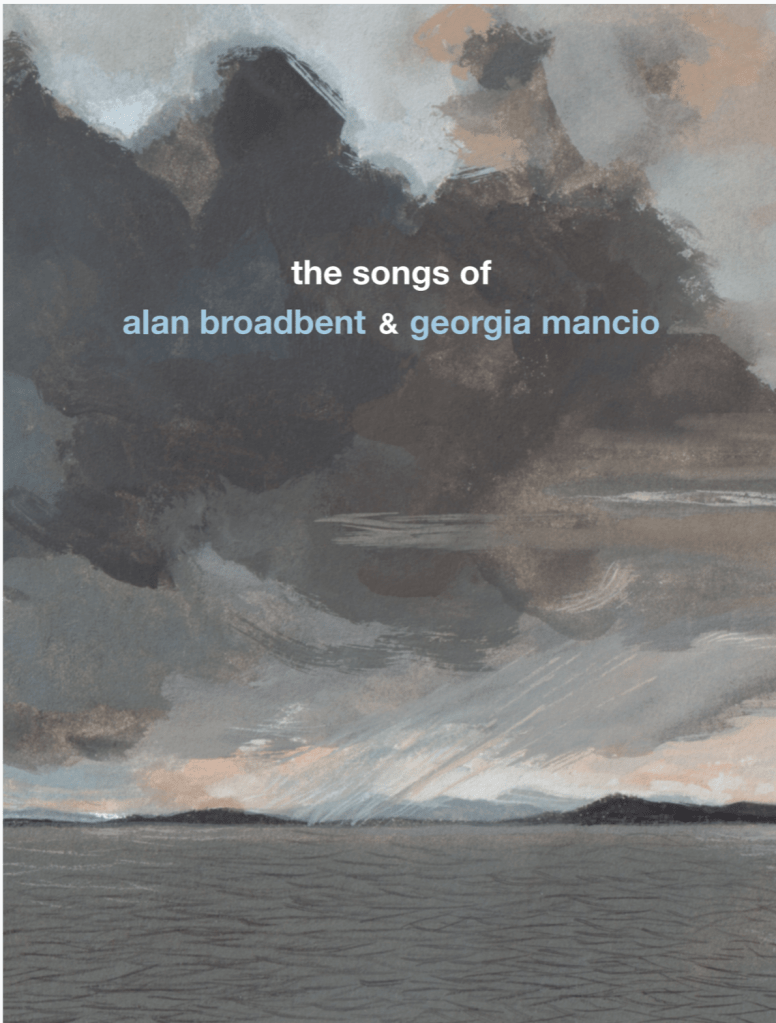
Alan Broadbent/Georgia Mancio ~ ‘Quiet is the Star’
Alan Broadbent has an unerring ear for melody and this is in part, why he makes such a sensitive accompanist. While his albums can really swing, they also take direct aim at the heart. An astonishing technical mastery is evident but it is never allowed to obscure the essence of a tune. To put it more simply, he connects us to real emotions and to human life with its manifest joys and frailties. There are innumerable facets to his long and formidable career and none should be overlooked.
Most recently, he released ‘Trio in Motion’ his second album with bassist Harvie S and drummer Billie Mintz. And if you haven’t done so before now, check out his discography, a body of work that astounds; critically acclaimed albums, two Grammys and so it goes. The man is a legend.
‘Quiet is the Star’ is the second album from the Broadbent/Mancio duo. Their last album’ Songbook’ aired in 2017 and it was pure delight; this new release is a welcome follow up. Georgia Mancio is a London-based award-winning vocalist and lyricist and the pairing has reaped dividends. They have performed together since 2013 and toured Europe and elsewhere to acclaim.
Mancio has a lovely voice and she uses it to great effect, her emphasis though is on breathing life into her lyrics. The stories she reveals are intimate and she invites the listener to share in these experiences. While all good duos are conversational, here we are invited in on the conversation and it is a privilege. Released by Roomspin Records 27 March. Cover artwork Simon Manfield.
JazzLocal32.com was rated as one of the 50 best Jazz Blogs in the world by Feedspot. The author is a professional member of the Jazz Journalists Association.some of these posts also appear in other music sites. When purchasing, please support the Bandcamp platform whenever possible. Respect musicians rights.
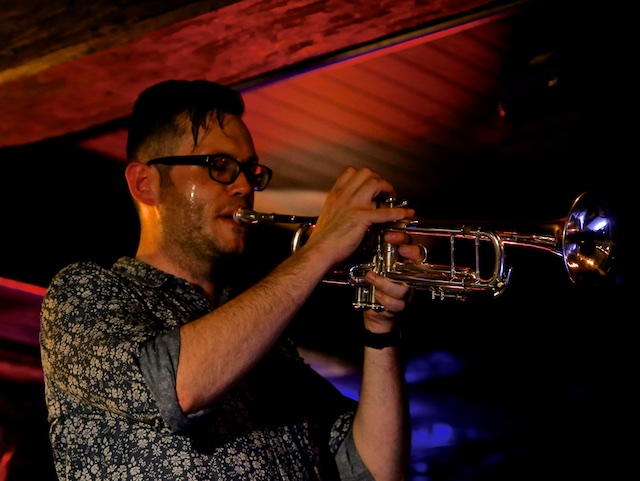
In spite of living at the other end of the Island, Lex French is a regular fixture at the CJC. It is hardly surprising since his popularity with Jazz audiences is ever-growing. There are not many trumpeters of French’s stature in New Zealand and it is our good fortune that he remains. He obtained his Masters from McGill University in Montreal, a university with a strong focus on brass. A university which had an ongoing association with the UK-based Canadian trumpeter Kenny Wheeler while he was among us. I mention Wheeler, because as I walked down the stairs to the club to set up my gear, I heard the unmistakable opening phrase from ‘Smatter’ coming out of the darkness. Just the opening phrase and then silence.It was so Wheeler-like, that I assumed someone was setting up a Wheeler album on the club sound system. As my eyes accustomed to the low light I saw French standing alone – repeating the phrase. French is not a one-trick pony; he is as modern as tomorrow, but at other times, old school respectful. He can punch out high notes or swing hard bop like a Blue Note artist back in the day. This is not a musician to pass up on.
His current working band travelled from Wellington with him, all of them known to Auckland audiences; Matt Steele on piano, Johnny Lawrence on bass and Cory Champion on drums. The set list was mainly French compositions, but in the middle of each set, a standard or two. The standards were well-chosen and contrasted the originals nicely. The best known was Benny Golson’s ‘Stablemates’, a perennial favourite, Kenny Wheeler’s complex tune ‘Smatter’ and ‘Nostalgia’ by Mingus.I particularly liked French’s compositions ‘Kasid’ from the first set. There were many reasons to like this; the musicians innovative explorations of the theme, the evocative middle-eastern mode underpinning it, and the fact that it referenced the wonderful Iraqi poet Abdulkareen Kasid. An achingly beautiful melody tinged through with bittersweet sadness, establishing itself delicately over a quietly incessant bass motif. When Steele came in, his opening chords were Oud like – giving the impression of soft strings jangling sweetly in the night air. I listen to a lot of middle-eastern improvised music and this performance stands beside the best of those. In the background, the drums tap tapped (like stones tumbling in a stream, and every so often swooshes).The poet Abdulkareem Kasid is new to me (and I have a huge collection of poetry). To discover a poet like this is exciting and I thank Lex French for this. What could be better than to experience a night of interesting music, and at the end, find a poet? I finish this with some words from that poet – listen to the piece as you read the lines – I did.
“In my hands / From past and future / I’ll grab two stones / And run with them / Even in the lightest / breeze I’ll fly / Summon a wind, to come / And wipe out every trace / And I’ll sit like an orphan / By the roadside mourning / My two stones”
Abdulkareem Kasid
Lex French Quartet: Lex French (trumpet, compositions), Matt Steele (Piano), Johnny Lawrence (bass), Cory Champion (drums). CJC (Creative Jazz Club), Britomart 1885, Auckland 23rd March 2016.
The Mark Donlon trio gig gave us two leaders for the price of one. Accompanying Donlon was the highly rated LA bass player Tom Warrington. Jazz audiences in New Zealand are very familiar with Warrington as he toured here on many occasions. Donlon, originally from the UK is now living in Wellington and working as the Jazz Studies program leader at the New Zealand School of Music.
Donlon is a Post-bop pianist with a grab-bag of familiar standards and a number of original compositions at his fingertips. He is also adept at writing ‘contrafacts’; new tunes written over the changes of existing standards. While such practices are strongly associated with Parker or with innovative Post-bop improvisers, the practice actually dates from to 16th century. Some of the standards were reharmonised while he played others in familiar ways. It was a nice selection; including the song book standards ‘If I were a bell’ (Frank Loesser), ‘Darn that dream’ (Jimmy Van Heusen), ‘How deep is the ocean’ (Irving Berlin), ‘Quiet nights & quiet stars’ ( Tom Jobim) and Jazz standards like ‘Stolen Moments’ (Oliver Nelson) and ‘Nutty’ (Thelonious Monk). When I hear songbook standards by Berlin like’ How deep is the ocean’ or the equally engaging ‘Lets face the music and dance’ I am awe-struck. They are perennial in the fullest sense of the word and I hope that their star never wanes.I have been a Tom Warrington fan for many years and I have most of the Jazz Compass albums where he features to such great effect. He is a bass player who speaks with incredible forthrightness, but never undermining the others on the date. On ‘Corduroy Road’, a fabulous album that I play often, the ‘others’ I refer to are Larry Koonse and Joe Labarbera. These guys can do no wrong; their version of ‘You Must believe in Spring’ (Bergman/Bergman/Legrand) is a small masterpiece. We are lucky to have such a strong association with Warrington and Rodger Fox is the one to thank for that. I last saw him during the ‘Cow Bop’ tour, where his band shared the stage with guitarist Bruce Forman (and the Cow boppers). A friendly modest man of enormous talents and good company. When I spoke to him last Wednesday I learned that Larry Koonse (and perhaps Joe Lababera) will be touring New Zealand soon. Koonse has suffered health problems of late but he is evidently recovering well. Warrington’s recording credits are too numerous to mention. Tom is now domiciled in this country which is very good news.Cory Champion although Wellington based is no stranger to the CJC. He was there earlier in the year with Matt Steele’s ‘Master Brewers’. He writes and plays well and it is likely that we will see him in the drum chair often.
It is always good when proved right and in the case of Matt Steele I certainly was. This was a superb gig and it confirmed the promise that I saw in Steele as a first year student. The ‘Master Brewers’ musicians are exactly what Steele needed at this stage in his development and he is clearly what they needed. There is a cohesion about this group and it extends beyond the music. This is a band of friends and because they spend a significant amount of time together, they are able to dive deeper into the material on hand. Most of the band is writing and being familiar with each others styles, they contribute compositions that serve the project well. Younger musicians often favour shorter term projects but I hope this unit continues for a while. When I last saw Steele perform it was at his honours recital and he was very much in charge. Now as leader, the reins are subtly loosened and the music benefits from this. With experience, leaders can confidently guide without over playing the role. That only works when the interactions and cues become second nature. In their best moments the ‘Master Brewers’ acted as a single entity; everyone maximising their options while retaining an awareness of the others.I immediately noticed that Steele’s voicings were darker. His interesting harmonic approach an outcome of an ever-growing musical maturity. There are certain aspects to Steele’s playing that stand out and during the gig these crystallised in my mind. These attributes are why I follow his career so attentively. He is self-effacing by nature, but that masks a ruthless striving for betterment. Ever reaching further, listening deeply, critically and taking risks. For all that he able to relax into the moment and as he grows musically this is more evident. The most difficult journey for any musician is finding a distinctive style and owning it. Steele is well on the way.Thanks to Roger Manins programming, Auckland audiences get to see good Wellington bands every few months. In this case the audience were unfamiliar with the musicians (apart from Steele), but what a treat this gig was. The band won us over quickly and by the time the second set began they were cooking. In spite of the modernistic approach and complex time signatures these guys have a definite pulse. They swing like crazy.Ashton Sellars had suffered a mishap with his guitar and he had to borrow one at short notice for the gig. He told me that it felt very different to his own older instrument, but no one would have guessed it by the way he was playing. Under his fingers the instrument sang. He favours longer fluid lines (with a hint of Bauer/Tristano), but his is very much a modern sound. His improvisations are thoughtful and they invite you along. While their music is often complex there is no ballast of needless weighty intellectualism. Piano and guitar keeping nicely apart unless comping in support. Both understanding when to lay out. Once again cohesion and a sense of common purpose drives themJohnny Lawrence played upright bass, maintaining the core rhythm duties. While he held the pulse intact, he could also solo very effectively. Like his band mates he fitted into the mix in exactly the right way. Cory Campion was also a strong presence, often giving colour or providing accents. Above all his compositions were strong. There is an increasing trend for drummers to compose and when they write like this it provides an interesting perspective. Drummers write differently and the ones I hear lately, write very well. Steele and Sellars contributed the most tunes and each wrote in their own distinctive style. Together those charts and this band gave us pure enjoyment.
Master Brewers: Matt Steele (Leader, Piano), Ashston Sellars (guitar), Johnny Lawrence (bass), Cory Champion (drums) CJC (Creative Jazz Club), Britomart 1885, Auckland 8th July 2015





 In spite of living at the other end of the Island, Lex French is a regular fixture at the CJC. It is hardly surprising since his popularity with Jazz audiences is ever-growing. There are not many trumpeters of French’s stature in New Zealand and it is our good fortune that he remains. He obtained his Masters from McGill University in Montreal, a university with a strong focus on brass. A university which had an ongoing association with the UK-based Canadian trumpeter Kenny Wheeler while he was among us. I mention Wheeler, because as I walked down the stairs to the club to set up my gear, I heard the unmistakable opening phrase from ‘Smatter’ coming out of the darkness. Just the opening phrase and then silence.
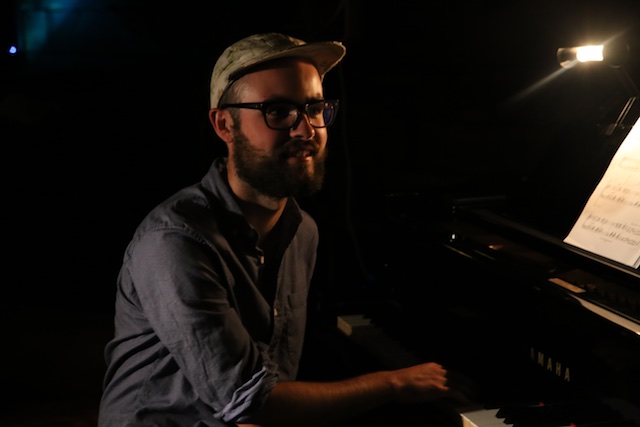 It was so Wheeler-like, that I assumed someone was setting up a Wheeler album on the club sound system. As my eyes accustomed to the low light I saw French standing alone – repeating the phrase. French is not a one-trick pony; he is as modern as tomorrow, but at other times, old school respectful. He can punch out high notes or swing hard bop like a Blue Note artist back in the day. This is not a musician to pass up on.
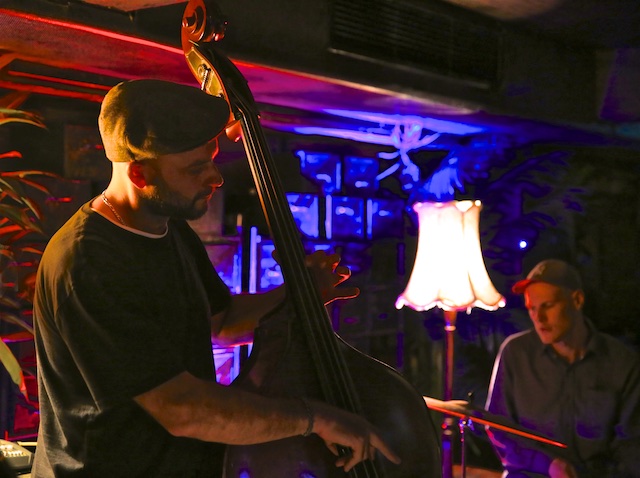 I particularly liked French’s compositions ‘Kasid’ from the first set. There were many reasons to like this; the musicians innovative explorations of the theme, the evocative middle-eastern mode underpinning it, and the fact that it referenced the wonderful Iraqi poet Abdulkareen Kasid. An achingly beautiful melody tinged through with bittersweet sadness, establishing itself delicately over a quietly incessant bass motif. When Steele came in, his opening chords were Oud like – giving the impression of soft strings jangling sweetly in the night air. I listen to a lot of middle-eastern improvised music and this performance stands beside the best of those. In the background, the drums tap tapped (like stones tumbling in a stream, and every so often swooshes).
 The poet Abdulkareem Kasid is new to me (and I have a huge collection of poetry). To discover a poet like this is exciting and I thank Lex French for this. What could be better than to experience a night of interesting music, and at the end, find a poet? I finish this with some words from that poet – listen to the piece as you read the lines – I did.
 The Mark Donlon trio gig gave us two leaders for the price of one. Accompanying Donlon was the highly rated LA bass player Tom Warrington. Jazz audiences in New Zealand are very familiar with Warrington as he toured here on many occasions. Donlon, originally from the UK is now living in Wellington and working as the Jazz Studies program leader at the New Zealand School of Music.
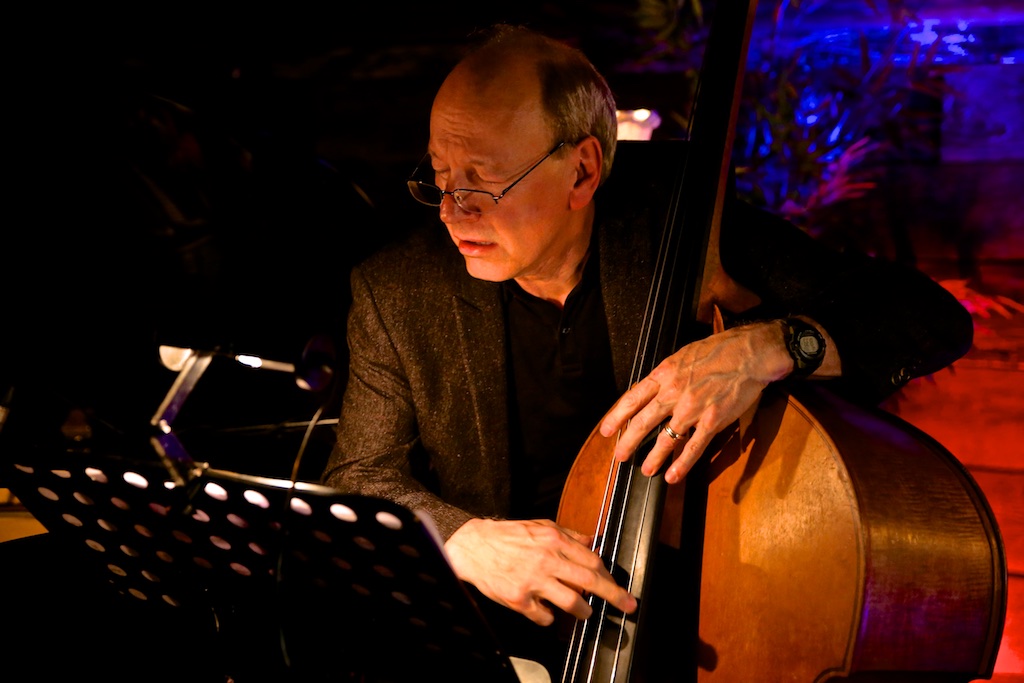 I have been a Tom Warrington fan for many years and I have most of the Jazz Compass albums where he features to such great effect. He is a bass player who speaks with incredible forthrightness, but never undermining the others on the date. On ‘Corduroy Road’, a fabulous album that I play often, the ‘others’ I refer to are Larry Koonse and Joe Labarbera. These guys can do no wrong; their version of ‘You Must believe in Spring’ (Bergman/Bergman/Legrand) is a small masterpiece. We are lucky to have such a strong association with Warrington and Rodger Fox is the one to thank for that. I last saw him during the ‘Cow Bop’ tour, where his band shared the stage with guitarist Bruce Forman (and the Cow boppers). A friendly modest man of enormous talents and good company. When I spoke to him last Wednesday I learned that Larry Koonse (and perhaps Joe Lababera) will be touring New Zealand soon. Koonse has suffered health problems of late but he is evidently recovering well. Warrington’s recording credits are too numerous to mention. Tom is now domiciled in this country which is very good news.
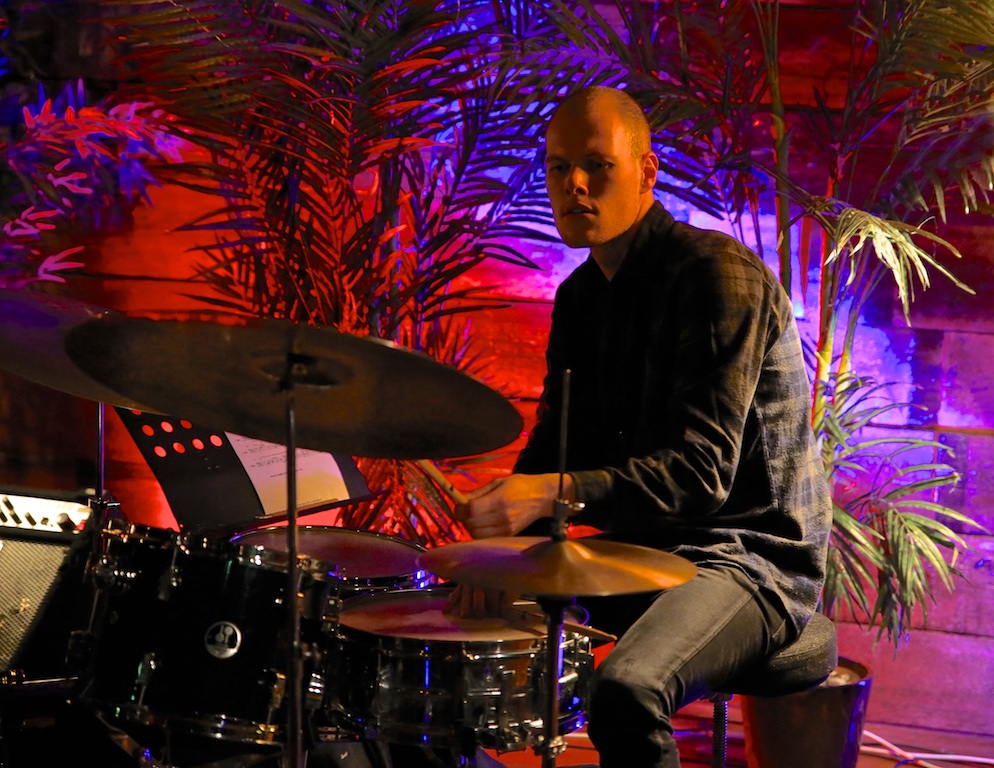 Cory Champion although Wellington based is no stranger to the CJC. He was there earlier in the year with Matt Steele’s ‘Master Brewers’. He writes and plays well and it is likely that we will see him in the drum chair often.
 It is always good when proved right and in the case of Matt Steele I certainly was. This was a superb gig and it confirmed the promise that I saw in Steele as a first year student. The ‘Master Brewers’ musicians are exactly what Steele needed at this stage in his development and he is clearly what they needed. There is a cohesion about this group and it extends beyond the music. This is a band of friends and because they spend a significant amount of time together, they are able to dive deeper into the material on hand. Most of the band is writing and being familiar with each others styles, they contribute compositions that serve the project well. Younger musicians often favour shorter term projects but I hope this unit continues for a while. When I last saw Steele perform it was at his honours recital and he was very much in charge. Now as leader, the reins are subtly loosened and the music benefits from this. With experience, leaders can confidently guide without over playing the role. That only works when the interactions and cues become second nature. In their best moments the ‘Master Brewers’ acted as a single entity; everyone maximising their options while retaining an awareness of the others.
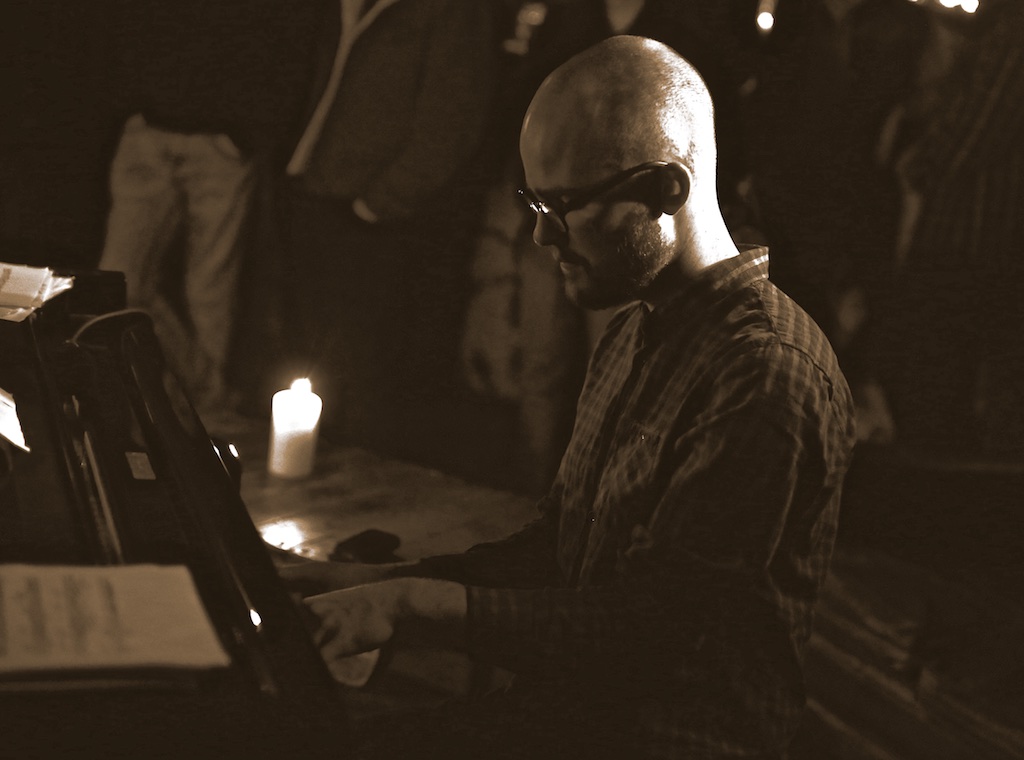 I immediately noticed that Steele’s voicings were darker. His interesting harmonic approach an outcome of an ever-growing musical maturity. There are certain aspects to Steele’s playing that stand out and during the gig these crystallised in my mind. These attributes are why I follow his career so attentively. He is self-effacing by nature, but that masks a ruthless striving for betterment. Ever reaching further, listening deeply, critically and taking risks. For all that he able to relax into the moment and as he grows musically this is more evident. The most difficult journey for any musician is finding a distinctive style and owning it. Steele is well on the way.
 Thanks to Roger Manins programming, Auckland audiences get to see good Wellington bands every few months. In this case the audience were unfamiliar with the musicians (apart from Steele), but what a treat this gig was. The band won us over quickly and by the time the second set began they were cooking. In spite of the modernistic approach and complex time signatures these guys have a definite pulse. They swing like crazy.
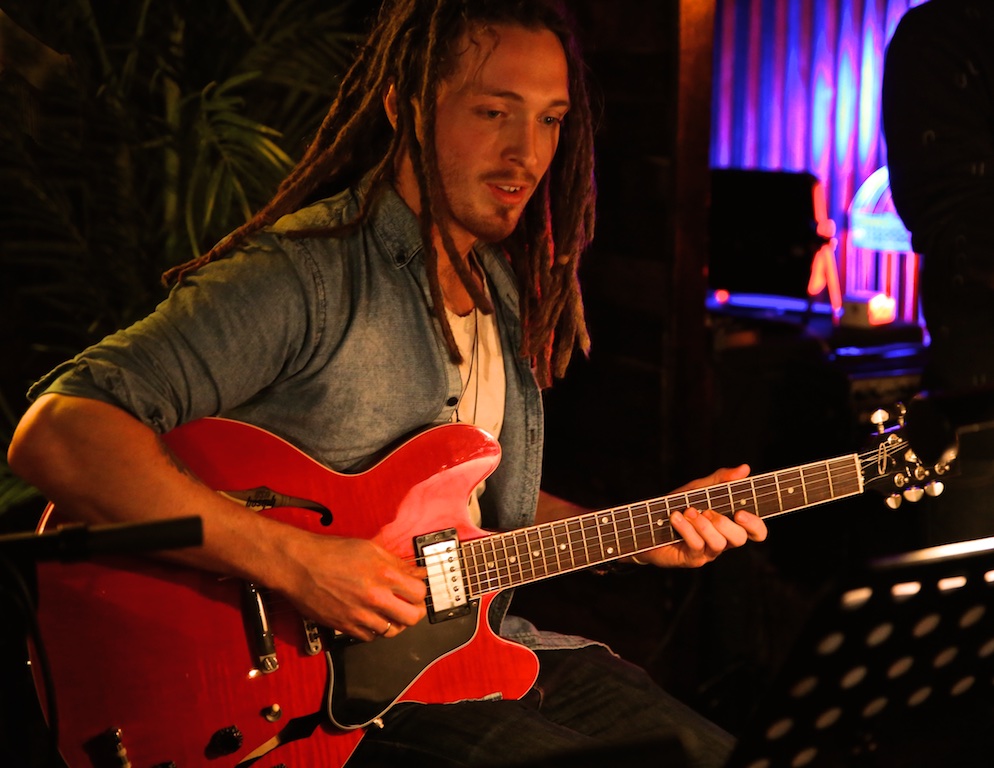
 Ashton Sellars had suffered a mishap with his guitar and he had to borrow one at short notice for the gig. He told me that it felt very different to his own older instrument, but no one would have guessed it by the way he was playing. Under his fingers the instrument sang. He favours longer fluid lines (with a hint of Bauer/Tristano), but his is very much a modern sound. His improvisations are thoughtful and they invite you along. While their music is often complex there is no ballast of needless weighty intellectualism. Piano and guitar keeping nicely apart unless comping in support. Both understanding when to lay out. Once again cohesion and a sense of common purpose drives them
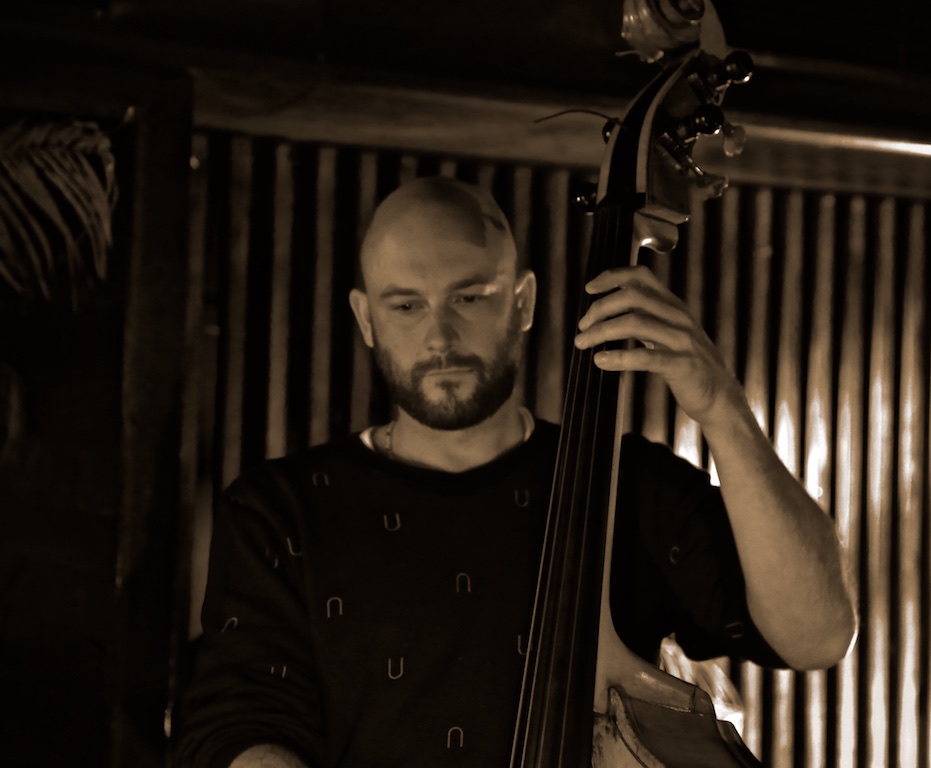
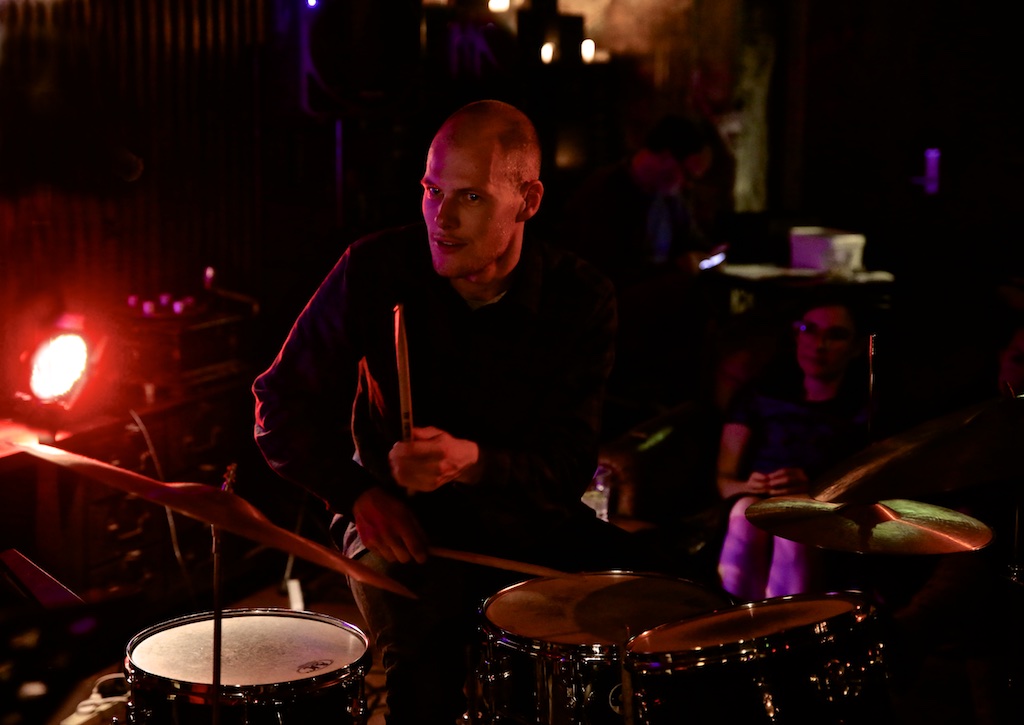 Johnny Lawrence played upright bass, maintaining the core rhythm duties. While he held the pulse intact, he could also solo very effectively. Like his band mates he fitted into the mix in exactly the right way. Cory Campion was also a strong presence, often giving colour or providing accents. Above all his compositions were strong. There is an increasing trend for drummers to compose and when they write like this it provides an interesting perspective. Drummers write differently and the ones I hear lately, write very well. Steele and Sellars contributed the most tunes and each wrote in their own distinctive style. Together those charts and this band gave us pure enjoyment.
 JazzLocal32.com