How we hear and process music is the result of endless debate. When a resonant voicing or melodic fragment is freed from the wood, wire or chip, the vibrations refract; entering our consciousness through individualised prisms, and each note coloured by preference, mood and previous exposure. What I heard last Wednesday I can only process through my own lens and how I heard it may not be how it was conceived. The opening number took me directly to a place that I visit often. A warm and familiar place situated in a time before these musicians were born. That place was the early electric Jazz fusion era (I love that shit) and in the second set, to the atypical small ensemble arranging by the likes of Carla Bley, Jimmy Giuffre or French horn player John Graas.
I am not saying that either band were reprising those eras because they weren’t. What they played was freshly minted, modern and innovative. The connection and the intense pleasure both groups afforded me was that meeting place between my point of reference and what they created. This is the eternal triangle of improvised music; musician, instrument and listener. A cycle with an endless feedback loop, which brings me to a second point. The players communicated their passion well; something of themselves. It manifested in the leader’s smiles of delight or in the shouts of mutual encouragement. As young, as they were they had cracked a vital code of musical communication. It is not just chops or clever compositions that push you over the line, but putting yourself at risk, exposing a glimpse of the human being and the joy feeding the music.
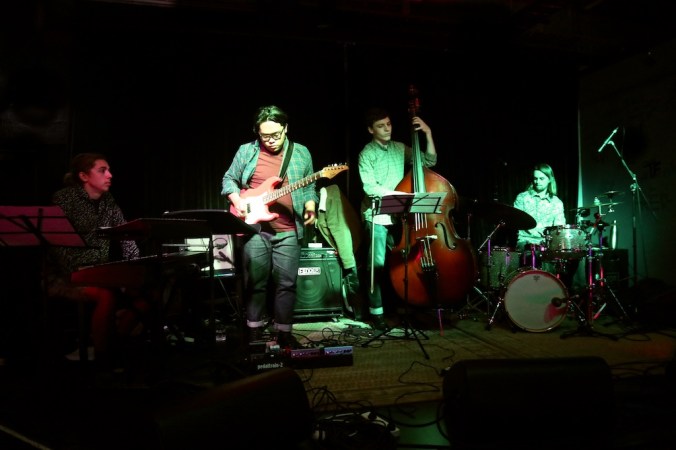
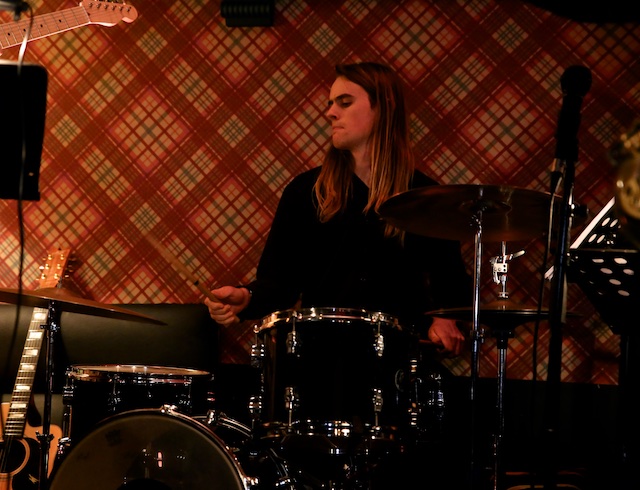
The musicians were mostly from the UoA Jazz Studies programme and the sets were interesting contrasts. First up was the Daniel Waterson Quartet with drums, keys, guitar and bass. The first number was titled ‘Not enough Lithium’ and it was this piece that contained embedded echoes of 70’s fusion. It had various motifs but as it developed, mood predominated. This enabled me to make my own emotional connection to the music. The piece didn’t tell us how to engage but it invited the listener in and I believe that that is important. Some tunes are so nailed down that they feel like a lecture. This was not. All of these musicians are a credit to the Jazz School and I was familiar with everyone except the keyboards player (more on him later). Michael Gianan showed how far he’d come since we last heard him at the club. I last heard Waterson when he played in the Indian Jazz fusion group Takadimi. He is an engaging and innovative drummer and it was good to hear his own compositions.
The second set up was the Wil Goodinson Septet and it was unusual in that it featured bassoon, bass clarinet, cello, bass, guitar and piano. Goodinson is well thought of as a bass player and it is not unusual to catch him in others lineups. This was a chance for him to showcase his arranging skills and his charts were quite exceptional. Apart from the first tune by Joe Henderson, all of the rest were his own compositions. All arrangements were his. This was an interesting ensemble and they navigated the charts with ease. The bassoon and bass clarinet were complimentary and their textural possibilities were well utilised (Asher Truppman Lattie demonstrated his skills here and I applaud his work on this lovely under-utilised horn). The guitar, while not dominant in the mix, was essential as it gave brightness, a gently articulated voice to contrast the bass-rich sound. Holding everything together was the bass. We could not see the leader but his cues were evident as he guided the others through the charts.
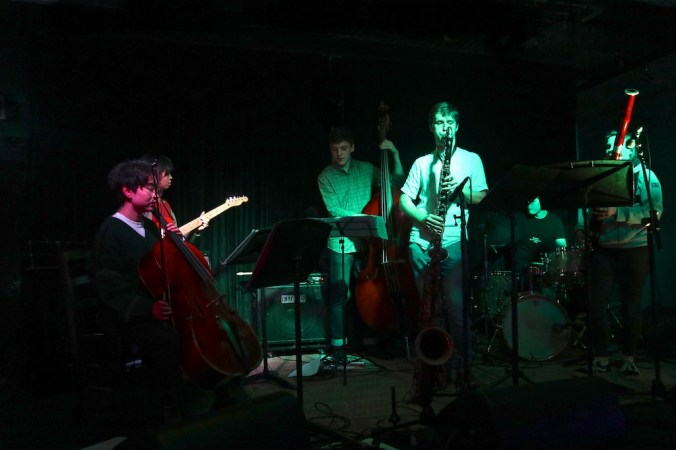
The drums and piano contributed with accents, pulse and solos and both were well placed in the mix I also have a fondness for cello in Jazz and the instrument was well deployed. When bass and cello played unison arco, the air vibrated as the low notes tugged at the senses. It was the sort of ensemble that ECM might feature, but the originality made it hard to pigeonhole as just that.
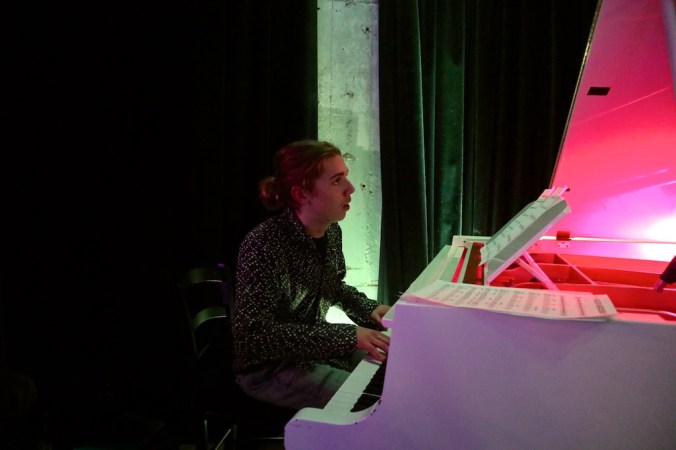
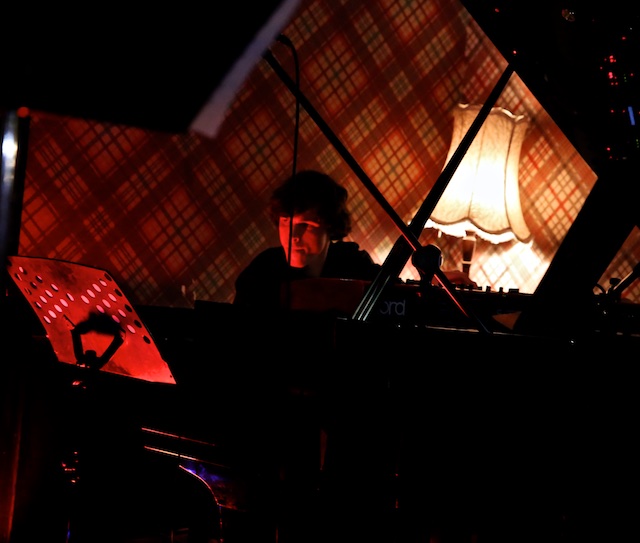
For a few months now, people have asked me, have I heard Joe Kaptein play. Until last Wednesday I had not and after hearing him on Wednesday I admit to being caught off guard. What I heard was a high degree of pianistic maturity; unusually so for a Jazz Studies student partway through his second year. He leaned on no particular style and was as much at ease playing in a freer percussive mode as he was where gentler minimalism was called for. His comping was notable, as was his sense of time. He understood when to play and most importantly when not to; he could lay-out or enter a groove and milk it for possibilities. It felt good to be in on this at ground level and I will watch his journey with great interest. Kaptein and Goodinson played in both sets
. 
Daniel Waterson Quartet: Daniel Waterson (drums, compositions), Michael Gianan (guitar), Joe Kaptein (keyboards), Wil Goodinson (bass).
Wil Goodinson Septet: Wil Goodinson (bass), Joe Kaptein (piano), Kathleen Tomacruz (guitar), Asher Truppman Lattie (bass clarinet), Karen Hu (cello), Monica Dunn (bassoon), Tom Legget (drums)
@ CJC Creative Jazz Club, Anthology, K’Road, Auckland New Zealand 31 July 2019
 Again, the CJC Creative Jazz Club has made good on its promise to deliver diverse and interesting projects.
 Karangahape Road and the precincts around it are a natural home for adventurous and alternative music. If you walk the length, you are assailed by sights and sounds at variance to each other. Taken in their entirety they are oddly compatible. The jumble of colour and the bursts of noise as you pass a Karaoke bar or an uber cool eatery is counterbalanced by the languid notes from Shanghai Lils or the soft chatter emanating from Hookah smoking Kebab shop doorways. Woven into this oddness of streetwalkers and urban cool, are the alternative music joints. Down in basements, under the street or up narrow stairways. Thirsty Dog, Anthology, Audio Foundation, Wine Cellar. And at the top end of the strip, next to the old Jewish graveyard is the Backbeat Bar. High-quality alternative improvised music resides here on Wednesdays.


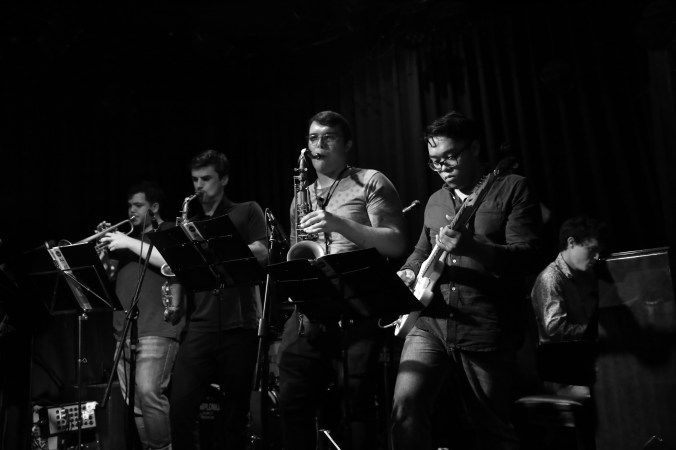 In keeping with the longstanding CJC tradition of keeping twice yearly slots open for emerging artists, late March featured two such sets. First up was a group led by bassist Denholm Orr. Orr has appeared in lineups a number of times, but this was his first appearance playing his own material and as a leader. His recent compositional work has placed increasing focus on arco-bass and consequently, the charts reached into that territory. Arco is not the default style for Jazz bassists but I am seeing a lot more of it lately and I welcome that.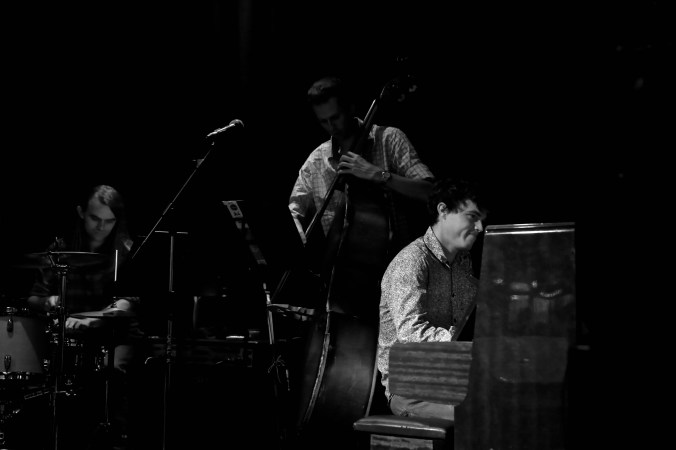
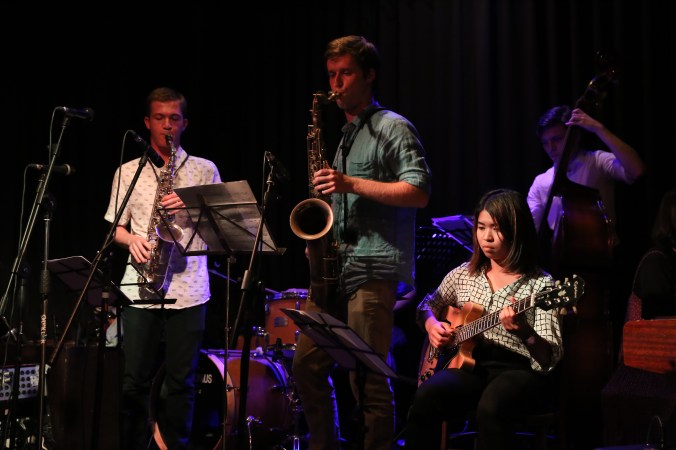
 Oli Holland is one of the leading bass voices in New Zealand. He formed Jazz Attack just over a year ago and since its inception, he has been writing new charts and expanding the lineup. Holland writes interesting charts; often complex but always compelling and his last gig showcased a number of these. This was an expanded lineup – adding three of Auckland’s heavyweights for a quartet segment in the first set. His bass is a powerhouse presence and his ringing melodic lines always distinctive. During solos, his vocalised unison lines fleshed out the tone, drew us deeper in – perhaps even influencing his improvisational choices. It is well established that vocalising while improvising on an instrument, fires up the human brain in new and interesting ways.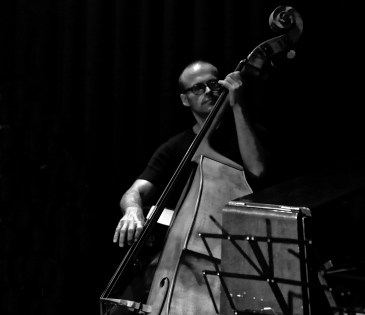

 I always look forward to emerging artists nights at the CJC. They don’t happen often but when they do, they’re fun, full of surprise and most importantly they are hopeful events. It is usual for emerging artists to salt the mine with seasoned players. Both of the bands did well in that regard. The first band up was Misha Kourkov’s ‘Equitable Grooves’, a six-piece unit playing multi-genre Jazz focused music. The material was well written and at times ambitious. Aiming high on the bandstand is good because that is where real learning occurs. If you wish to extend your reach, then having Alan Brown on the piano is exactly what you need. With that sort of experience and groove behind you, you have a fail-safe mechanism. The set opened a little tentatively, but they quickly found their groove; the last two numbers were especially enjoyable.
 The second set featured the ‘Exploding Rainbow Orchestra‘. This was a very different type of ensemble. Freer ranging, a bigger sound palette and an electric bass with the heavyweight punch of Bona. The bass player Joshua Worthington-Church who led the ensemble is accurately described as a maverick. His set list contained genuinely diverse material; gripping vamp-driven originals plus tunes from ‘Radiohead’ and ‘The Mint Chicks’. Under the leader’s guidance, the band took the material to a place close to my heart; a fusion of Jazz and psychedelia. I am happy to see this done, as the genre is all but forgotten. During the mid-seventies, that style of music was sacrificed on the altar of Jazz purism, a pompous battleground that tried to stifle genre exploration.
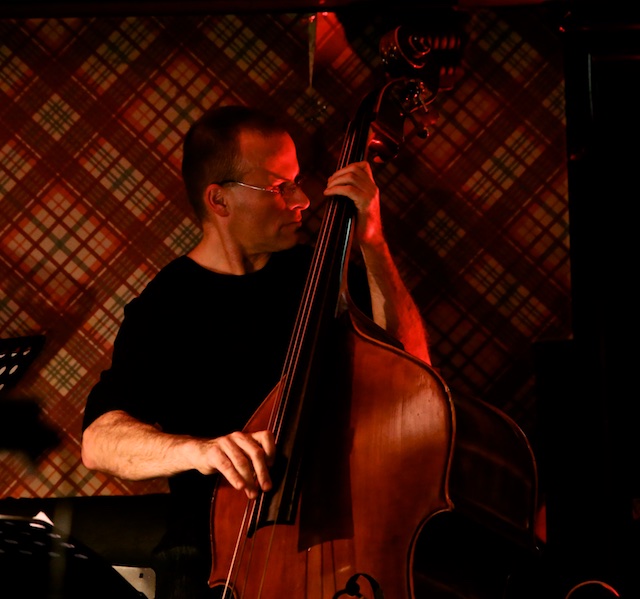
 From early in the first set, I felt the passion behind the performances, the sheer exuberance that is generated when a group know that they are performing effectively. Seasoned touring musicians sometimes sacrifice this – perhaps the effort of being on the road, the effects of jet lag, robbing them of warmth. It reinforces my view as a listener, that an artist needs more than chops to fully engage with an audience. When a band is comfortable on stage, properly rehearsed and above all up for a riotous night, magic can happen.
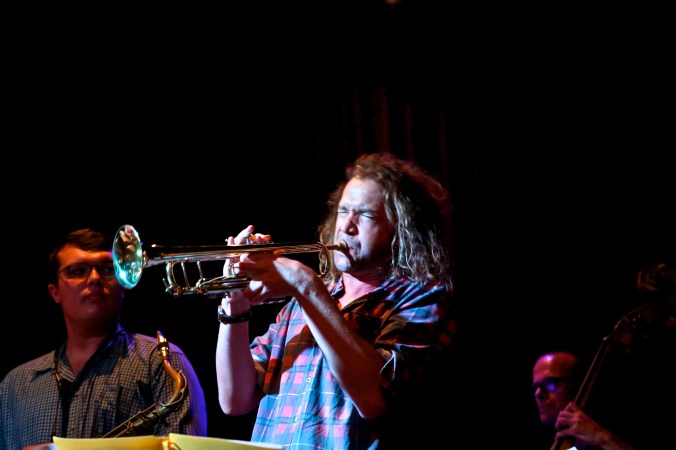
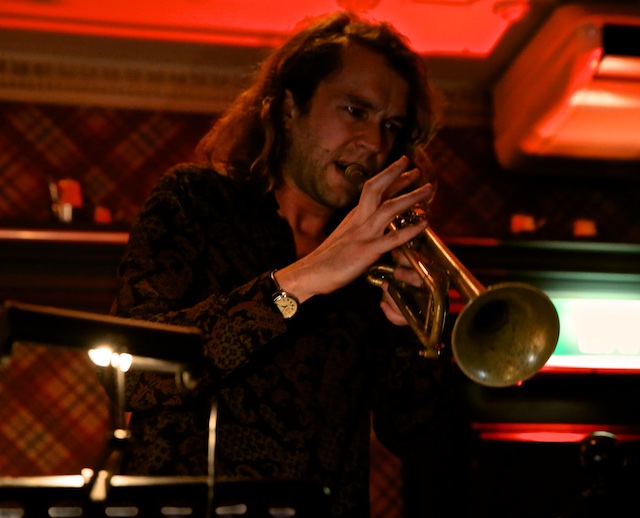 Trumpeter Finn Scholes can always surprise and over recent years he has impressed me increasingly. His vibrantly brassy ‘south of the border’ sound in the Carnivorous Plant Society is well-known, but anyone who thought that was all there was to him, hasn’t been paying due attention. He is raw and raspy on avant-garde gigs, mellow and moody on vibes and in this lineup reminiscent of the young Freddie Hubbard. His solo’s had bite and narrative, his ensemble playing was tight; above all, he generated palpable excitement, the sort that brings people back to live music again and again.
 JazzLocal32.com