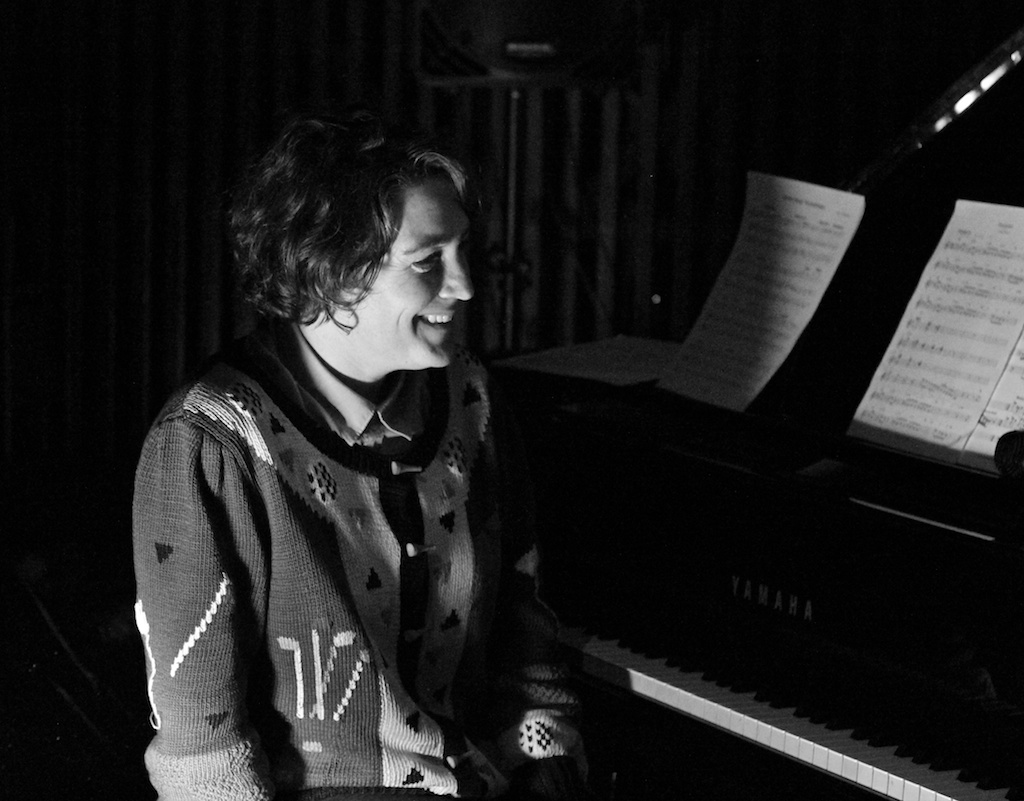
Last Wednesday’s CJC gig brought us a feast of truly adventurous music and it was beautifully executed. It was ‘free’ and ‘experimental’ and although within the improvised music spectrum, it is probable that many in the audience would not have encountered a prepared piano before. At the heart of the trio was the critically acclaimed pianist Hermione Johnson with drummer Chris O’Connor and reeds player Reuben Derrick. Anyone unfamiliar with a ‘prepared piano’ trio performance could not have wished for a better introduction.

The beauty of experimental music is that you can put away the straight jacket of preconception and bring your imaginings to bear. New and unexpected worlds can be crafted out of the fragmentary detritus of the old. This is surely the ultimate purpose of improvised music. Freeing us from the tyranny of the obvious.
This performance dove into the heart of sonority; creating sounds not generally associated with the instruments that made them. The piano had been prepared before the audience arrived and I wish that I had seen it. I have been lucky enough to witness this ritual on previous occasions, and ritual it is. There is a concentrated delicacy required in instaling the objects which muffle or extend the range of a piano. It is an installation and the precursor of new music. Items like chopsticks are inserted precisely between adjacent strings or perhaps a metal bowl is positioned. Few if any in New Zealand exceed the artistry of Johnson in this regard.
And it was not only the piano that reached for new sounds. No one thinks twice when they hear an instrument’s range extended by electronic means, nor should they when this is achieved acoustically. O’Connor, the drummer’s drummer is the most familiar to CJC audiences. He is one of Aotearoa’s best-loved and most adventurous drummers as he sits astride many genres with deceptive ease. During this performance, he added colour via fingers, mallets, sticks, gongs or rims, and no available surface or drum position was left unexplored. And he underscored the deep pulse emanating from the piano, tapping out some passages with surprising delicacy.
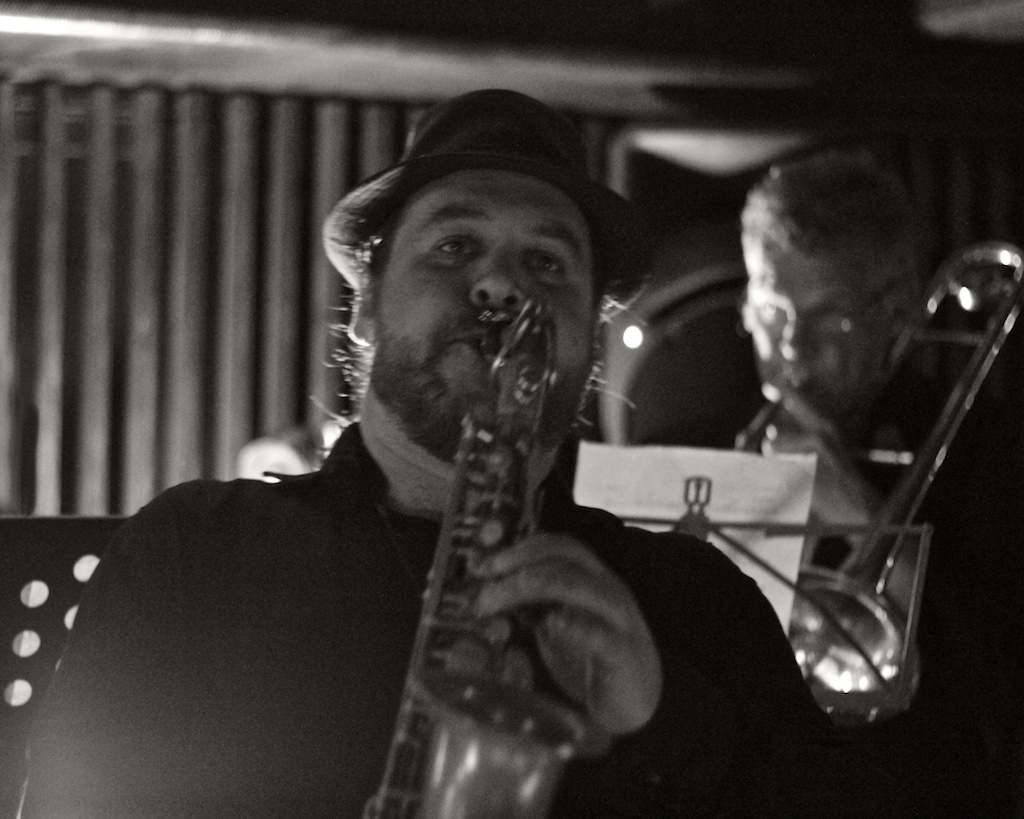
Completing the trio was Christchurch based reeds player Derrick. The last time I saw him perform was in 2013 with his ‘Hound Dogs’. That particular unit performed a Monk heavy set that was well-received as I recall. Since then he has travelled extensively to places like Warsaw, Colombo, Vienna and Ljubljana. He is a noted composer and has collaborated across many cultural traditions. His fluency on the clarinet automatically singles him out, as the instrument is famous for punishing anyone who takes it up half-heartedly. On this gig, he doubled on tenor saxophone and his uncanny ability to locate the acoustic possibilities on both was evident. It’s a pity that he doesn’t live closer, I am up for more of what he has to offer.

This was music but it was also performance art of the highest order. It stretched us as improvised music should. It was wonderful. The only way that I can begin to do it justice is by abandoning written syntax. Filigree, texture, tropical thunder, raindrops, gamelan orchestra, quasar, delicate motifs, deep pulse, sighs, dance, hot tiles, exquisite, exotic. It reminded me of the first time that I heard Bley/Giuffre/Swallow’s Freefall. My ears were realigned after that experience.
Hermione Johnson (prepared grand piano), Chris O’Connor (drums, percussion), Reuben Derrick (clarinet, tenor saxophone). The gig took place at Anthology, for the CJC Jazz Club, 7 July 2021
JazzLocal32.com is rated as one of the 50 best Jazz Blogs in the world by Feedspot. The author is a professional member of the Jazz Journalists Association, poet & writer. Some of these posts appear on related sites.

 As I write this it is International Jazz Day, a UNESCO sponsored day honouring the diversity and depth of the world improvising scene. It was, therefore, serendipitous that Carl Dewhurst and Simon Barker brought ‘Showa 44’ to town – especially in the days immediately preceding the big celebration. This gig offered actual proof that the restless exploration of free-spirited improvisers, lives on undiminished. I have sometimes heard die-hard Jazz fans questioning free improvisation, believing that the music reached an unassailable peak in their favourite era. To quote Dexter Gordon. “Jazz is a living music. It is unafraid …. It doesn’t stand still, that’s how it survives“. While a particular coterie prefers their comfort zone, the music moves on without them. Younger ears hear the call and new audiences form. Life is a continuum and great art draws upon the energies about it for momentum. Improvised music is not a display in a history museum.
 It is through listening to innovative live music that our ears sharpen. When sitting in front of a band like this the mysteries of sound become visceral. This was an extraordinary gig, at times loud and confronting, mesmerising, ambient and always cram-packed with subtlety. Fragments of melodic invention and patterns formed. Then subtly, without our realising it, they were gone, tantalising, promise-filled but illusory. We seldom noticed these micro changes as they were affected so skillfully – form and space changing minute by minute, new and yet strangely familiar – briefly reappearing as quicksilver loops before reinventing themselves.
 With the constraints of form and melody loosened new possibilities emerge. In inexperienced hands, the difficulties can overwhelm. In the hands of artists like these the freedom gives them superpowers. Time is displaced, tonality split into a prism of sound, patterns turned inside out. The first set was a single duo piece, ‘Improvisation one’ – unfolding over an hour and a quarter; Dewhurst and Barker, barely visible in the low light. This was about sculpting sound and seeing the musicians in shadow added a veneer of mystique. Dewhurst began quietly, his solid body guitar lying face up on his lap. The sound came in waves as he stroked and pushed at the strings, moving a slide – ever so slightly at first, causing microtonal shifts or new harmonics to form, modulating, striking the strings with a mallet or the palm of his hand. The illusion created, was of a single drone repeating. In reality, the sound was orchestral. As you listened, really listened, microtones, semitones and the occasional interval appeared over the drone. Barker providing multiple dimensions and astonishing colour, responding, reacting, crafting new directions.
 In this context, the drummer took on many roles, a foil to the guitarist, creating silken whispers, insistent flurries of beats and at times building to a heart-stopping crescendo. I found this music riveting and the audience obviously shared my view. In the quiet passages, you could hear a pin drop. If that’s not an indication of the musical maturity of modern Jazz audiences, nothing is. One of the prime functions of art is to confront, to challenge complacency. This music did that while gently leading us deeper inside sound itself. No one at the CJC regretted being on this journey. This is territory loosely mapped by the UK guitarist Derek Bailey, the Norwegian guitarist Aivind Aaset and the American guitarist Mary Halvorson. They may take a similar path, but this felt original, perhaps it is an Australian sound (with a Kiwi twist in Manins). The long multifaceted trance-like drones suggest that.
 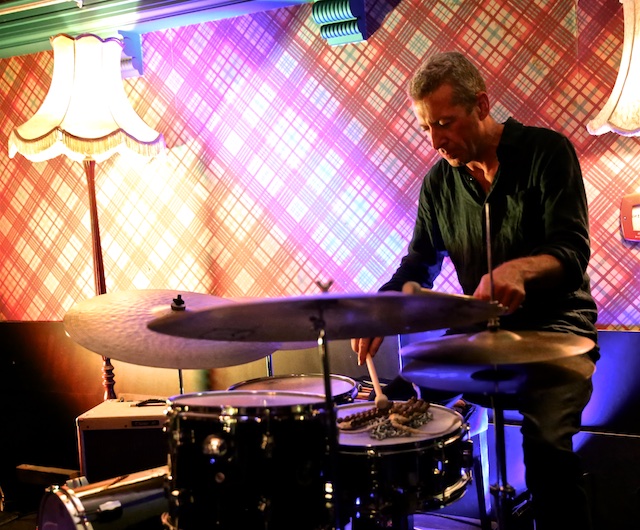 The second set was shorter, ‘Improvisation two’ had Roger Manins aboard. I should be immune to Manins surprises but he frequently catches me off guard. His breadth and depth appear limitless. ‘Improvisation Two’ began with a broader melodic palette. Dewhurst and Barker set the piece up and when Manins came in there was a stunning ECM feel created. Barker tap-tapping the high-hat and ride. Achingly beautiful phases hung in the air – then, surprisingly they eluded us, unravelling as Manins dug deeper – dissecting them note by note. These interactions give us a clue as to how this music works, each musician playing a phrase or pattern and then re-shaping it, passing the baton endlessly.

 JazzLocal32.com