This has been a season of upheavals and delays, and Caitlin Smith’s album, ‘You Have Reached Your Destination’ was no exception’. The gig sold out long ago, but then it was delayed twice. It finally went ahead last Wednesday and there was a rush to get a good seat. In typical kiwi fashion, what passes for a queue had formed; a ragged line, reordering itself in illogical surges as it snaked across the footpath of K’ Road. Smith is popular and like many vocalists, she has followers from across the music spectrum.
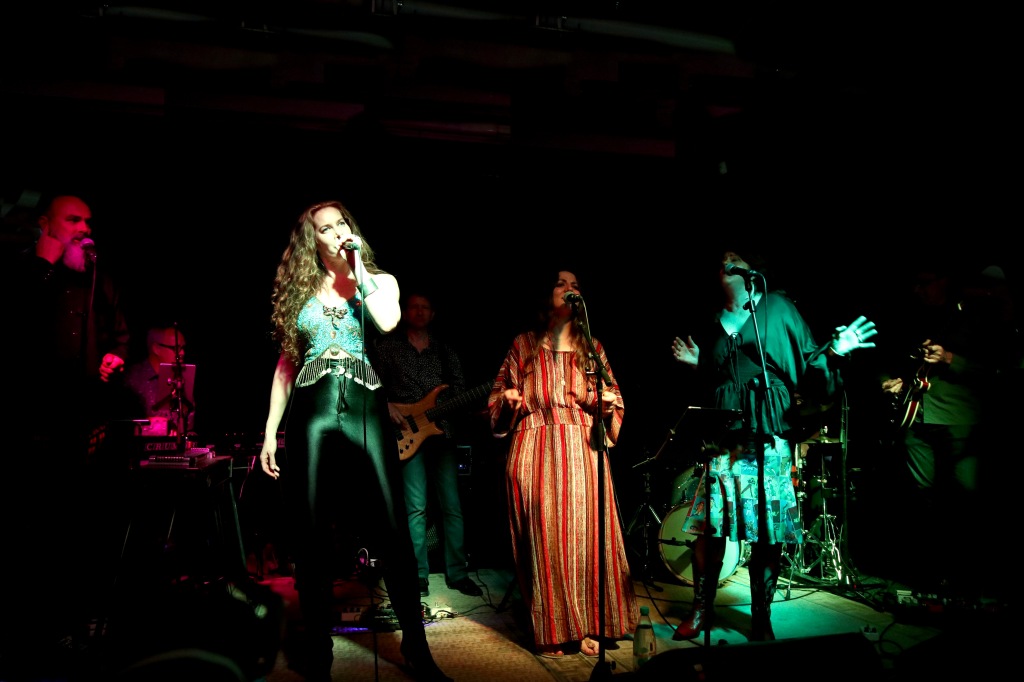
She brought a medium-sized ensemble with her, including backing vocalists, piano, keyboards, two guitars, drums, basses and a pedal-steel/slide-guitarist. I am used to hearing Smith with her trio, but this was new to me.
The band had a warm and enveloping sound, with Smith, clearly relishing the energy surrounding her. She has a strong voice, and it cut through. The first number was pure Americana, not just because of the pedal steel guitar, but the organ and backing vocals, and above all the lyrics. On several of the later numbers, they were joined by the gifted Nigel Gavin, and if anyone can channel authentic Americana he can.
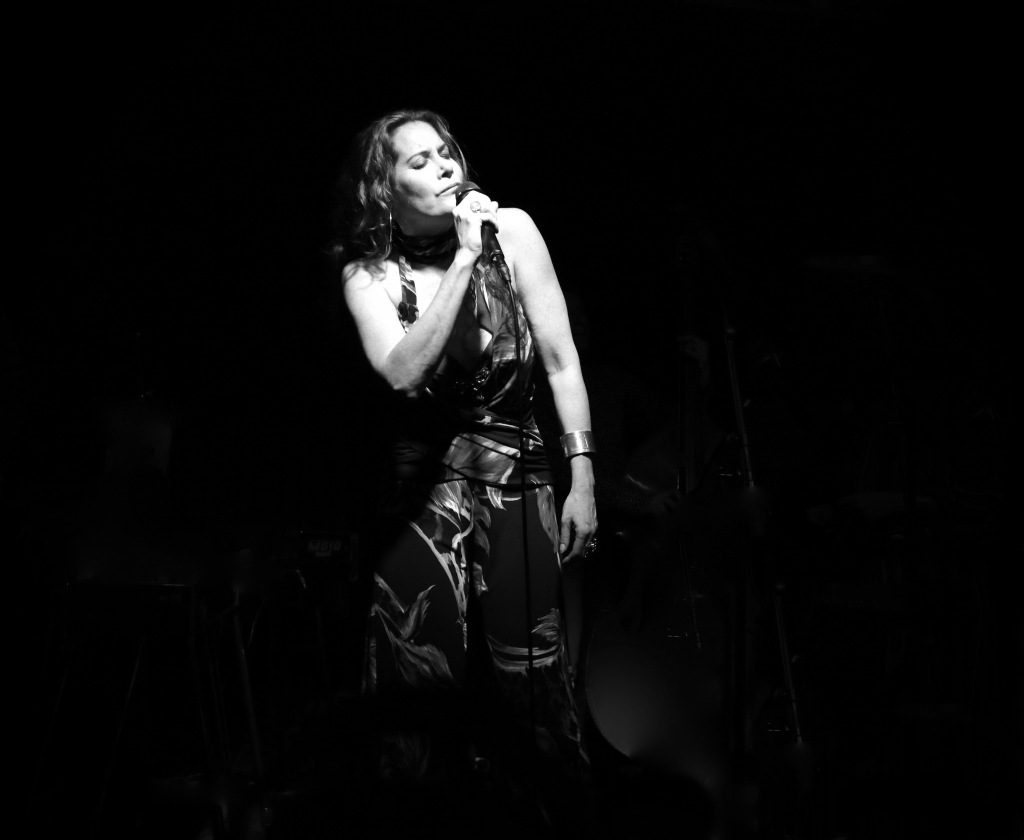
The setlist followed the album order (minus a few tunes). There were few introductions, and this was intentional. The night was about letting the music speak and to achieve that best it needed an uninterrupted flow. I enjoyed the gig and couldn’t wait to hear the recorded album.
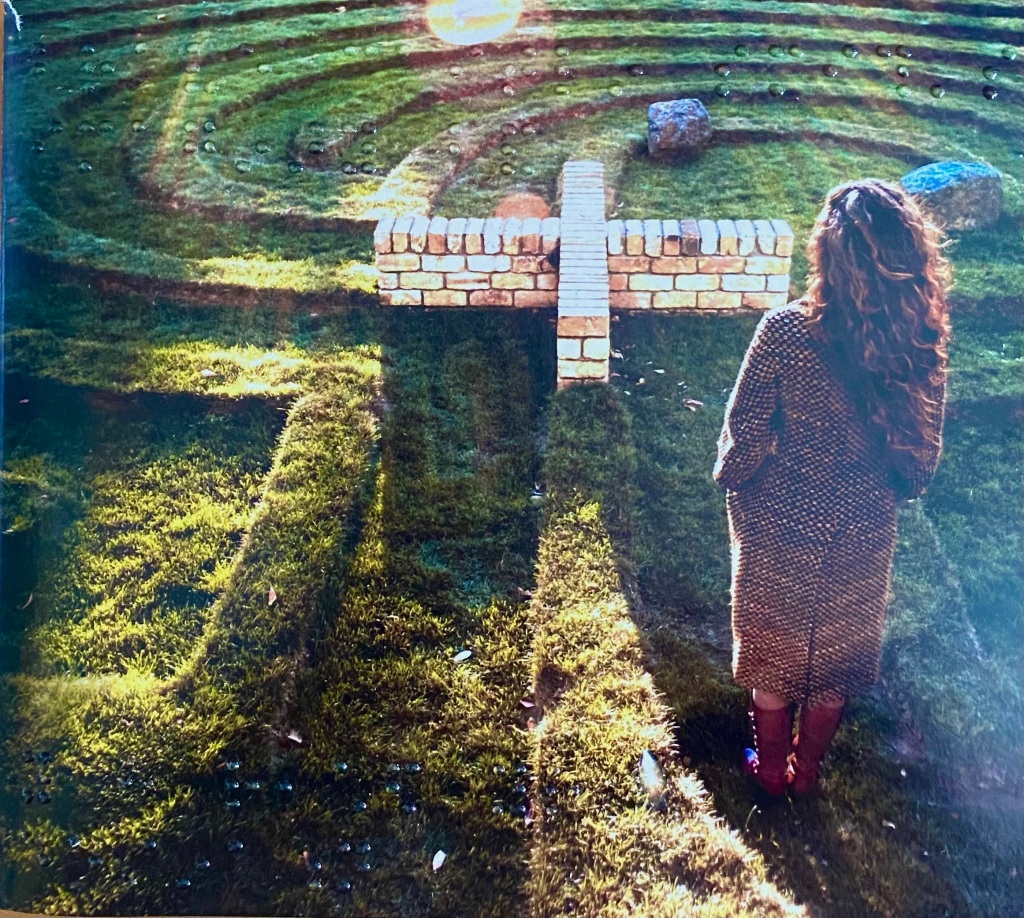
The physical album comes in exceptionally beautiful packaging, and importantly, the front cover has a brail title. In doing so, the senses are immediately directed within, or as Smith puts it, ‘let your ears guide you through this experience without other sensual distractions’. It was an invitation to a deep listening experience. The first tune, Grand Companion, was the perfect start point and from that point on you are guided between tracks by footsteps.
Much as Joni Mitchel or Rickie Lee Jones did, Smith uses predominantly Jazz Musicians in her bands. Musicians who can respond to nuance and work with her (not just back her). On the album’s opening track, Grand Companion, you hear John Bell on vibes, and what an inspired choice. His silken fills adding textural contrast: and Keven Field on Rhodes and piano. The live gig featured 10 musicians, but the album has a bigger cast (for example, pedal steel guitarist Janek Croydon, other backing vocalists and drummers). Paul Symons picked up this role on Wednesday and he doubled on slide guitar and vocals. The well known Aaron Coddel on bass(s).
On both the album and at the gig, the interaction between the chordal instruments was central. What a delight to hear Alan Brown and Kevin Field finishing each other’s musical sentences or trading fills. And Dixon Nacey, a guitarist who can accompany a vocalist with incredible sensitivity and a first-choice musician for a gig like this.
Track two ‘The Story so Far’ has a southern soul feel and the backing singers are the icing on a beautiful cake. ‘No Mans Land’ picks up the overarching theme of the album which is self-realisation on a sometimes difficult journey. Prayer for a miracle reminds me of Patrice Rushen’s disco-funk, ‘Tug of War’ closer to a straight-ahead Jazz number.
This is an honest album that touches on loves lost, inner struggles and sobriety. Smith is sight impaired, but she never complains. It is part of who she is, and she occasionally jokes about it. In between numbers, a few band members slipped off stage to grab a drink and when it was time to call them back, she said, ‘I can see what you’re doing’. ‘What can you see’ yelled someone in the front row, ‘Very little actually’ she replied, grinning.
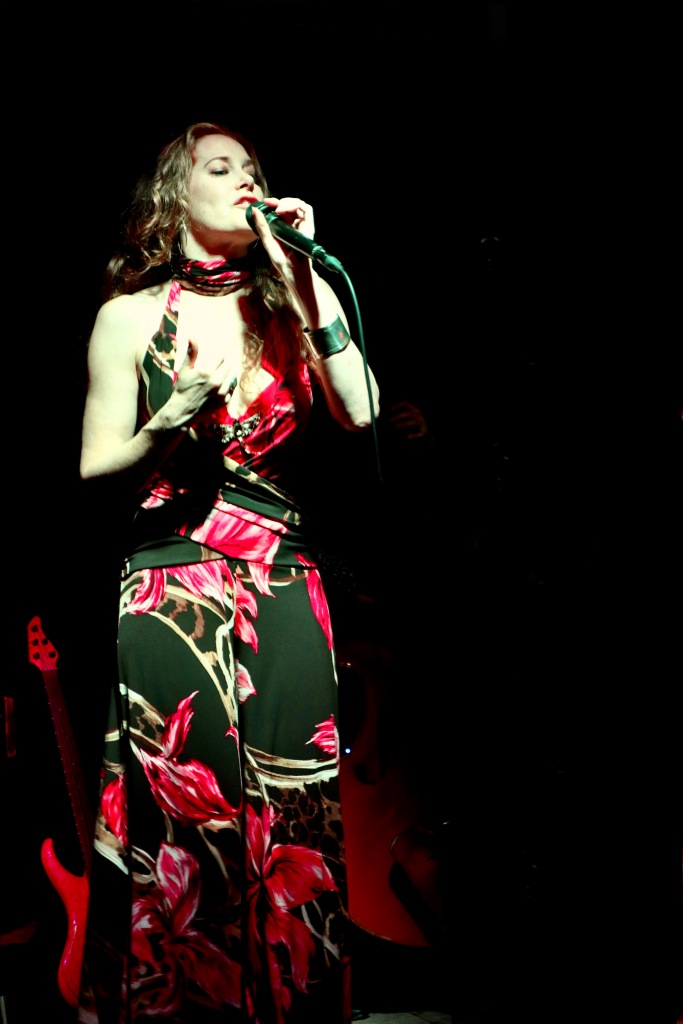
When I looked at the album liner notes, I was surprised to see when it was recorded. This album is a gem. It was worth the wait and I hope it puts Smith where she deserves to be; a widely acknowledged vocalist among our greatest. It has been over 10 years in gestation and now it has arrived. It is a credit to Smith and to all involved, and it also underscores just what magnificent work Roundhead Studios do. As I played it through, a tug of emotion brought a lump to my throat. The mahi paid off royally and the wait was worth it, we have our own Joni.
Album: Caitlin Smith (vocals, Wurlitzer, and compositions), Kevin Field (piano, Rhodes), Alan Brown (keys, B3), John Bell (vibes), Janek Croydon (pedal steel), Dixon Nacey (guitar), Aaron Coddel (bass), Nick Gaffaney (drums), Chris O’Connor (drums), Jeremy Hoenig (tabla loop), Finn Scholes (trumpet), Oliver Emmitt (trombone), vocal backing: Mate Ngaropo, Rebecca Le Harle, Callie Blood.
Gig: Caitlin Smith (vocals, piano), Kevin Field (piano), Alan Brown (keys), Dixon Nacey (guitar), Nigel Gavin (guitar), Aaron Coddel (bass), Paul Symons (pedal steel, slide guitar, vocals), Jono Sawyer drums, Callie Blood + Chelsea Prastiti (backing vocals).
The gig took place at Anthology K’Road for the CJC Creative Jazz Club, Nov 4, 2020. Order the album from stores or Caitlin Smith.com
JazzLocal32.com was rated as one of the 50 best Jazz Blogs in the world by Feedspot. The author is a professional member of the Jazz Journalists Association. Many of these posts also appear on Radio13.co.nz – check it out.
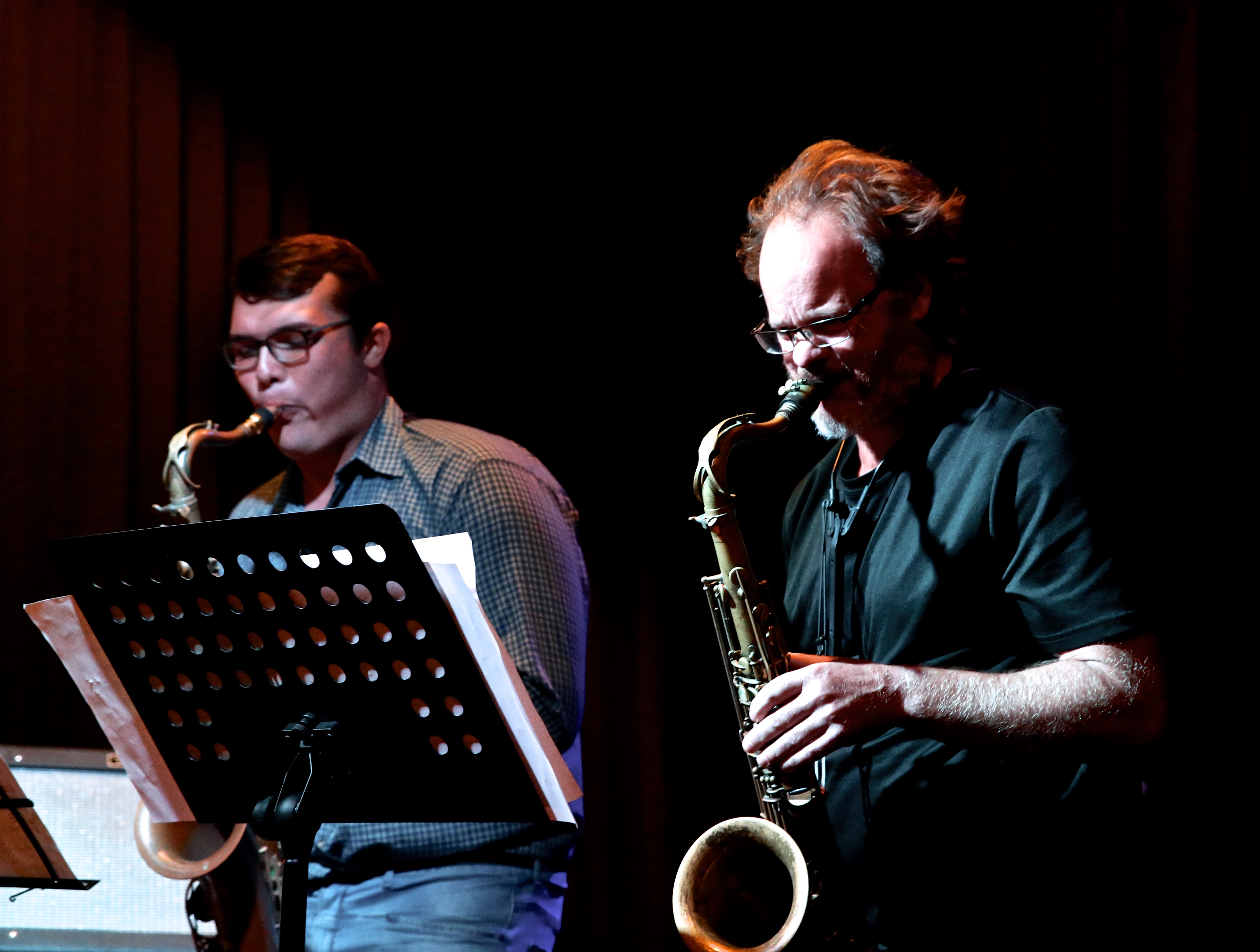
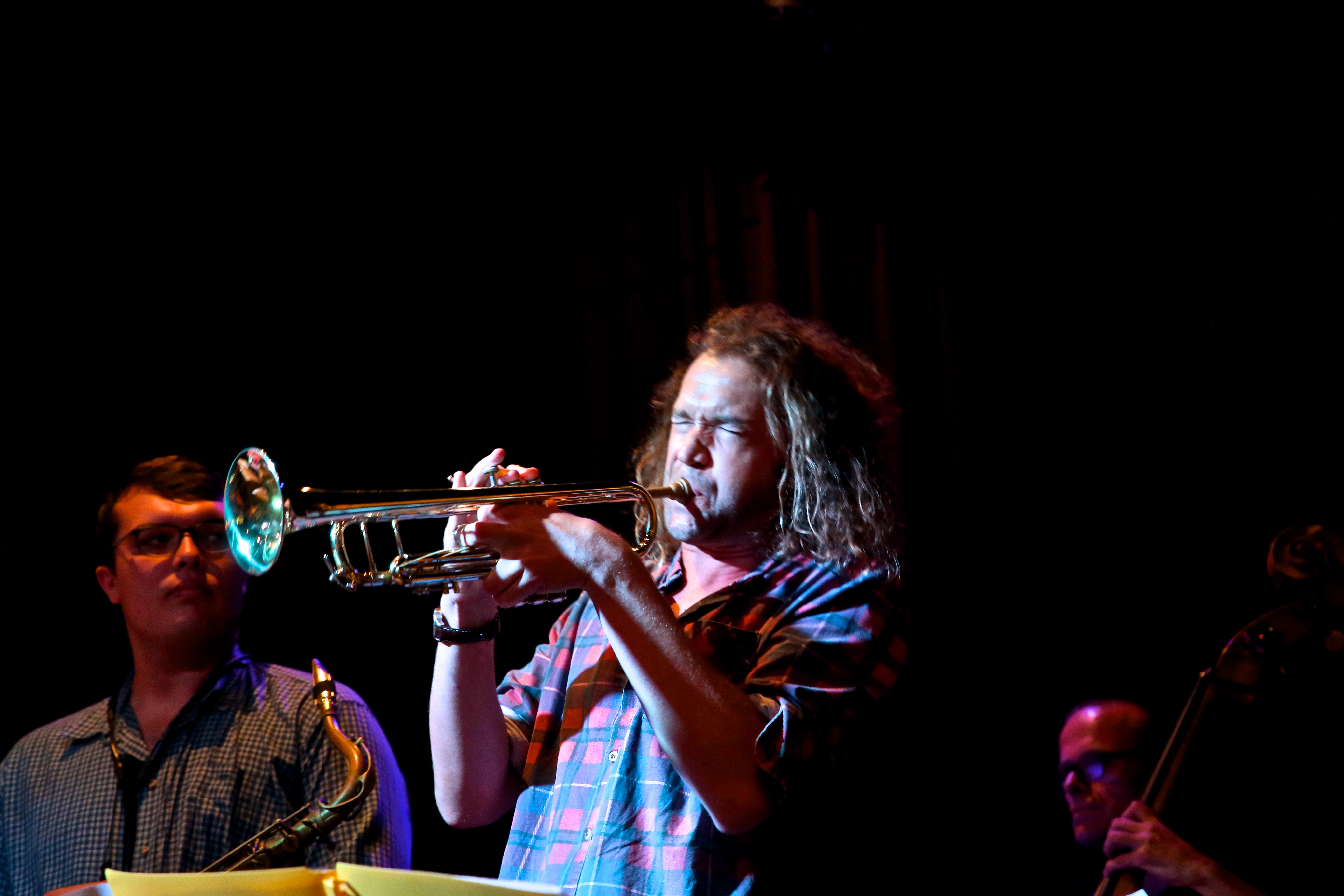
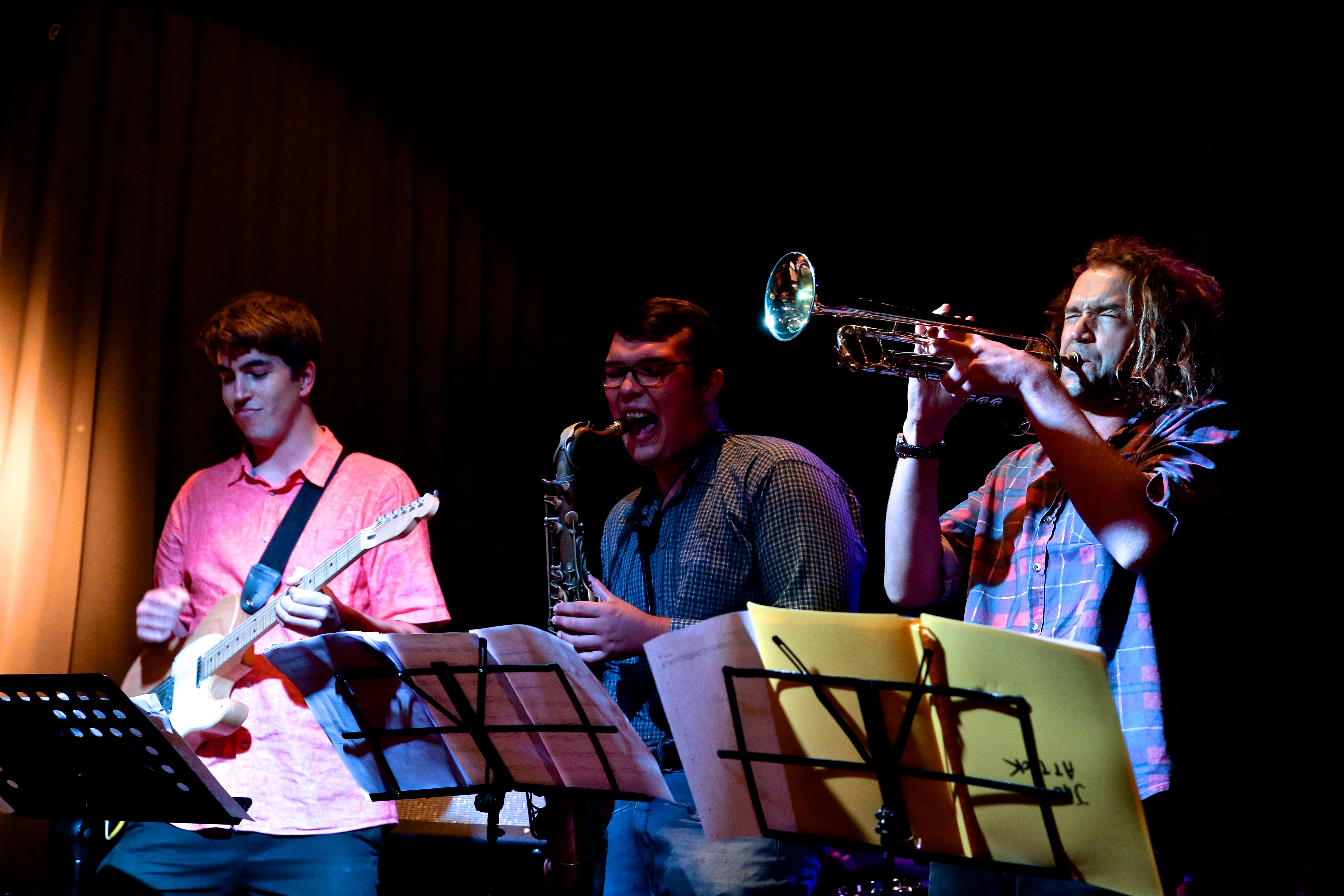 Oli Holland is one of the leading bass voices in New Zealand. He formed Jazz Attack just over a year ago and since its inception, he has been writing new charts and expanding the lineup. Holland writes interesting charts; often complex but always compelling and his last gig showcased a number of these. This was an expanded lineup – adding three of Auckland’s heavyweights for a quartet segment in the first set. His bass is a powerhouse presence and his ringing melodic lines always distinctive. During solos, his vocalised unison lines fleshed out the tone, drew us deeper in – perhaps even influencing his improvisational choices. It is well established that vocalising while improvising on an instrument, fires up the human brain in new and interesting ways.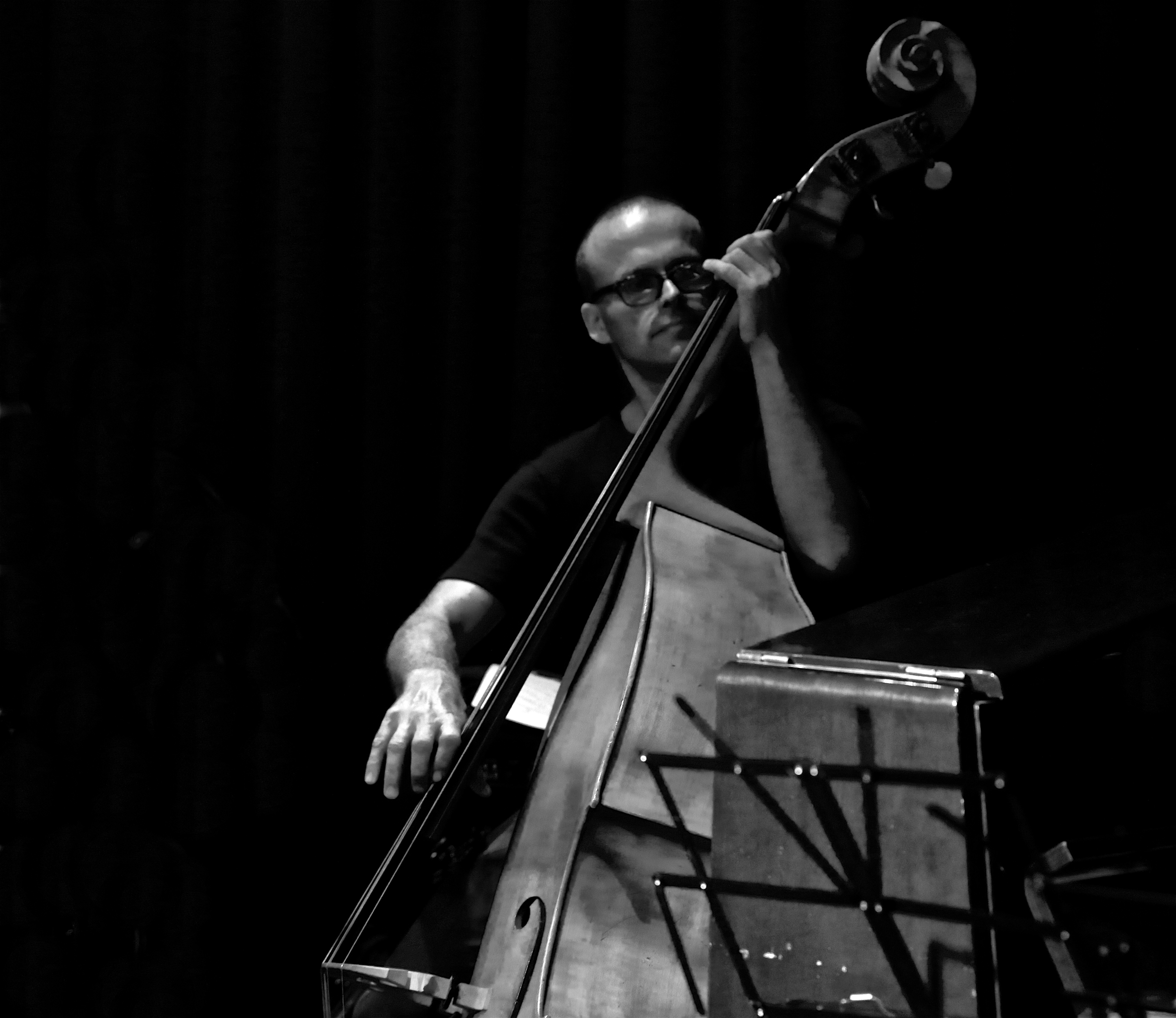
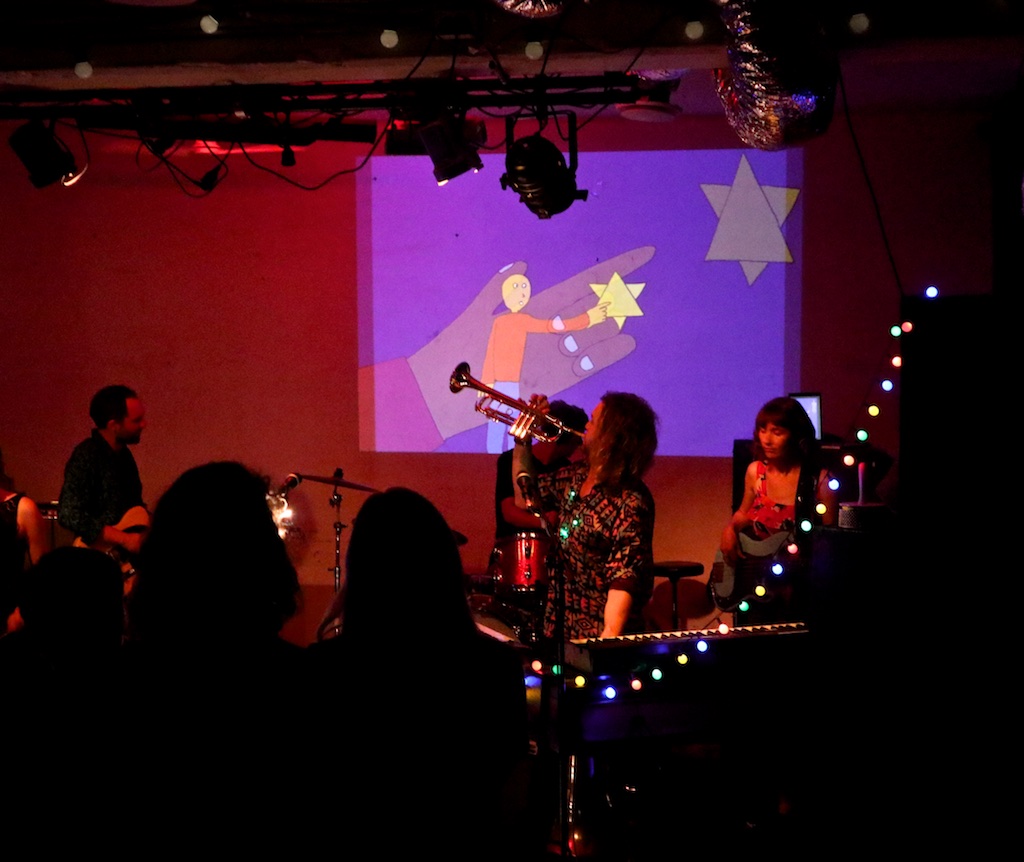 There are a finite number of notes in a scale or colours in the visual spectrum, but an infinite number of possibilities arise. Embracing the latter, multi-instrumentalist, multimedia sculptor and composer Finn Scholes constantly scans the landscape for new material. When he locates something shiny, he appropriates it as a magpie might, storing it in memory until he can bend it to a new purpose. A musician with few boundaries; a disruptor of complacency, his open ears and pioneering disposition equipping him well for his musical explorations. The genius of this music is that the listener will find any number of references, and each according to that persons taste. Any attempt to narrow the music down to a specific range of source materials, or to the prime influences, will, therefore, fall short; there is no correct answer.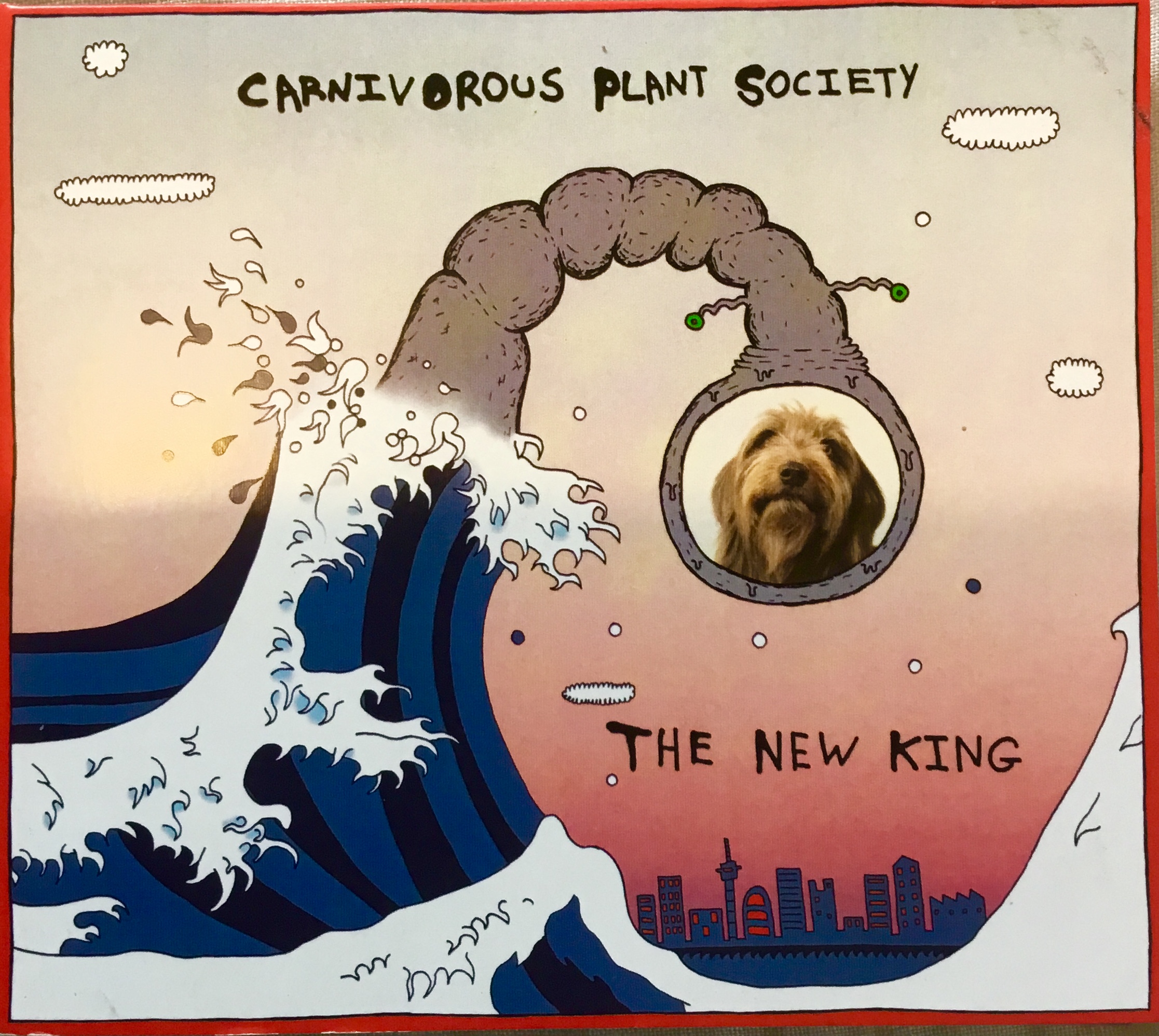
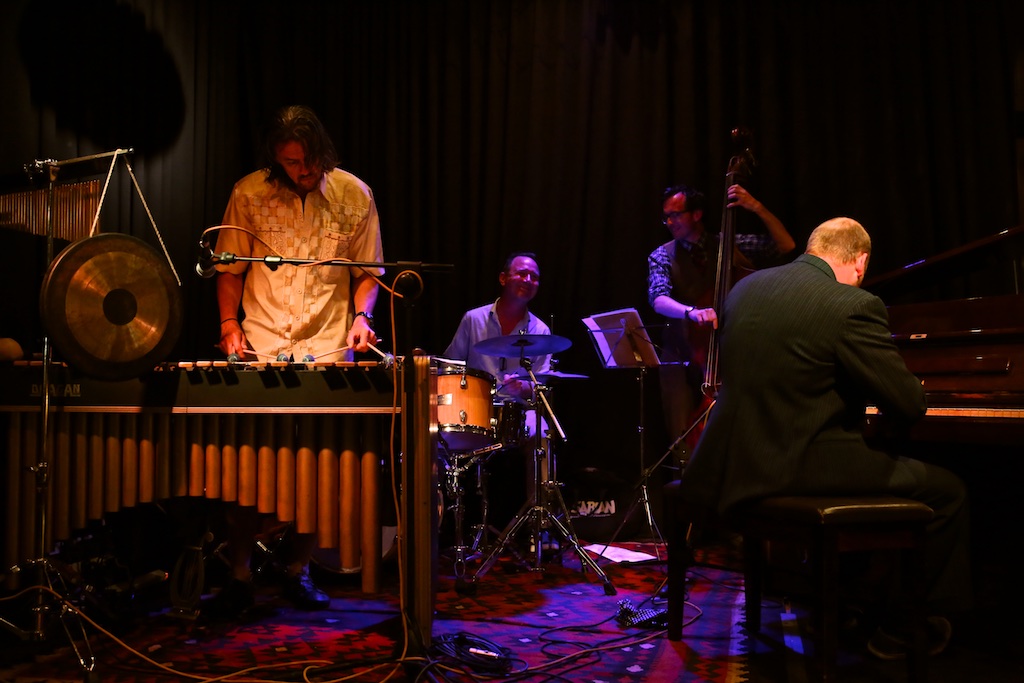
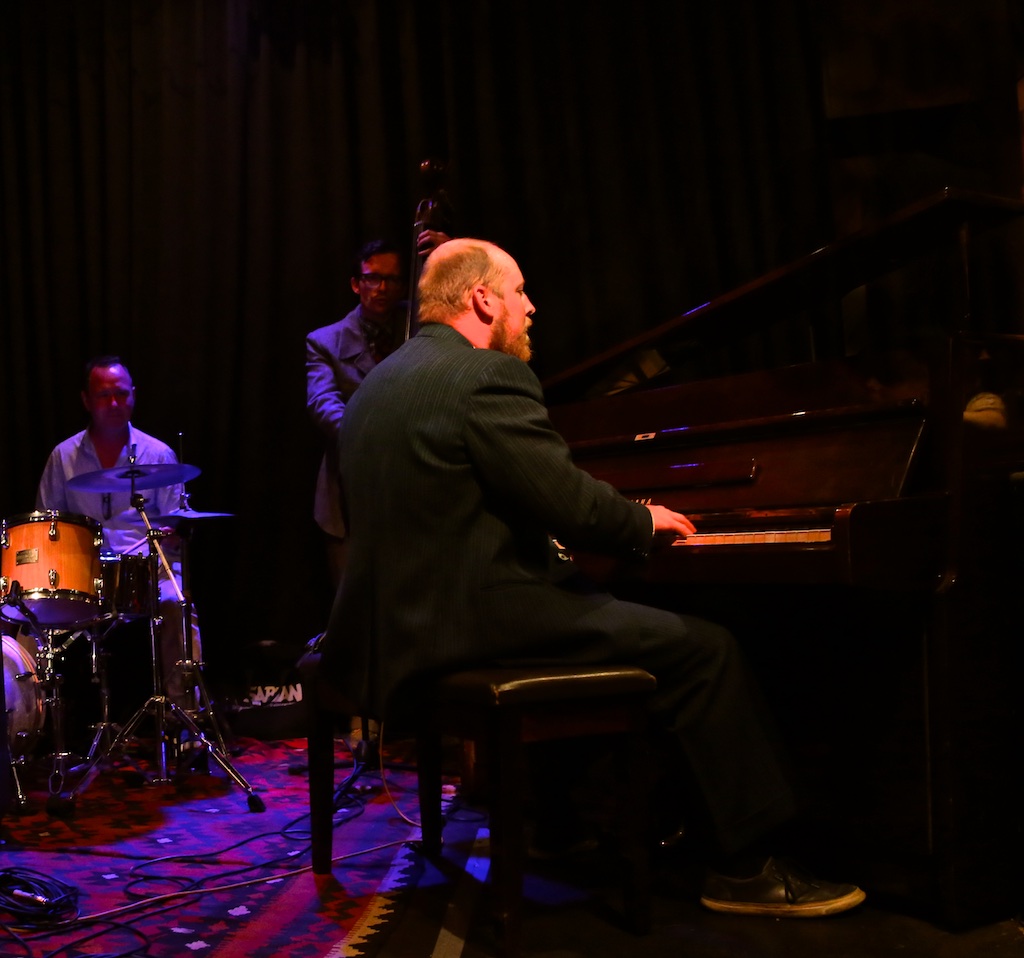

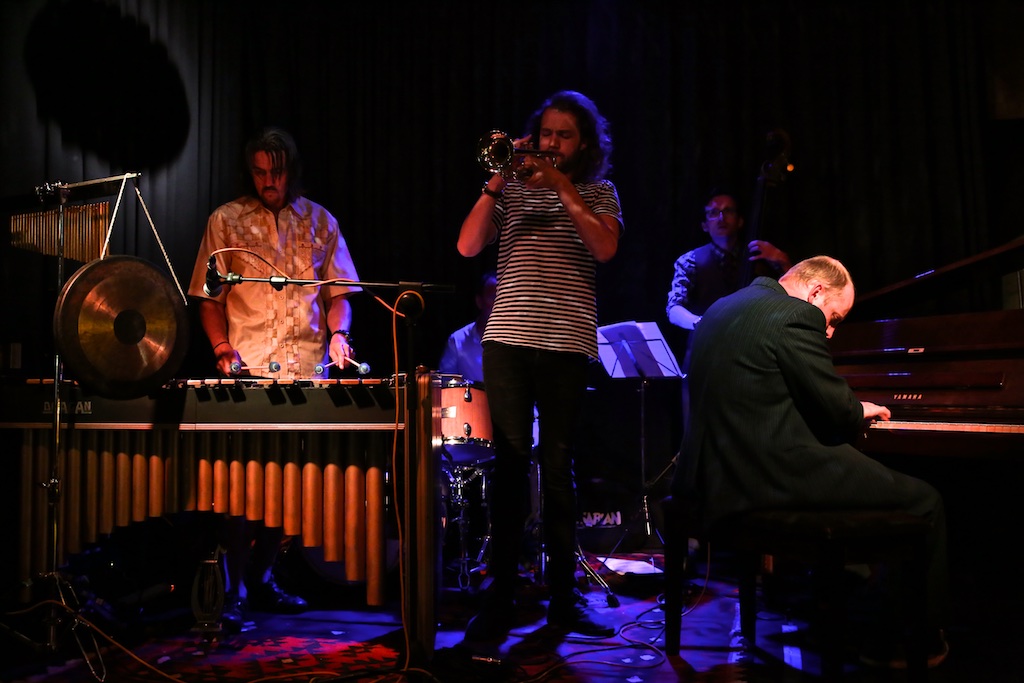 The line up on Squeaky Weasel, an earlier Jelly Rolls album, was as now Wilcock, Rae and bass player Yeabsley. The addition of Michael Barker on percussion and vibraphone is an evolution that makes perfect sense. Trumpeter Finn Scholes joined them for one number and delivered a well thought through high energy solo. To pick up a copy go to Ben Wilcock Thick Records Ltd –
 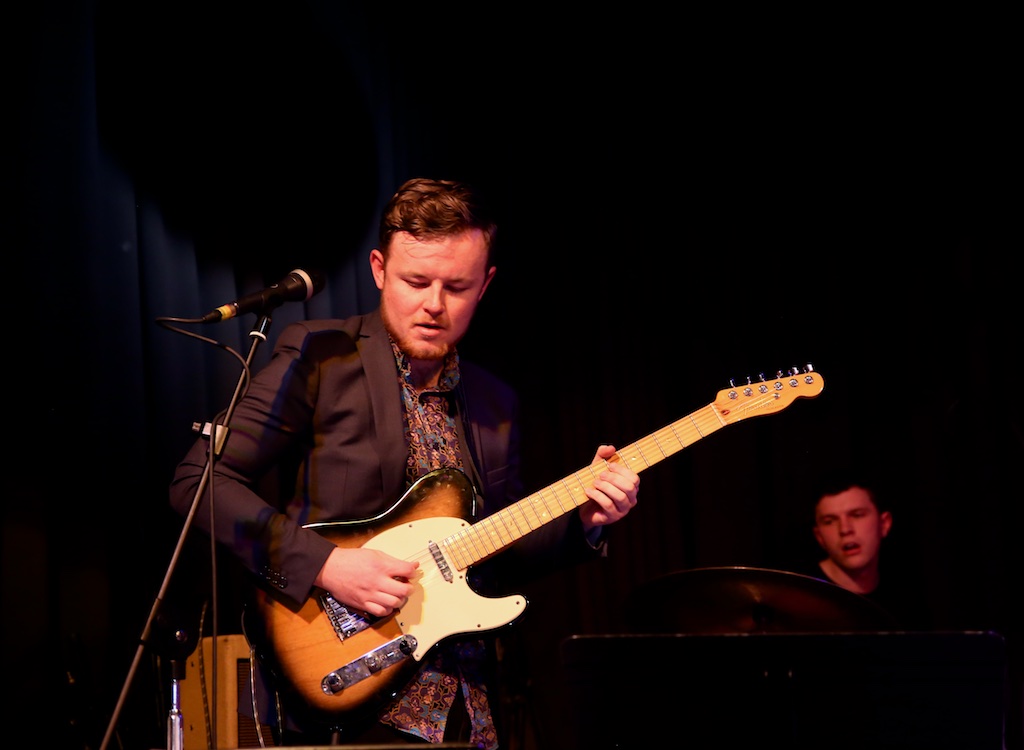 During the first half of 2017, a significant number of respected international artists and established local artists appeared at the CJC Creative Jazz Club. While everyone enjoys such a cornucopia of riches, it is also important to keep sight of emerging artists, those who are just below the radar. No local venue manages to showcase the rich diversity of improvising talent as well as the CJC. This is no accident, as there is a guiding philosophy behind the programming of gigs. No artist, however good, gets an ongoing residency; the gigs, therefore, are different every week, are identifiable projects, and this keeps the audiences engaged. An important part of this is showcasing emerging artists.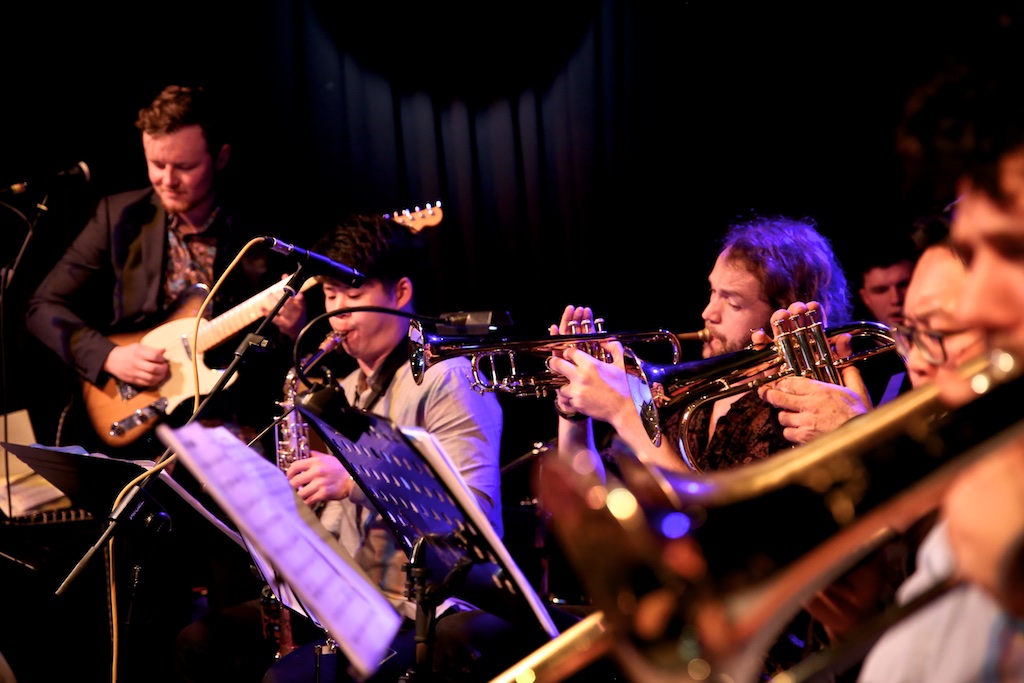
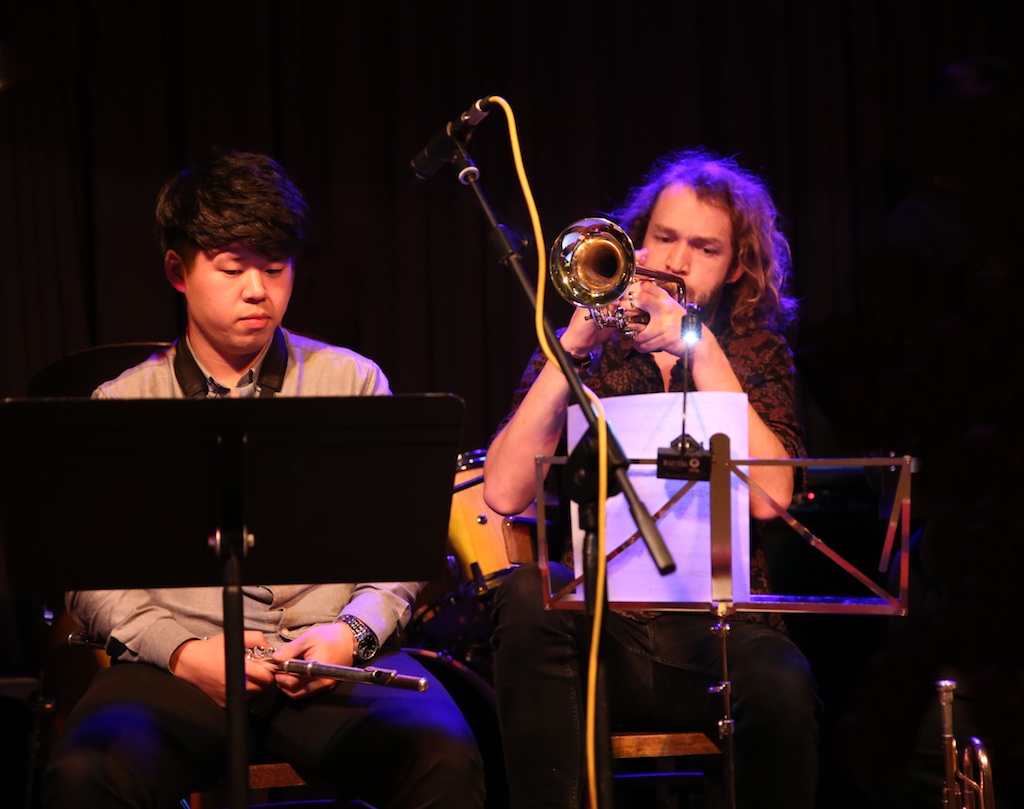
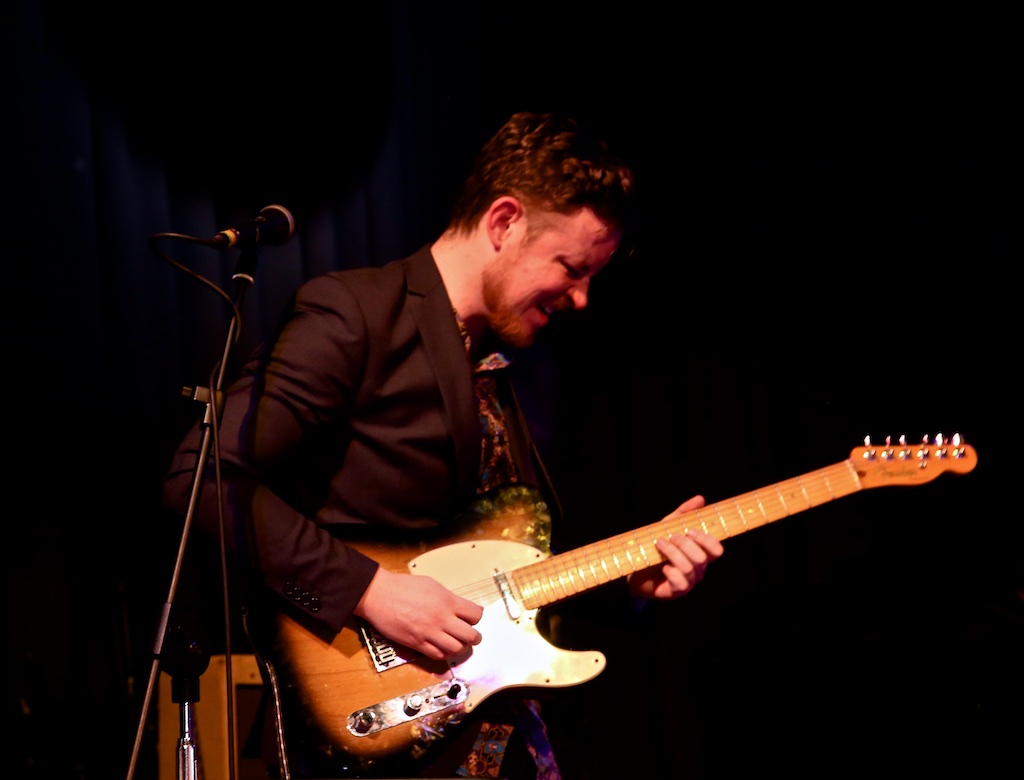 The first number was ‘Tulle’ from the Scofield album, after that we heard a number of his own compositions interspersed with standards. His ‘Who is Kenneth Meyers?’ appealed as did an angular rendition of ‘Surrey with the Fringe on Top (Hammerstein). Given the project in hand, it was unsurprising that he included ‘Boplicity’ by Miles Davis; ‘Birth of The Cool’ being the springboard from which all such arranging sprang. In the second half we heard trumpeter Mike Booth’s ‘Major Event’ – Booth is a skilled arranger and an experienced ensemble composer. It is possible that he has also influenced Swindells’ direction.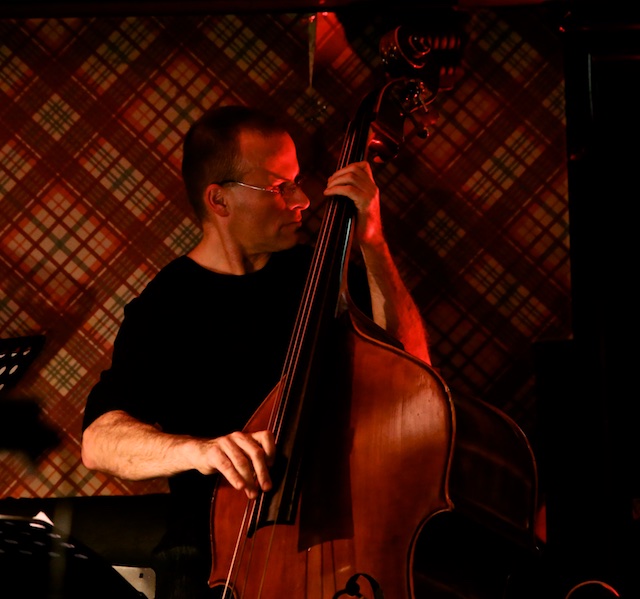
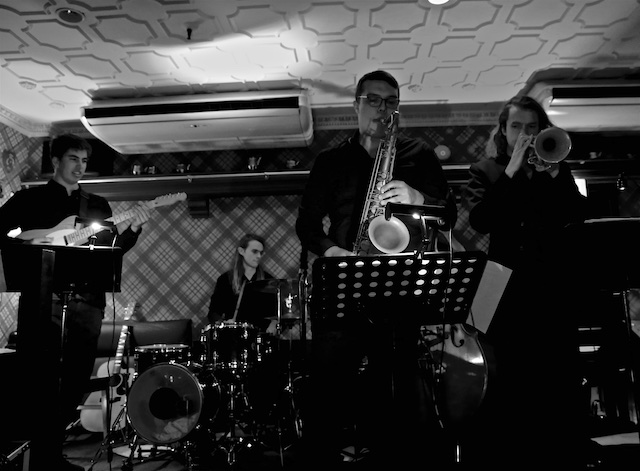 From early in the first set, I felt the passion behind the performances, the sheer exuberance that is generated when a group know that they are performing effectively. Seasoned touring musicians sometimes sacrifice this – perhaps the effort of being on the road, the effects of jet lag, robbing them of warmth. It reinforces my view as a listener, that an artist needs more than chops to fully engage with an audience. When a band is comfortable on stage, properly rehearsed and above all up for a riotous night, magic can happen.
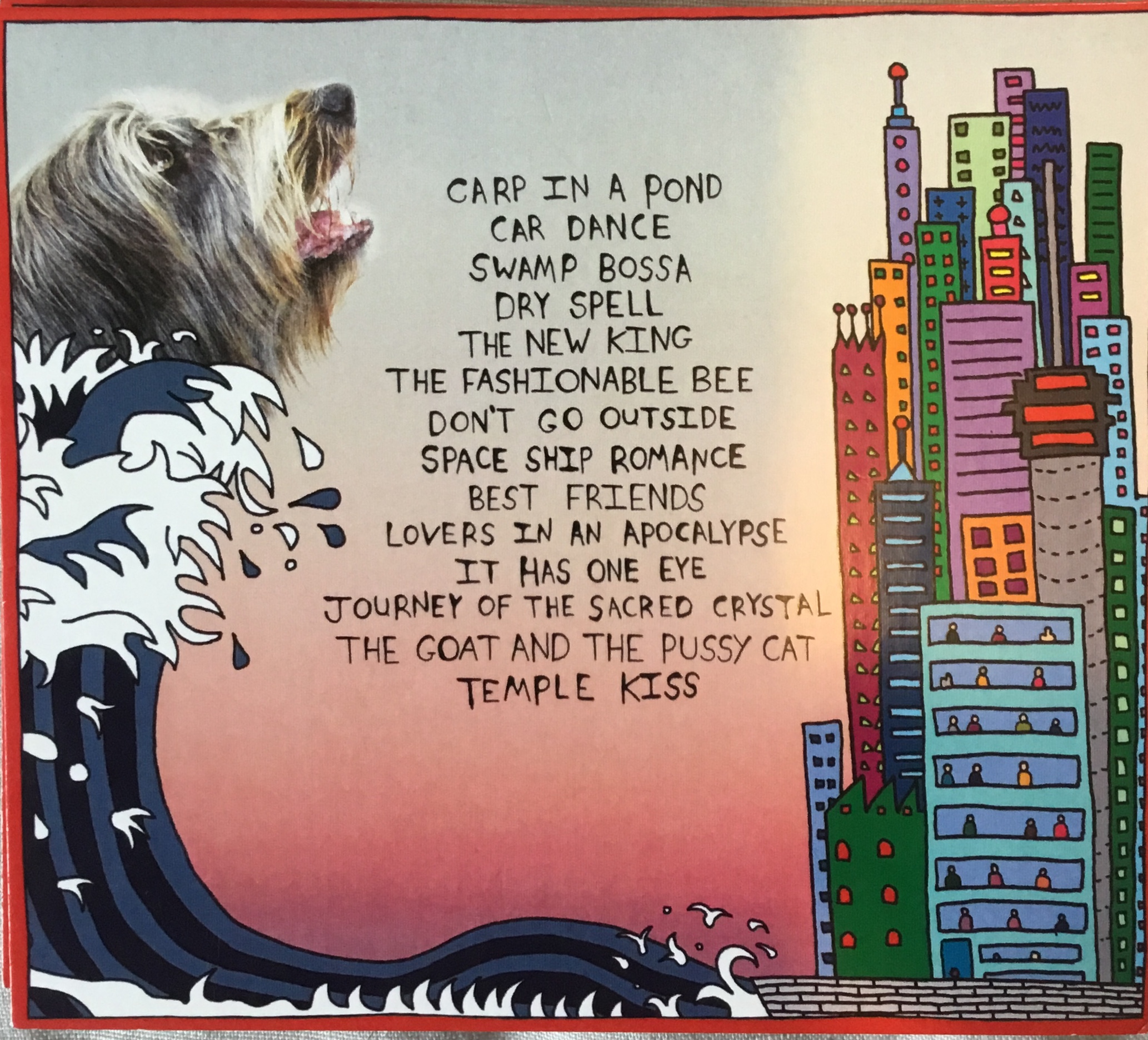
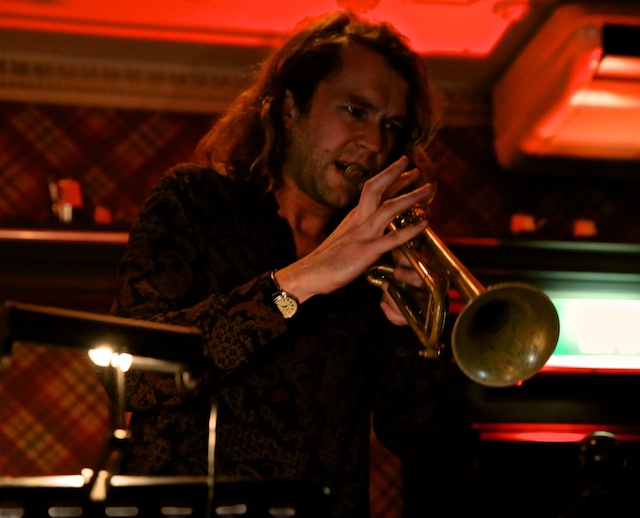 Trumpeter Finn Scholes can always surprise and over recent years he has impressed me increasingly. His vibrantly brassy ‘south of the border’ sound in the Carnivorous Plant Society is well-known, but anyone who thought that was all there was to him, hasn’t been paying due attention. He is raw and raspy on avant-garde gigs, mellow and moody on vibes and in this lineup reminiscent of the young Freddie Hubbard. His solo’s had bite and narrative, his ensemble playing was tight; above all, he generated palpable excitement, the sort that brings people back to live music again and again.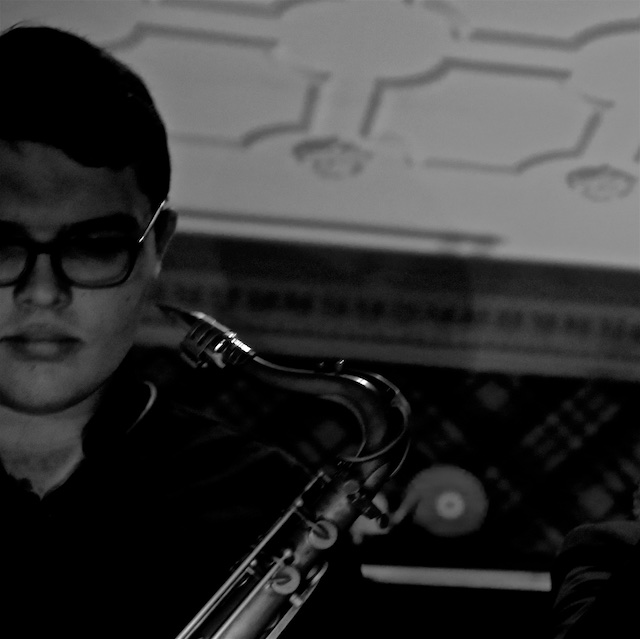
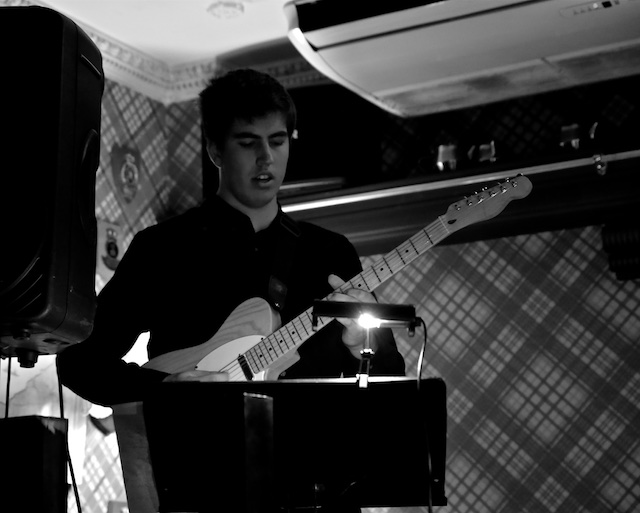
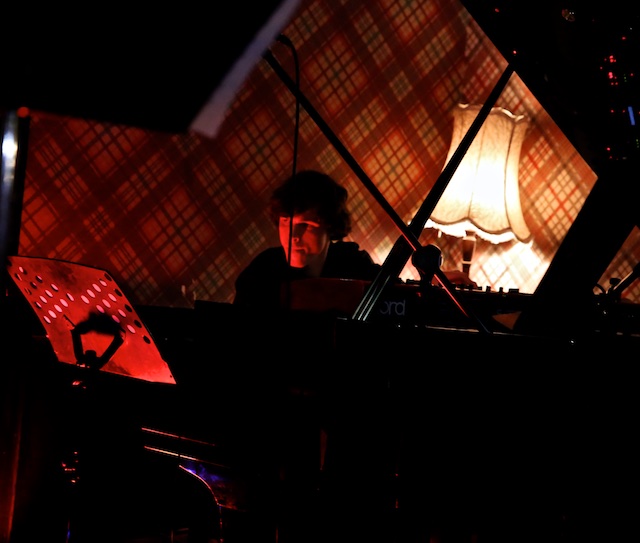
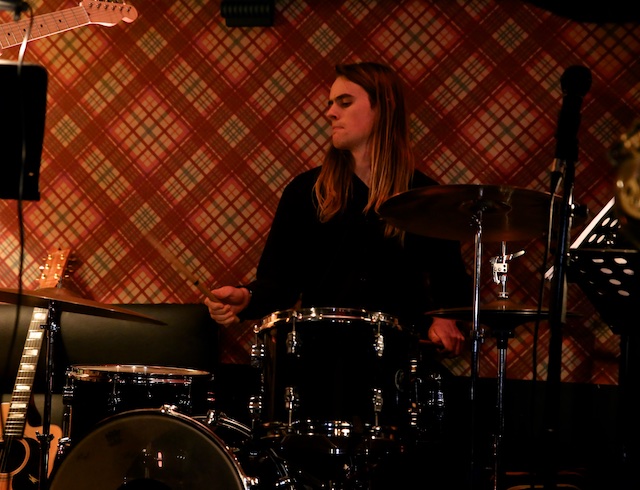
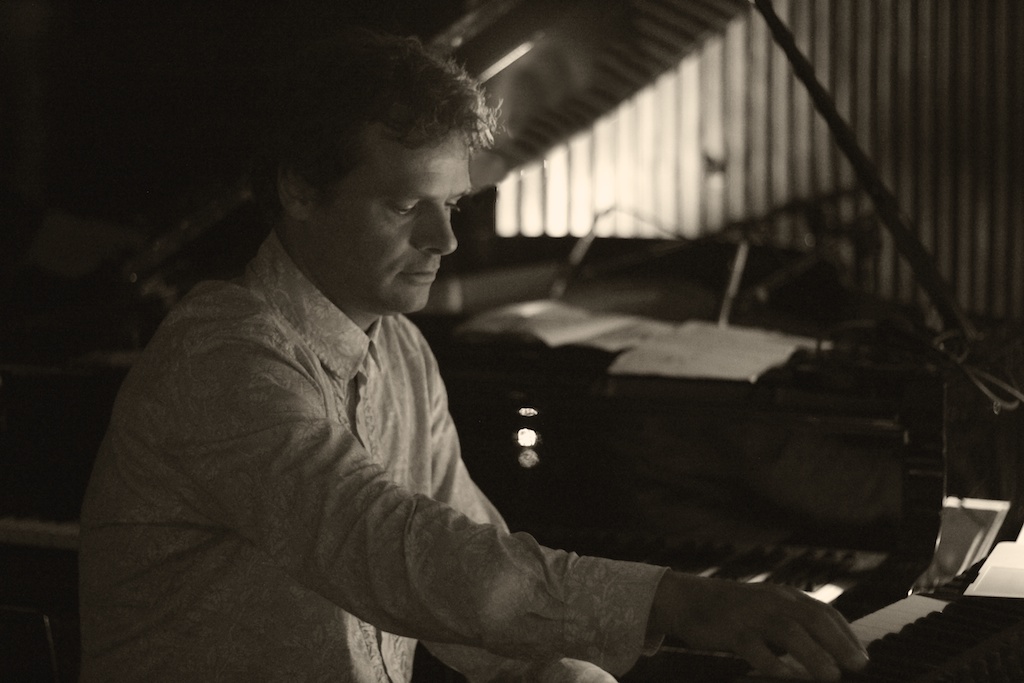
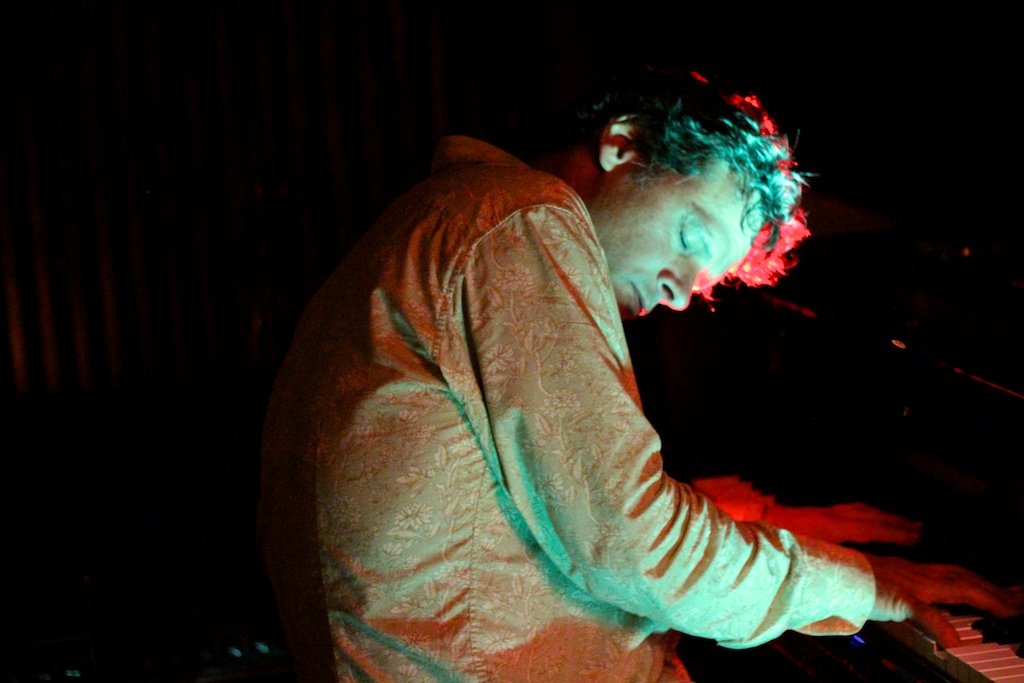
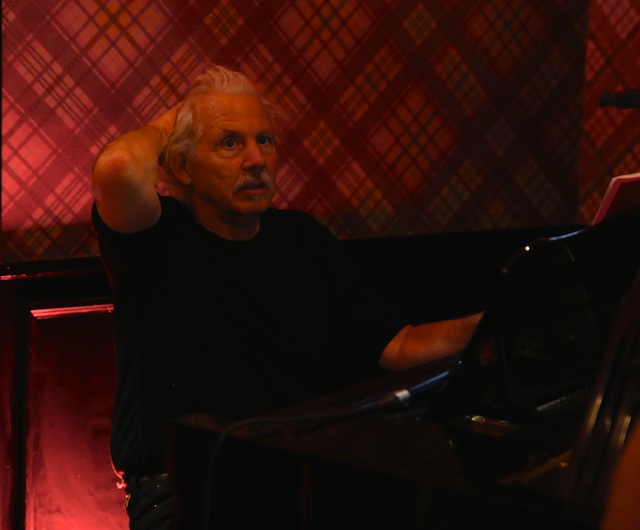 To the best of my knowledge, Jonathan Besser has not played at the CJC (Creative Jazz Club) before. While he is best known as an important composer for The New Zealand Symphony Orchestra, The New Zealand String Quartet and The Royal New Zealand Ballet, he is also a significant leader of small ensembles. Ensembles which venture far into the territory of experimental, electronic and improvised music. It is impossible to separate the man from his music. It is eclectic, original and often plaintive but generally with a sly twist of humour thrown in. In spite of his standing in the music world, Besser is modest. At the CJC he was happy to lead from the piano, which was in partial darkness and at the rear of the ensemble. His instructions were brief and staccato as if part of the unfolding suite. When he did pick up the microphone to speak to the audience he exuded an eccentric charm, bandstand asides peppered with self-effacing humour, garnished with sudden smiles.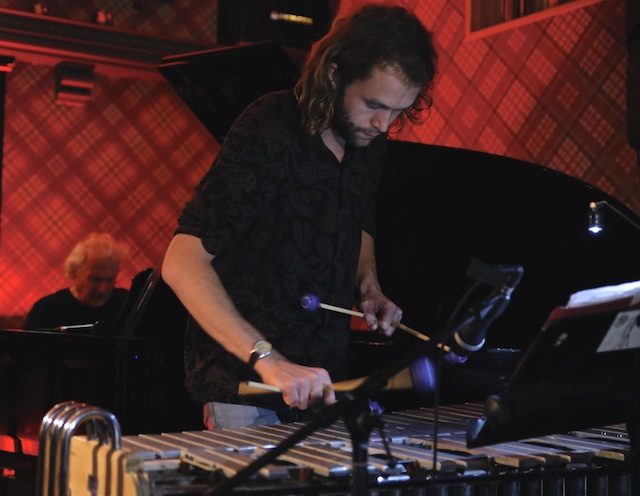
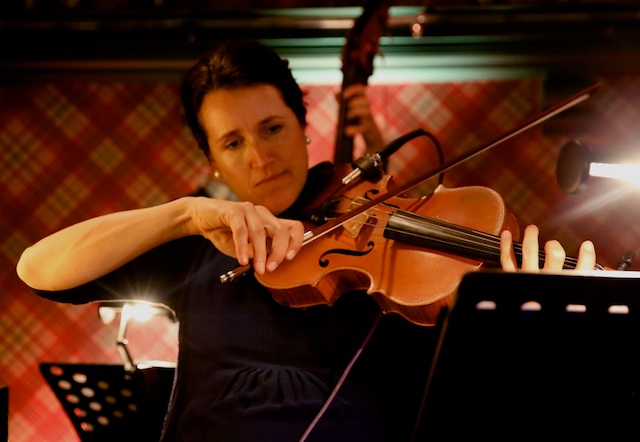 I met Besser briefly during Natalia Mann’s ‘Pacif.ist’ tour and later at the Auckland Art Gallery during the opening of Billy Apples ‘Sound Works’ exhibition. On that occasion, the Nathan Haines Quartet played Besser’s innovative compositions. I really hope that someone recorded that. It was extraordinary music, based upon prescribed letters of the alphabet. These were then allocated using the 12 tone scale as a formula to locate equivalent notes. The order of Billy Apple’s words dictating the order of notes.
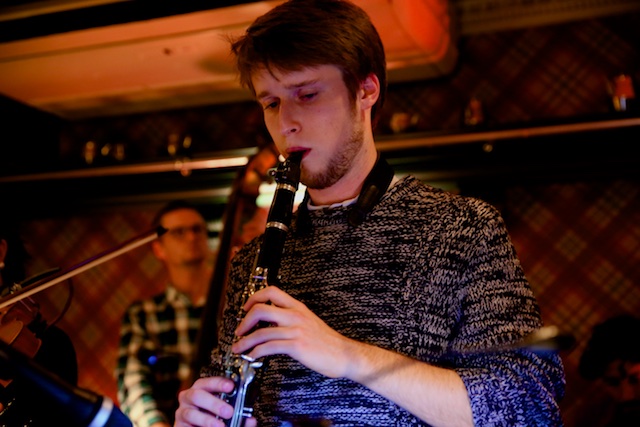 The music was not Klezmer and later I asked Besser about his influences – were there strong Jewish influences? “I am a Jewish man and I used Jewish scales, but apart from that no. I draw upon many, sources”. It interested him that I heard Argentinian references. “I have done Tango projects in the past and that is possible”. It was partly the combination of instruments, the delicious overlay of melancholia and the accents – not so far from the music of master musician Dino Saluzzi.
 The segments of music making up the suite seldom lasted longer than 4 minutes. The spaces between them brief. The mood seldom deviated from the wistful, evoking a sense of intangible longing – for something remembered – but just out of reach, a nostalgia as ancient as time itself. There were a few cheerful pieces as well, but I preferred the former. The Zestniks update themselves regularly, this time adding Caro Manins vocal lines, her wordless vocals followed the viola or clarinet in gentle unison. No one is better suited to this than Manins – she has worked with the likes of Norma Winstone after all.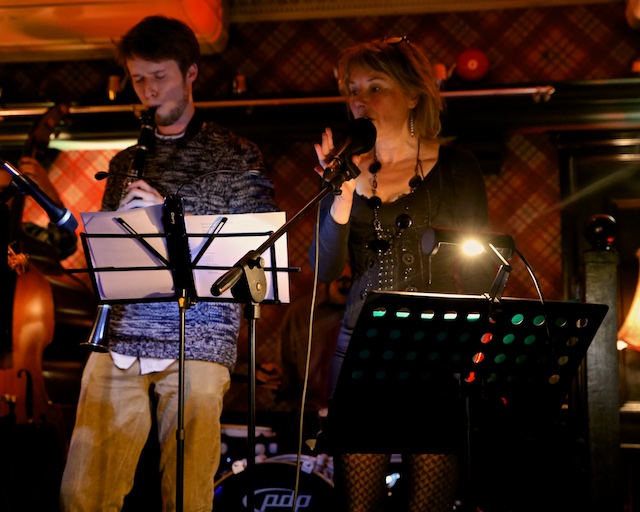
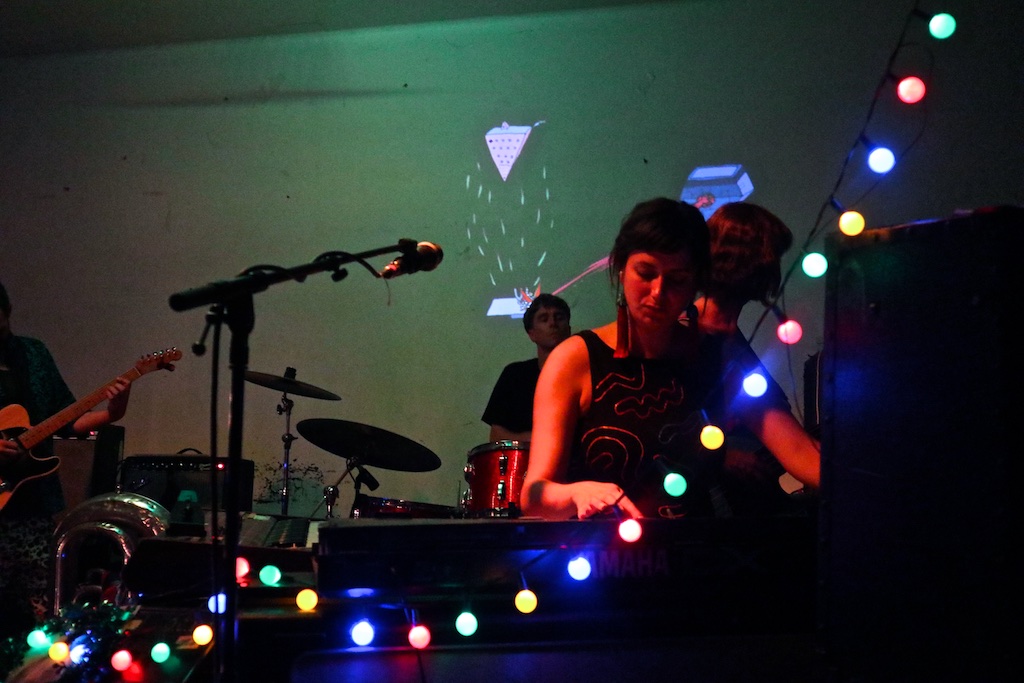
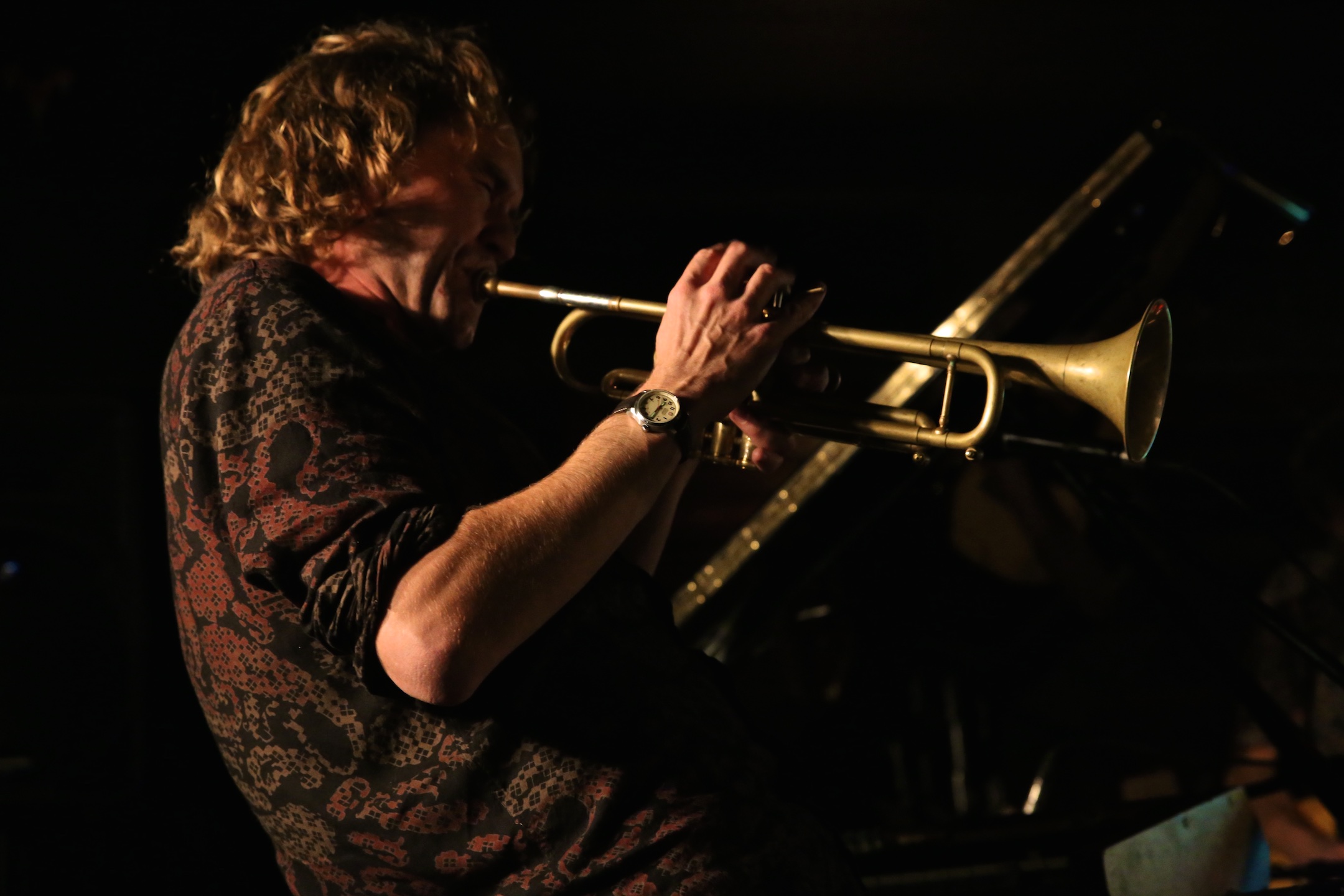 Music has a million functions, some of them mysterious; it is the soundtrack to our lives. One of those functions, should not be underestimated, is to bring fun into our day. In this age of multi-media music performance the use of film and theatre is generally ceded to heavy metal or pop. That is a shame because Jazz audiences can react favourably to music when accompanied by these various forms of media. This works well at the Golden Dawn. Sometimes when the CJC is held upstairs, we get random film and images playing across the musicians as they perform. Who can forget the crazy brilliance of ‘The Grid’ (see earlier post). While happenstance can work; truly effective interaction needs working into a performance and be way slicker than a silly strobe light or an embarrassing disco chandelier. The Carnivorous Plant Society presented a coordinated performance and it enhanced the music on offer.
 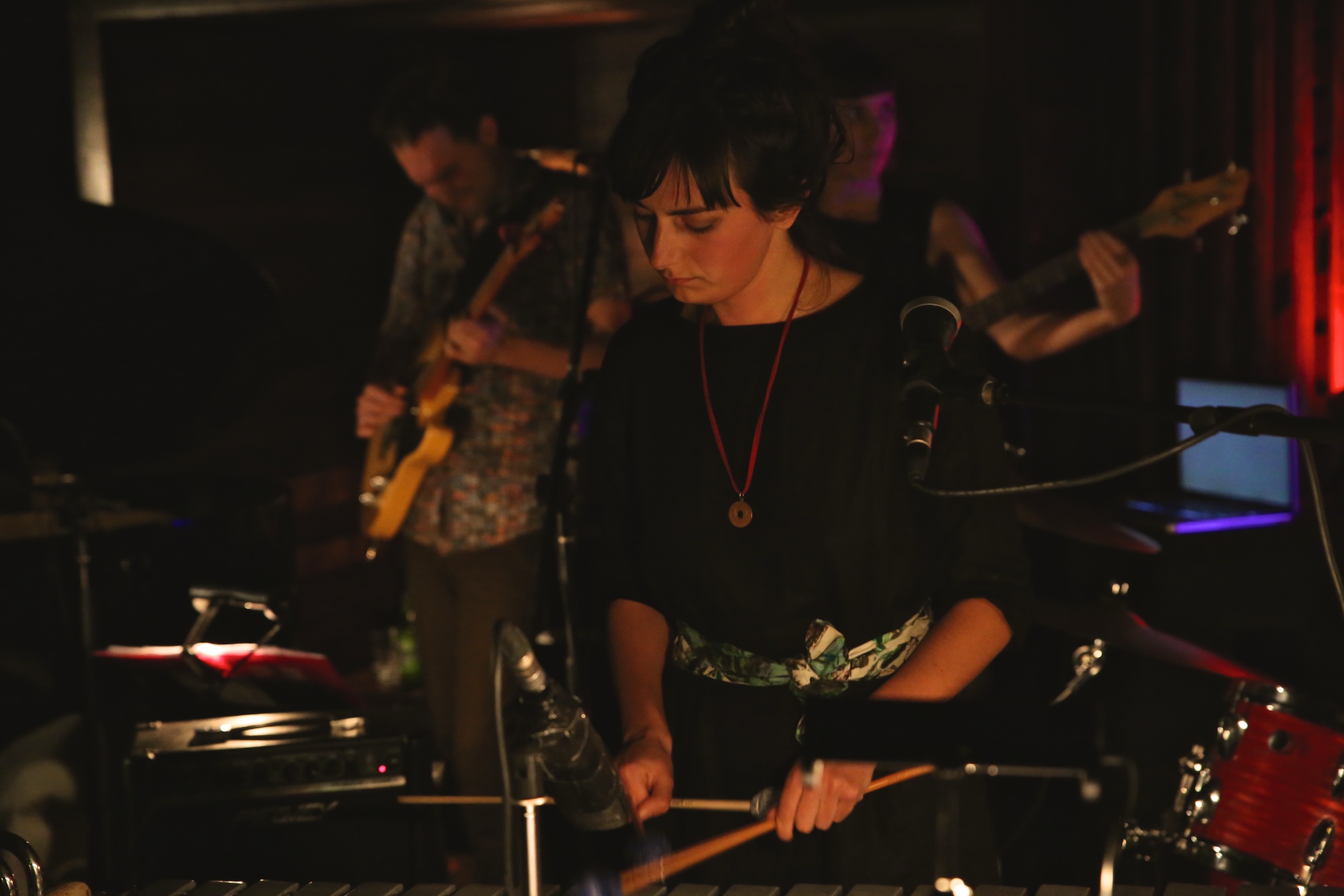 This is very much a Finn Scholes project and it has been around for some time. Scholes is primarily known as a trumpeter (often playing the avant-garde end of town). Increasingly these days he is a keyboard player and showman. Last year I saw him with this group; belting out his signature brassy Mexican trumpet sound while playing an analogue synth with his left hand. The performance often tipped into the surreal because Scholes wore a Mexican ‘night of the dead’ wrestling mask. Not an image or a sound I will easily forget.
 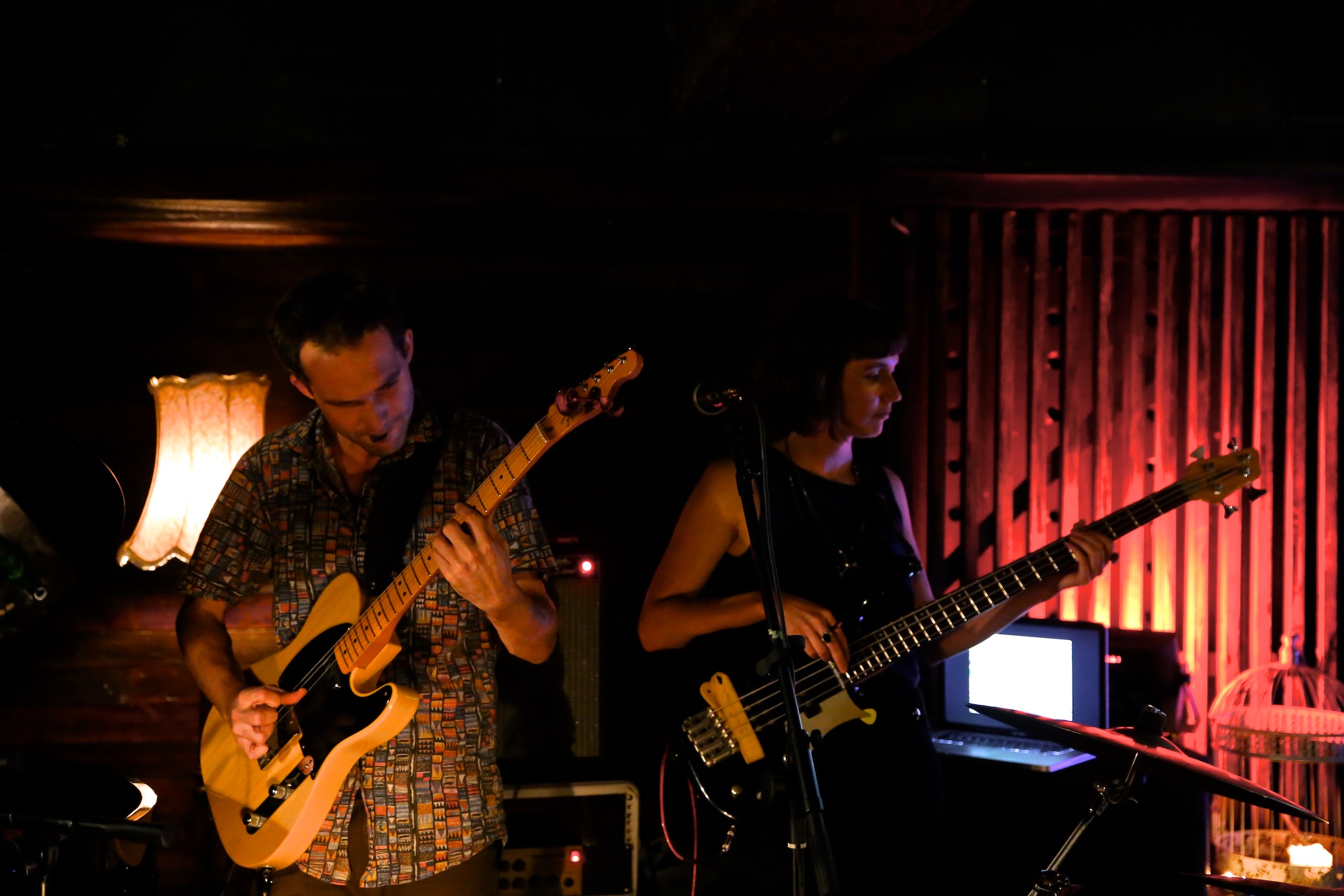 The Carnivorous Plant Society is a quintet but there are many more instruments, pedals and electronic devices than there are band members. Scholes plays trumpet, tuba, piano, numerous keyboards, electronics – Siobhanne Thompson, vibraphone, violin, percussion, pocket trumpet – Tam Scholes, electric guitar – Cass Mitchell, Electric Bass – Alistair Deverick, drums, electronics. With use of loops, wizard like gadgets and Siva like arms, a number of sounds are generated at once.
 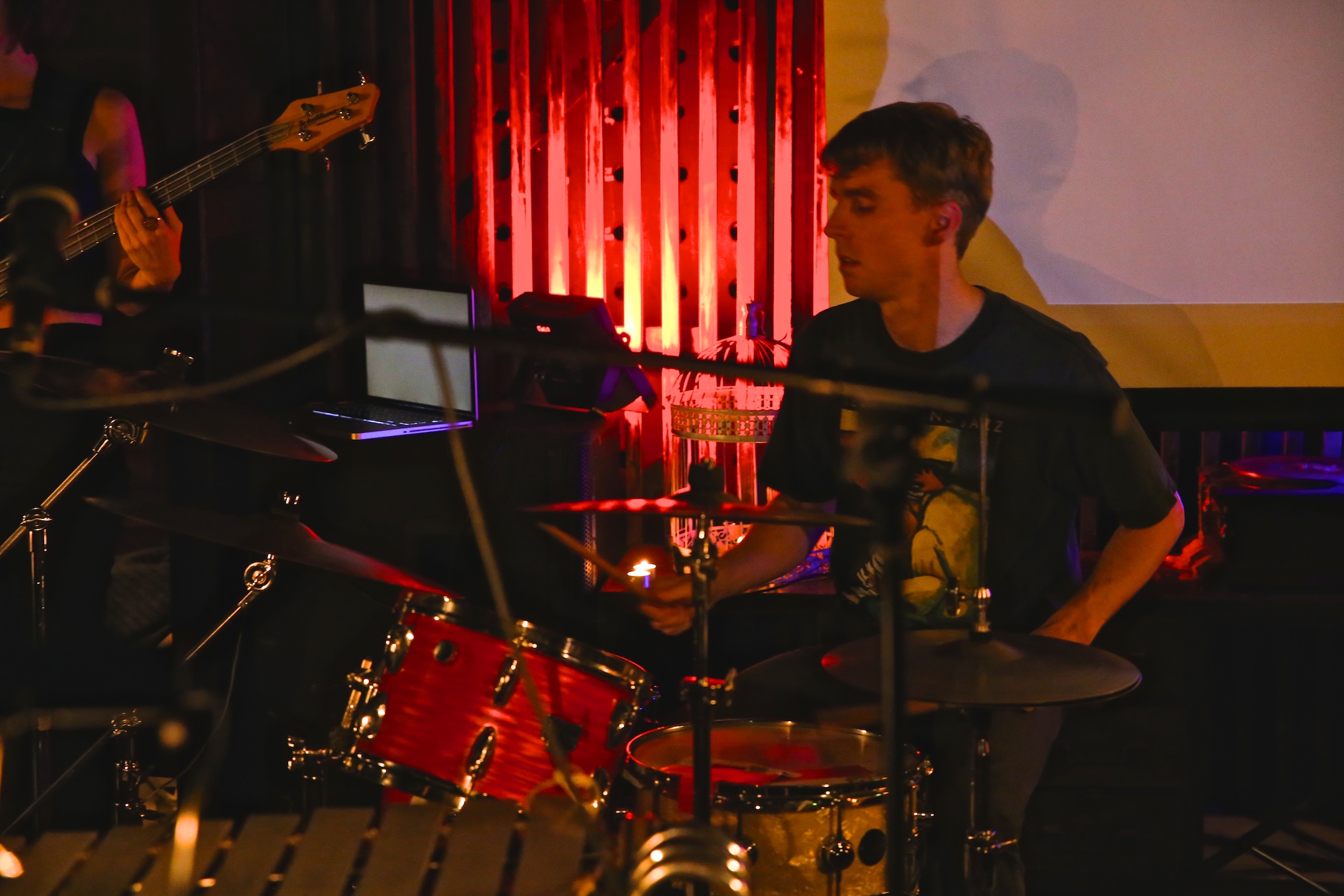 The occasional use of voice-over samples was far from being gratuitous as the ‘Max Headroom’ like humour often lay in these samples. There were strange Stephen King like stories of robots taking over the world and oddly quirky adventures relayed. The latter as if being recalled by deadpan 1950’s radio hosts. Many of these performed against brightly coloured cartoon graphics that played over their heads. The graphics were brilliant and although I have no evidence for supposing this, I presume that someone in the quintet (or a close friend hip to the project) created them.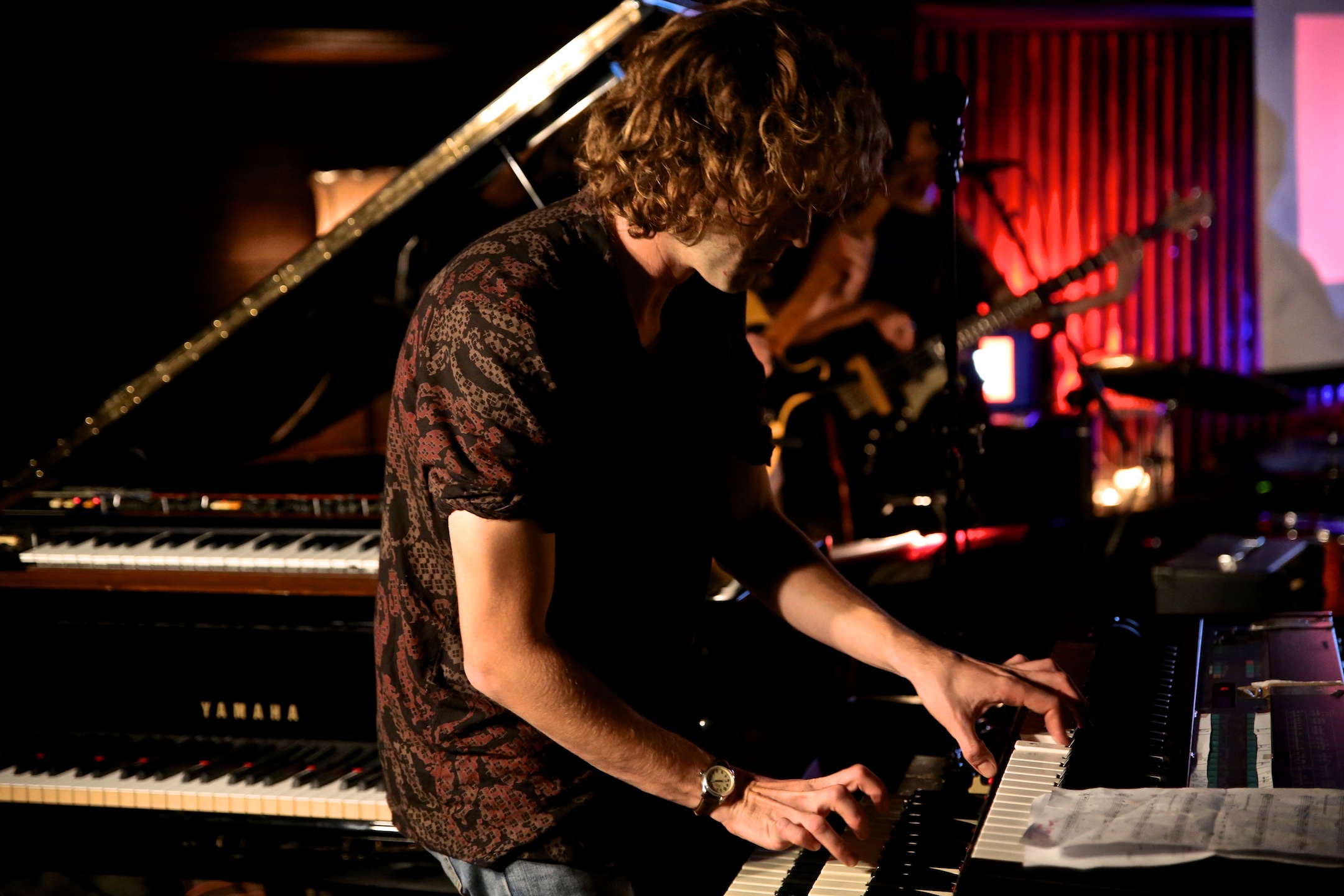
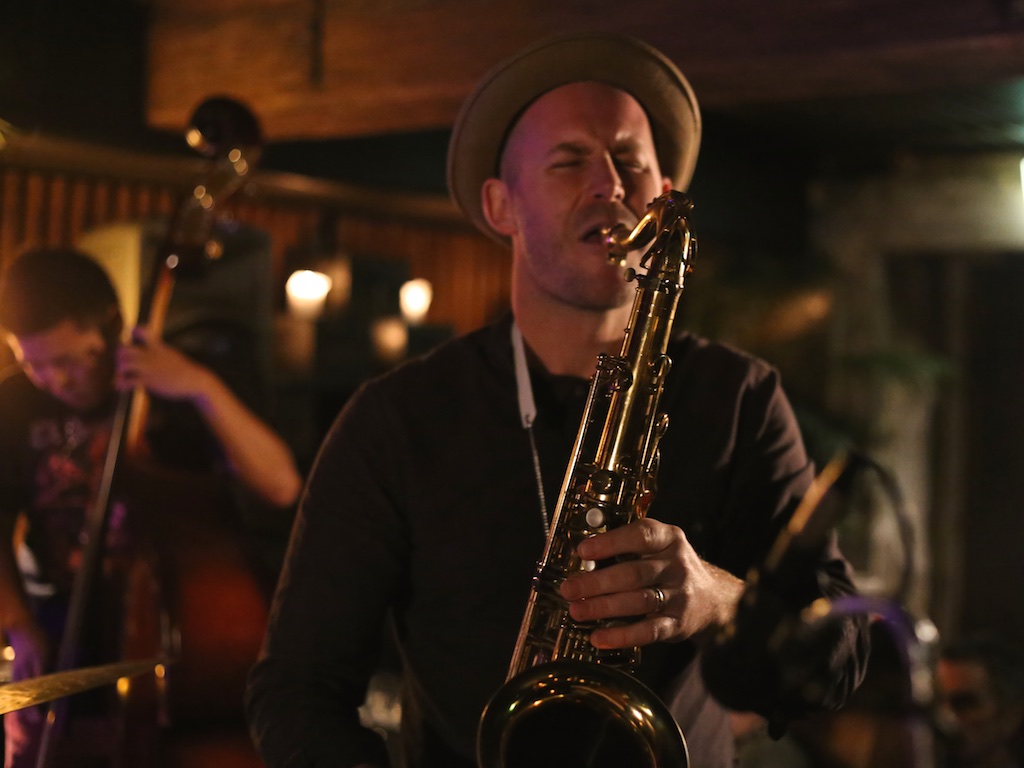 Any astronomer worth their salt will tell you that it is paradoxical for a sun to embark on a circular orbit. The last time this happened was during the Spanish Inquisition. On Wednesday the paradox increased when the Circling Sun departed their orbit to play at the CJC (Creative Jazz Club). This gig had been a long time coming and we welcomed it. Hearing them away from the babble of the hard-drinking Ponsonby Road crowd was a treat for us. The Circling Sun always give of their best, but this time we could hear the quirks and subtleties unfiltered. This is a band with a vast soundscape and the Jazz club echoed to the sounds of doogan, Tuba, analogue keyboards, digital keyboards, piano, trumpet, flugel horn, flute, tenor
  saxophone, upright bass, drums and electronics. This is the type of music that sits well with me.
 times; then out of nowhere come tasty arranged melodic heads. Deftly extracted from the frequent mesmerising groove laden vamps.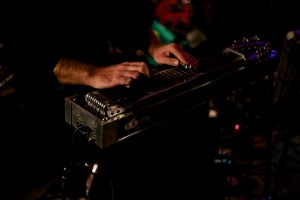
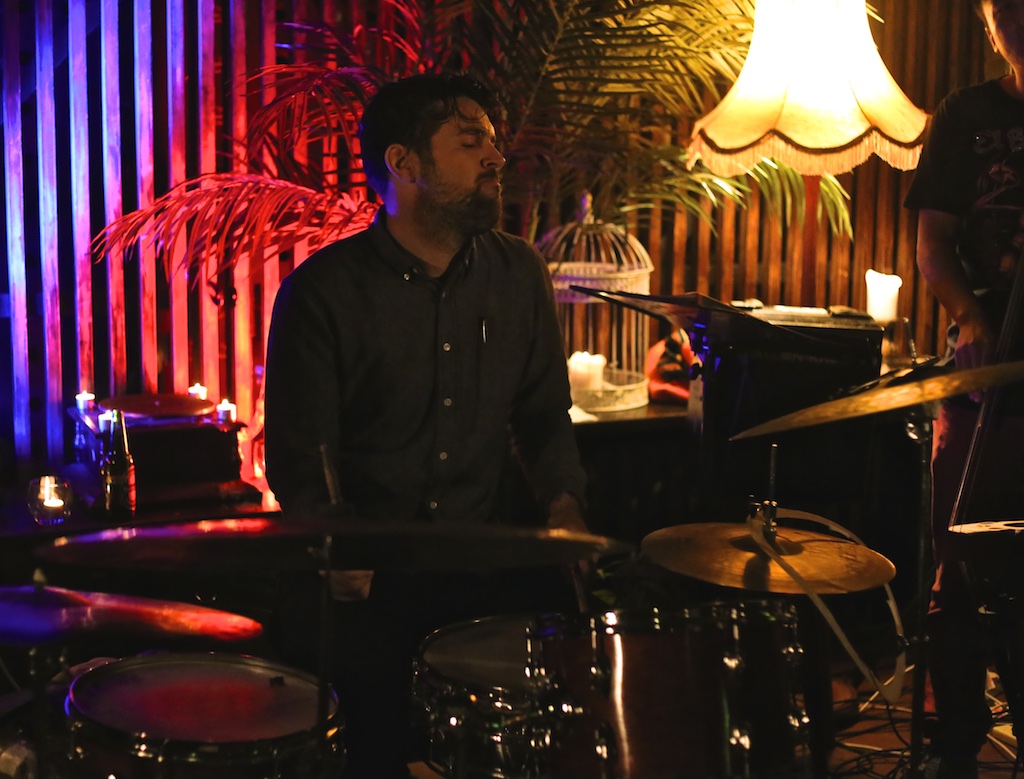 The most powerful presence is drummer Julien Dyne. A versatile gifted artist who has travelled and recorded widely. His beats while often referencing his multi genre background, urge the band to greater heights. It is a privilege to see drummers of this calibre and I hope that he continues with open-ended Jazz projects like this. I have heard him on numerous occasions and I like what I hear. As a unit, this combination takes no prisoners and the audience were glad of it. The first guest to join them was J Y Lee who quickly settled in on baritone saxophone. He often plays with the Circling Sun and is a popular addition.
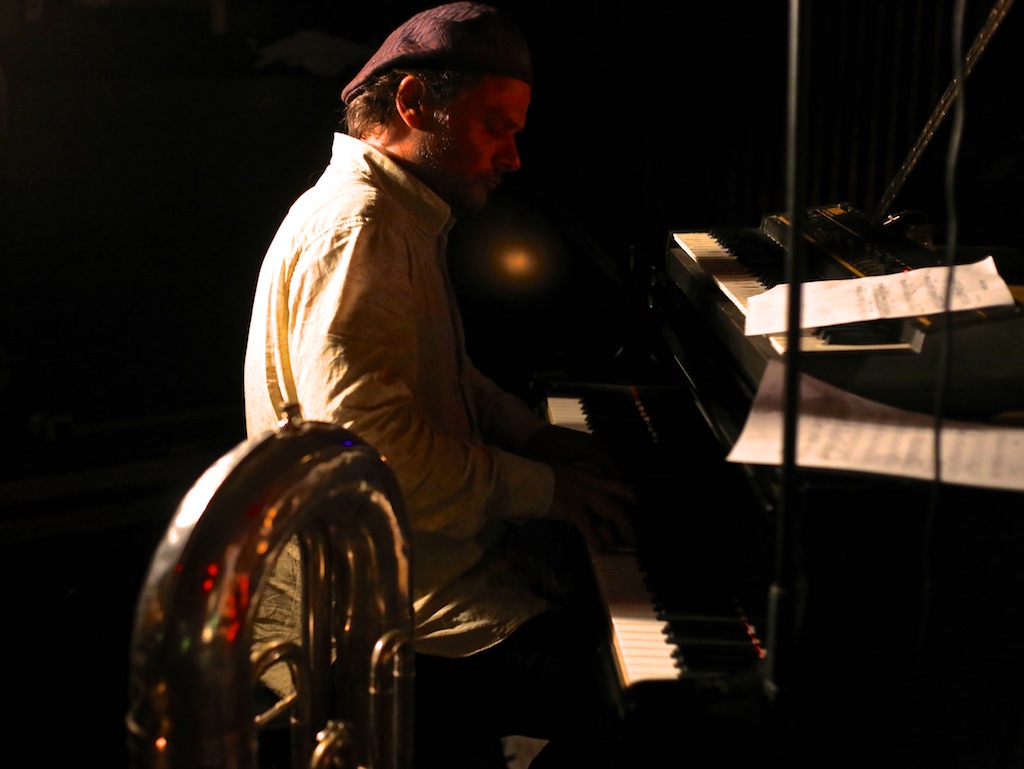 During the second set a great gig got even better. Jonathan Crayford arrived and without too much persuading, sat in on piano. This was met with obvious delight by the audience, as Crayford is extremely popular. He knew none of the tunes as they were mostly originals and there was virtually no sheet music to guide him. It didn’t matter. Someone would announce the key and then a few chords in he would locate the heart of the tune. A musician of his experience and gifts is no stranger to situations like this. The audience, clearly wild about the gig, were by now whooping with enthusiasm between numbers. When Crayford sat in they felt like they’d won the lottery. He doesn’t get home often, but improvised music fans are eager to soak up what ever they can get of him.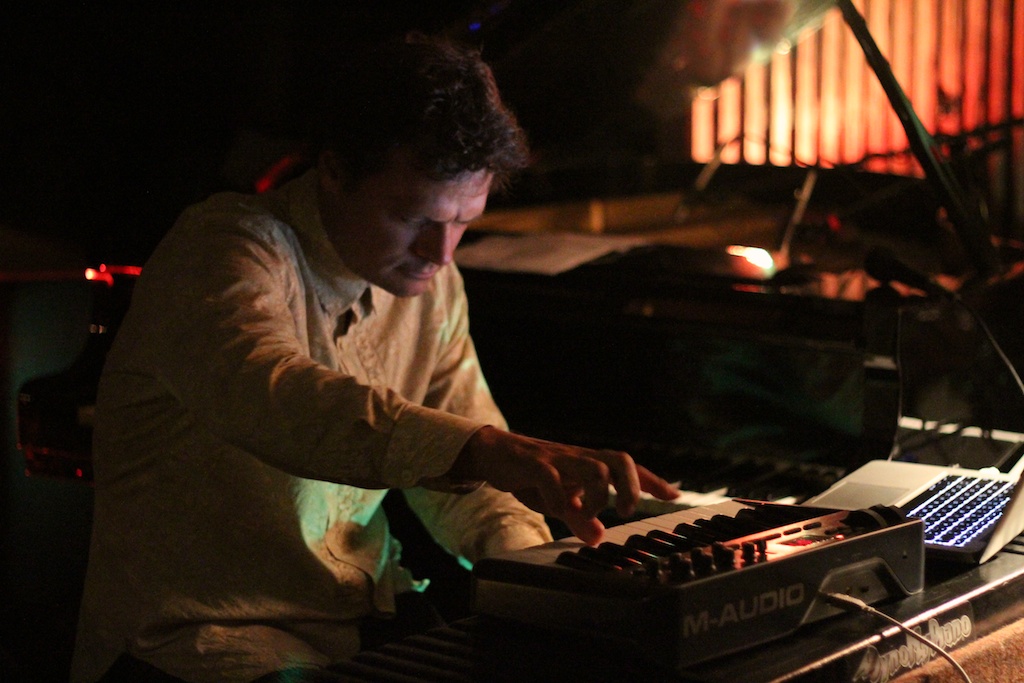
 JazzLocal32.com