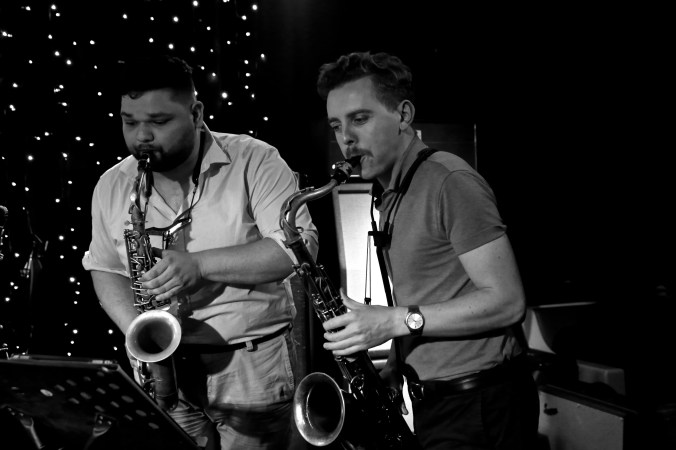
 This is the second appearance of Flightless Birds at the CJC Creative Jazz Club and the audience flocked to hear them. The band is a history lesson to the initiated and an initiation to those unversed in Jazz history. They presented a programme that was both clever and accessible and therein lay its charm. The band specialises in contrafacts and especially those of the bebop and swing era. The inside joke is that many of those tunes were once contrafacts themselves; new and often frenetic tunes written over the changes of familiar ‘songbook’ standards. In the bebop era tunes like ‘Cherokee’ (Noble) became Ko-Ko (Parker), ‘I Got Rhythm’ (Gershwin) became ‘Dizzie Atmosphere’ (Gillespie). Musicians like Charles Mingus took things a step further by introducing a wry political humour into titles, exemplified in his contrafact ‘All the things you could be by now if Sigmond Freud’s mother was your wife’ was ‘All the things you are’ (Kern). A throwaway favourite of mine is ‘Byas a Drink’ (Don Byas) which is ‘Stompin at the Savoy’ (Sampson).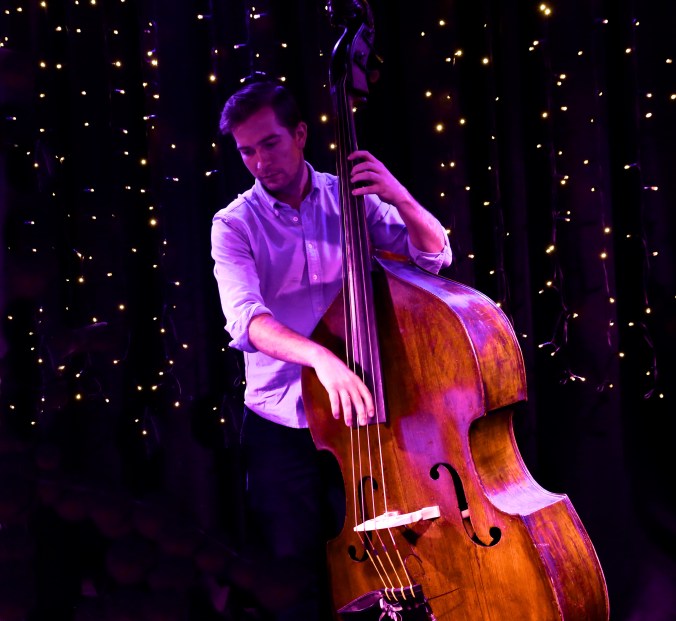
The above examples are more than a play on words, they are fiendishly clever compositions and sometimes as famous than the tunes they arose from. This was not cleverness for cleverness sake but a bold in your face statement arising from the ongoing struggle of African American Jazz musicians who were tired of being sidelined for jobs, or sent to the back door of the hotel. Especially at a time when many of the inferior white bands cashed in doing the same material, often rising to superstardom. It was also about having fun and mocking the incredulity of the music press. They did it because they could and they were extraordinary musicians who used their intellect to brand a new music. This band is a modern antipodean successor, DNA intact.
The Flightless Birds took this concept a logical step further and not only created contrafacts out of contrafacts but they hinted at or altered the embedded ‘quotes’ and references. It was done with a smile but it was also done with a certain reverence. The times that these tunes arose from were acknowledged, but the joy and eternal spirit of Dizzy et al shone through. Here are a few of the gig tunes and their origins: ‘Stephen Thomas’ (Tom Dennison) is over the changes of ‘St Thomas’ (Sonny Rollins). There is a world of referencing right there (posted as a YouTube Clip). Stephen Thomas is, of course, the gifted Auckland drummer. ‘Buy a Car’ (Passells) utilised the changes of ‘Take the A Train’ (Strayhorn), ‘J Y Lee’ (Passells) was naturally ‘Donna Lee’ (Parker), ‘The Punisher’ (Sinclair) was a great new arrangement based on the changes of ‘In a Mellow Tone’ (Ellington) and so on. This was a fun night. Passells announcements were entertaining (as they always are) and above all the band looked as if they were enjoying themselves. We were also. 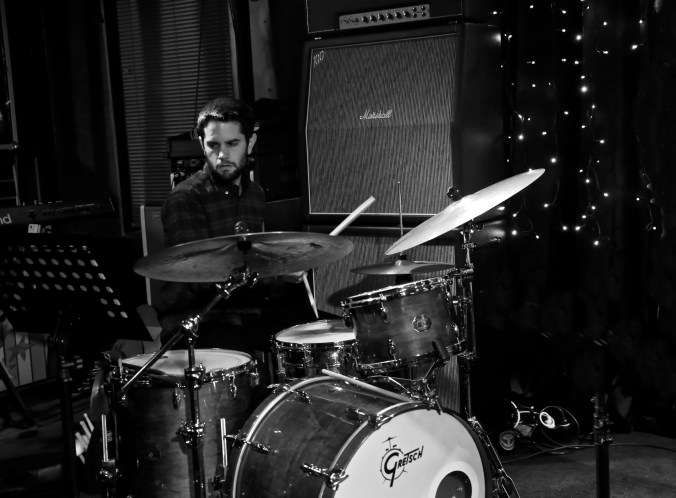
Flightless Birds: Callum Passells (alto saxophone, Compositions), Ben Sinclair (tenor saxophone, compositions) Tom Dennison (bass, compositions), Adam Tobeck (drums). The gig was at the Backbeat bar, K’Road, Auckland, for the CJC Creative Jazz Club on April 25, 2018.
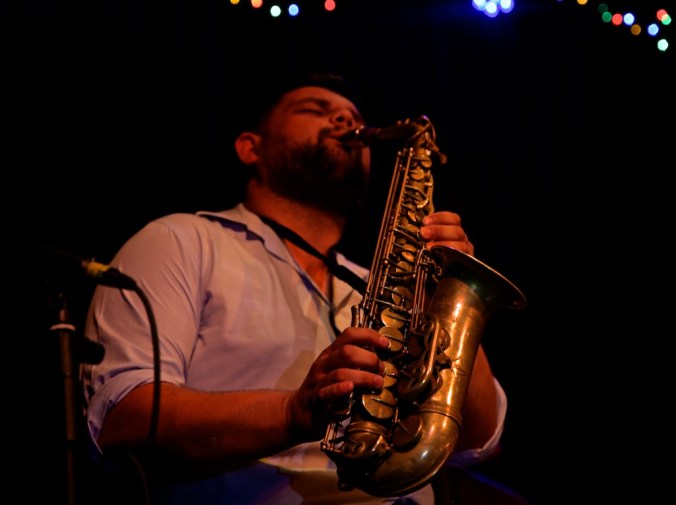 Callum Passells’ newest project was an exploration which took us to the outer edges of Bebop. The title ‘Flightless Birds’ a wordplay; a pebble tossed into the pond, suggesting many possibilities. The obvious Jazz reference is a comparison between flightless New Zealand birds and Charlie ‘Bird’ Parker – his musical descendants especially. A cohort that tried and often failed to catch his musical coattails. For a time after his death, alto saxophones were laid aside in favour of the tenor; only a brave few risked comparison with the troubled prodigy. As his legend grew he seemed unassailable. Attempts to demystify, to separate the legend from his musical legacy came later. In the post millennium era few such sensitivities remain. Parker is deeply admired for his genius, then deconstructed unselfconsciously. The gifted altoist Rudresh Mahanthappa immediately comes to mind.
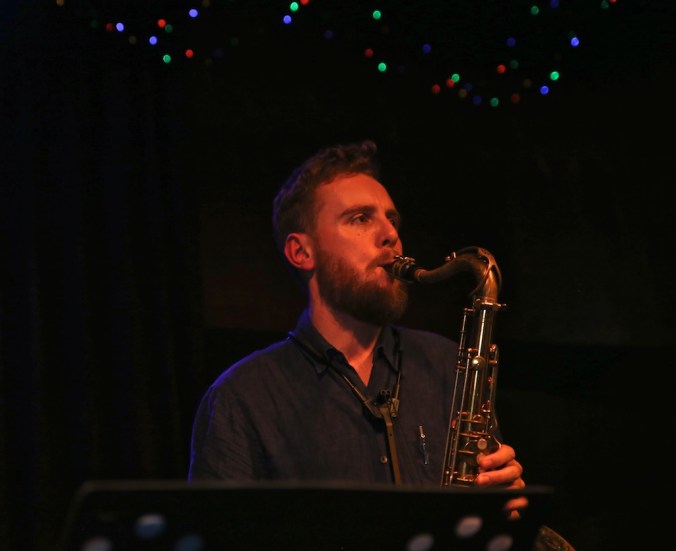 The two things that draw me to Passells are his tone and his communication of ideas. For a musician who leans toward the avant-garde he has a remarkably clean tone. This works well for him when he heads into uncharted choppy waters, cutting though the turbulent air incisively. There is obvious precedent for this in Albert Ayler (who strove to sound like Desmond or Konitz while tearing at the very fabric of harmony and form).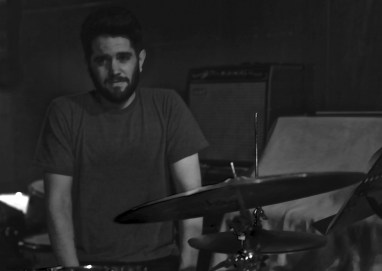
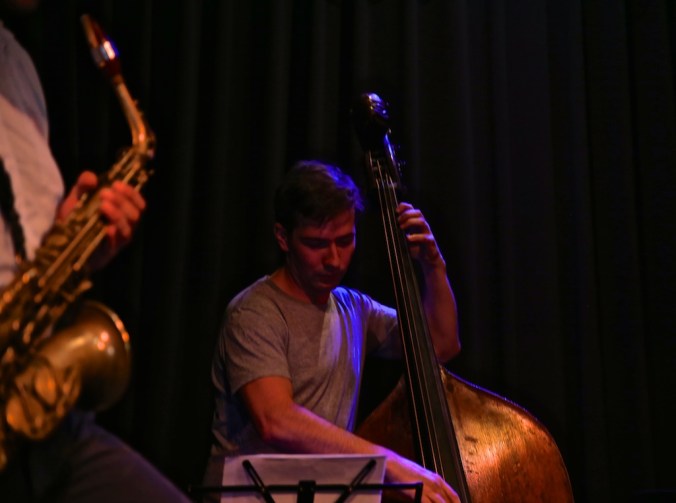 The tunes were all ‘contrafacts’ and cleverly constructed. I am crap at working out the mother tunes – a job best suited to musicians fed a rich diet of standards’ changes. The pieces had titles like “The Punisher” (Sinclair), or ‘Buy a Car’ (Passells). The Punisher was written over the changes of ‘In a Mellow Tone’ (Ellington) and ‘Buy a Car’ over ‘Take the A Train’ (Strayhorn). After each tune the original was announced, then people got it immediately, cursing themselves for not getting the connection quicker. The tunes were close enough to hint at familiarity, but far enough away from the original to cause some head scratching. One tune needed no guesswork. “I’ve got it bad and so I’m obliged to notify all previous sexual partners” (Passells) – no prize for attributing that one.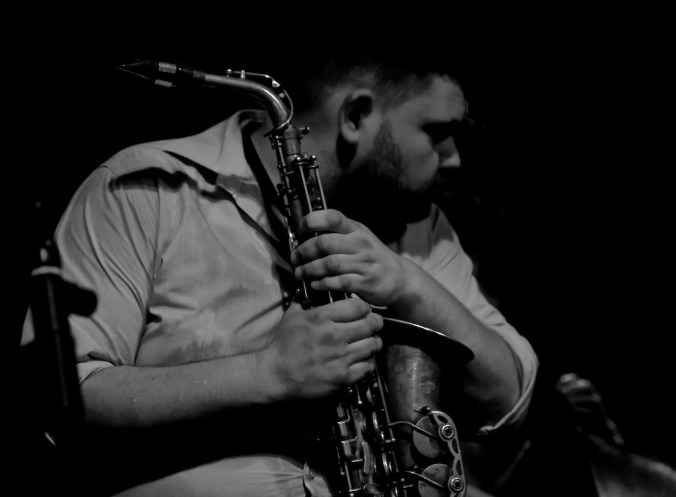
 JazzLocal32.com