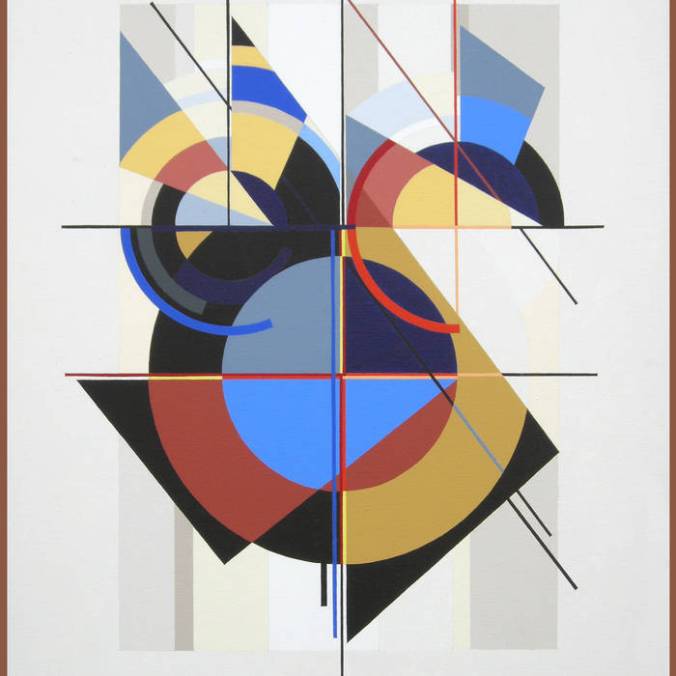
 The eponymously titled album ‘Lucian Johnson+5’ was first released in 2016 and has recently been re-released in Japan on vinal. I have only encountered Johnson performing once or twice as he has spent a lot of time outside of New Zealand. He was born in Wellington, but led an interesting life elsewhere, travelling the world with various innovative bands and living for long periods in Paris. I first encountered him when he toured with ‘The Troubles; a delightfully anarchic folksy ensemble he co-founded along with Scottish Jazz drummer John Rae. After hearing Lucien Johnson+5, I will be paying close attention to his futures offerings.
I became aware of the album’s existence soon after its release, but carelessly lost the Bandcamp access code when I changed computers. I finally regained access, listened and was immediately impressed. This is a mature piece of work with real depth. Given the diversity of experience, the musicians bring to the project that is hardly surprising. Johnson’s musicianship and compositional abilities are well known – pare him with these five musicians and you get something special. Any project involving Crayford, French, O’Connor, Van Dijk and Callwood is going to grab the attention.
There is a certain mood emanating from this album, a palpable sense of the Iberian Peninsula. It is more than just the track names – it cuts far deeper than that. You will not hear overt Jazz Flamenco or Moorish tunes. You will hear reflective ballads, Latin, hard swing and all with fine arrangements (arrangements which evoke the hay-day of the classic Jazz ensemble). The album warmly invites us to engage, and the deeper we engage the greater the reward. The musicians were clearly onboard with the project and each of them gets a chance to shine. There are many wonderful solos, none that are too long and each solo harnessing to the spirit of the collective. Brilliant musicians all, but with no egos on display.
‘Light Shaft’ has a dancy Latin feel with French and Johnson reacting to Crayford’s rhythmic accenting; Crayford later tying it all together with a masterful solo. ‘El Cid’ is another great tune, again with a Latin American flavour, this time Afro Cuban. The clave aside, it evokes the Reconquista hero perfectly. El Cid’s is a tale well worth the re-telling; especially since modern scholars discovered that his antecedents were actually Moors, the very people he fought with such evangelistic fervour – a modern parable. ‘Zapata’ is another delightful tune and with plenty of meat on the bone. It opens with O’Connor beating out a Krupa like rhythm on the toms, the ensemble comes in next, navigating a skillfully arranged head with nimble ease. Van Dijk and Crawford follow with stunning solos, but everyone is superb. This is a great piece of ensemble playing and above all it is fun. Here is Zapata:
My favourite from the album is ‘Asturias’. This track has a thoughtful quality and as many layers as a ripe onion. In spite of being a sextet, the ensemble sounds like a nonet at times – capturing the vibe of 50’s Gil Evans. This lies mainly in the skillful writing, as space and texture are maximised. The rich voicings of the horn line are also of importance, as they somehow manage to convey substance and airiness at the same time. Nick Van Dijk in particular, utilising the opportunity to shine through. Crayford and Callwood also have essential roles – Crayford creating a strumming effect, as Callwood did in the opening bars. Asturias is a region of northwestern Spain and also a Flamenco guitar style (a style often adapted to other instruments). Albeniz wrote in this style in the 19th century, The melody over a strummed pedal chord (the thumb playing the melody line).
When we listen to evocative music, we bring our imagination to the experience. Whether intended by Johnson or not, this album took me back to Spain. I have travelled extensively in Andalucia and rekindling those memories through this music was a pleasure. The artwork is also superb and that is credited to George Johnson. The best place to source this album is on Bandcamp or via the Lucien Johnson website. lucienjohnson5.bandcamp.com
 In spite of living at the other end of the Island, Lex French is a regular fixture at the CJC. It is hardly surprising since his popularity with Jazz audiences is ever-growing. There are not many trumpeters of French’s stature in New Zealand and it is our good fortune that he remains. He obtained his Masters from McGill University in Montreal, a university with a strong focus on brass. A university which had an ongoing association with the UK-based Canadian trumpeter Kenny Wheeler while he was among us. I mention Wheeler, because as I walked down the stairs to the club to set up my gear, I heard the unmistakable opening phrase from ‘Smatter’ coming out of the darkness. Just the opening phrase and then silence.
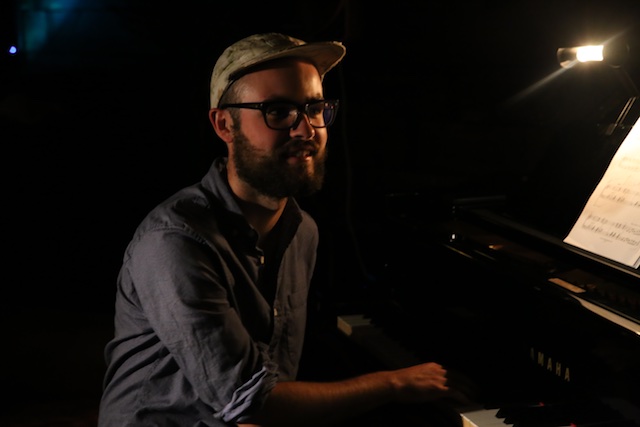 It was so Wheeler-like, that I assumed someone was setting up a Wheeler album on the club sound system. As my eyes accustomed to the low light I saw French standing alone – repeating the phrase. French is not a one-trick pony; he is as modern as tomorrow, but at other times, old school respectful. He can punch out high notes or swing hard bop like a Blue Note artist back in the day. This is not a musician to pass up on.
 I particularly liked French’s compositions ‘Kasid’ from the first set. There were many reasons to like this; the musicians innovative explorations of the theme, the evocative middle-eastern mode underpinning it, and the fact that it referenced the wonderful Iraqi poet Abdulkareen Kasid. An achingly beautiful melody tinged through with bittersweet sadness, establishing itself delicately over a quietly incessant bass motif. When Steele came in, his opening chords were Oud like – giving the impression of soft strings jangling sweetly in the night air. I listen to a lot of middle-eastern improvised music and this performance stands beside the best of those. In the background, the drums tap tapped (like stones tumbling in a stream, and every so often swooshes).
 The poet Abdulkareem Kasid is new to me (and I have a huge collection of poetry). To discover a poet like this is exciting and I thank Lex French for this. What could be better than to experience a night of interesting music, and at the end, find a poet? I finish this with some words from that poet – listen to the piece as you read the lines – I did.
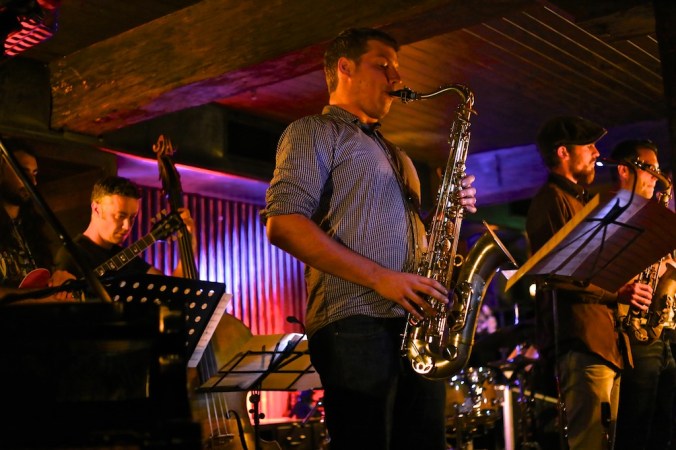 I first heard the JAC two years ago and I liked what I heard immediately. Their sound has textural complexity, but the charts are so well written that the band manifests as if it is a single organic entity. As they move through the pieces, rich horn laden voicings appear, shimmer and fade seamlessly into the next phrase. In spite of the heavy punch of the front line, the band can float airily over passages. This affords them choices that are seldom realised by larger ensembles. They have a real nimbleness
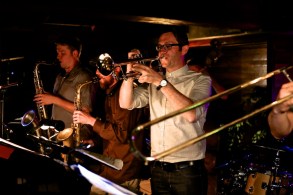 and this is surprising considering their large musical footprint. A bigger footprint than the size of the band would suggest. The really good nonets and octets achieve this.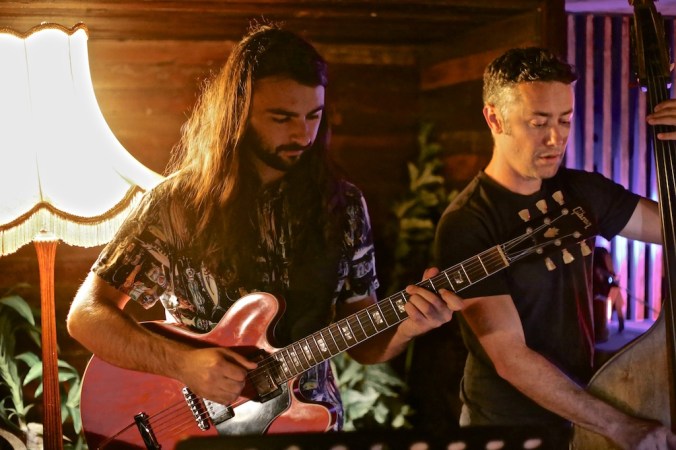


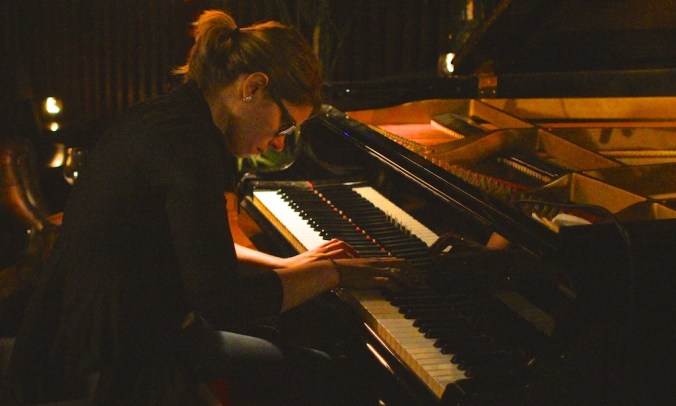 Any mention of Quebec catches my attention as I really like that part of Canada, so when I learned that a highly rated Montreal piano-trio was coming to town I knew that it would be a good experience. I had not encountered the Emie Roussel Trio before, but a quick glance at the accolades they have garnered and the numerous You Tube clips that have sprung up over the past year, gave me all the information that I needed. The group had attracted particular attention at the Montreal Jazz Festival and from what I saw online, deservedly so.
 As you move about that city, the familiar and the exotic coexist at every street corner. I came to realise that this almost subliminal familiarity was the manifestation of a spiritual kinship. The sort that exists between certain special cities, a connection that is not about trade, mayoral visits or geography; a connection of musical and artistic synergies.
  The Emie Roussel Trio are part European and part American in aesthetic. They are wholly Montreal. Their music has a pulse and a vibe which draws on european classical music traditions and the deep earthy Jazz grooves that arose from the American continent. In the hands of improvisers like Roussel these influences communicate a universal language. As the pieces unfold there is a sense that this band works as an organic whole. What we heard was tight and full of vibrancy or as a musician I spoke to during the break put it. “We are hearing the result of rehearsal, dedication to a project, discipline and road time”. While I love the free-flowing loose feel of New Zealand improvising bands, I must acknowledge that we seldom hear trio’s which sound like this.
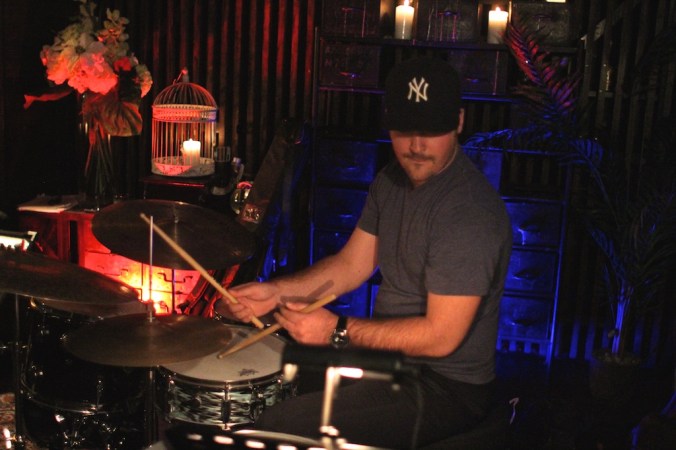
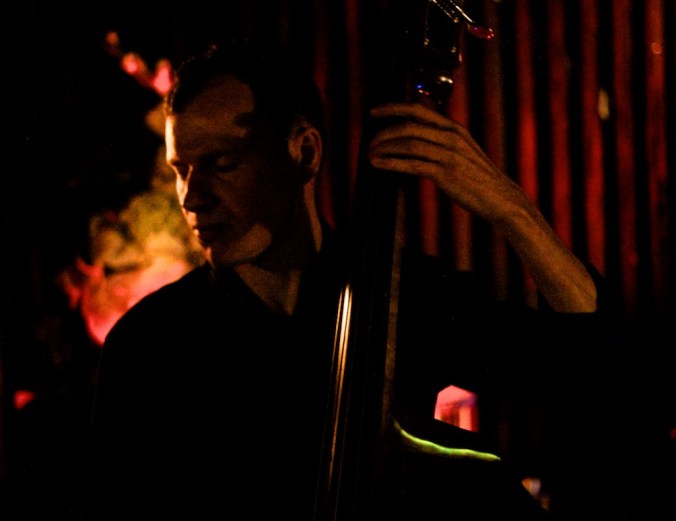
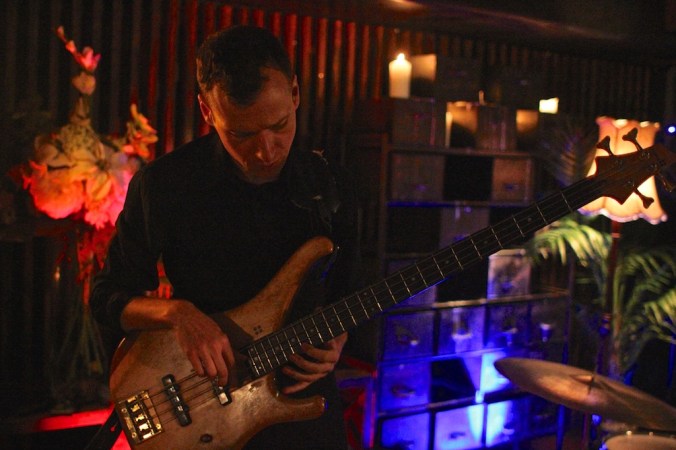 The bass player Nicolas Bedard and drummer Dominic Cloutier never faltered. They wove in and around the tunes with consummate skill and were the perfect interpreters of Roussel’s music. These men are versatile and skilled and whether on brushes, sticks, upright or electric bass, they knew exactly what would serve the music best.
  The second set brought us an added treat as the Kiwi trumpeter Lex French came to the bandstand. I have long rated French as one of our finest trumpeters. He completed his studies in Montreal and was already well acquainted with several of the band members. His addition changed the pace once again, opening the way for harder blowing. As the sets progressed the constantly evolving moods worked well for them, giving the gig real breadth.
 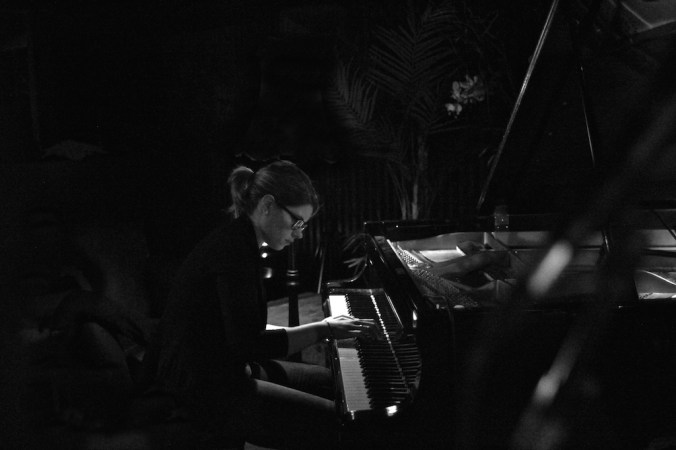 The trio’s recent album ‘Transit’, includes many of the numbers heard on the tour but with one significant difference; The inclusion of a string section, the ‘Quatuor St-Germain’ and a percussionist Julie Quimper. Roussel’s charts in the hands of this larger ensemble are very different to the trio. I particularly like her compositions like ‘L’ attente du chat’ and ‘La timbale et la fourmi’. The mood of the ballad is cat-like in its grace and time feel. The latter, a delightful shape-shifter of a piece full of contrasts and propulsion. I look forward to the new album which is just the trio but with some Rhodes tracks as well as piano.
 JazzLocal32.com