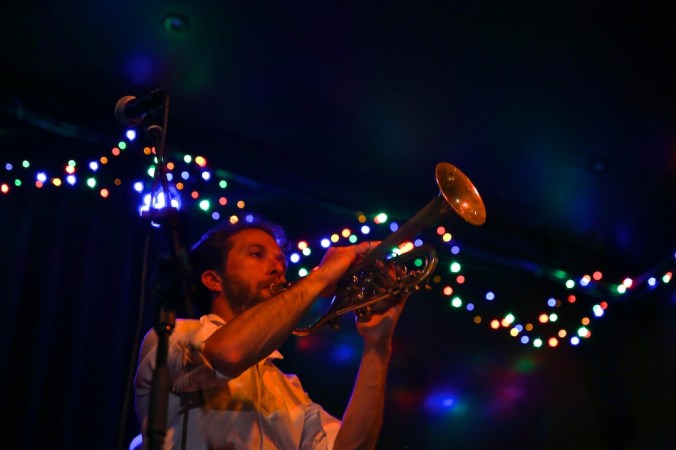
 Improvised music is a never-ending contest between the familiar and the unexpected. Everything is valid on the journey, but sometimes we forget that tradition can be a springboard and not a straightjacket. We had a good example of that on Wednesday. Because he lives far from here, few if any locals had previously encountered Marc Osterer, but few who heard him will forget his exuberant CJC gig. Born in New York, Osterer has led an interesting musical life. Broadway Shows, New York clubs, principal trumpet (Mexico City Philharmonic) and the Salzburg Festival Austria. While he attended prestigious musical conservatories in New York, there is something else in his sound – something that can’t be learnt purely from academic institutions. Osterer’s Jazz has a firm foothold in the tradition. Louis Armstrong and the great swing-to-bop trumpeters like Sweets Edison. It made perfect sense therefore that the standards he played were from the Songbook and that his own compositions reached deep inside that era.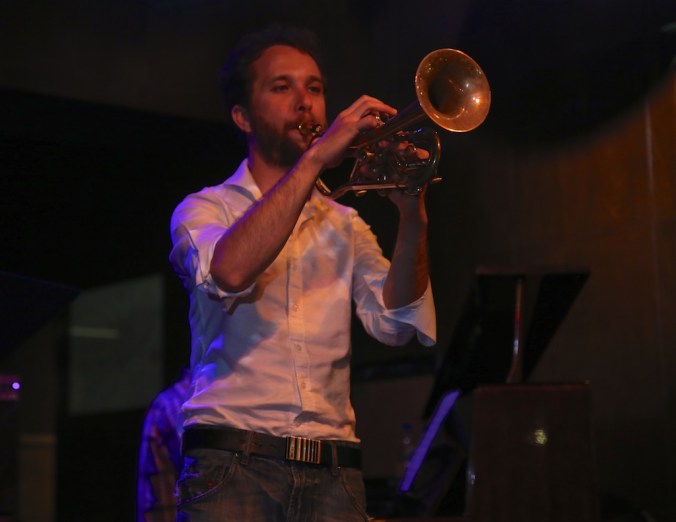
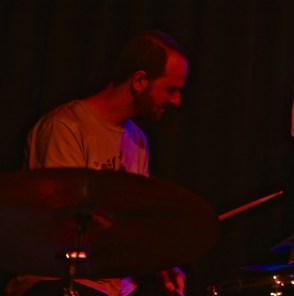
There was something of the old time back streets and jazz alleys in his sound. The way he phrased and that tasty lip-shake vibrato coming straight after a ‘hot’ clean-toned blast. Sure he is a formidable technician, but there was more than that in his sound. Trumpeters not raised on his streets, not bottle fed on Armstrong, Eldridge, Stewart, Allen or Edison hesitate before diving into that particular sound. Swing-to-bop as played in the 50’s still contained the mellow soulful echoes of its New Orleans beginnings. This period is often overlooked today – perhaps it’s even seen as hokey by some? That’s a shame because the era is a gift that keeps on giving (watch a clip of Roy Eldridge or Henry Red Allen sometime – ‘whomp whomp’). What Osterer showed us were modern interpretations which were credible and which shone fresh light on an oft neglected golden age of trumpet.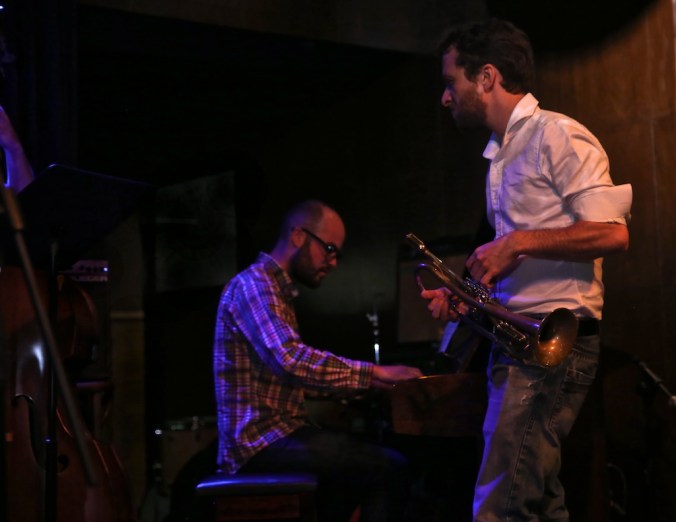 We also witnessed good chemistry between the visiter and his pick up band. It was not the band advertised but what we got was terrific. Matt Steele was flown up from Wellington and locals (fellow UoA Jazz School alumni) Eamon Edmundson-Wells and Tristan Deck completed the rhythm section. Pianist Steele has been gone from Auckland for over a year and is seldom heard here these days. We do hear Edmundson-Wells (bass) and Deck (drums), but to the best of my knowledge, none of them have performed in this context. Absent were the complex time signatures and post bop harmonies. The tunes stayed closer to the melody and the rhythmic requirements were often two-beat or even something closer to second line. As they played through the sets the joy of discovery showed on their faces and we felt it too.
 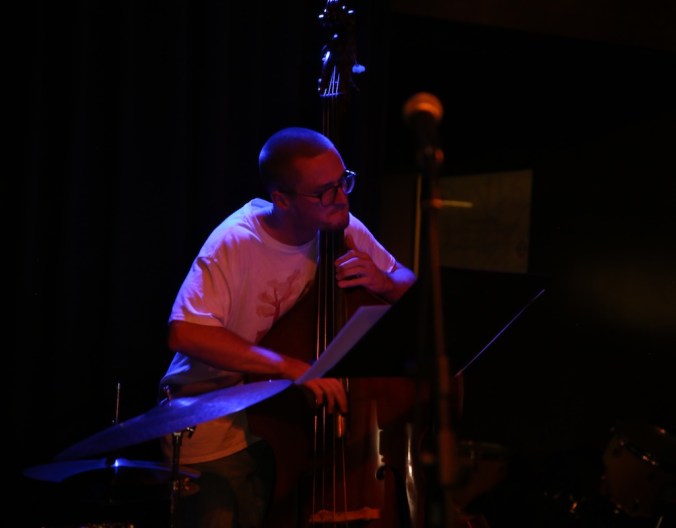 These musicians were still students three years ago but their skills are now well honed. They met the challenge and more. Locals who had not seen Steele play for a while, were buzzing; especially after the blistering Cole Porter standard , ‘It’s alright by me’. Steele’s fleet fingered solo was terrific, and matched by Deck’s bop drumming (complete with appropriately placed bombs and fluid accents). Edmundson-Wells dropped right in behind, pumping out his lines, and it was obvious they were enjoying themselves. Osterer’s compositions tell us how
  comfortable he is with this style of music. His ‘What’s that smell’ (Jazz should be ‘stinky’ he explained) – a New Orleans referencing tune, then ‘Tune for today’ and ‘Bite her back’ based on a Bix Beiderbecke tune. Among the standards was Chet Baker’s version of the little known ‘This is always’, a steamrolling syncopated version of ‘Limehouse Blues’ (Braham) [Note: I have only seen one Kiwi attempt that, Neil Watson on fender] and a version of Hoagy Carmichael’s ‘New Orleans’.
My favourite tune of the night was the bands version of the Mencher/Moll 1930’s standard,’I want a little girl (of my own)’. This slow burner is another that has dropped from fashion, perhaps due to the slightly creepy title (and the lyrics are definitely pre feminist). What a tune this is though. This was less Armstrong’s version than the Cootie Williams/Eddie Cleanhead Vinson take or even Brother Jack McDuff’s. A low down dark-alley speak-easy version with growls, stutters and smears; giving us the full dose of ‘stinky’ jazz and we loved every second of it. A commentator once stated; “When they find out which part of the human brain holds the love gene, this tune, ‘I want a little girl’ will be present in the DNA”.
Putin recently opined that tolerance and the Western world’s fetish for embracing diversity are signs of weakness. Hermann Goering said something similar, “when I hear the word culture I reach for my gun”. This myopic world view is the domain of strutting fools. The improvised music circuit is our connection to innovation, tolerance and expanded consciousness. On Wednesday nights we forget Trump and Le Pen. For that short window in time we live in a world of exciting ideas and discover the hidden corners of human consciousness. Keep them coming CJC, you enrich our lives.
I have put up two sound clips: ‘I want a little girl (of my own)’ and ‘It’s all right by me’ – enjoy.
Mark Osterer (trumpet, arrangements, compositions), Matt Steele (piano), Eamon Edmundson-Wells (bass), Tristan Deck (drums). 22nd March 2017, CJC (Creative Jazz Club), Thirsty Dog, K’Road, Auckland.
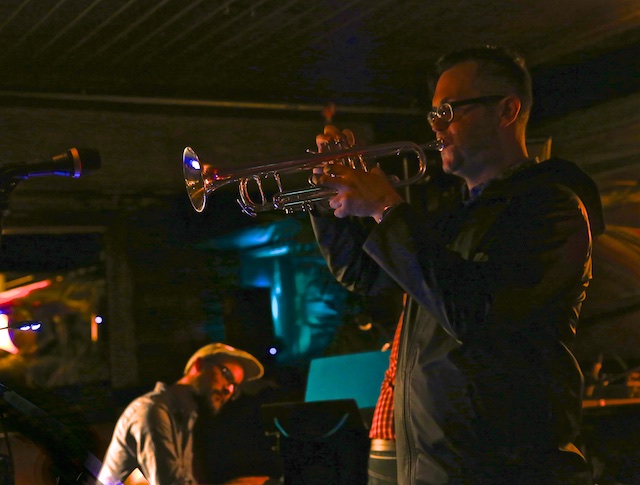 In spite of living at the other end of the Island, Lex French is a regular fixture at the CJC. It is hardly surprising since his popularity with Jazz audiences is ever-growing. There are not many trumpeters of French’s stature in New Zealand and it is our good fortune that he remains. He obtained his Masters from McGill University in Montreal, a university with a strong focus on brass. A university which had an ongoing association with the UK-based Canadian trumpeter Kenny Wheeler while he was among us. I mention Wheeler, because as I walked down the stairs to the club to set up my gear, I heard the unmistakable opening phrase from ‘Smatter’ coming out of the darkness. Just the opening phrase and then silence.
 It was so Wheeler-like, that I assumed someone was setting up a Wheeler album on the club sound system. As my eyes accustomed to the low light I saw French standing alone – repeating the phrase. French is not a one-trick pony; he is as modern as tomorrow, but at other times, old school respectful. He can punch out high notes or swing hard bop like a Blue Note artist back in the day. This is not a musician to pass up on.
 I particularly liked French’s compositions ‘Kasid’ from the first set. There were many reasons to like this; the musicians innovative explorations of the theme, the evocative middle-eastern mode underpinning it, and the fact that it referenced the wonderful Iraqi poet Abdulkareen Kasid. An achingly beautiful melody tinged through with bittersweet sadness, establishing itself delicately over a quietly incessant bass motif. When Steele came in, his opening chords were Oud like – giving the impression of soft strings jangling sweetly in the night air. I listen to a lot of middle-eastern improvised music and this performance stands beside the best of those. In the background, the drums tap tapped (like stones tumbling in a stream, and every so often swooshes).
 The poet Abdulkareem Kasid is new to me (and I have a huge collection of poetry). To discover a poet like this is exciting and I thank Lex French for this. What could be better than to experience a night of interesting music, and at the end, find a poet? I finish this with some words from that poet – listen to the piece as you read the lines – I did.
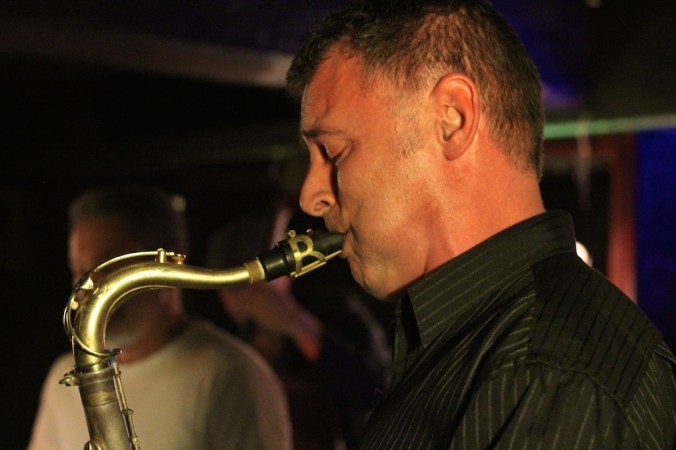
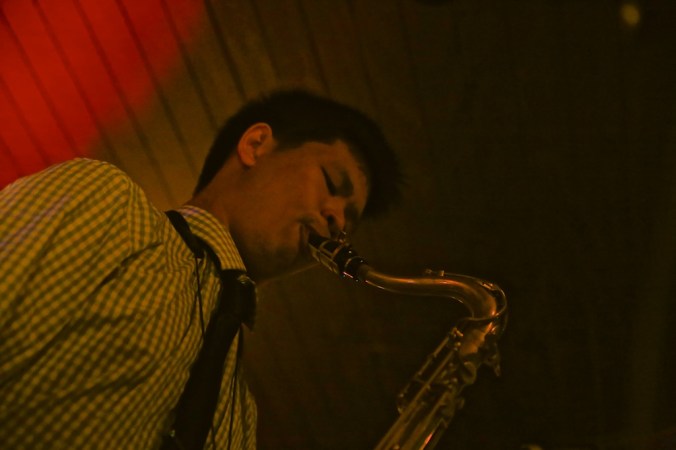 Richard Thai was on the first JAC album but by the time I saw the ensemble live he had left New Zealand for America to complete his postgraduate studies. Recently he returned to his hometown of Wellington where he now teaches and leads the Richard Thai 5. While the ensemble is a basic line up of saxophone, piano, guitar, bass and drums it is never the less forward-looking. This is post millennial music.
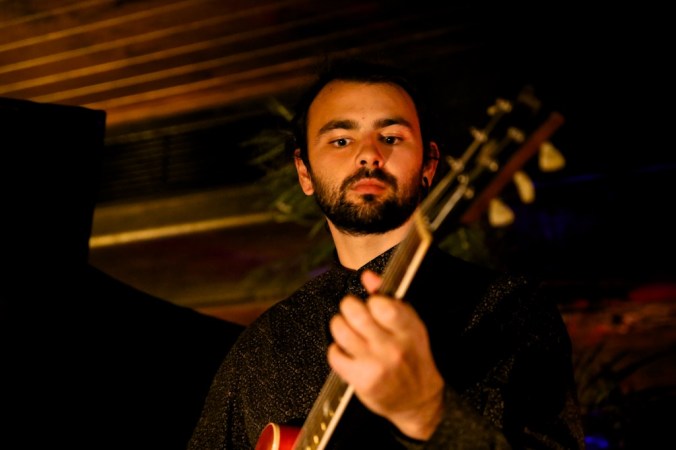 The best illustration of this was heard in his second tune, ‘Capricorn’. A marvellous composition. Like much of Thai’s material it has powerful hooks to draw you in. What sounds simple is in truth anything but, as it shifts between major and minor keys with disarming ease. Many tunes do this, but with Capricorn the device is extraordinarily well conceived. The shifts in focus are pleasing, but what sets the tune apart is a sweet over-arching dissonance; diminished chords acting as a bridge to carry you across the major-minor divide. The arranged head is especially tantalising; setting the listener up expectantly for the explorations that promise to follow.
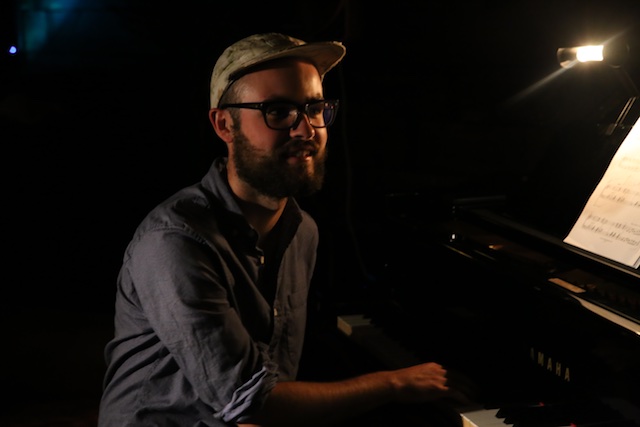
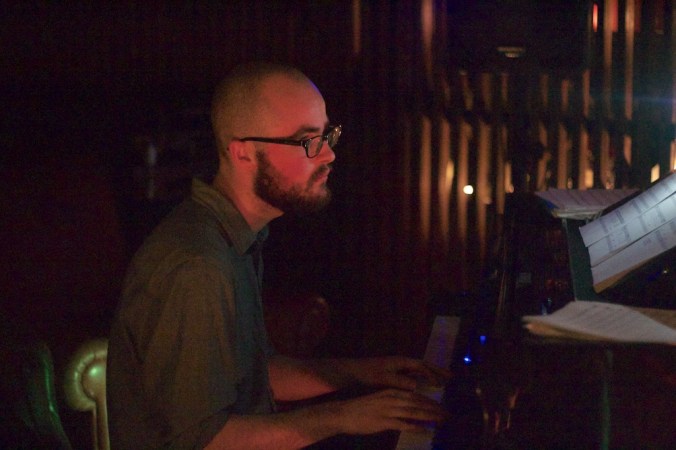
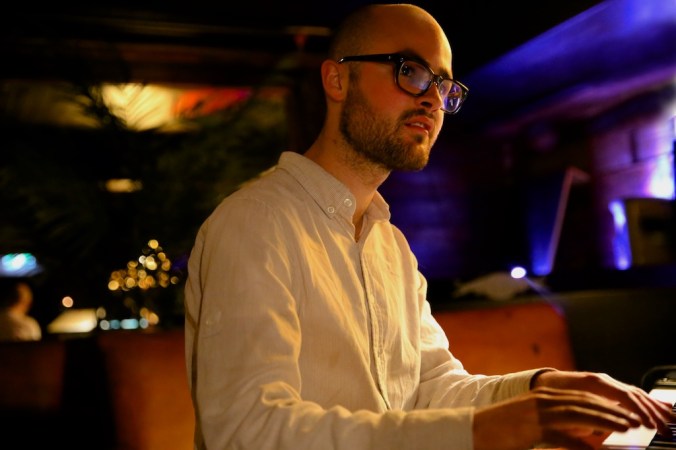 Capricorn’s momentum is that of a multi-hued butterfly in a tropical storm; pushing against the cross winds, never losing its way, pulse, or sense of purpose. Thai’s tenor picks at the tune, peeling the layers back, exposing the heart. This contrasts with pianist Matt Steele’s oblique approach. Steele clearly took the difficult route and along the way it yielded gold. You were with him note by note as he undid the knots of the puzzle confronting him. Steele is always an interesting pianist and always one to watch. It is his determination, his preparedness to take risks and his ability to learn on the bandstand that marks him out from many of his peers. He grows as an artist each time I see him.
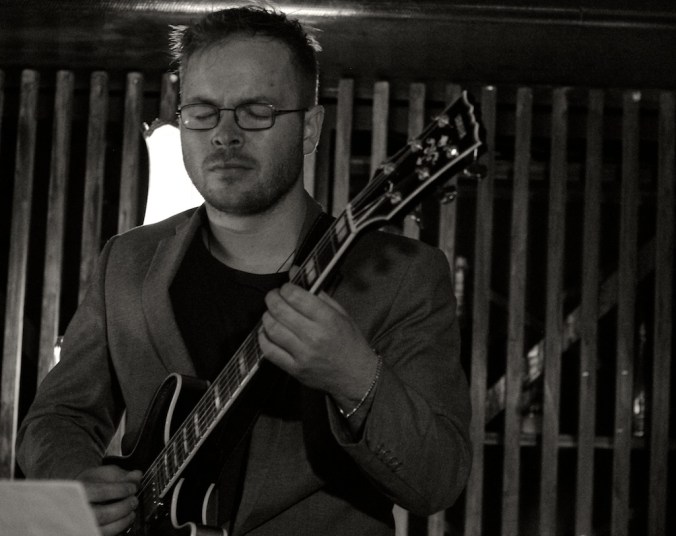
  The last to solo on Capricorn was guitarist Callum Allardice. After the long complex solos preceding his, he wisely chose to linger nearer to the melody. His tight elliptical figures rounding out the earlier solos and bringing us gradually back to the outro. His time to shine as soloist came on the last number where his guitar soared as if free of gravity (much to the delight of the audience). Allardice has many fans in Auckland.
 The remaining two band members Shuan Anderson and Scott Maynard are also established musicians from the Wellington area. Anderson (like Allardice) was also a member of the Tui nominated JAC and he has played at the CJC before. A responsive drummer who interacted well and picked up on the subtle nuances of the material. The bass player Scott Maynard has been a member of various leading Wellington units (e.g. Myele Manzanza, Lex French). He has played at the CJC before and he never disappoints. His role in giving a heart beat to this often complex material was vital. I look forward to hearing more of this ensemble and above all I would like to some hear more Thai compositions. With a few more years of performance under their belt the unit could achieve even more.
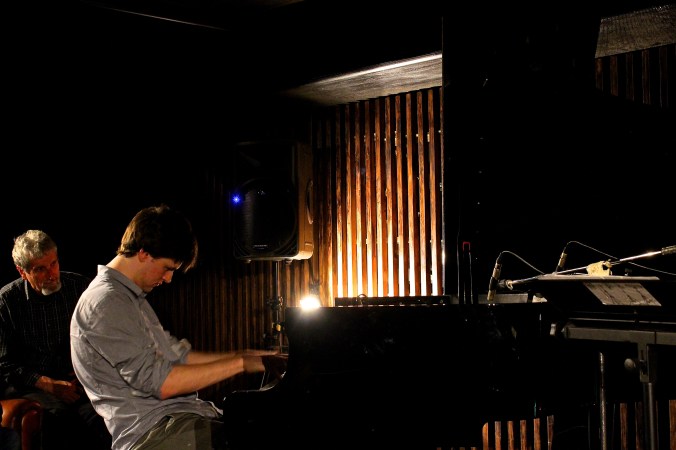
 It is always good when proved right and in the case of Matt Steele I certainly was. This was a superb gig and it confirmed the promise that I saw in Steele as a first year student. The ‘Master Brewers’ musicians are exactly what Steele needed at this stage in his development and he is clearly what they needed. There is a cohesion about this group and it extends beyond the music. This is a band of friends and because they spend a significant amount of time together, they are able to dive deeper into the material on hand. Most of the band is writing and being familiar with each others styles, they contribute compositions that serve the project well. Younger musicians often favour shorter term projects but I hope this unit continues for a while. When I last saw Steele perform it was at his honours recital and he was very much in charge. Now as leader, the reins are subtly loosened and the music benefits from this. With experience, leaders can confidently guide without over playing the role. That only works when the interactions and cues become second nature. In their best moments the ‘Master Brewers’ acted as a single entity; everyone maximising their options while retaining an awareness of the others.
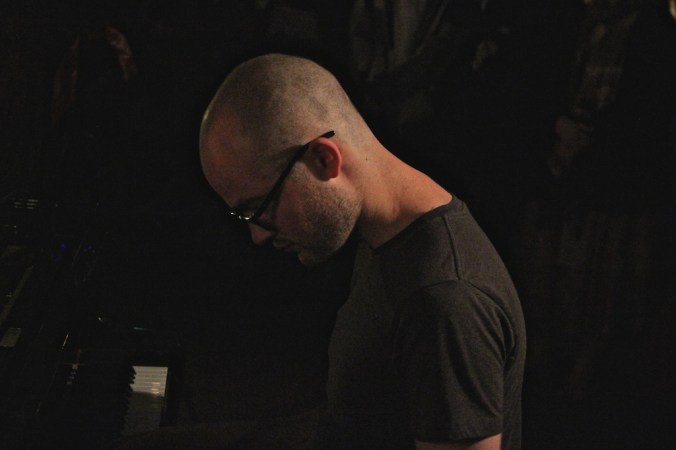
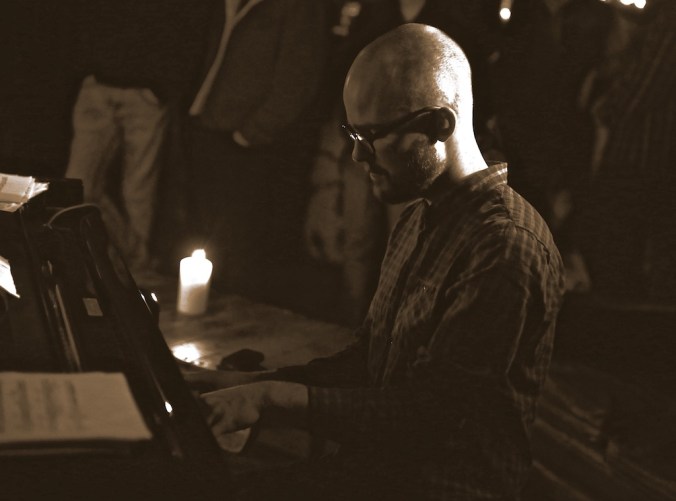 I immediately noticed that Steele’s voicings were darker. His interesting harmonic approach an outcome of an ever-growing musical maturity. There are certain aspects to Steele’s playing that stand out and during the gig these crystallised in my mind. These attributes are why I follow his career so attentively. He is self-effacing by nature, but that masks a ruthless striving for betterment. Ever reaching further, listening deeply, critically and taking risks. For all that he able to relax into the moment and as he grows musically this is more evident. The most difficult journey for any musician is finding a distinctive style and owning it. Steele is well on the way.
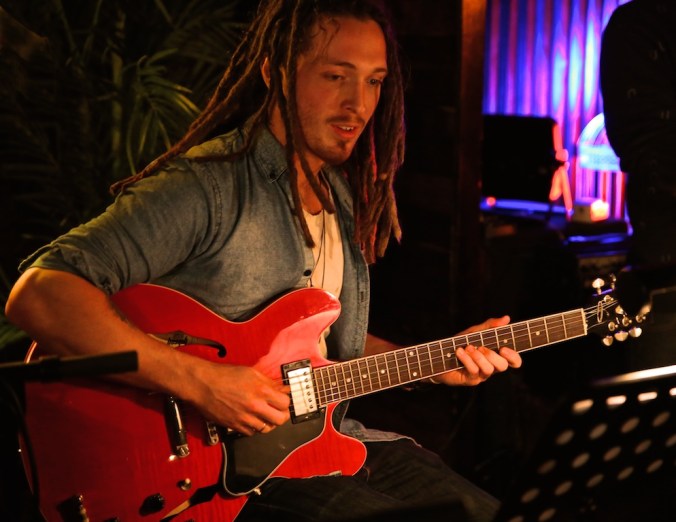 Thanks to Roger Manins programming, Auckland audiences get to see good Wellington bands every few months. In this case the audience were unfamiliar with the musicians (apart from Steele), but what a treat this gig was. The band won us over quickly and by the time the second set began they were cooking. In spite of the modernistic approach and complex time signatures these guys have a definite pulse. They swing like crazy.
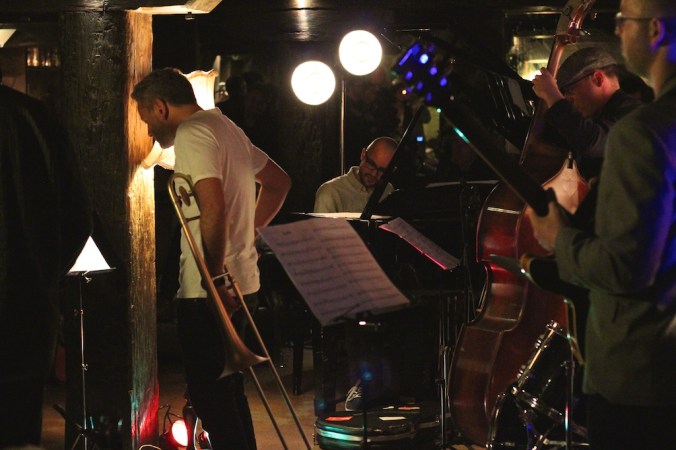
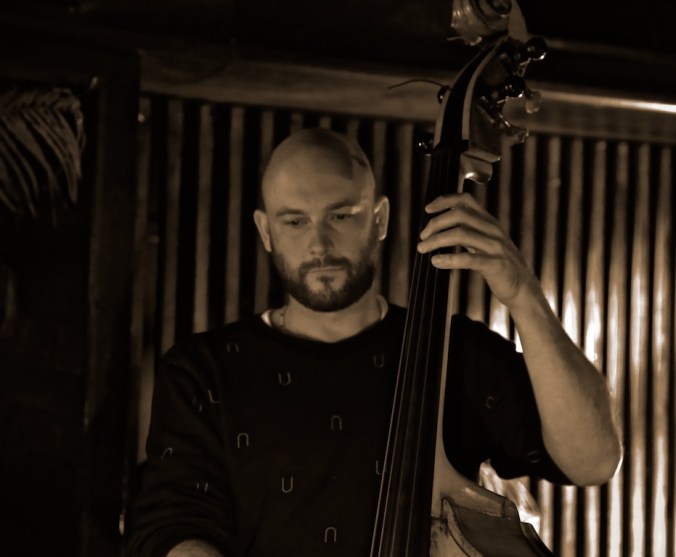 Ashton Sellars had suffered a mishap with his guitar and he had to borrow one at short notice for the gig. He told me that it felt very different to his own older instrument, but no one would have guessed it by the way he was playing. Under his fingers the instrument sang. He favours longer fluid lines (with a hint of Bauer/Tristano), but his is very much a modern sound. His improvisations are thoughtful and they invite you along. While their music is often complex there is no ballast of needless weighty intellectualism. Piano and guitar keeping nicely apart unless comping in support. Both understanding when to lay out. Once again cohesion and a sense of common purpose drives them
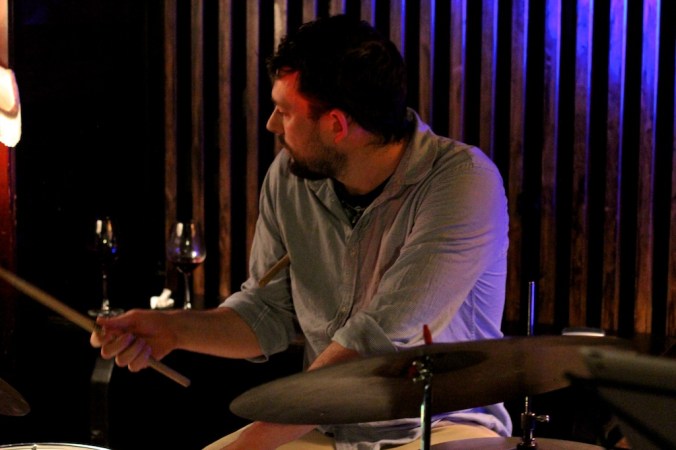
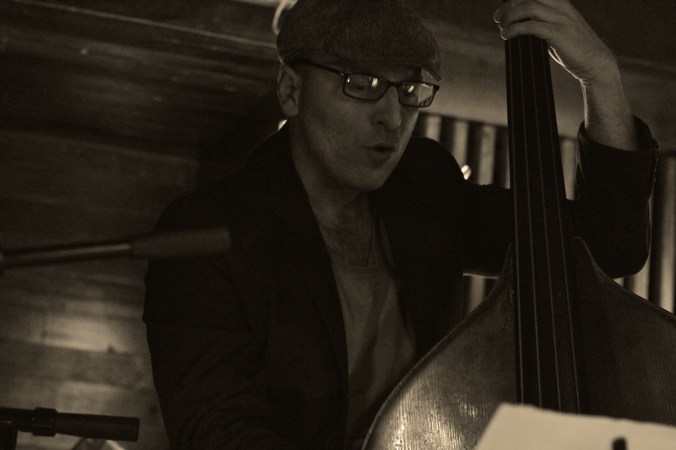
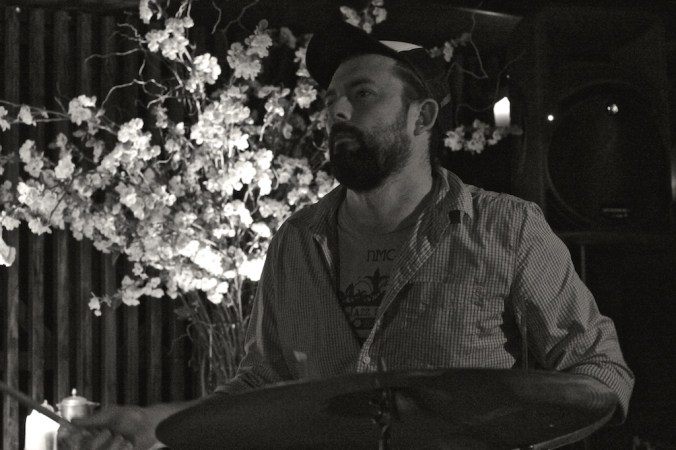
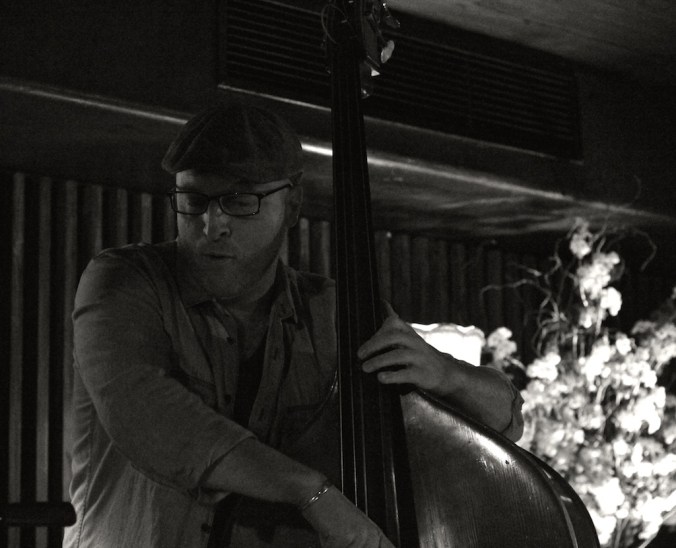
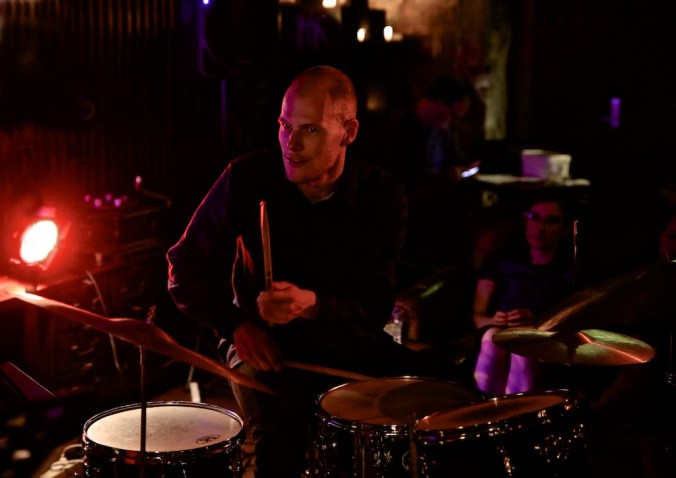 Johnny Lawrence played upright bass, maintaining the core rhythm duties. While he held the pulse intact, he could also solo very effectively. Like his band mates he fitted into the mix in exactly the right way. Cory Campion was also a strong presence, often giving colour or providing accents. Above all his compositions were strong. There is an increasing trend for drummers to compose and when they write like this it provides an interesting perspective. Drummers write differently and the ones I hear lately, write very well. Steele and Sellars contributed the most tunes and each wrote in their own distinctive style. Together those charts and this band gave us pure enjoyment.







 JazzLocal32.com