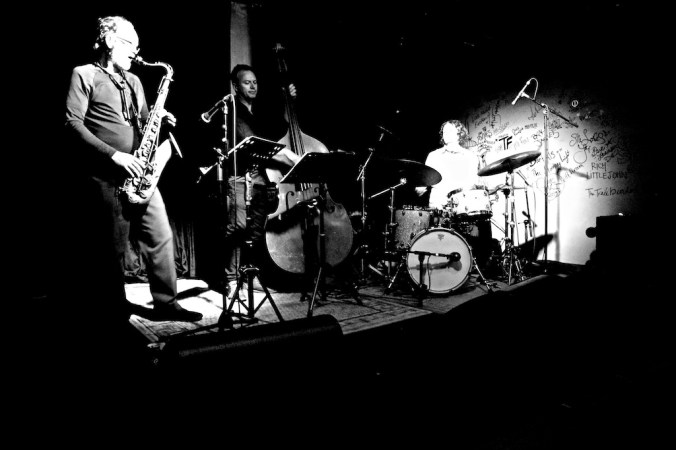
 Post Trump’s inauguration, improbability is the new normal and in keeping with the mood of the times Wednesday’s gig emerged from improbable beginnings. It began with an international cat rescue mission, an attempt to thwart a ‘catricidal’ former neighbour. Before the mission had even been concluded a subplot had emerged; one involving the inhabitants of three cities, two countries, and assorted sharks. Those familiar with Reuben Bradley will not be surprised at this turn of events as he’s known for his humour, good nature and above all for his ability to turn improbable adventures into really good music. ‘Shark Varieties’ is a drummer led trio and a vehicle which showcases a bunch of the leader’s original tunes. It also showcases a joyful reunion.
The Shark Variations album was released by Rattle in 2017 and it followed a successful tour by the band a few months earlier. Bradley was in the process of moving to Australia at the time and he was keen to record with longtime collaborators Roger Manins and Bret Hirst. He needed to do this while they were all in the same place and this was his best window of opportunity. Hirst is an expat Kiwi who lives in Sydney, Manins is based in Auckland and Bradley was at that point, about to head for the Gold Coast. Because of their shared history, the musicians knew exactly what they were aiming for; an open-hearted collaborative and spontaneous expression of their art form. That they realised this vision will be apparent to those who listen to the album.
As a leader, Bradley never shies away from an opportunity to leaven his gigs with humour. He tells jokes against himself (the trademark of all good Kiwi humour) and as you peruse his tune titles you find a plethora of throwaway lines and in-jokes. During live gigs, the titles become hilarious stories and his delivery is always pitch-perfect. Improvising musicians frequently tell an audience that the title came after the composition and that they struggled to name tunes. In Bradley’s case, I suspect the reverse is true; that a series of off-beat incidents have stimulated his already vivid imagination and the incidents become the catalysts for his compositions. ‘Wairoa or L.A.’ ‘Wake up call’ Makos and Hammerheads’ are all examples, the latter giving rise to the title, in spite of the fact that he could only name two shark types (which he felt was more than enough).
Humour aside, this is seriously good music. Bradley is a gifted and popular drummer and musicians love having him alongside. It is therefore not surprising that he would choose these collaborators. Manins is undoubtedly the best known contemporary New Zealand saxophonist and a musician whose formidable abilities are attested well beyond these shores. Hirst left New Zealand many years ago and is regarded as a bass heavyweight on the Australasian scene. He is frequently found performing with Mike Nock and his resume includes playing alongside James Muller, Greg Osby and other notables.
The reunion gig took place on a cold wet Auckland night and many gladly braved the chill to get a piece of this. I have put up a video from the gig titled ‘Wake up Call’, which Reuben assured the audience had only the thinnest connection to an actual wake up call. In keeping with the ‘spirit’ of the gig, I miscalibrated my camera and the resulting shot turned Bradley and Manins into ghosts. The album is available from Rattle Records. The gig took place at Anthology, for the CJC Creative Jazz Club, 02 September 2019.
Footnote: The cats were rescued safely and after an unfortunate travel accident they both found asylum abroad.
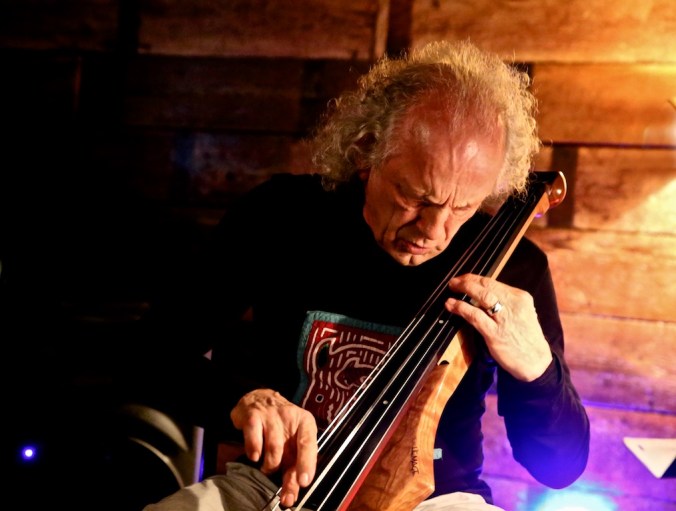 Good improvising bass players get a lot of work, but they seldom get the acknowledgement they deserve. This is one of life’s inequities and it’s partly because a bass player by custom is hidden behind the other band members. When a pianist or guitarist plays solo they will often mimic or imply bass lines. A good bass line is both an anchor and an invitation – invoking deeper exploration; the consequent rub between notes and time is where most of the tension and release is hidden. Every so often a bass player claims wide-spread attention. Blanton, Mingus, Haden, McBride, Le Faro, Pastorius etc. David Friesen while not garnering the attention of the aforementioned bassists in the popular press, is without doubt a giant of the instrument. His is a name that frequently comes up when aficionados and musicians talk. He is the bass players bass player, an acknowledged innovator.
 As is often the case with great musicians, he was a compelling talker; spinning out yarns of people and places visited. Often with subtle humour woven into the narrative. Above all he imparted his views on the place of music in these complex and troubled times. To paraphrase slightly, “Music is a way of healing a broken world, it is not just about the people making the music or about the audience receiving it, but something far deeper. The interaction creates a virtuous circle, each continuously enriching the other. Out of this comes the magic”. This reference to the primal healing power of music resonated and he received loud applause. Improvisers seldom earn what they should and yet they persevere. Understanding their mission of deepening human awareness. It was good that he reminded us of how vital a deep listening audience is. Sharing the joy brings its own responsibilities. That’s why I do what I do in print.
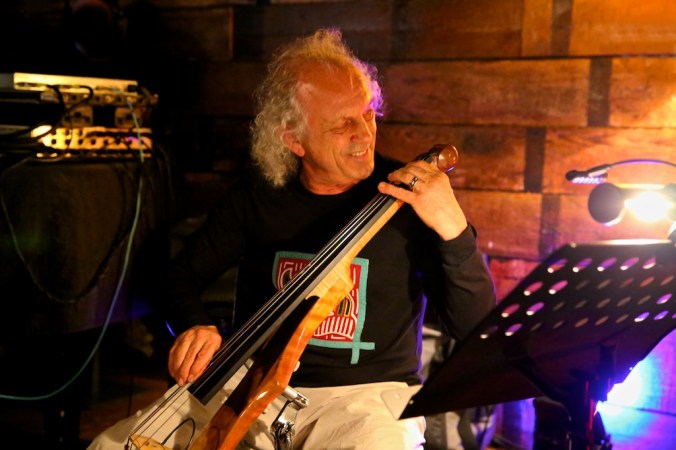
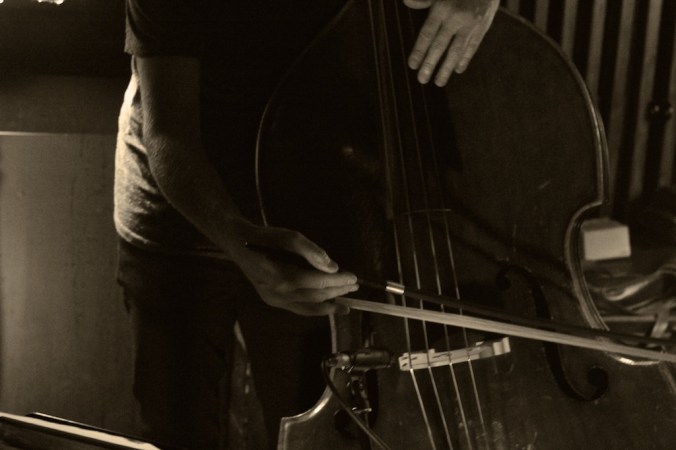
  Friesen travels with a special bass; made for him by a famous Austrian instrument maker. Sick of having instruments damaged or interfered with by airline baggage handlers, he ordered an instrument small enough to go in the overhead locker. This custom bass is mainly crafted out of American Cherry wood and Canadian Maple. It also has a very sophisticated pick up. Because of the foreshortened neck I suspect that it would take some mastering by most upright bass players. In Friesen’s hands it sung.
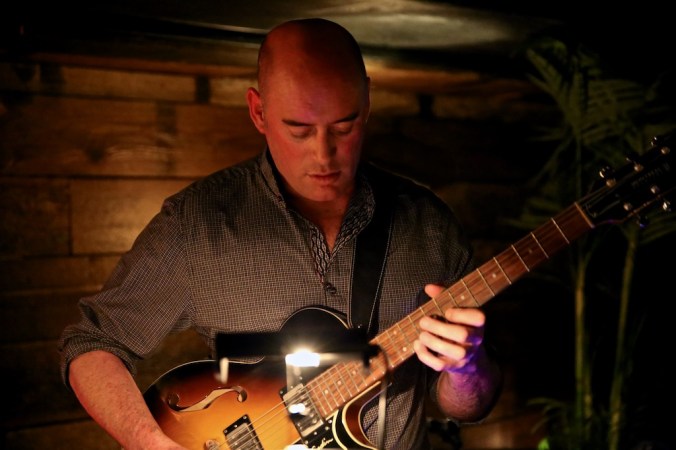
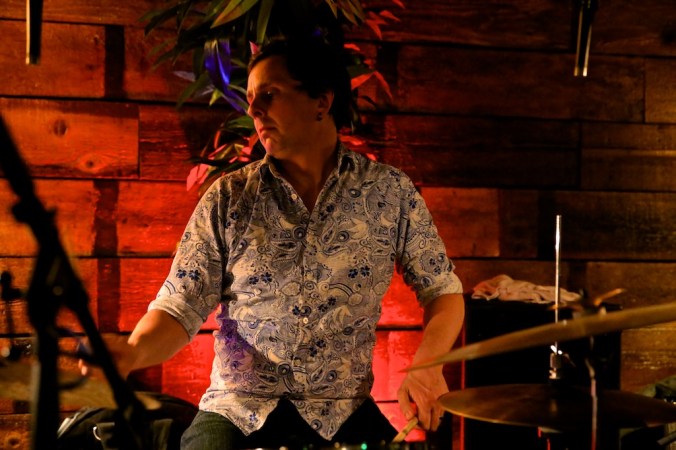
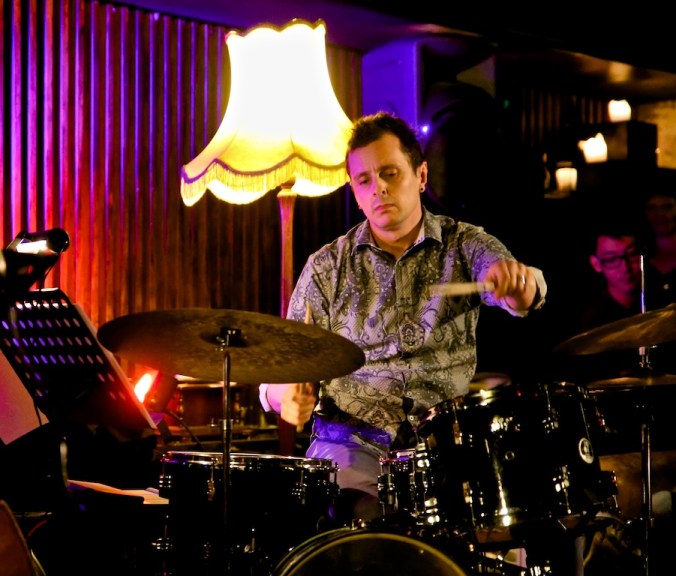
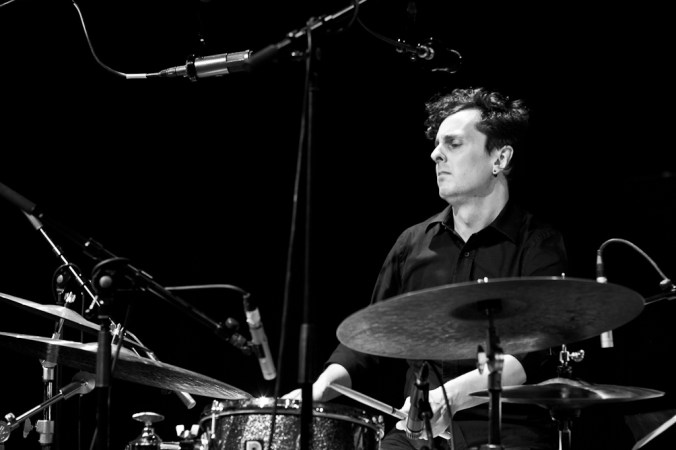
  Nacey did what we expected of him; delivered stinging imaginative lines and soared on that lovely Godin semi hollow-body. As success spreads him thinner, we tend to see less of him in the Jazz club. When we do hear him we get the very best. He is a guitarist who can hold his own anywhere on the scene. The other Kiwi on the gig was Wellington drummer Reuben Bradley and what a performance he put on. Again it was hardly surprising, as Bradley is among our very best drummers. Like Nacey he is often the drummer of choice for visiting artists.
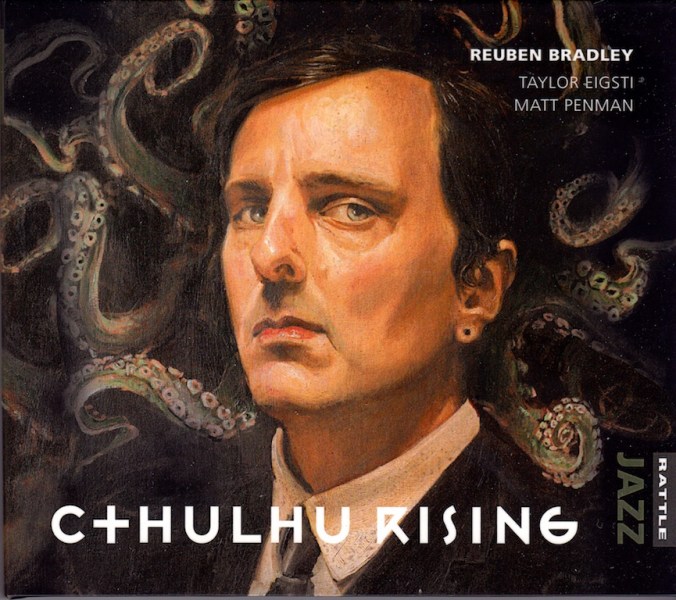 H P Lovecraft died under appreciated, but it didn’t curb his output. His imaginings took him to darkly strange and exciting places. Places that few of us dared contemplate. While he reached deeper than writers like Edger Alan Poe and further into the human psyche, his wildest dreams could not have prepared him for Wednesday night. Reuben Bradley, time traveller and keeper of lost grooves has wrestled with the spirits and brought Lovecraft to life again.
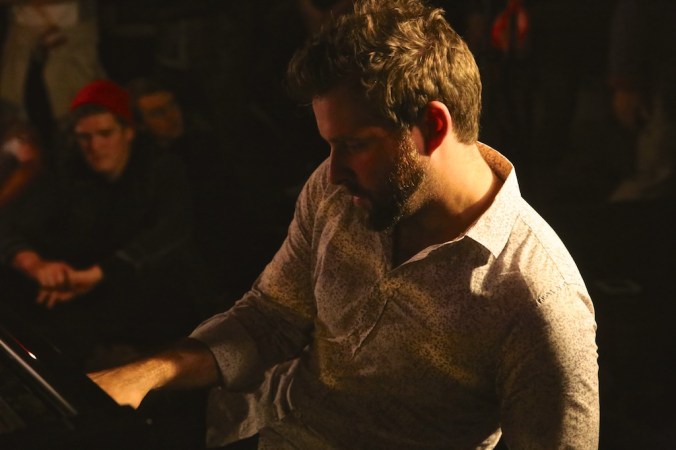
 This is a truly exceptional album and it is no wonder when you consider the source material and the musicians associated with it. Bradley, Penman and Eigsti are a deadly combination and their interplay is crisply on the mark. Matt Penman is dear to our hearts in New Zealand. One of our finest Jazz exports. An expat from Auckland who conquered the American improvised bass scene in ways that few others manage. His work with James Farm, the San Francisco Jazz Collective, Aaron Parks, Kurt Rosenwinkel and a long list of luminaries is instructive. That he still appears with the best of our local artists and on local recordings is our immense good luck. An imaginative and wonderfully musical bass player who holds the groove and manages to tell interesting stories without distracting us from the overall focus of the piece. Few bass players could do this better than Penman.
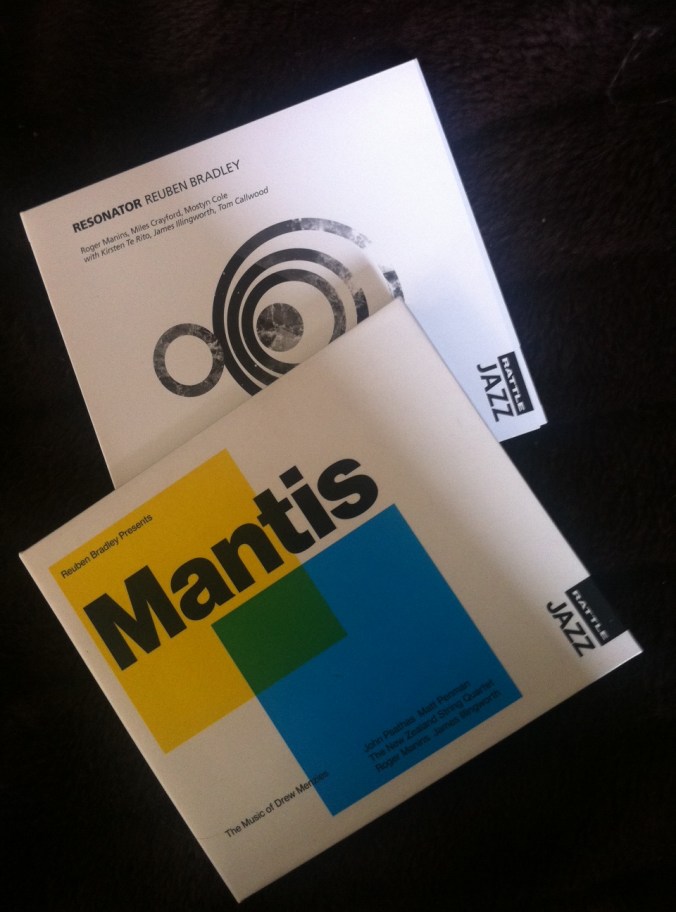
 The judicious use of sampled ‘Lovecraft’ readings in several places adds to the atmospheric feel and doesn’t detract from the overall musical experience. Every note played and every voice-over is well placed. Yet again Rattle Records have excelled themselves here. The secret of ‘Rattle Records’ tasteful Jazz catalogue must surely be seeping into the wider world by now. ‘Rattle’ is the ‘ECM’ of the South Pacific. This album was recorded at the ‘Bunker Studios’ in New York, Engineered by Aaron Nevezie and mixed and mastered by Steve Garden at ‘The Garden Shed’ Auckland.
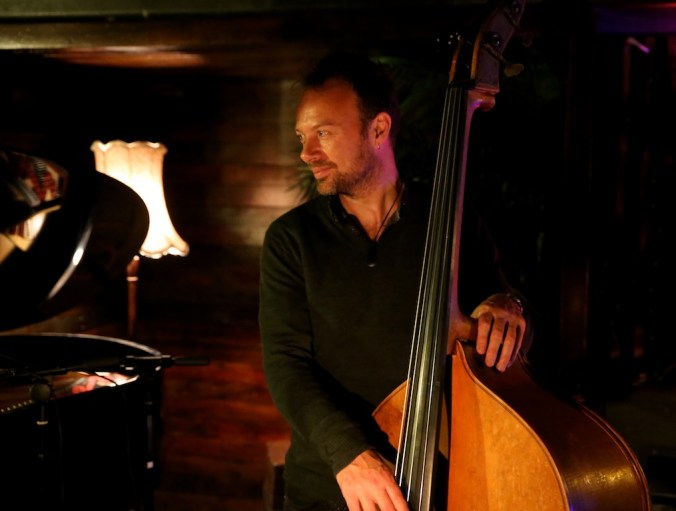 There was a change of personnel for the CJC ‘Cthulhu Rising’ release gig and for the Australasian tour to follow. Respected bass player Brett Hirst took Penman’s place and this was a sound choice. Hirst, another expat Kiwi, is well established on the Australian scene and frequently employed by visiting artists. He is a gifted musician and perfect for high end gigs like this.

 JazzLocal32.com