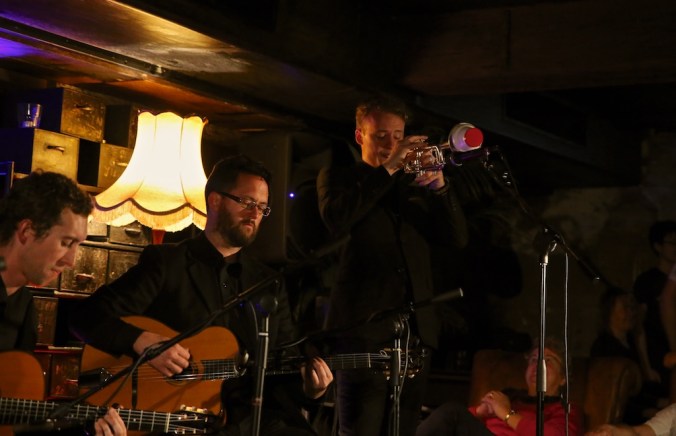
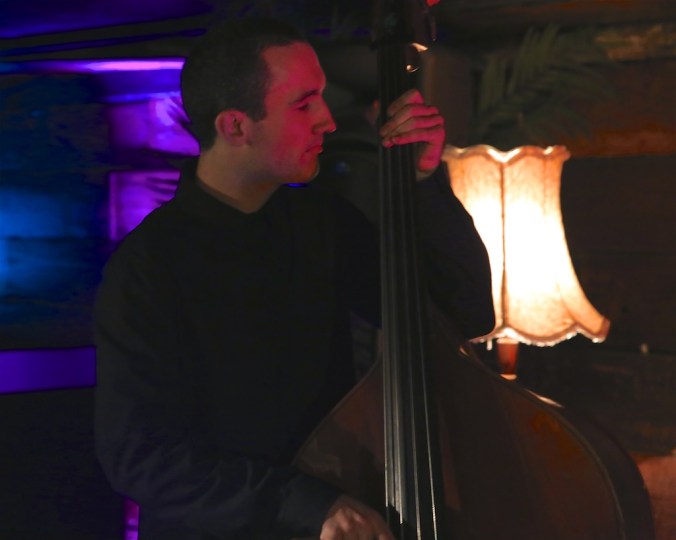
 Wellington has long possessed a gypsy soul and Jazz Manouche thrives there. In Auckland there are fewer such groups and the common form here is hybridised Gypsy. I am more familiar with these hybrid forms, but as a devotee of improvised music I possess many Django Reinhardt and Bireli Legrene recordings. The Black Spider Stomp are a traditional Gypsy Jazz group and everything about them shouts ‘du Quintet de Hot Club of France’. For a start they look the part in their slick black outfits and they mirror the traditional ensembles – three Manouche guitars, upright bass and clarinet (the clarinet player doubling on soprano and trumpet).
 The hallmark of gypsy authenticity is the ability to swing in a particular way, and Black Spider Stomp achieves this. In western European gypsy the absence of a percussion instrument places heavier emphasis on guitar led rhythm. The rhythm guitars are essential to the momentum with their striking ‘la pompe’ strum. This hard swinging pumping style is very distinctive, with its dark chromaticism, bent notes, adherence to certain voicings, rapid arpeggios, powerful rhythms and regular use of vibrato. The tunes are mostly in 4/4 with a heavy accent on two and four (although waltzes are also in the repertoire).
 The style is so distinctive that it owns the tunes whatever their origin. Once while traveling in the Carmargue I stopped at a typical Provencal village. As dusk fell a group of Gitano guitarists started playing in the square. The tune was maddeningly familiar and I wrongly thought – this is a Reinhardt composition. It stuck in my head for days and then the penny dropped. It was ‘My Way’ – the tune popularised by Paul Anka and Frank Sinatra. Recently I learned that it is actually a French pop tune. Talk about music travelling where it will. Another perennial favourite in Jazz Manouche is Stevie Wonder’s ‘Isn’t she lovely’. Manouche Jazz itself is a hybrid of American Jazz and Gypsy – and each of those musical influences are sources as vast as an ocean.
Music has origins …. but no fixed abode.
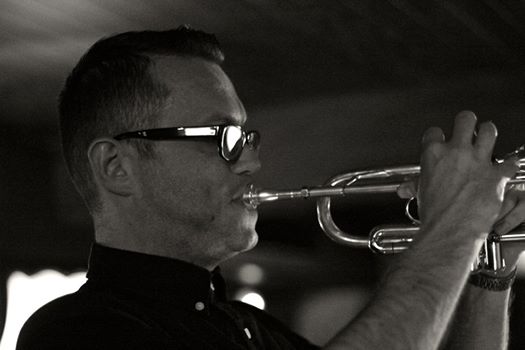
 The groups use of soprano saxophone (but in this case the straight-horn variant) is also authentic. While violinists like Stephane Grapelli regularly led Manouche ensembles (pre war), the arrival in Paris of horn playing musicians like Sydney Bechet influenced the post war style. Jazz Manouche reached maturity in Paris around the time of WW2 and it was so loved there, that a handful of Jazz loving occupying Nazi’s covertly protected it. The use of a trumpet intrigued me for two reasons. For a reeds musician to double on trumpet is rare – the embouchure is so different. Post millennium we seldom hear such a distinct nod to Louis Armstrong – or to the early swing trumpeters. Perhaps with Armstrong or Bubber Miley in mind, reeds and brass man Baron Oscar Laven treated us to the occasional muted growl and smear. His cheerful enthusiasm for all of his horns was obvious.
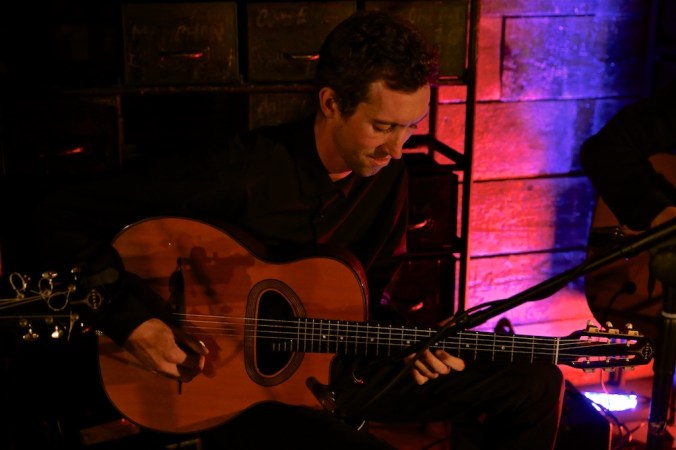
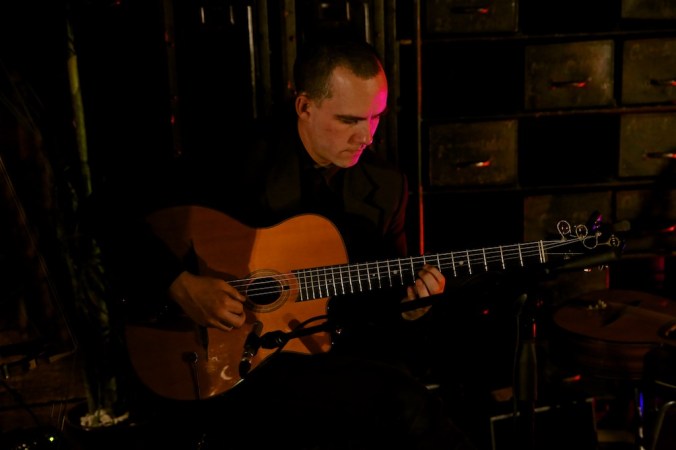
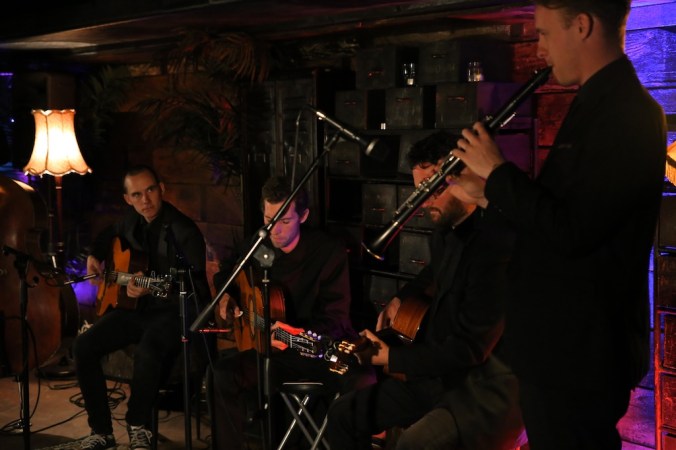 Guitars always fascinate me. These were obviously based on the famous Selmer ‘Maccaferri’ guitars favoured by Django. There are two main styles of Jazz Manouche guitar – the ‘D’ hole ‘large mouth’ with its broader rich tone and woody resonance (most often the lead guitar) and the ‘O’ hole ‘small mouth’, which is brighter in sound and has serious cut through. Solos from both were heard. These guitars are things of real beauty, earthy multi-hued wood-grained and framed in a blur of hands appearing from the darkness.
Nothing says acoustic quite like an array of wooden instruments carrying a gypsy tune.
Black Spider Stomp: Sam Thurston (guitar), James Quick (guitar), Adrian Jenson (guitar), Scott Maynard (upright bass), Baron Oscar Laven (woodwinds and brass) – find their work on Bandcamp – The gig took place at the CJC (Creative Jazz Club) 17th Feb 2016.
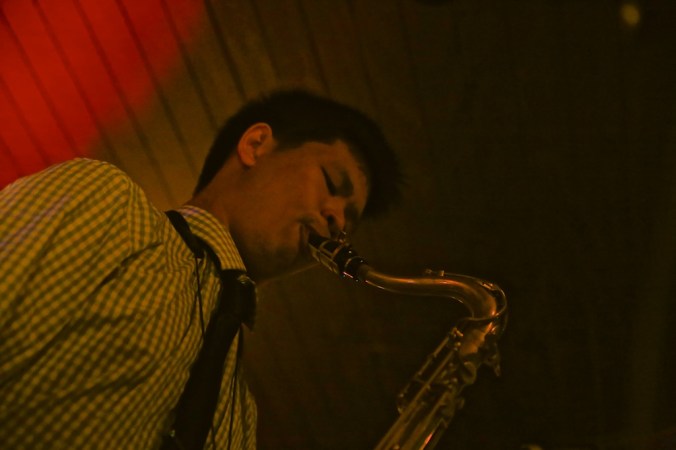 Richard Thai was on the first JAC album but by the time I saw the ensemble live he had left New Zealand for America to complete his postgraduate studies. Recently he returned to his hometown of Wellington where he now teaches and leads the Richard Thai 5. While the ensemble is a basic line up of saxophone, piano, guitar, bass and drums it is never the less forward-looking. This is post millennial music.
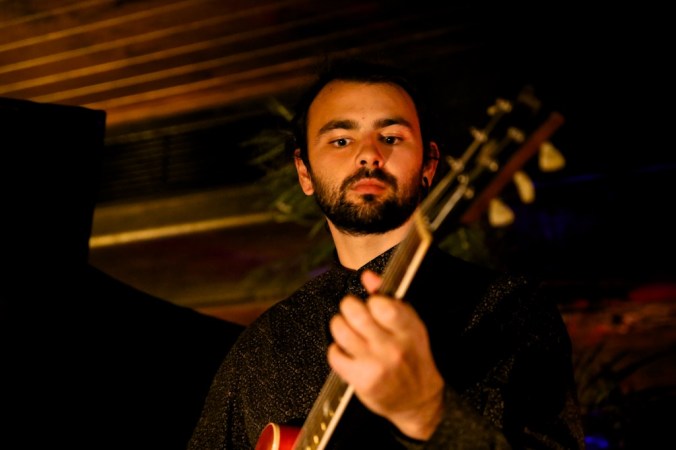 The best illustration of this was heard in his second tune, ‘Capricorn’. A marvellous composition. Like much of Thai’s material it has powerful hooks to draw you in. What sounds simple is in truth anything but, as it shifts between major and minor keys with disarming ease. Many tunes do this, but with Capricorn the device is extraordinarily well conceived. The shifts in focus are pleasing, but what sets the tune apart is a sweet over-arching dissonance; diminished chords acting as a bridge to carry you across the major-minor divide. The arranged head is especially tantalising; setting the listener up expectantly for the explorations that promise to follow.
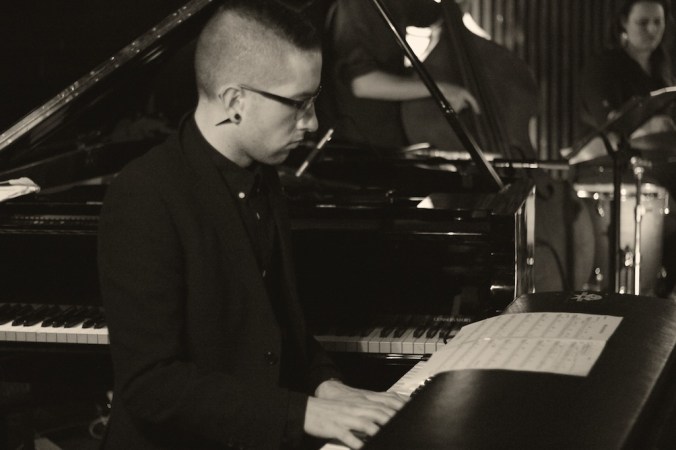
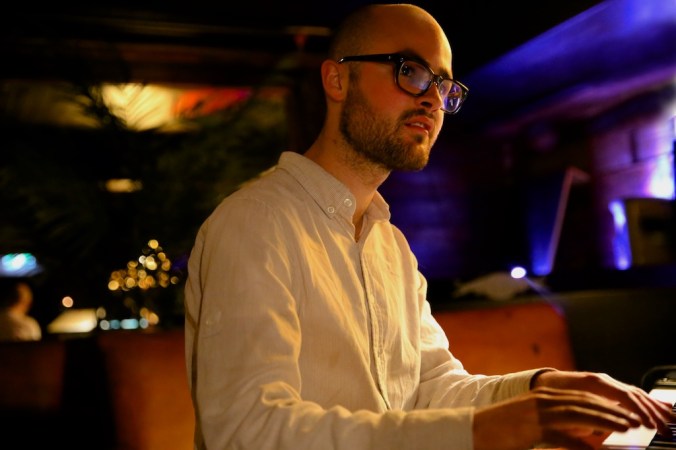 Capricorn’s momentum is that of a multi-hued butterfly in a tropical storm; pushing against the cross winds, never losing its way, pulse, or sense of purpose. Thai’s tenor picks at the tune, peeling the layers back, exposing the heart. This contrasts with pianist Matt Steele’s oblique approach. Steele clearly took the difficult route and along the way it yielded gold. You were with him note by note as he undid the knots of the puzzle confronting him. Steele is always an interesting pianist and always one to watch. It is his determination, his preparedness to take risks and his ability to learn on the bandstand that marks him out from many of his peers. He grows as an artist each time I see him.
  The last to solo on Capricorn was guitarist Callum Allardice. After the long complex solos preceding his, he wisely chose to linger nearer to the melody. His tight elliptical figures rounding out the earlier solos and bringing us gradually back to the outro. His time to shine as soloist came on the last number where his guitar soared as if free of gravity (much to the delight of the audience). Allardice has many fans in Auckland.
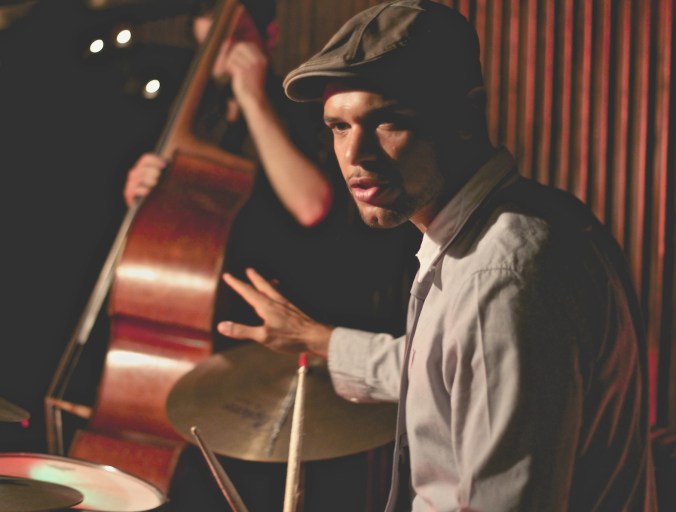
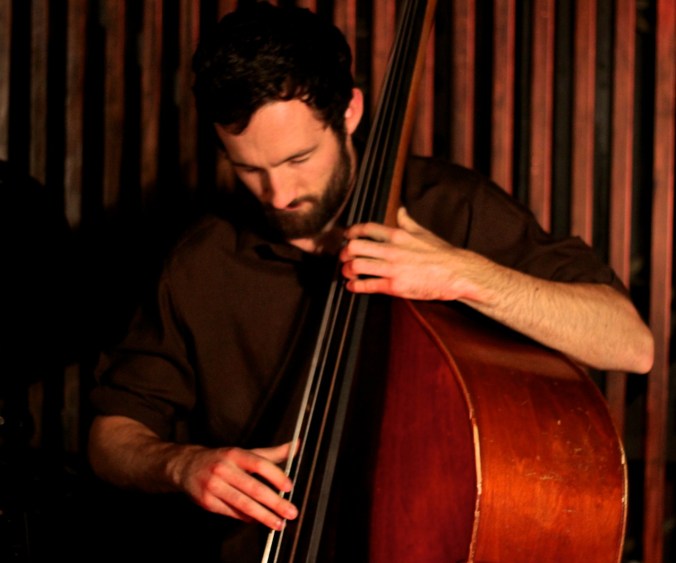
 The remaining two band members Shuan Anderson and Scott Maynard are also established musicians from the Wellington area. Anderson (like Allardice) was also a member of the Tui nominated JAC and he has played at the CJC before. A responsive drummer who interacted well and picked up on the subtle nuances of the material. The bass player Scott Maynard has been a member of various leading Wellington units (e.g. Myele Manzanza, Lex French). He has played at the CJC before and he never disappoints. His role in giving a heart beat to this often complex material was vital. I look forward to hearing more of this ensemble and above all I would like to some hear more Thai compositions. With a few more years of performance under their belt the unit could achieve even more.

 JazzLocal32.com