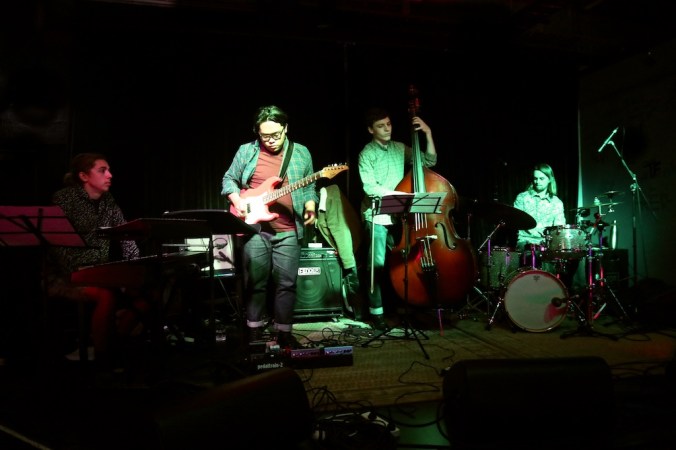
How we hear and process music is the result of endless debate. When a resonant voicing or melodic fragment is freed from the wood, wire or chip, the vibrations refract; entering our consciousness through individualised prisms, and each note coloured by preference, mood and previous exposure. What I heard last Wednesday I can only process through my own lens and how I heard it may not be how it was conceived. The opening number took me directly to a place that I visit often. A warm and familiar place situated in a time before these musicians were born. That place was the early electric Jazz fusion era (I love that shit) and in the second set, to the atypical small ensemble arranging by the likes of Carla Bley, Jimmy Giuffre or French horn player John Graas.
I am not saying that either band were reprising those eras because they weren’t. What they played was freshly minted, modern and innovative. The connection and the intense pleasure both groups afforded me was that meeting place between my point of reference and what they created. This is the eternal triangle of improvised music; musician, instrument and listener. A cycle with an endless feedback loop, which brings me to a second point. The players communicated their passion well; something of themselves. It manifested in the leader’s smiles of delight or in the shouts of mutual encouragement. As young, as they were they had cracked a vital code of musical communication. It is not just chops or clever compositions that push you over the line, but putting yourself at risk, exposing a glimpse of the human being and the joy feeding the music.
The musicians were mostly from the UoA Jazz Studies programme and the sets were interesting contrasts. First up was the Daniel Waterson Quartet with drums, keys, guitar and bass. The first number was titled ‘Not enough Lithium’ and it was this piece that contained embedded echoes of 70’s fusion. It had various motifs but as it developed, mood predominated. This enabled me to make my own emotional connection to the music. The piece didn’t tell us how to engage but it invited the listener in and I believe that that is important. Some tunes are so nailed down that they feel like a lecture. This was not. All of these musicians are a credit to the Jazz School and I was familiar with everyone except the keyboards player (more on him later). Michael Gianan showed how far he’d come since we last heard him at the club. I last heard Waterson when he played in the Indian Jazz fusion group Takadimi. He is an engaging and innovative drummer and it was good to hear his own compositions.
The second set up was the Wil Goodinson Septet and it was unusual in that it featured bassoon, bass clarinet, cello, bass, guitar and piano. Goodinson is well thought of as a bass player and it is not unusual to catch him in others lineups. This was a chance for him to showcase his arranging skills and his charts were quite exceptional. Apart from the first tune by Joe Henderson, all of the rest were his own compositions. All arrangements were his. This was an interesting ensemble and they navigated the charts with ease. The bassoon and bass clarinet were complimentary and their textural possibilities were well utilised (Asher Truppman Lattie demonstrated his skills here and I applaud his work on this lovely under-utilised horn). The guitar, while not dominant in the mix, was essential as it gave brightness, a gently articulated voice to contrast the bass-rich sound. Holding everything together was the bass. We could not see the leader but his cues were evident as he guided the others through the charts.
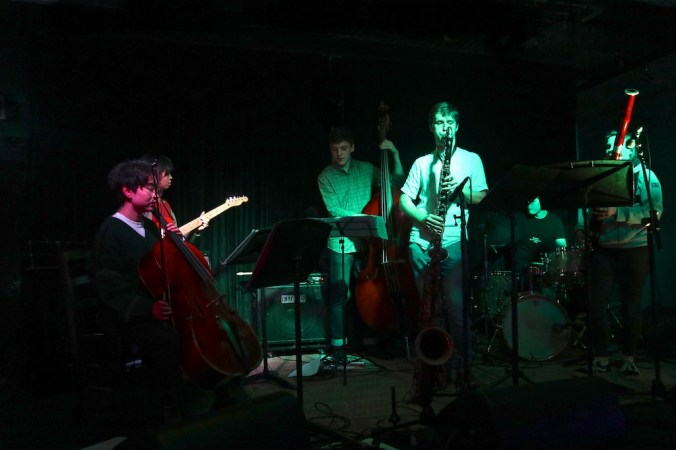
The drums and piano contributed with accents, pulse and solos and both were well placed in the mix I also have a fondness for cello in Jazz and the instrument was well deployed. When bass and cello played unison arco, the air vibrated as the low notes tugged at the senses. It was the sort of ensemble that ECM might feature, but the originality made it hard to pigeonhole as just that.
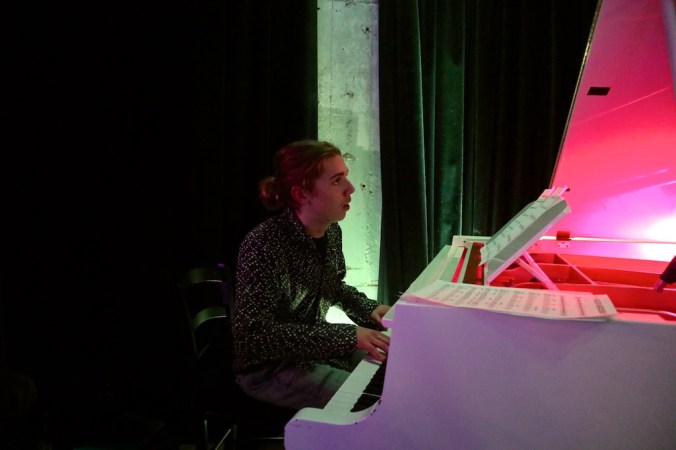
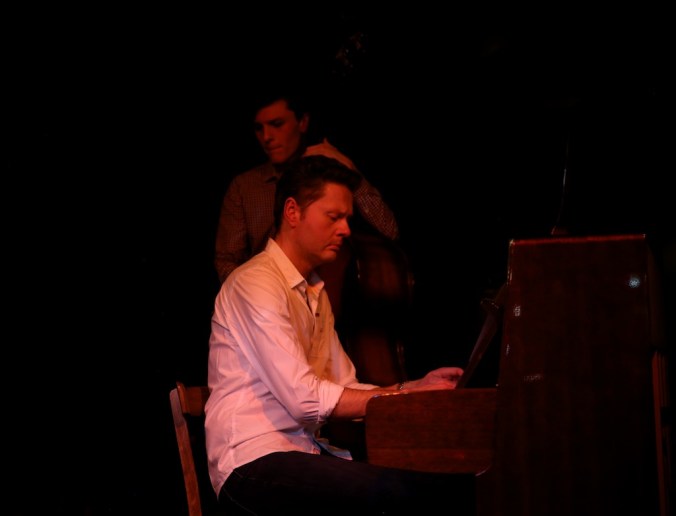
For a few months now, people have asked me, have I heard Joe Kaptein play. Until last Wednesday I had not and after hearing him on Wednesday I admit to being caught off guard. What I heard was a high degree of pianistic maturity; unusually so for a Jazz Studies student partway through his second year. He leaned on no particular style and was as much at ease playing in a freer percussive mode as he was where gentler minimalism was called for. His comping was notable, as was his sense of time. He understood when to play and most importantly when not to; he could lay-out or enter a groove and milk it for possibilities. It felt good to be in on this at ground level and I will watch his journey with great interest. Kaptein and Goodinson played in both sets
. 
Daniel Waterson Quartet: Daniel Waterson (drums, compositions), Michael Gianan (guitar), Joe Kaptein (keyboards), Wil Goodinson (bass).
Wil Goodinson Septet: Wil Goodinson (bass), Joe Kaptein (piano), Kathleen Tomacruz (guitar), Asher Truppman Lattie (bass clarinet), Karen Hu (cello), Monica Dunn (bassoon), Tom Legget (drums)
@ CJC Creative Jazz Club, Anthology, K’Road, Auckland New Zealand 31 July 2019
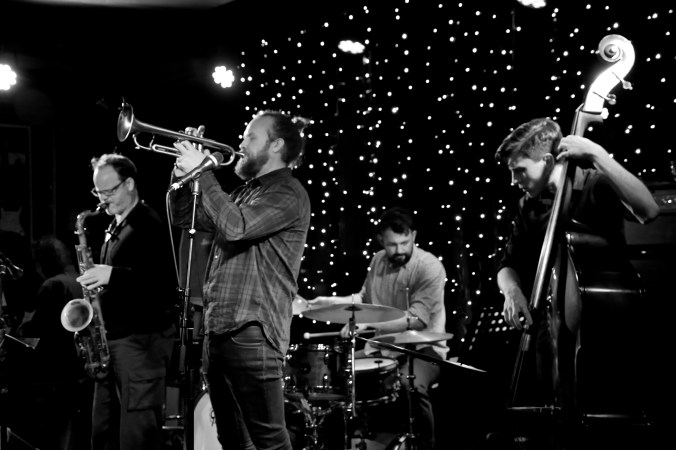 Tomasz Stanko died two days before the Eamon Dilworth gig and I was feeling the loss. I don’t know why this particular musician’s passing affected me so much but it did. Perhaps it was the untimeliness, a great artist gone too soon. It was as if a vital soundtrack to my life had been placed on pause. As I moped about the house, playing Wislawa and The New York Quartets, I remembered that Dilworth was playing soon and I cheered up immediately. I had reviewed the Viata album a month previously and loved it. I knew that it would be a balm and I knew that it would connect me to that place which Stanko took me. It did.
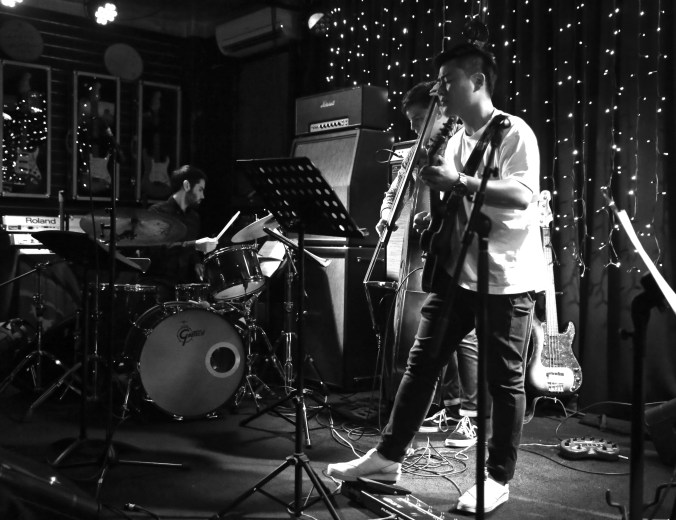 Two weeks ago the CJC Creative Jazz Club profiled two more emerging artists; Seungeil Thomas Hwang and Kathleen Tomacruz. Hwang and Tomacruz are both guitarists but with quite different approaches to their craft. Hwang leans heavily toward the fusion and rock end of the spectrum while Tomacruz, although adventurous, sits comfortably inside the tradition. Both underscore the value of the University of Auckland, Jazz programme; a programme which prepares musicians in the best possible way; fitting them for whatever musical path they choose.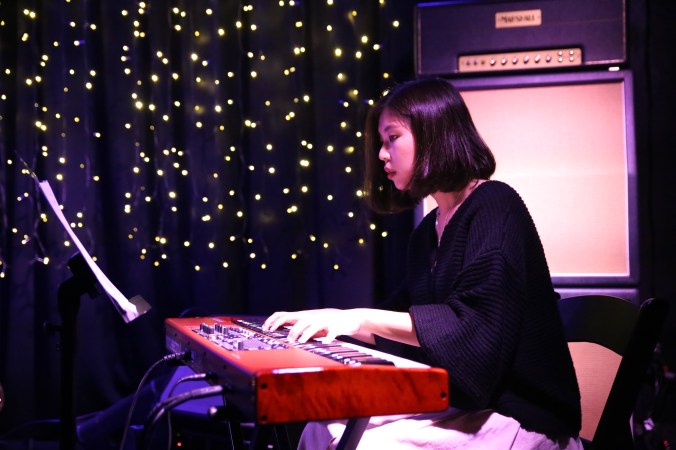
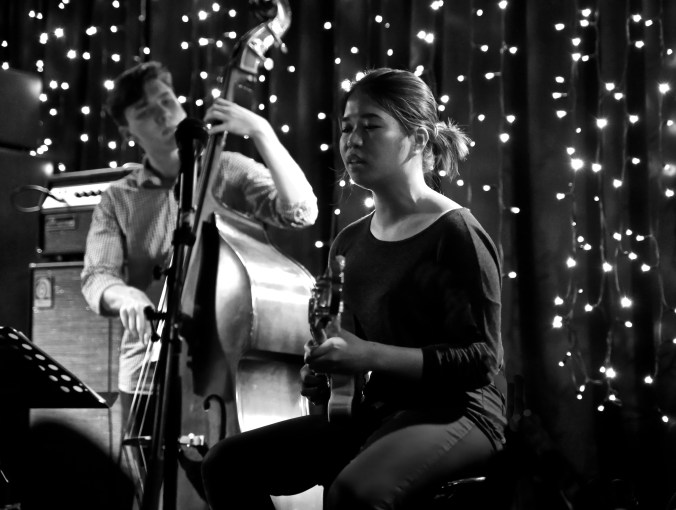
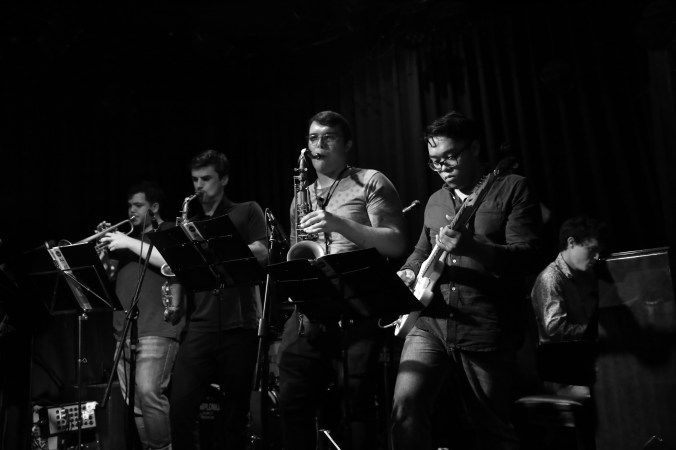 In keeping with the longstanding CJC tradition of keeping twice yearly slots open for emerging artists, late March featured two such sets. First up was a group led by bassist Denholm Orr. Orr has appeared in lineups a number of times, but this was his first appearance playing his own material and as a leader. His recent compositional work has placed increasing focus on arco-bass and consequently, the charts reached into that territory. Arco is not the default style for Jazz bassists but I am seeing a lot more of it lately and I welcome that.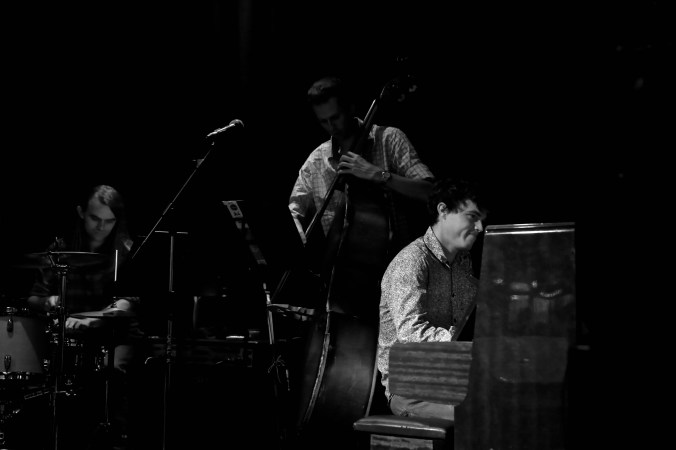
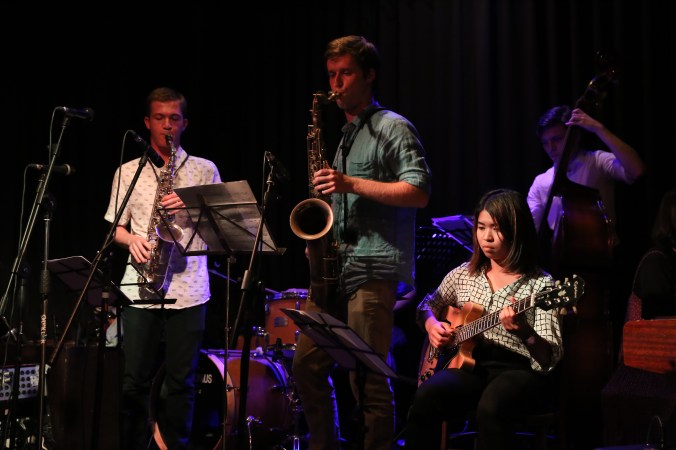
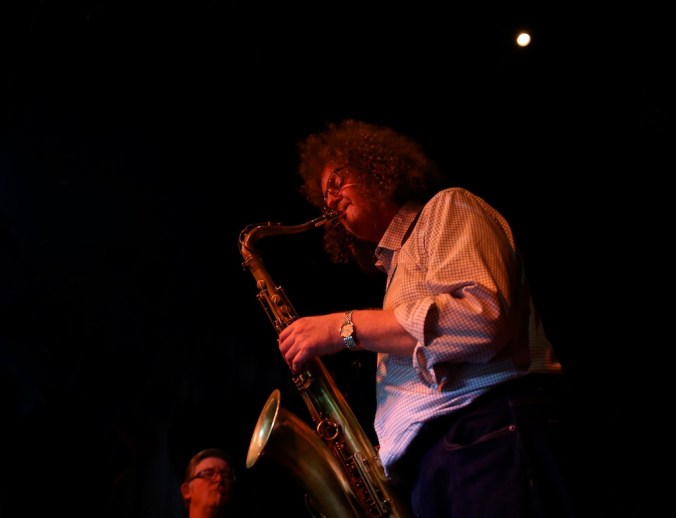 The popularity of ‘hardbop’ is enduring but we seldom hear it on the band stand. The probable reason is its very familiarity; if you play this music you will be judged against the source. There is also the evolutionary factor: improvised music strives to outlive its yesterdays. It is even less common for musicians to write new music in that idiom or to create a vibe that calls back the era. Such an enterprise invariably falls to experienced musicians; those with the wisdom to reverence the glories without it being merely slavish. Booth and Walters are especially well suited to that task. They have the chops, charts and the imagination and above all, they make things interesting. If you closed your eyes during this gig, you could easily imagine that you were listening to an undiscovered Blue Note album. It was warm, swinging and accessible.
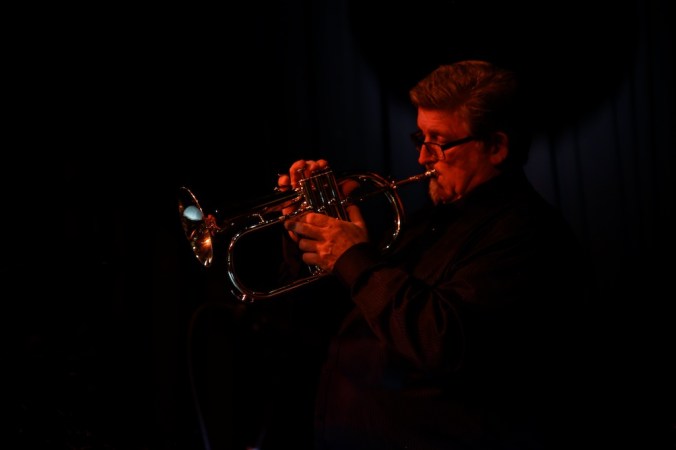 Booth and Walters are gifted composers and on Wednesday the pair reinforced their compositional reputations. Some of Booth’s tunes have appeared recently in orchestral charts. Walters’ tunes while heard less often are really memorable (‘as good as it gets’ stuck in my head a long time ago). These guys write and arrange well. Notable among Booth’s compositions were ‘Deblaak’, “A Kings Ransome’ and ‘On track’. From Walters; ‘Begin Again’, ‘Queenstown’ and ‘Wellesley Street Mission’. There was also a lovely version of the Metheney/Scofield ‘No Matter What’ from the ‘I Can See Your House From Here’ album. I have posted Booth’s ‘A Kings Ransom’ as a video clip, as it captures their vibe perfectly. Booth has such a lovely burnished tone – a sound production that no doubt comes with maturity and a lot of hard work.
 The last number was Walters ‘Wellesley Street Mission’ and I would have posted that, but my video battery ran out. This is a clear reference to the appalling homeless problem which blights our towns and cities. The bluesy sadness and the deep compassion just flowed out of Walters’ horn – capturing the issue and touching our innermost beings, challenging our better selves. I may be able to extract a cut of this and post it later – we’ll see!
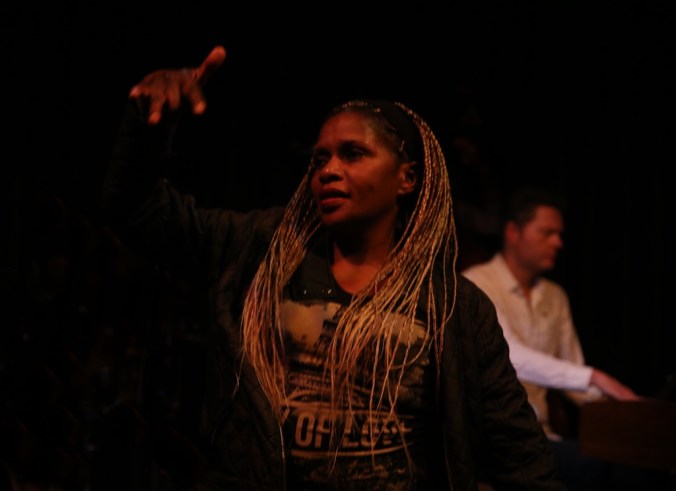 Lastly, there was that mysterious dancer, appearing from nowhere, drawing sustenance from the music until the street swallowed her again.
 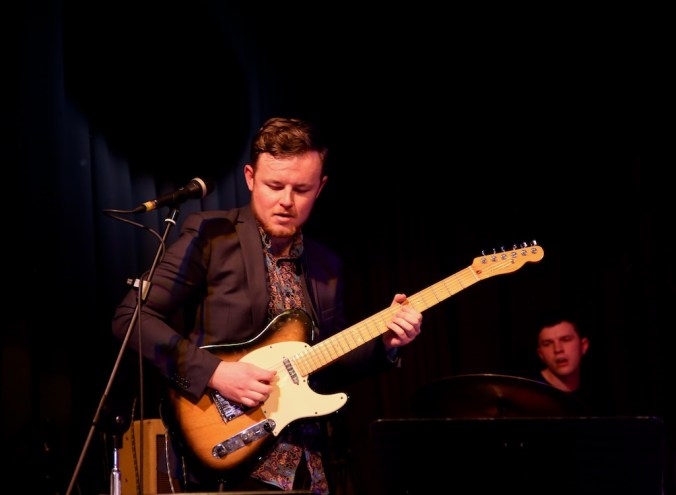 During the first half of 2017, a significant number of respected international artists and established local artists appeared at the CJC Creative Jazz Club. While everyone enjoys such a cornucopia of riches, it is also important to keep sight of emerging artists, those who are just below the radar. No local venue manages to showcase the rich diversity of improvising talent as well as the CJC. This is no accident, as there is a guiding philosophy behind the programming of gigs. No artist, however good, gets an ongoing residency; the gigs, therefore, are different every week, are identifiable projects, and this keeps the audiences engaged. An important part of this is showcasing emerging artists.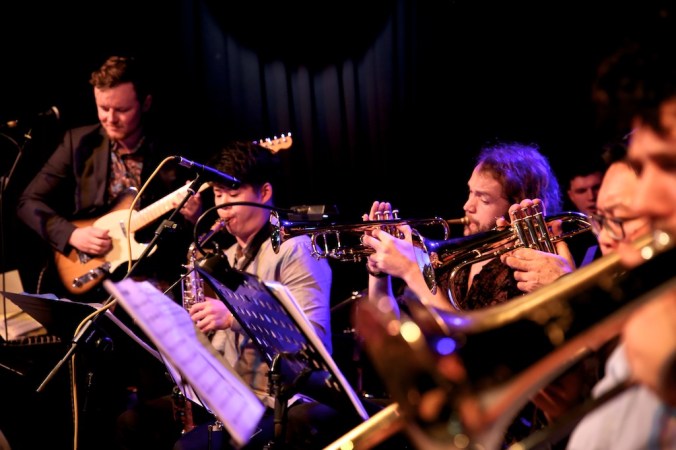
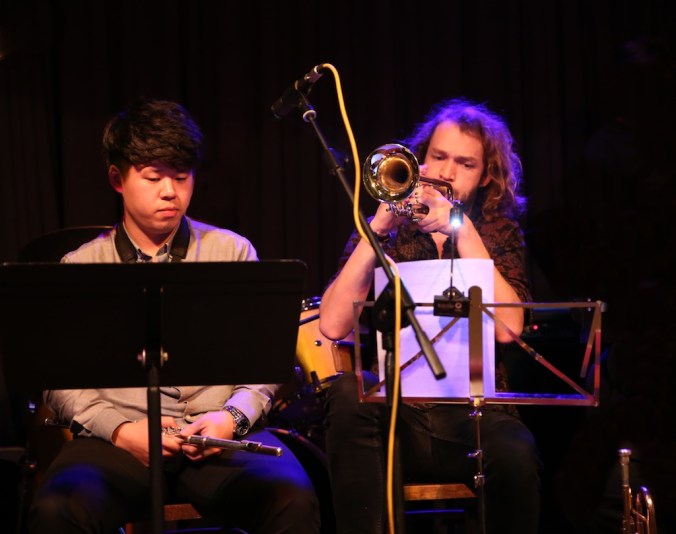
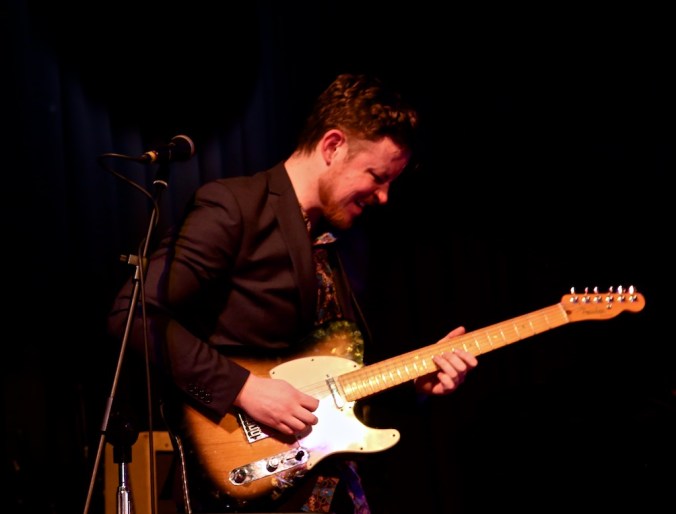 The first number was ‘Tulle’ from the Scofield album, after that we heard a number of his own compositions interspersed with standards. His ‘Who is Kenneth Meyers?’ appealed as did an angular rendition of ‘Surrey with the Fringe on Top (Hammerstein). Given the project in hand, it was unsurprising that he included ‘Boplicity’ by Miles Davis; ‘Birth of The Cool’ being the springboard from which all such arranging sprang. In the second half we heard trumpeter Mike Booth’s ‘Major Event’ – Booth is a skilled arranger and an experienced ensemble composer. It is possible that he has also influenced Swindells’ direction.
  JazzLocal32.com