‘Jazz April’ – How to avoid being an April Fool

575853_4764740081101_953922536_n 8ecff88f-7e03-49d0-a690-ae0042ecbe3b-1

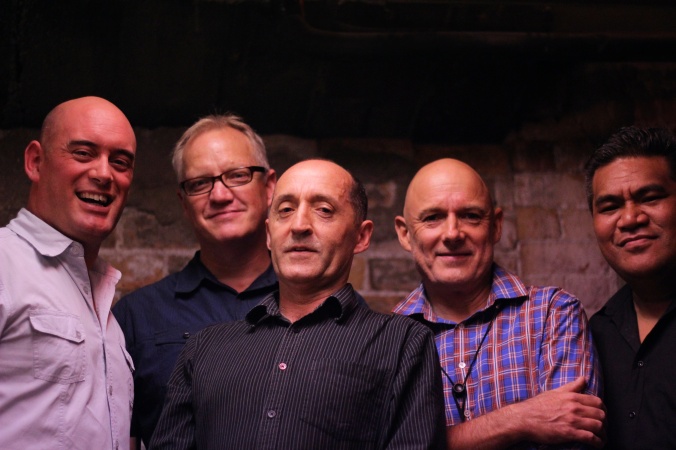
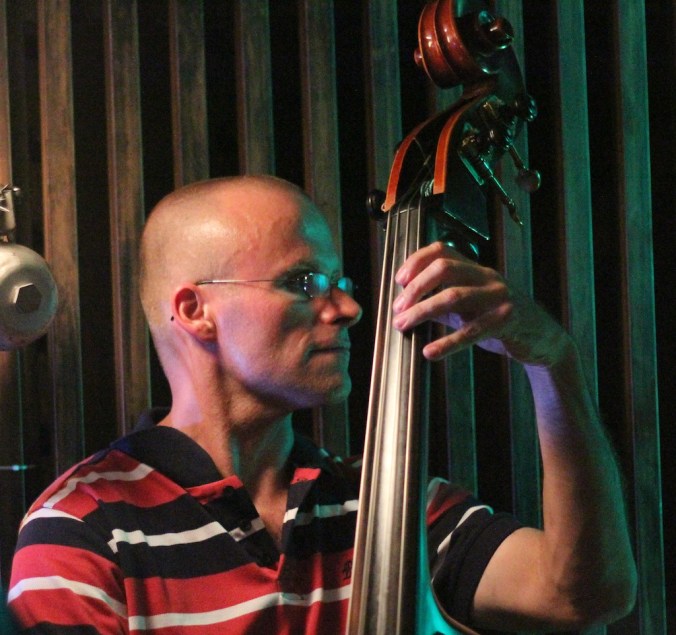
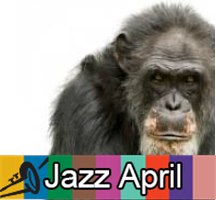
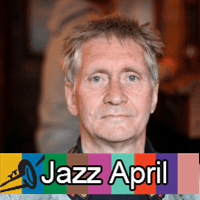
Notwithstanding the obvious resemblance between these grizzled old guys, Jazz April is no joking matter.   To avoid being an April Fool participate in as many Jazz April activities as you can.  Remember to ‘like‘ and ‘share‘ this and any other Jazz April pages that you come across.  Don’t monkey about; ape the trend-setters and brand your Face Book picture with a Jazz April badge like cousin Boris (left) and I (right) did.  This is a month set aside to promote and honour Jazz and its practitioners.  The best way of achieving this is by sharing our enjoyment with others.  If they see and hear what we experience they will want to participate.  Take the pledge and agree that you will visit as many Jazz events as possible during April.  If that is difficult you should at least participate online.
224006_552282744794057_1209529108_n-1

I have posted some logos which you should share indiscriminately.   If the internet slows down due to the volume of ‘shares‘ we will know that you have done your bit.  Think of it as a ‘Wikileaks’ for music lovers.  The world needs to know this secret. 485163_335421036512615_1393706890_a
There will be hundreds of Jazz April celebrations occurring world-wide and the events will culminate in UNESCO’s  ‘International Jazz Day‘ which is April 30th 2013.  The venue for the main Jazz Day event this year is Istanbul Turkey and Herbie Hancock is joined by a number of Jazz Luminaries like Hugh Masakela, Marcus Miller and Manu Katche.  If your city does not have an event planned you could consider hosting one.  If you do let me know and I will pass the information on to the Jazz Journalists Association.

In New Zealand the ‘Waiheke Jazz Festival’ and the ‘Tauranga Jazz Festival’ can be considered a good segue into Jazz April as they are both held over Easter weekend.  Auckland has a number of Jazz April events occurring and there will be a satellite party celebration at the CJC (Creative Jazz Club) during April.  Check out the CJC website as there is a good gig guide.

jazzapril-rectangle

The best place to locate the logo badges and banners (twibbons) and to find out how best to participate, is to click on this link to the Jazz Journalists Associations Jazz April Website   or the   Jazz Journalist Jazz April Face Book page .    

logo

In Auckland the CJC (Creative Jazz Club) will be featuring some spectacular Jazz April Gigs and we will be making a presentation to a few deserving local musicians at a JJA Satellite Party (date to be announced shortly).    The CJC line up so far is Nacey/Samsom/Haines (3rd April), Brian Smith Quartet (10th April), Kevin Field Trio (17th April) …more gigs to come.  For those who missed last years satellite party at the CJC, Roger Manins was inducted as a ‘Jazz Hero‘ by the Jazz Journalists Association.

A highlight event will be the Nathan Haines ‘Vermillion Skies’ album Release on the  6th April at the ‘Q Theatre’, Queen Street, Auckland.  This amazing album involves a number of our best-loved Jazz musicians and it will be a high point in the Auckland Jazz calendar.  Don’t miss this event or forget to buy the album (available in download/CD/vinyl).  644217_10152395531247588_299377990_n
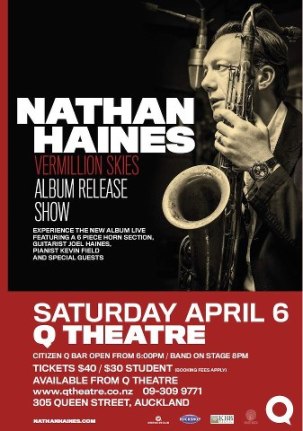
There will also be gigs at the ‘Ponsonby Social Club‘, the ‘Grand Central‘ (both in Ponsonby Road) and for experimental improvised music ‘The Wine Bar ‘Vitamin S‘ St Kevin’s Arcade, The Auckland Jazz and Blues Club (Tuesday evenings Pt Chevalier RSA), The ‘Titirangi Music Festival’ Titirangi Village (where the Alan Brown band is playing in the ‘Tool Room” on Friday the 5th April@ 7: 30pm).

Jazz April is now a world-wide event and I know that NZ will not let the side down.  My April posts will be profiled on the JJA Facebook page and or webpage.  The choices Auckland is offering over April 2013 are many and varied.  Locals have absolutely no excuse for not supporting Jazz this month, so see you all there.  

John Fenton

JazzLocal32.com    –   Jazz Journalists Association member
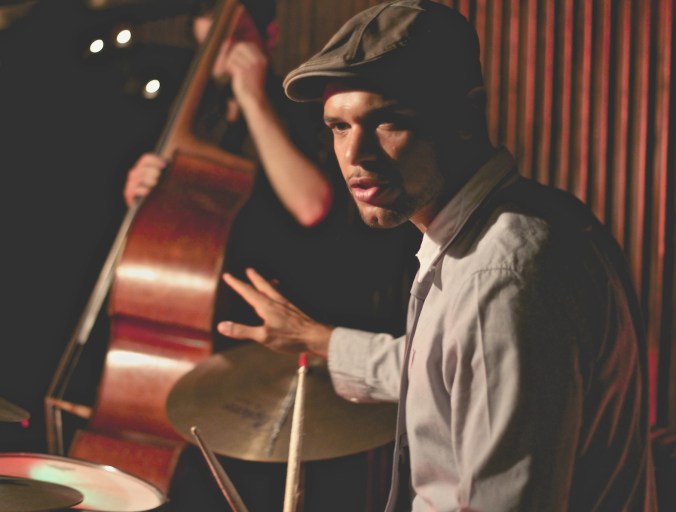
Myele Manzanza Trio

IMG_6454

The CJC (Creative Jazz Club) is increasingly on the world Jazz circuit, but it also attracts a number of artists from around New Zealand.   This outreach is exactly what Roger Manins, Caroline Manins and Ben McNicholl had envisaged when the collective began.  The CJC’s prime purpose is to further Jazz and improvised music as an art form and to create an intimate performance space where projects can be realised.    This space is suited to listening audiences, which in turn spurs the musicians on.  The trio who performed on Wednesday appreciated that.  IMG_6436 - Version 2

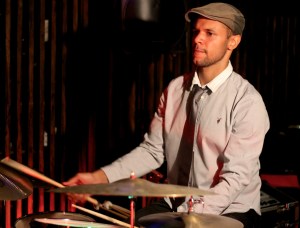
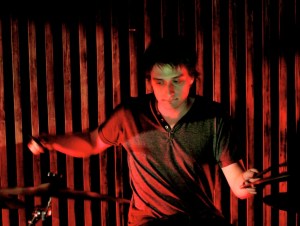
On Wednesday we heard the Wellington based Myele Manzanza trio.  A drummer led band has a different feel to a piano led trio.  When a drummer is leader the drums are generally more forward in the mix than is otherwise the case.  This is the way of things and whether it’s Max Roach or Matt Wilson we expect to have the drums as a strong focus.  Myele Manzanza is a captivating drummer and I was immediately struck by how different he is to most Auckland drummers.  When I spoke to him later I went out on a limb by suggesting that his style was reminiscent of Manu Katche.  He told me that he had not heard him, but that others had said the same.

IMG_6434

According to Myele, Roger Manins suggested that they should push the boundaries.   Rising to that challenge the band hastily composed a tune for the gig.   The gig was a mix of standards, interesting takes on tunes not usually associated with jazz and a few originals.  The originals were often subjected to an angular approach and with pared back melody.   Their take on the Ellington tune ‘Caravan’ was probably the most conventional of their tunes but even then it was given individual treatment.  The pianist approached the tune in a percussive manner, but with right hand runs that were definitely post bop (a little like Michel Petrucciani was fond of doing).  Led by the drummer, time signatures morphed into various new patterns.

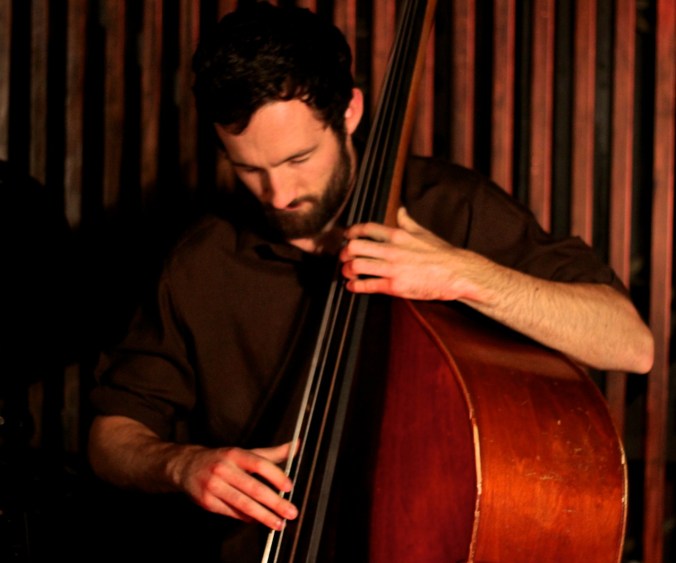
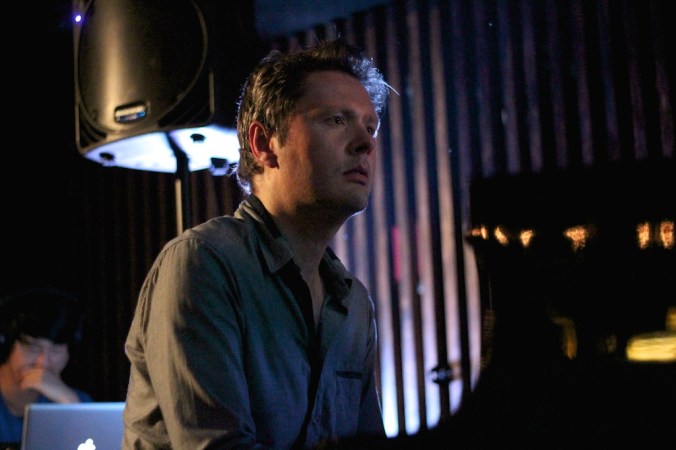
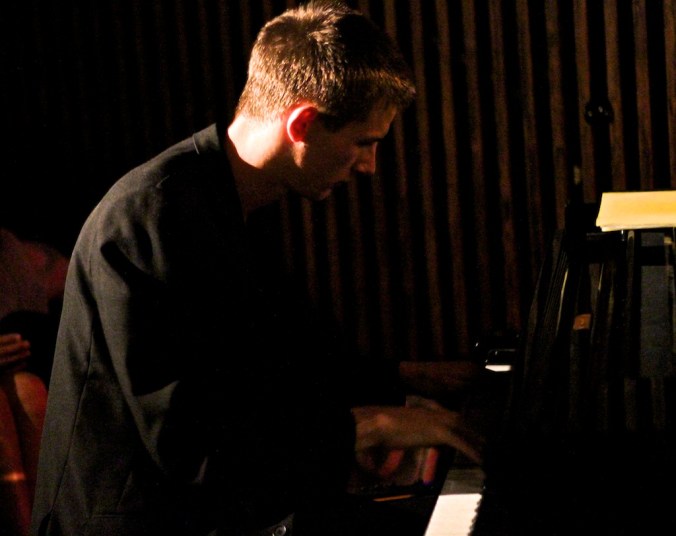
The Pianist Daniel Hayles often begins pieces with long ostinato intro’s and while not quite a minimalist, he never-the-less avoids excessive ornamentation.  I really warmed to him as the evening progressed and I found his approach modern and fresh (and often North European).  With Scott Maynard on bass the unit knitted together well.  Because of the way the tunes unfolded it was essential that he made his presence felt and he did.   In situations like this the bass often has to carry some extra weight.IMG_6431

Myele has spent time working in New York and he has studied under Jazz drummer E J Strickland.  I also know that he is passionate about Jazz, but why his band sounds different is because other very modern influences have seeped into the mix.   Myele Manzanza works with many ground breaking non-Jazz lineups and that is probably what he is best known for.   This brings me back to Manu Katche who is a very modern jazz drummer, but one who works across a variety of genres (Peter Gabriel and Sting).  Katche’s Jazz drumming is atypical and madly engaging.   Jazz should never stand still and this window on yet another approach to our music tells me that the exploration continues.

I hope that the band returns again as they expand our horizons while making us smile.   After thanking his band Myele Manzanza turned to the audience and said, “Thank you Auckland and the CJC.   This is an unusual situation for us.  An audience that listens appreciatively and doesn’t talk through the gig.   This is what Wellington lacks”.

Every city needs a CJC …and lots of nights like this.

Who: Myele Manzanza (Leader, drums), Daniel Hayles (Keys, Piano), Scott Maynard (bass).

When and Where: CJC (Creative Jazz Club) 1885 building Brittomart, 20th march 2013

Note: Jazz April and International Jazz Day are nearly upon us.  Do your bit by supporting as much jazz as you can during April.

224006_552282744794057_1209529108_n-1 jazzapril-rectangle 485163_335421036512615_1393706890_a

Stephen Small – special guest Hugh Masekela

IMG_6358 - Version 2

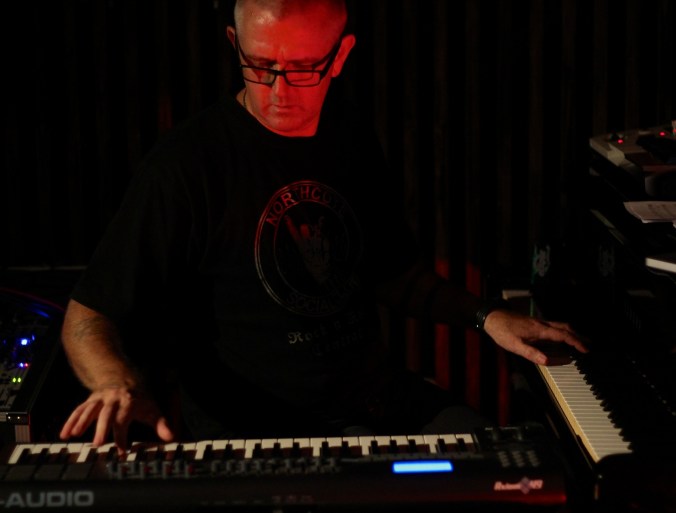
The 13th of March was a night of surprises.   I had been urging Roger Manins to lure Dr Stephen Small down to the CJC (Creative Jazz Club ) for months and here he was.  I told a friend that we would be in for an interesting and varied program.  How prescient I was.  Considering that he is such a well-rounded and accomplished pianist (and keyboardist) it often surprises me that knowledge of him in Jazz circles is not as great as it should be.  Stephen Small has a number of irons in the fire and his work across many musical genres can sometimes eclipse his accomplishments in specific  areas.  No one however should disregard his straight ahead or experimental Jazz playing abilities.

IMG_6374

His quartet set up their equipment, completed a brief sound check and then faded back into the darkness of the club while Stephen made last-minute adjustments to his keyboards.  Having set up his two keyboards he moved to the grand piano and picked up the microphone.   Some artists impart scant information about their set lists (even omitting to tell you what they have played).   Stephen is generous with information and his expansive discourse set up the evening nicely.

IMG_6388

He played solo piano for three or four numbers and the tunes came mainly from the Great American Songbook.  The focus for these pieces was the earlier half of the twentieth century.  During his introduction he talked about the interface between jazz, classical and popular music and to illustrate this melting pot he began with two standards.   First up was the perennial favourite,  ‘Spring Can Really Hang You up the Most’.   The beautiful version he settled on was Oscar Peterson’s.  The second tune ‘Angel Eyes’ (Matt Dennis) has a bluesy feel and the lush right hand voicings accented the subtle hints of stride in the lower register.  I love this standard and it was a delight to hear, as it is seldom played by instrumentalists these days.  More’s the pity.  The last piece in his solo set was an extract from George Gershwin’s ‘Rhapsody in Blue’ (see video clip).    All three were beautifully executed and they illustrated his point perfectly that Jazz is in a continuous process of renewal and will happily absorb the sounds of the day.   What is sometimes under-appreciated is that Jazz also influences and enriches other genres.  Modern pop or rock without its Jazz roots would arguably be a chirpy wasteland devoid of back beats.   Classical music is certainly not exempt either (e.g. Stravinsky and Ravel). IMG_6382 (1)

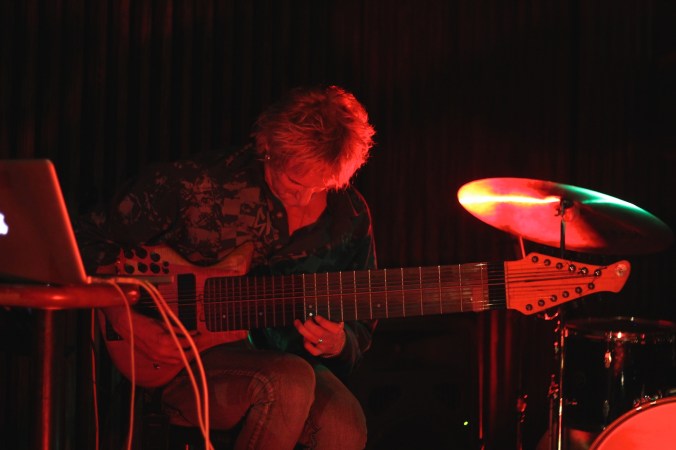
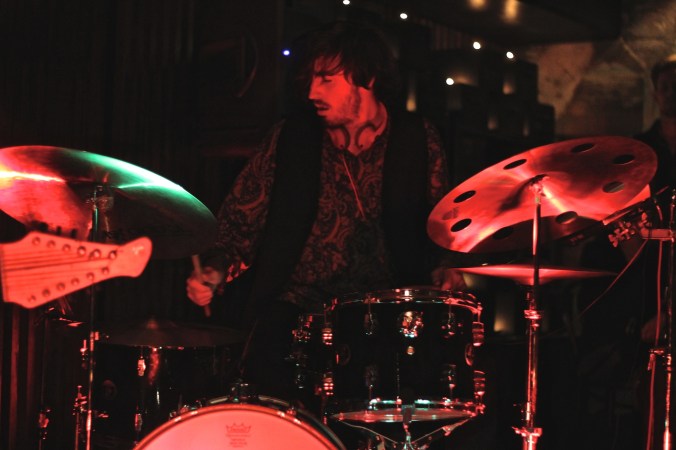
His next set shifted our focus to experimental music.  Stephen Small on two keyboards & piano, Johnny Fleury on Chapman Stick 12 string guitar, MC Chinga Style voice and Stephan Thomas drums.  I am particularly interested in such electronic explorations when they’re done well and these were.  The chordal instruments fed into an array of pedals and the whole set up was something that Bob Moog would have gone into orgasmic ecstasies over.   The Chapman Stick looks daunting to play as the fret board is double the width of most guitars.   It is largely tapped and not picked; giving rich voicings and strong resonant bass lines.   MC Chinga Style added an unusual dimension to the mix and his inclusion was spot on.    He was a benign presence, never dominating.   His contributions were occasional but extremely interesting.  A combination of scatting, boom box, subtle pops and clicks and always reinforcing what was occurring around him.   I have long thought that the human voice as an instrument, playing lines in an ensemble, is terribly under-utilised in Jazz.  ECM gets this right and we need more Norma Winstone’s in our line ups.

Hugh Masekela

Hugh Masekela

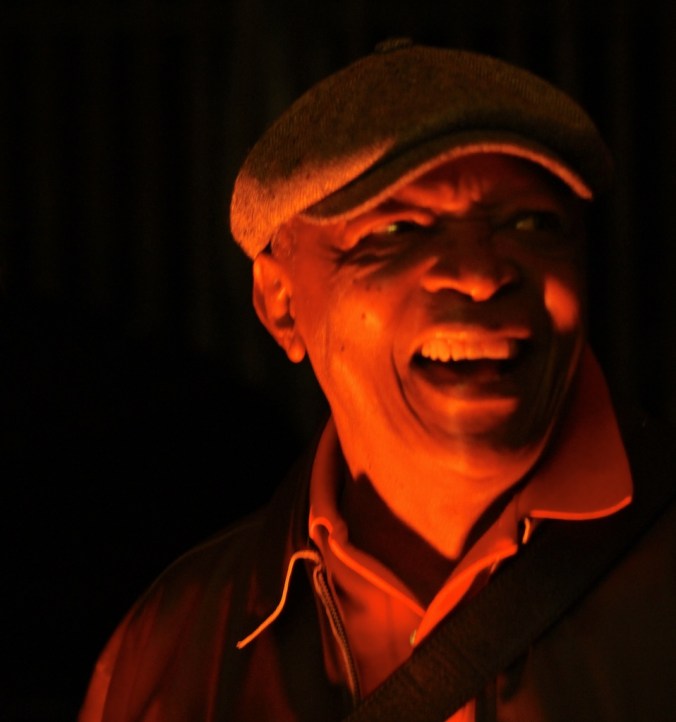
Somewhere in the middle of this set Caroline Manins went up to Stephen and whispered in his ear.   Stephen looked startled for a few seconds and then proceeded with his electronic wizardry.     Caroline then whispered in my ear, “there is someone I think you should meet”.    Leaning against the bar was Hugh Masekela, anti apartheid hero, Jazz icon, Afro Beat star.  In the subdued lighting with its soft red overtones it all seemed surreal.  The short 74 year old man stuck his hand out and smiled widely.  Then before I knew it he had enveloped me in a hug.   The great man hugged quite a few strangers that night and I suspect that all were enriched by the experience.    This was Hugh Masekela’s way of telling us that in a diverse and complex world, music can remove any barriers between us.  To paraphrase Herbie Hancock, “Music is what I do but finding a common cause with humanity is my real work”.   He has just been honoured by President Obama for his life’s work.

Cameron Ward

Cameron Ward

After the last of Stephen’s numbers Hugh Masekela asked Stephen to sit in while he, his guitarist and drummer played three numbers.  The crowd stood open-mouthed and a little star struck as the band began playing.   A guitar player from South Africa , a groove drummer from America and a Kiwi pianist – working with a Jazz hero.   Hugh placed the flugal horn to his lips and showed us that simple melody can say as much as complex harmony.  He never strayed too far from the melody but somehow his solo’s were all the more profound for that.  IMG_6412

He ended the set with Herbie Hancock’s ‘Cantaloupe Island’ and thanked us.  We slipped out into the warm night, feeling very pleased with ourselves for being in that place at the right time.

I have included a link to the Hugh Masekela concert review from N Z Musician.  The concert was a blast.

Who: Stephen Small (Keys) – with Johnny Fleury (stick), Stephen Thomas (traps) – Also: Hugh Masekela (flugal horn) plus two members of his band.

When: Wed 13th March 2013

Where: CJC (Creative Jazz Club) – 1885 building basement Brittomart

Foot Note From an Observer Interview – extract:

Q.”There was one occasion when the apartheid government tried to invite you back as an ‘honorary white’. How did that feel?

It was not only insulting, but it was like the height of comedy, right out of the fucking Marx Brothers.  The apartheid people were actors and they had to act out their part in their beliefs every day. That’s why we always saw them as being comedic.”

WE SHALL NOT BE QUIET

2nd Line parade taking it to the philistines. All music is political but some more so.

ausjazz's avatarAusjazz Blog

FLASH MOB MARKS MOMENTOUS OCCASION: The Melbourne Jazz Co-operative’s 30th anniversary, Fed Square to City Square, Friday 25 January 2013

I was half expecting a loud protest, with discordant horns blaring their displeasure at the sudden cessation of funds to the co-op from Arts Victoria, accompanied perhaps by deep grumbles of drums and strident sounds of reeds run dry.

What eventuated was a demonstration that an improvised gathering of musicians can add to the life of a city, as well as a signal to the holders of purse strings that jazz musicians will not sit quietly in a corner and come out to play only at festival time.

It was great to see so many musicians in procession from Fed Square towards the much diminished City Square space across Collins Street from the town hall. But in my heart of hearts I yearned for the megaphones and banners and chanted…

View original post 647 more words

Blue Train – 2013

IMG_6313

I suspect that Blue Train has a following way beyond the traditional Jazz audiences and I can understand why.  Their hard-driving funk laden grooves are impossible to resist and so people tend to flock to any Blue Train gig.   Their audience occupies a broad age spectrum.  Blue Train mostly plays music that you can dance to and just occasionally the set list includes some Jazz space funk.   I’m a huge fan of this type of tripped out Jazz fusion, so if you like this sub-genre then find yourself some Blue Train recordings.  There is of course much more to Blue Train than Funk Fusion and their Jazz chops show in everything that they do.   Only highly competent Jazz musicians can play like this and only talented experienced musicians can write the material Alan does.   This band is an Auckland cultural institution, they are jaw droppingly good and that’s why people love them.  The Blue Train gigs are rare these days, as the band members all have other projects on the go.  Any whisper of gigs should put an urgent blip across your radar.   Tip: they will be at the Waiheke Jazz Festival this year – be there.

IMG_6336 - Version 2

The CJC (Creative Jazz Club) filled to capacity on the night and they soon stood three deep at the bar.   Blue Train was here again – the word had travelled.

Post millennium Jazz is a broad church and the younger audiences (and a few older ones like me) find this exciting.  Blue Train has been around for more than 20 years and in spite of a few attempts to pension the band off, the fans just wont let it die.  As a part of New Zealand’s improvised music heritage it deserves our ongoing support and respect.   Don’t for a minute expect a mere cover band recycling the glory days.  Blue Train are wisely resistant of resting on their laurels and after the ‘head’ of a tune they unravel the material in new and interesting ways.   They play older material and new.  Alan Brown’s compositions just keep on coming and they get better and better.   He is a seasoned performer and his keyboard skills will always astound.  As you listen you will  hear new ideas being tried and old ideas being turned on their head.  He is widely acknowledged as a great keyboardist but his piano skills are also considerable.  This was very evident on the 6th of March 2013.

IMG_6348

It was obvious that the band were thoroughly enjoying themselves and they stretched out as the tunes unfolded.  The CJC gig edged closer to its Jazz roots than would have been the case at Deschlers in the 90’s.  Those in the line up were mostly veteran band members, but there were some newer additions.   Dixon Nacey on guitar has played with Alan for years and he has previously appeared in Blue Train line ups.  He does not however go back as far as Jason Orme (drums) or Steve Sherriff (tenor and soprano saxophones).   The newer band member is Karika Turua (electric bass).

IMG_6335

Having Dixon Nacey in any band is always a treat and I always watch as his eyes fix on the other musicians – exhorting them to challenge him.  He listens carefully to what is unfolding and is always ready to back someone up or to step out with new ideas.   This is invariably done with a mile-wide grin and the looks of delight when he and Alan lock into an exchange is priceless.  As on his three previous gigs, he had his gorgeous Godin Guitar with him and once again I will confirm that this is a match made in heaven.

Many of the Blue Train musicians have contributed compositions over time and Steve Sherriff deserves special mention there.  He is well rounded horn player who can fit seamlessly into many situations (big band, straight ahead Jazz or funk).   His tenor and soprano work were especially captivating on this gig and when he and Dixon played unison lines it was hard to believe that there was not an additional horn in the line up.  Before the gig I ran into my niece and told her that it was nice to see her in the club.  She then told me that a former teacher of hers was in the band.   Who’s that I asked. “Mr Sherriff” she said.   When I saw her later she summed up her impression  “Wow who knew he played like that”.    He does.

IMG_6331

Jason Orme worked the grooves with finesse and enthusiasm and he knew how to play to the room.   The same applies to Karika Turua who dug into serious grooves that echoed in your mind for days afterwards.

The sound levels were just right for the club and this is where the bands experience played a part . Some younger (and a few older musicians) forget to adjust their volume to the room and the CJC is lively; especially if the drums and bass are overly loud.  Being professionals – Alan and Ben McNicoll (CJC sound and IT) got the job done properly.  IMG_6332

What and Who: ‘Blue Train’ – Alan Brown (keys), Steve Sherriff (saxes), Dixon Nacey (guitar), Karika Turua (electric bass), Jason Orme (drums).

When: Wednesday 6th March 2013

Where: CJC (Creative Jazz Club) – basement of the 1885 building Brittomart

Rebecca Melrose Super Band @ CJC

IMG_6272

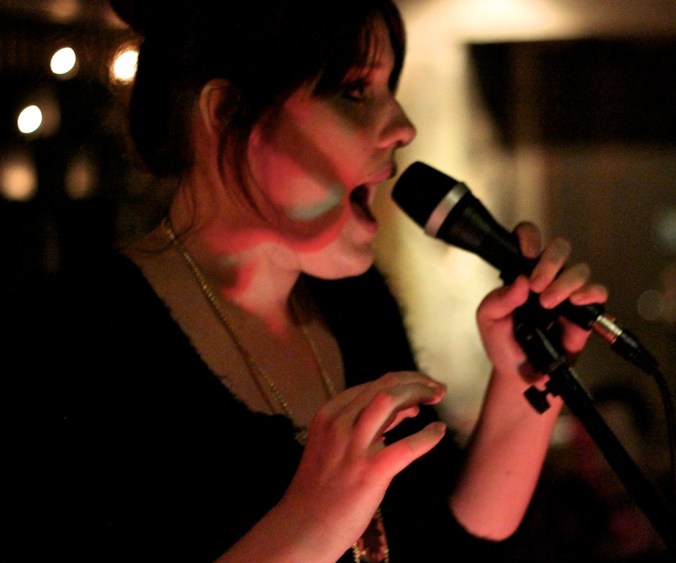
Rebecca Melrose is fairly new to the Auckland scene but she is already gaining a reputation for excellence about town.  Although young she has several recordings under her belt and her career is gaining momentum.  She is a singer/songwriter with an engaging voice and this gives her considerable scope.  It means that her own material gets aired alongside that of Gretchen Parlato and Esperanza Spalding during a gig.  This was her second performance at the CJC (Creative Jazz Club)

Parlato and Spalding are clearly strong influences for her but she can also sing challenging standards from an earlier era.  She not only choses well when adding standards but executes tricky numbers superbly.  Like many emerging singers of the post millennium she has a multi genre appeal and whether she moves into a more ‘soul’ space is a moot point.   On this night she was a primarily a jazz singer and if the enthusiasm of the audience is anything to go by that route will work very well for her.

IMG_6268 - Version 2

Last year she was more tentative during her between number introductions, but that hesitancy has now fallen completely away.   The Rebecca that we saw tonight was sassy, confident and on top of her game.   She played with the audience and tried out various lines of patter.   Not all of the jokey asides worked as intended (some went over very well) but it didn’t matter a damn and her good-natured handling of the audience captivated everyone.   She is on the right track here and I encourage her to keep going in this vein.   Music is a performance art after all and Jazz and banter go together like the reverse sides of a rich tapestry.  IMG_6273

The last time I saw her perform she had Dixon Nacey on guitar and Andrew Keegan on drums.  This time with a much bigger line up she utilised the additional scope that this afforded her .  She performed several times with singer Chelsea Prastiti (once in duo doing the Esperanza Spalding arrangement of the Jobim Tune ‘Inutil Paisagem‘ – which was magical to say the least ).  In other numbers as a quartet, quintet or octet  This set list struck out for higher ground and the risk paid off.

On trumpet and flugal was Liz Stokes, who stepped up with an impressive solo in the second set.  Alex Ward did a great job on piano and especially on ‘Lush Life‘.  I have not seen him play very often and enjoyed his contribution as he tackled numbers that were often demanding.  It was also good to see Jarad Desvaux de Marigny (drums) and Eamon Edmunson-Wells (bass) teamed up again.  This pair work extremely well together and have a more subtle colourist approach which is especially suited to singers and the less percussive of piano players.  On guitar,Manaf Ibrahim and on Tenor Scott Thomas.

In guest spot was Callum Passells who played a couple of numbers which absolutely floored me; especially his masterful alto solo on ‘Lush Life‘.   Every note in that solo was perfectly placed and with the rhythm section meeting the challenge, we were given a rare treat.   I will say more about Lush life later.  IMG_6288 (1)

Rebecca’s own compositions are interesting as are the modern standards she likes, but I have especially singled out the two older standards for praise.  ‘Tea for Two‘ is not terribly challenging as written, but as a singer you immediately fall under the shadow of Ella, Anita and Frankie.   The tune was written in 1930 by Tin Pan Alley song plugger Vincent Youmans,who was unsure if he liked it at first.  The lyricist Irving Caesar later admitted that his lyrics were intended only as a stop-gap. they never were replaced thank goodness.  The song is from the musical ‘No, No, Nanette‘ and it quickly became a runaway success.   Why this song works so well for Jazz is exactly for the reason Youmans worried about it; a simple form.  There is so much an improvising musician can do with it.  Before long Art Tatum had played it (1933), Benny Goodman (1937), Fats Waller (1937),  Django Reinhardt (1937), Dave Brubeck (1949), Bud Powell (1950) and Thelonious Monk 1963.   The singers who performed it were legion but Anita O’Day absolutely tagged it as her own in ‘Jazz on a Summers Day‘.   Rebecca quoted from Anita, took the number at the same fast pace, but wisely interpreted it in her own way.

The other track that I can’t resist posting is Rebecca’s ‘Lush Life‘ by Billy Strayhorn.  This song is the antithesis of  ‘Tea for Two‘ as it didn’t emerge from the Great American Songbook and it is very challenging to perform.   To my sensibilities it is almost the perfect song.  This is one of the great Jazz Standards and apart from Frank Sinatra’s version it has not been sung much outside of Jazz.  Sinatra only performed it once and refused thereafter, which is one of the enigmas of his musical life.  Recently unearthed rehearsal tapes from the recording session with Nelson Riddle provide an answer.  He struggled with it and at one stage blamed fly dirt on the page for making ‘a very hard song harder’ (Google Sinatra, ‘Lush Life’ and you can hear that rehearsal).

The definitive version for most is probably the Johnny Hartman/John Coltrane Impulse recording (1958).   IMG_6286 (1)My personal favourite is the more recent Fred Hersch /Andy Bey version (from the ‘Passion Flower’ album on Nonsuch) – quietly dedicated to gay Jazz musicians past and present.   Strayhorn was of course an out-gay man at a time when this was almost unheard of.   Ellington revered Strayhorn and regarded him as his chief calibrator (‘my other hand’).   Oddly this tune which written in 1936 remained unperformed until 1948 when Strayhorn performed it in a duet with Kay Davis.   The song was never adopted into the Ellington repertoire and did not become famous until the 50’s.   Its gay innuendoes is probably one reason but its sophisticated complexity is certainly the other.  Well done Rebecca and well done her accompanists’.    Callum Passell’s alto solo was to die for as he breathed the musical history of the song into the solo.   I liked the drums and bass contributions and especially Alex Ward’s sensitive but firm rendition.
Rebecca is a young woman with a big voice.   It will be interesting to see whether she keeps her Jazz chops honed or whether she’s tempted toward singing mostly soul.  Either way the best of luck to her.

IMG_6261 (1)

Where: CJC (Creative Jazz Club) 1885 Bar Auckland

When: 27th March 2013

Who: Rebecca Melrose Super Band

Dr Dog Unleashed @ CJC

IMG_4413 (1)

A few weeks ago someone had whispered, “Dr Dog is back”.  What started as a mere dog whistle soon became an insistent rumour; confirmed beyond doubt when I saw a red van cruising the streets with ‘who let the dogs out’ emblazoned on its side.    I checked the CJC (Creative Jazz Club) website and sure enough there was the gig listing.   Dr Dog are the business or as the vernacular will have it ‘the dogs bollocks’.   We had all been hanging out for this return gig.  This was a risky outing for them as there would almost certainly be an attempt to capture them live during the performance.  The sight of determined looking technicians carrying a tangle of cables and heavy suitcases down the 1885 staircase club confirmed this.  IMG_6222

‘Dr Dog’ are some of the best musicians that the Auckland Jazz Scene has to offer.   Roger Manins – tenor,  Kevin Field – piano, Oli Holland – bass and Ron Samsom – drums.   They all teach at the Auckland University Jazz Studies course where Ron Samsom is program director.    They are teachers, but they also gig regularly.   These guys have honed their skills over many years of playing with the best.  Suffice it to say that expectations are always high when any one of them performs, but when all four appear on the same stage it is a noteworthy event.

Dr Dog is a showcase for the talents of the four band members, all of whom have written original material for the occasion.  I suspect that these compositions are not for the faint hearted and a sneak look at the heavily annotated scores confirmed that.   It was dog eat dog on the bandstand as each musician tried to outdo the other.  Heads would occasionally bend low over the charts in mock dismay and between numbers quick animated conferences were held.  This was not a set list designed to give band members an easy ride.   It was the audience who got the best of these exchanges and while the sweat poured off the band we lapped up the music.  This was a rare treat, just as we knew it would be.

IMG_6219

As you would expect from a dog band there were cool licks a playful approach to the music, a meat raffle and stick chasing.   I filmed most of the sets and I was particularly impressed with the first number up.  It was obvious that these guys had their eye on the ball.  I have put up that clip titled ‘Dideldideldei’.   Being Oli Holland’s composition I knew that it would be well written and have a back story (perhaps involving fishing?).  Oli has a strong sense of irony which is in his titles.   Dideldideldei was evidently a phrase uttered by a Jazz hating apartment dweller in a German comedy, who had the misfortune to live above a Jazz club.  He would shower the band with rotten fruit while yelling, “this is not music it’s just dideldideldei”.    All of the tunes had equally illusive or improbable titles and that only added to the fun.

IMG_6243

Roger contributed ‘Peter the Magnificent’ which he had written in honour of Peter Koopman and tune called ‘Evolution’ (dog evolution).  He gave an explanation of the titles but as I was near the back I couldn’t hear because the people up front were laughing so hard.  Kevin contributed a few tunes and one named ‘Synaesthesia’ referenced the unusual condition which he tells me afflicted one of the great classical composers.  Synaesthesia is a rare condition where colours are heard as sounds or sounds as colours.   Pat Martino Jazz guitar master uses this affliction as a vehicle to assist his improvisation.  In the end I lost track of who had composed what because the dogs only wanted to play.    While this was occurring they were captured by a sound man named John.  An album and a properly attributed track list should result from that.   This band is long overdue in recording and I am hoping that the live take is adequate to purpose.  If the sound is not good enough then they should shake their tails and get to the studio ASAP.   I for one can’t wait.

IMG_6235 - Version 2

Who: Dr Dog – Roger Manins, Kevin Field, Oli Holland, Ron Samson

Where: CJC Creative Jazz Club February 20th 2013