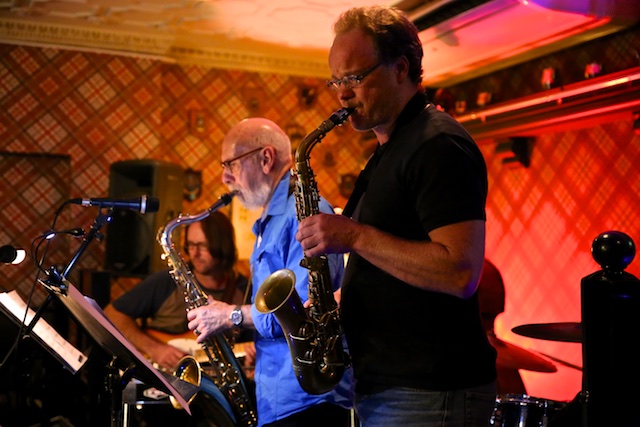
 A seasoned New York veteran when asked to comment on the quality of playing by young artists emerging from the Jazz Schools said, “Man they’re such great players. Many of them have chops to burn, but what is lacking is ‘character’. That is not taught in Jazz schools, you gain it inch by inch out of life experience”. To paraphrase Lester Young who put it best, ‘I hear the notes, but what is your story’. The character of a musician (or the lack of it), shows up in the music. Jim Langabeer has ‘character’ to burn. He tells wonderfully human musical stories and they are utterly beguiling.
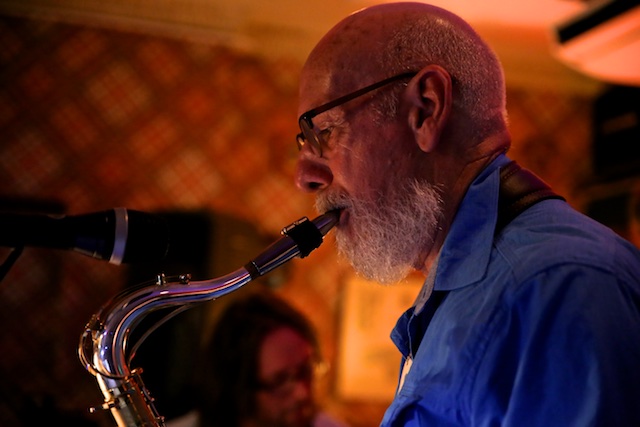
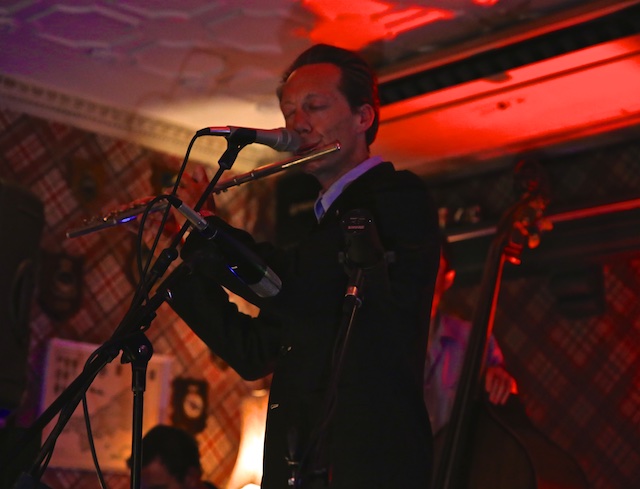
 Langabeer is hugely respected on the scene and deservedly so. He has worked with greats like Gary Peacock and Jaco Pastorius and in spite of absorbing the essence of North American Jazz, his ideas and sound possess a Kiwi authenticity. When he plays his tenor there is often a street-raw raspy intonation. The sound is at times reminiscent of Archie Shepp, but the story and flow of ideas are entirely his own. His flute playing is soulful and as soft as silk in the breeze. Because he is so comfortable in his own space he can incorporate everything from the avant-garde to indigenous music without it sounding contrived. These seamless references work beautifully in his hands. We talked of this after the gig and agreed that many of the earliest attempts at blending middle eastern, far eastern or ethnic music were less successful than now.
  As the boundaries between cultures blur in a globalised world, the mutual respect between improvising traditions grows. I have posted an example of this effortless genre-blending in a clip from the CJC gig titled ‘Ananda’s Midnight Blues’. Those who are familiar with Buddhism will grasp the meaning immediately. Ananda was Gautama Buddha’s childhood friend and later his disciple. Beloved, worldly and yet never afraid to challenge his enlightened teacher. There is a feeling of deep questing spirituality in the piece – reaching beyond mere form.
 Whether Langabeer plays flutes or reeds, everything serves the composition. His spare lines (which are devoid of undue ornamentation) establish a theme and then vanish like a will-o-the-wisp, giving a nudge to the imagination and enriching the piece as a whole. There are no wild flurries of notes on the saxophone or flute because the story resides elsewhere. His writing creates an over-arching logic and the ensemble has the freedom to move in and around tonality. In some pieces ostinato patterns create a drone effect, becoming a single note over which to restate the melody. This freedom allows for an organic interaction, free or inside and with a deep gut-felt pulse.
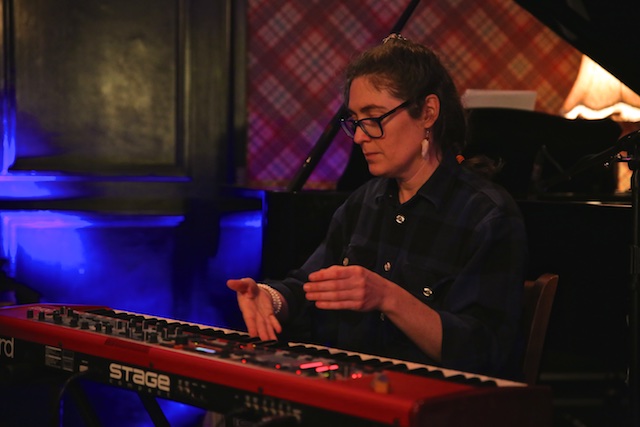
 When putting a band like this together the choice of musicians is supremely important. Not every musician could handle such freedom. Needless to say, Langabeer chose well. The ensemble was rich in contrasting colour, rich in character. It was our good fortune that Jim Langabeer’s daughter Rosie Langabeer was back in town. I can’t imagine a better-qualified pianist for this role. A leading avant-gardist and experimental musician who crafts compelling filigree and rich beauty into her music. Rosie Langabeer can play outside one minute and the next you hear a deep subtle swing, a rare kind of pulse that you can feel in your bones. A gifted composer and leader in her own right, an extraordinary sides-women when required. Moving from percussive, richly dissonant voicings to heart-stopping arpeggiated runs – somewhat reminiscent of Alice Coltrane’s later piano offerings. Her iconoclastic playing delighted the audience.
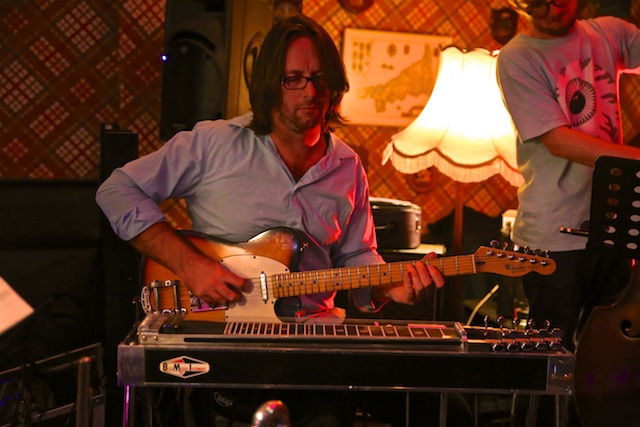
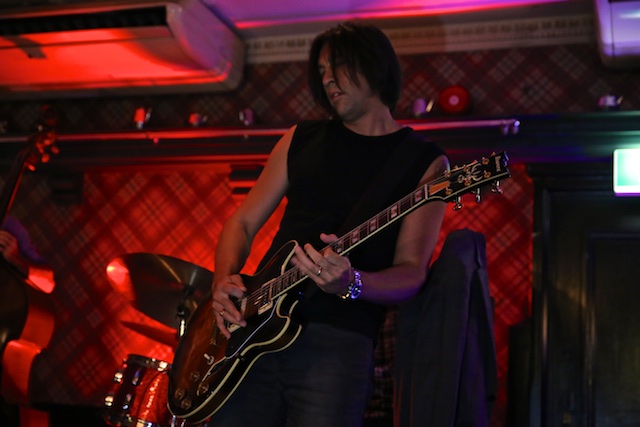
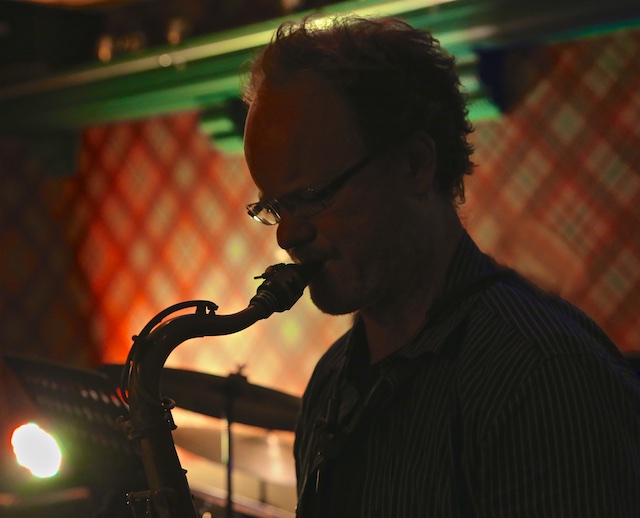
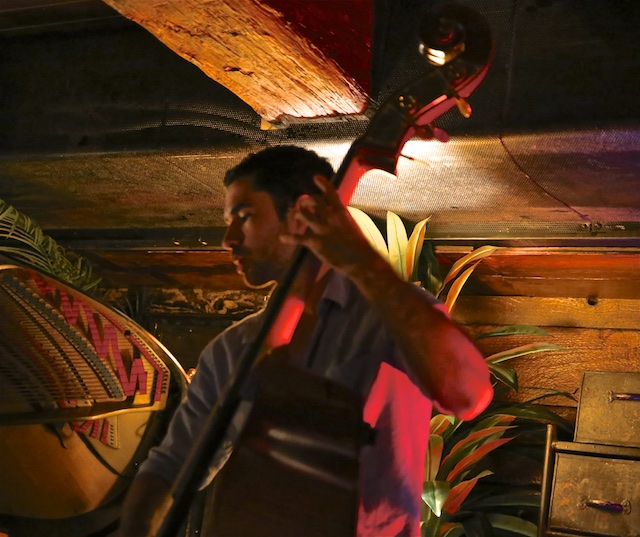
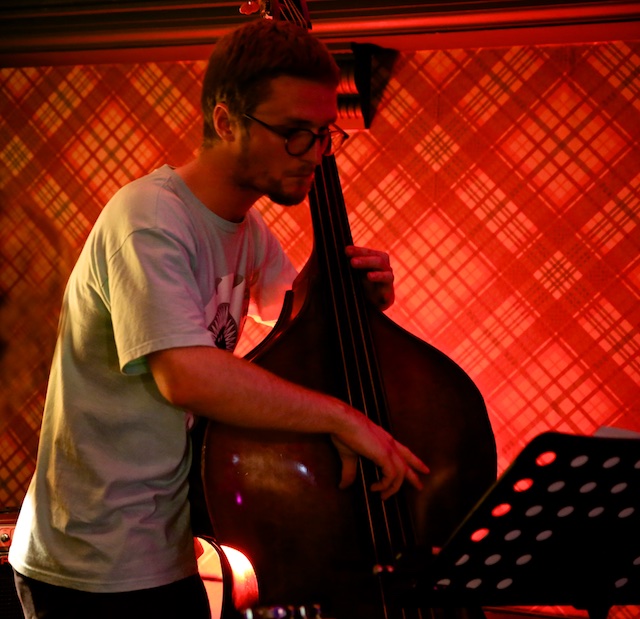 On alto was Roger Manins. Although the alto is not his main horn he is extraordinarily fluent on the instrument. Langabeer has been focussing on multiphonics and microtonality of late and he and Manins showcased some atmospheric numbers utilising various blowing techniques. Manins has long impressed by playing in a variety of styles with equal facility. On guitar and pedal steel guitar was Neil Watson, bringing his mix of blues, Jazz punk, and avant-garde to the fore. Another iconoclast and one we love hearing. The pedal steel guitar has been in his possession for a year now and his rapid mastery of the instrument is impressive. A difficult beast tamed beautifully. On Bass was Eamon Edmundson-Wells. A versatile young bass player most often found in the company of experimental musicians. His performance on this gig was right on the money.
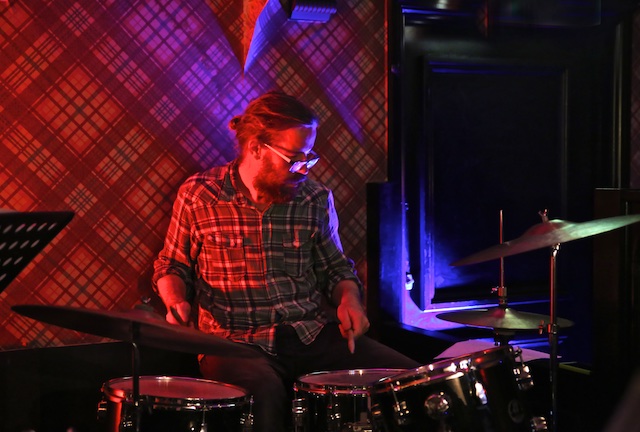
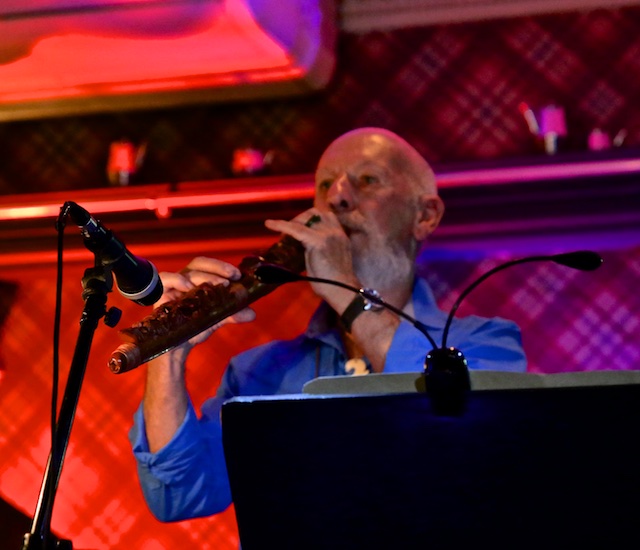
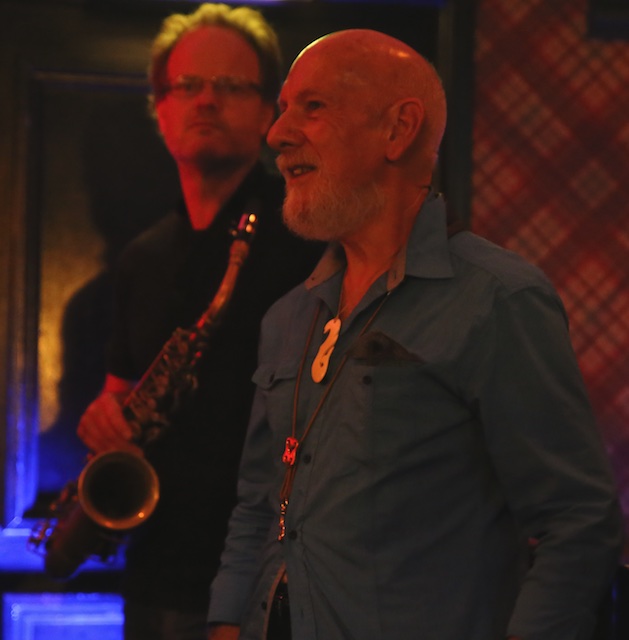 On drums and percussion was Chris O’Connor. Perhaps more than anyone else O’Connor personifies this free-ranging music. Of all the New Zealand drummers, his are the widest-ranging skills. Colourist, minimalist, indie rocker, straight-ahead jazz, avant-garde, experimental percussion and film work. There is nothing he won’t tackle and everything he touches benefits from his musicianship. When a piece titled ‘Tapu’ was played O’Connor stole the show. While Langabeer played the difficult and wonderfully atmospheric Putorino (a traditional Maori flute of the Taonga Puoro family), O’Connor simulated the Tawhirimatea (A traditional whirring instrument dedicated to the god of winds). The effect was eerie and electrical. Later in the piece he blew through the stem of his snare stand – recreating the effects of the Pututara (a conch trumpet). Only O,Conner could have pulled this off so well. Like Langabeer, he has a deep awareness of multicultural issues.
 The one standard was Strobe Road (Sonny Rollins). A lesser known standard and played with enthusiasm. The remainder was a selection of Langabeer tunes, many referencing Maori of Kiwi themes. His tune Rata Flower was a stunner – it deserves to become a local standard. He has obtained funding from Creative New Zealand for this project and we might see a ‘Sketches of Aotearoa’ album soon. I truly hope this occurs and I will be the first to purchase one.
Sketches of Aotearoa: Jim Langabeer (flutes, Taonga Puoro, tenor saxophone, compositions), Rosie Langabeer (piano, keys), Roger Manins (alto saxophone), Neil Watson (Fender guitar, steel guitar), Eamon Edmundson-Wells (bass), Chris O’Connor (drums, percussion). Performed at the CJC (Creative Jazz Club), Albion Hotel, Auckland, New Zealand – 20th April 2016.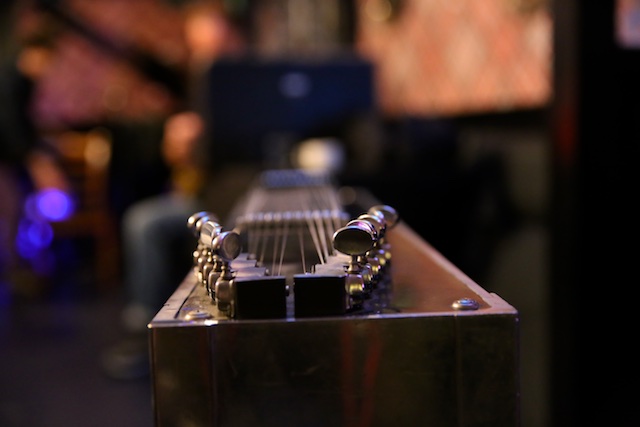
 Musicians of a certain calibre are peripatetic, going where the music or the work takes them. This partly arising out of necessity, but also out of an impulse to explore new sonic and cultural environments. When a child or a grandchild arrives the musicians journeys circumscribe smaller arcs and are less frequent; the local scene being the beneficiary. This is the case with Nathan Haines; happily young Zoot tethers him in our midst for the moment. Haines has a solid reputation here and in the UK, with a loyal fan base in both locations. He has never been afraid to push in new directions, but at the heart of whatever explorations he embarks upon, a default soulfulness underpins the enterprise. This leads him to productive collaborations with like-minded artists, and not necessarily all Jazz purists. From the Hardbop-infused to Soul Jazz to DJ funk – it all works for him. While all of these collaborations are pleasing, none is more so than when he plays alongside brother Joel Haines.
 The Haines brothers have different musical careers, Nathan Haines outgoing, a public performer and award-winning recording artist – understanding well, the vexed world of marketing and the presentation of non-mainstream music. He balances these competing forces better than most. Brother Joel is a successful composer and a gifted performer as well, but his career these days centres on TV and film work. An engaging musician and a crowd pleaser; less in the public gaze by choice. Improvised music thrives on contrasts and the rub between different sounds always works well in the right hands. Nathan creating soulful innovative grooves and catchy melodies over traditional Jazz offerings, Joel bringing a warm-as-toast Jazzgroove edge, wrapped in a blues/rock package.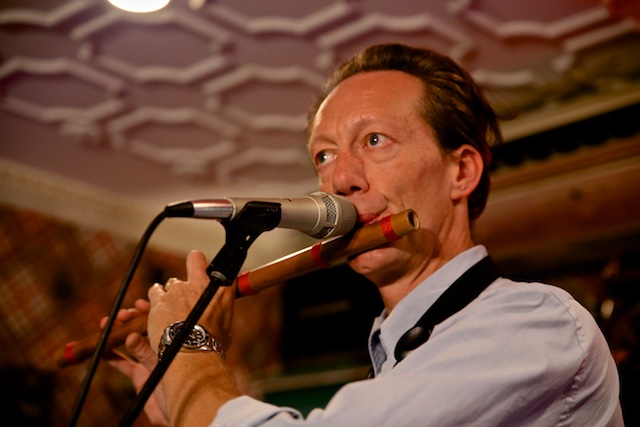
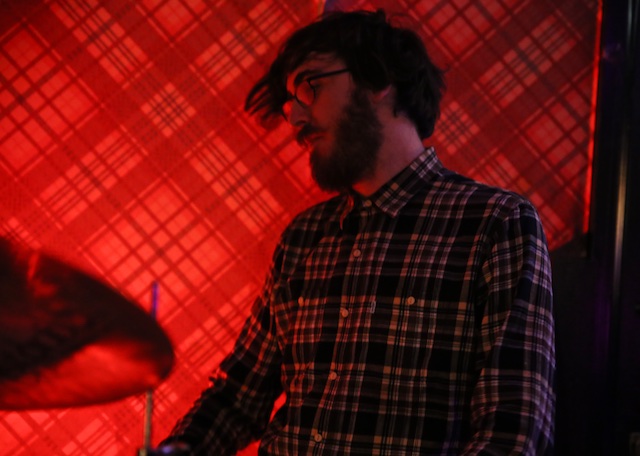 Next up was ‘Desert Town’ a Haines tune from ‘Heaven & Earth’. That was followed by an earthy version of ‘Set us Free’ (Eddie Harris) and then ‘Mastermind’ (Haines) from his recent ‘5 a Day’ album. Last up on the first set was ‘Land Life’ a tune based on a Harold Land composition. It pleased me to get a mention from the bandstand at this point. It is no secret that I’m a real Harold Land enthusiast. The band tore up the propulsive changes and moving free, made the tune their own.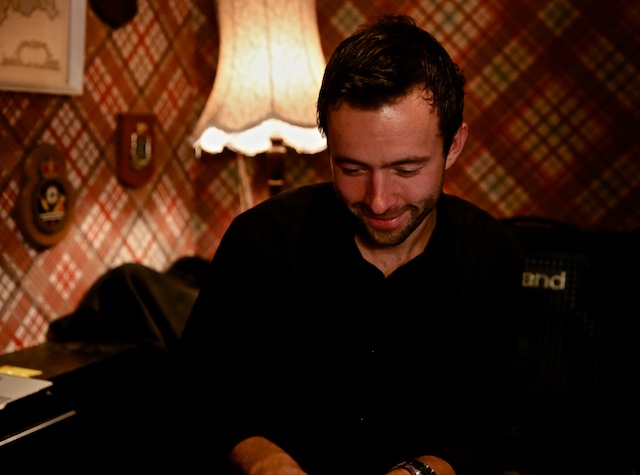
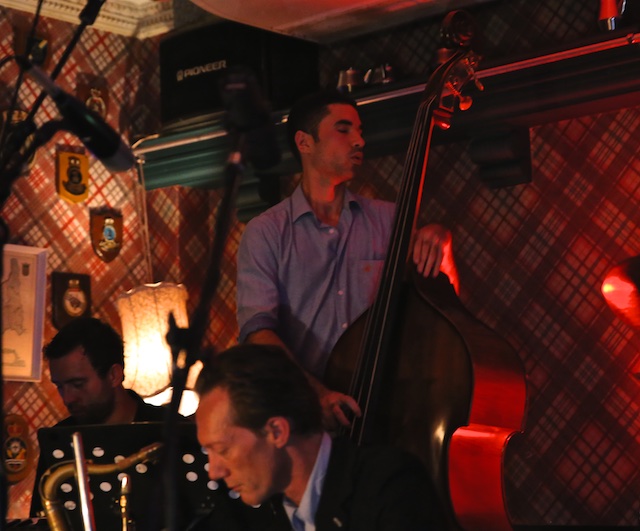
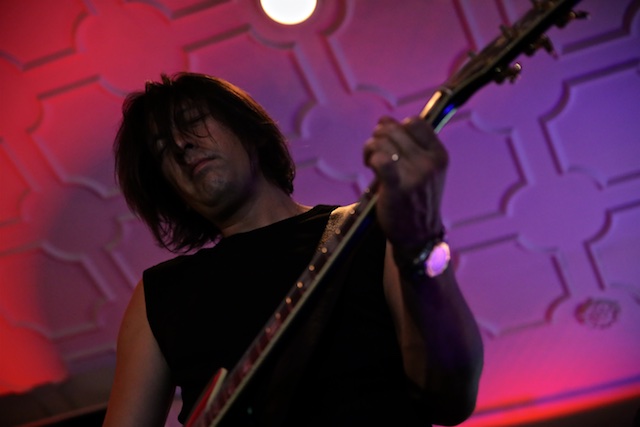
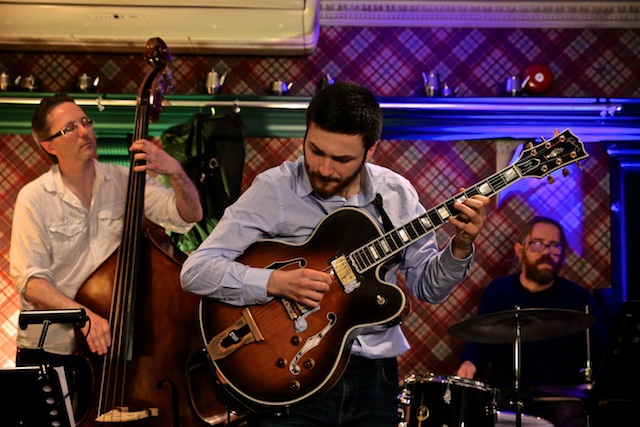 With the Indian summer lingering, March rolled seamlessly into April, and in Jazz parlance, we got to JAM (Jazz April Month). This is the month when the International Jazz community reaches out and proclaims, listen up ‘world’ we have something to say. The month culminates with UNESCO world Jazz day; last year the main celebration was in Paris, before that Osaka and Istanbul. This year the Thelonius Monk Foundation and UNESCO will hold the WJD main celebration in the White House at the invitation of President Obama.
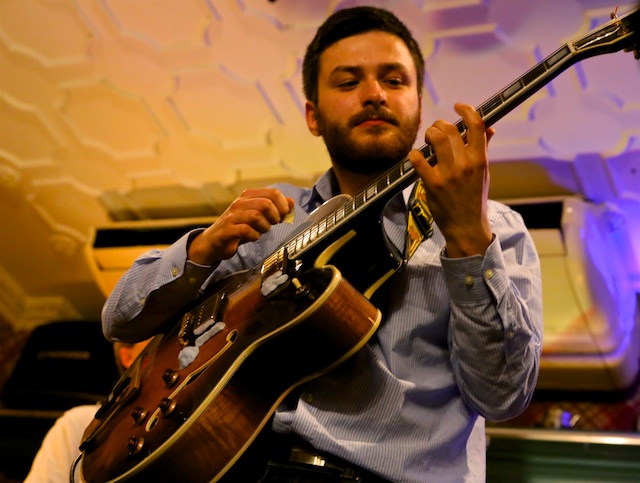 He is a different sort of guitarist and although in his early twenties, he already sounds like a member of that post-millennial cadre of improvising trend setters. As usual, I arrived during the setup and what I heard offered promise. His lines during the warm-up number were fast and furious, but the clarity of tone and of ideas, jaw dropping. As the first set began the band traversed various moods, from the Bop referencing to the reflective. Luft is a formidable technician, his fluency beyond the reach of many practitioners I suspect, but during the slower reflective numbers, we glimpsed subtly and depth.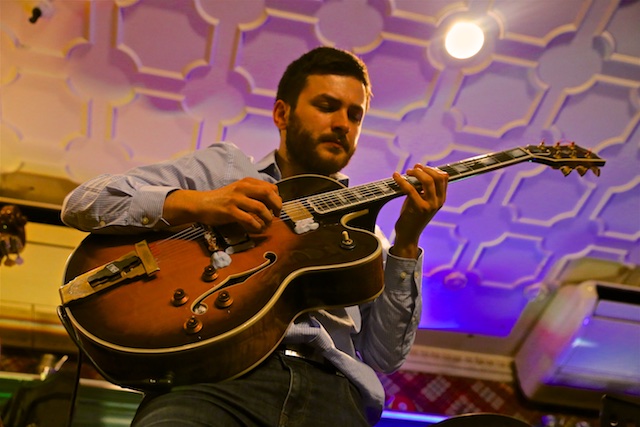
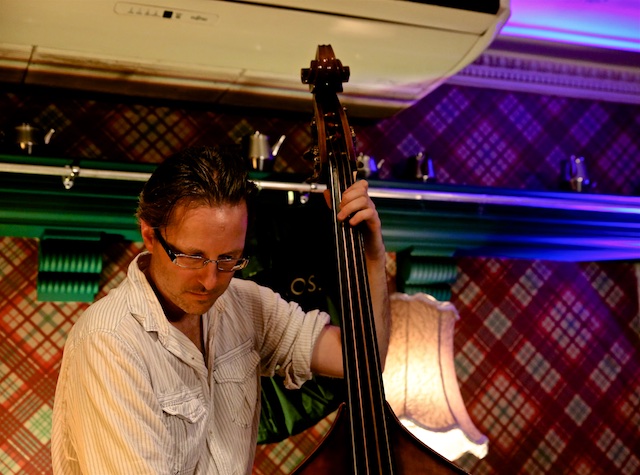 The first set brought us the trio formation, and the set list ranged from the near avant-garde to ‘world Jazz’. I really enjoyed the material chosen as there were quirky originals, and material ranging from the familiar (Gismonti) to the unfamiliar – tunes by Portuguese or Brazilian composers including a delightfully outrageous rendering of a tune called ‘The bickering of the crazy musicians’. That one brought the house down. I was also delighted with his tribute to the adventurous guitarist Derick Bayley; a tune titles ‘Derick’. Again this showcased the breadth of his influences. Whether the reflective or quirky, handled with the supreme confidence that only a musician at one with his instrument can attain. Accompanying him was Tim Robertson, an expat with a long string of impressive credits to his name in the UK. Robertson and Luft were a tightly focussed team, enhanced by the addition of Chris O’Connor for the Auckland gig. O’Connor is endlessly versatile and ever popular about the country – from Indie Rock or straight ahead Jazz through to experimental music. He adds enormous value to any bandstand, any genre, and the choice could not have been better.
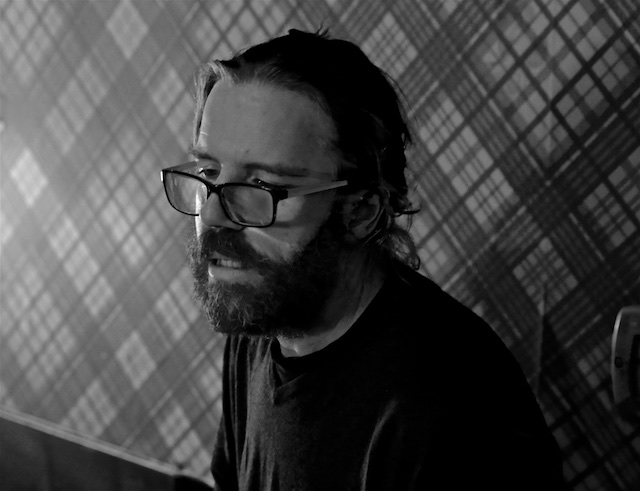 On the second set, the trio added local saxophonist Roger Manins and the tunes although standards took in a wide spectrum. Opening with a ‘groove take’ on Victor Young’s ‘Delilah’ and then in contrast diving headlong into a marvelous Ornette Colman piece. ‘Humpty Dumpty’ from Ornette’s ‘This is our Music’ was undoubtedly my favourite of the night. Everything these musicians played worked well, but this tune just bounced off the walls and had everyone whooping in delight. Next was a crazy little known Monk tune titled ‘Unidentified Monk Solo’ and lastly ‘Ray’s Idea’ by Ray Brown. From deep listening enjoyment to wild and free in one gig.
 Two nights later I was watching the Sky Arts channel when a programme on guitarists came up. Then I saw him, a younger Rob Luft performing at Ronny Scotts, solo guitar, receiving praise from George Benson, recording at Abbey Road studios and winning the Jazz section of a prestigious UK guitar competition. We sure lucked out getting this band for a Jazz April opener. The clip below is from a Ronnie Scotts gig – Rob Luft with ZiroBop – The clip tells you everything you need to know about him as a guitarist.
 Every few weeks, I casually glance at the CJC web page to see what lies ahead. When I spotted the name Jef Neve, I immediately cleaned my glasses and refocussed, just to make sure that I hadn’t imagined what lay on the screen. No, there it was, Jef Neve, Belgium. Neve is a significant figure on the European Jazz scene and described as Belgium’s best contemporary Jazz pianist. He has three significant careers, one in the Jazz world, one composing film scores and yet another in the contemporary classical music world. Wow! I thought – how did we score him for a club gig? The answer, of course, is the Roger Manins factor. Jef had worked with Roger during Maria Schneider’s tour of Australia and Roger has a lot of pull with musicians.
 Although The Creative Jazz Club was the beneficiary, it was Neve’s formidable classical credentials which brought about his New Zealand trip. As we remember the ghastly carnage of the great WW1 battles a hundred years ago in Belgium, there are various commemorative events. In 2013, Neve composed ‘In Vlaamse Velden’ (In Flanders Fields), a significant work which tells the war tales of his native Ghent. For the New Zealand concert, the historic Flemish diary readings were interspersed with diary readings from New Zealand families who suffered loss. My family lost a great uncle at Passendale and my grandparents never shook off the sadness. The readings spoke of loss, but also of hope. Everything Neve does is informed by his peace-loving humanism. The audience was reminded of young soldiers dying, and young civilians as well. The Belgium government, The Auckland War Memorial Museum, and various other partners made this happen. Inadvertently, they brought us a significant Jazz event.
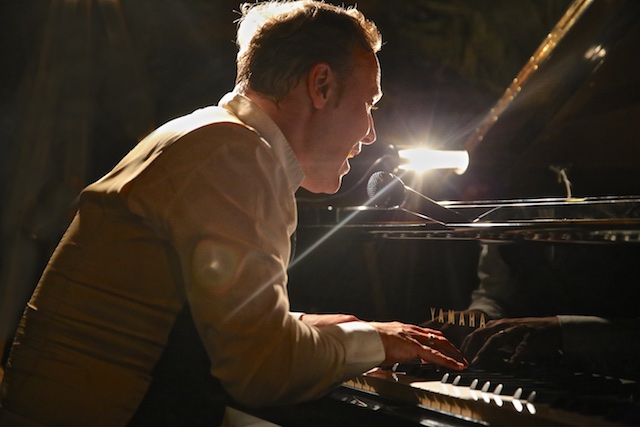
 The first CJC set was Neve playing solo. Much of the material drawn from his recent ‘One’ album. Second up was a thoughtful and moving rendition of ‘Lush Life’, the long intro giving little away. After the intro, a reflective minimalist version unfolded, with Strayhorn honoured affectionally. Most of the other tunes were Neve originals and appropriately they included a recently composed piece referencing the Belgium bombings. Typically the piece went beyond mere requiem, challenging the world to get along and to accept diversity. This hopeful humanism informs all of Neves work. At that point he looked up, smiled, and said to us, “I believe that we only have one life and so we should make a real effort to get along, no matter where we come from. After we are born we should party together until we die”. On that night, ‘party’ we did. The last number in that set was Joni Mitchell’s ‘A Case of You’ – first he read the lyrics and then he played – just lovely.
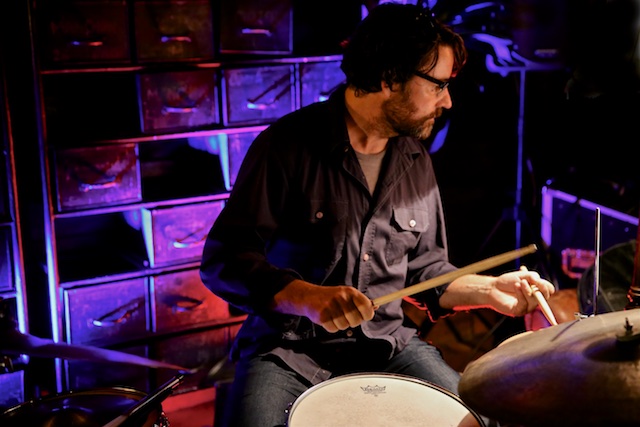 The second half was a trio set and Neve was warmed up and ready to stretch out. With him, he had Ron Samsom (drums) and Cameron McArthur (bass). There had been one short rehearsal a few hours earlier but you wouldn’t have thought so. The first number, ‘The space we need’, was from his critically acclaimed ‘Imaginary Road’ album. They quickly dropped into what can only be described as an elevated state of being. Every move mutually understood, reacted to in kind, rendered into gold with a sonic alchemy. These guys worked extremely well together and the looks on their faces told you that they knew it. ‘The space you need’ was a hard swinging burner, filled with exhortations and joyous exchanges. During a later number, Neve hummed a melody and had the audience repeat it during the chorus. Later I heard him whistling a melody softly (whistling in unison with his right-hand phrases). The last person I heard do this so effectively was fellow Belgian Toots Thielmans. This was Jazz at its best. Throughout the second set, I was so absorbed that I forgot to take notes. Perhaps magic like this can not be captured anyhow.
 At this point, the conversation got really interesting. He clearly didn’t regard musical structures, be it blues, classical or otherwise as the dominant force guiding his improvising; These outside influences were his vocabulary. In the same way, a writer doesn’t regard the alphabet or grammar as directing the flow of ideas. In Neve’s case, it was not about form but about sound. “I see the universe as sound and I explore that, work with that”. ‘Sound’ is what drives him as an improviser. When I asked how he got those otherworldly acoustic harmonics from the piano. He said, “As I play, I look for unique sounds, probing until I locate them”. This was an iteration of something I had heard before, something uttered by pianist Jonathan Crayford, “I try to make piano’s sing, seek a oneness with their sound”. Later I spoke to Ron Samsom about this and he said, “There is a theme with the great musicians and it always comes down to sound and interaction. With Jef, we didn’t so much rehearse, as dive into the energy. We just jumped onto the wave and began. It was playing music from first to last note and exploring ideas”.
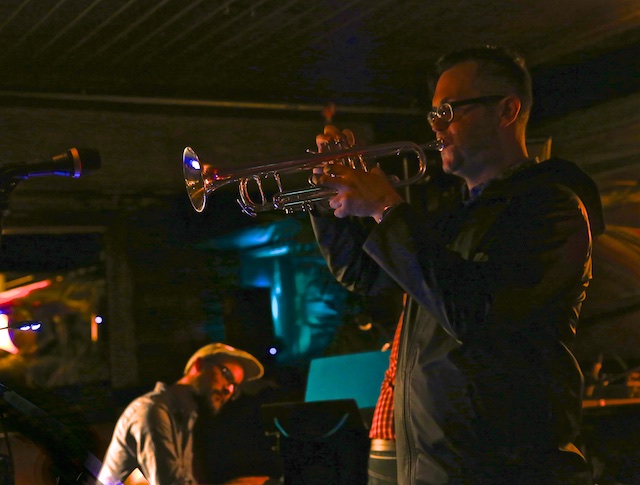 In spite of living at the other end of the Island, Lex French is a regular fixture at the CJC. It is hardly surprising since his popularity with Jazz audiences is ever-growing. There are not many trumpeters of French’s stature in New Zealand and it is our good fortune that he remains. He obtained his Masters from McGill University in Montreal, a university with a strong focus on brass. A university which had an ongoing association with the UK-based Canadian trumpeter Kenny Wheeler while he was among us. I mention Wheeler, because as I walked down the stairs to the club to set up my gear, I heard the unmistakable opening phrase from ‘Smatter’ coming out of the darkness. Just the opening phrase and then silence.
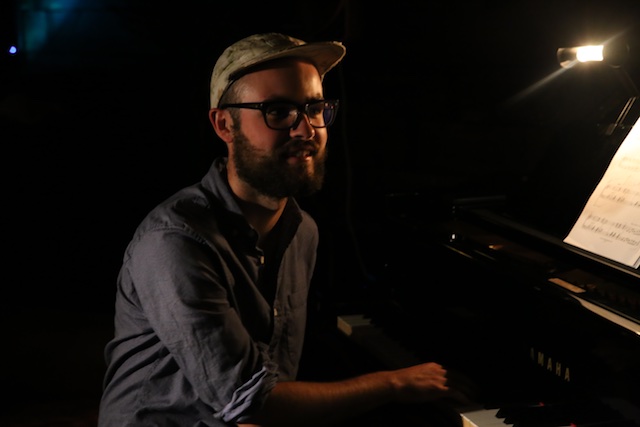 It was so Wheeler-like, that I assumed someone was setting up a Wheeler album on the club sound system. As my eyes accustomed to the low light I saw French standing alone – repeating the phrase. French is not a one-trick pony; he is as modern as tomorrow, but at other times, old school respectful. He can punch out high notes or swing hard bop like a Blue Note artist back in the day. This is not a musician to pass up on.
 I particularly liked French’s compositions ‘Kasid’ from the first set. There were many reasons to like this; the musicians innovative explorations of the theme, the evocative middle-eastern mode underpinning it, and the fact that it referenced the wonderful Iraqi poet Abdulkareen Kasid. An achingly beautiful melody tinged through with bittersweet sadness, establishing itself delicately over a quietly incessant bass motif. When Steele came in, his opening chords were Oud like – giving the impression of soft strings jangling sweetly in the night air. I listen to a lot of middle-eastern improvised music and this performance stands beside the best of those. In the background, the drums tap tapped (like stones tumbling in a stream, and every so often swooshes).
 The poet Abdulkareem Kasid is new to me (and I have a huge collection of poetry). To discover a poet like this is exciting and I thank Lex French for this. What could be better than to experience a night of interesting music, and at the end, find a poet? I finish this with some words from that poet – listen to the piece as you read the lines – I did.
 JazzLocal32.com