
Eamon Dilworth is a frequent visitor to New Zealand and we hope that continues. His projects draw on many sources and he is unafraid to change direction completely. His last visit saw the release of his beautiful Viata album. An album that would sit comfortably in the ECM catalogue with its unhurried atmospheric Euro Free ethos. The haunting deliberations leaving crystalline arcs trailing behind each note. The time before he came with ‘Tiny Hearts’ and before that with ‘The Dilworth’s’. All of these projects were enthusiastically received and the albums that resulted were popular on both sides of the Tasman.
His most recent project, the Crawfish Po ‘Boys’ is yet another step change. It is rooted in the sounds of the southern USA. Although a take on the contemporary New Orleans sound, it also harks back to the vibe of Louis Armstrong and Big T. Unlike Viata or its predecessors, the latest album is an EP (around 20 mins long). As I listened to it, two things stood out. The focus on vocals and the choice of musicians. The vocals are led by Dilworth with a number of backing vocalists adding heft. With respected musicians like Stu Hunter (organ), Julien Wilson (saxophone), Chris Vizard (trombone) and Paul Derricott (drums) it could hardly be less than engaging. 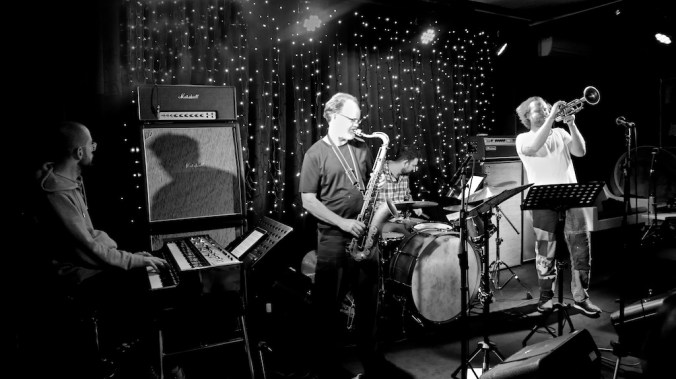
The first gig took place at the Auckland Jazz & Blues club and it focussed on traditional fare. At the CJC the following night Dilworth gave us contrasting sets, and unlike recent visits where Australian musicians like Alistair Spence joined him, he worked with a local lineup. Roger Manins was on tenor sax, Andy Keegan on drums and from Wellington, Daniel Hayles on the organ. He opened with some tunes from Viata, but they were given a different treatment this time. The biggest point of difference was the inclusion of Daniel Hayles, a groove inclined keyboardist who quickly found his place and pushed the tunes in a different direction. This was achieved without resorting to showy bravura runs and by creating an underlying chordal pulse. It was particularly evident during Toran where he played ostinato; using subtle variations to enhance the performance of the melodic lines from saxophone and trumpet.
The second half was shorter and some of those tunes came closer to his Crawfish Po’Boys material. His version of Iko Iko was fun. Dilworth, Keegan, Manins, and Hayles obviously enjoy playing together but I’d like to hear them tackle the raunchy old New Orleans tunes someday. Pushing deeper into the bluesy heartland of Jack Teagarden – the time is ripe for such a re-appraisal.
Eamon Dilworth (trumpet, compositions), Daniel Hayles (Hammond organ), Roger Manins (tenor saxophone), Andy Keegan (drums). Backbeat, CJC Creative Jazz Club, Auckland, Mayday 2019
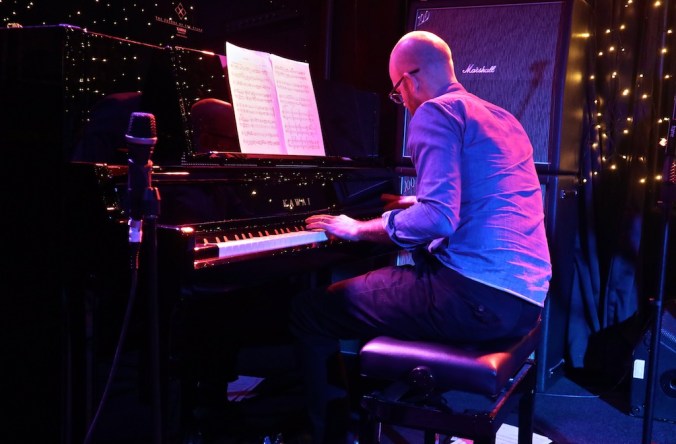 Steve Barry left these shores many years ago and these days Australians count him as their own. It is hardly surprising that they do because since his departure he has raked in the accolades, won numerous awards and completed a Doctorate. Given the above, we can hardly begrudge his move. Music is like water it will always find its level, no matter where the wellspring. Everyone on the New Zealand Jazz scene looks forward to Barry’s yearly trips home as he never rests on his laurels. He brings us new and diverse projects and above all he showcases innovation.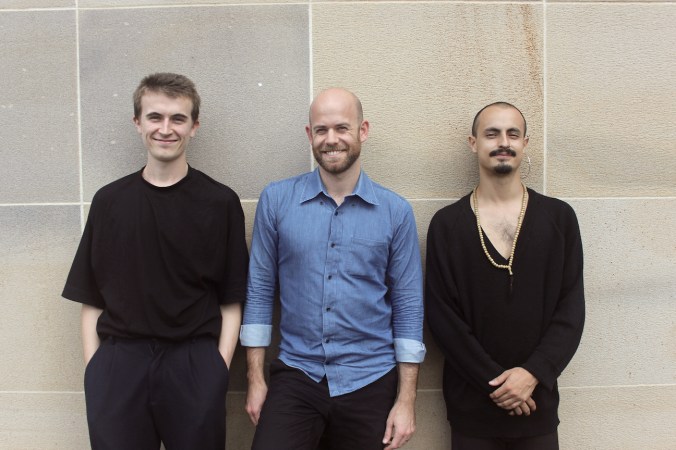
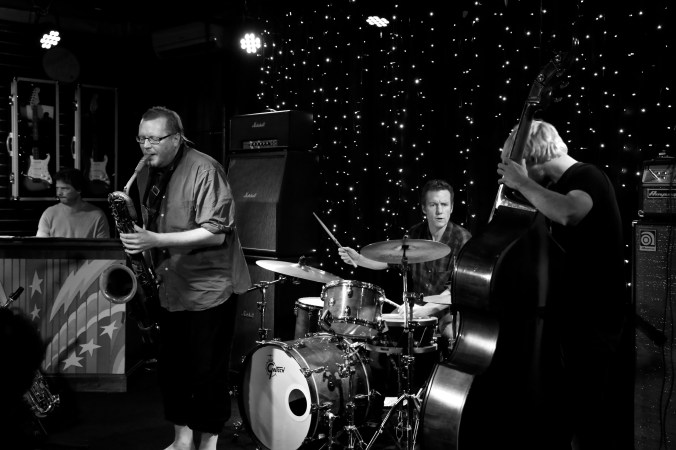
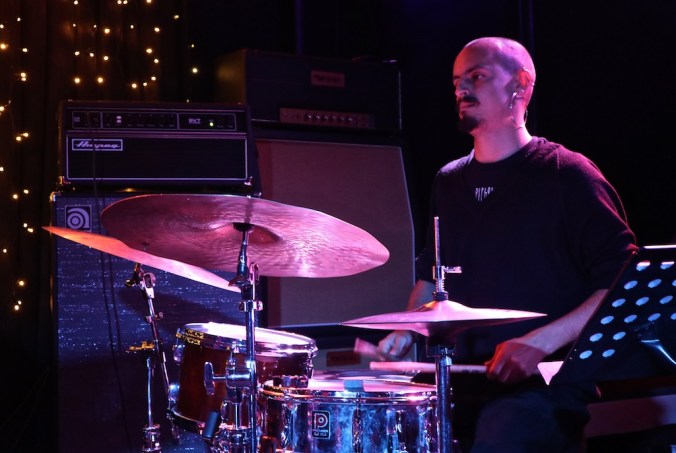 The Steve Barry ‘Blueprints’ Trio appeared at Backbeat, 100 K’Road, for the
 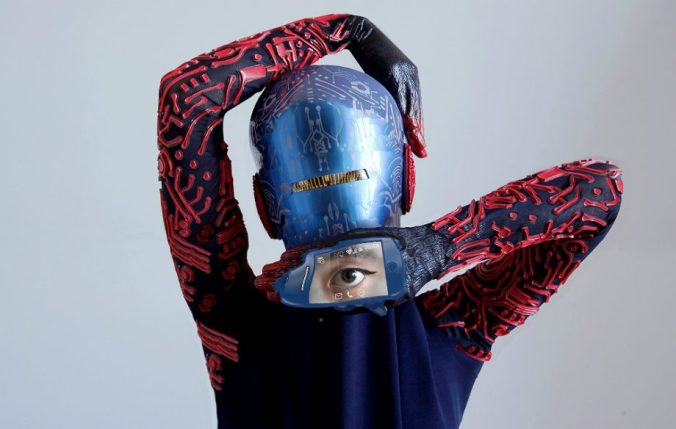 Sometimes I step into the shadows to locate a light that is otherwise denied me. A place where anti-art hides real art and where music appears in bizarre disguises. It can feel like an unnatural place but if you walk on, your eyes soon become accustomed to the half-light. It is only then that the ghosts in the machine become visible. This is the strange world of Anti Pop; a place where those striving to earn a living from popular music bite the hand that pretends to feed them. It is digital Dada – it is an off note brought to a knife fight.
 Yesterday primo Jazz trickster Barney McAll sent me a link to this anti-pop album titled Global Intimacy. This ‘revolution is under the radar – ‘it will not be televised’. I recognised many of the names – Sia, Gian Slater, Ben Monder, Barney McAll, Kool A.D. Musicians who come from across the musical spectrum. It was a message disguised as popular music, but the sort that is often confined to student radio or oddball playlists. It was political but not everyone will have the ears to hear the message. The material will not suit every taste but everyone should try a bite. I got the message, understood the flavour, and I hope others do.
 The interesting diversity in the CJC programming was again on display last week with two international acts as different musically as acts could be. Wednesday featured a multinational mostly free-improvised music ensemble Kira Kira and Thursday the Harlem born Jazz/Soul Singer Vivian Sessoms. Both attracted good audiences, once again proving the value of adventurous programming.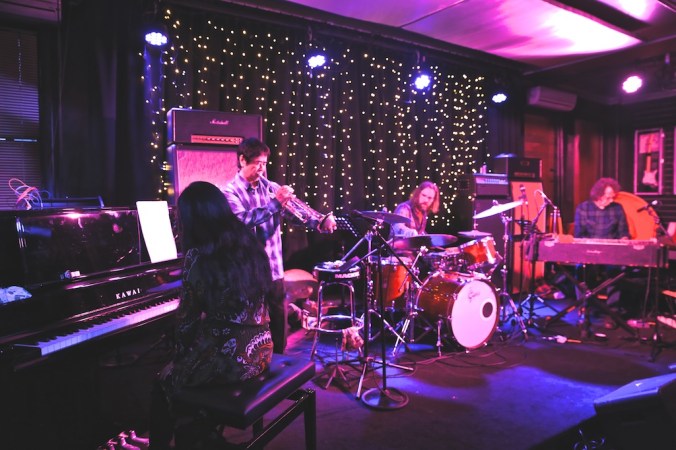
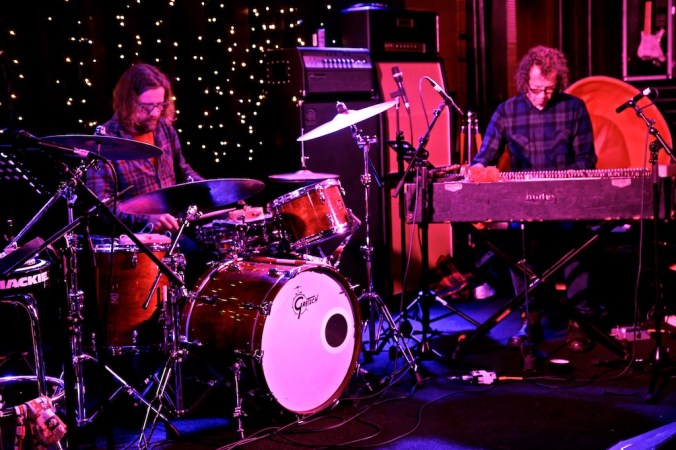
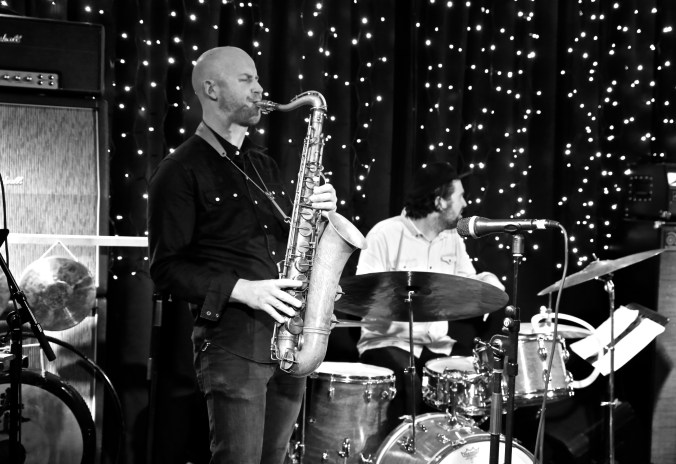 Perhaps it’s the anniversary of the moon landings, or perhaps it’s the crazy-arsed nonsense happening down on planet earth, but deep space has been very much on my mind lately. I have not been alone in this preoccupation as I appear to share this with a group of explorative improvising musicians. I was recently on local radio taking about a favourite topic, ‘space dreams and analogue machines’ and it occurred to me then, that space dreamers have always shaped our other-world view. Frank Hampson (Dan Dare Comics), Gene Rodenbury (Star Trek) and musicians like Eddie Henderson (Sunburst), or Sun Ra (Space is the Place). Humans have always looked to the stars for inspiration but only writers and musicians have the courage to describe what others cannot yet imagine.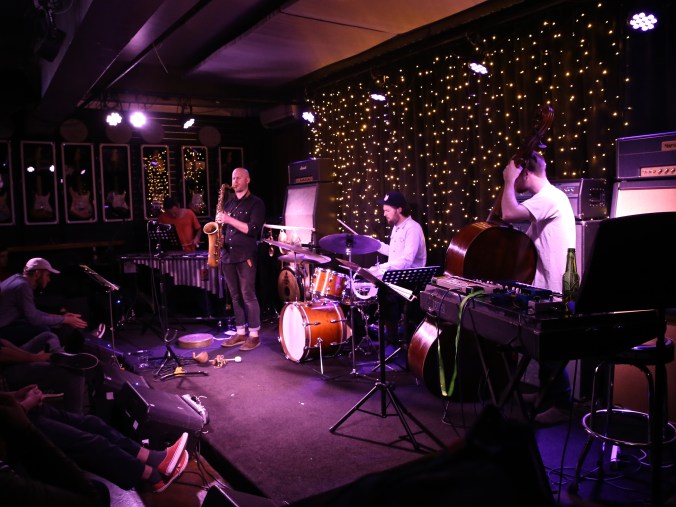
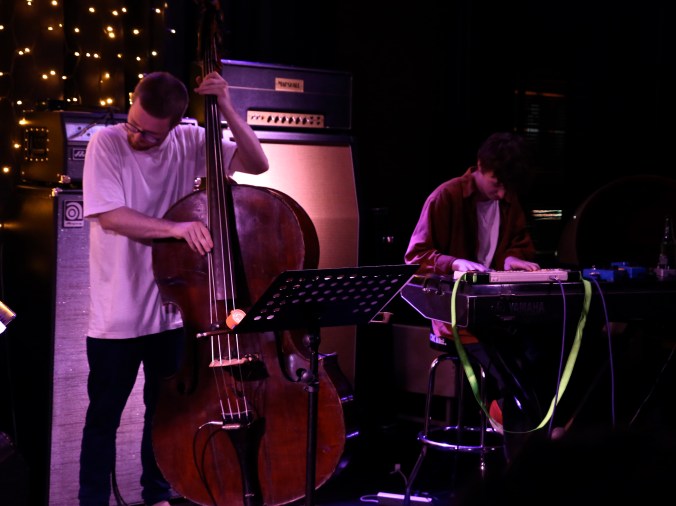
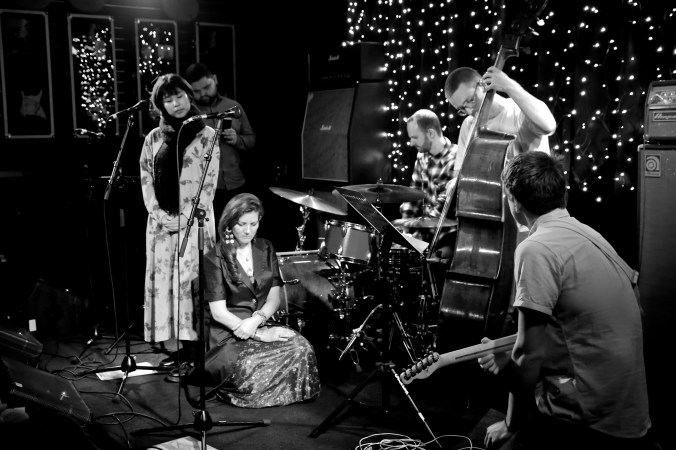 Chelsea Prastiti was not long back from Cyprus when her band Leda’s Dream appeared at the Backbeat Bar. Prastiti is well known in the Auckland improvised music scene and especially so at the avant-garde end of town. She’s a compelling vocalist and composer who approaches her craft as a free spirit, unfettered by others expectations. When she sings she dives deep and puts herself out there fearlessly but her risk-taking is not a mere academic exercise; it cuts to the very heart of what it means to be a thinking, feeling human. Her compositions are therefore always interesting and out of that a raw beauty and an honesty arise.
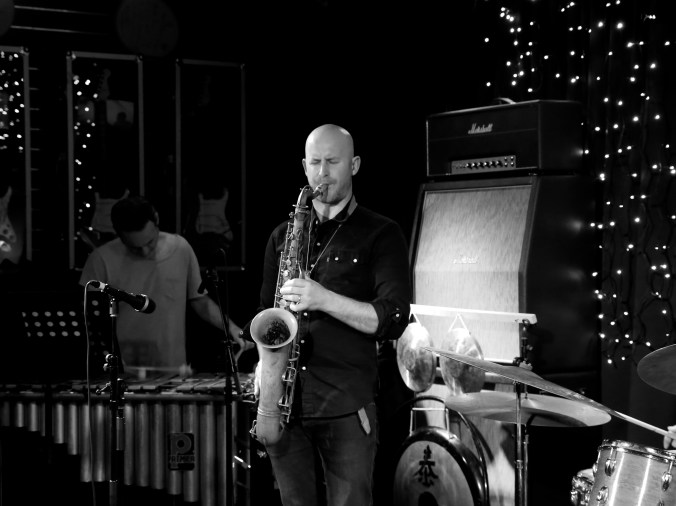
 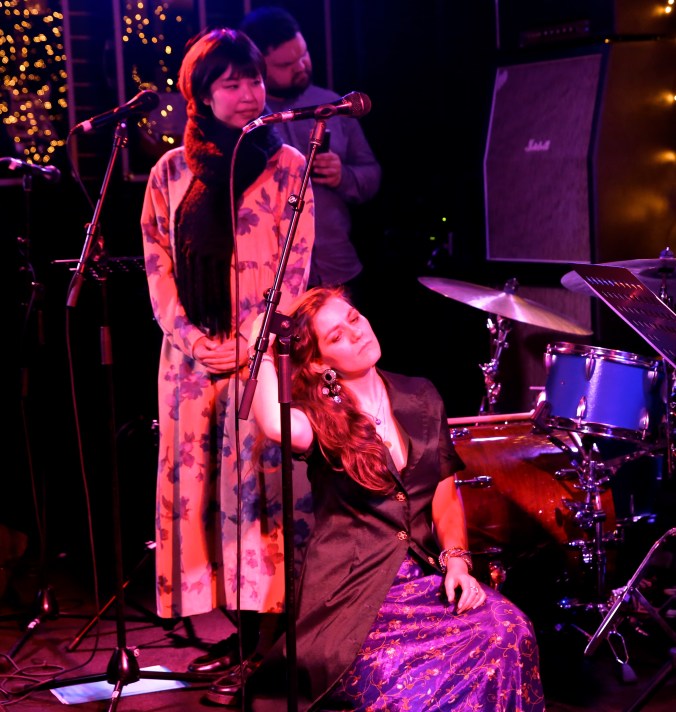 Although the ensemble played material that we have heard before, they sounded incredibly fresh – even different. Crystal Choi confined herself to accompanying vocals (no keys), Michael Howell stepped further into a measured chordal role and Callum Passells on alto and voice effects was the archetypal minimalist (saying a lot more with less). This felt very right and the re-configuration gave the ensemble a lot more freedom. They stretched out as the spirit took them and the first two tunes filled the entire first set. The voices, in particular, were liberated by the change and this gave wings to the melodic lines and mood. The harmonies were there in spades but that was not what drew you in. It was ‘mood’ and the pictures that those moods created.
 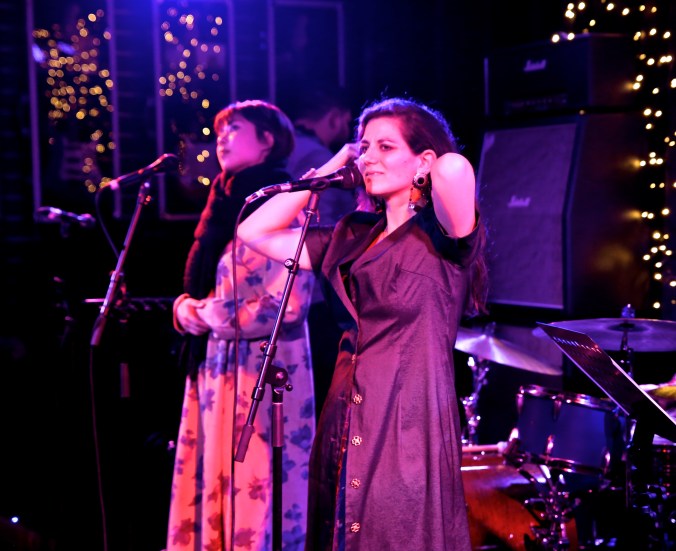 Prastiti’s is a brave path and I would expect no less from her. This is a musical space that is sparsely populated and more’s the pity. Think Sera Serpa (duos or trios), Think Norma Winstone (Azimuth 85) or perhaps the brilliant Nordic vocalist Sidsel Endresen (Endresen live with Jan Bang). In this ensemble, she has the musicians to give her the freedom she deserves. Passells, who is unafraid of soft trailing notes or of minimalism, Howell who can follow a vamp to eternity and make it sing, Choi who instinctively makes the right moves, and Eamon Edmundson-Wells and Tristen Deck who know when to lay out and when to add colour or texture. The music drew from free improvisation, standard Jazz and deep Folkloric wells. It did so without undue introspection. The band brought the audience along with them and the bouts of enthusiastic applause proved it. For some reason, and it was partly their attire, the gig felt like a postmodern version of a Pre-Raphaelite tableau. Oh yes indeed, that always works for me.
 Karangahape Road and the precincts around it are a natural home for adventurous and alternative music. If you walk the length, you are assailed by sights and sounds at variance to each other. Taken in their entirety they are oddly compatible. The jumble of colour and the bursts of noise as you pass a Karaoke bar or an uber cool eatery is counterbalanced by the languid notes from Shanghai Lils or the soft chatter emanating from Hookah smoking Kebab shop doorways. Woven into this oddness of streetwalkers and urban cool, are the alternative music joints. Down in basements, under the street or up narrow stairways. Thirsty Dog, Anthology, Audio Foundation, Wine Cellar. And at the top end of the strip, next to the old Jewish graveyard is the Backbeat Bar. High-quality alternative improvised music resides here on Wednesdays.


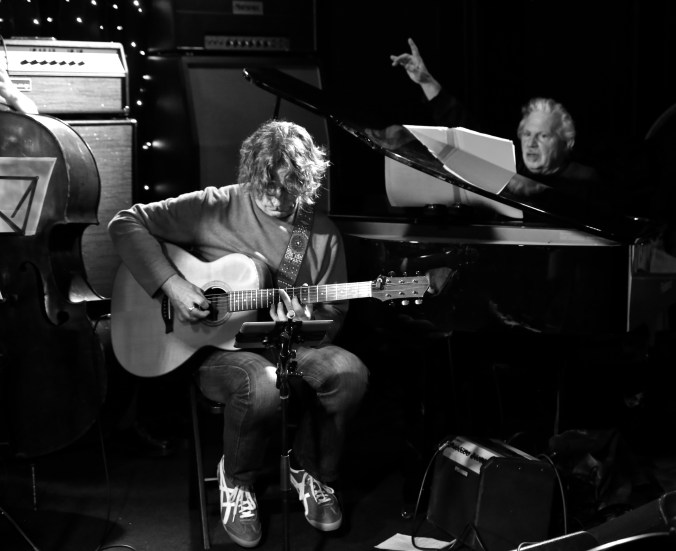 There is an inescapable charm surrounding any Besser performance and Wednesday’s Zestniks gig at the Backbeat bar was no exception. While his music has many strands feeding it and although it can be hard to categorise, it is never the less rooted in the Jewish musical traditions. Besser is somewhat of an icon in Arts circles and deservedly so. The arc of his work has a momentum that few could emulate. As it alights on various styles or genres it borrows their raiment, and seemingly without compromising what lies at the music’s heart; gathering what is necessary and no more. Over the years he has collaborated with leading conceptual artists, filmmakers, symphony orchestras, electronic adventurers and Jazz musicians. The Zestnics performance reflected much of this fascinating journey.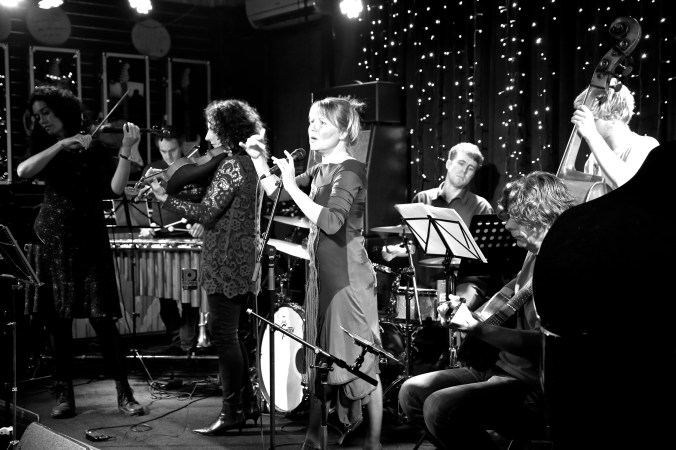
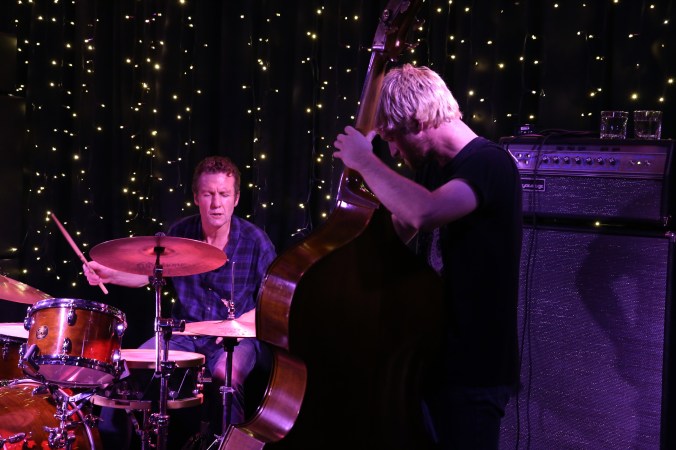
 Jeff Henderson is a freedom warrior from outside of the perimeter fence. On the 9th of May, 2018, he marched barefooted into the Backbeat Bar with a ragtag army of irregulars. The audience had come well prepared and a pregnant air of anticipation hung over the bandstand during setup. Unusually, there were no lower ranks in this army, all were battle-hardened veterans (or anti-heroes depending on your viewpoint). All had impressive service records, an advance guard who took no prisoners. Jonathan Crayford is arguably the most famous of the troop, a decorated hero who swiftly commandeered a C3 organ (an ancient analogue machine decorated by psychedelic art and reminiscent of a Haight Asbury weed shop). Beside him sat machine gunner Steve Cournane, a rat-tat-tat freedom fighter recently returned from Peru. The remaining soldier, battle scared and bleeding, was Eamon Edmundson-Wells (his Viking surname tells it’s own story).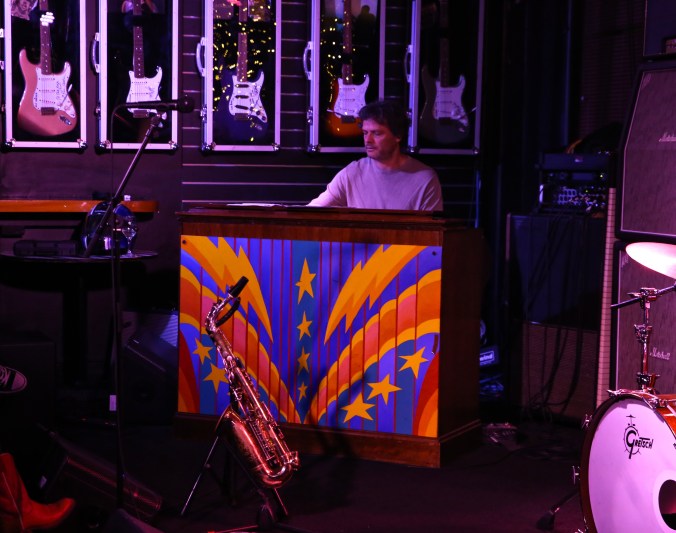
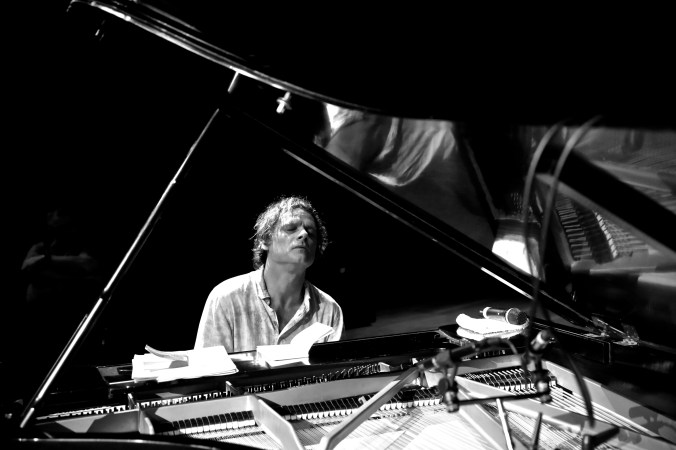 Rarely, do we get to experience something truly sublime and for this to occur a number of planets must be perfectly aligned. Art at this level cannot be forced as the realization is dependant on both tangibles and intangibles. The musician might be in peak form, but if the room or the instrument is mediocre then the fine edge of perfection is blunted. It is harder to achieve in a capacious concert hall; easier in a well-appointed studio or an intimate vibing Jazz club. There is no manual to guide us to the point of departure. It is a divine alchemy pure and simple.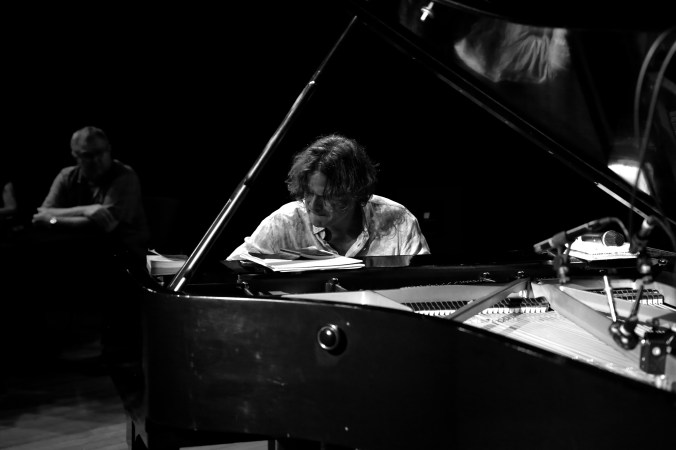

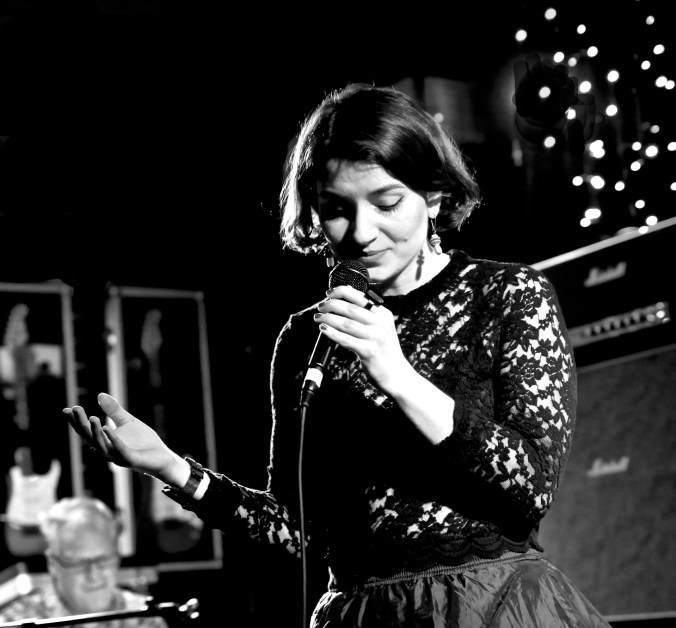 The heart of the modern improvised and experimental music scene is always an interesting place to be. Audiences tend to be open-eared and accustomed to music from a wide variety of sources. Improvising musicians have always drawn on diverse influences and it is a narrow-minded few who whine about dilution or the good old days. We should never undercut the deeper purpose of music, which is to share stories, communicate on a primal level, interpret. We tell stories to live and how we listen or react to music speaks to our musical maturity. When Simona Minns performed in Auckland last week, she brought with her a variety of influences. and all were approached with integrity.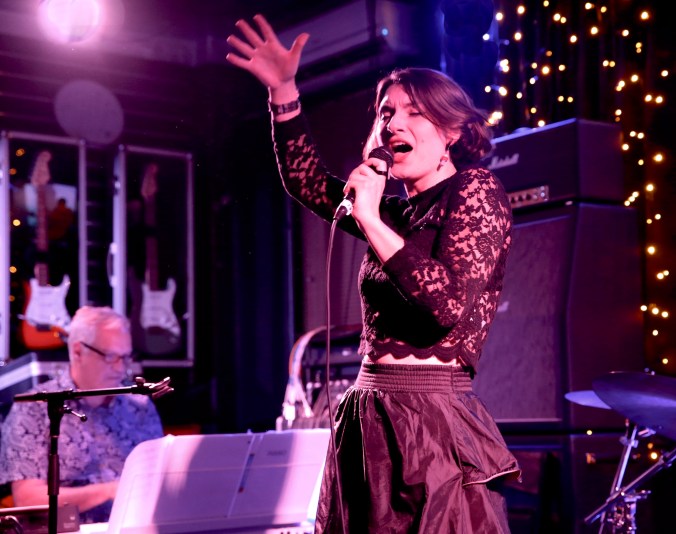
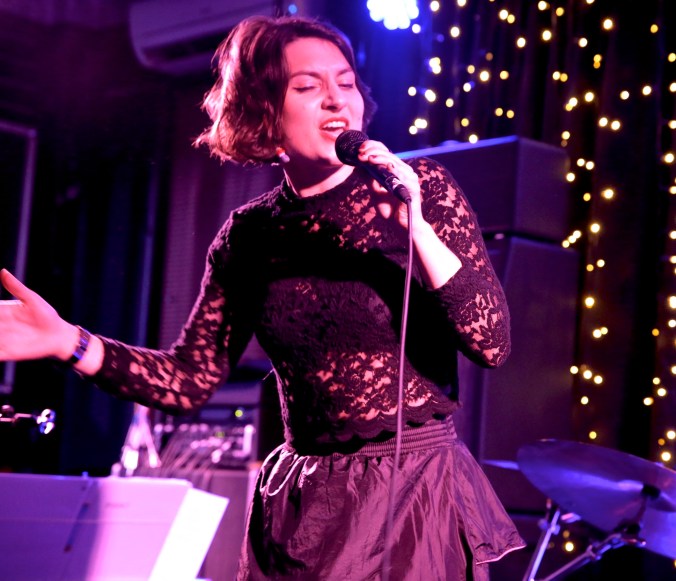
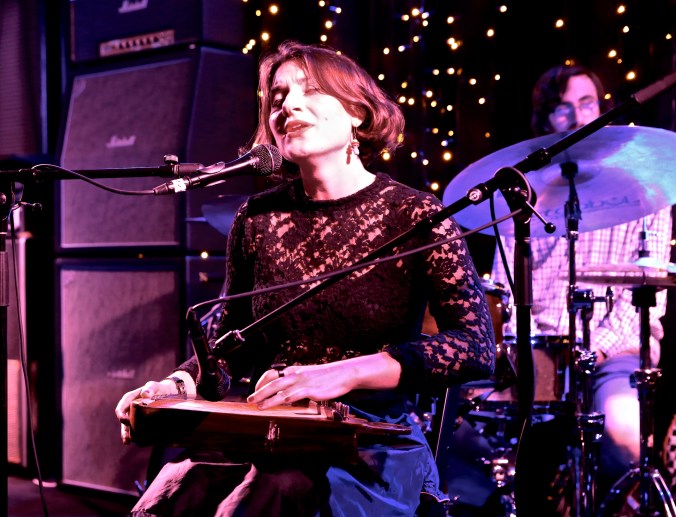
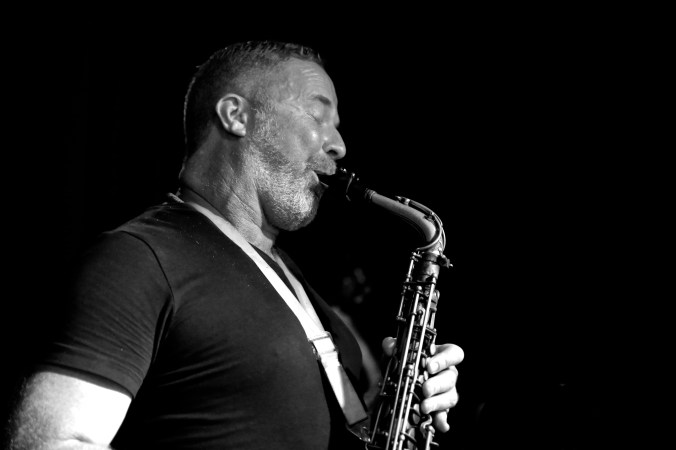 It was a good way to begin a year of music, a good way to breathe life into two enervating steamy nights. Hayden Chisholm was back in the country and around him formed various duos, trios, and quartets. He performed two gigs in Auckland and the first was at the Audio Foundation in Poynton Lane. The venue has long been an important source of innovative music and each time I descend the stairs to the sub-basement I find interesting changes to the clubs configuration. It really is an excellent venue and perfect for what it offers. At first glance, the two nights appeared quite different. One free improvised and the other a set of reflective ballads. In reality, both gigs were reflective, melodic and approachable. The open-hearted humanity and communication skills of the participants made it so.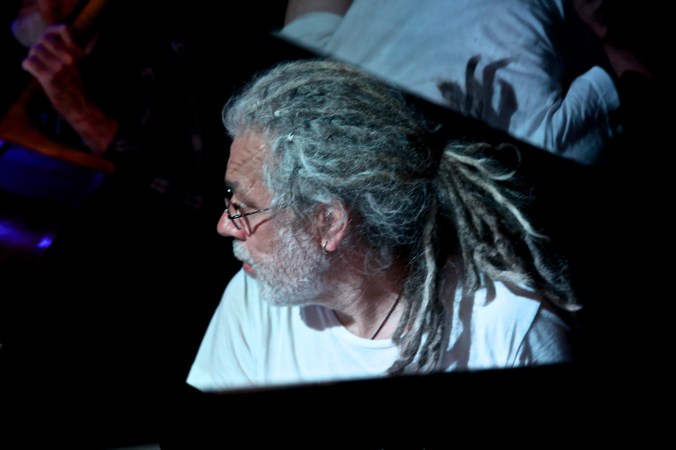
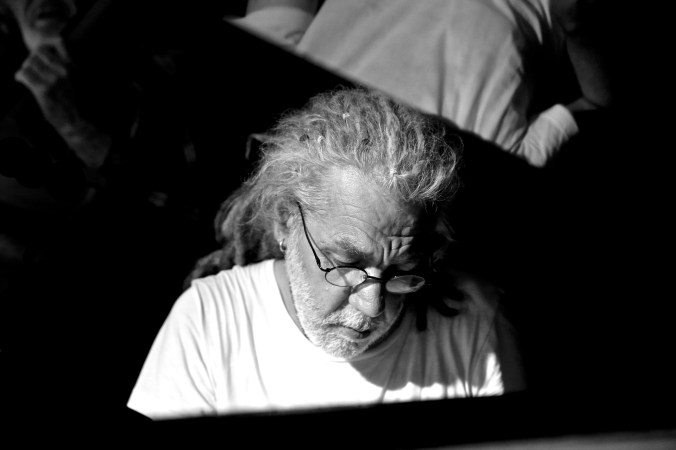 I have never witnessed a free gig quite like that as the communication was so exquisitely personal. More than musicians finishing each other’s sentences. More than the flow of fresh ideas; there was a sense of musicians revealing something intangible. From out of the fading harmonics and the quiet spaces came that extra something. The quiet revealing something on the edge of consciousness, something we often miss. Arising from – evocative like a Rilke poem – or a haiku. Bell stroked his mallets across the bars or responded with staccato – or soft taps and clicks, Prastiti offered cries and bell-like utterances, framed as wordless questions, Crayford explored resonant possibilities by using extended technique or by mesmerizing with darkly descending chords – opening up a dialogue which was met in kind – sometimes gentle, at other times like a flow of coloured sparks.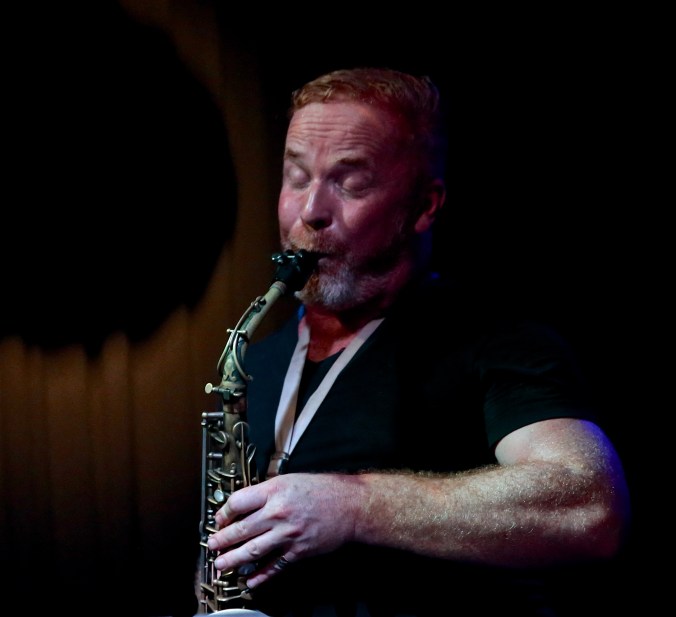
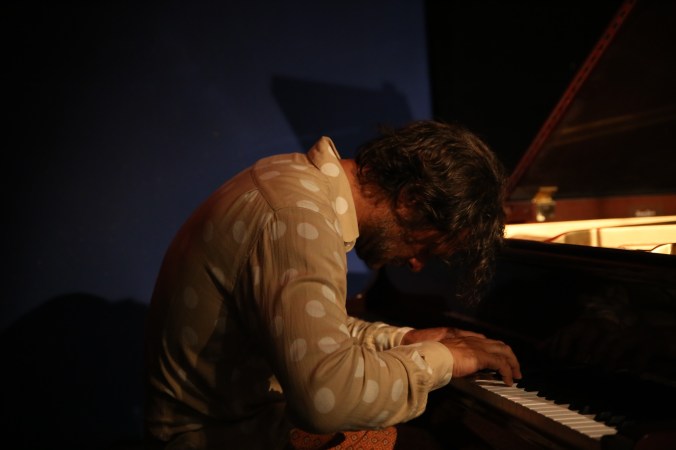
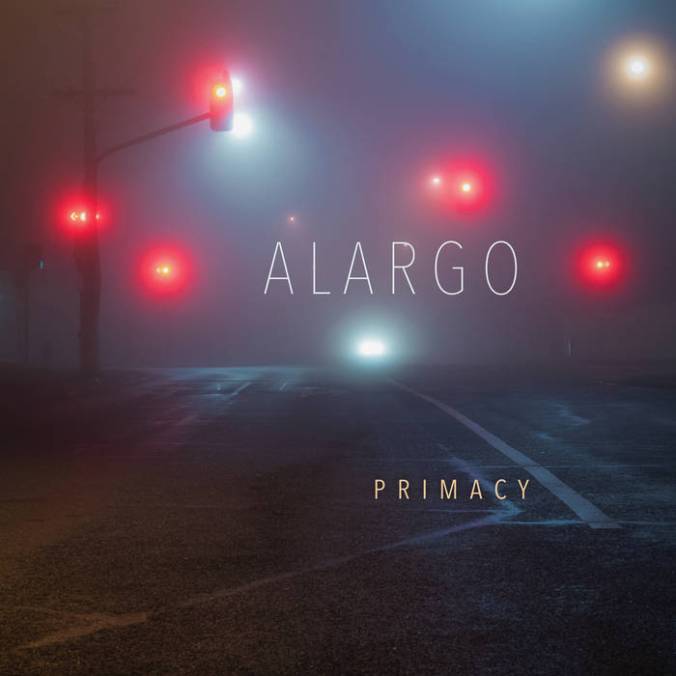


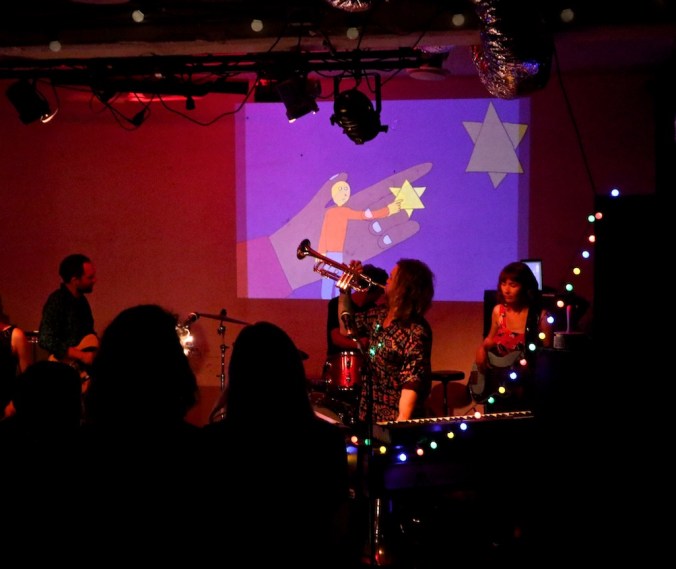 There are a finite number of notes in a scale or colours in the visual spectrum, but an infinite number of possibilities arise. Embracing the latter, multi-instrumentalist, multimedia sculptor and composer Finn Scholes constantly scans the landscape for new material. When he locates something shiny, he appropriates it as a magpie might, storing it in memory until he can bend it to a new purpose. A musician with few boundaries; a disruptor of complacency, his open ears and pioneering disposition equipping him well for his musical explorations. The genius of this music is that the listener will find any number of references, and each according to that persons taste. Any attempt to narrow the music down to a specific range of source materials, or to the prime influences, will, therefore, fall short; there is no correct answer.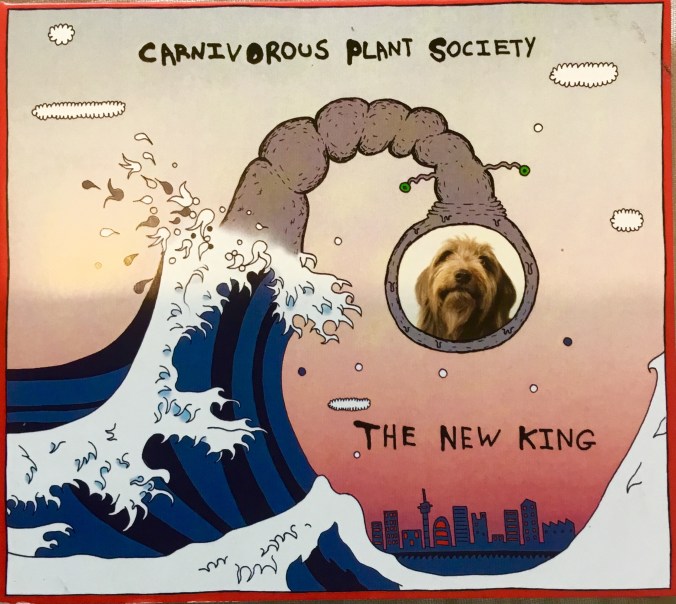


 The fourth Auckland Jazz Festival was appropriately launched at the Thirsty Dog Tavern in Karangahape Road. A welcoming venue, nestled among ethnic food joints, strip clubs and private art galleries. It is timely that we pay tribute to the Thirsty Dog, who a year ago, generously offered the CJC (Creative Jazz Club) a regular Wednesday night slot. This occurred when the club most needed it. It is a good performance space and many visiting musicians have remarked on the rooms warm vibe.
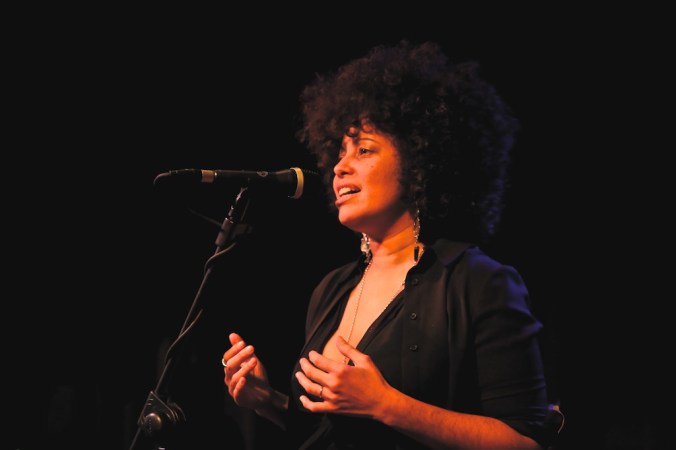 The first festival gig I attended was the Jennifer Zea group. The last time I saw her perform I liked by her Latin interpretations of the standards, but I particularly liked her rendering of the songs particular to her region (Cuba/Venezuela). She introduced more standards this time but it was the second set; a set of Venezuelan and bossa fused music that had the audience enthralled. These tunes were so infectious that they followed me home. I even woke up with one of them singing in my head the next morning. ‘Moliendo Cafe’ (Blanco/Perroni) has been popular in Venezuela (and the wider world) since 1959. Everyone from Jose Feliciano on has benefited from it. As Zea sang this wonderfully infectious tune, she danced to its rhythms, and along the back wall, a chorus of her countrymen and women sang along in unison. We seldom hear music like this and it is her forte. I have posted a bolero, Lagrimas Negras (or Black Tears – by Matamoras) a Cuban tune from the 1920’s. She was ably assisted by Kevin Field, Mostyn Cole and the wonderful Miguel Fuentes on percussion.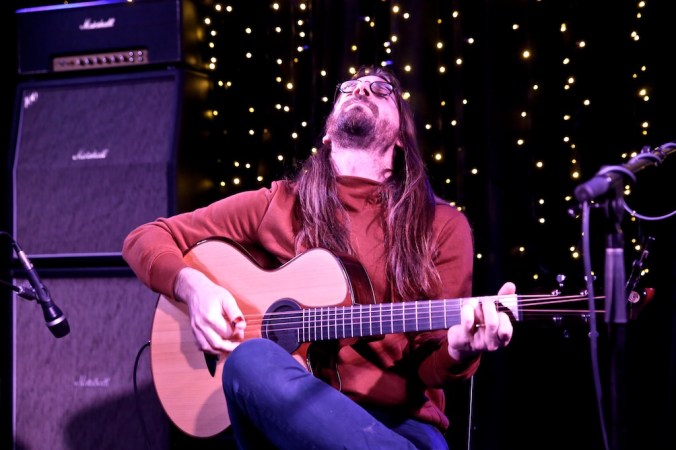
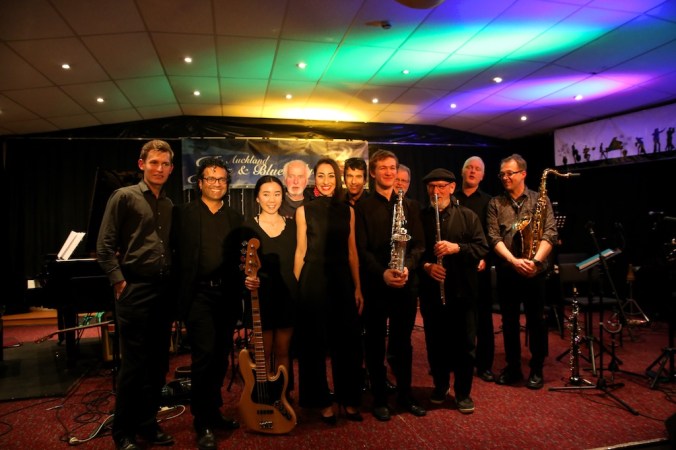 On Tuesday, Marjan appeared with the ‘Experience Band’ at the Auckland Jazz and Blues Club. The Experience Band is an 11 piece ensemble and consequently, it provided a very different flavour to her appearance with a quartet at the CJC last month. Her voice has real power and she’s a compelling performer; easily able to adjust to the bigger sound. The audience loved her. Her set list was skillfully tailored to the room as the audience was older than the CJC crowd. In particular, her cheeky take on ‘Making Whoopie’ brought the house down. At one point she paid tribute to her high school music teacher, saxophonist Markas Fritsch, who was in the front line of the ensemble. She credits him with steering her towards Jazz – something we should all thank him for.
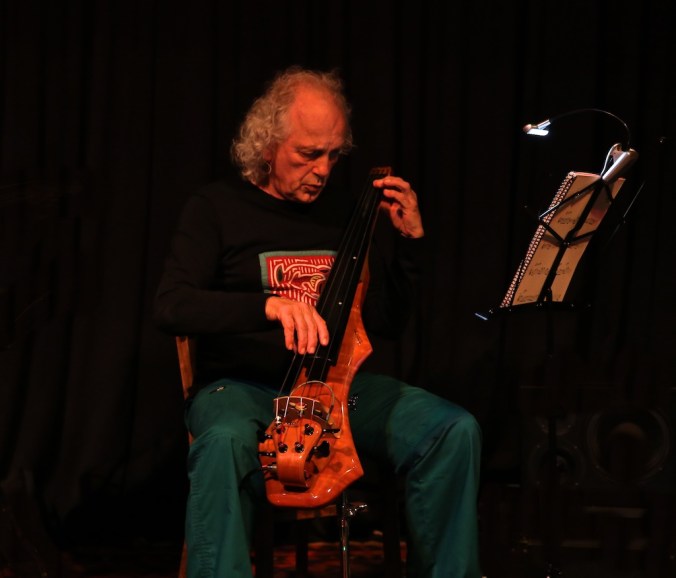 On Wednesday, the third headline festival act was presented at the Thirsty Dog. It has been over a year since the world-renowned bassist David Friesen was in New Zealand. During last years tour, his trio was recorded at the 1885 venue. The night was captured perfectly in the newly released Rattle album ‘Another Time Another Space’. Frieson is an improvised music celebrity and it was good to have him back. He has a unique approach to composition and performance and he caps that off with his engaging and witty bandstand banter. He was again accompanied by Dixon Nacey on guitar and Reuben Bradly on drums. This trio communicates superbly, reacting to each other like old friends. The recording is amazingly good, especially so considering that it was captured in the 1885, which is an acoustically lively space. Nacey’s singing lines blend perfectly with Frieson’s – the sort of woody resonance that high-end luthiers aim for.
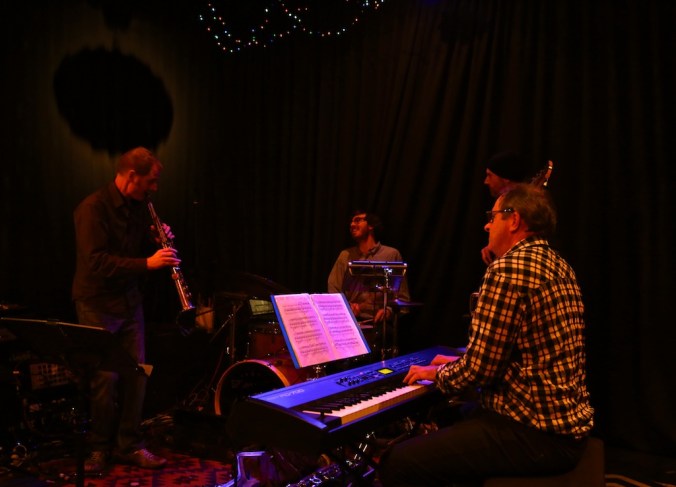 On Friday the Chris Mason-Battley band returned to the Thirsty Dog. I really like this band with their predilection for tasty modal grooves. There is no one in New Zealand who plays quite like the Mason-Battley – and as an entity, the group have a distinct footprint. I have written about them recently and I suggest you check them out if you get the chance – they are not heard about town very often and more’s the pity. As with the last gig; on the keyboard was David Lines, on electric bass Sam Giles and on drums the innovative Stephen Thomas. There is now talk of a new CMB project and perhaps one with more electronics? Friday nights are the hard-yards for Jazz musicians and this one was no exception. Throughout the performance, you could hear two blokes yakking, obviously pleased to be catching up and seemingly unaware that this was a listening gig. A number of ray-like stares were beamed in their direction but they proved quite impervious to hints. Loud chatting seldom happens on a mid-week night where listeners and improvisers own the space.
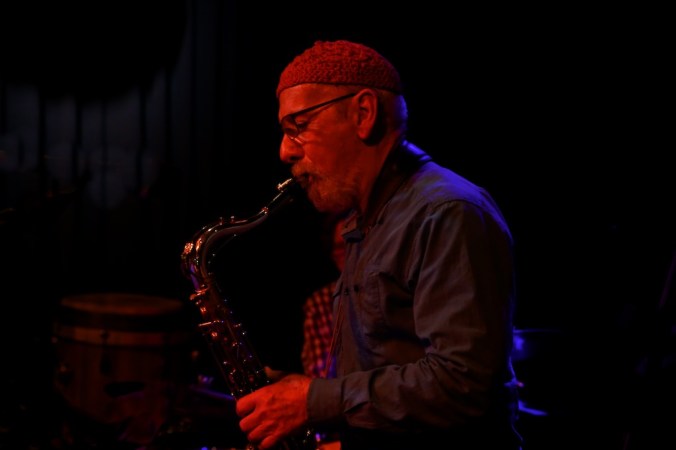 The last gig at the Auckland Jazz Festival was Jim Langabeer’s ‘Secret Islands’ album release’. This is another Rattle album and the musicianship is stunning. A project which arose out of Langabeer’s multi-phonics explorations at Auckland University. There is a lot that is referred to as fusion these days and most of it is not. In this case, the term could be a good descriptor. Indigenous instruments, multiple reeds and winds; pedal steel guitar and fender; beautiful melodies placed in Mingus like settings. While the album sits comfortably on the Jazz spectrum, the material takes us way beyond that. With the authoritative elder statesman Langabeer at the helm, and assisted by Rosie Langabeer, Roger Manins, Eamon Edmundson-Wells, Neil Watson and Chris O’Connor, what else would you expect. For this and other ‘Rattle’ recordings, go to
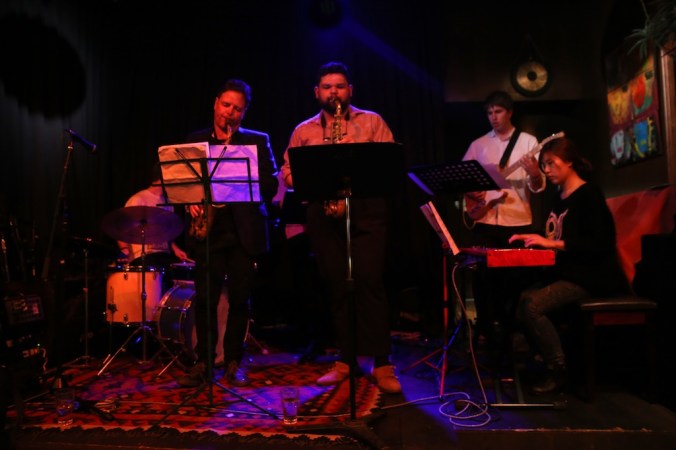 At some point in human evolution, the majority of humans decided to stay put. In consequence, the hunter-gatherers and the pastoral nomads became outliers. As civilizations grew, agriculture grew and large enclosures and granaries grew along with them. Beyond the walls and the jumble of enclosures; largely unnoticed, often unseen, foraging continued unabated. The homeless on the streets forage, philosophers forage, writers forage, wild and domestic animals forage and above all improvisers forage.
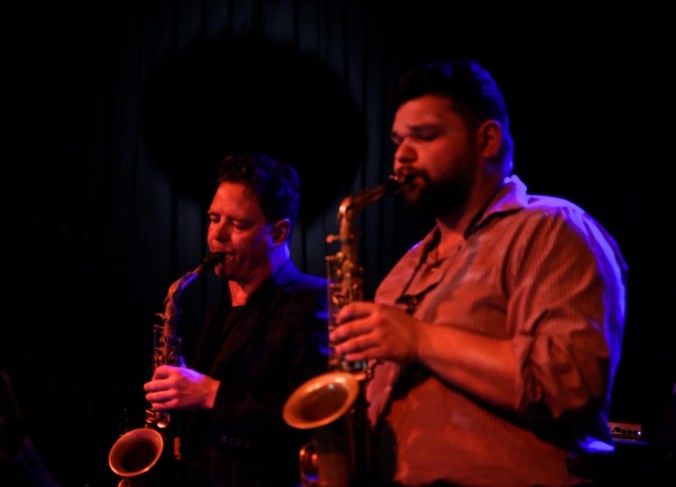 On Wednesday, his charts were for a larger ensemble. This time offering fresh insights; taking us further down the Rabbit hole. The pieces were of variable lengths and sometimes in parts. At some point during the second set, he played a piece titled ‘Ligeti’s Goat (I first heard that back in 2013). While the piece has melodic hooks and a basic structure, it is more, a surrealistic journey. A place where imagining, spoken narrative and musical narrative meet. Ligeti’s goat is vividly embedded in my memory; it is not a piece easily forgotten, a goat wandering through pastures, locating carrots (perhaps forbidden carrots), digesting the vegetables in that mysterious way of all ruminants.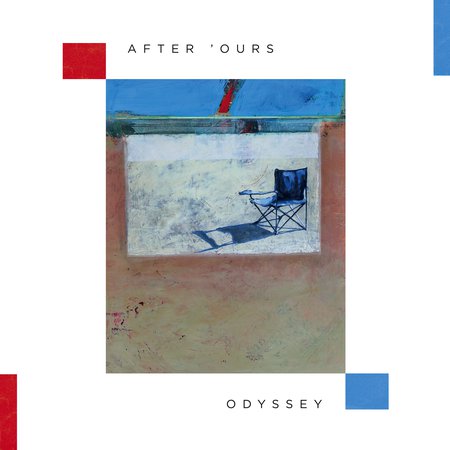
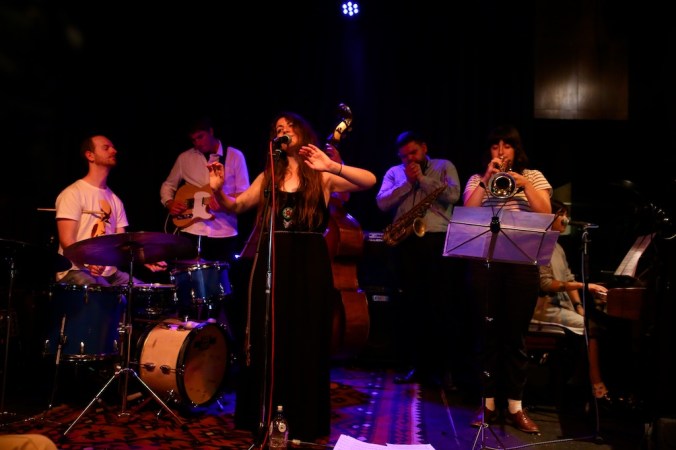 ‘Leda’s Dream’ has been around for some time, but this is the ensemble’s first appearance at the CJC. When vocalist Chelsea Prastiti first conceived of the project, she saw it as a vehicle for unfettered collective improvisation. Her writing cleverly expands on that concept, encompassing real places, the past, abstract ideas, and opening the listener to endless possibility. There is a structure to her vision, but to grasp it you must let go of what you think you know. The pieces are mirage-like; if you look too closely they will disappear. As you listen, fragments of the familiar appear, then dissolve. These are seamless journeys; cleverly fusing reality with dreamscapes. Leda’s Dream is to be experienced and enjoyed, not pigeonholed.
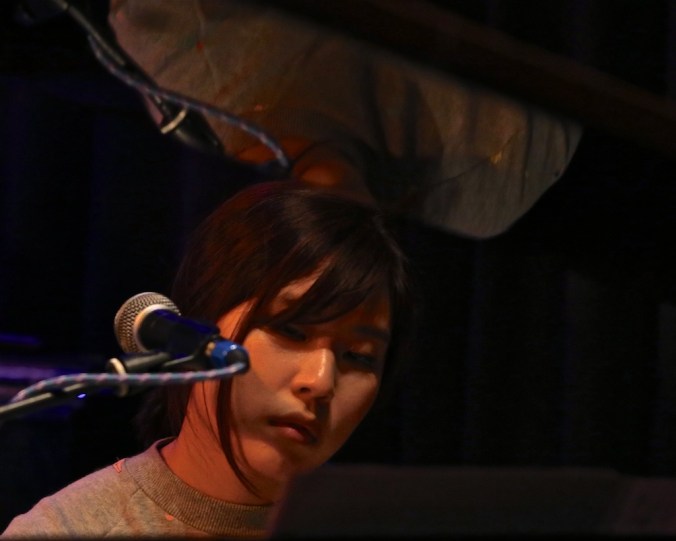 Prastiti’s ‘Time Lapse Photography’ was filmic. Revealing the essence of unfolding plants – magical realism – biology expressed as music. In a similar vein was her piece,’Rain Flood’. As she sang, you experienced the droplets of water – falling slowly at first, then faster until they became a deluge. Communicating in this way is a gift few possess, the images seeming to emerge from nature or from experience, not from the musical form. I immediately thought of my favourite Bengali filmmaker Satyajit Ray and his mystical Monsoon scene from ‘Pather Panchali’. The effect created by Ray there, also swept us to the heart of a poignant interaction between man & nature (musically assisted in that case by Ravi Shankar and Mingus alumni Charlie Mariano).
 The Leda’s Dream ensemble are alumni from the UoA Jazz School. A lot of talent emerged during the years they attended and during this particular gig it coalesced. It was a pleasant surprise to see Crystal Choi playing this innovative abstract music. Choi is a musician who is fast evolving and growing in interesting ways. At Jazz school she stayed closer to traditional forms, or those referencing the folk infused ECM albums. Later I saw her giving a concert on solo piano, Jarrett like in its scope and quite wonderful. On Wednesday she embraced freedom. She was innovative, interactive and confident.
 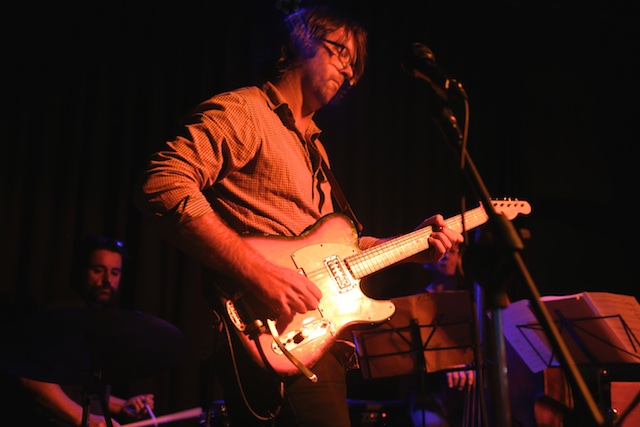 Tubular Live: Having earlier reviewed the long anticipated Neil Watson ‘Tubular’ album I looked forward to the live launch. The Thirsty Dog gig was well attended, the audience extremely enthusiastic and no wonder. Although we saw a slightly different line-up from the album band, they were on fire from the first note. Watson, always a confident performer, was more in command than I have ever seen him and he communicated his musical vision effortlessly. Perhaps this was due to the long gestation of the material, but now he had a platform to extend the concepts further and he grabbed the opportunity. The evening seamlessly covered the breadth of guitar jazz and beyond. While much of the material was influenced by Jazz/Rock or improvisations built on genres like surf guitar, the gentler mainstream Jazz heroes of the past like Johnny Smith and Errol Garner were also honoured.
 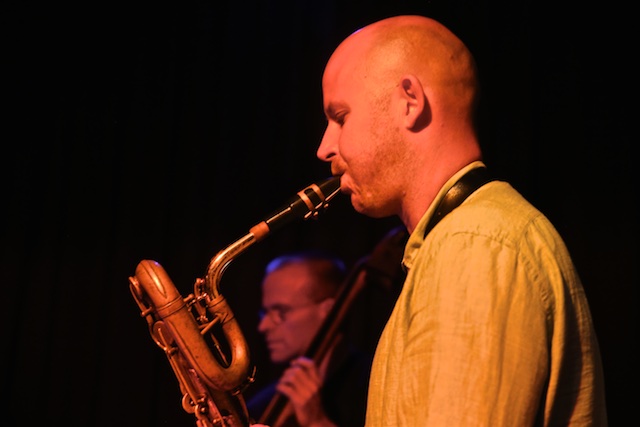 On the ‘Tubular’ album his musical influences are evident. At the live gig, he stared those influences down and carved out his own space. He is one of the few New Zealand musicians who can convincingly occupy Frisell or Ribot territory and he demonstrated that. The perfect example was his rendering of the classic five beat Mambo Picadillo by Tito Puente. He began with a solo intro, dissonant chords offering brief hints as to where he was heading. As he developed his theme the audience gasped in delight as Errol Garners ‘Misty’ emerged, morphing into the gentler Johnny Smith version of ‘Moonlight in Vermont’. That it worked at all is a tribute to his musicianship, that it was done so well all the more so. The Mambo was well-arranged and just superb, not a foot remained still and the bar staff stopped in their tracks, swaying. Another tour de force (not on the album) was his arrangement of ‘Hard rains are going to fall’ (Dylan). This followed his gentle ballad ‘Kerala’.
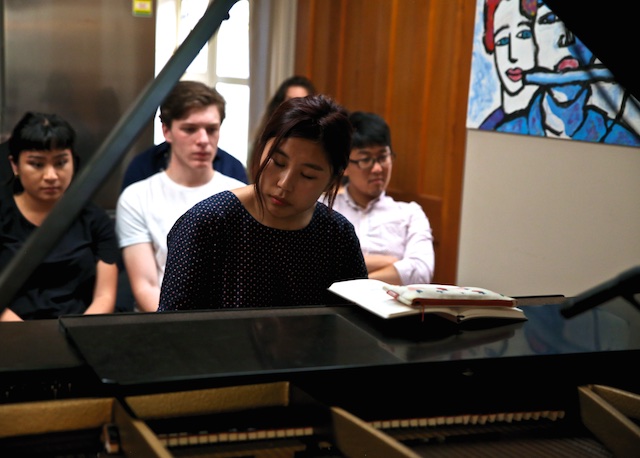 Crystal Choi (private concert): This particular invitation-only concert was organised by Jonathan Crayford and the invitations were swiftly taken up. Crayford is a legendary figure on the New Zealand music scene and when he gets behind a young artist, people pay attention. I have watched Choi develop musically over the years, but I had not seen her perform for some time. In the past she has appeared with students, part of an ensemble, seldom stepping into the limelight for long. This was a departure, a brave step into the challenging world of improvised solo piano. Developing artists (and even experienced performers) struggle with this format, some panic and resort to noodling. When Crayford introduced the concert he stated, “Crystal is amazing, and what you are about to hear will speak for itself”. He was right.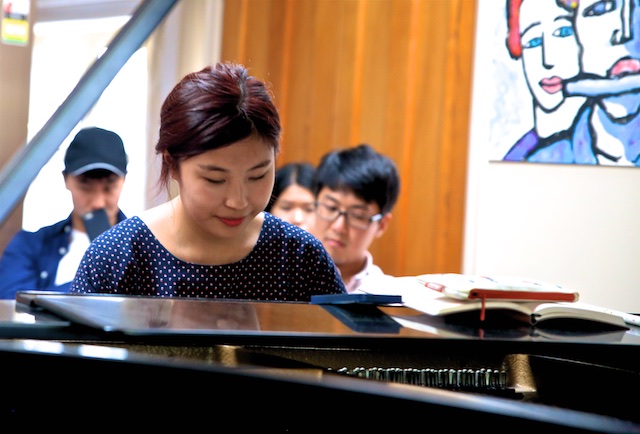
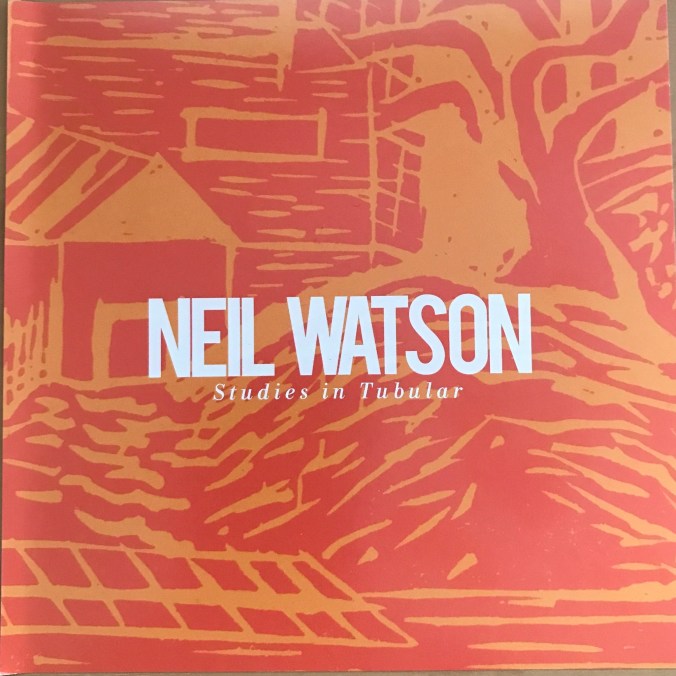 A review copy of the album ‘Studies in Tubular’ arrived in my letterbox a few days ago and it is vintage Neil Watson. It was recorded in 2011 and left to mature like a fine wine; it was worth the wait. I haven’t asked Watson why he titled the album ‘Studies In Tubular’, but the title feels appropriate. My first thought was that it might reference Mike Oldfield’s trippy minimalist classic ‘Tubular Bells’, and then I recalled that the word ‘tubular’ was once surfer slang for ‘exceptionally good’. Whatever the reason, this is exceptionally good music. The surf reference is not such a great stretch either when you listen carefully. This is deliciously eclectic music and although it touches on many sources, it is an original and highly satisfying offering. Referencing many things but never beholden to any of them.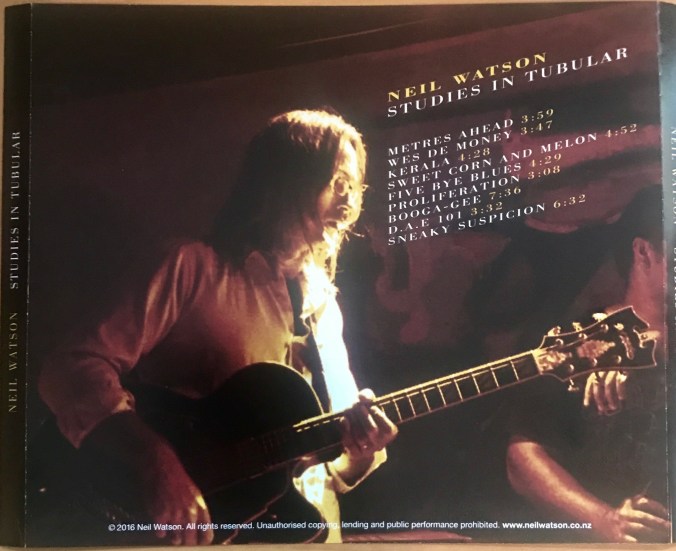
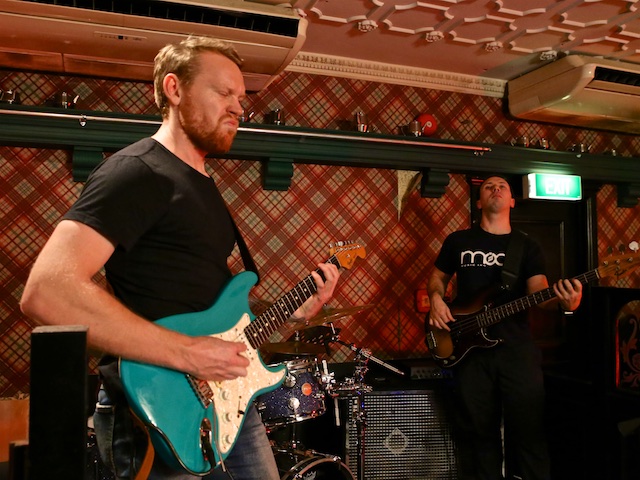 Mooga Fooga are well travelled, and as they move about they carve deep grooves into the sonic landscape. Their music is deliberately genre blending, with funk, rock, soul and Jazz shuffled together. Their music is often loud but they can play in a muted voice. While all of those influences are unambiguously in the mix, based on what I saw on Wednesday, they can tilt the emphasis any way they choose. This eclecticism is not the result of a random amalgam, but a clever fusing of the base metals underpinning the genres. In some of their online clips they are reminiscent of groups like Cream (albeit funked up), but on this gig, their Jazz Funk roots were most in evidence. I suspect that saxophonist Kushal Talele was the compass in that regard.
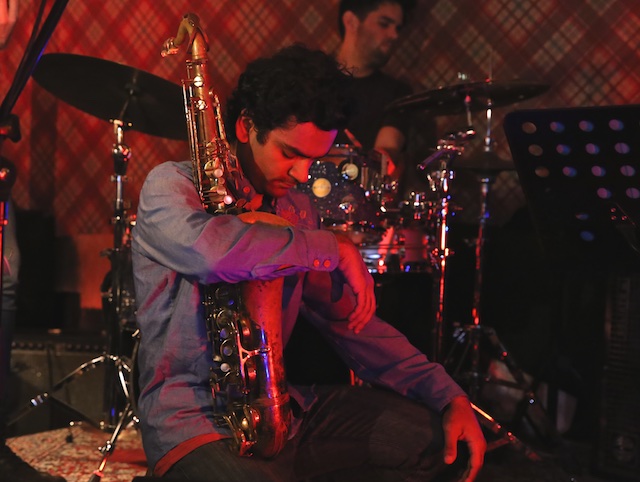 Years ago I picked up a guitar trio album featuring Bareli Lagrene, Jaco Pistorius, and a European drummer (I can’t recall his name). I marveled at the seamless blending of styles, as they performed Hendrix and Shorter with equal integrity, paying due respect to each. This music has a heavier funk element; Jazz funk with a little touch of metal and the occasional the choppy lines of Monk thrown in. Apart from their punchy lines and the exchanges during the head, there was room for improvisation as the tunes developed.
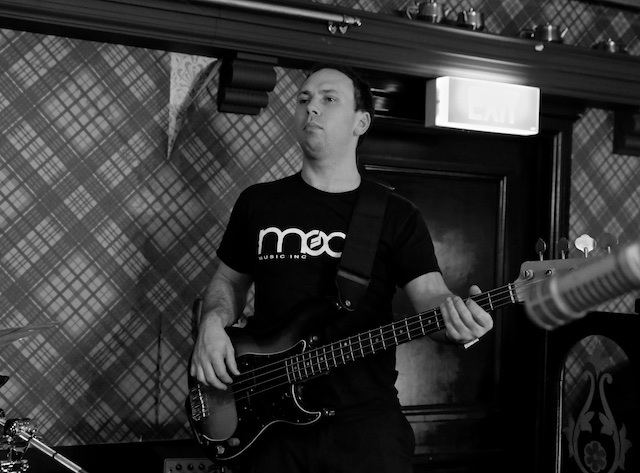 I am familiar with Kushal Talele, Adam Tobeck and Joel Shadbolt as I have encountered them all before. Each in different situations to what was on offer last night. Talele has a distinct post-Coltrane sound and is very much in the camp of the New York modernist tenor players. He returned last year from overseas and played a gig at the CJC. Sadly, we are to lose him again as he heads to New York for a few years. Tobeck is versatile and notable for his tightly focused groove beats. He was essential to this lineup and this band was a natural fit for him. I have seen Shadbolt less often but I enjoyed his loud bluesy funk at the 2015 Tauranga Jazz festival. He is a crowd pleaser and looks every inch the part as he pumps out his ear-pleasing lines and phrases. While I had not previously heard electric bassist Rory Macartney, he is well-respected about town. There is a real bite to his playing, a bite that is perfect for a lineup like this.
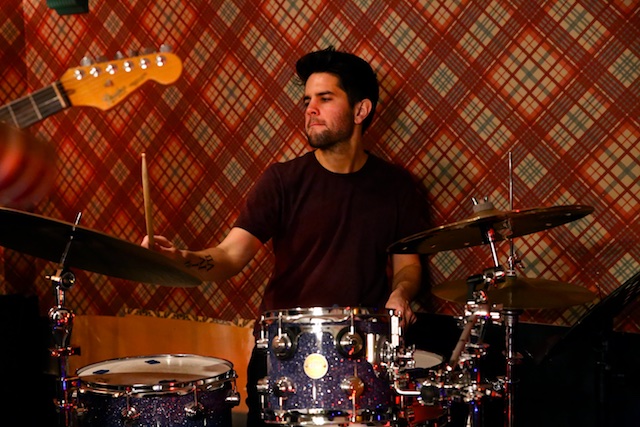 The tunes were seldom given titles and I suspect that most were originals. Details like that don’t matter on a gig like this – it is about the groove. I gained the impression that the three regulars, Macartney, Shadbolt and Talele all contributed compositions and arrangements. There are some good YouTube clips up from this group and I have added one more from this gig.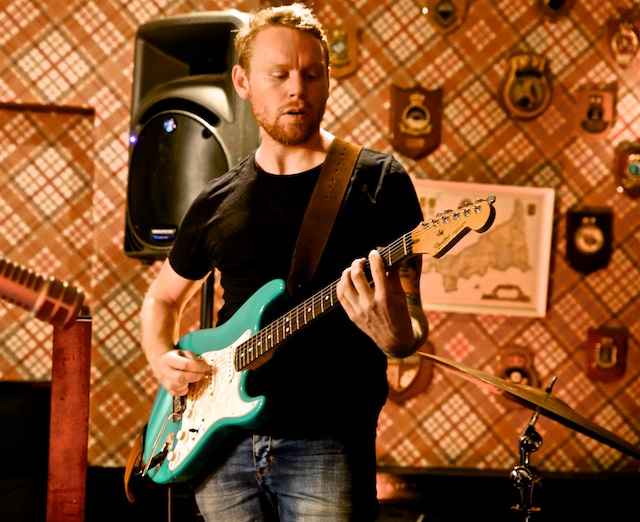
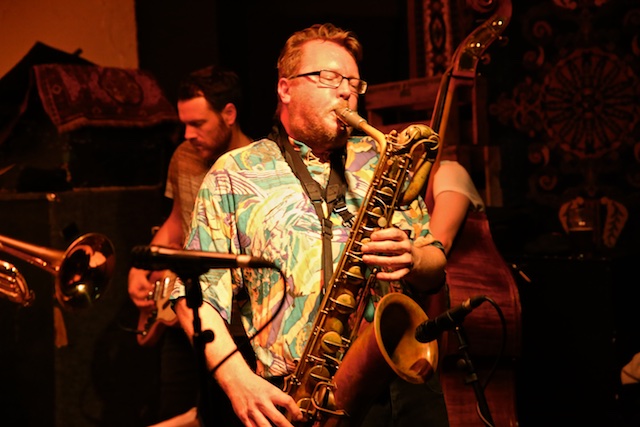
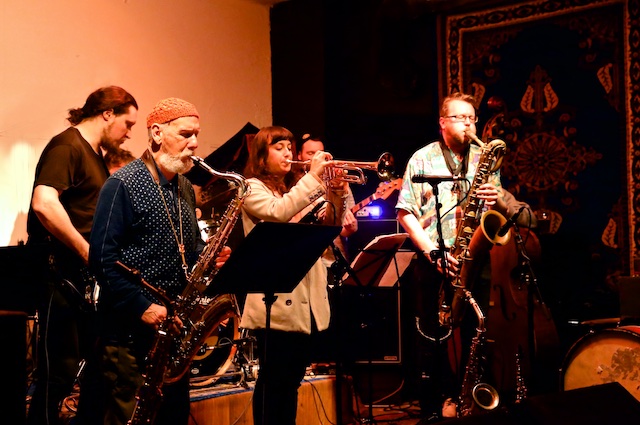
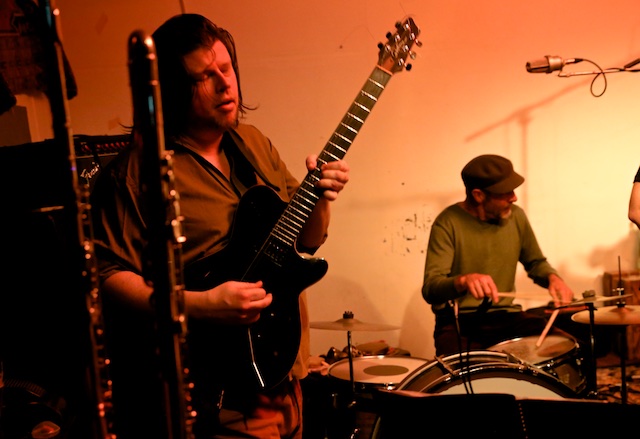
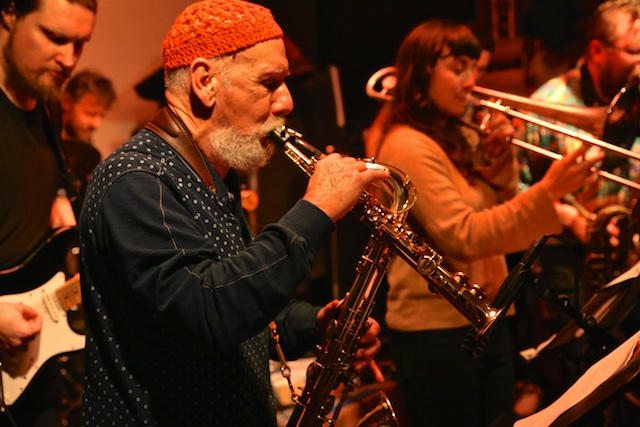
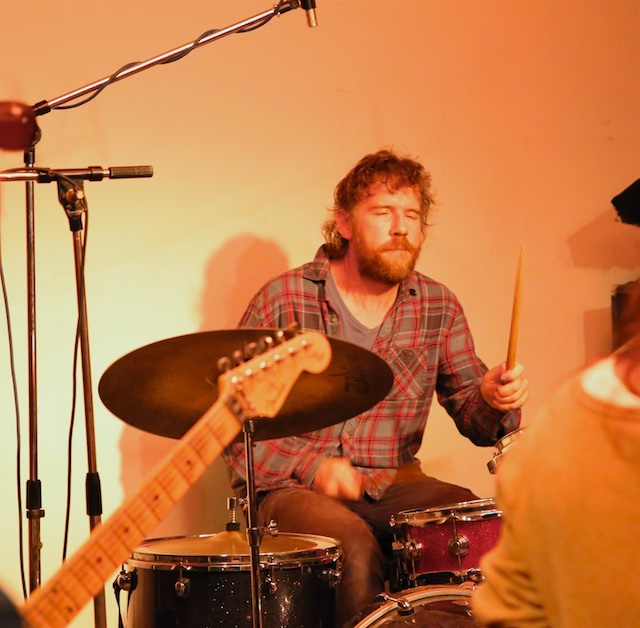
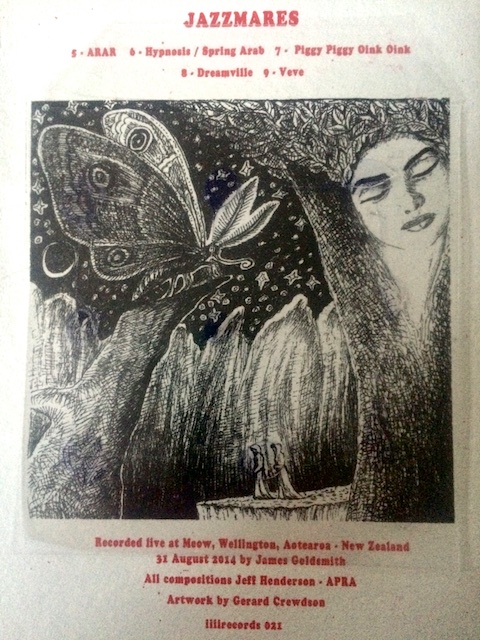
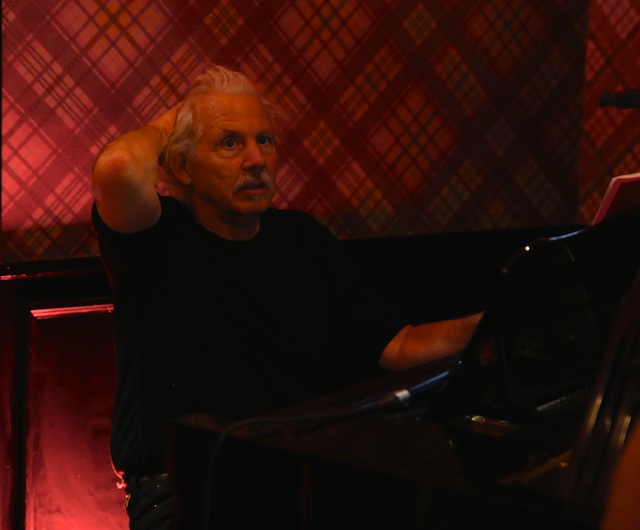 To the best of my knowledge, Jonathan Besser has not played at the CJC (Creative Jazz Club) before. While he is best known as an important composer for The New Zealand Symphony Orchestra, The New Zealand String Quartet and The Royal New Zealand Ballet, he is also a significant leader of small ensembles. Ensembles which venture far into the territory of experimental, electronic and improvised music. It is impossible to separate the man from his music. It is eclectic, original and often plaintive but generally with a sly twist of humour thrown in. In spite of his standing in the music world, Besser is modest. At the CJC he was happy to lead from the piano, which was in partial darkness and at the rear of the ensemble. His instructions were brief and staccato as if part of the unfolding suite. When he did pick up the microphone to speak to the audience he exuded an eccentric charm, bandstand asides peppered with self-effacing humour, garnished with sudden smiles.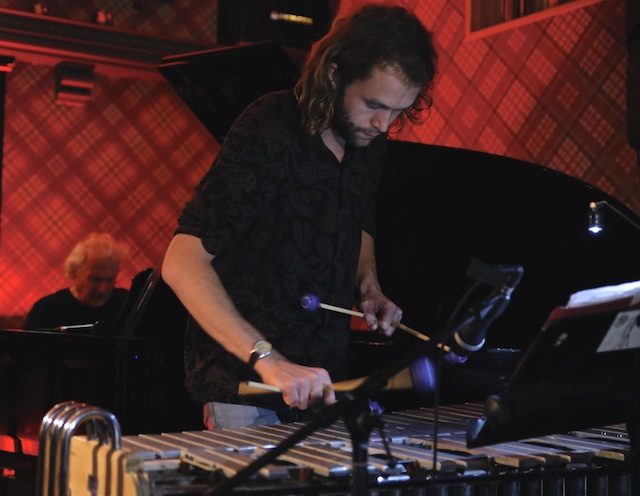
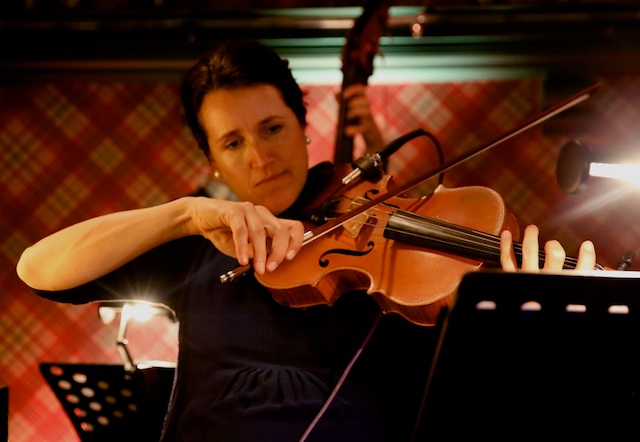 I met Besser briefly during Natalia Mann’s ‘Pacif.ist’ tour and later at the Auckland Art Gallery during the opening of Billy Apples ‘Sound Works’ exhibition. On that occasion, the Nathan Haines Quartet played Besser’s innovative compositions. I really hope that someone recorded that. It was extraordinary music, based upon prescribed letters of the alphabet. These were then allocated using the 12 tone scale as a formula to locate equivalent notes. The order of Billy Apple’s words dictating the order of notes.
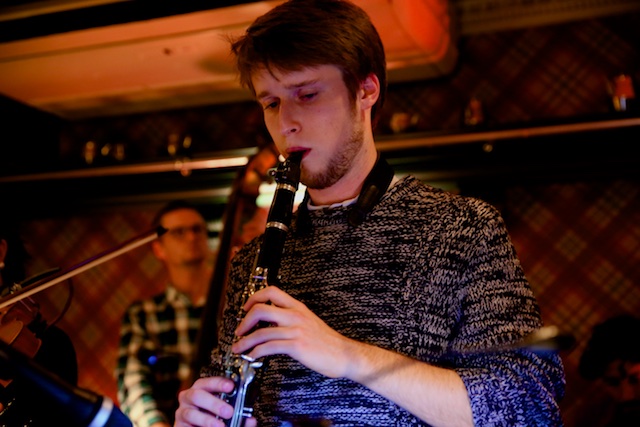 The music was not Klezmer and later I asked Besser about his influences – were there strong Jewish influences? “I am a Jewish man and I used Jewish scales, but apart from that no. I draw upon many, sources”. It interested him that I heard Argentinian references. “I have done Tango projects in the past and that is possible”. It was partly the combination of instruments, the delicious overlay of melancholia and the accents – not so far from the music of master musician Dino Saluzzi.
 The segments of music making up the suite seldom lasted longer than 4 minutes. The spaces between them brief. The mood seldom deviated from the wistful, evoking a sense of intangible longing – for something remembered – but just out of reach, a nostalgia as ancient as time itself. There were a few cheerful pieces as well, but I preferred the former. The Zestniks update themselves regularly, this time adding Caro Manins vocal lines, her wordless vocals followed the viola or clarinet in gentle unison. No one is better suited to this than Manins – she has worked with the likes of Norma Winstone after all.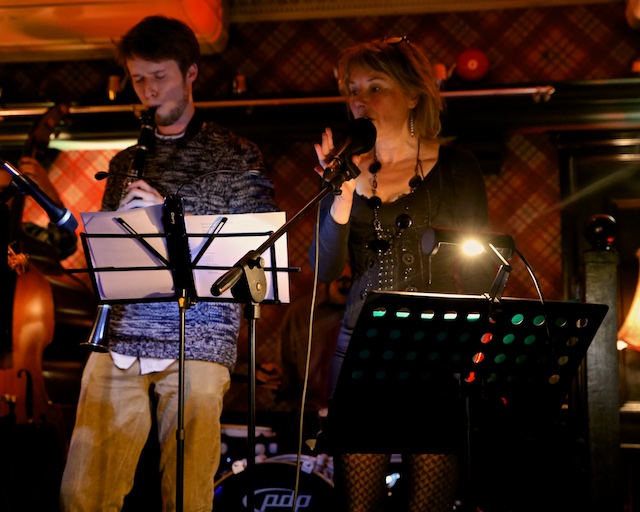
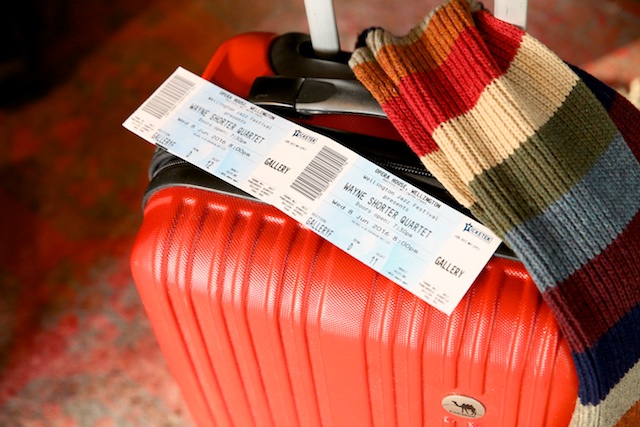 When we talk about Wayne Shorter’s music we immediately run into obstacles. Wayne is like a Zen Master, deliberately confounding our every expectation. To begin such a journey our rational minds need emptying. As the journey unfolds we move beyond comforting reference points; this requires a letting go, real courage. The 2016 Wayne Shorter band is a musical ‘Voyager’, a spacecraft assembled out of earthly components, but sending encrypted sonic messages from an unknown place. What is on offer is a shared journey – but only if we are brave enough. Once you commit there is no looking back.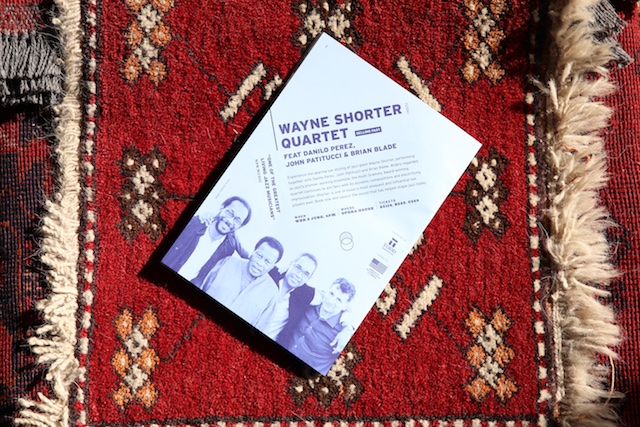
 As I write this it is International Jazz Day, a UNESCO sponsored day honouring the diversity and depth of the world improvising scene. It was, therefore, serendipitous that Carl Dewhurst and Simon Barker brought ‘Showa 44’ to town – especially in the days immediately preceding the big celebration. This gig offered actual proof that the restless exploration of free-spirited improvisers, lives on undiminished. I have sometimes heard die-hard Jazz fans questioning free improvisation, believing that the music reached an unassailable peak in their favourite era. To quote Dexter Gordon. “Jazz is a living music. It is unafraid …. It doesn’t stand still, that’s how it survives“. While a particular coterie prefers their comfort zone, the music moves on without them. Younger ears hear the call and new audiences form. Life is a continuum and great art draws upon the energies about it for momentum. Improvised music is not a display in a history museum.
 It is through listening to innovative live music that our ears sharpen. When sitting in front of a band like this the mysteries of sound become visceral. This was an extraordinary gig, at times loud and confronting, mesmerising, ambient and always cram-packed with subtlety. Fragments of melodic invention and patterns formed. Then subtly, without our realising it, they were gone, tantalising, promise-filled but illusory. We seldom noticed these micro changes as they were affected so skillfully – form and space changing minute by minute, new and yet strangely familiar – briefly reappearing as quicksilver loops before reinventing themselves.
 With the constraints of form and melody loosened new possibilities emerge. In inexperienced hands, the difficulties can overwhelm. In the hands of artists like these the freedom gives them superpowers. Time is displaced, tonality split into a prism of sound, patterns turned inside out. The first set was a single duo piece, ‘Improvisation one’ – unfolding over an hour and a quarter; Dewhurst and Barker, barely visible in the low light. This was about sculpting sound and seeing the musicians in shadow added a veneer of mystique. Dewhurst began quietly, his solid body guitar lying face up on his lap. The sound came in waves as he stroked and pushed at the strings, moving a slide – ever so slightly at first, causing microtonal shifts or new harmonics to form, modulating, striking the strings with a mallet or the palm of his hand. The illusion created, was of a single drone repeating. In reality, the sound was orchestral. As you listened, really listened, microtones, semitones and the occasional interval appeared over the drone. Barker providing multiple dimensions and astonishing colour, responding, reacting, crafting new directions.
 In this context, the drummer took on many roles, a foil to the guitarist, creating silken whispers, insistent flurries of beats and at times building to a heart-stopping crescendo. I found this music riveting and the audience obviously shared my view. In the quiet passages, you could hear a pin drop. If that’s not an indication of the musical maturity of modern Jazz audiences, nothing is. One of the prime functions of art is to confront, to challenge complacency. This music did that while gently leading us deeper inside sound itself. No one at the CJC regretted being on this journey. This is territory loosely mapped by the UK guitarist Derek Bailey, the Norwegian guitarist Aivind Aaset and the American guitarist Mary Halvorson. They may take a similar path, but this felt original, perhaps it is an Australian sound (with a Kiwi twist in Manins). The long multifaceted trance-like drones suggest that.
 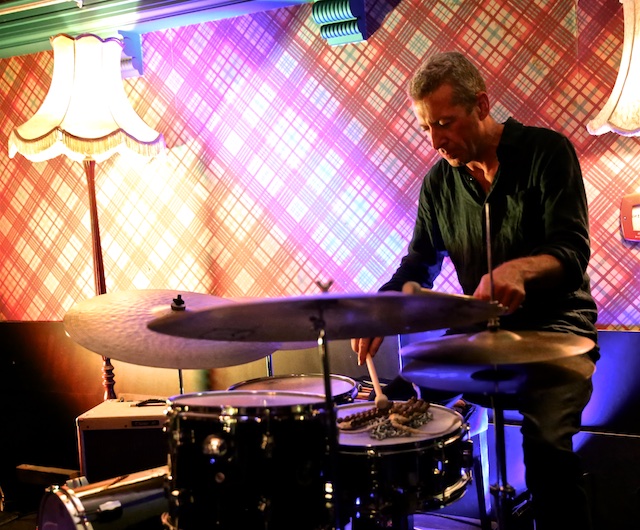 The second set was shorter, ‘Improvisation two’ had Roger Manins aboard. I should be immune to Manins surprises but he frequently catches me off guard. His breadth and depth appear limitless. ‘Improvisation Two’ began with a broader melodic palette. Dewhurst and Barker set the piece up and when Manins came in there was a stunning ECM feel created. Barker tap-tapping the high-hat and ride. Achingly beautiful phases hung in the air – then, surprisingly they eluded us, unravelling as Manins dug deeper – dissecting them note by note. These interactions give us a clue as to how this music works, each musician playing a phrase or pattern and then re-shaping it, passing the baton endlessly.
 JazzLocal32.com