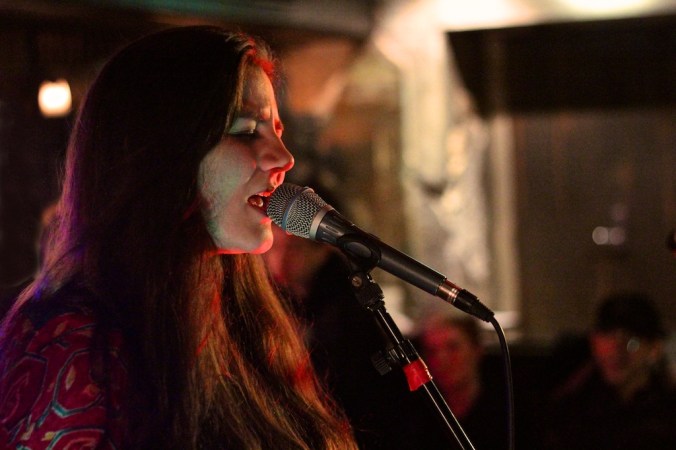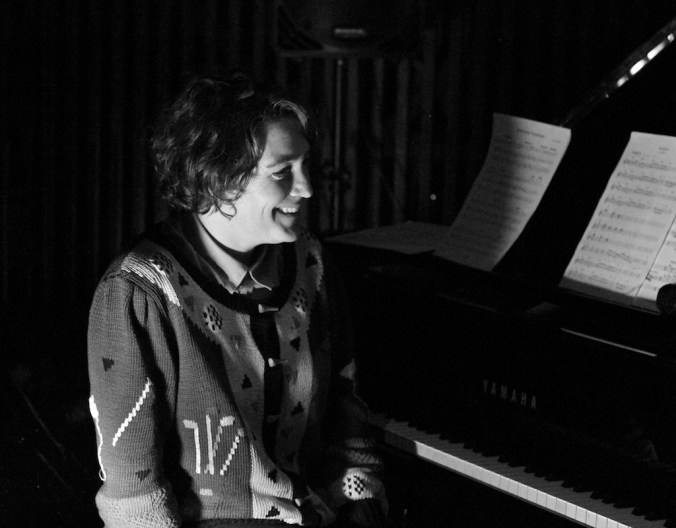
Spammerz, Silent Observer and Ambient Adventures

Spammerz 076Spammerz is a fascinating group and there is an interesting conceptual approach underlying their ethos. The quartets approach to improvisation is organic; more than might than might be supposed at first encounter. What they play is familiar but at the same time intangible. Constant organic shifts occur underneath the momentum and these apparent contradictions are not accidental. The music while eminently danceable is remarkably free of constraints; there is form, but it is not always fixed. The music has groove but it is cleverly purged of the familiar licks and hooks that usually inform groove music. There are interesting dynamics but these are not based upon loudness or showy pyrotechnic displays. It is ambient, but not in the accepted sense. It is enjoyable.

The leader of the quartet Dan Sperber once described his compositions as ‘unterhaltungsmusik’ (easy listening). This tongue-in-cheek description belies the reality and it hints at his quirky approach to writing charts. Background music was certainly not what the CJC or Golden Dawn audiences heard. They either danced happily or sat mesmerised as the friendly grooves filled the room. Perhaps ‘trance music’ comes closer?  Spammerz 074This opens up an interesting conversation about the many forms of ‘ambient’ music being explored at present. These forays are mainly by musicians on the improvised and experimental music scenes. Along the way the term ‘ambient’ is garnering new meanings and it can no longer be confined to the vernacular definition. It implies subtly, depth and a strong sense of being coupled to wider sensory experiences. The difference being that the senses catch on silken threads and not on steel shackles. There is also an illusive quality to this music and to understand the genre better, a good starting place would be Miles Davis ‘In a Silent Way’ or Brian Eno and Jon Hassell (‘Fourth world volume one, possible musics’). For an up to the minute vantage point go to YouTube and locate Elvind Aaset and Jan Bang’s ‘And Poppies from Kandahar’. Spammerz 071Unlike ‘easy listening’ there are deep emotions engaged by this type of music. Like all trance music cunning voodoo tricks draw you in and as you relax into the mesmerising grooves, you fall deeper into the web. This is music evoking mental pictures and imaginary worlds. This is music that is often served up with dissolving visual images accompanying a clip. The filmic qualities are inescapable.
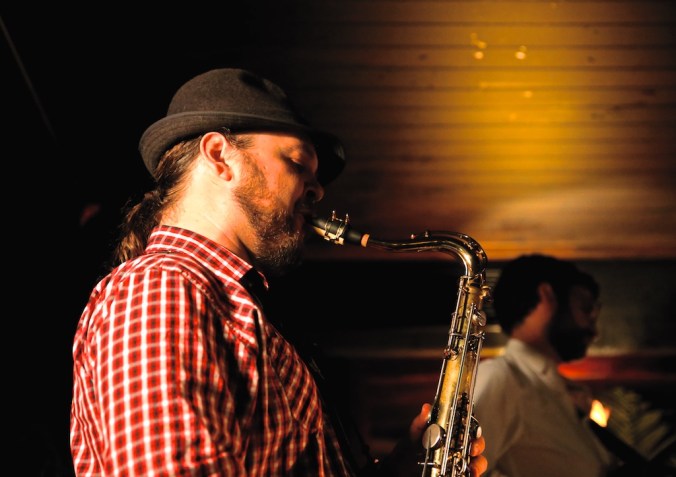
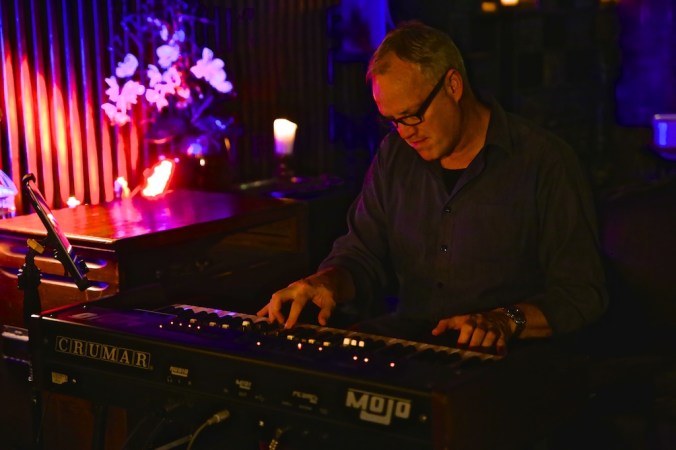
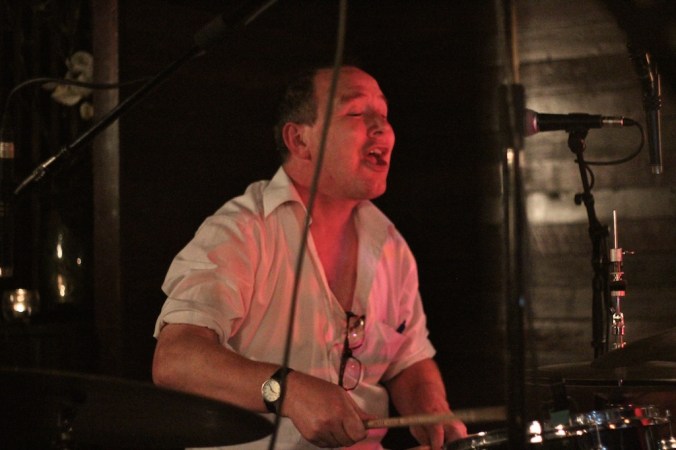
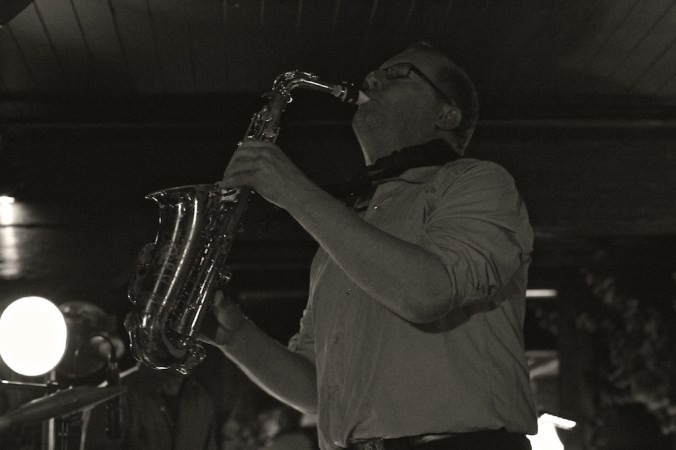
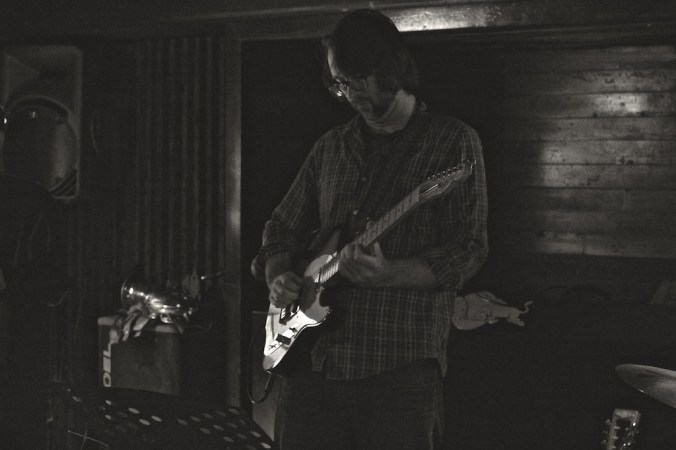
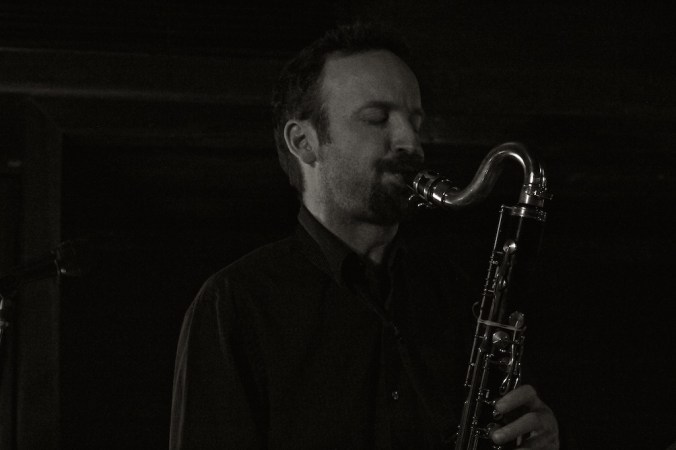
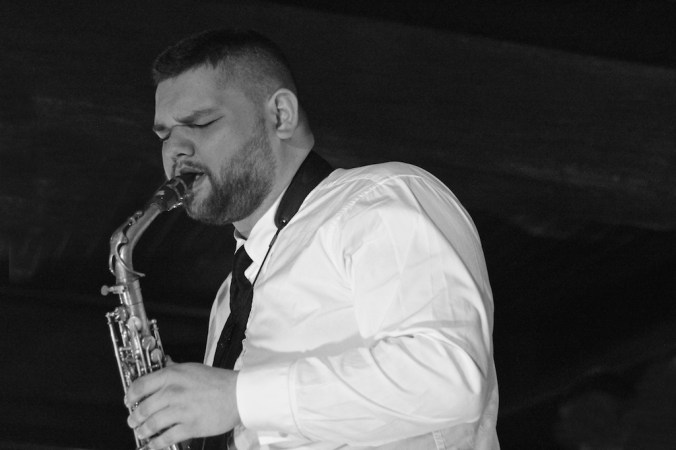
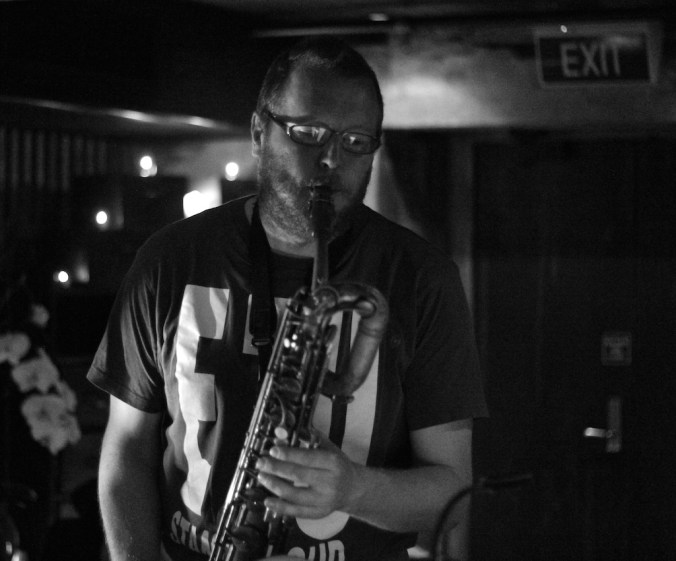
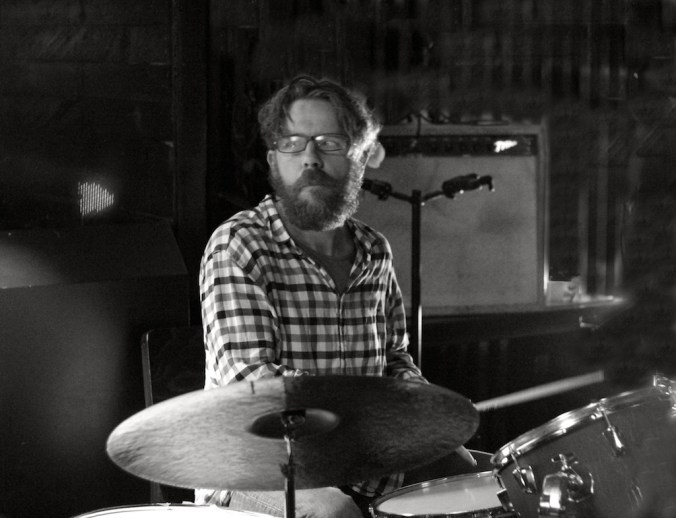
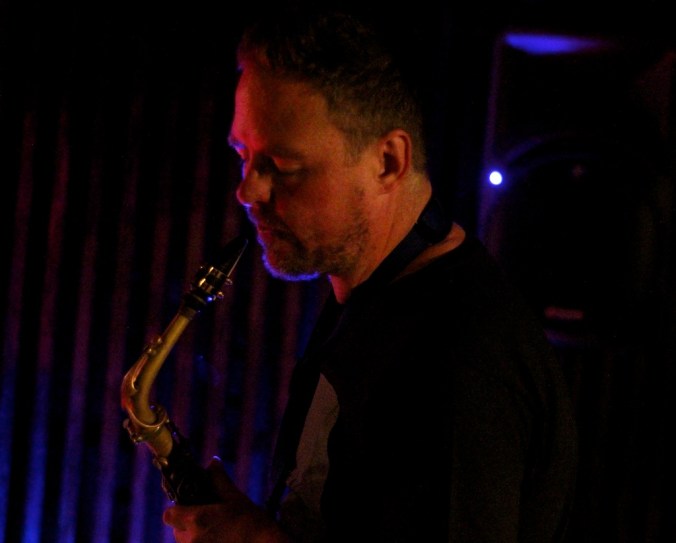
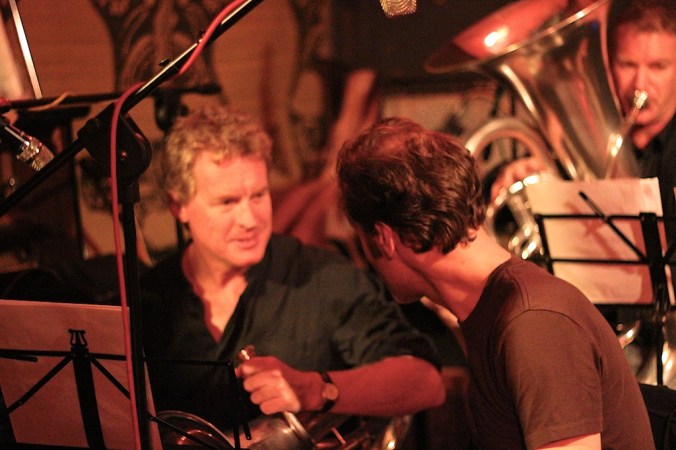
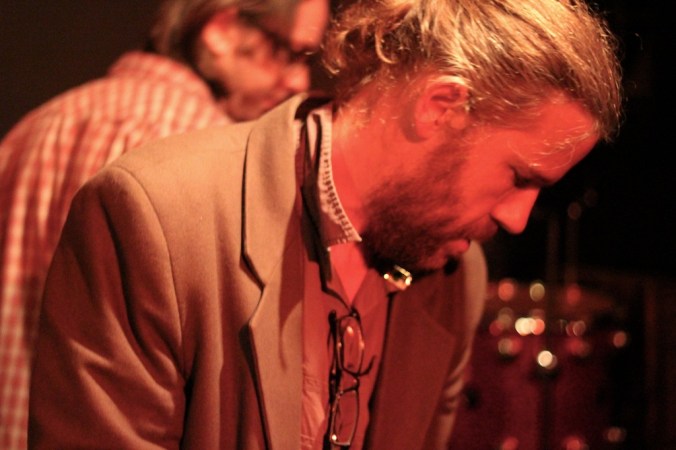
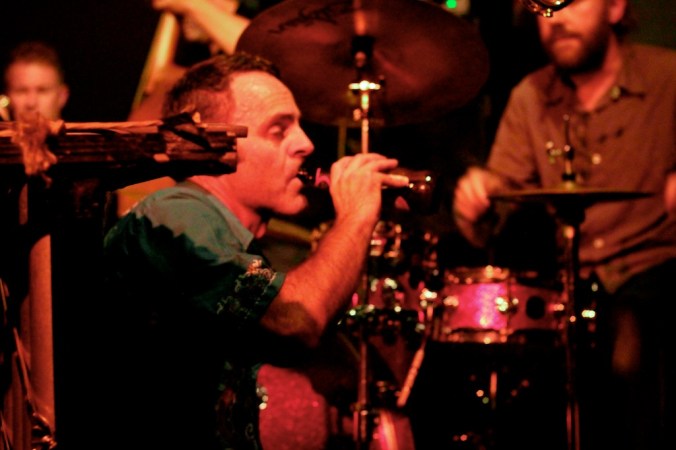
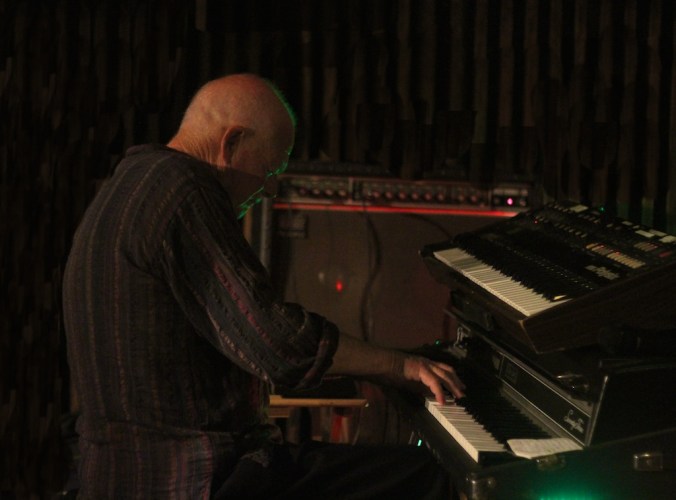
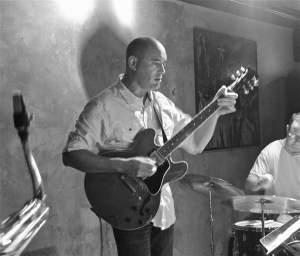
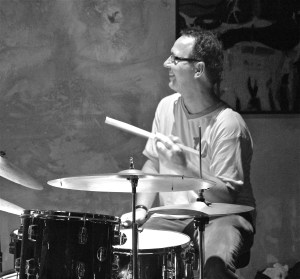
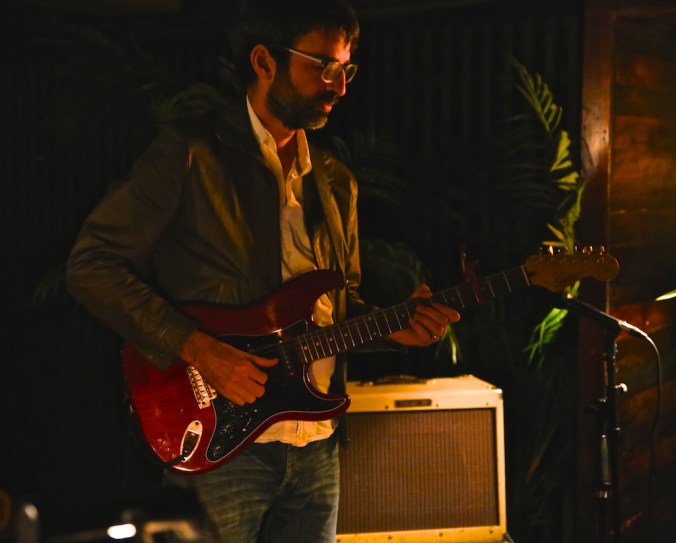
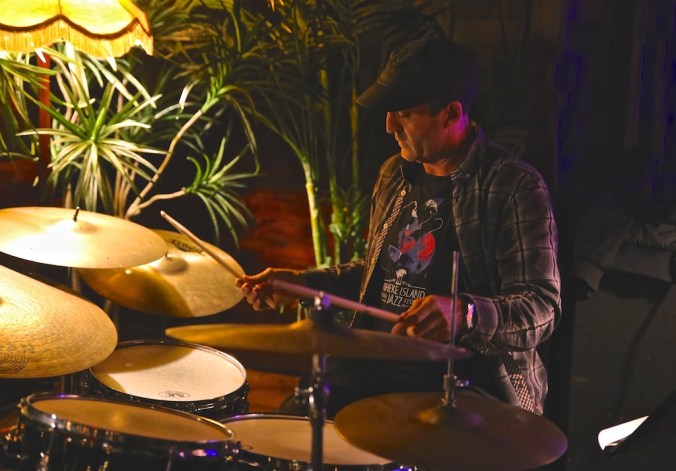
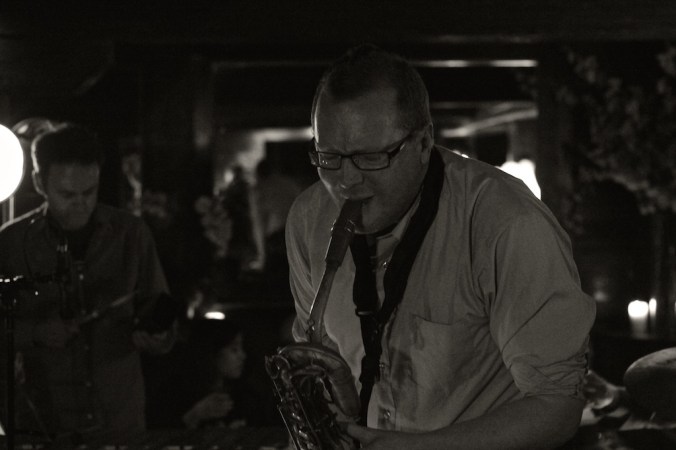
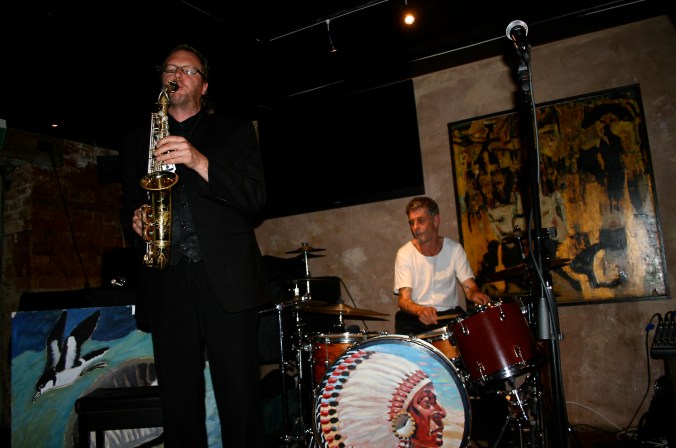
The Spammerz band is Dan Sperber (guitar), Alan Brown (Crumar keyboard), Ben McNicoll (saxophones) and Jason Orme (drums). Because the musicians have been experimenting and playing with the grooves, the music is constantly evolving. The CJC gig was great, but the Golden Dawn gig just a few nights later was even better.  Spammerz 073Alan Brown is an asset to any unit and especially so when you consider that this is a crossroads between ambient and groove (both specialties of Browns). Ben McNicoll is a strong presence and his reading of these shifting grooves is always apposite. It is nice to hear such bluesyness purged of cliche. Jason Orme is a veteran of the groove scene but he sounds great in any situation. Spammers music calls for a tight groove but there is also a need for subtlety. Orme is more than up to the task. The leader Dan
The leader, Dan Sperber is best known for his role in ‘New Loungehead’ and the ‘Relaxomatic Project’. In spite of having such strong band mates on this project he is centre stage. His disarmingly quiet persona belies a strength of purpose.  A nice guitarist with interesting things to say.  Spammerz 077In the same week that Spammerz appeared at the CJC Alan Brown released his ambient album ‘Silent Observer‘. This album has long been anticipated. Anyone who knows Brown will be aware of his longtime interest in the works of the new Scandinavian ambient improvisers. Trumpeters like Arve Hendriksen, Nils Petter Molvaer, Guitarists like Arvin Aaset, vocal innovators like David Sylvian or Sidsel Endresen and electronics wizards like Jan Bang. This is a new frontier open for wider exploration. These artists draw huge audiences in Europe and increasingly audiences from beyond that continent.
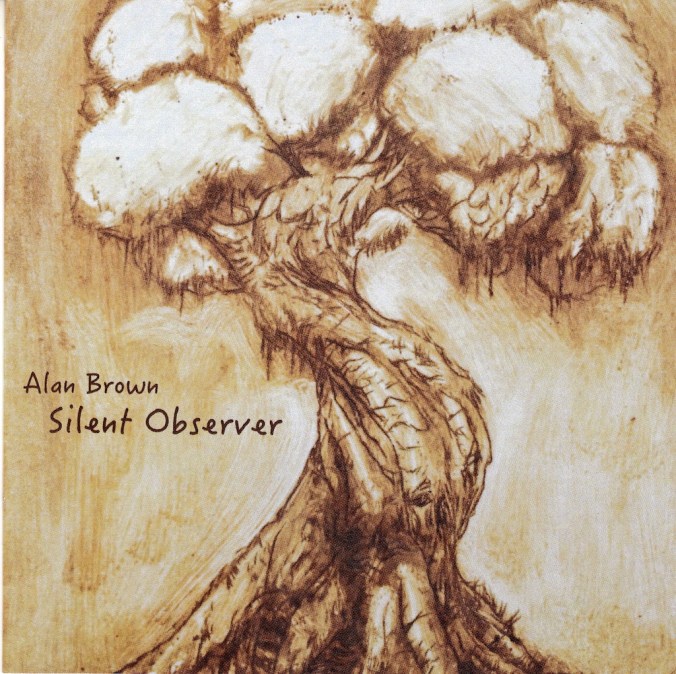
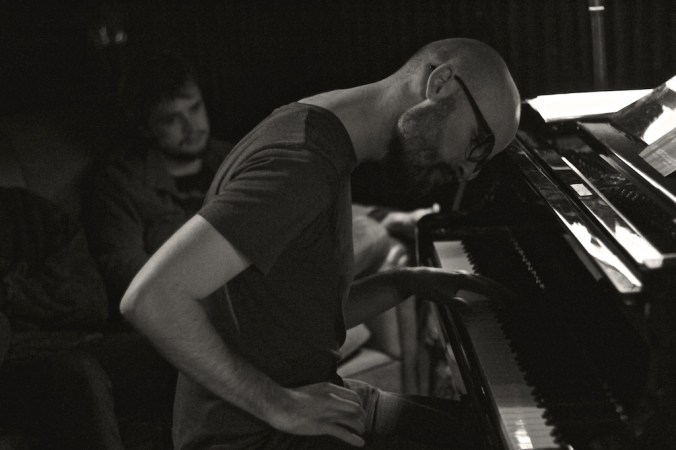
While Brown has laid down more soul-filled grooves than most, he is also capable of thinking outside of the square. The concept of this project was clear when he sat down at the lovely Steinway D piano in the Town Hall Concert Chamber. Creating gentle music that is unconfined. This is spontaneous composition informed by place, by the moment, the artists vision and the instrument. With ambient music the spaces between the notes are where much of the music lies. These are like shared dreamscapes and a stream of mental images flows through the mind as we participate.

There is an oversupply of unsubtle loud incessant music cluttering up cyberspace and it is all too easy to forget the importance of silence and subtlety. This music is best enjoyed through headphones or at night in a quiet room. Ambient music is not background music, but the sounds we have forgotten to hear.  A child’s heartbeat or the rustle of a tree are the most ancient of ambient sonic archetypes. This album reminds us that hearing is selective and when we enable it as deep as the ocean.

While the piano paints gorgeous motifs there are often subtle synth textures underpinning the pieces. The judicious use of synth adds to the sense of wistfulness while not detracting from the piano. There are also samples folded into certain tracks and these are perfectly chosen. The Robert Graves poem (read by Dylan Thomas) and the whisper-quiet polyglot prayers in 40 languages serve the the project well.

Headland Glow: Alan Brown/Silent Observer – 

Spammerz – Dan Sperber (guitar), Alan Brown (Crumar Mojo keyboards), Ben McNicoll (tenor saxophone), Jason Orme (drums). Gigs at CJC (Creative Jazz Club) & Golden Dawn 6th & 10th May 2015

Silent Observer – Alan Brown (Steinway D Piano, Synth) – purchase the album from Alan Brown.co.nz

Member-button

The Troubles @ CJC 2014

IMG_3891 - Version 2

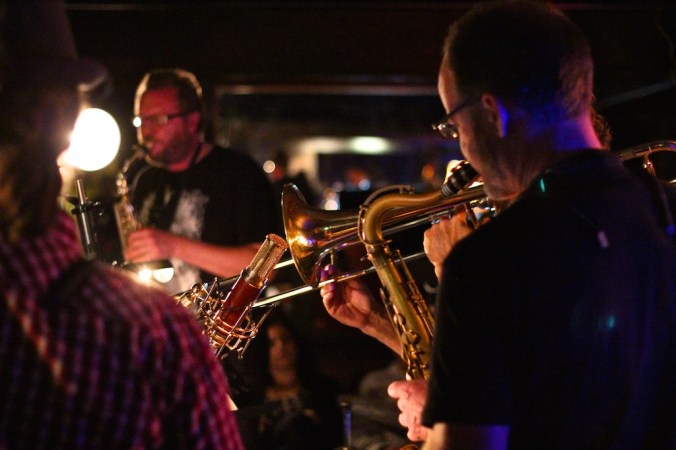
‘Troubles’ come in many forms and what a proliferation of ‘Troubles’ we have seen in Auckland. In mid 2012 we saw a nonet replete with a sizeable string section (and clarinet). Earlier this year at the Auckland Jazz Festival we saw a septet (strings, no clarinet and with Roger Manins on tenor saxophone as guest artist).  By Wednesday December 10th 2014 all trace of rosin was purged and the sweet sounds and fresh faces of the front line string section replaced by three tall bearded men clutching saxophones (and a shorter clean-shaven trumpeter).  This was a bold and brassy line up; a weightier manifestation, delivering anarchic messages from darker corners.  IMG_3877 - Version 2This was too good an opportunity not to record and Rattle did just that.  Capturing chordal instruments in a space like the CJC is challenging as the sound has a number of hard edges to bounce off.  Recording a live performance of this particular brand of ‘Troubles’ might work well.  IMG_3883 - Version 2Guiding the proceedings with his well-known brand of anti-establishment megaphone diplomacy was ring master John Rae, ‘Troubles’ co-founder.  He shepherded the ensemble through a constantly shifting landscape. His effervescent flow of joyous and often irreverent cries only stemmed by Patrick Bleakley’s timely interjections.  Rae is the supercharged engine room, but Bleakley is clearly the anchor.  Like Rae he’s an original member.  IMG_3872 - Version 2With this Auckland horn section in place, a new front had opened and the tweaked charts took maximum advantage of that. On baritone was Ben McNicoll and his presence gave the sound added bottom. Roger Manins, who had stunned us with his wild death-defying solo’s at the Troubles Portland Public House gig was on tenor again.  Jeff Henderson took the alto spot and that was a significant addition. His ultra powerful unblinking delivery was the x-factor.  Unafraid of repeated motifs but able to negotiate the music without ever resorting to the familiar. That is the Henderson brand, original clear-cut and uncompromising.  In no way diminished by the powerful reed instruments surrounding him was Kingsley Melhuish on trumpet. Melhuish has a rich burnished sound and like the others, he is no stranger to musical risk taking.  IMG_3869 - Version 2Together they evoked a spirit close to the earlier manifestations of the Liberation Jazz Orchestra. Not just the rich and at times delightfully ragged sound, but the cheerful defiance of convention and discarding of political niceties.  Rae’s introductions were gems and I hope some of them survive in the recording.  He told the audience that it had been a difficult year for him. “It was tough experiencing two elections in as many months and in both cases the got it woefully wrong” (referring to the Scottish referendum and the recent New Zealand Parliamentary elections). “there are winners and losers in politics and there are many assholes”.  IMG_3890 - Version 2It wouldn’t be the ‘Troubles’ if there wasn’t a distinct nod to some of the worlds trouble spots or to political events that confound us.  I have chosen a clip ‘Arab Spring Roll’ (John Rae), a title which speaks for itself.  Following the establishment of a compelling ostinato bass line, the musicians build a convincing modal bridge to the freedom which follows.  Chaotic freedom is the perfect metaphor for the ‘Arab Spring’ uprising. The last number performed was the ANC National anthem and as it concluded, fists rose in remembrance of the anti-apartheid struggle.  It is right that we should celebrate the struggles for equality, but sobering to reflect on how far we have to go. The Troubles keep our feet to the flame, while gifting us the best in musical enjoyment.
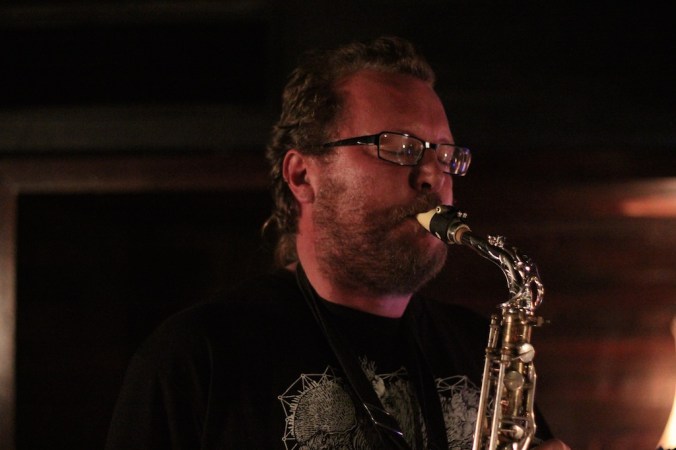
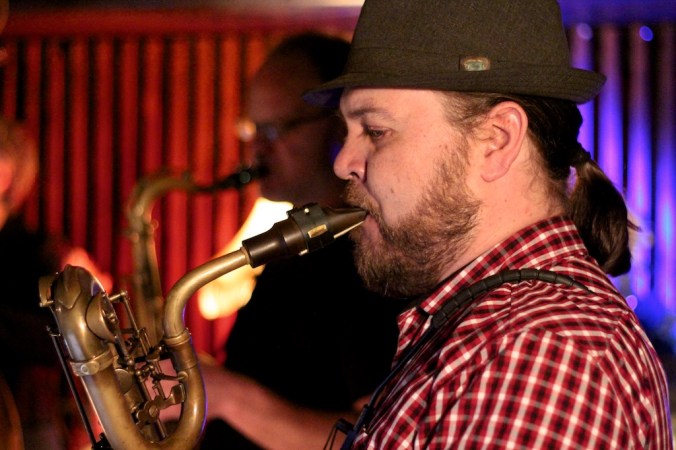
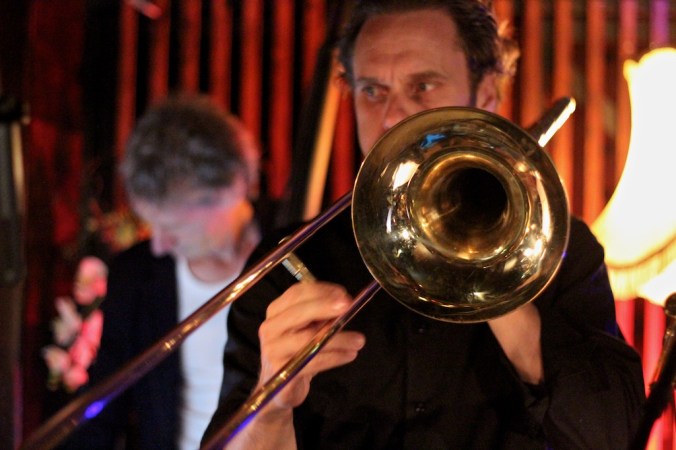
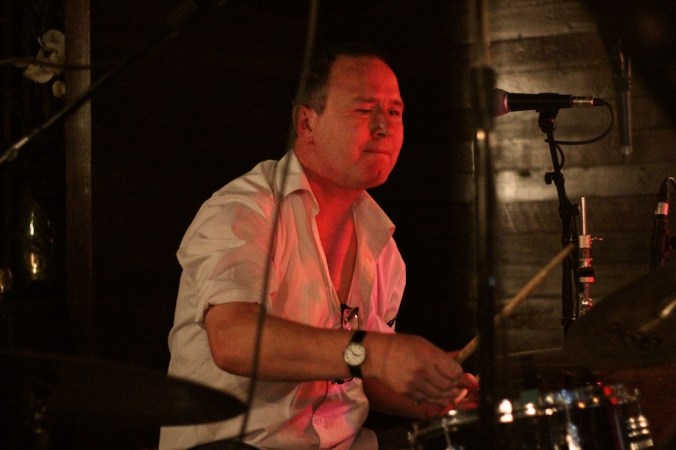
What: ‘The Troubles‘ – John Rae (drums, compositions, exaltation), Patrick Bleakley (bass, vocal responses), with Roger Manins (tenor sax), Jeff Henderson (alto sax), Ben McNicholl (baritone sax), Kingsley Melhuish (trumpet, Trombone).

Where: CJC (Creative Jazz Club), Britomart 1885, Auckland New Zealand, 10th December 2014

Dreamville @ CJC

IMG_2945 - Version 2

The Dreamville gig was aptly named for a number of reasons but not least because there were no defined sets, no breaks between numbers.  Like a dream, the gig moved forward under its own internal momentum.  Surreal themes constantly dissolving until exhausted, forms shifting without seeming to.  What made this journey so evanescent, but so compelling, was that certain motifs remained deep in our consciousness throughout; totems of sound embedding themselves.  Like the images in a dreamscape, the music stroked the chords of memory; familiar yet ungraspable.  As each new realty claimed the preceding one, you realised that musical osmosis was at work.  A band filtering its own ideas until only the essence remained.  This was especially evident with the recurring melodic themes.  It was best to let these themes be, to let them wash over you without over-analysing.

IMG_2966 - Version 2

For nearly 2 hours we sat transfixed, subsumed by a musical force quite unlike any other.   At times the sounds were primal, even brutal, then as sweet as a summer breeze.  I have put up a clip which encompasses two segments from the gig.  In the clip a theme developed by Henderson on C Melody Saxophone (the instrument and the melodic theme takes us straight back to Ellington, perhaps even further back to Trumbauer who played with Bix Biederbeck).   The C melody Saxophone, a non-transposing instrument, is a rare beast and in the right hands, it quickly reveals its earthy warm tones.  The vibraphone and guitar lay down simple repeating patterns, while the saxophone weaves its melodic way through the soundscape, expressing a deep soulful longing.  Even here all is not what it seems.  A surreal quality still pervades this section, the sixth sense as you edge towards the chaos that is to follow.  There is a Mingus ensemble like quality at first, then the bass solo unravels the theme, drawing you into a less certain world; you are suddenly in Zorn territory.  IMG_2972 - Version 2e

At this point Henderson moved into the light, his C Melody horn put aside, a throaty baritone in its place.   Tah-tah ta ta, tah-tah ta ta, tah-tah ta ta–taa taa states the baritone and the volume and the intensity were swiftly increased.  The music had turned on a dime and everyone reeled back, momentarily overpowered by the mood shift.  Henderson sensing this, advanced toward the audience honking and squealing, carving up the room, not letting the moment pass.   This was musical theatre at its best and it served the purpose well.  One thing I have learned over the years; avant-garde music is always best experienced live.

IMG_4740 - Version 2There is a rawness and a primal quality to it, a strong sense of performance.  Who would prefer a recording of an Arkestra or an Art Ensemble of Chicago performance over a live show?  This was all jazz and all music decoded, not for the cocktail party.  The next day I was watching the 1956 Jean Bach film ‘Great Day in Harlem’ and there was Roy ‘Little Jazz’ Eldridge squealing out high note after high note on his trumpet.   Again and again, he pushed out a flurry of wild free multi-phonic sounds.  Even in the swing era, this had a great effect.
IMG_2970 - Version 2

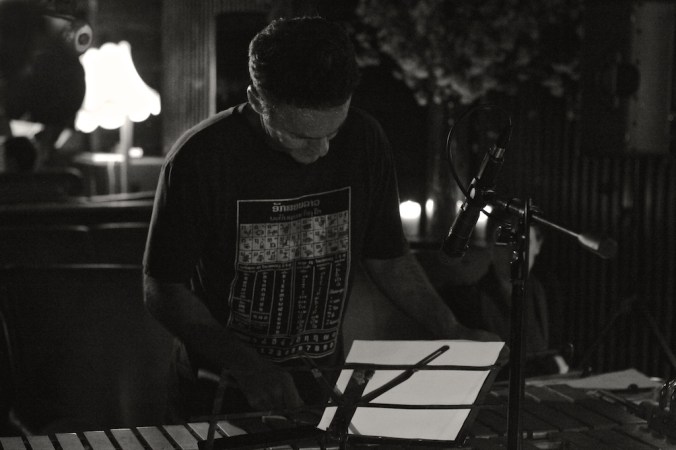
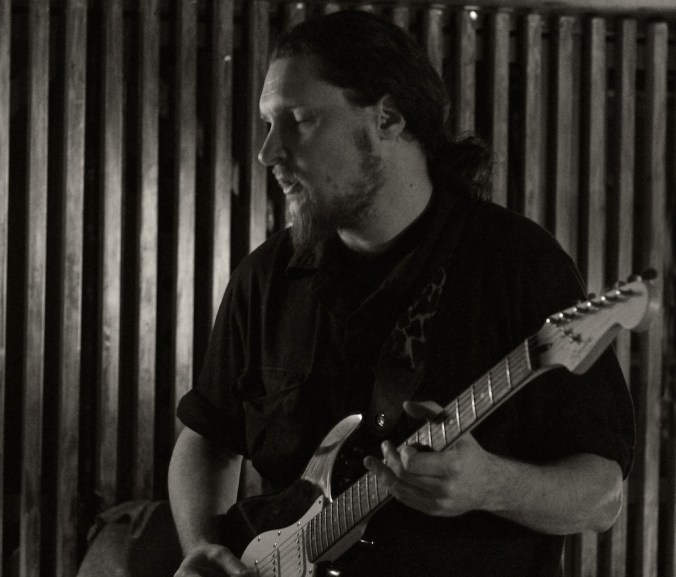
I am always impressed by John Bell and he was superb in this quintet.  His approach to vibes is percussive and he avoids clichés.  He leaves plenty of space between his lightning runs and the accents and his improvisations have their own compelling logic.  The guitarist was quite a revelation.  I had not heard Phil Dryson before and he impressed me deeply.  Never once did he overplay (a failing of some guitarists), letting his unmistakable chops serve the collective purpose.   Once again the solid-body guitar earned its stripes in an improvised music setting.  It felt like he incorporated a fusion era approach with Marc Ribot’s.  Zorn favours edgy, open-eared guitarists like this; he would love this guy.  IMG_2989 - Version 2

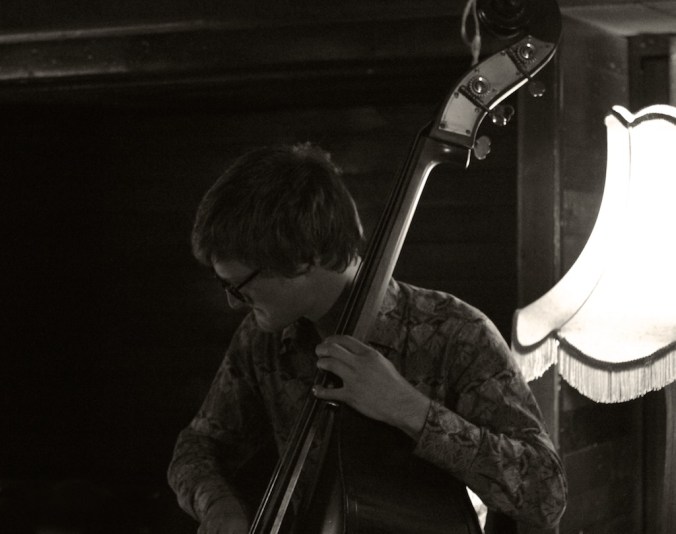
On drums was Chris O’Conner (a favourite drummer of mine).  His kit was highly unusual but perfectly suited to the gig.  At times we heard him as a percussionist, extending the possibilities, clicks, bell-like sounds and a multitude of edgy beats from the various toms.  Ethnic polyrhythmic effects arose, especially when Henderson beat an oversized bass drum.   The bass player Eamon Edmundson Wells was great.  He fitted into this setting perfectly and it is surprising how quickly he has assimilated the vocabulary of diverse musical styles.  In Cameron McArthur’s absence, he has stepped up without equivocation.  Hard work and the Auckland University Jazz program have obviously set him up well.  IMG_2955 - Version 2 (1)

This was a sound super-nova created by dangerous visionaries.  There were no leaders identified in the blurb and the band acted as one entity.  All played to the peak of their ability and with unity of purpose  That said the powerhouse presence of Jeff Henderson and John Bell was quite unmistakable.  I could especially feel Henderson’s guiding hand throughout.  This is the space he occupies musically and he is the titan of this realm.  Although my ears rang for days afterwards I wouldn’t have missed it for anything.

What: ‘Dreamville’ – Jeff Henderson (Baritone, C Melody, Alto saxophones), John Bell (Metalophone), Phil Dryson (solidbody guitar), Eamon Edmundson Wells (upright bass), Chris O’Connor (traps drums, percussion).

Where: CJC (Creative Jazz Club), Britomart 1885, Auckland, New Zealand, 24th September 2014.

Footnote: This is one of the last recordings of Phill Dryson RIP

Blair Latham trio @ CJC

IMG_2699 - Version 2

There are musicians who have the ability to create vibrant pictures out of sound, deftly carving shapes, daubing them with colour, texture, leaving images suspended in the air, as tantalising spectres. Blair Latham is one of these.  He brings to the bandstand a tropical exoticism, redolent of the central Americas, but somehow still Kiwi.

I first saw Latham at the Rogue & Vagabond during the Wellington Jazz Festival.  The project was to re-create the vibe of the Headhunters album and it certainly did.  In the hands of Hayles, Latham and others a wild, hyper-energised brew of sounds radiated among us.  They took the brief to its outer limits and for the audience (who were undoubtedly Hancock enthusiasts), it was an immensely satisfying experience.  As Latham’s tenor wailed, the milling crowd urged him on, each phase wilder than the last.   IMG_2694 - Version 2

The Rogue & Vagabond channeled North American funk grooves, this gig took us a long way south of that, to central Mexico.  A Mexico seen through Kiwi eyes, a musicians eyes, the eyes and ears of a careful observer.  The energies had shifted as well.   A more thoughtful approach was evident.  Latham was telling stories that came from the heart, from experience and reflecting the altered light and filtered sounds of that populous country.

blairlatham

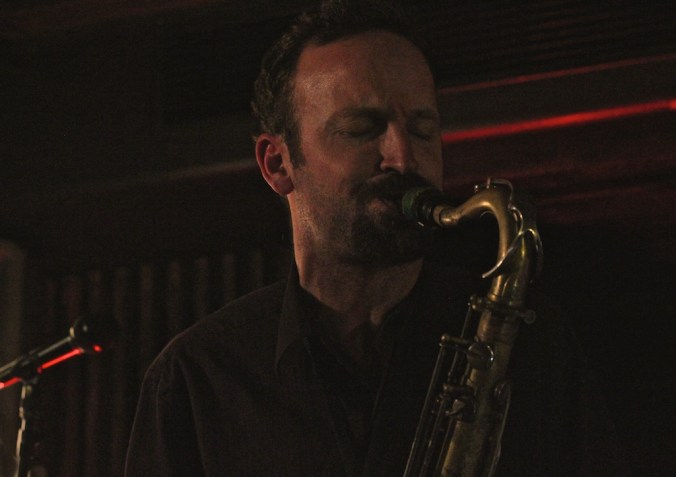
As the band started playing there were powerful overwhelming images created.  I reached for my note pad and wrote the word Fellini.  This is how I heard it, the sounds of a happy and slightly chaotic Mexican circus, peopled by tumblers, clowns on stilts, parading animals and long lazy hours fuelled by Mezcal.  A rich mesmerising spectacle that took your breath away.  There were no high energy excursions, no roof blasting squalls of sound.  This was a journey of measured steps, full of subtleties.  At times the trio sounded like a bigger unit and as Latham switched between his rich woody bass clarinet and classic Selmer tenor saxophone, the effect amplified.  Each phrase, each line, hung in air long after the breath that created it had subsided.  There were a number of Latham’s compositions and some beautiful, haunting Mexican ballads.  Emotion and sentimentality are bound up in that world.  There is nothing buttoned-up about Mexican music.

Latham is unusual in New Zealand as his principal horns are bass clarinet and tenor saxophone. A handful of musicians double on bass clarinet, few are as proficient as he is.

It often happens that the best laid plans unravel unexpectedly.  The trio was initially advertised as Latham, David Ward & Chris O,Connor.  The trio we saw was Latham (bass clarinet, tenor saxophone, leader), Neil Watson (guitar, lap slide guitar), Stephen Thomas (drums).  I rate both Ward and O’Connor highly but this lineup worked extraordinarily well.  It was hard to believe that these musicians had not played together often.  The challenge of playing this music, reading these often complex charts, brought out the best in Watson and Thomas.   Both gifted musicians. both good readers.  Together they merged perfectly and we could see Latham’s pleasure at this.

IMG_4150

The drum charts called for a colourist approach, an oblique subtle rendering of  rhythms that were as much rooted in Mexican folk music as in avant guard jazz.  Thomas was exceptional as he tapped, scraped or made the kit whisper; even his solos were original and entirely appropriate.  This guy can tackle anything it seems.  Watson is a veteran of the unusual and a superb reader.  It was a joy to see him working counterpoint or even unison lines with Latham.  He is perfect for gigs like this as his unbridled imagination is not tethered to norms.  He moved between lap guitar and Fender solid body, enabling him to move closer to the Frissel like Americana sounds that so clearly influence him.   IMG_2663 - Version 2

The word Mexico brings to mind a jumble of exotic but occasionally troubling images.   For me the source is literature, films, art, photography and music.  The nearest that I got to Mexico was in books like ‘Under the Volcano'(Lowry), ‘On The Road’ (Kerouac) or ‘The Teachings of Don Yuan’ (Castaneda); in films like ‘The Night of the Iguana’, numerous cowboy movies; in crazy photographic images from the ‘night of the dead’ festival of Santa Muerte, in articles about the loathsome human traffickers or murderous drug cartels.  I have travelled extensively in Spain and down the Californian Coast, places where this beguiling country felt almost within reach.  This gig took me one step closer.  IMG_2654 - Version 2

“How’s the mezcal” he said. “Like ten yards of a barbed wire fence.  It nearly took the top of my head off.  I had a Tequila outside with the guitar hombre” – ‘Under the Volcano’ -Malcolm Lowry

Who: Blair Latham (bass clarinet, tenor saxophone), Neil Watson (guitars), Stephen Thomas (drums)

Where: CJC (Creative Jazz Club), 1885 Britomart, Auckland, New Zealand, 3rd September 2014   –   www.creativejazzclub.co.nz

Chelsea Prastiti 2014

IMG_1468 - Version 2 (1)

Chelsea Prastiti could be said to represent an intergenerational change in the direction Jazz Vocals are headed.  I have watched her grow in confidence since her time at the Auckland University Jazz School and she is always ready to try brave new experiments.   Because her default is the use of wordless vocal lines, she has better been able to explore the relationship between voice and the other instruments.   This integrated approach is possible for two main reasons.  Her keen awareness of what is happening around her and above all her compositional skills.

IMG_1477 - Version 2

Chelsea Prastiti is writing good material.  At times it feels brave and edgy, but it is always interesting.  Perhaps another factor is the musical familiarity with her band mates.   Her bands generally feature Matt Steele (piano), Callum Passells (alto saxophone), Liz Stokes (trumpet), Eamon Edmunson-Wells (bass) and Tristam deck (drums).   Because they were students together and because she has played with them often, I have gained the impression that she may even write material with them in mind.   One of her best recent performances was as guest artist on Callum Passells last CJC gig.   These two always work well together, but hearing them moving in lockstep as they traversed standards and amazingly innovative free numbers was a joy.

IMG_1511 - Version 2

IMG_1490 - Version 2

There were a few newer compositions and some re-arranged takes on earlier compositions.  Everything in the sets was composed by Prastiti.   I like ‘Bells’ which begins with a simple peal of bells, but quickly evolves into an altogether more complex piece.  Steele was standout on this, never over-playing but making every note count.   His comping was at times minimalist but he conveyed a certain strength.  The rhythmic feel that he laid down was further enhanced by Deck and Edmunson-Wells.   This allowed Passells and Prastiti to explore the tune in a methodical manner.  Steles solo is worth a particular mention on ‘Bells’, as it underscores his growing maturity as a pianist.

IMG_1487 - Version 2

IMG_1538 - Version 2

IMG_1518 - Version 2

Prastiti is involved in a number of local projects including an ethnically influenced a capella group.  It is however her ability to edge toward the avant-garde that always interests me the most.

IMG_1467 - Version 2

What: Chelsea Prastiti (vocals, compositions), Matt Steele (piano), Cameron Passells (alto saxophone), Eamon Edmuson-Wells (bass), Tristan Deck (drums) – Guests; Liz Stokes (trumpet),   Cristal Choi (vocals)

Where: CJC (Creative Jazz Club), Britomart 1885, Auckland, New Zealand.  9th July 2014. http://www.creativejazzclub.co.nz


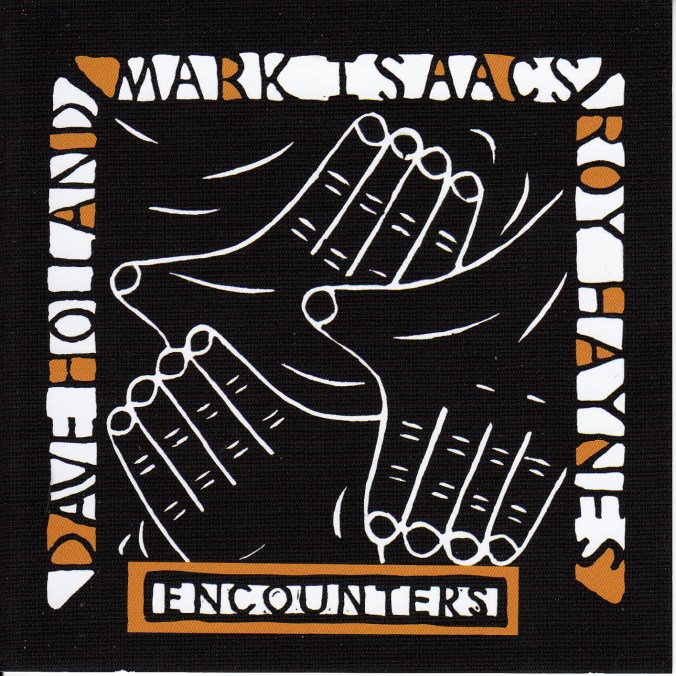
‘Encounters’ – Mark Isaacs – Dave Holland – Roy Haynes

Mark Issacs Encounters

Mark Isaacs’ ground breaking ‘Encounters’ album has just been re-released for the third time and no wonder.  This is an important musical statement by any measure and it sits comfortably beside similar works by Jarrett and Corea.   I don’t say that lightly, as the aforementioned artists explorations into free improvisation set lofty benchmarks.

Mark Isaacs is somewhat of a prodigy as he works across all genres of Jazz, is a gifted composer and has a well established classical career.  His Jazz charts are particularly impressive as he often voices his pieces in modern and compelling ways.  As if that were not enough he has composed a symphony (recently performed by the Queensland Symphony Orchestra – I have heard this impressive work).  Because Mark is such a multi faceted artist it is harder to buttonhole him and perhaps that is the point.  Great musicians shouldn’t be pinned down.   It is the nature of improvised music that it constantly shifts like the coloured grains of sand in a great Mandala; elusive and yet leaving an indelible image behind.  When it’s done well the impressions that remain will outdo the notation.  This album achieves that.

Because the album has not been available since 1995 I hadn’t heard it before.  When I did it truly surprised me.  I was expecting a good album as the triumvirate of Isaacs, Holland and Haynes creates high expectations.  What I was unprepared for was just how deeply it affected me.   To explain this better a back-story is required .  An indication of how this album came to be.

The recording dates from 1988.  This was a time when the mainstream music world had become mired in techno-commercialism and to the credit of the Jazz community it chose to delve deeper into experimental music; pushing harder against musical boundaries.   This was the time of Jarrett’s ‘Changeless’ and ‘Dark Intervals’ albums and discriminating listeners were up for it.  Dave Holland was no stranger to this type of project as he had participated in and initiated many avant-garde projects since the sixties.   Mark Isaacs (an Australian) was in New York at the time having just heard some of his chamber works performed by the Australian Ensemble in Carnegie Hall.   He felt ready to record something challenging so he contacted Dave Holland who immediately agreed to participate.  I am not sure how Roy Haynes came to the project but the choice was fortuitous.  A bop-pioneer drummer who had played with Lester Young and Charlie Parker plus a cutting edge experimentalist bass player were on board.  Both had played in Miles Davis bands (but not at the same time).  Both had an interest in the avant-garde.

No rehearsals were held, no charts used and none of these artists had ever played together before.  What you have here is a tight rope act undertaken by an Australian, an ex-pat Englishman and a New Yorker.  The result could have fallen flat but what happened was truly amazing.  Deep intuitive communication and an interplay which sounded more like a trio that had been together for years, not minutes.  In this recording there is a profound sense of space and limitless vistas seem to unfold before you.  The album is just over thirty minutes long and packed within that thirty minutes is a world of diversity.   At certain points one or other of the musicians is leading the conversation, while at other points they appear to seize upon an idea at the same time.  This is artistry of the highest order and I urge anyone reading this to purchase a copy while stocks last.

It is available on iTunes but as an audiophile I recommend that you purchase the CD.  The recording quality is superb and the sound so immediate that you gain a real sense of the studio it was recorded in.  A lot of recordings could have been recorded anywhere, but this one conveys a sense of location.  Many of the ECM recordings have that feel and the Rainbow Studios in Oslo immediately come to mind.  The album was recorded at the Power Station studios in New York, which incidentally is where Jarrett’s ‘Changless’ was recorded at about the same time.

Twenty five years on, the album still sounds fresh and engaging.

The Album is available from Mark Isaacs Website: http://markisaacs.com/9-latest-news/13-encounters-with-dave-holland-roy-haynes-available-now

NOiCE @ CJC

Rosie Langabere

The North Island Creative Ensemble is a project dear to Rosie Langabeer’s heart and one of many projects that she has on the go.   Rosie has been out of New Zealand for some time although NOiCE did perform at the CJC over a year ago.  Her musical journey most recently took her to the USA where she worked for three years with leading experimental improvisers and artists.   Her compositions and playing have won various awards and so I made certain that I there as I missed the last NOiSE gig.

This is music that is hard to pin down, as it deliberately defies conventions while somehow flirting with them.   There is a sense of structure which provides a touch stone, but don’t grasp too firmly as the forms will dissolve as quickly as they appeared.  This is music which carries you forward if you let it, holding you in the eternal moment.

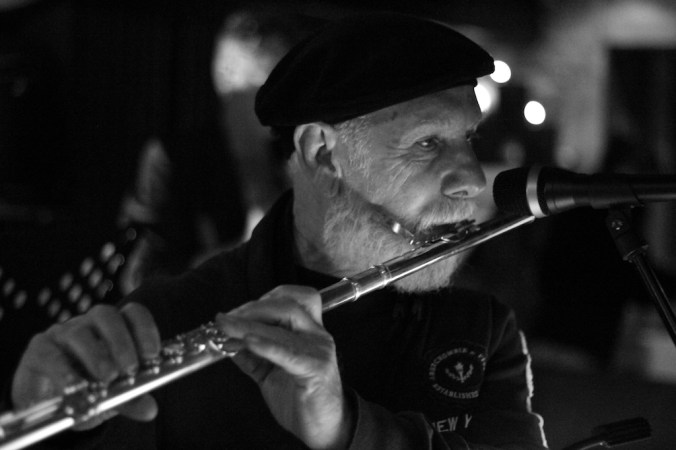
NOiCE is an assembly of highly creative musicians; coming from a variety of North Island towns and cities.  The music is experimental in nature and it is definitely adventurous.  Most of these musicians are well-known and leaders in the field of New Zealand experimental music.   Jim Langabeer (Rosie’s father) is a stalwart of the Auckland Jazz scene, but he has also worked with international musicians like Gary Peacock, Sammy Davis Jr and even the Bee Gees.   He is a multi reeds and winds player and because of his proficiency on a variety of instruments he has been in demand over the years.  I recently saw his name come up in the music credits of the New Zealand film ‘Mr Pip’.   His innovative flute work is probably what he best known for.

IMG_8589 - Version 2

Jeff Henderson is also a multi reeds player and he is at the very heart of Auckland’s experimental music scene.   He can often be seen at ‘Vitamin S’, a small club dedicated to experimental music located just off Karangahape Road, Auckland.   Jeff has worked with a large number of cutting edge musicians over the years, William Parker, Steve Lacey, Mike Nock and many others.   He delights in pushing against the boundaries and when he performs he seldom holds back.  While his scalding solos often reach beyond mere form, his ability to integrate seamlessly into an ensemble creates a filigree of contrasts and textures.   A delicious aura of inventive unpredictability hangs over him.  IMG_8613 - Version 2

Chris O’Connor (drums) is a firm favourite with CJC audiences.  A recipient of the Chapman Tripp Award for original music, he has also worked with the soprano saxophonist Steve Lacey, avant-garde pianist Marilyn Cryspel, Don McGlashan and numerous other well-known groups or individuals.   Chris is one of those drummers that other drummers revere and the last time we saw him at the CJC was with vibist John Bell.

IMG_8633 - Version 2

IMG_8629 - Version 2 (1)

IMG_8587 - Version 2 (1)

Ben McNicoll (reeds and winds), Joe Callwood (guitar), Gerard Crewdson (brass) and Kingsley Melhuish (brass), Nicky Wuts (vibes) and Patrick Bleakley (bass) round out the ensemble.   They are all experienced musicians and most of them have worked with NOiCE for some time.  Ben McNicolls is the best known to CJC audiences as both the technical director of the club and a frequent performer.  A good reader with a nice sound he, is happy to take on any project, from standards gigs to out-ensembles.   Gerard Crewdson and Kingsley Melhuish are versatile and sought after brass players and both have played the CJC before.   The musicians that I was less familiar with were Patrick Bleakley (bass), Joe Callwood (guitar) and Nikky Wuts (Vibraphone).

I’m relieved to see another mallets player on the scene as New Zealand has very few of them.   John Bells departure earlier in the year left a yawning chasm.

IMG_8640 - Version 2 (1)

All contributed something unique as this is a truly democratic ensemble.  One where individual voices rise and then subside; emerging seamlessly into the collective consciousness of the group


Song FWAA@CJC – A Jazz April Event

IMG_6836 - Version 2

The Auckland Jazz gigs during Jazz April have been high quality (see last four posts).  Above all they have encompassed the breadth of improvised music.  Song FWAA from Australia was therefore a perfect choice to round off a smorgasbord of tasty events.  They (Song FWAA) are quite possibly the illegitimate love children of ‘Sun Ra‘ and while no DNA evidence has validated that theory the lineage is manifest in their music.

As a scene matures listening ears get tweaked through exposure to new sounds.  The demand for a wider range of musical experiences follows that.   This doesn’t happen by accident.  It begins with musicians stepping into uncharted territory and ends with the listener reacting.  The mere mention of ‘adventurous music’ can cause cold sweats from venue management and all the more so if an ‘out’ gig is proposed.  Happily for us Roger Manins of the CJC (Creative Jazz Club) takes some risks  and as the club audiences continue to grow that policy is vindicated.  It is the job of artists to confront or challenge and listeners should welcome this.  Settling for bland entertainment leads to musical confection, not jazz, not art.  Some people are perfectly happy leading the lush life in some small piano bar, but that is not where the music develops.  Improvised music is as much about audience engagement as about performing and without the feedback loop a musical project would become an unheard conversation between band members.  Those who heard Song FWAA, heard edge, originality and musical humour so cunning that no weasel could better it.  IMG_6812 - Version 2

The band has garnered rave revues around Australia and their 2011 album ‘Ligeti’s Goat’ is highly recommended.  If you listen to the album you feel that you are listening to a much bigger unit.  At first this seems attributable to the rhythm instrument, which is of the guitar family but quite different in timbre.  This is a specially made 8 string ‘Frame’ played by David Reaston.  The voicings, pickups and pedals used (i.e Moog pedal) give it distinct and very different sound.  Not loud but other-worldly; a strangely subtle sound that can impart real richness.

Martin Kay plays alto saxophone and although this is a standard instrument he also manages to coax a range of different sounds from it.  Martins multi-phonics and extended techniques give depth to the performance, just as drummer Jamie Cameron’s colourist approach and extended drum technique added depth.  At the end of the evening I felt that the musicianship more than the instrumentation created this special groove.

The gig (and the album) was replete with compositional parables about animals and their epic adventures.   Martin is adept at telling these tales; which have a ‘Hunter S Thompson’ quality about them.   ‘Ligeti’s Goat‘ the title track for instance explores the eating-cycle of a goat.   “Tonight” said Martin, “we will only be playing the second section – ‘digesting carrots’ “.   Another number was a moving tribute to a peripatetic Polar Bear.  To quote from the liner notes regarding the tune ‘Olefeig’ (AKA that which should not be shot): ‘Documents the transformation of scenery through the eyes of a Polar Bear, drifting on a shard of ice from Greenland to Iceland, where his destiny finds a bullet’.   IMG_6811 - Version 2 

A number titled ‘Mugwump‘ was most enjoyable.  The gist of the introduction by Martin was that Aliens had come to earth to seek Moroccan desert fuel and somehow this referenced William Burroughs and the Dogon people of neighbouring Mali.  He had me hooked as soon as he mentioned Morocco and Burroughs.

Song FWAA’s  music is at times ‘free’ and at other times working long ostinato grooves.   This moving ‘outside’ one minute and then playing ‘inside’ or following a melodic hook to its conclusion works.  The group has something to say and they say it with genuine originality.  I hope that they come back soon and share more animal sagas with us.

Their promo material describes them as the ‘wrong band for the right people’.  I love that descriptor, but the one sour note struck was their failure to paint their faces ‘Art Ensemble of Chicago Style’ for the gig.   This is how their webpage profile shows them and we are mature enough in NZ to handle that.  As Roger Manins says, ‘truth in advertising is at the heart of jazz’.  I have no idea what that means but we do love face paint.

What & Who: ‘Song FWAA‘ – Martin Kay (alto sax), David Reaston (frame guitar), Jamie Cameron (drums). Buy the album from www.songfwaa.com

Where: CJC (Creative Jazz Club), 1885 Building, Brittomart Auckland 24th April 2013

This was a CJC Jazz April gig

K’Party Spoilers of Utopia Album@Vitamin ‘S’

IMG_6765 - Version 2

I am writing this on International Jazz Day and reflecting on the diversity of improvised music occurring in my city of Auckland, New Zealand.  We have straight ahead Jazz, free improvised music and everything in between.  For me a livable community is better defined by its relationship to the arts than by any other measure.  Having venues like ‘The Wine Cellar’ and the ‘CJC (Creative Jazz Club)’ is at the heart of this relationship, for that is where artistic experimentation and community interactions occur.

IMG_6770 - Version 2

There is a tendency to compartmentalise music and it is the way humans like to view the world.  These subdivisions are sometimes unhelpful but in the end the meanings we invest in the descriptors are largely subjective.  I agree with the premise of semiotician, writer (and experimental Jazz liner notes author) Umberto Ecco.  His viewpoint is that humans feel compelled make endless lists in order to plot their way through a chaotic world.  It is a way of remembering ancient pathways, while embarking upon new and often scary ones.  In the world of improvised music the riskier path is always taken and the charts are abandoned at some point.  This music embraces the chaos and seeks out new patterns and motifs, however fleeting.  Using charts (whether Braxton like or traditional notation) the form is merely the starting point.  In this way both ancient & future are embraced.

IMG_6747 - Version 2

The K’Party Spoilers of Utopia (formerly T’Party Spoilers of Utopia) is a nonet led by vibist, tenor horn player and musical explorer John Bell.   His vision has been the guiding force for this extraordinary grouping of musicians and it is respect for him that spurs them on.  I have known John for less than a year and I find him an immensely likeable and down to earth person.  Beneath that matter of fact exterior lurks a keen mind, teaming with profound musical insights.  I have read and re-read his exegesis on the Albert Ayler legacy and his views on alternative music are well-developed and worthy of examination.   Like all musicians he has many facets to his character.   When I asked him recently how long he had been a musician he casually replied, “quite a long while, but at one point I abandoned music for motorcycle racing”.   “Do you still race motorbikes” I asked incredulously.  “Definitely not he said”.  I wanted to probe him further on this fascinating topic but the conversation turned back to music.   On reflection I cannot think of a better career path for an avant-garde musician than motor cycle racing.  Both are high-wire acts.   I am wondering now if I imagined the whole exchange. Time will tell.  IMG_6744 - Version 2

I’ve been aware of the ‘Spoilers’ for a year or more and have seen them play on a number of occasions.  The collective began as a vehicle to explore Albert Ayler’s legacy and for a while you could hear brassy interpretations of the ‘The Truth Goes Marching In’ or other compositions by Ayler.  There is however no such thing as a cover band of free Jazz offerings and band was always centred around John’s own compositions or his interpretations of Salvation Army and various evangelical hymns.  In more recent times the repertoire has evolved to include compositions by band members.  With John on hand to arrange, contribute his own charts and encourage, the project has finally been shaped into the ‘Spoilers of Utopia’  album.  There are so many good compositions and vignettes in this music that singling out the individual musicians for praise would be a Herculean task.  I can only congratulate them all and hope that there is more to come.

I have seen the band described as the purveyors of ‘apocalyptic’ sounds or ‘tongue in cheek’.  I am not so sure about that, as there is is both structure and chaos in their music.  The familiar sits comfortably with the unruly and the sweet with the sour.  That sounds more like modern life than doom and gloom.   Out of the completely free you will hear snatches of raw beauty and just as quickly the beauty dissolves into dissonance.   I would call that a Zen koan – Life is a deadly serious stupidly happy joke.

There is no crying  declamatory saxophone voice on this album (as there would be with an Ayler recording).   This is a brassy sound closer to the military bands and to the street bands of the church militant.  Any analysis of New Zealand’s colonial history will reveal a proliferation of such bands.  Add in a Moog, squeeze horns and a skittering electric guitar and you have arrived at the Spoilers doorstep, Jazz April 2013.  This is a manifestation of avant-garde New Zealand.

The Wine Cellar (Vitamin ‘S’) is a place for experimental and improvised music and under the watchful eye of out-guru Jeff Henderson it flourishes against all commercial odds.   It is like the CJC located in a basement and in this case, deep in the bowels of Karangahape Road.   Visit the website and call by some night.   The music is can be utterly ‘free’ or follow a more structured pathway.   It is always experimental though and improvisation is at its core.

John Bell left New Zealand for Korea two days after the album release gig, our loss.  He will be sorely missed in New Zealand but the music goes marching on.  We have a lot to hear from his band mates yet and I am already picking up whispers of new projects.

IMG_6796 - Version 2

What: ‘Spoilers of Utopia’ Album release gig.  To purchase a copy visit iii xv or the ‘Spoilers of Utopia‘ FB site

Where: The Wine Cellar – Vitamin ‘S’ St Kevin’s Arcade off K’Road

Who: K’Party Spoilers of Utopia – led by John Bell (vibes, tenor horn, misc sounds), Finn Scholes (trumpet, flugal horn), Ben Zilber (trombone), Don McGlashan (euphonium), Neil Watson (guitar), Owen Melhuish (tuba), Darren Hannah (double bass), Chris O’Connor (drums), Kingsley Melhuish (trumpet, flugal horn, trombone, tuba) + Cameron Allen (Moog), Gerard Crewdson (trombones), Jacob Unuia (pau), L J Unuia (pate), Tua Meti (pati)

This has been a Jazz April gig

Salon Kingsadore @ CJC

Murray McNabb

It had been a very busy week for me and I had not paid too much attention to the CJC (Creative Jazz Club) website.   All I could recall about the gig was that it would be something different.   The instruments came into view as I descended the stairs and as my eyes accustomed to the gloom I saw Murray McNabb.   Murray is a veteran of the New Zealand Jazz scene and ‘different’ is exactly what he does best.  There was a bank of keyboards, numerous pedals, leads everywhere, a drum kit and two guitars barely visible in the back ground.  I quickly learned that this was the release gig for the second album by Salon Kingsadore – ‘Anti Borneo Magic’.  Yes the title gave more than a hint of what we were in for.  An exotic improvised trance like dreamscape.   After a hectic week that was exactly what I needed and from the first vamp I relaxed into the music.

Salon Kingsadore was formed in 2004 to write a soundtrack for a play and their works are styled – spontaneous cinematic compositions.  Not long after that first album they were invited to perform at a film release in Italy.  These projects appear to be under the creative guidance of Murray McNabb (keyboards) and Gianmarco Liguori (guitars).  The other band members are Hayden Sinclair (bass) and Steven Tait (drums).  Murray McNabb is a successful film score composer having written for films like ‘Once were Warriors’.  Steven Tait

I have seen Murray perform many times and his own compositions are notable for the way in which he mines simple themes in subtle and deceptively complex ways.  He is the master of ostinato.  There are often references to modal music in his compositions (Turkish Like) but tonight the fare was more tightly focused.  At first listen there was an impression that the drums, bass and guitar were playing the same motif over and again while Murray developed the themes and added fills and colour.   This was not the case as subtle variants and accented changes could be determined if you listened properly.  Continuous and spontaneous improvisation over a vamp requires certain disciplines and foremost among these is a keen awareness of space and dynamics.  This interactive process requires everyone to participate actively and when that happens the repetitive transforms itself into something profound.

This is music that takes some right out their comfort zone as it references such diverse sources as John Zorn, film music, African music, psychedelic fusion and even surf music.   Someone asked me if it was Jazz.  I would certainly place it within the spectrum of jazz, but as an outlier with strong filmic qualities.  I have listened to a lot of John Zorn, Manfred Schoof and psychedelic Jazz Fusion over the years and so this was never going to scare me.

After a long week I quickly relaxed into the aural dreamscape unfolding.  This is music that you can dive into, swim away from shore and float free in.

WHAT: Salon Kingsadore – ‘Anti-Borneo Music’. Album release.

WHERE: CJC Creative Jazz Club – 1885 Brittomart

WHO: Murray McNabb (keys), Gianmarco Liguori (guitars), Hayden Sinclair (bass), Steven Tait (drums). Sarang Bang Records www.sarangbang.co.nz

WHEN: December 5th 2012

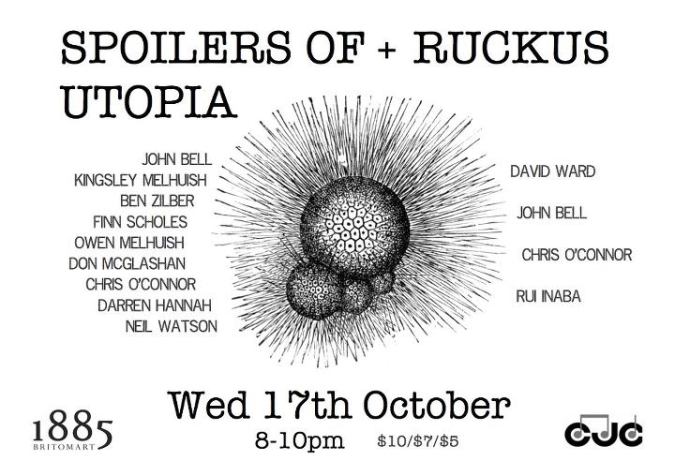
Spoilers of Utopia / Ruckus@CJC

The way that music is interpreted by the human brain is understood up to a point, but there are many mysteries remaining. The topic interests neuroscientists, fans and musicians alike. While pattern recognition is one the of the main hooks drawing us deeper into a piece of music, we also become bored if the pattern remains relentlessly familiar. That doesn’t rule out repeated notes or a vamp as the points of variance are incredibly subtle; groove music or John Cage compositions bear this out. Whether subtle or overt, educated Jazz audiences prefer music that challenges, delights, reveals or amazes.

Good Jazz and improvised music does this despite the few fans who slavishly confine themselves to a single era or style. Live gigs will drag you out of your comfort zone and here’s the thing. Music is a language and we learn by hearing the unfamiliar and comparing it with what we know. Learning language is an innate skill possessed by all humans. As we listen to what we are unsure of, our tastes grow proportionally. These days Dolphy, Ornette Coleman, Art Ensemble of Chicago, Carla Bley and Zorn have a solid foothold in our consciousness; just as Jackson Pollack makes overwhelming sense when seen on a gallery wall. Jazz listeners should always want more than sonic wallpaper.

In keeping with Roger Manins enlightened approach as program director of the CJC (Creative Jazz Club), he had booked two very interesting groups to play on the 17th October 2012. First up was ‘Ruckus’, a quartet that was anything but run of the mill. The second was the out-brass ensemble (+ four), ‘Spoilers of Utopia’. What we got was joyful, challenging and outrageously humorous music. Music that was fiendishly clever without once resorting to introspective navel gazing.

‘Ruckus’ led by David Ward, a fine guitarist who has assimilated a dozen guitar styles and then stepped free of them. He composed the tunes Ruckus played and they were a metaphor for the inventiveness and vibrancy of the New Zealand Jazz scene. The set list was interesting and the group showed real guts in their interpretations. No one cruised through this material and consequently the collective pulse was quickly amped to a point of high intensity. Some of this material was reminiscent of a Fellini soundtrack, while still managing to evoke real-time global references. It was modern in the best possible way while hinting at its musical origins. I like musical surprises and this music surprised me.

Club goers recognised two well-known locals in ‘Ruckus’, Chris O’Connor (d) and John Bell (vibes). I do not recall seeing the bass player Rui Inaba before but this unit really did come together. Chris and John had double duties this night as they were not only in ‘Ruckus’ but in the ‘Spoilers of Utopia’ as well.

Chris is a drummer that I am very familiar with as his multifaceted approach to traps and percussion makes him a favourite on a number of scenes. He is one of the most talented, open and interesting drummers in New Zealand and it is always fascinating to watch how other drummers flock to hear him. Chris never rushes to fill any void as he understands how complete an implied or missed beat is. He has such a well honed sense of time that he can push at the fabric of reason without losing momentum . He also knows how to remain relaxed at the kit and how to say more with less. The fact that he is one of the nicest cats on the music scene is an added bonus.

John Bell is an extraordinary vibes player and he generally favours the free over the straight ahead. In Ruckus he showed that he is comfortable moving between both worlds. He can swing like ‘Hamp’ then merge that groove seamlessly into an irregular pulse. The one thing that stands out however is his musical courage. John shows an integrity that few vibists do. While a lovely ringing vibrato is what we most often associate with the vibes (early Gary Burton or Bags), the instrument is capable of more besides. He is recapturing the history of the vibraphone while showing us a possible future path. The vibraphone is a percussion instrument and that can easily be forgotten.

The Spoilers of Utopia (also ‘Tparty Spoilers of Utopia’) are a brass heavy ensemble and they are marching resolutely into new territory. While the charts are initially familiar they are never quite what you think. The genius of this music is its kaleidoscopic quality, as it reflects a thousand fractured images while somehow keeping the whole intact. We feel that we can almost grasp the essence; only to find the familiar deconstructed. A pack of travelling Jesters has skilfully woven a new cloth from the old and what was once orderly descends into a pleasant chaos. We follow the twists and turns and just as we fear we are lost…. a disciplined brass band marches out of the haze. This is a new take on tension and release and it really works for me.
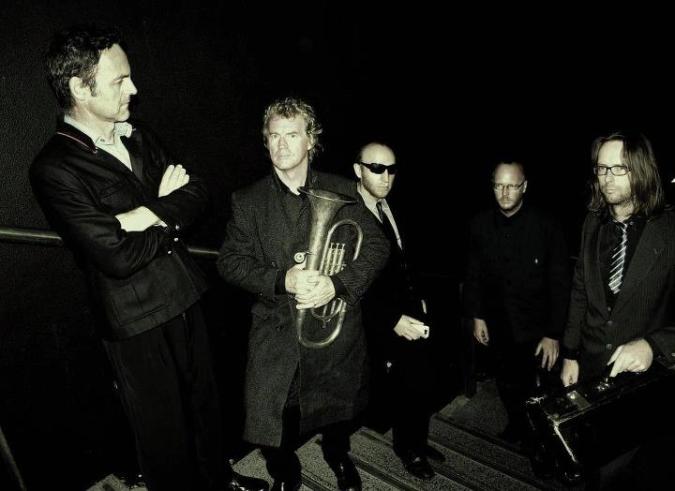
The ‘Spoilers of Utopia’ are usually a nonet and as anyone who knows me will verify, I just love a nonet. They are big enough to create to create the illusion of a larger unit but small enough to leave a sense of airiness. To balance out the five brass instruments there was Vibraphonist (John Bell), guitarist (Neil Watson), bass player(Darren Hannah) and drummer (Chris O’Connor). The Brass section were Kingsley Melhuish, Ben Ziber, Finn Scholes, Owen Melhuish, (Don McGlashan absent that night).
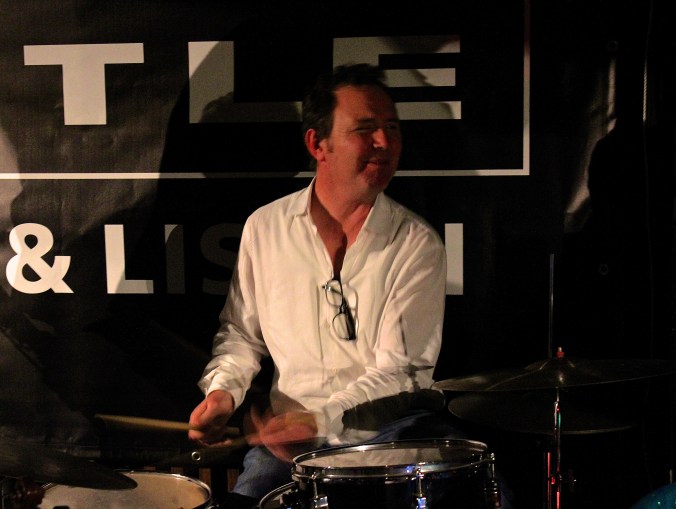
I know Finn Scholes having been wowed by his facility on the trumpet (or flugal horn) before. Neil Watson is also a familiar figure at the CJC and I noted how well his solid-body guitar sound fitted the brass dominant ensemble. I liked his contributions enormously and knowing his quirky offbeat take on life and music, it must have been a no-brainer to include him in the mix. There was also a degree of unison playing and with the unusual instrumental configurations, the timbre of the instruments merged to create a richer sound. George Shearing and Tristano grasped this long ago. Having Piano, vibes and/or guitar playing unison lines changed the sound. Putting vibes and guitar with brass was to produce a wonderful contrast. As the ensemble moved from order to chaos and back again I could feel the guiding spirit of John Bell at work: the demented dance instructor shimmering in darkness.

The track that I have selected from the ‘Spoilers of Utopia’ set is so good that I have watched it over and over. The tune is a hymn beloved of the Salvation Army bands, ‘We’re Marching to Zion’ (Sankey). Someone decided on the spot that a drum solo should occur in the middle. As the band proceeded the overall effect of this anarchic but strangely reverential wizardry brought us to our feet? The audience showed wild enthusiasm (and if you peered into the darkness and listened carefully, I swear you could hear Sankey laughing).

This comes from where Jazz began; brass marching bands and random instruments merging to form a new and riskier sound.

Thank you to Jen Sol for providing the video material (as I stupidly forgot my camera bag on that night)

‘Troubles’ hit the CJC

John Rae exhorting everyone; call & response

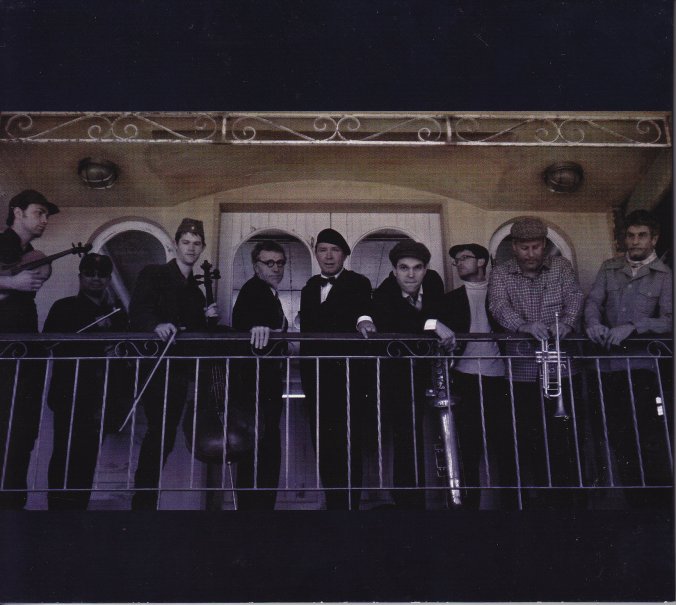
It has always been said that troubles arrive in pairs.   In this case the old adage was woefully awry as ‘The Troubles’ arrived in nonet form.  Their arrival may have ‘Rattled’ us somewhat, but we are built of stern stuff in Auckland.   We fortified our ourselves with strong liquor and pep talks, adjusted our parental lockout settings to allow for some serious swearing and settled in for the realpolitik of John Rae’s and Lucien Johnson’s crazy-happy Jazz.     ‘Oh Yeah’, we told ourselves, ‘We are ready to handle anything a Wellington band can throw our way’.

The Troubles-  call & response

There are bands that I like, bands that I respect and bands which drive me wild with pleasure.   ‘The Troubles’ are of the latter kind.   I’m besotted with this band and their deliberately ragged, madly political, quasi-serious satire.    This band digs deep into the well-springs of life and what bubbles up is a joyous lake of barely controlled madness.   The anarchic overtones are deliberate, but there is a scream-in-your-face humour that overshadows all else.   This is about chiaroscuro; a bunch of opposites vying with each other for attention.

This band is about plunging us without warning into the troubled spots of the world and then showing us humour where we thought none existed.  The overt political messages were a joy to me as I have never quite understood why this space is not filled more often.   The history of Jazz is intensely political and to describe ‘The Troubles’ music as a continuation of the work done by Carla Bley, Charlie Haden and especially Charles Mingus (even Benny Goodman) is not too far-fetched.    This band is a talented group of clowns shaking us by the scruff and saying; laugh or cry but for god’s sake look at the world about you.   There is no solace for Lehman Bros, Merrill Lynch, Barclay’s or John Key here.  For Jazz lovers with big ears there is joy aplenty.

This band is about call & response; not just between instrumentalists, but by the band vocally responding to John Rae’s trade mark exhortations.  Although he leads from the drum kit, that doesn’t prevent him standing up and shouting at the band (or the audience) to elicit stronger reactions.  During one of the middle Eastern sounding numbers (which appeared to lay the Wests hypocrisy bare), he shouted in what I can only assume was faux Arabic.  A flow of equally Arabic sounding responses flowed back .   It was the string section verbally responding as they wove their melodies around the theme.

On another occasion John Rae announced that we would be celebrating an often ignored trouble spot.   “I will now express solidarity with the North Americans”, he announced.  “The Sioux, Cherokee, Iroquois, Apache, Mohave etc”.   He began with a corny war dance drum beat which quickly morphed into a tune from ‘Annie Get Your Gun’.   As the melodic structure unwound into free-Jazz chaos we all understood the history lesson and laughed at the outrageousness of the portrayal.

Another Tango melody written by Lucien gradually reached a joyous fever pitch.  During the out-chorus the instruments dropped out one by one and as each instrument stopped playing the musicians raised a closed fist in a revolutionary salute.   Although it was quite dark in the club we had all picked up the cues.  This was a musical night beyond glib definition.

Like life, the music gave us lighter and then more thoughtful moments.  Musically it was amazing fun and after a difficult week I was suddenly glad I was alive.

Mission accomplished I think John and Lucien – keep shaking us up please.

John Rae (drums, co-leader, co-writer, co-arranger).  Lucien Johnson (sax, co-leader, co-arranger, co-writer).  Patrick Bleakley (double bass).  Daniel Yeabsley (Clarinet). Jake Baxendale (saxes). Hanna Fraser (violin). Charley Davenport (cello), Tristan Carter (violin). Andrew Filmer (viola).   Buy a copy of ‘The Troubles’ today at Rattle Records Ltd.  Venue – CJC Jazz Club Auckland.

Motif – (Norway)

Motif

We get a number international acts breezing through Auckland and a few of them play at the CJC.  On Wednesday 6th June we were lucky enough to have the Norwegian ensemble Motif at the club and they lived up to their considerable international reputation.   This is a band which plays highly original but accessible improvised/composed avant-garde music .   They are a killing band and above all they are highly entertaining.

Motif played in America a few years ago where they received excellent reviews in the New York Times (Nate Chinen), Jazzwise and in All About Jazz.  They have been around since 1999 in one form or another and were founded by the seriously out-cat Ole Morten Vagan.

Ole & Atle

It is obvious that this group has big ears as their compositions contain the distant echoes of American and Euro-centric Jazz while still sounding fresh and original.   This is as far from a covers band as you could get, because they gather in the myriad of sounds about them and fashion these into a fresh and exciting soundscapes.  The band may have achieved critical acclaim but they are certainly not above poking fun at themselves.  Ole Mortan Vagan joked several times about their earning potential.   This is a group of musicians who do what they do well and primarily perform for the love of the music.

Havard Wiik

The music was often rambunctious, but the band always drew you back to a collaborative theme after their stratospheric flights of fancy.   The magic woven by individual performers during solos was never at the expense of the ensemble.  It was organised chaos in the best possible way.

I was also delighted to discover that Norwegian humor translates perfectly for a New Zealand audience.  The music was leavened with countless jokes which had us in fits of laughter.   Ole Morten Vagan said that his father had recently accused him of being a bohemian.  When he asked his father to explain he was told, “A bohemian is someone who regards the rent as an unforeseen event”.

The band members were all incredible musicians whether playing as an ensemble or exploring the edge of reason.

The band was: Ole Morten Vagan (bass, jokes), Atle Nymo (saxophone), Eivind Lonning (Trumpet), Harvard Wiik (piano), Hakon Johansen (drums).

At the end of the second set they filed off the band-stand to the sounds of loud enthusiastic applause.  The clapping eventually subsided, but a few determined souls carried on until the band reappeared for a last number.    “That was strange”‘ said Ole.   “At first we heard clapping followed by what sounded like half a dozen potatoes rolling down the stairs – then clapping again.

Roger Manins summed it up perfectly in a recent Face Book post: “Just a heads up for those in Sydney Tomorrow.  MOTIF will be at SIMA– and seriously worth checking out. They were at CJC in Auckland last week and were great– very funny guys too”.    I concur.

The ‘Troubles’ – John Rae & Lucien Johnson interview

The Troubles Nonet

This e-interview was conducted over the 7th and 8th May 2012 – interviewer John Fenton for Jazz Local 32.    Those interviewed were John Rae (drummer, composer, arranger) and Lucien Johnson (alto & soprano saxophones, flute, composer, arranger).  ‘The Troubles’ is out on ‘Rattle Records‘ and was supported by Creative New Zealand.

Question: Time and place are important to both artists and audience and the interplay between them. I know that Wellington’s ‘Happy Bar’ has been a place to hear free improvised and experimental music for some time. The location and the vibe seem to be connected in this recording?

Lucien: I would say that Happy has been a largely supportive place and it’s nice to play on a stage, which is quite rare for jazz gigs in Wellington. Other than that though, since Happy stopped being a musician run place and turned into a business the vibe wasn’t quite the same – except for our Sunday nights! John may see things differently as he didn’t know it before, but I would say that any place that we have the capacity to virtually take over for the night we would see the same result. (A regular crowd of 50-80 enthusiastic and attentive listeners).

John Rae: All the above are true. Time and place are important. I’d been playing at Happy since I arrived in Wellington three years ago as the composer in residence at Victoria University and The Troubles are a part of a lineage. If there had been no Happy, Lucian wouldn’t have sat in with the group I was playing with, I may not have met Patrick, Dan or any of the other musicians who now make up The Troubles. But things move on. We now have another regular gig at Meow in Wellington and it’s going fantastically well. On a wider note, in Scotland we had a similar gig called Henry’s that ended up being an art’s council funded venue for jazz. We all know the financial difficulties of running a jazz gig and it is shameful that we have no problem funding classical venues to the tune of millions of dollars but can’t find what would be relative peanuts in comparison to support a jazz venue!

Question: While comparisons can be odious I was put in mind of an iconic and (at the time) controversial album that came out in 1969 “The Music Liberation Orchestra” Charlie Haden. Is that a fair comparison?

Lucien: I’m a big fan of the Liberation Music Orchestra, and the latter-day “Dream Keeper” is a personal favourite. I don’t know how aware John is of it though.

John Rae: It’s a wonderful comparison but purely accidental….

Question: You have no Carla Bley or Sam Browne on chordal instruments. Was that deliberate or happenstance?

Lucien: It was definitely a conscious decision. For a start there are no pianos at any venues in Wellington and we didn’t feel that there was anyone on piano or guitar who quite fit the bill anyway. We thought it would be more fun to have the strings acting as harmony players and/or have more open improvisations. I have avoided chordal instruments in my acoustic jazz groups except when I play with Jonathan Crayford.

John Rae: Yes it is. We like the freedom of not having a fixed harmonic instrument like guitar or piano.

Question: With a Nonet the sound palette and textures can have a big band feel. I sense that there has been serious writing and arranging done here. Is that my imagination or are there some well-arranged charts involved?

Lucien: There is very precise notation going on most of the time. The illusion of anarchy is due to familiarity and comfort with the material and the group.

John Rae: Lucian and I put a lot of thought into the writing. Personally I like my music to have a life of its own after my initial bit. So it’s important to write music that has an opportunity to breath and grow the more the musicians understand it. Or in other words, to treat the music with the contempt it deserves!

Question: How much of what we hear is free or changes based improvisation?

Lucien: A mixture, although when it’s free there is usually a tonal center present.

John Rae: A bit of both. I like musicians to dictate their own harmonic structures whilst soloing. Not always though and I have written tunes with changes but I hope that the improvisational aspects of my music allow the soloist to expand the harmonic possibilities as far or as simple as they want.

Question: I loved the way the band hinted at serious political topics but then appeared to instill humour and even an element is piss taking. Can you comment on that?

Lucien: John is quite political in this sense and contributes much of the humour (although musically Anthony’s percussion also adds this element). I prefer to leave both these things alone in music, without being extremely serious about it either. That’s just the way the group went with John’s personality present and I’m up for a laugh.

John Rae: I am a political animal but it’s important for me that people enjoy themselves whilst hearing my music. I’ve been around and played with ‘serious’ musicians most of my life and to be honest they now bore the pants of me. That’s not to say what I’m doing isn’t serious. It’s just that I’m over all the bullshit and let’s face it, in the current political climate if you didn’t laugh you’d cry.

Question: Is there anything you want to add?

John Rae: I love the jazz community here in New Zealand. It has some wonderful musicians and a lot going for it. On the other hand though it is really shit. No one seems to be asking the big questions. There is a lack of co-ordination, organization and vision. I look at what’s going on in Scotland and can’t help but compare it to here. No national jazz orchestra, no national jazz federation, jazz touring schemes, international profile etc and yet you can’t move for degree courses! As Niels-Henning Ørsted Pedersen the Danish jazz bassist said many years ago with regard to the Danish jazz scene, ‘it won’t improve until we stop making excuses’. The life of a jazz musician in NZ is incredibly hard. I believe it needn’t be soooo hard. It’s never going to be easy but through vision and togetherness we could make the living condition for jazz musicians a lot better. Ask any of the salaried brothers playing in any of the state funded orchestras if it’s possible!!!! I plan to have a gathering later this year of jazz musicians and people with an interest in the music to discuss some of the above and come out of it with a strategy on how to move the New Zealand Jazz scene forward. All together for the good fight….

Thanks guys that was an incredibly worthwhile exercise.

John Fenton – Jazz Local 32

‘The Troubles’ – Review

This is part one of two posts on ‘The Troubles’; An interview with John Rae and Lucien Johnson to follow in a day.

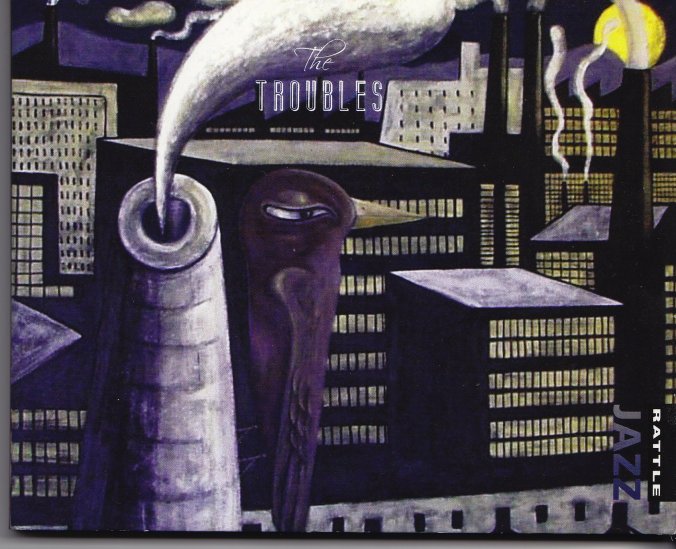
When I received a brief email from Steve at Rattle Records informing me that he was sending me two very interesting disks I sensed that he was excited about what was on offer.  When the tightly wrapped package arrived I wrestled ‘The Troubles’ from its box.  Putting it straight on, I was stunned by what I heard and I played it through twice, letting the sound wash over me.  Steve was right; this was special.

Jazz is supposed to be fresh and to convey the ‘sound of surprise’ and this was bloody surprising.  It immediately put me in mind of ‘The Liberation Music Orchestra’ or even Charles Mingus in the various incarnations of those bands.  Having said that this is very much a New Zealand sound.

The Troubles is performed by a Nonet with the instrumentation hinting at the albums context.  Adding a texture to the music; its wild but perfectly placed brush strokes marking it apart.

There is a string section of violin, cello and viola (Tristan Carter, Andrew Filmer, Charley Davenport) which contrasts nicely with the winds and reeds.  Lucien Johnson plays tenor sax, soprano and flute – Nick Van Dijk doubles on trumpet and trombone while Daniel Yeabsley plays alto, baritone and clarinet.   Add to the above the insistent drumming and shouts of John Rae, the bass of Patrick Bleakley and especially the percussion of Anthony Donaldson and you have a band that is capable of much.

The band had been playing at ‘Happy’ (a Wellington Bar renowned for experimental music) for some time and for a number of reasons this proved to be serendipitous.  What came together during those months is perfectly captured here.  This was recorded on one particular night and due to the exceptional musicianship of the band, the skillful writing and connectedness of everyone involved (including the loyal audience) we have a very special album.

Against the odds New Zealand Jazz is rapidly becoming identifiable as a separate and interesting entity.  Perhaps a subset of the Australasian-Pacific Jazz sound.  On the best Kiwi albums and in the clubs I hear this certain something and I want to confront the musical establishment and say, “Are you freakin deaf…can’t you hear this”?    This thing is ours, it can be wonderful and it is certainly worthy of proper attention.  New Zealand music is very diverse and this is a healthy thing.   Original and exciting bands are continually being formed, but in order for this vibrancy and originality to flourish the music must be better supported.     Here is an album that exemplifies this diversity and it says something unique about us and our place in a sometimes troubled world .

Support the band, buy the album but above all relax and enjoy it.  I defy anyone to dislike this roller-coaster ride through the worlds troubled spots.  It is a journey undertaken with deep humanity but also with a liberal helping of humour throughout.   A warm echo derived from the cacophony about us and filtered through an anarchic but sharply focussed Kiwi lens.

Purchase from Marbecks, JB HiFi, Real Groovy, or leading record stores – otherwise purchase directly from Rattle Records.

‘Seven’ – Tim Hopkins Trio

Interaction - Tim & Dixon

I purchased a copy of ‘Seven’ from Rattle Records not long after it was completed.   The cover art portrayed black sand, which is strange to those unfamiliar with it.   For those who have not encountered it before, black sand can also be surprising.  Subtle light-shifts can throw up a myriad of purple and blue hues, and the textures revealed by the drift patterns are in constant flux.   ‘Seven’ reflects Tim Hopkins’ music in much the same way.

Tim Hopkins is well-known to those us who have followed the New Zealand Jazz diaspora.   He has recorded extensively as a sideman with the likes of Mike Nock (and many others) and he has recorded a significant number of albums as leader.  Tim lived in Sydney for many years but he eventually returned to New Zealand where he is now based.  He teaches and performs in the capital city.  His long experience as a tenor player has taught him to throw caution to the wind.   He is adept at developing free-flowing Post Bop lines, but he is not limited by that.  While quite capable of playing sweet and low he does not invite complacency, as he can just as suddenly deliver a scalding declamation.   His style is to conduct an honest conversation with the audience and few punches are pulled.  This is not to say that he is too serious for he has a highly developed sense of humour which he uses to advantage.

Tim started the gig by explaining some of the concepts behind the ‘Seven’ band.   “Someone is missing from this band” he said gesturing behind him and I initially thought that he was referring to Richard Nunns (who had appeared on a few tracks of the album).  Tim meanwhile continued to explain, “He wasn’t invited, (pausing) it is the bass player”.   A bass player is the compass and when a band plays adventurous and complex music the lack of a bass places a heavier burden on the remaining musicians.  These guys were fully aware of the job in hand.   It is often the case that an experienced leader will develop an uncanny knack for selecting just the right sidemen and this was evident here.

Dixon Nacey is not only a versatile and superb guitarist but he is a musical free spirit.   His eyes light up when he is thrown a challenge and he soon throws a challenge back.    This guy is one of our finest musicians and the younger guitarists watch his every move.    I suspect that a lot of the weight fell to Dixon in this gig, but you wouldn’t have known it to see him smiling as he dared Tim or John to answer his challenges.    This was call and response at its best.

Dixon Nacey

The drummer was also perfect for the role.  It was the first time that I had seen John Rae on traps and I hope that it will not be the last.  He is unlike many of the drummers we see, as his approach is loose and organic.  If he wants to up the ante he will suddenly shout at the others; exhorting them to give even more.  He is also far from a locked-in drummer as he will punctuate and change the groove at will.  I really liked this approach as it was the ideal foil to Tim and Dixon.

I also sensed that the band was unafraid of being overt and about confronting the political realities of our times.  This flowed through the music and I loved that about them.

At the beginning of the second set Tim was about to introduce the number when he looked into the audience and said, “Can someone bring a bouncer and throw out that old man talking in the front row”. The talking continued and Tim said in a slightly menacing northern Irish accent, “old man – go home to your wife – go home to your children”.   A short silence followed and then “Dad shut up”.   The smiling offender was Tony Hopkins his father.   Tony is much-loved on the Auckland scene for his skillful drumming.    I saw him when I was young and I would like to acknowledge his influence on my generation and beyond.

Another good example of Tim not taking himself too seriously was the introduction to ‘23rd century love song‘.   He explained that this was the result of endless navel gazing and that the market he was aiming for was probably chemistry professors.

While aspects of the gig were challenging, the night has left me with a lot to think about.   Music should occasionally challenge us and it should make us think.   I find myself going back to the album to re-examine a track or a phrase and this is a good thing. The communication is still happening.  John Rae

The numbers that have stuck with me are ‘Road From Perdition’, ‘All Blacks & Blues’ and the lovely ‘The Sleeping Giants’.   for a copy of this go directly to Rattle Records at http://www.rattle.co.nz – failing that try ‘Real Groovy’ ‘JB HiFi’ or ‘Marbecks’.

The Jam: After the gig there was a jam session and it quickly morphed into a mammoth affair.    Drummers, saxophonists, guitarists and singers crowded the band stand while fours and honks were traded to the delight of the audience.  I don’t think that I could name everyone who played but I will try: Roger Manins(ts), Tim Hopkins(ts), Noel Clayton(g), Aron Ottignon(p), Matt Steele(p) Tyson Smith(g), Dan Kennedy(d), Tony Hopkins(d), Tim ?(d), a young drummer (?), Dixon Nacey(g), Callum Passells(as), Holly Smith(v).    Roger played a lovely breathy Ben Webster sounding ‘Sunny Side if The Street’, Holly sung a fabulous bluesy ‘Summertime’ while Tony played just like he always does.  Sitting just a fraction behind the beat and in perfect time.

‘Melancholy Babes’ + Eric Boeren – out cats@CJC

Any club that was attempting to present a wide spectrum of Jazz styles would commit a sin of omission if they failed to include some of the more experimental Jazz on offer.    The CJC management have open ears and so on Wednesday they offered up the well-respected Wellington based new-jazz ensemble the ‘Melancholy Babes’ (plus guests).  The Melancholy Babes are: Jeff Henderson (alto sax), Anthony Donaldson (drums), Tom Callwood (bass) – [replaced by Gerard Crewdson (tuba)]. – special guest Eric Boerens (trumpet), John Bell (vibraphone).
The ‘Melancholy Babes’ appeared with guest trumpeter Eric Boeren of Amsterdam, who has long been touring the world and setting audiences on fire with his free ranging improvisation.    Eric has a long history in avant-garde music having played with titans like ‘Malachi Favors and  Roscoe Mitchel (of Art Ensemble of Chicago & AACM fame).   The usual Bass player (Tom Callwood) had been replaced for this gig by Gerard Crewdson on Tuba and a vibraphone was added for the last number (which occupied the entire second set). In Auckland we seldom get the chance to hear such groups, as Wellington is the New Zealand home of the experimental music scene.

In experimental music you are seldom going to get a gentle melodic swinging introduction to a tune and this is perhaps the point of the music.    It will find its own rhythms and develop an organic logic as the pieces progress.   The band opened with an explosion of sound and the force of it was initially startling.  The quick runs on the horns rose and fell, often ascending into squalls of sound or multi-phonic effects.  The insistent propulsive drum beats and the steady pulse of the tuba sent them even further out.     While the music was often wild, it took the sometimes incredulous audience along with it and as the journey progressed we felt ourselves to be part of what was unfolding.

At times the band would mysteriously coalesce into a gentler incarnation of its wilder self and in this reflective space, miniatures or tiny motifs would be crafted.  Perfect creations that stood apart, but somehow augmented the whole.  I was surprised at just how drawn into the process I had become and others felt the same.    We were hearing hints of something vaguely recognisable and intriguing, but for a number or two, just what, remained elusive .    Then it hit me; this felt like the history of Jazz and improvised music unfolding.    Rambunctious would be Buddy Bolden‘s swaggering up an ancient New Orleans street as the crowd egged them on.   1930’s Harlem bands, Hoe-downs & Jigs, raggedy defiant funeral marches.   They were all in the mix and our collective Jazz memory was being teased and refreshed.     I was not alone in arriving at this realisation as my friends Jason and Catherine and Sarah heard similar echoes arising from the music.

Having the Tuba was inspired as it gave the music a depth and a foothold in history that it would otherwise have lacked.   The Tuba nearly always took up the bass line in early Jazz as the bass would not have been heard above the brass dominant bands.   It was not until the advent of better recording techniques and amplification that double bass replaced it.   Tuba player Gerard Crewdson has solid credentials on the experimental scene and he understood exactly what was required.   There was also an element of word Jazz when Gerard intoned the story of the Melancholy Babe, while turning the pages of what looked like a very large comic book.  Like the music this was anarchic and humorous.  Many sacred cows were savaged on this night and if any cobwebs had been hiding in corners of the club they would have been blown away by the night’s performance.

Both Anthony and Jeff are well-known on the experimental music scene and I will hunt them out in Wellington one day soon.    Afterwards I talked to the band for some time and I was surprised to learn just how active the experimental Jazz scene is.   Anthony and I talked about Annette Peacock, the Black Saint label, Hat Art, the Art Ensemble of Chicago and Free Jazz music in general.    This sub-genre is certainly very well-respected around Europe, but in the USA it has a stronger following in some cities than in others.    Wellington it appears is solidly in the mix.

The night was fun and it was challenging.   I am glad I went.