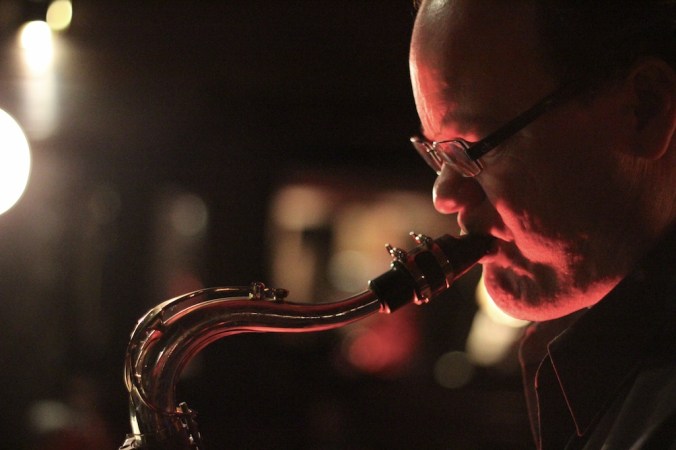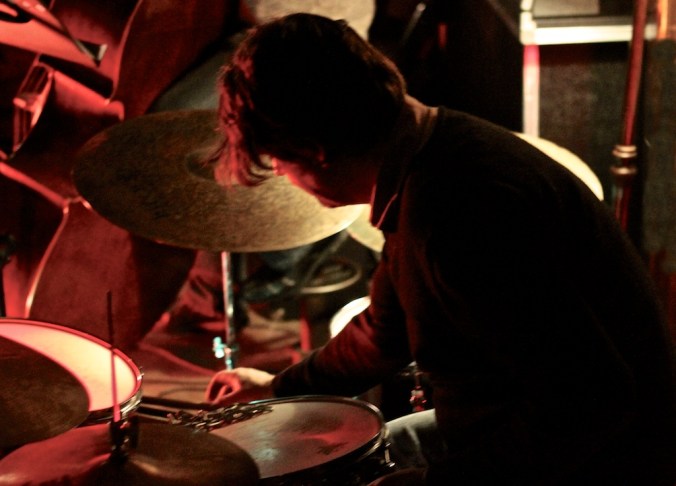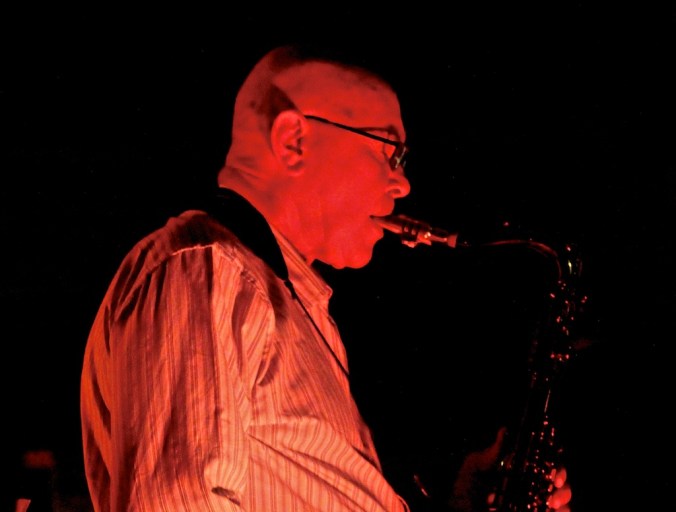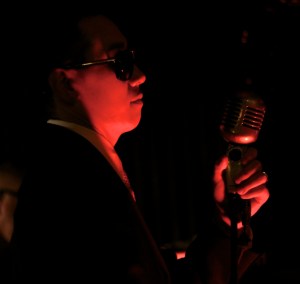
Mike Nock’s Australian Trio @ CJC 2013

IMG_8335 - Version 2 (1)

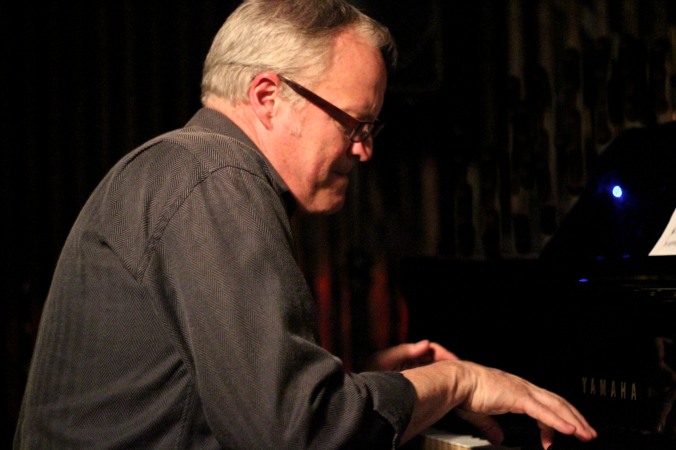
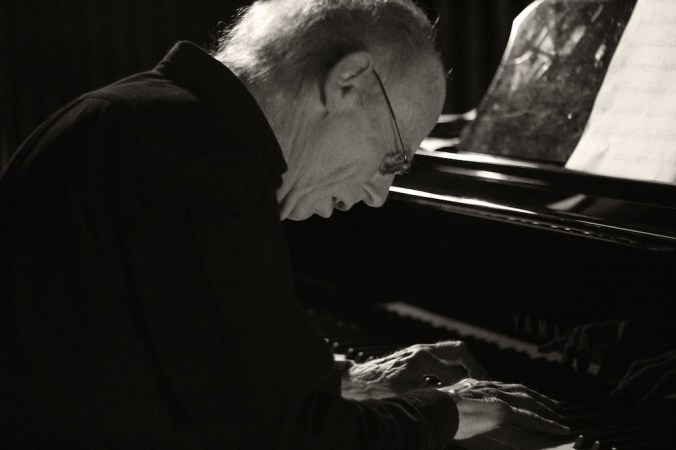
A lot’s been written about Mike Nock and he is well recorded.   In spite of this there is so much more to say and the unfolding story has come to define Australasian Jazz.  It would be accurate to describe him as one of the greatest musicians New Zealand has produced, but Mike Nock deserves evaluation on a much wider stage than Oceania.  As lucky as we feel owning him, he is a citizen of the world, highly ranked among the best that global Jazz has to offer.  IMG_8361 - Version 2
This was summed up by one of the audience; an American who has been following the international Jazz Scene for many years.  He shook his head in amazement and said “That was the best performance I have heard in ages”.  He asked about Mike’s history and I gave him a potted version.   “Oh yeah” he said.  “Well all of those years in America have given him that deep blues feel that only top players realise”.

I caught up with Mike before the gig and he was his usual friendly self.   Over dinner there were jokes and numerous war stories.  Because I have attended too many loud gigs my hearing is not quite as good as it was.  At one point the drummer James Waples said something to me which I missed entirely.  I apologised, explaining that my eyesight and hearing were failing me.   Mike leapt on the comment as quick as lightning, saying, “Man don’t worry.  That’s exactly what we like in a critic”.

There was the briefest of discussions between the band members about the set list, which ended in Mike saying, “We’ll figure it out as we go and you’ll know when you hear me start to play”.  While this is not unusual among Jazz musicians, it was evident that Mike would be digging into some obscure and unrehearsed standards during the evening.
IMG_8357 - Version 2

The spirit of Bernie McGann hung over us as he had passed the previous evening.  Mike spoke movingly of him and then he played one of Bernie’s compositions followed by ‘Bernie’s Tune’ (Bernie Miller) and the lovely old standard ‘No Moon at All’ (David Mann).  ‘No Moon at all’ is hardly ever played these days but it was once very popular.  It was famously recorded by Julie London, Nat Cole, Mel Torme and Anita O’Day.  There are more recent versions by Karrin Alyson and Brad Mehldau.  In Mike Nock’s hands this jaunty mid-tempo classic took on a deep bluesy feel and as it unfolded he achieved something that only the Jazz greats can manage.

The tune turned into something else; it was somehow transformed into ‘every tune’.  From the first few bars everyone smiled and many whispered in the dark, “Oh I must know this but I can’t recall the name”.  Like many probing improvisers Mike hummed and sang as he played.  As the piece unfolded something extraordinary happened.  People started quietly humming along with the trio; a deep connection  was made and it was primal.  I’m certain that many in the audience had never heard the tune before, but they thought that they had.   Keith Jarrett has often invoked this state of grace, finding a hidden place deep within the music.  So has Mike Nock.  Several musicians later commented that he had moved in and out of the song form and that the bluesy overlay had been utterly effective.  Another delightful old tune that the trio played was ‘Sweet Pumpkin’ (Ronnell Bright).
IMG_8370 - Version 2

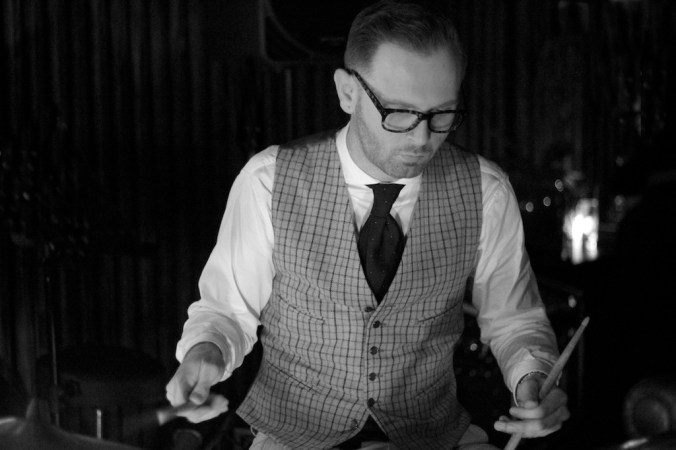
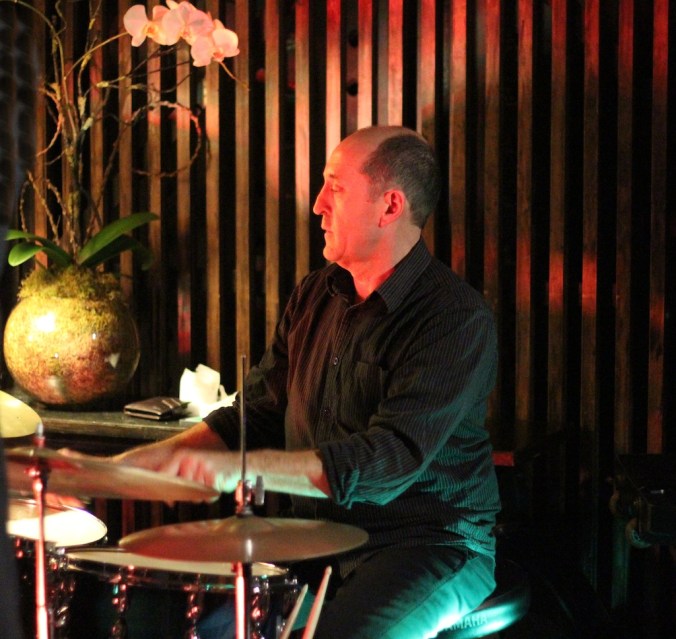
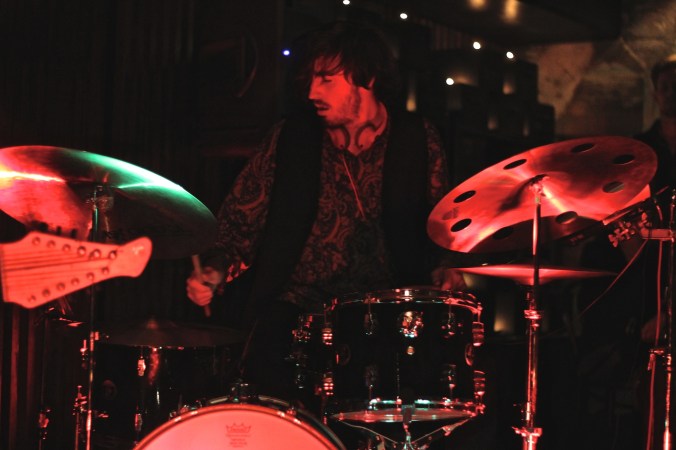
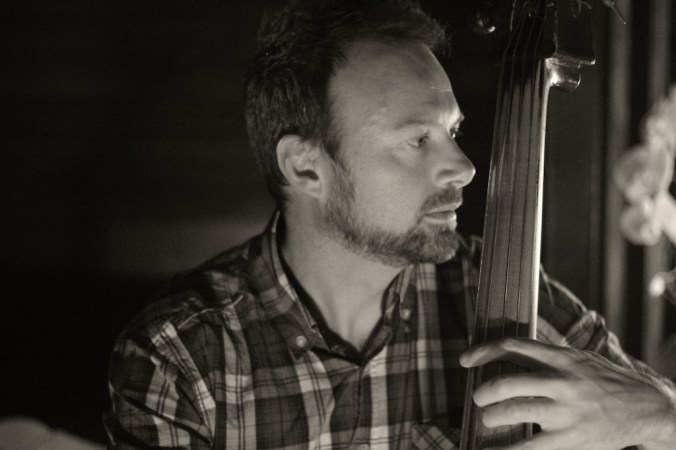
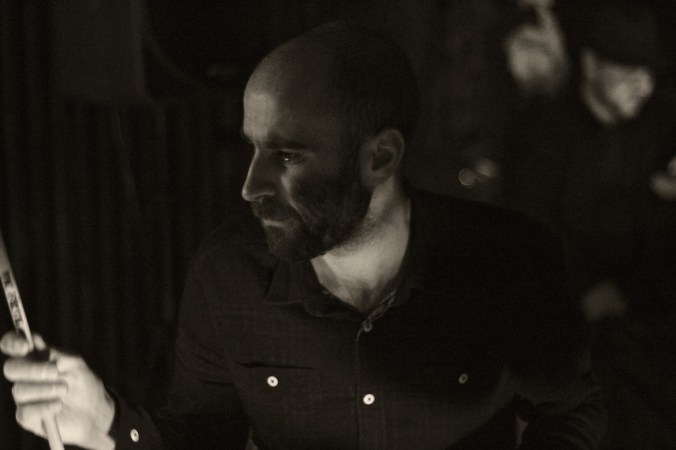
On Drums was James Waples and he certainly lives up to his reputation.   He has featured on several of Mike’s albums and goes back a long way with Mike.   There is a subtlety to his drumming that is hard to put into words.  He is a powerful presence whether executing the softest brushwork or a driving upbeat tempo.  He has a great ear and knows when to push the others or hold back.  He is perfect for a multi faceted piano trio like this and I would go out of my way to hear him again.

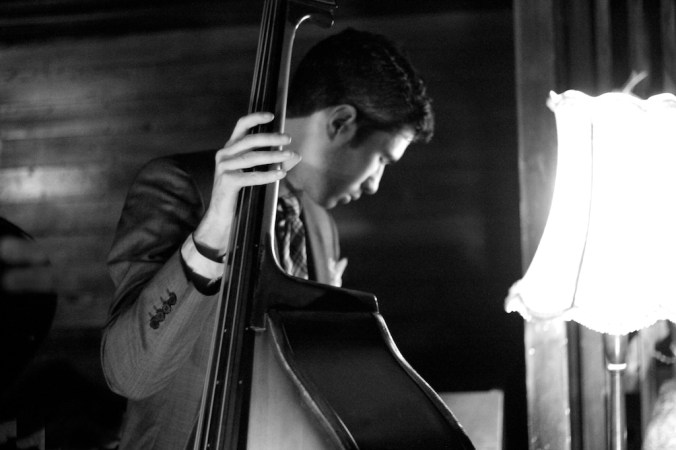
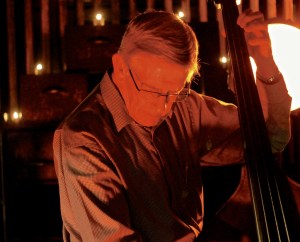
Many Kiwi’s have forgotten (and many Australians will deliberately overlook the fact), but Brett Hirst is an expat New Zealander.   He is highly regarded on the Australian scene and like James he has had a long association with Mike.  When these three are in lockstep it is extraordinary.  Like the others Brett is a deep listener and clearly at ease in this open-ended format.  At one point in the program Mike stopped and said, “What shall we play now, something unexpected?”.   Then he added, “Oh I know, I will try this”.   Brett asked hopefully, “Can we know?”  The number had started before an answer could be given and he was immediately there.  Brett was up to handling any curve balls thrown and clearly relished them.

During the second set the trio were ready to take things further out and we sensed that they were in a zone where the communication is telepathic.  It is during these explorations that we see another side of their music.  Every interplay however subtle conveys layers of meaning and the spaces between the notes communicates a profundity.   This is art-music at its very best but for all that it is never far from its blues roots.   I have listened to Jazz across the globe and you would never, never hear better than this.

Who: Mike Nock (piano), Brett Hirst (bass), James Waples (drums).  www.mikenock.com

Where: CJC (Creative Jazz Club), Brittomart basement 1885 building, Auckland, New Zealand.

When: 18th September 2013
Emerging Artists Series: Alex Ward / Allana Goldsmith

IMG_8305 - Version 2

Two or three times a year the CJC reserves a gig night for emerging artists. On Wednesday there was a double billing and while they could legitimately be termed emerging artists, they showed a confidence and polish that bespoke experience. In fact both have been performing about town and in Allana’s case for some time. This was a moment to show a discriminating Jazz audience what they are about and they delivered.

IMG_8303 - Version 2

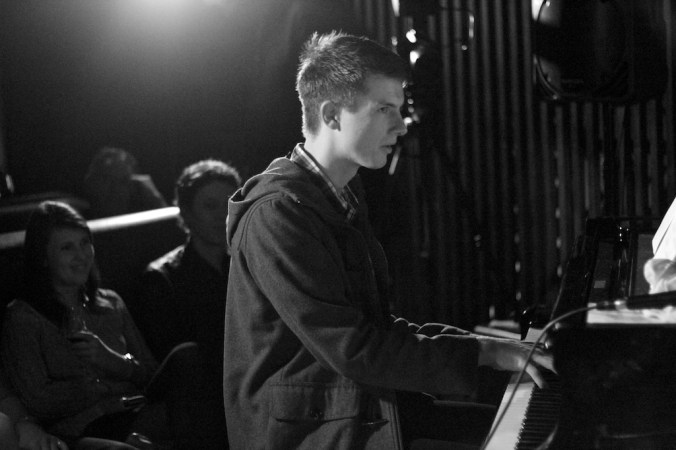
First up was pianist Alex Ward. He has recently graduated with honours from the NZSM Massy campus. I last saw Alex play just over a year ago and he showed real promise then. Now the hard work and years of study are bearing fruit. He appears to play with even greater confidence and this obvious self belief has influenced his performance. His set was mainly a showcase for his own compositions and they were interesting and varied. There were ballads, uptempo burners and a (new) standard on offer. Standards always give us points of comparison and his rendering of Robert Glasper’s ‘Yes I’m Country (and that’s Ok)’ from the Blue Note, Double Booked album did just that. It was flawlessly executed and delivered with real heartfelt exuberance. Among his own compositions I really liked ‘Litmus Test’ for its edgy hard bop feel and the more reflective ‘Lighthouse Keeper’ (a recently written tune). There was also a reharmonisation of ‘Beautiful Love’ but with dark voicings and with an oblique approach to the melodic structure. These tunes while all quite different, hung together well as a set.

IMG_8295 - Version 2

On Bass he had the gifted Cameron McArthur and on drums Ivan Lukitina (who I had heard about but not seen before now). They both provided solid support for Alex and delivered good performances during solos. Cameron was particularly energised during ‘Litmus Test’ and Ivan was right there with him. Ivan excelled on ‘Yes I’m Country (and thats OK)”.

This should be a right of passage for Alex and he will surely become a fixture about town if he continues performing at this level.

IMG_8320 - Version 2

Allana Goldsmith has appeared in a number of bands and her musicality and stage presence are pleasing to ear and eye. I have heard Allana a number of times now and on those occasions her role as ‘part of a lineup’ gave me a brief taste of what could be. She has performed with various sized bands but most often as part of a duo with guitarist.

She is a current member of the ‘Sisters of Swing’, which is an Andrews Sisters tribute band and co-member Trudy Lile speaks highly of her abilities. I recently saw her with Peter Scotts ‘Bad Like Jazz’ project and I was very impressed; especially as she sang a stunning rendition of ‘Freedom Jazz Dance’ (Eddie Harris). It is this preparedness to take on challenging projects and to do them well that sticks with you. Her voice is strong without being loud and in many ways she is reminiscent of the great singers of the past. What is not redolent of past singers however, is her preparedness to tackle adventurous modern projects. IMG_8310

For this gig Allana had selected a few well-known and some lessor performed standards and to stamp her own mark on them, sung often in Te Reo Maori. While Whirimako Black has already moved into this territory, Allana has her own unique approach to the music. Hers is an original voice. It is tempting to think of songs sung in Te Reo Maori as being different or apart from European traditions. In Allana’s case that is not so as she has maintained the integrity of both traditions. The best illustration of this was her brilliant rendition of the Miles Davis tune, ‘In a Silent Way’. This was the first tune of her set and she used it as a Karakia or blessing. The notion of using this open, spiritual number to unify us all and to call down blessings was a perfect beginning.

IMG_8322 - Version 2

Her band was Ben McNicholl (tenor sax), Dave Fisher (guitar), Cameron McArthur (bass), Jason Orme (drums).

IMG_8313 - Version 2

I have always rated Ben highly on ballad material. His concise soloing and the atmospheric vibe that he created behind Allana worked well. When backing a singer on a ballad, tasteful minimalism trumps busy, every time. This sort of restraint is counter intuitive to a musician, but the balance between Ben and Allana was pitched just right. I know that he took care to select just the right reed for the job in hand.

I thought that I knew all of the Jazz guitarists about town, but clearly I don’t. Dave Fisher has played with Allana for some time and he picks up on her every nuance. The voicings that he uses are those of the skilled accompanist and the warmth of his tone caresses and underpins her vocals perfectly. This was mostly chordal work, which shifted, swung and shimmered like the guitarists of an earlier era. It was an effect deliberately aimed for and it was easy on the ear. His guitar is an Epiphone Hollowbody of the sort used by Joe Pass and that made sense as well.

Cameron McArthur was also the bass player on this second set. Because he works so often about town he has developed a keen ear and had no trouble fitting into this different groove. Unlike the earlier piano trio gig, with challenges thrown down and returned in kind, he needed to keep more out-of-the-way here. Seeing him perform so well in such a variety of situations certainly increases my respect for him.

The remaining band member was drummer Jason Orme and I am very familiar with his playing. Oddly though, I had never seen him playing in this sort of situation, which at times required a very nuanced approach. His skills in such a setting were immediately apparent and his brush work was especially fine. Like the guitarist and the tenor he focused on the singer, enhancing every inflection of voice or following every whispered line. Each accent delivered with a quiet flurry on the snare or a tap on a muted cymbal.

Allana is currently studying performance at the NZSM Massey and this was her first CJC gig. She will certainly be back.

* Thanks to Dennis Thorpe for the high quality video material

Wh0 (first set): Alex Ward (piano), Cameron McArthur (bass), Ivan Lukitina (drums).

Who (second set): Allana Goldsmith (vocals), Ben McNicholl (tenor sax), Dave Fisher (guitar), Cameron McArthur (bass), Jason Orme (drums).

Where: CJC (Creative Jazz Club), 1885 Brittomart Building, basement, Auckland

When: 11th September 2013
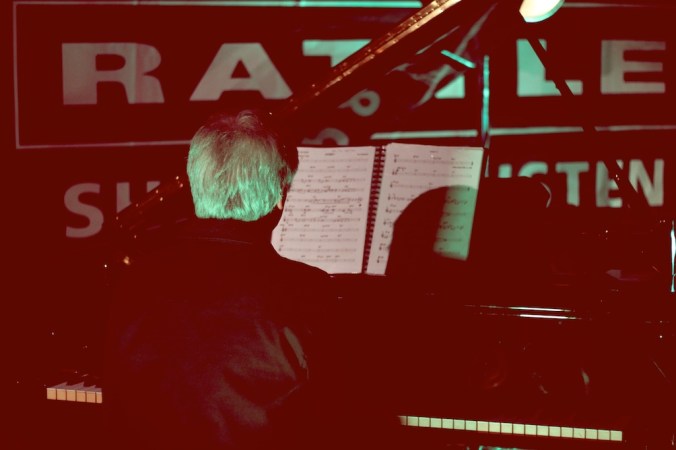
Reuben Derrick’s Hound Dogs @ CJC

IMG_8243 - Version 2

Dog bands are a recurring theme in New Zealand jazz.  There was Neil Watson’s ‘Zen Dogs’, ‘Dr Dog’ (Roger Manins, Kevin Field, Oli Holland & Ron Samsom) and now Reuben Derrick’s ‘Hound Dogs’.   To redress any perceived species imbalance, I was glad to see that visiter Mike Stern recently put out an album titled ‘Who Let the Cats Out’.

Reuben has played in Auckland before but I missed that gig.  I was glad that I did not miss this one.   With the exception of Alan Brown, all of the band have either lived in or have some strong connection with Christchurch.   Reuben Derrick is an important part of the Christchurch Jazz scene and with the Christchurch Festival underway very shortly we were lucky to lure him up for the gig.  In hound dog fashion he had tracked down an impressive set list, including several tunes each by Monk, Steve Lacy and Charles Mingus.  The two Monk tunes were ‘Ask me Now’ and ‘Bolivar Blues’.

IMG_8225 - Version 3

Both are familiar to me but it took me a moment to realise what they were.  They breathed new life into these much-loved but less-often-heard tunes and amazingly they made them sound as fresh as paint.  They did so without reharmonising, nor tackling them in an especially angular way (That would be pointless as you can’t out-Monk, Monk).  There were not so many jagged edges but these were great renditions.  Authentic and so accessible that their ‘Bolivar Blues’ has been singing in my head ever since.

Reuben plays an older instrument and the character of that tenor really suits his bluesy-earthy approach.   Some tenor players depart the melody before it is stated but Reuben stands on confident ground.  He is a an intensely melodic player but there is nothing clichéd about his approach.  This is most often seen in the older bop era players, who were able to stay close to the melody but still tell a great story.   Another thing that I liked was the way that his improvisations unfolded with an inner logic.  A logic that allowed you to trace the steps back in your mind.   A journey shared.

IMG_8239 - Version 2

I am not sure whether Alan Brown has played with Reuben before, but he couldn’t have fitted in better.   I have learned over the years that Alan is not only gifted on keys and piano but he is able to adapt to a multitude of styles.   I have not heard him play Monk before but he gave the band exactly what they required.   Solid decisive chord work and inventive solo’s.  He navigated Monk’s choppy lines with the same ease that he tackled the very different compositions of Steve Lacy.  IMG_8231 - Version 2

There were two familiar faces in the lineup, Andy Keegan and Richie Pickard.   Andy has played a number of gigs about town since moving up from Christchurch and he is often at the CJC.  He is a versatile drummer and we saw that demonstrated as he moved effortlessly from colourist to bop drummer during the gig.   I like his time feel and the fact that he lays down a solid beat without drowning out the others.  He plays to the room.   I often tease him by saying that he is a very photographer friendly drummer, as he often leans forward as he gets into a number.

IMG_8260 - Version 2 (1)

Ritchie has also played the CJC before and the last time I saw him was with Dixon Nacey.   This is very different material to the high-octane tunes that Dixon was playing and so I saw another side of him in the Hound Dogs.  I found him especially strong on the ballad material like the quirky ‘Ask Me Now’.   The other member of the Hound Dogs is guitarist Sam Taylor and he is not seen in the CJC very often.   That is a pity because his sound is different from many of the Auckland guitarists.  He draws more deeply on traditional Jazz guitar and he does so convincingly.  At times his comping was very reminiscent of Freddy Green’s; a quiet rhythmic strum that pulled back slightly on the beat and gave the number a deep swing feel.  His comping may reference swing but his lines are pure Be bop or Post bop.

These guys may not get together very often but when they do they are a solid unit.  With a great sound like that, I hope that they come and play the club again

Who: Reuben Derrick’s Hound Dogs:  Reuben Derrick (tenor), Alan Brown (piano), Sam Taylor (guitar), Richie Pickard (bass), Andy Keegan (drums).

Where: CJC (Creative Jazz Club), Brittomart 1885 Building Basement, Auckland 4th September 2013
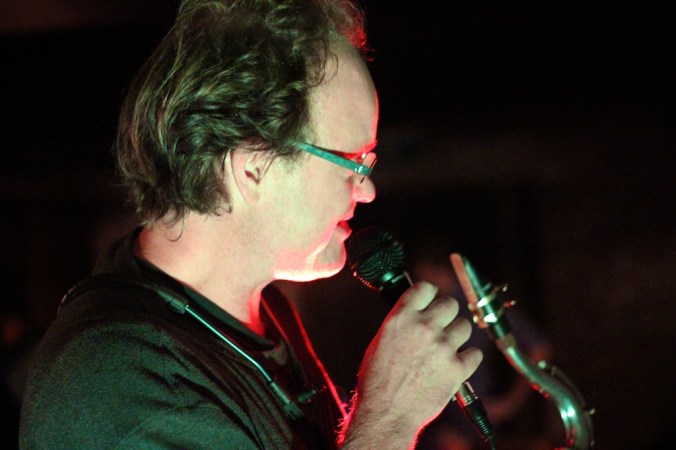
The Nick Granville Group @ CJC

IMG_8160 - Version 2

On Wednesday the 21st of August ‘Rattle’ records launched Nick Granville’s ‘Refractions’ album.  Nick Granville needs no introduction to Wellington audiences, being a professional musician who works extensively throughout that city.  While he is not as well-known in Auckland, that is rapidly changing, as he has played a number of well received gigs here over the last year.  CJC audiences now look forward to his return.

IMG_8196 - Version 2

He is increasingly featured in the award-winning Roger Fox Wellington Jazz Orchestra and his recorded output as leader and sideman is growing by the year.  This latest album is definitely his best to date and there is every expectation that this upwards career trajectory will continue.  With this album his guitar chops are very much on display but it is the engaging warmth and unmistakable integrity that draws you into the project.  All of the numbers on the album are originals and all are either blues based or have a distinct blues feel.  Nick attributes this to the strong Scofield influence that has shaped his progress over the years.

There were mostly numbers from the current album featured at the CJC launch,  but we also heard a few updated older compositions.  As I am familiar with that material it gave some interesting points of comparison.  The stand out tune from that earlier period was ‘Somewhere You’ve Been’ which is a well crafted reharmonisation of the standard ‘Footsteps’.

IMG_8172 - Version 2

This album has a lot of strong points and compositionally it is a tour de force.   It pays a subtle but heart-felt homage to John Scofield without being slavishly imitative or needing to play Sco tunes.  Strong material like this just begs to played by the best musicians available and Nick has pulled this off.  Much of the material was composed while completing  his Masters at the Auckland University Jazz School, and this enabled him to utilise faculty members for the album.   The three who joined him on the album are Roger Manins (tenor sax), Oli Holland (bass) and Ron Samson (drums).   You would be hard put to find better musicians anywhere and they had obviously warmed to the task in hand.

A really good album is one that manages to sound familiar, yet original and Nick Granville has achieved this rare feat.

IMG_8166 - Version 2

Roger Manins has a busy schedule teaching, co-managing the CJC and gigging around New Zealand and Australia.   There is nothing that he can’t tackle as he is a very strong reader and a fearless improviser.  His storytelling ability and improvisational inventiveness mark him out.  Whether delivering a breathy ballad, where each gentle rasp of air counts,  or a fast burner where the furies rain down, he’s a phenomena.

Oli Holland had barely returned from a holiday in Germany, but he showed no sign of jet lag on the band stand.  He and Nick go back a way and so it was not surprising that he is on the album.  Oli is one of the strongest bass players in New Zealand.  At times he surprised as he delivered the sort of raunchy biting grooves that you would expect of an electric bass.  Mostly though we heard his deeply resonant fluid lines weaving skilfully throughout the mix.  photo copy 6 - Version 2

I always enjoy Ron Samsom’s drumming but he really stands out on this album.   When you listen to ‘Gloves off’ in particular you will hear what a multi faceted Jazz drummer can do.  This hard-driving funky tune is my personal favourite.  It has a punch to rival Jack Johnson’s and an edgy groove that delights.  It is one of the tracks that I return to again and again.  Throughout this album Ron Samsom is marvellous.

The other strength is the quality of the recording and this is largely down to ‘Rattle’s’ Steve Garden.  Every detail from the cover art to the sound quality is meticulously attended to.  When it comes to mixing and mastering Steve has a special touch and the results here attest to that.

Nick Granville has pulled one out of the bag here and I strongly advise people to grab a copy.

What: Nick Granville Band.  Nick Granville (guitar, leader, compositions), Roger Manins (tenor saxophone). Oli Holland (bass), Ron Samson (drums). Released by Rattle.

Where: the CJC (Creative Jazz Club), Wednesday 21st August 2013

Trudy Lile Quartet @ CJC

IMG_7997 - Version 2

Trudy Lile has unerring radar when it comes to locating tunes from the lessor known jazz lexicon.  Tunes that she skilfully transforms into glowing vibrant flute friendly arrangements. Her choice of ‘Steppin Out’ is a good example.  Kurt Elling recently sung this wonderful (but difficult) Joe Jackson tune on his ‘At The Gate’ album.  Not only was it a great choice and well executed but her new lineup rose to the occasion; giving her all the support she needed and more.

Trudy Lile last performed at the CJC about 8 months ago and she had a different line-up then.  Last Wednesday she had assembled a particularly solid rhythm section in Alan Brown (piano), Cameron McArthur (bass) and Ron Samsom (drums).  Trudy is often adventurous in her choice of material, mixing reworked standards, originals and virtually unknown tunes scavenged from interesting nooks and crannies.  On Wednesday she held to this course and it paid off.  IMG_8013 - Version 2

Among the other numbers performed was a beautiful rendition of ‘Niama’ (Coltrane), ‘Flute Salad’ (Lile) – I love this tune with its swinging happy vibe and another Lile original ‘Domestic Bliss’.   Trudy explained that this number was somewhat tongue in cheek, as her own experiences of domestic bliss at times resembled the TV character Miranda’s.

Trudy Lile is well-known about New Zealand as a gifted flutist.   While the flute is her prime instrument she also demonstrates impressive vocal skills.  We saw both on Wednesday.  I have always sensed a pied-piper quality to her work and as she dances and sways during the flute solos it is impossible not to be captivated.  Dedicated Jazz-flute players have been rare over the years and some critics have been disparaging about the lack of expression in that horn.   If they listened to Trudy they would shut up, sit down and recant.   In her hands the flute has all of the expression you could ever want

.IMG_8017 - Version 2

I must zero in on Alan Brown here as he was just superb.  OK, Alan always puts on a great performance but this facet of his playing is not seen as often.  Alan is rightly famous for his soul infused Jazz funk.  He was a power house of inventiveness on Wednesday,but more importantly he established beyond a shred of doubt that he is a stellar straight-ahead Jazz pianist.   His playing is always strongly rhythmic and that is what we expect from Alan, but to see him as an accompanist in this context was revealing.  Anyone hearing a Kurt Elling number such as ‘Steppin out’, notices his arranger and pianist Laurence Hobgood.   Hobgood is a dedicated accompanist of the highest order.   Alan communicated a special quality also.  He supported vocals (and flute) in the way Hobgood does and it was pure gold.  After seeing him in this context I would really like to hear him do a piano trio gig sometime, complete with a few straight-ahead standards.

Cameron McArthur has become the first choice bass player for Auckland gigs and every time he appears (which is often) he impresses afresh.   He is gaining a substantial group of supporters about town and his solos always elicit enthusiastic calls and strong applause.

IMG_8012 - Version 2

Ron Samsom is quite simply the best there is on traps and his tasteful underpinning of any band is inspiring.  On this gig he alternated between quieter brush or mallets work and power house grooves which lifted the others to greater heights.   Sometimes when I hear Ron’s drumming I can discern a pulse that goes way beyond the room.  Perhaps it is the pulse of the Jazz tradition itself, the history and the future rolled together in a beat.

This band was the perfect foil for Trudy and she took full advantage of it.

Who: The Trudy Lile Quartet – Trudy Lile (leader, vocals, flute).  Alan Brown (piano), Cameron McArthur (bass), Ron Samsom (drums).

Where: The CJC (Creative Jazz Club) Brittomart 1885, Wednesday 7th August 2013.

Phil Broadhurst ‘Flauberts Dance’@CJC

IMG_6910 - Version 3

Phil Broadhurst is a regular at the CJC (Creative Jazz Club) just as he was at the ‘London Bar’ in its hey day.   He is also the compiler and presenter of the well-known Jazz radio slot ‘The Art of Jazz’.  His last album titled ‘Delayed Reaction’ was well received and shortlisted in the Jazz Tui Awards.  It was dedicated to the music of Michel Petrucciani, the diminutive and wonderfully brilliant French pianist whose life was blighted by ‘brittle bone syndrome’.  That project was obviously a labour of love, as Phil had long been immersed in Petrucciani’s music.  The album, (out on IA-Rattle), outlined a very personal journey for Phil and while showcasing the project about New Zealand he must have pondered ‘what next’?   The what-next is ‘Flaubert’s Dance’.

IMG_6870 - Version 2

From ‘Delayed Reaction’ it was a logical step to examine other artists who had influenced him and for whom he had a deep affinity.  Not all are pianists but all take a pianistic approach to their music.  All are currently at the top of their game.  The compositions on ‘Flauberts Dance are all Phil Broadhurst’s and they are dedicated to the following musicians:  Herbie Hancock, Manu Katche, Enrico Pieranunzi, Eliane Elias, Kieth Jarrett and Tomasz Stanko.   What these artists have in common is striking originality, a modern approach to harmony and the fact that none of them are easy to compartmentalise.  They are consequently quite different from each other.    A Tomasz Stanko tune and a Manu Katche tune could hardly be confused even though they have worked together.  IMG_6922 - Version 2

It is obvious from the above list that Phil often reaches outside of the Americas for musical inspiration.  While Jarrett and Hancock have influenced most modern pianists their ubiquitous presence tends to eclipse others of equal importance.   It is therefore fitting that the latin infused Brazilian born Eliane Elias and the two Europeans give counterweight to the North Americans.   The composition ‘First Shot’ dedicated to Hancock looks at a particular tune rather than the scope of his career to date.   I truly like this number as it has the distinct feel of a European or an Antipodean acknowledging Herbies work, not an American.

Phil has had no trouble in assembling top class musicians for the album and with Roger Manins (tenor sax), Olivier Holland (bass)  and Cameron Sangster (drums) his quartet had depth and experience.   He also enlisted trumpeter Mike Booth for three numbers.

The title track on the album is dedicated to the scandalously underrated and utterly brilliant Italian Pianist Enrico Pieranunzi.   This track ‘Flaubert’s Dance’ had everyone listening in rapt silence and even though the club filled to bursting point you could have heard a  pin drop.  With unerring accuracy he has dived right into the essence of the man he pays homage to.   The voicings, the phrasing and a unique sense of weightless swing that is so European.  When Roger Manins comes in the Pieranunzi connection deepens.  Bringing to mind the Italian tenor player Stefano de Anna who along with Hein Van de Geyn featured so strongly on the classic Pieranunzi album ‘Don’t Forget the Poet’.  IMG_6927 - Version 2

Tenor player Roger Manins always gives of his best and he showed us once again that he can wring deep sentiment and even prettiness out of ballads while never sounding cliched.  In the mid tempo tunes he imparts that intensity and locomotive drive that he is so well-known for.  When the tunes are explorations, it is only fitting to have a born story-teller like Roger onboard.  Olivier Holland (bass) has often played in Phil Broadhurst line ups and his approach is that of the consummate professional.   These days it is not uncommon to hear bass players vocalising lines an octave above the pitch.   Once the preserve of Major Holley and Slam Stewart, Oli has increasingly been employing that technique (but not so much arco bass).   His improvisational approach has always been solid but the vocalising appears to extend that.   It is perhaps like a saxophone player having the words of a standard firmly in their head as they lay down the melody.   It changes the dynamic in positive ways.   Cameron Sangster (drums) works across many genres and he is one of the few drummers to appear regularly with big bands in Auckland.   He has a strong sense of space and dynamics and can switch to a more colourist mode if the number requires that.   He is also able to moderate his sound to a room.   A tasteful drummer.  The remaining band member is trumpeter Mike Booth who played on three numbers.  His soloing and ensemble work is great and musicians about town are often utilising him for his impressive and varied skills.   He and Roger in lock-step are a force to behold.   Both the quartet and quintet gave Phil Broadhurst adequate room to shine and he did.

What: The Phil Broadhurst Quartet

Who: Phil Broadhurst (piano), Roger Manins (tenor sax), Olivier Holland (bass), Cameron Sangster (drums) – guest Mike Booth (trumpet).

Where and What: ‘Fauberts Dance’ album released by Rattle Records  –   CJC (Creative Jazz Club) basement 1885 Brittomart building, Auckland

Number filmed by Jennie Sol

Brian Smith @ CJC Jazz April gig

IMG_6571 - Version 3

It is always great to see the renowned tenor player Brian Smith performing in the intimate space of the CJC (Creative Jazz Club) and whenever he plays older and newer fans turn up to see him.   While it is tempting to refer to him as being ‘seasoned’ or ‘an elder statesman’, any notion of that has a built-in redundancy factor.   He is a ball of energy and ageless on the bandstand.

Brian has played with so many great artists over his long career that it would chew up serious bandwidth to enumerate even half of them.  Being a member of the Maynard Ferguson band and numerous other well-known line-ups saw him playing across the world.    His co-led genre stretching ‘Nucleus’ (with Ian Carr) won the top European band award at the Montreux Jazz Festival (1970).  Since returning to New Zealand to settle (if a musician ever really does that) he has worked on numerous film scores and put out some well received (and commercially successful) albums.  IMG_6561 - Version 2

Accompanying him on the 10th April gig were Kevin Field (piano), Kevin Haines (bass) and Frank Gibson Jr (drums).    With this particular lineup he could dive deeper into his favoured repertoire of Hard Bop Jazz standards (with a few originals thrown in).  When ‘Footprints’ was played Brian Smith approached the warhorse in an interestingly oblique manner; giving us a tune that contained the merest hint of familiarity and a large dollop of brooding mystery.  This was a highpoint of the sets and a good example of how good musicians can extract new wine from old bottles.  The introduction began with a very personalised statement on tenor which caught the attention while offering no insight into where it was going.  Then out of nowhere the melody was stated, only to disappear as quickly as it had appeared; merged in probing re-haromonisations and oblique explorations.

The tunes of Wayne Shorter have remained perennially popular with Jazz audiences and they are constantly being reworked and updated.  I have heard two versions of ‘Footprints’ performed in recent weeks and both mixed the familiar with the the new.  These re-workings of familiar tunes have always been the bread & butter of Jazz and in the case of reworked ‘Footprints,’ Wayne Shorter sets the bar high.  I saw him perform this in Verona, Italy a few years ago and after laying out a pathway to the melody he suddenly plunged us into a world of elision; forcing us to fill in the gaps as we listened.  A familiar tune floating between chasms of crystalline emptiness; a tune more implied than played.   I have posted a You Tube clip of the Brian Smith band playing  ‘Footprints’  at the 10th April CJC gig.

IMG_6564 - Version 3Accompanying Brian on piano was Kevin Field who is so well-respected about town that he is a real drawcard in his own right.   I have often mentioned his ability to add value to any band he plays with and this night was no exception (A post on his April 17th gig will be up shortly).  On bass was Kevin Haines who is not only the most experienced bass player about town but one of the best.  lastly there was Frank Gibson Jr on drums who is another respected and talented veteran Jazz identity about Auckland.     Frank Gibson Jr, Kevin Field and Kevin Haines have all appeared recently leading groups.  These guys will always impress and they proved that on this gig.
This particular CJC gig fitted in perfectly with the wider Jazz April ethos which is about profiling Jazz & Improvised music in all its diversity.    The month had kicked off with a co-led trio featuring guitar, bass and drums (all original music by Samsom/Nacey/Haines), A few days later we saw Nathan Haines at the ‘Q’ Theatre (a tentet complete with French horns and vibes) – a few days after that the Auckland ‘Jazz & Blues club’ featured a gig with a Caribbean-Jazz ensemble. The Kevin Field trio on the 17th.  Auckland benefits from a rich sonic diversity and clubs like the CJC, The Auckland Jazz & Blues Club and Vitamin ‘S’ deserve our ongoing support.  The month of Jazz April will conclude with two avant-garde bands (one local, the ‘Kparty Spoilers of Utopia’) at Vitamin ‘S’ on the 23rd at 8pm and one visiting from Australia (Song FWAA) which is a CJC gig on the 24th at 8pm.   This is a cornucopia of riches and not one of these gigs should be missed.  Note: The Vitamin ‘S’ gig is the last chance to see John Bell vibist, who departs for Korea on Thursday.

IMG_2428 - Version 3

Who: the Brian Smith Quartet – Brian Smith (tenor), Kevin Field (piano), Kevin Haines (bass), Frank Gibson Jr (drums)

Where and When: The CJC (Creative Jazz Club), 1885 Building, Brittomart 10th April 2013

This is a Jazz April 2013 gig : links Jazz April or Jazz Journalists Assn FB page.

Stephen Small – special guest Hugh Masekela

IMG_6358 - Version 2

The 13th of March was a night of surprises.   I had been urging Roger Manins to lure Dr Stephen Small down to the CJC (Creative Jazz Club ) for months and here he was.  I told a friend that we would be in for an interesting and varied program.  How prescient I was.  Considering that he is such a well-rounded and accomplished pianist (and keyboardist) it often surprises me that knowledge of him in Jazz circles is not as great as it should be.  Stephen Small has a number of irons in the fire and his work across many musical genres can sometimes eclipse his accomplishments in specific  areas.  No one however should disregard his straight ahead or experimental Jazz playing abilities.

IMG_6374

His quartet set up their equipment, completed a brief sound check and then faded back into the darkness of the club while Stephen made last-minute adjustments to his keyboards.  Having set up his two keyboards he moved to the grand piano and picked up the microphone.   Some artists impart scant information about their set lists (even omitting to tell you what they have played).   Stephen is generous with information and his expansive discourse set up the evening nicely.

IMG_6388

He played solo piano for three or four numbers and the tunes came mainly from the Great American Songbook.  The focus for these pieces was the earlier half of the twentieth century.  During his introduction he talked about the interface between jazz, classical and popular music and to illustrate this melting pot he began with two standards.   First up was the perennial favourite,  ‘Spring Can Really Hang You up the Most’.   The beautiful version he settled on was Oscar Peterson’s.  The second tune ‘Angel Eyes’ (Matt Dennis) has a bluesy feel and the lush right hand voicings accented the subtle hints of stride in the lower register.  I love this standard and it was a delight to hear, as it is seldom played by instrumentalists these days.  More’s the pity.  The last piece in his solo set was an extract from George Gershwin’s ‘Rhapsody in Blue’ (see video clip).    All three were beautifully executed and they illustrated his point perfectly that Jazz is in a continuous process of renewal and will happily absorb the sounds of the day.   What is sometimes under-appreciated is that Jazz also influences and enriches other genres.  Modern pop or rock without its Jazz roots would arguably be a chirpy wasteland devoid of back beats.   Classical music is certainly not exempt either (e.g. Stravinsky and Ravel). IMG_6382 (1)

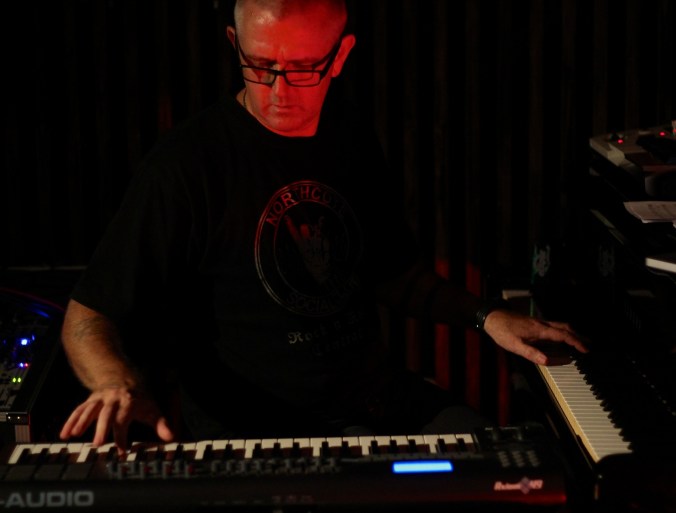
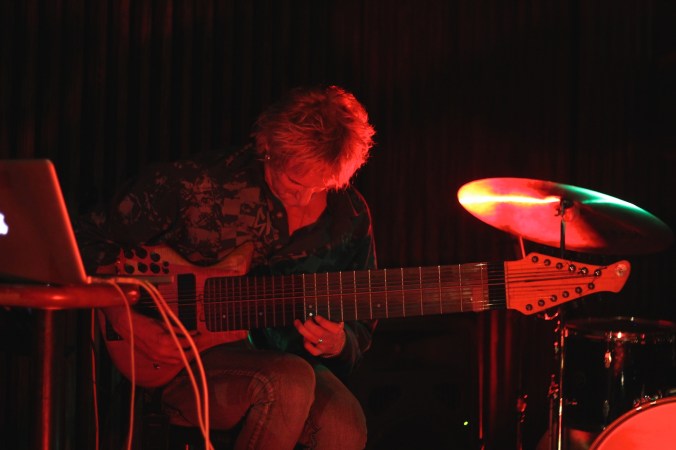
His next set shifted our focus to experimental music.  Stephen Small on two keyboards & piano, Johnny Fleury on Chapman Stick 12 string guitar, MC Chinga Style voice and Stephan Thomas drums.  I am particularly interested in such electronic explorations when they’re done well and these were.  The chordal instruments fed into an array of pedals and the whole set up was something that Bob Moog would have gone into orgasmic ecstasies over.   The Chapman Stick looks daunting to play as the fret board is double the width of most guitars.   It is largely tapped and not picked; giving rich voicings and strong resonant bass lines.   MC Chinga Style added an unusual dimension to the mix and his inclusion was spot on.    He was a benign presence, never dominating.   His contributions were occasional but extremely interesting.  A combination of scatting, boom box, subtle pops and clicks and always reinforcing what was occurring around him.   I have long thought that the human voice as an instrument, playing lines in an ensemble, is terribly under-utilised in Jazz.  ECM gets this right and we need more Norma Winstone’s in our line ups.

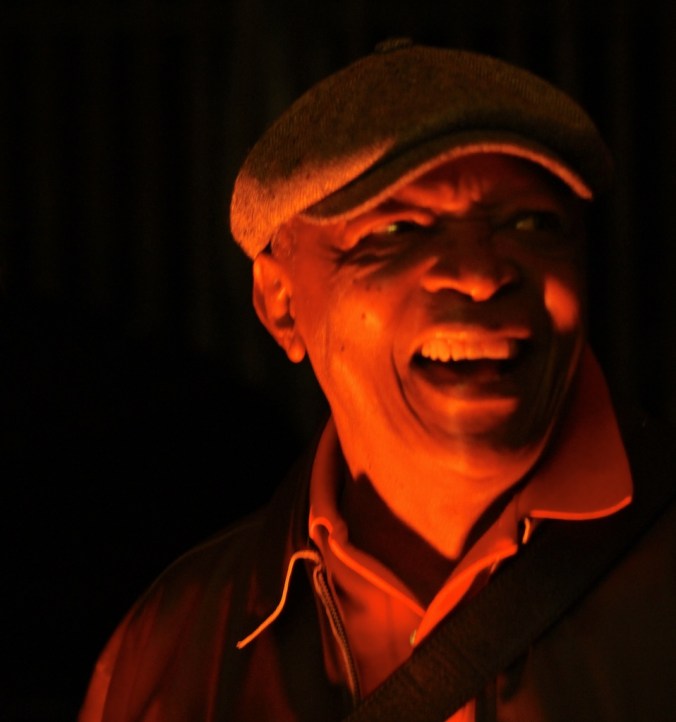
Hugh Masekela

Hugh Masekela

Somewhere in the middle of this set Caroline Manins went up to Stephen and whispered in his ear.   Stephen looked startled for a few seconds and then proceeded with his electronic wizardry.     Caroline then whispered in my ear, “there is someone I think you should meet”.    Leaning against the bar was Hugh Masekela, anti apartheid hero, Jazz icon, Afro Beat star.  In the subdued lighting with its soft red overtones it all seemed surreal.  The short 74 year old man stuck his hand out and smiled widely.  Then before I knew it he had enveloped me in a hug.   The great man hugged quite a few strangers that night and I suspect that all were enriched by the experience.    This was Hugh Masekela’s way of telling us that in a diverse and complex world, music can remove any barriers between us.  To paraphrase Herbie Hancock, “Music is what I do but finding a common cause with humanity is my real work”.   He has just been honoured by President Obama for his life’s work.

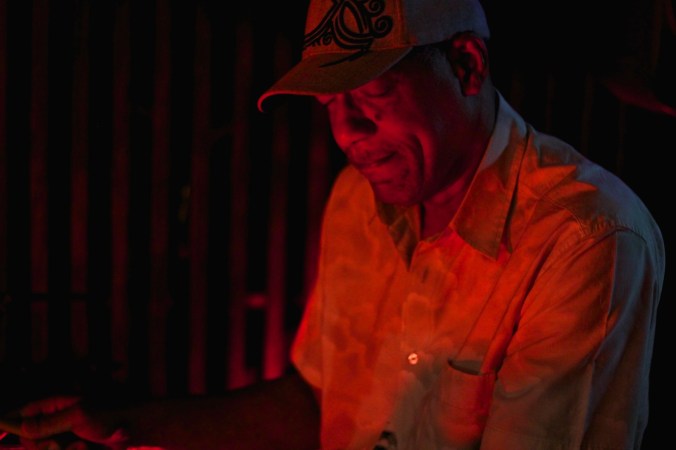
Cameron Ward

Cameron Ward

After the last of Stephen’s numbers Hugh Masekela asked Stephen to sit in while he, his guitarist and drummer played three numbers.  The crowd stood open-mouthed and a little star struck as the band began playing.   A guitar player from South Africa , a groove drummer from America and a Kiwi pianist – working with a Jazz hero.   Hugh placed the flugal horn to his lips and showed us that simple melody can say as much as complex harmony.  He never strayed too far from the melody but somehow his solo’s were all the more profound for that.  IMG_6412

He ended the set with Herbie Hancock’s ‘Cantaloupe Island’ and thanked us.  We slipped out into the warm night, feeling very pleased with ourselves for being in that place at the right time.

I have included a link to the Hugh Masekela concert review from N Z Musician.  The concert was a blast.

Who: Stephen Small (Keys) – with Johnny Fleury (stick), Stephen Thomas (traps) – Also: Hugh Masekela (flugal horn) plus two members of his band.

When: Wed 13th March 2013

Where: CJC (Creative Jazz Club) – 1885 building basement Brittomart

Foot Note From an Observer Interview – extract:

Q.”There was one occasion when the apartheid government tried to invite you back as an ‘honorary white’. How did that feel?

It was not only insulting, but it was like the height of comedy, right out of the fucking Marx Brothers.  The apartheid people were actors and they had to act out their part in their beliefs every day. That’s why we always saw them as being comedic.”