‘The Grid’ land @ CJC

IMG_1134 - Version 2

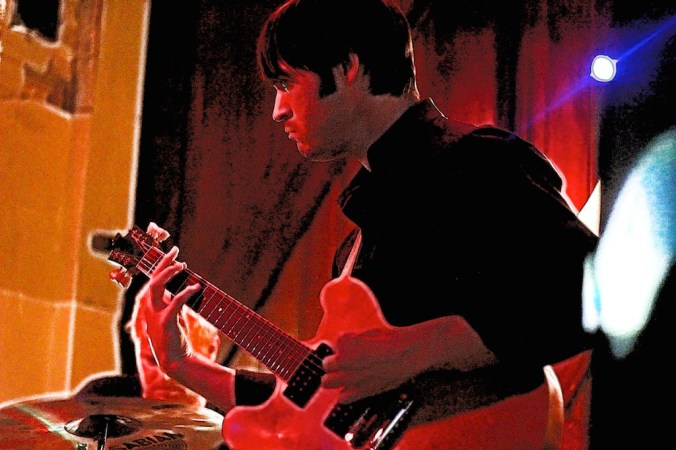
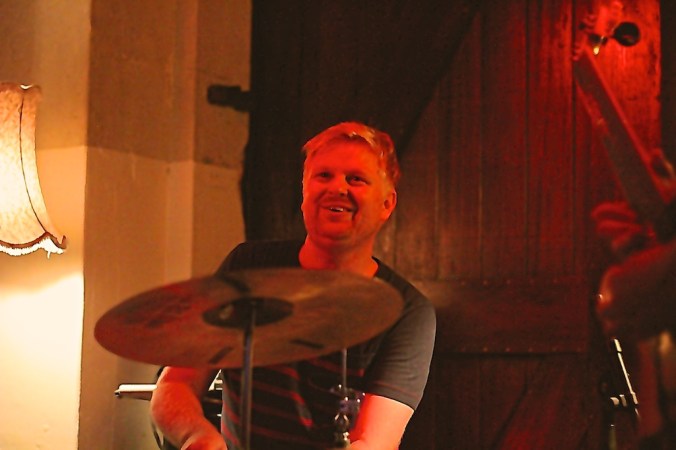
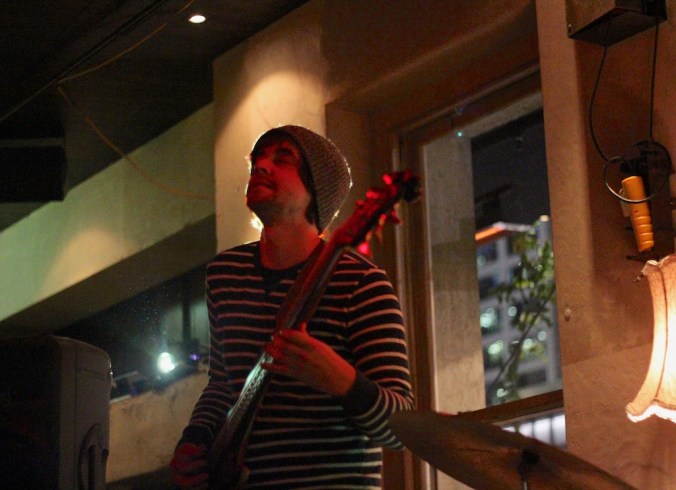
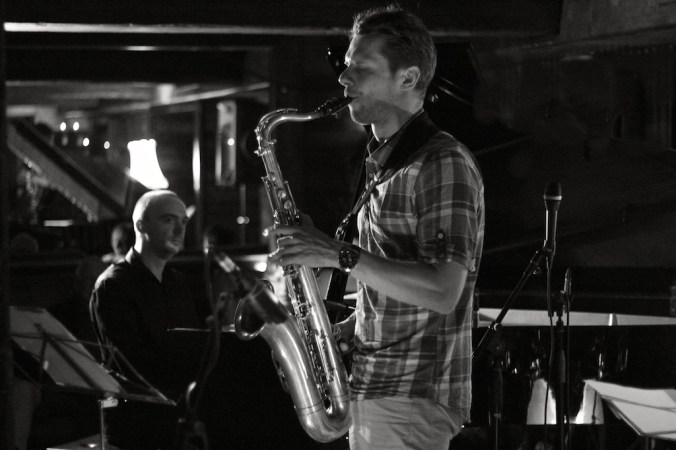
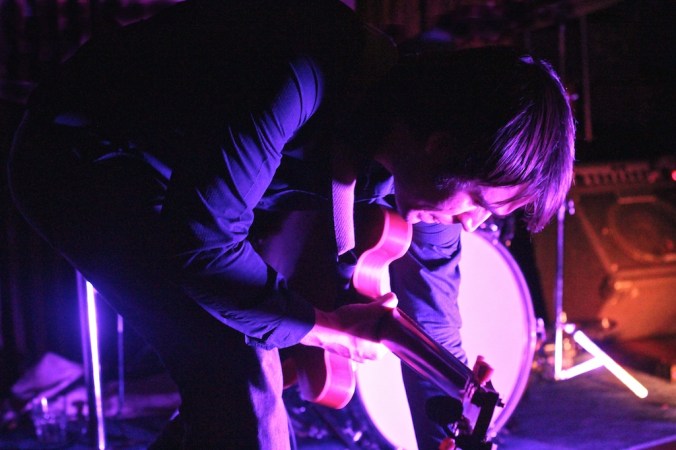
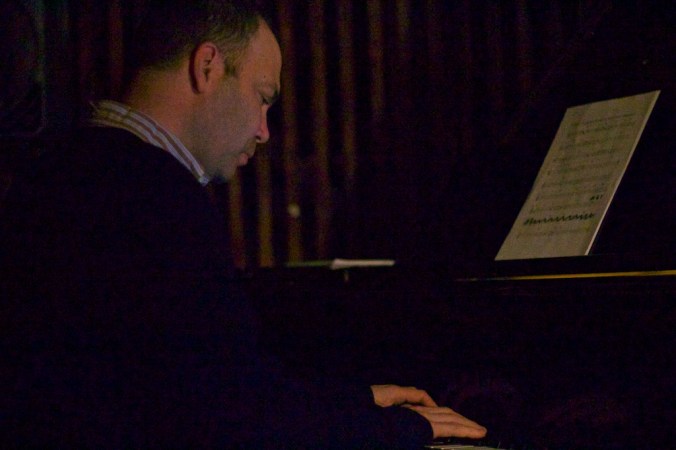
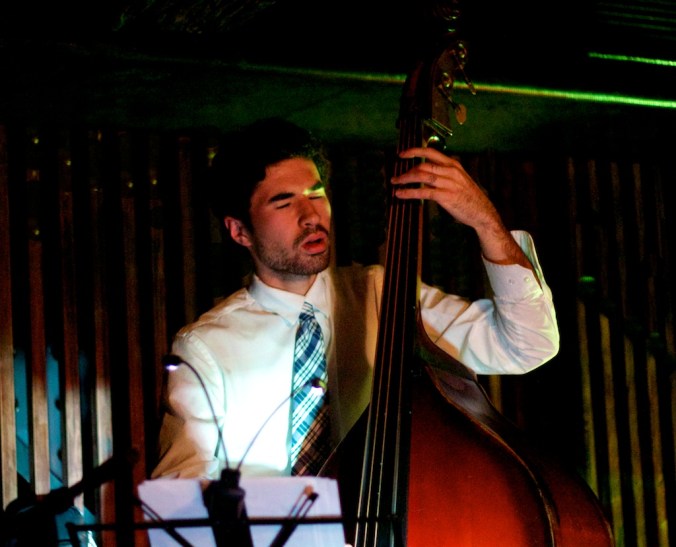
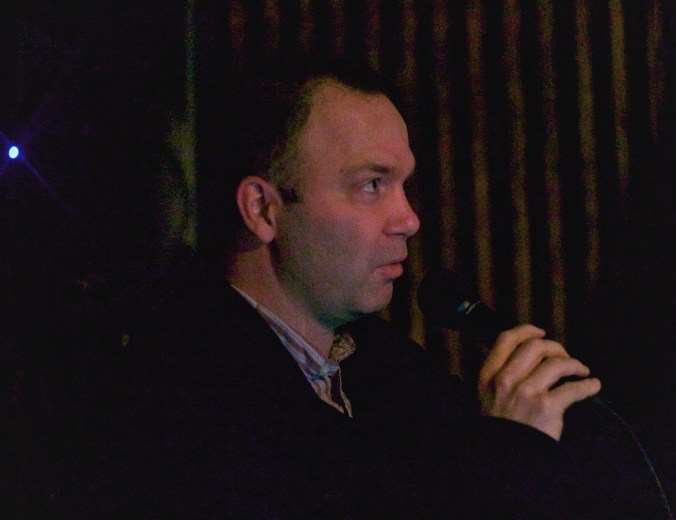
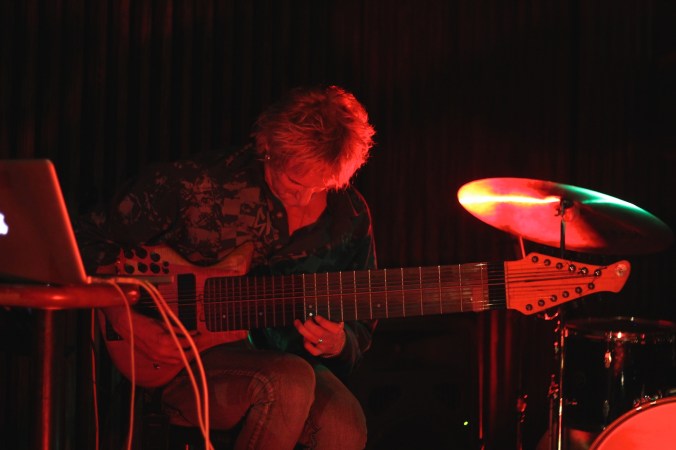
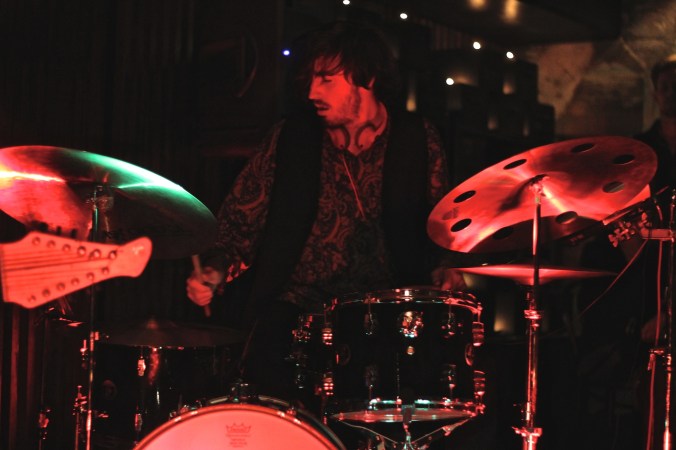
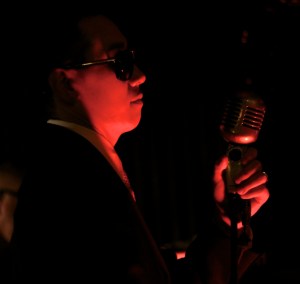
There are some musicians who arrive on earth fully formed, having journeyed from distant planets.  Sun Ra was one of those.  There is yet another category of musicians who are not aliens, but who clearly hitch a ride with aliens from time to time.  The Grid is one of the latter, as there is no other explanation for their mix of in your face humour, outrageous musicality and otherworldliness.   They have been to Auckland before when I reviewed them for this blog (read ‘The Grid off the Grid’).  This is their second coming and it has long been anticipated by local musicians, metal jazz fans, mental Jazz fans and those who enjoy amazingly improbable improvised music.  People of all ages attended, as the censorship restrictions had obviously been overlooked.

IMG_1139 - Version 2

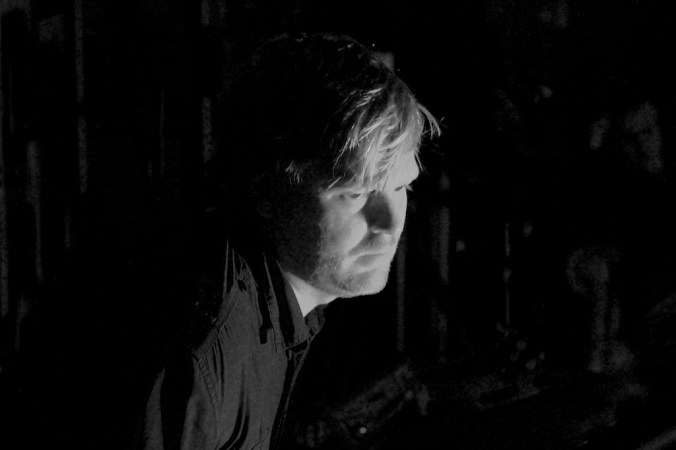
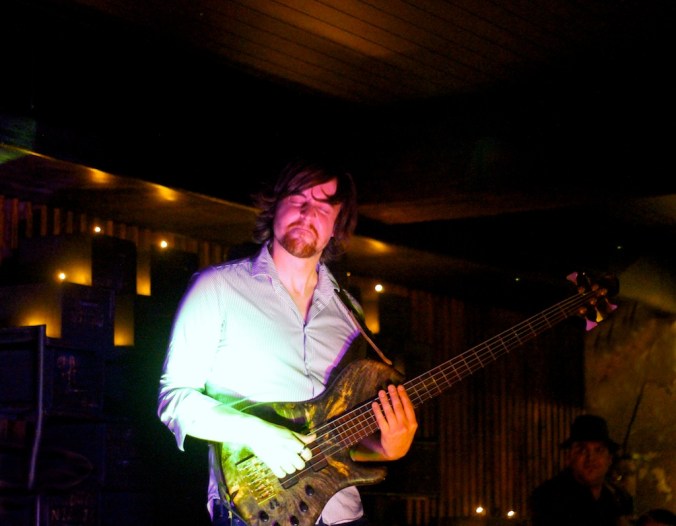
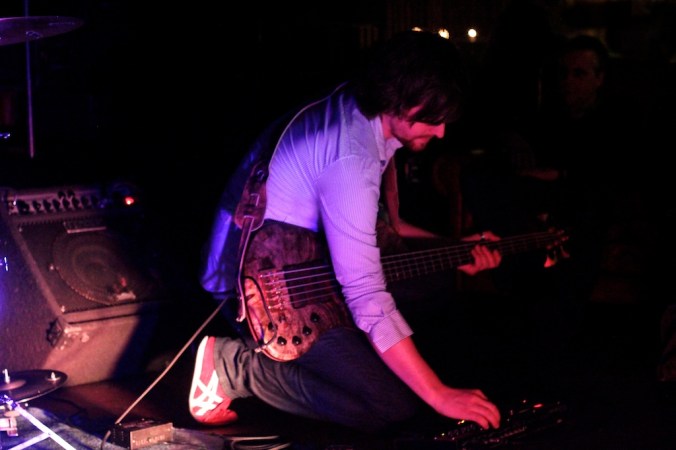
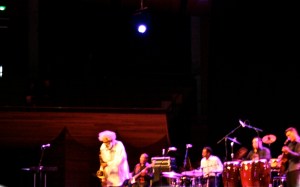
Reinforcing the view that ‘The Grid’ had been beamed in from a spaceship, was a light show that eerily played across them as they performed.   The gig was not in the usual basement spot, as we had been booted upstairs for the night by the building owners.  Being upstairs means psychedelic light show and being upstairs means playing to people at barely visible tables rather than to people sprawling on leather couches or sitting cross legged on the floor.  Some musicians are less comfortable in this space, but The Grid appeared to thrive on it.  As ever changing patterns played on the walls above them, or descended to spotlight their instruments, they worked with it.   This gave the gig an oddly surreal atmosphere, as isolated instruments or disembodied heads floated strangely in the air.

IMG_1124

The set list was replete with new tunes, all introduced by Ben Vanderwal as he joked his way from number to number.  This was proper Antipodean humour; highly irreverent, at times dry and always delivered with a pinch of intellect.  At one point a dissertation on Kylie Minogue’s lyrics occurred (she should be so lucky), at another a series of imponderable questions were left hanging in the air.  “What if god were one of us?  What if U2 were from Brazil?   Before we could grasp the enormity of these questions, the band had launched into an astonishingly good version of ‘Sunday Bloody Sunday’ (U2) based upon that premise.  The ideas may have appeared random, but they actually supported an interesting narrative that runs through all of their gigs.   These guys are very good musicians and it is not hard to fathom why alien beings would want to abet them on their journey.  IMG_1112 - Version 2 (1)

I have included a video clip of a composition by Dane Alderson titled ‘Hitch’.   The tune was written to honour iconoclast Christopher Hitchens at the time of his passing.  Sometime during the second set the guitar amp blew up and after a bit of head scratching it was mysteriously re-routed.  A casual observer might think that it was appropriate that a band delivered to us by mysterious forces should disappear in shower of coloured lights and sparks.   I am confident that someone will find a way to beam them back soon.  We like them here in Aotearoa.  IMG_1113 - Version 2

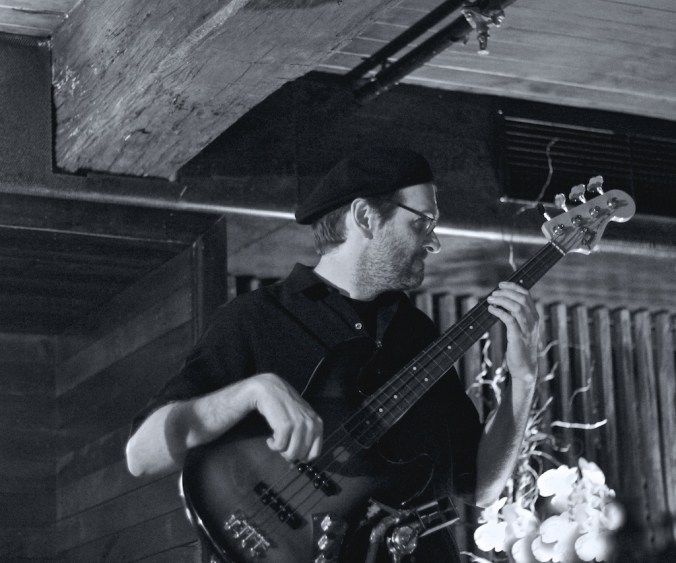
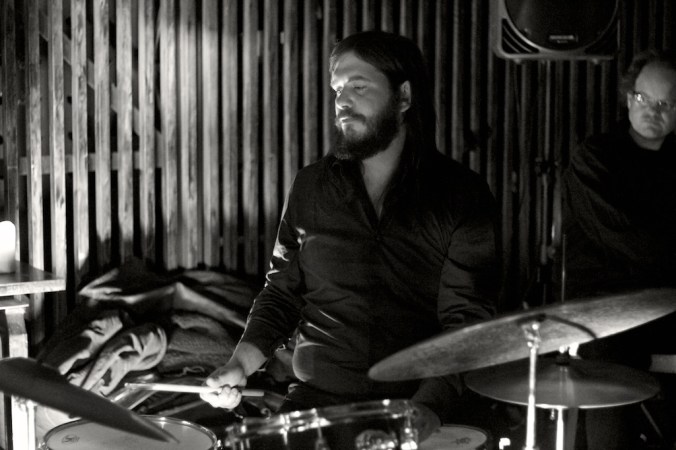
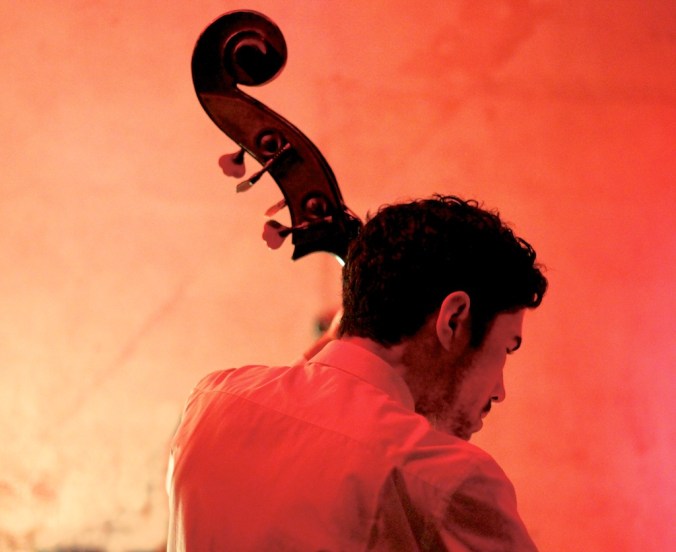
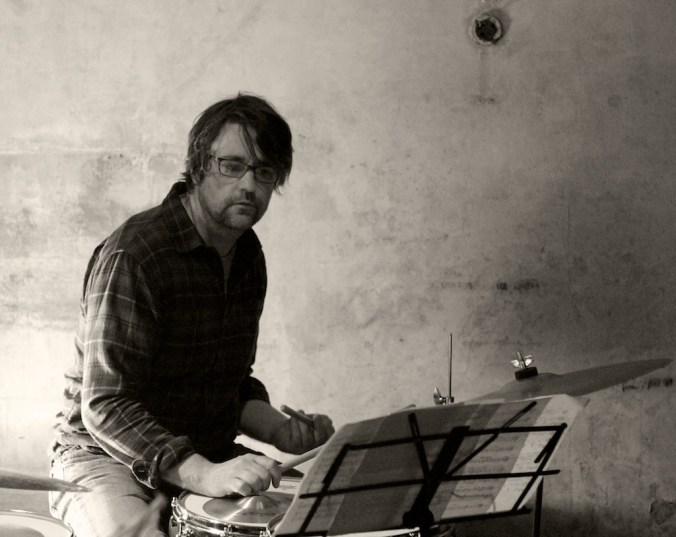
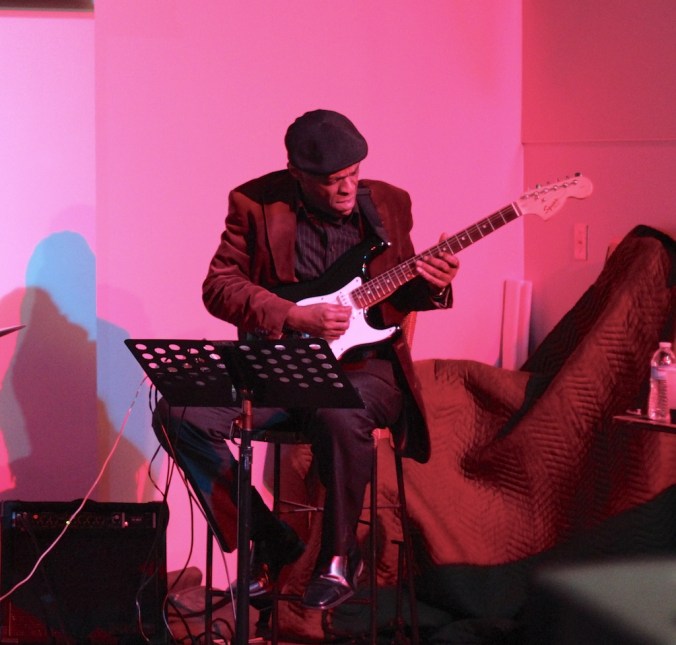
The Grid is: Ben Vanderwal (drums), Dane Alderson (electric 5 string bass, pedals), Tim Jago (guitars and pedals).  Perth/USA

Where: The CJC (Creative Jazz Club) Britomart 1885, Auckland, New Zealand.  www.creativejazzclub.co.nz

Jonathan Crayford @ CJC

IMG_9491 - Version 2

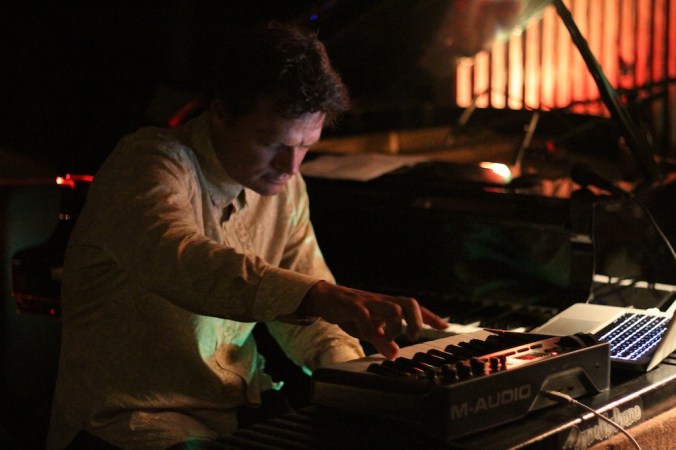
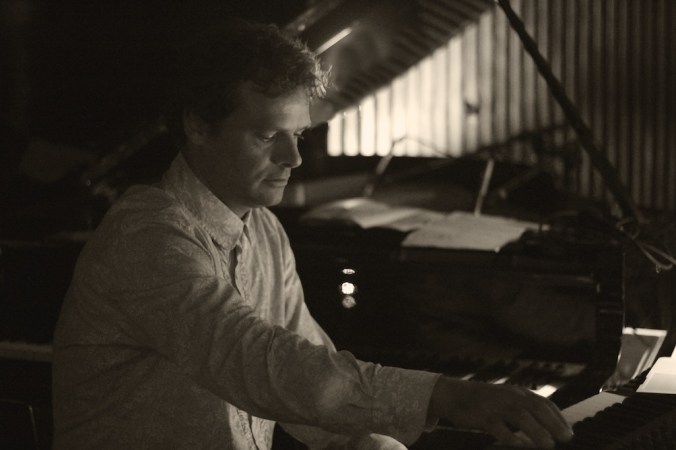
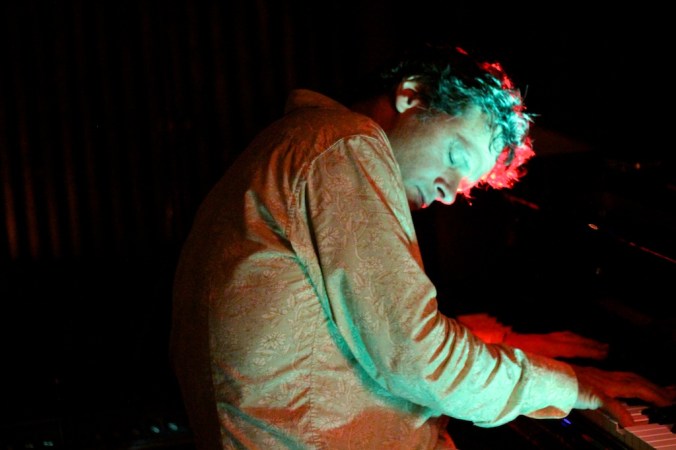
Jonathan Crayford has long intrigued me as a musician so I make a point of catching him when the situation presents itself.  He’s an artist embedded so deeply within his music that his persona reflects in those terms.  It’s as if he were the embodiment of sonic shapes and forms.

I have seen him perform on a number occasions but there’s no second guessing what will materialise on any given night.  His experiences in music lead him in many directions and all of them interesting.  While some describe him as genre busting, I think the descriptor is overly simplistic.  I have heard him perform a killing version of, “I Pity the Poor Immigrant” (Bob Dylan).  Yes, he appropriates the sounds about him and often performs with artists from outside of the Jazz spectrum, but at heart he’s an improvising musician.  No matter what notes he plays you can feel the integrity; the perpetual questioning of a deep level interpreter.  IMG_9576 - Version 2

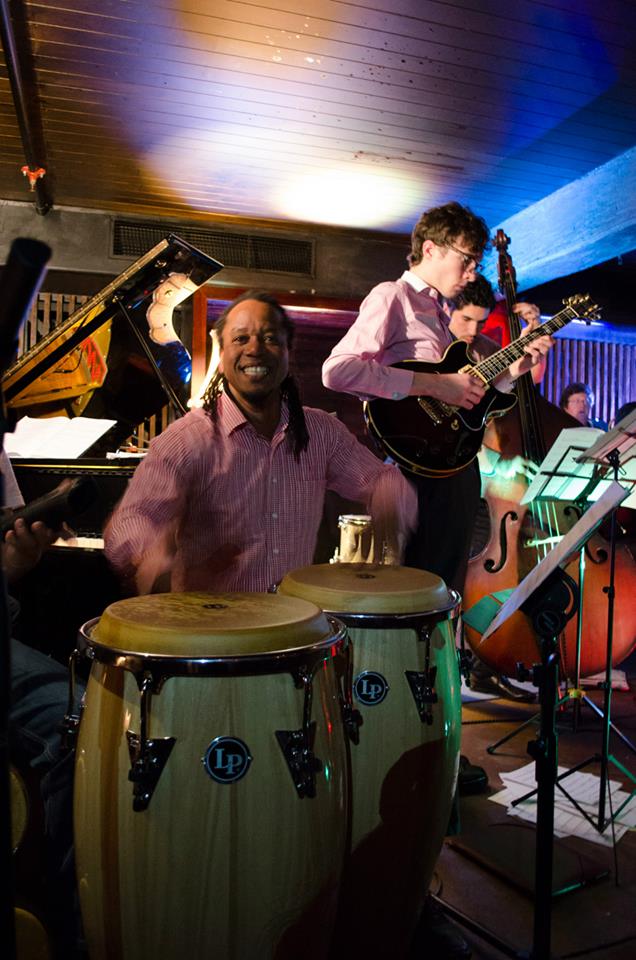
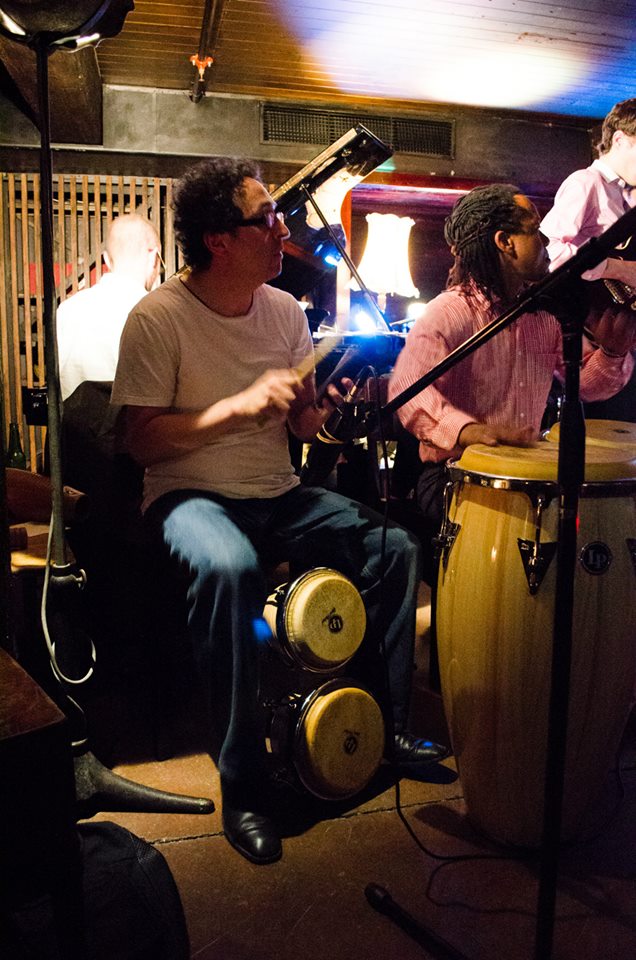
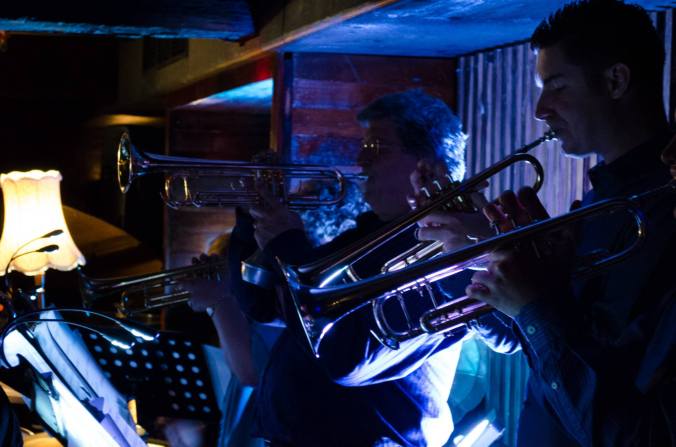
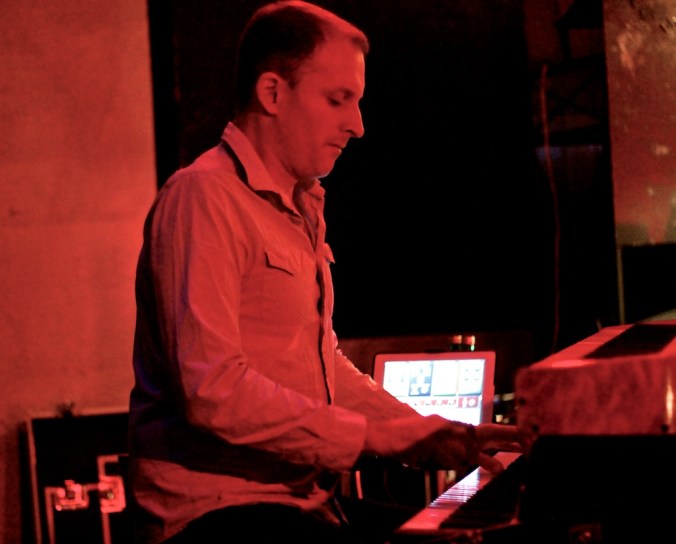
For the CJC gig he showcased a folder of new tunes; the charts interpreted by a six piece band that he had assembled for the gig.  As he explained, “this band is work shopping some new ideas which I will record later in Europe”.  The numbers were all in extended form, giving the musicians space to develop the themes and ideas.   Many of the tunes began and ended with a percussive vamp and as a groove established the horns congas, bass and drums swelled the sound.   The textures and complex layers of sound created an implied centre over which the soloists improvised.  Watching over this was the leader, a benevolent presence who knew just when exhort, when to extend or curtail a solo and when to pull the explorations back to the head.  The tune titles where intriguing also; ‘Groove 21’, ‘Strange Tune’ and others which told a more cerebral story.

IMG_9596 - Version 2

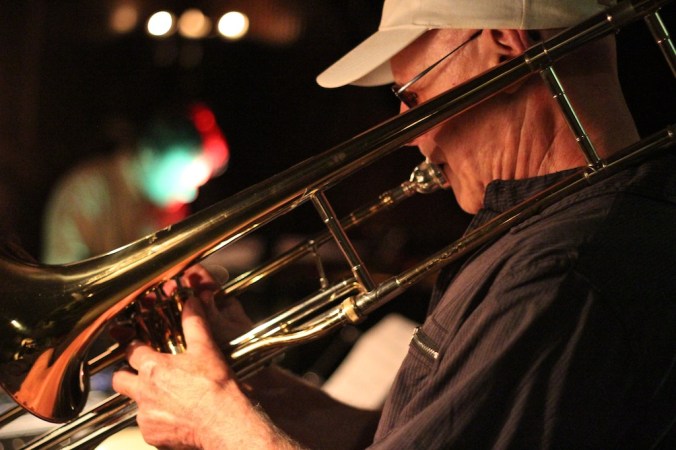
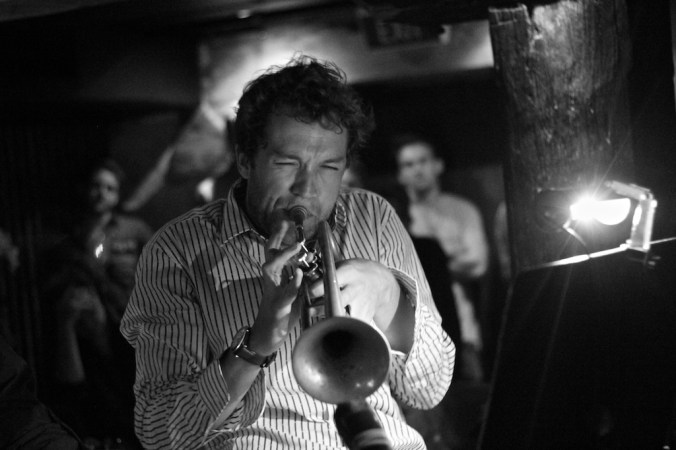
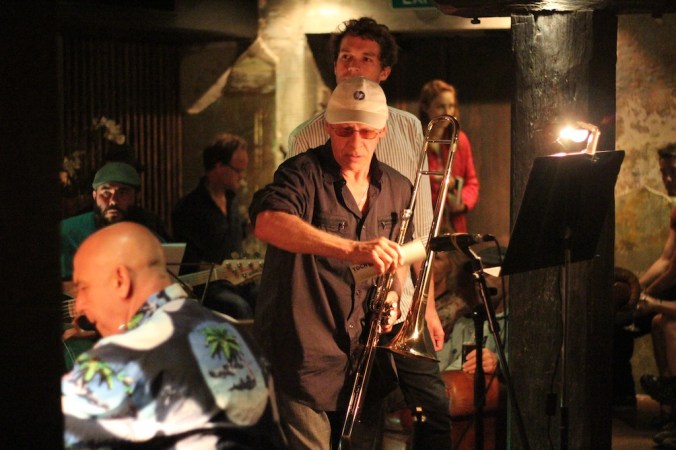
‘Bruno’s Dream’ in particular piqued my interest.  Jonathan Crayford has worked extensively on film scores and his association with the actor/musician Bruno Lawrence gives us the context for this piece.  After Bruno’s passing Jonathan dreamed this tune, a kaleidoscope of images as imagined through Bruno’s eyes.  This is wonderful expansive music and the band entered into the spirit of it.  As with all dreams the evolving and often surreal story has several parts.  In this piece we saw the best of Crayford’s keyboard artistry and writing skills.  There were solid solo performances by Kim Patterson on valve trombone and Finn Scholes on trumpet.  Kim Patterson is the elder statesman here, having recorded over his long career with most of the luminaries of New Zealand Jazz.    The last section of the tune, an intense modal sequence was a gift to Scholes, who grabbed the opportunity with glee mining it convincingly for all it’s worth (echoes of ‘Teo’).  IMG_9494 - Version 2

Early in the second set a brief change in pace occurred, when we heard a duet between Crayford and Patterson.  They performed the only standard of the evening, the gorgeous ‘Old Folks’ (Robison).  It lived up to its heart-string tugging potential.  At the end satisfied sighs were heard from the audience.  Piano and valve trombone work extremely well together and I was briefly minded of the duet recordings between Bob Brookmeyer and others.  IMG_9584 - Version 2

Having both traps drums and congas was integral to the sound as they added heft and edge.   On traps was Julien Dyne, an energetic and multi faceted drummer who has worked previously with Jonathan Crayford ( ‘Pins & Digits’ – Dyne’s album).   On congas (and facing the band) was Miguel Fuentes, a highly experienced percussionist who never flagged during the long and energised grooves.  The remaining band member was Chip Matthews on electric bass.  His presence was integral to the mix and he managed to provide  both an anchor and groove lines without crowding out the others.  The sound scape was dense at times and intentionally so, but the overall momentum was never lost.   With Jonathan Crayford at the helm this is hardly surprising.

The other departure from the format occurred when Jonathan invited Miles Crayford to sit in for a number.   Miles a pianist and keyboardist also, came to wider attention when he participated in Reuben Bradley’s award-winning ‘Resonator’ album.

IMG_9475 - Version 2

If you ask Jonathan Crayford where he lives now you will get vague answers.  He lives where the current project is happening and where the music is.   For the next two month’s he’ll be gigging around New Zealand and then returning to New York to mix and master his next album (with the well-known New York bassist Ben Street and drummer Dan Weiss).  The album is intriguingly named ‘Dark Light’.  Crayford tells me that he wrote the music during a long winter sojourn in London, where the seemingly endless days of low light are commonplace.  Having lived in London I understand this focus with radiating light.  The interplay and intensity of light occupies your thoughts there as it never does in sunnier climes.

If you Google this artist you’ll notice that he’s recorded as ‘currently living’ in Spain or Paris; throw in London and New York and the picture becomes a little clearer.   This is a musician chasing the music and living in the moment.  In Spain he records two solo albums, in New York trios and a sextet and then on to new projects in other cities.   We gladly claim him as an expat Kiwi but in reality he’s a citizen of the world.

IMG_9574 - Version 2

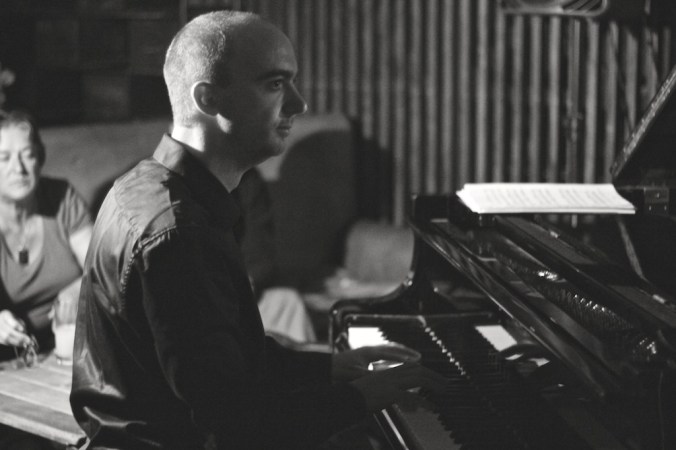
Who: Jonathan Crayford (piano, keyboards, compositions, leader), Kim Patterson (valve trombone, percussion), Finn Scholes (trumpet), Miguel Fuentes (percussion), Chip Matthews (electric bass), Julien Dyne (drums).

Where: CJC (Creative Jazz Club), 1885 Britomart, Auckland.  19th February 2014

Jonathan Crayford albums (and streamed samples) are available from his website, Rattle or iTunes –  jocray.com

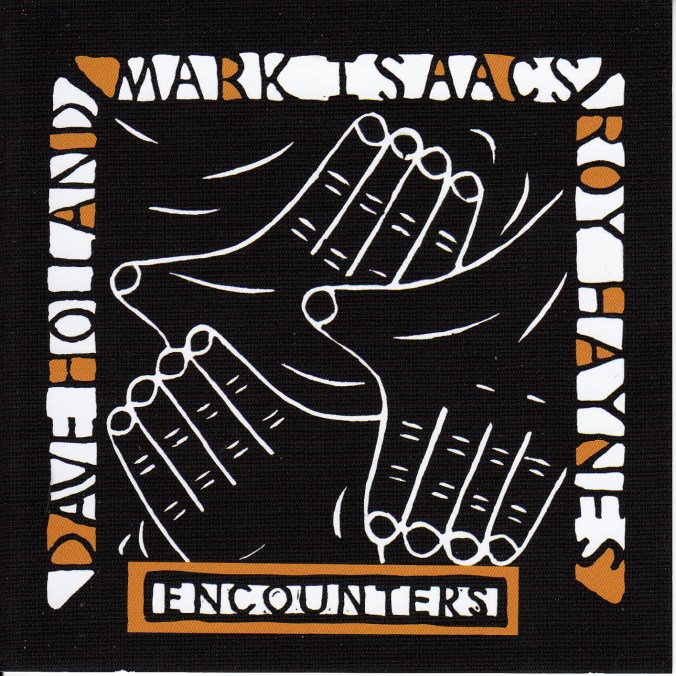
‘Encounters’ – Mark Isaacs – Dave Holland – Roy Haynes

Mark Issacs Encounters

Mark Isaacs’ ground breaking ‘Encounters’ album has just been re-released for the third time and no wonder.  This is an important musical statement by any measure and it sits comfortably beside similar works by Jarrett and Corea.   I don’t say that lightly, as the aforementioned artists explorations into free improvisation set lofty benchmarks.

Mark Isaacs is somewhat of a prodigy as he works across all genres of Jazz, is a gifted composer and has a well established classical career.  His Jazz charts are particularly impressive as he often voices his pieces in modern and compelling ways.  As if that were not enough he has composed a symphony (recently performed by the Queensland Symphony Orchestra – I have heard this impressive work).  Because Mark is such a multi faceted artist it is harder to buttonhole him and perhaps that is the point.  Great musicians shouldn’t be pinned down.   It is the nature of improvised music that it constantly shifts like the coloured grains of sand in a great Mandala; elusive and yet leaving an indelible image behind.  When it’s done well the impressions that remain will outdo the notation.  This album achieves that.

Because the album has not been available since 1995 I hadn’t heard it before.  When I did it truly surprised me.  I was expecting a good album as the triumvirate of Isaacs, Holland and Haynes creates high expectations.  What I was unprepared for was just how deeply it affected me.   To explain this better a back-story is required .  An indication of how this album came to be.

The recording dates from 1988.  This was a time when the mainstream music world had become mired in techno-commercialism and to the credit of the Jazz community it chose to delve deeper into experimental music; pushing harder against musical boundaries.   This was the time of Jarrett’s ‘Changeless’ and ‘Dark Intervals’ albums and discriminating listeners were up for it.  Dave Holland was no stranger to this type of project as he had participated in and initiated many avant-garde projects since the sixties.   Mark Isaacs (an Australian) was in New York at the time having just heard some of his chamber works performed by the Australian Ensemble in Carnegie Hall.   He felt ready to record something challenging so he contacted Dave Holland who immediately agreed to participate.  I am not sure how Roy Haynes came to the project but the choice was fortuitous.  A bop-pioneer drummer who had played with Lester Young and Charlie Parker plus a cutting edge experimentalist bass player were on board.  Both had played in Miles Davis bands (but not at the same time).  Both had an interest in the avant-garde.

No rehearsals were held, no charts used and none of these artists had ever played together before.  What you have here is a tight rope act undertaken by an Australian, an ex-pat Englishman and a New Yorker.  The result could have fallen flat but what happened was truly amazing.  Deep intuitive communication and an interplay which sounded more like a trio that had been together for years, not minutes.  In this recording there is a profound sense of space and limitless vistas seem to unfold before you.  The album is just over thirty minutes long and packed within that thirty minutes is a world of diversity.   At certain points one or other of the musicians is leading the conversation, while at other points they appear to seize upon an idea at the same time.  This is artistry of the highest order and I urge anyone reading this to purchase a copy while stocks last.

It is available on iTunes but as an audiophile I recommend that you purchase the CD.  The recording quality is superb and the sound so immediate that you gain a real sense of the studio it was recorded in.  A lot of recordings could have been recorded anywhere, but this one conveys a sense of location.  Many of the ECM recordings have that feel and the Rainbow Studios in Oslo immediately come to mind.  The album was recorded at the Power Station studios in New York, which incidentally is where Jarrett’s ‘Changless’ was recorded at about the same time.

Twenty five years on, the album still sounds fresh and engaging.

The Album is available from Mark Isaacs Website: http://markisaacs.com/9-latest-news/13-encounters-with-dave-holland-roy-haynes-available-now

No Square @ CJC

IMG_8653 - Version 2

Auckland’s CJC (Creative Jazz Club) hosted two European Jazz Acts in as many months.  The most recent band ‘No Square’, is from Switzerland.  This is a top rated European unit who have been together since 1994 and their tightness, focus and intuitive interactions reflected that.  Having played many European festivals to acclaim, they ventured further afield, assisted by the Francophile cultural organisation the Alliance Francaise.  Michel Benebig is another artist often supported by this worthy organisation.

IMG_8665 - Version 2 (1)

The journey down from Europe is particularly gruelling and even with New Zealand gigs tagged onto an Australian tour it requires a big commitment from the musicians.   I am not sure whether New Zealand audiences always grasp that.   After hearing about how poorly attended the Wellington ‘No Square’ gig was I cringed in embarrassment.   This is a truly amazing band and they deserved the respect of an attentive and decent sized audience.  Thankfully the audience at the CJC was reasonable, (but it could have been better).  If we don’t support visitors then why should they support our musicians who travel?   It is too easy to blame the lack of promotion, as our web-based and word of mouth networks are generally sufficient to pack out gigs.   All that’s required is a commitment to get off the damn couch.   Roger Manins goes to great effort to organise offshore acts and the audiences must respond in kind.  If we love this music we should pay it the respect of attendance.

IMG_8645 - Version 2

Europe has been deeply involved in the Jazz world since the early 1900’s and it was so popular that Hitler banned it as depraved.   There could be no higher recommendation.  Euro Jazz is not a slavish imitation of American Jazz, as each region has developed distinct flavours of their own.   This is particularly pronounced in the Mediterranean region and with the ebb and flow of migration the process has accelerated.  France was arguably the original centre of Euro Jazz but her near neighbours Switzerland, Spain, Germany, Belgium, UK and Italy have all contributed significantly to the development of the music.  This band originates from French-speaking Switzerland, with their most recent album recorded in beautiful Lausanne on Lac Lemon.    While they referenced Coltrane it was also evident that middle eastern rhythms and themes informed their work as well.   This well-travelled band is extremely tight as a unit.  Whatever twists and turns the music took they intuitively coalesced around each new theme.   No charts needed here.

IMG_8641 - Version 2

The first few numbers were denser and more complex than what followed, but as the evening progressed an airy feel and a deeper groove established.   I could discern many European and American influences from Debussy to Coltrane.  This distinctive original music was Euro Jazz at its best.  Andre Hahne (bass) took care of the introductions  (presumably because he has more English than the others), but the band is billed as a collective of equals.   It would be impossible to single out any particular musician as they all shone in one way or another.   On saxophones was Matthieu Durmarque, piano Matthieu Roffe and drums Alexandre Ambroziak.

This was not a night to miss.

Where: CJC (Creative Jazz Club) 1885 Britomart, Auckland

Who: ‘No Square‘ – Andre Hahne (bass), Matthieu Durmarque (saxophones), Matthieu Roffe (piani), Alexandre Ambroziak (drums)

What: Their 8th Album ‘The Laws of ephemerae’ (Les Lois de L Ephemere)

Natalia Mann update from Marseille

1467391_10201084445817972_2075128796_n

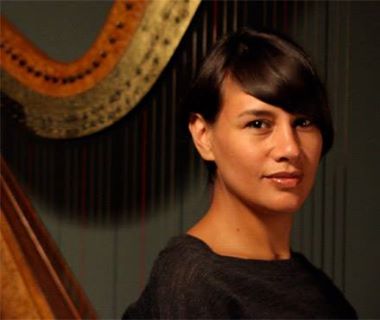
I interviewed Natalia Mann after the release of her very successful Rattle album ‘Pacif’ist’ and since then we have kept in touch .  Improvising harp players are a rare commodity, but things are slowly changing.  This year the Columbian harpist Edmar Castaneda won a major Jazz poll.  Natalia is simply killing at whatever she undertakes but her new trio brings her squarely into the jazz orbit.   Having gained a considerable reputation playing with various symphony orchestras and after undertaking a number experimental music projects, she is more than ready to enhance her improvisational credentials.   She has recently been playing to critical acclaim at Mediterranean Jazz festivals and this video clip was made for the AKBANK Jazz festival in Istanbul.  Her compositions are beguiling and exotic, while retaining an elusive mysterious quality.   This is music that leaves you wanting more.

Natalia is of Samoan Kiwi extraction but for some years she has lived in Istanbul.  She’s married to the Turkish percussionist Izzet Kizil who appears in the clip below.  She was most recently the recipient of the ‘ARts Pacifica’ award in her hometown of Wellington.  Having recently studied Jazz at Skopje University she is now engaging frequently with the improvising world.   This stunningly beautiful piece swings to its own pulses and rhythms; aided by solid bass work from Dine Donneff (Greece) and the perfectly executed percussion of husband Izzet Kitil (Turkey).

I have promised to take her to the CJC next time she is in Auckland and just maybe if we are lucky, we could talk her into performing?

Natalia is in Marseilles at present and she sent me this clip of her new Jazz trio a few days ago.   Kiwi musicians certainly do well in the world.

Gai Bryant’s Cubanos w/ AJO

1384091_600507700006367_150868797_n

We get a lot of interesting overseas acts passing through these days but seldom do we see Cuban musicians.  This is not about what they have to offer or even about the tyranny of distance, but more about politics.  When this band was booked it was a bigger lineup, but getting short-term visas to enter Australia and New Zealand proved an insurmountable  barrier for some of their number.  In my view this is an arcane and ludicrous legacy of the cold war.   In spite of an easing of sanctions by the EU and others, those old suspicions remain.   These talented musicians are the very best of ambassadors for their country and their indigenous music.  Its time to get real Australasian immigration.  The few that were allowed into the country gave us a great nights entertainment and not one sought asylum from John Key.

1376607_600507913339679_1439448025_n

The tour was organised by Australian band leader Gai Bryant and she arrived here with barely enough time to hold a few brief rehearsals with the AJO (Auckland Jazz Orchestra).  I am a fan of the AJO as they always tackle interesting projects.   They are a Jazz Orchestra with great dynamics and under the direction of Tim Atkinson, Mike booth and others they continue to produce the goods.   The personnel had changed a bit since I last saw them and especially the front horn line.  Even though it was dark and crowded I could make out a number of the long-term AJO regulars such Jo Spiers, Callum Passells, Cameron Sangster, Mike Booth, Jono Tan, Cameron McArthur and Matt Steele.   This band is scandalously under utilised and the city fathers and corporates should be engaging them for important occasions.

904366_600505893339881_1292230811_o

I am picking that this music would have been testing for them, as very few Auckland musicians have had a chance to work in authentic Cuban styles before.  It is one thing to play a Rumba or Bolero in a looser jazz idiom but quite another to follow charts like these.   At the heart of Cuban music is a set of complex mesmerising counter rhythms and the clave.  This is a delicious fusion music and the most influential of all of the ‘world musics’.   It reaches deep into the shameful slave past of Cuba.  West African musicians had retained knowledge of the ancient percussion instruments, chants and melodies which had travelled with them.  Along the way a plethora of other influences enriched and extended their music.  There is a strong Spanish influence and a French influence among others.  These influences were absorbed into the polyrhythmic music of West Africa.  At the very heart is often the clave rhythms and central to that is the five beat pattern so much emulated in popular music and Jazz.  These days the forms are codified and so jumping into this as a novice is a big ask.  I don’t know enough about Cuban music to judge this performance against others, but suffice to say I enjoyed it immensely.

I was deeply impressed by the percussionists but also by Cameron Sangster (drums), who took his cues so well from the Cubans.  Other notable moments were delivered by Callum Passells (alto), Cameron McArthur (bass) and Matt Steele (piano).

With the percussion instruments playing and the orchestra and soloists weaving around the beat it was easy to see how those old stories of voodoo and trance music took hold.  These beats defied all attempts to rationalise the sound.  The rhythms entered every pore, almost like body blows, driving me out of self and into the arms of some universal force.  An ancient joyful celestial dance from which there was mercifully no escape.

Who: Gai Bryant’s Cubanos (the photos on this gig were all taken by Ben McNicoll)

Where: The CJC (Creative Jazz Club) 1885 Britomart, Auckland, Wednesday 30th October 2013

Benny Lackner (Germany) @ CJC

IMG_8492 - Version 2

I missed the Benny Lackner trio when they came last year and I had subsequently been besieged with the inevitable, “man you missed a great gig”.   This time I made sure that was able to attend.  Benny Lackner is from Berlin, Germany and his touring schedule has taken him round the world a number of times.  His brand of jazz is forward-looking and has a distinctly modern-European feel about it.   I am a fan of European styled Jazz although surprisingly it is often overlooked by American Jazz fans.  This is ironic because American Jazz musicians have always relied heavily on European tours and are hugely supported there.

This trip Benny came without his trio and teamed up with Cameron McArthur and Ron Samsom for the Auckland gig.   As the gig approached a problem arose, when the building owners required the downstairs room for a function.   The room with the lovely grand piano in it and the better acoustics.  An urgent call went out for a Fender Rhodes and before long Mark Bains had lent one, along with a nice keyboard.   The upstairs venue has a nice feel to it but the acoustics are more difficult to manage.  Such obstacles are quickly dealt with by experienced musicians who are quite used to playing in a wide variety of settings.

IMG_8525 - Version 2

The sets were mainly centred on Benny’s own compositions, but interestingly he had thrown in some modern pop tunes, mined for their improvisational worth.   There was a Bowie number and a Radiohead number, both of which went down extremely well with the audience.  Gone is that awkwardness that the 50’s Jazz musicians often exhibited when they tackled the popular tunes of the day.   From Miles onwards and through to Brad Muhldau ( a mentor of Benny’s) the game has changed.   American musicians like Bob Frisell and others will routinely interpret modern tunes or rock classics.   In many cases the vocabulary of rock is appropriated.  The Europeans however are the masters of this and artists like Mathius Eik, Esbjorn Svensson and Marcin Wasilewski have blazed a clear trail ahead.  He also tackled Monk’s ‘Bemsha Swing’ which I have posted.  EST played this often and this version takes the tune even further out.

IMG_8518 - Version 2

Benny Lackner approaches his material obliquely and to my ear there is no hint of the Evans legacy in his voicings.  He often plays big percussive chords, but he can also show real sensitivity as he negotiates the well constructed tunes.  The Radiohead number worked particularly well on the dominant sounding Rhodes, with the slightly softer voicings emanating from the smaller keyboard.  You get the feeling watching Benny at the keyboard that he views each performance as an open-ended adventure.  I am only sorry that we never got to hear him on the clubs grand piano.

He told us that he was very pleased with his new band mates and why wouldn’t he be.   Ron Samsom is such a fine drummer that you expect a top-level performance from him.   Ron has a world of experience behind him and so many local and visiting overseas acts benefit from his multi faceted traps work.  I have never seen him falter in any setting and the diverse styles required of him only appear to urge him on to greater heights.

As has been the case so often in recent months, Cameron McArthur filled the bass slot and all of the experience he is gaining is now paying dividends.  This guy is a crowd pleaser, with the chops and ears to provide the goods.   We also heard some very nice solos from him.

This has been a big tour for Benny.  From Berlin his hectic schedule took him through South East Asia, Australia and New Zealand.  Although he was born in Berlin he also lived in the USA for many years.  The many influences absorbed along the way have moulded him into an original and interesting pianist.

Who: Benny Lackner (leader, keys, compositions), Cameron McArthur (bass), Ron Samsom (drums)

Where: The CJC (Creative Jazz Club), 1885 building, basement, Britomart, Auckland 9th October 2013

Michel Benebig ‘Yellow Purple’ review

Yellow Purple

When Michel Benebig played at the CJC late last year I learned about his coming tour of the West Coast of America.  Because I was going to San Francisco over January I arranged to meet him there, as I knew that he and Shem would have a new band on the road.   We kept in touch over the weeks that followed and he was getting a very good reception as he toured around.  It confirmed what I was reading; that B3 (with drums and guitar) bands are genuinely popular again.  This regained popularity is great news for Jazz audiences as the B3 line up is one of most audience pleasing and accessible in Jazz.  This comeback has not occurred by accident but it is due to the gifted players who are now emerging on the scene.  Michel Benebig is surely one of these and his name often crops up in the same breath as titans like Dr Lonnie Smith.  IMG_4556 - Version 2

I was staying in Bush Street which is in the ‘Lower Nobs Hill’ area of Frisco; just above Union Square.  When I got an update of Michel and Shem’s itinerary, it surprised me to see that one of his gigs was in that very street and so my son and I duly headed off there on the appointed night.  By ingrained habit we skirted the ‘Tenderloin’ and descended toward Hayes Valley.  A wisp of escaping sound told us that we had arrived and we entered a nicely appointed modern building, wedged in between two deco ones.  Leaving the temperate San Francisco winters night we wound down into the basement.  The warm sound of the B3, groove guitar and drums washing away any vestige of the night air.  My sons eyes lit up.  “Wow” he said.  “This sounds great” and it surely did.  This was the new band I had been keen to hear.

That particular band is almost the same as on the recent ‘Yellow Purple’ album (with the exception of the drummer Akira Tana).  Akira Tana is well-known around San Francisco where he had just recorded his big band album, followed by a gig at Yoshi’s.   With Michel on B3 (and such a beautiful machine it was to) and Shem on vocals they couldn’t go wrong.

IMG_4553 - Version 2

On guitar they had Carl Lockett who is an ideal groove merchant.   It was immediately obvious that his blues filled licks blended well with Michel’s and that indicated a great night was before us.  Carl Lockett has been a favourite with groove musicians for years having toured with Joey defrancesco, Jimmy Smith, Jimmy McGriff and Randy Crawford to name but a few.   With more than 15 recordings under his belt he was the right choice for this gig and for the ‘Yellow Purple’ album.  The album does not feature Akira Tana but instead the respected West Coast drummer James Levi appears.   He lays down a tight insistent groove and swings in ways that only truly experienced groove drummers can.   When you listen to the album you will notice how these guys listen to each other: in fact it’s hard to believe that the band hasn’t been together for years.  IMG_3289 - Version 2

Shem gave her usual polished performance whether delivering the Bessie Smith’s slow burner ‘It Won’t be You’ or the more uptempo ‘Keep it to Yourself’ by Sonny Boy Williamson.  She only features in two numbers on the album, but at the gig she sang many of her own compositions.   Shem is an engaging performer and especially when singing in her native French tongue.

All of the other compositions on ‘Yellow Purple’ are Michel’s and these are as much a strength as his killing organ work.   He is absolutely astonishing on B3 and to hear him is to be instantly transported back to the days of Jimmy McGriff or Brother Jack Macduff.   His ability to work those pedals, milk the grooves and swing so hard that it makes your head swim, marks him out as a true master.   The tracks ‘Yellow Purple’ and ‘Sunlight Special’ are especially strong.

New Caledonia can rightly feel proud of Michel.  He is reaching wider audiences every day and one day the South Pacific could lose him to the USA.  Grab a piece of this master musician now and be sure to buy this and any other of his albums as they become available (see below).   Anyone in Wellington early next month can see him in person so watch for the gigs announcements or contact Nick Granville.

What: ‘Yellow Purple’ – Michele Benebig (B3), Shem Benebig (vocals), Carl Lockett (guitar), James Levi (drums, percussion).

Where to buy: www.michelbenebig.com

‘The Grid’ off the grid at the CJC

Tim Jago

Tim Jago

This band shakes all conceptions in the known musical universe and they do it by pillaging pieces of reality and cunningly re-assembling them into new and abstract forms. They are as brilliant as they are disarming. Getting under your skin with outrageous banter and constantly evolving story lines. Perhaps this is the future, laughing back at us, as we live in our bubbles of musical complacency?

It’s a little hard to define ‘The Grid’ by using existing musical terminology, so I will do so by drawing upon disparate references. If you were to add a pinch of Marc Ribot, Dvorak, R2D2, Kraftwork, Radiohead, Andre 3000, Willie Nelson and John Zorn into a crucible, you might create something approximating this band. In spite of the bands modernity, they have embarked upon a musical odyssey of classical proportions. Like Odysseus they’re building strange narratives as they navigate Siren’s and Cyclopes. Ever drifting into uncharted waters.

IMG_7621 - Version 2

The first number up was ‘Commodore 64’ from their first album. Since its inception this story has evolved into a saga (see video clip). The setting is somewhere in the future at a time when humans are replaced by robotic machines. The cyber children of these evolving machines have become bored with life and in order to alleviate that boredom they start copying human pop culture. A hipster culture develops and the young male machines start attending nightclubs in order to pick up cool hipster machine chicks. The goal is locating their ideal, a female robot dressed as a ‘Commodore 64’. I don’t think that Phillip K Dick could have bettered that storyline and the music is machine referencing, freaked out cyber nostalgia.

IMG_7612 - Version 2

Some other outrageous story-lines were as follows: Ben Vanderwal; “Don’t you just hate it when people make pretentious statements like – If Bach were alive today he would be an improviser” or “If Charlie Parker were alive today he would be in a ‘metal’ band“. He proceeded to say how distasteful and silly this sort statement was and then with a straight face announced his next tune as Dvorak’s third Symphony, the scherzo movement. Pausing before launching into their digitally enhanced heavy-metal tinged phantasy he added, “Of course if Dvorak were alive today he would be playing in this band”. Another tune intro was; “I am proud to relate that UNESCO has just voted this the tune most likely to bring about world peace”. They also told us that they would be playing a number from Ellington’s occult period ‘Satan’s doll’. It took a minute to sink in but when we heard the opening chords of Satin Doll we fell about laughing.

IMG_7608 - Version 2

There is much more to this band than outrageous humour, there is also outrageous music. They can slip between Willie Nelson and thrash-punk hardcore in ways that defy logic and in spite of the yawning stylistic chasms it all makes perfect sense at the time. It is later when the enormity of what you have just witnessed sinks in and you find yourself sitting in a confused state on the edge of your bed that you mutter WTF.

There is electronic wizardry aplenty at their disposal but that is not what stays with you. It is their musicality, their ability to connect and their cleverness. This band really can play and they impart strangely apposite history lessons as they go. The music can also turn on a dime, moving from the outer reaches of sanity to a gentle jazz ballad played over clever loops. I am absolutely certain that this sub genre of guitar trio will soon become more mainstream. Marc Ribot (Ceramic Dog) and Australia’s Song FWAA tread similar paths.

This is intelligent music and it requires mastery of the instruments plus mastery of a bewildering array of pedals, rattly things and clips. Making drums imitate machines or making guitars imitate an angel or a banshee is not a job for amateurs. All three band members are highly regarded on the world scene where they have gathered a multitude of accolades, awards and scholarships. Individually they have accompanied the cream of American artists such as Terrance Blanchard, Chris Potter, Chic Corea, Victor Wooten, Joe Lovano and others.

The Grid is primarily known as a Perth Band, but the USA could also claim them. In reality the band members now live in three cities and two countries. Ben Vanderwal (drums) is originally from Perth and so is Dane Alderson (electric bass) but Tim Jago (guitar) is from the USA where he lives and works at present. He has recently been working on a doctorate and teaching in Miami. Ben Vanderwal (who told the stories at the CJC) regularly plays with top US musicians and our own Frank Gibson Jr is credited as being his original teacher. Dane Alderson is the son of a jazz drummer and the winner of various prestigious awards. He plays an Aryel 5 string bass and like Tim Jago conjures up a world of wonderful sounds. My final comment on The Grid is; I hope that they comeback….soon.

Both of these clips are from earlier gigs – the stories and the instruments have evolved since then. The music is great as always.

Where: The CJC Creative Jazz Club 12th June 2013

What: The Grid

Who: Tim Jago, Ben Vanderwal, Dane Alderson

Sean Wayland & David Berkman @ CJC Winter International Series

Sean Wayland

Sean Wayland

We don’t get many offshore Jazz pianists visiting New Zealand, but we have seen quite a few over recent weeks. This particular gig comes hot on the heals of hearing Sean Wayland appearing as featured guest artist with the marvellous Jazzgroove Mothership Orchestra. Sean had impressed me at the JMO gig and so I really looked forward to hearing him play at the CJC (Creative Jazz Club).

Before he had played a note Sean Wayland won us over with his easy-going banter. Especially when he thanked us for Mike Nock and mentioned band mate Matt Penman. These are two of Auckland’s best-loved sons and I suspect that Kiwi’s, like Canadians, enjoy our worth acknowledged by the big country next door. This generous acknowledgement by a respected New York based (Aussie born) pianist reveals an interesting truth about Australasian Jazz.

There may be a struggle to meet the financial realities, deal with lack of good pianos and the paucity of gigs, but the two scenes continually produce world-class Jazz musicians. The Scenes are in fact so intermingled that it is often hard to know who is an Aussie and who is a New Zealander. Steve Barry and Mike Nock illustrate this perfectly as they live and work in Australia. Roger Manins lives in New Zealand but gigs across the Tasman every other week.

In spite of the difficulties there is no lack of great music coming out of Australasia and the main problem is that of distribution. An upside of this changing business model is that bands travel more. For the keen Jazz fan live music is once again king. We don’t have to wait for a multi-national recording label to tell us what we should or shouldn’t like, we can explore ‘You Tube’ or ‘Bandcamp’ and hear from the artists directly.

IMG_7530 - Version 2

Sean Wayland is a hugely respected figure on the Australian scene and in New Zealand as well. He is a very modern pianist, as he moves in circles where new approaches are constantly being explored and new sounds developed. After listening to his compositions I was not in the least surprised to find him supported by the likes of Matt Penman, Jochen Rueckert, Will Vinsen, and James Muller. This is essentially the Rosenwinkel generation. While he speaks that language fluently he is unmistakably an individual stylist. No one sounds quite like Sean.

Sean’s tunes are very melodic. Often unfolding over a simple bass line as with ‘eenan’ off his ‘Lurline’ album. What sounds catchy and accessible can actually be quite complex as his approach to rhythm gives the tunes that unique feel. This is tension and release at its sophisticated best. I have put up a version of ‘eenan’ as a ‘You Tube’ clip which unfolds in subtle and beguiling ways. So beguiling in fact that I dreamed the tune two nights in row. Such powerful hooks are not accidental but the result of careful craftsmanship. There is a strong sense of pulse or swing to his tunes, but approached from a different perspective to that of the more traditional pianist.

This intergenerational shift is one that I hear more often as the changing of the guard occurs. Other tunes played to great effect were his, ‘Trane plus Molly equals countdown” and the solo piece ‘Little Bay’. Both of those tunes are found on the ‘Expensive Habit’ album. ‘Trane plus Molly equals countdown’ hints at McCoy Tyner, but you quickly realise that the voicings have very modern in feel. I can however certainly imagine Kurt Rosenwinkel doing the tune. It is an extraordinary composition where the left hand continuously punctuates the flow with oblique accents. I was left wanting more than the single set and I certainly hope that we get to see Sean again on his next trip back to Australia.

IMG_7520 - Version 2 (1)

Accompanying Sean were Cameron MacArthur (bass) and Jason Orme (drums). Both accomplished musicians who quickly slotted into the challenges of supporting a world-class and highly inventive pianist.

The next artist up was David Berkman. He has been to New Zealand before and anyone who saw him last time would have jumped at the opportunity of seeing this top flight New York Pianist in action. There is a fluidity to his playing and above all an impeccable sense of timing. This hard-driving post bop fluidity and the big bluesy chords is what most characterises his work.

The Kiwi members of the quartet were Roger Manins (tenor), Olivier Holland (bass) and Ron Samsom (drums). Together they formed a powerhouse of inventiveness and Roger in particular seemed to benefit from this grouping. His solo’s were so incendiary as to cause gasps of surprise and from an audience who are used to such pyrotechnics. While we expect Rogers high wire acts he is always able to surprise us and this night saw him really on fire. David Berkman certainly knows how to amp up the tension and his ability to extol a horn player to reach deeper and deeper is impressive. He worked the room with as much enthusiasm as he would have done in a prime New York club and everyone there appreciated that commitment. This was the kind of gig where you sat back and let the sound wash over you, tapping your feet uncontrollably and yelling enthusiastically between numbers.

David Berkman

David Berkman

David Berkman’s repertoire was a well-balanced mix of his own compositions and some lessor known standards. During the gig he talked about his mentor, the much respected pianist Mulgrew Miller (who sadly passed away that very evening). He has worked with a wide variety of artists such as trumpeters Tom Harrell and Dave Douglas and his contribution to Jazz education is well-known. Having moved to New York some years ago he quickly settled into the routines of gigging, recording and teaching and since then he has been a fixture on the local scene. He travels extensively and is a Palmetto recording artist.

IMG_7554 - Version 2

The two pianists were very different, but both were amazing in their way. In David Berkman we heard the history of the post bop era and in Sean Wayland we glimpsed the future.

What: Sean Wayland and David Berkman Winter International Series.

Who: Sean Wayland (p) (leader) Cameron McArthur (b) Jason Orme (d). – David Berkman (p) (leader), Roger Manins (s), Oli Holland (b), Ron Samsom (d)

Where: CJC (Creative Jazz Club) 29th May 2013

Stephen Small – special guest Hugh Masekela

IMG_6358 - Version 2

The 13th of March was a night of surprises.   I had been urging Roger Manins to lure Dr Stephen Small down to the CJC (Creative Jazz Club ) for months and here he was.  I told a friend that we would be in for an interesting and varied program.  How prescient I was.  Considering that he is such a well-rounded and accomplished pianist (and keyboardist) it often surprises me that knowledge of him in Jazz circles is not as great as it should be.  Stephen Small has a number of irons in the fire and his work across many musical genres can sometimes eclipse his accomplishments in specific  areas.  No one however should disregard his straight ahead or experimental Jazz playing abilities.

IMG_6374

His quartet set up their equipment, completed a brief sound check and then faded back into the darkness of the club while Stephen made last-minute adjustments to his keyboards.  Having set up his two keyboards he moved to the grand piano and picked up the microphone.   Some artists impart scant information about their set lists (even omitting to tell you what they have played).   Stephen is generous with information and his expansive discourse set up the evening nicely.

IMG_6388

He played solo piano for three or four numbers and the tunes came mainly from the Great American Songbook.  The focus for these pieces was the earlier half of the twentieth century.  During his introduction he talked about the interface between jazz, classical and popular music and to illustrate this melting pot he began with two standards.   First up was the perennial favourite,  ‘Spring Can Really Hang You up the Most’.   The beautiful version he settled on was Oscar Peterson’s.  The second tune ‘Angel Eyes’ (Matt Dennis) has a bluesy feel and the lush right hand voicings accented the subtle hints of stride in the lower register.  I love this standard and it was a delight to hear, as it is seldom played by instrumentalists these days.  More’s the pity.  The last piece in his solo set was an extract from George Gershwin’s ‘Rhapsody in Blue’ (see video clip).    All three were beautifully executed and they illustrated his point perfectly that Jazz is in a continuous process of renewal and will happily absorb the sounds of the day.   What is sometimes under-appreciated is that Jazz also influences and enriches other genres.  Modern pop or rock without its Jazz roots would arguably be a chirpy wasteland devoid of back beats.   Classical music is certainly not exempt either (e.g. Stravinsky and Ravel). IMG_6382 (1)

His next set shifted our focus to experimental music.  Stephen Small on two keyboards & piano, Johnny Fleury on Chapman Stick 12 string guitar, MC Chinga Style voice and Stephan Thomas drums.  I am particularly interested in such electronic explorations when they’re done well and these were.  The chordal instruments fed into an array of pedals and the whole set up was something that Bob Moog would have gone into orgasmic ecstasies over.   The Chapman Stick looks daunting to play as the fret board is double the width of most guitars.   It is largely tapped and not picked; giving rich voicings and strong resonant bass lines.   MC Chinga Style added an unusual dimension to the mix and his inclusion was spot on.    He was a benign presence, never dominating.   His contributions were occasional but extremely interesting.  A combination of scatting, boom box, subtle pops and clicks and always reinforcing what was occurring around him.   I have long thought that the human voice as an instrument, playing lines in an ensemble, is terribly under-utilised in Jazz.  ECM gets this right and we need more Norma Winstone’s in our line ups.

Hugh Masekela

Hugh Masekela

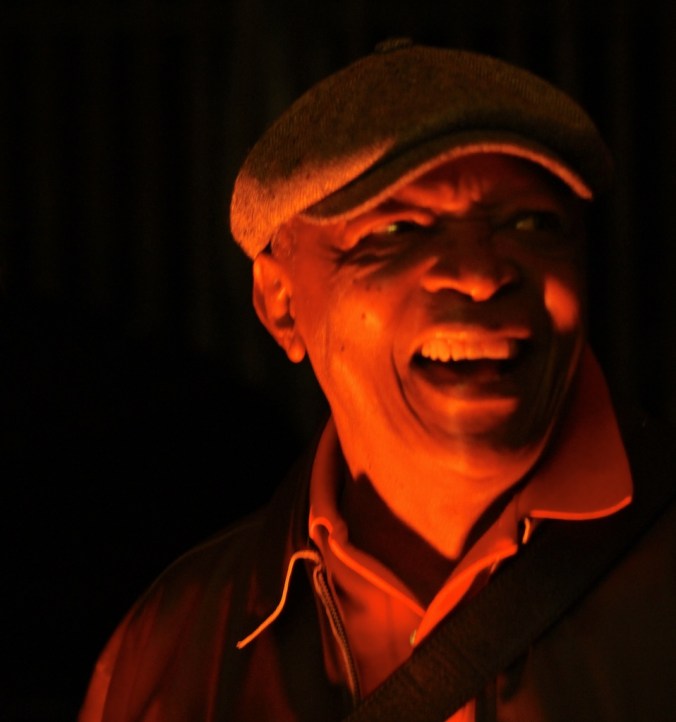
Somewhere in the middle of this set Caroline Manins went up to Stephen and whispered in his ear.   Stephen looked startled for a few seconds and then proceeded with his electronic wizardry.     Caroline then whispered in my ear, “there is someone I think you should meet”.    Leaning against the bar was Hugh Masekela, anti apartheid hero, Jazz icon, Afro Beat star.  In the subdued lighting with its soft red overtones it all seemed surreal.  The short 74 year old man stuck his hand out and smiled widely.  Then before I knew it he had enveloped me in a hug.   The great man hugged quite a few strangers that night and I suspect that all were enriched by the experience.    This was Hugh Masekela’s way of telling us that in a diverse and complex world, music can remove any barriers between us.  To paraphrase Herbie Hancock, “Music is what I do but finding a common cause with humanity is my real work”.   He has just been honoured by President Obama for his life’s work.

Cameron Ward

Cameron Ward

After the last of Stephen’s numbers Hugh Masekela asked Stephen to sit in while he, his guitarist and drummer played three numbers.  The crowd stood open-mouthed and a little star struck as the band began playing.   A guitar player from South Africa , a groove drummer from America and a Kiwi pianist – working with a Jazz hero.   Hugh placed the flugal horn to his lips and showed us that simple melody can say as much as complex harmony.  He never strayed too far from the melody but somehow his solo’s were all the more profound for that.  IMG_6412

He ended the set with Herbie Hancock’s ‘Cantaloupe Island’ and thanked us.  We slipped out into the warm night, feeling very pleased with ourselves for being in that place at the right time.

I have included a link to the Hugh Masekela concert review from N Z Musician.  The concert was a blast.

Who: Stephen Small (Keys) – with Johnny Fleury (stick), Stephen Thomas (traps) – Also: Hugh Masekela (flugal horn) plus two members of his band.

When: Wed 13th March 2013

Where: CJC (Creative Jazz Club) – 1885 building basement Brittomart

Foot Note From an Observer Interview – extract:

Q.”There was one occasion when the apartheid government tried to invite you back as an ‘honorary white’. How did that feel?

It was not only insulting, but it was like the height of comedy, right out of the fucking Marx Brothers.  The apartheid people were actors and they had to act out their part in their beliefs every day. That’s why we always saw them as being comedic.”

SFJAZZ Centre Opening

John Fenton

John Fenton is a Jazz Blogger covering the Auckland, New Zealand and South Pacific beat.  He has listened to more jazz than is healthy for any human being and he started writing, supporting local artists and Jazz in general to give something back.  He loves poetry, the creative arts and is a member of the Jazz Journalists Association.  His Blog is JazzLocal32.com  

IMG_5417

January 21st 2013 signalled a seismic event in the Jazz world.  The opening of the 35,000 sq. ft. purpose-built San Francisco Jazz Centre.  The New York Times proclaimed, ” We get the feeling that this will approximate how Jazz will look in 2013“.  This is the only free-standing Jazz facility of its kind in America and it is a tribute to all who have worked towards its completion.  The idea for this  centre was conceived 30 years ago by a few prescient dreamers who visualised a future home for the Jazz community.  At the heart of this group was Randall Kline who founded ‘SF Jazz’ out of an earlier incarnation ‘Jazz in the City'(the acclaimed SF Jazz Festivals followed).   Randall Kline is now the Executive Artistic Director of SF Jazz but he will quickly acknowledge that the project would have been impossible without widespread community involvement.

SFJC

At first glance the SF Jazz Centre appears modest in design as it is not an ornate building.   It is however a fine example of SF modernism, which sits happily in its surroundings, inviting deeper inspection.  As the detail’s revealed you begin to see it with different eyes.  The well-known Californian architect Mark Cavagnero designed the building and part of his remit was to integrate the activities with the community.  He succeeded in this.  Artists in residence (and others) will rehearse in the Joe Henderson Lab, which is at street level, has glass on two sides and is open to public gaze.  The public will also be able to glimpse the performances in the main auditorium as they pass by.

Herman Leonard pics This exchange between onlookers and musicians is at the heart of the design concept.  The main performance auditorium is build in the shape of an amphitheatre which allows eye contact between audience and performers (and obviously making for unimpeded sight lines from every seat).  The acoustics are state of the art and the sound can also be dampened.

Situated in Hayes Valley, the SF Jazz Centre is only a few blocks from the from the famous Fillmore Music District.   More importantly it shares the precinct with the SF Ballet, Davis Auditorium (SF Symphony) and SF Opera.  Immediately opposite is an imposing brick building being renovated to house the School of the Arts.  Huge Herman Leonard pictures emblazon the side of that building, causing Lionel Hampton, Billie Holiday and other greats to smile across at the Jazz centre.  This tells passers-by in unequivocal terms that the Corner of Franklin & Fell is where Jazz lives.

I collected my press pass and was given a tour of the building, suddenly aware of the welcoming friendliness of the interior.  Bearing witness were thousands of musicians names – etched into the glass.  I would assume that all are associated with ‘Jazz in the City’ and ‘SF Jazz’ in some way.

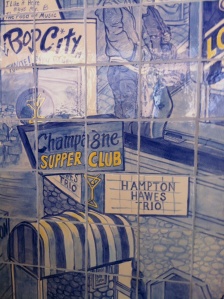
tile mural 2 039Upstairs a large tiled mural gave the history of the Bay area Jazz scene.  Names like Hampton Hawes and clubs like the Black Hawk will resonate strongly with Jazz lovers.  This town has a commendable history of producing fine musicians and with SF Jazz’s focus on education we can expect this to continue.

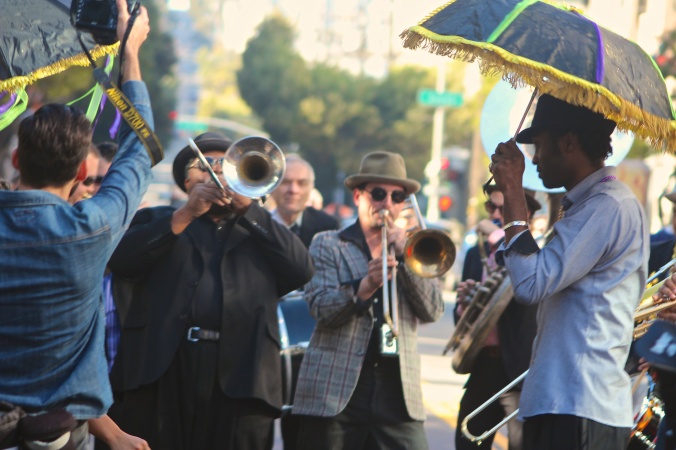
The day unfolded like most San Francisco winter days with sunshine streaming out of an azure blue sky.  Everyone was smiling and back slapping and then out of nowhere came a joyous blast of music.  It was hardly as if the collective mood needed further elevation, but just in case, the ‘Bourbon Kings’ came marching up the street New Orleans style.  At their forefront were mesmerising dancers twirling colourful ribbon-trimmed umbrellas, who swayed and whirled like dervishes in a trance.  Just how many musicians were playing it was impossible to discern, as the scene quickly became a melee of musicians, crowd and excited dogs.   It was the first time that I had witnessed a Second Line style marching band and I will not forget it in a hurry.   It was like watching the history of Jazz marching into the present.

Just before the ceremony a work by Jacob Garchik (The Heavens: Atheist Gospel Choir) was performed – titled ‘Creations Creation’.   This was call and response and when the street musicians called, those on the various balconies responded.  At one point a small terrier dog joined in (two calls on trombone elicited two happy barks, three calls three barks).   This was not planned for, but entirely appropriate in a city that has so many cheerful dogs.

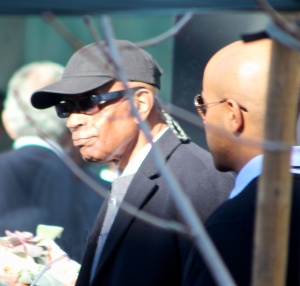
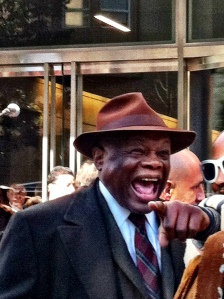
The speeches that followed acknowledged all of those who had worked toward this end and congratulatory messages from the likes of Nancy Pelosi the Democratic Leader gave the proceedings a sense of moment.   The audience overflowed with local dignitaries, among them Jazz legend Bobby Hutcherson and the much respected former Mayor Hon Willie Brown Jr. (also a former member of the State Legislature). His commitment to SF Jazz goes back a long way.  I spoke to Bobby Huthcherson briefly after the ceremony.   He is not in good health but will be performing with McCoy Tyner and others this week at his SF Jazz Centre birthday celebration.  Before we parted company he looked at me with a smile and said.  “When you return to New Zealand, don’t let them put you on a plane to Oakland”.  San Franciscans love the story about the man who purchased an air ticket for Oakland and ended up in Auckland much to his surprise.  SFJC 033

John Santos (Resident Musical Director) said with emotion, “San Francisco you got your soul back”.  Randall Kline also spoke powerfully. “They told us that this couldn’t be done, that the market was not geared toward assisting the arts at this time.  We involved the community and they said go ahead and we succeeded.  This is a powerful message to the markets – markets need to follow the community not the other way round”.  Inside there was a short film and live music performed by the SF Jazz High School All Stars.   If this performance sets the standard then Jazz is in very good shape.  Education, performance, and community involvement are at the heart of this establishment.   With rotating Resident Artistic Directors like Regina Carter, Jason Moran, John Santos, Bill Frisell and others the centre can only do well.

A poet laureate and a photography laureate have also been appointed and this impresses me no end.   Jazz, poetry and photography belong together and especially in San Francisco.

In the coming months the following musicians will have residencies:  Bill Frisell, Dave Holland, Hiromi, Zakir Hussain,Brad Melhdau, Bela Fleck and John Santos.  This is interspersed with a program of visiting and local artists.

The opening was on Martin Luther King Jr day and that was no accident.  Martin Luther King understood very well the importance of Jazz and he spoke movingly of its importance.

“Much of our power in the Freedom Movement has come from this music.  It has strengthened us with its sweet rhythms when courage began to fail.  It has calmed us with its rich harmonies when spirits were down. And now, Jazz is exported to the world, for in the struggle of the Negro in America there is something akin to the universal struggle of modern man”.

I urge Jazz lovers everywhere to visit San Francisco (and the SF Jazz Centre).  It is certainly an ideal destination for New Zealanders.  The eleven hour flight is not that onerous and the fact that you can bypass the hell of LAX is the icing on the cake.  Do it people and don’t forget to support the artists in the Jazz clubs and other venues.

The opening night is streamed below by NPR (KQED) and you can listen by following the link.  Grab a beer and nibbles and enjoy – I sure did.

http://www.kqed.org/arts/music/sfjazzcenteropeningnight.jsp

IMG_1648drummer Bourbon Kings 037dancing girl

Happy New Year – JazzLocal32.com

IMG_1535

Thanks to everyone who reads and visits JazzLocal32.com and particularly the musicians and Jazz lovers who let me into their lives, many of whom are close friends.

Improvised music is a profound manifestation of the human condition and a loadstone to guide us on. It tells us that we can reach beyond the known and touch an illusive world of new possibilities; but only if we adjust our perspective.

It is the job of musicians, writers, visual artists and poets to challenge, interpret and shock. Jazz musicians understand this better than many Jazz fans. Life can be stunningly beautiful and ordered but profound realisations can also arise from discord. These conditions are not separate but co-dependent refractions from life’s experience.

I dedicate this post to the musical risk takers who ride currents that we cannot see but which we experience through them.

Early Jazz confounded listeners as it was unknown to them. Swing took ten years to replace two beat Jazz and beBop ten years to displace the later. Jazz does not stand still anymore than life does. It is not a museum.

Whether we listen to avant-garde, fusion, funk, swing or post bop it comes from the same restless explorations if played with integrity. My wish for everyone who enjoys this music is that they will become more adventurous.

The Creative Jazz Club in Auckland has a genius for expanding our horizons and by feeding club goers a varied diet it stretches our ears. We don’t have to like everything we hear but we should be respectful of the act of creation.

IMG_5266

I am writing this from one of the great Jazz cities of the world (San Francisco) and Jazz is deep in the DNA of this place. On New Year’s Eve there were a lot of unimaginative ear splitting DJ events but Jazz coexisted and held its ground.

To paraphrase John Zorn there are blocks of sound everywhere – it just needs someone to interpret and arrange them. No manifestation of sound is invalid. The musicians do the rest and we are an integral part of the result.

We are all poets and musicians in our way if we stretch out observe and above all listen with fresh ears.

I was in a nice eatery two nights ago and a fine musician Terrance Brewer was playing smoking Jazz guitar. In the first break I went up and told him how much I had enjoyed the group and his playing. Next break he came and spoke with us – giving me two of his CDs as gifts.

The Jazz community is truly a universal family and because I listened and acknowledged the music we connected as kindred spirits.

Happy new year to my jazz family – I love you all.

listen LISTEN

Written on the road from the wonderful liberal San Francisco ( as a guide book said – Republicans and the unhip risk being run out of town).

John Fenton

PS – I now own the domain name JazzLocal32.com

20130101-120539.jpg

James Wylie & Friends@CJC

James Wylie is a respected saxophonist, clarinetist and composer who has played, studied and taught all over the world. He initially studied in Wellington where he attended the New Zealand School of Music. One and a half years ago he moved to Berlin and soon after that to Thessaloniki in Greece.

Those reading the CJC webpages eagerly look out for returning expats, as they very often bring new ideas back with them while still retaining a core of that ‘New Zealand sound’. James played alto saxophone on this gig and he demonstrated why the alto is rapidly becoming a popular instrument again. For years the popularity of the alto waned but happily that is no longer the case. Improvised music often gives the impression of being a ‘blue skies’ horizon where no boundaries exist. All freedom comes from discipline and it is the knowledge of what works best in a given situation that marks players apart. Chops count but musical taste counts too. James showed an intuitive understanding of this.

Tonal and textural contrasts add considerable depth to a performance and in this we were well served. We not only heard the multiple facets of James Wylie’s tasteful alto playing, but we benefited from the addition of Roger Manins tenor. This was a double dose of saxophone magic. The quartet was completed by two Christchurch expats, Richie Pickard on upright bass and Andrew Keegan on drums.

While their first number ‘The Mooche’ (Ellington) got our attention, the second number ‘Just in Time Contrafact’ (Wylie) simply demanded it. It was an outright cooker. Roger Manins particularly shines in these situations and as he and James worked the changes and stretched out, there were enthusiastic cheers from the audience. The sets contained a couple of originals, some well-known standards and seldom played tunes by Jazz greats like Monk. Best of all were the tunes we have never heard in a Jazz setting. ‘Wichita Lineman’ (Campbell-Webb) – [It is a little known fact but Glenn Campbell was one of the original Beach Boys], ‘I can’t help falling in Love With You’ (Elvis) , and a memorable version of the standard ‘For All We Know’.

Nat Cole and Billie Holliday sung this so memorably (and hauntingly) that post 50’s bands often shied away from it. That is a pity because it can still evoke all of the emotions that made it a popular classic. The band approached it in the way that the late 50’s piano-less quartets did. Playing contrapuntally while extracting the maximum beauty from the melody. In this style of playing the bass is pivotal and Richie Pickard was perfect.

While the horns naturally took centre stage I never-the-less had my attention drawn to drummer Andrew Keegan again and again. The quality of New Zealand drummers often amaze and Andrew is a traps player I will keep an eye on. He is not overly busy but he has an in-the-pocket propulsive style. He listens carefully to what the others are doing and reacts in kind.

The last portion of the second set featured James interpretations of traditional Greek songs. My love of Mediterranean infused Jazz is constant and hearing Greek music was a treat. James interpreted the lovely melodic tunes (in crazy time signatures) with an ease that can only signify his deep interest in this music. In this portion he accompanied Greek singer Egli Katsiki. Her voice while a little soft at times resonated perfectly with the keening alto and between them they reached deep into the hearts of the spellbound listeners.

It was nice to have James here and I am keen to see where his musical journey takes him next (back here soon I hope).

Bennie Maupin & Dick Oatts Massey University

Lovers of this music with a sense of its history will be aware that there have been markers of excellence laid down along the way. This is not about commercial success but a deeper and infinitely more subtle thing. A powerful vibe that seeps into the DNA of the music, acknowledged by all who have the ears to hear it. Bennie Maupin has laid down a number of such markers in his long career.

I have been listening to Bennie Maupin for most of my life but I suppose that it was Lee Morgan‘s ‘Live at the lighthouse’ album (Blue Note) that made me pay particular attention. The album had been cut at Hermosa Beach (Howard Rumsey’s ‘Lighthouse’) in July 1970. If I were to single out two tracks from that album they would be ‘Peyote’ which Bennie wrote and ‘Beehive’ by Harold Maybern. The former is a wonderful piece of lyrical writing with highly melodic hooks and subtle shifts in intensity which pull you ever deeper into the tune. The latter is a fiery burner that immediately tells you that Bennie is gazing at limitless improvisational horizons and flying free of known constraints.

Later that year he played so memorably on Miles ‘Bitches Brew’ (Columbia) and his bass clarinet on that album continued the groundbreaking work of Eric Dolphy. During the next decade he alternated between Herbie Hancock (‘Mwandishi’, ‘Headhunters’) and Miles (‘A Tribute to Jack Johnson’, ‘On The Corner’, ‘Big Fun’); while cutting his own first album as leader in 1974. ‘The Jewel in the Lotus’ (ECM) has been one of the most sought after albums in Jazz until its re-issue a few years ago. After that came ‘Slow Traffic to the Right’, ‘Moonscapes’, ‘Driving While Black on Intuition’, ‘Penumbra’ and ‘Early Reflections’. As a sideman he has played with the who’s who of the classic Jazz world including Horace Sliver and McCoy Tyner.

Immediately I heard about the Massey University concert featuring Dick Oatts and Bennie Maupin I asked the organisers if I could have a few words with the visitors. No Jazz writer would want to overlook an opportunity like this. I had been quite ill that week but no illness was going to stand in the way of this day.

Late Sunday morning on the day of the concert we met at a coffee bar near the Massey campus and while we ate I began a series of short conversations that ended up lasting until midnight. Dick is a friendly man with a big smile and a hint of the raconteur about him. Bennie is a little quieter, but you soon sense that he is taking everything in and he reveals an inner warmth as he gets to know you.

I had been burning to ask Bennie about his uncanny abilities as a multi reeds and winds player. “Why are there so few that master a range of horns” I asked? Like Dolphy before him Bennie has been extraordinarily proficient on all of his horns. When he was 18 years of age Eric Dolphy had handed him his flute saying, “show me how you play”. He then gave him an impromptu 40 minute flute lesson. What Bennie learned about technique in that short lesson was never forgotten.

He looked at me and said with deep reverence, “Dolphy was the greatest. Being a multi reeds and winds player is the path I was encouraged to take by those around me and in particular by my teacher Buddy Collette. There is no magic bullet, just very hard work. If you don’t maintain the maximum effort on each horn you quickly lose your edge”.

Because I loved ‘ Live at the Lighthouse ‘ so much I asked him about Harold Maybern’s ‘Beehive’. It is an incendiary tune bursting at the seams with raw energy. “Oh that tune was very hard the first time we played it”, said Bennie. “It was the velocity, but by the time we got to the ‘Lighthouse’, we were on top of it. That gig was recorded live and so we understood, no second takes. We could not even check the recording afterwards”. What Bennie, Jymie Merritt, Mickey Roker, Harold Maybern and Lee Morgan fused together was an energy infused miracle.

As we didn’t have much time before rehearsals we discussed his recordings as leader. ‘The Jewel in the Lotus’ (ECM 1974) is a gentle but profound masterpiece. The layering of instruments creates a soundscape that has space and incredible depth. In my mind this is not a fusion album but a manifesto of the spiritual mores of the 1970’s Jazz world. As with Herbie Hancock and Wayne Shorter, Bennie follows Nichiren Buddhism. An unpretentious spirituality quietly informs his work.

I learned that a Big Band version of the title track ‘The Jewel in the Lotus’ (Maupin), was to be played that night. They would also be playing ‘Water Torture’ (Maupin). This was transcribed and orchestrated by Mike Booth for the performance and Mike would be one of the few Kiwi musicians who could take on such a task in the limited timeframe. The result was praiseworthy and with Bennie on board it soared.

Dick Oatts (alto sax and other reeds) will be well-known to anyone who has followed the incarnations of the famous Thad Jones/Mel Lewis Big Band (Village Vanguard Orchestra). He is a mainstay of that orchestra and as I was soon to learn, his writing skills were honed to perfection. He has been to Auckland before and his return engagement was received with great enthusiasm. His extensive recordings as leader culminated with ‘Two Hearts’ (2009). This man is really across his music and his phenomenal chops, his focus and his writing skills all revealed themselves as the day proceeded.

Phil Broadhurst and the musicians then asked if I would like to attend the rehearsal. No second invitation needed.

What I witnessed was a highly informative music lesson. It is commonplace in Jazz for musicians who have never collaborated before to be thrown together. This is what Jazz musicians do. In these situations a musicians reading skills, memory and concentration are tested. When backing an iconic figure like Bennie Maupin or a gifted altoist like Dick Oatts, the risks intensify. This is when less experienced band members have to step up and the stretch is often a big one. The local musicians met that challenge on Sunday. In Jazz all higher learning stems from such experiences.

The program had been split into two segments. The first half was a sextet featuring Phil Broadhurst (piano), Frank Gibson Jnr (drums), Alberto Santorelli (bass), Neil Watson (guitar) – Bennie Maupin and Dick Oatts (saxophones). The second half was the Auckland Jazz Orchestra; first on their own and then with the visitors. Trudy Lile was featuring on Jazz Flute in a beautiful piece titled ‘Sogur Fjord’; a flute and orchestra chart which Mike Booth had brought back from Scandinavia some years ago.

When Bennie heard Trudy play he informed her. You will play up front with us in the first half as well. He then sat down and proceeded to write some parts for her. This writing on the fly was a feature of the afternoon and Dick Oatts was forever adjusting and rewriting charts to suit the instrumentation. This is a valuable skill that experienced professionals possess. In rehearsing the band Bennie would quietly raise his hand and ask for a subtle change. This was music under constant revision and aiming for the best outcome – an ideal improvisational vehicle.

Trudy had looked stunned for the briefest second and then she had focussed. She gave it everything and performed brilliantly.

The concert began at 8pm and it all came together as planned. The sextet plus Trudy played ‘Water Torture’ (Maupin), a reharmonisation of ‘Just Friends’ (‘Just Us’ Oatts) and several more numbers culminating with an impromptu performance of ‘Straight No Chaser’ (Monk). The second segment began with the AJO and Trudy, who were soon joined by Bennie and Dick.

If someone asked me today to choose my ten Desert Island tracks I would reel off nine and then add….oh and give me that Massey Concert AJO/Maupin version of ‘The Jewel and the Lotus’. To say that I enjoyed the tune would be a gross understatement.

The last number was ‘Naima’ and Dick Oatts was superb. He wove in all of the elements of the tune and then took it to new places. This was a display of passion and chops second to none. The performances on the night were all great and the AJO had raised the bar yet again.

Later as I ran Bennie and Dick back to their hotel I could not help but think. This has been the best of days.

I dedicate this post to Dr Cranshaw and to Kay, who kicked my ass and convinced me that I would find the strength to go.

Brad Mehldau tour – Mark Baynes interview

Deutsch: Brad Mehldau selbst fotografiert am 2...

Brad Mehldau

Hi Mark,

 I understand that you were lucky enough to attend one of the recent Brad Mehldau/ Joshua Redman duo Concerts in Australia. Even better you were able to meet them afterwards and so I would love to know something about both concert and meeting. Your impressions will go some way towards assuaging the feelings of jealousy we are all experiencing.

The Concert:

JF. Which of the three Australian concerts did you attend?

MB. I saw both Sydney concerts, one was at the brand new concert hall in Chatswood (North Shore) on the 19th January and the other was at the City Recital Hall, Angel Place on the 20th January.

JF. I am unfamiliar with the venues, so how was the sound quality and how were the sight lines for you?

MB. The Chatswood venue was much better. I noticed immediately that the piano sound was more acoustic sounding at that venue. I spoke to Brad about that, it turns at the sound engineer was forced to use more amplification at the City Recital Hall as the natural acoustics were unsuitable for this kind of performance, so consequently the piano sounded more amplified and forced.

JF. Are you also able to give me an idea of their set list?

MB. Yes, Brad and Joshua played 2 completely different sets. However each night began with a composition of Brad’s, then a composition of Joshua’s, then a Monk tune. They told me later that this was coincidental.

Concert 1 – Chatswood The Falcon Will Fly Again (Mehldau), Note to Self (Redman), In Walked Bud (Monk), Final Hour, Sanctus, My Old Flame, Anthropology, Hey Joe, Encore??

Concert 2 – City Recital Hall Always August (Mehldau), Highcourt Jig (Redman), Monks Dream (Monk), Unknown, Mels Mode(?) The Nearness of You, Unknown, Encore??

JF. What numbers were the standouts for you?

MB. At the Chatswood concert I loved their version of Hey Joe, Mehldau played a superb contrapuntal solo, it was a great crowd pleaser . Also the opening tune, ‘The Falcon Will Fly Again’ was incredible, Redman’s fluency with this tune was outstanding, they really seemed to be on the same harmonic page together. It was interesting hearing Mehldau improvise over rhythm changes during Anthropology, I have heard him talk about the importance of not sounding clichéd when soloing over rhythm changes and to me I really felt like he was constantly searching for originality during this performance, it was extremely effective and refreshing. At the City Recital Hall my favourite track was the ballad ‘The Nearness of You’. I am particularly fond of the way that Mehldau performs ballads, this piece contained all of the things I love about his ballad playing e.g. his independent phrasing, use of the piano’s range and touch were all simply wonderful.

JF. These musicians have played together before and we have heard them recently on Mehldau’s ‘Highway Rider’ and on a good number of Joshua Redman albums (plus a Kurt Rosenwinkel album).   Did you get the sense that they were especially musically attuned to each other or were they just two top-rated professionals doing what they do?

MB. Yes they were definitely in tune with each other rhythmically harmonically and conceptually; this was obvious from the first track. This duo has been performing together for quite some time. Brad told me that they have so much repertoire that they can enjoy a great deal of time without repeating any tunes because they have been playing together as a duo for so long now. Interestingly enough however, the style of the duo was vastly different from one night to the next. Mehldau definitely led the Chatswood concert in many ways, slightly overshadowing Redman balance wise, he played many intense solos that were often linear in texture rather than chordal. This is a generalisation of course but it conveys the idea. The City concert was more balanced, Redman played more soprano as opposed to tenor and there was more subtle interplay between the two masters. Mehldau played with colour and texture much like some of his solo work (Live in Marciac) rather than employing a linear concept. Words that come to mind are ‘soundscape’; ‘explorative’, ‘joyful’ and it seemed to be a more relaxed duo performance. Both concerts were spellbinding however, just very different. I spoke to Brad about his concept, he talked about the ‘cerebral’ process found in improvisation and described how he likes to visualise that part of his playing as being kept behind a virtual ‘curtain’ at the back of his head, always present but just hidden from view. He then went on to talk about how sometimes that this cerebral process is more prominent on some nights than others. Brad told me that this was ok, suggesting his acceptance to the fluid process of improvisation and the humanity contained within.

JF. Regarding the hang; how did you manage to get invited to meet them after the gig? I can only imagine your anticipation in the days prior to that.

MB. I have been in contact with Brad for several years now via email.   He brought his trio to the Wellington Jazz festival and I bumped into him (literally) very briefly afterwards.   He kindly agreed to answer some questions to help me with my studies.  He was later kind enough to put my name on the guest list for both nights at these recent concerts but this won’t be the last time I hear him play this year.  I am playing with King Kapisi at the Babel festival (March 31st) in Marseille, France.  I will be flying to Europe a few days before the gig so that I can hear his trio play 3 times and one solo concert.   Brad has agreed for a hang during that time too; I am very much looking forward to it as I find him to be an honest and very human person. That tour will be on – March 22nd, 2012 Bimhuis Amsterdam (Netherlands),  March 23rd, 2012 Bimhuis Amsterdam (Netherlands),  March 24th, 2012 Bimhuis Amsterdam (Netherlands) [*solo], March 25th, 2012 International Bergamo Jazz Festival Bergamo, ITALY.

JF. Tell me about what you or others asked them and how they answered or what they spoke about.

MB. After the show Brad invited my friend and I to join them both for dinner. I found both Joshua and Brad to be down to earth people who just wanted to hang out after their gig like any other working musician.

JF. Did you gain any musical or other insights from the exchanges?

MB. The intensity in which I was able to listen to both of the concerts has stayed with me since last month and I try to emulate the integrity and thoughtfulness that both players possess in my regular gigs. Since those concerts I have made a list of questions that I will ask Brad when I see him next, so as to better my understanding of his musical concept. Brad mentioned the necessity of finding an original voice in jazz.  After studying the greats this may be the most important thing.  I see originality and full emotional connectivity as being important future goals.

Marks Bio:

Mark Baynes is a British born pianist. He has performed for 15 years as an international artist playing for a long list of clients ranging from the BBC and Auckland Philharmonia plus many of New Zealand’s best-known Artists.                 

 Mark leads a piano trio called ‘The Ironic Trio, their latest release is an all original album entitled ‘In Song’ with Jason Orme (drums) and Aaron Coddel (bass). This has cross over appeal. In 2009 the Ironic Trio recorded an EP entitled ‘In Colour’ which has a more traditional jazz flavour.

Mark is a university tutor / lecturer at Auckland University and Massey University (New Zealand School of Music). In 2008 Mark was awarded the Ariadne Danilow Music prize (Victoria University of Wellington) and the Sir Alan Stewart Postgraduate Scholarship (Massey University) enabling him to pursue further study. Mark now holds an MMus in jazz performance (1st Class Honours) and is currently studying towards his DMA (Doctor of Musical Arts) in jazz performance. Marks DMA topic is entitled ‘Brad Mehldau’s stylistic innovations and their implications for jazz piano performance’.

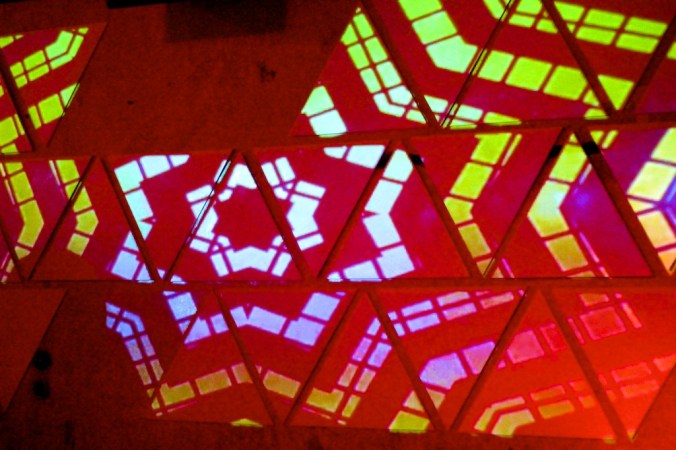
‘Keester Parade’ – ‘A Smooth One’

Listening to old friends like these is time well spent. The material comes from the swing era but these albums have a more modern feel as they were recorded at a time when bop and post bop music had gained ascendancy. The artists on the albums are a mix of the famous and not so famous, swing and boppers, East and West Coasters. When I run my eyes over the names on the track lists I marvel at the lineup and realise that many of these names are fading from our collective memory. Pepper, Mandel and Torme will never be forgotten but what of Cy Touf? He is a mere footnote in the Jazz lexicon and he only recorded a few times. Not withstanding that his Octet/Quintet album has remained a favourite with Jazz musicians and arrangers and this is probably because of the loose easy-going West Coast style arrangements by Johnny Mandel.

Even ‘Sweets’ Edison is fading from memory and few modern listeners would hunt for his name in a Basie band lineup (I do). Another great band leader and arranger was Marty Paich. His piano playing is probably what is termed arrangers piano but it still sounds fine to me. He has that minimalist touch and his arranging style owes a lot to Basie; sweet verses tart & hard swinging. I collect Marty Paich albums and never tire of his orchestration. He was called the Picasso of Big Band Jazz and his use of tonal colour was achieved to great effect. He allowed wonderful trumpeters like Jack Sheldon to shine and he is closely associated with Art Pepper. Lastly there is the Mel-Tones. Their origins go back to the Chico Marx Orchestra which Mel Torme joined up with in 1943. To modern ears their harmonising can sound old-fashioned, but this group (with Mel at the forefront) were big names in their day.

The albums date from 1955 and 1959 respectively and they star an almost unbelievable group of musicians. Only a few of these guys are still alive and that is sad because they once grooved their world (the famous Johnny Mandel is still an arranger par excellence and as a young man he also played the rare bass-trumpet like Cy Touf). To hear an incomparable ‘Sweets’ Edison solo with his signature lazy-feel, bluesy slurs or Art Pepper with his biting cut through on alto is still exciting to me.

These albums are a peephole into an era that is long gone but it is one that still deserves our respectful remembrance.

The albums;

Cy Touf his Octet and Quintet (Pacific Jazz 93162) featuring – #1 -4 Cy Touf (bass trumpet), Harry ‘Sweets’ Edison (trumpet) Conrad Gozzo (trumpet), Richie Kamuca (tenor sax), Matt Utal (alto and baritone sax), Russ Freeman (piano) (Pete Jolly (piano #3), Leroy Vinnegar (bass), Chuck Flores (drums). Johnny Mandel & Ernie Wilkins (arr).

Track one – Keester Parade (Johnny Mandel)

Track seven – A Smooth One (Benny Goodman)

Mel Torme- Art Pepper – Marty Paich Sessions: (Lonehill Jazz) Mel Torme (vocals) The Mel-Tones (vocal) Marty Paiche (piano) (celeste) (organ) (arranger) (Conductor) Orchestra featuring; Art Pepper (alto sax), Jack Sheldon (trumpet), Frank Rosolino (trombone), Bill Perkins (tenor sax), Victor Feldman (vibes), Barrney Kessel (guitar), Joe Mondragon (bass), Mel lewis (drums).

Track eighteen – Bunch of The Blues/ Keester Parade/ TNT/ Tiny’s Blues – (Mandel/Kahn).

Footnotes: The album track list that come up in iTunes gave ‘Keester Parade’ as ‘Easter Parade’. That would certainly have amused the musicians and especially Johnny Mandel. For those who don’t speak the lingua franca of the hipster 1950’s, a Keester is what you sit on. West Coast pianist Pete Jolly is credited in the Cy Touf album and he has a lot of loyal devotees in New Zealand. In the early 1960’s when tours by lessor known Jazz musicians were unheard of and when such journey’s were long and arduous, Pete Jolly and Ralph Pena visited here. The tour had been organised by Auckland Jazz fan Frank Collins and the subsequent fun has never been forgotten. Recordings from the gigs were carefully squirreled away by John Good (recently deceased) and these treasures were later released in the USA as a posthumous Pete Jolly album.
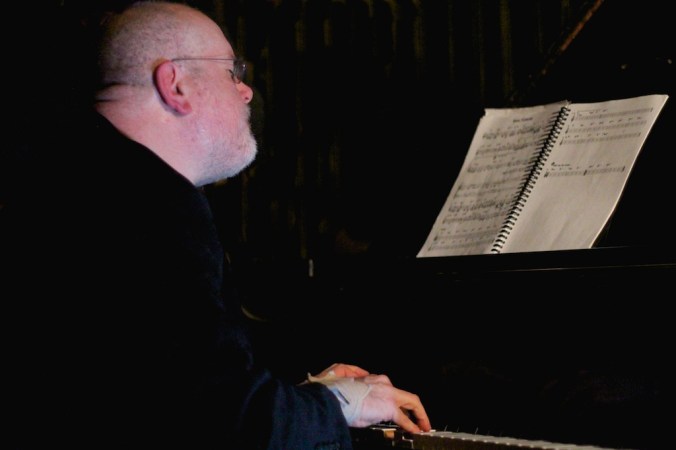
Miles Espanol – New Sketches of Spain

Late last year as I was reading Jazz Times I spotted an article about Bob Belden’s new ‘Miles Espanol’ project.  I like Bob Belden’s work but my first thoughts were, why mess with perfection?  I need not have worried because he has created something quite fresh and original; using ‘Sketches of Spain’ as a springboard into the now.

Like many Jazz listeners I had been deeply immersed in Miles Prestige recordings and his seminal ‘Kind of Blue’.    Soon after that ‘Sketches of Spain’ came into my life and along with ‘The Maids of Cadiz’, ‘Flamenco Sketches’ and ‘Teo/Neo’; Miles (and Gil’s) Spanish tinged music was seldom off my turntable.  As a guitar fan I was already quite familiar with Rodrigo’s ‘Concierto de Aranjuez’ and Flamenco.
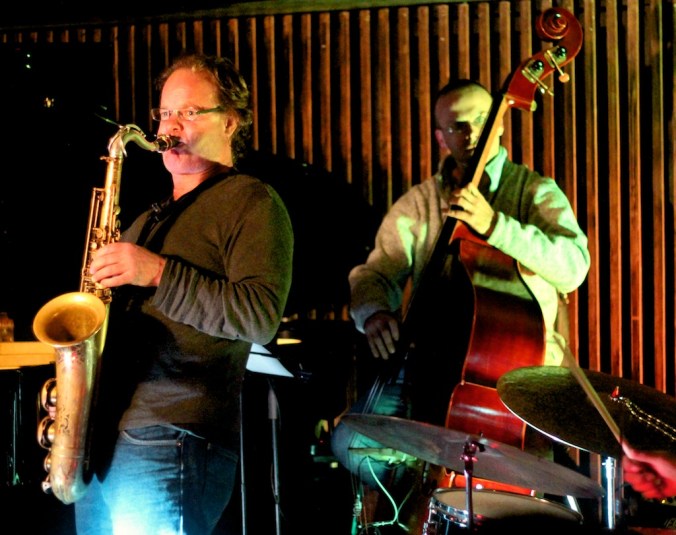
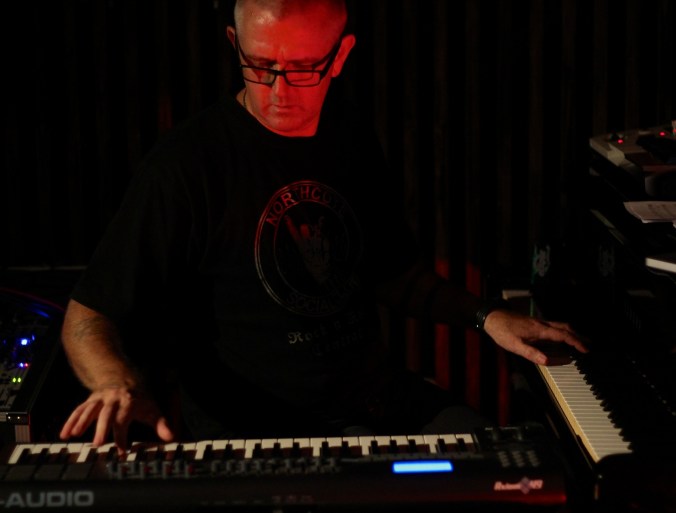
Miles Davis and Gil Evans took this wonderful material and reworked it in ways that only master musicians could.  This was visionary and a new type of jazz – perhaps a fore-runner of the ECM Jazz which a decade later would unselfconsciously  absorb the music of cultures far removed from the American heartland.   Miles later described this Flamenco music as a type of blues – the voice of a people’s struggle against oppression.   I had not realised it before writing this, but my fascination in recent years with Mediterranean Jazz (and particularly Sufi/Moorish/Italian/Spanish Jazz) probably began right there.

This was a mammoth project to take on, but Bob Belden has a track record of realising such crazy visions.  He also has serious pull with musicians and industry players.

First on board appears to have been Chick Corea and Jack DeJohnette soon followed.   After that things came together in an organic fashion – each artist seeming to recommend the next.  He had not initially planned to ask 33 musicians to participate, but that is how it ended up.

Bob Belden is a well-known horn player producer/arranger/composer.  On this double album he does not play his warm-toned tenor sax (only Timpani and Marimba on one track).   As arranger producer his presence is never-the-less over-arching; like a Gil Evans for our times.   While he has guided the 33 musicians firmly towards the realisation of his vision, he also appears to have known exactly when to loosen the reins.

The artists were flown into New York from a number of countries but mainly from Spain, North Africa and South America.   The American musicians are mostly Miles alumni – a who’s who of Jazz royalty.   Chick Corea (p), Jack DeJohnette (d), John Scofield (g), Sonny Fortune (f), Ron Carter (b), Vince Wilburn jnr (d).  Add into that heady mix; Tim Hagans (t), Gonzalo Rubalcaba (p) Eddie Gomez (b), Antonio Sanchez (d), Alex Acuna (d) (perc), Jerry Gonzalez (fh) (c) and more -(the full list of musicians is at the bottom of the post).

Of note is the well know Jazz-Flamenco pianist Chano Dominguez (p).   I first obtained an album of his in the nineties and he is very impressive.    Other notable Mediterranean musicians are Rabih Abou Khalil (oud), Edmar Castineda (harp), Nino Joseles (g), Lou Marini (fl)(bass flute), Jorge Pardo (f), Christina Pato (Spanish bagpipe).

My favourite small group tracks are; (1) ‘Trampolin’ (by Chic Corea) – Chic Corea (p),Jorge Pardo (f), Ron Carter (b) Antonio Sanchez (d).  This builds in intensity until the grove is rock solid and it swings hard without losing the complex polyrhythms.   Chick understands this music very well. (2) Spantango (by John Scofield).

Larger pieces; Saeta/Pan Piper (Gil Evans- traditional)

The concept is so big that the overall album lacks a little in cohesion, however the tracks range from very good to marvelous.

Full listing of musicians: Bob Belden, Ron Carter, Jack DeJohnette, Sonny Fortune, Eddie Gomez, Gonzalo Rubalcaba, John Scofield, Rabih Abou-Khalil, John Clark, Tim Hagans, Jerry Gonzalez, Adam Rudolph, Jorge Pardo, Alex Acuña, Carlos Benavent, John Benítez, Chick Corea, Sammy Figuerova, Scott Kinsey, Lou Marini, Michael Rabinowitz, John Riley, Antonio Sanchéz, Vince Wilburn J, Mike Williams, Chano Domínguez, Luisito Quintero, Charles Pillow, Edsel Gomez, Jaco Abel, Dominick Farinacci, Victor Prieto, Cristina Pato, Edmar Castaneda, Brahim Fribgame, Niño Joseles.

Dizzy on the French Riviera

Dizzy Gillespie 1955

Image via Wikipedia

John Birks (Dizzy) Gillespie was a preeminent  force in the development of modern Jazz but his persona and the ‘Dizzy’ legend extended well beyond the notes he played.     For a number of reasons Dizzy was bigger than the music he lived for and this was no bad thing because all marginalized art-forms (as BeBop certainly was) needed someone like him.   Dizzy played with great technical facility but more importantly he told a new and interesting story.   He did this in part by making fun of the very underpinnings of the new music – an implied hi-brow intellectualism and a formidable technique.

He gently parodied the hip young Beatniks with their goatee beards and heavy-framed horn-rimmed glasses and became their hero in spite of it. Shops carrying ‘Dizzy Gillespie prescription-less horn-rimmed spectacles’ sold out in New York novelty shops and his bent-up trumpet bell and the accompanying story became part of the folk law of BeBop.

He was also be a relentless trickster and when playing as a sideman he was often in trouble over his antics.    Later on he scripted some of that slap-stick humour into his own bands routine and even though it can look a little dated now, it was part of the ‘Dizzy’ experience.    He wanted to make the music fun and yet profound; he succeeded in the in the best possible way.

Dizzy the man may have had some detractors but I have never heard of them.   Louis Armstrong once complained that BeBop was ‘chinese music’ and ‘Miles’ objected to negro bands clowning around on the band stand as it was allegedly demeaning.  Dizzy was too good-humoured to care about such niceties.    His personality was larger than life and in filmed or recorded interviews a deeply tolerant and a likable man was revealed.    He played with musical genius Charlie Parker for years and his attempts to steer Parker away from his self-destructive path eventually failed.  For much of his life Dizzy was a member of the peace-loving ‘Baha’i’ Faith and later he was a United Nations World Wide Ambassador for Peace.   It is obvious to me that this open-minded tolerance was a well-spring that was sourced deep within him.   Watch him interviewed in ‘A Great Day Out in Harlem’.

In the Forties Dizzy played with the ‘Cab Callaway Band’ and it was while there he came into contact with Cuban and other Latin American musicians.   He soon became the number one champion for Afro-Latin American Music and he is credited with setting the scene for that ever popular genre.  ‘Manteca‘ was a big hit for his bands and it is still played today.

My absolute favourite recording of his is ‘Dizzy on the French Riviera‘ (1962).  It is acknowledged as a work of genius but it scandalously languished  in the vaults for nearly 40 years and was not put out as a CD until a year ago when ‘Verve’ re-issued it (only finding its way to New Zealand in recent months).   Shame on ‘Phillips Records’ and their successors for their laggard behavior .    A number of years ago we got sick of lamenting the lack of access to this joyful disk and so we took a well-worn ‘Mono’ LP version to a friend for de-clicking and digitizing.    Those two back-up copies are now consigned to the bin because the cleaned-up ‘Stereo’ version by Verve is fabulous.   They also corrected the miss-spelling of the name Lalo Schifrin from the mono LP cover.  I know completist  collectors who will now want both versions.    I would urge everyone who loves 60’s Jazz to grab a copy before it vanishes again (‘Amazon’ has them at bargain prices and the US dollar is our friend now).

The Band is:  Dizzy Gillespie (trumpet – vocal), Lalo Schifrin (piano – arranger), Leo Wright (alto saxophone-flute- vocal), Tzigone Elek Bacsik (guitar), Chris White (bass), Ruby Collins (drums),

Dizzy on the Riviera

Pepito Riestria (percussion).     The arranging on this album is masterful and the multi talented and soon to be famous Schifrin was a typical Dizzy Gillespie discovery.    His often bluesy and time displacing chords can subtly and swiftly merge into a ‘clave’ and he is a real power-house in this band.   Leo Wright is fabulous on both Alto and Flute and I dont know enough about his story to know why he was not heard more often.   That he could be impassioned, Dolphy like and romantic on the one disc is impressive.  I will include some information about Elek Bacsik as he is impressive also:

Bacsik was born in Budapest, the son of Arpad Bacsik and Erzsebet Pocsi. He was of Romani ethnicity and studied violin at the Budapest Conservatory, but found his primary musical inspiration in bebop pioneers Dizzy Gillespie and Charlie Parker. He was also the cousin of Django Reinhardt. In his early years he travelled as a musician to Lebanon, Spain, Portugal and Italy. He worked in Paris in the early 1960s and recorded with some well-known French musicians such as Jeanne MoreauSerge Gainsbourg and Claude Nougaro as well as making solo albums. In 1966, he went to work and live in the United States and played at Las Vegas. Bacsik recorded on guitar on Gillespie’s Dizzy on the French Riviera (1962) and later on violin with Gillespie at the Newport Jazz Festival in 1974. His bebop violin playing is featured on his two albums as a leader, I Love You (1974) and Bird and Dizzy: A Musical Tribute (1975).  – Wikipedia

The entire band is great and I love the happy sounds of children playing in the surf at Juan Les-Pins on the opening and closing tracks.    It is somehow appropriate given Dizzy’s love of humanity.  This is the well-loved Antonio Carlos Jobim song ‘No More Blues’ (Chega de Saudade).    I have also included a later version of the song with James Moody and Kenny Barron replacing Wright and Schifrin.

http://youtu.be/CVvAKIU5BT0

http://youtu.be/cWDxU813wd0

Festivals in the sun

Upstairs Jazz Club

On a continent twelve hours flight from here it is Jazz festival season (preferably flying Air New Zealand, with the Alyn Shipton selected Jazz soundtrack to get you through the long haul north).

Two weeks ago the well-respected San Francisco Jazz festival was held and the San Francisco Fillmore Jazz Festival is winding up about now.The latter is a 4th of July weekend festival and it is the way a lot of West Coast people enjoy Independence Day.   It always seems to get good reviews and part of its appeal is the easy-going vibe, free concerts and food.  My daughter-in law confirmed that it was an endless combination of Jazz , food, and craft stalls and an excellent way to spend long lazy days in the sun (hers is the larger photo).  The festival included the Mingusamungus band (dedicated to Charles Mingus) and the Contemporary Jazz Orchestra (strong Thad Jones/Ellington influence).

Further north and still running at the time of writing this is the worlds biggest Jazz Festival, The Montreal Jazz Festival.   I was in Montreal 7 months ago and caught the small L’off Jazz festival which profiles local Quebec Jazz.  While there I visited as many Jazz clubs as I could cram into a week (two or three a night) but the ‘Upstairs’ was undoubtably my favourite place (off Rue St Catherine).   It is actually in a basement (but the Upstairs neon sign is hung upside down).   It was there I saw a young Montreal based guitarist Carl Naud and his band.    In this group I saw a restless hungry spirit that hinted at Coltrane’s legacy but was reaching well beyond that.   Memories of that fabulous club and that edgy young band will remain with me for a very long time.  The Upstairs is part of the main summer festival and artists like Gary Peacock are appearing there.

This year at the Montreal Jazz Festival much-loved son, Canadian ex-pat Kenny Wheeler has returned as the main attraction.    Kenny is an artist I have loved since I first heard his deep melodic lines and signature stratospheric high-end squalls.   He is more often playing Flugelhorn than trumpet and his sound is unmistakable.    His ‘music for large and small ensembles’ is a Jazz masterpiece and regarded rightly as being a desert-island-disk.  Most often playing in the company of fellow UK resident John Taylor (p) and often with John Surman (s) Palle Danielsson (b) & Peter Erskine – all top rated ECM artists.    This clip is from some years back but it profiles Kenny Wheeler (fh), John Taylor (p), Palle Danielsson (b) , John (Crumbles) Abercrombie (g) and Peter Erskine.
http://youtu.be/f7p5dUxAnmY

Fillmore in the sun

Fine & Mellow – achieving cult status

Label of a Commodore Records 78 record by Bill...

Image via Wikipedia

Lady Day - Griggs collection

Amongst Jazz fans this clip from a show called ‘The Sound of Jazz’ is legendary and I suspect that it could top the list of  ‘best short Jazz films ever made’.  While many will have seen this or already own a copy on DVD, it is a joy to be repeated over and again.    The song ‘Fine & Mellow’, is a blues written by Billie Holiday and her studio band just happens to contain some of the best musicians of the era.   In my view the film is dominated by Billie and ‘Pres’, but everyone here is note perfect.   There is more feeling in this clip than a hundred others of a similar nature and perhaps that is what has elevated it to cult status.

Each solo is about telling a story within a few minutes; because this was the discipline that was imposed upon pre 1950’s recording artists.    The 78 rpm recordings had limited space and certainly did not allow for John Coltrane like explorations of a theme.  This ability to tell a story succinctly and well was cultivated by the era’s Jazz greats and no one told those sweet stories like ‘Pres’ (Lester Young), Ben Webster or ‘Bean’ (Colman Hawkins).   Billie and ‘Pres’ had been extremely close for years, but for reasons never fully revealed they had fallen-out some time prior to this recording.   During the recording Billie smilingly acknowledges the band members as they solo; obviously loving their improvisations.   When ‘Pres’ plays though an expression of absolute love and appreciation is evident.    This was a moment out of time that has delighted Jazz fans ever since.

Billie was to die tragically within a year or so of recording this and her rendition of this blues is an extremely  poignant moment in Jazz history (as if she understood that her death was immanent).  The curse of over indulgence in narcotics and booze cut a terrible swathe through the best and brightest of the jazz scene around this time.

The slurred introduction by Billie is genuine but possibly spliced into the film later (which was made in a 1950’s studio setting and unlikely to have included a stoned Billie intro).  The band is: Ben Webster (ts), Lester Young (ts), Vic Dickerson (t), Gerry Mulligan (bs), Coleman Hawkins (ts), Roy Eldridge (t), Doc Cheatham (t), Danny Baker (g), Milt Hinton (b), Mal Waldren (p), Osie Johnson (d).

http://youtu.be/ZtgUbJN8oPE

Pat Martino – deep in the music

Pat Martino

Image via Wikipedia

Not too many months ago my Partner & I saw Pat Martino in ‘Birdland‘ and were captivated by his deep-in-the-groove East Philly style.    There could hardly have been a better place to hear him, as this is one of New York’s best Jazz clubs and a friendly intimate space.

Like most out-of-towners we loitered awhile in Times Square before walking the short block to ‘Birdland’.   I could hardly believe my luck at being able to see Pat in such a setting as I had become a fan some years earlier; having developed a taste for that whole Grant Green thing.

The first of the band members to step on stage was Tony Monaco the B3 player, quickly followed by the drummer Harvey Mason.   Soon Pat appeared with his shining custom-made black Benedetto guitar at the ready – a slightly built man who quickly lost himself deep within the music.  The band leapt into their first few numbers with an apparent relish.   Obviously enjoying what they do and perhaps that is the hallmark of this Chicago – East Philly guitar -organ-drum style.   Seeming to drop deeper and deeper into the groove and then characteristically locking into a phrase until the intensity becomes almost unbearable – then as suddenly dropping back into the melody again.

When Pat plays alongside Joey Defrancesco and Byron (Wookie) Landham the band is a force nine hurricane.    No drummer works as hard as ‘Wookie” with his powerhouse locked-in beat and no B3 player owns as much of the room as Joey D.   It was however just as interesting to hear Pat with this band and they proved to be solid performers.  Tony is great on the B3 and his tendency to grimace and mug as he reaches ever deeper into the groove did not unduly trouble me.   The drummer Harvey did what good groove-drummers do and locked into Pats sound.   After the faster offerings it was a pleasure to hear Pats well-loved version of ‘Blue in Green‘(Davis/Evans) and the warmth and perhaps the hint of sadness in his sound brought a tear to the eye.    The sound Pat gets from his specially wound strings is fat and warm and it hits you right where it should; in the heart.

I have just learned that Pat is about to play at ‘Yoshi’s‘ (Oakland) and I have urged my son and daughter-in-law to go if they can.  Pat may have an amazing and unique life story, but it is the warm looping bluesy sound that gets you in the end.

Hidden in plain sight; Joe Chambers

Sometimes we don’t see what is right under our noses and that was definitely the case with me and ace-drummer Joe Chambers.   We sometimes miss drummers or bass players because it is all too easy to be dazzled by the musicians on the horns or guitars.  In Joe Chambers’s case the leaders were cats who blazed with an almost unbearable intensity and this semi-eclipse had blinded me to the intricacies of a hard grooving and in-the-pocket drummer.

I was kicking back with a friend one night when he put on Chick Corea’s ‘Tones for Joan’s Bones’.   I had wanted to hear this album for years and now from the first bar the album got right under my skin; edgy, restless, forward-looking American 60’s Jazz  – featuring Chick Corea (p), Joe Farrell(ts)(fl), Woody Shaw (t), Steve Swallow (b) & Joe Chambers (d).   This was an era when Jazz, (no longer a popular music and competing with rock), let loose a tidal wave of open-ended creativity.  Caught between Ornette Coleman and a burgeoning rock scene, the confining ‘stays’ of Hardbop were suddenly loosened.    ‘Tones for Joan’s Bones’ is a truly great album of its type and the psychedelic art work on the cover is reason enough to buy a copy.   Chick Corea’s song ‘Litha’ with its chromatic mesmerizing energies was the big hook for me and as I listened I became hyper aware of the drummer.

The name Joe Chambers had been vaguely familiar and when I looked him up I was surprised to find that he was the drummer on dozens of my favourite albums.    Classic albums by Herbie Hancock, Bobby Hutcherson, Chic Corea and Freddy Hubbard etc.

As well as listening to the group as a whole we should also develop the ability to isolate the instruments as we listen.  When we do this it is possible to comprehend the levels of interaction and the individual flights of inventiveness.   Jazz is after all a collective enterprise that supports the individual in extraordinary ways.

There are circus acts where a reverse human pyramid is formed on the shoulders of a strongman.   While watching the climbers go higher and higher, we can forget that the whole formation would fail catastrophically if the person at the bottom were to miss-step.  Joe Chambers is the strongman who waits until everyone is standing on his shoulders and then raises them even higher.  This type of drummer carries a lot of weight and in moments of high tension, causes you to hold your breath in case he falls and the band tumbles to earth with him.   Such drummers can stretch time to breaking point as the tension increases and as quickly pull it in again when the outlier musicians need recalling.    Joe is a master of this tension and release.    I may have momentarily overlooked him but many modern rappers have not; zeroing-in frequently on his edgy rhythms.

Francis Wolf - Blue Note Records

Picture Francis Wolf - Blue Note

http://youtu.be/65LA1i6_LbE

Sonny Rollins: Way out West (Pacific)

Sonny Rollins

Image via Wikipedia

Back in January New Zealand Jazz lovers had been delighted to learn that Sonny Rollins would be in Wellington.   This band was the sole International act performing in the (temporarily truncated) Wellington Jazz Festival.  Sonny’s band is comprised of Bob Cranshaw (eb), Kobe Watkins (d) Sammy Figueroa (perc) Peter Bernstein (g).      As there are very few of the great 50’s tenor players remaining among us, my friends and I knew that we had to fly to Wellington to catch the act and had booked early.    It is lucky we did because the seats for the city’s Michael Fowler Center sold out quickly.    In an already busy Jazz year, the Sonny Rollins concert was a headline event in the New Zealand Jazz Calendar and as Sonny had turned 80 recently this was not an opportunity to be squandered.

When the band came on stage there was an initial cheer and then a slight hush as Sonny emerged – bent over and shuffling painfully.  We collectively held our breath as he shuffled to the microphone and uttered a few words.  Then a deafening roar of approval went up as the 80 year old put the golden saxophone to his lips.    It was as if a miracle had occurred because he appeared to grow in stature and from the very first note he was rejuvenated.    He played with a force and virility that would have been surprising in a 20 year old let alone an 80 year old. This was the Sonny of old.   The Saxophone Colossus of Brooklyn Bridge fame was again defying the gods of music; mocking them for trying silence him with age.

The band launched straight into the first number ‘D.Cherry’ which was hard driving and heavily accented by the powerful rhythm section.   Allowing only a 10 second break for the applause they ripped into the second number and apart from  a short introduction well into the concert there were few song announcements (nor an intermission).  This was the Sonny Rollins who had earned immeasurable respect over a lifetime of performance; powerfully taking the music to the edge of the possible.  Perhaps not always a pretty sound but absolutely typical of his vigorous, relentless improvising.  Sonny goes straight to the heart of a tune and then mines it for every ounce of meaning as he tells his story.  I recall a friend saying that his playing is like a dog gnawing on a bone until every morsel is gone.

The band had quickly hit their stride and were soon playing in lockstep.  What could not be denied though was that Sonny was more than the sum of the bands parts.   The versatile Bob Cranshaw is a well known bass player and he lived up to expectations.   The other musician I knew and rated was guitarist Peter Bernstein.   Peter has recorded as a leader a number of times and he is a regular fixture around the New York scene – especially with organ/guitar/drum trio’s in Manhattan clubs like ‘Smoke‘.  I would have liked Peter brought further forward in the mix, as his driving powerful lines are well worth hearing, but competing against the powerful drummer and the well miked-up percussionist was left to Sonny.    His powerhouse tenor sound rode over the top of the two with apparent ease.   The standout number for me was the ‘Annie get your gun’ (Irving Berlin) show tune ‘They say its wonderful’; which was…. wonderful.  Tiring after two energised hours; Sonny said goodnight and launched into ‘Don’t stop the carnival’, which sometimes quoted from his legendary calypso ‘St Thomas’.  The set list from the two hours plus concert was as follows: D. Cherry, Patanjali, Blue Gardenia, Serenade, Newark News, They Say It’s Wonderful, Tenor Madness and Don’t Stop the Carnival.

Sour note: As grateful as I was to Wellington for hosting Sonny, I am still annoyed at the funders for canceling the fuller Wellington International Jazz Festival this year.   I hope they realise how wonderful the last one was and never make that mistake again.   Rugby should never be allowed to negate such an important music festival – sport and music can co-exist if allowed to.

Wellington concert Sonny Rollins

Sonny in full flight Wellington concert

‘Wave’ – Antonio Carlos Jobim

Cover of

Cover of Wave

It was always easy to love Tom Jobim‘s music as it captured the very essence of cool; the exotic new Brazil of the 1960s and 70s.   While the music may not have captured the grim realities of the barrios, it spoke powerfully of the hope and dreams of a new generation; of the educated hip, urban Brazilians.

The media showcased endless white-sand beaches, beautiful bikini-clad girls and lost love under palm trees. But this was the era of exciting modernist architecture, best evidenced in the wonderfully executed, delightfully surreal, Brasilia city.  This city was the revolutionary vision of three men of genius and they curated it from where the jungle sprawled four years earlier.

The President’s futuristic dreams were eventually overrun by greedy money men, a military dictatorship, and powerful elites. The legacy of Brasilia and of that brave new world remains potently in the music. The visionaries were President – Juscelino Kubitschek, architect –Oscar Niemeyer and urbanist- Lucio Costa. It was into this hopeful world where anything seemed possible, that Antonio Carlos Jobim and Joao Gilberto appeared as forces of nature. Before long this unique sound reached larger North American audiences via Jazz super-stars Stan Getz, Charlie Bird (and others). The stories surrounding the Getz/Gilberto (‘Girl from Ipanema’) session are legendary; suffice to say that Astrud Gilberto wife of the talented and co-credited Joao Gilberto was not supposed to be on the session. She was reluctantly included at the last minute. From 60’s house-wife to stardom in the blink of an eye.

It was later while listening to a Rudy Van Gelder session (for Creed Taylor’s CTI label) that I looked deeper. The album ‘Wave‘, has a profound sense of place and everything about it is exotic and beguiling. I love the title song and I have a number of Jazz versions (Bossa Nova and otherwise). It swings like crazy in an authentic Brazilian way. When you listen to Tom Jobim and Elis Regina or to Tom with Brazilian musicians you realise that their time feel is subtly different from anything found in North American.

As with many Jobim albums, the recording is a heady mix of unashamed romanticism juxtaposed with a hint of minimalism (perhaps like Brasilia itself). This is partly due to Claus Ogerman’s arrangements, who remembered to leave open spaces for the individual musicians). The sense of unexpected space in the midst of such lush orchestration speaks directly to Jobim’s genius.

He was a great composer, and a great performing artist. His spidery piano lines and urgent up guitar rhythms are miniatures of perfection; not a single note too many.   ‘Wave’ captures the essence of Copacabna beach, Rio de Janeiro, and Brasilia. Jobim’s own renditions of ‘wave‘ changed with the years; one version on the Warner label ‘Terra Brasilis‘ sounds closer to Delius than to Jazz (until you hear the voicings).

The ‘Wave‘ album cover is a bookmark of the times; iridescent lime green sky, purple Giraffe (or other odd colours in later pressings). I have included an informal version of ‘Wave’ by Tom and a few of his friends. The 60’s clothes may appear strange at this distance, but the music is perfect.

In the late sixties, I saw the French film  ‘Our Man in Rio‘ staring Jean Paul Belmondo three times. I have not seen it since then but I would love to revisit it. It may well appear corny at this distance, as films do with the passing of time, but I will hold fast, as my visions of sixties Brazil cannot be tarnished. I have this album in my head and the mere thought of it induces the heady whiff of nostalgia.