 Again, the CJC Creative Jazz Club has made good on its promise to deliver diverse and interesting projects. Last week saw a collaboration between the Bengali born sitar maestro Purbayan Chatterjee and the Auckland based World-Jazz fusion group Takadimi. What at first glance may appear to be an improbable collaboration – a famous Indian classical master and a Jazz fusion group was, in fact, a perfect alignment. Having Alan Brown on keys with Cam McArthur on bass and with the nimble, talented Daniel Waterson on drum kit, plus leader Manjit Singh on tabla – we expected and heard excellent music.
These two great improvising traditions, one ancient, the other emerging just over 100 years ago, are able to comprehend each other’s basic forms. Both traditions produce talented and versatile musicians who are thoroughly trained in song cycles, scales, and rhythms. A perfect illustration of this occurred last Wednesday when Maestro Chatterjee and Takadimi decided to create a spontaneous improvisation. With nothing prearranged, it began with an audience member asking about an ancient Greek scale called the Lydian Mode. All of the musicians were familiar with this mode and Maestro Chatterjee said that it was practically identical to the fundamentals of a particular Raga mode. He fingered the scale briefly on his sitar and then asked Alan Brown to form a motif using that scale. Thus began a cross-discipline, cross-cultural musical conversation like few I have heard.
Purbayan Chatterjee is a Bengali born musician residing in Mumbai. He has an international reputation and has performed in concert halls all over the world. The recipient of prestigious awards including the President of India award and with a discography which includes best selling albums. He was trained from a young age in the Northern or Hindustani School of Indian classical music. Like the famous tabla player Ustad Zakir Hussain (who he has performed with), he has frequently ventured into the Jazz/World fusion space. Auckland’s Takadimi, under the able leadership of the highly respected tabla player Manjit Singh, has for some years been exploring that same fusion space. Putting Maestro Chatterjee together with Takadimi was inspired. Together, they brought transcendent joy to our club and in a troubled world, this is a precious commodity.
The tone of the evening was set by the first offering which was a beautiful meditative raga performed in a classical style on sitar and tabla. I have been listening to Indian classical music since age 14, but I am certainly no authority. To the best of my knowledge, the basics are as follows. There are two main branches, the northern Hindustani and the southern or Carnatic branch. These, in turn, have many sub-genres and sub-styles, especially in the North. Both schools use the raga (usually a 7 note scale) performed over a drone. The structure begins with the Alap (in 3 sections) which is performed without the tabla and is a preparation or gradual development towards a climax. In this first phase, melodic ornaments and shapes are formed. The second major segment is the Gat (and Dhrupad) which is where the tabla joins in. The tabla introduces the complex meters that characterise Indian classical music and these are called tala (a cycle of weak and strong beats). Improvisation and interplay occur mainly in this second stage. Although the music is referred to as classical it does not refer to a fixed point in time. It is a constantly evolving music and new styles are still being developed within the classical framework.
I have posted an excerpt from the raga and also the spontaneous improvisation piece. This intensely beautiful music brought fitting closure to our tenure at Backbeat. We will miss the staff and the small club vibe, but it’s time to move to our new home, Anthology. The audiences have followed the club to new venues 5 times over the last 11 years. With such great music on offer, I am sure that this will continue. Purbayan Chatterjee summed up the vibe perfectly when he praised the audience. He plays in the worlds great concert halls but he told us that intimate clubs like this, with engaged cheerful audiences, are the best of places. His gift of the raga – perhaps an evening raga, felt like it was performed just for such an occasion. Thank you musicians – see you at Anthology for the All-Star, 3 Saxophone opening night. Click through to the CJC Creative Jazz Club web site.
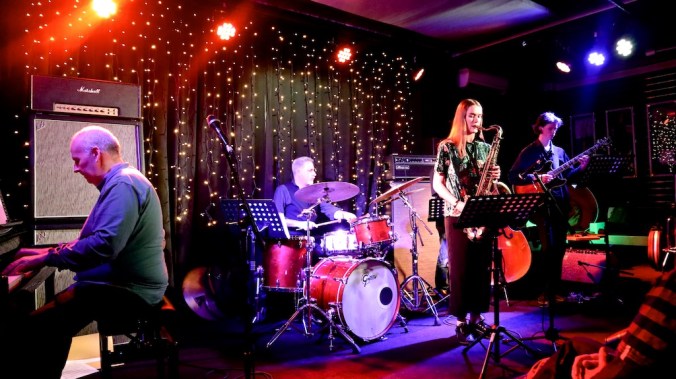 The UK born Mark Donlon is an internationally renowned musician who joined the New Zealand School of Music as a senior lecturer in Jazz Piano in 2013. He has previously appeared at Auckland’s CJC, but never with a quintet. The small ensemble format is clearly a forte as it revealed his many skills. After hearing his recent recording and attending the CJC gig it was evident to me that this particular project hit a sweet spot. What we heard on Wednesday was something special.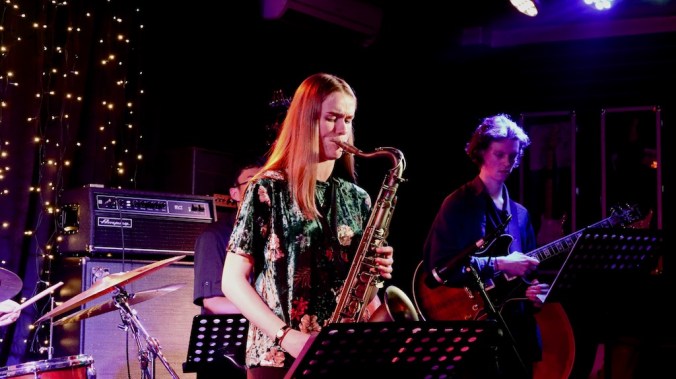

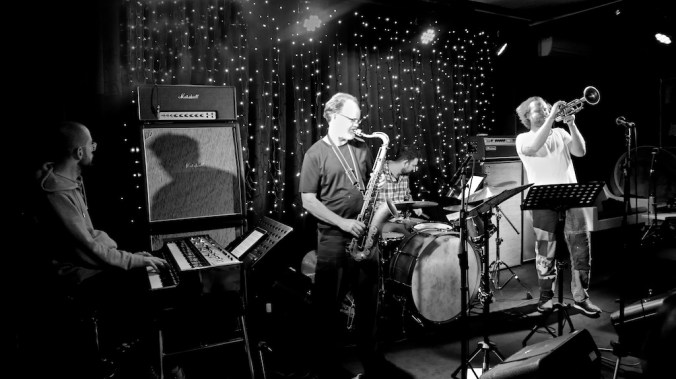
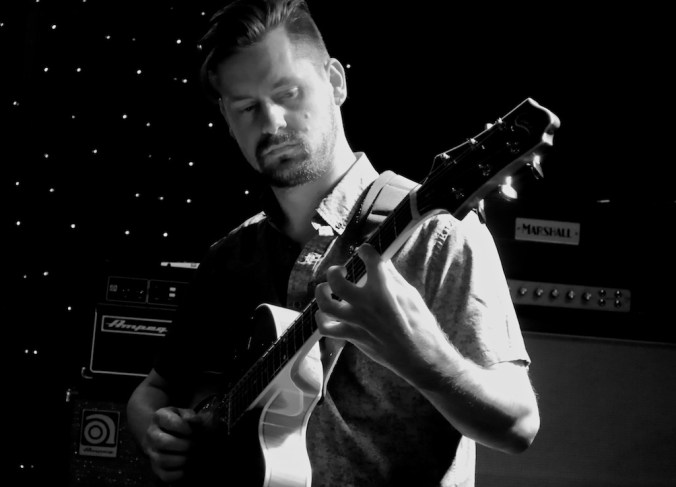
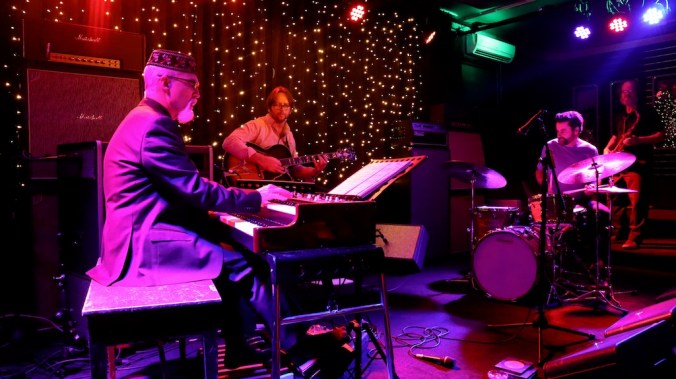 I reviewed the ‘Shuffle’ album in January and the band is now on the road, sharing its groove throughout the North Island.
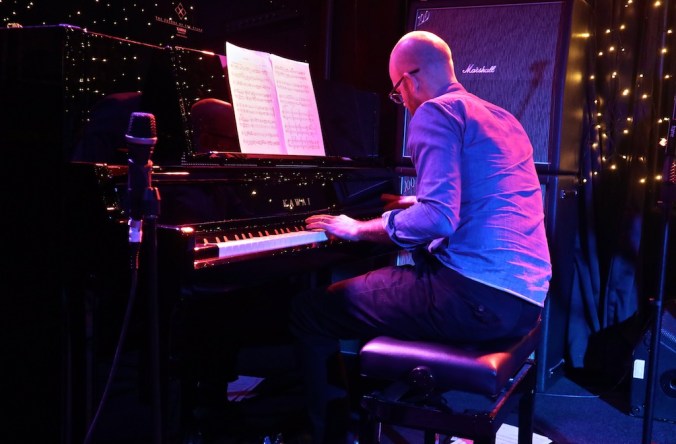 Steve Barry left these shores many years ago and these days Australians count him as their own. It is hardly surprising that they do because since his departure he has raked in the accolades, won numerous awards and completed a Doctorate. Given the above, we can hardly begrudge his move. Music is like water it will always find its level, no matter where the wellspring. Everyone on the New Zealand Jazz scene looks forward to Barry’s yearly trips home as he never rests on his laurels. He brings us new and diverse projects and above all he showcases innovation.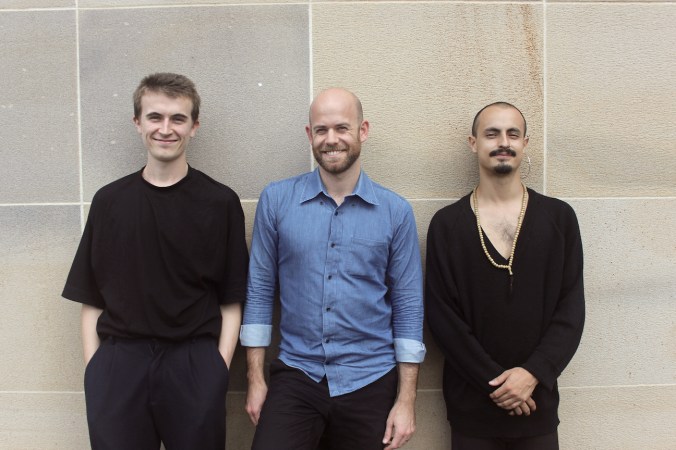
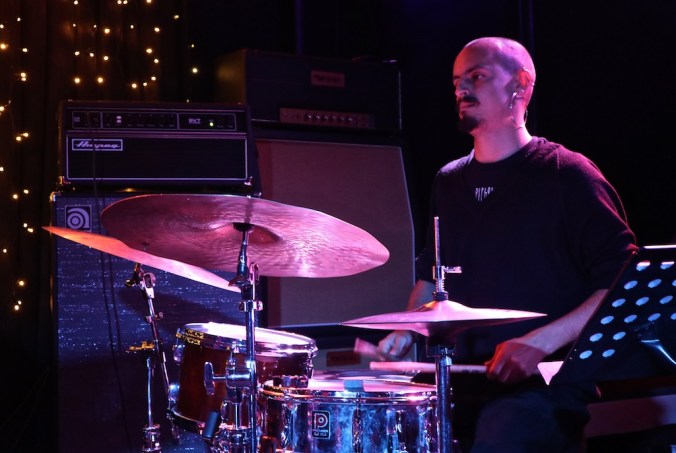 The Steve Barry ‘Blueprints’ Trio appeared at Backbeat, 100 K’Road, for the
  March fifteenth began as good days should, with sunshine, a cool breeze off the ocean, and a message from a Jazz Journalist colleague in Australia. ‘Would I like to meet some award-winning Greek Jazz musicians’? I had stuff planned, but the plans were easily shelved and I drove from my leafy hilltop retreat into the city. The musicians had flown into Auckland to join a passing cruise ship and were only in town for eight hours. Ahead of them lay four months of playing standards, original material (if lucky), and the inevitable but often regrettable requests. We met up in a central city cafe. ‘John’, they yelled as I walked around the corner. For the briefest second, I wondered how they had recognised me, ascribing it to a Jazz sixth sense, then remembering my tee shirt was emblazoned with the words Prahu Jazz. We introduced ourselves, and headed for the waterfront at my suggestion, chatting as if we’d known each other for years. That’s the way in the Jazz community. You travel to a place you’ve never been before and someone will message you with the contact details of ‘cats’ to hang with. Such hangs generally follow a well-trodden path. ‘Do you know this or that cat – killing?’ Always followed by outrageous road stories and laughter.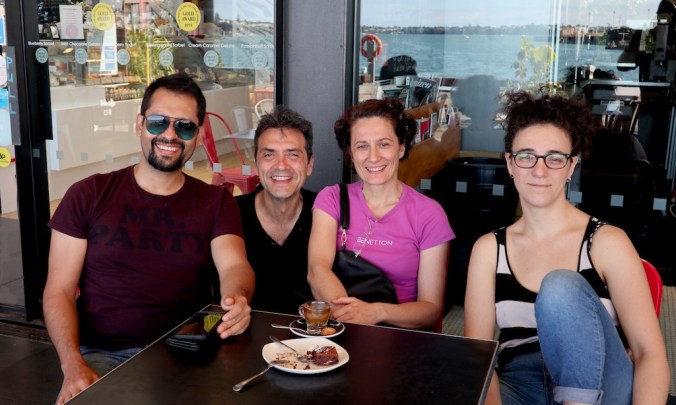
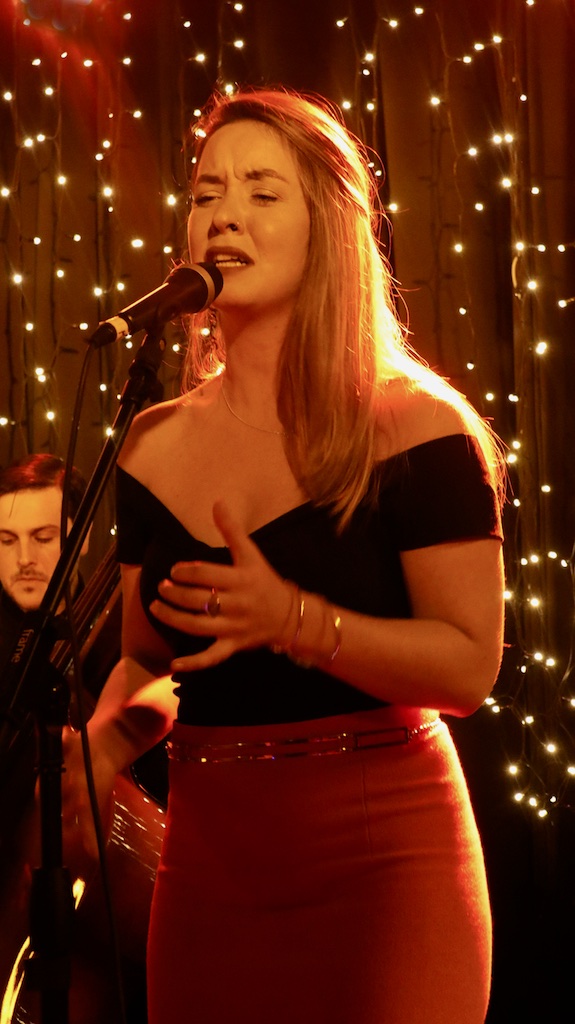
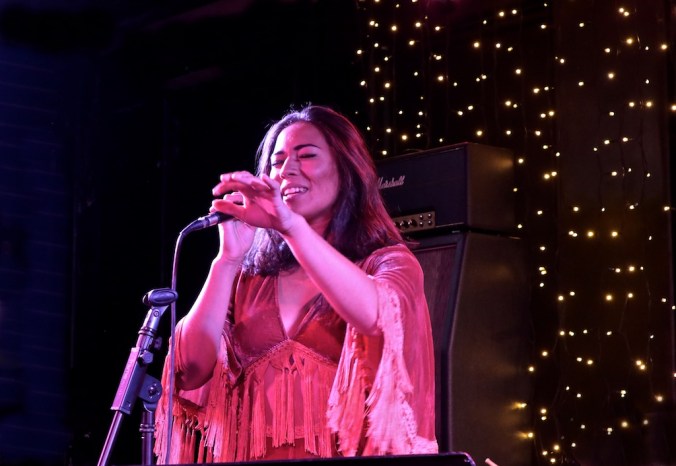
 Lou’ana is a vocalist on route to wider recognition. During the last few years she has been performing at festivals throughout the country and she is billed to appear at the Waiheke Jazz Festival this month.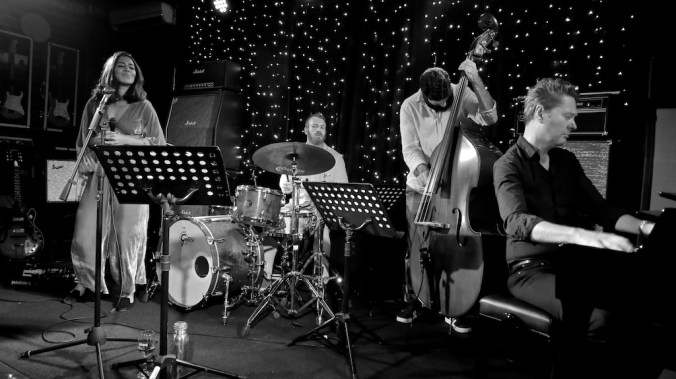
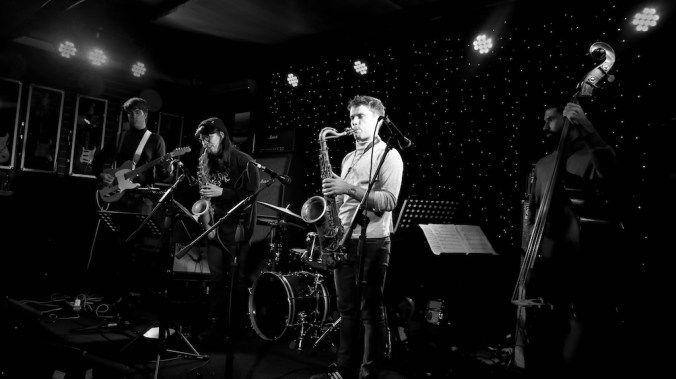 In the late 1950s and early ’60s, anyone with an ounce of cool wore a coarse-knit black polo neck jersey. While they sat there feeling cool their necks would start to itch and angry red rashes would creep up to their chins. Chins made all the itchier by the regulation chinstrap beards or ‘hip’ goatees.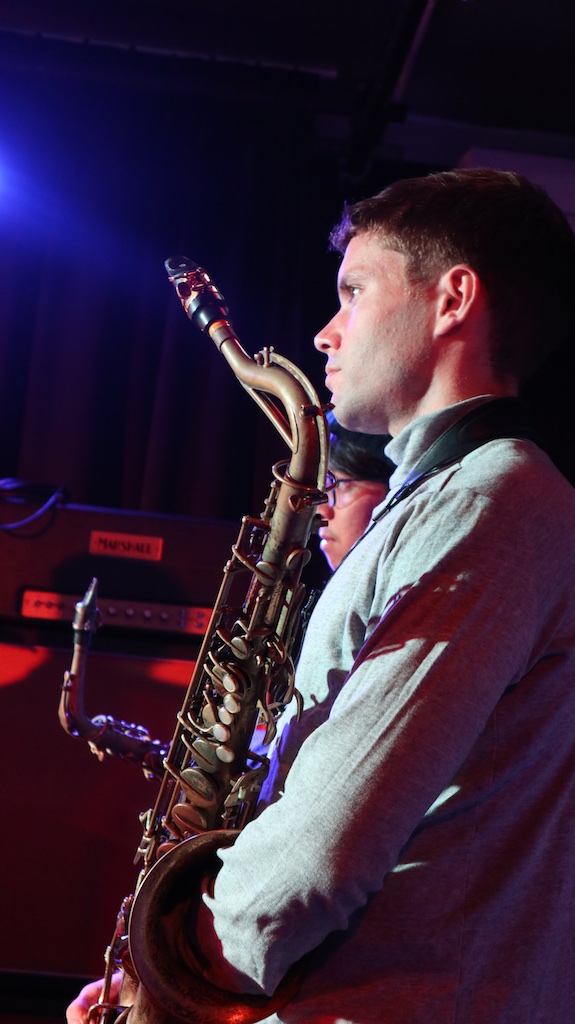
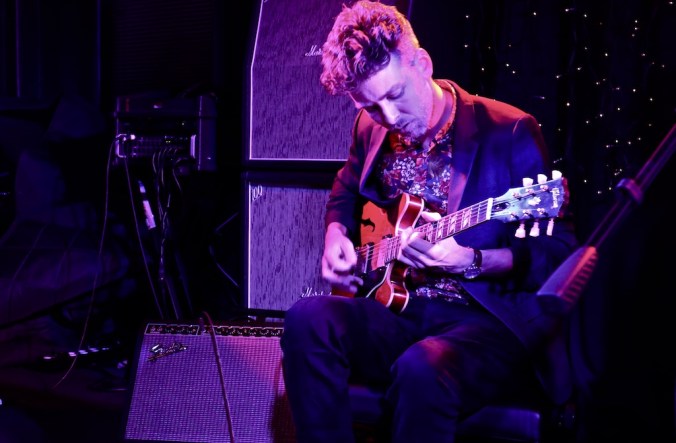 From a young age, I chose improvised music as my soundtrack. The harmonies, in particular, intrigued as they sounded like real life. Full of rich contrasts and polyrhythms. By comparison, the endless radio replays of popular songs offered diminishing returns. The miracle of improvised music is that it promises depth, and if done well it reveals more with each listening. This sets a high bar for innovation, so when I hear musicians described as compelling and original, I check them out. Ben van Gelder and Reinier Baas are so described and after attending their gig I agree without reservation.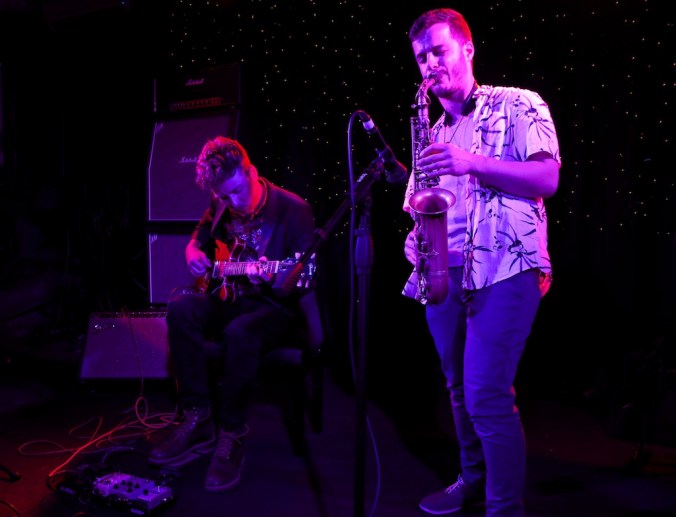

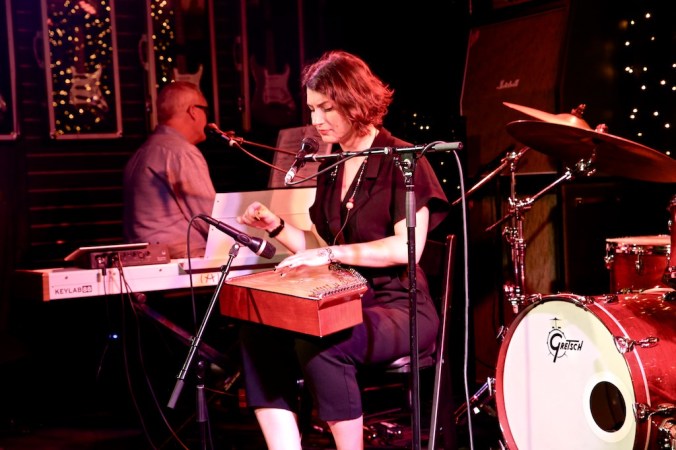 This was New York artist, Simona Minns second visit to the CJC, her appearances occurring one year apart to the day. Her 2018 show ‘The Hunger Games’ referenced a Kafka short story. This tour was billed ‘My Urban Spells’, expanding her ever-evolving themes of universality and free-spirited improvisation.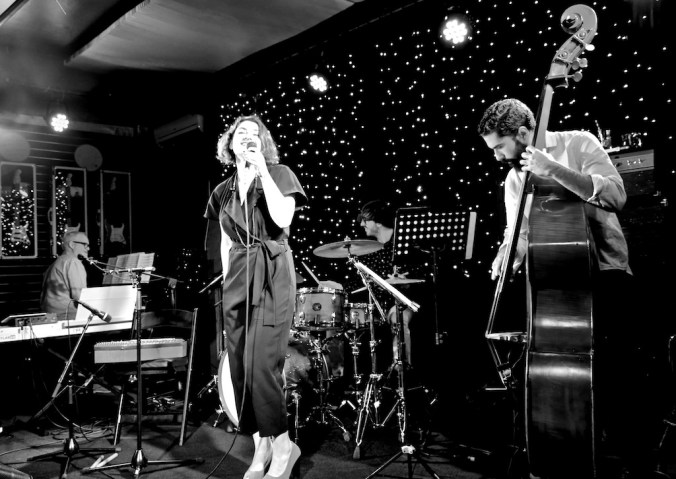
 JazzLocal32.com