‘Blue Train’ – New Zealand’s funk warriors

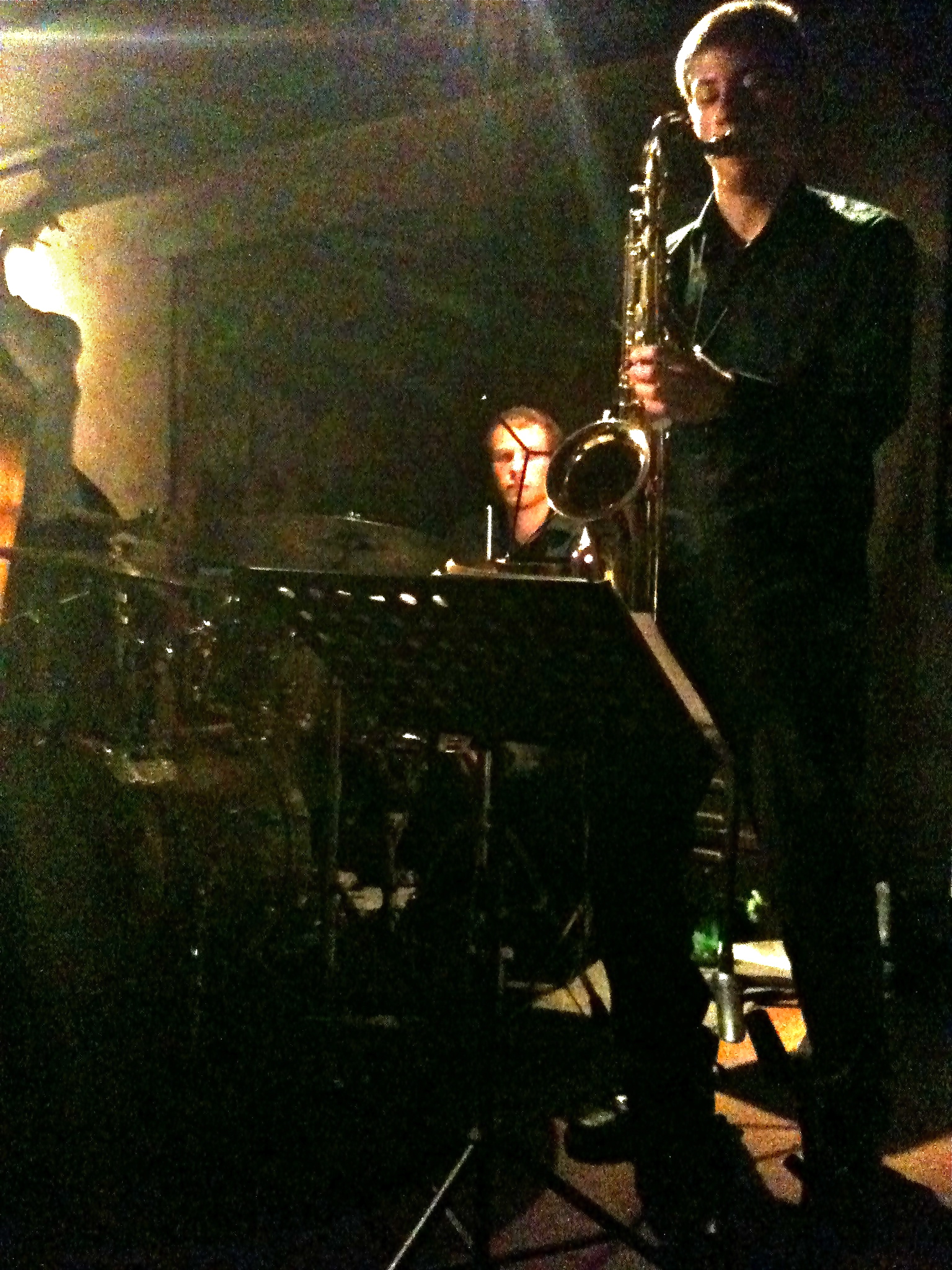
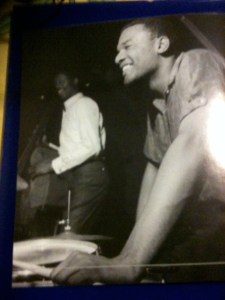
‘Blue Train’ have been around for about twenty years and most Auckland Jazz lovers will be very familiar with them.   On Wednesday night they returned to the CJC by popular demand and as anticipated the club filled up quickly with an expectant crowd.    This band is everything you could hope for if you are looking for a get-down & dirty – groove Jazz funk outfit.    Not only did they play well, but they hardly needed a glance at their charts.    They had a world of tunes already in their heads and they locked into each others wave-length so quickly that a collective brain appeared to possess them when they played.   Not all of the band members had been with them from the beginning but the band still meshed into a tight working unit and from the first number the crowd knew that their expectations would be more than met.

They opened with an Alan Brown number ‘Lets Dress Up‘ and it hit a real sweet-spot – deep groove heaven fed by a Fender Rhodes sound, funk guitar, electric bass, tenor sax and drums.  This sound put a ten-mile wide smile on our faces and if anyone had wanted dark and tortuous they’d have had to look elsewhere.    This jazz is about kinetic energy and a mesmerizing groove, which makes listeners feel that they could dive right into the music and swim in the ocean of sound.   The club was alive with happy people giving cries of encouragement.      After a while some in the crowd started dancing and before long the majority were either dancing, swaying or tapping the beat out on their chair arms.  In the second set the flailing hands of a man flickered across my sight line creating a strobe effect in the soft club lighting.   I just love it that Jazz like this absolutely compels people to dance.

Alan Brown was clearly in charge of the unit and he would give an occasional glance to the soloists who needed no extra cues than that.     Andy played a few tracks on the club piano but would often switch to a small red electric keyboard mounted beside him: the latter holding a good bank of funk orientated sounds.   He would sometimes play both instruments at the same time.     With special guest Dixon Nacey on guitar this band was always going to hit the Jazz funk stratosphere, because this man is a monster on his red guitar and he can do the seemingly impossible without needing to think about the curve balls being thrown at him by Alan.

Steve Sherriff (soprano sax/ tenor sax) and Jason Orme (drums) are veterans of the group, but newer member Chip Mathews on bass did more than hold up his end. Chip is a skilled bassist and able to jump into any band I suspect.

Steve Sherriff is well-known about town and he can be seen working in a number of  Jazz styles.    While his tenor playing is always great, his soprano saxophone playing is free ranging and often ecstatic.    The band regularly hit fever pitch and the energy they floated on was ably abetted by Jason Orme’s high energy drumming.     Jason appeared to be using the locked in style made famous by Byron Landham and others; where he would enter into a powerful intense groove and then push the band as hard as he possibly could.    We just loved watching him.   This is as far from colourist drumming as it gets, but it is exactly the right style for a Jazz-funk unit like this.

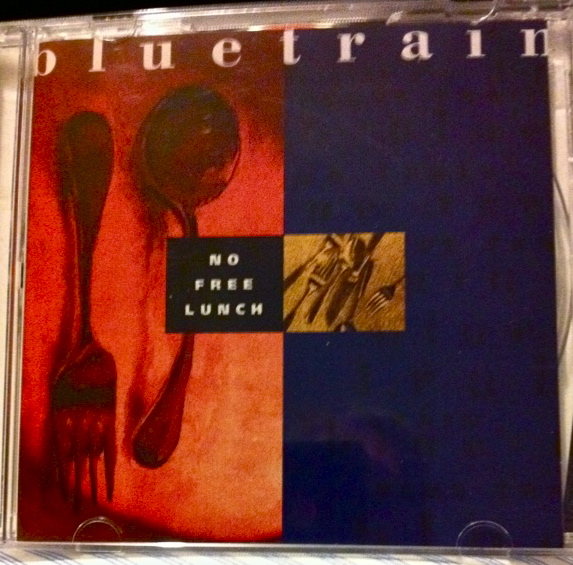
I eagerly await their new album which is due out next month.   See this band whenever you get the opportunity and purchase their CD’s.   The ‘Parachute label’s ‘Blue Train’ album ‘No Free Lunch‘ can still be found and a more recent organ trio album ‘All about time‘ is quite readily available (Alan Brown ‘Hammond’, Dixon Nacey ‘guitar’, Josh Serenson ‘drums’) – ‘Ode Records‘.

‘Blue Train’ clips are hard to find on You Tube but I did locate their version of ‘Nasty McFly” – this track was simply riotous on Wednesday  – enjoy.

Alternate realities – ‘dreamsville’

THE BEAT GENERATION AND THE ANGRY YOUNG MEN

Image by roberthuffstutter via Flickr

The opening line of J.P. Hartley’s Edwardian based novel ‘The Go Between’ begins with the words, “The past is a foreign country, they do things differently there“.     I was mindful of that quotation when I recently spotted a link to a Jazz, culture and poetry blog.   The link was named ‘Like…Dreamsville’.   My first thoughts were of the ‘Mancini’ composition as played by ‘Grant Green’, ‘Wes Montgomery’ and ‘Pat Martino’ – all evocative renditions of the oh-so-slow groove anthem of that name.

As it turned out the site was not about the song but something altogether more ephemeral – the strange world of the 1950’s ‘Beatnik’.   That term ‘Beatnik’ has been so successfully parodied  that it can never appear less than corny and the establishment of the time delighted in making it so.    As a quasi-cultural movement it looked lame and contrived and so it was meant to look.

It portrayed the apparent boredom and ingratitude of American youth.    A youth in the process of rejecting the ultra-materialistic values of their ‘elders and betters’.    I suspect that the term ‘Beatnik’ was eventually allowed to die of embarrassment, as nothing kills a movement quicker than being absorbed into the popular consciousness as a joke.     ‘Mr Magoo’ and ‘Gilligan’s Island’ abetted in this (see ‘Like…Dreamsville’).

Lurking behind that was the voice of  the ‘Beats’ and what the mainstream press were so desperate to undermine was almost certainly the ‘Beat Generation‘.   That was another entity entirely.     Unlike the ‘Beatniks’, the ‘Beats’ were not a media invention (even though the name was probably ably assisted by the liberal media of the day).  The conservative establishment had long felt that a dangerous counter-culture existed in the orbit of Modern Jazz, Modern Art and Modern Poetry/Post War Literature.   This was a harder nut to crack, because the gifted writers, musicians, poets, philosophers and artists were perfectly capable of rising to the challenge and turning the ridicule right back on so-called civilised society.  I refer to the likes of Kerouac, Burroughs, Ginsberg, Snyder, Corso, Ferlinghetti, Kaufman, Kessy, Baraka, Pollack, Watts and many others.   Into this mix add musicians like Lester Young, Dizzy Gillespie, Harry the Hipster, Charlie Ventura, Paul Horn, Chico Hamilton and Charlie Parker.

The ‘Beat Generation’ used Jazz as its soundtrack and a lot of the hip vocabulary arose directly out of that music.   The new lexicon that arose was later twisted to become a weapon.   Like the ‘Hippy’s’ that followed in their wake, the ‘Beats’ danced to different drummers than their straight counterparts.    They were more likely to follow the slightly bemused Dr. D.T. Suzuki (Zen Buddhist author), Tang Poet ‘Han Shan’ or Lao Tzu than any home-grown Christian leader.    The poets, BeBop and the homeless freight-car hopping pilgrims had an infinitely higher currency than a suburban homebody.

This restless generation had open ears, open eyes and they moved to deeper rhythms than the static of suburban life .   Finding the ‘beat’ of life was an end in itself.     I confess that I was one of the youth who identified with the ‘Beat Generation’ and I am quite unrepentant.   More than 50 years on I still identify strongly with their cause.

In San Francisco, home of the ‘Beats’, poetry was a real commodity.  Signs saying, ‘poets wanted’ could be seen in the windows of  Jazz bars.    Pokey little book shops like ‘City Lights’ held regular poetry readings and ‘On The Road’ captured the hearts and minds of a footloose generation who looked beyond the material for deeper meaning.  This wave of anti-materialism was felt to threaten the post-war security and so the ridiculous hipster alter-ego was created – the ‘Beatnik’.   The joke even extended to Gilligan’s Island and Mr Magoo.

Do visit the ‘Like…Dreamsville’ site and try to reclaim the best part of that dream; at this distance the laughter is ‘coolsville’.   For those who like time travelling read ‘On The Road’ or read ‘Howl’ while listening to 1950’s Miles Davis.

Where did the suffix ‘nik’ come from?   Probably Sputnik.   Did terms like ‘cool’ survive?  yes … it is still way cool.

http://likedreamsville.blogspot.com/

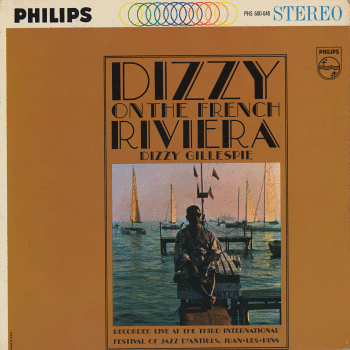
Dizzy on the French Riviera

Dizzy Gillespie 1955

Image via Wikipedia

John Birks (Dizzy) Gillespie was a preeminent  force in the development of modern Jazz but his persona and the ‘Dizzy’ legend extended well beyond the notes he played.     For a number of reasons Dizzy was bigger than the music he lived for and this was no bad thing because all marginalized art-forms (as BeBop certainly was) needed someone like him.   Dizzy played with great technical facility but more importantly he told a new and interesting story.   He did this in part by making fun of the very underpinnings of the new music – an implied hi-brow intellectualism and a formidable technique.

He gently parodied the hip young Beatniks with their goatee beards and heavy-framed horn-rimmed glasses and became their hero in spite of it. Shops carrying ‘Dizzy Gillespie prescription-less horn-rimmed spectacles’ sold out in New York novelty shops and his bent-up trumpet bell and the accompanying story became part of the folk law of BeBop.

He was also be a relentless trickster and when playing as a sideman he was often in trouble over his antics.    Later on he scripted some of that slap-stick humour into his own bands routine and even though it can look a little dated now, it was part of the ‘Dizzy’ experience.    He wanted to make the music fun and yet profound; he succeeded in the in the best possible way.

Dizzy the man may have had some detractors but I have never heard of them.   Louis Armstrong once complained that BeBop was ‘chinese music’ and ‘Miles’ objected to negro bands clowning around on the band stand as it was allegedly demeaning.  Dizzy was too good-humoured to care about such niceties.    His personality was larger than life and in filmed or recorded interviews a deeply tolerant and a likable man was revealed.    He played with musical genius Charlie Parker for years and his attempts to steer Parker away from his self-destructive path eventually failed.  For much of his life Dizzy was a member of the peace-loving ‘Baha’i’ Faith and later he was a United Nations World Wide Ambassador for Peace.   It is obvious to me that this open-minded tolerance was a well-spring that was sourced deep within him.   Watch him interviewed in ‘A Great Day Out in Harlem’.

In the Forties Dizzy played with the ‘Cab Callaway Band’ and it was while there he came into contact with Cuban and other Latin American musicians.   He soon became the number one champion for Afro-Latin American Music and he is credited with setting the scene for that ever popular genre.  ‘Manteca‘ was a big hit for his bands and it is still played today.

My absolute favourite recording of his is ‘Dizzy on the French Riviera‘ (1962).  It is acknowledged as a work of genius but it scandalously languished  in the vaults for nearly 40 years and was not put out as a CD until a year ago when ‘Verve’ re-issued it (only finding its way to New Zealand in recent months).   Shame on ‘Phillips Records’ and their successors for their laggard behavior .    A number of years ago we got sick of lamenting the lack of access to this joyful disk and so we took a well-worn ‘Mono’ LP version to a friend for de-clicking and digitizing.    Those two back-up copies are now consigned to the bin because the cleaned-up ‘Stereo’ version by Verve is fabulous.   They also corrected the miss-spelling of the name Lalo Schifrin from the mono LP cover.  I know completist  collectors who will now want both versions.    I would urge everyone who loves 60’s Jazz to grab a copy before it vanishes again (‘Amazon’ has them at bargain prices and the US dollar is our friend now).

The Band is:  Dizzy Gillespie (trumpet – vocal), Lalo Schifrin (piano – arranger), Leo Wright (alto saxophone-flute- vocal), Tzigone Elek Bacsik (guitar), Chris White (bass), Ruby Collins (drums),

Dizzy on the Riviera

Pepito Riestria (percussion).     The arranging on this album is masterful and the multi talented and soon to be famous Schifrin was a typical Dizzy Gillespie discovery.    His often bluesy and time displacing chords can subtly and swiftly merge into a ‘clave’ and he is a real power-house in this band.   Leo Wright is fabulous on both Alto and Flute and I dont know enough about his story to know why he was not heard more often.   That he could be impassioned, Dolphy like and romantic on the one disc is impressive.  I will include some information about Elek Bacsik as he is impressive also:

Bacsik was born in Budapest, the son of Arpad Bacsik and Erzsebet Pocsi. He was of Romani ethnicity and studied violin at the Budapest Conservatory, but found his primary musical inspiration in bebop pioneers Dizzy Gillespie and Charlie Parker. He was also the cousin of Django Reinhardt. In his early years he travelled as a musician to Lebanon, Spain, Portugal and Italy. He worked in Paris in the early 1960s and recorded with some well-known French musicians such as Jeanne MoreauSerge Gainsbourg and Claude Nougaro as well as making solo albums. In 1966, he went to work and live in the United States and played at Las Vegas. Bacsik recorded on guitar on Gillespie’s Dizzy on the French Riviera (1962) and later on violin with Gillespie at the Newport Jazz Festival in 1974. His bebop violin playing is featured on his two albums as a leader, I Love You (1974) and Bird and Dizzy: A Musical Tribute (1975).  – Wikipedia

The entire band is great and I love the happy sounds of children playing in the surf at Juan Les-Pins on the opening and closing tracks.    It is somehow appropriate given Dizzy’s love of humanity.  This is the well-loved Antonio Carlos Jobim song ‘No More Blues’ (Chega de Saudade).    I have also included a later version of the song with James Moody and Kenny Barron replacing Wright and Schifrin.

http://youtu.be/CVvAKIU5BT0

http://youtu.be/cWDxU813wd0

When the constellations align – Mike Nock @ CJC

Experiencing a Mike Nock band playing in an intimate club setting is quite different from catching his act in a large concert hall.    In one sense it doesn’t matter, as this cat can whip up a whirlwind of energy in any space, but seeing Mike in a small intimate club is as cool as it gets.  The immediacy of being up-close to a band like this is electrifying.

I had arrived early with a friend, but the club was already at near capacity and there were no available seats.  We were happy to stand as no one wanted to miss this night.    I leaned against the side of a leather couch crammed full of people while up front Roger adjusted his mouthpiece and Ron positioned his kit.  Then we saw Mike and Brett and the lighting was lowered.     As the band began to play it was obvious that they would not need any warming up because they were clearly as up for the gig as we were.    The opening number ‘Hop Skip & Jump’ was up-tempo and Roger just tore it up from the start.   To those who of us who love Mike Nock compositions this music was somehow familiar, but this was also the ‘sound of surprise’.

I am convinced that we could not have seen better in any New York club and in down town Auckland we soaked up the groove feeling lucky to be alive.  In the soft lighting  you could almost see the sparks of energy flying between the band members and the washes of blissful sound permeated every corner of the room.    This was seriously good shit.

Next up was ‘Komodo Dragon‘, a moody number that developed from a beguiling tune into an altogether more profound entity.  The placement of chords under Mikes hands is always a revelation as he knows how to mine an idea for deeper and infinitely subtler meanings.   His chords were sometimes bluesy, but then he would toss in an oblique voicing as if to bring about a subtle shift in the cosmos he was conjuring.   It was like watching an onion being peeled by a master chief.

I was also pleased to see Ron Samson (d) using a mix of mallets, sticks and brushes, as the sound palate that night demanded a more textural approach.   Like all good drummers he knew when to blend into the mix, as a loud overly showy drummer would have been out-of-place.  Roger Manins (ts) is simply a phenomenon and we are extremely lucky to have him resident in Auckland.   He lifted the intensity on ‘Komodo Dragon‘ to such a fever pitch that I actually stopped breathing at some points as the tension was building so much.    Roger is the master of tension and release and he can nimbly shift into double time and then some.        Brett Hirst (b) has been playing with Mike for years and it shows.   He is a terrific bass player and his solos and note placement that night were magical.     The band members were all great soloists but what is better they were able to act as a perfect ensemble.

The second number of the second set was a tune called ‘Homage’ and it began with a familiar chord progression (probably based on the changes of ‘All blues’).   Where it went next is hard to adequately describe, but this was one of the highlights of the evening for me.    Mike developed the theme quickly and as he did so he showed every ounce of his mastery on the key board.  He was tossing in fourths while his right hand darted over the keyboard.   I was immediately put in mind of the middle movement of ‘A Love Supreme‘.   The band was so deep in the groove on this number that the music reached heights beyond the sum of its parts.    To hear Roger playing with such strength and in such an ecstatic state was to be reminded of how Coltrane-like he can be.  As Roger played, Mike continued to ramp up the groove with his Tyner like chords and an overlay of chromaticism.  The band was apiece on this and it was a perfect moment – fresh ecstatic music that paid homage without actually being captured by the past it referenced.

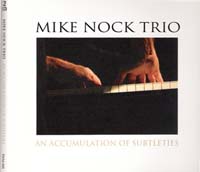
Afterwards I had the chance to speak to Mike about his music and about the scene.   Mike is an easy-going cat off the band stand and he comes across as somewhat of a Jazz philosopher.   He has also retained a very Kiwi sense of humour which delighted me.    As soon as he has made a successful album Mike seems to reach beyond that for the next idea; never one to settle back and rest on his laurels.   Already knowing the answer, I asked him if he was still restlessly reaching beyond the now for newer musical ideas, or would he relax a bit?   He told me that it was his nature to search for a deeper meaning in the music and that he could not do otherwise.  “Some younger musicians than me sound a lot older than I do as they have settled into a safe fixed in time style.  That is not where I ever want to be”.   I told him how much I enjoyed the ECM ‘Ondas‘ label and he observed wryly , ” yeah man, everyone loves it…. now.  Is it even still in print?”.   He said that Manfred Eicher often told him how much he loved that album but as was often the case, it was way ahead of its time.    We also discussed his writing on the recent ‘Meeting of the waters‘ album which is a favourite of mine.   He told me that he felt good about that album but that distribution had been a problem (when was that not the case with Jazz).   Mike has hopes of bringing his ‘Accumulation of Subtleties‘ trio here soon and I would urge fans to grab a copy of that double album.

We talked briefly about the Auckland Jazz scene of our youth and he told me how pleased he was that Caroline, Roger ,Ben and Mike were now running the CJC.    He also said that he was grooved by the young cats wearing ‘pork pie’ hats, but that when he had gone to buy one had found that his head was too small.    “Age will do that” he said.   I quickly jumped in with information from a new longitudinal study which showed that humans actually reach their greatest analytical potential between the ages of 62 and 70 years of age.    He looked at me dismayed and said, “man you could have extended the time frame by a few years.  I am past 70”.

The set list was ‘Hop Skip Jump’, Komodo Dragon’, Gospel Dog’, ‘Joy Remembered’, ‘Transitions’- 2nd set – ‘Afternoon in Paris’, ‘Homage’, ‘Speak to the Golden Child’, ‘Triflin’ Jon’.

Alex Churchill- Andrea Groenewald band – CJC

Alex Churchill (s) and Cameron Sangster (d)

Anyone running a Jazz club is unlikely to be hitting New Zealand’s ‘rich lister’ status anytime soon.    Success in the Jazz world has seldom been measured in dollars, but in a far richer currency – keeping the spirit of the music alive.     A successful club depends on maintaining good audiences, therefore dedicating a night to emerging-talent is arguably a risky proposition .    Jazz however is all about risk and it is certainly about supporting fresh talent; in this case the gamble was royally rewarded.     The Alex Churchill – Andrea Groenewald band may be youthful but when they hit their stride, age became an irrelevance.

What the audience saw were musicians of calibre and their obvious dedication to the music was evident.    While one or two of the earlier numbers were a little less focused than what was to follow, the band soon had the audience whooping delightedly at the joyous exuberant sounds they were hearing.   Everyone saw that this was to be another great night at the CJC.

They opened with a set of their own compositions and almost all of the band had contributed tunes.   I particularly liked ‘Paint the Sky‘ which I think was composed by Andrea and the bands playing on this was great.   They had warmed up and it showed in spades.   Alex has a post-Coltrane vibrato-less tenor sound but his tone is pleasing and warm when that is called for.   His nimble soloing was nicely augmented by Andrea comping behind him with clipped octave chords.  I think that the band realised early on just how much the audience were enjoying the gig and the mutual feedback loop worked exactly as it should.

The second set was dedicated to Pat Metheny’s music and I was intrigued to see how this would work.   I soon found out, because the rendition of “Have You Heard’ was pure bliss.   To hear Metheny’s music stripped of the pedal effects and dare I say occasional over-production, was pleasantly surprising.    They ripped into this number with the chops of a band that had been playing together for ever.

Andrea Groenewald (g)

Note perfect, joyfully exuberant and inspired.    Apart from the great solos on this number, what I loved most was Alex and Andrea paying the head arrangement in unison; but with Andrea’s voice adding an extra horn-line. To do this with less than perfect precision is to invite calamity but the band nailed it.

This was a great night and the band should feel extremely pleased with how it went.     I saw Roger the club manager smiling and given the numbers who attended and the enthusiasm of the audience we can hope for more emerging talent nights.    As for this band, they have stepped into the known and the emerging talent category will soon be behind them.   I would certainly go out on a cold night to see them again.

Having emerging bands of this quality in our own city bodes well for the future of Auckland Jazz.    I had seen two members of this band before (Cameron and Andrea) but the other three were unknown to me before now.

The band were; co-leaders Andrea Groenewald (g) & Alex Churchill (ts) – Renee Cosio (p), Nick Taylor (b), Cameron Sangster (d).

CJC – Ben Sinclair band – Manins/Koopman

The CJC always manages to find interesting lineups and the Ben Sinclair quartet and sextet (+2) was no exception.   This is a young band and the often ironic or whimsical song titles comprising the set material are also contemporary.    Ben is not long out of University and his chops as a fast developing Tenor player (doubling effectively on Alto) are evident.   The band opened the first set with a quartet lineup and a song titled ‘Printy‘ (dedicated to a favourite desktop printer).   The initial configuration was two Tenor Saxophones (Ben Sinclair + Jimmy Garden), Cameron McArthur (Bass) and Johnny White (Drums).    The Tenors focussed on unison playing or soloing and so there was only a slight nod towards chordal structure.   This was raw, inventive and occasionally challenging music and it underscored the tone of the numbers that followed.   By the third number the quartet had expanded to include two French-Horns and a Flugal, which enhanced the concept and added considerable texture and depth.    The groups sound was original, but during the fifth number, the second Tenor Sax player Jimmy Garden managed to toss in a brief quote from ‘Softly as a morning sunrise‘ which brought instant smiles of recognition from the audience.

The second set was headed by a three-part suite titled ‘The Bourne Trilogy‘ (referencing the movie).     For this suite the band was enhanced by the addition of Matt Steele (Piano); an often fiery and Tyner influenced soloist.   The octet was completed by Liz Stokes (Trumpet and Flugal), and the two French Horn players (one also a woman).   This trilogy showed how mature Ben’s writing is and when playing these charts the bands enjoyment of the material was obvious.   This suite worked on all levels and the nice soloing rounded out the performance.

Last but not least was ‘Snake Attack’.   The number was high energy and the band had tightened up on their delivery while allowing for free-flowing solos and a locked-together kick-ass groove.    Drummer Johnny White particularly caught my attention in this last number as he set up a tight ‘E.S.T.'(Magnus Ostrom) type beat (nicely accented by rim-shots).

The ‘Roger Manins regular jam session’ followed the CJC sets and that was the icing on the cake for me, as I got to hear the nucleus of Roger’s band for the first time.   The band set up in minutes and were soon playing their first number ‘Beatrice‘, which was profoundly beautiful and deep in-the-pocket from the first bar.    Roger (on Tenor) is a monster musical force and his band swings like a well oiled gate.   You always know when a Tenor player uses his axe as a confident extension of self; when every shade of meaning is conveyed without the musician needing to rely on an excess of notes.    He has chops to burn but more importantly he lets the music speak for itself.

For a number of months I have heard people speaking in reverential whispers about wunderkind guitarist Peter Koopman.    I just love Jazz guitar and so when I learned that he would perform as part of Roger’s band, I was pleased.  This guy is freakin amazing and to hear his rapid fire licks and intelligently constructed lines is to hear the very best that New Zealand Jazz guitar has to offer.    I would advise everyone to get down and hear this band as soon as they can as gifted musicians like Peter are likely to be sucked into the wider Jazz universe someday soon.   Matt Steele was on piano and extremely fine bass player Thomas Botting played as if his life depended on it (I have a weakness for bass played in the upper register).   This guy along with the highly energised drummer Johnny White powered the band.  Others joined the band at times including a singer (Chelsea) and a female Banjo player who tackled Mile Davis ‘Solar’ with confidence and ease.  With Peter and Roger exerting their benign influence; the less experienced musicians could not have been more supported.

I urge Jazz lovers to support this club and if the last months offerings are typical then you certainly wont be disappointed.

Oslo

A few days ago an extremist murdered 69 young Labour Party activists on Utoya Island and 7 more in central Oslo.  The purpose of this senseless massacre was to cower a nation and to stop the ruling Labour Party in its tracks.   Neither has occurred as Norway is made of sterner stuff than that and more than a million people gathered in Oslo to underscore their deeply held commitment to tolerance and humanism.   A sense of shared humanity will continue to steer this small nations course and no far-right fundamentalist will be able to derail that purpose.  By now most people get the bitter irony of this massacre, as the atrocity was perpetrated against one of the worlds most peace-loving and tolerant peoples (Oslo is the home of the Nobel Peace Prize and the Oslo Peace Accord).    Norway not only looks after its own citizens well, but it sets an example to the wider world when it comes to foreign aid.

This was no shadowy middle-eastern jihadi as a few foolish people had suggested, but an altogether more recognisable figure was resposible.   A pathetically deluded white male who professed  admiration for the worst genocidal killers of Europe.

Norway has produced many fine Jazz musicians and I have included several clips which can speak for themselves.    The first is the tune ‘Oslo‘ by ‘Mathias Eick‘.   What begins as an eerie trumpet call soon evolves into a gently swinging tribute to this peace-loving city.  The second is a tune by ‘Jan Garbarek‘ and ‘Shankar’ and is titled ‘paper nut’.   ‘Garbarek’ will need little introduction to Jazz audiences.

Sardegna Cool – Mare Nostrum Jazz

The Lost Chords find Paolo Fresu in Monaco. Fr...

Image via Wikipedia

Paolo Fresu, a Sardinian genius of the trumpet and flugelhorn is a gifted arranger/composer.    This quickly becomes evident when you listen to his multi faceted recordings, as he is equally fluent with mainstream, fusion, big-band orchestras or multi-phonic experimental Jazz.

Fresu was born on the sunny Mediterranean Island of Sardinia in 1961 (Berchidda).  By the age of 11 years he had picked up the trumpet and his course was set. Later he was admitted to the Cagliari Conservatory and the University of Performing Arts Bologna.

The signature Paolo Fresu sound hints at ‘Miles‘ in an unselfconscious way, but more importantly it is a very Italian sound and rooted deeply in the Sardinian landscape. Over recent years Fresu has showcased both Sardinia and more recently Corsica in his work (His latest ECM album has him improvising against the sounds of a traditional Corsican mens choir and the sound can only be described as haunting or other-worldly)

Paulo Fresu is a pillar of the modern Italian Jazz scene; he is extremely well-known across Europe and increasingly so in America. He records with ECM, EMI, Columbia, Blue Note and RCA, plus a number of smaller Italian and European labels. His disks are reasonably easy to obtain (through New Zealand record shops like Marbecks or Parsons) and Amazon has a wide range on offer. He has recorded with Carla Bley, Enrico Rava, Stefano Bollani, Dave Liebman, Tino Tracanna, Gianluigi Trovesi, Furio di Castri, Antonello Salis, Uri CaineRalph Towner and so the list goes on.

I have been lucky enough to visit Italy a number of times and from the first visit I was dazzled by the vibrant Italian Jazz scene.  It is fair to say that I was guided in this by my close friends Patrizia and Gianni and it was through them that I discovered a talented group of Sardinian Jazz musicians (Fresu and Tracanna among them).  Patrizia and Gianni live in Milano but ‘Patty’ was born in Sardinia and has connections to Jazz musicians from there.

The first clip is Paolo Fresu at his ballad playing best. The second is Paolo Fresu and the ‘Orchestra Jazz della Sardegna‘- George Gershwins Porgy & Bess (Summertime). Many will easily spot this as the Gil Evans/Miles Davis version – Gunther Schuller provided Paolo with the transcription.  The second piece is a TV clip of Paolo Fresu showing a DJ how trumpet multiphonics would work played against a sampled loop.

http://youtu.be/H75yUpi5wfw

Another highly recommended CD is ‘Kind of Porgy and Bess’.  In this a 5 piece band renders this music into utterly modern Italian Jazz (Fresu (t), Nguyen Le (g), Furio de Castro (d), Dhafer Youssef (oud,v), Antonio Salis (p,e-p,h), Roberto Gatto (b).  There is a world of enjoyment and excitement in Jazz Italia – don’t miss out.

Grazzie Paolo.

August gigs: Nock, Hirst, Manins & Samson

retiring at 80 yrs

For those who are easily led by their particular pied-piper there is live music to be had every week.   In the recent past Auckland live Jazz had been harder to find than other genres, but due to a happier alignment of the stars that is no longer a problem.

The big news is that Mike Nock (p) has been booked into the CJC for two nights – August 10th -11th.   I never miss a chance to see Mike when is in town and so I grabbed two of the first tickets on the market as they wont last long.   Seeing Mike in this warm intimate space will be pure magic.   He will be playing with Roger Manins (ts), Brett Hirst (b) Ron Sansom (d). The club is to be congratulated for bringing together such a line up and having such a good piano must have helped to clinch the deal.  For details and ticket prices follow the link from this site to the CJC (local clubs).   I urge you to become GJC members, visit the club or at least subscribe to the CJC gigs update.

As soon as I learned that the AJO (Auckland Jazz Orchestra) was playing at the Masonic in Devonport I notified a few friends.   I would gladly have attended with them having seen this big-band 6 days earlier, but work prevented me.   Here is a report from the Masonic gig (and about Merv Thomas):

Subject: Last night; Hi John, We went down to the Masonic last night and lucked in to Merv’s last performance.   His 80th birthday is today. He performed in a quintet with Bernie Allen and other ‘old’ friends and sang Tea for Two!  A large group of his family were there with several generations. Also a trombone quartet.  Happy birthday was sung, and some speeches.   I can’t imagine that this was his last blow.    A good night.  Those kids in the Jazz Orchestra are very talented.   Cheers Ruth.

Mike Booth the founder of the AJO has given me some forward dates for the bands gigs.   He said:  “We will be trying Thursdays [once a month at the Masonic Devonport] – There will be a cover charge and we will try this until the end of the year.  Starts Thursday 11 August.”

Lastly I will be going to see the Alex Churchill – Andrea Lisa band on the 3rd of August.    Andrea Groenewald (g) is someone to watch.  She and Alex Churchill have recently graduated from the Massey School of music (Albany campus).

Mike Nock trio

Mikes recent album

A Big Auckland Sound – CJC-AJO

Andrea on the bandstand

during a break
Resting AJO Brass  @CJC 

I may have become addicted to Jazz big-bands and so when the opportunity presented itself recently to sit in the fourth row at the Roger Fox – Alan Broadbent concert, I took it.   I survived that proximity with surprising ease and it was inevitable that I would need a bigger dose next time.    The sonic blast had not even wiped the smile from my face.

Now a month later I was attending a gig where the (AJO) ‘Auckland Jazz Orchestra‘ was playing and so I decided to test my limits.    Knowing that I could tolerate the maximum levels of exposure I sat in the front row.  So close in fact that the bell of  Andrew Hall’s Tenor Saxophone was only half a meter away.   This proved to be an excellent concert and to be that close was to feel part of the band by proxy.

The ‘Auckland Jazz Orchestra‘ is a collective; drawing on local talent who meet monthly to explore the Jazz big- band sound.   While clearly in the tradition of the great rehearsal bands like the Thad Jones band, they also appear to have striven to create an authentic Auckland vibe.    If this was their aim, then they have certainly succeeded.

Founding member Mike Booth (trumpet) is a Jazz veteran.  He has recently returned from overseas and his presence is strongly felt.  The other guiding presence is current conductor Tim Atkinson.   Both have written and arranged charts (as have other members of the band).   The ethos of this band is in fact to put a local stamp on the music and that excites me.  The territory bands of the pre-60’s American scene were legendary and they grew in stature by creating unique geographical identities.   Basie was identifiably KC, Goodman a Chicagoan etc.    This territorial competition acted as a real stimulus to the bands.  Originality and greatness grew directly out of that as they scrambled to make their mark .

The other vital factor was the schooling that the newer band members got from playing with the more experienced musicians.   Bill Crow, famous bassist, tells of being gently chided (or alternately encouraged) between numbers and this hot-house learning on-the-hoof communicated what his band mates expected of him.   He also recalls being schooled by members of the band between gigs.   Amazingly he had only just picked up the bass months before.  He soon attained iconic status and the big bands he worked in were part of his university.    This on-the-road education system for Jazz musicians has been an essential part of the mix in developing good reading and tight ensemble playing skills.   When the players solo, there is a cushion of warm sound embracing them and smaller groups seldom give that opportunity.

The band is: Alto saxes – Steve Sherriff, Theo Clearwater,  Tenor saxes – Jimmy Garden , Andrew Hall;  Bari Alex Churchill;  Trombones – Merv Thomas, Mike Ashton, Mike Young, Steve Taylor; Trumpets – Mike Booth,  Rowan Bolley, Jo Spiers, Pete Barwick; Drums – Cameron Sangster;  Bass – Thomas Botting;  Guitar – Andrea Groenewald;  Piano – Adam Fuhr.

The opening number ‘Green Dolphin Street‘ was brilliantly arranged by conductor Tim Atkinson.   The band quickly coalesced into a smooth unit as they moved into this and showed the skill of the band as a whole.   The other tune that leapt out and grabbed me was ‘All things in 5 & 3’ (composed & arranged by Mike Booth).    This was a wonderful number and it became evident that it had been written around the changes of ‘All the things you are’ – but in 5/4 & 3/4.   With Auckland-referencing tunes like ‘Rangitoto‘ and ‘On the water‘ (Mike Booth – part of the Auckland Harbour suite) a picture was being painted note by note.  Among the original tunes was the swinging bossa sounding ‘Lucky charms‘ (Tim Atkinson) and ‘Reservations‘ Andrew Hall.   We heard great solos by (new friend) Andrea Groeneveld (g), Steve Sherriff (as), Mike Booth(t) and Andrew Hall (ts).    It was also good to see the well-known Merv Thomas(tb) in the band among these considerably younger musicians.

The ‘Creative Jazz Club‘ is an intimate space and having a 17 piece band in that room made it all the more so.    A famous precedent would be the even smaller ‘Village Vanguard‘ in NY, which hosts the Thad Jones rehearsal band each Monday night.     The club was full and in Tardis fashion every new comer was able to find a space.   More of that please; my tolerance is far from reaching its limit.

Cooking at the CJC

Tony, Kevin & Craig @CJC

Sometimes you have high expectations of a gig only to find that they have been exceeded.  This was certainly the case at Auckland’s Wednesday night Creative Jazz Club, held at the ‘1885 Britomart’.

The CJC gigs are held in the basement of an old building in Galway Street (the ‘1885 Britomart’) and it has the look of a pre 1900’s ships chandlers or bond store.    This is the perfect performance space for Jazz because it fits the archetypes of the best clubs of the world.   It is in a basement, intimate, comfortable and has good acoustics (oh and a nice piano).  It was damn cold outside and so we were hoping the club would be warm and it was; warm and inviting in the best possible way.   As we descended the two flights of stairs we could hear the pianist Kevin Field exploring a few voicings on the piano and with just those few chords we knew that we were in for a great night.

The Kevin Field (+ Craig Walters) band started with a medium paced number and soon settled into a tight groove.  This was the sort of band that brought an ever-increasing smile to your face and as they laid out the melody of each tune and then mined the changes for improvisational gold.  Their version of ‘this will be my shining hour‘(Harold Arlen) was a miracle of high energy and exploration.  They just tore it up and the fast paced riffs and increasingly risky explorations brought hoots of delight from the crowd.   I have heard this tune 100’s of times but I have never liked it more than on Wednesday night.

The saxophonist was ex-pat Kiwi Craig Walters, who lives and works in Sydney and travels internationally.   This cat is certainly post-Coltrane and his impeccable Jazz credentials showed on this gig.   He has that way of all good Jazz musician’s; an engaging manner, great chops (and the ability to make subtle self-deprecating insider jokes).   The rhythm section were all locals and probably need no introduction as they are among our best and brightest.

Kevin Field is a lovely pianist and his post-bop voicings would enhance any group.   He teaches Piano at the Auckland School of Music (his real job) but he is also a respected leader about town.   Kevin Haines is probably NZ’s best bass player and we are used to seeing him performing in a variety of settings.   On some of the ballads like ‘blame it on my youth‘ his solo’s were impeccable as he anchored the group – holding the centre of the sound in his fingertips.   I want to make special mention of the drummer Tony Hopkins because this guy drummed up a storm.    I must confess that I have been a fan since I saw him in my youth (blame it on my youth).   He was all over the kit in the best possible way and if this is what 70 year olds drum like then there will be younger players applying for septuagenarian status all over town.   Tony is not only an impeccable time-keeper but he managed on this gig to sit high in the mix without overwhelming the others. At times he and Kevin Haines would glance appreciatively at each after a particular lick was exchanged and this high level musical communication is at the heart of all good Jazz.

I will watch future CJC events with interest because great Jazz, thin crust margarita pizza and a warm spot in the corner of a Jazz club is my idea of heaven.

Fine & Mellow – achieving cult status

Label of a Commodore Records 78 record by Bill...

Image via Wikipedia

Lady Day - Griggs collection

Amongst Jazz fans this clip from a show called ‘The Sound of Jazz’ is legendary and I suspect that it could top the list of  ‘best short Jazz films ever made’.  While many will have seen this or already own a copy on DVD, it is a joy to be repeated over and again.    The song ‘Fine & Mellow’, is a blues written by Billie Holiday and her studio band just happens to contain some of the best musicians of the era.   In my view the film is dominated by Billie and ‘Pres’, but everyone here is note perfect.   There is more feeling in this clip than a hundred others of a similar nature and perhaps that is what has elevated it to cult status.

Each solo is about telling a story within a few minutes; because this was the discipline that was imposed upon pre 1950’s recording artists.    The 78 rpm recordings had limited space and certainly did not allow for John Coltrane like explorations of a theme.  This ability to tell a story succinctly and well was cultivated by the era’s Jazz greats and no one told those sweet stories like ‘Pres’ (Lester Young), Ben Webster or ‘Bean’ (Colman Hawkins).   Billie and ‘Pres’ had been extremely close for years, but for reasons never fully revealed they had fallen-out some time prior to this recording.   During the recording Billie smilingly acknowledges the band members as they solo; obviously loving their improvisations.   When ‘Pres’ plays though an expression of absolute love and appreciation is evident.    This was a moment out of time that has delighted Jazz fans ever since.

Billie was to die tragically within a year or so of recording this and her rendition of this blues is an extremely  poignant moment in Jazz history (as if she understood that her death was immanent).  The curse of over indulgence in narcotics and booze cut a terrible swathe through the best and brightest of the jazz scene around this time.

The slurred introduction by Billie is genuine but possibly spliced into the film later (which was made in a 1950’s studio setting and unlikely to have included a stoned Billie intro).  The band is: Ben Webster (ts), Lester Young (ts), Vic Dickerson (t), Gerry Mulligan (bs), Coleman Hawkins (ts), Roy Eldridge (t), Doc Cheatham (t), Danny Baker (g), Milt Hinton (b), Mal Waldren (p), Osie Johnson (d).

http://youtu.be/ZtgUbJN8oPE

Pat Martino – deep in the music

Pat Martino

Image via Wikipedia

Not too many months ago my Partner & I saw Pat Martino in ‘Birdland‘ and were captivated by his deep-in-the-groove East Philly style.    There could hardly have been a better place to hear him, as this is one of New York’s best Jazz clubs and a friendly intimate space.

Like most out-of-towners we loitered awhile in Times Square before walking the short block to ‘Birdland’.   I could hardly believe my luck at being able to see Pat in such a setting as I had become a fan some years earlier; having developed a taste for that whole Grant Green thing.

The first of the band members to step on stage was Tony Monaco the B3 player, quickly followed by the drummer Harvey Mason.   Soon Pat appeared with his shining custom-made black Benedetto guitar at the ready – a slightly built man who quickly lost himself deep within the music.  The band leapt into their first few numbers with an apparent relish.   Obviously enjoying what they do and perhaps that is the hallmark of this Chicago – East Philly guitar -organ-drum style.   Seeming to drop deeper and deeper into the groove and then characteristically locking into a phrase until the intensity becomes almost unbearable – then as suddenly dropping back into the melody again.

When Pat plays alongside Joey Defrancesco and Byron (Wookie) Landham the band is a force nine hurricane.    No drummer works as hard as ‘Wookie” with his powerhouse locked-in beat and no B3 player owns as much of the room as Joey D.   It was however just as interesting to hear Pat with this band and they proved to be solid performers.  Tony is great on the B3 and his tendency to grimace and mug as he reaches ever deeper into the groove did not unduly trouble me.   The drummer Harvey did what good groove-drummers do and locked into Pats sound.   After the faster offerings it was a pleasure to hear Pats well-loved version of ‘Blue in Green‘(Davis/Evans) and the warmth and perhaps the hint of sadness in his sound brought a tear to the eye.    The sound Pat gets from his specially wound strings is fat and warm and it hits you right where it should; in the heart.

I have just learned that Pat is about to play at ‘Yoshi’s‘ (Oakland) and I have urged my son and daughter-in-law to go if they can.  Pat may have an amazing and unique life story, but it is the warm looping bluesy sound that gets you in the end.

Hidden in plain sight; Joe Chambers

Sometimes we don’t see what is right under our noses and that was definitely the case with me and ace-drummer Joe Chambers.   We sometimes miss drummers or bass players because it is all too easy to be dazzled by the musicians on the horns or guitars.  In Joe Chambers’s case the leaders were cats who blazed with an almost unbearable intensity and this semi-eclipse had blinded me to the intricacies of a hard grooving and in-the-pocket drummer.

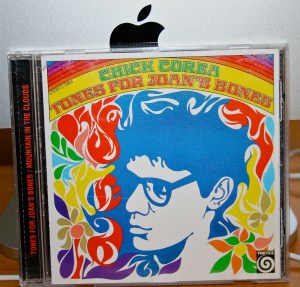
I was kicking back with a friend one night when he put on Chick Corea’s ‘Tones for Joan’s Bones’.   I had wanted to hear this album for years and now from the first bar the album got right under my skin; edgy, restless, forward-looking American 60’s Jazz  – featuring Chick Corea (p), Joe Farrell(ts)(fl), Woody Shaw (t), Steve Swallow (b) & Joe Chambers (d).   This was an era when Jazz, (no longer a popular music and competing with rock), let loose a tidal wave of open-ended creativity.  Caught between Ornette Coleman and a burgeoning rock scene, the confining ‘stays’ of Hardbop were suddenly loosened.    ‘Tones for Joan’s Bones’ is a truly great album of its type and the psychedelic art work on the cover is reason enough to buy a copy.   Chick Corea’s song ‘Litha’ with its chromatic mesmerizing energies was the big hook for me and as I listened I became hyper aware of the drummer.

The name Joe Chambers had been vaguely familiar and when I looked him up I was surprised to find that he was the drummer on dozens of my favourite albums.    Classic albums by Herbie Hancock, Bobby Hutcherson, Chic Corea and Freddy Hubbard etc.

As well as listening to the group as a whole we should also develop the ability to isolate the instruments as we listen.  When we do this it is possible to comprehend the levels of interaction and the individual flights of inventiveness.   Jazz is after all a collective enterprise that supports the individual in extraordinary ways.

There are circus acts where a reverse human pyramid is formed on the shoulders of a strongman.   While watching the climbers go higher and higher, we can forget that the whole formation would fail catastrophically if the person at the bottom were to miss-step.  Joe Chambers is the strongman who waits until everyone is standing on his shoulders and then raises them even higher.  This type of drummer carries a lot of weight and in moments of high tension, causes you to hold your breath in case he falls and the band tumbles to earth with him.   Such drummers can stretch time to breaking point as the tension increases and as quickly pull it in again when the outlier musicians need recalling.    Joe is a master of this tension and release.    I may have momentarily overlooked him but many modern rappers have not; zeroing-in frequently on his edgy rhythms.

Francis Wolf - Blue Note Records

Picture Francis Wolf - Blue Note

http://youtu.be/65LA1i6_LbE

‘Wave’ – Antonio Carlos Jobim

Cover of

Cover of Wave

It was always easy to love Tom Jobim‘s music as it captured the very essence of cool; the exotic new Brazil of the 1960s and 70s.   While the music may not have captured the grim realities of the barrios, it spoke powerfully of the hope and dreams of a new generation; of the educated hip, urban Brazilians.

The media showcased endless white-sand beaches, beautiful bikini-clad girls and lost love under palm trees. But this was the era of exciting modernist architecture, best evidenced in the wonderfully executed, delightfully surreal, Brasilia city.  This city was the revolutionary vision of three men of genius and they curated it from where the jungle sprawled four years earlier.

The President’s futuristic dreams were eventually overrun by greedy money men, a military dictatorship, and powerful elites. The legacy of Brasilia and of that brave new world remains potently in the music. The visionaries were President – Juscelino Kubitschek, architect –Oscar Niemeyer and urbanist- Lucio Costa. It was into this hopeful world where anything seemed possible, that Antonio Carlos Jobim and Joao Gilberto appeared as forces of nature. Before long this unique sound reached larger North American audiences via Jazz super-stars Stan Getz, Charlie Bird (and others). The stories surrounding the Getz/Gilberto (‘Girl from Ipanema’) session are legendary; suffice to say that Astrud Gilberto wife of the talented and co-credited Joao Gilberto was not supposed to be on the session. She was reluctantly included at the last minute. From 60’s house-wife to stardom in the blink of an eye.

It was later while listening to a Rudy Van Gelder session (for Creed Taylor’s CTI label) that I looked deeper. The album ‘Wave‘, has a profound sense of place and everything about it is exotic and beguiling. I love the title song and I have a number of Jazz versions (Bossa Nova and otherwise). It swings like crazy in an authentic Brazilian way. When you listen to Tom Jobim and Elis Regina or to Tom with Brazilian musicians you realise that their time feel is subtly different from anything found in North American.

As with many Jobim albums, the recording is a heady mix of unashamed romanticism juxtaposed with a hint of minimalism (perhaps like Brasilia itself). This is partly due to Claus Ogerman’s arrangements, who remembered to leave open spaces for the individual musicians). The sense of unexpected space in the midst of such lush orchestration speaks directly to Jobim’s genius.

He was a great composer, and a great performing artist. His spidery piano lines and urgent up guitar rhythms are miniatures of perfection; not a single note too many.   ‘Wave’ captures the essence of Copacabna beach, Rio de Janeiro, and Brasilia. Jobim’s own renditions of ‘wave‘ changed with the years; one version on the Warner label ‘Terra Brasilis‘ sounds closer to Delius than to Jazz (until you hear the voicings).

The ‘Wave‘ album cover is a bookmark of the times; iridescent lime green sky, purple Giraffe (or other odd colours in later pressings). I have included an informal version of ‘Wave’ by Tom and a few of his friends. The 60’s clothes may appear strange at this distance, but the music is perfect.

In the late sixties, I saw the French film  ‘Our Man in Rio‘ staring Jean Paul Belmondo three times. I have not seen it since then but I would love to revisit it. It may well appear corny at this distance, as films do with the passing of time, but I will hold fast, as my visions of sixties Brazil cannot be tarnished. I have this album in my head and the mere thought of it induces the heady whiff of nostalgia.

Heavy Metal Bliss – Alan, Roger & Denise

The Roger Fox Wellington Big Band is an in-the-pocket unit and sitting in front of that band is to experience a blast from the Jazz slip stream.   Listening to their hard swinging and tightly focused delivery it was difficult to believe that this was a home-grown band and that they had only been together for around 18 months.    There were of course some veterans in the line up (Colin Hemmingsen – tenor) and above all there was Roger Fox, the man in firm control.   Like all good leaders he teased the very best out of his band.

First up was San Francisco based Denise Perrier who was a very pleasant surprise.   It was as if Carmen McCrae had been conjured into our midst.   Denise is very talented and a real crowd pleaser in the best possible way.   Her powerful smokey bluesy voice and sassy manner were the perfect foils for well executed tunes; enhanced by a killer band.   Starting with ‘easy street’ she moved on to a lovely version of Tom Jobims ‘Wave‘ (it is impossible to praise this tune highly enough). Her version of ‘stormy weather’ was  original and tasteful, followed by ‘every day (I have the blues)‘ which was so evocative of Count Basie that I kept expecting Sweets Edison and Pres to do walk-ons.  The other stand-out tracks were Harold Arlens ‘Oh what a beautiful morning‘ – (a brave but good choice) and ‘God Bless the Child‘ – Billie Holiday/Arthur Herzog.

Wellington Jazz pianist Anita Schwabe appeared undaunted by the presence of Alan Broadbent standing a mere few feet away and this does her credit.  Anita showed her skill that night and to say that her parents (who sat just in front of us) were proud would be a gross understatement.   Nick Tipping (Charmaine Ford trio) was on upright bass and Lance Philip drums.  This is a band which works hard to keep a tight sound and the payoff was the magic that we all experienced.  The nuances of colour that the band members were able to elicit was down to three things; the perfect charts, the leader and the fact that the band members all doubled on other instruments.   This created a wonderfully rich sound-palette to draw from.

While great credit should go to Roger and his band the night also belonged to Alan’s unbelievably well crafted charts.    As Alan said when he addressed the capacity crowd at the start of the second half, “tonight covers a 40 year journey in music – thank you for sharing it with me’.    Roger had been trying to get together with Alan for many years and had often suggested that they work together.    A while ago, out of the blue, he started receiving ‘charts’ from Alan and he quipped, “I became worried about what it would cost me because there is a lot of money to be made in Jazz and especially big-band Jazz”.   Woody Herman and Basie may have been the sub-text but Alan Broadbent was the heart and soul of the evening.

Kiwi jazz fans love Alan’s work and we boast about his Kiwi beginnings at every opportunity.  Alan has written some of the nicest tunes in jazz, but hearing his arrangements played by gifted Kiwi musicians added a new dimension.  Alan, played a few trio numbers and ‘alone together‘ by Schwartz/Dietz was one of the few standards played.   Among Alan’s compositions we heard ‘Bebop & Roses’ ,’Journey Home’, ‘Don’t ask why’, ‘The long white cloud’, ‘Sugar Loaf mountain’, ‘Far in (74)’, and more.

The second half had opened with ‘Journey Home‘, which is the tile track on the new Roger Fox Big Band CD featuring this nights music.   I urge you to grab a copy now; not only because you will enjoy it, but because you will be supporting the best of Kiwi Music.   Better yet, go and see this band as well and tell your friends to come with you.  See ‘event-finder‘ for gigs.

Anna & Gil Scott Heron

De ware Wax Poet is dood: Gil Scott-Heron

Image by Marco Raaphorst via Flickr

Last week I received a tweet from my daughter-in-law, which informed me in her exquisitely succinct micro-blogging language that Gil Scott Heron was dead.   Her post read: ‘RIP Gil:( I just found you and now you’re gone‘.    I was surprised that Anna knew of him as he was a jazz poet hipster famous in the 70’s for his activism in the black consciousness movement.  The micro-link on her tweet lead straight to a video of his most famous poem: ‘The Revolution will not be Televised‘.    It must have made quite a few god-fearing white folk squirm at the time, as it was a Black-Panther referencing radical call to action.  There was a lot more to Gil than that as he inadvertently started a poetry/music revolution.   He is widely regarded as the father of rap – judge for yourselves!   He traveled around festivals and clubs and was especially beloved in Europe – Last week the BBC headlined their news reports with his demise and Jazz radio stations in London and New York devoted the whole weekend to his music, poetry and legacy.

I have since learned that a new generation found him, embraced his music and now mourn his passing – the more things change the more they stay the same.    Remember Angela Davis, black activist lawyer with the wonderful hair; darling of the radical human rights movement – she now reviews for Jazz Times.  The ‘revolution’ may not be televised but brothers and sisters, it will be ‘tweeted’ and disseminated on ‘Facebook‘.

http://youtu.be/qGaoXAwl9kw

Local Jazz: Gigs Auckland & nostalgia

When I was a teenager there were some cool Jazz clubs and quite a few good Jazz gigs around this town. That was a long time ago and as the 60’s advanced the clubs either vanished or quietly morphed into popular music venues. Everybody has to earn a living and rock audiences were more likely to feed a club owners family than Jazz audiences. 1960’s Auckland produced its share of good musicians like pianist Alan Broadbent, vibes player Lachie Jamierson, trumpet player Kim Paterson and many others, but when the venues disappeared, the better musicians either dropped out of sight (and got a ‘real’ job) or moved to bigger cities overseas where Jazz still thrived. There was a long period when it was difficult to find live Jazz in Auckland and the fault was certainly not with the musicians – it was with the audiences. Visiting artists sated jazz fans appetites to a point, but it could be a very long time between drinks. An enterprising group of locals ( John Good, Frank Collins and others), banded together and organised a NZ tour by (USA) West Coast pianist Pete Jolly and bassist Ralph Pena. These were high risk enterprises and in those days the flights from LA or New York were arduous. It was a long way to come for small financial return and these were essentially labours of love (and often acts of generosity by the musicians). As the 60’s and 70’s passed local musicians such as Phil Broadhurst, Frank Gibson, Julie Mason, Edwina Thorne and Murray McNabb stayed the course; playing in whatever venues became available.

Any Jazz fan who has gone down a darkly lit side street, found the neon sign, descended the winding staircase and suddenly been overwhelmed by the atmosphere and sounds of an intimate jazz club will never forget it. These dimly lit, warm toned jazz bars are the stuff of legends and happily they still exist (minus the smoke). In New York, Paris, Rome, London, Barcelona, Montreal, Melbourne and Sydney they have not only survived but are an integral part of the city brand. New York would somehow be diminished if there was no ‘Birdland’, ‘Blue Note’, ‘Village Vanguard‘ or ‘Smalls’ (plus the many dozens of others).

Auckland has a few venues where live Jazz can be experienced and I am going to add more links to those venues as I find them (in the side bar of the blog-‘gigs guide’). A recent addition to the Auckland club scene has been the ‘1885 club‘ in Brittamart Street downtown. There are also regular gigs at the Masonic Hotel Devonport (Roger Fox) – sign up to ‘Event Finder‘ or ‘NZ Gigs Guide‘ for up-to-date information. We were upset to lose the upstairs ‘London Bar’ and the Auckland ‘Jazz & Blues Club’ has had to move after a long tenure at the Herne Bay Tavern. They now meet weekly at the Point Chevalier RSA -1136 Great North Road, Pt Chevalier, Auckland. Another place where great gigs can occur is the Auckland Massey Campus (under the auspices of the ‘School of Jazz Studies’). There are also groups of individuals who meet regularly to play jazz, talk about jazz and tell Jazz stories over a glass of wine. FOJ (Friends of Jazz) has been one such institution) and the newly formed ‘The Jazz Loft‘ is another. To find out about the latter email me on jonjaz@ihug.co.nz. Lastly there are Jazz Pub gigs and while some are regular events many are quite sporadic – follow ‘Event Finder‘ for these.

I have included a clip of local Jazz saxophonist Roger Manins playing at a pub gig.   My plea is that Jazz lovers support these local artists and clubs – its use them or lose them.

Italian Style

In an already crowded field of great contemporary Jazz pianists, the Italian Enrico Pieranunzi is a stand out. He is regarded as one of the best Jazz pianists in Europe (and beyond) and his career has been on a steady upwards trajectory for decades. American and UK reviewers have mentioned him in the same breath as Evans and Jarrett, but his stylistic range probably encompasses a broader scope than either of the above. He is an adventurous musician who will frequently take himself outside of his comfort zone and then return effortlessly to the achingly beautiful melodic tunes that are his mainstay.  His long-standing trio with Marc Johnson (bass) and Joey Baron (drums) is well-known, but a number of other trio, duo and quartet configurations work equally well.  Like many great musicians he has an uncanny knack for locating top quality sidemen and he gives them ample room to breathe on their own. While I love his trio work with Baron and Johnson – who wouldn’t like those two – my personal favourite is the ‘Live in Paris’ trio. That all European trio comprises of Andre Ceccarelli (drums) and Hein Van de Geyn (bass); who are simply astonishing on this recording. The three work as if with one mind as they stretch time and rework standards and Pieranunzi tunes in ways that defy belief.

When Pieranunzi first became known outside of Italy his playing was often described as Evans influenced and at the time that seemed a fair assessment. After listening to his considerable discography I am not so sure, as some of his early work gives a nod to McCoy Tyner and even Hancock.  There is little of Evans in his early recordings with Chet Baker or Art Farmer and by the time he had recorded his first album with Charlie Haden he was uniquely Pieranunzi.  His energy and innovation seem boundless and for the last decade and a half he has been recording in a variety of settings.   His recent ‘Domenico Scarlatti‘ album is a case in point.   He plays the baroque master with fluency and yet with a subtle improvisational edge.    He manages to make the rendition sound both ultra modern and yet true to the traditional improvisational mores of the day.  Only a very skilled Jazz musician could pull this off so well.

If I were to recommend albums I would have to start with the magnificent double album ‘Live in Paris’ (Pieranunzi, Hein Van de Geyn, Andre Ceccarelli) – Challenge label.   Also the double album ‘Live in Japan‘ or ‘Ballads‘ (Pieranunzi, Marc Johnson, Joey Baron) – Camjazz.  Other gems are his recent duo album with Marc Johnson and ‘Alone Together’ , a quartet with the stellar line up of Philip Catherine (g), Hein Van de Geyn (b) Joe La Barbera (d) – Challenge.   Two recent albums where he is not the leader are also well worth the effort; ‘Oslo‘ with Terje Gewelt, Anders Kjellberg – Resonant Music and ‘The Kingdom (where nobody dies)‘ Mads Vinding (b), Alex Riel (d).  They can be purchased on iTunes for around $18 each if you are impatient to own copies.  Amazon also holds a good range of Pieranunzi albums but when they occasionally run out of stock the second-hand albums often fetch huge prices until a reprinting of new stock occurs.  These are popular albums.

Larry, Joe, Bruce & Tom – found.

I just found this notice on the Auckland Event Finder web-site.     A double billing starring the Tom Warrington trio (Tom Warrington, Larry Koonse, Joe La Barbera) and Bruce Forman who have all been to New Zealand before.    Larry and Tom feature together on the earlier clip I posted from the ‘Bruce Wyble’ tribute concert in LA.

Masonic Hotel – 29 King Edward Parade – Devonport  – 27th May 2011 – 7 pm – 11:30 pm

– Door charge   Adult: $25.00 – Student: $15.00

‘The ultimate double bill.

Direct from the USA – The Tom Warrington Trio. Featuring Tom Warrington – bass, Joe LaBarbera – drums and Larry Koonse – guitar. These three have performed with some of the biggest names in jazz. Buddy Rich, Woody Herman, Freddie Hubbard, Tony Bennett, Bill Evans, Cleo Lane to name but a few.

Bruce Forman – Pinto Pammy and Cowbop 
“It’s hot, jazzy and has a drawl!” –San Francisco Chronicle 
Mix swingin’ grooves, thrilling riffs, sweet and hot vocals, acoustic western sensibilities and tons of fun and you have only begun to describe Cowbop. Formed in 2003 by internationally acclaimed jazz guitarist Bruce Forman, the cowboy jazz and western bebop band has toured extensively throughout the world, exciting audiences with their unique and infectious brand of music. The band’s collective experience crosses the spectrum of American music, from the hottest jazz and the coolest swing to the fiercest bluegrass and most down-home honky-tonk.

Comfortable in diverse settings, from Carnegie Hall to roadside taverns, the band always hits the stage with an electrifying and entertaining assortment of music and frolic. Along with Bruce Forman on guitar, the band features PintoPammy on vocals, whose talent and the experiences range from big band swing, old-time country and musical theatre, and fiddlin’ Phil Salazar, who lights up the stage with his world-renown swing, Americana, bluegrass and jazz stylings. Put that on top of a rhythm section of Alex King, bass, and Jake Reed, drums, that are as swingin’ and rockin’ as rodeo bronc, but as sure-footed as a prized pack mule and you get Cowbop.’

That will be three concerts in a fortnight featuring international artists.    We are certainly being spoilt this year, but I for one have no complaints at all.


Below is clip from the LA Jazz Collective featuring Larry Koonse, Gary Foster, Putter Smith. This is ensemble playing that would have made Lennie Tristano proud.

Herbie Hancock: Chameleon, Headhunter, visionary?

Even before septuagenarian Herbie Hancock rolled into town he had been sought out by most of the mainstream media.    This man fascinates people beyond the Jazz world and I suspect that everyone would give a different reason why.   Herbie is simply larger than life and terminal cool is his brand.   When asked by Lynne Freeman of Radio New Zealand whether he was going to spend the rest of his days fine tuning his impressive musical legacy he surprised her by replying, “Music is what I do but it is not who I am.  I am a human being and I want to work on real issues that effect ordinary people”.   A long time devout Buddhist (as is his close friend and long time collaborator Wayne Shorter) he exudes calm and speaks with commonsense.   Herbie does not buy into his star status; but to others he is never-the-less a living legend.
We could feel the excitement mounting as we waited for the show to begin and then right on 8 pm the lights dimmed and drummer Trevor Lawrence strode onto the stage   He laid down a solid mesmerizing beat until James Genus appeared, who then added to the groove on his electric bass.   Suddenly Herbie was on stage; grinning and bowing to the audience and the fun began.    He looked fit and ready to get-down to it.   The group swiftly ripped into an upbeat, spirited avante guard tinged piece (Actual Proof) that was more Ornette than Empyrean Isles.  I suspect that would have taken many out of their comfort zone and this was clearly the intention.   The mood was well set and throughout the concert Herbie skillfully used tension and release in enumerable ways.   As this amazingly high energy group moved through the varied repertoire you could see the joy on their faces.   James genus seldom took his eyes of Herbie and they played as a single entity.   We got spirited renditions of Hancock classics followed by highly atmospheric tunes (such as Joni Mitchell’s ‘court and spark’ from the Grammy winning ‘River’ album with Wayne Shorter).    ‘Court and spark’ and other songs were sung by the fourth band member, vocalist and violinist Kristina Train.  Her voice was smokey and appealing and the crowd loved her.   We heard a jazz version of Bob Dylan’s ‘the times they are a changing’ and Bob Marley’s ‘Exodus’ accompanied by pre-recorded Sudanese musicians.   ‘It’s 2011’ said Herbie as he pointed to the hard drive at the heart of his system. Herbie Hancock is the undisputed master of electronic keyboards and effects, but on Tuesday he reminded us that he still owned the acoustic piano chair as well.
This was the history of post 50’s Jazz and it was the perfect ethnomusicology lesson.    We heard Irish, African, folk music and classic delta blues but the master’s stamp was on all of it.   This edgy musical journey was still unmistakably Jazz.   In the middle portion of the concert however Herbie played solo piano, taking us on an impressionistic reflective journey through his Maiden Voyage albums.   The band came back to accompany him on ‘Cantaloupe Island’ in what was to end a half hour piano medley, which held every one in awe.  Even ‘Round about Midnight’ got an airing.  Not a sniffle , not a cough, even Keith would have been impressed.   The stuff that I loved best was his Headhunter funk and he swung and grooved that like crazy – deep down grooves played with boundless joyous energy.    At the end of the concert he brought on a visiting group of blues rockers; slide guitarist Derrick Trucks and his wife Susan Tedeschi (a loud singer who sounds a lot like Janis Joplin).      This was pure enjoyment from start to finish and if anyone thought that Jazz was in decline they should have seen the age-range of those present.   The faces of the audience as they came out told the whole story.

Quality Jazz writing: canonical literature

Jazz exists omnipresent in the minds and lives of those who follow it devoutly and listening with open ears is the best way to follow the stories.  Jazz however has also spawned many offshoots and some are closer to the spirit of the music than others.   Art, literature and dance have all been in lockstep with this music, but of those literature has probably served Jazz the best.     Jazz literature is a vast field and to compile even a half way decent bibliography would be a herculean work.   I suspect that it would need a Tom Lord (online Jazz Discographer); time, patience and the wisdom of Solomon.

Almost everyone engages with a chosen art form by sampling the tried and trusted and if they are brave enough they allow themselves to be lured into the unfamiliar.    While the familiar may be the best place to start in reading Jazz, trawling the margins can also yield surprisingly satisfactory results.

Jazz has inspired wonderful prose and the most obvious example is the work of Whitney Balliett (‘American Musicians‘  ‘Collected works‘) published by Granta.    Balliett, primarily an essayist , cuts to the heart of the matter and he seldom over sentimentalized his portraits.   When writing of Bird he said “He was obsessed by his music and he was obsessed by the pleasure principle” or ” He had grown up in Kansas City where the blues is in the light and air and he knew how – with whispers and asides and preaching phrases – to take his blues down as far as Bechet, Art Hodges and Buck Clayton“.  This is wonderful writing.  Gary Giddins is another gifted and prolific writer and two works stand out for me.  His well known ‘Visions of Jazz ‘ Oxford University Press, is a masterpiece of Jazz writing and and a must have for anyone who loves Jazz.   It he covers the first hundred years of Jazz in a series of essays.   His more recent ‘Jazz‘ co authored by Scott DeVeaux (Norton) is brilliant, as it invites the reader into the heart of iconic tracks spanning the history of Jazz.   It also has sections covering Jazz in film, types of drum kits and varieties of trumpet mutes etc.  This highly interactive approach to history is appealing and instructive; even to those who feel that they are well informed.   It almost gives us the musicians eye view of how the music works (which song form etc), but without taking away the mystery.    I can’t go further without mentioning the enjoyable and indispensable ‘The Penguin Guide to Jazz Recordings’ by Morton & Cook.    I have no hesitation in including this as quality Jazz literature because the writing is so good and often tempered with outrageous or subtle humour (e.g warning Kenny Garret  that if he went too far down the smooth road he could ‘lose the last five letters of his name’ or referring to the diminutive Jarretts 70’s Concerts as portraying ‘an uneasy giantism‘).  The writing is honest, insightful and often using grown-up words like ‘elided’ which had me rushing for my dictionary.  Morton & Cook’s final offering is the ‘Penguin Jazz Guide‘ and this is also well worth having, but why they left the index out is quite beyond me.

I will briefly add a few more titles but this list barely skims the margins of what is available to those with perseverance and cash (such books are seldom cheap).   The late Gene Lees was a terrific prose writer and his books and ‘Jazz Letters‘ are often available in paperback-reprint form.  ‘Meet me at Jim and Andy’s‘, ‘The Singer and the Song‘, ‘Waiting for Dizzy‘ (Cooper Square press), are but a few.  Robert Doerschuk’s ‘88- the Giants of Jazz Piano ‘ is a monumental work on Jazz piano with a disk in the back and a foreword by Keith Jarrett (Backbeat books),    Another book on Jazz piano is Len Lyons, ‘The great Jazz pianists‘ (Da Capo Press) .    Lastly Ted Gioia’s ‘West Coast Jazz‘ (University of California press).

As a book collector I often view my collection(s) with a mixture of pleasure and despair;   So many fine books, so little time and so many more on the way.

The King of Swing – good music in the face of prejudice

Chicagoan Benny Goodman, son of Jewish migrants, was born into hard times; but even as child he showed a grim determination to succeed.  He obtained his musicians union card at the age 14 and through hard work and determination advanced his career inch by inch.   By the time world war two was declared he was the King of Swing and with the help of a talented line up he played the hottest music around.  He knew something about prejudice from his childhood, but now at the peak of his fame he took took a risk and started employing gifted coloured musicians.      This was extremely unusual for the times and he shocked many of his fans in doing so.    My friend Iain Sharp’s poem on Goodman; ‘Why I love Jazz’ sums this up far better than any blog prose of mine could’.    That he dedicated it to me was the icing on the cake.  I have been trying to find a way to add the poem into the post by typing the text in, but the auto spacing makes this difficult.    Iain Sharp’s Poem ‘Why I like Jazz’ was published in Broadsheet; New New Zealand Poetry

Lost and Found: Alan Broadbent, Herb Ellis, Bob Brookmeyer

Like many Kiwi Jazz fans I do my best to buy local artists music when they record. If we don’t buy, then they will not bother to record. Some of the diaspora have found wider markets and inevitably they settle where the work is. Alan Broadbent is just such a musician and locals always turn out to see his concerts when he visits from the USA. Alan has a new album out that has been well reviewed in both Jazz Times and Downbeat and understandably local fans want to obtain a copy. The album is titled , “Live at Giannelli Square: Vol 1”. Distribution appears to be a problem however as the local record stores like Marbecks have had it on order for many months and even though Amazon has it on offer; in reality no copies are available. Patience is extolled as a virtue, but this situation is never-the-less frustrating for the record stores (and for fans like me who lack the virtues of my elders and betters). Marbecks Records tells me that they could have sold quite few copies by now and it would have been sensible for ‘Chilly Bin Records’ to ensure that the supply coincided with the publicity and reviews. I am sure that I will get my hands on a copy eventually and perhaps the waiting will enhance the listening pleasure. I see in Down Beat that people are invited to order directly from ‘Chilly Bin Records’ and so I may even try that. This is probably Alan’s own label as the name ‘chilly bin’ is a piece of pure Kiwiana and just maybe, the album has sold so well that the distributer was unable to keep up?  Nice thought.

Found: Two new classic reissues well worth the purchase price.   The first is Herb Ellis ‘Nothing but the Blues’ but also included is the fabulous ‘Herb Ellis meets Jimmy Guiffre’.   To get the pair of these meticulously restored classic albums plus a 12 page booklet for a mere $24 is almost embarrassing; Poll Winners Records.   The second two for one album is a pair of dates recorded by the Bob Brookmeyer quartet.   First up is ‘Blues Hot and Cold’ which reaches back into older earthier trombone styles while somehow remaining very fresh and modern.  The second album is titled ‘7 X Wilder’ a typical Brookmeyer pun.    This album is a tribute to his friend Alec Wilder (great American Songbook).  The sidemen on ‘Blues Hot and Cold’ are Jimmy Rowles (p) Buddy Clarke (b) Mel Lewis (d).   The sidemen on ‘7 X Wilder’ are Jim Hall (g) Bill Crow (b) Mel Lewis (d) – Bob also plays nice piano as well as his unique valve trombone.  All that for $28 – cheers Lonehill Jazz.