The two albums reviewed feature musicians from Wellington, Aotearoa/New Zealand. The first is by guitarist Callum Allardice, an award-winning musician with an impressive résumé. The second is an EP by vocalist Ella Dunbar-Wilcox (Ella Sophie), her first release.
Elementa ~ Callum Allardice

Elementa is a fine album and Allardice’s best to date. With this release and with this band, he has found the perfect vehicle to showcase his astonishing guitar fluency and compositional chops. He is known for crafting fine charts and melodic compositions and has won the APRA award for best jazz composition three times, but here, he shines as a fully rounded guitarist at the top of his game. There is no mistaking the lineage he arises from, Rosenwinkel and Moreno, and this album sees him vying for a place alongside those who extend that vocabulary, like Charles Altura or Gilad Hekselman.
Allardice’s supporting musicians are well-known in the Trans-Tasman music scene. The quartet includes accomplished Australian pianist Luke Sweeting, respected Australian-based Kiwi bassist Thomas Botting, and a tasteful drummer Hikurangi Schaverien-Kaa from Wellington. These musicians have previously collaborated with Allardice in groups such as The Jac and The Antipodeans, and are familiar figures to jazz audiences in New Zealand.
His accompanying musicians will be familiar. A lineup of Trans-Tasman stalwarts who have played alongside Allardice before in bands such as The Jac and The Antipodeans. The Australian pianist, Luke Sweeting, is a familiar face to jazz audiences in Aotearoa, as is the Australian-based Kiwi Thomas Botting, a respected bass player. The tasteful Wellington drummer Hikurangi Schaverien-Kaa rounds out the quartet.
There is a lot to like here, with the first track, ‘Stone Eyes’, setting up the rest of the album nicely (embedded). It has an otherworldly quality, and like the title track, it reveals Allardice’s remarkable technical skill as he spins out his mesmeric lines. His tone is inviting and warm. The guitarist is virtuosic throughout, but never just for virtuosity’s sake, and this is the clearest indicator of his maturity as a player. Also of note is a fine solo by Sweeting on ‘Odyssey’.

The album is on the Australian Earshift Music label and will be released shortly. It can be purchased via the artist’s website or from www.earshift.com
Ella Sophie ~ Almost Love

‘Almost Love’ is the first release EP by Ella Dunbar-Wilcox (Ella Sophie), a New Zealand vocalist, pianist and composer. She is studying for her Masters on the West Coast of America after completing a BMus at the New Zealand School of Music. When I played the album, it was hard to believe that I was hearing a first release. You could add this to a playlist of well-known Jazz vocalists and it would fit in perfectly. The approach is old school, but in the best way, as she interprets by subtle means, making the tunes her own.
The album is mostly Song Book ‘standards’, but her original, ‘Take a Clue’ is a fine composition and fits in nicely. Taking a more traditional approach has paid off. There is an ease, a certain cool, teased out by her playful phrasing and minimal but deft touches of vibrato. Much of that is technique but there is much more on display here. She draws you in, conveys intimacy as she tells a story and makes you a believer. Embedded is ‘I’m Old Fashioned’.
She is receiving airplay in her home country and elsewhere and her voice has been compared favourably to some iconic jazz vocalists. When I played the EP, Anita O’Day and even Blossom Dearie came to mind, with that hint of playfulness in her sound and phrasing. She is also a pianist, but she has engaged a pianist and some LA musicians for this album, and they are just right for her. The other musicians are Alex Frank, Ryan Shaw, Josh Nelson, Talley Sherwood, Ben Burget, and David Donnelly.
‘Almost Love’ was released by ‘TriTone’ and is available digitally on Apple Music, Spotify and YouTube.
JazzLocal32.com was rated as one of the 50 best Jazz Blogs in the world by Feedspot. The author is a professional member of the Jazz Journalists Association, a Judge in the 7VJC International Jazz Competition, and a poet & writer. Some of these posts appear on other sites with the author’s permission.
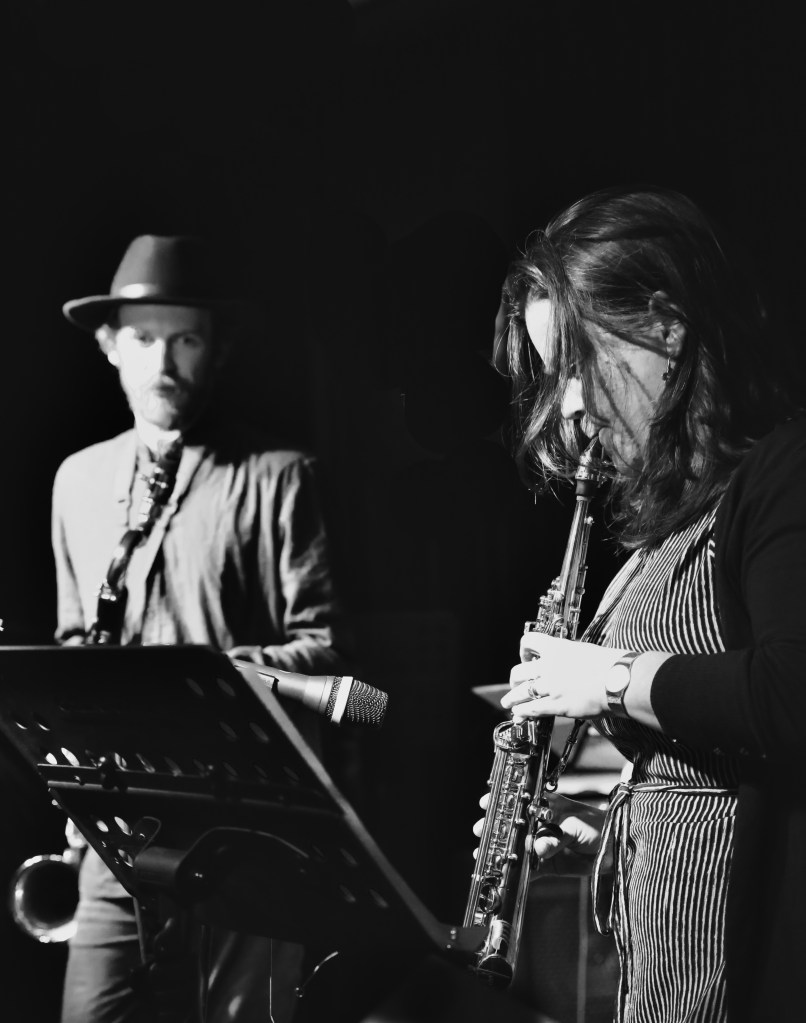
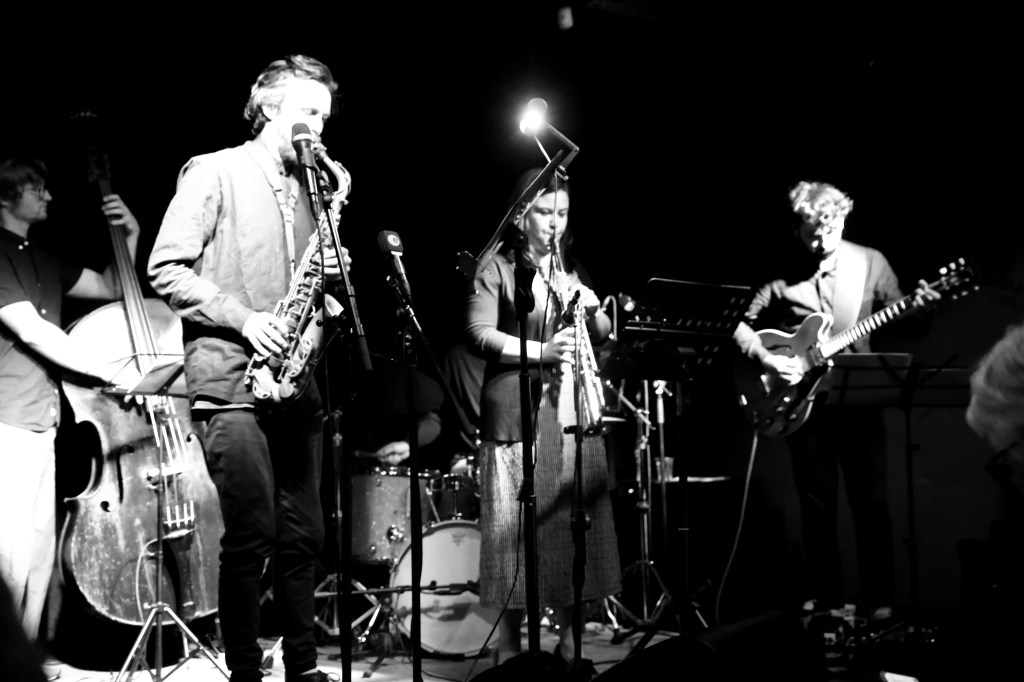
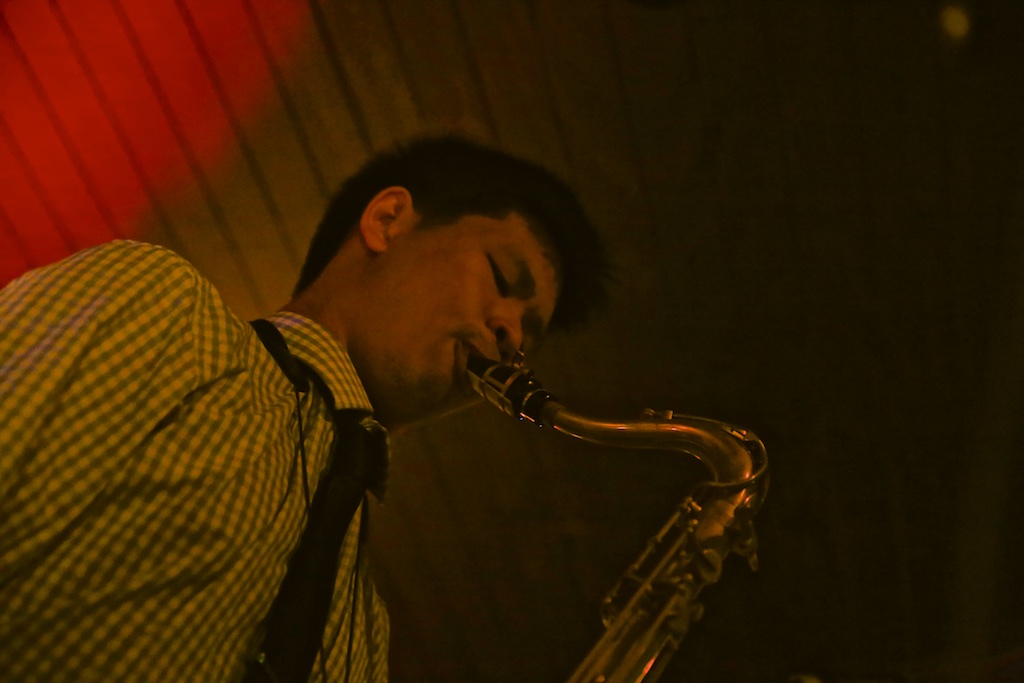 Richard Thai was on the first JAC album but by the time I saw the ensemble live he had left New Zealand for America to complete his postgraduate studies. Recently he returned to his hometown of Wellington where he now teaches and leads the Richard Thai 5. While the ensemble is a basic line up of saxophone, piano, guitar, bass and drums it is never the less forward-looking. This is post millennial music.
 The best illustration of this was heard in his second tune, ‘Capricorn’. A marvellous composition. Like much of Thai’s material it has powerful hooks to draw you in. What sounds simple is in truth anything but, as it shifts between major and minor keys with disarming ease. Many tunes do this, but with Capricorn the device is extraordinarily well conceived. The shifts in focus are pleasing, but what sets the tune apart is a sweet over-arching dissonance; diminished chords acting as a bridge to carry you across the major-minor divide. The arranged head is especially tantalising; setting the listener up expectantly for the explorations that promise to follow.
 Capricorn’s momentum is that of a multi-hued butterfly in a tropical storm; pushing against the cross winds, never losing its way, pulse, or sense of purpose. Thai’s tenor picks at the tune, peeling the layers back, exposing the heart. This contrasts with pianist Matt Steele’s oblique approach. Steele clearly took the difficult route and along the way it yielded gold. You were with him note by note as he undid the knots of the puzzle confronting him. Steele is always an interesting pianist and always one to watch. It is his determination, his preparedness to take risks and his ability to learn on the bandstand that marks him out from many of his peers. He grows as an artist each time I see him.
 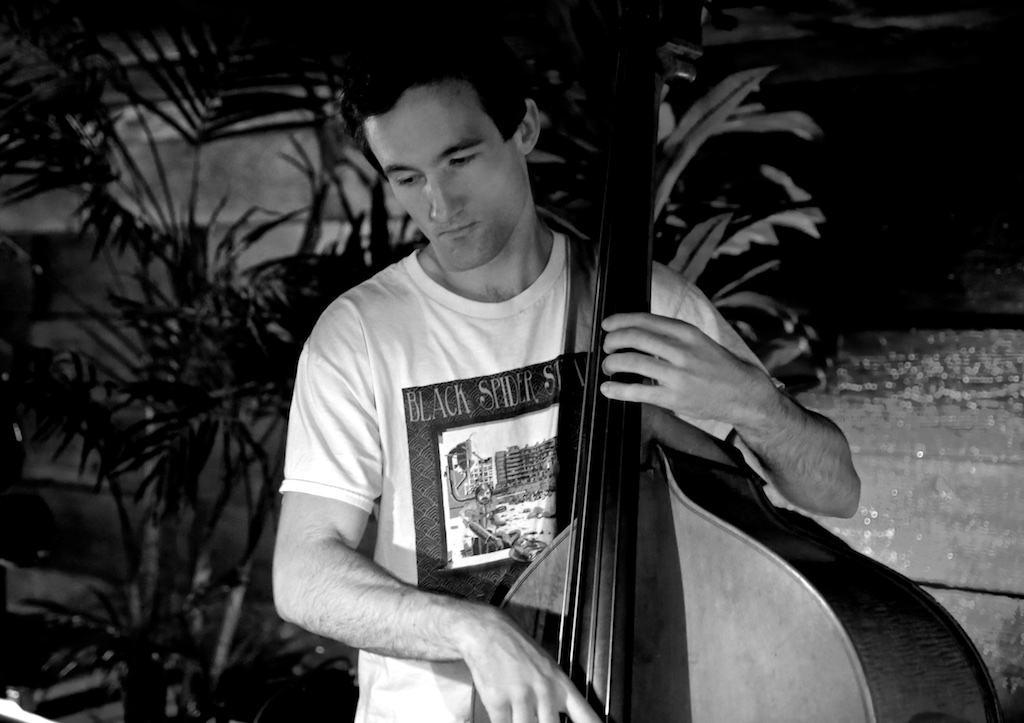 The last to solo on Capricorn was guitarist Callum Allardice. After the long complex solos preceding his, he wisely chose to linger nearer to the melody. His tight elliptical figures rounding out the earlier solos and bringing us gradually back to the outro. His time to shine as soloist came on the last number where his guitar soared as if free of gravity (much to the delight of the audience). Allardice has many fans in Auckland.
 The remaining two band members Shuan Anderson and Scott Maynard are also established musicians from the Wellington area. Anderson (like Allardice) was also a member of the Tui nominated JAC and he has played at the CJC before. A responsive drummer who interacted well and picked up on the subtle nuances of the material. The bass player Scott Maynard has been a member of various leading Wellington units (e.g. Myele Manzanza, Lex French). He has played at the CJC before and he never disappoints. His role in giving a heart beat to this often complex material was vital. I look forward to hearing more of this ensemble and above all I would like to some hear more Thai compositions. With a few more years of performance under their belt the unit could achieve even more.
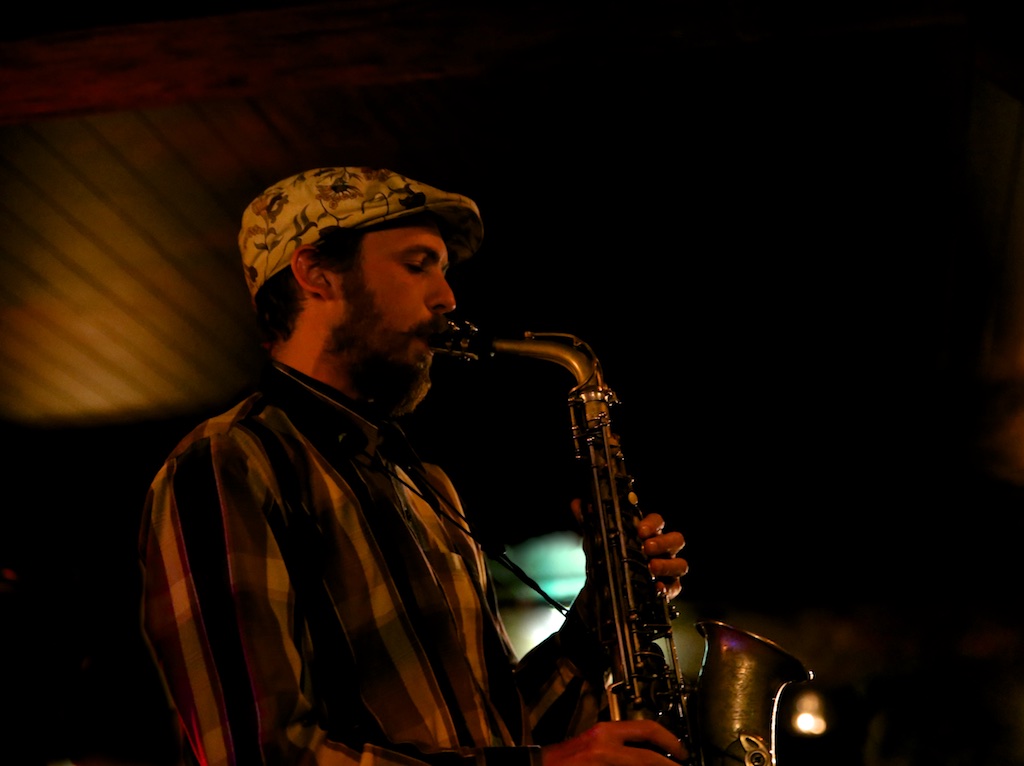 The Antipodes project is an innovative one; well conceived and excellent in its realisation. It is a young group but you wouldn’t think so to listen to them. Musical maturity is generally equated with time served on the bandstand, but if the right musicians come together, surprising synergies can occur; artists collectively punching above their weight. Antipodes hits the mark on a number of levels. Firstly the writing is superb. The musicianship is also great but for me it is the communication of a shared vision that lifts them above the ordinary. Given that three members of the band are new to project, that is surprising.
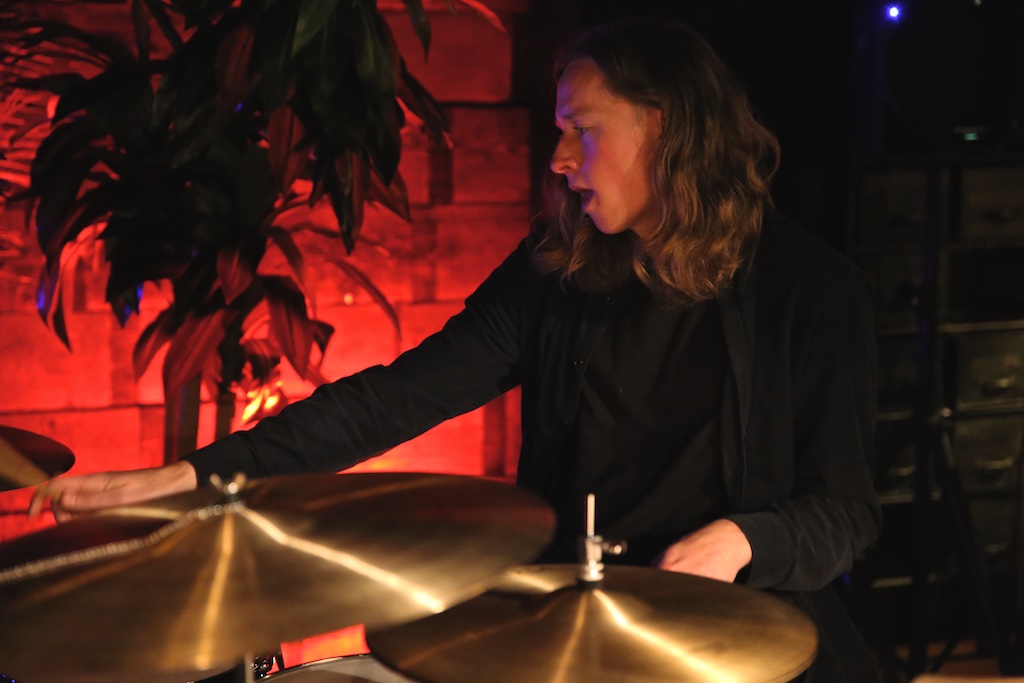
 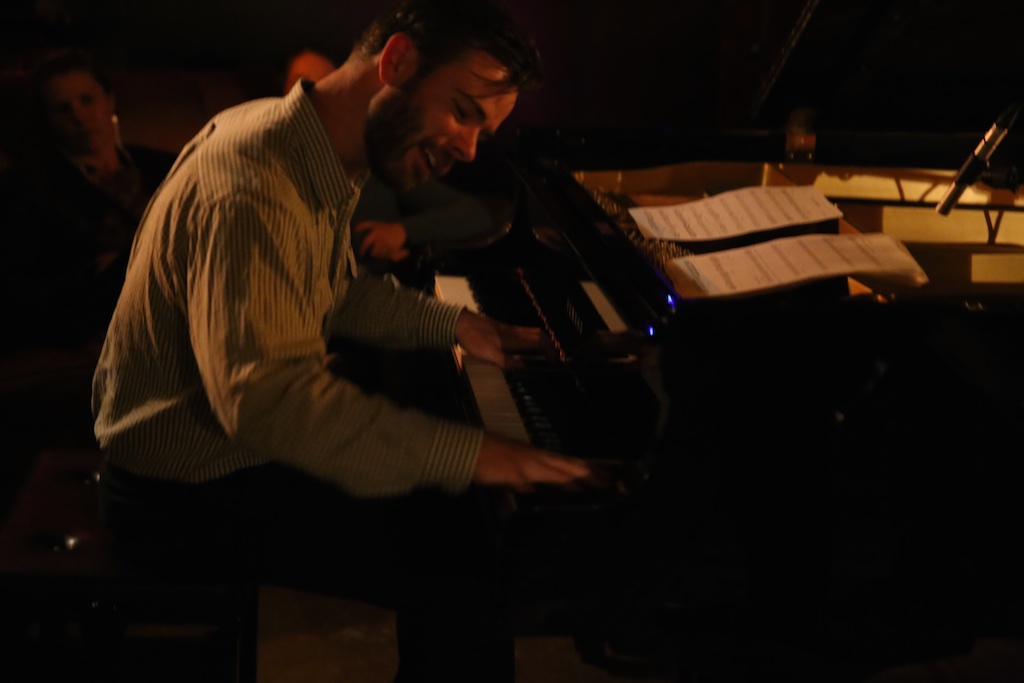 At the epicentre of this group are the core members: Jake Baxendale, Luke Sweeting and Callum Allardice. The original lineup featured respected Australian trumpeter Ken Allars. Allars is at present on tour somewhere in a distant corner of the globe – replacing him is Simon Ferenci. It might be supposed that the absence of Allars changed the dynamic, but Ferenci fitted in as if he’d always been there – a trumpet player I had not heard before, but one I will be happy to hear anytime in future. Also new are the bass player Max Alduca and drummer Harry Day. Like Fereci both terrific players and in synch with the over-arching vibe. Without the cushioning bass work and often edgy drum fills the band would be less interesting. Their contributions were on the mark.
  I have long admired Baxendale’s alto playing, featuring as altoist in some of the best New Zealand line-ups (The Jac, Richter City Rebels, Wellington Mingus Ensemble, JB3 etc). Baxendale pulled off some blinding solos in this gig and I have posted a clip which demonstrates his mastery and inherent lyricism. He is a player with depth. I am also glad that Luke Sweeting was touring with the Antipodes again. Sweeting is the sort of pianist who captivates in numerous ways and his solo bravura on a good number can leave audiences open-mouthed. Perhaps more than anyone else in the ensemble he brings out that trademark Aussie-European aesthetic. The first time I heard Antipodes I identified Ken Allars as being the link to a particular Scandinavian sound; his command of extended technique, but moreover his low volume ambient groove-tone. Now I am revising that view as Sweeting has exactly encapsulated that sound, while doing it in a uniquely Australian way.
  The other central figure is guitarist Allardice. Often sitting quietly in the mix as his warm comping lifts the others without ever crowding them out. Then out of nowhere, unexpectedly, those heart stopping solos, souring and as fluid as silk in the breeze. Allardice is a fine composer, as are Sweeting and Baxendale.
  There are shades of meaning to the word ‘Antipodes’. It comes from the Greek ‘to set ones foot upon an opposite place’. If you live in London then the Antipodes Islands of New Zealand are the opposite land mass. For Southern Europe and North Africa it is in Australia. The reverse also applies. Given the musical linkages and especially given the geographical linkages the band is perfectly named (conceived by Australasians living in Germany). This project revives on a regular basis and on current form it stands every chance of becoming an institution. I certainly hope so.
  Antipodes:
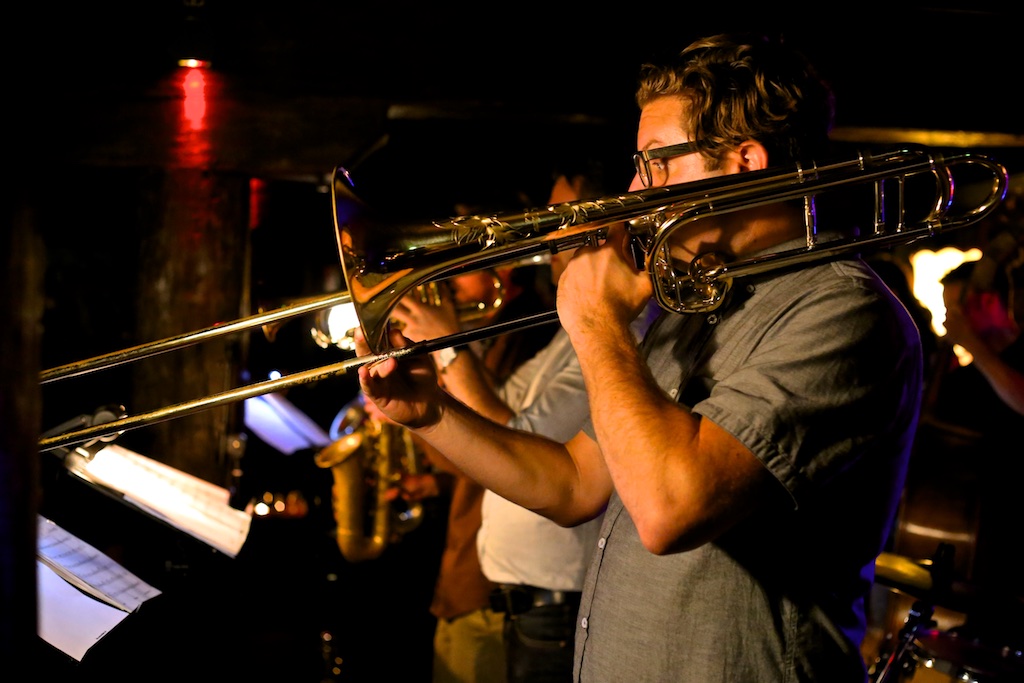
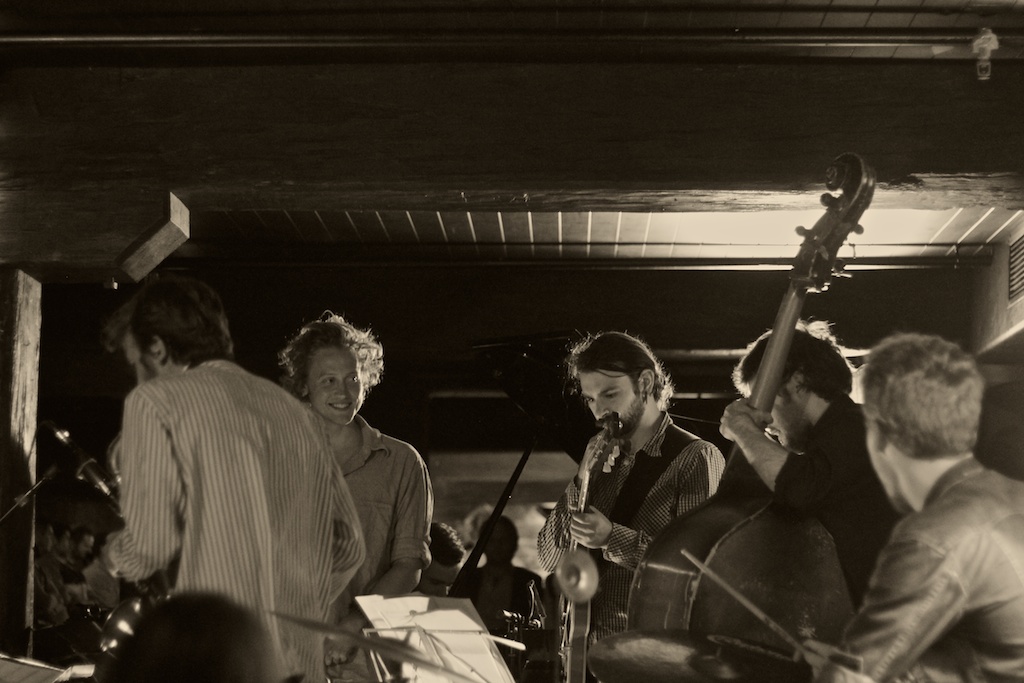
 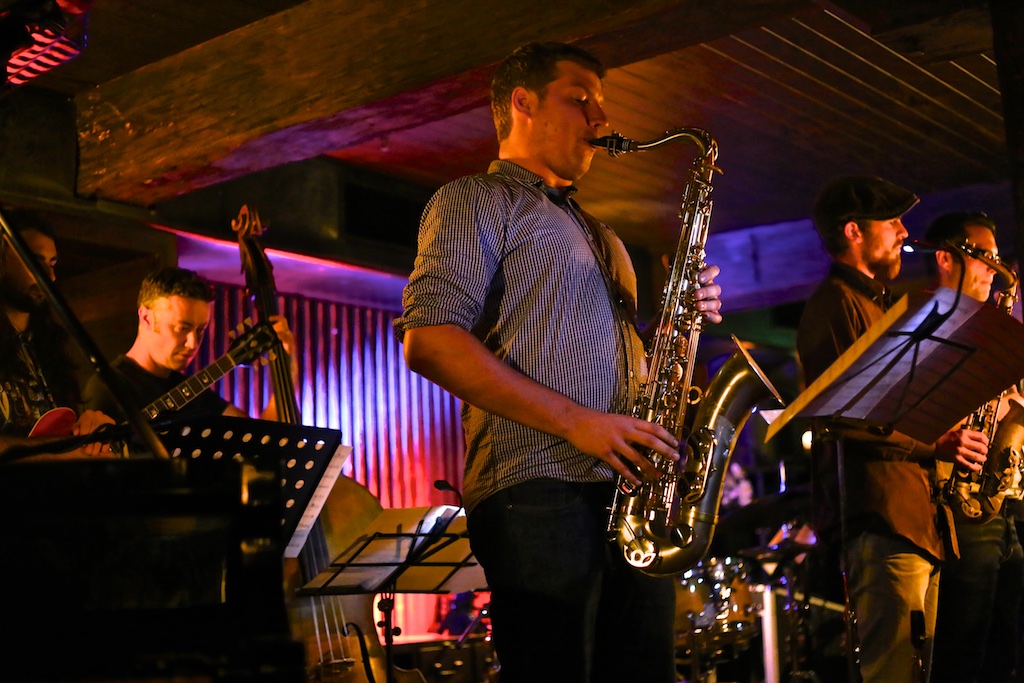 I first heard the JAC two years ago and I liked what I heard immediately. Their sound has textural complexity, but the charts are so well written that the band manifests as if it is a single organic entity. As they move through the pieces, rich horn laden voicings appear, shimmer and fade seamlessly into the next phrase. In spite of the heavy punch of the front line, the band can float airily over passages. This affords them choices that are seldom realised by larger ensembles. They have a real nimbleness
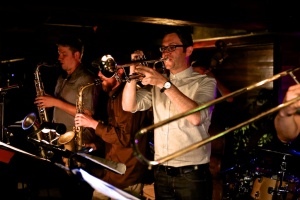 and this is surprising considering their large musical footprint. A bigger footprint than the size of the band would suggest. The really good nonets and octets achieve this.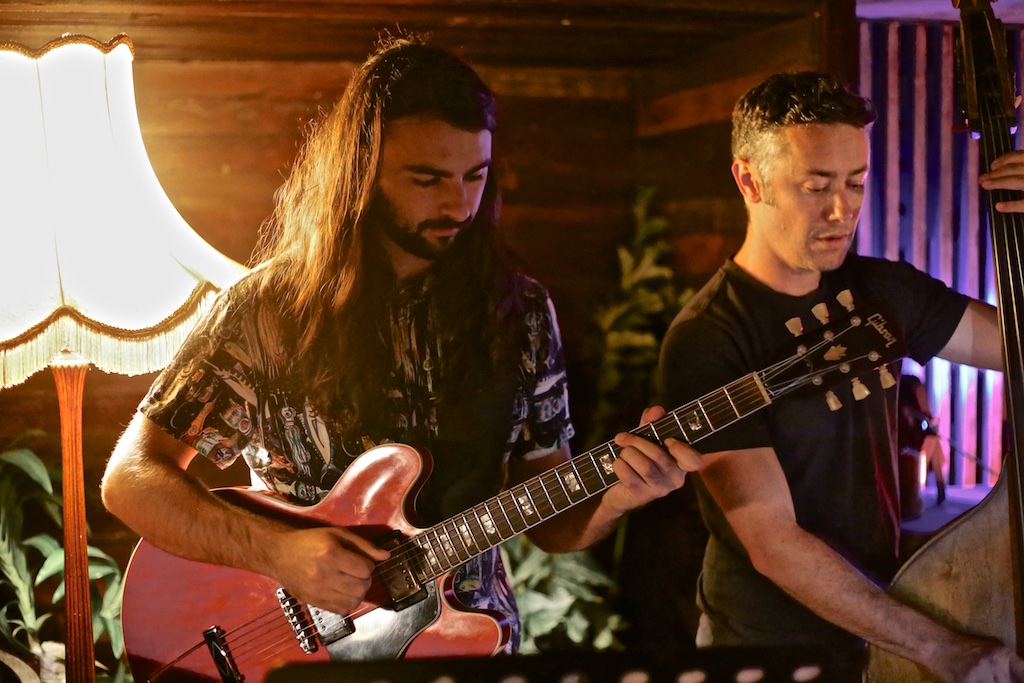


 JazzLocal32.com