Callum Passells Quartet @ CJC

IMG_9721 - Version 2

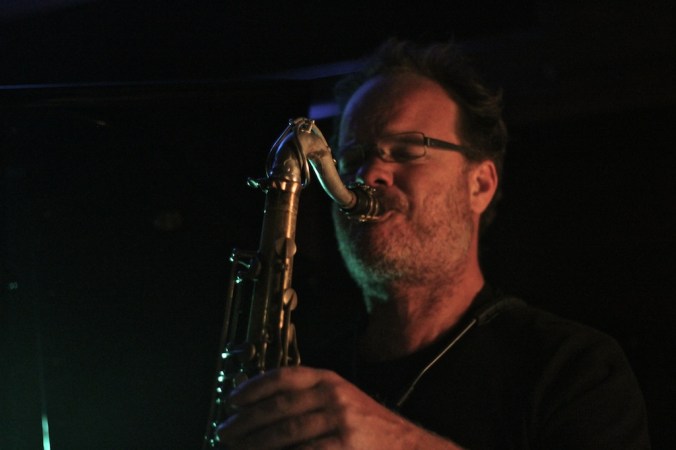
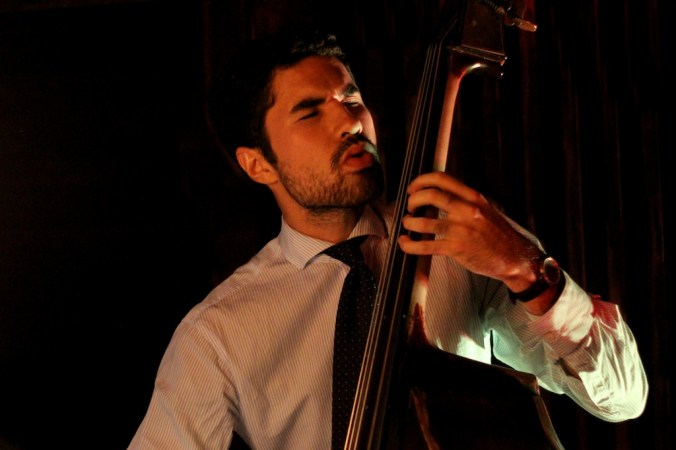
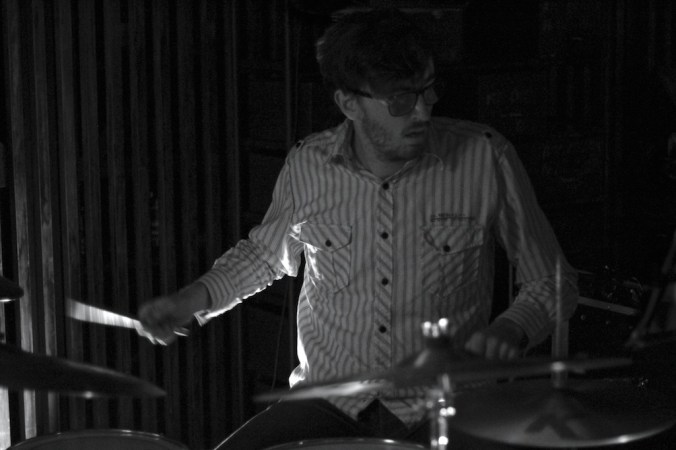
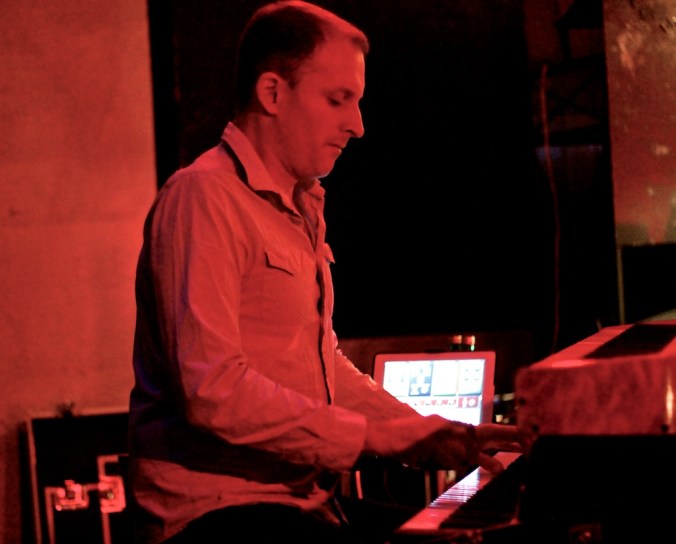
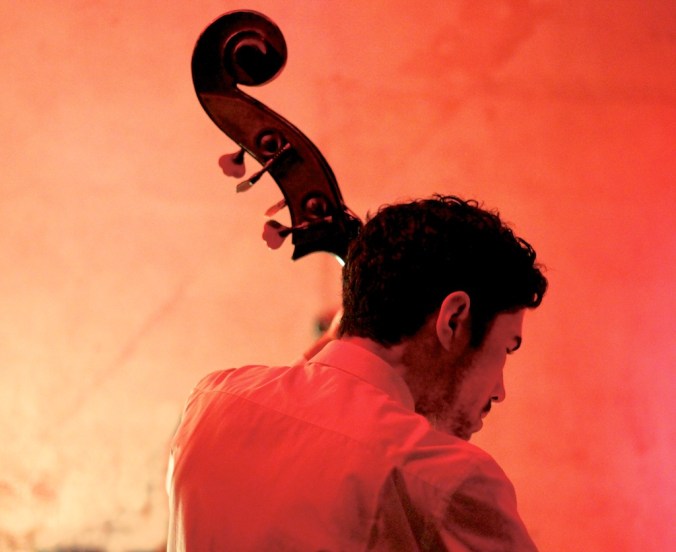
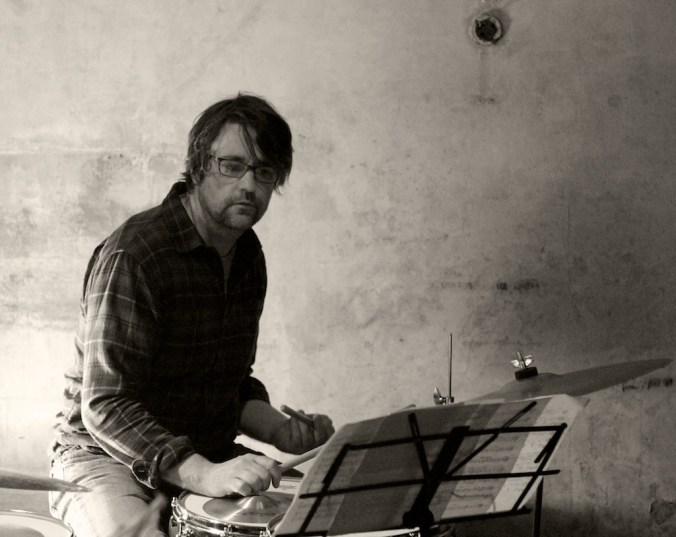
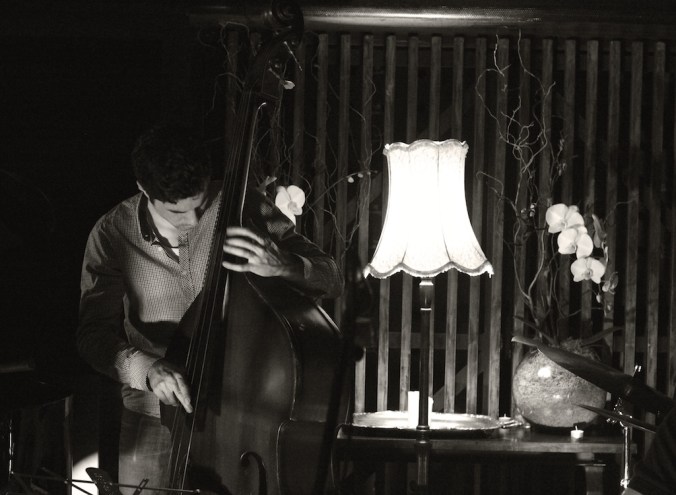
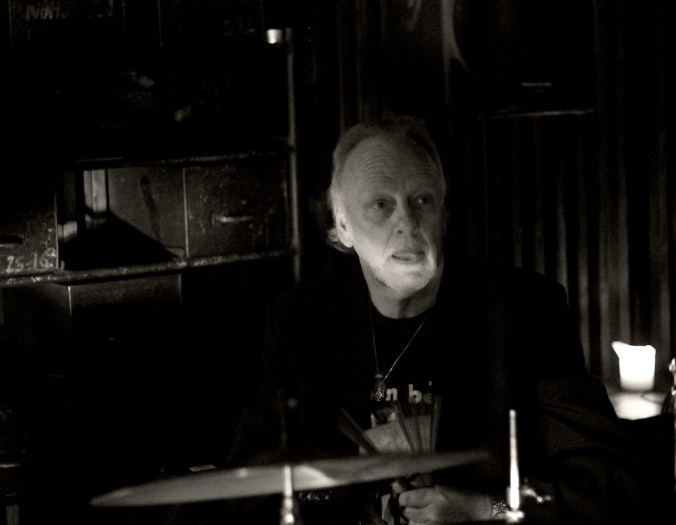
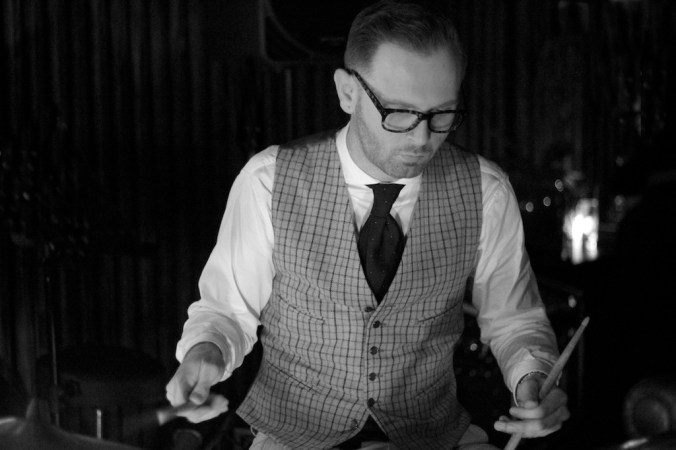
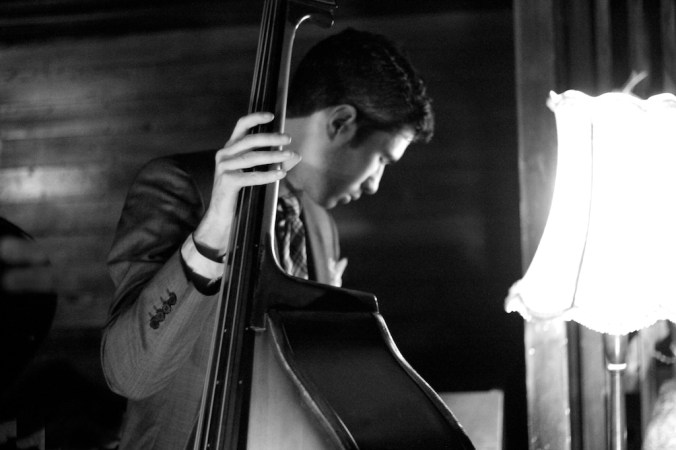
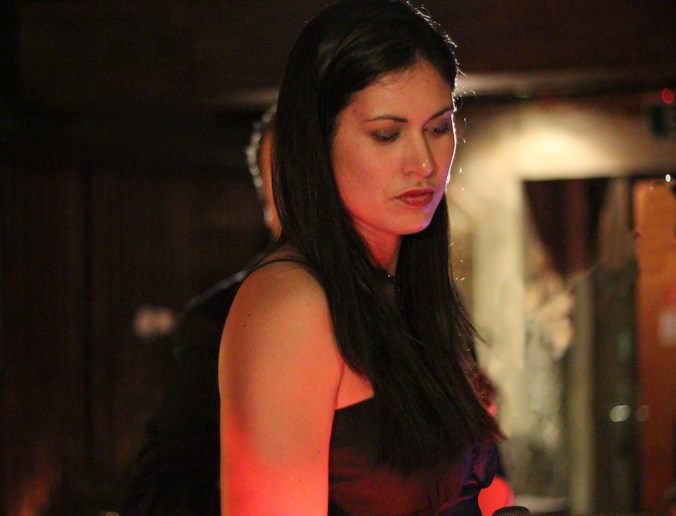
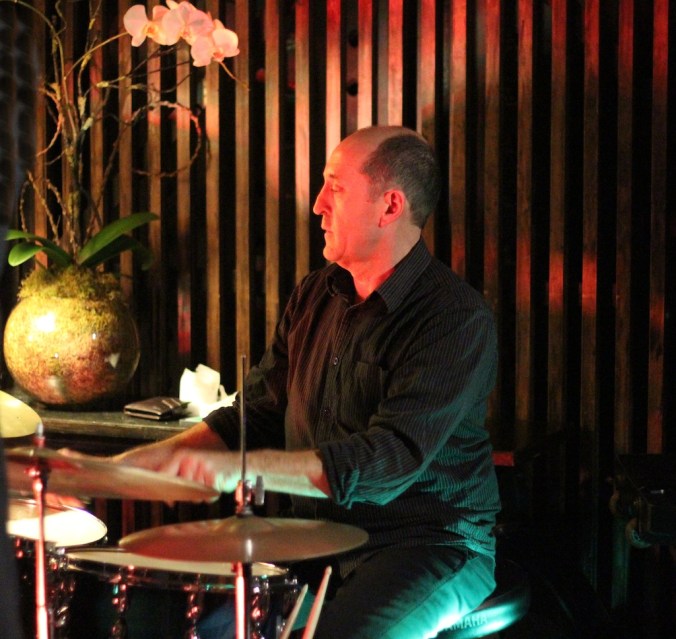
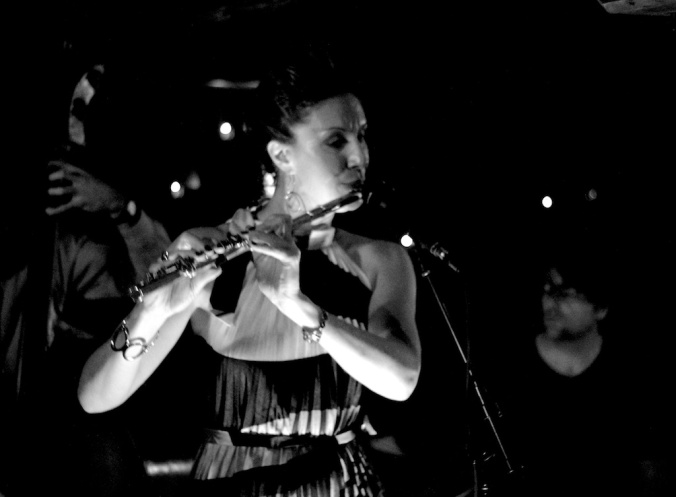
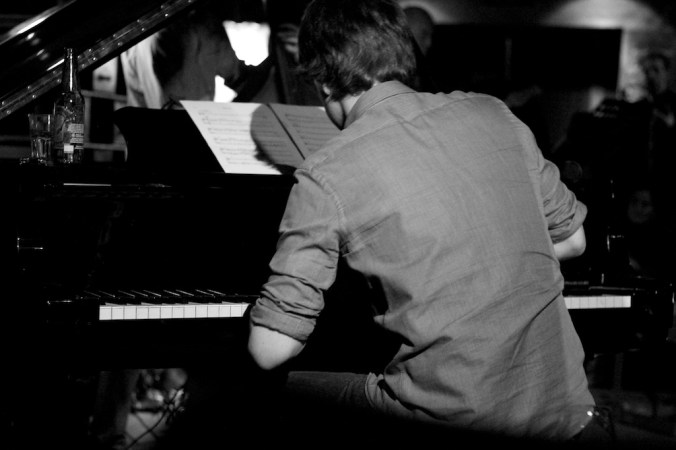
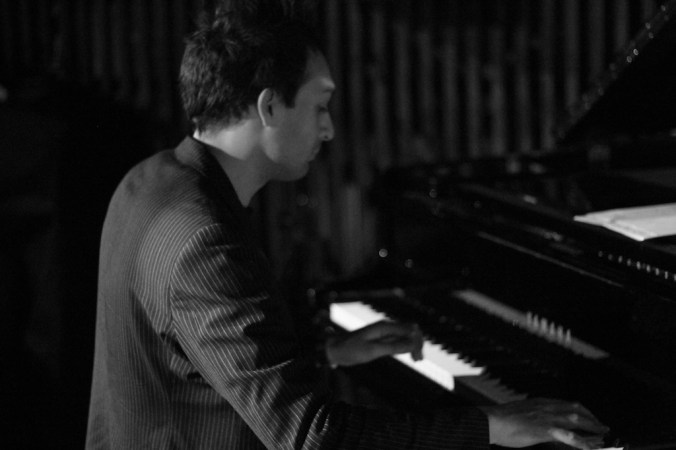
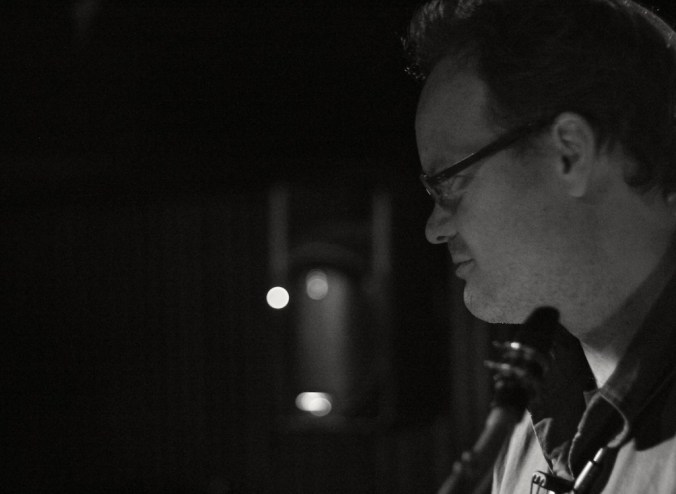
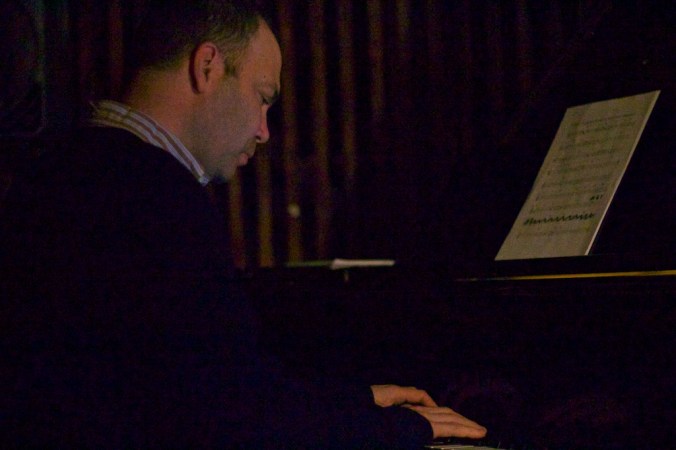
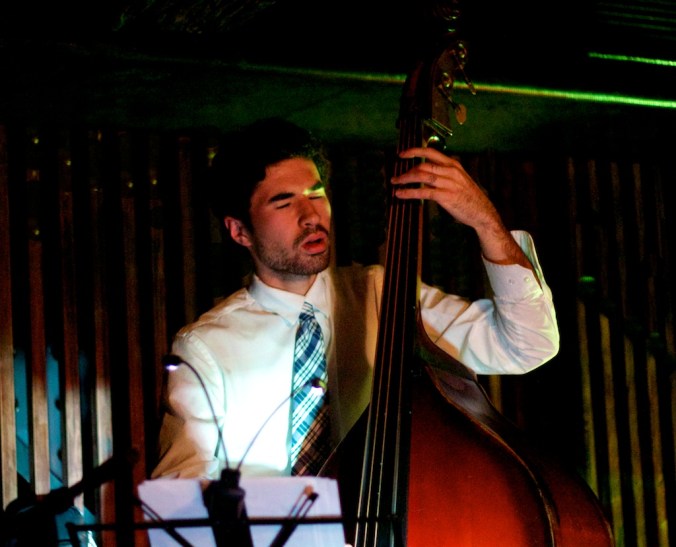
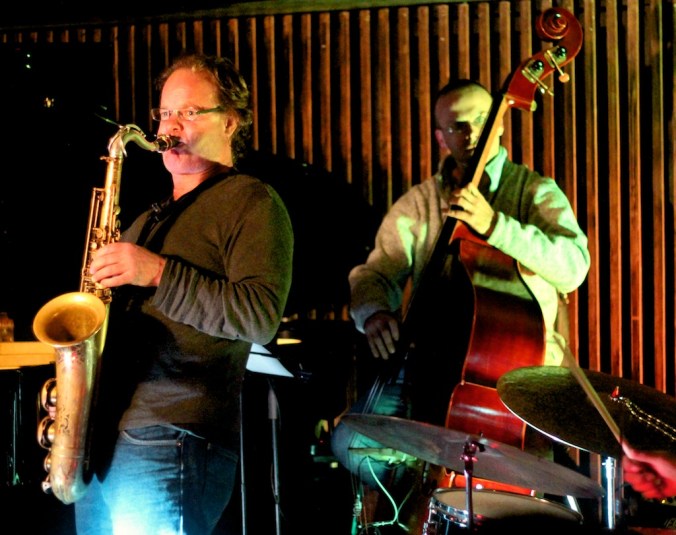
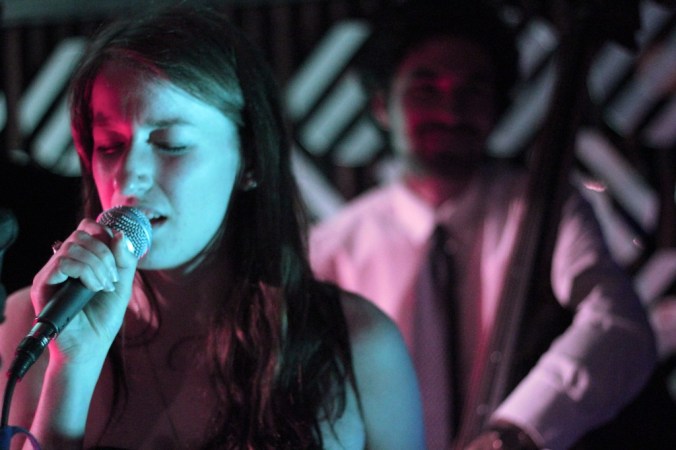
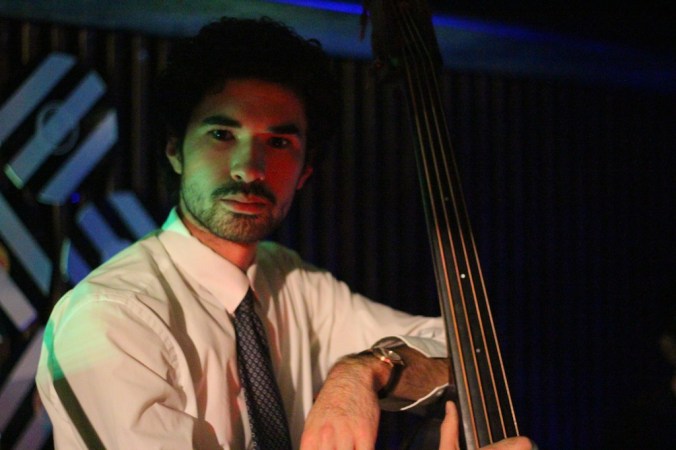
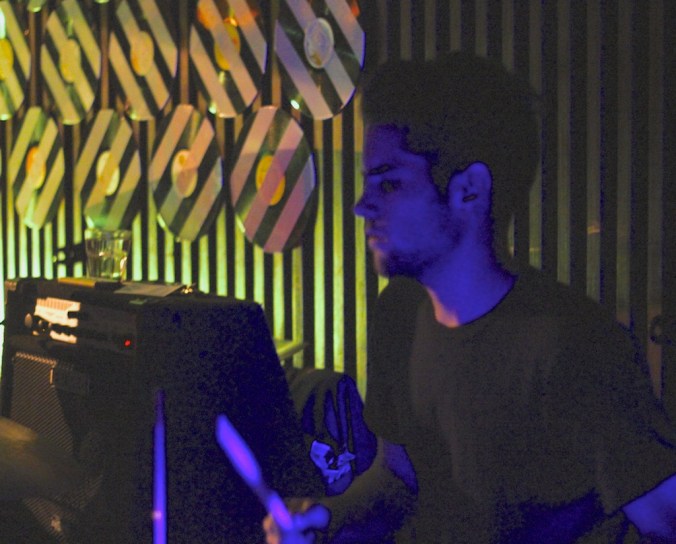
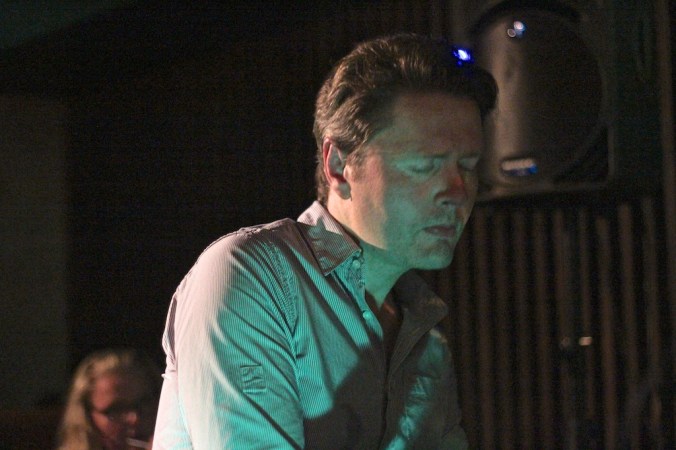
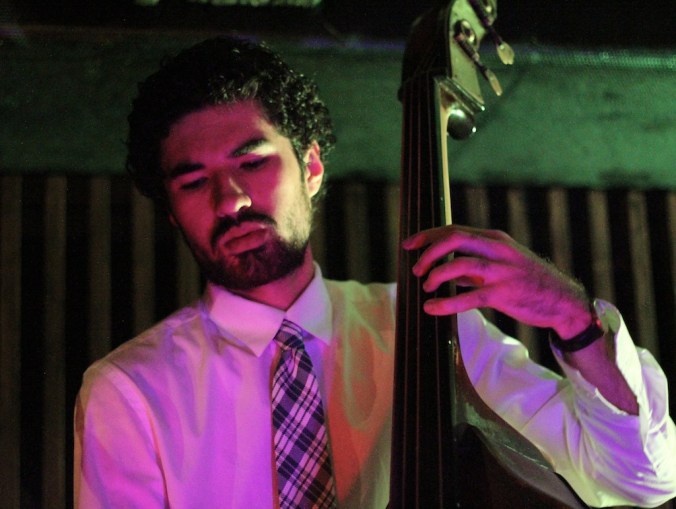
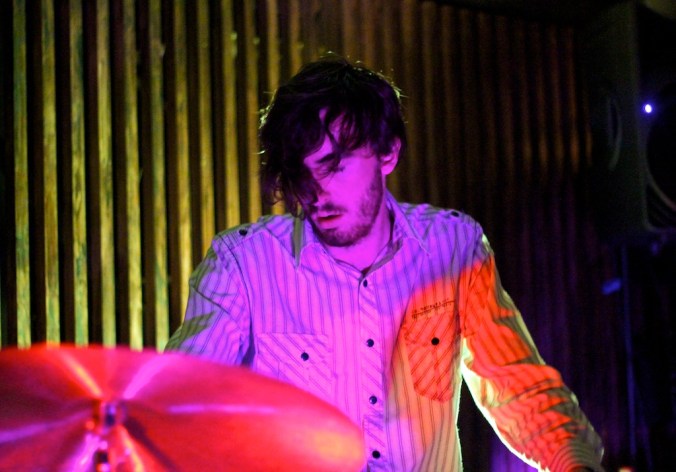
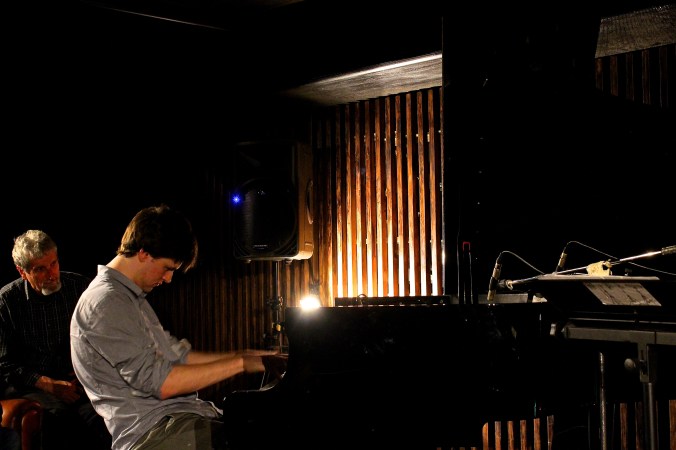
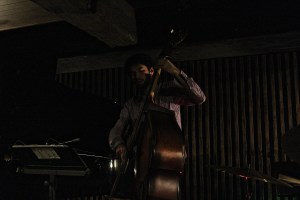
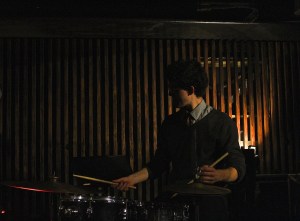
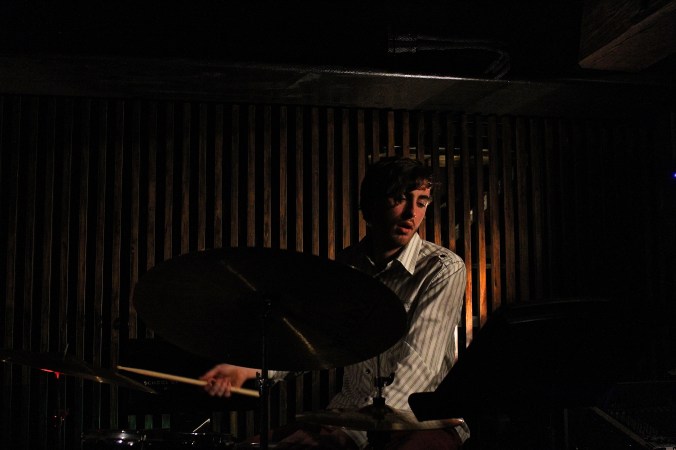
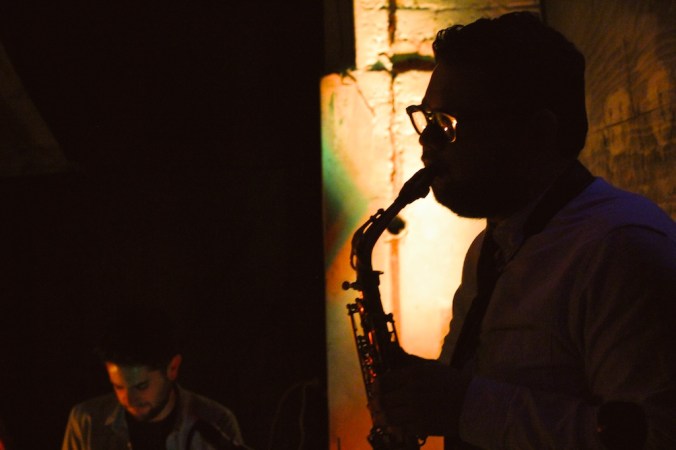
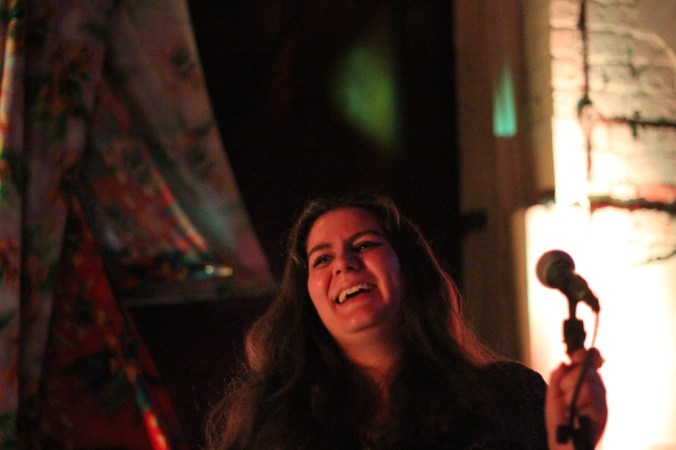
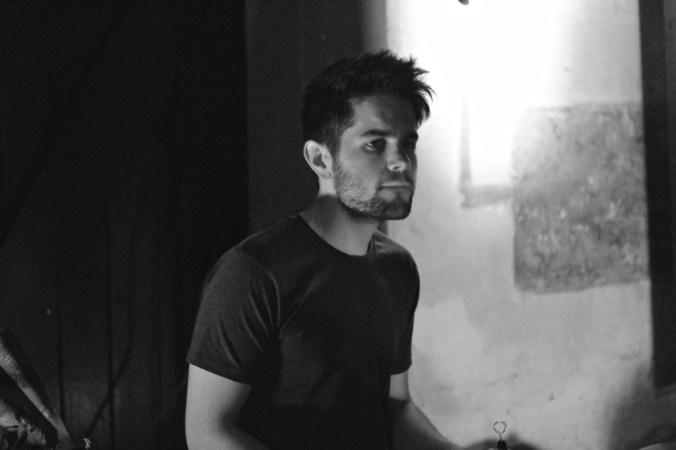
I like the inventiveness of Callum Passells both as an alto player and a composer.  There is something of the risk taker about him and his instincts seldom fail him when reaching for fresh ideas.  His quartet was bristling with edge last week, a band without a chordal instrument and utilising the talented Chelsea Prastiti as vocalist.  Chelsea is always up for these types of sonic explorations and perfectly able to handle the challenge.  This was a gig crafted around a particular range of sounds, but more importantly it appeared to have particular musicians in mind.  On bass was Cameron McArthur and on drums Adam Tobeck.  The bass player and drummer handled the challenges confronting them perfectly, creating texture, nuance, colour and anchor points appropriate to the diverse range of music.  I often praise Cameron McArthur and in this situation his skilful bass lines were crucial.  I was pleasantly surprised by Adam Tobeck’s versatility, as I had only seen him in straight ahead gigs.  He is a tight focussed drummer, but in this situation he showed just how broad his skills base is.
IMG_9780

The set list was skilfully constructed, offering endless contrasts and explorations into a number of Jazz related subdivisions.  During the first set Chelsea sang the ballad ‘My Ideal’ (Robin/Chase/Whiting).  The intro was just vocals and bass, but when the alto and drums came in they took a minimalist approach.  The interesting thing is that the arrangement had a fulsome quality to it, almost orchestral.   This is a tribute to Chelsea and definitely to the arrangement.  IMG_9746 - Version 2
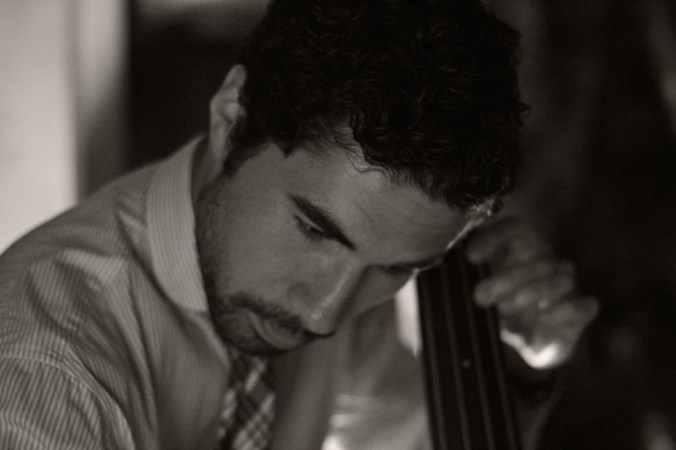
At the other end of the spectrum was a free piece titled ‘N+/-1’.  This was an extraordinary piece of music with all of the excitement and theatrics that you could wish for.  Callum had warned the audience that they were about to hear a free number and suggested that those who were queasy about such offerings could move to the bar area at the side.  I am unsure if anyone took him up on that, but in reality ‘N+/-1’ had the opposite effect.  Drawing people into the bands orbit; all of them smiling and whooping in delight.  While the piece followed its own internal chaotic logic it never-the-less communicated a strangely cohesive and exciting narrative.  There were distinct parts to the piece and each more marvellous than the last.  Voice, bass and drums weaving ever deeper, as if sucked into an alternate reality by the brilliance of the alto.  People watched transfixed, marvelling at the cascade of sounds and the flow of musical ideas.  This number was a tour de force for the group but there was no mistaking Callum’s influence.  Even though he gave the others plenty of space, his presence was always felt, guiding, cajoling and demanding that bit more.  As I watched and listened completely engaged I cursed that I did not have a movie camera on hand to record the moment.
IMG_9751 - Version 2

With a few exceptions Chelsea sang wordlessly and this style is definitely a forte for her.   She can sing a unison horn line so convincingly that you do a double take, scanning the bandstand to see if there is an instrument you have missed.  Her range, timbre and musicality enriched the group.  This was particularly evident on ‘Lennies Pennies’ (Tristano).  I love all Tristano compositions but especially this one.  As they negotiated the exciting fast paced, measured lines a special synthesis was evident.  This was innovative and original; adding something of value to an already rich Tristano-ite output.  IMG_9773 - Version 2
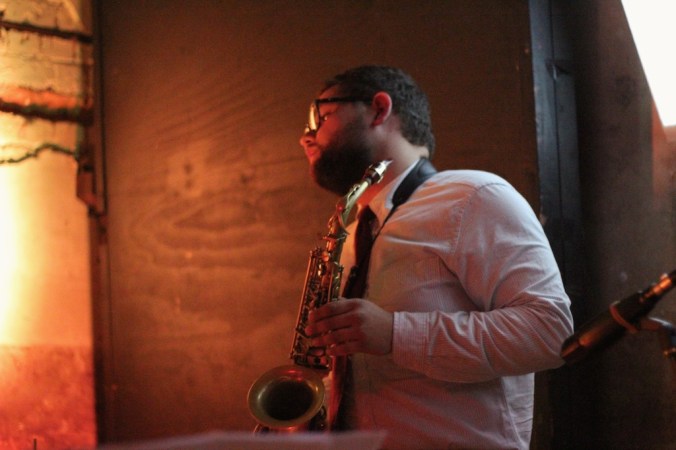
There were other original tunes such as ‘Tashirojima’, ‘Monte Cecelia’ ‘Sons Multiples’ ‘Indifference’ and a number of standards (‘Yardbird Suite’, ‘Mood Indigo’ and ‘Straight no Chaser’).  They were all captivating in one way or another but one original deserves special comment.   Sometimes there are layers of meaning in titles and ‘Indifference’ certainly qualifies in that regard.  Written by Callum in tribute to his father who is gravely ill.  The power of this composition and the delivery by Callum spoke to me deeply.  It is clearly not about casual indifference.  It felt to me like the struggle to view life in a wider context when faced with mortality.  Perhaps the indifference of the universe to our small world suffering and how to make sense of that.  The sound of the alto cut so deep that for a time nothing else seemed real.  This is what raw emotion sounds like.  The audience were quieter and as I looked up at the light show playing against the wall, I saw a brief skeletal picture flash up on the screen.  One brief frame in the play of an endlessly looped digital sequence.  While this fleeting spectral apparition was pure happenstance, it was strangely apposite.   This piece was so much more than elegiac; it placed a marker of just what it means to be human.
IMG_9764 - Version 2

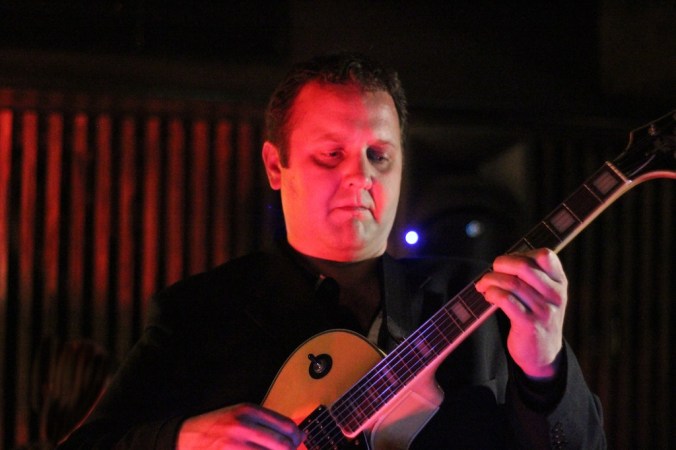
Who: The Callum Passells Quartet: featuring Callum Passells (alto sax, compositions), Chelsea Prastiti (vocals), Cameron McArthur (upright bass), Adam Tobeck (drums).

Where: CJC (Creative Jazz Club), 1885 Britomart, Auckland – 5th March 2014
Steve Russell & Leigh Carriage

IMG_9346 - Version 2

Thanks to Roger Manins extensive connections and the ever widening reputation of the CJC (Creative Jazz Club) Auckland now attracts many gifted offshore Jazz artists.  On the 3rd of February Steve Russell (piano) and Leigh Carriage (vocals) each led a set at the CJC.  Leigh is from Lismore in Northern New South Wales and Steve (from Byron Bay) teaches at the Southern Cross University in Brisbane.  Both have worked extensively in the bigger Australian cities.   Steve Russell has appeared with James Morrison and done support gigs for the likes of Wynton Marsalis and John Scofield while Leigh Carriage has performed in many Australian Jazz festivals and at the Monterey Jazz Festival in America.

IMG_9377 - Version 2 (2)

Steve Russell opened with a quartet set which comprised himself on piano, Roger Manins (tenor), Cameron McArthur (bass) and Stephen Thomas (drums).   His choice of bandmates was fortuitous as Roger is a phenomenon and the other two are fast establishing themselves as the premier local musicians in their field.  The band was extremely tight considering that the musicians had been holidaying in far flung disparate locations.   I later learned that they had been sent the charts a few weeks earlier and had put in some time familiarising themselves with the music.  Sometimes flying by the seat of the pants works just fine and sometimes a little work prior to a gig yields dividends.  This was the latter.

Steve Russell is highly regarded as an accompanist (which is a specialist skill that all too few master).  He is also a gifted leader, and composer.   It was well that he chose three experienced musicians for his set because the complex time signatures and edgy rhythms of some tunes certainly demanded that.  He began with a tune called ‘Belongil Blues’ which laments the loss of access to a much loved wilderness area around Lismore.   The warmth and soulfulness of this number made it the perfect choice as a starter, because what followed was often edgy and crackling with fire.  Fine musicians like these can always extract gold from well used forms (this tune is a good illustration of that as it is simply lovely.  You can hear it as track 7 on Steve’s fine ‘Dark Matters’ album and in the streamed sample below).

As the set progressed we heard a Caprice, a latin infused tune (Sambol) and several tunes not from the album.   Stylistically there are hints of Evans in Steve’s playing but he is entirely modern for all that.  He is an artist that I will gladly seek out when the chance presents itself.   His compositions, his feel for time and the sheer exuberance of his playing won me over completely.

Roger Manins has been busy moving house over the holidays but he certainly didn’t need easing into giging again.  He hit the bandstand in exceptional form and his solo work on numbers like ‘Sambol’ can only be described as incendiary.  In certain light there appeared to be sparks and coloured orbs emanating from the bell of his classic 60’s Selmer.  Roger Manins is a musician at the peak of his powers and given the right bandmates he burns brighter than the sun.   I had not seen Cameron McArthur for over a month but he is also in peak form.  He’s always worth hearing and never more so than when he is challenged and well supported.   Stephen Thomas is a widely respected drummer and his work across various genres is gaining him a significant following.   He’s a musician well worth hearing because of his originality, chops and the deep intuitive feel for what ever music he’s playing.

IMG_9323 - Version 2

When Leigh Carriage began her set she was accompanied by Steve Russell (her usual accompanist) plus Roger Manins, Cameron McArthur and Stephen Thomas.  A set like this required an entirely different set of skills and the band moved into this supportive role seamlessly.  Leigh Carriage has a voice that reaches deep into your soul.  There is a certain purity to it; a quality that is not always evident in Jazz singers.  What she does with her voice is special, using subtlety and nuance to reveal a thousand colours and shapes.  Leigh Carriage is also a composer of note.  She performed a number of self penned songs from her most recent album ‘Mandarin Skyline’ and one standard ‘Get Out of Town’, which she made her own.   She has also released an album titled ‘Get out of Town’.   There is often a wistful melancholic edge to her songs and the album is largely in that vein.  In the club she added a few upbeat numbers and it was a delight to hear her voice and Roger Manins tenor saxophone merging in unison.   Although she is far from a blues belter, hers is an exceptionally strong voice.  Of her own material ‘I’m not leaving’ stands out particularly’.  IMG_9328 - Version 2

As expected Steve Russell took an altogether different role during the vocal set.   Though his note placement was sparser and his attack more subdued, his strong presence was still felt.

IMG_9297 - Version 2

Who: Leigh Carriage and Steve Russell – with Roger Manins, Cameron McArthur, Stephan Thomas.

Where: The CJC (Creative Jazz Club), Britomart, 1885 building, Auckland  – 5th February 2014
AlbumLeigh Carriage; ‘Mandarin Skyline’ with Jonathan Zwartz (bass), Steve Russell (piano), Matt McMahon (piano), Sam Keevers (piano), Phil Slator (trumpet), Matt Smith (guitar), Hamish Stuart (drums).

AlbumSteve Russell; ‘Dark Matters’, Matt Smith (guitar), Greg Lyon (bass), Scott Hills (drums).

Benny Lackner (Germany) @ CJC

IMG_8492 - Version 2

I missed the Benny Lackner trio when they came last year and I had subsequently been besieged with the inevitable, “man you missed a great gig”.   This time I made sure that was able to attend.  Benny Lackner is from Berlin, Germany and his touring schedule has taken him round the world a number of times.  His brand of jazz is forward-looking and has a distinctly modern-European feel about it.   I am a fan of European styled Jazz although surprisingly it is often overlooked by American Jazz fans.  This is ironic because American Jazz musicians have always relied heavily on European tours and are hugely supported there.

This trip Benny came without his trio and teamed up with Cameron McArthur and Ron Samsom for the Auckland gig.   As the gig approached a problem arose, when the building owners required the downstairs room for a function.   The room with the lovely grand piano in it and the better acoustics.  An urgent call went out for a Fender Rhodes and before long Mark Bains had lent one, along with a nice keyboard.   The upstairs venue has a nice feel to it but the acoustics are more difficult to manage.  Such obstacles are quickly dealt with by experienced musicians who are quite used to playing in a wide variety of settings.

IMG_8525 - Version 2

The sets were mainly centred on Benny’s own compositions, but interestingly he had thrown in some modern pop tunes, mined for their improvisational worth.   There was a Bowie number and a Radiohead number, both of which went down extremely well with the audience.  Gone is that awkwardness that the 50’s Jazz musicians often exhibited when they tackled the popular tunes of the day.   From Miles onwards and through to Brad Muhldau ( a mentor of Benny’s) the game has changed.   American musicians like Bob Frisell and others will routinely interpret modern tunes or rock classics.   In many cases the vocabulary of rock is appropriated.  The Europeans however are the masters of this and artists like Mathius Eik, Esbjorn Svensson and Marcin Wasilewski have blazed a clear trail ahead.  He also tackled Monk’s ‘Bemsha Swing’ which I have posted.  EST played this often and this version takes the tune even further out.

IMG_8518 - Version 2

Benny Lackner approaches his material obliquely and to my ear there is no hint of the Evans legacy in his voicings.  He often plays big percussive chords, but he can also show real sensitivity as he negotiates the well constructed tunes.  The Radiohead number worked particularly well on the dominant sounding Rhodes, with the slightly softer voicings emanating from the smaller keyboard.  You get the feeling watching Benny at the keyboard that he views each performance as an open-ended adventure.  I am only sorry that we never got to hear him on the clubs grand piano.

He told us that he was very pleased with his new band mates and why wouldn’t he be.   Ron Samsom is such a fine drummer that you expect a top-level performance from him.   Ron has a world of experience behind him and so many local and visiting overseas acts benefit from his multi faceted traps work.  I have never seen him falter in any setting and the diverse styles required of him only appear to urge him on to greater heights.

As has been the case so often in recent months, Cameron McArthur filled the bass slot and all of the experience he is gaining is now paying dividends.  This guy is a crowd pleaser, with the chops and ears to provide the goods.   We also heard some very nice solos from him.

This has been a big tour for Benny.  From Berlin his hectic schedule took him through South East Asia, Australia and New Zealand.  Although he was born in Berlin he also lived in the USA for many years.  The many influences absorbed along the way have moulded him into an original and interesting pianist.

Who: Benny Lackner (leader, keys, compositions), Cameron McArthur (bass), Ron Samsom (drums)

Where: The CJC (Creative Jazz Club), 1885 building, basement, Britomart, Auckland 9th October 2013

Mark Isaacs @ CJC

IMG_8432 - Version 2

Pianist and composer Mark Isaacs has a rapidly growing international reputation and we were lucky to get him here.  Once again it was down to Roger Manins, who has wide connections in the Jazz world and we are eternally grateful for it.  Mark Isaacs has toured the world extensively and not only fronted a number of prestigious Jazz festivals, but also recorded with many world-renowned Jazz musicians.  Artists like Kenny Wheeler, Roy Haines, Adam Nussbaum and Dave Holland have appeared on his albums but as if that were not enough, he has two parallel musical careers.   Mark is also a classical pianist/composer of some stature and the conductor Vladimir Ashkenazy said this of his extraordinarily beautiful ‘Children’s Songs’.  “This wonderful cycle is highly inventive and inspiring, accessible to children and adults alike.  Very enjoyable and touching“.

The first thing to strike you about Mark is his intense passion for music, but his focus and drive have not in any way deterred him from exhibiting a cheerful, often extroverted demeanour.  He engaged easily with the CJC audience and his level of report with the band and especially Roger, made the gig all the more enjoyable.  Even though he had not played with drummer Frank Gibson Jr or Bass player Cameron McArthur before it felt like an established band.  He and Saxophonist Roger Manins go back a long way and perhaps because of this long-standing connection, what was billed as a standards gig, soon became so much more.  IMG_8456 - Version 2 (1)

The set kicked off with ‘Gone With the Wind’ (Allie Wrubel – 1937).  By coincidence this once popular but seldom heard tune was performed here by Mike Nock only months earlier.   Both artists appeared to briefly reference the brilliant but somewhat obscure Brubeck version, but each approached the tune in very different ways.  Mark Isaacs is another musician who has the history Jazz piano under his finger tips and as he worked his way into the tune I could hear brief echoes of the past greats.  I love this tune and especially when interpreted this well.

As the set list unfolded I realised that most of the standards were from the 1930’s.   It is not hard to fathom why, as the Great American Songbook tunes written in this period were second to none.  The gig,  subtitled as ‘Pennies From Heaven’, was later explained as being an inside joke.  Roger and Mark had embarked upon just such a project a decade ago and in their view the title scared off the potential audience.  More fool those who failed to turn up because this number in their hands was fresh, funny and satisfying.  ‘Pennies from Heaven’ (Johnny Burke/Arthur Johnston) is also from the 1930’s.

IMG_8441 - Version 2 (1)

The tune that I have posted is the perennial favourite ‘Someday My Prince Will Come’ (Frank Churchill – 1937).  Although non Jazz audiences would only associate this tune with Disney, it has a long and distinguished Jazz history.  Among the 100’s of well-loved versions are those by Oscar Peterson, Miles Davis, Dave Brubeck, Bill Evans, Wynton Kelly and Grant Green.  Playing a classic standard like this to a savvy Jazz audience can have its pitfalls as comparisons are inevitable.  The audience however lapped it up and from the stating of the melody through to the open-ended interpretation near the end, it was fabulous.  With Roger egging the band on and Mark responding in kind it could hardly be otherwise.

IMG_8428 - Version 2 (1)

There was a very nice solo by Cameron McArthur who astonishingly just keeps improving between gigs.  Frank Gibson Jr met Mark years ago but in spite of them trying to organise a gig it never happened until now.  In the event it was a happy confluence of inventiveness, exuberance and great musicianship.  Roger Manins was on form as usual, delivering fiery energised solos in a post Coltrane manner.

Mark Isaacs has the technique and the hunger to continually reach beyond.   Whether gently comping under a melodic bass solo or unwinding the melody to explore what lies beneath he engages us.  His probing left hand often pulls slightly back on what his right hand is playing and the tension created gives added impetus.  While his Classical compositions are informed by Jazz, the opposite is also true.  He will surely continue to do well in both worlds.

IMG_8473 - Version 2

As I left the club I picked up a copy of his Resurgence band’s ‘Duende’ album and put it on during the drive home.  It is an album of his own compositions.  What was immediately apparent was how well crafted the compositions were.  It was the sort of album that ECM might have released and the quality of the recording added to that impression.  As I listened on I heard some beautiful guitar work, not over stated but clean, inventive and crystalline.  Then I heard a human voice, wordlessly singing arranged lines as part the ensemble.  Easing over to the curb I picked up the album cover and flipped it over.

The personnel list would stop anyone in their tracks.  Mark Isaacs (piano), James Muller (guitars), Matt Keegan (reeds and percussion), Brett Hirst (bass), Tim Firth (drums), Briana Cowlishaw (vocal).  Matching this dream line up with those compositions was a masterstroke.   Muller and Isaacs communicate so very well.  It all made sense, the Kenny Wheeler connection, the skilled arranging and the promise of what may follow.   Mark Isaacs has the ears to absorb and the smarts to compose what works best for him.  This album certainly does.

Who: Mark Isaacs (piano, compositions, leader), Roger Manins (tenor saxophone), Cameron McArthur (upright bass), Frank Gibson Jr (drums).

Where: CJC (Creative Jazz Club), Britomart, 1885 Basement, Auckland, New Zealand on 2nd October 2013.

Album and contact details: ‘Duende’ (Gracemusic GROO4)

Emerging Artists Series: Alex Ward / Allana Goldsmith

IMG_8305 - Version 2

Two or three times a year the CJC reserves a gig night for emerging artists. On Wednesday there was a double billing and while they could legitimately be termed emerging artists, they showed a confidence and polish that bespoke experience. In fact both have been performing about town and in Allana’s case for some time. This was a moment to show a discriminating Jazz audience what they are about and they delivered.

IMG_8303 - Version 2

First up was pianist Alex Ward. He has recently graduated with honours from the NZSM Massy campus. I last saw Alex play just over a year ago and he showed real promise then. Now the hard work and years of study are bearing fruit. He appears to play with even greater confidence and this obvious self belief has influenced his performance. His set was mainly a showcase for his own compositions and they were interesting and varied. There were ballads, uptempo burners and a (new) standard on offer. Standards always give us points of comparison and his rendering of Robert Glasper’s ‘Yes I’m Country (and that’s Ok)’ from the Blue Note, Double Booked album did just that. It was flawlessly executed and delivered with real heartfelt exuberance. Among his own compositions I really liked ‘Litmus Test’ for its edgy hard bop feel and the more reflective ‘Lighthouse Keeper’ (a recently written tune). There was also a reharmonisation of ‘Beautiful Love’ but with dark voicings and with an oblique approach to the melodic structure. These tunes while all quite different, hung together well as a set.

IMG_8295 - Version 2

On Bass he had the gifted Cameron McArthur and on drums Ivan Lukitina (who I had heard about but not seen before now). They both provided solid support for Alex and delivered good performances during solos. Cameron was particularly energised during ‘Litmus Test’ and Ivan was right there with him. Ivan excelled on ‘Yes I’m Country (and thats OK)”.

This should be a right of passage for Alex and he will surely become a fixture about town if he continues performing at this level.

IMG_8320 - Version 2

Allana Goldsmith has appeared in a number of bands and her musicality and stage presence are pleasing to ear and eye. I have heard Allana a number of times now and on those occasions her role as ‘part of a lineup’ gave me a brief taste of what could be. She has performed with various sized bands but most often as part of a duo with guitarist.

She is a current member of the ‘Sisters of Swing’, which is an Andrews Sisters tribute band and co-member Trudy Lile speaks highly of her abilities. I recently saw her with Peter Scotts ‘Bad Like Jazz’ project and I was very impressed; especially as she sang a stunning rendition of ‘Freedom Jazz Dance’ (Eddie Harris). It is this preparedness to take on challenging projects and to do them well that sticks with you. Her voice is strong without being loud and in many ways she is reminiscent of the great singers of the past. What is not redolent of past singers however, is her preparedness to tackle adventurous modern projects. IMG_8310

For this gig Allana had selected a few well-known and some lessor performed standards and to stamp her own mark on them, sung often in Te Reo Maori. While Whirimako Black has already moved into this territory, Allana has her own unique approach to the music. Hers is an original voice. It is tempting to think of songs sung in Te Reo Maori as being different or apart from European traditions. In Allana’s case that is not so as she has maintained the integrity of both traditions. The best illustration of this was her brilliant rendition of the Miles Davis tune, ‘In a Silent Way’. This was the first tune of her set and she used it as a Karakia or blessing. The notion of using this open, spiritual number to unify us all and to call down blessings was a perfect beginning.

IMG_8322 - Version 2

Her band was Ben McNicholl (tenor sax), Dave Fisher (guitar), Cameron McArthur (bass), Jason Orme (drums).

IMG_8313 - Version 2

I have always rated Ben highly on ballad material. His concise soloing and the atmospheric vibe that he created behind Allana worked well. When backing a singer on a ballad, tasteful minimalism trumps busy, every time. This sort of restraint is counter intuitive to a musician, but the balance between Ben and Allana was pitched just right. I know that he took care to select just the right reed for the job in hand.

I thought that I knew all of the Jazz guitarists about town, but clearly I don’t. Dave Fisher has played with Allana for some time and he picks up on her every nuance. The voicings that he uses are those of the skilled accompanist and the warmth of his tone caresses and underpins her vocals perfectly. This was mostly chordal work, which shifted, swung and shimmered like the guitarists of an earlier era. It was an effect deliberately aimed for and it was easy on the ear. His guitar is an Epiphone Hollowbody of the sort used by Joe Pass and that made sense as well.

Cameron McArthur was also the bass player on this second set. Because he works so often about town he has developed a keen ear and had no trouble fitting into this different groove. Unlike the earlier piano trio gig, with challenges thrown down and returned in kind, he needed to keep more out-of-the-way here. Seeing him perform so well in such a variety of situations certainly increases my respect for him.

The remaining band member was drummer Jason Orme and I am very familiar with his playing. Oddly though, I had never seen him playing in this sort of situation, which at times required a very nuanced approach. His skills in such a setting were immediately apparent and his brush work was especially fine. Like the guitarist and the tenor he focused on the singer, enhancing every inflection of voice or following every whispered line. Each accent delivered with a quiet flurry on the snare or a tap on a muted cymbal.

Allana is currently studying performance at the NZSM Massey and this was her first CJC gig. She will certainly be back.

* Thanks to Dennis Thorpe for the high quality video material

Wh0 (first set): Alex Ward (piano), Cameron McArthur (bass), Ivan Lukitina (drums).

Who (second set): Allana Goldsmith (vocals), Ben McNicholl (tenor sax), Dave Fisher (guitar), Cameron McArthur (bass), Jason Orme (drums).

Where: CJC (Creative Jazz Club), 1885 Brittomart Building, basement, Auckland

When: 11th September 2013

Trudy Lile Quartet @ CJC

IMG_7997 - Version 2

Trudy Lile has unerring radar when it comes to locating tunes from the lessor known jazz lexicon.  Tunes that she skilfully transforms into glowing vibrant flute friendly arrangements. Her choice of ‘Steppin Out’ is a good example.  Kurt Elling recently sung this wonderful (but difficult) Joe Jackson tune on his ‘At The Gate’ album.  Not only was it a great choice and well executed but her new lineup rose to the occasion; giving her all the support she needed and more.

Trudy Lile last performed at the CJC about 8 months ago and she had a different line-up then.  Last Wednesday she had assembled a particularly solid rhythm section in Alan Brown (piano), Cameron McArthur (bass) and Ron Samsom (drums).  Trudy is often adventurous in her choice of material, mixing reworked standards, originals and virtually unknown tunes scavenged from interesting nooks and crannies.  On Wednesday she held to this course and it paid off.  IMG_8013 - Version 2

Among the other numbers performed was a beautiful rendition of ‘Niama’ (Coltrane), ‘Flute Salad’ (Lile) – I love this tune with its swinging happy vibe and another Lile original ‘Domestic Bliss’.   Trudy explained that this number was somewhat tongue in cheek, as her own experiences of domestic bliss at times resembled the TV character Miranda’s.

Trudy Lile is well-known about New Zealand as a gifted flutist.   While the flute is her prime instrument she also demonstrates impressive vocal skills.  We saw both on Wednesday.  I have always sensed a pied-piper quality to her work and as she dances and sways during the flute solos it is impossible not to be captivated.  Dedicated Jazz-flute players have been rare over the years and some critics have been disparaging about the lack of expression in that horn.   If they listened to Trudy they would shut up, sit down and recant.   In her hands the flute has all of the expression you could ever want

.IMG_8017 - Version 2

I must zero in on Alan Brown here as he was just superb.  OK, Alan always puts on a great performance but this facet of his playing is not seen as often.  Alan is rightly famous for his soul infused Jazz funk.  He was a power house of inventiveness on Wednesday,but more importantly he established beyond a shred of doubt that he is a stellar straight-ahead Jazz pianist.   His playing is always strongly rhythmic and that is what we expect from Alan, but to see him as an accompanist in this context was revealing.  Anyone hearing a Kurt Elling number such as ‘Steppin out’, notices his arranger and pianist Laurence Hobgood.   Hobgood is a dedicated accompanist of the highest order.   Alan communicated a special quality also.  He supported vocals (and flute) in the way Hobgood does and it was pure gold.  After seeing him in this context I would really like to hear him do a piano trio gig sometime, complete with a few straight-ahead standards.

Cameron McArthur has become the first choice bass player for Auckland gigs and every time he appears (which is often) he impresses afresh.   He is gaining a substantial group of supporters about town and his solos always elicit enthusiastic calls and strong applause.

IMG_8012 - Version 2

Ron Samsom is quite simply the best there is on traps and his tasteful underpinning of any band is inspiring.  On this gig he alternated between quieter brush or mallets work and power house grooves which lifted the others to greater heights.   Sometimes when I hear Ron’s drumming I can discern a pulse that goes way beyond the room.  Perhaps it is the pulse of the Jazz tradition itself, the history and the future rolled together in a beat.

This band was the perfect foil for Trudy and she took full advantage of it.

Who: The Trudy Lile Quartet – Trudy Lile (leader, vocals, flute).  Alan Brown (piano), Cameron McArthur (bass), Ron Samsom (drums).

Where: The CJC (Creative Jazz Club) Brittomart 1885, Wednesday 7th August 2013.

Conner McAneny @ CJC (+Nacey/McArthur/Samsom)

IMG_7813 - Version 2

Conner McAneny has played at the CJC on previous occasions, but this is the first time that he has done two sets as leader.  He was ably abetted by the Dixon Nacey trio (with Ron Samsom and Cameron Mc Arthur).   The sets were a mix of standards and originals.   It was particularly nice to hear the fabulous Dixon Nacey composition ‘The Lion’ played again and even better to hear Connor tackle the Lennon/McCartney composition ‘And I love Her’.

For me these two tunes stood out, but for very different reasons.   ‘The Lion’ is from Oxide the second Samsom/Nacey/Haines album and it is a great composition.   The tune moves through several distinct phases, drawing the listener ever deeper as the melody unfolds.  The structure lends itself well to improvisation.  Conner took a different approach to that of Kevin Field (who appeared with Dixon, Ron and Kevin Haines on Oxide) and it worked well.  I like to see local compositions being taken up by other local bands , especially if they are compelling.  We must create our own standards, because we have musicians with good writing skills in our midst.  Having two of the Oxide band in his support group made this an obvious choice.

IMG_7804 - Version 2
The Lennon/McCartney composition ‘And I Love Her’ worked very well as a Jazz ballad and if the arrangement was Connors particularly big ups to him.   I can clearly recall the Diana Krall version (2009), arranged beautifully by John Clayton.  There was also a John Abercrombie version from around that time.  Both were terrific in different ways, but the Sarah Vaughn cover of 1969 sits very awkwardly in her repertoire.  As much as I love Sarah Vaughn, this particular rendering sank like a stone.

I think time is the vital ingredient here.   It was as if there was a musical ‘Wallace Line’ that separated older players from younger in this regard.   For my generation (those alive when the Beatles arrived on the scene) the idea of their material ever becoming jazz standards was strange.  When musicians of the 50’s and 60’s attempted Beatles or Rolling Stones tunes there was an awkwardness and a self-consciousness about what they were attempting.   This is not at all evident in a younger generation of musicians like Uri Caine whose ‘Blackbird’ (McCartney) from the 2001 album ‘Solitaire’, stands up perfectly against any Tin Pan Ally tune.  In my view only a Brad Mehldau could pull off a version of ‘Hey Joe’ so convincingly.  He is young enough to see the tune for what it is and what it could be.  My generation saw such massive hits as the enemy of Jazz; brilliant, compelling but still the enemy.  Perhaps Gil Evans was the exception.  IMG_7799 - Version 2

Connor works hard at his craft and each time he appears we see a more rounded artist.   I have often written about the skills of the other band members and suffice to say, where they go good improvised music follows.

What: Conner McAneny (piano) with Dixon Nacey (guitar), Cameron McArthur (bass), Ron Samsom (drums).

Where: The CJC (Creative Jazz Club), 1885 Basement, Auckland July 10th 2013

Aaron Blakey (Sydney) @ CJC

IMG_7744

Aaron Blakey is someone you warm to instantly.  He communicates with ease and has a relaxed manner about him.  The same applies to his approach to music.  I have heard pianists who feel that they must astound with every note and while that is all well and good, it can be exhausting for everyone.  The more experienced musicians understand that performance is not only about original ideas, but also about communication.  The latter involves working with an audience while you tell an interesting musical story.  I would place Aaron in that category.

Aaron left Auckland for Japan in 2008 and he gigged regularly around Tokyo.  After a few years he returned to study in Auckland before moving to Sydney in 2011.   On this gig his accompanists were Roger Manins on tenor saxophone, Cameron McArthur on bass and Adam Tobeck on drums.  Roger Manins is at the peak of his powers and after his very successful stint with the JMO in New Zealand and Australia, he is more on fire than ever.   He is one of the best saxophonists in Australasia and so having him in any group lifts their game.  Putting him with a fine musician like Aaron Blakey produces especially rewarding results.  IMG_7746 - Version 2

Anyone who has read these reviews or spent some time at Auckland Jazz gigs in the last six months will know just how swiftly Cameron McArthur is rising through the ranks.    He is one of a small handful of must-have bass players when visitors come to town.   Adam Tobeck is fast becoming a regular at the CJC and his abilities were evident at this gig

With two notable exceptions Aaron played his own material and the compositions were all named after people he knows.  With each song, we were ushered into Aaron’s private world.  A world peopled by close friends, eccentric waiters, babies and delightful dancing children.  At the end of the two sets I felt that I would recognise these people if I saw them; so convincing was the imagery.  Live improvised music creates shapes and forms which you can almost grasp, but which evaporate and dissolve in unpredictable ways.  What remains is a series of impressions, a filigree journey imprinted on the ether.  IMG_7759 - Version 2

A good example of this was a tune called ‘Sinclair’s Routine’.  Aaron named this after a waiter who worked at a  busy Surrey Hills restaurant.  He was using the establishments piano to practice one morning and trying out a few ideas, when the waiter said, “I like that, it helps me to go about my routine” .    Not your usual musical commentary but it ended up as great tune and gave us a window into that particular moment in time.   It worked for me on several levels but primarily because I could picture and hear the event in my mind’s eye.   There was a song ‘Jonathan B’ dedicated to an old friend from New Zealand.  As Aaron was explaining the origins of the tune he looked up and said, ” Oh there he is, he just walked in – hi man”,  Once again we connected the song to time and place and this gave added weight to the number.

The track that I have recorded on video is “One for Steve”, which is a dedication to the much admired Steve Barry.   This was certainly a connection that hung in the air as the band played through the number.  Steve (another ex-pat Aucklander) had been playing that very piano only a few weeks earlier and the echo of his gigs was relived through the tribute.

The first of two standards was ‘My Song’ (Keith Jarrett).  It amazes me that ‘My Song’ is hardly ever performed.  There is a view that Jarrett’s three recorded versions are so contained, that musicians shy away from it.  More is the pity because most jazz lovers rate it highly.  During the introduction Roger Manins helpfully suggested that Aaron would actually be doing the Elton John “My Song’.   This was a solo performance and you could have heard a pin drop.  It was great to hear it done and great to hear it done so well.  IMG_7719

The second standard was the Cole Porter tune ‘I Love You’ from the musical Mexican Hayride, placed squarely in the Jazz Lexicon by John Coltrane (Lush Life album).  While Coltrane’s version was with Saxophone, Bass and drums, The version on this night was a duo featuring piano and tenor saxophone (Manins and Blakey).   That these two have been friends for years and that they have worked together many times before, became evident on this number.   The sensitive interplay between them was truly extraordinary and although they took quite different approaches to the task in hand the synergy was uncanny.  It was one of the wow moments which Jazz audiences live for and to my annoyance I had run out of HD video-tape just a moment before it started.   I am sure that they will play it again sometime, as Aaron has promised to return. We hope that he will not leave it two and a half years this time.

For those wanting more there was a Roger Manins gig down at Frankie’s Bar in Wyndom Street two nights later.   This was a similar lineup, but with premier drummer Ron Samsom at the kit.  For this gig Aaron had brought his Fender Rhodes along.  They swung mightily and as I listened I could hear Ron pulling back on the beat.  There is some fine music around Auckland.  All it needs is our continued support.

Who: Aaron Blakey (piano) with – Roger Manins (tenor sax), Cameron MacArthur (bass), Adam Tobeck (drums).

Where: The CJC (Creative Jazz Club) Auckland 3rd July 2013

Sean Wayland & David Berkman @ CJC Winter International Series

Sean Wayland

Sean Wayland

We don’t get many offshore Jazz pianists visiting New Zealand, but we have seen quite a few over recent weeks. This particular gig comes hot on the heals of hearing Sean Wayland appearing as featured guest artist with the marvellous Jazzgroove Mothership Orchestra. Sean had impressed me at the JMO gig and so I really looked forward to hearing him play at the CJC (Creative Jazz Club).

Before he had played a note Sean Wayland won us over with his easy-going banter. Especially when he thanked us for Mike Nock and mentioned band mate Matt Penman. These are two of Auckland’s best-loved sons and I suspect that Kiwi’s, like Canadians, enjoy our worth acknowledged by the big country next door. This generous acknowledgement by a respected New York based (Aussie born) pianist reveals an interesting truth about Australasian Jazz.

There may be a struggle to meet the financial realities, deal with lack of good pianos and the paucity of gigs, but the two scenes continually produce world-class Jazz musicians. The Scenes are in fact so intermingled that it is often hard to know who is an Aussie and who is a New Zealander. Steve Barry and Mike Nock illustrate this perfectly as they live and work in Australia. Roger Manins lives in New Zealand but gigs across the Tasman every other week.

In spite of the difficulties there is no lack of great music coming out of Australasia and the main problem is that of distribution. An upside of this changing business model is that bands travel more. For the keen Jazz fan live music is once again king. We don’t have to wait for a multi-national recording label to tell us what we should or shouldn’t like, we can explore ‘You Tube’ or ‘Bandcamp’ and hear from the artists directly.

IMG_7530 - Version 2

Sean Wayland is a hugely respected figure on the Australian scene and in New Zealand as well. He is a very modern pianist, as he moves in circles where new approaches are constantly being explored and new sounds developed. After listening to his compositions I was not in the least surprised to find him supported by the likes of Matt Penman, Jochen Rueckert, Will Vinsen, and James Muller. This is essentially the Rosenwinkel generation. While he speaks that language fluently he is unmistakably an individual stylist. No one sounds quite like Sean.

Sean’s tunes are very melodic. Often unfolding over a simple bass line as with ‘eenan’ off his ‘Lurline’ album. What sounds catchy and accessible can actually be quite complex as his approach to rhythm gives the tunes that unique feel. This is tension and release at its sophisticated best. I have put up a version of ‘eenan’ as a ‘You Tube’ clip which unfolds in subtle and beguiling ways. So beguiling in fact that I dreamed the tune two nights in row. Such powerful hooks are not accidental but the result of careful craftsmanship. There is a strong sense of pulse or swing to his tunes, but approached from a different perspective to that of the more traditional pianist.

This intergenerational shift is one that I hear more often as the changing of the guard occurs. Other tunes played to great effect were his, ‘Trane plus Molly equals countdown” and the solo piece ‘Little Bay’. Both of those tunes are found on the ‘Expensive Habit’ album. ‘Trane plus Molly equals countdown’ hints at McCoy Tyner, but you quickly realise that the voicings have very modern in feel. I can however certainly imagine Kurt Rosenwinkel doing the tune. It is an extraordinary composition where the left hand continuously punctuates the flow with oblique accents. I was left wanting more than the single set and I certainly hope that we get to see Sean again on his next trip back to Australia.

IMG_7520 - Version 2 (1)

Accompanying Sean were Cameron MacArthur (bass) and Jason Orme (drums). Both accomplished musicians who quickly slotted into the challenges of supporting a world-class and highly inventive pianist.

The next artist up was David Berkman. He has been to New Zealand before and anyone who saw him last time would have jumped at the opportunity of seeing this top flight New York Pianist in action. There is a fluidity to his playing and above all an impeccable sense of timing. This hard-driving post bop fluidity and the big bluesy chords is what most characterises his work.

The Kiwi members of the quartet were Roger Manins (tenor), Olivier Holland (bass) and Ron Samsom (drums). Together they formed a powerhouse of inventiveness and Roger in particular seemed to benefit from this grouping. His solo’s were so incendiary as to cause gasps of surprise and from an audience who are used to such pyrotechnics. While we expect Rogers high wire acts he is always able to surprise us and this night saw him really on fire. David Berkman certainly knows how to amp up the tension and his ability to extol a horn player to reach deeper and deeper is impressive. He worked the room with as much enthusiasm as he would have done in a prime New York club and everyone there appreciated that commitment. This was the kind of gig where you sat back and let the sound wash over you, tapping your feet uncontrollably and yelling enthusiastically between numbers.

David Berkman

David Berkman

David Berkman’s repertoire was a well-balanced mix of his own compositions and some lessor known standards. During the gig he talked about his mentor, the much respected pianist Mulgrew Miller (who sadly passed away that very evening). He has worked with a wide variety of artists such as trumpeters Tom Harrell and Dave Douglas and his contribution to Jazz education is well-known. Having moved to New York some years ago he quickly settled into the routines of gigging, recording and teaching and since then he has been a fixture on the local scene. He travels extensively and is a Palmetto recording artist.

IMG_7554 - Version 2

The two pianists were very different, but both were amazing in their way. In David Berkman we heard the history of the post bop era and in Sean Wayland we glimpsed the future.

What: Sean Wayland and David Berkman Winter International Series.

Who: Sean Wayland (p) (leader) Cameron McArthur (b) Jason Orme (d). – David Berkman (p) (leader), Roger Manins (s), Oli Holland (b), Ron Samsom (d)

Where: CJC (Creative Jazz Club) 29th May 2013

Rosie & The Riveters@CJC

Rosie & the Riveters

Rosie & the Riveters

The name ‘Rosie & The Riveters’ grabbed my attention immediately as I come from an activist family. The derivation goes back to WW2 when women had to work on the production lines while their men were away fighting. When the men returned after the war they were expected to return to obedient domesticity but many resisted and the ‘Rosie’ symbol became a potent feminist statement. Roseann Payne understands this history as she referred to it in her introduction but she also had a more prosaic explanation on offer. “My name is Rosie and I hope we will be riveting”.

Rosie Payne had graduated from the Auckland University Jazz School on the day of the CJC gig and her upbeat mood reflected this achievement. She had assembled her support band mainly from fellow students and alumni: Ben Devery (p), Cameron McArthur (b), Adam Tobeck (d), Callum Passells (alto & baritone sax), Asher Truppman-Lattie (tenor sax) and Elizabeth Stokes (trumpet & flugal). It was a night of celebration and the cheerfulness communicated itself to everyone present. IMG_7072 - Version 2

The set list alluded to the time-honoured influences such as Ella Fitzgerald but mainly it spoke of the forces that are shaping young singers post millennium. The influence of Sera Serpa and Esperanza Spalding were evident in the source material, interpretations and compositions. Along with Gretchen Parlato, these are the new influences on Jazz singing and they bring a vibe that is modern and in some ways quite nuanced. At times there is a hint of Blossom Dearie in this new way of singing and I make no judgement about that (I like Blossom Dearie and her ability to poke subtle digs at the male hegemony while singing in that wispy girlie voice). Jazz singing is as much a journey as jazz instrumental playing and good improvisers should dive into the sounds about them for fresh inspiration. Interpretation and authenticity is everything and while it is important to acknowledge the past it is not necessary to dwell there permanently.

I have put up a You Tube Clip from the night, which is a slightly reharmonised version of ‘Body & Soul’ sung in Spanish (probably influenced by the Spalding version). This interpretation ably illustrates the juxtaposition between past and present. ‘Body & Soul’ (Johnny Green Edward Heyman, Robert Sour) is one of the oldest jazz standards and for a long while it was the most recorded song in the history of music. Standards survive because they have depth and subtle hooks. Just possessing a hummable melody will not cut the mustard as many a pretty tune has fallen by the wayside. There must be an ‘X’ factor and in Jazz the tune needs to be a good springboard for improvisation. It was the great tenor player Colman Hawkins who again elevated it from obscurity and its wide appeal caught him by surprise (1940). “It’s funny how it [body & Soul] has become such a classic” he mused. “It is the first and only Jazz record that all the squares dig as much as the a Jazz people”. Hawkins hadn’t even bothered to listen to it after the recording session and it surprised him to learn that he had such a big hit. His version only briefly toyed with the melody which makes it all the more surprising. The song was written in haste by the relatively unknown Johnny Green; commissioned by Gertrude Lawrence who quickly rejected it. Whiteman, Goodman, Tatum, Hawkins, Holiday and a thousand others are glad it survived (source references Ted Gioia). IMG_7053 - Version 2

Young musicians like Rosie are acknowledging the history while giving us their own perspective and that is as it should be. The band was right for her and as they moved through the sets we heard flashes of brilliance. Callum on Baritone sax really stood out, especially when you consider that this is not his principal horn. Adam Tobeck is a drummer that engages the attention and Cameron McArthur is fast becoming a fixture at the CJC (Creative Jazz Club). New to me was Pianist Ben Devery and tenor player Asher Truppman-Lattie. Both did well by Rosie. Lastly there was Liz Stokes who had also graduated on that day. Her skills gave an added dimension to the line up.IMG_7061 - Version 2 (1)

Kevin Field Trio@CJC Jazz April Event

IMG_6679 - Version 2

Jazz was famously described by Whitney Balliett as the ‘sound of surprise’.    This is at the very essence of improvised music as it strives to unravel, reveal, polish and at times shock.   What you think you know is often challenged and this confrontation is the primary role of art and improvised music.  When a familiar tune is reinterpreted and presented afresh it’s pleasing (if done well), but there are many ways that music can surprise.  What we sometimes hear is an aggregation of profound subtleties and that is harder to define.  We need ears attuned to nuance and a memory capable of recalling just what has preceded these vignettes.   It is in these less obvious corners that we often find the most profound of revelations.

The Kevin Field trio (plus guest) appeared at the CJC (Creative Jazz Club) on the 17th April.  This was an important CJC/Jazz April event.  Everyone on the New Zealand Jazz scene is familiar with Kevin Field the pianist, composer, teacher, and gifted accompanist.  He delivers and so good sized crowds turn up.

IMG_6684 - Version 2

Kevin had earlier humped his Fender Rhodes down into club and it sat nestled respectfully against the grand piano.   The bass was lying on its side like an expectant whale and the drum kit was sparkling out of the gloom.  Behind the drum kit you could barely make out the image of a guitar on a stand.  Those gifted with 20-20 vision would have discerned that this was a Godin Guitar which can only mean one thing in Auckland; Dixon Nacey would be sitting in for a few numbers.

When Kevin Field and his trio filed to the band stand I experienced a tinge of anticipation.  I had been looking forward to the gig because Kevin Field never settles for a mediocre performance and he is certainly no journeyman.  With Cameron McArthur on bass and Stephen Thomas on drums we hoped for sparks.  While Kevin often appears in support of others, or fronts bigger lineups he had not brought a piano trio to the club for a quite a while.

What happened next caught me quite off guard and perhaps it shouldn’t have.   When you rate an artist highly you can easily fall into the trap of thinking that you know everything about them and that is plain foolish.  There is also something about the CJC that urges musicians reach deep and many visiting artists have commented on that.  The CJC is more than just a benign space, it is an enabling one.  A performance space that says to an artist, ‘there I’ve created the ambiance for you, now make it happen’.   It would take a subterranean ‘Feng Shui’ specialist to analyse this phenomenon .

IMG_6682 - Version 2

The Kevin Field that we saw perform was quite extraordinary.   It is hard to put into words but he approached the keyboards with such confidence and invention that was almost supernatural.   At times I thought that I heard hints of Hamp Hawes or the modern Europeans (rich, spacious and original), but mostly I heard Kevin Field, alive to the moment and brim full of fresh ideas.  His voice is definitely post Herbie Hancock and it engages with the realities of the post millennial world.   This is a voice that marks Kevin Field out as an original stylist.

The numbers were all originals and while a few were written for his recent ‘Warners’ album ‘Field of Vision’  (shortlisted for a Tui award), many were new to me.   They came bundled up with stories and anecdotes and to see Kevin in the role of raconteur was delightful.  When commenting on his second number of the evening ‘Complex Blue’, he told us that it was written with a Simply Red cover-band in mind.  “Complex Blue could be a new type of Simply Red cover-band who would play everything but Simply Red tunes, thus giving them a broader repertoire”.  The hilariously improbable tall stories and the incredible music made this a perfect evening of Jazz.   I asked Kevin later if he had plans to record this new material and he indicated that he would be doing so shortly.   If he captures half of what we experienced it will be well worth buying.

Cameron McArthur (bass) has experienced a meteoric rise to prominence and he has achieved this while still a student at the Auckland University School of Jazz.  I can clearly recall his first tentative performance steps.  Confidence, chops  and musicality have become the default for him now and he is increasingly accompanying our best musicians.    Stephen Thomas has been studying drums and performing at a high level for some time and he was an obvious choice for Kevin.   We are seeing more and more of what he is capable of and as with Cameron there will be a lot more yet.  This band works exceptionally well together and while Kevin is clearly in control as leader there is plenty of room for the others to shine.  IMG_6708 - Version 2

In guest slot was Dixon Nacey.  A guitarist who attracts superlatives and accolades as few others do.  He always injects that special ‘Dix’ quality into a performance; brilliance tinged with unalloyed happiness.

Sometimes when the stars align the gods of music breathe extra life into a performance.   When this occurs, those who are there feel incredibly fortunate and vow never to forget it.  This was such a night.

Because this was the main CJC – Jazz April gig night the audience learned what the month stands for, who’s involved and why it is important.  Everyone was challenged to do three things, (1) visit and ‘like’ the JJA Jazz April pages and International Jazz Day site (2) bring one or more friends to future gigs and spread the word (3) Hug and thank a Jazz musician tonight and in the following days.  By sharing and growing this wonderful music we will see it survive.

This has been a Jazz April Event;  visit the Jazz Journalists Association Web Site and JJA Facebook page, plus International Jazz Day page and all of the Jazz April gig review pages on this JazzLocal32.com site.   Please ‘like’ all sites as it helps.

What: Kevin Field Trio (plus guest) -Kevin Field (piano and fender rhodes), Cameron McArthur (bass), Stephen Thomas (drums), guest Dixon Nacey (guitar)

Where and When:  CJC (Creative Jazz Club) 1885 building, Brittomart, Auckland. April 17th 2013

224006_552282744794057_1209529108_n-1

jazzapril-rectangle

Connor McAneny Trio – Matt Steele Trio@CJC

Connor@CJC

This gig was signalled by CJC Jazz club some months ago and as I am a real fan of piano trio’s I had looked forward to it.  It was hinted that this would be a duel, but both trio’s approached the gig from quite different perspectives and this makes comparisons a little redundant.   It was perhaps surprising as these are Auckland University Jazz Studies students and you would not expect to find such interesting stylistic diversity in young pianists.

While the gig was a tribute to Connor and Matt (and their sidemen), it was also a tribute to Kevin Field their teacher.   A gifted pianist who obviously encourages students to find their own voice.

The first up was the Connor McAneny trio.   Connor (piano), Cameron McArthur (bass) and Chris Wratt (drums).   The set began with the famous medium tempo hard bop classic ‘Inner Urge’ (by tenor man Joe Henderson).  There were also a number of interesting originals played with intriguing titles (e.g. Black Monday, Underwear) but my pick was the fabulous Lennie Tristano tune ‘317 East 32nd Street’.  I love Tristano tunes with their long probing lines and relentless forward propulsion.  When Lennie was around his drummers had to keep a subdued metronome-like beat, but that approach has gradually faded into the mists of time.   This is a tune that begs interpretation and interplay between piano, bass and drums is now a part of that exploration.  The constant however is the rhythmic momentum of the piano.  This is not an easy tune to play, but Connor executed it extremely well.  Chris Wratt met the challenge interestingly, as he kept the pulse while working hard against the bass lines.

Cameron McArthur has been noticeably stepping up this year and that he played in both trios while dealing effortlessly with the differing approaches is an indication of his growth as a musician.  Only a fortnight has passed since he played with the AJO at the Bennie Maupin, Dick Oatts concert where he acquitted himself well (Matt Steele also played with the AJO on that gig).  Cameron’s solo on ‘317 East 32nd Street’ was memorable.

Matt Steele is a pianist that I have been watching for some time and I have made no secret of my enthusiasm for his rapid progress as a musician.  With each passing month he navigates increasingly difficult territory and being challenged in a variety of gig situations is working for him.  There is a hint of the European Jazz pianists like Marcin Wasilewski in his playing, but there is also a boldness and clarity that is not often heard in a student.  It is partly the way he approaches a piece (allowing compositions room to breathe) and it his clean melodic touch.  He is a particularly animated player (making him hard to photograph) but the movement appears to give his tunes a strong sense of swing.   It was therefore no surprise when the first tune in his set was ‘Little One’ (Tomasz Stanko).   It originated from ‘Suspended Night – Variation v1’ but this version is a later incarnation.    That is why I was sure that knew it well, but could not place the title.  Matt also played some compositions of his own and these showed promise.

Once again Cameron Arthur was on bass and he dealt with this different material as adeptly as he dealt with Connors.

I had expected Matt to bring his usual Trio, but instead he used Cameron and well-respected Auckland drummer Stephen Thomas.  Stephen’s inclusion was inspired, as he brought a very different feel to the numbers.  While Jared had been adept in subtle colourist drumming, Stephen ramped up the proceedings by throwing constant challenges in the direction of the bass and piano.   That is not to say that his drumming was overly busy, but he did exactly what a drummer on a live gig should do; laid down a perfect improvisational platform while throwing in a few twists and turns of his own.

The trio communicated beautifully and they never lost sight of each other musically. 

I love to see emerging pianists in action and especially when they deliver.   The above trios convinced a seasoned audience that they were both worthy of future attention.