Kevin Field Trio@CJC Jazz April Event

IMG_6679 - Version 2

Jazz was famously described by Whitney Balliett as the ‘sound of surprise’.    This is at the very essence of improvised music as it strives to unravel, reveal, polish and at times shock.   What you think you know is often challenged and this confrontation is the primary role of art and improvised music.  When a familiar tune is reinterpreted and presented afresh it’s pleasing (if done well), but there are many ways that music can surprise.  What we sometimes hear is an aggregation of profound subtleties and that is harder to define.  We need ears attuned to nuance and a memory capable of recalling just what has preceded these vignettes.   It is in these less obvious corners that we often find the most profound of revelations.

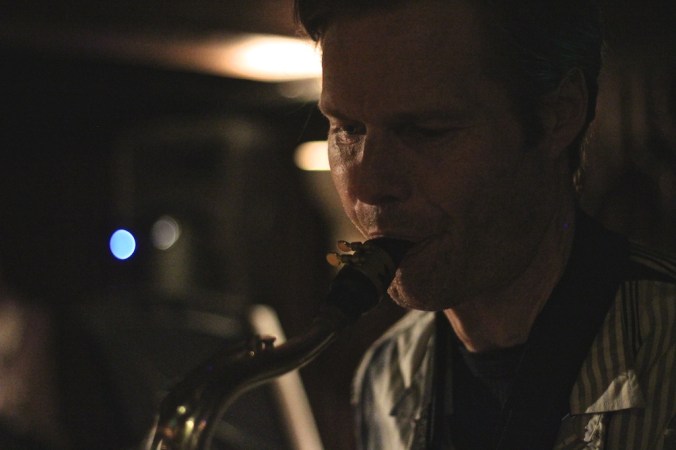
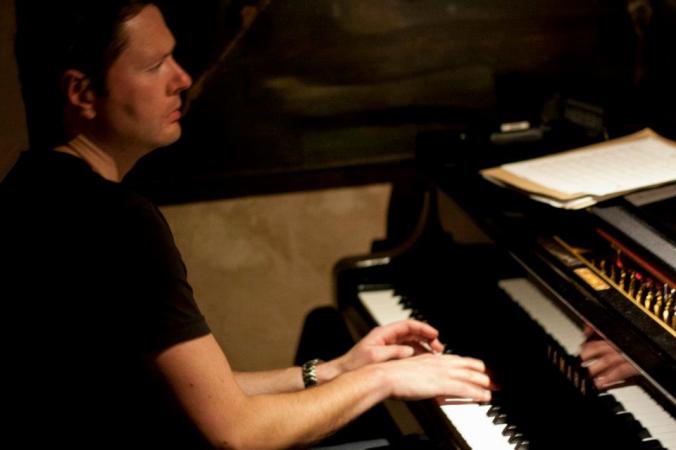
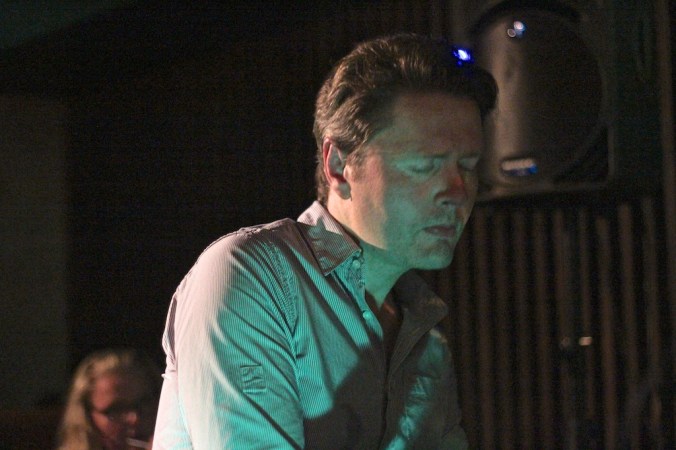
The Kevin Field trio (plus guest) appeared at the CJC (Creative Jazz Club) on the 17th April.  This was an important CJC/Jazz April event.  Everyone on the New Zealand Jazz scene is familiar with Kevin Field the pianist, composer, teacher, and gifted accompanist.  He delivers and so good sized crowds turn up.
IMG_6684 - Version 2

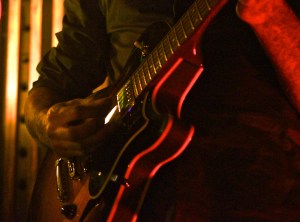
Kevin had earlier humped his Fender Rhodes down into club and it sat nestled respectfully against the grand piano.   The bass was lying on its side like an expectant whale and the drum kit was sparkling out of the gloom.  Behind the drum kit you could barely make out the image of a guitar on a stand.  Those gifted with 20-20 vision would have discerned that this was a Godin Guitar which can only mean one thing in Auckland; Dixon Nacey would be sitting in for a few numbers.

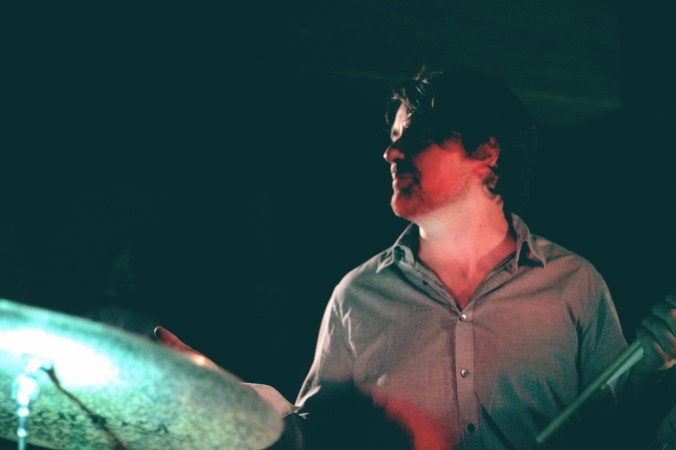
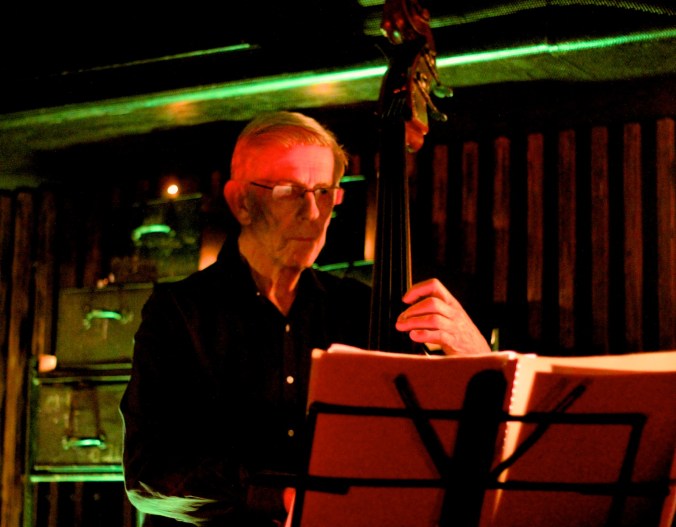
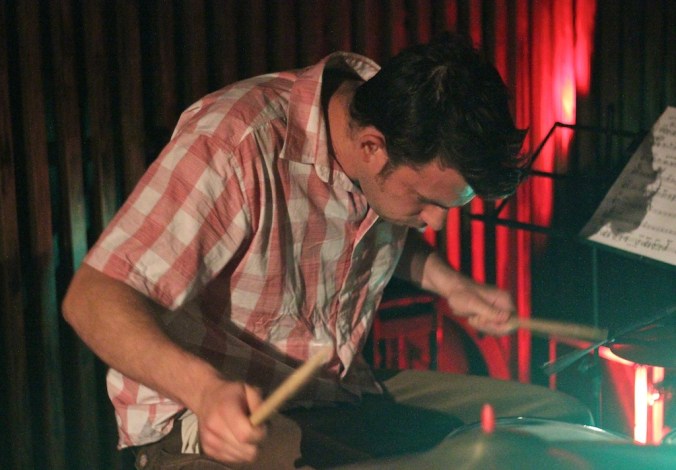
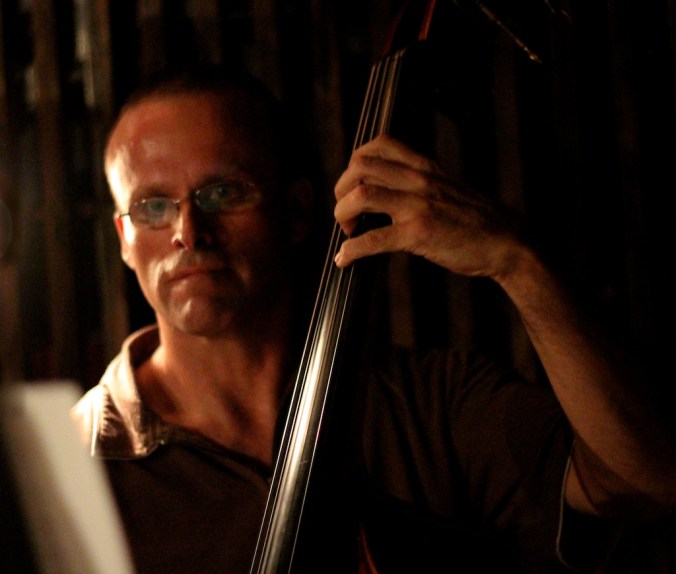
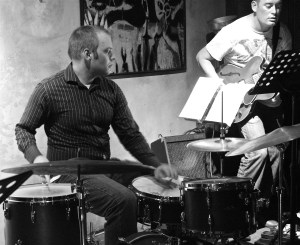
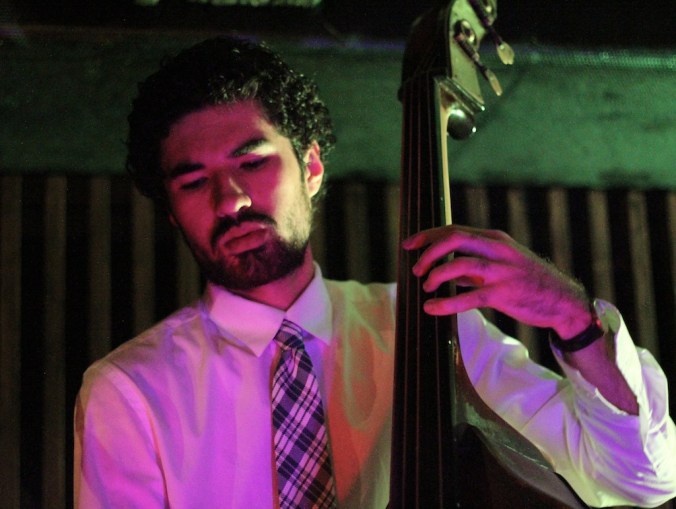
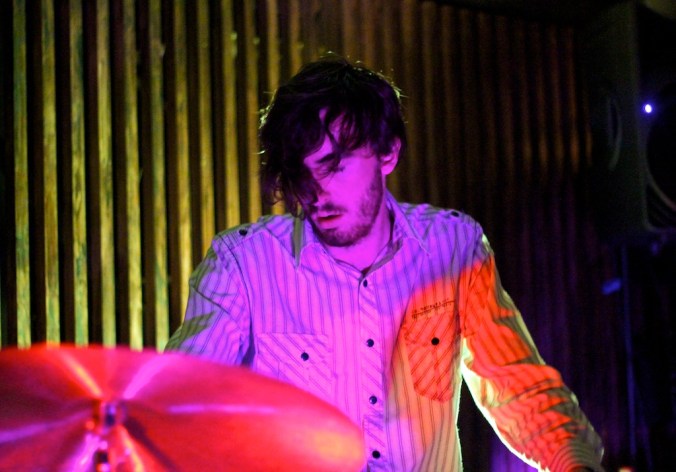
When Kevin Field and his trio filed to the band stand I experienced a tinge of anticipation.  I had been looking forward to the gig because Kevin Field never settles for a mediocre performance and he is certainly no journeyman.  With Cameron McArthur on bass and Stephen Thomas on drums we hoped for sparks.  While Kevin often appears in support of others, or fronts bigger lineups he had not brought a piano trio to the club for a quite a while.

What happened next caught me quite off guard and perhaps it shouldn’t have.   When you rate an artist highly you can easily fall into the trap of thinking that you know everything about them and that is plain foolish.  There is also something about the CJC that urges musicians reach deep and many visiting artists have commented on that.  The CJC is more than just a benign space, it is an enabling one.  A performance space that says to an artist, ‘there I’ve created the ambiance for you, now make it happen’.   It would take a subterranean ‘Feng Shui’ specialist to analyse this phenomenon .
IMG_6682 - Version 2

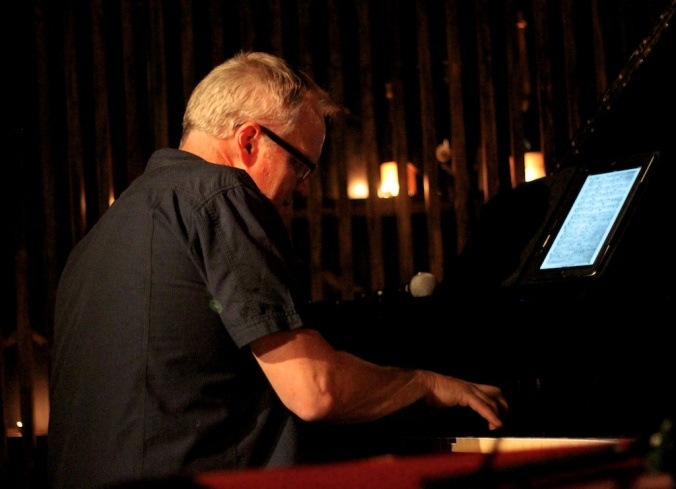
The Kevin Field that we saw perform was quite extraordinary.   It is hard to put into words but he approached the keyboards with such confidence and invention that was almost supernatural.   At times I thought that I heard hints of Hamp Hawes or the modern Europeans (rich, spacious and original), but mostly I heard Kevin Field, alive to the moment and brim full of fresh ideas.  His voice is definitely post Herbie Hancock and it engages with the realities of the post millennial world.   This is a voice that marks Kevin Field out as an original stylist.

The numbers were all originals and while a few were written for his recent ‘Warners’ album ‘Field of Vision’  (shortlisted for a Tui award), many were new to me.   They came bundled up with stories and anecdotes and to see Kevin in the role of raconteur was delightful.  When commenting on his second number of the evening ‘Complex Blue’, he told us that it was written with a Simply Red cover-band in mind.  “Complex Blue could be a new type of Simply Red cover-band who would play everything but Simply Red tunes, thus giving them a broader repertoire”.  The hilariously improbable tall stories and the incredible music made this a perfect evening of Jazz.   I asked Kevin later if he had plans to record this new material and he indicated that he would be doing so shortly.   If he captures half of what we experienced it will be well worth buying.

Cameron McArthur (bass) has experienced a meteoric rise to prominence and he has achieved this while still a student at the Auckland University School of Jazz.  I can clearly recall his first tentative performance steps.  Confidence, chops  and musicality have become the default for him now and he is increasingly accompanying our best musicians.    Stephen Thomas has been studying drums and performing at a high level for some time and he was an obvious choice for Kevin.   We are seeing more and more of what he is capable of and as with Cameron there will be a lot more yet.  This band works exceptionally well together and while Kevin is clearly in control as leader there is plenty of room for the others to shine.  IMG_6708 - Version 2
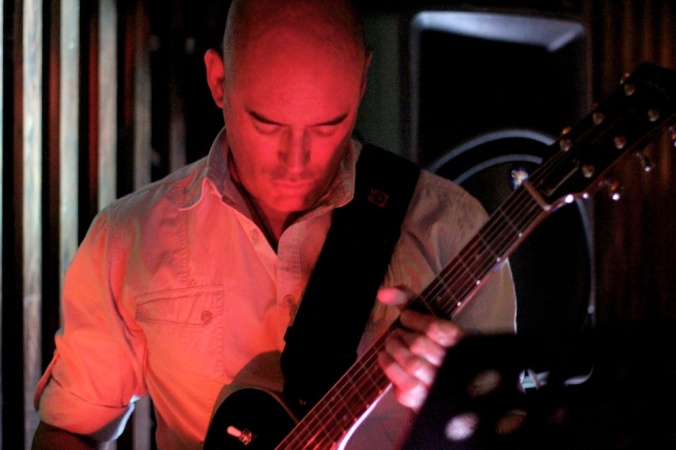
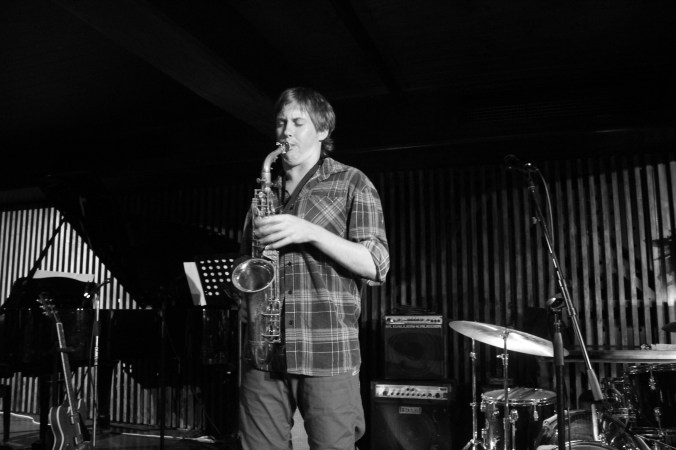
In guest slot was Dixon Nacey.  A guitarist who attracts superlatives and accolades as few others do.  He always injects that special ‘Dix’ quality into a performance; brilliance tinged with unalloyed happiness.

Sometimes when the stars align the gods of music breathe extra life into a performance.   When this occurs, those who are there feel incredibly fortunate and vow never to forget it.  This was such a night.

Because this was the main CJC – Jazz April gig night the audience learned what the month stands for, who’s involved and why it is important.  Everyone was challenged to do three things, (1) visit and ‘like’ the JJA Jazz April pages and International Jazz Day site (2) bring one or more friends to future gigs and spread the word (3) Hug and thank a Jazz musician tonight and in the following days.  By sharing and growing this wonderful music we will see it survive.

This has been a Jazz April Event;  visit the Jazz Journalists Association Web Site and JJA Facebook page, plus International Jazz Day page and all of the Jazz April gig review pages on this JazzLocal32.com site.   Please ‘like’ all sites as it helps.

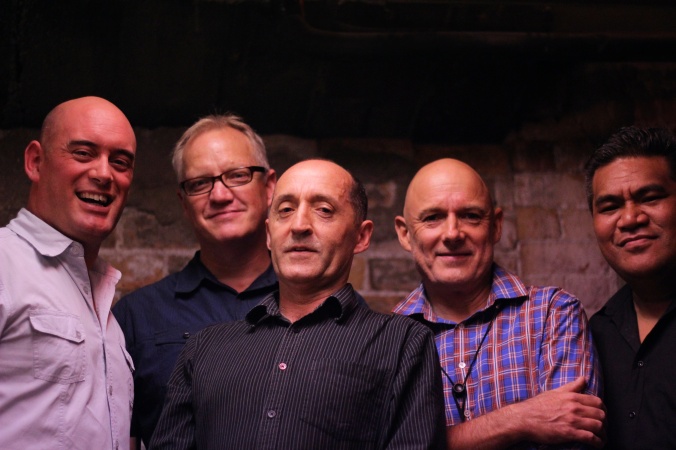
What: Kevin Field Trio (plus guest) -Kevin Field (piano and fender rhodes), Cameron McArthur (bass), Stephen Thomas (drums), guest Dixon Nacey (guitar)

Where and When:  CJC (Creative Jazz Club) 1885 building, Brittomart, Auckland. April 17th 2013

224006_552282744794057_1209529108_n-1

jazzapril-rectangle

Samsom/Nacey/Haines – Jazz April

IMG_6509 - Version 3

The first ‘Jazz April gig was at the CJC (Creative Jazz Club) featuring the ‘Samsom/Nacey/Haines’ band. I can’t think of a better way to kick off Jazz April 2013 than by hearing seasoned musicians having fun, while at the same time stretching themselves as players and composers. The group formed in 2008 with the idea of providing a vehicle for new compositions. The outcome of these collaborations was an album named ‘Open to Suggestions‘ and later the 2010 ‘Oxide‘ album was released (with guests Kevin Field, Chris Melville, Neville Grenfell and Roger Manins). The albums have all been extremely well received with ‘Open to Suggestions‘ ending up as a finalist in the Tui Music Awards and ‘Oxide‘ (Rattle Records 2010) receiving critical acclaim from far & wide. The name ‘Oxide‘ arose from John Ruskin’s writings on crystals (artist, author, patron of the Pre Raphaelite Brotherhood and proto-socialist philosopher). This album is still available in record shops or from Rattle Records and I highly recommend it.

IMG_6530 - Version 3

It is hardly surprising that there was an expectation of a third album. The new release titled ‘Cross Now’ has no guest artists appearing. Left to bounce off each others ideas and in an uncluttered musical space, the three musicians made the most of the situation. This spirit of collaboration was particularly evident at the gig as they joked and constantly acknowledged each others skills while downplaying their own input. That is a very Kiwi thing and audiences take it as good form. No one would dare do this if they were uncomfortable with their performance. It is a matter of reading the cultural codes. When they were improvising, the interaction between players was both cerebral and intuitive. There were moments when they appeared as one entity.

As soon as the first set kicked off a sense of joy and playfulness emanated from the bandstand. Some the best music arises from joy and good humour; musicians tapping into an unconscious wellspring of creative goodwill and being at one with the world.

IMG_6510 - Version 2

The material on ‘Cross Now’ is new and like ‘Oxide’ some tunes were only finished days before recording them (or even polished in the studio car park). This is Dixon Nacey’s forte; to write brilliant tunes in the eleventh hour. Someone told me that his ‘The Lion” was written on the way to the ‘Oxide‘ recording sessions. Kevin Haines informed us that Dixon’s moving tribute to the recently diseased and much-loved drummer Tony Hopkins, was likewise written days before the recording. The compositions represent the styles of the originators and even though the compositions are jointly attributed, it is possible to detect just whose hand has had the greatest influence over each number.

So often the back stories behind tunes can enrich a listening experience, but I am not sure how many musicians appreciate this fact. While it is true up to a point that the music should speak for itself, that liner notes or background stories are an added superfluity, that received wisdom obscures a deeper story. To many of us music is an experience extending way beyond the auditory senses. We pick up cues from the musicians movements, we absorb colours from the lights glancing off the instruments and we gain insights from the stories. To me improvised music is like a good film and a well shot film is like improvised music. A place to occupy empathetically for that one hyper-sensitised moment in time. No sensory input should therefore be denied.

Kevin Haines wrote ‘…With Eyes Averted…’ (which began with a poem about relationships) and this added a perspective to the tune that would not otherwise have been evident (I have posted a video of this which features Matt Bray on 2nd guitar) . His tune ‘Cross Now’ was about a particularly irritating crossing signal outside of a Tokyo hotel. In Kevin Haines hands the annoying beeps became a polyrhythmic pulse to build a tune upon. He also contributed ‘Broken Tones’. IMG_6521 - Version 2

Drummer Ron Samsom’s, ‘Happy Dance’ (a fast samba) was fabulous. Written about his dog, we could feel the exuberant bounding energy as the tune progressed. Ron Samsom had begun with the tongue in cheek announcement, “yes drummers write tunes too”. After ‘Happy Dance’ we heard ‘Seiko (in 13/8 time) and a ballad ‘Qua’. I heard someone murmur that drummers needed to write more tunes and in Ron’s case I agree (See You Tube Clip by Jen Sol).

Dixon’s contributions were ‘Song for Xavier’ (written for his son) and ‘Conversations with Mr Small’ which he explained as arising from, ” Well perhaps this won’t be such an interesting reason for title…ah…it is about my musical theory conversations with Dr Stephen Small”. In comedy and music, timing is everything and these guys had it down pat. The tune that we will never forget is Dixon Nacey’s moving tribute to the beloved and much lamented Jazz drummer Tony Hopkins. I found myself glancing at the places where Tony had sat and imagined him at the kit; knitting the band together in that particular way of his. This is the power of Jazz. The musicians interpret while we see, feel and hear a story unfold. The tune was, ‘The Remarkable Mr Hopkins’ and by the end a few of us were tearing up. From the bottom of my heart, thanks Dix.

The new album will be in the record outlets shortly, but your best bet is to contact Rattle online and order a copy.

Who: Samsom/Nacey/Haines (guest Matt Bray)

Where & When: The (CJC Creative Jazz Club) Brittomart 3rd April

This was a Jazz April event – visit the JJA Website by following this link.

John Fenton

Member-button

224006_552282744794057_1209529108_n-1

jazzapril-rectangle

Blue Train – 2013

IMG_6313

I suspect that Blue Train has a following way beyond the traditional Jazz audiences and I can understand why.  Their hard-driving funk laden grooves are impossible to resist and so people tend to flock to any Blue Train gig.   Their audience occupies a broad age spectrum.  Blue Train mostly plays music that you can dance to and just occasionally the set list includes some Jazz space funk.   I’m a huge fan of this type of tripped out Jazz fusion, so if you like this sub-genre then find yourself some Blue Train recordings.  There is of course much more to Blue Train than Funk Fusion and their Jazz chops show in everything that they do.   Only highly competent Jazz musicians can play like this and only talented experienced musicians can write the material Alan does.   This band is an Auckland cultural institution, they are jaw droppingly good and that’s why people love them.  The Blue Train gigs are rare these days, as the band members all have other projects on the go.  Any whisper of gigs should put an urgent blip across your radar.   Tip: they will be at the Waiheke Jazz Festival this year – be there.

IMG_6336 - Version 2

The CJC (Creative Jazz Club) filled to capacity on the night and they soon stood three deep at the bar.   Blue Train was here again – the word had travelled.

Post millennium Jazz is a broad church and the younger audiences (and a few older ones like me) find this exciting.  Blue Train has been around for more than 20 years and in spite of a few attempts to pension the band off, the fans just wont let it die.  As a part of New Zealand’s improvised music heritage it deserves our ongoing support and respect.   Don’t for a minute expect a mere cover band recycling the glory days.  Blue Train are wisely resistant of resting on their laurels and after the ‘head’ of a tune they unravel the material in new and interesting ways.   They play older material and new.  Alan Brown’s compositions just keep on coming and they get better and better.   He is a seasoned performer and his keyboard skills will always astound.  As you listen you will  hear new ideas being tried and old ideas being turned on their head.  He is widely acknowledged as a great keyboardist but his piano skills are also considerable.  This was very evident on the 6th of March 2013.

IMG_6348

It was obvious that the band were thoroughly enjoying themselves and they stretched out as the tunes unfolded.  The CJC gig edged closer to its Jazz roots than would have been the case at Deschlers in the 90’s.  Those in the line up were mostly veteran band members, but there were some newer additions.   Dixon Nacey on guitar has played with Alan for years and he has previously appeared in Blue Train line ups.  He does not however go back as far as Jason Orme (drums) or Steve Sherriff (tenor and soprano saxophones).   The newer band member is Karika Turua (electric bass).

IMG_6335

Having Dixon Nacey in any band is always a treat and I always watch as his eyes fix on the other musicians – exhorting them to challenge him.  He listens carefully to what is unfolding and is always ready to back someone up or to step out with new ideas.   This is invariably done with a mile-wide grin and the looks of delight when he and Alan lock into an exchange is priceless.  As on his three previous gigs, he had his gorgeous Godin Guitar with him and once again I will confirm that this is a match made in heaven.

Many of the Blue Train musicians have contributed compositions over time and Steve Sherriff deserves special mention there.  He is well rounded horn player who can fit seamlessly into many situations (big band, straight ahead Jazz or funk).   His tenor and soprano work were especially captivating on this gig and when he and Dixon played unison lines it was hard to believe that there was not an additional horn in the line up.  Before the gig I ran into my niece and told her that it was nice to see her in the club.  She then told me that a former teacher of hers was in the band.   Who’s that I asked. “Mr Sherriff” she said.   When I saw her later she summed up her impression  “Wow who knew he played like that”.    He does.

IMG_6331

Jason Orme worked the grooves with finesse and enthusiasm and he knew how to play to the room.   The same applies to Karika Turua who dug into serious grooves that echoed in your mind for days afterwards.

The sound levels were just right for the club and this is where the bands experience played a part . Some younger (and a few older musicians) forget to adjust their volume to the room and the CJC is lively; especially if the drums and bass are overly loud.  Being professionals – Alan and Ben McNicoll (CJC sound and IT) got the job done properly.  IMG_6332

What and Who: ‘Blue Train’ – Alan Brown (keys), Steve Sherriff (saxes), Dixon Nacey (guitar), Karika Turua (electric bass), Jason Orme (drums).

When: Wednesday 6th March 2013

Where: CJC (Creative Jazz Club) – basement of the 1885 building Brittomart

Dixon Nacey – Zauberberg IV

IMG_6080

Dixon Nacey always exudes enthusiasm.   He is one of those musicians who you cannot think of separately from his music.   He is articulate, a family man and a thoroughly well-rounded human being, but music never the less defines him.  He is one of New Zealand’s great guitar talents and so people trip over themselves to attend his gigs.  Dixon appears in a variety of contexts: teacher, composer, sideman (to the likes of Alan Brown and sometimes up & coming musicians like Rebecca Melrose) but most often as leader or co-leader.   This is the guitar go to guy.

IMG_6081

We tend to associate Dixon with the more up tempo pieces where the changes are gleefully eaten up, but like Marc Ribot he can surprise with thoughtful acoustic offerings.  When this occurs there is a hush because the nuanced story telling and the rich voicings take us to warmer place than we ever imagined possible.   We heard both facets during the Zauberberg IV sets and the contrast spoke volumes about Dixon.  A number of originals (composed by  he and Oli Holland) were reharmonised versions of standards.   ‘Gutted and Gilled’ could only have come from the pen of Ollie Holland the obsessive fisher.   It is a metaphor for what this band can do with a tune; paring it to the bone.  Dixon’s red Gibson was no where to be seen and he playing another brand of guitar during the 13th February CJC gig.  He was trying out a handsome looking custom-made guitar (the name alludes me).   This was a wonderful instrument with the warmth of a Les Paul and the bite of Strat.

IMG_6067

‘Day and Night’ made references to ‘Night & Day’ but they emerged as glimpses arising from a darker tapestry.   ‘Conversations with Dr Small’, (another great title) had quirky adventurous twists and pointed squarely at Dr Stephen Small (pianist), who I presume this number was referencing.  ‘If I Should Lose You’, ‘Recordame’, ‘Everything Happens to Me‘, ‘Softy as a Morning Sunrise” and ‘Have You Met Miss Jones were a sampling of the standards played.  ‘Softly as a Morning Sunrise’ was played with such high-octane and at such a velocity that we were pulling ‘G’ forces.  On the other hand the beautiful ballad ‘Everything Happens to Me’ was approached in a loving and respectful manner.  Jason Jones has a gorgeous tone and when Dixon comped behind him with warm soft chords the mood was perfect.   It is right to place such numbers in juxtaposition, as contrast is a vital ingredient of any rich palette.  IMG_6079

Oli Holland on Bass has long occupied an unassailable position on the Auckland scene.  It was a good day for New Zealand when a long sea voyage washed him up on our shores.  He is increasingly providing compositions for the more experienced musicians about town.   Compositions which both challenge and please.   I have often witnessed band members commenting, “Oh this is challenging”, but the results speak for them selves.

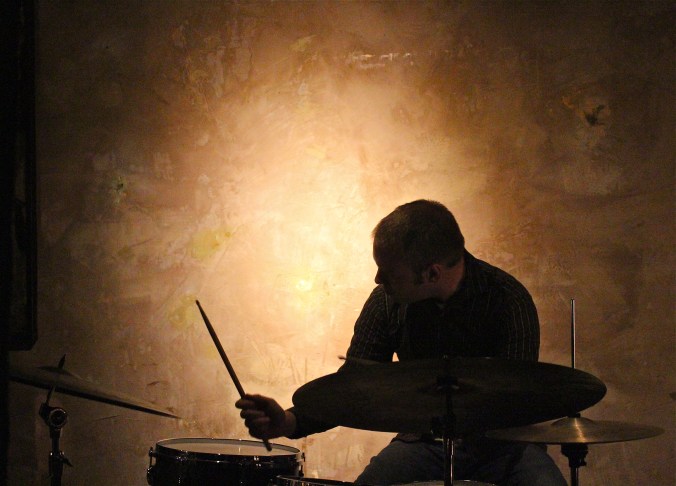
Andrew Keegan on drums may be a relative newcomer to Auckland but he has made his mark already.   He brings with him a wealth of experience (including from offshore).  CJC audiences are always pleased to welcome him back.  His posture when drumming is compact and that makes him great to photograph.   It is as if he is drawing all of his energy into a circumscribed arc before unleashing its power.

Jason Jones is the last member of the group and he is somewhat of an enigma.   People who have been around the scene for a while remember him well, but his public appearances have been scant in recent years.   He teaches at the Auckland University Jazz School and was Berklee Trained.

There is often an interesting back story to a band and so I asked Dixon hoping to get gain a few insights.  His reply was typically self effacing but actually yielded rich pickings.  Many years ago Oli had been in a band in Germany named the ‘Zauberberg III’ and they had recorded several times.   This gig was actually booked over a year ago as the ‘Alain Koetsier Quartet’s’ second appearance.    That particular line up was Alain, Dixon, Pete France and Oli (see earlier review).  As the time got closer Alain unexpectedly found himself booked for a week of recording for the second Nathan Haines Warners album.  Pete France had to drop out suddenly and that left Oli Holland and Dixon Nacey with a week to go and short by two band members.   When in doubt re-invent yourself and above all improvise.   The new name came from Oli, Jason Jones was coaxed back into performing and the often complex set list (typical of Dixon and Oli) emerged in the nick of time.

Jazz line ups are often conjured out of thin air and I have witnessed quite a few such manifestations.   It is my observation that flying by the seat of your pants can  often yield the best results.   This is how humankind has always moved the paradigm: our advances over the millennia have always come from risk taking.  In life and Jazz improvisation is everything.

I have posted the Matt Denis tune because it is so beautiful that I even managed to shed a tear through a very bad cold.

Where: Creative Jazz Club Auckland

When: 13th February 2013

What: Zauberberg IV

Rebecca Melrose band /New Collective Experiment@CJC

Wednesday 18th July was a double bill and the first up was ‘The New Collective Experiment’ – Adam Larson (alto), Ross Larson (electric bass), Frank Conway (drums).   The band had stated their intention from the first few notes and having marked out their wide open territory they dug deep.   The act was billed as ‘creating music out of the moment’ and that is exactly what they did.   The saxophonist spun out a kaleidoscope of images while the bass and drums responded.  The strength of the Alto brought it to the forefront and while the interplay was a little less even during the longest pieces, the horn held the focus.   There was one number at the end of the first set in which Dixon Nacey was invited onto the bandstand.   Having Dixon on the bandstand will ultra enhance any performance.

The second act on the billing was the Rebecca Melrose band (an octet).   This was her first CJC gig as leader.   Rebecca (vocals, leader) gives Jazz numbers a hint of soul.  What quickly becomes evident though is her preparedness to confront more challenging Jazz material unflinchingly.   Like a number of young singers she can scat with ease and it is during these moments that her inventiveness comes to the fore.  I was intrigued by the choice of material which ranged from the easy-going to the braver forays. A case in point was the wonderful ‘Zhivago’ by Kurt Rosenwinkel.    She had wisely chosen to do this number as a duo with Dixon Nacey.

If you can’t get Kurt Rosenwinkel to fly in then go straight to Dixon.   My god he was wonderful and his fans in the audience were delighted to hear him eating up the changes of this deceptively complex song.  He knew just where to place those chords and when to back off.   Rebecca knew that she had a unique situation on her hands and she responded extremely well.    This is the clip that I have put up (especially after a number of people in the audience emailed me their wish lists).  The sound in the clip is a little guitar heavy but that is the fault of my HD Video equipment.  It was more balanced in reality.  This is a new standard for those with the chops to take it on.  I really liked the lyrics but had never heard them before – I learned that Rebecca had penned them and that all other compositions were hers.

The octet created a nice rounded sound and when they hit the sweet spot it was a joy to listen to them.   I have heard the Bass Player Eamon Edmunson-Wells and the drummer Jared Desvaux de Marigny before and they both impress.   Jared appears capable of fitting into many diverse situations and he managed this one with consummate ease.   Liz Stokes on trumpet is also a frequent performer at the CJC.   The remaining band members were: Ben Devery (piano), Manaf Ibrahim (guitar), Scott Thomas (tenor sax).  The venue was the Creative Jazz Club of Aotearoa (CJC)

Kevin Field – ‘Field of Vision’ gig & album

Some die-hard Jazz fans complain that the modern jazz scene doesn’t produce enough music that sounds like that of the ‘classic era’.    This mythical era that they remember so fondly didn’t exist in the way they thought.  They forget that Louis Armstrong accused Dizzy Gillespie of playing ‘Chinese music’ and that Bill Evans was accused of not swinging.

The Jazz in any defined era has always sounded surprisingly different from the music that preceded it.   Jim Hall circa 2012 sounds nothing like the Jim Hall of the early ‘Pacific Jazz’ Era and why should he.   This is not a music to be set in aspic or to be kept in a hermetically sealed container to protect it from impurities.  Jazz is not a fragile dying art form but a vibrant improvised restless music that lives perpetually in the now.  As Whitney Balliett so famously said it is ‘the sound of surprise’.

Kevin Fields new album illustrates this premise perfectly. 

On Wednesday 25th April the CJC (Creative Jazz Club of Aotearoa) featured pianist Kevin Field as he promoted his ‘Field of Vision’ album.   Being a fan of Kevin’s, I had been quick to obtain a copy of the album and I was delighted by what I heard.  This was music with a deep groove and an unmistakable pulse.  The banks of synthesizers, the singers and the electric bass lines had given it a distinct Soul Jazz context.  Out of this came a series of mesmerizing grooves, which engulfed us in a way that made definitions quite meaningless.  As the band played at the CJC we sunk happily into a warm vibe that made the Autumn night seem very far away.  

The club gig kicked off with ‘See Happen’; a number that drew us deeper and deeper into a vamp while figures on the piano created a pleasing filigree by way of contrast.   The next number ‘imaginary friend’, opened the vistas wider.  On the album this was especially noticeable as the Steinway Grand, Fender Rhodes, Prophet T8 and Roland Jupiter 8 worked beautifully over the four piece string section

It had an almost cinematic feel to it and I could not help but be reminded of the work of Creed Taylor’s CTI label.  Instead of CTI’s Don Sebesky this album had utilised the services of Wayne Senior who arranged the string section.   The first airing of this material had been in the Kenneth Myers Centre and it was therefore fitting that Wayne Senior had been involved as his connection with the KMC goes back a long way.

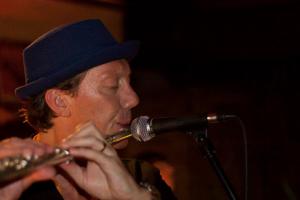
The album was produced by Nathan Haines and his handiwork is evident throughout.  He plays alto flute, an ARP synth and is credited as co-composer on 4 of the 11 numbers.  The rest of the numbers were written by Kevin and they are probably his best work to date.

The band that Kevin brought to the CJC was a smaller unit than on the album and that is just as well because the club was packed.  A small club has a very different sound to a recording studio and the warmth and intimacy is the obvious benefit of being in that space.   When you buy the disk (and you should) you will notice a broader sound palette, a bigger line up and a crisper sound.  Both experiences are complimentary and anyone attending who has also purchased the album will count themselves lucky.  

Stephen Thomas had been brought in as drummer for the CJC gig and he had sweetened the deal by a congratulatory email that he sent to Kevin after the initial release.   “Man those were some sick grooves” he had messaged.  Kevin immediately confirmed him as right drummer for the gig.  Stephen is a terrific drummer and the choice was a good one.

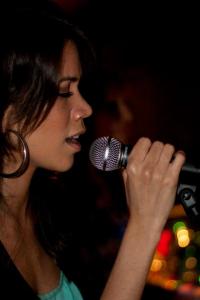
Once again we saw Dixon Nacey perform and as always we watched open-mouthed.   This man is so good that it is frightening.  Completing the lineup were guests; Nathan Haines, Marjan Gorgani and Clo Chaperon (the latter had great soul voices).   All added something essential to the rich mix and in Nathan’s case this is only to be expected.

I would also like to mention Karika Turua.  He played a big Fender bass and his grooves although loud, were as big as his guitar.

There were a few quieter piano passages as well and on these we hear the crisp touch, the harmonic exploration and the crunched chords that have become so familiar to us in Kevin’s playing.  Kevin has many fans in New Zealand and most will have heard his previous piano trio album ‘Irony’ (Rattle Records).  Although different I would regard both as essential purchases as we follow Kevin Fields career.

The CJC band was: Kevin Field (Leader, Yamaha piano, Fender Rhodes, Synth) – Dixon Nacey (guitar) – Stephen Thomas (drums) – Karika Turua (bass) – Marjan Gorgani / Clo Chaperon (vocals) – guest Nathan Haines (alto flute, soprano sax).

On the album were: Kevin Field (Leader, Steinway piano, Fender Rhodes, Roland Jupiter 8, ARP Odyssey,Prophet T8  ) – Nathan Haines (ARP Odyssey, alto flute) – Dixon Nacey (guitar) – Joel Haines (guitar) – Mickey Ututaonga (drums) – Migual Fuentes (percussion) – Karika Turua (bass) – Bex Nabouta/ Marjan Gorgani/Kevin Mark Trail (vocals) – Cherie Matheson (backing vocals) – Miranda Adams/Justine Cormack (violins) – Robert Ashworth Viola) – Ashley Brown (Cello) – Chris Cox – (drum programming).

This album can be purchased in any major record store or for more information contact ‘Haven Music’ a division of ‘Warners Music NZ’.

All photographs by Peter Koopman – Gig venue/CJC Jazz club Auckland

Alain Koetsier Band @ Finding Kiwi ‘Standards’

I have watched drummer Alain Koetsier perform over the last year and his credentials on the traps are unimpeachable.  Alain is a drummer with a modern feel and it is plain to see why so many of our top Jazz groups utilise him.  This was probably his first outing as leader and he had chosen wisely on two fronts.  His band mates were consummate professionals and their approach to the music was intuitive.  They interacted as if with one mind.  The second thing Alain did well was to select a set list of recent compositions by New Zealand Jazz Musicians.  I liked the concept.

People expect a band to play their own originals but when a set list focuses on a wider spectrum of Kiwi Jazz compositions it feels respectful.  It somehow lifts the tunes to another level of availability; a place of wider appreciation.  Doing this is a good start point in identifying our own ‘standards’ and some of the tunes played could well reach that bench mark.  As the scene continues to mature this will surely happen.

Alain & Dixon

Alain & Dixon

I was pleased to hear two tunes which had impressed me at recent gigs; ‘Dicey Moments’ by Oli Holland and the wonderful ‘Ancestral Dance’ by Nathan Haines.   Both of these new compositions are distinctive, clever and memorable.  Dixon Nacey compositions also catch the attention as he has a knack for locating the right hooks while providing a solid base for improvisation.The first set had contained ‘Bad Lamb’ (Dixon Nacey).    The tune had nice chordal voicings and the way it unfolded led us easily into the heart of the tune.

Another memorable number was ‘Tree Hugger’ by the Auckland-born bass player Matt Penman.   Matt has moved into the upper echelons of Jazz bass, occupying a respected place on the world scene.   Maybe he will return the compliment one day and acquaint North America with a few of the other compositions.

The gig was fun to experience and obviously fun to play as the musicians enjoyment of what they were doing was easy to discern.  Like many Jazz gigs there was a high degree of spontaneity and perhaps this came from being thrown in at the deep end.   Working musicians seldom have a lot of time to rehearse and when confronted by complex charts they appear to relish the prospect.

The musician that I was unfamiliar with was Pete France on tenor.   I know that he has played the CJC before and my friends tell me that they had hoped for his return one day.    His tone is rich and full and his improvised lines meaningful.   He is also relaxed on the bandstand and when you consider the calibre of his band mates this ease of manner speaks volumes.

Oli Holland

The band featured Oli Holland on bass.  His approach and focus drew you in inexorably as he demonstrated chops, impeccable timing and melodic invention.  His skills are considerable, as he can move from contrapuntal walking bass to melodic invention in an eye blink.   Oli gave his best, but then he always dies.

Pete France & Oli's hand

Lastly I come to Dixon Nacey.  His playing is widely appreciated throughout the NZ Jazz scene. As good as he is, he always strives to do better.   His compositions sing to us and his chordal work and rapidly executed lines astound.    It is good to be in a town where this man is playing and long may it continue.

Well done Alain – more please.