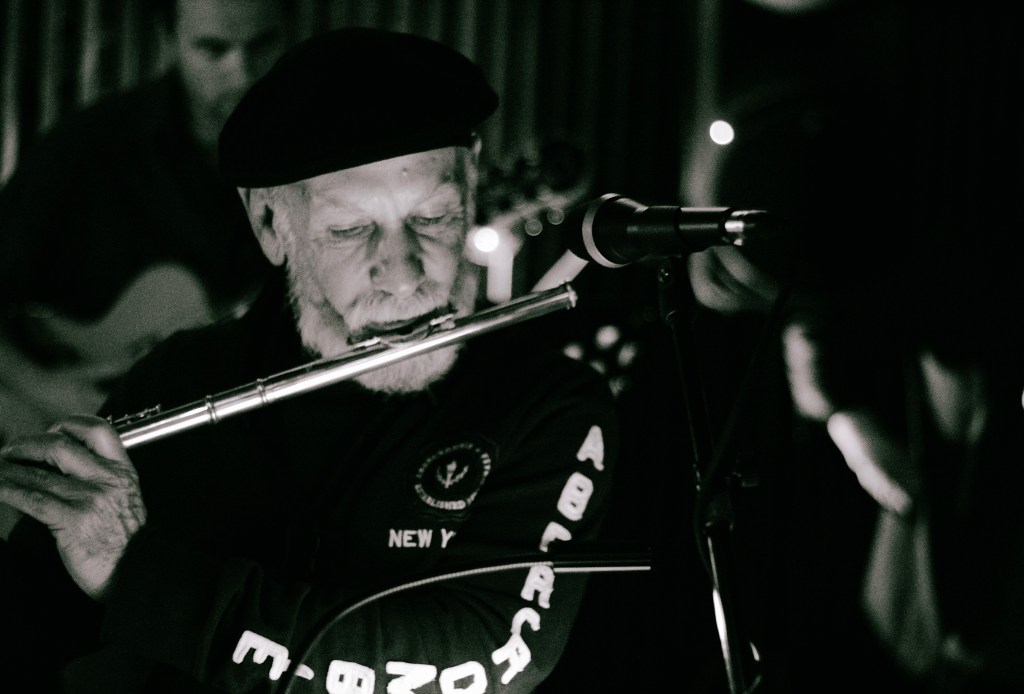
Jim left us in January, and the shock of his unexpected passing robbed me of the right words. In the following weeks, I mulled over my inaction, wanting to do justice to his story? Then I caught covid and more time passed. While it is usual to post an obituary within days of someone passing, I paused and reflected. And as I deliberated, I could sense his presence, knowing that he would approve of my waiting until the right words appeared. Jim’s life was a Zen koan, and you can’t rush a koan.
We had spoken on the phone a week before he died and arranged a ‘hang’ in a nearby coffee bar. It was sometimes hard to catch him on the phone, but when he picked up you could feel the warmth radiating from the handset. The conversations were slow grooves. He would speak softly, radiate peace and intersperse his comments with periods of reflective silence. Jim seldom rushed his words, and the silences felt all the more weighty for it. He spoke as he played because he understood the power of space between sounds.

I had known him for over a decade, but I wished I had known him for longer. He was a musician’s musician; the term used to describe a player of significance but one who is scandalously under-acknowledged. He had been on the Jazz scene his entire adult life and had played alongside some of the greats, but his natural habitats were in the Spiritual Jazz and avant-garde scenes. Many assume that the music of the avant-garde is strident. In Jim’s hands, the music was reflective, spiritual and embedded in indigenous culture.
He could crack open a note and let it breathe in multi-phonic splendour. He could whisper into a flute and then unexpectedly send forth a flurry of breathy overtones. He had great chops and visionary ideas, but he was not egotistical. Jim was about the music and not about himself. He was an educator and an empowerer. It was about transmission – telling the story, enjoying the moment and passing on the flame.
He had written the liner notes for one of the first American Spiritual Jazz albums incorporating his Buddhist name (Tony Scott’s ‘Music for Zen Meditation). He’d recorded with poets and acolytes and played alongside Dave Liebman and Gary Peacock. He also had a presence on many New Zealand albums but seldom as a leader. At first, I put this down to modesty, but now I think otherwise. His musical journey inclined him towards humility; he possessed that in the best sense. Gentle souls leave softer footprints.
He gave more to music than he received; to understand why you should know something else about Jim, his long involvement with Zen Buddhism. It was a particular connection that we had. Each of us had connected with Buddhism in our youth which informed our attitude towards in-the-moment music. Although I meditated then, mine was of the Beat variety of Zen, remaining a lazy ‘psychedelic’ Buddhist. Jim took his practice seriously, spending time in Zen Mountain Monastery, Mt Tremper, upper New York State.

While on that scene he performed with other spiritually engaged Jazz musicians like Gary Peacock, Chris Dahlgren and Jay Weik. And amazingly, performed with famous Beat poets like Alan Ginsberg and Anne Waldman who had an association with the centre, and together, had set up the Jack Kerouac School of Disembodied Poetics at the Naropa Institute. In New York, he connected with Tony Scott and Dave Liebman. Later, Jim established a New Zealand Sangha in the ZMM lineage and brought out their first teacher.
I recall messaging him when I was last in San Francisco to tell him I was seeking the forgotten Jazz Clubs, the homes of lost poets and the San Francisco Zen Centre. Names leapt across the cyber-void, Black Hawk, Kerouac, Kaufman and DiPrima. Back and forth we messaged during that week. He, tapping out fragmentary reminisces of his Dharma experiences in America and recalling some of the Jazz musicians he’d encountered (eg. Jaco Pastorius, Rashid Ali, Arthur Rhames, Gary Peacock, Dave Leibman).
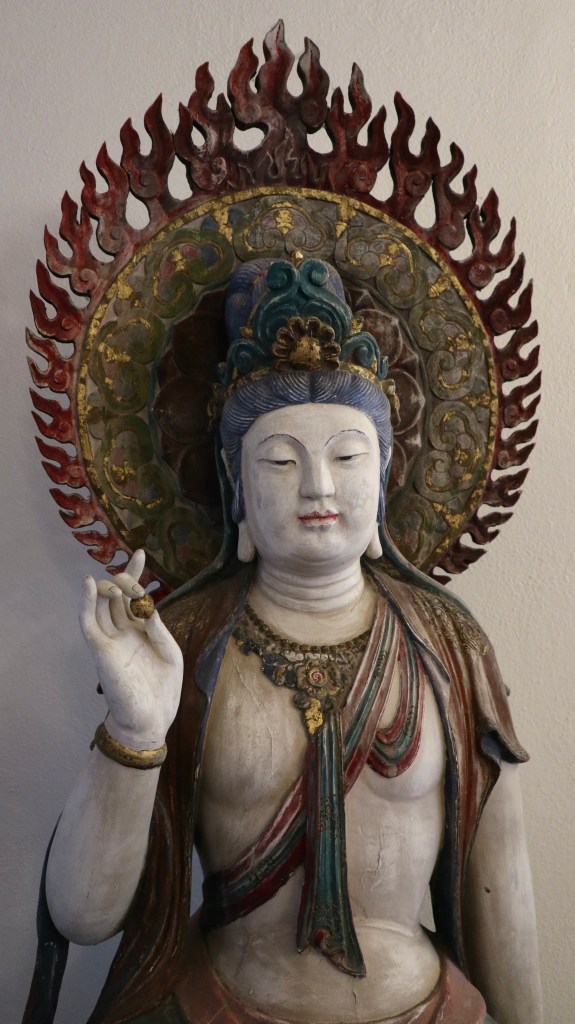
I, responded with pictures of a priceless Rupa as I stood in the Zen Centre Meditation room; buying a new translation of Han Shan’s Cold Mountain poems and sending him a picture of the cover. And me, reliving Ginsberg’s visions of Moloch as I wandered the corridors of his trippy nemesis, the Sir Francis Drake hotel. Buddhist practice, poetry and improvised music are old acquaintances. It was our instinctive connection.
I would bump into Jim at gigs. And he would say, “I hoped you’d be here, I have this for you” passing over a booklet on Finnish Jazz or a CD. He would press them into my hand without explanation and carry on talking about other things. These were Zen puzzles for me to unravel. I realised what treasures they were only later.
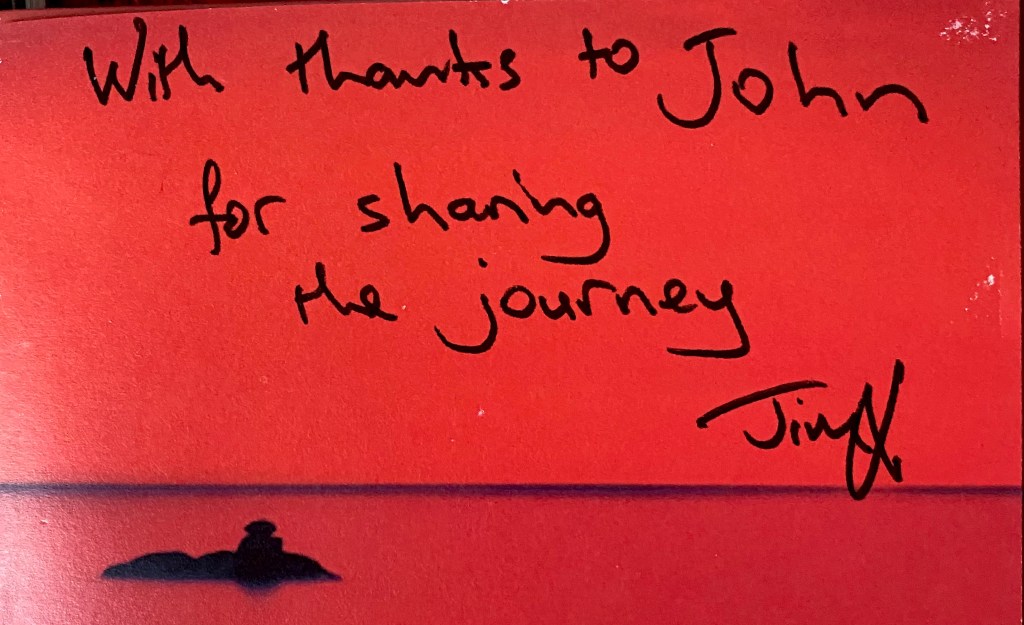
He came to my seventieth birthday, a house party where he enjoyed the young musicians playing. He was photographed, deploying his best smile as he posed among us. On that occasion, he handed me a bag of goodies, a limited edition double album – a live concert featuring Arthur Rhames, Jaco Pastorius and Rashid Ali. Handwritten by sharpie was the cryptic inscription ‘jimjazz ⅕’ – another koan to solve. Did he record this?
Important chroniclers like Norman Meehan have written about him, but I’m sure there is more to say. His family and musician friends will create a fuller discography, preserve his charts and update his filmography. It is important. Because he was not a self-promoter, he could surprise you when he appeared in line-ups. With Indian vocalists like Sandhya Sanjana, Tom Ludvigson & Trever Reekie’s Trip to the Moon band, at the NZ Music Awards, at numerous Jazz Festivals and on movie soundtracks. And he played and contributed to daughter Rosie Langabeer’s various out-ensembles. He played the flute on the ‘Mr Pip’ soundtrack and saxophone on daughter Rosie Langabeer’s soundtrack for the indie film GODPLEX
He released at least two notable local albums as a leader, but perhaps there are more? Jim’s Africa/Aroha album with Barry Young (SUPERBREW) was released as an LP by Ode in 1984 and re-released in 2007. It has remained popular with jazz lovers. Prophetically, his composition Aroha cropped up on the hospital Spotify playlist during his last hours. The album broke fresh ground in New Zealand with its freedom-tinged Afrobeat and World Jazz influences. It is gorgeous.

Around 2016 Jim undertook a research and performance project at the Auckland University Jazz School, where he was awarded a Masters’s Degree with first-class Honours. Out of that came his finest recording Secret Islands (Rattle). After recording, Jim phoned me and asked if I would write the liner notes and I was pleased to be on board. He also used my photographs.
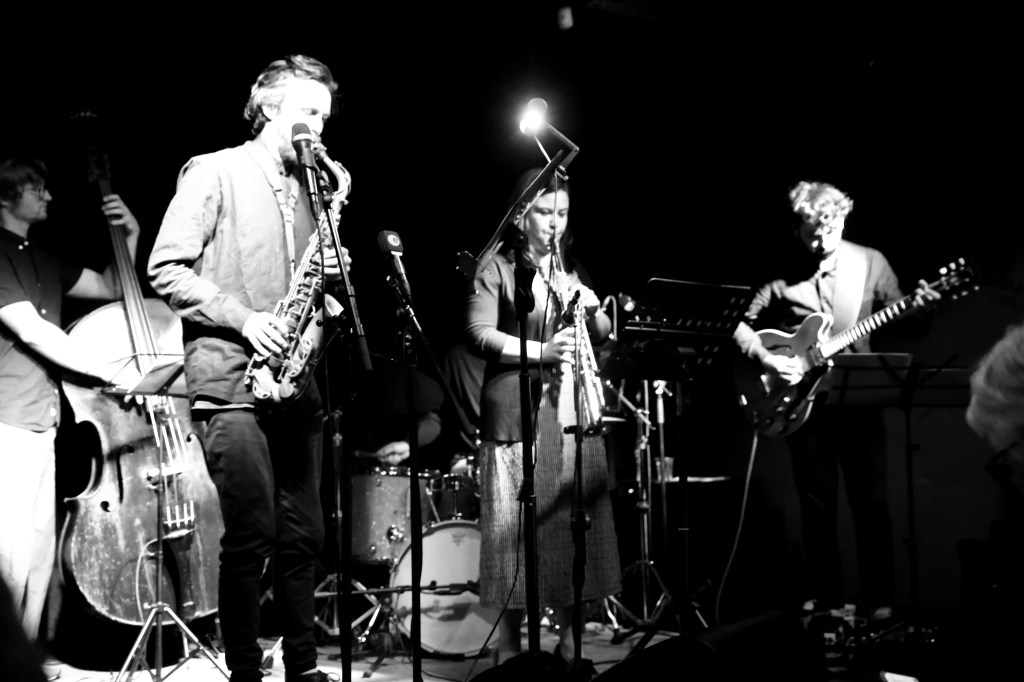
I am an enthusiast of avant-garde music and a fan of Jim’s approach, so it was a labour of love. Secret Islands is one of a select group of albums that tells a New Zealand Jazz story. It could not have come from anywhere else. I had heard the band play a preview of the album and loved what I heard. The recording took things to another level. It featured an all-star lineup. With Jim’s vision and Rosie and the other player’s contributions, it was sure to hit a sweet spot. Later a live performance was reprised at the Audio Foundation with Jim on flute and tenor, Jeff Henderson on drums, Rosie Langabeer on Piano, Neil Feather on an experimental instrument and Eamon Edmundson-Wells on bass, with Roger Manins on Alto. It was a superb performance. I will never forget it. The Secret Islands album (clip above) featured Jim Langabeer on winds and reeds, Rosie Langabeer, piano and Fender Rhodes, Neil Watson, guitars, Eamon Edmundson-Welles, bass, Roger Manins, alto saxophone and Chris O’Connor, drums.
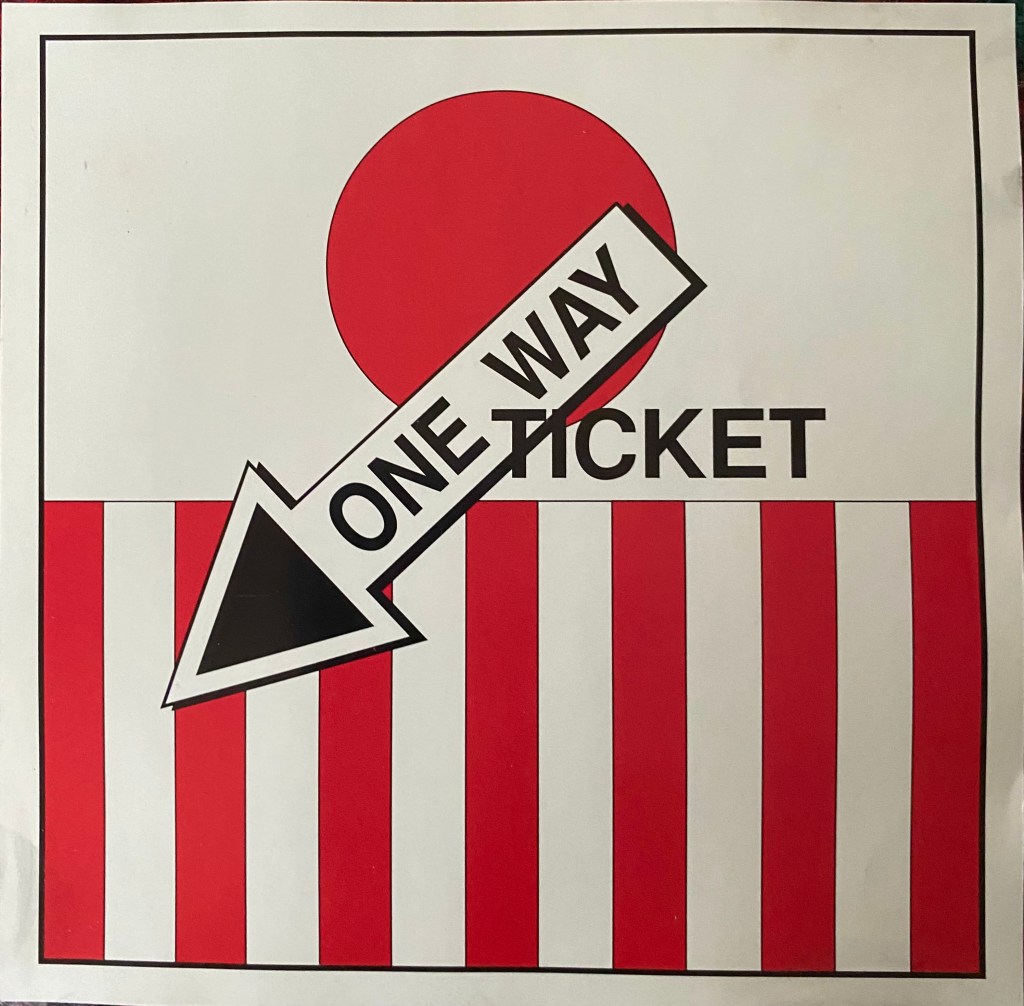
One last album that deserves mention is One Way Ticket – Daikajo. Released in 1995 by ‘Dharma Communications’ Zen Mountain Zen Monestry NY and produced by Jim. On it, he leads the ensemble on alto saxophone, silver flute and shakuhachi. Like most of Jim’s albums, it is Spiritual Jazz. A subgenre of improvised music that is experiencing revival worldwide.
Just before the first lockdown, I visited him at his Farm Cove home as I wanted to record an oral history. I switched on my recorder while the conversation ran for two or three hours. It often veered into the esoteric. When Ī played it back, I realised that I needed another session with a greater focus on Jim’s achievements. I can usually keep an interview on track, but in Jim’s case, words were like pebbles in a pond. A series of moments setting off ripples haiku-like.
Before I knew it the pandemic had arrived. I had lost my window of opportunity. Jim passed at the height of the second lockdown, and much as I wanted to attend his funeral, I couldn’t. I participated online and remembered him in silence, a copy of Secret Islands beside me and his tune Tangi playing softly in the other room. We loved Jim and mourn his untimely passing.
Footnote: The Rupa (Buddhist image) is an antique statue located in the San Francisco Zen Centre. It is likely the Bodhisattva Kuan Yin or Maitreya in Bodhisattva form. The video is Jim’s tune Ananda’s Midnight Blues which I filmed at CJC Jazz Club, Auckland. I have also included the clip ‘Tangi’ from Secret Islands. Lastly, I would like to fondly acknowledge Jim’s daughters, Rosie, Catherine and Celia Langabeer, and Jim’s partner Lyndsey Knight, who together, acted as fact-checkers.
JazzLocal32.com is rated one of the 50 best Jazz Blogs in the world by Feedspot. The author is a professional member of the Jazz Journalists Association, poet & writer. Some of these posts appear on other sites with the author’s permission.

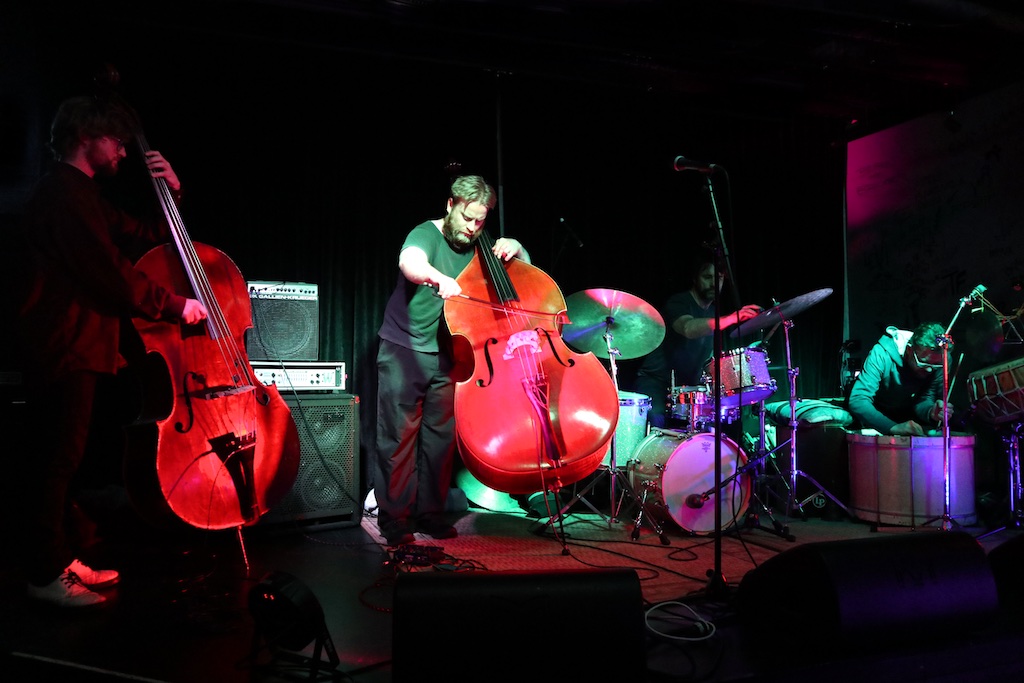 Two bass, two drummer gigs while not unknown usually occur in service of a chordal instrument or of a horn line, and when a solo bass concert occurs, an audience is frequently shown ‘cleverness’. On this occasion, the bass of Elsen Price freed the instrument from the narrow confines of the standard rhythm section or the conventional solo bass repartee; instead, exposing the beautiful resonances and the reach of the instrument. This was sublime music and complete unto itself. It celebrated a gifted musician and a wonderful instrument but without displays of egocentricity. The feat was achieved by inviting us inside the music, and into a sonic cornucopia. We listened and we were captivated.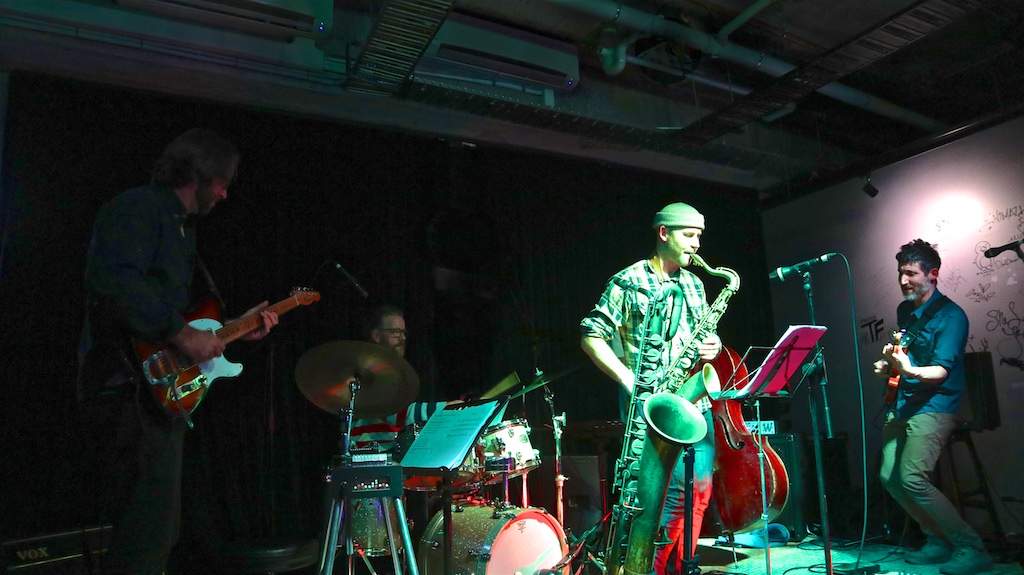
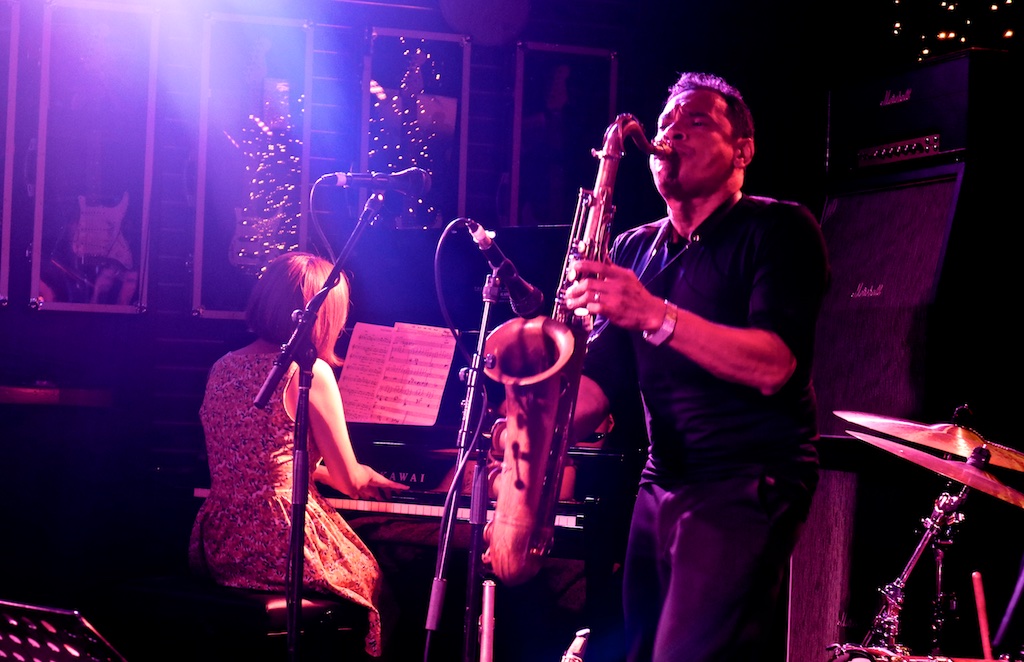 Anyone who saw Jay Rodriguez play the last time he was in town will have tripped over themselves to catch him again last week. Rodriguez is a talented and engaging improviser and when he steps onto the bandstand he wins hearts from the get-go. This seemingly innate ability arises from a keen understanding of what will work best with a particular audience. He picks ups on and feeds off the energies in the room. He is also a skilled technician, but he is not there to show off his undoubted chops. His purpose is to involve and to engage at the deepest level; offering musicians and audience alike an unforgettable musical experience.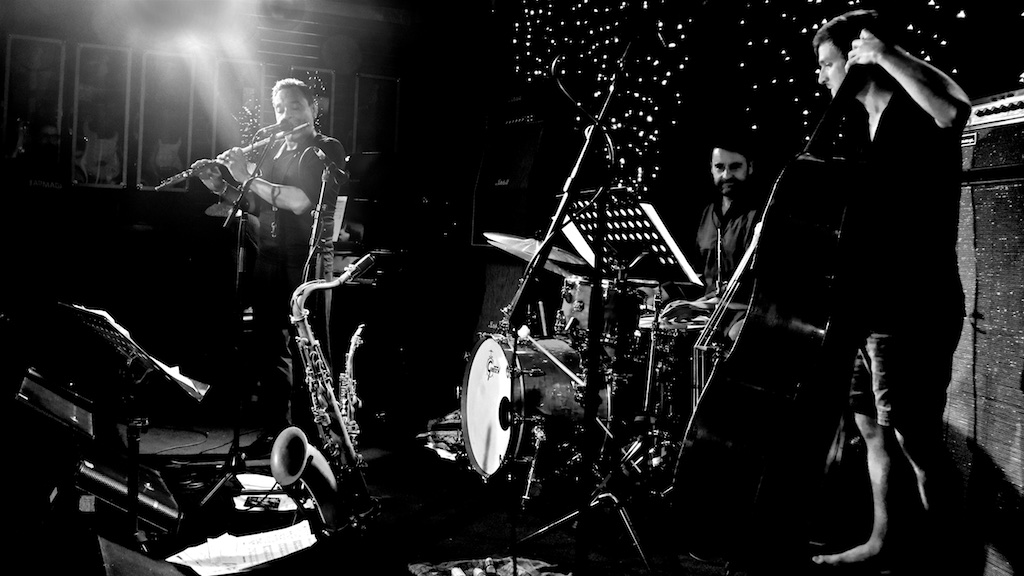
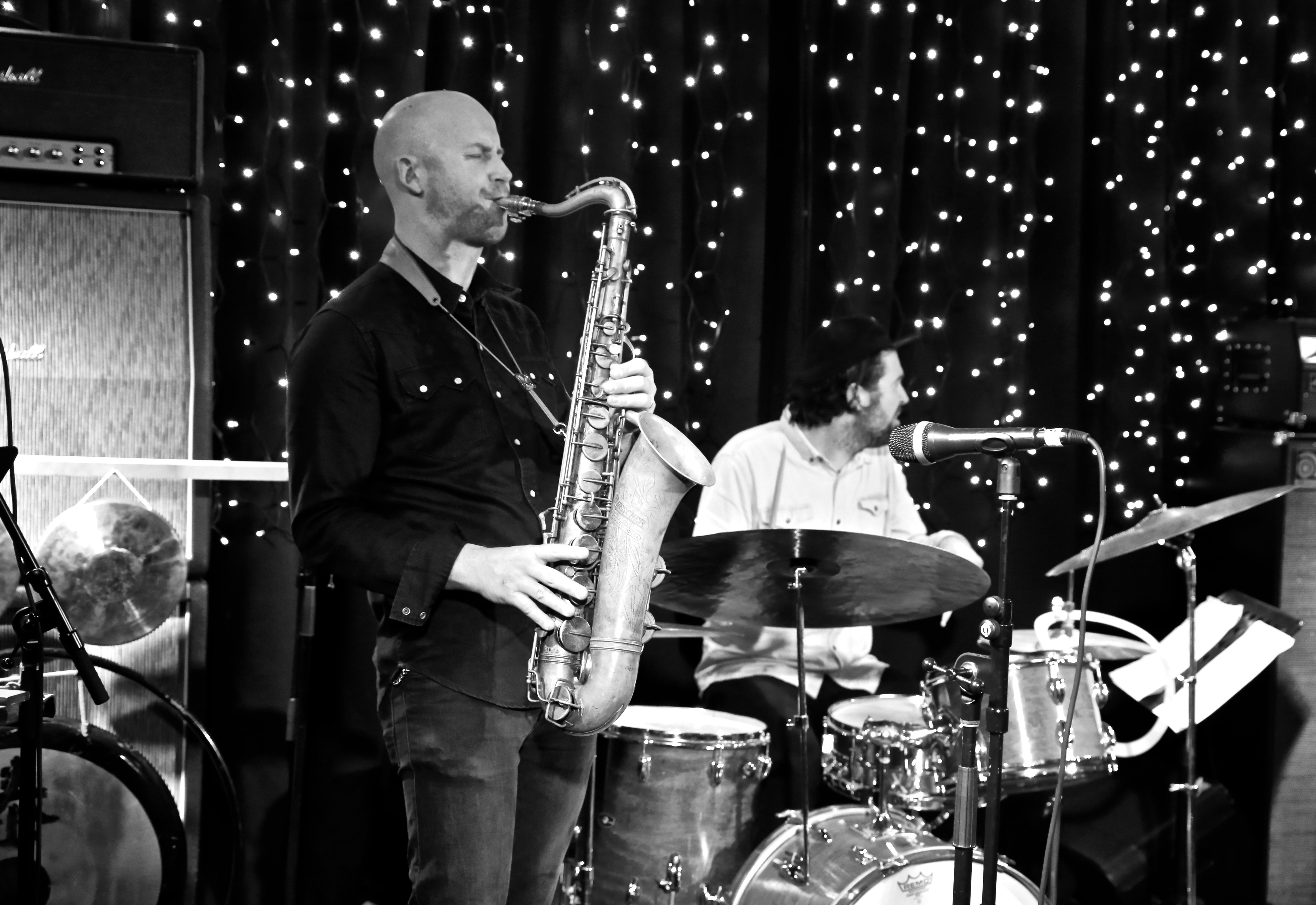 Perhaps it’s the anniversary of the moon landings, or perhaps it’s the crazy-arsed nonsense happening down on planet earth, but deep space has been very much on my mind lately. I have not been alone in this preoccupation as I appear to share this with a group of explorative improvising musicians. I was recently on local radio taking about a favourite topic, ‘space dreams and analogue machines’ and it occurred to me then, that space dreamers have always shaped our other-world view. Frank Hampson (Dan Dare Comics), Gene Rodenbury (Star Trek) and musicians like Eddie Henderson (Sunburst), or Sun Ra (Space is the Place). Humans have always looked to the stars for inspiration but only writers and musicians have the courage to describe what others cannot yet imagine.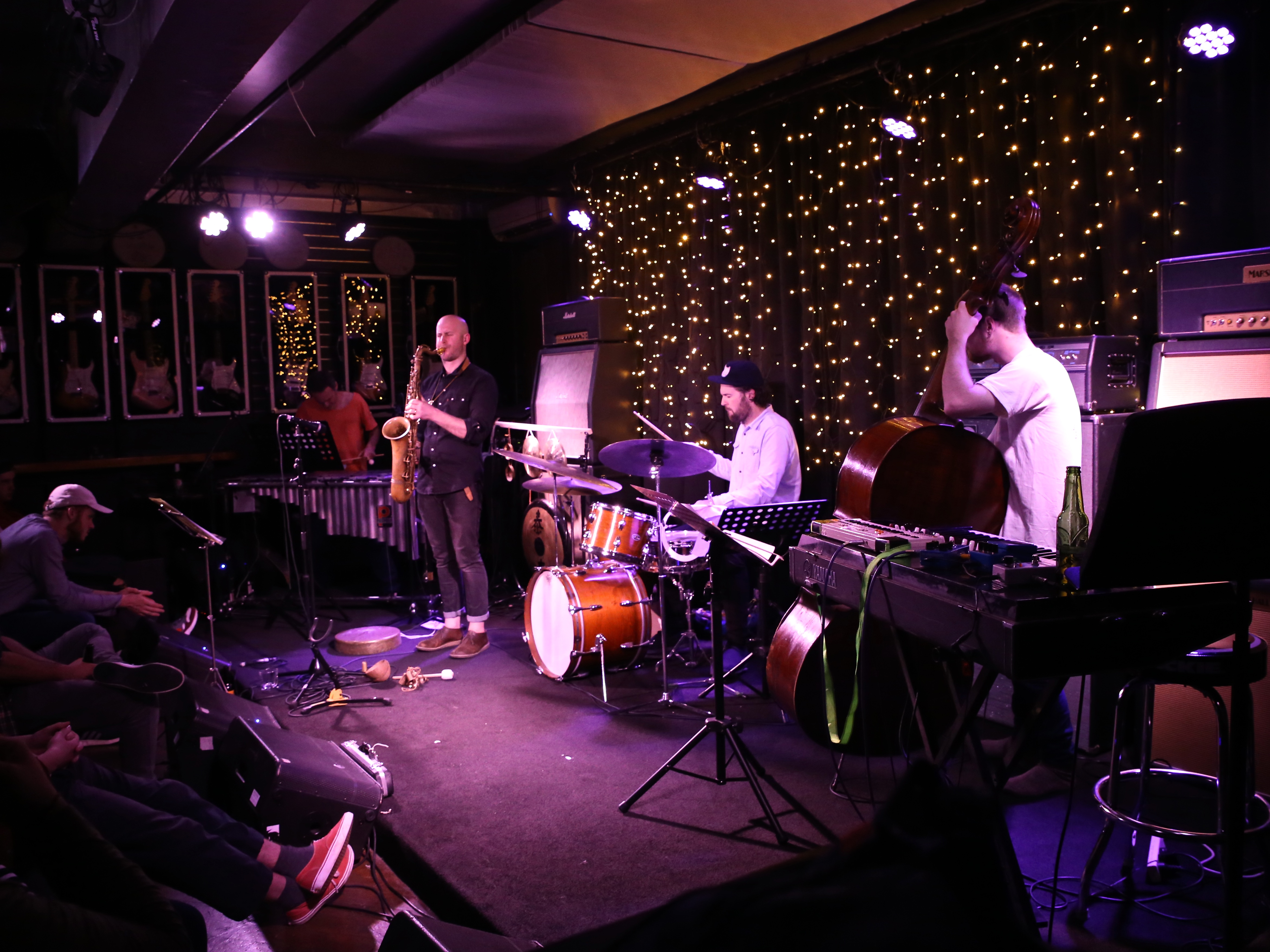
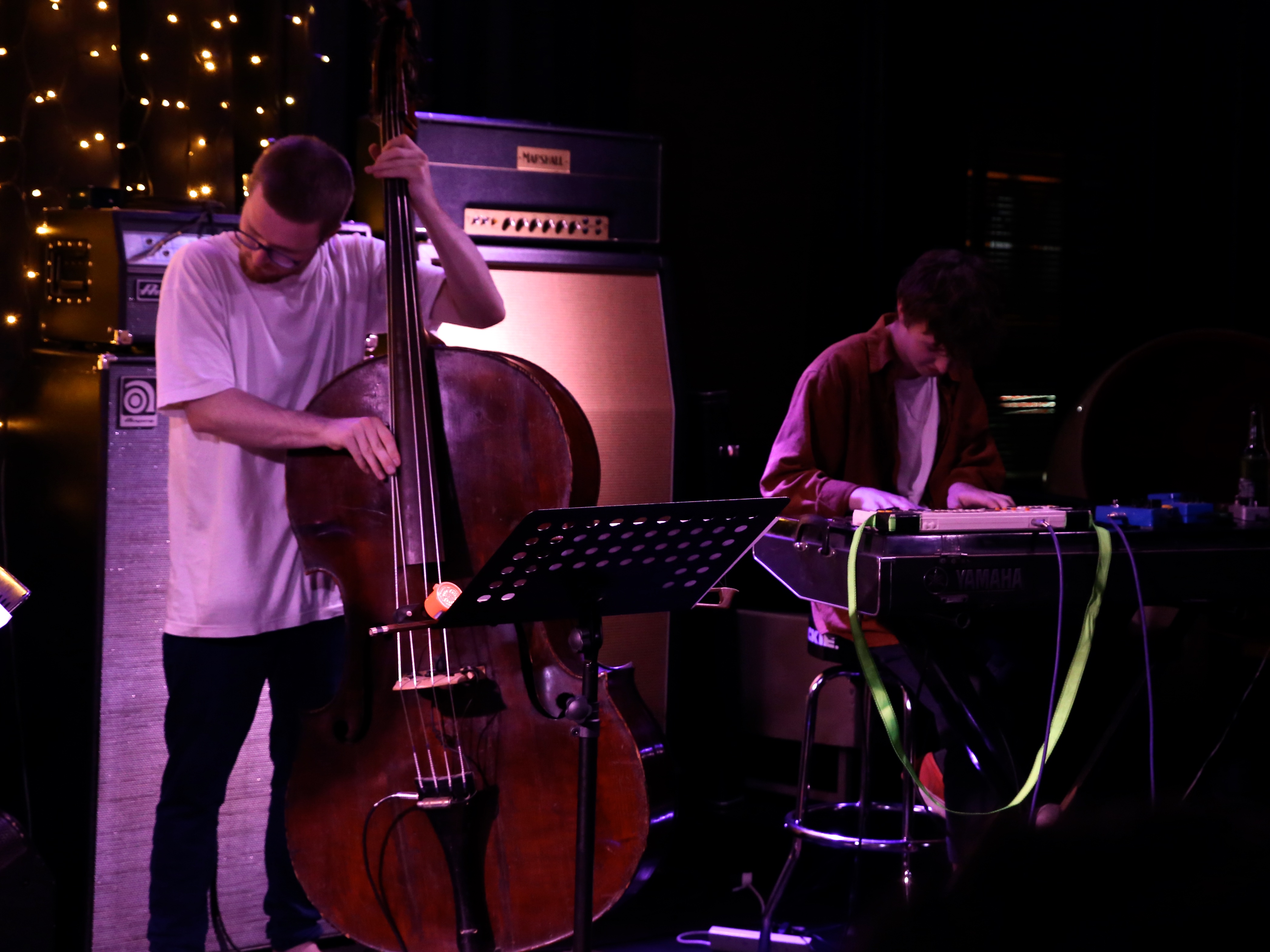
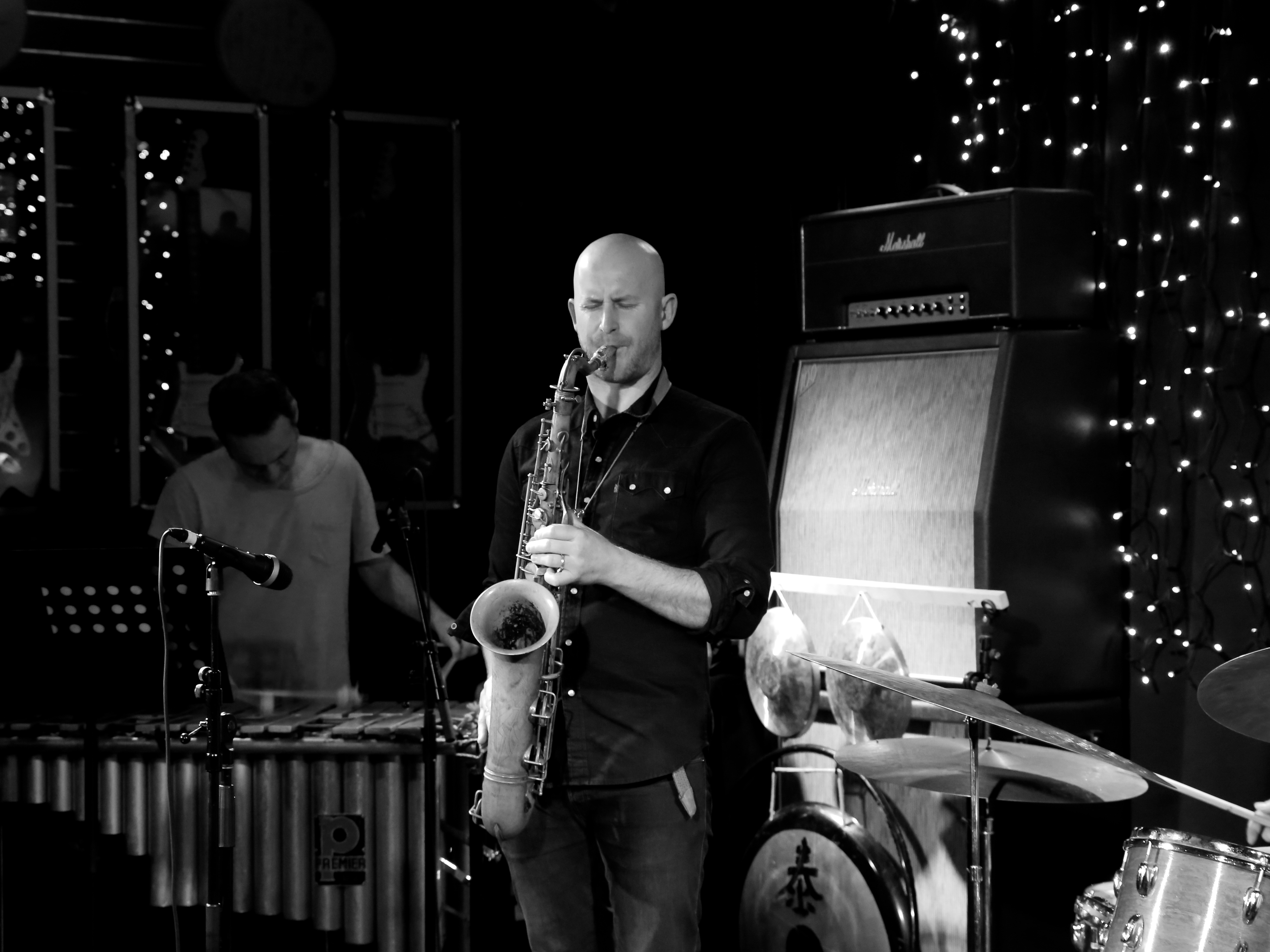
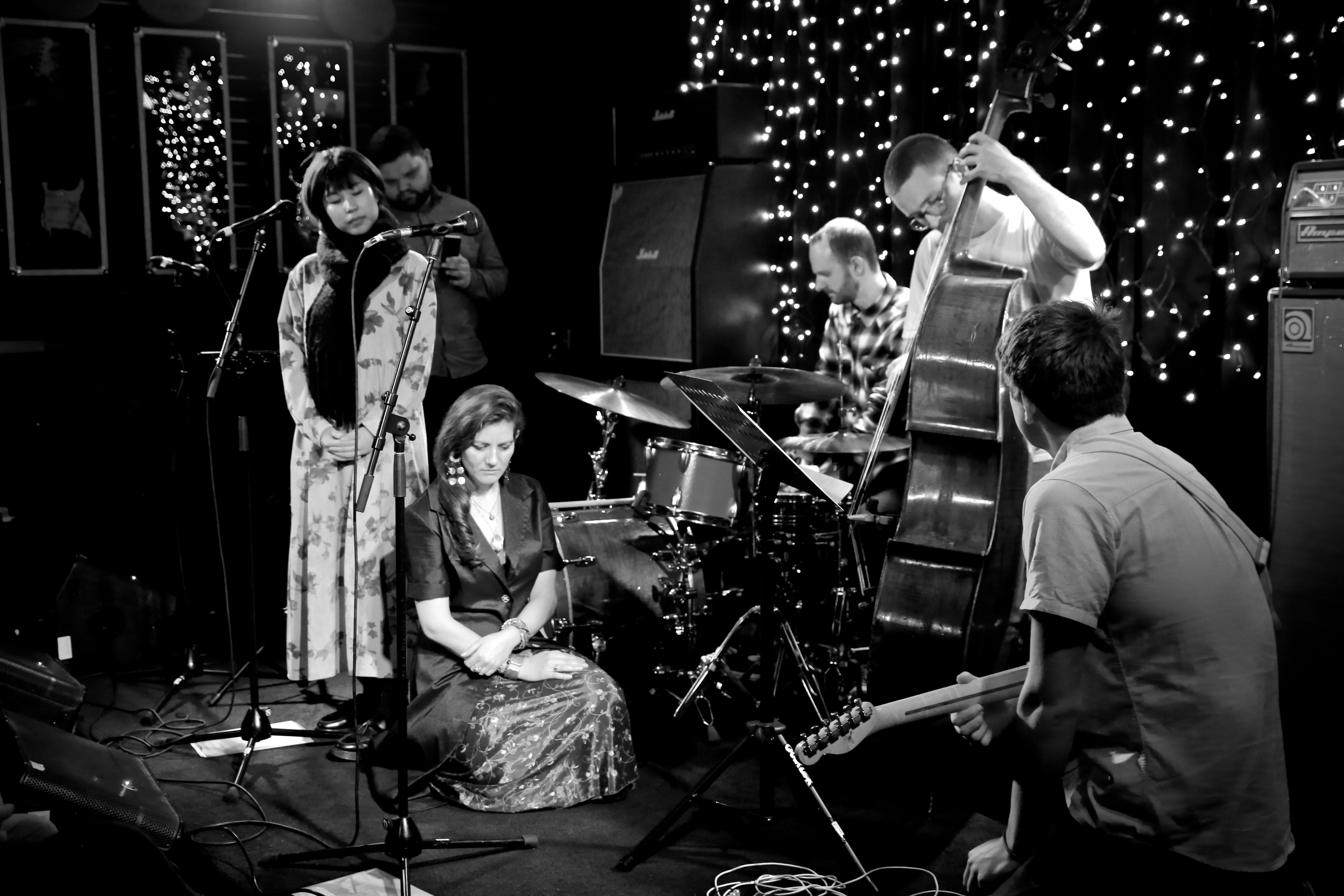 Chelsea Prastiti was not long back from Cyprus when her band Leda’s Dream appeared at the Backbeat Bar. Prastiti is well known in the Auckland improvised music scene and especially so at the avant-garde end of town. She’s a compelling vocalist and composer who approaches her craft as a free spirit, unfettered by others expectations. When she sings she dives deep and puts herself out there fearlessly but her risk-taking is not a mere academic exercise; it cuts to the very heart of what it means to be a thinking, feeling human. Her compositions are therefore always interesting and out of that a raw beauty and an honesty arise.
 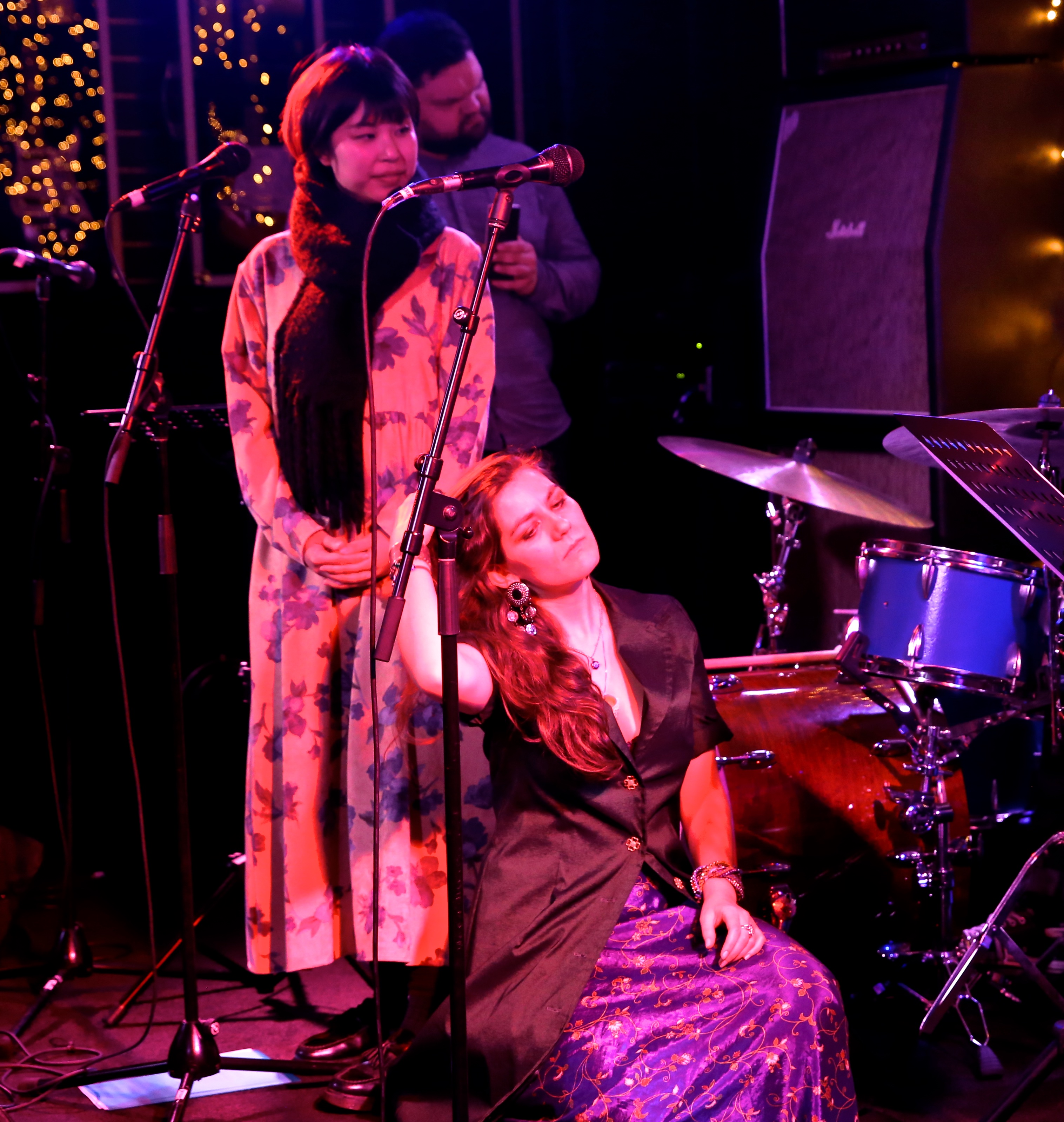 Although the ensemble played material that we have heard before, they sounded incredibly fresh – even different. Crystal Choi confined herself to accompanying vocals (no keys), Michael Howell stepped further into a measured chordal role and Callum Passells on alto and voice effects was the archetypal minimalist (saying a lot more with less). This felt very right and the re-configuration gave the ensemble a lot more freedom. They stretched out as the spirit took them and the first two tunes filled the entire first set. The voices, in particular, were liberated by the change and this gave wings to the melodic lines and mood. The harmonies were there in spades but that was not what drew you in. It was ‘mood’ and the pictures that those moods created.
 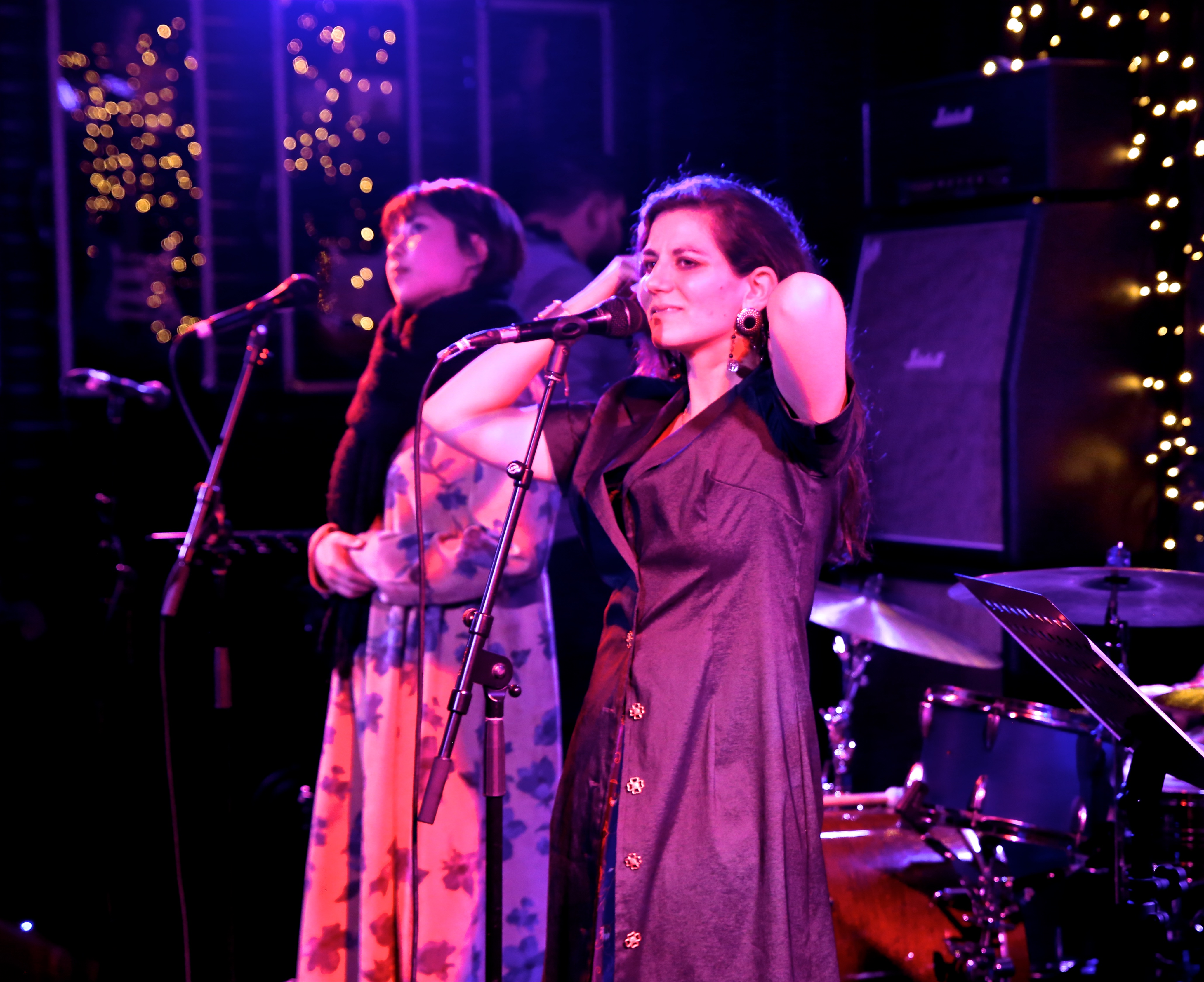 Prastiti’s is a brave path and I would expect no less from her. This is a musical space that is sparsely populated and more’s the pity. Think Sera Serpa (duos or trios), Think Norma Winstone (Azimuth 85) or perhaps the brilliant Nordic vocalist Sidsel Endresen (Endresen live with Jan Bang). In this ensemble, she has the musicians to give her the freedom she deserves. Passells, who is unafraid of soft trailing notes or of minimalism, Howell who can follow a vamp to eternity and make it sing, Choi who instinctively makes the right moves, and Eamon Edmundson-Wells and Tristen Deck who know when to lay out and when to add colour or texture. The music drew from free improvisation, standard Jazz and deep Folkloric wells. It did so without undue introspection. The band brought the audience along with them and the bouts of enthusiastic applause proved it. For some reason, and it was partly their attire, the gig felt like a postmodern version of a Pre-Raphaelite tableau. Oh yes indeed, that always works for me.
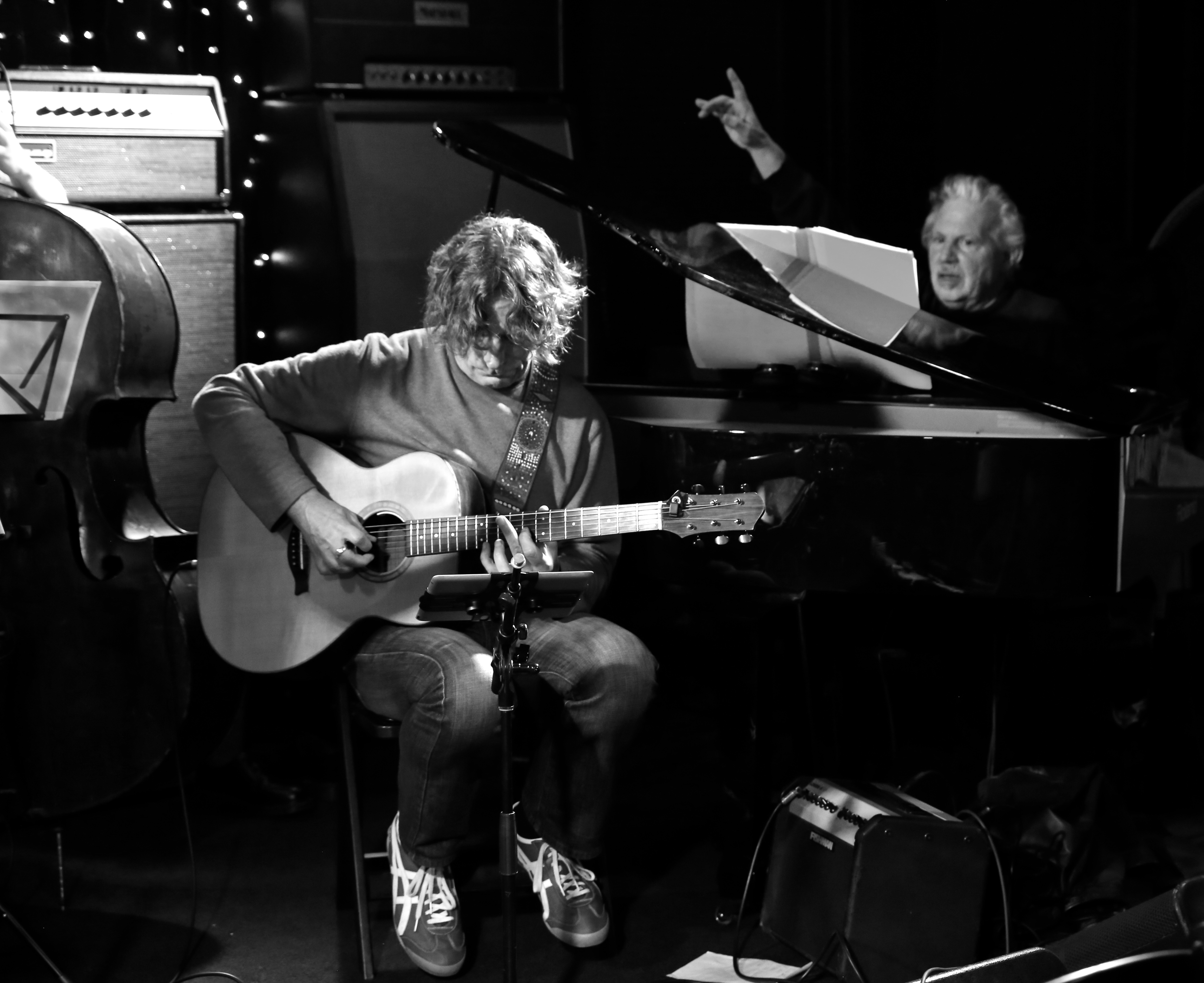 There is an inescapable charm surrounding any Besser performance and Wednesday’s Zestniks gig at the Backbeat bar was no exception. While his music has many strands feeding it and although it can be hard to categorise, it is never the less rooted in the Jewish musical traditions. Besser is somewhat of an icon in Arts circles and deservedly so. The arc of his work has a momentum that few could emulate. As it alights on various styles or genres it borrows their raiment, and seemingly without compromising what lies at the music’s heart; gathering what is necessary and no more. Over the years he has collaborated with leading conceptual artists, filmmakers, symphony orchestras, electronic adventurers and Jazz musicians. The Zestnics performance reflected much of this fascinating journey.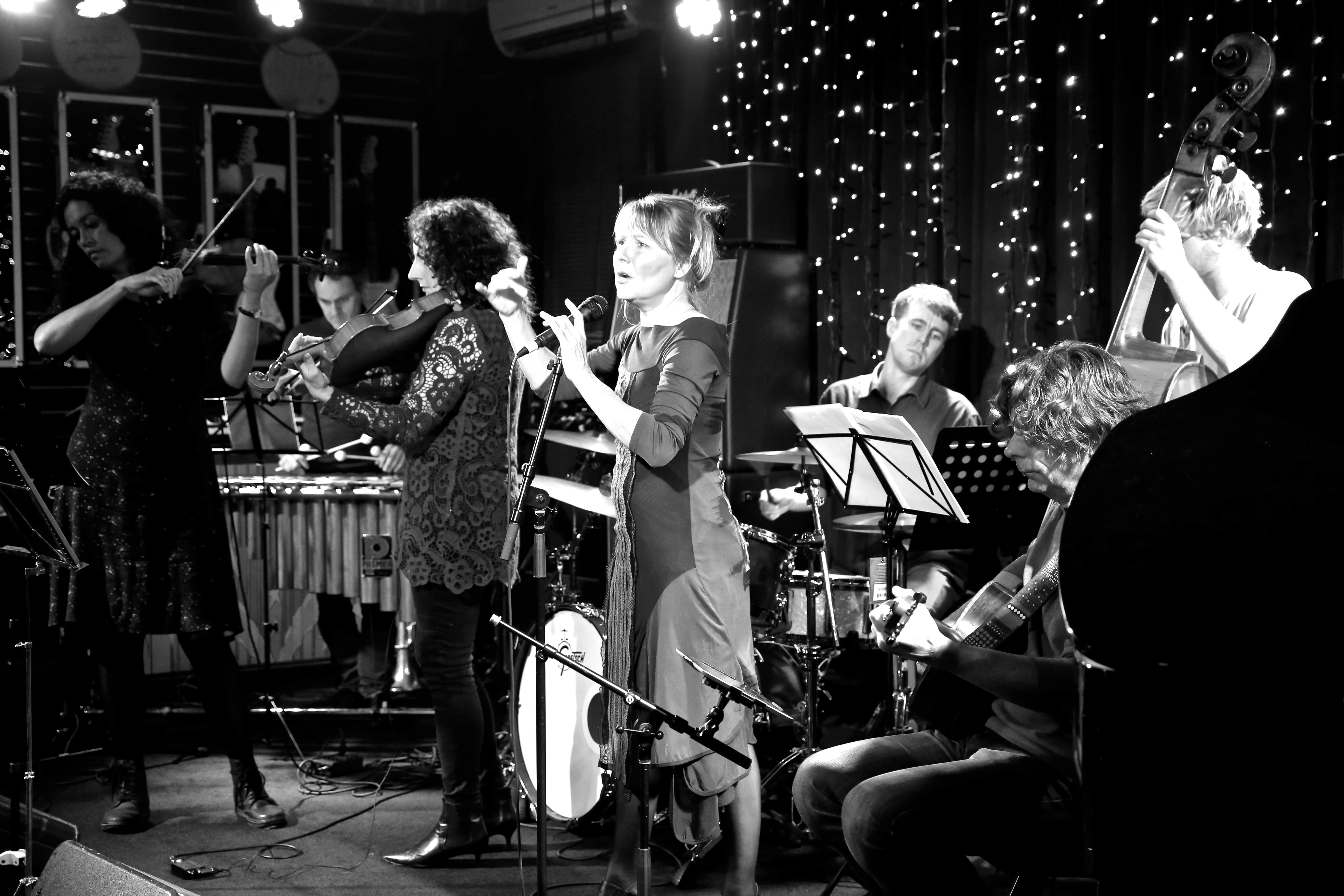
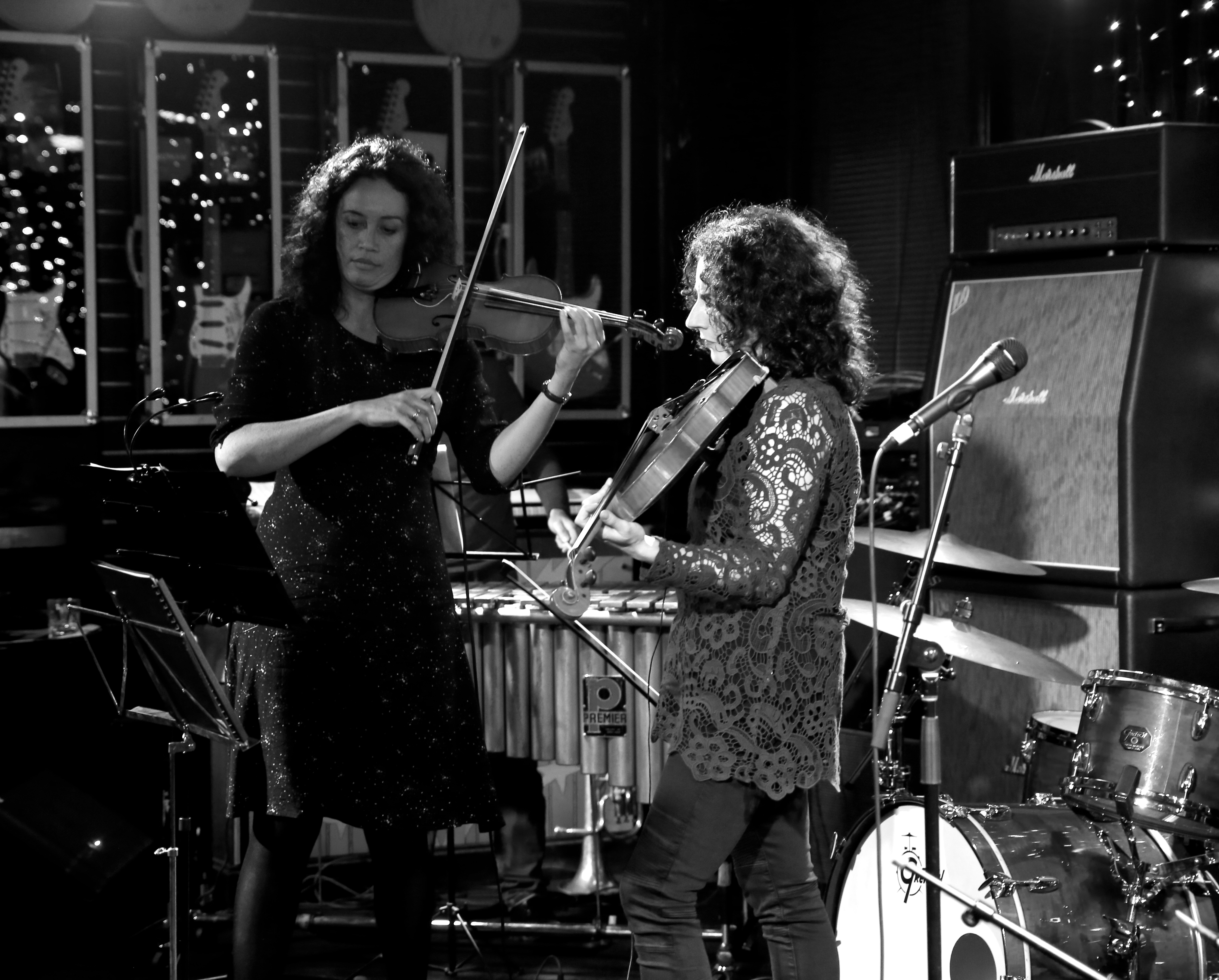
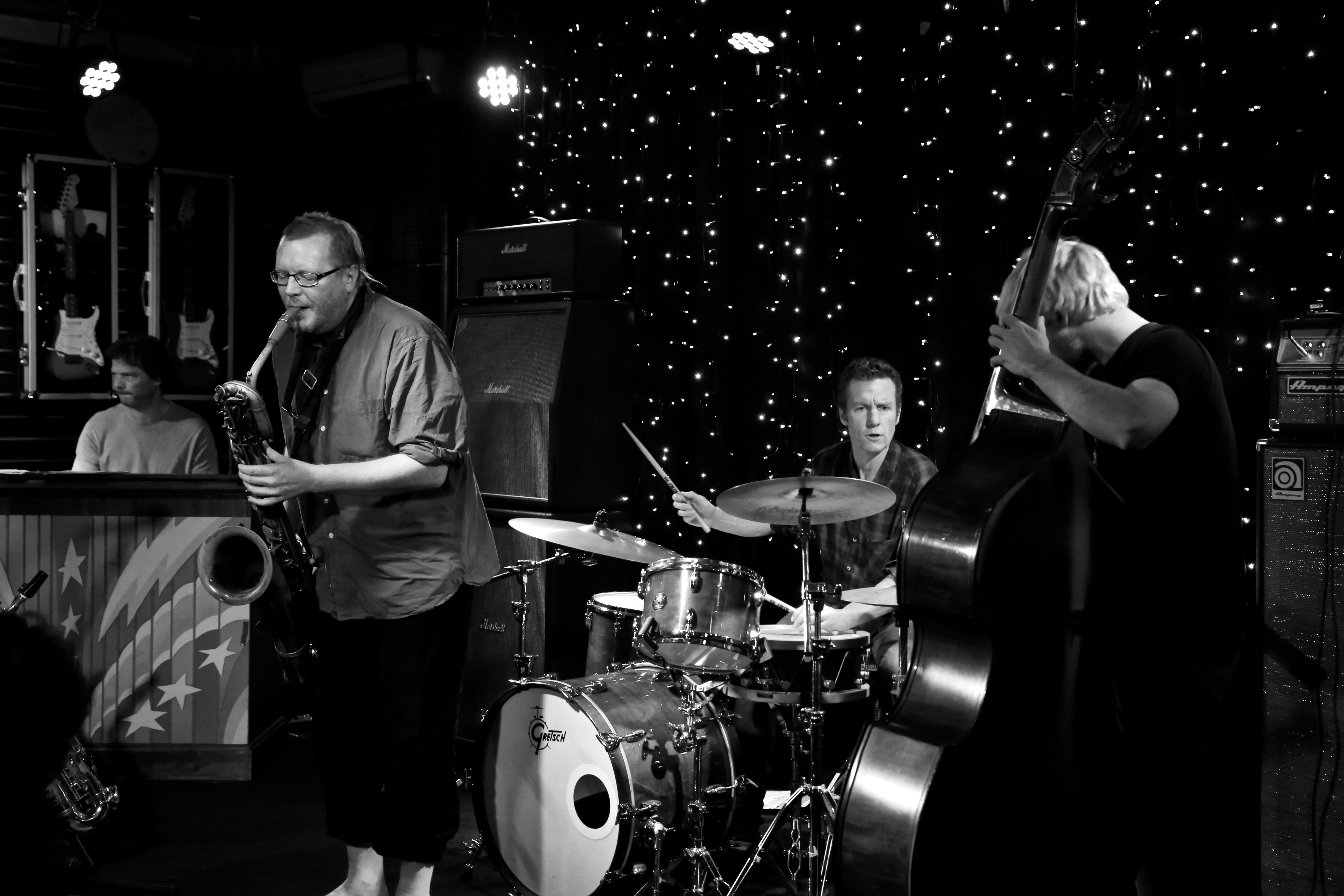 Jeff Henderson is a freedom warrior from outside of the perimeter fence. On the 9th of May, 2018, he marched barefooted into the Backbeat Bar with a ragtag army of irregulars. The audience had come well prepared and a pregnant air of anticipation hung over the bandstand during setup. Unusually, there were no lower ranks in this army, all were battle-hardened veterans (or anti-heroes depending on your viewpoint). All had impressive service records, an advance guard who took no prisoners. Jonathan Crayford is arguably the most famous of the troop, a decorated hero who swiftly commandeered a C3 organ (an ancient analogue machine decorated by psychedelic art and reminiscent of a Haight Asbury weed shop). Beside him sat machine gunner Steve Cournane, a rat-tat-tat freedom fighter recently returned from Peru. The remaining soldier, battle scared and bleeding, was Eamon Edmundson-Wells (his Viking surname tells it’s own story).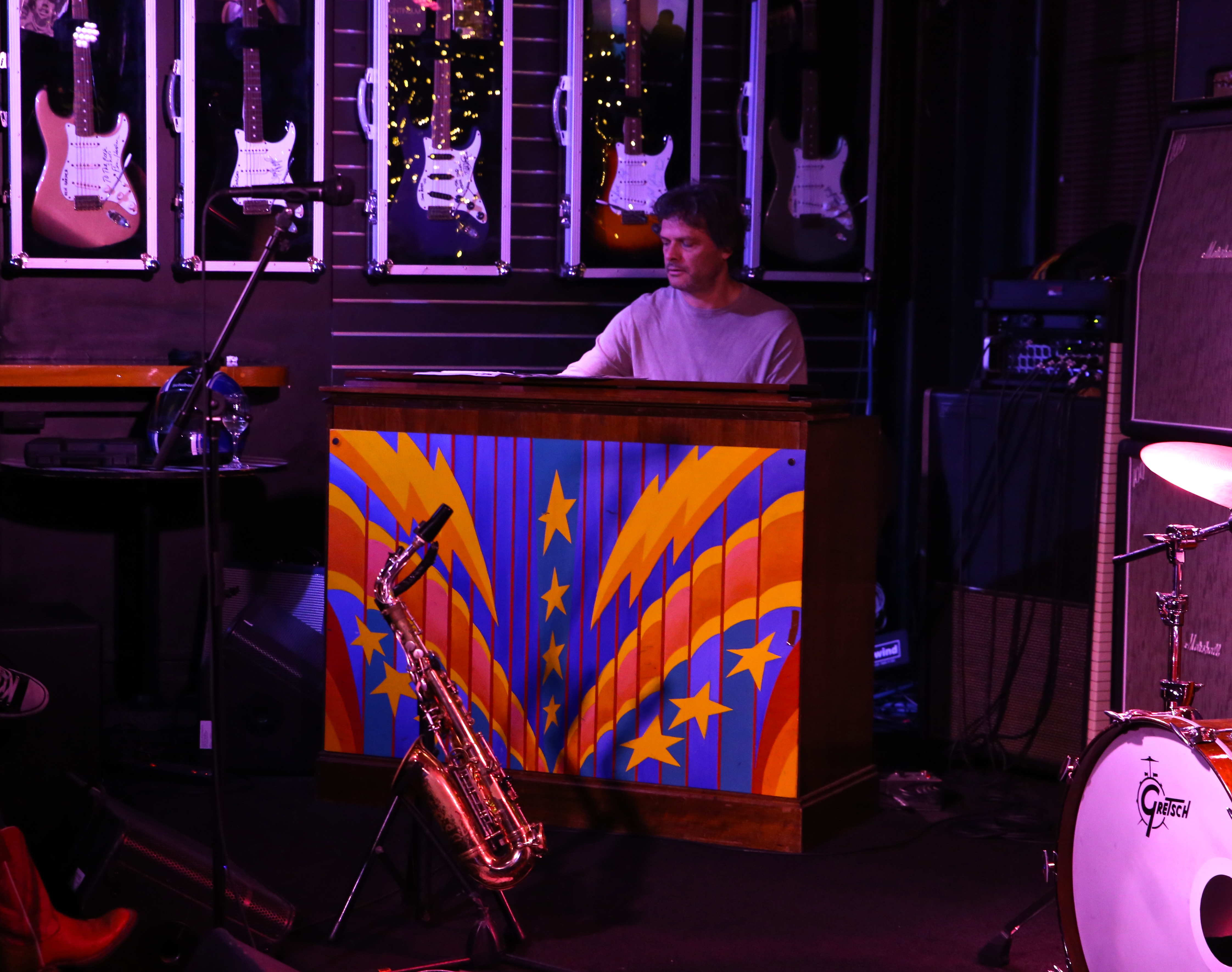
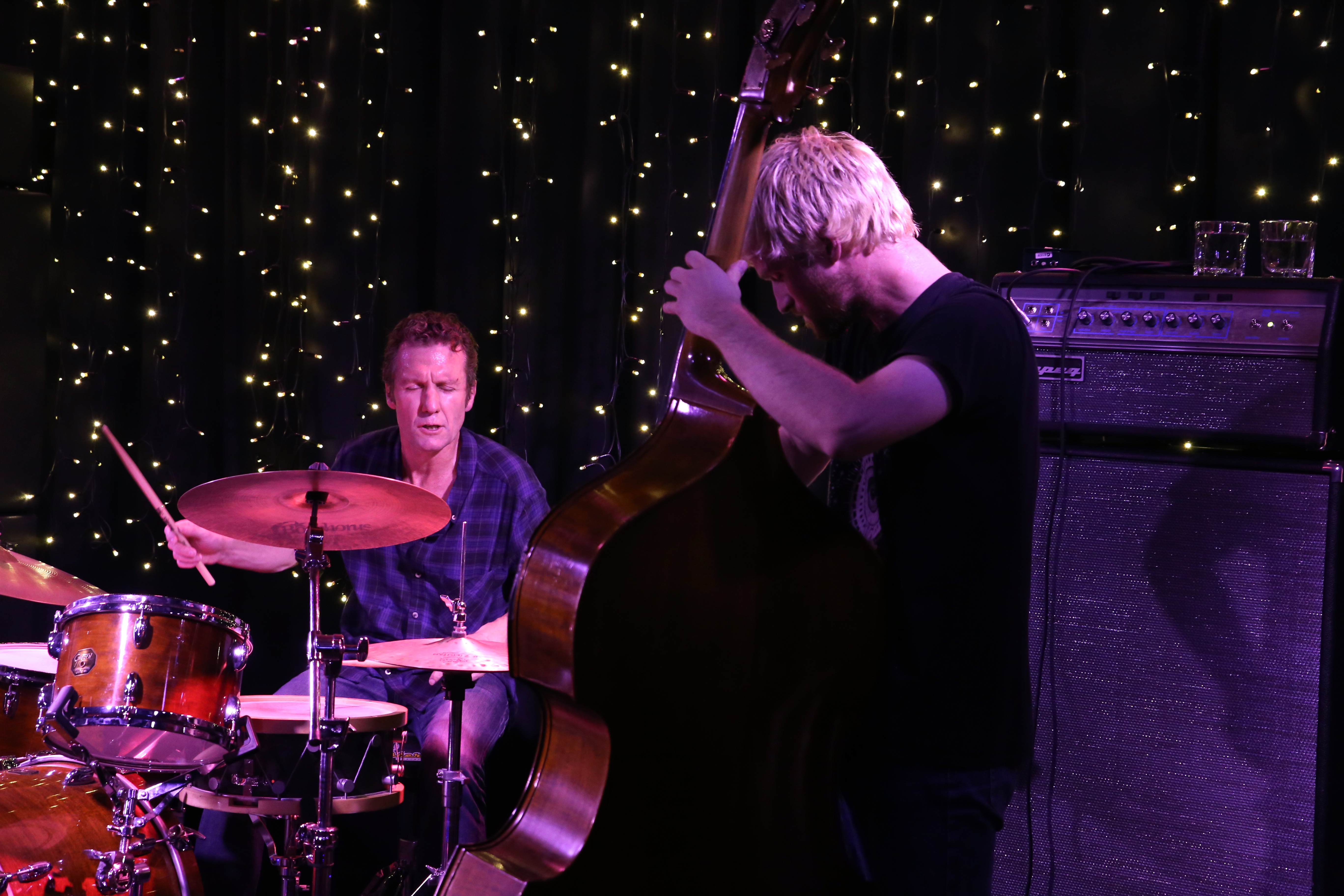
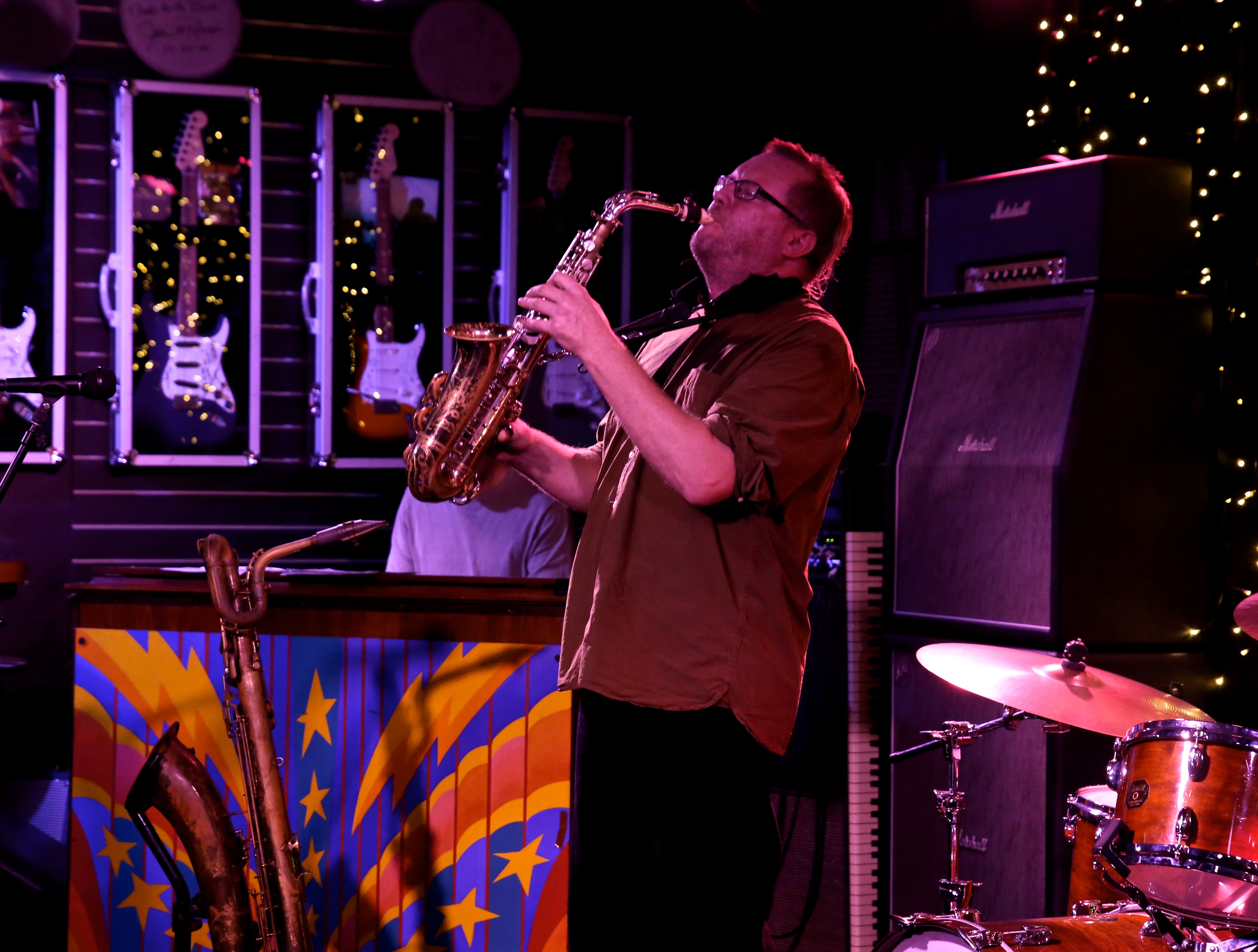
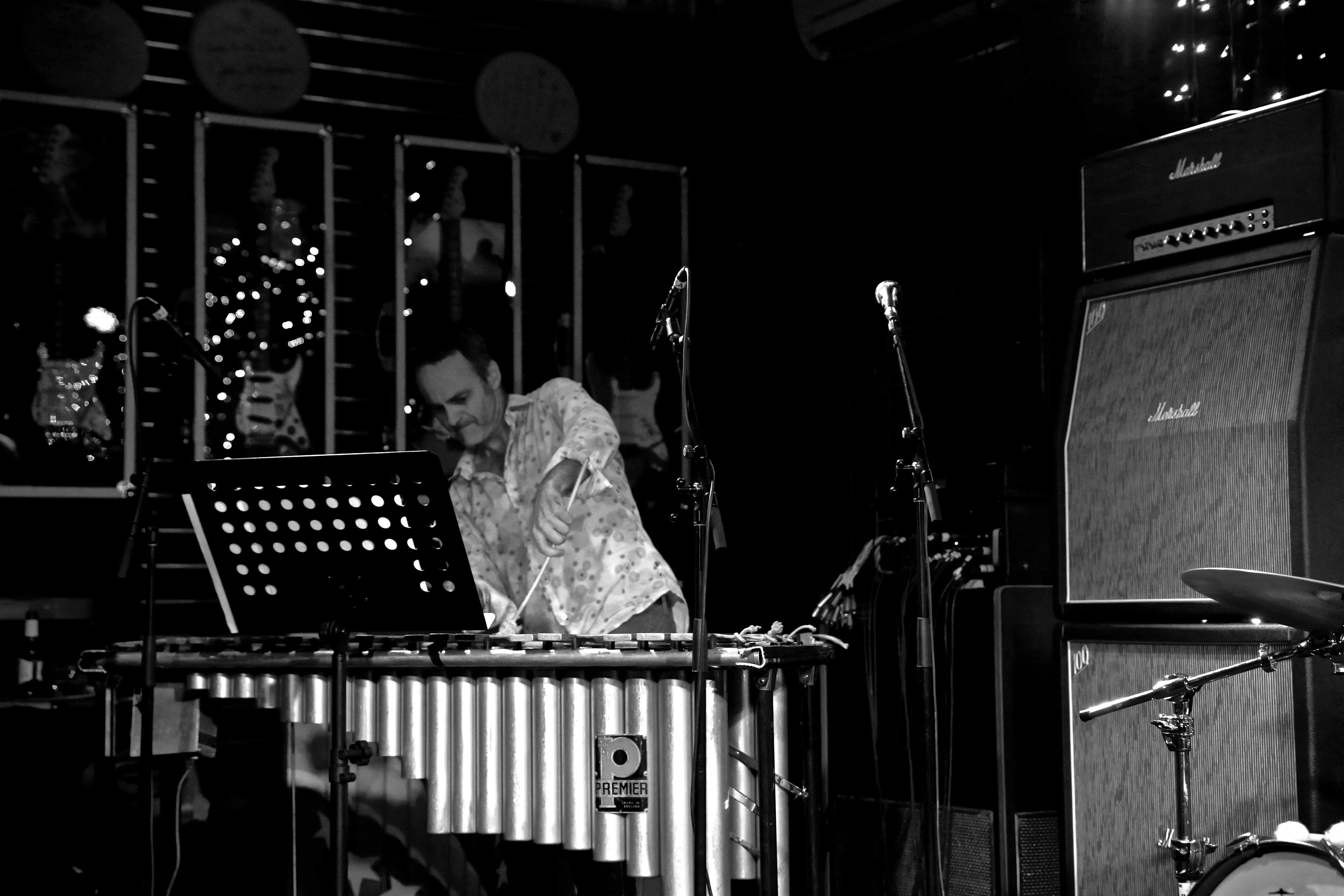 I have listened to John Bell over a number of years and I have always marvelled at his inventiveness. Bell (along with Jeff Henderson), is widely acknowledged as the experimental music guy, the free improvisation guy. He is a musician who takes risks as he aims for clear skies; a musician who involves himself in interesting cross-cultural collaborations, a vibraharp player who doubles on brass instruments. He is an artist who you always associate with innovation – consequently, other musicians look up to him.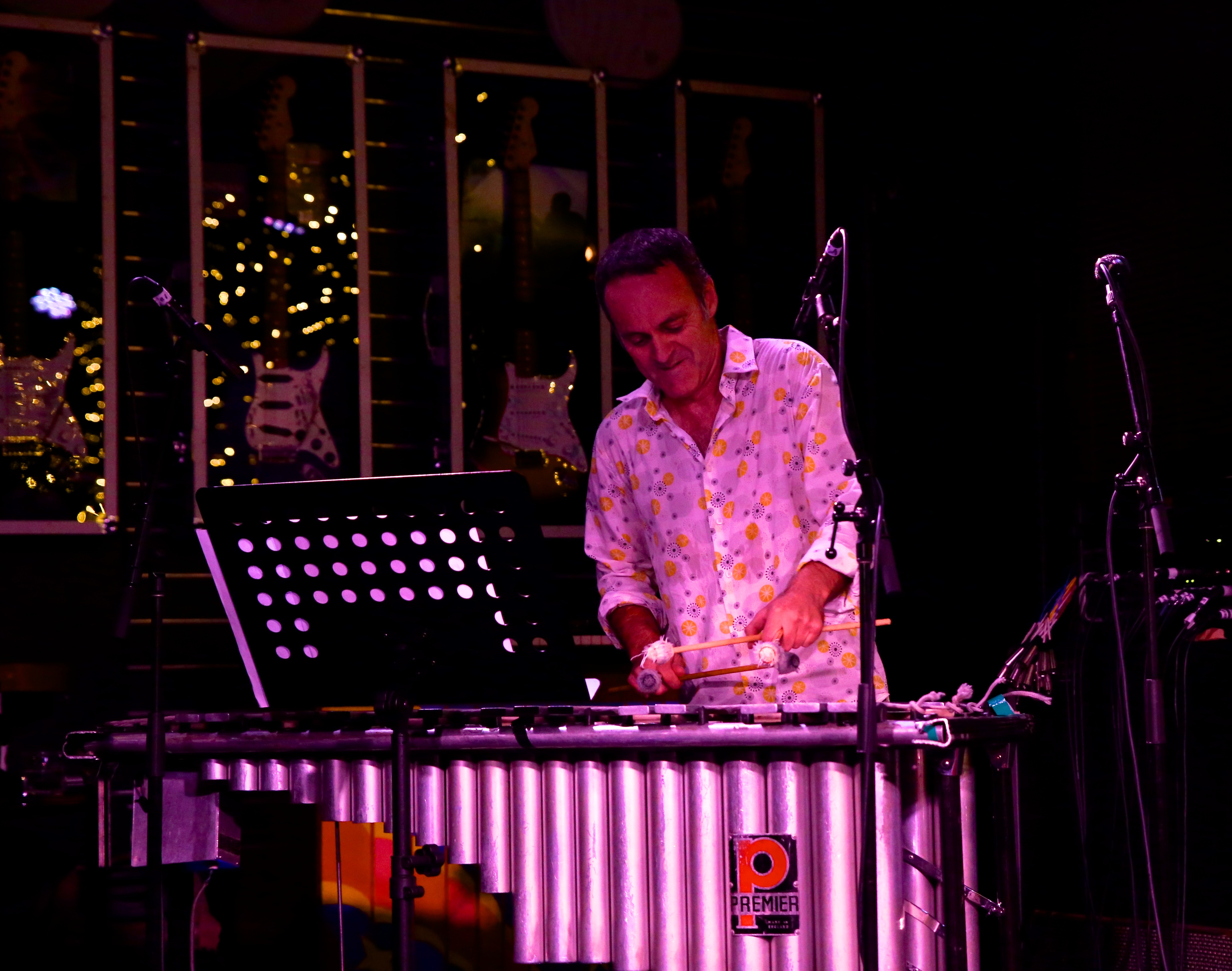
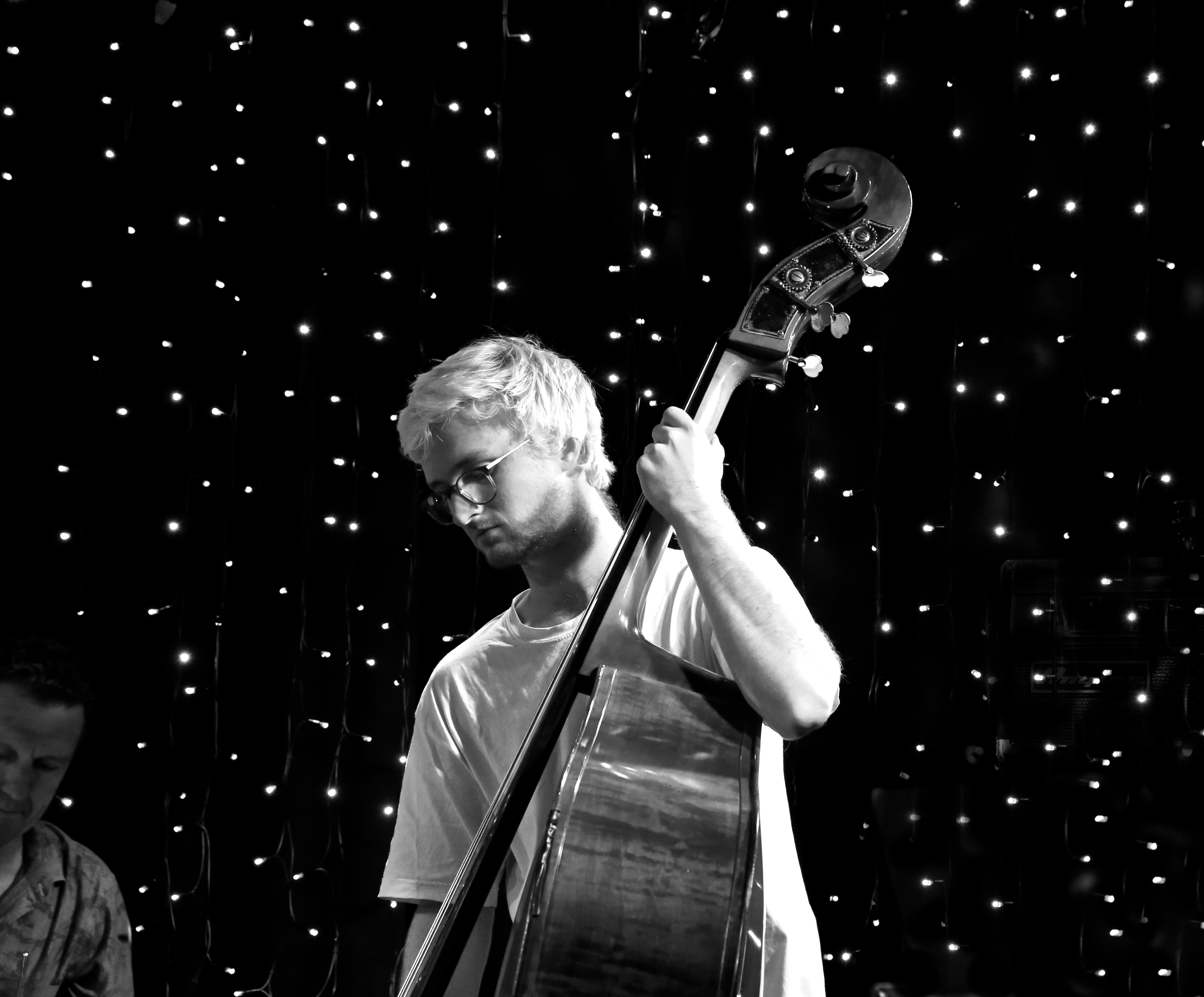
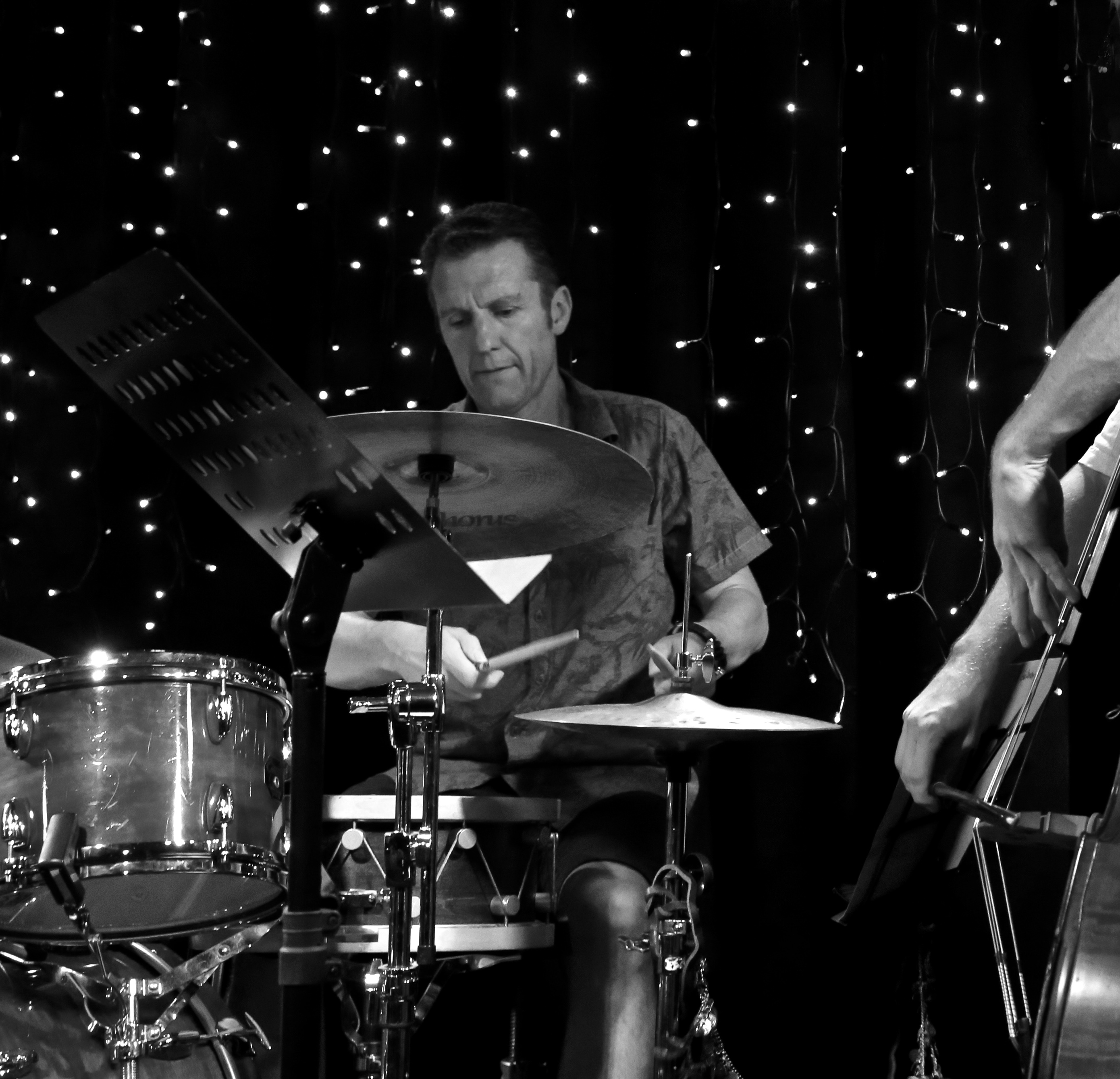
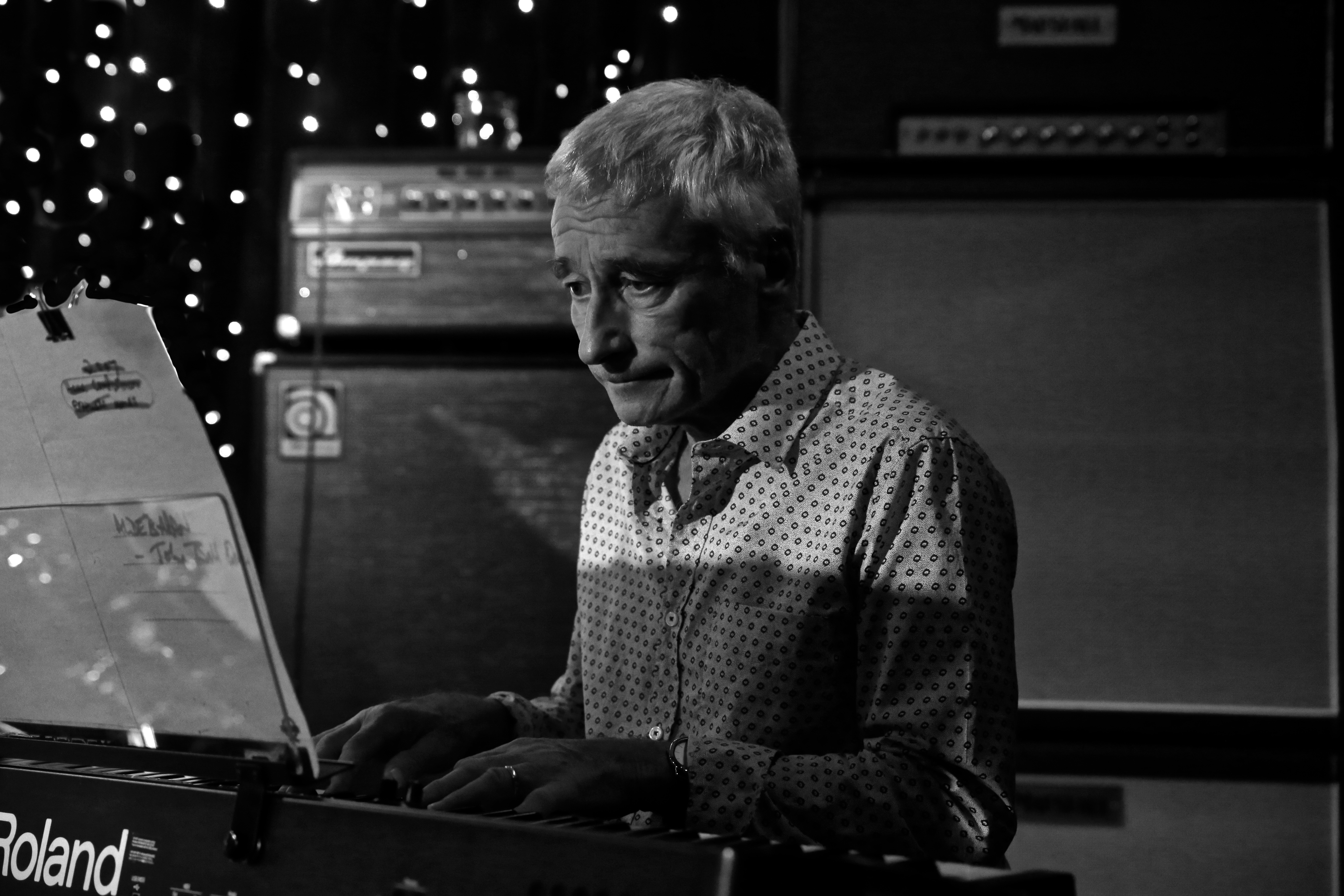
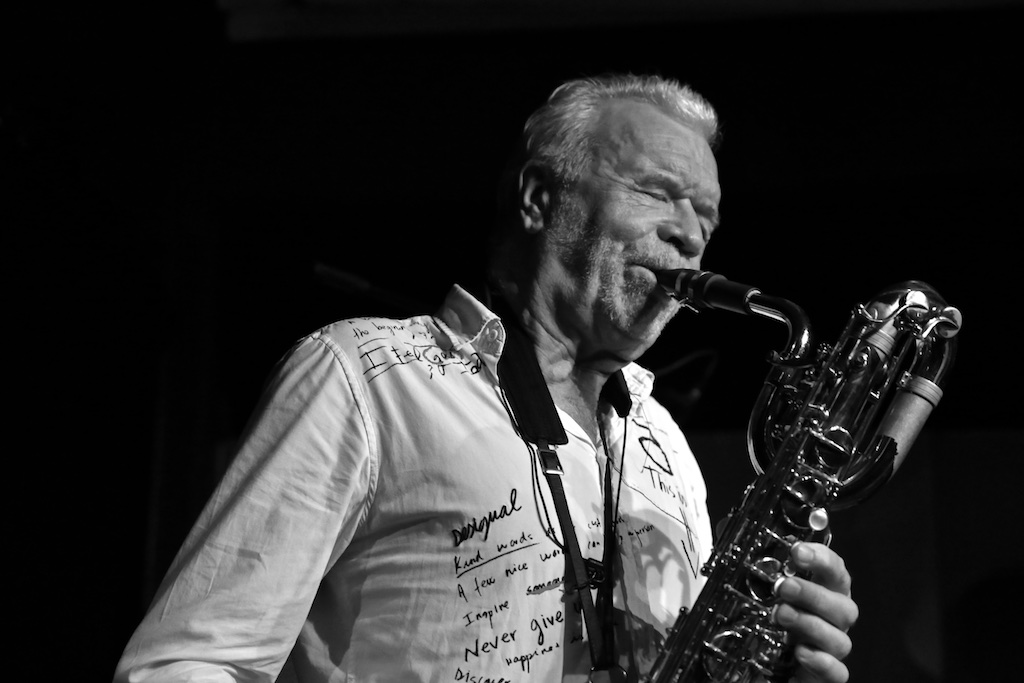
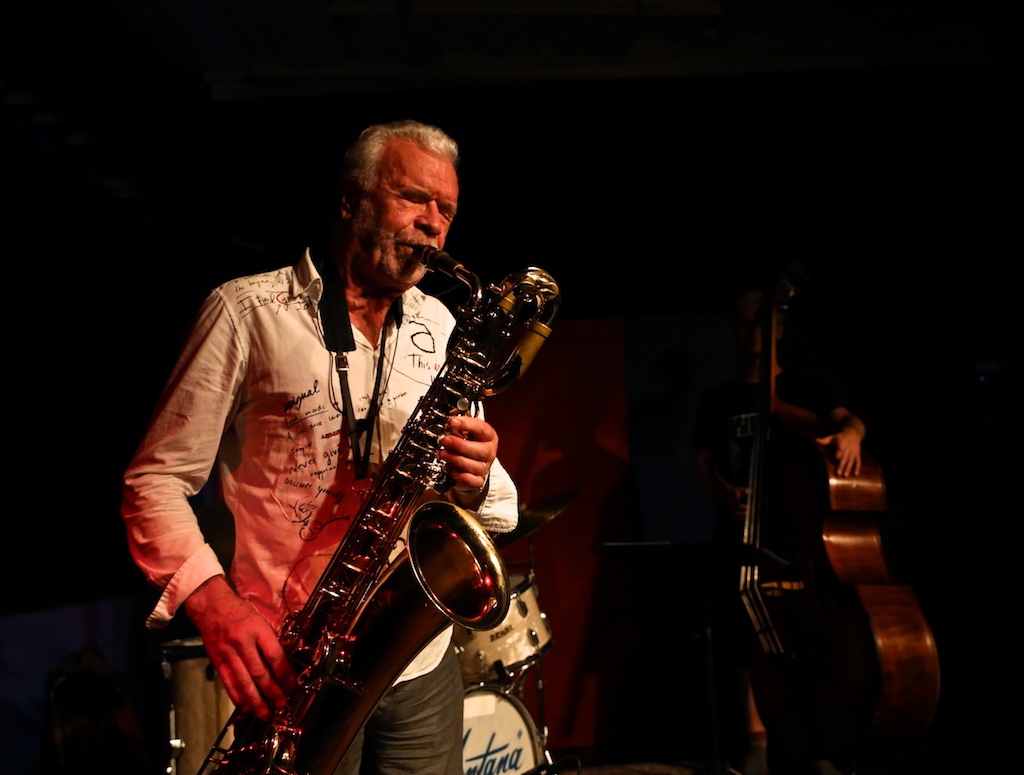
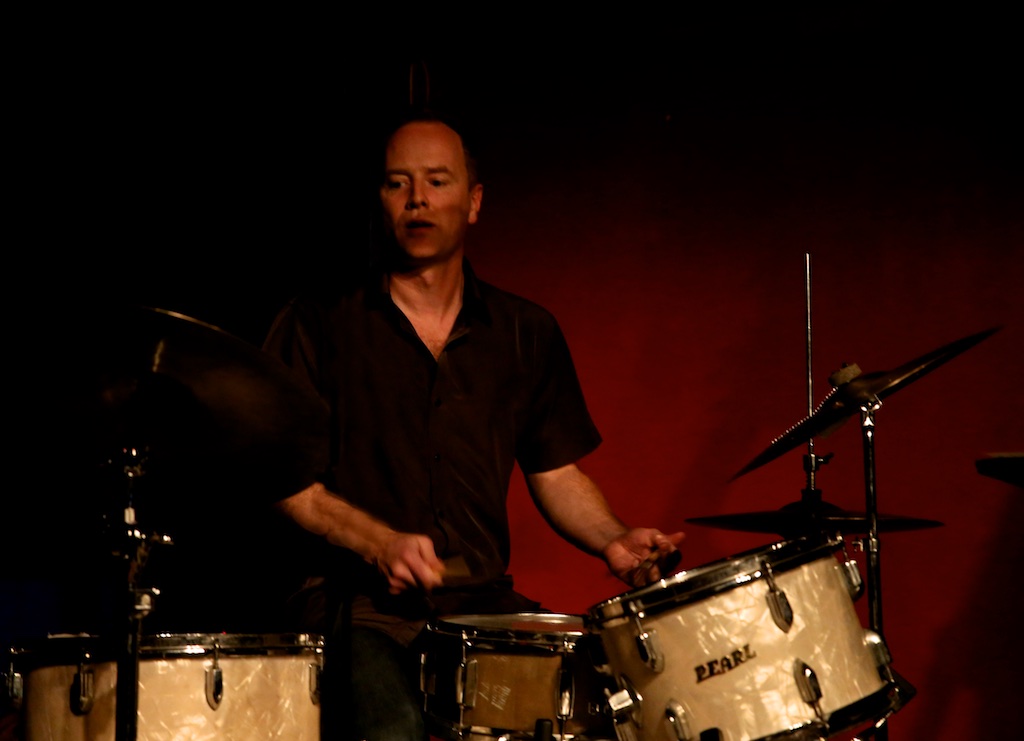
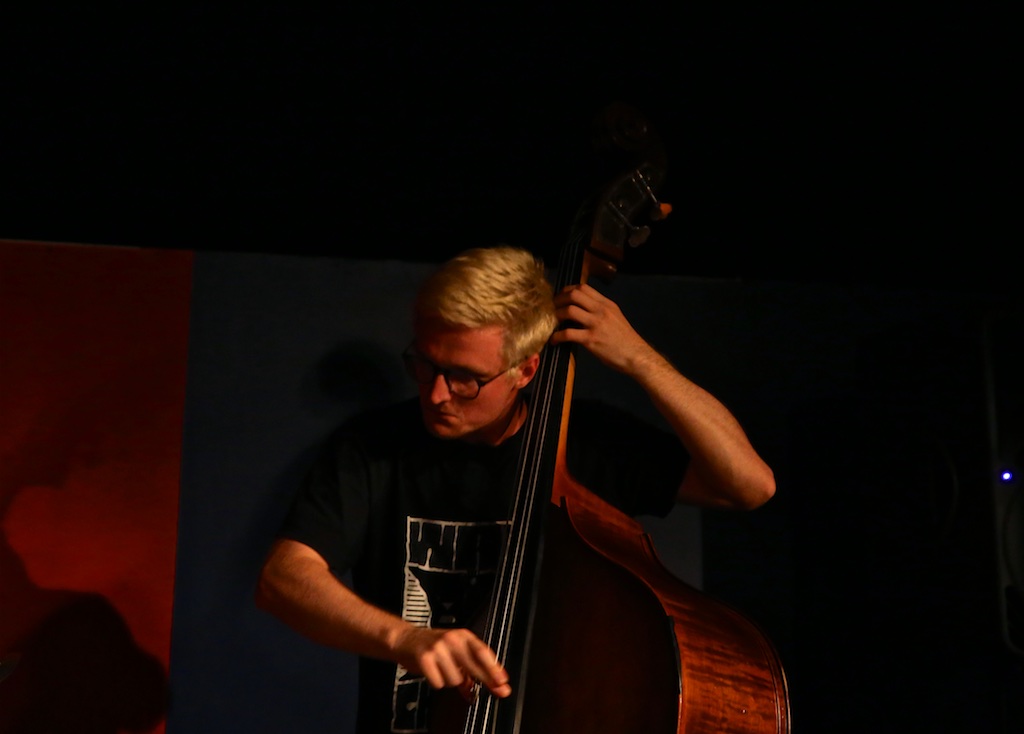
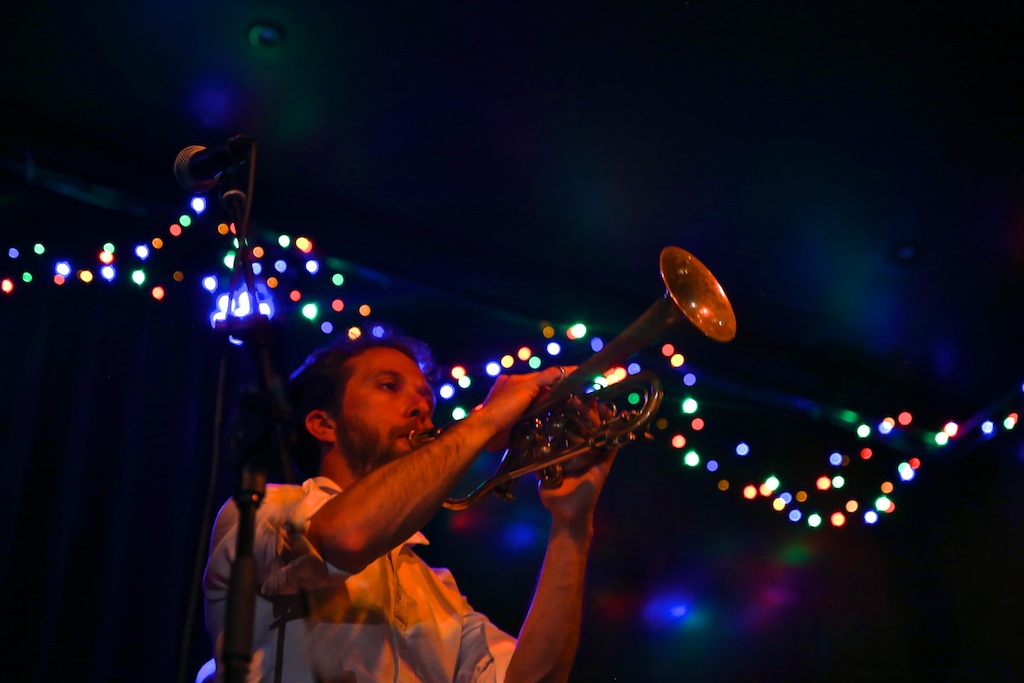 Improvised music is a never-ending contest between the familiar and the unexpected. Everything is valid on the journey, but sometimes we forget that tradition can be a springboard and not a straightjacket. We had a good example of that on Wednesday. Because he lives far from here, few if any locals had previously encountered Marc Osterer, but few who heard him will forget his exuberant CJC gig. Born in New York, Osterer has led an interesting musical life. Broadway Shows, New York clubs, principal trumpet (Mexico City Philharmonic) and the Salzburg Festival Austria. While he attended prestigious musical conservatories in New York, there is something else in his sound – something that can’t be learnt purely from academic institutions. Osterer’s Jazz has a firm foothold in the tradition. Louis Armstrong and the great swing-to-bop trumpeters like Sweets Edison. It made perfect sense therefore that the standards he played were from the Songbook and that his own compositions reached deep inside that era.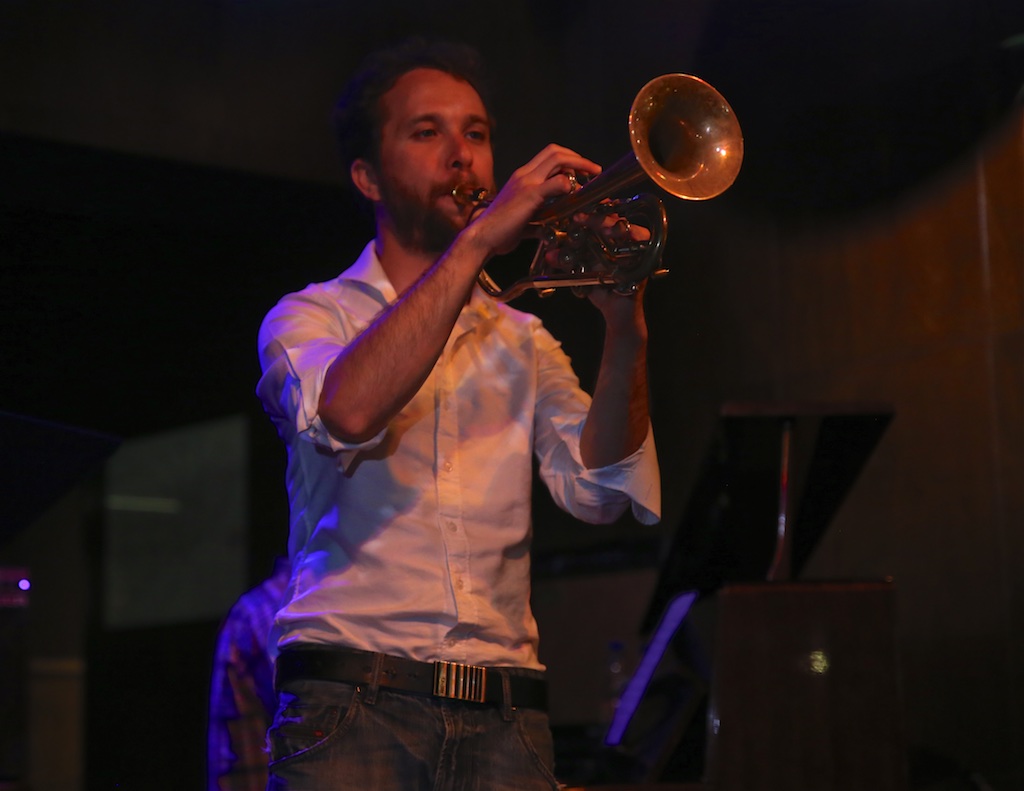
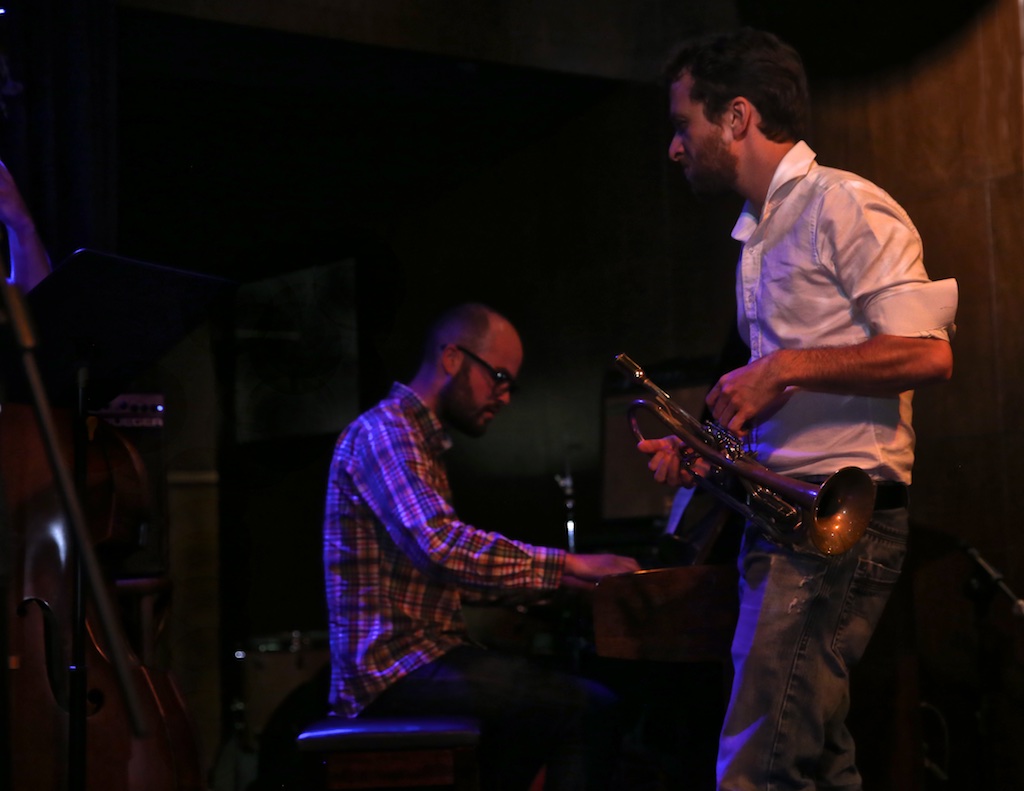 We also witnessed good chemistry between the visiter and his pick up band. It was not the band advertised but what we got was terrific. Matt Steele was flown up from Wellington and locals (fellow UoA Jazz School alumni) Eamon Edmundson-Wells and Tristan Deck completed the rhythm section. Pianist Steele has been gone from Auckland for over a year and is seldom heard here these days. We do hear Edmundson-Wells (bass) and Deck (drums), but to the best of my knowledge, none of them have performed in this context. Absent were the complex time signatures and post bop harmonies. The tunes stayed closer to the melody and the rhythmic requirements were often two-beat or even something closer to second line. As they played through the sets the joy of discovery showed on their faces and we felt it too.
 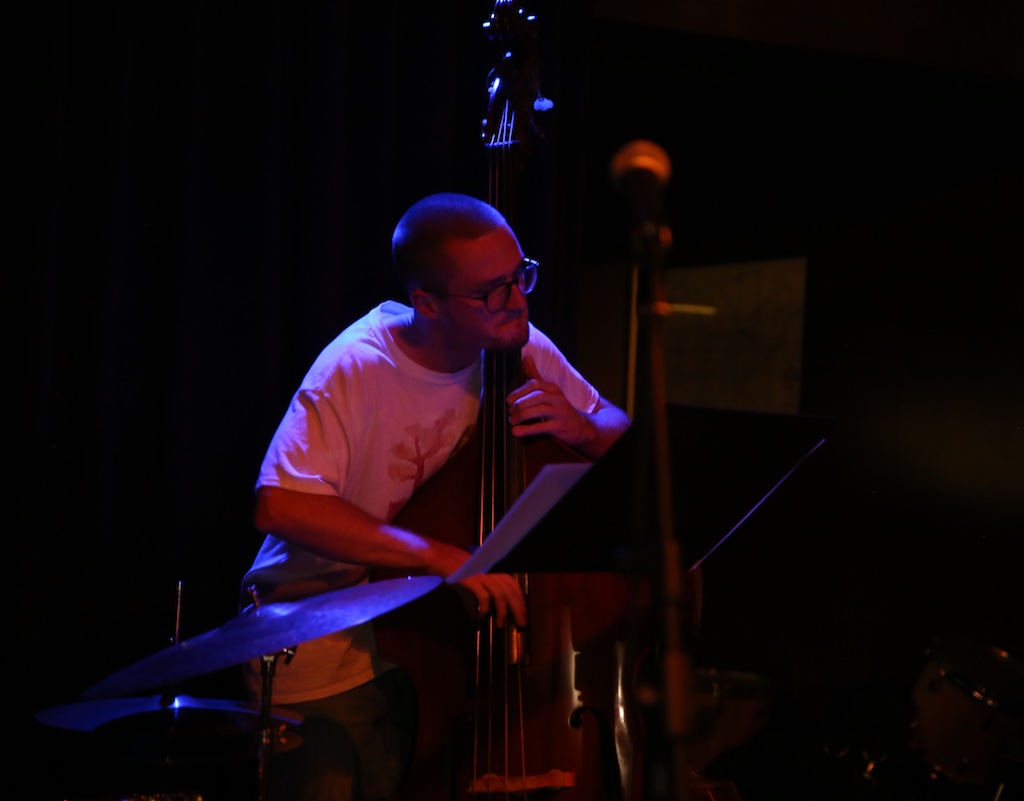 These musicians were still students three years ago but their skills are now well honed. They met the challenge and more. Locals who had not seen Steele play for a while, were buzzing; especially after the blistering Cole Porter standard , ‘It’s alright by me’. Steele’s fleet fingered solo was terrific, and matched by Deck’s bop drumming (complete with appropriately placed bombs and fluid accents). Edmundson-Wells dropped right in behind, pumping out his lines, and it was obvious they were enjoying themselves. Osterer’s compositions tell us how
 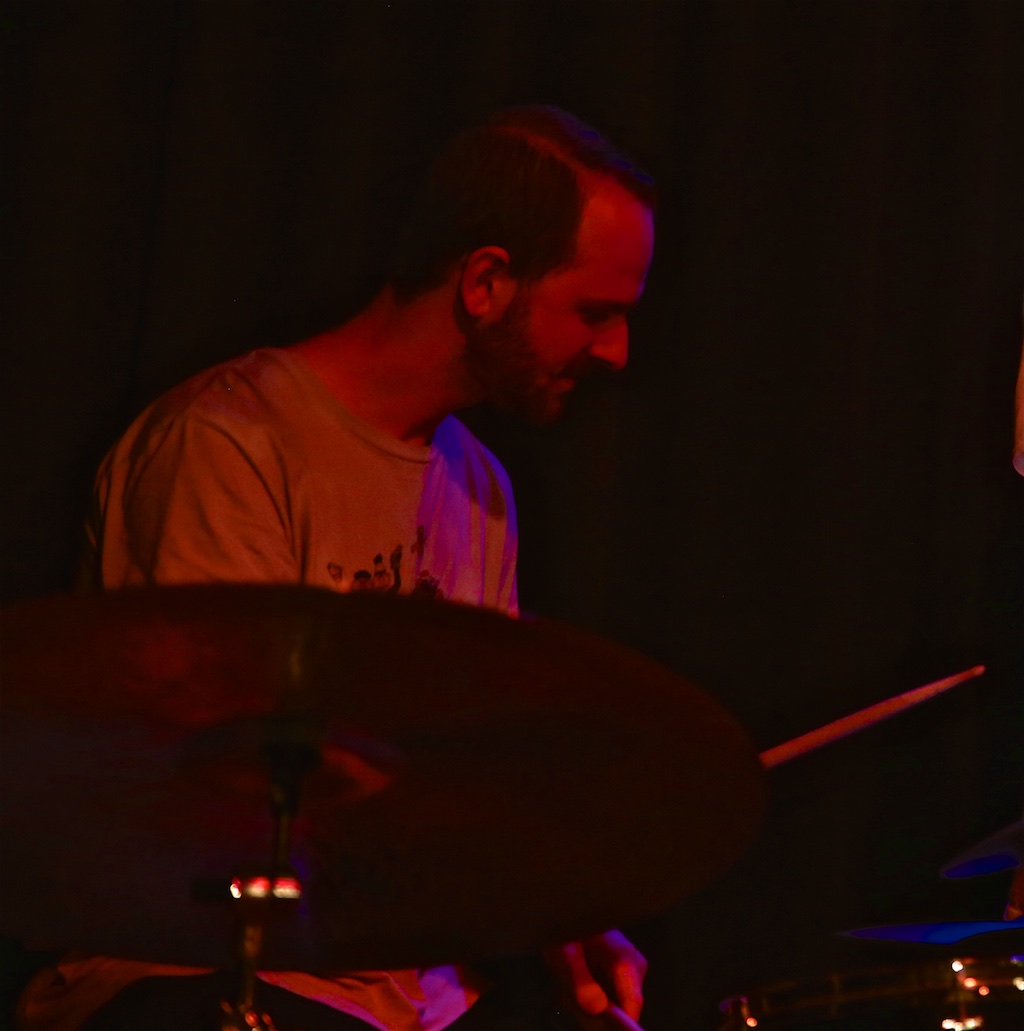 comfortable he is with this style of music. His ‘What’s that smell’ (Jazz should be ‘stinky’ he explained) – a New Orleans referencing tune, then ‘Tune for today’ and ‘Bite her back’ based on a Bix Beiderbecke tune. Among the standards was Chet Baker’s version of the little known ‘This is always’, a steamrolling syncopated version of ‘Limehouse Blues’ (Braham) [Note: I have only seen one Kiwi attempt that, Neil Watson on fender] and a version of Hoagy Carmichael’s ‘New Orleans’.
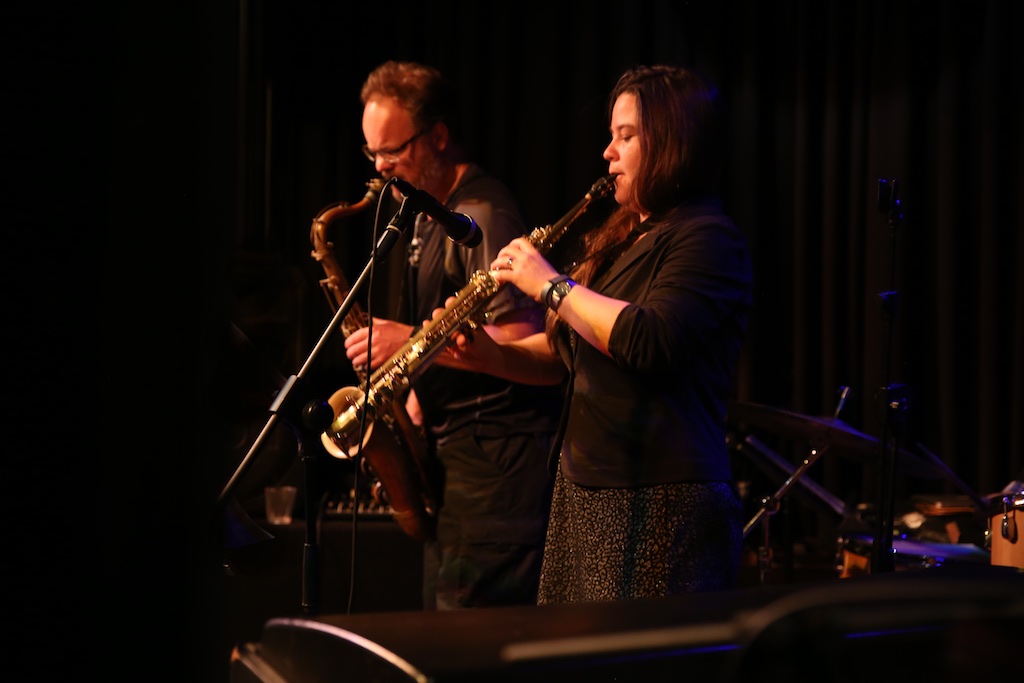 After years traveling the wider Jazz world, Jasmine Lovell-Smith came home; launching her latest album ‘Yellow Red Blue’ at the CJC last Wednesday. The Album features a quintet ‘Towering Poppies’; a group she formed in New York over five years ago. Her New Zealand gig featured locals Roger Manins, Kevin Field, Eamon Edmundson-Wells and Chris O’Connor. After her New York release she garnered a number of favourable reviews and no wonder. This is a lovely album, her compositions and arrangements outstanding, the recording immaculate.
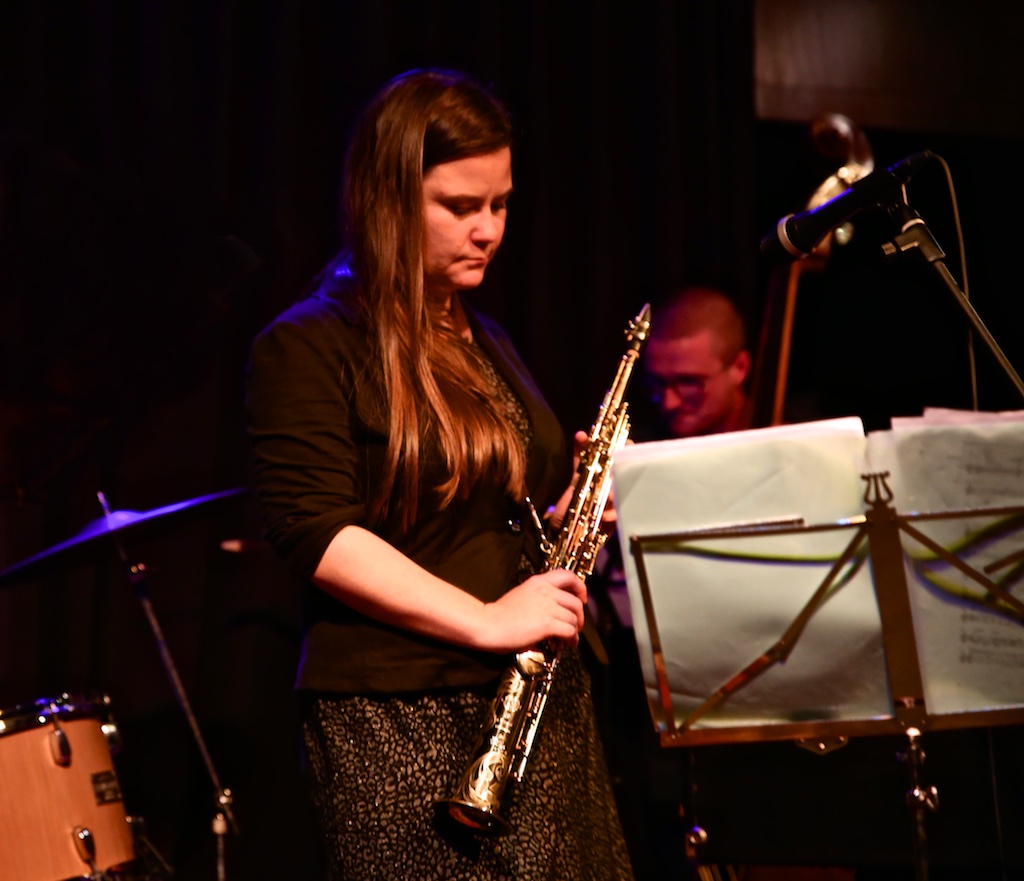 Her soprano sound is warm and enveloping, the cleaner tone of her straight horn nicely counterbalancing with the woody earthiness of the bass clarinet, the well constructed charts coming into their own when these delightful interactions occur. The rich textures are never overwhelming, even when strings enter the mix. This is chamber Jazz at it’s best, engaging the listener without resorting to cliché.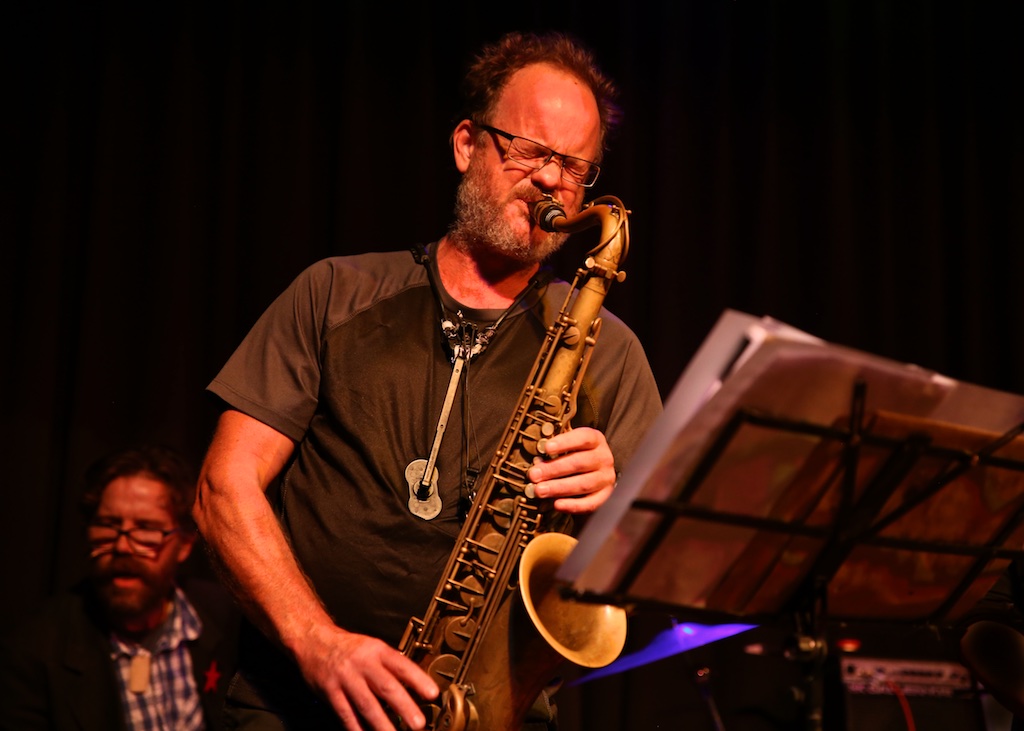
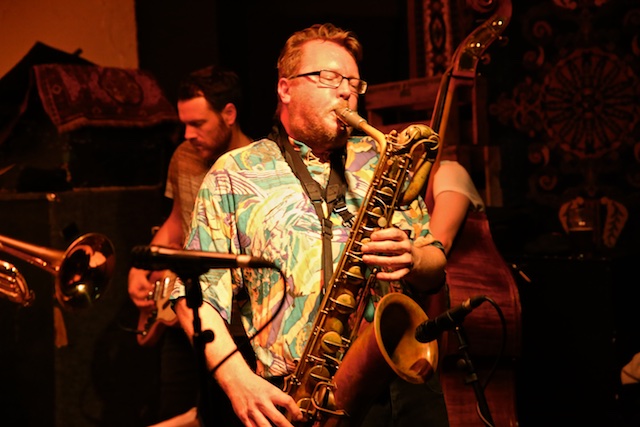
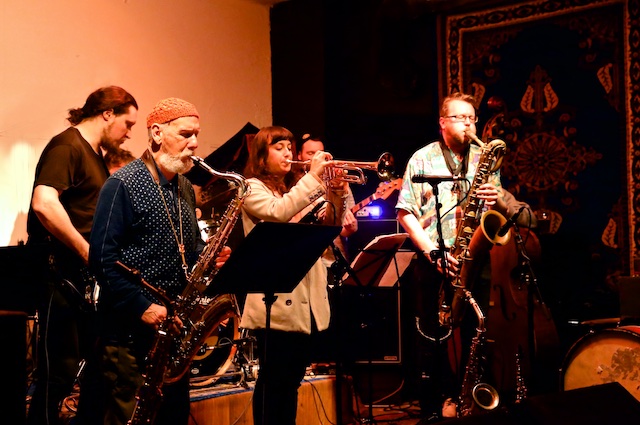
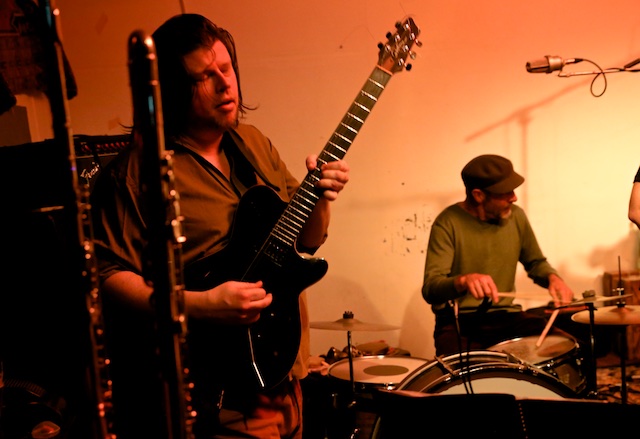
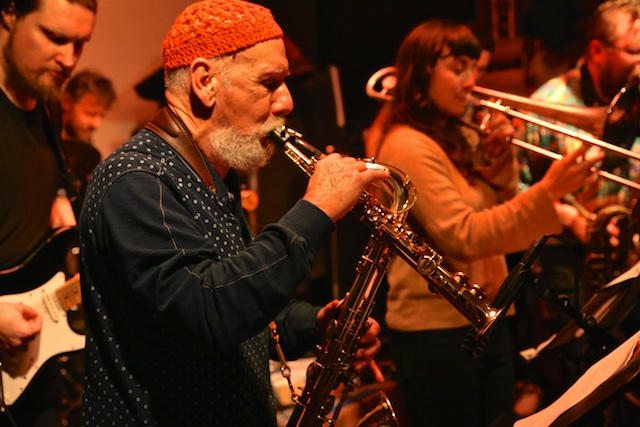
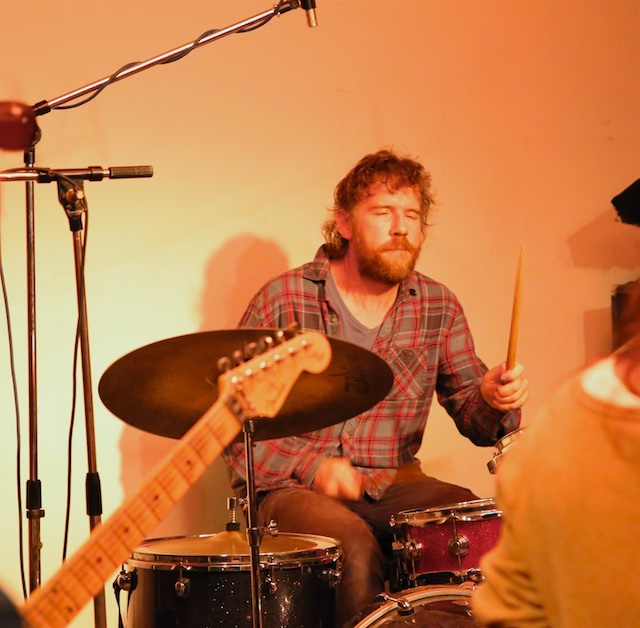
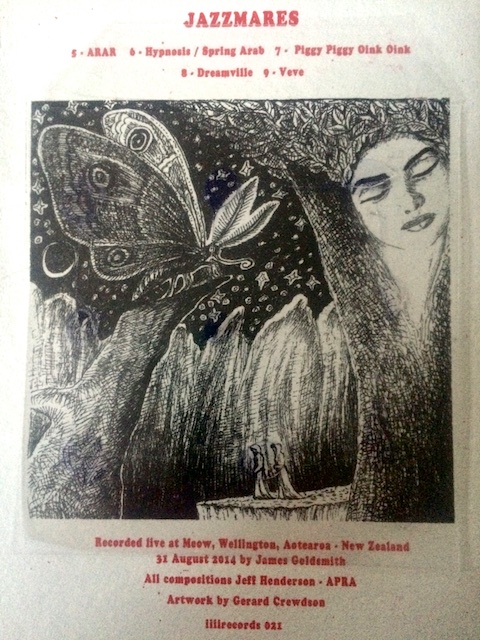
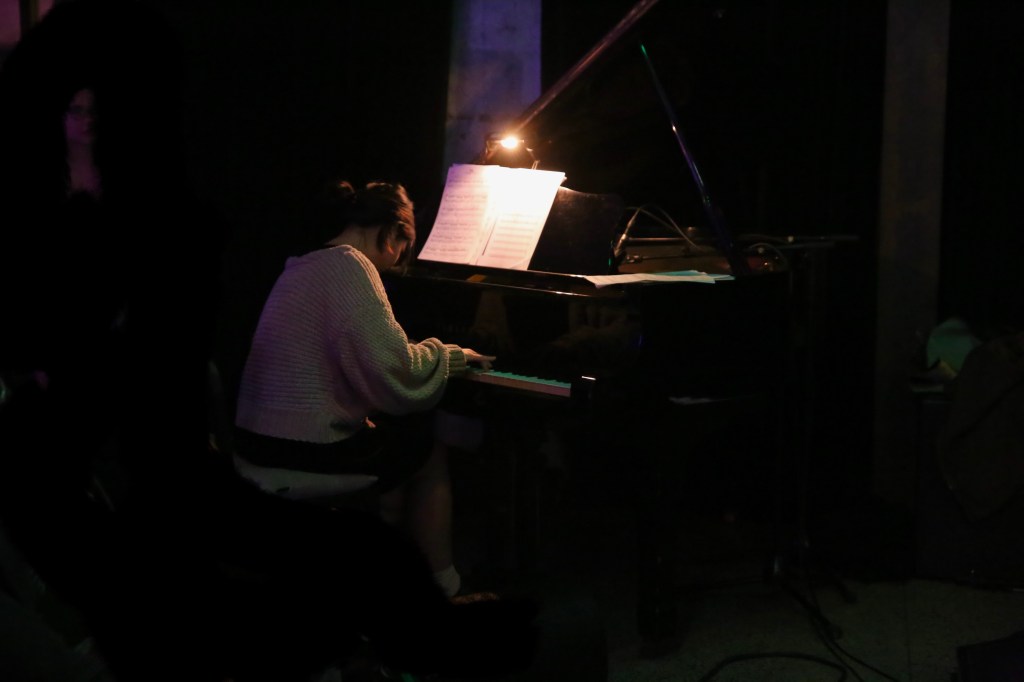
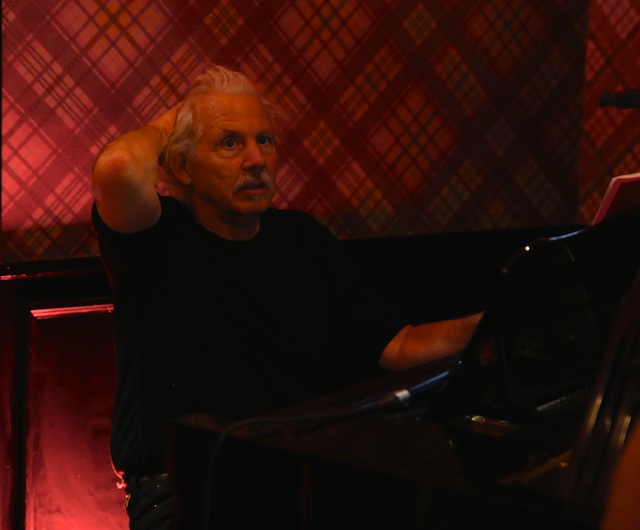 To the best of my knowledge, Jonathan Besser has not played at the CJC (Creative Jazz Club) before. While he is best known as an important composer for The New Zealand Symphony Orchestra, The New Zealand String Quartet and The Royal New Zealand Ballet, he is also a significant leader of small ensembles. Ensembles which venture far into the territory of experimental, electronic and improvised music. It is impossible to separate the man from his music. It is eclectic, original and often plaintive but generally with a sly twist of humour thrown in. In spite of his standing in the music world, Besser is modest. At the CJC he was happy to lead from the piano, which was in partial darkness and at the rear of the ensemble. His instructions were brief and staccato as if part of the unfolding suite. When he did pick up the microphone to speak to the audience he exuded an eccentric charm, bandstand asides peppered with self-effacing humour, garnished with sudden smiles.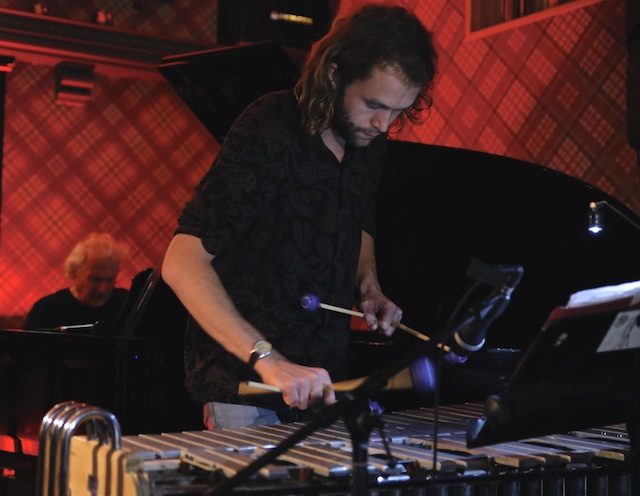
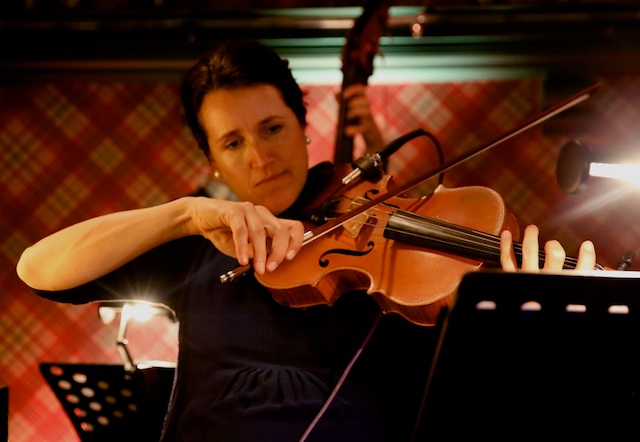 I met Besser briefly during Natalia Mann’s ‘Pacif.ist’ tour and later at the Auckland Art Gallery during the opening of Billy Apples ‘Sound Works’ exhibition. On that occasion, the Nathan Haines Quartet played Besser’s innovative compositions. I really hope that someone recorded that. It was extraordinary music, based upon prescribed letters of the alphabet. These were then allocated using the 12 tone scale as a formula to locate equivalent notes. The order of Billy Apple’s words dictating the order of notes.
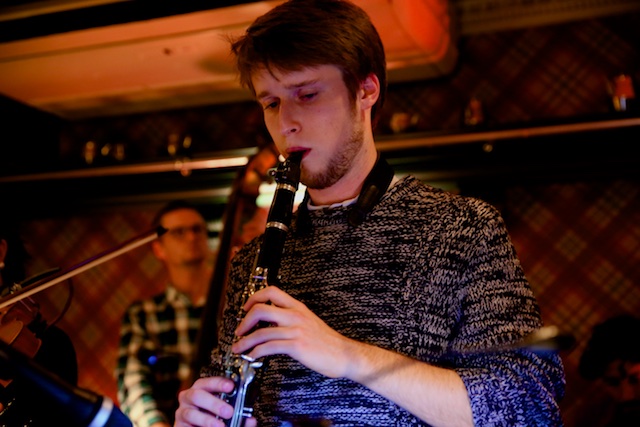 The music was not Klezmer and later I asked Besser about his influences – were there strong Jewish influences? “I am a Jewish man and I used Jewish scales, but apart from that no. I draw upon many, sources”. It interested him that I heard Argentinian references. “I have done Tango projects in the past and that is possible”. It was partly the combination of instruments, the delicious overlay of melancholia and the accents – not so far from the music of master musician Dino Saluzzi.
 The segments of music making up the suite seldom lasted longer than 4 minutes. The spaces between them brief. The mood seldom deviated from the wistful, evoking a sense of intangible longing – for something remembered – but just out of reach, a nostalgia as ancient as time itself. There were a few cheerful pieces as well, but I preferred the former. The Zestniks update themselves regularly, this time adding Caro Manins vocal lines, her wordless vocals followed the viola or clarinet in gentle unison. No one is better suited to this than Manins – she has worked with the likes of Norma Winstone after all.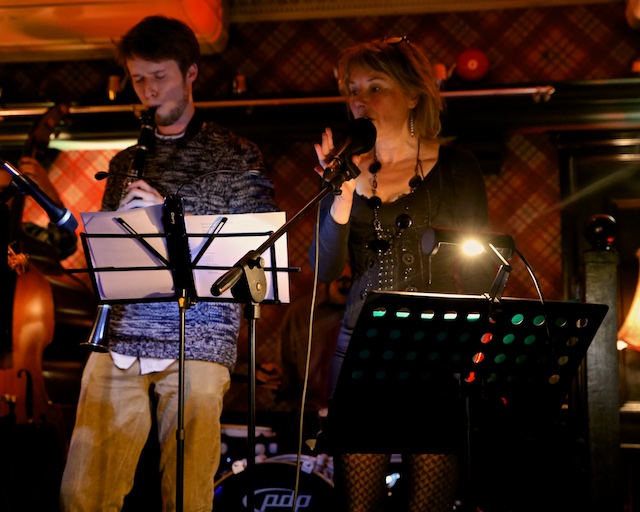
 This year has seen a lot of international acts through the CJC (Creative Jazz Club), compelling musicians with interesting stories to tell and often with serious gig miles under their belt. As exciting as it is to see the high-end performers of the scene, it is just as important to recognise and evaluate those who might one day take their place. Not all will last the course, but the persistent and the passionate can make that journey. Standing in front of a discerning club audience tests young musicians in ways not easily replicated. Unlike the Jazz School environment, the musicians technical prowess is subservient to the authenticity they bring to the bandstand. Fluffing a line is more likely forgiven than delivering a technically perfect but lifeless performance. Sam Weeks and Sean Martin-Buss tested themselves and came through the fire relatively unscathed.
 The gig was part of the emerging artists series and the musicians first time at the CJC as leaders. Both have previously played as sidemen at the club, but standing anonymously in a horn line is a different thing entirely. I am happy to give this gig the thumbs up as they performed well. It took the first few numbers for them to warm up properly, but warm up they did. The rest of the first set and the one after that delivered crackling performances. All of the material was their own and their writing skills were favourably displayed (especially those of Weeks). A piece titled ‘Missing Together’ by Weeks was a gem – opening with some tricky unison lines, followed by a few bars of counterpoint. They made it sound easy, but clearly, many of these compositions were not. The act of embracing the difficult is how a musician grows. I am glad they took some risks, as Jazz functions best in the absence of complacency.
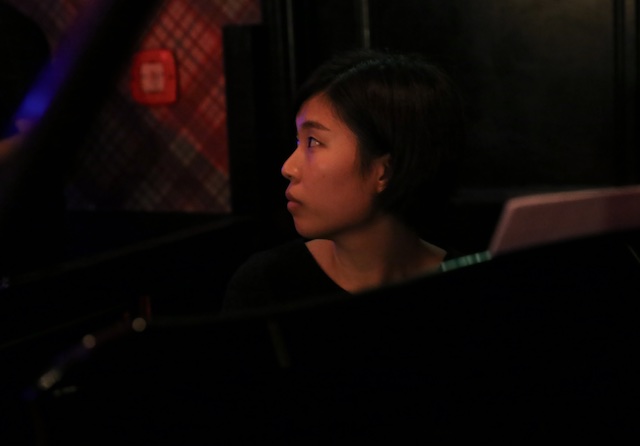 Sean Martin-Buss was on alto saxophone with Sam Weeks on tenor saxophone. Each gave the other ample room and the contrast between the horns was therefore amplified. They also differed stylistically and this gave an added piquancy to the gig. They made good use of interactive Banter, musician to audience and to each other. Off the wall comments came out of nowhere, and the audience included in the joke. The humour was not in the lines but in the offhand delivery. A very Kiwi type of onstage banter – self-effacing, mumblingly casual.
 Emerging musicians are often tempted to rely heavily on musicians from their own graduate class. There is nothing wrong with that per se, but the first question is always, which musicians will serve the gig best? Again the co-leaders made good choices in Tristan Deck (drums) and Eamon Edmundson-Wells (upright bass). The remaining band member was Crystal Choi on piano. Deck and Edmundson-Wells perform in public regularly and both have earned considerable respect. They personify good musical taste. They have talent and better yet, they work extraordinarily well together. It was this combination that tightened up the performance – real assets. Choi was extremely interesting on this gig. I have sometimes noticed a tiny hesitancy in her delivery. On this night, her performance exuded confidence and several of her solos were stunning. The enthusiastic audience responded throughout the night.
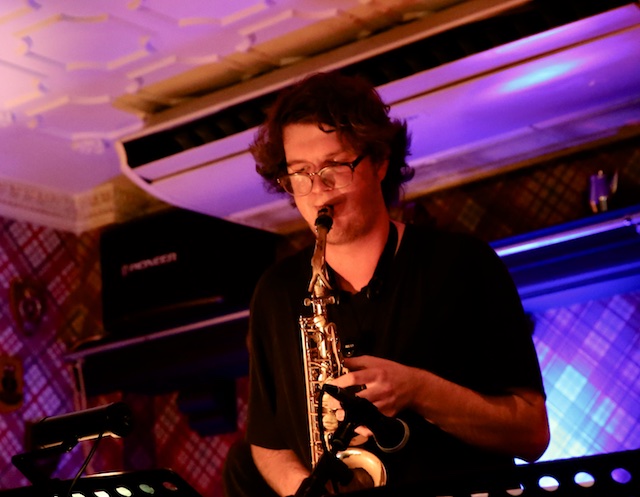 Although the leaders possess perfect vision and are clearly not Venetian, the project was ‘The Blind Venetians’. This was also the name of the final number of the last set; a roistering finale bringing down the cantilevered shutters at gigs end.
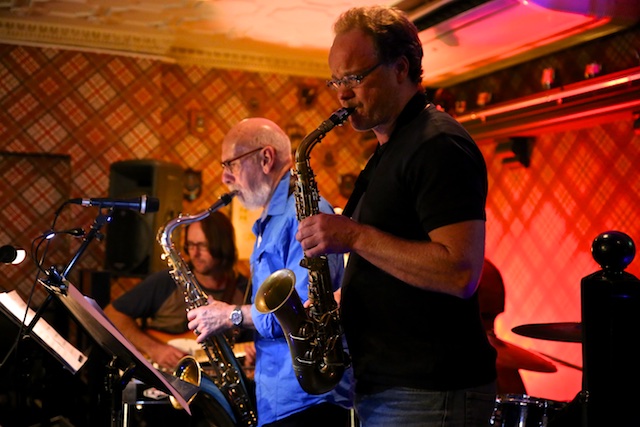 A seasoned New York veteran when asked to comment on the quality of playing by young artists emerging from the Jazz Schools said, “Man they’re such great players. Many of them have chops to burn, but what is lacking is ‘character’. That is not taught in Jazz schools, you gain it inch by inch out of life experience”. To paraphrase Lester Young who put it best, ‘I hear the notes, but what is your story’. The character of a musician (or the lack of it), shows up in the music. Jim Langabeer has ‘character’ to burn. He tells wonderfully human musical stories and they are utterly beguiling.
 Langabeer is hugely respected on the scene and deservedly so. He has worked with greats like Gary Peacock and Jaco Pastorius and in spite of absorbing the essence of North American Jazz, his ideas and sound possess a Kiwi authenticity. When he plays his tenor there is often a street-raw raspy intonation. The sound is at times reminiscent of Archie Shepp, but the story and flow of ideas are entirely his own. His flute playing is soulful and as soft as silk in the breeze. Because he is so comfortable in his own space he can incorporate everything from the avant-garde to indigenous music without it sounding contrived. These seamless references work beautifully in his hands. We talked of this after the gig and agreed that many of the earliest attempts at blending middle eastern, far eastern or ethnic music were less successful than now.
  As the boundaries between cultures blur in a globalised world, the mutual respect between improvising traditions grows. I have posted an example of this effortless genre-blending in a clip from the CJC gig titled ‘Ananda’s Midnight Blues’. Those who are familiar with Buddhism will grasp the meaning immediately. Ananda was Gautama Buddha’s childhood friend and later his disciple. Beloved, worldly and yet never afraid to challenge his enlightened teacher. There is a feeling of deep questing spirituality in the piece – reaching beyond mere form.
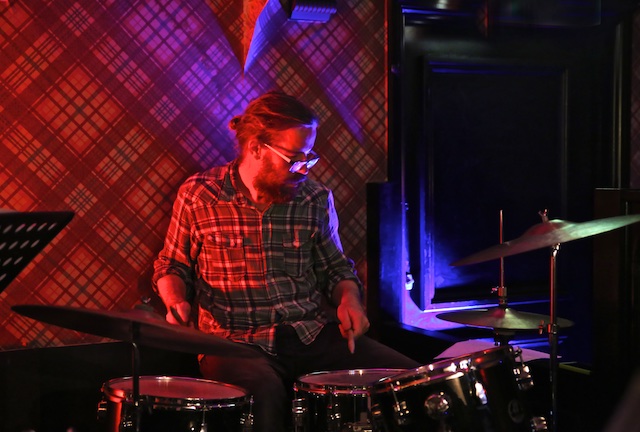 Whether Langabeer plays flutes or reeds, everything serves the composition. His spare lines (which are devoid of undue ornamentation) establish a theme and then vanish like a will-o-the-wisp, giving a nudge to the imagination and enriching the piece as a whole. There are no wild flurries of notes on the saxophone or flute because the story resides elsewhere. His writing creates an over-arching logic and the ensemble has the freedom to move in and around tonality. In some pieces ostinato patterns create a drone effect, becoming a single note over which to restate the melody. This freedom allows for an organic interaction, free or inside and with a deep gut-felt pulse.
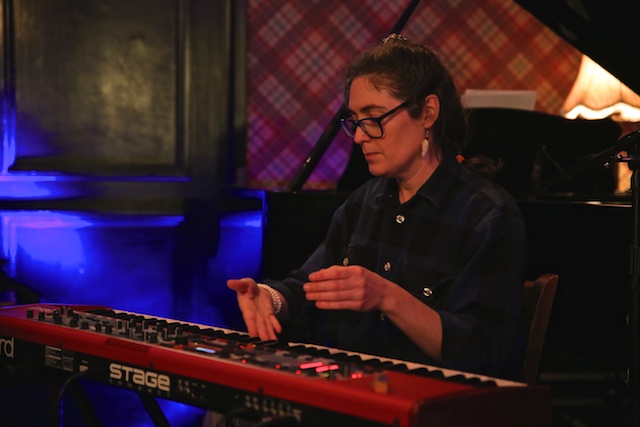
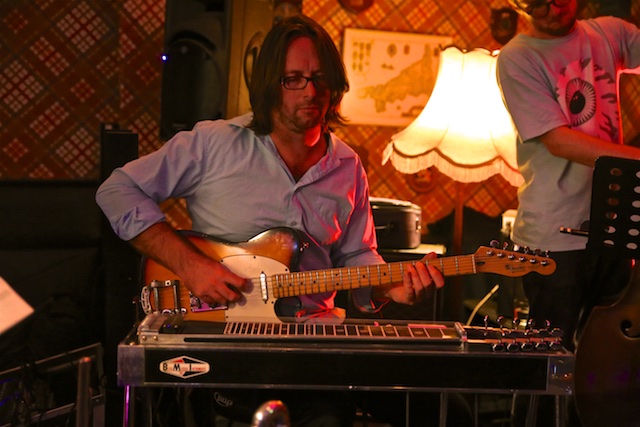 When putting a band like this together the choice of musicians is supremely important. Not every musician could handle such freedom. Needless to say, Langabeer chose well. The ensemble was rich in contrasting colour, rich in character. It was our good fortune that Jim Langabeer’s daughter Rosie Langabeer was back in town. I can’t imagine a better-qualified pianist for this role. A leading avant-gardist and experimental musician who crafts compelling filigree and rich beauty into her music. Rosie Langabeer can play outside one minute and the next you hear a deep subtle swing, a rare kind of pulse that you can feel in your bones. A gifted composer and leader in her own right, an extraordinary sides-women when required. Moving from percussive, richly dissonant voicings to heart-stopping arpeggiated runs – somewhat reminiscent of Alice Coltrane’s later piano offerings. Her iconoclastic playing delighted the audience.
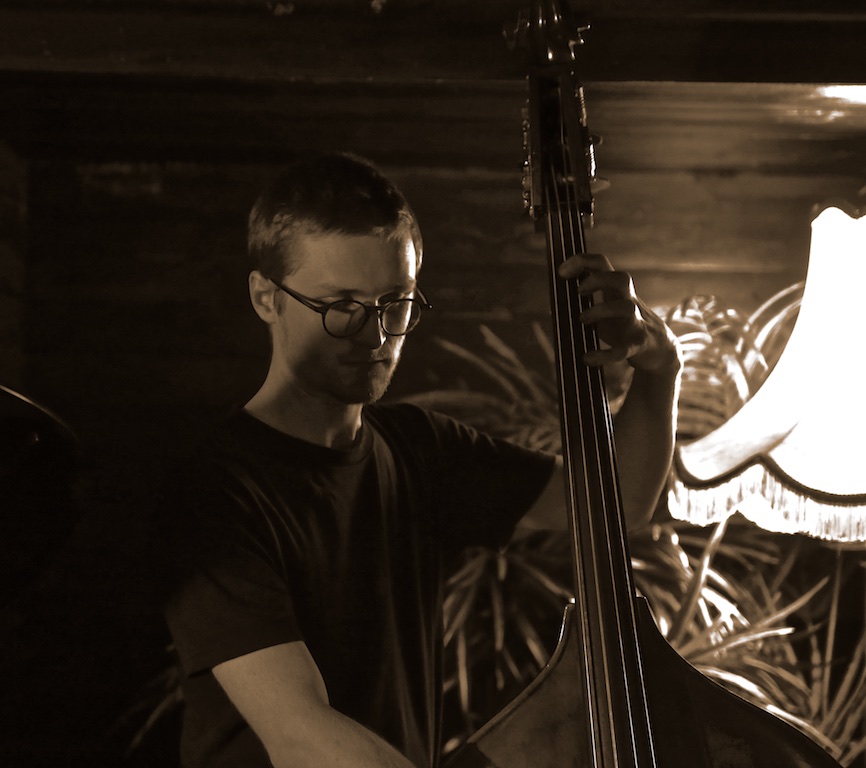
 On alto was Roger Manins. Although the alto is not his main horn he is extraordinarily fluent on the instrument. Langabeer has been focussing on multiphonics and microtonality of late and he and Manins showcased some atmospheric numbers utilising various blowing techniques. Manins has long impressed by playing in a variety of styles with equal facility. On guitar and pedal steel guitar was Neil Watson, bringing his mix of blues, Jazz punk, and avant-garde to the fore. Another iconoclast and one we love hearing. The pedal steel guitar has been in his possession for a year now and his rapid mastery of the instrument is impressive. A difficult beast tamed beautifully. On Bass was Eamon Edmundson-Wells. A versatile young bass player most often found in the company of experimental musicians. His performance on this gig was right on the money.
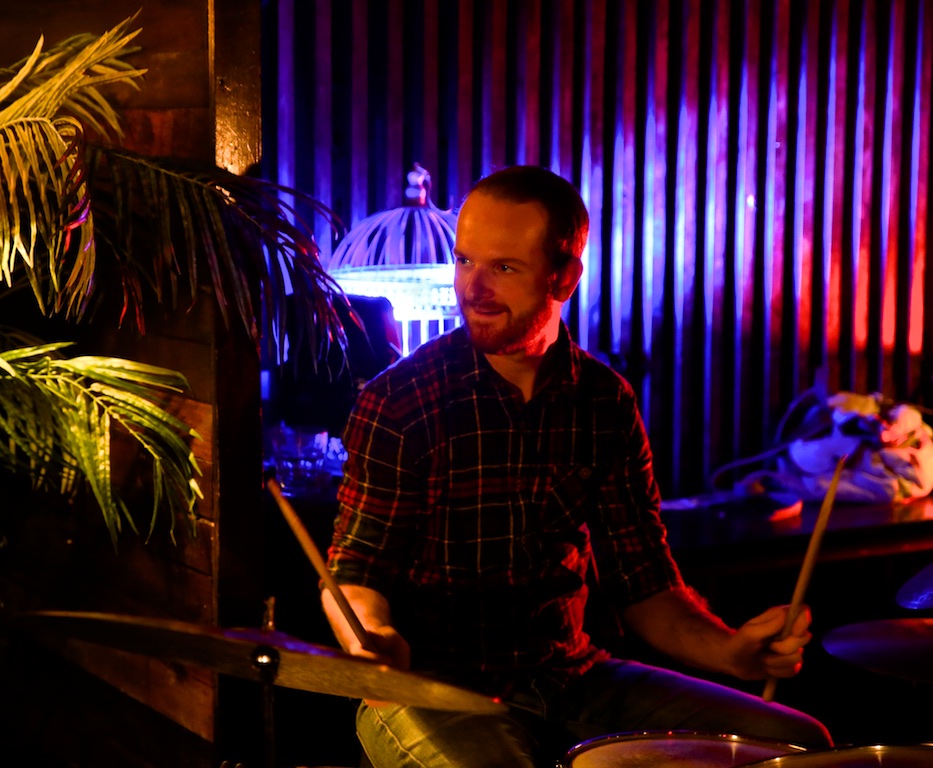
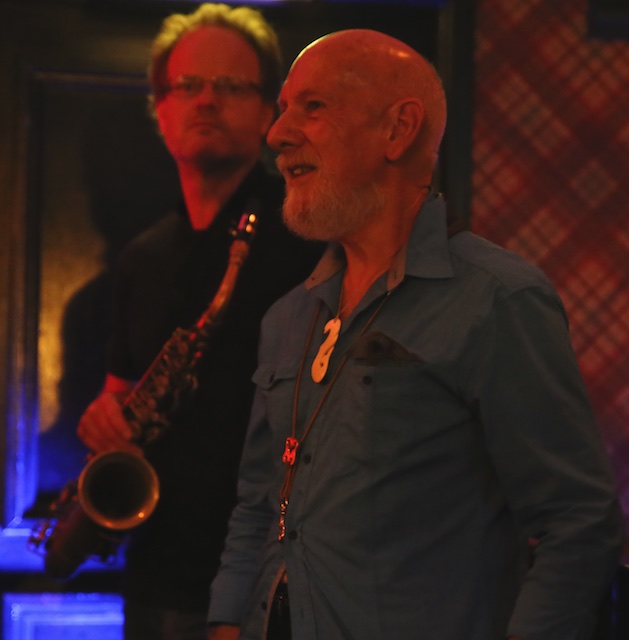 On drums and percussion was Chris O’Connor. Perhaps more than anyone else O’Connor personifies this free-ranging music. Of all the New Zealand drummers, his are the widest-ranging skills. Colourist, minimalist, indie rocker, straight-ahead jazz, avant-garde, experimental percussion and film work. There is nothing he won’t tackle and everything he touches benefits from his musicianship. When a piece titled ‘Tapu’ was played O’Connor stole the show. While Langabeer played the difficult and wonderfully atmospheric Putorino (a traditional Maori flute of the Taonga Puoro family), O’Connor simulated the Tawhirimatea (A traditional whirring instrument dedicated to the god of winds). The effect was eerie and electrical. Later in the piece he blew through the stem of his snare stand – recreating the effects of the Pututara (a conch trumpet). Only O,Conner could have pulled this off so well. Like Langabeer, he has a deep awareness of multicultural issues.
 The one standard was Strobe Road (Sonny Rollins). A lesser known standard and played with enthusiasm. The remainder was a selection of Langabeer tunes, many referencing Maori of Kiwi themes. His tune Rata Flower was a stunner – it deserves to become a local standard. He has obtained funding from Creative New Zealand for this project and we might see a ‘Sketches of Aotearoa’ album soon. I truly hope this occurs and I will be the first to purchase one.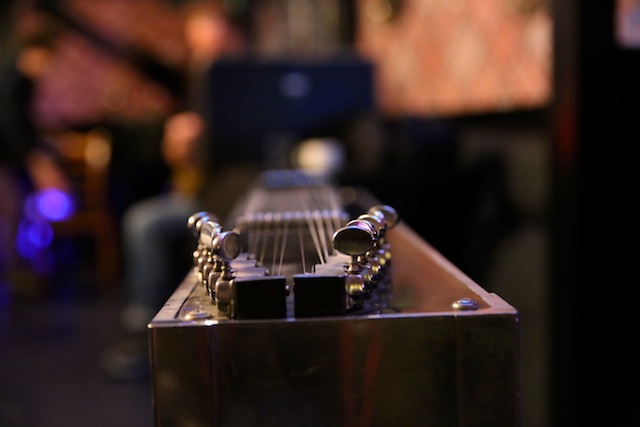
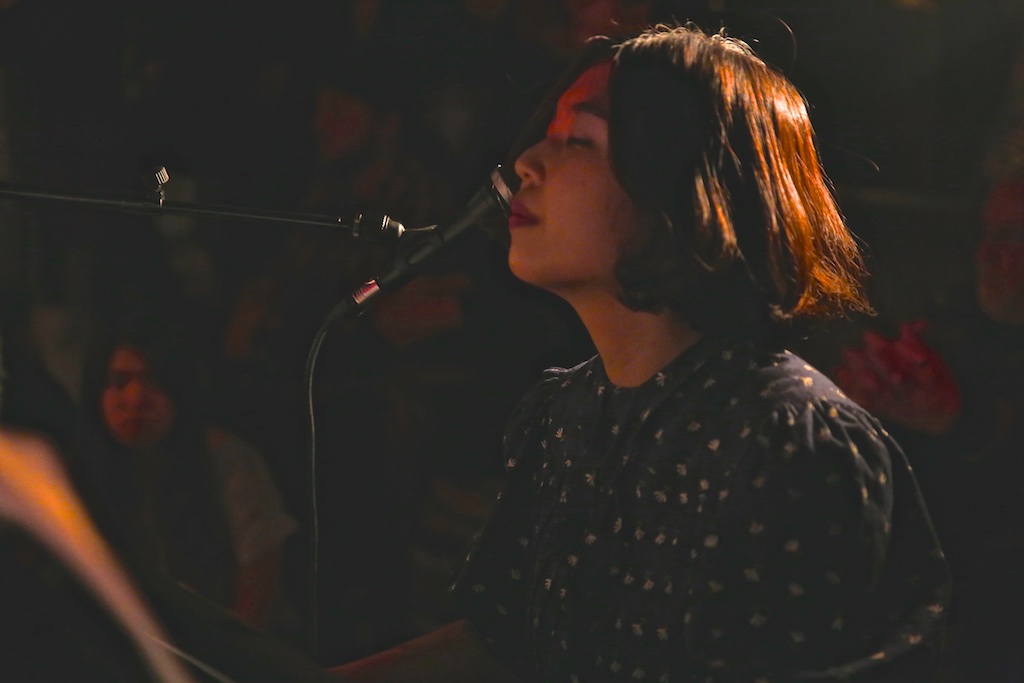 I looked forward to the ‘Skogkatt’ gig because Crystal Choi is a young musician with plenty of interesting ideas. She recently graduated from the UoA Jazz school and this project is largely drawn from her output as a student. Her arrangements and musical ideas show an evolving musician and her performance skills speak of energy and a growing confidence. When you speak to her there is a hint of shyness, but this evaporates the minute her hands touch the keyboard. At the piano her touch is decisive and the thinking behind the pieces is strongly communicated. She has grasped an important truth, how to play with space. One minute she is playing boldly with both hands raining down on the keys, the next dropping back to a gentle whisper or laying out. Her choice of project was a brave one as it tackled areas well beyond the usual Jazz orbit. Writing for strings and an unusually configured horn section an indicator of where she could be headed.
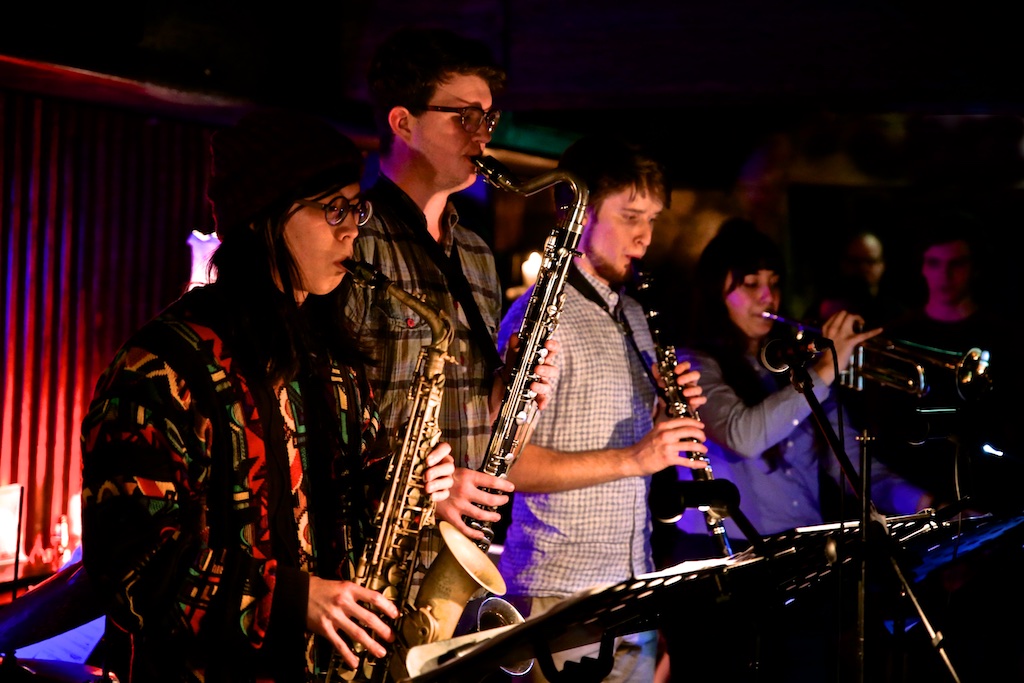 Her compositions and charts were of particular interest as they evoked more of a Northern European, or South American ethos than a North American one. While all Jazz arises from American roots, there are other forces at work in a globalised jazz world. As musicians from different ethnic backgrounds embrace improvised music something fresh is added. It is right that New Zealanders, Northern Europeans or people from other regions bring something of their own life experiences to the music. Jazz from the outer rim is particularly interesting at present.
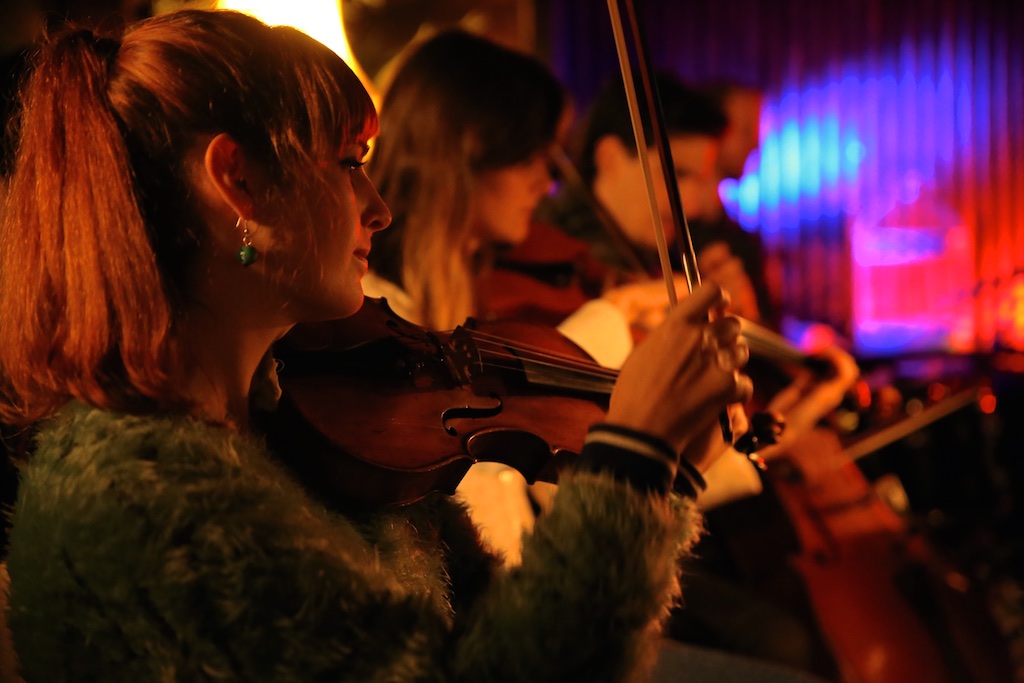 There were solo, trio, sextet, septet and tenet pieces. Her writing for the ten piece band was notable. Although an uncommon configuration of instruments these oddly configured, medium-sized ensembles have been a feature in modern classical music since Saint-Saens ‘Carnival of the Animals’ (that was an eleven piece). In Jazz since the late 40’s. Having a front line with two violins and cello alongside trumpet/flugel, bass-clarinet, clarinet and flute/alto saxophone worked well. The unusual textures gave depth and interest to the composition. The slightly tart voicings of the Bartok like string section contrasting nicely with the woody richness of the woodwind horns. These sort of excursions are not embarked upon lightly but I feel Choi pulled it off. My only quibble, and it is a small one is that the ensemble needed to tighten up somewhat in places.
 Another side of Choi is her singing. While certainly not a big voice it has charm and originality. Like many improvisers she sings while digging into a solo. These are wordless songs of the sort that you would hear on a Norma Winstone album. At times there is a Debussy feel to her solo and trio compositions.
 This project while far-ranging begs developing further and perhaps recorded at some future point. It had a Kiwi ECM feel to it. I hope that she works with the material and refines it further. It is well worth doing. Note: The Skogkatt is native to the forests of Scandinavia and the original Maine Coon cat.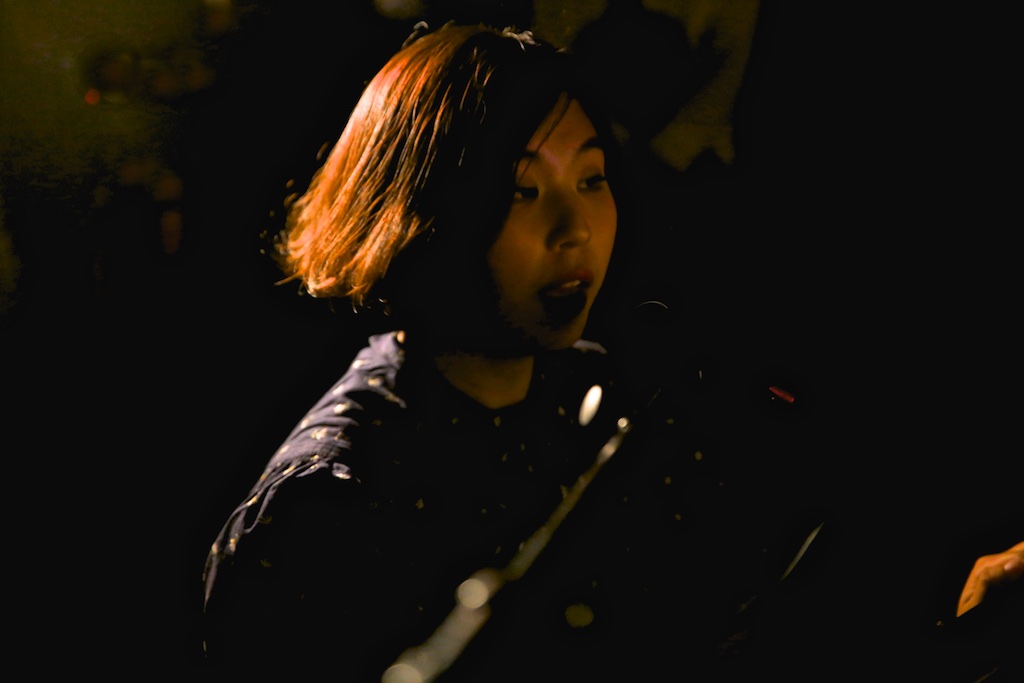
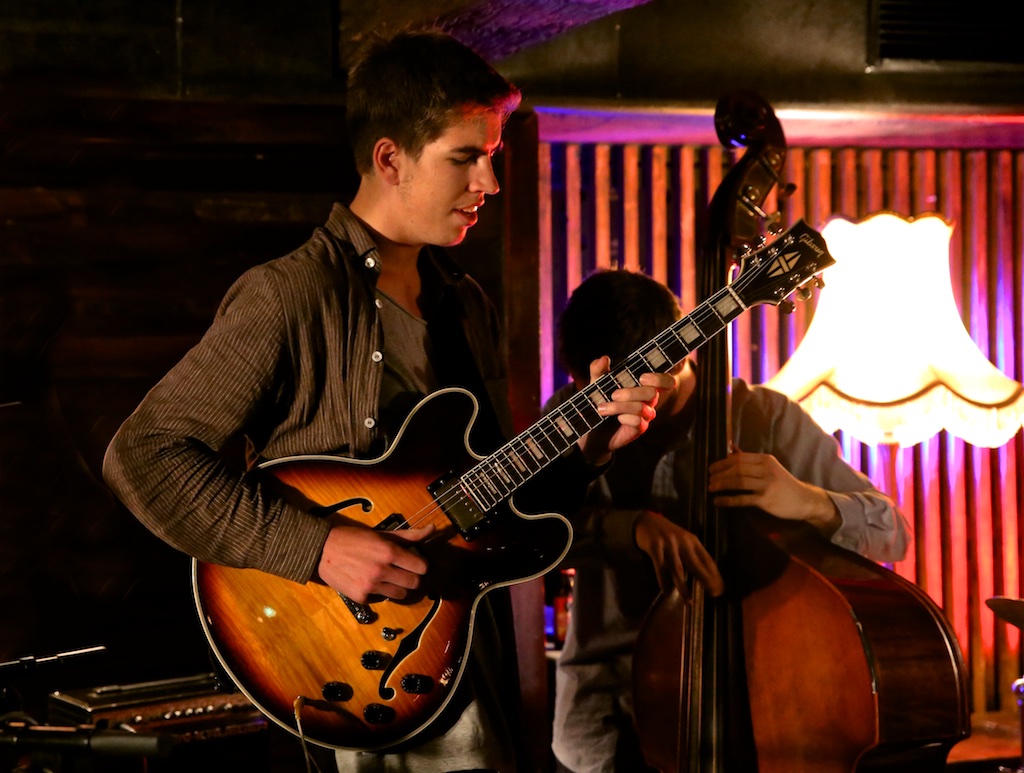 This was ’emerging artists’ night and you wouldn’t have thought so. The club had packed to capacity and the performances were far beyond what you’d expect from students. The artists approached their sets differently, but the end results were equally satisfying. Both study at the Auckland University Jazz School and if that institution is turning out students of this quality it certainly reflects well on the faculty.
 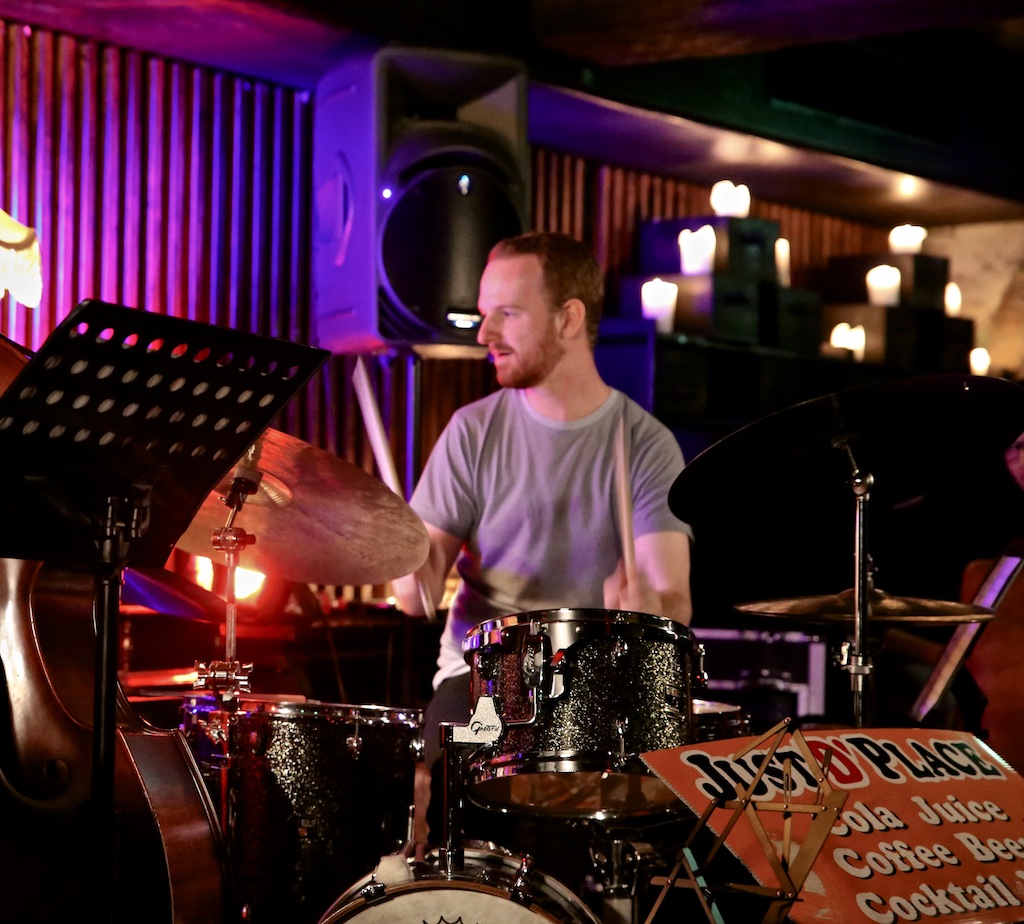 Michael Howell is from West Auckland and for some reason a number of excellent guitarists emerge from that quadrant. Growing up in the Waitakere ranges seems to have gifted his playing with an expansiveness and it is not hard to imagine big vistas and tree-clad hills during his ballad numbers. Howells set opened with a ballad and edged into the faster tempos later. His thoughtful opening took us deep inside the music and this was a good way to start a set. As well as his own tunes he featured compositions by Ben Monder, Sam Rivers and John Scofield. When a guitar trio doesn’t use an organ or piano there is more space to work in. This was well utilised by Howell although he is also adept in larger group situations. I heard him a few days later when he sat in with a number of very experienced musicians and he stepped into that space effortlessly. There were two numbers with piano and fellow student Crystal Choi sat in for these (also adding a vocal line). The other musicians were Eamon Edmundson-Wells on Bass (who also played bass in the second set) and Tristan Deck on drums. These former UoA students have already made their mark on the scene.
 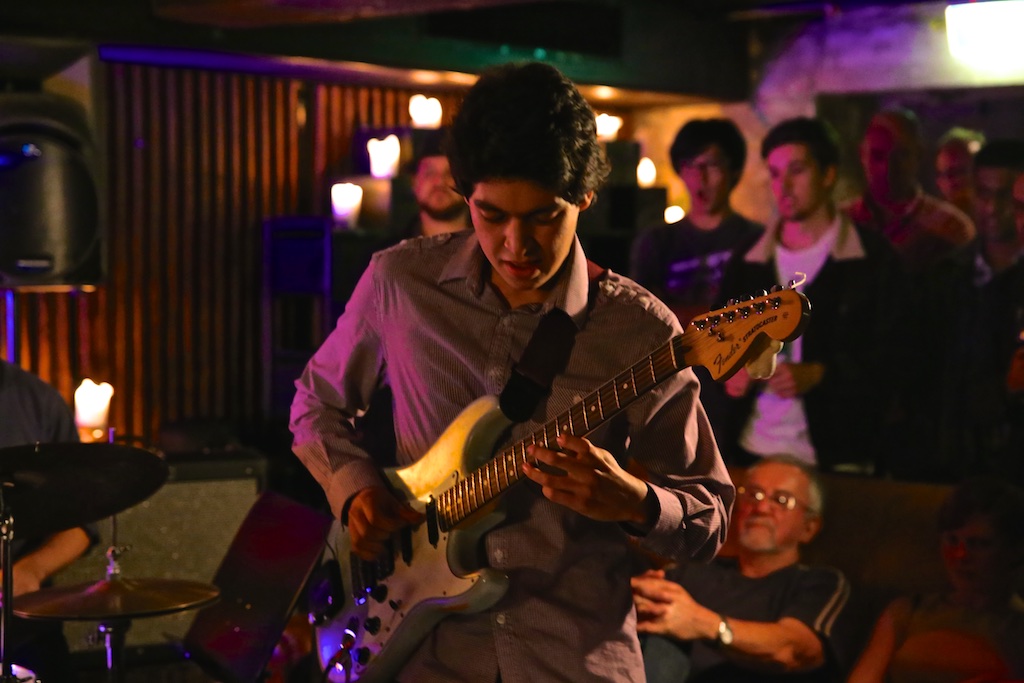 Kenji Holdaway led the second set and his approach was quite different. Most of the tunes he chose favoured collective improvisation and they draw upon diverse genres. His bandstand presence and the way he approached tunes oozed confidence. He had also chosen some former UoA students to accompany him and his choice was right on the money. J Y Lee is a gifted alto player and he can work the spectrum from avant-garde through to the lyrical ballads that give sentiment a good name. His musicality shone through during this gig and he just gets better and better. On Rhodes and piano was Conner Mcaneny and he often pushed the group into a freewheeling fusion space. Once again It impressed me how well his playing served the music as it was far from formulaic. When the others were playing his comping chords acted as clever punctuation; urging them to reach further and deeper. Another surprise was Tom Legget on drums and perhaps I have not been paying proper attention. I recall him sitting in during the CJC Jam Sessions of 2012. Now he is a fully formed drummer. His contributions tasteful and decisive. Eamon Edmundson-Wells was on bass once again and he showed what a tasteful player he is. While the band was good it was Holdaway who dominated. It was not that he injected himself into others solos for he would regularly lay out respectfully. It was his impressive command of the guitar, that and the sense that he was really across this gig.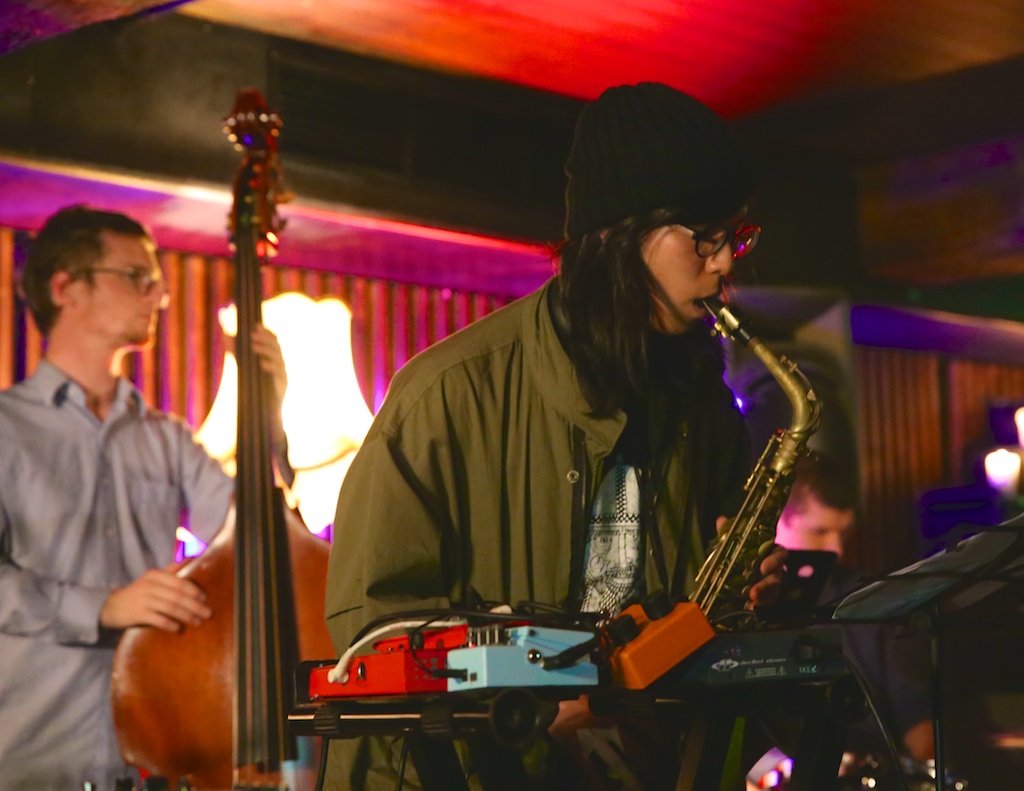
 e
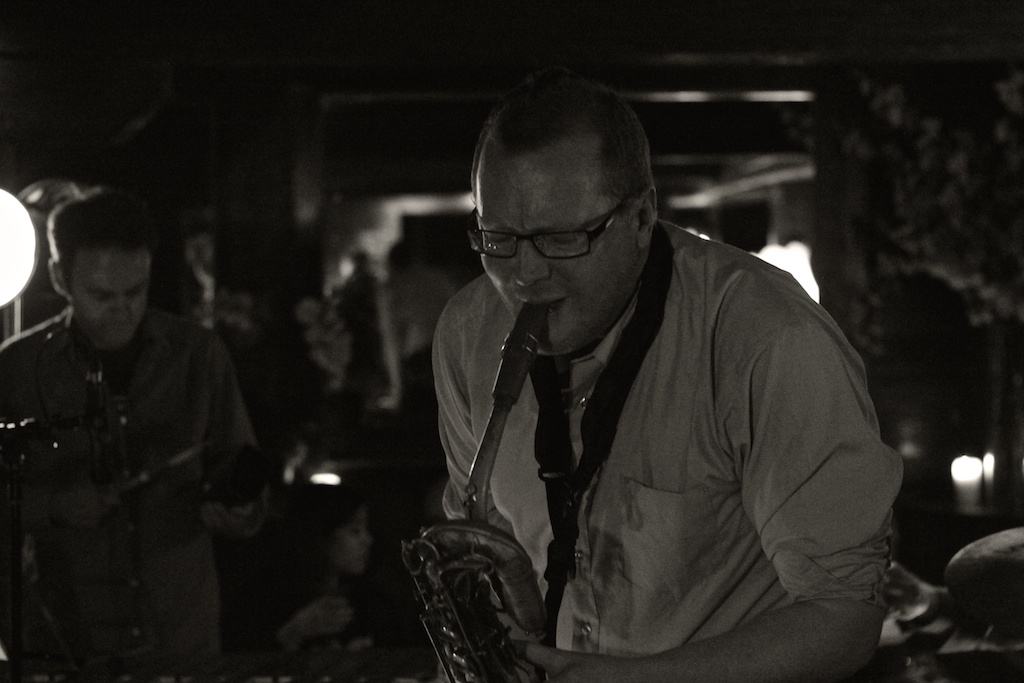
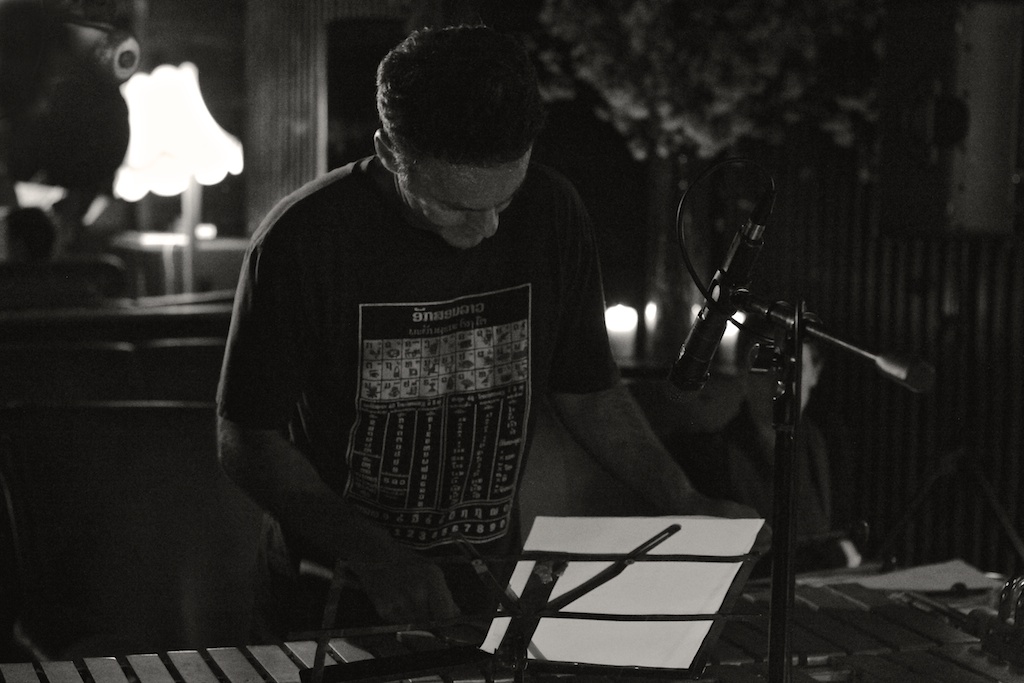
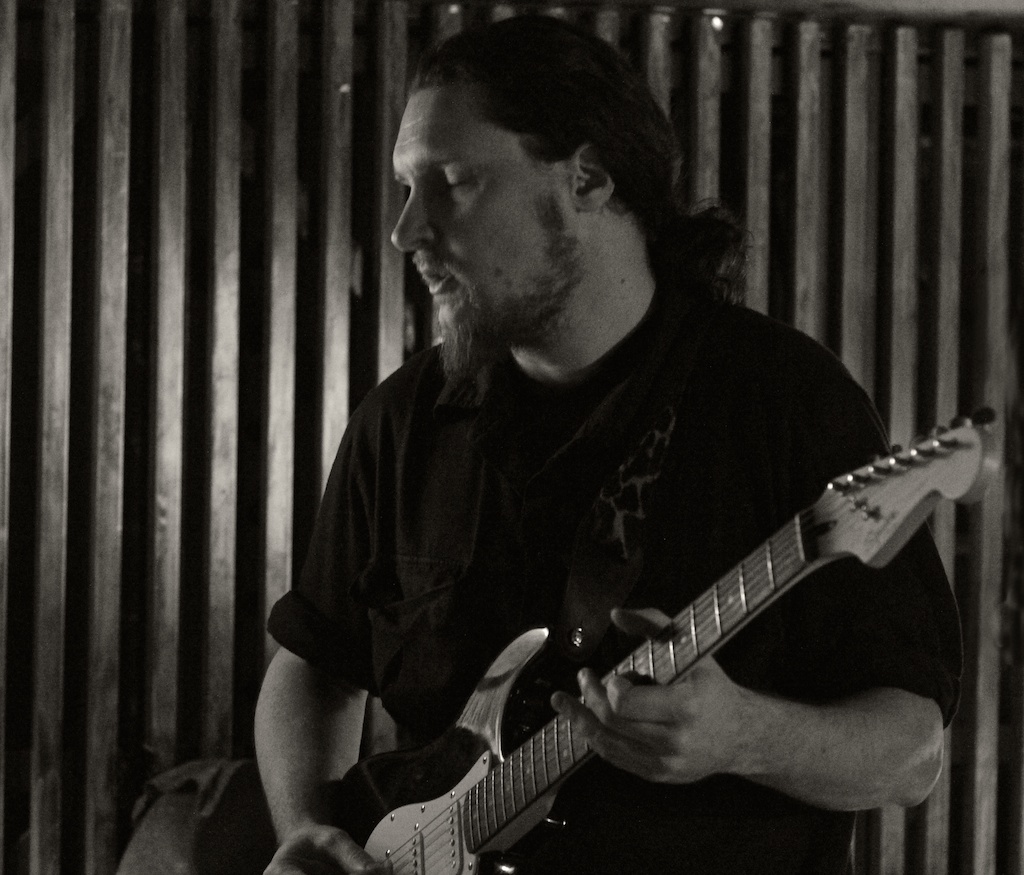
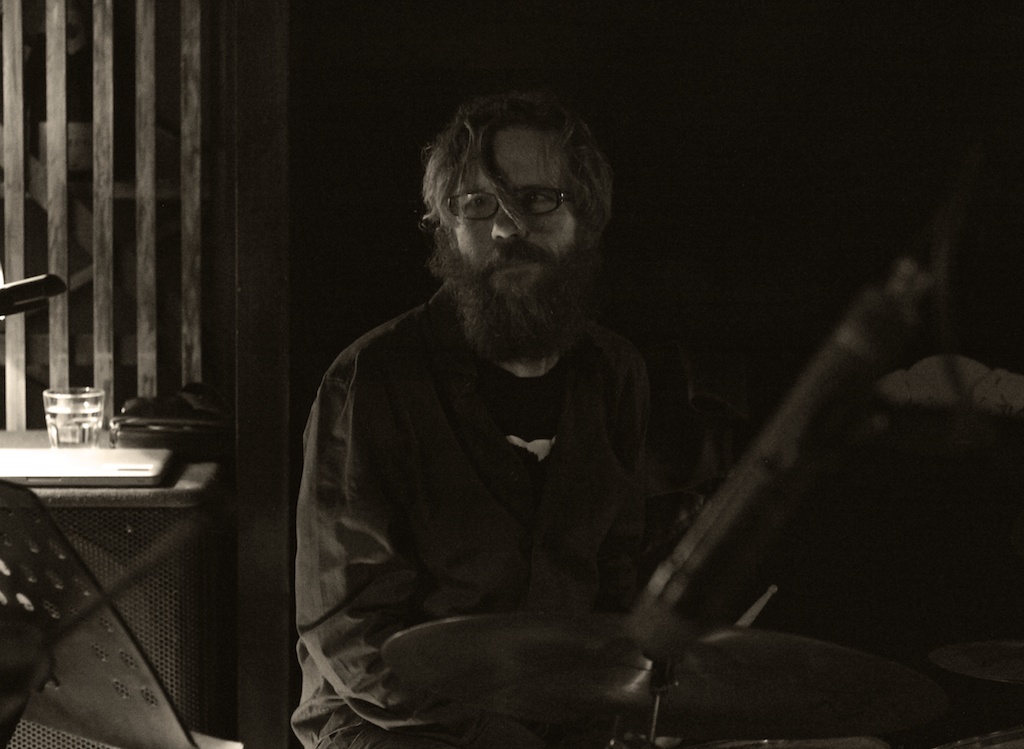
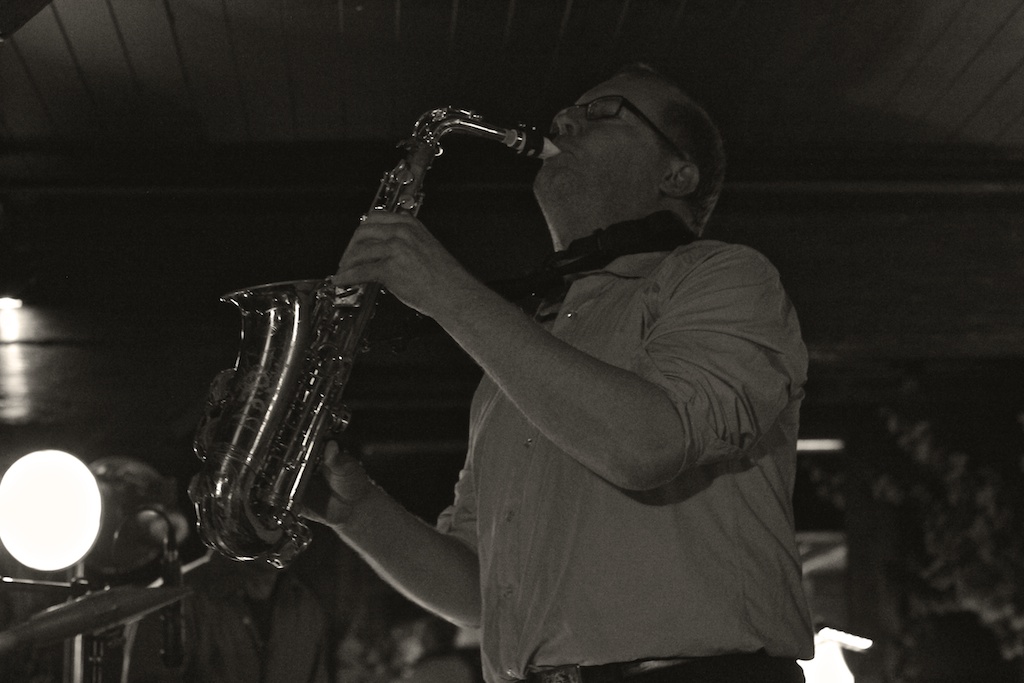
e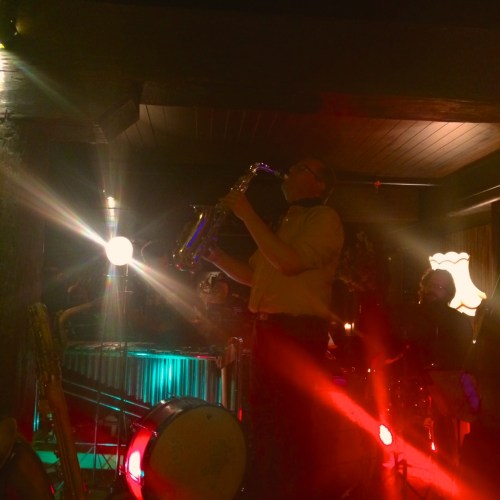 There is a rawness and a primal quality to it, a strong sense of performance. Who would prefer a recording of an Arkestra or an Art Ensemble of Chicago performance over a live show? This was all jazz and all music decoded, not for the cocktail party. The next day I was watching the 1956 Jean Bach film ‘Great Day in Harlem’ and there was Roy ‘Little Jazz’ Eldridge squealing out high note after high note on his trumpet. Again and again, he pushed out a flurry of wild free multi-phonic sounds. Even in the swing era, this had a great effect.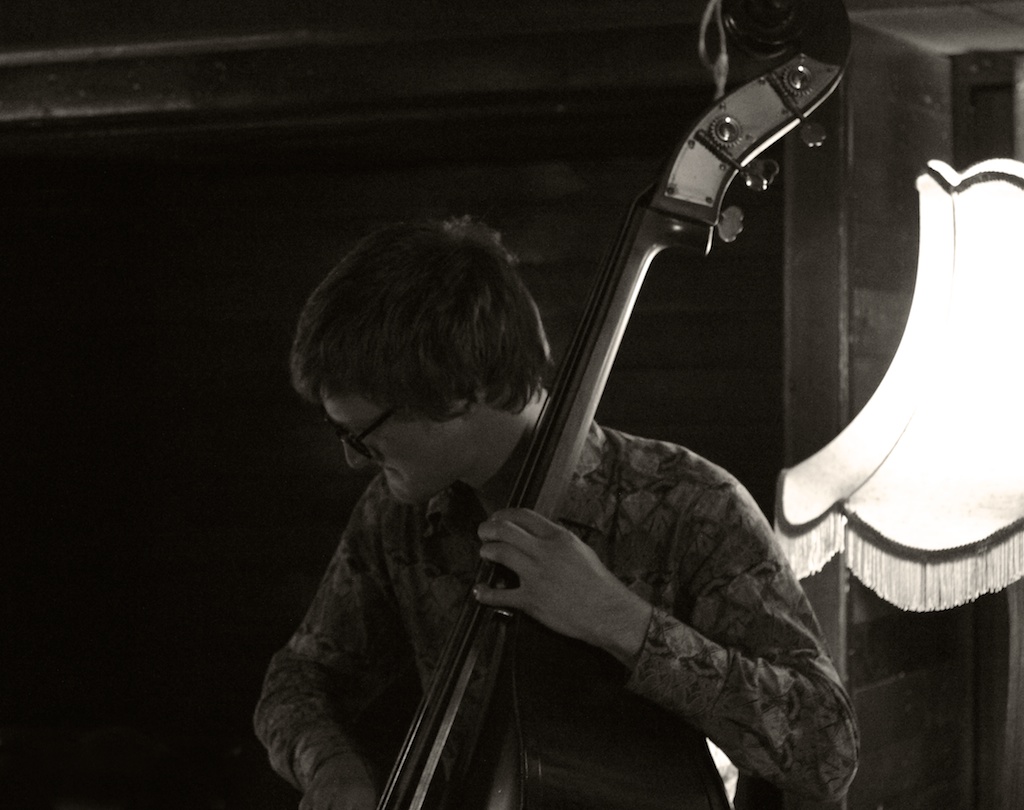


 JazzLocal32.com