 I was barely off the plane and my brain was full of dense fog, no doubt a legacy of San Francisco Karl who had been circling me like a spectre for a good month. I gamely fought the malaise off and because I am a creature of habit, dutifully made my way down to Auckland’s CJC Creative Jazz Club. In my experience, it pays never to miss a live improvised music gig, because if you do, you risk bitter regret. Believe me, I often lie awake lamenting a missed chance to see John McLaughlin.
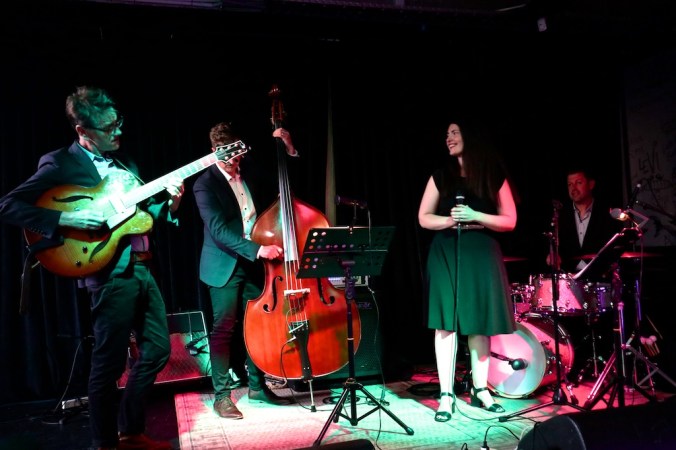
Last week the Australian Duo, Emma Gilmartin and James Sherlock were on the bill accompanied by Christchurch Bass player Michael Story and Wellington drummer Mark Lockett. Lockett, who helped organise the tour, is a mainstay of the Wellington Jazz scene and offshore musicians like this arrive due to the skilful tour-on-a-shoestring wrangling of his ilk. We get to hear these Aussie, European and American bands in our New Zealand Jazz clubs, largely because of the work put in by a handful of dedicated musicians like Roger and Caro Manins (and Lockett). These organisers pitch in uncomplainingly as they lock down the events and we benefit as a result. Consequently, New Zealand has developed a rich improvised music circuit and a debt of gratitude is owed to the organisers (and to the volunteers who quietly assist).
Emma Gilmartin is a Melbourne based vocalist, composer and teacher and it was her first time performing in Auckland. She has received praise from the Australian music press and is one of an increasing number of gifted vocalists emerging out of the Australian Jazz scene. She is pitch-perfect and her appealing voice finds the corners of a room with ease. Like all good Jazz vocalists, she imparts a mood of engaging intimacy. Her co-leader on this tour, was guitarist James Sherlock, a notable musician and the perfect foil for a vocalist. An accompanist who understands how to enhance vocal performance by offering challenges and he knows how to comp without getting in the way. He is a gift to any vocalist. On solos, he also excels, at times bringing to mind earlier greats like an Oscar More (behind Nat Cole). Christchurch Bass player Michael Story rounded off the quartet nicely and it was obvious that he was enjoying himself. Again, he was the right person for the ensemble.
The program was a mix of tasteful standards and interesting originals. I have put up a clip which demonstrates the strengths of the quartet – witness the tasteful musicality of Lockett’s drum solo as the band digs into a swinging version of ‘Nica’s Dream’ by Horace Silver. Gilmartin appeared to be relishing her time in New Zealand and she announced that she would try and return next year. We hope so.
Emma Gilmartin (vocals), James Sherlock (guitar), Michael Story (bass), Mark Lockett (drums). The gig took place at Anthology, K’Road, for the CJC Creative Jazz Club, 4 December 2019


 I have long been drawn to middle eastern music, having commented on it in earlier blog posts. There are many reasons to like this rich musical stream, but what draws me are the interactions that occur when eastern and western improvised traditions meet in mutual respect. This is often labeled as World/Jazz, but implying that it is new hybrid is somewhat problematic. Both improvised traditions have deep roots and a successful meeting acknowledges this. The blend of Jazz and middle eastern music is mainstream in the Mediterranean regions but not as well-known elsewhere. Adventurous artists like Dhafer Youssef, Rabih Abou-Khalil and Anouar Brahem have gained prominence in the west through collaborations with the likes of Kenny Wheeler, Charlie Mariano, Steve Swallow, Tigran Hamasyan, Marcin Wasilewski and others. Jazz lovers in New Zealand and Australia have already experienced the ancient Sephardic music of Spain through Caroline Manins ‘Mother Tongue’ projects. Also through Kiwi Jazz harpist Natalia Mann’s Turkish projects.
  Much of this music derives from the Sufi tradition but Sicilian and Flamenco Jazz fusions should not be overlooked either; both having rich Islamic and Jewish sources feeding them. The Moors ruled Sicily for 400 years and southern Spain for 500 years. Under the various Caliphates there was great religious tolerance and a spirit of scientific curiosity. The arts and musical traditions merged and flourished in that benign space.
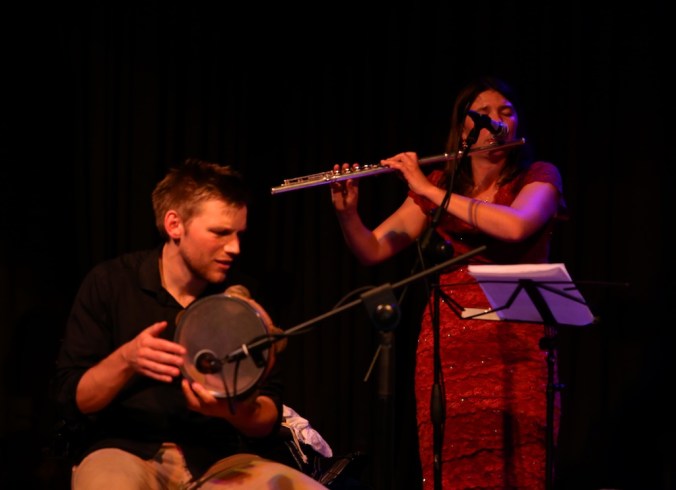
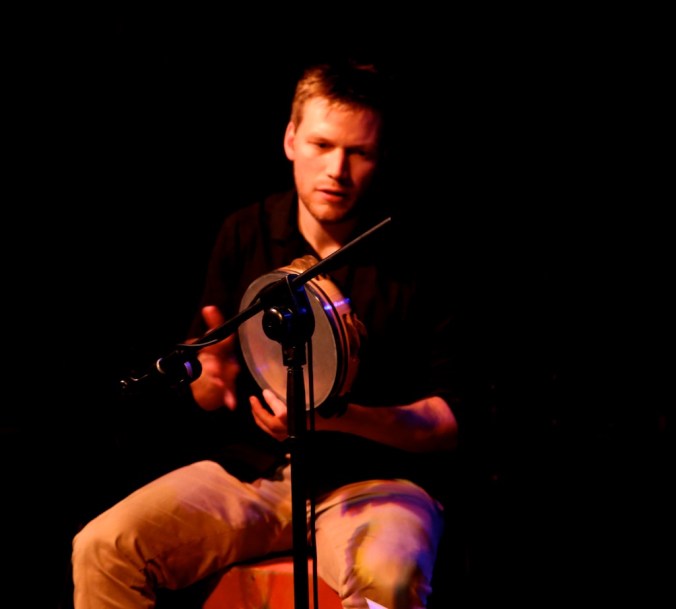
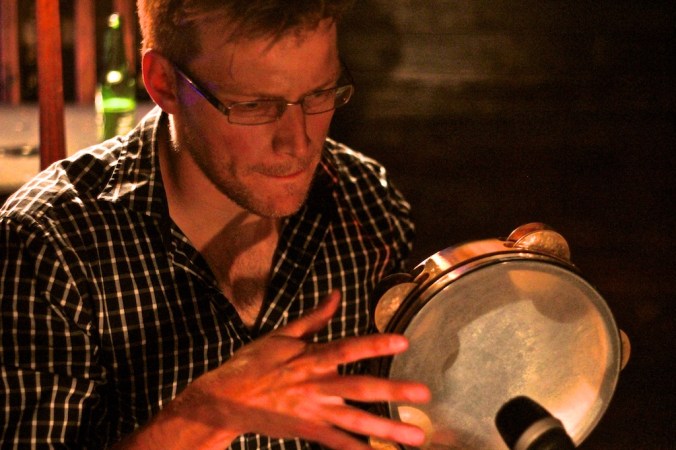
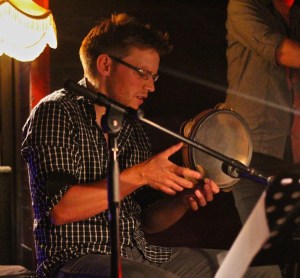
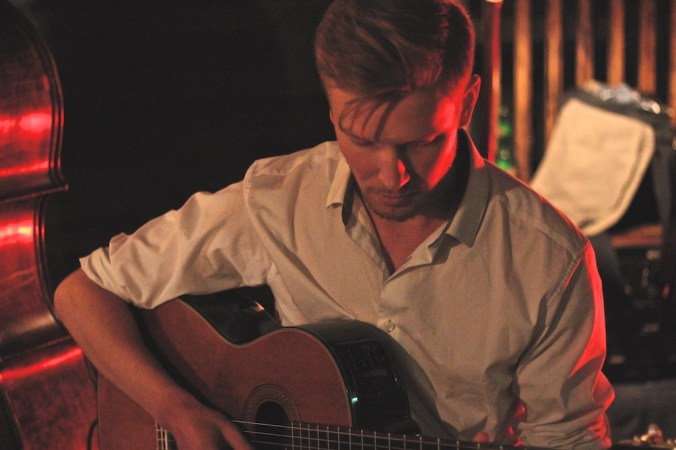 Watching Tim Sellars on percussion is eye-opening as he coaxes so many complex rhythms and sounds from his array of percussion instruments, that it beggars belief. At times he used the Cajon (of African/Peruvian origin) but mostly he played frame drums (middle eastern). I love to hear the frame drum as it is the oldest instrument known to man. The genre includes the Riq (tambourine) which Tim played to perfection. Being an amplified acoustic ensemble the sound worked well in the club space. The guitar perhaps needed turning up a touch, to give it more bite.
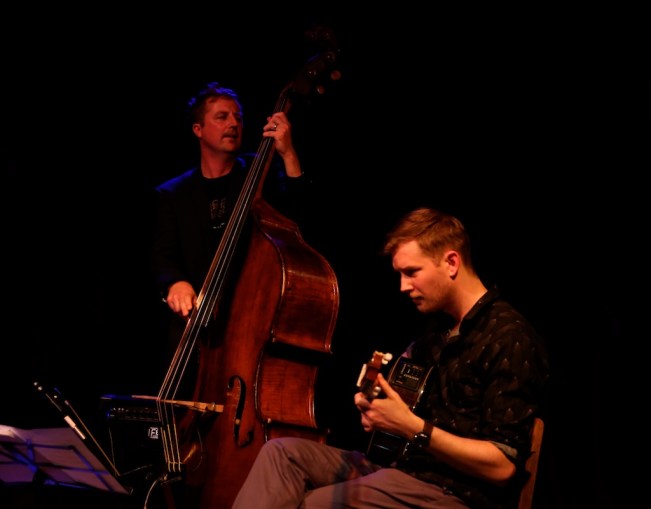
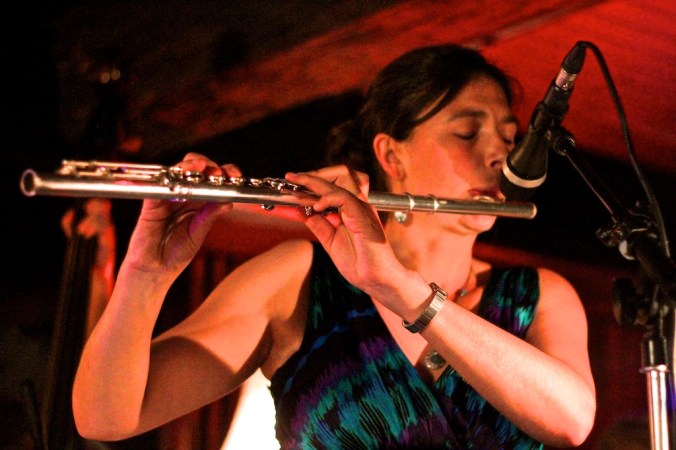
 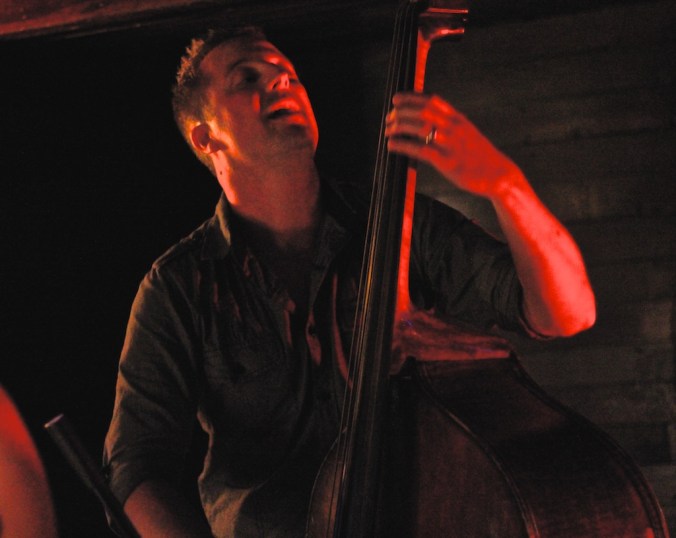 Tamara was her usual impressive self and her control and mastery of the instrument was evident throughout. She alternated between bass flute and alto flute; the tonal richness of both horns blending perfectly with the upright bass. Bass player Michael Story understood the cues and worked with Tamara; resisting any impulse to overplay. Acoustic ensembles like this require discipline and subtlety; overly showy solos can dominate and obscure the filigree of woven sound. Mukhlisa got that right and the solo work although appealing, was rightly subordinate to the overall integrity of the music. Glen Wagstaff is popular in Auckland and his charts for large ensembles have impressed club goers. It was good to see him in a different context and many of us eagerly await his album, which is due out in a month or so.
 There is ample scope for a larger ensemble to grow out of this; perhaps one including arco Cello and Oud.
 JazzLocal32.com