The Circling Sun

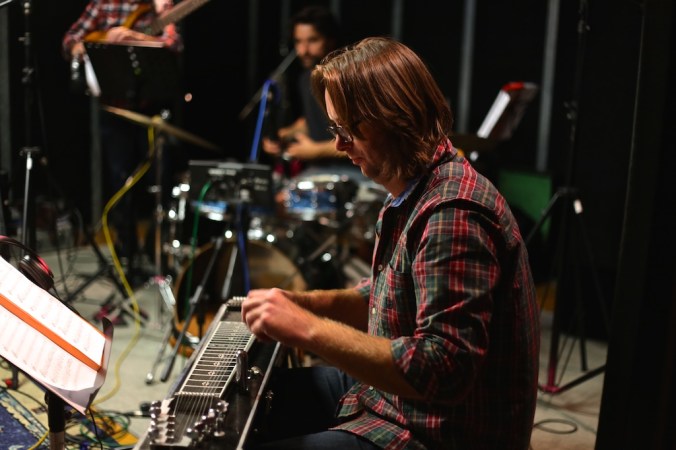
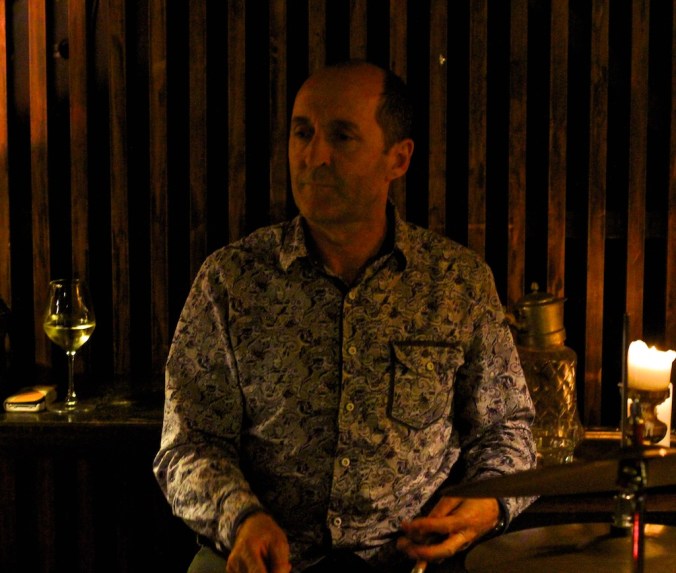
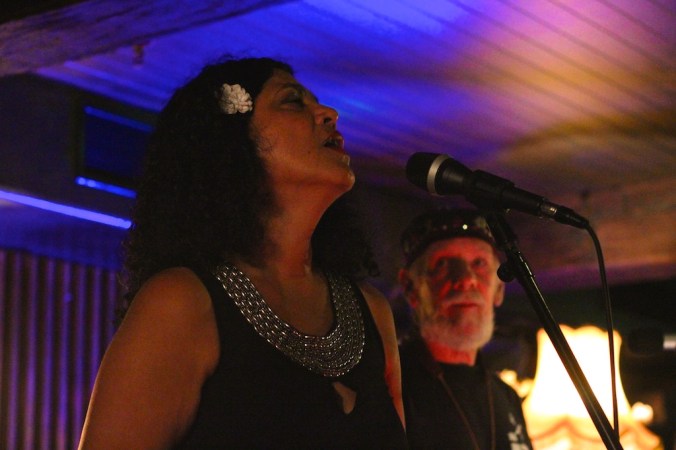
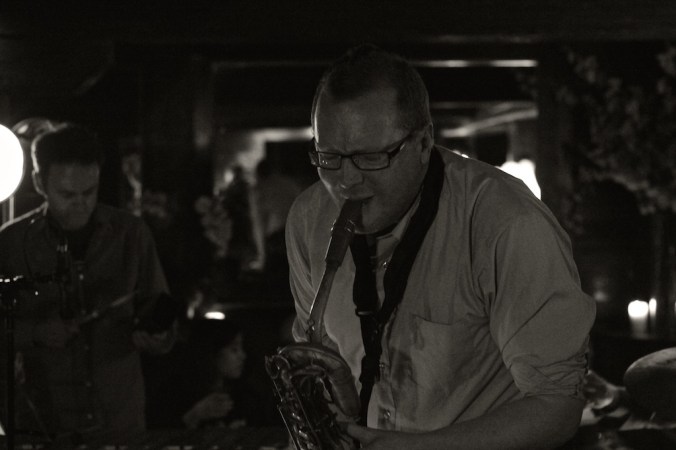
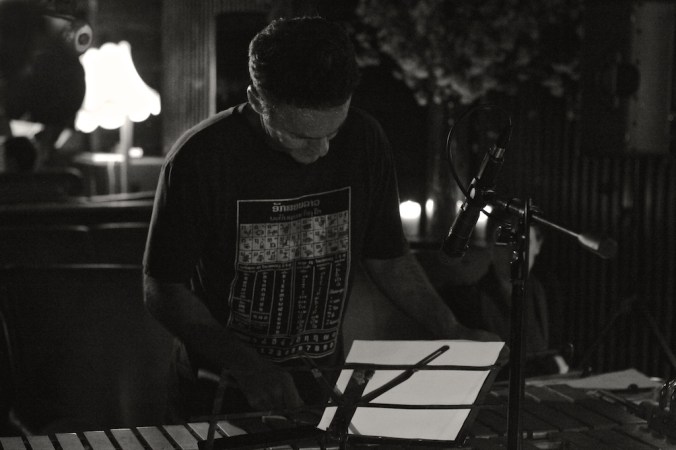
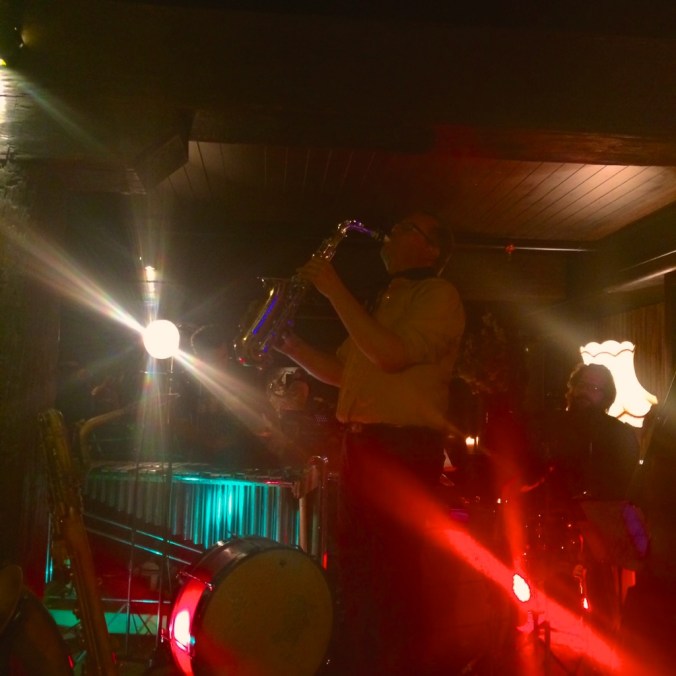
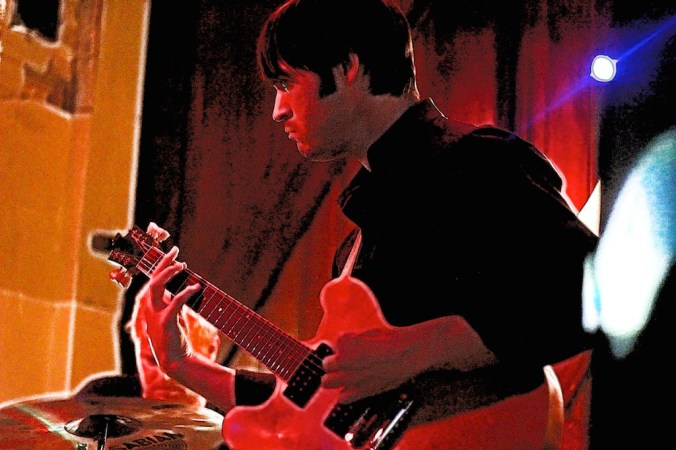
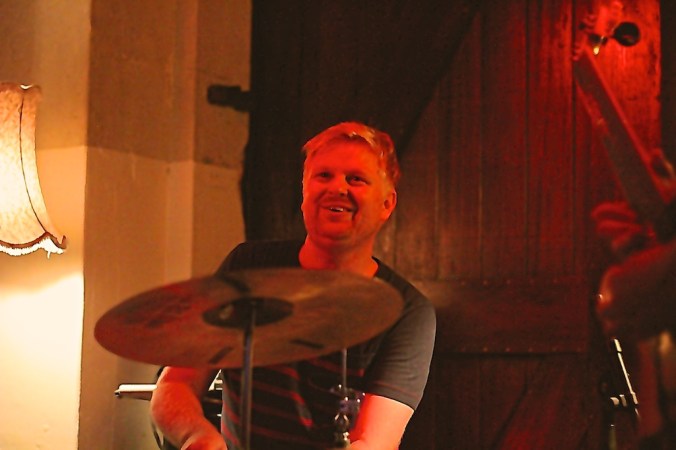
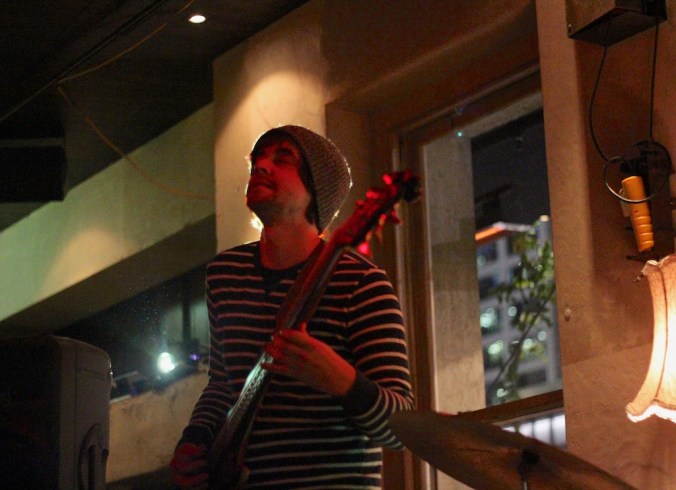
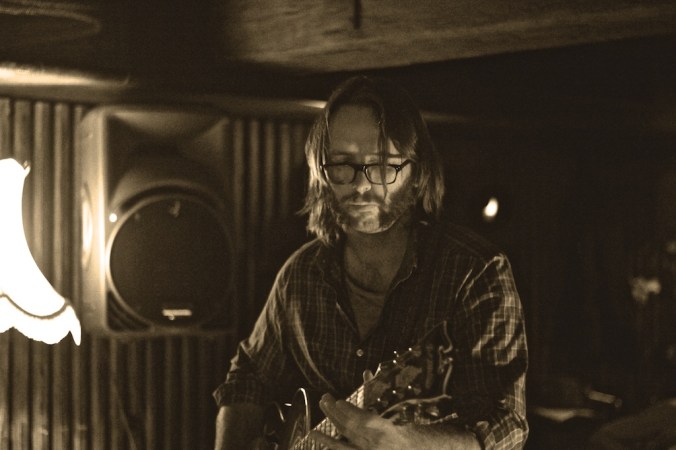
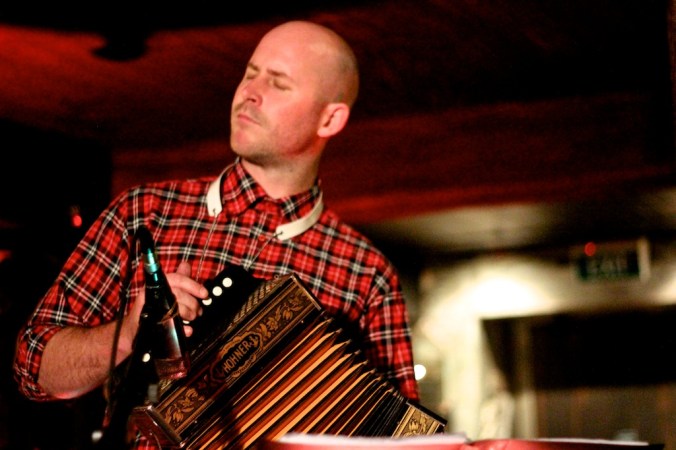
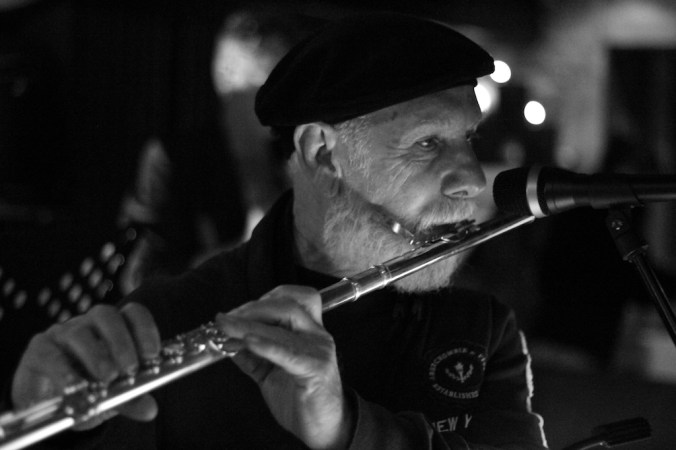
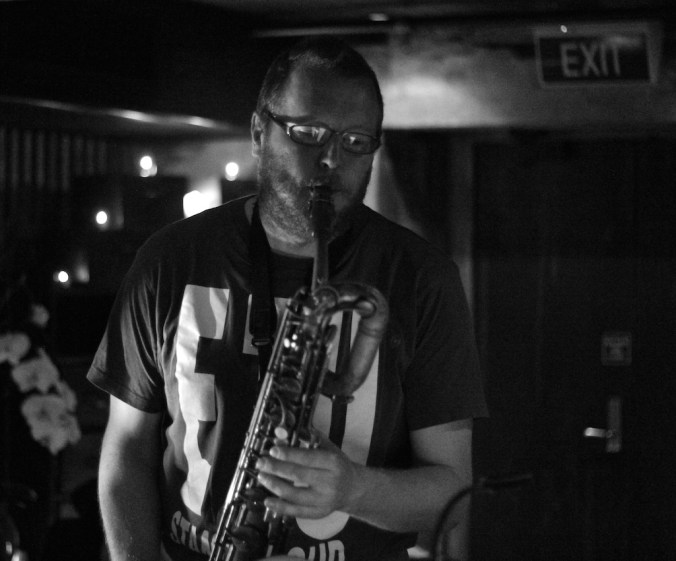
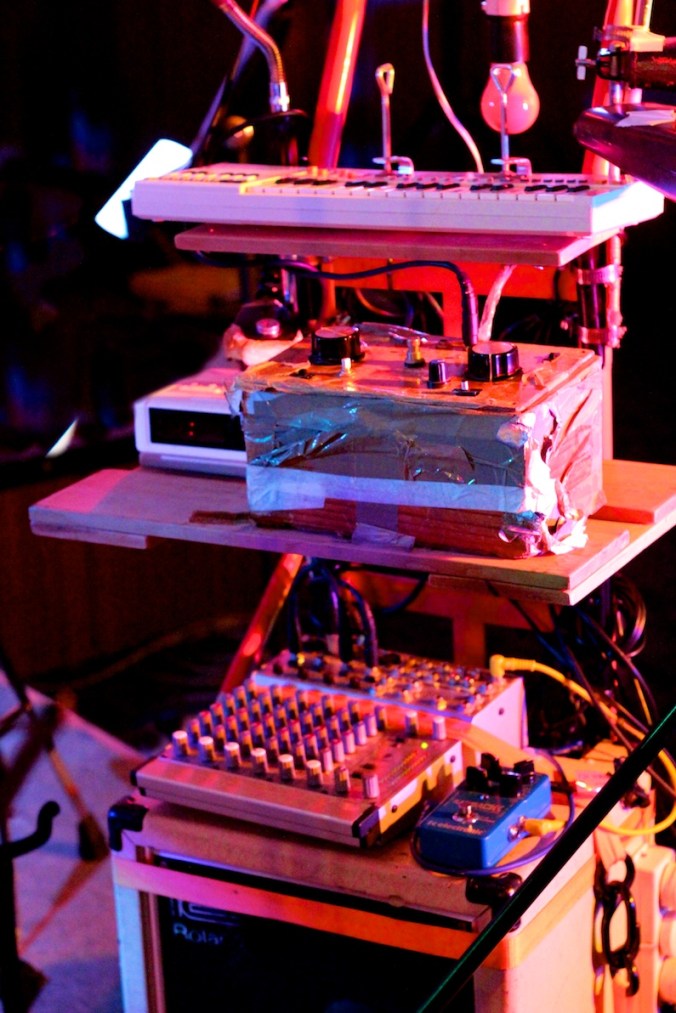
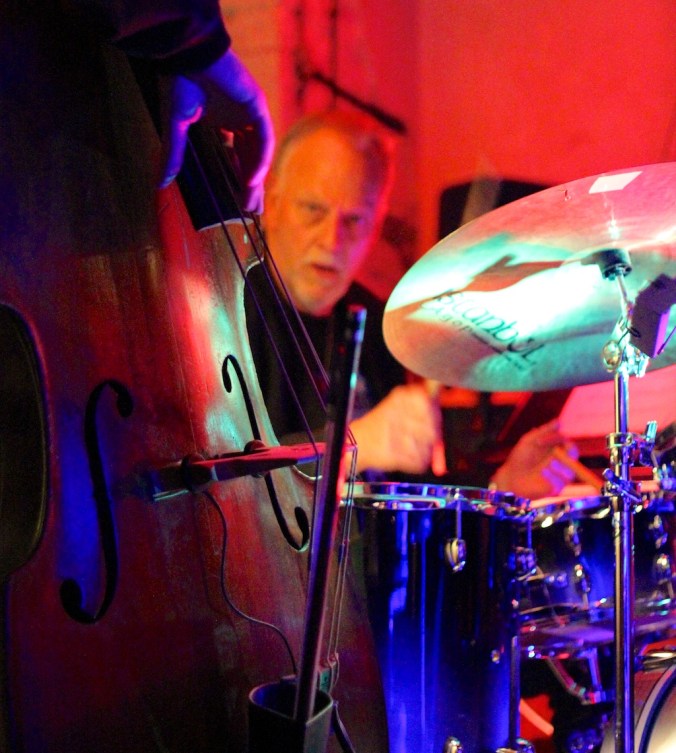
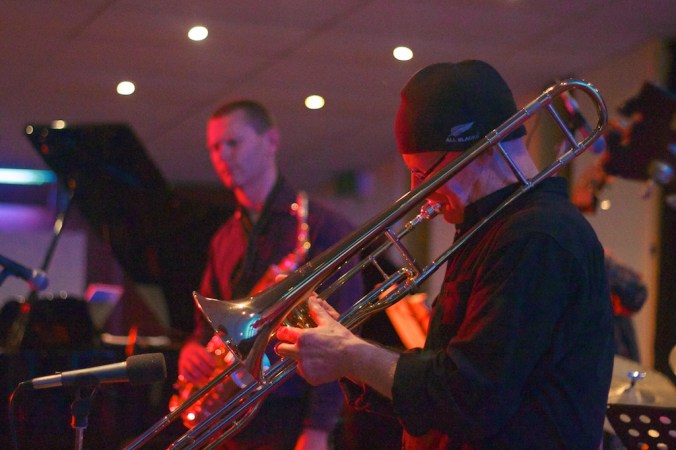
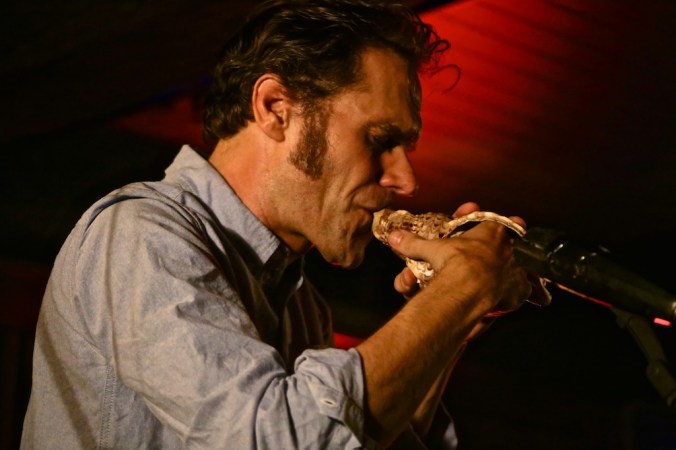
Circling Sun 11-3-2014 063Any astronomer worth their salt will tell you that it is paradoxical for a sun to embark on a circular orbit. The last time this happened was during the Spanish Inquisition. On Wednesday the paradox increased when the Circling Sun departed their orbit to play at the CJC (Creative Jazz Club). This gig had been a long time coming and we welcomed it. Hearing them away from the babble of the hard-drinking Ponsonby Road crowd was a treat for us. The Circling Sun always give of their best, but this time we could hear the quirks and subtleties unfiltered. This is a band with a vast soundscape and the Jazz club echoed to the sounds of doogan, Tuba, analogue keyboards, digital keyboards, piano, trumpet, flugel horn, flute, tenor Circling Sun 11-3-2014 066saxophone, upright bass, drums and electronics. This is the type of music that sits well with me.

In spite of the name, the Circling Sun is not solipsistic. Not locked into an inwards gazing spiral. A dictionary definition tells us that Solipsism is a spiralling madness that no-one else can enter. Theirs is an inclusive madness of serendipitous happenstance. A band where personnel changes are as seamless as flowing water and where the only truly unchanging thing is the name. A band that can appropriate sounds and recreate them into new musical forms and all achieved without fear or favour. Another-world to experience.

The group cited influences as far-flung as Alice Coltrane, Yusef Lateef, Randy Western and Tom Waits. Although the link is possibly fanciful on my part, perhaps the influence Cosmic Jazz/Funk is present, an obscure genre close to my heart. They are chaotic, loose and free atCircling Sun 11-3-2014 074 times; then out of nowhere come tasty arranged melodic heads. Deftly extracted from the frequent mesmerising groove laden vamps.
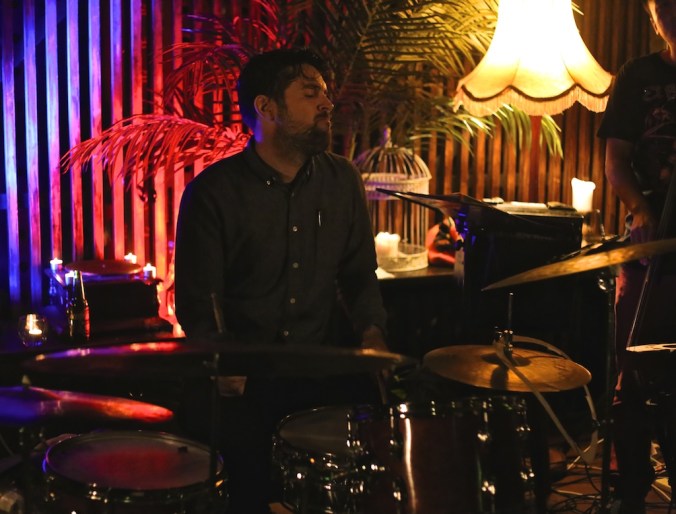
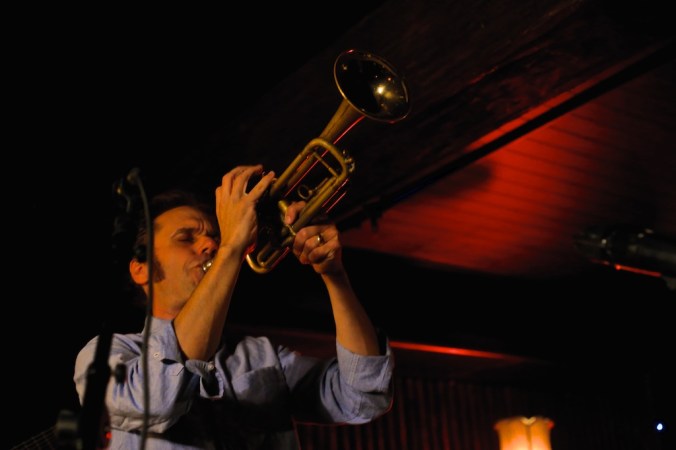
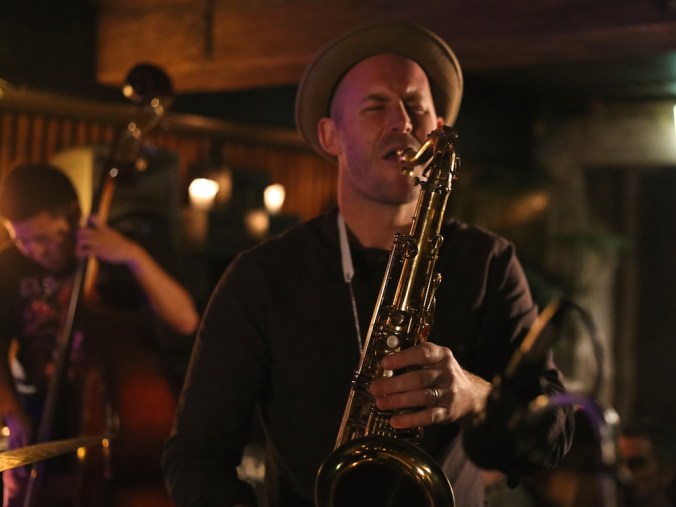
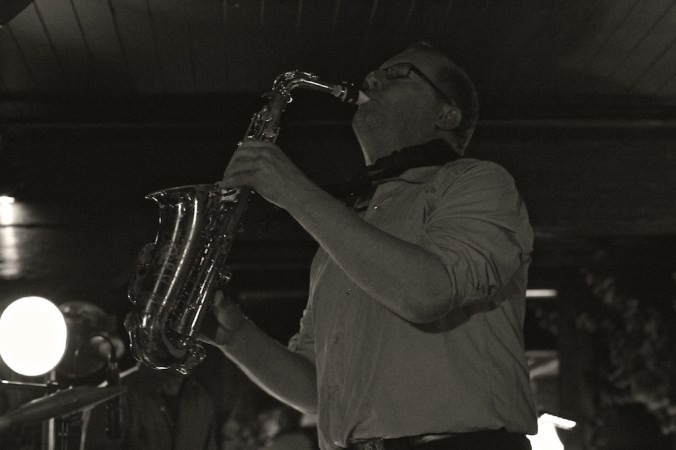
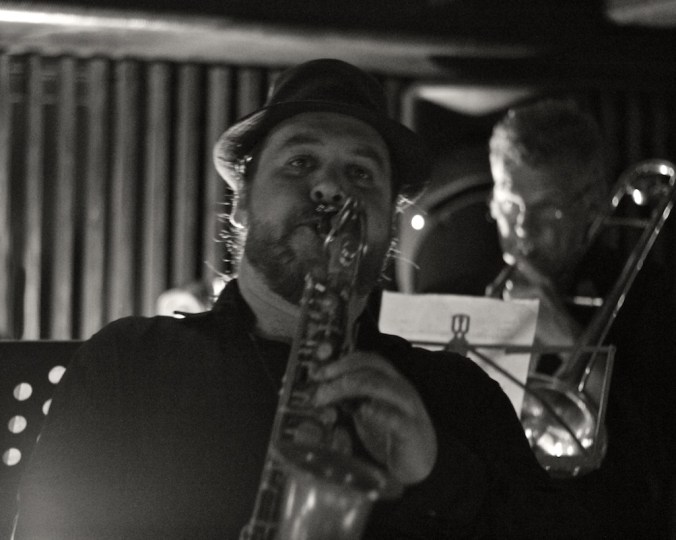
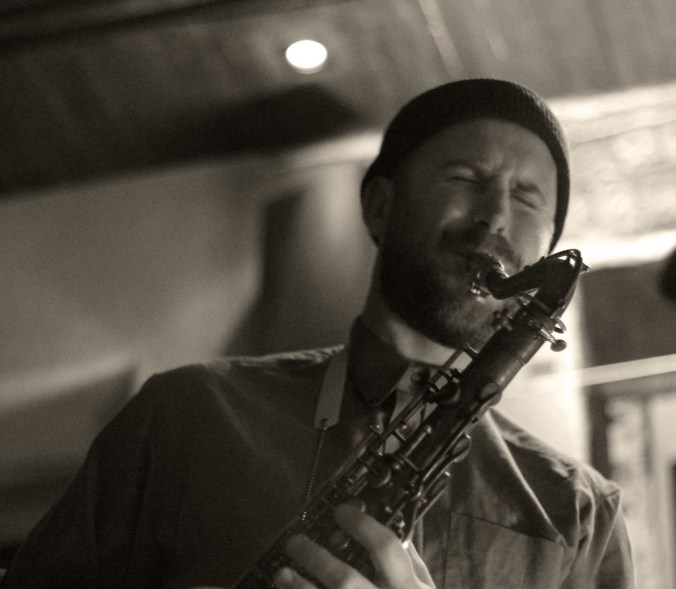
Cameron Allen should be heard more often in settings like this. He is a gifted saxophonist and winds player with great musical ideas, often imparting a raw energy. He is also drawn to home-assembled electronic wizardry as many in this band are.  Finn Scholes on horns is another who doubles atypically (including tuba, keys and piano). He has recently been overseas and since returning I have seen him perform on a number of occasions.  His articulation is always interesting and he has a rich sound. Tinged with the vibrato of the mariachi trumpet. A sound which he owns and one that fits the bands vibe perfectly.  Circling Sun 11-3-2014 070

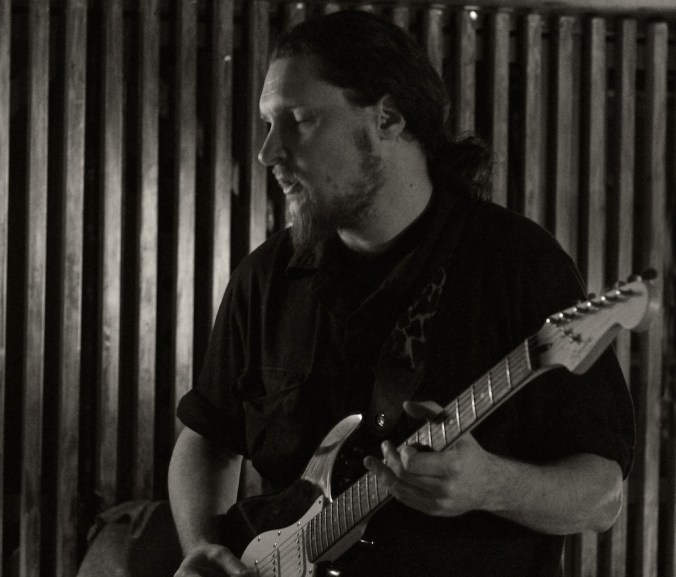
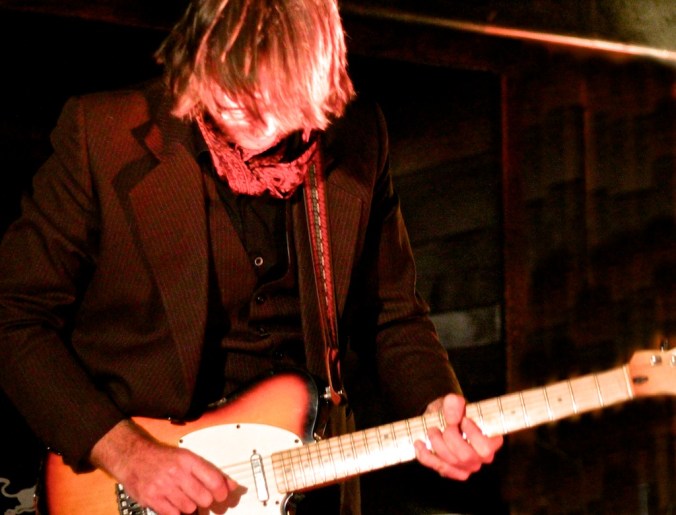
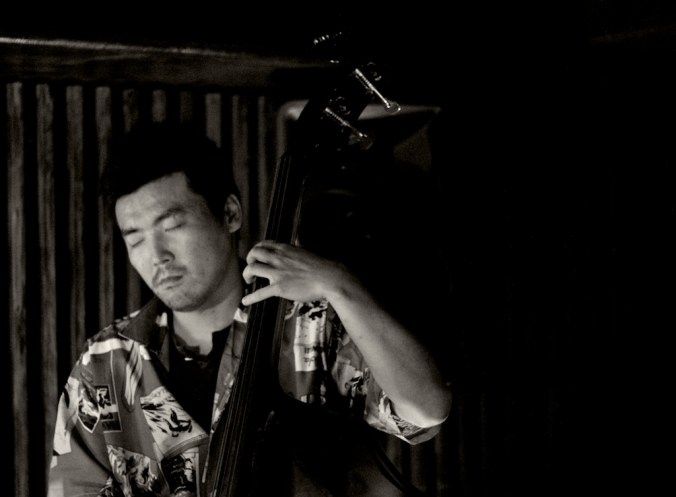
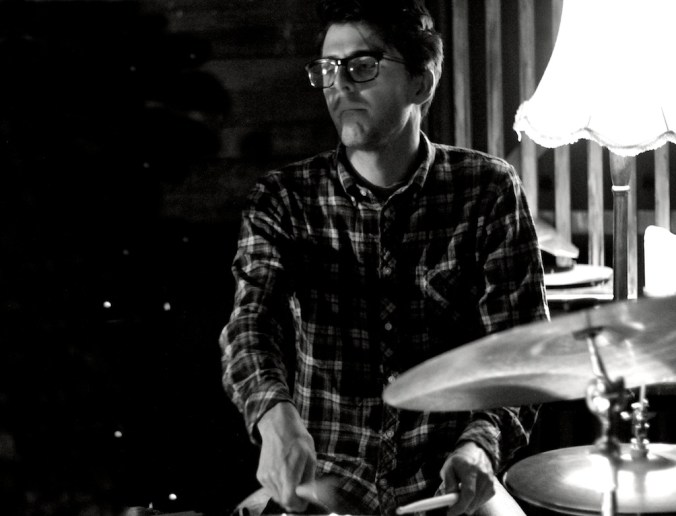
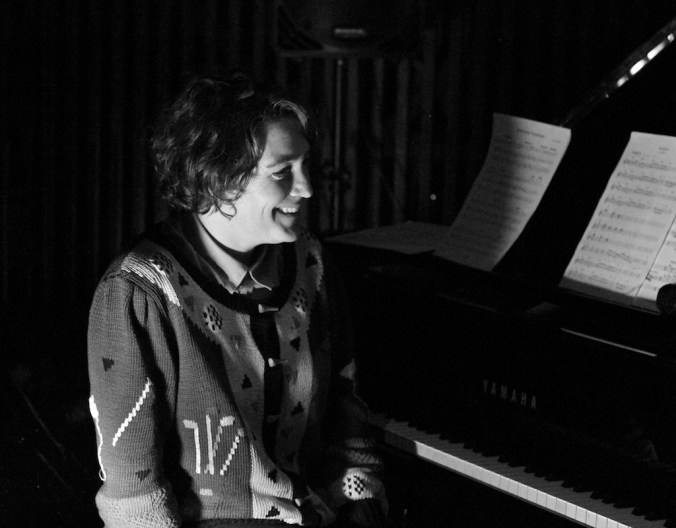
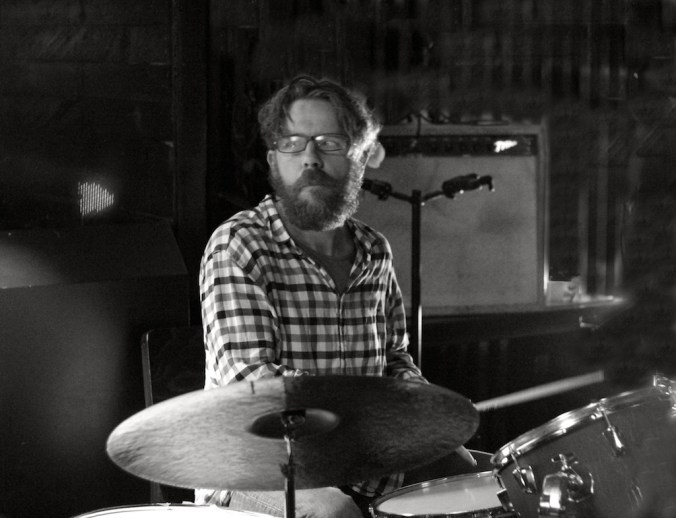
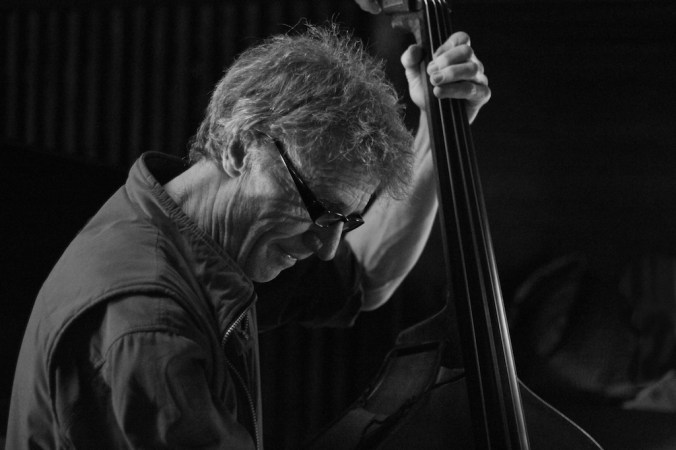
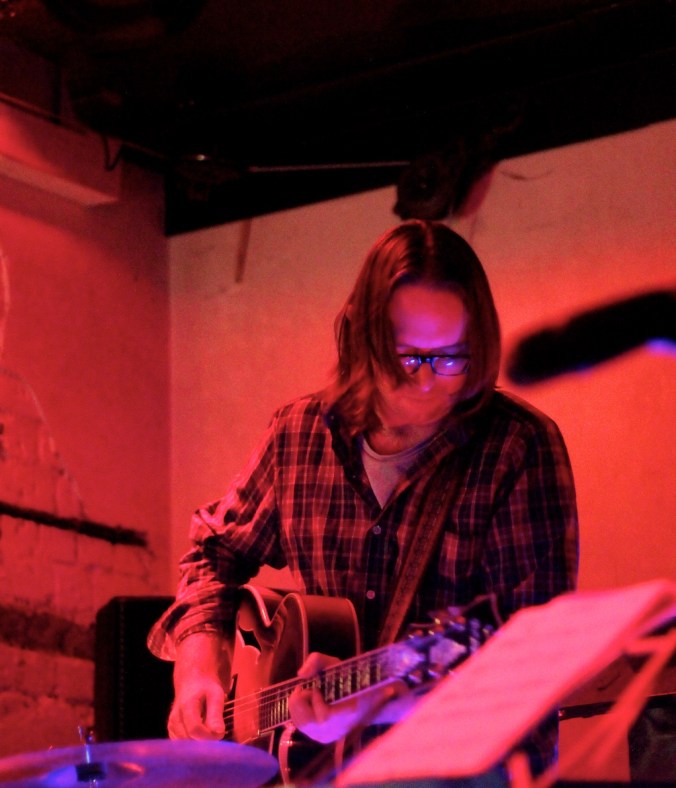
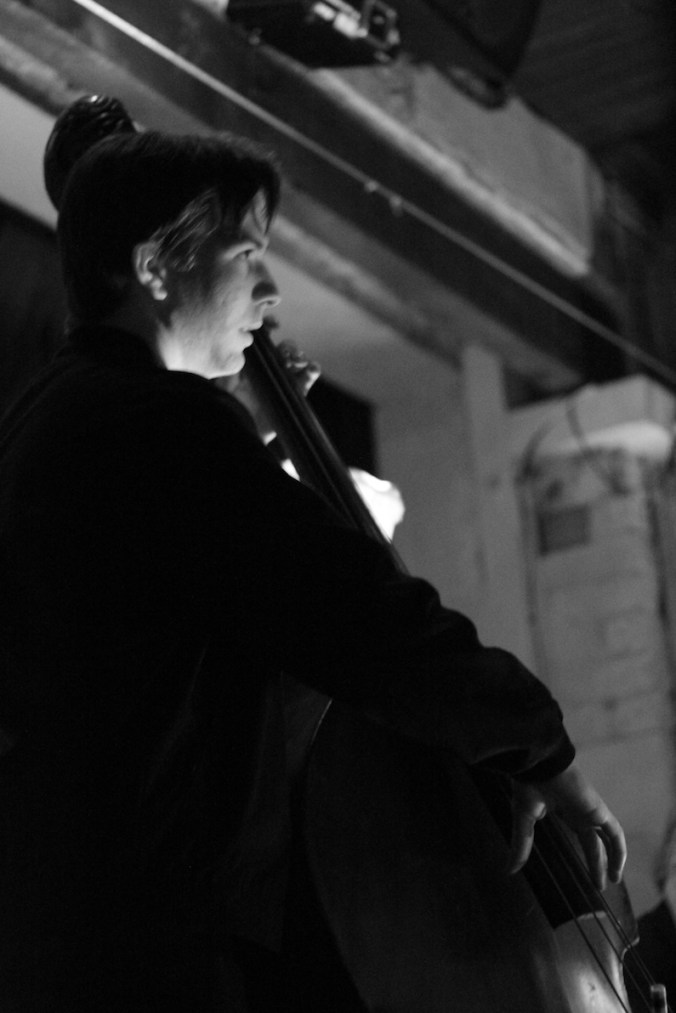
Neil Watson like Cameron Allen is a mainstay of this band. His classic fender, augmented lately by pedal steel guitar. The latter adding colour and texture and above all adding that warm embracing feel of country. Anyone who has followed Frisell’s journeys, fusing Jazz with country americana will get this. Rui Inaba on bass is often encountered with Watson and frequently in this lineup. Here he sits solidly at the heart of the storm, maintaining the rhythmic groove unfazed.  Circling Sun 11-3-2014 062The most powerful presence is drummer Julien Dyne. A versatile gifted artist who has travelled and recorded widely. His beats while often referencing his multi genre background, urge the band to greater heights. It is a privilege to see drummers of this calibre and I hope that he continues with open-ended Jazz projects like this. I have heard him on numerous occasions and I like what I hear.  As a unit, this combination takes no prisoners and the audience were glad of it. The first guest to join them was J Y Lee who quickly settled in on baritone saxophone. He often plays with the Circling Sun and is a popular addition.Circling Sun 11-3-2014 075During the second set a great gig got even better. Jonathan Crayford arrived and without too much persuading, sat in on piano. This was met with obvious delight by the audience, as Crayford is extremely popular. He knew none of the tunes as they were mostly originals and there was virtually no sheet music to guide him. It didn’t matter. Someone would announce the key and then a few chords in he would locate the heart of the tune. A musician of his experience and gifts is no stranger to situations like this. The audience, clearly wild about the gig, were by now whooping with enthusiasm between numbers. When Crayford sat in they felt like they’d won the lottery. He doesn’t get home often, but improvised music fans are eager to soak up what ever they can get of him.
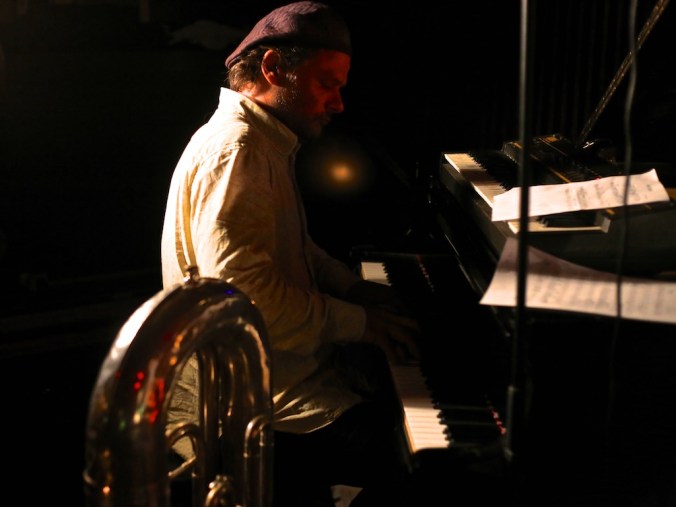
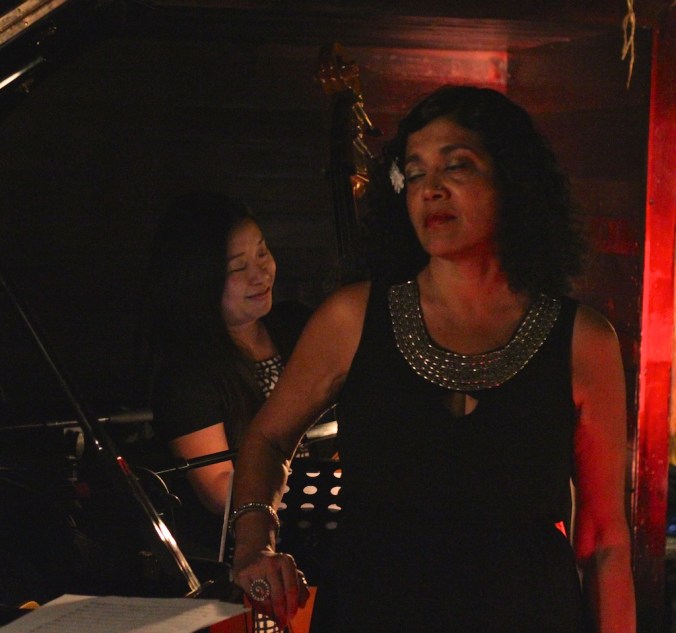
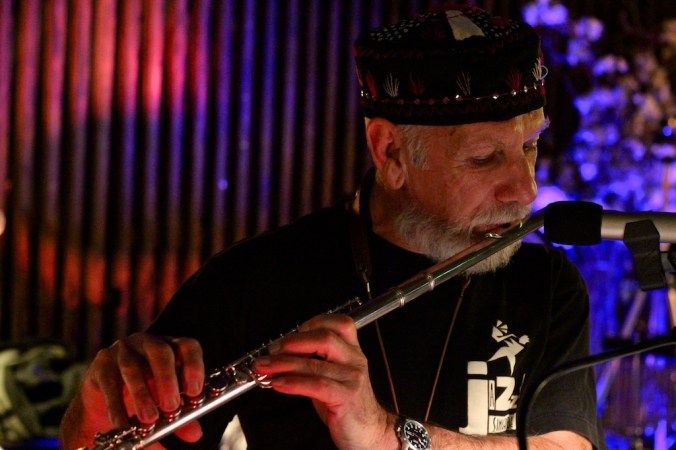
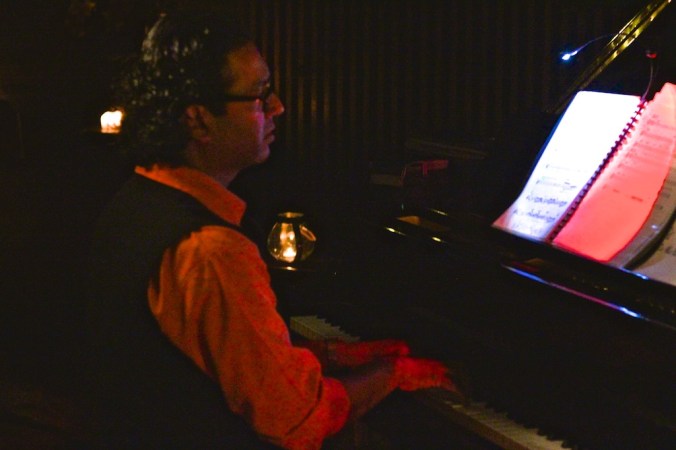
Who: Circling Sun – Cameron Allen (tenor sax, flute, keys, doogan), Finn Scholes (Trumpet, Flugel, tuba, Piano, Keys), Neil Watson (Fender guitar, pedal steel guitar), Rui Inaba (upright bass), Julien Dyne (drums, electronics) – guests: Jonathan Crayford (piano, keys), J Y Lee (alto sax, baritone sax).

Where: CJC (Creative Jazz Club), Britomart 1885, Auckland 11th March 2015

Sandhya Sanjana @ the CJC


IMG_3466 - Version 2

If you patrol the margins of the music world you will find inestimable treasures.  Beyond the notice of mainstream media and mainstream audiences there is a joyous revolution underway.   Not an austere revolution but one peopled by astonishing musicians, colourful characters and sonic explorers.  Like a good street protest, it is often bubbling with noise, insistent beats and a multiplicity of messages.  Last Wednesdays gig epitomised that.  The alternative music scene is often denigrated for its imagined ‘high brow’ complacency or its snobbish rigidity.  In this regard the Jazz police and lazy uninformed commentators have done improvised music a grave disservice.  Improvised music has been with us since the beginnings of art and the whole point of it is to shift the focus away from the mundane or the obvious.  The appropriation and assimilation of traditional forms is only a staring point.  Sandhya Sanjana and her gifted ensemble took the shamans path here; conjuring shapes and colours from the ether, re-harmonising, daring us to look at the familiar and the exotic from an entirely different vantage point.  This night cut right to the heart of improvised music.  Different worlds merged and they did so without compromising the integrity of the traditions they came from.  IMG_3487 - Version 2

This was World/Jazz singer Sandhya Sanjana’s night but we have Auckland’s Ben Fernandez to thank for organising the gig.  I had not heard Fernandez play before this, but had long been aware of his reputation as a gifted, successful and multifaceted pianist.  Some months ago he invited me to his ‘Raag time’ fusion gig, but sadly I was unable to attend as I was heading out-of-town.  Later he messaged me to say that he would teaming up with Ms Sanjana in November.  Gigs like this are irresistible to me as I am enthusiastic about all of the great improvised music traditions.  The merging of these traditions has risks, but done well it’s marvellous.  The successful assimilation of middle eastern rhythms and the idioms into Jazz has long been achieved in Europe.  Fusions of traditional Indian music and Jazz are now emerging across the globe and those with an open mind and the right ears are the happy beneficiaries.

IMG_3467 - Version 2

The band members were; Sandhya Sanjana (vocals, leader), Ben Fernandez (piano), Jim Langabeer (flute, reeds), Manjit Singh (tabla & vocals), Jo Shum (bass), Jason Orme (traps drums).  Anyone familiar with the Auckland Jazz scene and the Indian music scenes will know what a great lineup this is.

IMG_3495 - Version 2

Sandhya Sanjana is from Bombay, but based in Holland these days (Ben Fernandez is a Kiwi but he also hails from Bombay).  She has performed with the greats in the World/Jazz field like Alice Coltrane and Trilok Gurtu.   She has an easy confidence about her that informs her performance and under her guidance a seamless fusion of styles occurs.  With Fernandez you get another strong influence as he imparts a distinctly Latin feel.  This classical and Jazz trained musician has chops to burn.  Out of this melange of rich influences a vibrant new music emerges.  It is compelling and exciting to hear.  There is a constant visual and sonic interplay between singer, tabla, traps drums, piano, bass and reeds (winds).  The shifting rhythms creating intricate cycles that pulse and swing.

IMG_3464 - Version 2

Manjit Singh, originally from the Punjab is another Auckland resident and he is an acknowledged master of the Tabla and of Indian music.  I am often reminded of what a rich and diverse drum landscape we have in Auckland.  A world that I am still coming to grips with.  This man is a major talent and it is our good fortune that he is making forays into the Jazz/fusion music scene.  On traps was the veteran drummer Jason Orme and he was well-chosen.  The gig required a drummer who could play quietly but strongly and one who had the subtlety to interact with Singh.  On bass was Jo Shum who has not played at the CJC for some time.  She is an aware bass player and acquitted herself well.   Lastly was the reeds and winds player Jim Langabeer.  Langabeer is well-respected on the New Zealand scene and is one of a select group of doubling reeds musicians who are equally strong on flute (and he swings like a well oiled gate).   This gig had an embarrassment of riches and once again Roger Manins gets a big tick for his innovative programming.

IMG_3483 - Version 2

In the You Tube clip that I have put up, the breadth of Sanjana’s influences are immediately evident.  After a few bars of latin feel on piano we hear a Tala.  I know very little about the technical aspects of traditional Indian music but the rhythmic patterns (or Tala) are generally established early on.  This can also include a vocalised manifestation of the Tala rhythms.   Manjit Singh the Tabla player counted in the Tala and Sanjana responded with Mudras, claps and vocals .  The traps drummer and others responded to the patterns and so the piece built upon itself.  If done well, cross fertilised music is like water; it will soon find its own level.  This did.

Who:  Sandhya Sanjana (vocals, compositions, leader), Ben Fernandez (piano, arrangements), Jim Langabeer (winds & reeds), Jo Shum (bass), Manjit Singh (Tabla & vocals), Jason Orme (traps drums).

Where: CJC (Creative Jazz Club), Britomart 1885, Auckland, New Zealand.  5th November 2014

Dreamville @ CJC

IMG_2945 - Version 2

The Dreamville gig was aptly named for a number of reasons but not least because there were no defined sets, no breaks between numbers.  Like a dream, the gig moved forward under its own internal momentum.  Surreal themes constantly dissolving until exhausted, forms shifting without seeming to.  What made this journey so evanescent, but so compelling, was that certain motifs remained deep in our consciousness throughout; totems of sound embedding themselves.  Like the images in a dreamscape, the music stroked the chords of memory; familiar yet ungraspable.  As each new realty claimed the preceding one, you realised that musical osmosis was at work.  A band filtering its own ideas until only the essence remained.  This was especially evident with the recurring melodic themes.  It was best to let these themes be, to let them wash over you without over-analysing.

IMG_2966 - Version 2

For nearly 2 hours we sat transfixed, subsumed by a musical force quite unlike any other.   At times the sounds were primal, even brutal, then as sweet as a summer breeze.  I have put up a clip which encompasses two segments from the gig.  In the clip a theme developed by Henderson on C Melody Saxophone (the instrument and the melodic theme takes us straight back to Ellington, perhaps even further back to Trumbauer who played with Bix Biederbeck).   The C melody Saxophone, a non-transposing instrument, is a rare beast and in the right hands, it quickly reveals its earthy warm tones.  The vibraphone and guitar lay down simple repeating patterns, while the saxophone weaves its melodic way through the soundscape, expressing a deep soulful longing.  Even here all is not what it seems.  A surreal quality still pervades this section, the sixth sense as you edge towards the chaos that is to follow.  There is a Mingus ensemble like quality at first, then the bass solo unravels the theme, drawing you into a less certain world; you are suddenly in Zorn territory.  IMG_2972 - Version 2e

At this point Henderson moved into the light, his C Melody horn put aside, a throaty baritone in its place.   Tah-tah ta ta, tah-tah ta ta, tah-tah ta ta–taa taa states the baritone and the volume and the intensity were swiftly increased.  The music had turned on a dime and everyone reeled back, momentarily overpowered by the mood shift.  Henderson sensing this, advanced toward the audience honking and squealing, carving up the room, not letting the moment pass.   This was musical theatre at its best and it served the purpose well.  One thing I have learned over the years; avant-garde music is always best experienced live.

IMG_4740 - Version 2There is a rawness and a primal quality to it, a strong sense of performance.  Who would prefer a recording of an Arkestra or an Art Ensemble of Chicago performance over a live show?  This was all jazz and all music decoded, not for the cocktail party.  The next day I was watching the 1956 Jean Bach film ‘Great Day in Harlem’ and there was Roy ‘Little Jazz’ Eldridge squealing out high note after high note on his trumpet.   Again and again, he pushed out a flurry of wild free multi-phonic sounds.  Even in the swing era, this had a great effect.
IMG_2970 - Version 2

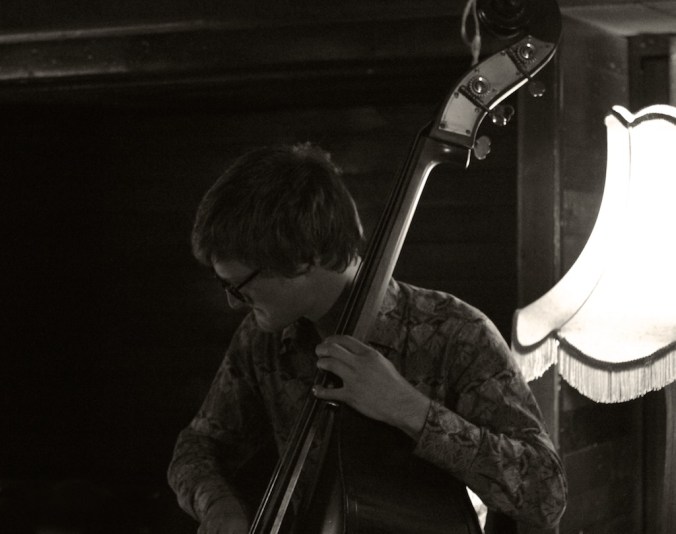
I am always impressed by John Bell and he was superb in this quintet.  His approach to vibes is percussive and he avoids clichés.  He leaves plenty of space between his lightning runs and the accents and his improvisations have their own compelling logic.  The guitarist was quite a revelation.  I had not heard Phil Dryson before and he impressed me deeply.  Never once did he overplay (a failing of some guitarists), letting his unmistakable chops serve the collective purpose.   Once again the solid-body guitar earned its stripes in an improvised music setting.  It felt like he incorporated a fusion era approach with Marc Ribot’s.  Zorn favours edgy, open-eared guitarists like this; he would love this guy.  IMG_2989 - Version 2

On drums was Chris O’Conner (a favourite drummer of mine).  His kit was highly unusual but perfectly suited to the gig.  At times we heard him as a percussionist, extending the possibilities, clicks, bell-like sounds and a multitude of edgy beats from the various toms.  Ethnic polyrhythmic effects arose, especially when Henderson beat an oversized bass drum.   The bass player Eamon Edmundson Wells was great.  He fitted into this setting perfectly and it is surprising how quickly he has assimilated the vocabulary of diverse musical styles.  In Cameron McArthur’s absence, he has stepped up without equivocation.  Hard work and the Auckland University Jazz program have obviously set him up well.  IMG_2955 - Version 2 (1)

This was a sound super-nova created by dangerous visionaries.  There were no leaders identified in the blurb and the band acted as one entity.  All played to the peak of their ability and with unity of purpose  That said the powerhouse presence of Jeff Henderson and John Bell was quite unmistakable.  I could especially feel Henderson’s guiding hand throughout.  This is the space he occupies musically and he is the titan of this realm.  Although my ears rang for days afterwards I wouldn’t have missed it for anything.

What: ‘Dreamville’ – Jeff Henderson (Baritone, C Melody, Alto saxophones), John Bell (Metalophone), Phil Dryson (solidbody guitar), Eamon Edmundson Wells (upright bass), Chris O’Connor (traps drums, percussion).

Where: CJC (Creative Jazz Club), Britomart 1885, Auckland, New Zealand, 24th September 2014.

Footnote: This is one of the last recordings of Phill Dryson RIP

‘The Grid’ land @ CJC

IMG_1134 - Version 2

There are some musicians who arrive on earth fully formed, having journeyed from distant planets.  Sun Ra was one of those.  There is yet another category of musicians who are not aliens, but who clearly hitch a ride with aliens from time to time.  The Grid is one of the latter, as there is no other explanation for their mix of in your face humour, outrageous musicality and otherworldliness.   They have been to Auckland before when I reviewed them for this blog (read ‘The Grid off the Grid’).  This is their second coming and it has long been anticipated by local musicians, metal jazz fans, mental Jazz fans and those who enjoy amazingly improbable improvised music.  People of all ages attended, as the censorship restrictions had obviously been overlooked.

IMG_1139 - Version 2

Reinforcing the view that ‘The Grid’ had been beamed in from a spaceship, was a light show that eerily played across them as they performed.   The gig was not in the usual basement spot, as we had been booted upstairs for the night by the building owners.  Being upstairs means psychedelic light show and being upstairs means playing to people at barely visible tables rather than to people sprawling on leather couches or sitting cross legged on the floor.  Some musicians are less comfortable in this space, but The Grid appeared to thrive on it.  As ever changing patterns played on the walls above them, or descended to spotlight their instruments, they worked with it.   This gave the gig an oddly surreal atmosphere, as isolated instruments or disembodied heads floated strangely in the air.

IMG_1124

The set list was replete with new tunes, all introduced by Ben Vanderwal as he joked his way from number to number.  This was proper Antipodean humour; highly irreverent, at times dry and always delivered with a pinch of intellect.  At one point a dissertation on Kylie Minogue’s lyrics occurred (she should be so lucky), at another a series of imponderable questions were left hanging in the air.  “What if god were one of us?  What if U2 were from Brazil?   Before we could grasp the enormity of these questions, the band had launched into an astonishingly good version of ‘Sunday Bloody Sunday’ (U2) based upon that premise.  The ideas may have appeared random, but they actually supported an interesting narrative that runs through all of their gigs.   These guys are very good musicians and it is not hard to fathom why alien beings would want to abet them on their journey.  IMG_1112 - Version 2 (1)

I have included a video clip of a composition by Dane Alderson titled ‘Hitch’.   The tune was written to honour iconoclast Christopher Hitchens at the time of his passing.  Sometime during the second set the guitar amp blew up and after a bit of head scratching it was mysteriously re-routed.  A casual observer might think that it was appropriate that a band delivered to us by mysterious forces should disappear in shower of coloured lights and sparks.   I am confident that someone will find a way to beam them back soon.  We like them here in Aotearoa.  IMG_1113 - Version 2

The Grid is: Ben Vanderwal (drums), Dane Alderson (electric 5 string bass, pedals), Tim Jago (guitars and pedals).  Perth/USA

Where: The CJC (Creative Jazz Club) Britomart 1885, Auckland, New Zealand.  www.creativejazzclub.co.nz

Mad Hatters Guitar Amp Fundraiser @ CJC May 2014

IMG_0845 - Version 2


On Wednesday 21st May the CJC (Creative Jazz Club) replaced their normal program with a fundraiser as the club has long been in need of a good quality guitar amp.   Relying on borrowed guitar amps is a risky practice and moving one down winding staircases follows the Rhodes & B3 as being the quickest way to get a hernia.   A large number of established musicians and many Jazz studies students volunteered to play and so an impressive pool of artists formed.   No musician asked for pay but the audience still paid an entry fee.  To augment the door take, raffle tickets were also on the sale.  The many prizes included a double pass to the Larry Carlton concert and all donated by CJC supporters.

In these situations it is usual for the more experienced musicians to suggest a number they would like to play.  They would then liaise with their preferred band mates from the volunteer pool or perhaps strong-arm a few others who had not yet volunteered.

IMG_0878 - Version 2

Roger Manins the creative director of the CJC was having none of that.  He had a cunning and innovative plan up his sleeve and one worthy of John Zorn.  All the musicians would have their names placed in a hat (a pork pie hat as it turned out) with no set list predetermined.  Just to put an additional burr under the musicians saddles, the ‘feel,’ (time signatures, tempo style etc) were written on a slip of paper drawn from a second hat.  Once a name came out of the hat it was not put in again, with the number of musicians performing dictated by Roger prior to each draw.

IMG_0831 - Version 2

In summary: a pool of musicians assembled, two hats determined what they played, how they play it, and with whom.

If the slip read fast bossa, slow ballad or fast waltz the task was easy.  A quick negotiation determined which tune and if not predetermined by the slip, which key.   If however the second draw indicated that odd time signatures; changing constantly throughout the tune, then the task was formidable.  There was one draw in particular which took my fancy and that was when seven names appeared and the second draw indicated that they must play completely free.  “No discussion, just play”, was the instruction.   This was a recipe for chaos and mayhem but what they pulled together was interesting.  The band (which I will dub the ‘FreeJC’ ensemble) had a mixture experienced musicians and Jazz studies students.  Contrary to popular belief Free Jazz very often has rules or principles guiding the improvisation.  For example John Zorn’s game pieces like Cobra have strict confines and free improvisation occurs cued by the conductor; a set of spontaneous but connected conversations.  Butch Morris was the master of this ‘Conduction’ methodology but in longer form.   He coaxed wonderful creations out of musicians by using hand signals (or in Zorn’s case cued by a rapid succession of flash cards).

IMG_0849 - Version 2

The older hands knew better what to do here, conversing in the time-honoured way of call & response, moving with the ever shifting patterns and shapes.  Some portions of this ten minute long Free exploration worked better than others.   When they reached for a commonality of ideas  interesting shapes formed.   Like all good conversations it is the listening that is as important as the talking.  When this openness is evident a deeper intuitive communication occurs.    I have put up a blended excerpt of this free number.

As well as the many of the many regular performers there were a number of impressive students on the band stand.  It was also great to hear Julie Masson again.  

Among those performing were: Frank Gibson Jr, Phil Broadhurst, Julie Mason, Neil Watson, Ben McNicoll, Carolina Moon, Oli Holland, Kevin Field, Andy Smith, Ron Samsom, Cameron McArthur, Paul Nairn, Chelsea Prastiti, Djordje Nikolic, Michael Howell, Tom Leggett, Tristan Deck, Matt Steele, Rob Thompson, Sam Weeks, Timothy Andrew Shacklock.

What: CJC Mad Hatters Guitar Amp Fundraiser

Where: CJC (Creative Jazz Club), Britomart 1885, Auckland, New Zealand. 21st May 2014   http://www.creativejazzclub.co.nz

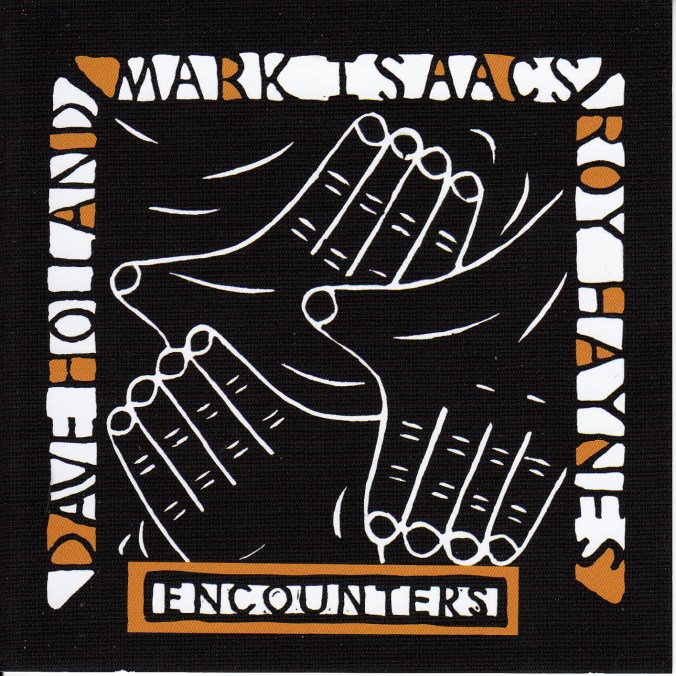
‘Encounters’ – Mark Isaacs – Dave Holland – Roy Haynes

Mark Issacs Encounters

Mark Isaacs’ ground breaking ‘Encounters’ album has just been re-released for the third time and no wonder.  This is an important musical statement by any measure and it sits comfortably beside similar works by Jarrett and Corea.   I don’t say that lightly, as the aforementioned artists explorations into free improvisation set lofty benchmarks.

Mark Isaacs is somewhat of a prodigy as he works across all genres of Jazz, is a gifted composer and has a well established classical career.  His Jazz charts are particularly impressive as he often voices his pieces in modern and compelling ways.  As if that were not enough he has composed a symphony (recently performed by the Queensland Symphony Orchestra – I have heard this impressive work).  Because Mark is such a multi faceted artist it is harder to buttonhole him and perhaps that is the point.  Great musicians shouldn’t be pinned down.   It is the nature of improvised music that it constantly shifts like the coloured grains of sand in a great Mandala; elusive and yet leaving an indelible image behind.  When it’s done well the impressions that remain will outdo the notation.  This album achieves that.

Because the album has not been available since 1995 I hadn’t heard it before.  When I did it truly surprised me.  I was expecting a good album as the triumvirate of Isaacs, Holland and Haynes creates high expectations.  What I was unprepared for was just how deeply it affected me.   To explain this better a back-story is required .  An indication of how this album came to be.

The recording dates from 1988.  This was a time when the mainstream music world had become mired in techno-commercialism and to the credit of the Jazz community it chose to delve deeper into experimental music; pushing harder against musical boundaries.   This was the time of Jarrett’s ‘Changeless’ and ‘Dark Intervals’ albums and discriminating listeners were up for it.  Dave Holland was no stranger to this type of project as he had participated in and initiated many avant-garde projects since the sixties.   Mark Isaacs (an Australian) was in New York at the time having just heard some of his chamber works performed by the Australian Ensemble in Carnegie Hall.   He felt ready to record something challenging so he contacted Dave Holland who immediately agreed to participate.  I am not sure how Roy Haynes came to the project but the choice was fortuitous.  A bop-pioneer drummer who had played with Lester Young and Charlie Parker plus a cutting edge experimentalist bass player were on board.  Both had played in Miles Davis bands (but not at the same time).  Both had an interest in the avant-garde.

No rehearsals were held, no charts used and none of these artists had ever played together before.  What you have here is a tight rope act undertaken by an Australian, an ex-pat Englishman and a New Yorker.  The result could have fallen flat but what happened was truly amazing.  Deep intuitive communication and an interplay which sounded more like a trio that had been together for years, not minutes.  In this recording there is a profound sense of space and limitless vistas seem to unfold before you.  The album is just over thirty minutes long and packed within that thirty minutes is a world of diversity.   At certain points one or other of the musicians is leading the conversation, while at other points they appear to seize upon an idea at the same time.  This is artistry of the highest order and I urge anyone reading this to purchase a copy while stocks last.

It is available on iTunes but as an audiophile I recommend that you purchase the CD.  The recording quality is superb and the sound so immediate that you gain a real sense of the studio it was recorded in.  A lot of recordings could have been recorded anywhere, but this one conveys a sense of location.  Many of the ECM recordings have that feel and the Rainbow Studios in Oslo immediately come to mind.  The album was recorded at the Power Station studios in New York, which incidentally is where Jarrett’s ‘Changless’ was recorded at about the same time.

Twenty five years on, the album still sounds fresh and engaging.

The Album is available from Mark Isaacs Website: http://markisaacs.com/9-latest-news/13-encounters-with-dave-holland-roy-haynes-available-now

The Doughboys @ CJC

IMG_8738 - Version 2

Whenever Neil Watson and Cameron Allen appear one thing is certain.   The boundaries between realty and the surreal will be seriously blurred.  Their attempts to kick down the barriers between musical genres arises from a genuinely subversive urge.  This has nothing to do with academic posturing, as the music comes from raw passion.   People sometimes ask me why I listen to Zorn, Sun Ra, Ribot and others.   It is because those people understand something very important, ‘Art should disturb the comfortable and comfort the disturbed’.  Neil and Cameron understand this and their collaborators do also.

IMG_8736 - Version 2

The unsettling rumours started circulating a few months ago.   Evidently there was an improvising band around town called the ‘Doughboys’.  Musical blackguards.  Few knew where they played and most dared not enquire further lest the blackest rumours were true.  They fitted no particular niche and worse, they could veer dangerously across genres without signalling a warning.   What might scare some, only served to tantalise me.  Any band that plays foul piratical sea shanties, Hawaiian music, Americana, ancient country ballads, Hank Williams and Johnny Cash in a Jazz voice is going to interest me.

IMG_8742 - Version 2

As with all vagabonds they eventually washed into the CJC (Creative Jazz Club) one blustery night.   Roger Manins, a steadfast soul, well able to withstand the vicissitudes of public opinion booked them.  On the night they stood brazenly arrayed, defiant as piratical adventurers can be.  Ready to sing and to wildly improvise, often using the voicings and tropes of psychedelic jazz.   Either that or they played a song dead straight just to confound.  The instruments were as left-field as the bands dress sense.  Neil Watson had an array of stringed instruments and some pedals mounted on a plank.  He used a Mexican Fender ‘Stratocaster’, a ‘Hobner’ Guitar (this is a top-of-the-range knock off of a Hofner which he purchased in an Indian street stall) and lastly a Chinese made ‘special’ steel guitar.  Cameron Allen played an old melodeon squeeze box, a tenor saxophone and a ‘virtual’ Doogan (it was not visible to the audience).   Alex Freer and Rui Inaba lulled us into a false sense of security by playing relatively ordinary looking instruments, but when you looked closely there were frightening pirate fetishes tied to the them.

IMG_8743 - Version 2

I thought that they were terrific and Neil Watson’s hint of Neil Young (subverted by Bill Frisell voicings) worked for me.   At times they played the tunes dead straight and this only added to the surrealism of the evening.  Once they sung a hearty ditty but I was not fooled.  As I suspected, this softening up was precursor to a king hit.  In this case a punked out rendering of the ancient sea shanty ‘Spanish Ladies‘ which I will post as a video.  This is the sort of music that the downtown avant-garde cuts its teeth on.  Where else would you hear an authentic version of ‘Pearly Shells‘ followed by something Pink Floyd might have done if they’d studied under Marc Ribot.  Bless their black pirate hearts.

photo copy 5 - Version 2

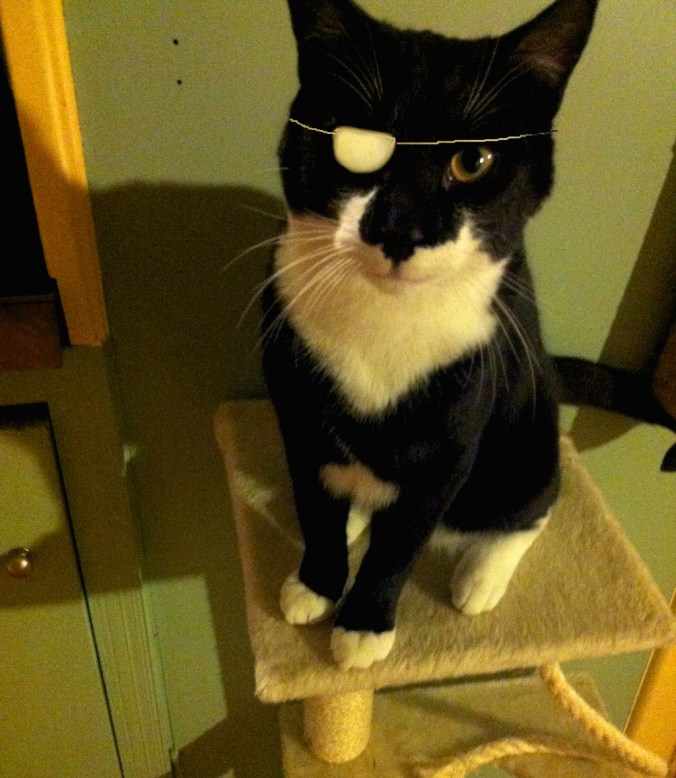
Disclaimer: No cats were harmed in the photoshopping of the above picture – the pirate cat is named Zirky 

What: The Doughboys at the CJC (Creative Jazz Club) 1885 Britomart, Auckland 20th November 2013

Who: Neil Watson – aka ‘Geetar Scrim’ (guitars), Cameron Allen aka ‘Lee Shawnuff’ (melodion and tenor saxophone), Rui Inaba aka “Pork Baster’ (bass), Alex Freer aka ‘Daddy Gaucho’ (drums).

Natalia Mann update from Marseille

1467391_10201084445817972_2075128796_n

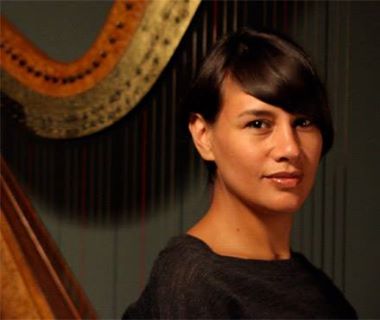
I interviewed Natalia Mann after the release of her very successful Rattle album ‘Pacif’ist’ and since then we have kept in touch .  Improvising harp players are a rare commodity, but things are slowly changing.  This year the Columbian harpist Edmar Castaneda won a major Jazz poll.  Natalia is simply killing at whatever she undertakes but her new trio brings her squarely into the jazz orbit.   Having gained a considerable reputation playing with various symphony orchestras and after undertaking a number experimental music projects, she is more than ready to enhance her improvisational credentials.   She has recently been playing to critical acclaim at Mediterranean Jazz festivals and this video clip was made for the AKBANK Jazz festival in Istanbul.  Her compositions are beguiling and exotic, while retaining an elusive mysterious quality.   This is music that leaves you wanting more.

Natalia is of Samoan Kiwi extraction but for some years she has lived in Istanbul.  She’s married to the Turkish percussionist Izzet Kizil who appears in the clip below.  She was most recently the recipient of the ‘ARts Pacifica’ award in her hometown of Wellington.  Having recently studied Jazz at Skopje University she is now engaging frequently with the improvising world.   This stunningly beautiful piece swings to its own pulses and rhythms; aided by solid bass work from Dine Donneff (Greece) and the perfectly executed percussion of husband Izzet Kitil (Turkey).

I have promised to take her to the CJC next time she is in Auckland and just maybe if we are lucky, we could talk her into performing?

Natalia is in Marseilles at present and she sent me this clip of her new Jazz trio a few days ago.   Kiwi musicians certainly do well in the world.

NOiCE @ CJC

Rosie Langabere

The North Island Creative Ensemble is a project dear to Rosie Langabeer’s heart and one of many projects that she has on the go.   Rosie has been out of New Zealand for some time although NOiCE did perform at the CJC over a year ago.  Her musical journey most recently took her to the USA where she worked for three years with leading experimental improvisers and artists.   Her compositions and playing have won various awards and so I made certain that I there as I missed the last NOiSE gig.

This is music that is hard to pin down, as it deliberately defies conventions while somehow flirting with them.   There is a sense of structure which provides a touch stone, but don’t grasp too firmly as the forms will dissolve as quickly as they appeared.  This is music which carries you forward if you let it, holding you in the eternal moment.

NOiCE is an assembly of highly creative musicians; coming from a variety of North Island towns and cities.  The music is experimental in nature and it is definitely adventurous.  Most of these musicians are well-known and leaders in the field of New Zealand experimental music.   Jim Langabeer (Rosie’s father) is a stalwart of the Auckland Jazz scene, but he has also worked with international musicians like Gary Peacock, Sammy Davis Jr and even the Bee Gees.   He is a multi reeds and winds player and because of his proficiency on a variety of instruments he has been in demand over the years.  I recently saw his name come up in the music credits of the New Zealand film ‘Mr Pip’.   His innovative flute work is probably what he best known for.

IMG_8589 - Version 2

Jeff Henderson is also a multi reeds player and he is at the very heart of Auckland’s experimental music scene.   He can often be seen at ‘Vitamin S’, a small club dedicated to experimental music located just off Karangahape Road, Auckland.   Jeff has worked with a large number of cutting edge musicians over the years, William Parker, Steve Lacey, Mike Nock and many others.   He delights in pushing against the boundaries and when he performs he seldom holds back.  While his scalding solos often reach beyond mere form, his ability to integrate seamlessly into an ensemble creates a filigree of contrasts and textures.   A delicious aura of inventive unpredictability hangs over him.  IMG_8613 - Version 2

Chris O’Connor (drums) is a firm favourite with CJC audiences.  A recipient of the Chapman Tripp Award for original music, he has also worked with the soprano saxophonist Steve Lacey, avant-garde pianist Marilyn Cryspel, Don McGlashan and numerous other well-known groups or individuals.   Chris is one of those drummers that other drummers revere and the last time we saw him at the CJC was with vibist John Bell.

IMG_8633 - Version 2

IMG_8629 - Version 2 (1)

IMG_8587 - Version 2 (1)

Ben McNicoll (reeds and winds), Joe Callwood (guitar), Gerard Crewdson (brass) and Kingsley Melhuish (brass), Nicky Wuts (vibes) and Patrick Bleakley (bass) round out the ensemble.   They are all experienced musicians and most of them have worked with NOiCE for some time.  Ben McNicolls is the best known to CJC audiences as both the technical director of the club and a frequent performer.  A good reader with a nice sound he, is happy to take on any project, from standards gigs to out-ensembles.   Gerard Crewdson and Kingsley Melhuish are versatile and sought after brass players and both have played the CJC before.   The musicians that I was less familiar with were Patrick Bleakley (bass), Joe Callwood (guitar) and Nikky Wuts (Vibraphone).

I’m relieved to see another mallets player on the scene as New Zealand has very few of them.   John Bells departure earlier in the year left a yawning chasm.

IMG_8640 - Version 2 (1)

All contributed something unique as this is a truly democratic ensemble.  One where individual voices rise and then subside; emerging seamlessly into the collective consciousness of the group


Neil Watson Four @ CJC

IMG_8034 - Version 2

I love any music that can be termed ‘Space Jazz’ or ‘Space Funk’.  I have no idea if this is a real genre but I follow it anyhow.  Living through the era of Sputnik and being caught up in the excitement that followed I was nudged in that direction by the events of the day.  After that I zeroed in on space themed music.  Some of it was corny (Telstar) and some was grandiose (Gustav Holst’s ‘The Planets’).  Not long after this I stumbled across Jazz and the sonic explorations perfectly fitted my longing for a music that evoked the wonders of space while encompassing the quirks of our humanity.   Music performed by artists who stood in awe at the edge of the universe and then stepped free of its limits.  IMG_8030 - Version 2

The Neil Watson Four is a recently formed Auckland band who have no fear of galactic explorations.  With the aid of a doogon (explained later), tenor saxophone, drum kit, upright bass and four overly fertile imaginations, they bent and pulled at the fabric of the universe.  This is a band that defies the norms and swallows genres whole.  There is no sense of deliberate eclecticism here and no self-conscious navel gazing.  It is original and you get the sense that what happens sometimes surprises the musicians.

The feeling is often that of organised chaos, a loose organic vibe that works well because they have entered into a collective state of being.  While Neil Watson pilots the ship there is no heavy controlling hand but his benign presence presides.  He has gifted his vision and let the possibilities unravel as they may.  IMG_8057 - Version 2

Neil Watson is not only a great guitarist but his sense of humour is original.  A sort of postmodern Zen; dropping casual asides into the banter in ways that confound.   The You Tube clip that I will post is ‘Renamed’.  When Neil announced that tune he casually added, “I hated the original name”.  This sort of humour leaves you momentarily confused and then laughing out loud.  They also played a lot of tunes named after children, girlfriends or spouses.   The tunes were all great and particularly ‘Renamed’ (Watson), ‘Eleanor’ (Dennison), ‘Rosie My Dear’ (Gibson) and ‘Theo’ (Allen).  There were ballads and country fare as well.  their rendition of ‘Danny Boy’ was so poignant that any Scots in the audience would have been fumbling in their sporrans for a tartan hanky.

Neil Watson is an original guitarist and he is at his best when a leader.  He brings a rag-tag of interesting sounds and ideas to the bandstand and then knits them together.  There is also something akin to Zorn in much of this material.  Once the skeletal structure and the overall concept is in place the music is liberated.  The interactions between men and machines are fluid and what the audience sees will never be repeated.   For this to work well he needs the right collaborators and he has certainly struck gold this time.  IMG_8044

Cam Allen usually plays alto but he is also a fine tenor player.   I have also seen him manipulate a Moog to great effect.  On Wednesday night he played a Buescher ‘Big B’ Aristocrat and it gave out an earthy, and slightly raspy sound.  Word has it that it is a tricky beast to play but it sounded just right for this gig.   I risk committing heresy here but a Selmer would have been too clean for this music.  His interesting modal explorations and his flow of ideas mark him out as a gifted player.  This is hardly surprising as he honed his craft on the highly competitive American Jazz scene.  In this band he doubled on ‘doogon’.   This is very much a ‘Kiwi’ thing and it is best described as an array of electronic and acoustic sound enhancements strapped to a hardware-store hand truck.  Resembling a cross between a Dalek and an IED with its glowing blue lights, digital clock console and multiple knobs (many strapped on with duct tape); it can envelop the audience with shrieks that resemble a Banshee at a rocket launch.  IMG_8075 - Version 2
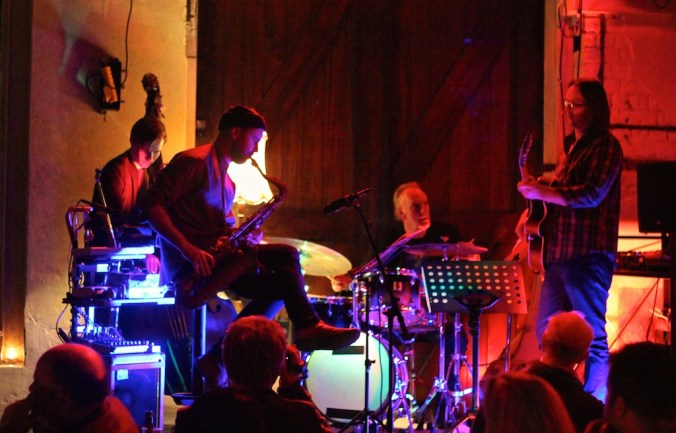
All of the instruments including the drums feed into this machine and the effects are astounding.  On upright bass was the respected Tom Dennison who used his arco technique to very good effect.  This bowing worked well with the Doogon, which under Allen’s guidance resonated in ways that would have astounded the instruments makers.  Dennison has a lovely rich tone and we heard plenty of that.  What can never be overlooked are his compositional skills (See an earlier post on his ‘Zoo’ album).  For this gig he contributed the lovely ‘Eleanor’ which he dedicated to his girlfriend.  He seldom appears at the CJC these days and it was a pleasure to see him there again.

Perhaps the biggest masterstroke was adding Frank Gibson Jr into the mix.  This inclusion of a drummer most known for his Post Bop chops may have raised a few eyebrows at first, but Gibson is no stranger to fusion.  He demonstrated just how perfectly he can execute this material and he showed us all what free and imaginative drumming looks like.  I heard a band member saying later that having Frank behind them, lifted the whole performance.   IMG_8050 - Version 2

I am an unreformed devotee of music like this and whether you call it Space Funk, Space Jazz, Eclectic Fusion or just wild music I will be its cheer leader.   This is an itch that just begged to be scratched and I am glad that Neil gave us a taste of it.  Besides the wilder numbers there were one or two ballads to balance out the program.  Overall it was a very satisfying experience.

It was somehow fitting that the band performed on the day that NASA verified that Voyager One had left our solar system and entered interstellar space.  

Who: The Neil Watson Four.  Neil Watson (guitar), Cam Allen (tenor, doogon), Tom Dennison (bass), Frank Gibson Jr (drums).

Where: The CJC (Creative Jazz Club), 1885 Building, Brittomart, Auckland.

Photographs by John Fenton & Ben McNicoll

Dream Weaver – Murray McNabb 1947 – 2013

IMG_7710 - Version 2

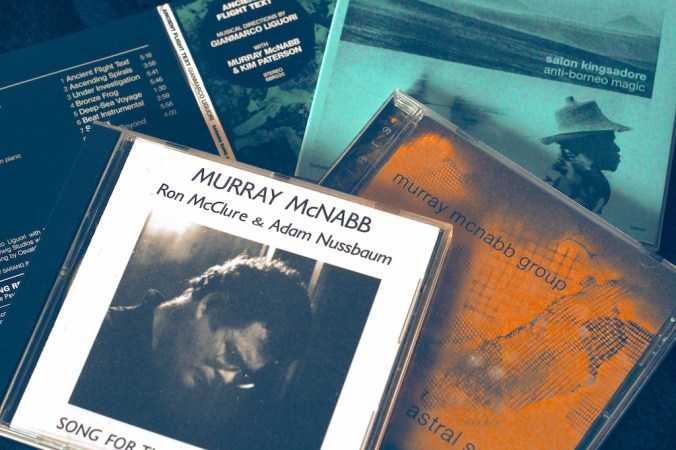
Murray McNabb left us on the 9th June 2013, just missing his scheduled gig at the Auckland Jazz & Blues Club.  His keyboards may have fallen silent but not so the band who played on out of respect. Mike Walker an old friend, was approached by Murray just days before he died, to stand in if he didn’t make the gig.  The gig may have invoked a plethora of memories and been tinged with sadness, but it was clear that Murray would live on through his musical legacy.  This was a musician who fearlessly patrolled the outer reaches of the sonic universe and I like to think that his ‘Astral Surfers’ album will be poured over by intergalactic cosmonaut’s as they look for clues or perhaps navigation hints from ‘Ancient Flight Texts’.

Frank Gibson Jr

Frank Gibson Jr

I was at Mt Albert Grammar at the same time as Murray and Frank Gibson, but they were more than a year ahead of me and both were prefects.  I was deeply into Jazz as a school boy and I knew that they were as well, but the gap between a fifth and a seventh former is sadly too far to bridge.  Fifth formers just didn’t hang with prefects and I regret that now.   I have followed Murray’s (and Franks’s) career ever since.

Murray McNabb was at the heart of the Auckland Jazz Scene and everyone respected his prodigious musical output.  The key to his music lies with the man, as music made him happy and improvised music even more so.  He was a man perpetually on the edge of a great adventure, navigating only by his innate sense of groove and an inner vision of the boundless vista’s that lay ahead.  Like Mike Nock he never settled for the ordinary, always pushing hard against the boundaries.   As much as I like his straight ahead records such as the lovely ‘Song for the Dream Weaver’, it is to his ‘out’ offerings that I return to again and again.

A largely self-taught keyboardist, he continued to explore the possibilities of Synths (and his beloved Fender Rhodes) during a period when others weren’t so keen.  In many ways improvised music has now come full cycle, as a younger generation continue the explorations, aided by clever machines and astonishing pedals.  Murray can take much credit for enabling a younger generation of local musicians to pick up on that.  His collaborations with Gianmarco Liguori in particular come to mind.  I regard ‘Ancient Flight Text’, a Liguori directed collaboration between him, Murray and Kim Paterson as a masterpiece.   If released by ECM, wide acclaim would follow.

Murray is known to all New Zealanders whether they realise it or not, as his collaborations with Murray Grindly produced film scores (e.g. Once were Warriors, Greenstone) and countless well-known TV adverts.  He never spoke ill of this work as it allowed him to simultaneously pursue his Jazz career.

The gig at the Auckland Jazz & Blues club was part wake (as old friends came up one by one to perform or to read eulogies) and part concert.   In my view it was Murray’s closest collaborators who stole the show and spoke for him best.  Frank Gibson Jr (drums), Kim Paterson (valve trombone), Neil Watson (guitar),  Denny Boreham (bass) and Stephen Morton-Jones (sax).   In Murray’s place was Mike Walker on piano.  During the second set the band played a Jazz fusion number composed by Murray years earlier.   Frank Gibson started the pulse with an insistent clipped beat similar to that used in Pharaohs Dance (Bitches Brew).  One-two, one-two, one-two, one-two.  The others moved in and out of the mix, weaving short phrases around the beat and creating layers of haunting sound.  No complex melody, harmonies that shimmered, as illusive as a mirage.  Out of this tribute I formed the strongest view of Murray’s output.  He seldom relied upon complex changes to achieve his ends.  Many of his compositions had no bridge or recognisable head.  He could say more by improvising against a drone or by working a simple vamp than almost anyone else on the scene.

Kim Paterson - Stephen Morton-Jones

Kim Paterson – Stephen Morton-Jones

Murray was a joyful explorer and he worked best when there was little chance of rescue.   His music was wonderful and he took that last step as bravely as he embarked upon all of his journeys.

For his recordings contact: www.sarangbang.co.nz