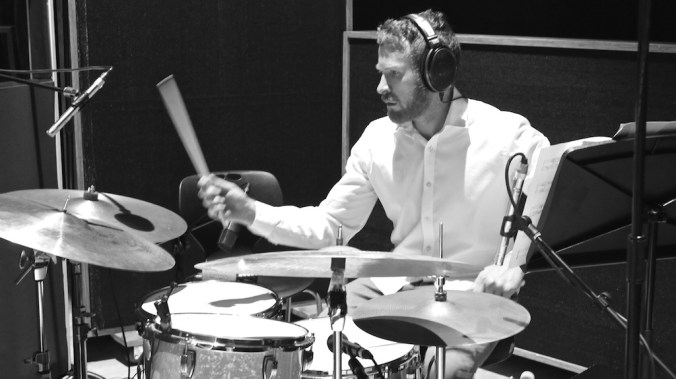
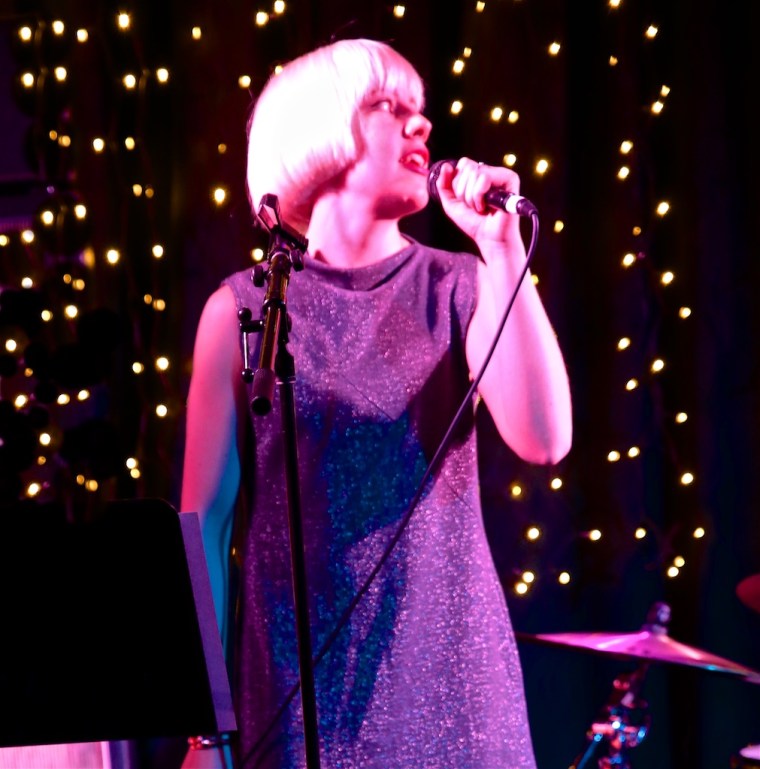
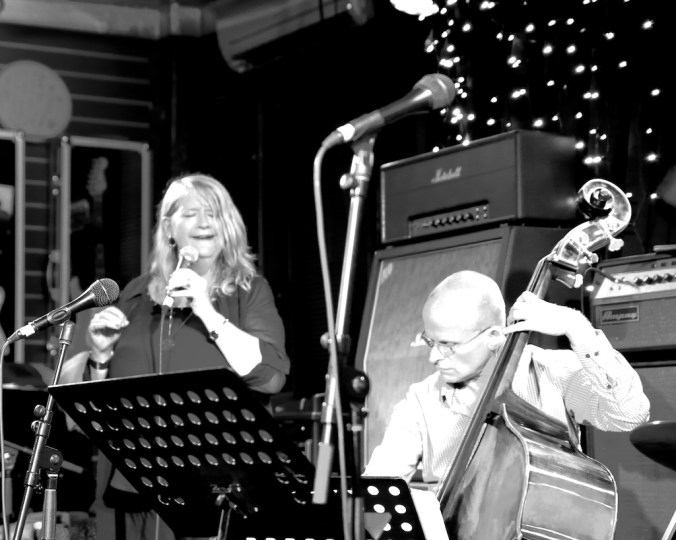
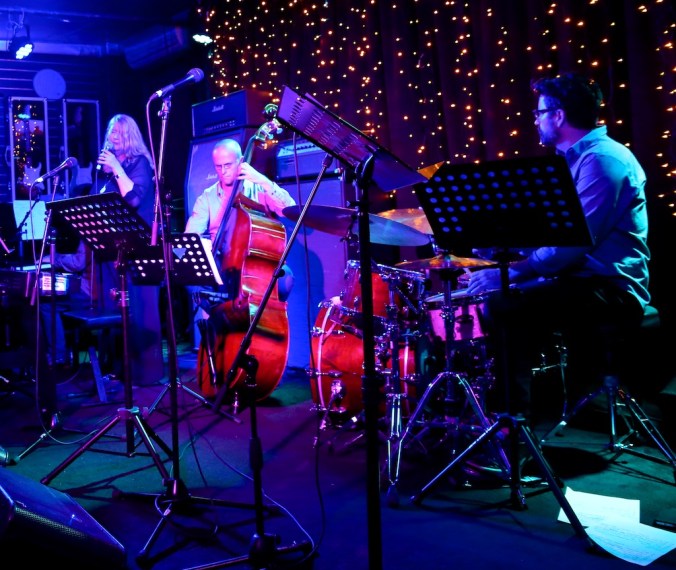
Daniel Waterson / Wil Goodinson

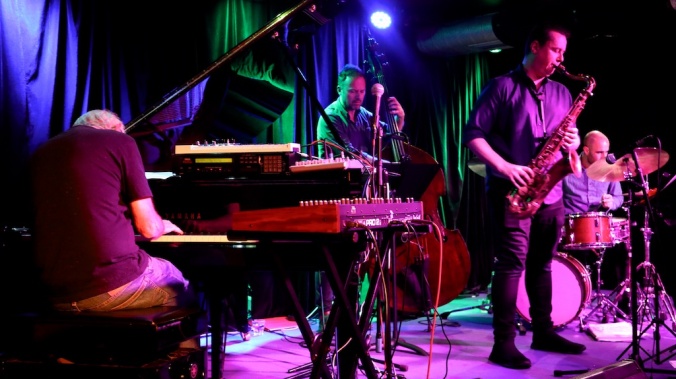
How we hear and process music is the result of endless debate. When a resonant voicing or melodic fragment is freed from the wood, wire or chip, the vibrations refract; entering our consciousness through individualised prisms, and each note coloured by preference, mood and previous exposure. What I heard last Wednesday I can only process through my own lens and how I heard it may not be how it was conceived. The opening number took me directly to a place that I visit often. A warm and familiar place situated in a time before these musicians were born. That place was the early electric Jazz fusion era (I love that shit) and in the second set, to the atypical small ensemble arranging by the likes of Carla Bley, Jimmy Giuffre or French horn player John Graas.

I am not saying that either band were reprising those eras because they weren’t. What they played was freshly minted, modern and innovative. The connection and the intense pleasure both groups afforded me was that meeting place between my point of reference and what they created. This is the eternal triangle of improvised music; musician, instrument and listener. A cycle with an endless feedback loop, which brings me to a second point. The players communicated their passion well; something of themselves. It manifested in the leader’s smiles of delight or in the shouts of mutual encouragement. As young, as they were they had cracked a vital code of musical communication. It is not just chops or clever compositions that push you over the line, but putting yourself at risk, exposing a glimpse of the human being and the joy feeding the music. 

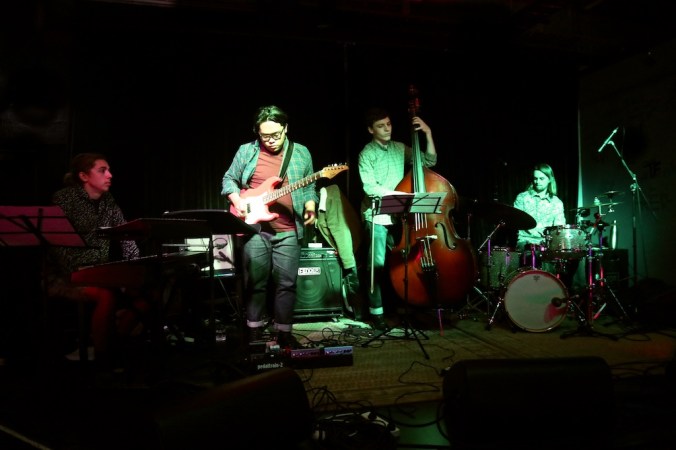
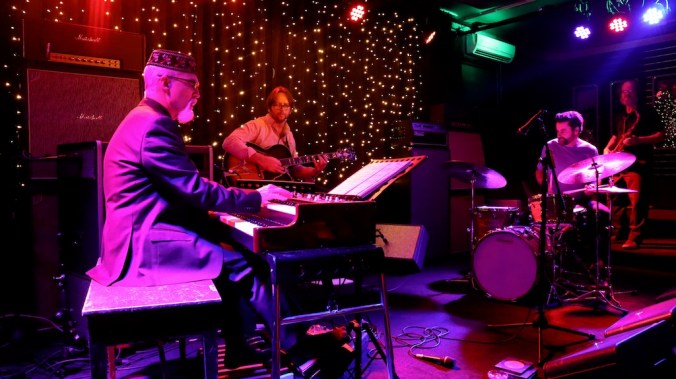
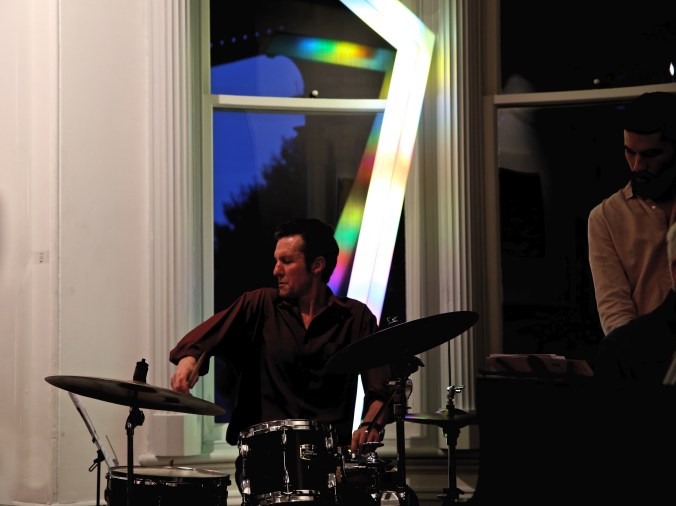
The musicians were mostly from the UoA Jazz Studies programme and the sets were interesting contrasts. First up was the Daniel Waterson Quartet with drums, keys, guitar and bass. The first number was titled ‘Not enough Lithium’ and it was this piece that contained embedded echoes of 70’s fusion. It had various motifs but as it developed, mood predominated. This enabled me to make my own emotional connection to the music. The piece didn’t tell us how to engage but it invited the listener in and I believe that that is important. Some tunes are so nailed down that they feel like a lecture. This was not. All of these musicians are a credit to the Jazz School and I was familiar with everyone except the keyboards player (more on him later). Michael Gianan showed how far he’d come since we last heard him at the club. I last heard Waterson when he played in the Indian Jazz fusion group Takadimi. He is an engaging and innovative drummer and it was good to hear his own compositions.

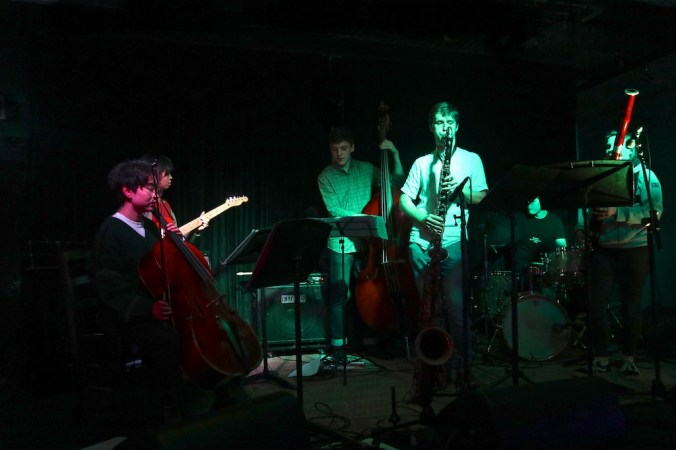
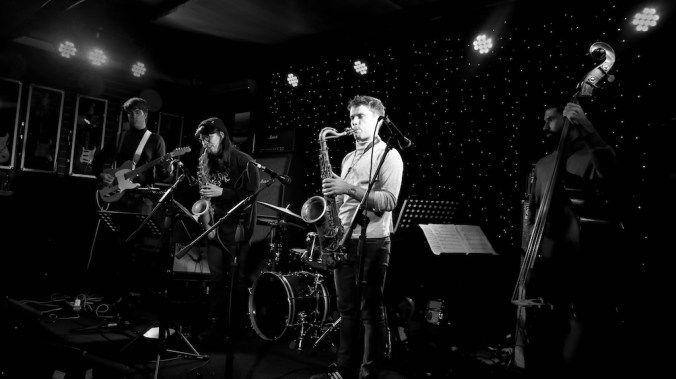
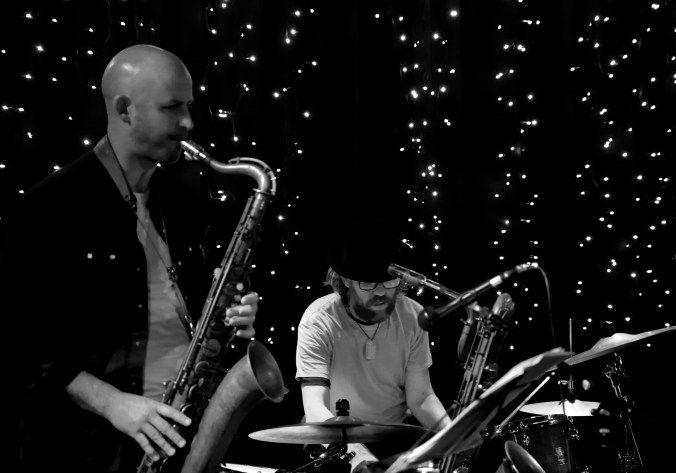
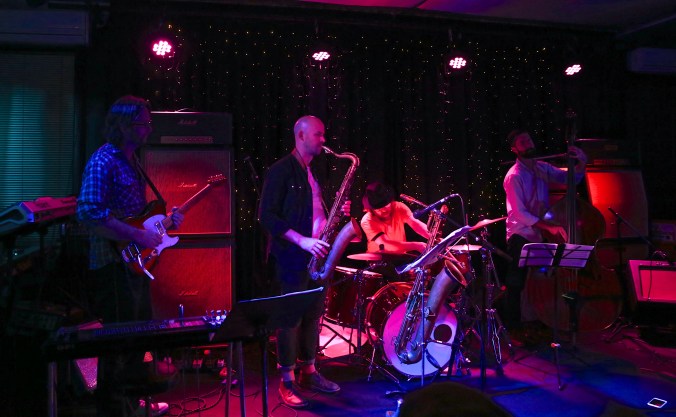
The second set up was the Wil Goodinson Septet and it was unusual in that it featured bassoon, bass clarinet, cello, bass, guitar and piano.  Goodinson is well thought of as a bass player and it is not unusual to catch him in others lineups. This was a chance for him to showcase his arranging skills and his charts were quite exceptional.  Apart from the first tune by Joe Henderson, all of the rest were his own compositions. All arrangements were his. This was an interesting ensemble and they navigated the charts with ease. The bassoon and bass clarinet were complimentary and their textural possibilities were well utilised (Asher Truppman Lattie demonstrated his skills here and I applaud his work on this lovely under-utilised horn). The guitar, while not dominant in the mix, was essential as it gave brightness, a gently articulated voice to contrast the bass-rich sound. Holding everything together was the bass. We could not see the leader but his cues were evident as he guided the others through the charts.

The drums and piano contributed with accents, pulse and solos and both were well placed in the mix I also have a fondness for cello in Jazz and the instrument was well deployed. When bass and cello played unison arco, the air vibrated as the low notes tugged at the senses. It was the sort of ensemble that ECM might feature, but the originality made it hard to pigeonhole as just that. 

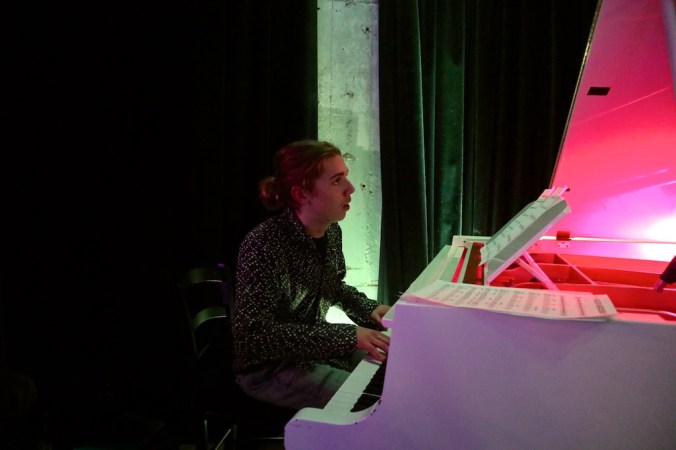
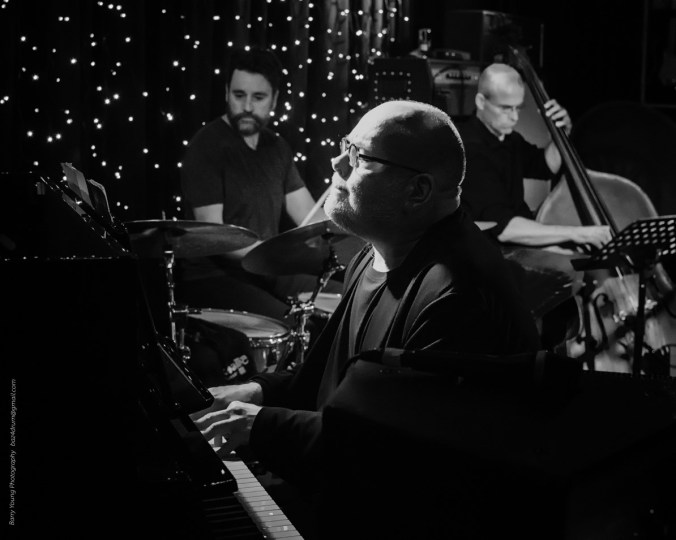
For a few months now, people have asked me, have I heard Joe Kaptein play. Until last Wednesday I had not and after hearing him on Wednesday I admit to being caught off guard. What I heard was a high degree of pianistic maturity; unusually so for a Jazz Studies student partway through his second year. He leaned on no particular style and was as much at ease playing in a freer percussive mode as he was where gentler minimalism was called for. His comping was notable, as was his sense of time. He understood when to play and most importantly when not to; he could lay-out or enter a groove and milk it for possibilities. It felt good to be in on this at ground level and I will watch his journey with great interest. Kaptein and Goodinson played in both sets

.

Daniel Waterson Quartet: Daniel Waterson (drums, compositions), Michael Gianan (guitar), Joe Kaptein (keyboards), Wil Goodinson (bass).

Wil Goodinson Septet: Wil Goodinson (bass), Joe Kaptein (piano), Kathleen Tomacruz (guitar), Asher Truppman Lattie (bass clarinet), Karen Hu (cello), Monica Dunn (bassoon), Tom Legget (drums) 

@ CJC Creative Jazz Club, Anthology, K’Road, Auckland New Zealand 31 July 2019

Brad Kang Quintet

Brad Kang @ CJC (1).jpegBrad Kang has previously appeared at the CJC, but this time he was here with his own quintet. It is not too much of a stretch to say that most emerging Jazz guitarists during the last decade have demonstrated a liberal dose of Kurt Rosenwinkel in their playing. It is in their sound and their approach to melody and it was unmistakable with Kang. That clean bright tone and the fluent unison lines as he and saxophonist Louisa Williamson ran through the head arrangements.
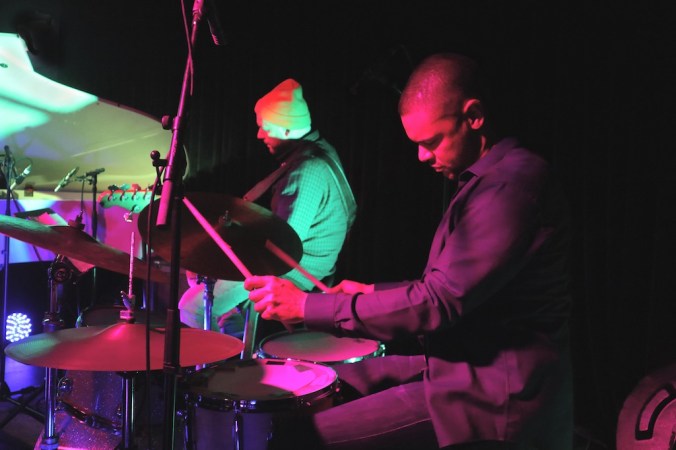
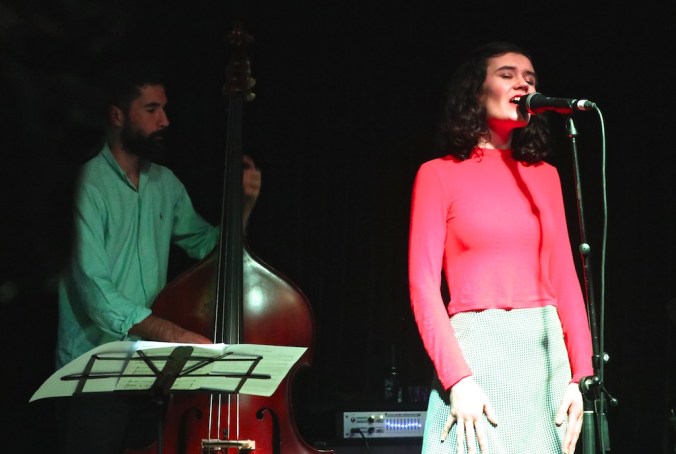
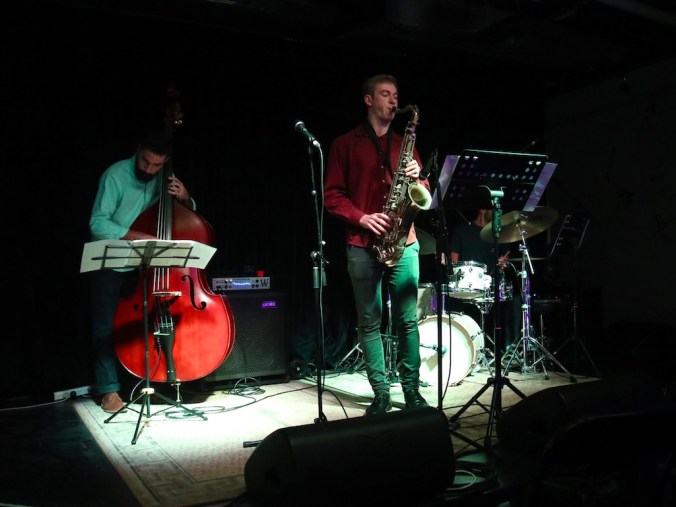
His compositions were vehicles for showcasing a formidable technique and the tunes were internalised, allowing him to play the sets with barely a glance at his charts. It is common for older and more experienced musicians to internalise the music, but less common for younger musicians who like to keep the charts close at hand.  Kang’s confident familiarity with the music paid dividends for him.

Kang and Williamson are a natural fit; not only when they run those tight unison head lines, but also during solos. Williamson adding a necessary weight to counter-balance Kang’s guitar, which mostly traverses the higher register. On stage, Williamson tends to hide behind the horn, giving little of her self away. That is, until she solos. Then, she’s suddenly authoritative and an expansive storyteller. Her tone rich and her fluency beyond question.

Unlike Williamson and Kaa, the pianist George Maclaurin was new to the audience as were bass player Hamish Smith and drummer Hikurangi Schaverien Kaa. They hail from either Wellington or Christchurch; part of a nationwide and pleasing renaissance invigorating the New Zealand Jazz scene. 

Since his return from North Texas where he studied previously, Kang has become a fixture on the Wellington and Christchurch Jazz scenes. This New Zealand tour will be his last for a while as he is moving to New York shortly to study at the Manhattan School of Music.  When he returns, his musical journey can be updated and he will no doubt share that with New Zealand audiences.  

Brad Kang Quintet: Brad Kang (guitar), George MacLaurin (piano), Louisa Williamson (tenor saxophone), Hamish Smith (bass), Hikurangi Schaverien Kaa (drums), at Anthology, CJC Creative Jazz Club, 24th July 2019. Photograph by and with thanks to Barry Young.


A Love Requited~Myele Manzanza

Manzanza1.jpg

The Myele Manzanza ‘A Love Requited’ gig opened with a heart-stopping rendition of his tune ‘Ritual’. As the leader’s beats drove out the grey of winter, it left no room for doubt; this was a drummer gig. He moved his body to the music and rained down rhythms and everyone was mesmerised. As drummers move, their feet and hands blur and dance, but few move their upper bodies like Manzanza. This gig was all about sublime motion; kinetic transportation into pulsing parallel worlds. It was very ancient, eternally present, and futuristic. As he bent close to the kit or circled the snare he looked like a hawk circling his prey. This was different drumming and while it was firmly rooted in Jazz, it also mined deeper timeless roots. It also felt intensely personal.

With him on the New Zealand leg of the tour were genius pianist Jonathan Crayford and the powerhouse Wellington bass player Johnny Lawrence. His bandmates needed to be chosen well, because what was on offer was not your usual piano trio music. Everything about the compositions centred around the percussive and was juxtaposed against compelling rhythms; whether soft or loud, piano or bass. Powerful ostinato patterns established, evolving into figures or melodic lines before turning back on themselves. This had the effect of intensifying the vibe and drawing the audience deeper into the soundscape. The drums on the gig were often loud and at times really loud, but when the quieter more reflective passages occurred the intensity remained.  

Manzanza is the son of a Congolese master percussionist and the name Manzanza derives from beat out rhythms. All of that is implicit in his compositions, but it is also a doorway into a bigger story. ‘A Love Requited’ is also about fine composition and superb arranging. Out of that rich rhythmic brew and long evolving history comes an album filled with surprising subtlety. The album is well mixed and the individual players in the ensemble are given ample room to breathe. There are various arrangers credited and all serve the music well. That said, Manzanza arranging Manzanza is what stands out for me.

The album features a medium-sized ensemble with additional players appearing on certain tracks. This band has connections far and wide but it is mainly an Australasian affair. Manzanza and Jake Baxendale are from New Zealand as is ex-pat Mark de Clive-Lowe. The remaining band members, mostly Australian, feature talents such a Matthew Sheens (full personnel list below) and co-producer Ross McHenry. A number of the above musicians are either resident in or regular performers on the USA scene.

If you get a chance, catch the live gigs. More importantly, grab a copy of the album as it is one that you will want to keep on hand for repeat plays. The best option is to visit Bandcamp, where you can order a physical copy or grab an uncompressed download; available in many high-quality formats. In the nineteen fifties Ellington and Strayhorn penned a suite titled Such Sweet Thunder. They were referencing Shakespeare’s ‘A Midsummer night dream’; the full quotation being, ‘So musical a discord, such sweet thunder’.  Such sweet thunder certainly applies to this album. 

Myele Manzanza Bandcamp

‘A Love Requited’ Auckland: Myele Manzanza (drums, leader), Jonathan Crayford (keys), Johnny Lawrence (bass). CJC Creative Jazz Club, Anthology, K’Road, 10 July 2019

Album: Myele Manzanza, Matthew Sheens, Jake Baxendale, Ben Harrison, James Macauley, Jason McMahon, Adam Page, Django Rowe, Mark de Clive-Lowe, Brenton Foster, Jack Strempel

Talbot/Dunbar-Wilcox @ CJC

Emerging Artists (Wellington) Talbot-Dunbar (1)

As Wednesday nights at the new Anthology venue move into high gear, a tried and trusted CJC programming philosophy remains constant. To provide a quality venue for local and international musicians to showcase their original projects, and to provide a performance space that up and comers can aspire to. As before, two or three gig slots are kept for emerging artists, and this year those slots have expanded to include Wellingtonian and Christchurch improvisers. Performing on Wednesday were Wellington musicians Frank Talbot and Ella Dunbar-Wilcox. Both sets had the same rhythm section; pianist Kevin Field, Bassist Cam McArthur, and drummer Adam Tobeck.

First up was Frank Talbot. A tall tenor player with a clean tone and nimble articulation. Talbot is a recent graduate of the New Zealand School of Music and he is currently completing his honours degree. New Zealand produces many good tenor players and judging by Talbot’s confident performance on Wednesday, he will go from strength to strength. He is certainly making all of the right moves and testing himself in varied situations, so he will certainly be one to watch.  On his setlist, there were all originals and I have posted his interesting tune ‘Inquisition’. I also liked ‘Intervalic’ and a moving tune (which I heard as) ‘Steak and kidney pies, no goodbyes’. The latter was dedicated to his mother who is going through very tough times health wise. A nice heart-felt tribute. Talbot-Dunbar

The second set featured Ella Dunbar-Wilcox. A vocalist in her third year of studies (also at the New Zealand School of Music). Her performance showed considerable maturity as she tackled some challenging arrangements and tunes. Not many emerging vocalists would tackle the more upbeat Coltrane tunes or a tricky stop-start McLorin Salvant arrangement. She navigated these charts with ease. I also liked the balance in her set list which provided us with pleasing contrasts. The cheerful, upbeat (and rarely heard) Bobby Timmons number ‘That There’. This followed her own ballad ‘Lonely Eyes’.  Then there was ‘Night Hawks’, a reference to the Edward Hopper painting and capturing perfectly that sense of isolation and ennui.  I have put up her interpretation of ‘I didn’t know what time it was’.

Engaging a quality local rhythm section for both sets was a sensible move. Field, McArthur, and Tobeck are adept accompanists and used to working with unfamiliar musicians. And more importantly, all have worked extensively with vocalists. This draws upon very different skills and in this regard especially, Field is superb.

Frank Talbot (tenor saxophone)

Ella Dunbar-Wilcox (vocals)

Rhythm Section: Kevin Field (piano), Cameron McArthur (upright bass), Adam Tobeck (drums) The gig was for the CJC (Creative Jazz Club) @ Anthology, K’Road, Auckland, 3 July 2019 

The Committee (Mat Fieldes)

CommitteeThe original  ‘Jazz Committee’ was formed while bass player Mat Fieldes was still living in New Zealand. Back then he had quite a few fans, and many who remembered him turned out for his recent CJC gig.  Anthology, the new CJC venue, was packed to capacity and that was good news. A lot of water has flowed under the bridge since Fieldes left and New York has long been his base. When he arrived in that city 25 years ago he studied at Juilliard. From there he went on to establish a solid career that spans genres and continents. He has played with symphony orchestras, on Broadway and with out-jazz musicians like Ornette Colman. He is a master of fusion and comfortable with Hip Hop. That he is always in demand is a tribute to his abilities as the US music scene is extremely competitive. It is apparent to me, that our New Zealand bass players do very well in hothouse environments (e.g. Fieldes, Hammond, Penman).

It is not often that Fieldes gets back here as he has a busy performance schedule, but this time he was open to doing some local gigs. The vehicle, a collective, was an updated version of the ‘Jazz Committee’ now simply called ‘The Committee’.  In its new incarnation, Fieldes is on upright bass and electric bass, Dixon Nacey on guitar, Roger Manins on tenor and Ron Samsom on drums. The program was fusion heavy or as Fieldes put it, ‘I don’t know if this is Jazz, I’ll let you decide’. Manins clarification muddied the waters further. ‘If you like it then it’s Jazz, and if you don’t, then it’s still Jazz’.

It was a compelling grab you by the collar type of music; it was punchy, improvised and drawing upon many streams; tilting towards an updated but funkier Return to Forever or Electric Miles vibe. Many of the tunes were Fieldes but the others submitted originals as well.  Among them, Samsom’s funk offering, Nacey honouring Scofield and Manins showcasing his wonderful tune, Schwiben Jam (see clip). That tune featured on last years ‘No Dogs Allowed’ album and I am happy to see it in this setlist. Occasionally, I hear a tune that could become a standard or at the very least a local standard. Here it was in a different context and with Nacey and Fieldes steering it into fresh waters. It was immaculate and I hope that I hear it played often (perhaps, with Rhodes fills for additional texture and Nacey as a must-have).  

It’s always interesting when the diaspora of improvising musicians return.  They bring with them the stories of their new home and the influences of those who they’ve played alongside.  It is also instructive to see how they interact with their old bandmates (and some new ones). If last Wednesday is anything to go by, the answer is, very well.  This type of gig is increasingly important in our fast burgeoning scene. We have hit a sweet spot and the audiences are responding. When artists like Fieldes return there is cross-pollination. As a consequence, we are enriched. And just maybe, some of that essence finds its way back into the New York scene.  

Committee: Mat Fieldes (upright & electric bass), Dixon Nacey (guitar),  Roger Manins (tenor saxophone), Ron Samsom (drums). The gig was at Anthology, K’Road, Auckland, 19 June 2016

TTTenor on tour in New Zealand

TTT (1)Andy Sugg’s collaborative album ‘TTTenor’ was cut in Melbourne back in 2006 and rightly, it has garnered praise. In a land of significant horn-players, the tenor triumvirate of Sugg, Oehlers, and Wilson was a standout. Three gifted saxophonists who capitalised on the imaginative charts to showcase their formidable skills. Completing the original sextet was an immaculate rhythm section – Paul Grabowsky (piano), Gary Costello (bass) and Andrew Gander (drums). Since then, Sugg has recorded other albums like ‘The John Coltrane Project’ ‘The Berlin Session’ ‘Brunswick Nights’ ‘Wednesday at M’s’ and ‘Tenorness’.  He has also been involved in numerous International projects (including writing and lecturing). He was an adviser during the making of the John Coltrane feature-length documentary film ‘Chasing Trane’. All of the above have brought him critical acclaim.       

In spite of Sugg’s busy schedule, the ‘TTTenor’ project was never retired. Last week he teamed up with Auckland’s Roger Manins and Canberra’s John Mackey to present a new and exciting iteration of the TTTenor group. To complete the sextet were, Mark Lockett on drums, Kevin Field on piano and Cameron McArthur on upright bass.  This was not a reprise of the older material as new compositions and interesting charts had been created.  This time, the different stylistic approaches from the three tenor players gave added contrast during solos and a rich texture was noticeable during the head arrangements. Three-tenor-gigs are not commonplace and I suspect that writing for three instruments occupying the same total range presents challenges.  Throughout the head arrangements, the skillful voicing was evident. Dense beautiful harmonies which set the mood for the solos which followed. Inviting the soloists to mark out their points of difference in that space.  

Sugg is a versatile artist and on many of his albums, the influence of Coltrane is unmistakable. It is there in spades on soprano offerings but on tenor, there is an added something that perhaps draws on earlier influences. He is a muscular player and the phrases which flow from his horn seem so right that it is hard to imagine any other possible note choices. This fluidity when storytelling is perhaps his greatest gift. Manins while also a muscular player takes a different path. He is a disciplined reader in an ensemble situation and it, therefore, amazes those unfamiliar with his playing when he dives into his solos, urgently seeking that piece of clear sky ahead and reaching for joyous crazy. While there is considerable weight to his sound, he frequently defies gravity when the excitement of his solos bursts free of the expected.  John Mackey was previously unknown to me, but I found him compelling. His approach to solos was thoughtful, leaving lots of space as he backed into a piece. His storytelling developed methodically, taking you with him as he probed the possibilities. His skillful use of dynamics, a softer tone early in his solos and during ballads. His solo destinations were often heart-stopping in their intensity. This Contrasted with the other tenor solos and gave the project added depth.   

The pianist Grabowsky is a very hard act to follow but Field managed to carve his own space with ease. His signature harmonies and rhythms giving the others much to work with. His own solos a thoughtful reprise from the front line horns. Cameron McArthur is a first choice Auckland bassist and he lived up to his reputation on this gig.

Mark Lockett is an original drummer and perfect for the gig as he has worked with Sugg before. He certainly pleased the audience last week, accenting phrases and pushing them to greater heights. Near the end, he gave an extraordinary solo, not a fireworks display but a master class of melodic and rhythmic invention, aided by gentle and occasional interjections from Field and McArthur. 

This was the first gig at the new venue. The attendance was good and everyone appeared wowed by what was on offer. This gig sets the bar high and why not. Australasian Jazz produces some amazing talents. I have put up a clip ‘TTTenor’ playing John Coltrane’s ‘Naima’ – the sound quality is less than perfect as the bass drops right out once the tenors begin – I am working on that – spacious new venues can definitely be a challenge, sound wise.

‘TTTenor’ was: Andy Sugg (tenor saxophone), Roger Manins (tenor saxophone), John Mackey (tenor saxophone), Kevin Field (piano), Cameron McArthur (upright bass), Mark Lockett (drums).   5 June 2019, Anthology K’Road – CJC Creative Jazz Club

CJC Moves to Anthology K’Road

62059765_2755528214518579_2791164469596651520_n.jpg

The value of having a Jazz Club in your city should never be underestimated as the experience of hearing quality live music in an intimate setting is far superior to anything that you will experience in a concert hall. Even international musicians tell you this although it is against their best interests to say so. What you pay the big bucks for in the concert hall or stadium, you buy for a pittance at a small club doorway. In addition, you get to meet the musicians and best of all experience the music up close.  This post is to remind people that Auckland’s premier Jazz Club, the CJC has moved to Anthology 375 K’ Road, Auckland City. Tonight, TTTenors with Manins, Sugg & Mackey.

The CJC came into being around eleven years ago and since its inception, there have been at least five moves. The audience always follows like pied pipers and I have no doubt that they will make the switch from Backbeat to Anthology seamlessly.  What we have in the CJC is a gift of inestimable value. Its mission is simple. Showcase high-quality original improvised music and provide a place for musicians to play. As a not-for-profit enterprise, it runs on good-will. Underpinning this is the hard work of its founder/administrators Roger Manins, Caro Manins & Ben McNichol.  On hand to assist them are numerous Jazz Students and other volunteers. The final ingredient is the listening audience and keeping the attendance levels high is essential to its continuance.  Tonight, Wed 5th June 2019 sees the new venues launch gig and please note, it’s at Anthology, not the Backbeat as previously advertised. Don’t miss the chance to hear three of Australasia’s top tenor players (with Kevin Field, Cam McArthur, and Mark Lockett as rhythm section) You can get up to date gig information at www.creativejazzclub.co.nzAnthology 2.jpg

If there are Jazz Lovers who don’t love Mike Nock’s music, I have never met them. Should any be located send them to me and I will arrange for remedial education. I have just returned from Australia and while there I caught up with Mike. Over dinner, we discussed, the dismal state of the music industry and the tenacity of musicians – who keep producing great music in spite of that. I read a quote recently by the preeminent Jazz writer Ted Gioia who penned the following; (paraphrased slightly) ‘Jazz musicians get frustrated, even angry, at the lack of opportunity – but they keep playing and in playing at such high-level they experience a rare joy that few people get to experience’. And they share this with us in spite of the poor remuneration and industry marginalisation. As many will know, Mike Nock was badly injured last year when an inattentive driver bowled him at a pedestrian crossing. Anthology 3.jpg

I cannot imagine a world without him performing and amazingly, bravely, he is doing just that. While I was there his Quartet performed at the 616 Foundry Jazz Club in Ultimo and he demonstrated to everyone that it takes more than an out of control 4×4 to keep him down. It is all intact, that Nock magic, the great compositions, the surprises, the deep – deep blues, the unconfined breath of freedom, and that innate swing.  On stage with him were a few old friends – expat Kiwi bass player Brett Hurst (always marvelous), ‘Pug’ Waples (a treat) and for the first time I met tenor player Karl Laskowski – anyone familiar with the Nock recordings will be familiar with his lovely sound and clean lines. When Mike is up to it he will come back and perform for us at the new venue – as he said – ‘Godzone is my home man’.

Keep your ears open, attend the live gigs, buy the albums – this music feeds the soul and is an oasis of sanity in a fractured world.

John Fenton  – Jazzlocal32.com

Member-button

Purbayan Chatterjee + Takadimi

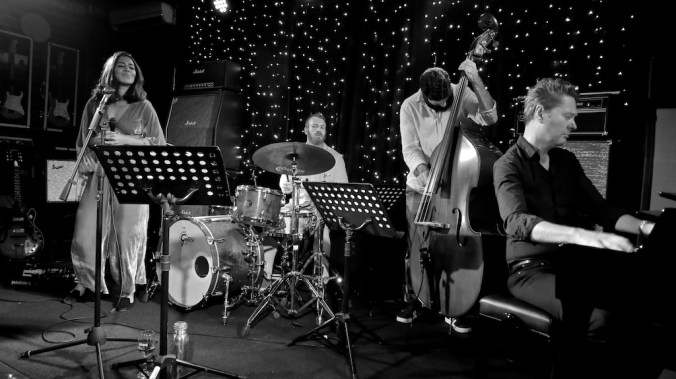
Chattergee (1)Again, the CJC Creative Jazz Club has made good on its promise to deliver diverse and interesting projects.  Last week saw a collaboration between the Bengali born sitar maestro Purbayan Chatterjee and the Auckland based World-Jazz fusion group Takadimi.  What at first glance may appear to be an improbable collaboration – a famous Indian classical master and a Jazz fusion group was, in fact, a perfect alignment.  Having Alan Brown on keys with Cam McArthur on bass and with the nimble, talented Daniel Waterson on drum kit, plus leader Manjit Singh on tabla – we expected and heard excellent music.
These two great improvising traditions, one ancient, the other emerging just over 100 years ago, are able to comprehend each other’s basic forms. Both traditions produce talented and versatile musicians who are thoroughly trained in song cycles, scales, and rhythms. A perfect illustration of this occurred last Wednesday when Maestro Chatterjee and Takadimi decided to create a spontaneous improvisation. With nothing prearranged, it began with an audience member asking about an ancient Greek scale called the Lydian Mode. All of the musicians were familiar with this mode and Maestro Chatterjee said that it was practically identical to the fundamentals of a particular Raga mode. He fingered the scale briefly on his sitar and then asked Alan Brown to form a motif using that scale. Thus began a cross-discipline, cross-cultural musical conversation like few I have heard. 

Purbayan Chatterjee is a Bengali born musician residing in Mumbai. He has an international reputation and has performed in concert halls all over the world. The recipient of prestigious awards including the President of India award and with a discography which includes best selling albums. He was trained from a young age in the Northern or Hindustani School of Indian classical music. Like the famous tabla player Ustad Zakir Hussain (who he has performed with), he has frequently ventured into the Jazz/World fusion space. Auckland’s Takadimi, under the able leadership of the highly respected tabla player Manjit Singh, has for some years been exploring that same fusion space. Putting Maestro Chatterjee together with Takadimi was inspired. Together, they brought transcendent joy to our club and in a troubled world, this is a precious commodity.

The tone of the evening was set by the first offering which was a beautiful meditative raga performed in a classical style on sitar and tabla. I have been listening to Indian classical music since age 14, but I am certainly no authority. To the best of my knowledge, the basics are as follows. There are two main branches, the northern Hindustani and the southern or Carnatic branch. These, in turn, have many sub-genres and sub-styles, especially in the North. Both schools use the raga (usually a 7 note scale) performed over a drone. The structure begins with the Alap (in 3 sections) which is performed without the tabla and is a preparation or gradual development towards a climax. In this first phase, melodic ornaments and shapes are formed.  The second major segment is the Gat (and Dhrupad) which is where the tabla joins in. The tabla introduces the complex meters that characterise Indian classical music and these are called tala (a cycle of weak and strong beats). Improvisation and interplay occur mainly in this second stage. Although the music is referred to as classical it does not refer to a fixed point in time. It is a constantly evolving music and new styles are still being developed within the classical framework.

I have posted an excerpt from the raga and also the spontaneous improvisation piece. This intensely beautiful music brought fitting closure to our tenure at Backbeat. We will miss the staff and the small club vibe, but it’s time to move to our new home, Anthology. The audiences have followed the club to new venues 5 times over the last 11 years. With such great music on offer, I am sure that this will continue. Purbayan Chatterjee summed up the vibe perfectly when he praised the audience. He plays in the worlds great concert halls but he told us that intimate clubs like this, with engaged cheerful audiences, are the best of places. His gift of the raga – perhaps an evening raga, felt like it was performed just for such an occasion. Thank you musicians – see you at Anthology for the All-Star, 3 Saxophone opening night. Click through to the CJC Creative Jazz Club web site.

Kate Wadey @ CJC Auckland

Wadey

Australia produces some fine vocal talents and Kate Wadey certainly fits that category.  Her relative youth is contrasted by a stylistic maturity and when she sings you are transported. She has a way of engaging an audience and of personalising a story. It is a communicated sincerity, a something of herself that hangs in the air as the notes fall. She makes it look easy, but I doubt that mere happenstance lies behind her skilled delivery. It was the little things that caught my attention; the flashed smile during a lyrical punch line as if inviting you to share in a hidden aside. The way she moved from coy to world-weary in an instant – changing the pronunciation of certain vowels or consonants to good effect – and occasionally leaning back on a word.  Holding it just long enough for its import to hit home.

Many vocalists sing ‘The Great American Songbook’ but with such universally loved and familiar tunes, choices must be made with care.  Picking a few favourites and belting them out will only set you among the pack. To add distinction a fresh interpretation is needed. These days that means a reharmonisation or taking an angular approach to the tune. There is another way, however. Make the tunes your own while still approaching them in a traditional way. This is where superior storytelling skills and subtle vocal mannerisms come into play. The ability to inject freshness while referencing the best of what has gone before. She did this, not by mimicking the greats but by communicating the essence of what made those versions timeless. 

As if to underscore this I found myself thinking of Anita O’Day and June Christy. It’s not that Wadey sounded like either, but there they were, living inside her delivery.  That flash of vulnerability in a sideways glance, the vibrato-less hard hitting clean tone, The sass, the time feel, the supreme confidence – it is hard to put into words but it was all there without being overt.  

The other strength was the way the setlist was put together.  Both sets were opened with guitarist Peter Koopman playing instrumental originals. A good warm-up for what was to follow, Wadey launching into a spirited ‘East of the Sun, (and West of the Moon)’ or the lesser known standard, ‘There’s a Lull in my Life’, which was lush and beautiful. After that a composition of her own ‘The Moon Song’ – followed by a stunning rendition of ‘The Song is You’.  It could be risky to perch such beautiful standards on each side of an original but the standards were as much enhanced by ‘The Moon Song’ as the converse.  The last song in the first set, while from the ‘Songbook’, is seldom sung. What a great tune it is; ‘Nobody Else But Me’ (Kern/Hammerstein), and how clever to eliminate verses from the original. In doing this the song was modernised and brought into line with modern sensibilities without needing to change a word.  She also achieved this in the second set with ‘Sweet Loraine’ – singing it woman to woman – earlier referencing the belated passing of the same-sex marriage legislation in her country.  

On tour with her, was expat New Zealander Peter Koopman and it was good to see him in this role. Koopman is popular here and although we have seen him in many guises, never as vocal accompanist. With a musician as accomplished as this, it is a good test to see how they perform in a supportive role. Koopman was superb – never once making it about him and giving the vocalist exactly what she needed – pushing when required of him and fitting gorgeous chords neatly beneath the lyrics.  On bass was Sydney musician Samuel Dobson, alternating between standard playing and arco to good effect, a long time musical associate of Wadey’s.  Local musician Stephen Thomas was on drums and as superb as always. A duo number featured Wadey and Thomas doing ‘Goody, Goody’ (Maineck/Mercer) was a treat.  I will put that up on YouTube shortly – I have posted a cut of ‘Nobody Else But Me’ with this post.  There are a number of very good YouTube clips of Wadey but I highly recommend that you purchase her albums.  ‘Moon Songs’ & ‘A Hundred Years From Today’. 

Wadey (vocals, compositions), Peter Koopman (guitar), Samuel Dobson (bass), Stephen Thomas (drums). The gig was at Backbeat for the CJC Creative Jazz Club, 24 April 2019Kate Wadey

‘Shuffle’ on Tour

Shuffle (6).jpgI reviewed the ‘Shuffle’ album in January and the band is now on the road, sharing its groove throughout the North Island.  As they passed through Auckland I attended the second gig, but this presented me with a problem as a reviewer. When you’ve already done a review, you don’t want traverse ground you’ve covered, and in addition, reaching for superlatives has its limits. During the live performance, the answer presented itself via my friend Stuart.  He and I have had this album playing constantly; in our cars and on our HiFi’s. In my case, I’ve sampled tracks on trains and while waiting in a supermarket queue.  It is that sort of album; addictive to a fault and quickly becoming an indispensable friend in times of need.  Last Wednesday we listened to the first number and as the set progressed, Stuart nudged me and whispered. ‘These are standards to us’ and he was right. 
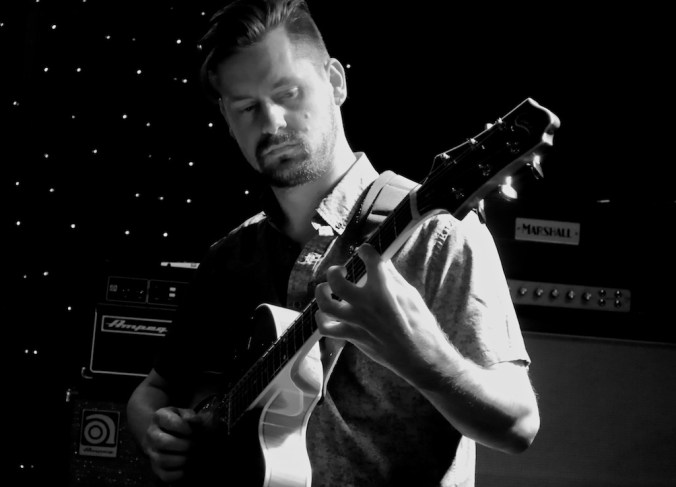
We knew the head arrangements off by heart in the way you do for Stella or Autumn Leaves; everything internalised and ready for triggering before a single note was played. We knew the track order, we knew the rhythms – the tunes and arrangements. There were no official standards on the album but that was immaterial. The Shuffle tunes are memorable, danceable, filled with melodic hooks, and our minds raced ahead of the lines in anticipation; delighting at each newly improvised line; mentally comparing them to the album forms.

This is what happens with Jazz standards. We love the originals but we never want to hear a band slavishly repeating the material note for note. The crazier the interpretation the better. Performing mental gymnastics during an intro and gasping in delight as a key phrase or line hints at the destination.  That Roger Manins, Ron Samsom, Michel Benebig, Carl Lockett and stand in-guitarist Neil Watson achieved this with an album of originals was remarkable. Naturally, such a singularity is not a lucky accident but the result of good compositional skills and fine musicianship. In a troubled month, we have all needed good-hearted friends to lean on and what better friend than a Shuffle. Lockett is temporarily lost again as he wisely has no engagement with social media. Having Watson step in was inspired, as he brought the core Shufflers a new perspective. Crisp drums, deep organ grooves, stinging blues, and crazy horn lines. Shuffle is a wonderful band and I have no doubt that they will bring pleasure for years to come. An assembly of ’emerging standards’ winging their way across the land and demanding acceptance for what they are.  

The January Shuffle Album review is on this blog site or located at https://jazzlocal32.com/2018/12/18/shuffle-manins-samsom/

Definition of a Jazz Standard: Part of the repertoire of a Jazz musician, compositions widely known, recognised by listeners and played often by Jazz musicians.  Maybe Stu and I are not alone here.  These tunes will be performed often and when others recognise them as we do – they will become standards.

Roger Manins (Tenor saxophone, compositions), Ron Samsom (drums, compositions), Michel Benebig (Hammond Organ, compositions), Neil Watson (guitar) @ Backbeat, CJC Creative Jazz Club, 17 April 2019

Lou’ana (Whitney) @ CJC Auckland

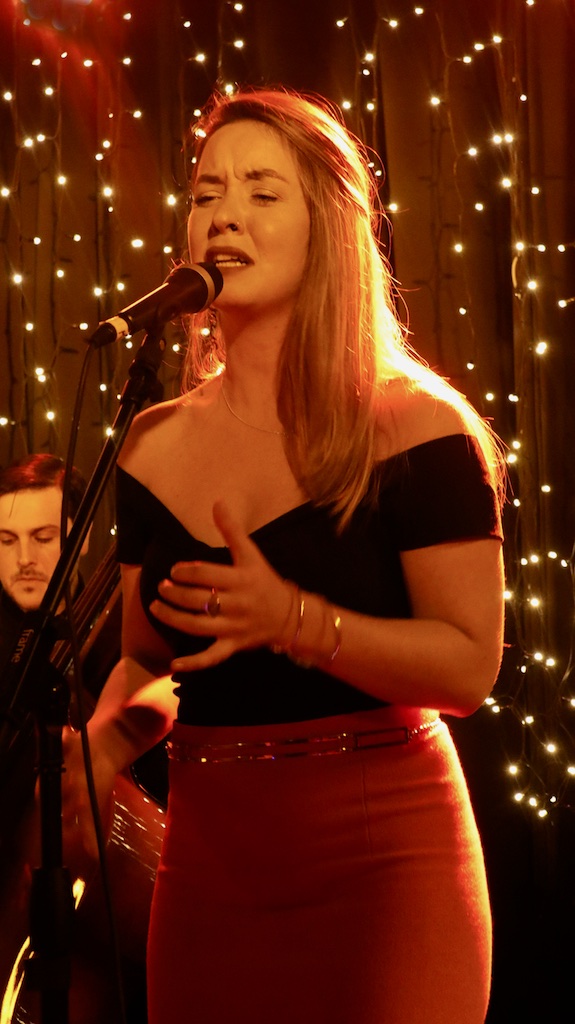
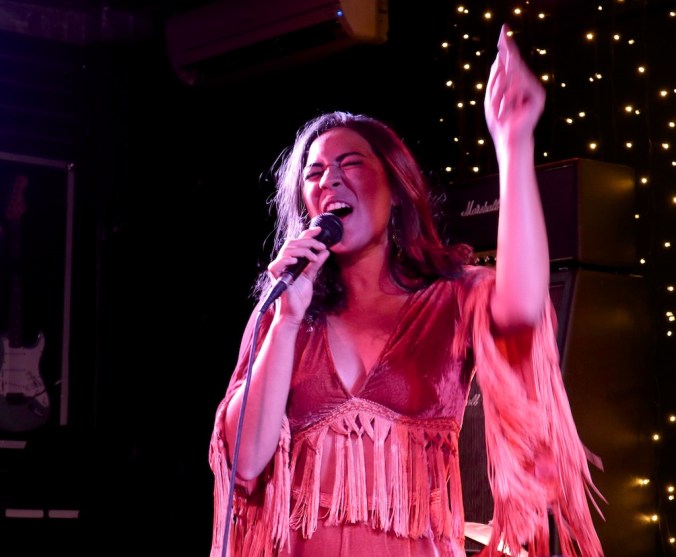
Lou'ana (2)Lou’ana is a vocalist on route to wider recognition. During the last few years she has been performing at festivals throughout the country and she is billed to appear at the Waiheke Jazz Festival this month.  He vocal style has general appeal as it blends elements of Jazz, Soul, and Funk. Her smokey nasal intonation and back on the beat phrasing carry echoes of Amy Winehouse.  Out of this brew comes a sound that is recognisably her own and it is refreshing to see how comfortable she is with that. At the CJC gig, an opener for her tour, she had wisely chosen the material which favoured her preferred register, rather than trying to dazzle with pointless pyrotechnics. In her case, vocal-gymnastics would be quite superfluous as her well-chosen phrasing and smouldering delivery give her plenty to tell a story with.   
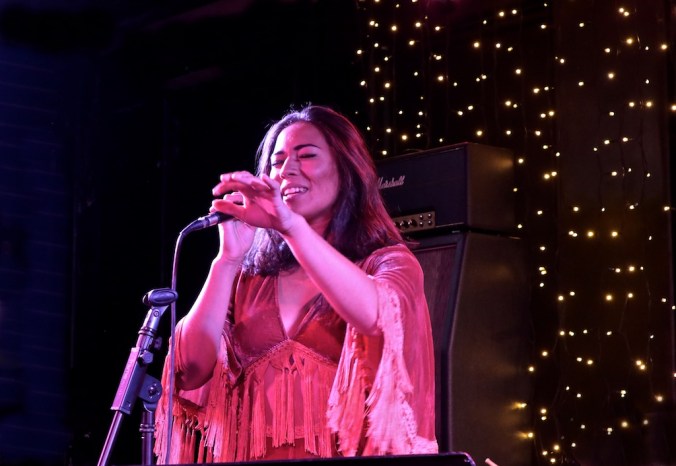
The first set was mostly her favourite standards; often songs that she had heard as a child when her musical family played them for her (e.g. ’Just Squeeze Me’). Her approach to Autumn leaves was particularly interesting as she sang it in Samoan – the challenge being, that there is no Samoan word for Autumn. Her linguistic translation flowed beautifully and the essence of the tune transcended all mere words.  I know that her biggest audience lies elsewhere, but I hope that she will keep working on these Jazz tunes. A smokey voice and a Jazz standard belong together. During the first set, she was accompanied on piano by special guest Kevin Field (and for the last number of that set joined by her regular guitarist Jason Herbert).  Field is arguably New Zealand’s premier Jazz piano accompanist and I could detect his arranging skills in at least one piece.

The second set contrasted the first as it featured a funkier, rockier selection. These are the tunes that undoubtedly please her wider audience. In spite of that, they also pleased her Jazz audience. Who can resist a Hendrix number done well? Especially when the vocalist slams out the opening bars on guitar before giving us a Janis Joplin like rendering of the tune. Who can resist a homespun ‘viper’ song with its Waller like lyrics or a soulful funk number accompanied by soaring guitar, organ and gut-punchy bass lines?  Her bass player was the ever popular Cam McArthur, who switched from upright to electric bass for the second set. Both sets featured drummer Cam Sangster – a versatile drummer, equally at home in the popular funk, Indie rock, and Jazz worlds.

Her first set was great but she visibly relaxed into the music during her second set. Perhaps because of the familiar material and because she had her regular keyboards player and guitarist with her.  These two players, along with Sangster have been alongside her for much of the journey. On keyboards and organ was Dillon Rhodes and with more than a hint of the rock god, Jason Herbert on guitar. Together they had a great sound and one that I suspect will endure over time. The audience however never took their eyes off Lou’ana. She has an allure, and her charm on stage will serve her well as she gains wider recognition.

Lou’ana (vocals, compositions), Kevin Field (piano), Cam McArthur (electric & upright bass), Cam Sangster (drums), Dillon Rhodes (keys & organ), Jason Herbert (guitars),  The gig was at the CJC Creative Jazz Club, Backbeat, Auckland, 27 March 2019

The Turtlenecks @ CJC Backbeat

Garden (1)In the late 1950s and early ’60s, anyone with an ounce of cool wore a coarse-knit black polo neck jersey. While they sat there feeling cool their necks would start to itch and angry red rashes would creep up to their chins. Chins made all the itchier by the regulation chinstrap beards or ‘hip’ goatees.  Then in act of blatant cultural appropriation, Playboy invited the middle class to co-opt some of that hipness. Along the way, ‘Hef’ sensibly revised the polo neck jersey requirement, which morphed into a white cotton turtleneck and slim white jeans. Anyone who has seen David Hemmings in Antonioni’s arthouse movie ‘Blowup’ (one of the best films ever made), will quickly realise that sleazy old ‘Hef’ got it right. The Beatniks, on the other hand, got it woefully wrong. The better option had us wearing scratch free cotton turtlenecks and ‘Hef’s’ crowd wearing the itchy coarse knit jerseys (they never kept them on for long anyhow). So, when I saw that a band called the Turtlenecks was appearing in a Jazz joint and in cotton, I yelled Hallelujah. At last a serious wrong turn is being corrected.
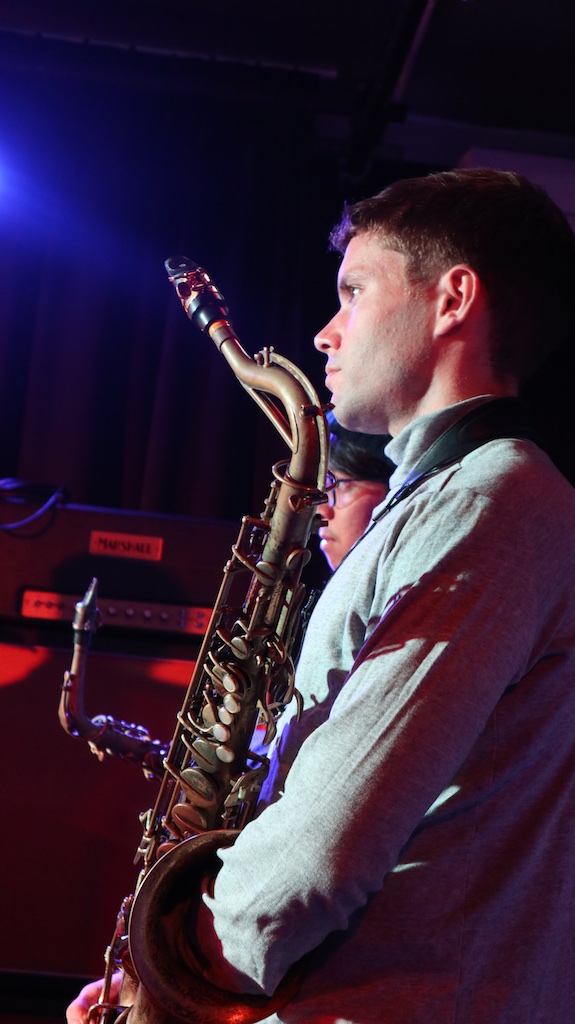
The band was formed by saxophonist Jimmy Garden, a musician who obtained his wings in Auckland, then flew away to join the Australian scene for a number of years. Upon his return he formed the ‘Turtlenecks’, aided and abetted by musicians from his cohort.  I recall his departure well, as a lot of gifted musicians left around then. Thomas Botting, Peter J Koopman, and Steve Barry to name a few. This cohort, be they ‘leavers’ or ‘remainers’, were a hothouse of improvisational experimentation and it is always good to see them back among us. A few of those friends joined him on the bandstand Wednesday night.  

The compositions, all by leader Garden, are catchy and with more than a nod to groove.  There is also a pinch of humour evident and this informed last weeks performance. Although they are competent musicians, they never tried to overwhelm with cleverness.  What was more evident was their joy of playing together and that bonhomie overshadowed all else. They did what (cotton clad) Turtlenecks should. They played without a hint of itchiness.

The band has a number of drum, bass and guitar personnel it can call upon, while the two horns remain constant.  The personnel at the CJC gig were leader Jimmy Garden – tenor saxophone (tasteful), J Y Lee – alto saxophone (always a pleasure to hear), Michael Howell – (a popular local guitarist), Cam McArthur (one of our finest NZ bass players), and Adam Tobeck (a versatile drummer, well-known about NZ). The gig was at Backbeat K’Road, CJC Creative Jazz Club, 20 March 2019

David Berkman – 2019 Auckland

download.jpg

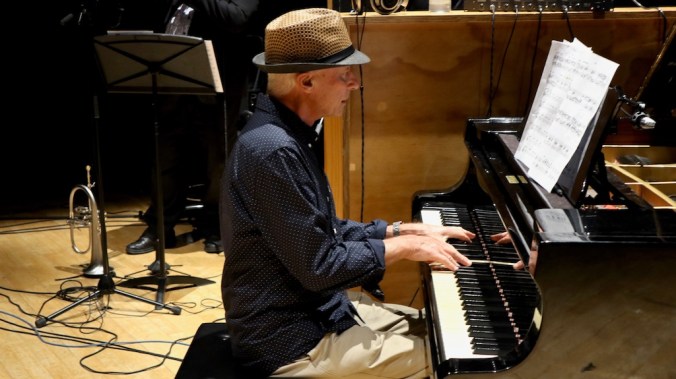
When David Berkman sits at a piano, any piano, he looks to be at one with the world.  In the parlance of Piano Jazz, the guy is a ‘beast’ and his mastery of the instrument is astonishing. Like all pianists of repute he is accustomed to high-end pianos but when he is confronted with an upright, he still makes it sing.  The last time he visited Auckland, the CJC Jazz club was located in the basement of the 1885 building. At that point, there was a Yamaha Grand on offer. Three moves on from then, the club is now in the ‘Backbeat’, a warm amenable performance space in Karangahape Road. The piano there is a Kawai upright. ‘Uprights are fine’, he said, ‘You just play more percussively’. I’m convinced that he could make a thumb piano sing or swing – and so it was on this night. 

The setlist was a mix of his own tunes and a few well-placed standards. Berkman’s tunes are strong vehicles for improvisation, always melodic and by default, they tend to swing like crazy. With one exception, the standards were Berkman arrangements, and while recognisable they came across as freshly minted masterpieces. Paring the flesh away from ‘All the things’ and giving those old bones a youthful lease on life; finishing wonderfully, gently, with the tag. His Cherokee while closer to the original was also a treat, a real burner. Who dares play that these days (more’s the pity)? Only a killer pianist is who, and contained therein was history, innovation and pure joy. With him were three local musicians who he fondly referred to as his regular New Zealand band. Roger Manins on tenor, Oli Holland on Bass and Ron Samsom on drums.

As I watched him throughout the night, I pondered where he fitted in the stylistic spectrum. Of course, he can range across many styles, but the name Cedar Walton sprang to mind. Later I ran into a musician who said unprompted, ‘This guy and his approach remind me of Cedar Walton’. A musician singled out his comping for high praise. “His comping goes beyond the usual, it is elevated to a high art form. Not just supportive but shepherding you into new territory, bringing out things in your own performance that surprise you”. So all of the above and more applies to him. A drummers pianist, a great comping pianist, a hard swinger. It is therefore not surprising that he shares the bandstand with Brian Blade, Joe Lovano, Billy Hart, Jane Monheit etc. He is also a well-respected educator. Anyone who follows the New York scene will already be a fan as he’s a regular performer around the New York Clubs. For the alert, he can sometimes be caught on the Australian and New Zealand Jazz circuit. If you snooze you lose down-under. Missing gigs like this would be categorised under high crimes and misdemeanors.

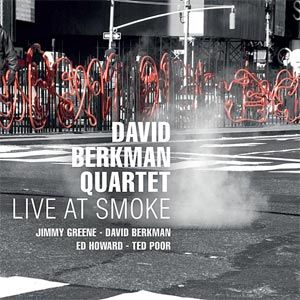
He records on Palmetto and his albums are readily available. Recommended is his latest: Old Friends and New Friends – also, Self Portraits or Live at Smoke. For more information go to davidberkman.com. The gig was at Backbeat, CJC Creative Jazz Club, March 2019 – last photograph by Barry Young

Phil Broadhurst Live 2019

Phil 2019 (1).jpg

We don’t know for certain what the album title is, but ‘The Phil Broadhurst Quintet Live’ seems a likely contender. As an award-winning artist, Broadhurst needs no gimmicky titles to get our attention. His name is enough recommendation. We had a tantalising glimpse of this latest offering last week when the public attended the live recording session at the KMC. In keeping with his recent preference for adding an extra horn, he added trumpet/flugelhorn player Mike Booth to an already talented lineup; Broadhurst on piano, Roger Manins tenor saxophone, Oli Holland bass, and Cam Sangster drums. After an introduction by his partner Julie Mason the session began – mostly new material, a few older tunes and a tune written soon after he arrived in New Zealand.  Unsurprisingly there was a good audience to enjoy the event – this guy is a legend. 

The arrangements were superb and as if to underscore that, the horn players were in top form.  So in sync during the head arrangements that it appeared as if they had been playing the charts for years. They hadn’t. The tunes were melodic and memorable as Broadhurst’s tunes often are. And like all good small ensemble writing, it came across as something more expansive. Experienced writers like this know a few tricks and among them, how to make full use of an available palette.  

Broadhurst put his all into this recent project and I urge Jazz lovers to keep an eye out for its release. Based on what we heard, it will add another milestone to an already impressive catalogue. As a key contributor to the quality end of the New Zealand Jazz scene and an important educator, we owe him a lot.

Phil Broadhurst: piano, compositions & arrangements – Roger Manins, tenor saxophone, Mike Booth, trumpet and flugelhorn – Old Holland, upright bass – Cam Sangster, drums. The recording took place at the KMC UoA theatre, Shortland Streets, Auckland. Recorded by John Kim and Steve Garden, March 2019 

‘Orange’ Chisholm/Meehan/Dyne

a2936707555_16

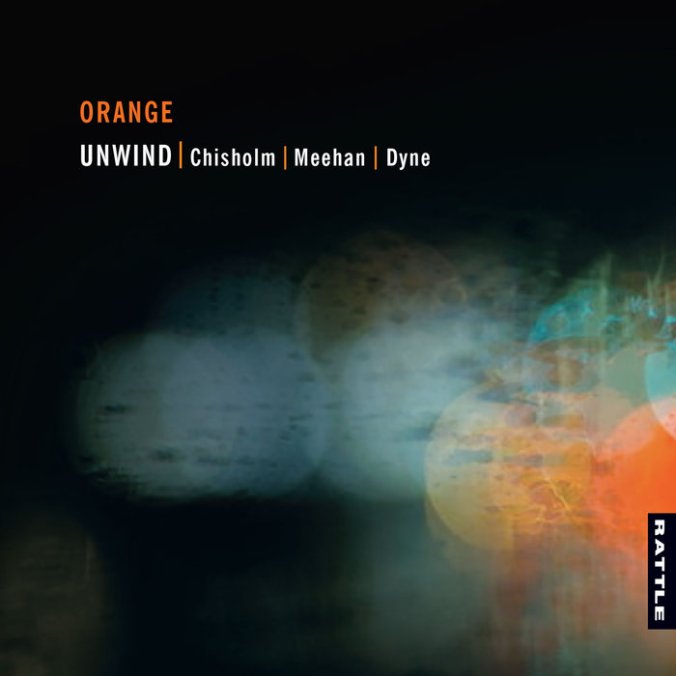
This is the second Unwind album and everyone who purchased the original will be delighted that the project is ongoing. The first gig promoting their new release ‘Orange’ took place at the CJC (Creative Jazz Club) in Auckland last week. For that gig, the trio was expanded to include the well-known Auckland drummer Julien Dyne. Hayden Chisholm, Norman Meehan, and Paul Dyne go back a long way and in spite of Chisholm living in Germany, they have maintained their creative connection. This is an exceptionally fruitful association and it is our good fortune that they maintain it. These are seasoned musicians and able to draw upon a wealth of diverse musical experience.

Chisholm, in particular, brings qualities to the tunes which are unique and compelling; his tone production simply wonderful. He can produce a Konitz like tone but without a hint of mimicry. He is ancient to modern and his avant-garde credentials give him that finely tuned edge; especially evident when tackling reflective tunes like these. In live performance especially, he often embarks on fantastical introductions. Using a Shruti box and augmenting that with his quiet and always amazing throat singing. It works so well because it is applied judiciously. When playing the alto he takes you with him and each step along the way counts, his improvisations having a distinctly narrative quality.  When he plays the audience listens, really listens.

Norman Meehan and Paul Dyne are the perfect foils for Chisholm. They respond to every nuance – feed him lines – but also leave space for the music to breathe. Meehan’s voicings are notable for their delicacy, but counter-intuitively, his minimalism feels expansive. The notes (and silences) fleshing out the endless possibilities while never once crowding the melodic arc. Meehan is soon to move to America and we wish him well, provided that he returns often and with more performances like this one. Although the venue lacks a grand piano, Backbeat’s Kawai is an instrument of quality. Under Meehan’s touch, it rang clear.

Paul Dyne is a respected Wellington bass player and for the Auckland gig, he was joined by his son Julien. Both are exceptional musicians. Dyne senior makes the upright bass seem effortless and this is his forte. Co-led ensembles like this are all about interplay and the quality of Dynes bass work was evident. It was notable because it held the centre without seeming to do so.

The compositional duties were also shared.  Many tunes from the album were played but during the CJC gig, we heard a few recent compositions.  All three trio members contributed tunes and their compositions although very different were complimentary.  I have included a sound clip from the album, but to hear more and to purchase, go to Rattle Records and click-through to Rattles new Bandcamp site.

The album ‘Orange’ is released by Rattle Records. The band personnel: Hayden Chisholm (alto saxophone, Shruti box, throat singing), Norman Meehan (piano), Paul Dyne (upright bass) and for the live performance Julien Dyne. The gig took place at the Backbeat Bar for the CJC (Creative Jazz Club), March 13, 2019


‘Shuffle’ Manins/Samsom

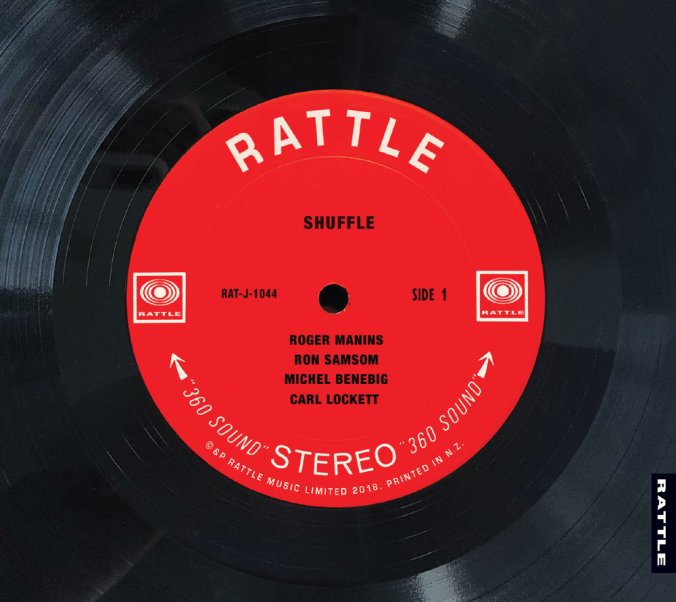
RAT-J-1044+ShuffleSometimes an album blows straight into your heart like a warm breeze off the summer ocean. ‘Shuffle’ is exactly that album. There is an easy-going familiarity to it and you instantly feel good as your body connects with the rhythms. Shuffle achieves that rare feat of sounding both new and familiar. This is the sound that I grew to love many years ago, as practitioners like Jimmy Smith, Big John Patton, Gene Ammons, and Brother Jack McDuff fused Soul and Jazz into a rare amalgam. To appreciate this music you need no acclimatisation; no understanding of Jazz. To appreciate this music you only need one prerequisite, a human heart. It’s ‘groove’, it is sensual and it’s my guilty pleasure.
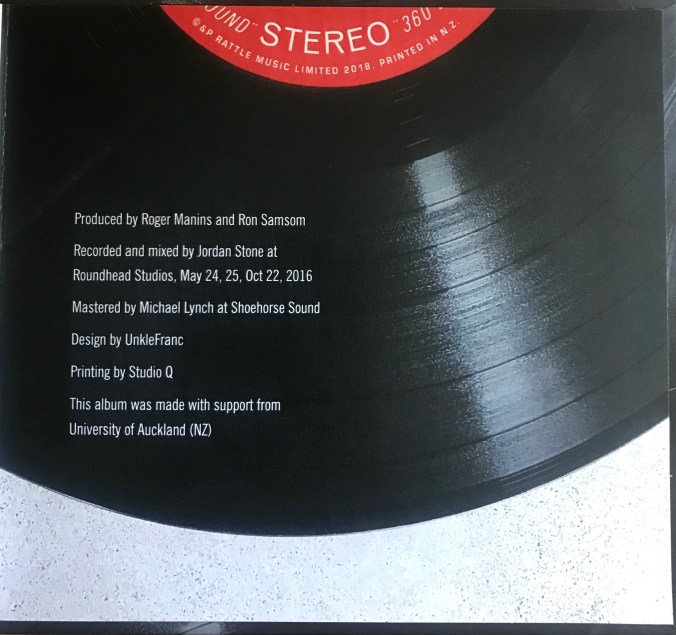
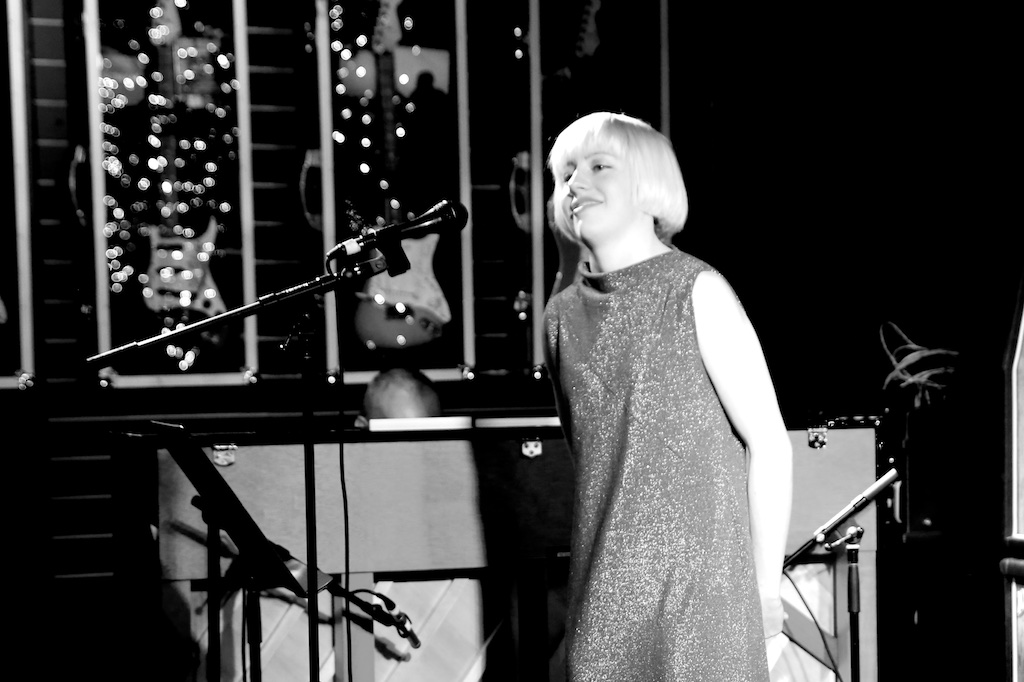
While the album has immediacy, a long story underpins that. Roger Manins, Ron Samsom, and Michel Benebig have played together for many years, and whenever they get together they thrill audiences. At some point, Benebig, the New Caledonian B3 organ master, decided that he wanted to play with the American guitarist Carl Lockett. In B3 circles, Lockett is a legendary figure having played with Jimmy Smith and Jimmy McGriff. The problem was that Lockett had no Facebook presence, no current management, and no listed phone number. Eventually, he was located and agreed to a tour (he has since played with Benebig on a regular basis). During a trip to New Zealand in 2016, the album was cut.

With the exception of two tunes, ‘Blackwell’ (named after drummer Ed Blackwell) and ‘Patton 8’ (named after groove icon Big John Patton), all of the tunes are Shuffles. If you look up Shuffle in a musical dictionary you will see that it has a deceptively complex structure and that it is hard to describe in rhythmic terms (it has an 8 note feel, essentially playing 3/4 over a 4/4 beat to make the music swing). It is sometimes called the ‘flat tire’. My dictionary gives up trying to explain it and simply states, ‘when you hear it you will understand it perfectly’. It has a loping swing and it’s infectious – or as Samsom writes so beautifully in the liner notes, “The Shuffle is the shit for me. It isn’t just flat, it’s broken, and that’s where the music lies. It’s so beautifully wrong’.

The songwriting duties on the album are shared. One tune by Benebig, two by Samsom and five by Manins. The album begins with a slow, smouldering burner by Samsom titled ‘BB gun’ – what a great way to begin an album – this has that Gene Ammons ‘take me home baby’ feel and it sets up the faster-paced numbers to follow. By the time you get to the solos, you are there, in the zone and understanding why Lockett was so essential to the project. What a great composition and how in the pocket every one plays, and then as you progress through the album you realise that every track is a gem.  Manins ‘Shuffle ONE’ (big leg Shuffle), or his ‘Blackwell’ which takes a faster route and gives the soloists a chance to shine while moving at pace. Man, these guys sure can write.  Benebig’s tune is a 12 bar blues ‘Dog Funk Walking’. It made me think of John Mayall at his peak (once upon a time I listened to a lot of John Mayall).  On this track, in particular, you hear the powerful blues credentials of Lockett laid bare. It is impossible to sound more soulful than he and Benebig do on this. The compositions are all great, but so is the playing.

Samsom and Manins have realised something special here and in the process, they’ve showcased real artistry. I have posted two tracks as sound clips – ‘Gout Foot Shuffle’ (Manins) & ‘Dog Funk Walking’ (Benebig). So it’s Christmas and you know what you have to do now. Rush out and buy at least one copy of this stellar album and experience the joy of North & South Pacific musicians playing up a groove storm. Support local music and tell your friends to do the same. You will never have a moments regret owning an album like this. IMG_0462

The album is a thing of beauty thanks to Rattle and the amazing cover designer UnkleFranc. As always I acknowledge the hard work and the deft touch of Rattle’s Steve Garden and ‘Roundhead Studios’ in Auckland. The ‘Shuffle’ Lineup: Roger Manins (tenor saxophone), Ron Samsom (drums), Michel Benebig (Hammond A100), Carl Lockett (guitar). You can buy a copy from your local store, Amazon or better yet from rattle.co.nz or online from rattle-records.bandcamp.com

Lauren Nottingham Tour

 Whenever a young and talented vocal improviser appears on the scene, it piques the interest of Jazz lovers and beyond. Lauren Nottingham fits this bill perfectly and she is definitely someone we should take notice of. She is bound to have an upwards career trajectory over the coming years and with the talented pianist Mark Donlon as a collaborator, this is all the more assured. She has previously toured as co-leader with Donlon, but this time she stepped out as sole leader.

The setlist was a mixture of original compositions and reharmonized standards from well outside of the Jazz songbook; David Bowie’s ‘The Man Who Stole The World’ and The Beatles ‘Lady Madonna’ (McCartney). Both of the latter went down well. There were also a number of compositions by a singer-songwriter Matt Sagen and above all Nottingham’s own offerings. We also heard a tune by her drummer and one by Donlon. Her satirical ‘You can’t spell triumph without Trump’  and ‘Who you are’ felt personal while the composition ‘On a rooftop in China’, composed by drummer Dexter Stanley-Tauvao had a delightfully swinging feel to it. I have posted Donlon’s tune titled ‘Sarabande’ (Nottingham wrote the lyrics for this).  This was a nice band all round with tasteful playing from Beernink and Stanley-Tauvao.

Nottingham began singing publically at around the age of fourteen and before long she was singing in the National Youth Choir. She always had an interest in Jazz and in her senior year won a competition run by the NZSM. Later she completed a Jazz Studies degree with the NZSM. Following that she spent a year in Berlin, where according to her bio, she worked in a Jazz bar and did a lot of listening. For any developing artist, moving out of their comfort zone is important as academic learning is only a starting point; character and authenticity arise from life experience. The harder won and the greater the risks the better the stories. Nottingham through composition and her vocal interpretations has tales to tell us and her original approach is already evident.

Some time ago I heard a different tune by Donlon also titled ‘Sarabande’. I particularly love this latter one, as in Nottingham’s hands, the tune conveys a crystalline and even a lachrymose quality – entirely fitting for the wistful sarabande; that slow dance beloved of Baroque composers and with ancient Spanish origins. My only complaint about the gig – I hope that we get more wordless vocalising next time – we love her doing this (ref. her work with Mark Donlon’s Shadowbird Quartet).

The Band: Lauren Nottingham – leader, vocals, Mark Donlon – piano, Chris Beernink – bass, Dexter Stanley-Tauvao – drums. The gig took place at The Backbeat Bar for the CJC (Creative Jazz Club), November 14, 2018.

Julie’s Gap Year

Julie Mason’s gap year gig came hot on the heels of my returning home from Northern Europe. Unlike Mason (who was in Europe for a year), I was only missing for two months but my fogged brain was telling me otherwise. As I headed for the CJC, using my windscreen wipers as indicators and constantly telling myself that driving on the left-hand side of the road was now acceptable, I congratulated myself. I was back into the rhythms of my normal life. This self-congratulatory phase was all too brief as I soon discovered that I had forgotten to charge the camera and the video batteries. A few hours later an unscheduled power outage occurred, making me wonder if that was caused by an oversight on my part. Luckily, none of the above spoiled an enjoyable gig.

The gig title ‘Julie’s Gap Year’ references two recent and significant events in Mason’s life. Firstly the year she spent in France with her partner Phil Broadhurst during which time she wrote some new material and reworked a few favourites. And secondly, it drew a line under some very tough years health-wise which occurred preceding the Paris sojourn. The latter is thankfully now behind her. At one point during the night, she played a solo piece which referenced her mental health struggles and every one was deeply moved by the honesty and raw beauty of it. Everything she played and spoke about she did with confidence and her skills as a vocalist, composer and pianist were all on display. This was the Mason of old and the audience was delighted.

Her rhythm section was Ron Samsom (drums) and Olivier Holland (bass). Her guests were Phil Broadhurst (piano), Roger Manins (saxophone), Maria O’Flaherty & Linn Lorkin (backing vocals) and for the last number a French accordionist. The night was not without its challenges though, as the power outage could have brought the gig to an abrupt close. Instead under Mason’s guidance, the band morphed seamlessly into an acoustic ensemble and played on in the darkness.  Nothing of the previous mood dissipated during a half hour of darkness and when the club regained partial lighting the programme continued as if the whole thing had been planned.

This was a nice homecoming and In spite of passing through a number of wonderfully exotic places and experiencing interesting music on my travels, it was nice to be back home.

The gig took place at the Backbeat Bar, K’Road, 5 November 2018 – a CJC (Creative Jazz Club) event.

The Baker coordinates

I had been to Amsterdam before but never tracked down Chet Baker. I blame the city for this oversight because it swallows travellers whole, reorders their plans and confuses them with a multiplicity of temptations. You arrive, you drift through the alleys and before you know it, it’s time to check out. This time I was not to be distracted. As soon as I awoke I grabbed an early breakfast, noted down Chet’s address and headed for the red light district. His hotel was located in Prins Hendrikkade, a street on the edge of sanity. A quarter where bored-looking sex-workers knit cardigans in dimly lit shop windows.
At first, I missed the address as the hotel was being refurbished. I wandered around confused and eventually stopped for a coffee. After gulping it down I asked the young barista for directions. ‘Oh yeah – Chet’ he said shaking his head sadly.  I was amazed that he had heard of Chet Baker as he looked about eighteen. He grabbed me by the arm and led me onto the pavement and pointed to a spot directly above us. A third story window was propped half open- and behind it – Chet gazed out in silhouette. “Talk to Pim next door”, he said. “He’s the man to help you”. I navigated my way around a stack of building offcuts and entered a crowded lobby. “Chet Baker”, I said and the man behind the desk beamed in my direction. “I’ll be with you in a minute,” he said, pointing me toward a glass cabinet containing a few items of Baker memorabilia. It was an odd assortment, a copper bugle, secondhand books on Chet, some faux Delftware and two paperweight trumpets.

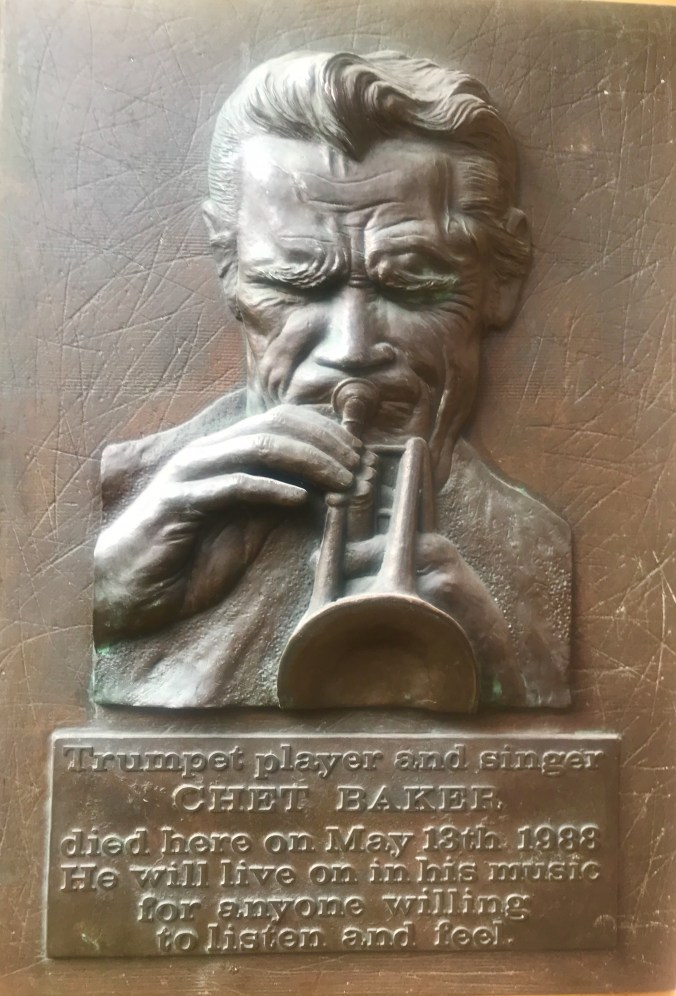
When Pim was free of his duties he led us to a padlocked door which in turn led us to where the construction was happening. Inside, behind the plywood panels and stacked tools was another smaller door which hid a commemorative brass plaque. “He died right here,” he said, pointing to the ground below the plaque. We all stood silent for a time, reflecting on this gifted but flawed genius and his legacy. The beautiful youth with James Dean looks who morphed into a drug-ravaged parchment skull. The trumpeter who impressed Parker, the melodic improviser, the man with the mesmerizing androgynous voice. The man who could break your heart because he fell in love too easily.

Looking up at the third-floor window I pondered over the many versions of his untimely death.  I ran them past Pim who had clearly heard them all before: (1) he had nodded off in front the open window, (2) he owed money and was trying to escape angry drug dealers by climbing across to the next balcony, (3) he was pushed out the window by the drug dealers, (4) he was locked in his room by mistake and was trying to jump to the next balcony (5) suicide. Pim looked thoughtful for a minute and then spoke, “There’s another credible theory” he said as he paused for effect. We were all ears. “I believe that he was abducted by aliens because he was so uniquely talented, and after they had mapped his brain they tried to return him to his room. At this point, a tragic miscalculation occurred as their coordinates were out by a metre. It is rumoured that one of the younger aliens had not allowed for the warping of time during transportation. A rookie mistake that robbed us of his musical genius”.

As we returned to the foyer I asked him if he would accept a tip as he had gone to so much trouble. He nodded happily and I handed him ten Euros. He held it up to the light, beaming as turned it over. “I like this so much that I will take it on holiday with me next week”.  I favour this new theory as it gives me hope that the aliens, appalled by their miscalculation, are working to correct it; planning to travel back in time and return Chet to his third-floor room in the Prins Hendrik. If they do I am certain that Chet and Pim will appreciate each other’s company.

Posted from San Francisco – John Fenton October 21, 2018.

Aldebaran Quartet @ Wallace Arts Trust

Bell Aldebaran (1)While pop music briefly looked up and saw satellites and Rock music headed for the dark side of the moon, Jazz musicians lifted their vision further, aiming beyond Voyager and reaching for the farthest corners of deep space. Exploring those regions is the beautifully realised Aldebaran Quartet, an ensemble which pleases me greatly. It’s not often that I encounter a band like this and I can’t wait for them to record.  Bell Aldebaran (2)
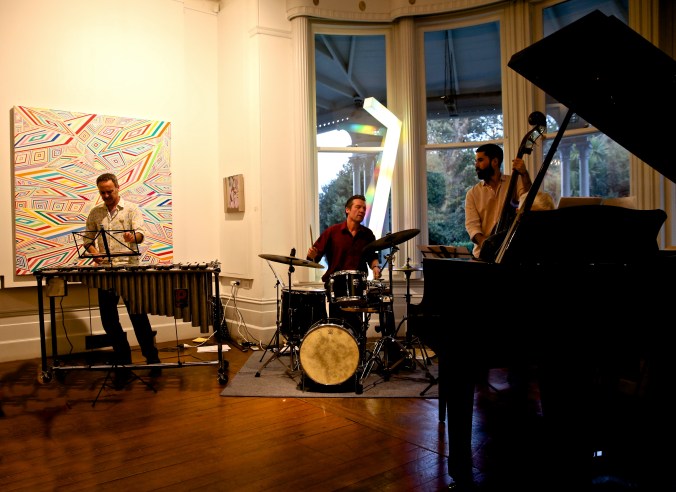
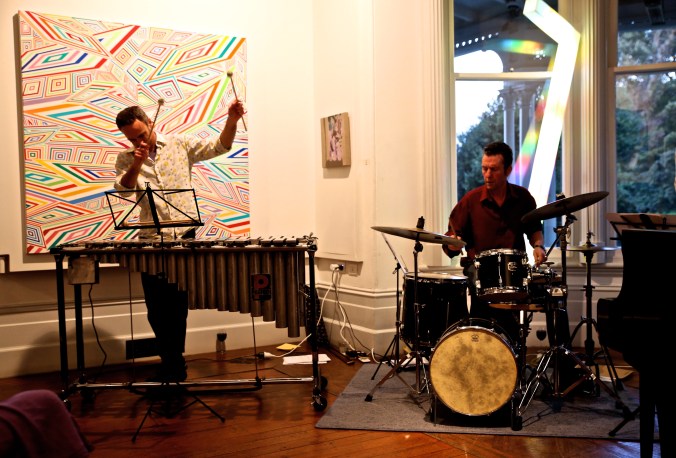
I first reviewed them in March of this year, hoping that this would not be a one-off project and thankfully it wasn’t. They are fresh, modern and original while conjuring up memories of an era that I am still passionate about. 70’s Modal Jazz – Space Funk, Alice Coltrane, Bobby Hutcherson, Bernie Maupin and Eddie Henderson. This was an era of space dreams and old analogue machines. It stretched the imagination beyond known horizons and in so doing, encapsulated the true ethos of improvised music. Happily, this band is true to the original mission directive; reach beyond fearlessly.Bell Aldebaran

Aldebaran is an Arabic word meaning follower and it refers to the giant orange star Aldebaran which follows the Pleiades Constellation into the night sky; sitting somewhere to the left of Orion’s Belt. It has long exited the human imagination. The Egyptians, Greeks Persians and others were particularly fascinated by its presence as it is the largest entity in the Taurian configuration. It is a mere 65.3 light years away from Earth and 7 billion years old. It is therefore entirely fitting that an improvising unit pays reverent homage to the ‘Watcher of the East’.Bell Aldebaran (3)

We caught a piece of luck when vibist John Bell returned to our shores and that was reinforced by the return of drummer Steve Cournane. It also coincided with the return of the pianist Phil Broadhurst who had been sojourning in Paris for a while. Add in either Eamon Edmundson-Wells or on this gig Cameron McArthur on bass, and you have a winning combination. At the Wallace Arts Trust gig, we heard new compositions by Bell and one each by Broadhurst and Cournane. We also heard the premiere of a new Bell composition ‘Corona’, a suite in four parts. I have posted the last two parts as the entire suite nears 20 minutes in length. It is so beautifully composed that ‘Corona’ could easily be extended even further without ever taxing an audience.

If you get a chance to catch this band, do so. The journey that they will take you on is very worthwhile. This was only their second public performance and judging by their form to date, we can look forward to what follows with happy anticipation. The Aldebaran Quartet on this gig was: John Bell (vibraharp), Phil Broadhurst (piano), Steve Cournane (drums) and Cam McArthur (bass). The gig was held at the Wallace Arts Trust 19 August 2018.


Eat Your Greens / No Dogs Allowed

The decision to review these two albums together makes sense for a number of reasons. They were both released on the Rattle Label earlier this year and both are quite exceptional. I predict that both albums will be nominated for Jazz Tui’s next year, it’s a no-brainer. Once again, Rattle has served us up a tasty fare. Albums that are beautifully presented and which compare favourably with the best from anywhere.

IMG_0442‘Eat Your Greens’ is an album by to the popular Wellington pianist and educator Anita Schwabe. It was recorded at the UoA Kenneth Myers Centre in Auckland during her recent tour. Her band also performed live before a capacity audience at Auckland’s CJC Creative Jazz Club and it was immediately obvious that they were in great form. Schwabe normally plays with Wellington musicians and regularly with the Roger Fox Big Band. The idea of recording in Auckland was formed while sharing gigs with Roger Manins earlier and it was with his assistance that the Kenneth Myers Centre was made available for recording.
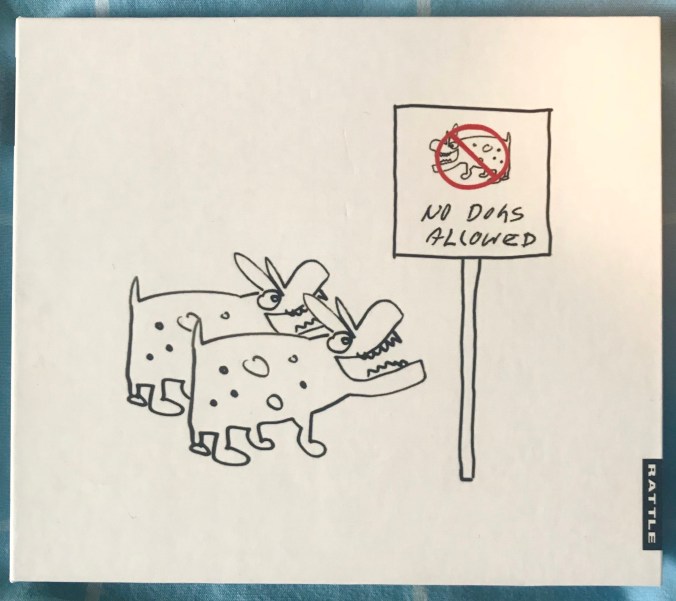
The semi-muted acoustics in the KMC auditorium work well for smaller ensembles and especially when John Kim captures them. Schwabe is a delightful pianist and her swinging feel was elevated to the sublime by the inclusion of Manins on tenor saxophone, Cameron McArthur on upright bass and Ron Samsom on drums. Having such fine musicians working in sync is the first strength of the album; the other strength is the compositions.

The album is a hard swinger in the classic post-bop mould, and in spite of the references to past greats, the musicians insert a down to earth Kiwi quality. The compositions are superb vehicles for momentum and improvisation and the band wastes no opportunity in exploiting those strengths.  In light of the above and unsurprisingly, a track from the album. ‘Spring tide’, won Schwabe an APRA Award for best New Zealand Jazz composition this year. As you play through the tracks you will be grabbed by Manins bravura performance during ‘Anger Management’ or by his sensitive playing on the lovely loping ‘The way the cards Lay’ (Manins is Getz like here); at how beautifully McArthur pushes that little bit harder in order to get the best from his bandmates or how finely tuned Samsom is to the nuances of the pulse (plus a few heart-stopping solos).

It is, however, every bit Schwabe’s album and it is her playing and her compositions that stay with you. I am particularly fond of ‘There once was a Time’ – a fond smile in Bill Evans direction and evocative from start to finish. That such a fine pianist should be so under-recorded is a mystery to me. Thanks to Rattle that may well change. This is an album that Jazz-lovers will play over and over and each time they do they will find something new to delight them.

Anita Schwabe: (piano, compositions), Roger Manins (tenor saxophone), Cameron McArthur (upright bass), Ron Samsom (drums). Released on Rattle

IMG_0441

‘No Dogs Allowed’ is the follow-up to the acclaimed 2015 Jazz Tui winning album ‘Dog’. The earlier album set such a high standard that it was hard to contemplate that offering being improved on. This, however, is not a band to rest on their laurels and the restless creative forces driving their upward trajectory have resulted in another album that feels like a winner. This time around there is an Australian in the mix, as they have added the astonishingly gifted Adelaide guitarist James Muller as a guest. It was a brave move to mess with a winning combination and to expand the quartet to a quintet but anyone who has heard Roger Manins play alongside Muller will know that this addition was always going to work to their advantage.

While Muller has chops to burn and manifests a rare tonal clarity, you will never hear him deploy a note or a phrase needlessly. Here you have five master musicians speaking a common language and communicating at the highest level. Although each is a seasoned veteran and bursting with their own ideas, they harness those energies to the collective and the result is immensely satisfying. It must be hard for gifted musicians to set ego aside this way, but these five did just that.

While the album is the perfect example of Jazz as an elevated art form it is never for a moment remote or high brow. As with the 2015 album, the core Dog members shared compositional duties. There are two tunes each from Manins, Field and Holland and three from Samsom. Their contributions are different stylistically but the tracks compliment. Place Manins, Field, Holland and Samsom in a studio and the potion immediately starts to bubble. Add a pinch of Muller and the magical alchemy is complete. When you are confronted with a great bunch of tunes like this and have to pick one it’s hard. In the end, I chose Manins ‘Schwiben Jam’ for its warm embracing groove. The album and particularly this track connects your ears directly to your heart.

The Album is released on Rattle and was recorded in Adelaide at the Wizard Tone Studios.  DOG: Kevin Field (piano and keys), Roger Manins (tenor saxophone), Olivier Holland (upright bass), Ron Samsom (drums) + James Muller (guitar).


Watson meets Ward @ Backbeat Bar

Watson & WardIt is not often that you attend a gig where a set list covers such a range of styles but still pays due respect to each. If anyone could pull off such a gig; traversing the heights of Monk, Murray McNabb, Frantz Casseus, Bill Frisell and Ornette Colman it was these two. In lesser hands, the trajectory would have faltered, the items come across as disembodied. Here, the connecting threads, however improbable, made perfect sense. The centre held and the arc of the journey was a joyous adventure. Watson & Ward (1)
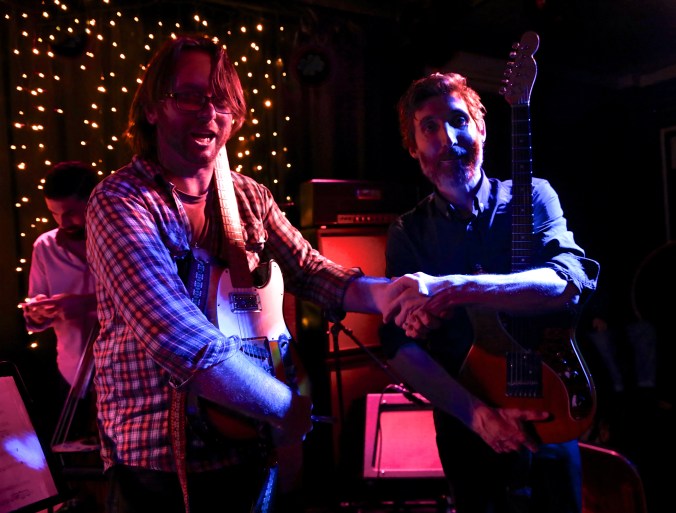
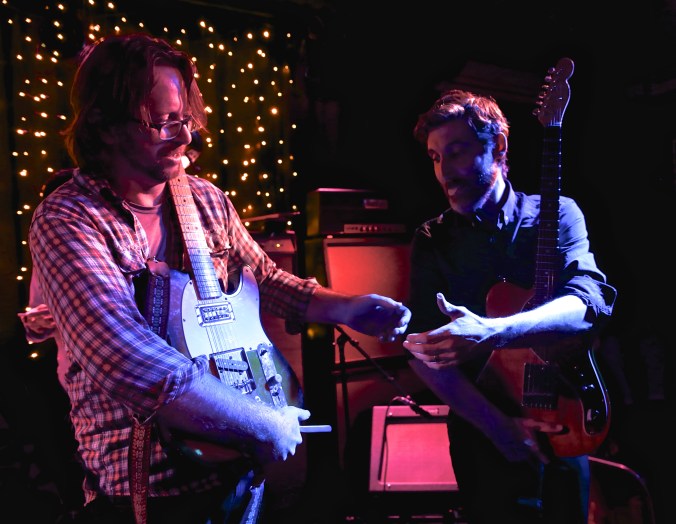
Neil Watson is a musician who musicians flock to hear. He breaks rules and strikes out in directions where few dare to follow. Everyone from Sharrock to Montgomery is referenced in his sound; with a generous pinch of Ribot thrown in for good measure. He sometimes hides in pit bands backing dancing fools, tours with famous country stars, opens for people like Marc Ribot, but whatever he does, he does convincingly. In recent years he purchased a pedal steel guitar and that is now an essential part of his repertoire. He exudes real warmth on stage, both as a storyteller and a musician.

I have only seen David Ward play on the odd occasion but it is always a treat. Like Watson, he is a master of diverse styles and he is particularly noted for his award-winning theatre compositions. He has toured extensively and gained a formidable reputation over the years. In Jazz and alternative music circles, it is the improvising band RUKUS that we mostly associate him with. RUKUS has featured a who’s who of adventurous improvisers such as Chris O’Connor, John Bell, Jeff Henderson, Eamon Edmundson-Wells, Cameron Allen, Finn Scholes & Rui Inaba. Watson & Ward (2)

The pairing of Watson and Ward guaranteed that creative sparks would fly.  It was always on the cards that they would perform together but until now the opportunity had not presented itself. I am certain that this project will develop from here –  logic tells me it has to. The quality of their musicianship was very much on display at the Backbeat Bar. On the three Monk tunes, they either ran unison lines or interwove an intricate counterpoint, and miraculously, the jagged phrases often created a fat Monkish dissonance; each guitarist deliberately landing on different voicings- creating a piano cluster chord effect. This was a quality band as Watson & Ward were backed by Cameron Allen (tenor and Baritone saxophones) Cameron McArthur (upright bass) and Chris O’Connor (drums). Understanding exactly what was required here the three left the lion’s share of the limelight to the guitarists. O’Connor displayed his usual eclectic virtuosity as the drum styles required were many and varied. Watson & Ward (3)

At one point Watson played solo, a composition by Frantz Casseus (a folksy classical guitarist who has influenced the likes of Marc Ribot). Out of his Fender came a delicate classical guitar sound – a moment of whispering clarity and magic. The pair also showcased their own compositions and again these contrasted in a good way. Ward’s ‘Mango’, ‘Shebop’ and ‘Hip replacement’ – Watson’s ‘Trash talkin’ (a Western Swing) and his extraordinarily ‘Murray’ – an apt tribute to the lost lamented and much-loved Jazz musician Murray McNabb. Among the tunes, we heard some heartfelt Americana (rare in New Zealand Jazz clubs and it is especially rare to hear Western two-beat Swing).

The high points were many, but I will put up two clips; The first is a Bill Frisell number ‘I am not a farmer’ from his moody atmospheric album ‘Disfamer’. The second up is a short clip where Watson plays a Frantz Casseus tune ‘Improvisations’ solo on Fender.

The gig took place at the Backbeat Bar, K’Road Auckland for the CJC Creative Jazz Club, 15 August 2018.


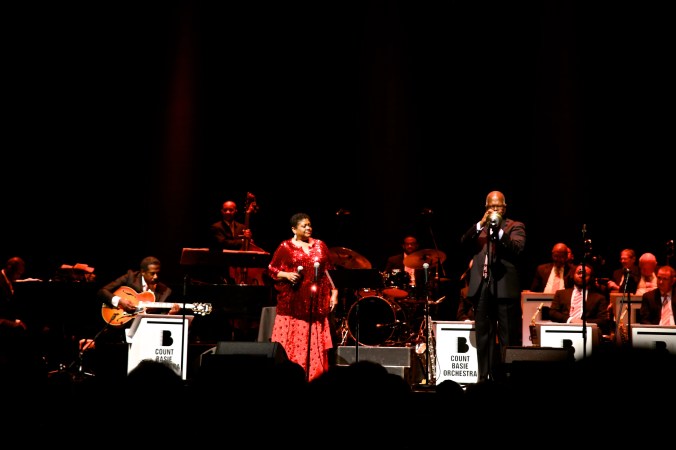
Basie Orchestra’s Auckland gig 2018

Basie (1)There are a number of things that should be on every music lovers bucket list. Experiencing a Basie Orchestra gig live is one of them. This band has the history of modern music in its DNA and after 83 years on the road, they are in their prime.  Goodman was always referred to as the ‘king of swing’ but in my view Basie was a better contender for that title. His brand of swing had it’s nascent stirrings in 1927 when Basie joined Bennie Moten. When that band folded he took many of the musicians with him to form the Basie Band in 1935. The Basie band possessed a unique sound, fueled by a nine-piece line up featuring legendary greats like Lester Young, ‘Papa’ Jo Jones and Walter Page. Johnny Hammond heard them in 1936 and invited them to New York where at his suggestion they expanded to become a thirteen piece jazz Orchestra. At this time they were joined by Freddie Green and others. Skillfully, they incorporated the nimbleness of the Kansas City small ensemble swing-feel into a new sound.
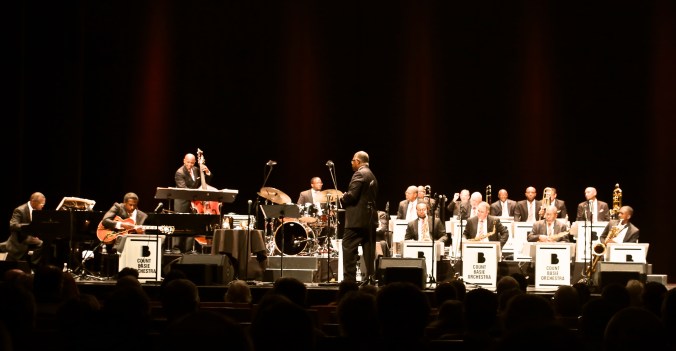
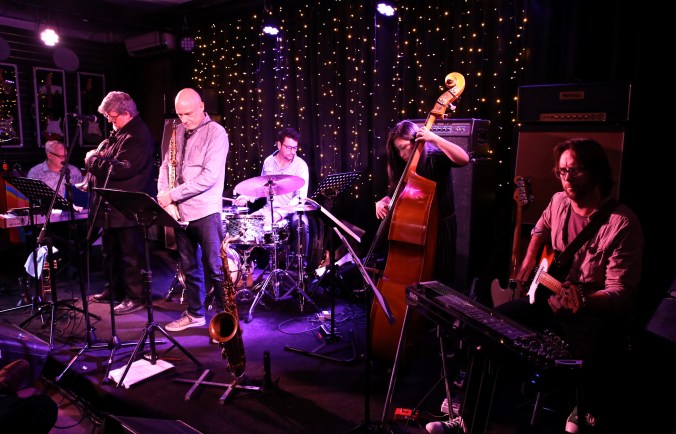
When we listened to the Orchestra in Auckland a few nights ago, every iteration of their 83 years was touched upon. Early and contemporary charts, the gorgeous highly arranged charts from Neil Hefti, Frank Foster and Quincey Jones ‘second testament’ era, some newly arranged material, plus a fabulous tribute to the Basie/Amstrong/Fitzgerald collaborations. Giving added weight to that celebration was the inclusion of vocalist Carmen Bradford. Bradford was originally hired by Basie himself and so she has a long association with the orchestra. Hers is a big voice and an instrument perfectly suited to Ella’s songbook. She is a Jazz vocalist in the traditional sense and it is no wonder that Basie gave her a shot.  At times she sang duets with various of the band members, but it was when she and Scotty Barnhart got together that the sparks really flew. Basie (3).jpg

Barnhart, a two times Grammy winner is the musical director of the Basie orchestra and a featured soloist. His Louis Armstrong tribute captured not just ‘Pops’ but the great man’s contemporaries, an often overlooked cohort who deserve to be examined more often than they are. Modern trumpet styles are a long way removed from the street rich dirty growls and blues-infused storytelling of those times. A sound which always communicated a world of raw emotion and deep humanity. As the tribute tunes moved through the era, we heard everything from the lighter-hearted ‘A Tisket a Tasket’ (a traditional nursery rhyme), to Gershwin classics like  ‘A Foggy Day in London Town’ or ‘Summertime’.  Some of the numbers predated the Basie bands like ‘Struttin With Some Barbecue’ (Armstrong 1927) while others were more contemporary like the gorgeous arrangement of Stevie Wonders ‘Ma Cherie Amour’.

Among the most enjoyable moments were the sensitive trio rendition of ‘Hello Dolly’ (Herman) and the ever wonderful and always compelling Hefti arrangement of ‘April in Paris’ (Duke/Harburg). Doug Lawrence the tenor soloist astounded as always (I was sitting next to a young tenor player and his jaw dropped in amazement during Lawrence’s solos). These musicians are so tight that an atomic blast couldn’t separate them and they swing like crazy.  I guess 84 years on the road will do that.  I have seen this orchestra before and with any luck, I will see it again and again.  There is only one thing you can say in summing up a Basie Orchestra performance; “ONE MORE TIME – please”.

The concert took place at the Aotea Centre, Auckland City, New Zealand, July 30, 2018

Steve​ Sherriff Sextet @ Backbeat Bar

Sherriff (1)This project was bound to happen sometime and it was long overdue. On the night of the bands first gig, the pent-up energy that had long been building found a voice. As they kicked off, the room filled with potent energy and the enthusiasm of the band was met in equal parts by the capacity audience. Steve Sherriff is fondly remembered from Alan Browns Blue Train days and he brought with him an interesting group of musicians. Most of them were compatriates from earlier bands and their familiarity with each other musically paid dividends.
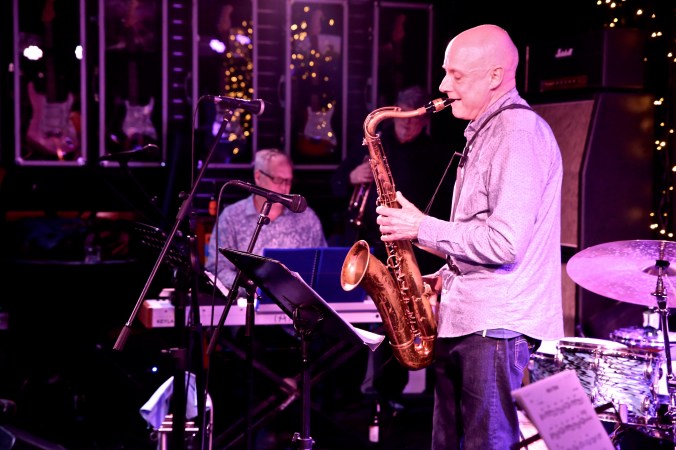
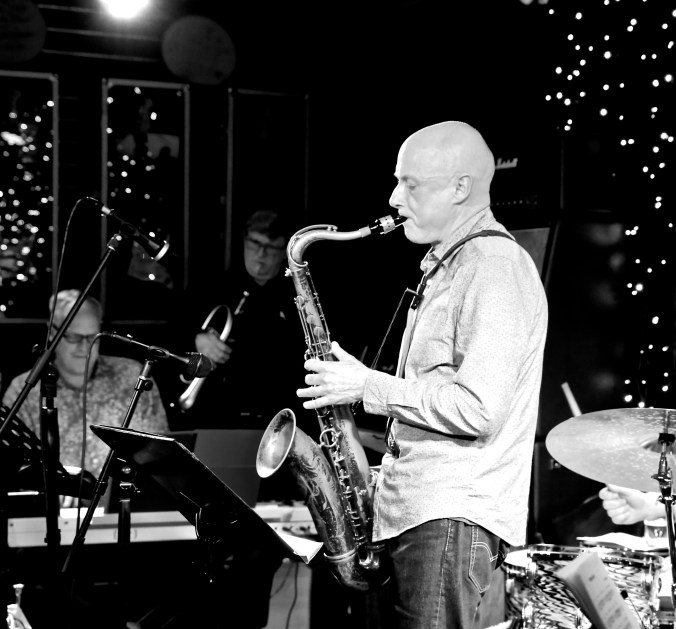
On keyboards, was Alan Brown and this was an obvious and very good choice. Brown has a long history with Sherriff and this was evident as they interacted. On trumpet was the veteran Mike Booth; a musician more than capable of navigating complex ensemble situations and delivering strong solos. Ron Samsom was on drums, another well-matched band member, ever urging the band to ever greater heights as he mixed organic grooves with a hard swing feel. Then there was Neil Watson on pedal steel and fender guitars and Jo Shum on electric and acoustic bass. When you put a group of strong soloists and leaders together there is a degree risk, but these musicians worked in perfect lock-step. As in sync as they were, Sherriff was the dominant presence on stage and no one doubted who the leader was.  Sherriff

Sherriff is a fine saxophonist with a compelling tone on each of his horns. On this gig, he alternated between tenor and soprano (though he sometimes plays alto in orchestral lineups). He has an individual sound and it is especially noticeable on tenor ballads and on tunes where he plays soprano. His other strength lies in his compositions. He and Brown contributed all of the numbers for this gig, but in future, other band members will be contributing also.  This was small-ensemble writing of the highest order – tightly focused – melodically and harmonically pleasing. The faster-paced numbers were reminiscent of hard bop – the ballads memorably beautiful. Brown and Sherriff set a high compositional bar.Sherriff (2)

It was Watson though, who took the most risks and the audience just loved it. At times he appeared to be stress testing his Fender as he bent strings and made the guitar wail. At other times he was the straight-ahead guitarist in Kenny Burrell mode – then on a ballad number, he would gently coax his pedal steel guitar and play with such warmth and subtlety that you sighed with pleasure. It had been a while since I’d seen Jo Shum perform and this was a setting where she shone.

Although the band was only formed recently, they will be ready to record sometime in the near future.  The material and the synergy of the band is just too good to squander.

Steve Sherriff (compositions, leader, saxophones), Alan Brown (keyboard, compositions), Mike Booth (trumpet), Neil Watson (pedal steel and Fender guitar), Jo Shum (upright + electric bass), Ron Samsom (drums). The gig took place at the Backbeat Bar, K’Road, Auckland, for the CJC Creative Jazz Club, July 25, 2018.


Takadimi @ Backbeat Bar

TakadimiKarangahape Road and the precincts around it are a natural home for adventurous and alternative music. If you walk the length, you are assailed by sights and sounds at variance to each other. Taken in their entirety they are oddly compatible. The jumble of colour and the bursts of noise as you pass a Karaoke bar or an uber cool eatery is counterbalanced by the languid notes from Shanghai Lils or the soft chatter emanating from Hookah smoking Kebab shop doorways. Woven into this oddness of streetwalkers and urban cool, are the alternative music joints. Down in basements, under the street or up narrow stairways. Thirsty Dog, Anthology, Audio Foundation, Wine Cellar. And at the top end of the strip, next to the old Jewish graveyard is the Backbeat Bar.  High-quality alternative improvised music resides here on Wednesdays. Takadimi (4)

Takadimi is the brainchild of the gifted tabla player Manjit Singh and the CJC featured his band last Wednesday. This is a fusion band in the very best sense of the word as it fuses styles and complex rhythms with apparent ease. The music’s origins are clear but the tunes are not unduly anchored to them. We are living in an age when classical forms are not nailed down and in the west, the whole notion of musical purity is frequently overstated. The higher purpose of music is to connect on a human level and not to impress by showing off technical prowess. Takadimi connected deeply and spoke directly to our senses. They played improvised music but worked into the complex structures of Indian Talas. It felt as if both forms were respected.

The tunes were all introduced by the leader Manjit Singh, who would establish the rhythm by chanting a tala (or taal); then he would guide the ensemble into the open and freer air of jazz harmonies where collective (or solo) improvisation occurred. I have seen this band before and this felt like a step up. The soloists, in particular, showed a readiness to work with and enjoy the challenges presented by the complex polyrhythms. All of the musicians held the line and made it appear easy – it certainly was not. Takadimi (3)

Underpinning everything were the rhythms and colours provided on the Tabla – an instrument long embedded into the Jazz repertoire. Anyone who has heard John McLoughlin, Jean Luc Ponty and Zakir Hussain together will understand how profound the association can be. It is therefore great to have such a fine tabla player in our midst and it our good luck that he is up for cross-genre collaborations.

The last time I heard Takadimi was at the Thirsty Dog; way down the other end of K’ Road. On that gig the lineup was different, this time the band had no guitar and the pianist Alan Brown had joined them. Singh could not have chosen better. Brown is well versed in the output of East European wunderkind Tigran Hamasyan. Hamasyan often counts in with talas and his beautiful Armenian styled rhythms are at times, very close to Indian forms. Brown is a master of complex rhythmic structures and capable of executing them without ever losing the groove. There were many fine performances but a standout was from Lukas Fritsch. His alto danced expertly through the tunes and for a young musician, he handled the complexities like a veteran.  Takadimi (2)

The clip that I have posted is a beautiful composition by the guru Ustad Fazal Qureshi and arranged by Manjit Singh. The Taal is Mishra Jaati – rendered as a polyrhythmic 7 over 4/4 time. On this track, Brown plays a synth instead of piano.  

Takadimi: Manjit Singh (leader, tabla, arrangements), Alan Brown (piano, keyboards), Lukas Fritsch (alto saxophone), Denholm Orr (bass), Daniel Waterson (drums). The gig was at the Backbeat Bar, K’ Road, Auckland, CJC Creative Jazz Club, July 11, 2018.