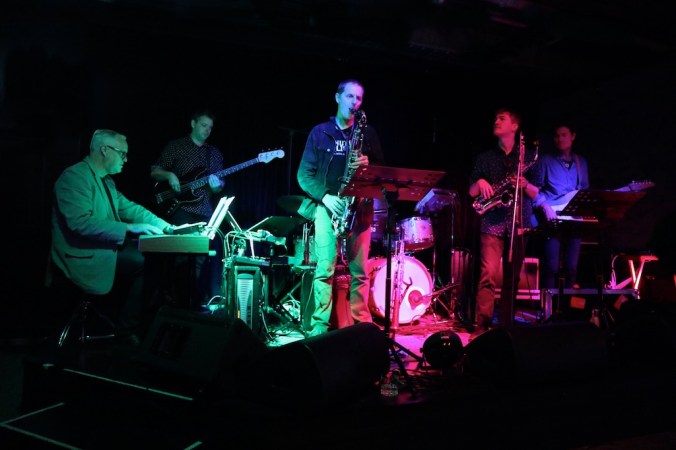
 The history of music is the history of instrument development and from the earliest of times, musicians have expanded the reach of their instruments. The mother of instruments, Al’ Oud was first documented 3500 years ago, but documenting the development of the drum is a nebulous task. It almost certainly arose in Africa and along the way it has undergone a multitude of modifications. On Wednesday there was another waypoint along the continuum under the forward-looking beats of Stephen Thomas. Thomas is a gifted drummer and percussionist and in his hands, the instrument takes on a new life by transcending the mundane. The gig arose out of his last years Masters recital and the focus was on extended technique; combining physical drum rhythms, electronics via a drum pad, prepared drum heads and samples.
Improvisers are the masters of extended technique, but even so, it is comparatively rare to hear these effects applied to drums, winds or reeds in Jazz. The most obvious examples occurred during the 70’s fusion era, but post 70s Shorter and Harris, who carved a credible path, only a brave few have followed. In my view, it requires experienced musicians to do this well and Stephen Thomas is well qualified to realise this project. Done badly it can look like a botched attempt to blur technique deficiencies. Done well it is an opening into a brave new world and another set of tools to build on what has gone before.
True to label, The Stephen Thomas Electric Band was wired and utilised effects, including the horn section. There were various configurations from sextet to duo and each configuration teased out a particular facet of the interesting compositions. The full line up was: drums (+ electronics), two saxophonists (+ electronics, one playing alto and the other playing tenor, soprano or Ewi). There was a keyboard player, an electric bass player and two electric guitarists (+ one guitarist playing prepared guitar). The horns often played in unison as did the bass and keyboard. With the octave or chorusing effect deployed, this made for a rich and full-throated palette of tonal colours.
I have posted two very different tunes from the gig, One is MG40 with the sextet and the other a duo between Thomas and Joel Vinsen (the latter on prepared guitar). If you listen closely to MG40, you will detect the echoes of a distant past. An echo from the 1950s in fact when the conductor Leonard Bernstein attempted to explain Jazz to a very young audience. That footage is hopelessly time-locked as the plummy voice of a high-brow white man ‘explaining black music’ overshadows the message. Notwithstanding, I have no doubt that many of the Bernstein Philharmonic attendees would go on to explore improvised music after hearing Benny Golson and the sextet perform. What Thomas does with this piece is both playful and respectful. Bernstein would get it and laugh out loud. MG40 refers to Mark Giuliani – a drummer on the same trailblazing path.
The other piece I have posted involves the sextet. With Alan Brown on keyboards and Andy Smith on guitar, the piece soars as it morphs into a multi-layered groove piece, one reminiscent of the Fusion era. The overall sound has lots of bottom, with the bass effects and saxophone effects creating a surreal lower register cushion; over which Smith and Brown build towards the heart-stopping crescendo. This was a group of heavyweight performers with Chris Mason-Battley and Markus Fritsch the horn line. And none of it possible without the invention, vision and superior chops of Thomas.
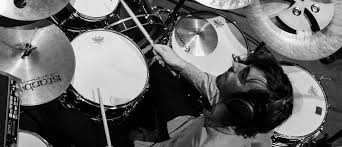
The Stephen Thomas Electric Band: Stephen Thomas (drum kit, drum pad + effects, triggered samples, percussion, prepared drums), Alan Brown (digital keyboard), Andy Smith (guitar + effects), Chris Mason Battley (saxophones, Ewi + effects), Markus Fritsch (alto saxophone), Mostyn Cole (electric bass + effects), Joel Vinsen (prepared guitar + effects). The gig took place at Anthology, CJC Creative Jazz Club, 18 September 2019
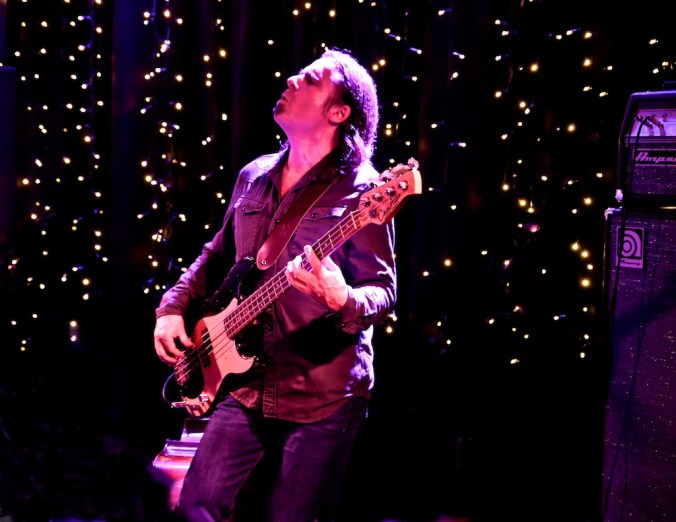
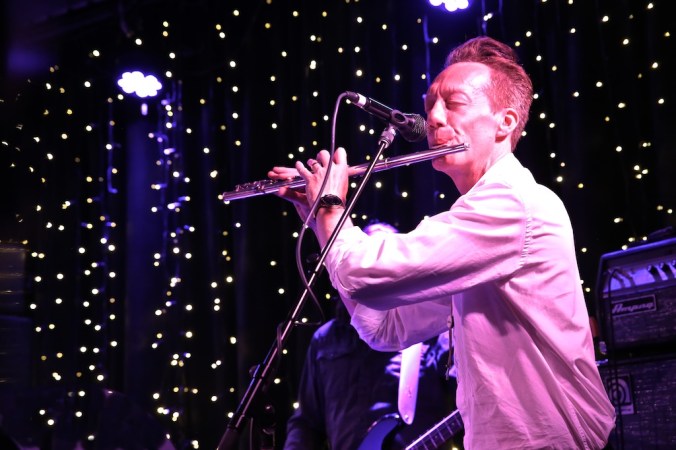

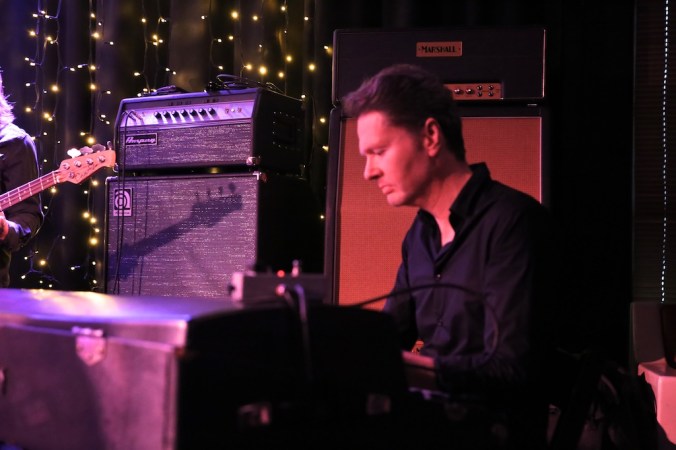 The CJC, sensing an opportunity and knowing that they had only a few days, organised a special one-off Richard Hammond gig and billed it as an all-star event. The programming fell to keys player Kevin Field. Field playing Rhodes, Ron Samsom on drums, Nathan Haines and Roger Manins on saxophones and Marjan on vocals. Hammond alternated between upright bass and electric bass and he wowed us on both instruments. On upright bass, he has a tone to die for; one that only the best bass players locate; on electric bass his lines bite, speaking the language of Jaco or Richard Bona.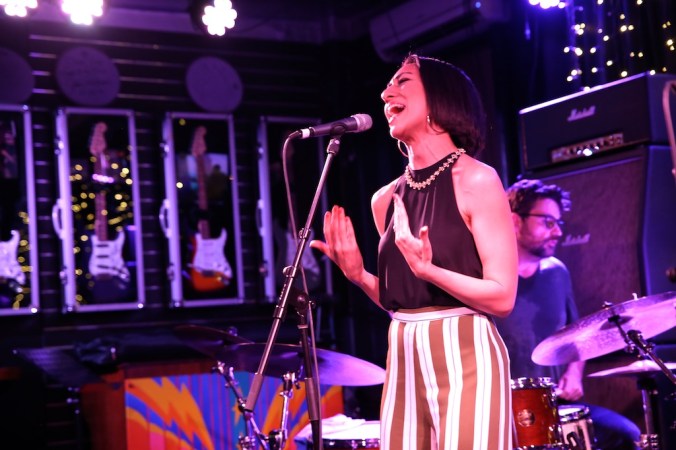
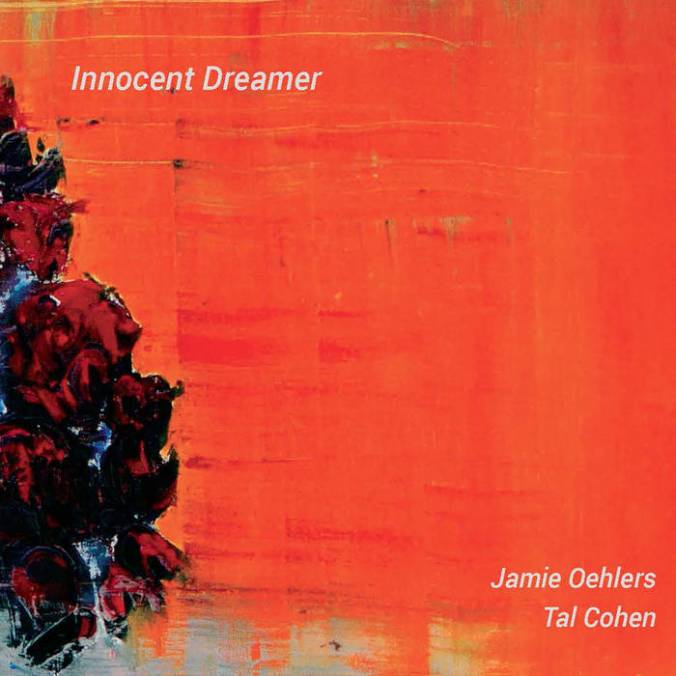
 Jamie Oehlers is a tenor saxophone heavyweight who earns widespread respect. His playing is conversational, and like all good conversationalists, he listens as well as he articulates his own point of view. An unashamed melodicist, a musician of subtlety, a dream weaver with a bell-like clarity of tone. Oehlers tours regularly and we are lucky enough to be on his touring circuit. This trip, he was accompanied by Tal Cohen; an Israeli born, New York-based pianist; an artist increasingly coming to the favourable attention of reviewers; an artist praised by fellow musicians. Cohen and Oehlers have been playing together for years and over that time they have built an uncanny rapport. Out of that has emerged something special; their 2016 duo album titled ‘Innocent dreamer’.
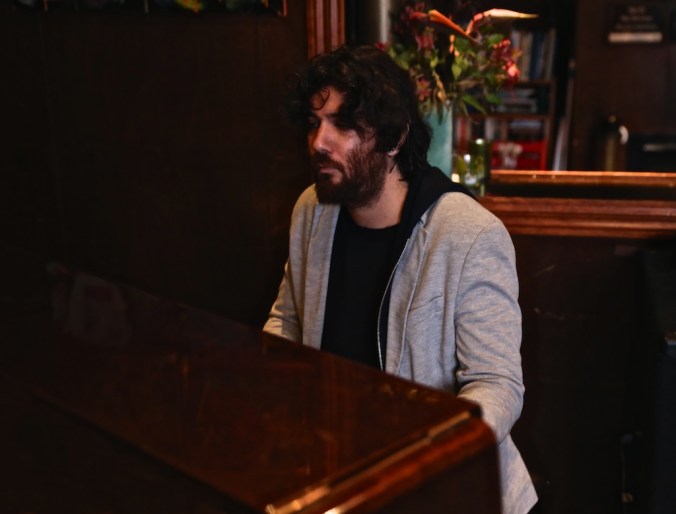 As far as I know, this was Cohen’s first visit to New Zealand and it was certainly his first visit to the CJC. He’s a compelling pianist and the perfect counter-weight for Oehlers. On duo numbers, they responded to each other as good improvisers should, each giving the other space and expanding the conversation as the explorations deepened. Intimate musical exchanges of this type work best when the musicians care deeply about the project. They work best between friends. We saw two sides to Cohen on this tour. The thoughtful, unhurried, deep improviser and the percussive player who found a groove and worked it to the bone. The second half of the gig brought a rhythm section to the bandstand; Olivier Holland and Ron Samsom. Having such an interesting contrast between sets made both halves work better. The second set was approached with vigour; Oehlers digging into a standard, often preceded by a nice intro, through the head and then… boom. This was when the fireworks happened.
 The first set opened with a heartfelt ‘Body & Soul’ (Green) which set the tone. The tune that really took my attention though was Oehlers ‘Armistice’. A beautiful piece conjuring up powerful images and telling its story unequivocally. There was also a nice tune referencing Cohens family. The first set finished with the lively Ellington tribute – ‘Take the Coltrane’ . The second set (the quartet) opened with the lovely ‘It could happen to You’ (Van Heusen), followed by a tune that Oehlers has made his own; ‘On a Clear Day’ (Learner/Lane) – (a recent Oehlers album title). Next, the quartet performed ‘Nardis’ (Evans/Davis) – this was wonderful and it reminded me of the endless re-evaluation and probing of that tune by Evans in his final years. This version did not sound like Evans – it was born again – if any modal tune deserves to live forever, it is surely this one.
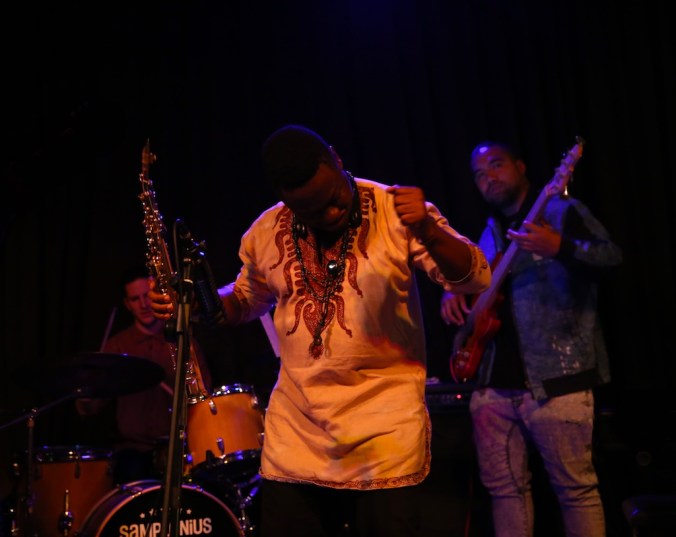
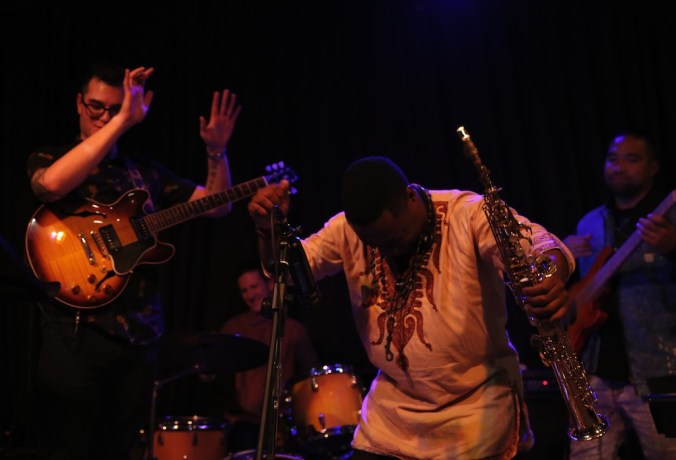 During the apartheid era in South Africa, a heady brew of danceable Jazz bubbled up from the townships. The all white National Party hated it and a game of ‘whack-a-mole’ followed. As soon as one venue was shut down by the police, another would spring up. The music was resilient and hopeful. No racist or repressive regime likes Jazz because it has rebellion, hope and joyous defiance in its DNA. The Zimbabwean born Thabani Gapara imbibed South African Jazz from his earliest days, eventually taking up the saxophone, that most anti establishment of instruments. Since then, he has performed in Zimbabwean, South African and New Zealand projects.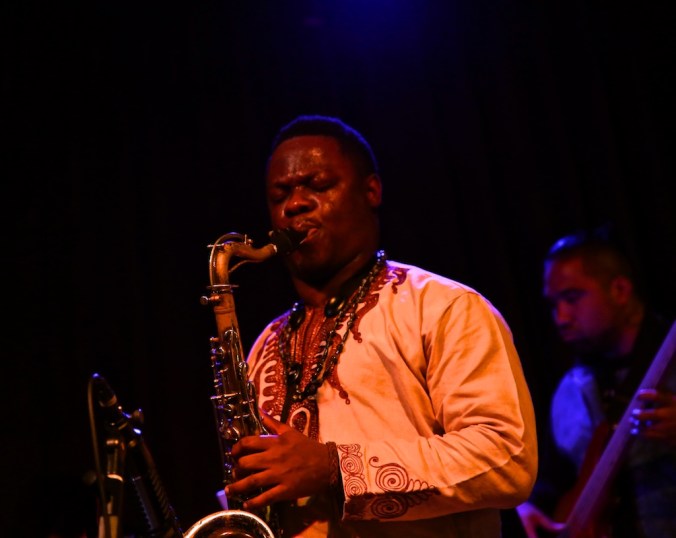


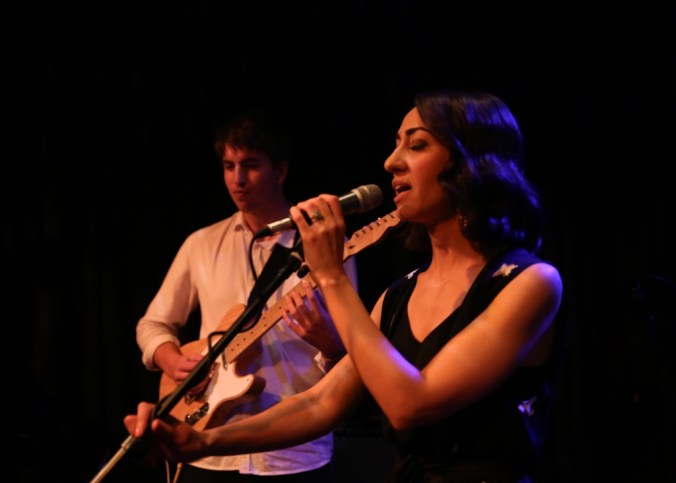 When Marjan stepped up to the microphone, she owned the room from that moment on. Her previous association with the Jazz club had been peripheral, but this gig changed everything. I have sometimes engaged with her about Persian music or Sufi poetry and I have heard her performing in the Kevin Field ‘A List’ band. She is always impressive when she sings, but this was impressive in a different way. It was her first Jazz club gig as a leader and suddenly, here she was delighting a capacity audience, every bit the seasoned professional; exuding an easy-going confidence. It was tempting to think that she had magically transformed herself into this fully formed artist, but her back story offers deeper insights. Marjan is of Persian descent and while this breathes exoticism into her music, it is only a fragment of her story. In truth, she has been a performer for much of her life; an established presence in the world of film, an in-demand voiceover artist, a teacher of music, dance, and drama. She draws on many strengths but on Wednesday they coalesced; a marvellous voice and a formidable stage presence the outcome.
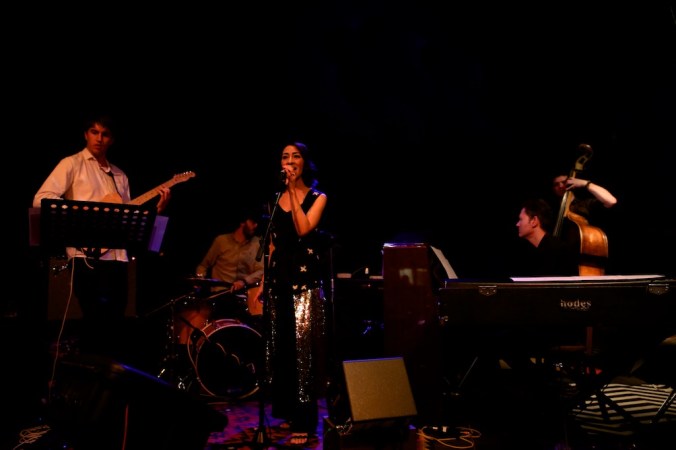 If her choice of a first number was to make a bold statement, then she succeeded admirably. Stepping out from behind the black curtains, accompanied by a shimmering Rhodes, she embarked on her engrossing journey. The first few bars of her ‘Desert Remains’ were straight out of the Sufi Jazz tradition; it was a call for universal tolerance: arising from her belief that music provides a pathway to transcend the banal. Almost imperceptibly, the tune became a love song, settling into new and funky rhythms. This was a nice piece of writing and the rhythmic interplay gave her much to work with. The influences in many of her compositions are generational; Stevie Wonder, Michael Jackson, Brian Wilson and of course her indigenous roots. All of this is filtered through a Jazz lens. Although her approach is modern, she doesn’t shy away from the traditional fare of Jazz singers.
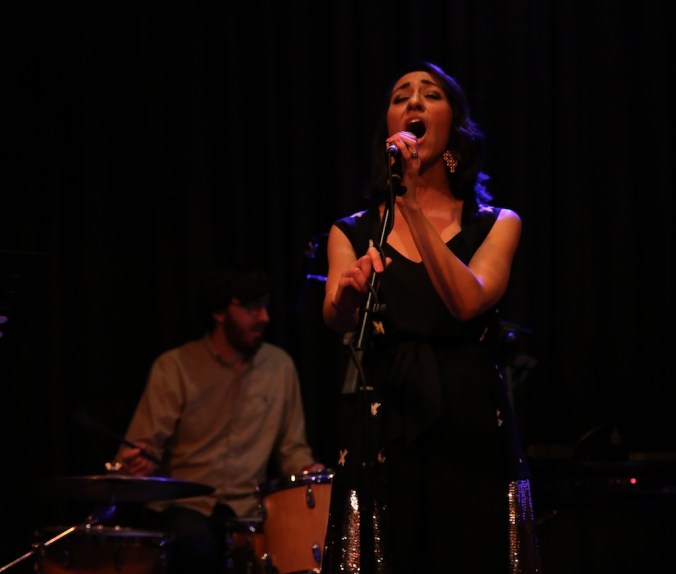 Looking to popular music for new material is not a recent phenomenon for Jazz vocalists. Ella tackled ‘A Tisket a Tasket’, Louis appropriated a multitude of pop songs. The great American songbook is a selection of one-time popular songs. It is what Jazz musicians do; explore, steal and transform. The more diverse the influences the richer the music. When she tackled the lovely Jazz standard ‘Detour Ahead’ (Ellis/Frigo) she owned it completely. That hint of smokey voice, that delicate phrasing; being adventurous while showing deep respect to the composition. It was hard not to think of Norah Jones; an artist who is traditional and modern in equal parts. I would also give her top marks for her set list; the numbers included ‘The look of love’ (Burt Bacharach), ‘God only knows’ (Brian Wilson), ‘I’ll be free’ (Donny Hathaway) and of course her own compositions and one of Kevin Field’s.
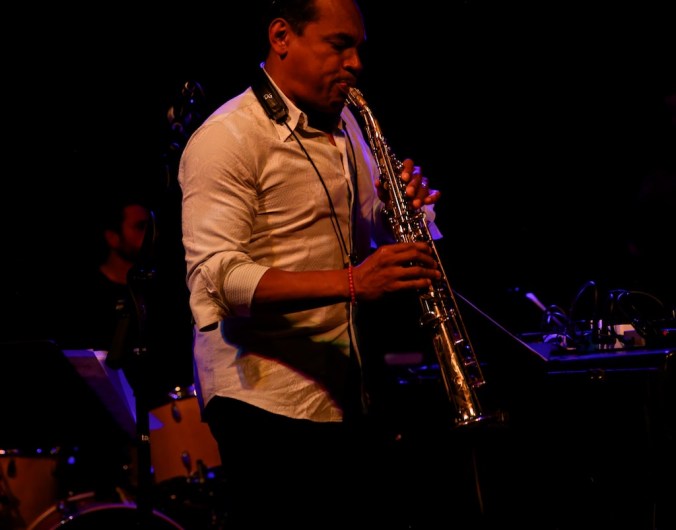 Behind the doors of the beautiful Kauri villa, down the long corridor and the wide descending staircase, past the crush of people eagerly awaiting a significant and unique musical event, we edged forward; shuffled by the crowd, finding ourselves in a surprisingly large room; large enough to hold seventy people, a gorgeous warmly lit room with mirrored walls – an old dance studio brought back to life. As we crossed the room Jay Rodriguez greeted us, behind him, Jonathan Crayford shuffled through sheet music; both framed by an elegant grand piano and an array of horns on stands. I had interviewed Rodriguez earlier and had attended his sell out gig at the CJC Creative Jazz Club. There was never any doubt that this night, like the one a few nights earlier would deliver something special.
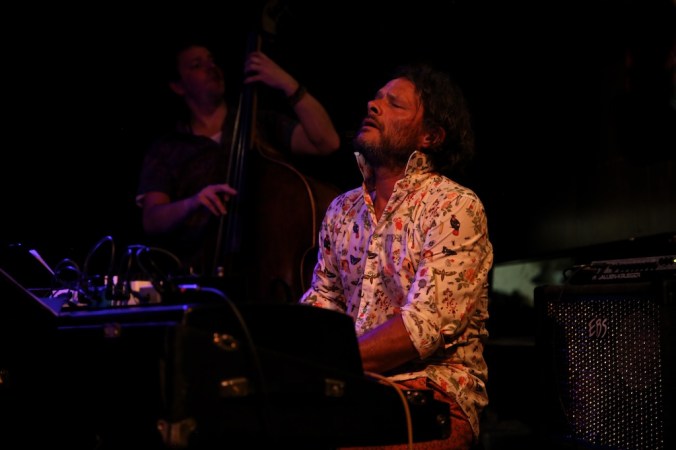 If ever two musicians were destined to play duo format, it is these two. It is a challenging format as the safety nets are gone; it is deep level communication and frighteningly intimate. It requires deep listening and empathy as much as storytelling; it requires conversational dexterity. This was a night never to be forgotten, a night when great music became sublime. Rodriguez and Crayford have been friends for a long time, meeting up in New York in the late 90’s and forming an instant connection; Rodriguez’ ‘Groove Collective’ and other projects the meeting ground. They refer to each other as musical brothers and their communication during the last three days underscored that.
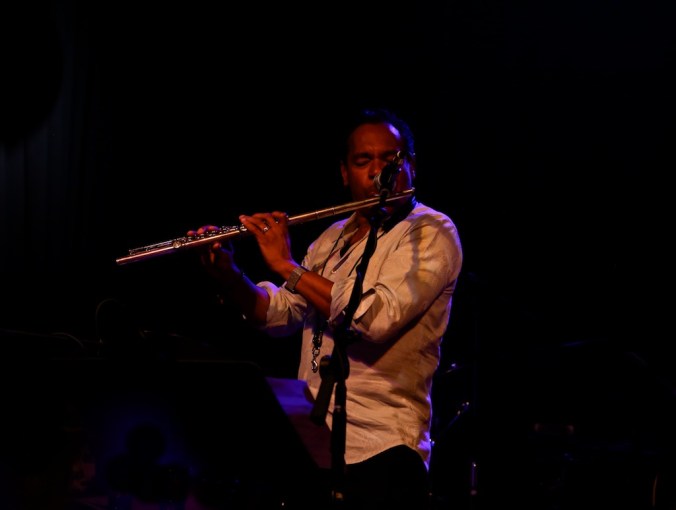 The first time I saw them together was around eight years ago. The gig stuck in my mind for many reasons, but especially because of one tune; Bob Dylan’s ‘I pity the poor immigrant’. It spoke directly to me as it oozed with humanity. When I interviewed Rodriguez I teased out this a theme; pointing to the set lists, the tunes which cut to the heart of the human condition, tunes communicated with deep empathy. For example, their rendition of Keith Jarrett’s ‘The rich (and the poor)’, Coltrane’s ‘Alabama’. The former, a blues, reminding us that the blues is more than just a musical form. In their hands, it informs us about inequality, discrimination, hurt and hope. The human condition again. The latter, ‘Alabama’, moved me to tears. Jazz lovers know this story, but it has seldom been told so well. The piece is based on the cadences of a Martin Luther King speech, a speech given immediately after four little girls were killed as they worshipped, murdered by an unrepentant KKK. The musicians dived straight into the emotion of this awful tale; the incomprehension and anger, then a plea for humanity, an exhortation to do better, the hope; it was all in there.
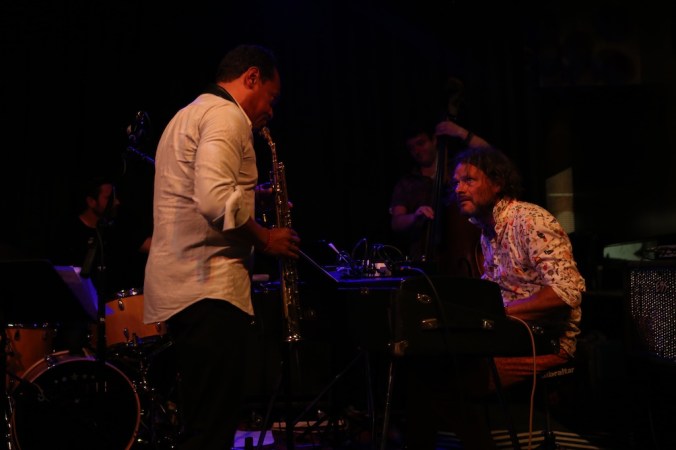 He is a multi-reeds and winds player and his command of each instrument is strong. I asked him if he favoured one horn over another or had been tempted to double less? This was prompted by a similar discussion with Bennie Maupin. Maupin’s answer had cut to the point, “It’s mostly about dedication, hard work and five times the amount of practice”. Rodriguez answer was a little different. “Man, I love these instruments, every single one of them, and I couldn’t abandon any of them”. It is impressive to hear an artist sounding so strong and so individualistic on so many instruments; bass clarinet, tenor saxophone, soprano saxophone, flute (he also doubles on alto and baritone saxophone). His bass clarinet is rich and woody with a tone production like John Surman – his tenor can range from low down raspy bluesiness to the light vibrato-less sound of ‘Pres’; and all of this in a clear authentic voice.
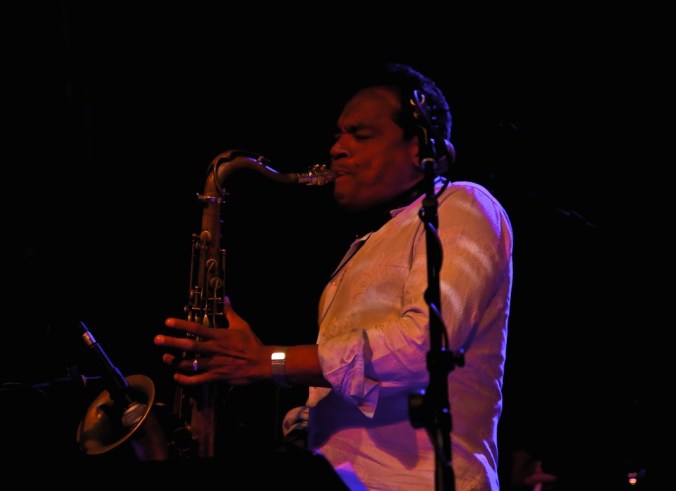 During the dance studio gig, their song choices delighted and astonished. For example, Monk’s ‘Epistrophy’, A Puccini aria, Michel Legrand’s ‘You must believe in spring’, McCartney’s ‘Long and winding road’; all in all an improbable and extraordinary journey. The CJC set list included Yusef Lateef’s stunningly beautiful ‘Morning’, Victor Young’s ‘Golden Earrings’ Keith Jarrett’s ‘Rich (and the poor man)’ – from the Dewey Redman/Jarrett/Haden Impulse era, John Coltrane’s ‘Alabama’ and a lovely original by Rodriguez (I think it was titled ‘Your Sound’). Mostyn Cole and Ron Samsom were amazing as well. They are both fine musicians and a good choice for this line-up.
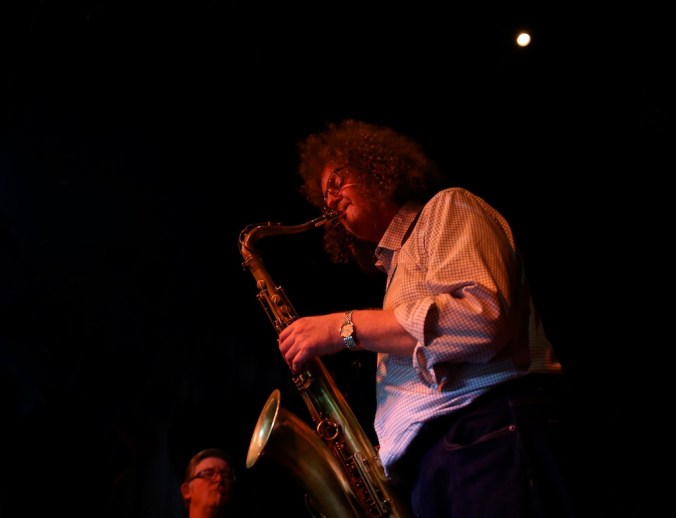 The popularity of ‘hardbop’ is enduring but we seldom hear it on the band stand. The probable reason is its very familiarity; if you play this music you will be judged against the source. There is also the evolutionary factor: improvised music strives to outlive its yesterdays. It is even less common for musicians to write new music in that idiom or to create a vibe that calls back the era. Such an enterprise invariably falls to experienced musicians; those with the wisdom to reverence the glories without it being merely slavish. Booth and Walters are especially well suited to that task. They have the chops, charts and the imagination and above all, they make things interesting. If you closed your eyes during this gig, you could easily imagine that you were listening to an undiscovered Blue Note album. It was warm, swinging and accessible.
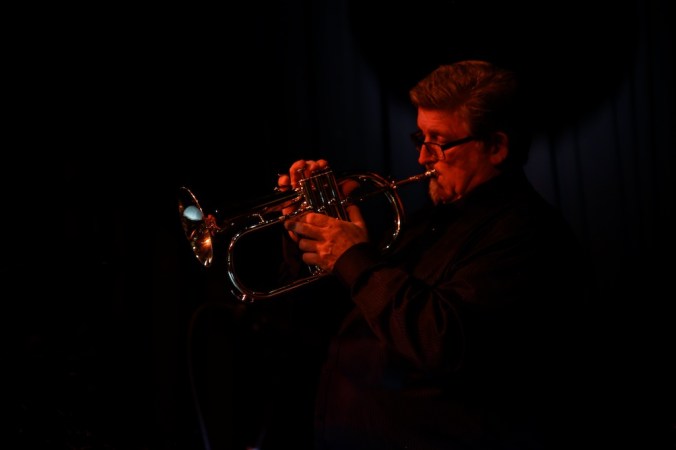 Booth and Walters are gifted composers and on Wednesday the pair reinforced their compositional reputations. Some of Booth’s tunes have appeared recently in orchestral charts. Walters’ tunes while heard less often are really memorable (‘as good as it gets’ stuck in my head a long time ago). These guys write and arrange well. Notable among Booth’s compositions were ‘Deblaak’, “A Kings Ransome’ and ‘On track’. From Walters; ‘Begin Again’, ‘Queenstown’ and ‘Wellesley Street Mission’. There was also a lovely version of the Metheney/Scofield ‘No Matter What’ from the ‘I Can See Your House From Here’ album. I have posted Booth’s ‘A Kings Ransom’ as a video clip, as it captures their vibe perfectly. Booth has such a lovely burnished tone – a sound production that no doubt comes with maturity and a lot of hard work.
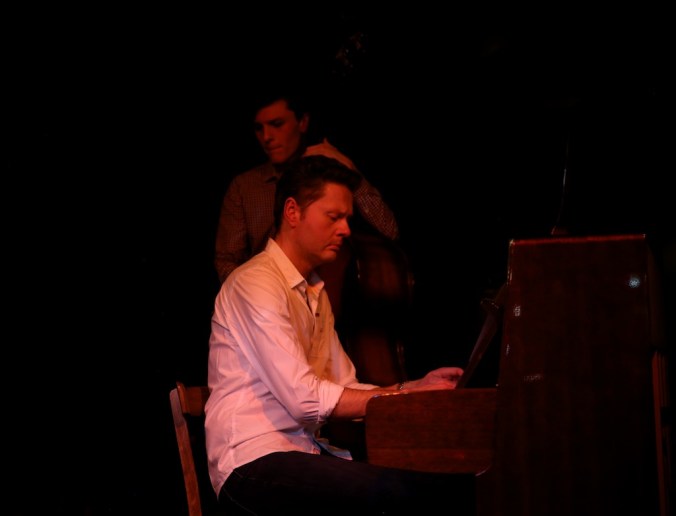 The last number was Walters ‘Wellesley Street Mission’ and I would have posted that, but my video battery ran out. This is a clear reference to the appalling homeless problem which blights our towns and cities. The bluesy sadness and the deep compassion just flowed out of Walters’ horn – capturing the issue and touching our innermost beings, challenging our better selves. I may be able to extract a cut of this and post it later – we’ll see!
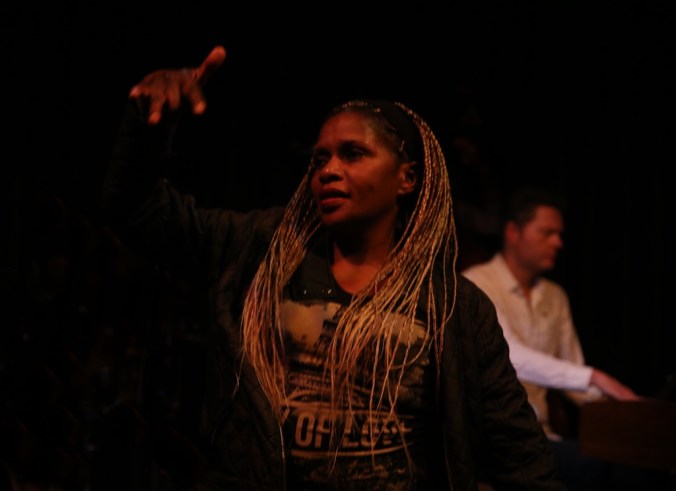 Lastly, there was that mysterious dancer, appearing from nowhere, drawing sustenance from the music until the street swallowed her again.
 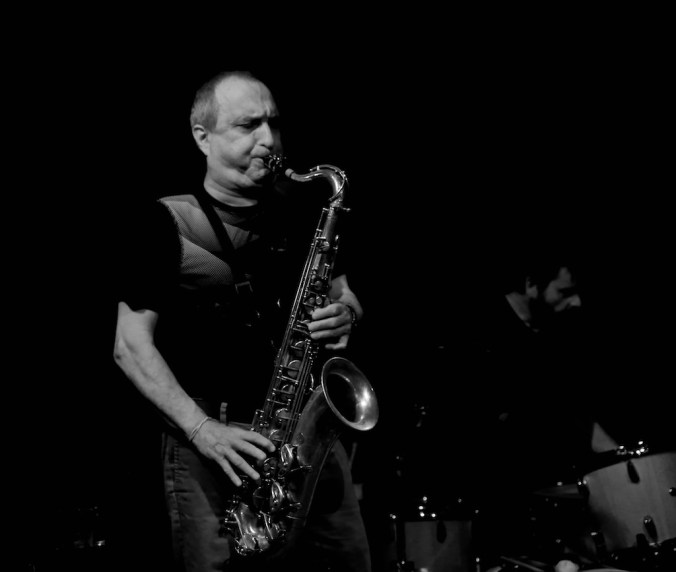 Roger Manins uncoupled the microphone and looked around the club. It was winter outside but you wouldn’t have known it. The windows were steamed up from the heat of a capacity crowd; all eyes were fixed on the stage and the stocky man holding the tenor saxophone. “You know how lucky you are …. right,” Manins asked the audience? A loud cheer went up accompanied by whistles and foot stomping. George Garzone was in town and no one was in any doubt.
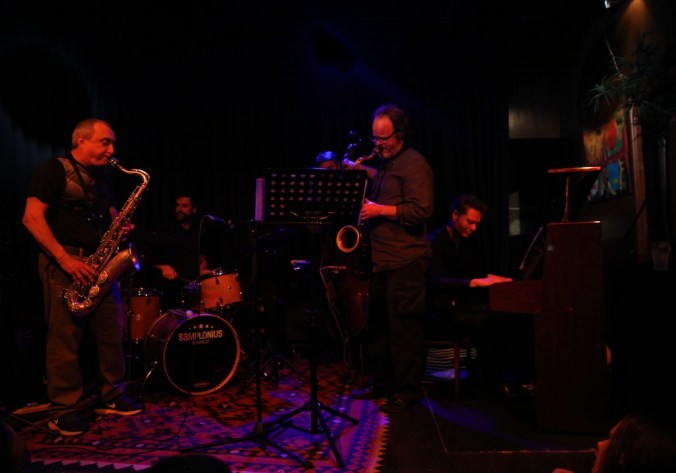 Most of the tunes were in long form and most were Garzone originals. All were perfect for the occasion. As you might expect, the Garzone tunes were springboards for deep improvisation; the heads, however, were memorable and so well-arranged that they stood out. I failed to catch all of the titles because the applause often drowned out the announcements. There was a catchy tune referencing Bourbon Street, A moving tribute to his friend Michael Brecker and a tune titled ‘The Mingus that I know’. They all had pithy stories attached. The two standards were Billy Eckstine’s ‘I want to talk about you’ and a wonderful earthy take on John Coltrane’s ‘Impressions’. I read somewhere that Garzone plays like he talks, in a Bostonian/Calabrian dialect. The cadences and rhythms of speech are part of who we are, it is, therefore, logical that they encompass how musicians express themselves and especially on a vocal instrument like the saxophone.
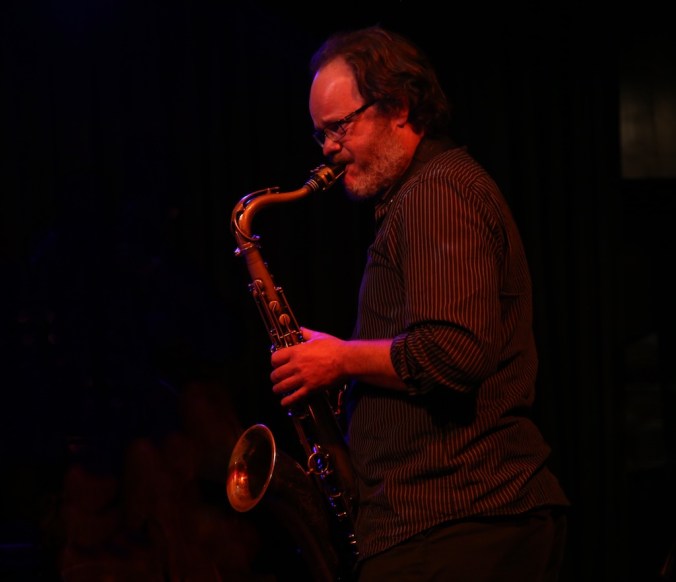 His pick up band were Kevin Field, Ron Samsom, Mostyn Cole and Roger Manins. Like every international who passes through, he heaped praise on the local musicians. Coming from Garzone this really counts. He and Manins go back a way and the synergies between them are evident (the Garzone influence is worldwide and Manins is no exception). Whether playing in unison or in counterpoint, they sounded right together – tenors who knew just how to compliment or when to keep clear. This was a very big sound and when trading fours they cajoled each other as friends might. The rhythm section was energised as well; Cole, Samsom and Field providing rhythmic and harmonic trickery. And at one point, ‘Hey great, I heard some Salsa in that solo’, said Garzone looking in Fields direction.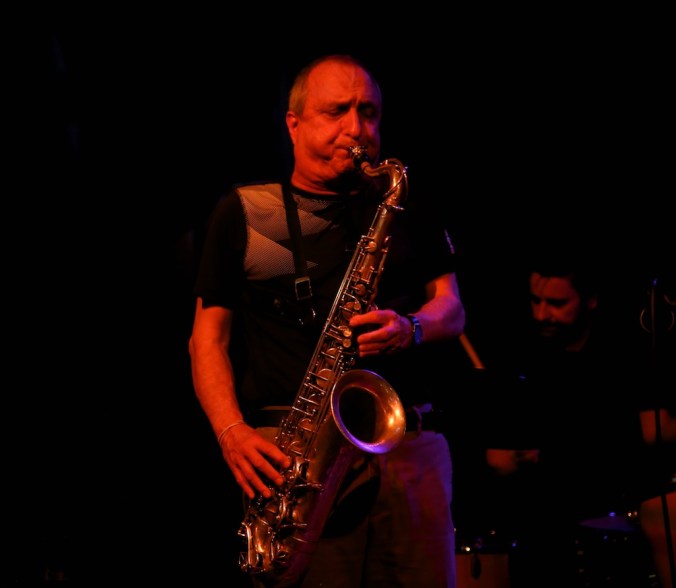
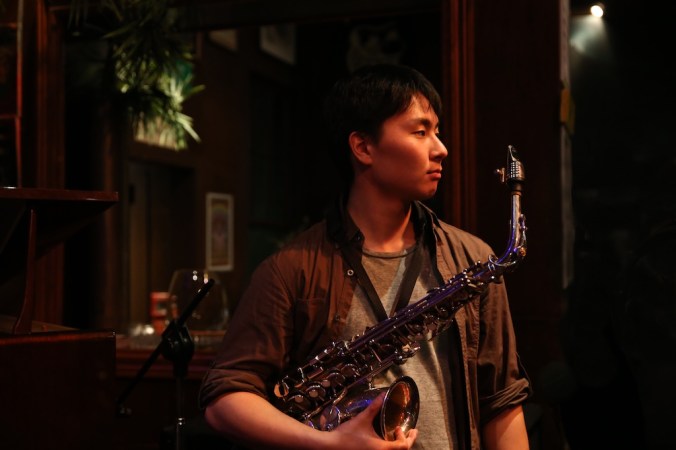 Last week brought us another emerging artist’s gig and this time it featured a Wellington band followed by an Auckland band. Each brought different aspects of improvised music to the bandstand and in a very nice touch, jammed together at the end; a happy meeting place between approaches. With so many international acts scheduled over coming months, it was great to see these young emerging bands given a shot: Again, this was good programming by the CJC.
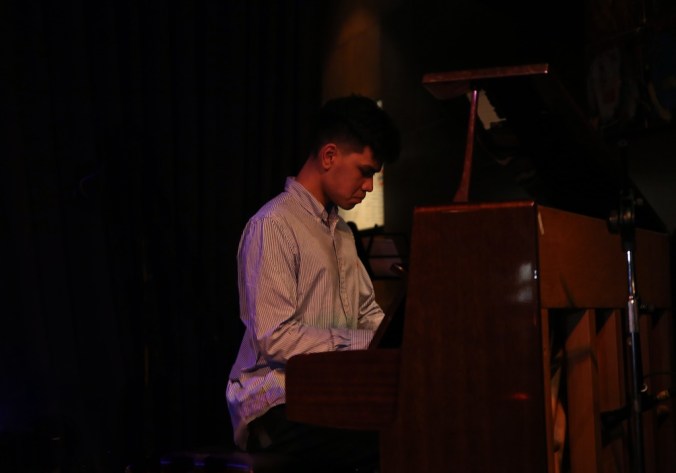
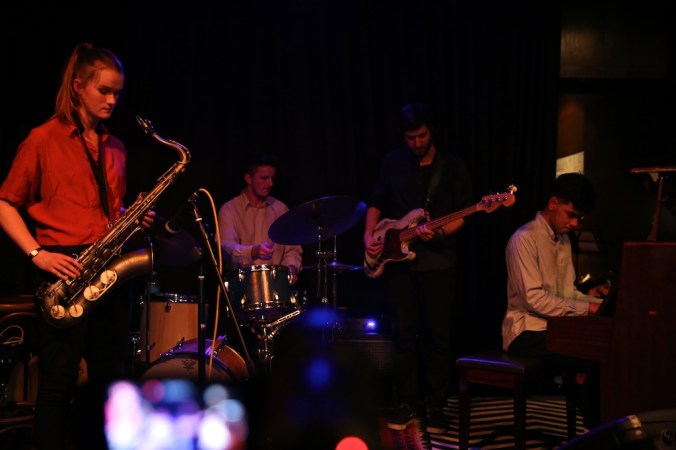 The Leo Coghini Quartet from Wellington took a straight ahead approach and it was obvious from the first number by Coghini, a solo rendering of ‘It Could Happen To You’ (Van Heusen/Burke), that he was an interesting pianist. He is classically trained, but with a good feel for swing oriented tunes. There were some nice originals in the set, but they were most comfortable on standards. I particularly liked the way they played Parker’s latin infused classic ‘My Little Suede Shoes’, also Kenny Garrett’s ‘Wayne’s Thang’. Both were approached in interesting ways (especially the nicely phrased Parker tune). The last number the quartet played was Stevie Wonders swinging groove classic ‘Isn’t She Lovely’ (which I have posted).
  In relation to ethnicity and gender, the modern New Zealand Jazz scene is increasingly reflective of the wider population; It is, therefore, good to see women picking up instruments that were once regarded as being exclusively in the male domain. Louisa Williamson was up front on tenor. She overcame some initial nervousness and played well. The other band members were electric bassist Zane Hawkins and Jeremy Richardson drums (both accomplished players).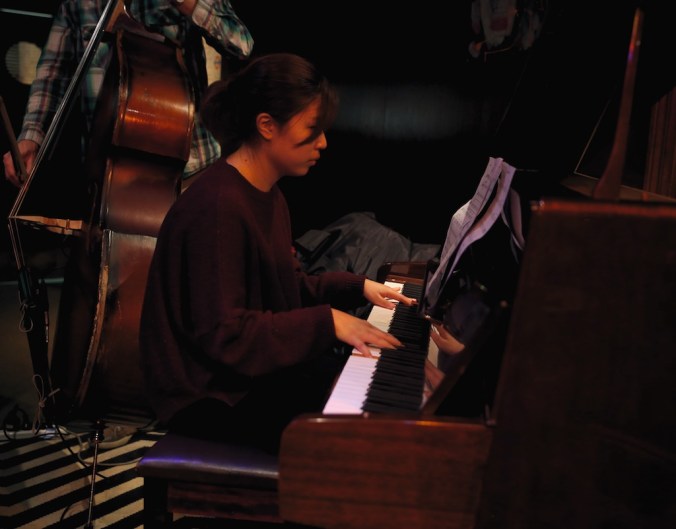
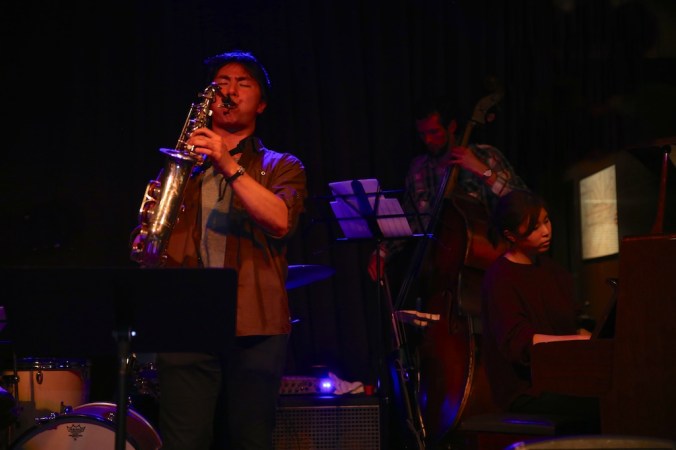 The tune ‘Within Hymn’ had clear references to Coltrane, but it was also interestingly modern. Although there were distinct parts to it, the piece made more sense as an entirety. It began with a bold statement on the horn, then unwound as it momentarily descended into chaos; next came the body of the piece, a building story, a probing at an idea, then changing again and ending with a climax. None of this would have been possible without the right support. Crystal Choi’s percussive chromaticism as she stabbed at the keyboard, the fourths, dissonant flurries; sometimes swinging as if to provide a counterbalance. Her solo was immaculate and each time I hear her now I’m amazed. Watching her musical journey encompass the avant-garde end of town and everywhere on the way is a treat.
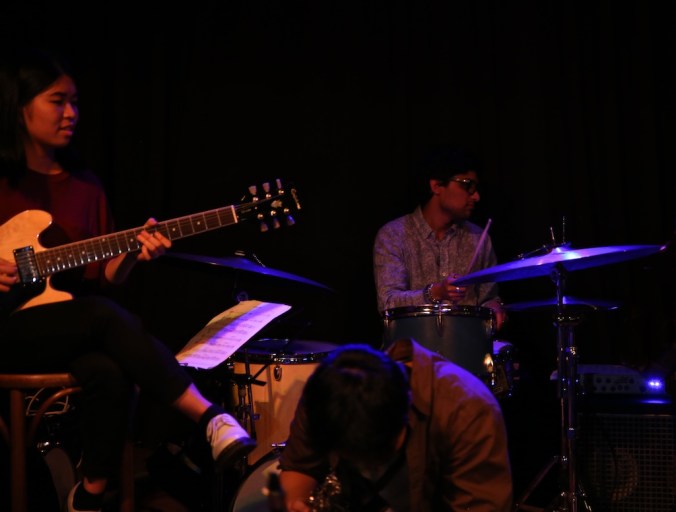 It was not just Choi who made this work, but Denholm Orr and Dean Rodrigues as well. Watch the clip through and judge for your self – these guys are amazing. Now a few bars of arco bass, now free or walking bass, and all the while, edgy polyrhythms dancing underneath. I was also pleased to see Kathleen Tomacruz on guitar – a very credible first gig for her.
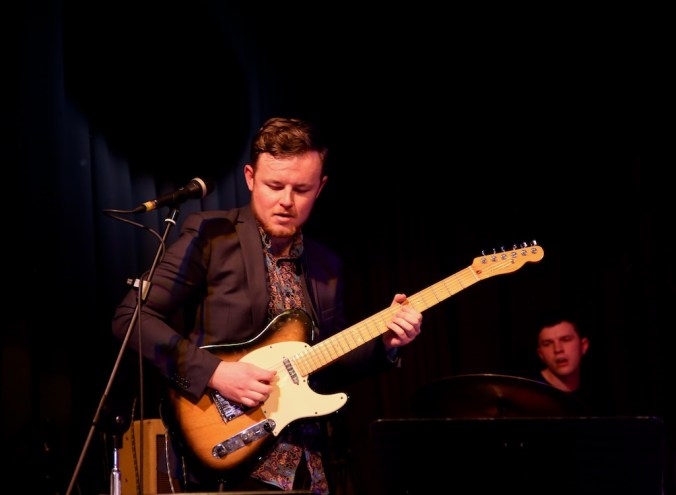 During the first half of 2017, a significant number of respected international artists and established local artists appeared at the CJC Creative Jazz Club. While everyone enjoys such a cornucopia of riches, it is also important to keep sight of emerging artists, those who are just below the radar. No local venue manages to showcase the rich diversity of improvising talent as well as the CJC. This is no accident, as there is a guiding philosophy behind the programming of gigs. No artist, however good, gets an ongoing residency; the gigs, therefore, are different every week, are identifiable projects, and this keeps the audiences engaged. An important part of this is showcasing emerging artists.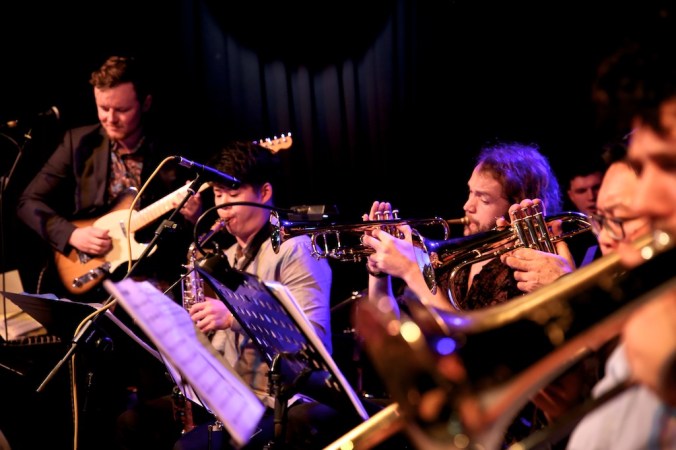
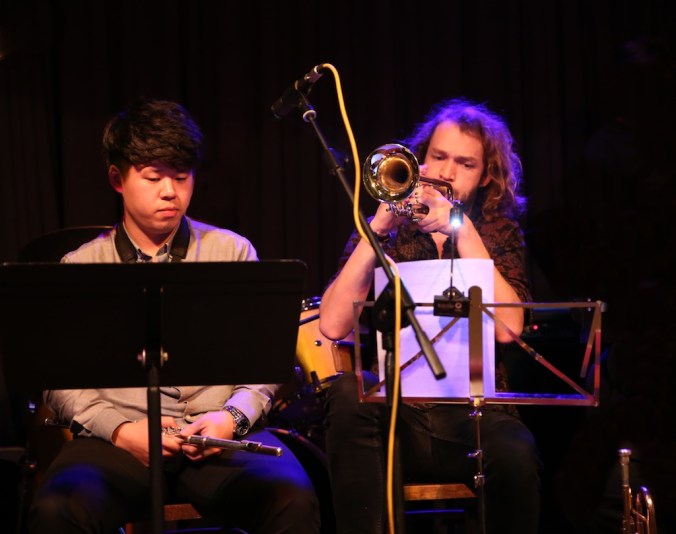
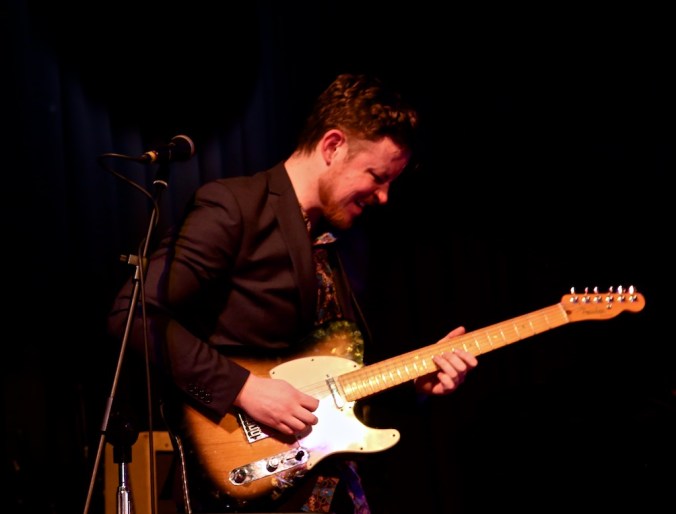 The first number was ‘Tulle’ from the Scofield album, after that we heard a number of his own compositions interspersed with standards. His ‘Who is Kenneth Meyers?’ appealed as did an angular rendition of ‘Surrey with the Fringe on Top (Hammerstein). Given the project in hand, it was unsurprising that he included ‘Boplicity’ by Miles Davis; ‘Birth of The Cool’ being the springboard from which all such arranging sprang. In the second half we heard trumpeter Mike Booth’s ‘Major Event’ – Booth is a skilled arranger and an experienced ensemble composer. It is possible that he has also influenced Swindells’ direction.
 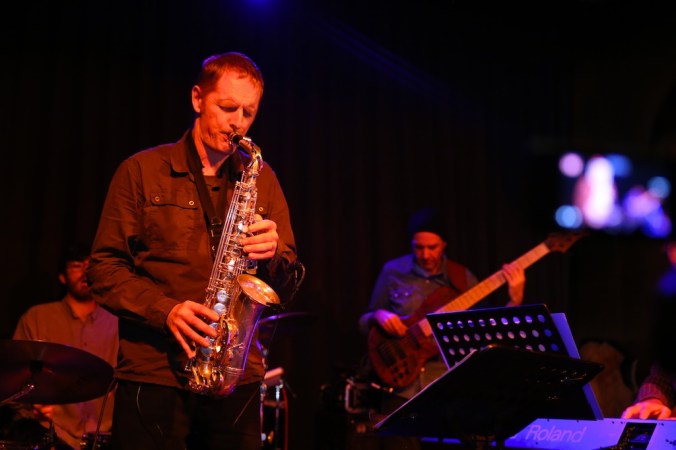 Hearing people talk about the Chris Mason-Battley Group reminds me of the Hindu parable – the blind man and the Elephant. “Oh yeah, that guy has a smooth sweet sound’ one said as if that settled the matter. Well yes, he has got a smooth sound when playing a ballad, but anyone who thinks that defines his music has simply not been paying attention. This band has enormous depth; playing anything from a melodic ballad to music that is way off the grid. What we experienced on Wednesday was music with integrity; at times raw and inventive, drawing us into its heart, emotionally engaging and above all satisfying.
 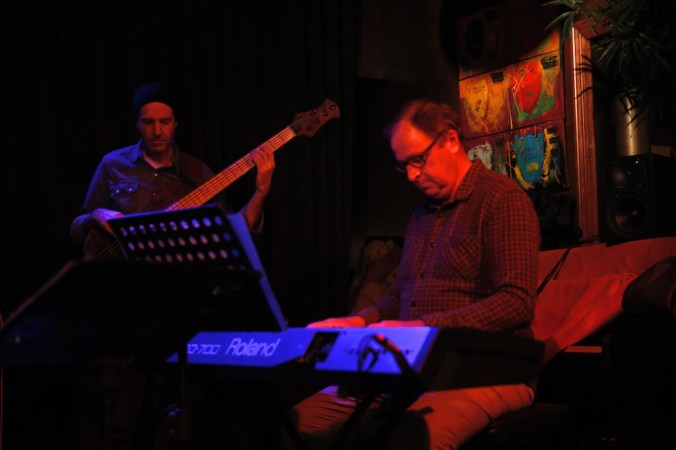 The first number was ‘Mountain Song’ (by CMB); then they moved to a series of pieces from the CMB John Psathas project ‘Dialogos’ (progressing through excerpts from ‘Song for Simon’ and ‘Demonic Thesis’). As that set progressed we heard a new composition or two and lastly ‘Tahuna Caravan Park’ from his ‘Two Tides’ album. This gave us a broad sweep of his past projects and the Psathas album in particular. Dialogos was widely acclaimed as an exciting and bold step forward for the band – I can highly recommend the album (out on Rattle). Before the band left the stage for a break, Mason-Battley said; “That was the nice half – the second set is nasty half” (quoting from an album titled ‘The Jaberwocky comes to Town’ which had a ‘nice side’ and a ‘nasty side’.)
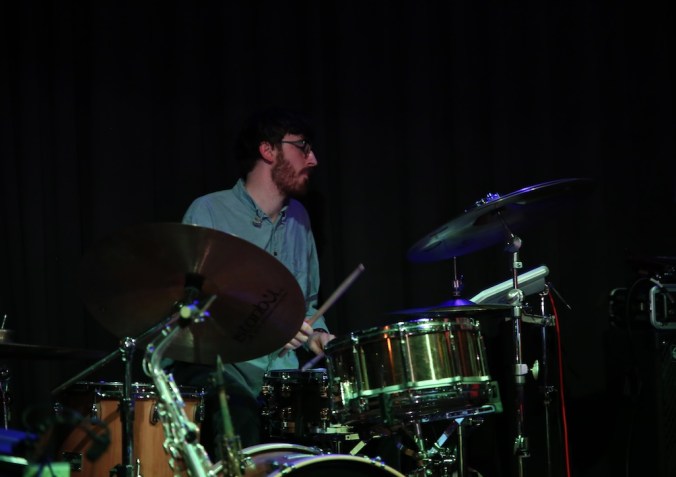 As pleasing as the band were in the first set, they reached much deeper for the second; pulling out an utterly engaging and masterful performance. It began with several of the blacker pieces from ‘Dialogos’, ‘The Calenture Suite’. The drummer Stephen Thomas must be mentioned at this point – His work was integral to the overall performance and it underlined his maturity as a musician. At times subtle, at others incredibly complex – and all made to look easy in his hands. Thomas was extraordinary throughout and although a relative newcomer to this long-established band, his searing flames licked at their underbelly, an indispensible presence. In perfect contrast to the complex drum flurries was Sam Giles on electric bass. Giles is a master of the ostinato – repeated motifs, perfect time feel and the voodoo factor writ large. He is also an influence on the bands direction; favouring Zorn like explorations and paths less trodden.
 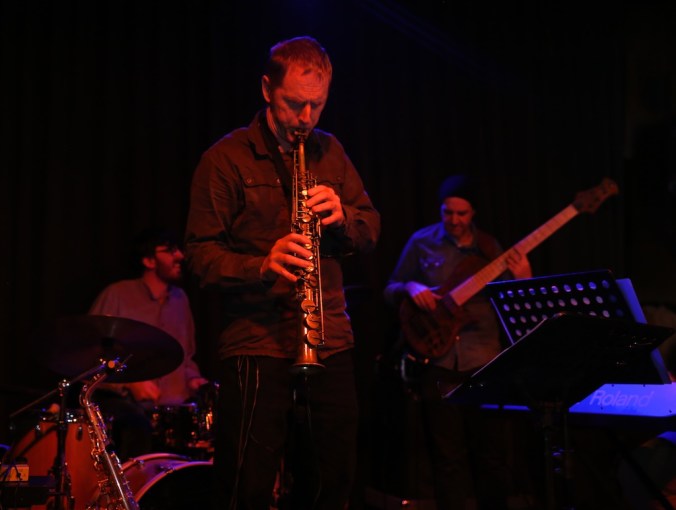 The CMB Group keyboardest is David Lines, an intersting and in my view under-rated musician. On this gig he played a Roland RD-700. What a beautiful piano and Rhodes sound. A machine hardly heard these days, replaced by the Nord Stage or modern Korgs. While the newer keyboards have more bells and whistles, I am unconvinced that their piano sound is an improvement. Perhaps it sounded so good because of Lines touch? He is not a busy pianist and every note counts, in this gig his often voice leading role was perfect for the project (his solos were stunning). I only wish we saw him more often.
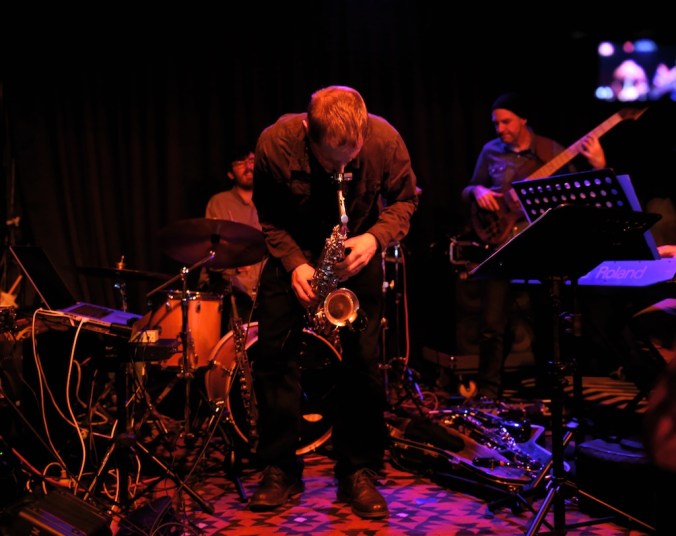 The last tune of the evening was free and political. It was titled ‘The Emperor Has No Clothes’; an obvious reference to the greedy authoritarian amoral elites that hold sway in the world; particularly the Trump administration. It was free and it was raw emotion – in the background a loop recited ‘billions and billions’ – then, faintly at first, we heard the strains of ‘The Star Spangled Banner’. The band read the mood of the audience well with that one – people stomped and cheered afterwards as if someone had taken the words right out of their mouths and rendered them into abstract musical form.
 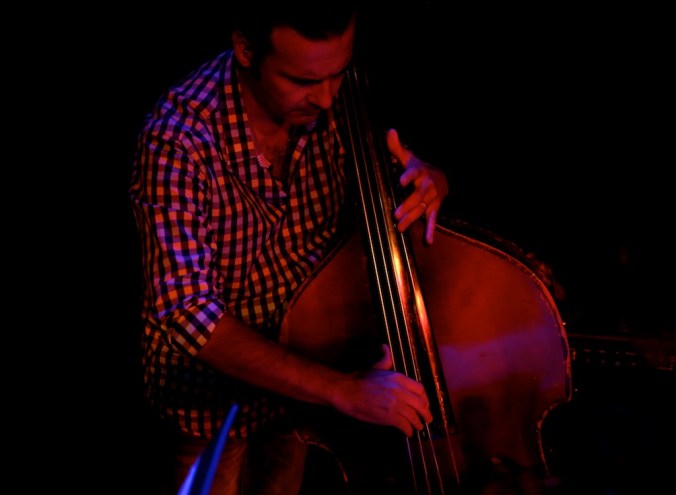 There have been two bass-player led groups at the CJC in as many months and both have been excellent. Last weeks featured group was a trio led by Rubim de Toledo: a Canadian from Alberta, of Brazilian origin and a well-established musician. Like many modern improvisers, his influences are diverse; that said his music fits squarely into the Jazz mainstream. The first thing to grab me was his big rounded tone, gifting the tunes with a richness and beauty that captivated from start to finish. While most bass sits deep within the mix, de Toledo’s voice spoke clearly; not by overcrowding his band-mates nor by punching through the others as an electric bassist might, but because every musical utterance sounded right. His melodicism and clarity of ideas were enhanced by devices which I found appealing; his occasional and appropriate use of vibrato at the end of a line, sometimes, rarely, he combined this with a slight bending of the note. He is definitely a successor to the Evans trio model; a bassist who communicates as an equal.
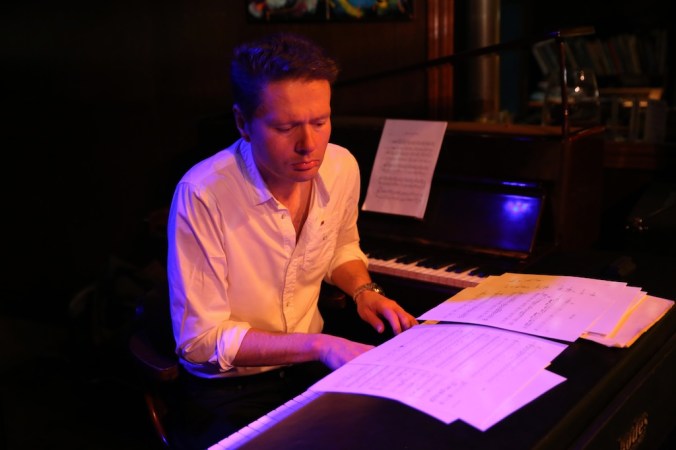 In a live setting and with unfamiliar sidemen, the best plan is to loosen the reigns. This he did and with Kevin Field on Rhodes and fellow Canadian and long time friend Ron Samsom on drums the gig gelled. Much of the gig showcased his compositions, some from his 2014 album ‘The Bridge”. The three standards he played were a killing version of Maiden Voyage (Herbie Hancock), Work Song (Nat Adderly) and a rendering of ‘Recordeme’ (Joe Henderson). His own compositions ranged from the thoughtful ‘Autumn Celeste’ to evocative panoramic tunes like ‘The Gap’ (about the Rockies) and ‘Red Eye’ (about a Brazilian train known locally as the train of death). The gig was a pleasure from start to finish and the enthusiastic audience response said it all.
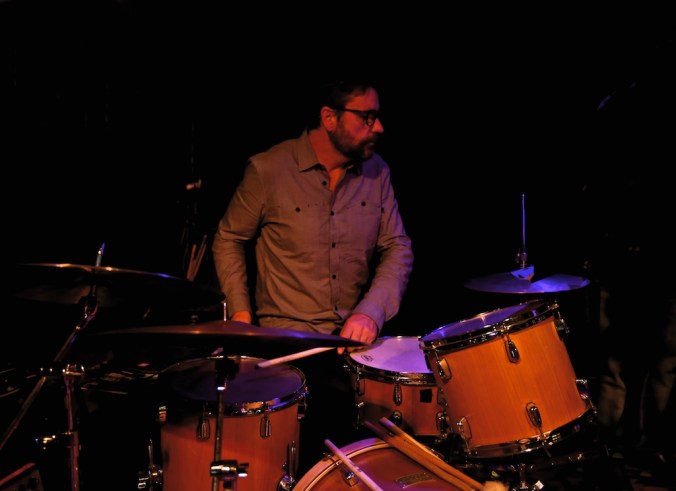 As I was leaving de Toledo handed me a copy of his recent album ‘The Bridge’ and it wasn’t until yesterday that I found time to play it. What a truly beautiful album this is; beautifully crafted arrangements and tunes which burn with a quiet intensity at any tempo. On ‘The Bridge’, he is surrounded by an ensemble of talented Albertans and a guest artist from the USA. The lineup of bass, trumpet, saxophone, trombone, keyboards, drums (and on track 8 a vocal) is well conceived – balancing airiness with textural richness. The musicianship throughout is noteworthy; particularly Sean Jones on trumpet, a well respected musician from the USA: the keyboardist and everyone making this album memorable. As you would expect with an ensemble and with an album as skillfully recorded as this, de Toledo is less dominant. Here he lets his charts tell the story and they certainly do.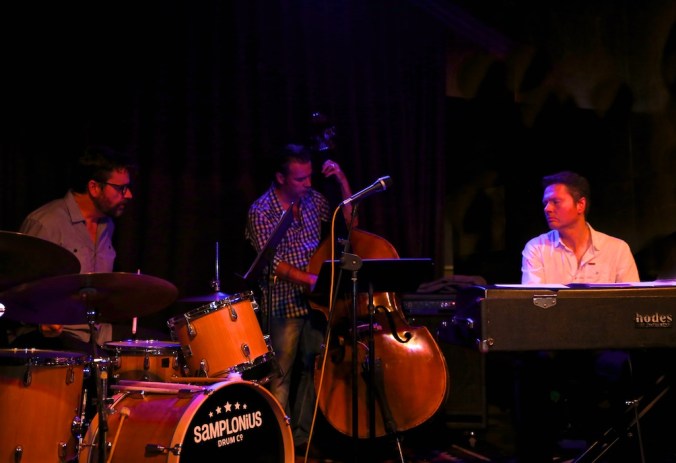
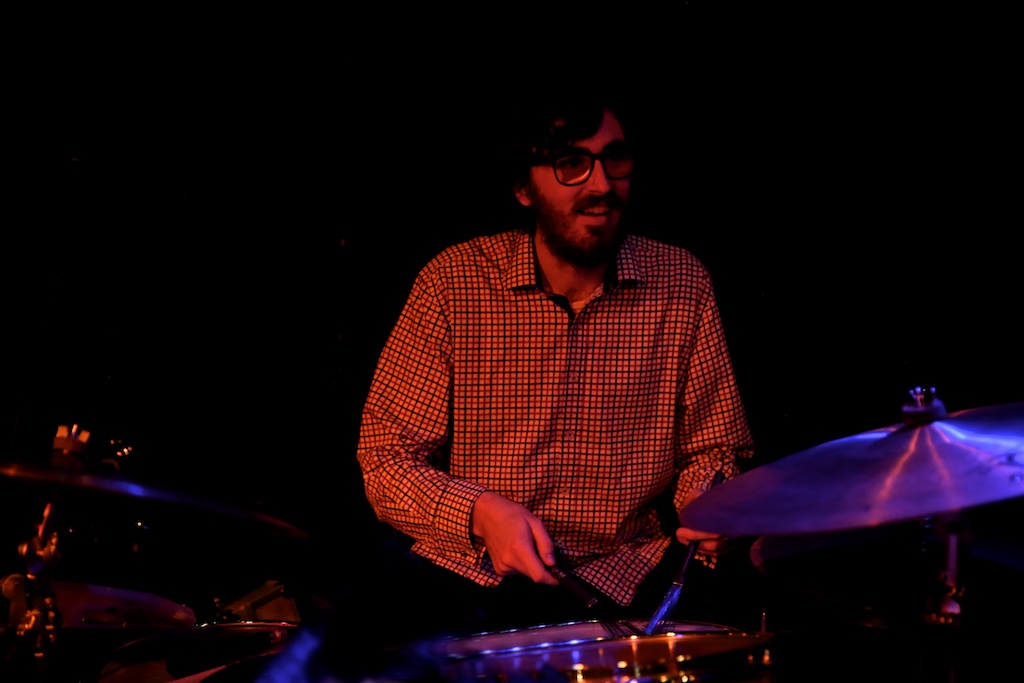 In spite of his relative youth, Stephen Thomas is counted as one of New Zealand's better Jazz drummers. He approaches his craft with care and intelligence and it shows in his playing. While his technical skills are superb, he can also communicate on a human level and this is important as it speaks of character. Thomas is a regular on the scene, but like many sidemen and most drummers, he prefers to remain in the shadows. On Wednesday he changed that focus and convincingly staked his claim as band leader.
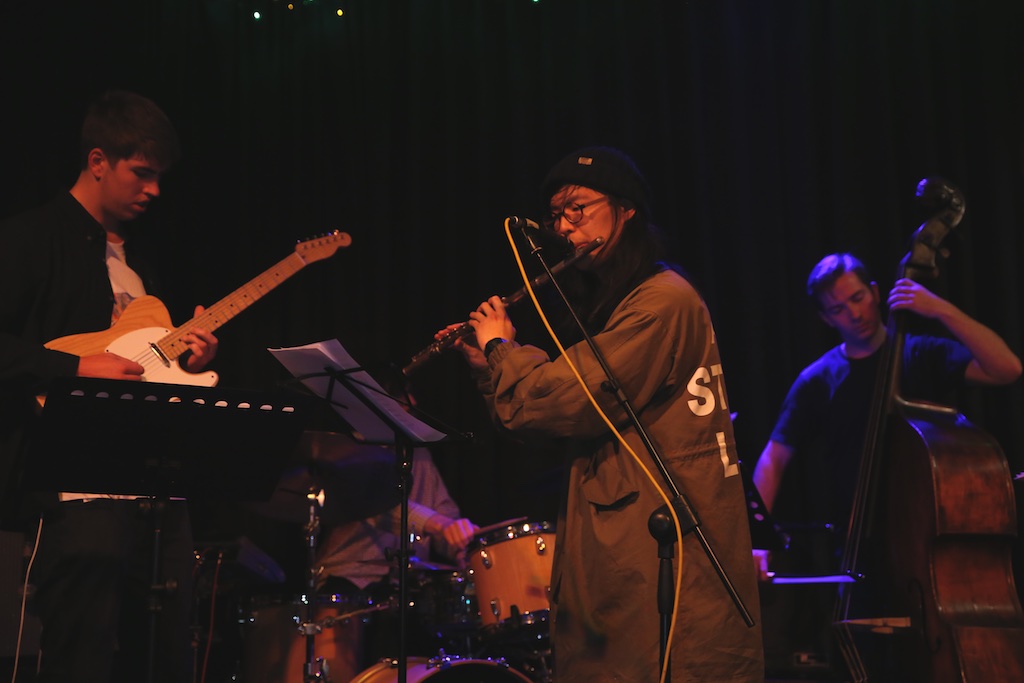 The ingredients that contribute to a successful gig are often intangible, but this gig ticked a number of those boxes. While tailored to suit a Jazz audience, it did so without being remote or elitist. Another reason the gig worked was because Thomas used humour to good effect; not just his on stage banter but in the music as well. In a live setting this is important – interacting with the listeners on some level, bringing them inside the circle.
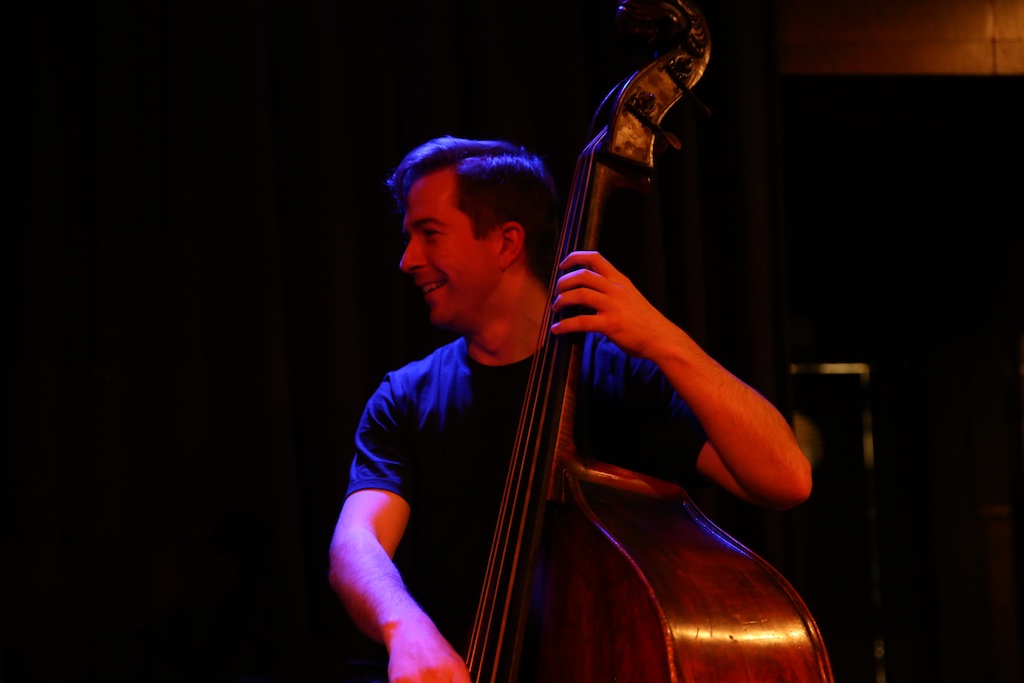 Thomas has an abiding interest in the Ellington/Mingus/Roach, 'Money Jungle' recording and Wednesday provided him with a further opportunity to explore that project. While unusual as a source of standards material, it is a great album to focus on – the perfect vehicle for deconstruction. At the time it was recorded, it stood out for a number of reasons. In fact it shouldn't have worked at all, as the trio members reputedly disliked each other. Each had marked stylistic differences and Ellington was of an earlier generation. Ellington told the others that what they would play on the record should be a collective decision; then he turned up with a set list of his own tunes. The one tune which was not Ellington's was by Juan Tizol – a man who Mingus had once been in a knife fight with and because of whom, he was sacked by Ellington. What should have been a disaster for many reasons was a success. A brave post-bop recording by artists firmly rooted in other eras.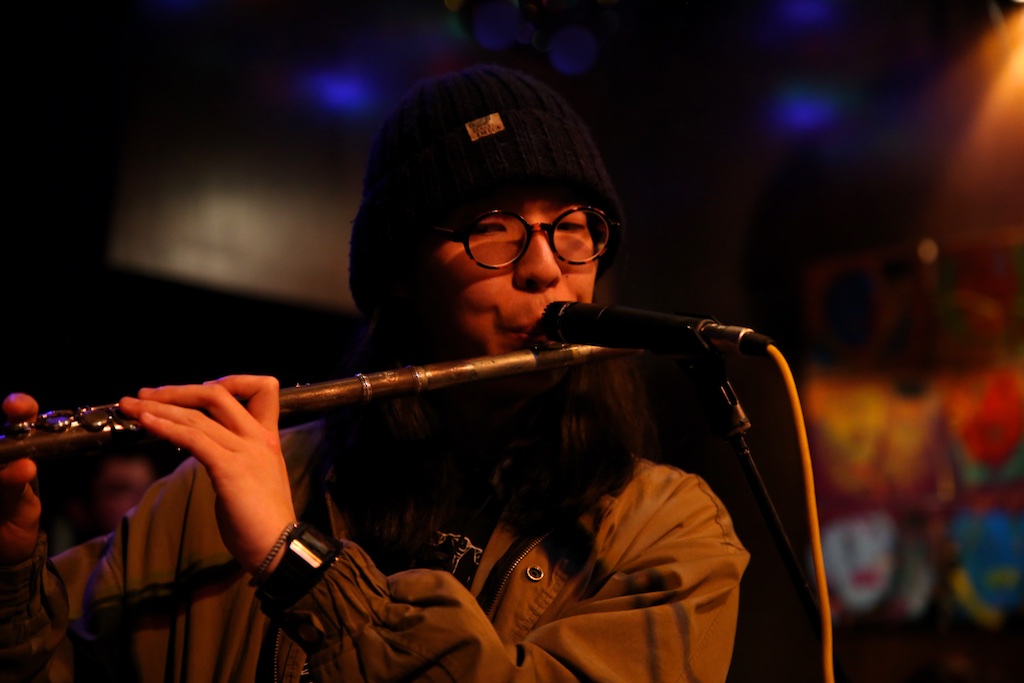
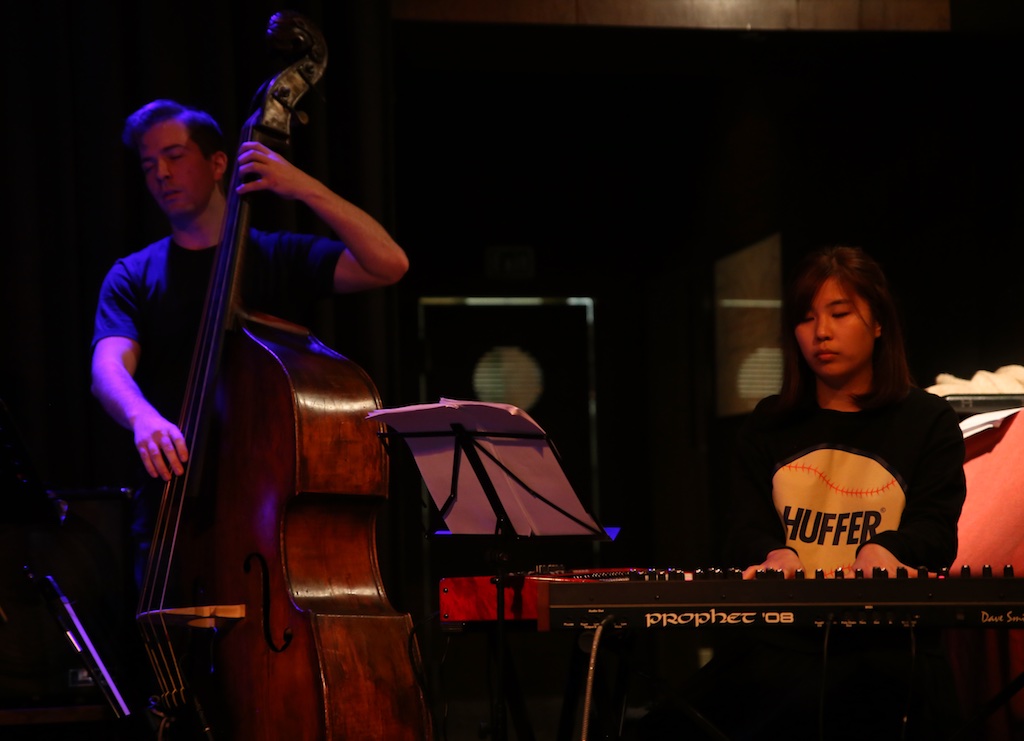
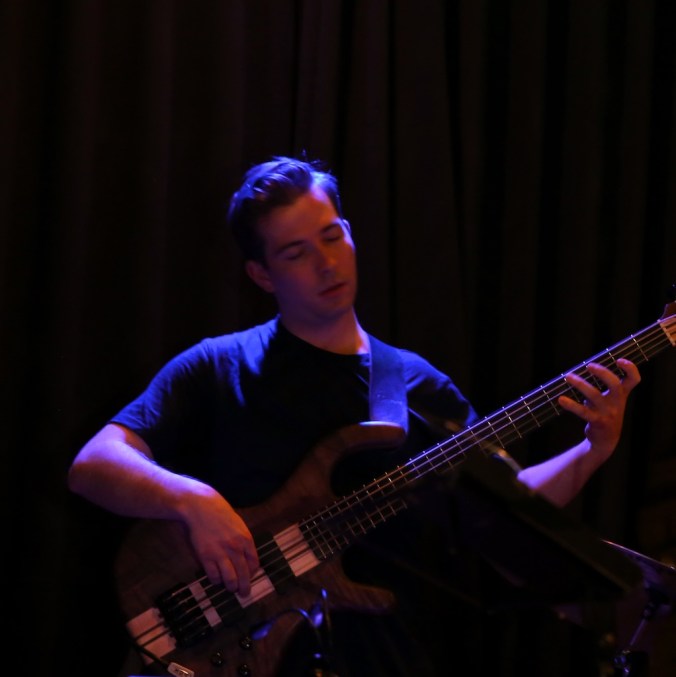 Dennison is a first class musician and someone we don’t hear nearly enough of on the Jazz circuit. He rarely gets to the CJC but when he does it is always a treat. These days he is mostly found doing session work or backing visiting artists and it is hardly surprising that he is a bass player of choice. Whether on upright bass or electric bass he is equally proficient; always an engaging presence, always demonstrating a deep musicality. He has one more string to his bow which can’t be overlooked and that is composition. His tunes are often whimsical, but whatever the mood, a deftly crafted structure sits beneath every phrase. Never over done, bass driven and just right. There is also a thread of melancholia and wistfulness in his ballad writing: these are difficult emotions to evoke and anyone with knowledge of poetry will know, that only the most skilful poets do the moods justice. Dennison can.
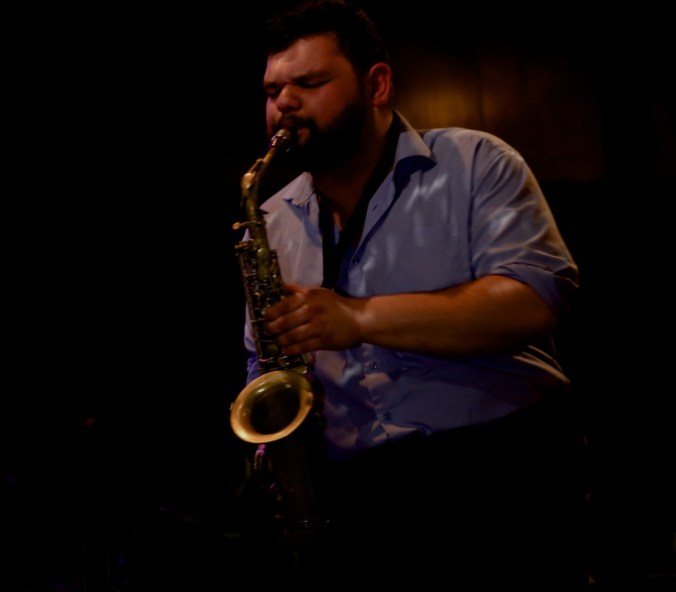 Passels playing was another high point of the evening for me. He just gets better every time we hear him. He is also exactly the right person to interpret mood. I liked the way he approached the tunes, working his way inside them methodically. Sometimes angular, at other times teasing at the melody. During the ballads, he often began with sparse phrasing, establishing mood without overstatement; then, slowly telling his story as if looking at the theme from differing viewpoints. Although he plays decisively, he carefully modulates; generally without flourish or vibrato – pushing at a note until subtle multiphonic textures form – his paper-thin Konitz-like tone saying more than any honk. His versatility is also an asset. Any player who can comfortably move outside and inside while still maintaining a theme is a person worth listening to.
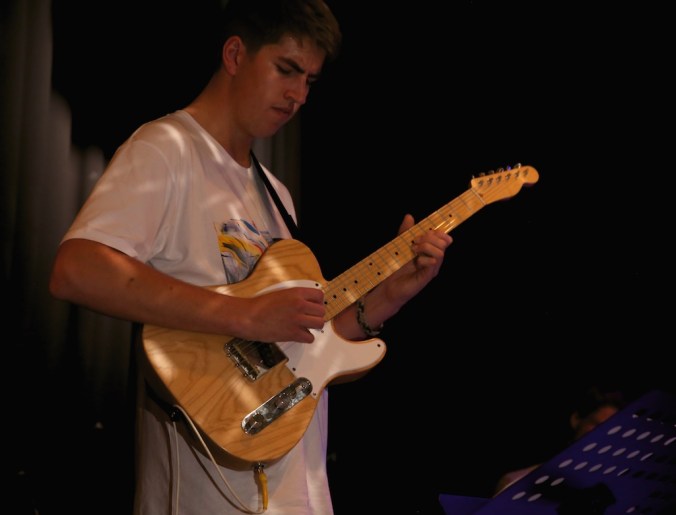 McAneny, who initially faced a cable problem, overcame it quickly and delivered a fine performance. Having a Rhodes and a guitar together can be problematical, but the charts and McAneny’s nimbleness enabled him to avoid crowding the space. Howell gave a nice performance and his lines are terrific; He knows what he’s doing but I’d like to hear him bite into his solos a bit more. Drummer Adam Tobeck was on solid ground with this group, he obviously enjoyed the company and reacted well to whatever was thrown his way. After not playing here for a few years, he is now a regular on the bandstand. I like his drum work very much.
 JazzLocal32.com