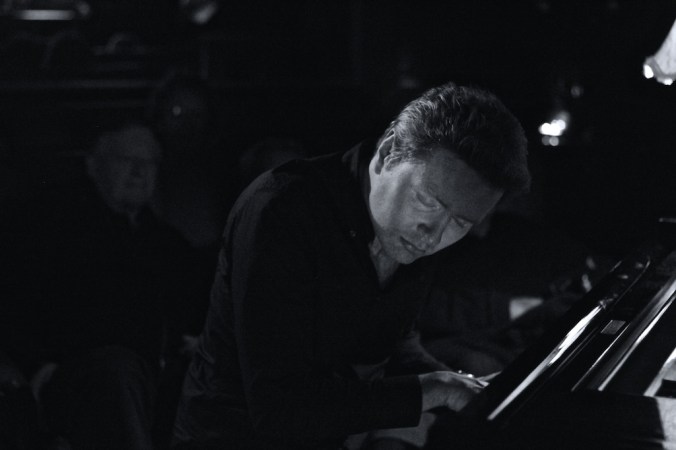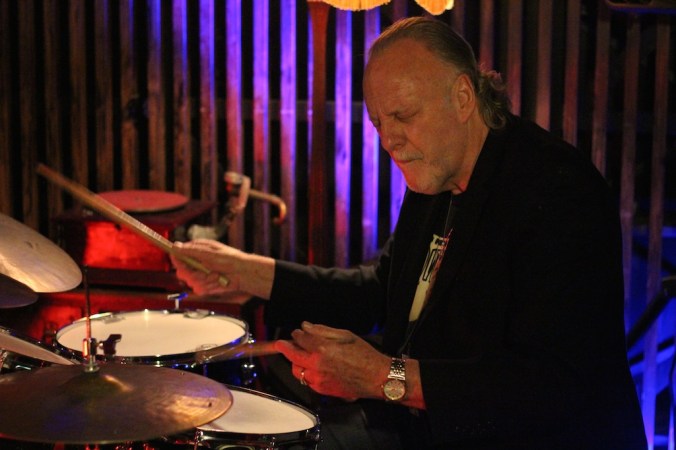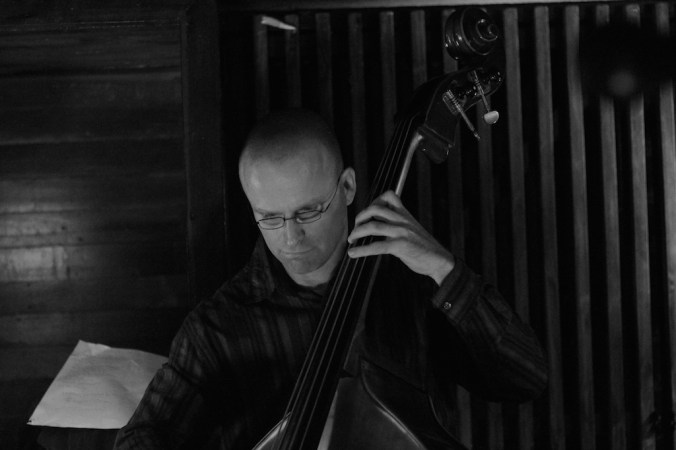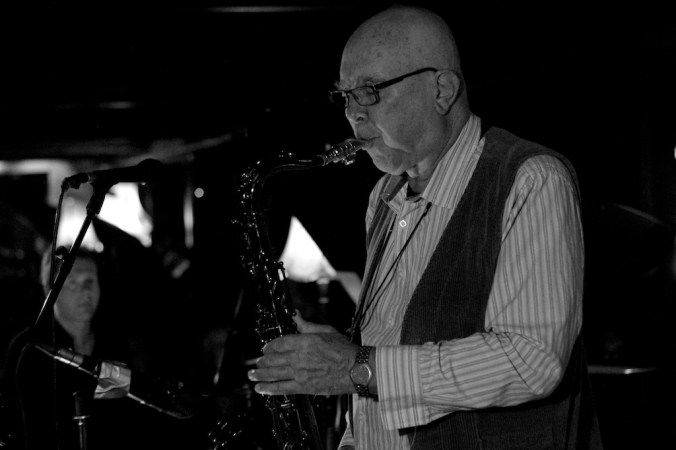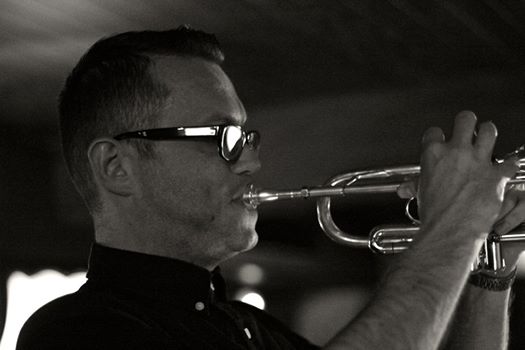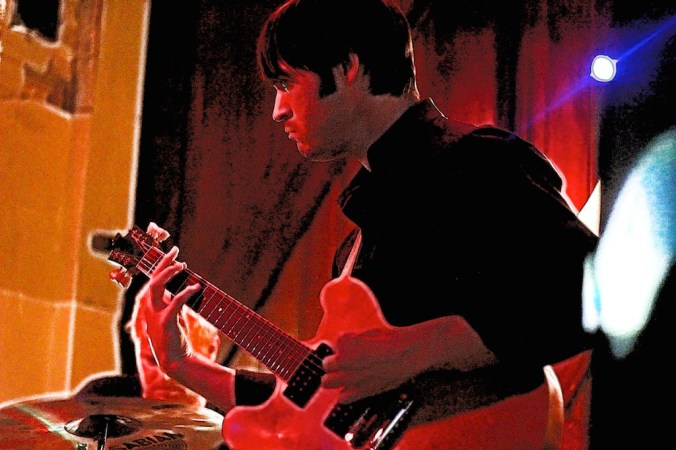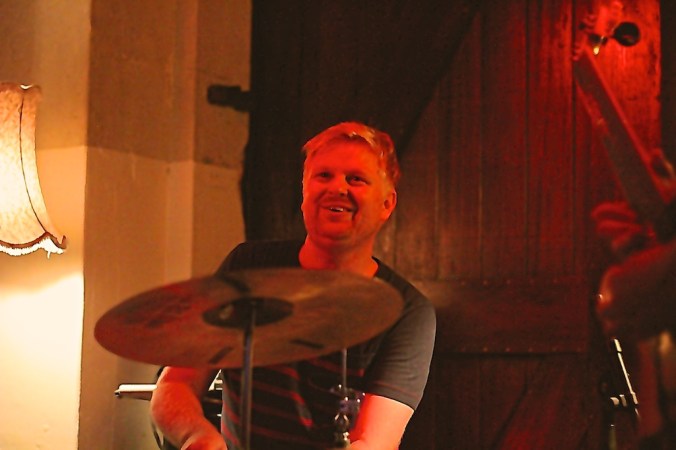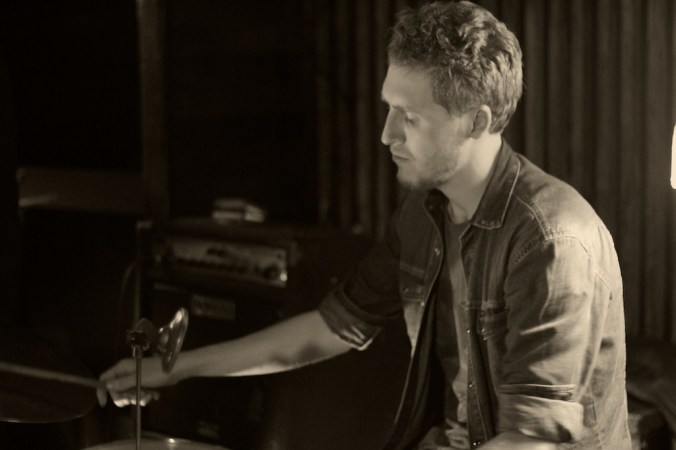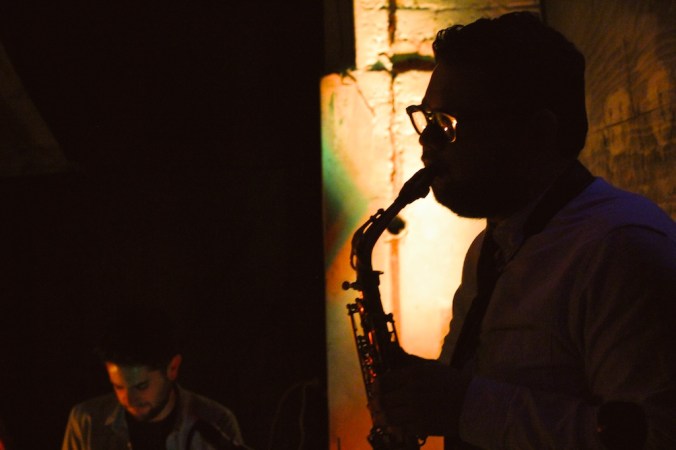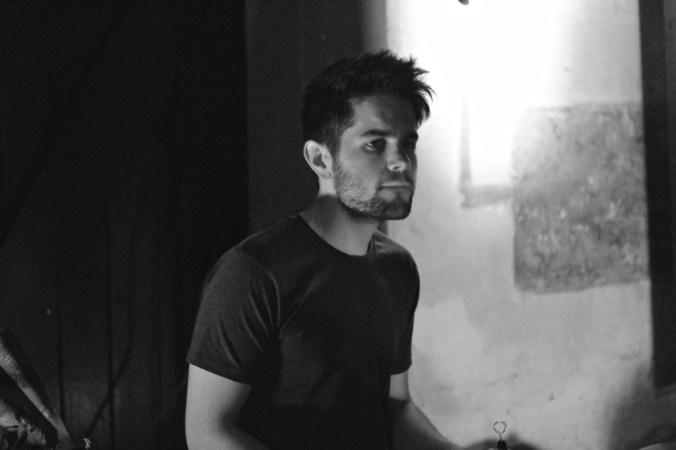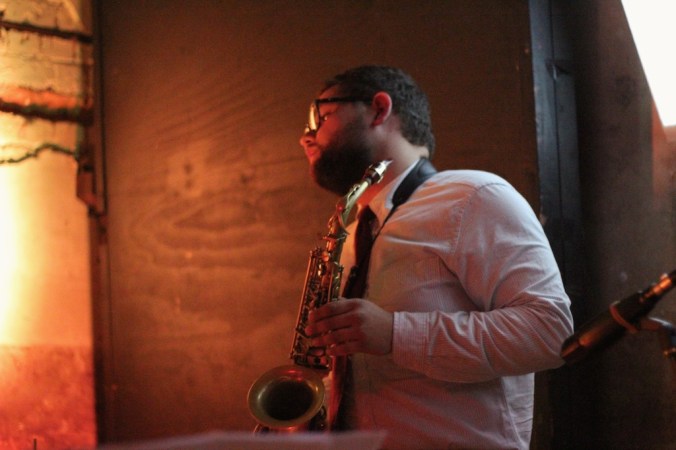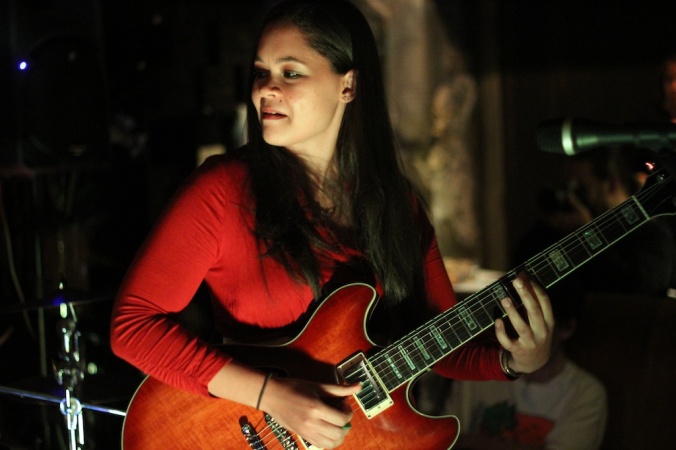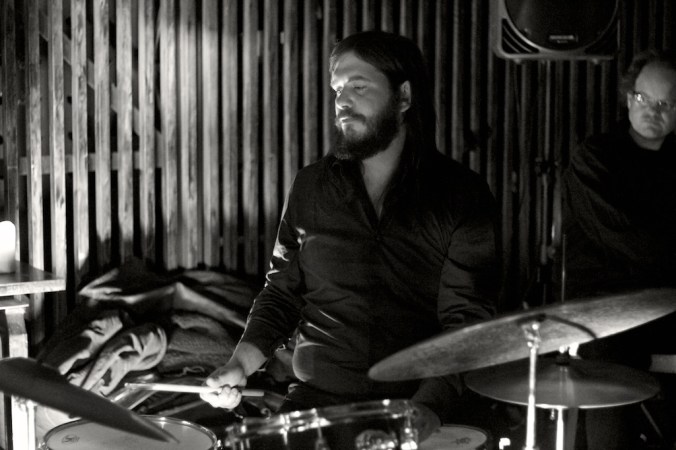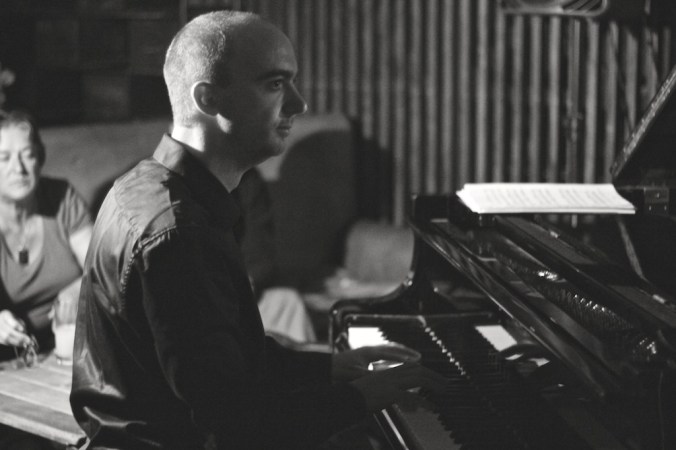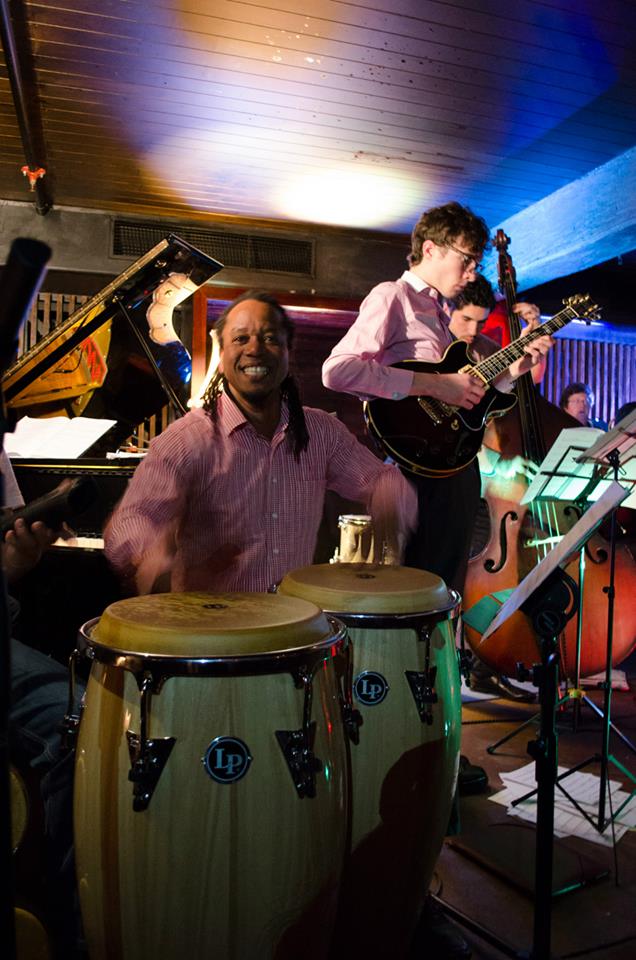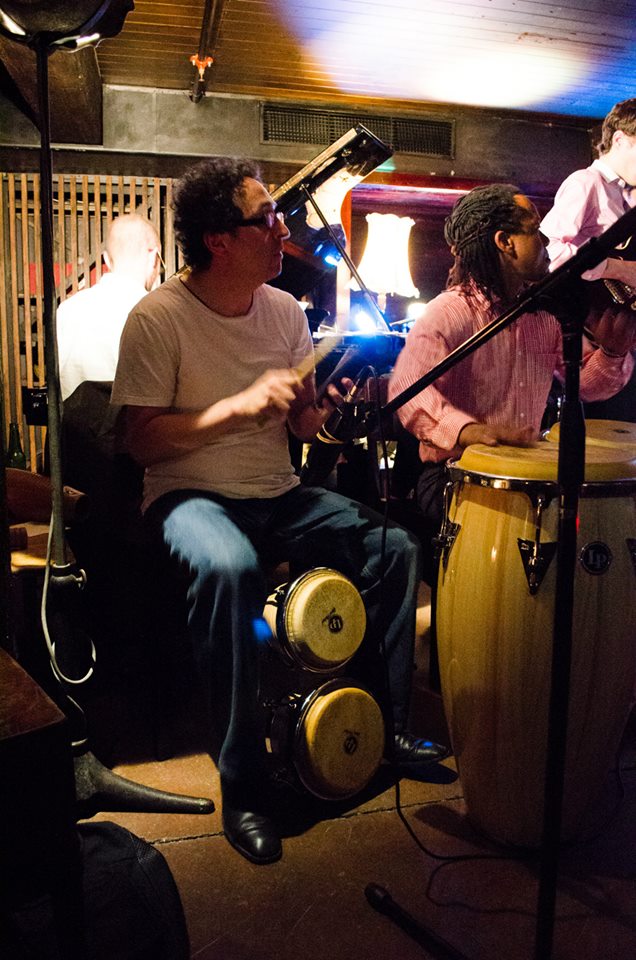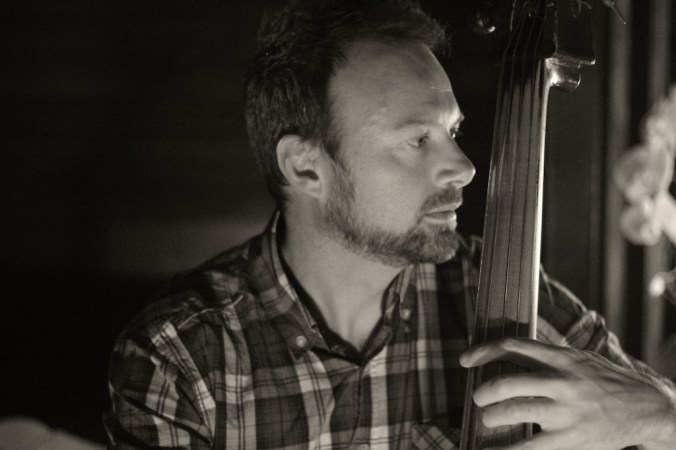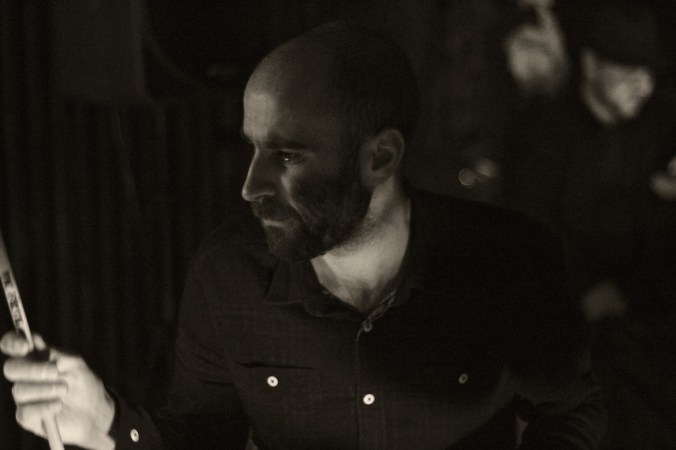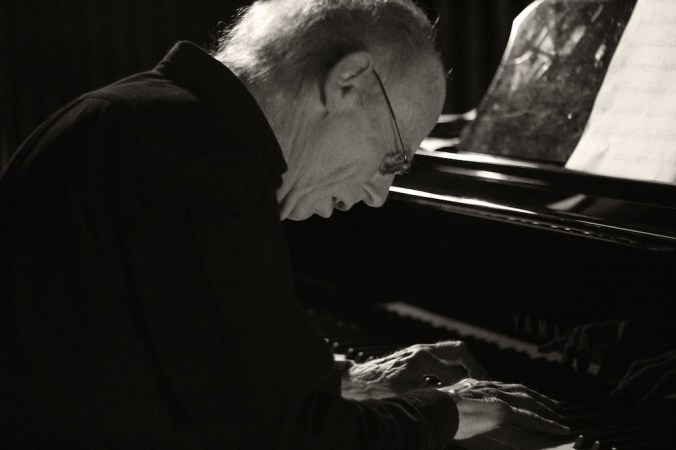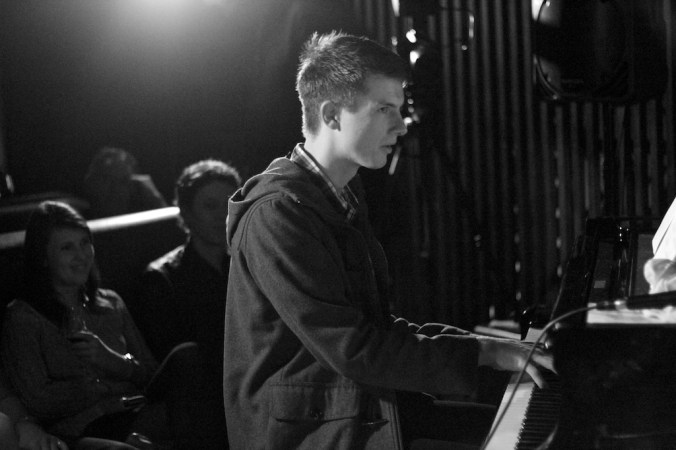
James Wylie/Miles Crayford Group


IMG_1443 - Version 2

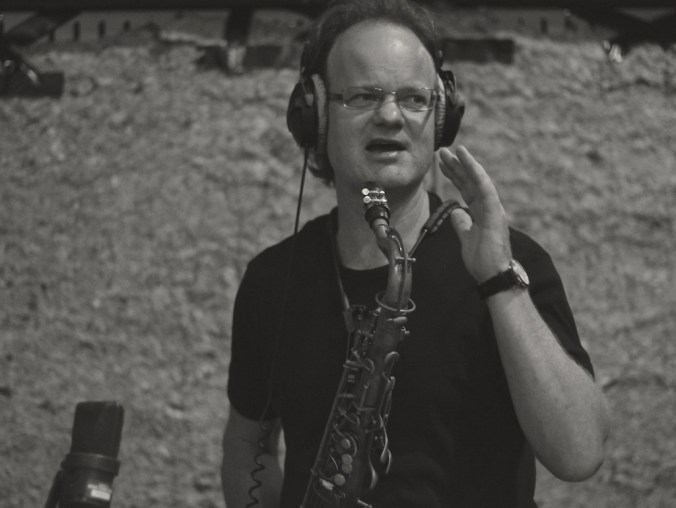
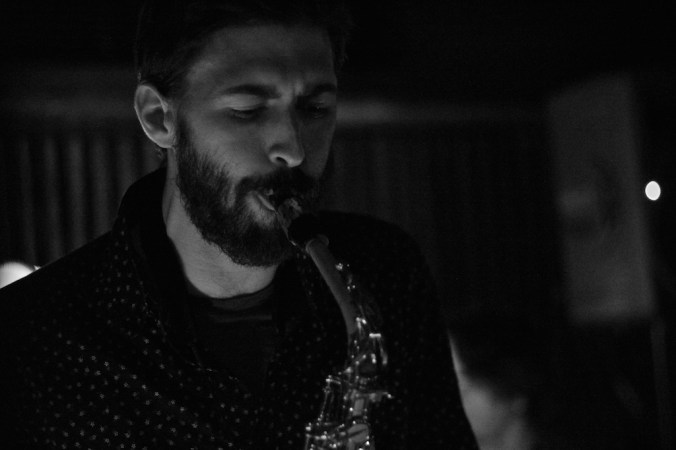
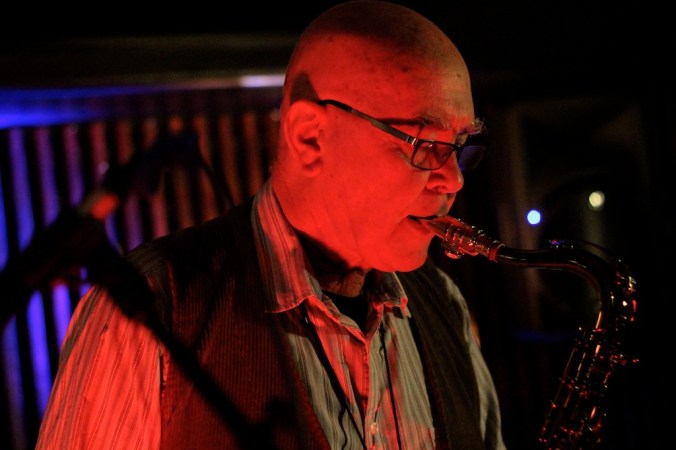
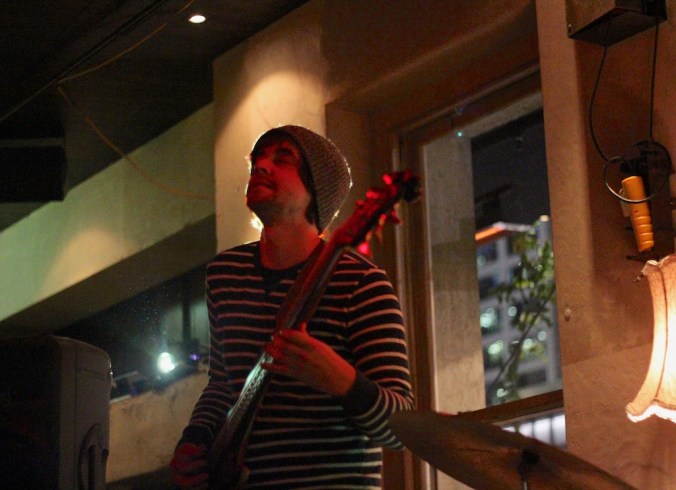
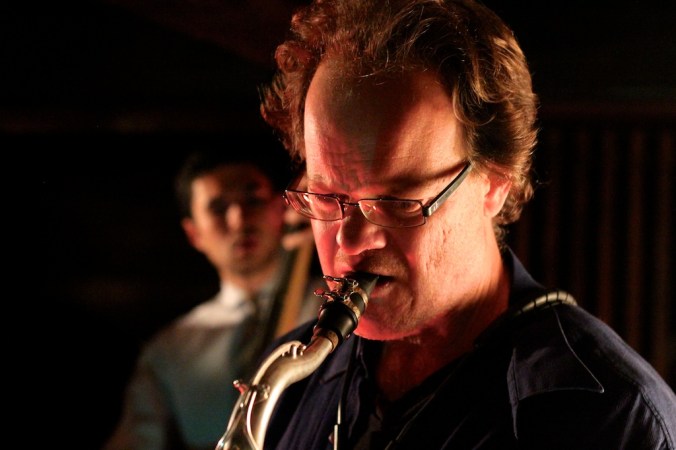
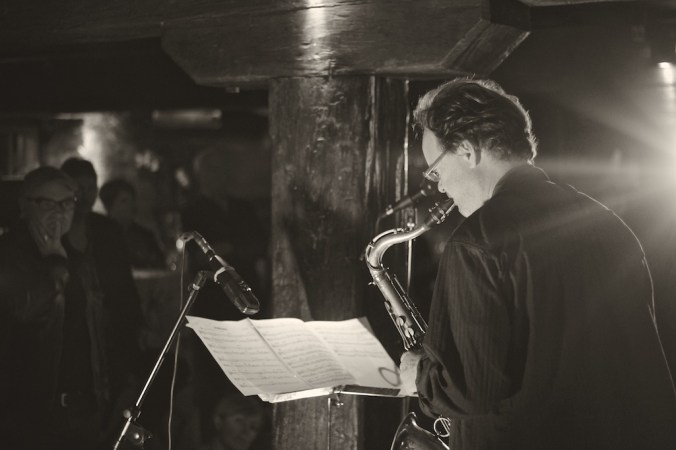
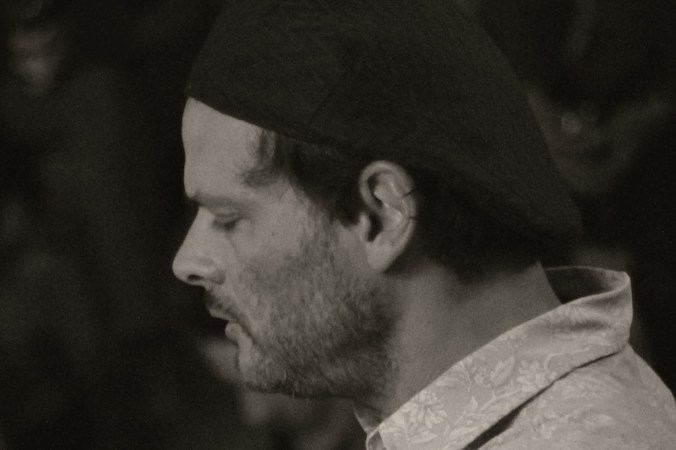
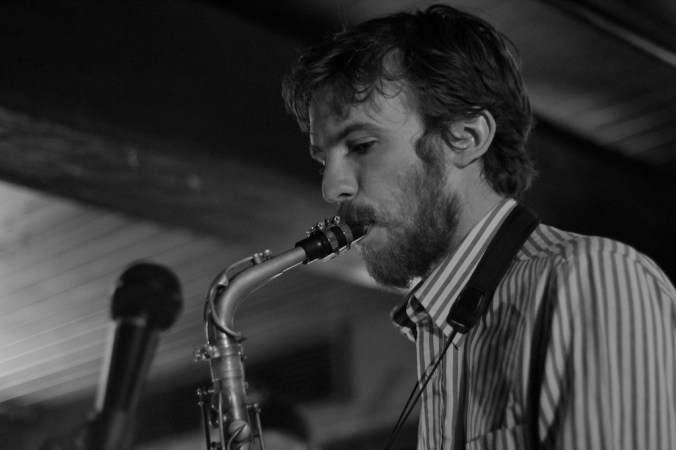
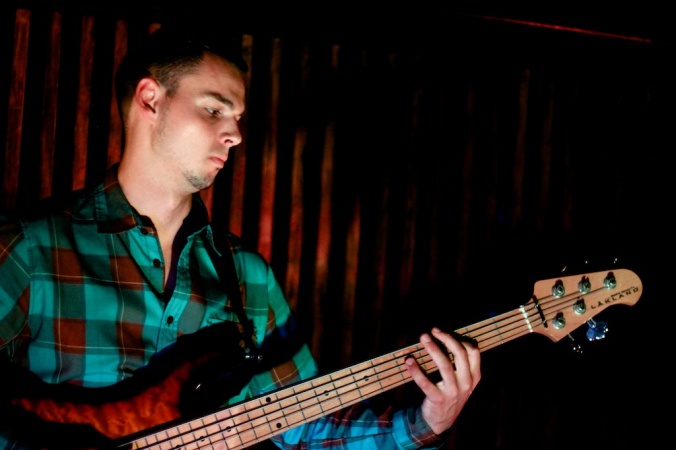
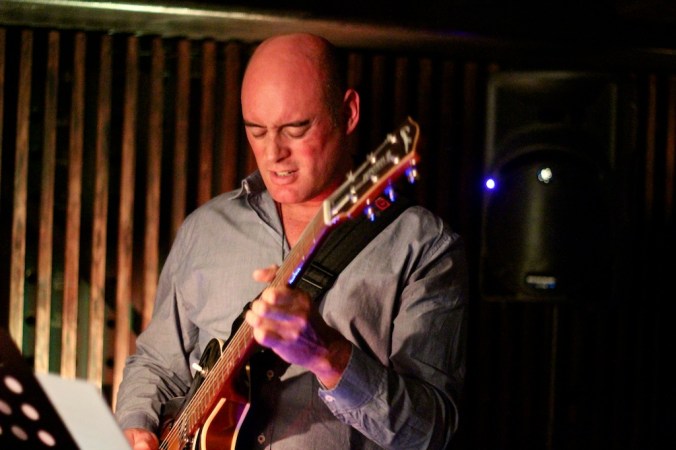
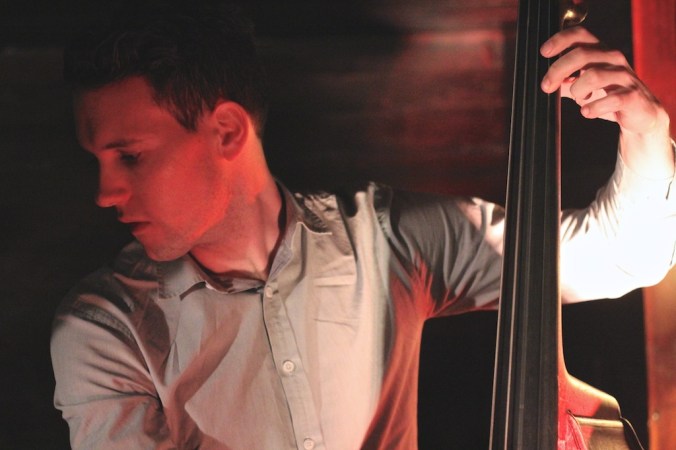
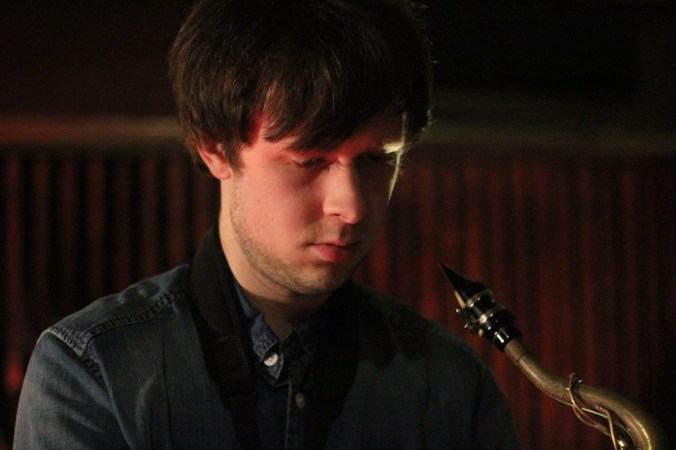
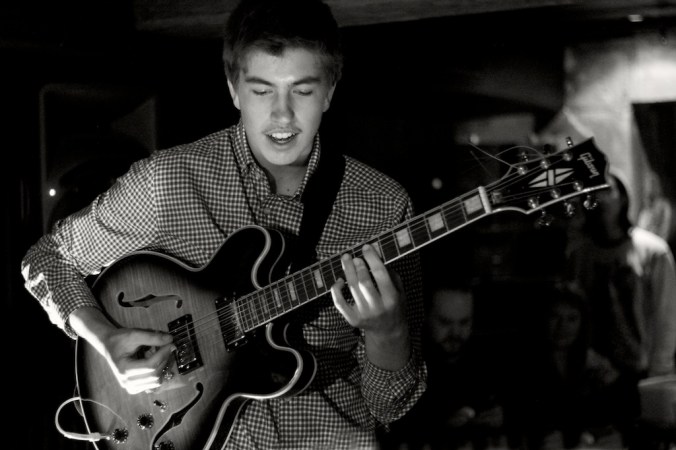
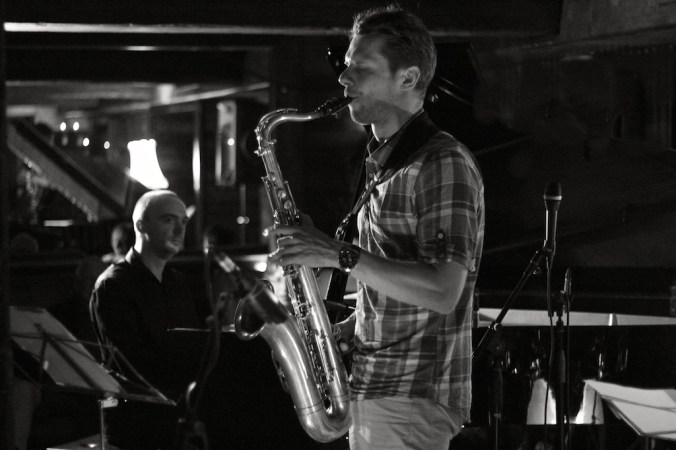
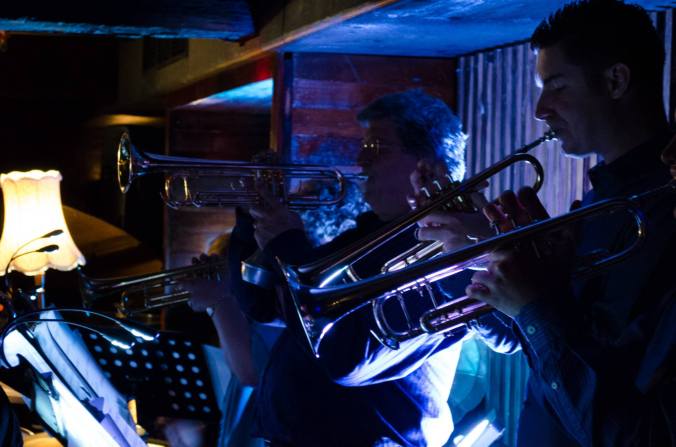
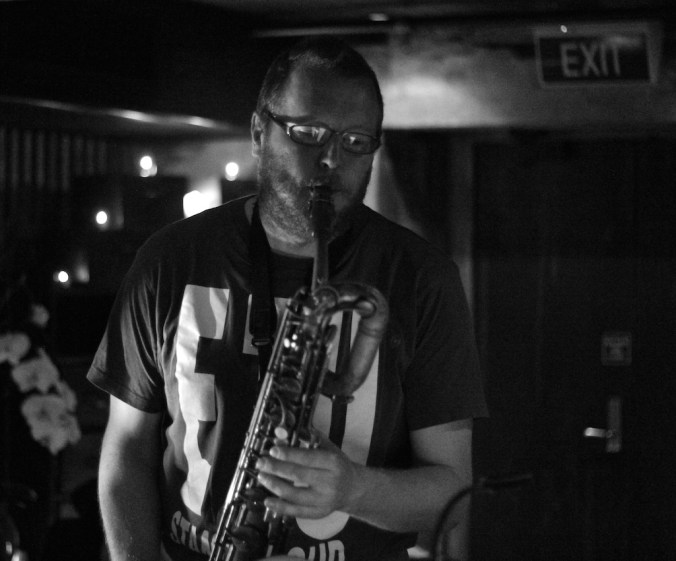
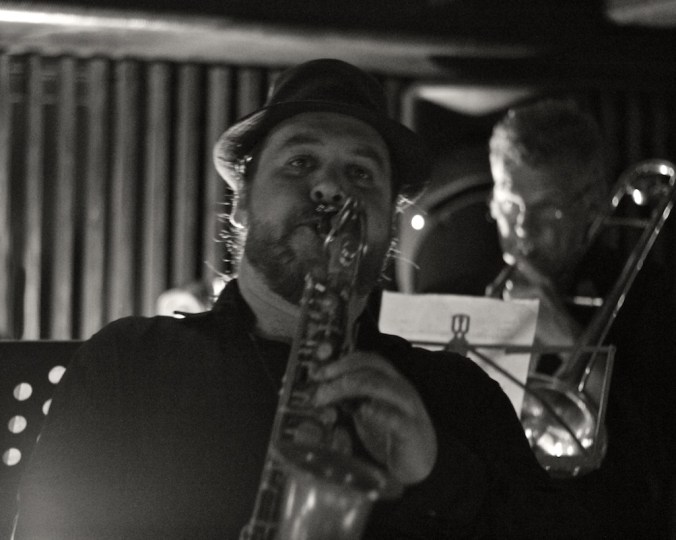
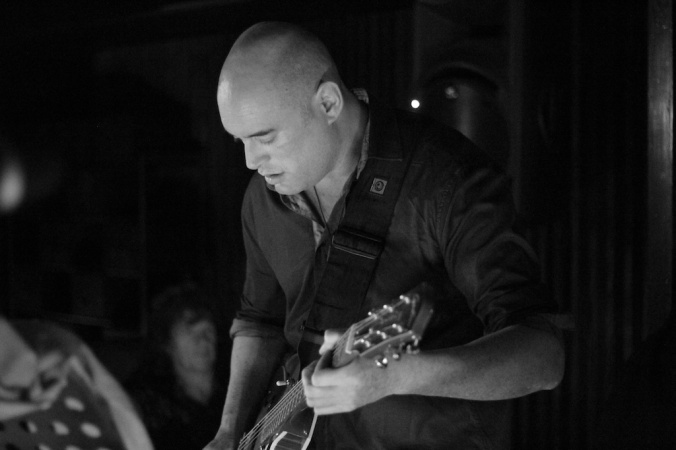
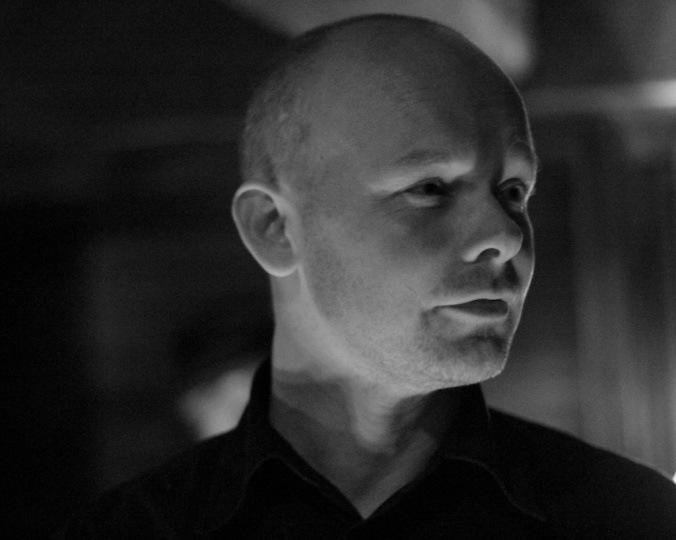
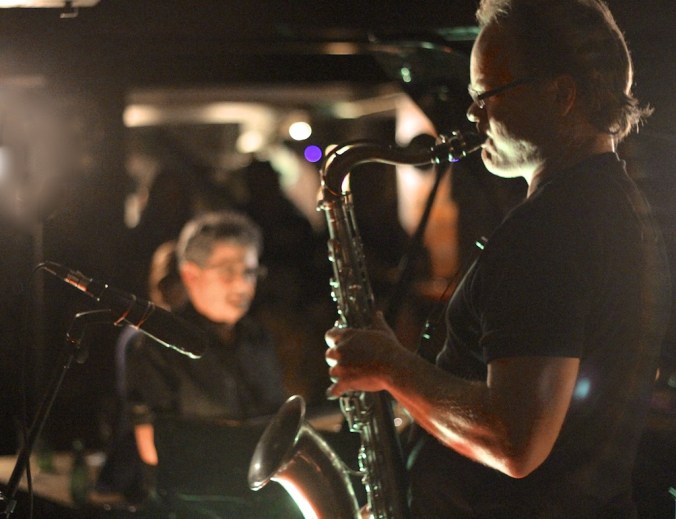
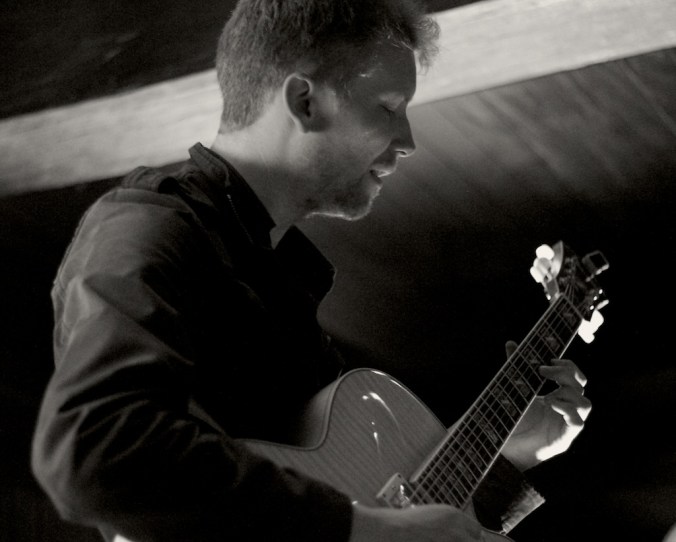
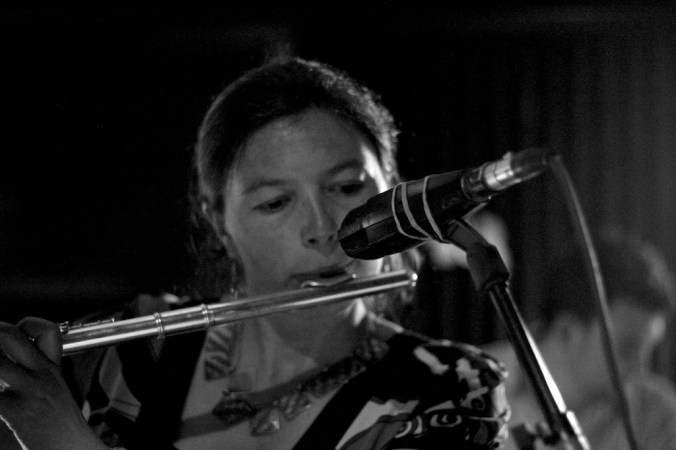
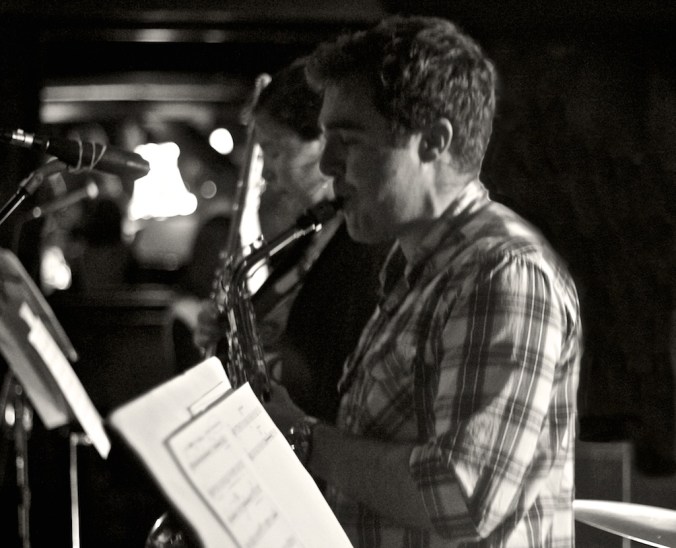
James Wylie last passed through Auckland in late 2012 when he played two gigs at the CJC (Creative Jazz Club).   A gifted alto saxophonist who doubles on clarinet, he has always been popular here.  In his travels around the world, his natural creativity has found endless new avenues for expression, examining, dissecting and assimilating the sounds around him.   What you get from Wylie is authenticity, an authenticity fuelled by indigenous music, country music, his own imaginings and all through a Jazz lens.    Last time he appeared, Greek singer Egli Katsiki accompanied him for two numbers.   This time we were again treated to some improvisations around traditional Greek melodies and to my delight a particularly lovely medieval Arab melody.  This interface between the ancient streams of Mediterranean music and Jazz is one that I am always up for, but seldom get a chance to hear in New Zealand.  Wylie is these days a resident of Greece.

IMG_1426 - Version 2

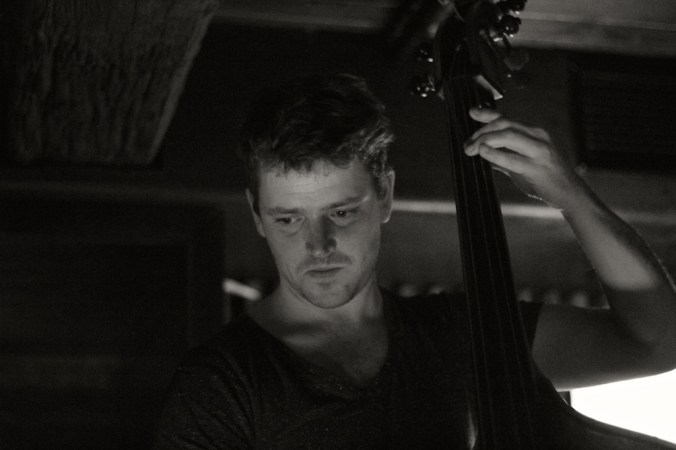
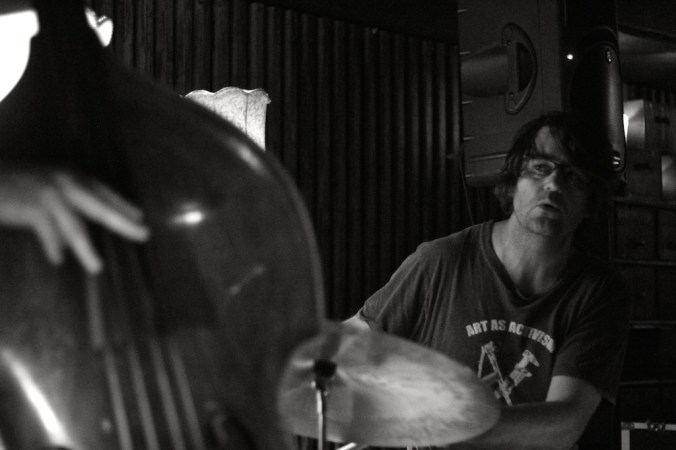
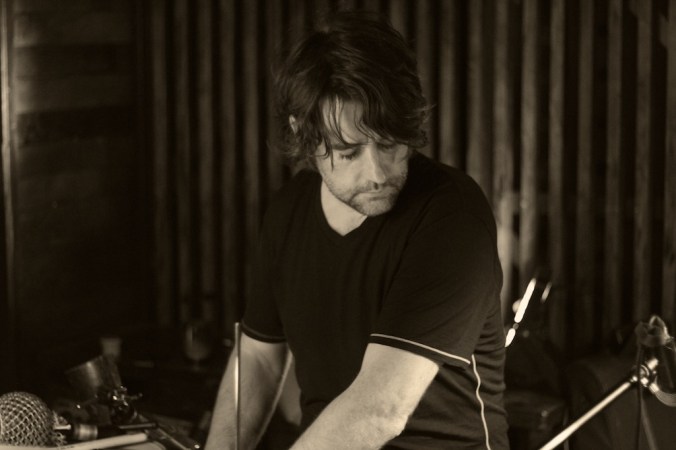
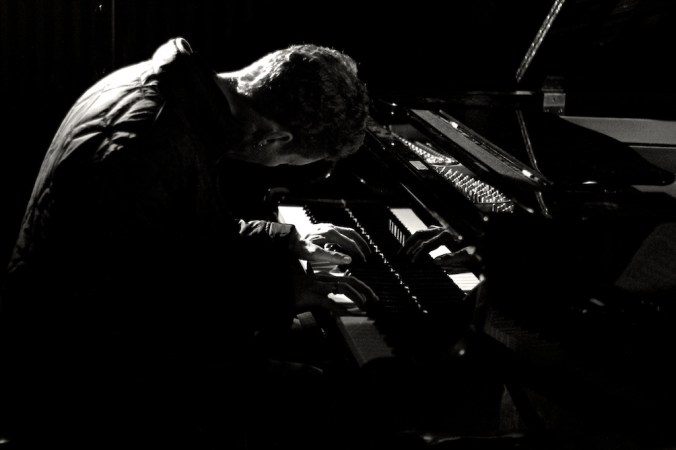
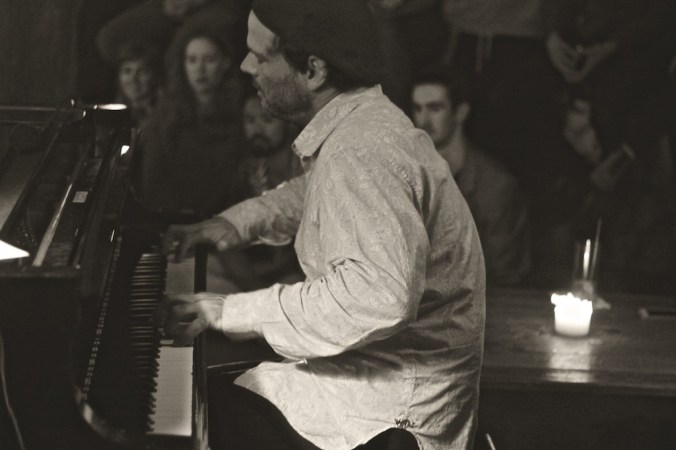
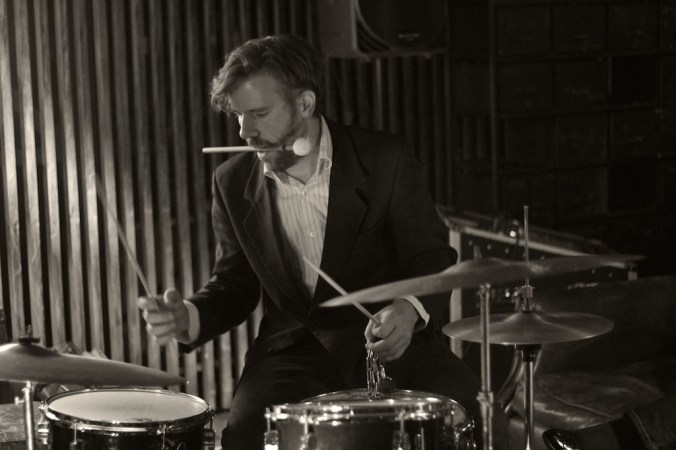
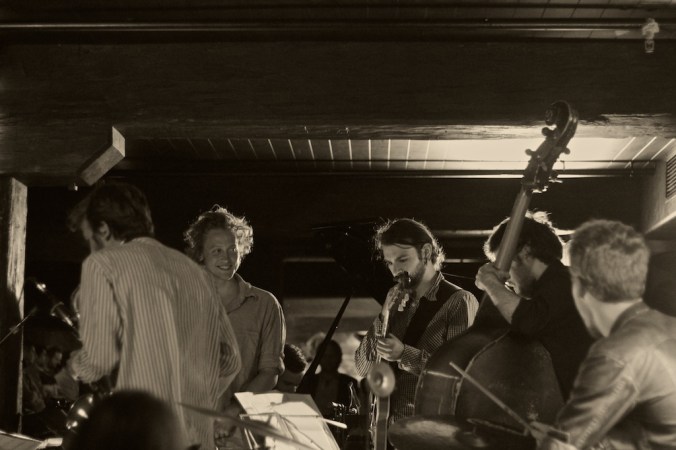
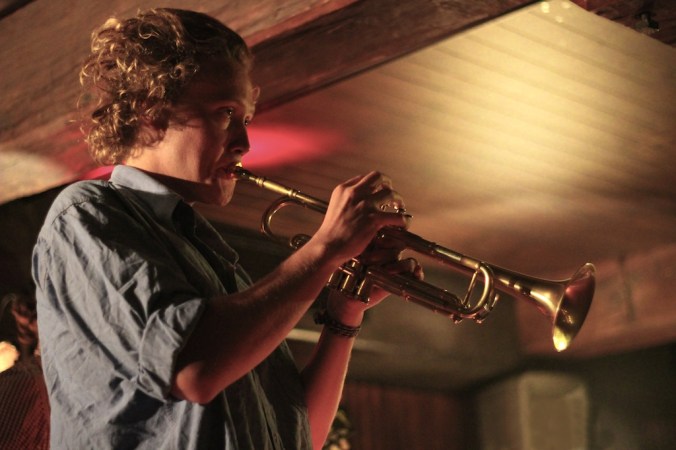
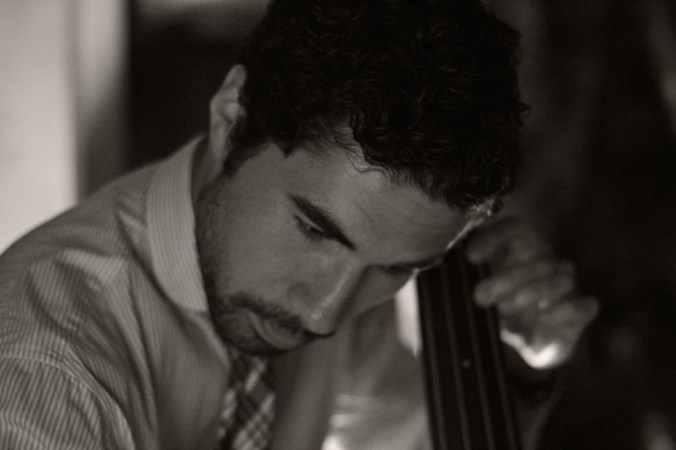
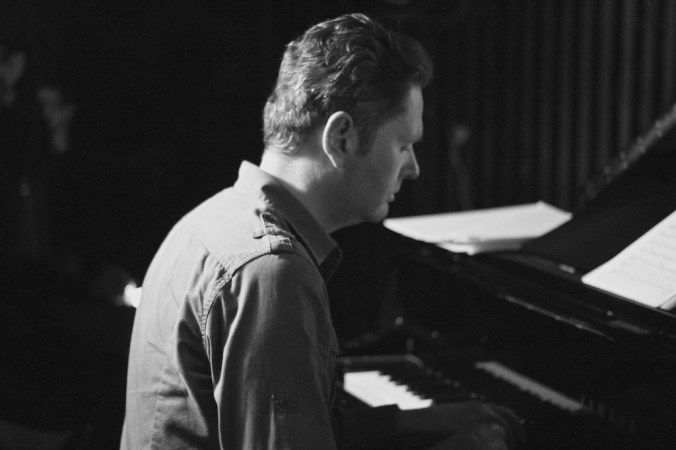
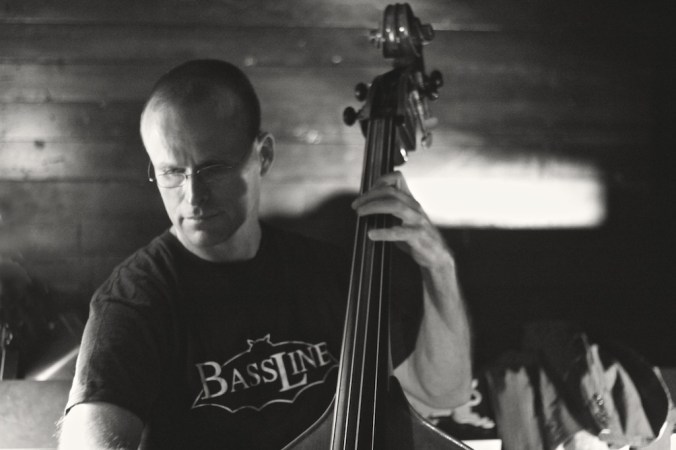
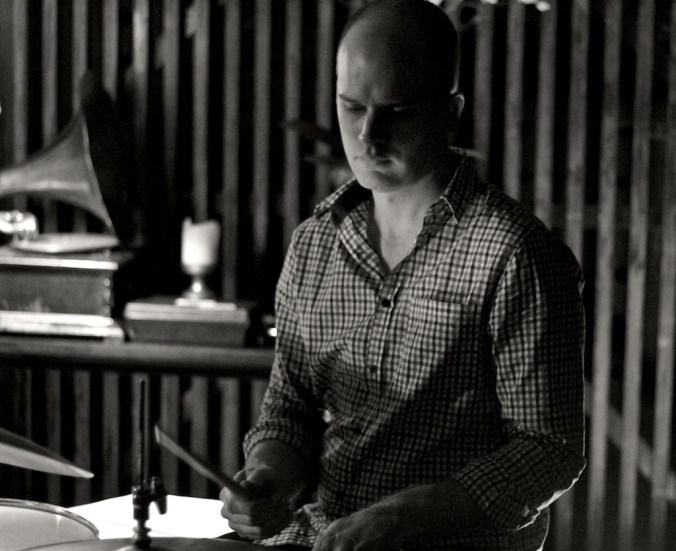
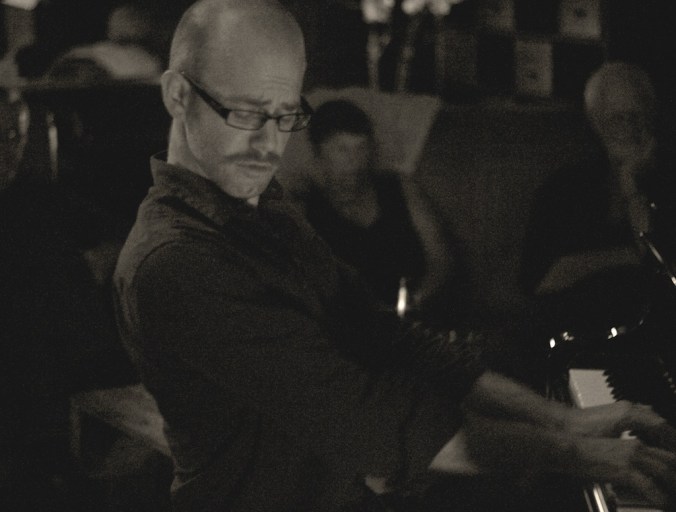
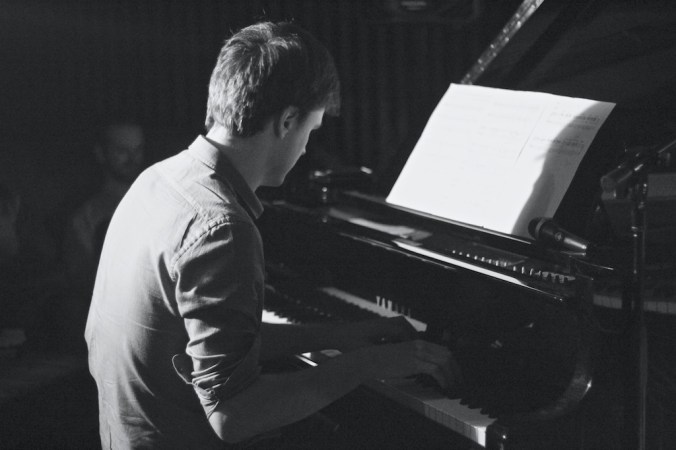
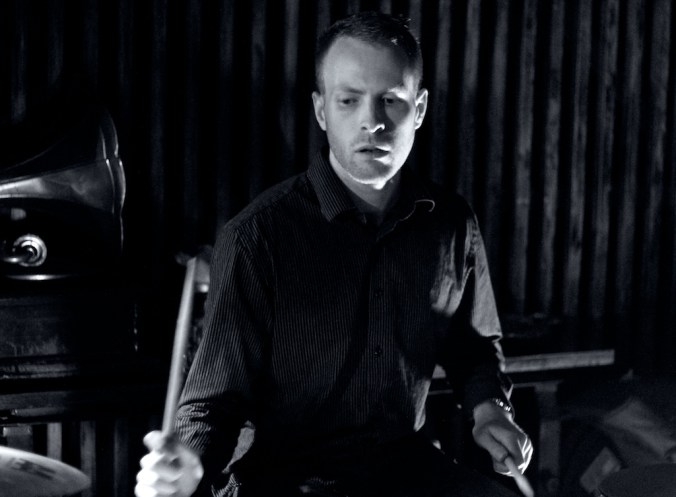
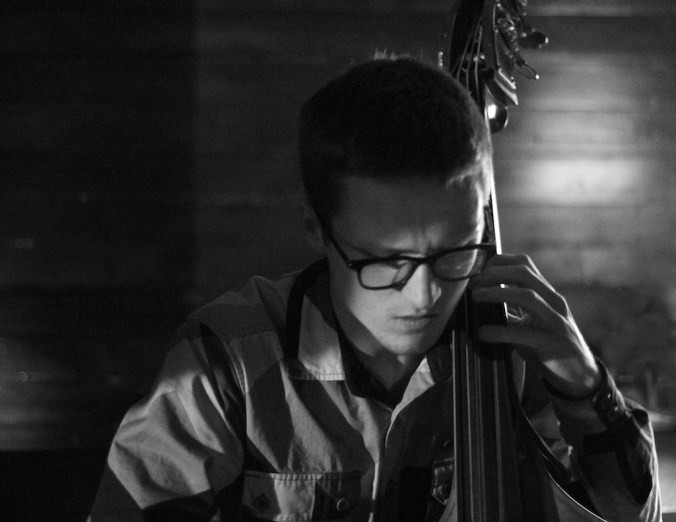
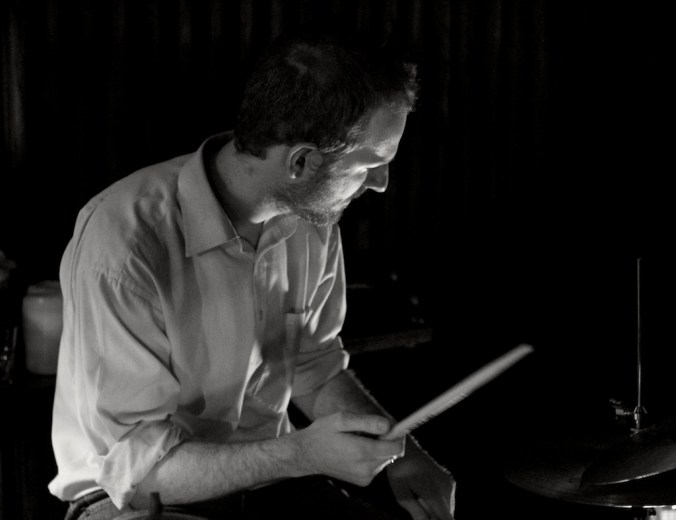
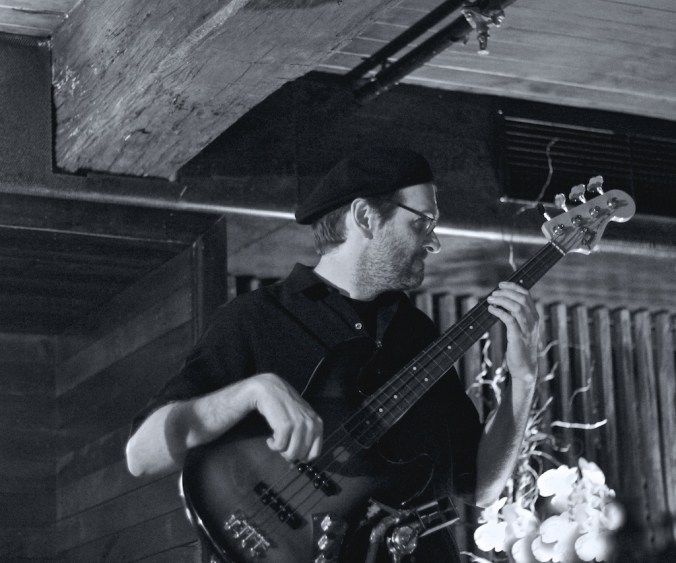
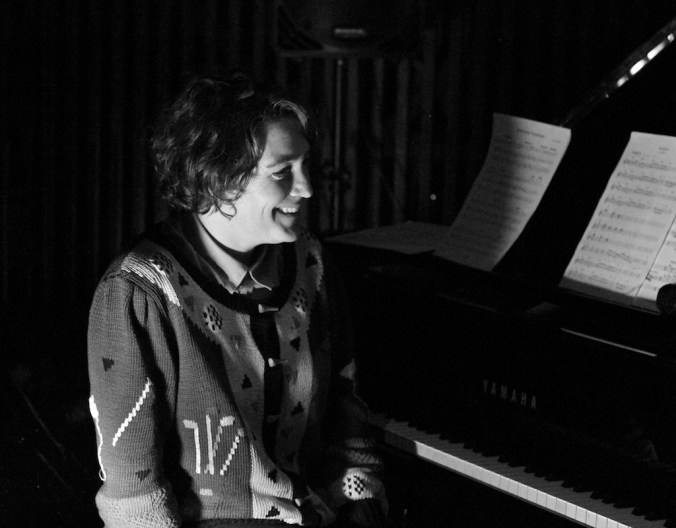
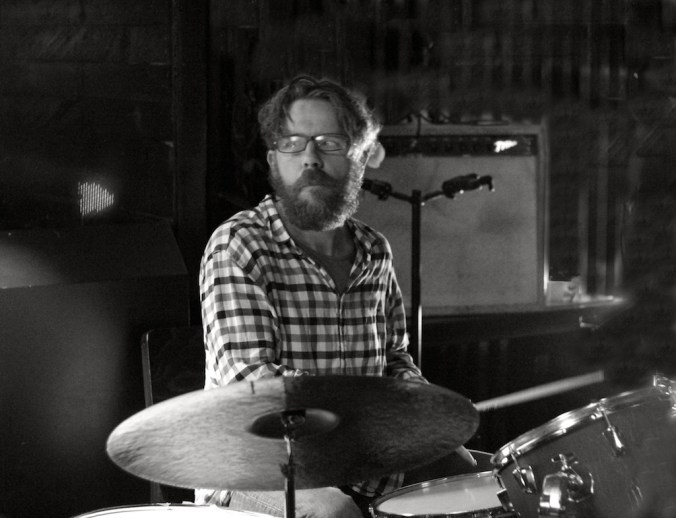
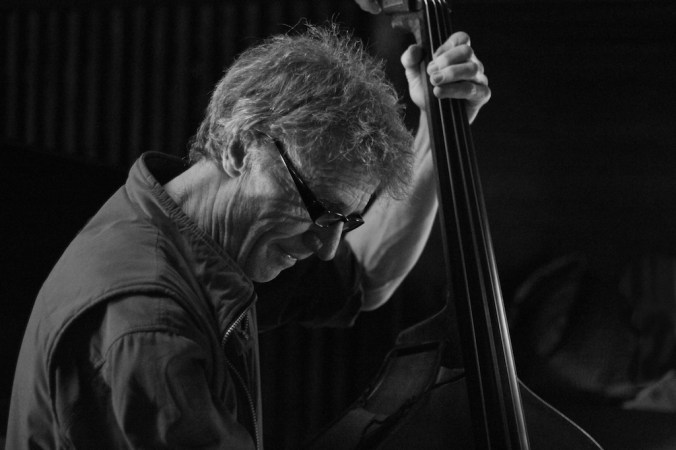
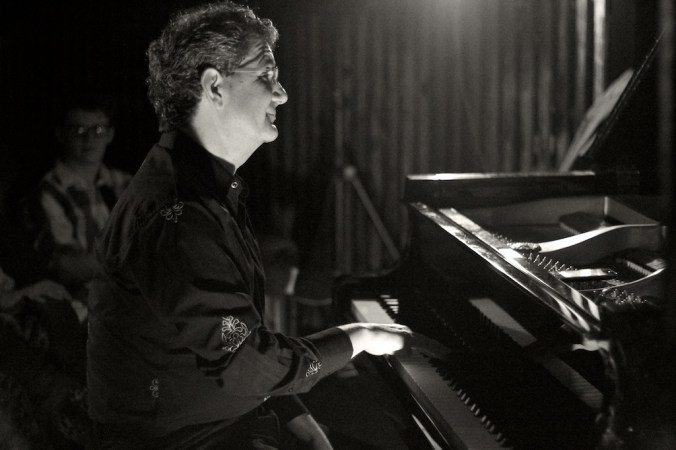
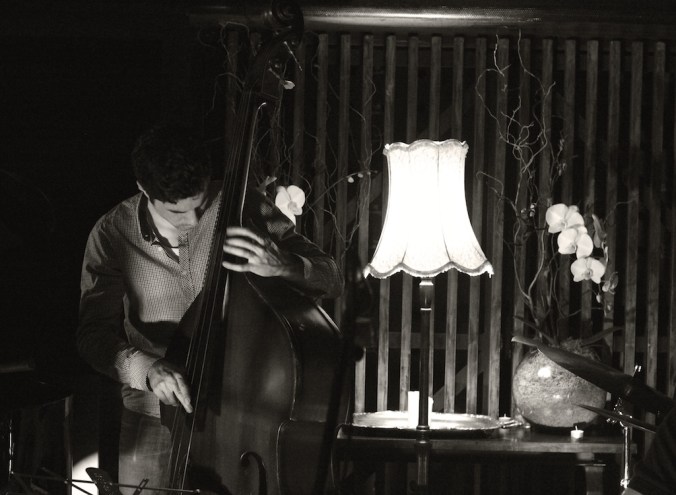
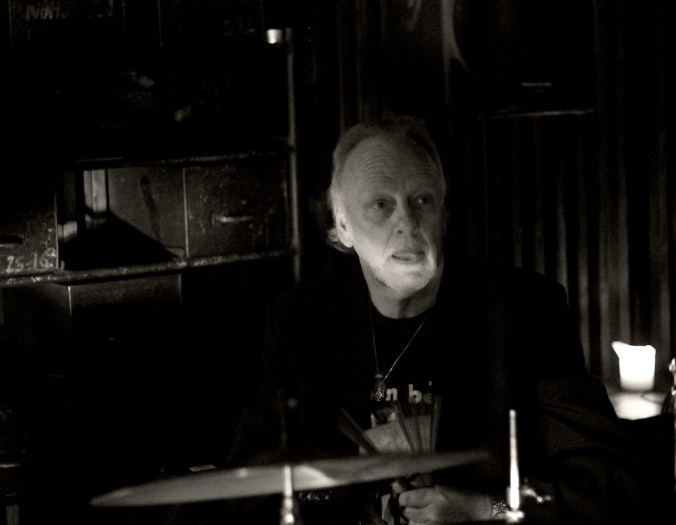
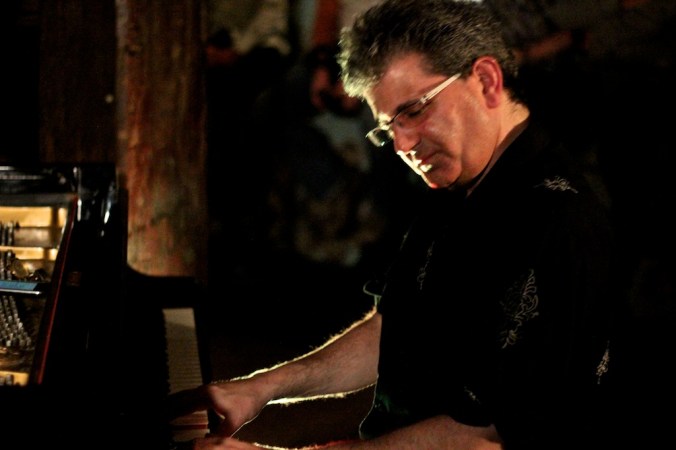
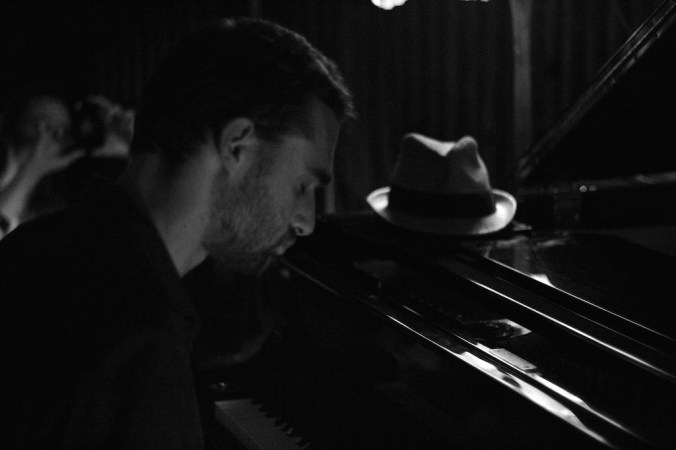
The co-leader Miles Crayford, now based in Auckland, has appeared at the CJC several times in recent months.  An interesting pianist and composer who compliments Wylie in unexpected ways.  This meeting of musical minds stimulated both artists.   The bass player was Mostyn Cole, but Crayford’s usual drummer, the Wellington based Reuben Bradley was replaced by Ron Samsom.  While all respected musicians in their own right, putting such combinations together is not in itself a guarantee of success.   In this case it worked well.   I like Reuben’s drumming enormously, but Ron Samsom gave the lineup an unusual colour that would not otherwise have been there. Samsom can draw on an endless array of styles, in each case arriving at a feel that is indispensable to the improvisers around him.   Like Wylie and Crayford, Cole contributed an original composition or two.   Cole is also based in Auckland these days and that is our gain.  He often incorporates passages of arco bass into his arrangements, perhaps more so than his local contemporaries.  IMG_1438 - Version 2 (1)

The musical connection between Crayford and Wylie was obvious, with the deliciously dark voicings of the pianist giving the alto player much to work with.   The first tune up titled ‘Taniwha’ (Crayford), set the tone for the evening.   A compelling tune with a melodic head, opening out to reveal depth upon depth.   In the second set Wylie showcased some traditional Greek tunes, unmistakable as to their origin, but somehow imparting a hint of that familiar Kiwi sound.  Kiwi musicians are reflections of our national character,  often excelling at what they do but seldom acknowledging their achievements.  Many are deliberately self-effacing, only letting their music speak for them.  Telling their stories in other ways is a writers job.

IMG_1412 - Version 2

I enjoyed this band and judging by the enthusiastic applause, so did the audience.   There was a time when I dreaded our more talented improvising musicians moving overseas as it felt like a loss.   Now I think differently.  Every-time James Wylie, Jonathan Crayford or Mike Nock returns home they bring back something new.   Nothing is ever lost if we listen properly and keep supporting the music.  These musicians and the many students who tread the same path are our legacy; where ever they live.  IMG_1417 - Version 2

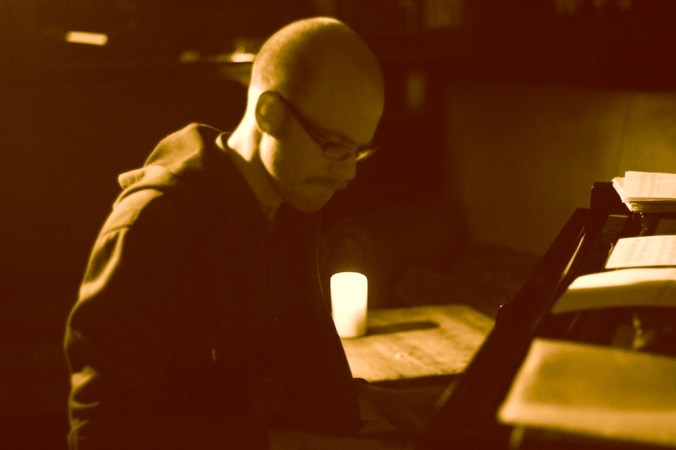
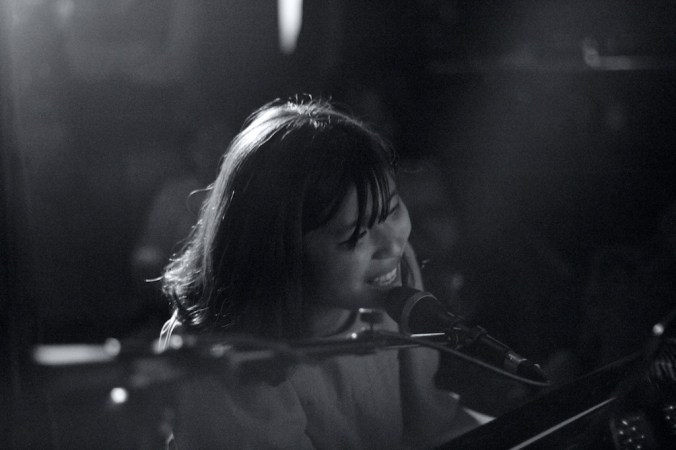
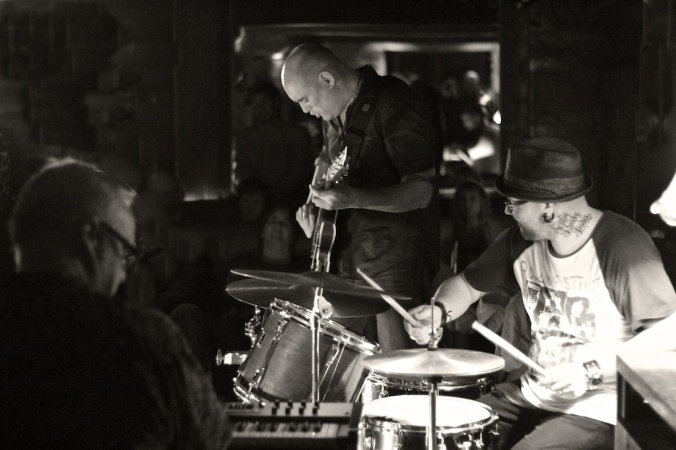
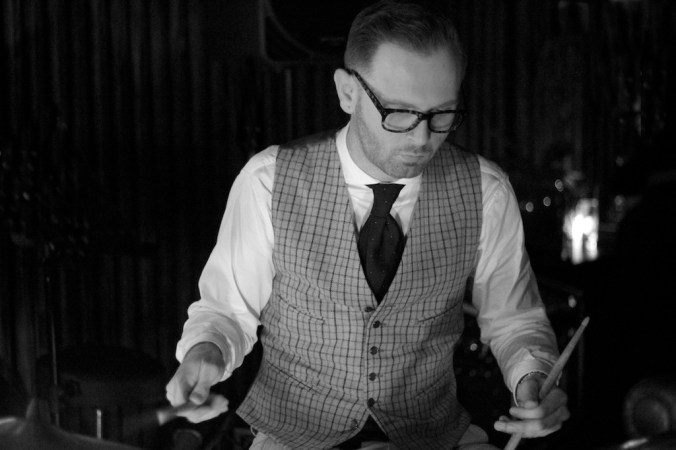
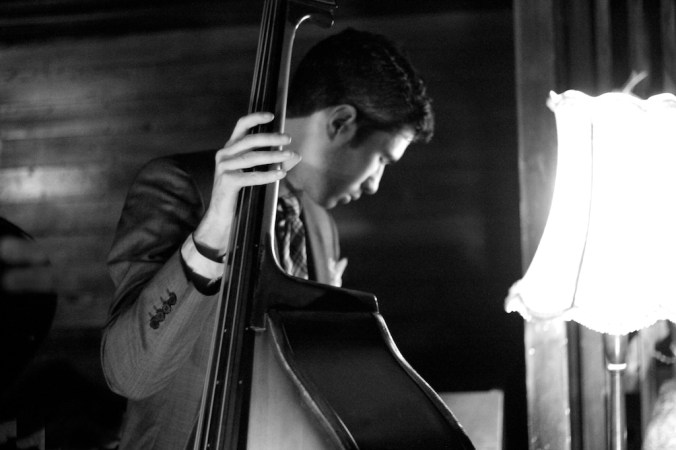
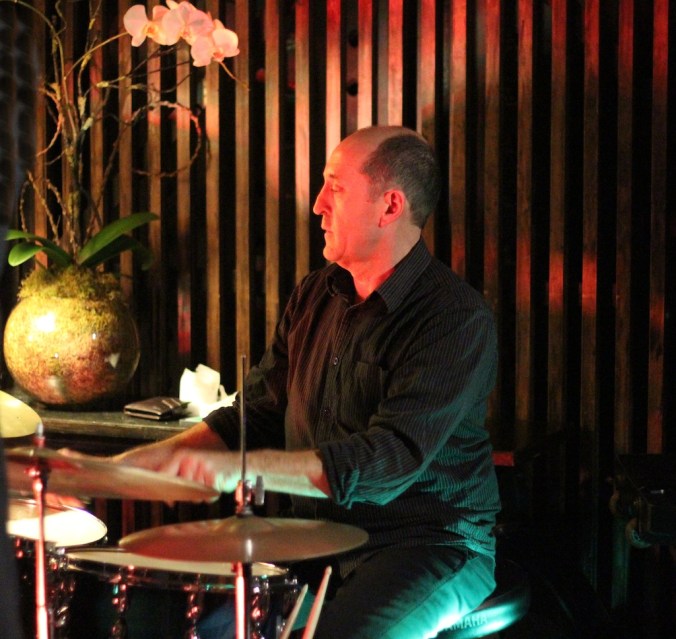
Who: James Wylie/Miles Crayford Group.  – James Wylie (alto saxophone), Miles Crayford (piano), Mostyn Cole (bass), Ron Samsom (drums).

Where: CJC (Creative Jazz Club), 1885 Brittomart, Auckland, New Zealand.   http://www.creativejazzclub.co.nz

Brian Smith quartet 2014

IMG_1251 - Version 2

For a man who says that he’s “taking it easy these days”, Brian Smith is remarkably active.  He has been a strong supporter of the recent CJC Sunday Jam sessions,  he still teaches and regularly fronts CJC gigs.   Many regard him as the elder statesman of the tenor saxophone in New Zealand and he certainly has the credentials to fit that title.  It is only when you see him playing his Cannonball or Selmer tenor that you realise just how youthful he is.  Like many experienced tenor players he appears ageless on the bandstand.  That is the alchemy of the instrument and the alchemy of the born improviser.

Advertised as Brian Smith (tenor saxophone), Kevin Field (piano), Kevin Haines (bass) Frank Gibson (drums) but on the night Oli Holland replaced Kevin Haines on bass.

It takes a lot of space to list Brian’s musical credentials and it is all too easy to miss out important elements, but here is a brief summary that I have gleaned from elsewhere;

‘Brian relocated to London in 1964, performing at Ronnie Scott’s and working & touring with such names as: Humphrey Littleton, Alexis Korner, T-Bone walker, Georgie Fame,Alan Price, Annie Ross, Bing Crosby, Mark Murphy, Jon Hendricks, John Dankworth, & Tubby Hayes. He was a founder member of ‘Nucleus’ alongside Ian Carr, which won the European Band competition in Montreaux in 1970, resulting in gigs at Newport Jazz Fest and tours of Italy, Germany, Holland, and America. In 1969 he started working in the Maynard Ferguson band, staying with them until 1975 including touring and recording. He also backed acts like Nancy Wilson, The 4 Tops, Gladys Knight & the Pips, Donovan, Dusty Springfield, Sandy Shaw and Lulu.’

The programming at the CJC is mostly centred around musicians projects.  The gigs are therefore heavily focused on original material or perhaps an oblique take on a particular oeuvre.   We do hear standards but seldom more than one or two a gig.  The exception occurs when international artists arrive in town or when iconic musicians like Brian Smith front a gig.  On occasion it is nice just to sit back and enjoy familiar tunes.  Letting them wash over you, being able to anticipate the lines and comparing them in your head to the versions that you have grown up with.  The very fact that some tunes become standards implies that they have a special enduring quality.  These are vehicles well suited for improvisation and having musical hooks that invite endless exploration for listener and musician alike.  Standards composers are the greatest writers of the song form, but the inside joke is that these wonderful tunes often came from musicals which failed miserably.

IMG_1258 - Version 2

It was great to hear the quartet play ‘You and the night and the music’ which is a firm favourite of mine.  Composed by Arthur Schwartz  (lyrics Howard Dietz), it came from the musical ‘Revenge with music’ which closed on Broadway after a few months.   Frank Sinatra and Mario Lanza revived it and it became popular with Jazz musicians for a while during the 50’s and 60’s.  While the earlier popular renderings tended toward the saccharine, Jazz musicians like Mal Waldren purged the tune of its syrupy connotations.  It was the obscure tartly voiced Lennie Niehaus Octet version (with Lennie on alto, Jimmy Giuffre on baritone and Shelley Manne drums) which won me over.  Over a decade ago I heard HNOP and Ulf Wakenius perform a killing version of it at the Bruce Mason centre and I had not heard it since.  That is until last Wednesday.

IMG_1236 - Version 2

Another great standard was Horace Silvers ‘Song for my father’.  Standards have the power to move us deeply and this tune in particular brought a lump to my throat as my father was slipping away that very week.  One of pianist Kevin Field’s tunes ‘Offering’ was also played and while not a standard it is a favourite about town.   Everyone played well that night with  Oli Holland and Kevin Field up to their usual high standard; Frank Gibson on drums was in exceptional form.  His brush work and often delicate stick work was perfect and it reminded everyone why he is so highly regarded about town.

IMG_1288

I have chosen a video clip from the gig which is arguably the most famous standard of all.  Cole Porters ‘What is this thing called love’.  Cole Porter would always say that the song and lyrics wrote themselves and this version is certainly a worthwhile addition to the selection.  Unlike many of the vocal versions it is fast paced and authoritative.  IMG_1278 - Version 2

Who: Brian Smith Quartet – Brian Smith (tenor saxophone), Kevin Field (piano), Oli Holland (bass), Frank Gibson Jr (drums).

Where: CJC (Creative Jazz Club), Britomart 1885, Auckland, New Zealand –  June 25th 2014   http://www.creativejazzclub.co.nz


Lex French Quintet @ CJC 2014

IMG_1161 - Version 2

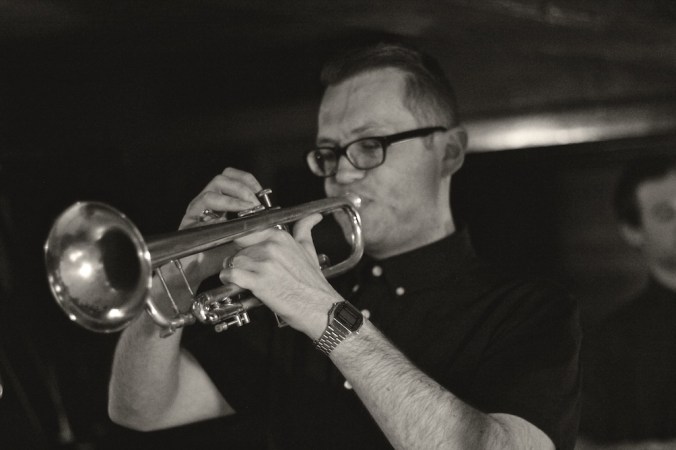
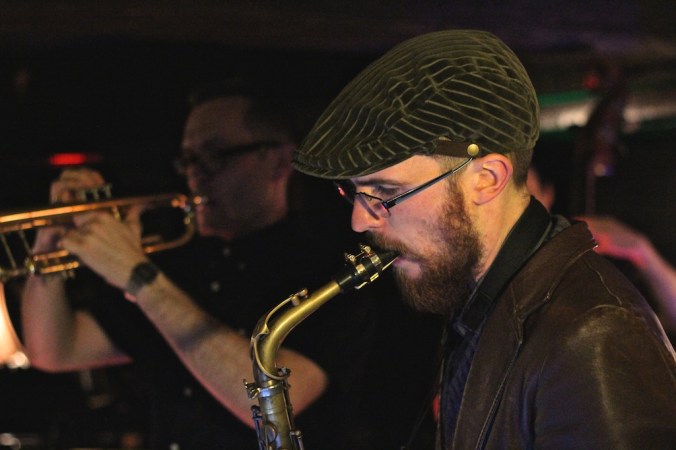
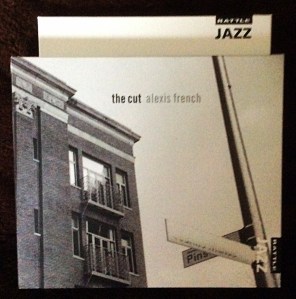
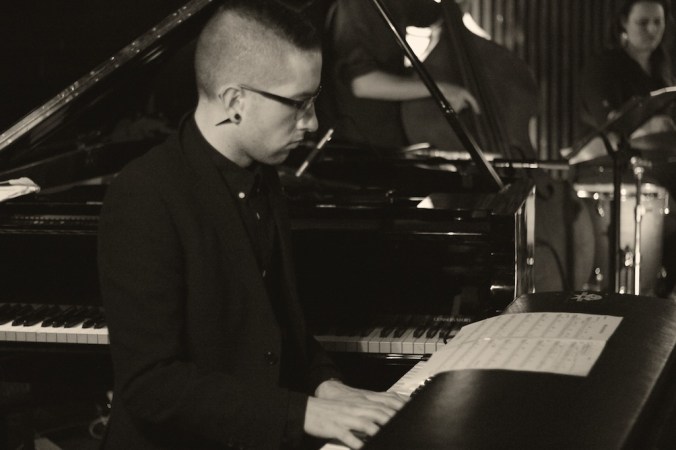
The trumpet is arguably the first instrument of Jazz but we hear it infrequently in Auckland.  When we do it is seldom the lead instrument.  To redress the balance, the CJC (Creative Jazz Club) featured Lex French last week, an impressive musician who is garnering increasing attention on the Jazz scene.  This gig was one to look forward to.  The occasion was the launch of his new Rattle album ‘The Cut’, which is an international affair; recorded at McGill University’s MMR & Studio ‘A’ utilising top rated young Montreal musicians.  The mixing and mastering done in Auckland by Rattles Steve Garden.  For the album release tour French had assembled a quintet of Wellington based musicians, people he has played with before and all well-respected.

IMG_1184 - Version 2 (1)

While French has been around for some time and amassed an impressive CV he is not as well-known in Auckland.  After this album (and gig) that should change.  In spite of his relative youth he has already worked extensively overseas and has long been an essential component of the Wellington scene. He came to my attention earlier this year when ‘The JAC’ toured New Zealand and he really stood out, as trumpet players of his calibre are few and far between in New Zealand.  His ability to engage an audience goes way beyond mere chops as the way he connects is personal.  His tone is impressive as is his control of dynamics.  While a strong decisive player, he can also whisper a beguiling phrase.  ‘The Cut’ features his own compositions and these are as strong as the playing on the album.  photo

If I had to pinpoint a particular mood, a particular composition I would draw your attention to ‘Metro’.  Montreal has an impressive metro, teaming with cosmopolitan life.  This track (2) and the others on the album connected me back to a city I love; a great Jazz city.  This is what Jazz does best, paints sound pictures, reconnects us to fading memories while at the same time pointing to the unknown.  ‘The Cut’ has an up to the moment feel with strong edgy interplay between instruments.  Strangely it conveyed to me the vibe of Miles ‘Sorcerer’ album.  Perhaps it was the compositions, perhaps it was the phrasing and intonation of the trumpet, but whatever the reason it evoked memories.   Over the week I have played the album over and over and with each acquaintance a new pleasure discovered.

IMG_1168 - Version 2

French is from Wellington New Zealand and there he obtained a B Mus with honours before moving to Montreal’s McGill University to complete a Masters.  McGill has a highly respected Jazz Studies course (the Schulich School of Music).  As an aside, New Zealand has another respected McGill alumni in drummer Ron Samsom (now head of Auckland University’s Jazz Studies Program).  The musicians on ‘The Cut’ are all from McGill, Montreal.  They are Lex French (trumpet), David Bellemare (tenor saxophone), Nicolas Ferron (guitar), Nicolas Bedard (bass) and Mark Nelson (drums).   French is clearly the leader, giving a consistently strong performance, but with impressive sounding musicians like this behind him he is extremely well supported.   For the New Zealand tour he had Jake Baxendale (alto saxophone), Dan Hayles (Rhodes, Piano), Scott Maynard (bass) and Lauren Ellis (drums).   Having keys replace guitar changed the feel somewhat, but both configurations were effective in their way.  With the authoritative French upfront it could hardly be otherwise.   10462624_10202402878617968_7985350930627100965_n

French is impressive in an ensemble but he is a standout when leading his own unit.  Buy this CD to show your support for an up and coming artist, but above all buy it for the pure enjoyment of sampling the best of contemporary Jazz.  We can also chalk this up as another win for Rattle, in what is already an impressive 2014 Jazz catalogue.

What: Lex French ‘The Cut’ Album release for Rattle Records      www.rattlerecords.net

Who: Lex French Quintet: (‘Album) Lex French (trumpet, leader), David Bellemare (tenor saxophone), Nicolas Ferron (guitar), Nicolas Bedard (bass), Mark Nelson (drums).  (NZ tour) Lex French (trumpet, leader), Jake Baxendale (alto saxophone), Dan Hayles (Rhodes, piano), Scott Maynard (bass), Lauren Ellis (drums).   www.alexisfrenchmusic.com

Where: CJC (Creative Jazz Club), Britomart 1885, Auckland, New Zealand, 18th June 2014  www.creativejazzclub.co.nz

‘The Grid’ land @ CJC

IMG_1134 - Version 2

There are some musicians who arrive on earth fully formed, having journeyed from distant planets.  Sun Ra was one of those.  There is yet another category of musicians who are not aliens, but who clearly hitch a ride with aliens from time to time.  The Grid is one of the latter, as there is no other explanation for their mix of in your face humour, outrageous musicality and otherworldliness.   They have been to Auckland before when I reviewed them for this blog (read ‘The Grid off the Grid’).  This is their second coming and it has long been anticipated by local musicians, metal jazz fans, mental Jazz fans and those who enjoy amazingly improbable improvised music.  People of all ages attended, as the censorship restrictions had obviously been overlooked.

IMG_1139 - Version 2

Reinforcing the view that ‘The Grid’ had been beamed in from a spaceship, was a light show that eerily played across them as they performed.   The gig was not in the usual basement spot, as we had been booted upstairs for the night by the building owners.  Being upstairs means psychedelic light show and being upstairs means playing to people at barely visible tables rather than to people sprawling on leather couches or sitting cross legged on the floor.  Some musicians are less comfortable in this space, but The Grid appeared to thrive on it.  As ever changing patterns played on the walls above them, or descended to spotlight their instruments, they worked with it.   This gave the gig an oddly surreal atmosphere, as isolated instruments or disembodied heads floated strangely in the air.

IMG_1124

The set list was replete with new tunes, all introduced by Ben Vanderwal as he joked his way from number to number.  This was proper Antipodean humour; highly irreverent, at times dry and always delivered with a pinch of intellect.  At one point a dissertation on Kylie Minogue’s lyrics occurred (she should be so lucky), at another a series of imponderable questions were left hanging in the air.  “What if god were one of us?  What if U2 were from Brazil?   Before we could grasp the enormity of these questions, the band had launched into an astonishingly good version of ‘Sunday Bloody Sunday’ (U2) based upon that premise.  The ideas may have appeared random, but they actually supported an interesting narrative that runs through all of their gigs.   These guys are very good musicians and it is not hard to fathom why alien beings would want to abet them on their journey.  IMG_1112 - Version 2 (1)

I have included a video clip of a composition by Dane Alderson titled ‘Hitch’.   The tune was written to honour iconoclast Christopher Hitchens at the time of his passing.  Sometime during the second set the guitar amp blew up and after a bit of head scratching it was mysteriously re-routed.  A casual observer might think that it was appropriate that a band delivered to us by mysterious forces should disappear in shower of coloured lights and sparks.   I am confident that someone will find a way to beam them back soon.  We like them here in Aotearoa.  IMG_1113 - Version 2

The Grid is: Ben Vanderwal (drums), Dane Alderson (electric 5 string bass, pedals), Tim Jago (guitars and pedals).  Perth/USA

Where: The CJC (Creative Jazz Club) Britomart 1885, Auckland, New Zealand.  www.creativejazzclub.co.nz

Neutrinos Jazz Funk + Rob Thompson


IMG_0708 - Version 2

If you have seen the Neutrinos perform at the Albion you will know how intensely funky they are.   Because they are a pub band, the music is beat focussed, danceable and outrageously cheerful; making people whoop with joy at the sheer exuberance of the music.  Ron Samsom is the Neutrino’s leader and he has contributed most of the tunes. I have only recently begun to grasp the breadth and depth of his compositions.  He is as a gifted writer.  Roger Manins has also contributed some great tunes from his popular earthy funk projects.   In his inimitable way he is also shares comparing duties.  The Albion band is Ron Samsom (drums), Roger Manins (tenor), Grant Winterburn (organ) and Cameron McArthur (bass).   As a unit they are the ultimate live experience.  Grant Winterburn’s solos scuffle and sing their way into your soul, taking your breath away with their brilliance.   Roger Manins brings down the happy ghosts of the funk tenor greats, Cameron McArthur makes the music dance and Ron Samsom’s drives endless flurries of killing beats out from his kit.  Being bombarded with something faster than light and more mysterious; neutrinos.  leaving in their wake pulsing rays of warmth.  More later on that gig as I will be writing a post on the Albion Funk Jazz Neutrinos shortly.

The CJC Neutrinos while composed of the same parts approached the music from a different angle.

IMG_0733 - Version 2

The Neutrinos lineup at the CJC was promoted as Jazz Funk (not Funk Jazz) and this offered a clue to the change of focus.  Visiting Canadian keyboard player Rob Thompson also replaced resident organist Grant Winterburn for this one gig.  Instead of the tone wheel simulating Nord C2D which Winterburn uses, there was a Nord Stage 88ex.   The sounds are very different.  Because the CJC is a listening space this opened up other possibilities; beat driven funk can follow ballads or introspective pieces.  We heard many of the tunes from the Albion repertoire, but the real surprise of the evening came when Rob Thompson moved from keyboards to piano.  He made a brief announcement and then proceeded to play two numbers strongly associated with Bill Evans.   Appropriately the quartet shrunk to a trio at this point.  Leaving just Thompson, McArthur and Samsom.

IMG_0729 - Version 2

It is unusual to see anyone interpret Bill Evans these days as modern pianists tend to shy away from this material.   There are a number of reasons for this and I suspect the sheer recognisability of his style, and of his particular approach to harmony invites unwelcome comparison.   A recent exception would be the album by Eliane Elias with husband Marc Johnson (an Evans alumni).   That particular album is Evans and Elias in equal proportions.  Rob Thompson has been studying Evans for a year or so and in situations like this there is a fine point between sounding like a particular artist and strongly referencing that artist.  How to approach the tunes is the perpetual conundrum.  The first tune of two was ‘Morning Glory’ (Bobby Gentry).  It was typical of Evans to appropriate an unlikely pop tune, film theme or country & western tune and then make it his own.  In this case ‘Morning Glory’s’ country and western origins dissolved into crystalline beauty.  Quite uncoupled from the Tallahatchie Bridge and Billy Joe McAlester.

From the intro to the end it spoke of Evans without being a slavish imitation.   The voicings and the approach were close enough to Evans to evoke him, but different enough to feel that you had gained a fresh perspective.  His second Evans number was ‘Re: Person I Knew” (Evans), a tune he wrote as a tribute to his friend Orrin Keepnews of Riverside Records.  The title is a clever anagram of Keepnews name, an intellectual challenge that Evans could seldom resist.  This introspective, wistful tune is among those most associated with Evans.  It is not only Keepnews who’s referenced here, as the song contains a haunting echo of the Scott Lafaro sessions at the Village Vanguard.  I have put up a clip of this.  Later I asked Cameron McArthur if he had ever played this material before and he had not.  With Evans bass playing changed.  Chuck Israels was the bass player when Evans wrote this tune and he said, “My voice is left open because Bill doesn’t play the bass in his left hand”.  Both McArthur and Samsom responded appropriately to Thompson’s explorations and both displayed a high degree of sensitivity.  Then it was back to the quartet format and higher octane tunes: with Roger Manins playing boisterously and to his usual high standard.

IMG_0736 - Version 2

It is always worthwhile to see familiar material examined afresh and played from a new perspective.  It was not just the Evans but the Neutrino song book reinterpreted on this night.

Who: Ron Samsom’s Neutrinos – Ron Samsom (drums), Roger Manins (tenor saxophone), Cameron McArthur (bass) with guest artist Rob Thompson (piano, keys)

Where: CJC (Creative Jazz Club), Britomart 1885, Auckland, New Zealand 13th May 2014.    www.creativejazzclub.co.nz

Sam Blakelock @ CJC

IMG_0598 - Version 2

Sam Blakelock is a guitarist open to the various streams and influences around him and he is clearly going places.  Formerly from Christchurch where he completed the Christchurch University Jazz Studies course, he found himself attracting wider attention.  A best guitarist award and the Jack Urlwin scholarship were to follow.  After a stint on luxury cruse ships he settled in New York where he is about to embark upon a Masters at NYU.

IMG_0595 - Version 2

Like a number of Jazz guitarists these days Sam Blakelock plays a Fender.   With Fender playing Bill Frisell cleaning up the ‘best of’ Jazz guitar polls year after year, the instruments emergence in mainstream Jazz is unsurprising.  It is hard to imagine Marc Ribot ripping up the rulebook on a classic hollow-body.   These warhorse guitars can be coaxed gently or smote with force and in the hands of a Jazz trained guitarist the sound palate is open-ended.  Blakelock’s approach is more to coax the instrument and the clip I am posting illustrates that approach.  While the quality of an instrument matters, it is the inventiveness and the ability to communicate interesting musical ideas that matters more.  The compositions were all original, many composed for this New Zealand farewell tour.   They felt like markers laid down at a waypoint in the journey.   A point to delineate his hometown success from the success that is surely to follow.

IMG_0599 - Version 2

For bandmates he chose two ex-pat Christchurch musicians, Richie Pickard (bass) and Andy Keegan (drums).  Completing the quartet was popular local alto player Callum Passells.   Having an alto in the mix gave him a very specific palate; giving the arranged heads a distinctive sound.  A certain freedom in voicing made possible.  Blakelock’s upper register lines blended perfectly with the clean toned melodic alto; playing in unison or subtly accenting solos with minimalist comping.  Keegan and Pickard anchored the quartet.  IMG_0600 - Version 2

At one point Blakelock played a riveting solo piece and on another he stole the limelight with a slow blues that burned like a torch song and sang like an exotic bird.  It is when he is in complete charge or playing alone that we see him at his best.  It will be interesting to see him in a few years time, when New York has further polished his already considerable skills.   When he has a moment I hope he passes this way again.

What: The Sam Blakelock Quartet Farewell Tour.  Sam Blakelock (guitar, compositions), Callum Passells (alto sax), Richie Pickard (upright and electric basses), Andy Keegan (drums).

Where: CJC (Creative Jazz Club), Britomart 1885, Auckland, 7th May 2014.  www.creativejazzclub.co.nz   samblakelock.com

‘DOG’ unleashed on International Jazz Day

photo - Version 2

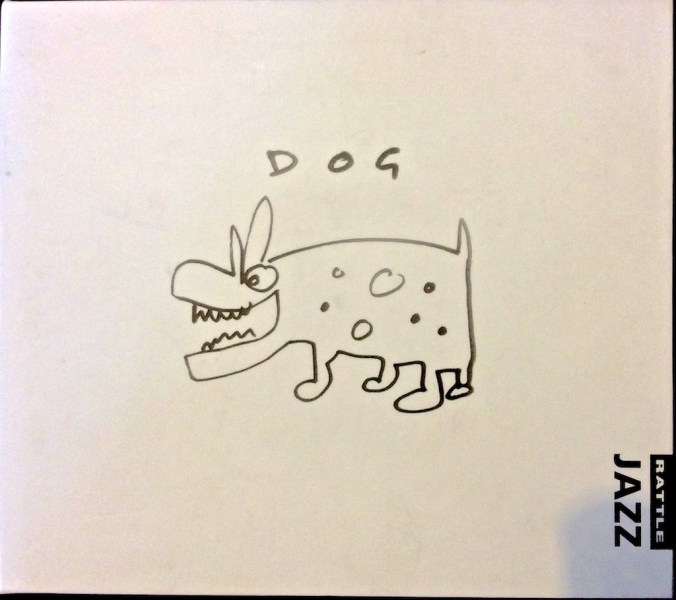
The DOG project was conceived two years ago and during its public outings the band garnered enthusiastic support.  Those who heard DOG urged them to record and eventually they did.  The long-awaited album was ready for release on International Jazz Day 2014; a gestation time roughly equivalent to that of an elephant.  The time however has been very well spent, as the band members have composed a wealth of new material.  DOG (formally Dr Dog) is Roger Manins, Kevin Field, Oli Holland and Ron Samsom.  Manins, Field & Holland are lecturers at the Auckland University School of Music (Jazz program), Samsom is the senior lecturer.   They are all in demand for the best gigs about town.  They are the big dogs on the block.

IMG_0531 - Version 2

International Jazz day was the perfect time to release this album, underscoring as it does a local Jazz scene crackling with life and teeming with invention.  Anyone familiar with the Auckland Jazz Scene will know that these musicians are a driving force; inspiring, challenging and empowering emerging artists.  It is a band of titans but it is also a true band of equals.  In the Jazz world bands made up of many leaders often fall short.  A juggling act’s required to unify a multiplicity of visions.  That problem does not apply here.  These men appear to breathe in unison and react to each other intuitively.  At the ripe old age of two DOG is in peak condition.

IMG_0484 - Version 2

The album is beautifully recorded and the mix could hardly be improved upon.  Credit to the York Street Studios in Auckland and to the tasteful mixing by Rattle’s Steve Garden (and DOG themselves).  ‘Rattle Records’ are going from strength to strength and if the last three months output is anything to go by, this will be their best year yet.  From the first few notes the album reels you in and holds your attention throughout.  There is a virtuosity and a tightness to the performances but it is more than that.   Beneath the unquestionable musicianship there is a radiating warmth and a bounty of good humour which shines through.  This was especially evident during the International Jazz Day performance at the CJC.  It was a humour filled affair and delightfully laid back.

IMG_0529 - Version 2

Roger Manins was the front man for the release gig and the dog jokes and banter had people in fits of laughter.  He teased the band mercilessly and they responded with sad looks or dismissive gestures.  The Zeppo Marx to Manins Groucho.  This is a role that he is well suited to and his jokes are quintessential Kiwiana.  Some of the titles contained obscure dog references.  ‘Race to Space’ honours the Russian dog which led off the space race, others inspired by loveable but hapless dogs of good breeding as in ‘Evolution’.  At one stage Manins directed people to a comparative dog intelligence chart.  “This is my spaniel rated at number fifty three, which is around the middle of a descending scale”.  Next he asked, “Does anyone here own an Afghan Hound?”.  No one owned up, perhaps guessing what was to transpire.  “Ladies and gentlemen they are number ninety two on the list, almost at the bottom of the intelligence scale”.  Some brave soul responded, “Surely not”.  “Have you ever tried to play cards with an Afghan Hound” was Manins quick response.  Roger Manins drawings for the cover art say it all.

Because there are four composers, the tunes have a variety of moods and tempos.   I like them all, but if forced to choose one I would go for Hollands ‘Didel Didel Dei’.   There are burning solos on this uptempo track and the interplay is quite exceptional.  On this track you will hear Manins at his best.  As usual there is no sugar-coating as he pushes the tenor to its outer limits.  Field, Holland and Samsom responded in kind.  This music they play has the utmost integrity and the audience laps it up.

International Jazz Day has become the premier event on the International Jazz Calendar with the brightest stars in the Jazz firmament showcased.  Auckland, New Zealand can hold its head high in the midst of these international celebrations.   This album and this live performance did us proud.

Who: ‘DOG’ is Roger Manins (tenor Sax), Kevin Field (piano), Oli Holland (bass), Ron Samsom (drums) – compositions by all band members

Where: CJC (Creative Jazz Club), 1885 Britomart, Auckland, New Zealandhttp://www.rattlerecords.net/   http://www.creativejazzclub.co.nz/

Jonathan Crayford – ‘Dark Light’ Trio @ CJC #jazzapril

IMG_0447 - Version 2

I attended three Jonathan Crayford gigs while he visited New Zealand.   All of the bands were different and all were exceptional in their way.  This tells me something important about the artist; a leader able to communicate a vision with the utmost clarity and bring out the best in other musicians.  Just over a month ago I interviewed Crayford and my first question was, “What projects do you have in the pipeline?”.  He told me about an album that he is going to record in New York in a few months.  We then talked about ‘Dark Light’, his new ‘Rattle’ album.  As the title implies this is about that mysterious place behind the light.  This recurring theme is regularly mined by improvising musicians.  Monk, Jarrett, Maupin, Towner, Pieranunzi and others have peered into this chiaroscuro world, where the shadows between light and dark reveal subtle wonders.  This piano trio album recorded in New York in late 2013, has the stellar sidemen Ben Street on bass and Dan Weiss on drums.  The album was pre-released to New Zealand audiences during Crayford’s gig on Wednesday which was the fourth of the Creative Jazz Club’s 2014 #jazzapril series.  IMG_0373 - Version 2

I hear a lot of music these days and much of it I like, but occasionally an album comes your way that really stops you in your tracks.  This is just such an album.  It has a profundity and a depth to it that works on so many levels.  It is an album that deserves hearing over and again and since obtaining a copy I have done just that.  At first impression I thought of game changing pianists like Esbjorn Svensson or some of the modern Scandinavians, but this has a strongly original feel.  As in all Crayford’s compositions, we hear a skilfully written head, that gradually evolves into an ever-widening groove, begging deeper exploration.  While it is music played at the highest level it is neither self-indulgent nor introspective.  The album has real depth but it is also incredibly accessible.  This is music that everyone will recognise at some level: partly because it is so articulate, but also because the blues and a myriad of other familiar song forms are neatly distilled into it.

It was obviously not practical to fly Street and Weiss (who are New York based) down for the CJC launch and so Crayford engaged two New Zealand musicians.  While not hearing the full recorded trio was a shame, we were not disappointed by their substitutes.  He could hardly have chosen better.  On bass he had Wellington musician Patrick Bleakley and on drums was Auckland musician Chris O’Connore.   I am less familiar with Bleakley but I certainly know him by reputation.   The last time I saw him was with ‘The Troubles’, a delightfully anarchic Wellington band.  He is an experienced and melodic bass player with an instinctive feel for time.  On the album with Street and with the New Zealand trio, the bass player anchored the pieces; leaving piano and drums to react to each other.  O’Connore is one of the finest drummers on the New Zealand scene and he routinely plays in diverse situations.  This open skies approach gives him a real edge.   He is a drummer and percussionist with a highly developed sense of space and dynamics and in this case his colourist tendencies were strongly in evidence.  IMG_0422 - Version 2

The tracks have an organic logic in the way they’re ordered and a natural ebb and flow is discernible.   The set list at the gig followed that order, creating the sense that we were on a journey.  The titles of the pieces reference the ‘Dark Light’ theme and none more so than ‘Galois Candle’.  Galois was a genius French mathematician (1811 – 1832) who used abstract algebra to prove the links between field theory and group theory.  He suffered unbelievable bad luck in his short life and was not appreciated or understood until the 20th century.  Many of his proofs were accidentally or careless destroyed by others, hence the title.  As I play this sad evocative piece, the story of Galois unfolds before me.  This is what Jazz can do well; steal a moment out of time and create a compelling narrative.

There is a luminous quality to Crayford’s playing; a quality which sounds newly minted and yet familiar.  Crayfords contribution to Jazz deserves wider recognition and with this album it could happen.  I would therefore give the album four and a half stars out of five, not out of some Kiwi patriotism but purely on merit.  No Jazz lover will regret the purchase

I have posted a track titled ‘Bikes in Space’ below.IMG_0430 - Version 2 (2)

Who: Jonathan Crayford (piano) Ben Street (bass *album), Dan Weiss (drums *album) – Patrick Bleakey (bass *CJC), Chris O’Connore (drums, percussion *CJC)

What: ‘Dark Light’ released by Rattle Records http://www.rattlerecords.net 

Where: Pre release CJC (Creative Jazz Club), Britomart 1885, Auckland 23rd April #jazzapril

‘The Antipodean 6tet’ Tour @ CJC

IMG_0095 - Version 2

There are a number of factors that make music special to a listener and for most it is the familiar that attracts them.  Improvised music is a different beast and the most valued quality is what Jazz essayist Whitney Balliet termed “the sound of surprise”.  When Jazz listeners are fully engaged it is seldom the melody line or a familiar riff that holds their attention.  While melody, chord voicings or an ostinato groove bring us to the moment, it is the promise of the new that creates a state of joyous anticipation.   So it was with the ‘Antipodean 6tet’ and the rewards were immediately evident.  Mike Nock told me recently that some of the young Australian bands are on a par with the best of what’s on offer in America.  A statement like that from a person of Mike’s undisputed authority causes you to take notice.  Some of the members of this group were among those mentioned by him.

IMG_0109 - Version 2

The idea for the ‘Antipodean 6tet’ was conceived in Berlin when Jake Baxendale, Aiden Lowe and Luke Sweeting decided to create a vehicle for their music.  By the time of the Australasian tour they had added Ken Allars, James Haezelwood Dale and Callum Allardice.

Those of us who pay close attention to Australian and New Zealand Jazz knew that we were in for something out of the ordinary.  A heightened sense of anticipation followed the tour announcement.  Earlier this year Rattle records released JAC’s ‘NERVE’ album.  The album featured Wellington musicians Jake Baxendale (alto, compositions) and Callum Allardice (guitar, compositions).  Many saw Jake as he toured with JAC during the launch tour and enjoyed his alto playing.   Callum Allardice was in Germany at the time of the launch, but his compositions and arrangements were also appreciated.   These two musicians form the New Zealand contingent of ‘The Antipodean 6tet’.

IMG_0071 - Version 2

Luke Sweeting is an Australian pianist who conveys more with his light touch than many do by playing percussively.   His playing is thoughtful, airy and interesting.   He has previously composed for sextets and is obviously central to the bands well crafted ensemble sound.  Sweeting, Aiden Lowe (drums), James Heazelwood Dale (bass) and Ken Allars (trumpet) are well established on the Australian scene with the former two having toured Europe extensively.  They have all attracted positive attention around Australia.  All have worked as leaders, but melded into an ensemble the instruments speak in a unified authoritative voice.  IMG_0060 - Version 2 

A Sydney bass player contacted me a few weeks ago saying that I would be mad to miss this innovative band.  He was right in his estimation of their impact, as they appear to bring something fresh and exciting to the scene.  northern European aesthetic with an authentic Australasian feel.

To best illustrate the above I must focus on Ken Allars.   I have been aware of Allars for some years but it was probably his compelling trumpet work on Mike Nock’s critically acclaimed 2011 album, ‘Here and Know’ that first grabbed my attention.  I received a review copy shortly after the 2011 release and was immediately struck by his use of dynamics and strong improvisational abilities.  Later I saw him in the horn-line of the JMO (Jazzgroove Mothership Orchestra) when it toured Auckland with Darcey James Argue.  Now seeing him with ‘The Antipodean 6tet’ my positive first impression is reconfirmed.  On the opening number we saw his use of extended technique.  Not so much the usual growls or smears, but a skilful deployment of flutter tonguing and airstream effects.  The whistles, breathy explorations and pops augmented the contributions of Jake Baxendale who wove in quiet upper register ostinato responses (like Evan Parker in the opening few bars of ‘The Lady and the Sea’ – Kenny Wheeler).  So controlled was the sound production that at times Allars sounded like he was playing a flute.  When he did blast out a phrase it was doubly effective as it contrasted with the softer moments.

 IMG_0046 - Version 2

I have seen bands who lower the volume for a ballad or a thoughtful meditative piece, but never quite like this.  They skilfully utilised the pianissimo and piano and diminuendo to impart an infinite array of subtleties and within that space communicated a world of information.  Earlier I mentioned the European aesthetic and perhaps I refer more specifically to the Norwegian ECM sound.  I detected a strong influence of this future-facing aspect of modern Jazz in Allars playing.  Later I asked him whether he had listened much to the modern Norwegian trumpeters.  Yes he had checked them out in person.  We then discussed people like Arve Hendriksen, Nils Petter Molvaer, Mathias Eick and others.   While Molvaer and Eick often use electronics and loops there were no such effects used by Allars.  IMG_0099 - Version 2

This band is purely acoustic and the impressive range of sounds and effects at their disposal will have pedal manufacturers smiting their brows in frustration.  Because of the sound balance, the imaginative drum work and the punchy bass lines are as strong in the mix as the other instruments.

They are due to record shortly and I look forward to that.   I urge anyone who can to catch this tour or subsequent outings.  I guarantee that you will not regret it.

What: ‘The Antipodean Sextet’ Luke Sweeting (piano), Jake Baxendale (alto saxophone), Ken Allars (trumpet), James Heazelwood Dale (bass), Aiden Lowe (drums), – in New Zealand – Callum Allardice (guitar).

Where: The CJC (Creative Jazz Club) Britomart 1885 building, Auckland.  26th March 2014


Callum Passells Quartet @ CJC

IMG_9721 - Version 2

I like the inventiveness of Callum Passells both as an alto player and a composer.  There is something of the risk taker about him and his instincts seldom fail him when reaching for fresh ideas.  His quartet was bristling with edge last week, a band without a chordal instrument and utilising the talented Chelsea Prastiti as vocalist.  Chelsea is always up for these types of sonic explorations and perfectly able to handle the challenge.  This was a gig crafted around a particular range of sounds, but more importantly it appeared to have particular musicians in mind.  On bass was Cameron McArthur and on drums Adam Tobeck.  The bass player and drummer handled the challenges confronting them perfectly, creating texture, nuance, colour and anchor points appropriate to the diverse range of music.  I often praise Cameron McArthur and in this situation his skilful bass lines were crucial.  I was pleasantly surprised by Adam Tobeck’s versatility, as I had only seen him in straight ahead gigs.  He is a tight focussed drummer, but in this situation he showed just how broad his skills base is.

IMG_9780

The set list was skilfully constructed, offering endless contrasts and explorations into a number of Jazz related subdivisions.  During the first set Chelsea sang the ballad ‘My Ideal’ (Robin/Chase/Whiting).  The intro was just vocals and bass, but when the alto and drums came in they took a minimalist approach.  The interesting thing is that the arrangement had a fulsome quality to it, almost orchestral.   This is a tribute to Chelsea and definitely to the arrangement.  IMG_9746 - Version 2

At the other end of the spectrum was a free piece titled ‘N+/-1’.  This was an extraordinary piece of music with all of the excitement and theatrics that you could wish for.  Callum had warned the audience that they were about to hear a free number and suggested that those who were queasy about such offerings could move to the bar area at the side.  I am unsure if anyone took him up on that, but in reality ‘N+/-1’ had the opposite effect.  Drawing people into the bands orbit; all of them smiling and whooping in delight.  While the piece followed its own internal chaotic logic it never-the-less communicated a strangely cohesive and exciting narrative.  There were distinct parts to the piece and each more marvellous than the last.  Voice, bass and drums weaving ever deeper, as if sucked into an alternate reality by the brilliance of the alto.  People watched transfixed, marvelling at the cascade of sounds and the flow of musical ideas.  This number was a tour de force for the group but there was no mistaking Callum’s influence.  Even though he gave the others plenty of space, his presence was always felt, guiding, cajoling and demanding that bit more.  As I watched and listened completely engaged I cursed that I did not have a movie camera on hand to record the moment.

IMG_9751 - Version 2

With a few exceptions Chelsea sang wordlessly and this style is definitely a forte for her.   She can sing a unison horn line so convincingly that you do a double take, scanning the bandstand to see if there is an instrument you have missed.  Her range, timbre and musicality enriched the group.  This was particularly evident on ‘Lennies Pennies’ (Tristano).  I love all Tristano compositions but especially this one.  As they negotiated the exciting fast paced, measured lines a special synthesis was evident.  This was innovative and original; adding something of value to an already rich Tristano-ite output.  IMG_9773 - Version 2

There were other original tunes such as ‘Tashirojima’, ‘Monte Cecelia’ ‘Sons Multiples’ ‘Indifference’ and a number of standards (‘Yardbird Suite’, ‘Mood Indigo’ and ‘Straight no Chaser’).  They were all captivating in one way or another but one original deserves special comment.   Sometimes there are layers of meaning in titles and ‘Indifference’ certainly qualifies in that regard.  Written by Callum in tribute to his father who is gravely ill.  The power of this composition and the delivery by Callum spoke to me deeply.  It is clearly not about casual indifference.  It felt to me like the struggle to view life in a wider context when faced with mortality.  Perhaps the indifference of the universe to our small world suffering and how to make sense of that.  The sound of the alto cut so deep that for a time nothing else seemed real.  This is what raw emotion sounds like.  The audience were quieter and as I looked up at the light show playing against the wall, I saw a brief skeletal picture flash up on the screen.  One brief frame in the play of an endlessly looped digital sequence.  While this fleeting spectral apparition was pure happenstance, it was strangely apposite.   This piece was so much more than elegiac; it placed a marker of just what it means to be human.

IMG_9764 - Version 2

Who: The Callum Passells Quartet: featuring Callum Passells (alto sax, compositions), Chelsea Prastiti (vocals), Cameron McArthur (upright bass), Adam Tobeck (drums).

Where: CJC (Creative Jazz Club), 1885 Britomart, Auckland – 5th March 2014

Andrea Lisa Band – CJC

IMG_9265

It’s been a long time since the Andrea Lisa band were in Auckland and a considerably longer time since they were last at the CJC.    Those who attended the CJC on August 7th 2011 saw many of this lineup perform in the ’emerging artists’ category.  At that appearance they played one or two originals and memorably two or three Pat Metheny numbers.   The band specialises in a brand of fusion which incorporates Jazz, Soul, Funk and R & B.

After leaving New Zealand they settled in Brisbane (where they are now based) and we periodically received reports that they were doing well.   They had hardly settled into the Brisbane scene when they hit the road again and this time the destination was Dubai.   I know little of Dubai (other than it has modernist architecture, It’s very hot and it’s a mecca for well healed shoppers).   The Andrea Lisa band appears to have worked there for around six months and then they headed for Europe.   That must have worked out extraordinarily well for them also, as gig reports were coming in from Marseille and other choice Mediterranean locations.   A highlight was performing in Pablo Picasso’s former home with Thijs Van Leer (from the group Focus).  The band will soon be returning to Brisbane and so those wanting to catch them need to check out Andrea’s Facebook page ASAP – Andrea Lisa Fan Page 

IMG_9274 - Version 2


While much of what the band played was from Andrea’s 2012 EP album ‘So Sweet’ there were also some new numbers.  All were originals.  The type of material was familiar but the band had tightened up noticeably.  Being on the road for so long had polished their performances and it was especially noticeable with Lenny Church.  Even before I asked him, I realised who his main drum tutor had been.  It just had to be Josh Sorenson (and it was).  He got huge applause for his intense groove based solos.  Nick Taylor laid down solid support on the electric bass and his pulsing lines added a lot of weight to the bands slick sounds.  The remaining quartet member is Alex Churchill who plays keys, reeds and flute.   His role has evolved considerably since I last saw him and it was good to see him on the club piano for one number.  IMG_9237 - Version 2

IMG_9240 - Version 2

Andrea is a solid guitarist and vocalist but it’s her guitar work that comes across most strongly.  Those soaring lines and occasional Wes like voicings place her squarely at the heart of the unit.  An attractive diminutive performer with a big guitar and a confident presence on the band stand.  Her main guitar is still the reddish tinged Ibanez (a very nice instrument) but there’s a new guitar as well.  She performed three numbers on a stunningly beautiful Godin guitar, which has nylon strings (Acs Synth access multiac encore model).  This super responsive guitar just sang under her finger tips.   Ever since Dixon Nacey started using Godin guitars we are seeing more of them here and this pleases me immensely.

IMG_9246

They have retained an enthusiastic New Zealand following and a considerable number of people new to the CJC turned up to hear them.

Who: Andrea Lisa (guitars, leader, composition), Alex Churchill (keys, reeds, flute, arranging), Nick Taylor (bass), Lenny Church (drums).

Where: CJC (Creative Jazz Club) 1885 Britomart, Auckland 19th Jan 2014

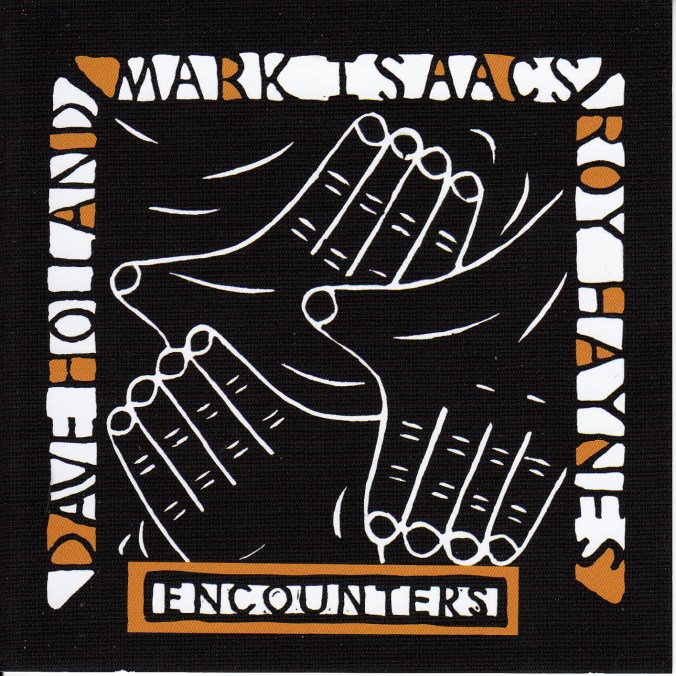
‘Encounters’ – Mark Isaacs – Dave Holland – Roy Haynes

Mark Issacs Encounters

Mark Isaacs’ ground breaking ‘Encounters’ album has just been re-released for the third time and no wonder.  This is an important musical statement by any measure and it sits comfortably beside similar works by Jarrett and Corea.   I don’t say that lightly, as the aforementioned artists explorations into free improvisation set lofty benchmarks.

Mark Isaacs is somewhat of a prodigy as he works across all genres of Jazz, is a gifted composer and has a well established classical career.  His Jazz charts are particularly impressive as he often voices his pieces in modern and compelling ways.  As if that were not enough he has composed a symphony (recently performed by the Queensland Symphony Orchestra – I have heard this impressive work).  Because Mark is such a multi faceted artist it is harder to buttonhole him and perhaps that is the point.  Great musicians shouldn’t be pinned down.   It is the nature of improvised music that it constantly shifts like the coloured grains of sand in a great Mandala; elusive and yet leaving an indelible image behind.  When it’s done well the impressions that remain will outdo the notation.  This album achieves that.

Because the album has not been available since 1995 I hadn’t heard it before.  When I did it truly surprised me.  I was expecting a good album as the triumvirate of Isaacs, Holland and Haynes creates high expectations.  What I was unprepared for was just how deeply it affected me.   To explain this better a back-story is required .  An indication of how this album came to be.

The recording dates from 1988.  This was a time when the mainstream music world had become mired in techno-commercialism and to the credit of the Jazz community it chose to delve deeper into experimental music; pushing harder against musical boundaries.   This was the time of Jarrett’s ‘Changeless’ and ‘Dark Intervals’ albums and discriminating listeners were up for it.  Dave Holland was no stranger to this type of project as he had participated in and initiated many avant-garde projects since the sixties.   Mark Isaacs (an Australian) was in New York at the time having just heard some of his chamber works performed by the Australian Ensemble in Carnegie Hall.   He felt ready to record something challenging so he contacted Dave Holland who immediately agreed to participate.  I am not sure how Roy Haynes came to the project but the choice was fortuitous.  A bop-pioneer drummer who had played with Lester Young and Charlie Parker plus a cutting edge experimentalist bass player were on board.  Both had played in Miles Davis bands (but not at the same time).  Both had an interest in the avant-garde.

No rehearsals were held, no charts used and none of these artists had ever played together before.  What you have here is a tight rope act undertaken by an Australian, an ex-pat Englishman and a New Yorker.  The result could have fallen flat but what happened was truly amazing.  Deep intuitive communication and an interplay which sounded more like a trio that had been together for years, not minutes.  In this recording there is a profound sense of space and limitless vistas seem to unfold before you.  The album is just over thirty minutes long and packed within that thirty minutes is a world of diversity.   At certain points one or other of the musicians is leading the conversation, while at other points they appear to seize upon an idea at the same time.  This is artistry of the highest order and I urge anyone reading this to purchase a copy while stocks last.

It is available on iTunes but as an audiophile I recommend that you purchase the CD.  The recording quality is superb and the sound so immediate that you gain a real sense of the studio it was recorded in.  A lot of recordings could have been recorded anywhere, but this one conveys a sense of location.  Many of the ECM recordings have that feel and the Rainbow Studios in Oslo immediately come to mind.  The album was recorded at the Power Station studios in New York, which incidentally is where Jarrett’s ‘Changless’ was recorded at about the same time.

Twenty five years on, the album still sounds fresh and engaging.

The Album is available from Mark Isaacs Website: http://markisaacs.com/9-latest-news/13-encounters-with-dave-holland-roy-haynes-available-now

New Year 2014 – the fabric of creativity

IMG_8954

For many, music is a distant and pleasant soundtrack which augments their moments of relaxation.   Something to wallpaper the background while they chatter over a few drinks.  I am wired differently because my normal talkativeness ceases when even a faint echo of good music is heard; an off switch is flicked.  This pied piper effect has characterised my life and often made me late for appointments.  What is it that makes music so compelling to some and not to others and why is improvised music beguiling to those with that special antennae?

My earliest memory of Jazz is of a Louis Armstrong film.  I was a primary schooler and I made my long-suffering mother take me back twice.  Louis fascinated me in ways my relatives couldn’t quite fathom but they indulged me with an EP or two.  Ours was a classical music household.  Three years later I was walking down a street near my home when I heard a trumpet playing.   I could see the musician’s outline in the upstairs window as he played, weaving deftly around what I later learned was a Coleman Hawkins solo.  I stopped in the street, delighted and open-mouthed.   I have no idea how long I stood on the pavement gawking, but I vaguely recall being led inside and offered cocoa by the trumpeters mother.   The trumpeter and his mother were Polish refugees and they made me feel very welcome.  In the months that followed I called often and absorbed Miles, Lester Young, Dave Brubeck, Sweets Edison, Art Peper, Hampton Hawes, Billie Holiday, Basie, Ellington and more.  By the time I had connected with the groove-organ trios of Gene Ammons I was damned.  I would bunk off school and play Gene Ammons or Miles all day long, dancing about like a deranged fool.  The devils music had me by the throat.
IMG_8947 - Version 2

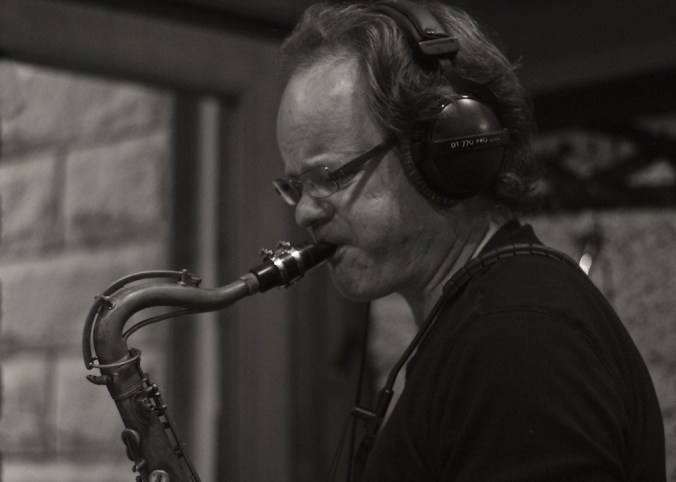
Half a century on the same music gods and their siren songs still exert power over me.  Enough to lure me to Australia at very short notice.  I had picked up some gossip from Australian musician friends, that my friend Roger Manins was doing a gig with Mike Nock, James Muller, Cameron Undy and Dave Goodman at the 505.  I have family in Sydney and so it was a no brainer.  Family, grandchildren and Jazz, perfect.   When I told Roger that I would be flying over for the gig he invited me to his ‘Hip Flask’ recording session at the famous 301 Studios in Alexandria.  I love recording studios and to hear a top rated unit like this recording in a famous studio was too good an opportunity to miss.  I applied for extra leave and altered my flight schedule to accommodate the extra day in the 301.  IMG_8963 - Version 2
The timing rested on a knife-edge as I had a gig to attend just hours before my flight to Australia.   I made the check-out with 4 minutes to spare.  The flight over on Virgin was abysmal.  I had a headache from lack of sleep and it was like being stuffed into a rubbish tin surrounded by bored, rude flight attendants who acted as if they were in a BBC spoof.  An Australian musician later commented that Virgin felt to him like it was piloted by overtired children.  IMG_9011 - Version 2
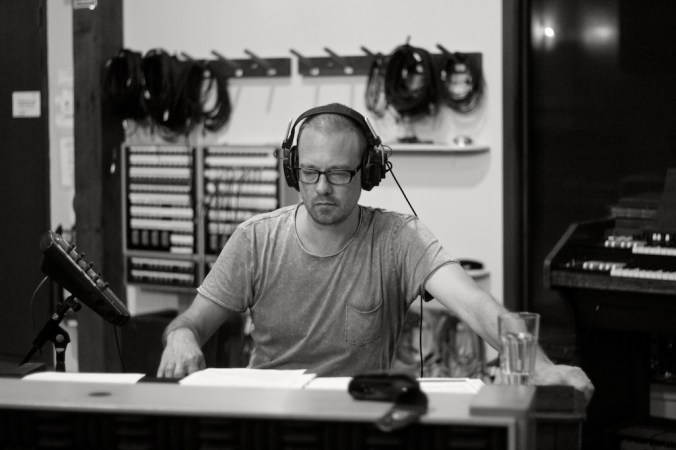
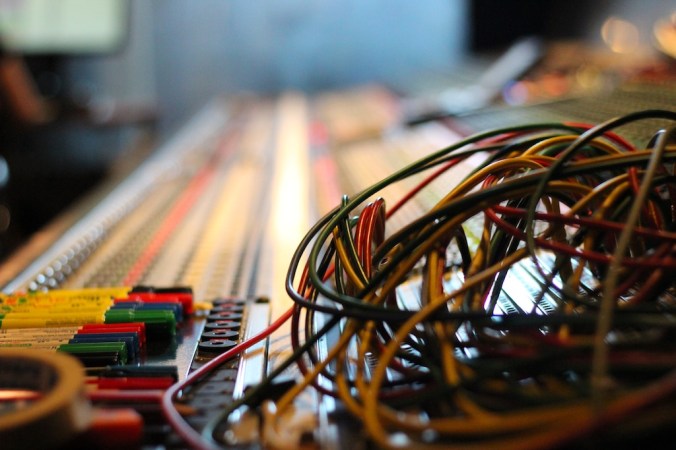
After clearing customs, I poured myself into a taxi and headed directly for the 301.  The industrial exterior gave little indication that I was standing outside an important recording studio.  The one where EST recorded their final album.  They buzzed me in and after navigating a series of corridors I pushed open a heavily padded door to find myself in an icy cool low-lit room with two technicians, a two-man film crew and the five cats from ‘Hip Flask’.   They were sitting around the mixing desk drinking coffee and listening over and over to the intro of a tune.  It sounded great.  This is what I had come for.  To capture the very act of creation.
IMG_9012 - Version 3 (1)

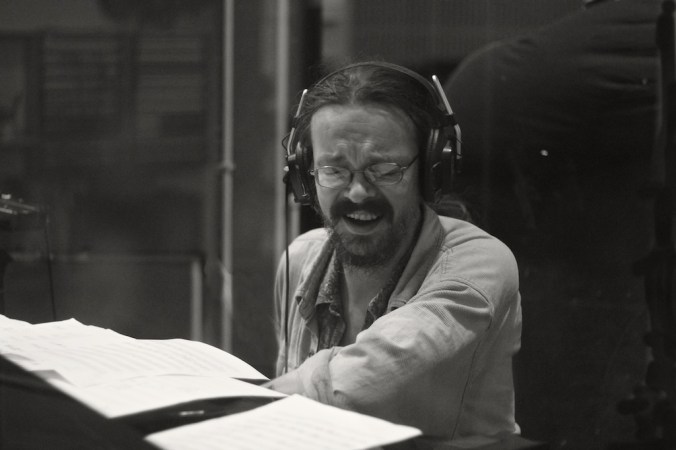
It is a special privilege to follow a creative process through from inception and I felt like a kid in a candy store.  This is exactly where I wanted to be and I soaked it up greedily.   My headache had vanished at the first note.  As the morning progressed the band would troop in and out of the studio.  Trying material, listening to it and repeating it if any one member expressed dissatisfaction.  Roger outlined his vision and set the tone, but after that he allowed a form of guided democracy to exist.  If they strayed from his vision he would talk them back round.

IMG_8939

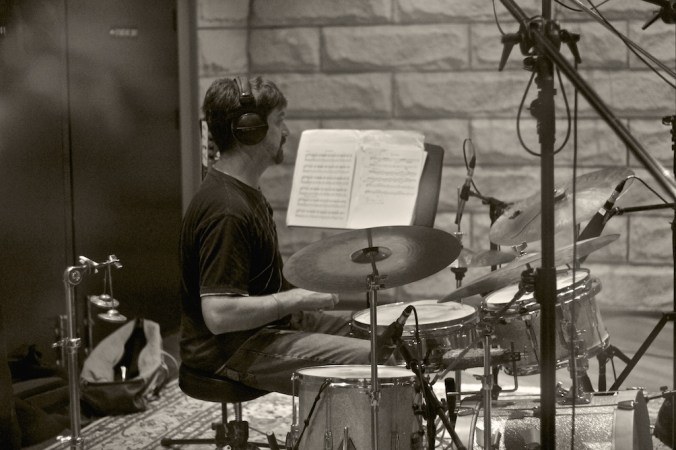
The sessions in the control room were all smiles and banter but a sense of purpose always ran through the proceedings like an unbreakable thread.  When they reached agreement they would return to the studio and assume their positions, baffled up and miked to such an extent that the bass drums and piano were barely visible above the wires, cover sheets and portable booths.  The band has an unusual configuration for a funk unit, being tenor Saxophone, Hammond B3, grand piano, drums and bass.  The saxophone, bass, piano and B3 were in the studio while the drums and the Leslie unit were both in isolation booths.   The studio space was big enough to accommodate an orchestra, but this quintet was squeezed into a corner and each baffled from the other in some way.
IMG_8955 - Version 2

The quintet had recorded together before and even though their last recording was in 2007, their essence had survived intact.  As the session progressed I learnt a new word, ‘shoint’.  Roger and the organist Stu Hunter used it often and they would proclaim a satisfactory cut as being ‘Shointy’ or they would listen to the playbacks to see if they had ‘shoint’.   As far as I can ascertain the term describes a deep dirty groove that hits the musical ‘g’ spot.   While it is accurate to describe the recording as Jazz Funk, it is more than that.   The unusual pairing of two keyboards, the intuitive interaction and the quality of the musicianship gifted them with limitless options to draw upon.   Over all of this Roger Manins presided like an old time preacher, communicating with gestures, earthy licks on his Conn, diagrams and pithy Rogeresk phrases.  IMG_8969
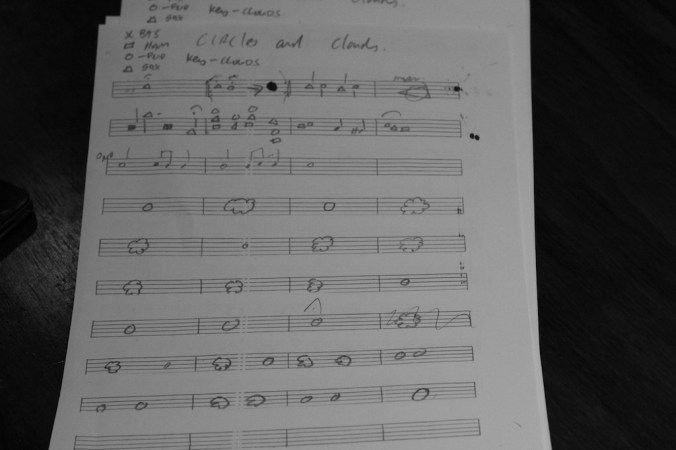
The most interesting moments came towards the end of the session when Roger produced a chart for ‘circles and clouds’.  The chart contained a few bars of musical phrases and then a series of symbols.  The ideas conveyed were beyond normal logic.  On most of the staves clouds were drawn and although these pieces were essentially free, there was a clear purpose underpinning them.  Roger had the concept firmly in his sights as he talked them through the vision or let the ideas develop in the studio until the concept was realised.  Stu Hunter would play a compellingly dissonant chord and then Adam Ponting and the others would grab a hold of what was unfolding and produce kaleidoscopic shapes, moving and shifting together like interchangeable chameleons.  When the idea was realised Roger would take them back into the control room and expand on what had gone before.  Roger, “OK you are clouds, circling a vast ocean.  Now if you look down you will see dolphins swimming and playing”.  One or other of the band then asked if there was a shoal of bait fish swimming near by.   The concepts developed and then they would repeat the process until a number of amazing miniatures were cut.  This filigree of beguiling patterns had been conjured up in that very hour.  Realised without an over reliance on written notation or oral language.  This was improvisation in its most profound form and I was lucky enough to hear and experience it.
IMG_8993 - Version 2

IMG_8988 - Version 2

IMG_9009 - Version 2

IMG_9003 - Version 2

IMG_8999 - Version 2

IMG_8956 - Version 2

My earlier question as to why some people fall deep within the web of music, while others let it wash over them unaffected, is not answered here.  This listener will never lose the magic and following bands like this guarantees that.  I am impatient to see what cuts survive and what is locked way in a vault.  When the album comes out and I can hardly wait, I will have heard more than most.  Every squeak, false start and profound moment is locked in my memory.  John Zorn said, “all sound is valid”.  I heard and witnessed an intensely creative process and I feel very lucky.

Who: ‘Hip Flask’ Roger Manins (tenor saxophone), Stu Hunter (Hammond B3), Adam Ponting (piano), Brendon Clarke (bass), Toby Hall (drums)

Where: Recording Session at 505 Studios, Sydney Australia.

This post is dedicated to Roger Manins my choice of best NZ artist for 2013.  Roger is not only deeply authentic and amazingly creative, but equally important he shares his vision and enables others to follow.
Natalie Dietz @ CJC

IMG_8931 - Version 2

We learned in late November that an excellent Australian jazz singer Natalie Dietz would be the featured artist for the last CJC gig of 2013.  She recently recorded with Aaron Parks and Mike Moreno in N.Y.C and the fact that she had connected with these heavyweights of the modern American Jazz Scene told me that we could expect something out of the ordinary.   She had toyed with bringing some Australian Musicians over with her but instead elected to use locals.   Not surprisingly these locals were drawn from among our finest musicians Kevin Field (piano), Dixon Nacey (guitar), Oli Holland (bass) and Adam Tobeck (drums).

IMG_8920 - Version 2

Natalie is the complete package, as she not only has a fabulous voice and an appealing bandstand presentation, but she is a gifted writer.  It is common to see charts laid out for bands, but these were especially well written and complex charts.   Not simple lead sheets.  The standards had been slightly reharmonised or re-interpreted and the original numbers voiced in such a way as to maximise her vocal lines.  These were not numbers belted out, but well crafted tunes which required subtle interplay.

IMG_8923 - Version 2

Natalie’s own compositions were pleasing and especially ‘The Mood I’m in’.   This gorgeous tune is reminiscent of Sara Serpa’s output and this is no accident.  Natalie mentioned a number of influences and Sara Serpa is one of them.  The piece opens with Natalie singing wordless lines in unison with the guitar.   Dixon Nacey’s Godin sings anyhow and the blend was beautiful.   This lovely tune reinforces my bias towards wordless vocalisation in an ensemble.   As much as I enjoy lyrics, adding the human voice as an instrument feels archetypal and so right to my ears.

IMG_8924 - Version 2

There were a number of standards as well and I was initially surprised to see ‘Body and soul’ (Green/Heyman/Sour/ Eyton) in the set list.  This is one of the most recorded songs in history and perennially popular.  It is hard to look at such a well-travelled tune from a new angle but Natalie did just that.  Her take on it was slightly dark and brooding and it sounded tantalisingly fresh.  Among the other standards was Skylark and a few Jobim tunes.  Natalie was well received by the CJC audience and she appeared to appreciate that.

Who: Natalie Dietz (vocals), Kevin Field (piano), Dixon Nacey (guitar), Oli Holland (bass), Adam Tobeck (drums)

Where: CJC (Creative Jazz Club), 1885 Britomart, Auckland – 11th December 2013

Steve Barry Trio@CJC November 2013

IMG_8799 - Version 2

I have watched the career trajectory of Steve Barry for sometime and with each passing year the acclaim grows.  Just over a year ago he won the prestigious Bell Ward.  More recently he obtained second place in the ‘Australian Jazz artist of the year’ awards at Wangaratta 2013.  After winning a generous grant, enabling him to concentrate on his writing, he took time out for wood-shedding and further study.  He also travelled extensively.  He made use of this time by studying under piano masters like John Taylor.  From the outside his rise has the appearance of an effortless ascendancy, but the success of Steve’s trio arises from dedication and hard work.  His years of intensive study and relentless practice are now paying off.  As a result he plays with a maturity that is rare in younger artists and his unique approach to form is especially evident in his own reworked compositions and the often obscure but well-chosen ballads that he plays.

IMG_8782 - Version 2

There are two equally valid Jazz traditions around forming up combo’s and both can produce in-the-moment music.  At one end of the spectrum are groups formed just prior to a gig.   Hasty truncated rehearsals take place if time allows, but in some cases the musicians do not meet each other until they hit the bandstand.  At the other end are the groups like Jarretts Standards Trio, who are so familiar with each other that communication becomes intuitive.   Both situations have their pitfalls as the overly familiar can produce a certain complacency (Evans was sometimes guilty of this), while the seat of the pants line-ups can result in cues being missed.  Even good musicians fall at these hurdles but not so this trio.  The Steve Barry Trio has been together for over two years and they deliver royally.   The music sounds incredibly fresh each time we hear them and there is no lack of invention.   This is a special group with a unique ability to react to and challenge each other.   They are one of the finest piano trios in Australasia.

IMG_8794 - Version 2

I have heard Steve’s compositions many times, but on Wednesday it all seemed new.  They were the same familiar tunes with their complex time signature and moments of intense ostinato but they had somehow evolved.  Steve Barry is not an artist to rest on his laurels or to recycle old licks.  The most obvious changes occurred with the intro’s, which probed new pathways and took us on compelling journeys until we were again on familiar ground.   His intro’s and outro’s are something I look forward to, as they balance the pulse and swing.

I loved every note but the piece that really stood out was the seldom heard standard ‘More than you know’ (Vincent Youmans -1929).  This was covered by Teddy Wilson, Billie Holiday and others.  It is not heard much these days.  This slowly paced intensely beautiful ballad proved a good vehicle for improvisation and in the hands of this trio it was wonderful.  Steve stated the melody upfront and the richness of his voicings took my breath away.  There were subtle asides as the tune progressed, like a fine filigree partly obscuring the form.  Then about five minutes in a gentle swing section.

IMG_8814 - Version 2

You could not wish for better collaborators than Alex Boneham on bass and Tim Firth on drums.   Both are truly exceptional musicians.  There is a rich fatness to Alex Boneham’s tone which is all the more surprising as he was playing an old upright bass from the Auckland University School of Music.  In the hands of a master bassist, even an average instrument sounds rich and full toned.  His feel for time and note placement is perfect; deeply engaged and listening with big ears for every nuance.

Tim Firth also creates a buzz when he is in town and local drummers especially love to hear him.  Few can handle complex time signatures like he does and while he can play high octane tunes with edginess and fire, he can also execute brush work perfectly.   His brush work on ‘More than you know’ was understated (as it should be on a ballad) but as the tune progressed you were in no doubt about the value of his contribution.

This was one of those nights that gives Jazz a good name.

Who: The Steve Barry Trio – Steve Barry (leader and piano), Alex Boneham (upright bass), Tim Firth (drums)

Where: CJC (Creative Jazz Club), 1885 Britomart, Auckland on the 27th November 2013

Emerging Artists Matt Bray & Crystal Choi

IMG_8709 - Version 3

It’s an institution that the CJC (Creative Jazz Club) dedicates a handful of gig nights to emerging-artists.  This is often the musicians first public performance.  Performing in a club is a step up for any emerging artist, as audience expectations must be confronted.  In a Jazz club they’re expected to entertain; communicate something special.  It is not an exercise in ticking the ‘must demonstrate chops’ box.  Audiences have to like what you’re doing, rather than thinking how clever.

The sets attracted good crowds and that is important.  Supporting this music starts by supporting its emerging artists.

IMG_8689

The first set up was Matt Bray’s, who varied his pieces to reflect his many influences.   There were standards, original compositions and even a ‘Radiohead’ number.  Matt plays guitar and he has been keen explore the tonal and voicing possibilities of that instrument.  We saw him on the bandstand only the week before, as he plays in the AJO (Auckland Jazz Orchestra).  With the AJO he had tackled complex Cuban melodies and rhythms.  On this gig he was free to explore a wider vista; looking to modern guitarists like Kurt Rosenwinkel whose influence was evident.  He had chosen his band mates well and especially with the experienced and multi faceted drummer Cameron Sangster.  Cameron is the resident drummer with the AJO, but he is also featured to advantage in several well-known local bands.

IMG_8678 - Version 2 (1)

Conner McAneny was on piano (+keys) and he’s already performed several gigs at the CJC.  He’s a reliable performer and well able to keep out-of-the-way of the guitar, while shining in solo spots.   The last band member was Eamon Edmundson-Wells who recently graduated from the Auckland University Jazz School.   He was in both sets and is unfailingly impressive.   At the rate he is going he will soon be chasing Cameron McArthur and the fact that he is stepping into the gig slots normally taken up by Cameron (who is playing in the Chicago Musical pit band) tells its own story.

IMG_8683 - Version 2

The second set was Crystal Choi’s and it puzzled me that I had not met her until recently.   Crystal is a very fine pianist and she oozed confidence and style (she started her studies as a classical pianist but wanted more freedom to explore music).   She has emerged from the Auckland University Jazz school as a well formed and supremely confident pianist and to hear her perform it was hard to get my head around the fact that it was her first club performance.  I tracked her down later and put a few questions to her.   What year was she? (A third year graduate); had she performed with this trio/quintet outside of the Jazz School? (No).  She said that she had not felt ready before, but now she did.   Well she certainly showed us ‘ready’ that night.   The audience went wild after her set and kept yelling for an encore.  A superb first outing by any measure.

IMG_8685 - Version 2

The first number up was Bud Powell’s ‘Un Poco Loco’ and she skilfully moulded it to to her purpose.  This was a burner with plenty of flash, but a lot of soul besides.  I wondered if her handling of a ballad would be as assured, because ballads can reveal weaknesses quicker than any fast paced number.  I soon found out that ballads were no obstacle either and in addition her own compositions took interesting directions.   Her quintet was Peter Ruddell (tenor saxophone), Michael Howell (guitar), Eamon Edmundson-Wells (bass) and Tristan Deck (drums).

IMG_8698

The charts were textured and interesting; often augmented by Crystal singing unison lines.  I have chosen a clip of Crystals rendering of the standard, ‘In Your Own Sweet Way’ (Dave Brubeck).   I was impressed by this as it was slightly reharmonised and the implied notes spoke as clearly as the notes played.  When a musician knows what to leave out and what not to, they are well on the way.

IMG_8704 - Version 3 (1)

Michael Howell certainly caught my attention, as his clean soaring lines told me that he was a modernist but with a good sense of history.   Tristan Deck I have heard before and so I was not surprised to see how seamlessly he handled the changes in mood and texture.  A good drummer to have on board.   The remaining band member was Peter Ruddell on Tenor saxophone.   He only played briefly but he had a lovely tone and his lines were clean and imaginative.  This band played well together.   They we’re tight, but they never once strangled the music.

IMG_8705 - Version 2

I look forward to hearing Matt Bray and Crystal Choi as they develop further.

What & Where: Emerging Artists gig @ CJC (Creative Jazz Club) 1885 Britomart, Auckland 13th November 2013

Who first set: Matt Bray (leader, guitar), Connor McAneny (piano, keys), Eamon Edmundson-Wells (bass), Cameron Sangster (drums)

Who second set: Crystal Choi (leader, piano), Peter Ruddell (tenor saxophone), Michael Howell (guitar), Eamon Edmundson-Wells (bass), Tristan deck (drums).

No Square @ CJC

IMG_8653 - Version 2

Auckland’s CJC (Creative Jazz Club) hosted two European Jazz Acts in as many months.  The most recent band ‘No Square’, is from Switzerland.  This is a top rated European unit who have been together since 1994 and their tightness, focus and intuitive interactions reflected that.  Having played many European festivals to acclaim, they ventured further afield, assisted by the Francophile cultural organisation the Alliance Francaise.  Michel Benebig is another artist often supported by this worthy organisation.

IMG_8665 - Version 2 (1)

The journey down from Europe is particularly gruelling and even with New Zealand gigs tagged onto an Australian tour it requires a big commitment from the musicians.   I am not sure whether New Zealand audiences always grasp that.   After hearing about how poorly attended the Wellington ‘No Square’ gig was I cringed in embarrassment.   This is a truly amazing band and they deserved the respect of an attentive and decent sized audience.  Thankfully the audience at the CJC was reasonable, (but it could have been better).  If we don’t support visitors then why should they support our musicians who travel?   It is too easy to blame the lack of promotion, as our web-based and word of mouth networks are generally sufficient to pack out gigs.   All that’s required is a commitment to get off the damn couch.   Roger Manins goes to great effort to organise offshore acts and the audiences must respond in kind.  If we love this music we should pay it the respect of attendance.

IMG_8645 - Version 2

Europe has been deeply involved in the Jazz world since the early 1900’s and it was so popular that Hitler banned it as depraved.   There could be no higher recommendation.  Euro Jazz is not a slavish imitation of American Jazz, as each region has developed distinct flavours of their own.   This is particularly pronounced in the Mediterranean region and with the ebb and flow of migration the process has accelerated.  France was arguably the original centre of Euro Jazz but her near neighbours Switzerland, Spain, Germany, Belgium, UK and Italy have all contributed significantly to the development of the music.  This band originates from French-speaking Switzerland, with their most recent album recorded in beautiful Lausanne on Lac Lemon.    While they referenced Coltrane it was also evident that middle eastern rhythms and themes informed their work as well.   This well-travelled band is extremely tight as a unit.  Whatever twists and turns the music took they intuitively coalesced around each new theme.   No charts needed here.

IMG_8641 - Version 2

The first few numbers were denser and more complex than what followed, but as the evening progressed an airy feel and a deeper groove established.   I could discern many European and American influences from Debussy to Coltrane.  This distinctive original music was Euro Jazz at its best.  Andre Hahne (bass) took care of the introductions  (presumably because he has more English than the others), but the band is billed as a collective of equals.   It would be impossible to single out any particular musician as they all shone in one way or another.   On saxophones was Matthieu Durmarque, piano Matthieu Roffe and drums Alexandre Ambroziak.

This was not a night to miss.

Where: CJC (Creative Jazz Club) 1885 Britomart, Auckland

Who: ‘No Square‘ – Andre Hahne (bass), Matthieu Durmarque (saxophones), Matthieu Roffe (piani), Alexandre Ambroziak (drums)

What: Their 8th Album ‘The Laws of ephemerae’ (Les Lois de L Ephemere)

Gai Bryant’s Cubanos w/ AJO

1384091_600507700006367_150868797_n

We get a lot of interesting overseas acts passing through these days but seldom do we see Cuban musicians.  This is not about what they have to offer or even about the tyranny of distance, but more about politics.  When this band was booked it was a bigger lineup, but getting short-term visas to enter Australia and New Zealand proved an insurmountable  barrier for some of their number.  In my view this is an arcane and ludicrous legacy of the cold war.   In spite of an easing of sanctions by the EU and others, those old suspicions remain.   These talented musicians are the very best of ambassadors for their country and their indigenous music.  Its time to get real Australasian immigration.  The few that were allowed into the country gave us a great nights entertainment and not one sought asylum from John Key.

1376607_600507913339679_1439448025_n

The tour was organised by Australian band leader Gai Bryant and she arrived here with barely enough time to hold a few brief rehearsals with the AJO (Auckland Jazz Orchestra).  I am a fan of the AJO as they always tackle interesting projects.   They are a Jazz Orchestra with great dynamics and under the direction of Tim Atkinson, Mike booth and others they continue to produce the goods.   The personnel had changed a bit since I last saw them and especially the front horn line.  Even though it was dark and crowded I could make out a number of the long-term AJO regulars such Jo Spiers, Callum Passells, Cameron Sangster, Mike Booth, Jono Tan, Cameron McArthur and Matt Steele.   This band is scandalously under utilised and the city fathers and corporates should be engaging them for important occasions.

904366_600505893339881_1292230811_o

I am picking that this music would have been testing for them, as very few Auckland musicians have had a chance to work in authentic Cuban styles before.  It is one thing to play a Rumba or Bolero in a looser jazz idiom but quite another to follow charts like these.   At the heart of Cuban music is a set of complex mesmerising counter rhythms and the clave.  This is a delicious fusion music and the most influential of all of the ‘world musics’.   It reaches deep into the shameful slave past of Cuba.  West African musicians had retained knowledge of the ancient percussion instruments, chants and melodies which had travelled with them.  Along the way a plethora of other influences enriched and extended their music.  There is a strong Spanish influence and a French influence among others.  These influences were absorbed into the polyrhythmic music of West Africa.  At the very heart is often the clave rhythms and central to that is the five beat pattern so much emulated in popular music and Jazz.  These days the forms are codified and so jumping into this as a novice is a big ask.  I don’t know enough about Cuban music to judge this performance against others, but suffice to say I enjoyed it immensely.

I was deeply impressed by the percussionists but also by Cameron Sangster (drums), who took his cues so well from the Cubans.  Other notable moments were delivered by Callum Passells (alto), Cameron McArthur (bass) and Matt Steele (piano).

With the percussion instruments playing and the orchestra and soloists weaving around the beat it was easy to see how those old stories of voodoo and trance music took hold.  These beats defied all attempts to rationalise the sound.  The rhythms entered every pore, almost like body blows, driving me out of self and into the arms of some universal force.  An ancient joyful celestial dance from which there was mercifully no escape.

Who: Gai Bryant’s Cubanos (the photos on this gig were all taken by Ben McNicoll)

Where: The CJC (Creative Jazz Club) 1885 Britomart, Auckland, Wednesday 30th October 2013

NOiCE @ CJC

Rosie Langabere

The North Island Creative Ensemble is a project dear to Rosie Langabeer’s heart and one of many projects that she has on the go.   Rosie has been out of New Zealand for some time although NOiCE did perform at the CJC over a year ago.  Her musical journey most recently took her to the USA where she worked for three years with leading experimental improvisers and artists.   Her compositions and playing have won various awards and so I made certain that I there as I missed the last NOiSE gig.

This is music that is hard to pin down, as it deliberately defies conventions while somehow flirting with them.   There is a sense of structure which provides a touch stone, but don’t grasp too firmly as the forms will dissolve as quickly as they appeared.  This is music which carries you forward if you let it, holding you in the eternal moment.

NOiCE is an assembly of highly creative musicians; coming from a variety of North Island towns and cities.  The music is experimental in nature and it is definitely adventurous.  Most of these musicians are well-known and leaders in the field of New Zealand experimental music.   Jim Langabeer (Rosie’s father) is a stalwart of the Auckland Jazz scene, but he has also worked with international musicians like Gary Peacock, Sammy Davis Jr and even the Bee Gees.   He is a multi reeds and winds player and because of his proficiency on a variety of instruments he has been in demand over the years.  I recently saw his name come up in the music credits of the New Zealand film ‘Mr Pip’.   His innovative flute work is probably what he best known for.

IMG_8589 - Version 2

Jeff Henderson is also a multi reeds player and he is at the very heart of Auckland’s experimental music scene.   He can often be seen at ‘Vitamin S’, a small club dedicated to experimental music located just off Karangahape Road, Auckland.   Jeff has worked with a large number of cutting edge musicians over the years, William Parker, Steve Lacey, Mike Nock and many others.   He delights in pushing against the boundaries and when he performs he seldom holds back.  While his scalding solos often reach beyond mere form, his ability to integrate seamlessly into an ensemble creates a filigree of contrasts and textures.   A delicious aura of inventive unpredictability hangs over him.  IMG_8613 - Version 2

Chris O’Connor (drums) is a firm favourite with CJC audiences.  A recipient of the Chapman Tripp Award for original music, he has also worked with the soprano saxophonist Steve Lacey, avant-garde pianist Marilyn Cryspel, Don McGlashan and numerous other well-known groups or individuals.   Chris is one of those drummers that other drummers revere and the last time we saw him at the CJC was with vibist John Bell.

IMG_8633 - Version 2

IMG_8629 - Version 2 (1)

IMG_8587 - Version 2 (1)

Ben McNicoll (reeds and winds), Joe Callwood (guitar), Gerard Crewdson (brass) and Kingsley Melhuish (brass), Nicky Wuts (vibes) and Patrick Bleakley (bass) round out the ensemble.   They are all experienced musicians and most of them have worked with NOiCE for some time.  Ben McNicolls is the best known to CJC audiences as both the technical director of the club and a frequent performer.  A good reader with a nice sound he, is happy to take on any project, from standards gigs to out-ensembles.   Gerard Crewdson and Kingsley Melhuish are versatile and sought after brass players and both have played the CJC before.   The musicians that I was less familiar with were Patrick Bleakley (bass), Joe Callwood (guitar) and Nikky Wuts (Vibraphone).

I’m relieved to see another mallets player on the scene as New Zealand has very few of them.   John Bells departure earlier in the year left a yawning chasm.

IMG_8640 - Version 2 (1)

All contributed something unique as this is a truly democratic ensemble.  One where individual voices rise and then subside; emerging seamlessly into the collective consciousness of the group


Alan Brown trio + 1@ CJC Oct 2013

IMG_8570 - Version 2

Alan Brown is such a gifted musician that we always expect something special from his club gigs.   The October gig not only lived up to expectations but found something extra to offer us.  Alan is always on safe ground with Dixon Nacey on guitar and Josh Sorenson on drums, as these musicians don’t need any warm up.  They have played together so often that their understanding of what is required is intuitive.  Deep energised mesmerising grooves are quickly established and maintained.  As we progressed through the first number, the warm grooves took us somewhere else.  Transported on mass to a place where winter became a distant memory.

 A state of grace, suspended somewhere between reality and a multi hued dream state.  This is a place where the familiar is transformed into the extraordinary and we felt incredibly happy about that.

IMG_8538 - Version 2

As I watched the interplay between these three I could not help wondering how that felt.  How it felt making that music, in that way and with that much soul.  The looks on their faces gave me the answer.  They also knew that this was one out of the bag and that some special chemistry was happening.   The Alan Brown trio were on fire and we were not just witnesses but integral to the performance.  There was a shared collective energy and we were each and every one of us connected in a web of pure creation.

I have written a lot about Alan over the last two years and he deserves every accolade thrown his way.   If this sounds like hyperbole I will quickly argue otherwise.  He consistently delivers performances and compositions that grab the attention and on nights like this he finds something extra.  The audiences from the High Street days have never forgotten ‘Blue Train’ and the fact that Alan keeps the crowds coming; still creating new audiences, speaks volumes.   This is not about reliving the glory days, but about bringing fresh and exciting perspectives to an ever unfolding musical output.

IMG_8544

Dixon Nacey is another musician who always pleases.   When ever I see that beautiful Godin guitar I know that something extraordinary could happen and this was just such a night.  Dixon is a musician who can communicate as much by his body language as by his soaring inventive solos.  You know how deeply he observes and engages because the evidence is in his face and at his fingertips.  When exchanges are being traded with drummer or keyboards, his expressions mirror the intensity.   When the solo or the interplay really works well, a huge smile lights up the bandstand.   That smile and those magical voicings tell us so much about the man and his music.

IMG_8545 - Version 2

The remaining trio member is Josh Sorenson and I have heard him on two or three previous occasions.  Josh has specialised in groove drumming and he is exceptionally good at it.  This is a specialist skill as there are a million deceptive subtleties built into it when done well.   I spoke to Josh at some length about this and what he told me was illuminating.  It is very hard work and although it sometimes appears straightforward it is not.  I gathered the impression that a night of holding such tight grooves together is more exhausting than bebop or rock drumming.  The concentration required to move around the kit while holding a tight multi faceted beat together is tremendous.  It is not just the concentration required, but the ability to sink into a beat in an almost trance like fashion.

Towards the end of the final number Josh launched into a drum solo and what unfolded was almost supernatural.  As he moved all over the kit, the deep-groove pulse never wavered by a fraction.  I have never seen this done before and I found it incredibly impressive.   That solo and in fact the whole number ‘Inciteful’ (had the audience on their feet, whooping and shouting with enthusiasm).  Sadly I had run out of video tape by then, but I did capture some of the magic.  IMG_8550 - Version 2

Part way through the gig we had another treat in store when the soulful Jazz Singer Chris Melville came to the band stand.  I like male Jazz singers and I worry that their numbers are so few.  Chris has a terrific voice and he tackled the old Juan Tizol standard  ‘Caravan’ in a mature and engaging way.   I enjoy listening to his interpretations and to the timbre of his voice, but noticed that it had a tendency to become a little lost in the acoustics of the room.  Some small adjustments to the sound levels would remedy that.   As the extraordinary Mark Murphy steps back and the fabulous velvety baritone Andy Bey performs less, there are other male singers coming forward like Jose James, Kurt Elling and Gregory Porter.  It is a tradition worth keeping and I  hope that we see continue to see singers like Chris keeping the faith.

We heard old favourites like ‘Shades of Blue’, some new material and even a rock classic from Led Zeppelin ‘No Quarter’.   ‘Charlie’s Here’ cast a warm bluesy aura over the room and I have put that up as a video link.   The kicker however was definitely ‘Inciteful’.  It was an amazing rendition packed with high-octane solos, clever ideas and groove so deep that even speleologists could never hope to explore it.

The organ was a Hammond SK2 which is not Alan’s usual keyboard.   Coupled to a Leslie Unit and the resulting sound was perfect.   This lighter modern offshoot of the C3/B3 certainly earned its stripes on this night.  It was just right for the room.

Who: Alan Brown (SK2 Hammond organ), Dixon Nacey (guitar), Josh Sorenson (drums).

Where: The (CJC) Creative Jazz Club), Britomart 1885 building, Auckland 16th October 2013

Mark Isaacs @ CJC

IMG_8432 - Version 2

Pianist and composer Mark Isaacs has a rapidly growing international reputation and we were lucky to get him here.  Once again it was down to Roger Manins, who has wide connections in the Jazz world and we are eternally grateful for it.  Mark Isaacs has toured the world extensively and not only fronted a number of prestigious Jazz festivals, but also recorded with many world-renowned Jazz musicians.  Artists like Kenny Wheeler, Roy Haines, Adam Nussbaum and Dave Holland have appeared on his albums but as if that were not enough, he has two parallel musical careers.   Mark is also a classical pianist/composer of some stature and the conductor Vladimir Ashkenazy said this of his extraordinarily beautiful ‘Children’s Songs’.  “This wonderful cycle is highly inventive and inspiring, accessible to children and adults alike.  Very enjoyable and touching“.

The first thing to strike you about Mark is his intense passion for music, but his focus and drive have not in any way deterred him from exhibiting a cheerful, often extroverted demeanour.  He engaged easily with the CJC audience and his level of report with the band and especially Roger, made the gig all the more enjoyable.  Even though he had not played with drummer Frank Gibson Jr or Bass player Cameron McArthur before it felt like an established band.  He and Saxophonist Roger Manins go back a long way and perhaps because of this long-standing connection, what was billed as a standards gig, soon became so much more.  IMG_8456 - Version 2 (1)

The set kicked off with ‘Gone With the Wind’ (Allie Wrubel – 1937).  By coincidence this once popular but seldom heard tune was performed here by Mike Nock only months earlier.   Both artists appeared to briefly reference the brilliant but somewhat obscure Brubeck version, but each approached the tune in very different ways.  Mark Isaacs is another musician who has the history Jazz piano under his finger tips and as he worked his way into the tune I could hear brief echoes of the past greats.  I love this tune and especially when interpreted this well.

As the set list unfolded I realised that most of the standards were from the 1930’s.   It is not hard to fathom why, as the Great American Songbook tunes written in this period were second to none.  The gig,  subtitled as ‘Pennies From Heaven’, was later explained as being an inside joke.  Roger and Mark had embarked upon just such a project a decade ago and in their view the title scared off the potential audience.  More fool those who failed to turn up because this number in their hands was fresh, funny and satisfying.  ‘Pennies from Heaven’ (Johnny Burke/Arthur Johnston) is also from the 1930’s.

IMG_8441 - Version 2 (1)

The tune that I have posted is the perennial favourite ‘Someday My Prince Will Come’ (Frank Churchill – 1937).  Although non Jazz audiences would only associate this tune with Disney, it has a long and distinguished Jazz history.  Among the 100’s of well-loved versions are those by Oscar Peterson, Miles Davis, Dave Brubeck, Bill Evans, Wynton Kelly and Grant Green.  Playing a classic standard like this to a savvy Jazz audience can have its pitfalls as comparisons are inevitable.  The audience however lapped it up and from the stating of the melody through to the open-ended interpretation near the end, it was fabulous.  With Roger egging the band on and Mark responding in kind it could hardly be otherwise.

IMG_8428 - Version 2 (1)

There was a very nice solo by Cameron McArthur who astonishingly just keeps improving between gigs.  Frank Gibson Jr met Mark years ago but in spite of them trying to organise a gig it never happened until now.  In the event it was a happy confluence of inventiveness, exuberance and great musicianship.  Roger Manins was on form as usual, delivering fiery energised solos in a post Coltrane manner.

Mark Isaacs has the technique and the hunger to continually reach beyond.   Whether gently comping under a melodic bass solo or unwinding the melody to explore what lies beneath he engages us.  His probing left hand often pulls slightly back on what his right hand is playing and the tension created gives added impetus.  While his Classical compositions are informed by Jazz, the opposite is also true.  He will surely continue to do well in both worlds.

IMG_8473 - Version 2

As I left the club I picked up a copy of his Resurgence band’s ‘Duende’ album and put it on during the drive home.  It is an album of his own compositions.  What was immediately apparent was how well crafted the compositions were.  It was the sort of album that ECM might have released and the quality of the recording added to that impression.  As I listened on I heard some beautiful guitar work, not over stated but clean, inventive and crystalline.  Then I heard a human voice, wordlessly singing arranged lines as part the ensemble.  Easing over to the curb I picked up the album cover and flipped it over.

The personnel list would stop anyone in their tracks.  Mark Isaacs (piano), James Muller (guitars), Matt Keegan (reeds and percussion), Brett Hirst (bass), Tim Firth (drums), Briana Cowlishaw (vocal).  Matching this dream line up with those compositions was a masterstroke.   Muller and Isaacs communicate so very well.  It all made sense, the Kenny Wheeler connection, the skilled arranging and the promise of what may follow.   Mark Isaacs has the ears to absorb and the smarts to compose what works best for him.  This album certainly does.

Who: Mark Isaacs (piano, compositions, leader), Roger Manins (tenor saxophone), Cameron McArthur (upright bass), Frank Gibson Jr (drums).

Where: CJC (Creative Jazz Club), Britomart, 1885 Basement, Auckland, New Zealand on 2nd October 2013.

Album and contact details: ‘Duende’ (Gracemusic GROO4)

Glen Wagstaff Project @ CJC

IMG_8407 - Version 2

Just when I think that I am getting a handle on the extent of the New Zealand Jazz scene something new comes along that tells me I don’t.  I humbly admit that I am only just beginning to comprehend it.  As the CJC attracts more offshore Jazz visitors it is also attracting more Wellington and Christchurch bands and those have been great.   If this trend continues I half expect to see the Gore chapter of the ‘Balclutha John Zorn Tribute Band’ on the billing sometime soon.

A particular case in point is the Christchurch Jazz scene which is producing some astonishing Jazz musicians.   A slow but steady stream of these musicians has been drifting northward (Andy Keegan, Dan Kennedy & Richie Pickard to name but a few).  In the last few years we have had the Tamara Smith trio and Reuben Derrick’s quartet (both of which gave an excellent account of themselves) and now the Glen Wagstaff Project.  Roger is never wrong about this stuff and he told us that we were in for a treat.  IMG_8416 - Version 2

Jazz is a broad deep river and the tributaries running into it are now so numerous that it is easy to overlook one.  I have long been urging the better writers among our Auckland musicians to do more ensemble writing (or even better write a some charts for a nonet).  They have patiently explained that this is a big task and one which requires a commitment of time.  I have continued to engage these musicians on the likes of Kenny Wheeler and almost everyone loves what he does.   As much as he’s admired, his compositions or similar work is seldom performed.  Following the progress of such outlier writing is confined to selective offshore artists.

When the Glen Wagstaff project flew in last week all I knew about them was that Glen is great writer and that Roger Manins was enthusiastic.  Three of the band were familiar to me as they have played at the CJC before.  I sat back expecting a quick few bars as they ran through an arranged head and then numerous solos to follow.  What I got was a rich gorgeous feast of ensemble playing.  I couldn’t have been more delighted.  These charts are crafted with consummate skill and like any well-arranged medium to large ensemble charts they imparted a sense of space and breadth.   To get the feel of a bigger unit while retaining the airiness and space of a small one is what such writing is all about.   The effect of well written charts like these is profound.   The choice of instrumentation is also important as it allows for very particular textures and voicings.   These charts were well written and well played.   I was there from the first number and remained captivated throughout.  IMG_8377 - Version 2
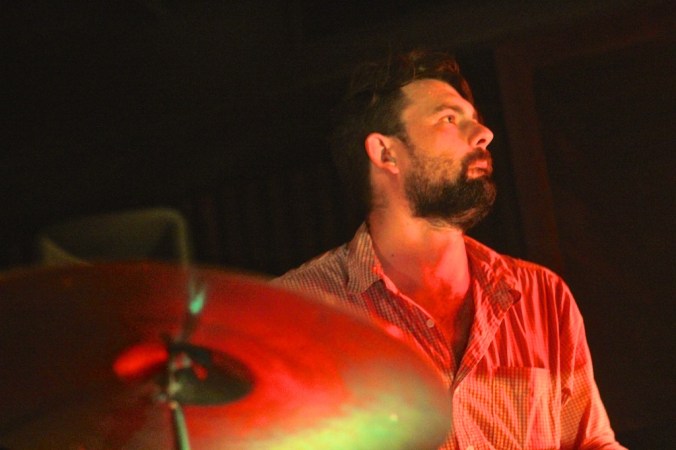
Most of the numbers were original but several were re-arranged from the likes ‘The Brian Blade Foundation’ and ‘Kenny Wheeler’.   A version of “Kind Folk’ from the amazing Kenny Wheeler ECM disk ‘Angel Song’ was breath-taking.   The Wheeler disk had a pared back lineup (Kenny Wheeler, Lee Konitz, Dave Holland & Bill Frisell) but in Glens hands this expanded for an octet.  The gig was divided between septet and octet and this allowed the various band members to take short solos’.   On guitar was Glen and he resisted the urge to perform long soaring virtuosic lines as they would have been out of place.   That said his guitar work was just great and the little hints of Abercrombie or even Rosenwinkel stylings gave us a glimpse of his prowess as a player.  Tamara Smith has been to the CJC before and along with Auckland’s Trudy Lile she owns the flute space.  Tamara is a gifted musician who can utilise extended technique or just floor you with her breathy soulful notes.   Having both flute and voice in the mix worked well for me and the fact that they were able to blend while never appearing to crowd the others space, tells me a lot about their abilities and the charts.  IMG_8390 - Version 2

On tenor sax was Gwyn Renolds (who also doubled on soprano) and on alto was George Cook.  Both played superbly and both had solo spots which were enthusiastically received by the audience.  Once again these guys showed how well they could modulate their sound and fit tightly into the mix.  Ensemble playing of this sort requires an unusually disciplined approach and the naturally louder horns resisted the impulse to dominate where that would have been inappropriate.    On piano was Catherine Wells and while she had few solos, she added just the right touch to the ensemble.   A minimalist approach was called for and that was delivered.   This sort of band is about texture and her occasional mid to upper register filigree added value.

IMG_8406 - Version 2

Andy Keegan and Richie Pickard are increasingly seen about town and they are well appreciated by CJC audiences.   They are both skilled readers and able to deliver deeply nuanced performances or knock out punches as the job in hand requires.  They have often featured in louder, frenetic bands but have also shown how tastefully they can play when presented with charts like this.   I have high regard for both as musicians.

Lastly there was Toni Randle who sang wordless lines and approached the charts much as a non chordal instrument would.  Adding the human voice into charts like these is to impart a degree of magic when done well.   It takes writing skills and well honed performance skills to pull this off.  One again this worked incredibly well.   I have long been a fan of Norma Winstone and Toni followed very much in her footsteps.  The human voice is a powerful instrument and to hear it freed from the job of interpreting lyrics is a joy.  The tune ‘Maylie’ that I have put up, is one of Glens and it illustrates that point perfectly.

During the dying years of the big band swing era the Claude Thornhill Orchestra and a few others were doing things differently.  Musicians like Lee Konitz and Gerry Mulligan came up through these bands and then came the seminal ‘Birth of the Cool’ and Gil Evans.   This sort of writing has never gone away but it is certainly on the periphery.   I’m thrilled that Glen Wagstaff is writing in this way and I hope that he continues to do so.   His band and his charts have real integrity and the club crowd reacted to that.  I left the gig deeply satisfied and that’s what this music is all about.

Who: The Glen Wagstaff Project – Glen Wagstaff (leader, guitar, compositions), Tamara Smith (flute), George Cook (alto), Gwyn Renolds (tenor, soprano), Toni Randle (vocals), Catherine Wells (piano), Richie Pickard (bass), Andy Keegan (drums).

Where: CJC (Creative Jazz Club), basement 1885 building, Brittomart Auckland

Mike Nock’s Australian Trio @ CJC 2013

IMG_8335 - Version 2 (1)

A lot’s been written about Mike Nock and he is well recorded.   In spite of this there is so much more to say and the unfolding story has come to define Australasian Jazz.  It would be accurate to describe him as one of the greatest musicians New Zealand has produced, but Mike Nock deserves evaluation on a much wider stage than Oceania.  As lucky as we feel owning him, he is a citizen of the world, highly ranked among the best that global Jazz has to offer.  IMG_8361 - Version 2

This was summed up by one of the audience; an American who has been following the international Jazz Scene for many years.  He shook his head in amazement and said “That was the best performance I have heard in ages”.  He asked about Mike’s history and I gave him a potted version.   “Oh yeah” he said.  “Well all of those years in America have given him that deep blues feel that only top players realise”.

I caught up with Mike before the gig and he was his usual friendly self.   Over dinner there were jokes and numerous war stories.  Because I have attended too many loud gigs my hearing is not quite as good as it was.  At one point the drummer James Waples said something to me which I missed entirely.  I apologised, explaining that my eyesight and hearing were failing me.   Mike leapt on the comment as quick as lightning, saying, “Man don’t worry.  That’s exactly what we like in a critic”.

There was the briefest of discussions between the band members about the set list, which ended in Mike saying, “We’ll figure it out as we go and you’ll know when you hear me start to play”.  While this is not unusual among Jazz musicians, it was evident that Mike would be digging into some obscure and unrehearsed standards during the evening.

IMG_8357 - Version 2

The spirit of Bernie McGann hung over us as he had passed the previous evening.  Mike spoke movingly of him and then he played one of Bernie’s compositions followed by ‘Bernie’s Tune’ (Bernie Miller) and the lovely old standard ‘No Moon at All’ (David Mann).  ‘No Moon at all’ is hardly ever played these days but it was once very popular.  It was famously recorded by Julie London, Nat Cole, Mel Torme and Anita O’Day.  There are more recent versions by Karrin Alyson and Brad Mehldau.  In Mike Nock’s hands this jaunty mid-tempo classic took on a deep bluesy feel and as it unfolded he achieved something that only the Jazz greats can manage.

The tune turned into something else; it was somehow transformed into ‘every tune’.  From the first few bars everyone smiled and many whispered in the dark, “Oh I must know this but I can’t recall the name”.  Like many probing improvisers Mike hummed and sang as he played.  As the piece unfolded something extraordinary happened.  People started quietly humming along with the trio; a deep connection  was made and it was primal.  I’m certain that many in the audience had never heard the tune before, but they thought that they had.   Keith Jarrett has often invoked this state of grace, finding a hidden place deep within the music.  So has Mike Nock.  Several musicians later commented that he had moved in and out of the song form and that the bluesy overlay had been utterly effective.  Another delightful old tune that the trio played was ‘Sweet Pumpkin’ (Ronnell Bright).

IMG_8370 - Version 2

On Drums was James Waples and he certainly lives up to his reputation.   He has featured on several of Mike’s albums and goes back a long way with Mike.   There is a subtlety to his drumming that is hard to put into words.  He is a powerful presence whether executing the softest brushwork or a driving upbeat tempo.  He has a great ear and knows when to push the others or hold back.  He is perfect for a multi faceted piano trio like this and I would go out of my way to hear him again.

Many Kiwi’s have forgotten (and many Australians will deliberately overlook the fact), but Brett Hirst is an expat New Zealander.   He is highly regarded on the Australian scene and like James he has had a long association with Mike.  When these three are in lockstep it is extraordinary.  Like the others Brett is a deep listener and clearly at ease in this open-ended format.  At one point in the program Mike stopped and said, “What shall we play now, something unexpected?”.   Then he added, “Oh I know, I will try this”.   Brett asked hopefully, “Can we know?”  The number had started before an answer could be given and he was immediately there.  Brett was up to handling any curve balls thrown and clearly relished them.

During the second set the trio were ready to take things further out and we sensed that they were in a zone where the communication is telepathic.  It is during these explorations that we see another side of their music.  Every interplay however subtle conveys layers of meaning and the spaces between the notes communicates a profundity.   This is art-music at its very best but for all that it is never far from its blues roots.   I have listened to Jazz across the globe and you would never, never hear better than this.

Who: Mike Nock (piano), Brett Hirst (bass), James Waples (drums).  www.mikenock.com

Where: CJC (Creative Jazz Club), Brittomart basement 1885 building, Auckland, New Zealand.

When: 18th September 2013

Emerging Artists Series: Alex Ward / Allana Goldsmith

IMG_8305 - Version 2

Two or three times a year the CJC reserves a gig night for emerging artists. On Wednesday there was a double billing and while they could legitimately be termed emerging artists, they showed a confidence and polish that bespoke experience. In fact both have been performing about town and in Allana’s case for some time. This was a moment to show a discriminating Jazz audience what they are about and they delivered.

IMG_8303 - Version 2

First up was pianist Alex Ward. He has recently graduated with honours from the NZSM Massy campus. I last saw Alex play just over a year ago and he showed real promise then. Now the hard work and years of study are bearing fruit. He appears to play with even greater confidence and this obvious self belief has influenced his performance. His set was mainly a showcase for his own compositions and they were interesting and varied. There were ballads, uptempo burners and a (new) standard on offer. Standards always give us points of comparison and his rendering of Robert Glasper’s ‘Yes I’m Country (and that’s Ok)’ from the Blue Note, Double Booked album did just that. It was flawlessly executed and delivered with real heartfelt exuberance. Among his own compositions I really liked ‘Litmus Test’ for its edgy hard bop feel and the more reflective ‘Lighthouse Keeper’ (a recently written tune). There was also a reharmonisation of ‘Beautiful Love’ but with dark voicings and with an oblique approach to the melodic structure. These tunes while all quite different, hung together well as a set.

IMG_8295 - Version 2

On Bass he had the gifted Cameron McArthur and on drums Ivan Lukitina (who I had heard about but not seen before now). They both provided solid support for Alex and delivered good performances during solos. Cameron was particularly energised during ‘Litmus Test’ and Ivan was right there with him. Ivan excelled on ‘Yes I’m Country (and thats OK)”.

This should be a right of passage for Alex and he will surely become a fixture about town if he continues performing at this level.

IMG_8320 - Version 2

Allana Goldsmith has appeared in a number of bands and her musicality and stage presence are pleasing to ear and eye. I have heard Allana a number of times now and on those occasions her role as ‘part of a lineup’ gave me a brief taste of what could be. She has performed with various sized bands but most often as part of a duo with guitarist.

She is a current member of the ‘Sisters of Swing’, which is an Andrews Sisters tribute band and co-member Trudy Lile speaks highly of her abilities. I recently saw her with Peter Scotts ‘Bad Like Jazz’ project and I was very impressed; especially as she sang a stunning rendition of ‘Freedom Jazz Dance’ (Eddie Harris). It is this preparedness to take on challenging projects and to do them well that sticks with you. Her voice is strong without being loud and in many ways she is reminiscent of the great singers of the past. What is not redolent of past singers however, is her preparedness to tackle adventurous modern projects. IMG_8310

For this gig Allana had selected a few well-known and some lessor performed standards and to stamp her own mark on them, sung often in Te Reo Maori. While Whirimako Black has already moved into this territory, Allana has her own unique approach to the music. Hers is an original voice. It is tempting to think of songs sung in Te Reo Maori as being different or apart from European traditions. In Allana’s case that is not so as she has maintained the integrity of both traditions. The best illustration of this was her brilliant rendition of the Miles Davis tune, ‘In a Silent Way’. This was the first tune of her set and she used it as a Karakia or blessing. The notion of using this open, spiritual number to unify us all and to call down blessings was a perfect beginning.

IMG_8322 - Version 2

Her band was Ben McNicholl (tenor sax), Dave Fisher (guitar), Cameron McArthur (bass), Jason Orme (drums).

IMG_8313 - Version 2

I have always rated Ben highly on ballad material. His concise soloing and the atmospheric vibe that he created behind Allana worked well. When backing a singer on a ballad, tasteful minimalism trumps busy, every time. This sort of restraint is counter intuitive to a musician, but the balance between Ben and Allana was pitched just right. I know that he took care to select just the right reed for the job in hand.

I thought that I knew all of the Jazz guitarists about town, but clearly I don’t. Dave Fisher has played with Allana for some time and he picks up on her every nuance. The voicings that he uses are those of the skilled accompanist and the warmth of his tone caresses and underpins her vocals perfectly. This was mostly chordal work, which shifted, swung and shimmered like the guitarists of an earlier era. It was an effect deliberately aimed for and it was easy on the ear. His guitar is an Epiphone Hollowbody of the sort used by Joe Pass and that made sense as well.

Cameron McArthur was also the bass player on this second set. Because he works so often about town he has developed a keen ear and had no trouble fitting into this different groove. Unlike the earlier piano trio gig, with challenges thrown down and returned in kind, he needed to keep more out-of-the-way here. Seeing him perform so well in such a variety of situations certainly increases my respect for him.

The remaining band member was drummer Jason Orme and I am very familiar with his playing. Oddly though, I had never seen him playing in this sort of situation, which at times required a very nuanced approach. His skills in such a setting were immediately apparent and his brush work was especially fine. Like the guitarist and the tenor he focused on the singer, enhancing every inflection of voice or following every whispered line. Each accent delivered with a quiet flurry on the snare or a tap on a muted cymbal.

Allana is currently studying performance at the NZSM Massey and this was her first CJC gig. She will certainly be back.

* Thanks to Dennis Thorpe for the high quality video material

Wh0 (first set): Alex Ward (piano), Cameron McArthur (bass), Ivan Lukitina (drums).

Who (second set): Allana Goldsmith (vocals), Ben McNicholl (tenor sax), Dave Fisher (guitar), Cameron McArthur (bass), Jason Orme (drums).

Where: CJC (Creative Jazz Club), 1885 Brittomart Building, basement, Auckland

When: 11th September 2013

Michel Benebig ‘Yellow Purple’ review

Yellow Purple

When Michel Benebig played at the CJC late last year I learned about his coming tour of the West Coast of America.  Because I was going to San Francisco over January I arranged to meet him there, as I knew that he and Shem would have a new band on the road.   We kept in touch over the weeks that followed and he was getting a very good reception as he toured around.  It confirmed what I was reading; that B3 (with drums and guitar) bands are genuinely popular again.  This regained popularity is great news for Jazz audiences as the B3 line up is one of most audience pleasing and accessible in Jazz.  This comeback has not occurred by accident but it is due to the gifted players who are now emerging on the scene.  Michel Benebig is surely one of these and his name often crops up in the same breath as titans like Dr Lonnie Smith.  IMG_4556 - Version 2

I was staying in Bush Street which is in the ‘Lower Nobs Hill’ area of Frisco; just above Union Square.  When I got an update of Michel and Shem’s itinerary, it surprised me to see that one of his gigs was in that very street and so my son and I duly headed off there on the appointed night.  By ingrained habit we skirted the ‘Tenderloin’ and descended toward Hayes Valley.  A wisp of escaping sound told us that we had arrived and we entered a nicely appointed modern building, wedged in between two deco ones.  Leaving the temperate San Francisco winters night we wound down into the basement.  The warm sound of the B3, groove guitar and drums washing away any vestige of the night air.  My sons eyes lit up.  “Wow” he said.  “This sounds great” and it surely did.  This was the new band I had been keen to hear.

That particular band is almost the same as on the recent ‘Yellow Purple’ album (with the exception of the drummer Akira Tana).  Akira Tana is well-known around San Francisco where he had just recorded his big band album, followed by a gig at Yoshi’s.   With Michel on B3 (and such a beautiful machine it was to) and Shem on vocals they couldn’t go wrong.

IMG_4553 - Version 2

On guitar they had Carl Lockett who is an ideal groove merchant.   It was immediately obvious that his blues filled licks blended well with Michel’s and that indicated a great night was before us.  Carl Lockett has been a favourite with groove musicians for years having toured with Joey defrancesco, Jimmy Smith, Jimmy McGriff and Randy Crawford to name but a few.   With more than 15 recordings under his belt he was the right choice for this gig and for the ‘Yellow Purple’ album.  The album does not feature Akira Tana but instead the respected West Coast drummer James Levi appears.   He lays down a tight insistent groove and swings in ways that only truly experienced groove drummers can.   When you listen to the album you will notice how these guys listen to each other: in fact it’s hard to believe that the band hasn’t been together for years.  IMG_3289 - Version 2
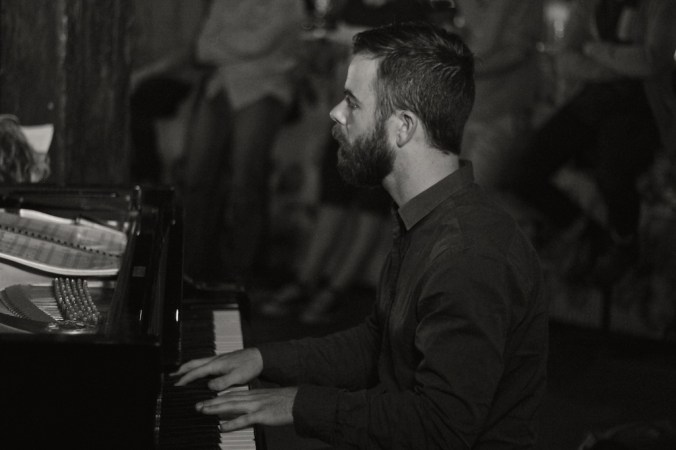
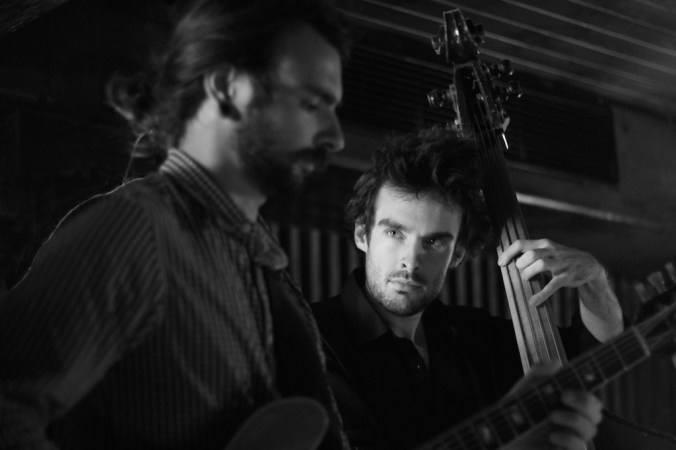
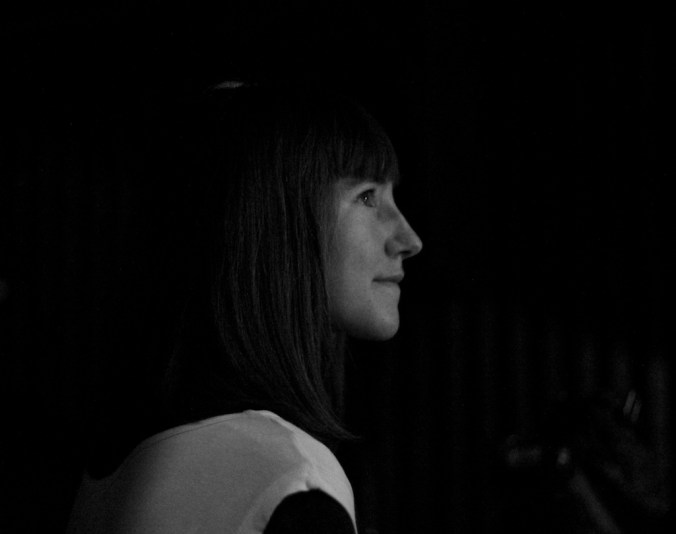
Shem gave her usual polished performance whether delivering the Bessie Smith’s slow burner ‘It Won’t be You’ or the more uptempo ‘Keep it to Yourself’ by Sonny Boy Williamson.  She only features in two numbers on the album, but at the gig she sang many of her own compositions.   Shem is an engaging performer and especially when singing in her native French tongue.

All of the other compositions on ‘Yellow Purple’ are Michel’s and these are as much a strength as his killing organ work.   He is absolutely astonishing on B3 and to hear him is to be instantly transported back to the days of Jimmy McGriff or Brother Jack Macduff.   His ability to work those pedals, milk the grooves and swing so hard that it makes your head swim, marks him out as a true master.   The tracks ‘Yellow Purple’ and ‘Sunlight Special’ are especially strong.

New Caledonia can rightly feel proud of Michel.  He is reaching wider audiences every day and one day the South Pacific could lose him to the USA.  Grab a piece of this master musician now and be sure to buy this and any other of his albums as they become available (see below).   Anyone in Wellington early next month can see him in person so watch for the gigs announcements or contact Nick Granville.

What: ‘Yellow Purple’ – Michele Benebig (B3), Shem Benebig (vocals), Carl Lockett (guitar), James Levi (drums, percussion).

Where to buy: www.michelbenebig.com