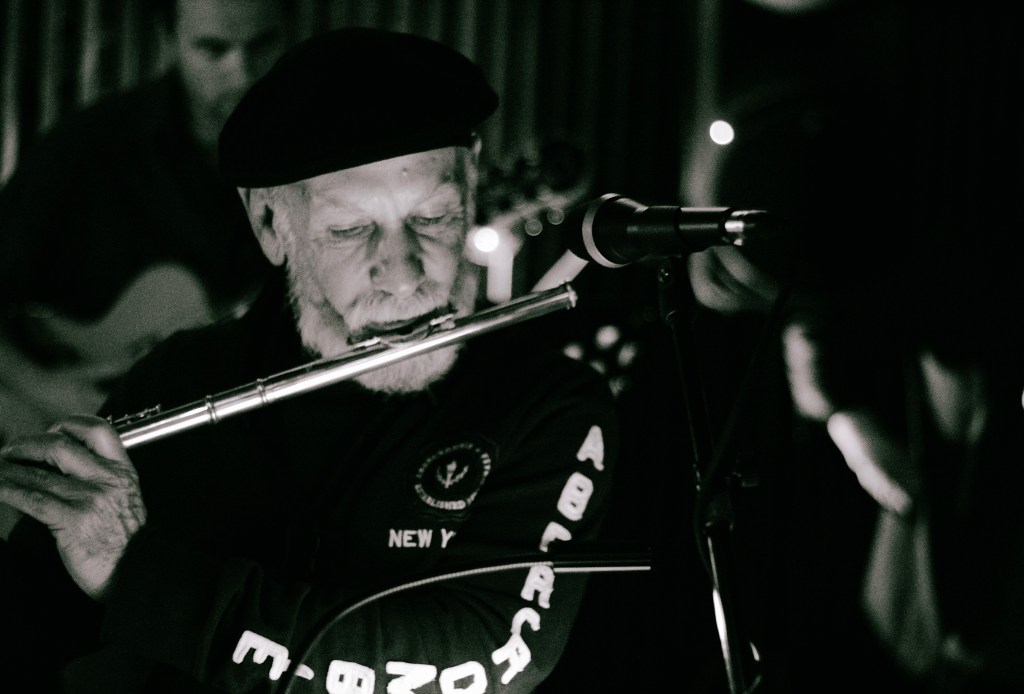
Jim left us in January, and the shock of his unexpected passing robbed me of the right words. In the following weeks, I mulled over my inaction, wanting to do justice to his story? Then I caught covid and more time passed. While it is usual to post an obituary within days of someone passing, I paused and reflected. And as I deliberated, I could sense his presence, knowing that he would approve of my waiting until the right words appeared. Jim’s life was a Zen koan, and you can’t rush a koan.
We had spoken on the phone a week before he died and arranged a ‘hang’ in a nearby coffee bar. It was sometimes hard to catch him on the phone, but when he picked up you could feel the warmth radiating from the handset. The conversations were slow grooves. He would speak softly, radiate peace and intersperse his comments with periods of reflective silence. Jim seldom rushed his words, and the silences felt all the more weighty for it. He spoke as he played because he understood the power of space between sounds.

I had known him for over a decade, but I wished I had known him for longer. He was a musician’s musician; the term used to describe a player of significance but one who is scandalously under-acknowledged. He had been on the Jazz scene his entire adult life and had played alongside some of the greats, but his natural habitats were in the Spiritual Jazz and avant-garde scenes. Many assume that the music of the avant-garde is strident. In Jim’s hands, the music was reflective, spiritual and embedded in indigenous culture.
He could crack open a note and let it breathe in multi-phonic splendour. He could whisper into a flute and then unexpectedly send forth a flurry of breathy overtones. He had great chops and visionary ideas, but he was not egotistical. Jim was about the music and not about himself. He was an educator and an empowerer. It was about transmission – telling the story, enjoying the moment and passing on the flame.
He had written the liner notes for one of the first American Spiritual Jazz albums incorporating his Buddhist name (Tony Scott’s ‘Music for Zen Meditation). He’d recorded with poets and acolytes and played alongside Dave Liebman and Gary Peacock. He also had a presence on many New Zealand albums but seldom as a leader. At first, I put this down to modesty, but now I think otherwise. His musical journey inclined him towards humility; he possessed that in the best sense. Gentle souls leave softer footprints.
He gave more to music than he received; to understand why you should know something else about Jim, his long involvement with Zen Buddhism. It was a particular connection that we had. Each of us had connected with Buddhism in our youth which informed our attitude towards in-the-moment music. Although I meditated then, mine was of the Beat variety of Zen, remaining a lazy ‘psychedelic’ Buddhist. Jim took his practice seriously, spending time in Zen Mountain Monastery, Mt Tremper, upper New York State.

While on that scene he performed with other spiritually engaged Jazz musicians like Gary Peacock, Chris Dahlgren and Jay Weik. And amazingly, performed with famous Beat poets like Alan Ginsberg and Anne Waldman who had an association with the centre, and together, had set up the Jack Kerouac School of Disembodied Poetics at the Naropa Institute. In New York, he connected with Tony Scott and Dave Liebman. Later, Jim established a New Zealand Sangha in the ZMM lineage and brought out their first teacher.
I recall messaging him when I was last in San Francisco to tell him I was seeking the forgotten Jazz Clubs, the homes of lost poets and the San Francisco Zen Centre. Names leapt across the cyber-void, Black Hawk, Kerouac, Kaufman and DiPrima. Back and forth we messaged during that week. He, tapping out fragmentary reminisces of his Dharma experiences in America and recalling some of the Jazz musicians he’d encountered (eg. Jaco Pastorius, Rashid Ali, Arthur Rhames, Gary Peacock, Dave Leibman).
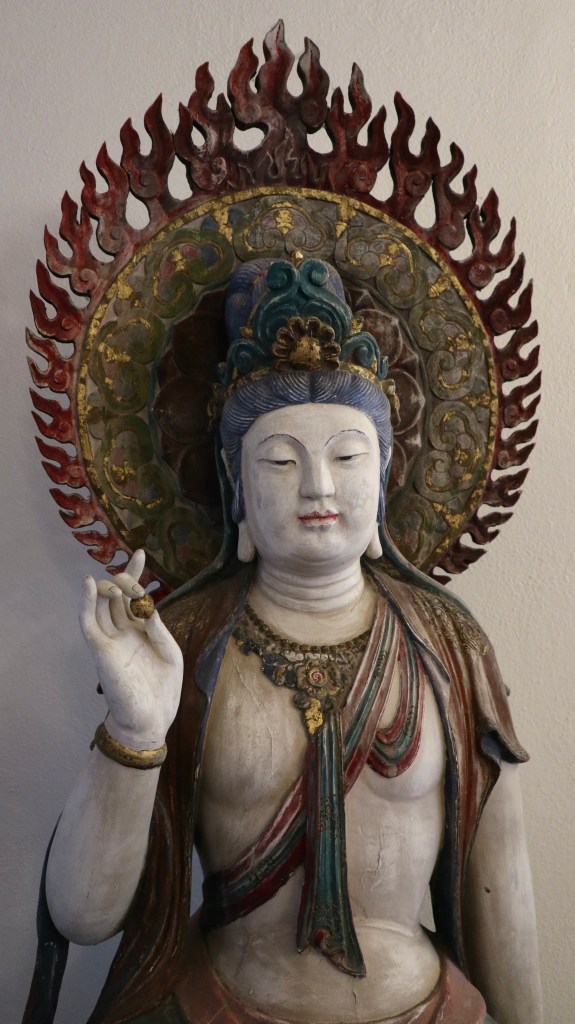
I, responded with pictures of a priceless Rupa as I stood in the Zen Centre Meditation room; buying a new translation of Han Shan’s Cold Mountain poems and sending him a picture of the cover. And me, reliving Ginsberg’s visions of Moloch as I wandered the corridors of his trippy nemesis, the Sir Francis Drake hotel. Buddhist practice, poetry and improvised music are old acquaintances. It was our instinctive connection.
I would bump into Jim at gigs. And he would say, “I hoped you’d be here, I have this for you” passing over a booklet on Finnish Jazz or a CD. He would press them into my hand without explanation and carry on talking about other things. These were Zen puzzles for me to unravel. I realised what treasures they were only later.
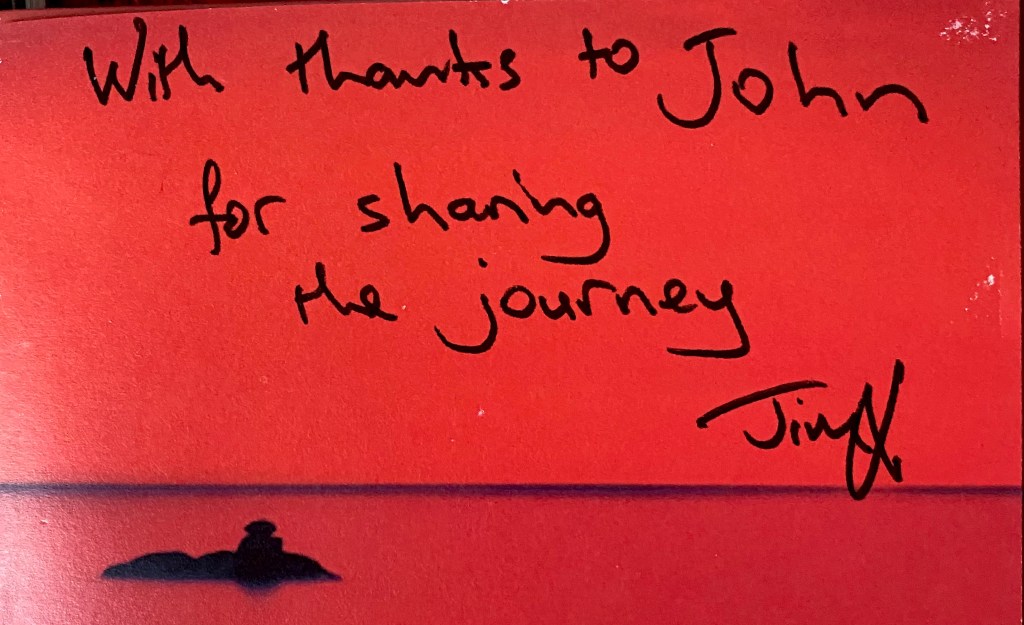
He came to my seventieth birthday, a house party where he enjoyed the young musicians playing. He was photographed, deploying his best smile as he posed among us. On that occasion, he handed me a bag of goodies, a limited edition double album – a live concert featuring Arthur Rhames, Jaco Pastorius and Rashid Ali. Handwritten by sharpie was the cryptic inscription ‘jimjazz ⅕’ – another koan to solve. Did he record this?
Important chroniclers like Norman Meehan have written about him, but I’m sure there is more to say. His family and musician friends will create a fuller discography, preserve his charts and update his filmography. It is important. Because he was not a self-promoter, he could surprise you when he appeared in line-ups. With Indian vocalists like Sandhya Sanjana, Tom Ludvigson & Trever Reekie’s Trip to the Moon band, at the NZ Music Awards, at numerous Jazz Festivals and on movie soundtracks. And he played and contributed to daughter Rosie Langabeer’s various out-ensembles. He played the flute on the ‘Mr Pip’ soundtrack and saxophone on daughter Rosie Langabeer’s soundtrack for the indie film GODPLEX
He released at least two notable local albums as a leader, but perhaps there are more? Jim’s Africa/Aroha album with Barry Young (SUPERBREW) was released as an LP by Ode in 1984 and re-released in 2007. It has remained popular with jazz lovers. Prophetically, his composition Aroha cropped up on the hospital Spotify playlist during his last hours. The album broke fresh ground in New Zealand with its freedom-tinged Afrobeat and World Jazz influences. It is gorgeous.

Around 2016 Jim undertook a research and performance project at the Auckland University Jazz School, where he was awarded a Masters’s Degree with first-class Honours. Out of that came his finest recording Secret Islands (Rattle). After recording, Jim phoned me and asked if I would write the liner notes and I was pleased to be on board. He also used my photographs.
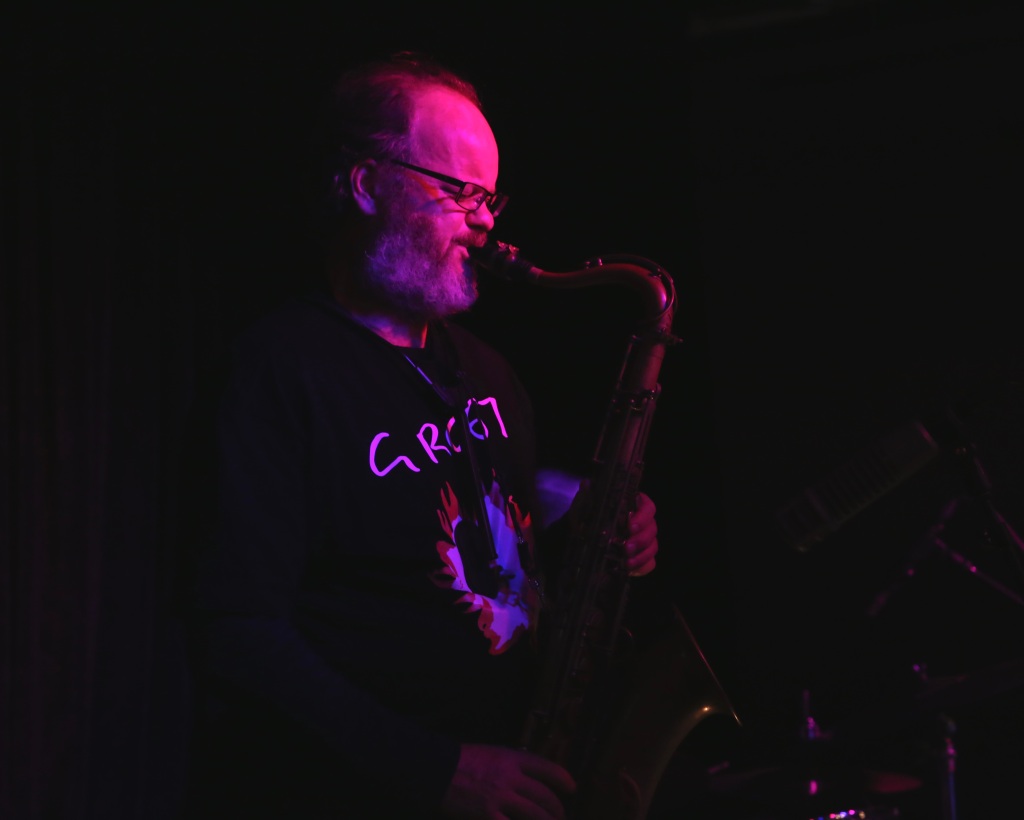
I am an enthusiast of avant-garde music and a fan of Jim’s approach, so it was a labour of love. Secret Islands is one of a select group of albums that tells a New Zealand Jazz story. It could not have come from anywhere else. I had heard the band play a preview of the album and loved what I heard. The recording took things to another level. It featured an all-star lineup. With Jim’s vision and Rosie and the other player’s contributions, it was sure to hit a sweet spot. Later a live performance was reprised at the Audio Foundation with Jim on flute and tenor, Jeff Henderson on drums, Rosie Langabeer on Piano, Neil Feather on an experimental instrument and Eamon Edmundson-Wells on bass, with Roger Manins on Alto. It was a superb performance. I will never forget it. The Secret Islands album (clip above) featured Jim Langabeer on winds and reeds, Rosie Langabeer, piano and Fender Rhodes, Neil Watson, guitars, Eamon Edmundson-Welles, bass, Roger Manins, alto saxophone and Chris O’Connor, drums.
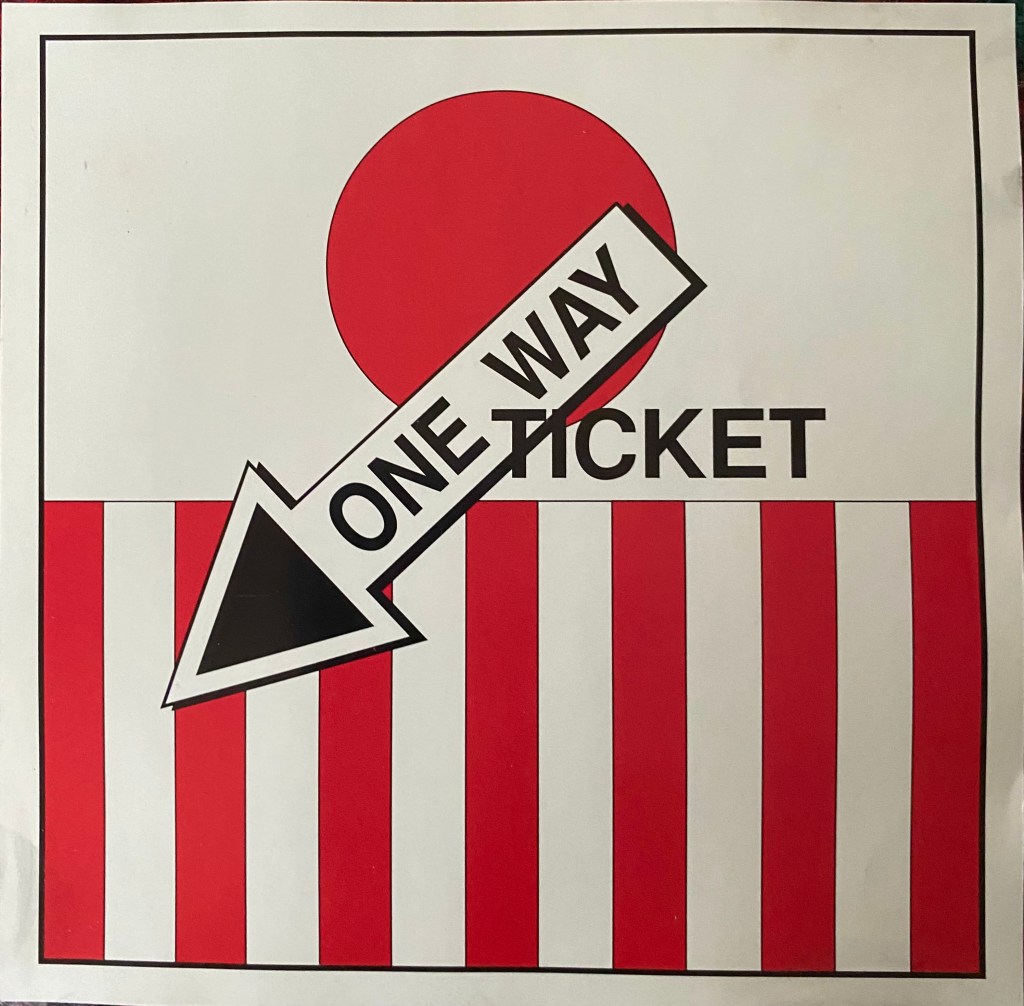
One last album that deserves mention is One Way Ticket – Daikajo. Released in 1995 by ‘Dharma Communications’ Zen Mountain Zen Monestry NY and produced by Jim. On it, he leads the ensemble on alto saxophone, silver flute and shakuhachi. Like most of Jim’s albums, it is Spiritual Jazz. A subgenre of improvised music that is experiencing revival worldwide.
Just before the first lockdown, I visited him at his Farm Cove home as I wanted to record an oral history. I switched on my recorder while the conversation ran for two or three hours. It often veered into the esoteric. When Ī played it back, I realised that I needed another session with a greater focus on Jim’s achievements. I can usually keep an interview on track, but in Jim’s case, words were like pebbles in a pond. A series of moments setting off ripples haiku-like.
Before I knew it the pandemic had arrived. I had lost my window of opportunity. Jim passed at the height of the second lockdown, and much as I wanted to attend his funeral, I couldn’t. I participated online and remembered him in silence, a copy of Secret Islands beside me and his tune Tangi playing softly in the other room. We loved Jim and mourn his untimely passing.
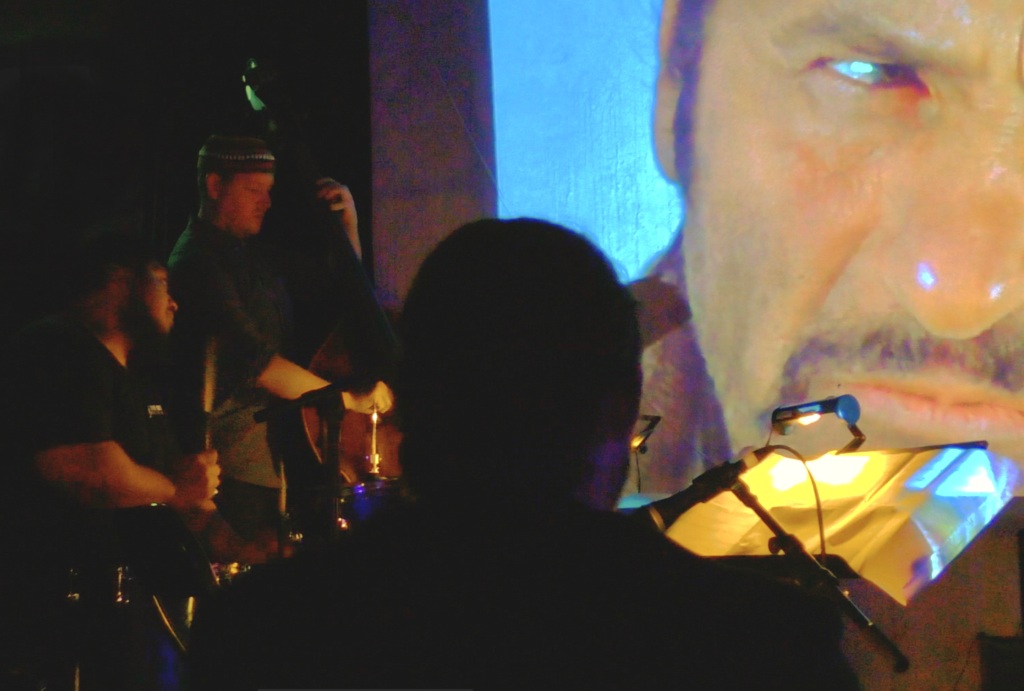
Footnote: The Rupa (Buddhist image) is an antique statue located in the San Francisco Zen Centre. It is likely the Bodhisattva Kuan Yin or Maitreya in Bodhisattva form. The video is Jim’s tune Ananda’s Midnight Blues which I filmed at CJC Jazz Club, Auckland. I have also included the clip ‘Tangi’ from Secret Islands. Lastly, I would like to fondly acknowledge Jim’s daughters, Rosie, Catherine and Celia Langabeer, and Jim’s partner Lyndsey Knight, who together, acted as fact-checkers.
JazzLocal32.com is rated one of the 50 best Jazz Blogs in the world by Feedspot. The author is a professional member of the Jazz Journalists Association, poet & writer. Some of these posts appear on other sites with the author’s permission.









 Have you ever heard one of New Zealand’s iconic pop songs and wondered how it would sound reimagined as Jazz? The journey from popular song to Jazz piece is a well-trodden path. Many tunes that we now refer to as ‘Jazz standards’ began their life as tunes written for broadway musicals or for the popular music market. For a tune to successfully cross that divide it needs to be well constructed and to lend itself to reharmonisation. With ‘Alchemy’, this elusive symmetry is realised.
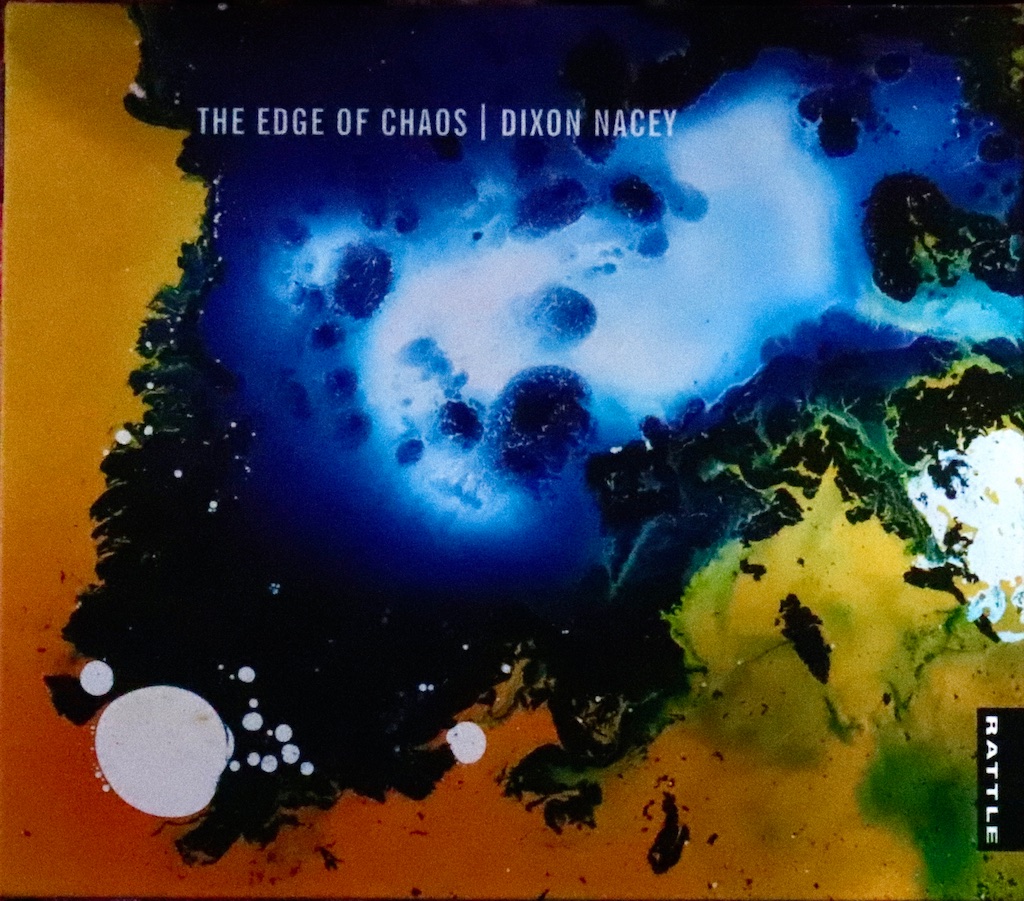 This Dixon Nacey album has long been anticipated and although Nacey has previously recorded as co-leader, this is the first album to be released exclusively under his name. Nacey is firmly on the radar of Jazz loving Kiwis, but his fan base extends well beyond that. He is a professional musician of considerable standing, an in-demand teacher and in recent years the musical director of CocaCola Christmas in the Park. To up and comers he is a guitar legend and on this album, they have something to aspire to; twenty years of experience distilled into excellence.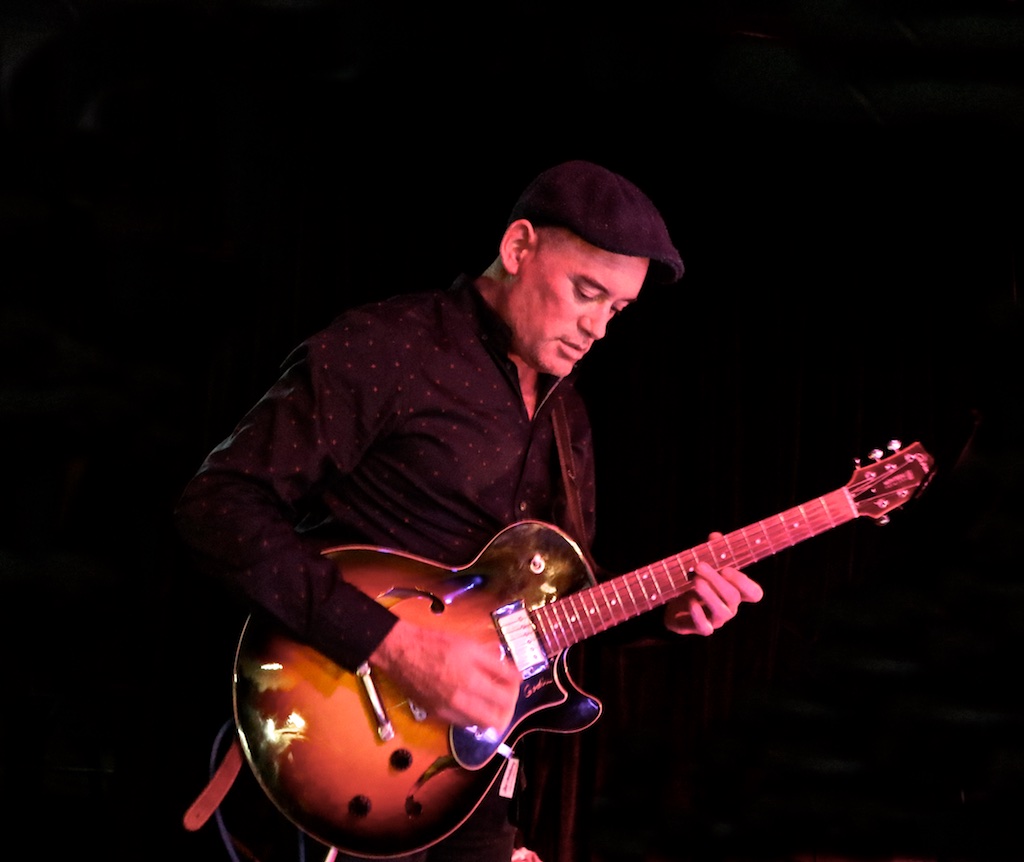
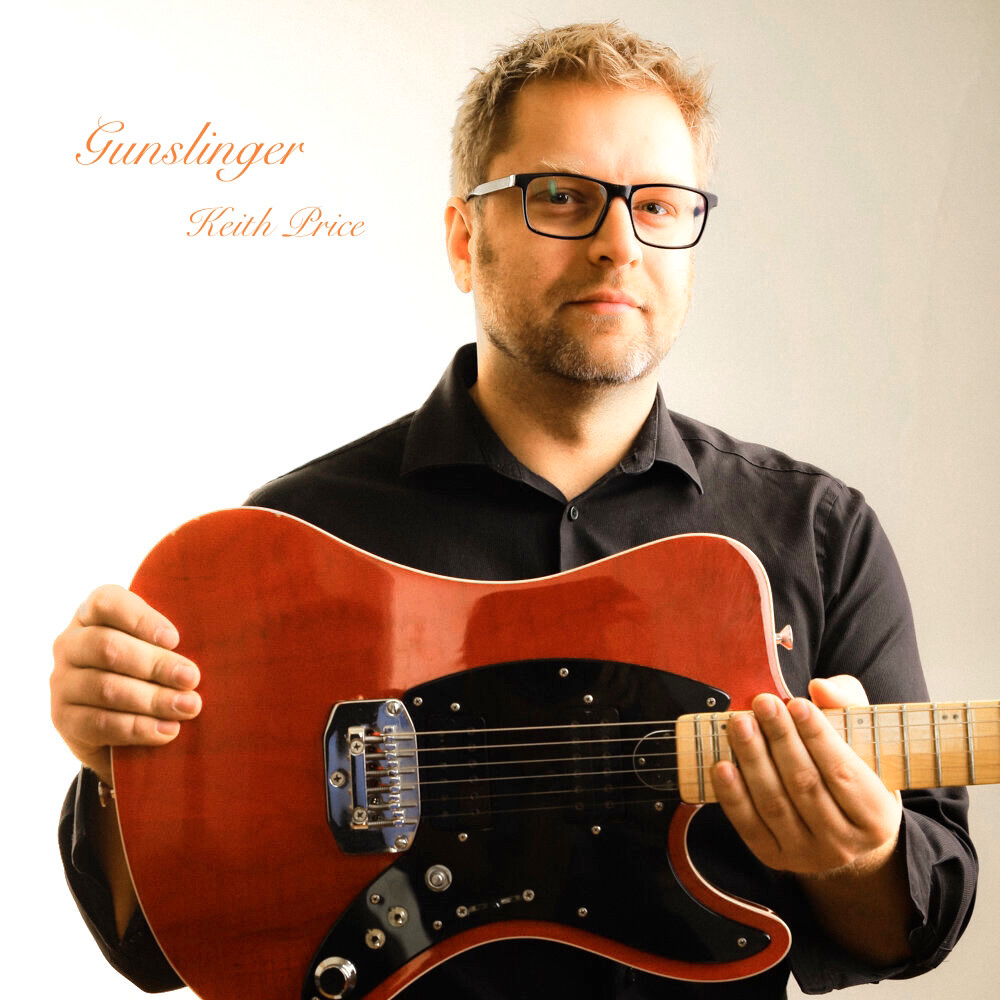
 Canadian Jazz guitarist Keith Price is a welcome addition to the Auckland scene. He brings with him fresh ideas and a musical connection to his hometown. Manitoba is associated with Lenny Breau and Neil Young who both grew up there. Perhaps it’s the proximity to the open spaces which echo in the music, that wide-open sound (and in Young’s case an overlay of dissonant melancholia)? Whatever it is, it certainly produces distinctive musicians. Lenny Breau is an important Jazz guitarist and one who is sadly overlooked, Hearing Price’s respectful acoustic homage on Wednesday, cast my ears in that direction again.
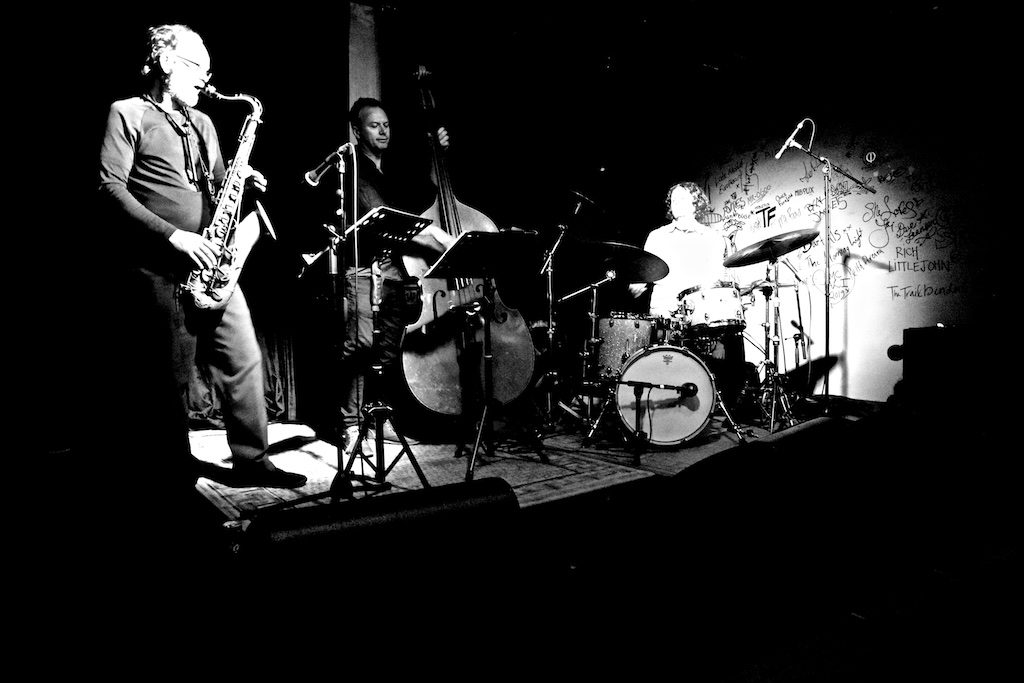 Post Trump’s inauguration, improbability is the new normal and in keeping with the mood of the times Wednesday’s gig emerged from improbable beginnings. It began with an international cat rescue mission, an attempt to thwart a ‘catricidal’ former neighbour. Before the mission had even been concluded a subplot had emerged; one involving the inhabitants of three cities, two countries, and assorted sharks. Those familiar with Reuben Bradley will not be surprised at this turn of events as he’s known for his humour, good nature and above all for his ability to turn improbable adventures into really good music. ‘Shark Varieties’ is a drummer led trio and a vehicle which showcases a bunch of the leader’s original tunes. It also showcases a joyful reunion.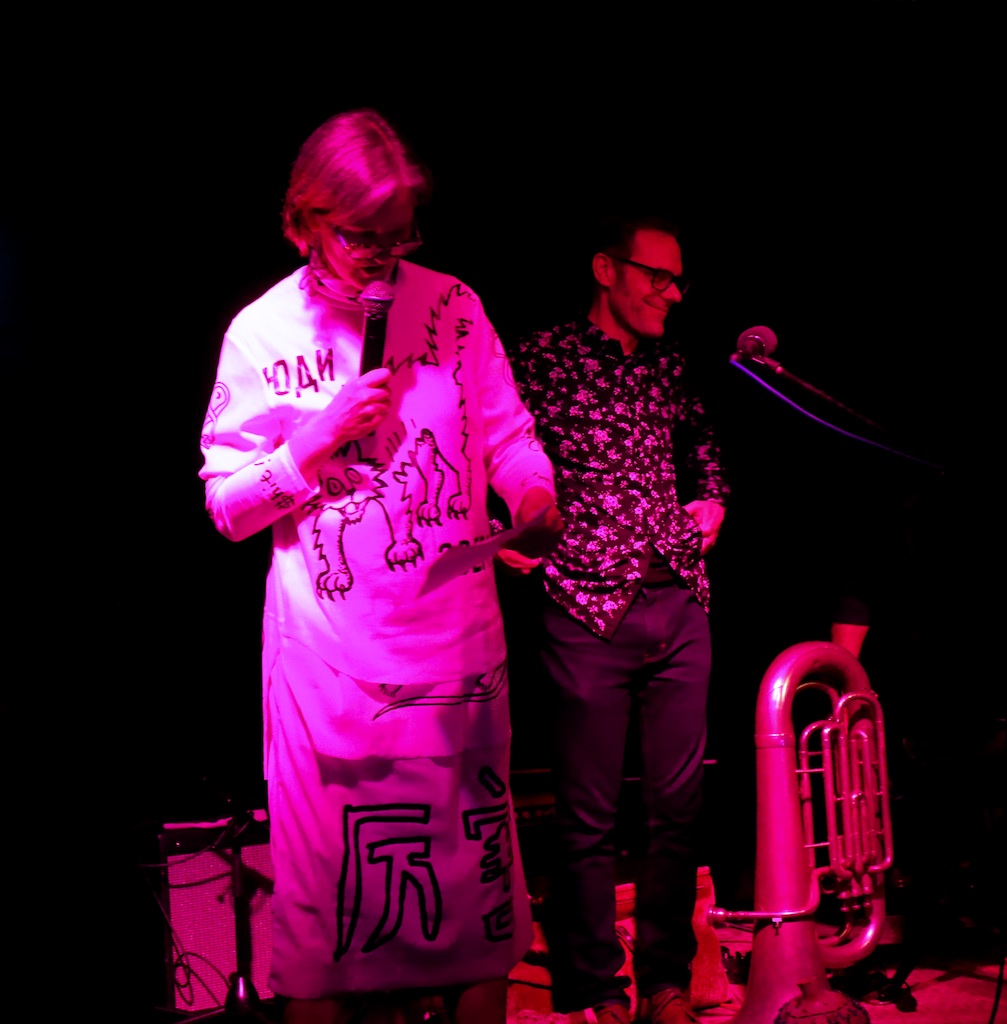

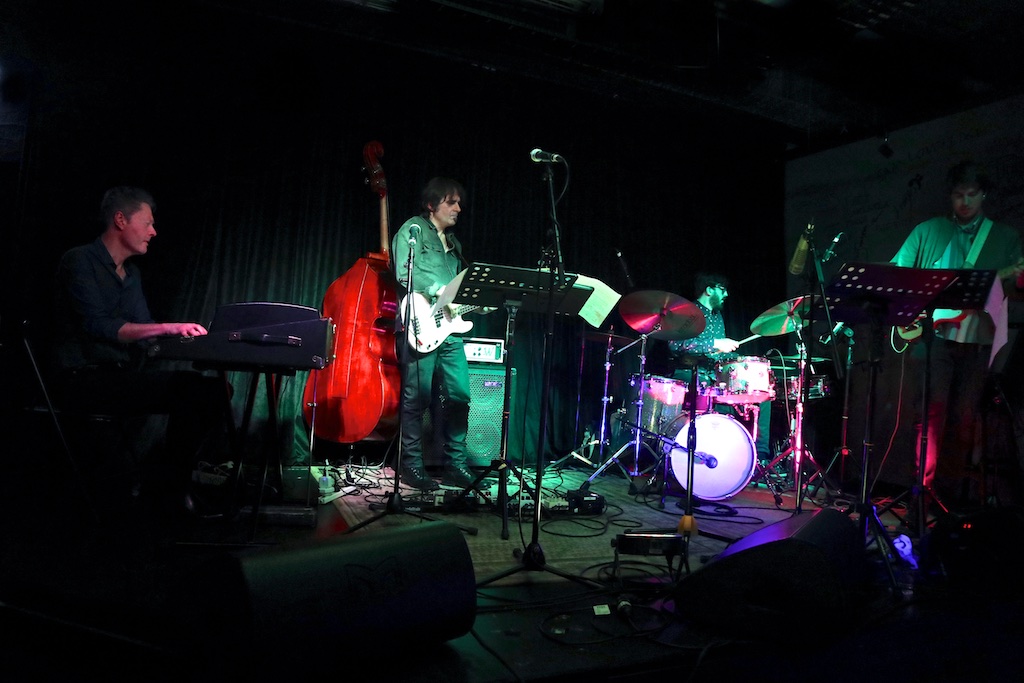 Subject to availability, Richard Hammond is the kind of bass player that you would consider first for an important gig or recording.
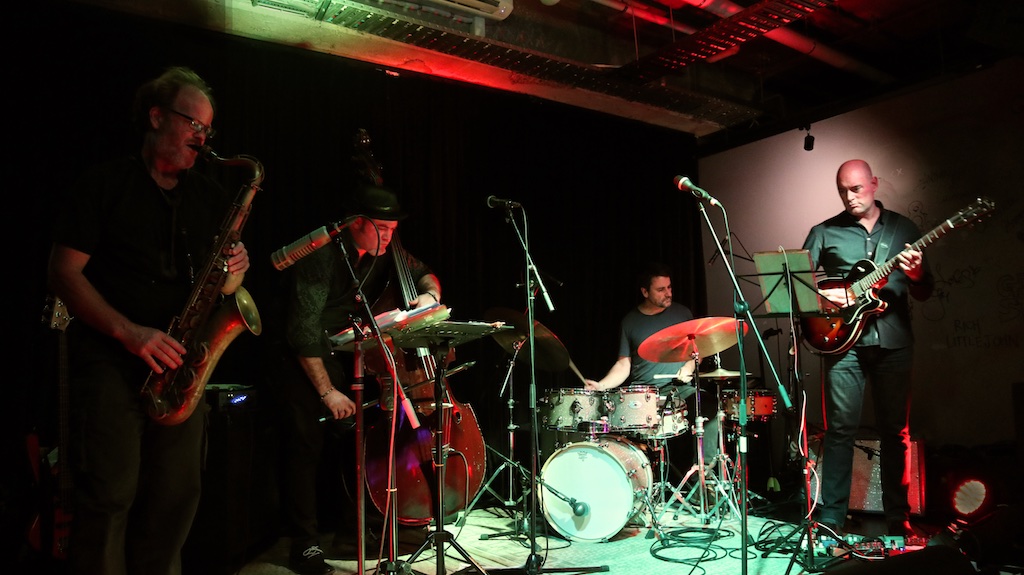 The original
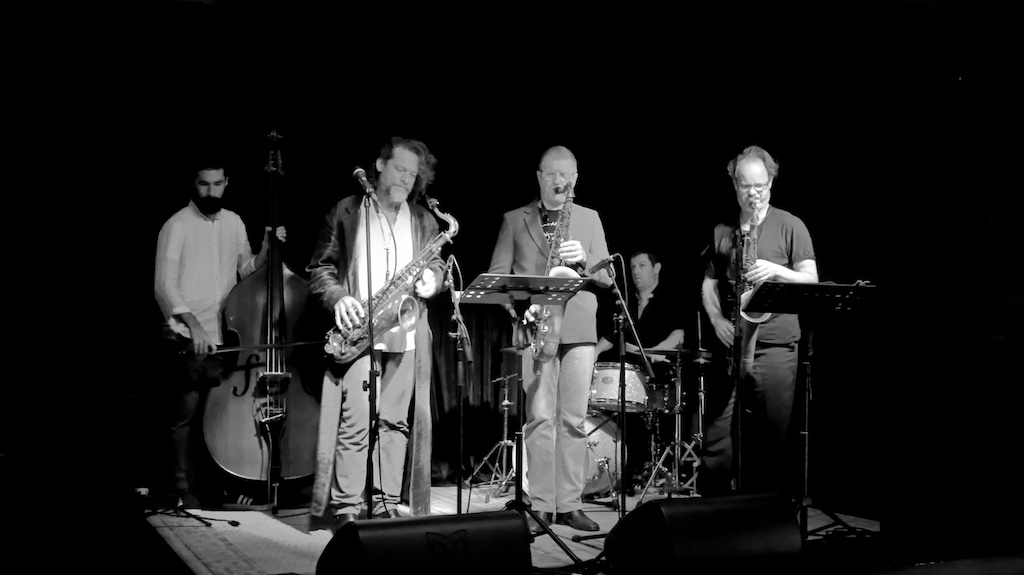 Andy Sugg’s collaborative album ‘TTTenor’ was cut in Melbourne back in 2006 and rightly, it has garnered praise. In a land of significant horn-players, the tenor triumvirate of Sugg, Oehlers, and Wilson was a standout. Three gifted saxophonists who capitalised on the imaginative charts to showcase their formidable skills. Completing the original sextet was an immaculate rhythm section – Paul Grabowsky (piano), Gary Costello (bass) and Andrew Gander (drums). Since then, Sugg has recorded other albums like ‘The John Coltrane Project’ ‘The Berlin Session’ ‘Brunswick Nights’ ‘Wednesday at M’s’ and ‘Tenorness’.
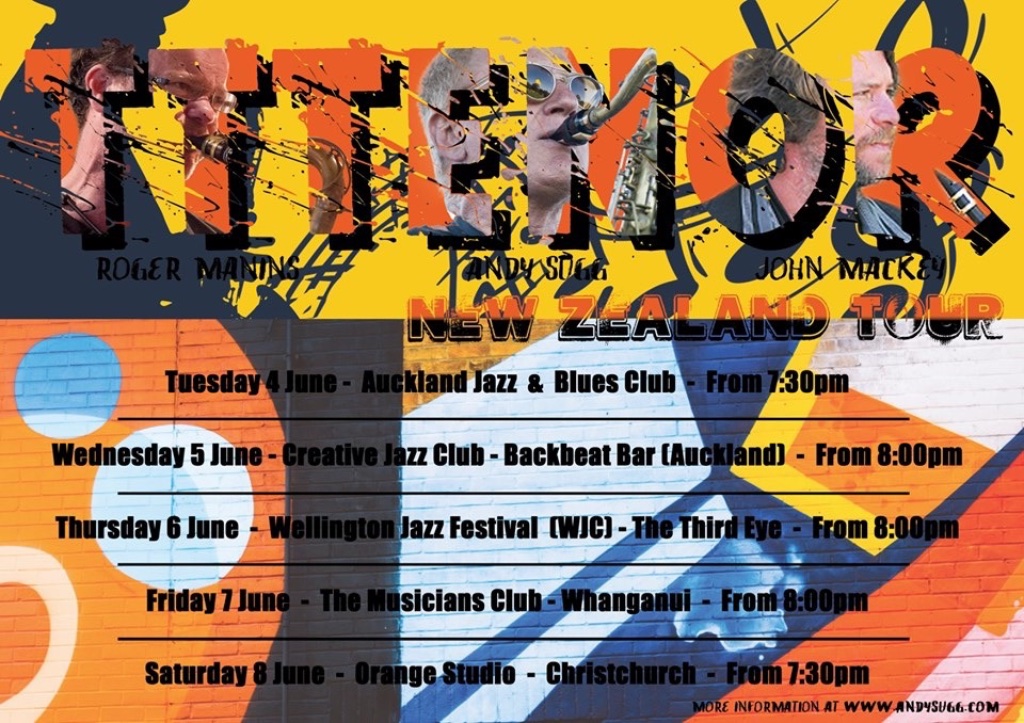
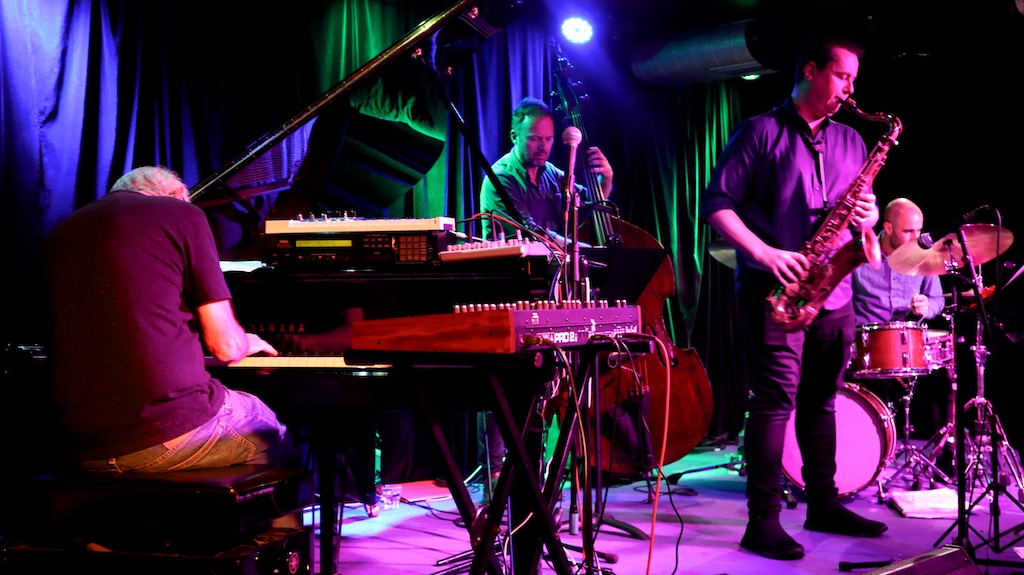

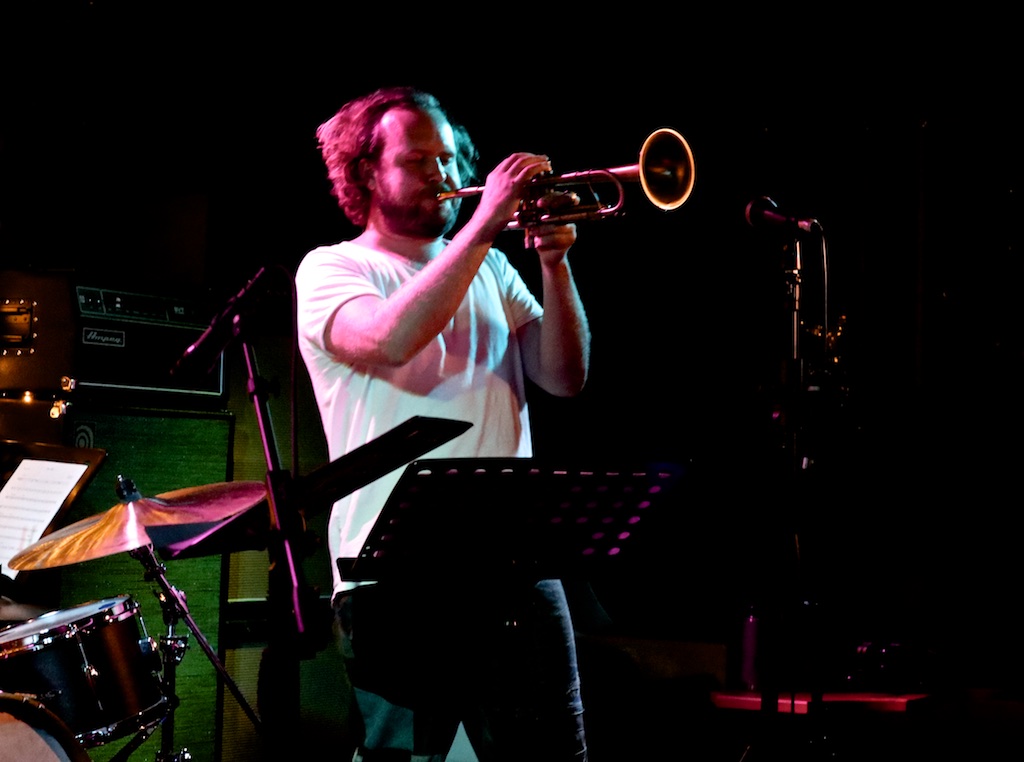
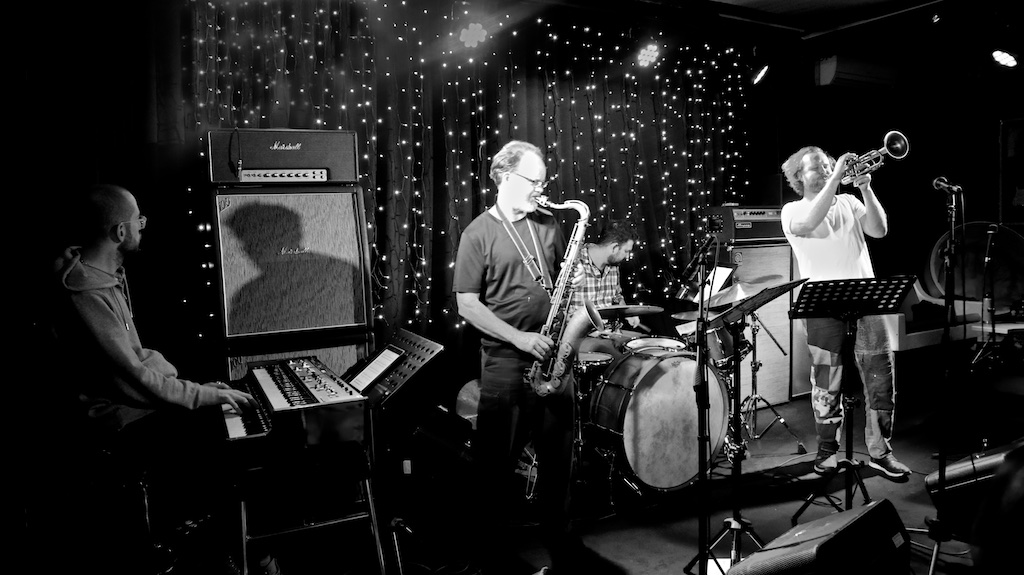
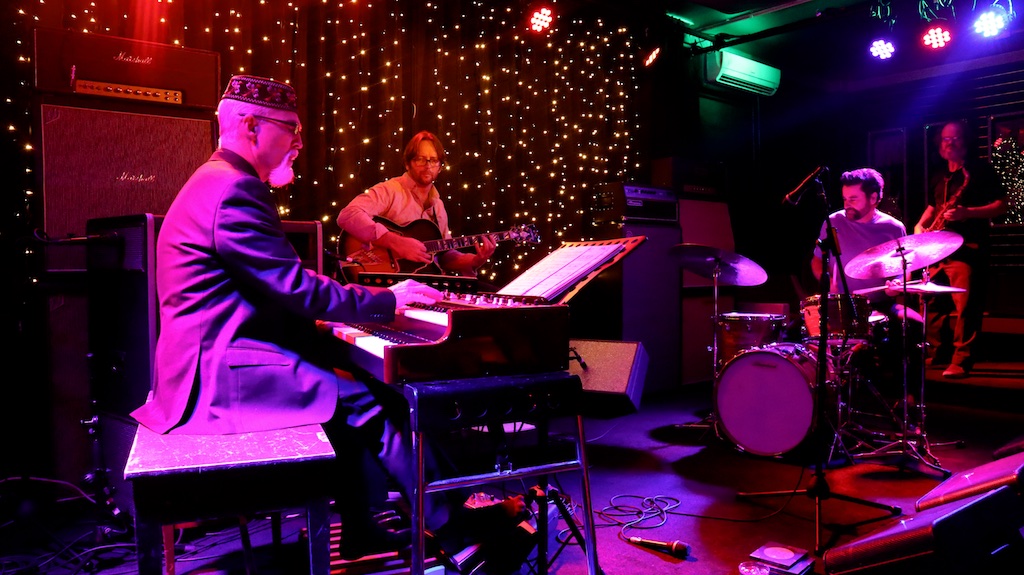 I reviewed the ‘Shuffle’ album in January and the band is now on the road, sharing its groove throughout the North Island.
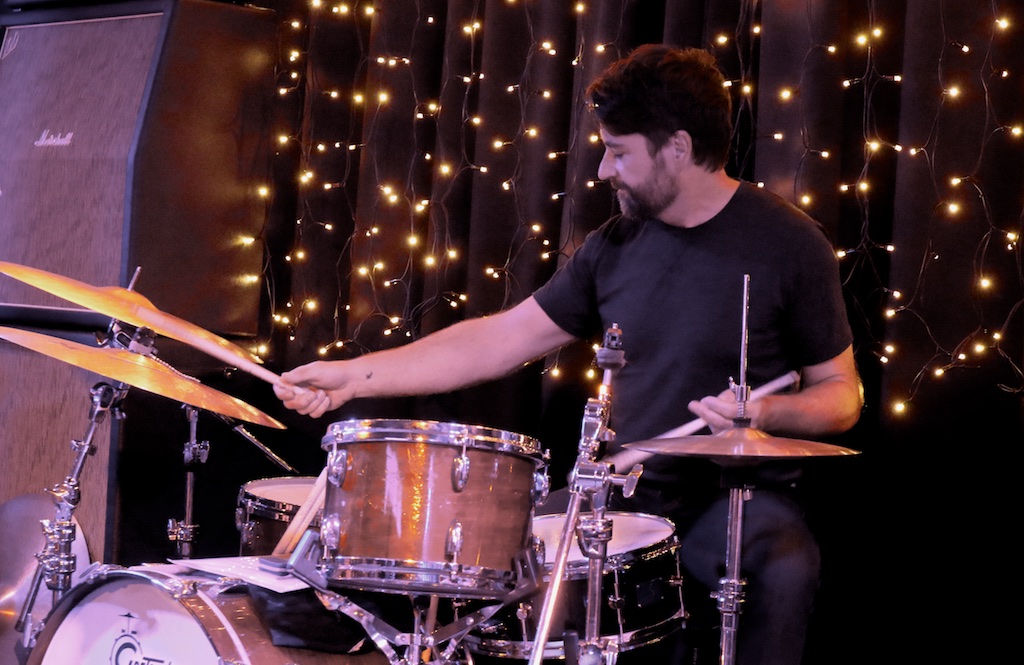 March fifteenth began as good days should, with sunshine, a cool breeze off the ocean, and a message from a Jazz Journalist colleague in Australia. ‘Would I like to meet some award-winning Greek Jazz musicians’? I had stuff planned, but the plans were easily shelved and I drove from my leafy hilltop retreat into the city. The musicians had flown into Auckland to join a passing cruise ship and were only in town for eight hours. Ahead of them lay four months of playing standards, original material (if lucky), and the inevitable but often regrettable requests. We met up in a central city cafe. ‘John’, they yelled as I walked around the corner. For the briefest second, I wondered how they had recognised me, ascribing it to a Jazz sixth sense, then remembering my tee shirt was emblazoned with the words Prahu Jazz. We introduced ourselves, and headed for the waterfront at my suggestion, chatting as if we’d known each other for years. That’s the way in the Jazz community. You travel to a place you’ve never been before and someone will message you with the contact details of ‘cats’ to hang with. Such hangs generally follow a well-trodden path. ‘Do you know this or that cat – killing?’ Always followed by outrageous road stories and laughter.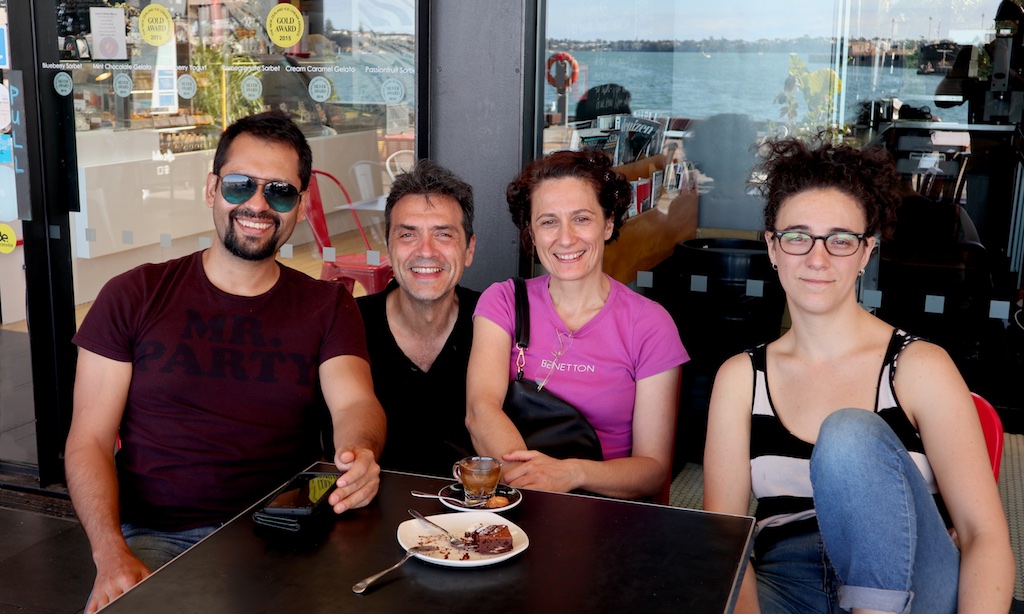
 JazzLocal32.com