 Again, the CJC Creative Jazz Club has made good on its promise to deliver diverse and interesting projects. Last week saw a collaboration between the Bengali born sitar maestro Purbayan Chatterjee and the Auckland based World-Jazz fusion group Takadimi. What at first glance may appear to be an improbable collaboration – a famous Indian classical master and a Jazz fusion group was, in fact, a perfect alignment. Having Alan Brown on keys with Cam McArthur on bass and with the nimble, talented Daniel Waterson on drum kit, plus leader Manjit Singh on tabla – we expected and heard excellent music.
These two great improvising traditions, one ancient, the other emerging just over 100 years ago, are able to comprehend each other’s basic forms. Both traditions produce talented and versatile musicians who are thoroughly trained in song cycles, scales, and rhythms. A perfect illustration of this occurred last Wednesday when Maestro Chatterjee and Takadimi decided to create a spontaneous improvisation. With nothing prearranged, it began with an audience member asking about an ancient Greek scale called the Lydian Mode. All of the musicians were familiar with this mode and Maestro Chatterjee said that it was practically identical to the fundamentals of a particular Raga mode. He fingered the scale briefly on his sitar and then asked Alan Brown to form a motif using that scale. Thus began a cross-discipline, cross-cultural musical conversation like few I have heard.
Purbayan Chatterjee is a Bengali born musician residing in Mumbai. He has an international reputation and has performed in concert halls all over the world. The recipient of prestigious awards including the President of India award and with a discography which includes best selling albums. He was trained from a young age in the Northern or Hindustani School of Indian classical music. Like the famous tabla player Ustad Zakir Hussain (who he has performed with), he has frequently ventured into the Jazz/World fusion space. Auckland’s Takadimi, under the able leadership of the highly respected tabla player Manjit Singh, has for some years been exploring that same fusion space. Putting Maestro Chatterjee together with Takadimi was inspired. Together, they brought transcendent joy to our club and in a troubled world, this is a precious commodity.
The tone of the evening was set by the first offering which was a beautiful meditative raga performed in a classical style on sitar and tabla. I have been listening to Indian classical music since age 14, but I am certainly no authority. To the best of my knowledge, the basics are as follows. There are two main branches, the northern Hindustani and the southern or Carnatic branch. These, in turn, have many sub-genres and sub-styles, especially in the North. Both schools use the raga (usually a 7 note scale) performed over a drone. The structure begins with the Alap (in 3 sections) which is performed without the tabla and is a preparation or gradual development towards a climax. In this first phase, melodic ornaments and shapes are formed. The second major segment is the Gat (and Dhrupad) which is where the tabla joins in. The tabla introduces the complex meters that characterise Indian classical music and these are called tala (a cycle of weak and strong beats). Improvisation and interplay occur mainly in this second stage. Although the music is referred to as classical it does not refer to a fixed point in time. It is a constantly evolving music and new styles are still being developed within the classical framework.
I have posted an excerpt from the raga and also the spontaneous improvisation piece. This intensely beautiful music brought fitting closure to our tenure at Backbeat. We will miss the staff and the small club vibe, but it’s time to move to our new home, Anthology. The audiences have followed the club to new venues 5 times over the last 11 years. With such great music on offer, I am sure that this will continue. Purbayan Chatterjee summed up the vibe perfectly when he praised the audience. He plays in the worlds great concert halls but he told us that intimate clubs like this, with engaged cheerful audiences, are the best of places. His gift of the raga – perhaps an evening raga, felt like it was performed just for such an occasion. Thank you musicians – see you at Anthology for the All-Star, 3 Saxophone opening night. Click through to the CJC Creative Jazz Club web site.
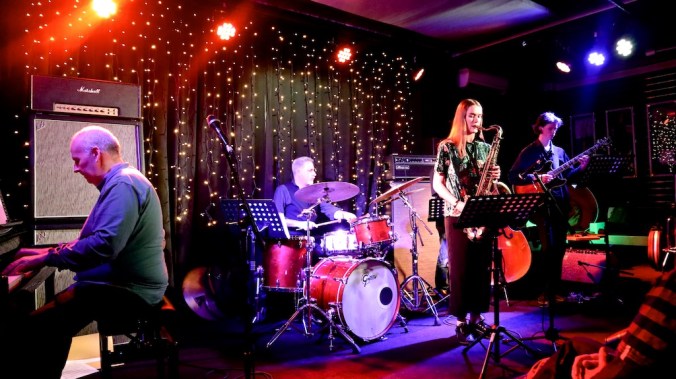 The UK born Mark Donlon is an internationally renowned musician who joined the New Zealand School of Music as a senior lecturer in Jazz Piano in 2013. He has previously appeared at Auckland’s CJC, but never with a quintet. The small ensemble format is clearly a forte as it revealed his many skills. After hearing his recent recording and attending the CJC gig it was evident to me that this particular project hit a sweet spot. What we heard on Wednesday was something special.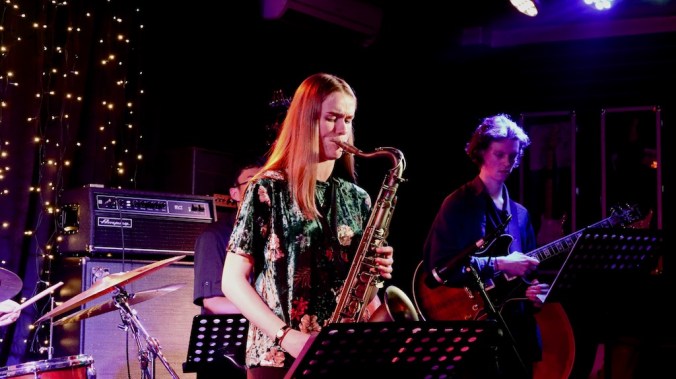
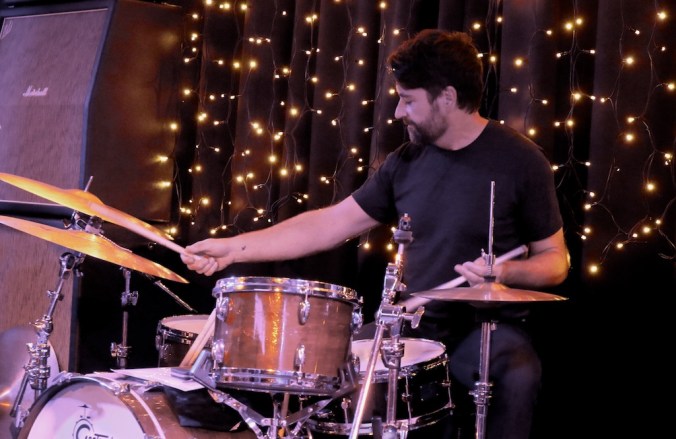 March fifteenth began as good days should, with sunshine, a cool breeze off the ocean, and a message from a Jazz Journalist colleague in Australia. ‘Would I like to meet some award-winning Greek Jazz musicians’? I had stuff planned, but the plans were easily shelved and I drove from my leafy hilltop retreat into the city. The musicians had flown into Auckland to join a passing cruise ship and were only in town for eight hours. Ahead of them lay four months of playing standards, original material (if lucky), and the inevitable but often regrettable requests. We met up in a central city cafe. ‘John’, they yelled as I walked around the corner. For the briefest second, I wondered how they had recognised me, ascribing it to a Jazz sixth sense, then remembering my tee shirt was emblazoned with the words Prahu Jazz. We introduced ourselves, and headed for the waterfront at my suggestion, chatting as if we’d known each other for years. That’s the way in the Jazz community. You travel to a place you’ve never been before and someone will message you with the contact details of ‘cats’ to hang with. Such hangs generally follow a well-trodden path. ‘Do you know this or that cat – killing?’ Always followed by outrageous road stories and laughter.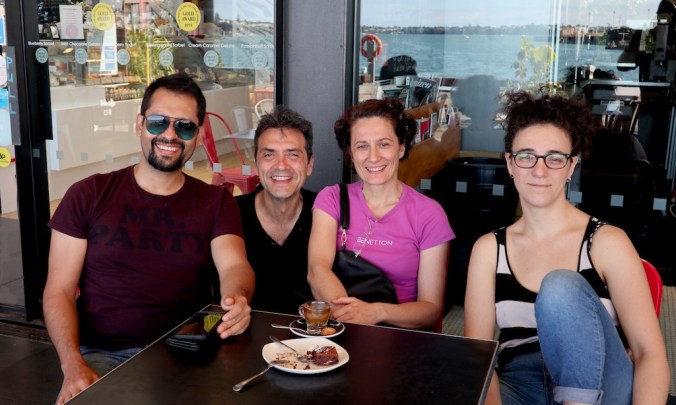
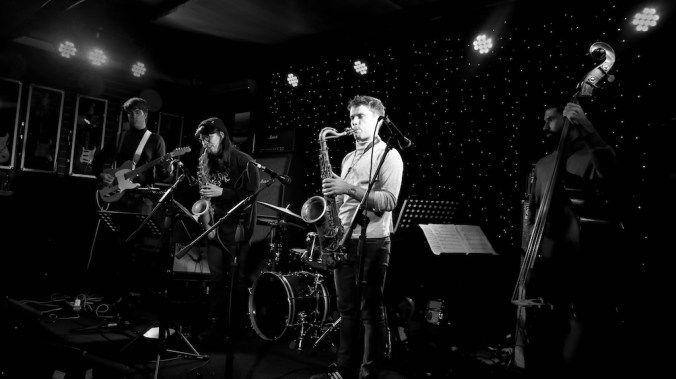 In the late 1950s and early ’60s, anyone with an ounce of cool wore a coarse-knit black polo neck jersey. While they sat there feeling cool their necks would start to itch and angry red rashes would creep up to their chins. Chins made all the itchier by the regulation chinstrap beards or ‘hip’ goatees.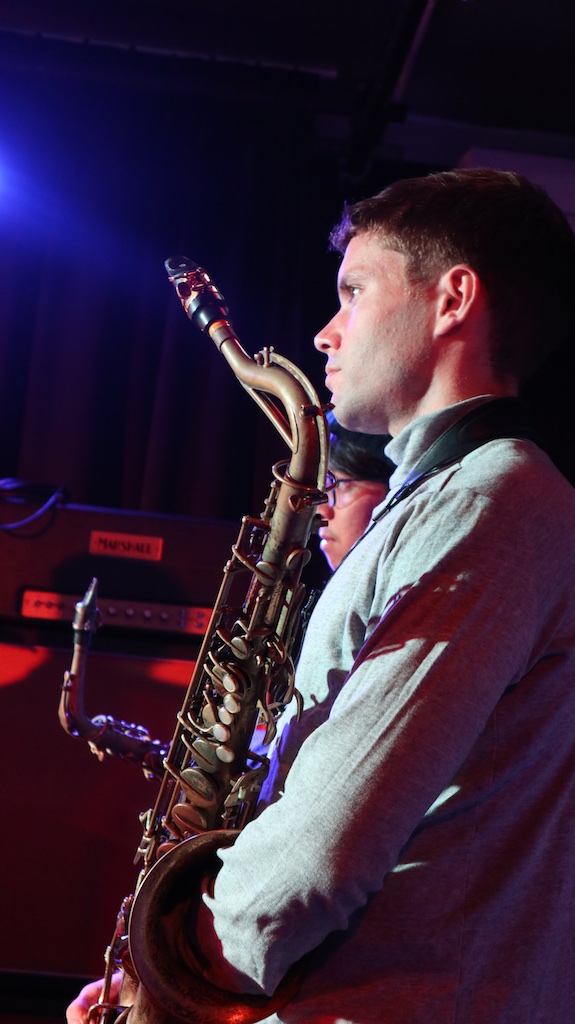
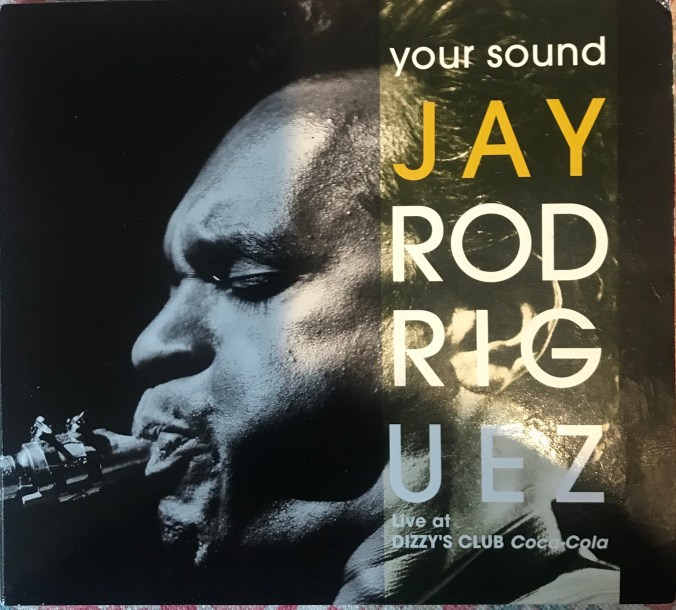
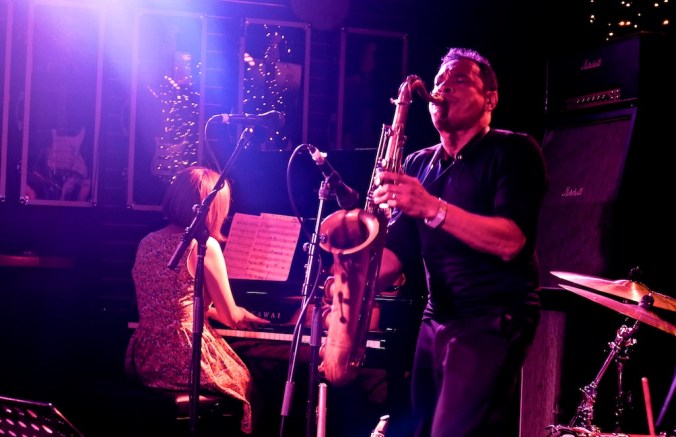 Anyone who saw Jay Rodriguez play the last time he was in town will have tripped over themselves to catch him again last week. Rodriguez is a talented and engaging improviser and when he steps onto the bandstand he wins hearts from the get-go. This seemingly innate ability arises from a keen understanding of what will work best with a particular audience. He picks ups on and feeds off the energies in the room. He is also a skilled technician, but he is not there to show off his undoubted chops. His purpose is to involve and to engage at the deepest level; offering musicians and audience alike an unforgettable musical experience.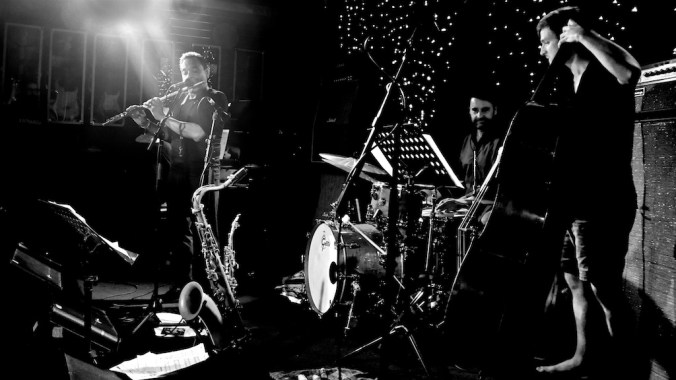
 I was out of the country when Umar Zakaria came to the Backbeat Bar in September. I was particularly sorry to have missed Zakaria’s Fearless Music Tour as they had just won the 2018 Jazz Album Of The Year. Because I was away it took me a while to get my hands on the album and when I did I was deeply impressed. While the name Zakaria may be unfamiliar to many outside of Wellington, he is hardly a newcomer to the scene. He is a graduate from the New Zealand School of Music and the Boston Conservatory and he has performed and studied with significant improvisers from around the globe. Already, accolades are coming his way and when you consider the fact that he is at the beginning of his career, you comprehend just how significant that is.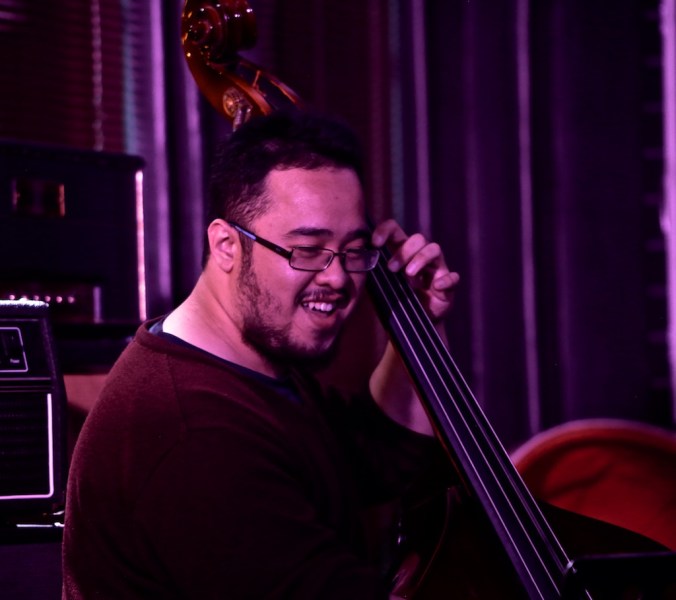
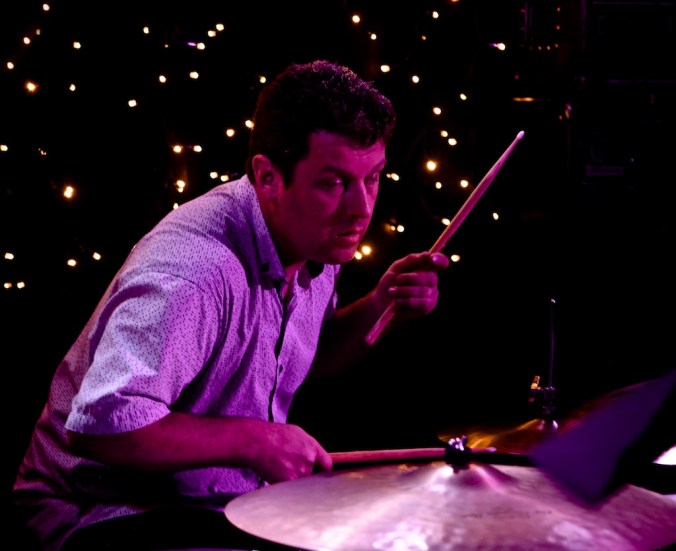
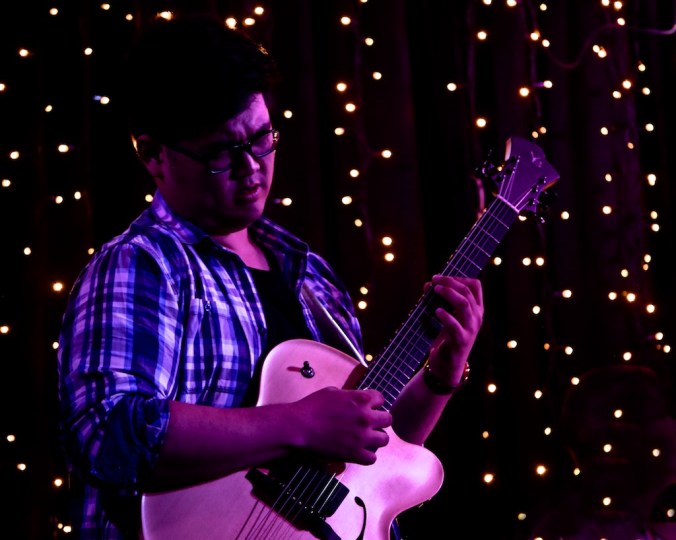
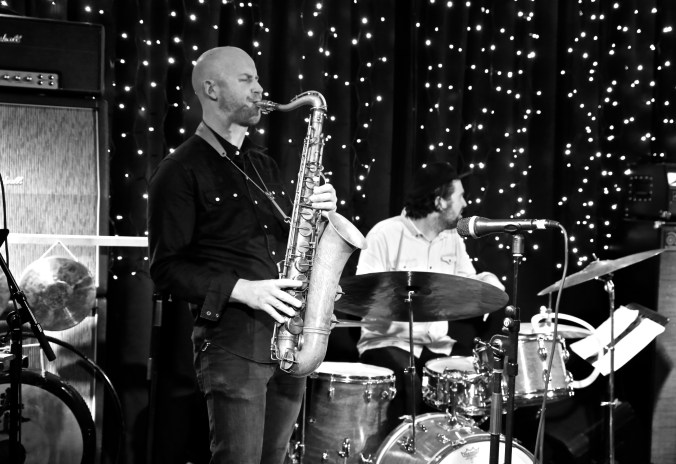 Perhaps it’s the anniversary of the moon landings, or perhaps it’s the crazy-arsed nonsense happening down on planet earth, but deep space has been very much on my mind lately. I have not been alone in this preoccupation as I appear to share this with a group of explorative improvising musicians. I was recently on local radio taking about a favourite topic, ‘space dreams and analogue machines’ and it occurred to me then, that space dreamers have always shaped our other-world view. Frank Hampson (Dan Dare Comics), Gene Rodenbury (Star Trek) and musicians like Eddie Henderson (Sunburst), or Sun Ra (Space is the Place). Humans have always looked to the stars for inspiration but only writers and musicians have the courage to describe what others cannot yet imagine.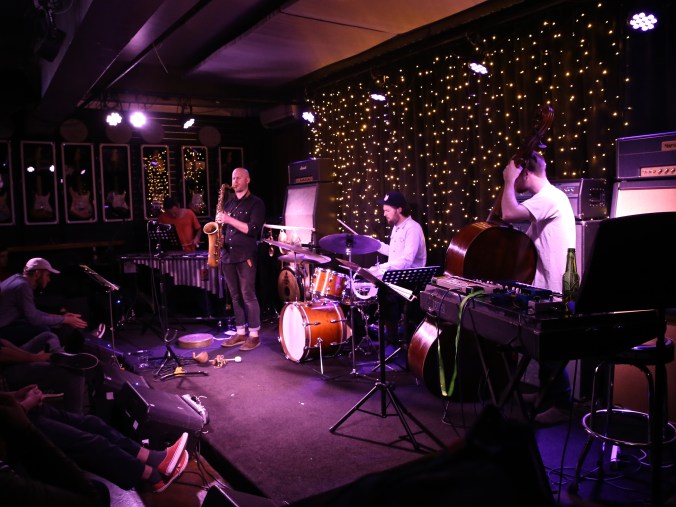
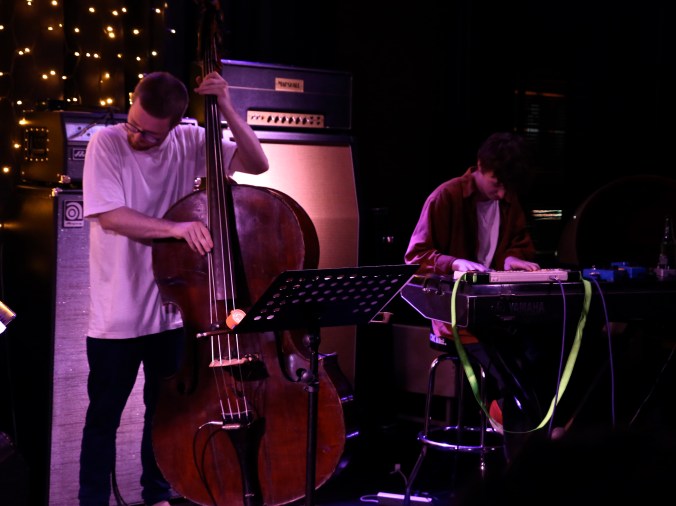
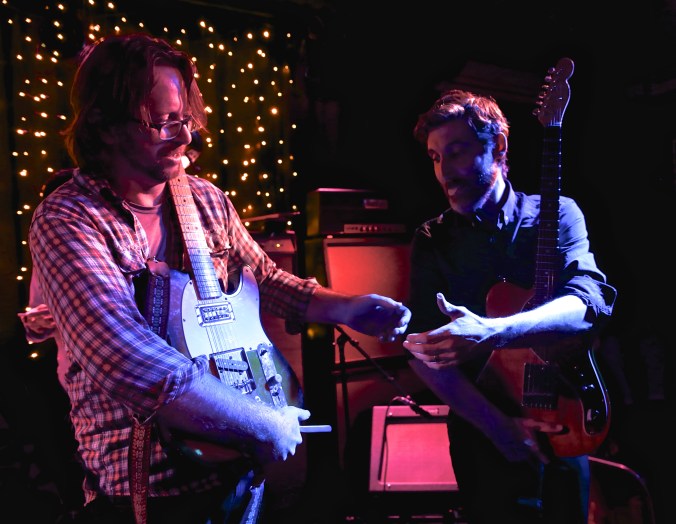 It is not often that you attend a gig where a set list covers such a range of styles but still pays due respect to each. If anyone could pull off such a gig; traversing the heights of Monk, Murray McNabb, Frantz Casseus, Bill Frisell and Ornette Colman it was these two. In lesser hands, the trajectory would have faltered, the items come across as disembodied. Here, the connecting threads, however improbable, made perfect sense. The centre held and the arc of the journey was a joyous adventure.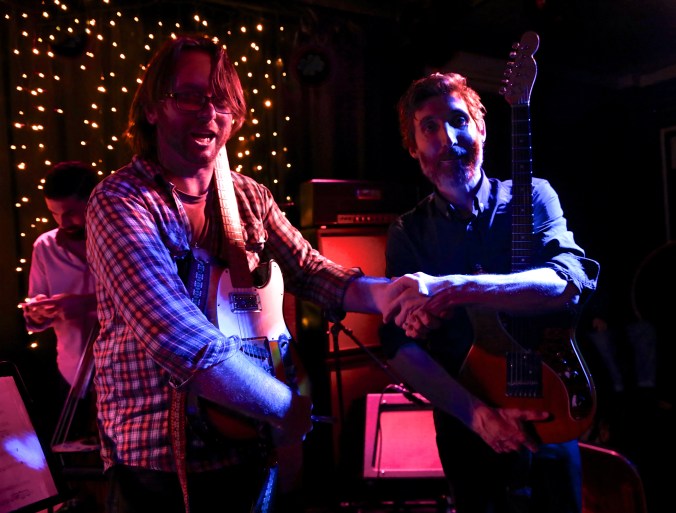
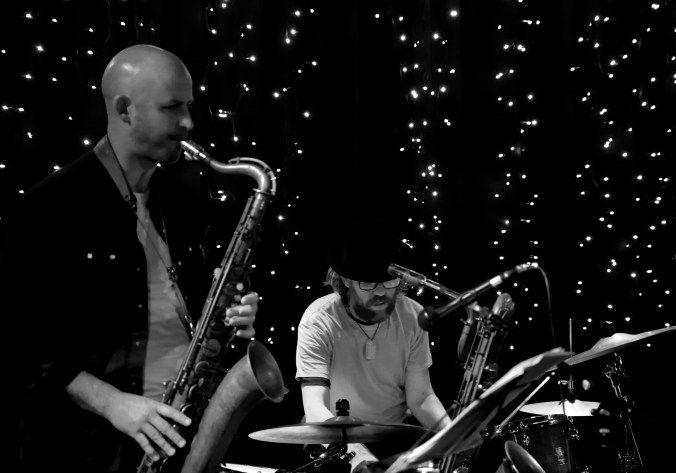
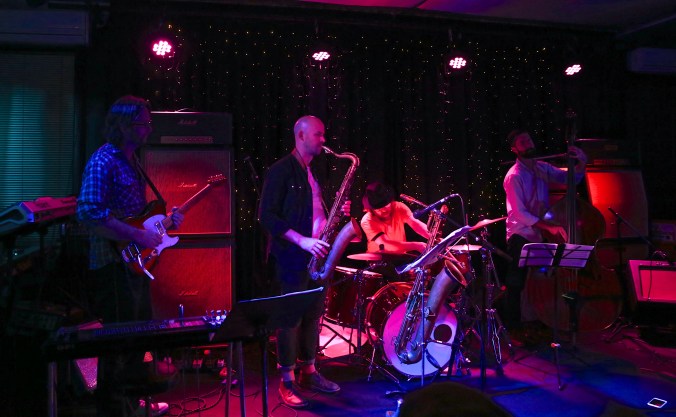
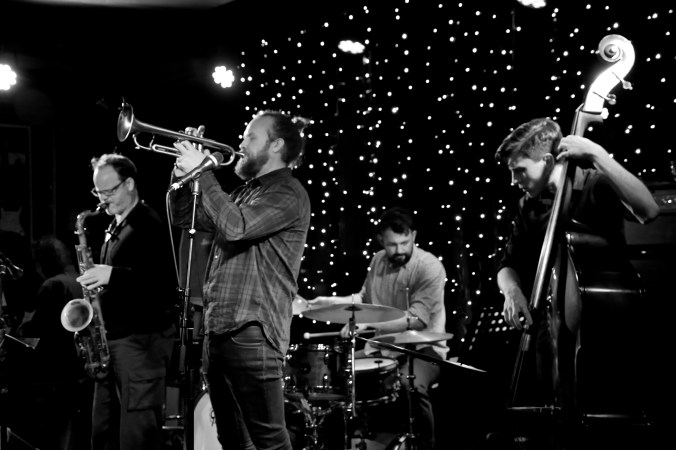 Tomasz Stanko died two days before the Eamon Dilworth gig and I was feeling the loss. I don’t know why this particular musician’s passing affected me so much but it did. Perhaps it was the untimeliness, a great artist gone too soon. It was as if a vital soundtrack to my life had been placed on pause. As I moped about the house, playing Wislawa and The New York Quartets, I remembered that Dilworth was playing soon and I cheered up immediately. I had reviewed the Viata album a month previously and loved it. I knew that it would be a balm and I knew that it would connect me to that place which Stanko took me. It did.
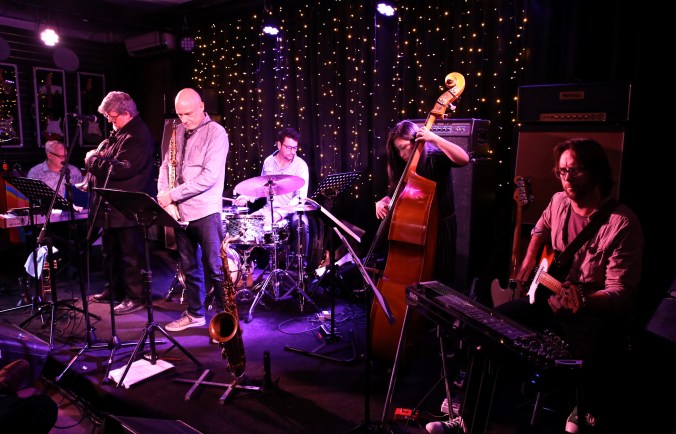 This project was bound to happen sometime and it was long overdue. On the night of the bands first gig, the pent-up energy that had long been building found a voice. As they kicked off, the room filled with potent energy and the enthusiasm of the band was met in equal parts by the capacity audience. Steve Sherriff is fondly remembered from Alan Browns Blue Train days and he brought with him an interesting group of musicians. Most of them were compatriates from earlier bands and their familiarity with each other musically paid dividends.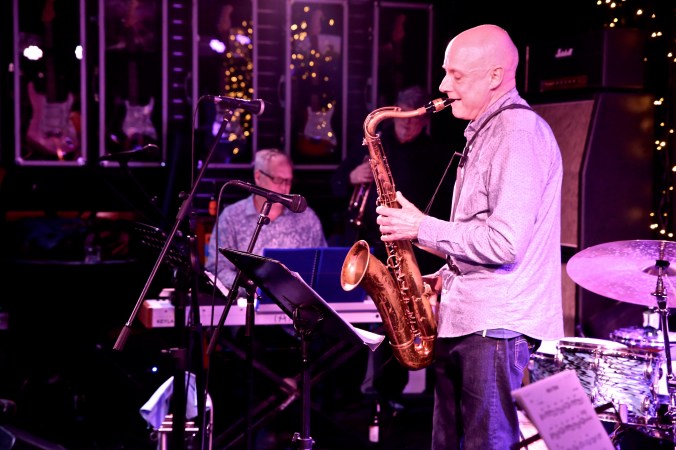
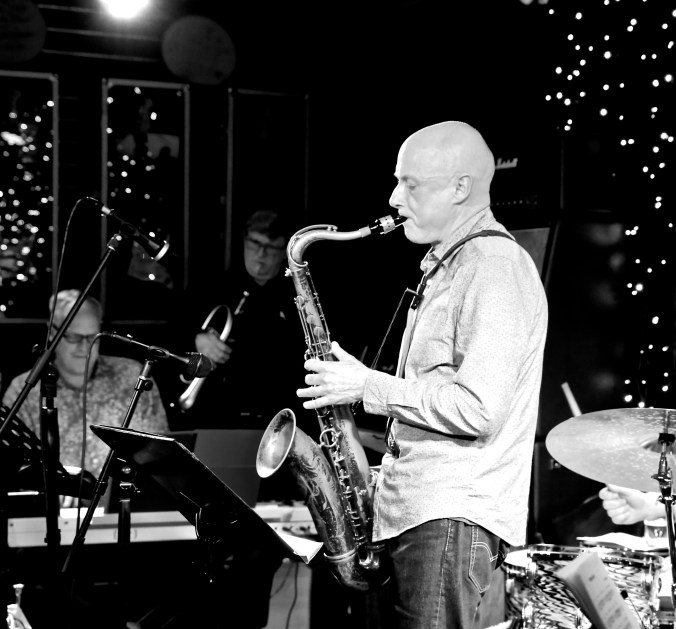
 Karangahape Road and the precincts around it are a natural home for adventurous and alternative music. If you walk the length, you are assailed by sights and sounds at variance to each other. Taken in their entirety they are oddly compatible. The jumble of colour and the bursts of noise as you pass a Karaoke bar or an uber cool eatery is counterbalanced by the languid notes from Shanghai Lils or the soft chatter emanating from Hookah smoking Kebab shop doorways. Woven into this oddness of streetwalkers and urban cool, are the alternative music joints. Down in basements, under the street or up narrow stairways. Thirsty Dog, Anthology, Audio Foundation, Wine Cellar. And at the top end of the strip, next to the old Jewish graveyard is the Backbeat Bar. High-quality alternative improvised music resides here on Wednesdays.


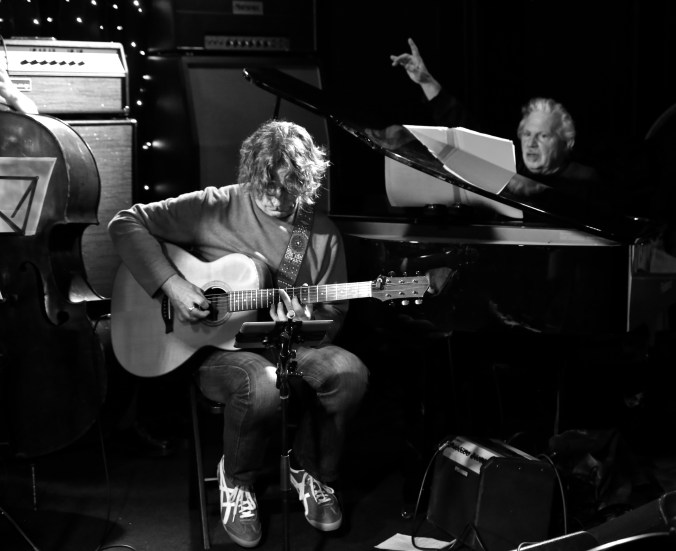 There is an inescapable charm surrounding any Besser performance and Wednesday’s Zestniks gig at the Backbeat bar was no exception. While his music has many strands feeding it and although it can be hard to categorise, it is never the less rooted in the Jewish musical traditions. Besser is somewhat of an icon in Arts circles and deservedly so. The arc of his work has a momentum that few could emulate. As it alights on various styles or genres it borrows their raiment, and seemingly without compromising what lies at the music’s heart; gathering what is necessary and no more. Over the years he has collaborated with leading conceptual artists, filmmakers, symphony orchestras, electronic adventurers and Jazz musicians. The Zestnics performance reflected much of this fascinating journey.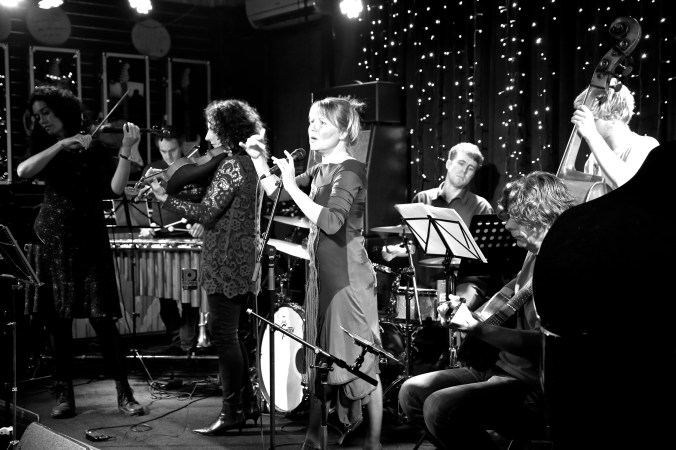
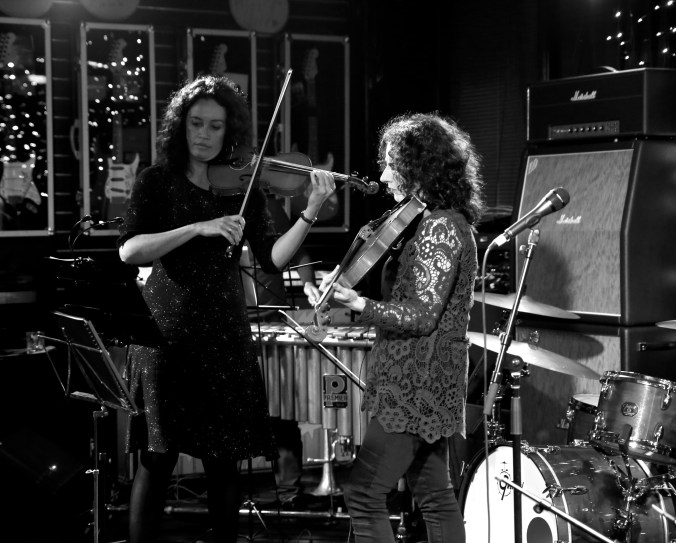
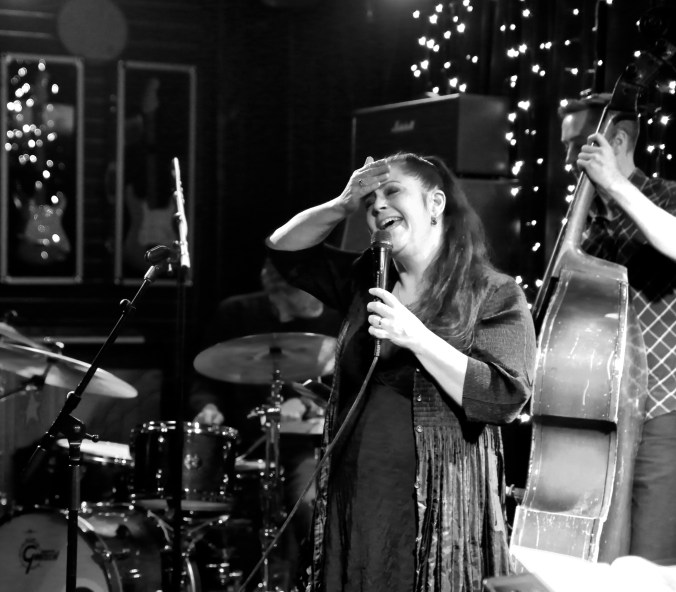 So many great improvising artists gig on our New Zealand and Australian club circuits that we could easily become complacent and we shouldn’t be. This golden age for hearing hi-quality live Jazz is the result of hard work behind the scenes, and a dedicated few, mostly volunteers, make this happen for us. They deserve our thanks and above all, they deserve our commitment to the cause of live music. This year and last year were especially interesting at the CJC, as the breadth and quality of the music hit new highs. What the performing artists put into these tours or gigs is beyond estimation – but we, the audiences are lucky; all we have to do is climb out of our chairs, throw on a coat (yes it is cold out but warm as toast in the venues) and experience the magic.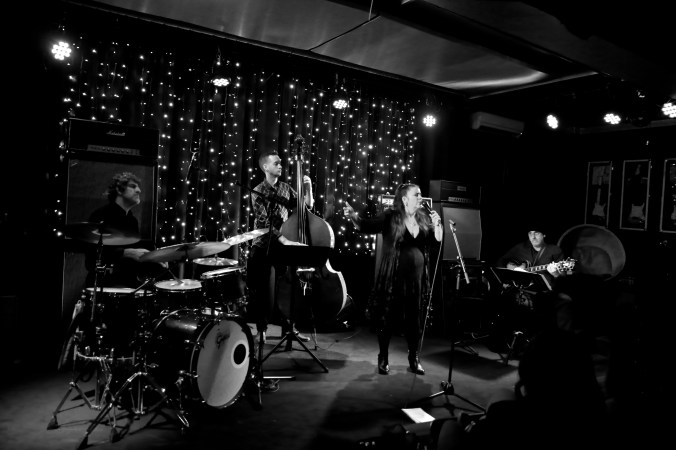
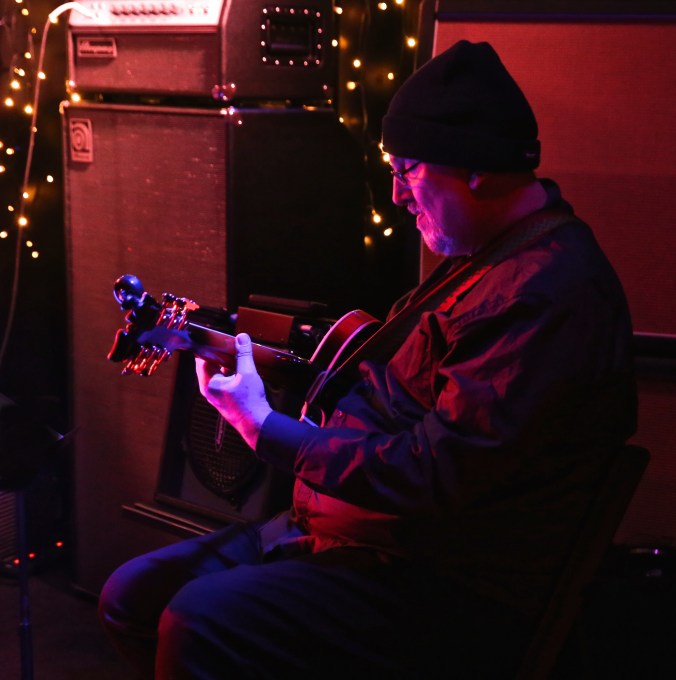
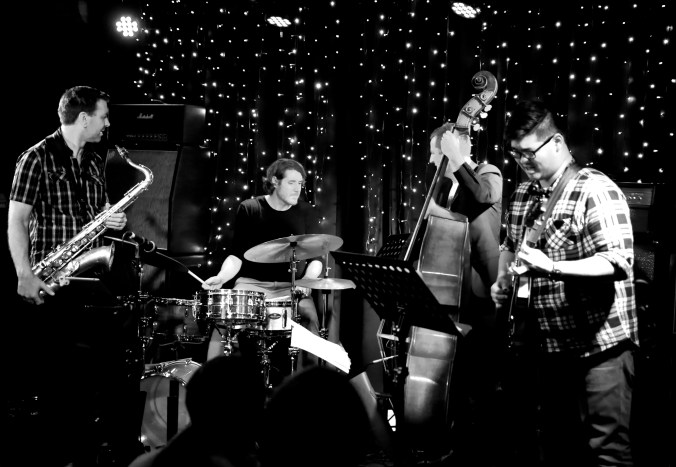 Wednesday 30th May was the Auckland launch of Sumo’s second album titled ‘Shiko’. I am reliably informed that Shiko is a stamping motion which Sumo wrestlers perfect during training. The action drives away evil spirits and when you hear the band, the descriptor strikes you as appropriate. Suspense and surprise are hallmarks of this unit and as in Sumo wrestling, you get theatre, tricky moves, tradition and a degree of inscrutability. Above all, they showcase quality improvised music.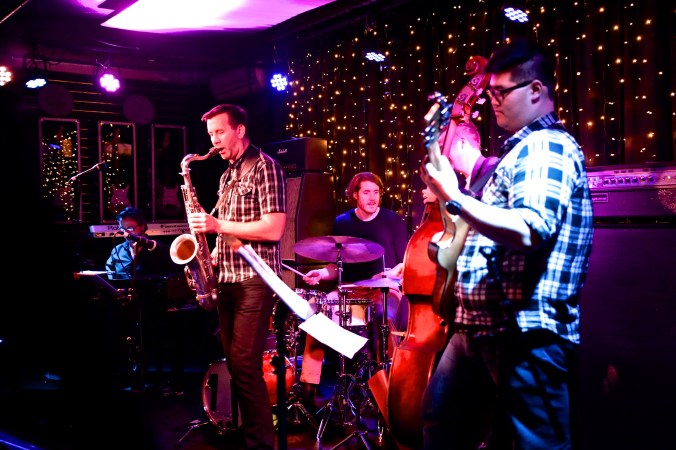
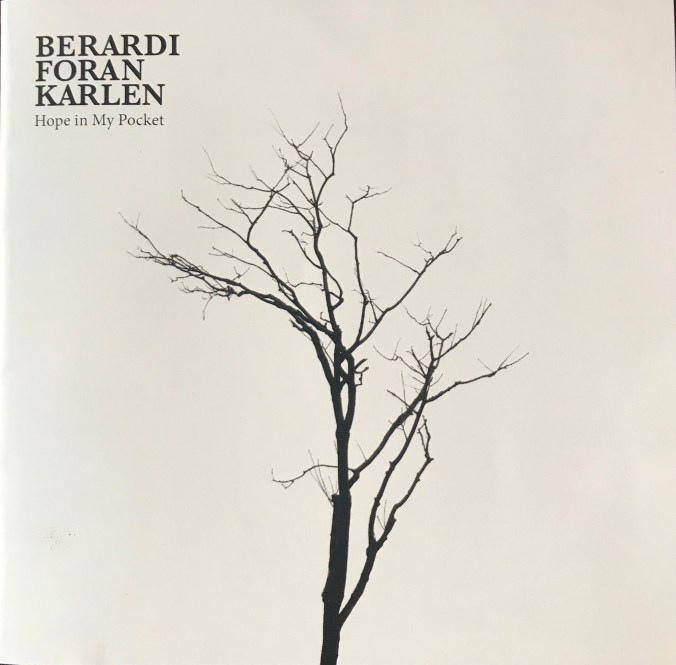
 When Kristin Berardi, Sean Foran and Raphael Karlen started to play I knew exactly what I was hearing. It was modern and original and it rekindled fond memories of the Winstone/Wheeler/Taylor group Azimuth. A world of beautifully crafted harmonies communicating their message with effortless clarity; the individual voices of the musicians hovering in the air like free spirits but interconnecting in profound ways. There was also a contemplative essence to their music which took us deep inside the music, a quiet centre that emanated strength and vibrancy. This fine balance of opposites was evident throughout – it was a performance to remember for its soul touching beauty.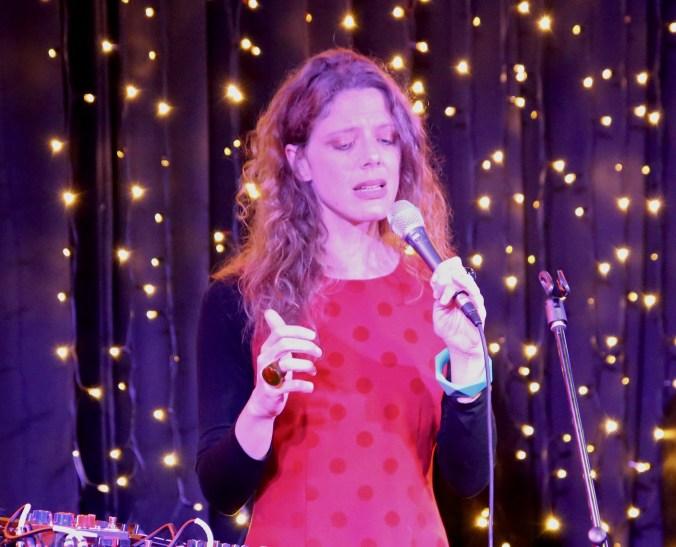
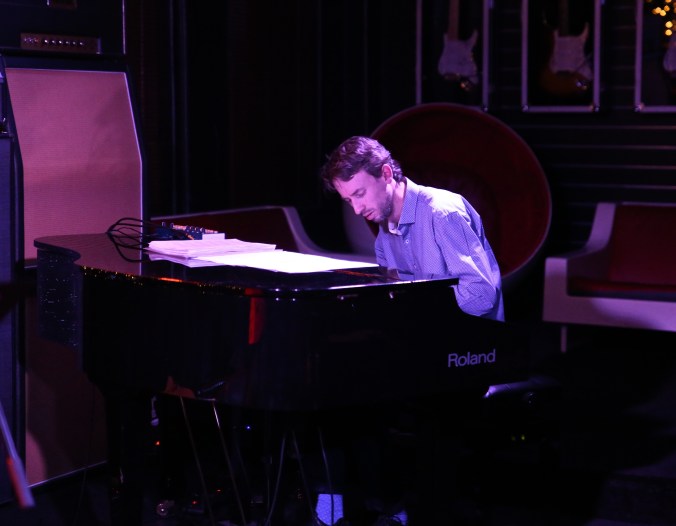
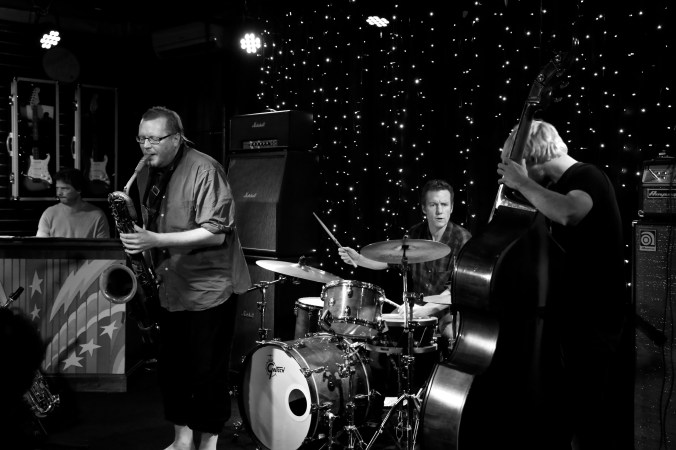 Jeff Henderson is a freedom warrior from outside of the perimeter fence. On the 9th of May, 2018, he marched barefooted into the Backbeat Bar with a ragtag army of irregulars. The audience had come well prepared and a pregnant air of anticipation hung over the bandstand during setup. Unusually, there were no lower ranks in this army, all were battle-hardened veterans (or anti-heroes depending on your viewpoint). All had impressive service records, an advance guard who took no prisoners. Jonathan Crayford is arguably the most famous of the troop, a decorated hero who swiftly commandeered a C3 organ (an ancient analogue machine decorated by psychedelic art and reminiscent of a Haight Asbury weed shop). Beside him sat machine gunner Steve Cournane, a rat-tat-tat freedom fighter recently returned from Peru. The remaining soldier, battle scared and bleeding, was Eamon Edmundson-Wells (his Viking surname tells it’s own story).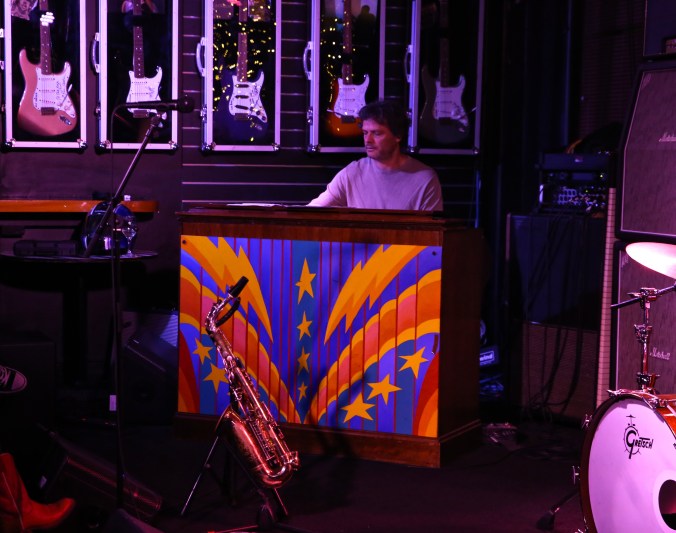
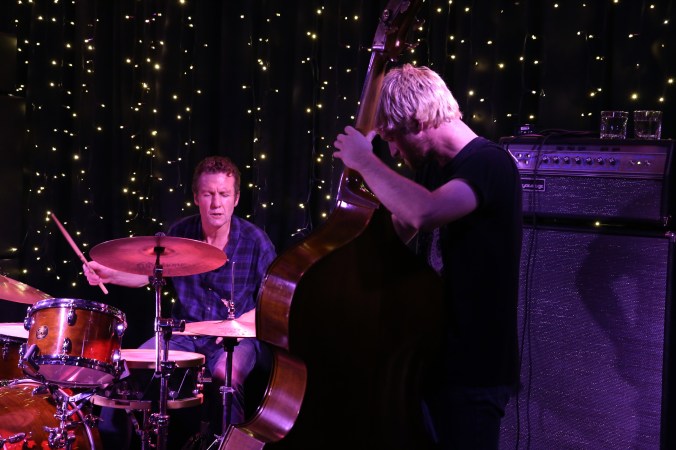
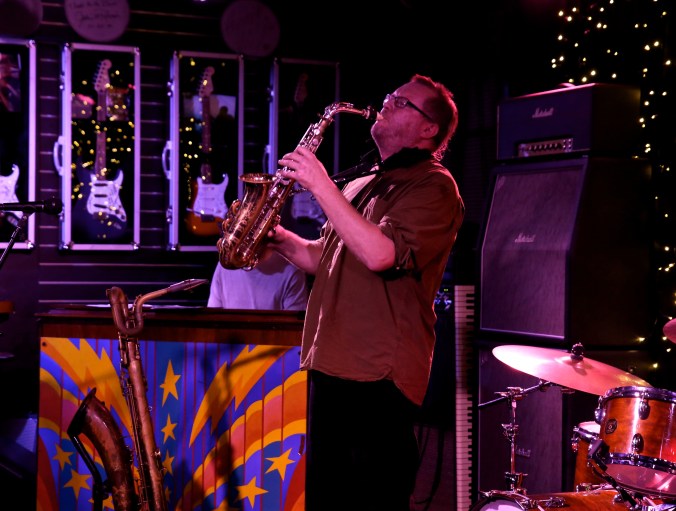
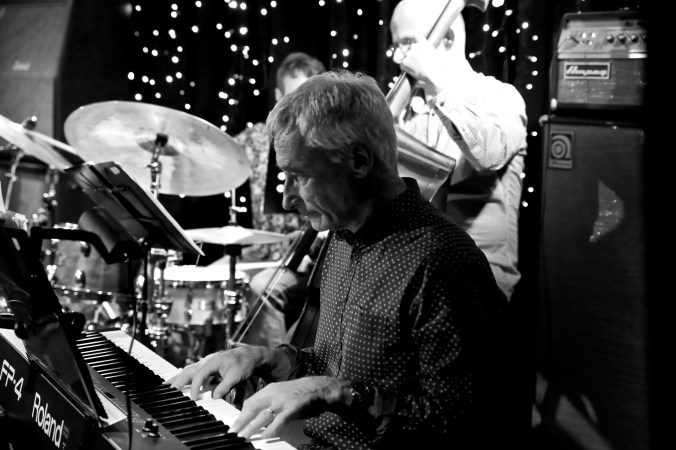 After a year of living in Paris the Auckland educator and pianist Phil Broadhurst and his partner, Julie Mason, have returned. The Broadhurst Quintet has been a regular feature on the Auckland scene for many years. The unit is fueled by a constant stream of great compositions, an unchanging line up of fine musicians and three critically acclaimed records (one of them a Tui Jazz Album of the year winner). Broadhurst’s ‘dedication trilogy’ set a high bar compositionally, but his pen is always crafting new compositions. After last weeks gig, I suspect that another album capturing the artistic soul of France might be in gestation. Broadhurst, as many will know, is unashamedly francophile. Out of this deep appreciation and finely honed perception flows terrific creations.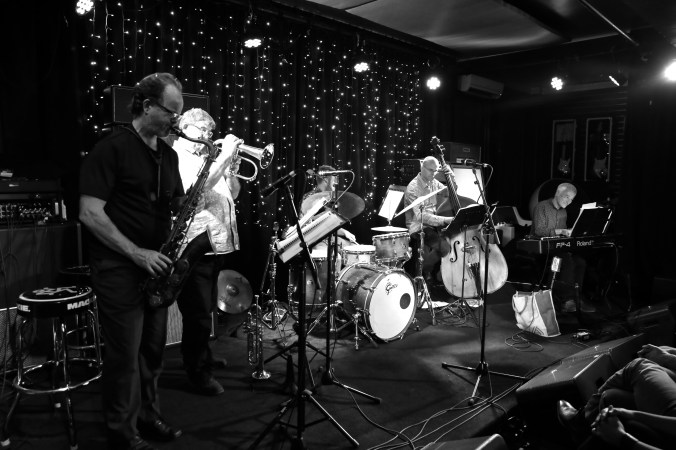
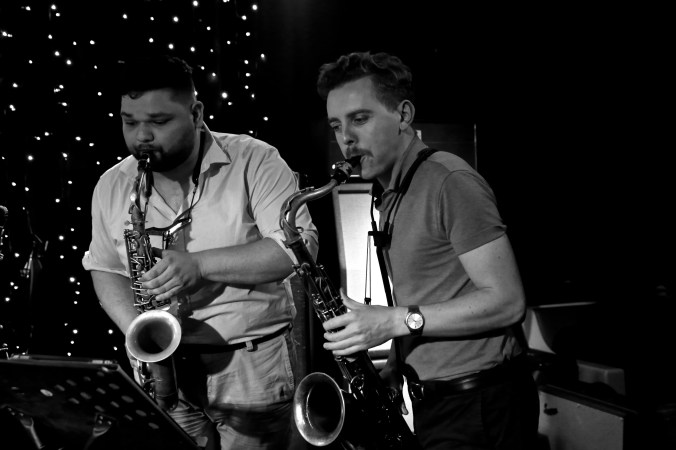 This is the second appearance of Flightless Birds at the CJC Creative Jazz Club and the audience flocked to hear them. The band is a history lesson to the initiated and an initiation to those unversed in Jazz history. They presented a programme that was both clever and accessible and therein lay its charm. The band specialises in contrafacts and especially those of the bebop and swing era. The inside joke is that many of those tunes were once contrafacts themselves; new and often frenetic tunes written over the changes of familiar ‘songbook’ standards. In the bebop era tunes like ‘Cherokee’ (Noble) became Ko-Ko (Parker), ‘I Got Rhythm’ (Gershwin) became ‘Dizzie Atmosphere’ (Gillespie). Musicians like Charles Mingus took things a step further by introducing a wry political humour into titles, exemplified in his contrafact ‘All the things you could be by now if Sigmond Freud’s mother was your wife’ was ‘All the things you are’ (Kern). A throwaway favourite of mine is ‘Byas a Drink’ (Don Byas) which is ‘Stompin at the Savoy’ (Sampson).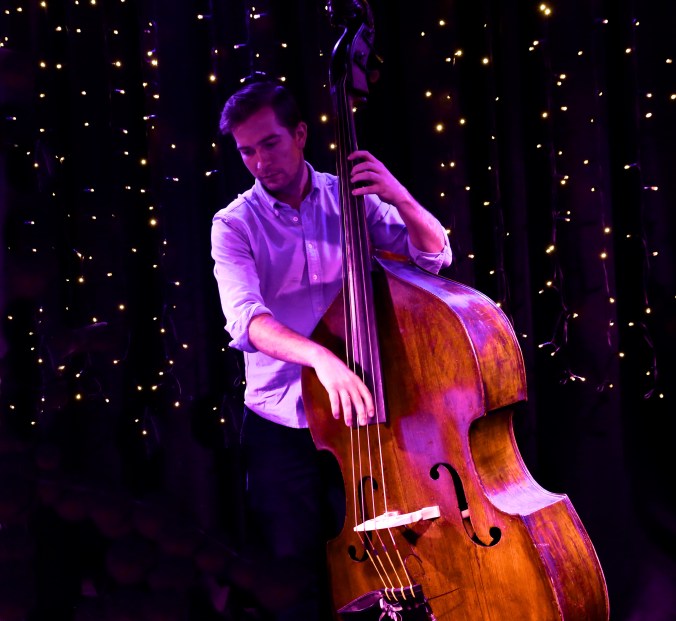
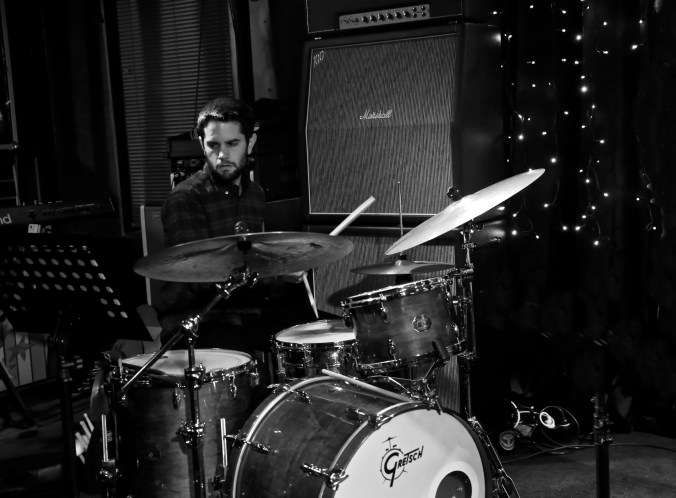
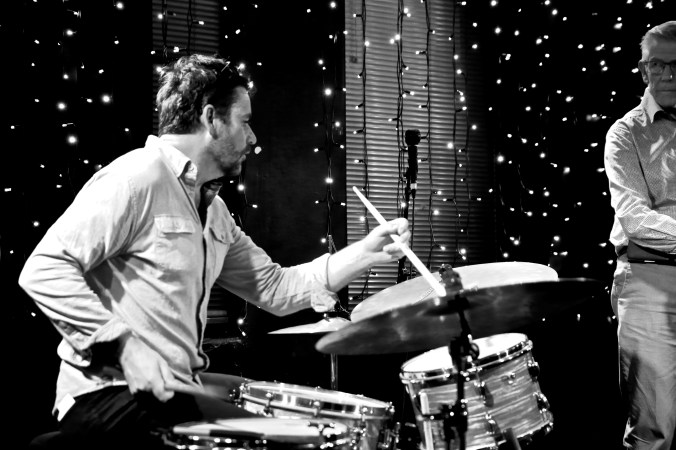 This particular group is an uncommon thing on the Auckland scene. A Jazz guitar trio formed by three of our best musicians and each of the musicians in it for the long haul. Samsom/Nacey/Haines have been playing and recording together for a long time and the commitment has remained constant throughout. Their longevity is clearly about musical chemistry, but also about their combined approach to composition. Each band member writes in their own style, but each instinctively understands how the others will react to the chart. This is how mature bands operate; the familiarity enabling the collective to dive into the heart of a composition and extract the best from it. While their original compositions form the bedrock of their output, they also tackle standards; especially when performing live.
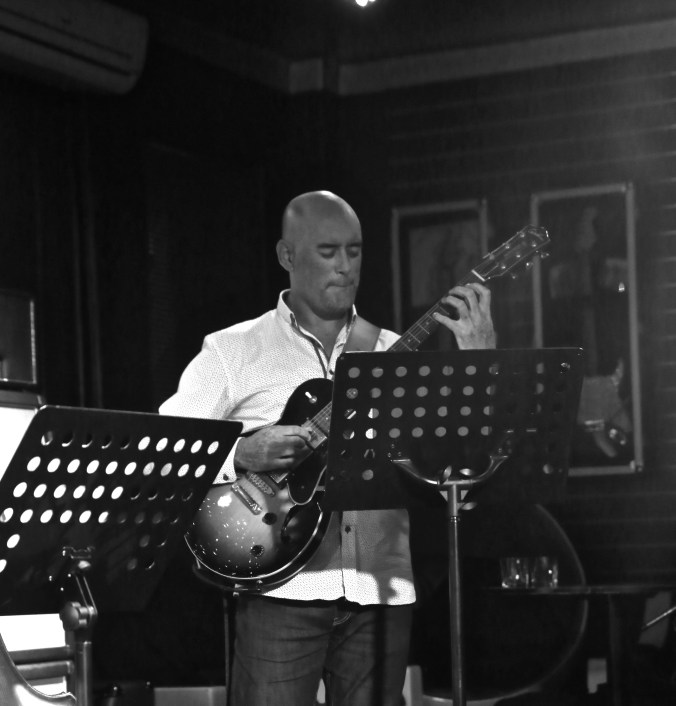
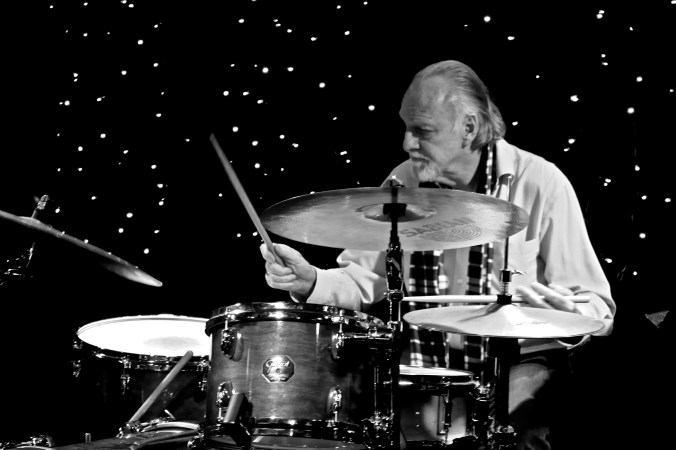 Every Jazz club needs a Monk night on their calendar and when it comes to Monk the local go-to person is definitely the well-known drummer Frank Gibson Jr. Gibson and the various iterations of his bands have long made a point of keeping the Hardbop era and Monk firmly on our radar. While the setlist was not exclusively Monk, the Monk tunes chosen were a solid mix of seldom-heard compositions and old favourites.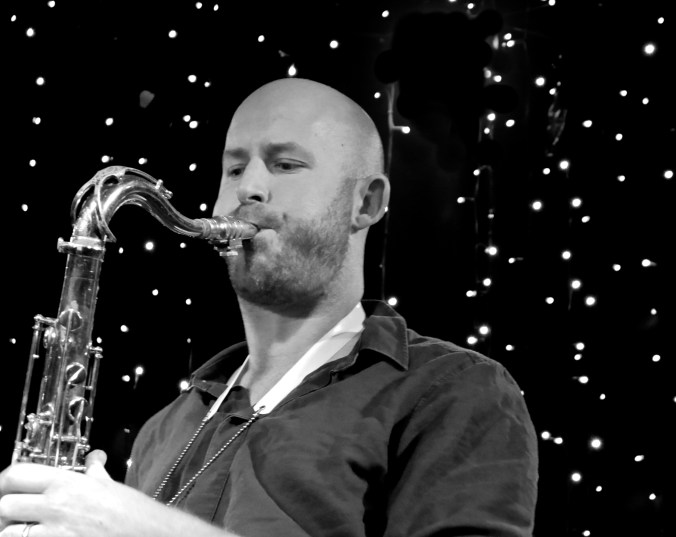
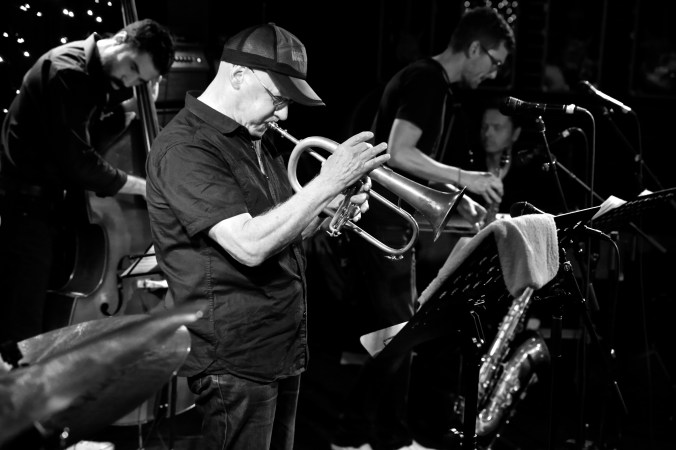 After a long gloomy week of intense storm weather, 200 kph winds, polar darkness and zero electricity, I am finally back in front of my computer. A few days before the storm I was sitting in the warm, well-lit, electricity charged Backbeat Bar and listening to the Kim Paterson Band – by far the preferable option. Jazz trumpeter, Paterson, has been on the New Zealand Jazz scene for as long as I can remember and his name is forever associated with legendary figures like Mick Nock. When I was a teenager I knew many people that he knew and he always seemed to lead an exciting life: gigging in Australia or further afield and travelling to India on a shoestring (our generation regarded that as an essential rite of passage). Out of that rich life experience and long years of devotion to his artform, has come a book of marvellous compositions. These compositions were the focus of his CJC gig and his bandmates gave them the respect they deserved.
 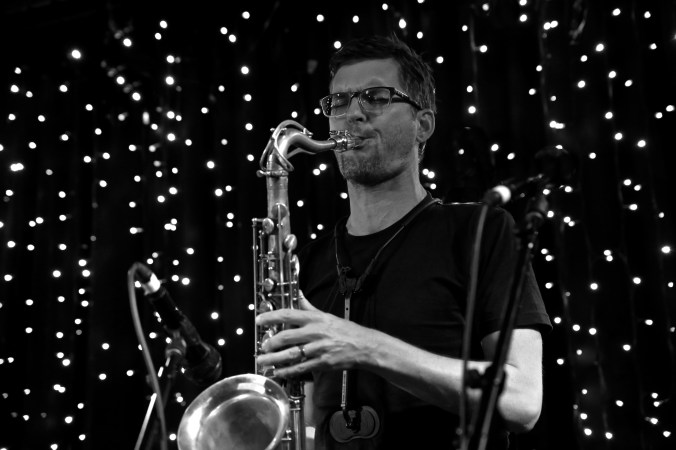 It is hardly surprising that Paterson selected his bandmates well, all experienced musicians and all with a feel for the texturally rich, open-ended compositional structures. I was particularly delighted to see Lewis McCallum on the bandstand, having missed an earlier gig of his and regretting it. He played tenor and soprano and the unmistakable influence of Coltrane’s conceptions shone through. Although not the leader, McCallum was a powerful presence. It was obvious that he regarded this project highly and his guiding hand was repeatedly acknowledged by Paterson. His tone was biting, but not harsh; his ideas were communicated with clarity.
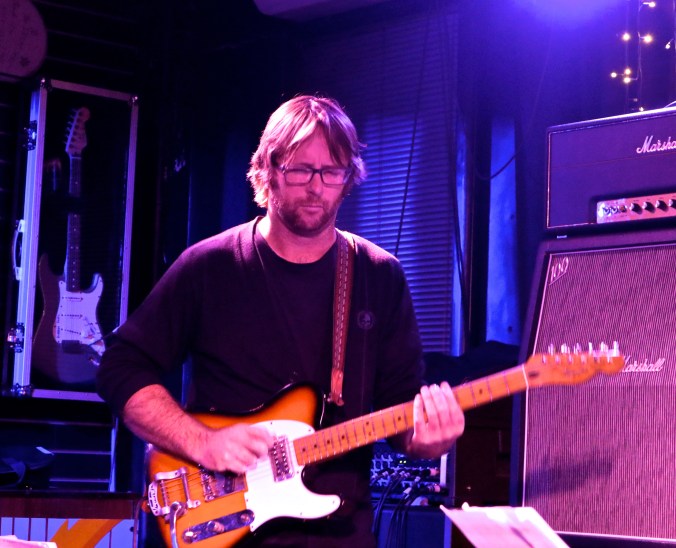
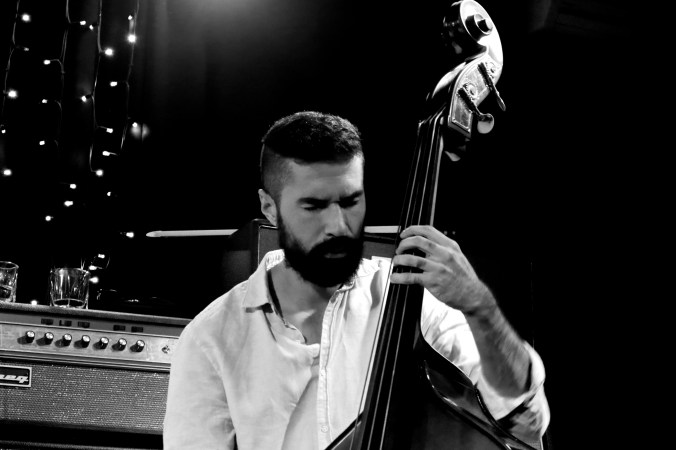
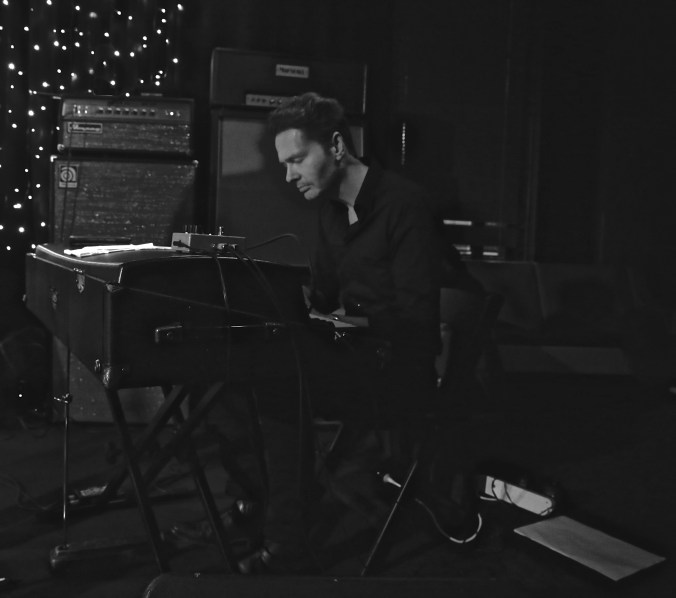
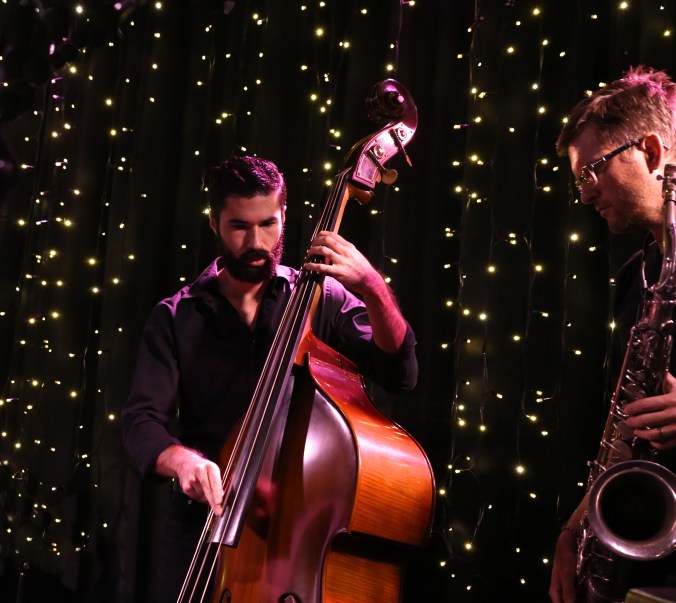 Keven Field was on Rhodes and as always his contribution was impeccable. The Rhodes was exactly the right keyboard for this project and Field, the best keyboardist to bring out its strengths. Somehow he always manages to tease hidden beauty from a Rhodes. Cameron McArthur was on bass and like Field, a first call musician. McArthur is so well established and well respected that no one is surprised when turns out a stellar performance. The remaining band member was Stephen Thomas and again a very fine musician. Thomas works across a number of genres now, but his Jazz chops and good taste are always on show.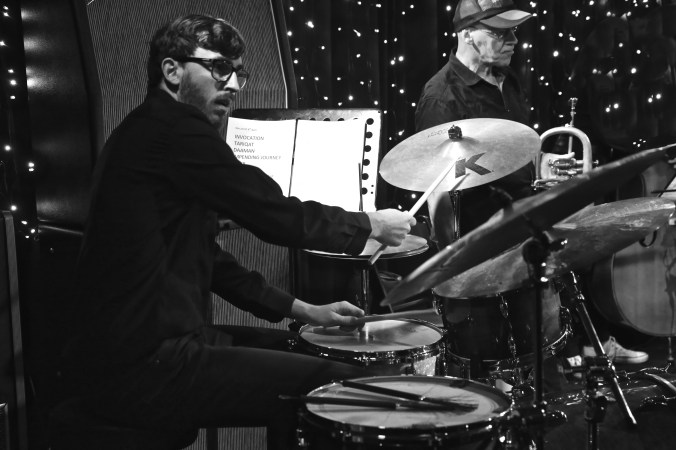
 JazzLocal32.com