 When I recently interviewed visiting Flamenco dancer Isabel Rivera Cuenca she told me that she had met some wonderful New Zealand improvising musicians and, in particular, she mentioned Jonathan Crayford. They met at a party and briefly discussed doing a project together. As they had not been able to make contact since I supplied email addresses and the project quickly took shape. A talented sensuous Flamenco dancer from Barcelona and a gifted Kiwi improviser; irresistible.
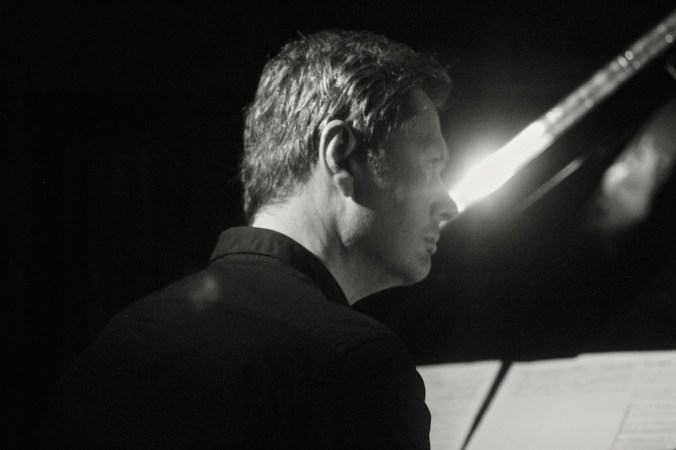
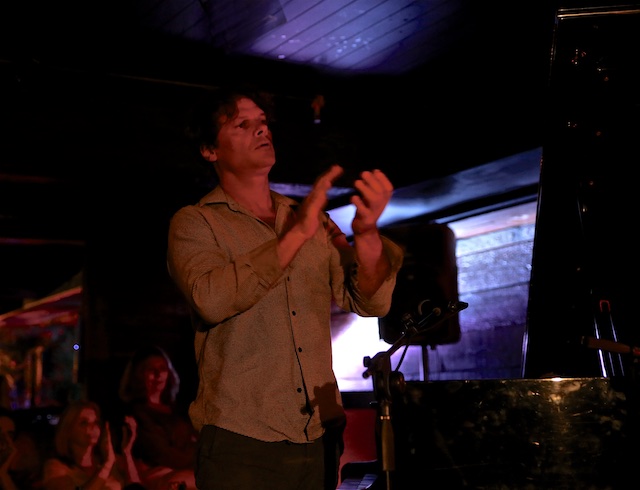 Jonathan Crayford has long been one of my favourite musicians and any project of his I will follow with enthusiasm. The thought of him doing a Jazz/Flamenco project filled me with joy. It takes a particular type of musician to reach across genres, and to do so with authenticity is a challenge. If anyone could pull this together at short notice it was Crayford; with his open ears and extraordinary musicality, he ticked all of the boxes. In recent years, he has performed in Spain, but only on Jazz projects. When I spoke to him two weeks before the gig he told me how pleased he was to work on this project, but that he knew little of Spanish music; I had no doubts that he would locate a pure essence and work with it and Isabel Cuenca was the perfect foil. As soon as they appeared on the bandstand the chemistry was obvious.
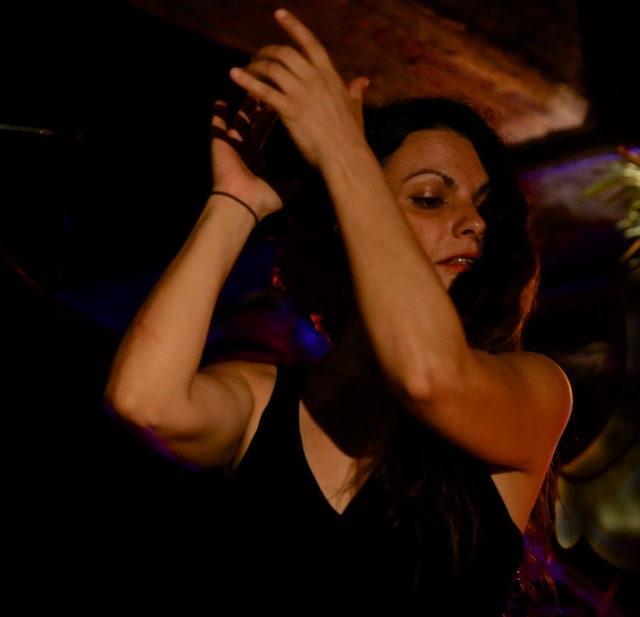 There is a real synergy between Jazz and Flamenco; they are musical cousins. Both musical forms fuse North African Rhythms with unique harmonic approaches, both created out of harsh repression. Underlining the driving rhythms of Flamenco is pure passion, contrasting a sad but beautiful dissonance. The musicians and dancers frequently call to each other in encouragement and this is not so different from the call and response in jazz. That they are similar in essence is hardly surprising – when the chants, dance and polyrhythms of Congo Square met with Creole melody, fed by a multitude of European influences (including Spanish music), Jazz was born.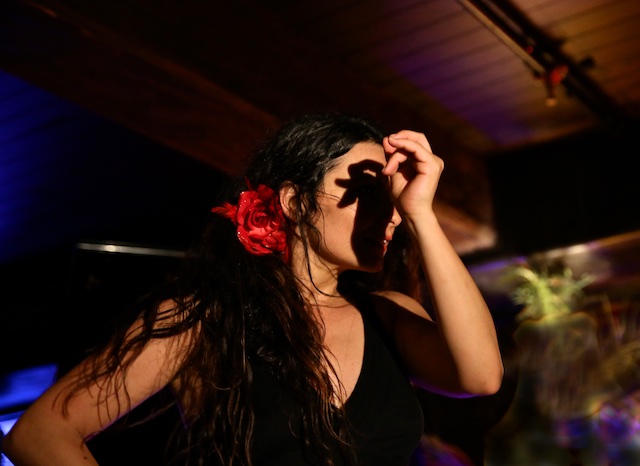
Early in the first set, Crayford played a variant of his composition ‘Galois Candle’. This appears on his ‘Dark Light’ album nominated for a Jazz Tui award last year. This memorable tune although rhythmic is not the first thing that comes to mind when you think of danceability. The synergy between dancer and pianist soon located a sweet-spot in the heart of the tune. I recall Cuenca telling me that everything else in Flamenco was subordinate to honest deeply felt emotion. That is where the Duende resides. A little later we heard an innovative and compelling version of ‘Will o’ the Wisp’ (from El Amor Brujo) by Manuel De Falla. Not the brooding version that Gil Evans used on Sketches in Spain but a paired down version. Stripped to the barest essentials of melody and rhythm. Crayford dampened the strings with one hand and created a simple clipped strumming effect, while Cuenca sang gently over this, softly clapping all the while. It could not have been more effective. After that came a tune by Fredrica Garcia Lorca, the poet who died at the hands of Franco’s Nationalists. This tune ‘Los Cuatro Muleres’ sounds pretty, even jaunty, but it hides a deep sadness as with all Lorca poems and tunes. Again done movingly, and both Crayford and Cuenca sang verses.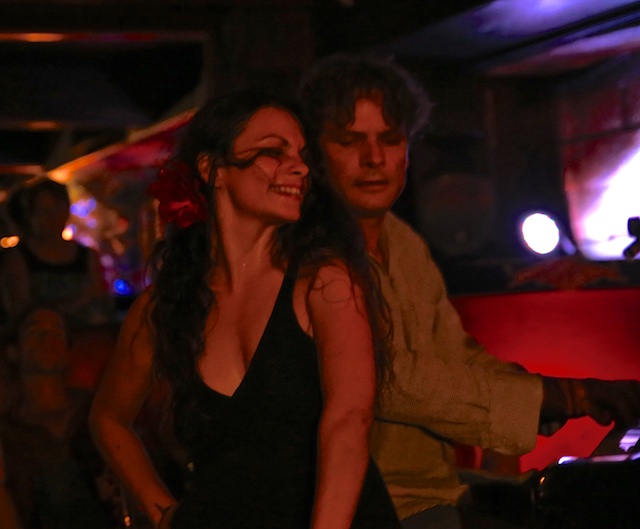 During the second set we heard tunes which moved closer to the Flamenco idiom. In these free-ranging highly improvised tunes Crayford has few peers. Towards the end of the evening, the two were in absolute lock-step; Cuenca reacting to every nuance of the music and bringing her fluid kinetic brilliance to bear, dancing her way into the hearts of everyone there. The communication was simply electric.
I have posted a video clip from the first set (Galois Candle [Crayford]) and an audio clip from near the end of the second set. I hope that Crayford records some of these tunes as they were magical. Cuenca has many fans in new Zealand and she says that she will return here soon. I hope so because more of this project would please us.
Jonathan Crayford (piano, vocals, compositions), Isabel Cuenca (dance, vocals & compositions) – at the CJC (Creative Jazz Club) 09 March 2016.
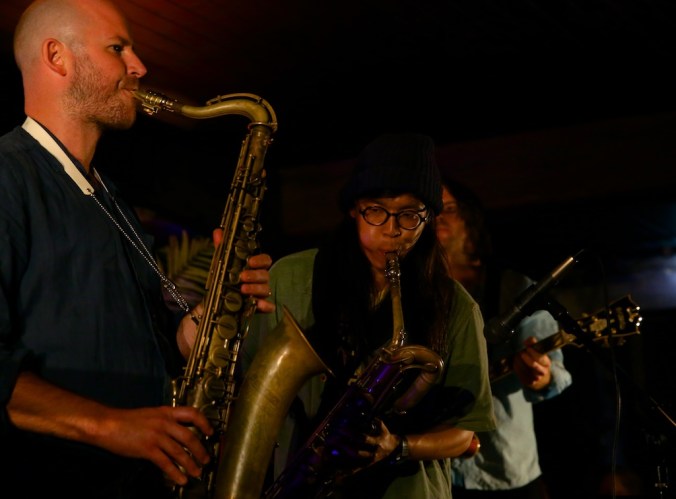 As a group of the worlds leading astrophysicists excitedly ran one last check. At the precise moment that the astonishing mathematical proofs confirmed Einstein’s theory of ‘gravitational waves’, the Circling Sun hit the CJC. This rare cosmic event released fresh gravitational waves which pulsed throughout central Auckland; altering the molecular structure of any ear within radius. It was an appropriate evening for the Sun to manifest this ‘climatic singularity’, preceded as it was by a dog-day as hot as any on record.
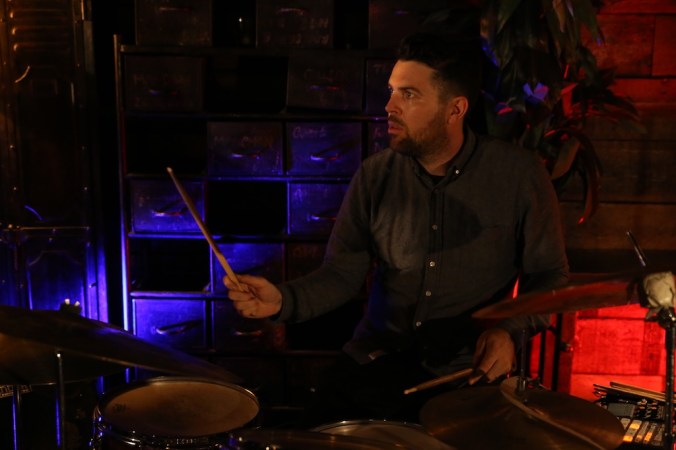 The Circling Sun is more a phenomena than a group. They defy musical form and yet exist convincingly in their own orbit; circling an altered reality. As with all wonders there is much to appreciate. The intricacy of their many machines, the indelible sonic footprint and the sheer joy they bring. I took some guests down to the club that night. Flamenco artists Isabel Cuenca and Ian Sinclair (and Ian’s wife Zarina). I wondered how they would react to this wild unconstrained mix of free improvisation and world beat psychedelic Jazz. Isabel the Flamenco dancer was quick to respond. ‘This is amazing, it has deep passion’. Passion is the heart of many musics and like authenticity it is a vital component. Long live the avant-garde – long live passionate music – whatever the genre.
 In his seminal work “This is Your Brain on Music’ neuroscientist Daniel Levitin reveals the following. ‘A liking for dissonance is a development arising from deeper listening and on attaining musical maturity. A very young child prefers consonance over dissonance, the mature listener increasingly values contrast and enjoys having expectations confounded. After spending time listening to deeper or more complex music, lightweight consonant passionless music becomes boring. There is a neural basis for this’.
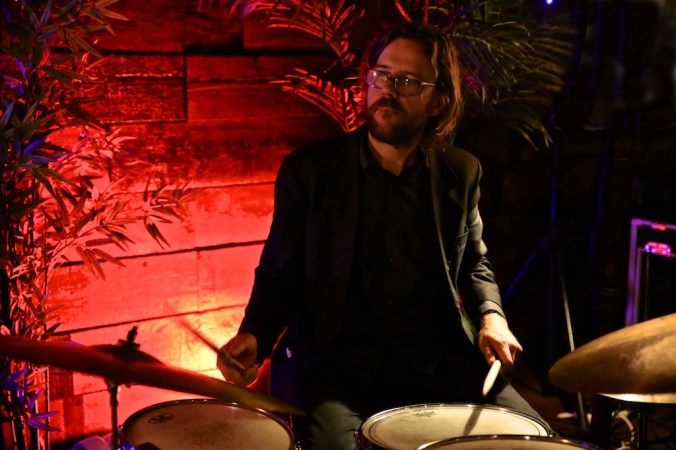
 The Montreal born Dyne was just the drummer for a band like this. His musical credentials are impeccable. His expertise extends well beyond the kit to that of producer and forward-looking experimentalist; electronic future beats, hip hop, house, afro beats, boogie funk and instrumental jazz. His work with Ladi6 has brought him to wider attention, but his own Lord Julien recordings and his deeply funky ‘Down in the Basement’ (Vol 2) cuts are well worth checking out. This band has few constraints and it gives him ample room to stretch.
 I have long been a Watson fan. The man is fearless and his musical ideas cross territory few others dare to traverse. His increasing mastery of the pedal steel already sets him apart, but his ventures into the experimental avant-garde with the instrument are unique in the New Zealand context. While an accomplished studio musician his preferred gigs are those without boundaries. With Watson you get Americana, blues, Jazz psychedelia or wild forays referencing Marc Ribot & Sonny Sharrock. The Sun suits his wild eclecticism.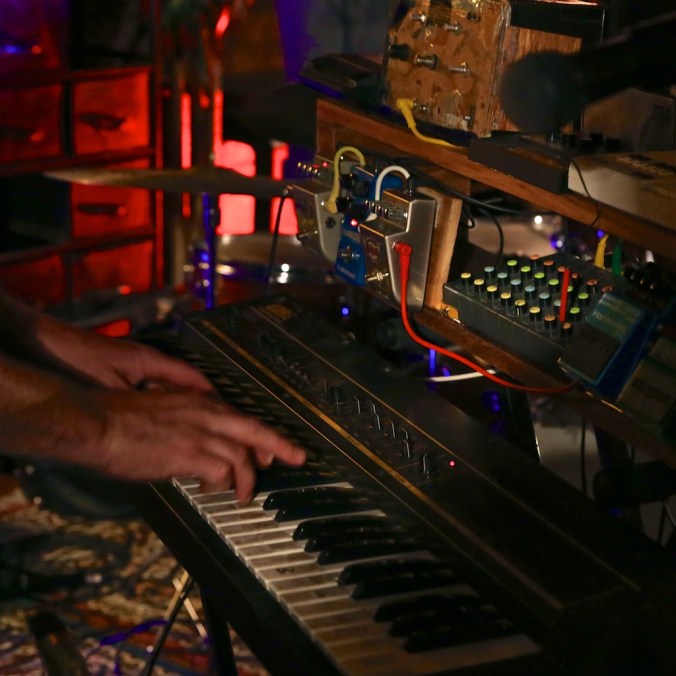

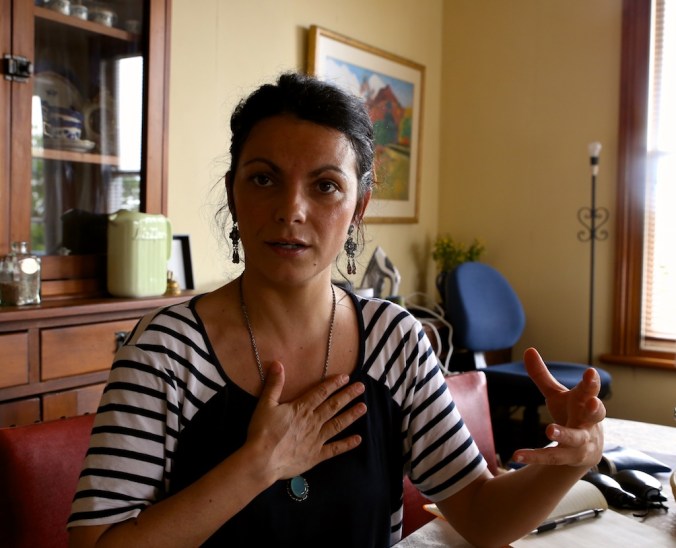 Isabel Rivera Cuenca was born into a family who lived Flamenco. When her parents moved from Seville to Barcelona they took the music with them; opening an Andalusian cultural centre. Wonderful musicians soon filled their Barcelona home, dancing, playing guitar and singing day and night. Among Isabel’s earliest memories is feeling the rhythms of Flamenco seeping through the walls of her bedroom. Flamenco was the breath of her young life. As a little girl she began to dance and she never stopped.
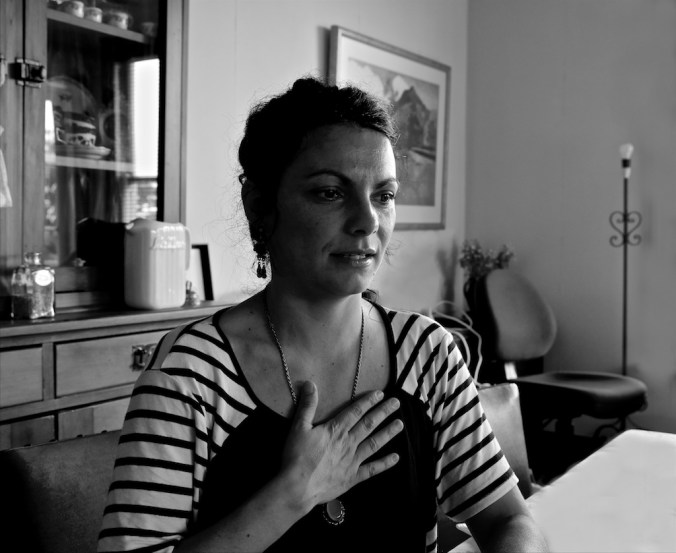 “To this day, every time I dance the happiness and passion returns; that is what I want to share. When I was older I decided that I must travel the world to share this happiness with people who cannot go to Spain. Since making that decision I have travelled almost continuously. Out of this I learn from other musical cultures (especially Jazz) and many collaborations and experiments are possible. With good musicians the traditions are always respected while experimenting. I have met many fine musicians in New Zealand like Jonathan Crayford and Chris O’connor. At the beginning of my travels I simply drew a map and from that I decided the countries to visit, especially those very far away from the home of Flamenco. New Zealand felt like a good place to go. It was 20,000 kilometres from my home and so I thought, if I can succeed there it will work in other places. Now I have returned with some guitarists and a singer and we will share our passion.
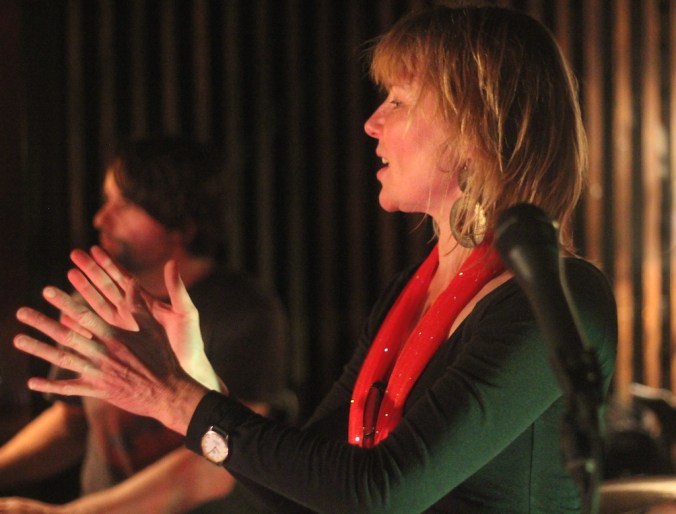
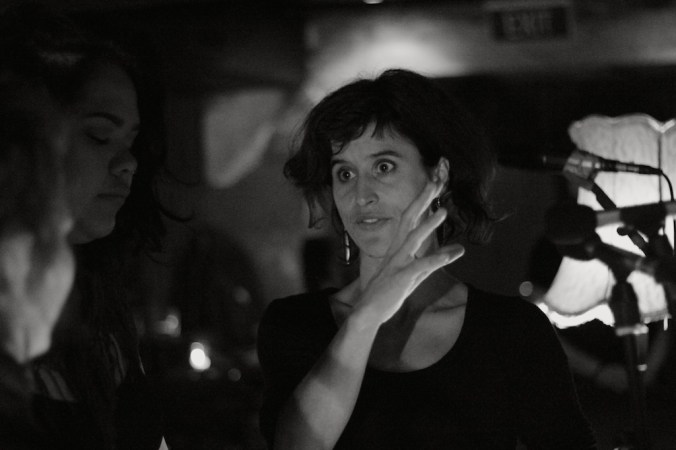
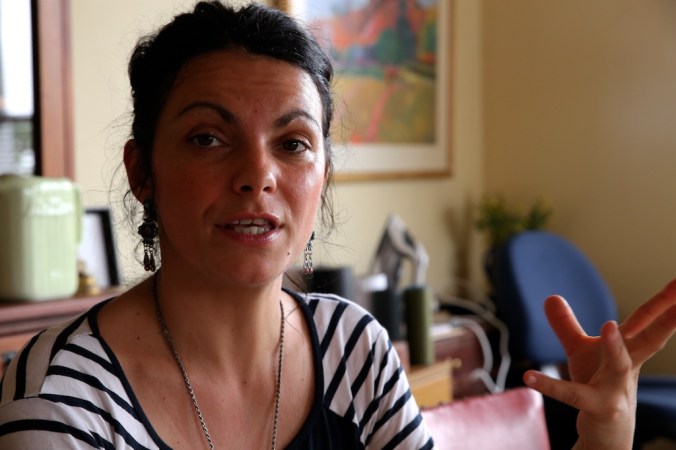 I found this comment interesting because Isobel is an extraordinarily gifted communicator. Her expressiveness exceeds that of anyone I have met. She is a wonderful talker, but the breadth of her expressiveness is particularly found in her hands and eyes. Her hands gesture endlessly and her eyes sparkle like fire when she is enthusiastic about a topic. It is as if the Flamenco dancer in her occupies the facility of speech. She is certainly a direct speaker, but there is an unusual fluidity, warmth and depth to everything she communicates. I have seen this before in improvising musicians and recognise it. It is a proof that they live in a world where their art matters beyond everything else. They have swum so far from shore that the coast is mundane and irrelevant.
 There are many Tonas (families of song), most derive in some way from Cante Jondo (deep song). The last element is Jaleo (hell raising by means of hand clapping, foot stomping and like Jazz, yells of encouragement). When we talked of the Tonas Isabel always put her hand over her heart and said. “Whatever the mood It is always about expressing and communicating deep emotions, passion”. She demonstrated some rhythms for me using hand-clapping.
 Isabel expressed a particular liking for the Saeta, possibly of ancient Jewish or Aramaic origin and widely used during Holy Week processions. The date of its entry into the Flamenco repertoire is uncertain. It is a mournful form with great power and emotional intensity. On Miles Davis ‘Sketches of Spain’ he performs much of this over a drone. As the drone has a particular association with Indian music I discussed this with Isabel. It was not a concept (in English) she was familiar with, but upon further examination she decided that there are certainly implied drones or ostinato passages in Flamenco.
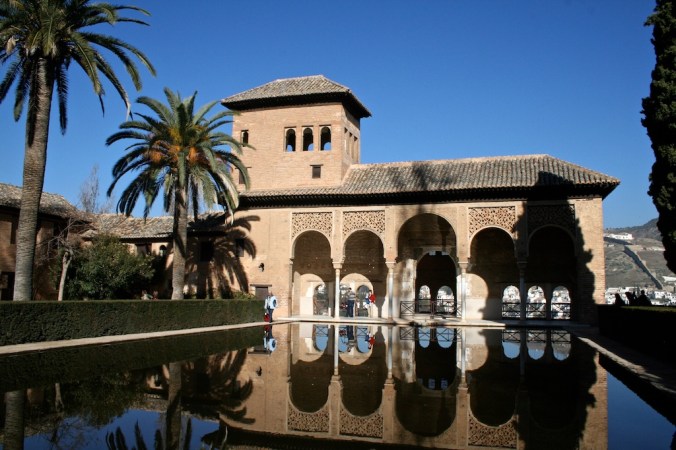
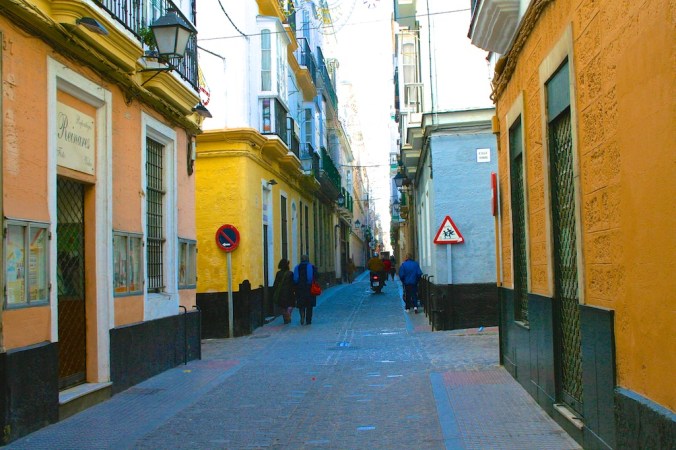 Once I was lucky enough to spend time in the Flamenco regions. The Moors called Southern Spain Al Andalus. Nowhere has more light and colour and nowhere feels the weight of history more keenly. Over thousands of years many ethnicities have passed through and the residual beauty remaining is mirrored in their arts. Architecture, songs and dances; speaking of beauty and suffering – in equal parts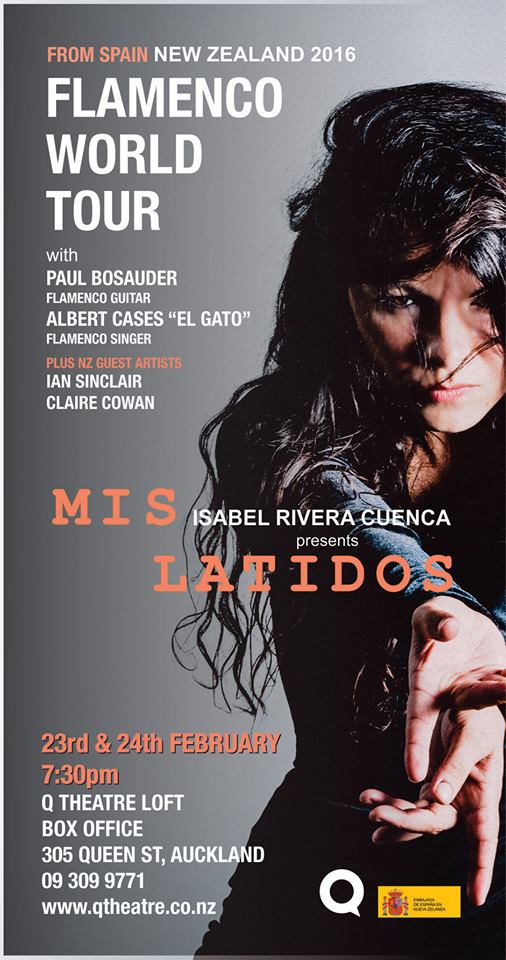
 This is the second Auckland Jazz Festival and what incredibly tasty offerings there are in the programme. The event runs as a fringe festival and this is absolutely the right approach; no corporates making stupid unhelpful suggestions, an intense focus on the best of Kiwi improvised music and international acts with an established connection to New Zealand. The ‘best kept secret’ ethos is a good model for this music and it’s true. In a nutshell the festival tells an all but hidden story; the story of a vibrant diverse Jazz scene, with more than enough talent to wow discriminating audiences. The biggest downside of fringe festivals is that they run on air. Good attendance can mitigate this. With no significant up-front advertising budget, the role of the sponsoring clubs, bars, galleries and local record labels is vital. Those venues and the labels (Rattle in this case) need our support and appreciation. While Auckland has an unfortunate track record of failing to support the arts, the winds of change are in the air. The gigs on offer are diverse and interesting and Auckland will increasingly want a piece of this magic.
 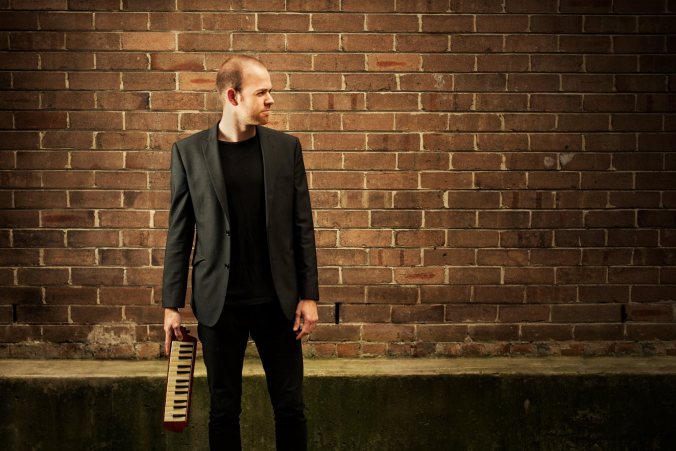 The festival opened on the 14th with a duo of respected Australian musicians, ‘The Prodigal Sons’. P J Koopman (guitar) and Steve Barry (piano) are expats who left New Zealand long ago to work in Australia. Both are fondly remembered by Kiwi audiences and both are now firmly established in Sydney; polished musicians speaking each others language. The years of hard work and performance in diverse situations giving them particular insights. Barry has been widely acknowledged for recent albums and although widely engaged in academic pursuits recently, it is good to see him on the road again. These guys can really swing their lines and do it while spinning out fresh ideas. No tempo deters them, but it was the medium and slow tempos that showed us their best. The two original compositions which particularly impressed me were by Koopman; ‘Working Title’ and ‘Major Minor’. On these tunes the exchanges between the two were breathtaking. They engaged two fine local musicians for the gig and with the talented Cameron McArthur on bass and Andrew Keegan on drums the gig was superb. McArthur and Keegan were there every step of the way and as pleasing as the headliners.
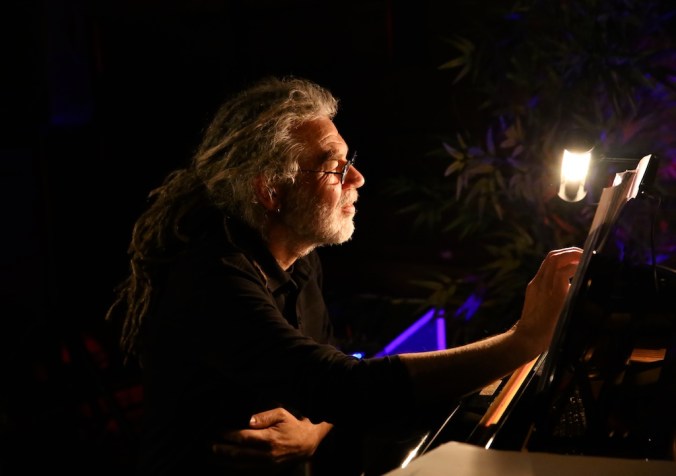
 On Thursday the Jonathan Crayford Electric Trio featured. It is no secret that I rate Crayford highly and I would go to see him perform anywhere. Arguably one of our top Jazz exports to the world and undoubtedly one of the more innovative musicians on the scene today. No Crayford project is a half-hearted affair, as this musician lives music in the fullest sense. His musical outpourings are sublime but it goes deeper than his excellent musicianship. Crayford’s vantage point on the creative life is unusual and deeply focussed: few others share his perception.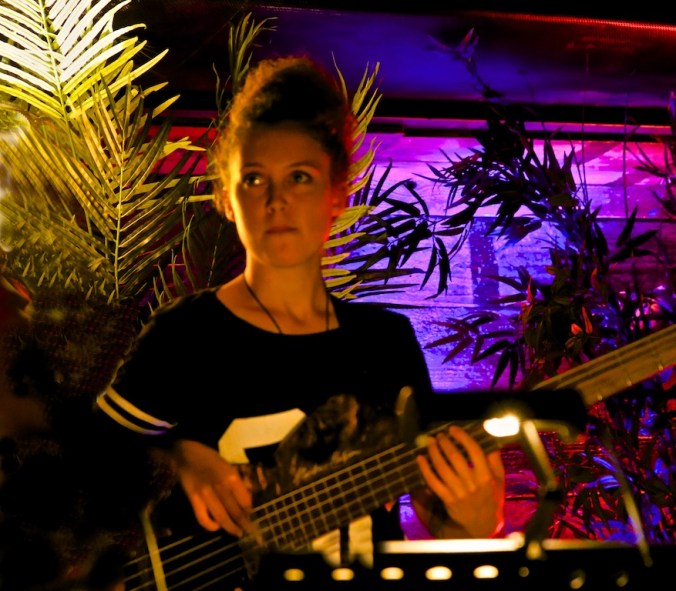

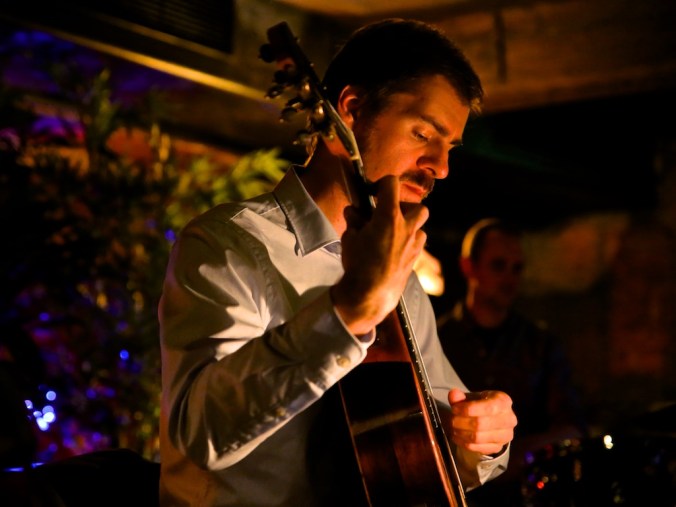 There was a buzz of excitement surrounding Simon Thacker’s ‘Ritmata’ tour. Not the touring rock-band sort of buzz, but a word of mouth Twitter-post kind. A buzz generated by night people and festival goers. Those who pay close attention to good music. I followed the threads and everything I read about Thacker sat well with me. I looked forward to his Auckland gig and the hype was not over-stated. Ritmata was a delight.
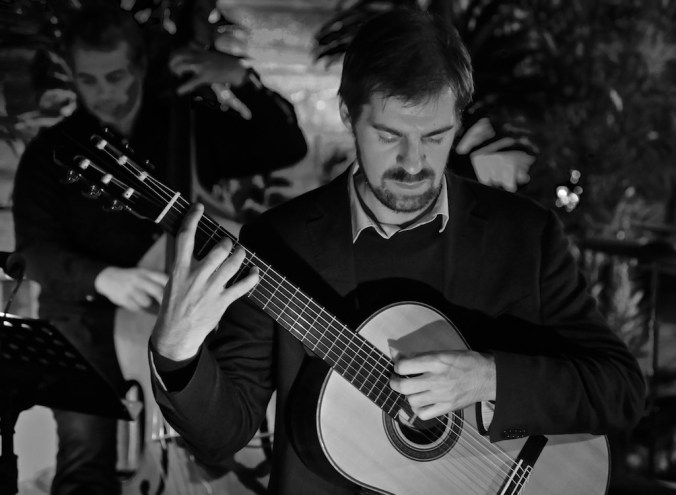 Simon Thacker is the ideal front man; funny, confident, virtuosic. His authority emanating from a force field of energy. A musical vision that engages; thriving on intimacy. A club setting is therefore perfect, with warmth and exuberance captured, contained; audience and musicians sharing an experience. Thacker’s banter is quirky, self-deprecating and it connects. There were howls of delight at the sheep jokes and they told me something important. Scotts, Kiwis and Australians have a shared humour, a post colonial cultural connection. An inbuilt irreverence that is part of our evolving story.
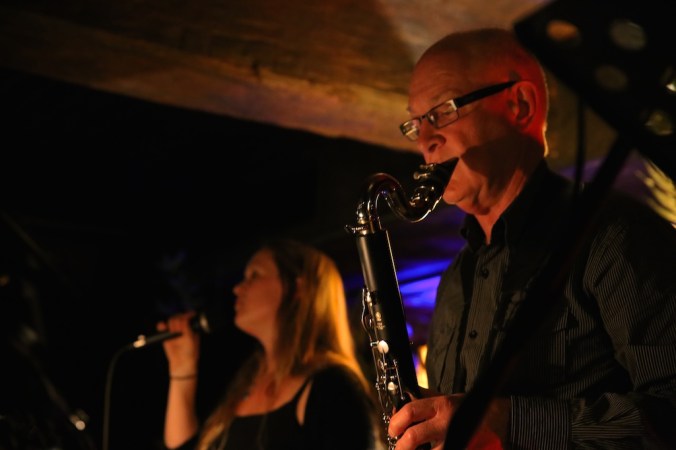
 The first set opened with traditional Sephardic melodies ‘reimagined’. This is familiar territory as Caroline Manins has trodden this path with her Mother Tongue project. Some of these tunes are more than a thousand years old (‘Des Oge Mais’), and in spite of dealing with loss or longing, they are often fast paced and rhythmically complex. In Ritmata’s hands they are ancient to modern. Evoking the melting pot of Judaic Moorish Spain but never time-locked. Elements of Flamenco, and even the modal chromaticism of Jazz pianists like McCoy Tyner came to mind.
  There were a number of interesting Thacker originals and to my delight three pieces based on Egberto Gismonti compositions (a stunning Brazilian improvising guitarist who used the street music of Choro to create similar, beyond-genre visions – an artist beloved of Jazz audiences). One of Thacker’s tunes ‘Honour the Treaties’ referenced the chants of American Indians and as indicated by the wild applause, it resonated powerfully. Then there was ‘Asuramaya’, influenced by the Indian Ragas. That piece had a delicious dream-sequence feel to it. He rounded off his sets with a traditional Azerbaijani tune, ‘Bana Bana Gel’ and a Jewish tune ‘Ovshori’ from the mountains Dagestan. When the audience clamoured for an encore, vocalist and Sephardic specialist Carolina Manins joined the band singing ‘Madre de Deus’; again reimagined by Thacker.
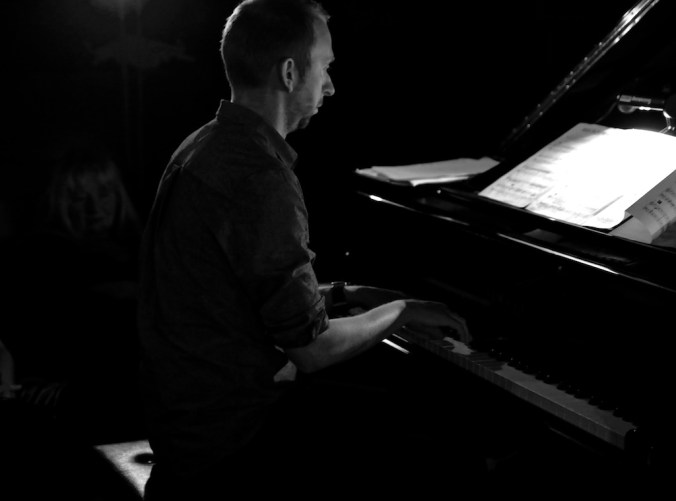
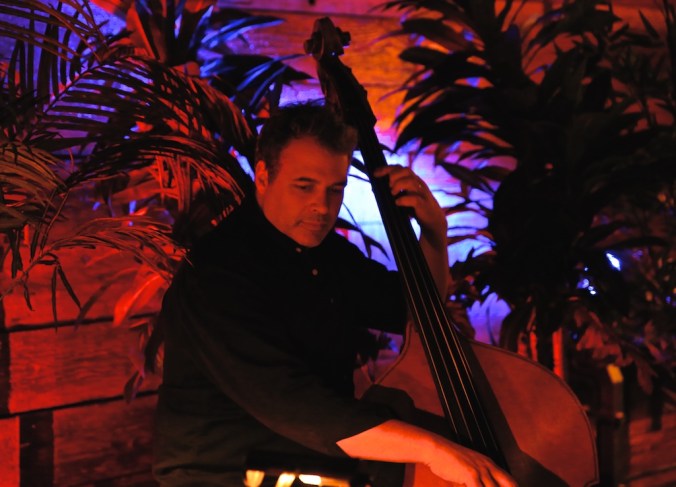
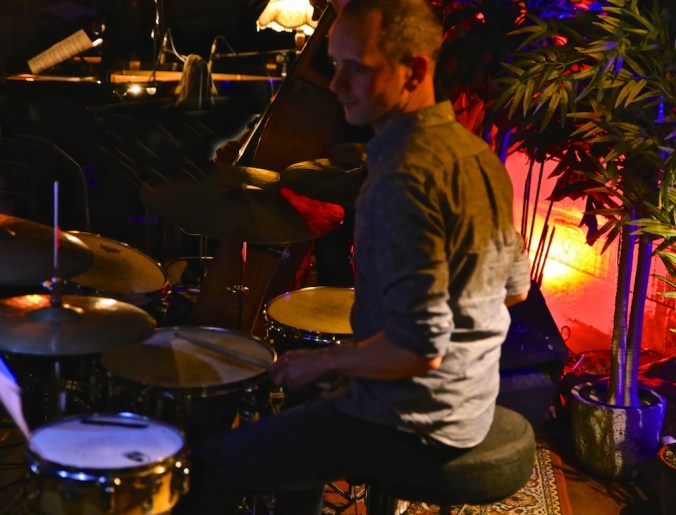 While Thacker dominated proceedings with his larger than life presence, the band members were stars in their own right. I have seldom heard a unit so in lock-step. The pianist, bass and drums were as central to the enjoyment as Thacker himself. The spotlight must lastly fall on that lovely guitar; I couldn’t keep my eyes off it. An extraordinary Rouse classical guitar; it sang like the Lyre of Orpheus. Orchestrating time and place; stretching time until we could see the future.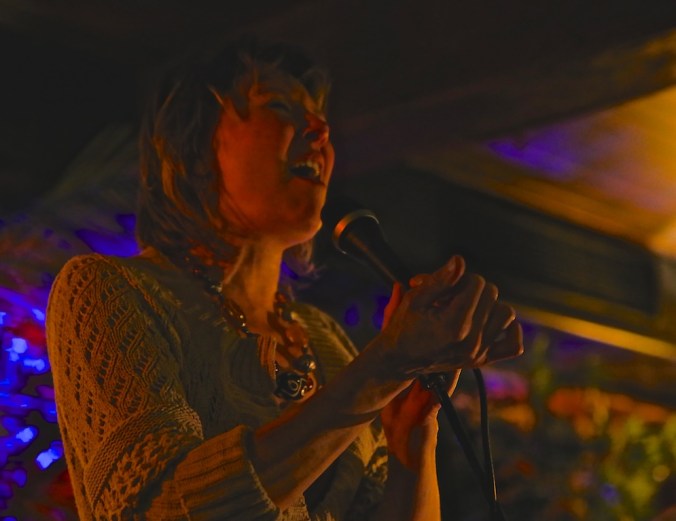
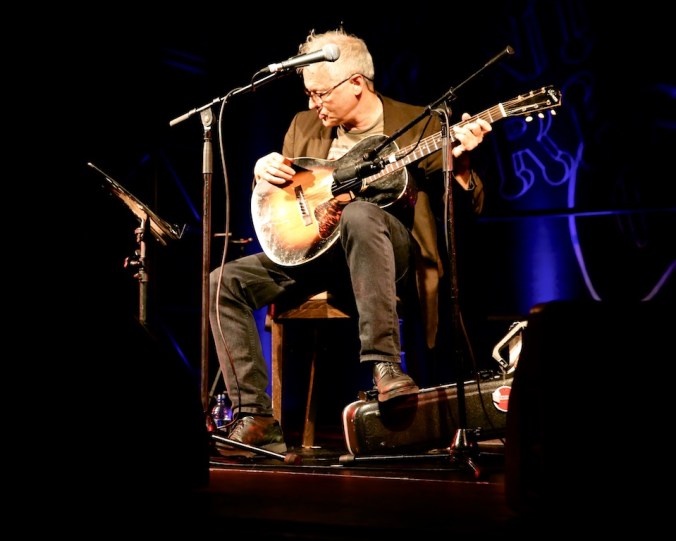 I am a Marc Ribot enthusiast so when local musician Neil Watson sent me a message to say that Ribot was coming to New Zealand I whooped for joy. My first thought was, wow, this will be the good shit. My next thought was, oh yeah I want to interview that cat about his musical and social activism. Watson was to open for him which pleased me. Watson was a good fit for this gig. An iconoclast multi genre improviser himself.
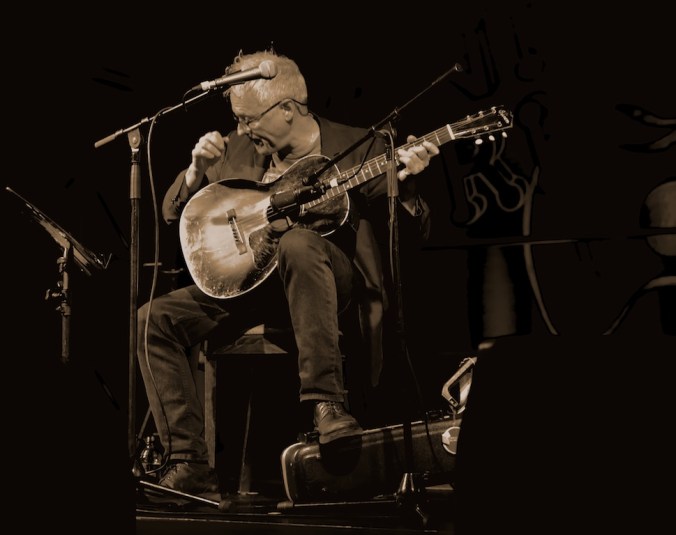 My first act on arriving at the venue was to approach the Tuning Fork floor manager and ask about photographs. He told me of a request from Ribot for absolute quiet. It was solo acoustic guitar, not Ceramic Dog and at Ribot’s request the venue turned off the air-conditioning and fridges. Camera clicks were obviously out of the question unless between numbers. I respected that and took photographs unobtrusively during moments of applause. This was a special gig that required a womb of engaged silence. Audience and musician locked into an embrace of sound.
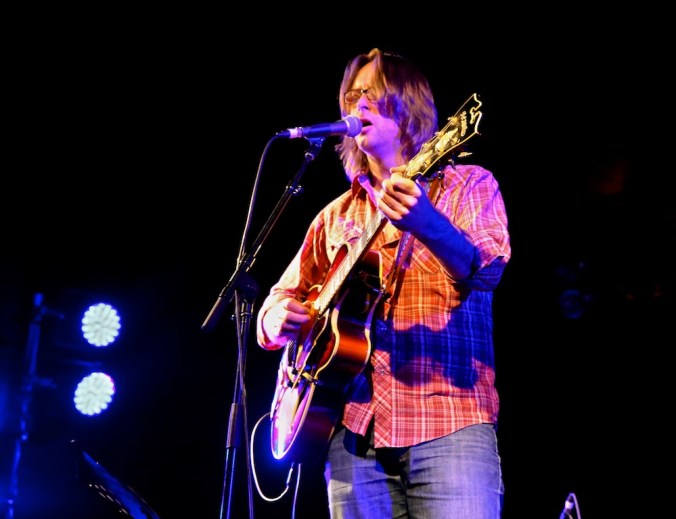 Footnote: Neil Watson acquitted himself well and added to the enjoyment of the evening. He played three types of electric guitar plus his pedal steel guitar; his set list ranging freely across genres. A Nirvana tune, a Hendrix referencing ‘Hear my train a comin’, a nice tune composed by his partner and the Kiwiana classic Blue Smoke as high points from his set.
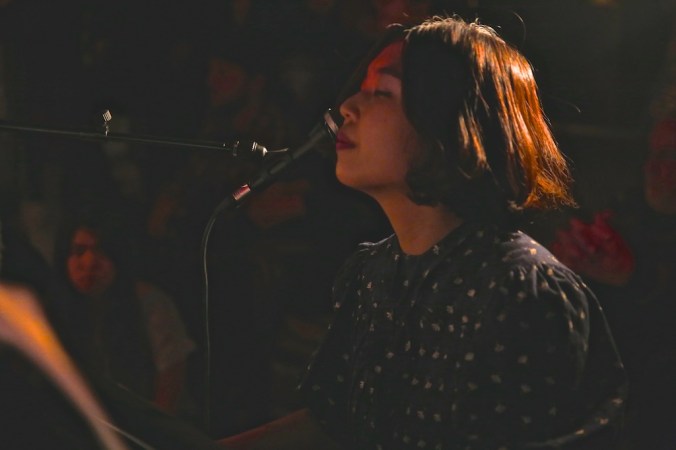 I looked forward to the ‘Skogkatt’ gig because Crystal Choi is a young musician with plenty of interesting ideas. She recently graduated from the UoA Jazz school and this project is largely drawn from her output as a student. Her arrangements and musical ideas show an evolving musician and her performance skills speak of energy and a growing confidence. When you speak to her there is a hint of shyness, but this evaporates the minute her hands touch the keyboard. At the piano her touch is decisive and the thinking behind the pieces is strongly communicated. She has grasped an important truth, how to play with space. One minute she is playing boldly with both hands raining down on the keys, the next dropping back to a gentle whisper or laying out. Her choice of project was a brave one as it tackled areas well beyond the usual Jazz orbit. Writing for strings and an unusually configured horn section an indicator of where she could be headed.
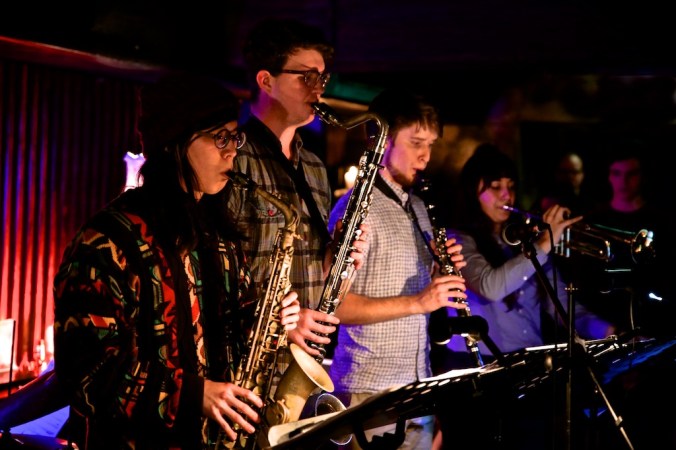 Her compositions and charts were of particular interest as they evoked more of a Northern European, or South American ethos than a North American one. While all Jazz arises from American roots, there are other forces at work in a globalised jazz world. As musicians from different ethnic backgrounds embrace improvised music something fresh is added. It is right that New Zealanders, Northern Europeans or people from other regions bring something of their own life experiences to the music. Jazz from the outer rim is particularly interesting at present.
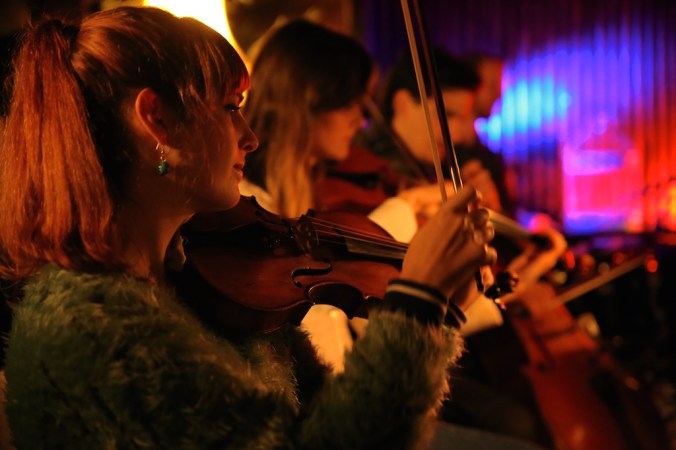 There were solo, trio, sextet, septet and tenet pieces. Her writing for the ten piece band was notable. Although an uncommon configuration of instruments these oddly configured, medium-sized ensembles have been a feature in modern classical music since Saint-Saens ‘Carnival of the Animals’ (that was an eleven piece). In Jazz since the late 40’s. Having a front line with two violins and cello alongside trumpet/flugel, bass-clarinet, clarinet and flute/alto saxophone worked well. The unusual textures gave depth and interest to the composition. The slightly tart voicings of the Bartok like string section contrasting nicely with the woody richness of the woodwind horns. These sort of excursions are not embarked upon lightly but I feel Choi pulled it off. My only quibble, and it is a small one is that the ensemble needed to tighten up somewhat in places.
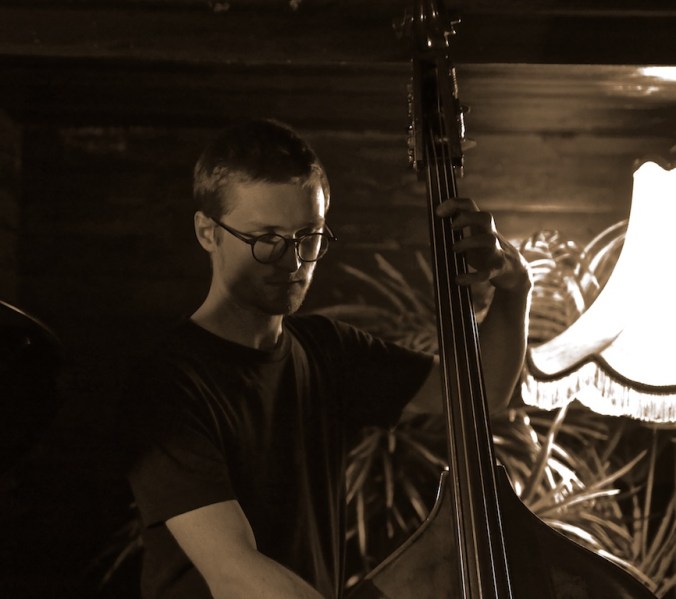 Another side of Choi is her singing. While certainly not a big voice it has charm and originality. Like many improvisers she sings while digging into a solo. These are wordless songs of the sort that you would hear on a Norma Winstone album. At times there is a Debussy feel to her solo and trio compositions.
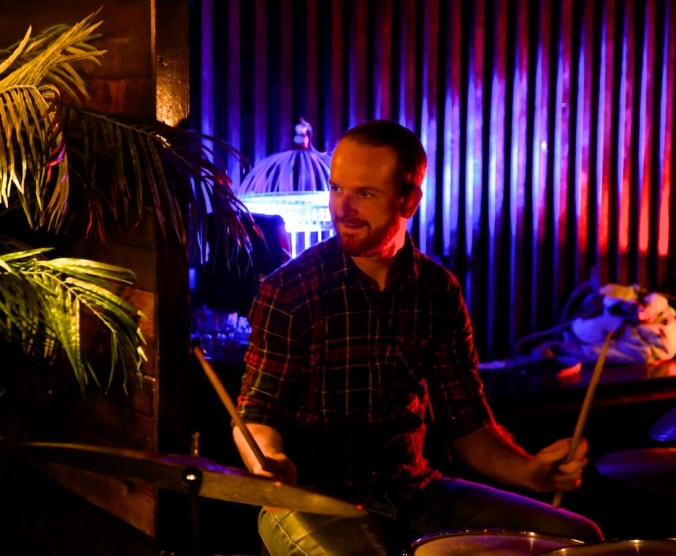 This project while far-ranging begs developing further and perhaps recorded at some future point. It had a Kiwi ECM feel to it. I hope that she works with the material and refines it further. It is well worth doing. Note: The Skogkatt is native to the forests of Scandinavia and the original Maine Coon cat.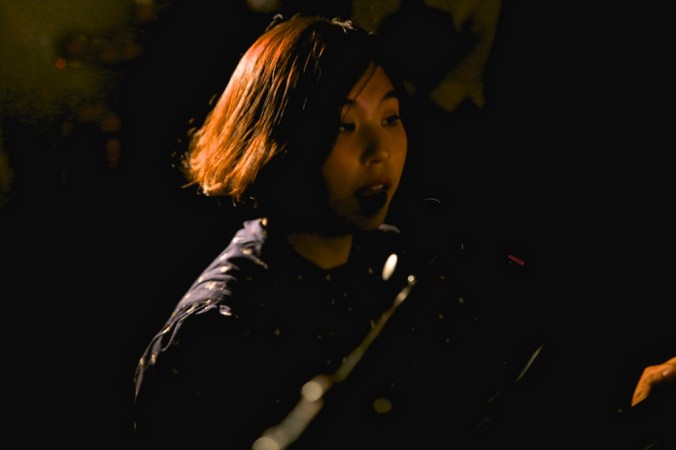
 Music has a million functions, some of them mysterious; it is the soundtrack to our lives. One of those functions, should not be underestimated, is to bring fun into our day. In this age of multi-media music performance the use of film and theatre is generally ceded to heavy metal or pop. That is a shame because Jazz audiences can react favourably to music when accompanied by these various forms of media. This works well at the Golden Dawn. Sometimes when the CJC is held upstairs, we get random film and images playing across the musicians as they perform. Who can forget the crazy brilliance of ‘The Grid’ (see earlier post). While happenstance can work; truly effective interaction needs working into a performance and be way slicker than a silly strobe light or an embarrassing disco chandelier. The Carnivorous Plant Society presented a coordinated performance and it enhanced the music on offer.
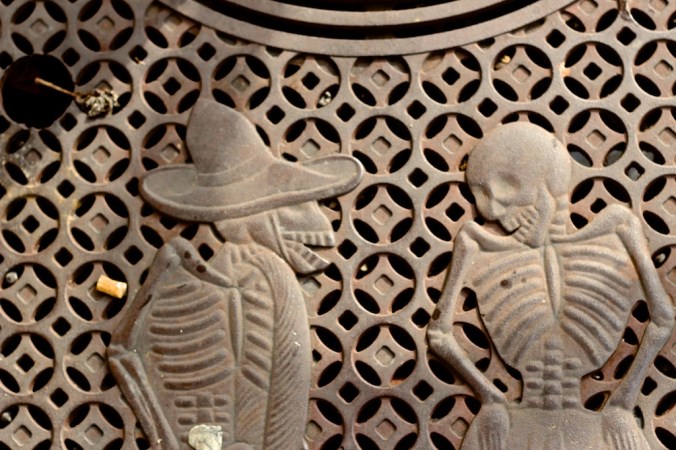
 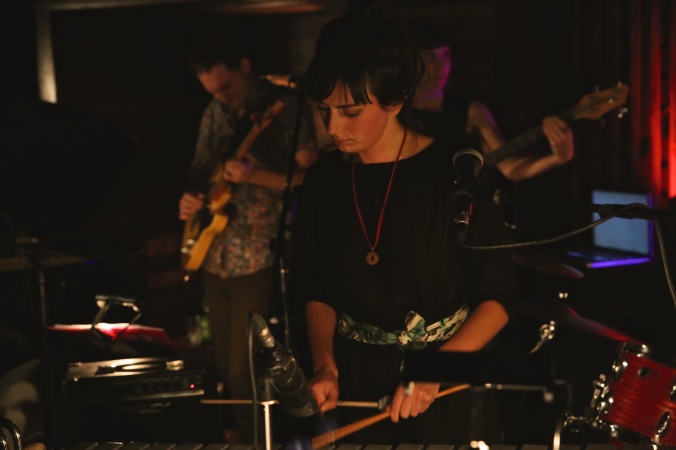 This is very much a Finn Scholes project and it has been around for some time. Scholes is primarily known as a trumpeter (often playing the avant-garde end of town). Increasingly these days he is a keyboard player and showman. Last year I saw him with this group; belting out his signature brassy Mexican trumpet sound while playing an analogue synth with his left hand. The performance often tipped into the surreal because Scholes wore a Mexican ‘night of the dead’ wrestling mask. Not an image or a sound I will easily forget.
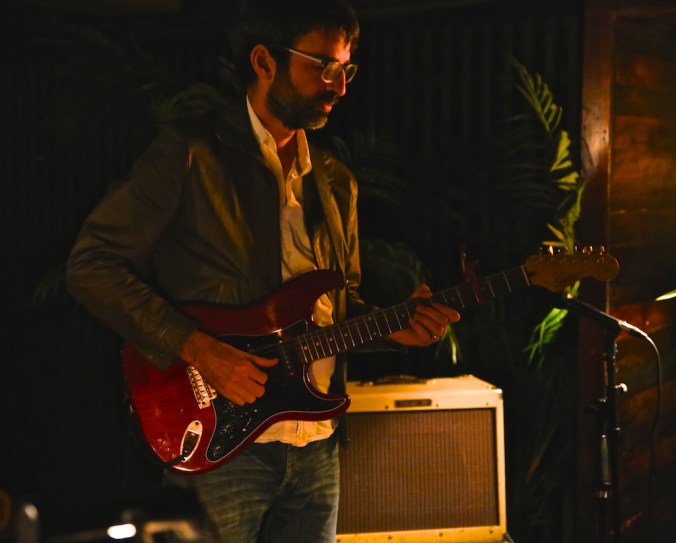
 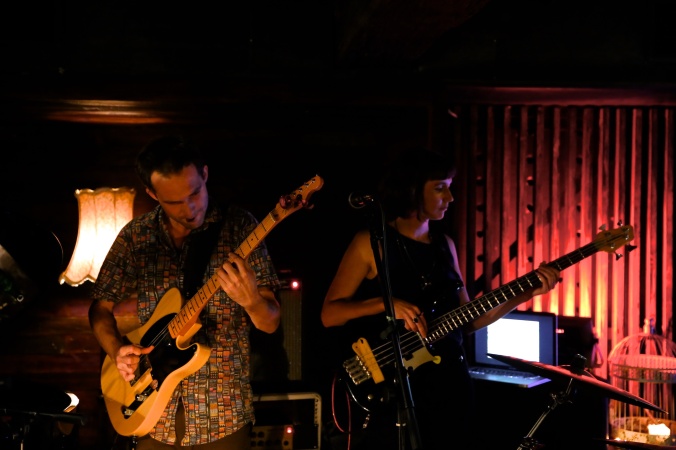 The Carnivorous Plant Society is a quintet but there are many more instruments, pedals and electronic devices than there are band members. Scholes plays trumpet, tuba, piano, numerous keyboards, electronics – Siobhanne Thompson, vibraphone, violin, percussion, pocket trumpet – Tam Scholes, electric guitar – Cass Mitchell, Electric Bass – Alistair Deverick, drums, electronics. With use of loops, wizard like gadgets and Siva like arms, a number of sounds are generated at once.
 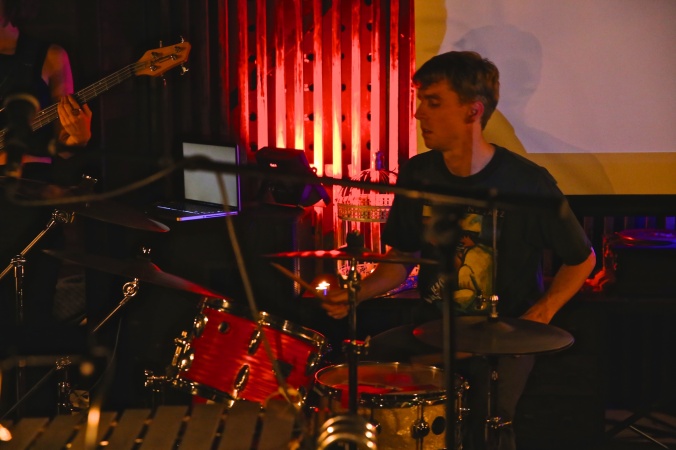 The occasional use of voice-over samples was far from being gratuitous as the ‘Max Headroom’ like humour often lay in these samples. There were strange Stephen King like stories of robots taking over the world and oddly quirky adventures relayed. The latter as if being recalled by deadpan 1950’s radio hosts. Many of these performed against brightly coloured cartoon graphics that played over their heads. The graphics were brilliant and although I have no evidence for supposing this, I presume that someone in the quintet (or a close friend hip to the project) created them.
 This opens up an interesting conversation about the many forms of ‘ambient’ music being explored at present. These forays are mainly by musicians on the improvised and experimental music scenes. Along the way the term ‘ambient’ is garnering new meanings and it can no longer be confined to the vernacular definition. It implies subtly, depth and a strong sense of being coupled to wider sensory experiences. The difference being that the senses catch on silken threads and not on steel shackles. There is also an illusive quality to this music and to understand the genre better, a good starting place would be Miles Davis ‘In a Silent Way’ or Brian Eno and Jon Hassell (‘Fourth world volume one, possible musics’). For an up to the minute vantage point go to YouTube and locate Elvind Aaset and Jan Bang’s ‘And Poppies from Kandahar’.
 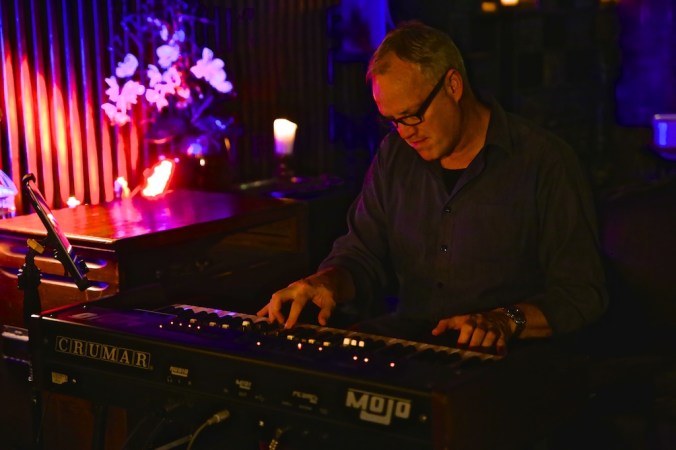 Unlike ‘easy listening’ there are deep emotions engaged by this type of music. Like all trance music cunning voodoo tricks draw you in and as you relax into the mesmerising grooves, you fall deeper into the web. This is music evoking mental pictures and imaginary worlds. This is music that is often served up with dissolving visual images accompanying a clip. The filmic qualities are inescapable.
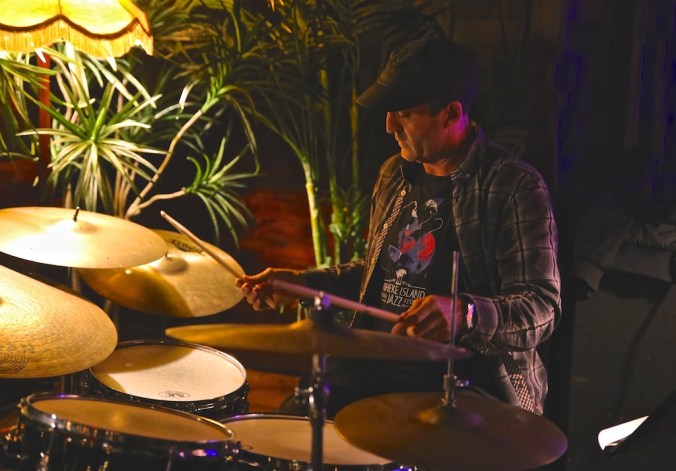 Alan Brown is an asset to any unit and especially so when you consider that this is a crossroads between ambient and groove (both specialties of Browns). Ben McNicoll is a strong presence and his reading of these shifting grooves is always apposite. It is nice to hear such bluesyness purged of cliche. Jason Orme is a veteran of the groove scene but he sounds great in any situation. Spammers music calls for a tight groove but there is also a need for subtlety. Orme is more than up to the task. The leader Dan
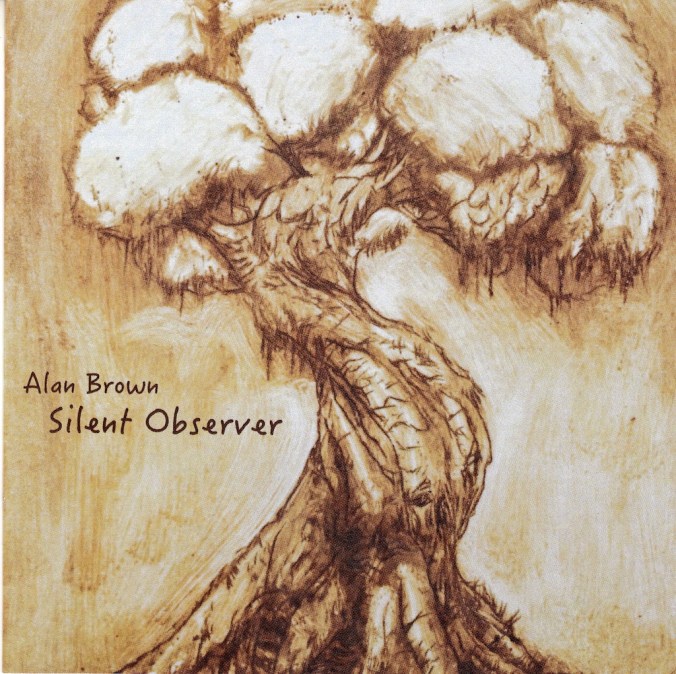 In the same week that Spammerz appeared at the CJC Alan Brown released his ambient album ‘
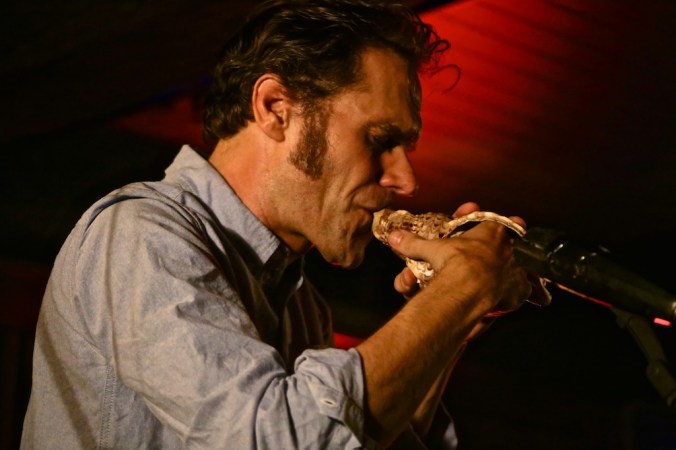 I often detect a unique quality in New Zealand improvised music, but when it comes to defining it, the illusive essence dissolves before I can grab hold. ‘Harry Himself’ has brought me one step closer, connecting me with a tangible manifestation. This band is the perfect example of improvised ‘Kiwiana’. At first hearing you detect a melange of the familiar; elements of World, Fusion, Straight ahead, Post bop, Post millennial Jazz and all served up with a generous dollop of classic country. Listen more closely and you will get strong South Sea references, flashes of musical memory permeating every bar. Everything from Bill Sevesi to the ancient sounds of New Zealand indigenous music. Even song titles revolve around Kiwiana themes . Many of the tunes belong to a place, to the Islands we live on and to the immense swath of sea that surrounds it. Like the harbours and oceans that surround us, this is a mosaic of glittering fragments. A familiar yet unknown music to gladden the heart.
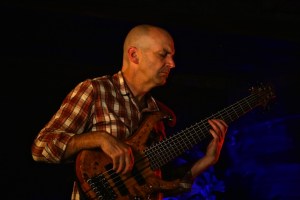
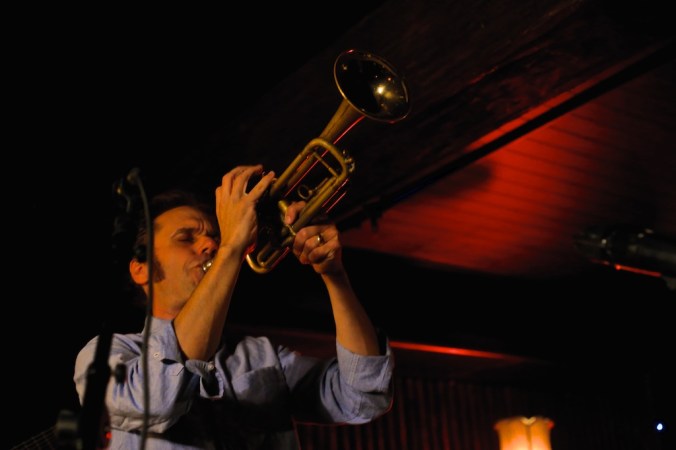
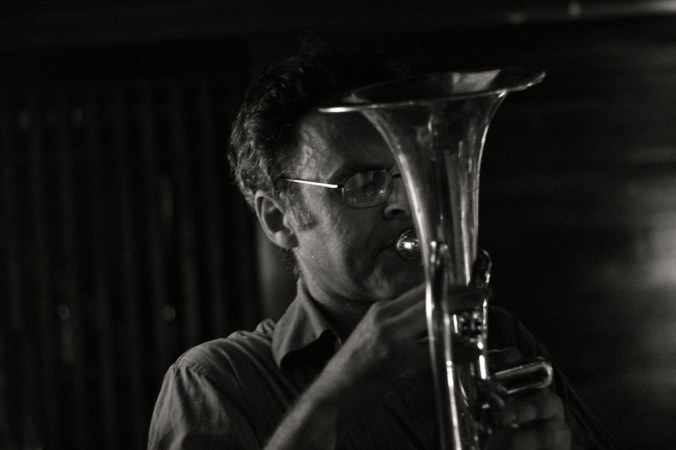
 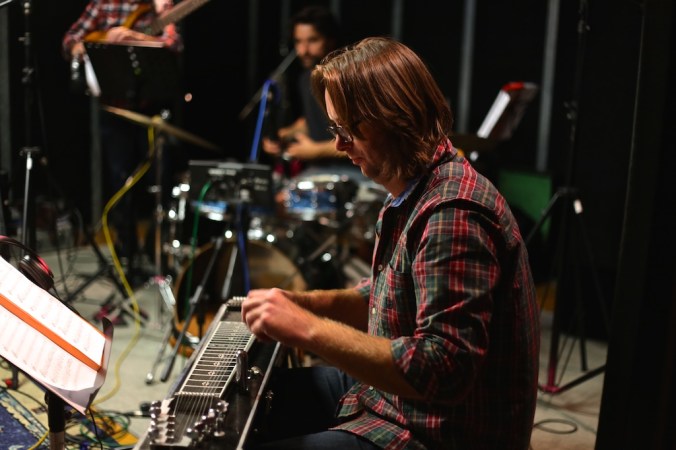 Above all this is a good-natured band, oozing charm and character. The array of instruments and the judicious use of loops and pedals more than doubles their range. The only constant in the sounds are the six string bass and drums. The leader Kingsley Melhuish is sometimes seen in the company of adventurous avant-gardists. He can also be found among the free ranging Ponsonby Road improvising bands. His use of pedals and loops is tasteful and it serves the music not a whim. His pedal effects and electronics are not added randomly, nor for the sake of it. He is an accomplished horn
  player, switching seamlessly between trumpet, flugelhorn, tuba, trombone and lately, a vast array of conch shells. Melhuish often sets up loops and then he plays over them with different horns. This layering of sound is achieved well and the real-time harmonic overlay enables him to add considerable texture and breadth. Neil Watson does likewise, as he frequently moves between Fender guitar and pedal steel guitar. The day after the gig I called into the MAINZ recording studio to grab a few shots of the group laying down an album. I overheard the recording technician asking the band after a take, “How do you feel that went; do you want to listen before moving on”? Immediately a voice came from the studio speaker, “No, I think we’ll do that one again. The Fender and the conch will work better together than the pedal steel on this track”. A huge smile crossed the technicians face, “I’ve never heard that said in a studio before” he said. They were
  right and it reinforced a long-held view of mine; that no instrument is beyond the reach of Jazz and that no sound should remain un-pillaged. I always appreciate Sam Giles electric bass playing and I am always left with the feeling that he is scandalously under-utilised. Solid and groove based was what the band needed and solid and groove based was what they got. On drums was premier drummer Ron Samsom. He worked these beats like he always does, purposefully, skilfully and making it look second nature. I’m glad the band is recording this material and I have a feeling that the album could grow legs with the right exposure. I hope so, they are fun.
  I have added two video clips of the band, which demonstrate the diversity of their material. While diverse, it never-the-less hangs together nicely. The fist clip is ‘Cy’s Eyes’ a tune composed for one of Melhuish’s children. The second tune is the wilder freer ‘Zornithology’. A tribute to John Zorn (with an obvious play on the title of a Bird tune). There was one tune I wish I’d captured on video and that was ‘Rose Selavy’ by Enrico Rava. Man, what a hard-edged powerhouse romp that was.
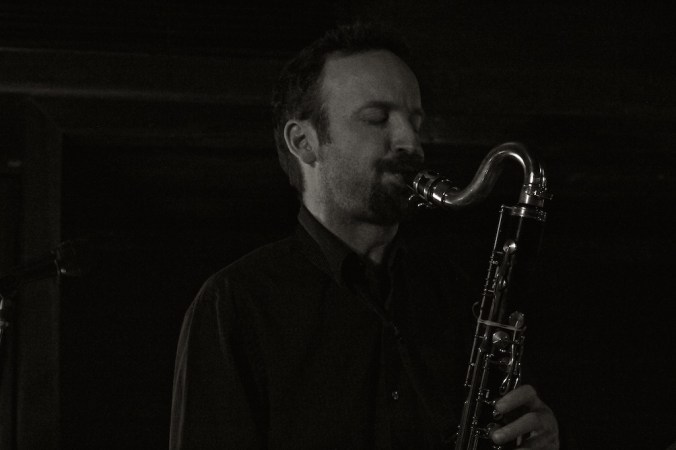
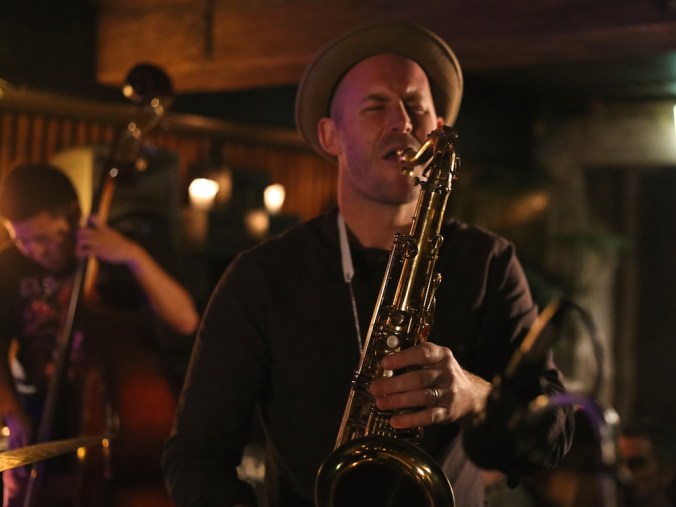 Any astronomer worth their salt will tell you that it is paradoxical for a sun to embark on a circular orbit. The last time this happened was during the Spanish Inquisition. On Wednesday the paradox increased when the Circling Sun departed their orbit to play at the CJC (Creative Jazz Club). This gig had been a long time coming and we welcomed it. Hearing them away from the babble of the hard-drinking Ponsonby Road crowd was a treat for us. The Circling Sun always give of their best, but this time we could hear the quirks and subtleties unfiltered. This is a band with a vast soundscape and the Jazz club echoed to the sounds of doogan, Tuba, analogue keyboards, digital keyboards, piano, trumpet, flugel horn, flute, tenor
  saxophone, upright bass, drums and electronics. This is the type of music that sits well with me.
 times; then out of nowhere come tasty arranged melodic heads. Deftly extracted from the frequent mesmerising groove laden vamps.
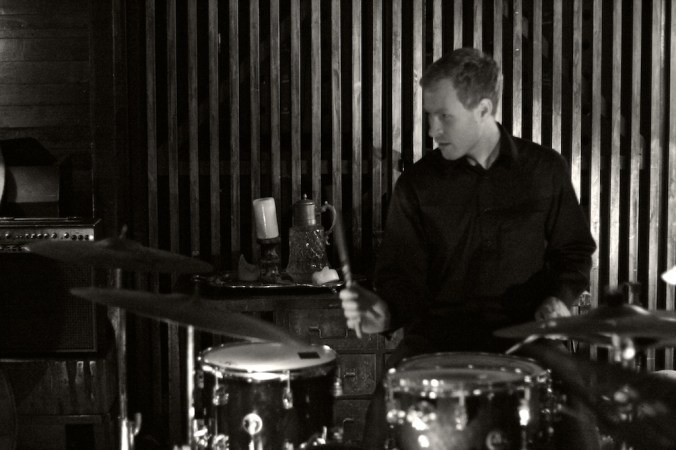
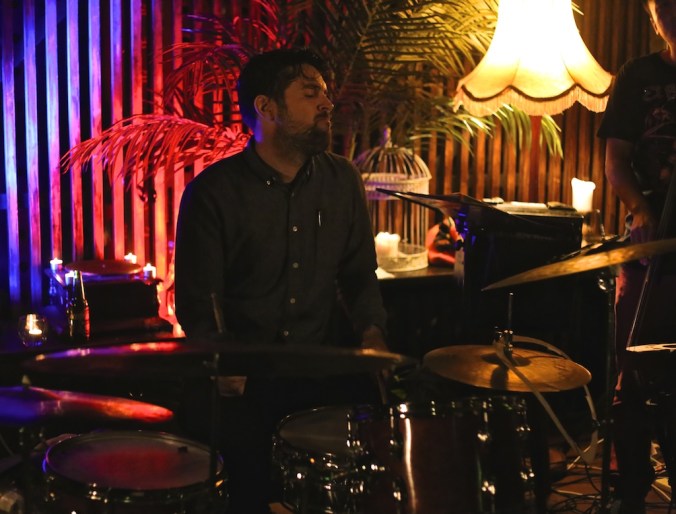 The most powerful presence is drummer Julien Dyne. A versatile gifted artist who has travelled and recorded widely. His beats while often referencing his multi genre background, urge the band to greater heights. It is a privilege to see drummers of this calibre and I hope that he continues with open-ended Jazz projects like this. I have heard him on numerous occasions and I like what I hear. As a unit, this combination takes no prisoners and the audience were glad of it. The first guest to join them was J Y Lee who quickly settled in on baritone saxophone. He often plays with the Circling Sun and is a popular addition.
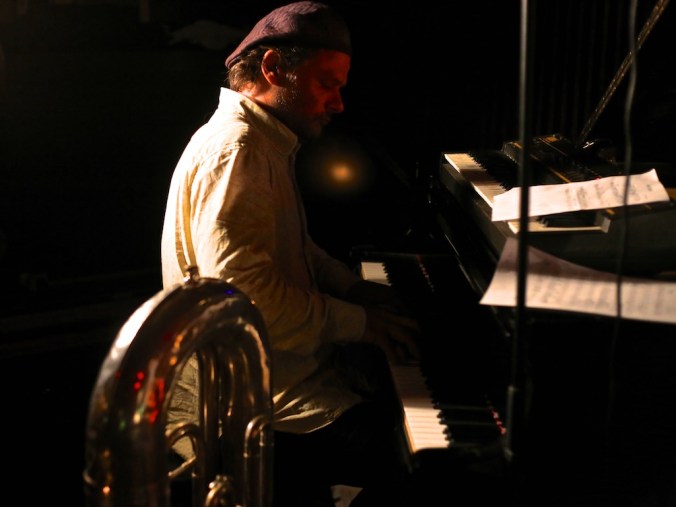 During the second set a great gig got even better. Jonathan Crayford arrived and without too much persuading, sat in on piano. This was met with obvious delight by the audience, as Crayford is extremely popular. He knew none of the tunes as they were mostly originals and there was virtually no sheet music to guide him. It didn’t matter. Someone would announce the key and then a few chords in he would locate the heart of the tune. A musician of his experience and gifts is no stranger to situations like this. The audience, clearly wild about the gig, were by now whooping with enthusiasm between numbers. When Crayford sat in they felt like they’d won the lottery. He doesn’t get home often, but improvised music fans are eager to soak up what ever they can get of him.
 I have long been drawn to middle eastern music, having commented on it in earlier blog posts. There are many reasons to like this rich musical stream, but what draws me are the interactions that occur when eastern and western improvised traditions meet in mutual respect. This is often labeled as World/Jazz, but implying that it is new hybrid is somewhat problematic. Both improvised traditions have deep roots and a successful meeting acknowledges this. The blend of Jazz and middle eastern music is mainstream in the Mediterranean regions but not as well-known elsewhere. Adventurous artists like Dhafer Youssef, Rabih Abou-Khalil and Anouar Brahem have gained prominence in the west through collaborations with the likes of Kenny Wheeler, Charlie Mariano, Steve Swallow, Tigran Hamasyan, Marcin Wasilewski and others. Jazz lovers in New Zealand and Australia have already experienced the ancient Sephardic music of Spain through Caroline Manins ‘Mother Tongue’ projects. Also through Kiwi Jazz harpist Natalia Mann’s Turkish projects.
  Much of this music derives from the Sufi tradition but Sicilian and Flamenco Jazz fusions should not be overlooked either; both having rich Islamic and Jewish sources feeding them. The Moors ruled Sicily for 400 years and southern Spain for 500 years. Under the various Caliphates there was great religious tolerance and a spirit of scientific curiosity. The arts and musical traditions merged and flourished in that benign space.
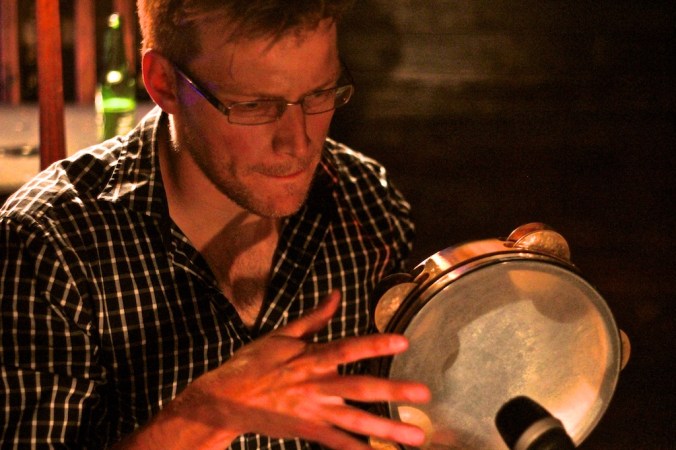
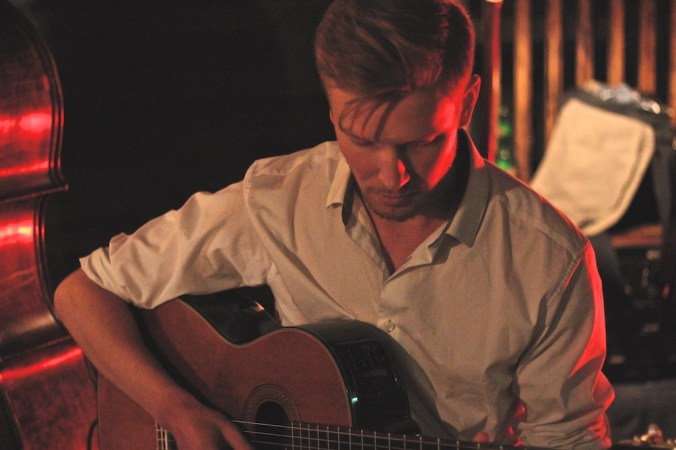 Watching Tim Sellars on percussion is eye-opening as he coaxes so many complex rhythms and sounds from his array of percussion instruments, that it beggars belief. At times he used the Cajon (of African/Peruvian origin) but mostly he played frame drums (middle eastern). I love to hear the frame drum as it is the oldest instrument known to man. The genre includes the Riq (tambourine) which Tim played to perfection. Being an amplified acoustic ensemble the sound worked well in the club space. The guitar perhaps needed turning up a touch, to give it more bite.
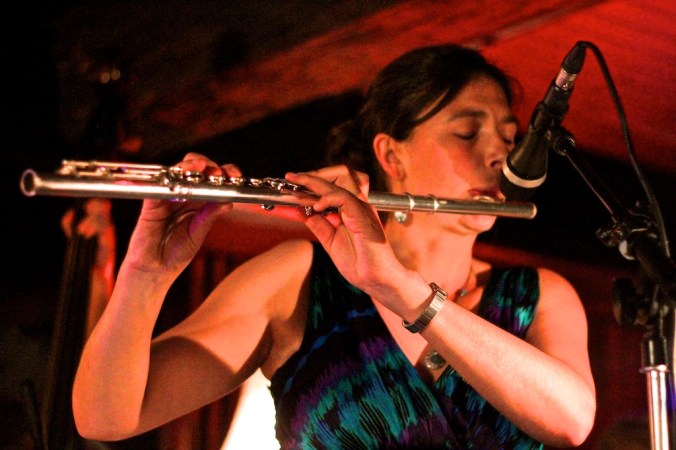
 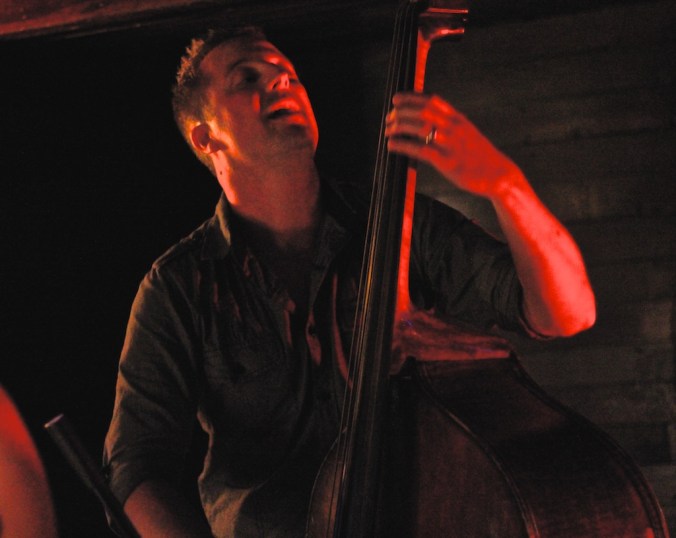 Tamara was her usual impressive self and her control and mastery of the instrument was evident throughout. She alternated between bass flute and alto flute; the tonal richness of both horns blending perfectly with the upright bass. Bass player Michael Story understood the cues and worked with Tamara; resisting any impulse to overplay. Acoustic ensembles like this require discipline and subtlety; overly showy solos can dominate and obscure the filigree of woven sound. Mukhlisa got that right and the solo work although appealing, was rightly subordinate to the overall integrity of the music. Glen Wagstaff is popular in Auckland and his charts for large ensembles have impressed club goers. It was good to see him in a different context and many of us eagerly await his album, which is due out in a month or so.
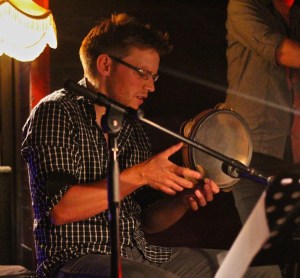 There is ample scope for a larger ensemble to grow out of this; perhaps one including arco Cello and Oud.
 This week as NASA’s Kepler orbiting telescope probed deep-field space, wonders beyond the imaginings of most of us came into view. As it focussed on an inky gap between solar systems, gazed deep into an area invisible to earlier sky-gazers and previously lost in the vastness of space; a new mission. This week fresh data surprised the analysts as new images formed on their screens. Astronomers could barely believe their luck. Revealed were four planets circling M-Dwarfs, all of which bore apparent similarities to our own planet. They were near enough to their suns and with the right circumference to place them in the ‘habitable zone’; perhaps even capable of
  sustaining life. The fact that ‘Kepler 186f’ is in the Cygnus Constellation nearly 500 light years away has not dented enthusiasm. Kepler 186f is now firmly embedded in the human consciousness. Like the astronomers at SETI we watch, ponder and hope. In my world, this is the intersection where dreams, the cosmos and improvised music collide.
 Devotees and band members stay the course. Ra has long departed this world, but the Arkestra is still voyaging with the astonishing John Gilmore at the helm. The older vinyl albums are now widely sought after, as the cover art was sometimes hand painted by the band members. Many of the covers are similar to the Hubble images.
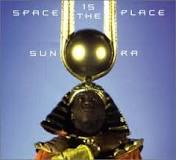 impressed with Henderson’s work and his recent albums like ‘So What’, are tasty-good as well. ‘Sunburst’ was released on the Blue Note label in 1975 (re-released by Japanese Blue Note recently). Two albums by Bennie Maupin ‘Moonbeams & Slow Traffic to the Right’ were released around the same time. The 70’s was the golden age of Cosmic Jazz/Funk and the utilization of increasingly sophisticated analogue synthesizers is a feature of these albums. These out of production analogue instruments have become highly sought after (Mini-Moog, Prophet, Oberheim, ARP Odyssey etc).
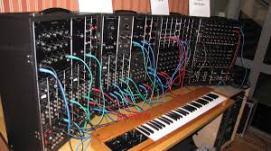 background the swift acceptance of the synthesiser appears surprising, but when considered in the context of the times there are compelling explanations.
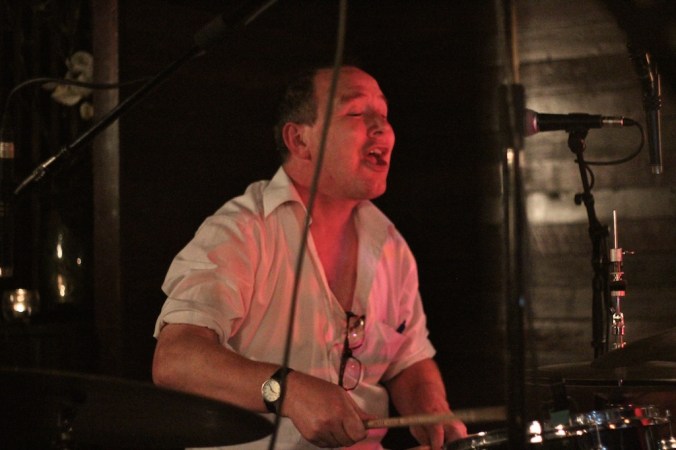
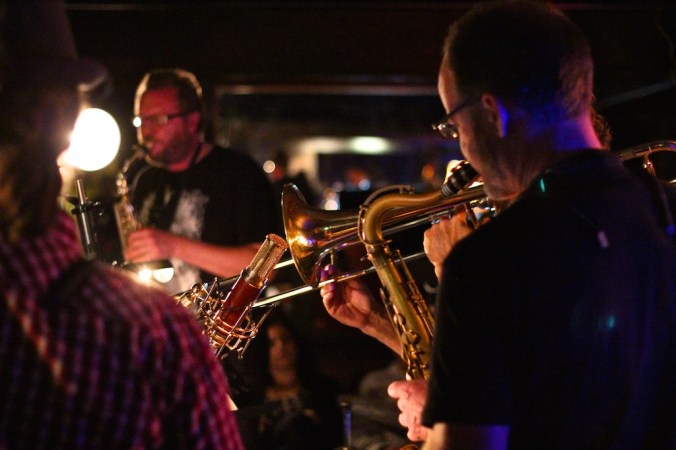 This was too good an opportunity not to record and Rattle did just that. Capturing chordal instruments in a space like the CJC is challenging as the sound has a number of hard edges to bounce off. Recording a live performance of this particular brand of ‘Troubles’ might work well.
 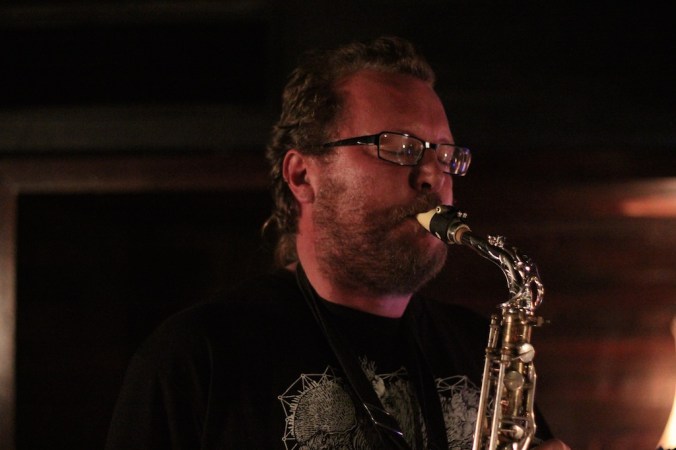 Guiding the proceedings with his well-known brand of anti-establishment megaphone diplomacy was ring master John Rae, ‘Troubles’ co-founder. He shepherded the ensemble through a constantly shifting landscape. His effervescent flow of joyous and often irreverent cries only stemmed by Patrick Bleakley’s timely interjections. Rae is the supercharged engine room, but Bleakley is clearly the anchor. Like Rae he’s an original member.
 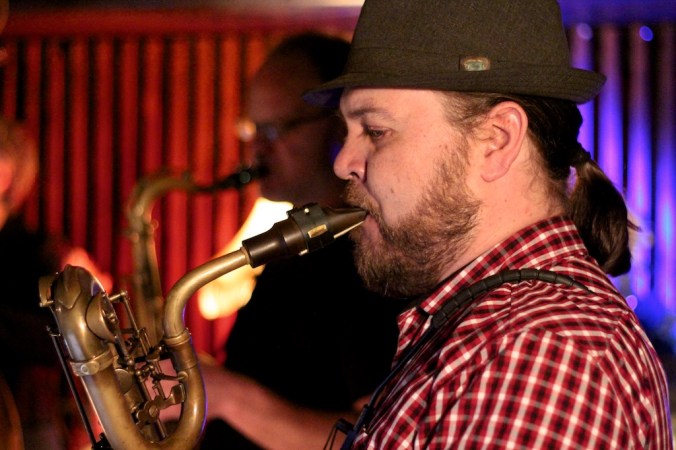 With this Auckland horn section in place, a new front had opened and the tweaked charts took maximum advantage of that. On baritone was Ben McNicoll and his presence gave the sound added bottom. Roger Manins, who had stunned us with his wild death-defying solo’s at the Troubles Portland Public House gig was on tenor again. Jeff Henderson took the alto spot and that was a significant addition. His ultra powerful unblinking delivery was the x-factor. Unafraid of repeated motifs but able to negotiate the music without ever resorting to the familiar. That is the Henderson brand, original clear-cut and uncompromising. In no way diminished by the powerful reed instruments surrounding him was Kingsley Melhuish on trumpet. Melhuish has a rich burnished sound and like the others, he is no stranger to musical risk taking.
 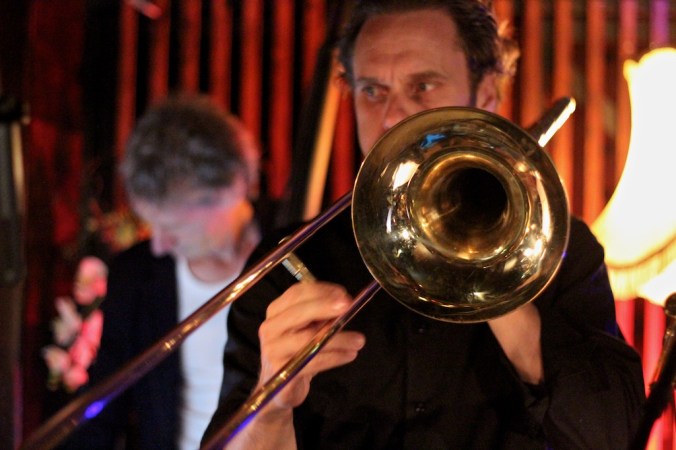 Together they evoked a spirit close to the earlier manifestations of the Liberation Jazz Orchestra. Not just the rich and at times delightfully ragged sound, but the cheerful defiance of convention and discarding of political niceties. Rae’s introductions were gems and I hope some of them survive in the recording. He told the audience that it had been a difficult year for him. “It was tough experiencing two elections in as many months and in both cases the got it woefully wrong” (referring to the Scottish referendum and the recent New Zealand Parliamentary elections). “there are winners and losers in politics and there are many assholes”.
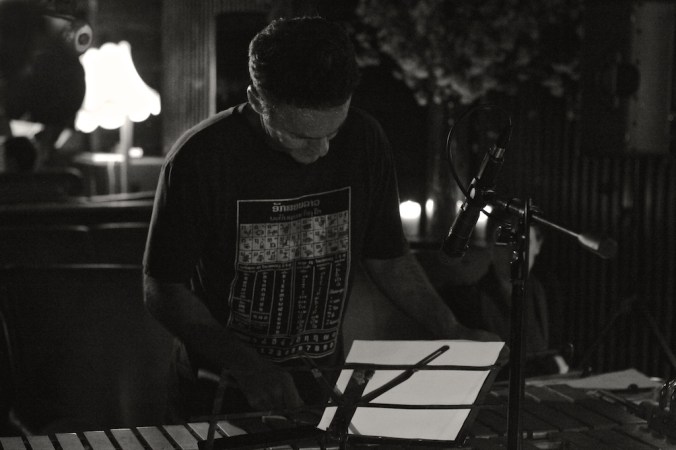
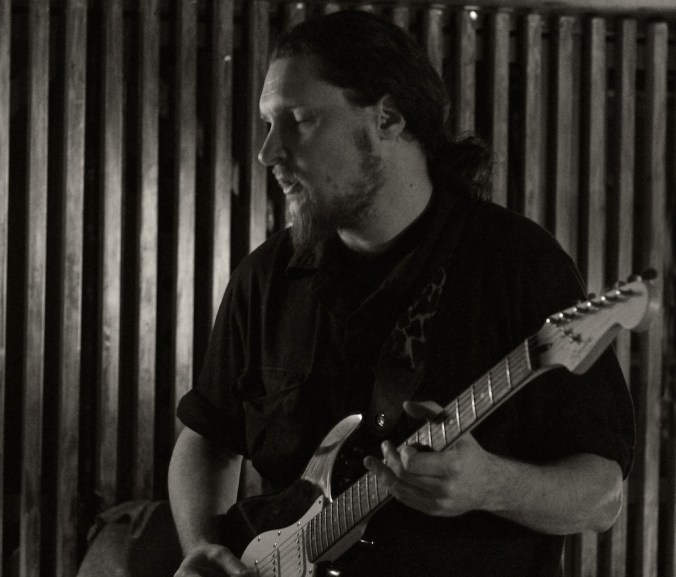
 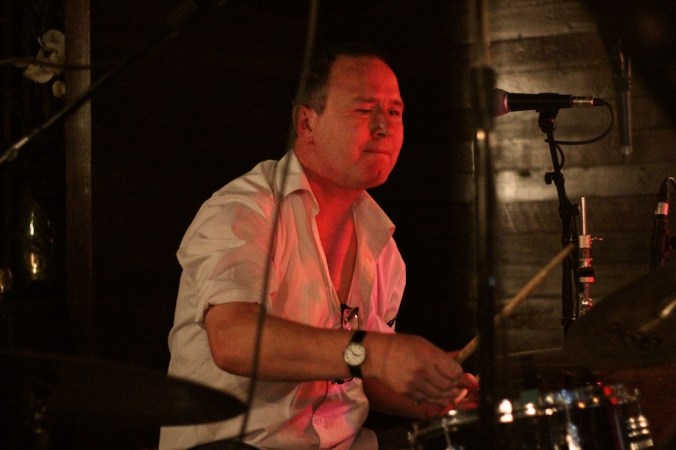 It wouldn’t be the ‘Troubles’ if there wasn’t a distinct nod to some of the worlds trouble spots or to political events that confound us. I have chosen a clip ‘Arab Spring Roll’ (John Rae), a title which speaks for itself. Following the establishment of a compelling ostinato bass line, the musicians build a convincing modal bridge to the freedom which follows. Chaotic freedom is the perfect metaphor for the ‘Arab Spring’ uprising. The last number performed was the ANC National anthem and as it concluded, fists rose in remembrance of the anti-apartheid struggle. It is right that we should celebrate the struggles for equality, but sobering to reflect on how far we have to go. The Troubles keep our feet to the flame, while gifting us the best in musical enjoyment.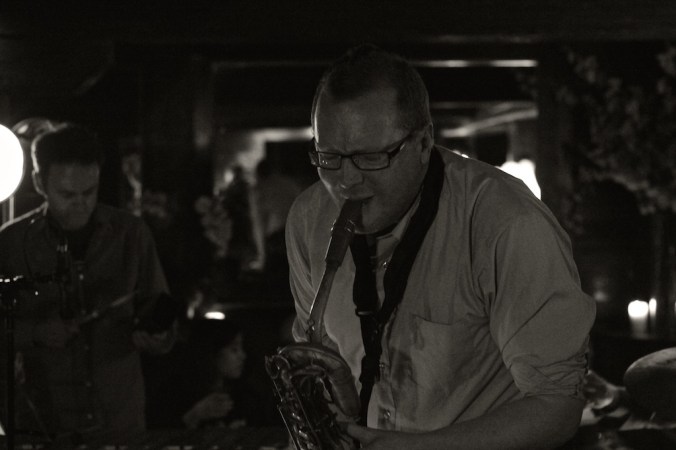
 e
e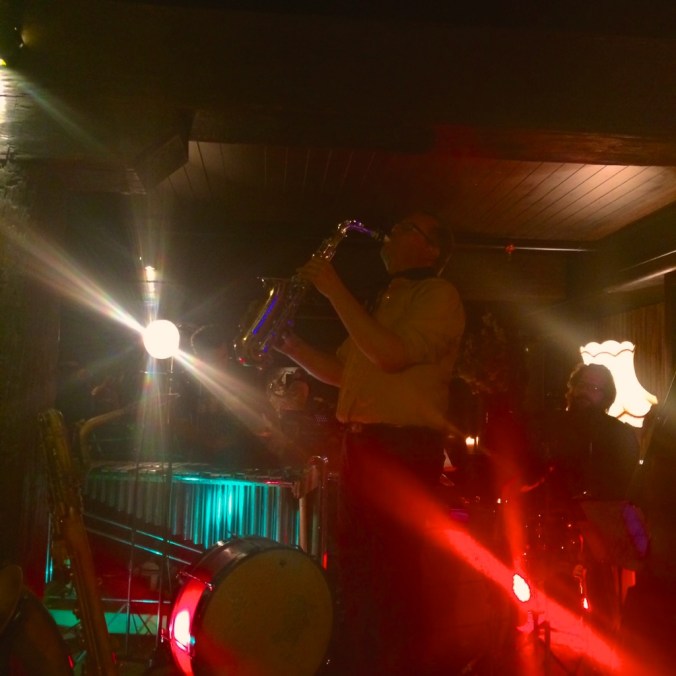 There is a rawness and a primal quality to it, a strong sense of performance. Who would prefer a recording of an Arkestra or an Art Ensemble of Chicago performance over a live show? This was all jazz and all music decoded, not for the cocktail party. The next day I was watching the 1956 Jean Bach film ‘Great Day in Harlem’ and there was Roy ‘Little Jazz’ Eldridge squealing out high note after high note on his trumpet. Again and again, he pushed out a flurry of wild free multi-phonic sounds. Even in the swing era, this had a great effect.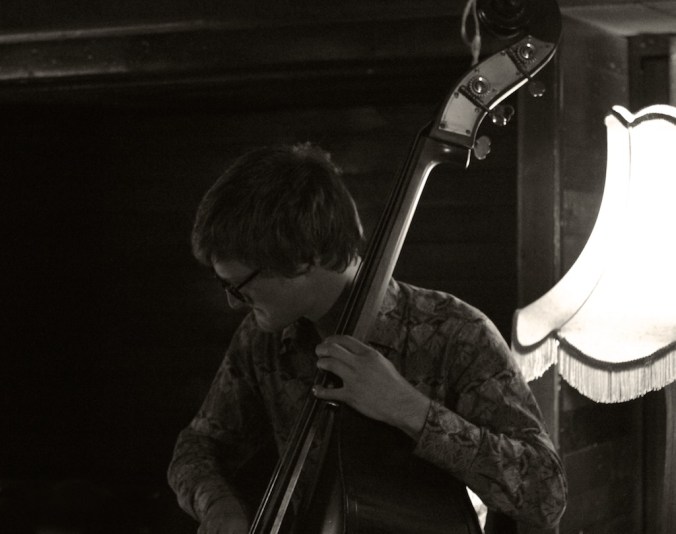








 JazzLocal32.com