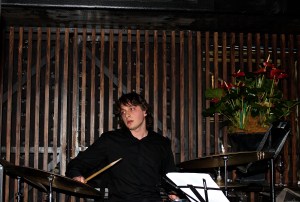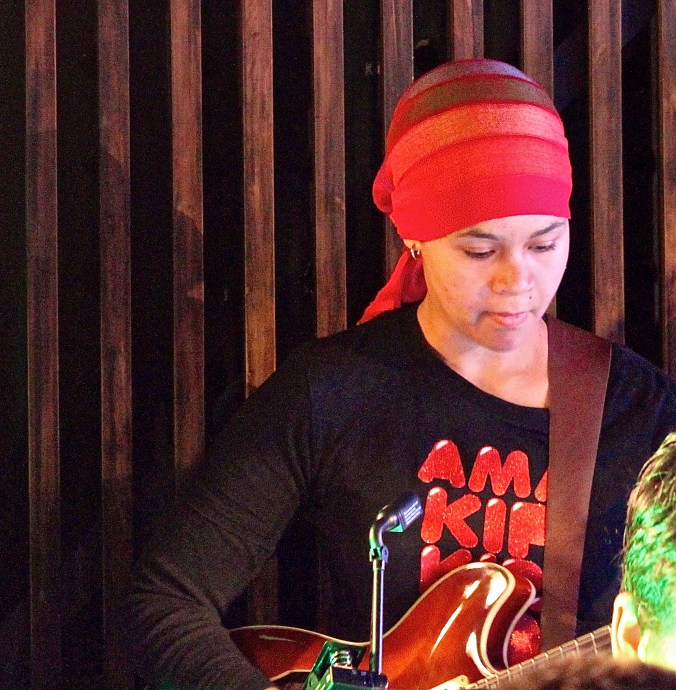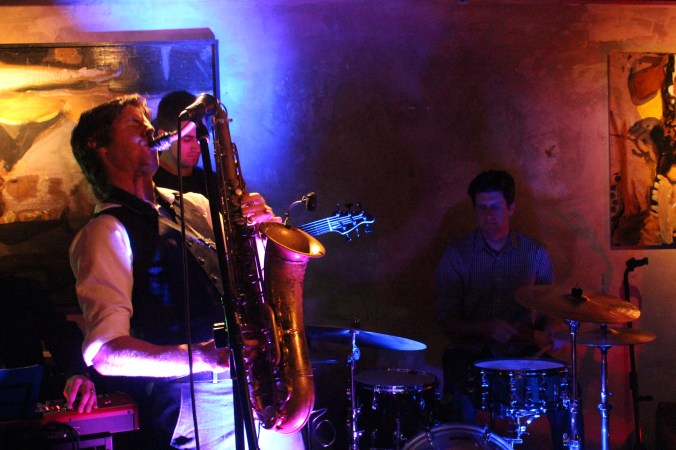
K’Party Spoilers of Utopia Album@Vitamin ‘S’

IMG_6765 - Version 2

I am writing this on International Jazz Day and reflecting on the diversity of improvised music occurring in my city of Auckland, New Zealand.  We have straight ahead Jazz, free improvised music and everything in between.  For me a livable community is better defined by its relationship to the arts than by any other measure.  Having venues like ‘The Wine Cellar’ and the ‘CJC (Creative Jazz Club)’ is at the heart of this relationship, for that is where artistic experimentation and community interactions occur.

IMG_6770 - Version 2

There is a tendency to compartmentalise music and it is the way humans like to view the world.  These subdivisions are sometimes unhelpful but in the end the meanings we invest in the descriptors are largely subjective.  I agree with the premise of semiotician, writer (and experimental Jazz liner notes author) Umberto Ecco.  His viewpoint is that humans feel compelled make endless lists in order to plot their way through a chaotic world.  It is a way of remembering ancient pathways, while embarking upon new and often scary ones.  In the world of improvised music the riskier path is always taken and the charts are abandoned at some point.  This music embraces the chaos and seeks out new patterns and motifs, however fleeting.  Using charts (whether Braxton like or traditional notation) the form is merely the starting point.  In this way both ancient & future are embraced.

IMG_6747 - Version 2

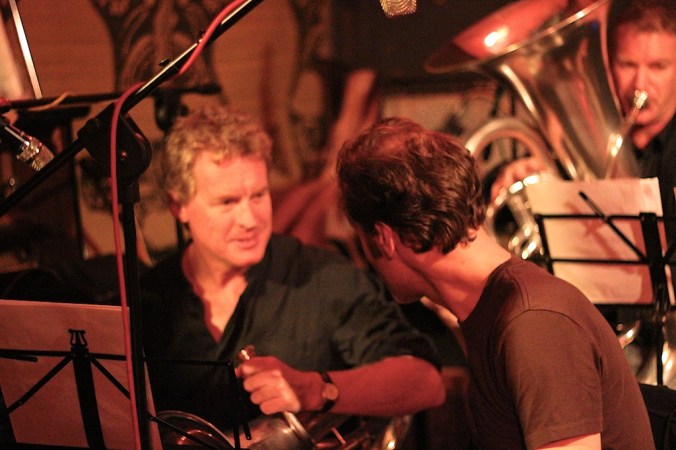
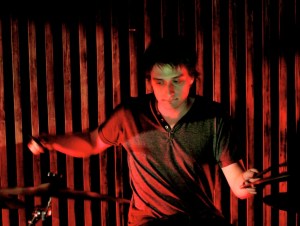
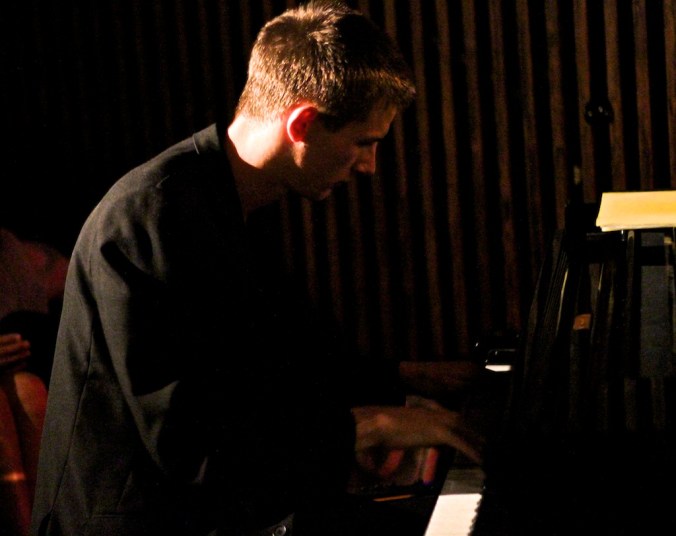
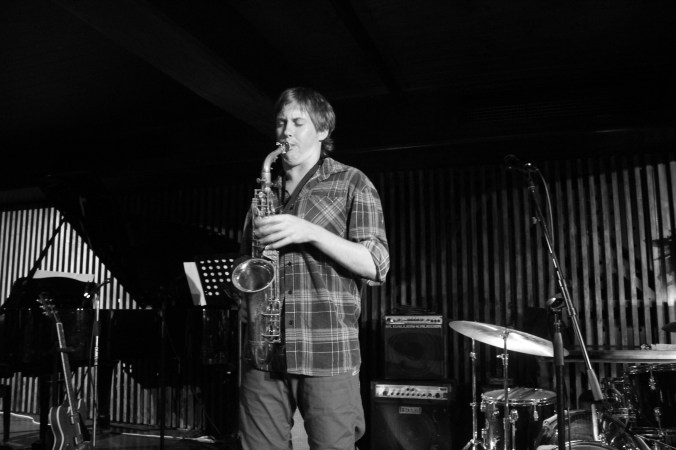
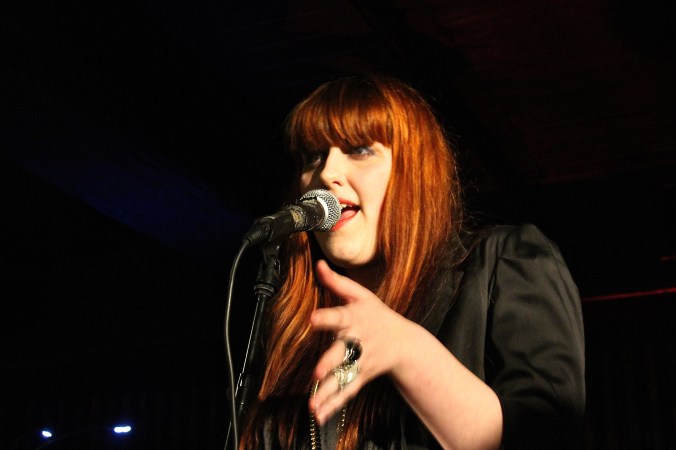
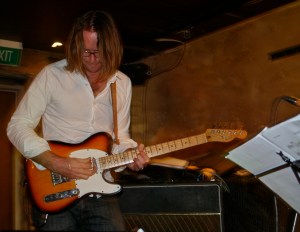
The K’Party Spoilers of Utopia (formerly T’Party Spoilers of Utopia) is a nonet led by vibist, tenor horn player and musical explorer John Bell.   His vision has been the guiding force for this extraordinary grouping of musicians and it is respect for him that spurs them on.  I have known John for less than a year and I find him an immensely likeable and down to earth person.  Beneath that matter of fact exterior lurks a keen mind, teaming with profound musical insights.  I have read and re-read his exegesis on the Albert Ayler legacy and his views on alternative music are well-developed and worthy of examination.   Like all musicians he has many facets to his character.   When I asked him recently how long he had been a musician he casually replied, “quite a long while, but at one point I abandoned music for motorcycle racing”.   “Do you still race motorbikes” I asked incredulously.  “Definitely not he said”.  I wanted to probe him further on this fascinating topic but the conversation turned back to music.   On reflection I cannot think of a better career path for an avant-garde musician than motor cycle racing.  Both are high-wire acts.   I am wondering now if I imagined the whole exchange. Time will tell.  IMG_6744 - Version 2

I’ve been aware of the ‘Spoilers’ for a year or more and have seen them play on a number of occasions.  The collective began as a vehicle to explore Albert Ayler’s legacy and for a while you could hear brassy interpretations of the ‘The Truth Goes Marching In’ or other compositions by Ayler.  There is however no such thing as a cover band of free Jazz offerings and band was always centred around John’s own compositions or his interpretations of Salvation Army and various evangelical hymns.  In more recent times the repertoire has evolved to include compositions by band members.  With John on hand to arrange, contribute his own charts and encourage, the project has finally been shaped into the ‘Spoilers of Utopia’  album.  There are so many good compositions and vignettes in this music that singling out the individual musicians for praise would be a Herculean task.  I can only congratulate them all and hope that there is more to come.

I have seen the band described as the purveyors of ‘apocalyptic’ sounds or ‘tongue in cheek’.  I am not so sure about that, as there is is both structure and chaos in their music.  The familiar sits comfortably with the unruly and the sweet with the sour.  That sounds more like modern life than doom and gloom.   Out of the completely free you will hear snatches of raw beauty and just as quickly the beauty dissolves into dissonance.   I would call that a Zen koan – Life is a deadly serious stupidly happy joke.

There is no crying  declamatory saxophone voice on this album (as there would be with an Ayler recording).   This is a brassy sound closer to the military bands and to the street bands of the church militant.  Any analysis of New Zealand’s colonial history will reveal a proliferation of such bands.  Add in a Moog, squeeze horns and a skittering electric guitar and you have arrived at the Spoilers doorstep, Jazz April 2013.  This is a manifestation of avant-garde New Zealand.

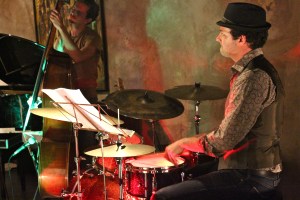
The Wine Cellar (Vitamin ‘S’) is a place for experimental and improvised music and under the watchful eye of out-guru Jeff Henderson it flourishes against all commercial odds.   It is like the CJC located in a basement and in this case, deep in the bowels of Karangahape Road.   Visit the website and call by some night.   The music is can be utterly ‘free’ or follow a more structured pathway.   It is always experimental though and improvisation is at its core.

John Bell left New Zealand for Korea two days after the album release gig, our loss.  He will be sorely missed in New Zealand but the music goes marching on.  We have a lot to hear from his band mates yet and I am already picking up whispers of new projects.

IMG_6796 - Version 2

What: ‘Spoilers of Utopia’ Album release gig.  To purchase a copy visit iii xv or the ‘Spoilers of Utopia‘ FB site

Where: The Wine Cellar – Vitamin ‘S’ St Kevin’s Arcade off K’Road

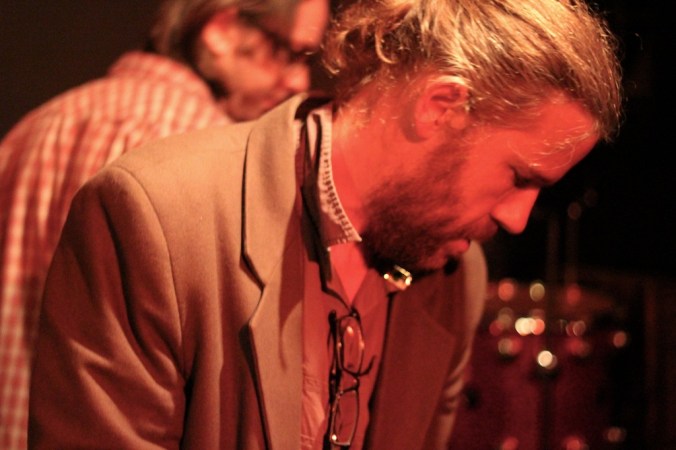
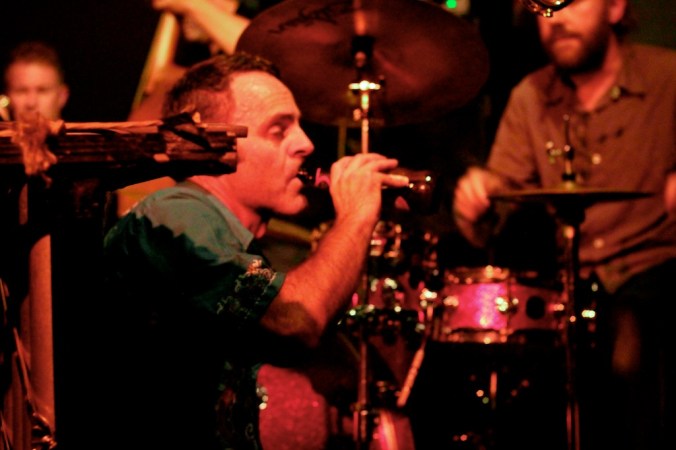
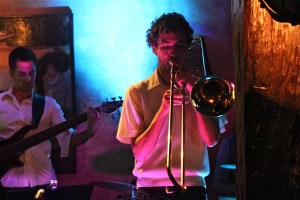
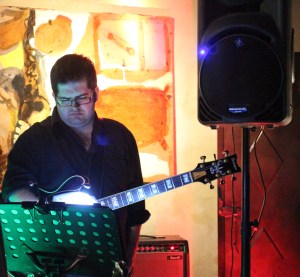
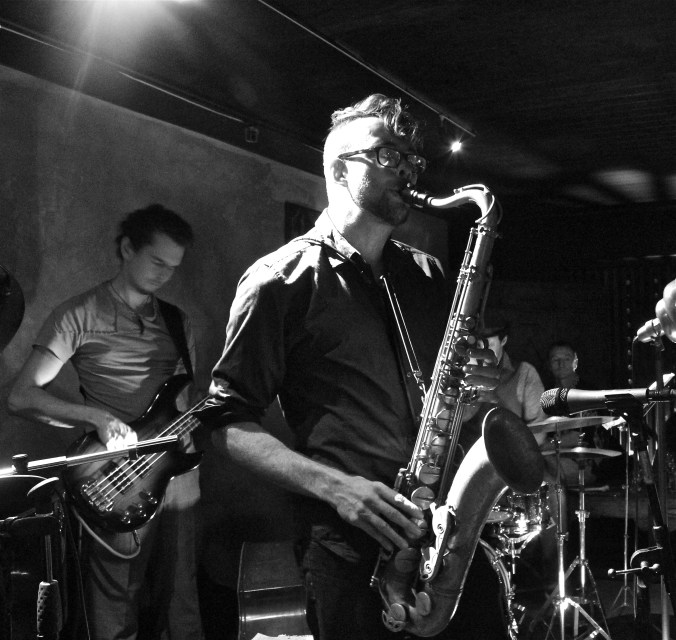
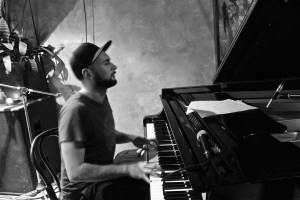
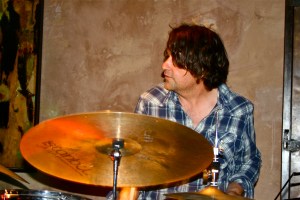
Who: K’Party Spoilers of Utopia – led by John Bell (vibes, tenor horn, misc sounds), Finn Scholes (trumpet, flugal horn), Ben Zilber (trombone), Don McGlashan (euphonium), Neil Watson (guitar), Owen Melhuish (tuba), Darren Hannah (double bass), Chris O’Connor (drums), Kingsley Melhuish (trumpet, flugal horn, trombone, tuba) + Cameron Allen (Moog), Gerard Crewdson (trombones), Jacob Unuia (pau), L J Unuia (pate), Tua Meti (pati)

This has been a Jazz April gig

WE SHALL NOT BE QUIET

2nd Line parade taking it to the philistines. All music is political but some more so.

ausjazz's avatarAusjazz Blog

FLASH MOB MARKS MOMENTOUS OCCASION: The Melbourne Jazz Co-operative’s 30th anniversary, Fed Square to City Square, Friday 25 January 2013

I was half expecting a loud protest, with discordant horns blaring their displeasure at the sudden cessation of funds to the co-op from Arts Victoria, accompanied perhaps by deep grumbles of drums and strident sounds of reeds run dry.

What eventuated was a demonstration that an improvised gathering of musicians can add to the life of a city, as well as a signal to the holders of purse strings that jazz musicians will not sit quietly in a corner and come out to play only at festival time.

It was great to see so many musicians in procession from Fed Square towards the much diminished City Square space across Collins Street from the town hall. But in my heart of hearts I yearned for the megaphones and banners and chanted…

View original post 647 more words

Rebecca Melrose Super Band @ CJC

IMG_6272

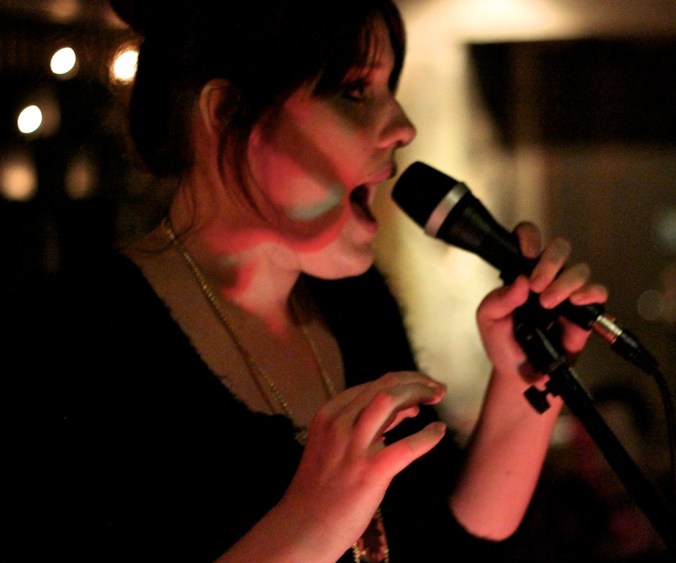
Rebecca Melrose is fairly new to the Auckland scene but she is already gaining a reputation for excellence about town.  Although young she has several recordings under her belt and her career is gaining momentum.  She is a singer/songwriter with an engaging voice and this gives her considerable scope.  It means that her own material gets aired alongside that of Gretchen Parlato and Esperanza Spalding during a gig.  This was her second performance at the CJC (Creative Jazz Club)

Parlato and Spalding are clearly strong influences for her but she can also sing challenging standards from an earlier era.  She not only choses well when adding standards but executes tricky numbers superbly.  Like many emerging singers of the post millennium she has a multi genre appeal and whether she moves into a more ‘soul’ space is a moot point.   On this night she was a primarily a jazz singer and if the enthusiasm of the audience is anything to go by that route will work very well for her.

IMG_6268 - Version 2

Last year she was more tentative during her between number introductions, but that hesitancy has now fallen completely away.   The Rebecca that we saw tonight was sassy, confident and on top of her game.   She played with the audience and tried out various lines of patter.   Not all of the jokey asides worked as intended (some went over very well) but it didn’t matter a damn and her good-natured handling of the audience captivated everyone.   She is on the right track here and I encourage her to keep going in this vein.   Music is a performance art after all and Jazz and banter go together like the reverse sides of a rich tapestry.  IMG_6273

The last time I saw her perform she had Dixon Nacey on guitar and Andrew Keegan on drums.  This time with a much bigger line up she utilised the additional scope that this afforded her .  She performed several times with singer Chelsea Prastiti (once in duo doing the Esperanza Spalding arrangement of the Jobim Tune ‘Inutil Paisagem‘ – which was magical to say the least ).  In other numbers as a quartet, quintet or octet  This set list struck out for higher ground and the risk paid off.

On trumpet and flugal was Liz Stokes, who stepped up with an impressive solo in the second set.  Alex Ward did a great job on piano and especially on ‘Lush Life‘.  I have not seen him play very often and enjoyed his contribution as he tackled numbers that were often demanding.  It was also good to see Jarad Desvaux de Marigny (drums) and Eamon Edmunson-Wells (bass) teamed up again.  This pair work extremely well together and have a more subtle colourist approach which is especially suited to singers and the less percussive of piano players.  On guitar,Manaf Ibrahim and on Tenor Scott Thomas.

In guest spot was Callum Passells who played a couple of numbers which absolutely floored me; especially his masterful alto solo on ‘Lush Life‘.   Every note in that solo was perfectly placed and with the rhythm section meeting the challenge, we were given a rare treat.   I will say more about Lush life later.  IMG_6288 (1)

Rebecca’s own compositions are interesting as are the modern standards she likes, but I have especially singled out the two older standards for praise.  ‘Tea for Two‘ is not terribly challenging as written, but as a singer you immediately fall under the shadow of Ella, Anita and Frankie.   The tune was written in 1930 by Tin Pan Alley song plugger Vincent Youmans,who was unsure if he liked it at first.  The lyricist Irving Caesar later admitted that his lyrics were intended only as a stop-gap. they never were replaced thank goodness.  The song is from the musical ‘No, No, Nanette‘ and it quickly became a runaway success.   Why this song works so well for Jazz is exactly for the reason Youmans worried about it; a simple form.  There is so much an improvising musician can do with it.  Before long Art Tatum had played it (1933), Benny Goodman (1937), Fats Waller (1937),  Django Reinhardt (1937), Dave Brubeck (1949), Bud Powell (1950) and Thelonious Monk 1963.   The singers who performed it were legion but Anita O’Day absolutely tagged it as her own in ‘Jazz on a Summers Day‘.   Rebecca quoted from Anita, took the number at the same fast pace, but wisely interpreted it in her own way.

The other track that I can’t resist posting is Rebecca’s ‘Lush Life‘ by Billy Strayhorn.  This song is the antithesis of  ‘Tea for Two‘ as it didn’t emerge from the Great American Songbook and it is very challenging to perform.   To my sensibilities it is almost the perfect song.  This is one of the great Jazz Standards and apart from Frank Sinatra’s version it has not been sung much outside of Jazz.  Sinatra only performed it once and refused thereafter, which is one of the enigmas of his musical life.  Recently unearthed rehearsal tapes from the recording session with Nelson Riddle provide an answer.  He struggled with it and at one stage blamed fly dirt on the page for making ‘a very hard song harder’ (Google Sinatra, ‘Lush Life’ and you can hear that rehearsal).

The definitive version for most is probably the Johnny Hartman/John Coltrane Impulse recording (1958).   IMG_6286 (1)My personal favourite is the more recent Fred Hersch /Andy Bey version (from the ‘Passion Flower’ album on Nonsuch) – quietly dedicated to gay Jazz musicians past and present.   Strayhorn was of course an out-gay man at a time when this was almost unheard of.   Ellington revered Strayhorn and regarded him as his chief calibrator (‘my other hand’).   Oddly this tune which written in 1936 remained unperformed until 1948 when Strayhorn performed it in a duet with Kay Davis.   The song was never adopted into the Ellington repertoire and did not become famous until the 50’s.   Its gay innuendoes is probably one reason but its sophisticated complexity is certainly the other.  Well done Rebecca and well done her accompanists’.    Callum Passell’s alto solo was to die for as he breathed the musical history of the song into the solo.   I liked the drums and bass contributions and especially Alex Ward’s sensitive but firm rendition.

Rebecca is a young woman with a big voice.   It will be interesting to see whether she keeps her Jazz chops honed or whether she’s tempted toward singing mostly soul.  Either way the best of luck to her.

IMG_6261 (1)

Where: CJC (Creative Jazz Club) 1885 Bar Auckland

When: 27th March 2013

Who: Rebecca Melrose Super Band

Rebecca Melrose band /New Collective Experiment@CJC

Wednesday 18th July was a double bill and the first up was ‘The New Collective Experiment’ – Adam Larson (alto), Ross Larson (electric bass), Frank Conway (drums).   The band had stated their intention from the first few notes and having marked out their wide open territory they dug deep.   The act was billed as ‘creating music out of the moment’ and that is exactly what they did.   The saxophonist spun out a kaleidoscope of images while the bass and drums responded.  The strength of the Alto brought it to the forefront and while the interplay was a little less even during the longest pieces, the horn held the focus.   There was one number at the end of the first set in which Dixon Nacey was invited onto the bandstand.   Having Dixon on the bandstand will ultra enhance any performance.

The second act on the billing was the Rebecca Melrose band (an octet).   This was her first CJC gig as leader.   Rebecca (vocals, leader) gives Jazz numbers a hint of soul.  What quickly becomes evident though is her preparedness to confront more challenging Jazz material unflinchingly.   Like a number of young singers she can scat with ease and it is during these moments that her inventiveness comes to the fore.  I was intrigued by the choice of material which ranged from the easy-going to the braver forays. A case in point was the wonderful ‘Zhivago’ by Kurt Rosenwinkel.    She had wisely chosen to do this number as a duo with Dixon Nacey.

If you can’t get Kurt Rosenwinkel to fly in then go straight to Dixon.   My god he was wonderful and his fans in the audience were delighted to hear him eating up the changes of this deceptively complex song.  He knew just where to place those chords and when to back off.   Rebecca knew that she had a unique situation on her hands and she responded extremely well.    This is the clip that I have put up (especially after a number of people in the audience emailed me their wish lists).  The sound in the clip is a little guitar heavy but that is the fault of my HD Video equipment.  It was more balanced in reality.  This is a new standard for those with the chops to take it on.  I really liked the lyrics but had never heard them before – I learned that Rebecca had penned them and that all other compositions were hers.

The octet created a nice rounded sound and when they hit the sweet spot it was a joy to listen to them.   I have heard the Bass Player Eamon Edmunson-Wells and the drummer Jared Desvaux de Marigny before and they both impress.   Jared appears capable of fitting into many diverse situations and he managed this one with consummate ease.   Liz Stokes on trumpet is also a frequent performer at the CJC.   The remaining band members were: Ben Devery (piano), Manaf Ibrahim (guitar), Scott Thomas (tenor sax).  The venue was the Creative Jazz Club of Aotearoa (CJC)

Andrea Lisa – R & B album ‘So Sweet’

Mid summer 2011 I was walking in the Wynyard Quarter (Auckland’s waterfront area) when the warm sounds of Jazz guitar voicings drew me into a courtyard.  The guitar was being played by a diminutive young woman with a lovely Ibenez JSM hollow-body guitar.  I soon learned the name of the guitarist and introduced myself.   This was my first meeting with Andrea Lisa Groenewald.

Between the sets we spoke of Pat Martino, John Scofield and groove anthems like ‘Sunny’ and its reharmonised form ‘Red Clay’.  I also learned that South African born Andrea had just graduated from the NZSM Massy Jazz School.   We exchanged the odd email and before long I received a notification that the ‘Alex Churchill- Andrea Lisa Band’ would be playing two sets at the CJC – emerging talent night.    That night established Andrea’s Jazz chops before a wider Jazz audience as she and Alex convincingly tackled a mixture of their own material and some complex tunes like Pat Metheny’s ‘Have You Heard’.  To hear this so skillfully executed by guitar, keys, voice and sax playing unison lines was a rare treat.  (see earlier reviews)

Andrea playing with AJO

Fast forward to late 2011 and Andrea cut an R & B EP titled ‘So Sweet‘.  Andrea was always going to do well.  She is a great guitarist, has a smokey ‘Nora Jones’ type voice, writes interesting material and she looks the part on the band stand.  Since playing that first gig at the CJC, she has gigged extensively around Australasia and has toured with the famous Jonathon Butler Band.   Jonathon Butler is a well-known R & B/Jazz Fusion singer (also hailing from Capetown).   Andrea and the band have been touring Sydney, Perth and Brisbane where they have established quite a following.  They return to Australia this week.

The EP has six tracks: two of them instrumental.   ‘Paint the Sky’ (Groenewald) is the tune that I am most familiar with.   This has been a tour-de-force for Andrea and in more wide open contexts it has been a good vehicle for improvisation.   The other tracks are ‘So Sweet'(two versions), ‘Imaginary Me’, ‘Love Thang’ and ‘Ambition’.  This disk is squarely aimed at the R & B market and because of that I must put in a disclaimer here.  I am probably not qualified to make critical forays into that genre.  What is quite evident however is that this is a terrific album.  Andrea has had impeccable Jazz training and because of that she is very well equipped to embark upon this new journey.  As a singer songwriter she will find a ready market, because she has talent and because she has her own compelling story to tell.  The band members are: Andrea Lisa – electric and acoustic guitar, vocals.  Alex Churchill – keyboards, alto & tenor sax. Nicholas Taylor – bass, Lenny Church – drums.   Guest artist: Lewis McCallum – flute.

The EP is available on iTunes as a download, or you can follow the group on facebook.com/andrealisag

I just had to add this last clip in.   As you will see it is a shaky phone recording of Andrea soloing at a Sydney gig.   Taking on Chick Corea’s ‘Spain’ is challenge enough, but to construct such an amazing solo is mind-blowing.   I saw this clip minutes after the gig and watch it often.

A Plea:  You were great with the AJO two weeks ago and you owned ‘Spain’.   I wish you the very best in your R & B Career Andrea, but come home and play for us occasionally – we like your stretched-out hard blowing Jazz as well – spare us a Jazz moment when you can.

Jazz Track Blindfold test

This is a blindfold test with a slight twist in it. It will reveal who has been paying close attention to the Jazz press and who has a grasp of essential  Jazz history.

(1) Identity the tune, (2) The composer, (3) The original location where the recording occurred, (4) The trio members in the original album, (5) Name the original album, (6), Identify where this version was recorded, (7) Name the trio members who recorded this version, (8) Name the odd man out.

The tune was by genius bass player Scott LaFaro and titled ‘Gloria’s Step’.   It appeared on the famous ‘Bill Evans Live at the Village Vanguard‘ albums in the early sixties and tragically Scotty Lafaro died in a car crash within weeks of recording this masterpiece.    The third trio member was Paul Motian who became famous because of that recording.   What you are hearing is not from that album, nor from any of the hundreds of Bill Evans live or studio recordings available.

This version is by Chick Corea which I find quite amazing as it is a long way from Chick’s usual style.  He is accompanied here by Eddie Gomez and Paul Motian (both key Evans alumnae).   Chick is obviously the odd man out here (as he was never part of any Evans lineup), but he is brilliant on this two-CD tribute recording.   Eddie Gomez shows a different side as he consciously plays in a lower register than usual for him and can be heard intoning as he plays (like Slam Stewart).   The album is called ‘Further Explorations’ (Concord) after an Evans, Lafaro, Motian album called ‘Explorations’ (Riverside 1961).  Paul Motian died shortly after recording this, so his Jazz Journey began and ended playing tunes like Gloria’s Step.  It was recorded over several nights at the Blue Note in New York.

Spiral @ CJC

Andrew Hall, David Hodkinson, Steve Harvie

Spiral is a band coming from a multi genre perspective with a sound blending funk, soul, samba, jazz and blues (and a hint of reggae).  They have a nice brassy sound and it is their horn dominated front line which pulls them closer to the Jazz end of the spectrum.

Spiral appeared at the CJC on Wednesday 9th April and in deference to a Jazz focussed audience they stretched out on a few numbers.   Their big exuberant sound easily dominated the room, with trumpet/flugal player Finn Scholes capturing a lot of attention with his occasional displays of bravura.   This is a band of many parts but for the CJC club audience it was the tightly executed high-spirited ensemble playing that they most warmed to.  When the band where playing the head arrangements they took the world by the scruff (sorry dog metaphors are hard to shake off this month).   They were so familiar with their material after performing around the country that the charts were only given a cursory glance.  It was that familiarity that brought the sound together and when a solid groove was called for the band delivered instinctively.

The leader of the band saxophonist, composer Andrew Hall was also the vocalist and most numbers began and ended with a few vocal choruses.   He took a number of tenor solos during the night and showed that he was in charge without hogging the limelight.   Andrew plays horns and winds but stuck to tenor on this night which gave more heft to the music.

Anthony Hunt was on keyboards and I liked his Jazz voicings.  He mostly used a Fender Rhodes sound.   He played a very nice Nord Stage and that instrument is capable of delivering anything that a band like this could demand from keys.

Finn Scholes is the player I am most familiar with.  His confidence on stage, his ability to introduce various stylistic concepts and his obvious chops make him the stand out.  We will be hearing and enjoying his playing for a long time to come I suspect.

Joel Vinsen played a nice Ibanez guitar and he utilised the variety of pedal effects at his disposal tastefully.  When the moods of the numbers changed it was his comping or licks that guided the others.  

Steve Harvie is a well-known drummer about town and he has played at the CJC before.  His drumming is tasteful and not over embellished.

Dave Hodkinson was on electric bass and he knew what his role was and performed convincingly.    In a small room an electric bass that is too high in the mix will drown out acoustic instruments.   He did not do this and his timing and lines were good.

Alex Berwick joined the band part way through the evening and his trombone added exactly what was needed to the overall sound.   He soloed nicely and reinforced the view that I had formed that the horn line were the stars.  

Jazz Cats – Facing a world without Plum

Plum

This morning my small sleek black and white cat Plum died while I stroked her silky old head.   This cat had been deeply loved by my family and she always appeared to share my love of Jazz.   Whether scientific or not I will continue to believe in Jazz Cats; magical animals who occupy a revered place in the Jazz pantheon.   I am not alone in making this connection as the linkage between Jazz and the cat is cemented forever in the hipster argot.   Plum always appeared when I was about to put a CD on and she would ‘lay-out’ hassling for food until the music was finished.    She always spent time sitting on the knees of my Jazz buddies when they called by for a night of music.    Any Jazz activity seemed to please her and she especially liked my friend Stu.

The ‘hang’ will never be quite the same without her; diminished by her absence.   Her soft footfall and shadowy presence filled a room to capacity.    She and I were all the company we needed if my partner was out-of-town.  Jazz cats, digging the sounds and hanging loose in the vibe.

I would watch her with interest if Dolphy or Sun Ra emanated from the sound system.   Nothing was too challenging and no chord too dissonant.   As long as they were Jazz chords and the pulse was right she was fine with it.   I never tried her with Kenny G as I don’t believe in cruelty to animals and I don’t own such music – Plum and I had an understanding of what was cool and that trust was never knowingly violated.

I miss her so much it hurts and every shadow that falls causes me to start suddenly as my hand involuntarily stretches out to stroke her.

She now lies in the cold garden earth below the Coral Tree and I realise that there is only one remedy.   To play Jazz tunes about cats.

‘Baby Plum’ – Jacky Terrasson (What it is),  The Cat’ –  Tom Dennison (Zoo album).    That’s my friend Roger player tenor on the second track – I am so glad that he blew his horn so movingly on that song.

I loves ya Jazz Cat Plum.

Ottignon Bros Tour – Crazy in the moment

Ottignon band @ CJC

Matt, Eden & Dan

Seeing the Ottignon Brothers perform is to be put in mind of a very clever vaudeville act. There may have been more gags in a vaudeville act (well that is not strictly true) but the interaction between band and audience was honed to perfection.  The jokes were often of a musical nature and none of them missed the mark. This was great fun, highly inventive music and above all top class entertainment.

I first saw the Ottignon brothers when they were living in New Zealand and again some years later after they had moved to Australia. Aron was regarded as a prodigy on piano and I recall seeing Matt performing high wire saxophone acts somewhere. The brothers are now scattered around the globe, with Aron living in Paris and Eden & Matt based in Sydney (but gigging all over). The Australasian tour gave us a chance to connect with their new music and for the brothers it was a chance to play together again after 8 years.   The audiences responded by packing out their gigs.

Watching them communicate on stage was fascinating because they didn’t appear to need the cues that others rely on.   This apparent telepathy was advantageous to them as they responded to each other with lightning speed. The spontaneous twists and turns of the gig required them to be fleet-footed.

Aron

The way they had arrived at their set list was fairly post-modern and to lesser musicians it would have been challenging.  Only days away from the first gig in Australia they had put up a Facebook post; requesting ‘friends’ to nominate the tunes they should play. To be selected, each tune needed to attract at least two votes and predictably the suggestions were quirky. ‘Black and Crazy Blues’ (Roland Kirk), ‘Eden’s ukulele Song’ (Eden singing with ukulele, composed days before the gig), ‘African Mailman’ (Nina Simone), ‘Running Up That Hill’ (Kate Bush), a Medley of Sly & The Family Stone numbers, The poem ‘Trees’ which had been suggested by their Grandmother (Edwardian war poet Joyce Kilmer), ‘God save the Goat’ etc.  You get the idea.

The diversity of the material held the audience’s attention throughout, but it was their good humour and the solid musicianship which clinched the deal.Eden & Dan

Each number was a little crazier than the last but there were a few numbers which will linger in my memory for quite some time.  When Matt played the ‘Sly and the Family Stone’ medley the tone on his tenor morphed into a deep breathy rich sound.   On ‘Its a Family Affair’ he reminded me of Pharaoh Sanders and I asked him about that after the gig.   He told me he had been taking an interest in some Ethiopian tenor players of late and that they cultivated that particular sound.  The other number that I liked was more of a novelty and that was when Matt played his iPhone using the ‘Gyro Synth’ app.   This looked easy but it is not (I know because I have the app).  Matt has played with Lou Reed, Brain Wilson and Mike Nock among others.

Throughout Aron laid down solid percussive grooves on the piano and lived up to his considerable reputation.  In Europe he fronts a group called ‘Aronas’ and is featured in a number of well-known bands.   Eden showed his chops on double bass and electric bass, but also ventured into song and ukulele as the set list demanded.   Eden is the leader of the ‘Sun Searchers Collective’.  Dan Kennedy was on drums for the New Zealand leg of the tour and Kiwi’s are familiar with his tight propulsive, energetic style.    Dan is a favourite at the CJC and they could not have picked better for this gig.

Matt performing on iPhone.

http://youtu.be/eSDbUwLIuXE

Aron pleasing large crowds in the South of France

http://youtu.be/O9ARpmvWrHU

Natalia Mann interview

Hi Natalia,

I would like to thank you for agreeing to this written interview as I know how busy you are.   This will serve as an addenda to the post on your album ‘Pacif.ist‘ and give context to the Pacifica/Turkish connection.  Above all it will provide an insight into the charts and your choice of ancient and modern instruments. (read in conjunction with previous blog)
Q. Can you tell me a little about the harp you played at the launch?     It seemed smaller like the Celtic harp and wonderfully ornate.  Was that the one that you played on the recording?
Hi John.
 The harp I played at the launch is a nylon strung harp made by Andrew Thom in Tasmania.  It is a standard size for larger celtic harps – 36 strings –  though they can come in any size.  The ornamentation is actually quite industrial – a silver aluminium frame with black dots, and some subtle functional wooden detail. It has a carbon fiber soundboard and an aluminium soundbox covered with leather. But the shape of the arch and column itself is amazingly organic, comparable to dripping glass, with a koru curl.  The “Holden Red” colour makes it quite sexy, like a stiletto.
I played this harp on one piece on the album – Time.  Although most of the pieces were written on lever harp, when it came to recording I preferred to use the concert harp – the sound is richer and deeper.  I used the lever harp on Time because the composition includes string bends that are a sounds you get particularly with levers.  For the rest of the recordings I used my Lyon & Healy Style 23 Concert Grand (a big classic ornate wooden harp like those you see in the orchestra).
Q. Is some of that music improvised or were you following a score (or Jazz chart)?
There is improvisation in all of the pieces except for Interlude for Grozda, which I wrote out very quickly one day and I played that from the notes because I really liked them.  Usually I make a kind of jazz chart with melody, and we go from there.  Generally my aim is to improvise, so we’ll play the first round from the sheet and then expand on the ideas after that.  I love the way Aksam Duasiturned out because there’s so much improvisation in it.  It had one of the most minimal charts.   Greenstones is a piece that is usually ‘set’, ie, I usually play pretty much the same thing every time. In this version on the album, there was an extra melody chasing me all the way to the studio that day.  It wanted to be included in the recording. So when I got there, I tried to make room for the extra phrase.  It resulted in an improvised introduction of 2 or 3 minutes which I think worked very nicely with Richard NunnsTaonga Puoro.
I love improvising, and if I’m not improvising, I don’t mind making mistakes so that I have to improvise my way out of them.  Even if I’m playing the set tune, it’s still got to feel like an improvisation.  That’s the good music.  That’s what I’m chasing.
Q. Were those compositions originals or created out of traditional motifs?
That begs the question ‘Is there such a thing as a completely original work’?  I try to keep things as original as possible.  I try to let the music tell me how it goes rather than the other way around.
The only piece in which I really used a particular template is the first part of Akşam Duasi (Evening Prayer).  That melody came about one day when Izzet and I were looking at a traditional Turkish rhythm called Hafif which is a single bar of 32 counts.  You say “Dum tek tek, Dum tek tek, Du-um te-ka du-um tek tek-a…”  like this.  I made up a melody to help me remember the rhythm, we liked it and it became one of our tunes.  The second half of that piece came about when we were having a lukewarm jam one afternoon and the ezan (call to prayer) began. Suddenly the instruments got hot and took off as if on their own accord, jamming along with the ezan.  It’s simple and it feels good – familiar but from where?
Certainly in my early compositions, I used things that were ‘evocative’ for me, colours and feels from genres I’m familiar with. Greenstones has obvious Celtic influences, but begins with what for me is a bassy Polynesian rowing rhythm.  I recall now that it’s melody was influenced by speech and the motivic nature of the Kanun (Turkish zither).  As I got more comfortable with composing, I became more excited by melodic or harmonic movements that would surprise me.  These days I spend more time trying to figure out what it is that I wrote.
Q. The quality of the percussion work was extraordinary and I gather that your husband is the drummer.   How many percussion instruments were used apart from a normal drum kit.
Yes, Izzet Kizil is an extraordinary percussionist, and is my husband, and is a big influence on my work.  He has a very advanced, distinctive, intuitive personal style.  In fact he is not really a drummer, even though he played kit on these recordings.  He specialises in Middle Eastern hand percussions.  His main instrument is the Turkish Darbuka.  The other instruments he used were Turkish Bendir (a frame drum similar to the Irish Bodhran, which he plays with hands and brushes),  Daf, a Kurdish and Persian frame drum like the bendir but with dangling rings on the inside of the drum which makes the thunder sound that I love.  You can hear him play Kanjira (a small hand-held Indian drum with one zil) and Kup or Gattam (Indian clay pot) on Uc Adim.  He also plays a number of small effects percussions like clusters of seeds and bells.  He sets himself up a little kit made of the above instruments and a small snare and cymbals, which he plays with hands, brushes and sticks.  In Butterfly Effect he also plays percussion with his voice and fingers hitting his mouth and throat.
There is another drummer on the album and that is Riki Gooch.  Because Izzet isn’t a regular drummer, Riki noticed that some of the grooves could use some firmer ‘laying down’, (Gul Cayi, Sunshine Sister, Uc Adim), and he added in some very sensitive cymbal and highhat to complement what Izzet had already done.  Riki and Izzet met in Wellington, spent time and played together, so it was a nice vibe rhythm section even though the recordings happened on either side of the globe.
Q. Is there any connection between your music and the Sufi musical tradition.    Many Jazz groups in southern Europe now use an Oud (Italy especially) and some extraordinary Sufi trained musicians like Dhafer Youseff are having an impact.   I have seen him perform twice and it was a profound musical experience.
I have been very influenced by the sounds of Sufi music and musicians in Turkey, primarily the guitarist Erkan Ogur, and his albumsFuad and  Hiç, the title of which is a Sufi concept meaning ‘anything and nothing’.  In fact Mevlana or Rumi, the father of Sufism, was based in the town of Konya in southern Turkey during his enlightenment period with the philosopher Şemş.  Today Konya is called ‘the kitchen’ of pure Turkish classical music particularly because it is connected strongly with the study of Mevlana.  When I first came to Istanbul, I played mainly with Turkish classical musicians in Sufistic concerts. I will add here that the reason I was very attracted to Turkish music was not only for it’s beauty, but also the fact that it is an artform which melds improvisation with the written note. Recently I performed repertoire from the Sufi composer Yunus Emre with a singer at a Mystical Music Festival.  At that performance I was encouraged to improvise deeply and generously, because this is one of the expressions of union with the divine.
Izzet comes from a Sufistic tradition – his father played percussion for religious reasons. Sufism is a liberal and mystical branch of Islam. Living in an Islamic country with lots of philosophical artists around, Sufism is an underlying feeling.  I think it has been entwined in the development of Turkish music over the centuries, recognisable in the sense of expansive space and melodies of emotional longing for the divine.  I work towards deepening this kind of energy in my music.
Q. Is there a strong Jazz community in Turkey?
Yes there is. It’s relatively small but dedicated.  There’s a club in Istanbul called Nardis which is a dedicated seven night quality jazz place where lots of great Turkish musicians play.   Izzet plays for a group called “Ilhan Erşahin’s Istanbul Sessions” which is a New York-Istanbul jazz triphop outfit which is very popular.  A lot of international jazz artists tour through Istanbul. There are lots of great Jazz festivals going on, musicians coming over from Europe and the states.
Q. I understand that you were born in New Zealand and are of Samoan descent.  Is that correct?   Is there a Pacific influence in your music?
I was born and grew up in Wellington, witha seven stint in Los Angeles in my childhood. My mother is Samoan and my father is Australian – Scottish English descent.  The album is entitled Pasif.ist because I think of it as Istanbul through a Pasifikan’s experience.  The music is my response to the local environment as someone who is from ‘somewhere else’ and far away.  This is the manner of the Pacific influence in my music.  It is also in the concept of feeling the vibe of the environment and being in harmony with it.  Taonga Puoro is the ultimate example of this in my opinion.  If I’m in Aotearoa with a harp, I’m inclined to play clean air music with intervals inspired by tui calls. In the Pacific Islands I’m inspired by the warmth and rhythms of the water and trees.  In fact, these experiences are my references.  The antipodes are fierce with nature.  So moving into the densely populated, polluted, urban environment and foreign soundscape of Istanbul, I both absorbed the experience and reacted to it.
Some things that are particularly Pacific to me are the introduction of Migration, inspired by bird calls and contemporary NZ classical music.  Greenstones is another one.  Seeing the social-political situation between Kurdish and Turkish communities here, it made me think about Maori and the other communities which have journeyed to Aotearoa.  In that piece I always imagine the West Coast of NZ, clear starry skies and cold air. Sunshine Sister (my homesick song) is a sunny island tune about laughing and joy, as is the second part of Aksam Duasi.  Like that, the influence weaves its way through the music.
One of the reasons I started writing tunes here was to find a middle ground where I could communicate better with my Turkish musician friends. One time at a first gig, I said to the band, “let’s just jam this one on a dub groove.”  Well, I started, the bass player came in with something slightly different, the drummer joined with something different again, the violinist changed it more and by the time it got to the second tabla player, I had no idea what we were playing, but it wasn’t any kind of dub that I recognised.  There were suddenly all these alien rhythms my ears were trying to process. It was pretty funny.  So I figured out that we all have different vocabularies according to our experiences. I wrote music that mixed my perspective with a local vibe – where there weren’t too many preset rules and everyone could bring their own interpretations.
Q How many strings on the violin like instrument?  It sounds similar to the Chinese Erhu.
The violin like instrument is the Classic Kemençe (keh-men-cheh) played by Sercan Halili.  It has a three string and a four string version, and in Time, Sercan plays an Alto Kemençe which he had designed for himself.  It is the first and only recording of that instrument.  I love it because it sounds like a raspy old man.  I love all the kemençes for their soulful vocal sound – so etheric.  The instrument is played with a bow, but balances between the knees rather than on the shoulder.  It has gut strings, and the tones are created by pressing against the strings with the backs of the fingernails. It is a very highly regarded Turkish instrument for its delicate and emotional nature. Mostly it is played in Turkish classical music settings; Sercan is quite adventurous.  He is a talented young player fluent in the Turkish classical world and working on a number of cross-over projects.
Q Have you considered doing an even more Jazz influenced album one day?   Your music on Pacif.ist swings.
Thanks man.  I like swinging. I love jazz.  I’m doing a Masters degree in Jazz at the moment, so I reckon there will be a few new tunes popping out that are more jazz influenced.
In fact the first piece of the next album is a jazz tune already.  We were going to put it on this album but felt it needed more time to mature.  That was a session with the great bass player Dine Doneff (aka Kostas Theodorou) from Thessaloniki.  I met him out in Skopje which is where I study jazz with the guitarist Toni Kitanovksi.  Dine later came to Istanbul to record on some pieces and it was such a great experience working with him.
Q.  Could you tell me your link with Rattle Records?   Steve is doing a fabulous job of recording NZ Music and a number of those albums are absolutely world-class (‘Zoo’ by Tom Dennison is my very favourite).
Steve Garden and Rattle Records have been fantastic.  I approached them with my demo a couple of years ago and asked if they’d be interested to release it on their label.  Happily, they said yes, and they’ve been really supportive throughout the process.  There are many artists for whom I have huge respect and admiration on the Rattle label, so I’m honoured to have my album in the same catalogue.  The recent output by Rattle of artists and new music is phenomenal and gorgeous.  Really a cool support for art music in NZ.  Many thanks to them.
Q. What is your connection to Bic – I gather that you have been recording with her?
I’ve been playing with Bic Runga since about 2006, when we did the Acoustic Winery Tour and I played in her band.  Since then we’ve worked together when we get the opportunity.  I recorded on Belle, the title track of her new album.  She invited me to play support for her recent national tour.  So I did the support performance, releasing Pasif.ist, and then I joined her and the band on stage for a couple of numbers.  We had a great tour, with Kody Neilsen and Michael Logie in the band.  I admire Bic’s stellar output and her musicality.  She’s always encouraged me to get my music out there.
I must thank you for the thought that you put into your answers Natalia.   I look forward to your next visit home and to any future albums.
Best wishes
John (Jazz Local 32)
‘Pasif.ist’ Natalia Mann – an Oriental Dreamscape

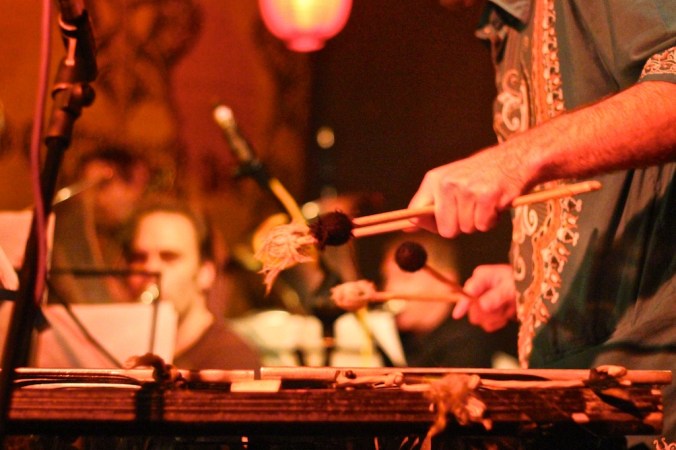
The music I cover here may not be Jazz in the purest sense but it is music that transcends the limitations of musical boundaries.  It has its own pulses and rhythms and it is improvised around themes.    This is a delicious orientalist dreamscape of the sort painted by Lord Leighton, Alma Tadema, Edward Lear and Eugene Delacroix.  It is redolent of sultry afternoons in an Ottoman palace or of the winding streets of Istanbul.   In the unfolding subtleties, one can hear the merest snatches of older themes; Constantinople and even Byzantium are hinted at but never confined.   This is not traditional Turkish music but an exotic vision of a landscape just beyond our reach.  This achieves what all great music does – connects us with a world that we would want to explore further.

In early December I received an email from Rattle Records inviting me to the ‘Pacif.ist’ CD launch and at that point I had scant information on the event.    I had every intention of requesting more details but the workaday world drowned me in trivia and I soon forgot.    One week later I was sitting in a meeting when the reminder flashed up on my iPhone; the launch was starting in an hour.

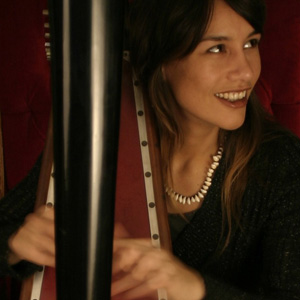
The venue was the spectacular Iron Bank building.   An imposing piece of modernist architecture towering far above the rainy Auckland streets.   The launch was held in an intimate minimalist space and the invited guests were mainly musicians associated with Rattle.  To one side of the dimly lit room was a beautiful red lacquered harp and beside it the barest bones of a drum kit (snare and cymbals).   Soon, harpist, Natalia Mann sat down to conduct a brief sound check and when she had finished I spoke to her about the lovely voicings that she was creating as she plucked and stroked the strings.   They were pianistic Jazz chords, but with all of the extensions added.   In the conversation that followed, we spoke of BeBop harpist Dorothy Ashby and of the later avant-garde stylist Alice Coltrane.   At this point, I was intrigued to hear the music, as this was a gap in my musical knowledge that I was very happy to fill.

I have long been a fan of Mediterranean, Middle Eastern Jazz and its Jazz/World Music offshoots, but I can’t recall ever hearing Turkish Musicians.   The launch used only a duo but they captured the mood perfectly – Natalia Mann (harp) and the well-known local, multi-instrumentalist Kody Neilson on drums. The album could perhaps be described as improvised World-Music but with Jazz inflexions – the sort that ECM presents so convincingly.   With top rated musicians like Tigran Hamasyan and Dhafer Youssef bridging the World/Jazz continuum we will see a lot more of this music on offer.   If you open your ears Jazzers and listen carefully, this gentle melodic music with its rich percussion will get to you.

After Natalia had returned to her busy life in Istanbul I conducted an email interview with her and this will be posted as an addendum to this post in a few days.

The Album Pacif.ist is available in download or hard copy from Rattle Records.    I would strongly urge buying the CD, as the artwork and liner notes are so good that it would be a crime against art to circumvent them. http://www.rattle.co.nz

The musicians on the album are; Natalia Mann (harp, compositions), Izzet Kizil (percussion & drums), Sercan Halili (classic Kemence & Alto Kemence), Abdullah Shakar (fretless bass & electric bass), Dine Doneff (double bass), Richard Nunns (taonga puoro [6]), Lucien Johnson (soprano & tenor sax [3]), Riki Gooch (percussion [1,2,3]), Naomi Jean O’Sullivan (gongs [9], co- writer), Serdar Pazarcioglu (violon [5]), Deniz Gungor (aqua [5]).   The album was mainly recorded in Turkey but with some instruments recorded in New Zealand.  That rich-voiced exotic string instrument you hear is the ancient Kemence (see interview).

After I had written this, I saw an article in the latest Downbeat about the growing Jazz scene in Turkey titled ‘Emerging Turks’.  The New York times has also highlighted this in a recent article.     Natalia is New Zealand born and of Samoan/European descent.   She is at present doing a master’s degree in Jazz at Skopje and is in demand with various European orchestras.   She loves Jazz and has projects on the way which will lean more in that direction.     

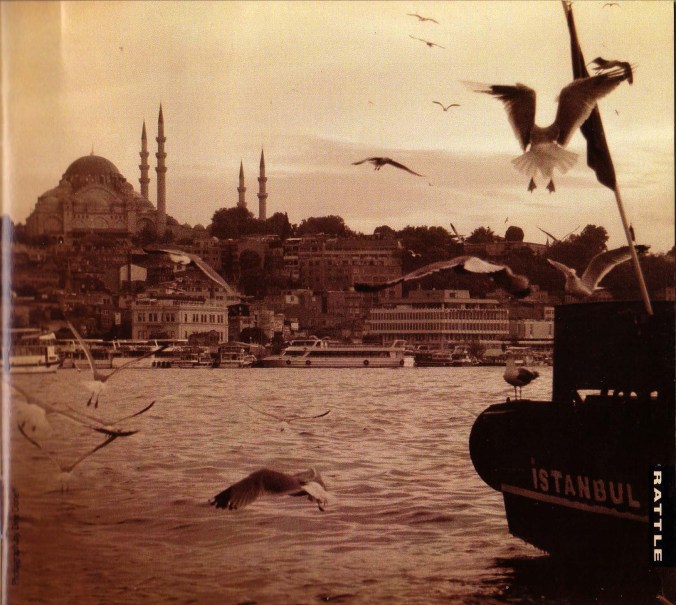
Istanbul – Pacif.ist cover art

Final Score 2011

A personal view on the best of the best Jazz albums of 2011.

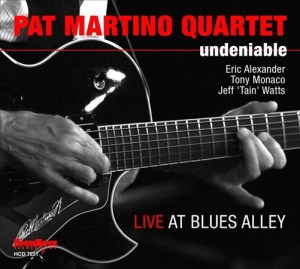
(1) My pick for best album of the year is – ‘Undeniable’Pat Martino Quartet – Live at Blues Alley *****. This is as close to a perfect album as it is possible to get and the move from ‘Blue Note’ to the ‘High Note’ label has worked well for Pat. Because it is a live recording and because there is a magical interplay between the band members and the audience the band drops deeper into the groove than ever. I love Jazz guitar and I love Pat Martino for his warm groove vibe. He is always superb but on this album he has reached new heights.

The trade mark sound is still there but the musical ideas appear fresh and exciting. While every track is near perfect, the last track ‘Side Effect’ is simply astonishing. After two listens I realised that the tune was based upon the changes to Cal Massey’s ‘These are Soulful Days’. Lee Morgan Played this tune and for a while it dropped out of the repertoire. It later appeared on a Joey DeFrancesco album on which Pat was the guest artist. It hardly seems possible to improve upon that groove Jazz classic but Pat has done so. Late last year I heard this band play in Birdland and during the break I spoke to Pat. For months ‘These are Soulful Days’ had been stuck in my brain and I could not recall who had recorded it. Thinking it was Grant Green or Wes Montgomery I asked him. ‘Oh I think it cropped up on a Joey D’ album’, he said. Then it all came back to me – it was Pat on guitar on that CD. I felt embarrassed and said, ‘you were on guitar I recall’. He smiled and told me that he had been working on a new version with a changed head. Now I realise that this was the tune Pat spoke of and that is the icing on the cake for me.

It is not only Pats extraordinary soloing but his comping that commands attention here. When the others are soloing he appears to comp a walking bass line in unison with the foot pedal bass line of Tony Monaco’s fiery B3. To me this comping feels as solid as Freddie Greens. The other band members are Tony Monaco (B3), Eric Alexander (ts), Jeff ‘Tain’ Watts (drums). Tony Monaco just gets better and better and my friend B3 player Michel Benebig regards him as being up there with the all time greats. Eric Alexander is also superb here. He has had a long tenure with Pat and Tony and he is the perfect fit for this music. Lastly there is Jeff ‘Tain’ Watts. His credentials are second to none and because he is such a versatile drummer he was the perfect choice. His drumming is responsive and inventive and it may be his inclusion that lifts the album to perfection.

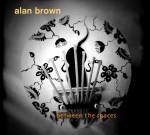
(2) My pick of first equal for the best New Zealand Jazz Album of the year is Alan Brown’s – Between The Spaces. **** For a review of this album see my earlier post. I play this album every week and my enjoyment has not diminished over the months of listening. I have purchased a number of copies to give to family as Christmas presents. Support New Zealand Jazz and purchase a few copies for presents now. There are copies available from JB Hi Fi in Queen Street. Other than that order from Ode Records online. The recipients will love you for it and you will put a groove into Christmas that can never be erased.

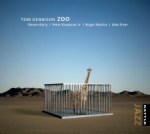
(3) The other pick for the best New Zealand Jazz album of the year (first equal) is Tom Dennison’s –Zoo. **** This album works on so many levels and every New Zealand Jazz lover should rush out and buy a copy. For more information read my review in an earlier post in this blog. I especially enjoyed writing that review and even though I may have resorted to hyperbole it was justified. The CD launch of ‘Zoo‘ is to be held at the CJC on Wednesday 25th January 2012. Again I would urge you to rush out to JB Hi Fi and grab a few copies as gifts. You can also purchase from Rattle Records online or download. Your Christmas holidays would be the poorer without these two albums and so if you want the love and admiration of your most difficult relatives – buy New Zealand Jazz as gifts.

(4) Best Jazz Club of the Year; no contest – the CJC. Thanks Roger, Caro and Ben for the music and the place to enjoy it in.

(5) Best New Zealand Record label – Rattle Records. Keep doing what you do Steve you are growing our music in the best possible way. You have the touch and the vision.

(6) Best World Music/Jazz album – Natalia Mann’s – Pacif.ist. This is also recorded by Rattle Records and it is an extraordinary and exotic journey to embark on. I will be doing a review of this fabulous album shortly. One rainy night I turned up to the launch of this album and was entranced from the first chord. Natalia Mann plays harp and on this album she is accompanied by 10 musicians (mostly Turkish musicians playing traditional instruments). Her husband is the drummer and the array of Turkish percussion instruments at his command is impressive.

(7) Best Jazz House Party of the year was when Roger Manins rocked Mt Wellington to its core with the help of Michel & Shem Benebig (B3 and voice) – plus a large and very enthusiastic horn section. It took me nearly a month to get ‘Every Day I Sing The Blues’ out of my head. I am not complaining though.

(8) Best Jazz anecdote of the year is from Peter Kings new biography on living the Jazz life. Peter is an alto player and he was playing at one of the better London clubs in the early 60’s when a very drunken Peter O’Toole sauntered over during a break and plonked himself down at the drum kit. The drummer yelled “Hey get off now” to which O’Toole starchily informed him that he was Peter O’Toole the actor. The drummer fired back immediately, “I don’t care if you’re Lawrence of Arabia, you can get off those fucking drums immediately”.

Lastly I must thank the musicians, many of whom have become close friends. Jazz musicians are the unsung heroes of music because they reach beyond the ordinary every time they play. They do this for the sake of creating something magical and best of all we get to participate in that magic. None gets rich or even earn a basic living from their playing but they do it anyhow. When walking a tightrope, backwards steps are not an option.

Thanks to all who read this blog which has been running now for around ten months. I have had over 6000 hits during that time and that is what keeps the momentum. The site has followers from many countries and that is satisfying, as it promotes New Zealand Jazz beyond these shores. Keep visiting the site, make comments and forgive my occasional typos. This blog is about promoting and analyzing the music we all love – Jazz and improvised music in all its forms.

These are soulful days – Pat Martino in 2009.               

Yours in the Music and have a happy and safe Festive Season.

John Fenton – Jazz Local 32.

Joel Haines trio

Joel Haines is a well-known and established New Zealand guitarist.  He also comes from an exceptionally talented musical family and this carries additional expectations.  While this was very much a funk-Jazz gig Joel had brought a little of the rock-god to the bandstand.   Many post Jim Hall Jazz guitarists bring elements of the Rock dialect into Jazz and in this case we certainly heard strong hints of that.   Accompanying him was veteran funk Jazz organist Alan Brown on a Hammond B3 portable (XK-3C) and Stephen Thomas on a classic 1960’s Rogers drum kit.   Joel played his stunningly beautiful Ibenez hollowbody guitar on all numbers except one.

The gig was always going to be loud (and it was) but interestingly not as much as some bands when playing in this confined club space.   I was surprised by this as I was in the front row.   The answer may lie in the fact that Joel uses an older style valve amp which he did not feed into a PA.    Alan Brown used a Lesley Unit with valve amplification and at one point I could hear someone in the audience say appreciatively – “look at the glow and pulse of those valves”.   It was brother Nathan.  It is possible that hearing analogue uncompressed sound is more pleasant to the ear.

The set began with one of Alan’s compositions ‘Minor Avalanche’.    The tune has a solid vamp which builds and builds.   Over that Joel played his funky bluesy lines with Stephen locking into the groove.     The second number (‘Ferret droppings’ – by Noel Haines) was slower and in consequence we saw more of what the trio was capable of.    There was time to construct well thought-out solo’s and the drumming was a little looser, with more cymbal work and less kick drum.   Needless to say Alan always acquits him self well with a Jazz audience as he smilingly punches out his signature staccato chords while dazzling with his right hand.

On the third track, Alan Brown’s ‘Shades of Blue’ we struck the mother lode.    I have loved this tune from the minute I first heard it on the Alan Brown trio album ‘About That Time’ – Ode Records.    ‘Shades of Blue’ is a great tune and above all it is a perfect vehicle for improvisation.    Several bars into the number there are a couple of compelling hooks and nice as they are they are not overdone; leaving you wanting more.  Alan certainly knows how to write good charts.   It was on this number that we saw Joel at his best.    His solo was fabulous and every note counted.   As he bent the strings and worked his pedals you could hear echos of ‘Electric Ladyland’.  Not sounding like a clone of Hendrix but taking the sounds deep into a Jazz context.

Joel’s ‘Live at Wembley’ was a nice ballad with long melodic lines and his other contributions were tunes interestingly titled ‘Who Flung Dung’ and ‘Hangover’.

Yes there were plenty of licks and tricks of technique but the band took us way beyond cliché.

‘Zen Dogs’ unleashed by Neil Watson

There are any number of moods that a band can capture when fronting a Jazz gig and all are valid in their way.   Where this band is concerned fun is the most obvious descriptor because Neil Watson’s ‘Zen Dogs’ were clearly there to enjoy themselves.   Everyone was soon drawn in and the enjoyment was palpable throughout the club.

The band had a loose feel and that is not to say that they were casual in their approach to the music because they nailed every tune and then some.  I am sure that the Zen Dogs name is tongue-in-cheek, but that in-the-moment relaxed approach brought the music home in a very Zen-like way; ‘stop trying so hard and suddenly you are there’.

From the onset Neil bantered with the audience and band in that good-natured way that jazz audiences love.   After the second number he told the audience “We are the Zen Dogs and we wear small emblazoned gold rings with secret symbols inset.  We form a circle and touch these together before playing, in order to charge each other with Zen power’.    To that the saxophonist Lewis McCallum asked nervously, “What did you say we had to touch together”?

The first tune up was ‘Booga Gee‘ (Watson) which communicated that Lou Donaldson Boogaloo feel.   The jive walking pace and accented beats set the night up perfectly.    Next was ‘Lime House Blues‘ which took us back further to the earliest days of two-beat Jazz.  That tune was written in 1922 (Furber/Braham) and had a famous 1930’s film was named after it.   Many have showcased this popular Jazz standard; Louis Armstrong, Sydney Bechet, Ella Fitzjerald, Les Paul (the latter with Chet Atkins).    While it is possible that the tune has been played before on a (Mexican) Fender Telecaster, I am unaware of it.   What is certain is that we heard a fresh and spirited interpretation on Wednesday.    This version was true to the original, but riotous and filled with the joyous abandon – a ‘mad and bad’ blues as the lyrics state.

Also among the offerings was a tribute to Wes Montgomery called ‘Wes de Money‘ (Watson), an astonishing evocation of Charles Mingus on ‘Meters to Go‘ and a Jelly Roll Morton tribute titled ‘Jelly Roll‘.    Throw in Monk’s ‘I Mean You‘ and a few more originals and you have the set list.   To play such an eclectic mix of tunes was a bold move (drawing as they did from the entire Jazz spectrum).  In the hands of this band the choices knitted together and not every band could have pulled this off so convincingly.    The key to attaining such cohesion was three-fold; they communicated their enjoyment of the material, their musicianship was superb and they held the audience from start to finish.

The band were Neil Watson (guitar, leader),   Louis McCallum (alto sax, clarinet & electronic effects), Olivier Holland (bass), Ron Samsom (drums).

Neil handled his slim necked Fender as if it was an extension of his own limbs.    This effortless skill has been gained from his many years working as a professional musician (both here and overseas).   There is the hint of rock-god in his act but it is delivered with a cheeky grin.   This guy does not take himself too seriously but he does invest everything into the music.   A friend of mine recalls seeing him play at the Tauranga Jazz festival when Neil was barely a teenager and he was impressed back then.

Louis McCallum played straight alto sax, clarinet and at times his alto sound was electronically altered by a small Korg analogue box.   Rather than choosing a modern synthesized saxophone he had purchased a $3 mini microphone and strapped it below the mouthpiece.    This simple approach produced interesting effects, but unlike the synthesized sax the effects can be turned off and on at will.    Using his clarinet in juxtaposition to Neil’s Fender gave ‘Lime House Blues’ the feel of being ultra modern while remaining respectful of a trusty old war-horse.  Louis also demonstrated an ability to deliver the BeBop and Post-Bop lines that some of the tunes called for.

Oli Holland is a fine bass player and he performed extremely well in this line-up.  He is certainly no mere journeyman as he showed amply during the night.   At times he would feed lines back to Neil and his performance on the Charles Mingus number is something I won’t easily forget.  Only an artist deeply versed in the history of Jazz could have captured the Mingus bass lines in the way that he did.   He also told the Mingus story in fresh way.  The Mingus oeuvre is interesting, as it sits slightly outside of the mainstream.   Hints of the anarchic and loose nature of that music were communicated well and I wish more bands would do this material.   Perhaps it is just too hard?

The remaining band member was drummer Ron Samsom.   If a band wanted to explore a wide spectrum of music and still retain a modern feel then he would be the drummer of first choice.   That is because he is freer, looser in style and more open than many drummers.   Because he has the ears of a seasoned professional he is able to respond well in any given situation.   To hear him play on ‘Lime House Blues‘ and ‘Jelly Roll‘ was to hear a modern stylist demonstrating that he could channel the two-beat style of a Baby Dodds or Poppa Joe Jones.   On the Mingus number he ‘dropped bombs’ and sat on the ride cymbal.   Ron never sounds complacent on the kit and perhaps that’s what sets him apart.    To have Ron and Oli together in a band is to add an x-factor.

The night had been billed as psychedelic jazz swinging by the early days of the music.   That is a fair description as it indicates the entire Jazz spectrum traversed.     The oft used phrase serious-fun is all that I can add to that.   The band have been recording this material and will lay down additional tracks early in the New Year – the album when it is completed will certainly be on my wish list.

Afterword – ‘Mother Tongue live’

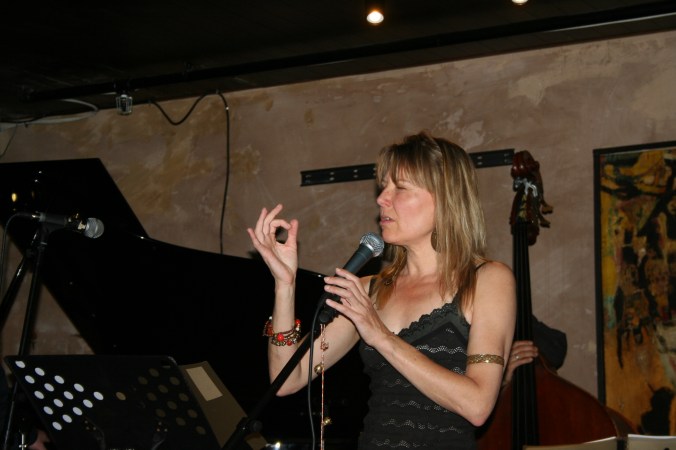
This was an amazing night of music and to those who missed it – shame on you. If you have a domestic air ticket lying about or are living in the lower North Island or South Island you can still catch the act (see previous post). Carolina is quite something on her ‘Mother Tongue’ recording but to see her perform live is to experience much more. She is a singer who should be experienced live because she is also a stellar performer. The intricate sinuous hand gestures as she sings, create an added texture to an already rich and evocative music.

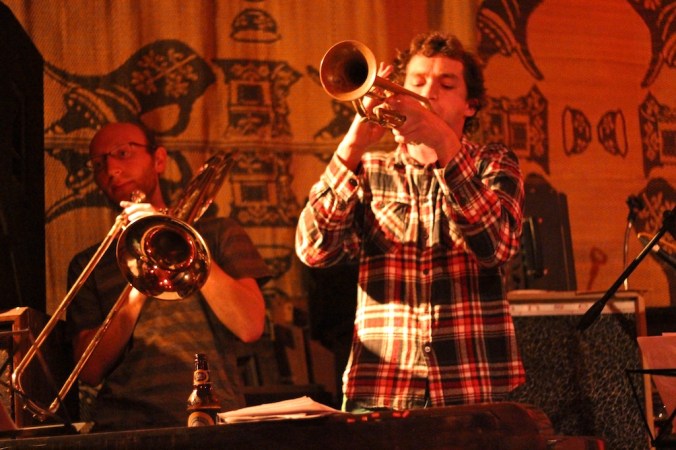
This band is first class and what they brought to the music was simply wonderful. Having two of Auckland’s best drummer/percussionists in the one band did not hurt at all. They were similar in style to Manu Katche and Nano Vasconcelos who have often performed together in such Jazz/World music. It was the second time that I had caught Chris O’Connor at a gig and I can see why he is so in demand – especially for intricate drum work like this. Ron Samsom’s skill on the drum kit was already very familiar to me and it was fascinating to watch these two percussion masters swap roles throughout the performance.

Roger Manins did not play his usual tenor saxophone but showed his chops on the bass clarinet (Eric Dolphy and others used this axe to great effect). The deeper and woodier sounds were entirely appropriate for this ancient music and Roger still managed to stretch out convincingly. He also played the more traditional clarinet and the flute.

Nigel Gavin used a resonator guitar and a manouche guitar, and he stunned with his combination of lightening speed and middle eastern modal riffs. Although his guitars were amplified and had the usual array of pedals, his contributions were so well placed and appropriate to the music that it was hard to imagine the pieces without him. Kevin Field (piano), Matthias Erdrich (bass) and Jessica Hindin (violin) performed their parts with ease and this underscores their musicianship as none can have been that familiar with such diverse musical genres.

Apart from the Sephardic music we heard songs in Hebrew, English and Gaelic. There was also a standard, ‘Black is the colour’. This old english ballad was so beautifully executed that the audience seemed to hold their breath at each phrase. No one wanted to miss a single note.

I have long wondered why Jan Garbarek‘s compositions and arrangements are not used more by Jazz musicians and on Wednesday I had that view reinforced. A version of Garbarek’s arrangement of the traditional Nordic piece ‘Gula Gula‘ from ‘I took up the Runes‘ was played. It was the best version you could ever hope to hear and Carolina who is a gifted linguist had learned the Gaelic pronunciation of the song. During this piece the band stretched out and went crazy. It was one of those moments when you hoped that the music would never stop. If I have one plea it would be; perform more Garbarek compositions and arrangements please – perhaps with a bowed electric bass Eberhard Weber style.

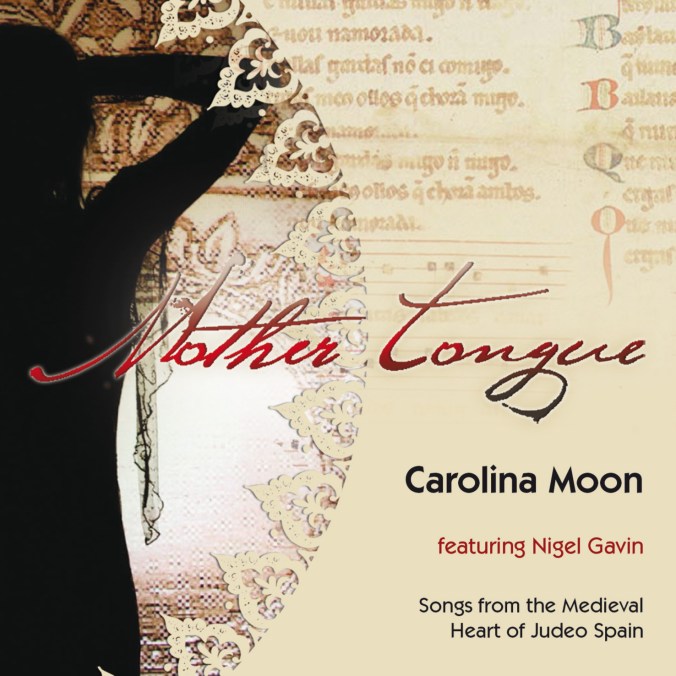
‘Mother Tongue’ – Carolina Moon (the Sephardic music of medieval Spain)

Carolina’s wonderful album ‘Mother Tongue’ is beguiling and all it takes is a single listen, for the mysterious beauty of this ancient music to stay with you forever.   This album speaks of medieval Spanish Sephardic culture with absolute authority and in partaking of the journey we are connected to a time and place most New Zealanders know little about.
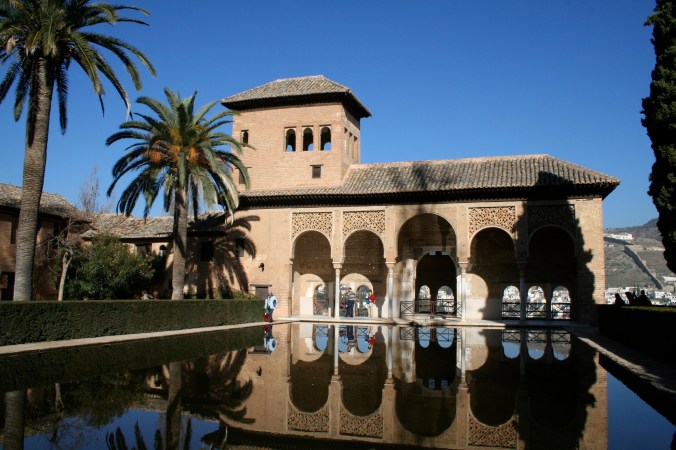
The Moors ruled much of Southern Spain (Al Andalus) for nearly 700 years and what is little known is that they welcomed the Jewish diaspora to live among them.     This tolerance by Islamic Spain lasted until the Reconquista by the Catholic Christian armies of the north and after their arrival (15th century), the Judeo-Spanish faced the ultimatum of expulsion, conversion or death.  The songs of the Sepahardic Jewish are rich in imagery and the cadences of their unique language are evident in these sensual and often wistful songs.     Contained in this music are the rhythms of Arab, Hebrew and Spanish life.    A truelly blended music that has been deeply enriched by the streams that have fed it.    Ladino (Latin) is the term for this ancient language, which has also helped form the distinct Catalan variant of Spanish.

Carolina Moon (Mannins) is a fine Jazz singer but she is also a multi-lingual singer and well versed in other musical genres.  She is British by birth but has worked extensively as a musician and music teacher in the UK, Australia and for some time now New Zealand.   This is our gain.   The excellent arrangements on ‘Mother Tongue’ are Carolina’s and it is this factor, coupled with her unmistakably rich voice,  that gives the album that extra depth and authenticity.  It is obvious that she has invested everything in these performances.   This has never been just another gig for her

I would like to make mention of several songs that are on the album.  The first is the wonderful ‘Ondas’ (13th century Spanish).  The word in Spanish means wave or ripple and she could not have chosen a better track to open with.  The timbre of her voice is rich and filled with the passion and longing of the song.   At certain points the emotion is so visceral that it sends a shiver down the spine.     I have not reacted to a voice in that way since I last heard Sassy on ‘tenderly’.  The second and contrasting song is ‘Tres Hermanicas’ (track 8).    This is a traditional Sephardic song and the full band is used to very good effect.    Because of the arrangement and the rhythm it sounds closer to the Manouche traditions.

The accompanying musicians are all top rated and many are the cream of the Jazz world.   New Zealand’s finest acoustic guitarist Nigel Gavin is the only choice for this music, as his Manouche credentials and guitar chops are impeccable.    Kevin Field is on piano and once again he has managed to be the perfect accompanist. Caroline’s husband Roger Manins weaves his usual magic and his abilities as a multi reedist are manifest here.   Ron Samsom and Chris O’Connor (percussion and drums), Jessica Hindin (violin), Matthias Erdrich, Mostyn Cole, Steve Haines (acoustic bass).

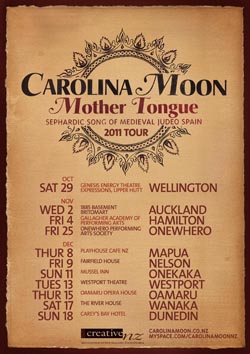
Every music lover should purchase a copy of this, which is produced and mixed by Steve Garden for Ode records (with the assistance of Creative NZ).    To learn more about this gifted artist go to;  http://www.moonmusik.com – better yet come and hear her perform live during the tour – underway at present.   The next performance is at the CJC (Basement of 1885 Galway St) Wednesday 2nd November.

Footnote: The first merger of western music and African Music was always thought to be Jazz, but musico- ethnologists are now pointing to Moorish Spain (over a 1000 years before), as the first time this occurred.    The improvising traditions are deep streams within all good music.

The New Fuse Box – The Wakem/Nielson Project

The Wakem/Nielson Project

When I received this CD in the post I knew very little about ‘The new Fuse Box‘ as I had only seen a few mentions of them online.     Happily I will never be in that state of ignorance again.     While this may not be your typical Jazz offering it is never-the-less highly enjoyable and as the Jazz scene in Auckland matures we are learning to appreciate a diversity of soundscapes.     This is not quite the raw and highly energised music of a live band but it is enjoyable, well arranged and beautifully articulated.   The music has a depth that may elude the listener at first play, but listen again and it will get under your skin and stay there.

This is essentially Kiwi music (Auckland music), and a sense of space and sunlight pervades the album.   Over the years I have come to recognise that there is a certain discernible quality when Jazz has developed in remote-from-the-centre locations; this sense of place exists in juxtaposition to the usual traditional aspects.    Scandinavian,  French, Italian, Sardinian, Spanish and German Jazz all have a unique something that would not have arisen had the music been made in America.   New Zealand Jazz is now claiming its own space.

There are fifteen tracks on the album and they skillfully mine a number of vibes.   There are funk infused tracks and soulfully slow tracks but they all seem to work as part of a cohesive whole.   Above all this music does not take itself too seriously as there is musical humour as well.   While I have many favourite tracks I simply cannot resist the intentionally over-the-top and utterly delightful ‘Bossa Tossa‘.     This track will put a big smile on your face.   There is also a filmic quality to this material and the best of Jazz movie-score writing is conjured up here.

All of the material has been composed and arranged by Lindsay Wakem (horns arranged by Chris Nielson).   Lindsay is terrific on piano and keyboards and I hope that he will give us longer solos on future releases as the piano is often back in the mix.   His piano playing has a crispness and clarity to it and I am keen to hear more.   ‘The New Fuse Box‘ is a multi- talented band and Chris Nielson the co-leader needs a mention at this point.   When I looked at the credits and I saw, ‘horns- Chris Nielson’ I was puzzled.   I phoned Lindsay and asked him if there were uncredited horn players.   I quickly learned that Chris is not only the trumpet section but that he plays all of the saxophone parts as well.   The charts are gorgeous and the multi-tracking so seamless that it is a struggle to imagine him playing all of these parts.   The drummer, on all tracks except one, is the well known and much respected Jason Orme (Blue Train etc).  Jason can take on any task in Jazz drumming and he is a an asset here.  The bass player is Phil Scorgie.  He and Lindsay go back a long way.  Other artists appear on single tracks and they are guitarists, Dean Kerr & Frans Huysmans – Kody Nielson drums.

Jazz is a music which teaches us something of history and struggle, but more importantly it is a music founded in the desire for change.   It is not a museum piece and so it should always explore and challenge the world around it.   This album does that and I look forward to more from them.   The ACT and ECM labels (both German) have profiled this sort of jazz to great advantage.     There is a real market for this material and I hope to see more of it.

ACT’s Lars Dannielson, Blue Note’s Bob Beldon and ECM’s Mathias Eick have paved the way and our own bands should now be welcomed into this interesting space.   The album is self produced and so for a copy contact:  lgwakem@xtra.co.nz

Andrea Lisa Jazz band – support request

I received this flyer a few days ago and I will certainly be supporting this great young band.    They play about town and their gigs are always well received.   Their recent gig at the CJC was very enjoyable and I reviewed it about a month ago.    I know Andrea and see good things ahead for her (and band mates).    Andrea is from West Auckland and went to Waitakere college where she was taught by Stephen Nightingale.  Later Andrea obtained a music degree at the Massey University Jazz School.    Stephen Nightingale also taught my son, who later obtained a B Mus. at Auckland University.   As a society we should pay more respect to these good teachers who encourage and empower pupils, rather than forcing arbitrary and ill-conceived notions like ‘National Standards’ onto them.

All we have to do to keep the music coming is to support deserving groups, local clubs and developing musicians.  They will do the rest.

~ ~ ~ ~ ~ ~ ~ ~ ~

HELLO ALL, APPEALING FOR YOUR SUPPORT FOR A FUNDRAISER EVENT FOR THE ANDREA LISA BAND. ANDREA LISA IS A TALENTED JAZZ GUITARIST/SINGER AND SONGWRITER, WITH A ROCKING BAND. ANDREA LISA AND HER BAND HAS BEEN INVITED TO SYDNEY TO AUDITION FOR A SPOT TO OPEN UP FOR JONATHAN BUTLER ON HIS AUSTRALIAN TOUR. THE FUNDRAISER WILL ASSIST WITH COVERING COSTS FOR THE BAND. YOUR SUPPORT WILL BE APPRECIATED. TICKETS ARE GOING FAST PLEASE EMAIL /CALL ME IF YOU WOULD LIKE TICKETS AS THEY ARE ALL PREPAID. MUSIC BY ANDREA LISA BAND AND DJ BRENT ALLY CONTACT;ANDREA 02102304666   NICK; 0212386746 (There will be a tv in the side room for you to check the score of the rugby)


http://youtu.be/wbMsaRwvlR8

Alternate realities – ‘dreamsville’

THE BEAT GENERATION AND THE ANGRY YOUNG MEN

Image by roberthuffstutter via Flickr

The opening line of J.P. Hartley’s Edwardian based novel ‘The Go Between’ begins with the words, “The past is a foreign country, they do things differently there“.     I was mindful of that quotation when I recently spotted a link to a Jazz, culture and poetry blog.   The link was named ‘Like…Dreamsville’.   My first thoughts were of the ‘Mancini’ composition as played by ‘Grant Green’, ‘Wes Montgomery’ and ‘Pat Martino’ – all evocative renditions of the oh-so-slow groove anthem of that name.

As it turned out the site was not about the song but something altogether more ephemeral – the strange world of the 1950’s ‘Beatnik’.   That term ‘Beatnik’ has been so successfully parodied  that it can never appear less than corny and the establishment of the time delighted in making it so.    As a quasi-cultural movement it looked lame and contrived and so it was meant to look.

It portrayed the apparent boredom and ingratitude of American youth.    A youth in the process of rejecting the ultra-materialistic values of their ‘elders and betters’.    I suspect that the term ‘Beatnik’ was eventually allowed to die of embarrassment, as nothing kills a movement quicker than being absorbed into the popular consciousness as a joke.     ‘Mr Magoo’ and ‘Gilligan’s Island’ abetted in this (see ‘Like…Dreamsville’).

Lurking behind that was the voice of  the ‘Beats’ and what the mainstream press were so desperate to undermine was almost certainly the ‘Beat Generation‘.   That was another entity entirely.     Unlike the ‘Beatniks’, the ‘Beats’ were not a media invention (even though the name was probably ably assisted by the liberal media of the day).  The conservative establishment had long felt that a dangerous counter-culture existed in the orbit of Modern Jazz, Modern Art and Modern Poetry/Post War Literature.   This was a harder nut to crack, because the gifted writers, musicians, poets, philosophers and artists were perfectly capable of rising to the challenge and turning the ridicule right back on so-called civilised society.  I refer to the likes of Kerouac, Burroughs, Ginsberg, Snyder, Corso, Ferlinghetti, Kaufman, Kessy, Baraka, Pollack, Watts and many others.   Into this mix add musicians like Lester Young, Dizzy Gillespie, Harry the Hipster, Charlie Ventura, Paul Horn, Chico Hamilton and Charlie Parker.

The ‘Beat Generation’ used Jazz as its soundtrack and a lot of the hip vocabulary arose directly out of that music.   The new lexicon that arose was later twisted to become a weapon.   Like the ‘Hippy’s’ that followed in their wake, the ‘Beats’ danced to different drummers than their straight counterparts.    They were more likely to follow the slightly bemused Dr. D.T. Suzuki (Zen Buddhist author), Tang Poet ‘Han Shan’ or Lao Tzu than any home-grown Christian leader.    The poets, BeBop and the homeless freight-car hopping pilgrims had an infinitely higher currency than a suburban homebody.

This restless generation had open ears, open eyes and they moved to deeper rhythms than the static of suburban life .   Finding the ‘beat’ of life was an end in itself.     I confess that I was one of the youth who identified with the ‘Beat Generation’ and I am quite unrepentant.   More than 50 years on I still identify strongly with their cause.

In San Francisco, home of the ‘Beats’, poetry was a real commodity.  Signs saying, ‘poets wanted’ could be seen in the windows of  Jazz bars.    Pokey little book shops like ‘City Lights’ held regular poetry readings and ‘On The Road’ captured the hearts and minds of a footloose generation who looked beyond the material for deeper meaning.  This wave of anti-materialism was felt to threaten the post-war security and so the ridiculous hipster alter-ego was created – the ‘Beatnik’.   The joke even extended to Gilligan’s Island and Mr Magoo.

Do visit the ‘Like…Dreamsville’ site and try to reclaim the best part of that dream; at this distance the laughter is ‘coolsville’.   For those who like time travelling read ‘On The Road’ or read ‘Howl’ while listening to 1950’s Miles Davis.

Where did the suffix ‘nik’ come from?   Probably Sputnik.   Did terms like ‘cool’ survive?  yes … it is still way cool.

http://likedreamsville.blogspot.com/

When the constellations align – Mike Nock @ CJC

Experiencing a Mike Nock band playing in an intimate club setting is quite different from catching his act in a large concert hall.    In one sense it doesn’t matter, as this cat can whip up a whirlwind of energy in any space, but seeing Mike in a small intimate club is as cool as it gets.  The immediacy of being up-close to a band like this is electrifying.

I had arrived early with a friend, but the club was already at near capacity and there were no available seats.  We were happy to stand as no one wanted to miss this night.    I leaned against the side of a leather couch crammed full of people while up front Roger adjusted his mouthpiece and Ron positioned his kit.  Then we saw Mike and Brett and the lighting was lowered.     As the band began to play it was obvious that they would not need any warming up because they were clearly as up for the gig as we were.    The opening number ‘Hop Skip & Jump’ was up-tempo and Roger just tore it up from the start.   To those who of us who love Mike Nock compositions this music was somehow familiar, but this was also the ‘sound of surprise’.

I am convinced that we could not have seen better in any New York club and in down town Auckland we soaked up the groove feeling lucky to be alive.  In the soft lighting  you could almost see the sparks of energy flying between the band members and the washes of blissful sound permeated every corner of the room.    This was seriously good shit.

Next up was ‘Komodo Dragon‘, a moody number that developed from a beguiling tune into an altogether more profound entity.  The placement of chords under Mikes hands is always a revelation as he knows how to mine an idea for deeper and infinitely subtler meanings.   His chords were sometimes bluesy, but then he would toss in an oblique voicing as if to bring about a subtle shift in the cosmos he was conjuring.   It was like watching an onion being peeled by a master chief.

I was also pleased to see Ron Samson (d) using a mix of mallets, sticks and brushes, as the sound palate that night demanded a more textural approach.   Like all good drummers he knew when to blend into the mix, as a loud overly showy drummer would have been out-of-place.  Roger Manins (ts) is simply a phenomenon and we are extremely lucky to have him resident in Auckland.   He lifted the intensity on ‘Komodo Dragon‘ to such a fever pitch that I actually stopped breathing at some points as the tension was building so much.    Roger is the master of tension and release and he can nimbly shift into double time and then some.        Brett Hirst (b) has been playing with Mike for years and it shows.   He is a terrific bass player and his solos and note placement that night were magical.     The band members were all great soloists but what is better they were able to act as a perfect ensemble.

The second number of the second set was a tune called ‘Homage’ and it began with a familiar chord progression (probably based on the changes of ‘All blues’).   Where it went next is hard to adequately describe, but this was one of the highlights of the evening for me.    Mike developed the theme quickly and as he did so he showed every ounce of his mastery on the key board.  He was tossing in fourths while his right hand darted over the keyboard.   I was immediately put in mind of the middle movement of ‘A Love Supreme‘.   The band was so deep in the groove on this number that the music reached heights beyond the sum of its parts.    To hear Roger playing with such strength and in such an ecstatic state was to be reminded of how Coltrane-like he can be.  As Roger played, Mike continued to ramp up the groove with his Tyner like chords and an overlay of chromaticism.  The band was apiece on this and it was a perfect moment – fresh ecstatic music that paid homage without actually being captured by the past it referenced.

Afterwards I had the chance to speak to Mike about his music and about the scene.   Mike is an easy-going cat off the band stand and he comes across as somewhat of a Jazz philosopher.   He has also retained a very Kiwi sense of humour which delighted me.    As soon as he has made a successful album Mike seems to reach beyond that for the next idea; never one to settle back and rest on his laurels.   Already knowing the answer, I asked him if he was still restlessly reaching beyond the now for newer musical ideas, or would he relax a bit?   He told me that it was his nature to search for a deeper meaning in the music and that he could not do otherwise.  “Some younger musicians than me sound a lot older than I do as they have settled into a safe fixed in time style.  That is not where I ever want to be”.   I told him how much I enjoyed the ECM ‘Ondas‘ label and he observed wryly , ” yeah man, everyone loves it…. now.  Is it even still in print?”.   He said that Manfred Eicher often told him how much he loved that album but as was often the case, it was way ahead of its time.    We also discussed his writing on the recent ‘Meeting of the waters‘ album which is a favourite of mine.   He told me that he felt good about that album but that distribution had been a problem (when was that not the case with Jazz).   Mike has hopes of bringing his ‘Accumulation of Subtleties‘ trio here soon and I would urge fans to grab a copy of that double album.

We talked briefly about the Auckland Jazz scene of our youth and he told me how pleased he was that Caroline, Roger ,Ben and Mike were now running the CJC.    He also said that he was grooved by the young cats wearing ‘pork pie’ hats, but that when he had gone to buy one had found that his head was too small.    “Age will do that” he said.   I quickly jumped in with information from a new longitudinal study which showed that humans actually reach their greatest analytical potential between the ages of 62 and 70 years of age.    He looked at me dismayed and said, “man you could have extended the time frame by a few years.  I am past 70”.

The set list was ‘Hop Skip Jump’, Komodo Dragon’, Gospel Dog’, ‘Joy Remembered’, ‘Transitions’- 2nd set – ‘Afternoon in Paris’, ‘Homage’, ‘Speak to the Golden Child’, ‘Triflin’ Jon’.

Cooking at the CJC

Tony, Kevin & Craig @CJC

Sometimes you have high expectations of a gig only to find that they have been exceeded.  This was certainly the case at Auckland’s Wednesday night Creative Jazz Club, held at the ‘1885 Britomart’.

The CJC gigs are held in the basement of an old building in Galway Street (the ‘1885 Britomart’) and it has the look of a pre 1900’s ships chandlers or bond store.    This is the perfect performance space for Jazz because it fits the archetypes of the best clubs of the world.   It is in a basement, intimate, comfortable and has good acoustics (oh and a nice piano).  It was damn cold outside and so we were hoping the club would be warm and it was; warm and inviting in the best possible way.   As we descended the two flights of stairs we could hear the pianist Kevin Field exploring a few voicings on the piano and with just those few chords we knew that we were in for a great night.

The Kevin Field (+ Craig Walters) band started with a medium paced number and soon settled into a tight groove.  This was the sort of band that brought an ever-increasing smile to your face and as they laid out the melody of each tune and then mined the changes for improvisational gold.  Their version of ‘this will be my shining hour‘(Harold Arlen) was a miracle of high energy and exploration.  They just tore it up and the fast paced riffs and increasingly risky explorations brought hoots of delight from the crowd.   I have heard this tune 100’s of times but I have never liked it more than on Wednesday night.

The saxophonist was ex-pat Kiwi Craig Walters, who lives and works in Sydney and travels internationally.   This cat is certainly post-Coltrane and his impeccable Jazz credentials showed on this gig.   He has that way of all good Jazz musician’s; an engaging manner, great chops (and the ability to make subtle self-deprecating insider jokes).   The rhythm section were all locals and probably need no introduction as they are among our best and brightest.

Kevin Field is a lovely pianist and his post-bop voicings would enhance any group.   He teaches Piano at the Auckland School of Music (his real job) but he is also a respected leader about town.   Kevin Haines is probably NZ’s best bass player and we are used to seeing him performing in a variety of settings.   On some of the ballads like ‘blame it on my youth‘ his solo’s were impeccable as he anchored the group – holding the centre of the sound in his fingertips.   I want to make special mention of the drummer Tony Hopkins because this guy drummed up a storm.    I must confess that I have been a fan since I saw him in my youth (blame it on my youth).   He was all over the kit in the best possible way and if this is what 70 year olds drum like then there will be younger players applying for septuagenarian status all over town.   Tony is not only an impeccable time-keeper but he managed on this gig to sit high in the mix without overwhelming the others. At times he and Kevin Haines would glance appreciatively at each after a particular lick was exchanged and this high level musical communication is at the heart of all good Jazz.

I will watch future CJC events with interest because great Jazz, thin crust margarita pizza and a warm spot in the corner of a Jazz club is my idea of heaven.

Cowbop vrs Warrington

The Masonic Tavern in Devonport overlooks the Waitemata Harbour in Auckland and the view from there is always easy on the eye.  Last night it was also easy on the ear; in fact as the evening progressed the music developed a distinctly Western drawl.   On Friday night the Tavern hosted two Jazz groups from the USA; the Tom Warrington Trio and the Bruce Forman CowBop band.  These bands exemplified Jazz-infused Americana from differing prospectives and in that variance lay a world of fun.

It is always a pleasure to see the Warrington Band in town and I always seek them out when they pass through (this is their 4th trip to New Zealand as a trio – Tom Warrington, Larry Koonse, Joe La Barbera).  As soon I arrived I spotted Larry the trio’s guitarist (an old friend) and we were able to spend a good few hours catching up and laughing at the outrageous humour of the CowBop quintet (who played the second set).

The Warrington trio opened their set with one of my favourite tunes ‘you must believe in Spring’ by Michelle Legrand’.  For a guitar trio (minus piano) to do justice to this type of highly melodic tune they must keep out of each others way while the guitar and bass execute the right voicings and establish the melody line (implied or otherwise).  This is what good jazz bands do and this band is extremely good.   Joe laid down a solid beat and his brush work is equal to the best in the business.  We heard Evan’s tunes and originals from the ‘Back Nine’ album and it was never less than swinging, intelligent, well executed  music.  All of these guys are stars in their own right having worked alongside the greats of Jazz and their intuitive feel for getting the best out of the music was communicated to their audience.

Like all Jazz fans I could not resist asking Larry later about the various people he has recently worked with and he singled out Alan Broadbent as someone he just loved working with. I hopefully suggested that they should think about recording a duo or quartet album together.  My one regret was not asking Joe about the Pieranunzi/Philip Catherine date – next time.

When F. Scott Fitzgerald said that there were no second acts in American life he had not foreseen the second act on Friday night.  This was cheeky, sassy, swinging, bop-infused countrified music and against all odds it was seriously hip.  American life was re-branded that night and as we witnessed it in disbelief, we participated in the fun.  Bruce Forman is a Jazz legend, as he has been a fixture on the Jazz circuit for three decades now.  Like Larry he has also been at the forefront of Jazz education and has accompanied some of the musics icons.   Bruce is a natural comedian and he really pushed the envelope with his in-your-face CowBop humour.  It is hard to describe adequately in words, as the context was everything, but suffice to say it worked.   There were musical jokes of the highest order and some home grown corn; both delivered from under a stetson hat with a twinkling eye.  The CowBop bands treatment Besame Mucho sat somewhere between ‘Cheech & Chong‘ and ‘Diana Krall‘ and I loved it.    As Bruce said when he began the set:  ‘If you try this music at home I urge you to do so responsibly’.  Packs containing the bands CD ‘Too Hick for the Room‘ were supplied with a bottle-opener connected to a memory-stick – pre loaded ready for illegal downloads.  The sly BeBop quotes were everywhere and they slid in between the cow-licks with ease.   Bruce added as I was leaving “The good thing is, if you hate this music you just give it to your enemies“.

This was a great night out and the intimate setting added to the enjoyment – thanks to Roger Fox for bringing them.

                      CowBop drummer

Random “retweets’ from the jazz planet

Herbie Hancock Quartet at the Round House, Camden

Image via Wikipedia

This post contains a few reminders of concerts and some feeds from ‘Twitter‘ and ‘Facebook‘. Navigating all of the pitfalls when locating well known personalities on Facebook (copy-cat sites) I located the Herbie Hancock facebook page and posted a link on how much I enjoyed his concert. Soon the singer from that concert Kristina Train posted – and along with her comments came photos of the Auckland Skytower. These appeared to excite people from all round the globe who guessed that the tower was in Russia or else Malaysia. Now two weeks later Herbie has posted a comprehensive itinerary, photos and a thanks message; the ‘likes’ and ‘comments’ posts from 30 or 40 countries show that this has been a huge tour for his band. This sort of interaction on ‘Facebook’ and ‘twitter’ connects me to the wider ‘Jazzosphere’ and I like it.

From my son in SF: ‘Can’t wait for the Jazz hall to be completed and of course the Fillmore which is legendary! How had I not realized that it is here?
We stumbled upon the historic area today once famous for being the home of the Beat generation; much of what Kerouac writes about in the Dharma Bums is centered here. It’s maintained some of its original flavor—much like Haight-Ashbury has with the Hippy movement—though more as a shrine. I’m with Hunter S. Thompson on this one:

“… and with the right kind of eyes you can almost see the high-water mark—that place where the wave finally broke and rolled back”.

From Twitter: Passion 4 Jazz – “singing#Jazz is chiefly a matter of developing a stoical disregard for decent food, decent lodgings & a decent home” Barry Ulanov

From Twitter feed; MusicLtdRu – “Marty Paich – Jazz West Coast 1959 – recent issue – twitter link j.mp/kvltb3.”      The joy of a fresh Marty Paich album – bless Twitter (jonjaz)

Remember tomorrow (Friday 27th) it is the Devonport Gig – Tom, Joe, Larry & Bruce (see earlier post)     Next week on the 1st at the Bruce Mason centre – Alan Broadbent – Roger Fox band.

San Francisco and Kiwi connections

My son and daughter in law have just moved to San Francisco and the goodbyes have been hard.    I watched them go through the departure gate with very mixed emotions – pride at what they had achieved and the inevitable sadness of a loving parent waving goodbye (my son is the CTO and co-founder of an IT company expanding into America).     He reminded me that Darien and I would have two good excuses to visit them as often as we could – family reunification and world-class Jazz.

He is right because San Francisco is one of the worlds great Jazz cities.   The city is at present building one of the worlds biggest dedicated Jazz centres.    It will be the first such centre in America totally dedicated to Jazz performance and education and it is expected to become a world-wide tourist attraction.    San Francisco is the home of the SF Jazz Collective and this amazing group is formed around Jazz Festival time each year.  They feature the compositions of one artist each year and to augment the already stellar lineup they invite a few top rated Jazz musicians to fill the guest spots.   This year they feature the music of Stevie Wonder – whose music is increasingly attaining Jazz standard status.   The bass player is Aucklander Matt Penman; who went through the Auckland School of music a few years earlier than my son.   Matt now plays at the top levels of Jazz and he tours America (and the world) with Jazz super-groups.   He is a core member of the SF Jazz Collective.    I have posted a link for this years San Francisco Jazz Festival which starts this week.    I would certainly pay good money to see the Eliane Elias quartet and that is on tomorrow night.    There are a number of free concerts and many headline acts (seeing hip-chic Ricky Lee Jones would be cool – remember her – married to Tom Waits once).     The big item will inevitably be the SF Jazz Collective though.    I will post a link to their site – so that you listen to a SFJC clip – Stevie Wonders ‘suspicion’.

This city is the home of the famous ‘Yoshi’s’ Jazz club and the Fillmore East (Miles and our own Mike Nock entertained huge audiences of hippies there).    There is a great Festival in mid summer which is in the Bay area – the ‘Fillmore Jazz Festival’.  This is a free festival dedicated to jazz and food and it occurs around the weekend of the 4th July.     I hope to keep you posted on these events as I will be attending vicariously – I have just appointed my son as a forward scout – ‘our man in SF’.

Local Jazz: Gigs Auckland & nostalgia

When I was a teenager there were some cool Jazz clubs and quite a few good Jazz gigs around this town. That was a long time ago and as the 60’s advanced the clubs either vanished or quietly morphed into popular music venues. Everybody has to earn a living and rock audiences were more likely to feed a club owners family than Jazz audiences. 1960’s Auckland produced its share of good musicians like pianist Alan Broadbent, vibes player Lachie Jamierson, trumpet player Kim Paterson and many others, but when the venues disappeared, the better musicians either dropped out of sight (and got a ‘real’ job) or moved to bigger cities overseas where Jazz still thrived. There was a long period when it was difficult to find live Jazz in Auckland and the fault was certainly not with the musicians – it was with the audiences. Visiting artists sated jazz fans appetites to a point, but it could be a very long time between drinks. An enterprising group of locals ( John Good, Frank Collins and others), banded together and organised a NZ tour by (USA) West Coast pianist Pete Jolly and bassist Ralph Pena. These were high risk enterprises and in those days the flights from LA or New York were arduous. It was a long way to come for small financial return and these were essentially labours of love (and often acts of generosity by the musicians). As the 60’s and 70’s passed local musicians such as Phil Broadhurst, Frank Gibson, Julie Mason, Edwina Thorne and Murray McNabb stayed the course; playing in whatever venues became available.

Any Jazz fan who has gone down a darkly lit side street, found the neon sign, descended the winding staircase and suddenly been overwhelmed by the atmosphere and sounds of an intimate jazz club will never forget it. These dimly lit, warm toned jazz bars are the stuff of legends and happily they still exist (minus the smoke). In New York, Paris, Rome, London, Barcelona, Montreal, Melbourne and Sydney they have not only survived but are an integral part of the city brand. New York would somehow be diminished if there was no ‘Birdland’, ‘Blue Note’, ‘Village Vanguard‘ or ‘Smalls’ (plus the many dozens of others).

Auckland has a few venues where live Jazz can be experienced and I am going to add more links to those venues as I find them (in the side bar of the blog-‘gigs guide’). A recent addition to the Auckland club scene has been the ‘1885 club‘ in Brittamart Street downtown. There are also regular gigs at the Masonic Hotel Devonport (Roger Fox) – sign up to ‘Event Finder‘ or ‘NZ Gigs Guide‘ for up-to-date information. We were upset to lose the upstairs ‘London Bar’ and the Auckland ‘Jazz & Blues Club’ has had to move after a long tenure at the Herne Bay Tavern. They now meet weekly at the Point Chevalier RSA -1136 Great North Road, Pt Chevalier, Auckland. Another place where great gigs can occur is the Auckland Massey Campus (under the auspices of the ‘School of Jazz Studies’). There are also groups of individuals who meet regularly to play jazz, talk about jazz and tell Jazz stories over a glass of wine. FOJ (Friends of Jazz) has been one such institution) and the newly formed ‘The Jazz Loft‘ is another. To find out about the latter email me on jonjaz@ihug.co.nz. Lastly there are Jazz Pub gigs and while some are regular events many are quite sporadic – follow ‘Event Finder‘ for these.

I have included a clip of local Jazz saxophonist Roger Manins playing at a pub gig.   My plea is that Jazz lovers support these local artists and clubs – its use them or lose them.