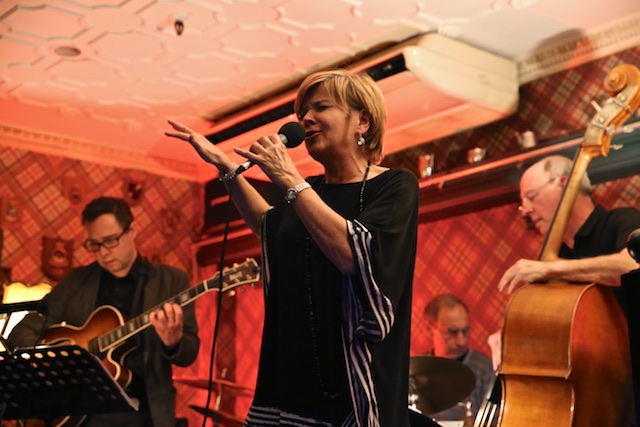
 Thanks to Rodger Fox and the CJC management we were lucky enough to see five times Grammy nominee, Jazz vocalist Karrin Allyson in our Auckland Jazz Club last Wednesday night. Seeing an artist like this in a concert hall is one thing; seeing her in the warm intimate surroundings of a small Jazz club and just a metre away is quite another. Always a sucker for quality Jazz vocalists I first heard her in 1992 (the album ‘I Thought About You’ was the first of hers I purchased). On the basis of her recorded output, I booked for both the CJC gig in Auckland and the Wellington Jazz Festival concert. The flights between these cities are surprisingly affordable when you book in advance, and these opportunities don’t come around often when you live in the South Pacific.
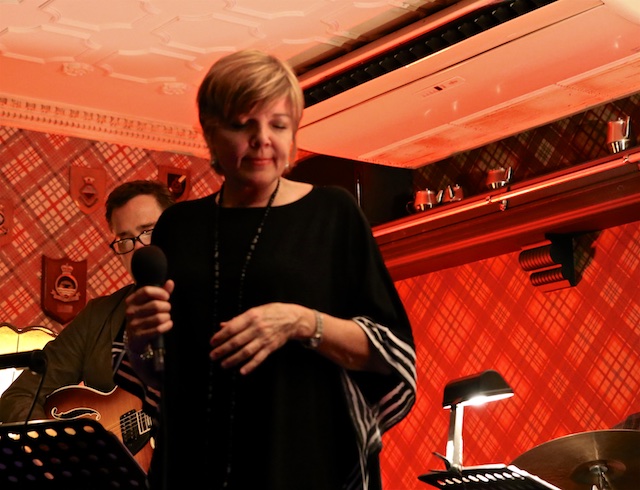 Following her 1992 release further albums came out and by the time ‘Ballads: for Coltrane’ and ‘In Blue’ were released there was no mistaking it. This was an important vocal interpreter. Her voice has particular qualities, an attractive smoky veneer, but then there’s that extra something. A sense of shared intimacy, a way of interpreting lyrics in an original way while still paying tribute to earlier interpreters. Her version of ‘O Barquino’ or ‘Double Rainbow’ (both by Jobim) immediately brings to mind the fabulous Elis Regina. Her ‘West Coast Blues’ conjures up Wes Montgomery just as much as the instrumentalists. She scats in ways that adds value to the narrative content of the song, never overdone and always wonderfully inventive. It came as no surprise, therefore, that she could conquer an audience in a heart beat.
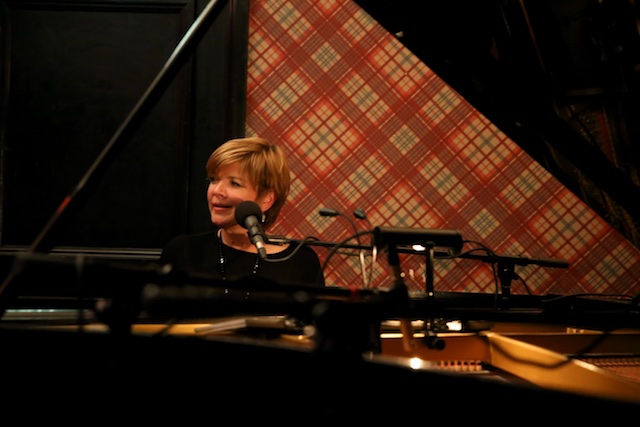 From the first vocal number, Allyson teased the audience, turning the lyrics into a conversation. Her set list spanned her Concord recordings including her recent release ‘Many a New Day: Karrin Allyson Sings Rogers & Hammerstein’ (When I think of Tom/Hello Young Lovers). Everything she performed was extraordinary but when she moved to the piano and accompanied herself on ‘Bye Bye Country Boy’ I was especially delighted. For some unaccountable reason, few vocalists interpret Blossom Dearie and more’s the pity. Dearie was a true original and a fiendishly clever Jazz vocalist. Her voice had a deceptive depth if you listened properly and like Allyson her ability to communicate was perfectly honed. It is fitting that Allyson should tackle Blossom Dearie as she is able to convey the same wry humour and wrap it up in a very attractive vocal package. She was simply killing in her interpretation.
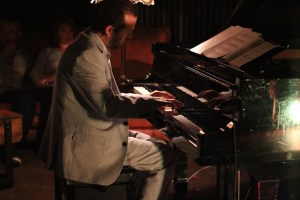
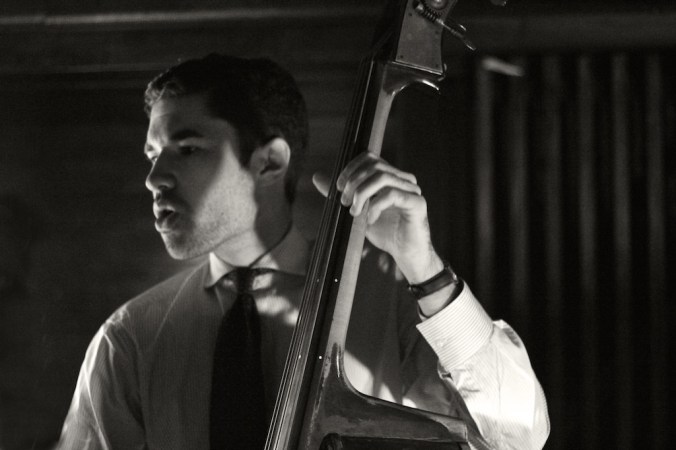
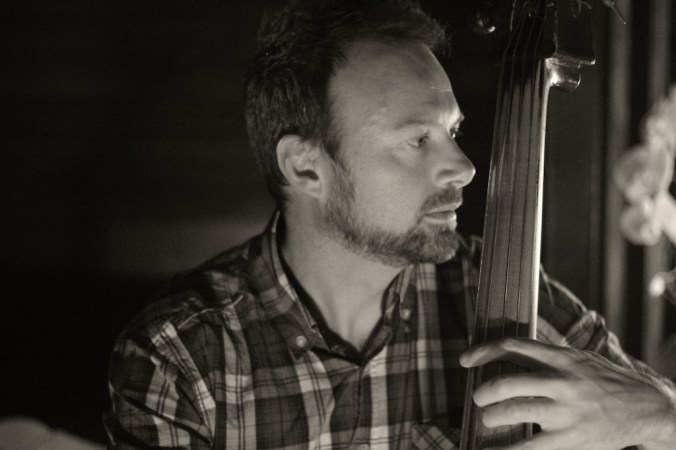
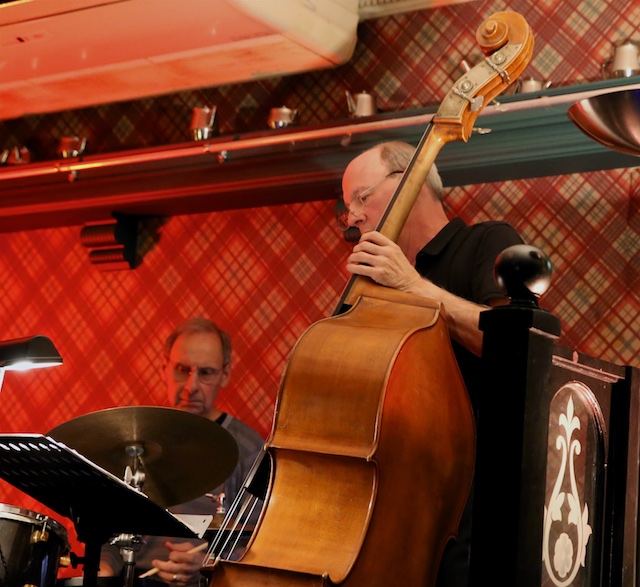 Accompanying Allyson was the Tom Warrington trio. Although it is five years since we saw them last, they have been regular visitors to New Zealand thanks to Fox. Tom Warrington is a superb bassist, having worked with everyone from Peggy Lee to Stan Getz. His list of credits is staggering. Formerly based in LA, where he was constantly in demand and no wonder. The choices underpinning each note he plays are beyond caveat. His musicality, teaching and compositional skills of the highest order. Today he lives a quieter life in rural New Zealand. When you hear his bass lines, and especially during a ballad, you recall the classic piano-trio bass players. Loading each note with meaning and carrying as much weight as any chordal instrument. Warrington has released four superb albums with this trio and all are highly recommended.
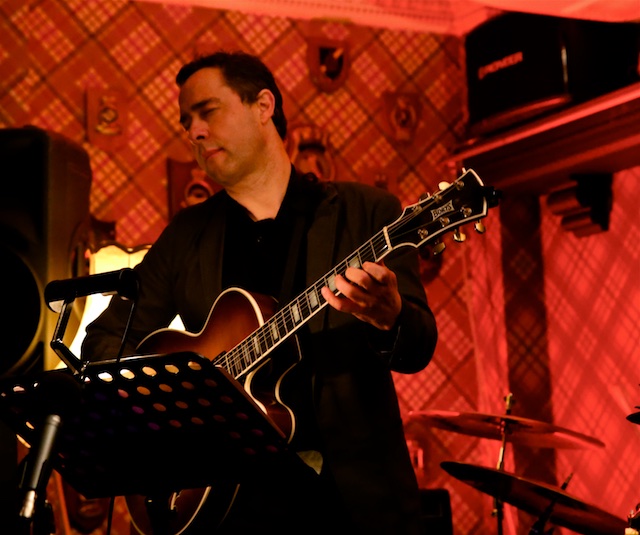 On chordal duties was Larry Koonse, playing a lovely hollow body Borys guitar. An impressive guitarist and a stalwart of the LA Jazz scene. Again, he is widely recorded, also releasing a number of albums under his own name. In many ways, Koonse encapsulates the best of the pre-millennial guitar tradition. That said, his fresh approach to tunes is also very much evident. His voice leading is a masterclass; dissonant/consonant inversions that have more bottom than most guitarists can muster in a lifetime and a gorgeous warm tone which lingers in the memory long after the gig. This, together with his other skills, makes him the perfect accompanist for a vocalist. When he played ‘Bolivia’ (Cedar Walton) with the trio, it took on the urgency and excitement that the tune demands. On ‘Whisper Not’ (Benny Golson) he extracted unalloyed beauty. I have known Larry for a decade and speaking to him after the gig, I complimented him on those tunes. At that point, my mouth raced way ahead of my brain and I said, “that was ‘Speak Low’ wasn’t it”? That fact that my slip of the tongue had accidentally come up with an exact antonym of ‘Whisper not’ made his day.
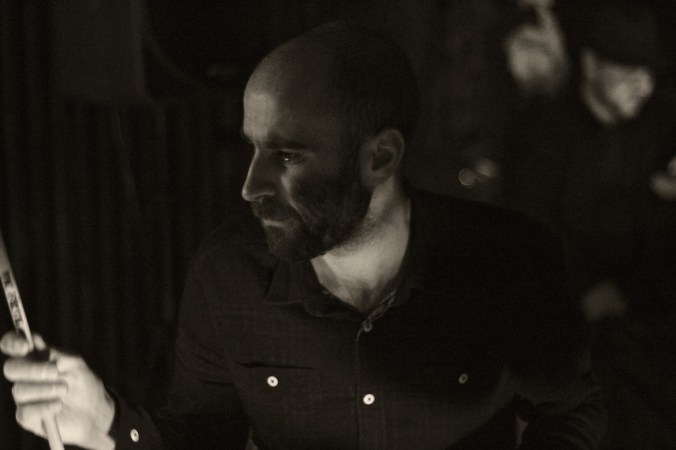
 Last but not least is the Warrington Trio drummer Joe La Barbera. No one needs reminding of his long list of credits and impeccable credentials. As Warrington said during the introductions. “As everyone knows, Joe La Barbera was in the last Bill Evans trio. This puts us in some rarefied air”. Along with Marc Johnson, he breathed new life into that trio. While rightly famous for his superb drum work with Evans, he is a multi-faceted drummer; having also worked in avant-garde settings and with medium to larger sized ensembles such as ‘The West Coast All Stars’, ‘The Woody Herman Band’ and with ‘Kenny Wheeler’. He has often worked with famous vocalists such as Tony Bennett and Karrin Allyson. La Barbera has an inclusive quality that enhances bass and guitar but never overshadows them. When he solos, it is to the point. His stick and brush work add subtlety and texture – the effect always jaw-dropping. It is easy to see why he is so much in demand. A musical drummer who gives so much while working so hard to support the others.
Karrin Allyson records for Concord and her albums are easy to locate – for more information about the artist go to www.karrin.com
The Tom Warrington trio records on the Jazz Compass label which the artists created along with Clay Jenkins. Their latest album ‘Nelson’ is a good start point.
The gig took place at the CJC (Creative Jazz Club), Albion Hotel, Auckland, June 1, 2016.
.
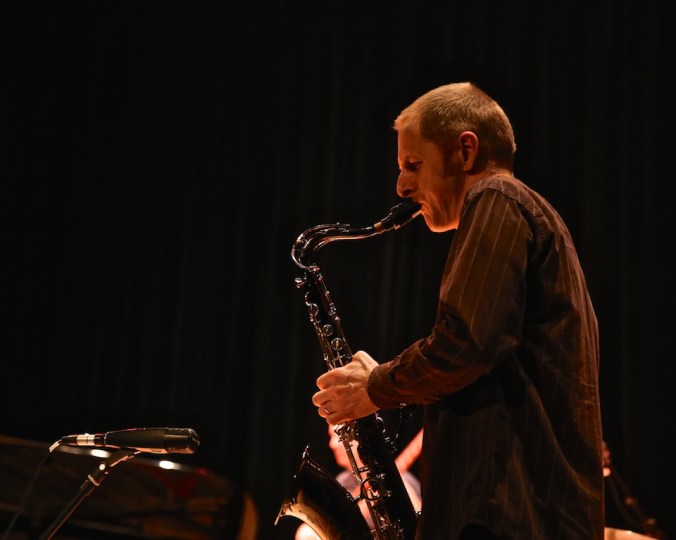
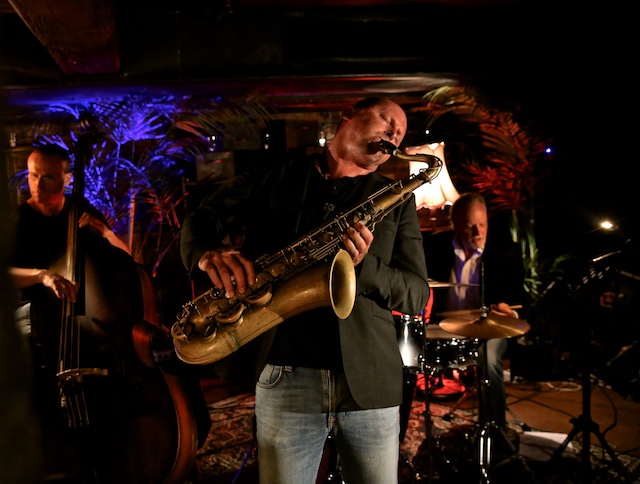 When the word gets about that a Jamie Oehlers gig is imminent, excitement mounts. Having turned people away last year, due to a capacity audience, the CJC offered two sessions this time. As expected, both were well attended. Oehlers is highly regarded in the Jazz world and it is not surprising. His astonishing mastery of the tenor saxophone is central to his appeal, but it is more than that. Every note he plays sounds authentic as if no other note could ever replace it, and all conveying a sense of musical humanism.
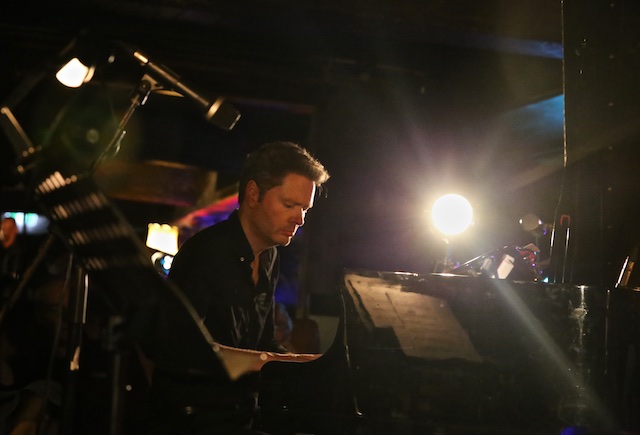 Oehlers has a new album out titled ‘The burden of memory‘ and we heard many of the pieces as the sets unfolded. Accompanying him on the album is a dream rhythm section: Paul Grabowsky on piano, Reuben Rogers on bass and Eric Harland on drums. Each a heavyweight and living up to their formidable reputations. For the Auckland gig, there was Kevin Field on piano, Olivier Holland on bass and Frank Gibson Jr on drums. Jumping in where Grabowsky, Rogers, and Harland had gone was no doubt daunting but they pulled it off in style. All played exceptionally well, but Gibson was a standout. The exchanges between him and Oehlers memorable. These men have history and the old conversations were clearly rekindled on the bandstand. Roger Manins joined Oehlers for the last number of each set and the two dueled as only they can. Weaving skillfully around each other and sounding like two halves of a whole; grinning like Cheshire cats.
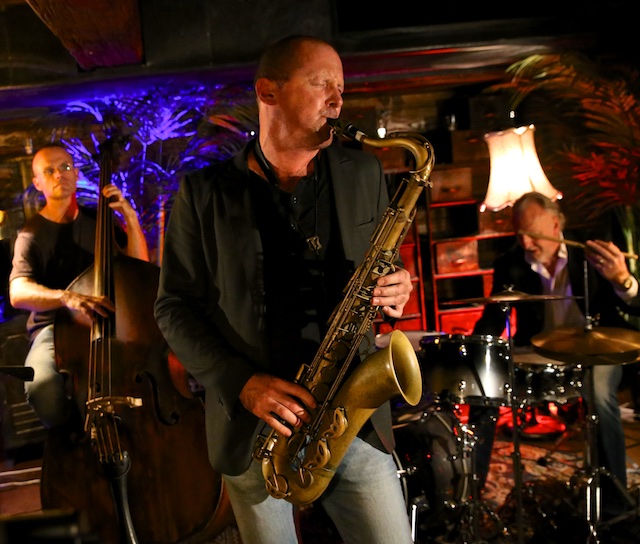 The album title and the song titles speak clearly of the musicians thought processes. He talks of his motivations and his horn takes us there. The burden of memory is a phrase he heard while listening to talkback radio and it resonated with him. He thinks deeply, examines the world about him and this communicates throughout the album. The second track ‘Armistice’ is a good example, possessing a melancholic beauty, and while it throws up the obvious images of a war ending, it also speaks of families and the tentative steps towards new possibilities.
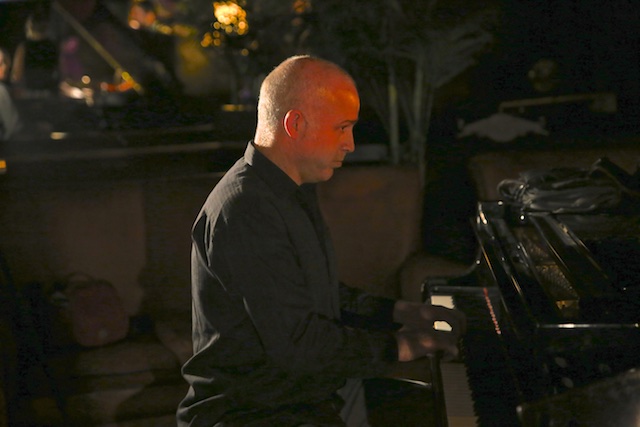
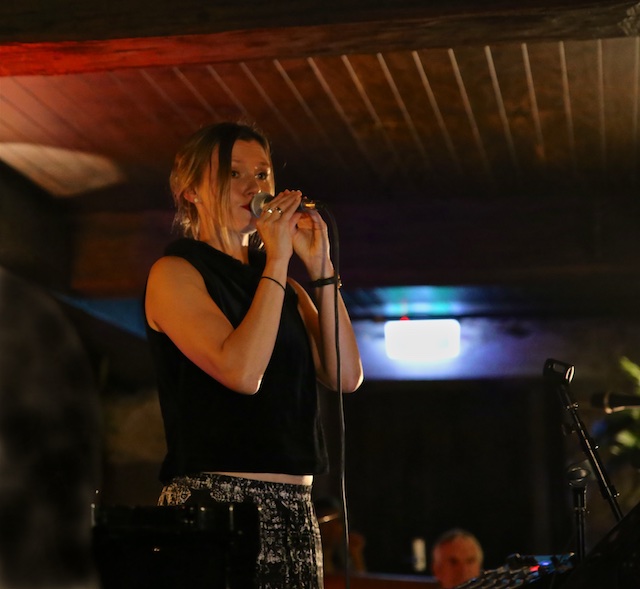 The Briana Cowlishaw/Gavin Ahearn gig is the second CJC gig featuring international artists in a month. For those who follow Australian improvised music, these are familiar names. Both have rock solid credentials as both have traveled extensively with their music and attracted glowing critical reviews. This is a fortuitous musical pairing, and it is particularly obvious during duets. There is a mutual awareness of space and nuance and an understanding of just where interplay works best; neither over-crowding the other. There are a lot of pianists who accompany vocalists convincingly, but the true art of accompaniment is rarely seen. Ahearn is a fine accompanist and soloist. Unusually, you could say the same for Cowlishaw – an aware musician who watches and listens to her collaborators carefully – works with what she hears. Never greedy to hog the limelight and making every line count.
 For an artist barely past her mid twenties Cowlishaw has achieved much. Performing at festivals all over the world and being nominated for prestigious awards along the way. She has studied with top rated teachers in three continents and it shows (including Gretchen Parlato, Aaron Goldberg, Kurt Elling). Her confidence, compositional abilities and musicianship shine through on the bandstand. Hers is a modern voice and more importantly a fresh young voice. What worked so well so well for Gretchen Parlato also works for her; a clean delivery, imaginative interpretations and an interesting approach.
 The first set saw Cowlishaw and Ahearn performing as a duo. This format gifts artists with a degree of freedom and it was well utilised. As they took us through a mix of standards and originals, we saw just how attuned they are. The Cowlishaw compositions are particularly interesting, with words, wordless vocalising and interesting harmonic underpinnings from Ahearn – a subtle weave, blending threads to create evocative soundscapes.
 Both have visited Norway and the sparse honest northern sound was particularly evident in their first set. A recent collaborative album recorded in Norway arose out of an earlier trip there. More recently they performed at the Hemnes Jazz Festival in that country. As Cowlishaw said of these compositions, “After spending a lot of time on the road and in big cities, I found myself in the Fjords. The wild lonely freshness was so appealing that the thought arose – was this a place that I would want to live in one day”? Arising from that proposition came the compositions on their ‘Fjord’ album. Cowlishaw is obviously keen on the outdoors. She told an audience member that she intended to explore a few of New Zealand wildness places as the chance presented itself.
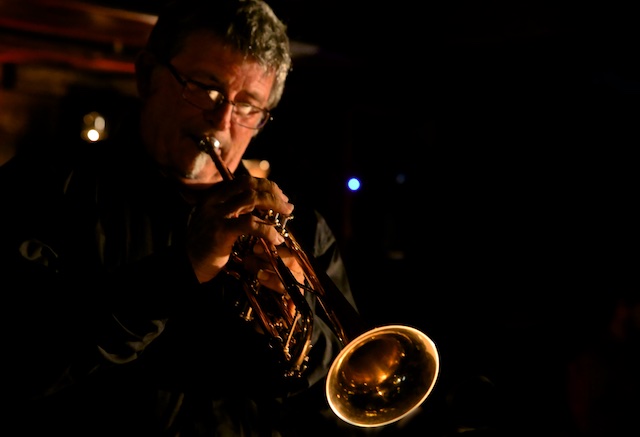
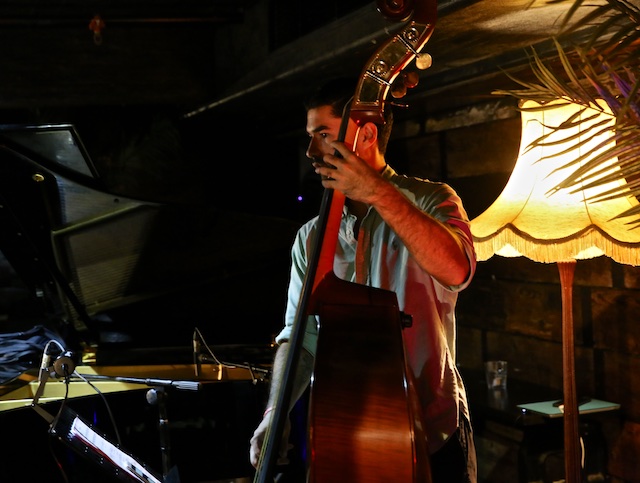
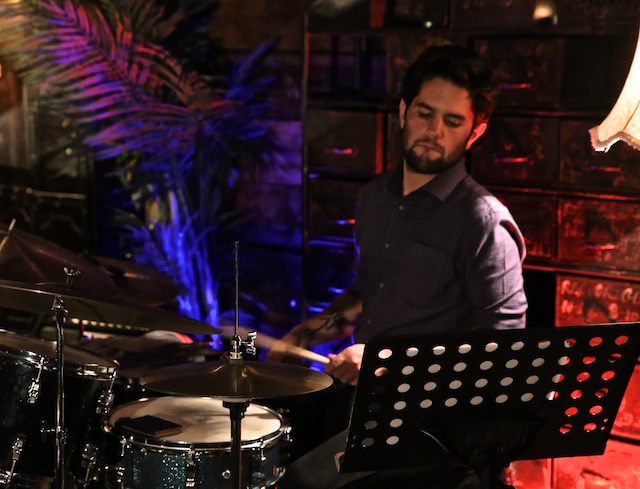 The second set swelled the bands numbers to a quintet – joining the duo were Mike Booth on trumpet, Cameron McArthur on bass and Adam Tobeck on drums. All fine musicians and well able to rise to any challenge. The expanded unit gave her much to work with and Ahearn in particular jumped at the opportunity; utilising a more aggressive hard-swinging style. There were more standards in this second half and Cole Porters wonderful 1943 composition from ‘Something to shout about’ – ‘You’d be so Nice to Come Home to’ stood out as a rollicking swinger. The other memorable standard came from the duo – Michel Legrand’s 1932 composition ‘You must believe in Spring’. To Jazz audiences this means one thing – The achingly beautiful Bill Evans Warners album of that name. The rendition was remarkably beautiful – Cowlishaw tackled the number as Norma Winstone might, while Ahearn stamped his own authority on the ballad while allowing Evans to shine through.
 2015 was an amazing year for the CJC (Creative Jazz Club) and just when we thought the gigs couldn’t get any better this gig happened. It was an unexpected bonus, appearing out of nowhere. During the break of the CJC’s penultimate gig, Roger informed us that an extra gig would occur just two days before Christmas. Matt Penman was in town and he would appear with Kevin Field, Dixon Nacey and Steve Thomas. A buzz of excitement ran through the room and within a few days the gig was booked out. A second gig was quickly announced and that sold out as well.
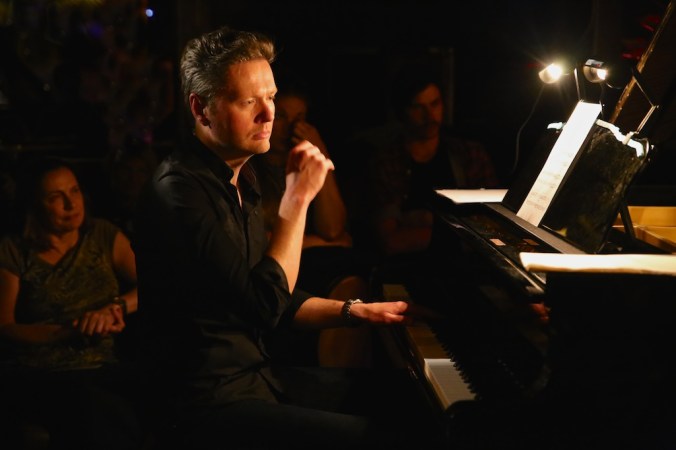 Fittingly the gig opened with ‘Two Steps’ (Penman) which is from the second James Farm album. Everything about the number is compelling and it oozes a post millennial Americana vibe – close to that espoused by artists like Brad Mehldau. James Farm are an extraordinary group co-led by Joshua Redman, Aaron Parks, Matt Penman & Eric Harland. A super-group where everyone is a gifted writer and virtuosic player. This is the pinnacle of modern American Jazz and we were lucky enough to get an up close taste of it. A warm glow swiftly enveloped us and from the first pull on the bass strings and we sensed on mass that this a different type of bass playing; supremely authoritative, melodic and with more momentum than a downhill freight train. We were especially fascinated to hear that Split Enz inspired him to write this tune. We heard other James Farm compositions – the moody ‘Juries Out’ (Penman) and Otherwise (Aaron Parks). Delightful Penman originals dominated the rest of the set (with the exception of a haunting Jewish folk song).
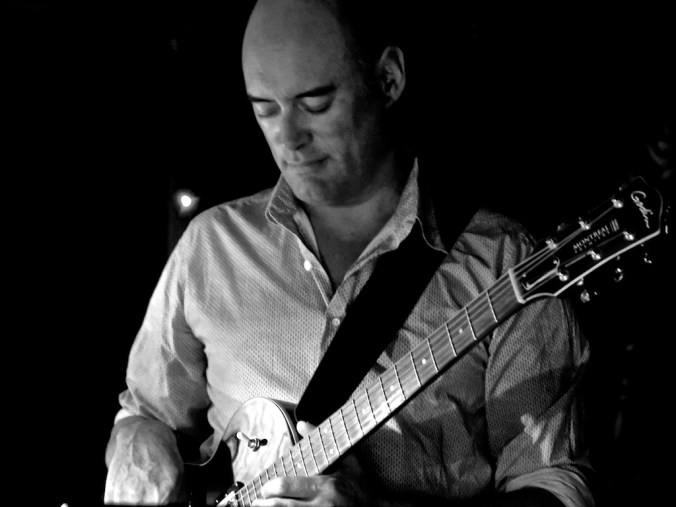 As approachable as this music is, there are many rhythmic and textural complexities. Putting such a set list together with a band not used to playing the material, perilous. Two factors undoubtedly assisted here. Penman, Field and Nacey are old friends. Nacey attended Avondale college with Penman and Field has known him since his time at Auckland University. Field also recorded with Penman in New York on his recent Warners album ‘The A List’. The remaining band member was Stephen Thomas, the youngest of the quartet. He only met Penman the day of gig. When you examine Penman’s contributions to James Farm, the SF Jazz Collective and other albums, you realise that he writes with unusually gifted improvising musicians in mind. For a young drummer to step into the space occupied by Eric Harland and Obed Calviare and not only pull it off but to do it well is a credit to him. Penman singled him out for praise and told us we were lucky to have a young drummer of his ability on the scene.
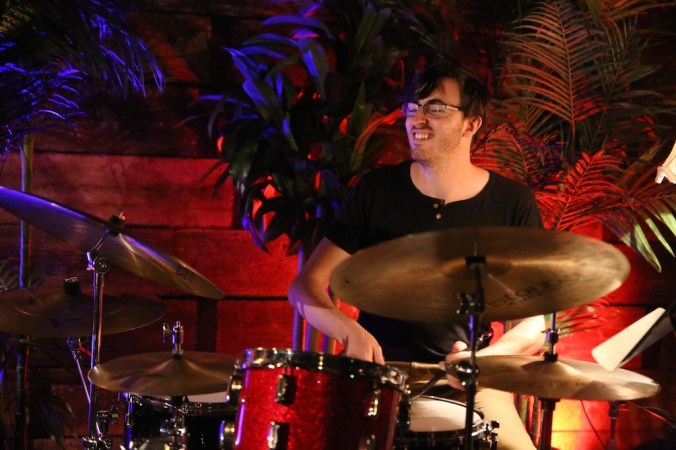 Of Field and Nacey we expect only the best and we got it. Replacing Redman, Moreno or Rosenwinkel with Nacey’s singing Godin Guitar felt a natural choice. I have heard Mike Moreno perform and Nacey is heading for that level of virtuosity. He is a good reader and a master musician and he always delivers. Field was also at his best that night and his best is something to behold. Losing himself in a music quite different from his own and doing it with utter conviction. Collectively they brought Christmas joy to everyone present. The best of Christmas presents from the best of Jazz clubs. I hope the CJC features Penman again soon – we love him down under.
 By the time the second week of the Auckland Jazz Festival arrived, I began to feel my age. I had already experienced a number of late night gigs and a further week of music stretched ahead of me. This was no time to flag, as some interesting and innovative music lay ahead. The festival programme structure provided audiences with variety. The depth and breadth of the improvising scene was on show and I wanted to see everything possible. The week started well with the Meehan/Griffin/Manhire poetry project (see earlier review for this). That gig brought a new audience and I was still
  buzzing come Tuesday.
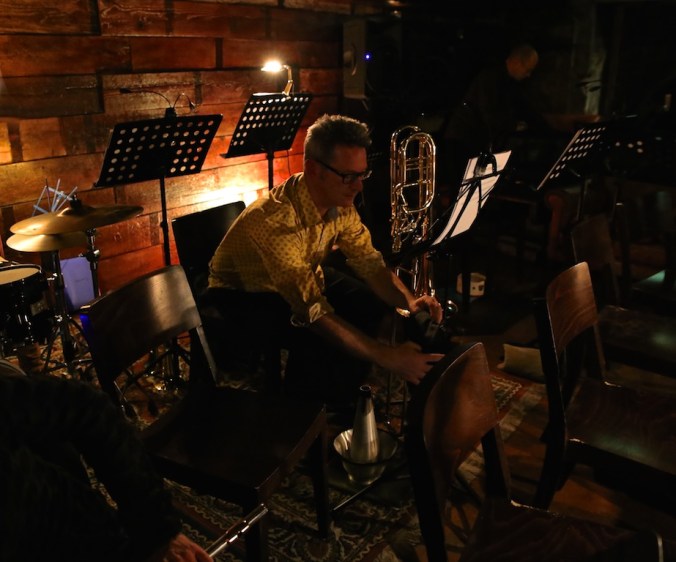
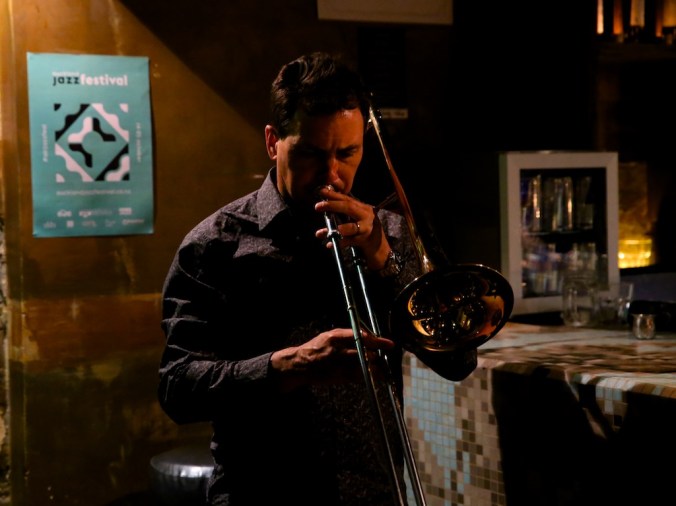 I had volunteered for door duty that night, turning up early to help. I enjoy the Jazz orchestra set-up process – in this case nineteen musicians and a conductor configuring a behemoth in an impossibly small space. It was like witnessing Nasa scientists beginning the launch sequence. Instruments and gauges checked, tapped and rechecked, cabling run out; each adding a layer to the criss-cross tangle of shoes, stands and chairs. Soon there were rows of brassy instruments standing in an (almost) orderly line, with the odd human interloper spoiling their symmetry. Random buzzing sounds came from warming up lips; and all punctuated with honks and plucked notes from far-flung corners of the room. this is the counterfactual of the sounds that follow.
 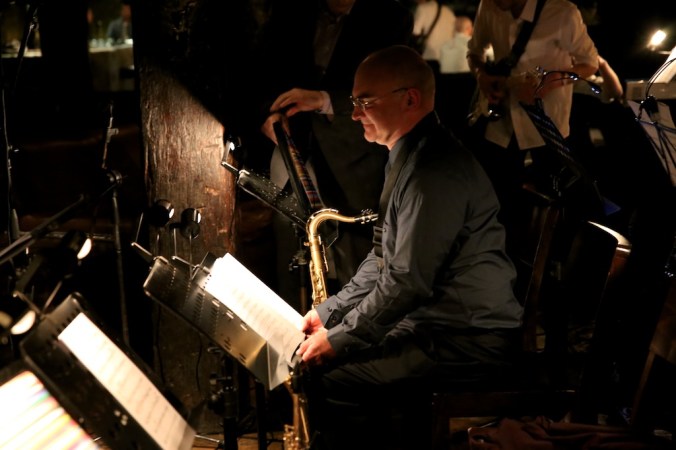 Band leader Tim Atkinson composed and arranged the suite. He has carefully shaped this ground breaking project as befitting a work of this importance. This is a modern piece of music in the mould of Darcy James Argue. Richly textured, evocative of the title and especially in the warm multi layered dissonance that swells out of the quieter passages. The work has captured a mood and an orchestra going places. This is a moment which benchmarks the growing maturity of the Auckland Jazz scene and I am truly glad to have witnessed it. The overall performance on the night was flawless, but if anyone stood out it was altoist Callum Passels. His solo on ‘The Dark Passenger’ was wonderful. it was a feat of story telling, of mood and it oozed freedom – as if he had somehow escaped the confines of room and orchestra. Importantly, he managed this without once deviating from the logic of the composition. I urge people to purchase this album and I guarantee that you will play it over and again.
  On Wednesday I spent time with the
 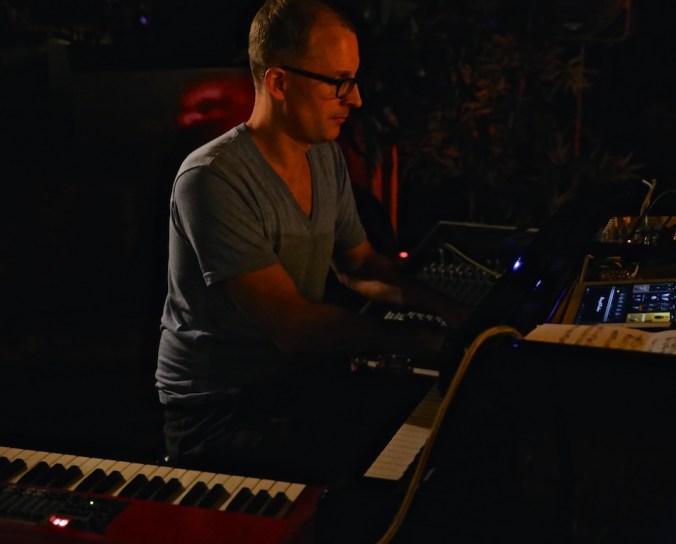 The trio’s set list was a mix or originals and some very interesting covers. What was not composed by Lackner or by the drummer Chazarenc, were often unexpected tunes; Brahms, Cold Play, David Bowie, Rodriguez and Jimmy Hendrix. ‘If Six were Nine’ was simply stunning. Warmly familiar to those of us who remembered the rock original. Taking the bones of a 1960’s tune and infusing it with edgy lines and modern harmonic conceptions. I have long-held the view that the new standards will come from material exactly like this. None of the band were alive when this acid blues classic was cut in 1969, but their joy at performing it was evident. Jimi would have loved it.
 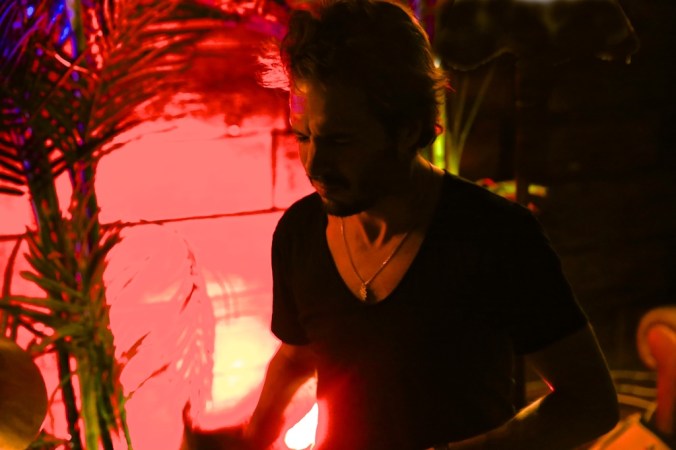 The bass player on this trip was Bruno Schorpe. When offered an upright bass he declined – choosing to remain on electric bass throughout. I’m glad that he did because the instrument had the bite to act as counterweight. Balancing out well the electronics and various effects of Lackner’s keyboards. Then there was drummer Matthieu Chazarenc. He has accompanied Lackner on previous trips and to my ears he is directly out of a great tradition. French Jazz drummers have a sound that is distinct. Like many of his compatriots Chazarenc’s sound is crisp, even dry; utilising dynamics in ways that younger drummers are often incapable of. A label like ACT must surely pick the trio up sometime soon. They would be a perfect fit – much as they would for ECM.
 ‘The Green Room
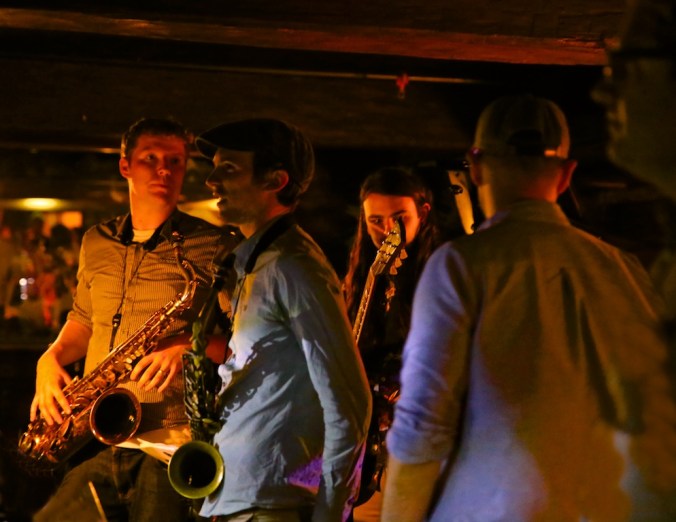 It is almost overkill to single out soloists with a cohesive group like this as every one is notable in some way or another. Altoist Jake Baxendale is their nominal leader and three of the compositions on the album are attributed to him (including the title track). If any number captures the essence of the group it is this. The solo on his tune Andalucia also captures a strong sense of place. I know Andalucia well and this is a convincing testimony.
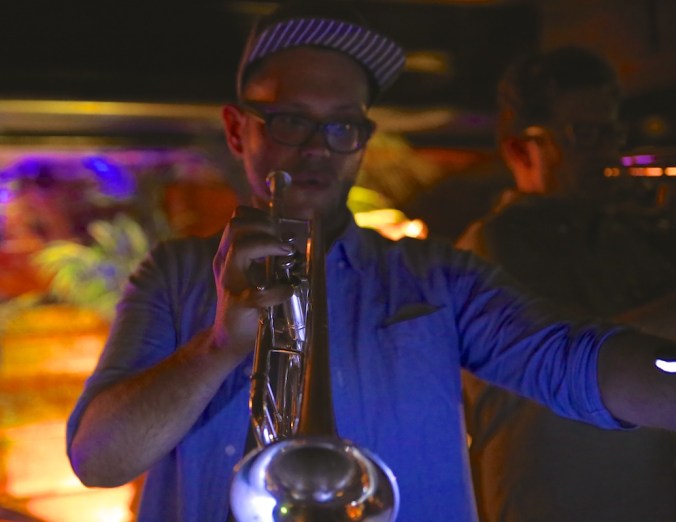 It is hard to know where to start with Callum Allardice; he grows as a musician every time I hear him. His compositions are stunning and his guitar work so fluid and exciting that it defies belief. These are performances that stop you in your tracks and few New Zealand guitarists capture that particular sound. Lex French is another spectacular performer and we would hardly expect otherwise. He is now the leading local voice on that horn. Perhaps the most experienced player is Nick tipping who never puts a foot wrong. On the new album we hear him at his best.
  Convincing contributions by the likes of Chris Buckland, Matthew Alison and Shaun Anderson reinforce the view that this is an all-star band. Lastly there is pianist Daniel Milward. He has recently moved to Melbourne and his voice is particularly strong on the recording; more so than on the first album. Not a showy pianist but an extremely tasteful one who gets it just right. I have put up a sound clip of the Allardice Composition ‘The Heist’, as I have loved it since first hearing it (probably at the Tauranga Jazz Festival).
 In Psathas words, “it is not arranging or adapting…(rather) a continuing of the composing process”. There are works or arrangements which re-imagine and examine a work from an outside perspective. That is not the case here. This is part of a developing story and the Psathas vision remains at its heart. I recently read a trilogy by a famous and highly respected author. He had intended to write a fourth volume but died before he could proceed. A year later another author picked up where the original author left off and achieved something extremely rare. He added to the body of work seamlessly; continuing the narrative in ways that were his own and entirely consistent with the original. Although a more serious work, DIAGOLOS was an unmitigated triumph.
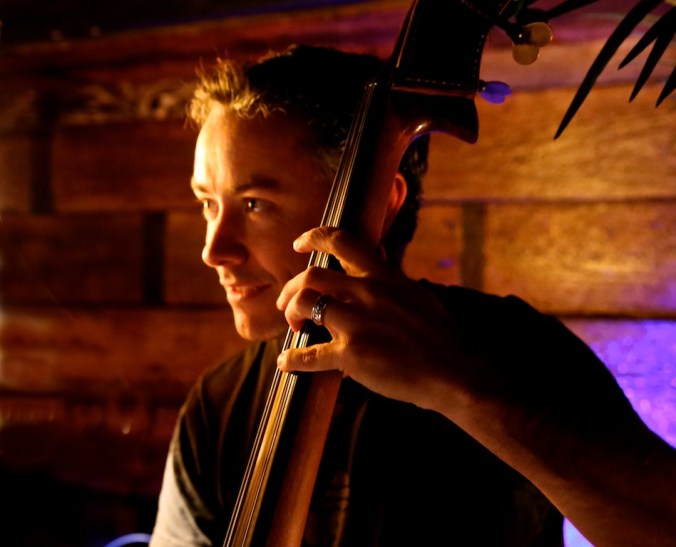
  Mason-Battley is a thoughtful gifted musician, but we don’t see him perform about town very often. Any new project gets his undivided attention and that was the case here. Counter intuitively, it is his careful preparation which affords him the extraordinary freedom he demonstrates on the bandstand. During this performance he took us right to the edge; you gained the sense listening that he was pushing himself a little further with each phrase. It is at times like this that great music emerges. While adventurous with electronics, he evokes a classic Coltrane sound on his Soprano. There are a number of local musicians who double on soprano but few (if any) sound like Battley.
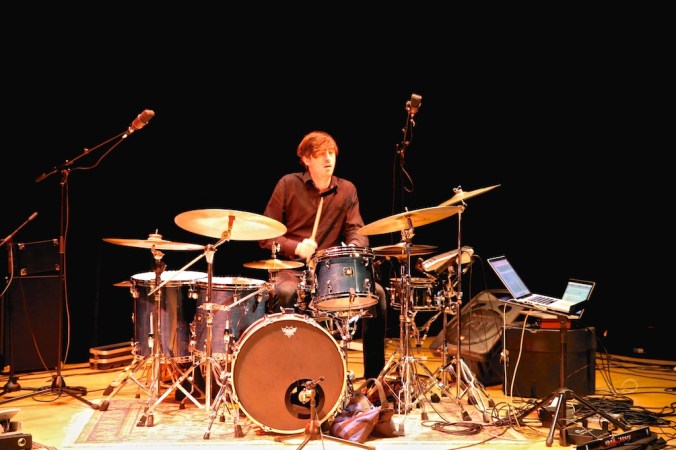
 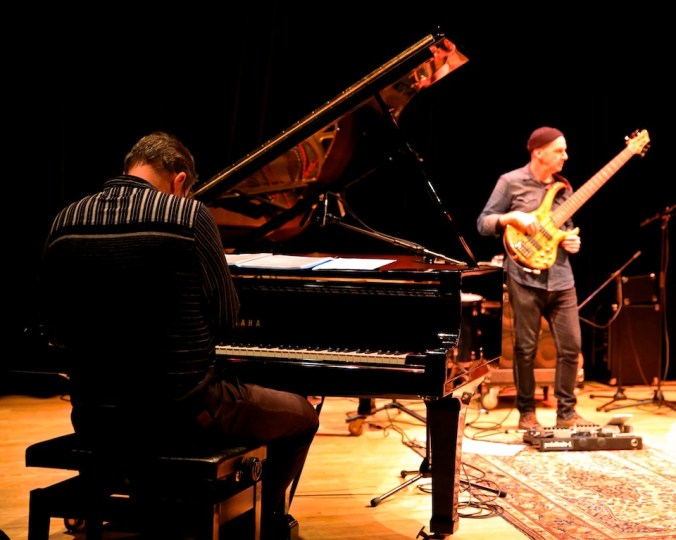 The Chris Mason-Battley Group has been around for some time and the original group set New Zealand records for the number of downloads and albums purchased. For this project core members David Lines, Sam Giles and Mason-Battley remain with the addition of drummer Stephen Thomas. Unlike earlier configurations, there is no guitar. Bringing Thomas into the mix has worked extremely well. The drummer of choice for many gigs and a gifted percussionist in the fullest sense. Psathas music calls for sensitive drum work and Thomas has exactly the right approach. His understanding of subtle dynamics, time awareness and overall sensitivity to the project were very much on display. I also appreciated David Lines piano. Lines early classical training was evident in places and again this made him a very good choice for the project. The work required a pianist with a particular chordal approach. At times he was minimalist and with a particular approach to voice leading. Lines like the other four were indispensable to the project. Lastly there was Sam Giles – an electric bass player I wish I heard more often. Giles often leans towards the avant-garde and innovative projects. That is where he shines.
 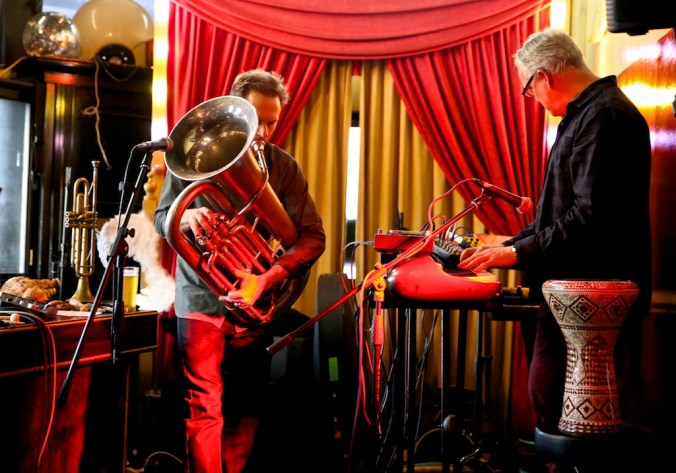 The Last Auckland Jazz Festival gig I attended was the Alan Brown/Kingsley Melhuish
  This has been an interesting Jazz Festival and although it is cliched, there was something for everyone. From manouche through to the avant-garde. I loved that it retained the feeling of local and of intimacy – even when showcasing offshore bands. The CJC (Creative Jazz Club), Rattle Records, 1885 Britomart, Auckland University, Golden Dawn, Portland Public House, Hallertau, Ostro, Lot 23, One2One, Hotel DeBrett, Lewis Eady, The Refreshment Room, the Vic, The Wine Cellar and other venues deserve our heartfelt thanks. Above all its
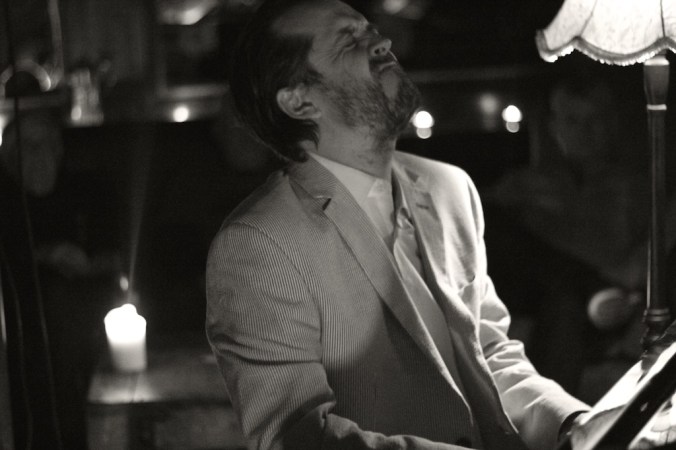
 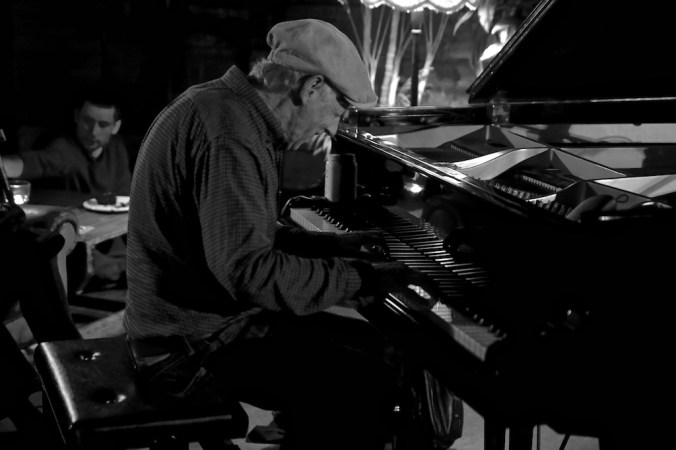 Having reviewed the ‘Two Out’ album a few weeks ago and thoroughly enjoyed it – it was a certainty that I would enjoy the ‘Two Out’ live gig. Mike Nock and Roger Manins are rightly celebrated as being at the top of their game, but neither trades on reputation. Both approached this gig with humility. As they settled into the music you could feel the absorption; punctuated by occasional smiles when a particular phrase surprised them, often delighting at what fell under their fingers. At times they seemed to defeat the physical limitations of performance; simultaneously observing and creating. This is a Zen thing and it cuts to the heart of improvised music. Others noticed it as well; one musician said to me afterwards, “Man there was no ego on that bandstand and it was a beautiful thing to witness’. He was absolutely right.
 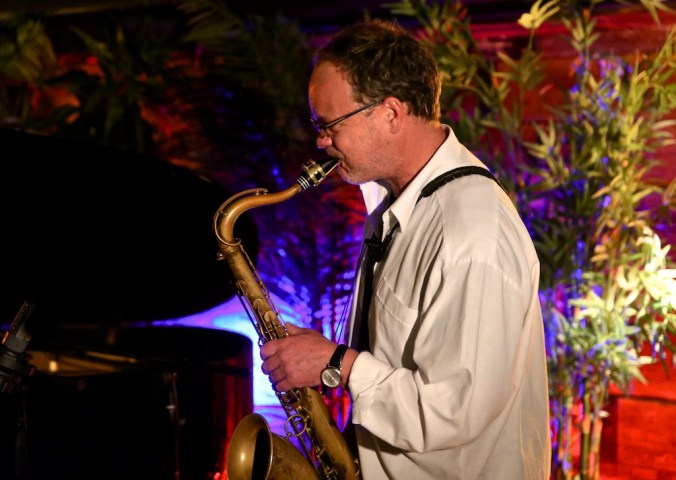 Most albums require careful planning, the ideas gestating over time, rehearsal upon rehearsal shaping the direction. Then there is the other type arising from happenstance. ‘Two Out’ arose out of a relaxed jam between friends. Manins was relaxing with Nock one January morning in Sydney when they decided to play a few tunes (as musicians often do when relaxing). What took their fancy were the often forgotten tunes, ‘the ones that our mothers used to sing’. As they worked their way through the tunes Nock suggested that they record; just for fun. Shortly after they ended up recording in the Sydney Conservatorium’s Verbruggen Hall. The hall contained a wonderful Fazioli grand piano much to Nock’s delight.
 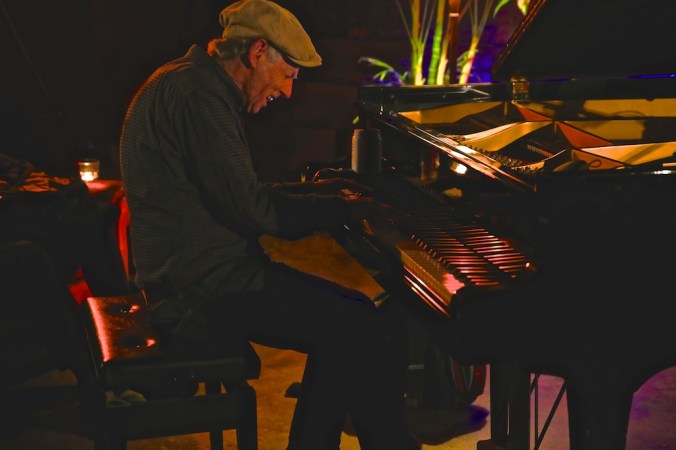 It is our good fortune that ‘Two Out’ was performed last week for New Zealand audiences. Nock explained that they had actually recorded 16 songs, but the limitations of CD space required these being reduced to eleven. On Wednesday we heard a significant number of the tunes from the album plus a few that didn’t make the final cut. In particular there was a version of ‘Softly as a Morning Sunrise’ (Romberg/Hammerstein). A wild joyous free-flowing version which brought out the best in both musicians. At times gentle but at other times carrying the echoes of a boisterous 1930’s radio performance. At that moment, listening, I visualised my mother, leaning over an old upright Victrola and humming along happily. The other addition was ‘But Beautiful’ (Jimmy Van Heusen). An overwhelming sense of respect and intimacy was evident in their interpretation of that tune. It brought a smile to everyone’s lips. When friends like this collaborate it is profound …… but beautiful.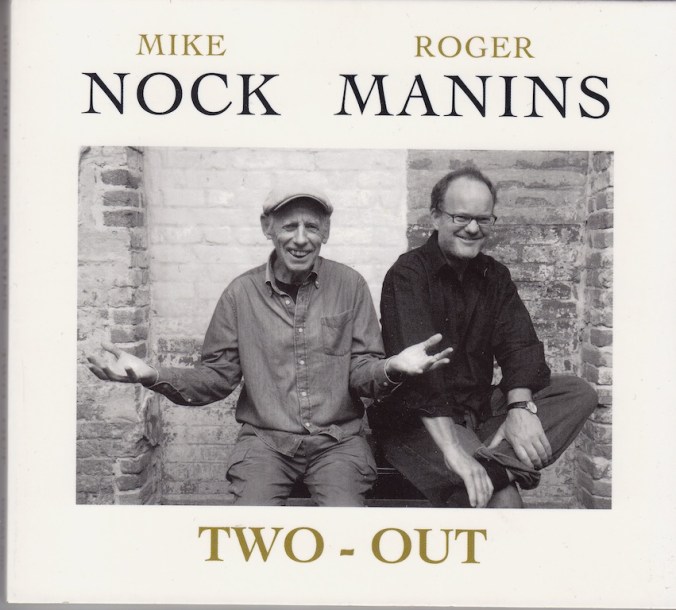
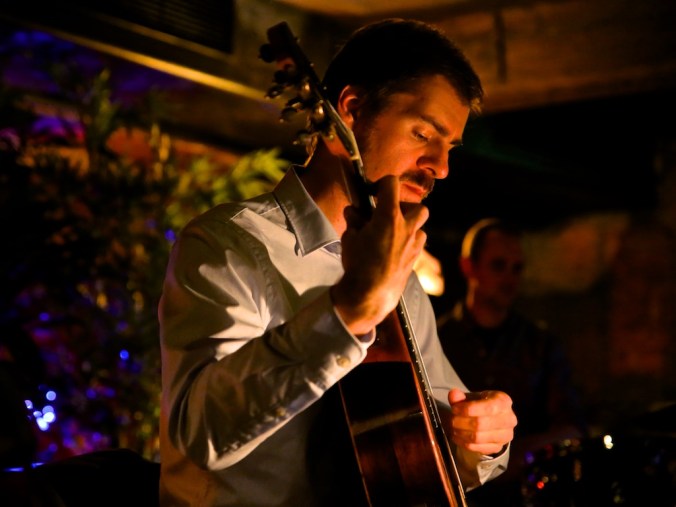 There was a buzz of excitement surrounding Simon Thacker’s ‘Ritmata’ tour. Not the touring rock-band sort of buzz, but a word of mouth Twitter-post kind. A buzz generated by night people and festival goers. Those who pay close attention to good music. I followed the threads and everything I read about Thacker sat well with me. I looked forward to his Auckland gig and the hype was not over-stated. Ritmata was a delight.
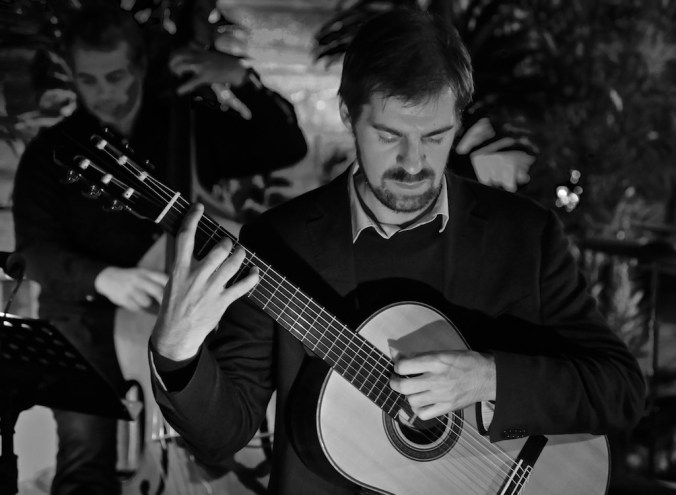 Simon Thacker is the ideal front man; funny, confident, virtuosic. His authority emanating from a force field of energy. A musical vision that engages; thriving on intimacy. A club setting is therefore perfect, with warmth and exuberance captured, contained; audience and musicians sharing an experience. Thacker’s banter is quirky, self-deprecating and it connects. There were howls of delight at the sheep jokes and they told me something important. Scotts, Kiwis and Australians have a shared humour, a post colonial cultural connection. An inbuilt irreverence that is part of our evolving story.
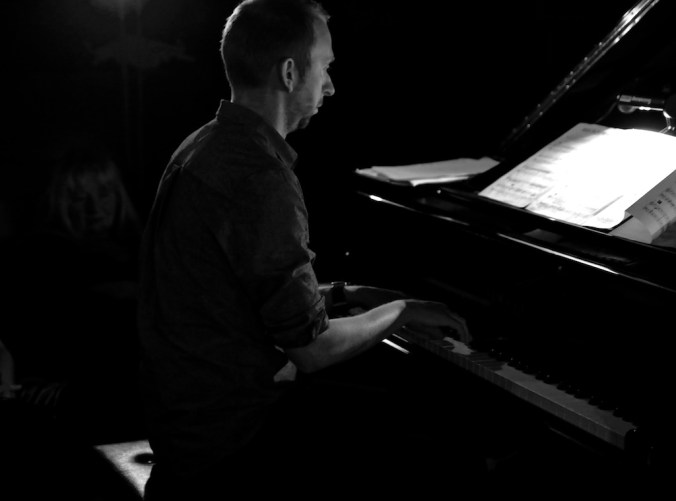 The first set opened with traditional Sephardic melodies ‘reimagined’. This is familiar territory as Caroline Manins has trodden this path with her Mother Tongue project. Some of these tunes are more than a thousand years old (‘Des Oge Mais’), and in spite of dealing with loss or longing, they are often fast paced and rhythmically complex. In Ritmata’s hands they are ancient to modern. Evoking the melting pot of Judaic Moorish Spain but never time-locked. Elements of Flamenco, and even the modal chromaticism of Jazz pianists like McCoy Tyner came to mind.
 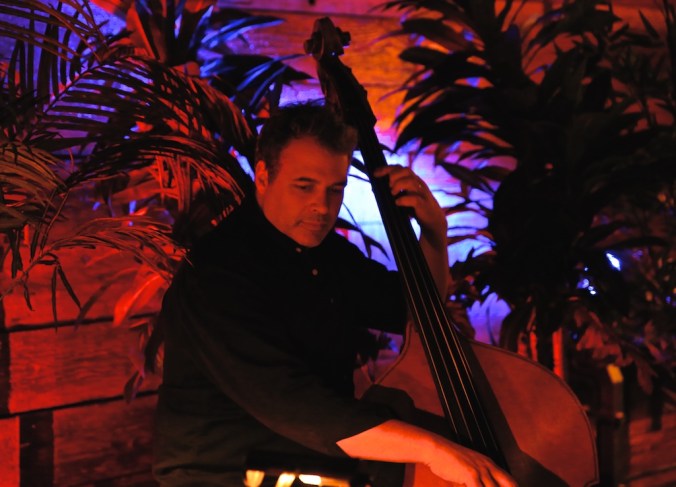 There were a number of interesting Thacker originals and to my delight three pieces based on Egberto Gismonti compositions (a stunning Brazilian improvising guitarist who used the street music of Choro to create similar, beyond-genre visions – an artist beloved of Jazz audiences). One of Thacker’s tunes ‘Honour the Treaties’ referenced the chants of American Indians and as indicated by the wild applause, it resonated powerfully. Then there was ‘Asuramaya’, influenced by the Indian Ragas. That piece had a delicious dream-sequence feel to it. He rounded off his sets with a traditional Azerbaijani tune, ‘Bana Bana Gel’ and a Jewish tune ‘Ovshori’ from the mountains Dagestan. When the audience clamoured for an encore, vocalist and Sephardic specialist Carolina Manins joined the band singing ‘Madre de Deus’; again reimagined by Thacker.
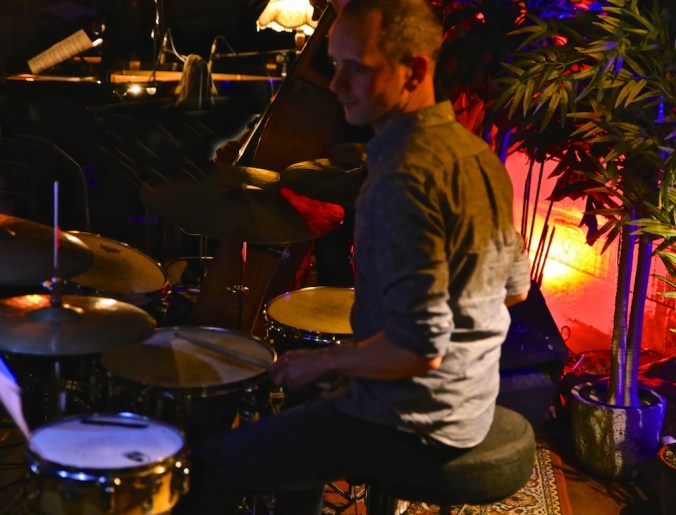 While Thacker dominated proceedings with his larger than life presence, the band members were stars in their own right. I have seldom heard a unit so in lock-step. The pianist, bass and drums were as central to the enjoyment as Thacker himself. The spotlight must lastly fall on that lovely guitar; I couldn’t keep my eyes off it. An extraordinary Rouse classical guitar; it sang like the Lyre of Orpheus. Orchestrating time and place; stretching time until we could see the future.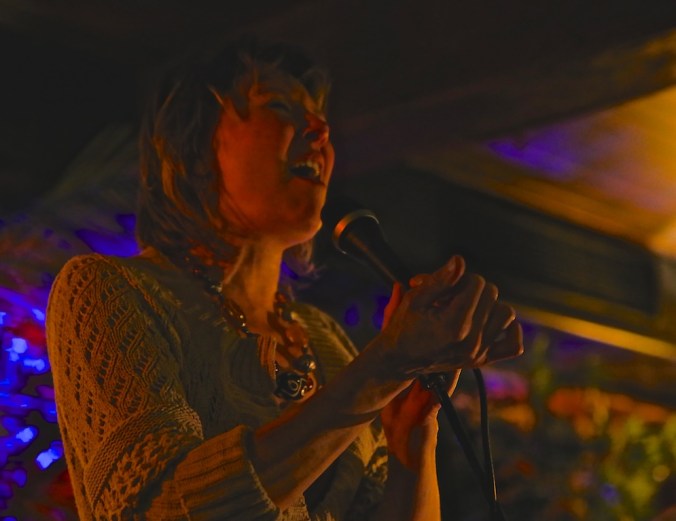
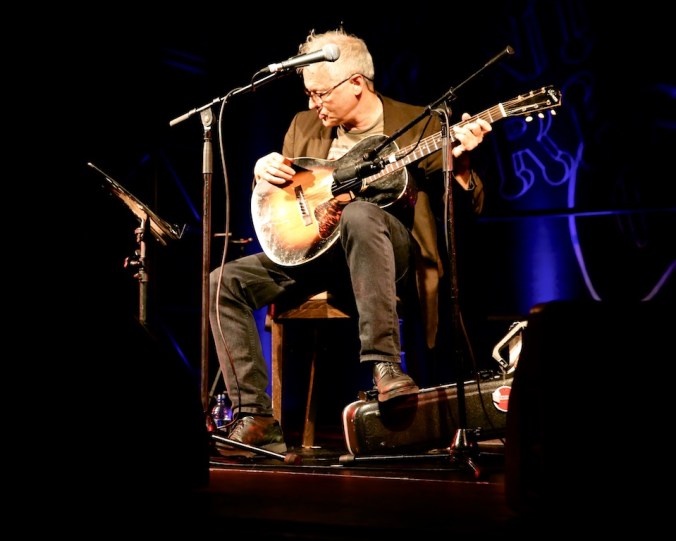 I am a Marc Ribot enthusiast so when local musician Neil Watson sent me a message to say that Ribot was coming to New Zealand I whooped for joy. My first thought was, wow, this will be the good shit. My next thought was, oh yeah I want to interview that cat about his musical and social activism. Watson was to open for him which pleased me. Watson was a good fit for this gig. An iconoclast multi genre improviser himself.
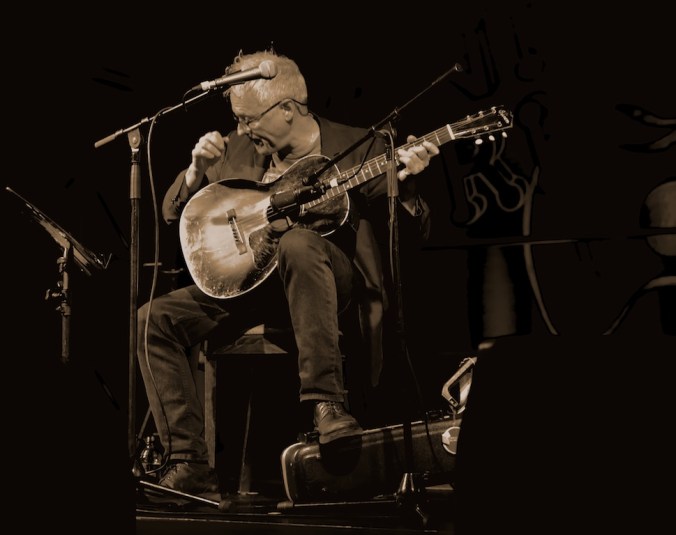 My first act on arriving at the venue was to approach the Tuning Fork floor manager and ask about photographs. He told me of a request from Ribot for absolute quiet. It was solo acoustic guitar, not Ceramic Dog and at Ribot’s request the venue turned off the air-conditioning and fridges. Camera clicks were obviously out of the question unless between numbers. I respected that and took photographs unobtrusively during moments of applause. This was a special gig that required a womb of engaged silence. Audience and musician locked into an embrace of sound.
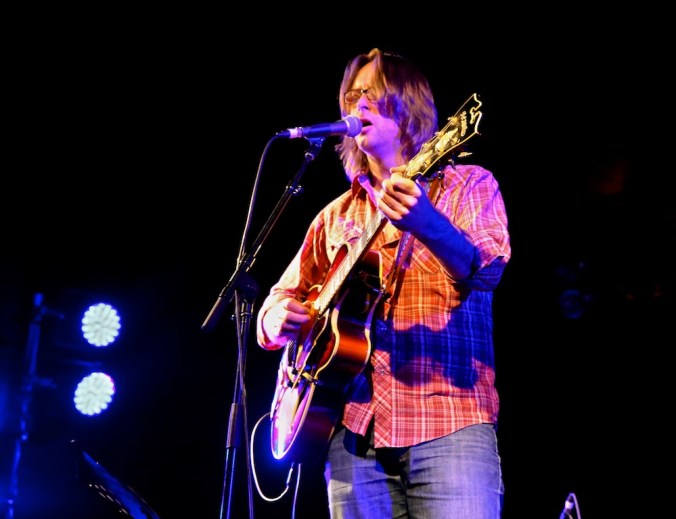 Footnote: Neil Watson acquitted himself well and added to the enjoyment of the evening. He played three types of electric guitar plus his pedal steel guitar; his set list ranging freely across genres. A Nirvana tune, a Hendrix referencing ‘Hear my train a comin’, a nice tune composed by his partner and the Kiwiana classic Blue Smoke as high points from his set.
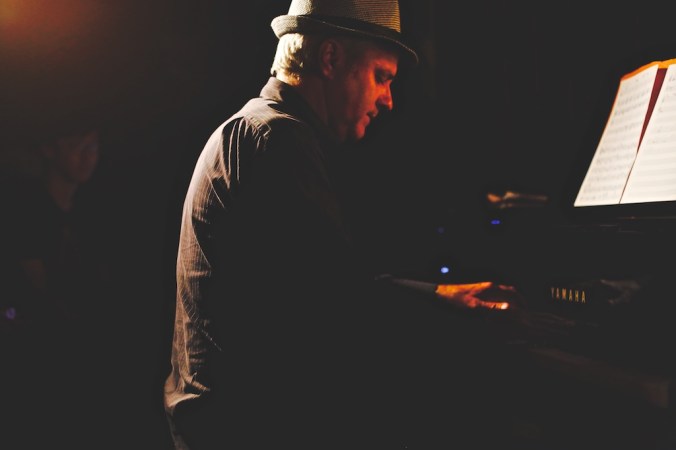 When I saw that pianist Chris Cody was coming to New Zealand I immediately recognised the name. For a moment I couldn’t fill in the blank spots of memory but I sensed that the connection was both Australian and international. My CD collection is huge and I knew that the answer lay buried somewhere in the unruly muddle of music lying about the house. Then it came flooding back; Cody recorded a great ‘Chris Cody Coalition’ album in the nineties. The first international Jazz NAXOS recording titled ‘Oasis’ and produced by Mike Nock; an innovative exotic project brimming with warm middle eastern influences. Some quick
 research told me that the Chris Cody Coalition was still an entity and what equally excited me was to see the name Glenn Ferris on several of the albums credits. ‘Oasis’ featured the Australian Trombonist James Greening and on several of the later Coalition albums Cody features trombonist Ferris (an utterly distinctive player). His whispers, growls and smears are at times otherworldly, but also mysteriously human. Cody works especially well with trombone players and his writing reflects this on the latest album.
 in the front row and this is as much about Cody’s writing skills as the strong confident performances. It is also about the recording quality which is superb. I strongly recommend this album. I first heard the quartet at the Tauranga Jazz Festival. A CJC Jazz stage showcased the finale and the Jazz Tui Awards presentation. I spoke to Cody in a break and quickly learned that he had New Zealand blood running in his veins. Born in Australia of Kiwi parents he studied music before moving to Paris. Based there ever since and gaining a strong reputation on the wider scene. He has very recently move back to Australia but he intends to return to Paris to work periodically.
 often draws on very American sources like Jamal, he is also in the mould of pianists like Jacky Terrasson (also a Parisian). Cody’s compositions are well thought out and replete with interesting asides. We heard many of these at the CJC and the album ‘Conscript’ is all originals. I am a sucker for a Cole Porter tunes and when he opened with ‘I love Paris in the springtime’ I couldn’t have been happier. Happy because I love the song and above all happy because the quartet played it so well. I have posted a video of the CJC performance and the title track from the ‘Conscript’ album with Ferris (the latter an official video release).
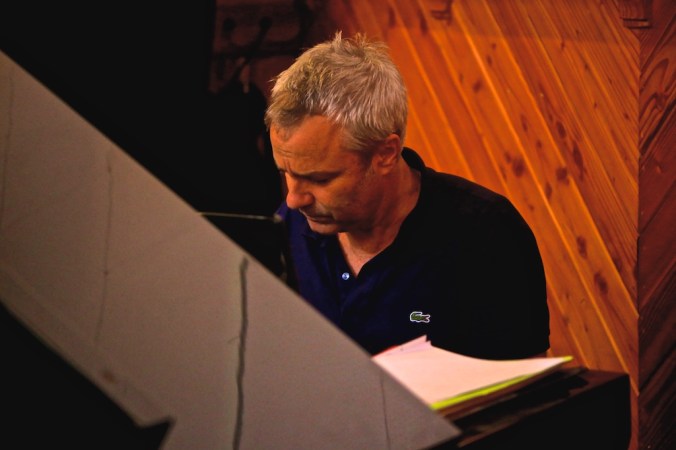 His pick up band are the familiar and popular Roger Manins (tenor), Oli Holland (bass) and Ron Samsom (drums). In the rush of the Tui awards there was little time to rehearse, but it didn’t show. This is 3/4 of DOG and they are the 2015 Jazz Tui winners after all.

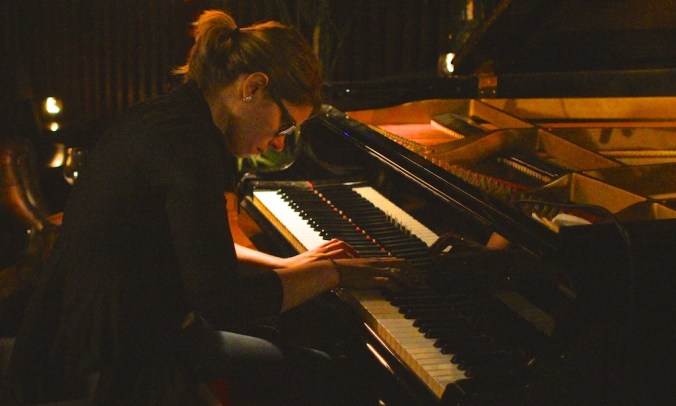 Any mention of Quebec catches my attention as I really like that part of Canada, so when I learned that a highly rated Montreal piano-trio was coming to town I knew that it would be a good experience. I had not encountered the Emie Roussel Trio before, but a quick glance at the accolades they have garnered and the numerous You Tube clips that have sprung up over the past year, gave me all the information that I needed. The group had attracted particular attention at the Montreal Jazz Festival and from what I saw online, deservedly so.
 As you move about that city, the familiar and the exotic coexist at every street corner. I came to realise that this almost subliminal familiarity was the manifestation of a spiritual kinship. The sort that exists between certain special cities, a connection that is not about trade, mayoral visits or geography; a connection of musical and artistic synergies.
  The Emie Roussel Trio are part European and part American in aesthetic. They are wholly Montreal. Their music has a pulse and a vibe which draws on european classical music traditions and the deep earthy Jazz grooves that arose from the American continent. In the hands of improvisers like Roussel these influences communicate a universal language. As the pieces unfold there is a sense that this band works as an organic whole. What we heard was tight and full of vibrancy or as a musician I spoke to during the break put it. “We are hearing the result of rehearsal, dedication to a project, discipline and road time”. While I love the free-flowing loose feel of New Zealand improvising bands, I must acknowledge that we seldom hear trio’s which sound like this.
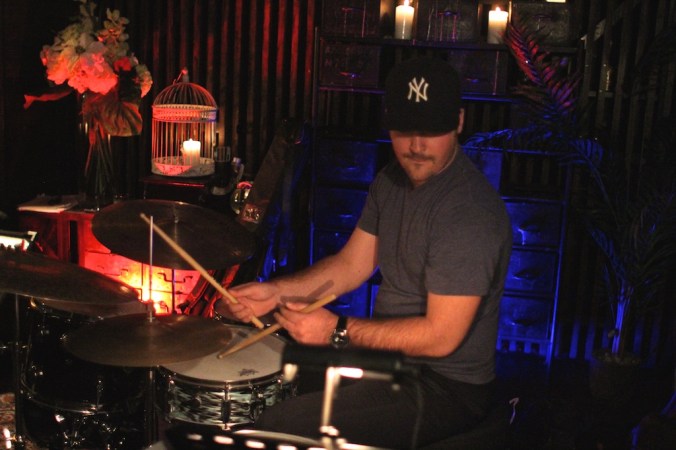
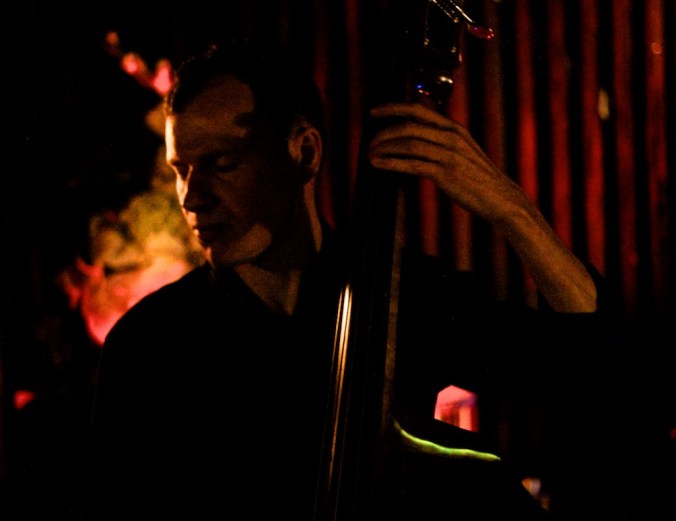
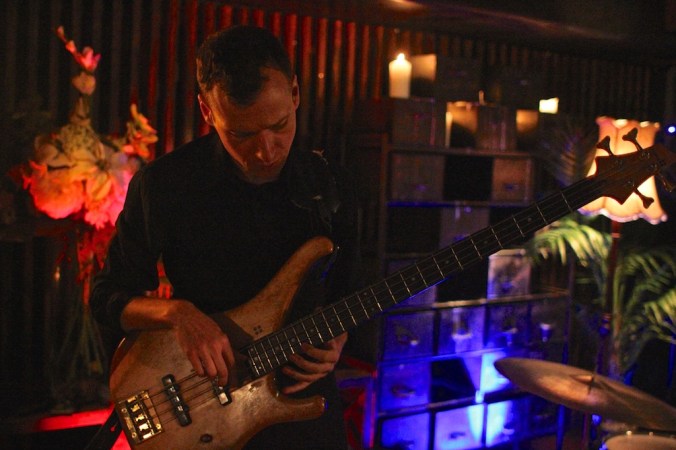 The bass player Nicolas Bedard and drummer Dominic Cloutier never faltered. They wove in and around the tunes with consummate skill and were the perfect interpreters of Roussel’s music. These men are versatile and skilled and whether on brushes, sticks, upright or electric bass, they knew exactly what would serve the music best.
 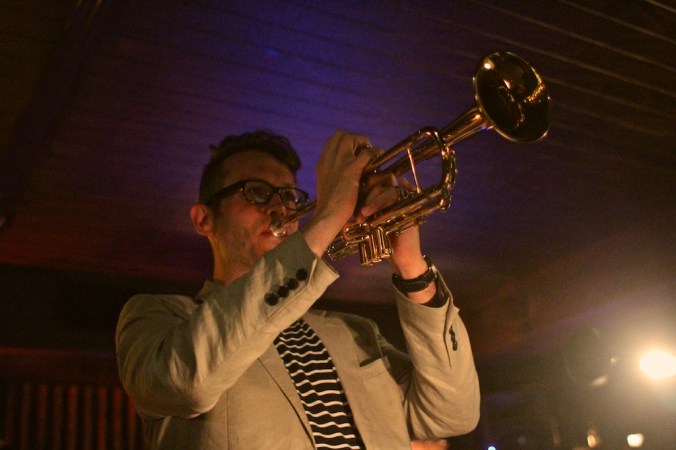 The second set brought us an added treat as the Kiwi trumpeter Lex French came to the bandstand. I have long rated French as one of our finest trumpeters. He completed his studies in Montreal and was already well acquainted with several of the band members. His addition changed the pace once again, opening the way for harder blowing. As the sets progressed the constantly evolving moods worked well for them, giving the gig real breadth.
 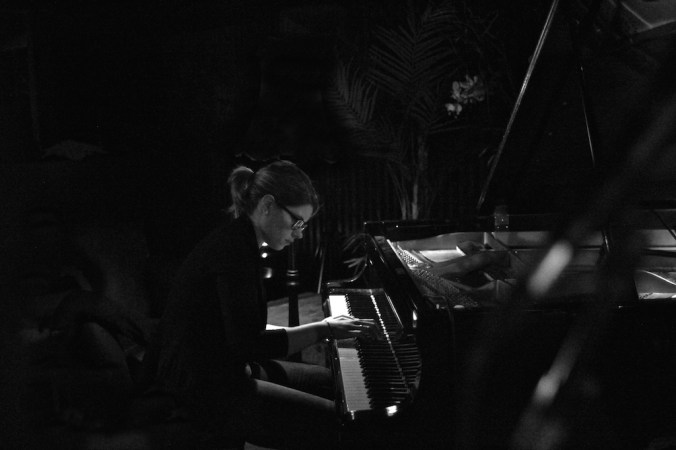 The trio’s recent album ‘Transit’, includes many of the numbers heard on the tour but with one significant difference; The inclusion of a string section, the ‘Quatuor St-Germain’ and a percussionist Julie Quimper. Roussel’s charts in the hands of this larger ensemble are very different to the trio. I particularly like her compositions like ‘L’ attente du chat’ and ‘La timbale et la fourmi’. The mood of the ballad is cat-like in its grace and time feel. The latter, a delightful shape-shifter of a piece full of contrasts and propulsion. I look forward to the new album which is just the trio but with some Rhodes tracks as well as piano.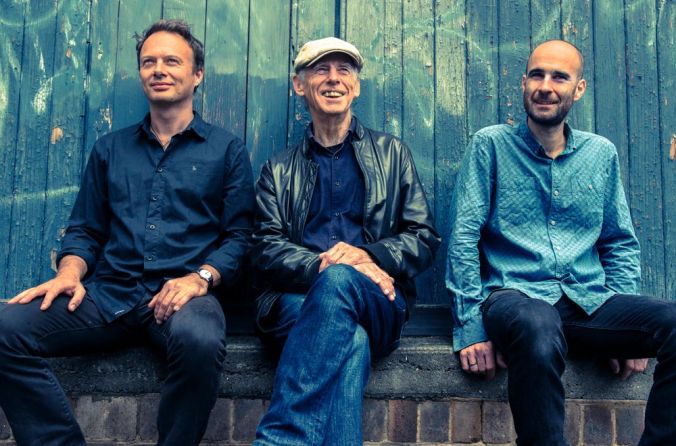


 JazzLocal32.com