With 2020 nearly done, the penultimate gig at the CJC was an optimistic signpost; signalling hope and possibility. After a long and turbulent year, the music had bounced back better than ever and in spite of the obstacles along the way new energies were flowing. In amongst the offerings from our up-and-coming artists were gigs and albums by our finest. Last Wednesday’s Dixon Nacey Band and the release of Kevin Field’s ‘Soundtology’, stand out as musical high points. In a year of plague and pestilence, the music only grew stronger. There is a thing about genuine creatives; when the bats start to circle, they work with the chaos and create better. Dixon Nacey is very much in that category; what an extraordinary musician.

Nacey appeared this time, with the same lineup that accompanied him on his Tui award-winning ‘Edge of Chaos’ album. There were numbers from the album, plus a few new tunes. In addition, he played a blues and two arrangements of Pat Metheny tunes which delighted everyone. I had missed his Ponsonby Road Metheny gig, which everyone who attended, raved about for weeks afterwards.
Nacey is a musician who keeps moving forward, and with each passing year, he reaches new heights. He is less inclined these days to rely on pedals and an uncluttered spaciousness is evident in many of his compositions. What he has absorbed has now been internalised, so there is no over-thinking, and out of that comes clarity and a cleaner sound. This enables him to say more and to give deeper meaning to the notes and phrases and underlying everything is some great writing. Playing like this demonstrates the best features of his Godin guitar, which in return, reveals its best self. The tune above is a recent Nacey composition. New Zealand Jazz at its finest.
The band were superb and the tricky unison lines were executed well. Roger Manins is an excellent reader, and you could not have slid a cigarette paper between his and Nacey’s lines in the head arrangements. And behind those, adding fills or comping unobtrusively was Kevin Field. Responding exactly as he should and consequently giving the music a floating quality. There were rhythmic complexities on many of the numbers, but because they were navigated so well, they were rendered as easy. One or two pieces came close to being a shuffle beat, but not quite. This was a layered sound and the complexity of the overlaying time signatures needed skilled craftsman to make them fit properly. The reason it held together so well was down to Oli Holland on bass and Andy Keegan on drums. This is how a tight unit should function. What we got was a superb night of engaging music and it brought us end-of-year joy.
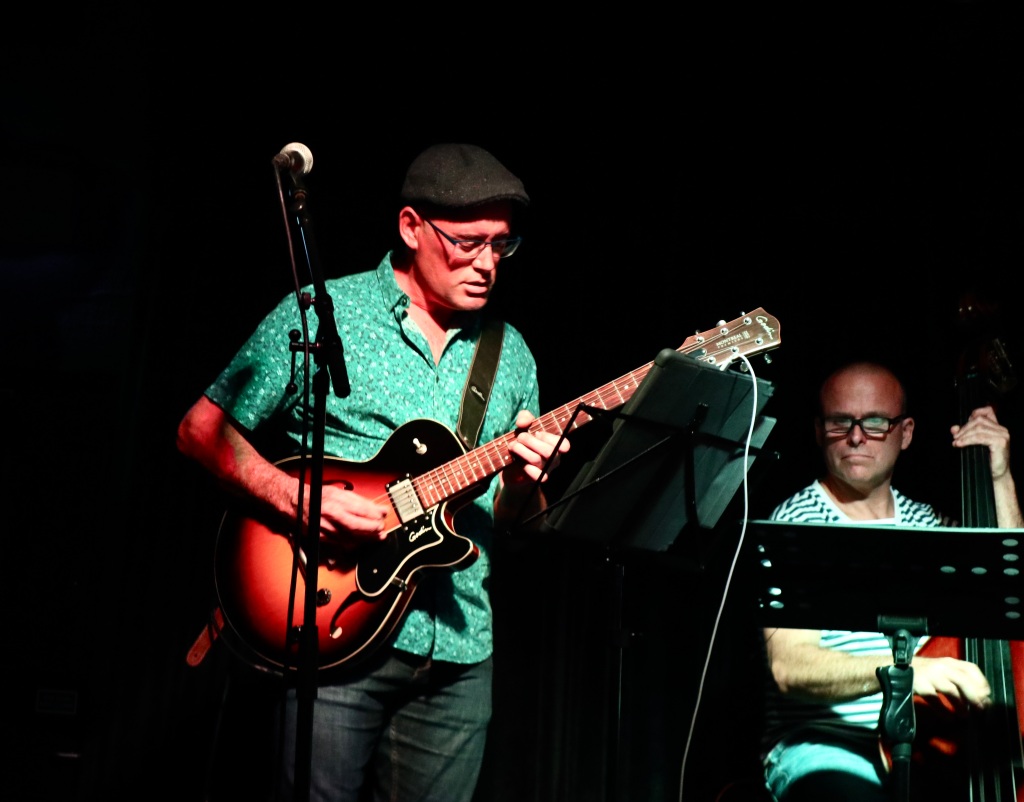
Dixon Nacey: guitar, arrangements, compositions – Roger Manins : tenor saxophone – Kevin Field: piano – Olivier Holland : bass – Andy Keegan : drums
The gig took place at Anthology K’Road for the CJC Creative Jazz Club, December 9, 2020
JazzLocal32.com was rated as one of the 50 best Jazz Blogs in the world by Feedspot. The author is a professional member of the Jazz Journalists Association. Many of these posts also appear on Radio13.co.nz – check it out.


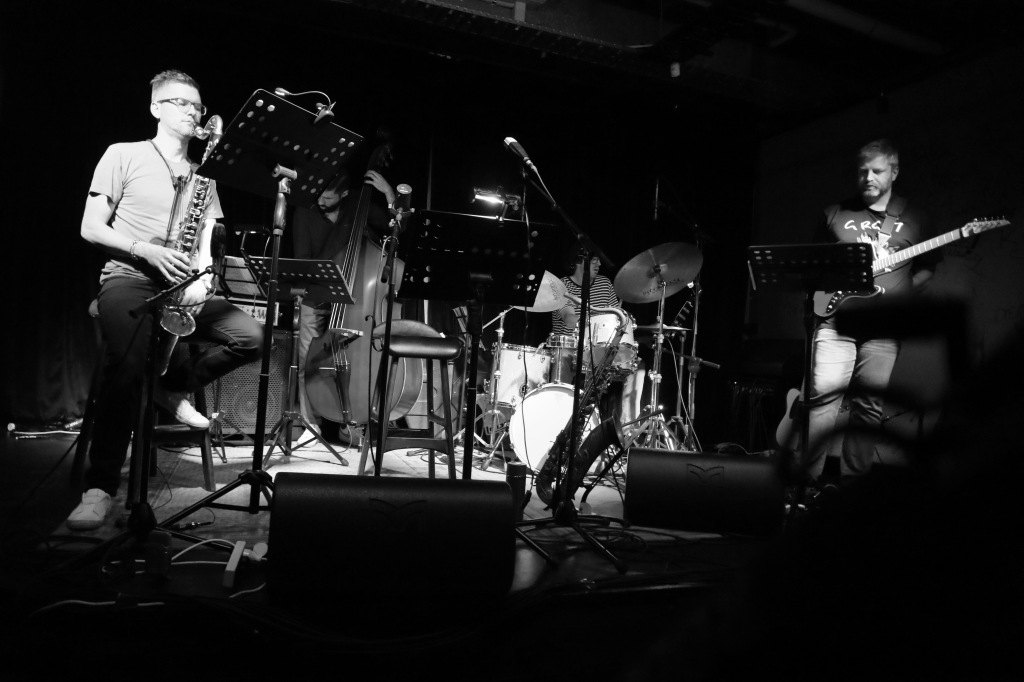


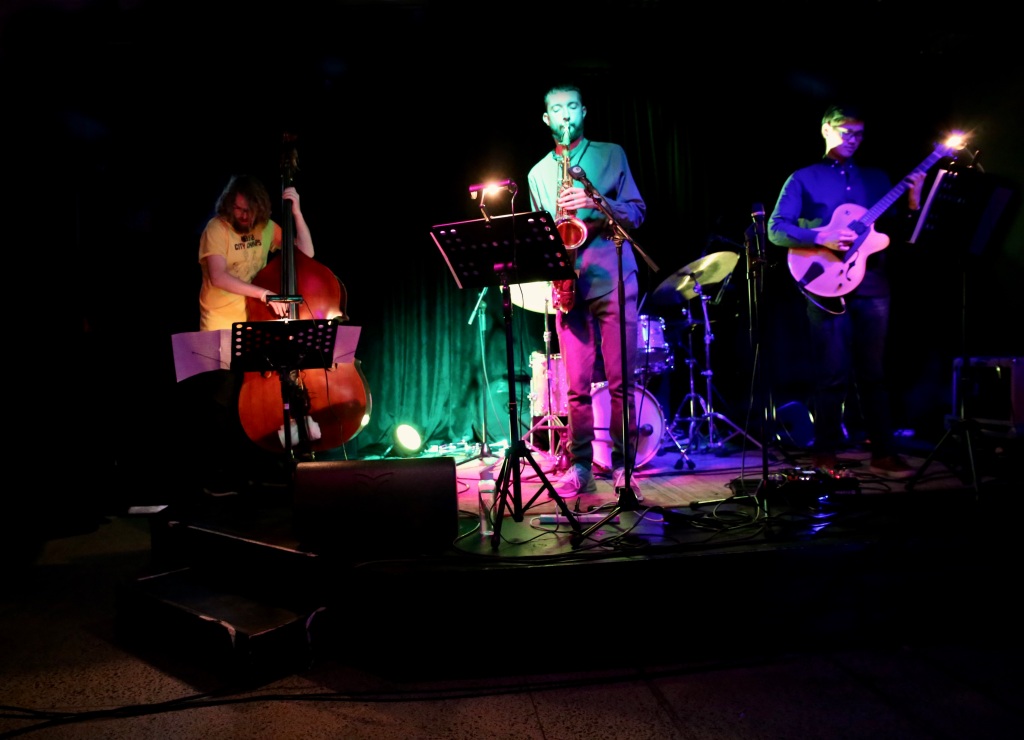
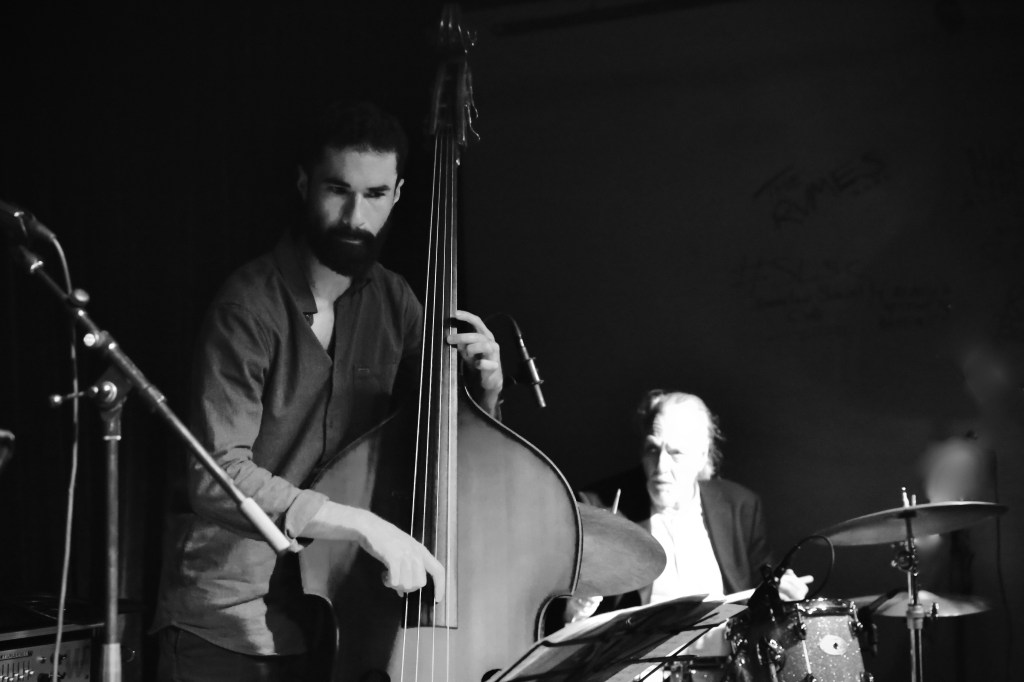
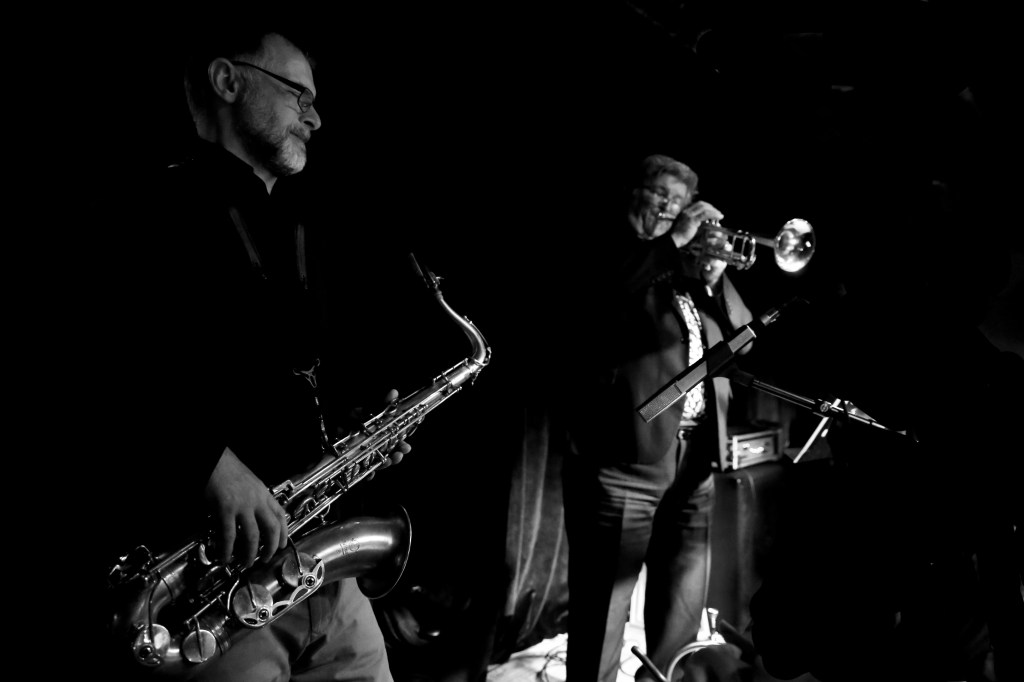
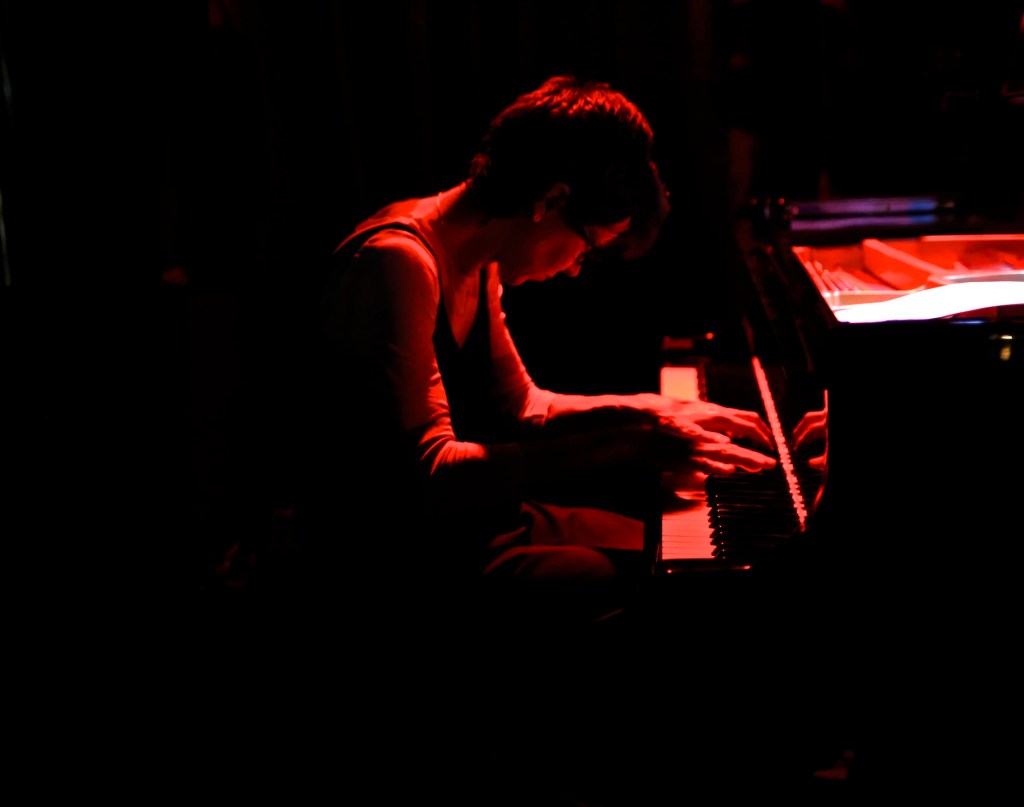




 A while ago the program director of the Creative Jazz Club, Roger Manins mentioned that he had booked a great young group from Christchurch to appear in the emerging artist’s slot. He went on to say that many of these young emerging artists were so good that he was considering renaming the slot, something like ‘young guns’. He was right. Ocelot exuded easy-going confidence, uncommon in younger players and by the second number they owned the bandstand; navigating some slippery lines with disarming ease and swinging. This was a tight unit and it was obvious that they had put in the necessary work beforehand. That gave them the freedom to relax into the music and the results were evident.
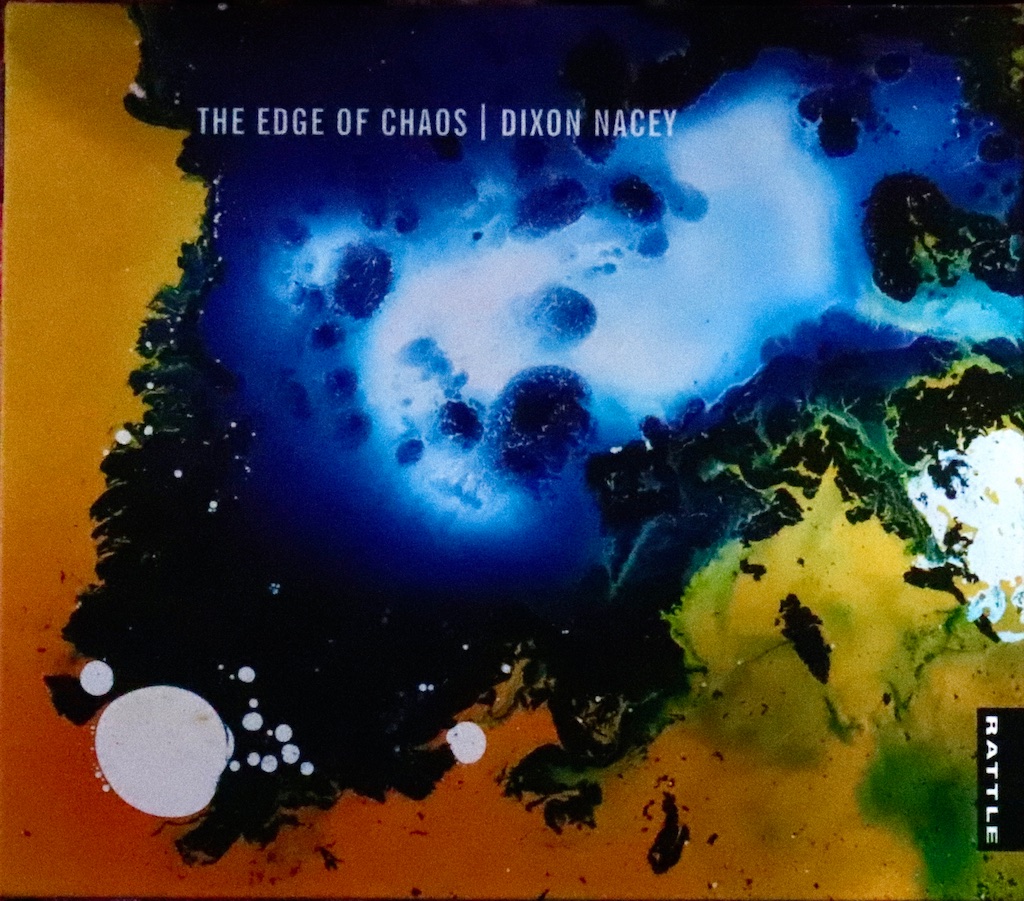 This Dixon Nacey album has long been anticipated and although Nacey has previously recorded as co-leader, this is the first album to be released exclusively under his name. Nacey is firmly on the radar of Jazz loving Kiwis, but his fan base extends well beyond that. He is a professional musician of considerable standing, an in-demand teacher and in recent years the musical director of CocaCola Christmas in the Park. To up and comers he is a guitar legend and on this album, they have something to aspire to; twenty years of experience distilled into excellence.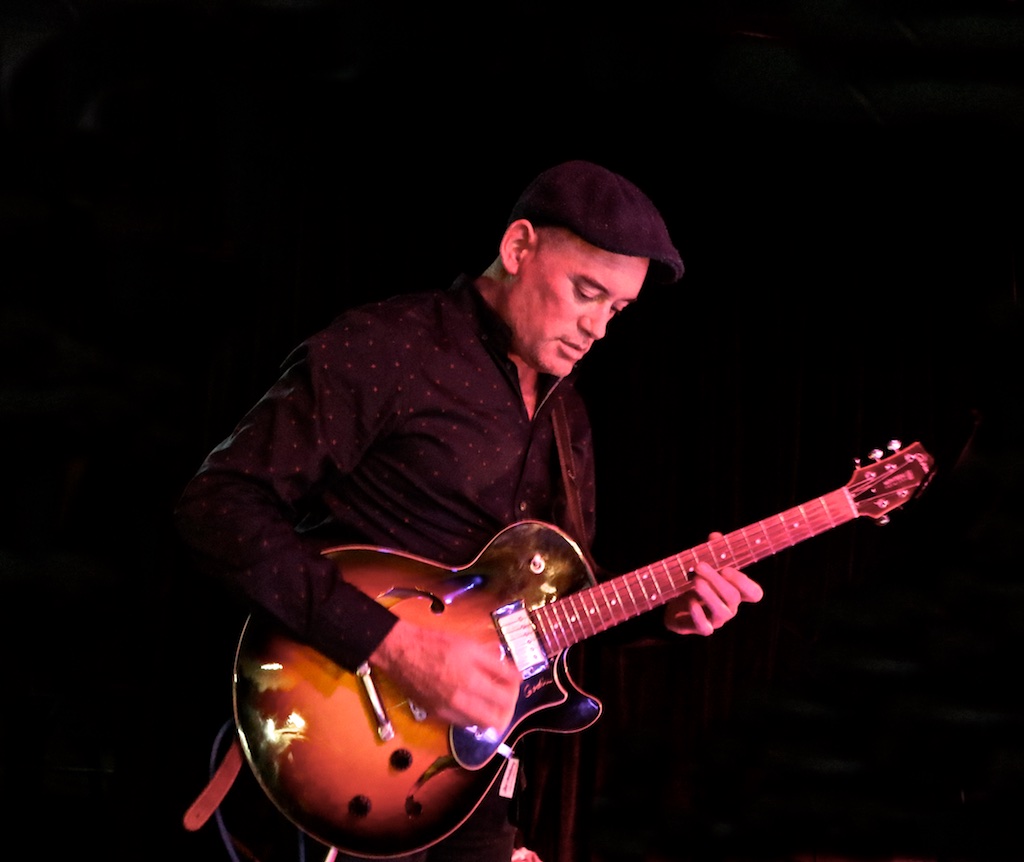
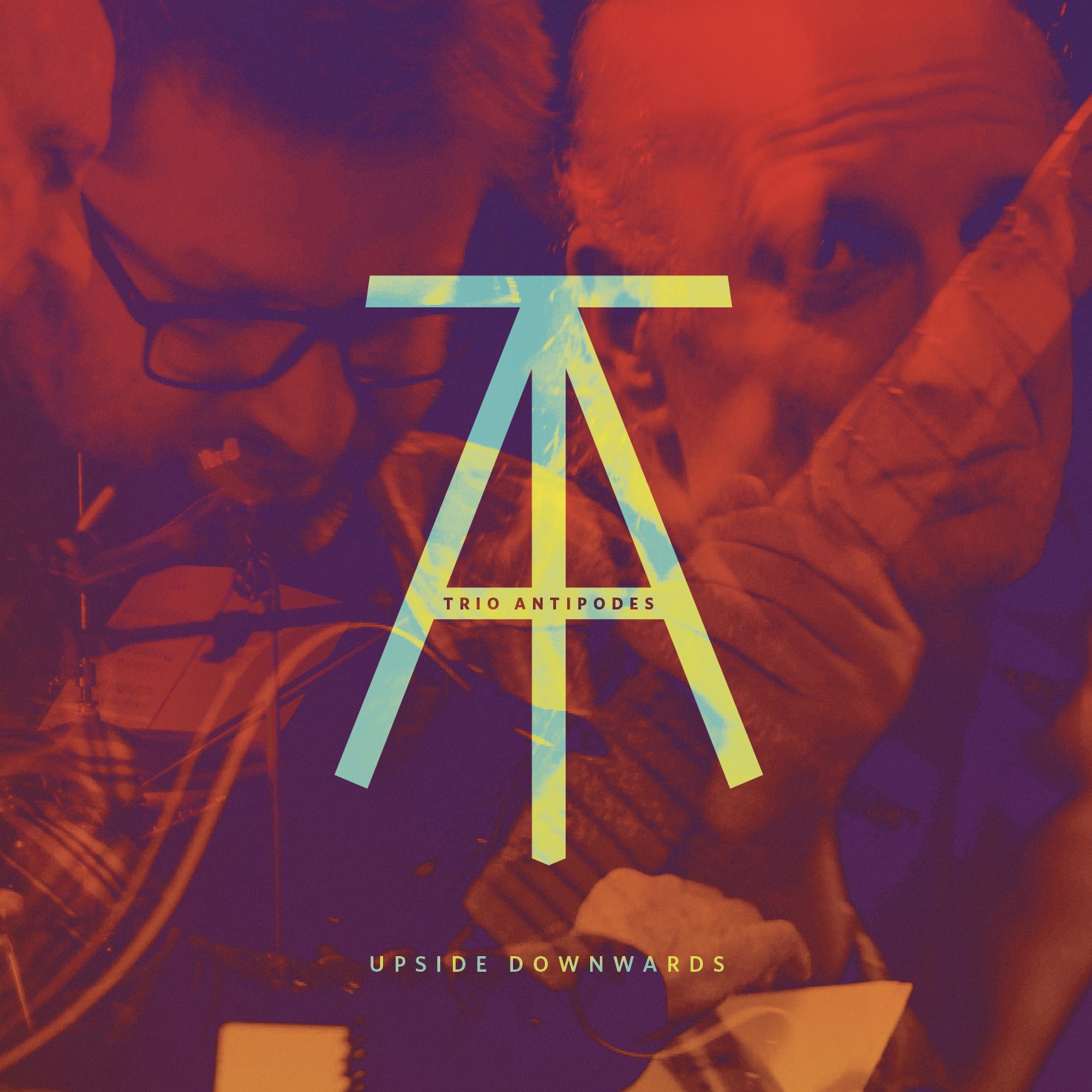 Canadian Jazz guitarist Keith Price is a welcome addition to the Auckland scene. He brings with him fresh ideas and a musical connection to his hometown. Manitoba is associated with Lenny Breau and Neil Young who both grew up there. Perhaps it’s the proximity to the open spaces which echo in the music, that wide-open sound (and in Young’s case an overlay of dissonant melancholia)? Whatever it is, it certainly produces distinctive musicians. Lenny Breau is an important Jazz guitarist and one who is sadly overlooked, Hearing Price’s respectful acoustic homage on Wednesday, cast my ears in that direction again.
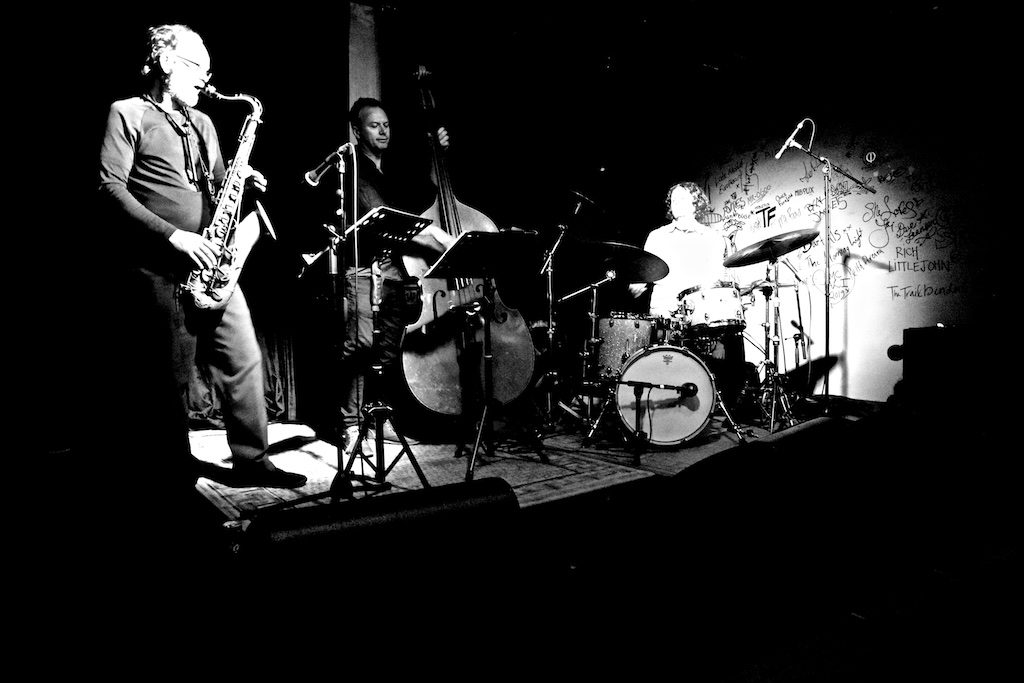 Post Trump’s inauguration, improbability is the new normal and in keeping with the mood of the times Wednesday’s gig emerged from improbable beginnings. It began with an international cat rescue mission, an attempt to thwart a ‘catricidal’ former neighbour. Before the mission had even been concluded a subplot had emerged; one involving the inhabitants of three cities, two countries, and assorted sharks. Those familiar with Reuben Bradley will not be surprised at this turn of events as he’s known for his humour, good nature and above all for his ability to turn improbable adventures into really good music. ‘Shark Varieties’ is a drummer led trio and a vehicle which showcases a bunch of the leader’s original tunes. It also showcases a joyful reunion.
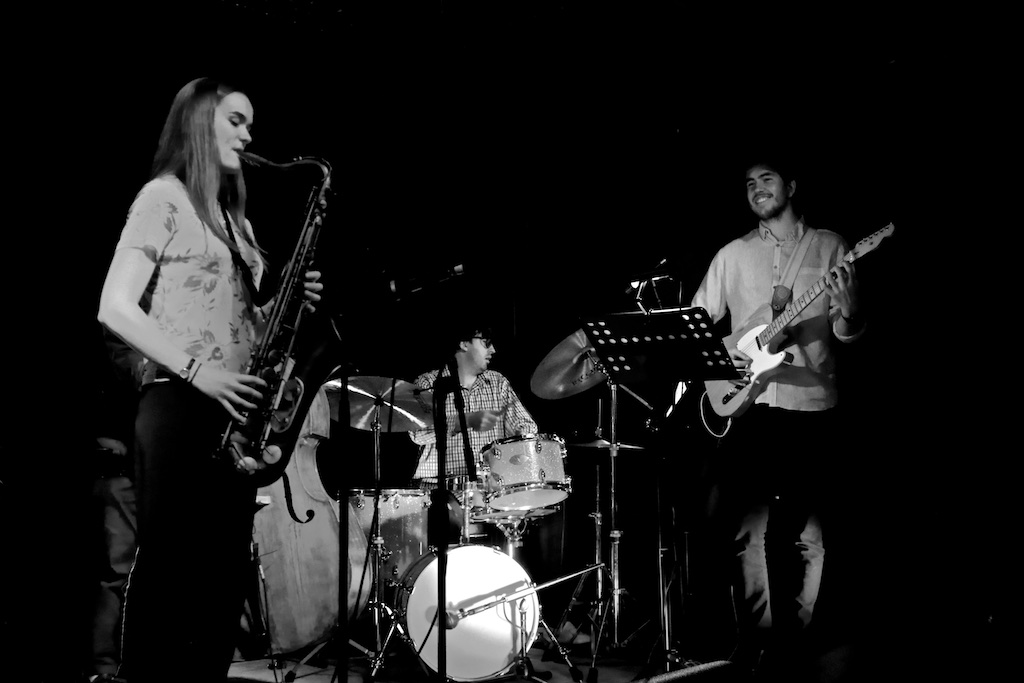 Louisa Williamson is a gifted young tenor saxophonist who has visited Auckland on previous occasions. This time, and for the first time, she visited as a bandleader, showcasing her beautiful compositions. I have always admired her tone and improvisational abilities, but this was a step up. Freed from the comfort of a band she knew well, she cast herself among an array of experienced Auckland musicians. Stephen Thomas on drums, Tom Dennison on bass and Michael Howell on guitar. The only Wellingtonian (besides Williamson) was pianist George Maclaurin and together as a band they delivered. This was engaging straight-ahead Jazz.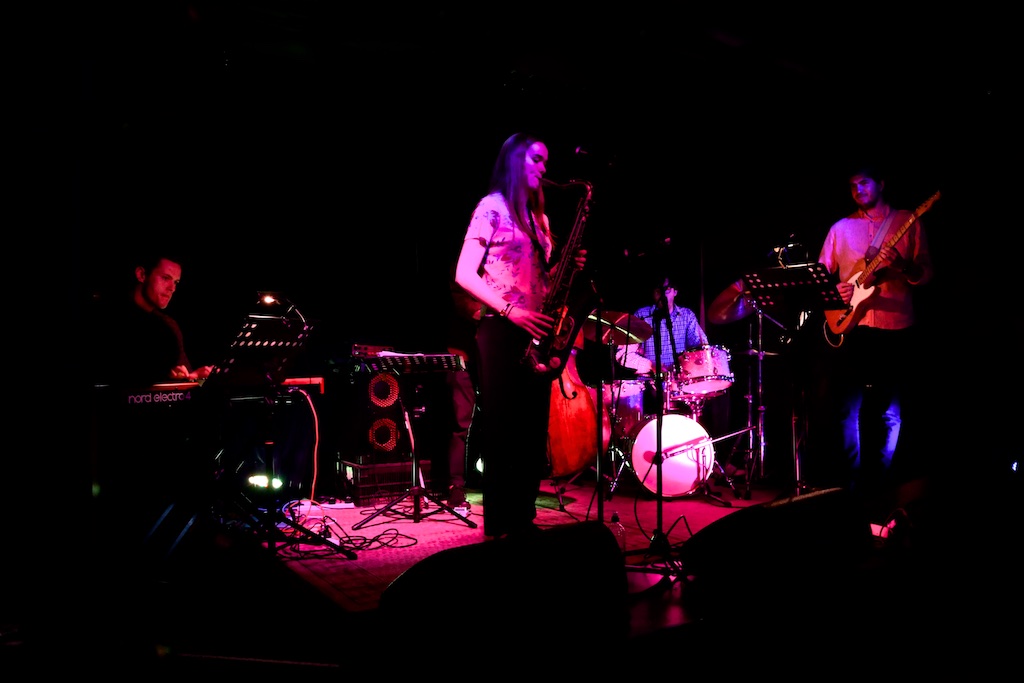
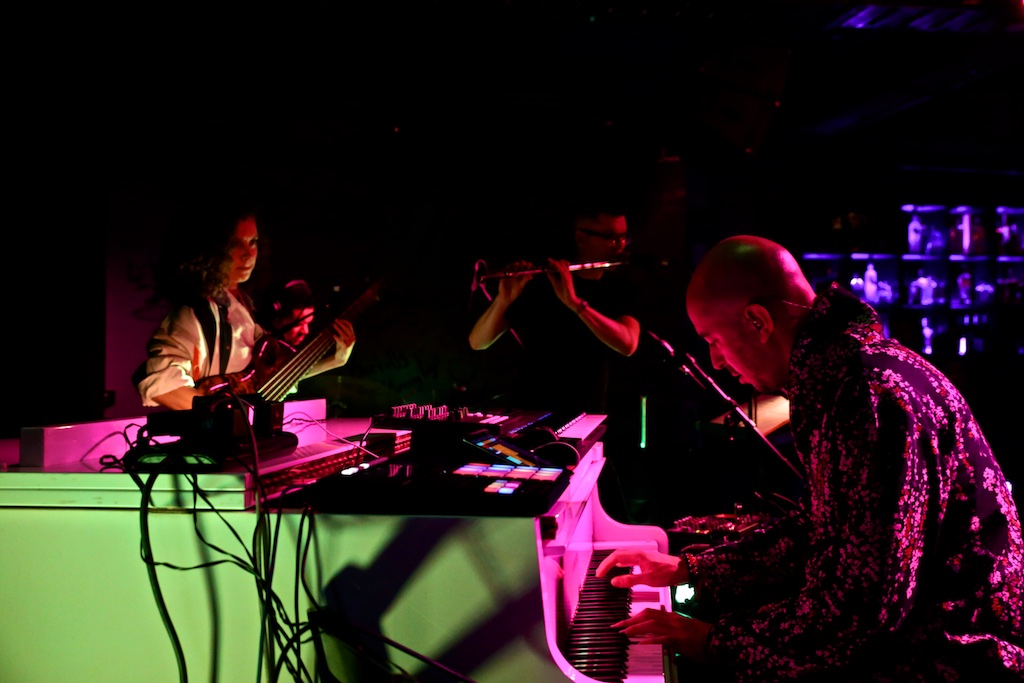 Music is the highest form of communication. It is universal. It reveals truths, tells stories, entertains, and in Mark de Clive-Lowe’s case, it evokes other realities. This was a masterclass in storytelling; an unfolding kaleidoscope where the contradictions and sublime realisations about the human condition were brought into focus. ‘Heritage 1 + 2’ the albums reflect his personal story, a journey of reconnection, an exploration of culture and of family history. He revealed it through moments of spoken narrative, but above all through his reverential musical examination of Japanese art forms. This was a musical journey where the highly personal overlapped the philosophical. It was a journey back to his Jazz roots and undertaken entirely on his own terms.
 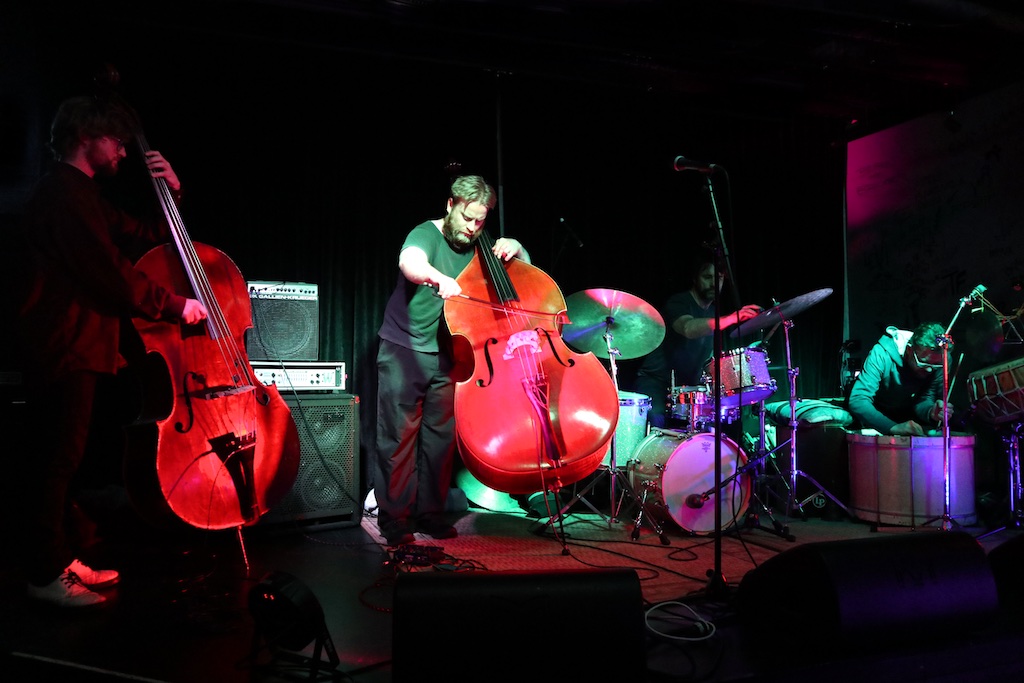 Two bass, two drummer gigs while not unknown usually occur in service of a chordal instrument or of a horn line, and when a solo bass concert occurs, an audience is frequently shown ‘cleverness’. On this occasion, the bass of Elsen Price freed the instrument from the narrow confines of the standard rhythm section or the conventional solo bass repartee; instead, exposing the beautiful resonances and the reach of the instrument. This was sublime music and complete unto itself. It celebrated a gifted musician and a wonderful instrument but without displays of egocentricity. The feat was achieved by inviting us inside the music, and into a sonic cornucopia. We listened and we were captivated.
 JazzLocal32.com