A few months ago, an album was recorded in New York that I couldn’t wait to get my hands on. The pre-release featured several tasty tracks, and its evocative cover image also intrigued. The stars were aligned for a significant album, and so it was. How could it miss with pianist Michael Cain, guitarist Keith Price and drummer Pheeroan akLaff?
It is one of those albums that jazz lovers, whatever their taste, are bound to enjoy. The cover art was prophetic, as its soft golden light and evocative silhouette figures characterised the music perfectly. It is an album to be played through, then played again, and each listening will delight. There’s a sense of place (or should I say places) evident, as the titles reference far-flung locations, but the most important maps traversed are those engraved on the human heart.
‘O’Neil’s Bay’ (Price) is lovely – a bluesy Americana-fused number. The bay in question is familiar to me, nestled against New Zealand’s forest-clad Waitākere Ranges–a hidden bay accessible only on foot. Price lives nearby and has captured the mystical essence of that wild, unspoiled coastline, keyboards, guitar and drums painting with sound.
Another track has the intriguing title ‘Poetry Legroom Okinawa Children’ (akLaff). It unfolds like a miniature suite, adding layer upon layer. Cain’s keyboards arpeggiate over Price’s shimmering chords; the mesmerising drums adding to the feeling of suspension. Like every track that unfolds, you sink inside, holding the moods carefully so as not to spoil the moment.
With ‘Solodos’ (Cain), you understand why Cain is such a well-regarded pianist. The history and the wonder of his music are encapsulated there.
In an album of gems, ‘Waxing Gibbous’ (Cain/Price) is the kicker. Underneath the tune’s languid minimalism, endless aural vistas unfold, displacing time and space into the eternal now. Never has spoken-word poetry been so carefully encapsulated, and the open-hearted colourist drumming of akLaff astounds.
All three musicians have written tunes for the album, and while their approaches differ, they drink from the same creative well. There are no burners, although a quiet intensity is evident as the meditative moods draw the listener into beguiling atmospheric worlds. We live in an era of madness, and albums like this are exactly what we need to assuage our battered senses. Shifting Paradigm Records Bandcamp and streamers.
JazzLocal32.com was rated as one of the 50 best Jazz Blogs in the world by Feedspot. The author is a professional member of the Jazz Journalists Association, a Judge in the 7VJC International Jazz Competition, and a poet & writer. Some of these posts appear on other sites with the author’s permission.
Aaron Parks’ latest album, ‘Little Big III’, is the third in a series titled Little Big and his fourth album featuring a guitarist. The album (and series) also expands the soundscapes and ideas explored on his successful first Blue Note release, Invisible Cinema (2008). It is an album with a big heart which embraces the listener with rich textures and a tapestry of gorgeous melodic lines. Parks is highly regarded as a pianist and composer and never appears to rest on his laurels, reaching further with each new recording.
The band is in perfect sync, and each player is given the space they deserve. Parks’ compositions are always compelling, but they reach for the heartstrings here. There is considerable technical mastery, but a sense of humanity strikes you most. The tune titles tell you this, ‘ Locked Down’, or ‘Heart Stories’, inviting you into an expansive and unfolding narrative. It feels like a story of our times, but one reminding us of the beauty we may have overlooked amidst the turmoil.
Parks is a distinctive pianist who has never had trouble finding the best musicians to accompany him. Jazz lovers in Aotearoa New Zealand can rightly feel proud in this regard. ‘Invisible Cinema’ and ‘James Farm’, featured bassist Matt Penman. On Little Big 111 and the two earlier iterations, we hear guitarist Greg Tuohey (who first recorded with fellow Kiwi Penman over twenty-five years ago). Tuohey’s playing is magnificent and, along with his bandmates, he contributes tunes too.
The sharing of the compositional duties has yielded riches. Parks has a distinct style; his tunes are as compelling as they are memorable. I particularly like ‘Flyways’; a pulsating ostinato chant that frees the drums and bass, while the breathtaking melodic lines soar. There are four Parks compositions, all interestingly different. Oriental references are evident in ‘Delusions’ while the lovely ballad ‘Ashé’ has a wistful, folkish vibe.
Three tunes are Tuoheys, expanding the palette to include funk and Americana. His tune ‘Willamina’ is a joy, it is here in particular that you hear what a great guitarist and composer he is. It evokes tumbleweed towns and gentler times; memories we hold onto lest they slip from our grasp. Bass player David Ginyard Jr’s ’Little Beginnings’ has a beguiling loping pulse and uses a larger palette, to great effect. The drummer, Jongkuk Kim, is new to me, crisp, imaginative and impressive. I hope there is a Little Big IV in the wings. ‘Blue Note Records ~ available in stores and by streaming.
Hania Rani (Hanna Raniszewska)
I subscribe to jazz author Ted Gioia’s Substack posts, as all improvised music lovers should. In a recent issue, Gioia highlighted a handful of modern Polish improvisers he suspected would be unknown to audiences outside of Northern Europe. He particularly liked Hania Rani, who he described as his new favourite pianist.
There is something ethereal and achingly beautiful about her music and everyone who stumbles across it, feels like they’ve uncovered a secret. What initially strikes you as a few simple fragments of melody on repeat, is music for deep listening. Underlying the ostinato phrases are endless changes, finely wrought. She layers and loops while catching her listeners in a silken web of sound; sometimes reaching inside a grand piano, using an upright piano for percussion and adding small digital effects. It is an ever-expanding pedal point over a pulsing drone which may be the key to its appeal. She magics up something complex and deeply satisfying, crafted out of simplicity. As if that were not enough, she also sings beautifully.
Although not a household name, she gets 7 million views for her YouTube clips, performs at the Louvre and has appeared in an NPR Tiny Desk concert. I have included a clip from a recording she made in Studio 2 in Warsaw, a favourite venue due to its acoustic properties. Sometimes the best things are hiding in plain sight. This is improvised music, but genreless, touching on classical, Jazz and house, but somehow free of those confines.
Rani mainly records for Gondwana Records with seven albums released. It is worth checking her out on YouTube.
JazzLocal32.com was rated as one of the 50 best Jazz Blogs in the world by Feedspot. The author is a professional member of the Jazz Journalists Association, a Judge in the 7VJC International Jazz Competition, and a poet & writer. Some of these posts appear on other sites with the author’s permission.
The first album reviewed is the latest release by Myele Manzanza, a Wellington-born musician who is now a significant presence on the London scene, the second is another clip of finalists from the recent edition of the 7VJC competition.
Crisis And Opportunity Vol.4 – Meditations
Those following New Zealand-born drummer/composer Myele Manzanza have been amply rewarded over the years. He has in recent times established himself as a strong presence on the London scene, releasing many successful albums and, capturing the diverse mores of modern improvised music while bringing his distinctive voice to bear.
‘Crisis and Opportunity Vol 4’ may differ from the preceding volumes, but the over-arching trajectory makes perfect sense when you examine his output as a whole. Manzanza is an artist who refuses to rest on his laurels and with that comes constant re-evaluation and soul searching.
The tune titles from his various albums are embedded stories in miniature. In the liner notes he makes the point that, unlike earlier albums, he is not trying to make us dance. Here he has chosen to lean back into his Jazz roots and to do that he has located just the right bandmates. Bassist Matt Penman and pianist Matthew Sheens are perfect for this project as both hail from the South Pacific and are successful in New York.
When musicians establish careers in countries far from where they were born, homesickness is common, and heartfelt creativity emerges. This particular album is meditative and reflective, but despite that, there is still that innate sense of propulsive energy. An energy that always characterises Manzanza’s work. He may not be trying to make us dance but as we listen we feel the dance of life through his tunes.
The sparkling opener, ‘Crayford’s Room’, with its sparse piano and lovely arco bass at the beginning has particular resonance for me. It is a homage to New Zealand-born pianist Jonathan Crayford. Many musicians have been mentored by him and inspired by his musicianship. This is a fine album and it is also a love letter home. Highly recommended.
The album can be found at myelemanzanza.com or on Bandcamp under the artist’s name.
Chai Masters (Netherlands)
The band was formed from a musical connection forged at the Amsterdam Conservatory in 2018. Their debut album, ‘Magical Realism’, garnered critical acclaim. Since then they have added a vocalist, whose wordless vocal lines have merged effectively and seamlessly into the musical mix. They are an interesting group with a distinctive sound and play to their strengths. They draw on many sources, and a uniquely heady brew is the result.
What first caught my attention was their name. I am a teahead and to locate the finest tea I rely on tea (chai) masters. These are the gurus of tea and they understand the importance of sourcing; and how to locate the places where the trees grow best. This matters because the finest teas come from unique terroirs, where the essences of flowers, minerals, and herbal aromatics are absorbed deep in the earth’s ecosystem. So it is with the group Chai Masters. They draw from the raw materials around them, rendering them into music like alchemists.
The clip posted is the one submitted to the 7VJC competition. The sextet’s vocalist, Līva Dumpe has a pure, well-modulated voice and while not overshadowing the other instruments, she is a powerful presence in the lineup. Her wordless vocal lines add to the overall texture in ways another instrument could not. This contrasts (and merges) brilliantly with the two horns as they execute rapid-fire unison lines, underpinned by minimalist piano, tight basslines and colourist drumming. The composition must also receive its due here, as the unit and the compositions are as one. This is a group to watch as they have found their sweet spot. The clip is titled ‘The Seer’s Dream’. The sextet can be located at chaimastersmusic.com
News that a live recording of Alice Coltrane’s previously unreleased 1971 Carnegie Hall concert was about to drop caused excitement in Jazz circles. 2024, designated by Impulse ‘The Year of Alice’, will see other Alice projects realised, and Shiva Loka is the opener. The quality is great, even though it doesn’t have the degree of sound separation a studio recording has, but that is no bad thing. Being live, the album captures the excitement in the moment and invites us to breathe the spiritual air surrounding Coltrane. And as you take in what is unfolding, the sheer joy of it, it is impossible not to picture the audience sitting about you in rapt absorption. This is an immersive experience and, as such, it reveals the beating heart of Spiritual jazz.
There are four tracks and from the first note played you are present in that great hall. Track one ‘Journey in Satchidananda’ is a tranquil, mesmerising piece. At first, gentle cymbals reminiscent of a temple gong, then a long vamp on bass and with drums answering; out of nowhere, harp strings, Coltrane making them sing like a choir of celestial angels. At that point, you discern voices quietly chanting, followed by flute, then saxophone. The magic has arrived and it never leaves throughout.
The second track, while also tranquil, has a questioning spirit. Arpeggiating harp, arco bass, tiny percussion instruments and then the saxophones keening. Archie Shepp and Pharoah Sanders interact conversationally, as new sonic textures are opened up. An intensity develops as the album unfolds with the tranquil opening tunes followed by incrementally wilder, ecstatic pieces.
We hear two sides of Alice Coltrane in this recording. Both are astonishing in different ways and there is never a moment of doubt about who holds the musical centre. On the first two tracks, she reigns as a peaceful goddess; on the last two, surrounded by an army of titans, she is the epicentre of an ecstatic storm. There was a time when she was primarily regarded as the keeper of John’s flame, but here, she is revealed as the unrivalled queen of Spiritual Jazz, extending his legacy and claiming her own.
The last two tracks ‘Africa’ and ‘Leo’ are compositions by John Coltrane, but it would be wrong to regard these as mere covers as they transform the material into something not heard before. For these last two numbers, Coltrane switches from harp to piano and the fiery goddess radiates her power. She is percussive, with stinging chords, and snatches of chromaticism. Here, and in the last track especially, the rawness and power of the band has been fully unleashed. Thunderous percussion and pounding bass, staccato utterances from the horns and raining down on the keys, Coltrane’s hands.
It is hardly surprising that she chose these particular musicians as they have all been associated with her or John at some point. Coltrane on harp, piano and vocals, Pharoah Sanders on saxophones and flute (at times chanting through the flute), Archie Shepp on saxophones and flute, Jimmy Garrison and Cecil McBee on bass, Ed Blackwell and Clifford Jarvis on drums, Tulsi Reynolds on tamboura, Kumar Kramer on harmonium. As you listen you marvel at the beauty and raw power. It is an album that will stay with you for a long time. It is out on Impulse too, which explains the warm embrace of the sound.
The concert was recorded the year she released ‘Journey to Satchidananda’, her fourth Impulse album and not long after another acknowledged masterpiece ‘Ptah, the El Daoud’. My first thought was, why wait so long to release such an exceptional album, but on reflection, it was a good decision. Now is the time to fully acknowledge Alice Coltrane’s legacy. Available online or from the better local retail outlets.
Ancient Relics ~ Lucien Johnson
As ‘The Year of Alice’ gets underway it is great to acknowledge this release by Aotearoa/New Zealand saxophonist-composer Lucien Johnson. It is fresh material that references the tradition of Astral/Spiritual Jazz and it does so with reverence while bringing a local perspective. It is natural for those born under our South Pacific skies to gaze upward; far-dreaming Pacific star-gazers discovered our islands. That sense of worlds beyond is evident throughout, as it references space clutter and objects left over from the past. It could also reference the cluttered inner orbits of our minds.
As the album begins, the unhurried pace appeals instantly, informing you that this is a place for deep listening. On the title track, ‘Ancient Relics’, Johnson’s effortless melodicism floats over texturally rich vamps reminiscent of drones while piano and harp shimmer, and merge. This opener is unmistakably Alice-like and wonderfully so. The languid measured bass lines are perfect too, anything more would have spoiled the mood, with the gentle pulse from percussion and drums, whispering, quietly through the mix.
My favourite tracks are ‘Space Junk’ and ‘Satellites’, evoking the wonders of space while reminding us of our responsibilities as galactic sojourners. Space is the theme, but closer to home than the distant stars. If ‘Ada’ refers to the protocol of distance between objects in orbit, then all of the tunes appear to reference space junk; the ever-increasing proliferation of satellites circling the Earth. A recent report pointed out that every reentry leaves debris and puts the Earth’s magnetic field at risk.
This is an exceptional group of musicians and the right ones to bring Johnson’s vision home. All are from Aotearoa/New Zealand, some receiving accolades beyond our shores. Johnson is better known in Europe where he gained a reputation playing in free-jazz ensembles and composing for theatre. Since returning he has quickly established himself as an important local recording artist, recently receiving a Jazz Tui for composition.
Jonathan Crayford on piano (also a Jazz Tui recipient), has a solid international reputation, often playing in London, New York and across Europe. Percussionist Julien Dyne is another internationally recognised artist as is harpist Natalia Lagi’itaua Mann. Rounding off the ensemble bassist Tom Callwood, and drummer Cory Champion, both respected musicians. I was especially delighted to see improvising harpist Mann in the lineup as it has been a while since I saw her perform. Her World-Jazz Rattle album ‘Pasif.Ist’ is an absolute gem.
The album is available at Rattle Records, Bandcamp
JazzLocal32.com was rated as one of the 50 best Jazz Blogs in the world by Feedspot. The author is a professional member of the Jazz Journalists Association, a Judge in the 7VJC International Jazz Competition, a contributor to All About Jazz, poet & writer. Some of these posts appear on other sites with the author’s permission.
Dan Costa was born in London to Portuguese and Italian parents. He has lived in eight countries. I mention this, because Dan is somewhat of a troubadour, frequently travelling from country to country and always absorbing the musical influences. He listens carefully, interprets, and then takes it to a new level entirely, and this
brings something essential to his music. It is not so much a sense of place but a sense of the world at large and its limitless possibilities. Nowhere is this more evident than in his second album ‘Skyness’. Check it out on the streaming platforms, and like me, you will return again and again. It is rare to encounter music with such heart-stopping beauty.
Costa is an interesting interview subject, partly because he is so well travelled, but also because he is expansive and erudite. In fact, he speaks eight languages and judging by his English, many fluently. He is an internationalist and an environmentalist. He is also an advocate for animal rights. All of the above illustrates the point that a good musician is not just about the notes. Character and lived experience are the ‘finishing school. This is refreshing to encounter.
Costa is deeply influenced by Brazilian Jazz, but I can detect other Latin influences like Flamenco and Fado. He is a thoughtful player who makes every note count. His voicings and time feel, especially at the slower tempos, are impeccable. It is no wonder that such fulsome praise is being heaped upon him by the likes of Jazziz, Jazz Word, Jazz Weekly, Musica Brasiliero, New York Music Daily etc.
And his collaborations with the likes of Randy Brecker, Seamus Blake, Hermeto Pascoal and the wonderful Ivan Lins have crafted wonder upon wonder. He creates such open vehicles; composed and arranged so as to invite maximum participation. The musicians he has worked with are quick to say so and their praise keeps coming.
His prior recorded output has set him on an interesting journey, so his newest album ‘Beams’ will be eagerly anticipated. It is about light in its different forms. With him on ‘Beams’ his core trio, John Patitucci and Paulinho Vicente, with guests Mike Stern, Dave Douglas, Dave Liebman, Anne Bocatto, Hermeto Pascoal and Teco Cardoso. The album teaser is posted here and I can’t wait to hear the rest of it. For information on albums and tours, go to his website www.dancosta.net
JL32 Good evening Dan. Thank you for giving me a few hours out of your busy schedule. As a traveller myself, I must say that I am impressed by how much of the planet you have covered to date.
DC Hi John, nice to connect, Yes, I have lived in eight countries and travelled to around 60 as a musician or tourist, but there is still a lot to see. It is an interesting world and I hope to live in more countries and to keep travelling. One of my friends is buying a house but I am not interested in that for me. I think that you need to live in a country for at least two years. That’s how you get to know the culture. It removes the fear of the unknown when you do that.
JL32 Increases empathy and negates racism right?
DC Exactly, music is also a multinational language and one that has many dialects but it brings people together. I like to associate the sounds I hear with colours. Harmony is just colour. I am looking at the painting behind you as we speak and I am immediately thinking of the French impressionist composers.
JL32 The painting is impressionistic and is of forest and sky. I love forests, the older the better.
DC Then you should visit the Amazon. When I was living in Brazil I spent some nights in the Amazon rainforest and in fact the title of my first album ‘Suite Tres Rios’ is inspired by the meeting of two great rivers in the Amazon. These rivers meet but keep their different colours. It’s a fairly unique phenomenon and it is a bit like my parents who each kept their unique cultures intact. That was my experience as I grew up. It was like two rivers meeting and when we moved to France or England new colours were introduced. Each keeps its essence but interacts. So the tunes on that album were inspired by the Amazon. For instance, one track is about the stars above the rainforest, the clearest stars I’ve ever seen.
And my album Skyness was inspired by the blue of Greek Island skies. The skies above the Greek Islands are different to other places. (We digress here into a long discussion on sky colours and rivers, so I recommend Cape Reinga where ocean and sea meet, as do the different colours touch each other)
JL32 Tell me about the Brazillian singer-songwriter Ivan Lins. I love his voice and I first encountered him on a recording with trumpeter Paulo Fresu and the Sardinian Jazz Orchestra.
DC I wrote to him asking him if he was interested in recording with me and I was pleased when he replied enthusiastically. He has written many great songs but we settled on ‘Love Dance’ which is one of the most recorded songs in musical history (everyone from Joe Pass, Quincey Jones, Sarah Vaughan and even Sting has recorded it). It is a love song and harmonically it has many interesting twists. He also has a house in Portugal so we recorded there and it was a nice experience as we recorded it in one or two takes. The studio was booked for two hours but most of the time was spent talking. He is a person who likes to be near different oceans or rivers. We had that in common, and we also connected because we like delving into musical styles.
JL32 And you collaborated with Randy Becker (check out the teaser on YouTube). I love that, he is another musician who has an affinity with South American music. Brazilian music is sometimes referred to as the ‘other swing’.
DC Yes, 1917 was the date of the first Jazz recording and also the first Samba recording. So with Randy Brecker, the tune was already recorded on my album ‘Skyness’ inspired by the feeling of closeness to Mediterranean skies and by the notion of international togetherness. I had originally recorded the tune solo, so I wanted to re-release it with Randy and he loved it.
JL32 What a great tune ‘Iremia’ is and how beautifully you both improvise around the melody lines.
DC So he came in on top and it was a special moment for me as he has played with some of the greatest stars in musical history. And many of the people who I recorded my first album with were also on his Grammy-winning album Randy In Brazil. The tune you mention is not Latin but the meaning of the name Iremia is peace in Greek. By coincidence, it was re-released at the moment the war started in Ukraine. It got quite a bit of attention, especially in Italy and it was featured on Sky News. This message of peace should be there at all times, but in times of war, more so. When I wrote it I was living on Paros in the Cyclades Islands, so it is about tranquillity and peace.
JL32 I must ask here. Do you have a working trio or involve different musicians in each project? Or to come at it slightly differently, is there a configuration that you prefer working with, solo, trio, quartet, or larger unit?
DC That is an excellent question. I am comfortable in all formats, in fact, the first concert will be in Hamilton with a big band. I have worked with orchestras but not with my music, but on every album, there is a different type of lineup. I enjoy that.
JL32 I love the tune ‘Skyness’, it is the sheer beauty and architecture of it. Those voicings, the time feel like your left hand is gently pushing at your right hand, conversationally, and by the time Seamus Blake comes in we are mesmerised.
DC My third album ‘Live In California’ was a solo album, my next album will be a trio with special guests. One month ago I recorded in New York with John Patitucci and I enjoyed that. But to answer your question, no particular format and I like to give a voice to everyone.
JL32 I saw Patitucci in a Roman amphitheatre, Verona, with Wayne Shorter, Danilo Perez and Brian Blade. Not an experience that I will forget. What’s the album called?
DC ‘Beams’ as in light, with John Patitucci and Paulinho Vicente as the core trio. The guests are Mike Stern, Hermeto Pascoal, Dave Douglas and singer Anne Boccato. Oh, and the saxophonist Tecō Cardosa, who is the only musician to appear on multiple of my albums. But I would record again with any of the above. I like the Brazilian percussionist Teco Cardosa very much. He is a multi-instrumentalist and plays flute, saxophone and percussion. There is really something special about him. He features in the piece ‘Compelling’ on the second album.
JL32 Yes an amazing and energetic track. People who don’t know this album or that piece need to check it out ASAP (on streaming platforms. Sadly, the physical album is hard to find but I located one).
DC I created a video for World Earth Day which is on my website. That was recorded with Teco on the flute. It is one of my favourite pieces as I really like the fusion of the flute and piano. What do you think about that combination?
JL32 Flute and piano and flute over a modal groove interests me greatly. Although it was always a significant presence in Brazilian Jazz, in American Jazz over the second half of the twentieth century the flute was often regarded as an instrument lacking sufficient expression. People who said that were clearly not paying attention and had not listened closely to Yusef Lateef, or Bennie Maupin. It is now regarded as an essential primary instrument as a renewed interest in Spiritual Jazz is evident. Yes, I love the combination.
DC I have several passions and interests beyond music. Things I have studied at University. I have worked as a language educator, I also studied philosophy for a time and history, both of which are interests of yours, I think. I’ve also worked a lot on environmental issues and especially animal rights. I am a vegetarian. Environmental aesthetics is extremely important and often overlooked. The environment and not only in the ecological sense but in everything that we do. And all of this is linked to my music. They are not separate worlds.
The new album is called Beams because it is a celebration of light in different forms, the light that shines too and from you. The album refers to physical light for example, the tune ‘Star Dial’ which I recorded with Dave Liebman. Then there is also the more metaphysical light. The light which shines from Animals. I wrote a tune called ‘Paw Prints’ when I was living on Pados, written for a dog that I saw mistreated (a homophone and play on the Shorter standard Foot Prints). And then a tune with Mike Stern called ‘Sparks in Motion’ which is about celebrating the city, the light of a city.
JL32 When you release an album, do you have a preferred label?
DC Self-release gives me my independence. Berkeley these days teaches musicians to do it for themselves and learn about the business that way, rather than waiting for a manager or a label to snap you up. Ethics and proper respect for music should be the impetus. Commodification makes an art form into something else.
JL32 Well, we’ve been talking for hours and I know it’s late there. Thank you for your insights and for your music. I have enjoyed it and I hope that your tour goes well. I am sure that anyone listening to your music live will be as delighted with it as I am.
DC I hope to see you at the concerts, John.
JL32 Ki kite
JazzLocal32.com is rated as one of the 50 best Jazz Blogs in the world by Feedspot. The author is a professional member of the Jazz Journalists Association, poet & writer.Some of these posts appear on other sites with the author’s permission.
During recent months, a number of jazz projects have occupied my time and in particular the 7VirtualJazzClub competition. I am one of the judges. Both albums came to my attention via that platform, as the Tobias Meinhart band had an entry last year and Gilad Hekselman won four years earlier.
Both albums reflect our interesting times as both were conceived during the lockdowns; they are uplifting and filled with promise. They inspire. Improvising musicians are torchbearers, reminding us of what could be and how unstoppable the creative spirit is. Even when the times are sorely testing.
The Painter: Tobias Meinhart
This is an all-star band and with these musicians on board, it’s hardly surprising that it is such a great album. I came upon the band recently while judging the 7VirtualJazzClub competition. I was listening blind and the minute I heard the bass opening on White Bear I thought, oh, that could be Matt Penman and it was. I thought it might even be a Penman tune, but I learned later that Meinhart composed the tune with Penman in mind.
The German-born Meinhart has long been a significant presence on the New York scene. He attracts great players and this album features a dream lineup. Eden Ladin on keys, Matt Penman on bass and Obed Calvaire on drums; with guests, Ingrid Jensen on trumpet and Charles Altura on guitar; each one bringing their best to this project.
The compositions draw on many sources; a dumpling house, a koan, a painter, a baseball player, a meteor, racial injustice, Shep and Jarrett, The influences may be diverse but all resonate and invite deeper listening. White Bear, for example, is irresistible, a torrent of joyous invention, killing melodic lines, heart-stopping rhythms, and moments of surprise and all drawing our attention beyond the underlying complexity.
The tunes are Meinhart’s, with the exception of the lovely standard Estate (Martino). Estate is a duet with Ladin and I was reminded of the timeless Art Pepper duets with George Cables. There was a suggestion in the phrasing but especially so in the tone or intonation; a warm summery caress. A modern take on an old tune and done respectfully. The Last Dance is a tribute to Impulse, Jarrett and Shep. It is especially beguiling, a story told obliquely, it is perfect.
There are many moods explored here, some delicate, some touching on the mystical, others capturing exuberance. The liner notes refer to a painterly or synesthetic approach and that is evident throughout. It is a feature of contemporary jazz to hold such conversations, reaching across art forms. Such a conversation is realised perfectly here.
The album was released by Sunnyside Records and it is available now on Bandcamp, in digital form or on compact disk
Far Star: Gilad Hekselman
When I was offered a review copy of ‘Far Star’ I jumped at it. Gilad Hekselman stands at the forefront of contemporary jazz guitarists. His discography is impressive, with a string of acclaimed albums and each one encompassing a widening cohort of fans. He is a guitarists guitarist, but he remains accessible. He possesses an extraordinary technical facility, but it is never deployed unnecessarily. Above all, he is adventurous and he brings his audiences along for the ride.
It is a solo album with guests although not billed as such. The genesis of the album tells its own tale, a collection of tunes originally composed as vehicles for a live band became a different type of project, one born out of pandemic isolation. Creatives rise to such challenges and Hekselman certainly did. He plays a dizzying array of instruments here, guitars, keys, bass (and deploys effects). The leader’s contributions were recorded in Israel; some guests were recorded in other countries.
pic/Josh Goleman
The drummer Eric Harland appears on 5 of the tracks and his addition was a masterstroke. He is always in lockstep but subtly manages to play with time. On track 5, Magic Chord, he took my breath away. In all, there are nine musicians appearing on the album although often fleetingly so. The gifted Israeli pianist Shai Maestro plays keys on track 2 and along with Nomok, is a co-producer.
The opening track ‘Long Way From Home’ is a stunner. It begins with a pretty whistled melodic line. As the piece unfolds subtle complexities are introduced, and this simple beguiling melody morphs into a vehicle for exultant improvisation. Again, Harland is extraordinary, Hekselman the guitarist plus multi-instrumentalist is beyond belief.
This is an album with many facets and it is an album that listeners will return to again and again; it has so much to offer, joy – and above all hope. The title track is the most reflective and wistfully so. There is Americana and there is edginess and the track titled ‘Cycles’ is pure and unalloyed beauty. When an artist produces an album this good, you have to marvel, and you wonder, how could he ever top that.
Gilad Hekselman: guitars, keys, bass
Eric Harland: drums (1,2,3,5,6
Shai Maestro: co-production, keys (2)
Nathan Schram: viola, violin (4)
Oren Hardy: bass: (4)
Alon Benjamini: drums, percussion (4)
Nomrok: co-production, keys (7)
Amir Bresler: co-production, drums, percussion (7)
Mireya Ramos was an unexpected musical treat because our borders, with very few exceptions, have been long closed to all but Kiwi returnees (and most recently Australian tourists). Ramos is from New York. Very few international musicians have managed to cross the border, and only if they obtained an exemption and subjected themselves to a strict quarantine.
With the Australian Bubble just opened I assumed that Ramos must have come from Australia, but in fact, she arrived here with her acclaimed Flor de Toloache all-female Mariachi styled band to perform at WOMAD 2020. Within days of arrival, the borders had closed behind her. For many pre-lockdown international visitors, the border closure proved to be a silver lining as visas were extended and they could avoid the horrors unfolding elsewhere in the world.
Mireya Ramos is a multi Grammy-nominated (and winning) artist and although the rest of her all-female mariachi band members returned home, she and her partner Andy Averbuch did what creatives do best, they got busy. During the year she has recorded and toured the country and her gigs have attracted enthusiastic audiences everywhere. Her CJC gig featured a variety of Latin and Central American styles with the addition of popular standards.
Her music draws on many genres, but all coloured by a stylistic uniqueness. She is both a vocalist and a violinist and that appealed as well. The violin is not unknown in improvised music, but sadly it is still uncommon. I am fond of the violin in Jazz and Jazz fusion styles and particularly so with Argentinean music.
Listening Jazz audiences are always eager to hear traditional and blended South American music. A good example was the version of ‘Fever’ which morphed into an Afro-Cuban groove. Of all the tunes, that appealed to me the most. It is not often that we get to hear the many and varied Latin styles and whenever we do, we are left wanting more.
Guitarist Andy Averbuch and Bass player Alex Griffith had opportunities to stretch out during solos and they made the most of that, but when Dr Mark Baynes and Lance Bentley locked into a Clave, the magic happened. Ramos has been received enthusiastically in New Zealand and after the pandemic recedes, I am sure that she will be encouraged to return. The band: Mireya Ramos (vocals @ violin), Andy Averbuch (guitar), Dr Mark Baynes (piano, keys), Alex Griffith (bass), Lance Bently (drums).
JazzLocal32.com was rated as one of the 50 best Jazz Blogs in the world by Feedspot. The author is a professional member of the Jazz Journalists Association, poet & writer.Some of these posts appear on related sites.
Drummer led albums often tell stories in different ways and the releases reviewed here exemplify that. On the surface, they are dissimilar, but both convey raw energy and immediacy. These improvisers transcend the ordinary in their search for an ancient to modern language.
CRISIS & OPPORTUNITY
The first is a newly released album by Myele Manzanza titled Crisis and Opportunity. It is the artist’s eighth release. And this time, his compositions were crafted while the artist was locked down in London during the worst months of the UK COVID crisis. As with his previous albums, there is something big-hearted about this work. As you listen, you gain the sense that he is telling a story that transcends time and place. This is realised through some very fine writing and crafted over his warm mesmerising beats.
Crisis & Opportunity Cover
Manzanza draws on strong roots and influences. He is a Kiwi, a citizen of the world and of African heritage. His father is a Master Congolese drummer and his formative years playing hand drums will have informed his approach to the kit. Among the other influences evident are broken-beat and Jazz electronica. Out of these influences and his own life experiences, alchemy is forged. He is forward-looking and overtly political. He is someone to watch with interest.
Teaser to Crisis & Opportunity
Joining him on the album are some London musicians plus Mark-de Clive-Lowe (a Kiwi Keyboard maestro based in LA). I am familiar with trumpet player James Copus, as his impressive Dusk album came to my attention quite recently. The other horn player is George Crowley on tenor saxophone. When the horns are playing in unison it is hard to believe that the horn line is not much bigger. On piano is Ashley Henry and on bass Benjamin Muralt. Both chasing those hypnotic dancing beats to good effect. And with de Clive-Lowe adding his deft brush strokes, a magnificent Album is realised. If you go to his Bandcamp label you can purchase a digital copy or order vinyl. www.myelemanzanza.bandcamp.com
WORDS
The other drummer led album that caught my attention is a free-jazz album released by Alex Louloudis. It arrived as a digital review copy with very little attached information, so I embarked on some research. In reality, the music speaks for itself and the biographical details are of less importance. The first track of ‘Words’ is ‘Surviving’ and it pulls you into a frenetic life-dance full of raw beauty and endless recalibration. It is propulsive and joyous and I fell for it immediately. It is the sort of track that brings me back to listen over and again and because of the immediacy, you know it’s real.
This is free music that can move inside or outside with extraordinary ease. Nothing is quite what it seems and the river of sound flows over a cushion of compelling beats. There is often an ostinato bass line as in The Magic of 3. The melodic lines avoid the obvious and there is almost no repetition of phrases. In the right musical hands, following such principles opens up huge possibilities. This is a killing band and it is unmistakably a drummers band.
I learned that Alex Louloudis was born in Drama, Greece, moved to America to study at the age of 19 and that he records on the Belgian based label ‘Off’. Since completing his studies in New York, Louloudis has moved among like-minded improvisers and attracted favourable attention. Although the artist was previously unknown to me (my bad), he has certainly come to the notice of important musicians and commentators (Gary Bartz, Billy Harper, Reggie Workman, Oliver Lake, Jeff Ballard, to mention just a few). The title track ‘Words’ is the final track and it rounds off the album perfectly. Opening to soft brush beats, it morphs into a dreamy slow-moving rendition of Over the Rainbow, which in turn introduces the reflectively cutting poem, recited by Rosdeli Marte.
The musicians: Alex Louloudis (drums), Raphael Statin (tenor saxophone), Dean Torrey (bass), Rosdeli Marte (vocals #1,6), Kaelen Ghandhi (tenor saxophone (# 1,6), Aaron Rubinstein (guitar #1,6), is available from Bandcamp at https://stilll-off.bandcamp.com/album/words
In this post, I have deviated from my usual practice of reviewing only albums from Aotearoa, New Zealand (or those offshore who maintain connections to our rohe). During the Covid lockdowns, I worked with the world Jazz community on platforms like the Jazz Journalists Assn site to ensure that the musician’s stories still were being told. Many writers were unable to engage, and in my country, we had freedoms others did not. No rule is worth having if it cannot be broken for a good cause. ‘Words’ is the exception that proves the rule and I couldn’t resist.
JazzLocal32.com was rated as one of the 50 best Jazz Blogs in the world by Feedspot. The author is a professional member of the Jazz Journalists Association, poet & writer.Some of these posts appear on related sites.
In 2017, seven leading Jazz performers came together as a group and toured Europe. The group was so successful that they embarked on a bigger project. They chose the name Artemis, which is appropriate for an ensemble of musically formidable women. Artemis (or Diana to the Romans) was the Goddess of the hunt & of nature; the goddess with nothing to prove. In an ancient universe crowded with ubiquitous male gods, Artemis was universally popular.
When you bring a group of band leaders together in the Rock world, the term Supergroup is often applied; in the jazz world, it is applied sparingly. It is commonplace for Jazz greats to move between groups and when the term is applied, it is seldom as a marketing formula. Artemis is a supergroup by any definition, but it is the musicianship that makes it so. Anyone of these musicians is a drawcard on a bill and while a group of leaders in itself, offers no guarantee of success, this project proved the pudding. The lineup of Rosnes, Aldana, Jenson, Cohen, Ueda, Miller and Mclorin Salvant was a winner.
The nominal leader is Renee Rosnes, pianist and arranger. Five of the band have penned tunes and there are several well-chosen modern standards (Fool on the Hill – Lennon/McCartney) (If it’s Magic – Stevie Wonder). The first track, Alison Miller’s ‘Goddess of the Hunt’ comes closest to a title track and it is a marvellous vehicle for improvisation. It begins with an arresting ostinato pulse, and as other voices enter, the intensity increases. The tune has lush harmonies which flesh out the sound to make it sound a larger unit. Miller is a great Jazz drummer, but her compositional skills should not be overlooked either. Check out her ‘Glitter Wolf’ Album on Bandcamp, is a favourite of mine.
The second tune ‘Frida’ is by Aldana. A ballad evoking wistfulness and inviting reflection (was it Frida Kahlo)? Fool on the Hill (Lennon/McCartney) is cleverly reharmonised and has a similar mood. The contrasts are delicious; sweet and tart tastefully juxtaposed. Here, trumpeter Jenson reminds me of fellow Canadian, the much-lamented Kenny Wheeler; a nice arrangement. ‘Big Top’ (Rosnes) uses stop-time and surprise to great effect; the tasty solos by Rosnes and Aldana having more edge than a blindfolded knife-thrower.
There are two tracks featuring Mclorin Salvant and they are as breathtaking as you’d expect from this world acclaimed Jazz vocalist. ‘If it’s Magic’ (Wonder) will surely turn up in her repertoire as will Cry, Butterfly, Cry (Rocco Accetta). Nocturno (Cohen) is a moody slow burner with an ancient to modern feel. Cohen’s origins are evident here, a sound painting of a sultry sunset. Her clarinet is sublime. Step Forward (Ueda) is a fast-paced tune which opens with bass and clarinet dancing around each other in a joyous abandon, while Miller and Rosnes urge them on to greater heights.
If there was one track that had me gasping from the first phrase it was Lee Morgan’s composition Sidewinder’ – in truth, it made more impact than the famous original. This snake, unlike his forbear, has slowed its slither and is luxuriating happily as it grooves across a sunlit clearing. The voicings are reminiscent of an Oliver Nelson arrangement and the interplay between the musicians is quite extraordinary. Muted trumpet, clarinet and that unhurried, luscious, undulating groove.
Artemis may be a multi-national and multi-ethnic line up but in the end, the thing that counts most is the universality of their music; Renee Rosnes (piano), Melissa Aldana (saxophone), Ingrid Jenson (trumpet), Anat Cohen (clarinet), Norika Ueda (upright bass), Alison Miller (drums), Cecile Mclorin Salvant (vocals).
JazzLocal32.com was rated as one of the 50 best Jazz Blogs in the world by Feedspot. The author is a professional member of the Jazz Journalists Association.Many of these posts also appear on Radio13.co.nz – check it out.
Some missing music for those missing music. Hear it Here
Mark de Clive-Lowe (keys) in Auckland’s CJC a few weeks ago with Brandon Combs (drums) and Marika Hodgson (bass)
‘Don’t Dream it’s Over (N Finn), Chelsea Prastiti (vocals), Kevin Field (piano), Mostyn Cole (bass), Stephen Thomas (drums), Mike Booth (trumpet). CJC Auckland at Alchemy Live
Bird Song (Smirnova) Simona Smirnova (vocals), Alan Brown (piano), Cameron McArthur (bass), Jono Sawyer (drums) at Auckland’s CJC, March 2020.
The lockdowns won’t stop jazz! To assist musicians who’ve had performances canceled, get their music heard around the globe. The Jazz Journalists Association created a Jazz on Lockdown: Hear It Here community blog. For more click through to https://news.jazzjournalists.org/category/jazz-on-lockdown/
My normal weekly post has been sitting in my ‘drafts’ folder for over two weeks. Since writing it, my attention has been focused elsewhere. Although in isolation, I am not referring to my personal situation but to the J JA‘Jazz on Lockdown’ project which has rallied Jazz Journalists from every corner of the globe and asked them to respond collectively to the pandemic. My colleagues and I are now working together using an online workspace and our individual blogs may be delayed. Those who are able to have volunteered to join an editing working group as we grapple with the challenges of a fast-moving situation. This is a Jazz Journalists Association project aimed at keeping improvised music current and to get updates to and from countries on lockdown.
Because of that, Spain first captured our attention. When the virus hit, a popular Jazz musician succumbed and soon every resident was under lockdown. As the virus spread, so did our focus and within days the problem had reached every country. One by one the great Jazz centres like New York closed and the iconic and much-loved Jazz clubs closed with them. When the city that never sleeps locks down, you know that you have urgent work to do. Jazz Journalists are not going to sit around moping; nor will we restrict ourselves to watching another era’s YouTube clips. It is the current musicians who need us the most. We are learning new ways of working and it is our intention to direct you to live gigs or the gigs of working musicians where we can.
We need Jazz fans and Improvised alternative music fans to keep buying current albums. If there is a live-stream concert with a tip-button give them a few dollars. This is a new version of the pass-the-bucket tradition which goes back to the earliest days of Jazz. Many of the live-streamed concerts will be free, some could be pay-per-view. Buy their music and on Bandcamp or their website if possible. ‘Jazz on Lockdown’ will inform you of the links.
The week before the virus arrived was a week of plenty in Auckland, but the above-named artists did not all appear in the same band. Nor at the same gig. They probably won’t mind if you think that though. Attending Ronnies a few years ago, I caught English pianist Kit Downes at the late show. This followed a sold-out earlier show featuring Kurt Elling. I informed Downes that my write up would begin ‘Elling opens for Downes at Ronnie Scotts’. He liked that.
Arriving in a rush, as if waiting for the cooler weather came Pat Metheny, Steve Barry, Mark de Clive-Lowe, Alchemy, Callum Passells, Trudy Lyle, Simona Smirnova, and Michael Martyniuk gigs. As always, painful choices were required.
Steve Barry Trio: Barry left Auckland many years ago; settling in Sydney and returning yearly to perform. Each time he visited there were new directions on offer, highly original material and each iteration offering glimpses of lesser-known composers. His recent albums have taken him into deeper waters still, moving beyond the mainstream. For those of us who like adventurous music, they have been compelling. Two albums were released last year. The first is on Earshift Music and the second on Rattle; both available on Bandcamp.
‘Blueprints and Vignettes’ trod a path reminiscent of 60’s Bley; boldly striking out for freer territory and edging its way confidently into the classical minimalist spaces. That album was followed by ‘Hatch’ which is an astonishing album of stark pared-back beauty. It is an album pointing to new possibilities in improvised music. This concert felt more exploratory, with denser compositions and jagged Monk-like moments. He played one Monk tune halfway through and this reinforced the connection.
Mark de Clive-Lowe: It was barely six months ago since de Clive-Lowe passed through Auckland during his ‘Heritage’ album release tour. He attracted capacity audiences then (and now). After years of living away from his home city, he is now reconnected to the Auckland improvised music scene and we hope that he will maintain that link. Having a room like ‘Anthology’ certainly helped, as its capacity is significant. During this tour, he treated us to a wider range of his innovative music; especially his Church Sessions. Showcasing the genre-busting underground gigs that he began in LA and which spread like wildfire throughout the world; giving fresh impetus to the improvised music scene and the endless possibilities looking forward.
On tour with de Clive-Lowe was the respected LA drummer Brandon Combs. A drummer who can hold down a groove beat while working it every which way; able to interact intuitively with the electronic beats generated by de Clive-Lowe as he dances across the multitude of keyboards and devices. Together with locals Nathan Haines and Marika Hodgson, they created wizardry of the highest order. This artist is the wizard of hybridity and we are happy to remind people that he came from this city. Live re-mix, dance, groove beats, jazz, whatever: it has all been captured, mined for its essence and released for our pleasure.
Alchemy Live: This was the first live performance of the ‘Alchemy’ project. It followed the successful release of the eponymous album which got good airplay and deserves ongoing attention. The concept was the brainchild of producer Mark Casey and its realisation by the musical director and Jazz pianist Kevin Field. The pianist has created some truly fine Jazz charts and the assemblage of musicians he brought into the project brought it home in spades. The tunes have been selected from the New Zealand songbook. Perennially popular and chart-busting classics like ‘Royals’ and ‘Glad I’m not a Kennedy’. Artists as diverse as Herbs, Split Enz and Phil Judd. Because of mounting travel restrictions, several of the artists on the recording were replaced for the live gig. New to us, was Jazz student vocalist Rachel Clarke and she won us over that night.
Pat Metheny: This concert had been long anticipated and it was only the second time that he has appeared in New Zealand. In spite of the looming health scare, the town hall was packed. This was a retrospective of sorts as it featured his best-known tunes. Who would not want to hear a fresh version of Song for Balboa or the joyous ‘Have you Heard’? I loved the concert but two quibbles. I didn’t like the way the piano was miked and mixed except for one number. Gwilym Simcock is a great pianist. It would be nice to hear him in a trio and with an acoustically mic’d up Steinway. The star of the show (Pat aside) was bass player Linda May Han Oh. How stunningly melodic and how sensitive she was in each situation she encountered; solos to die for.
Simona Smirnova: This was Smirnova’s third trip to Auckland. By the time she had arrived in the country, people were becoming cautious about attending crowded gigs. She still attracted a good audience and those who did come were delighted with her show. The setlist was similar to her last year’s show but in the bigger Anthology venue, it sounded stronger. Smirnova interacts extremely well with audiences and they respond in kind. Her beautiful ballads (accompanied on the Lithuanian Kanklas) and her upbeat Slavonic styled scatting were the highlights. Her material is delightfully exotic, being an original blend of Jazz, Lithuanian folk music and beyond. Her voice is simply beautiful and her zither playing beguiling. She was accompanied by Auckland veterans Alan Brown on keys, Cam McArthur on bass and this time, Jono Sawyer on drums & vocals). I have some nice footage which says it best.
Michal Martyniuk: The last gig I attended before isolating myself was the Michal Martyniuk Trio. I did not have video equipment with me but I captured the concert in high-quality audio. I will post on that shortly and will be adding sound clips. You can purchase Michal Martyniuk’s albums at michalmartyniuk.bandcamp.com His ‘Resonance’ album review can be viewed on this site if you enter his name in the search button.
‘Jazz On Lockdown‘ posts will now move to the principle page and the Jazz on Lockdown page will feature information and links from around the world as the information comes in.
The lockdowns won’t stop jazz! To assist musicians who’ve had performances canceled, get their music heard around the globe. The Jazz Journalists Association created a Jazz on Lockdown: Hear It Here community blog. For more click through to https://news.jazzjournalists.org/category/jazz-on-lockdown/.
The artists featured were:
Steve Barry (piano), Jacques Emery (bass), Alex Inman Hislop (drums),
Mark de Clive-Lowe (keys), Brandon Combes (drums), Marika Hodgson (bass), Nathan Haines (saxophones).
Marjan Nelson (v) Allana Goldsmith (v) Chelsea Prastiti (v) Lou’ana Whitney (v) Rachel Clarke (v) Kevin Field (piano), Roger Manins (saxophone), Mike Booth (trumpet), Mostyn Cole (bass) Ron Samsom (drums), Stephen Thomas (drums)
Pat Metheny, Gwilym Simcock, Antonio Sanchez, Linda May Han Oh
Simona Smirnova (v, Kanklas) Alan Brown (piano, keys), Cameron McArthur (bass), Jono Sawyer (drums).
Michal Martyniuk (piano), Cameron McArthur (drums), Ron Samsom (drums).
There are a number of things that should be on every music lovers bucket list. Experiencing a Basie Orchestra gig live is one of them. This band has the history of modern music in its DNA and after 83 years on the road, they are in their prime. Goodman was always referred to as the ‘king of swing’ but in my view Basie was a better contender for that title. His brand of swing had it’s nascent stirrings in 1927 when Basie joined Bennie Moten. When that band folded he took many of the musicians with him to form the Basie Band in 1935. The Basie band possessed a unique sound, fueled by a nine-piece line up featuring legendary greats like Lester Young, ‘Papa’ Jo Jones and Walter Page. Johnny Hammond heard them in 1936 and invited them to New York where at his suggestion they expanded to become a thirteen piece jazz Orchestra. At this time they were joined by Freddie Green and others. Skillfully, they incorporated the nimbleness of the Kansas City small ensemble swing-feel into a new sound.
When we listened to the Orchestra in Auckland a few nights ago, every iteration of their 83 years was touched upon. Early and contemporary charts, the gorgeous highly arranged charts from Neil Hefti, Frank Foster and Quincey Jones ‘second testament’ era, some newly arranged material, plus a fabulous tribute to the Basie/Amstrong/Fitzgerald collaborations. Giving added weight to that celebration was the inclusion of vocalist Carmen Bradford. Bradford was originally hired by Basie himself and so she has a long association with the orchestra. Hers is a big voice and an instrument perfectly suited to Ella’s songbook. She is a Jazz vocalist in the traditional sense and it is no wonder that Basie gave her a shot. At times she sang duets with various of the band members, but it was when she and Scotty Barnhart got together that the sparks really flew.
Barnhart, a two times Grammy winner is the musical director of the Basie orchestra and a featured soloist. His Louis Armstrong tribute captured not just ‘Pops’ but the great man’s contemporaries, an often overlooked cohort who deserve to be examined more often than they are. Modern trumpet styles are a long way removed from the street rich dirty growls and blues-infused storytelling of those times. A sound which always communicated a world of raw emotion and deep humanity. As the tribute tunes moved through the era, we heard everything from the lighter-hearted ‘A Tisket a Tasket’ (a traditional nursery rhyme), to Gershwin classics like ‘A Foggy Day in London Town’ or ‘Summertime’. Some of the numbers predated the Basie bands like ‘Struttin With Some Barbecue’ (Armstrong 1927) while others were more contemporary like the gorgeous arrangement of Stevie Wonders ‘Ma Cherie Amour’.
Among the most enjoyable moments were the sensitive trio rendition of ‘Hello Dolly’ (Herman) and the ever wonderful and always compelling Hefti arrangement of ‘April in Paris’ (Duke/Harburg). Doug Lawrence the tenor soloist astounded as always (I was sitting next to a young tenor player and his jaw dropped in amazement during Lawrence’s solos). These musicians are so tight that an atomic blast couldn’t separate them and they swing like crazy. I guess 84 years on the road will do that. I have seen this orchestra before and with any luck, I will see it again and again. There is only one thing you can say in summing up a Basie Orchestra performance; “ONE MORE TIME – please”.
The concert took place at the Aotea Centre, Auckland City, New Zealand, July 30, 2018
Multi reeds and winds player Jay Rodriguez recently released an album titled ‘Your Sound’ and it could not have been more appropriately titled. It is an album which conveys the warmth of the man and his interesting musical journey from Columbia to New York; it lays bare his openness and his heart on sleeve humanity. It is a life and times offered up for appraisal, it is richly diverse and contemporary. Above all, it offers us joy. Put simply, ‘Your Sound’ is the sound of the Jazz life and it delights from start to finish.
I have heard Rodriguez perform in various live settings and he is, without doubt, one of the most engaging performers around. His warmth and personality are encapsulated by his sound in interesting ways. Importantly, he is not confined to just one sound – he has many and each has his stamp on it. When I hear his bluesy alto in a random playlist I say to my self – ‘oh that’s got to be Jay Rodriguez’; whether on tenor, bass clarinet or peppery Latin flute he traverses the history of improvised music – he has a distinction. When you examine his life story you realise that all of the above is borne out of a life lived at the heart of music; a life of working tirelessly at his craft, his every note conveying that personal touch. He is so busy as a sideman that he records as leader infrequently; after hearing this album I hope that will change. He is also one of a select group of musicians who doubles on a wide range of winds and reeds – unusually, he sounds really terrific on all of them.
Joining Rodriguez for this recording were an extraordinary group of musicians and man did they deliver. Billy Harper (tenor saxophone), Larry Willis (piano), Eric Wheeler (acoustic bass), Billy Martin (percussion) and J.T. Lewis (drums) – all well-known musicians and all with very impressive discographies. On some tracks, two tenors play in unison but with Harper always cutting his own clear path – his honest take no prisoners approach giving depth and contrast. Like Rodriguez, Harper has a strong connection with Kiwi and Australian improvising musicians and ears prick up down under when his name is mentioned. He is regarded with reverence in the Jazz world.
Larry Willis is another musician who needs little introduction. He has worked alongside artists as diverse as Jackie McLean, Carmen McCrae, Carla Bley, Groove Homes, Blood Sweat & Tears and Nat Adderly. He has also released twenty-four albums as a leader. His touch is deft here and his diverse abilities a boon. Whether playing free or bluesy he is right on the money. Bass player Eric Wheeler is a professional musician from DC and again he has worked with the who’s who of the jazz and classical world (killing). Lastly, there’s drums and percussion, J T Lewis and Billy Martin, another highly experienced pair who gave their best on the bandstand. Both have impressive credits to their name and they meshed perfectly. With this group and Rodriguez leading, something special happened. Track 7 Spirits from the album is embedded below with Rodriguez on alto.
The opening number is titled ‘Ghost Dancer’. Establishing itself over a vamp and edgy Latin rhythms, drawing you deep inside an exotic sound-forest. Then the mood and tempo change, allowing the flute to dance like a bird of paradise. On this, the flute is Peppery and alluring. As we get into the album, standards appear like ‘Golden Earrings’ (Victor Young) or ‘Lover’ (Richard Rogers); all sitting comfortably alongside the spellbinding Rodriguez originals like’ Ghost Dancer’, ‘Your Sound’ or ‘Spirits’ (the latter is a tribute to the ghosts in Rodriguez life). There are Ornette referencing tracks, ballads and plenty of soulful storytelling. Underpinning this rich diversity are some very skilful arrangments.
Jay Rodriguez: (Leader, tenor, alto & soprano saxophones, flute, bass clarinet), Billy Harper (tenor saxophone), Larry Willis (piano), Eric Wheeler (acoustic bass), Billy Martin (percussion), J.T. Lewis (drums). The album was recorded live at ‘Dizzy’s Club-Coca-Cola’ in NYC and it is released on Whaling City Sound. It is available for purchase from whalingcitysound.com or from the usual outlets like Amazon or iTunes. Highly recommended.
Bass player Nathan Brown is a rising New York Jazz star and he is very much in demand these days. The people he has worked with, underscore that point nicely. Notable among them are; Wes ‘Warmdaddy’ Anderson, Randy Brecker, Carl Allen, John Faddis, Wycliffe Gorden, Lewis Nash and Paquito D’Rivera. Of interest to us, he has also had a long collaboration with the New Zealand born drummer Mark Lockett. After years of performing with his regular trio at the ‘Cleopatra’s Needle Jazz Club’, he decided that it was time to record some of the material that they had been performing. The synergy between the artists was already great but what upped the ante were their influences. The trio guitarist Felix Lemerie was influenced by Grant Green; his drummer Peter Traunmuller by Philly Joe Jones and Brown by bassist Paul Chambers. These influences although not aligned stylistically, led Brown to ponder; what if all three had played together; what would such a trio sound like?. Out of that idea came the ‘This is the moment’ album and the next step was to take the music on the road. Thanks to Brown’s association with Lockett, New Zealand was included in an Australasian leg of the tour.
Throughout the tour, Brown kept to the original bass, guitar and drums format (with the exception of Auckland, where pianist Kevin Field was substituted). Lockett and Brown were the constants, with local guitarists stepping in along the way.
Just before he started the tour, I sent him a few questions to answer:
Q. Do you see your trio as a groove unit, a blended approach or something quite fresh and different?
For this particular album, I would have to say groove unit. the entire vibe of this album is heavily steeped in the hard-bop tradition coming out of the Blue note records of the 50’s
Q. I am fascinated in reading through your bio that you initially played Euphonium and Tuba. These have been used extensively for bass lines in the pre-amplification past and that tradition has continued with modern avant-garde units, nonets and Jazz orchestras. Bill Crow (from the Jerry Mulligan bands ) started on brass instruments like the tuba and valve trombone. Then he was encouraged (pushed) into changing to string bass. Do the brass bass lines inform your approach at all?
So much of the evolution of bass lines is tied directly to the string bass that playing the Tuba doesn’t really affect my approach to bass lines. The idiomatic bass line motions arose out of the technicalities What it does help me with however is a better understanding of brass and wind instruments. This is very useful when writing and arranging music for these instruments
Q. Any move from a sideman to a leader, will inevitably change things from a compositional point of view. I have seen bass player leaders happy to remain well back in the mix – leading from within, but that is less usual. What is your approach.?
I like to believe that jazz music is a collective effort. everyone involved should get a chance to shine. With my trio, I’m happy to play some in the forefront of the mix at points, but I also think it a necessity to play in the back of the mix at points to let me comrades come through with their musical statements.
Q. What were your thoughts, your aims, when assembling this trio?
There was no grand plan when I first assembled my trio. I’d been hosting a steady weekly gig at a well-known jazz club in New York City called Cleopatra’s Needle for years. At first, I would rotate my musician friends onto the band every week. I tried dozens of combinations of players over the course of a year. I finally settled upon Felix and Peter, we really communicated well musically. At that point, I started using them exclusively. I then started to take each of our influences (Grant Green for Felix, Philly Joe Jones for Peter, and Paul Chambers for me) and began composing music that channelled this together.
Q. Who among the artists that you have performed with have you enjoyed most.
I would say my first great mentor and teacher Wess “Warmdaddy” Anderson. Even after two strokes, he still has the ability to lift the musicianship and spirit of everyone performing on stage with him, and in turn, lift the spirit of the audience.
I didn’t get to hear the guitar trios live but with Kevin Field on board the swing and groove feel was maintained with ease. It was a pleasure to experience a gig that was so warm and soulful. The music was transporting, like an old friend; reminding us of a shared experience but then telling the stories in ways that were fresh to our ears. A good example was the groove tune Curly’s revenge. On the album, with guitar, it took you to Montgomery Land and then right to Grant Green’s doorstep. With piano, it had a delicious and unmistakable Bobby Timmons vibe. I love tunes like this; they hint of the familiar, then tell you something else; fragmentary quotes which flashed past before you could grab at them, morphing beautifully into new tunes and always with that deep swing feel.
It was obviously a good time for Brown to emerge as a leader. The right time because his material is superb and his bass playing is burnished by years of gigging and absolutely compelling. His compositions also stood out. While the recorded trio would have been superb, we didn’t miss out. Field is an interesting musician, adaptable to any situation and always at the top of his game. The same goes for Lockett who is open-eared and responsive to nuance. Listening to Lockett is listening to history, but always with quirky asides thrown in to leaven the loaf.
For copies of the album visit nathanbrownmusic.com or Gut String Records. The gig was organised at this end by Mark Lockett of the WJC. His work on these tours is greatly appreciated as it dovetails nicely with the CJC Creative Jazz Club’s programmes and tours. The Venue was the Thirsty Dog in K’Rd Auckland, I November 2017.
If you valued social justice and critical thinking, 2016 was confronting. Politically, it was the universe turned on its head. Pre-enlightenment thinking unexpectedly overwhelmed rational thought, barely literate misogynist tweets replaced policy announcements and the media discourse collapsed into alphabet rubble. A constant throughout this mayhem was the focus of the creative sector. Writers still turned out exquisite prose, visual artists like Banksy spoke truth to power and improvising musicians played on. The year may have been chaotic, but good stuff happened in spite of it.
Alargo: During the last few months several recordings and books stood out for me and the first of these was the long anticipated Alan Brown-Kingsley Melhuish ‘Alargo’ album titled ‘Central Plateau‘. I first heard them at the Golden Dawn in Ponsonby Road and loved their atmospheric free-ranging explorations. Their palette is seemingly limitless as the two utilise a variety of instruments, loops and effects (eleven in all). These ranged from the oldest of instruments (Conch shells and horns) to live sampling and a variety of Synthesisers and keyboards.
In these hands, multi layered magic is woven into the mix. This is improvised music in the purist sense and it owes as much to the experimental innovators like Jon Hassell or Terry Riley as to anyone else. For Brown, in particular, the trajectory has been constant. It was inevitable that he should create an EP like this. His last album ‘Silent Observer’ took us deep into ambient territory. Now with the able assistance of the gifted multi instrumentalist Melhuish, a wonderful new soundscape is crafted. Jazz musicians have long played over drones or embraced mood over structural convention (locally, Gianmarco Liguori, Murray McNabb and Kim Paterson were early adaptors).
This is a local variant of the exciting explorations being undertaken by the Nordic ambient improvisers. It is however, a very New Zealand sound, as the sense of space, warmth and terrain evoked could only be ours. Last week I journeyed to the central North Island of Zealand where I spent time on the Desert Road and Central Plateau. I took this album with me and it was the perfect road trip soundtrack. The title of ‘Central Plateau‘ may refer to this particular place or perhaps to an imagined landscape. As I listened to the snow-fed mountain streams, and Tui, I marvelled at how perfectly Brown and Melhuish had captured the vibe. The album is available at alargo.bandcamp.com – in CD form or digitally.In the months before Christmas, we were reeling from the twin body blows of Trump and Brexit. During this period of disbelieving paralysis, Norman Meehan, Paul Dyne and Hayden Chisholm came to town. What they played was a balm for our troubled souls, a sublime ballad gig. I reviewed the gig on November 27, 2016 (this site). A week later Norman Meehan and Tony Whincup launched a new book titled ‘New Zealand Jazz life’. This is a great read for anyone interested in New Zealand music history and a must for anyone interested in improvised music. Meehan’s prose is much like his playing, devoid of needless ornamentation but pleasing. he is a natural with words, but he also manages to impart vast amounts of information without the reader ever feeling force-fed. His interviews with significant New Zealand improvising musicians are carefully blended with personal observation. Musicians like Jim Langabeer, Lucian Johnson, Nathan Haines, Kim Paterson, Jeff Henderson, Anthony Donaldson, Frank Gibson jr and Roger Manins are featured. I highly recommend this book as a vital reference work and as a very good read. ‘New Zealand Jazz Life‘ is published by Victoria University Press and available at all good bookstores.
Most Anticipated Albums 2017 –
Manins, Samsom, Holland, Field are rumoured to be recording a new ‘DOG‘ album. If it is anything like DOG one, we can expect a wonderful album. In December the band performed at the Thirsty Dog, and on all indications this will be a contender for another Jazz Tui. The band is simply extraordinary and it is impossible to fault them. ‘DOG’ is renown for showcasing great compositions, superb musicianship and for generating joyous excitement.
Meehan, Chisholm and Dyne have also finished recording and the album will be released sometime this year. Anyone who heard them on tour will certainly want the album. I will keep you posted on that.
Poetry:
I spent the northern Autumn travelling extensively throughout Europe and on the return journey I stopped off in San Francisco. Along the way I collected ‘found’ poetry. My self-imposed task was to record any poem (or fragment of a poem) scrawled on a wall or pavement, or in a street handout. These stumbled-upon poets were often unknown to me and this personalised anthology is the perfect trip reminder. As I moved from city to train, my bags become increasingly heavy with volumes of verse. In Gdansk, North Eastern Poland, I discovered the Nobel Prize winning poet Wislawa Szymborska. Her Maps‘ anthology has seldom been out of my hands since. Szymborska communicates the Polish experience like few others. She evokes a sense of impermanence, an un-belonging that has characterised Polish life for millennia. I am descended from Pomeranian Polish stock and perhaps this adds a particular resonance in my case. This is a window into a floating world surprisingly free of rancour. ‘Maps’ in translation is published by Mariner Books.The City Lights book shop in North Beach San Francisco has always been at the centre of my universe. Whenever I’m in that wonderful city I head there immediately. I had just spotted a verse from a Diane di Prima poem in a street pamphlet and I couldn’t wait to get a volume or two of her poetry. I have long been familiar with di Prima’s work, but the gifted female Beat poets were unfairly eclipsed by their male counterparts. A book published by Conari Press titled ‘Women of the Beat Generation’ is now back in print and it’s a good starting point for examining their body of work. di Prima is still with us and some of her best work is contained in a recent volume titled ‘The Poetry Prize’ published by the City Lights Foundation. Lastly I will post one of my own recent poems, which rounds off the theme of maps. I wrote this in the week before my journey began. As I was about to depart, a well-known New Zealand Jazz musician shared some travel tips with me, offering insights, drawing me an abstract map as guide. I was so pleased with it that I wrote this poem. I took his wonderful map with me and although I was unable to strictly follow it’s path, the spirit of it was an inner compass to guide me. It made me happy to have it near – now a prized possession, a travel memory, a manifest.
Good improvising bass players get a lot of work, but they seldom get the acknowledgement they deserve. This is one of life’s inequities and it’s partly because a bass player by custom is hidden behind the other band members. When a pianist or guitarist plays solo they will often mimic or imply bass lines. A good bass line is both an anchor and an invitation – invoking deeper exploration; the consequent rub between notes and time is where most of the tension and release is hidden. Every so often a bass player claims wide-spread attention. Blanton, Mingus, Haden, McBride, Le Faro, Pastorius etc. David Friesen while not garnering the attention of the aforementioned bassists in the popular press, is without doubt a giant of the instrument. His is a name that frequently comes up when aficionados and musicians talk. He is the bass players bass player, an acknowledged innovator.
The point is best made when looking over his discography – seventy-six albums as leader or co-leader and in excess of a hundred as sideman. The list of luminaries he has recorded with defies belief; everyone from Dexter Gorden to Dizzy Gillespie. For the New Zealand leg of his tour, two of New Zealand’s finest musicians accompanied him. Dixon Nacey on guitar and Reuben Bradley on drums. That particular combination was bound to work well and the proof positive was in the outstanding performances. When artists pay each other respect on the bandstand it is a recipe for excellence. There were no Jazz standards performed and I suspect that many of the compositions were challenging for those new to them. If they were it did not show. Friesen explained that while he loved interpreting standards, he had come to the point where exploring his own compositions was his preference. A musician as gifted as this has plenty to say musically and Friesen found endless ways of expressing his unique world view. As is often the case with great musicians, he was a compelling talker; spinning out yarns of people and places visited. Often with subtle humour woven into the narrative. Above all he imparted his views on the place of music in these complex and troubled times. To paraphrase slightly, “Music is a way of healing a broken world, it is not just about the people making the music or about the audience receiving it, but something far deeper. The interaction creates a virtuous circle, each continuously enriching the other. Out of this comes the magic”. This reference to the primal healing power of music resonated and he received loud applause. Improvisers seldom earn what they should and yet they persevere. Understanding their mission of deepening human awareness. It was good that he reminded us of how vital a deep listening audience is. Sharing the joy brings its own responsibilities. That’s why I do what I do in print. Friesen travels with a special bass; made for him by a famous Austrian instrument maker. Sick of having instruments damaged or interfered with by airline baggage handlers, he ordered an instrument small enough to go in the overhead locker. This custom bass is mainly crafted out of American Cherry wood and Canadian Maple. It also has a very sophisticated pick up. Because of the foreshortened neck I suspect that it would take some mastering by most upright bass players. In Friesen’s hands it sung. Nacey did what we expected of him; delivered stinging imaginative lines and soared on that lovely Godin semi hollow-body. As success spreads him thinner, we tend to see less of him in the Jazz club. When we do hear him we get the very best. He is a guitarist who can hold his own anywhere on the scene. The other Kiwi on the gig was Wellington drummer Reuben Bradley and what a performance he put on. Again it was hardly surprising, as Bradley is among our very best drummers. Like Nacey he is often the drummer of choice for visiting artists.
There was a buzz of excitement surrounding Simon Thacker’s ‘Ritmata’ tour. Not the touring rock-band sort of buzz, but a word of mouth Twitter-post kind. A buzz generated by night people and festival goers. Those who pay close attention to good music. I followed the threads and everything I read about Thacker sat well with me. I looked forward to his Auckland gig and the hype was not over-stated. Ritmata was a delight.
I have travelled extensively through the Mediterranean region and delighted in the diverse streams of music flowing together; Armenian, North African, Sufi, Sephardic, Flamenco, Jazz etc. Thacker takes this concept further. It is a human weakness to catalogue, to reach for definitions. It is the inbuilt train-spotter lurking in our subconscious mind and it doesn’t work well with bands like this. Ritmata may draw upon many sources but it is owned by none of them. While there are many familiar references, the music reaches for clear space. What appears as a multicultural journey, departs for newer unexplored realms. The familiar is fleeting because this music is more than the sum of its parts.Simon Thacker is the ideal front man; funny, confident, virtuosic. His authority emanating from a force field of energy. A musical vision that engages; thriving on intimacy. A club setting is therefore perfect, with warmth and exuberance captured, contained; audience and musicians sharing an experience. Thacker’s banter is quirky, self-deprecating and it connects. There were howls of delight at the sheep jokes and they told me something important. Scotts, Kiwis and Australians have a shared humour, a post colonial cultural connection. An inbuilt irreverence that is part of our evolving story.The first set opened with traditional Sephardic melodies ‘reimagined’. This is familiar territory as Caroline Manins has trodden this path with her Mother Tongue project. Some of these tunes are more than a thousand years old (‘Des Oge Mais’), and in spite of dealing with loss or longing, they are often fast paced and rhythmically complex. In Ritmata’s hands they are ancient to modern. Evoking the melting pot of Judaic Moorish Spain but never time-locked. Elements of Flamenco, and even the modal chromaticism of Jazz pianists like McCoy Tyner came to mind. There were a number of interesting Thacker originals and to my delight three pieces based on Egberto Gismonti compositions (a stunning Brazilian improvising guitarist who used the street music of Choro to create similar, beyond-genre visions – an artist beloved of Jazz audiences). One of Thacker’s tunes ‘Honour the Treaties’ referenced the chants of American Indians and as indicated by the wild applause, it resonated powerfully. Then there was ‘Asuramaya’, influenced by the Indian Ragas. That piece had a delicious dream-sequence feel to it. He rounded off his sets with a traditional Azerbaijani tune, ‘Bana Bana Gel’ and a Jewish tune ‘Ovshori’ from the mountains Dagestan. When the audience clamoured for an encore, vocalist and Sephardic specialist Carolina Manins joined the band singing ‘Madre de Deus’; again reimagined by Thacker.While Thacker dominated proceedings with his larger than life presence, the band members were stars in their own right. I have seldom heard a unit so in lock-step. The pianist, bass and drums were as central to the enjoyment as Thacker himself. The spotlight must lastly fall on that lovely guitar; I couldn’t keep my eyes off it. An extraordinary Rouse classical guitar; it sang like the Lyre of Orpheus. Orchestrating time and place; stretching time until we could see the future.
Ritmata: Simon Thacker (amplified acoustic guitar, compositions), Paul Harrison (piano), Mario Caribe (bass), Stu Brown (drums/percussion).
Mark Lockett is a New York based drummer who visits Australasia once a year. Each time he returns he brings with him a piece of his adopted city. He is an original drummer comfortable in diverse situations; a benign but strong presence in any lineup. His artistic approach under-pinned by an easy confidence and this enables him to interact well and to read every nuance. His wide open ears, communicating the pulse and possibilities of the life he lives as a working musician in a big metropolis. There is also a humour he radiates, which peppers his comments and drumming like aromatic seasoning. A Mark Lockett gig is always original and always enjoyable.
It is less than a month since Ornette Coleman’s passing and if ever there was an appropriate night to celebrate his life, this was it. While not an exclusively Ornette Coleman night, his compositions were well represented; every number played had Ornette’s fingerprints on it. The band came together at short notice and as is often the case in improvised music, happenstance served us well. Roger Manins, Callum Passells and Mostyn Cole are no strangers to the freer musical styles. With Locket propelling them they soared. We heard tunes by Coleman, Ellington, Monk, Foster & Lockett. The music of Ornette Coleman while not without constraints frees the artists from many of the hard-wired rules. It doesn’t sound at all out-of-place now but I can remember the storm that surrounded its arrival. A treat for me was the groups rendition of ‘Congeniality’ from the seminal ‘The Shape of Jazz to Come’ album. The controversy surrounding this material is long behind us and every improvising musician has a little of Ornette in them whether they acknowledge it or not.Lockett often forms trios or ensembles that have no chordal instruments. While the musicians played ‘inside’ and ‘out’ they also attempted something we seldom hear in New Zealand. The opening number of the first set was Shiny Stockings (Frank Foster) and they played this in the style of the Mulligan piano-less quartets. Bass, Alto and Tenor in counterpoint and working within the changes. This was nice hear. I have an appetite for more of this.
The band was great and they reacted to each other as if they had been playing as an entity for many years. There was a lot of Charlie Haden in Mostyn Cole’s bass lines and in his warm fat sound. He is an engaging bass player and perfectly fitted for this freer approach. Rogers Manins and Callum Passells are always in lockstep and above all they are open to adventurous explorations. Both are superbly intelligent free-players. Watching Lockett I was again drawn to his precision. I have discussed this with him before and his control of the sticks is especially fascinating. After the gig I teased this theme out further, his hand positions and the intense locomotive propulsion that he generates. At times musical and at times like a freight train rolling over you.“Playing like that (fast and furious) is meat and potatoes in New York”, he said. He was once told that he could get better control if he held his sticks further down than usual. Because of that and because of his melodic approach, he is very interesting to watch. Somehow the sound is cleaner and with musical drumming like this who needs a chordal instrument. I can’t wait until his next visit.
Mark Locket CJC Quartet: Mark Locket (drums, leader), Roger Manins (tenor saxophone), Callum Passells (alto saxophone), Mostyn Cole (upright bass).
Before hearing the first note, I knew that I would like ‘Midwest’. Mathias Eick is a unique communicator and his compositions gift us with particular ways of experiencing places we have not yet visited. Sound is transmuted and we see what he is seeing. As I listened to the album I was drawn deep into a world of vast open spaces, history and complex human emotion. The connection was visceral as the music brought the plains of the Midwest into the range of intimacy. I sensed the wild grass running between my fingers as I listened. The last album to evoke such a strong sense of place for me was Tomasz Stanko’s ‘The Soul of Things’. ECM is the home of such evocative albums.
This is an outsiders look at the Midwest of America and a fresh take on Americana. The emotions and melodic intensity are what they are; expressions borne of the heart, devoid of apparent preconception, arrow straight in their delivery. Few bands are as suited to realise this as Eick’s and for the task he has assembled the ideal collaborators. All of the elements are there. The hint of sadness in the gentle slurs of Gjermund Larsen’s violin, the sparse beauty of Jon Balke’s piano, the folksy bass lines of Mats Eilertsen and the colourist pulsing percussion of Helge Norbakken. Above all the soft-edged well modulated soulful trumpet; a trumpet that sounds like no other.Where I live in the South Pacific, Jazz musicians sometimes pose the question; Do we have our own sound, a unique quality that we tap into? As our scene grows the answer is increasingly yes. This uniqueness of ‘sound’ is evident among Scandinavian improvising musicians and especially so among Norwegian trumpeters. In this case the identity is multi faceted. It is Norwegian and Americana.The Midwest is both mythical and real, we feel that we know it intimately. Endless tales arise from the indigenous peoples (who respected it best) and the hopeful European settlers who spread across it looking for a new home. It struck a particular chord with Eick as the peoples of Norway were prominent among those settlers. The writer Lawrence Durrell explains this best when he says that certain places transcend reality and become ‘less a geographical entity than an idea’. ‘Midwest’ is an embodiment of this principle. Midwest by Mathias Eick is out on the ECM label.
H P Lovecraft died under appreciated, but it didn’t curb his output. His imaginings took him to darkly strange and exciting places. Places that few of us dared contemplate. While he reached deeper than writers like Edger Alan Poe and further into the human psyche, his wildest dreams could not have prepared him for Wednesday night. Reuben Bradley, time traveller and keeper of lost grooves has wrestled with the spirits and brought Lovecraft to life again.
If anyone was up to this interesting challenge it was Bradley. An original drummer who moves across the kit with balletic fluidity and whose focus and musicality enhances any undertaking. He possesses superb compositional skills and these are fed by a fertile imagination. There is another quality to Bradley and perhaps this is the key. He has a highly developed sense of the absurd. A good humoured irreverence that is never far from the surface. This time his attributes were given full rein and he has excelled himself. This is a truly exceptional album and it is no wonder when you consider the source material and the musicians associated with it. Bradley, Penman and Eigsti are a deadly combination and their interplay is crisply on the mark. Matt Penman is dear to our hearts in New Zealand. One of our finest Jazz exports. An expat from Auckland who conquered the American improvised bass scene in ways that few others manage. His work with James Farm, the San Francisco Jazz Collective, Aaron Parks, Kurt Rosenwinkel and a long list of luminaries is instructive. That he still appears with the best of our local artists and on local recordings is our immense good luck. An imaginative and wonderfully musical bass player who holds the groove and manages to tell interesting stories without distracting us from the overall focus of the piece. Few bass players could do this better than Penman.
Last but least is Taylor Eigsti on piano and keys. The New York based Eigsti is also an original stylist. While his name is often associated with the likes of Eric Harland, Joshua Redman, Ambrose Akinmusire, Julian Lage and Gretchen Parlato he deserves evaluating in his own right as leader. For a number of years now the Jazz community has singled him out as an exceptional talent. His back story and youthful entry onto the world Jazz scene is fascinating, but it is his mature output that continually amazes. He is well recorded, well reviewed and getting better with each passing year. At times you can hear influences but they are not the predominant voice. This is a wholly formed original artist and what he brought to Cthulhu Rising was priceless.The judicious use of sampled ‘Lovecraft’ readings in several places adds to the atmospheric feel and doesn’t detract from the overall musical experience. Every note played and every voice-over is well placed. Yet again Rattle Records have excelled themselves here. The secret of ‘Rattle Records’ tasteful Jazz catalogue must surely be seeping into the wider world by now. ‘Rattle’ is the ‘ECM’ of the South Pacific. This album was recorded at the ‘Bunker Studios’ in New York, Engineered by Aaron Nevezie and mixed and mastered by Steve Garden at ‘The Garden Shed’ Auckland.There was a change of personnel for the CJC ‘Cthulhu Rising’ release gig and for the Australasian tour to follow. Respected bass player Brett Hirst took Penman’s place and this was a sound choice. Hirst, another expat Kiwi, is well established on the Australian scene and frequently employed by visiting artists. He is a gifted musician and perfect for high end gigs like this.
Throughout the New Zealand leg of their tour they were enthusiastically acclaimed and no wonder. The project is well conceived and well realised. In spite of the incredible strengths of his band mates, this is still very much Bradley’s album. We are seeing more drummer led albums lately and the sheer exuberance and depth of this one is proof that the New Zealand improvised music scene just gets better and better.
Cthulhu Rising: Reuben Bradley, Taylor Eigsti, Matt Penman – on tour Brett Hirst – purchase the album from Rattle records or in stores
Doug Lawrence is every bit the archetypal southern tenor man, from the top of his tall frame to the bell of his brightly shining tenor. His sound is fat and down-home-cooking rich, whether playing softly or at volume. He has more cut through than a diamond headed drill-bit. Lawrence has such considerable credentials that it is beyond my reach to enumerate them all here (google him).
He arrived in New Zealand several weeks ago as lead tenor player for the Basie Band. It was a sellout concert in the Civic and we marvelled at the tightness and punch of their sound. Eighty years on the road will do that. Kansas City swing is a wonder of the universe and seeing Lawrence solo in front of that famous orchestra told us that we were in for another treat. Unbelievably our CJC Jazz club had booked him to appear in a few days. At first we wondered how this came about, but we were soon to learn of a long-standing connection between him and the CJC’s Roger Manins. A wonderful Jazz back story informed this gig and we were the lucky beneficiaries.Lawrence is tall and as he performs he stoops slightly, forming a classic old school playing pose. Slowing bending his knees inwards before stretching and lifting his horn to the ceiling. His speaking voice is rich like his playing, a southern Louisiana drawl adding to his considerable charm. The first number was ‘End of a love Affair (Redding) and the audience whooped in delight as the band took the changes at a good pace. The rhythm section propelled by the tidal waves of sound emanating from the tenor. It was that sound and the power of delivery that grabbed you from the get go. The intonation and phrasing revealing influences which although readily identifiable, transformed them into a new sound. This was pure alchemy. It was like having Gene Ammons and Dexter Gordon on the same band stand.It is during ballads that the skill of a musician is often tested. In this case we saw something close to perfection. It wasn’t just Lawrence, but his Kiwi pickup band as well. Spurred on by each other, they dug deeper and deeper. A night and a vibe that we will remember for years to come. There was an obvious rapport between pianist Kevin Field and Lawrence. I gather that he found Field’s harmonic approach interesting and perhaps this is an indication of our own development as we grow our standing. Lawrence’s intonation was the thing that grabbed you most and this made his solos particularly enjoyable. Long held notes ending in breathy flurries or else bending the note ever so slightly before delivering a short heart stopping burst of controlled vibrato. With Holland and Samsom also finding their sweet spot this was a dream band.
There were a few evergreen Basie numbers like the swinging ‘Shiny Stockings’ (Foster) and ‘Jumping by the Woodside’ (Basie) but the biggest surprise came later when Lawrence invited Roger Manins and Nathan Haines up to join him. Leaning into the microphone he announced ‘Impressions’ by John Coltrane. This was a change of pace devoured by club audience and band alike as they dove deeper and deeper into the crazy off the grid modal grooves. Its true what they say. Cats like this can do anything when the spirit moves them. The spirit was sure among us that night.Here is the back story: 17 years ago a younger Roger Manins hit the New York streets, where he learned to scuffle in the time-honoured way of Jazz musicians. Because he possessed the hunger to learn he approached many established horn players. One of these was Doug Lawrence and traces of that time are still evident in Manins sound. All of those years ago Manins subbed for him and here is a Face Book extract that Lawrence posted once he returned to the USA. “Roger has matured into a GREAT player and MAGNIFICENT teacher! All of his students have a SOUND and they are all inspired to play, because of Roger. The curriculum at the University of Auckland Jazz Department is second to none, and I am going to use it as my model when conducting masterclasses at other universities around the world. Roger and Ron Samsom and the rest of the faculty have got it right at the U of A and I’m going to suggest that each and every University I teach at check it out. Cheers ROG! You are doing it ALL right brother! I hope to see and play with you soon mate!” That says it all really.
The last phase of the evening is best described as Tenor Madness. At times three tenors played in unison, at other times Nathan Haines keening Soprano took up the challenge. When Manins and Haines (plus Haines father Kevin) took to the stage we found ourselves in 1940’s Kansas City. Witnessing the good-natured, but no holds barred tenor battles of old. At the end of the second set the audience nearly rioted. No-one wanted this night to end. Lawrence asked for another drink and picked up his saxophone again. “My plane for the States doesn’t leave for five hours, lets play on”, he said. And they did.
You can purchase Doug Lawrence’s ‘New Organ Trio album’ from iTunes, Cactus Records or from Amazon. Please show your appreciation for these amazing artists by purchasing their recordings.
Who: The Doug Lawrence Quartet – plus guests: Doug Lawrence (Tenor Saxophone, Kevin Field (piano), Olivier Holland (bass), Ron Samsom (drums) – Guests: Roger Manins (tenor saxophone), Nathan Haines (tenor saxophone, soprano saxophone), Kevin Haines (bass).
Any mention of Quebec catches my attention as I really like that part of Canada, so when I learned that a highly rated Montreal piano-trio was coming to town I knew that it would be a good experience. I had not encountered the Emie Roussel Trio before, but a quick glance at the accolades they have garnered and the numerous You Tube clips that have sprung up over the past year, gave me all the information that I needed. The group had attracted particular attention at the Montreal Jazz Festival and from what I saw online, deservedly so.
Montreal is a Jazz city and I rate it highly. It is easy on the eye, friendly, laid back and intensely focussed on the arts. During a recent visit I spent my nights in its Jazz clubs and bars. As many as I could cram into an Autumn week; anywhere featuring improvised music. It was not the time of year to catch The Montreal Jazz Festival, so I got to see local bands like ‘Park X’ and the ‘Carl Naud Quartet’ at ‘L’OFF Jazz Festival’. As you move about that city, the familiar and the exotic coexist at every street corner. I came to realise that this almost subliminal familiarity was the manifestation of a spiritual kinship. The sort that exists between certain special cities, a connection that is not about trade, mayoral visits or geography; a connection of musical and artistic synergies. The Emie Roussel Trio are part European and part American in aesthetic. They are wholly Montreal. Their music has a pulse and a vibe which draws on european classical music traditions and the deep earthy Jazz grooves that arose from the American continent. In the hands of improvisers like Roussel these influences communicate a universal language. As the pieces unfold there is a sense that this band works as an organic whole. What we heard was tight and full of vibrancy or as a musician I spoke to during the break put it. “We are hearing the result of rehearsal, dedication to a project, discipline and road time”. While I love the free-flowing loose feel of New Zealand improvising bands, I must acknowledge that we seldom hear trio’s which sound like this.
The set-list was a selection from the trio’s recent albums with a few tunes from her new album in the mix. All of the compositions and arrangements were by the leader Emie Rioux-Roussel. Her compositions are well thought out and adventurous; taking sudden twists and turns, but never losing sight of the momentum and the inner logic. The segments are pieces of a puzzle placed by very skilful hands. As significant as her piano chops are, it was her work on keys that reeled me in. She quickly dug in on the Korg, carving out intense and deeply pleasing grooves with her left hand. The tasteful flurries from her right opening up the possibility of a million directions, all worth taking; her voicings felt original and warm as the summer breeze. This was an altogether funkier feel and as the beats reflected the changed mood the electric bass thumped out lines that danced in your head. The bass player Nicolas Bedard and drummer Dominic Cloutier never faltered. They wove in and around the tunes with consummate skill and were the perfect interpreters of Roussel’s music. These men are versatile and skilled and whether on brushes, sticks, upright or electric bass, they knew exactly what would serve the music best. The second set brought us an added treat as the Kiwi trumpeter Lex French came to the bandstand. I have long rated French as one of our finest trumpeters. He completed his studies in Montreal and was already well acquainted with several of the band members. His addition changed the pace once again, opening the way for harder blowing. As the sets progressed the constantly evolving moods worked well for them, giving the gig real breadth. The trio’s recent album ‘Transit’, includes many of the numbers heard on the tour but with one significant difference; The inclusion of a string section, the ‘Quatuor St-Germain’ and a percussionist Julie Quimper. Roussel’s charts in the hands of this larger ensemble are very different to the trio. I particularly like her compositions like ‘L’ attente du chat’ and ‘La timbale et la fourmi’. The mood of the ballad is cat-like in its grace and time feel. The latter, a delightful shape-shifter of a piece full of contrasts and propulsion. I look forward to the new album which is just the trio but with some Rhodes tracks as well as piano.
I hope that they came back one day as this is a band well worth keeping tabs on.
Who: The Emie Roussel Trio – Emie Rioux-Roussel (piano, keys), Nicolas Bedard (contrabasse), Dominic Cloutier (batterie).
If you patrol the margins of the music world you will find inestimable treasures. Beyond the notice of mainstream media and mainstream audiences there is a joyous revolution underway. Not an austere revolution but one peopled by astonishing musicians, colourful characters and sonic explorers. Like a good street protest, it is often bubbling with noise, insistent beats and a multiplicity of messages. Last Wednesdays gig epitomised that. The alternative music scene is often denigrated for its imagined ‘high brow’ complacency or its snobbish rigidity. In this regard the Jazz police and lazy uninformed commentators have done improvised music a grave disservice. Improvised music has been with us since the beginnings of art and the whole point of it is to shift the focus away from the mundane or the obvious. The appropriation and assimilation of traditional forms is only a staring point. Sandhya Sanjana and her gifted ensemble took the shamans path here; conjuring shapes and colours from the ether, re-harmonising, daring us to look at the familiar and the exotic from an entirely different vantage point. This night cut right to the heart of improvised music. Different worlds merged and they did so without compromising the integrity of the traditions they came from.
This was World/Jazz singer Sandhya Sanjana’s night but we have Auckland’s Ben Fernandez to thank for organising the gig. I had not heard Fernandez play before this, but had long been aware of his reputation as a gifted, successful and multifaceted pianist. Some months ago he invited me to his ‘Raag time’ fusion gig, but sadly I was unable to attend as I was heading out-of-town. Later he messaged me to say that he would teaming up with Ms Sanjana in November. Gigs like this are irresistible to me as I am enthusiastic about all of the great improvised music traditions. The merging of these traditions has risks, but done well it’s marvellous. The successful assimilation of middle eastern rhythms and the idioms into Jazz has long been achieved in Europe. Fusions of traditional Indian music and Jazz are now emerging across the globe and those with an open mind and the right ears are the happy beneficiaries.
The band members were; Sandhya Sanjana (vocals, leader), Ben Fernandez (piano), Jim Langabeer (flute, reeds), Manjit Singh (tabla & vocals), Jo Shum (bass), Jason Orme (traps drums). Anyone familiar with the Auckland Jazz scene and the Indian music scenes will know what a great lineup this is.
Sandhya Sanjana is from Bombay, but based in Holland these days (Ben Fernandez is a Kiwi but he also hails from Bombay). She has performed with the greats in the World/Jazz field like Alice Coltrane and Trilok Gurtu. She has an easy confidence about her that informs her performance and under her guidance a seamless fusion of styles occurs. With Fernandez you get another strong influence as he imparts a distinctly Latin feel. This classical and Jazz trained musician has chops to burn. Out of this melange of rich influences a vibrant new music emerges. It is compelling and exciting to hear. There is a constant visual and sonic interplay between singer, tabla, traps drums, piano, bass and reeds (winds). The shifting rhythms creating intricate cycles that pulse and swing.
Manjit Singh, originally from the Punjab is another Auckland resident and he is an acknowledged master of the Tabla and of Indian music. I am often reminded of what a rich and diverse drum landscape we have in Auckland. A world that I am still coming to grips with. This man is a major talent and it is our good fortune that he is making forays into the Jazz/fusion music scene. On traps was the veteran drummer Jason Orme and he was well-chosen. The gig required a drummer who could play quietly but strongly and one who had the subtlety to interact with Singh. On bass was Jo Shum who has not played at the CJC for some time. She is an aware bass player and acquitted herself well. Lastly was the reeds and winds player Jim Langabeer. Langabeer is well-respected on the New Zealand scene and is one of a select group of doubling reeds musicians who are equally strong on flute (and he swings like a well oiled gate). This gig had an embarrassment of riches and once again Roger Manins gets a big tick for his innovative programming.
In the You Tube clip that I have put up, the breadth of Sanjana’s influences are immediately evident. After a few bars of latin feel on piano we hear a Tala. I know very little about the technical aspects of traditional Indian music but the rhythmic patterns (or Tala) are generally established early on. This can also include a vocalised manifestation of the Tala rhythms. Manjit Singh the Tabla player counted in the Tala and Sanjana responded with Mudras, claps and vocals . The traps drummer and others responded to the patterns and so the piece built upon itself. If done well, cross fertilised music is like water; it will soon find its own level. This did.
Who: Sandhya Sanjana (vocals, compositions, leader), Ben Fernandez (piano, arrangements), Jim Langabeer (winds & reeds), Jo Shum (bass), Manjit Singh (Tabla & vocals), Jason Orme (traps drums).
The 2014 Auckland Jazz festival is over and it is time to reflect on ten days of warm vibes, edgy grooves, good company and above all truly exceptional music. Auckland is a difficult beast when it comes to festivals. It is like a smaller version of Los Angeles; a spread out town centre and an urban area sprawling over 600 Square Kilometres. This contrasts with the smaller Wellington, where the suitable music venues are in close proximity. While getting festivals off the ground has always been a challenge in Auckland, there are willing audiences out there. The trick is getting them to pay attention. It was an ‘underground’ festival and apart from a handful of flyers, some posters in the participating venues and student radio, the publicity machine was Facebook, a hastily created website and word of mouth. In spite of that people turned up and everyone enjoyed the gigs. Town halls and large commercial venues are utterly without soul and the decision to stick to smaller venues made good sense. Because of that festival goers got to experience live music up close and personal. A woman at the Mike Nock gig expressed delight that she could sit less than a metre away from the band. Close enough to catch every nuance and smile; to connect with the joy. To be so close to one of the worlds great pianists is an experience never forgotten. This sort of intimacy is gold. This is a solid foundation to build upon and potential sponsors will hopefully see that and come onboard next year.
Over the ten days I managed to attend five gigs, including the three headline acts. Like any music lover I wanted to attend more. Actually there were over thirty gigs on offer for those with time on their hands and that is impressive. The opening gig was at the Portland Public House in Kingsland which is an intimate entertainment space with a delightfully shabby-sheik decor and great bar food. ‘The Troubles’ were the perfect act to launch the festival, as their rollicking, anarchic, good time vibe engaged the large and enthusiastic crowd from the first note. I am a huge fan of this group which is a collective led by Wellington drummer John Rae. This time, and it was an inspired move, they had included Auckland’s Roger Manins in the lineup. This transformed a wonderful boisterous freedom loving band into a full-scale riot. The five piece string section were the perfect foil and they shone. Neither Manins nor Rae gave any quarter as they hungrily fed off all challenges like musical Pacmen. The Troubles music bubbles out of a deep well of musicality and exuberance. It references the sounds of protest, eastern European music, the vibrancy of street life and above all joy. As the chants, cries, shouts, dissonance and snatches of sweet melody catch your ear, you realise that this is ancient and future music. It is honest and often deeply swinging. It is everything from Mingus to now.
On Monday I got an email. ‘If I was free, would I be able to pick up Mike Nock and his trio from the airport’. I truly like him as a human being as there is an irreverence and a sense of fun about him. Hanging with him is a positive experience and it was also a good opportunity to gain a few insights into the gig. He has a Zen approach to life and to music; living in the moment and cutting through the bullshit. He is funny and a great storyteller, but surprisingly humble about his own impressive accomplishments. Anyone who has studied the history of New Zealand music (and arguably Australian) will inevitably say at some point, “Oh yeah, Mike Nock; this is THE guy”. At the airport I ran into another returning Jazz Pianist Steve Barry, so we all crammed into my hatchback. Musicians, personal luggage and cymbals. “What will you play tonight” I asked on the way into town? Mike gave a typical Mike reply, “Man I don’t always know until my fingers are on the piano keys”. When I repeated this to bass player Brett Hirst he laughed, “Yes and I age a year every-time he does it” he said. “These days whether a standard or an original, all I want to do is reach deep inside until I find the poetry”, added Nock.
It is this last statement that epitomises his approach. You watch him seated quietly at the keyboard, calmly flexing his arms and then suddenly he is playing; the melody stated as if in passing, feeling his way to the essence of a tune. It is always a masterclass for the careful listener. All of the dross and excess baggage of a tune is dispensed with as the smiling Nock shares his joy with those present. As he plays he sings quietly or exclaims joyously. Sometimes pausing momentarily, dropping his hands from the keys, acknowledging a special moment. In a club like the CJC you get an immediacy like no other venue and being part of a Mike Nock experience is very special. Nock played a variety of tunes, some well-loved standards, some almost forgotten older tunes and an original or two. When he played Irving Berlin’s lovely ‘How Deep is the Ocean’ he prefixed it with a long intro, pulling you deep into the mood of the piece and then suddenly swinging madly, the melody dancing with him. It was as if we were hearing it for the first time. Next was ‘Solar’ (Miles Davis), which in lessor hands could be viewed as a surprising choice. The tune was given no quarter. Nock, Brett Hirst and James Waples (drums) immediately peeled the layers away to reveal an energised core which burned like a super nova. Life is good when the Mike Nock trio is in town.
The next night featured the Benny Lackner Trio from Germany. Lackner has played at the CJC twice previously, but this was the first time that he had brought his European trio with him. He is an interesting artist and his music is very different from that of the Mike Nock Trio. This music is firmly rooted in the European aesthetic and less rooted in the bluesy traditions of America. What he offers is something wholly modern and closer to the oeuvre of artists like Esbjorn Swennson and Tigran Hamasyan . It was a rare chance to hear a type improvised music that I have long followed with enthusiasm but get few chances to hear being so far away from Europe. Rather than drawing on the blues it seems to appropriate folk music and near eastern song forms. The tunes though are all originals and they are often lovely to the ear. The trio uses electronics in the way that EST did, but there is more edge these compositions. There are complex cross rhythms and pulsing bass lines on the upbeat numbers; probing filigree explorations around the beautiful melodic lines on the ballads. On upright and electric bass was Paul Kleber and on drums the interesting Matthieu Chazarenc. This was music to savoured and thought about long afterwards. Offering complimentary but contrasting artists is at the heart of good festival programming.
The third headline act was a double trombone lineup. From the USA was Francisco Torres who is best known for his stellar work with Poncho Sanchez or the award-winning Gordon Goodwin Big Phat Band. His credits are considerable and everyone from Terrance Blanchard to Natalie Cole has benefitted from his strong playing. The other trombonist was Wellington’s Rodger Fox who like Torres has an impressive list of credits to his name. Fox wears many hats, promoter, educator, composer and trombonist. Neither Torres nor Fox had played at the CJC before and it was appropriate that they were given a quality rhythm section. On piano was Kevin Field, Bass Oli Holland and drums Ron Samsom. The gig was therefore titled ‘two bones and a dog’. The dog reference was about the ‘Dog’ band which features Field, Holland and Samsom. Perhaps because it was the third headline gig in a row the numbers were down and that was a shame because they played like there was no tomorrow; mostly standards and particularly those with strong trombone associations. It was nice to hear a tune by the ill-fated master of the west-coast trombone, Frank Rosolino. I am always overwhelmed by the warmth of the instrument. In the semi darkness a glow of burnished gold radiated from the horns, reflecting the warmth of the music perfectly. There were a number of trombonists in the audience, grinning from ear to ear. Another great festival night.
The final gig that I attended was at the Golden Dawn. Recently voted the best bar in town, it is a welcoming place; a venue begging to become your local, no matter how far away you live. The management have the happy knack of engaging the quirkier bands, showcasing an edge that can only emerge from underground music. The lighting is particularly appealing, something between a vaudeville dressing room and a prohibition era speak-easy. The multi hued lighting seeps through dark-toned wood grain and bounces off the bottles behind the bar, losing its intensity on the journey. Sunday night is jazz night and what better place to finish up a festival. When I arrived the Alex Ward trio had just set up and they played a short opening set. We heard Tigran Hamasyan’s ‘leaving Paris’, a Brad Mehldau tune (from his Easy Rider album) and a standard or two. The number that I most enjoyed was Wards own composition ‘Litmus Test’, which strongly references and builds upon the vibe of 60’s McCoy Tyner.
The closing set was ‘Harry Himself’ and this under-the-radar band is truly amazing. It is a hybrid music with enormous appeal, similar to the Jazz from the Nordic countries. Unusual combinations of instruments, some electronics, loops and an endless supply of deep grooves. All of the musicians were of the highest calibre and perhaps this is the bands ace in the hole. When doing something brave and unusual, do it really well. Leading the band was Kingsley Melhuish on tuba, trumpet, trombone, flugal and vocals (and pedals). On pedal steel guitar and Fender was Neil Watson, a much admired musician who can subvert and then create afresh like few others. Sam Giles was pumping out-deep groove electric bass lines and it was good to see him on the band stand again. At the rear and barely visible, but clearly audible, was Ron Samson, a drummer as respected as he is versatile. Carried on the pulses of blue light were shimmering outlines, accompanied by mesmerising waves of sound; intensely textural grooves, layer building upon layer.
At times Melhuish would set up a loop on tuba, tweak the sound and then play wonderful figures over it on trumpet or flugal. In behind, bending notes on fender or adding fills on the pedal steel guitar was Watson. This unusual combination of instruments works so well that it should definitely be repeated. It begs further explorations. With Samsom and Giles in the mix a pulsing original sound scape unfolded; perhaps best described as a Second Line gumbo meeting psychedelic Americana. The festival finished up with a Jam session at the same venue.
Those who attended the various festival gigs were very pleased with what was on offer and those who found out too late cursed their ill luck. I understand that the notification period will be longer for next years festival, so watch out for it next Spring.
Mark Lockett lives in New York these days but he manages to visit Auckland every so often. This year, as he did in 2012 when he released ‘Sneaking out after midnight’, he appeared with a trio. Lockett is an engaging personality and his often quirky good humour spills into his playing. He is probably the most unusual drummer I have seen. One manifestation of this is the way he holds his sticks which is sometimes more than a third of the way down. It’s as if he puts his entire body into the task in hand, partly lowering himself over the kit and listening intently to each sound and sensing each player; feeling for the spaces in between.
There is an apparent deliberation that accompanies each beat or flurry, holding back for a micro second , then dropping the stick. What is more interesting is his ability to convey the maximum of effect when playing quietly. He isn’t a loud drummer but he conveys a world of sound. Reminding us as he uses elbows, hand palms, rims and stands, that the drum kit is a subtle and incredibly musical instrument in the right hands. His are the right hands. Lockett’s compositions are also quirky and there is always the hint of a delightful joke in the offing. These jokes stretch beyond the humorous titles, unfolding as musical stories with clever narrative lines. His communication skills are such that the audiences follow with delight. The humour is gentle but deeply imbedded and perhaps this is the best hook of all. This tour was appropriately titled, ‘Flying by the seat of my pants’.
There are definite risks with trios like this, as they tempt saxophonists to self indulgently noodle once freed from chordal constraints. Manins was perfect with this trio and used the opportunity to build upon the existing narratives. At times playing outside but never once disconnected from the bass in drums. He clearly took his lead from Lockett. He is known for his intuitive reading of varying bandstand situations, a particular strength of his.
The bass player Umar Zakaria had never played at the CJC before and in fact when I saw his name on the web site I thought that he had come from New York with Lockett. When I spoke to him it surprised me to hear a Kiwi accent. Zakaria has been attending the School of Music in Wellington and I believe that he is doing his honours at present. My belief that he was an experienced offshore musician was not dispelled until I spoke with him after the gig. His solos were interesting and he ably supported the others. This was a good night of music from a solid band, that entertained without taking itself too seriously.
Who: Mark Lockett Trio – ‘By the seat of my pants tour’. Mark Lockett (drums and compositions), Roger Manins (tenor saxophone), Umar Zakaria (upright bass).
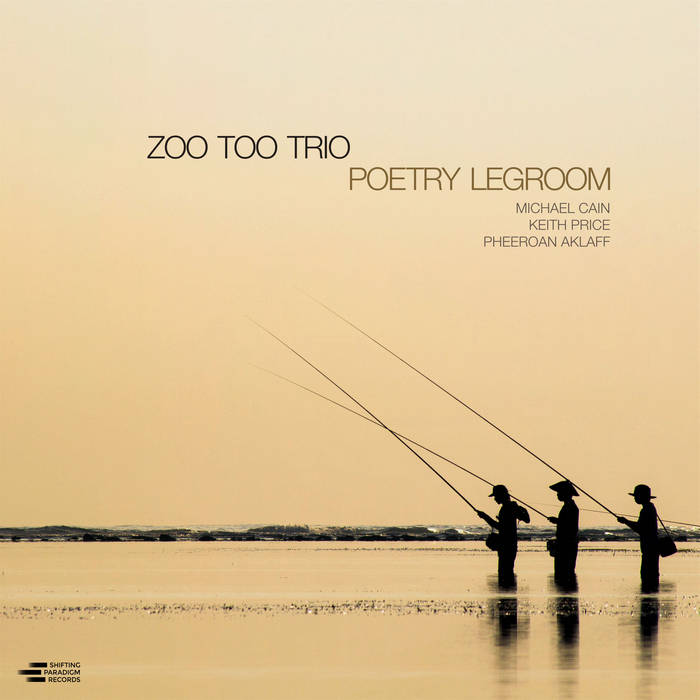

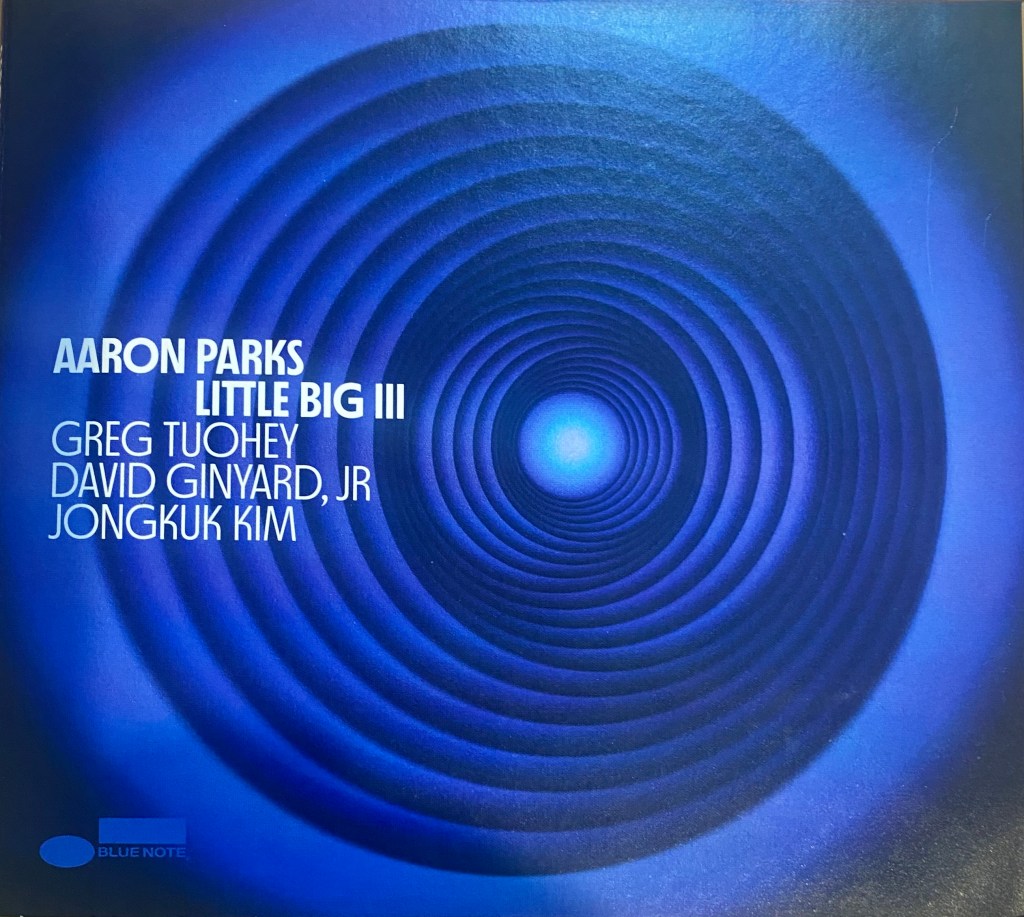
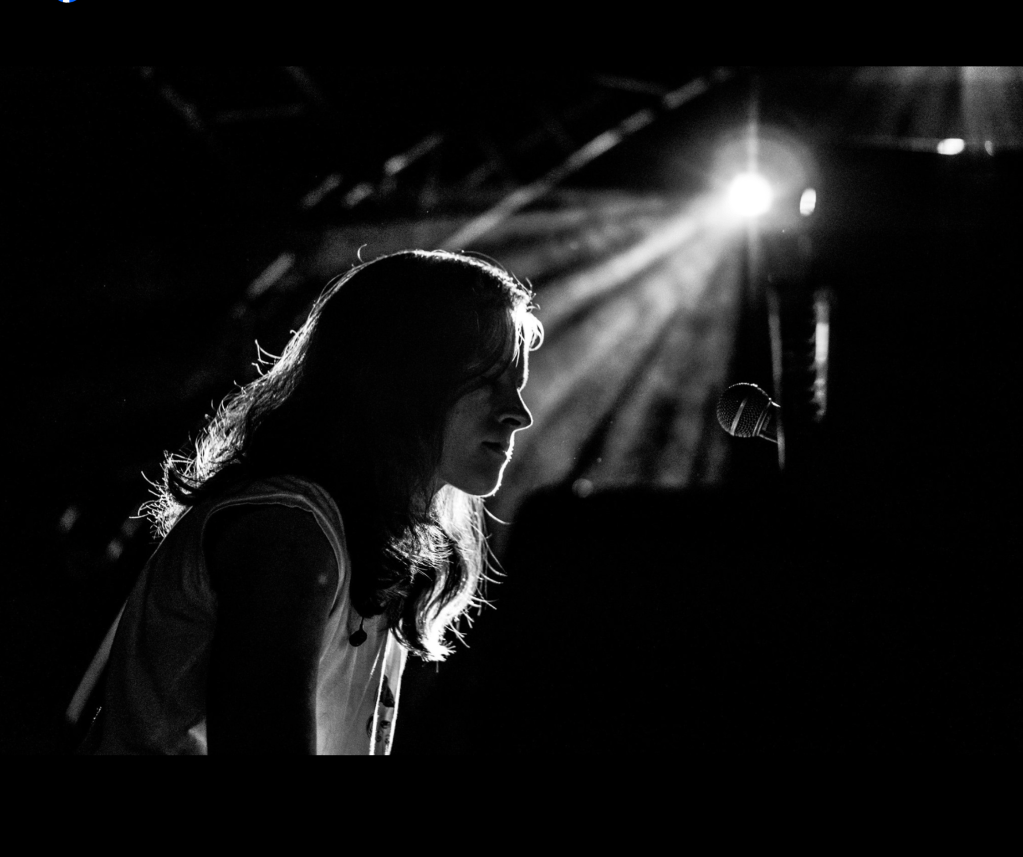
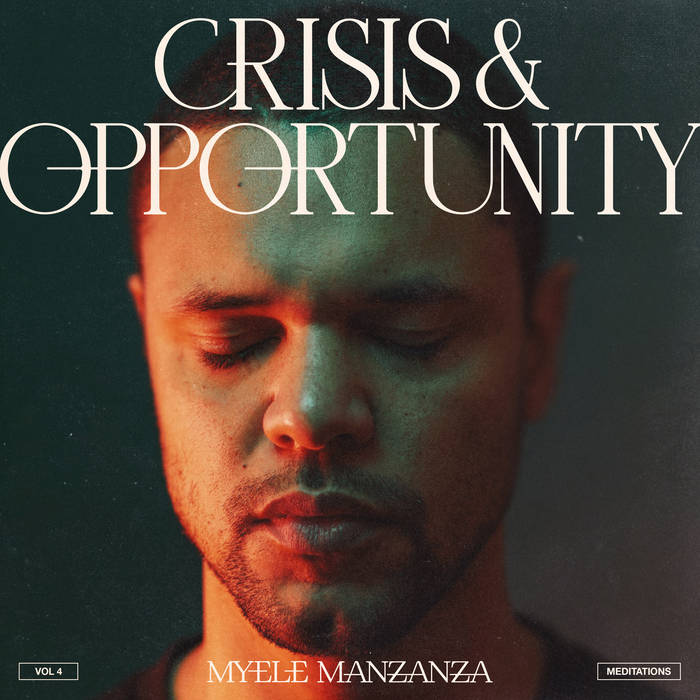
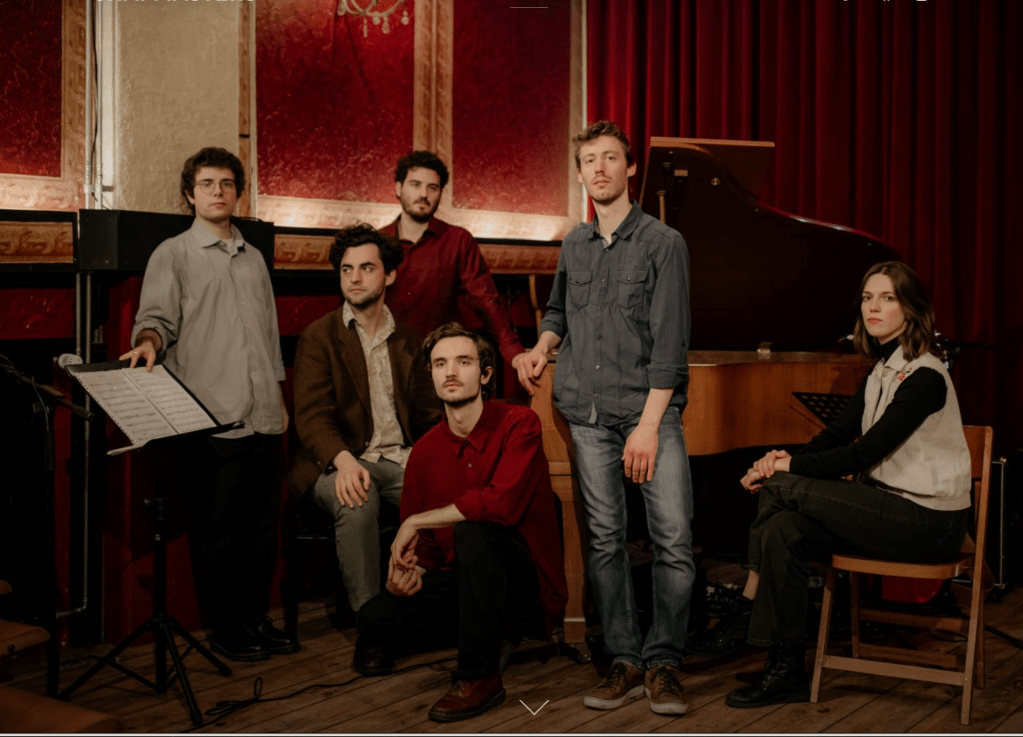

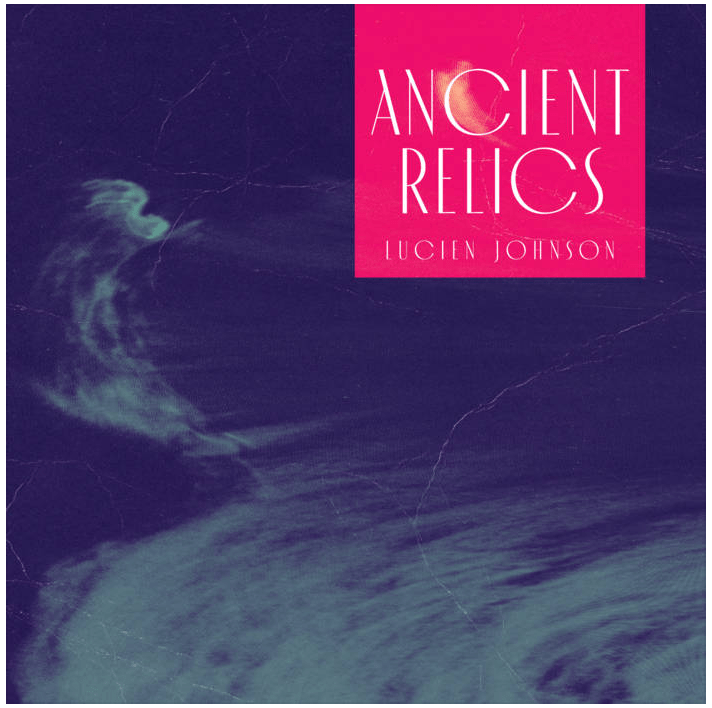

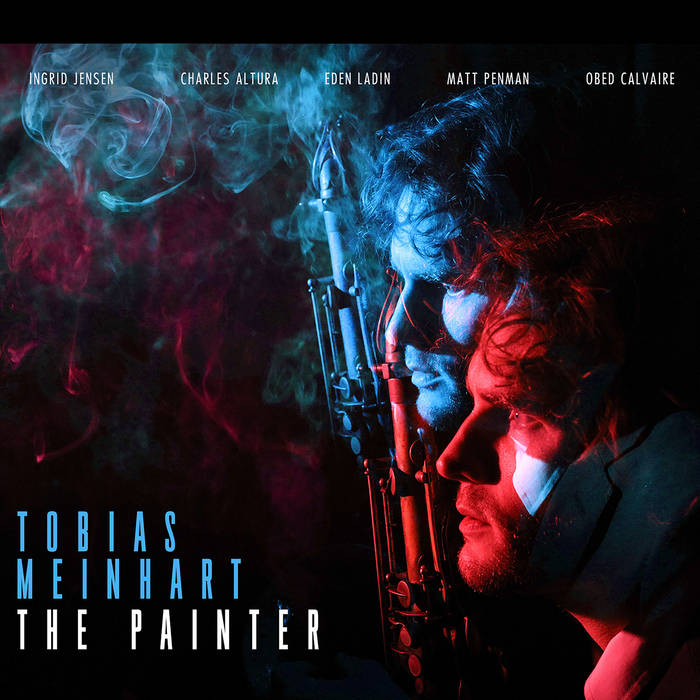
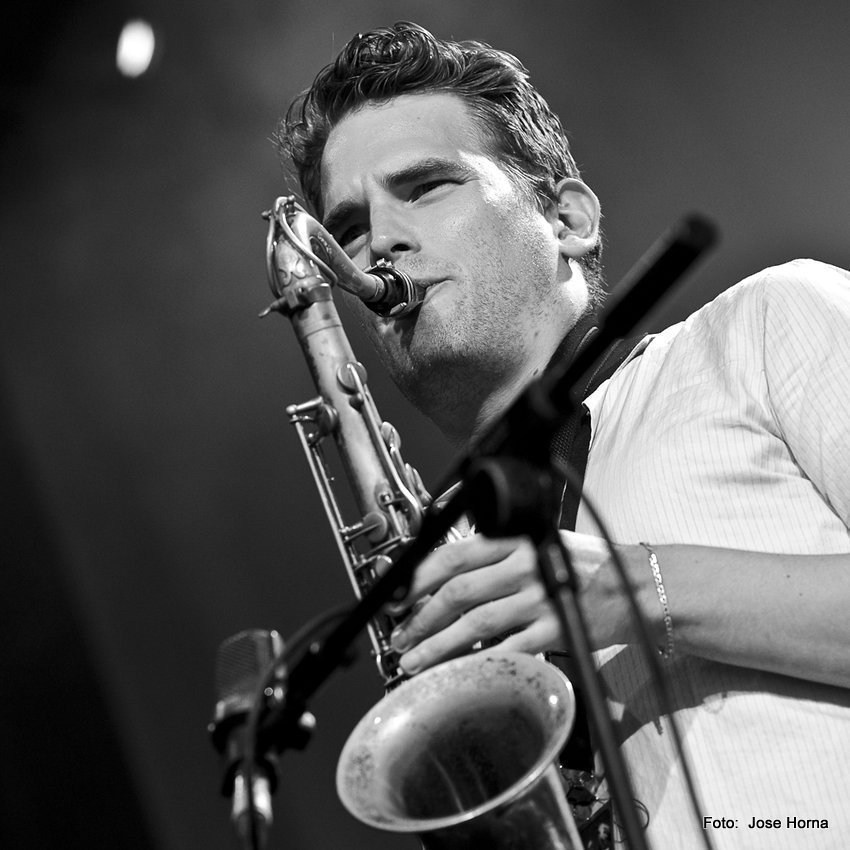
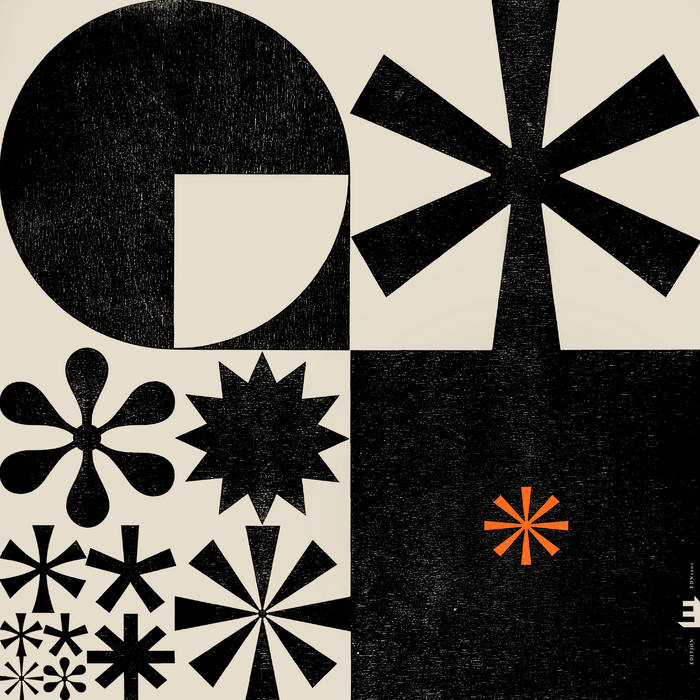
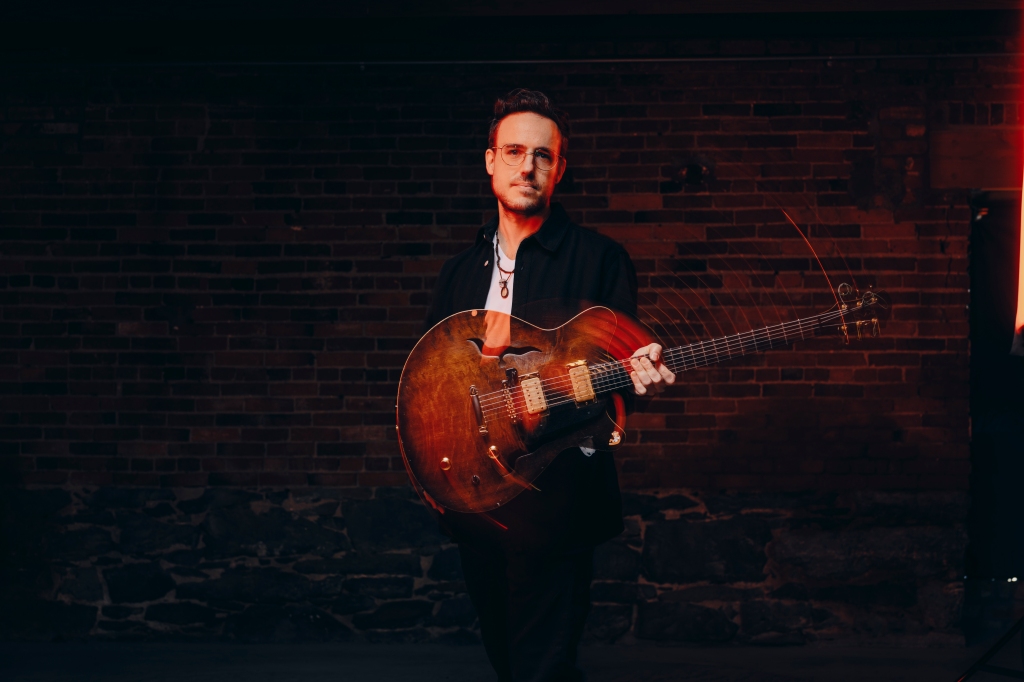
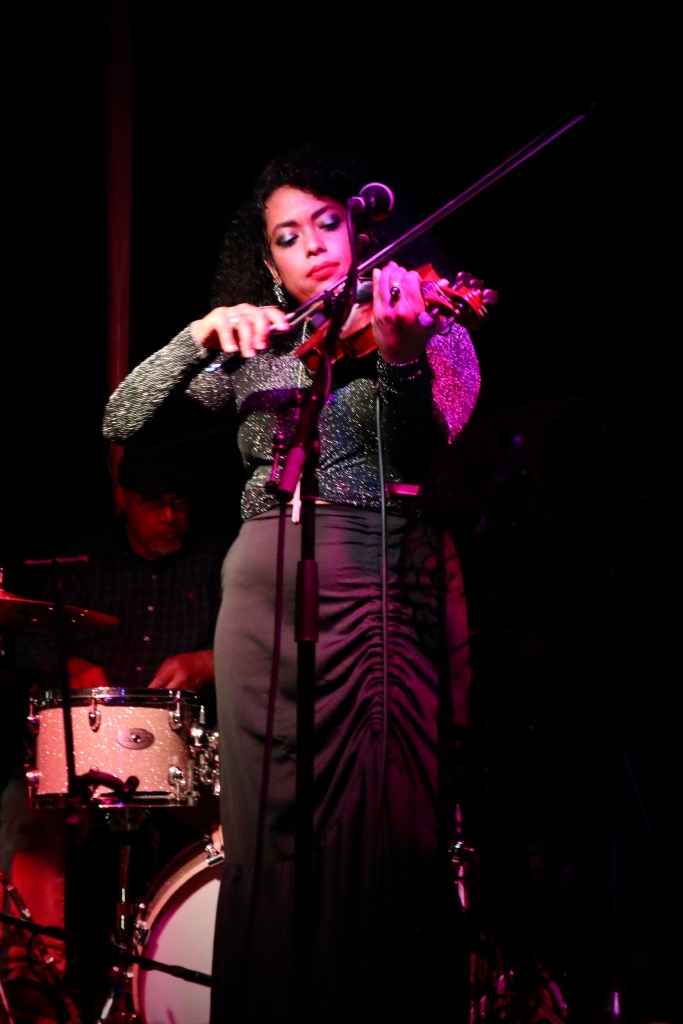
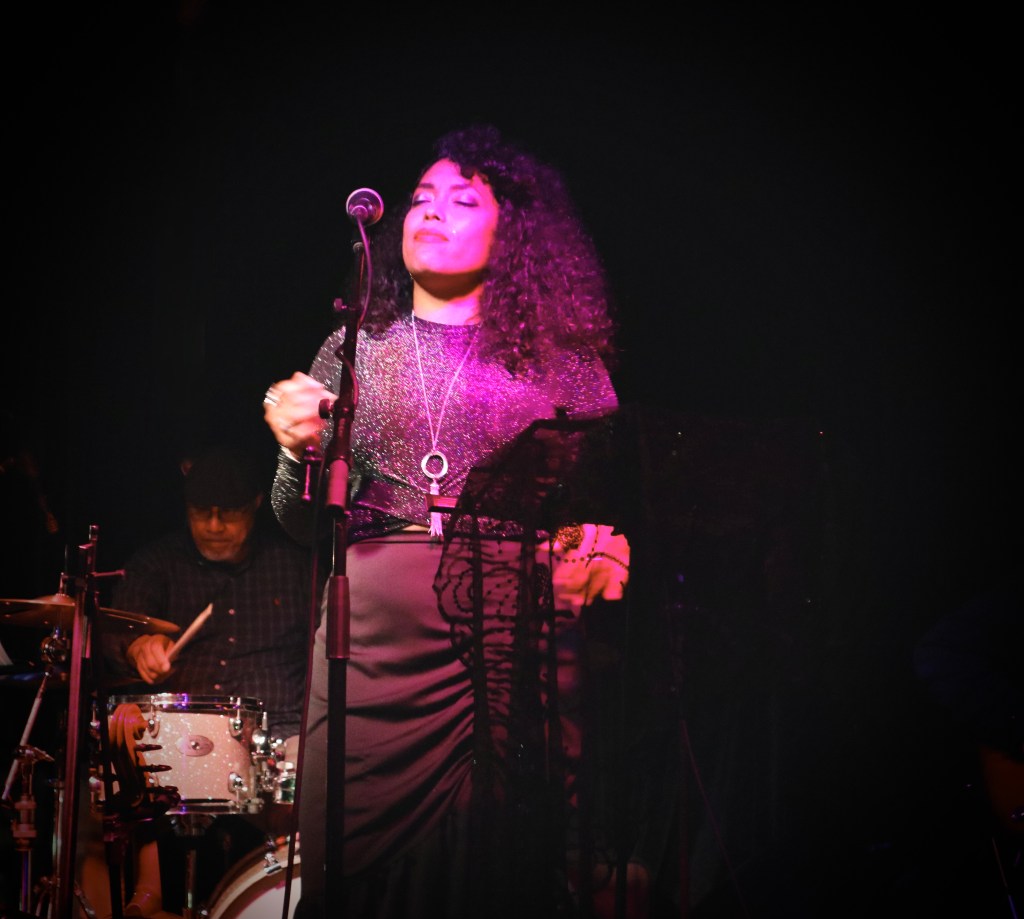
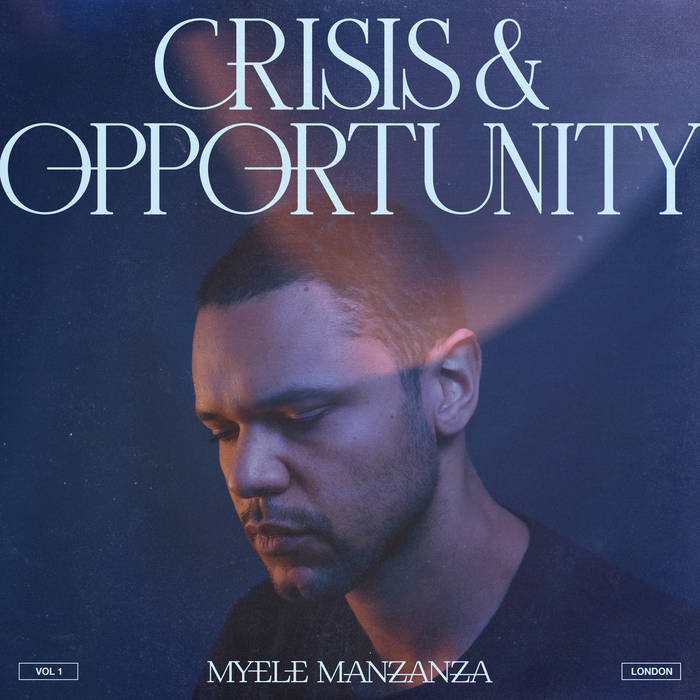
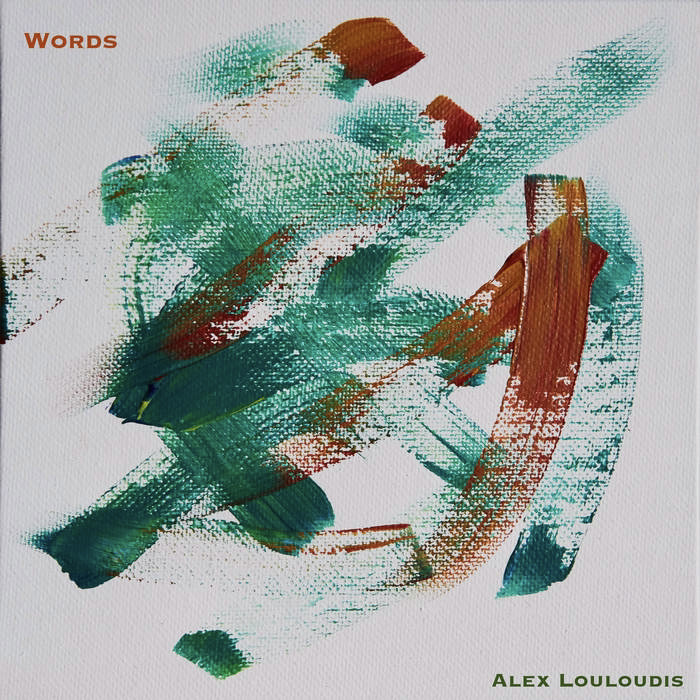


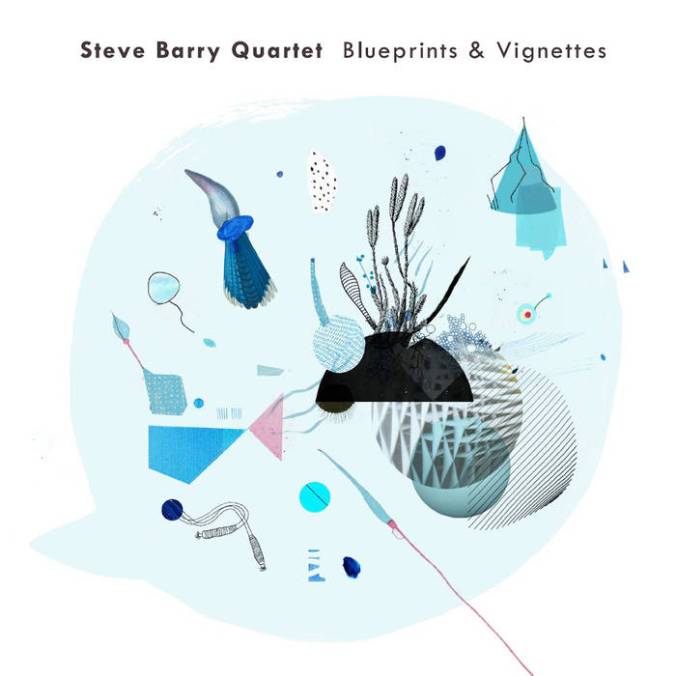
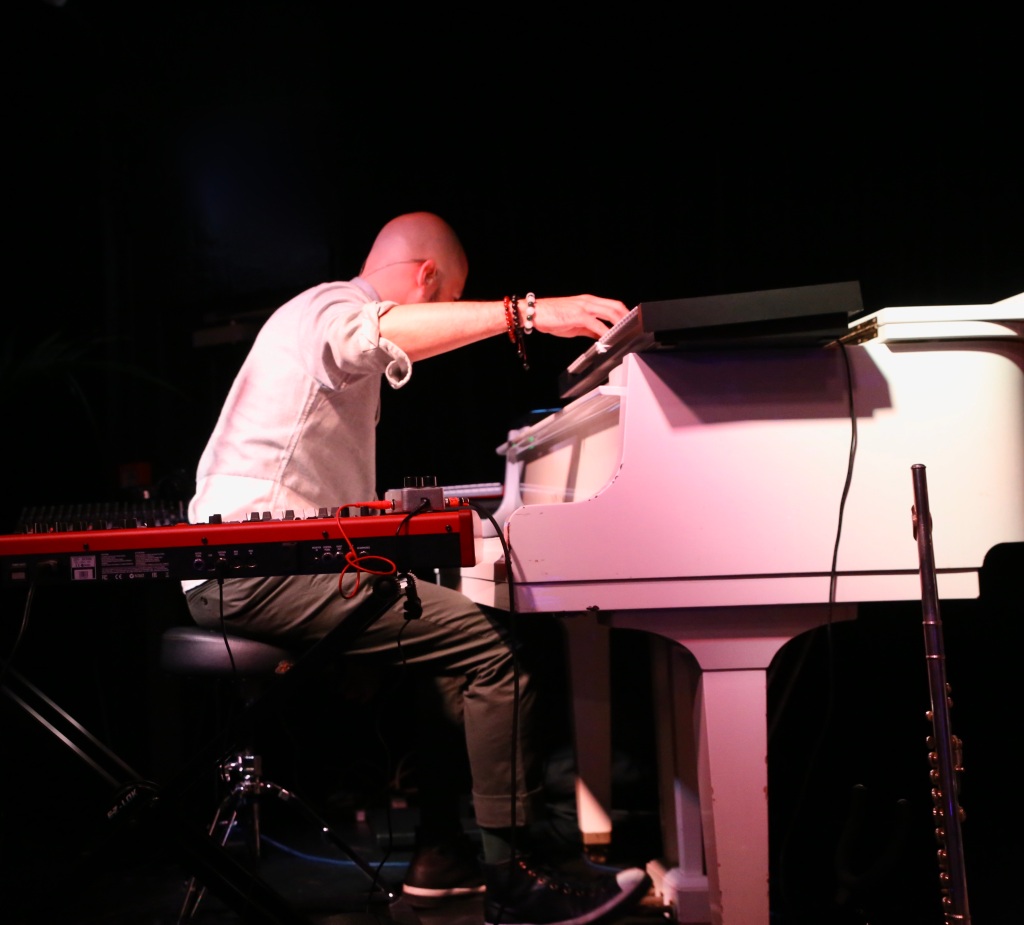
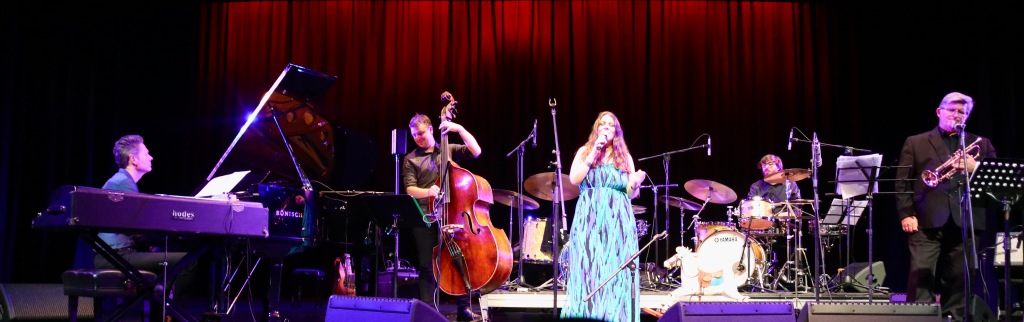
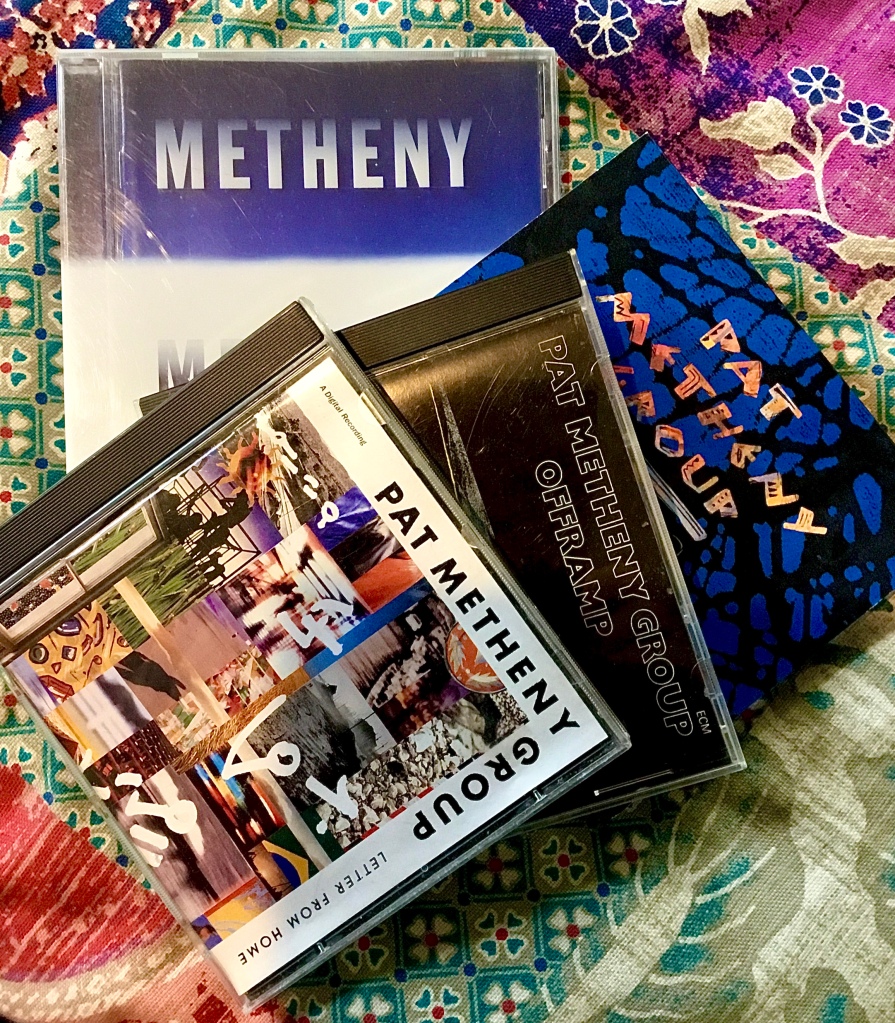
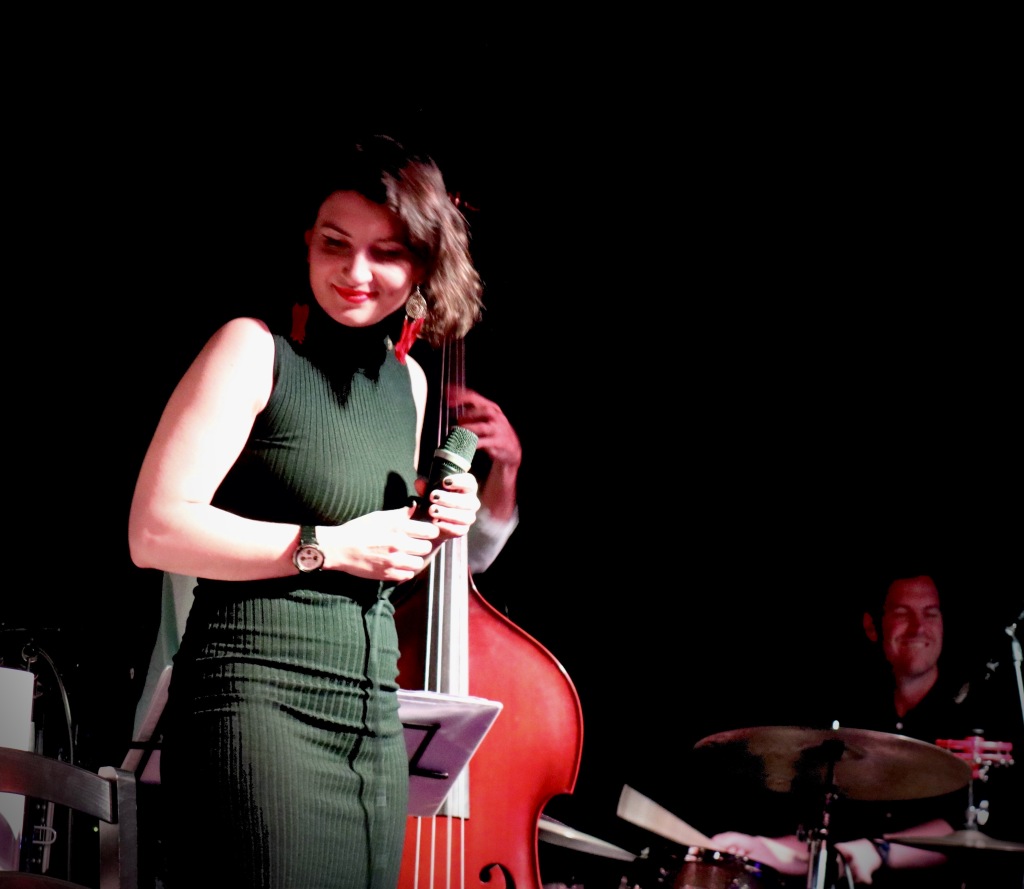

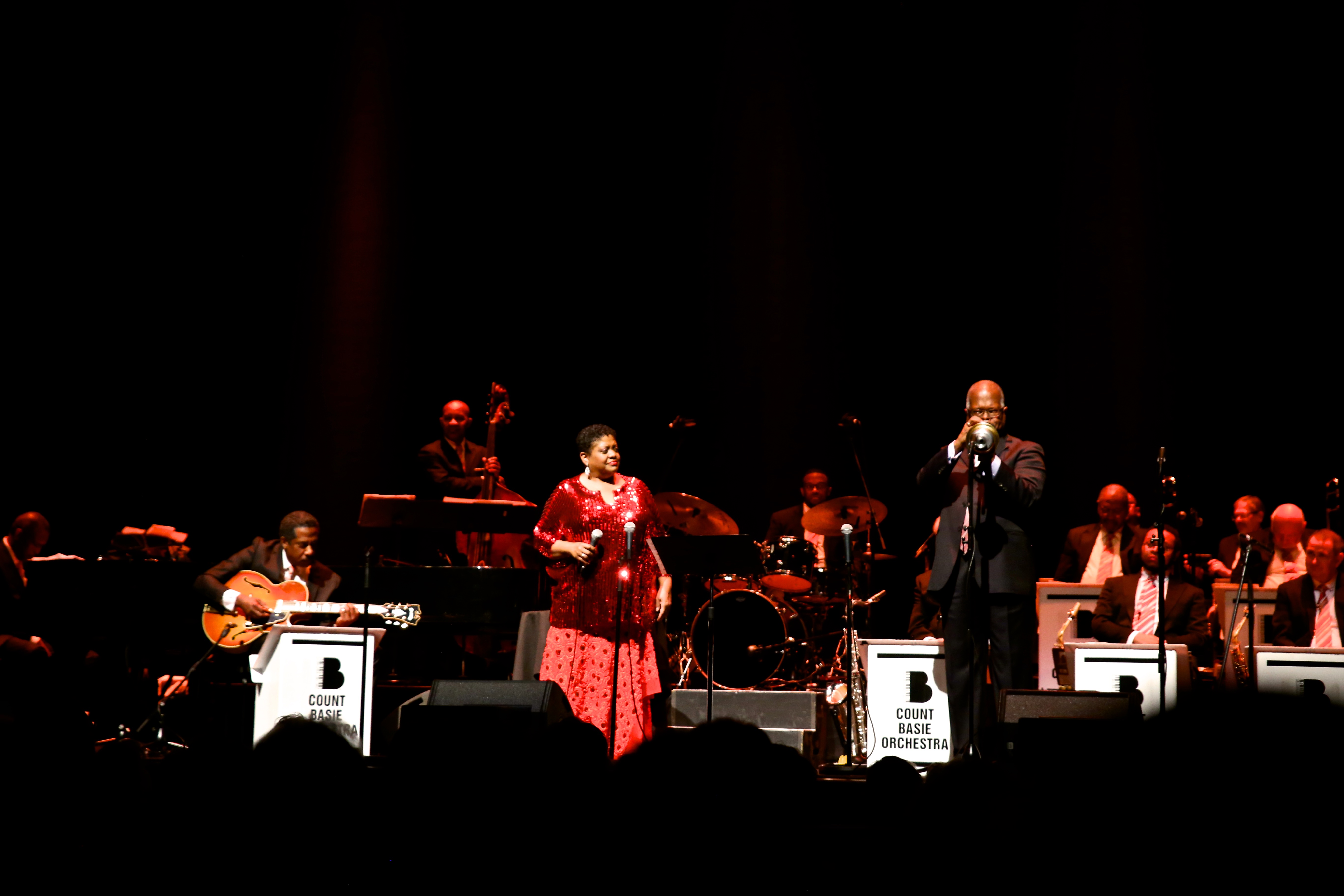 There are a number of things that should be on every music lovers bucket list. Experiencing a Basie Orchestra gig live is one of them. This band has the history of modern music in its DNA and after 83 years on the road, they are in their prime. Goodman was always referred to as the ‘king of swing’ but in my view Basie was a better contender for that title. His brand of swing had it’s nascent stirrings in 1927 when Basie joined Bennie Moten. When that band folded he took many of the musicians with him to form the Basie Band in 1935. The Basie band possessed a unique sound, fueled by a nine-piece line up featuring legendary greats like Lester Young, ‘Papa’ Jo Jones and Walter Page. Johnny Hammond heard them in 1936 and invited them to New York where at his suggestion they expanded to become a thirteen piece jazz Orchestra. At this time they were joined by Freddie Green and others. Skillfully, they incorporated the nimbleness of the Kansas City small ensemble swing-feel into a new sound.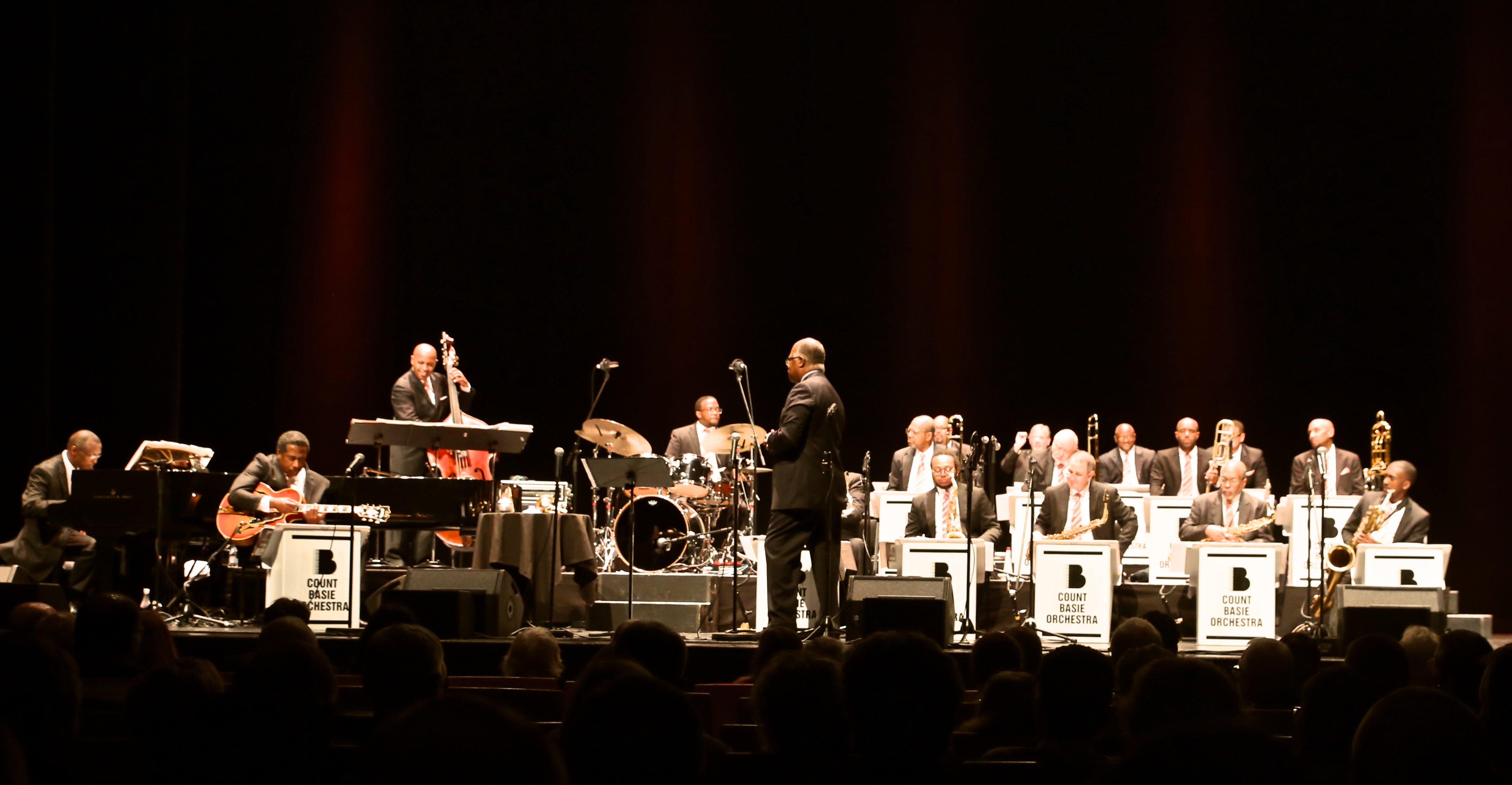
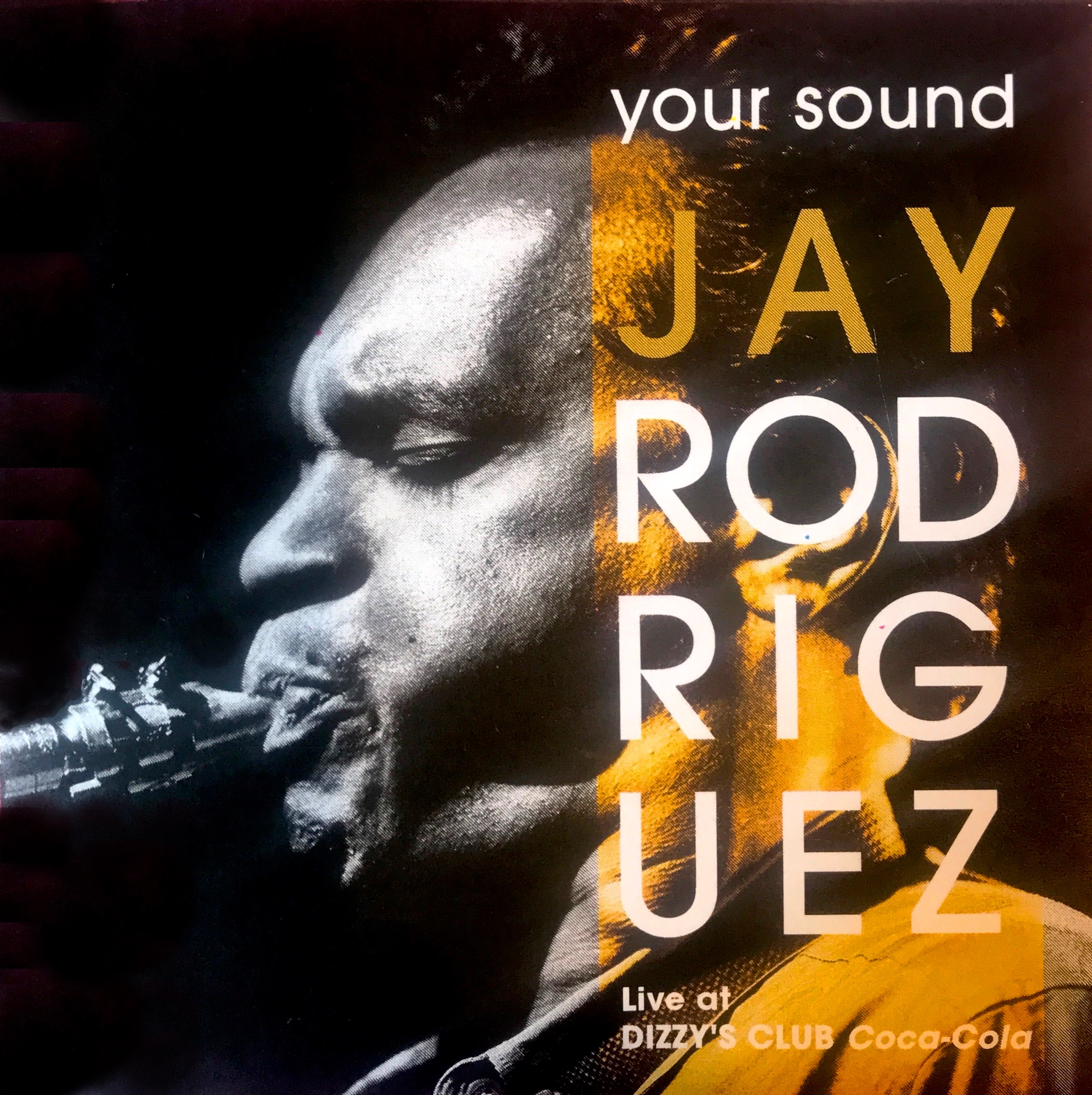 Multi reeds and winds player Jay Rodriguez recently released an album titled ‘Your Sound’ and it could not have been more appropriately titled. It is an album which conveys the warmth of the man and his interesting musical journey from Columbia to New York; it lays bare his openness and his heart on sleeve humanity. It is a life and times offered up for appraisal, it is richly diverse and contemporary. Above all, it offers us joy. Put simply, ‘Your Sound’ is the sound of the Jazz life and it delights from start to finish.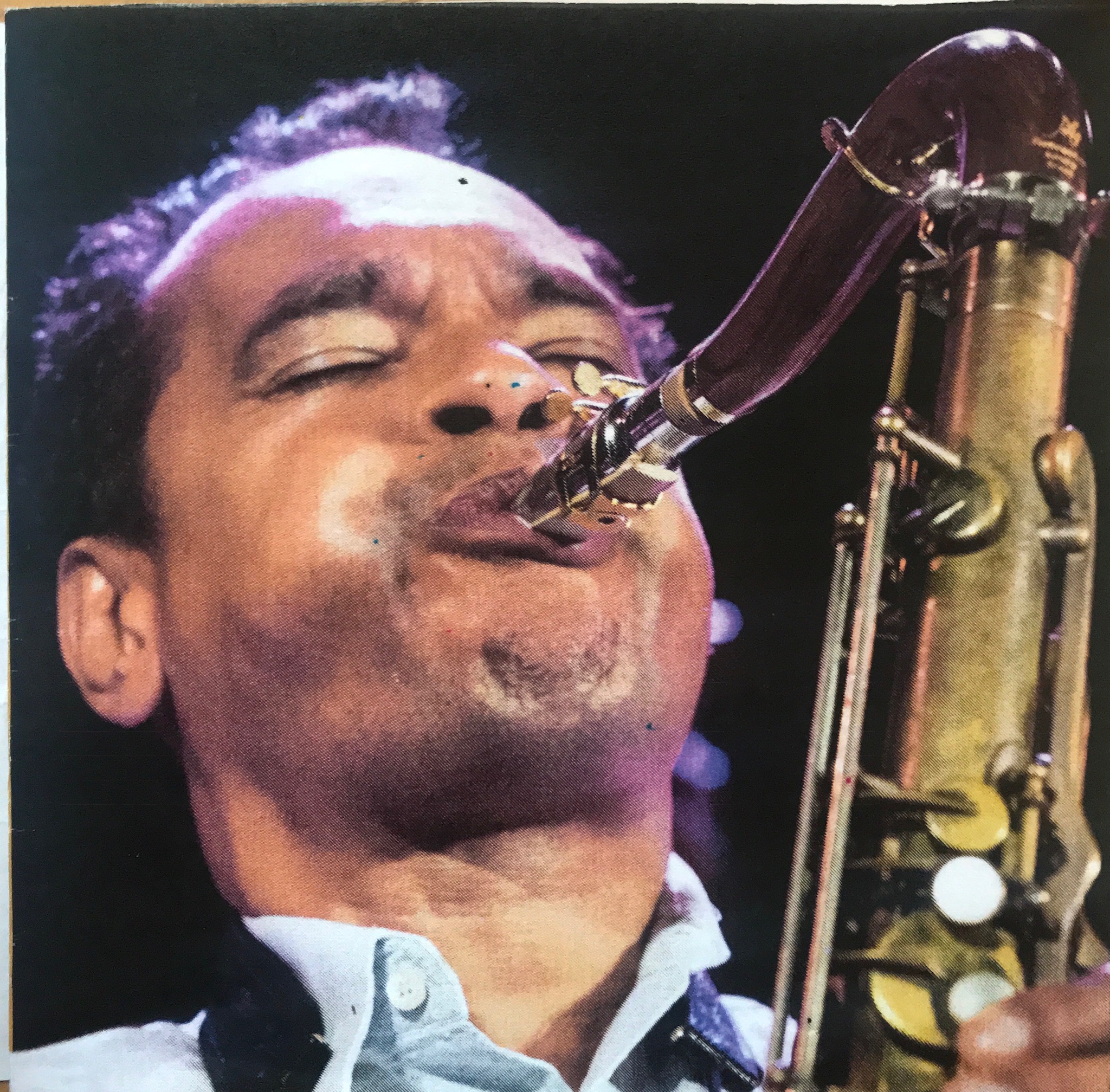

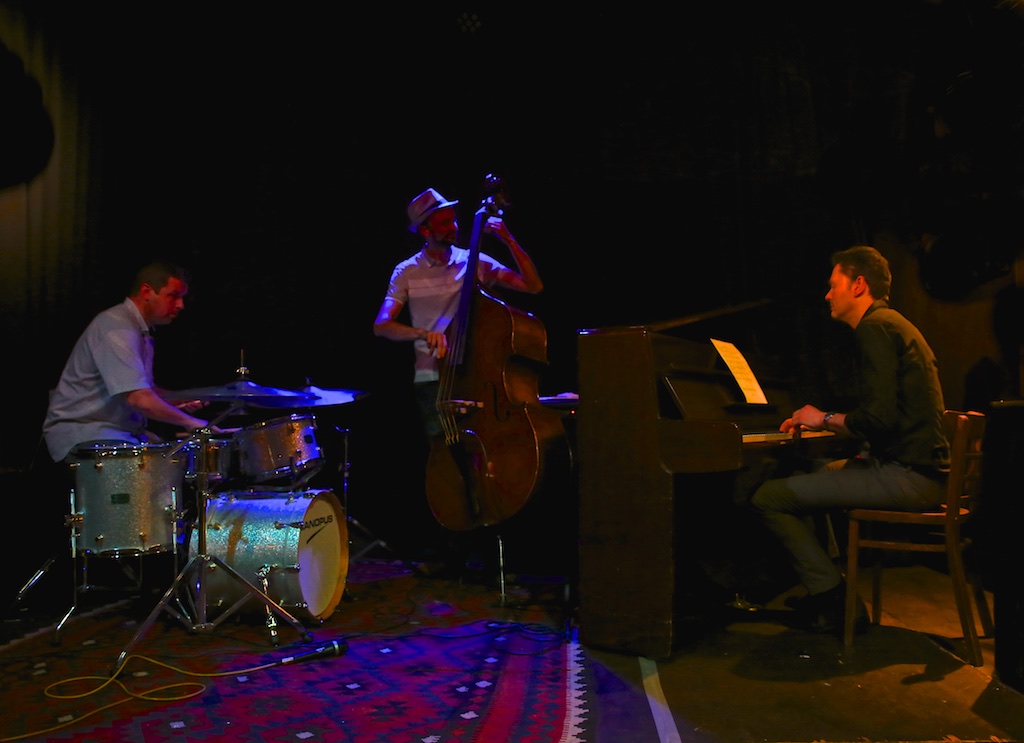
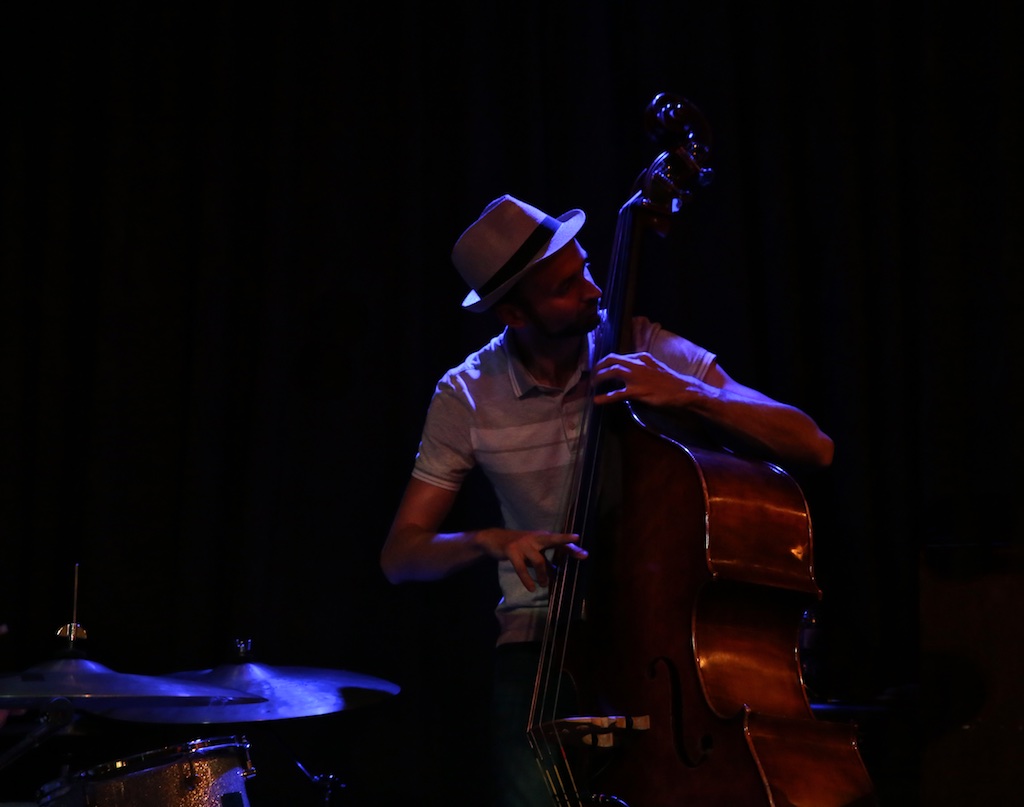
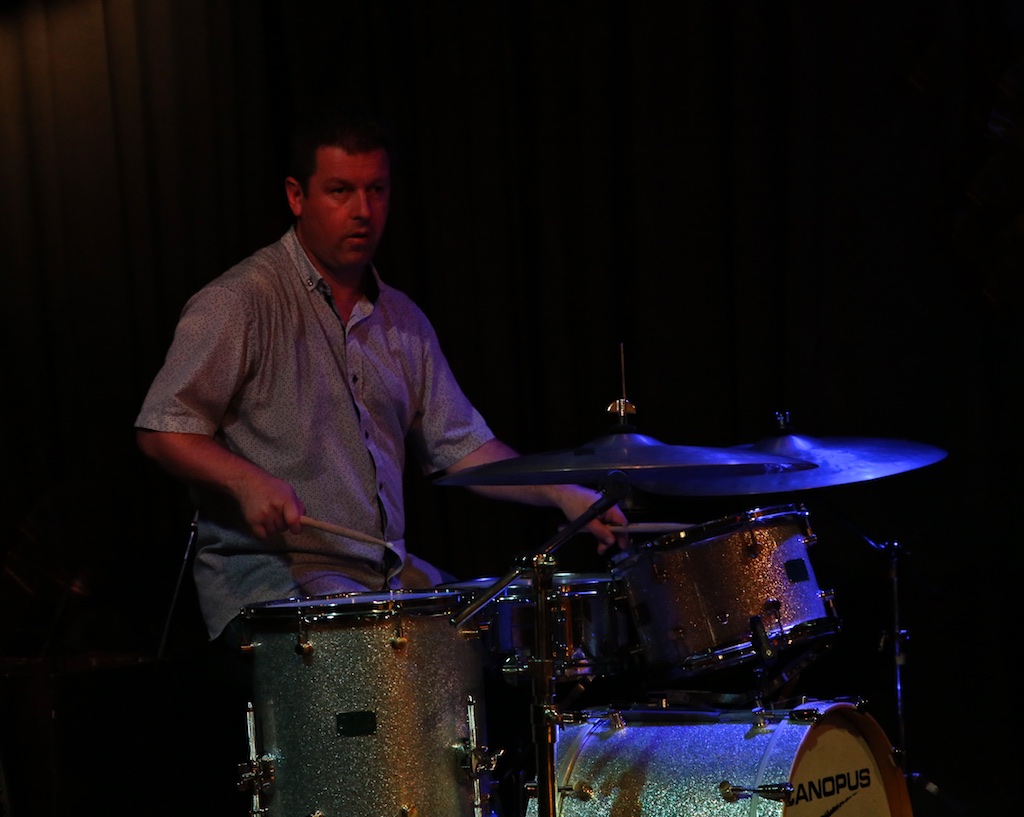
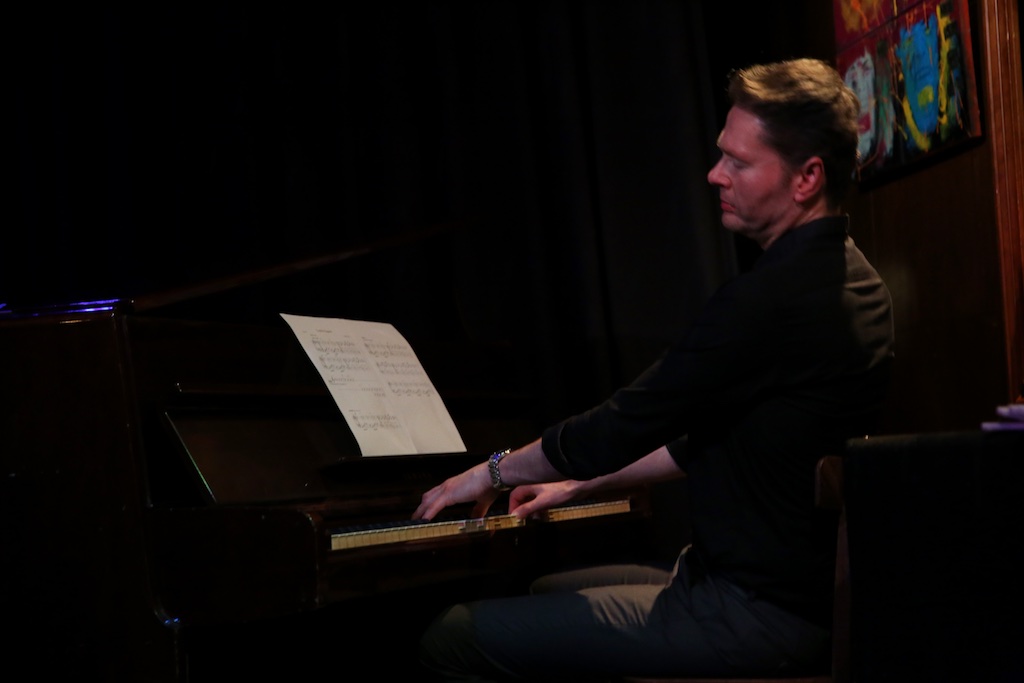
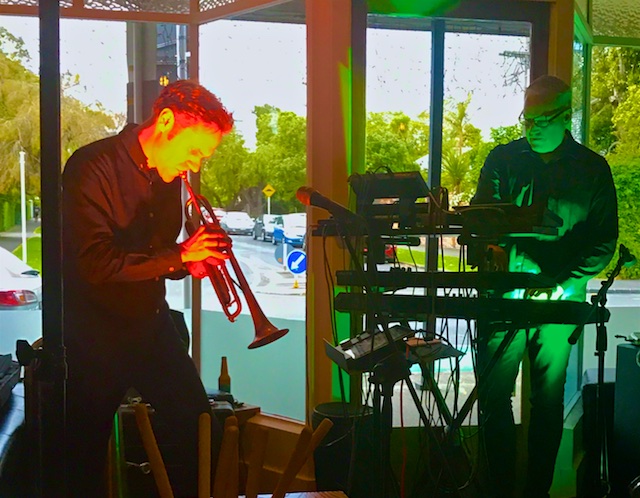
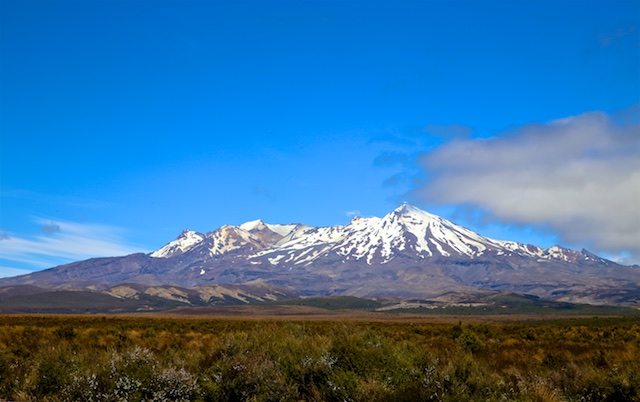 In the months before Christmas, we were reeling from the twin body blows of Trump and Brexit. During this period of disbelieving paralysis, Norman Meehan, Paul Dyne and Hayden Chisholm came to town. What they played was a balm for our troubled souls, a sublime ballad gig. I reviewed the gig on November 27, 2016 (this site). A week later Norman Meehan and Tony Whincup launched a new book titled ‘New Zealand Jazz life’. This is a great read for anyone interested in New Zealand music history and a must for anyone interested in improvised music. Meehan’s prose is much like his playing, devoid of needless ornamentation but pleasing. he is a natural with words, but he also manages to impart vast amounts of information without the reader ever feeling force-fed. His interviews with significant New Zealand improvising musicians are carefully blended with personal observation. Musicians like Jim Langabeer, Lucian Johnson, Nathan Haines, Kim Paterson, Jeff Henderson, Anthony Donaldson, Frank Gibson jr and Roger Manins are featured. I highly recommend this book as a vital reference work and as a very good read. ‘New Zealand Jazz Life‘ is published by Victoria University Press and available at all good bookstores.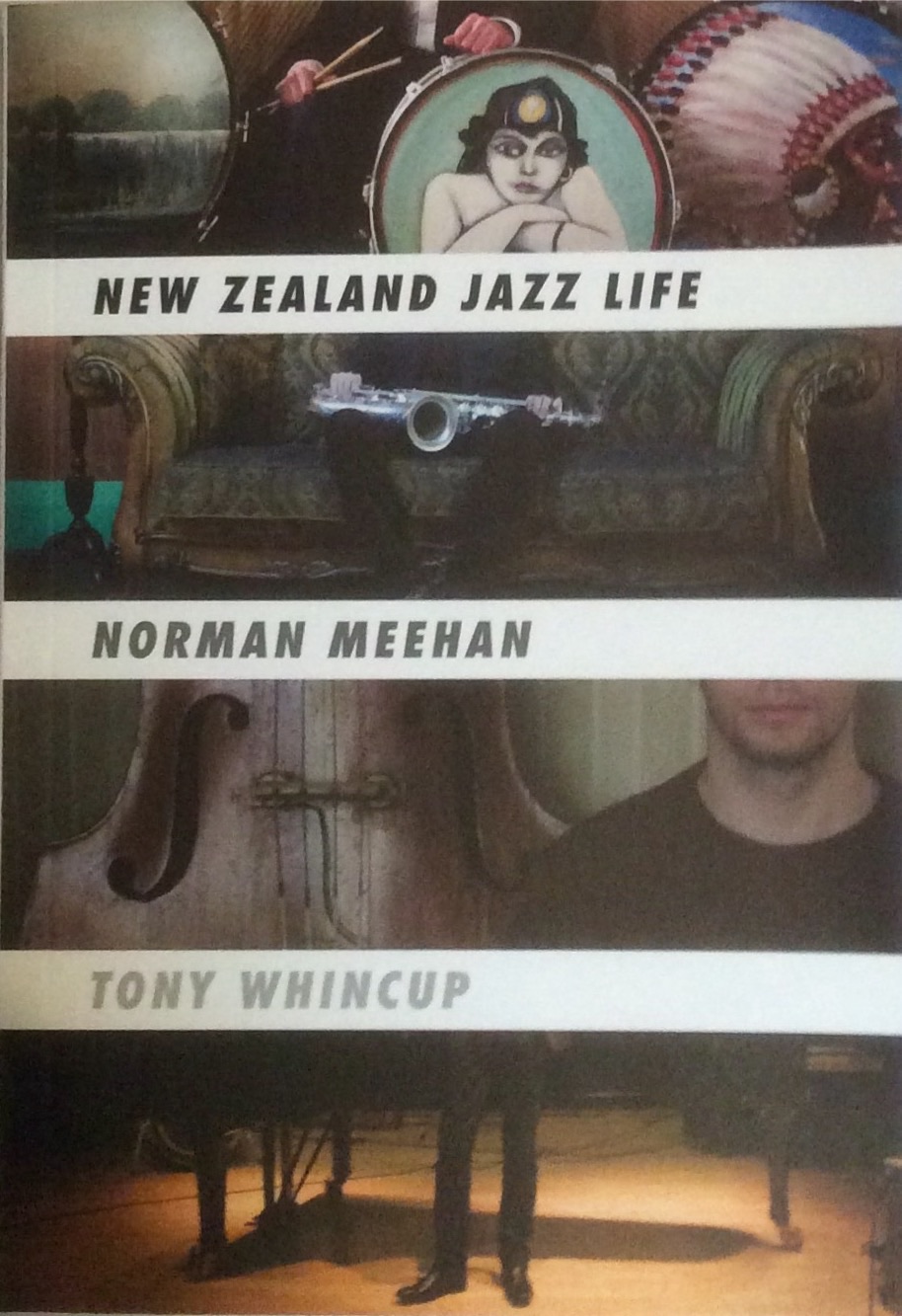
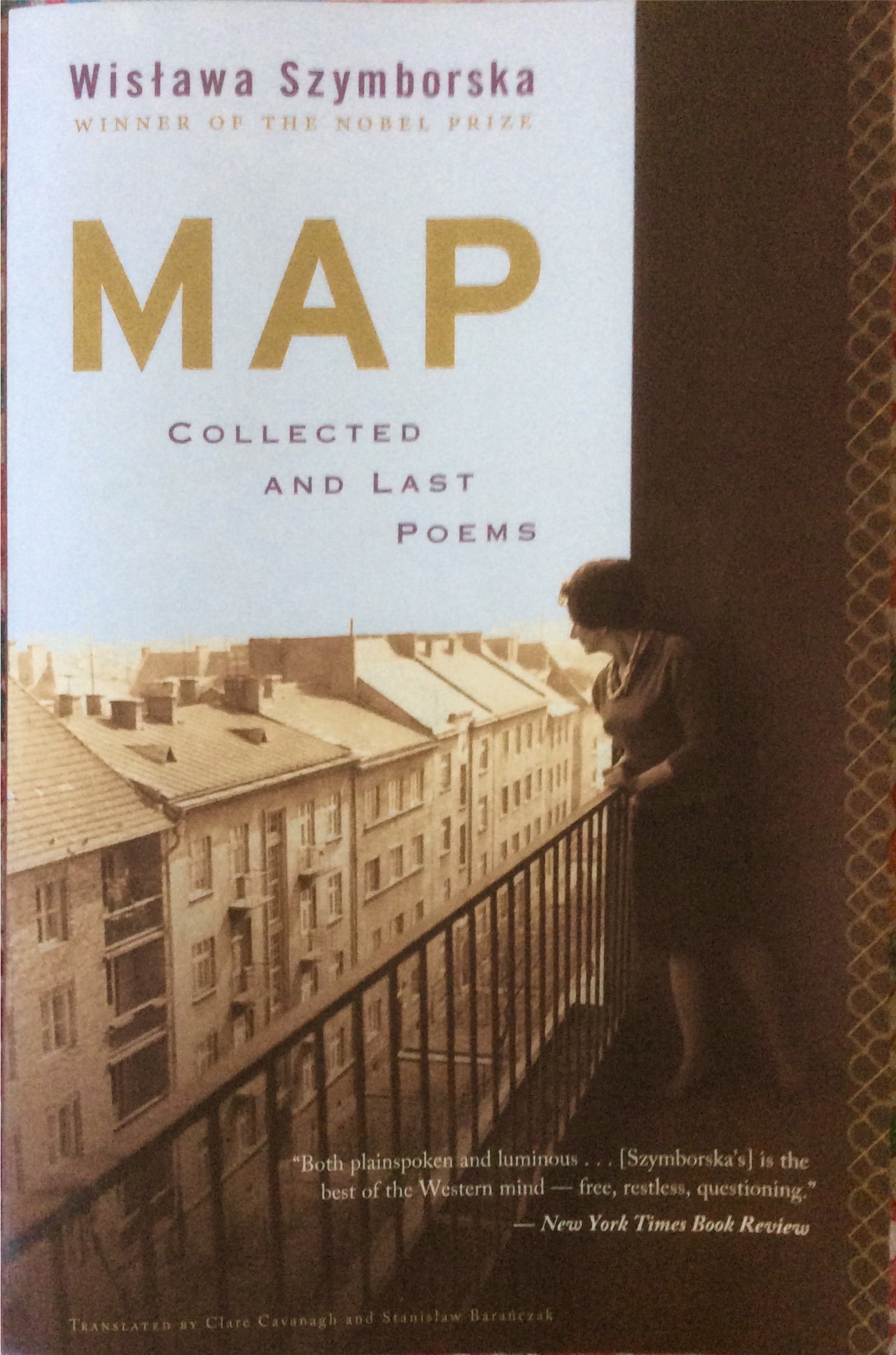 Her Maps‘ anthology has seldom been out of my hands since. Szymborska communicates the Polish experience like few others. She evokes a sense of impermanence, an un-belonging that has characterised Polish life for millennia. I am descended from Pomeranian Polish stock and perhaps this adds a particular resonance in my case. This is a window into a floating world surprisingly free of rancour. ‘Maps’ in translation is published by Mariner Books.
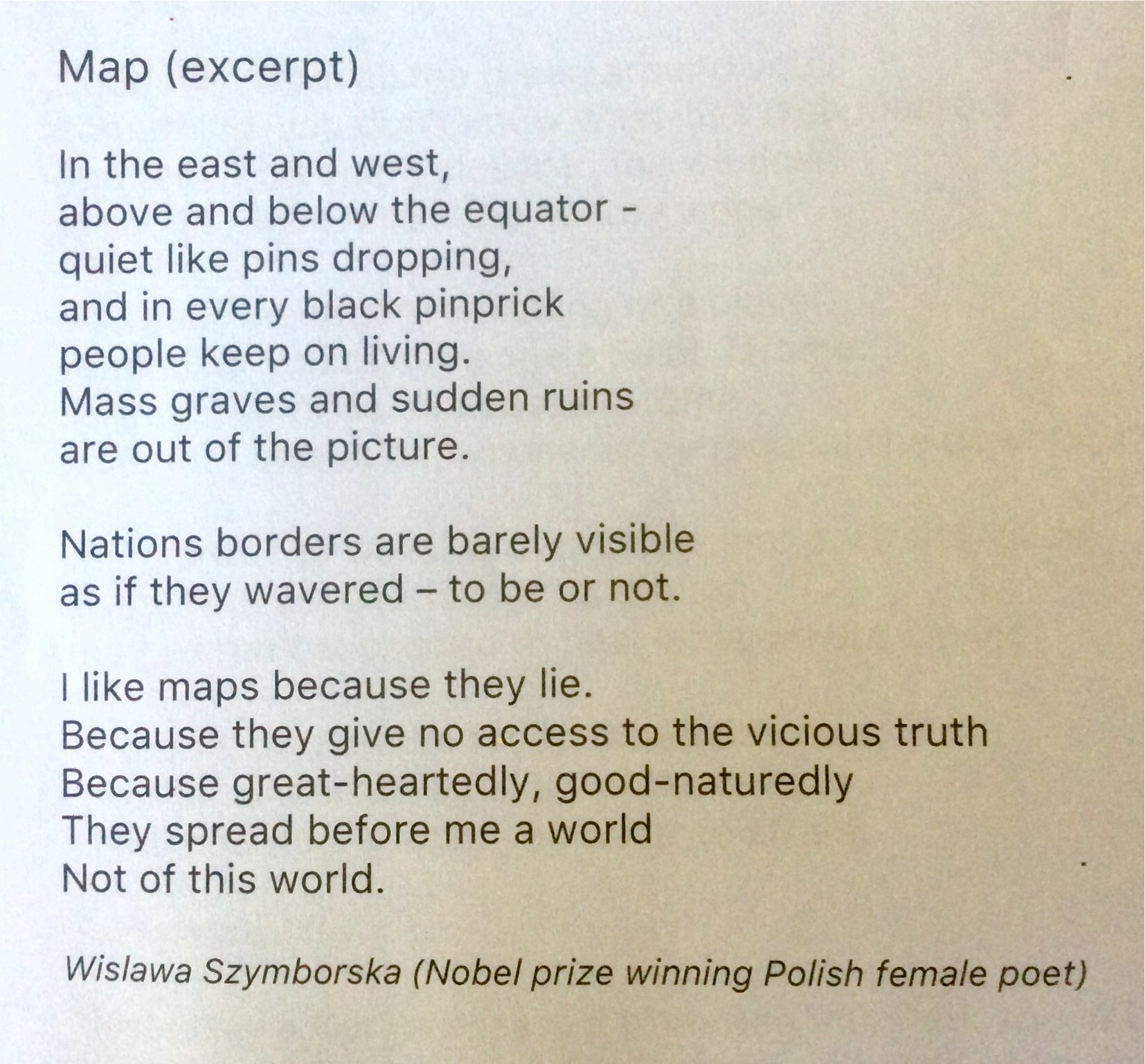 The City Lights book shop in North Beach San Francisco has always been at the centre of my universe. Whenever I’m in that wonderful city I head there immediately. I had just spotted a verse from a Diane di Prima poem in a street pamphlet and I couldn’t wait to get a volume or two of her poetry. I have long been familiar with di Prima’s work, but the gifted female Beat poets were unfairly eclipsed by their male counterparts. A book published by Conari Press titled ‘Women of the Beat Generation’ is now back in print and it’s a good starting point for examining their body of work.
 di Prima is still with us and some of her best work is contained in a recent volume titled ‘The Poetry Prize’ published by the City Lights Foundation.
 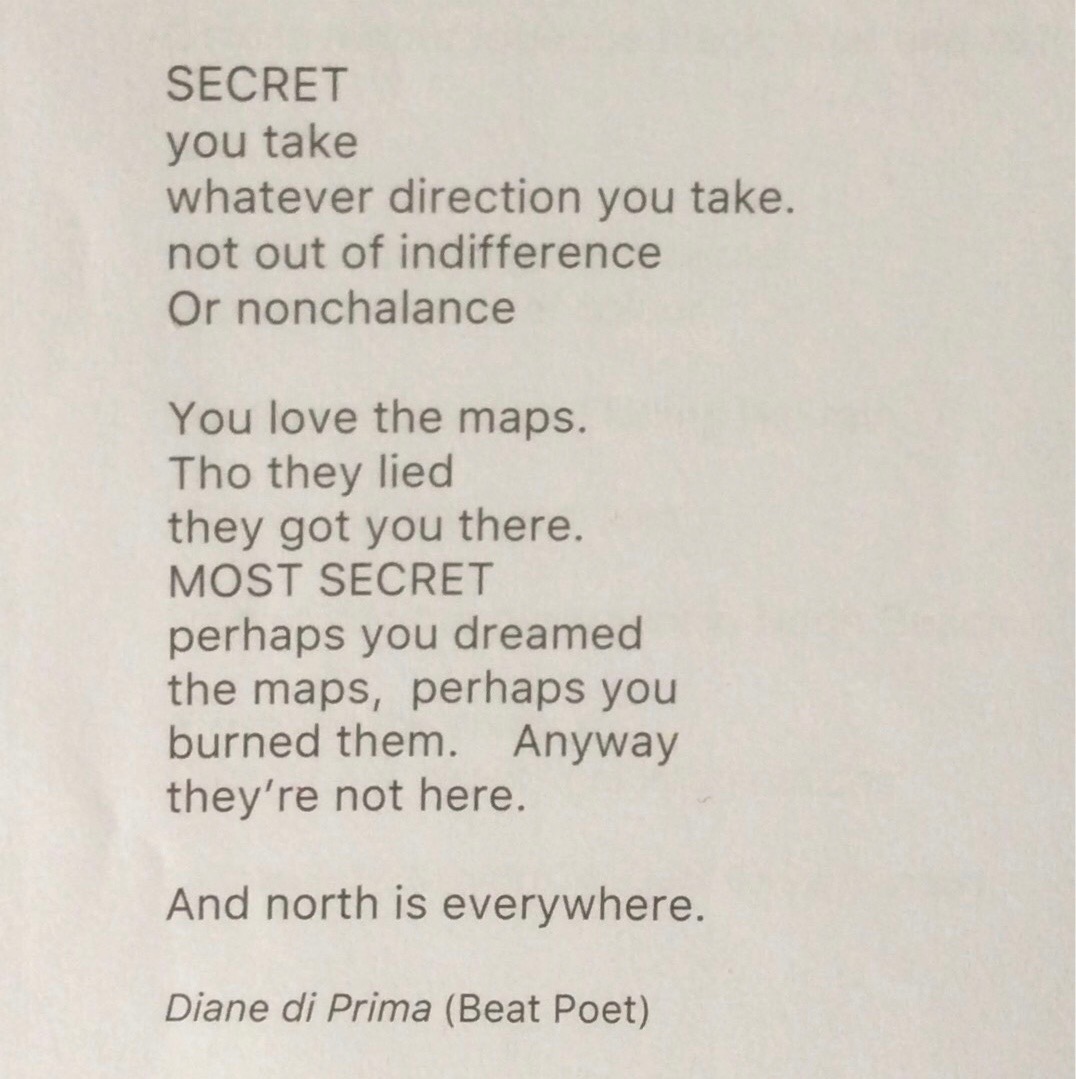 Lastly I will post one of my own recent poems, which rounds off the theme of maps. I wrote this in the week before my journey began. As I was about to depart, a well-known New Zealand Jazz musician shared some travel tips with me, offering insights, drawing me an abstract map as guide. I was so pleased with it that I wrote this poem. I took his wonderful map with me and although I was unable to strictly follow it’s path, the spirit of it was an inner compass to guide me. It made me happy to have it near – now a prized possession, a travel memory, a manifest.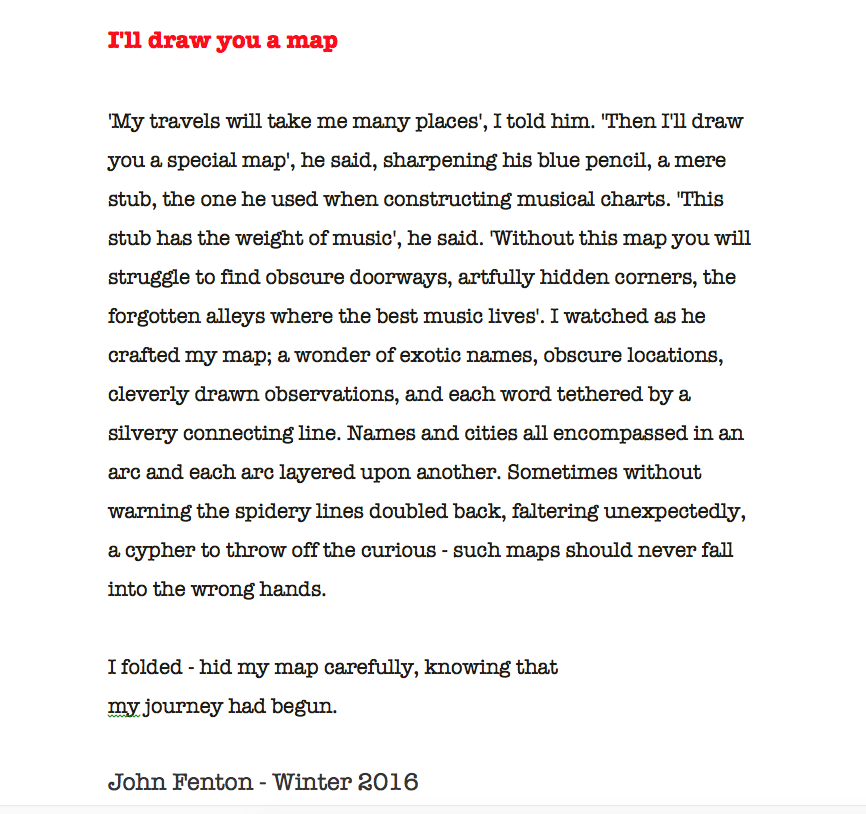
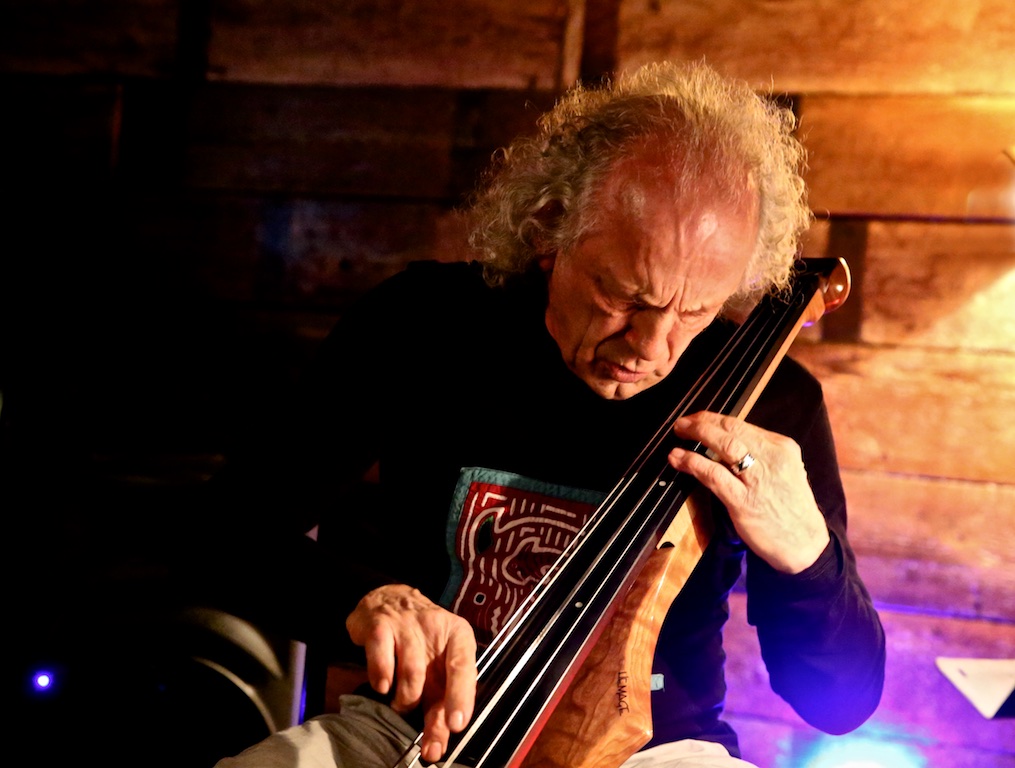 Good improvising bass players get a lot of work, but they seldom get the acknowledgement they deserve. This is one of life’s inequities and it’s partly because a bass player by custom is hidden behind the other band members. When a pianist or guitarist plays solo they will often mimic or imply bass lines. A good bass line is both an anchor and an invitation – invoking deeper exploration; the consequent rub between notes and time is where most of the tension and release is hidden. Every so often a bass player claims wide-spread attention. Blanton, Mingus, Haden, McBride, Le Faro, Pastorius etc. David Friesen while not garnering the attention of the aforementioned bassists in the popular press, is without doubt a giant of the instrument. His is a name that frequently comes up when aficionados and musicians talk. He is the bass players bass player, an acknowledged innovator.
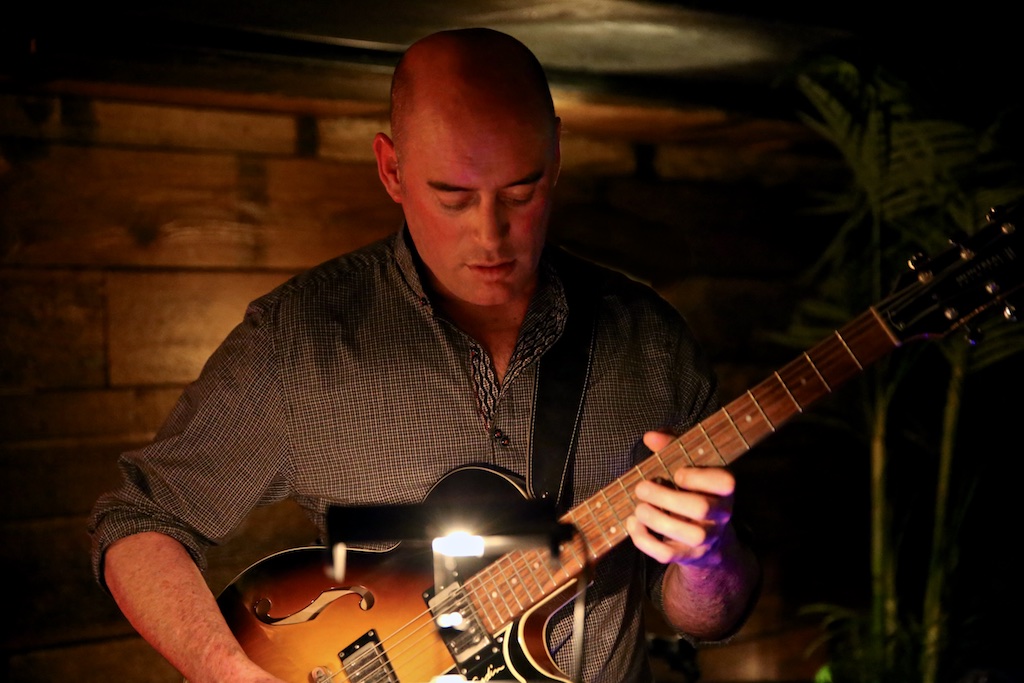 As is often the case with great musicians, he was a compelling talker; spinning out yarns of people and places visited. Often with subtle humour woven into the narrative. Above all he imparted his views on the place of music in these complex and troubled times. To paraphrase slightly, “Music is a way of healing a broken world, it is not just about the people making the music or about the audience receiving it, but something far deeper. The interaction creates a virtuous circle, each continuously enriching the other. Out of this comes the magic”. This reference to the primal healing power of music resonated and he received loud applause. Improvisers seldom earn what they should and yet they persevere. Understanding their mission of deepening human awareness. It was good that he reminded us of how vital a deep listening audience is. Sharing the joy brings its own responsibilities. That’s why I do what I do in print.
 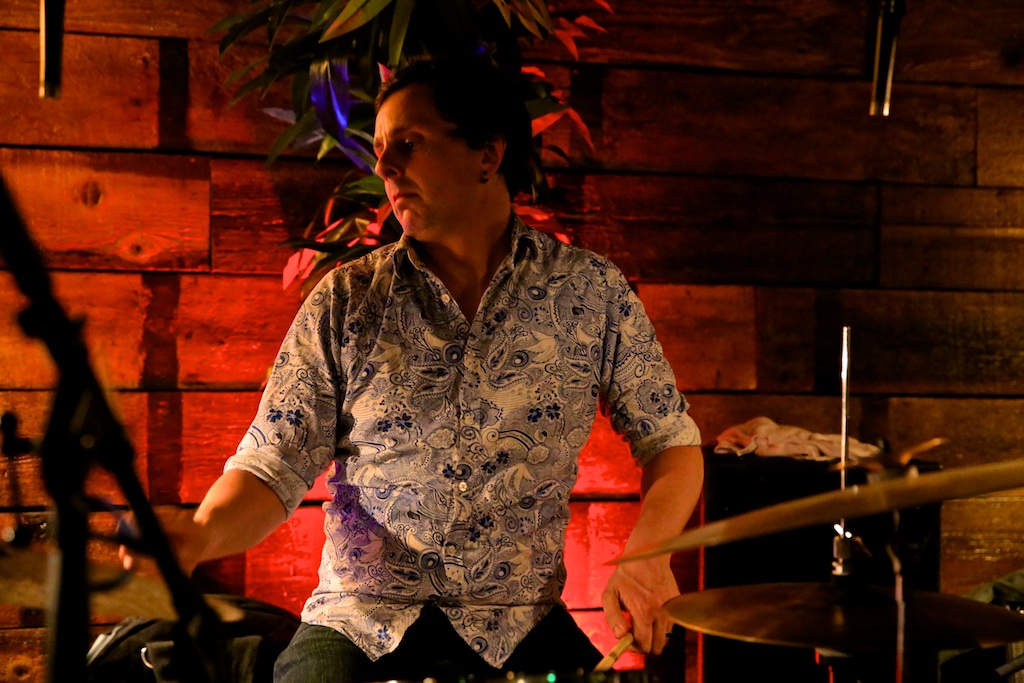 Friesen travels with a special bass; made for him by a famous Austrian instrument maker. Sick of having instruments damaged or interfered with by airline baggage handlers, he ordered an instrument small enough to go in the overhead locker. This custom bass is mainly crafted out of American Cherry wood and Canadian Maple. It also has a very sophisticated pick up. Because of the foreshortened neck I suspect that it would take some mastering by most upright bass players. In Friesen’s hands it sung.
 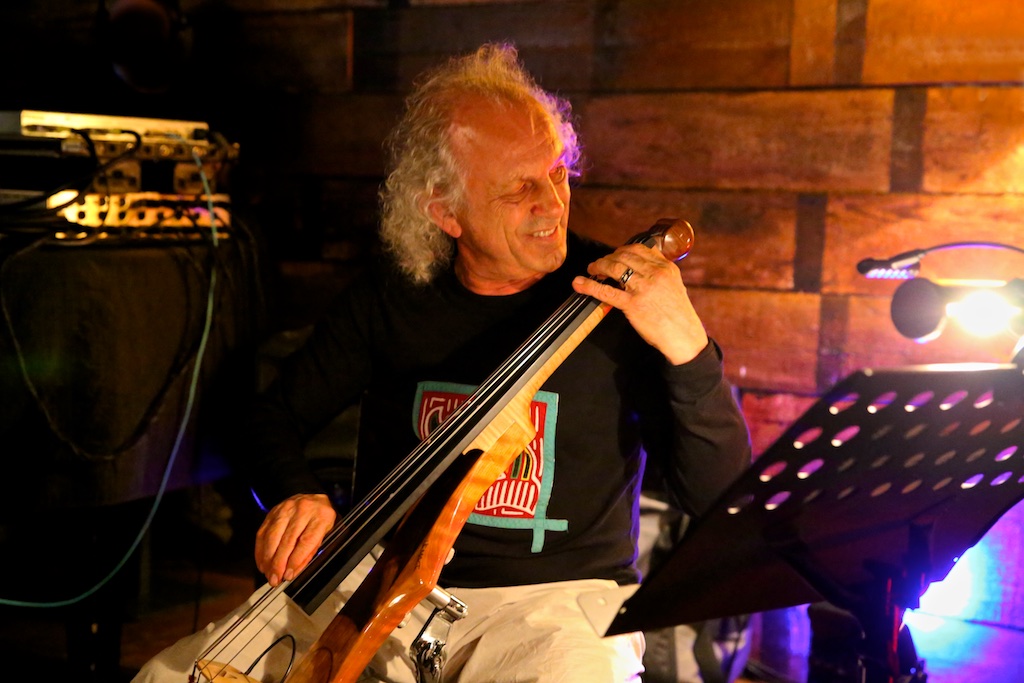 Nacey did what we expected of him; delivered stinging imaginative lines and soared on that lovely Godin semi hollow-body. As success spreads him thinner, we tend to see less of him in the Jazz club. When we do hear him we get the very best. He is a guitarist who can hold his own anywhere on the scene. The other Kiwi on the gig was Wellington drummer Reuben Bradley and what a performance he put on. Again it was hardly surprising, as Bradley is among our very best drummers. Like Nacey he is often the drummer of choice for visiting artists.
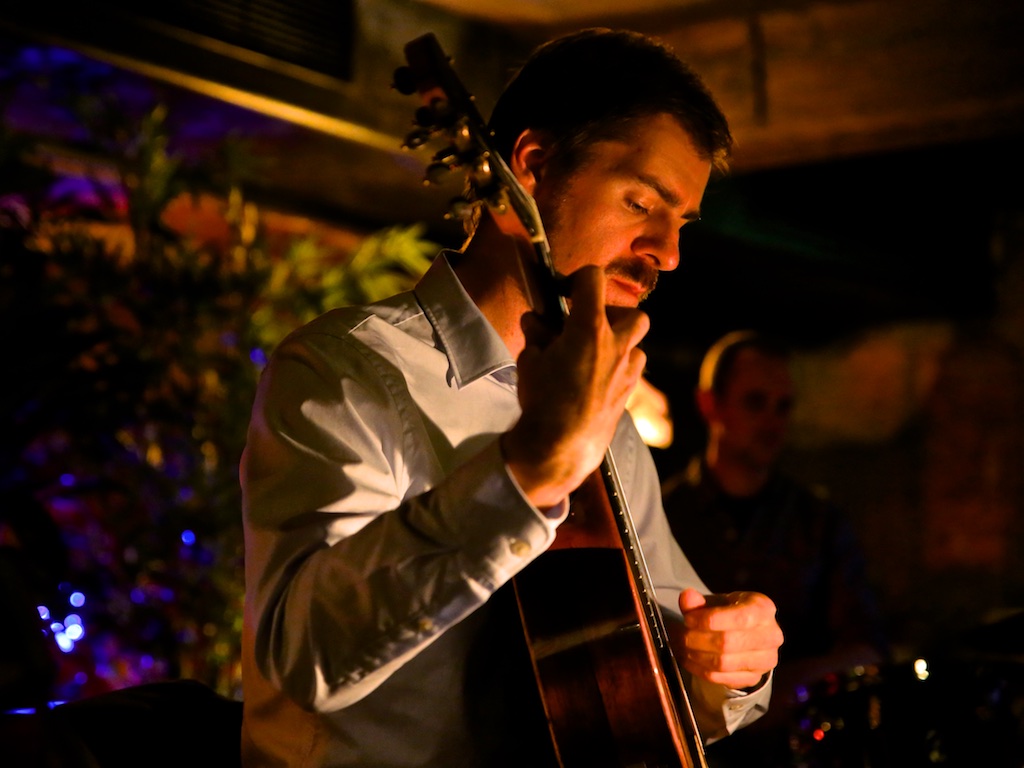 There was a buzz of excitement surrounding Simon Thacker’s ‘Ritmata’ tour. Not the touring rock-band sort of buzz, but a word of mouth Twitter-post kind. A buzz generated by night people and festival goers. Those who pay close attention to good music. I followed the threads and everything I read about Thacker sat well with me. I looked forward to his Auckland gig and the hype was not over-stated. Ritmata was a delight.
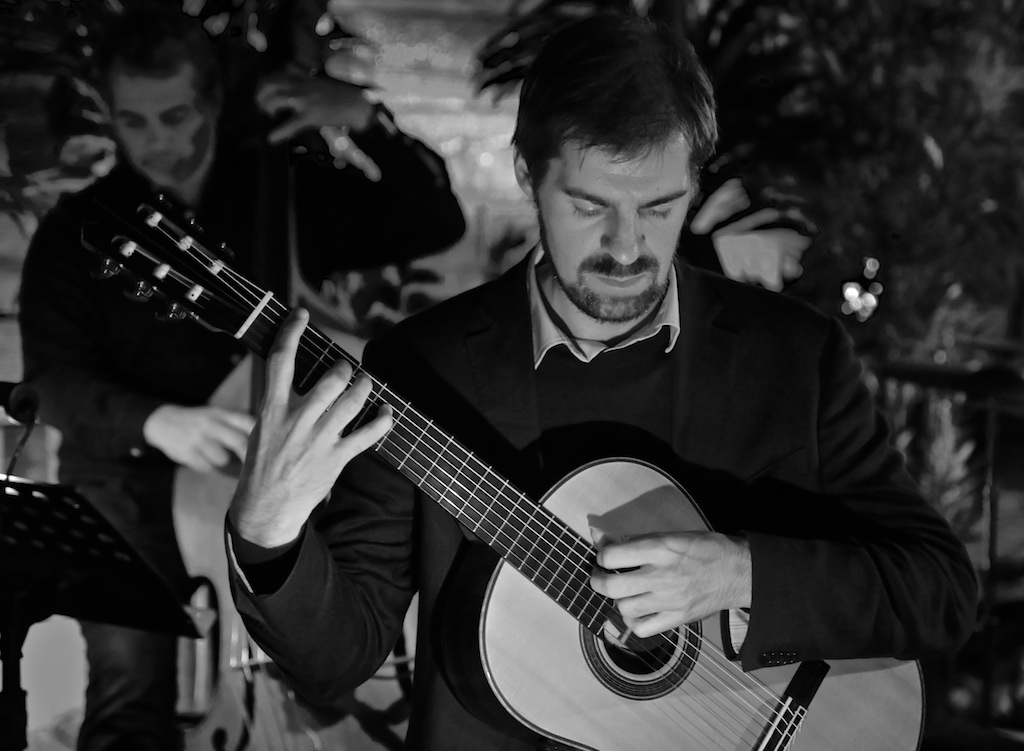 Simon Thacker is the ideal front man; funny, confident, virtuosic. His authority emanating from a force field of energy. A musical vision that engages; thriving on intimacy. A club setting is therefore perfect, with warmth and exuberance captured, contained; audience and musicians sharing an experience. Thacker’s banter is quirky, self-deprecating and it connects. There were howls of delight at the sheep jokes and they told me something important. Scotts, Kiwis and Australians have a shared humour, a post colonial cultural connection. An inbuilt irreverence that is part of our evolving story.
 The first set opened with traditional Sephardic melodies ‘reimagined’. This is familiar territory as Caroline Manins has trodden this path with her Mother Tongue project. Some of these tunes are more than a thousand years old (‘Des Oge Mais’), and in spite of dealing with loss or longing, they are often fast paced and rhythmically complex. In Ritmata’s hands they are ancient to modern. Evoking the melting pot of Judaic Moorish Spain but never time-locked. Elements of Flamenco, and even the modal chromaticism of Jazz pianists like McCoy Tyner came to mind.
 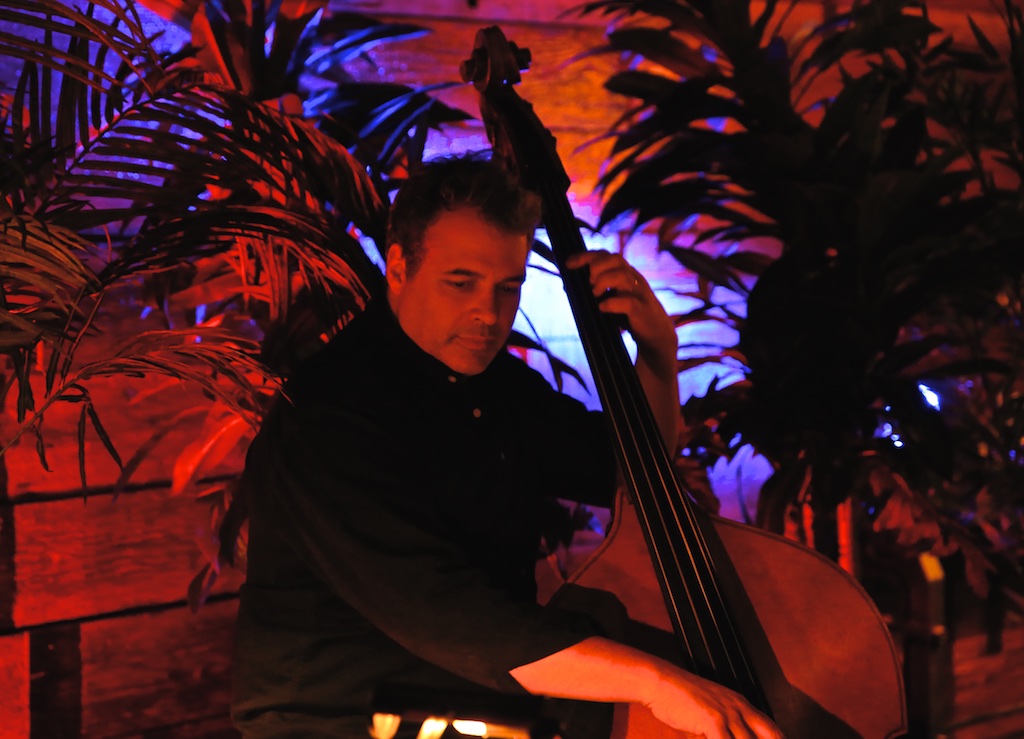 There were a number of interesting Thacker originals and to my delight three pieces based on Egberto Gismonti compositions (a stunning Brazilian improvising guitarist who used the street music of Choro to create similar, beyond-genre visions – an artist beloved of Jazz audiences). One of Thacker’s tunes ‘Honour the Treaties’ referenced the chants of American Indians and as indicated by the wild applause, it resonated powerfully. Then there was ‘Asuramaya’, influenced by the Indian Ragas. That piece had a delicious dream-sequence feel to it. He rounded off his sets with a traditional Azerbaijani tune, ‘Bana Bana Gel’ and a Jewish tune ‘Ovshori’ from the mountains Dagestan. When the audience clamoured for an encore, vocalist and Sephardic specialist Carolina Manins joined the band singing ‘Madre de Deus’; again reimagined by Thacker.
 While Thacker dominated proceedings with his larger than life presence, the band members were stars in their own right. I have seldom heard a unit so in lock-step. The pianist, bass and drums were as central to the enjoyment as Thacker himself. The spotlight must lastly fall on that lovely guitar; I couldn’t keep my eyes off it. An extraordinary Rouse classical guitar; it sang like the Lyre of Orpheus. Orchestrating time and place; stretching time until we could see the future.
 Mark Lockett is a New York based drummer who visits Australasia once a year. Each time he returns he brings with him a piece of his adopted city. He is an original drummer comfortable in diverse situations; a benign but strong presence in any lineup. His artistic approach under-pinned by an easy confidence and this enables him to interact well and to read every nuance. His wide open ears, communicating the pulse and possibilities of the life he lives as a working musician in a big metropolis. There is also a humour he radiates, which peppers his comments and drumming like aromatic seasoning. A Mark Lockett gig is always original and always enjoyable.
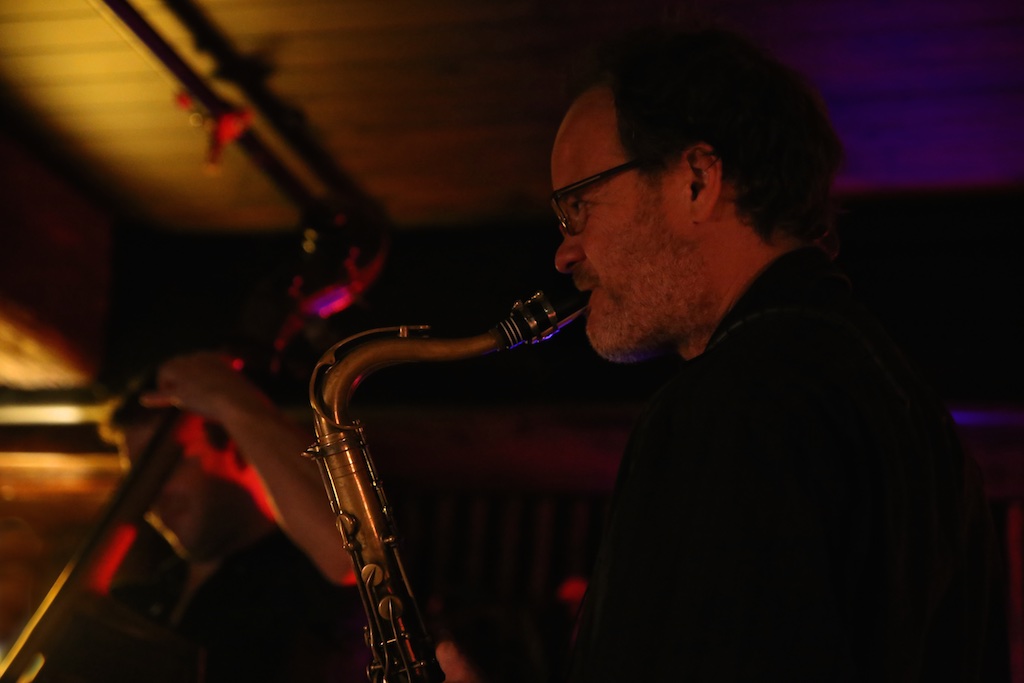 The music of Ornette Coleman while not without constraints frees the artists from many of the hard-wired rules. It doesn’t sound at all out-of-place now but I can remember the storm that surrounded its arrival. A treat for me was the groups rendition of ‘Congeniality’ from the seminal ‘The Shape of Jazz to Come’ album. The controversy surrounding this material is long behind us and every improvising musician has a little of Ornette in them whether they acknowledge it or not.
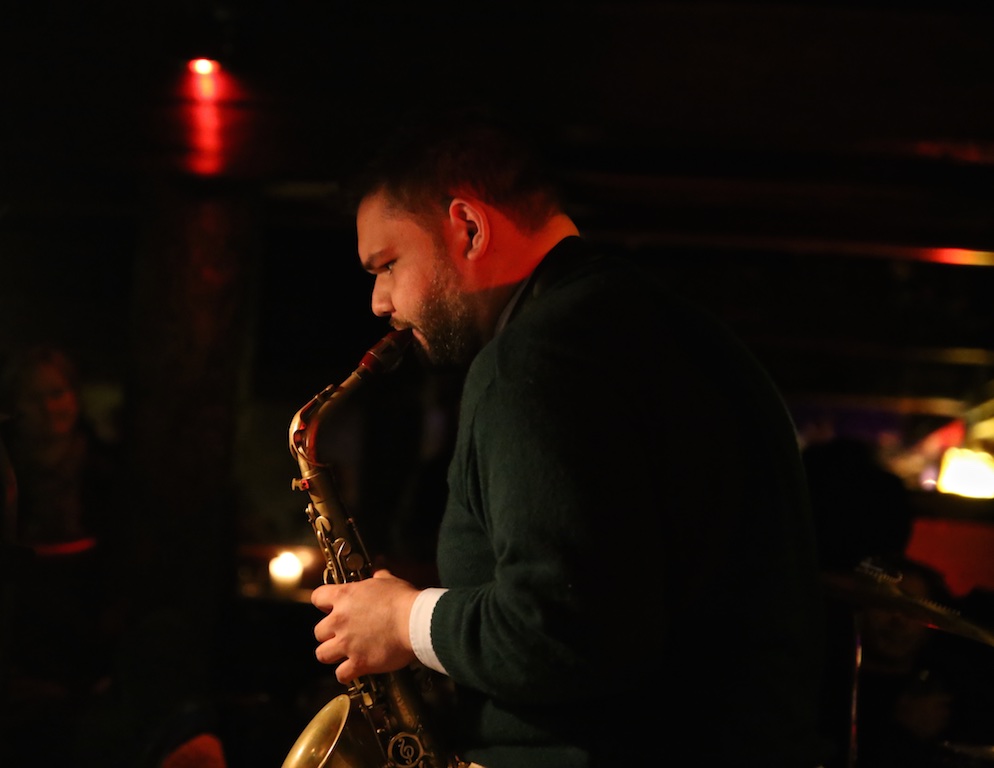 Lockett often forms trios or ensembles that have no chordal instruments. While the musicians played ‘inside’ and ‘out’ they also attempted something we seldom hear in New Zealand. The opening number of the first set was Shiny Stockings (Frank Foster) and they played this in the style of the Mulligan piano-less quartets. Bass, Alto and Tenor in counterpoint and working within the changes. This was nice hear. I have an appetite for more of this.
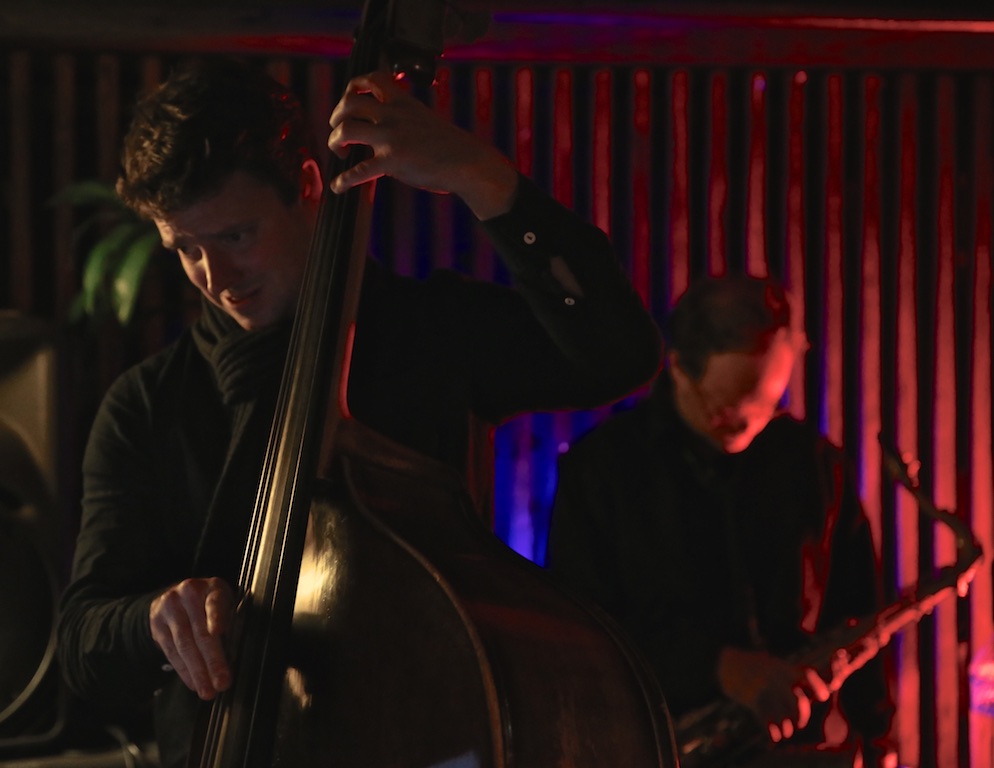 “Playing like that (fast and furious) is meat and potatoes in New York”, he said. He was once told that he could get better control if he held his sticks further down than usual. Because of that and because of his melodic approach, he is very interesting to watch. Somehow the sound is cleaner and with musical drumming like this who needs a chordal instrument. I can’t wait until his next visit.
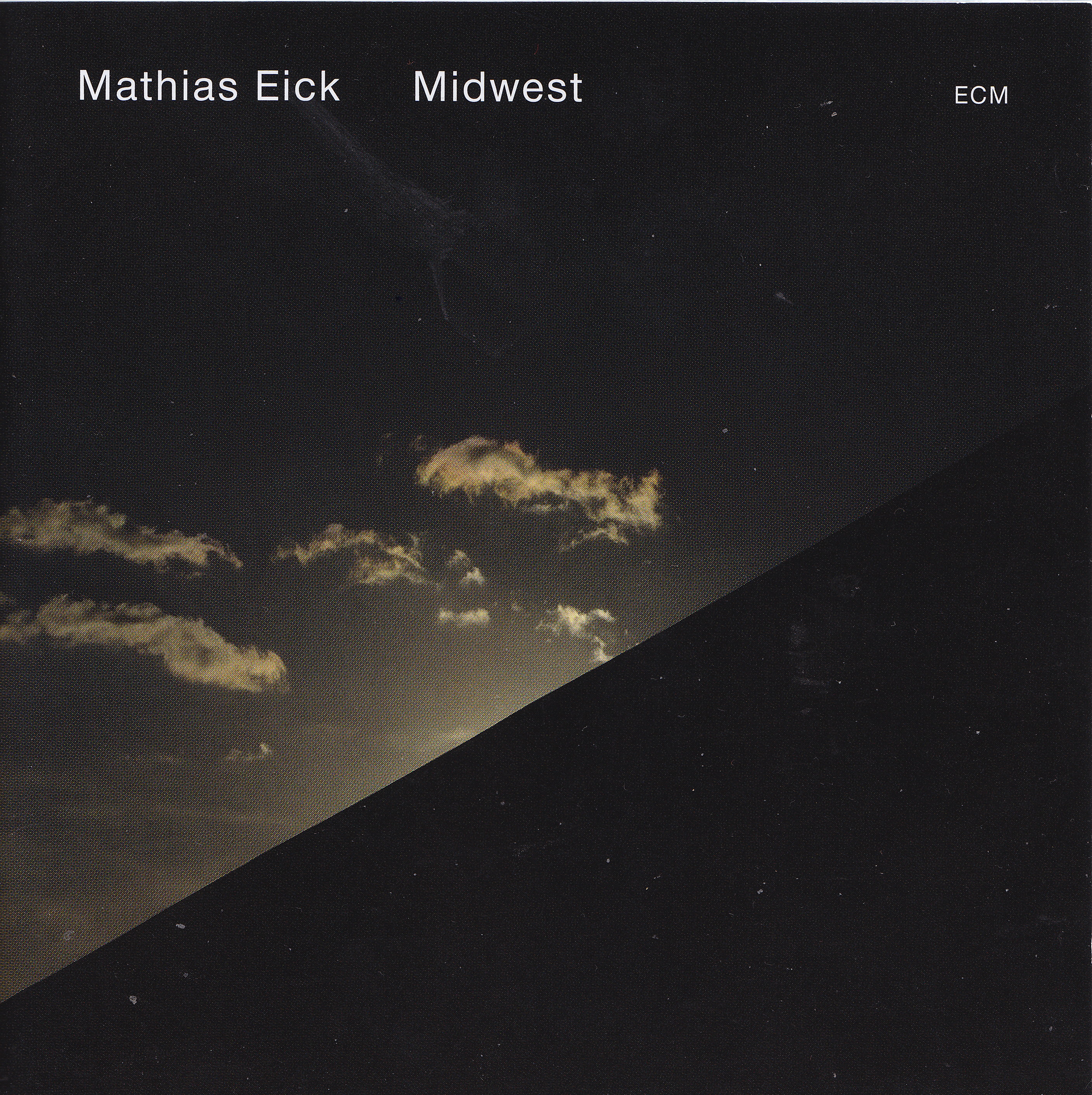 Before hearing the first note, I knew that I would like ‘Midwest’. Mathias Eick is a unique communicator and his compositions gift us with particular ways of experiencing places we have not yet visited. Sound is transmuted and we see what he is seeing. As I listened to the album I was drawn deep into a world of vast open spaces, history and complex human emotion. The connection was visceral as the music brought the plains of the Midwest into the range of intimacy. I sensed the wild grass running between my fingers as I listened. The last album to evoke such a strong sense of place for me was Tomasz Stanko’s ‘The Soul of Things’. ECM is the home of such evocative albums.
 Where I live in the South Pacific, Jazz musicians sometimes pose the question; Do we have our own sound, a unique quality that we tap into? As our scene grows the answer is increasingly yes. This uniqueness of ‘sound’ is evident among Scandinavian improvising musicians and especially so among Norwegian trumpeters. In this case the identity is multi faceted. It is Norwegian and Americana.
 The Midwest is both mythical and real, we feel that we know it intimately. Endless tales arise from the indigenous peoples (who respected it best) and the hopeful European settlers who spread across it looking for a new home. It struck a particular chord with Eick as the peoples of Norway were prominent among those settlers. The writer Lawrence Durrell explains this best when he says that certain places transcend reality and become ‘less a geographical entity than an idea’. ‘Midwest’ is an embodiment of this principle. Midwest by Mathias Eick is out on the ECM label.
 H P Lovecraft died under appreciated, but it didn’t curb his output. His imaginings took him to darkly strange and exciting places. Places that few of us dared contemplate. While he reached deeper than writers like Edger Alan Poe and further into the human psyche, his wildest dreams could not have prepared him for Wednesday night. Reuben Bradley, time traveller and keeper of lost grooves has wrestled with the spirits and brought Lovecraft to life again.
 This is a truly exceptional album and it is no wonder when you consider the source material and the musicians associated with it. Bradley, Penman and Eigsti are a deadly combination and their interplay is crisply on the mark. Matt Penman is dear to our hearts in New Zealand. One of our finest Jazz exports. An expat from Auckland who conquered the American improvised bass scene in ways that few others manage. His work with James Farm, the San Francisco Jazz Collective, Aaron Parks, Kurt Rosenwinkel and a long list of luminaries is instructive. That he still appears with the best of our local artists and on local recordings is our immense good luck. An imaginative and wonderfully musical bass player who holds the groove and manages to tell interesting stories without distracting us from the overall focus of the piece. Few bass players could do this better than Penman.
 The judicious use of sampled ‘Lovecraft’ readings in several places adds to the atmospheric feel and doesn’t detract from the overall musical experience. Every note played and every voice-over is well placed. Yet again Rattle Records have excelled themselves here. The secret of ‘Rattle Records’ tasteful Jazz catalogue must surely be seeping into the wider world by now. ‘Rattle’ is the ‘ECM’ of the South Pacific. This album was recorded at the ‘Bunker Studios’ in New York, Engineered by Aaron Nevezie and mixed and mastered by Steve Garden at ‘The Garden Shed’ Auckland.
 There was a change of personnel for the CJC ‘Cthulhu Rising’ release gig and for the Australasian tour to follow. Respected bass player Brett Hirst took Penman’s place and this was a sound choice. Hirst, another expat Kiwi, is well established on the Australian scene and frequently employed by visiting artists. He is a gifted musician and perfect for high end gigs like this.
 Doug Lawrence is every bit the archetypal southern tenor man, from the top of his tall frame to the bell of his brightly shining tenor. His sound is fat and down-home-cooking rich, whether playing softly or at volume. He has more cut through than a diamond headed drill-bit. Lawrence has such considerable credentials that it is beyond my reach to enumerate them all here (google him).
 Lawrence is tall and as he performs he stoops slightly, forming a classic old school playing pose. Slowing bending his knees inwards before stretching and lifting his horn to the ceiling. His speaking voice is rich like his playing, a southern Louisiana drawl adding to his considerable charm. The first number was ‘End of a love Affair (Redding) and the audience whooped in delight as the band took the changes at a good pace. The rhythm section propelled by the tidal waves of sound emanating from the tenor. It was that sound and the power of delivery that grabbed you from the get go. The intonation and phrasing revealing influences which although readily identifiable, transformed them into a new sound. This was pure alchemy. It was like having Gene Ammons and Dexter Gordon on the same band stand.
 It is during ballads that the skill of a musician is often tested. In this case we saw something close to perfection. It wasn’t just Lawrence, but his Kiwi pickup band as well. Spurred on by each other, they dug deeper and deeper. A night and a vibe that we will remember for years to come. There was an obvious rapport between pianist Kevin Field and Lawrence. I gather that he found Field’s harmonic approach interesting and perhaps this is an indication of our own development as we grow our standing. Lawrence’s intonation was the thing that grabbed you most and this made his solos particularly enjoyable. Long held notes ending in breathy flurries or else bending the note ever so slightly before delivering a short heart stopping burst of controlled vibrato. With Holland and Samsom also finding their sweet spot this was a dream band.
 Here is the back story: 17 years ago a younger Roger Manins hit the New York streets, where he learned to scuffle in the time-honoured way of Jazz musicians. Because he possessed the hunger to learn he approached many established horn players. One of these was Doug Lawrence and traces of that time are still evident in Manins sound. All of those years ago Manins subbed for him and here is a Face Book extract that Lawrence posted once he returned to the USA.
  “Roger has matured into a GREAT player and MAGNIFICENT teacher! All of his students have a SOUND and they are all inspired to play, because of Roger. The curriculum at the University of Auckland Jazz Department is second to none, and I am going to use it as my model when conducting masterclasses at other universities around the world. Roger and Ron Samsom and the rest of the faculty have got it right at the U of A and I’m going to suggest that each and every University I teach at check it out. Cheers ROG! You are doing it ALL right brother! I hope to see and play with you soon mate!” That says it all really.
 Any mention of Quebec catches my attention as I really like that part of Canada, so when I learned that a highly rated Montreal piano-trio was coming to town I knew that it would be a good experience. I had not encountered the Emie Roussel Trio before, but a quick glance at the accolades they have garnered and the numerous You Tube clips that have sprung up over the past year, gave me all the information that I needed. The group had attracted particular attention at the Montreal Jazz Festival and from what I saw online, deservedly so.
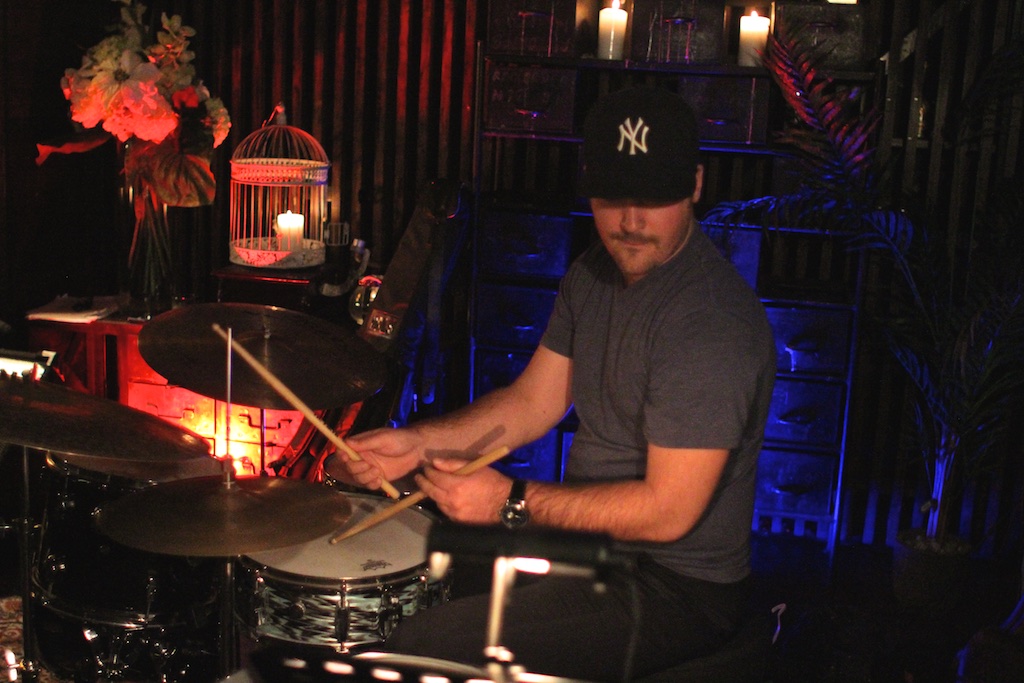 As you move about that city, the familiar and the exotic coexist at every street corner. I came to realise that this almost subliminal familiarity was the manifestation of a spiritual kinship. The sort that exists between certain special cities, a connection that is not about trade, mayoral visits or geography; a connection of musical and artistic synergies.
 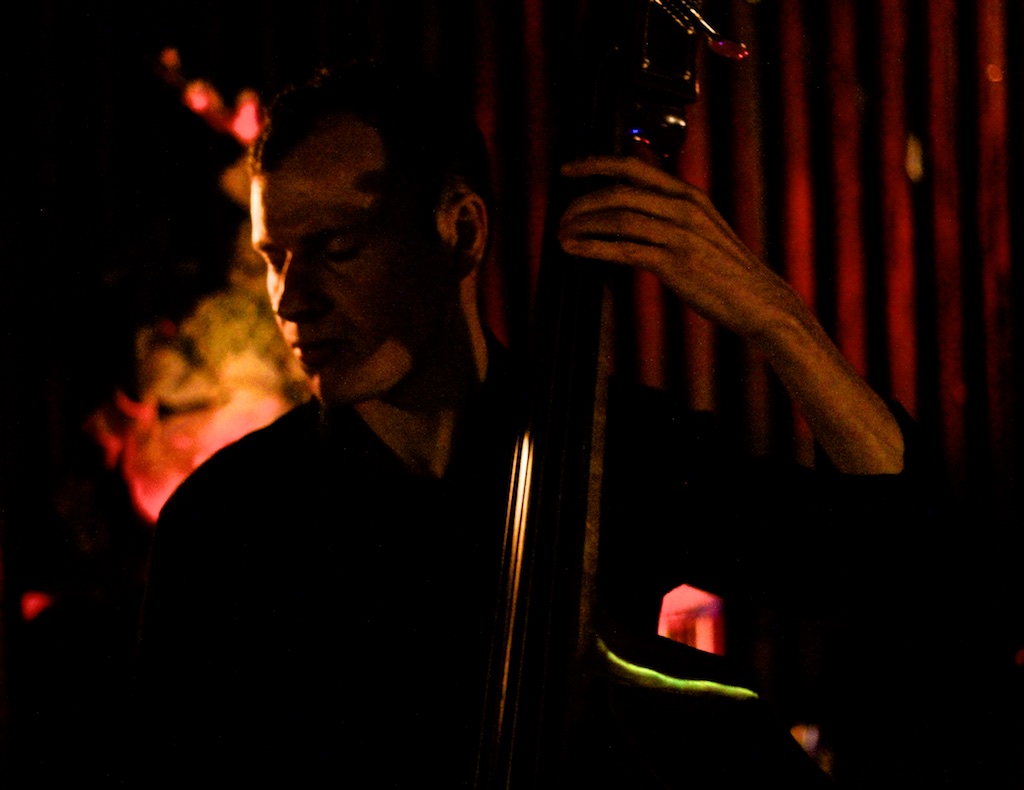 The Emie Roussel Trio are part European and part American in aesthetic. They are wholly Montreal. Their music has a pulse and a vibe which draws on european classical music traditions and the deep earthy Jazz grooves that arose from the American continent. In the hands of improvisers like Roussel these influences communicate a universal language. As the pieces unfold there is a sense that this band works as an organic whole. What we heard was tight and full of vibrancy or as a musician I spoke to during the break put it. “We are hearing the result of rehearsal, dedication to a project, discipline and road time”. While I love the free-flowing loose feel of New Zealand improvising bands, I must acknowledge that we seldom hear trio’s which sound like this.
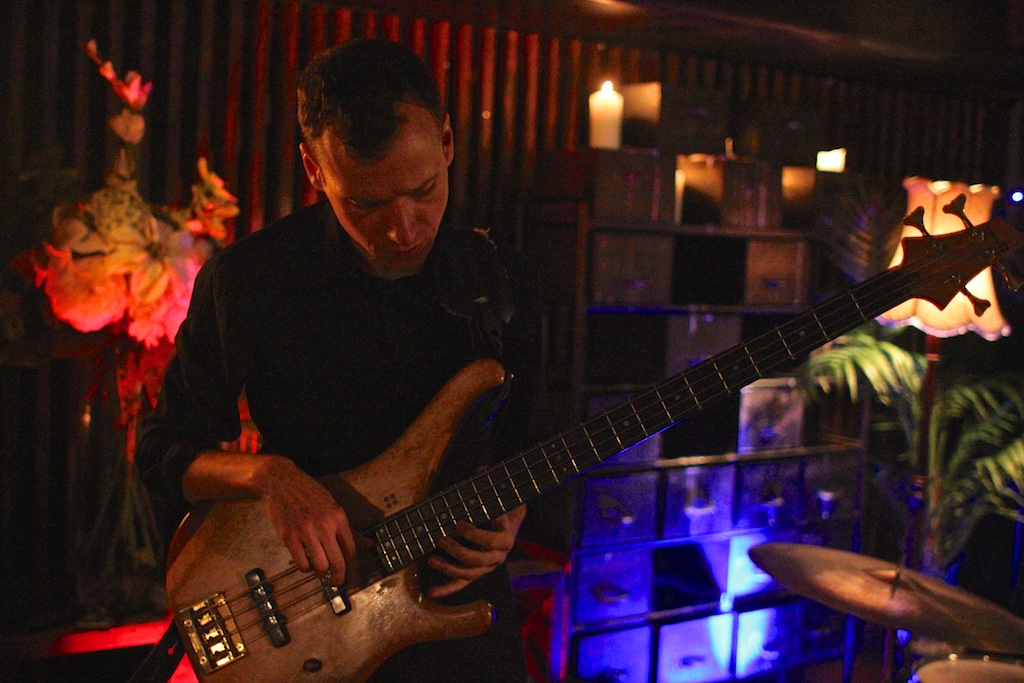 The bass player Nicolas Bedard and drummer Dominic Cloutier never faltered. They wove in and around the tunes with consummate skill and were the perfect interpreters of Roussel’s music. These men are versatile and skilled and whether on brushes, sticks, upright or electric bass, they knew exactly what would serve the music best.
  The second set brought us an added treat as the Kiwi trumpeter Lex French came to the bandstand. I have long rated French as one of our finest trumpeters. He completed his studies in Montreal and was already well acquainted with several of the band members. His addition changed the pace once again, opening the way for harder blowing. As the sets progressed the constantly evolving moods worked well for them, giving the gig real breadth.
 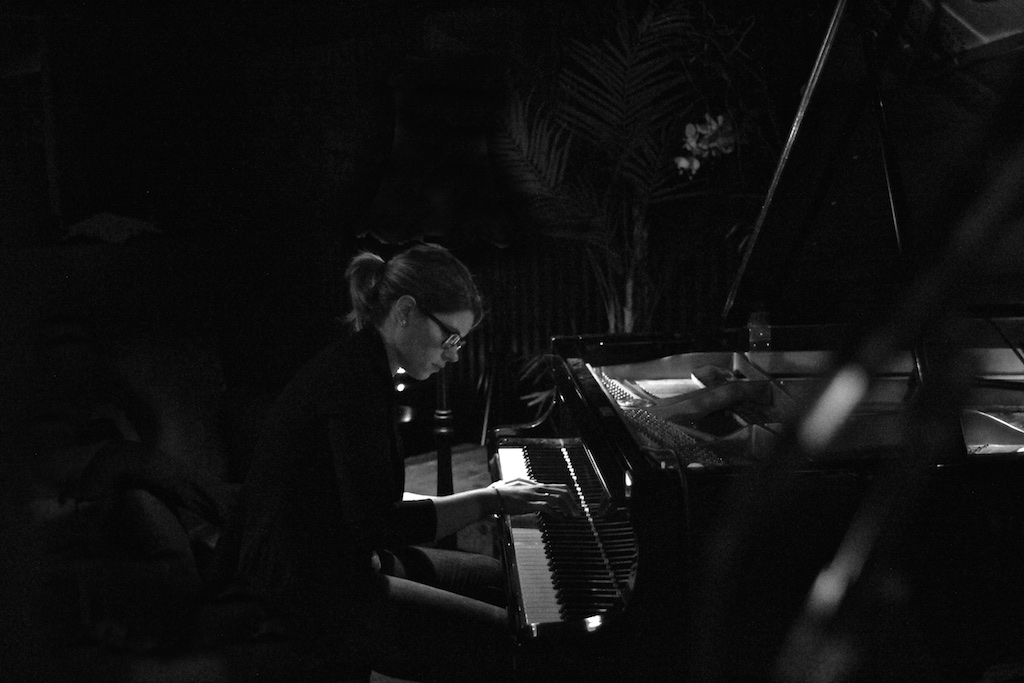 The trio’s recent album ‘Transit’, includes many of the numbers heard on the tour but with one significant difference; The inclusion of a string section, the ‘Quatuor St-Germain’ and a percussionist Julie Quimper. Roussel’s charts in the hands of this larger ensemble are very different to the trio. I particularly like her compositions like ‘L’ attente du chat’ and ‘La timbale et la fourmi’. The mood of the ballad is cat-like in its grace and time feel. The latter, a delightful shape-shifter of a piece full of contrasts and propulsion. I look forward to the new album which is just the trio but with some Rhodes tracks as well as piano.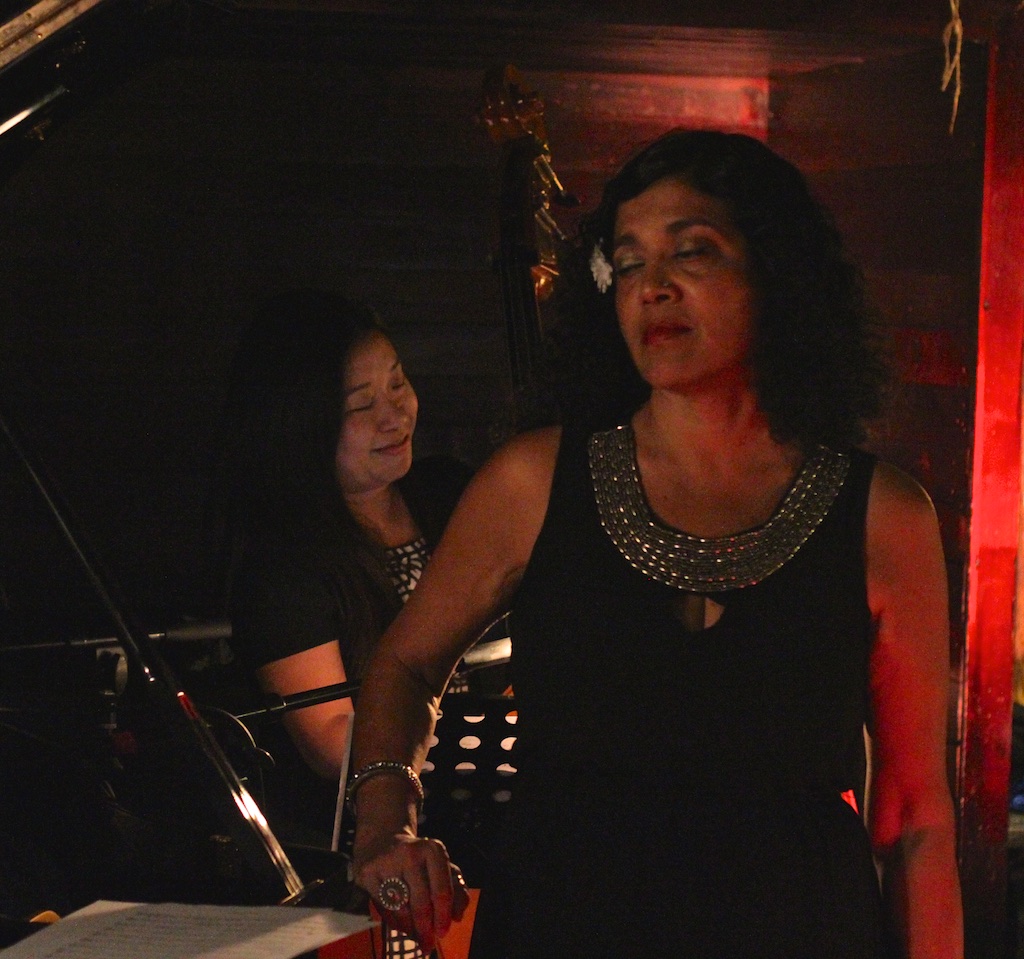
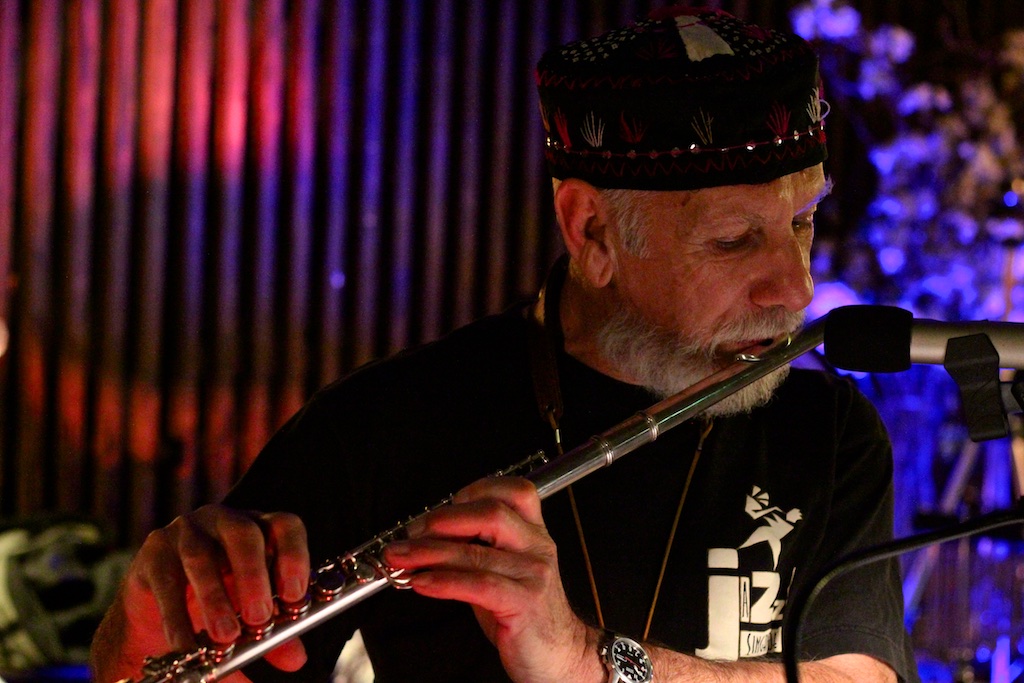
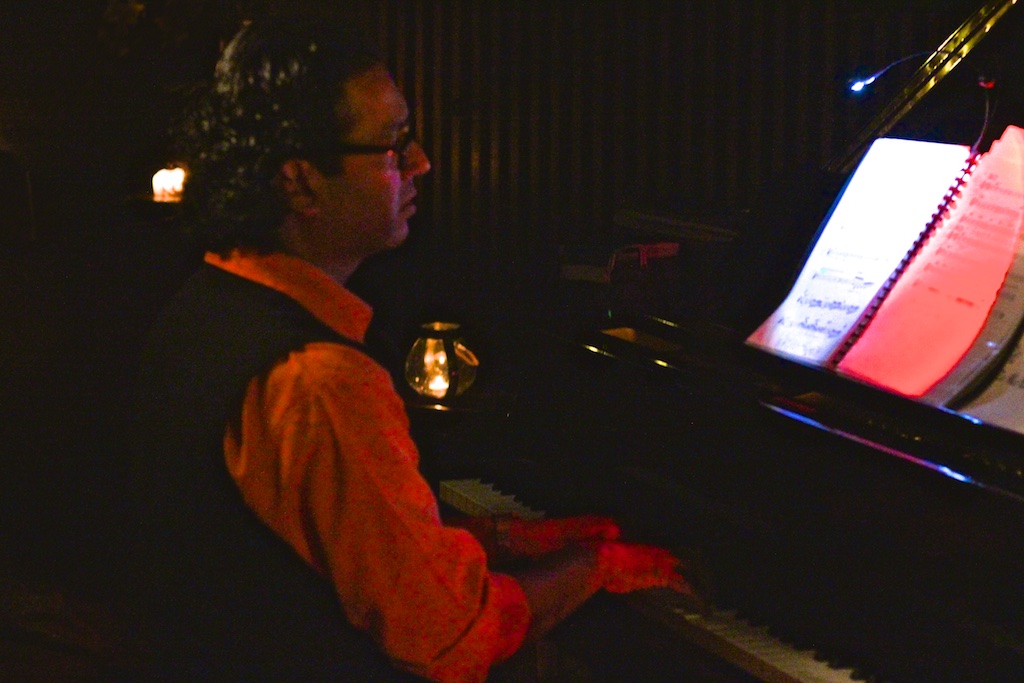

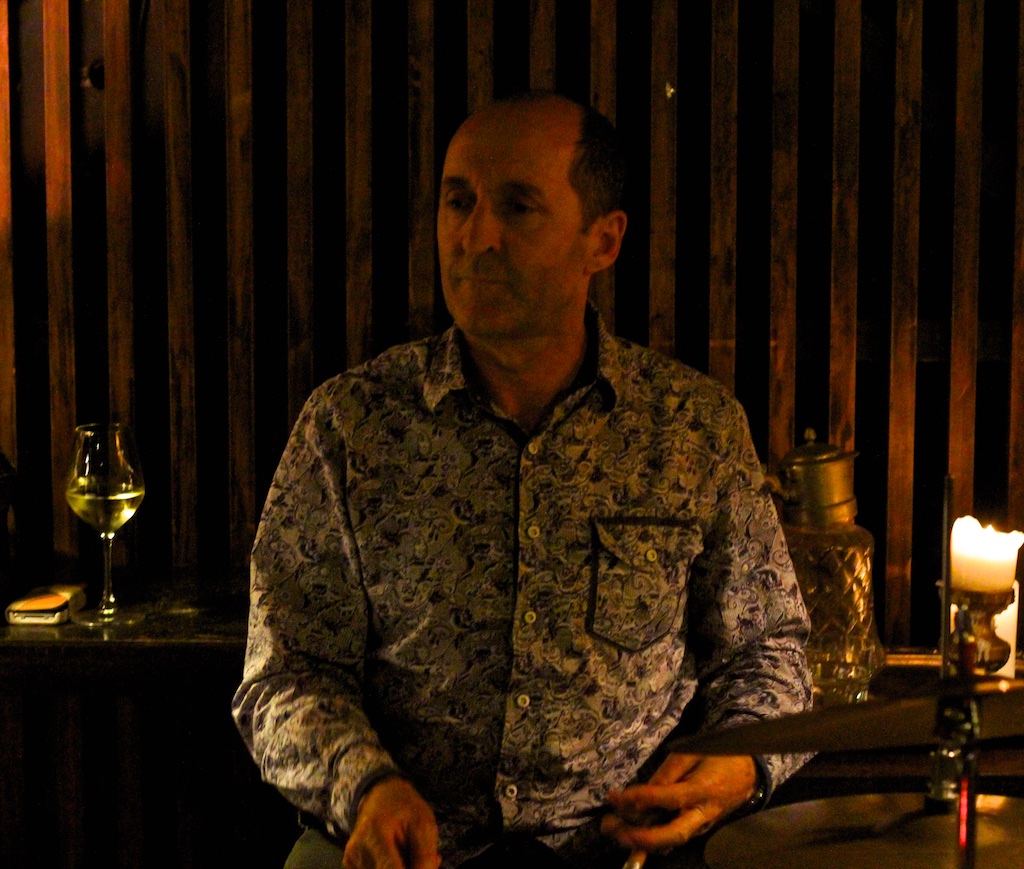
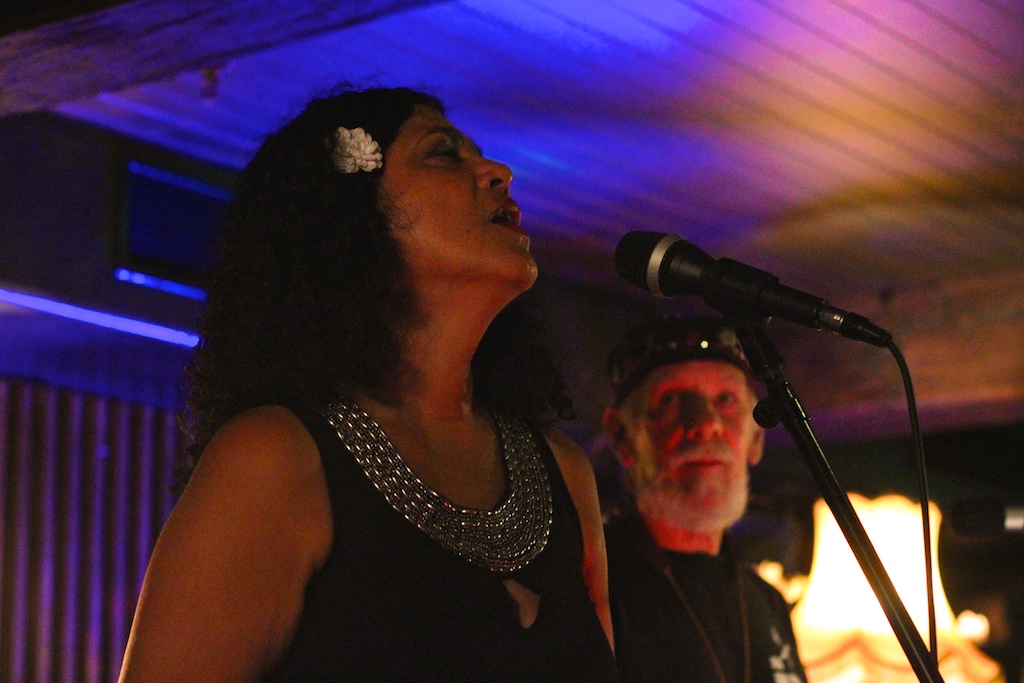
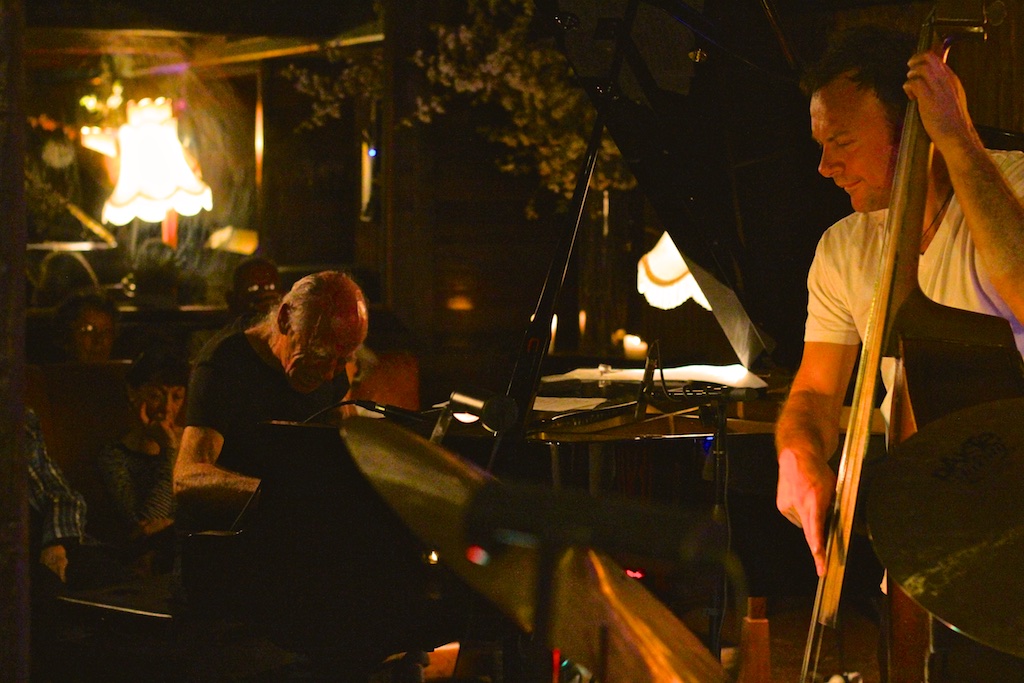
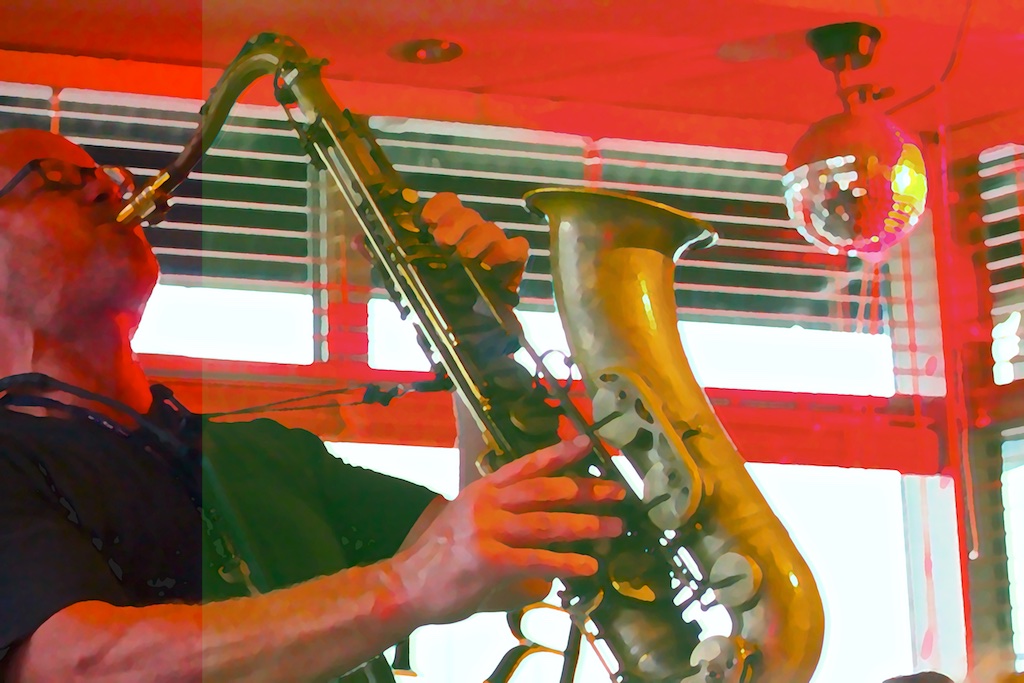
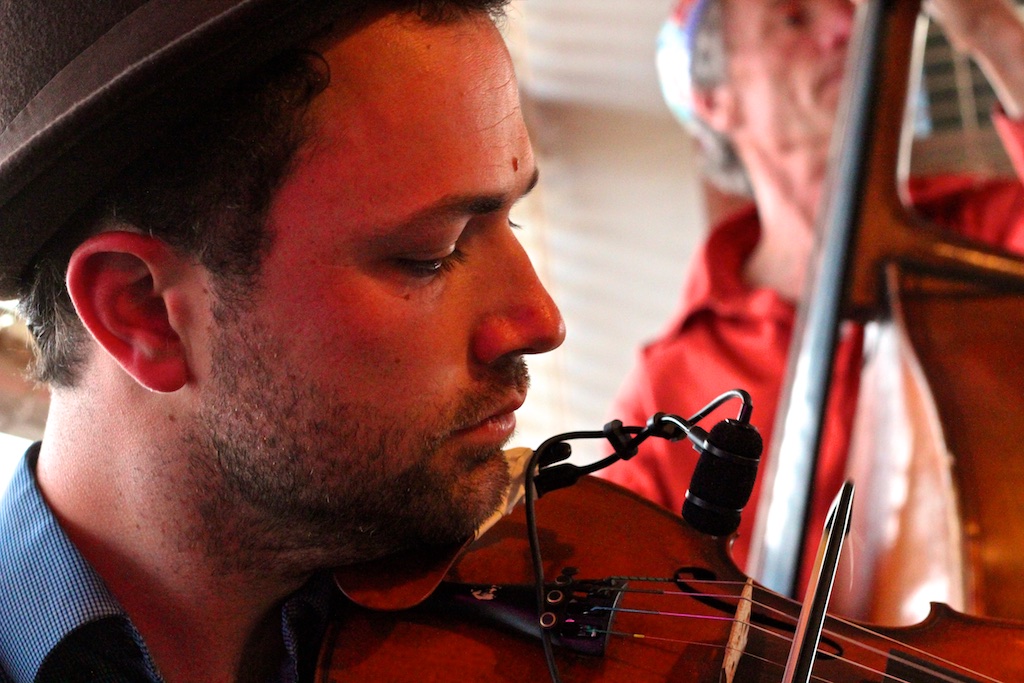
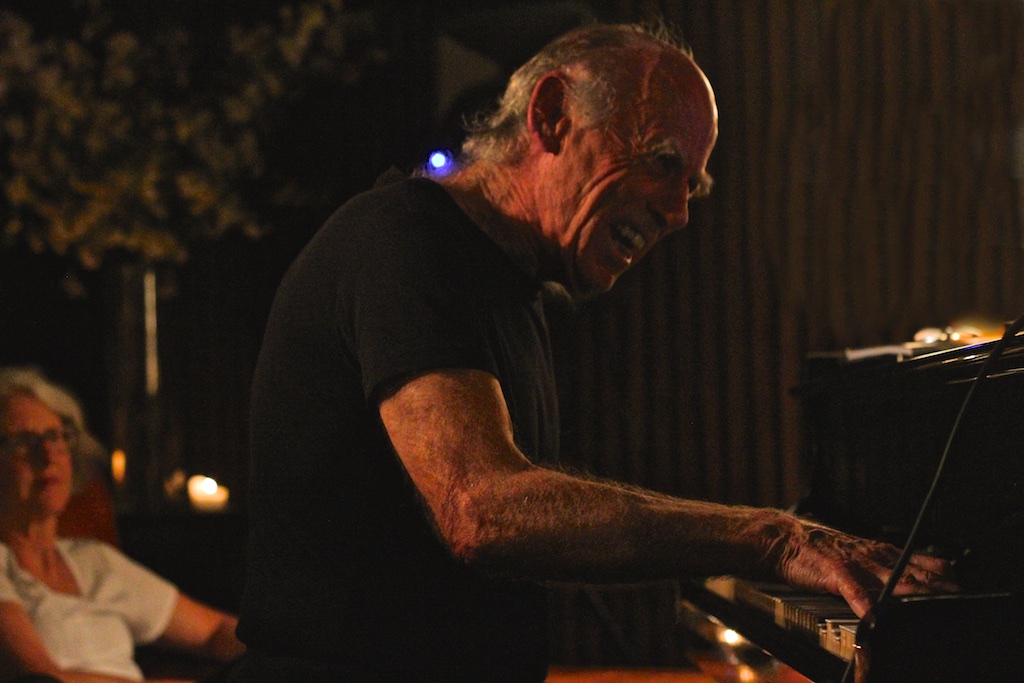
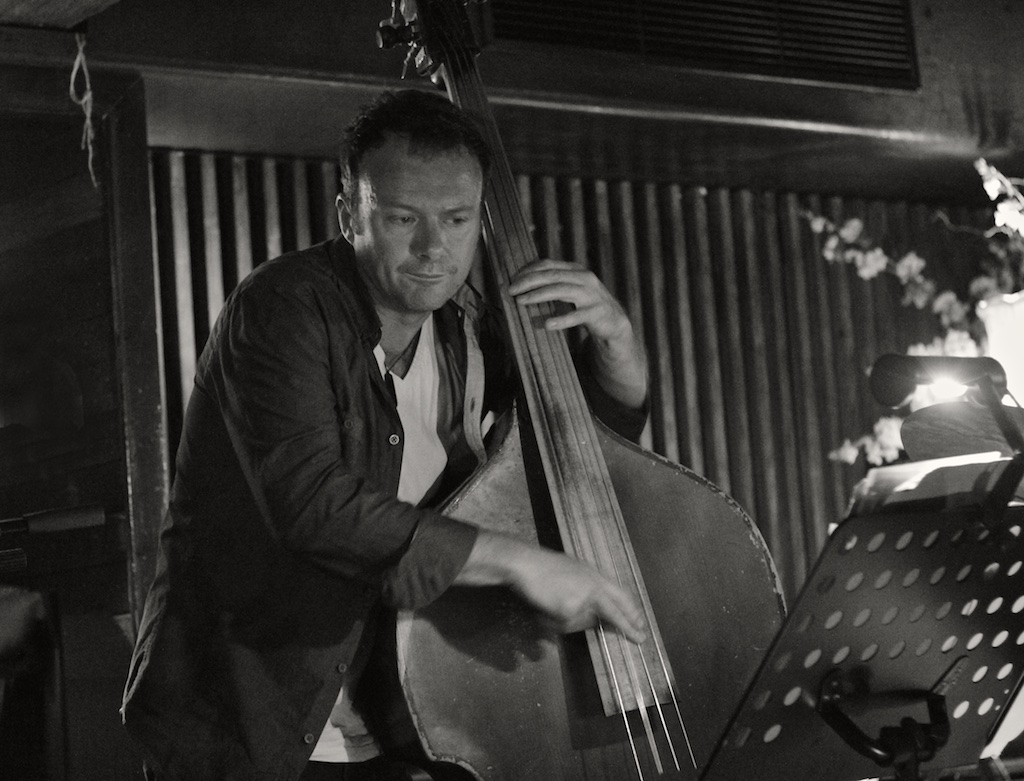
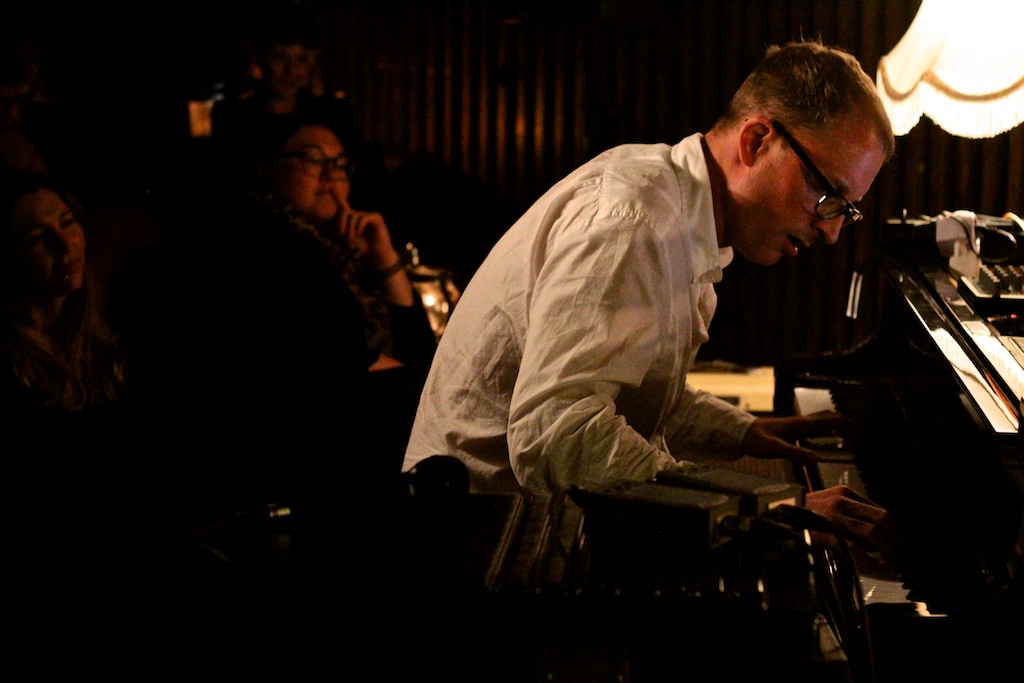
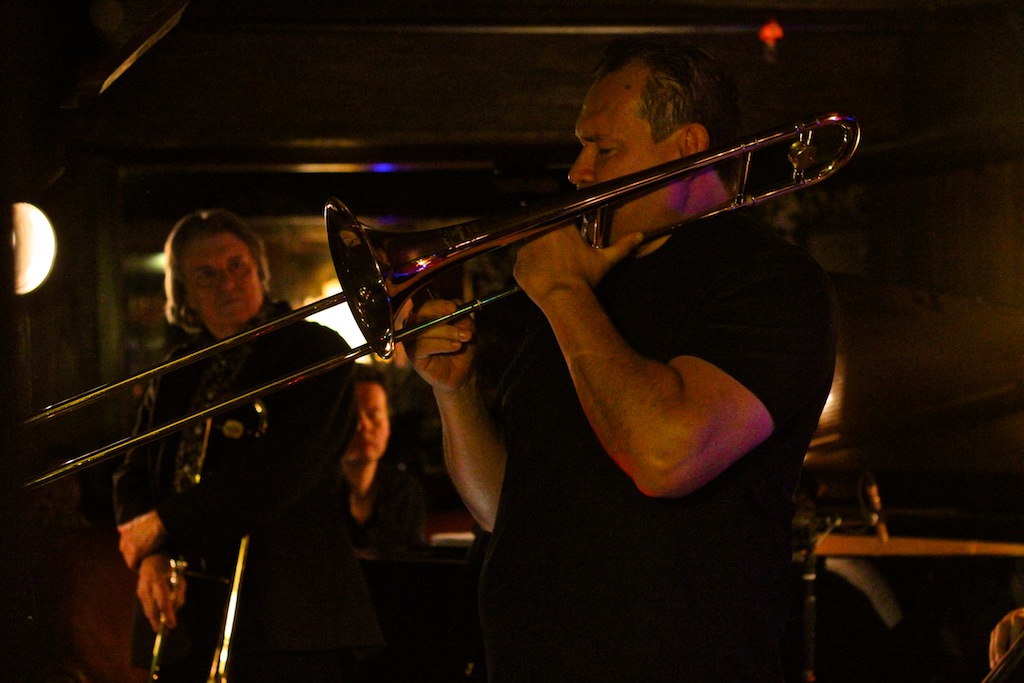
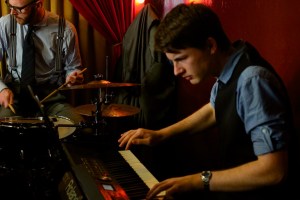
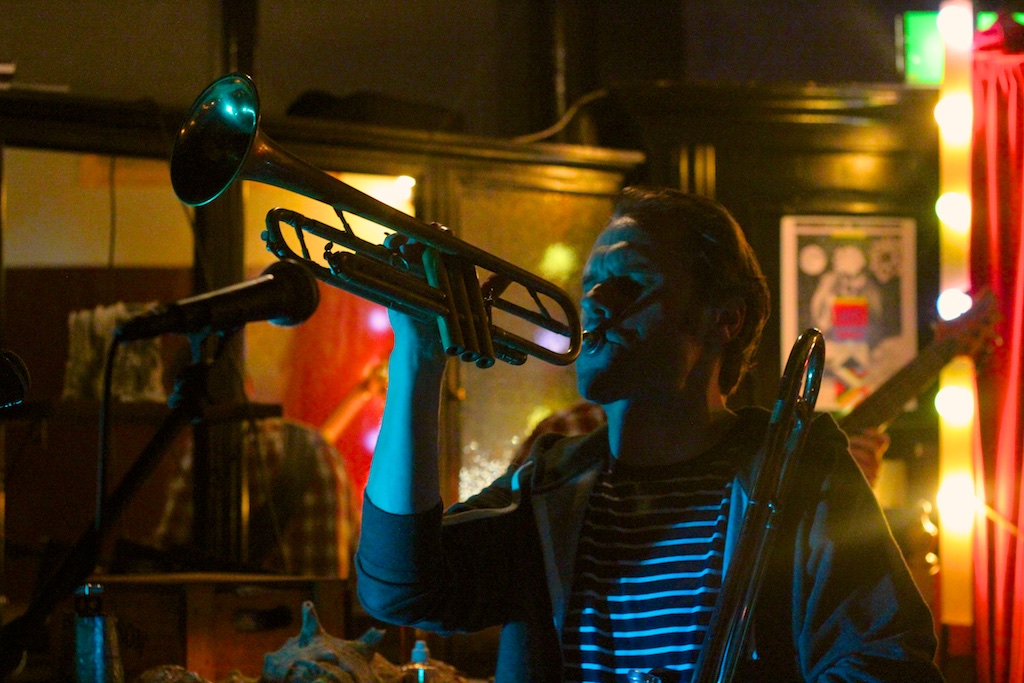

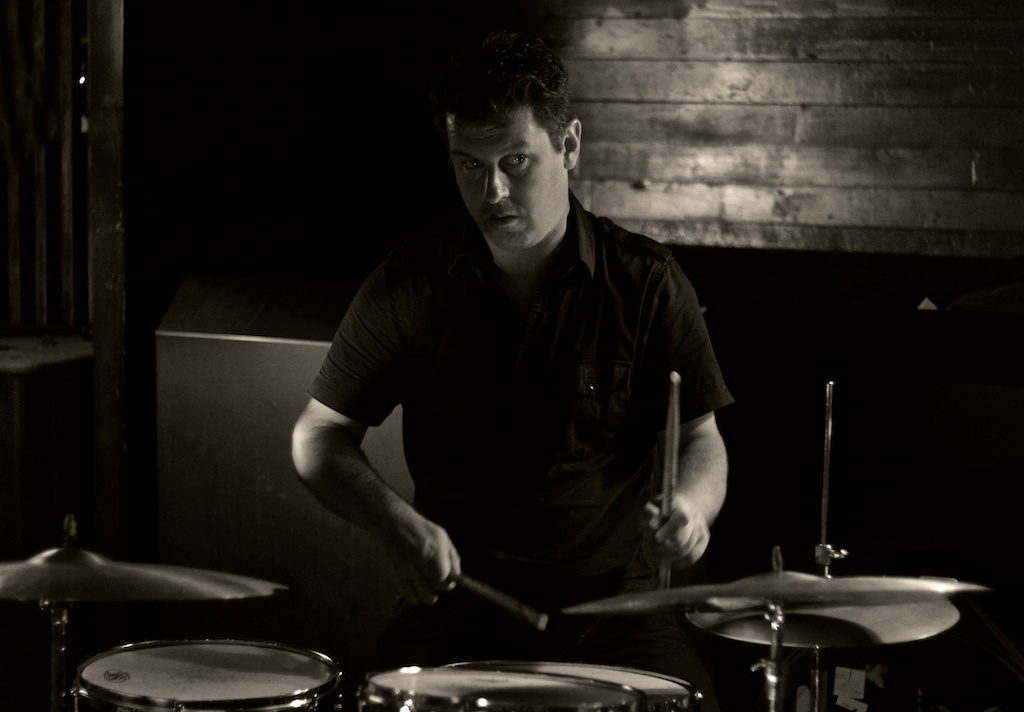
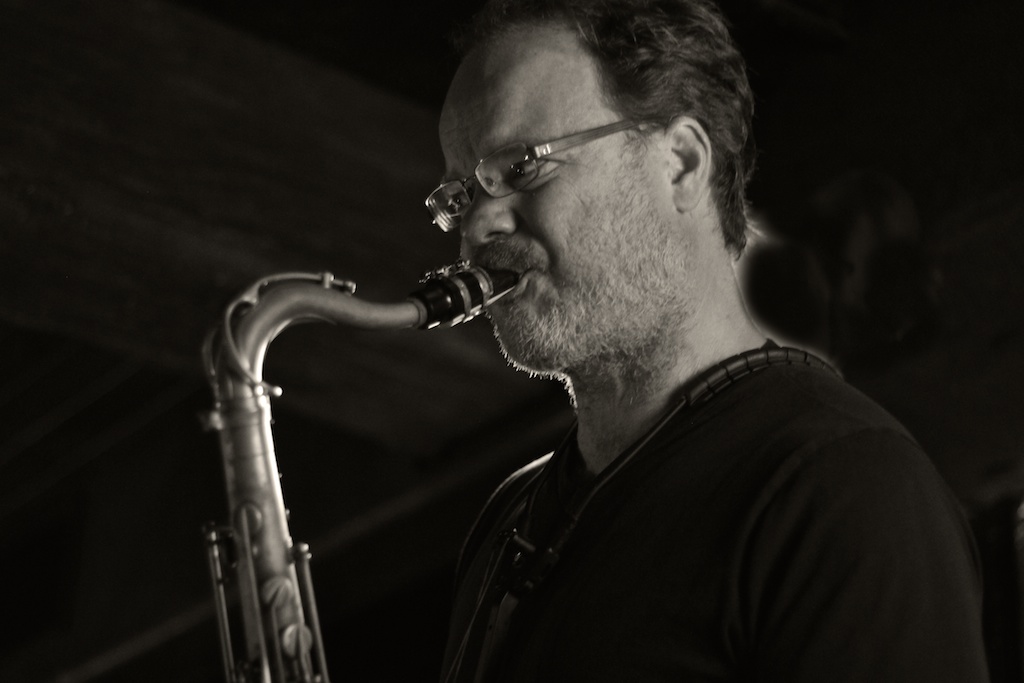
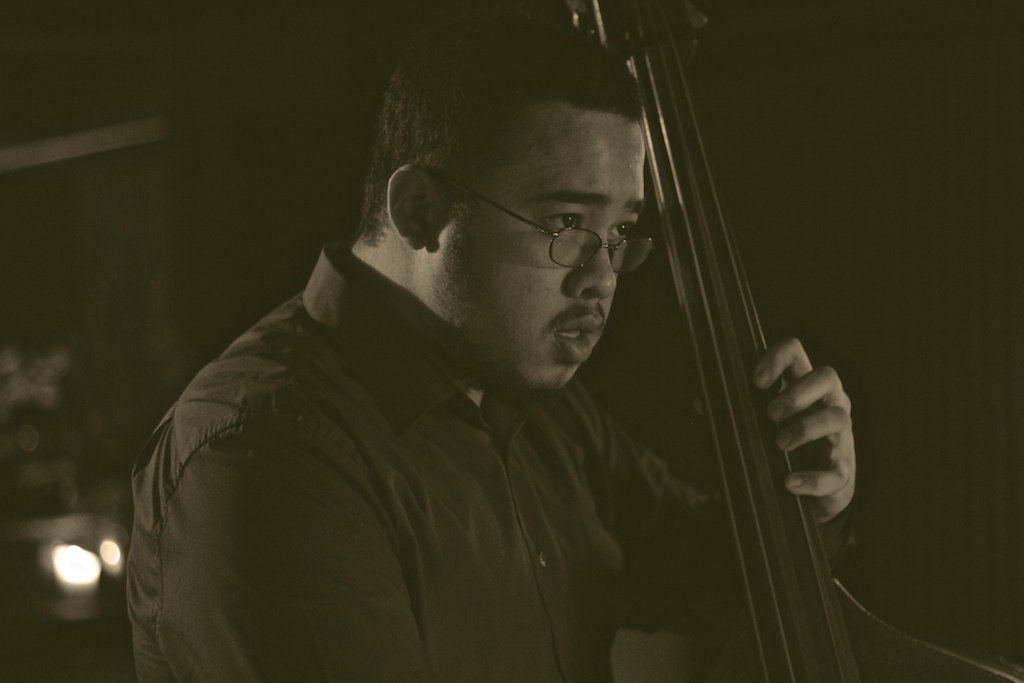
 JazzLocal32.com