Dan Bolton is an Australian born, New York based musician, at present touring New Zealand. His first show was at the CJC (Creative Jazz Club) in Auckland. While singer, songwriters who accompany themselves on piano, are a firmly established tradition in Jazz, we see them on tour very rarely. Many Jazz vocalists (like Ella Fitzgerald) could accompany themselves well, but few choose to do so. A number of notable musicians mastered this skill, notably Nat Cole, Ray Charles, and Shirley Horn. Doing two jobs simultaneously is always harder than doing one and especially where vocals and piano are concerned. The energies and postures require careful coordination and I suspect that this is harder than accompanying yourself on guitar.Bolton is unusual in that he composes tunes which feel modern, but in a style reminiscent of the Great American Songbook; many of his tunes, are not dissimilar from those which came out of Tin Pan Alley, having the vibe of Irving Berlin or Cole Porter. The melodies are catchy in a time honoured way and the lyrics often biting; sometimes capturing our post-millennial angst. Many of Bolton’s tunes centre on the age-old themes of love and loss, others sarcastically critique modern American life. All maintain their sense of originality, in spite of the above comparisons.Travelling with Bolton is the perennially popular drummer Mark Lockett. Lockett, like Bolton, lives in New York, but for several months of each year, he travels as band-leader, (or as hired gun as in this case). Lockett was born in New Zealand and he always gets a welcome reception when he makes it back. Watch out on gig noticeboards for him. He has another tour coming up shortly and this time with an organ trio. On tenor saxophone and flute was Auckland’s Roger Manins, his swoon-worthy ballad chops manifesting in their full glory. Mostyn Cole featured on upright bass, a regular at the CJC and an able musician. We heard some tantalising snippets of arco bass from him – more of that, please.
Dan Bolton (USA) (compositions, vocals, piano), Mark Lockett (USA) (drums), Roger Manins (tenor saxophone, flute), Mostyn Cole (upright bass). CJC (Creative Jazz Club), basement, Albion Hotel, downtown Auckland, 10th August 2016.
Last Wednesday saw the Venezuelan-born vocalist Jennifer Zea performing at the CJC. Her appearance was long overdue, the audience enthusiastic in anticipation of spicy South American Rhythms and the warm tones of the Spanish language in song form. When you look at where Venezuela sits on the map, you learn a lot about its music. Located in the northeast of South America, bordered by the Caribbean and by Brazil, positioned on a unique musical axis. Music blithely ignores the artificial barriers imposed by cartographers and politicians. Even Trump’s insulting wall could never be built high enough to stem musical cross-pollination. Music goes where people go, and remains as an echo long after they have moved on. Jennifer Zea is an embodiment of her country’s music; folk traditions, newer forms (Jaropo), Jazz, Soul, Bossa influences from Brazil and a pinch of Mambo, Salsa or Merengue.The Caribbean region is the prime example of musical cross-pollination; rhythms and melodies, vocal forms and hybrid harmonization, a constant evolution into new and vibrant forms while updating and preserving the discrete pockets of older folk music styles. A weighty tome titled ‘Music and the Latin American Culture – Regional Traditions’ makes two observations; the music of the Venezuelan region is mostly hot or vibrant (see the definition of Salsa) and there is a strong underlying tradition of shamanism (manifest in musical form). The hypnotic rhythms and chants remain largely intact according to Schecter. With percussionist, Miguel Fuentes backing her, Zea conveyed the compellingly hypnotic soulful quality of her traditional music to good effect. Fuentes was born in the USA but grew up in Puerto Rico. These days like Zea, he lives in Auckland. Music like this demands high-quality authentic latin percussion and that’s exactly what happened. Traps drums were not needed here. Regular Zea accompanist, Jazz Pianist Kevin Field was also in the lineup. Field plays in many contexts and his accompanist credentials are second to none. He has regularly worked with Zea and (like Fuentes) most notably on her lovely 2012 release ‘The Latin Soul’. If you have a love of Cubano or Caribean style music, grab a copy of this album. Even on straight-ahead gigs, I have heard Field sneak in tasty clave rhythms. If you want to hear cross-rhythms at their best – skillfully woven by Field and Fuentes, it is on this album. An added incentive are the compositions, mostly by Field and Zea (and Jonathan Crayford). On upright bass for this gig was Mostyn Cole, an experienced bassist now residing in the Auckland region.The gig featured some Zea compositions, three standards and to my delight some authentic Bossa. The Bossa tunes were mostly by the Brazilian genius Tom Jobim and sung in Portuguese (which is not her native language). Although Portuguese is the most commonly spoken language in Latin America, it is only the main spoken language of one country, Brazil. To learn Bossa she spent time with a teacher in order to understand the nuances and deep meanings. While respecting the Bossa song form she had the confidence to bring the music closer to her own Venezuelan musical traditions. Even her intonation was redolent of her region, unmistakably Hispanic South American.
While hearing strong elements of Cuban or Brazilian music, North American standards (or a spicy salsa of the above) you also felt that each influence was deftly filtered through a Venezuelan cloth. Her rendering of ‘Fever’ (Cooley/Davenport) and ‘Georgia on my Mind’ (Carmichael) exemplified this. There was even a little Kiwi influence in there. I would like to think so because we all need happy music like this in our lives.
Jennifer Zea; (Vocals), Kevin Field (piano), Miguel Fuentes (percussion), Mostyn Cole (bass). CJC (Creative Jazz Club), Albion Hotel Basement, Wednesday 3rd August 2016.
Mooga Fooga are well travelled, and as they move about they carve deep grooves into the sonic landscape. Their music is deliberately genre blending, with funk, rock, soul and Jazz shuffled together. Their music is often loud but they can play in a muted voice. While all of those influences are unambiguously in the mix, based on what I saw on Wednesday, they can tilt the emphasis any way they choose. This eclecticism is not the result of a random amalgam, but a clever fusing of the base metals underpinning the genres. In some of their online clips they are reminiscent of groups like Cream (albeit funked up), but on this gig, their Jazz Funk roots were most in evidence. I suspect that saxophonist Kushal Talele was the compass in that regard.Years ago I picked up a guitar trio album featuring Bareli Lagrene, Jaco Pistorius, and a European drummer (I can’t recall his name). I marveled at the seamless blending of styles, as they performed Hendrix and Shorter with equal integrity, paying due respect to each. This music has a heavier funk element; Jazz funk with a little touch of metal and the occasional the choppy lines of Monk thrown in. Apart from their punchy lines and the exchanges during the head, there was room for improvisation as the tunes developed.I am familiar with Kushal Talele, Adam Tobeck and Joel Shadbolt as I have encountered them all before. Each in different situations to what was on offer last night. Talele has a distinct post-Coltrane sound and is very much in the camp of the New York modernist tenor players. He returned last year from overseas and played a gig at the CJC. Sadly, we are to lose him again as he heads to New York for a few years. Tobeck is versatile and notable for his tightly focused groove beats. He was essential to this lineup and this band was a natural fit for him. I have seen Shadbolt less often but I enjoyed his loud bluesy funk at the 2015 Tauranga Jazz festival. He is a crowd pleaser and looks every inch the part as he pumps out his ear-pleasing lines and phrases. While I had not previously heard electric bassist Rory Macartney, he is well-respected about town. There is a real bite to his playing, a bite that is perfect for a lineup like this.The tunes were seldom given titles and I suspect that most were originals. Details like that don’t matter on a gig like this – it is about the groove. I gained the impression that the three regulars, Macartney, Shadbolt and Talele all contributed compositions and arrangements. There are some good YouTube clips up from this group and I have added one more from this gig.
Mooga Fooga: Kushal Talele (tenor saxophone), Joel Shadbolt (guitar), Rory Macartney (electric bass), Adam Tobeck (drums) at the CJC (Creative Jazz Club), Albion Hotel basement, 27th July 2016.
Kevin Field has for many years been regarded as a phenomenon on the New Zealand Jazz scene. A gifted pianist and composer whose approach to composition and harmony is strikingly original. When you listen to many pianists you can hear their influences, discern the pathways that led them to where they are. With Field, those influences are less obvious. I suspect that this independence, originality, makes it easier for him to strike out in any direction of his choosing. On his ‘Field of Vision’ album, he moved into uncrowded space, one occupied by very few Jazz pianists. It was Jazz without compromise but utilising grooves, rhythms, and melodies of other genres. The music contained distinct echoes of the disco/Jazz/funk era, crafting it carefully and forging a new post-millennial sound.The tunes were all memorable and within a few listenings, you could hum the themes. This is not so common in modern Jazz and less so with music (like Fields) which retains its Jazz complexity. In Fields case, the clean melodic hooks do not come at the expense of harmonic invention. That is a tricky balancing act and one he achieves convincingly. His co-leadership of ‘DOG’ took him in a different direction again, but the same deftly crafted grooves astounded us. His recent album ‘The A-List’, was a further excursion into the disco/Jazz/funk realm. It is slightly tongue in cheek while still challenging the listener to think outside the square. Artists like this take the music forward, it is up to us to catch up.
The Kevin Field Group often meets up to work through new and old compositions – this work ethic is evident in what we hear. While personnel changes occur from time to time, the group has a core membership. Field, Dixon Nacey, Clo Chaperon, Cameron McArthur, and Stephen Thomas. While we heard tunes from recent albums there were also a number of new tunes on offer. The new material took his earlier conceptions further out, while the older material was cunningly reworked. I have heard this group a number of times and each time I hear them I sense the progressive momentum.They played at the Wellington Jazz festival recently and for many Wellingtonians, this was their first exposure to the group. I saw that show and I immediately noticed how the familiar tunes had subtly changed. ‘Perfect Disco’ with its energised danceable funk momentum was recast as a duo piece. Field and vocalist Chaperon wowed them with that number. We also heard this duo version last week. Other familiar tunes had developed into profoundly interactive exchanges. The sort that can only occur between highly attuned musicians. This is where the guitar mastery and the deep listening of Nacey came into its own. His Godin guitar soaring with stunning clarity while Field reacted in kind, urging them further out with each challenge.Again we see Thomas and McArthur doing what they do best. Working hard and rising to the challenge. Thomas laying down the tricky rhythms and while McArthur runs his bass lines. While pleasant to the ear, there is not doubt at all that these compositions required skill and concentration. It is on gigs like this that the musicians familiarity with the material and each other pays dividends. It was also nice to hear Chaperon on some new and old material. She is a real crowd pleaser – she looks great on stage and sings up a storm.
Keven Field Group: Keven Field (piano), Dixon Nacey (guitar), Cameron McArthur (bass), Stephen Thomas (drums), Clo Chaperon (vocals), CJC (Creative Jazz Club), Albion Hotel 20th July 2016.
I can’t remember when I first became conscious of Polish Jazz, but after Tomasz Stanko, Poland was forever on my listening radar. After that, I would listen to Polish improvisers whenever I came across them, Wasilewski, Komeda etc, and all the more so when I discovered later in life that I was a quarter Polish. In light of the above, I was naturally interested when I came across an Auckland-based, Polish-born pianist Michal Martyniuk. He was standing in for Kevin Field at a Nathan Haines gig – around the time of “The Poets Embrace’ release. Since then I have seen him with various iterations of Haines’ bands but until last week, never at a gig where he was the leader. It is an oft-debated topic, but I sometimes hear references to time and place in original music. After hearing Martyniuk I could identify his northern European influences. When I asked the pianist about the artists he most admires, he quickly identified Lyle Mays and Pat Metheny (also Weather Report plus Miles and Herbie). The Metheny/Mays reference is definitely evident but sifted through a Eurocentric filter. Mays, although influenced by Evans never sounded like a typical American pianist. Martyniuk’s compositions and performance contain all of the hallmarks of modern Euro jazz, a sound I hear in the Alboran Trio, Wasilewski and younger pianists like Michal Tokaj. A warmer sound than the Scandinavian pianists but as light filled and airy. There is a beauty to Martyiuk’s playing, a stylistic identity. For such a young pianist to have located this special sound is impressive.Something that many post-millennial Jazz musicians avoid, is evoking a sense of beauty. I can understand that because it must be done well or not at all. It is the territory of balladeers like Ben Webster and the territory of artists like Metheny. This was done well. The compositions were cleverly constructed around developing themes and with nothing was rushed, allowing melodic inventions to manifest. The tunes were also cleverly modulated, subtly amping up the tension to good effect at key points. Like Bennie Lackner, he used electronic keyboards to enhance or emphasize a phrase, but very sparingly.Again we see a musician deploying a top rated rhythm section to good advantage. With McArthur and Samsom behind him, he again showed wisdom. He worked with them and they gave him plenty in return. Although we often see this particular bass player and drummer in diverse situations, they appeared very comfortable here. The overall effect was that of interplay and cohesion.
Martyniuk is often asked to play in Haines bands and he returned the favour here. Haines joined the trio for four numbers. This was Haines in a reflective mood, in spite of his status, fitting in comfortably. His beautiful soprano tone a good fit for these compositions and his richer tenor likewise. Again the arrangements created a particular mood. After the unspeakable ugly horrors in the world at present, it was a relief to hear such a gorgeous performance. A night of music to heal our bruised souls.Martyniuk came to New Zealand around ten years ago and he attended the Auckland School of Music. Along with producer Nick Williams, he is soon to release a Jazz infused Soul album which will feature internationally renowned artists like Kevin Mark Trail, Nathan Haines, Miguel Fuentes and others. Judging by the huge audience at this gig his future looks very rosy indeed. The Jazz club turned away dozens of attendees in the end. A good problem to have.
Michal Martyniuk Trio (+ Nathan Haines). Michal Martyniuk (compositions, piano, keys), Cameron McArthur (bass), Ron Samsom (drums). The CJC (Creative Jazz Club), Albion Hotel basement, 13th July 2016.
When I started attending the CJC, I heard Peter Koopman quite often. He was always impressive, but never a showy guitarist. His approach matched his quiet demeanor, an easy-going manner obscuring a real determination to excel at his craft. Before long he moved to Sydney and although the local Jazz scene laments this musicians rite of passage, we also know it is the right thing. At best, these offshore journeys produce the Mike Nocks and the Matt Penmans, and we all benefit from that.
It is harder to track the progress of a musician once domiciled in another country, but news of Koopman’s milestones often reach us. Since he moved to Sydney in 2011 he has worked with a variety of bands; his own, and sometimes as a sideman. He has also placed himself in interestingly diverse musical situations and the learnings arising from these interactions are evident in his current compositions and playing.We have seen him back in New Zealand a few times during the last five years, but this is his first visit leading a guitar trio. As anticipated, we experienced a more mature Koopman, his guitar work showcasing well-honed skills. Australia is a merciless testing ground for improvising musicians and especially so for guitarists. Working in the same scene as Carl Dewhurst or James Muller, and holding your own, the proof of the pudding. In 2014 Koopman was placed 3rd in the Australian National Jazz Awards, which are held at Wangaratta each year. These awards are fiercely contested and that is no small accomplishment. The Inner Westies Trio for the New Zealand trip was Peter Koopman (guitar), Max Alduca (bass) and Stephen Thomas (drums). The guitarist and Bass player from West Sydney, the drummer from West Auckland. Alduca is a compelling bass player, and a drawcard on his own. He often includes a touch of tasteful arco bass in his performance. I last saw him when he toured with the ‘Antipodeans’, an innovative young ensemble, populated with musicians from three countries. Alduca made a hit then and reinforced our positive view of him this night. He has a number of gigs about Auckland aside from the CJC gig. A player bursting with originality and with a notable way of engaging with audiences. Nice to see him back and especially in this company.
In spite of his age, Stephen Thomas has long been established among New Zealand’s premier drummers. He is often a first call for visiting improvising artists. Although primarily a Jazz drummer he is as comfortable in avant-garde settings as in large rock auditoriums. This unit worked well for Koopman and his interesting compositions and new takes on old standards all sounded fresh. Koopman originals dominated the gig, often intensely melodic, modern sounding and at times with real edge. Among the standards, and the final tune was Joe Henderson’s ‘Isotope’; a warm rendering, with enough fire to melt the coldest night. Below is an original Koopman composition.
Peter Koopmans Inner Westies: Peter J Koopman (guitar), Max Alduca (upright bass), Stephen Thomas (drums). Performed at the CJC (Creative Jazz Club), Albion Hotel, 6th July 2016.
The Joni Mitchell/ Charles Mingus project is always ripe for reevaluation and I’m glad that Caro Manins was the one to explore it again. The connection between Joni and Jazz experimentalism runs deep. Rolling Stone Magazine figured it out early on, describing her as a ‘Jazz savvy experimentalist’. While the connection is obvious in her 1979 ‘Mingus’ album the move toward a freer music and towards harmonic and rhythmic complexity began earlier in the mid 70’s. Initially coming up through the American folk tradition, she gradually embraced a different style. She would later say, “Anyone could have written my earlier music, but Hejira (and later albums) could only have come from me”. From the 70’s on, she utilised her own guitar tunings and often incorporated pedal point, chromaticism, and modality in her compositions. If you look at her later musical collaborations, names like Jaco Pastorius, Herbie Hancock, and Wayne Shorter stand out.To her amazement at the time, a dying Charles Mingus asked Joni to call by. He told her that he had written a number of songs for her. Mingus passed before the completion of her project, but he heard all of the tunes except ‘God must be a Bogey Man’. Her ‘Mingus’ album followed soon after. “It was as if I had been standing by a river – one toe in the water. Charles came along and pushed me in – sink or swim”.
Taking on a project like this is more daunting than it may appear to the casual observer. Understanding that, Caro Manins got busy writing new charts. This is not the sort of gig that you just throw together; this is not a covers band. Joni tunes don’t always behave in expected ways, there is a high degree of abstraction, layers of subtlety, places where the tunes change direction under their own impetus. Doing the Mingus album justice is not for the faint-hearted. The listener tends to associate Joni Mitchel with her biting lyrics and adamantine melodic clarity. In reality, although accessible, her tunes pivot on clever musical devices. The end result here was well worth the effort. A genuine commitment to the project made this happen, imbuing it with the integrity it deserved.The project deserved a good lineup and it got one. Caro Manins, Roger Manins, Jonathan Crayford, Cameron McArthur and Ron Samsom. Crayford was especially interesting on this gig. His abstract explorative adventuring replaced by rich traditional voicings – his solos a history lesson; from locked hands chord-work to impressionistic delicacy. All of the musicians were respectful of Joni’s body of work and they understood that the best way to honour her legacy was by interpreting her work honestly and imaginatively. Not every tune came from Joni’s ‘Mingus’ album but all followed the Joni/Mingus/Jazz theme.The gig was very well attended (no surprise there) and the audience enthusiastic. This was a CJC (Creative Jazz Club) event and it took place at the Albion Hotel on 29th June 2016. Caro Manins (leader, arranger, vocals), Jonathan Crayford (piano), Roger Manins (tenor saxophone), Cameron McArthur (Bass), Ron Samsom (drums, percussion).
The alternative music scene in Auckland is surprisingly strong and although at times appearing hermetically sealed against the outside world, it flourishes in discrete self-contained units. There are no neon signs proclaiming ‘underground music found here. If you visit Karangahape Road on the right night, deploying a seismometer to the footpath outside St Kevin’s Arcade, or to the walls of the Parisian Tie Factory, the readings will red-line. The digital spikes are an indication of subterranean life. I love these basement venues and reclaiming them in the right way is an art form. The basements I refer to were once utilitarian storehouses from a bygone era, a monotoned boring past wearing walk shorts – now softened by memory. Now, they emit a frisson of mystique and risk – alternative music lives here. A towering presence in this shadowy world is musician Jeff Henderson.
The aptly named ‘Dreamville’ project came to my attention when Henderson appeared at the CJC in 2015 it floored me, the concept grounded in a reality we often overlook and at our peril. The primal bubbling energy underpinning sound itself. The first time I heard ‘Dreamville Jazzmares’ the lineup was different – a quintet; reeds, vibes, guitar, upright bass and drums. Now, the album features an octet and for the Auckland release, Henderson added an extra horn and electric bass. While it is tempting to reference a Sun Ra band or perhaps Zorn’s Electric Masada, this is overwhelmingly a manifestation of Henderson’s originality. A gifted composer, talented musician and tongue in cheek visionary.
Tom Rodwell, Anthony Donaldson
While the careful listener may initially find a lot that feels familiar, the familiar is illusionary, snatches of past and future, wearing clothes made of mist. The relationship with other projects is in the end superficial. This is important original work and there is no mistaking that. When listening to the Auckland release an additional realisation struck me. Rhythm is the dominant force in Henderson’s compositions. His deeply woven rhythms extend way beyond the drums and percussion (there are two drummers – at times three). Here every instrument is rhythmically charged under his guidance. During the live performance in Auckland Henderson often picked up a bright red parade bass drum. As he tapped out rhythms on the side or accented beats behind the complex interwoven trap drummers, a marvellous polyrhythmic effect occurred. An effect heard in Polynesian drumming. The beats, strums, wails and chords often fall in step – primal morse – dot-dash-dah in myriad combinations.
.
Phill Dadson, Jim Langabeer, Liz Stokes
The Dreamsville Wellington recording band is Jeff Henderson (alto, baritone, c-melody saxophones, voice, bass drum), Bridget Kelly (tenor saxophone, clarinet, bass clarinet), Gerard Crewdson (trumpet, trombone, tuba, voice), Daniel Beban (guitar), Julian Taylor (guitar), Tom Callwood (acoustic, electric bass), Joe McCallum (drums, Percussion), Anthony Donaldson (drums). This is a suite that lends itself to variation and interpretation like few others. Kelly and Crewdson worked well with Henderson, creating a cohesive multi-horn dialogue, rich in texture and fulsome. Having two drummers, two guitars, and a strong doubling bass player, gave the contrast and gut-punch required.
Chris O’Connor
The Auckland band were; Jeff Henderson (alto, c-melody, baritone saxes, voice, bass drum), Jim Langabeer (alto flute, sopranino, tenor, soprano saxes), Liz Stokes (trumpet, trombone), Tom Rodwell (guitar), Phill Dryson (guitar, voice), Tom Callwood (electric bass), Eamon Edmunson-Wells (upright bass), Anthony Donaldson (drums, percussion), Chris O’Connor (drums, percussion). Although different, this was a rich heady brew – the composition loosened, but always guided by Henderson’s astute hand. His method of guiding the composition riveting to onlookers, his signals unusual but effective, call and response signalling a new direction. An entire language developed – a ‘conduction’ that could lengthen, shorten or guide a musician towards untapped zones.
My favourite signal is his use of voice – eerie otherworldly high pitched vocal phrases – mimicking instruments, some of which have not yet been invented, strangely beautiful, deeply human. Langabeers alto flute was the counterweight, earthy, and sonorous, but his sopranino was freed from gravity (at times he played multiphonics on tenor or played two horns at once). Everyone gave their best – exhausted as they were afterwards.
The album is selling out fast but copies can be obtained or ordered from Henderson in Auckland or in Wellington from Slow Boat Records or Rough Peel. It is also available on Bandcamp at iiiirecords.bandcamp.com. I strongly advise ordering the double CD as it is a thing of beauty, the size of a penguin paperback. The artwork was created by band member Gerard Crewdson, a multi-talented artist, and musician. The images are exquisite with a subtle disquiet lurking behind the peaceful overarching beauty. Here I am minded of the engravings of John Buckland Wright (a New Zealand born illustrator and engraver who attained considerable fame in 1930s London). The live gig took place in the Wine Cellar on the 23rd of June 2016.
To the best of my knowledge, Jonathan Besser has not played at the CJC (Creative Jazz Club) before. While he is best known as an important composer for The New Zealand Symphony Orchestra, The New Zealand String Quartet and The Royal New Zealand Ballet, he is also a significant leader of small ensembles. Ensembles which venture far into the territory of experimental, electronic and improvised music. It is impossible to separate the man from his music. It is eclectic, original and often plaintive but generally with a sly twist of humour thrown in. In spite of his standing in the music world, Besser is modest. At the CJC he was happy to lead from the piano, which was in partial darkness and at the rear of the ensemble. His instructions were brief and staccato as if part of the unfolding suite. When he did pick up the microphone to speak to the audience he exuded an eccentric charm, bandstand asides peppered with self-effacing humour, garnished with sudden smiles.
I first encountered Besser’s work in 2011 when Rattle released ‘Campursari’. This is an amazing album featuring some of my favourite musicians (Chris O’Connor, John Bell, Nigel Gavin, Jim Langabeer etc). It resonated immediately as it referenced a number of genres that interest me. Ambient improvised music, crossover World/Jazz. The album is intensely filmic, deeply evocative of vast exotic landscapes and since obtaining a copy I have played it often.I met Besser briefly during Natalia Mann’s ‘Pacif.ist’ tour and later at the Auckland Art Gallery during the opening of Billy Apples ‘Sound Works’ exhibition. On that occasion, the Nathan Haines Quartet played Besser’s innovative compositions. I really hope that someone recorded that. It was extraordinary music, based upon prescribed letters of the alphabet. These were then allocated using the 12 tone scale as a formula to locate equivalent notes. The order of Billy Apple’s words dictating the order of notes.
The ‘Zestniks’ is a newer incarnation of the many Besser ensembles. The main focus of the CJC gig was the performance of ‘Gimel Music’, a suite composed by Besser and performed at the ‘Shir Madness Jewish Festival in Sydney in 2012’. Gimel is a Hebrew word associated with the third letter of the Hebrew alphabet (The Kabbalah, in particular, makes much of the mystical numeric and alphabetic association). 3/4 time, three chords, three inversions, three bars conjoined, the melody often running over the 3 bar lines, but never manifesting as waltz time. While not the complete story, embedded in the music were strong elements of Jewish music and to my ears, the distant echoes of Argentinian music.The music was not Klezmer and later I asked Besser about his influences – were there strong Jewish influences? “I am a Jewish man and I used Jewish scales, but apart from that no. I draw upon many, sources”. It interested him that I heard Argentinian references. “I have done Tango projects in the past and that is possible”. It was partly the combination of instruments, the delicious overlay of melancholia and the accents – not so far from the music of master musician Dino Saluzzi.The segments of music making up the suite seldom lasted longer than 4 minutes. The spaces between them brief. The mood seldom deviated from the wistful, evoking a sense of intangible longing – for something remembered – but just out of reach, a nostalgia as ancient as time itself. There were a few cheerful pieces as well, but I preferred the former. The Zestniks update themselves regularly, this time adding Caro Manins vocal lines, her wordless vocals followed the viola or clarinet in gentle unison. No one is better suited to this than Manins – she has worked with the likes of Norma Winstone after all.
The septet personnel at the CJC were, Jonathan Besser (piano, leader), Asher Truppman-Lattie (clarinet), Iselta Allison (viola), Finn Scholes (vibes, trumpet), Eamon Edmundson (double bass), Yair Katz (drums), Caro Manins (voice). The combination of voices worked well, viola and clarinet giving strength to the melodic figures. The vibes cutting deep into our psyche – at times ringing clear, then softening as melody dissolved into subtle counterpoint, woven into the piano lines, the latter adding harmonic depth. The drum kit interested me as it was not the Jazz kit we normally see. Larger drums and fewer of them, ride cymbal and high hat, the beat suited to this ancient to modern music. There was once talk of Besser recording for John Zorn’s Tzardik label and the synergies are obvious. That said, his current home with Rattle Records is an excellent fit.
Jonathan Besser and The Zestniks played at the Albion Hotel for the CJC (Creative Jazz Club), 15th June 2016.
When we talk about Wayne Shorter’s music we immediately run into obstacles. Wayne is like a Zen Master, deliberately confounding our every expectation. To begin such a journey our rational minds need emptying. As the journey unfolds we move beyond comforting reference points; this requires a letting go, real courage. The 2016 Wayne Shorter band is a musical ‘Voyager’, a spacecraft assembled out of earthly components, but sending encrypted sonic messages from an unknown place. What is on offer is a shared journey – but only if we are brave enough. Once you commit there is no looking back.
To attempt a detailed description of a concert like this is utterly pointless. Only the ears, eyes, spiritual mind, can evaluate this experience. That is the point – you have to be there – really be there – engaged – then let go. All I can say is how lucky I feel to have seen this band twice in my life. Once in a Roman amphitheatre in Verona Italy during the ‘Standards Live’ 2002 tour. Now 14 years later almost to the day, at the Wellington 2016 Jazz festival. The same band, Wayne Shorter, Danilo Perez, John Patitucci and Brian Blade. Immortals all. Back in 2002, the band unbundled tunes from Wayne’s long career – a career always advancing beyond the edge. It sounded brave and edgy back then. On this tour, he transcended those earlier reference points. Yes, there was form, even charts; just as a spacecraft has a shell. Inside the craft, the band moved freely in the weightless air.
This tends to confound some critics, people who need firm ground beneath their feet. A few have even puzzled over the constant adjustment of saxophone mouthpiece and neck. The perpetual adjustment phenomenon is common to all great saxophonists – it is a manifestation of the never-ending journey deep into sound. In the marvelously written Cook & Morton Penguin Jazz Guide, the word elided appears when describing Wayne’s sound. He often puts the saxophone to his mouth, then pauses and takes it out again – interpreting this or his frequent adjustments as uncertainty is missing the point entirely. The dictionary definition of Elision is; deliberately omitting components of speech or sound. When taken to its logical conclusion the remaining sounds (or letters) become a code. A code we must decipher unaided.
I think it was Lee Konitz who said. ‘Old men should play like old men. When I hear them trying to play like their young selves it sounds wrong’. Old men have important things to say from the viewpoint of life experience. Wayne played like his older self, wiser, braver and unafraid to show vulnerability. I am glad that he did.
After the gig, I spoke to a number of musicians. Almost all were in a deeply reflective mood, basking in the experience. Dixon Nacey a prominent New Zealand Jazz guitarist said to me. Man, I was thinking of you in there and wondering how you could find adequate words to review that? Of course, I can’t.
Dixon and I decided to walk a while, needing to clarify our thoughts. We walked the back streets, weighing it all up, sometimes discussing a particular facet, seeking to understand the importance of what we had seen and heard. Dixon said at one point, “I found that I needed to abandon my trained musician’s brain, the brain that looks for fixed rhythmic, melodic or harmonic structures. A profound lesson I learned from this was, if you decide not to come in, to lay out in unexpected places, that is OK. Trusting another band member to pick up the thread”. There were probably mistakes and this also created deep connections. This music is humanism personified. That vulnerable sound that Wayne emits from his horns is his Bodhisattva voice – it can confront precisely because it is so human.
All worthwhile journeys lead back to the start point, a place where art, imaginings, and life merge. We already understand this music, we just need reminding. Wellington Jazz Festival 2016, Opera House, Manners Street, Wellington
Thanks to Rodger Fox and the CJC management we were lucky enough to see five times Grammy nominee, Jazz vocalist Karrin Allyson in our Auckland Jazz Club last Wednesday night. Seeing an artist like this in a concert hall is one thing; seeing her in the warm intimate surroundings of a small Jazz club and just a metre away is quite another. Always a sucker for quality Jazz vocalists I first heard her in 1992 (the album ‘I Thought About You’ was the first of hers I purchased). On the basis of her recorded output, I booked for both the CJC gig in Auckland and the Wellington Jazz Festival concert. The flights between these cities are surprisingly affordable when you book in advance, and these opportunities don’t come around often when you live in the South Pacific.Following her 1992 release further albums came out and by the time ‘Ballads: for Coltrane’ and ‘In Blue’ were released there was no mistaking it. This was an important vocal interpreter. Her voice has particular qualities, an attractive smoky veneer, but then there’s that extra something. A sense of shared intimacy, a way of interpreting lyrics in an original way while still paying tribute to earlier interpreters. Her version of ‘O Barquino’ or ‘Double Rainbow’ (both by Jobim) immediately brings to mind the fabulous Elis Regina. Her ‘West Coast Blues’ conjures up Wes Montgomery just as much as the instrumentalists. She scats in ways that adds value to the narrative content of the song, never overdone and always wonderfully inventive. It came as no surprise, therefore, that she could conquer an audience in a heart beat.From the first vocal number, Allyson teased the audience, turning the lyrics into a conversation. Her set list spanned her Concord recordings including her recent release ‘Many a New Day: Karrin Allyson Sings Rogers & Hammerstein’ (When I think of Tom/Hello Young Lovers). Everything she performed was extraordinary but when she moved to the piano and accompanied herself on ‘Bye Bye Country Boy’ I was especially delighted. For some unaccountable reason, few vocalists interpret Blossom Dearie and more’s the pity. Dearie was a true original and a fiendishly clever Jazz vocalist. Her voice had a deceptive depth if you listened properly and like Allyson her ability to communicate was perfectly honed. It is fitting that Allyson should tackle Blossom Dearie as she is able to convey the same wry humour and wrap it up in a very attractive vocal package. She was simply killing in her interpretation.Accompanying Allyson was the Tom Warrington trio. Although it is five years since we saw them last, they have been regular visitors to New Zealand thanks to Fox. Tom Warrington is a superb bassist, having worked with everyone from Peggy Lee to Stan Getz. His list of credits is staggering. Formerly based in LA, where he was constantly in demand and no wonder. The choices underpinning each note he plays are beyond caveat. His musicality, teaching and compositional skills of the highest order. Today he lives a quieter life in rural New Zealand. When you hear his bass lines, and especially during a ballad, you recall the classic piano-trio bass players. Loading each note with meaning and carrying as much weight as any chordal instrument. Warrington has released four superb albums with this trio and all are highly recommended.On chordal duties was Larry Koonse, playing a lovely hollow body Borys guitar. An impressive guitarist and a stalwart of the LA Jazz scene. Again, he is widely recorded, also releasing a number of albums under his own name. In many ways, Koonse encapsulates the best of the pre-millennial guitar tradition. That said, his fresh approach to tunes is also very much evident. His voice leading is a masterclass; dissonant/consonant inversions that have more bottom than most guitarists can muster in a lifetime and a gorgeous warm tone which lingers in the memory long after the gig. This, together with his other skills, makes him the perfect accompanist for a vocalist. When he played ‘Bolivia’ (Cedar Walton) with the trio, it took on the urgency and excitement that the tune demands. On ‘Whisper Not’ (Benny Golson) he extracted unalloyed beauty. I have known Larry for a decade and speaking to him after the gig, I complimented him on those tunes. At that point, my mouth raced way ahead of my brain and I said, “that was ‘Speak Low’ wasn’t it”? That fact that my slip of the tongue had accidentally come up with an exact antonym of ‘Whisper not’ made his day.Last but not least is the Warrington Trio drummer Joe La Barbera. No one needs reminding of his long list of credits and impeccable credentials. As Warrington said during the introductions. “As everyone knows, Joe La Barbera was in the last Bill Evans trio. This puts us in some rarefied air”. Along with Marc Johnson, he breathed new life into that trio. While rightly famous for his superb drum work with Evans, he is a multi-faceted drummer; having also worked in avant-garde settings and with medium to larger sized ensembles such as ‘The West Coast All Stars’, ‘The Woody Herman Band’ and with ‘Kenny Wheeler’. He has often worked with famous vocalists such as Tony Bennett and Karrin Allyson. La Barbera has an inclusive quality that enhances bass and guitar but never overshadows them. When he solos, it is to the point. His stick and brush work add subtlety and texture – the effect always jaw-dropping. It is easy to see why he is so much in demand. A musical drummer who gives so much while working so hard to support the others.
Karrin Allyson records for Concord and her albums are easy to locate – for more information about the artist go towww.karrin.com
The Tom Warrington trio records on the Jazz Compass label which the artists created along with Clay Jenkins. Their latest album ‘Nelson’ is a good start point.
Auckland spoils us with long runs of clement weather, but when winter hits we suffer. Having effectively avoided any meaningful autumn we suddenly plunged into a week of cold wet days. There was no better time for the Michel Benebig/Carl Lockett band to arrive. As we grooved to the music, a warmth flooded our bodies within minutes. Nothing invokes warmth like a well oiled B3 groove unit and the Benebig/Locket band is as good as it gets. The icing on the cake was seeing Shem with them. A singer with incredible modulation skills and perfect pitch, able to convey the nuances of emotion with a casual glance or a single note. The way she moves from the upper register to the midrange, silken.Michel Benebig has been travelling to New Zealand for years, and his connection with the principals of the UoA Jazz school has been a boon for us. He generally brings his partner Shem with him, but last time work commitments in her native New Caledonia kept her at home. Michel just gets better and better and the way his pedal work and hands create contrasts and tension defies belief. It is therefore not surprising that Michel attracts top rated guitarists or saxophonists to his bands. The best of our local groove guitarists have often featured and a growing number of stand-out American artists (see earlier posts on this band). Of these, the New York guitarist Carl Locket is of particular note. I first heard Lockett in San Francisco four years ago and he mesmerised me with his deep bluesy lines and time feel. Although comfortable in a number of genres, he is the ideal choice for an organ/guitar groove unit.The band played material from their recent album (mostly Benebig’s compositions) and a few standards. There were also compositions by Shem Benebig. Their approach to arranging standards is appealing – numbers like Johnny Mandel’s ‘Suicide is Painless’ are transformed into groove excellence. We heard that number performed at the band’s last visit and the audience loved to hear it repeated. This visit, we heard a terrific interpretation of ‘Angel Eyes’ (Matt Dennis). I confess that this is one of my favourite standards (Ella regarded it as her favourite ballad). Anita O’day performed it beautifully as did Frank Sinatra and Nat Cole. The only groove version I can recall is the relatively unknown Gene Ammons cut (a bonus number added in later years to his ‘Boss Tenor’ album with organist Johnny ‘Hammond’ Smith). That version took the tune at a very slow pace, so slow in fact that you initially wondered if Ammons had nodded off before he came in. It was wonderful for all that (who can resist Ammons).The band began the tune at a slow pace (but not as slow as Ammons), then once through, picking up the tempo, the band settling into a deeper groove, drummer Samsom and the guitarist really locking together, giving the Benebig’s room to create magic. That locked-in beat is often at the heart of an organ-guitar unit and when done well it adds bottom to the sound. Locket’s style of comping is the key to that effect, the entry point for the drummer, the way the guitarist lays back on the beat and comps in a particular way. Samsom heard and responded as I knew he would. He is a groove merchant at heart. On tenor saxophone, Roger Manins was on home turf. Dreamily caressing the melody before his solo.
On an earlier blues number, we saw Manins at his playful best. He is always up for a challenge and this time, it came from Shem Benebig. This blues (sung in French) was about the demon drink and the dangers lying therein. As Shem ran through the tune she gestured accusatively, as if berating the audience. She had transformed herself into a firebrand preacher and her playfulness went down a treat. Tunes like this contain the DNA of their ancient beginnings and the Sanctified Church, ‘call and response’ at their very heart. Having berated the audience she turned on Manins as they exchanged phrases in a time-honoured way. The musical conversation went on for a number of bars until Shem delivered the coup-de-grace. Manins came back whisper-soft in mock submission. Shem, hands on hips flicked her hair triumphantly – a delightful moment of ad-lib musical theatre. I have put up this blues clip – more clips to follow later.
And all the while that fabulous B3 grooved us to a place we never wanted to leave.
Michel Benebig (B3 organ), Carl Lockett (guitar), Shem Benebig (vocals), Roger Manins (tenor saxophone), Ron Samsom (drums). CJC (Creative Jazz Club, Albion Hotel, May 25th 2016.
This is the second gypsy swing project at the CJC in four months. The last gypsy gig brought us Wellington band Black Spider Stomp. This time, we experienced the local variant. Wellington is arguably the home of New Zealand Manouche, but it definitely exists around Auckland. Thanks to Caro Manins (La Luna) and Misha Kovalov we feasted on catchy melodic tunes, marvelled at their hard-swinging lines. ‘Twistin the Swing’ and ‘La Luna & the Gadjos’ worked their magic and swing, they certainly did. It doesn’t matter what your Jazz preferences, I defy anyone to keep their feet still during a spirited Manouche gig.This is a music that stirs heart and limbs, a holiday from the cerebral manifestations of improvised music. It makes you feel good and the desire to move with it is overwhelming; that is its charm. I recall a recent discussion with Roger Manins about the diversity of Australian improvised music and he said this. “learning to play in really diverse situations is important. It is a feature of the Sydney scene. One minute the musicians are playing in an avant-garde ensemble, then straight ahead and the next minute playing Trad or Manouche”. For developing musicians, learning to swing in bands like this is invaluable, whatever their eventual calling. It was, therefore, good to see up and coming younger musicians in these lineups.The first set was ‘Twistin the Swing’. A very tasty quartet led by the ensemble leader, composer/guitarist Misha Kovalov. The group featured two Manouche guitars, an upright bass, and a reeds player. Kovalov was a leader in every sense of the word, virtuosic in an almost offhand way and oozing good-natured charm. He made us smile and he made our feet tap; what more could you want in a Manouche leader. This was a hybrid kind of Manouche, as many of the latter-day manifestations are (a perfect example is Lagrene playing Stevie Wonders ‘Isn’t She Lovely’). We heard some Django Reinhart compositions, a familiar sounding Russian tune (whose name I can’t recall but it was a total riot) and a lot of Kovalov’s own compositions. These compositions varied in style between 40’s swing and acoustic blues; sometimes with crazy quotes embedded.On rhythm guitar was Phillip Beatson, on clarinet and tenor saxophone Asher Truppman-Lattie and on upright bass Djordje Nikolic. Beatson was largely hidden from sight, working his solid rhythm guitar in the shadows; the others all took short solos. It was nice to hear Nikolic playing arco at times, good for a swing rhythm section. It was also good to hear the licorice stick played – a hard task master but especially rewarding in the swing context.
The second set brought leader, vocalist Caro Manins (La Luna) and tenor player Roger Manins to the bandstand (Manins replacing Truppman-Lattie). The band was ‘La Luna & the Gadjos’. This set was also unmistakably gypsy but with some Piaf and a few mainstream swing standards in the mix. Caro Manins has a terrific voice and we don’t hear her often enough. The audience reacted with real enthusiasm. Prior to the gig she had expressed some anxiety because a sudden cold had affected her vocal chords. She needn’t have worried. On the bandstand, her voice came through strongly. It was good to hear Piaf interpreted so well, a singer seldom heard by modern non-French audiences. The crowd pleasers from the second set were definitely the standards ‘Swing Brother Swing'(lyrics Billie Holiday) and the ever popular ‘Lullaby of the Leaves'(Bernice Petkere).
To add to the delights of Caro Manins vocals, Roger Manins was crooning on tenor saxophone. Not his fire-breathing post-Coltrane style, but gentle fills or perhaps laying down a muscular Ben Webster swing style solo, complete with vibrato notes which hung in the air, suspended only by breath. On a cold winter night, nothing warms you more. ‘Twistin the Swing: Misha Kovalov (leader, compositions, Manouche guitar), Phillip Beatson (rhythm guitar), Asher Truppman-Lattie (reeds), Djordge Nikolic (upright bass). ‘La Luna & the Gadjos‘: Caro Manins (leader, vocals), Misha Kovalov (guitar), Phillip Beatson (guitar), Roger Manins (tenor saxophone), Djordge Nikolic (upright bass) The gigs took place at the CJC (Creative Jazz Club), Albion Hotel, 18th May 2016.
This is pianist Mark Donlon’s second appearance at the CJC (Creative Jazz Club). On this visit, his Shadowbird Quartet featured Aucklanders Roger Manins on Saxophone and Cameron McArthur on bass. The gig also brought Wellington drummer Lance Philip to the CJC for the first time. Both the bass player and the drummer have previously recorded with Donlon. The British-born pianist, educator, conductor is the senior lecturer at the New Zealand School of Music in Wellington
Mark Donlon is a highly competent musician and much praised by luminaries such as the UK’s John Fordham. When you hear him play, working his clever compositions, you hear why. As much as I appreciate technical skills it is the human connection I look for and I found it in two Donlon compositions. Making such connections is about locating musical intersections – the place where energies and paths meet. When audience and artist reach for that elusive space, communication happens. The artist creates, the audience gives back. For that instant, time and the music are outside of self and the performance more than the sum of its parts.
Every good tune has a back story. Sometimes the banter provides a map, enabling the listener to probe deeper. It is especially so with new compositions. At other times, the meta-data of a tune embeds in its DNA as with a standard or a contrafact. A standard takes you to a place you have been before, but a new composition asks us as listeners, to imagine. While melody, pulse, and harmony draw us in, a few well-chosen words can conjure additional imagery. Active listening is about more than sound; context matters.The first tune of the second set was ‘Nibiru’ and it was rich in narrative and melody. A thing of strange and compelling beauty. The piece began with a repeating pattern on piano, a pattern which shifted harmonically as it progressed. Over this Manins began by stating the melody – seldom straying far from the matrix in the opening stages. McArthur on bass intensified the mood by establishing a counter pattern and then repeatedly plucking at a single note, Philip free to add colour and texture – and he did. I liked this piece very much as it sounded both old and new (a nice effect if you can pull that off). The story behind it added another dimension entirely. ‘Nibiru’ is an imaginary planet beloved of conspiracy theorists, the ones who wear tin-foil helmets when venturing outside. The ones who see an absense of smoke as conclusive proof that the fire is well hidden. The planet evidently reveals itself to the chosen few and is the home of lizard people. I’m not so sure that the believers deserve a tune this nice. The tongue in cheek rendering of this odd belief is anything but ‘end of times’.
The other tune I liked was ‘Otzi’. It referenced a 4000-year-old ‘Ice Man’ mummy found on the alpine border between Austria and Italy. I had followed this story from the day of his discovery in 1991. Although it struck a deep chord at the time I had forgotten the Ice Man’s nickname. What Donlon captured so effectively was the melancholia. The story of a human ancestor from pre-history, who wandered into our modern consciousness after a long time lost. Apart from Tutankhamun, no figure from that era has touched us so deeply. Otzi trails echoes of sadness in his wake. A palpable sadness which his family must have felt, never knowing what become of him. I think Otzi would have loved this melancholic piece; as much as the modern harmonies would have puzzled him.You would expect a group of musicians of this calibre to play well and they did. There are two Donlon albums out shortly and a few earlier ones available. Support local music by experiencing this artist or the bands various iterations. One place to do that will be at the Wellington Jazz Festival in early June.
A few facts about Otzi: Although Otzi came from the Italian side of the alps, he has 19 known descendants living in Austria today. In spite of suffering from some mobility limiting health issues, he set out on his journey well equipped for alpine travel (better than many trampers of today). He had tatoos from head to foot (the earliest known inker) and his last meal consisted of pollen, grain and goats meat.
The Shadowbird Quartet: Mark Donlon (piano, compositions), Roger Manins (tenor saxophone), Cameron McArthur (bass), Lance Philip (drums). CJC (Creative Jazz Club), Albion Hotel May 11th 2016.
This year has seen a lot of international acts through the CJC (Creative Jazz Club), compelling musicians with interesting stories to tell and often with serious gig miles under their belt. As exciting as it is to see the high-end performers of the scene, it is just as important to recognise and evaluate those who might one day take their place. Not all will last the course, but the persistent and the passionate can make that journey. Standing in front of a discerning club audience tests young musicians in ways not easily replicated. Unlike the Jazz School environment, the musicians technical prowess is subservient to the authenticity they bring to the bandstand. Fluffing a line is more likely forgiven than delivering a technically perfect but lifeless performance. Sam Weeks and Sean Martin-Buss tested themselves and came through the fire relatively unscathed.The gig was part of the emerging artists series and the musicians first time at the CJC as leaders. Both have previously played as sidemen at the club, but standing anonymously in a horn line is a different thing entirely. I am happy to give this gig the thumbs up as they performed well. It took the first few numbers for them to warm up properly, but warm up they did. The rest of the first set and the one after that delivered crackling performances. All of the material was their own and their writing skills were favourably displayed (especially those of Weeks). A piece titled ‘Missing Together’ by Weeks was a gem – opening with some tricky unison lines, followed by a few bars of counterpoint. They made it sound easy, but clearly, many of these compositions were not. The act of embracing the difficult is how a musician grows. I am glad they took some risks, as Jazz functions best in the absence of complacency.Sean Martin-Buss was on alto saxophone with Sam Weeks on tenor saxophone. Each gave the other ample room and the contrast between the horns was therefore amplified. They also differed stylistically and this gave an added piquancy to the gig. They made good use of interactive Banter, musician to audience and to each other. Off the wall comments came out of nowhere, and the audience included in the joke. The humour was not in the lines but in the offhand delivery. A very Kiwi type of onstage banter – self-effacing, mumblingly casual.Emerging musicians are often tempted to rely heavily on musicians from their own graduate class. There is nothing wrong with that per se, but the first question is always, which musicians will serve the gig best? Again the co-leaders made good choices in Tristan Deck (drums) and Eamon Edmundson-Wells (upright bass). The remaining band member was Crystal Choi on piano. Deck and Edmundson-Wells perform in public regularly and both have earned considerable respect. They personify good musical taste. They have talent and better yet, they work extraordinarily well together. It was this combination that tightened up the performance – real assets. Choi was extremely interesting on this gig. I have sometimes noticed a tiny hesitancy in her delivery. On this night, her performance exuded confidence and several of her solos were stunning. The enthusiastic audience responded throughout the night.Although the leaders possess perfect vision and are clearly not Venetian, the project was ‘The Blind Venetians’. This was also the name of the final number of the last set; a roistering finale bringing down the cantilevered shutters at gigs end.
The Blind Venetians: Sam Weeks (tenor saxophone, compositions), Sean Martin-Buss (alto saxophone, compositions), Crystal Choi (piano), Eamon Edmundson-Wells (upright bass), Tristan Deck (drums). Performed at the CJC (Creative Jazz Club), Albion Hotel, Auckland, New Zealand, 04 May 2016
As I write this it is International Jazz Day, a UNESCO sponsored day honouring the diversity and depth of the world improvising scene. It was, therefore, serendipitous that Carl Dewhurst and Simon Barker brought ‘Showa 44’ to town – especially in the days immediately preceding the big celebration. This gig offered actual proof that the restless exploration of free-spirited improvisers, lives on undiminished. I have sometimes heard die-hard Jazz fans questioning free improvisation, believing that the music reached an unassailable peak in their favourite era. To quote Dexter Gordon. “Jazz is a living music. It is unafraid …. It doesn’t stand still, that’s how it survives“. While a particular coterie prefers their comfort zone, the music moves on without them. Younger ears hear the call and new audiences form. Life is a continuum and great art draws upon the energies about it for momentum. Improvised music is not a display in a history museum.It is through listening to innovative live music that our ears sharpen. When sitting in front of a band like this the mysteries of sound become visceral. This was an extraordinary gig, at times loud and confronting, mesmerising, ambient and always cram-packed with subtlety. Fragments of melodic invention and patterns formed. Then subtly, without our realising it, they were gone, tantalising, promise-filled but illusory. We seldom noticed these micro changes as they were affected so skillfully – form and space changing minute by minute, new and yet strangely familiar – briefly reappearing as quicksilver loops before reinventing themselves.With the constraints of form and melody loosened new possibilities emerge. In inexperienced hands, the difficulties can overwhelm. In the hands of artists like these the freedom gives them superpowers. Time is displaced, tonality split into a prism of sound, patterns turned inside out. The first set was a single duo piece, ‘Improvisation one’ – unfolding over an hour and a quarter; Dewhurst and Barker, barely visible in the low light. This was about sculpting sound and seeing the musicians in shadow added a veneer of mystique. Dewhurst began quietly, his solid body guitar lying face up on his lap. The sound came in waves as he stroked and pushed at the strings, moving a slide – ever so slightly at first, causing microtonal shifts or new harmonics to form, modulating, striking the strings with a mallet or the palm of his hand. The illusion created, was of a single drone repeating. In reality, the sound was orchestral. As you listened, really listened, microtones, semitones and the occasional interval appeared over the drone. Barker providing multiple dimensions and astonishing colour, responding, reacting, crafting new directions.In this context, the drummer took on many roles, a foil to the guitarist, creating silken whispers, insistent flurries of beats and at times building to a heart-stopping crescendo. I found this music riveting and the audience obviously shared my view. In the quiet passages, you could hear a pin drop. If that’s not an indication of the musical maturity of modern Jazz audiences, nothing is. One of the prime functions of art is to confront, to challenge complacency. This music did that while gently leading us deeper inside sound itself. No one at the CJC regretted being on this journey. This is territory loosely mapped by the UK guitarist Derek Bailey, the Norwegian guitarist Aivind Aaset and the American guitarist Mary Halvorson. They may take a similar path, but this felt original, perhaps it is an Australian sound (with a Kiwi twist in Manins). The long multifaceted trance-like drones suggest that. The second set was shorter, ‘Improvisation two’ had Roger Manins aboard. I should be immune to Manins surprises but he frequently catches me off guard. His breadth and depth appear limitless. ‘Improvisation Two’ began with a broader melodic palette. Dewhurst and Barker set the piece up and when Manins came in there was a stunning ECM feel created. Barker tap-tapping the high-hat and ride. Achingly beautiful phases hung in the air – then, surprisingly they eluded us, unravelling as Manins dug deeper – dissecting them note by note. These interactions give us a clue as to how this music works, each musician playing a phrase or pattern and then re-shaping it, passing the baton endlessly.
This requires deep listening and turn on a dime responses; as the overarching but perpetually shifting theme guides them. By the time Manins had played for five minutes, the mood and pace had mysteriously changed. By fourteen minutes we were in free territory – at twenty minutes the Tom fell over. Barker swept it up and changed to brushes in an eye blink. The falling drum was seamlessly blended, a fresh percussive option. I have seldom seen such captivating responsive drumming. Making an accident a virtue.
I have watched the twenty-two-minute segment of ‘Improvisation two’ ten times in a row and it is just as jaw-dropping each time. It is not the purpose of this Blog to rate and compare, but if it were, I would need extra stars to do this gig justice.
Showa 44; Carl Dewhurst (guitar), Simon Barker (drums & percussion), with guest Roger Manins (tenor saxophone) – CJC (Creative Jazz Club), Albion Hotel, Auckland, New Zealand, April 27th, 2016.
Footnote: After posting this I spoke with Carl Dewhurst. I explained that I had an overwhelming sense of the Australian desert – hearing the textures and wide open spaces in the improvisations. In the end, I was overly cautious, not wanting to offend indigenous sensibilities, deleting a reference to the Didgeridoo and Clapsticks. After speaking to Carl I am adding the references back in here. He informs me that this project actually began in the vastness of the northern deserts, playing alongside indigenous Australians. I heard right.
A seasoned New York veteran when asked to comment on the quality of playing by young artists emerging from the Jazz Schools said, “Man they’re such great players. Many of them have chops to burn, but what is lacking is ‘character’. That is not taught in Jazz schools, you gain it inch by inch out of life experience”. To paraphrase Lester Young who put it best, ‘I hear the notes, but what is your story’. The character of a musician (or the lack of it), shows up in the music. Jim Langabeer has ‘character’ to burn. He tells wonderfully human musical stories and they are utterly beguiling.Langabeer is hugely respected on the scene and deservedly so. He has worked with greats like Gary Peacock and Jaco Pastorius and in spite of absorbing the essence of North American Jazz, his ideas and sound possess a Kiwi authenticity. When he plays his tenor there is often a street-raw raspy intonation. The sound is at times reminiscent of Archie Shepp, but the story and flow of ideas are entirely his own. His flute playing is soulful and as soft as silk in the breeze. Because he is so comfortable in his own space he can incorporate everything from the avant-garde to indigenous music without it sounding contrived. These seamless references work beautifully in his hands. We talked of this after the gig and agreed that many of the earliest attempts at blending middle eastern, far eastern or ethnic music were less successful than now. As the boundaries between cultures blur in a globalised world, the mutual respect between improvising traditions grows. I have posted an example of this effortless genre-blending in a clip from the CJC gig titled ‘Ananda’s Midnight Blues’. Those who are familiar with Buddhism will grasp the meaning immediately. Ananda was Gautama Buddha’s childhood friend and later his disciple. Beloved, worldly and yet never afraid to challenge his enlightened teacher. There is a feeling of deep questing spirituality in the piece – reaching beyond mere form.Whether Langabeer plays flutes or reeds, everything serves the composition. His spare lines (which are devoid of undue ornamentation) establish a theme and then vanish like a will-o-the-wisp, giving a nudge to the imagination and enriching the piece as a whole. There are no wild flurries of notes on the saxophone or flute because the story resides elsewhere. His writing creates an over-arching logic and the ensemble has the freedom to move in and around tonality. In some pieces ostinato patterns create a drone effect, becoming a single note over which to restate the melody. This freedom allows for an organic interaction, free or inside and with a deep gut-felt pulse.When putting a band like this together the choice of musicians is supremely important. Not every musician could handle such freedom. Needless to say, Langabeer chose well. The ensemble was rich in contrasting colour, rich in character. It was our good fortune that Jim Langabeer’s daughter Rosie Langabeer was back in town. I can’t imagine a better-qualified pianist for this role. A leading avant-gardist and experimental musician who crafts compelling filigree and rich beauty into her music. Rosie Langabeer can play outside one minute and the next you hear a deep subtle swing, a rare kind of pulse that you can feel in your bones. A gifted composer and leader in her own right, an extraordinary sides-women when required. Moving from percussive, richly dissonant voicings to heart-stopping arpeggiated runs – somewhat reminiscent of Alice Coltrane’s later piano offerings. Her iconoclastic playing delighted the audience.On alto was Roger Manins. Although the alto is not his main horn he is extraordinarily fluent on the instrument. Langabeer has been focussing on multiphonics and microtonality of late and he and Manins showcased some atmospheric numbers utilising various blowing techniques. Manins has long impressed by playing in a variety of styles with equal facility. On guitar and pedal steel guitar was Neil Watson, bringing his mix of blues, Jazz punk, and avant-garde to the fore. Another iconoclast and one we love hearing. The pedal steel guitar has been in his possession for a year now and his rapid mastery of the instrument is impressive. A difficult beast tamed beautifully. On Bass was Eamon Edmundson-Wells. A versatile young bass player most often found in the company of experimental musicians. His performance on this gig was right on the money.On drums and percussion was Chris O’Connor. Perhaps more than anyone else O’Connor personifies this free-ranging music. Of all the New Zealand drummers, his are the widest-ranging skills. Colourist, minimalist, indie rocker, straight-ahead jazz, avant-garde, experimental percussion and film work. There is nothing he won’t tackle and everything he touches benefits from his musicianship. When a piece titled ‘Tapu’ was played O’Connor stole the show. While Langabeer played the difficult and wonderfully atmospheric Putorino (a traditional Maori flute of the Taonga Puoro family), O’Connor simulated the Tawhirimatea (A traditional whirring instrument dedicated to the god of winds). The effect was eerie and electrical. Later in the piece he blew through the stem of his snare stand – recreating the effects of the Pututara (a conch trumpet). Only O,Conner could have pulled this off so well. Like Langabeer, he has a deep awareness of multicultural issues.The one standard was Strobe Road (Sonny Rollins). A lesser known standard and played with enthusiasm. The remainder was a selection of Langabeer tunes, many referencing Maori of Kiwi themes. His tune Rata Flower was a stunner – it deserves to become a local standard. He has obtained funding from Creative New Zealand for this project and we might see a ‘Sketches of Aotearoa’ album soon. I truly hope this occurs and I will be the first to purchase one.
Sketches of Aotearoa: Jim Langabeer (flutes, Taonga Puoro, tenor saxophone, compositions), Rosie Langabeer (piano, keys), Roger Manins (alto saxophone), Neil Watson (Fender guitar, steel guitar), Eamon Edmundson-Wells (bass), Chris O’Connor (drums, percussion). Performed at the CJC (Creative Jazz Club), Albion Hotel, Auckland, New Zealand – 20th April 2016.
Musicians of a certain calibre are peripatetic, going where the music or the work takes them. This partly arising out of necessity, but also out of an impulse to explore new sonic and cultural environments. When a child or a grandchild arrives the musicians journeys circumscribe smaller arcs and are less frequent; the local scene being the beneficiary. This is the case with Nathan Haines; happily young Zoot tethers him in our midst for the moment. Haines has a solid reputation here and in the UK, with a loyal fan base in both locations. He has never been afraid to push in new directions, but at the heart of whatever explorations he embarks upon, a default soulfulness underpins the enterprise. This leads him to productive collaborations with like-minded artists, and not necessarily all Jazz purists. From the Hardbop-infused to Soul Jazz to DJ funk – it all works for him. While all of these collaborations are pleasing, none is more so than when he plays alongside brother Joel Haines.The Haines brothers have different musical careers, Nathan Haines outgoing, a public performer and award-winning recording artist – understanding well, the vexed world of marketing and the presentation of non-mainstream music. He balances these competing forces better than most. Brother Joel is a successful composer and a gifted performer as well, but his career these days centres on TV and film work. An engaging musician and a crowd pleaser; less in the public gaze by choice. Improvised music thrives on contrasts and the rub between different sounds always works well in the right hands. Nathan creating soulful innovative grooves and catchy melodies over traditional Jazz offerings, Joel bringing a warm-as-toast Jazzgroove edge, wrapped in a blues/rock package.
The first set kicked off with ‘Eboness’ by Yusef Lateef. A number that Nathan Haines recorded on his award-winning and popular ‘The Poets Embrace’ album. That album recreated the vibe of a particular era – the edge of Blue Note and the warmth of Impulse updated. This version is an exercise in skilfully blended contrasts. The enveloping warmth of Joel Haines and Keys/Synth player Michal Martyniuk created a platform for Nathan Haines to work over. This skilfully juxtaposed blend of ‘cool’ and ‘soul’ is not done often and hearing this I wonder why. Haines playing Lateef is a natural fit, as Lateef was never afraid to stretch beyond mainstream Jazz sensibilities.Next up was ‘Desert Town’ a Haines tune from ‘Heaven & Earth’. That was followed by an earthy version of ‘Set us Free’ (Eddie Harris) and then ‘Mastermind’ (Haines) from his recent ‘5 a Day’ album. Last up on the first set was ‘Land Life’ a tune based on a Harold Land composition. It pleased me to get a mention from the bandstand at this point. It is no secret that I’m a real Harold Land enthusiast. The band tore up the propulsive changes and moving free, made the tune their own.
The second set began with the stunning tune ‘Right Now’ (Haines/Crayford). This collaboration was extremely fruitful and we will see a new project from these musicians in the near future. Next up was a tune by keys player Michal Martyniuk. This had never been aired in public before and its trippy synth-rich vibe took me back to the space Jazz/funk of the 80’s. Appropriately, and immediately following, was a Benny Maupin number ‘It Remains to be Seen’. This is a space-funk classic from his fabulous ‘Slow Traffic to the Right’ album. The album cut in 1978 – at a time when a plethora of wonderful analogue machines entered the market. It was great to hear a number from this scandalously overlooked experimental era – and reprised so effectively. More of this please guys, much more.
The set ended with two more numbers, including a reflective and soul drenched composition by Joel Haines. The tune is temporarily titled ‘Untitled’. Whatever the name, it worked for us. The ‘Nathan Haines Electric Band’ is by now an established entity and the ease with which they hit their groove confirms that. Having the ever inventive and highly talented Cameron McArthur on bass gave them a groove anchor and punch. Rounding that off with Stephen Thomas on drums gave lift off. I highly recommend this group as there is something there for anyone with Jazz sensibilities. History and modernity in balance.
Nathan Haines Electric Band
Nathan Haines Electric Band: Nathan Haines (winds and reeds), Joel Haines (guitar), Michal Martyniuk (keys and synthesiser), Cameron McArthur (upright bass), Stephen Thomas (drums). The CJC (Creative Jazz Club), Albion Hotel, 13th April 2016
With the Indian summer lingering, March rolled seamlessly into April, and in Jazz parlance, we got to JAM (Jazz April Month). This is the month when the International Jazz community reaches out and proclaims, listen up ‘world’ we have something to say. The month culminates with UNESCO world Jazz day; last year the main celebration was in Paris, before that Osaka and Istanbul. This year the Thelonius Monk Foundation and UNESCO will hold the WJD main celebration in the White House at the invitation of President Obama.
In the first week of Jazz April, Auckland’s premier Jazz Club the CJC moved to a new temporary location. There are always anxieties when changes occur, but we needn’t have worried. The CJC (Creative Jazz Club) is a powerful brand and the audience moved with them, their enthusiasm unabated. The last Britomart gig ended on a high note, the first Albion gig began likewise. This year has seen a steady stream of important internationals on the bandstand and last week it was Rob Luft. Luft is a rapidly rising figure on the UK Jazz scene and getting him at the club was another coup. Luft is something of a phenomenon and his rise is nothing short of meteoric. As his reach increasingly extends beyond his own shores, international audiences take note: his future is rosy from here out.He is a different sort of guitarist and although in his early twenties, he already sounds like a member of that post-millennial cadre of improvising trend setters. As usual, I arrived during the setup and what I heard offered promise. His lines during the warm-up number were fast and furious, but the clarity of tone and of ideas, jaw dropping. As the first set began the band traversed various moods, from the Bop referencing to the reflective. Luft is a formidable technician, his fluency beyond the reach of many practitioners I suspect, but during the slower reflective numbers, we glimpsed subtly and depth.
During extended periods of improvisation, he would intensify his focus; you could see it on his face as he hunched into the guitar as if merging with the instrument, mining themes until they were reborn. Occasionally I would hear the hint of a phrase or an arpeggiated effect in the upper register that made me smile. I had only heard that sort clarity and cleverly modulated sound from one other guitarist, Mike Moreno. Later when we spoke I told him that. Luft said that he was glad I picked up on that and in fact he once stayed with Moreno, undertaking a week of intense lessons. Luft’s full, clean, and cleverly modulated tone lends itself to such high-end comparisons.The first set brought us the trio formation, and the set list ranged from the near avant-garde to ‘world Jazz’. I really enjoyed the material chosen as there were quirky originals, and material ranging from the familiar (Gismonti) to the unfamiliar – tunes by Portuguese or Brazilian composers including a delightfully outrageous rendering of a tune called ‘The bickering of the crazy musicians’. That one brought the house down. I was also delighted with his tribute to the adventurous guitarist Derick Bayley; a tune titles ‘Derick’. Again this showcased the breadth of his influences. Whether the reflective or quirky, handled with the supreme confidence that only a musician at one with his instrument can attain. Accompanying him was Tim Robertson, an expat with a long string of impressive credits to his name in the UK. Robertson and Luft were a tightly focussed team, enhanced by the addition of Chris O’Connor for the Auckland gig. O’Connor is endlessly versatile and ever popular about the country – from Indie Rock or straight ahead Jazz through to experimental music. He adds enormous value to any bandstand, any genre, and the choice could not have been better.On the second set, the trio added local saxophonist Roger Manins and the tunes although standards took in a wide spectrum. Opening with a ‘groove take’ on Victor Young’s ‘Delilah’ and then in contrast diving headlong into a marvelous Ornette Colman piece. ‘Humpty Dumpty’ from Ornette’s ‘This is our Music’ was undoubtedly my favourite of the night. Everything these musicians played worked well, but this tune just bounced off the walls and had everyone whooping in delight. Next was a crazy little known Monk tune titled ‘Unidentified Monk Solo’ and lastly ‘Ray’s Idea’ by Ray Brown. From deep listening enjoyment to wild and free in one gig.Two nights later I was watching the Sky Arts channel when a programme on guitarists came up. Then I saw him, a younger Rob Luft performing at Ronny Scotts, solo guitar, receiving praise from George Benson, recording at Abbey Road studios and winning the Jazz section of a prestigious UK guitar competition. We sure lucked out getting this band for a Jazz April opener. The clip below is from a Ronnie Scotts gig – Rob Luft with ZiroBop – The clip tells you everything you need to know about him as a guitarist.
Rob Luft (guitar), Tim Robertson (upright bass), Chris O’Connor (drums) and guest Roger Manins (tenor saxophone), Performing at the Albion Hotel, April 6th, 2016
Every few weeks, I casually glance at the CJC web page to see what lies ahead. When I spotted the name Jef Neve, I immediately cleaned my glasses and refocussed, just to make sure that I hadn’t imagined what lay on the screen. No, there it was, Jef Neve, Belgium. Neve is a significant figure on the European Jazz scene and described as Belgium’s best contemporary Jazz pianist. He has three significant careers, one in the Jazz world, one composing film scores and yet another in the contemporary classical music world. Wow! I thought – how did we score him for a club gig? The answer, of course, is the Roger Manins factor. Jef had worked with Roger during Maria Schneider’s tour of Australia and Roger has a lot of pull with musicians.
Like many, outside of Europe, Neve first came to my attention on the duo album ‘For All we Know’, released in 2010. He and vocalist Jose James created an album of extraordinary depth and beauty. James has since gone on to considerable fame in America, his velvety baritone voice is at times reminiscent of Johnny Hartman. It was the sparse, perfectly voiced chords behind James that really drew me in. A crystalline minimalism that stayed with you ever after. When I spoke to Neve he told me that the album started as an impromptu affair. Unexpectedly, Verve picked it up with such enthusiasm that the famous and long defunct ‘Impulse’ label was revived just for the release. This was the first ‘Impulse’ release since Alice Coltrane’s album ‘Reflections on Creation & Space’ 1973. In fact, Neve was picked up by major labels well before that and has eight albums as a leader to his name. His latter recordings coming out on Emarcy, Universal Music, and Enja.Although The Creative Jazz Club was the beneficiary, it was Neve’s formidable classical credentials which brought about his New Zealand trip. As we remember the ghastly carnage of the great WW1 battles a hundred years ago in Belgium, there are various commemorative events. In 2013, Neve composed ‘In Vlaamse Velden’ (In Flanders Fields), a significant work which tells the war tales of his native Ghent. For the New Zealand concert, the historic Flemish diary readings were interspersed with diary readings from New Zealand families who suffered loss. My family lost a great uncle at Passendale and my grandparents never shook off the sadness. The readings spoke of loss, but also of hope. Everything Neve does is informed by his peace-loving humanism. The audience was reminded of young soldiers dying, and young civilians as well. The Belgium government, The Auckland War Memorial Museum, and various other partners made this happen. Inadvertently, they brought us a significant Jazz event.The first CJC set was Neve playing solo. Much of the material drawn from his recent ‘One’ album. Second up was a thoughtful and moving rendition of ‘Lush Life’, the long intro giving little away. After the intro, a reflective minimalist version unfolded, with Strayhorn honoured affectionally. Most of the other tunes were Neve originals and appropriately they included a recently composed piece referencing the Belgium bombings. Typically the piece went beyond mere requiem, challenging the world to get along and to accept diversity. This hopeful humanism informs all of Neves work. At that point he looked up, smiled, and said to us, “I believe that we only have one life and so we should make a real effort to get along, no matter where we come from. After we are born we should party together until we die”. On that night, ‘party’ we did. The last number in that set was Joni Mitchell’s ‘A Case of You’ – first he read the lyrics and then he played – just lovely.
His solo playing gave us an insight into his technique – his touch astonishing – even when playing percussively. On some numbers there was a tasteful hint of electronics, never overdone, always enhancing the natural sound. At times, the piano sang with harmonics as his figures interwove. I resolved to ask him about that when I interviewed him.The second half was a trio set and Neve was warmed up and ready to stretch out. With him, he had Ron Samsom (drums) and Cameron McArthur (bass). There had been one short rehearsal a few hours earlier but you wouldn’t have thought so. The first number, ‘The space we need’, was from his critically acclaimed ‘Imaginary Road’ album. They quickly dropped into what can only be described as an elevated state of being. Every move mutually understood, reacted to in kind, rendered into gold with a sonic alchemy. These guys worked extremely well together and the looks on their faces told you that they knew it. ‘The space you need’ was a hard swinging burner, filled with exhortations and joyous exchanges. During a later number, Neve hummed a melody and had the audience repeat it during the chorus. Later I heard him whistling a melody softly (whistling in unison with his right-hand phrases). The last person I heard do this so effectively was fellow Belgian Toots Thielmans. This was Jazz at its best. Throughout the second set, I was so absorbed that I forgot to take notes. Perhaps magic like this can not be captured anyhow.
Neve and his bandmates received wild applause and an encore was begged of them. What a finale for our final night at Britomart – the perfect ending to a fruitful five years. It also offered promise as to what may come in our new venue.
In spite of being jet lagged, Neve suggested that we conduct the interview back at his hotel. The music had given me plenty to reflect on but I eagerly sought his insights. I asked him how much classical music influenced European Jazz, I hear it in most of the European musicians? He answered from a slightly different perspective, so I reframed the question; did he think that there was a regional sound evident in Jazz musicians from Europe or even Australasia? His reply was, “yes definitely, but this comes with time”. He elaborated by adding, “Jazz musicians who have found their voice, reflect who they are as human beings and reflect where they live – their influences, the places they grew up in, the music they heard in the home, the sounds of the city streets and their everyday life experiences”. He explained that he grew up hearing Bach, Mozart, and the songs and sounds of Flemish Belgium. “That is in my sound, but I don’t consciously reflect on that”. Next, I put Sean Wayland’s theory to him, that Jazz musicians play in the dialect they speak in. “It’s that and more,” he said, “it’s also a sense of the musicians place in the world”.At this point, the conversation got really interesting. He clearly didn’t regard musical structures, be it blues, classical or otherwise as the dominant force guiding his improvising; These outside influences were his vocabulary. In the same way, a writer doesn’t regard the alphabet or grammar as directing the flow of ideas. In Neve’s case, it was not about form but about sound. “I see the universe as sound and I explore that, work with that”. ‘Sound’ is what drives him as an improviser. When I asked how he got those otherworldly acoustic harmonics from the piano. He said, “As I play, I look for unique sounds, probing until I locate them”. This was an iteration of something I had heard before, something uttered by pianist Jonathan Crayford, “I try to make piano’s sing, seek a oneness with their sound”. Later I spoke to Ron Samsom about this and he said, “There is a theme with the great musicians and it always comes down to sound and interaction. With Jef, we didn’t so much rehearse, as dive into the energy. We just jumped onto the wave and began. It was playing music from first to last note and exploring ideas”.
It is these insights that confirm Jazz as my true religion. When you hear stuff like this you have to believe in sound. It is the voice of life after all.
Thanks to Pieter Kindt for the access and the comps to ‘In Flanders Fields’ (Pieter is Jef Neve’s manager and a Jazz Trombone player)
Jef Neve (piano, compositions), Cameron McArthur (bass), Ron Samsom (drums) performed at the last CJC night held at Britomart 1885 on 30th March 2016. Please note: The CJC (Creative Jazz Club) will continue without interruption – there is a temporary venue over the next month and possibly a new venue after that (TBC) – the best way to keep informed is by checking out the CJC website or better yet subscribe to the newsletter.
In spite of living at the other end of the Island, Lex French is a regular fixture at the CJC. It is hardly surprising since his popularity with Jazz audiences is ever-growing. There are not many trumpeters of French’s stature in New Zealand and it is our good fortune that he remains. He obtained his Masters from McGill University in Montreal, a university with a strong focus on brass. A university which had an ongoing association with the UK-based Canadian trumpeter Kenny Wheeler while he was among us. I mention Wheeler, because as I walked down the stairs to the club to set up my gear, I heard the unmistakable opening phrase from ‘Smatter’ coming out of the darkness. Just the opening phrase and then silence.It was so Wheeler-like, that I assumed someone was setting up a Wheeler album on the club sound system. As my eyes accustomed to the low light I saw French standing alone – repeating the phrase. French is not a one-trick pony; he is as modern as tomorrow, but at other times, old school respectful. He can punch out high notes or swing hard bop like a Blue Note artist back in the day. This is not a musician to pass up on.
His current working band travelled from Wellington with him, all of them known to Auckland audiences; Matt Steele on piano, Johnny Lawrence on bass and Cory Champion on drums. The set list was mainly French compositions, but in the middle of each set, a standard or two. The standards were well-chosen and contrasted the originals nicely. The best known was Benny Golson’s ‘Stablemates’, a perennial favourite, Kenny Wheeler’s complex tune ‘Smatter’ and ‘Nostalgia’ by Mingus.I particularly liked French’s compositions ‘Kasid’ from the first set. There were many reasons to like this; the musicians innovative explorations of the theme, the evocative middle-eastern mode underpinning it, and the fact that it referenced the wonderful Iraqi poet Abdulkareen Kasid. An achingly beautiful melody tinged through with bittersweet sadness, establishing itself delicately over a quietly incessant bass motif. When Steele came in, his opening chords were Oud like – giving the impression of soft strings jangling sweetly in the night air. I listen to a lot of middle-eastern improvised music and this performance stands beside the best of those. In the background, the drums tap tapped (like stones tumbling in a stream, and every so often swooshes).The poet Abdulkareem Kasid is new to me (and I have a huge collection of poetry). To discover a poet like this is exciting and I thank Lex French for this. What could be better than to experience a night of interesting music, and at the end, find a poet? I finish this with some words from that poet – listen to the piece as you read the lines – I did.
“In my hands / From past and future / I’ll grab two stones / And run with them / Even in the lightest / breeze I’ll fly / Summon a wind, to come / And wipe out every trace / And I’ll sit like an orphan / By the roadside mourning / My two stones”
Abdulkareem Kasid
Lex French Quartet: Lex French (trumpet, compositions), Matt Steele (Piano), Johnny Lawrence (bass), Cory Champion (drums). CJC (Creative Jazz Club), Britomart 1885, Auckland 23rd March 2016.
These events focus on emerging Improvising artists and allow them to gain wider exposure in front of a discriminating audience. They generally occur around three or four times a year. Some of those featured in the Emerging Artists Series are recent graduates, others are still pursuing their studies. In this case, we had two horn players from out of town; Christchurch and Wellington respectively. Their horns were different, and their approaches to the sets different, but both approached the gig with the confidence of seasoned performers. Such confidence translates well on the bandstand and it informs an audience that the musician means business. Artists often remark that playing in a small Jazz club like the CJC is a unique experience. It’s not like a noisy bar, where people often ignore you, and it’s more intimate than a concert hall where an audience gives limited feedback. Club audiences listen intensely, they react boisterously at the end of a good solo and they call in encouragement when a phrase resonates. Mostly they listen in silence and but they listen actively.Jimmy Rainey, a tenor player from Christchurch played the first set. He is a graduate of the Jazz School in Christchurch, now furthering his Jazz studies at the Auckland University Jazz School. In Christchurch, he’s involved with a number of groups such as the Symposium Jazz Orchestra (many will recall that orchestra on Glen Wagstaff’s album), and the earthy ‘Treme’ styled Justice Brass Band. On Wednesday, he had a premier Auckland Rhythm Section at his disposal, Kevin Field, Cameron McArthur and Ron Samsom. Most of the compositions were Rainey’s and they showed a developing maturity. His sound was interesting, especially on the down-tempo numbers, having that downtown late-night feel. He is in Auckland for a while and I am certain that we see more of him. His father is well-known on the scene but he is earning his own place in the light. With a Jazz-famous name like Rainey, he has a head start.Bryn van Vliet has visited the club before as part of the boisterous Wellington Mingus Ensemble. In that context, I have seen him play in Auckland and Wellington, but never as a leader. He is also a member of the Roger Fox Big Band and a graduate from the Wellington Jazz School. While van Vliet often doubles on tenor, he played alto for this gig. What immediately caught my attention was his clean tone. A compelling tonal quality that quickly drew you in. His playing has cut-through in ways that Paul Desmond’s did, but for all that it was a modern sound. Vliet is originally from the far North but his Wellington credentials will no doubt anchor him there. Like Rainey, he brought many of his own compositions to the bandstand and the same rhythm section backed both players. For the last number, a standard, they were on the bandstand together.
Emerging Artists Series: Jimmy Rainey (tenor) and Bryn van Vliet (alto). Rhythm section: Kevin Field (piano), Cameron McArthur (bass), Ron Samson (drums) @ CJC Creative Jazz Club 16th March 2016
When I recently interviewed visiting Flamenco dancer Isabel Rivera Cuenca she told me that she had met some wonderful New Zealand improvising musicians and, in particular, she mentioned Jonathan Crayford. They met at a party and briefly discussed doing a project together. As they had not been able to make contact since I supplied email addresses and the project quickly took shape. A talented sensuous Flamenco dancer from Barcelona and a gifted Kiwi improviser; irresistible.Jonathan Crayford has long been one of my favourite musicians and any project of his I will follow with enthusiasm. The thought of him doing a Jazz/Flamenco project filled me with joy. It takes a particular type of musician to reach across genres, and to do so with authenticity is a challenge. If anyone could pull this together at short notice it was Crayford; with his open ears and extraordinary musicality, he ticked all of the boxes. In recent years, he has performed in Spain, but only on Jazz projects. When I spoke to him two weeks before the gig he told me how pleased he was to work on this project, but that he knew little of Spanish music; I had no doubts that he would locate a pure essence and work with it and Isabel Cuenca was the perfect foil. As soon as they appeared on the bandstand the chemistry was obvious. There is a real synergy between Jazz and Flamenco; they are musical cousins. Both musical forms fuse North African Rhythms with unique harmonic approaches, both created out of harsh repression. Underlining the driving rhythms of Flamenco is pure passion, contrasting a sad but beautiful dissonance. The musicians and dancers frequently call to each other in encouragement and this is not so different from the call and response in jazz. That they are similar in essence is hardly surprising – when the chants, dance and polyrhythms of Congo Square met with Creole melody, fed by a multitude of European influences (including Spanish music), Jazz was born.
Early in the first set, Crayford played a variant of his composition ‘Galois Candle’. This appears on his ‘Dark Light’ album nominated for a Jazz Tui award last year. This memorable tune although rhythmic is not the first thing that comes to mind when you think of danceability. The synergy between dancer and pianist soon located a sweet-spot in the heart of the tune. I recall Cuenca telling me that everything else in Flamenco was subordinate to honest deeply felt emotion. That is where the Duende resides. A little later we heard an innovative and compelling version of ‘Will o’ the Wisp’ (from El Amor Brujo) by Manuel De Falla. Not the brooding version that Gil Evans used on Sketches in Spain but a paired down version. Stripped to the barest essentials of melody and rhythm. Crayford dampened the strings with one hand and created a simple clipped strumming effect, while Cuenca sang gently over this, softly clapping all the while. It could not have been more effective. After that came a tune by Fredrica Garcia Lorca, the poet who died at the hands of Franco’s Nationalists. This tune ‘Los Cuatro Muleres’ sounds pretty, even jaunty, but it hides a deep sadness as with all Lorca poems and tunes. Again done movingly, and both Crayford and Cuenca sang verses.During the second set we heard tunes which moved closer to the Flamenco idiom. In these free-ranging highly improvised tunes Crayford has few peers. Towards the end of the evening, the two were in absolute lock-step; Cuenca reacting to every nuance of the music and bringing her fluid kinetic brilliance to bear, dancing her way into the hearts of everyone there. The communication was simply electric.
I have posted a video clip from the first set (Galois Candle [Crayford]) and an audio clip from near the end of the second set. I hope that Crayford records some of these tunes as they were magical. Cuenca has many fans in new Zealand and she says that she will return here soon. I hope so because more of this project would please us.
When the word gets about that a Jamie Oehlers gig is imminent, excitement mounts. Having turned people away last year, due to a capacity audience, the CJC offered two sessions this time. As expected, both were well attended. Oehlers is highly regarded in the Jazz world and it is not surprising. His astonishing mastery of the tenor saxophone is central to his appeal, but it is more than that. Every note he plays sounds authentic as if no other note could ever replace it, and all conveying a sense of musical humanism.
He introduced the numbers by painting word pictures; creating an expectation that the best is soon to come. The audience anticipating an interesting journey happily followed. He always gives us something of himself and it serves him well. Audiences like to glimpse the human being behind the music and not all musicians are capable of that. If done well (not forced), it must convey warmth. Oehlers is a natural in this regard. This affability applies to the man and to the musician. His egalitarian world-view inevitably seeping into his playing. This is how it is with all the greats. Their sound and their life eventually merge. The horn becoming breath.Oehlers has a new album out titled ‘The burden of memory‘ and we heard many of the pieces as the sets unfolded. Accompanying him on the album is a dream rhythm section: Paul Grabowsky on piano, Reuben Rogers on bass and Eric Harland on drums. Each a heavyweight and living up to their formidable reputations. For the Auckland gig, there was Kevin Field on piano, Olivier Holland on bass and Frank Gibson Jr on drums. Jumping in where Grabowsky, Rogers, and Harland had gone was no doubt daunting but they pulled it off in style. All played exceptionally well, but Gibson was a standout. The exchanges between him and Oehlers memorable. These men have history and the old conversations were clearly rekindled on the bandstand. Roger Manins joined Oehlers for the last number of each set and the two dueled as only they can. Weaving skillfully around each other and sounding like two halves of a whole; grinning like Cheshire cats.The album title and the song titles speak clearly of the musicians thought processes. He talks of his motivations and his horn takes us there. The burden of memory is a phrase he heard while listening to talkback radio and it resonated with him. He thinks deeply, examines the world about him and this communicates throughout the album. The second track ‘Armistice’ is a good example, possessing a melancholic beauty, and while it throws up the obvious images of a war ending, it also speaks of families and the tentative steps towards new possibilities.
‘The dreaming‘ references the indigenous peoples of Australia. An ancient meditative practice, the dreaming is an altered state of consciousness, where the past and future appear to those open enough to receive that gift. Of the two standards, the reharmonized version of ‘Polka Dots and Moonbeams‘ particularly appealed. The gig featured several tunes, not on the album; we were especially delighted by the ‘fast burner’ take on ‘After You’ve gone’. That particular standard by Turner Layton harks back to 1918. it was soon picked up by Bessie Smith, Louis Armstrong, and Fats Waller. This bebop referencing version breathed fire into the room. Those who attended the gigs were abuzz afterward and rushed to purchase the album. If you missed the tour and wanted a copy of the album I have included a link below. Recorded in Brooklyn New York at the System 2 studios, the album had the support of the WA Department of Culture and the Arts. Oehlers wrote six of the tunes and co-wrote a further three with Rogers, Harland, and Grabowsky. The remaining three tunes were by Grabowsky, Jobim and Van Heusen.
The Briana Cowlishaw/Gavin Ahearn gig is the second CJC gig featuring international artists in a month. For those who follow Australian improvised music, these are familiar names. Both have rock solid credentials as both have traveled extensively with their music and attracted glowing critical reviews. This is a fortuitous musical pairing, and it is particularly obvious during duets. There is a mutual awareness of space and nuance and an understanding of just where interplay works best; neither over-crowding the other. There are a lot of pianists who accompany vocalists convincingly, but the true art of accompaniment is rarely seen. Ahearn is a fine accompanist and soloist. Unusually, you could say the same for Cowlishaw – an aware musician who watches and listens to her collaborators carefully – works with what she hears. Never greedy to hog the limelight and making every line count.For an artist barely past her mid twenties Cowlishaw has achieved much. Performing at festivals all over the world and being nominated for prestigious awards along the way. She has studied with top rated teachers in three continents and it shows (including Gretchen Parlato, Aaron Goldberg, Kurt Elling). Her confidence, compositional abilities and musicianship shine through on the bandstand. Hers is a modern voice and more importantly a fresh young voice. What worked so well so well for Gretchen Parlato also works for her; a clean delivery, imaginative interpretations and an interesting approach.The first set saw Cowlishaw and Ahearn performing as a duo. This format gifts artists with a degree of freedom and it was well utilised. As they took us through a mix of standards and originals, we saw just how attuned they are. The Cowlishaw compositions are particularly interesting, with words, wordless vocalising and interesting harmonic underpinnings from Ahearn – a subtle weave, blending threads to create evocative soundscapes.Both have visited Norway and the sparse honest northern sound was particularly evident in their first set. A recent collaborative album recorded in Norway arose out of an earlier trip there. More recently they performed at the Hemnes Jazz Festival in that country. As Cowlishaw said of these compositions, “After spending a lot of time on the road and in big cities, I found myself in the Fjords. The wild lonely freshness was so appealing that the thought arose – was this a place that I would want to live in one day”? Arising from that proposition came the compositions on their ‘Fjord’ album. Cowlishaw is obviously keen on the outdoors. She told an audience member that she intended to explore a few of New Zealand wildness places as the chance presented itself.The second set swelled the bands numbers to a quintet – joining the duo were Mike Booth on trumpet, Cameron McArthur on bass and Adam Tobeck on drums. All fine musicians and well able to rise to any challenge. The expanded unit gave her much to work with and Ahearn in particular jumped at the opportunity; utilising a more aggressive hard-swinging style. There were more standards in this second half and Cole Porters wonderful 1943 composition from ‘Something to shout about’ – ‘You’d be so Nice to Come Home to’ stood out as a rollicking swinger. The other memorable standard came from the duo – Michel Legrand’s 1932 composition ‘You must believe in Spring’. To Jazz audiences this means one thing – The achingly beautiful Bill Evans Warners album of that name. The rendition was remarkably beautiful – Cowlishaw tackled the number as Norma Winstone might, while Ahearn stamped his own authority on the ballad while allowing Evans to shine through.
I strongly recommend ‘Fjord’ – it is simply exquisite and the delicate renditions of the originals and standards will stay in your head long after the last note is played – as well as the rarely heard ‘Estate’ (Bruno Martino) there is a version of Herb Ellis’s ‘Detour Ahead’ which won me over completely. For the ‘Fjord’ and ‘Detour Ahead’ tracks alone, the album is worth double the asking price.
Briana Cowlishaw & Gavin Ahearn – Cowlishaw (vocals, compositions), Ahearn (piano), Mike Booth (trumpet & flugel), Cameron McArthur (bass), Adam Tobeck (drums). performing at the CJC (Creative Jazz Club) Britomart 1886, Downtown Auckland 24th February 2016.
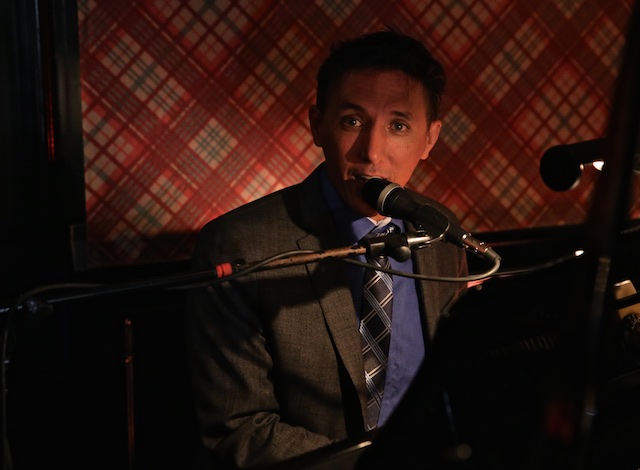 Dan Bolton is an Australian born, New York based musician, at present touring New Zealand. His first show was at the CJC (Creative Jazz Club) in Auckland. While singer, songwriters who accompany themselves on piano, are a firmly established tradition in Jazz, we see them on tour very rarely. Many Jazz vocalists (like Ella Fitzgerald) could accompany themselves well, but few choose to do so. A number of notable musicians mastered this skill, notably Nat Cole, Ray Charles, and Shirley Horn. Doing two jobs simultaneously is always harder than doing one and especially where vocals and piano are concerned. The energies and postures require careful coordination and I suspect that this is harder than accompanying yourself on guitar.
 Bolton is unusual in that he composes tunes which feel modern, but in a style reminiscent of the Great American Songbook; many of his tunes, are not dissimilar from those which came out of Tin Pan Alley, having the vibe of Irving Berlin or Cole Porter. The melodies are catchy in a time honoured way and the lyrics often biting; sometimes capturing our post-millennial angst. Many of Bolton’s tunes centre on the age-old themes of love and loss, others sarcastically critique modern American life. All maintain their sense of originality, in spite of the above comparisons.
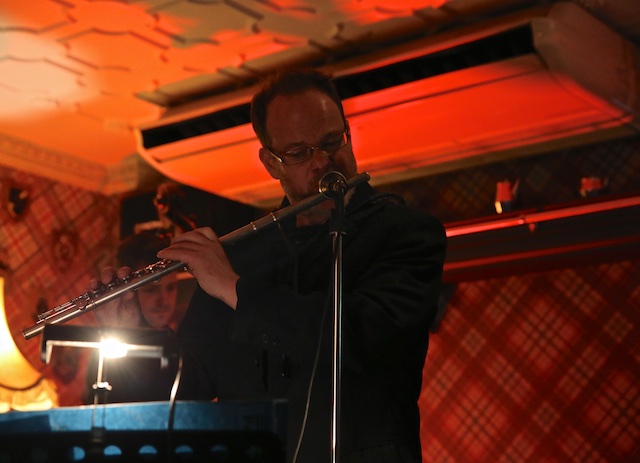 Travelling with Bolton is the perennially popular drummer Mark Lockett. Lockett, like Bolton, lives in New York, but for several months of each year, he travels as band-leader, (or as hired gun as in this case). Lockett was born in New Zealand and he always gets a welcome reception when he makes it back. Watch out on gig noticeboards for him. He has another tour coming up shortly and this time with an organ trio. On tenor saxophone and flute was Auckland’s Roger Manins, his swoon-worthy ballad chops manifesting in their full glory. Mostyn Cole featured on upright bass, a regular at the CJC and an able musician. We heard some tantalising snippets of arco bass from him – more of that, please.
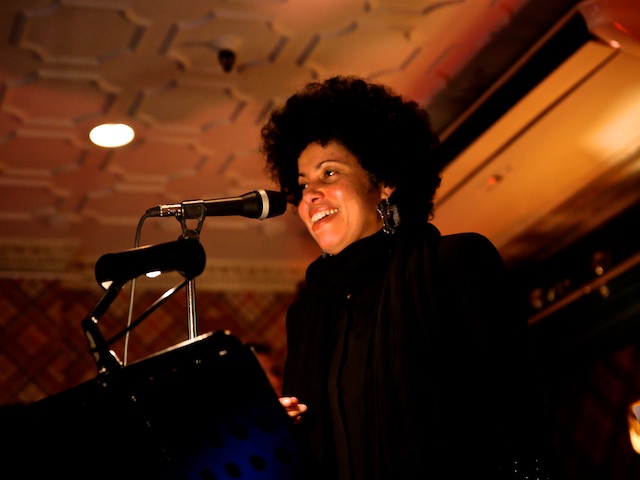 Last Wednesday saw the Venezuelan-born vocalist Jennifer Zea performing at the CJC. Her appearance was long overdue, the audience enthusiastic in anticipation of spicy South American Rhythms and the warm tones of the Spanish language in song form. When you look at where Venezuela sits on the map, you learn a lot about its music. Located in the northeast of South America, bordered by the Caribbean and by Brazil, positioned on a unique musical axis. Music blithely ignores the artificial barriers imposed by cartographers and politicians. Even Trump’s insulting wall could never be built high enough to stem musical cross-pollination. Music goes where people go, and remains as an echo long after they have moved on. Jennifer Zea is an embodiment of her country’s music; folk traditions, newer forms (Jaropo), Jazz, Soul, Bossa influences from Brazil and a pinch of Mambo, Salsa or Merengue.
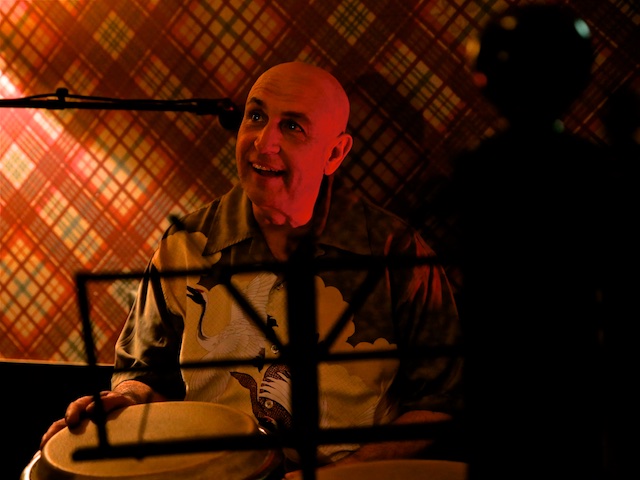 The Caribbean region is the prime example of musical cross-pollination; rhythms and melodies, vocal forms and hybrid harmonization, a constant evolution into new and vibrant forms while updating and preserving the discrete pockets of older folk music styles. A weighty tome titled ‘Music and the Latin American Culture – Regional Traditions’ makes two observations; the music of the Venezuelan region is mostly hot or vibrant (see the definition of Salsa) and there is a strong underlying tradition of shamanism (manifest in musical form). The hypnotic rhythms and chants remain largely intact according to Schecter. With percussionist, Miguel Fuentes backing her, Zea conveyed the compellingly hypnotic soulful quality of her traditional music to good effect.
 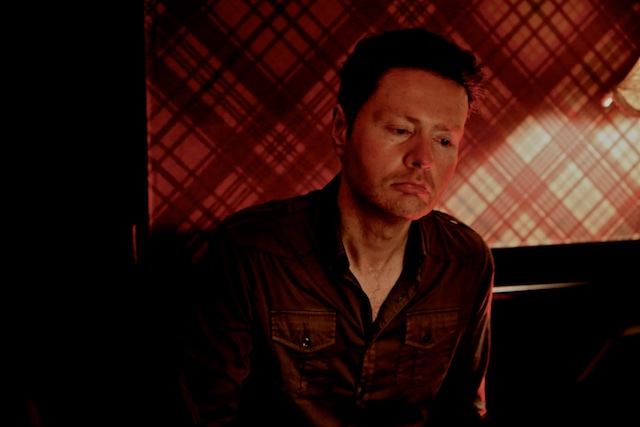 Fuentes was born in the USA but grew up in Puerto Rico. These days like Zea, he lives in Auckland. Music like this demands high-quality authentic latin percussion and that’s exactly what happened. Traps drums were not needed here. Regular Zea accompanist, Jazz Pianist Kevin Field was also in the lineup. Field plays in many contexts and his accompanist credentials are second to none. He has regularly worked with Zea and (like Fuentes) most notably on her lovely 2012 release ‘The Latin Soul’. If you have a love of Cubano or Caribean style music, grab a copy of this album. Even on straight-ahead gigs, I have heard Field sneak in tasty clave rhythms. If you want to hear cross-rhythms at their best – skillfully woven by Field and Fuentes, it is on this album. An added incentive are the compositions, mostly by Field and Zea (and Jonathan Crayford). On upright bass for this gig was Mostyn Cole, an experienced bassist now residing in the Auckland region.
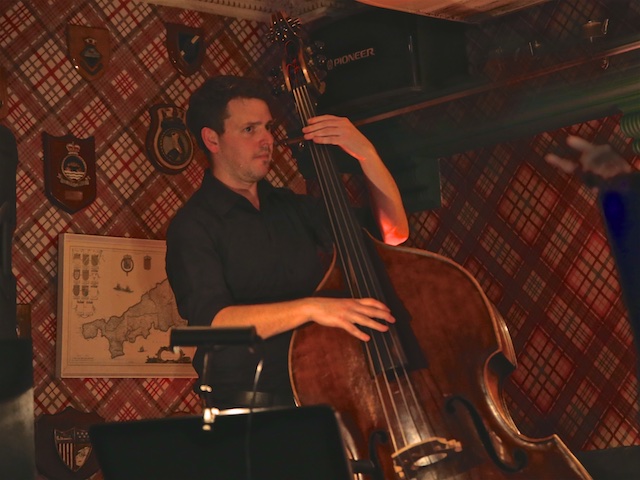 The gig featured some Zea compositions, three standards and to my delight some authentic Bossa. The Bossa tunes were mostly by the Brazilian genius Tom Jobim and sung in Portuguese (which is not her native language). Although Portuguese is the most commonly spoken language in Latin America, it is only the main spoken language of one country, Brazil. To learn Bossa she spent time with a teacher in order to understand the nuances and deep meanings. While respecting the Bossa song form she had the confidence to bring the music closer to her own Venezuelan musical traditions. Even her intonation was redolent of her region, unmistakably Hispanic South American.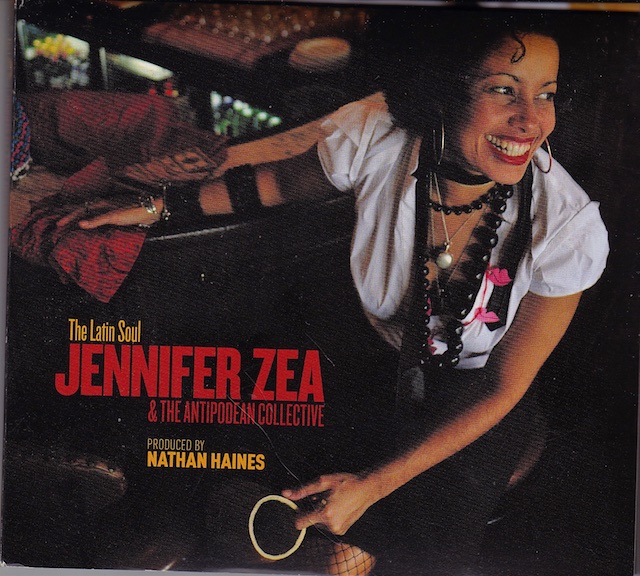
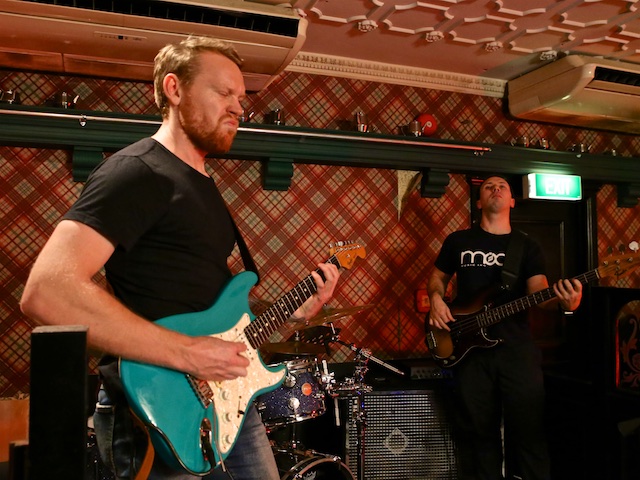 Mooga Fooga are well travelled, and as they move about they carve deep grooves into the sonic landscape. Their music is deliberately genre blending, with funk, rock, soul and Jazz shuffled together. Their music is often loud but they can play in a muted voice. While all of those influences are unambiguously in the mix, based on what I saw on Wednesday, they can tilt the emphasis any way they choose. This eclecticism is not the result of a random amalgam, but a clever fusing of the base metals underpinning the genres. In some of their online clips they are reminiscent of groups like Cream (albeit funked up), but on this gig, their Jazz Funk roots were most in evidence. I suspect that saxophonist Kushal Talele was the compass in that regard.
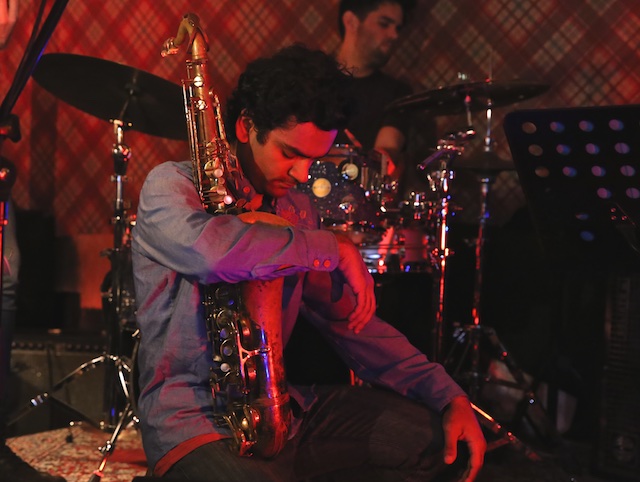 Years ago I picked up a guitar trio album featuring Bareli Lagrene, Jaco Pistorius, and a European drummer (I can’t recall his name). I marveled at the seamless blending of styles, as they performed Hendrix and Shorter with equal integrity, paying due respect to each. This music has a heavier funk element; Jazz funk with a little touch of metal and the occasional the choppy lines of Monk thrown in. Apart from their punchy lines and the exchanges during the head, there was room for improvisation as the tunes developed.
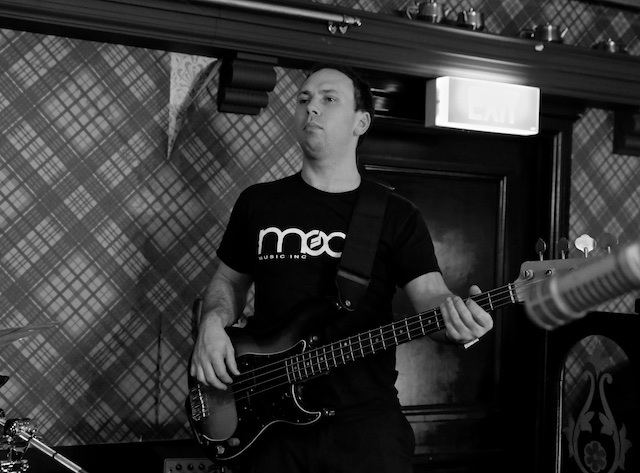 I am familiar with Kushal Talele, Adam Tobeck and Joel Shadbolt as I have encountered them all before. Each in different situations to what was on offer last night. Talele has a distinct post-Coltrane sound and is very much in the camp of the New York modernist tenor players. He returned last year from overseas and played a gig at the CJC. Sadly, we are to lose him again as he heads to New York for a few years. Tobeck is versatile and notable for his tightly focused groove beats. He was essential to this lineup and this band was a natural fit for him. I have seen Shadbolt less often but I enjoyed his loud bluesy funk at the 2015 Tauranga Jazz festival. He is a crowd pleaser and looks every inch the part as he pumps out his ear-pleasing lines and phrases. While I had not previously heard electric bassist Rory Macartney, he is well-respected about town. There is a real bite to his playing, a bite that is perfect for a lineup like this.
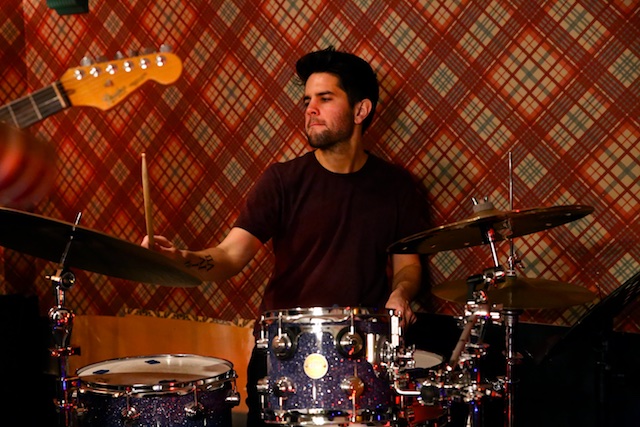 The tunes were seldom given titles and I suspect that most were originals. Details like that don’t matter on a gig like this – it is about the groove. I gained the impression that the three regulars, Macartney, Shadbolt and Talele all contributed compositions and arrangements. There are some good YouTube clips up from this group and I have added one more from this gig.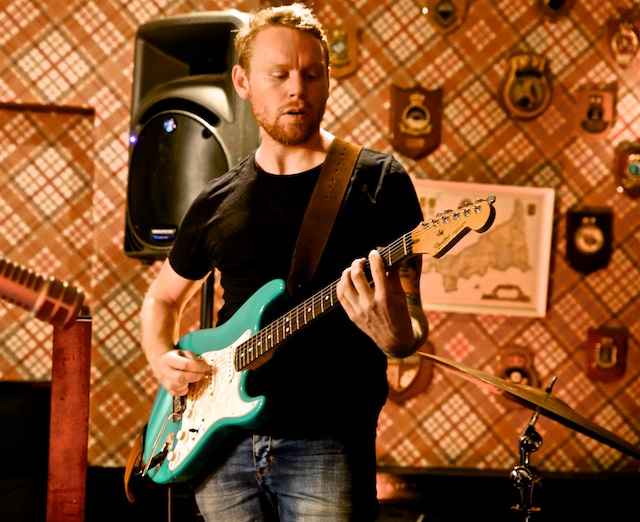
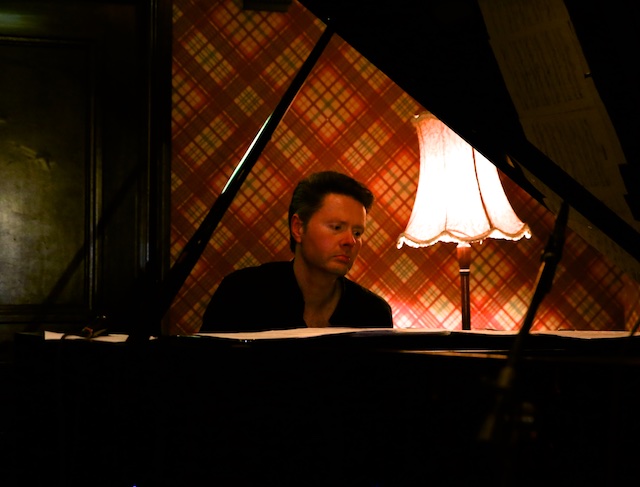 Kevin Field has for many years been regarded as a phenomenon on the New Zealand Jazz scene. A gifted pianist and composer whose approach to composition and harmony is strikingly original. When you listen to many pianists you can hear their influences, discern the pathways that led them to where they are. With Field, those influences are less obvious. I suspect that this independence, originality, makes it easier for him to strike out in any direction of his choosing. On his ‘Field of Vision’ album, he moved into uncrowded space, one occupied by very few Jazz pianists. It was Jazz without compromise but utilising grooves, rhythms, and melodies of other genres. The music contained distinct echoes of the disco/Jazz/funk era, crafting it carefully and forging a new post-millennial sound.
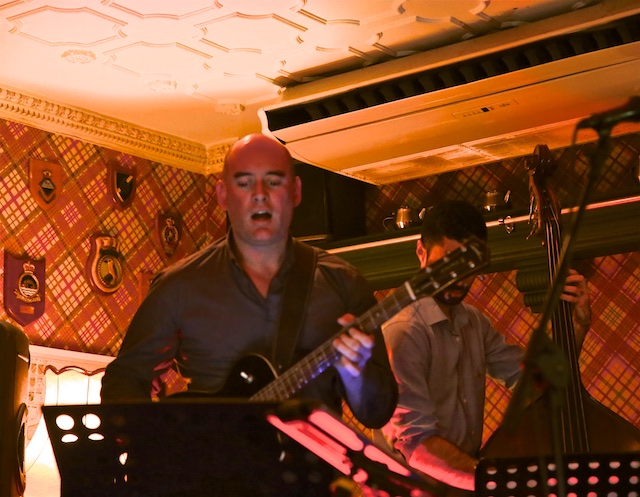 The tunes were all memorable and within a few listenings, you could hum the themes. This is not so common in modern Jazz and less so with music (like Fields) which retains its Jazz complexity. In Fields case, the clean melodic hooks do not come at the expense of harmonic invention. That is a tricky balancing act and one he achieves convincingly. His co-leadership of ‘DOG’ took him in a different direction again, but the same deftly crafted grooves astounded us. His recent album ‘The A-List’, was a further excursion into the disco/Jazz/funk realm. It is slightly tongue in cheek while still challenging the listener to think outside the square. Artists like this take the music forward, it is up to us to catch up.
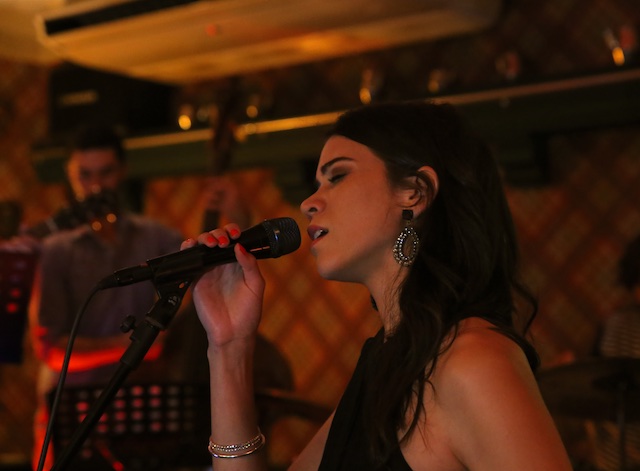 They played at the Wellington Jazz festival recently and for many Wellingtonians, this was their first exposure to the group. I saw that show and I immediately noticed how the familiar tunes had subtly changed. ‘Perfect Disco’ with its energised danceable funk momentum was recast as a duo piece. Field and vocalist Chaperon wowed them with that number. We also heard this duo version last week. Other familiar tunes had developed into profoundly interactive exchanges. The sort that can only occur between highly attuned musicians. This is where the guitar mastery and the deep listening of Nacey came into its own. His Godin guitar soaring with stunning clarity while Field reacted in kind, urging them further out with each challenge.
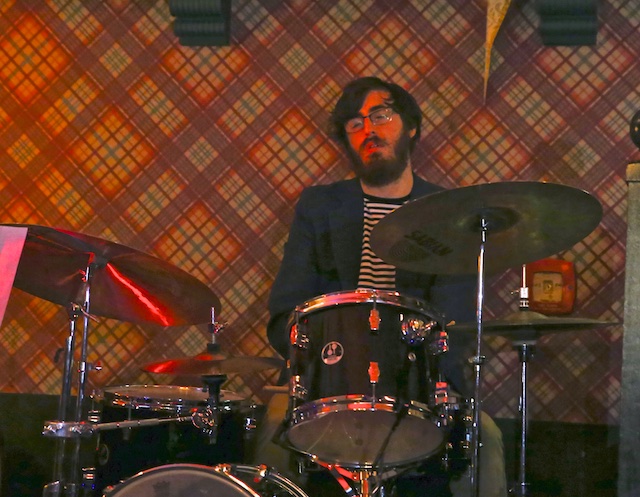 Again we see Thomas and McArthur doing what they do best. Working hard and rising to the challenge. Thomas laying down the tricky rhythms and while McArthur runs his bass lines. While pleasant to the ear, there is not doubt at all that these compositions required skill and concentration. It is on gigs like this that the musicians familiarity with the material and each other pays dividends. It was also nice to hear Chaperon on some new and old material. She is a real crowd pleaser – she looks great on stage and sings up a storm.
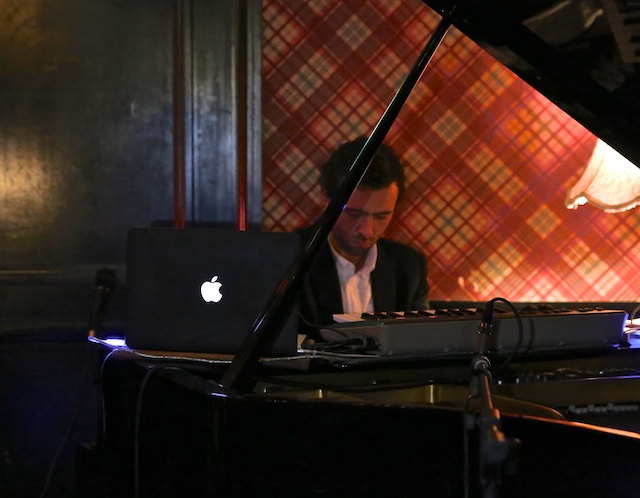 I can’t remember when I first became conscious of Polish Jazz, but after Tomasz Stanko, Poland was forever on my listening radar. After that, I would listen to Polish improvisers whenever I came across them, Wasilewski, Komeda etc, and all the more so when I discovered later in life that I was a quarter Polish. In light of the above, I was naturally interested when I came across an Auckland-based, Polish-born pianist Michal Martyniuk. He was standing in for Kevin Field at a Nathan Haines gig – around the time of “The Poets Embrace’ release. Since then I have seen him with various iterations of Haines’ bands but until last week, never at a gig where he was the leader.
 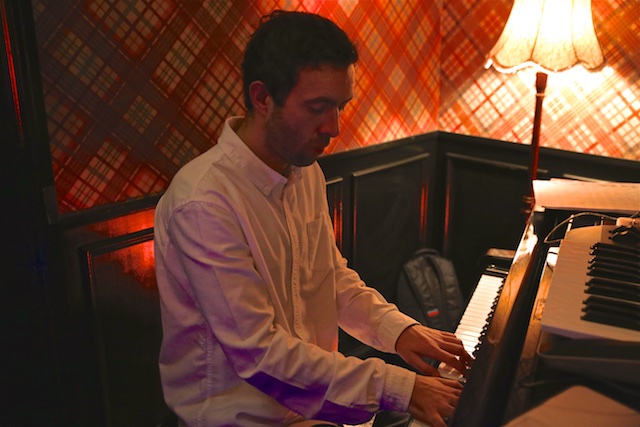 It is an oft-debated topic, but I sometimes hear references to time and place in original music. After hearing Martyniuk I could identify his northern European influences. When I asked the pianist about the artists he most admires, he quickly identified Lyle Mays and Pat Metheny (also Weather Report plus Miles and Herbie). The Metheny/Mays reference is definitely evident but sifted through a Eurocentric filter. Mays, although influenced by Evans never sounded like a typical American pianist. Martyniuk’s compositions and performance contain all of the hallmarks of modern Euro jazz, a sound I hear in the Alboran Trio, Wasilewski and younger pianists like Michal Tokaj. A warmer sound than the Scandinavian pianists but as light filled and airy. There is a beauty to Martyiuk’s playing, a stylistic identity. For such a young pianist to have located this special sound is impressive.
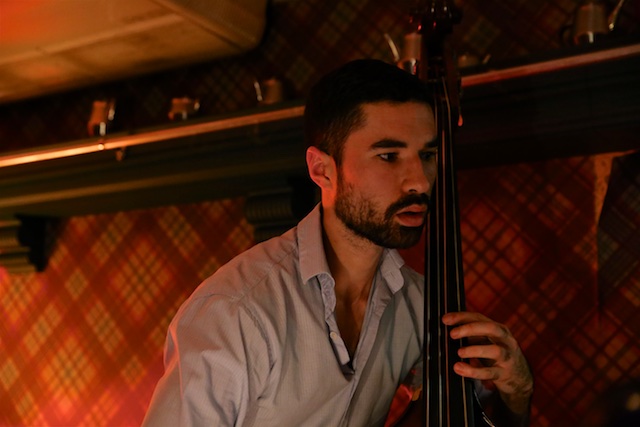 Something that many post-millennial Jazz musicians avoid, is evoking a sense of beauty. I can understand that because it must be done well or not at all. It is the territory of balladeers like Ben Webster and the territory of artists like Metheny. This was done well. The compositions were cleverly constructed around developing themes and with nothing was rushed, allowing melodic inventions to manifest. The tunes were also cleverly modulated, subtly amping up the tension to good effect at key points. Like Bennie Lackner, he used electronic keyboards to enhance or emphasize a phrase, but very sparingly.
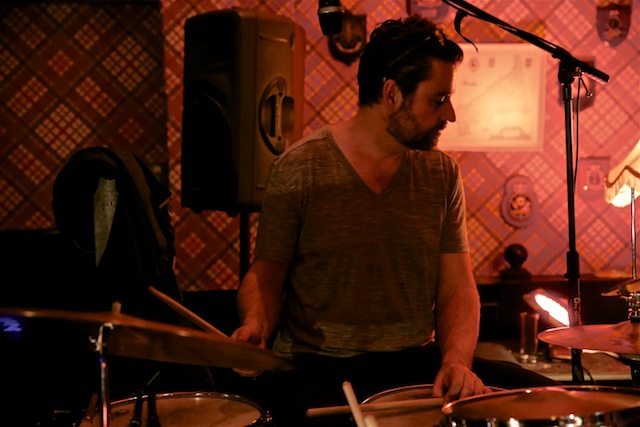 Again we see a musician deploying a top rated rhythm section to good advantage. With McArthur and Samsom behind him, he again showed wisdom. He worked with them and they gave him plenty in return. Although we often see this particular bass player and drummer in diverse situations, they appeared very comfortable here. The overall effect was that of interplay and cohesion.
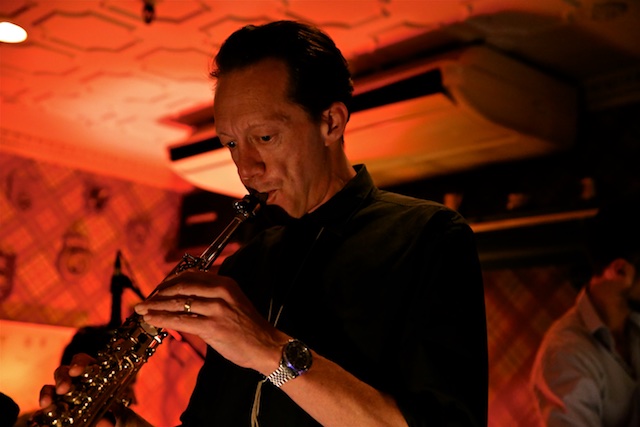 Martyniuk came to New Zealand around ten years ago and he attended the Auckland School of Music. Along with producer Nick Williams, he is soon to release a Jazz infused Soul album which will feature internationally renowned artists like Kevin Mark Trail, Nathan Haines, Miguel Fuentes and others. Judging by the huge audience at this gig his future looks very rosy indeed. The Jazz club turned away dozens of attendees in the end. A good problem to have.
 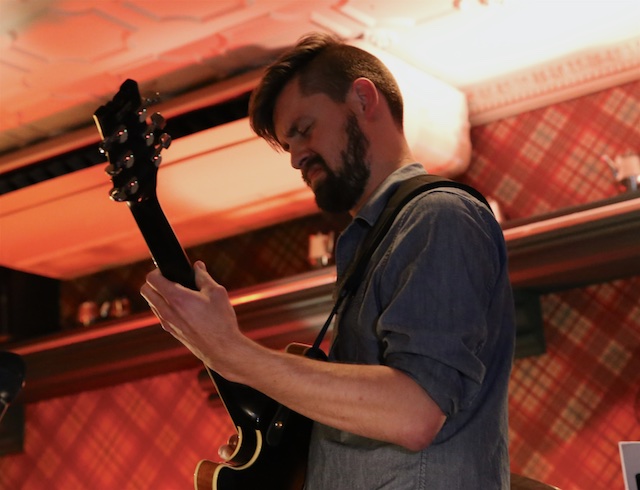 When I started attending the CJC, I heard Peter Koopman quite often. He was always impressive, but never a showy guitarist. His approach matched his quiet demeanor, an easy-going manner obscuring a real determination to excel at his craft. Before long he moved to Sydney and although the local Jazz scene laments this musicians rite of passage, we also know it is the right thing. At best, these offshore journeys produce the Mike Nocks and the Matt Penmans, and we all benefit from that.
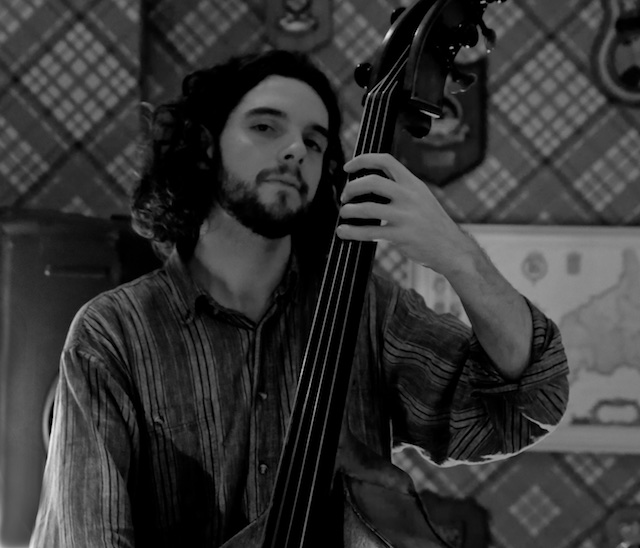 We have seen him back in New Zealand a few times during the last five years, but this is his first visit leading a guitar trio. As anticipated, we experienced a more mature Koopman, his guitar work showcasing well-honed skills. Australia is a merciless testing ground for improvising musicians and especially so for guitarists. Working in the same scene as Carl Dewhurst or James Muller, and holding your own, the proof of the pudding. In 2014 Koopman was placed 3rd in the Australian National Jazz Awards, which are held at Wangaratta each year. These awards are fiercely contested and that is no small accomplishment.
 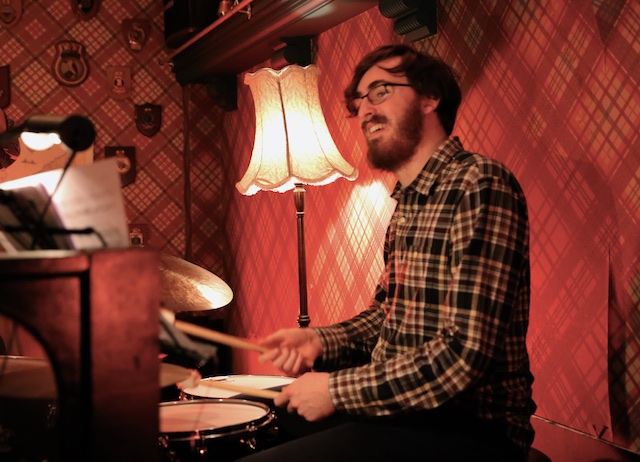 The Inner Westies Trio for the New Zealand trip was Peter Koopman (guitar), Max Alduca (bass) and Stephen Thomas (drums). The guitarist and Bass player from West Sydney, the drummer from West Auckland. Alduca is a compelling bass player, and a drawcard on his own. He often includes a touch of tasteful arco bass in his performance. I last saw him when he toured with the ‘Antipodeans’, an innovative young ensemble, populated with musicians from three countries. Alduca made a hit then and reinforced our positive view of him this night. He has a number of gigs about Auckland aside from the CJC gig. A player bursting with originality and with a notable way of engaging with audiences. Nice to see him back and especially in this company.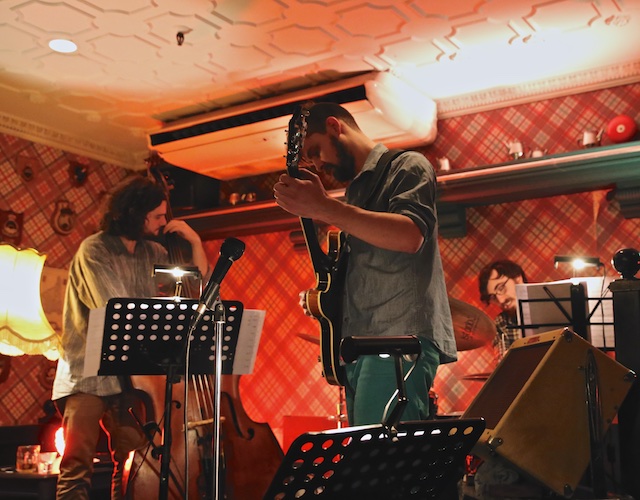
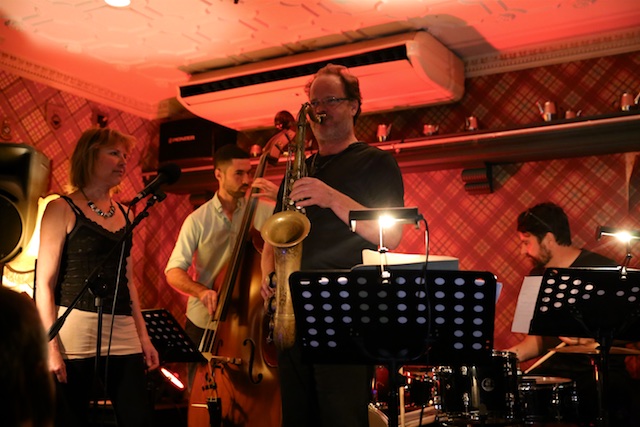 The Joni Mitchell/ Charles Mingus project is always ripe for reevaluation and I’m glad that Caro Manins was the one to explore it again. The connection between Joni and Jazz experimentalism runs deep. Rolling Stone Magazine figured it out early on, describing her as a ‘Jazz savvy experimentalist’. While the connection is obvious in her 1979 ‘Mingus’ album the move toward a freer music and towards harmonic and rhythmic complexity began earlier in the mid 70’s. Initially coming up through the American folk tradition, she gradually embraced a different style. She would later say, “Anyone could have written my earlier music, but Hejira (and later albums) could only have come from me”. From the 70’s on, she utilised her own guitar tunings and often incorporated pedal point, chromaticism, and modality in her compositions. If you look at her later musical collaborations, names like Jaco Pastorius, Herbie Hancock, and Wayne Shorter stand out.
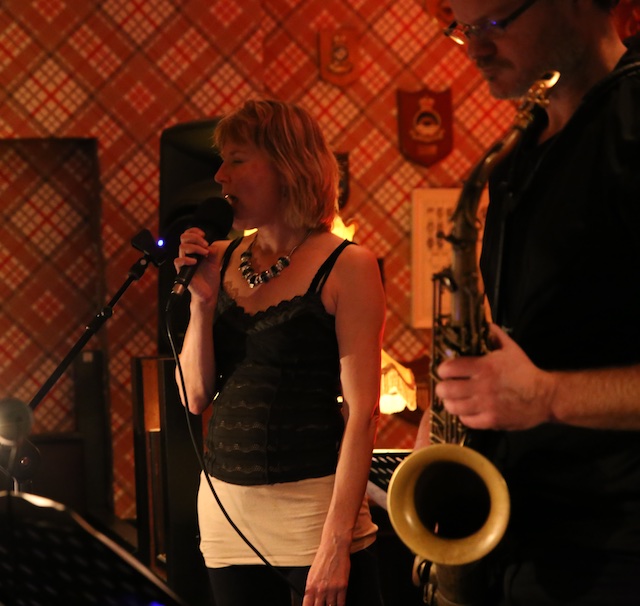 To her amazement at the time, a dying Charles Mingus asked Joni to call by. He told her that he had written a number of songs for her. Mingus passed before the completion of her project, but he heard all of the tunes except ‘God must be a Bogey Man’. Her ‘Mingus’ album followed soon after. “It was as if I had been standing by a river – one toe in the water. Charles came along and pushed me in – sink or swim”.
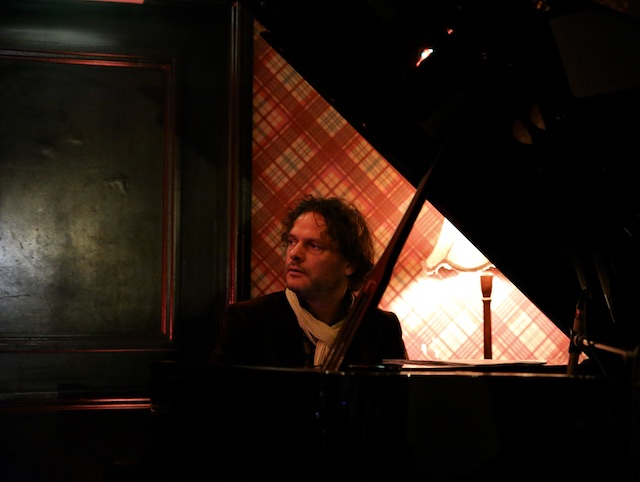 The project deserved a good lineup and it got one. Caro Manins, Roger Manins, Jonathan Crayford, Cameron McArthur and Ron Samsom. Crayford was especially interesting on this gig. His abstract explorative adventuring replaced by rich traditional voicings – his solos a history lesson; from locked hands chord-work to impressionistic delicacy. All of the musicians were respectful of Joni’s body of work and they understood that the best way to honour her legacy was by interpreting her work honestly and imaginatively. Not every tune came from Joni’s ‘Mingus’ album but all followed the Joni/Mingus/Jazz theme.
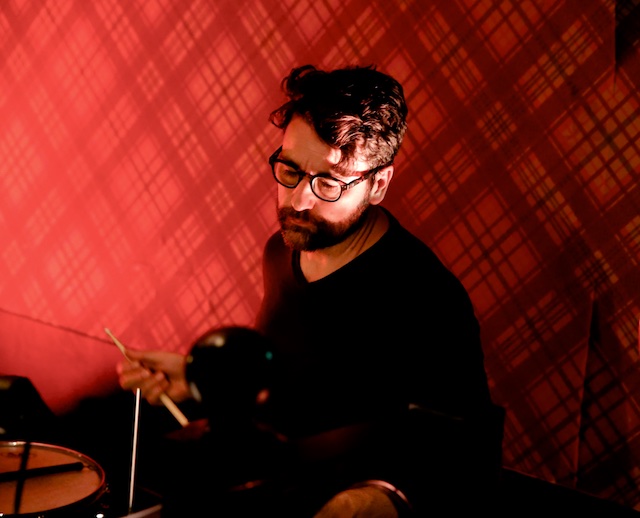 The gig was very well attended (no surprise there) and the audience enthusiastic. This was a CJC (Creative Jazz Club) event and it took place at the Albion Hotel on 29th June 2016. Caro Manins (leader, arranger, vocals), Jonathan Crayford (piano), Roger Manins (tenor saxophone), Cameron McArthur (Bass), Ron Samsom (drums, percussion).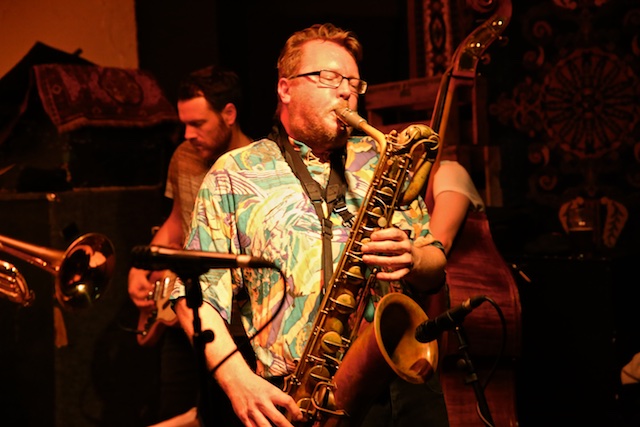
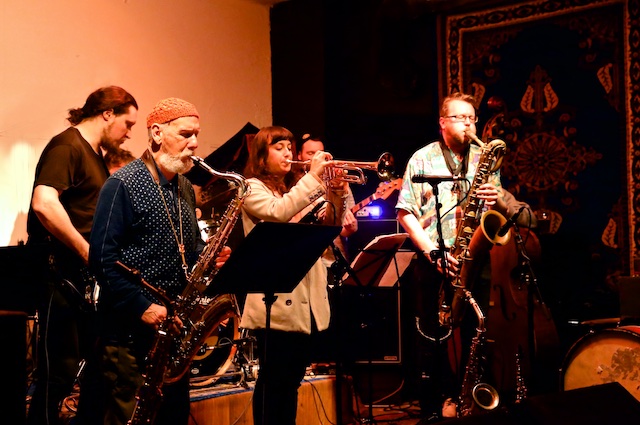
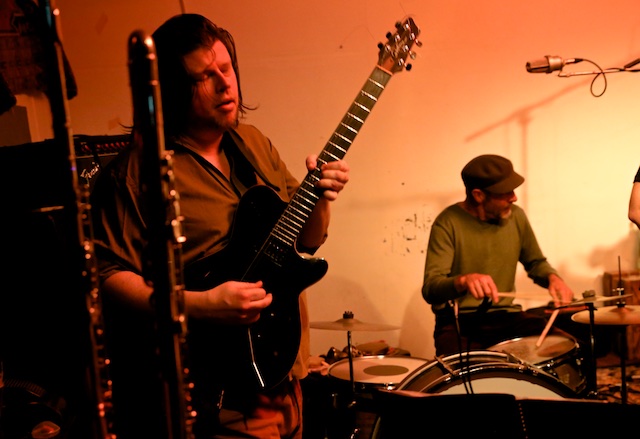
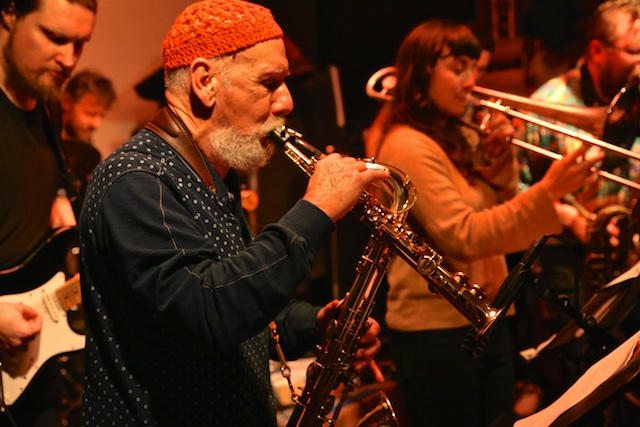
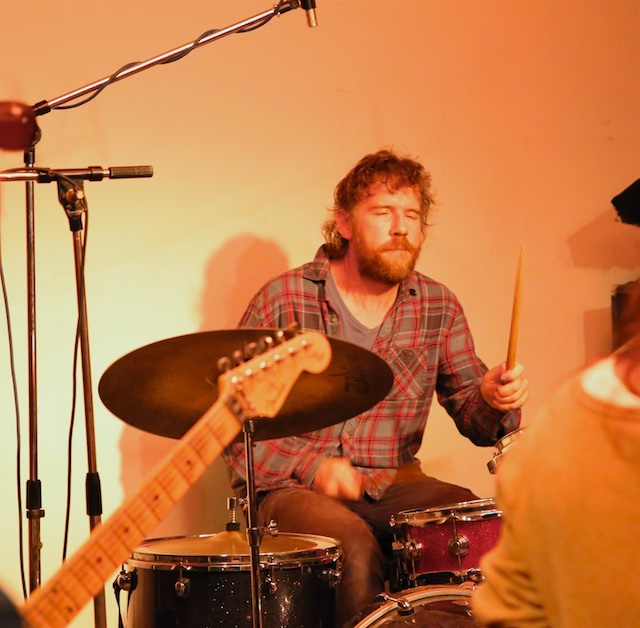
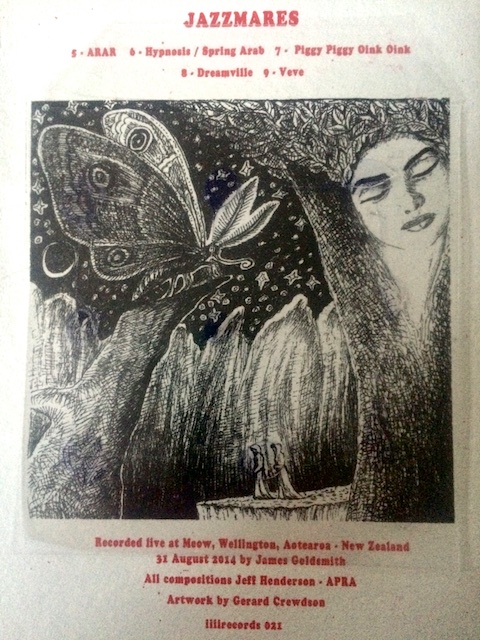
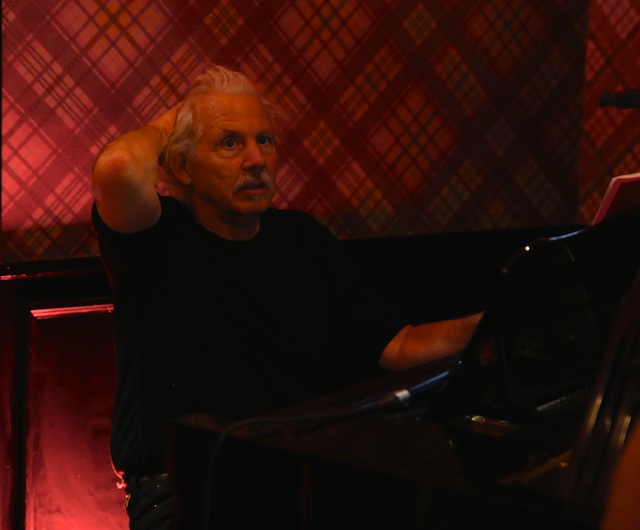 To the best of my knowledge, Jonathan Besser has not played at the CJC (Creative Jazz Club) before. While he is best known as an important composer for The New Zealand Symphony Orchestra, The New Zealand String Quartet and The Royal New Zealand Ballet, he is also a significant leader of small ensembles. Ensembles which venture far into the territory of experimental, electronic and improvised music. It is impossible to separate the man from his music. It is eclectic, original and often plaintive but generally with a sly twist of humour thrown in. In spite of his standing in the music world, Besser is modest. At the CJC he was happy to lead from the piano, which was in partial darkness and at the rear of the ensemble. His instructions were brief and staccato as if part of the unfolding suite. When he did pick up the microphone to speak to the audience he exuded an eccentric charm, bandstand asides peppered with self-effacing humour, garnished with sudden smiles.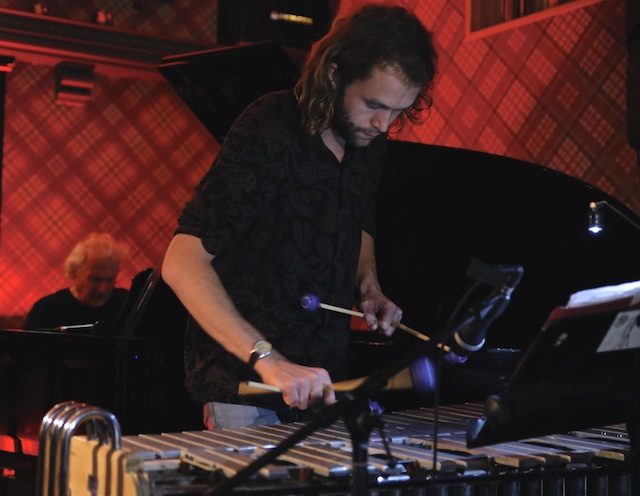
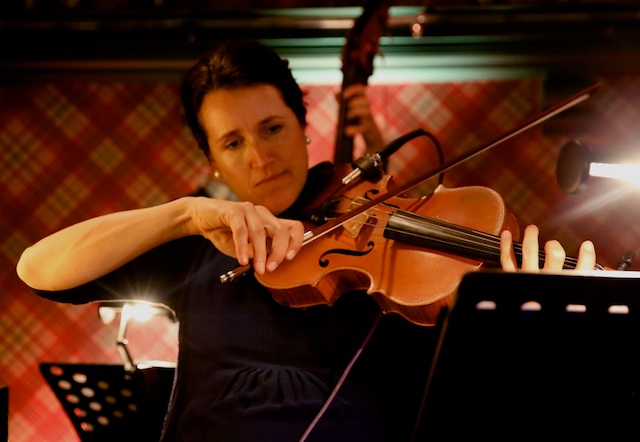 I met Besser briefly during Natalia Mann’s ‘Pacif.ist’ tour and later at the Auckland Art Gallery during the opening of Billy Apples ‘Sound Works’ exhibition. On that occasion, the Nathan Haines Quartet played Besser’s innovative compositions. I really hope that someone recorded that. It was extraordinary music, based upon prescribed letters of the alphabet. These were then allocated using the 12 tone scale as a formula to locate equivalent notes. The order of Billy Apple’s words dictating the order of notes.
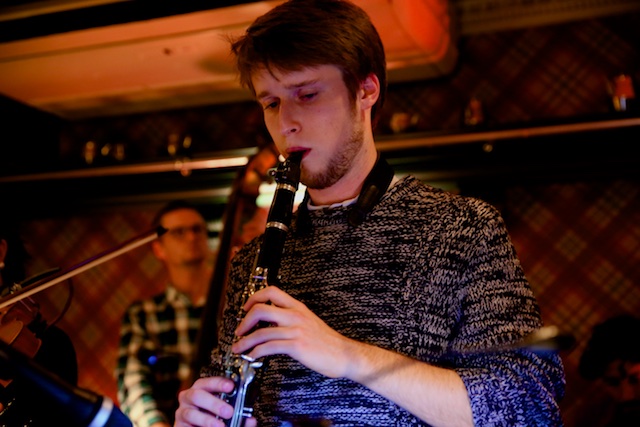 The music was not Klezmer and later I asked Besser about his influences – were there strong Jewish influences? “I am a Jewish man and I used Jewish scales, but apart from that no. I draw upon many, sources”. It interested him that I heard Argentinian references. “I have done Tango projects in the past and that is possible”. It was partly the combination of instruments, the delicious overlay of melancholia and the accents – not so far from the music of master musician Dino Saluzzi.
 The segments of music making up the suite seldom lasted longer than 4 minutes. The spaces between them brief. The mood seldom deviated from the wistful, evoking a sense of intangible longing – for something remembered – but just out of reach, a nostalgia as ancient as time itself. There were a few cheerful pieces as well, but I preferred the former. The Zestniks update themselves regularly, this time adding Caro Manins vocal lines, her wordless vocals followed the viola or clarinet in gentle unison. No one is better suited to this than Manins – she has worked with the likes of Norma Winstone after all.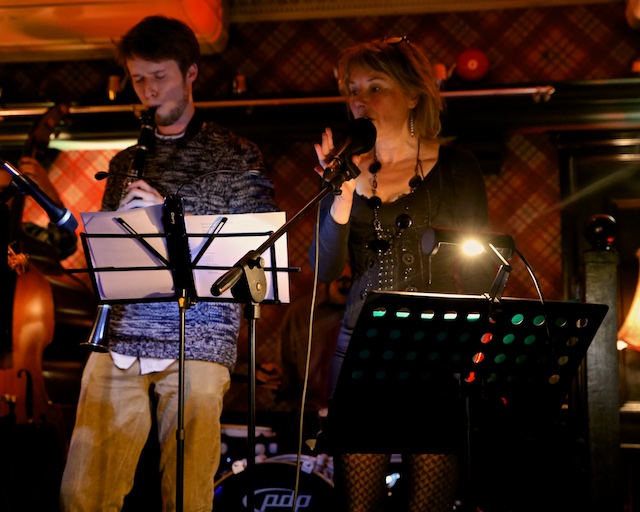
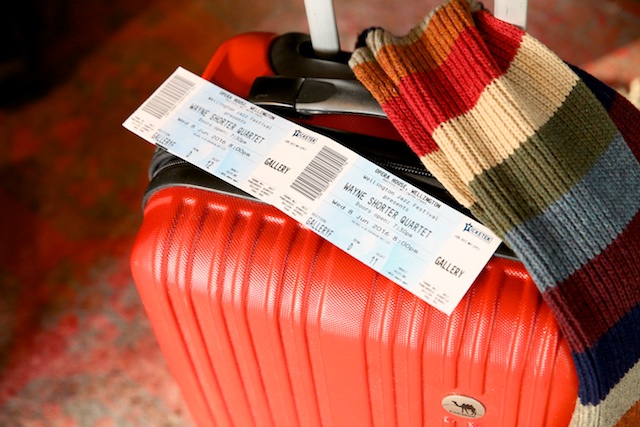 When we talk about Wayne Shorter’s music we immediately run into obstacles. Wayne is like a Zen Master, deliberately confounding our every expectation. To begin such a journey our rational minds need emptying. As the journey unfolds we move beyond comforting reference points; this requires a letting go, real courage. The 2016 Wayne Shorter band is a musical ‘Voyager’, a spacecraft assembled out of earthly components, but sending encrypted sonic messages from an unknown place. What is on offer is a shared journey – but only if we are brave enough. Once you commit there is no looking back.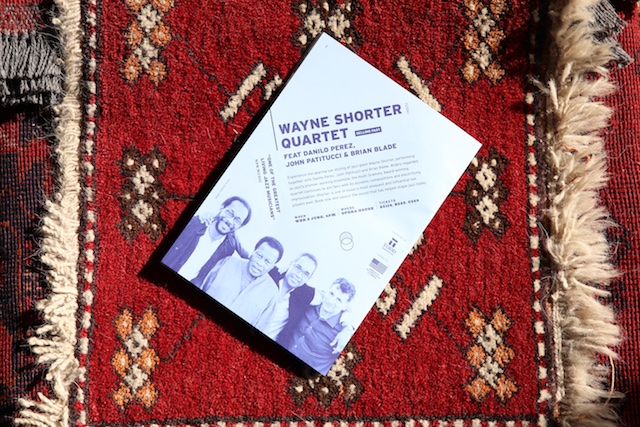
 Thanks to Rodger Fox and the CJC management we were lucky enough to see five times Grammy nominee, Jazz vocalist Karrin Allyson in our Auckland Jazz Club last Wednesday night. Seeing an artist like this in a concert hall is one thing; seeing her in the warm intimate surroundings of a small Jazz club and just a metre away is quite another. Always a sucker for quality Jazz vocalists I first heard her in 1992 (the album ‘I Thought About You’ was the first of hers I purchased). On the basis of her recorded output, I booked for both the CJC gig in Auckland and the Wellington Jazz Festival concert. The flights between these cities are surprisingly affordable when you book in advance, and these opportunities don’t come around often when you live in the South Pacific.
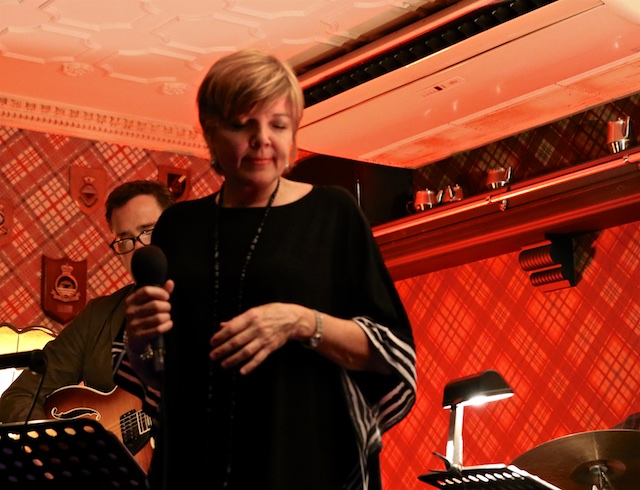 Following her 1992 release further albums came out and by the time ‘Ballads: for Coltrane’ and ‘In Blue’ were released there was no mistaking it. This was an important vocal interpreter. Her voice has particular qualities, an attractive smoky veneer, but then there’s that extra something. A sense of shared intimacy, a way of interpreting lyrics in an original way while still paying tribute to earlier interpreters. Her version of ‘O Barquino’ or ‘Double Rainbow’ (both by Jobim) immediately brings to mind the fabulous Elis Regina. Her ‘West Coast Blues’ conjures up Wes Montgomery just as much as the instrumentalists. She scats in ways that adds value to the narrative content of the song, never overdone and always wonderfully inventive. It came as no surprise, therefore, that she could conquer an audience in a heart beat.
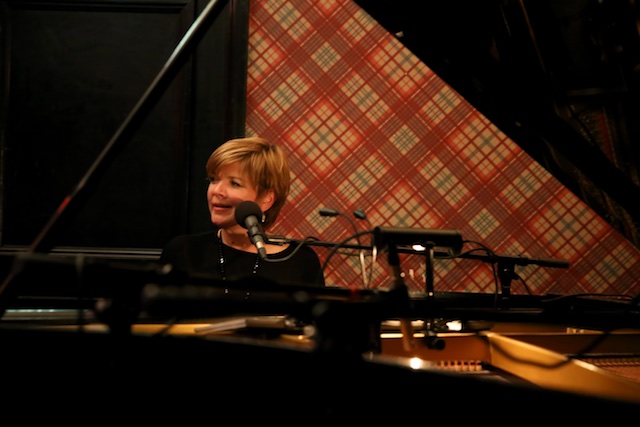 From the first vocal number, Allyson teased the audience, turning the lyrics into a conversation. Her set list spanned her Concord recordings including her recent release ‘Many a New Day: Karrin Allyson Sings Rogers & Hammerstein’ (When I think of Tom/Hello Young Lovers). Everything she performed was extraordinary but when she moved to the piano and accompanied herself on ‘Bye Bye Country Boy’ I was especially delighted. For some unaccountable reason, few vocalists interpret Blossom Dearie and more’s the pity. Dearie was a true original and a fiendishly clever Jazz vocalist. Her voice had a deceptive depth if you listened properly and like Allyson her ability to communicate was perfectly honed. It is fitting that Allyson should tackle Blossom Dearie as she is able to convey the same wry humour and wrap it up in a very attractive vocal package. She was simply killing in her interpretation.
 Accompanying Allyson was the Tom Warrington trio. Although it is five years since we saw them last, they have been regular visitors to New Zealand thanks to Fox. Tom Warrington is a superb bassist, having worked with everyone from Peggy Lee to Stan Getz. His list of credits is staggering. Formerly based in LA, where he was constantly in demand and no wonder. The choices underpinning each note he plays are beyond caveat. His musicality, teaching and compositional skills of the highest order. Today he lives a quieter life in rural New Zealand. When you hear his bass lines, and especially during a ballad, you recall the classic piano-trio bass players. Loading each note with meaning and carrying as much weight as any chordal instrument. Warrington has released four superb albums with this trio and all are highly recommended.
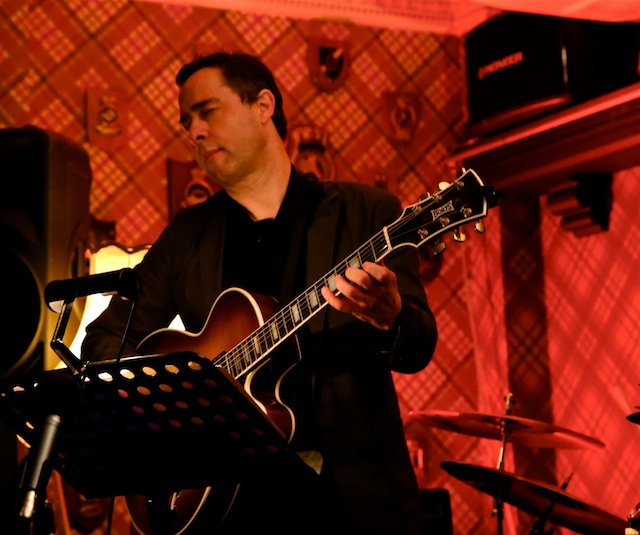 On chordal duties was Larry Koonse, playing a lovely hollow body Borys guitar. An impressive guitarist and a stalwart of the LA Jazz scene. Again, he is widely recorded, also releasing a number of albums under his own name. In many ways, Koonse encapsulates the best of the pre-millennial guitar tradition. That said, his fresh approach to tunes is also very much evident. His voice leading is a masterclass; dissonant/consonant inversions that have more bottom than most guitarists can muster in a lifetime and a gorgeous warm tone which lingers in the memory long after the gig. This, together with his other skills, makes him the perfect accompanist for a vocalist. When he played ‘Bolivia’ (Cedar Walton) with the trio, it took on the urgency and excitement that the tune demands. On ‘Whisper Not’ (Benny Golson) he extracted unalloyed beauty. I have known Larry for a decade and speaking to him after the gig, I complimented him on those tunes. At that point, my mouth raced way ahead of my brain and I said, “that was ‘Speak Low’ wasn’t it”? That fact that my slip of the tongue had accidentally come up with an exact antonym of ‘Whisper not’ made his day.
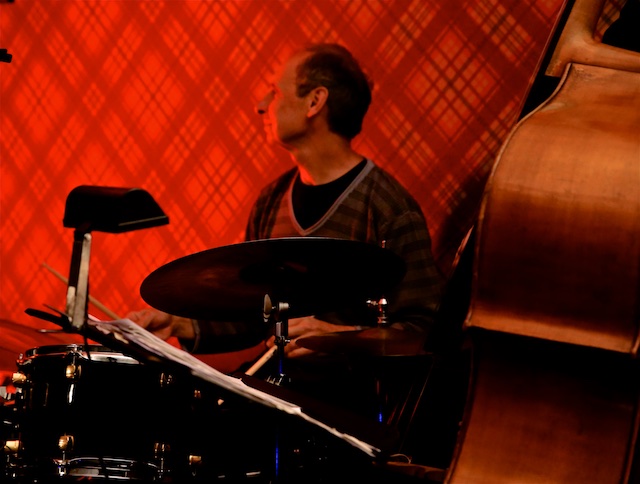 Last but not least is the Warrington Trio drummer Joe La Barbera. No one needs reminding of his long list of credits and impeccable credentials. As Warrington said during the introductions. “As everyone knows, Joe La Barbera was in the last Bill Evans trio. This puts us in some rarefied air”. Along with Marc Johnson, he breathed new life into that trio. While rightly famous for his superb drum work with Evans, he is a multi-faceted drummer; having also worked in avant-garde settings and with medium to larger sized ensembles such as ‘The West Coast All Stars’, ‘The Woody Herman Band’ and with ‘Kenny Wheeler’. He has often worked with famous vocalists such as Tony Bennett and Karrin Allyson. La Barbera has an inclusive quality that enhances bass and guitar but never overshadows them. When he solos, it is to the point. His stick and brush work add subtlety and texture – the effect always jaw-dropping. It is easy to see why he is so much in demand. A musical drummer who gives so much while working so hard to support the others.
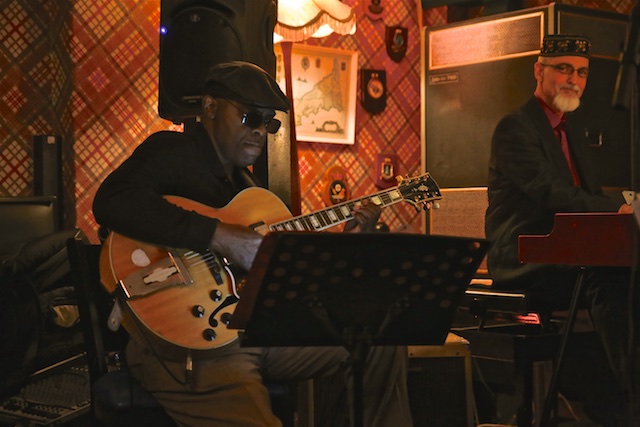 Auckland spoils us with long runs of clement weather, but when winter hits we suffer. Having effectively avoided any meaningful autumn we suddenly plunged into a week of cold wet days. There was no better time for the Michel Benebig/Carl Lockett band to arrive. As we grooved to the music, a warmth flooded our bodies within minutes. Nothing invokes warmth like a well oiled B3 groove unit and the Benebig/Locket band is as good as it gets. The icing on the cake was seeing Shem with them. A singer with incredible modulation skills and perfect pitch, able to convey the nuances of emotion with a casual glance or a single note. The way she moves from the upper register to the midrange, silken.
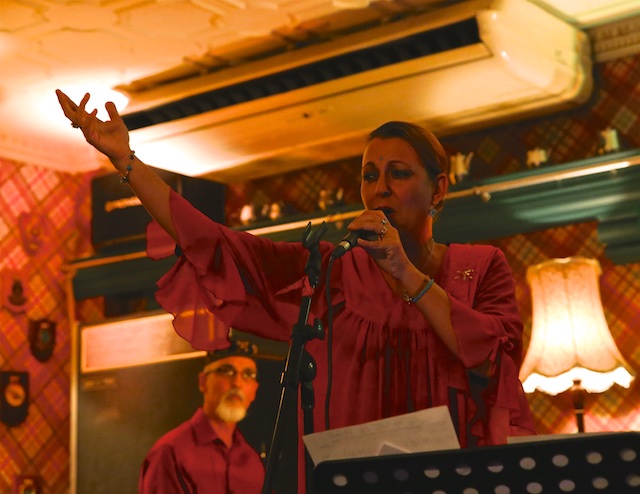 Michel Benebig has been travelling to New Zealand for years, and his connection with the principals of the UoA Jazz school has been a boon for us. He generally brings his partner Shem with him, but last time work commitments in her native New Caledonia kept her at home. Michel just gets better and better and the way his pedal work and hands create contrasts and tension defies belief. It is therefore not surprising that Michel attracts top rated guitarists or saxophonists to his bands. The best of our local groove guitarists have often featured and a growing number of stand-out American artists (see earlier posts on this band). Of these, the New York guitarist Carl Locket is of particular note. I first heard Lockett in San Francisco four years ago and he mesmerised me with his deep bluesy lines and time feel. Although comfortable in a number of genres, he is the ideal choice for an organ/guitar groove unit.
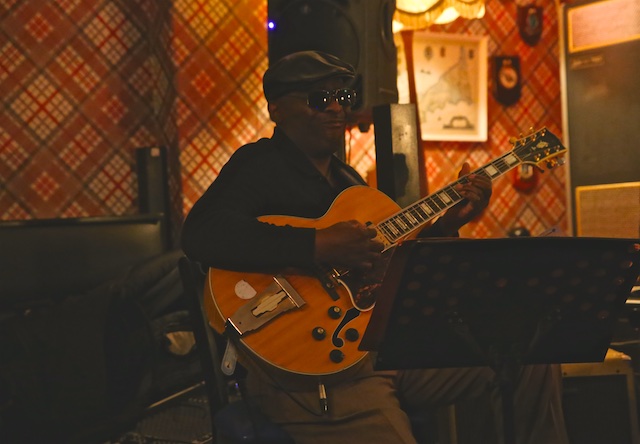 The band played material from their recent album (mostly Benebig’s compositions) and a few standards. There were also compositions by Shem Benebig. Their approach to arranging standards is appealing – numbers like Johnny Mandel’s ‘Suicide is Painless’ are transformed into groove excellence. We heard that number performed at the band’s last visit and the audience loved to hear it repeated. This visit, we heard a terrific interpretation of ‘Angel Eyes’ (Matt Dennis). I confess that this is one of my favourite standards (Ella regarded it as her favourite ballad). Anita O’day performed it beautifully as did Frank Sinatra and Nat Cole. The only groove version I can recall is the relatively unknown Gene Ammons cut (a bonus number added in later years to his ‘Boss Tenor’ album with organist Johnny ‘Hammond’ Smith). That version took the tune at a very slow pace, so slow in fact that you initially wondered if Ammons had nodded off before he came in. It was wonderful for all that (who can resist Ammons).
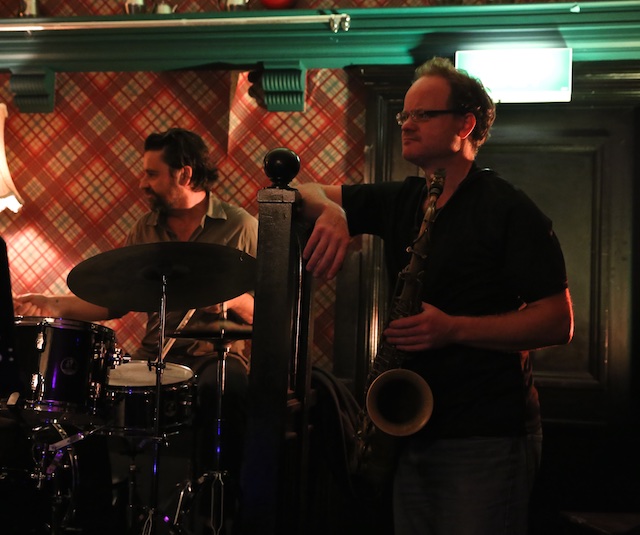 The band began the tune at a slow pace (but not as slow as Ammons), then once through, picking up the tempo, the band settling into a deeper groove, drummer Samsom and the guitarist really locking together, giving the Benebig’s room to create magic. That locked-in beat is often at the heart of an organ-guitar unit and when done well it adds bottom to the sound. Locket’s style of comping is the key to that effect, the entry point for the drummer, the way the guitarist lays back on the beat and comps in a particular way. Samsom heard and responded as I knew he would. He is a groove merchant at heart. On tenor saxophone, Roger Manins was on home turf. Dreamily caressing the melody before his solo.
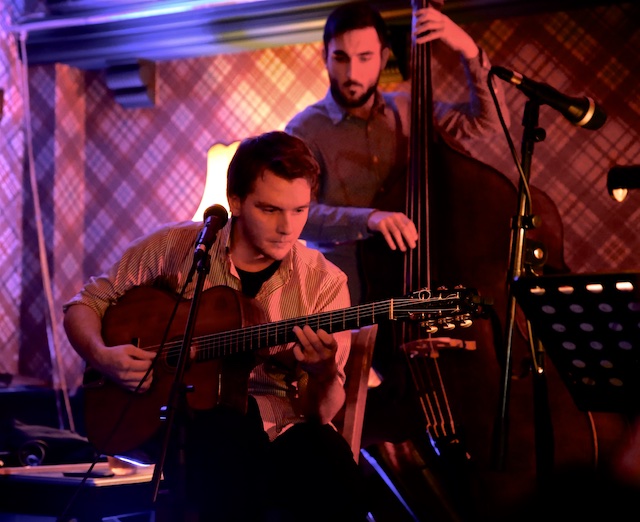 This is the second gypsy swing project at the CJC in four months. The last gypsy gig brought us Wellington band Black Spider Stomp. This time, we experienced the local variant. Wellington is arguably the home of New Zealand Manouche, but it definitely exists around Auckland. Thanks to Caro Manins (La Luna) and Misha Kovalov we feasted on catchy melodic tunes, marvelled at their hard-swinging lines. ‘Twistin the Swing’ and ‘La Luna & the Gadjos’ worked their magic and swing, they certainly did. It doesn’t matter what your Jazz preferences, I defy anyone to keep their feet still during a spirited Manouche gig.
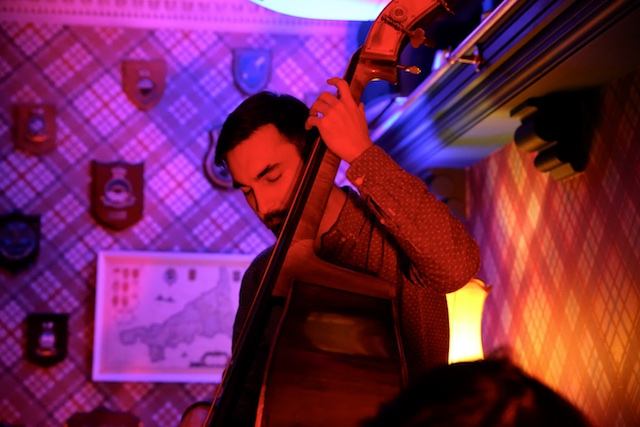 This is a music that stirs heart and limbs, a holiday from the cerebral manifestations of improvised music. It makes you feel good and the desire to move with it is overwhelming; that is its charm. I recall a recent discussion with Roger Manins about the diversity of Australian improvised music and he said this. “learning to play in really diverse situations is important. It is a feature of the Sydney scene. One minute the musicians are playing in an avant-garde ensemble, then straight ahead and the next minute playing Trad or Manouche”. For developing musicians, learning to swing in bands like this is invaluable, whatever their eventual calling. It was, therefore, good to see up and coming younger musicians in these lineups.
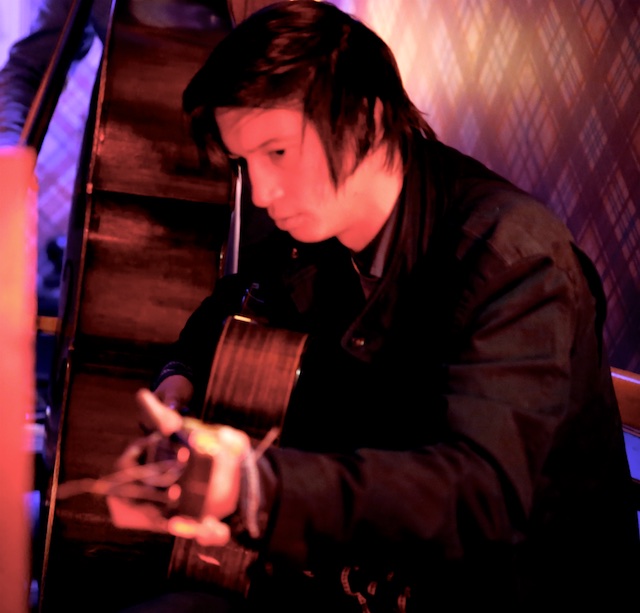 The first set was ‘Twistin the Swing’. A very tasty quartet led by the ensemble leader, composer/guitarist Misha Kovalov. The group featured two Manouche guitars, an upright bass, and a reeds player. Kovalov was a leader in every sense of the word, virtuosic in an almost offhand way and oozing good-natured charm. He made us smile and he made our feet tap; what more could you want in a Manouche leader. This was a hybrid kind of Manouche, as many of the latter-day manifestations are (a perfect example is Lagrene playing Stevie Wonders ‘Isn’t She Lovely’). We heard some Django Reinhart compositions, a familiar sounding Russian tune (whose name I can’t recall but it was a total riot) and a lot of Kovalov’s own compositions. These compositions varied in style between 40’s swing and acoustic blues; sometimes with crazy quotes embedded.
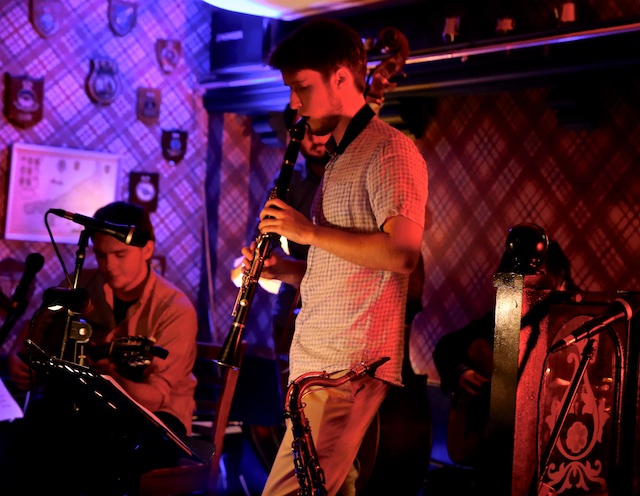 On rhythm guitar was Phillip Beatson, on clarinet and tenor saxophone Asher Truppman-Lattie and on upright bass Djordje Nikolic. Beatson was largely hidden from sight, working his solid rhythm guitar in the shadows; the others all took short solos. It was nice to hear Nikolic playing arco at times, good for a swing rhythm section. It was also good to hear the licorice stick played – a hard task master but especially rewarding in the swing context.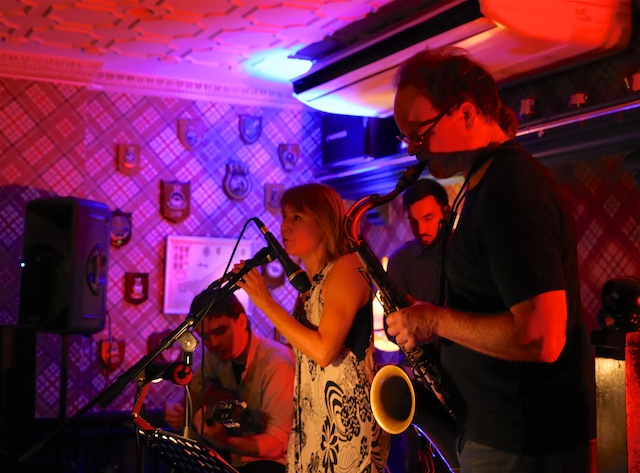
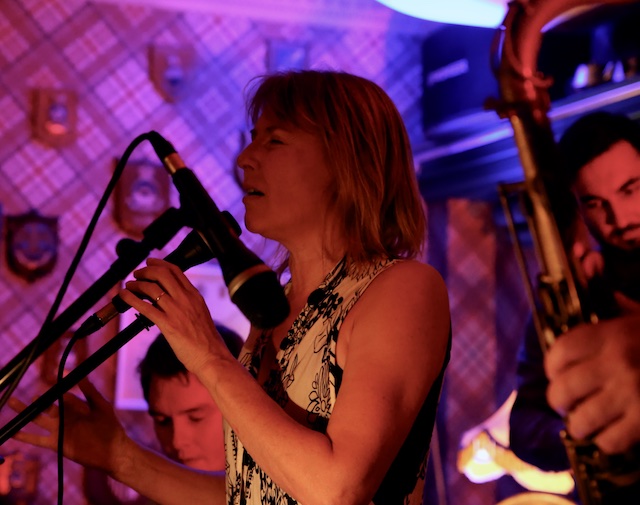 ‘Twistin the Swing: Misha Kovalov (leader, compositions, Manouche guitar), Phillip Beatson (rhythm guitar), Asher Truppman-Lattie (reeds), Djordge Nikolic (upright bass). ‘La Luna & the Gadjos‘: Caro Manins (leader, vocals), Misha Kovalov (guitar), Phillip Beatson (guitar), Roger Manins (tenor saxophone), Djordge Nikolic (upright bass) The gigs took place at the
 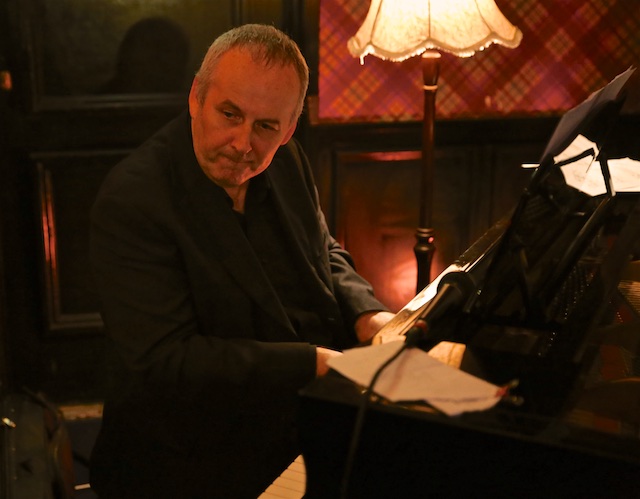 This is pianist Mark Donlon’s second appearance at the CJC (Creative Jazz Club). On this visit, his Shadowbird Quartet featured Aucklanders Roger Manins on Saxophone and Cameron McArthur on bass. The gig also brought Wellington drummer Lance Philip to the CJC for the first time. Both the bass player and the drummer have previously recorded with Donlon. The British-born pianist, educator, conductor is the senior lecturer at the New Zealand School of Music in Wellington
 The first tune of the second set was ‘Nibiru’ and it was rich in narrative and melody. A thing of strange and compelling beauty. The piece began with a repeating pattern on piano, a pattern which shifted harmonically as it progressed. Over this Manins began by stating the melody – seldom straying far from the matrix in the opening stages. McArthur on bass intensified the mood by establishing a counter pattern and then repeatedly plucking at a single note, Philip free to add colour and texture – and he did. I liked this piece very much as it sounded both old and new (a nice effect if you can pull that off). The story behind it added another dimension entirely. ‘Nibiru’ is an imaginary planet beloved of conspiracy theorists, the ones who wear tin-foil helmets when venturing outside. The ones who see an absense of smoke as conclusive proof that the fire is well hidden. The planet evidently reveals itself to the chosen few and is the home of lizard people. I’m not so sure that the believers deserve a tune this nice. The tongue in cheek rendering of this odd belief is anything but ‘end of times’.
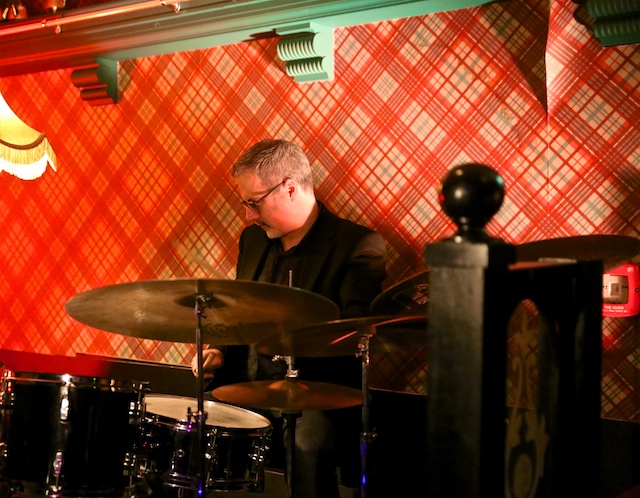 You would expect a group of musicians of this calibre to play well and they did. There are two Donlon albums out shortly and a few earlier ones available. Support local music by experiencing this artist or the bands various iterations. One place to do that will be at the Wellington Jazz Festival in early June.
 This year has seen a lot of international acts through the CJC (Creative Jazz Club), compelling musicians with interesting stories to tell and often with serious gig miles under their belt. As exciting as it is to see the high-end performers of the scene, it is just as important to recognise and evaluate those who might one day take their place. Not all will last the course, but the persistent and the passionate can make that journey. Standing in front of a discerning club audience tests young musicians in ways not easily replicated. Unlike the Jazz School environment, the musicians technical prowess is subservient to the authenticity they bring to the bandstand. Fluffing a line is more likely forgiven than delivering a technically perfect but lifeless performance. Sam Weeks and Sean Martin-Buss tested themselves and came through the fire relatively unscathed.
 The gig was part of the emerging artists series and the musicians first time at the CJC as leaders. Both have previously played as sidemen at the club, but standing anonymously in a horn line is a different thing entirely. I am happy to give this gig the thumbs up as they performed well. It took the first few numbers for them to warm up properly, but warm up they did. The rest of the first set and the one after that delivered crackling performances. All of the material was their own and their writing skills were favourably displayed (especially those of Weeks). A piece titled ‘Missing Together’ by Weeks was a gem – opening with some tricky unison lines, followed by a few bars of counterpoint. They made it sound easy, but clearly, many of these compositions were not. The act of embracing the difficult is how a musician grows. I am glad they took some risks, as Jazz functions best in the absence of complacency.
 Sean Martin-Buss was on alto saxophone with Sam Weeks on tenor saxophone. Each gave the other ample room and the contrast between the horns was therefore amplified. They also differed stylistically and this gave an added piquancy to the gig. They made good use of interactive Banter, musician to audience and to each other. Off the wall comments came out of nowhere, and the audience included in the joke. The humour was not in the lines but in the offhand delivery. A very Kiwi type of onstage banter – self-effacing, mumblingly casual.
 Emerging musicians are often tempted to rely heavily on musicians from their own graduate class. There is nothing wrong with that per se, but the first question is always, which musicians will serve the gig best? Again the co-leaders made good choices in Tristan Deck (drums) and Eamon Edmundson-Wells (upright bass). The remaining band member was Crystal Choi on piano. Deck and Edmundson-Wells perform in public regularly and both have earned considerable respect. They personify good musical taste. They have talent and better yet, they work extraordinarily well together. It was this combination that tightened up the performance – real assets. Choi was extremely interesting on this gig. I have sometimes noticed a tiny hesitancy in her delivery. On this night, her performance exuded confidence and several of her solos were stunning. The enthusiastic audience responded throughout the night.
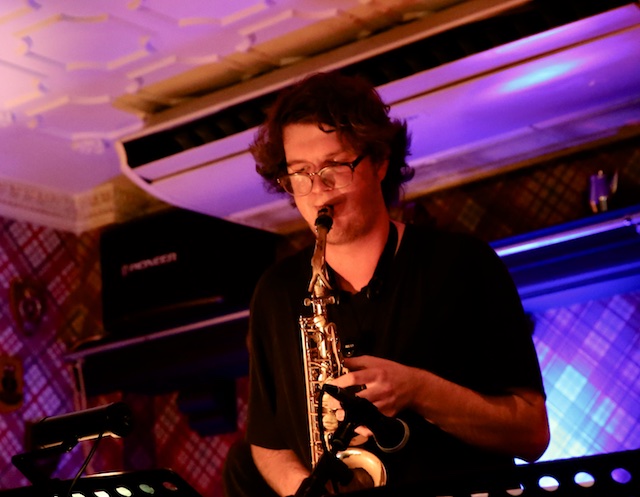 Although the leaders possess perfect vision and are clearly not Venetian, the project was ‘The Blind Venetians’. This was also the name of the final number of the last set; a roistering finale bringing down the cantilevered shutters at gigs end.
 As I write this it is International Jazz Day, a UNESCO sponsored day honouring the diversity and depth of the world improvising scene. It was, therefore, serendipitous that Carl Dewhurst and Simon Barker brought ‘Showa 44’ to town – especially in the days immediately preceding the big celebration. This gig offered actual proof that the restless exploration of free-spirited improvisers, lives on undiminished. I have sometimes heard die-hard Jazz fans questioning free improvisation, believing that the music reached an unassailable peak in their favourite era. To quote Dexter Gordon. “Jazz is a living music. It is unafraid …. It doesn’t stand still, that’s how it survives“. While a particular coterie prefers their comfort zone, the music moves on without them. Younger ears hear the call and new audiences form. Life is a continuum and great art draws upon the energies about it for momentum. Improvised music is not a display in a history museum.
 It is through listening to innovative live music that our ears sharpen. When sitting in front of a band like this the mysteries of sound become visceral. This was an extraordinary gig, at times loud and confronting, mesmerising, ambient and always cram-packed with subtlety. Fragments of melodic invention and patterns formed. Then subtly, without our realising it, they were gone, tantalising, promise-filled but illusory. We seldom noticed these micro changes as they were affected so skillfully – form and space changing minute by minute, new and yet strangely familiar – briefly reappearing as quicksilver loops before reinventing themselves.
 With the constraints of form and melody loosened new possibilities emerge. In inexperienced hands, the difficulties can overwhelm. In the hands of artists like these the freedom gives them superpowers. Time is displaced, tonality split into a prism of sound, patterns turned inside out. The first set was a single duo piece, ‘Improvisation one’ – unfolding over an hour and a quarter; Dewhurst and Barker, barely visible in the low light. This was about sculpting sound and seeing the musicians in shadow added a veneer of mystique. Dewhurst began quietly, his solid body guitar lying face up on his lap. The sound came in waves as he stroked and pushed at the strings, moving a slide – ever so slightly at first, causing microtonal shifts or new harmonics to form, modulating, striking the strings with a mallet or the palm of his hand. The illusion created, was of a single drone repeating. In reality, the sound was orchestral. As you listened, really listened, microtones, semitones and the occasional interval appeared over the drone. Barker providing multiple dimensions and astonishing colour, responding, reacting, crafting new directions.
 In this context, the drummer took on many roles, a foil to the guitarist, creating silken whispers, insistent flurries of beats and at times building to a heart-stopping crescendo. I found this music riveting and the audience obviously shared my view. In the quiet passages, you could hear a pin drop. If that’s not an indication of the musical maturity of modern Jazz audiences, nothing is. One of the prime functions of art is to confront, to challenge complacency. This music did that while gently leading us deeper inside sound itself. No one at the CJC regretted being on this journey. This is territory loosely mapped by the UK guitarist Derek Bailey, the Norwegian guitarist Aivind Aaset and the American guitarist Mary Halvorson. They may take a similar path, but this felt original, perhaps it is an Australian sound (with a Kiwi twist in Manins). The long multifaceted trance-like drones suggest that.
 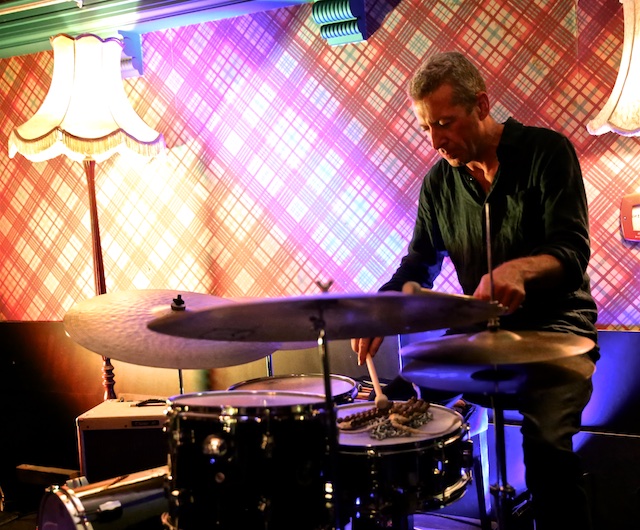 The second set was shorter, ‘Improvisation two’ had Roger Manins aboard. I should be immune to Manins surprises but he frequently catches me off guard. His breadth and depth appear limitless. ‘Improvisation Two’ began with a broader melodic palette. Dewhurst and Barker set the piece up and when Manins came in there was a stunning ECM feel created. Barker tap-tapping the high-hat and ride. Achingly beautiful phases hung in the air – then, surprisingly they eluded us, unravelling as Manins dug deeper – dissecting them note by note. These interactions give us a clue as to how this music works, each musician playing a phrase or pattern and then re-shaping it, passing the baton endlessly.
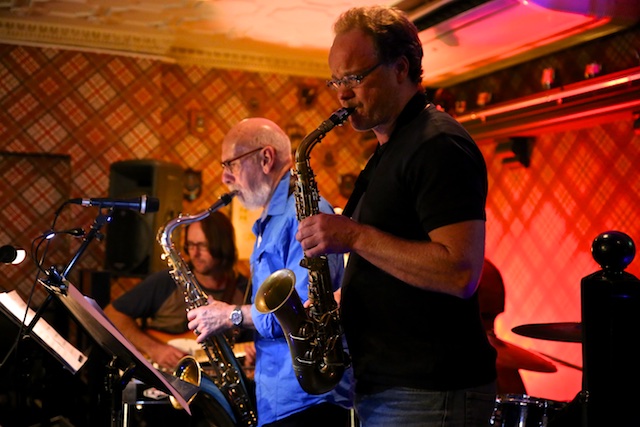 A seasoned New York veteran when asked to comment on the quality of playing by young artists emerging from the Jazz Schools said, “Man they’re such great players. Many of them have chops to burn, but what is lacking is ‘character’. That is not taught in Jazz schools, you gain it inch by inch out of life experience”. To paraphrase Lester Young who put it best, ‘I hear the notes, but what is your story’. The character of a musician (or the lack of it), shows up in the music. Jim Langabeer has ‘character’ to burn. He tells wonderfully human musical stories and they are utterly beguiling.
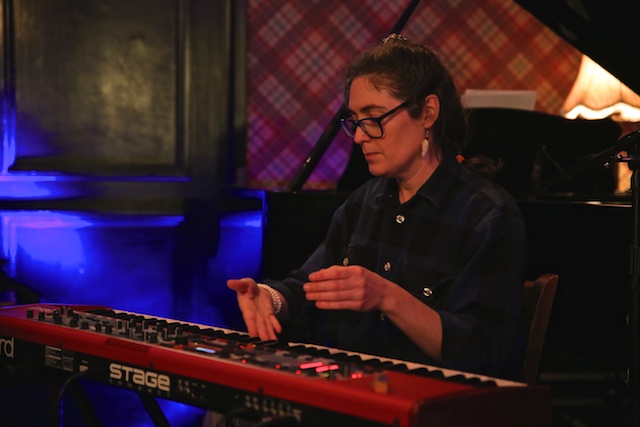 Langabeer is hugely respected on the scene and deservedly so. He has worked with greats like Gary Peacock and Jaco Pastorius and in spite of absorbing the essence of North American Jazz, his ideas and sound possess a Kiwi authenticity. When he plays his tenor there is often a street-raw raspy intonation. The sound is at times reminiscent of Archie Shepp, but the story and flow of ideas are entirely his own. His flute playing is soulful and as soft as silk in the breeze. Because he is so comfortable in his own space he can incorporate everything from the avant-garde to indigenous music without it sounding contrived. These seamless references work beautifully in his hands. We talked of this after the gig and agreed that many of the earliest attempts at blending middle eastern, far eastern or ethnic music were less successful than now.
  As the boundaries between cultures blur in a globalised world, the mutual respect between improvising traditions grows. I have posted an example of this effortless genre-blending in a clip from the CJC gig titled ‘Ananda’s Midnight Blues’. Those who are familiar with Buddhism will grasp the meaning immediately. Ananda was Gautama Buddha’s childhood friend and later his disciple. Beloved, worldly and yet never afraid to challenge his enlightened teacher. There is a feeling of deep questing spirituality in the piece – reaching beyond mere form.
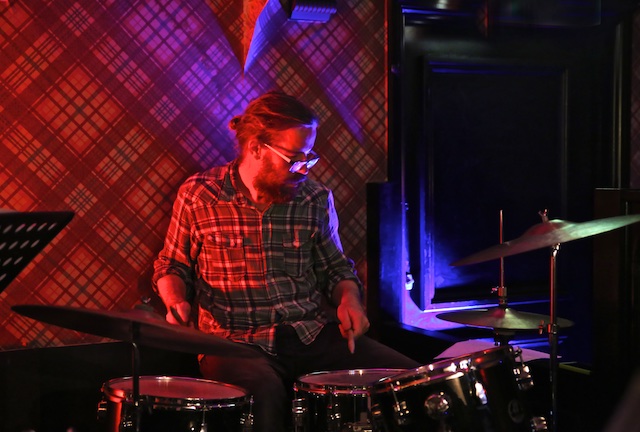 Whether Langabeer plays flutes or reeds, everything serves the composition. His spare lines (which are devoid of undue ornamentation) establish a theme and then vanish like a will-o-the-wisp, giving a nudge to the imagination and enriching the piece as a whole. There are no wild flurries of notes on the saxophone or flute because the story resides elsewhere. His writing creates an over-arching logic and the ensemble has the freedom to move in and around tonality. In some pieces ostinato patterns create a drone effect, becoming a single note over which to restate the melody. This freedom allows for an organic interaction, free or inside and with a deep gut-felt pulse.
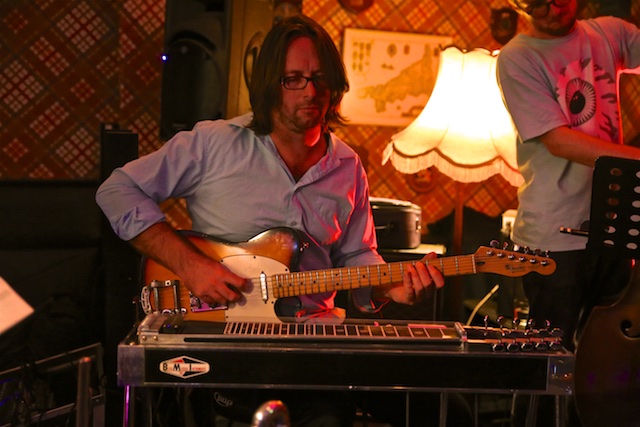 When putting a band like this together the choice of musicians is supremely important. Not every musician could handle such freedom. Needless to say, Langabeer chose well. The ensemble was rich in contrasting colour, rich in character. It was our good fortune that Jim Langabeer’s daughter Rosie Langabeer was back in town. I can’t imagine a better-qualified pianist for this role. A leading avant-gardist and experimental musician who crafts compelling filigree and rich beauty into her music. Rosie Langabeer can play outside one minute and the next you hear a deep subtle swing, a rare kind of pulse that you can feel in your bones. A gifted composer and leader in her own right, an extraordinary sides-women when required. Moving from percussive, richly dissonant voicings to heart-stopping arpeggiated runs – somewhat reminiscent of Alice Coltrane’s later piano offerings. Her iconoclastic playing delighted the audience.
 On alto was Roger Manins. Although the alto is not his main horn he is extraordinarily fluent on the instrument. Langabeer has been focussing on multiphonics and microtonality of late and he and Manins showcased some atmospheric numbers utilising various blowing techniques. Manins has long impressed by playing in a variety of styles with equal facility. On guitar and pedal steel guitar was Neil Watson, bringing his mix of blues, Jazz punk, and avant-garde to the fore. Another iconoclast and one we love hearing. The pedal steel guitar has been in his possession for a year now and his rapid mastery of the instrument is impressive. A difficult beast tamed beautifully. On Bass was Eamon Edmundson-Wells. A versatile young bass player most often found in the company of experimental musicians. His performance on this gig was right on the money.
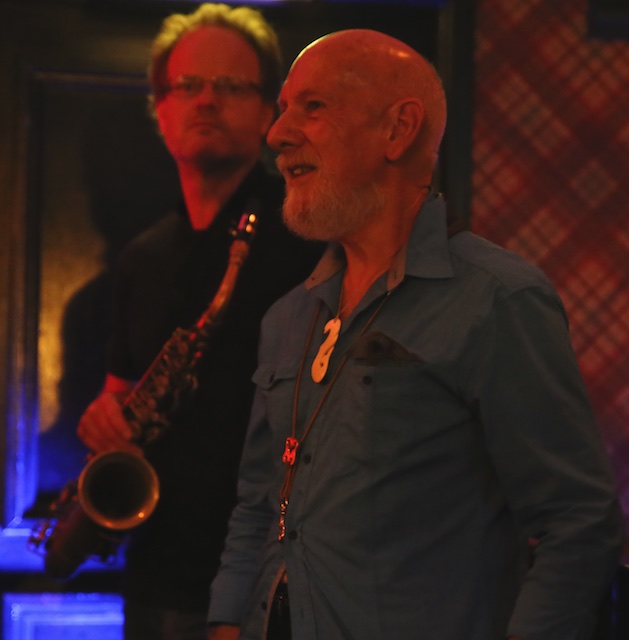 On drums and percussion was Chris O’Connor. Perhaps more than anyone else O’Connor personifies this free-ranging music. Of all the New Zealand drummers, his are the widest-ranging skills. Colourist, minimalist, indie rocker, straight-ahead jazz, avant-garde, experimental percussion and film work. There is nothing he won’t tackle and everything he touches benefits from his musicianship. When a piece titled ‘Tapu’ was played O’Connor stole the show. While Langabeer played the difficult and wonderfully atmospheric Putorino (a traditional Maori flute of the Taonga Puoro family), O’Connor simulated the Tawhirimatea (A traditional whirring instrument dedicated to the god of winds). The effect was eerie and electrical. Later in the piece he blew through the stem of his snare stand – recreating the effects of the Pututara (a conch trumpet). Only O,Conner could have pulled this off so well. Like Langabeer, he has a deep awareness of multicultural issues.
 The one standard was Strobe Road (Sonny Rollins). A lesser known standard and played with enthusiasm. The remainder was a selection of Langabeer tunes, many referencing Maori of Kiwi themes. His tune Rata Flower was a stunner – it deserves to become a local standard. He has obtained funding from Creative New Zealand for this project and we might see a ‘Sketches of Aotearoa’ album soon. I truly hope this occurs and I will be the first to purchase one.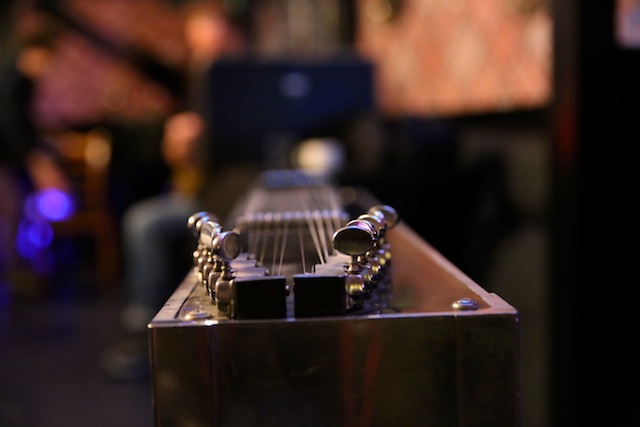
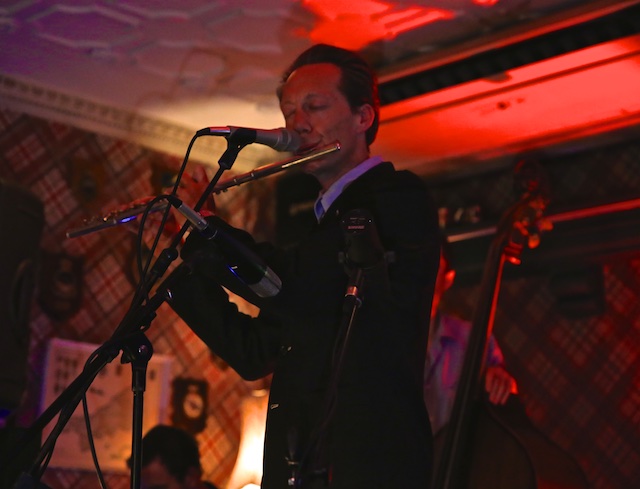 Musicians of a certain calibre are peripatetic, going where the music or the work takes them. This partly arising out of necessity, but also out of an impulse to explore new sonic and cultural environments. When a child or a grandchild arrives the musicians journeys circumscribe smaller arcs and are less frequent; the local scene being the beneficiary. This is the case with Nathan Haines; happily young Zoot tethers him in our midst for the moment. Haines has a solid reputation here and in the UK, with a loyal fan base in both locations. He has never been afraid to push in new directions, but at the heart of whatever explorations he embarks upon, a default soulfulness underpins the enterprise. This leads him to productive collaborations with like-minded artists, and not necessarily all Jazz purists. From the Hardbop-infused to Soul Jazz to DJ funk – it all works for him. While all of these collaborations are pleasing, none is more so than when he plays alongside brother Joel Haines.
 The Haines brothers have different musical careers, Nathan Haines outgoing, a public performer and award-winning recording artist – understanding well, the vexed world of marketing and the presentation of non-mainstream music. He balances these competing forces better than most. Brother Joel is a successful composer and a gifted performer as well, but his career these days centres on TV and film work. An engaging musician and a crowd pleaser; less in the public gaze by choice. Improvised music thrives on contrasts and the rub between different sounds always works well in the right hands. Nathan creating soulful innovative grooves and catchy melodies over traditional Jazz offerings, Joel bringing a warm-as-toast Jazzgroove edge, wrapped in a blues/rock package.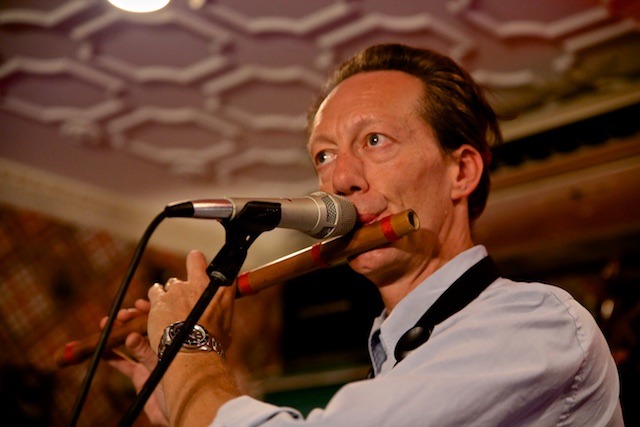
 Next up was ‘Desert Town’ a Haines tune from ‘Heaven & Earth’. That was followed by an earthy version of ‘Set us Free’ (Eddie Harris) and then ‘Mastermind’ (Haines) from his recent ‘5 a Day’ album. Last up on the first set was ‘Land Life’ a tune based on a Harold Land composition. It pleased me to get a mention from the bandstand at this point. It is no secret that I’m a real Harold Land enthusiast. The band tore up the propulsive changes and moving free, made the tune their own.
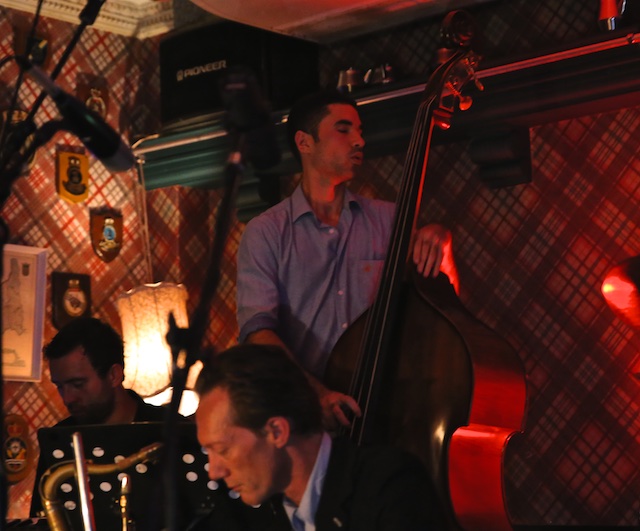
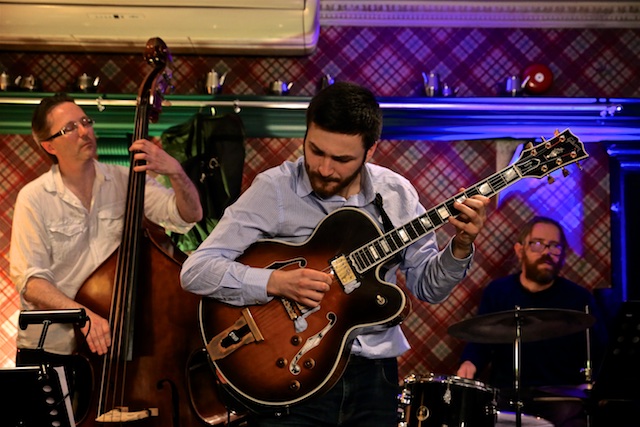 With the Indian summer lingering, March rolled seamlessly into April, and in Jazz parlance, we got to JAM (Jazz April Month). This is the month when the International Jazz community reaches out and proclaims, listen up ‘world’ we have something to say. The month culminates with UNESCO world Jazz day; last year the main celebration was in Paris, before that Osaka and Istanbul. This year the Thelonius Monk Foundation and UNESCO will hold the WJD main celebration in the White House at the invitation of President Obama.
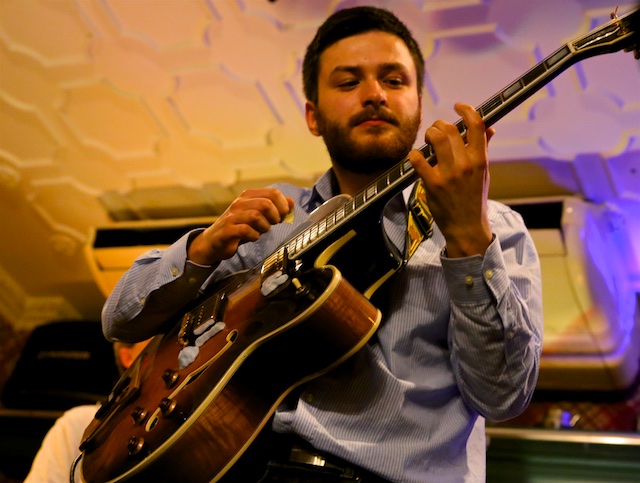 He is a different sort of guitarist and although in his early twenties, he already sounds like a member of that post-millennial cadre of improvising trend setters. As usual, I arrived during the setup and what I heard offered promise. His lines during the warm-up number were fast and furious, but the clarity of tone and of ideas, jaw dropping. As the first set began the band traversed various moods, from the Bop referencing to the reflective. Luft is a formidable technician, his fluency beyond the reach of many practitioners I suspect, but during the slower reflective numbers, we glimpsed subtly and depth.
 The first set brought us the trio formation, and the set list ranged from the near avant-garde to ‘world Jazz’. I really enjoyed the material chosen as there were quirky originals, and material ranging from the familiar (Gismonti) to the unfamiliar – tunes by Portuguese or Brazilian composers including a delightfully outrageous rendering of a tune called ‘The bickering of the crazy musicians’. That one brought the house down. I was also delighted with his tribute to the adventurous guitarist Derick Bayley; a tune titles ‘Derick’. Again this showcased the breadth of his influences. Whether the reflective or quirky, handled with the supreme confidence that only a musician at one with his instrument can attain. Accompanying him was Tim Robertson, an expat with a long string of impressive credits to his name in the UK. Robertson and Luft were a tightly focussed team, enhanced by the addition of Chris O’Connor for the Auckland gig. O’Connor is endlessly versatile and ever popular about the country – from Indie Rock or straight ahead Jazz through to experimental music. He adds enormous value to any bandstand, any genre, and the choice could not have been better.
 On the second set, the trio added local saxophonist Roger Manins and the tunes although standards took in a wide spectrum. Opening with a ‘groove take’ on Victor Young’s ‘Delilah’ and then in contrast diving headlong into a marvelous Ornette Colman piece. ‘Humpty Dumpty’ from Ornette’s ‘This is our Music’ was undoubtedly my favourite of the night. Everything these musicians played worked well, but this tune just bounced off the walls and had everyone whooping in delight. Next was a crazy little known Monk tune titled ‘Unidentified Monk Solo’ and lastly ‘Ray’s Idea’ by Ray Brown. From deep listening enjoyment to wild and free in one gig.
 Two nights later I was watching the Sky Arts channel when a programme on guitarists came up. Then I saw him, a younger Rob Luft performing at Ronny Scotts, solo guitar, receiving praise from George Benson, recording at Abbey Road studios and winning the Jazz section of a prestigious UK guitar competition. We sure lucked out getting this band for a Jazz April opener. The clip below is from a Ronnie Scotts gig – Rob Luft with ZiroBop – The clip tells you everything you need to know about him as a guitarist.
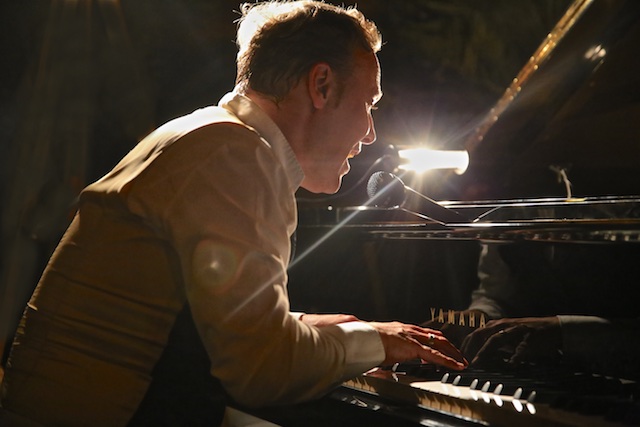 Every few weeks, I casually glance at the CJC web page to see what lies ahead. When I spotted the name Jef Neve, I immediately cleaned my glasses and refocussed, just to make sure that I hadn’t imagined what lay on the screen. No, there it was, Jef Neve, Belgium. Neve is a significant figure on the European Jazz scene and described as Belgium’s best contemporary Jazz pianist. He has three significant careers, one in the Jazz world, one composing film scores and yet another in the contemporary classical music world. Wow! I thought – how did we score him for a club gig? The answer, of course, is the Roger Manins factor. Jef had worked with Roger during Maria Schneider’s tour of Australia and Roger has a lot of pull with musicians.
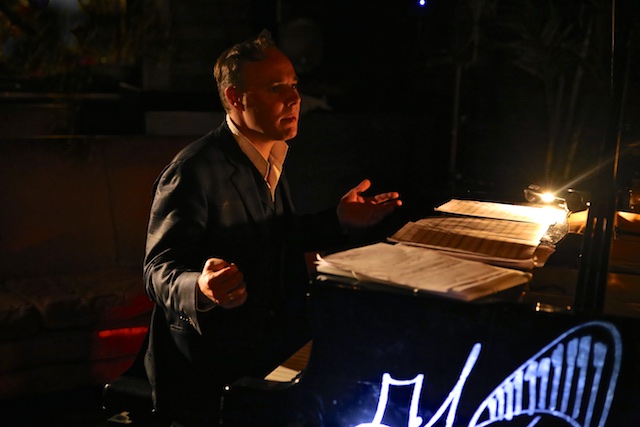 Although The Creative Jazz Club was the beneficiary, it was Neve’s formidable classical credentials which brought about his New Zealand trip. As we remember the ghastly carnage of the great WW1 battles a hundred years ago in Belgium, there are various commemorative events. In 2013, Neve composed ‘In Vlaamse Velden’ (In Flanders Fields), a significant work which tells the war tales of his native Ghent. For the New Zealand concert, the historic Flemish diary readings were interspersed with diary readings from New Zealand families who suffered loss. My family lost a great uncle at Passendale and my grandparents never shook off the sadness. The readings spoke of loss, but also of hope. Everything Neve does is informed by his peace-loving humanism. The audience was reminded of young soldiers dying, and young civilians as well. The Belgium government, The Auckland War Memorial Museum, and various other partners made this happen. Inadvertently, they brought us a significant Jazz event.
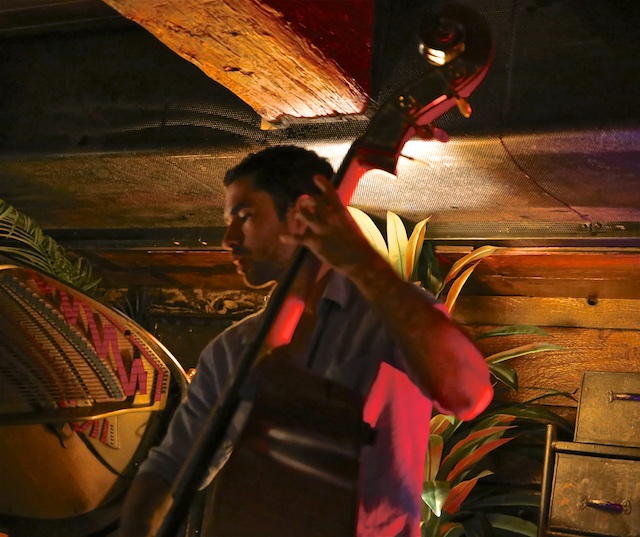 The first CJC set was Neve playing solo. Much of the material drawn from his recent ‘One’ album. Second up was a thoughtful and moving rendition of ‘Lush Life’, the long intro giving little away. After the intro, a reflective minimalist version unfolded, with Strayhorn honoured affectionally. Most of the other tunes were Neve originals and appropriately they included a recently composed piece referencing the Belgium bombings. Typically the piece went beyond mere requiem, challenging the world to get along and to accept diversity. This hopeful humanism informs all of Neves work. At that point he looked up, smiled, and said to us, “I believe that we only have one life and so we should make a real effort to get along, no matter where we come from. After we are born we should party together until we die”. On that night, ‘party’ we did. The last number in that set was Joni Mitchell’s ‘A Case of You’ – first he read the lyrics and then he played – just lovely.
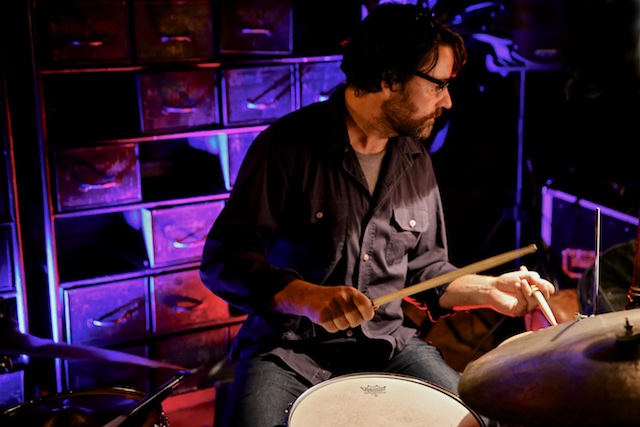 The second half was a trio set and Neve was warmed up and ready to stretch out. With him, he had Ron Samsom (drums) and Cameron McArthur (bass). There had been one short rehearsal a few hours earlier but you wouldn’t have thought so. The first number, ‘The space we need’, was from his critically acclaimed ‘Imaginary Road’ album. They quickly dropped into what can only be described as an elevated state of being. Every move mutually understood, reacted to in kind, rendered into gold with a sonic alchemy. These guys worked extremely well together and the looks on their faces told you that they knew it. ‘The space you need’ was a hard swinging burner, filled with exhortations and joyous exchanges. During a later number, Neve hummed a melody and had the audience repeat it during the chorus. Later I heard him whistling a melody softly (whistling in unison with his right-hand phrases). The last person I heard do this so effectively was fellow Belgian Toots Thielmans. This was Jazz at its best. Throughout the second set, I was so absorbed that I forgot to take notes. Perhaps magic like this can not be captured anyhow.
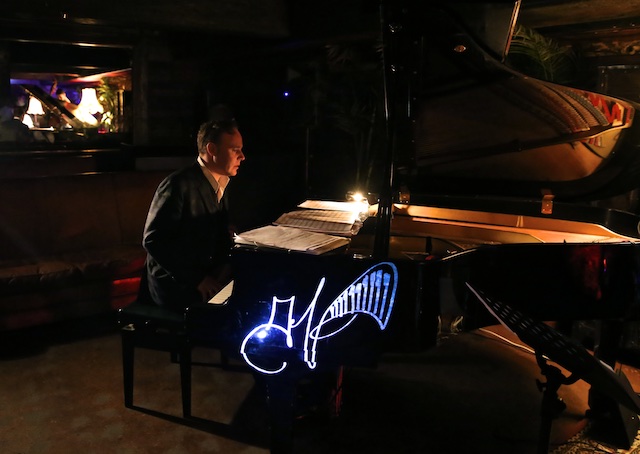 At this point, the conversation got really interesting. He clearly didn’t regard musical structures, be it blues, classical or otherwise as the dominant force guiding his improvising; These outside influences were his vocabulary. In the same way, a writer doesn’t regard the alphabet or grammar as directing the flow of ideas. In Neve’s case, it was not about form but about sound. “I see the universe as sound and I explore that, work with that”. ‘Sound’ is what drives him as an improviser. When I asked how he got those otherworldly acoustic harmonics from the piano. He said, “As I play, I look for unique sounds, probing until I locate them”. This was an iteration of something I had heard before, something uttered by pianist Jonathan Crayford, “I try to make piano’s sing, seek a oneness with their sound”. Later I spoke to Ron Samsom about this and he said, “There is a theme with the great musicians and it always comes down to sound and interaction. With Jef, we didn’t so much rehearse, as dive into the energy. We just jumped onto the wave and began. It was playing music from first to last note and exploring ideas”.
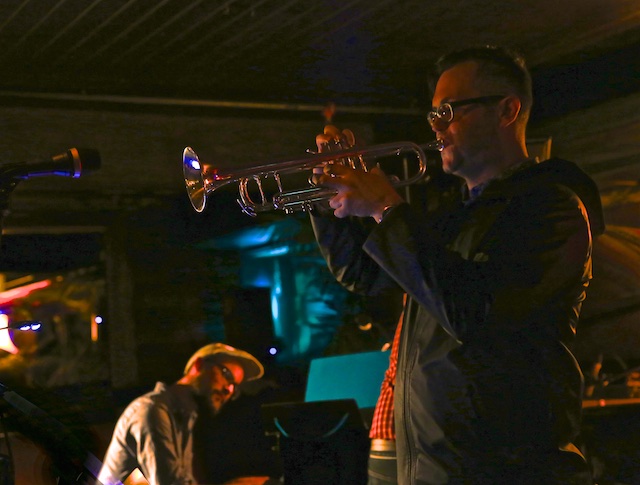 In spite of living at the other end of the Island, Lex French is a regular fixture at the CJC. It is hardly surprising since his popularity with Jazz audiences is ever-growing. There are not many trumpeters of French’s stature in New Zealand and it is our good fortune that he remains. He obtained his Masters from McGill University in Montreal, a university with a strong focus on brass. A university which had an ongoing association with the UK-based Canadian trumpeter Kenny Wheeler while he was among us. I mention Wheeler, because as I walked down the stairs to the club to set up my gear, I heard the unmistakable opening phrase from ‘Smatter’ coming out of the darkness. Just the opening phrase and then silence.
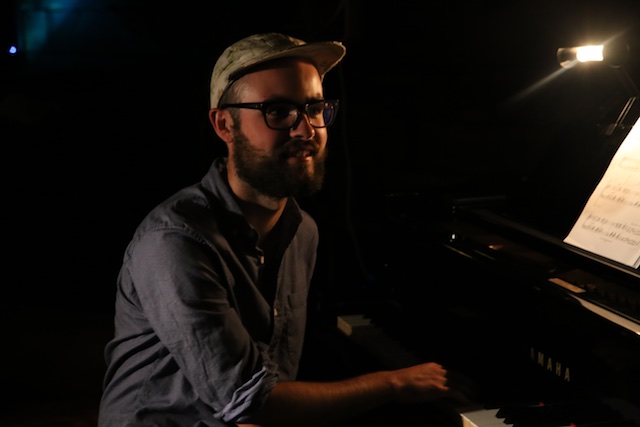 It was so Wheeler-like, that I assumed someone was setting up a Wheeler album on the club sound system. As my eyes accustomed to the low light I saw French standing alone – repeating the phrase. French is not a one-trick pony; he is as modern as tomorrow, but at other times, old school respectful. He can punch out high notes or swing hard bop like a Blue Note artist back in the day. This is not a musician to pass up on.
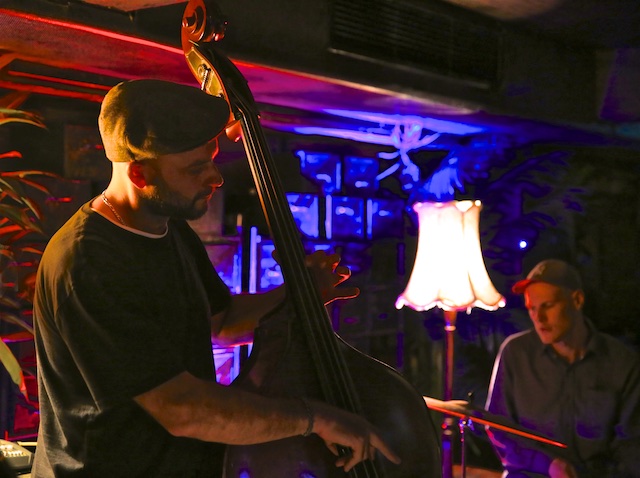 I particularly liked French’s compositions ‘Kasid’ from the first set. There were many reasons to like this; the musicians innovative explorations of the theme, the evocative middle-eastern mode underpinning it, and the fact that it referenced the wonderful Iraqi poet Abdulkareen Kasid. An achingly beautiful melody tinged through with bittersweet sadness, establishing itself delicately over a quietly incessant bass motif. When Steele came in, his opening chords were Oud like – giving the impression of soft strings jangling sweetly in the night air. I listen to a lot of middle-eastern improvised music and this performance stands beside the best of those. In the background, the drums tap tapped (like stones tumbling in a stream, and every so often swooshes).
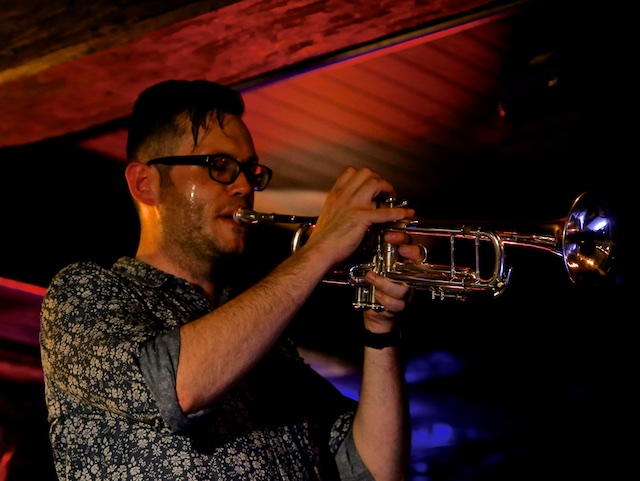 The poet Abdulkareem Kasid is new to me (and I have a huge collection of poetry). To discover a poet like this is exciting and I thank Lex French for this. What could be better than to experience a night of interesting music, and at the end, find a poet? I finish this with some words from that poet – listen to the piece as you read the lines – I did.
 These events focus on emerging Improvising artists and allow them to gain wider exposure in front of a discriminating audience. They generally occur around three or four times a year. Some of those featured in the Emerging Artists Series are recent graduates, others are still pursuing their studies. In this case, we had two horn players from out of town; Christchurch and Wellington respectively. Their horns were different, and their approaches to the sets different, but both approached the gig with the confidence of seasoned performers. Such confidence translates well on the bandstand and it informs an audience that the musician means business. Artists often remark that playing in a small Jazz club like the CJC is a unique experience. It’s not like a noisy bar, where people often ignore you, and it’s more intimate than a concert hall where an audience gives limited feedback. Club audiences listen intensely, they react boisterously at the end of a good solo and they call in encouragement when a phrase resonates. Mostly they listen in silence and but they listen actively.
 Jimmy Rainey, a tenor player from Christchurch played the first set. He is a graduate of the Jazz School in Christchurch, now furthering his Jazz studies at the Auckland University Jazz School. In Christchurch, he’s involved with a number of groups such as the Symposium Jazz Orchestra (many will recall that orchestra on Glen Wagstaff’s album), and the earthy ‘Treme’ styled Justice Brass Band. On Wednesday, he had a premier Auckland Rhythm Section at his disposal, Kevin Field, Cameron McArthur and Ron Samsom. Most of the compositions were Rainey’s and they showed a developing maturity. His sound was interesting, especially on the down-tempo numbers, having that downtown late-night feel. He is in Auckland for a while and I am certain that we see more of him. His father is well-known on the scene but he is earning his own place in the light. With a Jazz-famous name like Rainey, he has a head start.
 Bryn van Vliet has visited the club before as part of the boisterous Wellington Mingus Ensemble. In that context, I have seen him play in Auckland and Wellington, but never as a leader. He is also a member of the Roger Fox Big Band and a graduate from the Wellington Jazz School. While van Vliet often doubles on tenor, he played alto for this gig. What immediately caught my attention was his clean tone. A compelling tonal quality that quickly drew you in. His playing has cut-through in ways that Paul Desmond’s did, but for all that it was a modern sound. Vliet is originally from the far North but his Wellington credentials will no doubt anchor him there. Like Rainey, he brought many of his own compositions to the bandstand and the same rhythm section backed both players. For the last number, a standard, they were on the bandstand together.
 When I recently interviewed visiting Flamenco dancer Isabel Rivera Cuenca she told me that she had met some wonderful New Zealand improvising musicians and, in particular, she mentioned Jonathan Crayford. They met at a party and briefly discussed doing a project together. As they had not been able to make contact since I supplied email addresses and the project quickly took shape. A talented sensuous Flamenco dancer from Barcelona and a gifted Kiwi improviser; irresistible.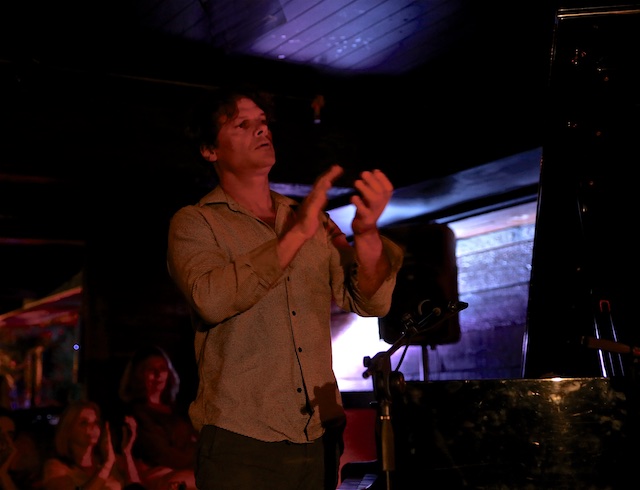
 There is a real synergy between Jazz and Flamenco; they are musical cousins. Both musical forms fuse North African Rhythms with unique harmonic approaches, both created out of harsh repression. Underlining the driving rhythms of Flamenco is pure passion, contrasting a sad but beautiful dissonance. The musicians and dancers frequently call to each other in encouragement and this is not so different from the call and response in jazz. That they are similar in essence is hardly surprising – when the chants, dance and polyrhythms of Congo Square met with Creole melody, fed by a multitude of European influences (including Spanish music), Jazz was born.
 During the second set we heard tunes which moved closer to the Flamenco idiom. In these free-ranging highly improvised tunes Crayford has few peers. Towards the end of the evening, the two were in absolute lock-step; Cuenca reacting to every nuance of the music and bringing her fluid kinetic brilliance to bear, dancing her way into the hearts of everyone there. The communication was simply electric.
 When the word gets about that a Jamie Oehlers gig is imminent, excitement mounts. Having turned people away last year, due to a capacity audience, the CJC offered two sessions this time. As expected, both were well attended. Oehlers is highly regarded in the Jazz world and it is not surprising. His astonishing mastery of the tenor saxophone is central to his appeal, but it is more than that. Every note he plays sounds authentic as if no other note could ever replace it, and all conveying a sense of musical humanism.
 Oehlers has a new album out titled ‘The burden of memory‘ and we heard many of the pieces as the sets unfolded. Accompanying him on the album is a dream rhythm section: Paul Grabowsky on piano, Reuben Rogers on bass and Eric Harland on drums. Each a heavyweight and living up to their formidable reputations. For the Auckland gig, there was Kevin Field on piano, Olivier Holland on bass and Frank Gibson Jr on drums. Jumping in where Grabowsky, Rogers, and Harland had gone was no doubt daunting but they pulled it off in style. All played exceptionally well, but Gibson was a standout. The exchanges between him and Oehlers memorable. These men have history and the old conversations were clearly rekindled on the bandstand. Roger Manins joined Oehlers for the last number of each set and the two dueled as only they can. Weaving skillfully around each other and sounding like two halves of a whole; grinning like Cheshire cats.
 The album title and the song titles speak clearly of the musicians thought processes. He talks of his motivations and his horn takes us there. The burden of memory is a phrase he heard while listening to talkback radio and it resonated with him. He thinks deeply, examines the world about him and this communicates throughout the album. The second track ‘Armistice’ is a good example, possessing a melancholic beauty, and while it throws up the obvious images of a war ending, it also speaks of families and the tentative steps towards new possibilities.
 The Briana Cowlishaw/Gavin Ahearn gig is the second CJC gig featuring international artists in a month. For those who follow Australian improvised music, these are familiar names. Both have rock solid credentials as both have traveled extensively with their music and attracted glowing critical reviews. This is a fortuitous musical pairing, and it is particularly obvious during duets. There is a mutual awareness of space and nuance and an understanding of just where interplay works best; neither over-crowding the other. There are a lot of pianists who accompany vocalists convincingly, but the true art of accompaniment is rarely seen. Ahearn is a fine accompanist and soloist. Unusually, you could say the same for Cowlishaw – an aware musician who watches and listens to her collaborators carefully – works with what she hears. Never greedy to hog the limelight and making every line count.
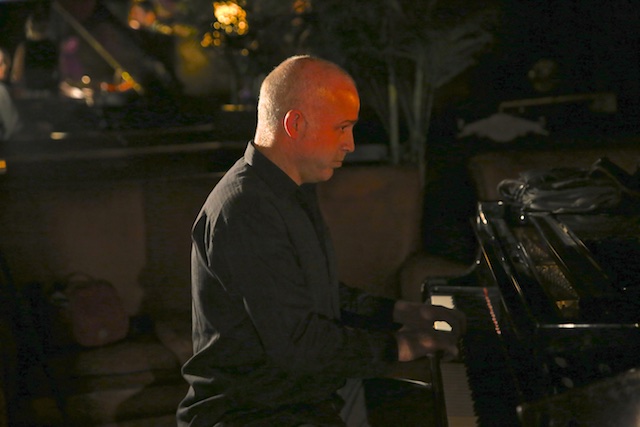 For an artist barely past her mid twenties Cowlishaw has achieved much. Performing at festivals all over the world and being nominated for prestigious awards along the way. She has studied with top rated teachers in three continents and it shows (including Gretchen Parlato, Aaron Goldberg, Kurt Elling). Her confidence, compositional abilities and musicianship shine through on the bandstand. Hers is a modern voice and more importantly a fresh young voice. What worked so well so well for Gretchen Parlato also works for her; a clean delivery, imaginative interpretations and an interesting approach.
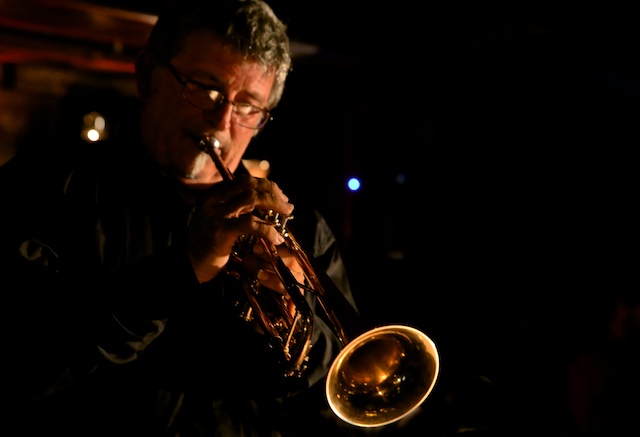 The first set saw Cowlishaw and Ahearn performing as a duo. This format gifts artists with a degree of freedom and it was well utilised. As they took us through a mix of standards and originals, we saw just how attuned they are. The Cowlishaw compositions are particularly interesting, with words, wordless vocalising and interesting harmonic underpinnings from Ahearn – a subtle weave, blending threads to create evocative soundscapes.
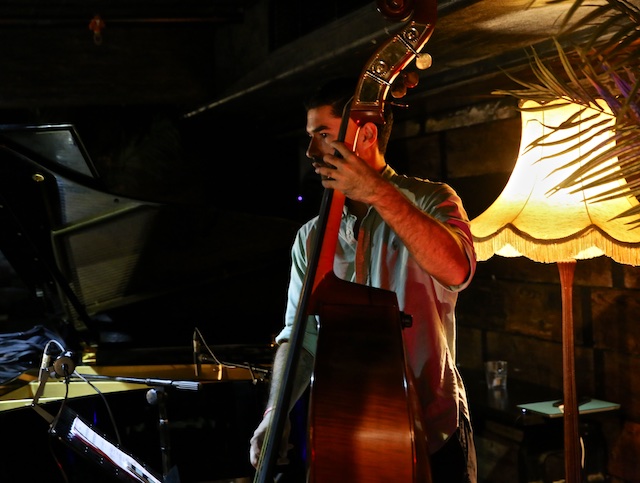 Both have visited Norway and the sparse honest northern sound was particularly evident in their first set. A recent collaborative album recorded in Norway arose out of an earlier trip there. More recently they performed at the Hemnes Jazz Festival in that country. As Cowlishaw said of these compositions, “After spending a lot of time on the road and in big cities, I found myself in the Fjords. The wild lonely freshness was so appealing that the thought arose – was this a place that I would want to live in one day”? Arising from that proposition came the compositions on their ‘Fjord’ album. Cowlishaw is obviously keen on the outdoors. She told an audience member that she intended to explore a few of New Zealand wildness places as the chance presented itself.
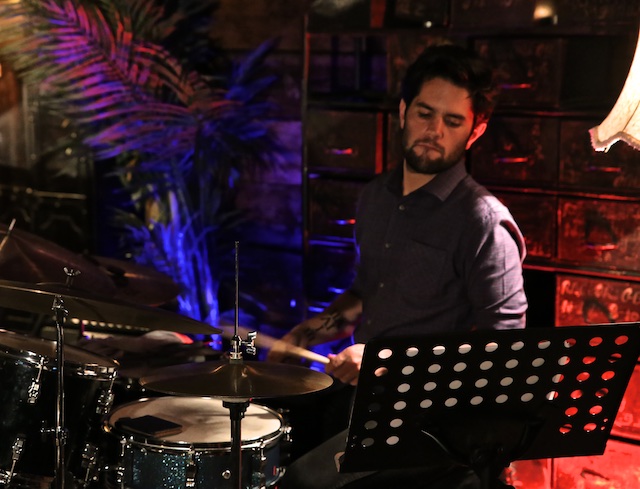 The second set swelled the bands numbers to a quintet – joining the duo were Mike Booth on trumpet, Cameron McArthur on bass and Adam Tobeck on drums. All fine musicians and well able to rise to any challenge. The expanded unit gave her much to work with and Ahearn in particular jumped at the opportunity; utilising a more aggressive hard-swinging style. There were more standards in this second half and Cole Porters wonderful 1943 composition from ‘Something to shout about’ – ‘You’d be so Nice to Come Home to’ stood out as a rollicking swinger. The other memorable standard came from the duo – Michel Legrand’s 1932 composition ‘You must believe in Spring’. To Jazz audiences this means one thing – The achingly beautiful Bill Evans Warners album of that name. The rendition was remarkably beautiful – Cowlishaw tackled the number as Norma Winstone might, while Ahearn stamped his own authority on the ballad while allowing Evans to shine through.
 JazzLocal32.com