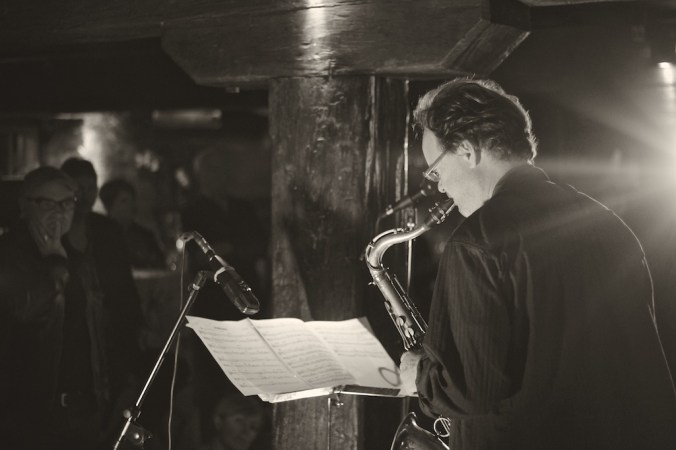
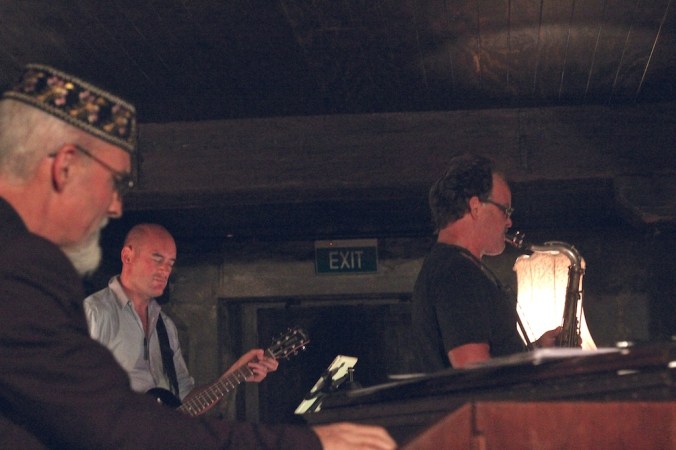
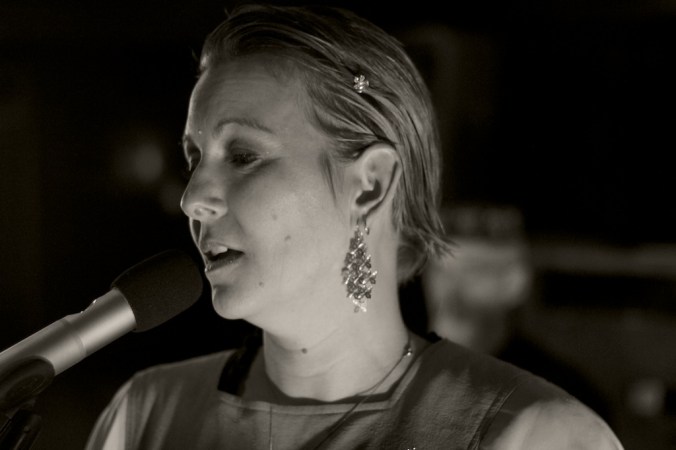
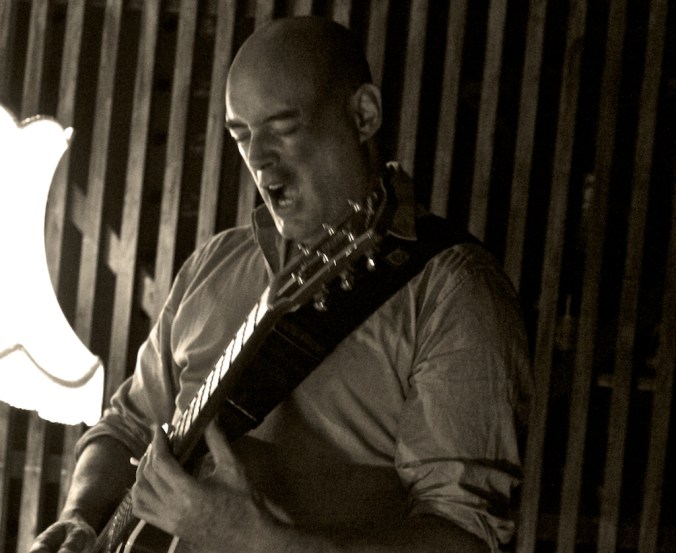
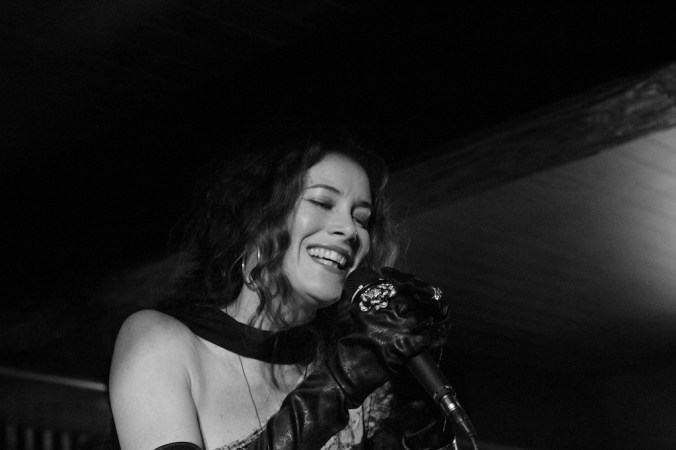
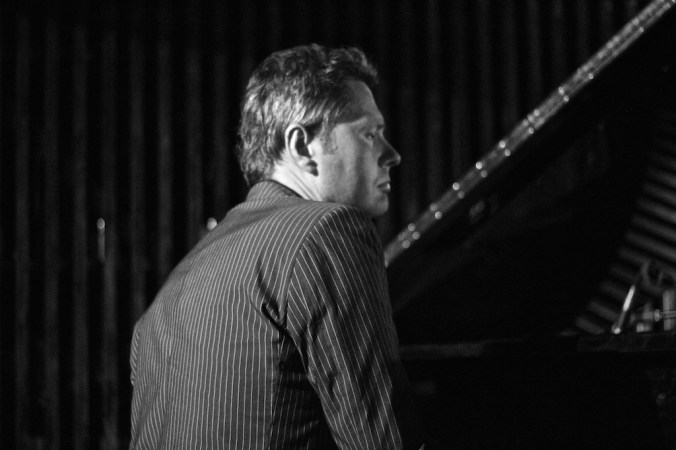
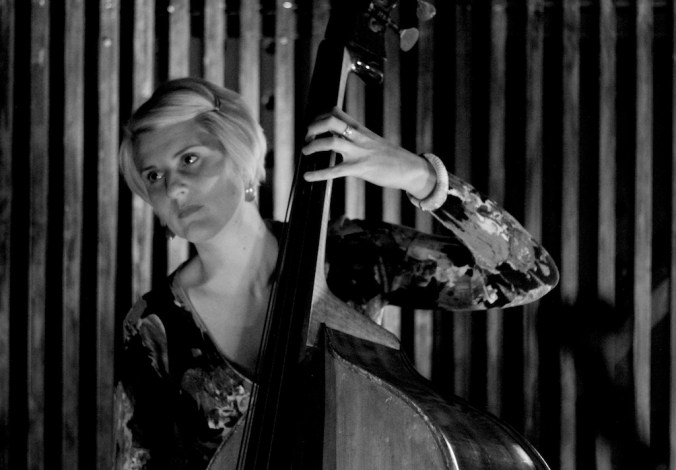
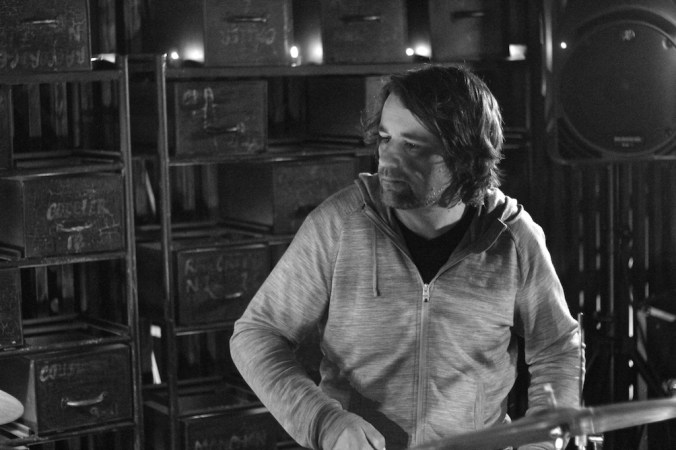
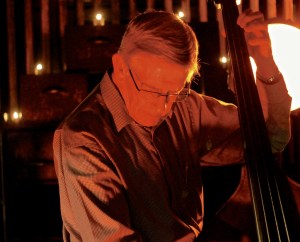
Phil Broadhurst Quintet + 1

JL32.com 11-3-2014 060In the coming months there will be a new Phil Broadhurst album released, ‘Panacea’. Broadhurst is an enduring musical presence, a backbone of the Auckland Jazz scene. Running the Massey School of Music Jazz programme in Auckland keeps him busy, but he somehow finds time to write interesting new material and to perform gigs about town. A prolific writer and arranger, he has released a number of albums in recent years and all have done well. His tribute to Michel Petrucciani ‘Delayed Reaction’ garnered favourable reviews here and offshore and his 2014 album ‘Flaubert’s Dance’ was short listed for a Jazz Tui.

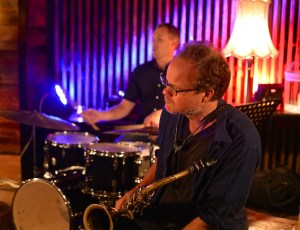
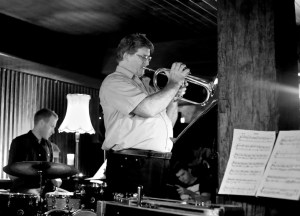
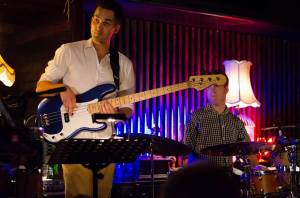
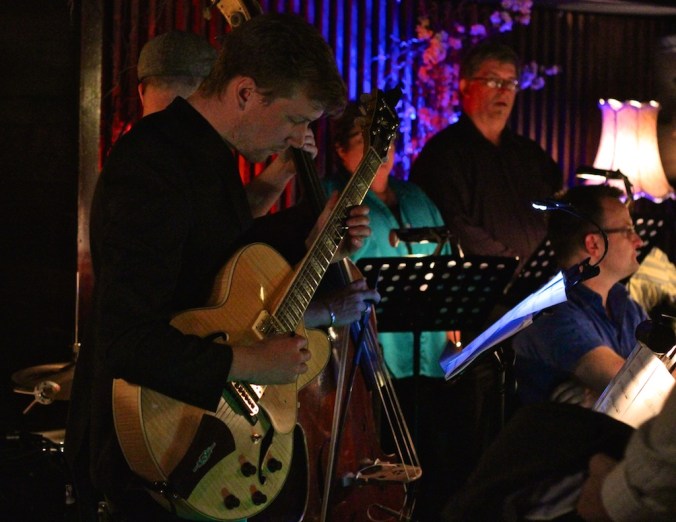
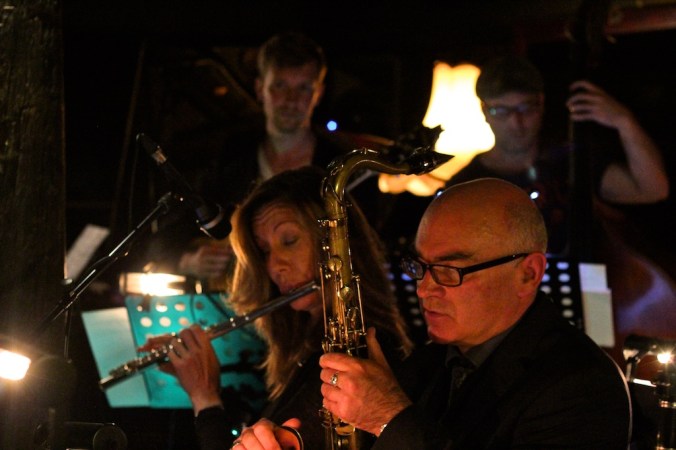
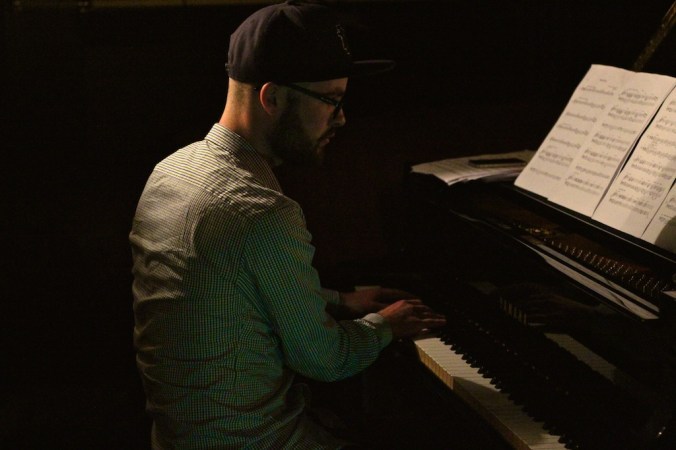
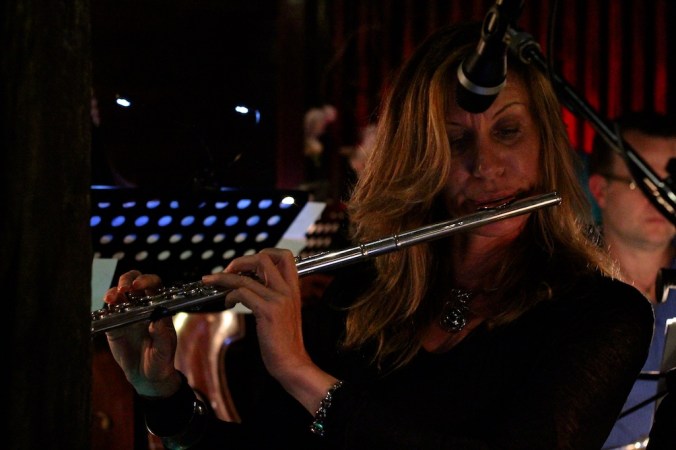
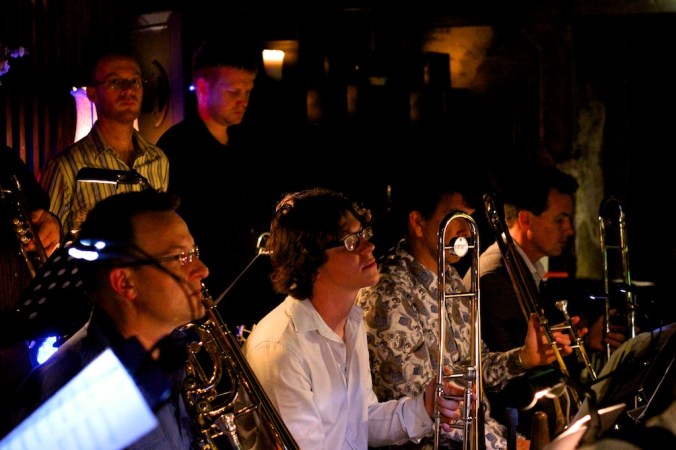
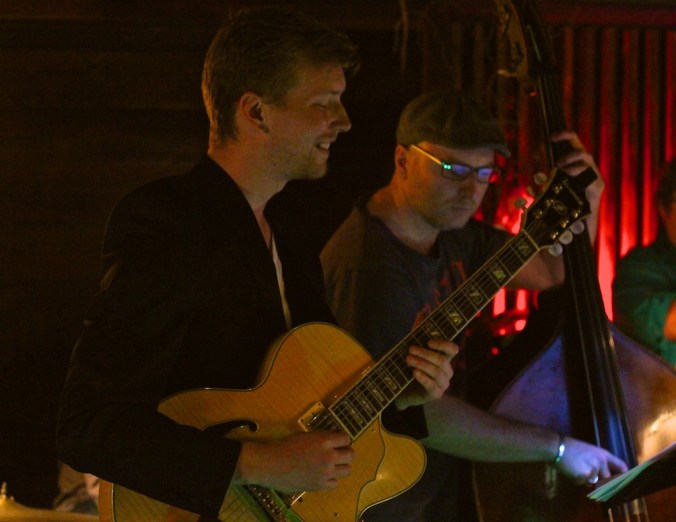
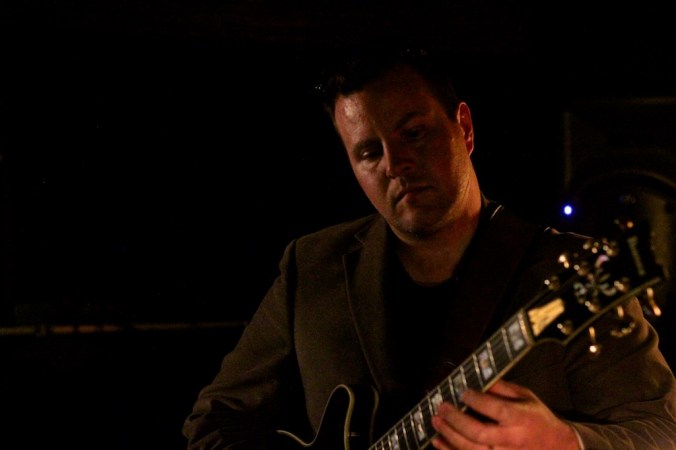
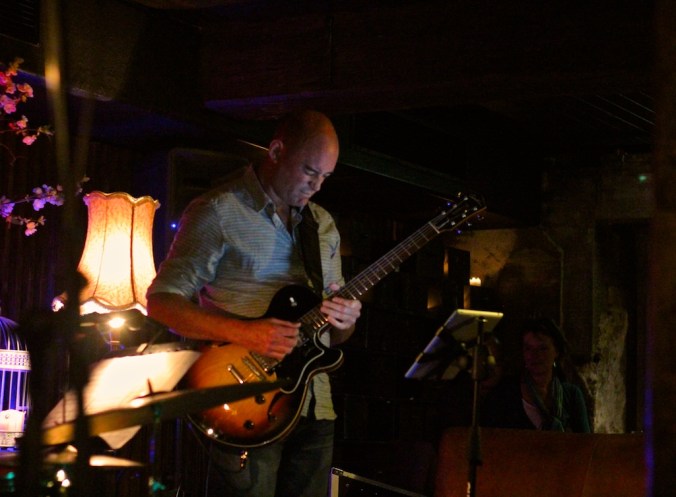
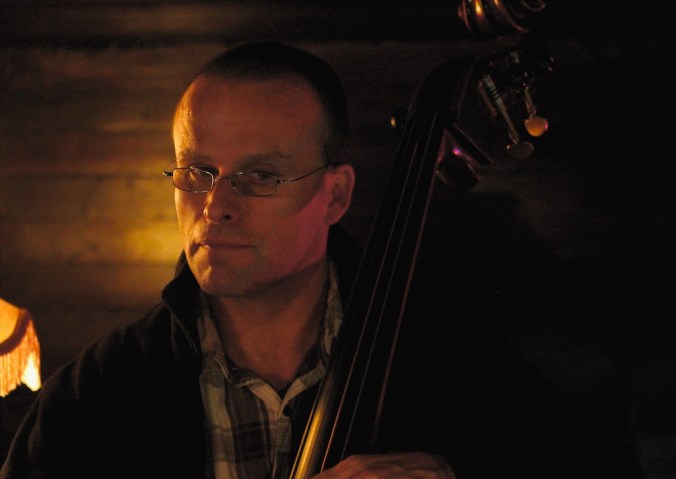
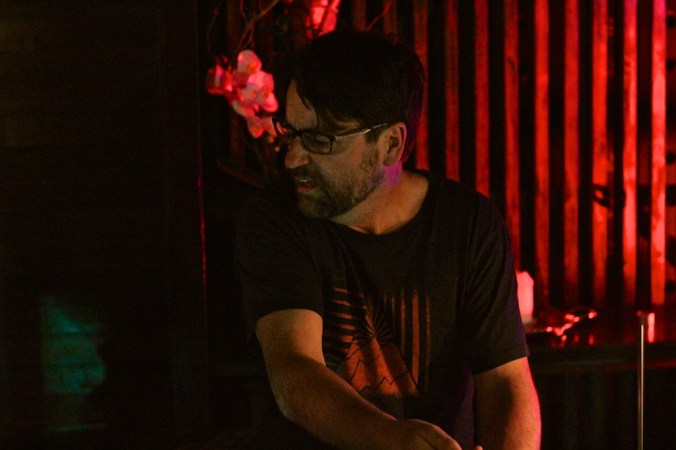
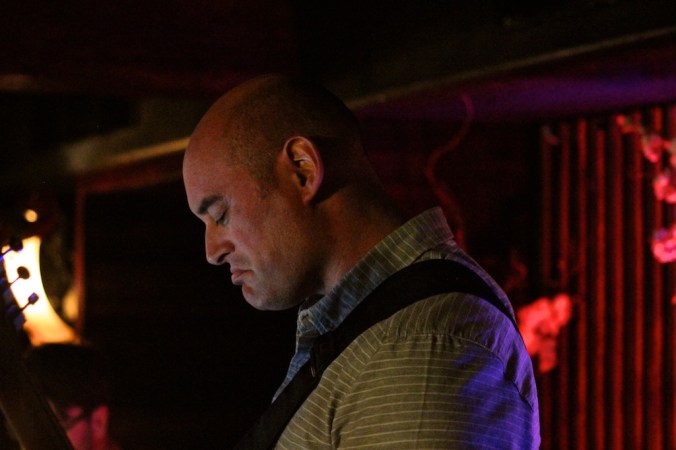
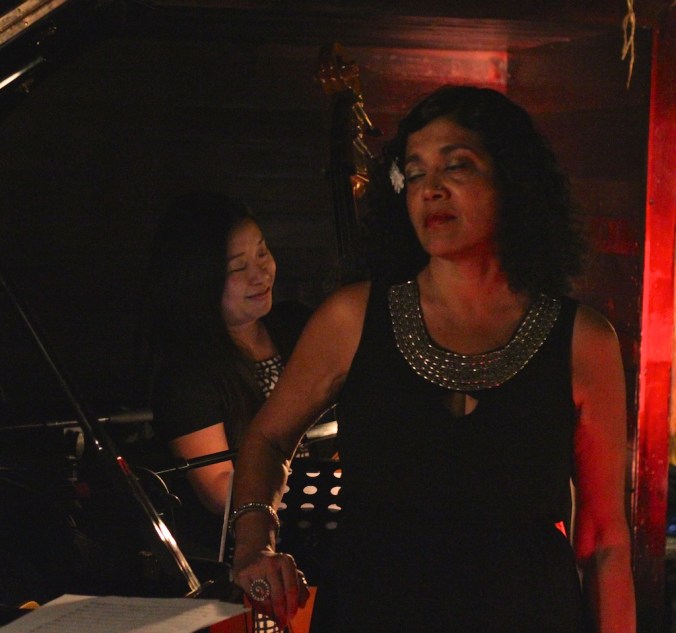
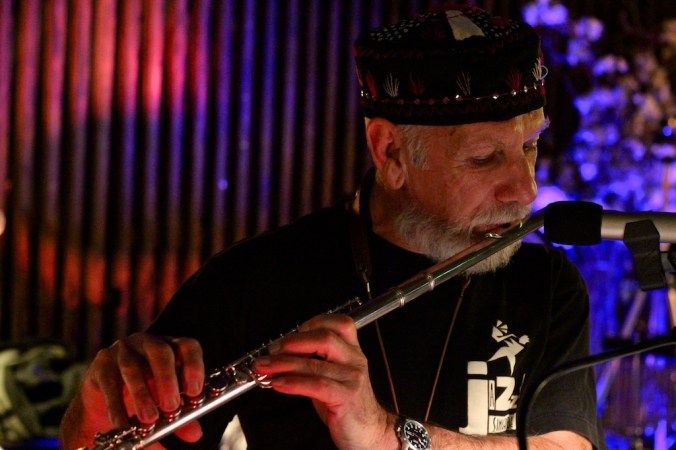
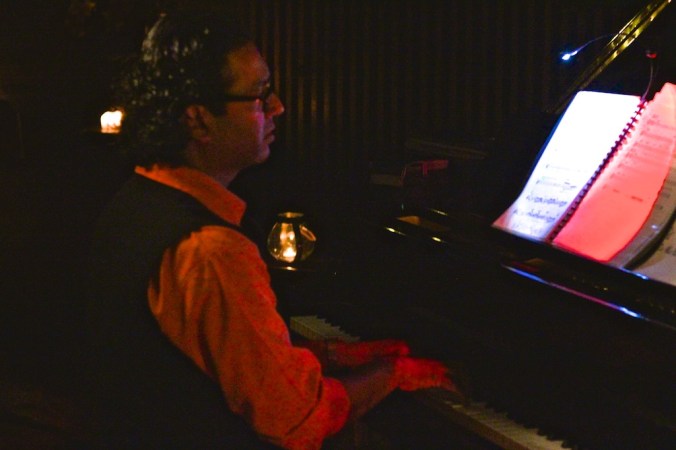
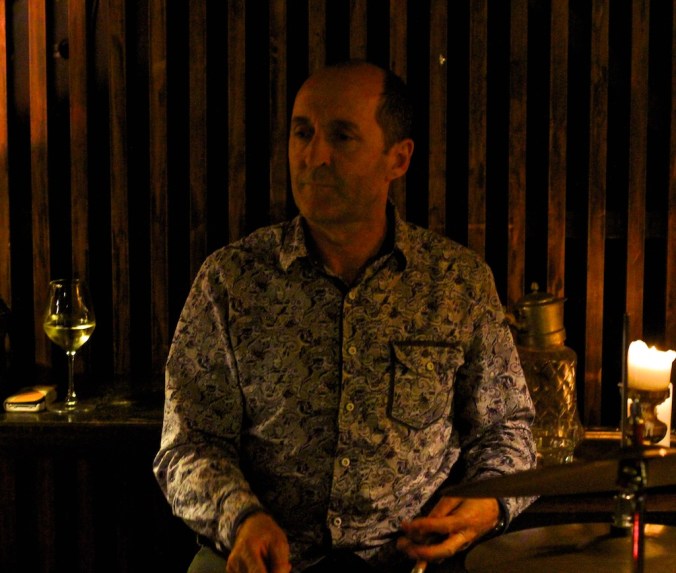
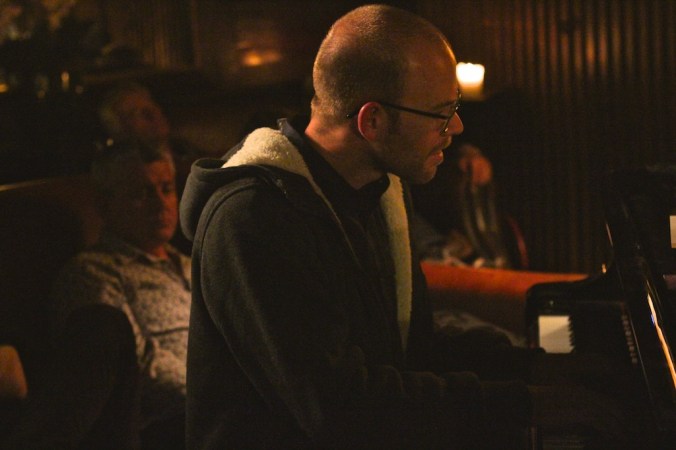
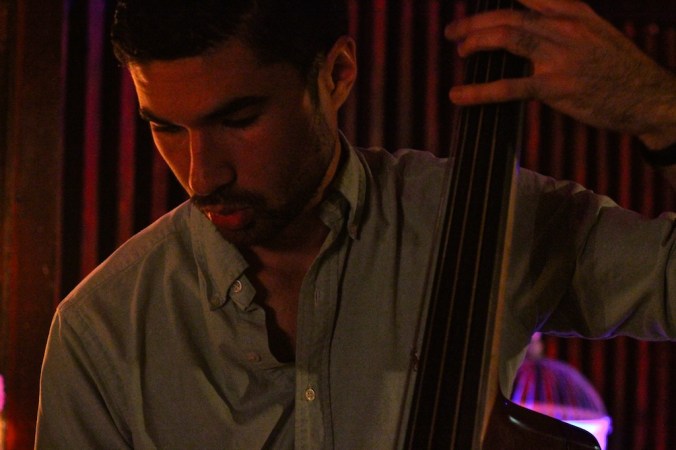
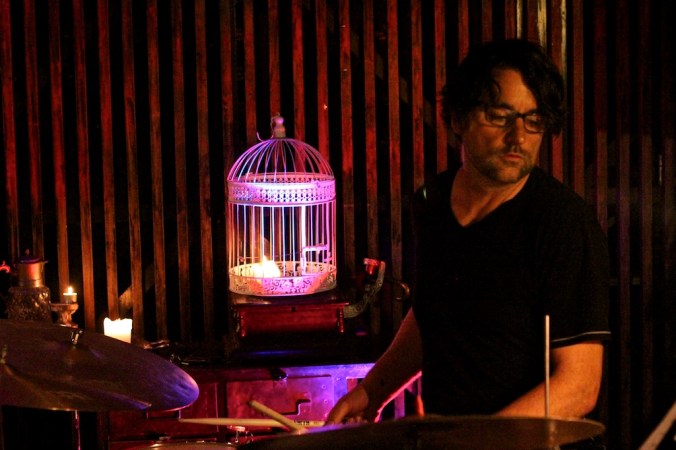
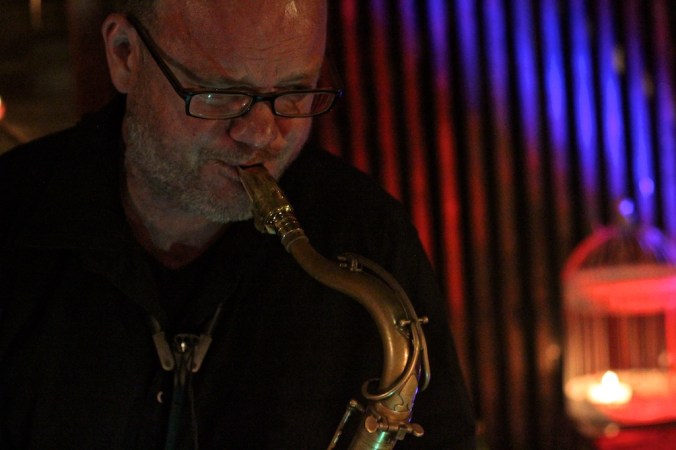
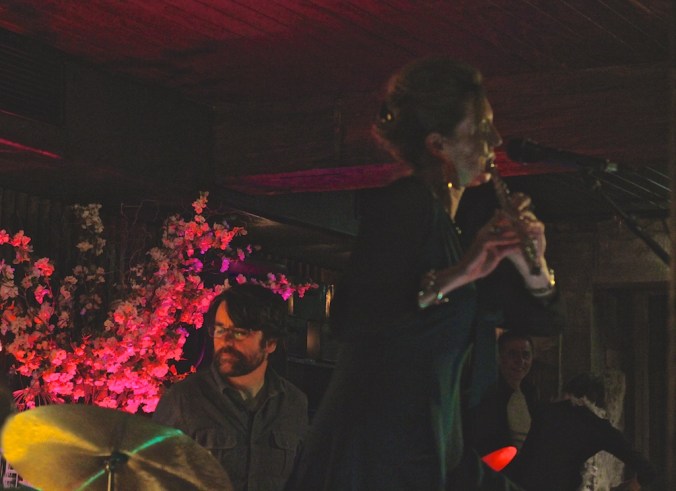
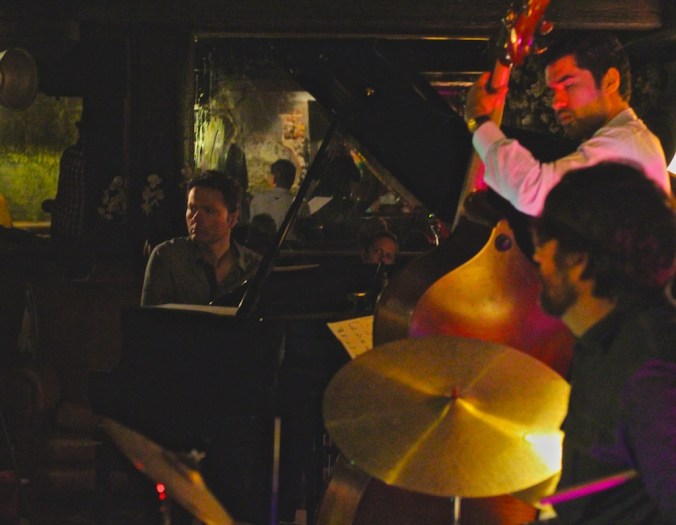
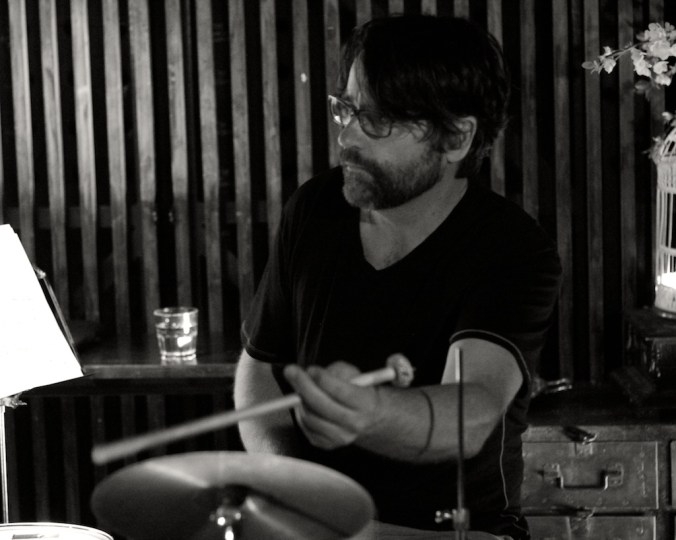
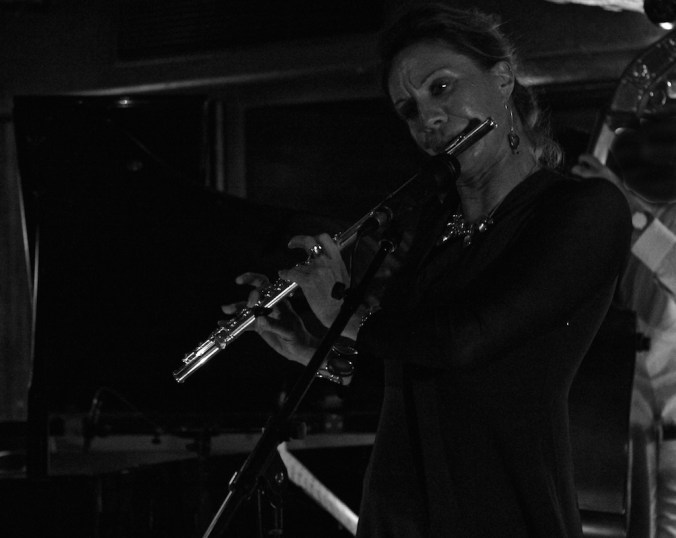
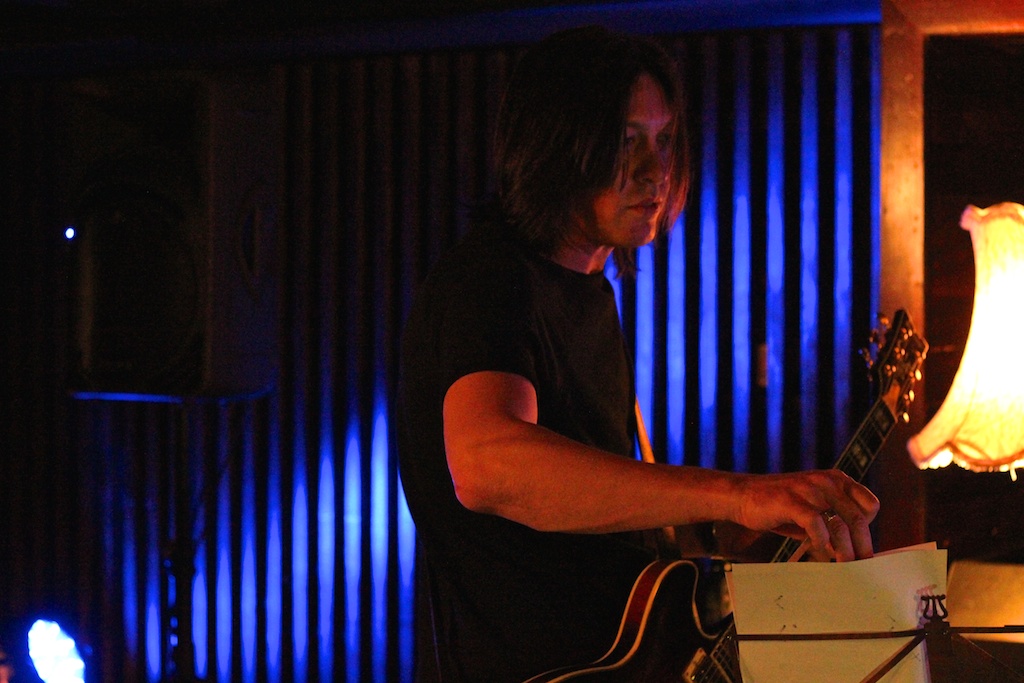
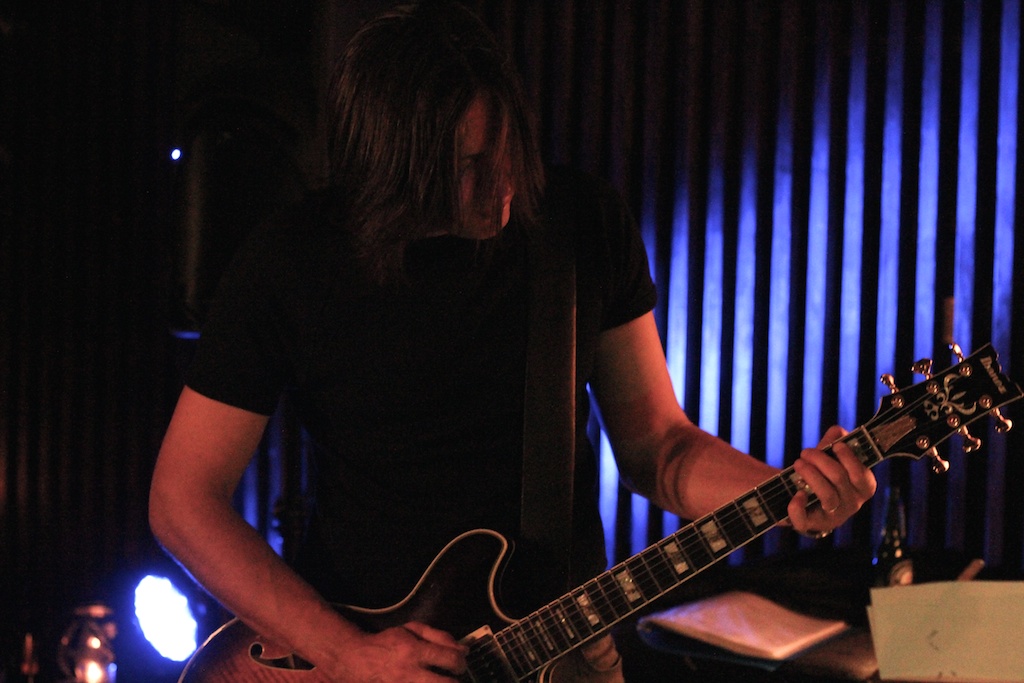
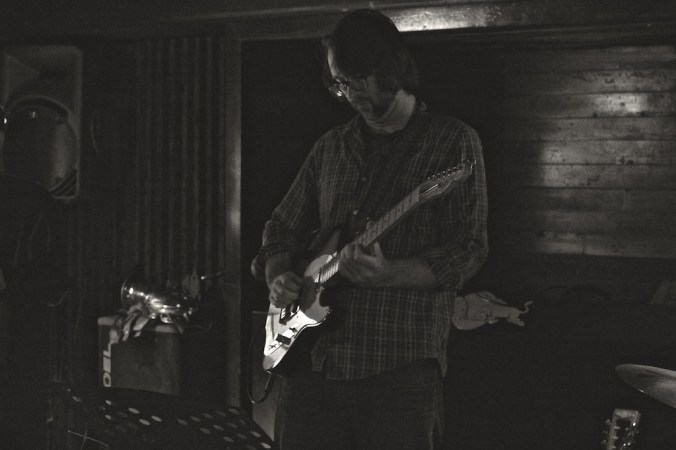
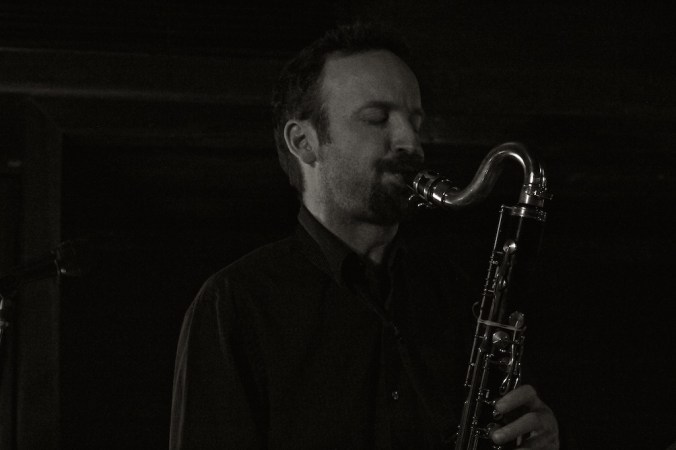
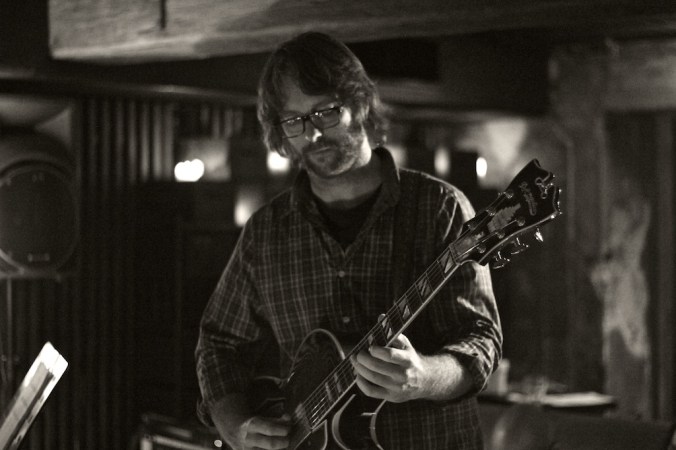
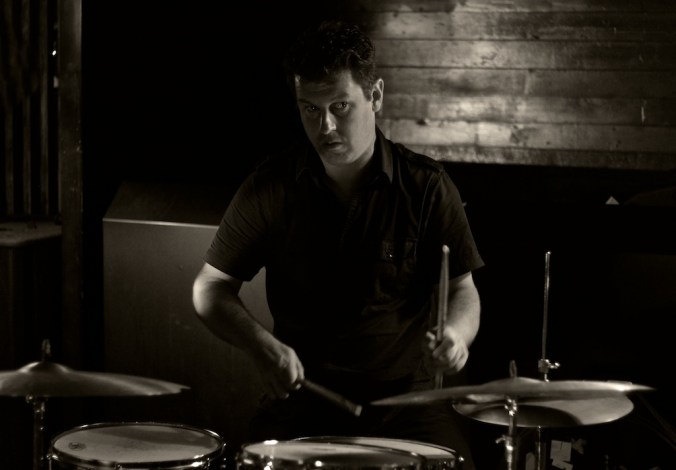
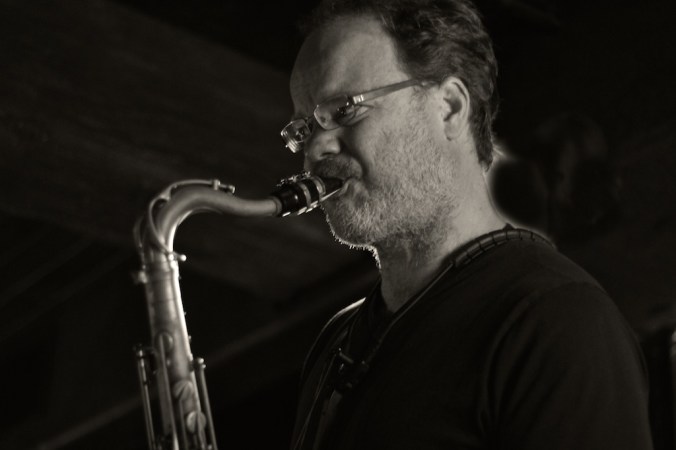
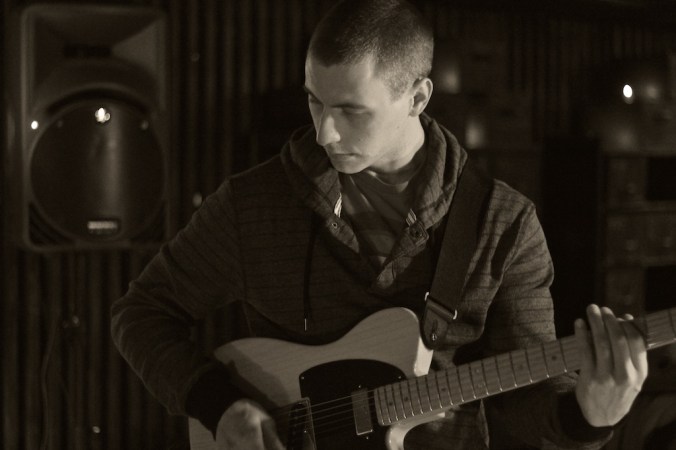
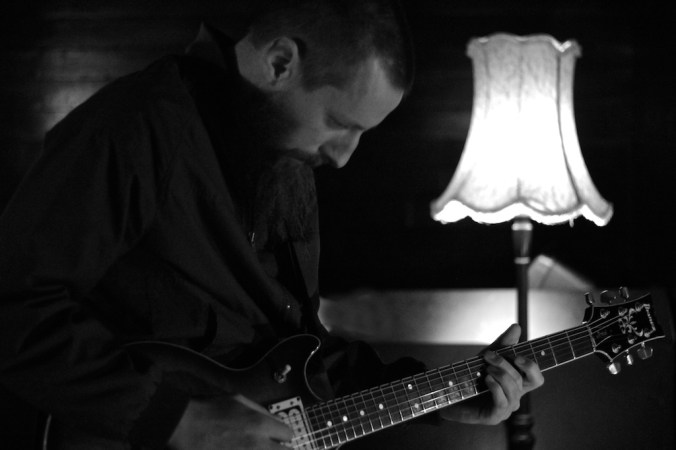
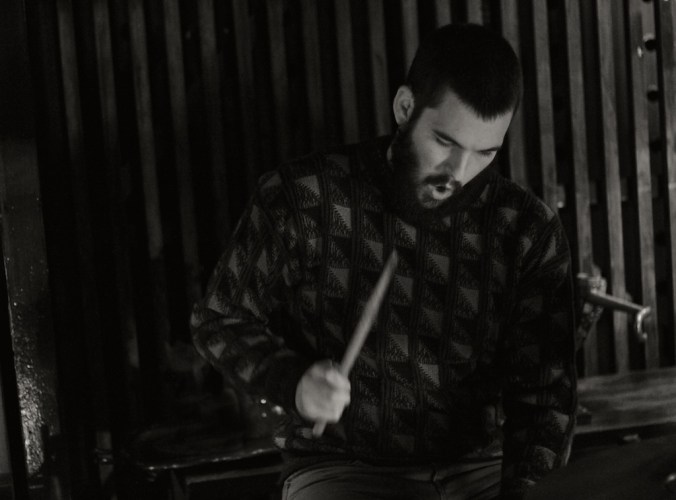
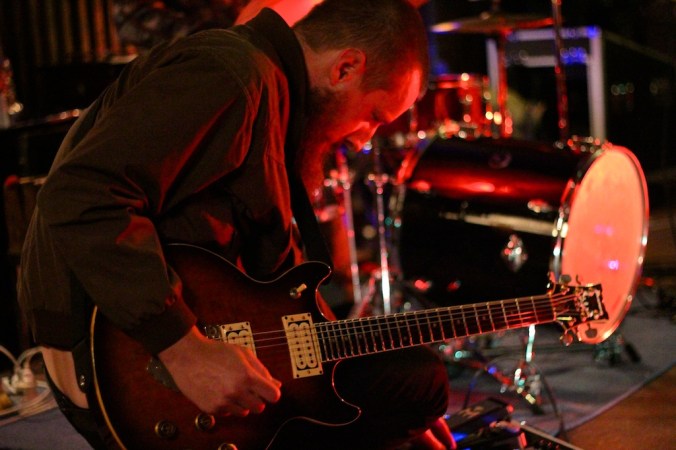
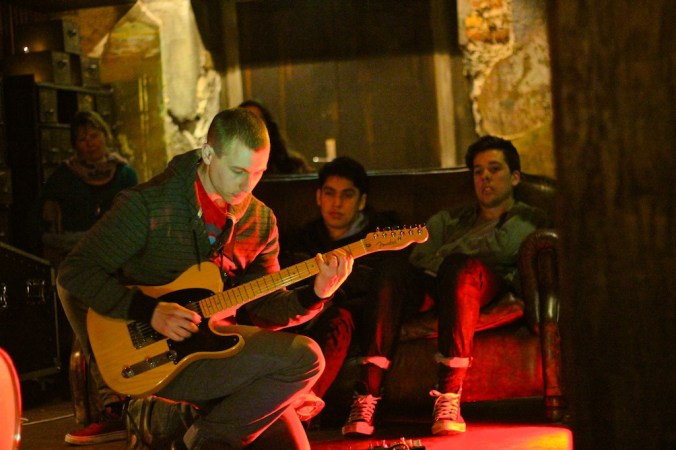
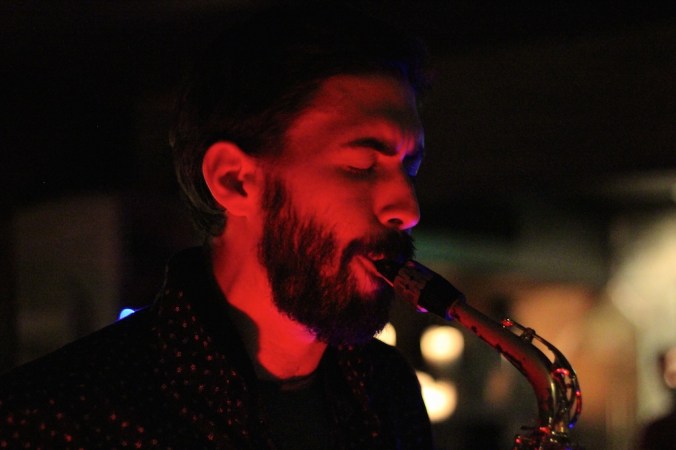
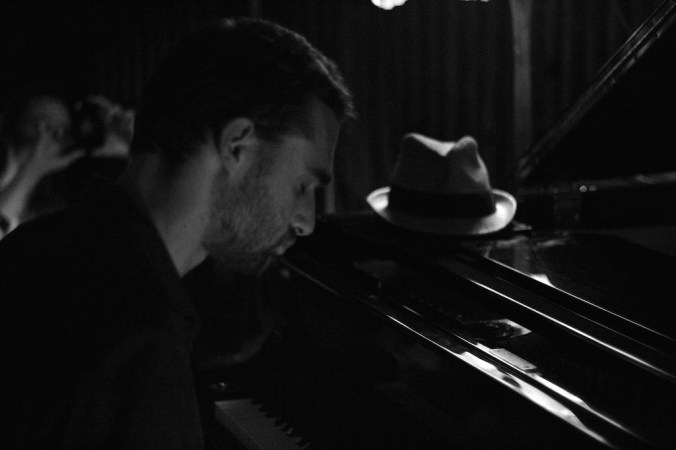
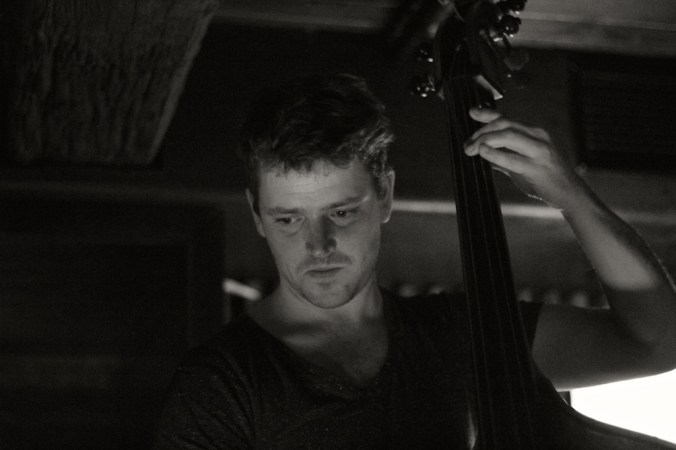
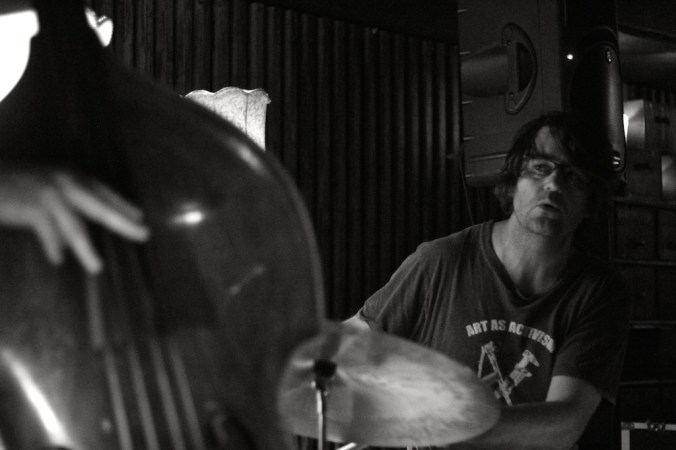
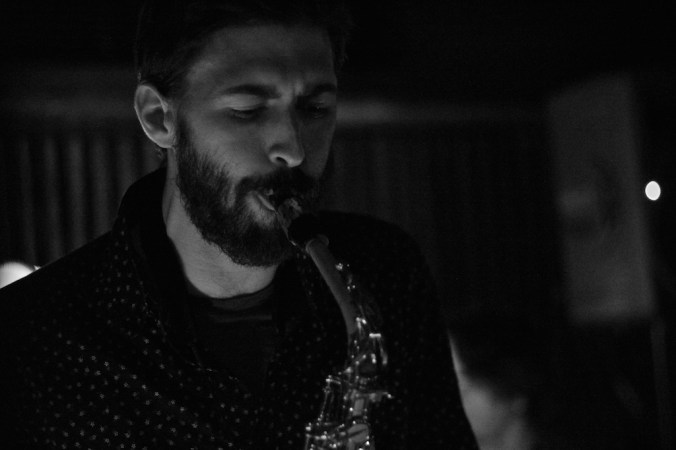
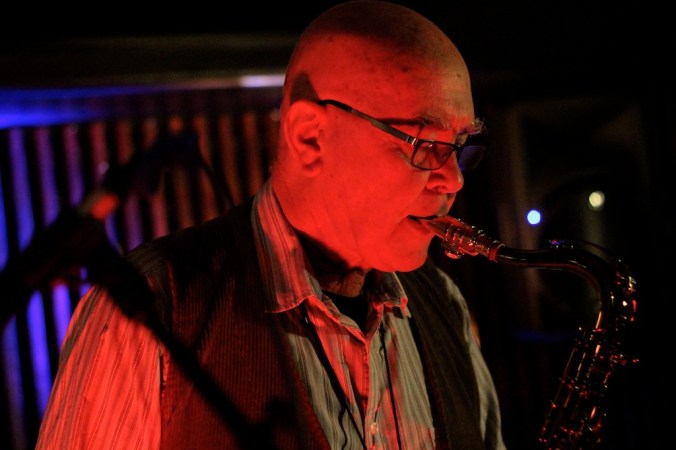
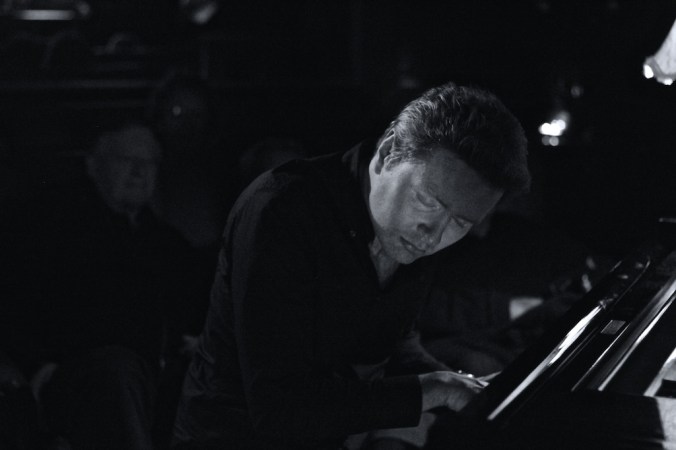
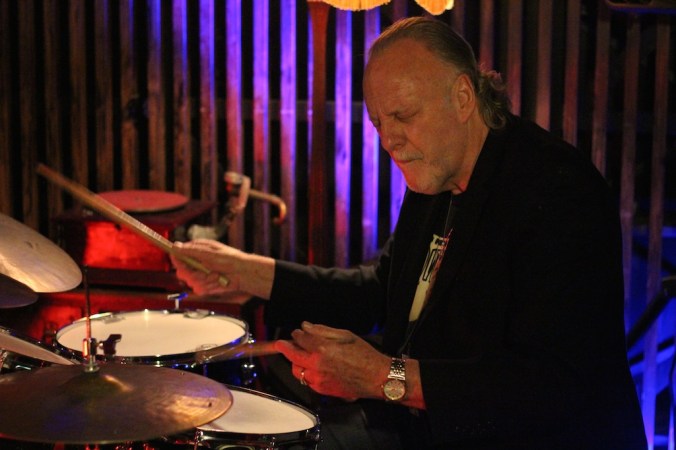
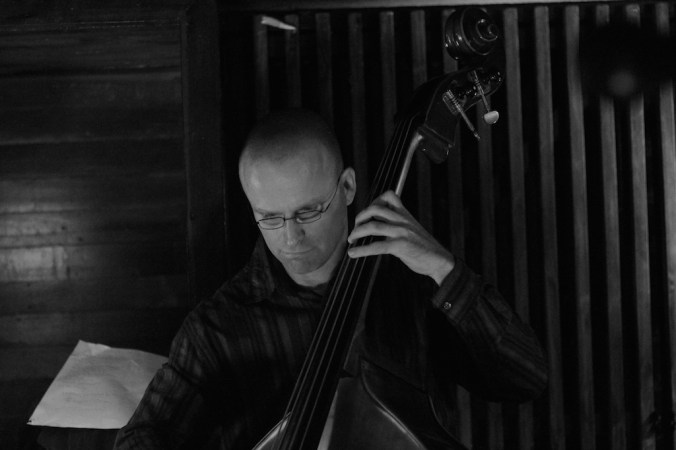
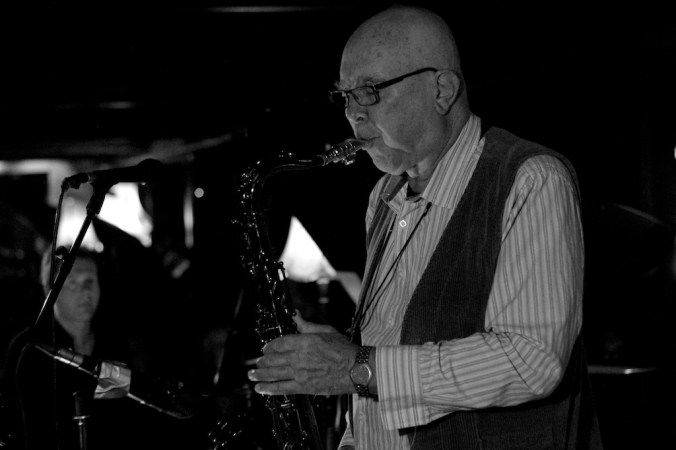
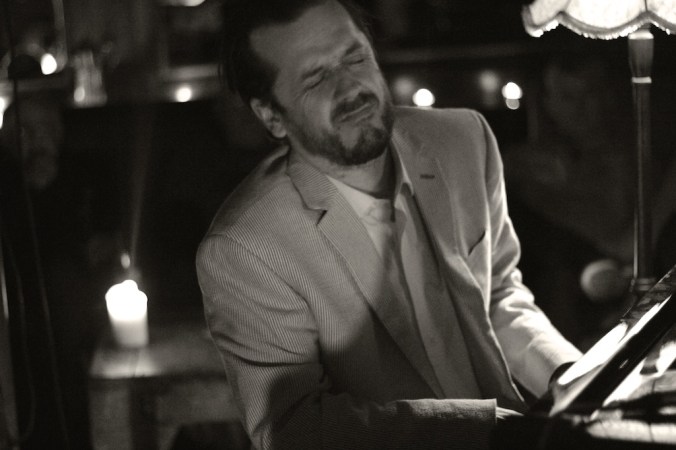
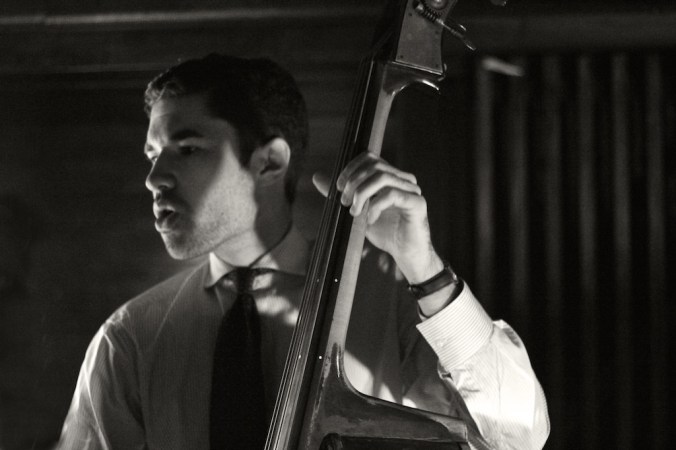
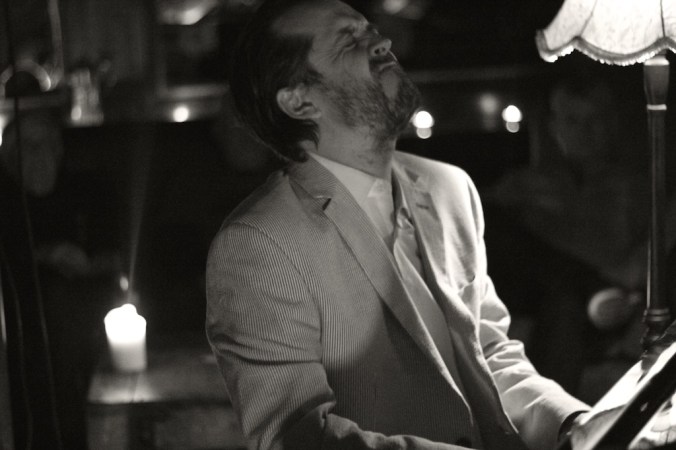
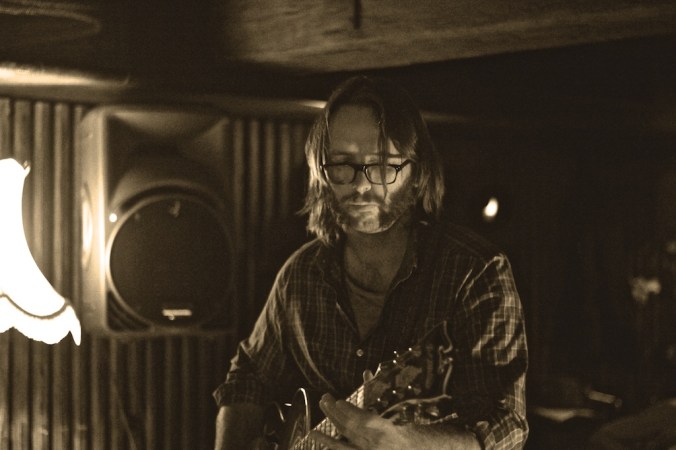
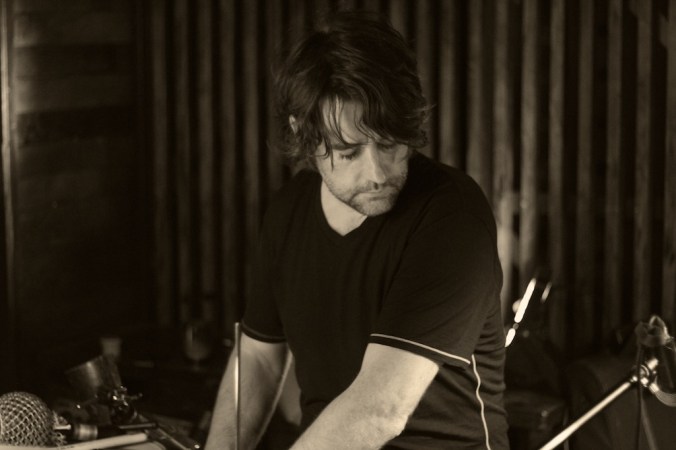
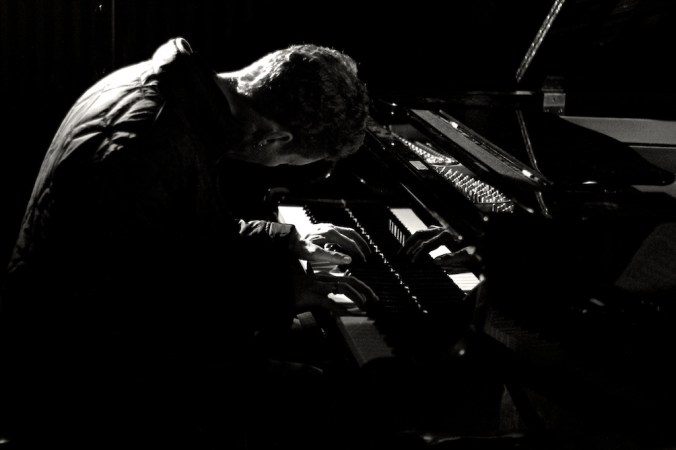
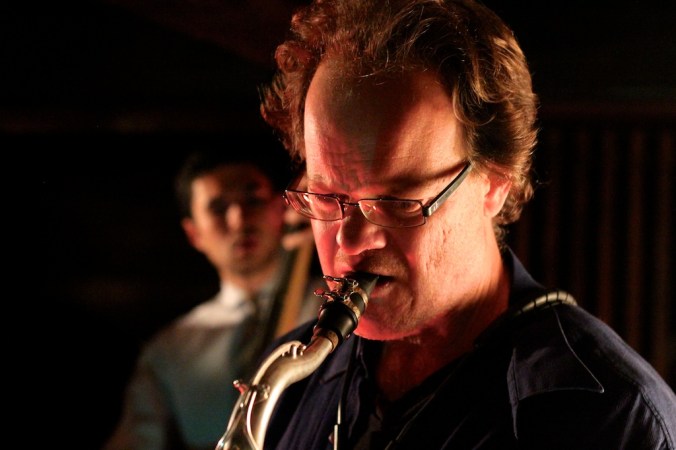
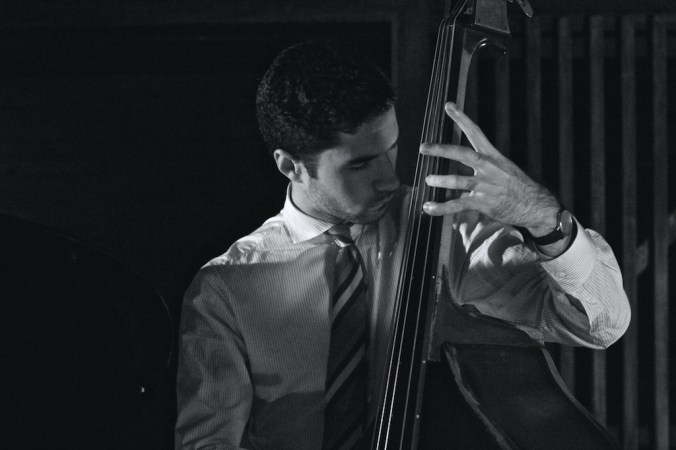
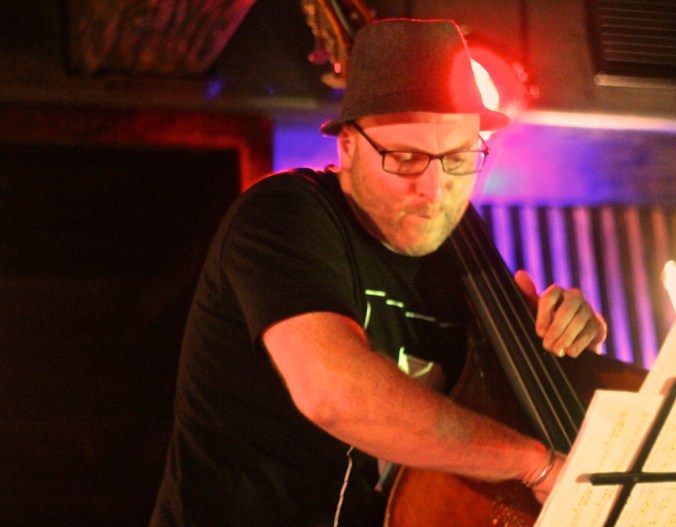
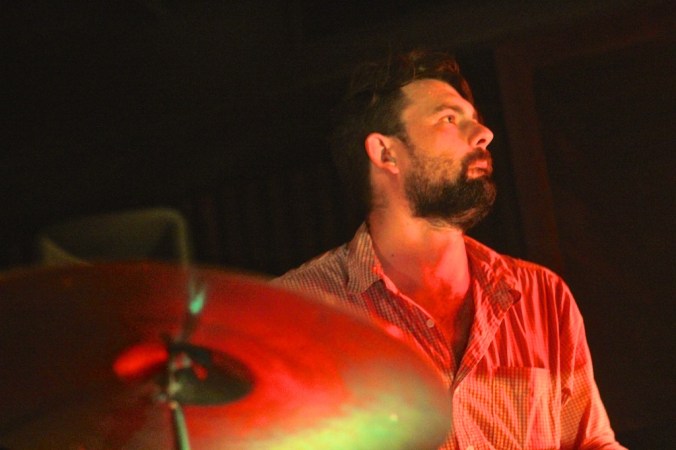
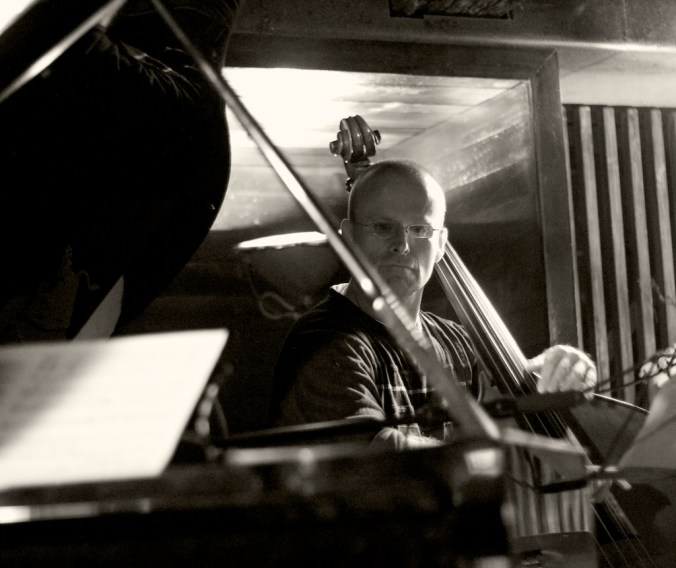
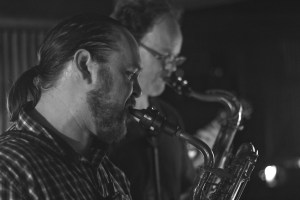
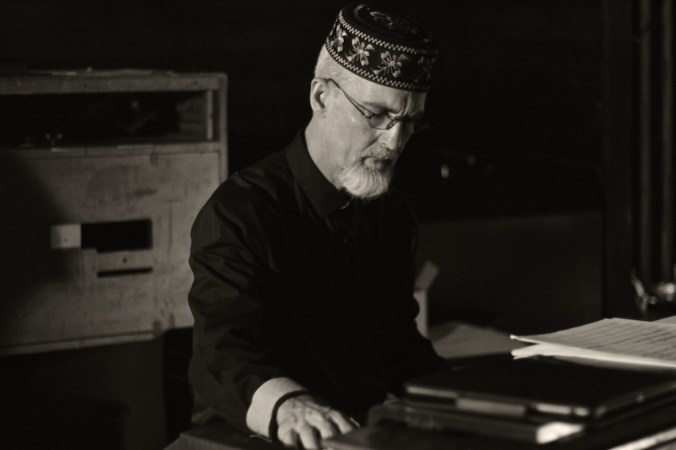
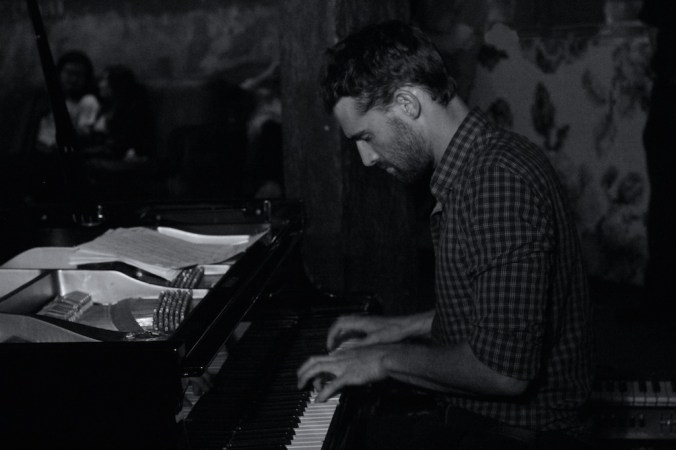
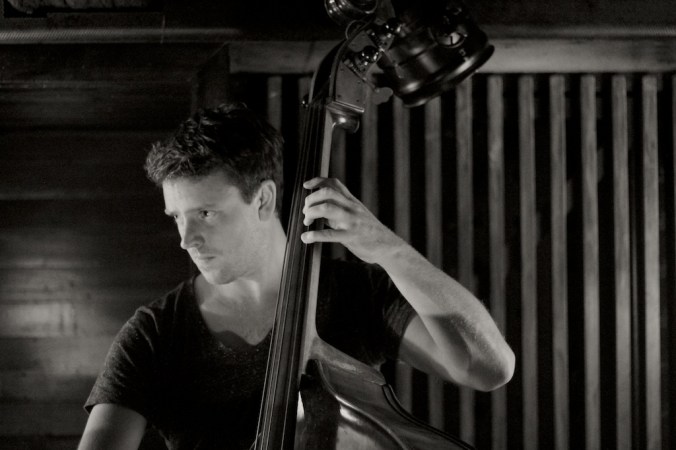
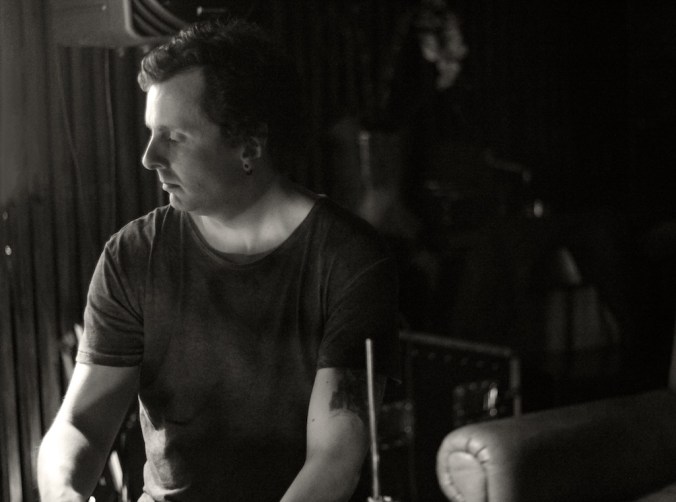
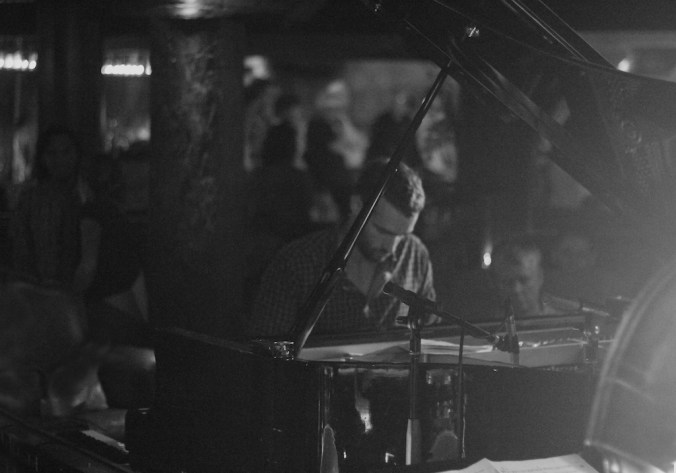
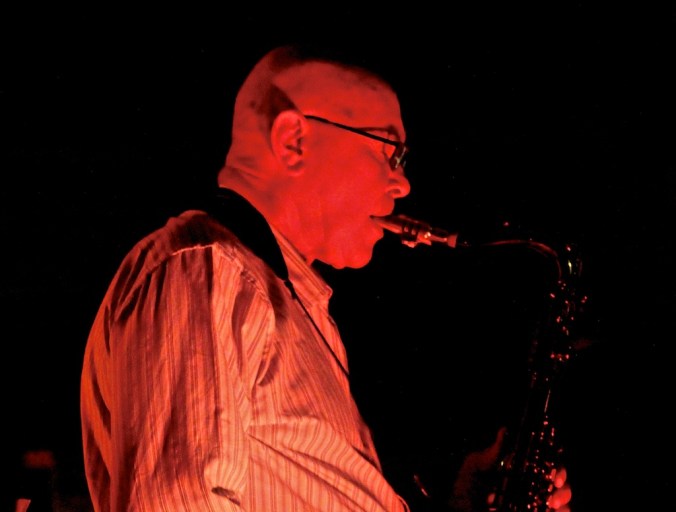
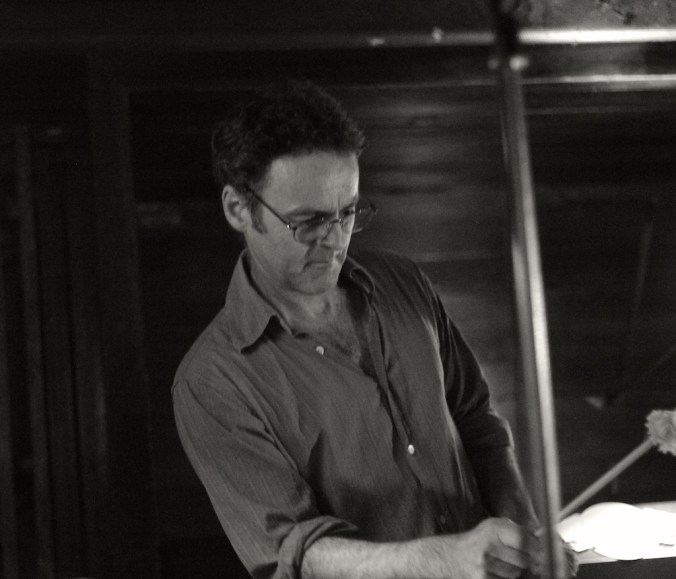
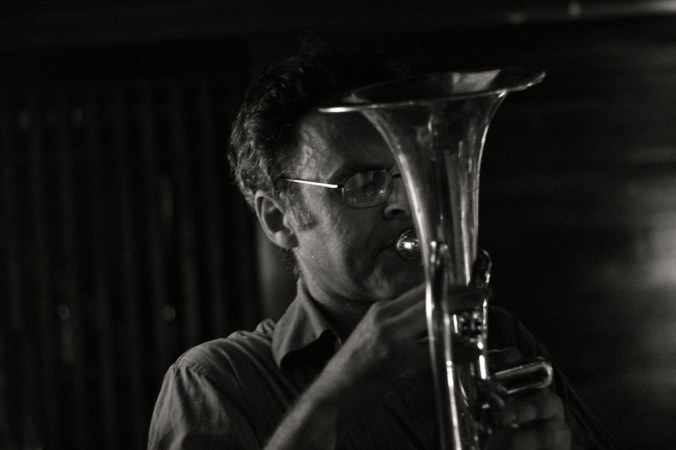
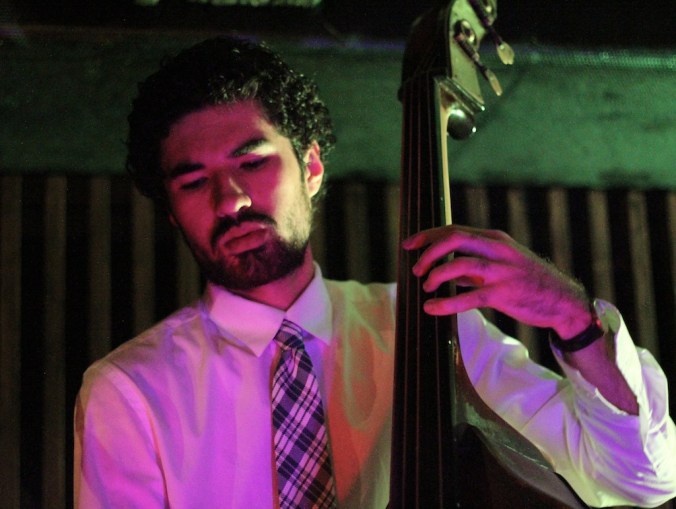
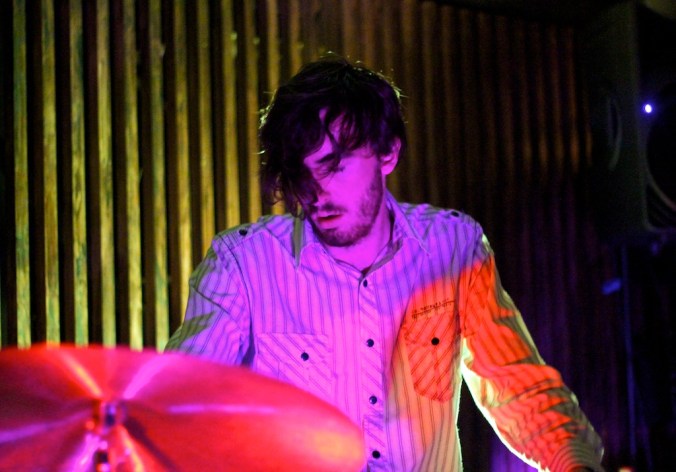
On Wednesday, as a prequel to the Panacea album release, we heard the Phil Broadhurst Quintet (plus a friend) at the Creative Jazz Club. The identity of the mystery guest was a JL32.com 11-3-2014 061poorly kept secret, anticipated and not puzzled over. As the band set up, the shiny pedal-steel guitar and the battle-worn fender dispelled any remaining doubts. The band was Phil Broadhurst, Roger Manins, Mike Booth, Oli Holland, Cameron Sangster and of course Neil Watson (AKA the mystery guest).

There were newer tunes and a few familiar ones from past gigs. Most of the new tunes will feature on the Panacea album, which will probably be released in late May. As a writer Broadhurst avoids cliches, but at the same time he manages to avoid the obtuse. there are odd time-signatures but when he delves into complexity the tunes still remain accessible. These are tunes that sound familiar; not because you’ve heard them before or because they rely on well-worn licks. They sound familiar because they tap into a recognisable vibe.  At the heart of his writing is a real warmth. The tunes take you to a familiar place even though you’ve never been there before; carried by rich harmonies and well crafted heads.  JL32.com 11-3-2014 063

Holland Manins, Booth and Sangster have been with the band a long while and that familiarity enabled them to extract the maximum from the material. As many of the tunes were lyrical, Manins showed a gentler side to his tenor playing. While he favours fast burners (where he excels), his ballad work here had depth and feeling. Booth and Manins blend well and especially with Booth on Flugel. Adding Watson into the mix changed the dynamic and his solos on fender had urgency and edge. Watson is a good musician but one who never takes himself too seriously. He brings humour to any bandstand and minor mistakes are fodder for self-deprecatory slapstick asides.

One of the newer compositions made reference to Watson’s pedal steel guitar. Like an elephant, the tune title had undergone a long and difficult gestation. Broadhurst composed it just before going on an overseas trip and promptly forgot about it in the rush to pack. A year or so later he decided to clean up the computer program and JL32.com 11-3-2014 058 (3)began the process of mechanically purging duplicate copies of old tunes. By this point all had been given titles and saved elsewhere. Rescued from the lonely obscurity of the ‘untitled’ nomenclature. As he deleted them one by one he spotted an anomaly. One particular tune was mysteriously labeled ‘untitled-untitled’. He opened it, liked the look of it but didn’t recognise it, so he played it. He recalls wondering who had written it until the penny dropped. ‘Untitled-Untitled’, the tune rescued in the eleventh hour, was later shown to Neil Watson who was wrangling with his new pedal steel guitar. There are so many levers to operate he complained to Broadhurst, who replied, “I think that you’ve just named my lost tune’. ‘Lever’ is a great tune and its improbable genesis gives it that added piquancy.

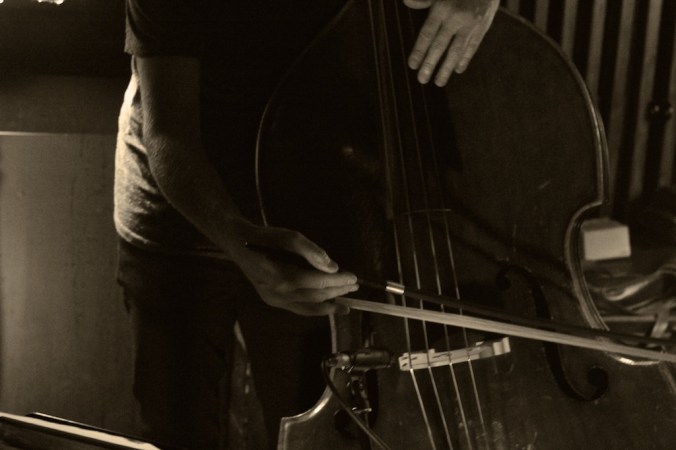
Who: Phil Broadhurst (piano), Roger Manins (tenor sax), Mike Booth (trumpet & Flugel), Oli Holland (bass), Cameron Sangster (drums), – guest Neil Watson (pedal steel and fender guitars).

Where: CJC (Creative Jazz Club) Britomart 1885, Auckland, New Zealand 4th March 2015.

Alan Brown Quartet @ CJC 2015

10407208_849558365101298_5079031482730444727_nThe more I listen to Alan Brown bands, the more I realise just how original his music is. The gig promised to be a reprise of ‘Between the Spaces’ and that was a drawcard which pulled in a good audience. We soon realised however that we were getting a lot more. As well as the familiar there were new compositions and a few that had not made the cut for the album. Brown is an extraordinarily gifted musician and in settings like this he always sounds fresh. The familiar numbers sounded as exciting as when we first heard them and the unfamiliar held the attention with siren like allure. This is music to gladden the heart. 11017509_849558561767945_4632538171974249436_n

There is a definite Alan Brown sound and it is quite unique. Yes there are small nods to familiar groove bands, to prog bands and perhaps even EST, but the sound is unmistakably his. Browns intros often favour the ostinato, with bass and drums working tirelessly across his insistent rhythmic patterns. These woven threads of sound create a layering effect. You are seldom aware of the underlying complexity, the odd time signatures and the oblique shifting grooves. Like many a well composed, well executed jazz tune, an implied centre holds the attention and this is where the ear goes. This is complex music made 10428674_849559058434562_7650093753295645704_naccessible. As the tunes unfold you fall into them, feeling that you are on a journey of logical progression; the enveloping arms of groove guiding you inexorably towards some beating voodoo heart.

The musicians Brown uses are always chosen with care. With arranged music and exacting charts, the having the right line up is important. It was great to see Andy Smith back at the CJC. Like Jono Sawyer he was on the 2011 ‘Between The Spaces’ album. Smith has something of the rock god about him and as his solo’s soar he often leans back, as if giving the notes more room to fly free. He is technically proficient and an interesting soloist; often putting me in mind of Mike Moreno as the sound is similar. His approach is modern but the history of jazz guitar still speaks behind his solo lines. Jono Sawyer is a member of various Alan Brown units and he is very much at home in this configuration. His time feel in these groove based settings is immaculate. 11024767_849558951767906_7151372333629258045_nThe relative newcomer is electric bass player David Hodkinson. He is no stranger to Brown’s bands but he was not on the album.  it would be daunting to step into Marika Hodgson’s shoes but Hodkinson held the groove and punched out a mesmerising pulse.

Alan Brown makes no apologies for referencing the fusion prog Rock/Jazz era. On Wednesday he mentioned the innovative and almost forgotten ‘Focus’ (an admired instrumental group of the 70’s who often featured Jazz guitarist Philip Catherine).  Among a selection of great tunes, my hands down favourite was a prog tribute to ‘King Crimson’ named ‘Crim Kingson’.

The photographs are by Ben McNicoll of the CJC management and the audio clip is ‘Do not track’ from the ‘Between the spaces album’.

Who: The Alan Brown Quartet – Alan Brown (piano), Andy Smith (guitar), David Hodkinson (bass), Jono Sawyer (drums).

Where: The CJC (Creative Jazz Club), Britomart 1885, Auckland, New Zealand. 25th Feb 2015

Jazz stories that need retelling (2014)

“What often distinguishes a poetic list from a practical one is only the intention with which we contemplate it’ – Umberto Ecco (The Infinity of Lists).

At this time of year Jazz Journalists post their ‘best of’ lists.  By tradition, this provides a platform for the writers to focus on something that took their fancy (or not). It is seldom an exhaustive analyses of the years musical offerings, but a time to indulge in a few well-honed prejudices with impunity. I make no apology for the antipodean bias.

A look back at some pianists who impressed in 2014:

There has been a lot of ink spilt in analysing Jazz piano over the years and the task is always daunting. In recent years all too many masters of the keyboard have passed on such as the inimitable Hank Jones.  He encompassed a vast era of jazz, ever fresh and endlessly tasteful; bringing with him something of stride, bebop and hardbop and above all the blues.  At the passing of Jones and other acknowledged masters, there is an increased awareness of other great pianists still with us (a good example is the belated and welcome attention being given to George Cables).  Many of these artists have been hiding in plain view and paying them due attention is increasingly important.  As musical tastes mature, and new directions emerge, the field ever broadens.

Jazz fans who live outside of the USA generally have a reasonable awareness of pan-American, European, Scandinavian and (perhaps) Antipodean Jazz musicians.  If you live at the hub of the wheel, the USA, it will probably be less likely.  Pianism is not about how many notes you play, where you come from or the 0000210166_36cleverness your ideas. It is about integrity.  Musical integrity is rare but universally available.

There is a ‘sound’ that belongs to certain locations, perhaps to great cities; where an assimilation of environment occurs unwittingly, coalescing within an artist. This is not planned, as self-conscious cleverness is the road to perdition. The mindless recycling of others cleverness a greater anathema.  Mary Lou Williams once said (to slightly paraphrase): “Once a pianist comes to grips  with the instrument and can master its capabilities, stop taking formal lessons.  Risk taking explorations should occur next”.

Pianists like Mike Nock, Barney McAll and Jonathan Crayford all have a unique quality, one that reflects where they come from.  They are musicians of the world having honed their craft on the road, but distinctly Australasian for all that. No English, Italian, Scandinavian or Australian pianist is going to sound like Randy Weston and nor should they.  Musicians of integrity will bring something of themselves to the mix and a select few will bring a sense of place. The three pianists I have mentioned have lived and worked in the USA (often extensively) but not at the expense of their roots voice.   Each found a groove that only they could unlock. There are 88 notes on the standard piano keyboard, but in the spaces between the notes and in the choices made, there are subliminal messages. That is where the real magic lies.

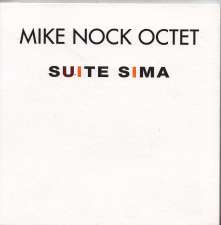
The Mike Nock Trio. (Aust) Gig at the ‘2014 Auckland Jazz Festival’, CJC (Creative Jazz Club). Mike Nock is one of New Zealand’s favourite musical sons and perhaps the improvising musician we most admire.  Although he has not lived here for many years, he often visits from Australia.  Many will know him from his ‘Fourth Way’ band, his recordings as sideman with people like Yusef Lateef or his long years as a celebrated member of the New York scene.  That said, his post USA work needs better examination and it is in Australia that people can gain a fuller sense of his body of work.  Nock is a truly gifted artist and he goes from strength to strength. “Nock’s ringing iconoclasm pervades all his music, taps a deep well of melody that transcends jazz and informs and ignites his every encounter.” – Fred Bouchard, Downbeat (USA). His live trio gigs are humour-filled and quirky, focussing on an eclectic mix of originals, standards turned upside down and almost forgotten tunes (i.e. Sweet Pumpkin).  The joy that Nock breathes into his gigs is infectious and it Mike Nock SIMA07_01makes you glad that you’re alive. Touring New Zealand with Nock were James ‘Pug’ Waples (drums) and Brett Hirst (bass)’.  These musicians while deeply attuned to each other were always full of surprises.  5 stars. *****
Barney McAll (USA) gigs in Auckland & Wellington NZ – Trio and Solo piano at the CJC (Creative Jazz Club) and ‘The Wellington Jazz Festival 2014’.  McAll (an Australian) has lived in Brooklyn New York for many years, but he has never been forgotten in his home country Australia.  His visit to New Zealand won him many new fans.  There is an expansiveness and yet a completeness about McAll compositions. He sounds like no one else and as he digs into those earthy blues filled tunes, you hear the unmistakable echoes of real antipodean soul.  5 stars. *****

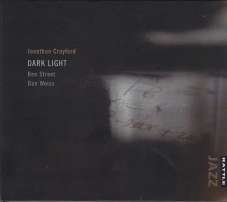
Jonathan Crayford, ‘Dark Light’ Trio (USA). It was Auckland’s good luck that the album release gig for Crayford’s ‘Dark Light’ Trio took place at the CJC (Creative Jazz Club).  A few weeks prior to that a local version of his ‘Biggish Band’ featured at the same venue (and at the Golden Dawn). I attended all three gigs. Jonathan Crayford is a peripatetic wonderer and a troubadour of immense talent.  His endless travels in music often bring him home to New Zealand and the lucky get to hear his imaginative projects.  4 stars ****

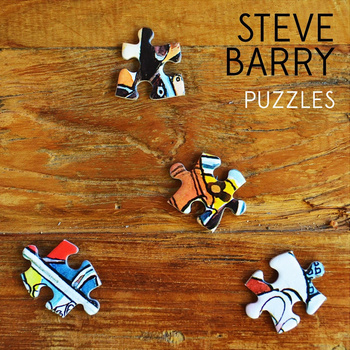
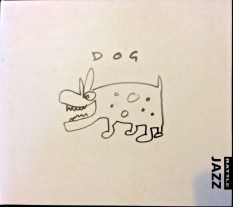
Other pianists of note: Kevin Field (NZ).  Field on piano or keys is a musical force to reckoned with. His taste is impeccable.  This year saw him record an album in New York with expat New Zealand bassist Matt Penman, drummer Obed Calvaire  and guitarist Nir Felder.  The album will probably be released sometime during 2015 and is eagerly anticipated.  Dark LightJan07_02Whether as accompanist or soloist, Field shines.  His work in 2014 on ‘Dog’, with Caitlin Smith and with the Australian saxophonist  Jamie Oehlers stand out as high points.  Adam Ponting (Aust) (Hip Flask ‘1’ & ’11’).  Ponting is an unusual but compelling pianist.  An original stylist who appears to approach tunes from an oblique angle, at first impressionistic, but leading you into a world of funky satisfying grooves.  This guy is definitely someone I would like to hear again.   It was also great to hear more of Alan Brown (NZ) on piano during 2014. He has some interesting piano and keys projects underway and we will hear more of those soon.   Steve Barry (Aust). Barry is an ex pat Auckland pianist now based in Australia.  He visited New Zealand twice during 2014.  His visits and albums are always received enthusiastically.  Barry is a musician who works hard and produces the goods.  His new album ‘Puzzles’ with Dave Jackson (alto), Alex Boneham (bass) and Tim Firth, lifts the bar for up and coming local musicians.  We had a number of visitors in 2014 and to bring us a European perspective was the Benny Lackner Trio (Germany/USA).  The pianist Benny Lackner has visited New Zealand on several previous occasions and the aesthetic he brings is finely honed. The band has a similar feel to EST.  There is the occasional use of electronics and they quickly find tasty grooves that could only emanate from a European Band.
Alan Broadbent (USA) has had a truly amazing year with the release of a solo album ‘Heart to Heart’ and his NDR Big band album ‘America The Beautiful’. Multiple Grammy 7kofphkhadu-htw5jpjp_zmxkdevwd478h5dat8o4ms winner Broadbent is our best known improvising export and he has spent the last year touring Europe and America to great acclaim.  The solo album was given a rare 5 star rating by downbeat and ‘America The Beautiful’ was recently voted one of the 10th best albums of 2014.

Miscellaneous Gigs and projects:  

Mike Moreno trio (USA) – for sheer guitar artistry and taste, Moreno is hard to beat.  His beautiful (often mournful) sound, compelling lines and clarity of vision left the Sydney audience in awe.  His Australian trio were Alex Boneham (bass) and Ben Vanderwal (drums).  the choice of sidemen was solid, as they complimented and responded to every nuance of Moreno’s playing.  This was a class act all round.  The Troubles (Wellington, NZ), Portland Public House, ‘Auckland Jazz Festival’.  This Wellington ensemble is a machine of wondrous invention.  Its anarchic dissing of powerful institutions, cheerful irreverence and inappropriate humour, carves it out a special place in the hearts of rebellious souls.  Iconoclast drummer and composer John Rae (ex-Edinburgh) had added the heavy weight presence of saxophonist Roger Manins (Auckland) to the mix for recent gigs. That was an inspired choice.  Jeff Henderson’s ‘Dreamville’ project (Auckland, NZ) CJC (Creative Jazz Cub). This avant-garde gig, billed as superconscious Jazzmares, was a triumph by any measure.  Like a dream, the gig moved forward under its own internal momentum.  Surreal themes constantly dissolving until exhausted, forms shifting without seeming to.  What made this journey so evanescent, but so compelling, was that certain motifs remained deep in our consciousness throughout; totems of sound embedding themselves. This gig won many to Henderson’s cause.

Notable local Albums of 2014: (in no particular order)

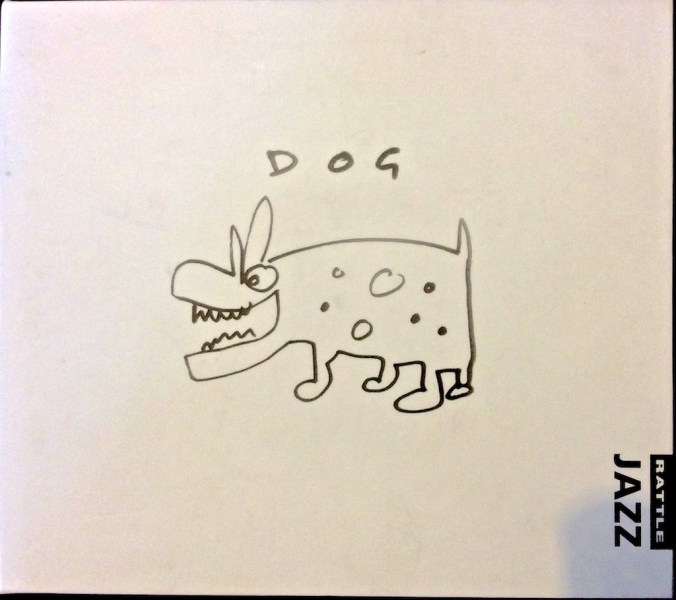
‘Dog’ (Rattle Jazz) Recorded in the now defunct and much-loved York Street studios Auckland.  This album is the realisation of a project by Manins, Field, Holland &  photo - Version 2 Samsom.  It sizzles, swings and while hinting at the vibe of a bygone era, it still sounds fresh & modern (and very Kiwi).  ‘Dark Light’ (Rattle Jazz) This excellent album is one of two that Jonathan Crayford released in 2014 – Recorded at ‘Systems Two Studio’ NY with Crayford (piano), Ben Street (bass), Dan Weiss (drums).  Don’t expect repetition from Crayford. This master musician takes us on many journey’s, each unlike the last and all brilliant.  Hip Flask 2 (Rattle Jazz)  A funk unit led by Australasian saxophone giant Roger Manins.  Accompanied by Adam Ponting (piano), Stu Hunter (organ), Brendan Clarke (bass) and Toby Hall (drums).  A thoroughly appealing album and a welcome follow-up to Hip Flask 1 (Hip Flask 1 included with the album).
Best Jazz Writing

The Parker Biography (part one): Stanley Crouch’s ‘Kansas City Lightning’ is a great read and a possible game changer.  It has sometimes been observed that Jazz  Parker Imagebiography is the weakest link in Jazz Writing. If that is true then the mould has truly been broken with this work.  Crouch has placed the story of Parker’s early life into a fuller historical context.  In learning things about the times, we learn a lot about the man.  This is a book that could be appreciated by anyone interested in the history of African-American life in the Mid-West.  I suspect that its significance will grow as time passes.  Above all the book is beautifully written and for me that counts.

 Best Jazz DVD

Charles Lloyd’s ‘Arrows to Infinity’ is a beautiful and informative document. It is packed with important music and astute observations.  The filming is tasteful and painterly and Dorothy Darr (artist and long time partner of Lloyd) has been the obvious guiding force (assisted Jeffery Morse).  Lloyd the musician is beyond caveat, but Lloyd the narrator also holds us in rapt attention.  The reborn, Big Sur Lloyd, communicates his deep calm with ease and his spiritual approach to music and life is compelling.  As he reflects honestly on the momentous times he lived through, we feel enriched by sharing the experience.  He sums up his approach to improvising and the duty of sharing his music as follows; “The winds of grace are always blowing, so set the sails high”.

Most anticipated events for the coming months.

Glen Wagstaff & the Symposium Orchestra Project. (NZ) 2015 album release (subject to sufficient funding levels being reached on kick starter).  This young guitarist references the writing of Kenny Wheeler and Brian Blade.  There is a deep melancholic beauty in his charts and the material soars.  The album features many gifted New Zealand musicians.  Christchurch, like Auckland & Wellington, has a deep reservoir of Jazz talent.

The Auckland Jazz Orchestra (NZ) – ‘Darkly Dreaming Suite’ by AJO conductor Tim Atkinson.  I witnessed the recording of this suite and what I heard sounds amazing. While there is a dark brooding quality of the music it is also strangely warm; like a glass of claret held up to stained glass window at dusk.  The album is due out in 2015 and the work marks step-up for the orchestra.

Maria Schneider conducts the Jazz Mothership Orchestra (USA/Aust) Our highly respected saxophonist Roger Manins is to feature with the JMO under Schneider’s batten. I don’t have all of the information yet, but the JMO will certainly be touring Australia.

CJC (Creative Jazz Club) 2015 events. The club had a great 2014 year in spite of the odds and difficulties. This is in large part due to JJA Jazz-Hero Roger Manins role as musical director (aided and abetted by Caro Manins and Ben McNicoll).  The task of keeping a not-for-profit Jazz Club float in a relatively small city is challenging, but Manins has managed to secure a solid programme and he did so while juggling his demanding teaching gig at the Auckland University Jazz School and his numerous live gigs and recording gigs around the pacific rim.   Having a brand new Auckland Jazz Festival (organised by Ben McNicoll) rounded the years events out perfectly.

Biggest Regrets of 2014 – missing the John Zorn gig in Adelaide – The passing of Kenny Wheeler whose music has given me so much pleasure over the years.

Video clips of Mike Nock & Barney McAll – filmed for this blog at the CJC (Creative Jazz Club) 2014.

http://youtu.be/zBd2yZZdvL4?list=UUvm6sdXjGJULG9k2nYZ9udA

http://youtu.be/m_oA8iLshNg?list=UUvm6sdXjGJULG9k2nYZ9udA 


Glen Wagstaff + AJO (Auckland Jazz Orchestra)

IMG_3612 - Version 2

Christchurch resonates strongly with Kiwi’s from elsewhere, but the images we bring to mind are fused realities. The best of colonial Victorian architecture, a fading Englishness; blurring into an empty post-quake wasteland or an alpine framed Hiroshima.  Behind the rubble the city’s creative life has continued unabated. This is not about ‘defiant resilience’ or any of those other overused phrases. Creative artists create no matter what the circumstances and no errant fault line can dislodge that force.  It is about being human and it is about the inner life of a city.  Improvising artists are among the best placed to tap into this wellspring.  IMG_3620 - Version 2

With that rich southern burr in his speech, Glen Wagstaff is clearly from the mid to lower South Island.  Like other Jazz musicians from Christchurch he has impressive skills. The Christchurch Jazz School has done well by us, especially evidenced in the fine musicians emerging.  I first heard Wagstaff in 2013 when he came to Auckland with his Christchurch octet.  I was impressed then; even more so now.

The number of New Zealand musicians who write or arrange big band charts is relatively small and there are good reasons for this.  It is time-consuming and very hard work.  To have a younger musician writing so well and to be so adventurous is unusual.  There are two clear influences on Wagstaff’s writing and these are the late Kenny Wheeler and the Brian Blade Fellowship band.  I am a big fan of both and these musicians are evoked in the charts. Similar in style maybe, but with a strong Kiwi focus. While the above influences are detectable, Wagstaff is developing a unique voice.  A voice that imparts a strong sense of place.  Mountains, clear skies, wide-vistas and textured landscapes.  IMG_3602 - Version 2

His small ensemble work puts you in mind of a larger ensemble, while his orchestral work has sufficient space to imply the opposite.  The style (like Wheeler’s) is airy and textured with strong melodic hooks.  In spite of the dark tinged corners, the pieces impart warmth.  IMG_3617 - Version 2

The other part to Wagstaff is his solid guitar work.  This was especially evident during this gig. The ringing clean tone and the strong well paced lines could blend with the orchestra when appropriate.  At other times the guitar led strongly.  Whether as composer or guitarist, Wagstaff was in command.  I have rendered a clip of his composition ‘Firefly’ and the music speaks for itself.  Nothing further I could write could add or detract from this extraordinary piece of music.  IMG_3603 - Version 2

The AJO was a good choice as they are a capable Jazz orchestra.  What they need most are more challenges like this. These charts were not the easiest and the rehearsal time was brief.  What they managed in this narrow window was entirely creditable.  It would be nice to see them record something like this and I believe that they have just such a project coming up with Tim Atkinson’s suite (to be recorded shortly).  Conducting the AJO was Tim Atkinson while Mike Booth (trumpet) and Andrew Hall (alto, soprano) took the main solos.  Matt Steele’s piano worked beautifully with Wagstaff during the guitar dominant passages.

In the octet were: Glen Wagstaff (guitar), Matt Steele (piano), Richie Pickard (bass), Ron Samsom (drums), Andrew Hall (reeds), Mike Booth (trumpet), Ben McNicholl (tenor saxophone), Glen Bartlett (trombone),  The rest of the AJO were; Jo Spiers (trumpet), Oliver Furneaux (trumpet), Mathew Verrill (trumpet), Mike Young (trombone), Darrell Farnley (trombone),Michael Tidbury (trombone) David Edmundson (tenor) Andrew Baker (baritone) Trudy Lile (Flute), Callum Passells (alto, soprano).

More of this please Glen Wagstaff.  IMG_3600 - Version 2  

What: Glen Wagstaff + AJO (Auckland Jazz Orchestra)

Where: The CJC (Creative Jazz Club), Britomart 1885, Auckland, New Zealand 19th November 2014


Nick Granville (with Dixon Nacey)


IMG_3532 - Version 2

Nick Granville’s return to the CJC was long overdue and the fact that he’d invited local favourite Dixon Nacey to join him made this an extra welcome return.  Granville is one of the busiest and most versatile guitarists in New Zealand.  Although a Jazz guitarist, he is just as likely to appear with the New Zealand Symphony Orchestra (the recent Dr Who tour), on TV, with visiting pop idols or touring beside visiting jazz royalty like Joey Defrancesco.   He’s a prolific recording artist, widely travelled and always in demand.  Dixon Nacey is also extremely well-known.  He has been absent from the club recently; touring the Pacific rim and gaining new fans wherever he goes.  Dixon is a real crowd pleaser.

IMG_3526 - Version 2

It is not often that we get two guitars in a quartet gig at the CJC and when the guitarists are Granville and Nacey it is a twelve stringed celebration.  When two guitarists play together, each needs hyper awareness of what the other is about.  Jazz guitar collaborations tend to fall into two camps; either they work extremely well or the musicians crowd into the same space.  These men are masters of their instruments and it was evident from the start that they knew instinctively when to play, comp or lay out.  The cross talk and the support was there without compromising the others space.

IMG_3513 - Version 2

Although there was an upbeat Scofield number and a very engaging Pat Metheny number, the gig gave a distinct nod to the traditional.  It was certainly not the material, as there were no standards; it was the approach.  Most of the compositions were contemporary originals but both guitarists bop roots were on show.  There is appropriateness to that when you consider the bench marks.  To my ears the twin guitar gold standard occurred in 1974 with Joe Pass and Herb Ellis on their ‘Seven to Eleven’ (Jake Hanna and Ray Brown rounded out that quartet).

IMG_3542 - Version 2

Granville is an Ibanez artist and Nacey a Godin artist.  In juxtaposition, under the lights, the gleaming instruments glowed as if in a beauty contest.  A preening mass of highly polished wood tones.   These instruments are things of great beauty and to see them and hear them together is a treat.   In the hands of these two guitarists even more so.  There were a number of Granville’s compositions played during the night but the second up; ‘Somewhere I’ve been’  (which is Granville’s reharmonisation of Shorter’s ‘Footsteps’) burned and crackled with unimaginable energy.   This set us up well for the evening, as we progressed through further compositions by Granville, Nacey, Samsom, plus a Scofield and a Metheny number.   I managed to capture Metheny’s  ‘Question & Answer’ and I have posted it.   This clip speaks well of the musicianship and the genuine interaction between the two guitarists.  IMG_3533 - Version 2

IMG_3529 - Version 2

On bass was Oli Holland and he is in perpetual good form.  With his Doctorate now completed we can expect to see more of him on the band stand.  Ron Samsom on drums played with fiery enthusiasm.  It is always a pleasure to hear Samsom and especially to hear his compositions.  That said, the icing on the cake was catching a photograph of that fleeting signature snarl.  This illusive manifestation of ‘drum face’ occurs all too rarely and only when Samsom digs deep.   I am a great believer in drum face as it often presages rhythmic riches.

Who: Nick Granville (guitar), Dixon Nacey (guitar), Oli Holland (bass), Ron Samsom (drums)

Where: CJC (Creative Jazz Club), Britomart 1885, Auckland, New Zealand, 12th November 2014

Sandhya Sanjana @ the CJC


IMG_3466 - Version 2

If you patrol the margins of the music world you will find inestimable treasures.  Beyond the notice of mainstream media and mainstream audiences there is a joyous revolution underway.   Not an austere revolution but one peopled by astonishing musicians, colourful characters and sonic explorers.  Like a good street protest, it is often bubbling with noise, insistent beats and a multiplicity of messages.  Last Wednesdays gig epitomised that.  The alternative music scene is often denigrated for its imagined ‘high brow’ complacency or its snobbish rigidity.  In this regard the Jazz police and lazy uninformed commentators have done improvised music a grave disservice.  Improvised music has been with us since the beginnings of art and the whole point of it is to shift the focus away from the mundane or the obvious.  The appropriation and assimilation of traditional forms is only a staring point.  Sandhya Sanjana and her gifted ensemble took the shamans path here; conjuring shapes and colours from the ether, re-harmonising, daring us to look at the familiar and the exotic from an entirely different vantage point.  This night cut right to the heart of improvised music.  Different worlds merged and they did so without compromising the integrity of the traditions they came from.  IMG_3487 - Version 2

This was World/Jazz singer Sandhya Sanjana’s night but we have Auckland’s Ben Fernandez to thank for organising the gig.  I had not heard Fernandez play before this, but had long been aware of his reputation as a gifted, successful and multifaceted pianist.  Some months ago he invited me to his ‘Raag time’ fusion gig, but sadly I was unable to attend as I was heading out-of-town.  Later he messaged me to say that he would teaming up with Ms Sanjana in November.  Gigs like this are irresistible to me as I am enthusiastic about all of the great improvised music traditions.  The merging of these traditions has risks, but done well it’s marvellous.  The successful assimilation of middle eastern rhythms and the idioms into Jazz has long been achieved in Europe.  Fusions of traditional Indian music and Jazz are now emerging across the globe and those with an open mind and the right ears are the happy beneficiaries.

IMG_3467 - Version 2

The band members were; Sandhya Sanjana (vocals, leader), Ben Fernandez (piano), Jim Langabeer (flute, reeds), Manjit Singh (tabla & vocals), Jo Shum (bass), Jason Orme (traps drums).  Anyone familiar with the Auckland Jazz scene and the Indian music scenes will know what a great lineup this is.

IMG_3495 - Version 2

Sandhya Sanjana is from Bombay, but based in Holland these days (Ben Fernandez is a Kiwi but he also hails from Bombay).  She has performed with the greats in the World/Jazz field like Alice Coltrane and Trilok Gurtu.   She has an easy confidence about her that informs her performance and under her guidance a seamless fusion of styles occurs.  With Fernandez you get another strong influence as he imparts a distinctly Latin feel.  This classical and Jazz trained musician has chops to burn.  Out of this melange of rich influences a vibrant new music emerges.  It is compelling and exciting to hear.  There is a constant visual and sonic interplay between singer, tabla, traps drums, piano, bass and reeds (winds).  The shifting rhythms creating intricate cycles that pulse and swing.

IMG_3464 - Version 2

Manjit Singh, originally from the Punjab is another Auckland resident and he is an acknowledged master of the Tabla and of Indian music.  I am often reminded of what a rich and diverse drum landscape we have in Auckland.  A world that I am still coming to grips with.  This man is a major talent and it is our good fortune that he is making forays into the Jazz/fusion music scene.  On traps was the veteran drummer Jason Orme and he was well-chosen.  The gig required a drummer who could play quietly but strongly and one who had the subtlety to interact with Singh.  On bass was Jo Shum who has not played at the CJC for some time.  She is an aware bass player and acquitted herself well.   Lastly was the reeds and winds player Jim Langabeer.  Langabeer is well-respected on the New Zealand scene and is one of a select group of doubling reeds musicians who are equally strong on flute (and he swings like a well oiled gate).   This gig had an embarrassment of riches and once again Roger Manins gets a big tick for his innovative programming.

IMG_3483 - Version 2

In the You Tube clip that I have put up, the breadth of Sanjana’s influences are immediately evident.  After a few bars of latin feel on piano we hear a Tala.  I know very little about the technical aspects of traditional Indian music but the rhythmic patterns (or Tala) are generally established early on.  This can also include a vocalised manifestation of the Tala rhythms.   Manjit Singh the Tabla player counted in the Tala and Sanjana responded with Mudras, claps and vocals .  The traps drummer and others responded to the patterns and so the piece built upon itself.  If done well, cross fertilised music is like water; it will soon find its own level.  This did.

Who:  Sandhya Sanjana (vocals, compositions, leader), Ben Fernandez (piano, arrangements), Jim Langabeer (winds & reeds), Jo Shum (bass), Manjit Singh (Tabla & vocals), Jason Orme (traps drums).

Where: CJC (Creative Jazz Club), Britomart 1885, Auckland, New Zealand.  5th November 2014

Steve Barry ‘Puzzles’ Tour NZ

a3638665391_2

Steve Barry recorded his new ‘Puzzles’ album back in February and after his very successful first album ‘Steve Barry’, there were high expectations for its successor.  In ‘Puzzles’ Barry has returned to the winning combination of Alex Boneham on bass and Tim Firth on drums and he could hardly have done otherwise.  When musicians work this well together and have more to say, the journey should continue.  While essentially a trio album, the gifted alto saxophonist Dave Jackson joins them for three numbers.  There is a sense of shared vision here as the four have worked together extensively.  While familiarity can sometimes breed complacency there is none of that in ‘Puzzles’.  The communication between band members is intuitive, but there is an element of surprise and freshness about the interactions.  All of these musicians are at their peak and while they impress deeply, there is no escaping the fact that it is the strength of compositions that gives this album its edge.
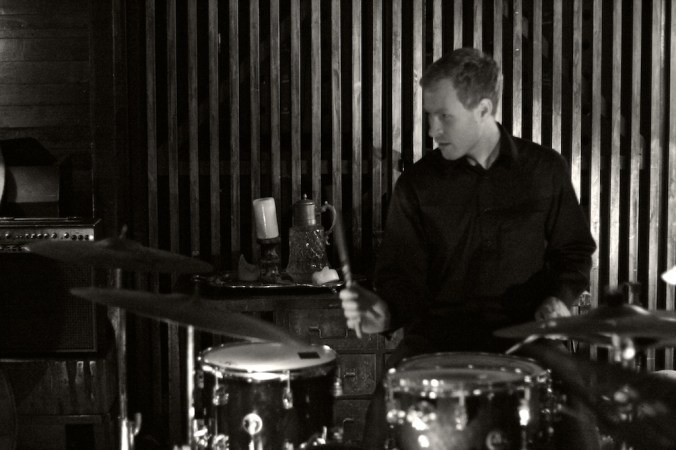
IMG_3433 - Version 2

Barry’s life is an extremely busy one.  He is in the final stages of his doctrinal studies (focussing on composition) and he gigs regularly around Australia and New Zealand.  Last year he won the prestigious Bell Award and was the runner-up at Wangaratta.  Guiding his impressive work ethic is more than just academic or professional considerations; he possesses a deep quest for knowledge.  If you follow Barry’s physical travels you understand something of what motivates him.  He is never a casual tourist.  His engagement with and questioning of the world about him informs his work.   The compositions in ‘Puzzles’ reflect this as they are carefully crafted improvisational vehicles, complimentary in relation to each other but clearly reflecting the learnings gained by Barry along the way.   The sound quality on the album is also superb and the album nicely presented.   ‘Puzzles’ was recorded at the ‘Pughouse Studios’ in Melbourne by Niko Schauble and the cover design is Barry’s.

IMG_3399 - Version 2

I saw Barry on his way through Auckland to perform in Queenstown.  Reports from that gig were positive and over the week he worked his way back to Auckland’s CJC, where he performed with Roger Manins on tenor, Cameron McArthur on bass and Ron Samsom on drums.  The CJC band are highly rated musicians, but you inevitably get a different feel from any band less familiar with the material.  While the numbers on the album sound effortless, the charts are obviously complex.  We heard many cuts from the album and a few new numbers that have not yet been recorded.   In the past Barry’s compositions tended to favour a degree of density, but many of his new tunes have a lighter feel.  They are probably just as complex but like all evolving musicians Barry is mastering the art of making the complex sound simpler.  It would be hard to pick between the tracks on ‘Puzzles’ but for beauty and emotional depth I like ‘Forge’ and for groove the fabulous ‘Heraclitus Riverbed’ (anything involving the ancient philosopher Heraclitus draws me in).  It was interesting to compare Manins (live) with Jackson (on the album).  Manins on tenor was the passionate story-teller while Jackson on alto has a drier sound and evokes the feeling of an intrepid pugnacious explorer.

IMG_3409 - Version 2

After listening to him live and replaying the album for days on end the conclusion is inescapable; Barry is a major talent on an upward trajectory.  I would urge people to hear him live when the opportunity presents itself and above all to support his art by buying the albums.

IMG_3436 - Version 2


The Album: ‘Puzzles’ – Steve Barry (piano, rhodes), Alex Boneham (bass), Tim Firth (drums), Dave Jackson (alto saxophone).  www.stevebarrymusic.com

The CJC Gig: Steve Barry (Piano), Roger Manins (tenor saxophone), Cameron McArthur (bass), Ron Samsom (drums) on the 29th October 2014   www.creativejazzclub.co.nz

Trudy Lile @ CJC 2014

IMG_3094 - Version 2

Trudy Lile is always in demand whether it’s cruise liner gigs, winery gigs or bar and club gigs.  Last night she was at the CJC with Kevin Field on piano, Cameron McArthur on bass and Ron Samsom drums.   This particular quartet is a regular lineup for Lile and it is hardly surprising.  Musicians like this are a gift to a leader, as each of them has pulling power, but they operate as a high functioning unit when together.   Lile is also an energetic and engaging performer and the enthusiasm she radiates is always evident in her music.

IMG_3111 - Version 2

As a singer/flutist Lile often favours standards or latin material, as these suit voice and flute so well.   She still surprises though with appealing lessor known tunes or sometimes popular tunes which lend themselves to wider explorations under her coaxing.  She is keen on finding new standards from the latter and we often hear material from sources not usually tapped by improvising musicians.   This use of popular material is becoming more commonplace and another recent example of this was Benny Lackner opening with a number from the latest Bowie album.   Lile also brought some interesting new compositions to the gig.    IMG_3140 - Version 2

The clubs audience numbers could have been better during the last month, perhaps they were saving for the festival,  but Lile being a true professional worked the room and fed off the interaction.   She has an abundance of charm, humorous banter and above all musicality.   The band responded to her lead with enthusiasm, amping up their performances to match hers.   Kevin Field is the sort of pianist who understands the accompanists role, comping sparingly at times and launching into heart stopping solos at others with McArthur and Samsom responding to each nuance.   I have posted a clip from the gig which is a favourite of Lile’s.  An Eliane Alias number titled ‘An Up Dawn’ from the album ‘The Three Americas’.

IMG_3123 - Version 2

Footnote: My ability to comprehend the softly spoken human voice with any accuracy has declined in recent years; probably due to the endless procession of loud gigs in intimate spaces that I attend.   What I heard Lile announce was a tune called “An Up Storm’ and so I labeled the You Tube clip accordingly.  When I saw Lile a few days later she laughingly told me what the actual title was.  Unfortunately I misheard that as well, as ‘An Up Swarm’.  The clip now correctly refers to ‘An Up Dawn’, but I do like my rogue re-titling.   Perhaps Trudy Lile could reharm the tune, utilising my imaginative and thought-provoking title(s)?  I am sure Eliane wouldn’t mind.  There is more than a hint of Chaos Theory in what I had originally settled on;  An up swarm of bees in Brazil causing a storm in Auckland.

Who: Trudy Lile (leader, flute, vocals), Kevin Field (piano), Cameron McArthur (bass), Ron Samsom (drums)

Where: CJC (Creative Jazz Club), Britomart 1885 basement, Auckland New Zealand 15th October 2014

Joel Haines @ CJC 2014

IMG_3088 - Version 2

Guitar Jazz is a surprisingly diverse sub-genre of improvised music.  So many barriers are broken down that almost all current (and past) musical genres are embedded in the improvising guitarists lexicon (including Punk).  At first listening it might be surmised that gifted guitarist Joel Haines sits somewhere closer to the rock spectrum than to Jazz but his roots are much broader than that.  As his gigs unfold you can hear Americana, modern Jazz guitar, country and a plethora of other influences.  There is also the unmistakable influence of film, as his themes invoke pictures.  This is what improvised music is about; appropriation and transformation.  Nothing ruled in or out, nothing too free, too exploratory, too dissonant or melodic.

When you’ve been around New Zealand Jazz awhile you learn that Haines is one of the musicians that other musicians respect deeply.  Guitarists especially come to hear him and I spotted a few in the audience on this night.  The two sets kicked off as Haines sets always do; with Haines hunching into his semi-hollowbody guitar and playing with deep absorption.  There are never introductions or tune titles, just waves of compelling music.  Because he constructs his improvisations around soulful, bluesy and deeply melodic ideas, perhaps more so than other guitarists, there is a radiating warmth that emanates from the band stand.  Black Tee-shirt, nut-brown wood-grained guitar, skin tones reddened by the club lights and rays of warm enveloping music.  IMG_3090 - Version 2

To my ears there is always a tangible hint of Jimi Hendrix in his voicings.  Few improvising guitarists could occupy this space so convincingly.  It is the place that Hendrix was heading for in his last days, only thwarted by his demons.  A place begging for further exploration by anyone brave enough.  For all that, Haines is a modern guitarist, as much in the Scofield camp as he is Rock inflected.  A feeling of familiarity guides us through his explorations, a sense of something familiar that you can’t quite place.  This is gift that only the best musicians bring to a gig.  His improvising journeys appear anchored by the vignettes he creates at the beginning of a piece, often worked over short loops, ostinato bass, or a tight driving pulse from the drummer.  Themes stated, constantly expanded then contracted again.  IMG_3040 - Version 2

For trio partners he had Oli Holland on upright bass and Ron Samsom on drums.  Being multi faceted and highly experienced musicians they quickly found the heart of the music.  Samsom in particular found his way deftly to where he added the most value.  He has considerable experience in lineups like this, music which edges closer to Frisell than to Pass.  Near the end of the first set Roger Manins sat in for a number (a composition by Joel’s brother Nathan from a recent award-winning album).   The number added breadth to the gig as it gave us a different perspective; Roger played like a demon as always.  This was another good night at the CJC and they just keep coming.

IMG_3085 - Version 2

With the Auckland Jazz Festival shortly underway and a wealth of quality music on offer, I must echo what my friend Stu said, “This will surely be remembered as the golden age of Auckland Jazz and improvised music”.

Who: The Joel Haines Trio – Joel Haines (guitar), Oli Holland (bass), Ron Samsom (drums).

Where: CJC (Creative Jazz Club), 1885 Britomart, Auckland, New Zealand    – www.creativejazzclub.co.nz

Blair Latham trio @ CJC

IMG_2699 - Version 2

There are musicians who have the ability to create vibrant pictures out of sound, deftly carving shapes, daubing them with colour, texture, leaving images suspended in the air, as tantalising spectres. Blair Latham is one of these.  He brings to the bandstand a tropical exoticism, redolent of the central Americas, but somehow still Kiwi.
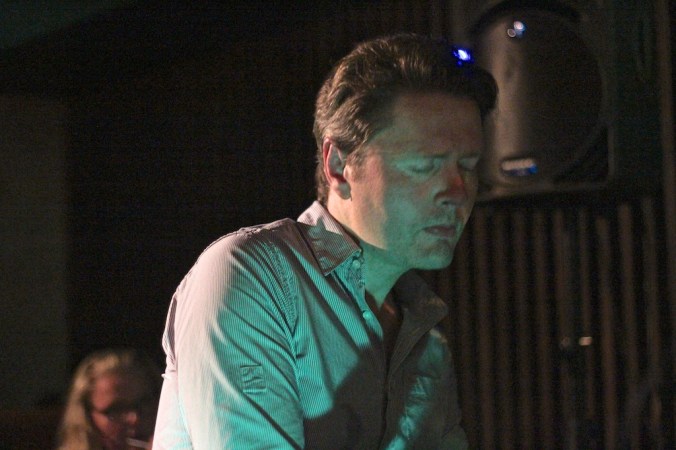
I first saw Latham at the Rogue & Vagabond during the Wellington Jazz Festival.  The project was to re-create the vibe of the Headhunters album and it certainly did.  In the hands of Hayles, Latham and others a wild, hyper-energised brew of sounds radiated among us.  They took the brief to its outer limits and for the audience (who were undoubtedly Hancock enthusiasts), it was an immensely satisfying experience.  As Latham’s tenor wailed, the milling crowd urged him on, each phase wilder than the last.   IMG_2694 - Version 2
The Rogue & Vagabond channeled North American funk grooves, this gig took us a long way south of that, to central Mexico.  A Mexico seen through Kiwi eyes, a musicians eyes, the eyes and ears of a careful observer.  The energies had shifted as well.   A more thoughtful approach was evident.  Latham was telling stories that came from the heart, from experience and reflecting the altered light and filtered sounds of that populous country.

blairlatham

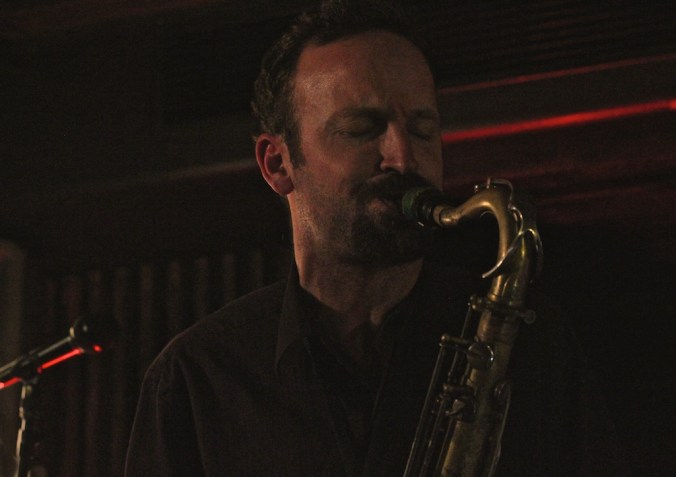
As the band started playing there were powerful overwhelming images created.  I reached for my note pad and wrote the word Fellini.  This is how I heard it, the sounds of a happy and slightly chaotic Mexican circus, peopled by tumblers, clowns on stilts, parading animals and long lazy hours fuelled by Mezcal.  A rich mesmerising spectacle that took your breath away.  There were no high energy excursions, no roof blasting squalls of sound.  This was a journey of measured steps, full of subtleties.  At times the trio sounded like a bigger unit and as Latham switched between his rich woody bass clarinet and classic Selmer tenor saxophone, the effect amplified.  Each phrase, each line, hung in air long after the breath that created it had subsided.  There were a number of Latham’s compositions and some beautiful, haunting Mexican ballads.  Emotion and sentimentality are bound up in that world.  There is nothing buttoned-up about Mexican music.

Latham is unusual in New Zealand as his principal horns are bass clarinet and tenor saxophone. A handful of musicians double on bass clarinet, few are as proficient as he is.

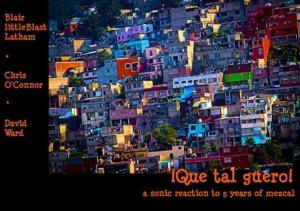
It often happens that the best laid plans unravel unexpectedly.  The trio was initially advertised as Latham, David Ward & Chris O,Connor.  The trio we saw was Latham (bass clarinet, tenor saxophone, leader), Neil Watson (guitar, lap slide guitar), Stephen Thomas (drums).  I rate both Ward and O’Connor highly but this lineup worked extraordinarily well.  It was hard to believe that these musicians had not played together often.  The challenge of playing this music, reading these often complex charts, brought out the best in Watson and Thomas.   Both gifted musicians. both good readers.  Together they merged perfectly and we could see Latham’s pleasure at this.

IMG_4150

The drum charts called for a colourist approach, an oblique subtle rendering of  rhythms that were as much rooted in Mexican folk music as in avant guard jazz.  Thomas was exceptional as he tapped, scraped or made the kit whisper; even his solos were original and entirely appropriate.  This guy can tackle anything it seems.  Watson is a veteran of the unusual and a superb reader.  It was a joy to see him working counterpoint or even unison lines with Latham.  He is perfect for gigs like this as his unbridled imagination is not tethered to norms.  He moved between lap guitar and Fender solid body, enabling him to move closer to the Frissel like Americana sounds that so clearly influence him.   IMG_2663 - Version 2

The word Mexico brings to mind a jumble of exotic but occasionally troubling images.   For me the source is literature, films, art, photography and music.  The nearest that I got to Mexico was in books like ‘Under the Volcano'(Lowry), ‘On The Road’ (Kerouac) or ‘The Teachings of Don Yuan’ (Castaneda); in films like ‘The Night of the Iguana’, numerous cowboy movies; in crazy photographic images from the ‘night of the dead’ festival of Santa Muerte, in articles about the loathsome human traffickers or murderous drug cartels.  I have travelled extensively in Spain and down the Californian Coast, places where this beguiling country felt almost within reach.  This gig took me one step closer.  IMG_2654 - Version 2

“How’s the mezcal” he said. “Like ten yards of a barbed wire fence.  It nearly took the top of my head off.  I had a Tequila outside with the guitar hombre” – ‘Under the Volcano’ -Malcolm Lowry

Who: Blair Latham (bass clarinet, tenor saxophone), Neil Watson (guitars), Stephen Thomas (drums)

Where: CJC (Creative Jazz Club), 1885 Britomart, Auckland, New Zealand, 3rd September 2014   –   www.creativejazzclub.co.nz

John Bell – Horn Free @ CJC

IMG_2515 - Version 2

John Bell is an iconoclast, always bringing something new and unexpected to the bandstand.   There is also a rich vein of tongue in cheek humour that runs though his onstage banter.  Like his music, it takes unexpected twists and turns.  That is not to say that his shows lack serious intent as he utilises quality musicians; doing what they do well.   It is perhaps best to describe his gigs as full of Zen humour, the sort that Carla Bley is so adept at.  The slap in the face accompanying a sly tickle of the ribs.  Even Bells instruments are other than the expected.  A metallophone instead of a vibraphone (vibes, sans motor and Leslie unit as played by Gary Burton these days).  A horn in a gig titled Horn Free (and an obscure tenor horn at that).  I was equally unsurprised when I was invited to their live recording date; “Last Modern Jazz Qtet Concert’.  Perfect.

To do justice to his music Bells gigs require quirky and talented musicians.  Good readers, good time keepers, prepared to veer off at a moments notice into uncharted realms.  No genre remains un-pillaged in the source material for John Bells compositions; Korean folk songs, bebop or brass band music.  When he announces a standard it is best to think popular Korean TV program theme, Sonny Sharrock or Sankey Hymn.   Nothing is what it seems in his Kaleidoscopic world of shimmering sweet and suddenly dissonant sounds.   The music is weighed up and re-evaluated long after the event.   It leaves an impression hanging in the air for weeks and because of that it is somehow more satisfying than predicable gigs.  Perhaps it is in the ears of the listener, but to my ear this was brave and satisfying music.  It made me happy.

IMG_2496 - Version 2

Watching an animated vibes player is pure theatre.  They throw themselves into the task more than other instrumentalists.  At times Bell would launch him self forward with apparent fury. His left foot trailing behind him as the energy released.  This wonderful two or four mallet dance was a product of the reduced amplification.  Body, mallet and instrument interacting with intensity.  IMG_2508 - Version 2

The rest of the lineup consisted of guitar, drums and bass.  A mix of veterans and up and coming players.   Neil Watson was on guitar and he is the perfect foil for Bell.   He is at least as iconoclastic as Bell, with wild forays ranging from the joyously punk to fusion bebop.  Watson is a respected musician about town and if he has boundaries they are not immediately obvious.  Stylistically he is often somewhere east of Frissel, Montgomery and Ribot.  He has gradually been adding more slide guitar into his repertoire (and now a pedal steel guitar is part of his bag of tricks).  Watson provided one composition to the gig and while different to Bells compositions it was equally enjoyable.   A well-known musician sitting beside me whispered, “That is in the time signature of Take Five, but it is way further out”.

IMG_2504 - Version 2 (1)

Eamon Edmunson Wells was on bass and Cameron Sangster on traps.   While Bell and Watson often leave the known universe to explore the outer reaches,  Edmunson Wells and Sangster hold the ship intact.  I have heard both often, but never in this context.  I was extremely impressed by their efforts and my respect has deepened for both.  If you do something well in a straight-ahead context that doesn’t necessarily translate into a more avant garde setting.   Musicians like Joey Baron show us just how far you can stretch if you are so minded.   It pleases me to see younger musicians following this braver path.  IMG_2513 - Version 2

The audience numbers were not as good as they could be and that was a pity.  This music is a rare treat and it deserves our attention.  All you need to enjoy music like this is a pair of open ears.  If you listen, really listen, you will soon have a smile on your face.

(an updated audio to clip to be added shortly in this space) 

Who: John Bell (metallophone, tenor horn), Neil Watson (guitars), Eamon Edmunson Wells (bass), Cameron Sangster (drums).

Where: CJC (Creative Jazz Club), 1885 Britomart, Auckland, New Zealand      www.creativejazzclub.co.nz   

Mark Lockett Trio @ CJC Winter 2014

IMG_1869 - Version 2

Mark Lockett lives in New York these days but he manages to visit Auckland every so often.   This year, as he did in 2012 when he released ‘Sneaking out after midnight’, he appeared with a trio.  Lockett is an engaging personality and his often quirky good humour spills into his playing.  He is probably the most unusual drummer I have seen.  One manifestation of this is the way he holds his sticks which is sometimes more than a third of the way down.   It’s as if he puts his entire body into the task in hand, partly lowering himself over the kit and listening intently to each sound and sensing each player; feeling for the spaces in between.

IMG_1892 - Version 2

There is an apparent deliberation that accompanies each beat or flurry, holding back for a micro second , then dropping the stick.   What is more interesting is his ability to convey the maximum of effect when playing quietly.  He isn’t a loud drummer but he conveys a world of sound.  Reminding us as he uses elbows, hand palms, rims and stands, that the drum kit is a subtle and incredibly musical instrument in the right hands.  His are the right hands.  Lockett’s compositions are also quirky and there is always the hint of a delightful joke in the offing.   These jokes stretch beyond the humorous titles, unfolding as musical stories with clever narrative lines.  His communication skills are such that the audiences follow with delight.  The humour is gentle but deeply imbedded and perhaps this is the best hook of all.  This tour was appropriately titled, ‘Flying by the seat of my pants’.IMG_1865 - Version 2

There are definite risks with trios like this, as they tempt saxophonists to self indulgently noodle once freed from chordal constraints.   Manins was perfect with this trio and used the opportunity to build upon the existing narratives.   At times playing outside but never once disconnected from the bass in drums.  He clearly took his lead from Lockett.  He is known for his intuitive reading of varying bandstand situations, a particular strength of his.  IMG_1867 - Version 2

The bass player Umar Zakaria had never played at the CJC before and in fact when I saw his name on the web site I thought that he had come from New York with Lockett.   When I spoke to him it surprised me to hear a Kiwi accent.   Zakaria has been attending the School of Music in Wellington and I believe that he is doing his honours at present.  My belief that he was an experienced offshore musician was not dispelled until I spoke with him after the gig.  His solos were interesting and he ably supported the others.  This was a good night of music from a solid band, that entertained without taking itself too seriously. 

Who: Mark Lockett Trio – ‘By the seat of my pants tour’.  Mark Lockett (drums and compositions), Roger Manins (tenor saxophone), Umar Zakaria (upright bass).

Where: CJC (Creative Jazz Club), Britomart 1885, Auckland New Zealand.   www.creativejazzclub.co.nz


yeahyeahabsolutelynoway @ CJC

IMG_1654 - Version 2

An array of guitar pedals is sometimes deployed to hide a multitude of sins, but in the hands of a skilful improviser the opposite occurs.   Yeahyeahabsolutelynoway! illustrate the best of modern guitar work as they invoke past, present and future.   Their gigs feature their own compositions, with performances drawing upon influences as diverse as rock, country, experimental improvised music and traditional Jazz.  They juggle these competing influences skilfully while still imparting a surprising degree of subtlety.  I have sometimes seen Jazz guitar traditionalists roll their eyes at the sight of pedals, but I would respectfully suggest that they haven’t been paying proper attention to their Jazz history.  IMG_1659 - Version 2

Everyone from Charlie Christian onwards embarked upon a never-ending quest to change, modify, enhance and above all to extend their sound options.   Without those open skies explorers and without enhancements, the use of the guitar in boisterous Jazz lineups would have reached its high-water-mark with Freddie Green.  I love Freddie Green with a passion but the guitar is about more than chords.  Almost every instrument used in Jazz today is modified or extended in some way.   Putting a trumpet through a pedal and working in real-time with loops created by multi phonic effects does not mean that the musician is cheating.  It must be about integrity and the sound.  Beneath the right fingers improvisational integrity and storytelling always come to the fore.   Yeahyeahabsolutelynoway! understand that.

‘Yeahyeahabsolutleynoway’ are the latest addition to the impressive Rattle Records stable.  On the 16th July they did an album release gig at the CJC and for those who braved the winter night it was a treat.  I had listened to the album in advance and so I knew what to expect, but to see them in action held a few surprises for me.  I had wrongly imagined that there would be pre-recorded loops but this was strictly live music.  Every effect we heard was created in realtime, with the constant adjustments from both guitarists giving them an immense palette to work with.  If the sound scape was impressive the tunes were even more so.

IMG_1664 - Version 2

There is something special going on with Australian guitarists at the moment and this band and ‘The Grid’ are occupying a unique space in the antipodean Jazz spectrum.   In the case of ‘yeahyeahabsolutelynoway’ there is no bass guitar, not even a five string.   It is not that unusual to see two six string jazz guitars together in a trio with drums.  What is more unusual is when neither of them takes on the traditional rhythm duties.  These guys were often working the same space, swapping lines or converging on a passage to create a subtle filigree.  While they worked as equals, they never appeared to intrude or crowd in on the other, so attuned they were.  Their focus was always on the subtleties of the music and this made for a good listening experience.  On a beautiful Ibanez solid body guitar was James Brown, who looked more like a member of ‘Z Z Tops’ than his namesake.  On a classy looking blond Fender Tele was Sam Cagney.  Both could be seen crouching at various times throughout the sets, as they coaxed beguiling sounds out of the pedals and all the while playing on through.   The drummer Stephen Neville was vital to the mix and created a seamless flurry of beats or subtle whispers on brushes as required.   It would be hard for me to pin down his drum style other than to say that it was effective and impressive.

IMG_1670 - Version 2

The tunes in the set list and on the recording were varied in approach.  A fun number is the rock influenced ‘Why Sleep?’  When I put the album on at home my partner Darien immediately replayed ‘Why Sleep  over and over.   It is the one to hook you and draw you in.   I liked the Americana feel of ‘Down home’.  It wouldn’t have been at all out-of-place on a Bill Frisell album.  The album was recorded live in Adelaide South Australia where the bands originates from.  Rattle is definitely on a roll this year (yeah, shake rattle & roll) and as the label goes from strength to strength, the CJC (Creative Jazz Club) and the Jazz audiences benefit.   Keep them coming Steve Garden!  IMG_1680 - Version 2

A foot note:  I see that Columbia University is now running a Computer Science course on programming for Jazz Musicians.  As Melhdau and others increasingly follow the footsteps of Herbie Hancock in using programmable devices to extend their range, such courses can only grow in number.   Don’t be too dismayed, this is improvised music folks!  Jazz will strike out in any direction that musicians take.   It is up to us to keep up.  

Who: yeahyeahabsolutelynoway! – James Brown (guitar, effects) Sam Cagney (guitar, effects), Stephen Neville (drums & cymbals)

What: A Rattle Jazz Album: UM.. yeahyeahabsolutelynoway!   http://www.rattlejazz.co.nz

Where: Live album release at CJC (Creative Jazz Club), 1885 Britomart, Auckland, New Zealand      www.creativejazzclub.com


James Wylie/Miles Crayford Group


IMG_1443 - Version 2

James Wylie last passed through Auckland in late 2012 when he played two gigs at the CJC (Creative Jazz Club).   A gifted alto saxophonist who doubles on clarinet, he has always been popular here.  In his travels around the world, his natural creativity has found endless new avenues for expression, examining, dissecting and assimilating the sounds around him.   What you get from Wylie is authenticity, an authenticity fuelled by indigenous music, country music, his own imaginings and all through a Jazz lens.    Last time he appeared, Greek singer Egli Katsiki accompanied him for two numbers.   This time we were again treated to some improvisations around traditional Greek melodies and to my delight a particularly lovely medieval Arab melody.  This interface between the ancient streams of Mediterranean music and Jazz is one that I am always up for, but seldom get a chance to hear in New Zealand.  Wylie is these days a resident of Greece.

IMG_1426 - Version 2

The co-leader Miles Crayford, now based in Auckland, has appeared at the CJC several times in recent months.  An interesting pianist and composer who compliments Wylie in unexpected ways.  This meeting of musical minds stimulated both artists.   The bass player was Mostyn Cole, but Crayford’s usual drummer, the Wellington based Reuben Bradley was replaced by Ron Samsom.  While all respected musicians in their own right, putting such combinations together is not in itself a guarantee of success.   In this case it worked well.   I like Reuben’s drumming enormously, but Ron Samsom gave the lineup an unusual colour that would not otherwise have been there. Samsom can draw on an endless array of styles, in each case arriving at a feel that is indispensable to the improvisers around him.   Like Wylie and Crayford, Cole contributed an original composition or two.   Cole is also based in Auckland these days and that is our gain.  He often incorporates passages of arco bass into his arrangements, perhaps more so than his local contemporaries.  IMG_1438 - Version 2 (1)

The musical connection between Crayford and Wylie was obvious, with the deliciously dark voicings of the pianist giving the alto player much to work with.   The first tune up titled ‘Taniwha’ (Crayford), set the tone for the evening.   A compelling tune with a melodic head, opening out to reveal depth upon depth.   In the second set Wylie showcased some traditional Greek tunes, unmistakable as to their origin, but somehow imparting a hint of that familiar Kiwi sound.  Kiwi musicians are reflections of our national character,  often excelling at what they do but seldom acknowledging their achievements.  Many are deliberately self-effacing, only letting their music speak for them.  Telling their stories in other ways is a writers job.

IMG_1412 - Version 2

I enjoyed this band and judging by the enthusiastic applause, so did the audience.   There was a time when I dreaded our more talented improvising musicians moving overseas as it felt like a loss.   Now I think differently.  Every-time James Wylie, Jonathan Crayford or Mike Nock returns home they bring back something new.   Nothing is ever lost if we listen properly and keep supporting the music.  These musicians and the many students who tread the same path are our legacy; where ever they live.  IMG_1417 - Version 2

Who: James Wylie/Miles Crayford Group.  – James Wylie (alto saxophone), Miles Crayford (piano), Mostyn Cole (bass), Ron Samsom (drums).

Where: CJC (Creative Jazz Club), 1885 Brittomart, Auckland, New Zealand.   http://www.creativejazzclub.co.nz

Brian Smith quartet 2014

IMG_1251 - Version 2

For a man who says that he’s “taking it easy these days”, Brian Smith is remarkably active.  He has been a strong supporter of the recent CJC Sunday Jam sessions,  he still teaches and regularly fronts CJC gigs.   Many regard him as the elder statesman of the tenor saxophone in New Zealand and he certainly has the credentials to fit that title.  It is only when you see him playing his Cannonball or Selmer tenor that you realise just how youthful he is.  Like many experienced tenor players he appears ageless on the bandstand.  That is the alchemy of the instrument and the alchemy of the born improviser.

Advertised as Brian Smith (tenor saxophone), Kevin Field (piano), Kevin Haines (bass) Frank Gibson (drums) but on the night Oli Holland replaced Kevin Haines on bass.

It takes a lot of space to list Brian’s musical credentials and it is all too easy to miss out important elements, but here is a brief summary that I have gleaned from elsewhere;

‘Brian relocated to London in 1964, performing at Ronnie Scott’s and working & touring with such names as: Humphrey Littleton, Alexis Korner, T-Bone walker, Georgie Fame,Alan Price, Annie Ross, Bing Crosby, Mark Murphy, Jon Hendricks, John Dankworth, & Tubby Hayes. He was a founder member of ‘Nucleus’ alongside Ian Carr, which won the European Band competition in Montreaux in 1970, resulting in gigs at Newport Jazz Fest and tours of Italy, Germany, Holland, and America. In 1969 he started working in the Maynard Ferguson band, staying with them until 1975 including touring and recording. He also backed acts like Nancy Wilson, The 4 Tops, Gladys Knight & the Pips, Donovan, Dusty Springfield, Sandy Shaw and Lulu.’

The programming at the CJC is mostly centred around musicians projects.  The gigs are therefore heavily focused on original material or perhaps an oblique take on a particular oeuvre.   We do hear standards but seldom more than one or two a gig.  The exception occurs when international artists arrive in town or when iconic musicians like Brian Smith front a gig.  On occasion it is nice just to sit back and enjoy familiar tunes.  Letting them wash over you, being able to anticipate the lines and comparing them in your head to the versions that you have grown up with.  The very fact that some tunes become standards implies that they have a special enduring quality.  These are vehicles well suited for improvisation and having musical hooks that invite endless exploration for listener and musician alike.  Standards composers are the greatest writers of the song form, but the inside joke is that these wonderful tunes often came from musicals which failed miserably.

IMG_1258 - Version 2

It was great to hear the quartet play ‘You and the night and the music’ which is a firm favourite of mine.  Composed by Arthur Schwartz  (lyrics Howard Dietz), it came from the musical ‘Revenge with music’ which closed on Broadway after a few months.   Frank Sinatra and Mario Lanza revived it and it became popular with Jazz musicians for a while during the 50’s and 60’s.  While the earlier popular renderings tended toward the saccharine, Jazz musicians like Mal Waldren purged the tune of its syrupy connotations.  It was the obscure tartly voiced Lennie Niehaus Octet version (with Lennie on alto, Jimmy Giuffre on baritone and Shelley Manne drums) which won me over.  Over a decade ago I heard HNOP and Ulf Wakenius perform a killing version of it at the Bruce Mason centre and I had not heard it since.  That is until last Wednesday.

IMG_1236 - Version 2

Another great standard was Horace Silvers ‘Song for my father’.  Standards have the power to move us deeply and this tune in particular brought a lump to my throat as my father was slipping away that very week.  One of pianist Kevin Field’s tunes ‘Offering’ was also played and while not a standard it is a favourite about town.   Everyone played well that night with  Oli Holland and Kevin Field up to their usual high standard; Frank Gibson on drums was in exceptional form.  His brush work and often delicate stick work was perfect and it reminded everyone why he is so highly regarded about town.

IMG_1288

I have chosen a video clip from the gig which is arguably the most famous standard of all.  Cole Porters ‘What is this thing called love’.  Cole Porter would always say that the song and lyrics wrote themselves and this version is certainly a worthwhile addition to the selection.  Unlike many of the vocal versions it is fast paced and authoritative.  IMG_1278 - Version 2

Who: Brian Smith Quartet – Brian Smith (tenor saxophone), Kevin Field (piano), Oli Holland (bass), Frank Gibson Jr (drums).

Where: CJC (Creative Jazz Club), Britomart 1885, Auckland, New Zealand –  June 25th 2014   http://www.creativejazzclub.co.nz


Barney McAll trio @ CJC

IMG_1020 - Version 2

Last week was my two hundredth post and I was casting about for something extra special to put up.  Something to celebrate a rite of passage for JazzLocal32.com.  Happily I found that special something right at my doorstep.  Brooklyn based pianist Barney McAll was in town.  There are a lot of exceptional pianists on the global scene and in spite of diligent explorations on my part, there are many that I haven’t yet heard.  Barney McAll was one of those but the omission is now rectified.  He is firmly on my radar and I will track his every move.  IMG_1040

Barney McAll is an expat Australian, moving to New York in the mid nineties.   There are 104 albums and films which credit him as either leader, sideman, arranger or collaborator and the people he has worked with defy belief.   If I added all of their names here it would be a very long post, but to give you an idea of the diversity of his projects I will list a handful of his collaborators.  Dewey Redman, Kurt Rosenwinkel, Kenny Garret, Marceo Parker, Jimmy Cobb, Eddie Henderson, Vernel Fournier, Billy Harper, Josh Roseman, Gary Bartz and Andy Bey.  This guy is an established heavyweight but as if to round out an already fat resumé, his most recent activity focuses on solo piano.  He has a long-standing weekly spot at a Brooklyn church and his Sunday gig is shaping his work in interesting ways.  He is a deep improviser and his output of late has a spiritual dimension; embodying a personal journey.  Spiritual in the way that eighties Jarrett or sixties Coltrane were.

When he plays solo piano or leads an intimate trio, Barney McAll appears protean.  Changing form before your very eyes as he rolls to the music and enters into a state of absorption.  Sometimes merging with the shadows, as fleeting shards of light fall across his face and fingers.  I once read an account of a Tibetan Shaman who appeared to change shape as the wailing ceremonial trumpets and resonant sub-bass chanting engulfed him; reflecting the ebb and flow of the music.  This is how I perceived McAll.

He mostly played his own compositions, but at times he augmented these with lessor known tunes from the margins of the Jazz repertoire.  A good example of the latter was his joyful take on “Mendez takes a Holiday’ by Donny Hathaway.  Whatever he played took you to the beating heart of the tune.  McAll is like the perfect tour guide.  Pointing out the things that you should know, while leaving you at the brink of deeper secrets.  His own compositions were particularly fine, brimming with interesting musical ideas, original viewpoints, but always engaging.  There is never the slightest suggestion of noodling about his playing.  He shares his experiences and the audiences sit enthralled at every turn.  IMG_1024 - Version 2

It is always instructive to watch musicians during such gigs as they hear things differently from the rest of us.   The last time I saw so many open mouths was during feeding time at a seal colony.  Occasionally someone would whisper “oh what a total mofo”.   A recent Jazz studies graduate Chelsea Prastiti said to me later, “The flow of ideas had enormous coherence.  They all made perfect sense while sounding quite original.  I wish I had thought of them”.   In the break he spoke enthusiastically to me about his new band mates Cam McArthur and Ron Samsom.   “These guys are great and they really prepare well ” he said.   He was right to praise them as they did not put a foot wrong.   He later told the audience, “Sometimes I hear the first contact with the crash symbol and I think, oh dear, this will be a long night.  This is definitely not the case with Ron Samsom”.   He also complimented Cameron McArthur, “You saved my ass twice man, and its my tune”.  IMG_1041 - Version 2

His tune ‘FlashBacks’ imparts a wistful sadness, of the sort so wonderfully portrayed in ancient Japanese haiku.  Darkly beautiful, redolent of the shadows and the play of light, chiaroscuro.  There is something about those voicings and their relationship to each other that evokes a haunting elegiac portrayal of how life is, but hinting also at how it should be.  It is humanism in its purest form.  The other composition that grabbed my attention was ‘Non Compliance’ an invective against the NRA (National Riffle Association).   In his inimitable way McAll conjures ‘Sandy Hook’ and the ghastly ever mounting toll of lost children.   This is a call for sanity in a gun-toting culture gone mad.  An expose of a strange irrational twilight world where frightened people think more guns will solve the problem.  All of that imparted so succinctly, and done over a simple pedal point.

Telling stories is what good Jazz musicians do and McAll is a very good jazz musician.  So good that a few (including me) followed him to Wellington for more.

IMG_1023 - Version 2

Who: Barney McAll trio – Barney McAll (piano), Cameron McArthur (bass),  Ron Samsom (drums).  www.barneymcalljazz.bandcamp.com/

Where: CJC (Creative Jazz Club), Britomart 1885, Auckland, New Zealand.  www.creativejazzclub.co.nz/


Mad Hatters Guitar Amp Fundraiser @ CJC May 2014

IMG_0845 - Version 2


On Wednesday 21st May the CJC (Creative Jazz Club) replaced their normal program with a fundraiser as the club has long been in need of a good quality guitar amp.   Relying on borrowed guitar amps is a risky practice and moving one down winding staircases follows the Rhodes & B3 as being the quickest way to get a hernia.   A large number of established musicians and many Jazz studies students volunteered to play and so an impressive pool of artists formed.   No musician asked for pay but the audience still paid an entry fee.  To augment the door take, raffle tickets were also on the sale.  The many prizes included a double pass to the Larry Carlton concert and all donated by CJC supporters.

In these situations it is usual for the more experienced musicians to suggest a number they would like to play.  They would then liaise with their preferred band mates from the volunteer pool or perhaps strong-arm a few others who had not yet volunteered.

IMG_0878 - Version 2

Roger Manins the creative director of the CJC was having none of that.  He had a cunning and innovative plan up his sleeve and one worthy of John Zorn.  All the musicians would have their names placed in a hat (a pork pie hat as it turned out) with no set list predetermined.  Just to put an additional burr under the musicians saddles, the ‘feel,’ (time signatures, tempo style etc) were written on a slip of paper drawn from a second hat.  Once a name came out of the hat it was not put in again, with the number of musicians performing dictated by Roger prior to each draw.

IMG_0831 - Version 2

In summary: a pool of musicians assembled, two hats determined what they played, how they play it, and with whom.

If the slip read fast bossa, slow ballad or fast waltz the task was easy.  A quick negotiation determined which tune and if not predetermined by the slip, which key.   If however the second draw indicated that odd time signatures; changing constantly throughout the tune, then the task was formidable.  There was one draw in particular which took my fancy and that was when seven names appeared and the second draw indicated that they must play completely free.  “No discussion, just play”, was the instruction.   This was a recipe for chaos and mayhem but what they pulled together was interesting.  The band (which I will dub the ‘FreeJC’ ensemble) had a mixture experienced musicians and Jazz studies students.  Contrary to popular belief Free Jazz very often has rules or principles guiding the improvisation.  For example John Zorn’s game pieces like Cobra have strict confines and free improvisation occurs cued by the conductor; a set of spontaneous but connected conversations.  Butch Morris was the master of this ‘Conduction’ methodology but in longer form.   He coaxed wonderful creations out of musicians by using hand signals (or in Zorn’s case cued by a rapid succession of flash cards).

IMG_0849 - Version 2

The older hands knew better what to do here, conversing in the time-honoured way of call & response, moving with the ever shifting patterns and shapes.  Some portions of this ten minute long Free exploration worked better than others.   When they reached for a commonality of ideas  interesting shapes formed.   Like all good conversations it is the listening that is as important as the talking.  When this openness is evident a deeper intuitive communication occurs.    I have put up a blended excerpt of this free number.

As well as the many of the many regular performers there were a number of impressive students on the band stand.  It was also great to hear Julie Masson again.  

Among those performing were: Frank Gibson Jr, Phil Broadhurst, Julie Mason, Neil Watson, Ben McNicoll, Carolina Moon, Oli Holland, Kevin Field, Andy Smith, Ron Samsom, Cameron McArthur, Paul Nairn, Chelsea Prastiti, Djordje Nikolic, Michael Howell, Tom Leggett, Tristan Deck, Matt Steele, Rob Thompson, Sam Weeks, Timothy Andrew Shacklock.

What: CJC Mad Hatters Guitar Amp Fundraiser

Where: CJC (Creative Jazz Club), Britomart 1885, Auckland, New Zealand. 21st May 2014   http://www.creativejazzclub.co.nz

Neutrinos Jazz Funk + Rob Thompson


IMG_0708 - Version 2

If you have seen the Neutrinos perform at the Albion you will know how intensely funky they are.   Because they are a pub band, the music is beat focussed, danceable and outrageously cheerful; making people whoop with joy at the sheer exuberance of the music.  Ron Samsom is the Neutrino’s leader and he has contributed most of the tunes. I have only recently begun to grasp the breadth and depth of his compositions.  He is as a gifted writer.  Roger Manins has also contributed some great tunes from his popular earthy funk projects.   In his inimitable way he is also shares comparing duties.  The Albion band is Ron Samsom (drums), Roger Manins (tenor), Grant Winterburn (organ) and Cameron McArthur (bass).   As a unit they are the ultimate live experience.  Grant Winterburn’s solos scuffle and sing their way into your soul, taking your breath away with their brilliance.   Roger Manins brings down the happy ghosts of the funk tenor greats, Cameron McArthur makes the music dance and Ron Samsom’s drives endless flurries of killing beats out from his kit.  Being bombarded with something faster than light and more mysterious; neutrinos.  leaving in their wake pulsing rays of warmth.  More later on that gig as I will be writing a post on the Albion Funk Jazz Neutrinos shortly.

The CJC Neutrinos while composed of the same parts approached the music from a different angle.

IMG_0733 - Version 2

The Neutrinos lineup at the CJC was promoted as Jazz Funk (not Funk Jazz) and this offered a clue to the change of focus.  Visiting Canadian keyboard player Rob Thompson also replaced resident organist Grant Winterburn for this one gig.  Instead of the tone wheel simulating Nord C2D which Winterburn uses, there was a Nord Stage 88ex.   The sounds are very different.  Because the CJC is a listening space this opened up other possibilities; beat driven funk can follow ballads or introspective pieces.  We heard many of the tunes from the Albion repertoire, but the real surprise of the evening came when Rob Thompson moved from keyboards to piano.  He made a brief announcement and then proceeded to play two numbers strongly associated with Bill Evans.   Appropriately the quartet shrunk to a trio at this point.  Leaving just Thompson, McArthur and Samsom.

IMG_0729 - Version 2

It is unusual to see anyone interpret Bill Evans these days as modern pianists tend to shy away from this material.   There are a number of reasons for this and I suspect the sheer recognisability of his style, and of his particular approach to harmony invites unwelcome comparison.   A recent exception would be the album by Eliane Elias with husband Marc Johnson (an Evans alumni).   That particular album is Evans and Elias in equal proportions.  Rob Thompson has been studying Evans for a year or so and in situations like this there is a fine point between sounding like a particular artist and strongly referencing that artist.  How to approach the tunes is the perpetual conundrum.  The first tune of two was ‘Morning Glory’ (Bobby Gentry).  It was typical of Evans to appropriate an unlikely pop tune, film theme or country & western tune and then make it his own.  In this case ‘Morning Glory’s’ country and western origins dissolved into crystalline beauty.  Quite uncoupled from the Tallahatchie Bridge and Billy Joe McAlester.

From the intro to the end it spoke of Evans without being a slavish imitation.   The voicings and the approach were close enough to Evans to evoke him, but different enough to feel that you had gained a fresh perspective.  His second Evans number was ‘Re: Person I Knew” (Evans), a tune he wrote as a tribute to his friend Orrin Keepnews of Riverside Records.  The title is a clever anagram of Keepnews name, an intellectual challenge that Evans could seldom resist.  This introspective, wistful tune is among those most associated with Evans.  It is not only Keepnews who’s referenced here, as the song contains a haunting echo of the Scott Lafaro sessions at the Village Vanguard.  I have put up a clip of this.  Later I asked Cameron McArthur if he had ever played this material before and he had not.  With Evans bass playing changed.  Chuck Israels was the bass player when Evans wrote this tune and he said, “My voice is left open because Bill doesn’t play the bass in his left hand”.  Both McArthur and Samsom responded appropriately to Thompson’s explorations and both displayed a high degree of sensitivity.  Then it was back to the quartet format and higher octane tunes: with Roger Manins playing boisterously and to his usual high standard.

IMG_0736 - Version 2

It is always worthwhile to see familiar material examined afresh and played from a new perspective.  It was not just the Evans but the Neutrino song book reinterpreted on this night.

Who: Ron Samsom’s Neutrinos – Ron Samsom (drums), Roger Manins (tenor saxophone), Cameron McArthur (bass) with guest artist Rob Thompson (piano, keys)

Where: CJC (Creative Jazz Club), Britomart 1885, Auckland, New Zealand 13th May 2014.    www.creativejazzclub.co.nz

Sam Blakelock @ CJC

IMG_0598 - Version 2

Sam Blakelock is a guitarist open to the various streams and influences around him and he is clearly going places.  Formerly from Christchurch where he completed the Christchurch University Jazz Studies course, he found himself attracting wider attention.  A best guitarist award and the Jack Urlwin scholarship were to follow.  After a stint on luxury cruse ships he settled in New York where he is about to embark upon a Masters at NYU.

IMG_0595 - Version 2

Like a number of Jazz guitarists these days Sam Blakelock plays a Fender.   With Fender playing Bill Frisell cleaning up the ‘best of’ Jazz guitar polls year after year, the instruments emergence in mainstream Jazz is unsurprising.  It is hard to imagine Marc Ribot ripping up the rulebook on a classic hollow-body.   These warhorse guitars can be coaxed gently or smote with force and in the hands of a Jazz trained guitarist the sound palate is open-ended.  Blakelock’s approach is more to coax the instrument and the clip I am posting illustrates that approach.  While the quality of an instrument matters, it is the inventiveness and the ability to communicate interesting musical ideas that matters more.  The compositions were all original, many composed for this New Zealand farewell tour.   They felt like markers laid down at a waypoint in the journey.   A point to delineate his hometown success from the success that is surely to follow.

IMG_0599 - Version 2

For bandmates he chose two ex-pat Christchurch musicians, Richie Pickard (bass) and Andy Keegan (drums).  Completing the quartet was popular local alto player Callum Passells.   Having an alto in the mix gave him a very specific palate; giving the arranged heads a distinctive sound.  A certain freedom in voicing made possible.  Blakelock’s upper register lines blended perfectly with the clean toned melodic alto; playing in unison or subtly accenting solos with minimalist comping.  Keegan and Pickard anchored the quartet.  IMG_0600 - Version 2

At one point Blakelock played a riveting solo piece and on another he stole the limelight with a slow blues that burned like a torch song and sang like an exotic bird.  It is when he is in complete charge or playing alone that we see him at his best.  It will be interesting to see him in a few years time, when New York has further polished his already considerable skills.   When he has a moment I hope he passes this way again.

What: The Sam Blakelock Quartet Farewell Tour.  Sam Blakelock (guitar, compositions), Callum Passells (alto sax), Richie Pickard (upright and electric basses), Andy Keegan (drums).

Where: CJC (Creative Jazz Club), Britomart 1885, Auckland, 7th May 2014.  www.creativejazzclub.co.nz   samblakelock.com

‘DOG’ unleashed on International Jazz Day

photo - Version 2

The DOG project was conceived two years ago and during its public outings the band garnered enthusiastic support.  Those who heard DOG urged them to record and eventually they did.  The long-awaited album was ready for release on International Jazz Day 2014; a gestation time roughly equivalent to that of an elephant.  The time however has been very well spent, as the band members have composed a wealth of new material.  DOG (formally Dr Dog) is Roger Manins, Kevin Field, Oli Holland and Ron Samsom.  Manins, Field & Holland are lecturers at the Auckland University School of Music (Jazz program), Samsom is the senior lecturer.   They are all in demand for the best gigs about town.  They are the big dogs on the block.

IMG_0531 - Version 2

International Jazz day was the perfect time to release this album, underscoring as it does a local Jazz scene crackling with life and teeming with invention.  Anyone familiar with the Auckland Jazz Scene will know that these musicians are a driving force; inspiring, challenging and empowering emerging artists.  It is a band of titans but it is also a true band of equals.  In the Jazz world bands made up of many leaders often fall short.  A juggling act’s required to unify a multiplicity of visions.  That problem does not apply here.  These men appear to breathe in unison and react to each other intuitively.  At the ripe old age of two DOG is in peak condition.

IMG_0484 - Version 2

The album is beautifully recorded and the mix could hardly be improved upon.  Credit to the York Street Studios in Auckland and to the tasteful mixing by Rattle’s Steve Garden (and DOG themselves).  ‘Rattle Records’ are going from strength to strength and if the last three months output is anything to go by, this will be their best year yet.  From the first few notes the album reels you in and holds your attention throughout.  There is a virtuosity and a tightness to the performances but it is more than that.   Beneath the unquestionable musicianship there is a radiating warmth and a bounty of good humour which shines through.  This was especially evident during the International Jazz Day performance at the CJC.  It was a humour filled affair and delightfully laid back.

IMG_0529 - Version 2

Roger Manins was the front man for the release gig and the dog jokes and banter had people in fits of laughter.  He teased the band mercilessly and they responded with sad looks or dismissive gestures.  The Zeppo Marx to Manins Groucho.  This is a role that he is well suited to and his jokes are quintessential Kiwiana.  Some of the titles contained obscure dog references.  ‘Race to Space’ honours the Russian dog which led off the space race, others inspired by loveable but hapless dogs of good breeding as in ‘Evolution’.  At one stage Manins directed people to a comparative dog intelligence chart.  “This is my spaniel rated at number fifty three, which is around the middle of a descending scale”.  Next he asked, “Does anyone here own an Afghan Hound?”.  No one owned up, perhaps guessing what was to transpire.  “Ladies and gentlemen they are number ninety two on the list, almost at the bottom of the intelligence scale”.  Some brave soul responded, “Surely not”.  “Have you ever tried to play cards with an Afghan Hound” was Manins quick response.  Roger Manins drawings for the cover art say it all.

Because there are four composers, the tunes have a variety of moods and tempos.   I like them all, but if forced to choose one I would go for Hollands ‘Didel Didel Dei’.   There are burning solos on this uptempo track and the interplay is quite exceptional.  On this track you will hear Manins at his best.  As usual there is no sugar-coating as he pushes the tenor to its outer limits.  Field, Holland and Samsom responded in kind.  This music they play has the utmost integrity and the audience laps it up.

International Jazz Day has become the premier event on the International Jazz Calendar with the brightest stars in the Jazz firmament showcased.  Auckland, New Zealand can hold its head high in the midst of these international celebrations.   This album and this live performance did us proud.

Who: ‘DOG’ is Roger Manins (tenor Sax), Kevin Field (piano), Oli Holland (bass), Ron Samsom (drums) – compositions by all band members

Where: CJC (Creative Jazz Club), 1885 Britomart, Auckland, New Zealandhttp://www.rattlerecords.net/   http://www.creativejazzclub.co.nz/

Michele Benebig @ CJC #jazzapril


IMG_0341 - Version 2

When a Hammond B3 artist hits town, organ combo fans cheer and roadies duck for cover.  The B3 is not the sort of instrument that musicians bring with them on a plane (unless they have chartered a Lear Jet or a Hercules).   These mysterious musical behemoths are now harder to find, as the Hammond company folded in 1986 and the original tone-wheel B3/C3 has not been made since 1974.  The instrument barely fits into a utility van and weighs more than 435 lb; with the accompanying Lesley Unit you can add 150 lb.  The first problem for a travelling B3 artist is therefore to source a well restored working machine in the town where the gig will be held.  Auckland is lucky in this respect as there are a few of the instruments around.  To locate one in full working order is often difficult but the first port of call in Auckland is always keyboardist/organist Alan Brown.  Alan has just restored his beloved C3 (an even heavier version of the B3).

Young unsuspecting musicians and a few experienced ones who should have known better, cajoled by Roger manins, moved this fabulous machine halfway across town, down two flights of stairs and into the basement of the 1885 building.  They suffered for our enjoyment.

.  IMG_0278 - Version 2

Its been over a year since Michele Benebig and Shem were in town and we love them here.  Their blend of hard swinging old school B3 Jazz groove and evocative South Sea Island referencing vocals is a perfect fit for New Zealand audiences.  The Author Lawrence Durrell* once described a rare disease called ‘Islomania’.  This affliction of the spirit causes a form of intoxication; an overwhelming desire to live on lush green Islands surrounded by limitless expanses of sea.  For the afflicted this is a source of inner happiness.  While Michel and Shem are often seen on the West Coast of America; in Australia, New Zealand or France, it is their Island home base of New Caledonia that defines them.  Shem in particular fills her compositions with descriptions of exotic papillon (French for butterfly), colourful birds who warn the locals of impending storms and of the Pacific.   She and Michel are clearly afflicted by Islomania and as a fellow sufferer I empathise.   When this affliction meets the Jazz B3 obsession a potent hybrid arises and from the grip of this there is no escape.

After seemingly endless months of blue skies it poured down on the night of the gig.  This was bound to affect attendance, but those who braved the storm heard something exceptional.  If there is one compelling reason to brave wind and rain it is to hear a B3 Combo.  There is a primal warmth radiating from a B3 that seeps into your body.  From the first few chords you feel at one with the world and during the intense slow burning grooves you are lost to your cares altogether.

IMG_0361 - Version 2

Several numbers into the first set we heard ‘State Highway Blues’, composed and arranged by Fabienne Shem Benebig (the previous day) while driving up the North Island.  This blues in Ab was absolutely captivating and the way the musicians gently pulled back on the beat gave it a deep swing (a number that reprised in my dreams for days to come).   This number had enough tension and release to power Big ben.  There were many new compositions from both Michel and Shem plus the odd tune from Michel’s earlier albums ‘Black Cap’ and ‘Yellow Purple’.  One notable exception was the inclusion of a number by the French organist Eddie Louiss.  Several years ago Michel wrote ‘Blues for Rog..’ (for Roger Manins) and in this number much of his formidable technique is evident.  IMG_0306 - Version 2

Fabienne Shem Benebig always accompanies Michel on the road and she is also a gifted musician.  Her well thought out compositions and strong vocal presence are integral to the combo.  ‘Shem’ mainly sings in her native French tongue and hearing the blues in that language is pleasant to the ear.  That said she is not there for mere novelty value as her voice is authoritative.  Whether whispering a ballad or belting out a Basie number she is equally compelling.  Like Michel she has a captivating stage presence and her playful humour is the perfect foil to his studied cool.

Michel Benebig is gaining wider attention and his recent trips to California have resulted in two stellar albums.   His command of the B3 is astonishing and if you want a masterclass in technique and cool watch him in action.  He has an intuitive feel for this genre and every move, every pregnant pause and every gesture becomes part a his unfolding story.  As the last of the old B3 masters leave us, Michel Benebig and others like him will be swiftly identified as the new cadre, ready to move up and occupy that hallowed space.

IMG_0271 - Version 2

No organ combo is going to work properly without the right sort of guitarist and for this gig Michel used Auckland’s Dixon Nacey.   Dixon Nacey and drummer Ron Samson had not long been back from New Caledonia where they joined Michel and Shem for the official opening of the new Astro Jazz Club (run by Michel and dedicated to organ Jazz and in particular Brother Jack McDuff).   Dixon always looks happy when playing, but never more so when playing blues or groove.   He really pulled out some great performances on this gig and the chemistry between he and Michel was evident.  The multi faceted (and by default polyrhythmic drummer) Ron Samsom was cast in the unusual role of groove drummer here.  He exercised restraint and kept the tight focus needed, stepping free at appropriate moments.   The most important role for a groove drummer is to lock into the organs groove and he achieved that.  Roger Manins and Ben McNicoll made up the horn section and while Roger played the heads and an occasional solo, Ben mostly played counterpoint.  The tenor sax and baritone sounded wonderful together.  Everything about this gig felt right and the genre was well served.

IMG_0302 - Version 2

We are now halfway through the CJC (Creative Jazz Club) #jazzapril series and the program offers depth and variety.  As we approach International Jazz Day we should reflect on the gift that we have at our disposal.  While it is tempting to say that we’re lucky (and we are) I also mindful that the music we call Jazz is the result of hard work and dedication.  This American art form has long had global outreach and down at the bottom of the Pacific we legitimately own a piece of that, thanks to a plethora of gifted musicians and enablers like Roger, Ben and Caro.

*Reflections on a Marine Venus – L Durrell

Who: Michel Benebig (Hammond C3), Fabienne Shem Benebig (vocals), Dixon Nacey (guitar), Ron Samsom (drums), Roger Manins (tenor sax), with Ben McNicoll (baritone sax).

Where: CJC (Creative Jazz Club), 1885 Britomart, Auckland New Zealand. 16th April 2014

‘Mr M’ @ CJC

IMG_9908 - Version 2

‘Mr M’ is an enigmatic title but the meaning is more straightforward than might be supposed.  The trio members are Miles Crayford, Reuben Bradley and Mostyn Cole; take the first three letters of their forenames and you have ‘Mr M’.  Attempting to challenge our sense of time and place they introduced themselves as a Wellington band with a majority of the musicians based in Auckland.  When they played the CJC last Wednesday these small puzzles were swiftly cast aside.  What we heard was to the point and the quality of the music beyond disputation.  This was my first opportunity to hear a popular trio, one that my Wellington friends had told me about.

IMG_9859 - Version 2

Throughout the night we heard original compositions with all of the band members contributing tunes.  I am increasingly impressed by the writing skills of New Zealand musicians and it tells me a lot about the quality of New Zealand Jazz education.  The quality of their musicianship did not surprise me as I am familiar with each of them.  Anyone who follows the New Zealand Jazz scene will know that they form part of the ensemble on Reuben Bradley’s ‘Resonator’ album ‘(which won the Vodafone Tui’ Jazz Award in 2011).   This is probably the best starting point in evaluating ‘Mr M’.   Anyone who doesn’t have a copy should grab one.  It is still available in most big record stores (and from Rattle).   What ‘Resonator’ established was that these musicians at the core of the recording work well together.   Forming a trio was a logical step.

IMG_9869 - Version 2

Reuben Bradley has regularly been featured at the CJC.  He is not only a highly respected drummer but an important figure on the scene.   He has a vision for the music and communicates that well.  When you hear him for the first time the musicality of his playing strikes you.  His drum chops are immediately evident but there is an extra something that he brings to the kit; an innate sense of time and a magical spark that makes you sit up and pay attention.  All good drummers understand dynamics and know exactly where they should sit in the mix at any given moment. Reuben epitomizes tastefulness in this regard.   He is probably the best known of the three, having regularly performed about New Zealand and further afield.  His most recent Rattle Album ‘Mantis’ is deservedly a finalist in this years Tui’s.   It is one of a very few New Zealand Jazz albums to garner broad attention from the media.  ‘Mantis’ is another must-have album (both ‘Resonator’ and ‘Mantis’ have Roger Manins on them which of itself is enough to recommend them).

IMG_9911 - Version 2

Miles Crayford is from an impressive musical Dynasty.  He is well-known about Wellington as he regularly gigs there.  Apart from a guest appearance with his uncle Jonathan Crayford a few weeks ago, he has not played at the CJC before.  When he plays you know that you are listening to a modern stylist.  There is a certain intensity evident and his voicings are often dark and brooding.  The focus on composition as well as performance gives an added depth to his work.  He has not yet recorded as leader, but his sideman credentials in recordings are very well established.

IMG_9863 - Version 2

Mostyn Cole also appears on a number of top rated local recordings.   Like the others he is a fine composer.  The clip I have included is from a tune of his titled, “I was therefore I am”.  I love the tongue in check reference to Rene Descartes’ maxim.  Incidentally unlike many Australasian composers he names his tunes well (as opposed to ‘first tune’, ‘not yet unnamed’ etc).   He is a strong bass player and his recorded output is best represented on two Rattle albums, Reuben Bradley’s ‘Resonator’, Roger Manins ‘Trio’ and the World Jazz album Carolina Moon’s ‘Mother Tongue’.   He also stood in for Matt Penman during many of the ‘Mantis’ gigs.   His sound is unusually warm and his ability to react to the musical ideas of others instinctive.

This is a trio of equals.

Who: ‘Mr M’ are Miles Crayford (piano), Mostyn Cole (upright bass), Reuben Bradley (drums).

Where: CJC (Creative Jazz Club) 1885 building Britomart, Auckland, 19th March 2014

Caitlin Smith @ CJC (with Kevin Field trio)

IMG_7827

Caitlin Smith is well-known to those who follow the Auckland music scene, where she is highly respected as a vocalist and voice coach.  Scrolling down her resumé reveals just how active she has been over the years and just how far-reaching her influence is.

She sits comfortably on the Soul to Jazz spectrum, often occupying a stylistic space similar to that of Joanie Mitchell or Ricky Lee Jones.  Her material’s drawn from a mix of originals, standards and pop covers but all interpreted in her own unique way.  She has an impressive vocal range and she can captivate an audience with incredible ease.   She is a true performer and her elegance and professionalism are immediately evident.  It takes years for a performer to look this comfortable in front of an audience and many never achieve it.  The fact that she has a severe vision impairment just adds to her allure.

IMG_7826 - Version 2

The set list was mainly from her latest album ‘Stories to tell: The Thorndon Project’.  Sponsored by The Disabilities Commission and PVINZ (Parents of Vision Impaired New Zealand).  Caitlin and the drummer on the album Mark Lockett (also vision impaired) had pulled together an impressive lineup for the session.    Caitlin (vocals), Alan Brown (organ), Paul Van Ross (saxophone, flute), Mark Lockett (drums).   The purpose of the album is to raise awareness around disability issues and to highlight the dedication of the parents caring for those with disabilities.  This hit me right where I live, because my granddaughter has cerebral palsy and I know just how incredibly hard it is for her.  I am also hyper aware of the sacrifices that her mother (my daughter) lovingly makes each day.

The creative arts are often at the forefront of such campaigns and this one is personal and special.  The personnel assembled for the album are all renowned musicians and while three hail from New Zealand, they are a truly international lineup.   Paul Van Ross is from Melbourne, but he is currently in New York.   Mark Lockett is originally from Wellington but he recently moved to New York.  Alan Brown has a legendary status on the New Zealand music scene and works, performs and teaches around Auckland.

IMG_7836 - Version 2

Caitlin had a different band when she appeared at the CJC.  Kevin Field, a regular accompanist for Caitlin had just returned from recording in New York (I am particularly excited about that, as he recorded with Matt Penman and Nir Felder).   Kevin is an extraordinary pianist and leader but he also knows how to accompany a singer.  Anything involving Kevin Field will be worth hearing.  On bass was Vanessa McGowan who bowled me over with her sound and musicality.  I have heard her before but with bigger groups, where she had blended into the mix as a good bass player should in such situations.  In this trio setting she shone.  Her lines were great, but it was the fat warm sound that really captivated me.   She can sing as well.   More of her in trio settings please.  The remaining member was Ron Samsom and he can bring out the best in any band. Whether on mallets, sticks or brushes, Ron is the person you want in your band.   He is simply one of the best traps drummers in New Zealand.  IMG_7830 - Version 2

Caitlin’s own composition ‘In Between’ was impressive and her interpretation of ‘I Don’t Want to Waist my Time on Music you Don’t Really Need’ (Over the Rhine) was edgy and soul infused.    I have chosen a video clip from her CJC band to post; Leonard Cohen’s ‘Hallelujah’.   When I panned to the audience, what the camera failed to pick up out of the darkness was Trudy Lile coming in on the chorus.  Vanessa McGowan also sang beautiful harmony on the chorus.  Jazz singing is evolving and while perhaps this was not Jazz singing in the traditional sense it was a pleasure to hear.   The feel good factor should never be overlooked and Caitlin delivered this.

Dedicated to those with severe disabilities and to their support networks – for Mala and Jennie especially

Who: Caitlin Smith (vocals, leader, composition), Kevin Field (piano), Vanessa McGowan (bass, vocals), Ron Samsom (drums).

Where: The CJC (Creative Jazz Club), 1885 Building, Brittomart, Auckland.

Album: ‘Stories to Tell: The Thorndon Project’  PVINZ imprint – available from www.caitlinsmith.com

Kevin Field Trio@CJC Jazz April Event

IMG_6679 - Version 2

Jazz was famously described by Whitney Balliett as the ‘sound of surprise’.    This is at the very essence of improvised music as it strives to unravel, reveal, polish and at times shock.   What you think you know is often challenged and this confrontation is the primary role of art and improvised music.  When a familiar tune is reinterpreted and presented afresh it’s pleasing (if done well), but there are many ways that music can surprise.  What we sometimes hear is an aggregation of profound subtleties and that is harder to define.  We need ears attuned to nuance and a memory capable of recalling just what has preceded these vignettes.   It is in these less obvious corners that we often find the most profound of revelations.

The Kevin Field trio (plus guest) appeared at the CJC (Creative Jazz Club) on the 17th April.  This was an important CJC/Jazz April event.  Everyone on the New Zealand Jazz scene is familiar with Kevin Field the pianist, composer, teacher, and gifted accompanist.  He delivers and so good sized crowds turn up.

IMG_6684 - Version 2

Kevin had earlier humped his Fender Rhodes down into club and it sat nestled respectfully against the grand piano.   The bass was lying on its side like an expectant whale and the drum kit was sparkling out of the gloom.  Behind the drum kit you could barely make out the image of a guitar on a stand.  Those gifted with 20-20 vision would have discerned that this was a Godin Guitar which can only mean one thing in Auckland; Dixon Nacey would be sitting in for a few numbers.

When Kevin Field and his trio filed to the band stand I experienced a tinge of anticipation.  I had been looking forward to the gig because Kevin Field never settles for a mediocre performance and he is certainly no journeyman.  With Cameron McArthur on bass and Stephen Thomas on drums we hoped for sparks.  While Kevin often appears in support of others, or fronts bigger lineups he had not brought a piano trio to the club for a quite a while.

What happened next caught me quite off guard and perhaps it shouldn’t have.   When you rate an artist highly you can easily fall into the trap of thinking that you know everything about them and that is plain foolish.  There is also something about the CJC that urges musicians reach deep and many visiting artists have commented on that.  The CJC is more than just a benign space, it is an enabling one.  A performance space that says to an artist, ‘there I’ve created the ambiance for you, now make it happen’.   It would take a subterranean ‘Feng Shui’ specialist to analyse this phenomenon .

IMG_6682 - Version 2

The Kevin Field that we saw perform was quite extraordinary.   It is hard to put into words but he approached the keyboards with such confidence and invention that was almost supernatural.   At times I thought that I heard hints of Hamp Hawes or the modern Europeans (rich, spacious and original), but mostly I heard Kevin Field, alive to the moment and brim full of fresh ideas.  His voice is definitely post Herbie Hancock and it engages with the realities of the post millennial world.   This is a voice that marks Kevin Field out as an original stylist.

The numbers were all originals and while a few were written for his recent ‘Warners’ album ‘Field of Vision’  (shortlisted for a Tui award), many were new to me.   They came bundled up with stories and anecdotes and to see Kevin in the role of raconteur was delightful.  When commenting on his second number of the evening ‘Complex Blue’, he told us that it was written with a Simply Red cover-band in mind.  “Complex Blue could be a new type of Simply Red cover-band who would play everything but Simply Red tunes, thus giving them a broader repertoire”.  The hilariously improbable tall stories and the incredible music made this a perfect evening of Jazz.   I asked Kevin later if he had plans to record this new material and he indicated that he would be doing so shortly.   If he captures half of what we experienced it will be well worth buying.

Cameron McArthur (bass) has experienced a meteoric rise to prominence and he has achieved this while still a student at the Auckland University School of Jazz.  I can clearly recall his first tentative performance steps.  Confidence, chops  and musicality have become the default for him now and he is increasingly accompanying our best musicians.    Stephen Thomas has been studying drums and performing at a high level for some time and he was an obvious choice for Kevin.   We are seeing more and more of what he is capable of and as with Cameron there will be a lot more yet.  This band works exceptionally well together and while Kevin is clearly in control as leader there is plenty of room for the others to shine.  IMG_6708 - Version 2

In guest slot was Dixon Nacey.  A guitarist who attracts superlatives and accolades as few others do.  He always injects that special ‘Dix’ quality into a performance; brilliance tinged with unalloyed happiness.

Sometimes when the stars align the gods of music breathe extra life into a performance.   When this occurs, those who are there feel incredibly fortunate and vow never to forget it.  This was such a night.

Because this was the main CJC – Jazz April gig night the audience learned what the month stands for, who’s involved and why it is important.  Everyone was challenged to do three things, (1) visit and ‘like’ the JJA Jazz April pages and International Jazz Day site (2) bring one or more friends to future gigs and spread the word (3) Hug and thank a Jazz musician tonight and in the following days.  By sharing and growing this wonderful music we will see it survive.

This has been a Jazz April Event;  visit the Jazz Journalists Association Web Site and JJA Facebook page, plus International Jazz Day page and all of the Jazz April gig review pages on this JazzLocal32.com site.   Please ‘like’ all sites as it helps.

What: Kevin Field Trio (plus guest) -Kevin Field (piano and fender rhodes), Cameron McArthur (bass), Stephen Thomas (drums), guest Dixon Nacey (guitar)

Where and When:  CJC (Creative Jazz Club) 1885 building, Brittomart, Auckland. April 17th 2013

224006_552282744794057_1209529108_n-1

jazzapril-rectangle

Brian Smith @ CJC Jazz April gig

IMG_6571 - Version 3

It is always great to see the renowned tenor player Brian Smith performing in the intimate space of the CJC (Creative Jazz Club) and whenever he plays older and newer fans turn up to see him.   While it is tempting to refer to him as being ‘seasoned’ or ‘an elder statesman’, any notion of that has a built-in redundancy factor.   He is a ball of energy and ageless on the bandstand.

Brian has played with so many great artists over his long career that it would chew up serious bandwidth to enumerate even half of them.  Being a member of the Maynard Ferguson band and numerous other well-known line-ups saw him playing across the world.    His co-led genre stretching ‘Nucleus’ (with Ian Carr) won the top European band award at the Montreux Jazz Festival (1970).  Since returning to New Zealand to settle (if a musician ever really does that) he has worked on numerous film scores and put out some well received (and commercially successful) albums.  IMG_6561 - Version 2

Accompanying him on the 10th April gig were Kevin Field (piano), Kevin Haines (bass) and Frank Gibson Jr (drums).    With this particular lineup he could dive deeper into his favoured repertoire of Hard Bop Jazz standards (with a few originals thrown in).  When ‘Footprints’ was played Brian Smith approached the warhorse in an interestingly oblique manner; giving us a tune that contained the merest hint of familiarity and a large dollop of brooding mystery.  This was a highpoint of the sets and a good example of how good musicians can extract new wine from old bottles.  The introduction began with a very personalised statement on tenor which caught the attention while offering no insight into where it was going.  Then out of nowhere the melody was stated, only to disappear as quickly as it had appeared; merged in probing re-haromonisations and oblique explorations.

The tunes of Wayne Shorter have remained perennially popular with Jazz audiences and they are constantly being reworked and updated.  I have heard two versions of ‘Footprints’ performed in recent weeks and both mixed the familiar with the the new.  These re-workings of familiar tunes have always been the bread & butter of Jazz and in the case of reworked ‘Footprints,’ Wayne Shorter sets the bar high.  I saw him perform this in Verona, Italy a few years ago and after laying out a pathway to the melody he suddenly plunged us into a world of elision; forcing us to fill in the gaps as we listened.  A familiar tune floating between chasms of crystalline emptiness; a tune more implied than played.   I have posted a You Tube clip of the Brian Smith band playing  ‘Footprints’  at the 10th April CJC gig.

IMG_6564 - Version 3Accompanying Brian on piano was Kevin Field who is so well-respected about town that he is a real drawcard in his own right.   I have often mentioned his ability to add value to any band he plays with and this night was no exception (A post on his April 17th gig will be up shortly).  On bass was Kevin Haines who is not only the most experienced bass player about town but one of the best.  lastly there was Frank Gibson Jr on drums who is another respected and talented veteran Jazz identity about Auckland.     Frank Gibson Jr, Kevin Field and Kevin Haines have all appeared recently leading groups.  These guys will always impress and they proved that on this gig.
This particular CJC gig fitted in perfectly with the wider Jazz April ethos which is about profiling Jazz & Improvised music in all its diversity.    The month had kicked off with a co-led trio featuring guitar, bass and drums (all original music by Samsom/Nacey/Haines), A few days later we saw Nathan Haines at the ‘Q’ Theatre (a tentet complete with French horns and vibes) – a few days after that the Auckland ‘Jazz & Blues club’ featured a gig with a Caribbean-Jazz ensemble. The Kevin Field trio on the 17th.  Auckland benefits from a rich sonic diversity and clubs like the CJC, The Auckland Jazz & Blues Club and Vitamin ‘S’ deserve our ongoing support.  The month of Jazz April will conclude with two avant-garde bands (one local, the ‘Kparty Spoilers of Utopia’) at Vitamin ‘S’ on the 23rd at 8pm and one visiting from Australia (Song FWAA) which is a CJC gig on the 24th at 8pm.   This is a cornucopia of riches and not one of these gigs should be missed.  Note: The Vitamin ‘S’ gig is the last chance to see John Bell vibist, who departs for Korea on Thursday.

IMG_2428 - Version 3

Who: the Brian Smith Quartet – Brian Smith (tenor), Kevin Field (piano), Kevin Haines (bass), Frank Gibson Jr (drums)

Where and When: The CJC (Creative Jazz Club), 1885 Building, Brittomart 10th April 2013

This is a Jazz April 2013 gig : links Jazz April or Jazz Journalists Assn FB page.