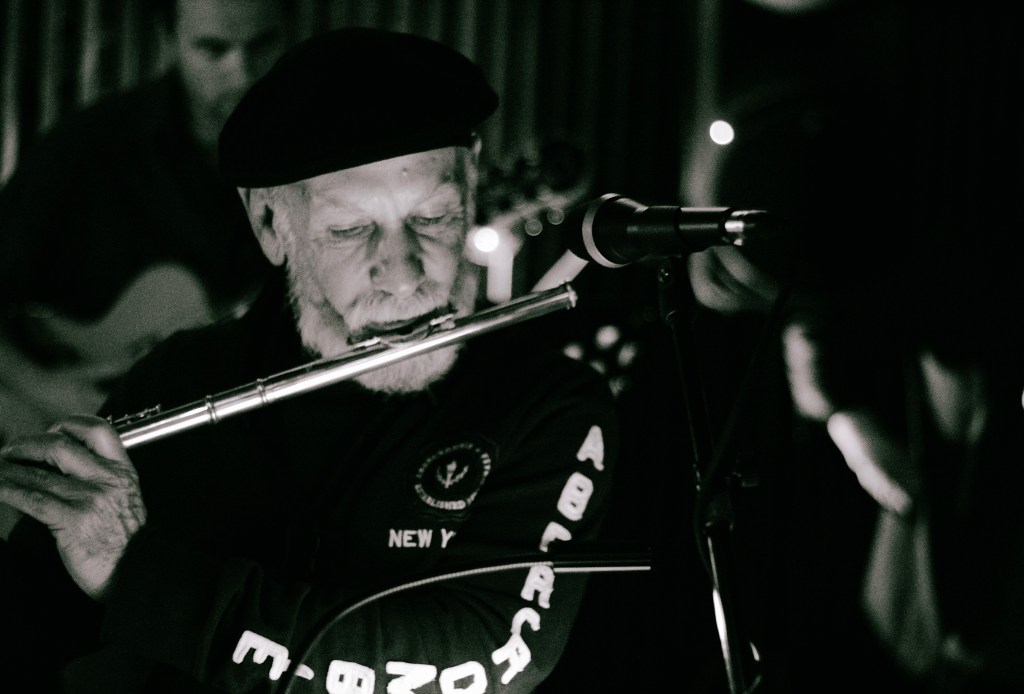
Jim left us in January, and the shock of his unexpected passing robbed me of the right words. In the following weeks, I mulled over my inaction, wanting to do justice to his story? Then I caught covid and more time passed. While it is usual to post an obituary within days of someone passing, I paused and reflected. And as I deliberated, I could sense his presence, knowing that he would approve of my waiting until the right words appeared. Jim’s life was a Zen koan, and you can’t rush a koan.
We had spoken on the phone a week before he died and arranged a ‘hang’ in a nearby coffee bar. It was sometimes hard to catch him on the phone, but when he picked up you could feel the warmth radiating from the handset. The conversations were slow grooves. He would speak softly, radiate peace and intersperse his comments with periods of reflective silence. Jim seldom rushed his words, and the silences felt all the more weighty for it. He spoke as he played because he understood the power of space between sounds.

I had known him for over a decade, but I wished I had known him for longer. He was a musician’s musician; the term used to describe a player of significance but one who is scandalously under-acknowledged. He had been on the Jazz scene his entire adult life and had played alongside some of the greats, but his natural habitats were in the Spiritual Jazz and avant-garde scenes. Many assume that the music of the avant-garde is strident. In Jim’s hands, the music was reflective, spiritual and embedded in indigenous culture.
He could crack open a note and let it breathe in multi-phonic splendour. He could whisper into a flute and then unexpectedly send forth a flurry of breathy overtones. He had great chops and visionary ideas, but he was not egotistical. Jim was about the music and not about himself. He was an educator and an empowerer. It was about transmission – telling the story, enjoying the moment and passing on the flame.
He had written the liner notes for one of the first American Spiritual Jazz albums incorporating his Buddhist name (Tony Scott’s ‘Music for Zen Meditation). He’d recorded with poets and acolytes and played alongside Dave Liebman and Gary Peacock. He also had a presence on many New Zealand albums but seldom as a leader. At first, I put this down to modesty, but now I think otherwise. His musical journey inclined him towards humility; he possessed that in the best sense. Gentle souls leave softer footprints.
He gave more to music than he received; to understand why you should know something else about Jim, his long involvement with Zen Buddhism. It was a particular connection that we had. Each of us had connected with Buddhism in our youth which informed our attitude towards in-the-moment music. Although I meditated then, mine was of the Beat variety of Zen, remaining a lazy ‘psychedelic’ Buddhist. Jim took his practice seriously, spending time in Zen Mountain Monastery, Mt Tremper, upper New York State.

While on that scene he performed with other spiritually engaged Jazz musicians like Gary Peacock, Chris Dahlgren and Jay Weik. And amazingly, performed with famous Beat poets like Alan Ginsberg and Anne Waldman who had an association with the centre, and together, had set up the Jack Kerouac School of Disembodied Poetics at the Naropa Institute. In New York, he connected with Tony Scott and Dave Liebman. Later, Jim established a New Zealand Sangha in the ZMM lineage and brought out their first teacher.
I recall messaging him when I was last in San Francisco to tell him I was seeking the forgotten Jazz Clubs, the homes of lost poets and the San Francisco Zen Centre. Names leapt across the cyber-void, Black Hawk, Kerouac, Kaufman and DiPrima. Back and forth we messaged during that week. He, tapping out fragmentary reminisces of his Dharma experiences in America and recalling some of the Jazz musicians he’d encountered (eg. Jaco Pastorius, Rashid Ali, Arthur Rhames, Gary Peacock, Dave Leibman).
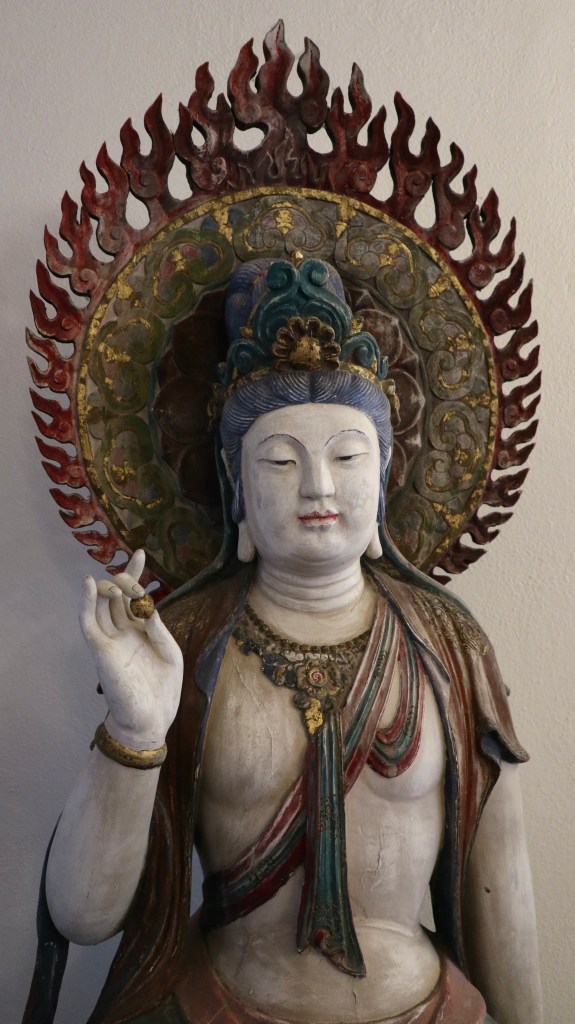
I, responded with pictures of a priceless Rupa as I stood in the Zen Centre Meditation room; buying a new translation of Han Shan’s Cold Mountain poems and sending him a picture of the cover. And me, reliving Ginsberg’s visions of Moloch as I wandered the corridors of his trippy nemesis, the Sir Francis Drake hotel. Buddhist practice, poetry and improvised music are old acquaintances. It was our instinctive connection.
I would bump into Jim at gigs. And he would say, “I hoped you’d be here, I have this for you” passing over a booklet on Finnish Jazz or a CD. He would press them into my hand without explanation and carry on talking about other things. These were Zen puzzles for me to unravel. I realised what treasures they were only later.
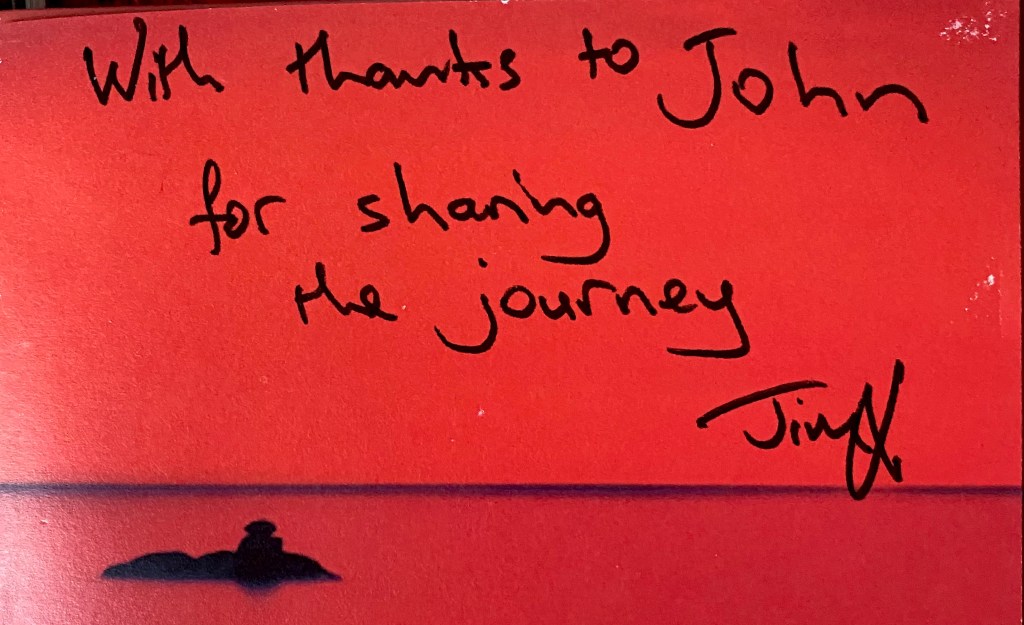
He came to my seventieth birthday, a house party where he enjoyed the young musicians playing. He was photographed, deploying his best smile as he posed among us. On that occasion, he handed me a bag of goodies, a limited edition double album – a live concert featuring Arthur Rhames, Jaco Pastorius and Rashid Ali. Handwritten by sharpie was the cryptic inscription ‘jimjazz ⅕’ – another koan to solve. Did he record this?
Important chroniclers like Norman Meehan have written about him, but I’m sure there is more to say. His family and musician friends will create a fuller discography, preserve his charts and update his filmography. It is important. Because he was not a self-promoter, he could surprise you when he appeared in line-ups. With Indian vocalists like Sandhya Sanjana, Tom Ludvigson & Trever Reekie’s Trip to the Moon band, at the NZ Music Awards, at numerous Jazz Festivals and on movie soundtracks. And he played and contributed to daughter Rosie Langabeer’s various out-ensembles. He played the flute on the ‘Mr Pip’ soundtrack and saxophone on daughter Rosie Langabeer’s soundtrack for the indie film GODPLEX
He released at least two notable local albums as a leader, but perhaps there are more? Jim’s Africa/Aroha album with Barry Young (SUPERBREW) was released as an LP by Ode in 1984 and re-released in 2007. It has remained popular with jazz lovers. Prophetically, his composition Aroha cropped up on the hospital Spotify playlist during his last hours. The album broke fresh ground in New Zealand with its freedom-tinged Afrobeat and World Jazz influences. It is gorgeous.

Around 2016 Jim undertook a research and performance project at the Auckland University Jazz School, where he was awarded a Masters’s Degree with first-class Honours. Out of that came his finest recording Secret Islands (Rattle). After recording, Jim phoned me and asked if I would write the liner notes and I was pleased to be on board. He also used my photographs.
I am an enthusiast of avant-garde music and a fan of Jim’s approach, so it was a labour of love. Secret Islands is one of a select group of albums that tells a New Zealand Jazz story. It could not have come from anywhere else. I had heard the band play a preview of the album and loved what I heard. The recording took things to another level. It featured an all-star lineup. With Jim’s vision and Rosie and the other player’s contributions, it was sure to hit a sweet spot. Later a live performance was reprised at the Audio Foundation with Jim on flute and tenor, Jeff Henderson on drums, Rosie Langabeer on Piano, Neil Feather on an experimental instrument and Eamon Edmundson-Wells on bass, with Roger Manins on Alto. It was a superb performance. I will never forget it. The Secret Islands album (clip above) featured Jim Langabeer on winds and reeds, Rosie Langabeer, piano and Fender Rhodes, Neil Watson, guitars, Eamon Edmundson-Welles, bass, Roger Manins, alto saxophone and Chris O’Connor, drums.
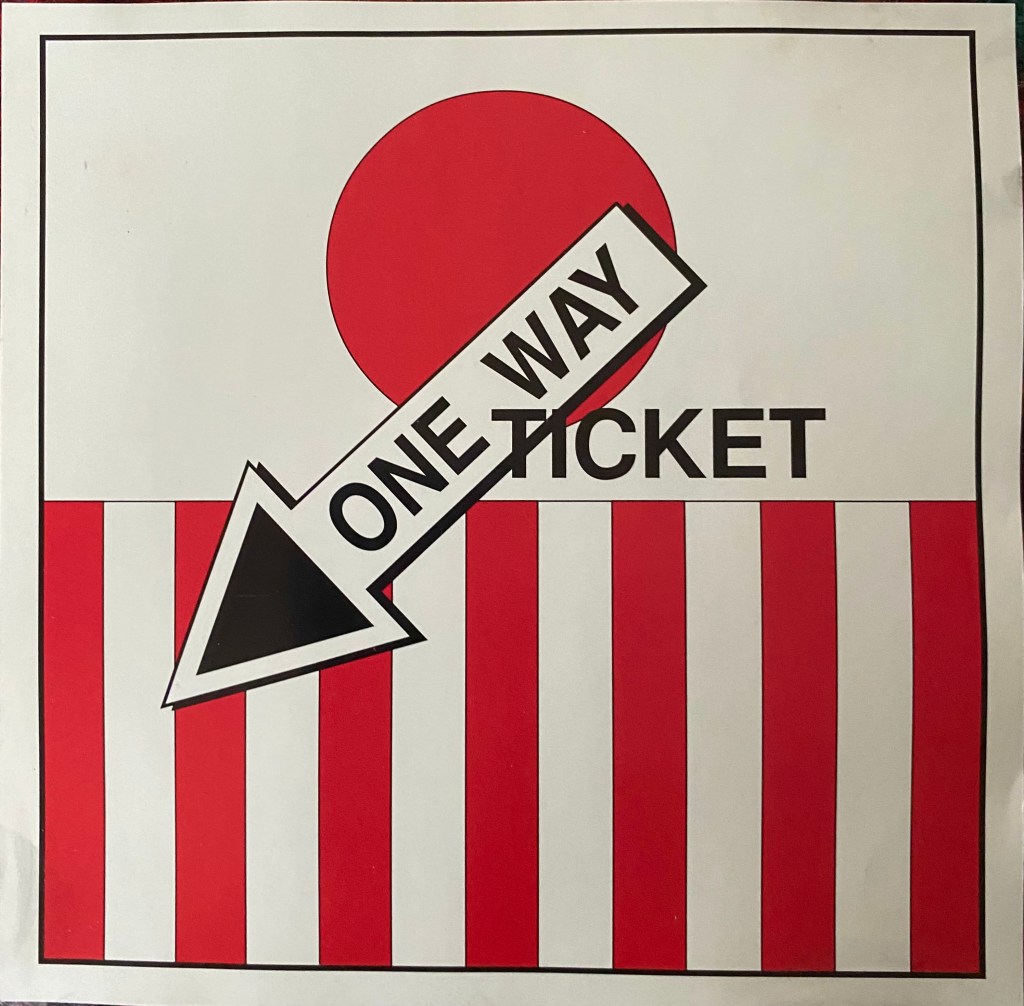
One last album that deserves mention is One Way Ticket – Daikajo. Released in 1995 by ‘Dharma Communications’ Zen Mountain Zen Monestry NY and produced by Jim. On it, he leads the ensemble on alto saxophone, silver flute and shakuhachi. Like most of Jim’s albums, it is Spiritual Jazz. A subgenre of improvised music that is experiencing revival worldwide.
Just before the first lockdown, I visited him at his Farm Cove home as I wanted to record an oral history. I switched on my recorder while the conversation ran for two or three hours. It often veered into the esoteric. When Ī played it back, I realised that I needed another session with a greater focus on Jim’s achievements. I can usually keep an interview on track, but in Jim’s case, words were like pebbles in a pond. A series of moments setting off ripples haiku-like.
Before I knew it the pandemic had arrived. I had lost my window of opportunity. Jim passed at the height of the second lockdown, and much as I wanted to attend his funeral, I couldn’t. I participated online and remembered him in silence, a copy of Secret Islands beside me and his tune Tangi playing softly in the other room. We loved Jim and mourn his untimely passing.
Footnote: The Rupa (Buddhist image) is an antique statue located in the San Francisco Zen Centre. It is likely the Bodhisattva Kuan Yin or Maitreya in Bodhisattva form. The video is Jim’s tune Ananda’s Midnight Blues which I filmed at CJC Jazz Club, Auckland. I have also included the clip ‘Tangi’ from Secret Islands. Lastly, I would like to fondly acknowledge Jim’s daughters, Rosie, Catherine and Celia Langabeer, and Jim’s partner Lyndsey Knight, who together, acted as fact-checkers.
JazzLocal32.com is rated one of the 50 best Jazz Blogs in the world by Feedspot. The author is a professional member of the Jazz Journalists Association, poet & writer. Some of these posts appear on other sites with the author’s permission.
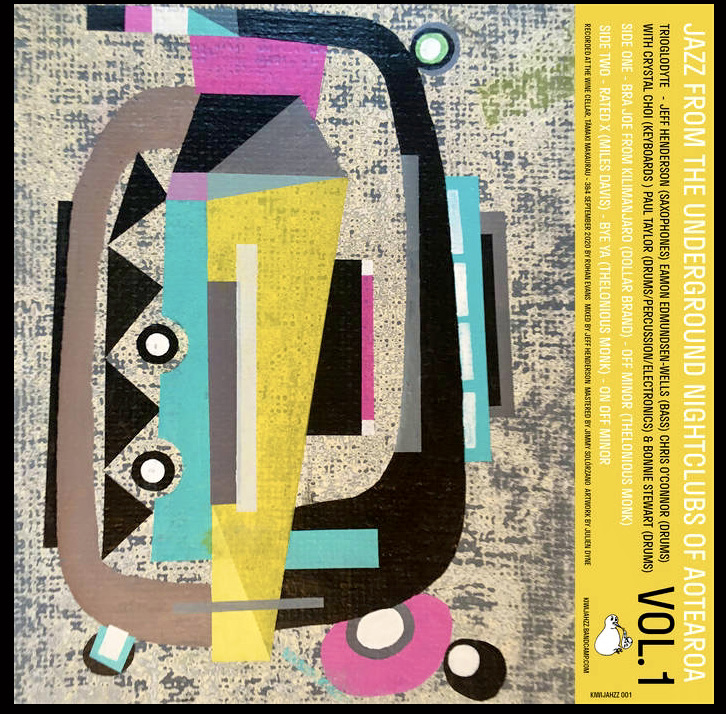
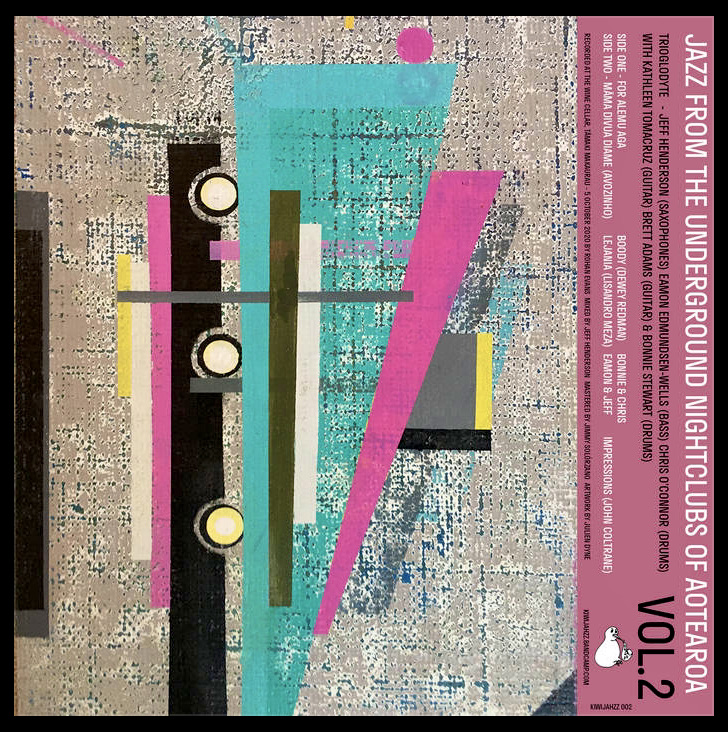
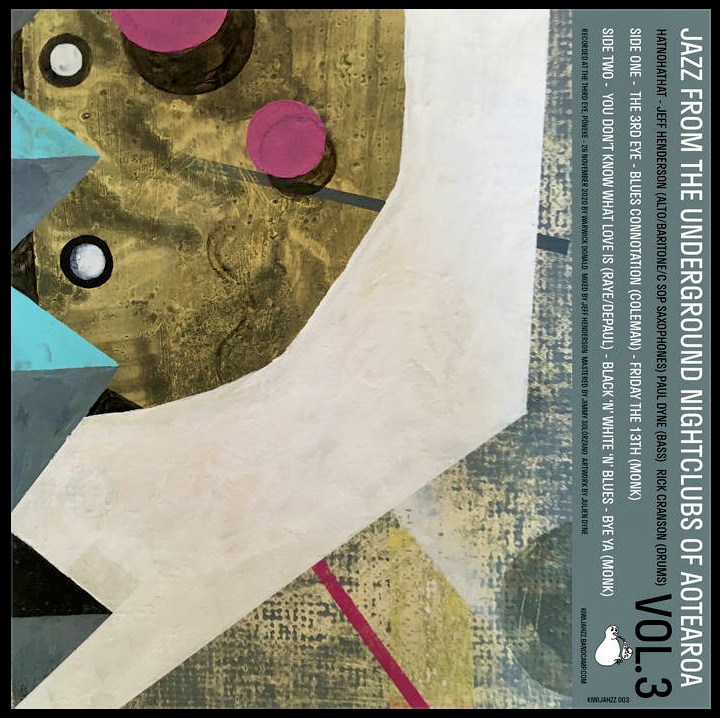
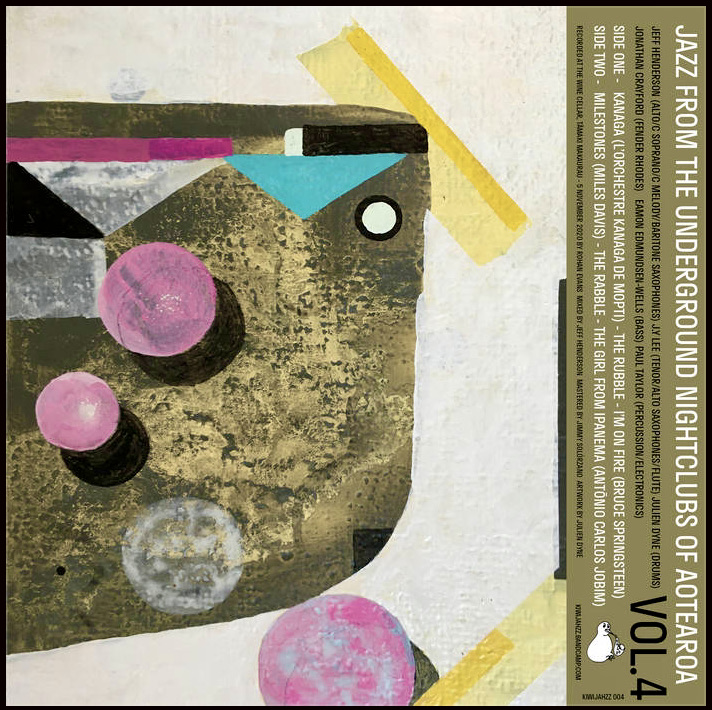
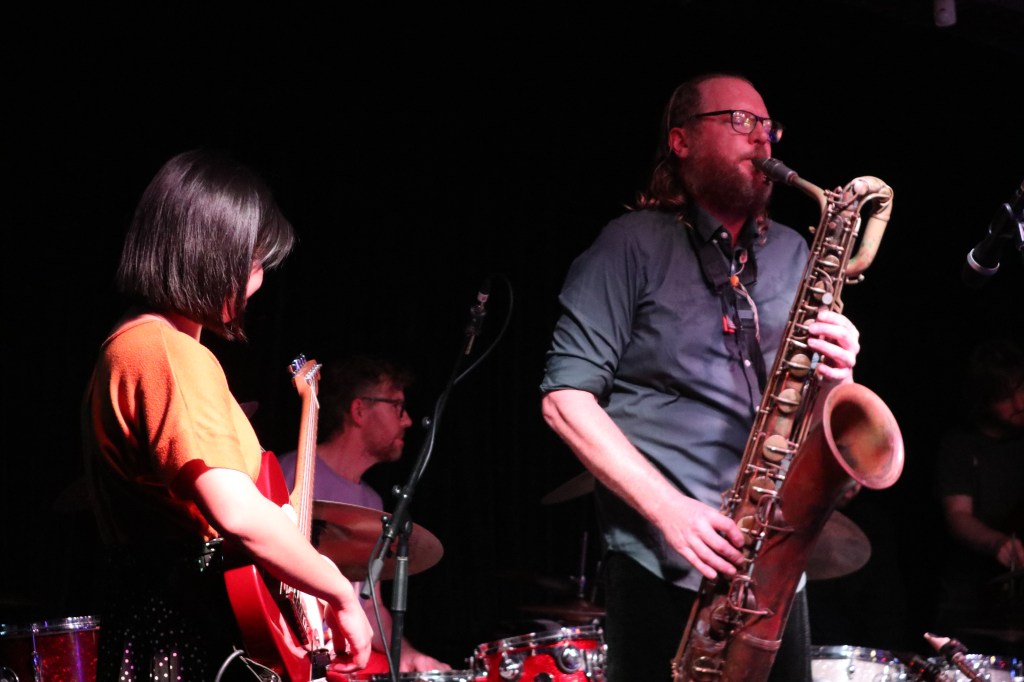


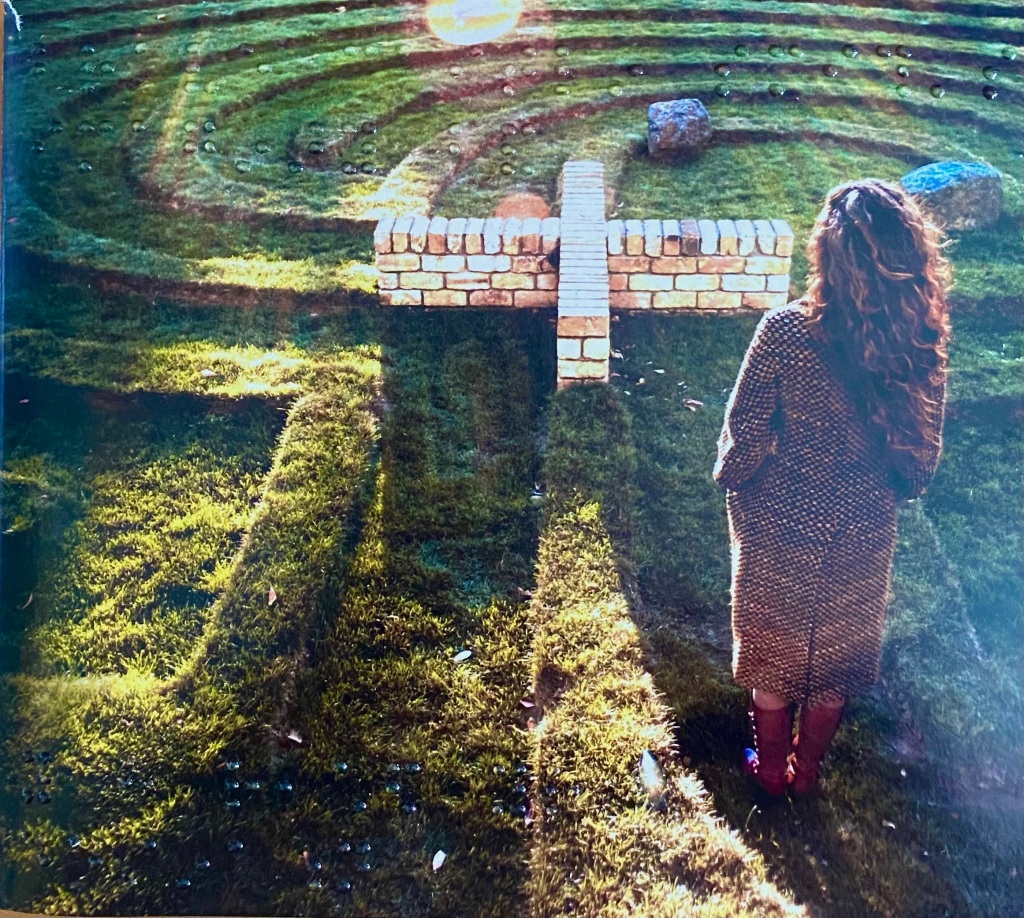
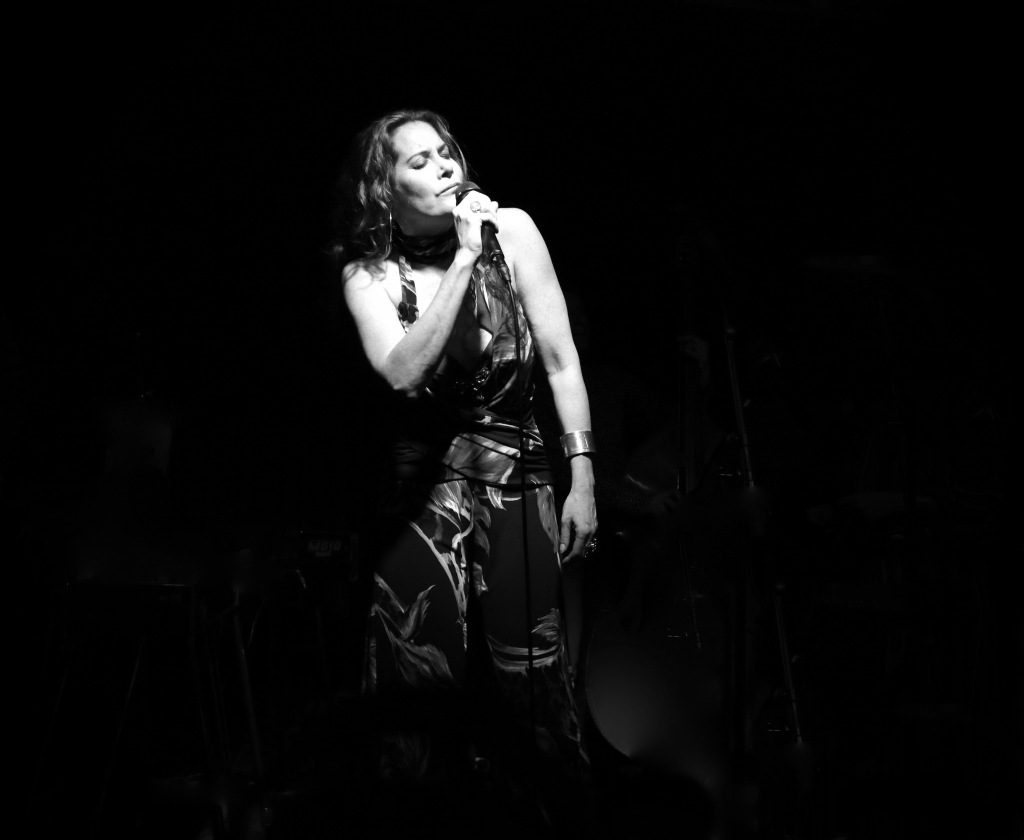
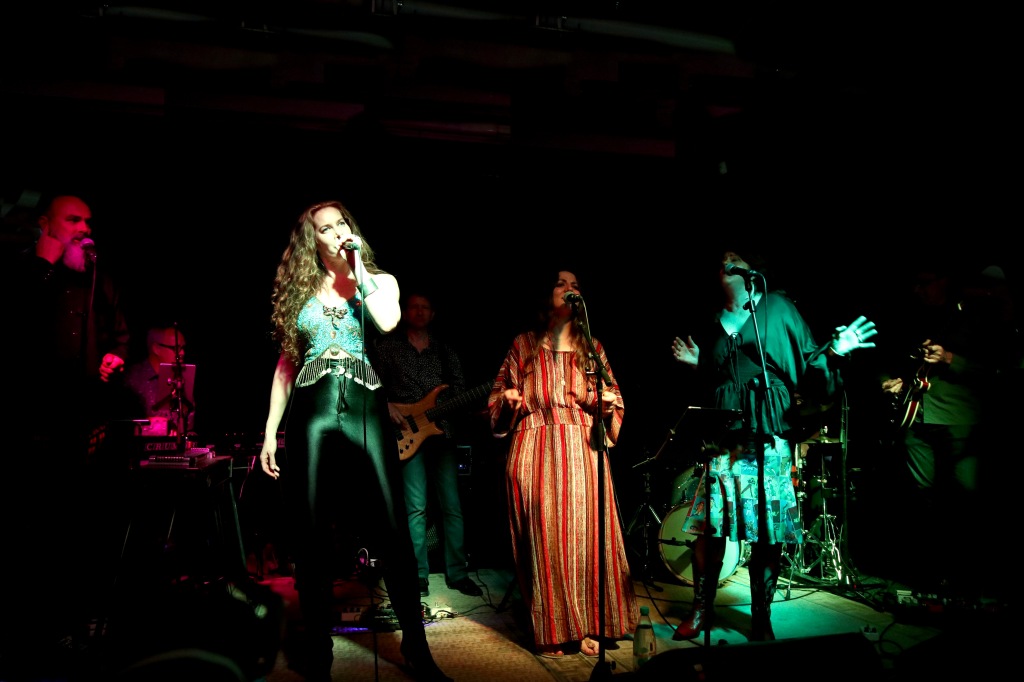
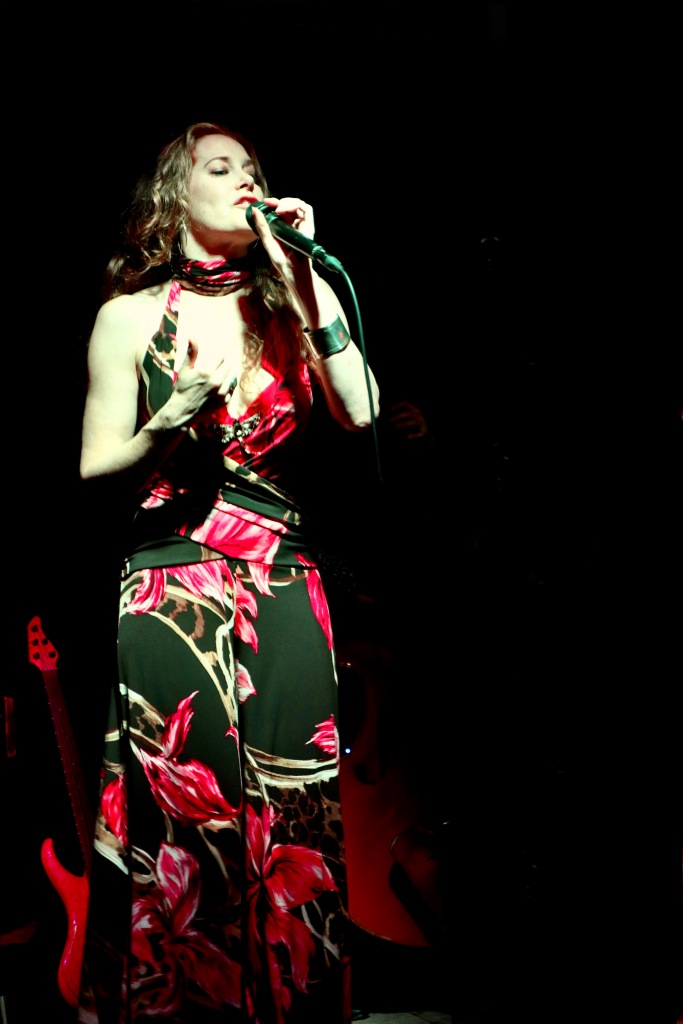
 There is a world of interesting music happening at the Audio Foundation and this three-set gig exemplified the foundations imaginative ahead of the game programming. The evening featured a cross-section of music from the fully arranged to the unconstrained and free. From the open dialogue of the Knotted Throats to the carefully crafted texturally rich four-piece voicings of a jazz ensemble. Then, and perhaps this is the essence of the programming, the two groups merged and out of that came a declaration. Sound exists without boundaries. The borders and demarcation lines as we organise or sculpt sound are only human constructs and beyond these artificial barriers, the various languages merge. When that occurs music is the richer for it. Improvised music is always on the move and just as post-bop moved seamlessly between free, fusion, hard bop, bop and groove, so the journey continues.

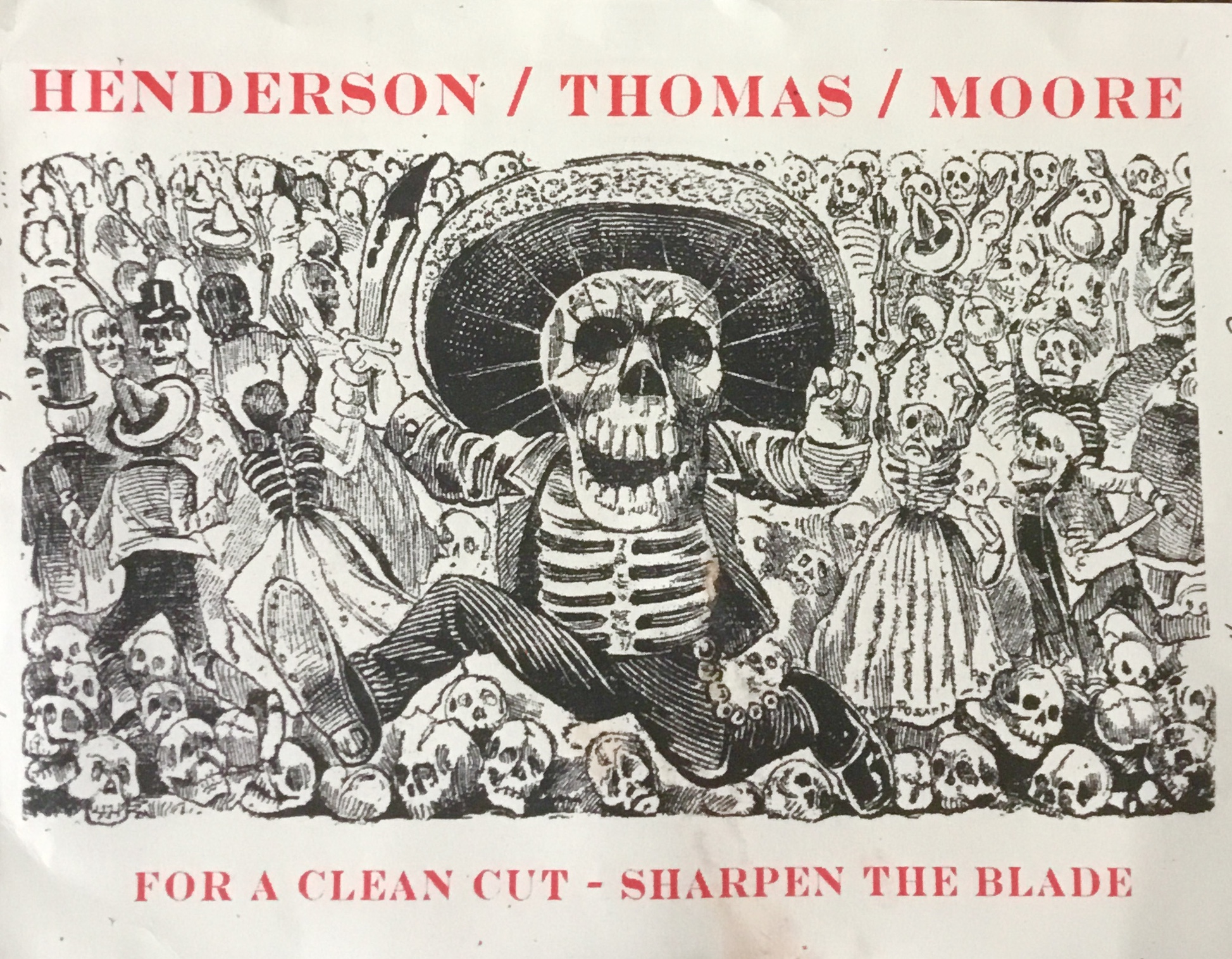
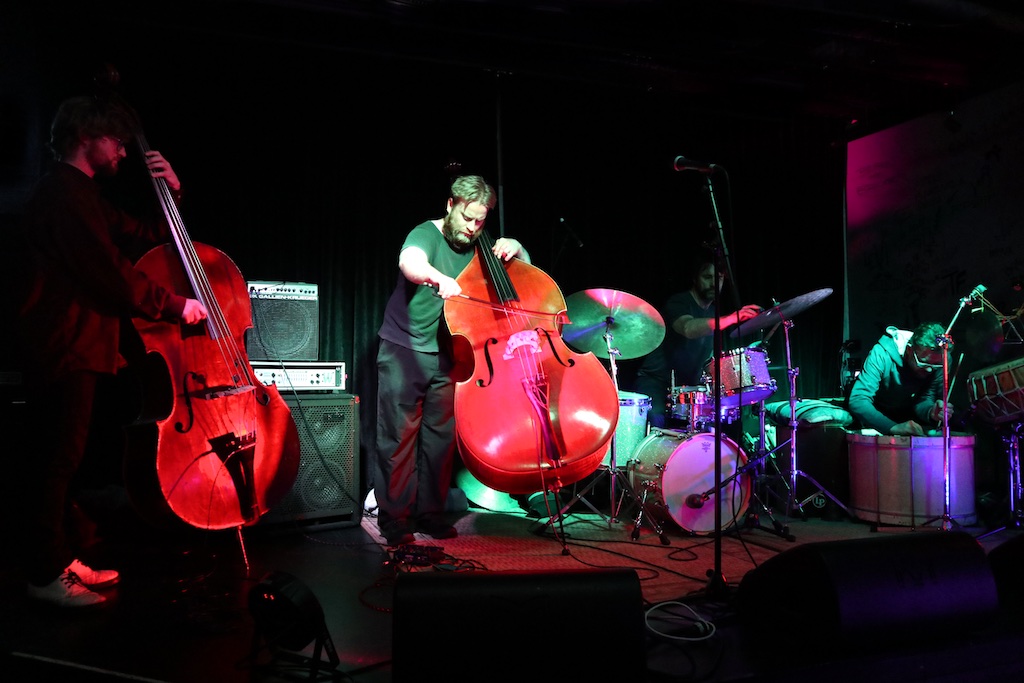 Two bass, two drummer gigs while not unknown usually occur in service of a chordal instrument or of a horn line, and when a solo bass concert occurs, an audience is frequently shown ‘cleverness’. On this occasion, the bass of Elsen Price freed the instrument from the narrow confines of the standard rhythm section or the conventional solo bass repartee; instead, exposing the beautiful resonances and the reach of the instrument. This was sublime music and complete unto itself. It celebrated a gifted musician and a wonderful instrument but without displays of egocentricity. The feat was achieved by inviting us inside the music, and into a sonic cornucopia. We listened and we were captivated.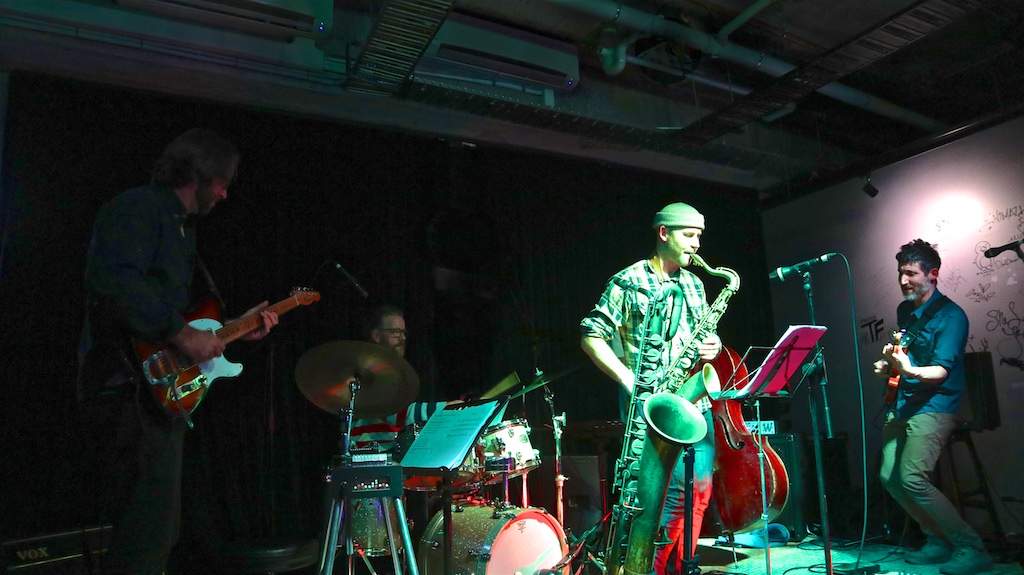
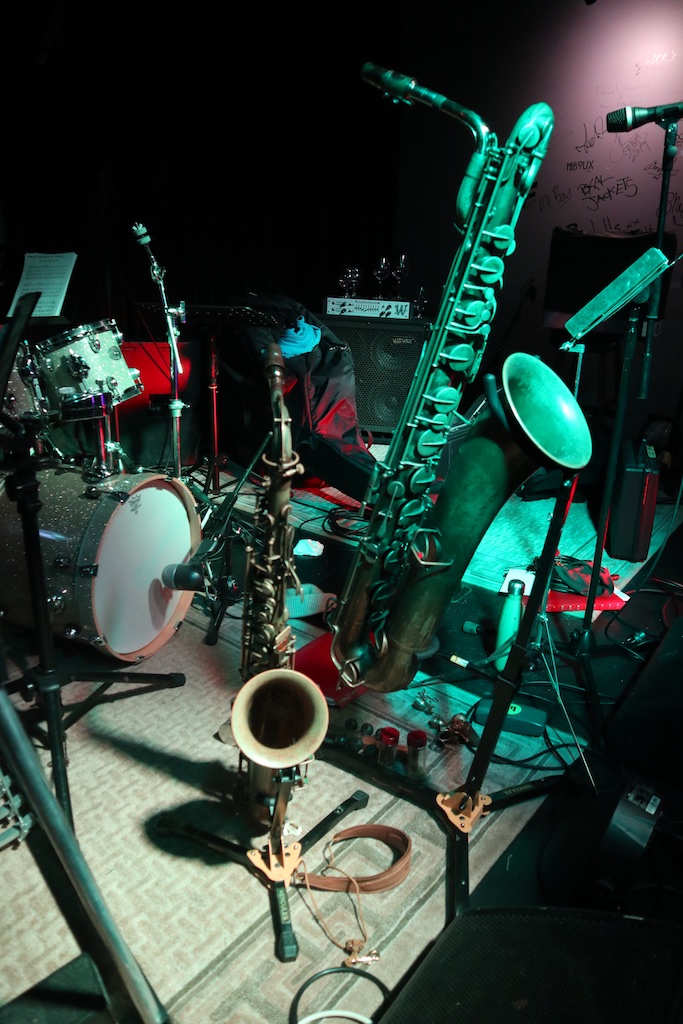
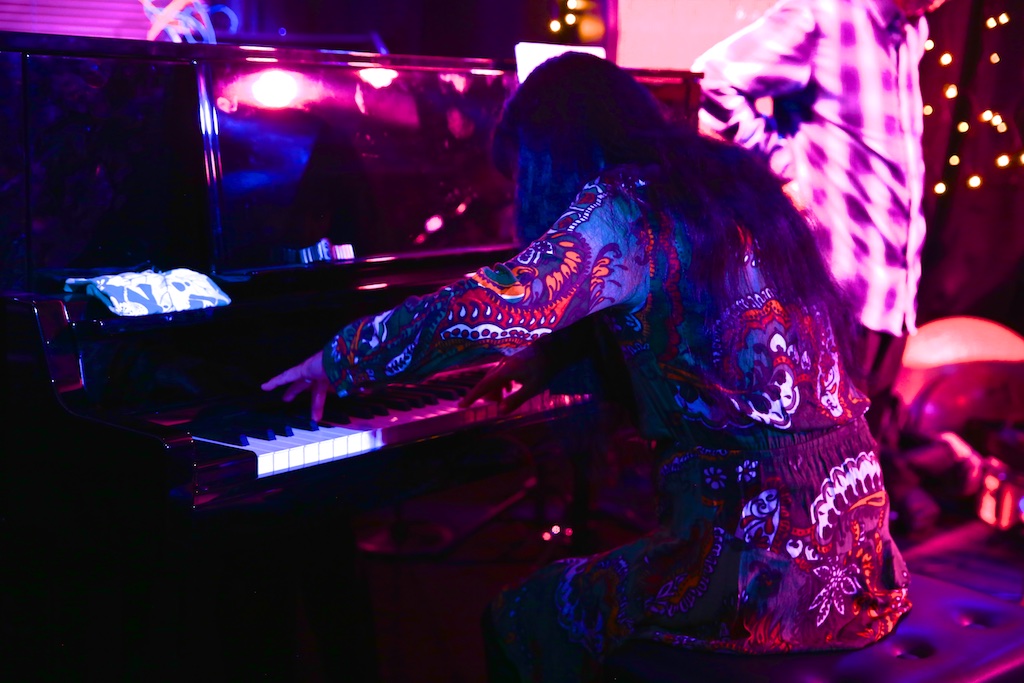 The interesting diversity in the CJC programming was again on display last week with two international acts as different musically as acts could be. Wednesday featured a multinational mostly free-improvised music ensemble Kira Kira and Thursday the Harlem born Jazz/Soul Singer Vivian Sessoms. Both attracted good audiences, once again proving the value of adventurous programming.

 It is not often that you attend a gig where a set list covers such a range of styles but still pays due respect to each. If anyone could pull off such a gig; traversing the heights of Monk, Murray McNabb, Frantz Casseus, Bill Frisell and Ornette Colman it was these two. In lesser hands, the trajectory would have faltered, the items come across as disembodied. Here, the connecting threads, however improbable, made perfect sense. The centre held and the arc of the journey was a joyous adventure.


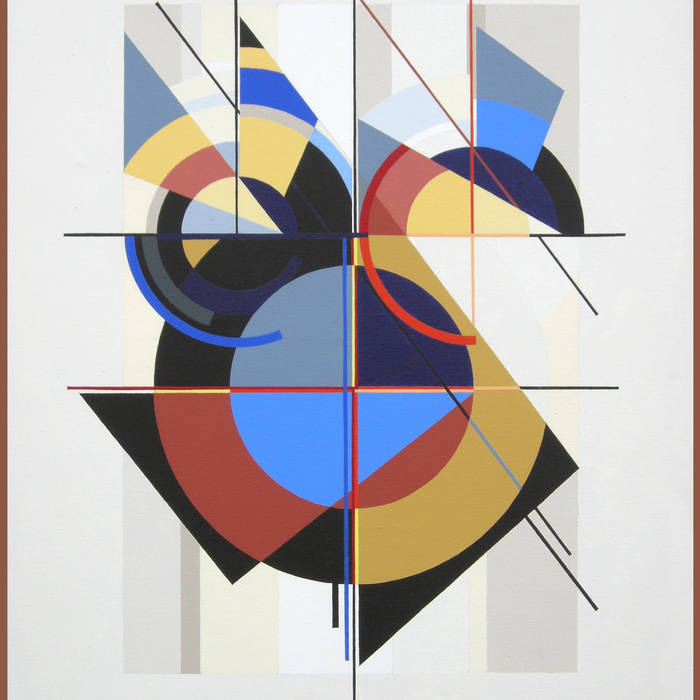 The eponymously titled album ‘Lucian Johnson+5’ was first released in 2016 and has recently been re-released in Japan on vinal. I have only encountered Johnson performing once or twice as he has spent a lot of time outside of New Zealand. He was born in Wellington, but led an interesting life elsewhere, travelling the world with various innovative bands and living for long periods in Paris. I first encountered him when he toured with ‘The Troubles; a delightfully anarchic folksy ensemble he co-founded along with Scottish Jazz drummer John Rae. After hearing Lucien Johnson+5, I will be paying close attention to his futures offerings.
 Music listeners split into two main camps; active and passive listeners. Those who listen to improvised music incline towards active, deep-listening. We know that the brains of improvising musicians light up in unusual ways when playing. Much the same applies to listening Jazz audiences. On Wednesday night a saxophone trio played at the Thirsty Dog; no chordal instruments, no lingering over familiar melody lines, a trio which worked within a broader musical architecture, following the changes where ever they led. Nick Hempton is an interesting player and the right person to take us on this journey.
 This sort of gig works well with listening audiences because it invites active participation. On Wednesday, each piece began with a few lines from a familiar standard, often just implied; then, a few bars in, the lines evolved into new melodies based on the changes. As the trio responded the horn led the others to various way-points: places where the music changed course. Fragments of new standards were discovered, unravelled, abandoned. The human brain is hard-wired for pattern recognition, but we love the puzzles that arise from the search. Settling for the familiar is not how we evolved. We evolved by following the risk takers, marvelling at their daring. Following this musical risk-taker, was our delight.
 The point was not so much the standards themselves but the opportunities they presented. Appearing and disappearing in medley form was; ‘Night in Tunisia’, ‘Body and Soul’ A Sony Rollins waltz, ‘Exactly Like You’ and ‘Rhythm a Ning’ – these and more were examined. Standing alone was the lovely ballad ‘When I Grow too old to Dream’ (Romberg) and in Hempton’s hands, it was beautifully realised. There was also a great rendition of ‘Just Squeeze Me (don’t tease me)’ (Ellington) – I have posted that. The last trio piece was ‘Poor Butterfly (Hubbell [Puccini])’; followed by Roger Manins joining the trio for two last two numbers. As is often the case when two tenors appear on the same stage, a delightfully upbeat and riotous vibe emerges. Friendly sparring matches like this always go down well.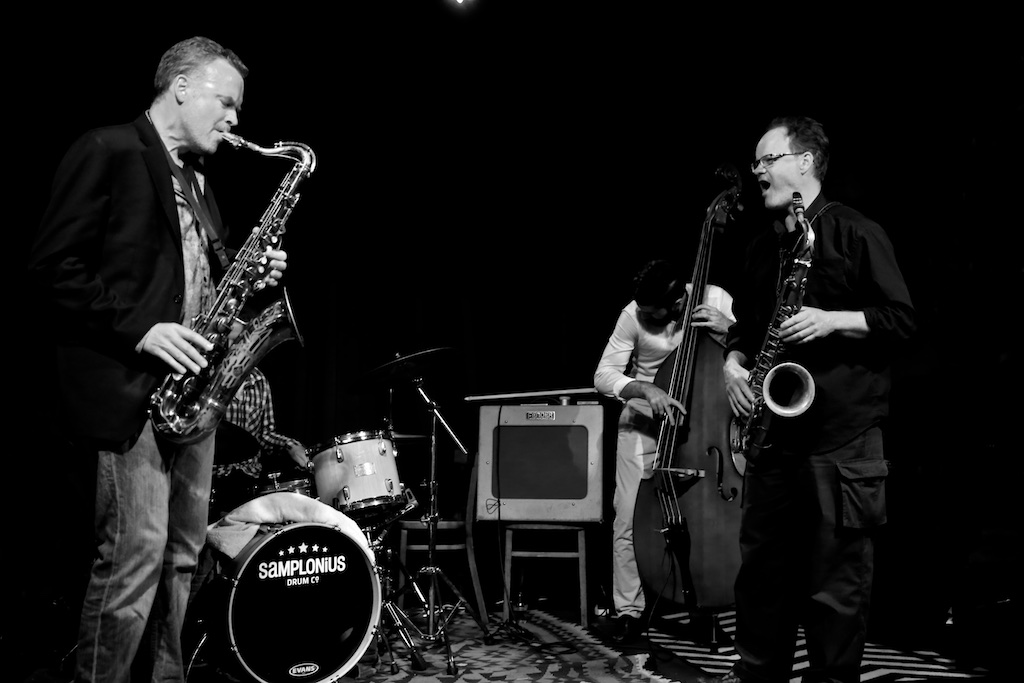
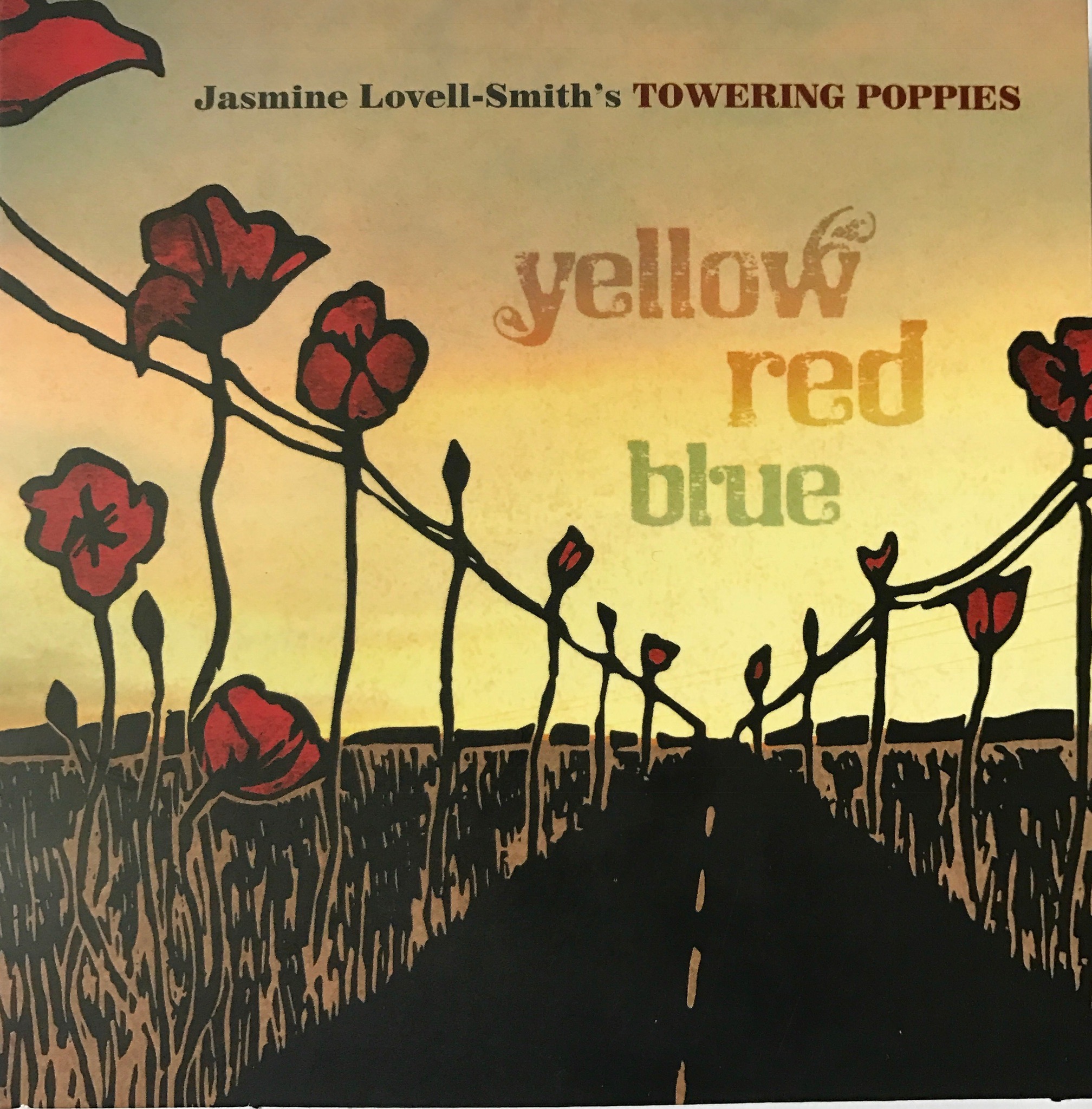
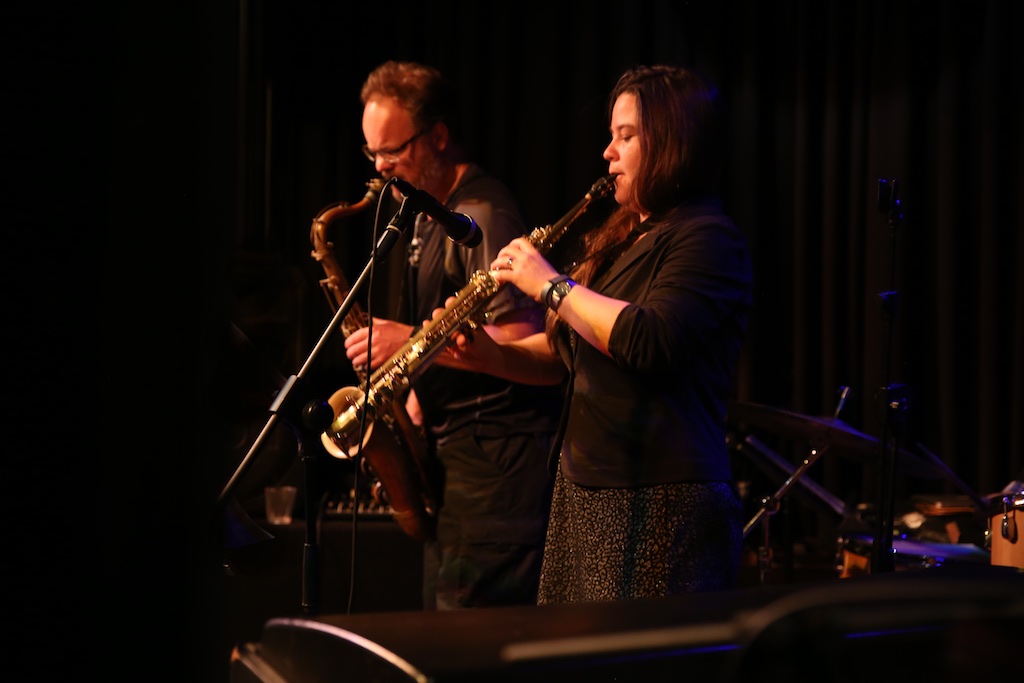 After years traveling the wider Jazz world, Jasmine Lovell-Smith came home; launching her latest album ‘Yellow Red Blue’ at the CJC last Wednesday. The Album features a quintet ‘Towering Poppies’; a group she formed in New York over five years ago. Her New Zealand gig featured locals Roger Manins, Kevin Field, Eamon Edmundson-Wells and Chris O’Connor. After her New York release she garnered a number of favourable reviews and no wonder. This is a lovely album, her compositions and arrangements outstanding, the recording immaculate.
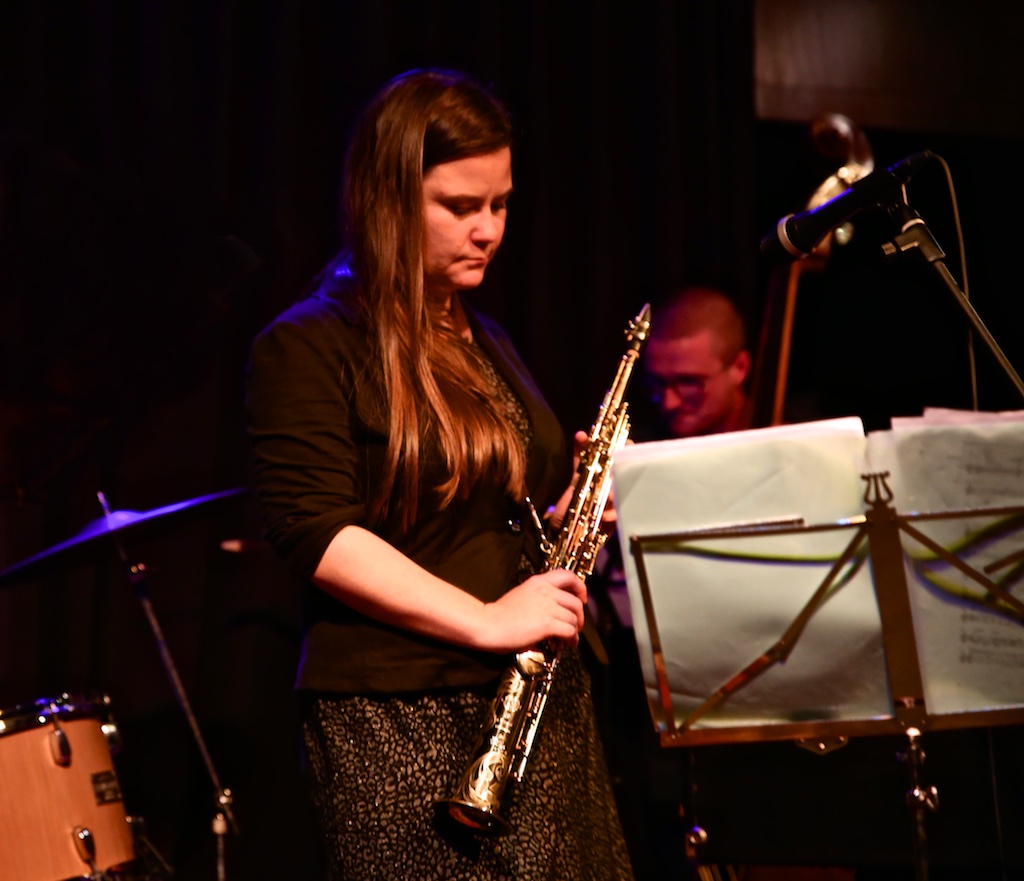 Her soprano sound is warm and enveloping, the cleaner tone of her straight horn nicely counterbalancing with the woody earthiness of the bass clarinet, the well constructed charts coming into their own when these delightful interactions occur. The rich textures are never overwhelming, even when strings enter the mix. This is chamber Jazz at it’s best, engaging the listener without resorting to cliché.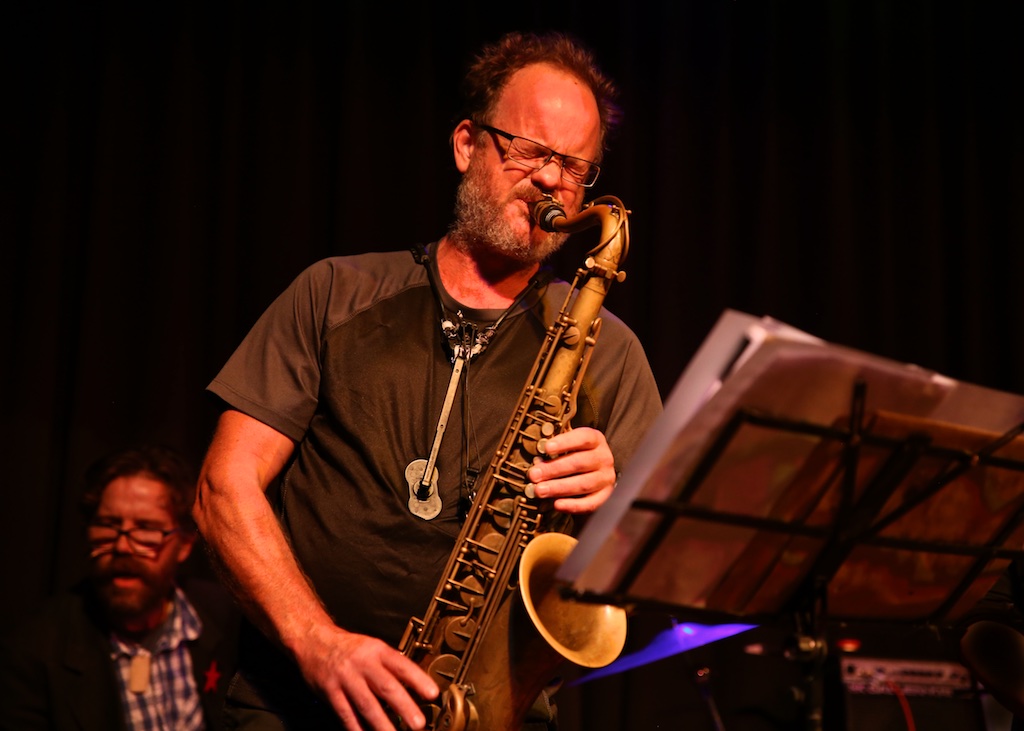
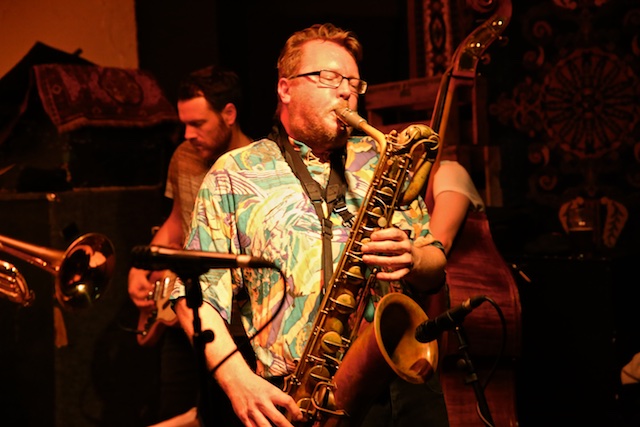
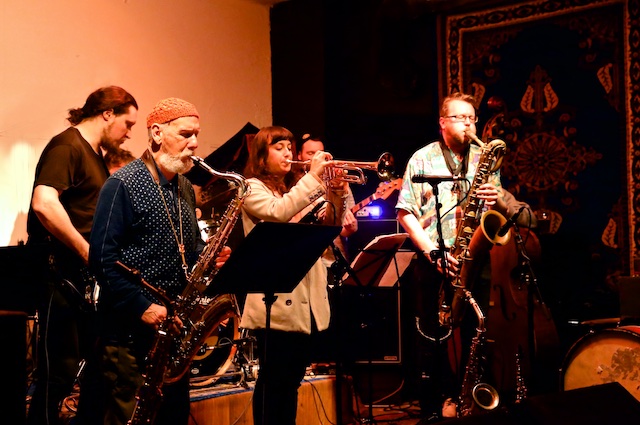
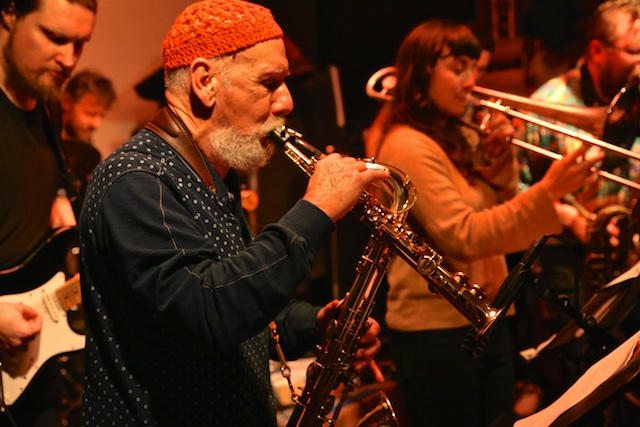
 A seasoned New York veteran when asked to comment on the quality of playing by young artists emerging from the Jazz Schools said, “Man they’re such great players. Many of them have chops to burn, but what is lacking is ‘character’. That is not taught in Jazz schools, you gain it inch by inch out of life experience”. To paraphrase Lester Young who put it best, ‘I hear the notes, but what is your story’. The character of a musician (or the lack of it), shows up in the music. Jim Langabeer has ‘character’ to burn. He tells wonderfully human musical stories and they are utterly beguiling.
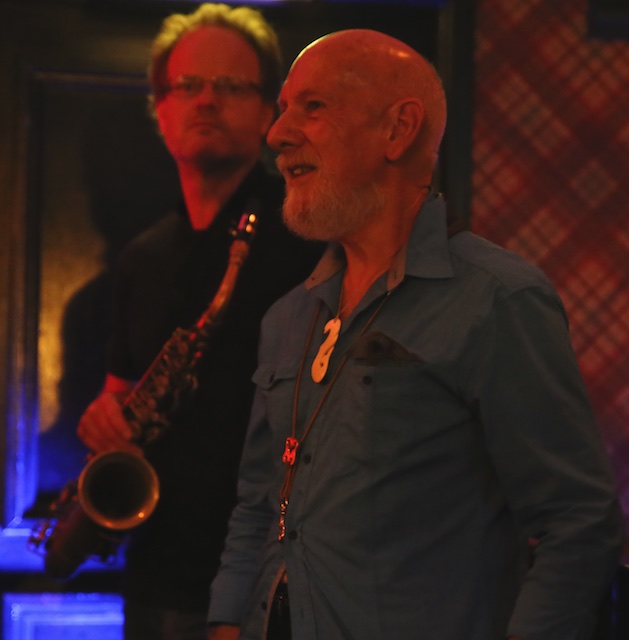
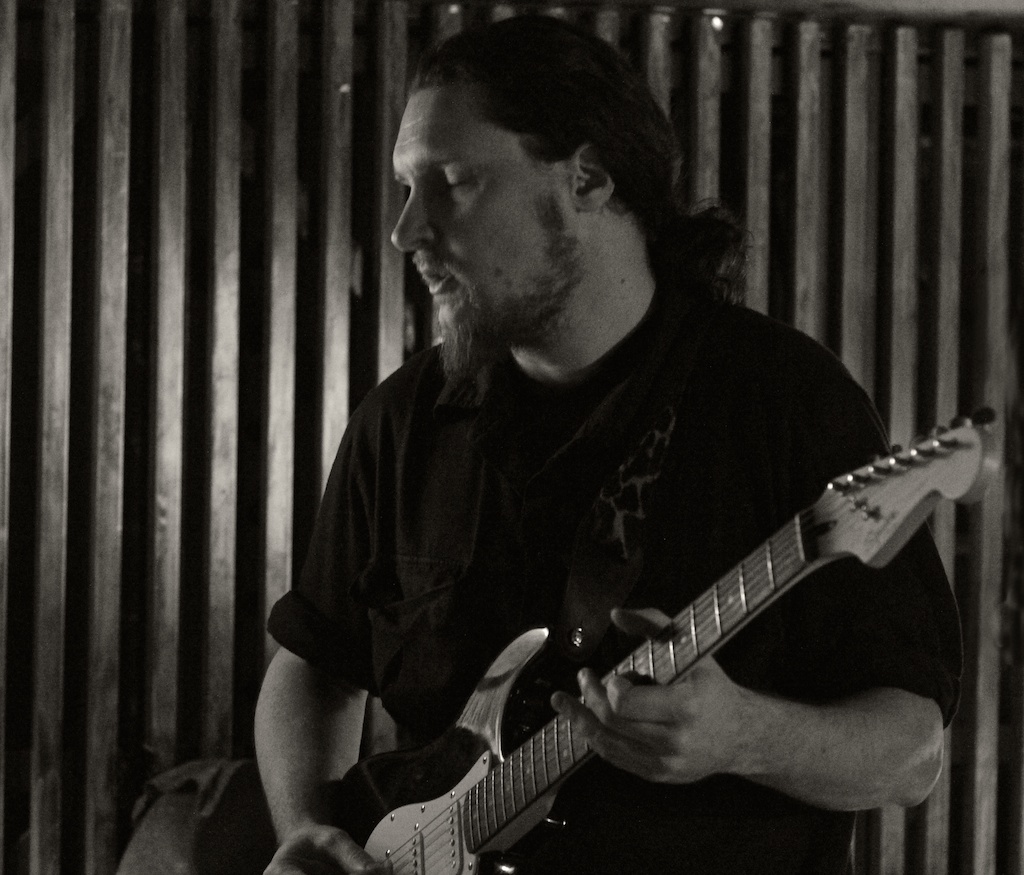
 Langabeer is hugely respected on the scene and deservedly so. He has worked with greats like Gary Peacock and Jaco Pastorius and in spite of absorbing the essence of North American Jazz, his ideas and sound possess a Kiwi authenticity. When he plays his tenor there is often a street-raw raspy intonation. The sound is at times reminiscent of Archie Shepp, but the story and flow of ideas are entirely his own. His flute playing is soulful and as soft as silk in the breeze. Because he is so comfortable in his own space he can incorporate everything from the avant-garde to indigenous music without it sounding contrived. These seamless references work beautifully in his hands. We talked of this after the gig and agreed that many of the earliest attempts at blending middle eastern, far eastern or ethnic music were less successful than now.
  As the boundaries between cultures blur in a globalised world, the mutual respect between improvising traditions grows. I have posted an example of this effortless genre-blending in a clip from the CJC gig titled ‘Ananda’s Midnight Blues’. Those who are familiar with Buddhism will grasp the meaning immediately. Ananda was Gautama Buddha’s childhood friend and later his disciple. Beloved, worldly and yet never afraid to challenge his enlightened teacher. There is a feeling of deep questing spirituality in the piece – reaching beyond mere form.
 Whether Langabeer plays flutes or reeds, everything serves the composition. His spare lines (which are devoid of undue ornamentation) establish a theme and then vanish like a will-o-the-wisp, giving a nudge to the imagination and enriching the piece as a whole. There are no wild flurries of notes on the saxophone or flute because the story resides elsewhere. His writing creates an over-arching logic and the ensemble has the freedom to move in and around tonality. In some pieces ostinato patterns create a drone effect, becoming a single note over which to restate the melody. This freedom allows for an organic interaction, free or inside and with a deep gut-felt pulse.
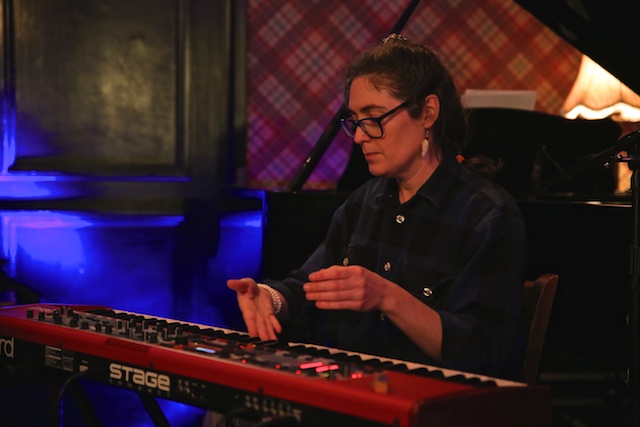
 When putting a band like this together the choice of musicians is supremely important. Not every musician could handle such freedom. Needless to say, Langabeer chose well. The ensemble was rich in contrasting colour, rich in character. It was our good fortune that Jim Langabeer’s daughter Rosie Langabeer was back in town. I can’t imagine a better-qualified pianist for this role. A leading avant-gardist and experimental musician who crafts compelling filigree and rich beauty into her music. Rosie Langabeer can play outside one minute and the next you hear a deep subtle swing, a rare kind of pulse that you can feel in your bones. A gifted composer and leader in her own right, an extraordinary sides-women when required. Moving from percussive, richly dissonant voicings to heart-stopping arpeggiated runs – somewhat reminiscent of Alice Coltrane’s later piano offerings. Her iconoclastic playing delighted the audience.
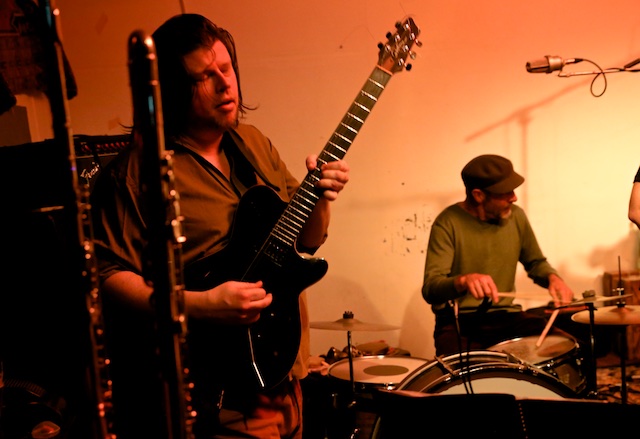
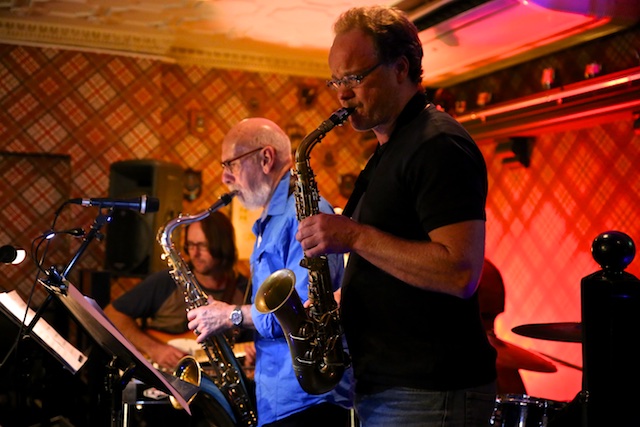
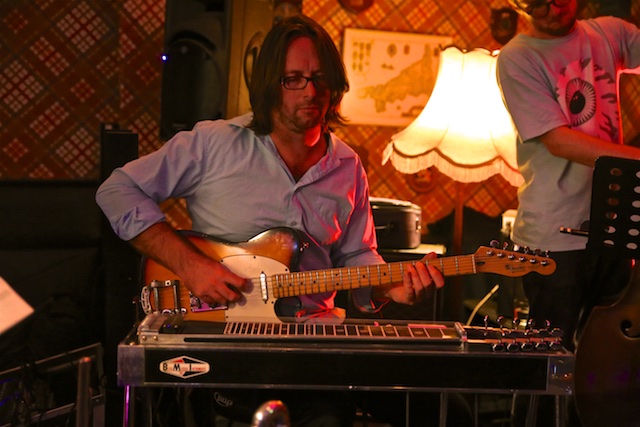
 On alto was Roger Manins. Although the alto is not his main horn he is extraordinarily fluent on the instrument. Langabeer has been focussing on multiphonics and microtonality of late and he and Manins showcased some atmospheric numbers utilising various blowing techniques. Manins has long impressed by playing in a variety of styles with equal facility. On guitar and pedal steel guitar was Neil Watson, bringing his mix of blues, Jazz punk, and avant-garde to the fore. Another iconoclast and one we love hearing. The pedal steel guitar has been in his possession for a year now and his rapid mastery of the instrument is impressive. A difficult beast tamed beautifully. On Bass was Eamon Edmundson-Wells. A versatile young bass player most often found in the company of experimental musicians. His performance on this gig was right on the money.
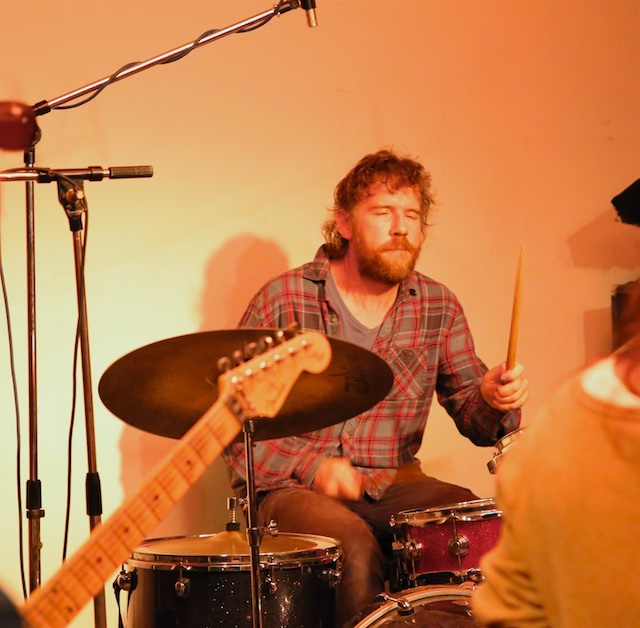
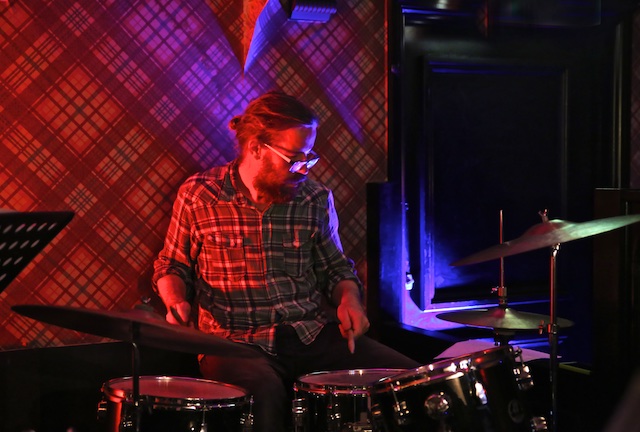
 On drums and percussion was Chris O’Connor. Perhaps more than anyone else O’Connor personifies this free-ranging music. Of all the New Zealand drummers, his are the widest-ranging skills. Colourist, minimalist, indie rocker, straight-ahead jazz, avant-garde, experimental percussion and film work. There is nothing he won’t tackle and everything he touches benefits from his musicianship. When a piece titled ‘Tapu’ was played O’Connor stole the show. While Langabeer played the difficult and wonderfully atmospheric Putorino (a traditional Maori flute of the Taonga Puoro family), O’Connor simulated the Tawhirimatea (A traditional whirring instrument dedicated to the god of winds). The effect was eerie and electrical. Later in the piece he blew through the stem of his snare stand – recreating the effects of the Pututara (a conch trumpet). Only O,Conner could have pulled this off so well. Like Langabeer, he has a deep awareness of multicultural issues.
 The one standard was Strobe Road (Sonny Rollins). A lesser known standard and played with enthusiasm. The remainder was a selection of Langabeer tunes, many referencing Maori of Kiwi themes. His tune Rata Flower was a stunner – it deserves to become a local standard. He has obtained funding from Creative New Zealand for this project and we might see a ‘Sketches of Aotearoa’ album soon. I truly hope this occurs and I will be the first to purchase one.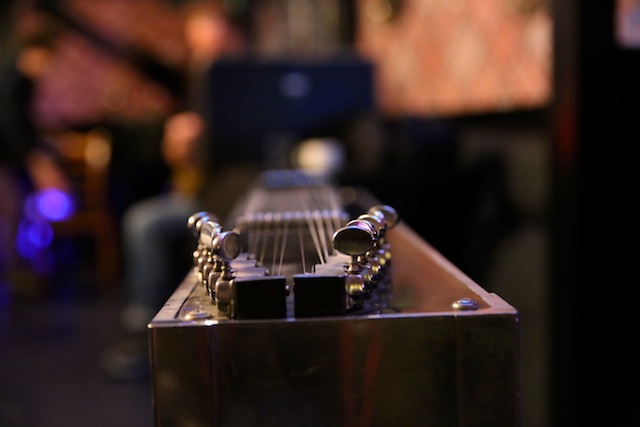
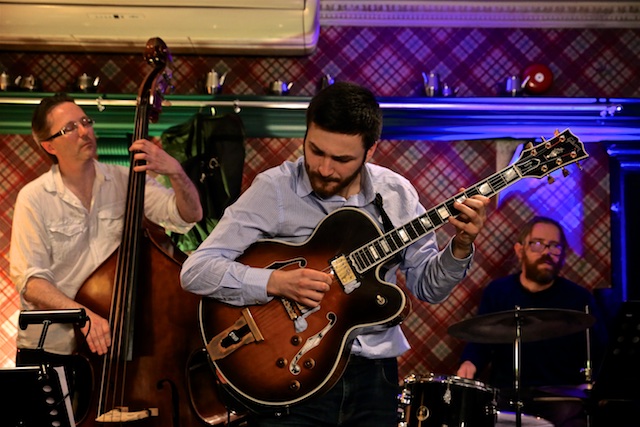 With the Indian summer lingering, March rolled seamlessly into April, and in Jazz parlance, we got to JAM (Jazz April Month). This is the month when the International Jazz community reaches out and proclaims, listen up ‘world’ we have something to say. The month culminates with UNESCO world Jazz day; last year the main celebration was in Paris, before that Osaka and Istanbul. This year the Thelonius Monk Foundation and UNESCO will hold the WJD main celebration in the White House at the invitation of President Obama.
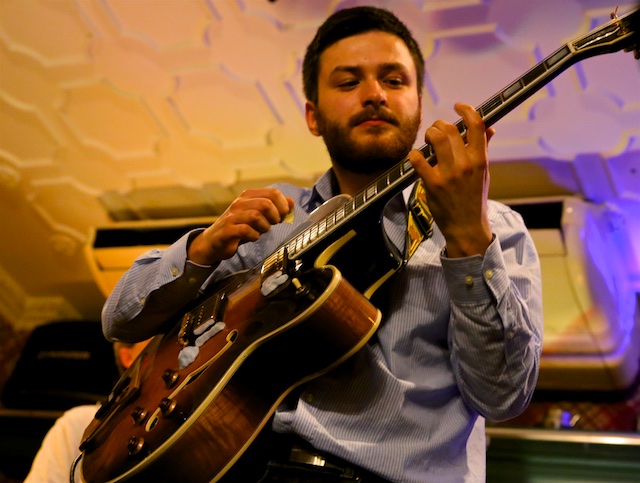 He is a different sort of guitarist and although in his early twenties, he already sounds like a member of that post-millennial cadre of improvising trend setters. As usual, I arrived during the setup and what I heard offered promise. His lines during the warm-up number were fast and furious, but the clarity of tone and of ideas, jaw dropping. As the first set began the band traversed various moods, from the Bop referencing to the reflective. Luft is a formidable technician, his fluency beyond the reach of many practitioners I suspect, but during the slower reflective numbers, we glimpsed subtly and depth.
 The first set brought us the trio formation, and the set list ranged from the near avant-garde to ‘world Jazz’. I really enjoyed the material chosen as there were quirky originals, and material ranging from the familiar (Gismonti) to the unfamiliar – tunes by Portuguese or Brazilian composers including a delightfully outrageous rendering of a tune called ‘The bickering of the crazy musicians’. That one brought the house down. I was also delighted with his tribute to the adventurous guitarist Derick Bayley; a tune titles ‘Derick’. Again this showcased the breadth of his influences. Whether the reflective or quirky, handled with the supreme confidence that only a musician at one with his instrument can attain. Accompanying him was Tim Robertson, an expat with a long string of impressive credits to his name in the UK. Robertson and Luft were a tightly focussed team, enhanced by the addition of Chris O’Connor for the Auckland gig. O’Connor is endlessly versatile and ever popular about the country – from Indie Rock or straight ahead Jazz through to experimental music. He adds enormous value to any bandstand, any genre, and the choice could not have been better.
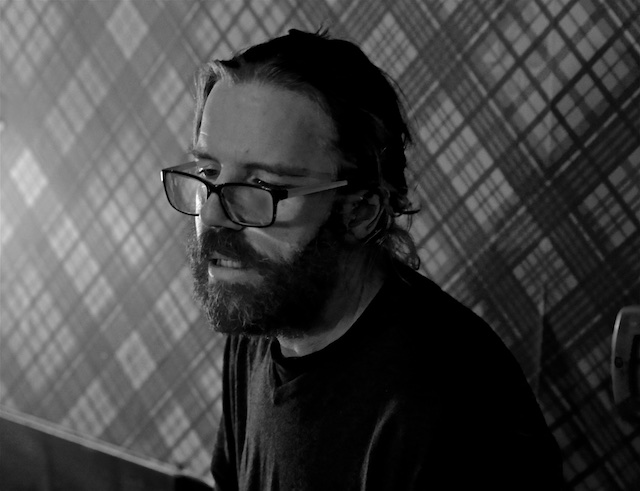 On the second set, the trio added local saxophonist Roger Manins and the tunes although standards took in a wide spectrum. Opening with a ‘groove take’ on Victor Young’s ‘Delilah’ and then in contrast diving headlong into a marvelous Ornette Colman piece. ‘Humpty Dumpty’ from Ornette’s ‘This is our Music’ was undoubtedly my favourite of the night. Everything these musicians played worked well, but this tune just bounced off the walls and had everyone whooping in delight. Next was a crazy little known Monk tune titled ‘Unidentified Monk Solo’ and lastly ‘Ray’s Idea’ by Ray Brown. From deep listening enjoyment to wild and free in one gig.
 Two nights later I was watching the Sky Arts channel when a programme on guitarists came up. Then I saw him, a younger Rob Luft performing at Ronny Scotts, solo guitar, receiving praise from George Benson, recording at Abbey Road studios and winning the Jazz section of a prestigious UK guitar competition. We sure lucked out getting this band for a Jazz April opener. The clip below is from a Ronnie Scotts gig – Rob Luft with ZiroBop – The clip tells you everything you need to know about him as a guitarist.
 This is the second Auckland Jazz Festival and what incredibly tasty offerings there are in the programme. The event runs as a fringe festival and this is absolutely the right approach; no corporates making stupid unhelpful suggestions, an intense focus on the best of Kiwi improvised music and international acts with an established connection to New Zealand. The ‘best kept secret’ ethos is a good model for this music and it’s true. In a nutshell the festival tells an all but hidden story; the story of a vibrant diverse Jazz scene, with more than enough talent to wow discriminating audiences. The biggest downside of fringe festivals is that they run on air. Good attendance can mitigate this. With no significant up-front advertising budget, the role of the sponsoring clubs, bars, galleries and local record labels is vital. Those venues and the labels (Rattle in this case) need our support and appreciation. While Auckland has an unfortunate track record of failing to support the arts, the winds of change are in the air. The gigs on offer are diverse and interesting and Auckland will increasingly want a piece of this magic.
 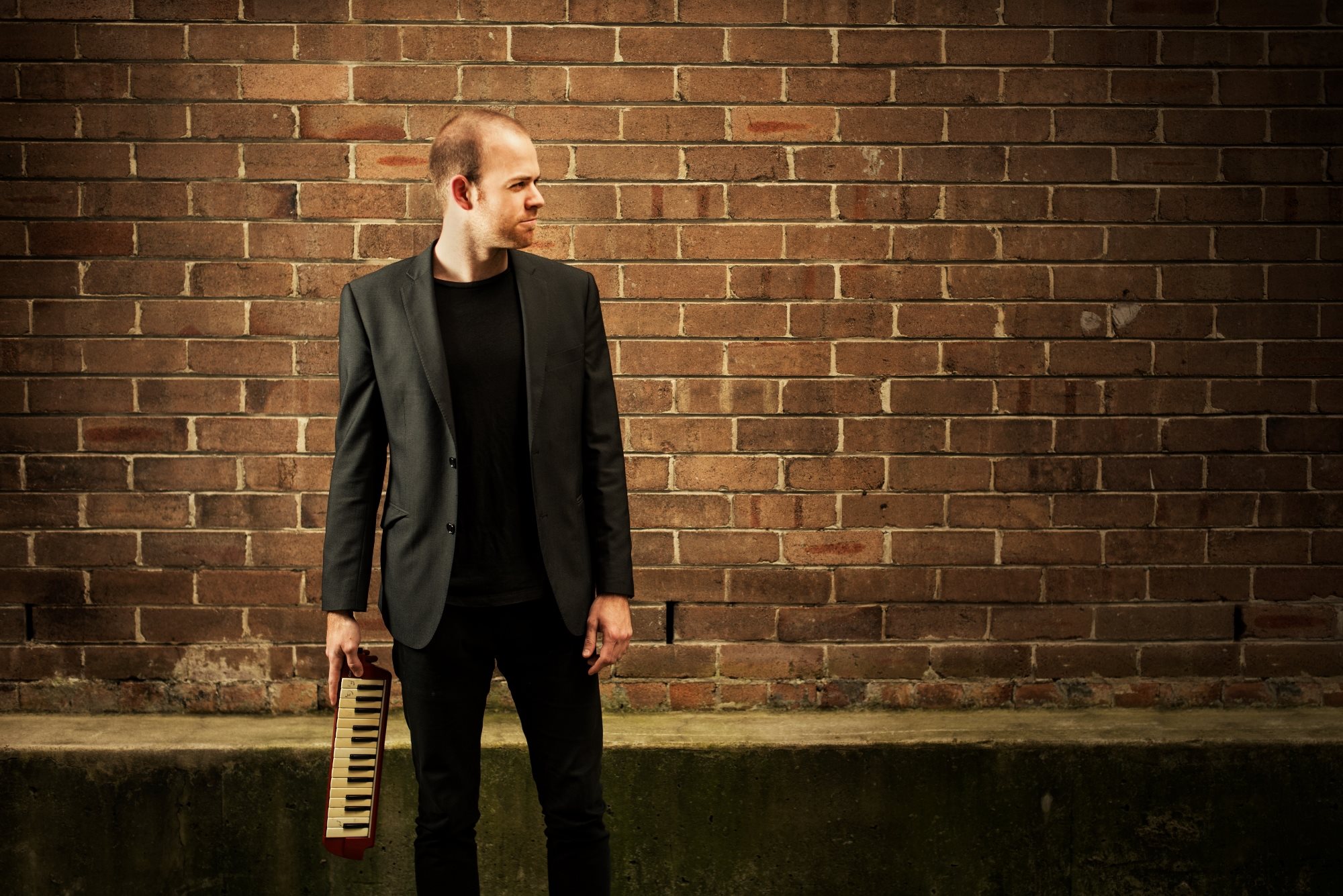 The festival opened on the 14th with a duo of respected Australian musicians, ‘The Prodigal Sons’. P J Koopman (guitar) and Steve Barry (piano) are expats who left New Zealand long ago to work in Australia. Both are fondly remembered by Kiwi audiences and both are now firmly established in Sydney; polished musicians speaking each others language. The years of hard work and performance in diverse situations giving them particular insights. Barry has been widely acknowledged for recent albums and although widely engaged in academic pursuits recently, it is good to see him on the road again. These guys can really swing their lines and do it while spinning out fresh ideas. No tempo deters them, but it was the medium and slow tempos that showed us their best. The two original compositions which particularly impressed me were by Koopman; ‘Working Title’ and ‘Major Minor’. On these tunes the exchanges between the two were breathtaking. They engaged two fine local musicians for the gig and with the talented Cameron McArthur on bass and Andrew Keegan on drums the gig was superb. McArthur and Keegan were there every step of the way and as pleasing as the headliners.
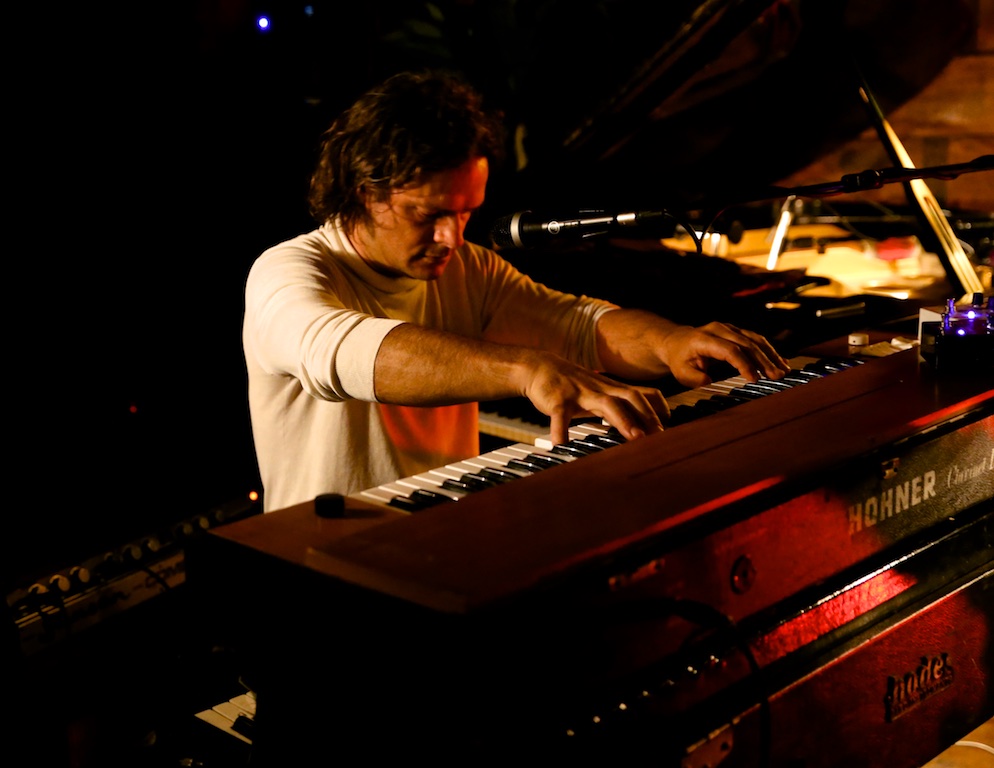 On Thursday the Jonathan Crayford Electric Trio featured. It is no secret that I rate Crayford highly and I would go to see him perform anywhere. Arguably one of our top Jazz exports to the world and undoubtedly one of the more innovative musicians on the scene today. No Crayford project is a half-hearted affair, as this musician lives music in the fullest sense. His musical outpourings are sublime but it goes deeper than his excellent musicianship. Crayford’s vantage point on the creative life is unusual and deeply focussed: few others share his perception.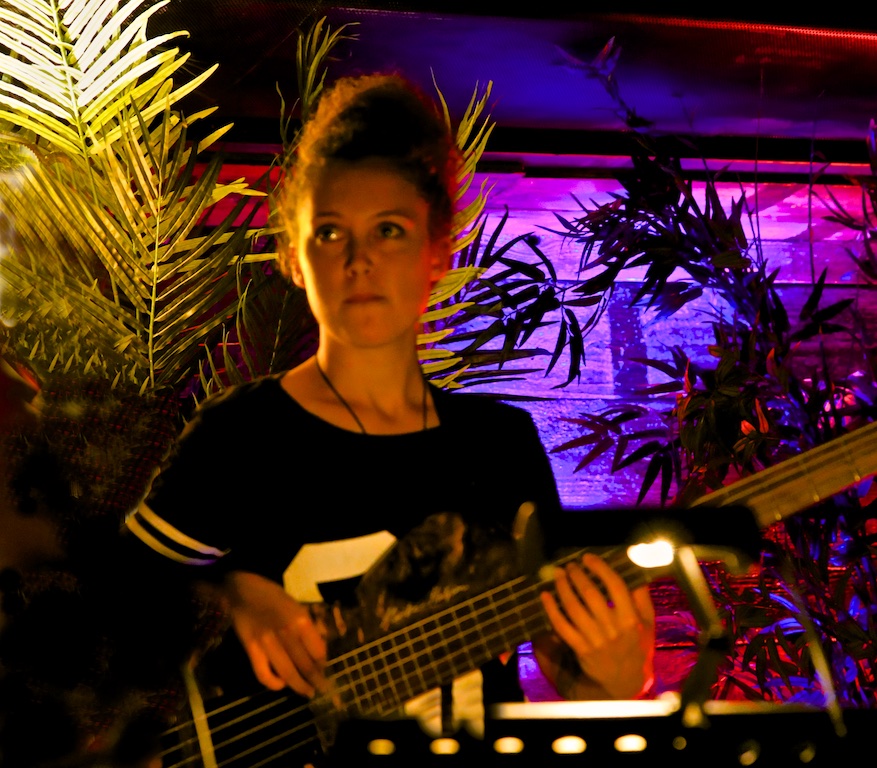

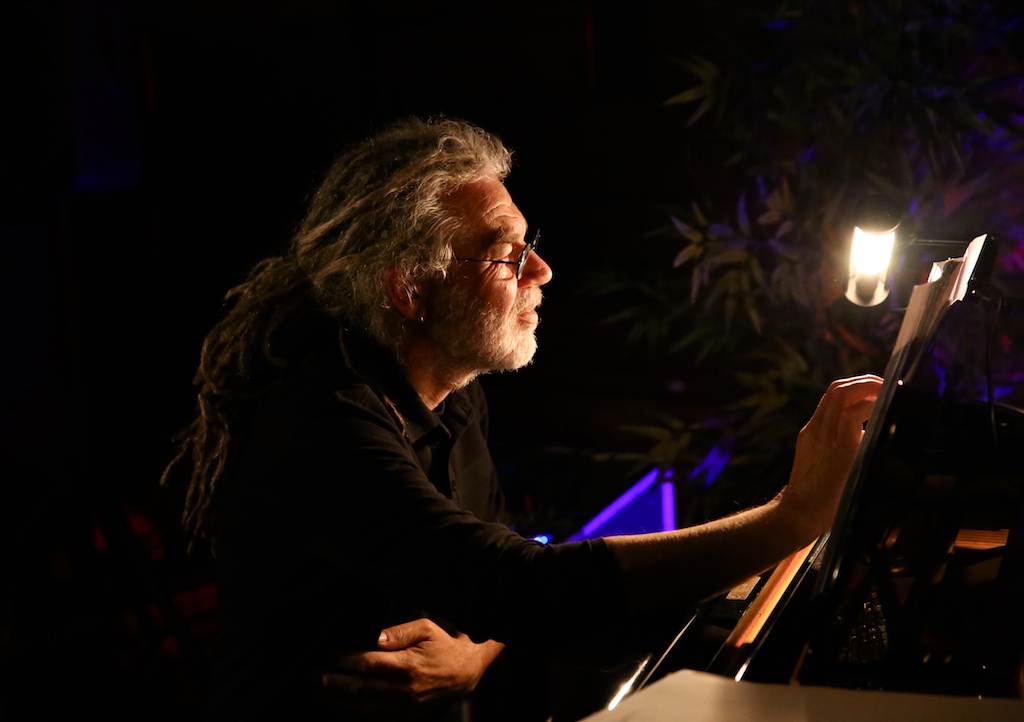

 e
e There is a rawness and a primal quality to it, a strong sense of performance. Who would prefer a recording of an Arkestra or an Art Ensemble of Chicago performance over a live show? This was all jazz and all music decoded, not for the cocktail party. The next day I was watching the 1956 Jean Bach film ‘Great Day in Harlem’ and there was Roy ‘Little Jazz’ Eldridge squealing out high note after high note on his trumpet. Again and again, he pushed out a flurry of wild free multi-phonic sounds. Even in the swing era, this had a great effect.
 JazzLocal32.com