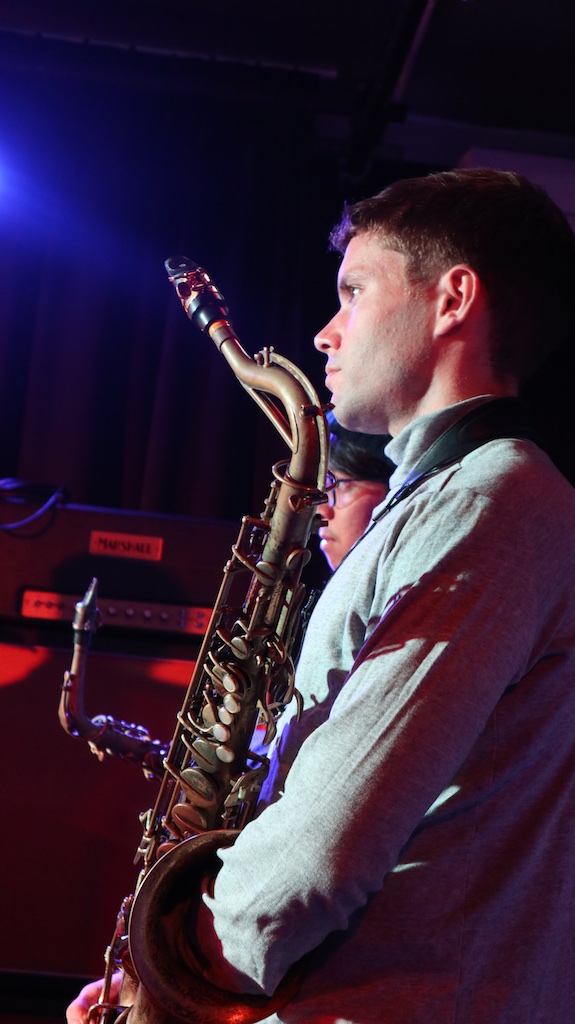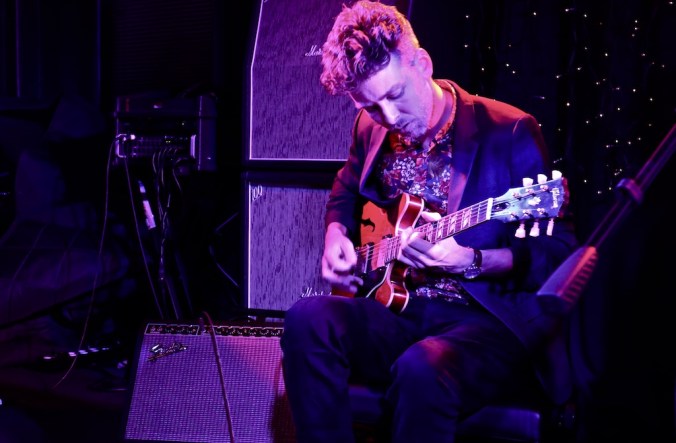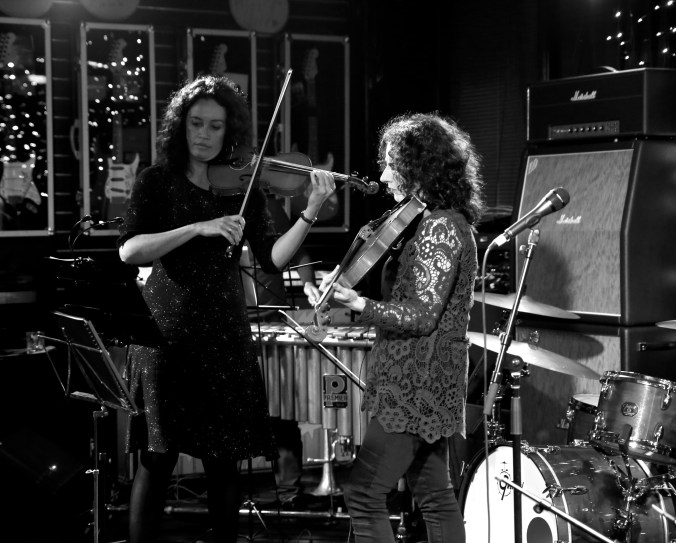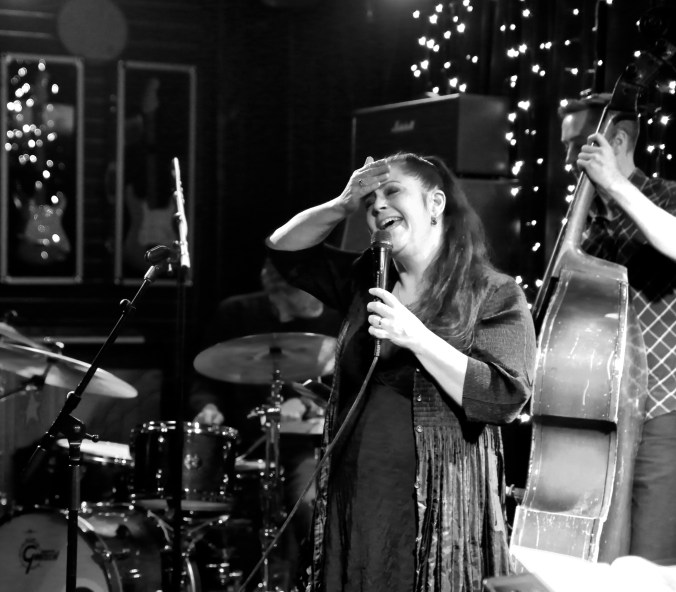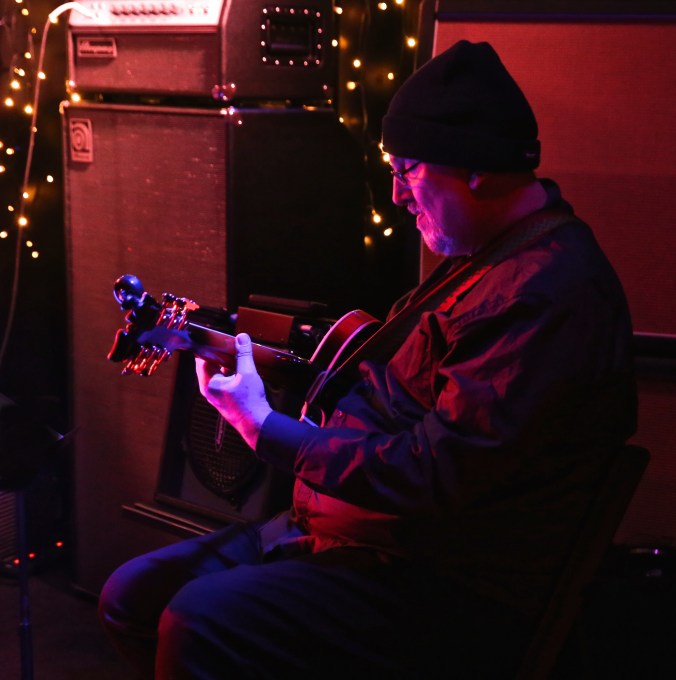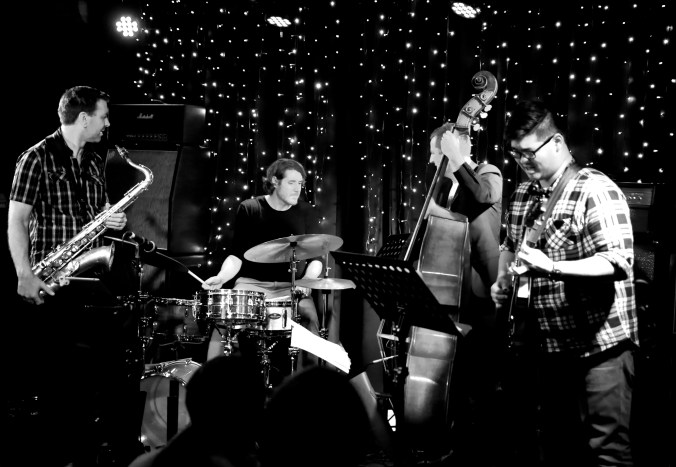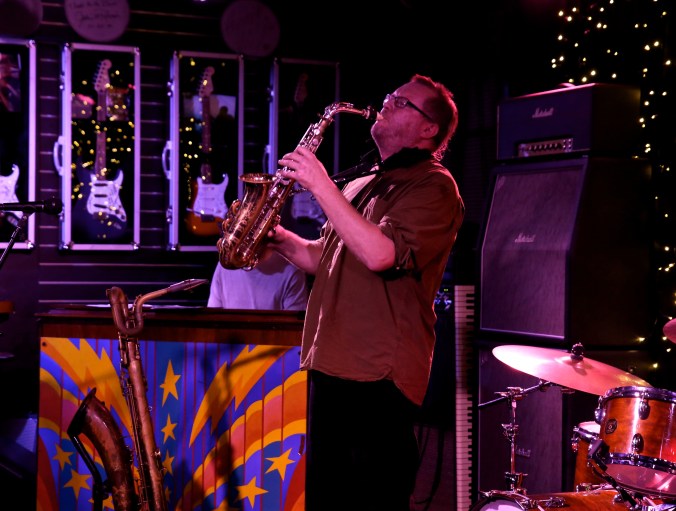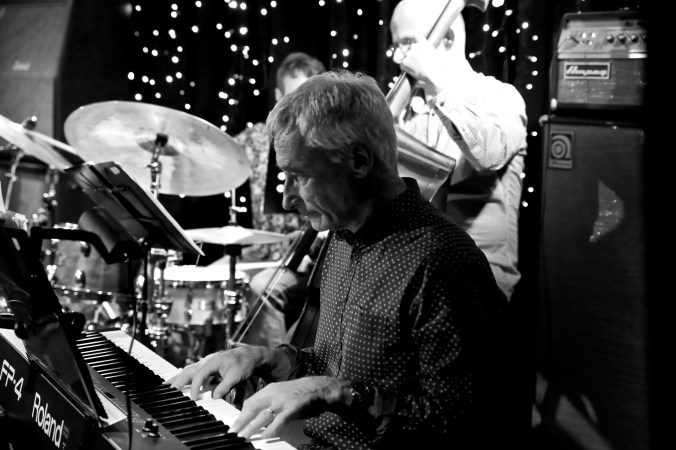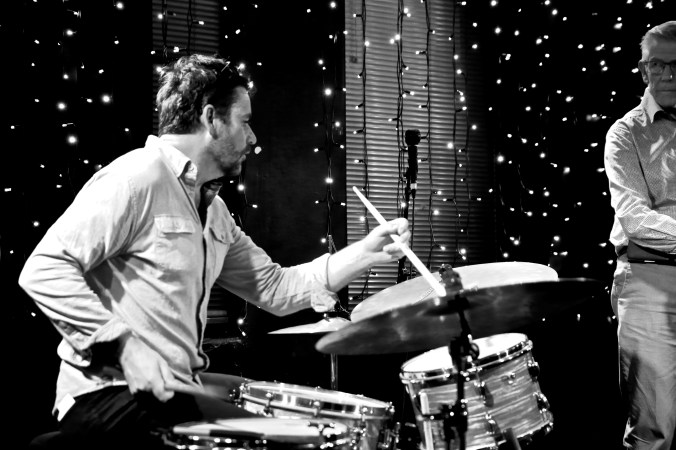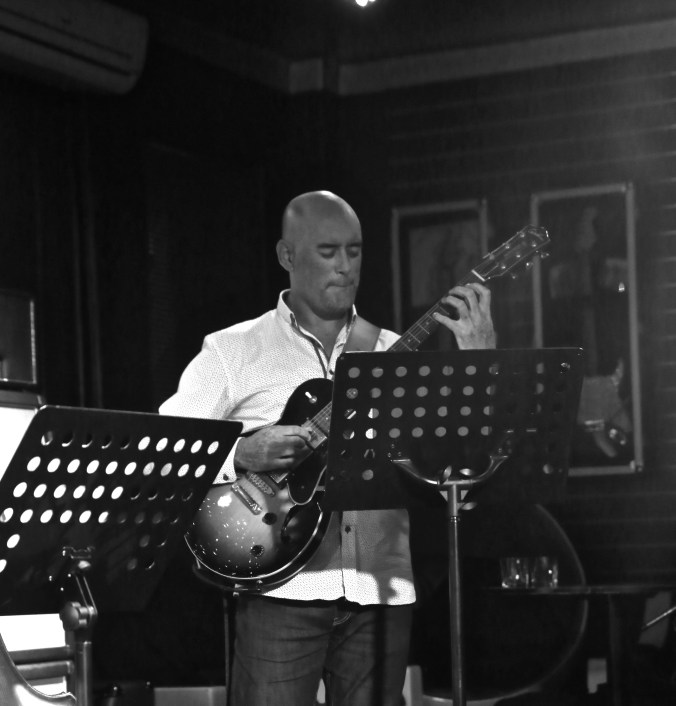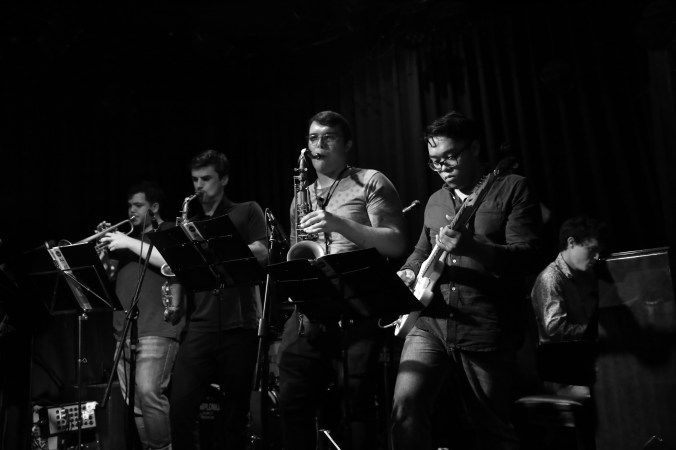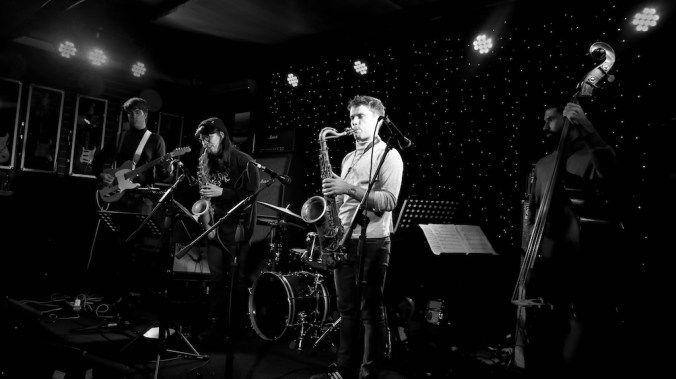
Reinier Baas & Ben van Gelder

Van Gelder BaasFrom a young age, I chose improvised music as my soundtrack. The harmonies, in particular, intrigued as they sounded like real life. Full of rich contrasts and polyrhythms. By comparison, the endless radio replays of popular songs offered diminishing returns. The miracle of improvised music is that it promises depth, and if done well it reveals more with each listening. This sets a high bar for innovation, so when I hear musicians described as compelling and original, I check them out. Ben van Gelder and Reinier Baas are so described and after attending their gig I agree without reservation. 
While theirs is essentially a European sound, it is also original. The compositions draw inspiration from identifiable sources but they also reach beyond the predictable. The music falling fresh to the ears and without a hint of over-reach. When musicians like this hit the road, a buzz proceeds them. Insightful reviews appear because the critics have something novel to pour over, and more importantly,  respected musicians put the word about; ’don’t miss these guys, they’re heading your way and they’re astonishing’.  Baas and van Gelder are a commanding stage presence, beguiling sound, musicality and something new to communicate. 

Van Gelder Baas (1)

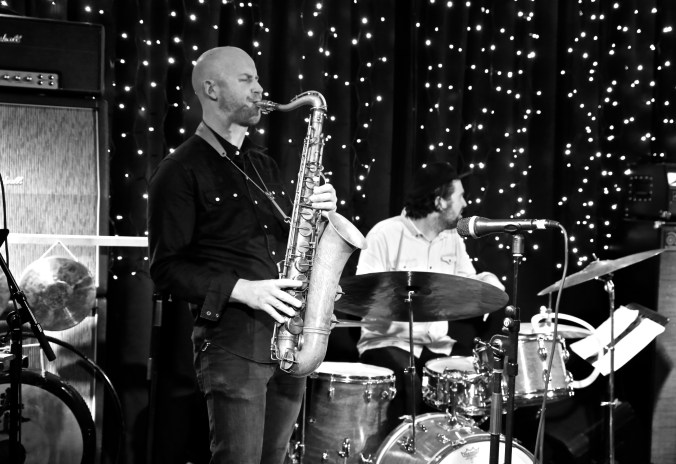
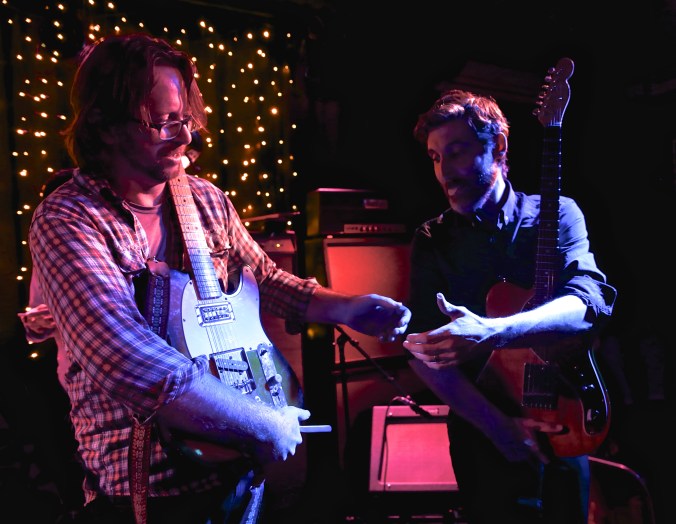
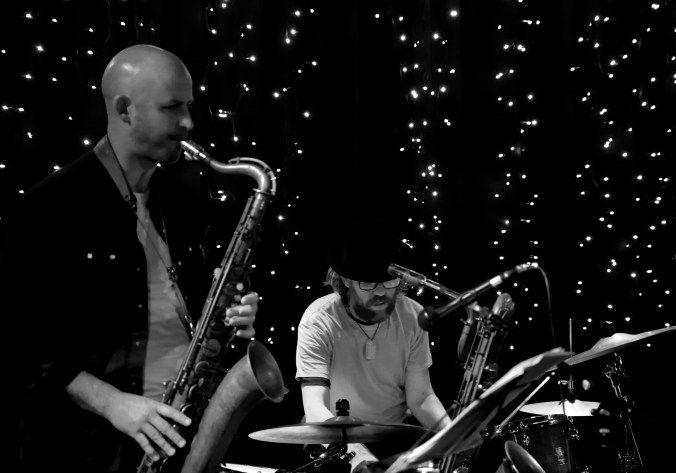
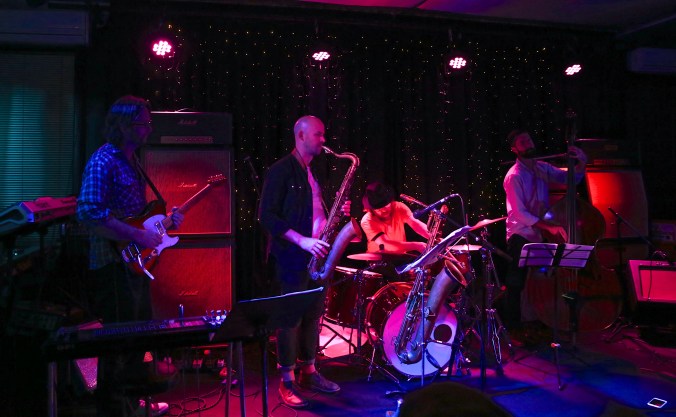
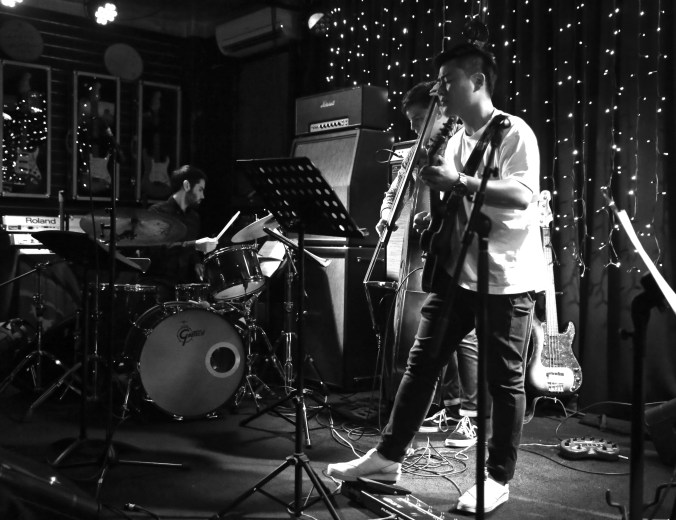
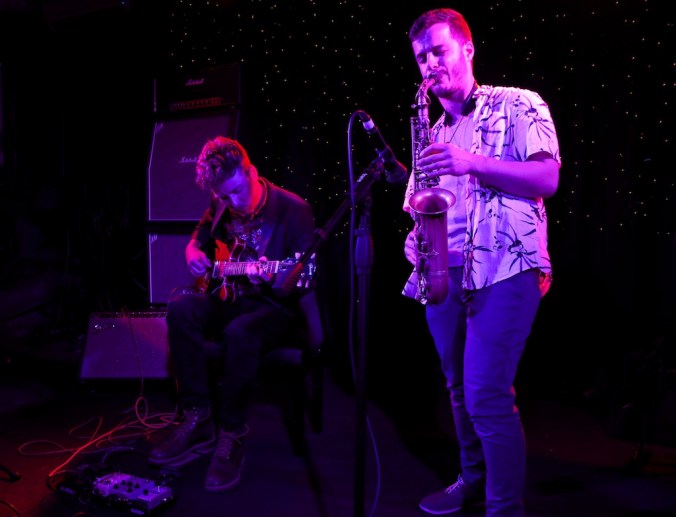
In New Zealand, Baas & van Gelder appeared as a duo – the guitarist and alto saxophonist bathed in defused coloured light; their physical presence diminutive against the tower of amps looming behind. Calmly they adjusted their microphones, then Baas began. What followed caused jaws to drop, his voicing quite unlike anything we had heard before. A gently percussive and often discordant string of utterances which filled the room – winning us not by force but by persuasion. Then van Gelder began to play his alto – an altogether sweeter sound and contrasting perfectly with the guitar. When experienced as a whole the effect was quite extraordinary. It felt like a brand new dialect and one that was accessible, strangely beautiful also. Rarely, Baas would apply a pedal, but this music did not require electronic effects.  As hard I try I can’t bring to mind any duo quite like this.  The Jazz club was packed and many younger musicians sat upfront, eyes sparkling in delight as they took in every aspect of this exciting music. 

Their recent album ‘Smash Hits’ is a must purchase for those who love innovation and fine writing. The tongue in cheek title, a good clue to what follows. If you gained the impression that the music might be confronting then I will disabuse you. An intense melodicism and raw beauty inform all that they do. ‘Smash Hits’ has them fronting the renowned Metropole Orkest – the Grammy-winning premier Jazz orchestra of the Netherlands (a big band and a classical orchestra combined). I couldn’t count the number of instruments in the YouTube clips but they are many and varied.  Sometimes a large ensemble can muddy a composition, but not here. These charts are masterworks – the palette is clean and rich in texture – the pieces feeling incredibly modern. Yes, there are distant echoes of Gil Evans but these orchestrations stand strongly on their own feet.

The above clip ranks among the most beautiful pieces of arranged music that I have heard.  Reinier Baas (guitar, arrangements, compositions), Ben van Gelder (alto saxophone, arrangements, compositions) – Backbeat, CJC Creative Jazz Club, Auckland, 13 March 2018 

a1560345508_16

David Berkman – 2019 Auckland

download.jpg

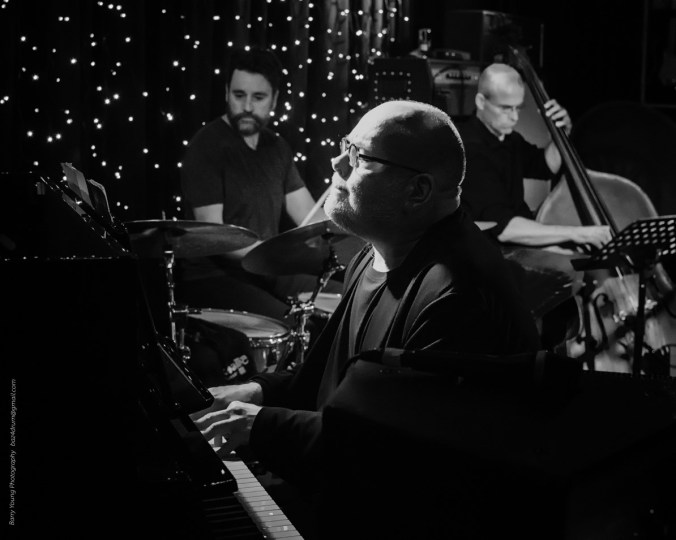
When David Berkman sits at a piano, any piano, he looks to be at one with the world.  In the parlance of Piano Jazz, the guy is a ‘beast’ and his mastery of the instrument is astonishing. Like all pianists of repute he is accustomed to high-end pianos but when he is confronted with an upright, he still makes it sing.  The last time he visited Auckland, the CJC Jazz club was located in the basement of the 1885 building. At that point, there was a Yamaha Grand on offer. Three moves on from then, the club is now in the ‘Backbeat’, a warm amenable performance space in Karangahape Road. The piano there is a Kawai upright. ‘Uprights are fine’, he said, ‘You just play more percussively’. I’m convinced that he could make a thumb piano sing or swing – and so it was on this night. 

The setlist was a mix of his own tunes and a few well-placed standards. Berkman’s tunes are strong vehicles for improvisation, always melodic and by default, they tend to swing like crazy. With one exception, the standards were Berkman arrangements, and while recognisable they came across as freshly minted masterpieces. Paring the flesh away from ‘All the things’ and giving those old bones a youthful lease on life; finishing wonderfully, gently, with the tag. His Cherokee while closer to the original was also a treat, a real burner. Who dares play that these days (more’s the pity)? Only a killer pianist is who, and contained therein was history, innovation and pure joy. With him were three local musicians who he fondly referred to as his regular New Zealand band. Roger Manins on tenor, Oli Holland on Bass and Ron Samsom on drums.

As I watched him throughout the night, I pondered where he fitted in the stylistic spectrum. Of course, he can range across many styles, but the name Cedar Walton sprang to mind. Later I ran into a musician who said unprompted, ‘This guy and his approach remind me of Cedar Walton’. A musician singled out his comping for high praise. “His comping goes beyond the usual, it is elevated to a high art form. Not just supportive but shepherding you into new territory, bringing out things in your own performance that surprise you”. So all of the above and more applies to him. A drummers pianist, a great comping pianist, a hard swinger. It is therefore not surprising that he shares the bandstand with Brian Blade, Joe Lovano, Billy Hart, Jane Monheit etc. He is also a well-respected educator. Anyone who follows the New York scene will already be a fan as he’s a regular performer around the New York Clubs. For the alert, he can sometimes be caught on the Australian and New Zealand Jazz circuit. If you snooze you lose down-under. Missing gigs like this would be categorised under high crimes and misdemeanors.

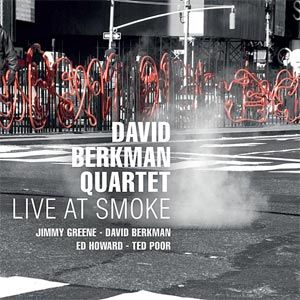
He records on Palmetto and his albums are readily available. Recommended is his latest: Old Friends and New Friends – also, Self Portraits or Live at Smoke. For more information go to davidberkman.com. The gig was at Backbeat, CJC Creative Jazz Club, March 2019 – last photograph by Barry Young

Simona Minns, Auckland 2019

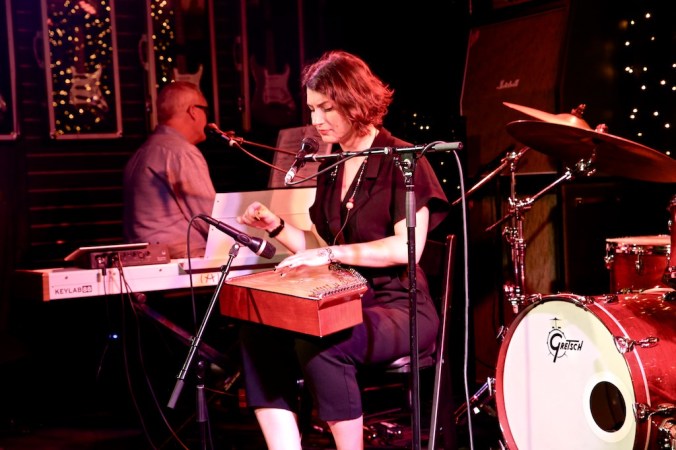
Simona (1)This was New York artist, Simona Minns second visit to the CJC, her appearances occurring one year apart to the day. Her 2018 show ‘The Hunger Games’ referenced a Kafka short story. This tour was billed ‘My Urban Spells’, expanding her ever-evolving themes of universality and free-spirited improvisation.  Minns musical education and life, have gifted her with many powerful themes to draw upon and out of these, she has crafted a powerful synthesis. Her initial training as a classical Lithuanian Zither player is never far from what she does, but neither are the Jazz and Rock worlds she discovered when she emigrated to America.
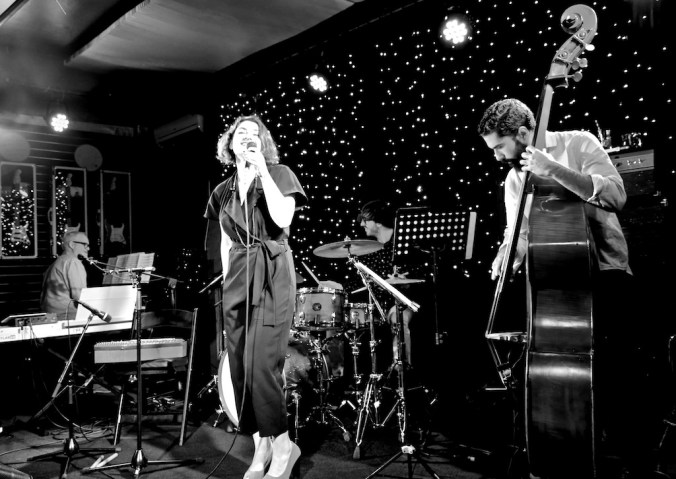
Minns is a compelling performer and this underpins her shows. There is always an engaging theatrical element to her stage presence; something akin to an off-Broadway show. When you factor in her vocal chops, fine compositions, and originality you get an enjoyable whole. It is more than a mere cobbled eclecticism, it is well-judged performance art. Simona

Like last time, she was accompanied by Alan Brown on Keyboards, Cameron McArthur bass and Stephen Thomas on drums. Because this was the bands second time around (and because they can), they stretched out more and Minns let them, confident in their abilities.  Brown in particular is accustomed to reaching into new musical spaces. His beyond Jazz explorations into ambient and ethnic music equipping him perfectly.  Some of the tunes were standards reinterpreted, others were Jazz/Rock mash-ups with electric guitar (Minns). It was though, when she sang her own compositions in her own mother tongue that she shone brightest.  Her ethnically fused Jazz, enormously appealing.

Simona Minns (vocals, compositions, guitar, zither), Alan Brown (keyboards), Cameron McArthur (upright bass), Stephen Thomas (drums) – Backbeat, CJC (Creative Jazz Club) 20 February 2019.

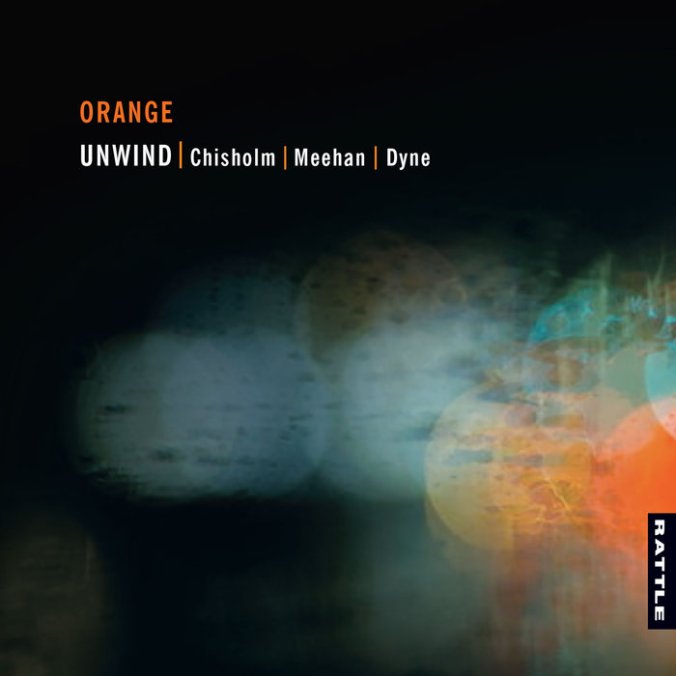
‘Orange’ Chisholm/Meehan/Dyne

a2936707555_16

This is the second Unwind album and everyone who purchased the original will be delighted that the project is ongoing. The first gig promoting their new release ‘Orange’ took place at the CJC (Creative Jazz Club) in Auckland last week. For that gig, the trio was expanded to include the well-known Auckland drummer Julien Dyne. Hayden Chisholm, Norman Meehan, and Paul Dyne go back a long way and in spite of Chisholm living in Germany, they have maintained their creative connection. This is an exceptionally fruitful association and it is our good fortune that they maintain it. These are seasoned musicians and able to draw upon a wealth of diverse musical experience.

Chisholm, in particular, brings qualities to the tunes which are unique and compelling; his tone production simply wonderful. He can produce a Konitz like tone but without a hint of mimicry. He is ancient to modern and his avant-garde credentials give him that finely tuned edge; especially evident when tackling reflective tunes like these. In live performance especially, he often embarks on fantastical introductions. Using a Shruti box and augmenting that with his quiet and always amazing throat singing. It works so well because it is applied judiciously. When playing the alto he takes you with him and each step along the way counts, his improvisations having a distinctly narrative quality.  When he plays the audience listens, really listens.

Norman Meehan and Paul Dyne are the perfect foils for Chisholm. They respond to every nuance – feed him lines – but also leave space for the music to breathe. Meehan’s voicings are notable for their delicacy, but counter-intuitively, his minimalism feels expansive. The notes (and silences) fleshing out the endless possibilities while never once crowding the melodic arc. Meehan is soon to move to America and we wish him well, provided that he returns often and with more performances like this one. Although the venue lacks a grand piano, Backbeat’s Kawai is an instrument of quality. Under Meehan’s touch, it rang clear.

Paul Dyne is a respected Wellington bass player and for the Auckland gig, he was joined by his son Julien. Both are exceptional musicians. Dyne senior makes the upright bass seem effortless and this is his forte. Co-led ensembles like this are all about interplay and the quality of Dynes bass work was evident. It was notable because it held the centre without seeming to do so.

The compositional duties were also shared.  Many tunes from the album were played but during the CJC gig, we heard a few recent compositions.  All three trio members contributed tunes and their compositions although very different were complimentary.  I have included a sound clip from the album, but to hear more and to purchase, go to Rattle Records and click-through to Rattles new Bandcamp site.

The album ‘Orange’ is released by Rattle Records. The band personnel: Hayden Chisholm (alto saxophone, Shruti box, throat singing), Norman Meehan (piano), Paul Dyne (upright bass) and for the live performance Julien Dyne. The gig took place at the Backbeat Bar for the CJC (Creative Jazz Club), March 13, 2019


Mambo Macoco – Crayford/Haines

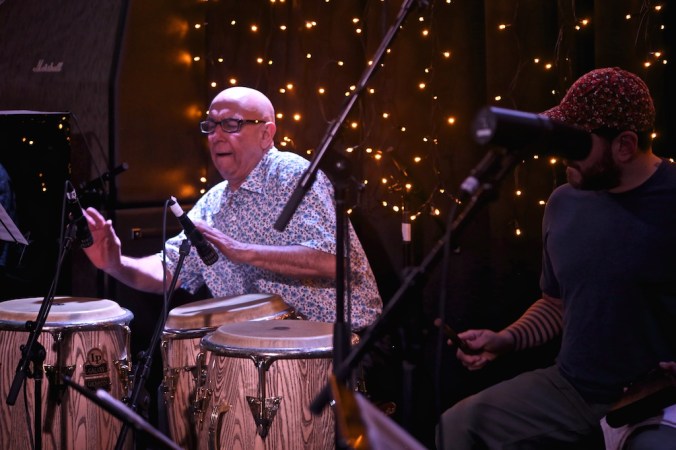
Mambo Macoco (2)A lot of great live music happened this year but this gig was a favourite.  It was danceable, visceral and the deeply rhythmic pulse found its way straight to your heart. As the band played the room radiated an infectious joy and the swaying of the audience amplified it. One by one the feet tapped and the hands moved until no one was left unaffected.  Yes, this was music to wash away your cares but underneath that was something of real substance. Latin music that misses its groove is unsatisfying but when it’s done well like this was, it’s simply wonderful. No one in New Zealand could pull this off better than Jonathan Crayford and with co-leader Nathan Haines on board, it was locked down. The final ingredient to this potent tropical brew was master percussionist Miguel Fuentes.
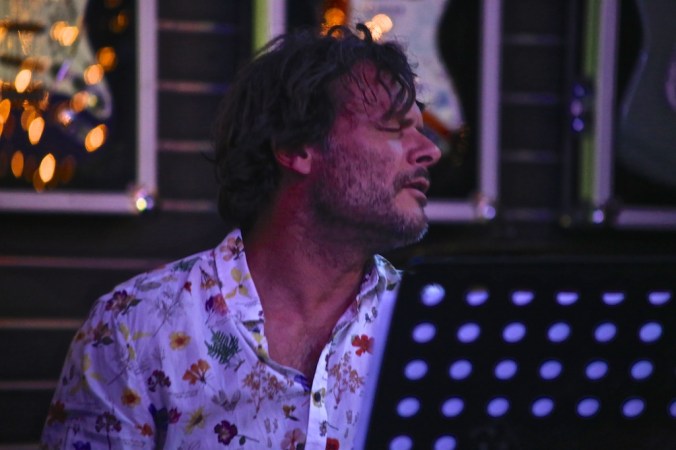
This project has an impressive provenance as it is derived from the Bobby Vidal songbook, a selection arising out of his much-loved New York Latin/Bebop band. In the early nineties Crayford was living in New York and because he was intent on soaking up as many influences as possible he soon came across Bobby Vidal’s regular East Side, St Marks Bar gig. He loved the vibe and desperately wanted to become part of it and he started attending the gigs regularly. Through perseverance and after many knock-backs, he finally got an introduction to Vidal. Before long he was hired. After that, he spent three years with the band, describing the experience as ‘a pure joy’. Mambo Macoco (3)The songbook was a heady fusion of Bebop and Afro-Cuban (or more accurately Afro-Rican as Vidal was from Puerto Rica). When Crayford initially agreed to take the Vidal gig he knew little about Latin music, but a quick phone call to his friend Barney McAll gave him valuable tips. Fast forward to 2018 and it is obvious to anyone who hears him that he absorbed the complexities and rhythms of the music beyond caveat. Although the rhythmic patterns are fixed, for the music to work well it needs something else – a controlled fluidity – the ability to react to the other musicians. Crayford once described it as being a weave which can be tightened and loosened at precise times – without the shape being lost. When you hear the clave patterns skilfully executed and interwoven, the experience is unforgettable.
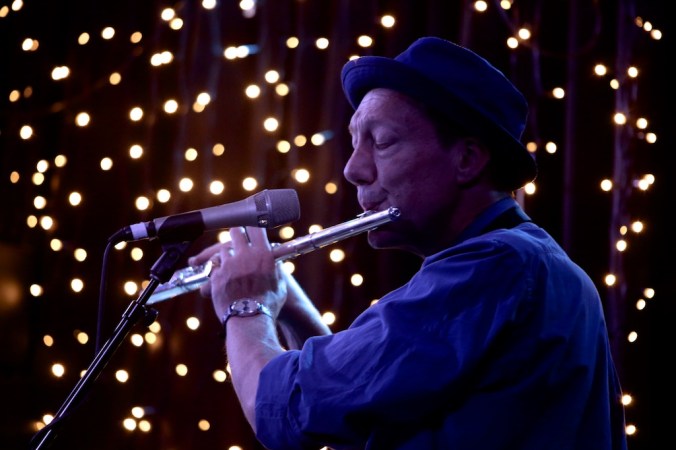
Co-leader Haines ranks among our best known and most loved musicians. His experience and good taste are always on display and on this gig, he pulled out an extraordinary performance. After his recent surgery and health issues, it would have been excusable for him to hold something back, but Haines is averse to half measures. His primary instrument on this gig was flute (although he did play saxophone as well). Anyone who has followed his career will know that he was in New York around the same time Crayford was and he undoubtedly absorbed gigs similar to this. A subsequent move to London had him performing with a variety of Afro Caribbean musicians. His wonderfully peppery flute playing attests to these tropical influences. Mambo Macoco (4)Many Jazz musicians avoided the flute, believing it to be expressionless, but when Haines blows, it has life, character, and edge. As a horn, it has pride of place in Latin ensembles and Latin lineups are diminished without it. Watching these two feed off each other’s lines or grooves is to attend a masterclass. Many years of collaboration has gifted them an acute situational awareness. An awareness that is now instinctual.
Then there is Miguel Fuentes. This is where the magic becomes supercharged. Fuentes like Crayford and Haines is an acclaimed musician and his background as a percussionist is mind-blowing. While skilled in the numerous percussion styles and on numerous percussion instruments, he played congas, Afro-Cuban style on this gig. He has performed with a large number of important artists (e.g.George Benson and Isaac Hayes) and since moving from New York to New Zealand he has been the first call percussionist.

Beside him on cencerro (cow-bell) was Adån Tijerina, his instrument being the ‘hammer’ – the instrument which holds the centre and it was deployed well.  On upright bass was Mostyn Cole, a versatile and able musician who fits in perfectly whenever he is called upon. At the end of both sets, an electric bass player was called to the bandstand. A young woman named Jacqui Niman from the South Island. The ease with which she hit her groove and dived into this deceptively complex music was impressive.

Both gigs were filled to capacity and due to the size of the audiences, dancing was rendered impossible. As Crayford later pointed out, “I’m sorry that there is no room to dance but do so if you can’. The Mambo Macoco music invites movement and deserves to be danced to. It is rumoured that a gig, perhaps even a residency, could occur soon at the nearby Anthology Lounge. I hope so – count me in.

Mambo Macoco: Jonathan Crayford (keyboards), Nathan Haines (winds and reeds), Miguel Fuentes (congas), Adån Tijerina (cencerro), Mostyn Cole (upright bass), Jacqui Niman (electric bass). The gig took place at the Backbeat Bar, Auckland for the CJC Creative Jazz Club 28th November 2018.

Vivian Sessoms CJC 2018

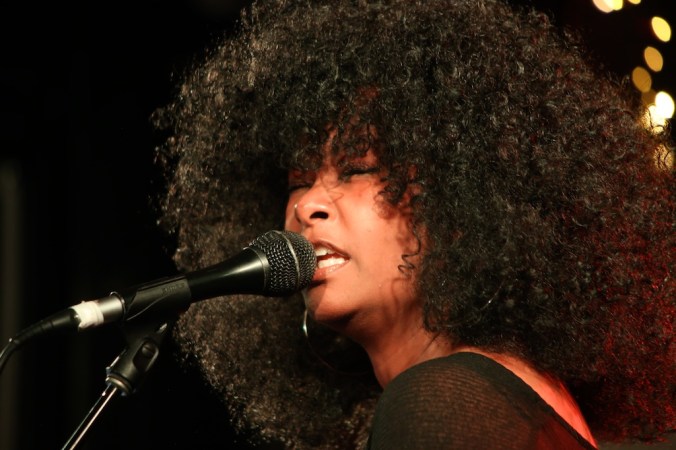
Vivian (3)When the Soulful vocalist Vivian Sessoms visited in June last year, we were stunned by her voice and by her powerhouse delivery. We seldom get to experience American R & B styled vocalists in New Zealand and if we do we never see them in intimate settings like the Backbeat Bar. Her voice carries the history of her music and her vocal range and control are approaching the operatic. Sessoms is a vocalist with serious chops and an interesting backstory. Last week she returned.
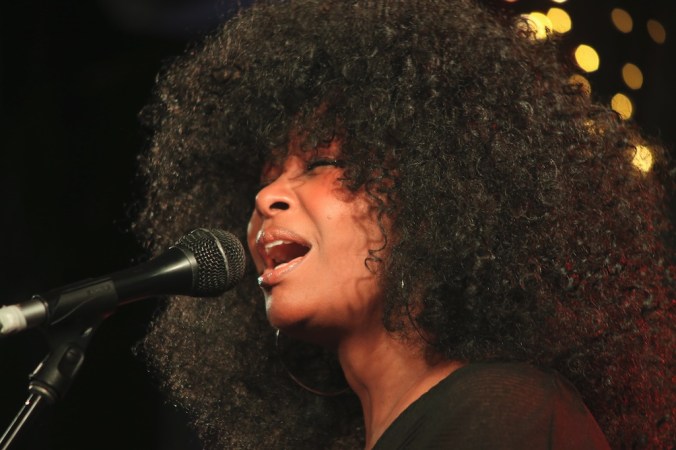
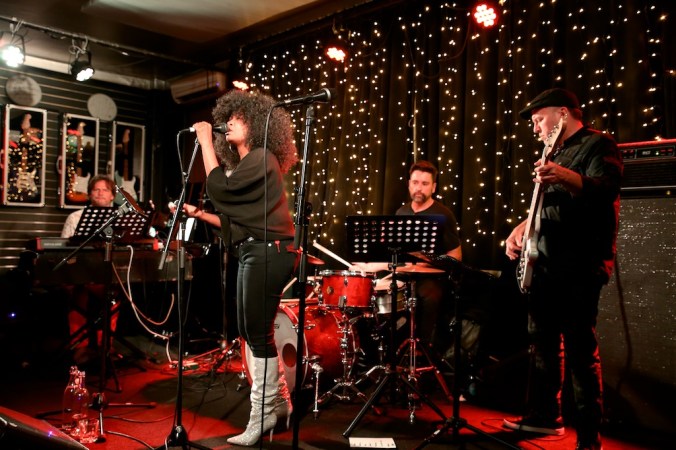
Since her last visit, she has released a Soul/Jazz album titled ‘Life’. The album is receiving favorable attention and it is not surprising that she has been picked up by the Ropeadope recording label. During her two Auckland gigs, she performed a number of tunes from the album; including a few that were recorded at the same time and will likely appear on a future release. The first set opened with her take on the Stevie Wonder classic ‘I can’t help it’. This was pure R & B, but the set swiftly dived into bold reharmonisations of Jazz standards plus one or two pop tunes (‘Love is a losing game’ – Amy Winehouse and ‘Under the Cherry Moon’ – Prince). Vivian (1)

The Standards in that set were the lovely ‘Stella by Starlight’ (Victor Young), ‘Lush Life (Billy Strayhorn) and ‘The Waters of March’ (Tom Jobim). All of the above were reharmonised and made fresh. ‘Lush Life’ conveyed that sad world-weary vibe that Strayhorn penned so well and ‘The Waters of March’ (Aguas de Marco) was sung in English.  Jobim wrote both the Portuguese and the English lyrics and the song is a masterpiece. Sessoms infused it with a subtlety reflecting modern American life. When she came to the line ‘the shot of a gun, in the dead of the night’ you picked that up immediately and understood her message.Vivian (4)

Sessoms is an activist for civil rights and this thread runs through all of her shows (and the ‘Life’ album).  Last time she came to New Zealand it was her ‘I can’t breathe’ number – this time it was her take on ‘People (make the world go round)’, a tune made popular by the Stylistics  (composed by Thom Bell + Linda Creed). Before the tune, she spoke a little of her life growing up in Harlem and how normalised that daily struggle was to African-American people at that time. This tune in her hands was a plea for people to do better and to fight on until equality is a reality, not just a distant hope. An interesting song choice which got the Sessoms treatment was ‘I who have nothing’. We associate it with Shirley Bassey or Joe Cocker but long before that Ben E King released it. Actually, it is an old Italian song titled ‘Uno Dei Tanti’ (by Carlo Denida).

This time Sessoms had her husband Chris Parks touring with her. Parks is a well-known bassist and producer on the New York scene and on the album, he is co-credited in all of the arrangements. Parks played a punchy electric bass, Jonathan Crayford and Ron Samsom were the band members for this gig, Crayford having accompanied her convincingly last time she came.

The album is widely available and I have included a Spotify clip from ‘Life’. Her take on Strange Fruit is the standout for me. A harrowing song based on the poem by Abel Meeropol and made famous by Billie Holiday. In light of recent comments made during the US primaries and on the banners of the Alt-Right, these issues are scandalously still with us. I have also put up a clip from the gig – ‘Waters of March’ (the sound quality is quite good but the glare of the spotlights affected the focus slightly in places).

Life Tour: Vivian Sessoms (vocals), Chris Parks (electric bass), Jonathan Crayford (keys), Ron Samsom (drums) – Backbeat Bar for the CJC (Creative Jazz Club), 22nd November 2018).


Kira Kira on tour

Kira KiraThe interesting diversity in the CJC programming was again on display last week with two international acts as different musically as acts could be. Wednesday featured a multinational mostly free-improvised music ensemble Kira Kira and Thursday the Harlem born Jazz/Soul Singer Vivian Sessoms. Both attracted good audiences, once again proving the value of adventurous programming.
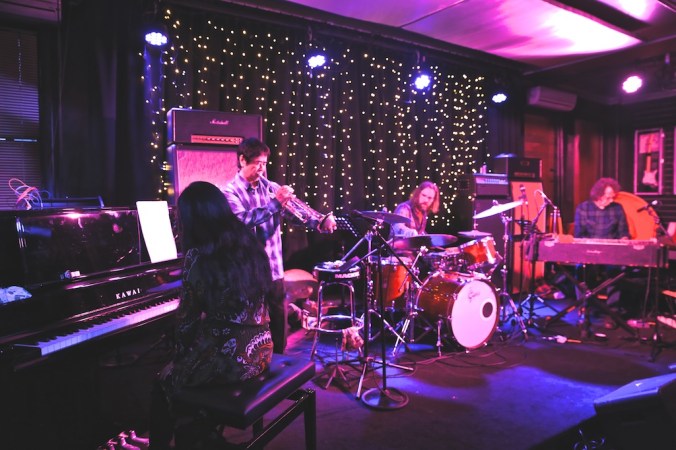
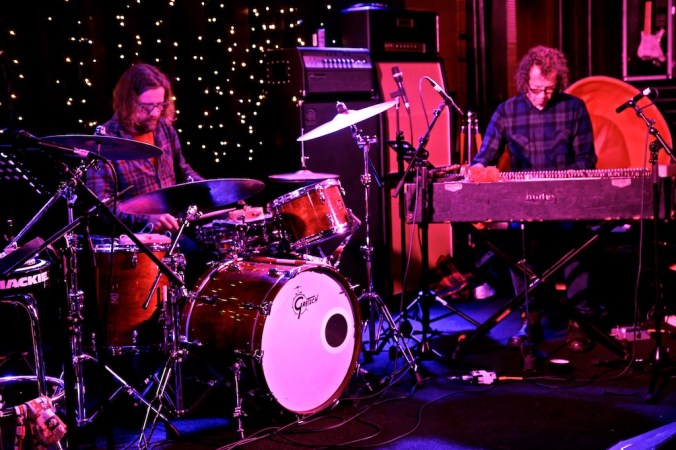
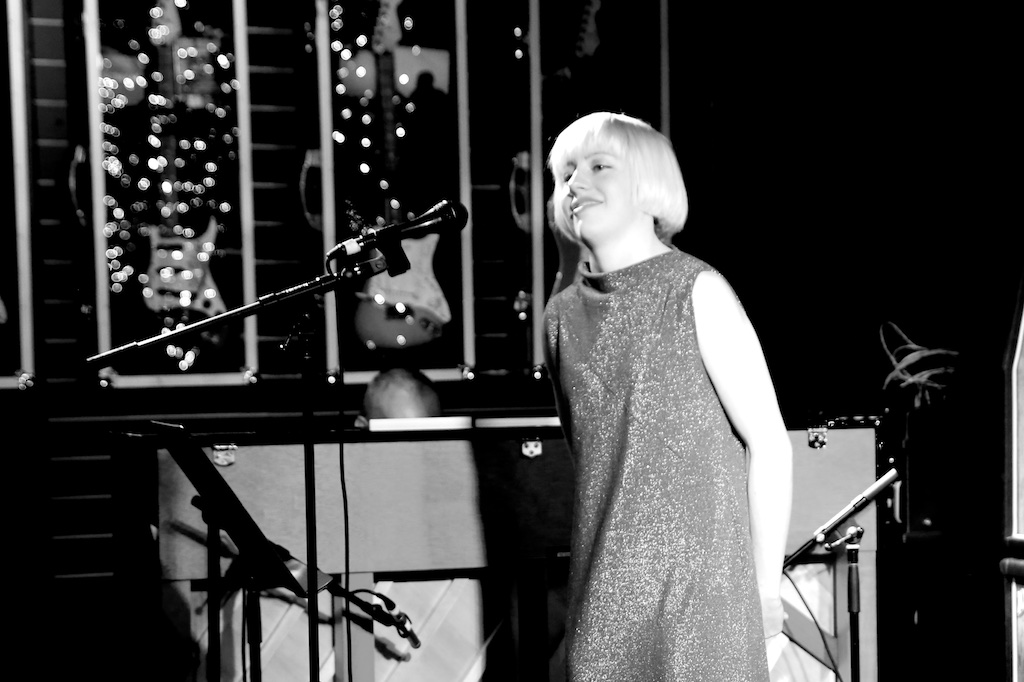
Kira Kira features two renowned Japanese avant-garde musicians, Satoko Fujii, composer/pianist, and partner Natsuki Tamura on trumpet. This particular project is a collaboration with the Australian pianist Alister Spence. It is usual for Fujii to challenge herself by performing alongside musicians new to her acquaintance and for the Auckland show, the basic trio added drummer/percussionist Chris O’Connor. This was exactly the right choice. Kira Kira (3)

These are seasoned musicians at the peak of their powers and it showed as they navigated a less travelled musical terrain. Fujii is the best known of the ensemble, having attracted accolades from around the world. She has been called the Ellington of free music. Her early teachers and mentors included Paul Bley, Cecil McBee, and George Russell (all appeared on her debut album).  She has released 80 albums so far and this year, her 60th, she will release an album a month. She is an extraordinary musician who plays as free as a bird; but who never-the-less weaves in a mirage-like momentum. There is a sense of purpose, a pathway leading to deep beauty, but all of the above is elusive. Like all free music, the essence can dissolve if you try too hard to grasp at the form. Kira Kira (5)

Spense came to New Zealand recently, touring with trumpet player Eamon Dilworth. He impressed me deeply then as his tasteful minimalism told bigger stories than a busier player. In Kira Kira, he plays Rhodes, electric piano, preparations, and controls effects. Few people have seen a Rhodes performing topless but it was certainly captivating. As he stroked and tapped under the hood he extracted an array of wonderful sounds and colours. He interacted with the other three musicians in ways that only a deep improviser could; responding to and working with the ever-shifting duo segments.

When Natsuki Tamura played, his trumpet cut through the air like a swooping hawk. Sometimes Percussive and confronting, at other moments gentle, cajoling. At times he reminded me of Wadado Leo Smith. His lines could be supportive or squalling and contradictory and he was the perfect foil to the chordal expansiveness of the piano.

Lastly the newcomer to the group, New Zealand drummer Chris O’Connor. If anyone could add value to an already fulsome sound it was him. He reacted and contributed with such sensitivity that it became impossible to imagine the group without him. I have uploaded part two of the Kira Kira suite to YouTube and posted it (part one was marred by fridge noise and the other two movements were too long). I invite you to listen and then listen again. This is music that rewards deep listening. This was freedom.

Kira Kira was performed by Satoko Fujii, Natsuki Tamora, Alister Spence and Chris O’Connor at the Backbeat Bar, for the CJC (Creative Jazz Club) November 21, 2018


Lauren Nottingham Tour

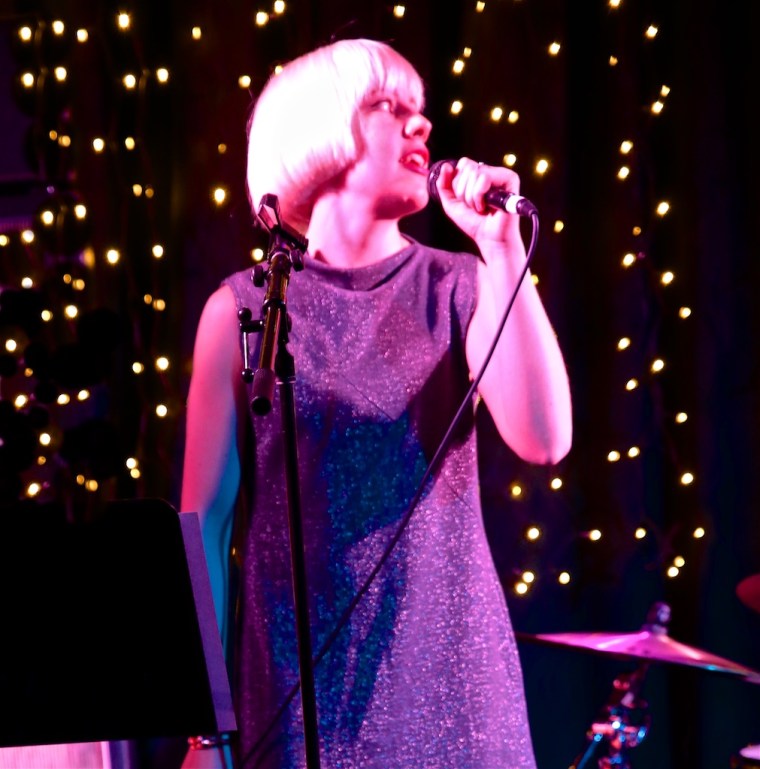
 Whenever a young and talented vocal improviser appears on the scene, it piques the interest of Jazz lovers and beyond. Lauren Nottingham fits this bill perfectly and she is definitely someone we should take notice of. She is bound to have an upwards career trajectory over the coming years and with the talented pianist Mark Donlon as a collaborator, this is all the more assured. She has previously toured as co-leader with Donlon, but this time she stepped out as sole leader.

The setlist was a mixture of original compositions and reharmonized standards from well outside of the Jazz songbook; David Bowie’s ‘The Man Who Stole The World’ and The Beatles ‘Lady Madonna’ (McCartney). Both of the latter went down well. There were also a number of compositions by a singer-songwriter Matt Sagen and above all Nottingham’s own offerings. We also heard a tune by her drummer and one by Donlon. Her satirical ‘You can’t spell triumph without Trump’  and ‘Who you are’ felt personal while the composition ‘On a rooftop in China’, composed by drummer Dexter Stanley-Tauvao had a delightfully swinging feel to it. I have posted Donlon’s tune titled ‘Sarabande’ (Nottingham wrote the lyrics for this).  This was a nice band all round with tasteful playing from Beernink and Stanley-Tauvao.

Nottingham began singing publically at around the age of fourteen and before long she was singing in the National Youth Choir. She always had an interest in Jazz and in her senior year won a competition run by the NZSM. Later she completed a Jazz Studies degree with the NZSM. Following that she spent a year in Berlin, where according to her bio, she worked in a Jazz bar and did a lot of listening. For any developing artist, moving out of their comfort zone is important as academic learning is only a starting point; character and authenticity arise from life experience. The harder won and the greater the risks the better the stories. Nottingham through composition and her vocal interpretations has tales to tell us and her original approach is already evident.

Some time ago I heard a different tune by Donlon also titled ‘Sarabande’. I particularly love this latter one, as in Nottingham’s hands, the tune conveys a crystalline and even a lachrymose quality – entirely fitting for the wistful sarabande; that slow dance beloved of Baroque composers and with ancient Spanish origins. My only complaint about the gig – I hope that we get more wordless vocalising next time – we love her doing this (ref. her work with Mark Donlon’s Shadowbird Quartet).

The Band: Lauren Nottingham – leader, vocals, Mark Donlon – piano, Chris Beernink – bass, Dexter Stanley-Tauvao – drums. The gig took place at The Backbeat Bar for the CJC (Creative Jazz Club), November 14, 2018.

Cam Allens Phobos The Scary Moon

Cam Allen (4)Perhaps it’s the anniversary of the moon landings, or perhaps it’s the crazy-arsed nonsense happening down on planet earth, but deep space has been very much on my mind lately.  I have not been alone in this preoccupation as I appear to share this with a group of explorative improvising musicians. I was recently on local radio taking about a favourite topic, ‘space dreams and analogue machines’ and it occurred to me then, that space dreamers have always shaped our other-world view. Frank Hampson (Dan Dare Comics), Gene Rodenbury (Star Trek) and musicians like Eddie Henderson (Sunburst), or Sun Ra (Space is the Place). Humans have always looked to the stars for inspiration but only writers and musicians have the courage to describe what others cannot yet imagine.  Cam Allen (1)
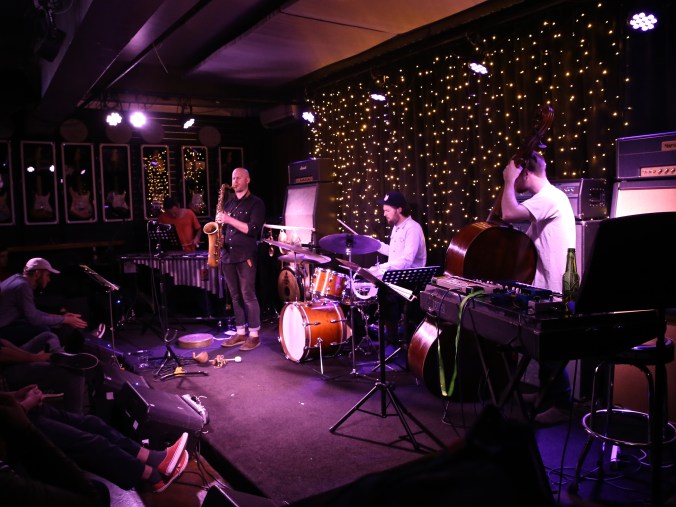
For the second time in a month I attended a space themed gig and this time it was titled Phobos the scary moon’. Phobos circles Mars and it was only discovered in 1877. It is a small moon, but since its discovery it has exerted an outsized influence on the human imagination. The Greek god Phobos is a god of a fear associated with war. The word Phobia comes from this. For those with open ears and a love of adventurous grooves there was only joy to found here. Nothing about Cam Allen’s Phobos gig required the listener to seek Freudian analysis afterwards. This was an enjoyable night and the scariest part came later as I was walking back to the car and heard an off-key wail from a nearby karaoke bar.  Cam Allen (3)

The band – intergalactic warriors all; Cam Allen on saxophones, gongs and percussion, John Bell on vibes and horn, Julien Dyne on drums, Eamon Edmudson-Wells on upright bass and Duncan Cameron on keys. I rate John Bell’s Aldebaran quartet highly and for similar reasons I rate this band. This type of improvised music is still under explored and it is long overdue for more careful examination. It has form but the structure is not beholden to form; it has melody and hooks but not at the expense of mood or texture. The musicians here conveyed real enthusiasm for the project and that enhanced the effect.  Cam Allen

Seeing Dyne in such good form was a special treat for me. Later as I reviewed the clips I realised what a powerhouse he is. His rolling polyrhythmic beats reminiscent of the young Alvin Jones. Polyrhythmic drummers often sound as if they are powered by rocket fuel and Dyne did. Allen deftly played three horns (plus gongs) and his nicely open compositional structure permanently altered the time-space-continuum. The clip that I am posting initially took me back to those wonderfully transporting forays of the Art Ensemble of Chicago. Keep these space gigs coming people I am up for more.

The gig took place at the Backbeat Bar, K’Rd, 29 August 2018, for the CJC Creative Jazz Club.  I am finishing this post just a few hours before I fly to Scandinavia. I hope to experience some music as I travel and will post occasionally. Otherwise I’ll be posting as normal in November. I know that I missed a few posts but I hope to catch up over Christmas. Keep following live improvised music people, your inner life depends on it.

Watson meets Ward @ Backbeat Bar

Watson & WardIt is not often that you attend a gig where a set list covers such a range of styles but still pays due respect to each. If anyone could pull off such a gig; traversing the heights of Monk, Murray McNabb, Frantz Casseus, Bill Frisell and Ornette Colman it was these two. In lesser hands, the trajectory would have faltered, the items come across as disembodied. Here, the connecting threads, however improbable, made perfect sense. The centre held and the arc of the journey was a joyous adventure. Watson & Ward (1)
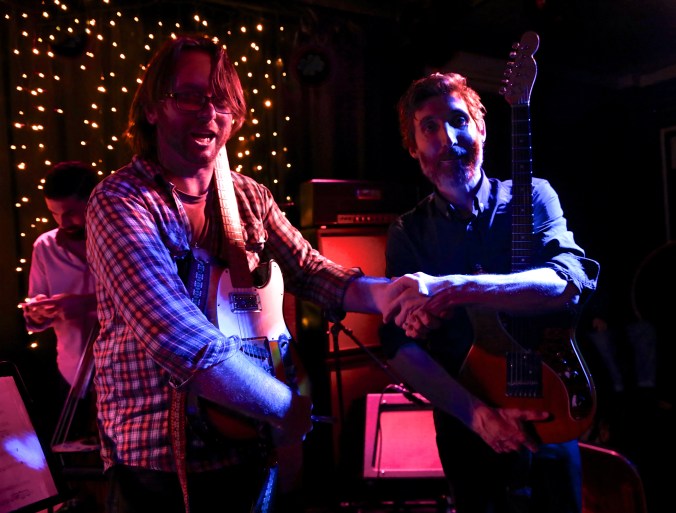
Neil Watson is a musician who musicians flock to hear. He breaks rules and strikes out in directions where few dare to follow. Everyone from Sharrock to Montgomery is referenced in his sound; with a generous pinch of Ribot thrown in for good measure. He sometimes hides in pit bands backing dancing fools, tours with famous country stars, opens for people like Marc Ribot, but whatever he does, he does convincingly. In recent years he purchased a pedal steel guitar and that is now an essential part of his repertoire. He exudes real warmth on stage, both as a storyteller and a musician.

I have only seen David Ward play on the odd occasion but it is always a treat. Like Watson, he is a master of diverse styles and he is particularly noted for his award-winning theatre compositions. He has toured extensively and gained a formidable reputation over the years. In Jazz and alternative music circles, it is the improvising band RUKUS that we mostly associate him with. RUKUS has featured a who’s who of adventurous improvisers such as Chris O’Connor, John Bell, Jeff Henderson, Eamon Edmundson-Wells, Cameron Allen, Finn Scholes & Rui Inaba. Watson & Ward (2)

The pairing of Watson and Ward guaranteed that creative sparks would fly.  It was always on the cards that they would perform together but until now the opportunity had not presented itself. I am certain that this project will develop from here –  logic tells me it has to. The quality of their musicianship was very much on display at the Backbeat Bar. On the three Monk tunes, they either ran unison lines or interwove an intricate counterpoint, and miraculously, the jagged phrases often created a fat Monkish dissonance; each guitarist deliberately landing on different voicings- creating a piano cluster chord effect. This was a quality band as Watson & Ward were backed by Cameron Allen (tenor and Baritone saxophones) Cameron McArthur (upright bass) and Chris O’Connor (drums). Understanding exactly what was required here the three left the lion’s share of the limelight to the guitarists. O’Connor displayed his usual eclectic virtuosity as the drum styles required were many and varied. Watson & Ward (3)

At one point Watson played solo, a composition by Frantz Casseus (a folksy classical guitarist who has influenced the likes of Marc Ribot). Out of his Fender came a delicate classical guitar sound – a moment of whispering clarity and magic. The pair also showcased their own compositions and again these contrasted in a good way. Ward’s ‘Mango’, ‘Shebop’ and ‘Hip replacement’ – Watson’s ‘Trash talkin’ (a Western Swing) and his extraordinarily ‘Murray’ – an apt tribute to the lost lamented and much-loved Jazz musician Murray McNabb. Among the tunes, we heard some heartfelt Americana (rare in New Zealand Jazz clubs and it is especially rare to hear Western two-beat Swing).

The high points were many, but I will put up two clips; The first is a Bill Frisell number ‘I am not a farmer’ from his moody atmospheric album ‘Disfamer’. The second up is a short clip where Watson plays a Frantz Casseus tune ‘Improvisations’ solo on Fender.

The gig took place at the Backbeat Bar, K’Road Auckland for the CJC Creative Jazz Club, 15 August 2018.


Leda’s Dream 2018 – Chelsea Prastiti

Prastiti (1)Chelsea Prastiti was not long back from Cyprus when her band Leda’s Dream appeared at the Backbeat Bar. Prastiti is well known in the Auckland improvised music scene and especially so at the avant-garde end of town. She’s a compelling vocalist and composer who approaches her craft as a free spirit, unfettered by others expectations. When she sings she dives deep and puts herself out there fearlessly but her risk-taking is not a mere academic exercise; it cuts to the very heart of what it means to be a thinking, feeling human. Her compositions are therefore always interesting and out of that a raw beauty and an honesty arise.  Prastiti (2)Although the ensemble played material that we have heard before, they sounded incredibly fresh – even different. Crystal Choi confined herself to accompanying vocals (no keys), Michael Howell stepped further into a measured chordal role and Callum Passells on alto and voice effects was the archetypal minimalist (saying a lot more with less). This felt very right and the re-configuration gave the ensemble a lot more freedom. They stretched out as the spirit took them and the first two tunes filled the entire first set. The voices, in particular, were liberated by the change and this gave wings to the melodic lines and mood. The harmonies were there in spades but that was not what drew you in. It was ‘mood’ and the pictures that those moods created.  PrastitiPrastiti’s is a brave path and I would expect no less from her. This is a musical space that is sparsely populated and more’s the pity. Think Sera Serpa (duos or trios), Think Norma Winstone (Azimuth 85) or perhaps the brilliant Nordic vocalist Sidsel Endresen (Endresen live with Jan Bang). In this ensemble, she has the musicians to give her the freedom she deserves. Passells, who is unafraid of soft trailing notes or of minimalism, Howell who can follow a vamp to eternity and make it sing, Choi who instinctively makes the right moves, and Eamon Edmundson-Wells and Tristen Deck who know when to lay out and when to add colour or texture. The music drew from free improvisation, standard Jazz and deep Folkloric wells. It did so without undue introspection. The band brought the audience along with them and the bouts of enthusiastic applause proved it. For some reason, and it was partly their attire, the gig felt like a postmodern version of a Pre-Raphaelite tableau. Oh yes indeed, that always works for me.
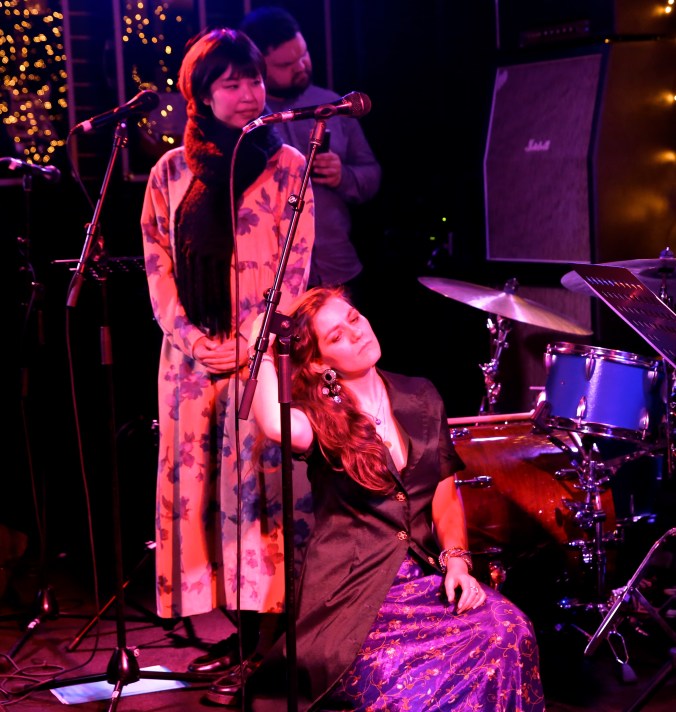
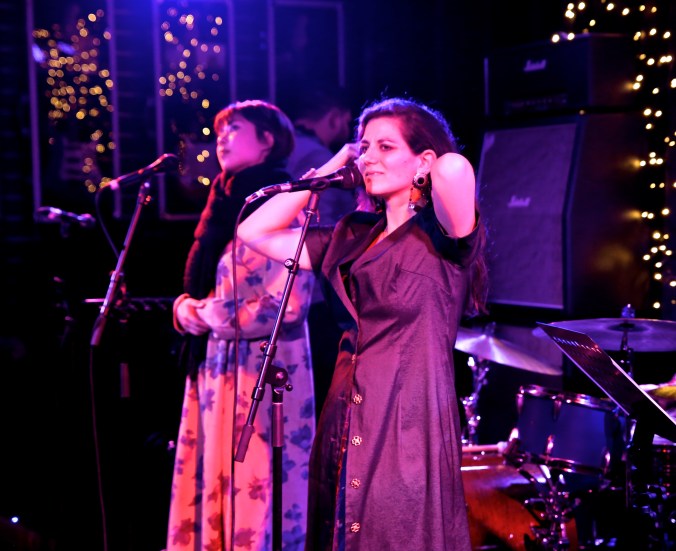
Leda’s Dream: Chelsea Prastiti (vocals, compositions), Crystal Choi (vocals), Michael Howell (guitar), Callum Passells (alto sax, sound effects), Eamon Edmundson-Wells (upright bass), Tristan Deck (drums), Backbeat Bar, 8 August 2018

Eamon Dilworth Quintet @ Backbeat Bar

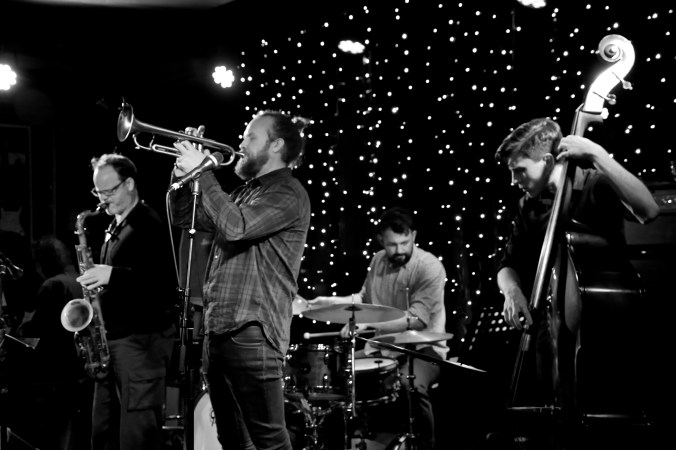
DilworthTomasz Stanko died two days before the Eamon Dilworth gig and I was feeling the loss. I don’t know why this particular musician’s passing affected me so much but it did. Perhaps it was the untimeliness, a great artist gone too soon. It was as if a vital soundtrack to my life had been placed on pause. As I moped about the house, playing Wislawa and The New York Quartets, I remembered that Dilworth was playing soon and I cheered up immediately. I had reviewed the Viata album a month previously and loved it. I knew that it would be a balm and I knew that it would connect me to that place which Stanko took me. It did.
The Viata album had an astonishing array of gifted musicians on it, Dilworth, Alister Spence, Carl Morgan, Jonathan Zwartz and Paul Derricott. When Dilworth flew into Auckland he was only accompanied by the pianist Spence. The rest of the Auckland lineup would be local pick up musicians. Dilworth has a very distinctive sound and hearing his tunes played on different instruments or by other musicians was going to be interesting. Replacing Morgan on guitar was tenor player Roger Manins, on drums Andy Keegan and on upright bass Wil Goodinson. Manins needs no introduction to Australasian audiences and I was looking forward to hearing him in this context. People associate him with burners and that is his shtick, but Manins is also a master at blowing in these spacious atmospheric situations. I hadn’t seen Andy Keegan for a while but I rate his playing – he thinks through what he’s doing, listens carefully and responds appropriately.  The last of the New Zealand players, Wil Goodinson, is a gifted newcomer with big ears, a terrific sound and with great things ahead. Dilworth (2)

This was the first time that I have heard Alister Spence. He is truly an extraordinary pianist and I could hardly believe what I was hearing. A minimalist whose voicings gave power to the spaces – leaving behind in the wake of each note, a gentle otherworldly dissonance. There were long ostinato passages, often a single chord, which shifted the focus imperceptibly. He crafted minute changes without once losing the ostinato vibe. Floating arpeggiated chords, at times Debussy like – as if Terry Riley had appropriated a Debussy moment and made it airy as it floated heavenward. And all of this creating the perfect platform for Dilworth.

It is a brave musician who explores space with such lightness of touch. Dilworth is exactly the right person to do this. His playing and compositions create dreamscapes, warm interludes from the harshness of the post-truth world. This allows us to rise far above the mundane. It is as much about his worldview as it is about sound. He is a musician who thinks about life and then forges a sonic philosophy out of those musings. It is unmistakably, the sort of sound that ECM thrives on. It is time they profiled an Australian. Here, all is subordinate to mood, with the harmonies often implied; the tempos are measured, nothing is hurried and the melodies are miniatures; elided and markers on an interesting journey. Dilworth utilises the extended techniques in his trumpet playing but there is nothing ostentatious on display. Every whisper of air or long-held note is a story in itself.

We heard most of the album during the night and a tune from his earlier Tiny Hearts album. It was hard to decide which tune to post as a video, but I chose Toran which is the last track on the Viata album. To get the most out of it, sit down, slow your breathing and close your eyes. This is a masterclass in subtlety and well worth the effort. The gig took place at the Backbeat Bar, K’Road, Auckland for the CJC Creative Jazz Club.


Steve​ Sherriff Sextet @ Backbeat Bar

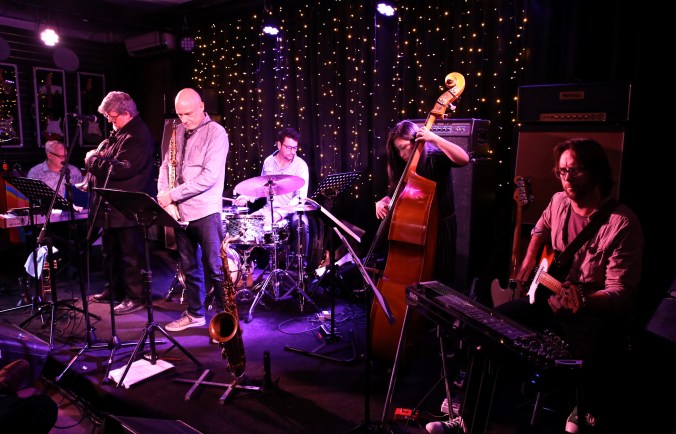
Sherriff (1)This project was bound to happen sometime and it was long overdue. On the night of the bands first gig, the pent-up energy that had long been building found a voice. As they kicked off, the room filled with potent energy and the enthusiasm of the band was met in equal parts by the capacity audience. Steve Sherriff is fondly remembered from Alan Browns Blue Train days and he brought with him an interesting group of musicians. Most of them were compatriates from earlier bands and their familiarity with each other musically paid dividends.
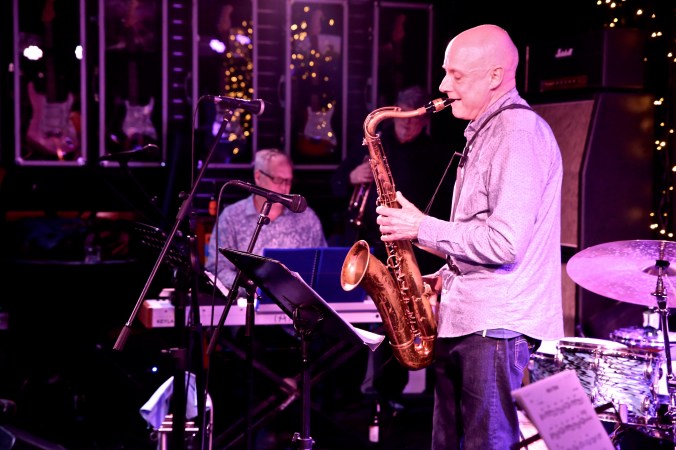
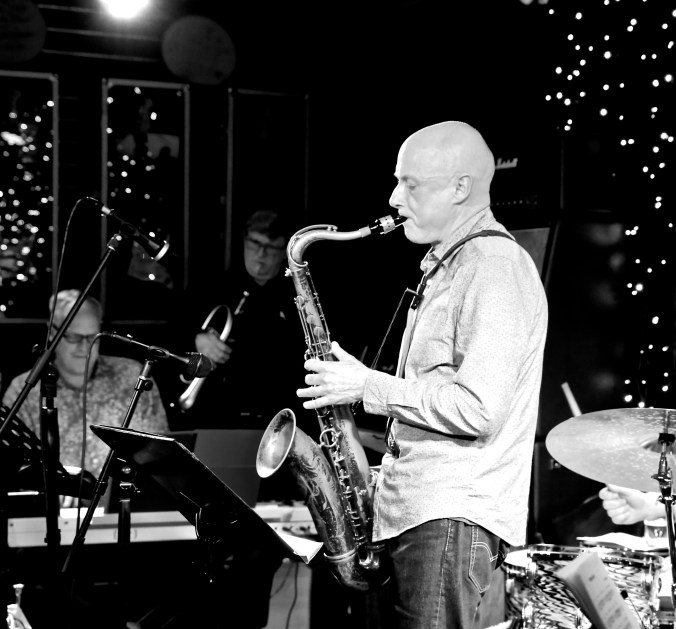
On keyboards, was Alan Brown and this was an obvious and very good choice. Brown has a long history with Sherriff and this was evident as they interacted. On trumpet was the veteran Mike Booth; a musician more than capable of navigating complex ensemble situations and delivering strong solos. Ron Samsom was on drums, another well-matched band member, ever urging the band to ever greater heights as he mixed organic grooves with a hard swing feel. Then there was Neil Watson on pedal steel and fender guitars and Jo Shum on electric and acoustic bass. When you put a group of strong soloists and leaders together there is a degree risk, but these musicians worked in perfect lock-step. As in sync as they were, Sherriff was the dominant presence on stage and no one doubted who the leader was.  Sherriff

Sherriff is a fine saxophonist with a compelling tone on each of his horns. On this gig, he alternated between tenor and soprano (though he sometimes plays alto in orchestral lineups). He has an individual sound and it is especially noticeable on tenor ballads and on tunes where he plays soprano. His other strength lies in his compositions. He and Brown contributed all of the numbers for this gig, but in future, other band members will be contributing also.  This was small-ensemble writing of the highest order – tightly focused – melodically and harmonically pleasing. The faster-paced numbers were reminiscent of hard bop – the ballads memorably beautiful. Brown and Sherriff set a high compositional bar.Sherriff (2)

It was Watson though, who took the most risks and the audience just loved it. At times he appeared to be stress testing his Fender as he bent strings and made the guitar wail. At other times he was the straight-ahead guitarist in Kenny Burrell mode – then on a ballad number, he would gently coax his pedal steel guitar and play with such warmth and subtlety that you sighed with pleasure. It had been a while since I’d seen Jo Shum perform and this was a setting where she shone.

Although the band was only formed recently, they will be ready to record sometime in the near future.  The material and the synergy of the band is just too good to squander.

Steve Sherriff (compositions, leader, saxophones), Alan Brown (keyboard, compositions), Mike Booth (trumpet), Neil Watson (pedal steel and Fender guitar), Jo Shum (upright + electric bass), Ron Samsom (drums). The gig took place at the Backbeat Bar, K’Road, Auckland, for the CJC Creative Jazz Club, July 25, 2018.


Takadimi @ Backbeat Bar

TakadimiKarangahape Road and the precincts around it are a natural home for adventurous and alternative music. If you walk the length, you are assailed by sights and sounds at variance to each other. Taken in their entirety they are oddly compatible. The jumble of colour and the bursts of noise as you pass a Karaoke bar or an uber cool eatery is counterbalanced by the languid notes from Shanghai Lils or the soft chatter emanating from Hookah smoking Kebab shop doorways. Woven into this oddness of streetwalkers and urban cool, are the alternative music joints. Down in basements, under the street or up narrow stairways. Thirsty Dog, Anthology, Audio Foundation, Wine Cellar. And at the top end of the strip, next to the old Jewish graveyard is the Backbeat Bar.  High-quality alternative improvised music resides here on Wednesdays. Takadimi (4)

Takadimi is the brainchild of the gifted tabla player Manjit Singh and the CJC featured his band last Wednesday. This is a fusion band in the very best sense of the word as it fuses styles and complex rhythms with apparent ease. The music’s origins are clear but the tunes are not unduly anchored to them. We are living in an age when classical forms are not nailed down and in the west, the whole notion of musical purity is frequently overstated. The higher purpose of music is to connect on a human level and not to impress by showing off technical prowess. Takadimi connected deeply and spoke directly to our senses. They played improvised music but worked into the complex structures of Indian Talas. It felt as if both forms were respected.

The tunes were all introduced by the leader Manjit Singh, who would establish the rhythm by chanting a tala (or taal); then he would guide the ensemble into the open and freer air of jazz harmonies where collective (or solo) improvisation occurred. I have seen this band before and this felt like a step up. The soloists, in particular, showed a readiness to work with and enjoy the challenges presented by the complex polyrhythms. All of the musicians held the line and made it appear easy – it certainly was not. Takadimi (3)

Underpinning everything were the rhythms and colours provided on the Tabla – an instrument long embedded into the Jazz repertoire. Anyone who has heard John McLoughlin, Jean Luc Ponty and Zakir Hussain together will understand how profound the association can be. It is therefore great to have such a fine tabla player in our midst and it our good luck that he is up for cross-genre collaborations.

The last time I heard Takadimi was at the Thirsty Dog; way down the other end of K’ Road. On that gig the lineup was different, this time the band had no guitar and the pianist Alan Brown had joined them. Singh could not have chosen better. Brown is well versed in the output of East European wunderkind Tigran Hamasyan. Hamasyan often counts in with talas and his beautiful Armenian styled rhythms are at times, very close to Indian forms. Brown is a master of complex rhythmic structures and capable of executing them without ever losing the groove. There were many fine performances but a standout was from Lukas Fritsch. His alto danced expertly through the tunes and for a young musician, he handled the complexities like a veteran.  Takadimi (2)

The clip that I have posted is a beautiful composition by the guru Ustad Fazal Qureshi and arranged by Manjit Singh. The Taal is Mishra Jaati – rendered as a polyrhythmic 7 over 4/4 time. On this track, Brown plays a synth instead of piano.  

Takadimi: Manjit Singh (leader, tabla, arrangements), Alan Brown (piano, keyboards), Lukas Fritsch (alto saxophone), Denholm Orr (bass), Daniel Waterson (drums). The gig was at the Backbeat Bar, K’ Road, Auckland, CJC Creative Jazz Club, July 11, 2018.

Jonathan Besser @ Backbeat Bar

BesserThere is an inescapable charm surrounding any Besser performance and Wednesday’s Zestniks gig at the Backbeat bar was no exception. While his music has many strands feeding it and although it can be hard to categorise, it is never the less rooted in the Jewish musical traditions. Besser is somewhat of an icon in Arts circles and deservedly so. The arc of his work has a momentum that few could emulate. As it alights on various styles or genres it borrows their raiment, and seemingly without compromising what lies at the music’s heart; gathering what is necessary and no more. Over the years he has collaborated with leading conceptual artists, filmmakers, symphony orchestras, electronic adventurers and Jazz musicians. The Zestnics performance reflected much of this fascinating journey.Besser (2)
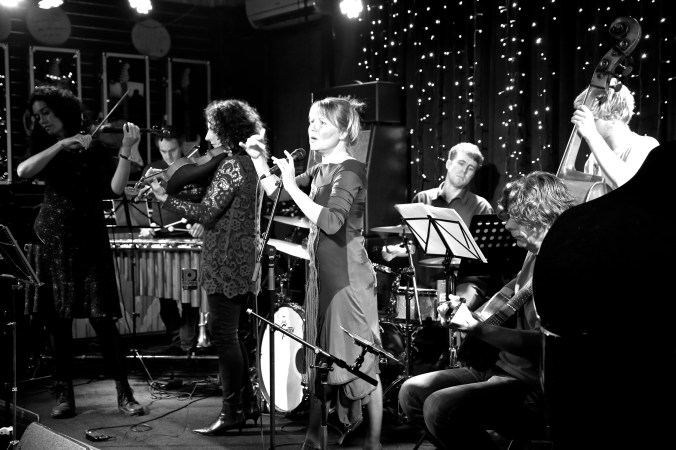
I am always drawn to performers who leaven their gigs with an appropriate portion of banter and Besser’s comments and asides were delightful. They were delivered with a deadpan expression and consequently were nicely understated. As with music, timing and delivery are everything.  Many of the tunes were from his ‘Gimel Suite’ and a quick investigation of the word leads you to a cornucopia of meanings. It is the third letter of the Hebrew alphabet, it is a letter imbued with special qualities and it this case it is a footing or foundation for composition. This is an ancient to modern music and I suspect that those listening will have conjured their own associations. Because I have recently travelled through eastern Europe, I heard the warp and weft of Polish or Czech street music.   Besser (1)

The other ensemble members came from a variety of disciplines and this was fitting. Caro Manins on vocals with her deep knowledge of ancient Sephardic Ladino music; Nigel Gavin, an adventurous ‘World music’ musician who ignores artificial boundaries; John Bell, a Vibes player from the free to groove or ‘World’ end of town; Eamon Edmundson-Wells on bass, a versatile bass player and also frequently seen in avant-garde settings; Alistair Deverick on drums, navigating those exhilarating rhythms. Lastly were two from the expanded Black Quartet; Peau Halapua on violin and Sophie Buxton on viola – popular classical musicians and sometimes seen with Jazz or ‘World’ ensembles. Besser, of course, was on piano.

Some of the tunes were nostalgic or even mournful, some were brimming with joy – all were enjoyable.  The tunes never strayed too far from the notation, but there were some brief improvised sections which balanced things up nicely. I have posted the last number of the gig and while I am not sure of the title, I know that it brought the house down.

The gig took place on the 4th of July, 2018 at the Backbeat Bar, K’Road, for the CJC Creative Jazz Club.

Michelle Nicolle – NZ Tour

Nicolle (1)So many great improvising artists gig on our New Zealand and Australian club circuits that we could easily become complacent and we shouldn’t be. This golden age for hearing hi-quality live Jazz is the result of hard work behind the scenes, and a dedicated few, mostly volunteers, make this happen for us. They deserve our thanks and above all, they deserve our commitment to the cause of live music. This year and last year were especially interesting at the CJC, as the breadth and quality of the music hit new highs. What the performing artists put into these tours or gigs is beyond estimation – but we, the audiences are lucky; all we have to do is climb out of our chairs, throw on a coat (yes it is cold out but warm as toast in the venues) and experience the magic.Nicolle (3)
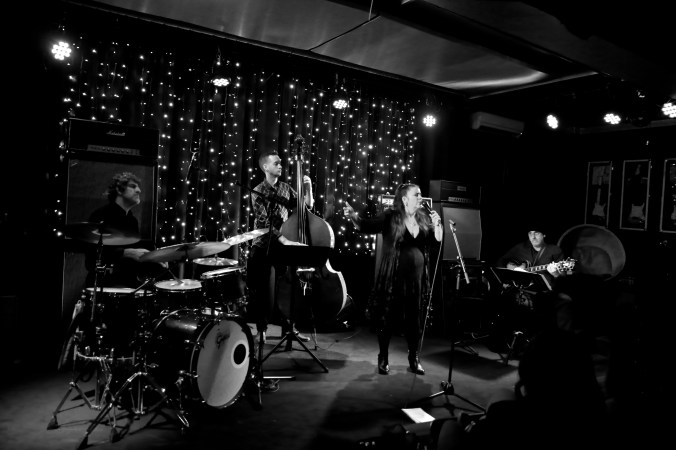
For the second time in less than a month, we had a pre-eminent and award-winning Australian vocalist in our city, Michelle Nicolle. A quick perusal of her YouTube clips or pages is quite enough to reel you in; experiencing her quartet live is a great Jazz experience. Nicolle has a big voice and a voice with an astonishing vocal range. In spite of that, she is remarkably expressive, even at a whisper. Her quartet has a long history together and because of that, the accompanying musicians know how to react to the vocalists every nuance. Good accompanists know when to hold back and when to answer a phrase and they did. They gifted the tunes a spaciousness, allowing the notes or phrases to breathe and their good judgement caused the lyrics to flow with ease.Nicolle (2)

The setlist was a mix of originals and standards, many of the standards being Ellington or Strayhorn tunes. Her own compositions although different in flavour were a bridge between past and present, updating the sentiments that Strayhorn often expressed, but dressing them in modern clothing. ‘Drop that smile’ being a good example. There was a very tasteful interpretation of Cole Porters ‘So in Love’ and a great rendition of Ornette Coleman’s ‘The blessing’, but as good as those tunes were, it was her Strayhorn that captivated.

On guitar was the impeccable vocal accompanist Geoff Hughes (reputed to be an expat Kiwi), on upright bass was Tom Lee and on drums Ronny Ferella. No wonder the quartet received a Bell Award in 2017. The clip is ‘The Days of Wine & Roses’ from an earlier MNQ tour and possibly with a different guitarist.

The concert occurred during the days immediately proceeding the Wellington International Jazz festival and it was cold and wet outside. In spite of that, those who were still in town wrapped up and made their way to the Backbeat Bar and everyone who braved the cold was very glad that they did.

MNQ: Michelle Nicolle (vocals, composition), Geoff Hughes (guitar), Tom Lee (bass), Ronny Ferella (drums). The gig took place at the Backbeat Bar, K’Road, Auckland, for the CJC Creative Jazz Club. June 06, 2018.

Sumo (Christchurch) @ Backbeat Bar

SumoWednesday 30th May was the Auckland launch of Sumo’s second album titled ‘Shiko’. I am reliably informed that Shiko is a stamping motion which Sumo wrestlers perfect during training. The action drives away evil spirits and when you hear the band, the descriptor strikes you as appropriate. Suspense and surprise are hallmarks of this unit and as in Sumo wrestling, you get theatre, tricky moves, tradition and a degree of inscrutability.  Above all, they showcase quality improvised music.   Sumo (2)
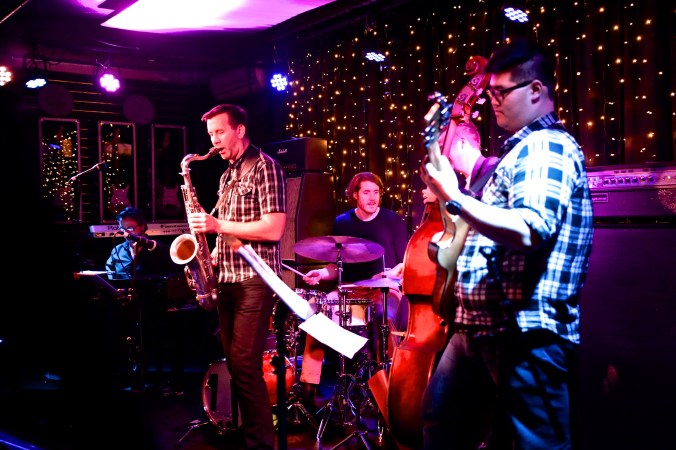
The compositions were the first thing that interested me. Some were warm ballads, but mostly they were propulsive tunes with a compelling forward momentum. Sumo is billed as a quartet, but they regularly invite guests to perform with them and they encourage the guests to bring original compositions to the bandstand. This concept always works, as the best, improvised music arises out of challenges and tensions. Complacency is death in Jazz. The guest on this night was the talented Christchurch guitarist Brad Kang. I had heard his name mentioned by visiting musicians, but I had never heard him perform. He has a real presence on the bandstand and his effortless post-Rosenwinkel runs are jaw-dropping. He made it all look easy when clearly it was not.

The core group is Gwyn Reynolds on tenor saxophone, Darren Pickering on keys, Mike Story on bass and Joe McCallum on drums. During the evening we heard compositions from all of them and their different compositional approaches made the sets interesting. I like bands that exude human qualities rather than mechanical ones and underpinning this group was a warmth and an interconnectedness. Together they have a great sound and it is no wonder that Roger Manins had been trying to lure them north for some time. If there were any lurking bad spirits around that night they stood no chance of survival.

Sumo: Gwyn Reynolds (tenor saxophone), Darren Pickering (keys), Mike Story (upright bass), Joe McCallum (drums) plus Brad Kang (guitar). The gig took place at the Backbeat Bar, K’Road, Auckland for the CJC Creative Jazz Club. May 30, 2018.

Emerging Artists Hwang & Tomacruz

Hwang (2)Two weeks ago the CJC Creative Jazz Club profiled two more emerging artists; Seungeil Thomas Hwang and Kathleen Tomacruz. Hwang and Tomacruz are both guitarists but with quite different approaches to their craft. Hwang leans heavily toward the fusion and rock end of the spectrum while Tomacruz, although adventurous, sits comfortably inside the tradition. Both underscore the value of the University of Auckland, Jazz programme; a programme which prepares musicians in the best possible way; fitting them for whatever musical path they choose. Hwang (1)
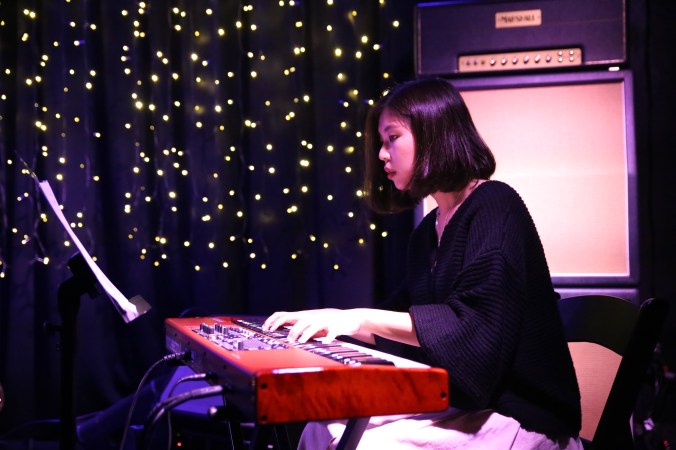
Some, go on to become high-skilled ghosts in the machine of popular music. Others follow their dreams and journey deeper into the sublime and multi-faceted world that is modern improvised music. They arrive on the scene ready to learn from the gig life, but with enough knowledge to make them adventurous. I see them in Indie Rock bands and I see them in the experimental avant-garde ensembles – I see them in audiences listening carefully to Dixen Nacey, Jonathan Crayford, Roger Manins or Jeff Henderson. Long may that quest for lifelong learning and the striving towards excellence continue. I can only hope that the current short-sighted obsession for pruning back the humanities, doesn’t touch the UoA Jazz Course; a programme that enriches us culturally and delivers well.Hwang (3)

Hwang finished his Masters at the UoA Jazz School in 2016 and this is his first gig with his fusion band Finesse. He is a formidable and ‘chopsy’ guitarist who makes fast and furious look easy. His set showcased his various musical interests and in spite of their divergence, he never looked phased at any point. With Crytal Choi, Wil Goodison and Adam Tobeck at his back he had the bases well covered.

During the second set, Tomacruz emerged as a thoughtful and confident performer. Her big personality overshadowing her physically diminutive presence. I have seen her perform in other’s lineups but this was a new and commanding Tomacruz. She engaged with the audience and joked with the band; turning on a well rounded and imaginative performance. Again we saw Choi on keys and the talented Goodison on bass – with the addition of  Lukas Fritsch on Alto and Ron Samsom on drums. Choi is such a delight to hear in these situations; so in-the-moment and adventurous. Keep them coming UoA Jazz course.

Finesse: Seungeil Thomas Hwang (guitar, compositions), Crystal Choi (keyboard), Wil Goodison (bass), Adam Tobeck (drums).

Kathleen Tomacruz Quartet: Tomacruz (guitar, compositions), Crystal Choi (keyboards), Wil Goodison (upright and electric bass), Lukas Fritsch (alto sax), Ron Samsom (drums).

The gig was at the Backbeat Bar, CJC Creative Jazz Club, May 16, 2018.

Berardi/Foran/Karlen – NZ tour

KBerardi (1)When Kristin Berardi, Sean Foran and Raphael Karlen started to play I knew exactly what I was hearing. It was modern and original and it rekindled fond memories of the Winstone/Wheeler/Taylor group Azimuth. A world of beautifully crafted harmonies communicating their message with effortless clarity; the individual voices of the musicians hovering in the air like free spirits but interconnecting in profound ways. There was also a  contemplative essence to their music which took us deep inside the music, a quiet centre that emanated strength and vibrancy. This fine balance of opposites was evident throughout – it was a performance to remember for its soul touching beauty.
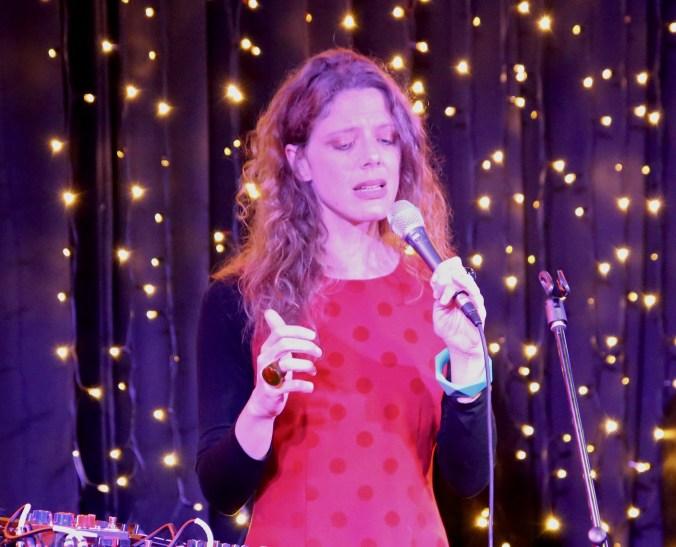
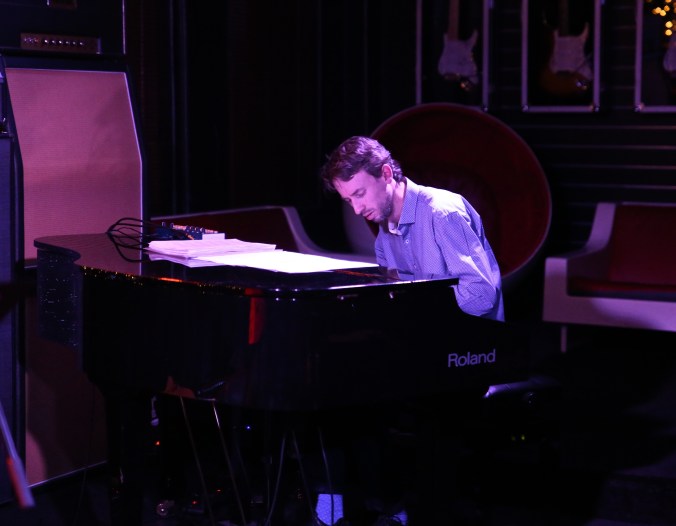
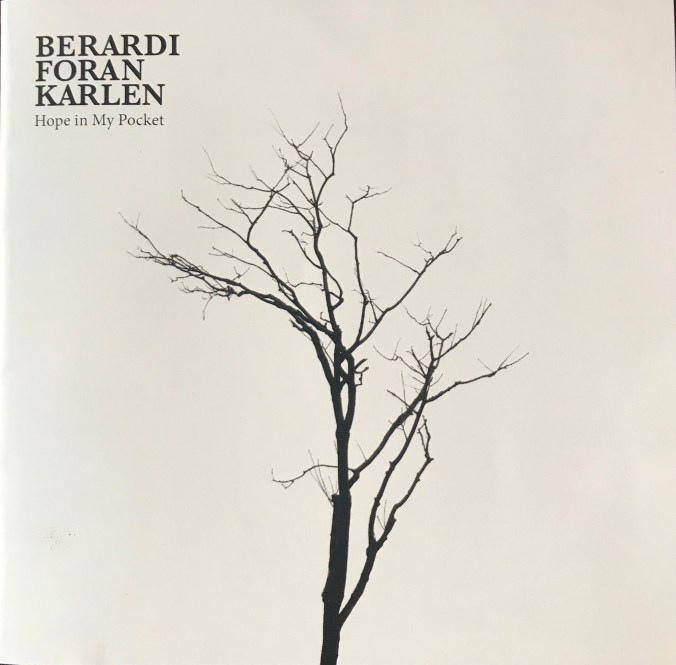
This was the band’s first stop on a whirlwind tour of New Zealand and as soon as the weather gods realised that Queenslanders were approaching they behaved capriciously. As Brisbaneites, imagine the shock of leaving 24-degree temperatures, only to be greeted in Auckland by an unseasonable 13 degrees. Berardi told us that her under-utilised ‘warm coat’ was finally getting an outing. The temperature shock certainly didn’t hold the trio back, and those who braved the wet and cold were well rewarded for their perseverance. KBerardi

Berardi, Foran and Karlen are well-respected musicians in their own right. All are well recorded and between them, they have many significant music awards. This project is their first collaboration as a trio and their recent album titled ‘Hope in your pocket’ was available at the gig. That album has a particular theme as it captures the dislocation and poignancy of Australian family life during WW1: a mothers letter to a 15-year son who had enlisted far too young,  a soldier struggling to comprehend the wasteland of the European battlefields, a nurses story, a family holding fast to hope.KBerardi (3)

Many of the tunes were based on actual letters written at the time. All of them moving and all disquietening. Perhaps to leaven the mood, a few older or more recent compositions featured. For example, the first number of the first set, Berardi’s ‘Revolving Doors’. I have posted that clip here as it was simply stunning. Later when talking to the pianist Foran I mention Azimuth and he acknowledged the trios debt to that music. He was once a pupil of the lost lamented John Taylor and very familiar with the northern European Jazz scene. Foran is a gifted educator and a pianist with a beautifully light touch. He has interesting things to say musically and his minimalism is exactly right for this trio.

The vocalist Berardi is highly regarded in Australia. Among her successes are two Bell awards and the best vocalist award at Montreux. On a subsequent Montreux visit, she accompanied Al Jarreau and George Benson. She also completed a project with the inimitable Jazzgroove Mothership Orchestra. The saxophonist Raphael Karlen is another gifted musician – also the recipient of numerous awards and fellowships. Together they are formidable. For those in Wellington or Christchurch about to attend the gigs, savour it. For those who are tossing up whether to go – make the effort. You won’t regret it. IMG_0433

Kristin Berardi (compositions, vocals), Sean Foran (compositions, piano), Raphael Karlen (compositions, tenor saxophone). The performance was at the Backbeat Bar, CJC Creative Jazz Club, May 23rd, 2018.

The Oblivious Eight

JeffJeff Henderson is a freedom warrior from outside of the perimeter fence.  On the 9th of May, 2018, he marched barefooted into the Backbeat Bar with a ragtag army of irregulars. The audience had come well prepared and a pregnant air of anticipation hung over the bandstand during setup.  Unusually, there were no lower ranks in this army, all were battle-hardened veterans (or anti-heroes depending on your viewpoint). All had impressive service records, an advance guard who took no prisoners. Jonathan Crayford is arguably the most famous of the troop, a decorated hero who swiftly commandeered a C3 organ (an ancient analogue machine decorated by psychedelic art and reminiscent of a Haight Asbury weed shop). Beside him sat machine gunner Steve Cournane, a rat-tat-tat freedom fighter recently returned from Peru. The remaining soldier, battle scared and bleeding, was Eamon Edmundson-Wells (his Viking surname tells it’s own story).  Jeff (1)
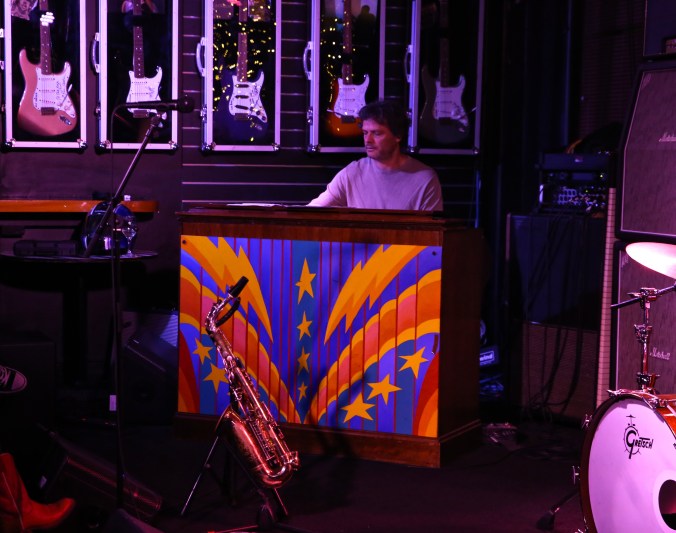
The first set was a powerhouse of inventiveness. An outburst of raw energy cradled cunningly in a cocoon of warm grooves. This one step closer-than-usual to Jazz approach may have surprised some, but certainly not me.  I have witnessed Henderson doing this time and again. He can pick over the bones of anything from heavy metal to folk music. He is fearless in his appropriations and he always transforms base metals without fear or favour. This was pure alt music alchemy. Henderson is the real deal, a musician with a calculated irreverence, a sound jocky with an inside-outside approach. A man who dives so deep inside his artform that few dare to follow. As he traversed the various moods and tempos, you could hear his trademark multiphonics; nothing lingering too long. There were too many fresh ideas ahead and no time for a tea break.  Jeff (2)

The compositions were wonderful and each in a different way. It was inspired that Henderson surrounded himself with such a warm groove. Drum beats that either dove into a 70’s groove or even took a Buddy Rich turn. A warm as toast Crayford tinged B3 sound and a solid blood dripping bass line. That sort of surrounding could have been a straight jacket for an avant-garde player but in Henderson’s hands, it was a liberating vehicle.  He worked off the others constantly and they, in turn, gave him clear air without deviating from their given roles. This was one of those special nights where every musician shone a light, cutting through the mundane and dispelling all hints of mediocrity.  They were so deep in the music that they were doubtless ‘oblivious’ to the rows of open-mouthed listeners. I must, however, raise an eyebrow at the name, there were clearly more than eight band members on that bandstand.

Auckland is the richer for Henderson’s presence. We should count our lucky stars that he jumps the perimeter wire from time to time. This was an eight out of eight performance. Jeff Henderson (baritone & alto sax, compositions), Jonathan Crayford (C3 organ), Eamon Edmundson-Wells (upright bass), Steve Cournane (drums) – June 9, 2018, Backbeat Bar, CJC Creative Jazz Club, K’Road, Auckland. Jeff (3)

Phil Broadhurst Quintet 2018

PhilAfter a year of living in Paris the Auckland educator and pianist Phil Broadhurst and his partner, Julie Mason, have returned. The Broadhurst Quintet has been a regular feature on the Auckland scene for many years. The unit is fueled by a constant stream of great compositions, an unchanging line up of fine musicians and three critically acclaimed records (one of them a Tui Jazz Album of the year winner). Broadhurst’s ‘dedication trilogy’ set a high bar compositionally, but his pen is always crafting new compositions.  After last weeks gig, I suspect that another album capturing the artistic soul of France might be in gestation. Broadhurst, as many will know, is unashamedly francophile. Out of this deep appreciation and finely honed perception flows terrific creations.     Phil (1)
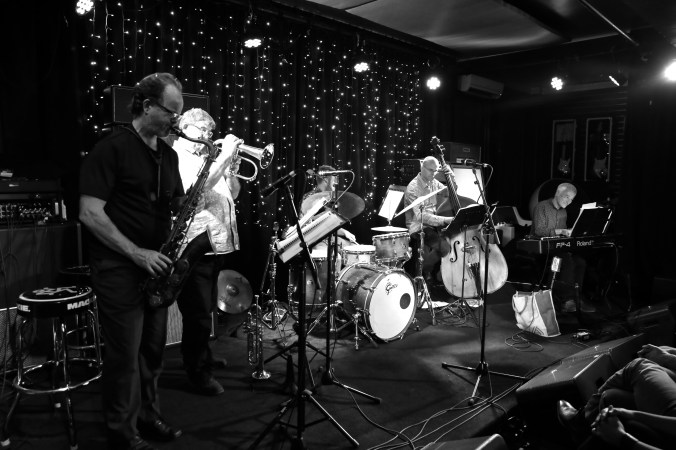
When people talk about the Auckland Jazz scene, the name Phil Broadhurst always comes up. His constancy has been a bedrock and an enabling presence. He is an exemplar of quality mainstream Jazz. When I looked back over my posts I noticed that this particular Quintet was first reviewed by me in 2012 but I have no doubt that it predates 2012. When so many people crowd into a small club it makes the sight-lines difficult, but I have managed to capture a number from his gig.

The tune in the clip is called ‘Stretched’ and it is from his ‘Flaubert’s Dance’ Album.  One of Phils newer compositions was titled ‘I’m Busy’ (dedicated to Jacky Terrasson). We also heard two lesser-known Jazz standards from Julie Mason.  The first was ‘You taught my heart to Sing’, a tune by the pianist McCoy Tyner; the second, ‘Speak no Evil’ by Wayne Shorter from his classic album of the same name (incidentally, a great album to play on a road trip as you plunge into the black of night).

The quintet personnel are Phil Broadhurst (leader, composer, keyboards), Roger Manins (tenor saxophone), Mike Booth (flugelhorn), Oli Holland (bass, composition), Cameron Sangster (drums). The gig was at the Backbeat Bar, CJC Creative Jazz Club, May 02, 2018.

  • Roger Manins and Oli Holland have just returned from an extended overseas trip. While there, Holland recorded an album with Geoffry Keezer and others (incl. Roger Manins). From what I hear, a real treat is in store for us when that album is released.

Samsom/Nacey/Haines

SNH (1)This particular group is an uncommon thing on the Auckland scene. A Jazz guitar trio formed by three of our best musicians and each of the musicians in it for the long haul. Samsom/Nacey/Haines have been playing and recording together for a long time and the commitment has remained constant throughout. Their longevity is clearly about musical chemistry, but also about their combined approach to composition. Each band member writes in their own style, but each instinctively understands how the others will react to the chart. This is how mature bands operate; the familiarity enabling the collective to dive into the heart of a composition and extract the best from it. While their original compositions form the bedrock of their output, they also tackle standards; especially when performing live.SNH (2)

Their approach to standards and the arrangement of them is flawless; leading you away from the familiar, while somehow retaining an essence of what you know and how you remember it. This ability to interpret while mixing comfort and risk in equal parts is a gift. It requires a degree of expertise that younger bands seldom possess. Samsom, Nacey and Haines know a thing or two about focusing the attention and on challenging audiences to listen more deeply. They have recorded three acclaimed albums already and a fourth is almost certainly lurking in the wings.

There were a quite few new compositions (some as yet untitled), some familiar tunes from earlier albums and a tasteful assortment of cleverly arranged standards. Three of the standards grabbed my attention: Nica’s Dream (Horace Silver), In Your Own Sweet Way (Dave Brubeck) and Detour Ahead (Herb Ellis/ Johnny Frigo).  I have posted a clip of the Brubeck number as it typifies the adventurous nature of the trio. True improvisers often extract gold from this composition, a case in point being Brubeck himself.  He seldom played it the same way twice and on a 1964 Belgian clip, he exposes the bones while Desmond lays down a new tune entirely (a miraculous example of melodic re-invention captured on film for posterity).

Anyone of the musicians could have introduced these tunes, but the duties fell to Kevin Haines.  His easy-going banter struck just the right note. He was engaging and above all funny. I have often observed how easily this comes to the more seasoned performers. Years of standing at the microphone teach them that a few well-chosen words can enhance any performance – especially a good performance. SNH

Samsom/Nacey/Haines are – Ron Samson (drums, compositions), Dixon Nacey (guitar, compositions), Kevin Haines (upright bass, compositions). The gig was at the Backbeat Bar, K’Road, for the CJC Creative Jazz Club, on April 18, 2018.

John Bell; Aldebaran Quartet

Bell (2)I have listened to John Bell over a number of years and I have always marvelled at his inventiveness. Bell (along with Jeff Henderson), is widely acknowledged as the experimental music guy, the free improvisation guy. He is a musician who takes risks as he aims for clear skies; a musician who involves himself in interesting cross-cultural collaborations, a vibraharp player who doubles on brass instruments. He is an artist who you always associate with innovation – consequently, other musicians look up to him. Bell (1)
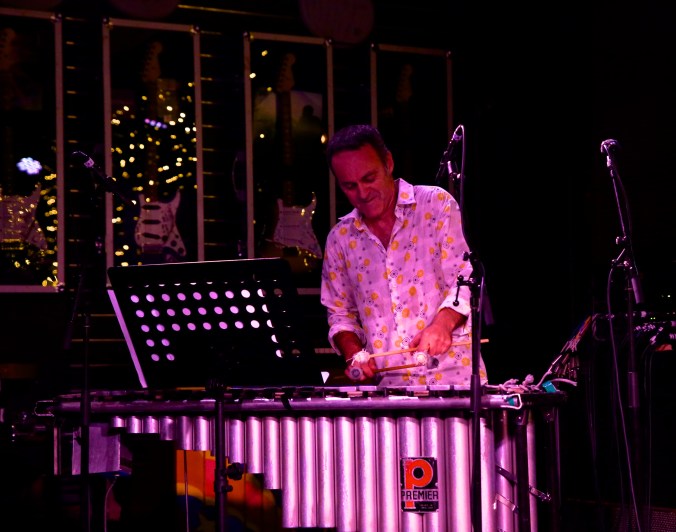
In spite of his wide-ranging credentials, I had never seen him perform this type of material and I anticipated it keenly. His latest project, the Aldebaran Quartet, dove into the explorations of a specific era. The warm modal music of the late sixties and seventies. A time in Jazz when the behemoth of Rock dominated the airwaves and filled record shelves – eclipsing everything else in view. It is unfortunate that audiences looked away just then because out of that era came a heady brew of fresh ideas. Hidden in plain sight were improvising trailblazers; laying down wonderful music, incorporating new freedoms, and embracing a quasi-secular space age spirituality. This was the era when Bobby Hutcherson and Herbie Hancock took a new direction with ‘Oblique’ – when Chick Corea cut ‘Tones for Jones Bones’; both albums featuring the scandalously underrated drummer (and vibes player) Joe Chambers: an era when Eddie Henderson released ‘Sunburst’, Bernie Maupin ‘The Jewel in the Lotus’, and when Alice Coltrane and Don Pullen broke new ground. And all the while looking toward some distant star system or an inner world; all bringing a new flavour to the improvised music scene. Bell

This was a gig filled with mesmerizing soulfulness, but underneath the shimmering sound lay some very clever compositions and great musicianship; referencing a time when modal music stepped free from the formulaic. An era ripe for further exploration. This was complex music made to sound simple; a visceral music that took you to its heart without the need for pointy-headed insider knowledge.  The track I have posted is a good example, the lessons of eastern and western music, absorbed, expanded and all without a hint of contrivance. Melodic patterns over a crisp undulating drum pulse, piano and bass picking up the pattern, in unison or in response, freeing the vibraharp to explore the possibilities as they opened up space.  The tune in question ‘Atagato’ (Bell) is a wonderful composition. It resonates deeply, the complexity artfully hidden behind simple themes, throwing up a melody line that is merely implied.  The clever musical devices employed were endless but for the listeners, that was not important – it was the immediacy, the resonance which touched us. Bell is a true tintinnabulist and we are lucky to have him home.

When Vibes and piano play together they often take a different tack from that of guitar and piano. Occupying the same tonal range is avoided in the latter case but with piano and vibes, a unison approach is frequently employed. When either piano or vibes are comping the chords can become mirrors – reflecting each other but varying fractionally to add texture; completing each other through the harmonics arising from their different timbres. In this respect and others, the pianist Phil Broadhurst was superb. Again, I am very familiar with his output, but I had never heard him in this context. His solos were in the pocket and his sensitive comping concise, supportive. Bell (3)

Bass player Eamon Edmundson-Wells was just right for this gig.  Like Bell, Edmundson-Wells has a firm foothold in the avant-garde scene. The more I hear him the higher my regard for his musicality. He is an extraordinary young bass player and capable in any given situation. The remaining quartet member was drummer Steve Cournane. From the first few beats, he stamped his authority. His rhythmic feel interesting and a little different from other drummers about town. He lived in South America for some time and it’s really good to see him back on the scene. There is something of the classic Jazz fusion drummer about him but more besides (he sometimes reminds me of Peter Erskine or perhaps Lenny White). Together they form a great unit. I hope that they record this material and perhaps exchange the keyboards for an acoustic piano when they do. These compositions and this unit are far too enjoyable to disappear from earshot.  Bell (4)

John Bell: Aldebaran Quartet – Bell (vibraharp, compositions), Phil Broadhurst (keyboards, compositions), Eamon Edmundson-Wells (upright bass), Steve Cournane (drums). The gig took place at the CJC Creative Jazz Club, Backbeat Bar, K’Road, Auckland March 2018.

Emerging Artists – Orr / Fritsch

Orr (1)In keeping with the longstanding CJC tradition of keeping twice yearly slots open for emerging artists, late March featured two such sets.  First up was a group led by bassist Denholm Orr.  Orr has appeared in lineups a number of times, but this was his first appearance playing his own material and as a leader. His recent compositional work has placed increasing focus on arco-bass and consequently, the charts reached into that territory. Arco is not the default style for Jazz bassists but I am seeing a lot more of it lately and I welcome that.
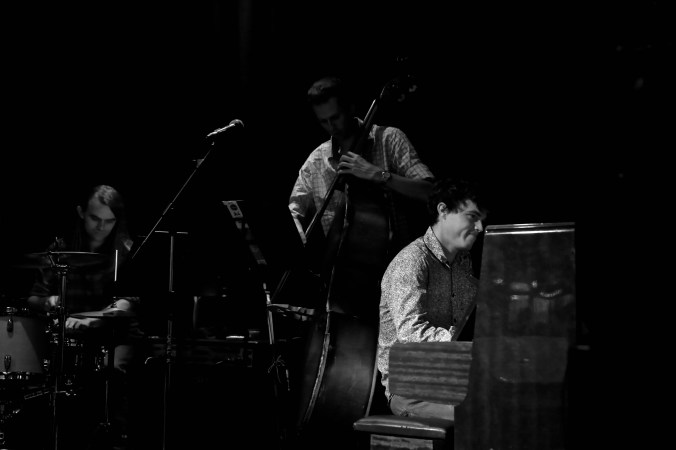
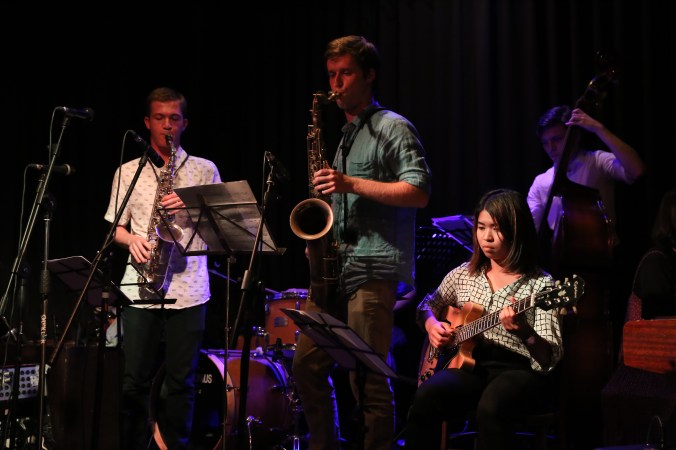
Orr opened with a piano trio and as the set proceeded more players were added.  The larger formations tackled ambitious arrangements and this is a hopeful sign of things to come. Emerging artists should reach beyond their comfort zone – being challenged is where growth happens. On piano was the ever-reliable Nick Dow and on guitar Michael Gianan (who wowed us all with his first CJC gig a few months ago). Misha Kourkov was on tenor and new to me was Charlie Isdale on alto and Jack Thirtle was on trumpet. Daniel Waterson was on drums. Kourkov is shaping up to be a presence on the scene and Fritsch is grabbing attention with each fresh appearance. As most are still studying and given their ages and experience, it was a good start. Orr

Lukas Fritsch headed the second set and again this featured ambitious material. Fritsch’s set had a tighter focus and perhaps because he had a few seasoned musicians in the ensemble ranks, the set sang joyously from start to finish. When Fritsch completed his finals, a buzz quickly circulated; that the recital performances had been something special.  I had not attended, but my attention was certainly piqued. The arrangements were superb and the musicians well focused, but the inclusion of Chelsea Prastiti and Crystal Choi gave the set that special something that lifted it beyond the ordinary.  Orr (2)

Choi is fascinating to behold as her trajectory is pointed ever upwards – a pianist who understands how to get inside the music and make it part of her story.  Prastiti likewise is an innovative trailblazer, who takes the path less ordinary.  The front line was Fritsch on Alto, Asher Truppman-Lattie on tenor and Kathleen Tomacruz on guitar.  On bass was Wil Goodinson and on drums Tom Leggett. Fritsch writes interestingly and his performances are well thought through and engaging.

The gig was the last at the Thirsty Dog for the CJC (Creative Jazz Club, It took place on March 21, 2018.


Brian Smith Quintet

SmithBrian Smith is a legendary figure in New Zealand Jazz, achieving career highs that few others attain. Normally artists of this stature settle overseas and are seldom seen after that. It was our good fortune that Smith moved back to New Zealand and in consequence, we get to hear him perform locally. It’s a moot point whether good musicians ever truly retire (luckily, the answer is seldom). Not so long ago he formed a quintet and since then he has been performing at venues around town. While Smith is a regular at the CJC, this is the first time that we have seen the current quintet in action.  The event was predominantly a standards gig and a band of veterans is the right vehicle where standards are concerned. When you bring a selection of loved tunes back into orbit, comparisons are inevitably made. Therefore it pays to choose well and to perform them well and that’s exactly what the Brian Smith quartet did. Smith (1)

Smith possesses an authoritative air on his horn, the end result of considerable experience and his well-acknowledged chops. Consequently, he always sounds great and always looks comfortable on the bandstand. Behind him in the darkness was Frank Gibson, Jr on drums. Gibson and Smith go back a long way and he is exactly the right drummer to lift these warhorse tunes to glory; most of them coming from the hay-day of Jazz. While Gibson has many strings to his bow, this is his forte. Up front was multi brass and reeds player Chris Nielson. It was good to hear Nielson again and especially on trombone, a horn that has sadly been disappearing from small ensembles since the 60’s. Nielson also brought other horns with him, favouring an American cornet, an instrument which in his hands, produced a strong rounded tone. On bass was Bruce Lynch, a highly competent electric and acoustic bass player who is well-known as a music producer and as a former member of the Cat Stevens band.  Almost hidden on the right side of the bandstand was Dean Kerr on guitar. His guitar work was strongly chordal and supportive of the others, providing well-placed contrast for Smith and Neilson as he comped. Smith (2)

Among the standards were ‘In Walked Bud’ (Monk), Stolen Moments (Nelson), There is no Greater Love’ (Jones), Freddie Freeloader and All Blues (Miles), Killer Joe (Golson), St Thomas (Rollins).  I have posted a clip of the perennial favourite ‘Softly as in a Morning Sunrise (Romberg/Hammerstein). There was also a nice tune by Smith which think is titled ‘Short Shift.

The gig took place at the Thirsty Dog for the CJC Creative Jazz Club on March 7, 2018. Brian Smith (leader, tenor saxophone), Frank Gibson Jr. (drums), Chris Nielson (trumpets, flugelhorn, trombone),  Dean Kerr (guitar), Bruce Lynch (upright bass).