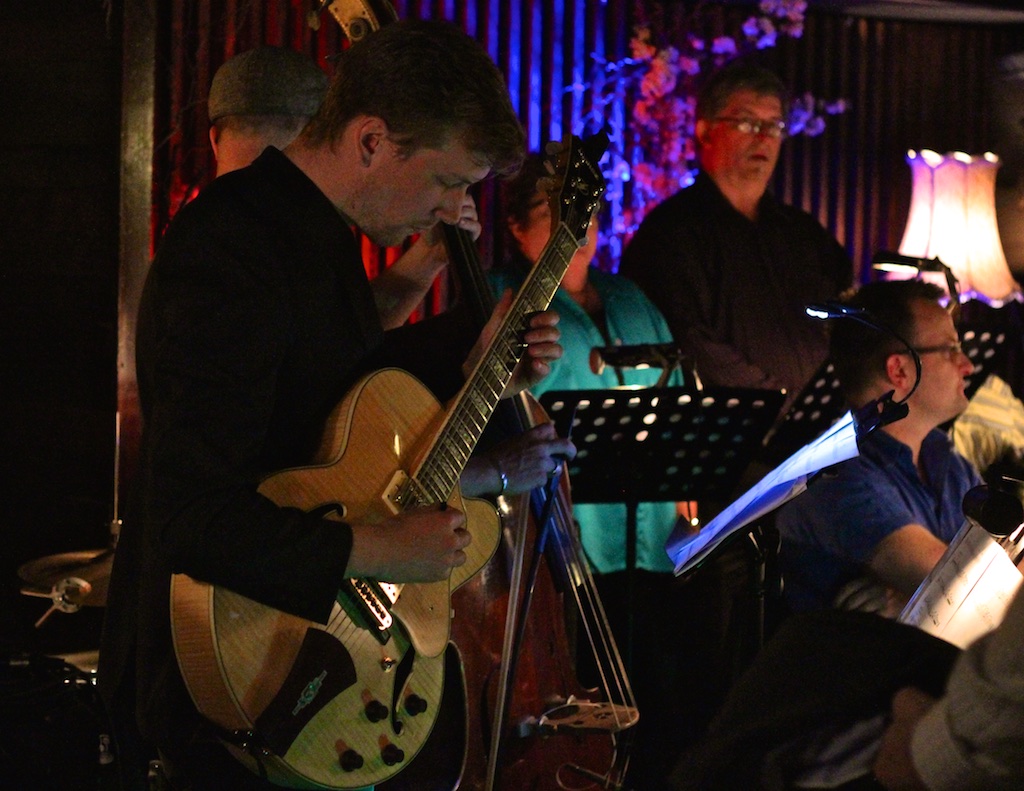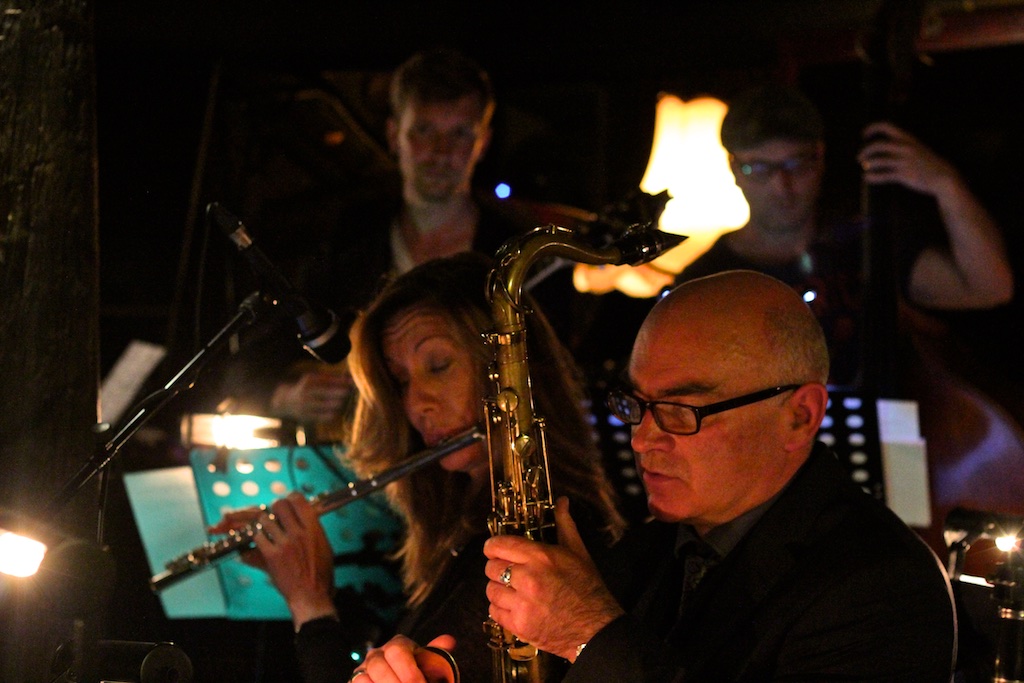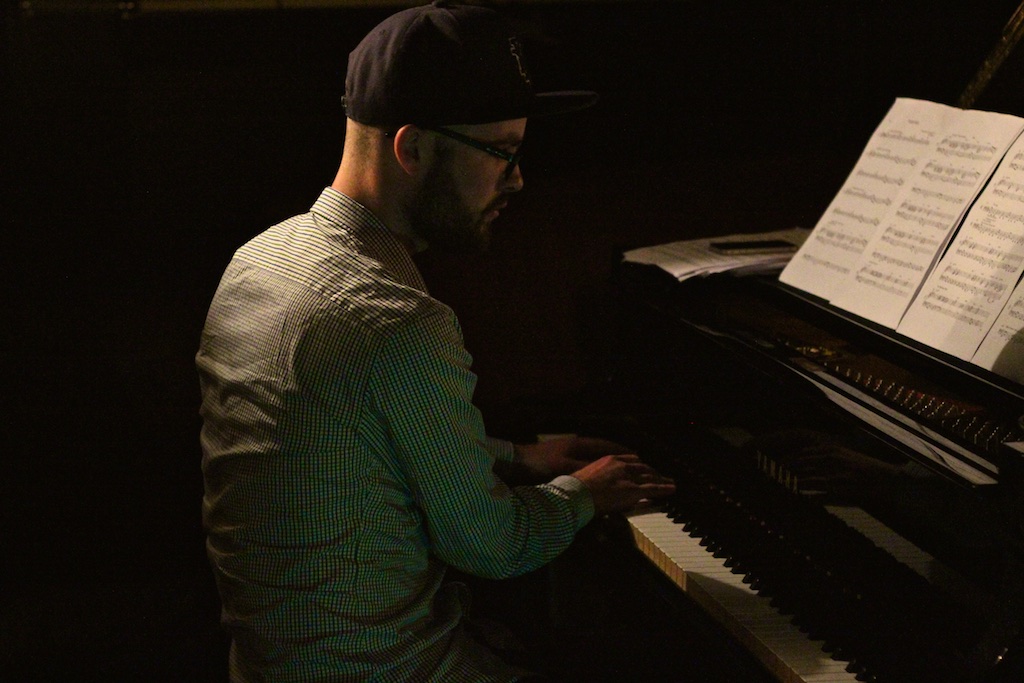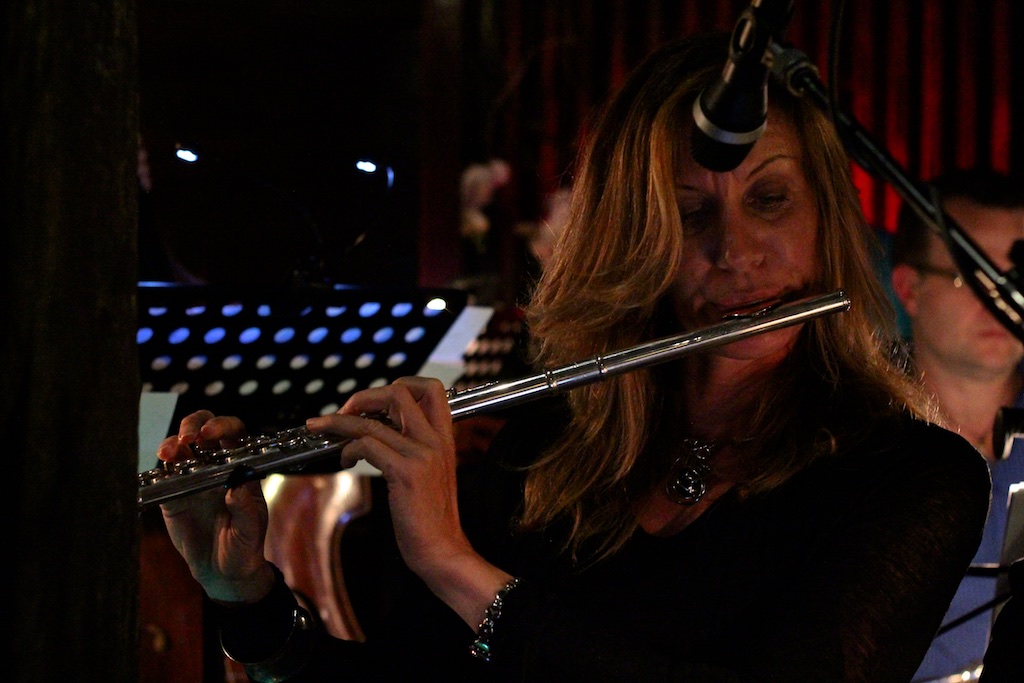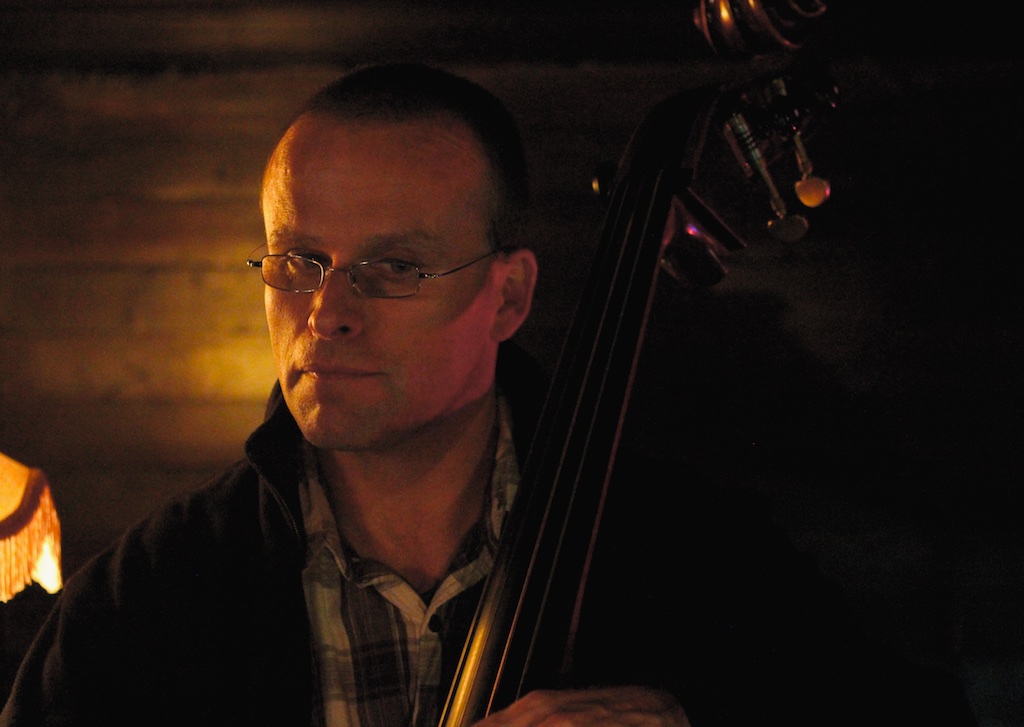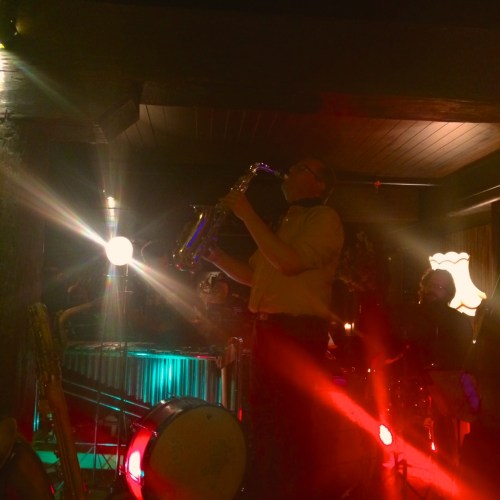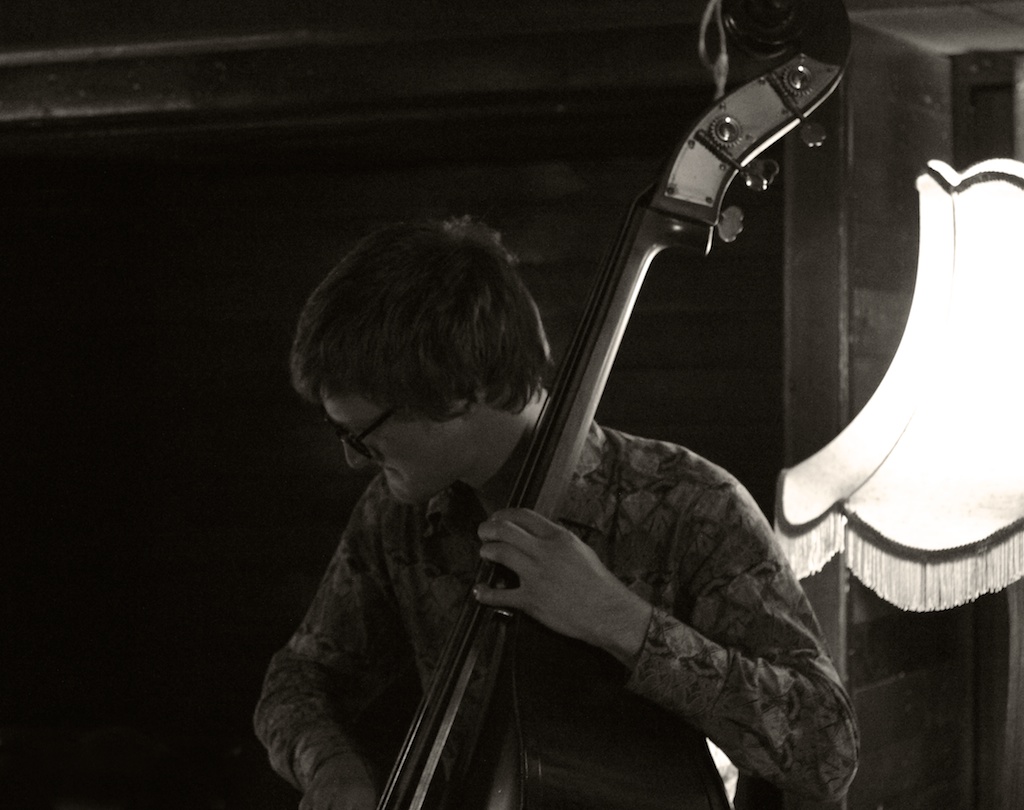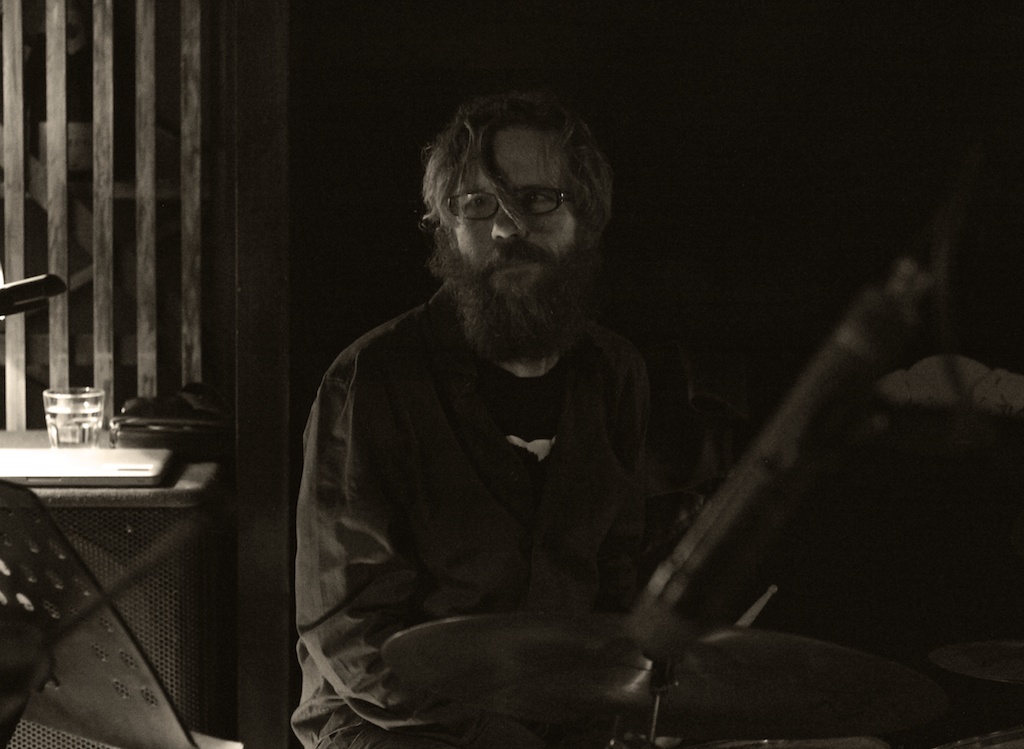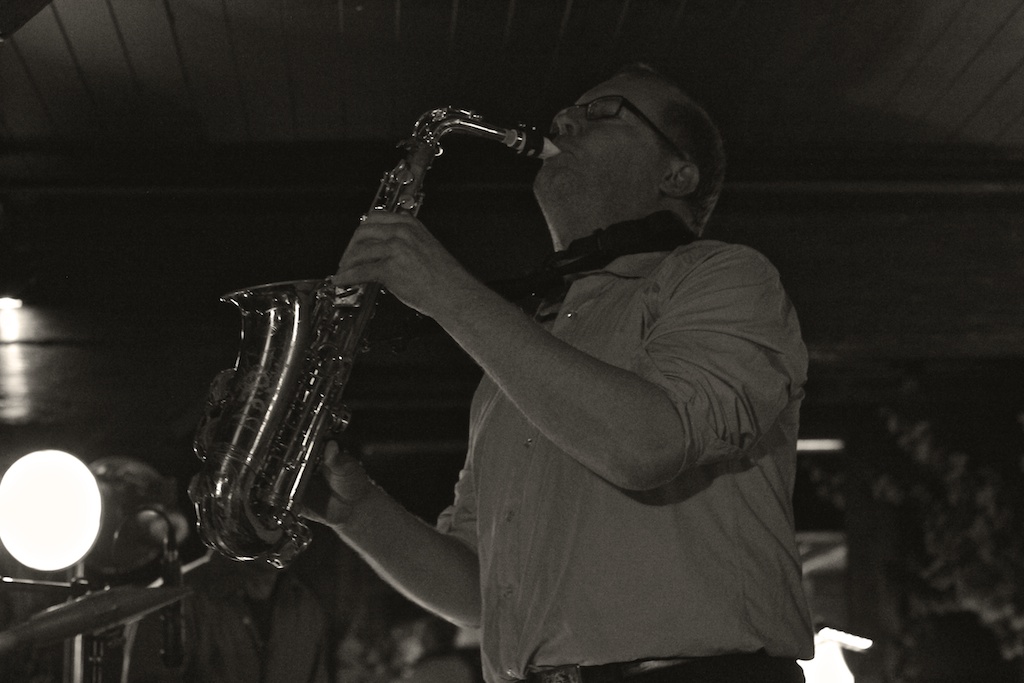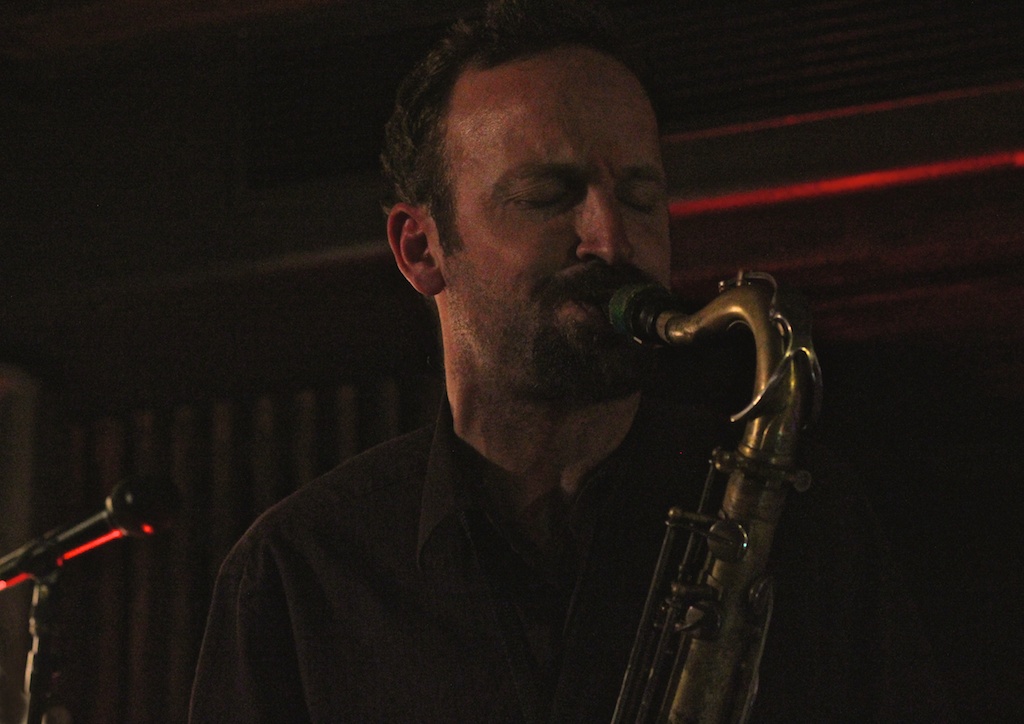
Mauro Sigura ~ Oud Improviser


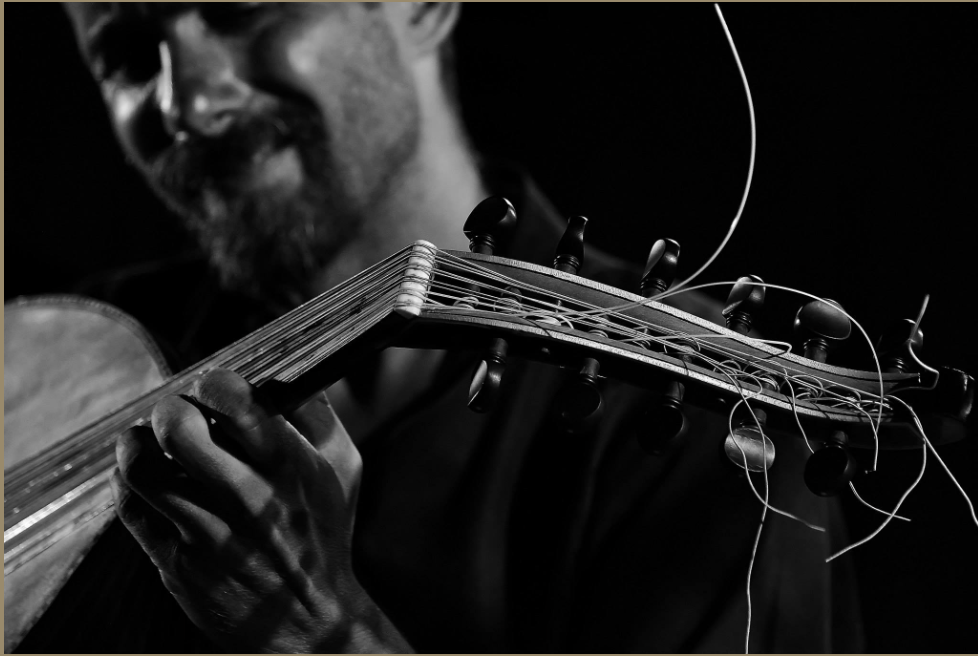
There is something about the oud that awakens the deepest of emotions. Like the sound of an ancient temple gong, it resonates soulfully. It is primarily a modal instrument, using ‘Maqams scales’, a system as complex and varied as the modes used by Coltrane. So, when the chance arose to interview a Jazz oud player, I jumped at it. 

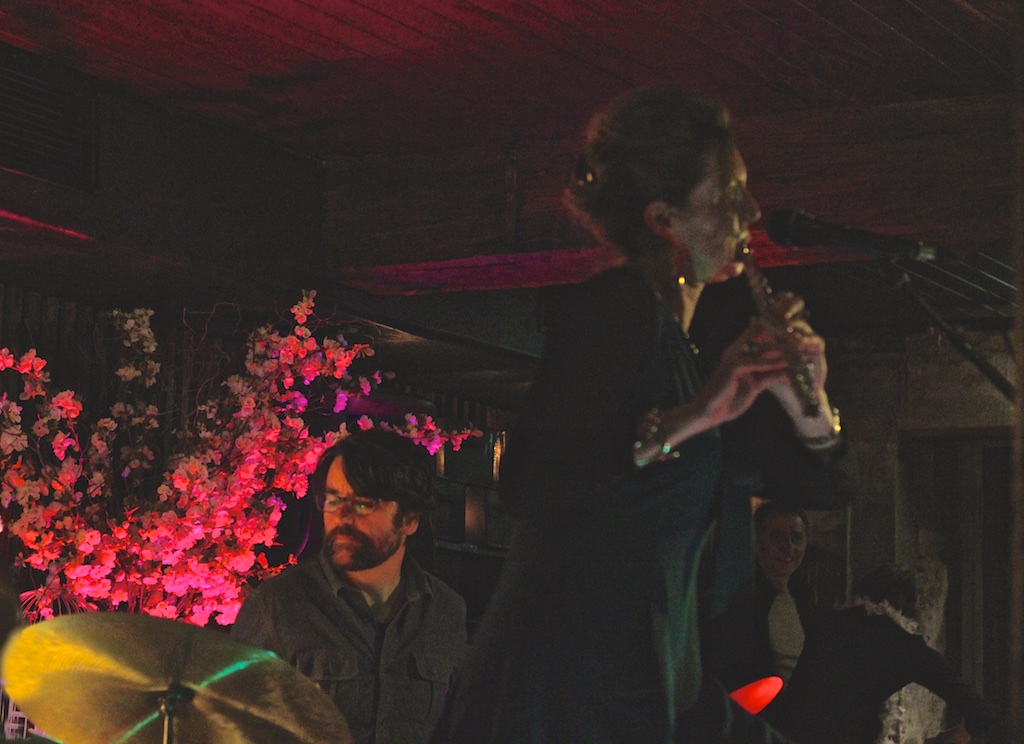
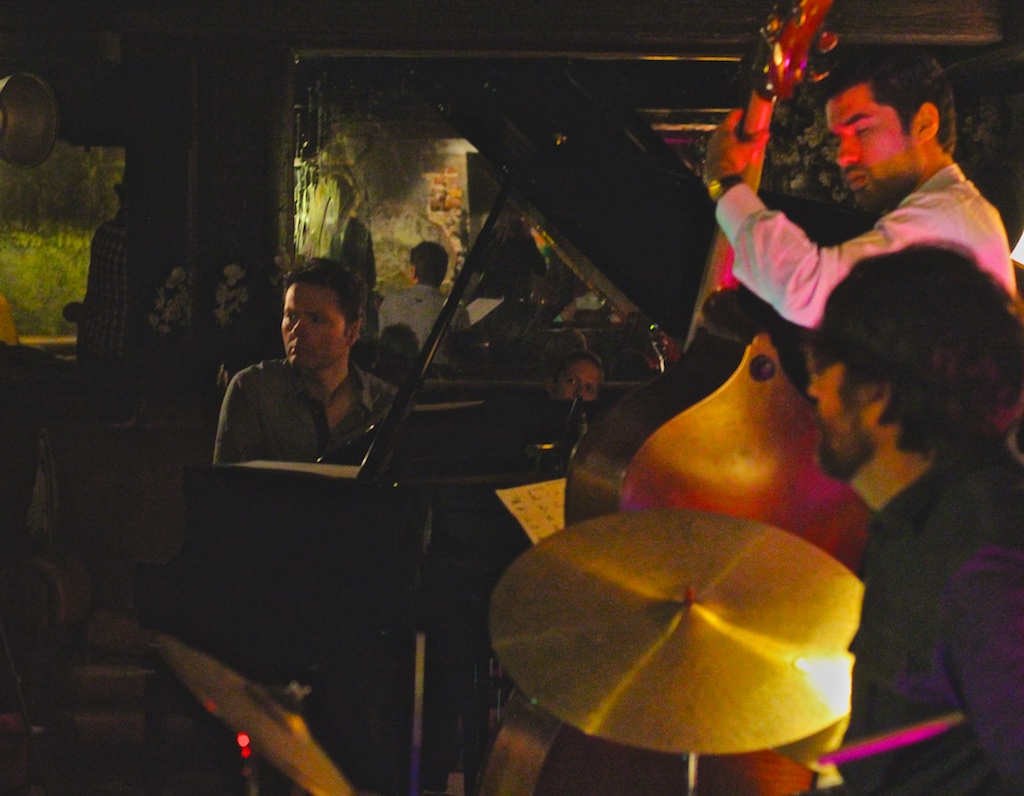
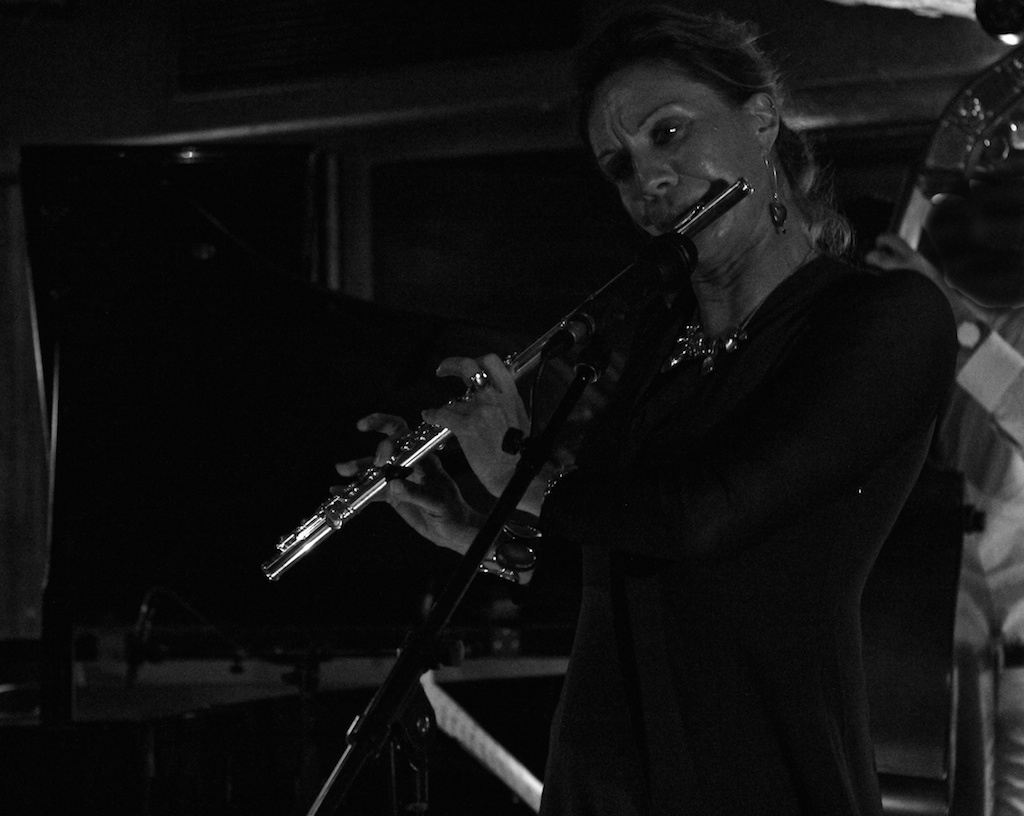
Mauro Sigura was born in Turin, where he began his Jazz career playing the bouzouki and guitar. Later, he moved to the island of Sardinia where he found a uniquely ancestral form of music, one for which he developed a deep musical connection. Since then, he has performed throughout the world and participated in numerous festivals. His ensembles reach beyond the confines of genre. They have originality, depth, rhythm and groove. Younger listeners especially, are hungry for such music.  

I heard Sigura’s current Quartet while judging the Italian-based 7VirtualJazzClub competition. His entry enthused the judging panel and he deservedly picked up first prize in the Pros & Amateurs section. Shortly after, we exchanged contact details and set up the interview.  

                                                  ~         ~        ~

Mauro, congratulations again on your, 7VirtualJazzClub Competition win. Your music has a rare beauty which pulls on the heartstrings. It is as if you have unearthed a forgotten memory from the distant past. This effect may be evident because the oud is the forbear of many stringed instruments like the guitar, mandolin, bouzouki, lute etc. It is like an echo flowing through time, bringing past and present together.

Q.  Could you tell me what the oud means to you, and why you chose it?

A. First of all, thank you for your kind words! As you said, the oud is an instrument that somehow crosses time, has an ancestral link with the cultures of the past,  [it] tells of trade exchanges, travels, and meetings between cultures. I came to oud through bouzouki and Greek music, where it is easy to listen to an oud.  Then, I started studying Ottoman classical music.

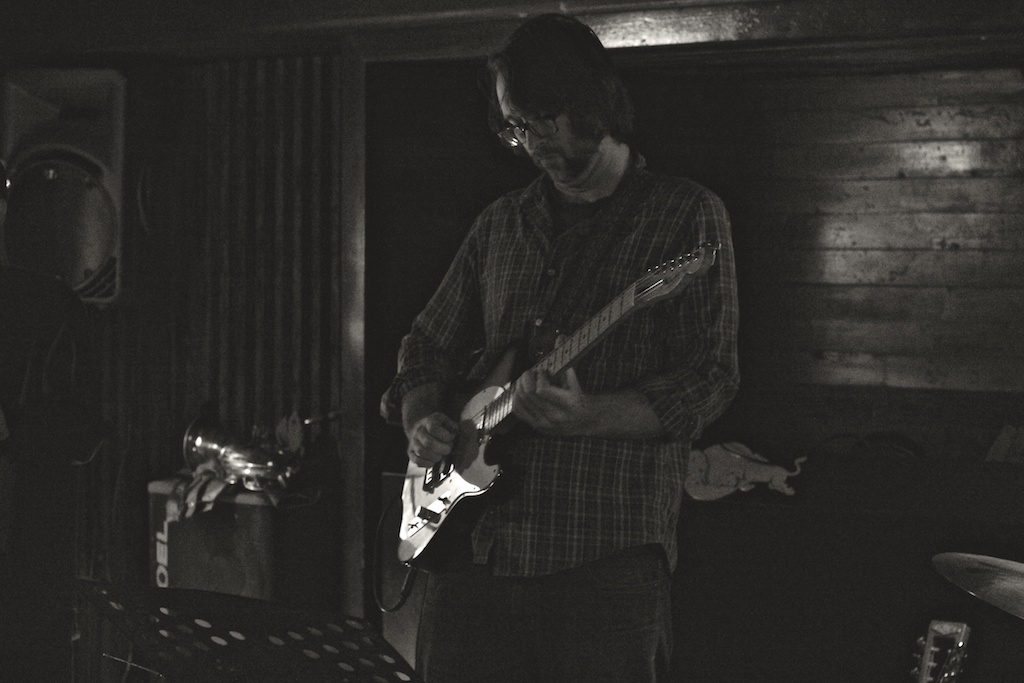
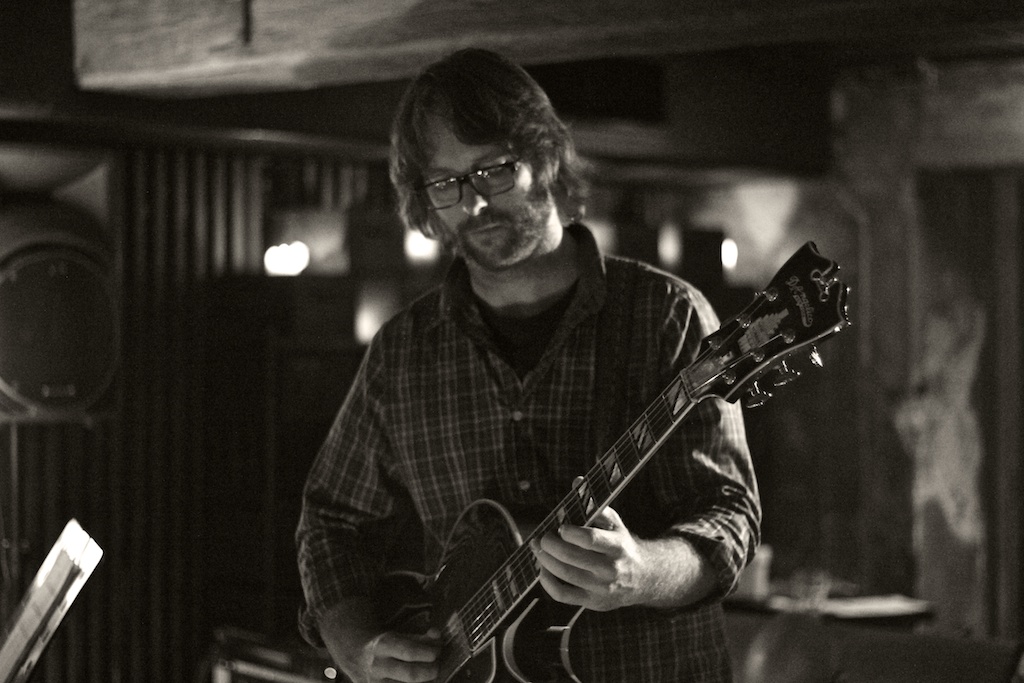
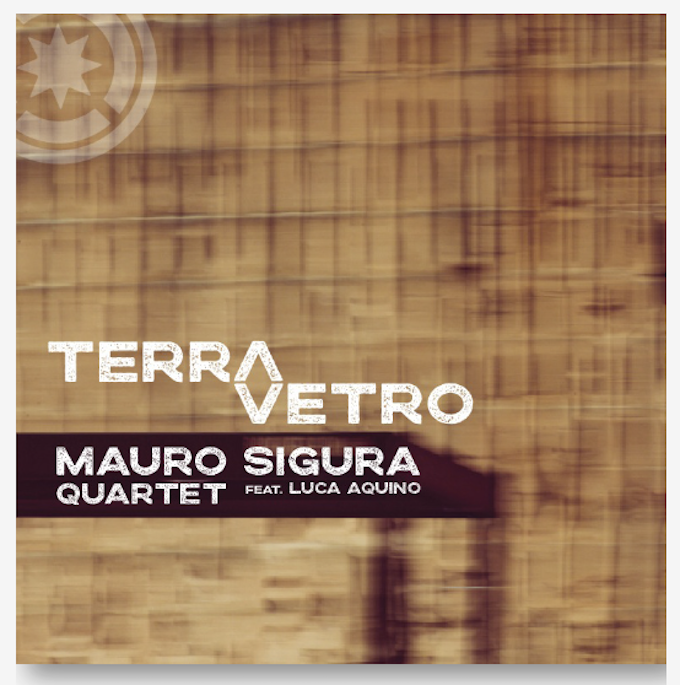
Q   Your last album, Terravetro, paired the oud with a minimalist piano.  On your recent album, Dunia, there was a Fender electric guitar and an electric bass. Did you have that relationship between ancient and modern in mind?

A.  Yes, all my music always tries to connect distant places not only in space but also in time. everything must tie together, but the challenge is to try to do it in the most natural way possible.

Carthago (from Terravetro)

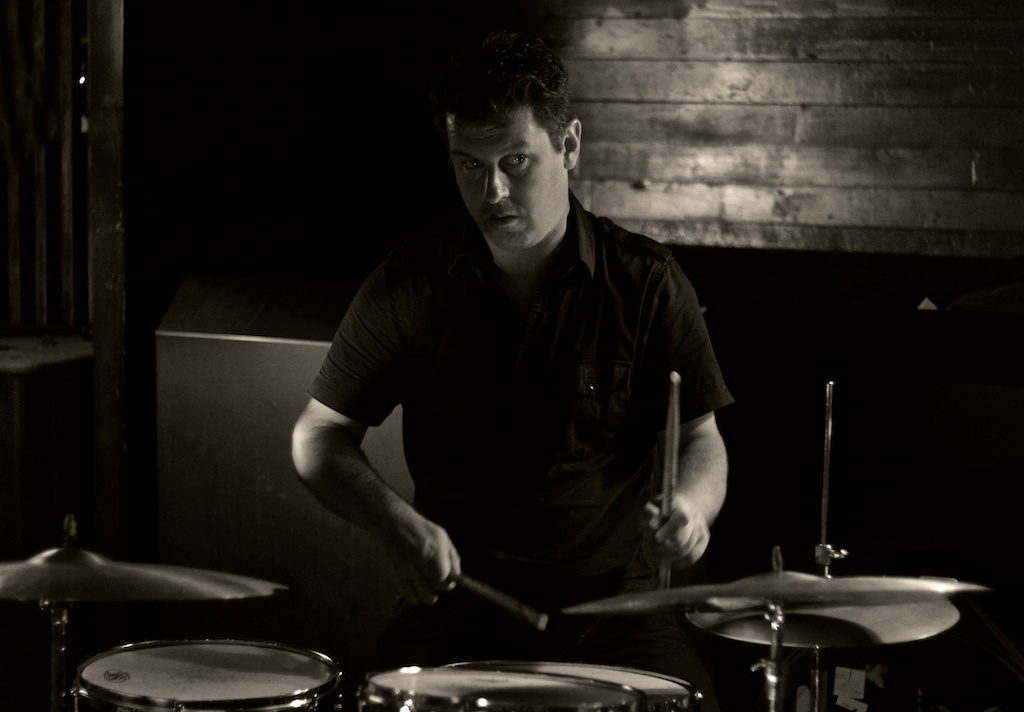
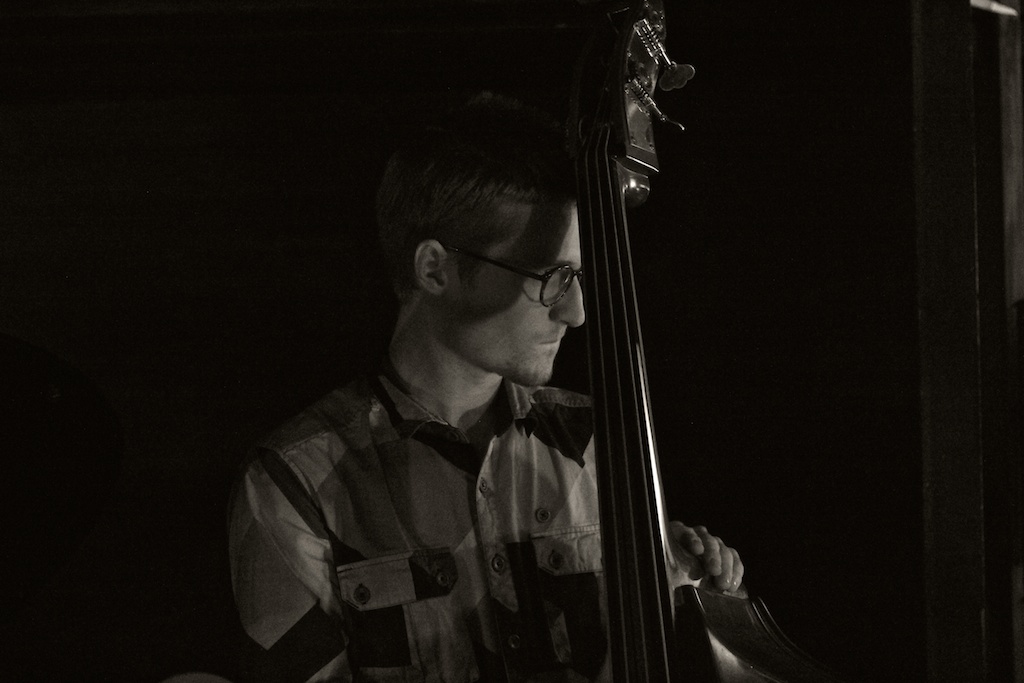
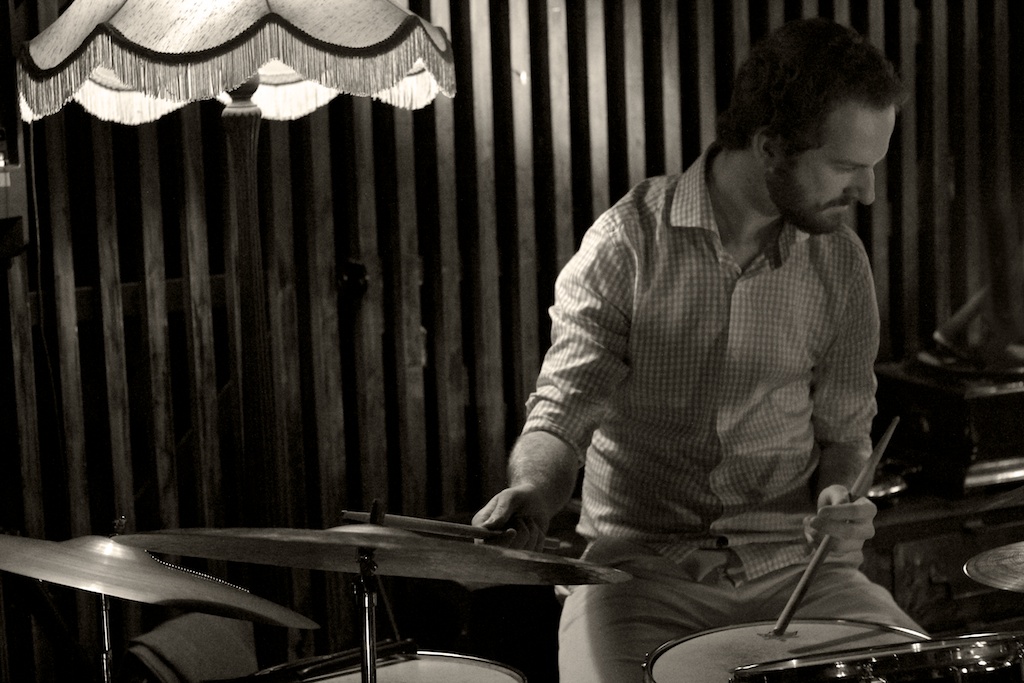
Q.  Your recent quartet is great. It could be viewed as either mainstream jazz or as World Jazz. The contrasts and textures are interesting. Especially so with ‘La Danza di Amarech’. Notable are the tight bass lines and edgy drum rhythms, the oud’s earthiness against the electric guitar’s brighter sounds, and that hint of funk over Middle Eastern rhythms and melodies. Could you tease that out and provide an insight into your compositional approach

A.  It depends on the compositions. For example, in ‘La Danza di Amarech’ I started from the bass line and its connection with the drums, the theme came last. I often start from the bass line to then create the theme, then, once a basic theme has been defined, I intervene by inserting more jazz-like modulations. However, it is not a fixed rule, in fact sometimes I have an oud groove or a theme in my mind and that becomes the starting point, or it can start from a traditional rhythm of Ottoman music. For example, ‘Dunia’ is built on a traditional Ottoman rhythm in 10/8, [called] the ‘semai’.

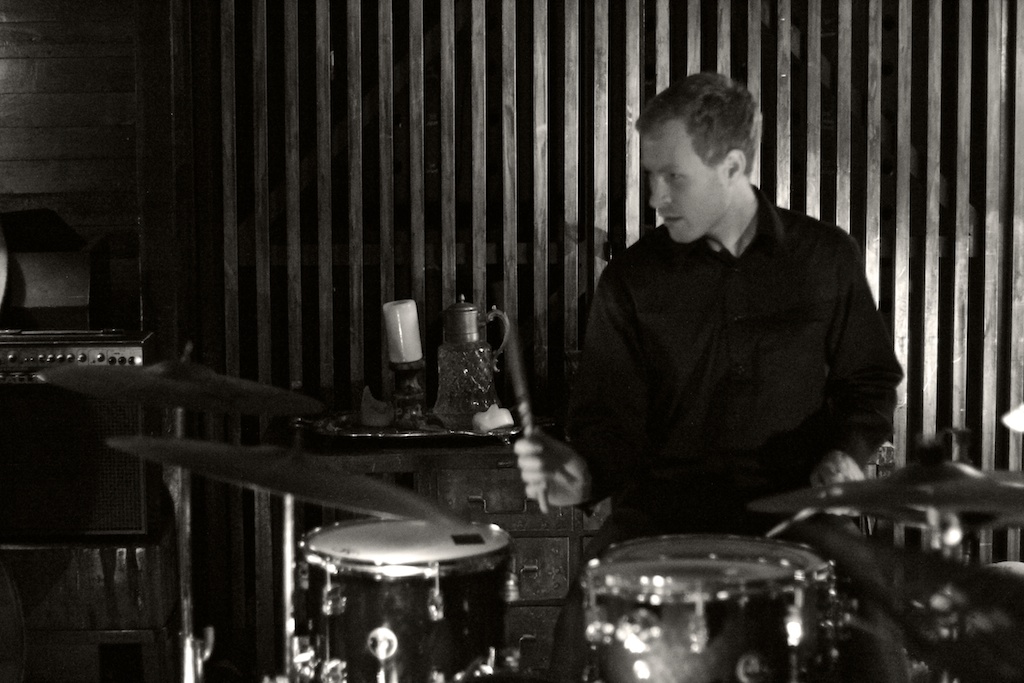
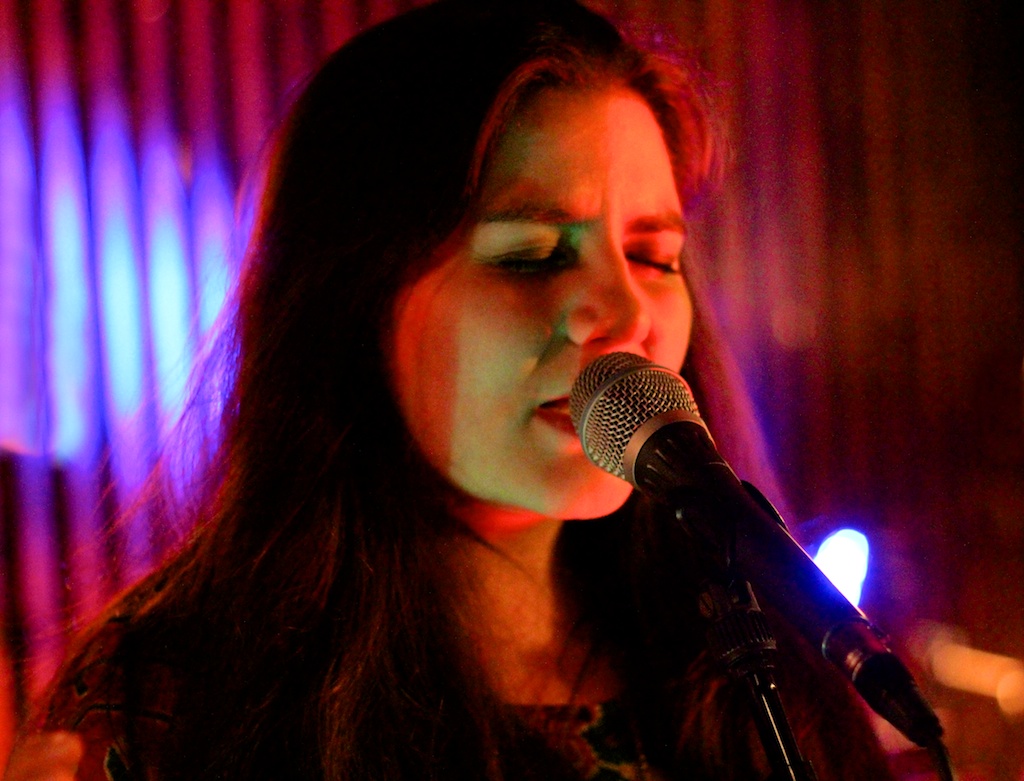
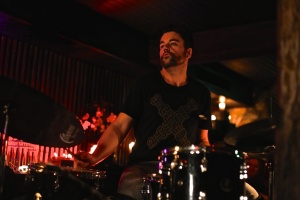
Q.  Tell me about your current quartet drummer. She is amazing.  

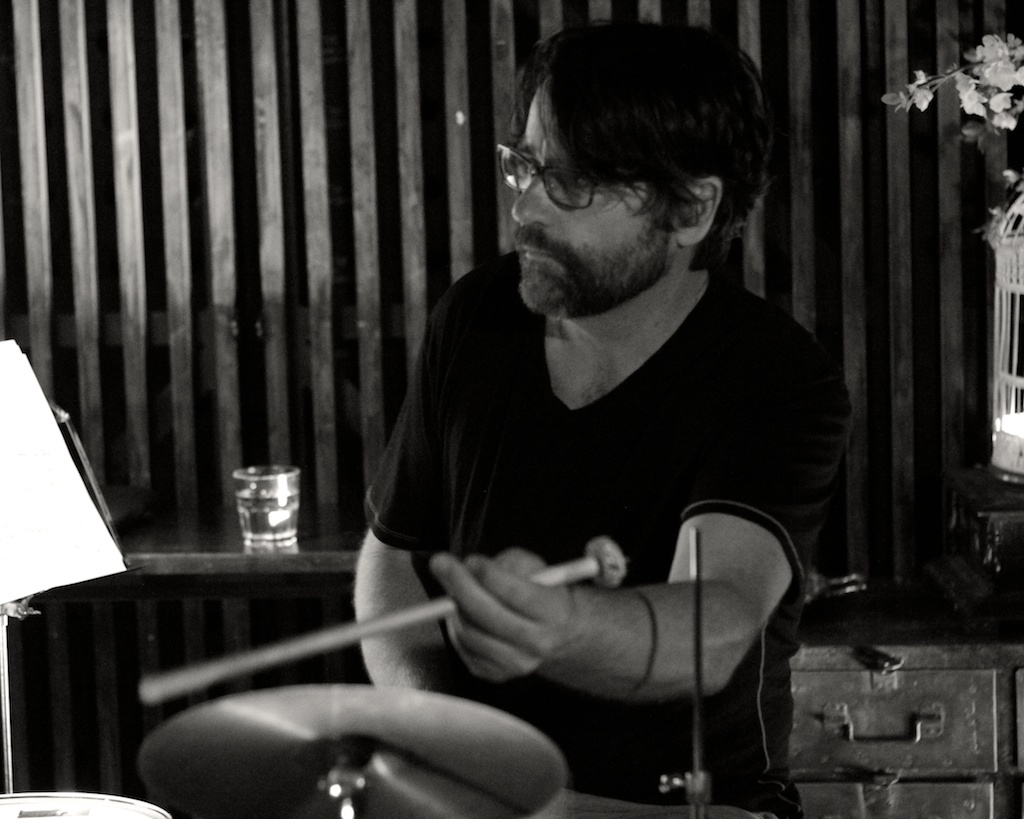
A.  Evita is amazing! She has ability,and creativity, she is an excellent composer, so she was able to give us useful advice in [the] studio. In Italy, she plays with the best musicians, such as Enrico Rava, but she often also plays with DeeDee Bridgewater. I saw her play in Sardinia in 2021 and I said: “this girl must play on my record at all costs!” and I succeeded. This year she released her first solo album as a singer-drummer, for Paolo Fresu’s record label. She has a great career ahead.

Q.   Do you have any ongoing projects with this particular quartet?

A. It is a quartet that I created for Italy and Western Europe. In fact, with the acoustic quartet, I often play in Eastern Europe and I needed something more attractive to Central-Western Europe. So I’m working to try to propose it to these geographical areas. The album was released on October 8th, so we are still in a phase where Dunia is looking for the best direction.

Q.  You record on ’S’Ard’, a Sardinian label but I see you were born in Turin.

Are your forebears from Sardinia?  

A.  My father was born in Sardinia, but my mother was born near Turin. In 2005 I moved to Sardinia, retracing the path taken by my grandparents in the 1950s, when they left Sardinia to go work in Turin. 

Q. Sardinia has produced jazz greats like Paulo Fresu. It evokes an ancient past and a Phoenician connection. The bagpipes may have originated there, but is there an oud tradition?

A.  No, there is a tradition of the guitar, but not of the oud, although some elements of the traditional Sardinian guitar certainly have a North African origin.
Q.  You have a distinctive sound and approach. Different from Dhafer Youssef or Anouar Brahem. Part of that is due to the pairing of the instruments, but there appear to be regional influences too. Would you like to comment?

A.  Yes, certainly, Sardinia, with its ancestral atmospheres, has a strong influence on my compositions. The spaces, the light, the nature are much stronger here than in other parts of Italy and the musical tradition is also very strong, alive and wild and this more or less unconsciously influences me every time. My next challenge will be to look for the influences that Phoenician, Carthaginian and Arab music have left in the Sardinian musical tradition, in particular in the vocal tradition. I would like to start from there, building a Sardinian project that justifies the presence of oud.

Q.  Who are your musical influences?

A. Obviously, the ones already mentioned by you Dhafer Youssef or Anouar Brahem influenced me a lot, but also Jan Garbarek and Eivind Aarset. I am used to listening to all good music, from rock, to jazz, to pop to metal and I let myself be influenced by everything without prejudice. I have listened to a lot of Pat Metheny, Miles Davis, Kenny Garrett, but also traditional Greek music (rebetiko), Ottoman classical music, Arabic and Kurdish music, but in general I like all the traditional music. I am very interested in music played with a few simple instruments, especially the music of nomadic people. My music comes out of all this.

Q.   I see you studied philosophy. Did any particular philosopher inform your approach to music?  

A.  No. Perhaps philosophy has influenced my approach to the concepts of my albums. I try to create the album around a concept, but beyond this, no. No philosopher has influenced me by directing me to music.

Q.   You performed throughout Europe, but what grabbed my attention was that you performed in Petra, ‘the city that time forgot’. Tell me about that experience.

A.  It was an amazing experience! We were invited by the Amman Jazz Festival and the Dante Alighieri Society in Jordan. When they [approached] us about the option for a concert in Petra, I couldn’t believe it. We played for the Bedouin community that lives inside the site. It was a concert for a few close friends, in a unique atmosphere suspended in time. While I was playing I found myself in a sort of emotional trance and I lost the sense of the duration of the concert. It was a strange sensation, but it was as if those rocks were carrying the music forward independently of us [as the players].

Q.  Do you see yourself as being in or extending the Sufi oud tradition?

A.  I’m very flattered by your question, but I don’t know the Sufi tradition well enough and I always want to have a respectful approach towards those elements of traditional cultures that I don’t know in depth. So, to answer your question I would say no, even if a certain idea of ​​mystical-transcendent trance is present in many of my compositions. If we can take people to another, different, new place, where everyone is on the same level, then we can start talking again.

Q.  Who was the vocalist on Dunia and were there any guest artists?

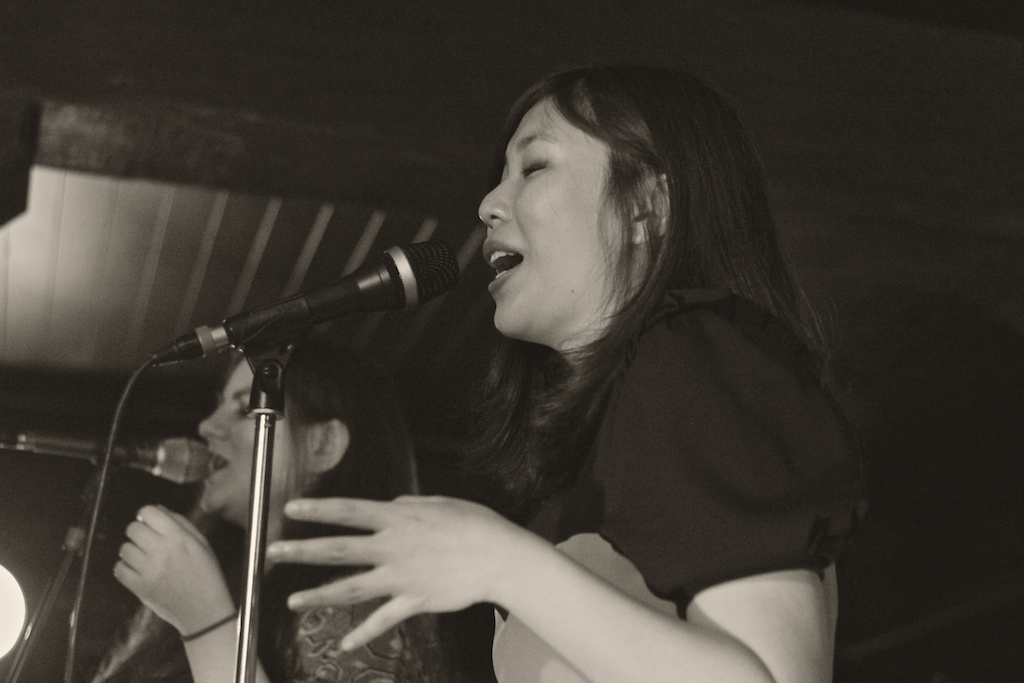
A.  Her name is Elena Ledda and she is the most famous Sardinian singer and, also, one of the most famous in the Italian world music panorama. She gave me a great gift of herself by putting her splendid and unmistakable voice in the song. Elena is the only guest in Dunia.

Q.  I look forward to hearing more of your albums. Thank you for your time and for the detailed and illuminating answers

A.  It has been my pleasure!

You can order these recordings from Mauro Sigura’s website, from S’Ard records, or locate them on Deezer, Spotify or Apple Music.

JazzLocal32.com was rated as one of the 50 best Jazz Blogs in the world by Feedspot. The author is a professional member of the Jazz Journalists Association, a Judge in the 7VJC International Jazz Competition, and a poet & writer. Some of these posts appear on other sites with the author’s permission. 

Journalism, Digital Futures and Music

Garden Jan 2nd (14)While it is easy to feel discouraged by the state of the music industry and to agonise over the plight of long-form investigative journalism, there are pathways through the morass. Better alternatives, however tentative are forming and the emergence of more equitable models a possibility. These debates are worth having and the creative sector needs to become more vocal and activist. Everything of value is at stake here and the market rationalists will happily plunder the creative sector if artists and consumers leave them to it. As we ponder the challenges it is tempting to think of the music world as being too broken to fix. Acquiescence and inertia are the antithesis of creativity. The artists and journalists who care about this must do what we do best – confront, shock, overwhelm stupidity, dispense joy, start revolutions; throwing in the towel is for those devoid of imagination and banality produces nothing worthwhile.Maria Schneider  I recently watched two thought-provoking documentaries on the fate of the book and of in-depth journalism. ‘Out of Print’ and ‘Stop the Presses’. The first threw up a lot of intriguing questions, while the second provided some answers. Every new media platform brings with it a multitude of doom sayers and the invention of the printing press was no exception. Books have been with us for over four thousand years and while there are few local book-shops left in 2016, there are more books being printed than ever. The ability to record data and preserve it is the greatest of human achievements and the modern world rests upon it. In spite of determined efforts throughout history to burn books or to shut down the information flow, knowledge and information proliferates.

The tablets and engravings of antiquity are the most durable as the oldest texts known to us are readable today (the Hittite Linear B clay tablets). While a surprisingly large number of ancient books and texts survive, some modern attempts to ‘save the book’ have fallen flat on their face. Recently libraries rushed to put their catalogues into the CD Rom format. This marvel of modern technology was the answer to saving the printed word and so encyclopaedias and written texts were laboriously digitised. As suddenly as it appeared the platform vanished and a technical museum is now the only place where you can find a CD Rom reader (or a floppy disc). The ways of storing music, although covering an infinitely smaller time span have a comparable history. Platforms that seemed forever solutions came and went while the music migrated to newer formats. This process will continue and the new formats are not the problem.

The player-piano was a real threat to live music as was the Edison cylinder. Live music survived and recorded music morphed into the 78/EP/LP/tape/CD/Digital download and cloud streamed content. The changes will continue, probably accelerate, but we have learned that the best of the older formats can co-exist with emerging forms. The printed newspaper will survive with the digital for many years to come. It will likely become prestigious; a symbol of quality like the re-created LP.  Platforms will come and go as music good and bad is created – this will continue until the end of time. The eternal conundrum remains.

Who will reap the benefits, who will pay the piper and how will distribution occur.

The second documentary ‘Stop the Presses’ featured interviews with forward-looking media identities. There was a deliberately left/liberal bias and the programme did not feature the likes of Murdoch. Those of Murdoch’s ilk are part of the problem and not the solution. The Editor of the New York Times, Guardian reporters, leading investigative journalists (such as those from the now defunct Rocky Mountain News) and a number of important European print media spokespeople gave their views.  In spite of the carnage and catastrophic job losses there were glimmers of hope.

Immediately after World War Two ‘Le Monde’, the premiere French evening paper created a new model. Their charter ensured that no media barons like Lord Beaverbrook, Randolph Hearst or Rupert Murdock could ever exert editorial control. The paper ran along the lines of a worker collective and only the journalists (who had tenure) could choose the editor – elections were held for the post. Investors could invest but they could not exert influence. Sadly Le Monde ran into financial difficulties as the digital revolution bit harder and during a recent bailout new financial investors strove to exert editorial control – the staff refused and that situation has yet to play out.

One digital news-media outlet ‘Mediapart’ is particularly interesting. The editor (a former editor of Le Monde) Jerome Calhuzac puts up convincing arguments for a model better suited to the digital age. This digital only outlet has a rapidly growing circulation and it is successful by any measure. The business model is similar to the early Guardian and Le Monde – managed and owned by the reporters and the editor – the creators of content. It has a strict pay-wall, contains no advertising and employs the highest quality investigative journalists. Mediapart offers in-depth opinion pieces and makes no apology for having a point of view. It rejects advertising outright as that can influence editorial integrity. It does not see its role as outlining the broad sweep of daily events. It focuses instead on the important news stories, examines them in-depth and is beholden to no-one. Investors are welcome to a point, but they have no influence. Fifty percent of the cost of getting out print newspapers was in the distribution. Under a digital model that cost is infinitesimal and efficient high quality newspapers are now possible (more on distribution later). The only remaining obstacle is a generation of readers who expect quality information without having to pay for it. 

Calhuzac sees the enemy as being the ‘entertainment’ model; driven by the relentless neo-rationalist imperatives of the marketplace. Mediapart’s mission is simple. ‘We are a cornerstone of democracy and as such independence and fearlessness is everything. We do this because it is our duty to humanity and to the fabric of democracy. It is not just about the journalists, the editors or the readers but a commitment to the principles of democracy’. Crucially the paper determined that quality has never come free of charge and that everyone must contribute a fair share – this is a public good – it has a price just as democracy has a price’. The subscribers agreed and have responded extremely well. ‘Trying to provide quality content for free has never worked and we avoid that trap’. Free content funded by advertisements is a flawed approach leading to a once-over-lightly product – an overload of fragmented information of undesirable quality. In short news as sound-bite entertainment.

Giving content away free was a bold but flawed experiment. It was a recipe for dumbing down and the new aggregated sites like the Huffington Post pillaged the content from other newspapers. When doing this they not only steal but they close down the very newspapers they steal from. As the aggregator websites don’t pay investigative reporters (to replace those being laid off by their actions), that content will eventually vanish. Musicians, independent labels and informed music consumers will see the parallels here.

This is exactly what is occurring in the music world and the equivalent of the Huff Post and to a lesser extent Buzz Feed are the digital streaming platforms. Most are parasitic and return nothing of value to the creators of the music. You Tube is a little different as it can act as a feeder to artist run websites, independent labels and offer teasers. Some users go too far and put up whole albums without the artists permission. It is popular but as a business model it struggles.

To bring this full circle, I received my copy of Maria Schneider’s latest album, ‘The Thompson Fields’ yesterday. The album won the best of category in the prestigious NPR poll and is receiving accolades from the various music industry papers. It was not produced by a major label and yet it is one of the most beautiful albums you will ever hear(or see). The label is ‘Artists Share’ – a cooperative run by musicians and their associates – interacting directly with the consumer. ‘The Thompson Fields’ is a rich convergence of the arts as it features fine art prints, poetry, extraordinary photographs, old maps on art paper and well written prose. It is also stakes out a strong environmental position without being preachy. This is an album of rare beauty and it even smells like a rare book (the album booklet has aged patterned end papers). Schneider’s album gives us extraordinary music (performed by nineteen of the improvising worlds best) but it also has detailed liner notes, credits for the musicians, various collaborations with artists, poets, photographers and a connection to like minded community organisations.Garden Jan 2nd (15)If such an extraordinary album can rise to the top utilising a fan-funded artist controlled model there is hope. Progress is painfully slow but these projects can work. The Artist-Share label is not a recent innovation and the model doesn’t yield quick results. If better focused and more equitable distribution models developed then the high-end independents could gain a significant foothold in the market. There is a feel good factor in associating ourselves with models like this.

The New Zealand equivalent is Rattle Records. Like ECM it knows what it stands for and provides a consistently beautiful product. This is surprising given its reach. Like Schneider’s album (and ECM albums), Rattle has retained either liner notes (or quality photography) – even poetry appears on occasion. I declare a vested interest in this as my photographs, liner notes and poems have featured on a number of Jazz albums.

This convergence of music journalism, compelling art and high quality musicianship provides for a richer experience. It is possible for the digital download format to deliver liner notes, musicians credits and artwork but it seldom does. I would happily pay a few extra dollars to get such an enhanced version. Above all it is grossly disrespectful to the musicians when their names are excluded from download information. As the old models fail and the greedy few extract the lions share of revenue (without permission), the consumers of music need to become better informed. This is the point that Jerome Calhuzac of Mediapart makes. The listening public needs to grasp the fact that quality offerings have a cost. Lets get behind Rattle Records and other labels like Artists Share – where ever possible we should become ‘commissioners’ (a term used by Schneider for fan-based contributors).

The missing piece of the puzzle is distribution and as with Mediapart subscribers have a role. Buzz Feed gives us some clues here. Powerful algorithms can detect trends and this has a multiplier effect when an album is noticed. Those observing a trend then recommend the album to those with similar tastes. At present those algorithms serve the big players like Amazon but there is no reason why the technology could not work across the non Amazon Indie Label spectrum. New (albeit clumsy) distribution models utilise platforms like Facebook, Twitter and other vehicles.

It is often commented upon that I am a ‘busy’ Facebook user and blogger. There is a method in my madness. I have a respectable readership on my JL32 blog site. I also host a small Facebook group page and have a Twitter account. The people who follow my sites often take up my recommendations and hopefully this assists distribution. The consumers are increasingly a key factor in distribution and everyone should tout their musical recommendations to like-minded friends. Leaving it up to disinterested money men is not an option.

Lets ramp up the dialogue around streaming and the problems arising from free content. Paying a fair price for quality music is our duty to the creative arts. Support the independent musician run labels, recommended albums online and sponsor (crowd fund) a musician that you respect. We are all in this together.


Mark Isaacs 2015 @ CJC

Mark Isaacs 072Mark Isaacs is an important and highly respected Australian musician and it was a pleasure to see him in Auckland again. It was October 2013 when he last visited and since then he has been busy with the presentation of his symphony and a number of other noteworthy projects. He is a celebrated Jazz and classical musician and he continues to excel in both genres. Musicians like this are rare, as the two disciplines require very different approaches. When you talk to Isaacs you realise that he is passionate about both. He respects the art forms far too much to settle for anything less than his best. In either genre.
I once recall naively asking a visiting musician whether the ability to perform at the highest level on an array of difficult instruments was a unique skill. I have never forgotten the answer. “No it’s the outcome of hard work and an exponential increase in practice time. Every instrument you play is practiced equally and intensively’. I am certain that the same would apply to working across different genres.  That said, I suspect that attitude and aptitude are still somewhere in the mix.Mark Isaacs 071 (2)

Nothing annoys musicians more than being told that what they do is the result of a gift. It implies that the results come easily to them. Having great chops is only the starting point, as there is more to a successful Jazz musician than technique. Deep level communications are necessary and for a performance to work well, everyone must connect. Musician to musician and musicians to audience. Having something original to say and saying it well is something Mark Isaacs understands. Those performing at this level bring something unique to the equation. Something of themselves. An essence drawn from experience and an intuitive understanding of how time works. No matter how good a pianist, bass player or drummer, a piano trio is still a collaboration. Isaacs must have been happy with Holland and Samsom. They are two of our best musicians. Mark Isaacs 072 (2)

Isaacs comes from an exceptional musical family with a lineage stretching back to the Stephane Grapelli band and probably beyond that. Knowing the depth of his classical and Jazz heritage gives an added perspective to his multifaceted career trajectory.

I missed the first few numbers and arrived at the CJC just as the trio were warming up. The first number I heard was Kenny Dorham’s ‘Blue Bossa’. A much-loved standard that has remained extremely popular. Good improvising musicians extract gold from compositions like this (and often without needing to deviate far from the traditional chart). This was a night of wonderful standards played to perfection. Hearing a superb pianist and a solid rhythm section performing in such an intimate space is something Jazz fans live for. Everyone there experienced the warm glow. A warmth that only nights like this can impart. I truly wish Isaacs lived a lot closer. My appetite for his playing is far from being satisfied. Mark Isaacs 071 (4)My late arrival was due to a previous gig and as I walked in, the sound enveloped me completely. Before I had settled Ron Samsom had grinned in my direction, Oli Holland had poked out his tongue and Mark Isaacs had given a quick wave (mid solo). With those brief gestures the realisation swept over me that this club and these musicians are family. A. J. a club regular grabbed me in the break and said tongue in cheek, “Thank god your here man, the universe has realigned”.  Ron Samsom the drummer added, “Yeah it took us a while to settle because there were two strangers in YOUR chair and you were nowhere to be seen”. I guess I am like the guy who lives perpetually on the bar stool of his local bar.  Sort of Jazz furniture.
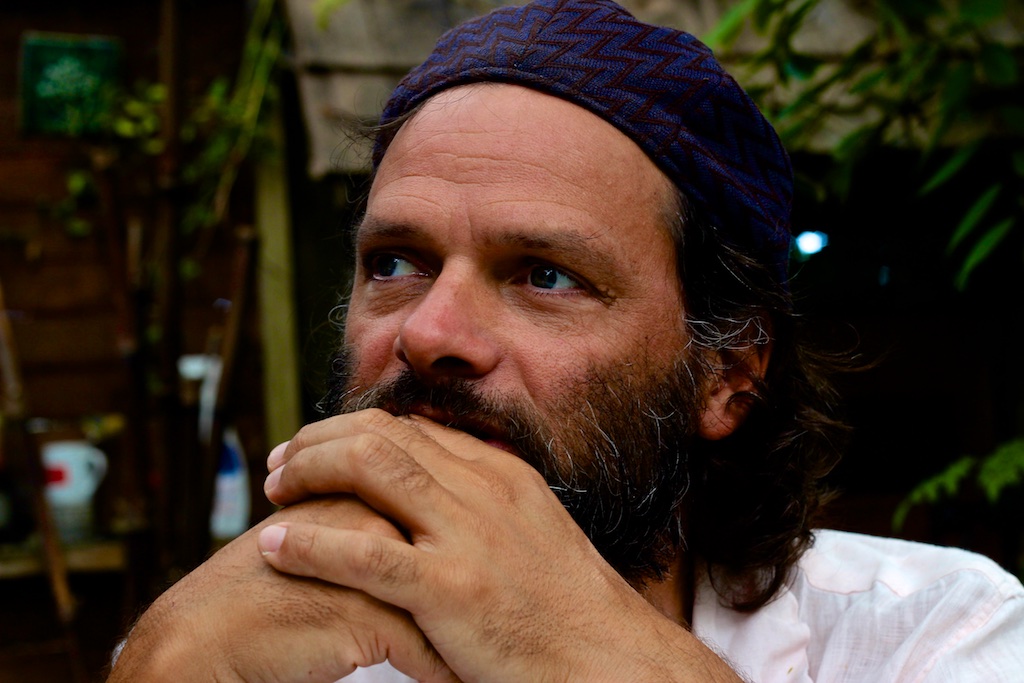
A performance of Mark Isaacs ‘Symphony’ has been professionally filmed and it was recently purchased by the ‘SKY Arts’ channel. It plays in New Zealand on the 10th June at 8pm.  Please support this important work by watching and perhaps writing to SKY Arts and saying how much we appreciate seeing material like this (The same for the recent Mike Nock/Contemporary Dance film on SKY Arts). These are important artists and landmark events. We live in a crass market-driven world where the Philistines try to dictate our taste. Without our support these amazing artists can struggle for wider recognition. Writing to encourage the purchase of such films is the least we can do by way of thanks. Remember, this works best as a collective enterprise and all of us have a role to play in this.

What: Mark Isaacs Trio – Mark Isaacs (piano), Oli Holland (bass), Ron Samsom (drums).

Where: CJC (Creative Jazz Club), Britomart 1885, Auckland, New Zealand, Wednesday 22nd April 2015

Jonathan Crayford – Making Pianos Sing

Jonathan Crayford Interview  (part one)

Jonathan Crayford 071 (2) When the luck runs your way, an interview with a musician will mysteriously transform itself into something more. If you know how to read the signals and respond appropriately, you find yourself traversing musical galaxies; places where words and musical ideas merge. I was acutely aware of this when I interviewed Jonathan Crayford recently. He is the ideal person to spend time with if you like to explore the improbable connections between seemingly unrelated things. It was an interview where the rhythms of the moment guided what we discussed and the best part of a day flew by before I knew it. This cerebral world is where Crayford prefers to live. He is perpetually on the road, dreaming up and shaping musical projects as he goes. His life is truly the troubadour’s life. As I probed him for insights, one episode in particular threw light on how serendipity and happenstance can guide him.

While living in Paris a few years ago, he reached the conclusion that the time had come to move on. Around this time he met a Catalan photographer and she invited him to perform at a Catalonian arts festival. When he asked how well it paid, she replied that they had no budget, but offered him a jar of marmite. Impulsively he packed up his belongings and moved to Spain. That began a fruitful creative collaboration that led to the photographer and Crayford doing gigs together in a number of European cities like Vienna.Jonathan Crayford 073I asked him why this type of project drew him so strongly. “I’ve been travelling for years and it’s the excitement of new projects and the risks associated with being in unfamiliar places that lures me. I like being in a new place, an exotic place, somewhere outside of my life’s experience. It is like a rebirth. New loves, new sounds new smells, new food and a new vantage point from which view life. The grist of creativity comes directly out of this”.
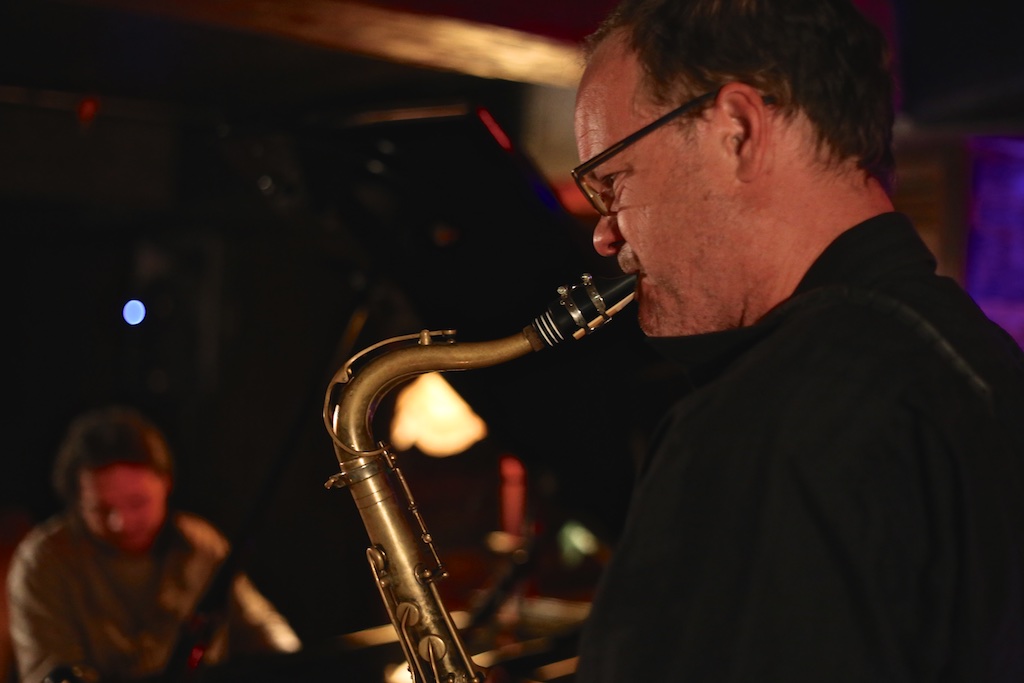
I had recently attended his concert at the Te Uru Waitakere Gallery where he was one of the featured artists in the ‘Black Rainbow’ concert series. I asked him about that and the carved piano, but as we talked the topic shifted to his quest for the perfect piano. His sense of reverence when talking pianos was palpable and he needed no encouragement to elaborate. “The acoustics of the room worked well for solo piano and the instruments bones are high-end Steinway. Here is a paradox though; the musician in me is always uncomfortable with carved or painted pianos. I understand that this is a wonderful piece of art, but the piano is already the ultimate piece of furniture. It is perfect in form and highly functional. Any alterations or adjustments should serve the sound. 

Pianos sing for me and I can hear when pianos are sad. I feel their sadness and work with it, but it still troubles me”.

He talked of pianos so reverently and I wanted more on this topic, so I asked him about some of his favourite types of piano; the special ones. “I find the Australian made Stuart & Sons piano extremely interesting. With such a presence of upper harmonics you really need a different approach to playing. That was my impression of the one I played. A wonderfully crafted instrument. A few months ago I travelled to Australia to meet up with Barney McAll who is back from New York. He is currently artist in residence for a year, having been awarded a Glanville-Hicks residency. They have a custom made Stuart & Sons piano there. It’s a wonderful instrument. Of course I love the high-end Steinways, Bosendorfers and Fazioli. I have also played a wonderful Schimmel.

(Note) The Stuart & Sons Piano is innovative, a breakthrough in mechanical design. The piano has more keys and possesses amazing harmonic accuracy at the high end. No one has managed to change the acoustics and range of a piano in a very long time. Many pianists who have played the instrument claim that Stewart and Sons have done just that.

I couldn’t resist teasing this theme out further; wanting his reaction to a strange story of piano destruction, so I asked. “I recently saw a short film of a man playing a nice Steinway piano beside the Red Sea. ‘Red Sea, Dead Sea’ it was called and I suppose it was an allegory for the conflict in the Middle East. After five minutes a hooded man appeared out of nowhere and started smashing the piano with a sledgehammer. What do you think of artists who smash a piano to make a political statement?”

”A momentary look of surprise crossed his face as he pondered on what I’d said. “What is that destruction shit about man? I just don’t get it. The point of a piano is to be played and played well. Played by someone who understands what a piano is about. I once saw a pianist slowly, respectfully and carefully dismantling a piano at a concert. As each piece was removed he would tap it or pluck it. Each section had a very distinct sound, a note, resonance. This was a deconstruction, but I understood that because it was an exploration of the instruments capability, not an act of wanton destruction. That piano was still singing. That particular act of dismantling was a musical chart”. Jonathan Crayford 072

Smashing pianos for political ends is definitely not Crayford’s thing.

During the afternoon we traversed everything from Pythagoras to planetary formation. The relationship between harmonic intervals and physical objects was especially fascinating to him, as was higher mathematics. “I will compose a piece based upon prime numbers one day”, he said. He also talked of constructing a new ‘mode’ map. His love for stories about quirky historical characters and for mathematics came together in his latest album ‘Dark Light’. ‘Galois Candle’ tells of a hapless mathematical genius and his struggle for recognition. The poignancy of the tale is reflected in every note. I have heard this played in a trio setting and solo. It is sublime either way.

Crayford’s ‘Dark Light’ album was a finalist in the New Zealand 2015 Vodafone music awards. The album is simply stunning and it deserves to be heard more. Crayford feels that the album has legs and he hopes that it has a way to run yet. These days it is not the quality of the music, but distribution and exposure problems that hold an album back. This album certainly deserves wider recognition.Jonathan Crayford 071On April 15th Crayford returned to the CJC (Creative Jazz Club), but this time without bass or drums. The gig was billed as ‘solo piano’ with special guest. Roger Manins joining him for the final numbers of the second set. This was a first for the CJC as the club has never hosted a solo piano gig before. Interestingly a slightly higher entry fee was placed on the door, but far from deterring people it signalled that something special was to occur. You could have heard a pin drop during the performance. This audience really listened and they were amply rewarded for their attentiveness. This highlights the growing sophistication of CJC audiences and above all it demonstrates the deep respect that we have for Crayford as a performer.

I have seen Crayford perform many times and his approach to performance is to step free of ego. He described it to me as ‘diving into the sound’. Crayford treats performance like a Zen monk treats a ‘Koan’. His musical puzzles are not solved by wrestling with them, but by absorption, by letting go. Living in a musical moment devoid of superficial baggage. While a modernist in his approach, he also touches upon something timeless. Perhaps Crayford is best described as a cosmic troubadour?

Solo performances are high wire acts and the freedom afforded by the format allows an artist to take us where they may. We heard probing thoughtful interpretations of seldom-heard Jazz compositions, original pieces and compositions from unlikely sources. One moment we were at the edge of the modern classical repertoire and at other times following the fabulous, choppy, stride-infected swing of Monk. Nothing sounded out of place and everything was explored with the same vigour. Crayford’s environmentally referencing composition ‘Earth Prayer’ was simply profound. The musical narrative enveloped us in its utter clarity. Such was its impact that time stood still while audience, piano and artist seemed to breathe as one.Jonathan Crayford 072 (1)The duo numbers with Roger Manins also worked well. These are master musicians and they know how to make the most of freedom and space. When a piano and tenor saxophone perform in duo, certain unique opportunities arise; the musicians must be acutely aware of nuances and the subtleties of interplay. What we heard was a deftly woven tapestry of sound, a respectful satisfying interaction. The duos started with a burner and ended with the perennial favourite ‘The ‘Nearness of You’ (Washington/Carmichael). During the last number there was a flood of noise from the upstairs bar. In spite of that the audience yelled for more; wishing that the gig could go on for ever.

(Part Two of this post to be posted later)

Who: Jonathan Crayford (piano) – guest Roger manins

Where: Interview in Waitakere – Solo Piano gig at the CJC (Creative Jazz Club), Britomart 1885, Auckland 15th April 2015 – Solo Piano, Te Uru Waitakere Gallery.2015voter-button

2015JAvertLogo150x287

Harry Himself visits the CJC

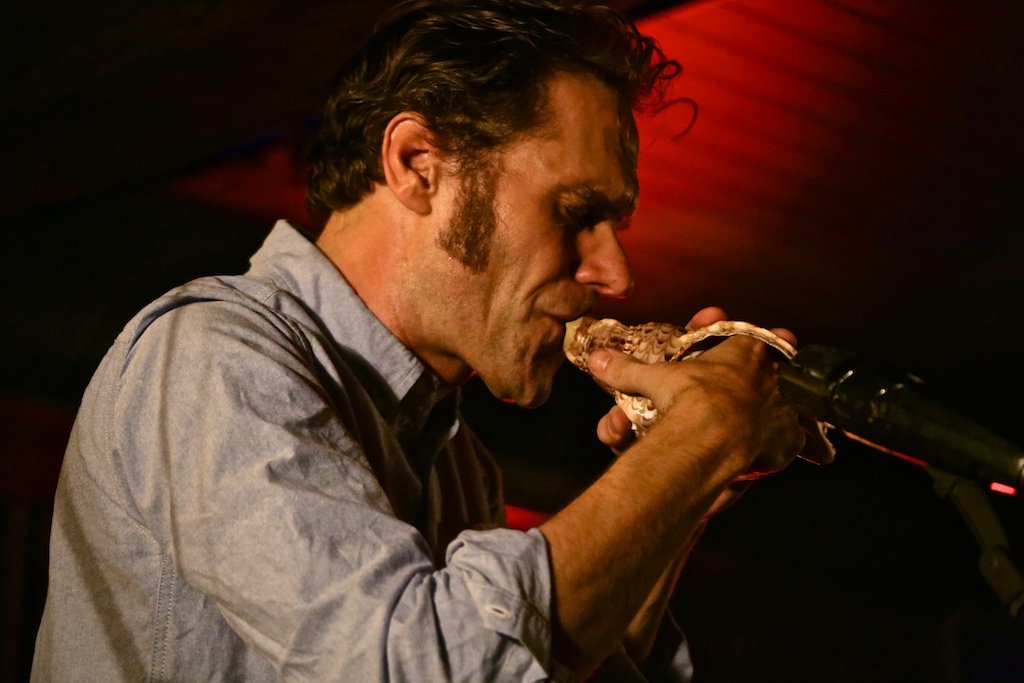
Harry Himself 11-3-2014 074I often detect a unique quality in New Zealand improvised music, but when it comes to defining it, the illusive essence dissolves before I can grab hold. ‘Harry Himself’ has brought me one step closer, connecting me with a tangible manifestation. This band is the perfect example of improvised ‘Kiwiana’. At first hearing you detect a melange of the familiar; elements of World, Fusion, Straight ahead, Post bop, Post millennial Jazz and all served up with a generous dollop of classic country. Listen more closely and you will get strong South Sea references, flashes of musical memory permeating every bar. Everything from Bill Sevesi to the ancient sounds of New Zealand indigenous music. Even song titles revolve around Kiwiana themes .  Many of the tunes belong to a place, to the Islands we live on and to the immense swath of sea that surrounds it. Like the harbours and oceans that surround us, this is a mosaic of glittering fragments. A familiar yet unknown music to gladden the heart.  Harry Himself 11-3-2014 058 (2)Above all this is a good-natured band, oozing charm and character. The array of instruments and the judicious use of loops and pedals more than doubles their range.  The only constant in the sounds are the six string bass and drums. The leader Kingsley Melhuish is sometimes seen in the company of adventurous avant-gardists. He can also be found among the free ranging Ponsonby Road improvising bands. His use of pedals and loops is tasteful and it serves the music not a whim. His pedal effects and electronics are not added randomly, nor for the sake of it. He is an accomplished horn Harry Himself 11-3-2014 070player, switching seamlessly between trumpet, flugelhorn, tuba, trombone and lately, a vast array of conch shells. Melhuish often sets up loops and then he plays over them with different horns.  This layering of sound is achieved well and the real-time harmonic overlay enables him to add considerable texture and breadth. Neil Watson does likewise, as he frequently moves between Fender guitar and pedal steel guitar. The day after the gig I called into the MAINZ recording studio to grab a few shots of the group laying down an album. I overheard the recording technician asking the band after a take, “How do you feel that went; do you want to listen before moving on”?  Immediately a voice came from the studio speaker, “No, I think we’ll do that one again. The Fender and the conch will work better together than the pedal steel on this track”.  A huge smile crossed the technicians face, “I’ve never heard that said in a studio before” he said.  They were Harry Himself 11-3-2014 068right and it reinforced a long-held view of mine; that no instrument is beyond the reach of Jazz and that no sound should remain un-pillaged. I always appreciate Sam Giles electric bass playing and I am always left with the feeling that he is scandalously under-utilised. Solid and groove based was what the band needed and solid and groove based was what they got. On drums was premier drummer Ron Samsom. He worked these beats like he always does, purposefully, skilfully and making it look second nature. I’m glad the band is recording this material and I have a feeling that the album could grow legs with the right exposure. I hope so, they are fun. Harry Himself 11-3-2014 059I have added two video clips of the band, which demonstrate the diversity of their material. While diverse, it never-the-less hangs together nicely. The fist clip is ‘Cy’s Eyes’ a tune composed for one of Melhuish’s children. The second tune is the wilder freer ‘Zornithology’. A tribute to John Zorn (with an obvious play on the title of a Bird tune). There was one tune I wish I’d captured on video and that was ‘Rose Selavy’ by Enrico Rava.  Man, what a hard-edged powerhouse romp that was.
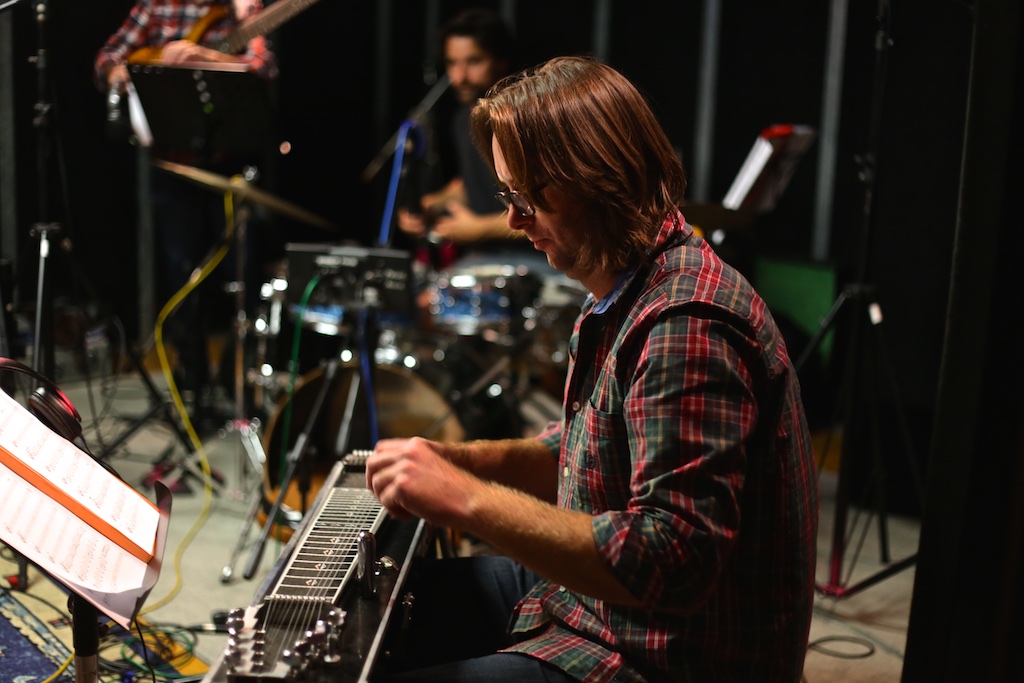
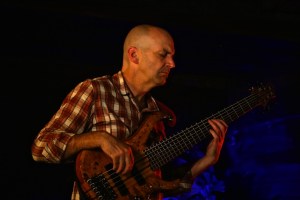
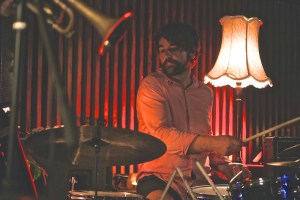
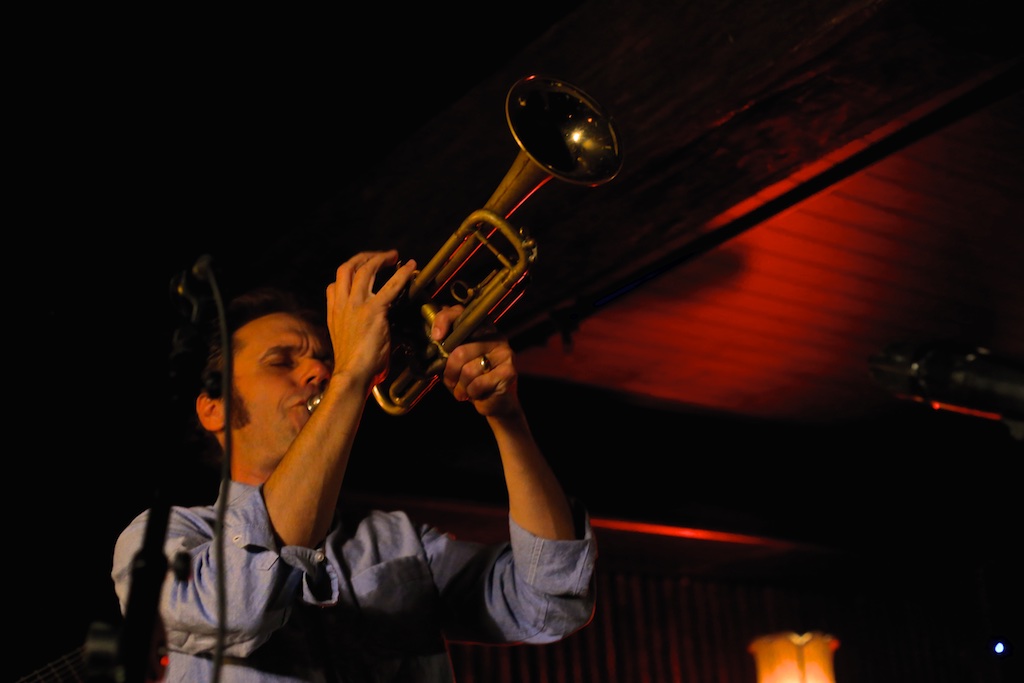
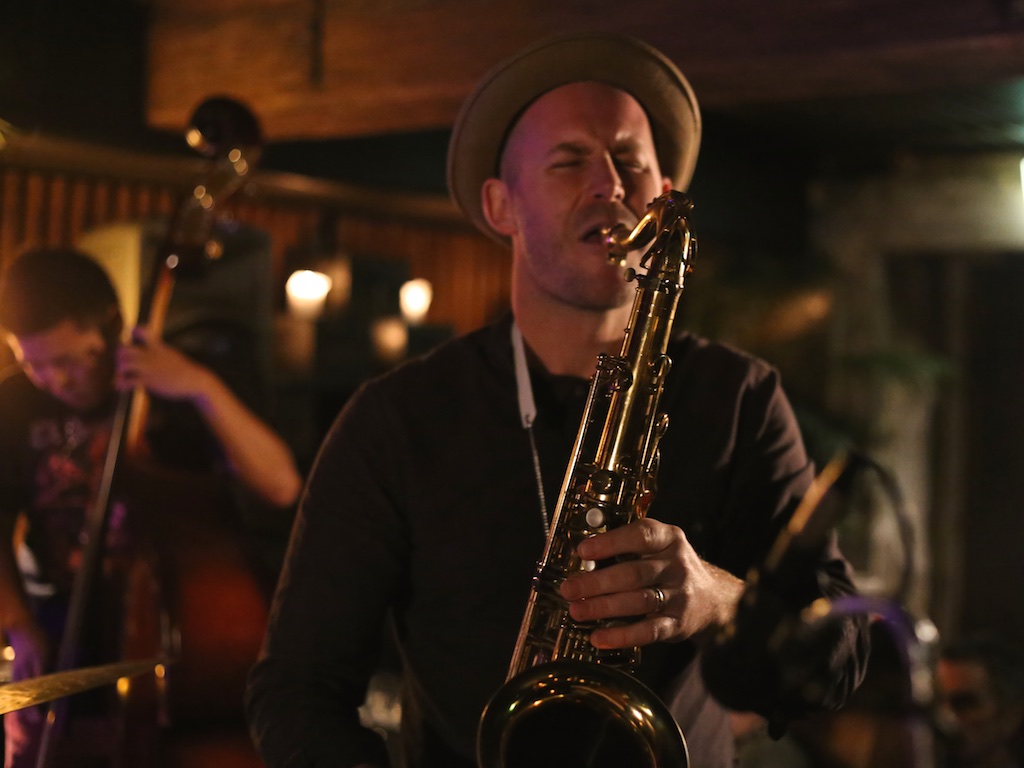
Who: ‘Harry Himself‘ is Kingsley Melhuish (trumpet, flugel, tuba, trombone, conch’s), Neil Watson (Fender guitar, Pedal Steel guitar), Sam Giles (six string e-bass), Ron Samsom (drums).

Where: CJC (Creative Jazz Club), Britomart 1885, Auckland, New Zealand 18th March 2015

The Circling Sun

Circling Sun 11-3-2014 063Any astronomer worth their salt will tell you that it is paradoxical for a sun to embark on a circular orbit. The last time this happened was during the Spanish Inquisition. On Wednesday the paradox increased when the Circling Sun departed their orbit to play at the CJC (Creative Jazz Club). This gig had been a long time coming and we welcomed it. Hearing them away from the babble of the hard-drinking Ponsonby Road crowd was a treat for us. The Circling Sun always give of their best, but this time we could hear the quirks and subtleties unfiltered. This is a band with a vast soundscape and the Jazz club echoed to the sounds of doogan, Tuba, analogue keyboards, digital keyboards, piano, trumpet, flugel horn, flute, tenor Circling Sun 11-3-2014 066saxophone, upright bass, drums and electronics. This is the type of music that sits well with me.
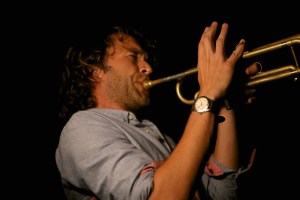
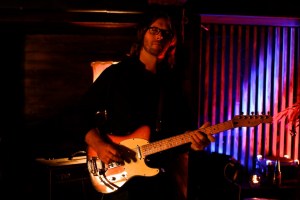
In spite of the name, the Circling Sun is not solipsistic. Not locked into an inwards gazing spiral. A dictionary definition tells us that Solipsism is a spiralling madness that no-one else can enter. Theirs is an inclusive madness of serendipitous happenstance. A band where personnel changes are as seamless as flowing water and where the only truly unchanging thing is the name. A band that can appropriate sounds and recreate them into new musical forms and all achieved without fear or favour. Another-world to experience.

The group cited influences as far-flung as Alice Coltrane, Yusef Lateef, Randy Western and Tom Waits. Although the link is possibly fanciful on my part, perhaps the influence Cosmic Jazz/Funk is present, an obscure genre close to my heart. They are chaotic, loose and free atCircling Sun 11-3-2014 074 times; then out of nowhere come tasty arranged melodic heads. Deftly extracted from the frequent mesmerising groove laden vamps.
Cameron Allen should be heard more often in settings like this. He is a gifted saxophonist and winds player with great musical ideas, often imparting a raw energy. He is also drawn to home-assembled electronic wizardry as many in this band are.  Finn Scholes on horns is another who doubles atypically (including tuba, keys and piano). He has recently been overseas and since returning I have seen him perform on a number of occasions.  His articulation is always interesting and he has a rich sound. Tinged with the vibrato of the mariachi trumpet. A sound which he owns and one that fits the bands vibe perfectly.  Circling Sun 11-3-2014 070

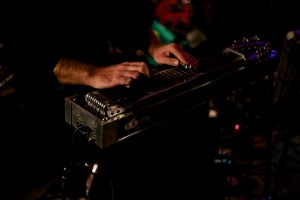
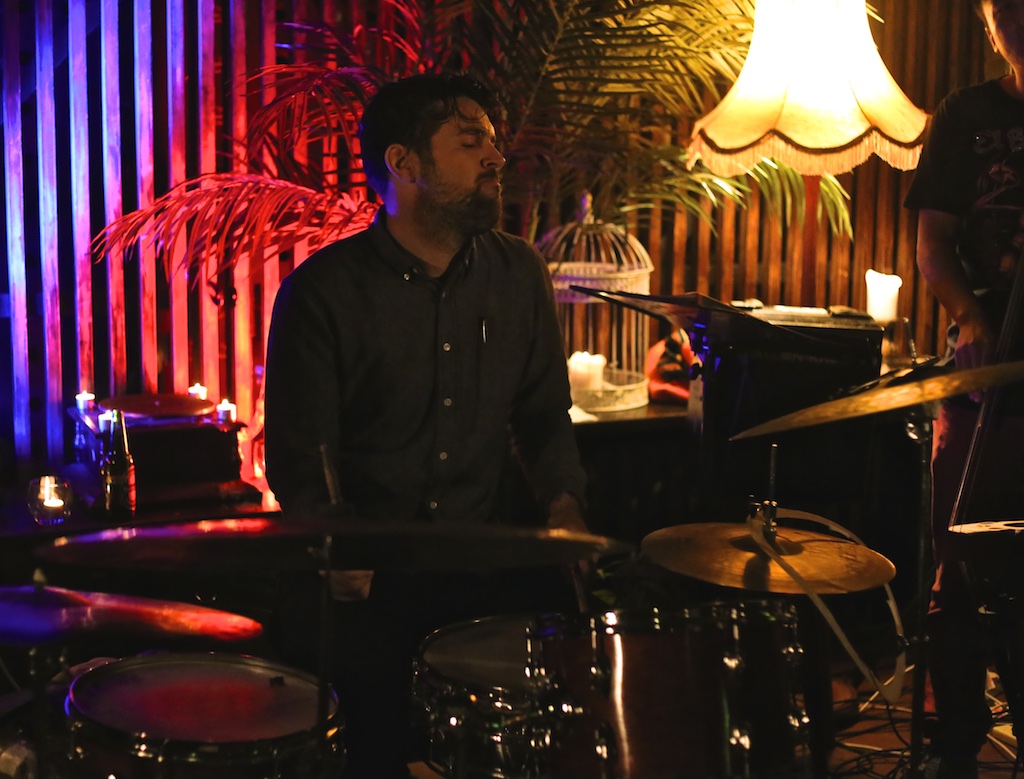
Neil Watson like Cameron Allen is a mainstay of this band. His classic fender, augmented lately by pedal steel guitar. The latter adding colour and texture and above all adding that warm embracing feel of country. Anyone who has followed Frisell’s journeys, fusing Jazz with country americana will get this. Rui Inaba on bass is often encountered with Watson and frequently in this lineup. Here he sits solidly at the heart of the storm, maintaining the rhythmic groove unfazed.  Circling Sun 11-3-2014 062The most powerful presence is drummer Julien Dyne. A versatile gifted artist who has travelled and recorded widely. His beats while often referencing his multi genre background, urge the band to greater heights. It is a privilege to see drummers of this calibre and I hope that he continues with open-ended Jazz projects like this. I have heard him on numerous occasions and I like what I hear.  As a unit, this combination takes no prisoners and the audience were glad of it. The first guest to join them was J Y Lee who quickly settled in on baritone saxophone. He often plays with the Circling Sun and is a popular addition.Circling Sun 11-3-2014 075During the second set a great gig got even better. Jonathan Crayford arrived and without too much persuading, sat in on piano. This was met with obvious delight by the audience, as Crayford is extremely popular. He knew none of the tunes as they were mostly originals and there was virtually no sheet music to guide him. It didn’t matter. Someone would announce the key and then a few chords in he would locate the heart of the tune. A musician of his experience and gifts is no stranger to situations like this. The audience, clearly wild about the gig, were by now whooping with enthusiasm between numbers. When Crayford sat in they felt like they’d won the lottery. He doesn’t get home often, but improvised music fans are eager to soak up what ever they can get of him.
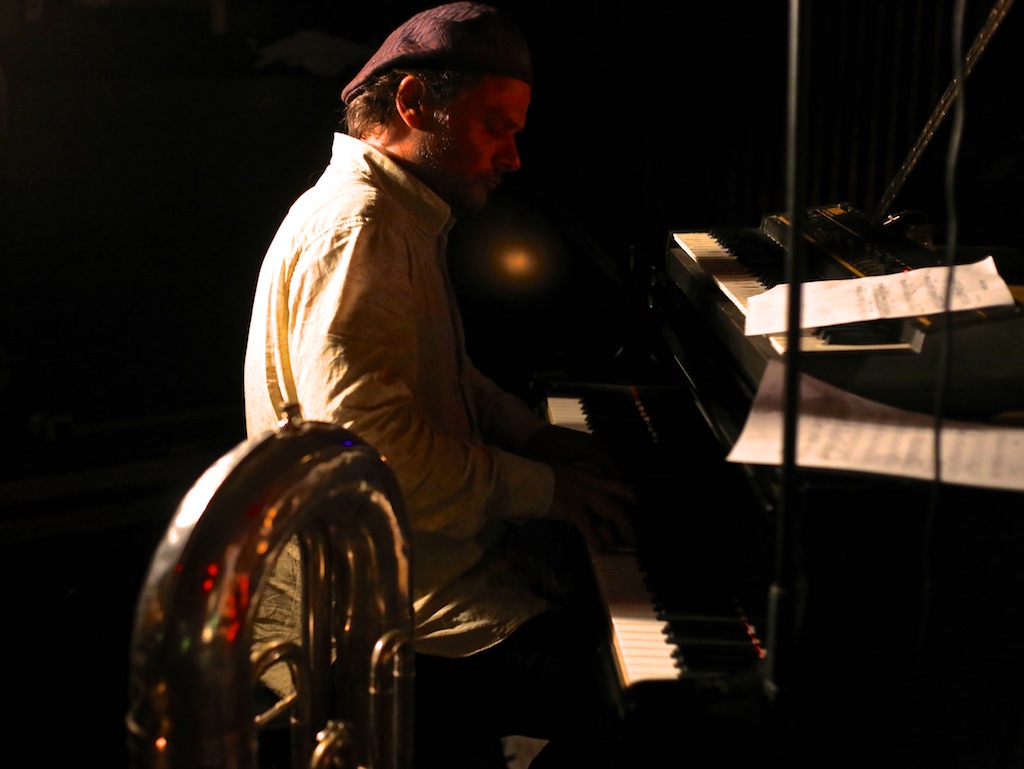
Who: Circling Sun – Cameron Allen (tenor sax, flute, keys, doogan), Finn Scholes (Trumpet, Flugel, tuba, Piano, Keys), Neil Watson (Fender guitar, pedal steel guitar), Rui Inaba (upright bass), Julien Dyne (drums, electronics) – guests: Jonathan Crayford (piano, keys), J Y Lee (alto sax, baritone sax).

Where: CJC (Creative Jazz Club), Britomart 1885, Auckland 11th March 2015

Tim Sellars ‘Mukhlisa’ @ CJC

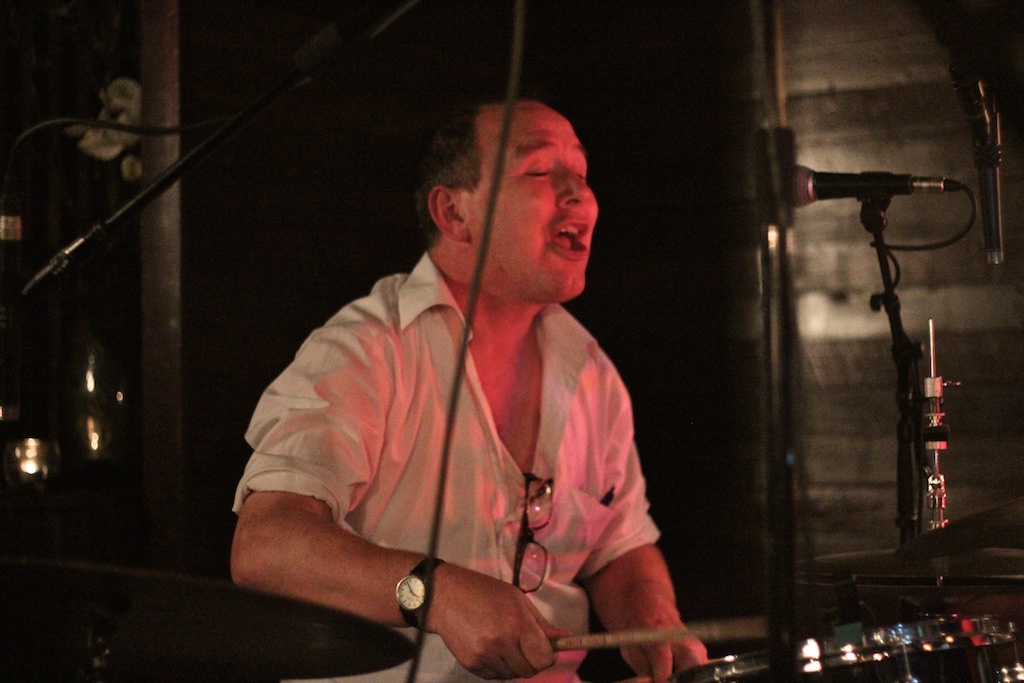
CJC Feb 5 2014 055I have long been drawn to middle eastern music, having commented on it in earlier blog posts. There are many reasons to like this rich musical stream, but what draws me are the interactions that occur when eastern and western improvised traditions meet in mutual respect. This is often labeled as World/Jazz, but implying that it is new hybrid is somewhat problematic.  Both improvised traditions have deep roots and a successful meeting acknowledges this. The blend of Jazz and middle eastern music is mainstream in the Mediterranean regions but not as well-known elsewhere.  Adventurous artists like Dhafer Youssef, Rabih Abou-Khalil and Anouar Brahem have gained prominence in the west through collaborations with the likes of Kenny Wheeler, Charlie Mariano, Steve Swallow, Tigran Hamasyan, Marcin Wasilewski and others. Jazz lovers in New Zealand and Australia have already experienced the ancient Sephardic music of Spain through Caroline Manins ‘Mother Tongue’ projects.  Also through Kiwi Jazz harpist Natalia Mann’s Turkish projects.  CJC Feb 5 2014 056 (1)Much of this music derives from the Sufi tradition but Sicilian and Flamenco Jazz fusions should not be overlooked either; both having rich Islamic and Jewish sources feeding them.  The Moors ruled Sicily for 400 years and southern Spain for 500 years.  Under the various Caliphates there was great religious tolerance and a spirit of scientific curiosity.  The arts and musical traditions merged and flourished in that benign space.
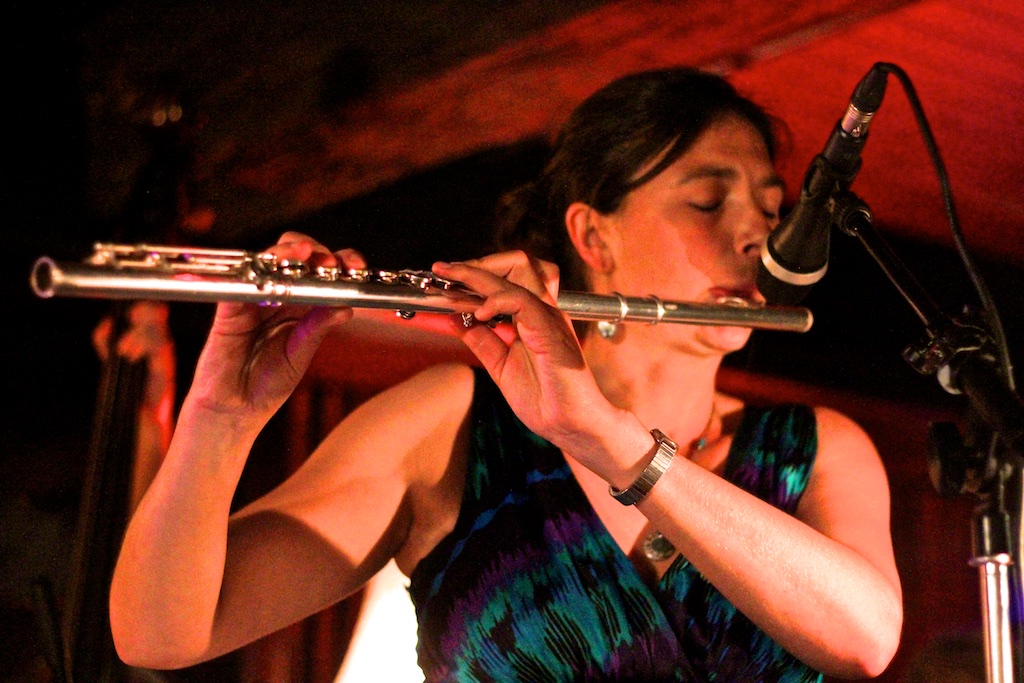
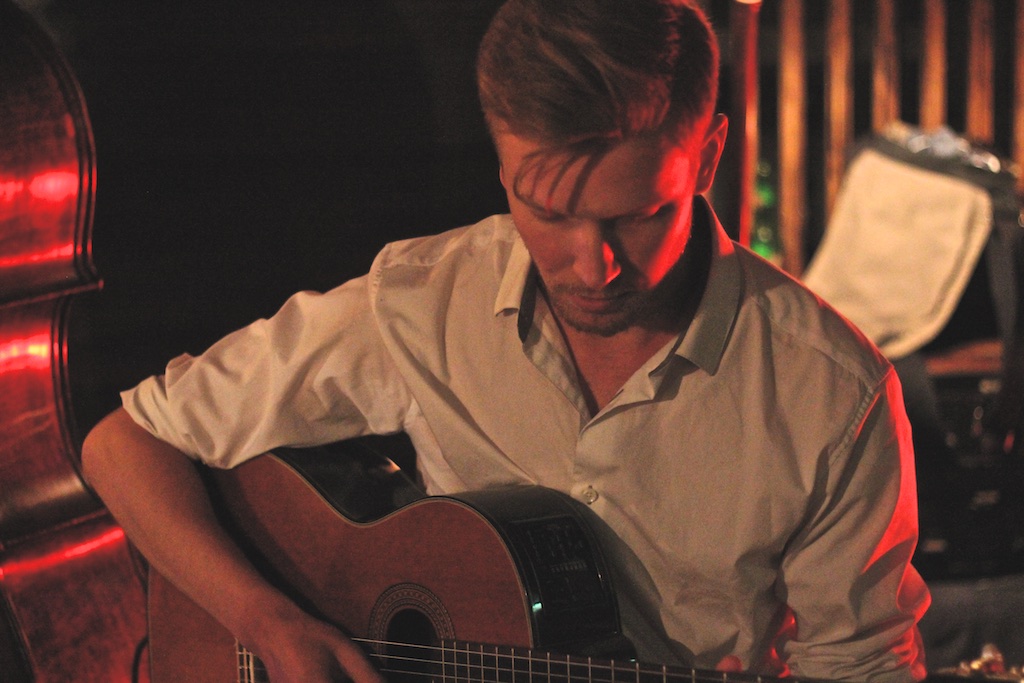
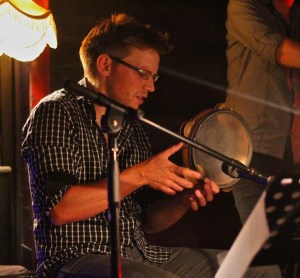
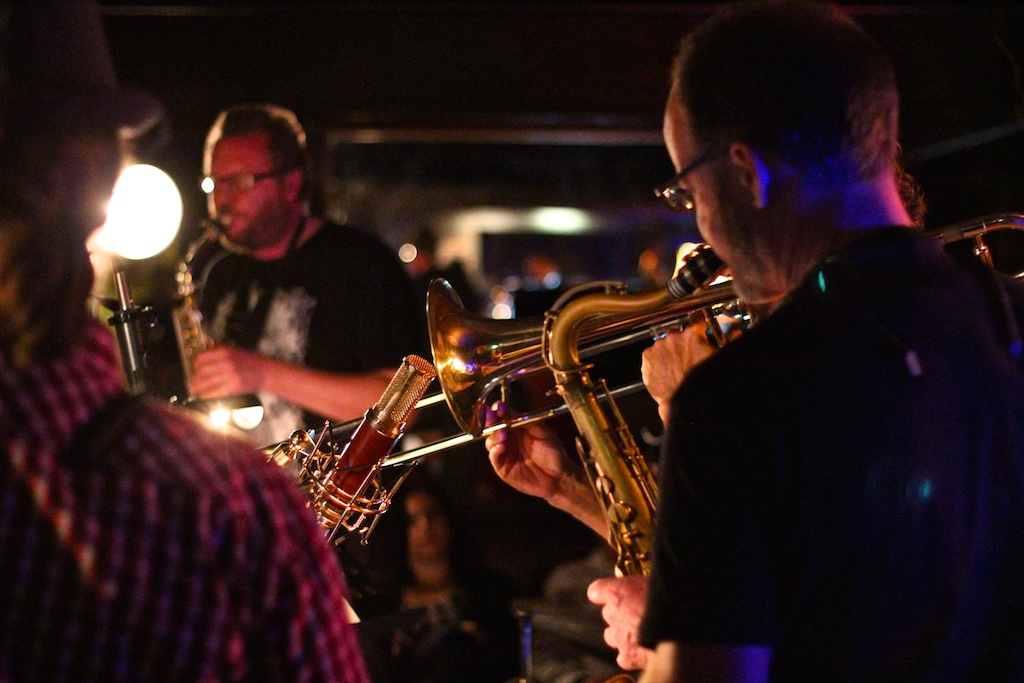
Tim Sellars is a drummer/percussionist who graduated from Canterbury University Jazz School with honours.  His studies led him to examine the rhythms and tunes of middle eastern music and he put together ‘Mukhlisa’ to further these explorations.  The Auckland line up features two artists who we are very familiar with, Glen Wagstaff on acoustic guitar and Tamara Smith on flutes.  For leader Tim Sellars, and for bassist Michael Story this was a first visit to the CJC.  Of the tunes chosen many were traditional but the largest number were by a modern writer of Middle Eastern music Joseph Tawadros.  His compositions fuse the traditional with Jazz and allow ample room for improvisation. CJC Feb 5 2014 061Watching Tim Sellars on percussion is eye-opening as he coaxes so many complex rhythms and sounds from his array of percussion instruments, that it beggars belief.  At times he used the Cajon (of African/Peruvian origin) but mostly he played frame drums (middle eastern). I love to hear the frame drum as it is the oldest instrument known to man. The genre includes the Riq (tambourine) which Tim played to perfection.  Being an amplified acoustic ensemble the sound worked well in the club space.  The guitar perhaps needed turning up a touch, to give it more bite. CJC Feb 5 2014 056Tamara was her usual impressive self and her control and mastery of the instrument was evident throughout.  She alternated between bass flute and alto flute; the tonal richness of both horns blending perfectly with the upright bass.  Bass player Michael Story understood the cues and worked with Tamara; resisting any impulse to overplay. Acoustic ensembles like this require discipline and subtlety; overly showy solos can dominate and obscure the filigree of woven sound.  Mukhlisa got that right and the solo work although appealing, was rightly subordinate to the overall integrity of the music. Glen Wagstaff is popular in Auckland and his charts for large ensembles have impressed club goers.  It was good to see him in a different context and many of us  eagerly await his album, which is due out in a month or so.
CJC Feb 5 2014 065 There is ample scope for a larger ensemble to grow out of this; perhaps one including arco Cello and Oud.
I am happy to see this music finding a home in New Zealand as it is a metaphor for a wider truth.  We are living through a troubled era when many western peoples are recoiling from Islamic images.  If they are only aware of conflict images or brutality then perhaps they are looking in the wrong places.  In this music resides harmony peace and humanity.

the composition is Phoenix by Joseph Tawadros.

Who: ‘Mukhlisa’ – Tim Sellars, Glen Wagstaff, Tamara Smith, Michael Story

Where: The CJC (Creative Jazz Club), Britomart 1885, Auckland 3rd February 2015

The Troubles @ CJC 2014

IMG_3891 - Version 2

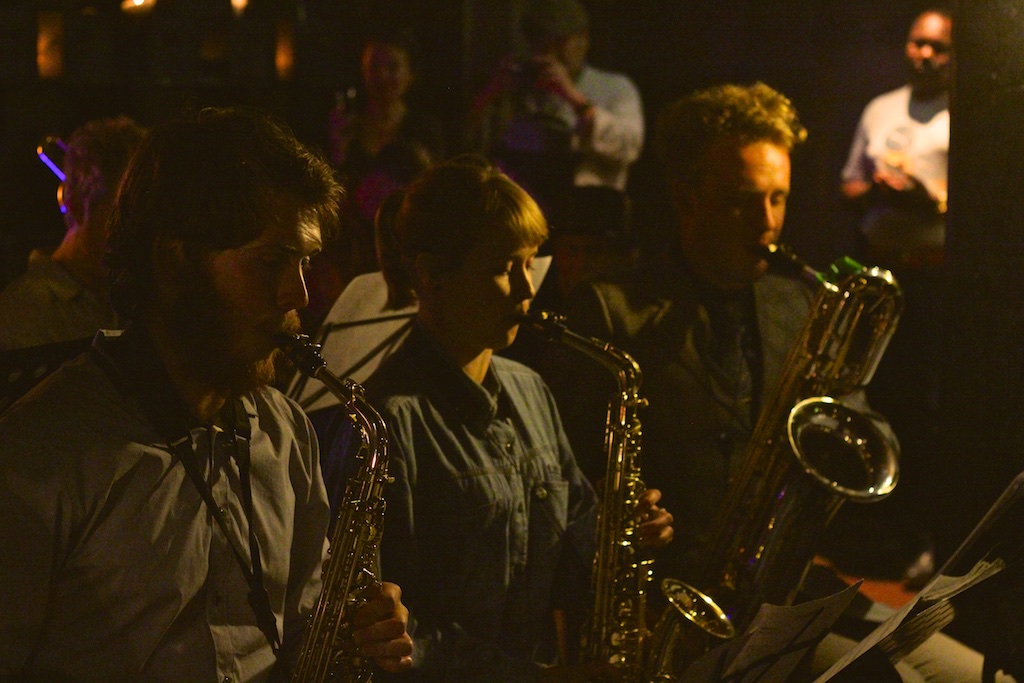
‘Troubles’ come in many forms and what a proliferation of ‘Troubles’ we have seen in Auckland. In mid 2012 we saw a nonet replete with a sizeable string section (and clarinet). Earlier this year at the Auckland Jazz Festival we saw a septet (strings, no clarinet and with Roger Manins on tenor saxophone as guest artist).  By Wednesday December 10th 2014 all trace of rosin was purged and the sweet sounds and fresh faces of the front line string section replaced by three tall bearded men clutching saxophones (and a shorter clean-shaven trumpeter).  This was a bold and brassy line up; a weightier manifestation, delivering anarchic messages from darker corners.  IMG_3877 - Version 2This was too good an opportunity not to record and Rattle did just that.  Capturing chordal instruments in a space like the CJC is challenging as the sound has a number of hard edges to bounce off.  Recording a live performance of this particular brand of ‘Troubles’ might work well.  IMG_3883 - Version 2Guiding the proceedings with his well-known brand of anti-establishment megaphone diplomacy was ring master John Rae, ‘Troubles’ co-founder.  He shepherded the ensemble through a constantly shifting landscape. His effervescent flow of joyous and often irreverent cries only stemmed by Patrick Bleakley’s timely interjections.  Rae is the supercharged engine room, but Bleakley is clearly the anchor.  Like Rae he’s an original member.  IMG_3872 - Version 2With this Auckland horn section in place, a new front had opened and the tweaked charts took maximum advantage of that. On baritone was Ben McNicoll and his presence gave the sound added bottom. Roger Manins, who had stunned us with his wild death-defying solo’s at the Troubles Portland Public House gig was on tenor again.  Jeff Henderson took the alto spot and that was a significant addition. His ultra powerful unblinking delivery was the x-factor.  Unafraid of repeated motifs but able to negotiate the music without ever resorting to the familiar. That is the Henderson brand, original clear-cut and uncompromising.  In no way diminished by the powerful reed instruments surrounding him was Kingsley Melhuish on trumpet. Melhuish has a rich burnished sound and like the others, he is no stranger to musical risk taking.  IMG_3869 - Version 2Together they evoked a spirit close to the earlier manifestations of the Liberation Jazz Orchestra. Not just the rich and at times delightfully ragged sound, but the cheerful defiance of convention and discarding of political niceties.  Rae’s introductions were gems and I hope some of them survive in the recording.  He told the audience that it had been a difficult year for him. “It was tough experiencing two elections in as many months and in both cases the got it woefully wrong” (referring to the Scottish referendum and the recent New Zealand Parliamentary elections). “there are winners and losers in politics and there are many assholes”.  IMG_3890 - Version 2It wouldn’t be the ‘Troubles’ if there wasn’t a distinct nod to some of the worlds trouble spots or to political events that confound us.  I have chosen a clip ‘Arab Spring Roll’ (John Rae), a title which speaks for itself.  Following the establishment of a compelling ostinato bass line, the musicians build a convincing modal bridge to the freedom which follows.  Chaotic freedom is the perfect metaphor for the ‘Arab Spring’ uprising. The last number performed was the ANC National anthem and as it concluded, fists rose in remembrance of the anti-apartheid struggle.  It is right that we should celebrate the struggles for equality, but sobering to reflect on how far we have to go. The Troubles keep our feet to the flame, while gifting us the best in musical enjoyment.
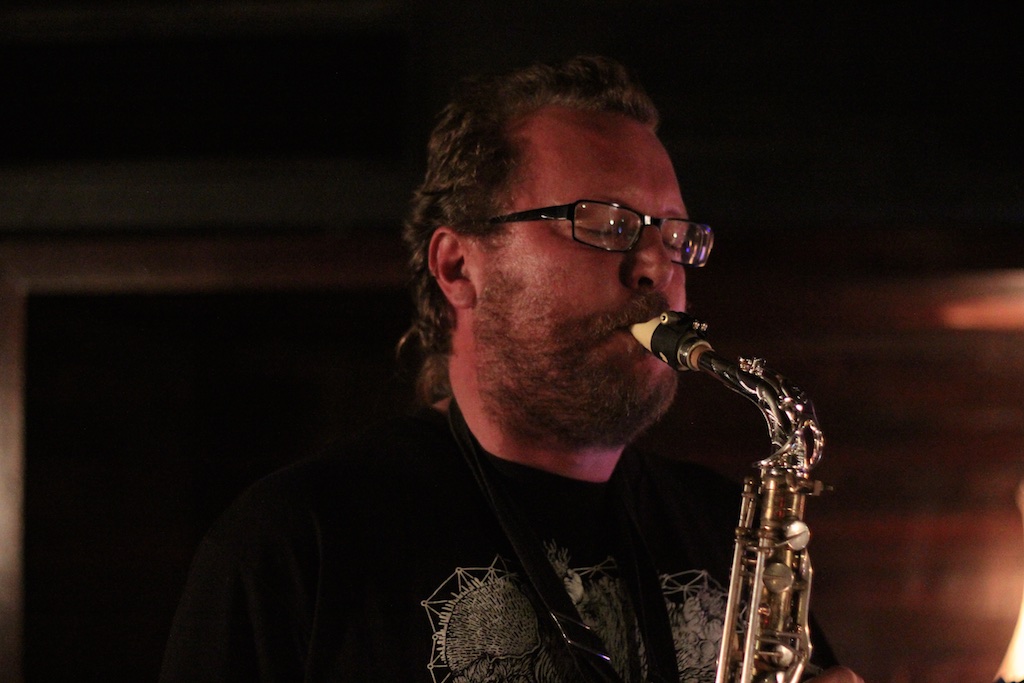
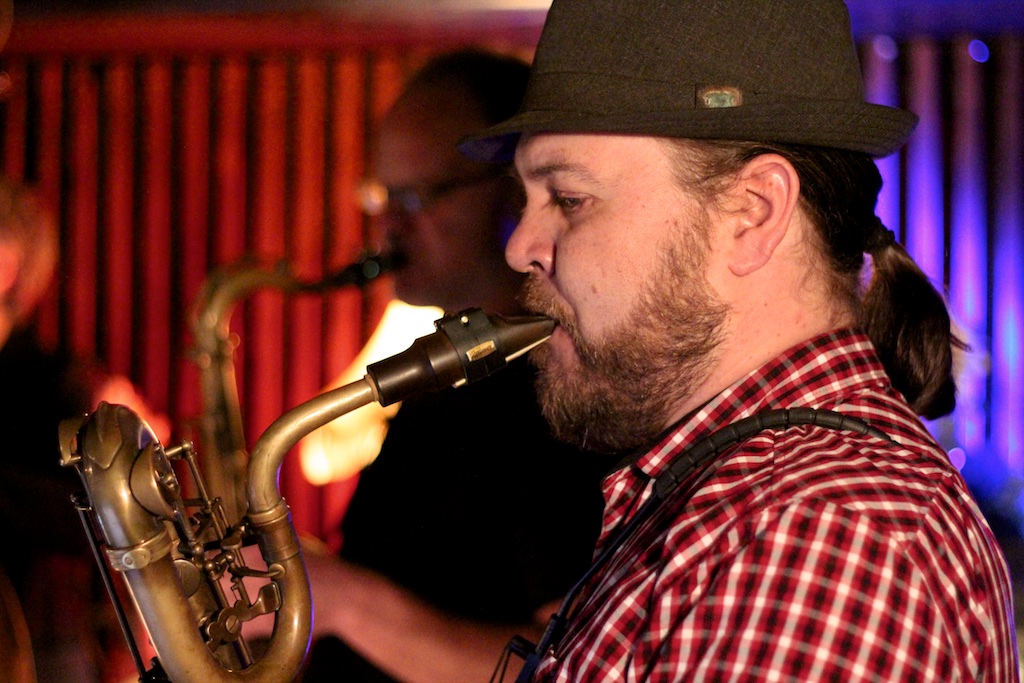
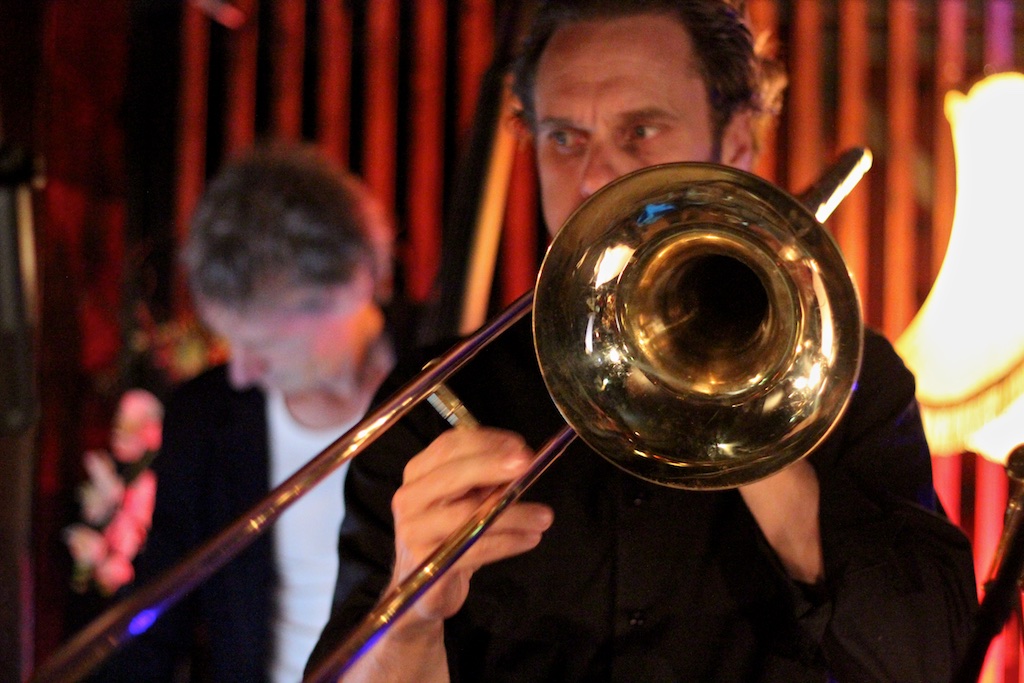
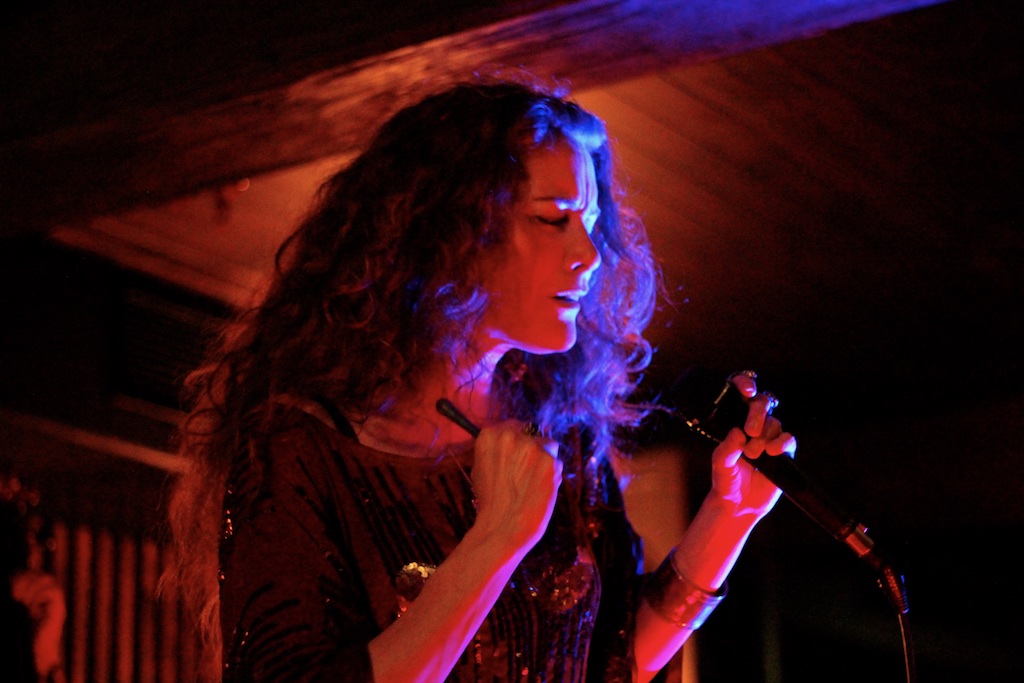
What: ‘The Troubles‘ – John Rae (drums, compositions, exaltation), Patrick Bleakley (bass, vocal responses), with Roger Manins (tenor sax), Jeff Henderson (alto sax), Ben McNicholl (baritone sax), Kingsley Melhuish (trumpet, Trombone).

Where: CJC (Creative Jazz Club), Britomart 1885, Auckland New Zealand, 10th December 2014

Caitlin Smith 2014

IMG_3770 - Version 2Caitlin Smith is a vocalist who can quickly put a smile on your face or shamelessly tug at your heart-strings.  She always finds a way to connect her audience to the essence of a song; deftly locating that illusive sweet spot.  While there is often power in her delivery, there is also remarkable subtlety. You could describe her voice in many ways; pitch perfect, having an almost operatic range, but there is much more to Smith than chops. In the parlance she owns each song she sings and embeds it with a uniqueness.  Like a seasoned saxophonist she tells beguiling stories in a distinctive way.  IMG_3756 - Version 2There is a well-worn cliché that vocalists hog the limelight and in truth many go through their careers with barely a reference to the musicians that they work with. Caitlin Smith is the opposite. You are left in no doubt that her gigs are a shared project as she interacts with band and audience, picking up on every nuance from either.  She works with a band as a vocalist should and she is comfortable giving them space to solo. There is a generosity of spirit about her persona and this manifests in the music.  I have also witnessed her solid support for emerging artists.  The ultimate litmus test for me, is that gifted improvising musicians enjoy playing in Caitlin Smith lineups.  IMG_3762 - Version 2While Smith is widely acknowledged as a gifted singer-songwriter, it is her Jazz repertoire that is turning heads of late.  Her performance with the AJO at the Tauranga Jazz festival won her many new fans.  She is a wonderful interpreter of Jazz standards and this aspect of her repertoire deserves critical attention. Her vocal gifts and incredible musicality thrive with this space; of particular note is the delightful way she plays with lyrics.  IMG_3776 - Version 2 (1)Smith is a natural performer and there is something wonderfully theatrical and engaging about her stage presence. This gives her gigs an added spark of life.  On Wednesday she included some of her own compositions like the beautiful ‘In between’, but the audience was particularly wowed by her take on jazz standards such as Ellington’s ‘I like the sunshine’.  I have heard her sing Ellington and Strayhorn at other gigs and I am always impressed by the way she freshens these standards up.
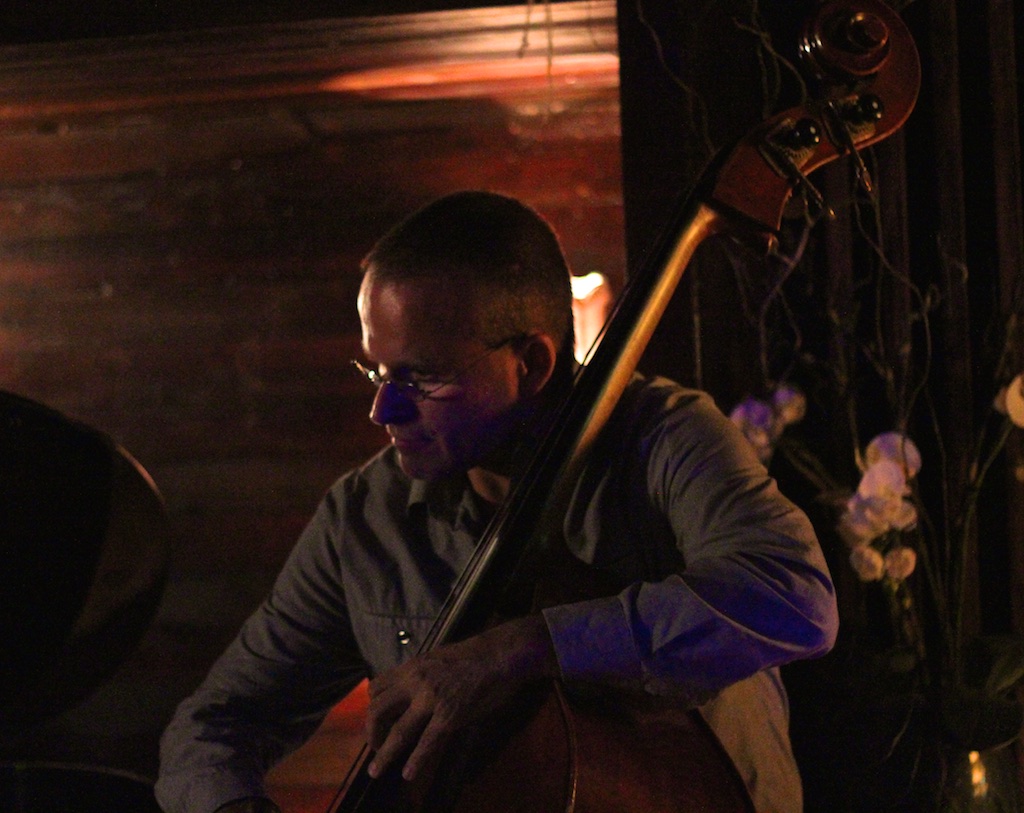
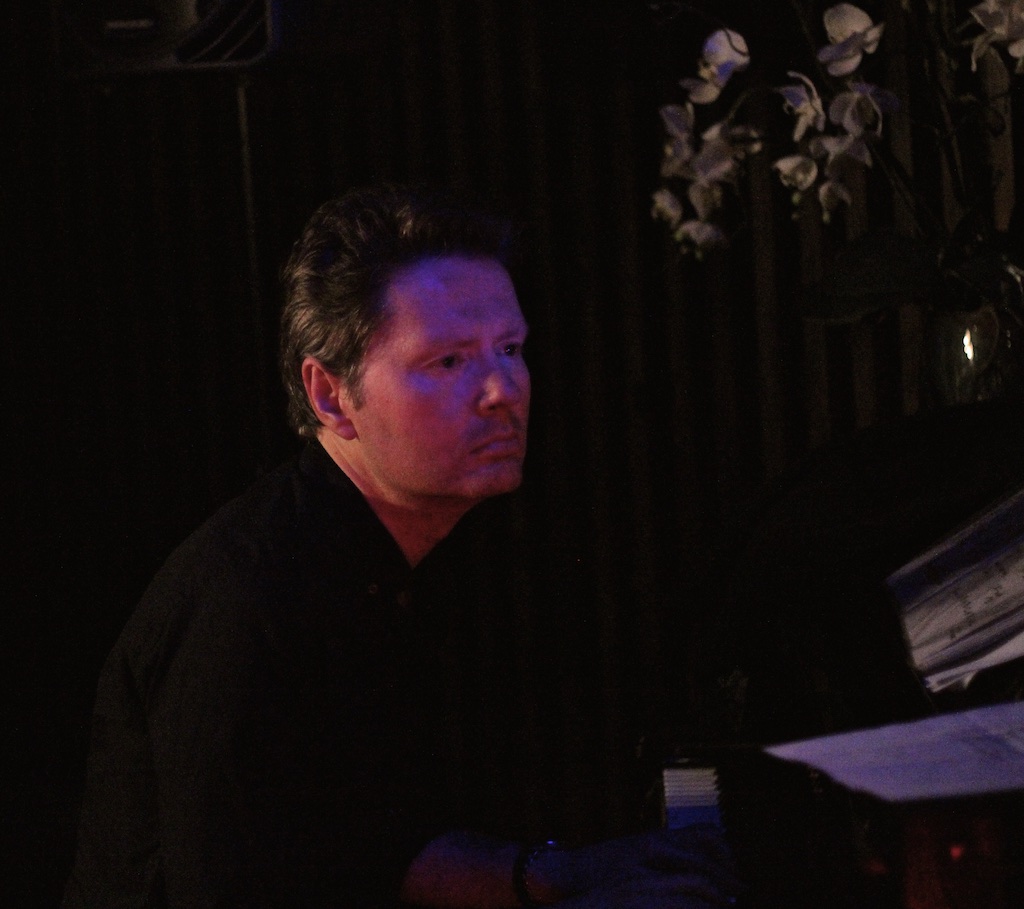
Her innate ability to carry off the more difficult of the Ellington/Strayhorn song-book tunes is beyond question. ‘Lush life’ in particular requires real vocal skills to pull it off well and her interpretation is flawless. This affinity cries out for her to record the material.  It would be great to see an Ellington album someday; accompanied by the Kevin Field Trio, alternating with the AJO. IMG_3749 - Version 2Another song from a different genre was ‘River’ (Joni Mitchell).  This classic Mitchell song was recently reinterpreted by Herbie Hancock and Wayne Shorter.  As Smith delivered her version she phrased it in such a way that I could hear those elided Shorter fills in my head.  Her delivery was crystalline and it brought her two worlds together perfectly.
Who: Caitlin Smith (vocals, arrangements), Kevin Field (piano), Oli Holland (bass), Ron Samsom (drums) (acknowledgement to Dennis Thorpe for the River video)

Where: CJC (Creative Jazz Club), Britomart 1885, Auckland, 3rd December 2014

Wellington Mingus Ensemble visits Auckland


IMG_3660 - Version 2

Mingus was the Rabelais of Jazz.  An eccentric humanist who used his musical vocabulary to portray the realities of life as he knew it.  A world filled with great sorrows, blunt speech and joyous abandon; excessive emotions measured in equal portions. Often troubled, frequently combative, but always inspiring.  He brought something unique to improvised music. An ability to impart that Rabelaisian quality, and this was the genius of the man.  IMG_3664 - Version 2  

When the Wellington Mingus Ensemble came to town the essence of Mingus came with them. In showcasing his music they demonstrated that they understood the most important thing: the spirit underlying his music. The cries of delight when at particular phrases and the shouts of exaltation echoing through the sets, a collective sense of engagement, each exhorting the other on. This unerring wild enthusiasm gave the music a power that took it free of the charts.  Mingus pieces are invariably greater than the sum of their parts.  IMG_3680 - Version 2

The set list took us on a high-octane Mingus fuelled journey, with the familiar politically charged ‘Fables of Faubus’ and ‘The shoes of the fisherman’s wife are some jiveassed slippers’, bookended by his lessor known tunes.  There are no poor compositions in the Charles Mingus’s songbook. The Ensemble (a sixteen piece band) is punchy, ebullient and confident. This sense of shared enterprise fed into the solos, as the support was always there. The bass work was particularly noteworthy as Mingus styled bass lines are quite unlike any others. Big ups to the baritone player as well, for making a unwieldily beast sing so heartily.

IMG_3676 - Version 2

Charles Mingus occupies a unique place in the Jazz Pantheon and in Mingus bands like this, he has left us with a legacy which thankfully shows no sign of abating. His legacy is an interesting one and different to that of most Jazz musicians. While a Miles or a Bird tribute band will often be at pains to put distance between themselves and the original for fear of comparison, a Mingus tribute band will unashamedly embrace that Mingus feel. There is a rightness about this approach to Mingus, because what at first appears tangible has hidden corners.  There is always a mysterious looseness which leaves you thinking.  I’ve listened to this piece a hundred times before, but it always sounds different.  IMG_3634 - Version 2

This is a great legacy for musicians and fans alike.  He leaves behind so much more than his recorded output; it is as if these Mingus charts are inexhaustible.  The music is full of contradictions; profoundly gospel-referencing passages, dripping with soul are suddenly overtaken by a brassy cacophony on the edge of free.  Anyone who has listened to his Magnum Opus  ‘The Black Saint and the Sinner Lady’ or ‘The complete Town Hall concert’ (with Dolphy, Collette, Mariano, Sims and many others) will get this immediately. For Mingus-loving musicians, the desire to grab a piece of this quirky magic is overwhelming.  The Wellington Mingus Ensemble has achieved that in spades.


What: The Wellington Mingus Ensemble

Saxes: Bryn van Vliet, Eilish Wilson, Jake Baxendale, Garam Jung, Oscar Laven Trumpets: Ben Hunt, Michael Costeloe, James Wisnesky, Daniel Windsor  Trombones: Kaito Walley, Cameron Kidby, Julian Kirgan, Patrick Di Somma        Piano: Ayrton Foote,  Double Bass: Adrian Laird,  Drums: Jacob Randall

Where: CJC (Creative Jazz Club), Britomart 1885, Auckland, New Zealand 26th November 2014


Glen Wagstaff + AJO (Auckland Jazz Orchestra)

IMG_3612 - Version 2

Christchurch resonates strongly with Kiwi’s from elsewhere, but the images we bring to mind are fused realities. The best of colonial Victorian architecture, a fading Englishness; blurring into an empty post-quake wasteland or an alpine framed Hiroshima.  Behind the rubble the city’s creative life has continued unabated. This is not about ‘defiant resilience’ or any of those other overused phrases. Creative artists create no matter what the circumstances and no errant fault line can dislodge that force.  It is about being human and it is about the inner life of a city.  Improvising artists are among the best placed to tap into this wellspring.  IMG_3620 - Version 2

With that rich southern burr in his speech, Glen Wagstaff is clearly from the mid to lower South Island.  Like other Jazz musicians from Christchurch he has impressive skills. The Christchurch Jazz School has done well by us, especially evidenced in the fine musicians emerging.  I first heard Wagstaff in 2013 when he came to Auckland with his Christchurch octet.  I was impressed then; even more so now.

The number of New Zealand musicians who write or arrange big band charts is relatively small and there are good reasons for this.  It is time-consuming and very hard work.  To have a younger musician writing so well and to be so adventurous is unusual.  There are two clear influences on Wagstaff’s writing and these are the late Kenny Wheeler and the Brian Blade Fellowship band.  I am a big fan of both and these musicians are evoked in the charts. Similar in style maybe, but with a strong Kiwi focus. While the above influences are detectable, Wagstaff is developing a unique voice.  A voice that imparts a strong sense of place.  Mountains, clear skies, wide-vistas and textured landscapes.  IMG_3602 - Version 2

His small ensemble work puts you in mind of a larger ensemble, while his orchestral work has sufficient space to imply the opposite.  The style (like Wheeler’s) is airy and textured with strong melodic hooks.  In spite of the dark tinged corners, the pieces impart warmth.  IMG_3617 - Version 2

The other part to Wagstaff is his solid guitar work.  This was especially evident during this gig. The ringing clean tone and the strong well paced lines could blend with the orchestra when appropriate.  At other times the guitar led strongly.  Whether as composer or guitarist, Wagstaff was in command.  I have rendered a clip of his composition ‘Firefly’ and the music speaks for itself.  Nothing further I could write could add or detract from this extraordinary piece of music.  IMG_3603 - Version 2

The AJO was a good choice as they are a capable Jazz orchestra.  What they need most are more challenges like this. These charts were not the easiest and the rehearsal time was brief.  What they managed in this narrow window was entirely creditable.  It would be nice to see them record something like this and I believe that they have just such a project coming up with Tim Atkinson’s suite (to be recorded shortly).  Conducting the AJO was Tim Atkinson while Mike Booth (trumpet) and Andrew Hall (alto, soprano) took the main solos.  Matt Steele’s piano worked beautifully with Wagstaff during the guitar dominant passages.

In the octet were: Glen Wagstaff (guitar), Matt Steele (piano), Richie Pickard (bass), Ron Samsom (drums), Andrew Hall (reeds), Mike Booth (trumpet), Ben McNicholl (tenor saxophone), Glen Bartlett (trombone),  The rest of the AJO were; Jo Spiers (trumpet), Oliver Furneaux (trumpet), Mathew Verrill (trumpet), Mike Young (trombone), Darrell Farnley (trombone),Michael Tidbury (trombone) David Edmundson (tenor) Andrew Baker (baritone) Trudy Lile (Flute), Callum Passells (alto, soprano).

More of this please Glen Wagstaff.  IMG_3600 - Version 2  

What: Glen Wagstaff + AJO (Auckland Jazz Orchestra)

Where: The CJC (Creative Jazz Club), Britomart 1885, Auckland, New Zealand 19th November 2014


Nick Granville (with Dixon Nacey)


IMG_3532 - Version 2

Nick Granville’s return to the CJC was long overdue and the fact that he’d invited local favourite Dixon Nacey to join him made this an extra welcome return.  Granville is one of the busiest and most versatile guitarists in New Zealand.  Although a Jazz guitarist, he is just as likely to appear with the New Zealand Symphony Orchestra (the recent Dr Who tour), on TV, with visiting pop idols or touring beside visiting jazz royalty like Joey Defrancesco.   He’s a prolific recording artist, widely travelled and always in demand.  Dixon Nacey is also extremely well-known.  He has been absent from the club recently; touring the Pacific rim and gaining new fans wherever he goes.  Dixon is a real crowd pleaser.

IMG_3526 - Version 2

It is not often that we get two guitars in a quartet gig at the CJC and when the guitarists are Granville and Nacey it is a twelve stringed celebration.  When two guitarists play together, each needs hyper awareness of what the other is about.  Jazz guitar collaborations tend to fall into two camps; either they work extremely well or the musicians crowd into the same space.  These men are masters of their instruments and it was evident from the start that they knew instinctively when to play, comp or lay out.  The cross talk and the support was there without compromising the others space.

IMG_3513 - Version 2

Although there was an upbeat Scofield number and a very engaging Pat Metheny number, the gig gave a distinct nod to the traditional.  It was certainly not the material, as there were no standards; it was the approach.  Most of the compositions were contemporary originals but both guitarists bop roots were on show.  There is appropriateness to that when you consider the bench marks.  To my ears the twin guitar gold standard occurred in 1974 with Joe Pass and Herb Ellis on their ‘Seven to Eleven’ (Jake Hanna and Ray Brown rounded out that quartet).

IMG_3542 - Version 2

Granville is an Ibanez artist and Nacey a Godin artist.  In juxtaposition, under the lights, the gleaming instruments glowed as if in a beauty contest.  A preening mass of highly polished wood tones.   These instruments are things of great beauty and to see them and hear them together is a treat.   In the hands of these two guitarists even more so.  There were a number of Granville’s compositions played during the night but the second up; ‘Somewhere I’ve been’  (which is Granville’s reharmonisation of Shorter’s ‘Footsteps’) burned and crackled with unimaginable energy.   This set us up well for the evening, as we progressed through further compositions by Granville, Nacey, Samsom, plus a Scofield and a Metheny number.   I managed to capture Metheny’s  ‘Question & Answer’ and I have posted it.   This clip speaks well of the musicianship and the genuine interaction between the two guitarists.  IMG_3533 - Version 2

IMG_3529 - Version 2

On bass was Oli Holland and he is in perpetual good form.  With his Doctorate now completed we can expect to see more of him on the band stand.  Ron Samsom on drums played with fiery enthusiasm.  It is always a pleasure to hear Samsom and especially to hear his compositions.  That said, the icing on the cake was catching a photograph of that fleeting signature snarl.  This illusive manifestation of ‘drum face’ occurs all too rarely and only when Samsom digs deep.   I am a great believer in drum face as it often presages rhythmic riches.

Who: Nick Granville (guitar), Dixon Nacey (guitar), Oli Holland (bass), Ron Samsom (drums)

Where: CJC (Creative Jazz Club), Britomart 1885, Auckland, New Zealand, 12th November 2014

Sandhya Sanjana @ the CJC


IMG_3466 - Version 2

If you patrol the margins of the music world you will find inestimable treasures.  Beyond the notice of mainstream media and mainstream audiences there is a joyous revolution underway.   Not an austere revolution but one peopled by astonishing musicians, colourful characters and sonic explorers.  Like a good street protest, it is often bubbling with noise, insistent beats and a multiplicity of messages.  Last Wednesdays gig epitomised that.  The alternative music scene is often denigrated for its imagined ‘high brow’ complacency or its snobbish rigidity.  In this regard the Jazz police and lazy uninformed commentators have done improvised music a grave disservice.  Improvised music has been with us since the beginnings of art and the whole point of it is to shift the focus away from the mundane or the obvious.  The appropriation and assimilation of traditional forms is only a staring point.  Sandhya Sanjana and her gifted ensemble took the shamans path here; conjuring shapes and colours from the ether, re-harmonising, daring us to look at the familiar and the exotic from an entirely different vantage point.  This night cut right to the heart of improvised music.  Different worlds merged and they did so without compromising the integrity of the traditions they came from.  IMG_3487 - Version 2

This was World/Jazz singer Sandhya Sanjana’s night but we have Auckland’s Ben Fernandez to thank for organising the gig.  I had not heard Fernandez play before this, but had long been aware of his reputation as a gifted, successful and multifaceted pianist.  Some months ago he invited me to his ‘Raag time’ fusion gig, but sadly I was unable to attend as I was heading out-of-town.  Later he messaged me to say that he would teaming up with Ms Sanjana in November.  Gigs like this are irresistible to me as I am enthusiastic about all of the great improvised music traditions.  The merging of these traditions has risks, but done well it’s marvellous.  The successful assimilation of middle eastern rhythms and the idioms into Jazz has long been achieved in Europe.  Fusions of traditional Indian music and Jazz are now emerging across the globe and those with an open mind and the right ears are the happy beneficiaries.

IMG_3467 - Version 2

The band members were; Sandhya Sanjana (vocals, leader), Ben Fernandez (piano), Jim Langabeer (flute, reeds), Manjit Singh (tabla & vocals), Jo Shum (bass), Jason Orme (traps drums).  Anyone familiar with the Auckland Jazz scene and the Indian music scenes will know what a great lineup this is.

IMG_3495 - Version 2

Sandhya Sanjana is from Bombay, but based in Holland these days (Ben Fernandez is a Kiwi but he also hails from Bombay).  She has performed with the greats in the World/Jazz field like Alice Coltrane and Trilok Gurtu.   She has an easy confidence about her that informs her performance and under her guidance a seamless fusion of styles occurs.  With Fernandez you get another strong influence as he imparts a distinctly Latin feel.  This classical and Jazz trained musician has chops to burn.  Out of this melange of rich influences a vibrant new music emerges.  It is compelling and exciting to hear.  There is a constant visual and sonic interplay between singer, tabla, traps drums, piano, bass and reeds (winds).  The shifting rhythms creating intricate cycles that pulse and swing.

IMG_3464 - Version 2

Manjit Singh, originally from the Punjab is another Auckland resident and he is an acknowledged master of the Tabla and of Indian music.  I am often reminded of what a rich and diverse drum landscape we have in Auckland.  A world that I am still coming to grips with.  This man is a major talent and it is our good fortune that he is making forays into the Jazz/fusion music scene.  On traps was the veteran drummer Jason Orme and he was well-chosen.  The gig required a drummer who could play quietly but strongly and one who had the subtlety to interact with Singh.  On bass was Jo Shum who has not played at the CJC for some time.  She is an aware bass player and acquitted herself well.   Lastly was the reeds and winds player Jim Langabeer.  Langabeer is well-respected on the New Zealand scene and is one of a select group of doubling reeds musicians who are equally strong on flute (and he swings like a well oiled gate).   This gig had an embarrassment of riches and once again Roger Manins gets a big tick for his innovative programming.

IMG_3483 - Version 2

In the You Tube clip that I have put up, the breadth of Sanjana’s influences are immediately evident.  After a few bars of latin feel on piano we hear a Tala.  I know very little about the technical aspects of traditional Indian music but the rhythmic patterns (or Tala) are generally established early on.  This can also include a vocalised manifestation of the Tala rhythms.   Manjit Singh the Tabla player counted in the Tala and Sanjana responded with Mudras, claps and vocals .  The traps drummer and others responded to the patterns and so the piece built upon itself.  If done well, cross fertilised music is like water; it will soon find its own level.  This did.

Who:  Sandhya Sanjana (vocals, compositions, leader), Ben Fernandez (piano, arrangements), Jim Langabeer (winds & reeds), Jo Shum (bass), Manjit Singh (Tabla & vocals), Jason Orme (traps drums).

Where: CJC (Creative Jazz Club), Britomart 1885, Auckland, New Zealand.  5th November 2014

Trudy Lile @ CJC 2014

IMG_3094 - Version 2

Trudy Lile is always in demand whether it’s cruise liner gigs, winery gigs or bar and club gigs.  Last night she was at the CJC with Kevin Field on piano, Cameron McArthur on bass and Ron Samsom drums.   This particular quartet is a regular lineup for Lile and it is hardly surprising.  Musicians like this are a gift to a leader, as each of them has pulling power, but they operate as a high functioning unit when together.   Lile is also an energetic and engaging performer and the enthusiasm she radiates is always evident in her music.

IMG_3111 - Version 2

As a singer/flutist Lile often favours standards or latin material, as these suit voice and flute so well.   She still surprises though with appealing lessor known tunes or sometimes popular tunes which lend themselves to wider explorations under her coaxing.  She is keen on finding new standards from the latter and we often hear material from sources not usually tapped by improvising musicians.   This use of popular material is becoming more commonplace and another recent example of this was Benny Lackner opening with a number from the latest Bowie album.   Lile also brought some interesting new compositions to the gig.    IMG_3140 - Version 2

The clubs audience numbers could have been better during the last month, perhaps they were saving for the festival,  but Lile being a true professional worked the room and fed off the interaction.   She has an abundance of charm, humorous banter and above all musicality.   The band responded to her lead with enthusiasm, amping up their performances to match hers.   Kevin Field is the sort of pianist who understands the accompanists role, comping sparingly at times and launching into heart stopping solos at others with McArthur and Samsom responding to each nuance.   I have posted a clip from the gig which is a favourite of Lile’s.  An Eliane Alias number titled ‘An Up Dawn’ from the album ‘The Three Americas’.

IMG_3123 - Version 2

Footnote: My ability to comprehend the softly spoken human voice with any accuracy has declined in recent years; probably due to the endless procession of loud gigs in intimate spaces that I attend.   What I heard Lile announce was a tune called “An Up Storm’ and so I labeled the You Tube clip accordingly.  When I saw Lile a few days later she laughingly told me what the actual title was.  Unfortunately I misheard that as well, as ‘An Up Swarm’.  The clip now correctly refers to ‘An Up Dawn’, but I do like my rogue re-titling.   Perhaps Trudy Lile could reharm the tune, utilising my imaginative and thought-provoking title(s)?  I am sure Eliane wouldn’t mind.  There is more than a hint of Chaos Theory in what I had originally settled on;  An up swarm of bees in Brazil causing a storm in Auckland.

Who: Trudy Lile (leader, flute, vocals), Kevin Field (piano), Cameron McArthur (bass), Ron Samsom (drums)

Where: CJC (Creative Jazz Club), Britomart 1885 basement, Auckland New Zealand 15th October 2014

Joel Haines @ CJC 2014

IMG_3088 - Version 2

Guitar Jazz is a surprisingly diverse sub-genre of improvised music.  So many barriers are broken down that almost all current (and past) musical genres are embedded in the improvising guitarists lexicon (including Punk).  At first listening it might be surmised that gifted guitarist Joel Haines sits somewhere closer to the rock spectrum than to Jazz but his roots are much broader than that.  As his gigs unfold you can hear Americana, modern Jazz guitar, country and a plethora of other influences.  There is also the unmistakable influence of film, as his themes invoke pictures.  This is what improvised music is about; appropriation and transformation.  Nothing ruled in or out, nothing too free, too exploratory, too dissonant or melodic.

When you’ve been around New Zealand Jazz awhile you learn that Haines is one of the musicians that other musicians respect deeply.  Guitarists especially come to hear him and I spotted a few in the audience on this night.  The two sets kicked off as Haines sets always do; with Haines hunching into his semi-hollowbody guitar and playing with deep absorption.  There are never introductions or tune titles, just waves of compelling music.  Because he constructs his improvisations around soulful, bluesy and deeply melodic ideas, perhaps more so than other guitarists, there is a radiating warmth that emanates from the band stand.  Black Tee-shirt, nut-brown wood-grained guitar, skin tones reddened by the club lights and rays of warm enveloping music.  IMG_3090 - Version 2

To my ears there is always a tangible hint of Jimi Hendrix in his voicings.  Few improvising guitarists could occupy this space so convincingly.  It is the place that Hendrix was heading for in his last days, only thwarted by his demons.  A place begging for further exploration by anyone brave enough.  For all that, Haines is a modern guitarist, as much in the Scofield camp as he is Rock inflected.  A feeling of familiarity guides us through his explorations, a sense of something familiar that you can’t quite place.  This is gift that only the best musicians bring to a gig.  His improvising journeys appear anchored by the vignettes he creates at the beginning of a piece, often worked over short loops, ostinato bass, or a tight driving pulse from the drummer.  Themes stated, constantly expanded then contracted again.  IMG_3040 - Version 2

For trio partners he had Oli Holland on upright bass and Ron Samsom on drums.  Being multi faceted and highly experienced musicians they quickly found the heart of the music.  Samsom in particular found his way deftly to where he added the most value.  He has considerable experience in lineups like this, music which edges closer to Frisell than to Pass.  Near the end of the first set Roger Manins sat in for a number (a composition by Joel’s brother Nathan from a recent award-winning album).   The number added breadth to the gig as it gave us a different perspective; Roger played like a demon as always.  This was another good night at the CJC and they just keep coming.

IMG_3085 - Version 2

With the Auckland Jazz Festival shortly underway and a wealth of quality music on offer, I must echo what my friend Stu said, “This will surely be remembered as the golden age of Auckland Jazz and improvised music”.

Who: The Joel Haines Trio – Joel Haines (guitar), Oli Holland (bass), Ron Samsom (drums).

Where: CJC (Creative Jazz Club), 1885 Britomart, Auckland, New Zealand    – www.creativejazzclub.co.nz

Scott Taitoko Sextet @ CJC

IMG_3000 - Version 2

It was great to catch a sextet gig lead by a trombonist.   There are a number of trombone players about Auckland, but we usually see them buried in the centre of a Jazz orchestra or hiding in the shadows of an ensemble.  When they do appear in a brass section they enrich the palette and texture.  There is something special about that fat burnished sound.  The slurs, the rich colour tones, the pitch, and above all that hint of wistfulness that can hang in the air momentarily after the sound emerges from the bell: even mournfulness on occasions.

IMG_3029 - Version 2

Emerging in the late baroque period, the trombone has a lineage stretching back to the sackbut.  In Jazz lineups it is the saxophone family which dominates the brass instruments, closely followed by the trumpet.  The slide trombone and especially the uncommon valve trombone are rarer commodities.  This is the reverse of what occurs in the classical setting where saxophones are still regarded as interlopers.  While the instrument may not dominate modern Jazz lineups, listeners, musicians and composers alike hold a deep affection for it.  On Wednesday we heard Scott Taitoko perform a number of Hardbop era standards.  This was the high watermark for Jazz trombone (the Jazz orchestra not withstanding).  Hardbop leaders like Horace Silver and Art Blakey always included a bone and players like Kai Winding,  J J Johnson, Curtis Fuller and Frank Rosolino were never out of work.   IMG_3008 - Version 2 

As I went down the stairs before the gig, I could hear the sextet rehearsing a few bars of an uptempo J J Johnson number.  It sounded marvellous, as Johnson numbers do.  Later, well into the first set Taitoko performed the achingly beautiful ballad ‘Lament’ (also by Johnson).  This was a trio piece,  just guitar, bass and bone and it worked beautifully.   As Sam Taylor comped gently, Richie Pickard wove perfect bass lines; In Taitoko’s hands the melody filled the room and hung there in its melancholic splendour.  We all love the gorgeous arrangements and rich voicings of the familiar Gil Evans/Miles version or our own Wayne Senior’s chart (who arranged it for Nathan Haines on his ‘Vermillion Skies’ album), but it was nice to hear it stripped down to the essentials.  The other Hardbop composers who featured prominently were Horace Silver (who passed away just over a month ago) and Joe Henderson.   These are among the greatest composers of Hardbop standards.

IMG_3015 - Version 2

There was at least one original during the evening and that was a stunner.   Taitoko had penned it as a tribute to his grandmother and to the Marae he identifies with in the King Country.  The tune ‘Koromiko’ references his mountain, his Marae and his forebears.  We felt that connection strongly during the piece and the musicians clearly did too as they told the story with feeling.  I have put up a clip of Horace Silver’s ‘Tokyo Blues’.  A perennial favourite done well.  There were nice solos on this tune by Taitoko, Steele, France and particularly by Sam Taylor.  Steele could not have been better, taking a slightly oblique approach at the beginning, working with the complex meters and nailing it.

IMG_2996 - Version 2

There is a strong Christchurch connection to this lineup with Taitoko, Pickard, Taylor and Keegan all having strong connections with that city.  We see a lot of Pickard and Keegan these days and are the richer for it.  We hear the talented expat Scot, Pete France less often and more’s the pity.

IMG_3033 - Version 2

IMG_3024 - Version 2

Who: Scott Taitoko Sextet – Scott Taitoko (leader, Trombone), Pete France (tenor saxophone), Matt Steele (piano), Sam Taylor (guitar), Richie Pickard (bass), Andrew Keegan (drums).

Where: CJC (Creative Jazz Club), Britomart 1885, Auckland, New Zealand.  1st October 2014


Dreamville @ CJC

IMG_2945 - Version 2

The Dreamville gig was aptly named for a number of reasons but not least because there were no defined sets, no breaks between numbers.  Like a dream, the gig moved forward under its own internal momentum.  Surreal themes constantly dissolving until exhausted, forms shifting without seeming to.  What made this journey so evanescent, but so compelling, was that certain motifs remained deep in our consciousness throughout; totems of sound embedding themselves.  Like the images in a dreamscape, the music stroked the chords of memory; familiar yet ungraspable.  As each new realty claimed the preceding one, you realised that musical osmosis was at work.  A band filtering its own ideas until only the essence remained.  This was especially evident with the recurring melodic themes.  It was best to let these themes be, to let them wash over you without over-analysing.

IMG_2966 - Version 2

For nearly 2 hours we sat transfixed, subsumed by a musical force quite unlike any other.   At times the sounds were primal, even brutal, then as sweet as a summer breeze.  I have put up a clip which encompasses two segments from the gig.  In the clip a theme developed by Henderson on C Melody Saxophone (the instrument and the melodic theme takes us straight back to Ellington, perhaps even further back to Trumbauer who played with Bix Biederbeck).   The C melody Saxophone, a non-transposing instrument, is a rare beast and in the right hands, it quickly reveals its earthy warm tones.  The vibraphone and guitar lay down simple repeating patterns, while the saxophone weaves its melodic way through the soundscape, expressing a deep soulful longing.  Even here all is not what it seems.  A surreal quality still pervades this section, the sixth sense as you edge towards the chaos that is to follow.  There is a Mingus ensemble like quality at first, then the bass solo unravels the theme, drawing you into a less certain world; you are suddenly in Zorn territory.  IMG_2972 - Version 2e

At this point Henderson moved into the light, his C Melody horn put aside, a throaty baritone in its place.   Tah-tah ta ta, tah-tah ta ta, tah-tah ta ta–taa taa states the baritone and the volume and the intensity were swiftly increased.  The music had turned on a dime and everyone reeled back, momentarily overpowered by the mood shift.  Henderson sensing this, advanced toward the audience honking and squealing, carving up the room, not letting the moment pass.   This was musical theatre at its best and it served the purpose well.  One thing I have learned over the years; avant-garde music is always best experienced live.

IMG_4740 - Version 2There is a rawness and a primal quality to it, a strong sense of performance.  Who would prefer a recording of an Arkestra or an Art Ensemble of Chicago performance over a live show?  This was all jazz and all music decoded, not for the cocktail party.  The next day I was watching the 1956 Jean Bach film ‘Great Day in Harlem’ and there was Roy ‘Little Jazz’ Eldridge squealing out high note after high note on his trumpet.   Again and again, he pushed out a flurry of wild free multi-phonic sounds.  Even in the swing era, this had a great effect.

IMG_2970 - Version 2

I am always impressed by John Bell and he was superb in this quintet.  His approach to vibes is percussive and he avoids clichés.  He leaves plenty of space between his lightning runs and the accents and his improvisations have their own compelling logic.  The guitarist was quite a revelation.  I had not heard Phil Dryson before and he impressed me deeply.  Never once did he overplay (a failing of some guitarists), letting his unmistakable chops serve the collective purpose.   Once again the solid-body guitar earned its stripes in an improvised music setting.  It felt like he incorporated a fusion era approach with Marc Ribot’s.  Zorn favours edgy, open-eared guitarists like this; he would love this guy.  IMG_2989 - Version 2

On drums was Chris O’Conner (a favourite drummer of mine).  His kit was highly unusual but perfectly suited to the gig.  At times we heard him as a percussionist, extending the possibilities, clicks, bell-like sounds and a multitude of edgy beats from the various toms.  Ethnic polyrhythmic effects arose, especially when Henderson beat an oversized bass drum.   The bass player Eamon Edmundson Wells was great.  He fitted into this setting perfectly and it is surprising how quickly he has assimilated the vocabulary of diverse musical styles.  In Cameron McArthur’s absence, he has stepped up without equivocation.  Hard work and the Auckland University Jazz program have obviously set him up well.  IMG_2955 - Version 2 (1)

This was a sound super-nova created by dangerous visionaries.  There were no leaders identified in the blurb and the band acted as one entity.  All played to the peak of their ability and with unity of purpose  That said the powerhouse presence of Jeff Henderson and John Bell was quite unmistakable.  I could especially feel Henderson’s guiding hand throughout.  This is the space he occupies musically and he is the titan of this realm.  Although my ears rang for days afterwards I wouldn’t have missed it for anything.

What: ‘Dreamville’ – Jeff Henderson (Baritone, C Melody, Alto saxophones), John Bell (Metalophone), Phil Dryson (solidbody guitar), Eamon Edmundson Wells (upright bass), Chris O’Connor (traps drums, percussion).

Where: CJC (Creative Jazz Club), Britomart 1885, Auckland, New Zealand, 24th September 2014.

Footnote: This is one of the last recordings of Phill Dryson RIP

Hip Flask2 @ CJC

HipFlask2 - Version 2

Sometimes you just get lucky; being in the right place, at the right time, when something special is about to happen.  In 2013 that something special was the Hip Flask 2 project.   Roger Manins conceived of the second Hip Flask album while he was staying with band member Brendon Clarke.  The other band members quickly indicated their enthusiasm and the project had begun.  Once underway the need for fresh compositions and a host of other practicalities needed sorting.   Around that time I was talking to Roger Manins about the successful ‘Dog’ project, and he told me about ‘Hip Flask 2’.

Knowing that I had been planning a trip to Australia he said. “Why don’t you spend a day with us in ‘Studio 301’ and watch us record?”.  No second invitation needed, I did just that.  There is something special about watching a good band at work, taking a project from conception to completion.  Seeing them from inside the recording booth as new ideas and interesting charts coalesced into magic was fascinating.

IMG_9009 - Version 2

Now almost a year later the album is out on ‘Rattle’ and the band is on the road.  To add some additional icing to an already rich cake, ‘Ode Records’ suggested that ‘Hip Flask 1’ be included with the new album.  The original album is still widely sought after but it is sometimes hard to get.  Everyone jumped at the opportunity and ‘Rattle’ quickly changed focus to create a double-album cover.  As I had taken a number of photographs in the recording studio I decided to offer them to the band, just in case there was a use for them.  To my delight many of these were utilised in the cover art.  To be a small part of a project like this is a joy.

IMG_2918 - Version 2

As you would expect, a band on the road is a lot freer than when in the studio.  There is more room to develop ideas and there is an immediacy which occurs in a no-second-take environment.  Both manifestations are extraordinary.  The Stu Hunter tune ‘revolution’ is a good case in point.  It just begs for piano and Hammond to stretch out.  Live they do this, the musicians all extending their reach.  Manins stratospheric lift-offs into harmonics become imbued with keening cries of ecstatic soulfulness.  Hunter (who comps sparingly and soulfully during others solos) weaves his solo right around the beating heart of the music, while Adam Ponting sermonises on the meaning of the blues.   Because the band have a history together they are well accustomed to each others moves.

IMG_2938 - Version 2

It is unusual to have both C3 (or Ace Tone) and piano in the same funk unit.  Musicians of lessor calibre than Ponting or Hunter would be unable to keep out of each others way.  They not only manage it well, but make the pairing of the instruments sound natural.  Hunters soulful grooves are nicely contrasted by Pontings approach which is often unexpected.  He is an interesting pianist to listen to, often using atypical voicings.  He is equally interesting to watch.  He sits comfortably erect yet close to the piano, his hands spread flat over the keys, Monk like.  Bass player Brendan Clarke is at a sweet spot in the mix.  He never over plays, but his strong lines impress as does his perfect time sense, never more so than during ‘Bennett’s Radio Blues’.  Drummer Toby Hall rounds off this band of heavyweights.  His absorption clearly on show as he sinks trance-like into the polyrhythmic grooves.  I often wonder whether bass face trumps drum face or B3 face.  Drum face was the winner on this night.  Someone in the audience muttered excitedly at one point, “holy shit that is totally a real Jazz drummer”.

IMG_2934 - Version 2

I like so many tunes on this album but I suppose that it was ‘Lancelot Link, Missing Chimp’ that made me smile the most with its otherworldly Yusef Lateef vibe.   Anyone who was a child or who raised a child when Lancelot Link graced our screens will be chuckling at the happy remembrance; and on a key challenging penny whistle to boot.  IMG_2921 - Version 2

It is to the credit of Auckland University that they gave a grant for the Hip Flask 2 project.  Rattle records must also be praised as they have become the standard bearers of quality Jazz in this corner of the world.  The final credit goes to Roger Manins for rebooting this important piece of funk history, blowing with all his heart and above all for sharing the journey.  Rog - Version 2

For my related post on the day I spent in the 301 recording studios in Sydney, search for ‘New Year 2014 The Fabric of Creativity’ on this blog site 

also locate – http://vimeo.com/105457596  – for a video clip

Who: Hip Flask – Roger Manins (leader, Conn & Selmer tenor saxophones), Adam Ponting (piano), Stu Hunter (C3, Ace Tone), Brendan Clarke (bass),  Toby Hall (drums).

Where: CJC (Creative Jazz Club), Britomart 1885, Auckland,     www.creativejazzclub.co.nz

Album: ‘Hip Flask 2’ available from Rattle Records or leading music stores.

Dave Jackson ‘ Cosmontology Live’ Review

cover

I am a keen follower of ‘Tiny Hearts’ and if you explore the tributaries flowing from that creative enterprise you will arrive at this album. ‘Cosmontology’ is an incarnation (minus Eamon Dilworth).  Dave Jackson is the leader of this project and joining him are three of Australia’s finest improvising musicians.  This is Jackson’s second album under the title of ‘Cosmontology’, the last being in 2012.  I have not asked the meaning of the album title, but the related term Cosmology is the science of unravelling the beginnings of the universe.  At the centre of that work is the Big Bang Theory.  If we transcribe that theory into musical terms we begin to divine the ethos of this album.  This music feels incredibly bold to me, at times raw but always full of life, promise and excitement.  The sub atomic particles and vibrations that exist at the centre of the musical universe have coalesced here.

Jackson is an established alto saxophonist who like the other band members works in the Sydney area.  His approach while guided by an innate sense of musicality is somehow bolder than many of his alto playing contemporaries. There is a confidence that radiates from his every phrase, a sense that he is forging ahead without the need to look over his shoulder. He carries the history of Jazz in the DNA of his sound, but is always forward-looking.

This sense momentum is evident from the first listening.  The title track ‘Cosmontology’ begins with an almost meditative intro by Barry who plays Rhodes throughout the album.  In the first few bars the chords shift subtly, teasing us with possibilities.  This nicely sets the mood up for what comes next, an unerring journey into the heart of a compelling composition.  Bass and drums follow and as they weave in and around the chords a visceral power is evident as the groove develops.  When Jackson comes in there is no equivocation.  An overwhelming clarity of purpose has everyone moving in unison.

IMG_7397 - Version 2

Steve Barry is a gifted acoustic pianist and he is well recorded as such.  To hear him on a Rhodes is a treat.  On this album Barry often takes the measured approach, providing the necessary counter weight to the wilder explorations.  This frees Jackson, Botting and Derricott to work in a freer space, it is the springboard they need.  A steadying hand guiding the explorers as they surge forwards.  In Barry’s playing there is the feeling that you are on ‘Voyager’; experiencing unimaginable colours as you cut through the silence of space.

Tom Botting’s bass work quickly took my attention here.  I rate him as a bass player but I have seldom heard him recorded so well.  He has found an album where he can really shine and he makes the best of the opportunity.  His strong lines and immaculate sense of time serve to unleash Derricott who rains down shimmering flurries of beats as he moves and shapes the sound.  His contributions add depth, colour and heart stopping excitement.  As a unit they are immaculate.

Some people might not like the use of pedals with a horn, but they need to catch up.  Improvised music has never stood still, often appropriating new sounds, striking out in new directions.  The Scandinavian trumpeters fatten up their sound by electronic means as do American trumpeters like Cuong Vu.  The history of Jazz is full of examples of changed and amplified sound.  Without those experiments no Charlie Christian or Jimmy Smith.  What is the difference between utilising extended technique acoustically and adding the use of pedals to delay or chorus?  The only questions that should arise are; has this been done well, does the music have integrity?  In this case I say a resounding yes.


Who: Dave Jackson (alto saxophone, electronics), Steve Barry (Rhodes), Tom Botting (acoustic bass), Paul Derricott (drums)

What:  ‘Cosmontology Live’ – www.davejacksonmusic.com/


Blair Latham trio @ CJC

IMG_2699 - Version 2

There are musicians who have the ability to create vibrant pictures out of sound, deftly carving shapes, daubing them with colour, texture, leaving images suspended in the air, as tantalising spectres. Blair Latham is one of these.  He brings to the bandstand a tropical exoticism, redolent of the central Americas, but somehow still Kiwi.

I first saw Latham at the Rogue & Vagabond during the Wellington Jazz Festival.  The project was to re-create the vibe of the Headhunters album and it certainly did.  In the hands of Hayles, Latham and others a wild, hyper-energised brew of sounds radiated among us.  They took the brief to its outer limits and for the audience (who were undoubtedly Hancock enthusiasts), it was an immensely satisfying experience.  As Latham’s tenor wailed, the milling crowd urged him on, each phase wilder than the last.   IMG_2694 - Version 2

The Rogue & Vagabond channeled North American funk grooves, this gig took us a long way south of that, to central Mexico.  A Mexico seen through Kiwi eyes, a musicians eyes, the eyes and ears of a careful observer.  The energies had shifted as well.   A more thoughtful approach was evident.  Latham was telling stories that came from the heart, from experience and reflecting the altered light and filtered sounds of that populous country.

blairlatham

As the band started playing there were powerful overwhelming images created.  I reached for my note pad and wrote the word Fellini.  This is how I heard it, the sounds of a happy and slightly chaotic Mexican circus, peopled by tumblers, clowns on stilts, parading animals and long lazy hours fuelled by Mezcal.  A rich mesmerising spectacle that took your breath away.  There were no high energy excursions, no roof blasting squalls of sound.  This was a journey of measured steps, full of subtleties.  At times the trio sounded like a bigger unit and as Latham switched between his rich woody bass clarinet and classic Selmer tenor saxophone, the effect amplified.  Each phrase, each line, hung in air long after the breath that created it had subsided.  There were a number of Latham’s compositions and some beautiful, haunting Mexican ballads.  Emotion and sentimentality are bound up in that world.  There is nothing buttoned-up about Mexican music.

Latham is unusual in New Zealand as his principal horns are bass clarinet and tenor saxophone. A handful of musicians double on bass clarinet, few are as proficient as he is.

It often happens that the best laid plans unravel unexpectedly.  The trio was initially advertised as Latham, David Ward & Chris O,Connor.  The trio we saw was Latham (bass clarinet, tenor saxophone, leader), Neil Watson (guitar, lap slide guitar), Stephen Thomas (drums).  I rate both Ward and O’Connor highly but this lineup worked extraordinarily well.  It was hard to believe that these musicians had not played together often.  The challenge of playing this music, reading these often complex charts, brought out the best in Watson and Thomas.   Both gifted musicians. both good readers.  Together they merged perfectly and we could see Latham’s pleasure at this.

IMG_4150

The drum charts called for a colourist approach, an oblique subtle rendering of  rhythms that were as much rooted in Mexican folk music as in avant guard jazz.  Thomas was exceptional as he tapped, scraped or made the kit whisper; even his solos were original and entirely appropriate.  This guy can tackle anything it seems.  Watson is a veteran of the unusual and a superb reader.  It was a joy to see him working counterpoint or even unison lines with Latham.  He is perfect for gigs like this as his unbridled imagination is not tethered to norms.  He moved between lap guitar and Fender solid body, enabling him to move closer to the Frissel like Americana sounds that so clearly influence him.   IMG_2663 - Version 2

The word Mexico brings to mind a jumble of exotic but occasionally troubling images.   For me the source is literature, films, art, photography and music.  The nearest that I got to Mexico was in books like ‘Under the Volcano'(Lowry), ‘On The Road’ (Kerouac) or ‘The Teachings of Don Yuan’ (Castaneda); in films like ‘The Night of the Iguana’, numerous cowboy movies; in crazy photographic images from the ‘night of the dead’ festival of Santa Muerte, in articles about the loathsome human traffickers or murderous drug cartels.  I have travelled extensively in Spain and down the Californian Coast, places where this beguiling country felt almost within reach.  This gig took me one step closer.  IMG_2654 - Version 2

“How’s the mezcal” he said. “Like ten yards of a barbed wire fence.  It nearly took the top of my head off.  I had a Tequila outside with the guitar hombre” – ‘Under the Volcano’ -Malcolm Lowry

Who: Blair Latham (bass clarinet, tenor saxophone), Neil Watson (guitars), Stephen Thomas (drums)

Where: CJC (Creative Jazz Club), 1885 Britomart, Auckland, New Zealand, 3rd September 2014   –   www.creativejazzclub.co.nz

Tiny Hearts ‘Alluvium’ Review

Tiny Hearts

Some acts appear to arrive out of no-where.  All of the rehearsing and scuffling hidden from the common gaze.  Others invite you in at ground level, letting you see the raw material as it evolves, letting you see the promise, beckoning from the future.  Letting you see the influences, the base metal.  For a pop act the former makes sense, for improvised music it makes no sense at all.  Improvised music should move at will, explore awkward corners and morph into new shapes as it feeds off the life around it.  Standing still is death.

Last time this band was in town the name ‘Tiny Hearts’ had not yet surfaced.  They were the ‘Dilworths’ then, but the music was just as beguiling.  One of the things that I quickly learned was the strength of the bands influences, powerful tributaries feeding a common cause.  I was momentarily tempted to view the group as a discrete entity, a single project, but now I’m not so sure.  The more that I learn about them, the more I see the individual strengths of the musicians, where they’ve come from and where they’re headed.  Each of them have excelled in former projects but there is more.  Together they exude an organic quality, growing, evolving in unison.  Expressing the moment.  IMG_2404 - Version 2

I was familiar with a few of the tunes, the ones played during the ‘Dilworths’ tour.   I had also kept in touch with the musicians and seen clips as they developed their program along the way.  These are great compositions, but the performances lift them to another level.  All of the pieces have the individual musicians stamp imprinted on them.  This is in keeping with the ‘Tiny Hearts’ ethos.  A Steve Barry tune is unmistakably his, A Dilworth or Jackson tune likewise.  While most of the tunes were written with ‘Tiny Hearts’ in mind, they often referenced earlier projects or perhaps give a nod to future offshoots.   The ink was hardly dry on Tom Botting’s atmospheric Balclutha chart when he visited with the ‘Dilworths’ last time.  ‘Big Sea Reprise’ takes up the baton from Paul Derricott’s amazing Big Sea (Arrow) album.   I loved that album and asked Derricott about it when I caught their act last week.  He told me that he had liked the album as first, but then developed some doubts.  It lay fallow for a few years, then Paul revived it.  He is now pleased with it.   IMG_2370 - Version 2

Dilworth is the fronts person for the group, his friendliness and confidence making him and obvious choice.  Musically, all speak equally.  The composition of the band is part Australian and part Kiwi if you count their countries of origin.  In reality they’re best described as Australians.  Musicians like Barry and Botting could never be confined to our small Islands.  Dilworth, Derricott and Jackson are Sydney musicians with solid reputations.  If you are growing curious then here is my challenge.  Purchase a copy of ‘Alluvium’.  If you already possess it then order copies of: ‘Big Sea’ by Derricott, ‘Steve Barry’ the eponymous titled award-winning album by Barry, ‘Caravana Sun’ by Dilworth,  ‘Cosmontology’ by Jackson.   I have just ordered the latter to complete my set.   I also spoke to the band about future projects and there are plenty in store.  A Paul Derricott, a Steve Barry and a Dave Jackson album are in the wind.    IMG_2373 - Version 2

I missed their CJC gig as I was in Australia, but I caught them at the Auckland Jazz and Blues Club.   Reading the venue perfectly, they devoted much of the night to the Ellington/Strayhorn songbook.  This was not done begrudgingly as they revelled in the chance to play sets dominated by these timeless standards.  As the night progressed we whooped and clapped as numbers like ‘It don’t mean a thing’ brought the joy among us.  Embarking upon a night of unprepared swing era tunes would catch a lessor band on the hop.  For these guys it came naturally.

If you get the feeling that these musicians are in the middle of a massive and self-perpetuating project then you would be right.  For those who haven’t worked it out, the title says it all.  Alluvium comes from the Latin ‘to wash against’.  Loose base metals tumbling together in a stream.  That sounds about right.  I can’t wait to see them again in any of their incarnations.  They really are extraordinary.


Tiny Hearst rear

Who: Tiny Hearts – ‘Alluvium’  Eamon Dilworth (trumpet), Steve Barry (piano), Dave Jackson (saxophone), Tom Botting (bass), Paul Derricott (drums).


http://www.davejacksonmusic.com/     –      stevebarrymusic.bandcamp.com/

www.eamondilworth.com/     –    paulderricott.com/


John Bell – Horn Free @ CJC

IMG_2515 - Version 2

John Bell is an iconoclast, always bringing something new and unexpected to the bandstand.   There is also a rich vein of tongue in cheek humour that runs though his onstage banter.  Like his music, it takes unexpected twists and turns.  That is not to say that his shows lack serious intent as he utilises quality musicians; doing what they do well.   It is perhaps best to describe his gigs as full of Zen humour, the sort that Carla Bley is so adept at.  The slap in the face accompanying a sly tickle of the ribs.  Even Bells instruments are other than the expected.  A metallophone instead of a vibraphone (vibes, sans motor and Leslie unit as played by Gary Burton these days).  A horn in a gig titled Horn Free (and an obscure tenor horn at that).  I was equally unsurprised when I was invited to their live recording date; “Last Modern Jazz Qtet Concert’.  Perfect.

To do justice to his music Bells gigs require quirky and talented musicians.  Good readers, good time keepers, prepared to veer off at a moments notice into uncharted realms.  No genre remains un-pillaged in the source material for John Bells compositions; Korean folk songs, bebop or brass band music.  When he announces a standard it is best to think popular Korean TV program theme, Sonny Sharrock or Sankey Hymn.   Nothing is what it seems in his Kaleidoscopic world of shimmering sweet and suddenly dissonant sounds.   The music is weighed up and re-evaluated long after the event.   It leaves an impression hanging in the air for weeks and because of that it is somehow more satisfying than predicable gigs.  Perhaps it is in the ears of the listener, but to my ear this was brave and satisfying music.  It made me happy.

IMG_2496 - Version 2

Watching an animated vibes player is pure theatre.  They throw themselves into the task more than other instrumentalists.  At times Bell would launch him self forward with apparent fury. His left foot trailing behind him as the energy released.  This wonderful two or four mallet dance was a product of the reduced amplification.  Body, mallet and instrument interacting with intensity.  IMG_2508 - Version 2

The rest of the lineup consisted of guitar, drums and bass.  A mix of veterans and up and coming players.   Neil Watson was on guitar and he is the perfect foil for Bell.   He is at least as iconoclastic as Bell, with wild forays ranging from the joyously punk to fusion bebop.  Watson is a respected musician about town and if he has boundaries they are not immediately obvious.  Stylistically he is often somewhere east of Frissel, Montgomery and Ribot.  He has gradually been adding more slide guitar into his repertoire (and now a pedal steel guitar is part of his bag of tricks).  Watson provided one composition to the gig and while different to Bells compositions it was equally enjoyable.   A well-known musician sitting beside me whispered, “That is in the time signature of Take Five, but it is way further out”.

IMG_2504 - Version 2 (1)

Eamon Edmunson Wells was on bass and Cameron Sangster on traps.   While Bell and Watson often leave the known universe to explore the outer reaches,  Edmunson Wells and Sangster hold the ship intact.  I have heard both often, but never in this context.  I was extremely impressed by their efforts and my respect has deepened for both.  If you do something well in a straight-ahead context that doesn’t necessarily translate into a more avant garde setting.   Musicians like Joey Baron show us just how far you can stretch if you are so minded.   It pleases me to see younger musicians following this braver path.  IMG_2513 - Version 2

The audience numbers were not as good as they could be and that was a pity.  This music is a rare treat and it deserves our attention.  All you need to enjoy music like this is a pair of open ears.  If you listen, really listen, you will soon have a smile on your face.

(an updated audio to clip to be added shortly in this space) 

Who: John Bell (metallophone, tenor horn), Neil Watson (guitars), Eamon Edmunson Wells (bass), Cameron Sangster (drums).

Where: CJC (Creative Jazz Club), 1885 Britomart, Auckland, New Zealand      www.creativejazzclub.co.nz   

Mark Lockett Trio @ CJC Winter 2014

IMG_1869 - Version 2

Mark Lockett lives in New York these days but he manages to visit Auckland every so often.   This year, as he did in 2012 when he released ‘Sneaking out after midnight’, he appeared with a trio.  Lockett is an engaging personality and his often quirky good humour spills into his playing.  He is probably the most unusual drummer I have seen.  One manifestation of this is the way he holds his sticks which is sometimes more than a third of the way down.   It’s as if he puts his entire body into the task in hand, partly lowering himself over the kit and listening intently to each sound and sensing each player; feeling for the spaces in between.

IMG_1892 - Version 2

There is an apparent deliberation that accompanies each beat or flurry, holding back for a micro second , then dropping the stick.   What is more interesting is his ability to convey the maximum of effect when playing quietly.  He isn’t a loud drummer but he conveys a world of sound.  Reminding us as he uses elbows, hand palms, rims and stands, that the drum kit is a subtle and incredibly musical instrument in the right hands.  His are the right hands.  Lockett’s compositions are also quirky and there is always the hint of a delightful joke in the offing.   These jokes stretch beyond the humorous titles, unfolding as musical stories with clever narrative lines.  His communication skills are such that the audiences follow with delight.  The humour is gentle but deeply imbedded and perhaps this is the best hook of all.  This tour was appropriately titled, ‘Flying by the seat of my pants’.IMG_1865 - Version 2
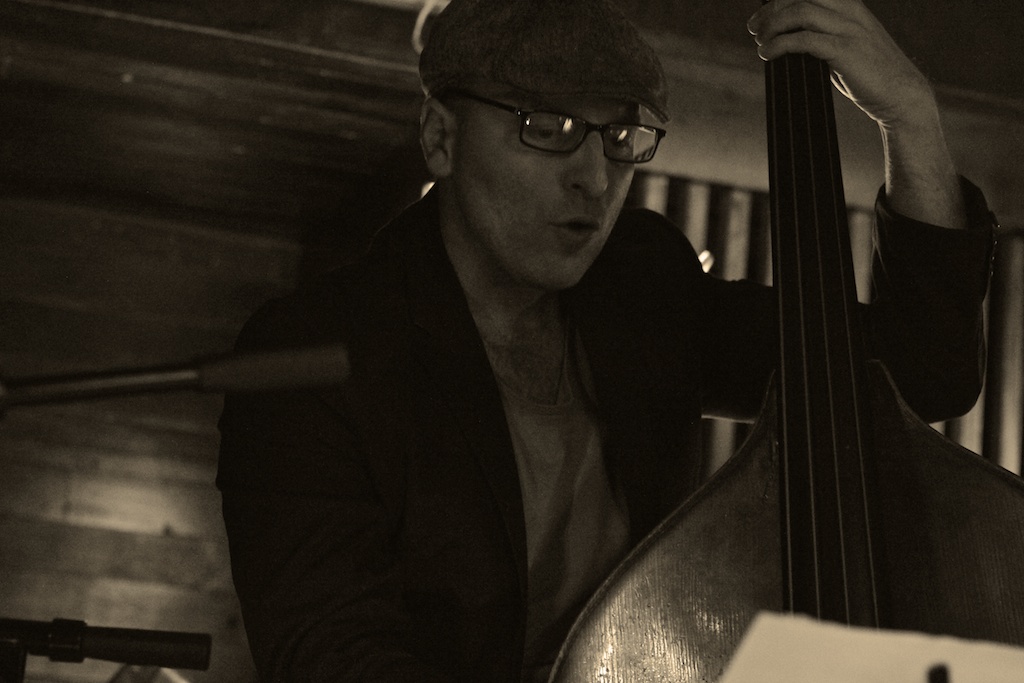
There are definite risks with trios like this, as they tempt saxophonists to self indulgently noodle once freed from chordal constraints.   Manins was perfect with this trio and used the opportunity to build upon the existing narratives.   At times playing outside but never once disconnected from the bass in drums.  He clearly took his lead from Lockett.  He is known for his intuitive reading of varying bandstand situations, a particular strength of his.  IMG_1867 - Version 2

The bass player Umar Zakaria had never played at the CJC before and in fact when I saw his name on the web site I thought that he had come from New York with Lockett.   When I spoke to him it surprised me to hear a Kiwi accent.   Zakaria has been attending the School of Music in Wellington and I believe that he is doing his honours at present.  My belief that he was an experienced offshore musician was not dispelled until I spoke with him after the gig.  His solos were interesting and he ably supported the others.  This was a good night of music from a solid band, that entertained without taking itself too seriously. 

Who: Mark Lockett Trio – ‘By the seat of my pants tour’.  Mark Lockett (drums and compositions), Roger Manins (tenor saxophone), Umar Zakaria (upright bass).

Where: CJC (Creative Jazz Club), Britomart 1885, Auckland New Zealand.   www.creativejazzclub.co.nz


yeahyeahabsolutelynoway @ CJC

IMG_1654 - Version 2

An array of guitar pedals is sometimes deployed to hide a multitude of sins, but in the hands of a skilful improviser the opposite occurs.   Yeahyeahabsolutelynoway! illustrate the best of modern guitar work as they invoke past, present and future.   Their gigs feature their own compositions, with performances drawing upon influences as diverse as rock, country, experimental improvised music and traditional Jazz.  They juggle these competing influences skilfully while still imparting a surprising degree of subtlety.  I have sometimes seen Jazz guitar traditionalists roll their eyes at the sight of pedals, but I would respectfully suggest that they haven’t been paying proper attention to their Jazz history.  IMG_1659 - Version 2
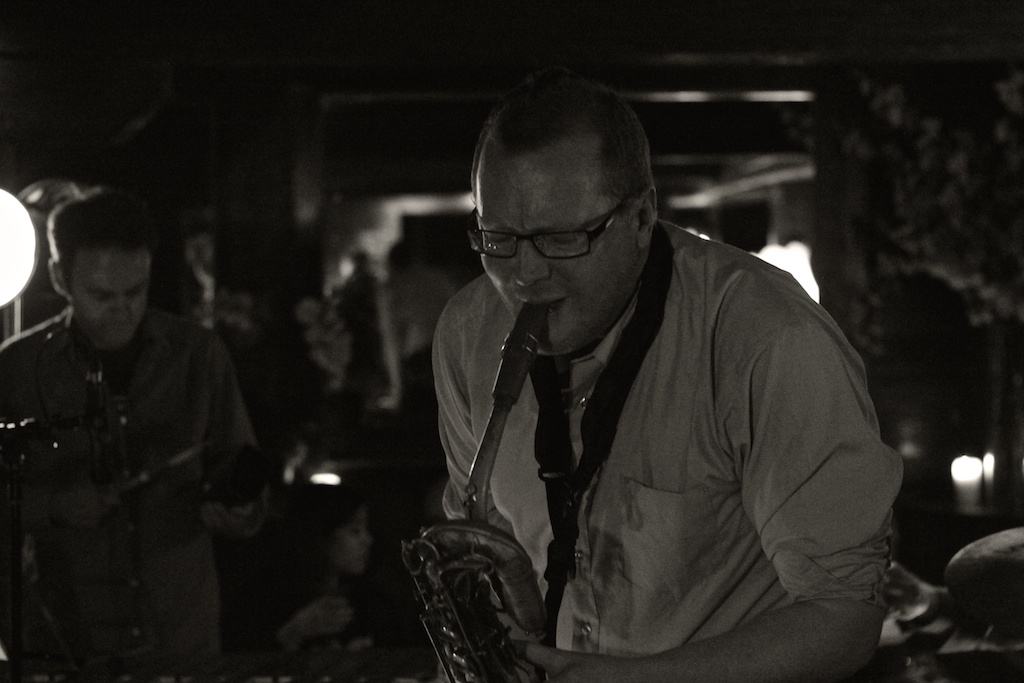
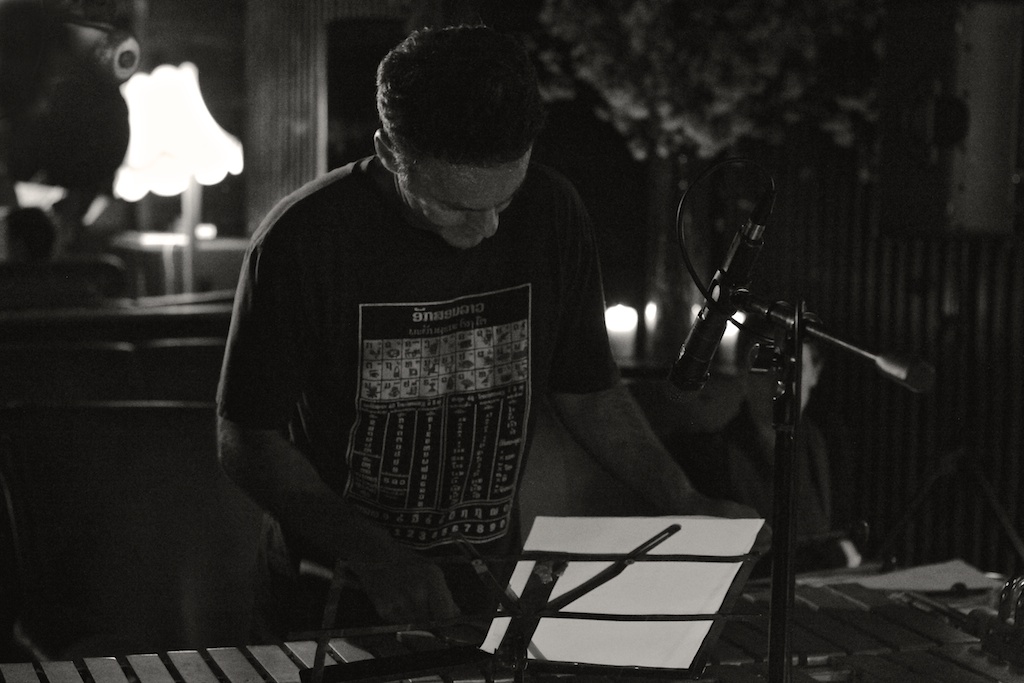
Everyone from Charlie Christian onwards embarked upon a never-ending quest to change, modify, enhance and above all to extend their sound options.   Without those open skies explorers and without enhancements, the use of the guitar in boisterous Jazz lineups would have reached its high-water-mark with Freddie Green.  I love Freddie Green with a passion but the guitar is about more than chords.  Almost every instrument used in Jazz today is modified or extended in some way.   Putting a trumpet through a pedal and working in real-time with loops created by multi phonic effects does not mean that the musician is cheating.  It must be about integrity and the sound.  Beneath the right fingers improvisational integrity and storytelling always come to the fore.   Yeahyeahabsolutelynoway! understand that.

‘Yeahyeahabsolutleynoway’ are the latest addition to the impressive Rattle Records stable.  On the 16th July they did an album release gig at the CJC and for those who braved the winter night it was a treat.  I had listened to the album in advance and so I knew what to expect, but to see them in action held a few surprises for me.  I had wrongly imagined that there would be pre-recorded loops but this was strictly live music.  Every effect we heard was created in realtime, with the constant adjustments from both guitarists giving them an immense palette to work with.  If the sound scape was impressive the tunes were even more so.

IMG_1664 - Version 2

There is something special going on with Australian guitarists at the moment and this band and ‘The Grid’ are occupying a unique space in the antipodean Jazz spectrum.   In the case of ‘yeahyeahabsolutelynoway’ there is no bass guitar, not even a five string.   It is not that unusual to see two six string jazz guitars together in a trio with drums.  What is more unusual is when neither of them takes on the traditional rhythm duties.  These guys were often working the same space, swapping lines or converging on a passage to create a subtle filigree.  While they worked as equals, they never appeared to intrude or crowd in on the other, so attuned they were.  Their focus was always on the subtleties of the music and this made for a good listening experience.  On a beautiful Ibanez solid body guitar was James Brown, who looked more like a member of ‘Z Z Tops’ than his namesake.  On a classy looking blond Fender Tele was Sam Cagney.  Both could be seen crouching at various times throughout the sets, as they coaxed beguiling sounds out of the pedals and all the while playing on through.   The drummer Stephen Neville was vital to the mix and created a seamless flurry of beats or subtle whispers on brushes as required.   It would be hard for me to pin down his drum style other than to say that it was effective and impressive.

IMG_1670 - Version 2

The tunes in the set list and on the recording were varied in approach.  A fun number is the rock influenced ‘Why Sleep?’  When I put the album on at home my partner Darien immediately replayed ‘Why Sleep  over and over.   It is the one to hook you and draw you in.   I liked the Americana feel of ‘Down home’.  It wouldn’t have been at all out-of-place on a Bill Frisell album.  The album was recorded live in Adelaide South Australia where the bands originates from.  Rattle is definitely on a roll this year (yeah, shake rattle & roll) and as the label goes from strength to strength, the CJC (Creative Jazz Club) and the Jazz audiences benefit.   Keep them coming Steve Garden!  IMG_1680 - Version 2

A foot note:  I see that Columbia University is now running a Computer Science course on programming for Jazz Musicians.  As Melhdau and others increasingly follow the footsteps of Herbie Hancock in using programmable devices to extend their range, such courses can only grow in number.   Don’t be too dismayed, this is improvised music folks!  Jazz will strike out in any direction that musicians take.   It is up to us to keep up.  

Who: yeahyeahabsolutelynoway! – James Brown (guitar, effects) Sam Cagney (guitar, effects), Stephen Neville (drums & cymbals)

What: A Rattle Jazz Album: UM.. yeahyeahabsolutelynoway!   http://www.rattlejazz.co.nz

Where: Live album release at CJC (Creative Jazz Club), 1885 Britomart, Auckland, New Zealand      www.creativejazzclub.com


Chelsea Prastiti 2014

IMG_1468 - Version 2 (1)

Chelsea Prastiti could be said to represent an intergenerational change in the direction Jazz Vocals are headed.  I have watched her grow in confidence since her time at the Auckland University Jazz School and she is always ready to try brave new experiments.   Because her default is the use of wordless vocal lines, she has better been able to explore the relationship between voice and the other instruments.   This integrated approach is possible for two main reasons.  Her keen awareness of what is happening around her and above all her compositional skills.

IMG_1477 - Version 2

Chelsea Prastiti is writing good material.  At times it feels brave and edgy, but it is always interesting.  Perhaps another factor is the musical familiarity with her band mates.   Her bands generally feature Matt Steele (piano), Callum Passells (alto saxophone), Liz Stokes (trumpet), Eamon Edmunson-Wells (bass) and Tristam deck (drums).   Because they were students together and because she has played with them often, I have gained the impression that she may even write material with them in mind.   One of her best recent performances was as guest artist on Callum Passells last CJC gig.   These two always work well together, but hearing them moving in lockstep as they traversed standards and amazingly innovative free numbers was a joy.

IMG_1511 - Version 2

IMG_1490 - Version 2

There were a few newer compositions and some re-arranged takes on earlier compositions.  Everything in the sets was composed by Prastiti.   I like ‘Bells’ which begins with a simple peal of bells, but quickly evolves into an altogether more complex piece.  Steele was standout on this, never over-playing but making every note count.   His comping was at times minimalist but he conveyed a certain strength.  The rhythmic feel that he laid down was further enhanced by Deck and Edmunson-Wells.   This allowed Passells and Prastiti to explore the tune in a methodical manner.  Steles solo is worth a particular mention on ‘Bells’, as it underscores his growing maturity as a pianist.

IMG_1487 - Version 2

IMG_1538 - Version 2

IMG_1518 - Version 2

Prastiti is involved in a number of local projects including an ethnically influenced a capella group.  It is however her ability to edge toward the avant-garde that always interests me the most.

IMG_1467 - Version 2

What: Chelsea Prastiti (vocals, compositions), Matt Steele (piano), Cameron Passells (alto saxophone), Eamon Edmuson-Wells (bass), Tristan Deck (drums) – Guests; Liz Stokes (trumpet),   Cristal Choi (vocals)

Where: CJC (Creative Jazz Club), Britomart 1885, Auckland, New Zealand.  9th July 2014. http://www.creativejazzclub.co.nz