Chelsea Prastiti’s Bonita gig was a phantasmagoria of warm evocative sounds. I have the greatest respect for her work and in this case, she curated something rare; she conjured up the vibe from another place and time, and she did so without a hint of contrivance. The Brazil of the sixties and seventies with its Bossa Nova soundtrack was an era of infinite possibility. In the end, the dream was stolen by a repressive authoritarian regime but the music, a timeless gift to the world, lived on. Over the last half-century, the Jobim songbook, in particular, has remained popular, and while some interpretations have been breathtaking, others, have been pale imitations.

What Prastiti has done here is both respectful and innovative. She has composed a suite of tunes that nails the vibe as it taps into the essence of New Wave Brasileira while evoking the founding era. The concept for this gig and many of the tunes were conceived years ago. Prastiti had other projects cooking back then, and so she waited her time. As it turns out, she timed it perfectly. With our borders closed, the desire for high-quality Kiwi music is at an all-time high. Audiences are not being distracted by ‘once again and for the very last time’ tours by fading greats, and the realisation is dawning that homegrown is often better.
Another plus for holding the gig now was that her friends and collaborators were all within reach: notably, Elizabeth Stokes and Ben Sinclair of ‘The Beths’. The recent winners in the Best Group category at the NZ Music Awards would probably have been back on a world tour right now, but the pandemic curtailed that. The ensemble members all go back quite a way with Prastiti and I believe that the warmth they radiate arises from those long-held connections.
The ten-piece ensemble oozed a Brazilian vibe, with its flute players and fingerstyle acoustic guitar. Add to this the unmistakable rhythms of Samba and Bossa Nova and the course was set. There was a horn section of trumpet and a tenor saxophone and one of the flute players doubled on clarinet. Behind them was an upright bass, drum kit and percussion and in the darkness, and to one side, a piano. The arrangements were beautifully textured and the harmonies absolutely gorgeous. As well as the instrumental harmonies, there were vocal harmonies contributed by two of the instrumentalists (one being Stokes, who has a fabulous voice – the success of the Beths underscores that). Prastiti composed all of the tunes and arranged most of them. The other credits go to Sinclair who arranged Prism, Callum Passells who arranged Bumblebee and Kenji Iwamitsu-Holdaway who is co-credited for the composition titled ‘Stars Above and Water Below’.
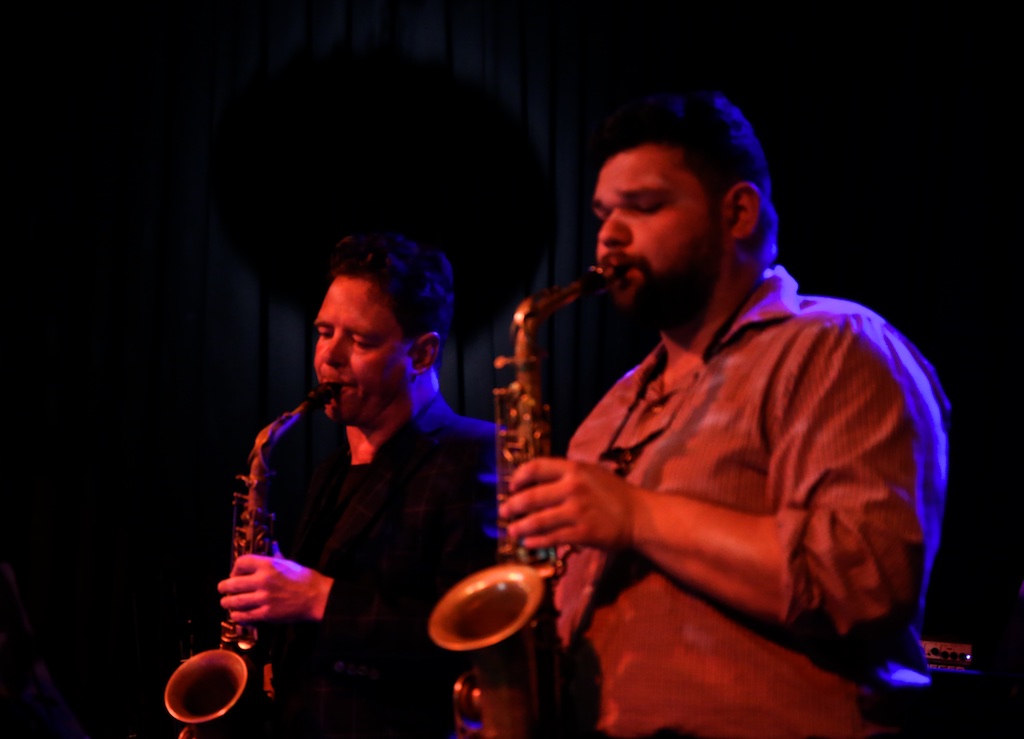
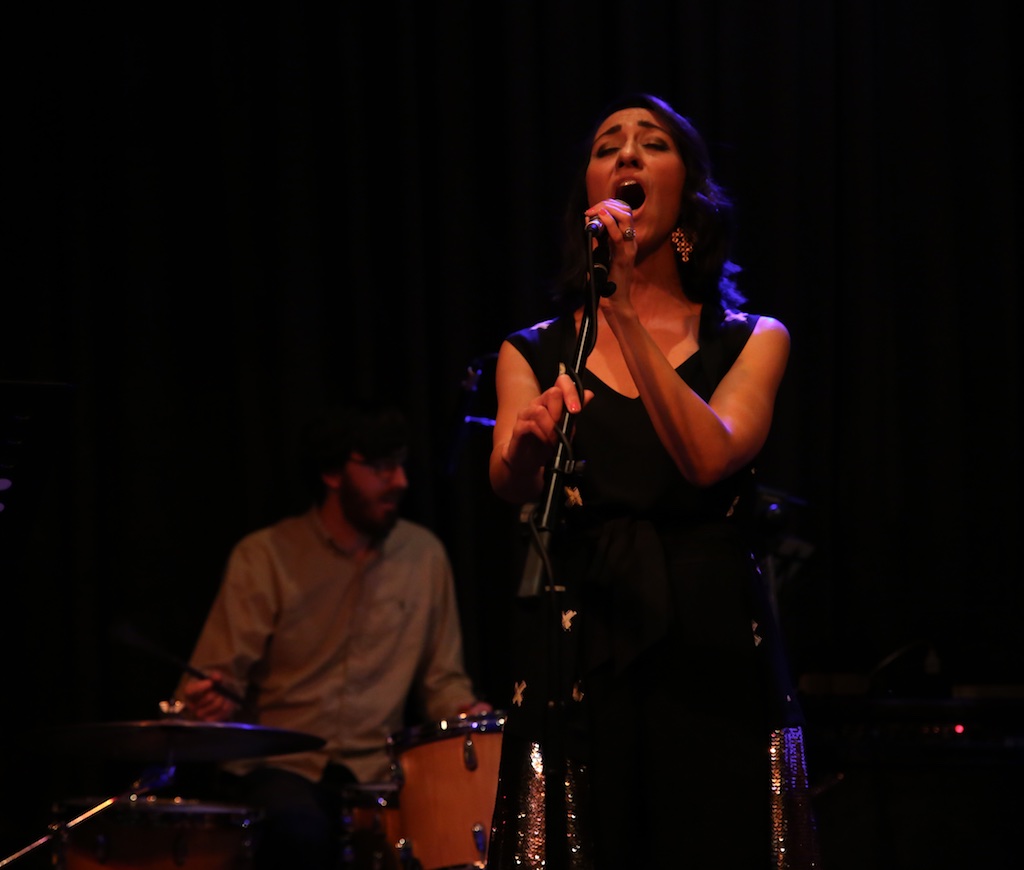
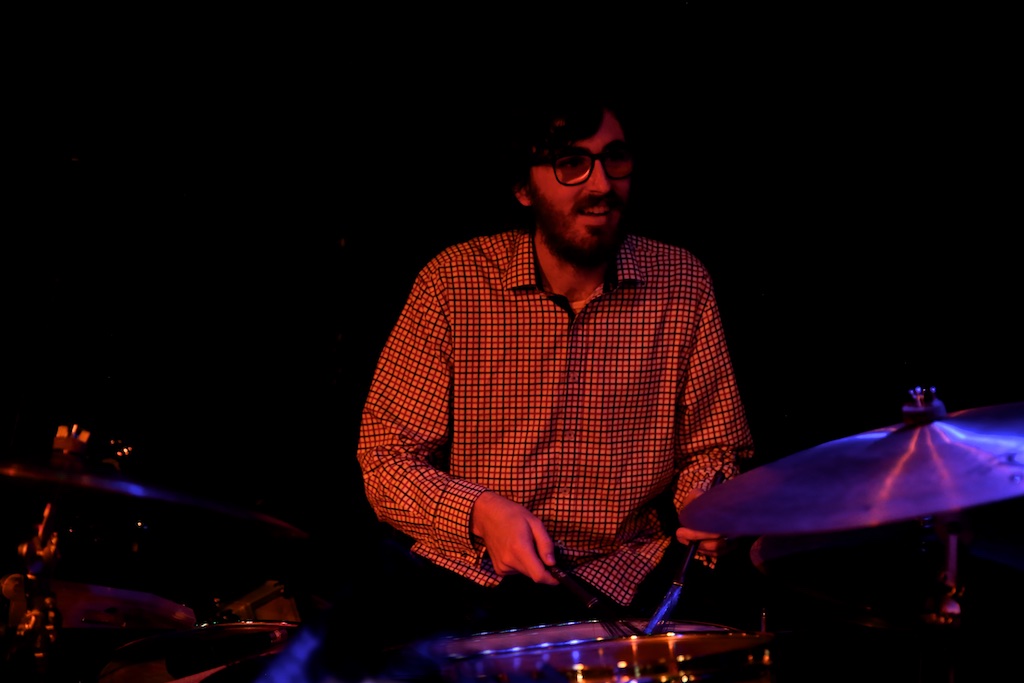
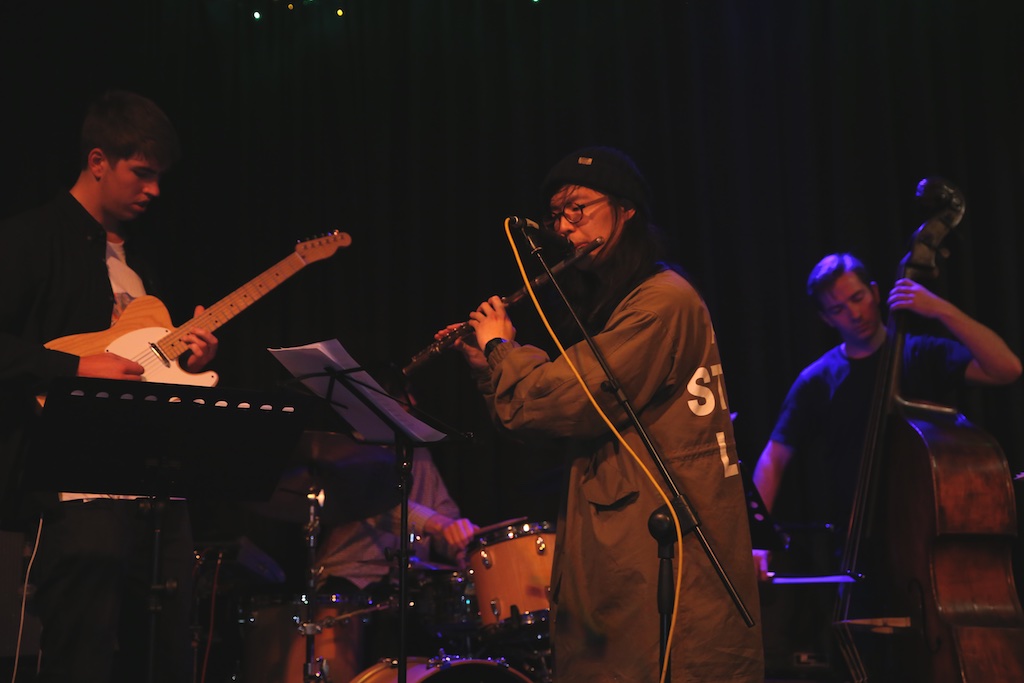
Chelsea Prastiti is one the most innovative vocalists to appear on the local scene and she is never afraid to take risks or to explore new territory. The rest of her ensemble were: Elizabeth Stokes on trumpet and vocals, Crystal Choi, who appeared last week, this time on piano and vocals; bringing a beautifully voiced minimalism to the proceedings and echoing Tom Jobim’s delicate spidery lines. Roger Manins was on tenor saxophone with fills and some tasteful solos – J Y lee played an edgy melodic flute (it is not his primary, but he brought expression to an instrument that in the wrong hands can lack it). Beside him was Ben Sinclair (bass guitarist from the Beths), alternating between clarinet and flute, the ever-reliable Adam Tobeck was on the drum kit, with Ron Samsom on percussion. Lastly, and hidden in the shadows was Michael Howell, utilising the voicings and fingerstyle of the Brazilian acoustic guitar. He absolutely nailed those warm pulsing rhythms which fell about us like a warm summer shower.

Eleven years ago, I began this Jazz blog and one of my first posts was an opinion piece about this era. I looked back at it today for the first time since writing it, and apart from a few missing commas, it stands up. I was worried when I wrote it that it might get something wrong, but a Brazilian musicologist messaged me to thank me for it. Anyone wanting to gain an additional sense of this era could follow the link to my original post. It is an opinion piece, but it could serve as a springboard to more authoritative, Brazilian-sourced information. https://jazzlocal32.com/2011/06/07/wave-antonio-carlos-jobim/
The gig took place at Anthology K’Road for the CJC Creative Jazz Club, November 25, 2020
JazzLocal32.com was rated as one of the 50 best Jazz Blogs in the world by Feedspot. The author is a professional member of the Jazz Journalists Association. Many of these posts also appear on Radio13.co.nz – check it out.




 Have you ever heard one of New Zealand’s iconic pop songs and wondered how it would sound reimagined as Jazz? The journey from popular song to Jazz piece is a well-trodden path. Many tunes that we now refer to as ‘Jazz standards’ began their life as tunes written for broadway musicals or for the popular music market. For a tune to successfully cross that divide it needs to be well constructed and to lend itself to reharmonisation. With ‘Alchemy’, this elusive symmetry is realised.
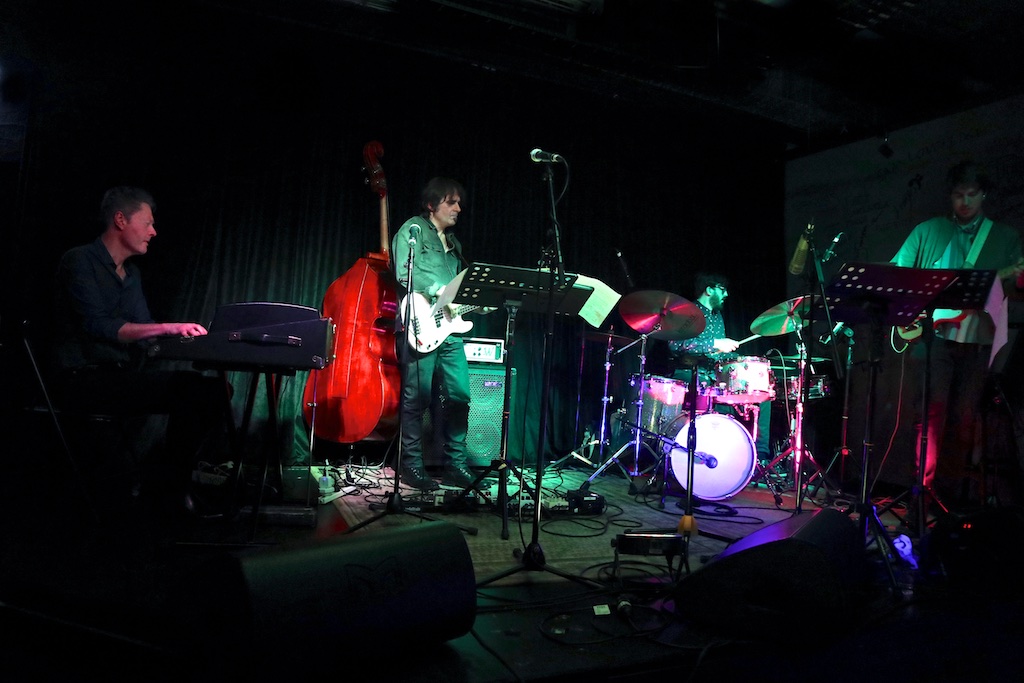
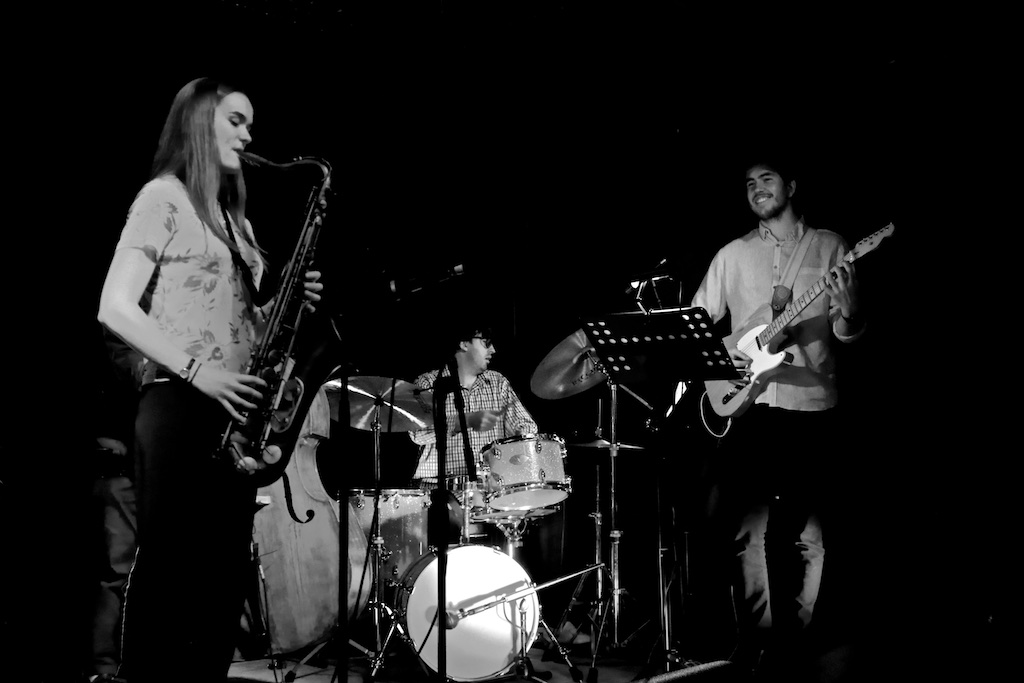 Louisa Williamson is a gifted young tenor saxophonist who has visited Auckland on previous occasions. This time, and for the first time, she visited as a bandleader, showcasing her beautiful compositions. I have always admired her tone and improvisational abilities, but this was a step up. Freed from the comfort of a band she knew well, she cast herself among an array of experienced Auckland musicians. Stephen Thomas on drums, Tom Dennison on bass and Michael Howell on guitar. The only Wellingtonian (besides Williamson) was pianist George Maclaurin and together as a band they delivered. This was engaging straight-ahead Jazz.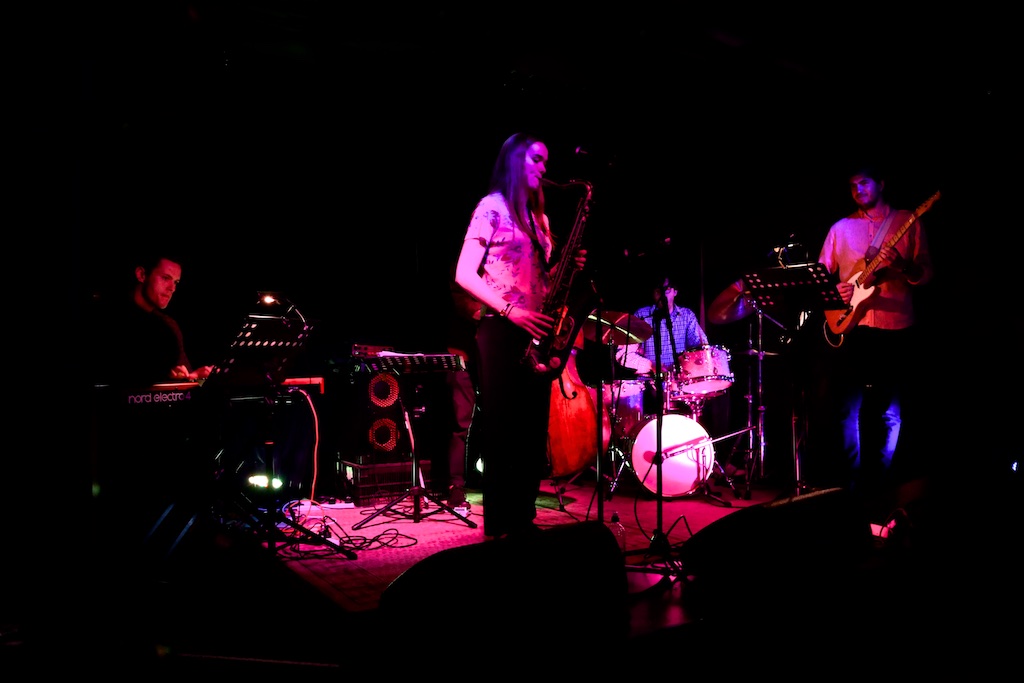
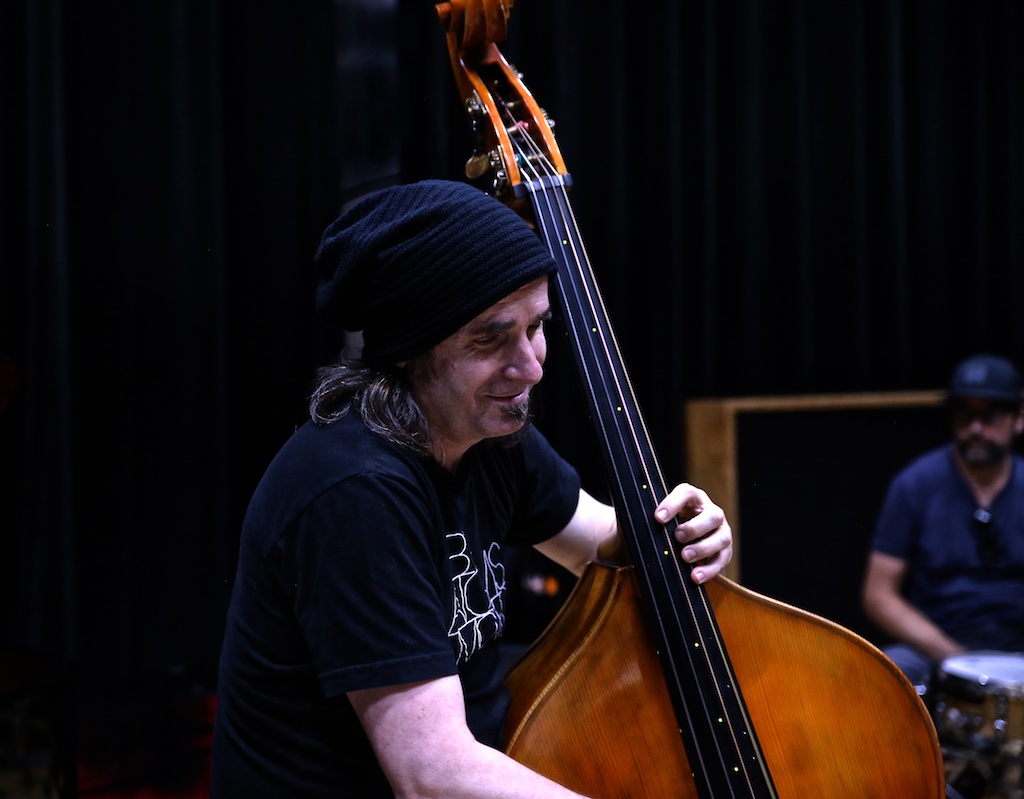
 Subject to availability, Richard Hammond is the kind of bass player that you would consider first for an important gig or recording.
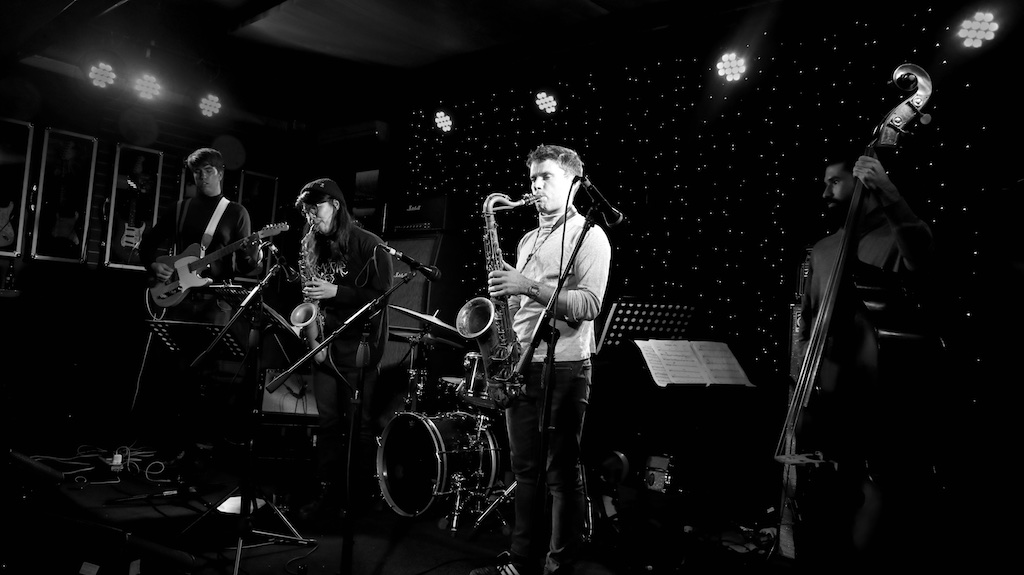 In the late 1950s and early ’60s, anyone with an ounce of cool wore a coarse-knit black polo neck jersey. While they sat there feeling cool their necks would start to itch and angry red rashes would creep up to their chins. Chins made all the itchier by the regulation chinstrap beards or ‘hip’ goatees.
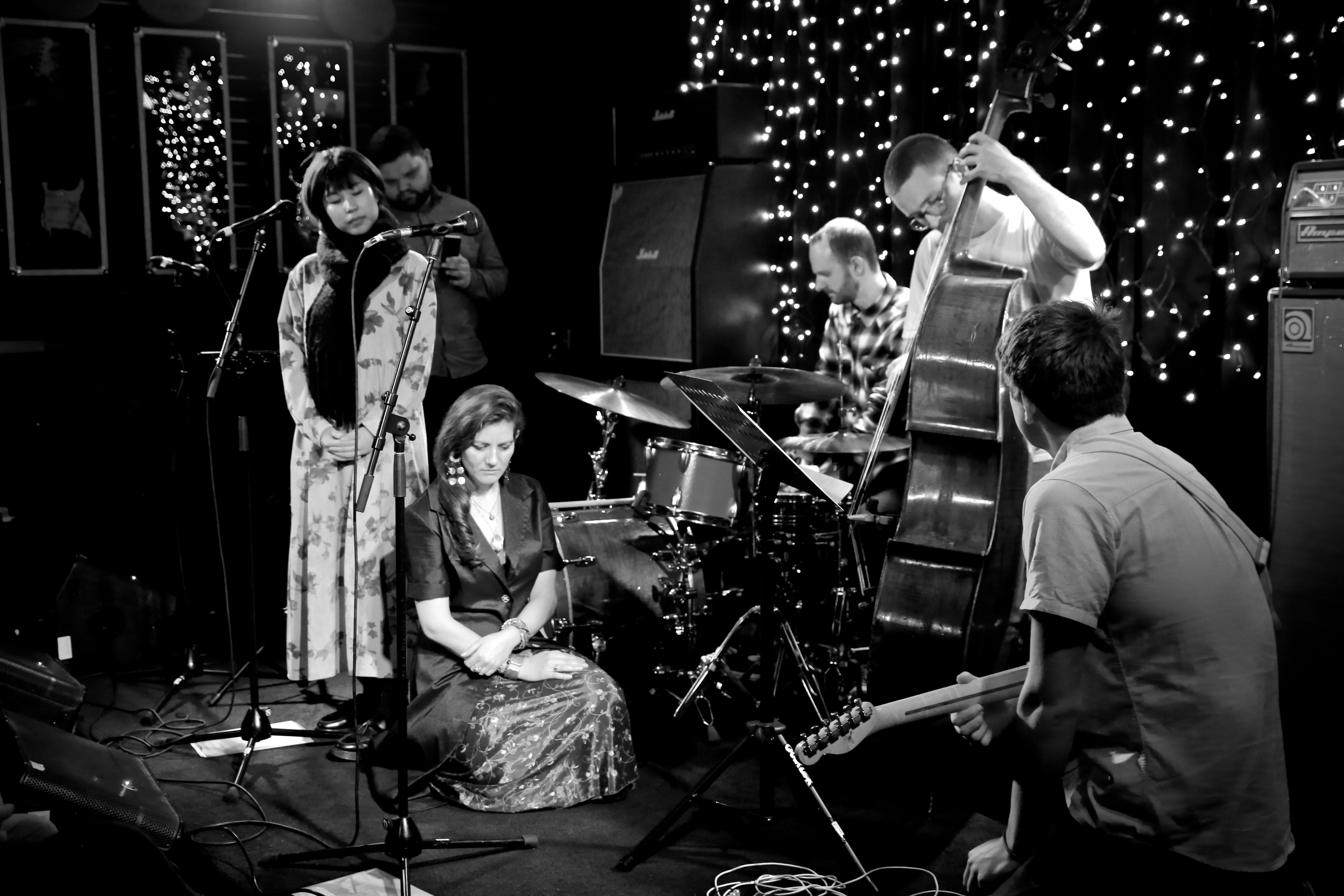 Chelsea Prastiti was not long back from Cyprus when her band Leda’s Dream appeared at the Backbeat Bar. Prastiti is well known in the Auckland improvised music scene and especially so at the avant-garde end of town. She’s a compelling vocalist and composer who approaches her craft as a free spirit, unfettered by others expectations. When she sings she dives deep and puts herself out there fearlessly but her risk-taking is not a mere academic exercise; it cuts to the very heart of what it means to be a thinking, feeling human. Her compositions are therefore always interesting and out of that a raw beauty and an honesty arise.
 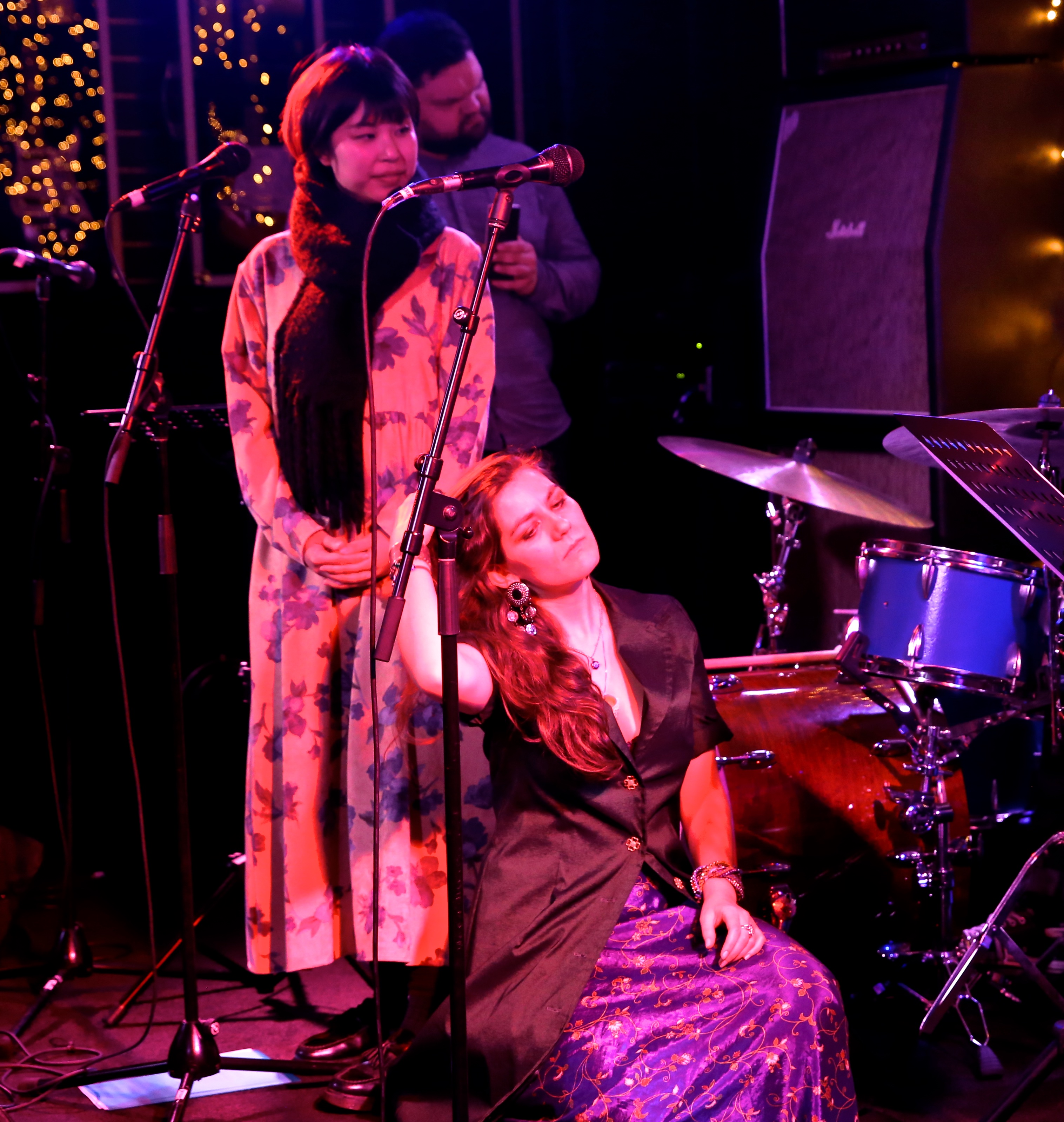 Although the ensemble played material that we have heard before, they sounded incredibly fresh – even different. Crystal Choi confined herself to accompanying vocals (no keys), Michael Howell stepped further into a measured chordal role and Callum Passells on alto and voice effects was the archetypal minimalist (saying a lot more with less). This felt very right and the re-configuration gave the ensemble a lot more freedom. They stretched out as the spirit took them and the first two tunes filled the entire first set. The voices, in particular, were liberated by the change and this gave wings to the melodic lines and mood. The harmonies were there in spades but that was not what drew you in. It was ‘mood’ and the pictures that those moods created.
  Prastiti’s is a brave path and I would expect no less from her. This is a musical space that is sparsely populated and more’s the pity. Think Sera Serpa (duos or trios), Think Norma Winstone (Azimuth 85) or perhaps the brilliant Nordic vocalist Sidsel Endresen (Endresen live with Jan Bang). In this ensemble, she has the musicians to give her the freedom she deserves. Passells, who is unafraid of soft trailing notes or of minimalism, Howell who can follow a vamp to eternity and make it sing, Choi who instinctively makes the right moves, and Eamon Edmundson-Wells and Tristen Deck who know when to lay out and when to add colour or texture. The music drew from free improvisation, standard Jazz and deep Folkloric wells. It did so without undue introspection. The band brought the audience along with them and the bouts of enthusiastic applause proved it. For some reason, and it was partly their attire, the gig felt like a postmodern version of a Pre-Raphaelite tableau. Oh yes indeed, that always works for me.
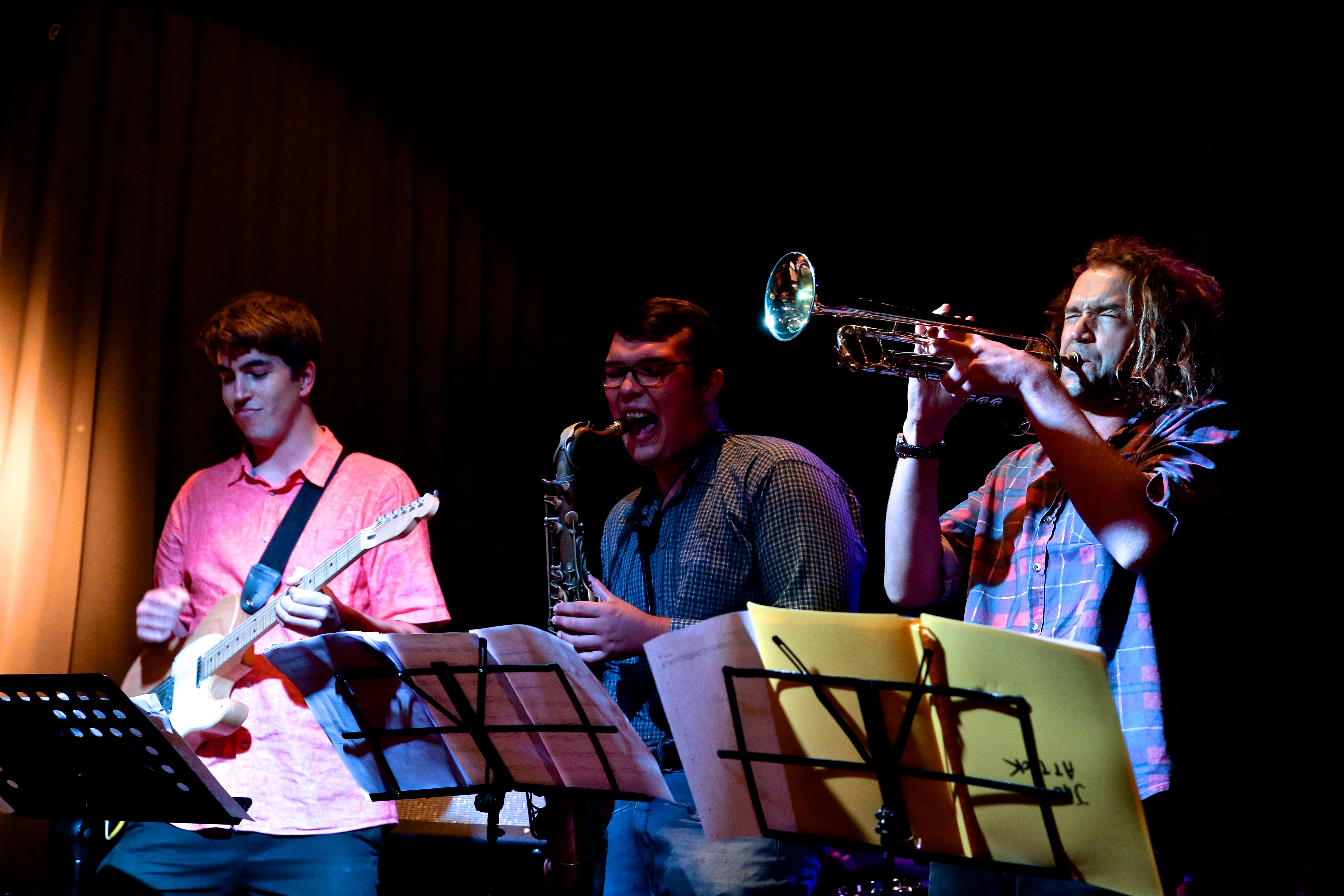 Oli Holland is one of the leading bass voices in New Zealand. He formed Jazz Attack just over a year ago and since its inception, he has been writing new charts and expanding the lineup. Holland writes interesting charts; often complex but always compelling and his last gig showcased a number of these. This was an expanded lineup – adding three of Auckland’s heavyweights for a quartet segment in the first set. His bass is a powerhouse presence and his ringing melodic lines always distinctive. During solos, his vocalised unison lines fleshed out the tone, drew us deeper in – perhaps even influencing his improvisational choices. It is well established that vocalising while improvising on an instrument, fires up the human brain in new and interesting ways.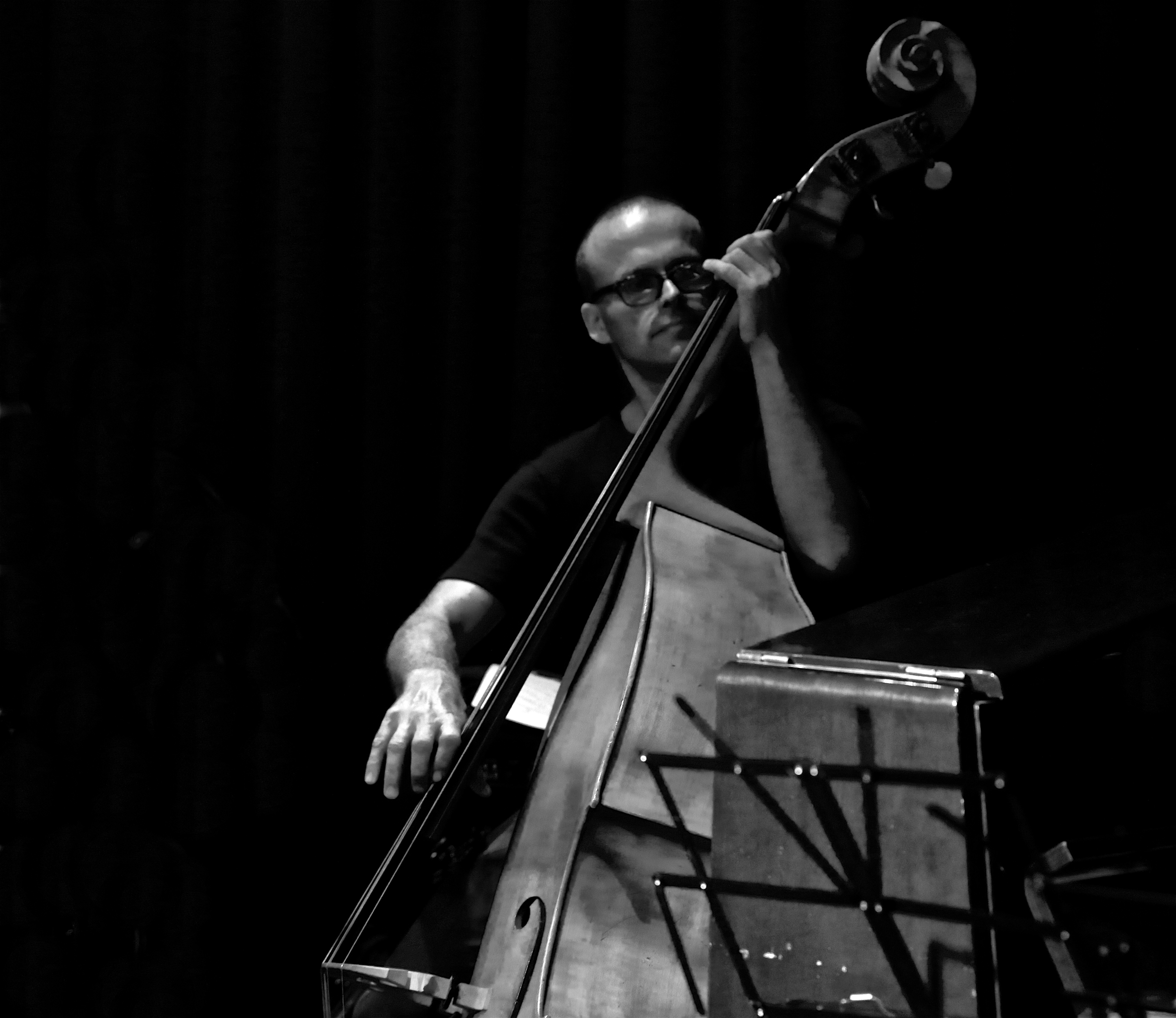
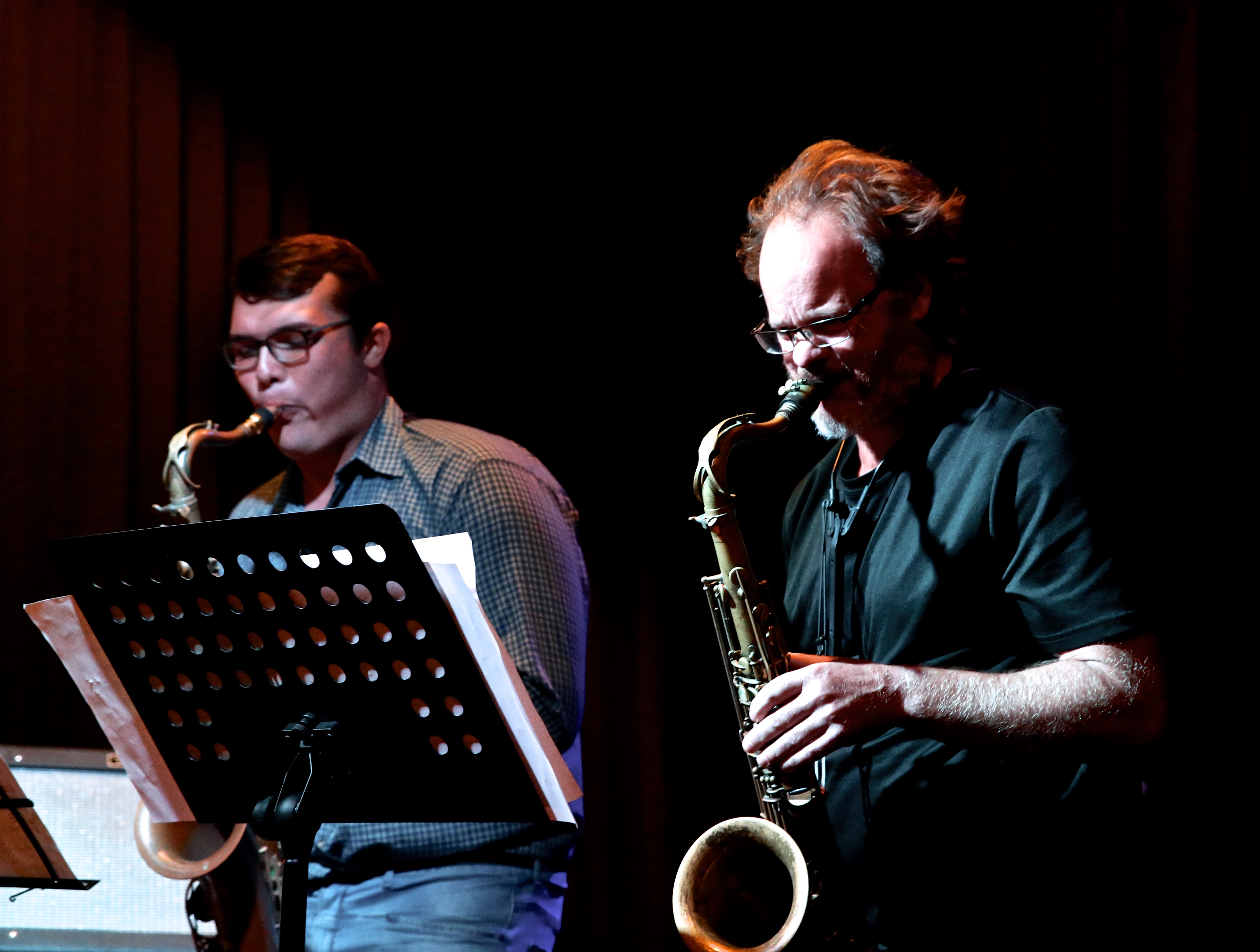
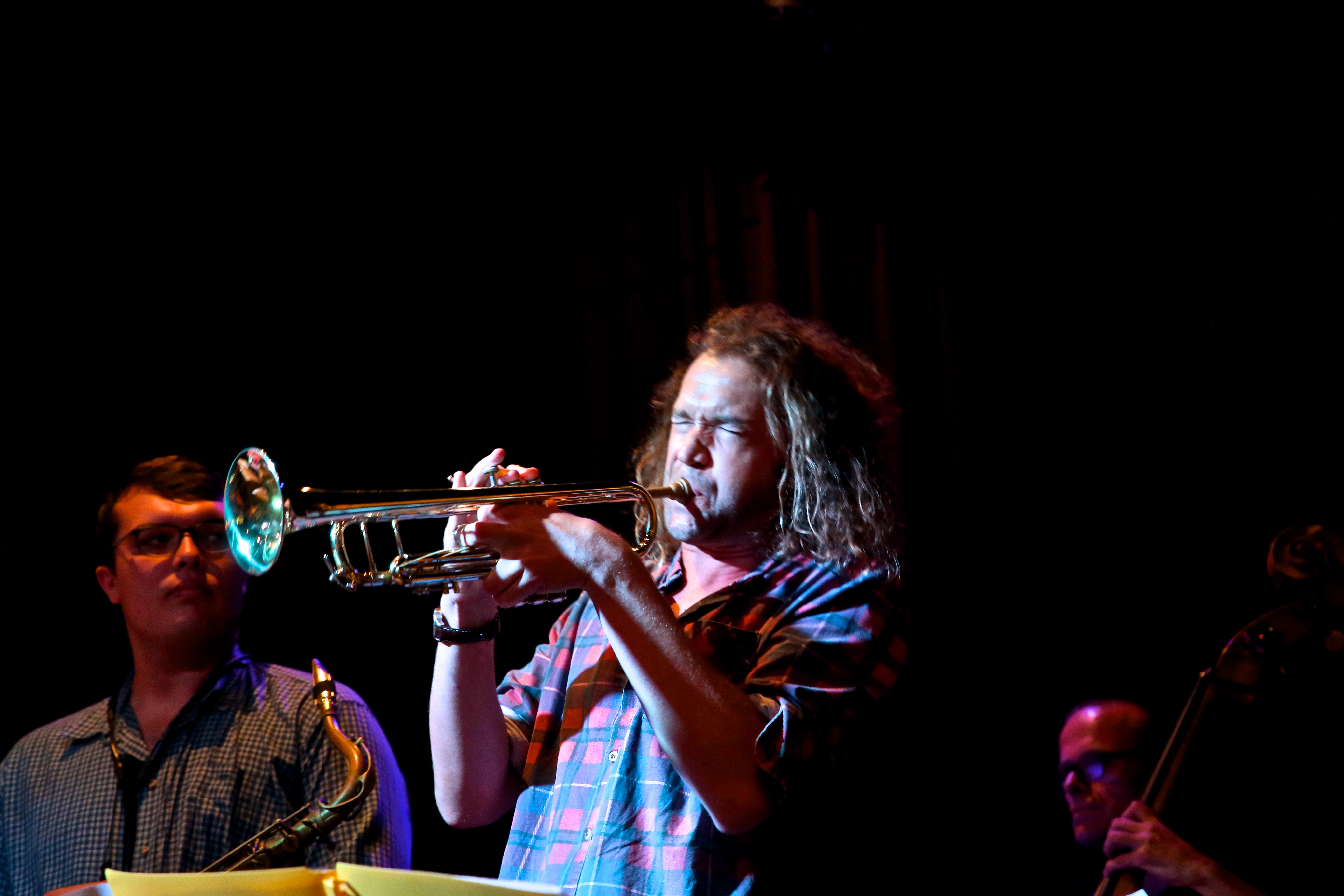
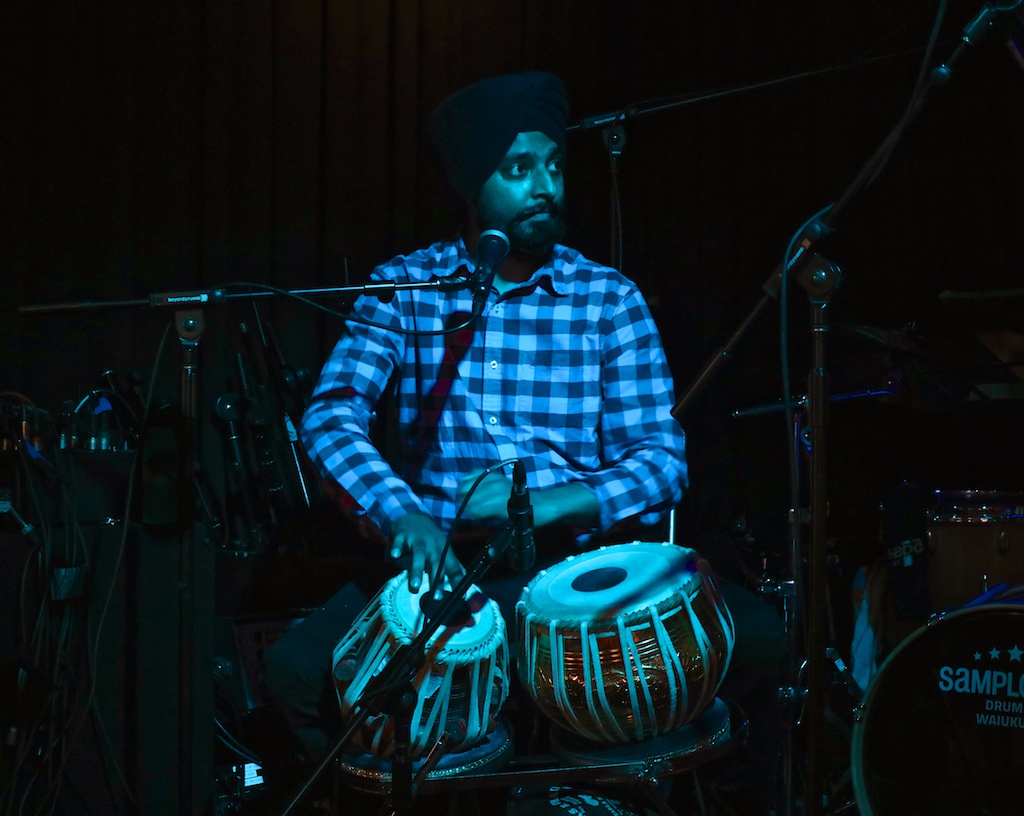 With emerging artists gigs you modify your expectations, but in this case, it was completely unnecessary. Both sets showcased great musicianship and originality. The first set was Manjit Singh and Takadimi; an Indian music/Jazz fusion project. Manjit Singh is not an emerging artist in the strictest sense, he is a highly experienced tabla player, composer and teacher in the two main traditional schools of Indian music (Northern and Carnatic). He has recently been doing a Jazz studies course at the UoA and this project arises from that. The traditional music he teaches is not that dissimilar to Jazz, as it has improvisation aspects and complex interwoven rhythms at its core. Singh also gave us an insight into another tradition, the ecstatic Sufi-influenced music of northwest India, Pakistan and central Asia – Again, a tradition that has fed the rich streams of Indian music and more recently, Jazz.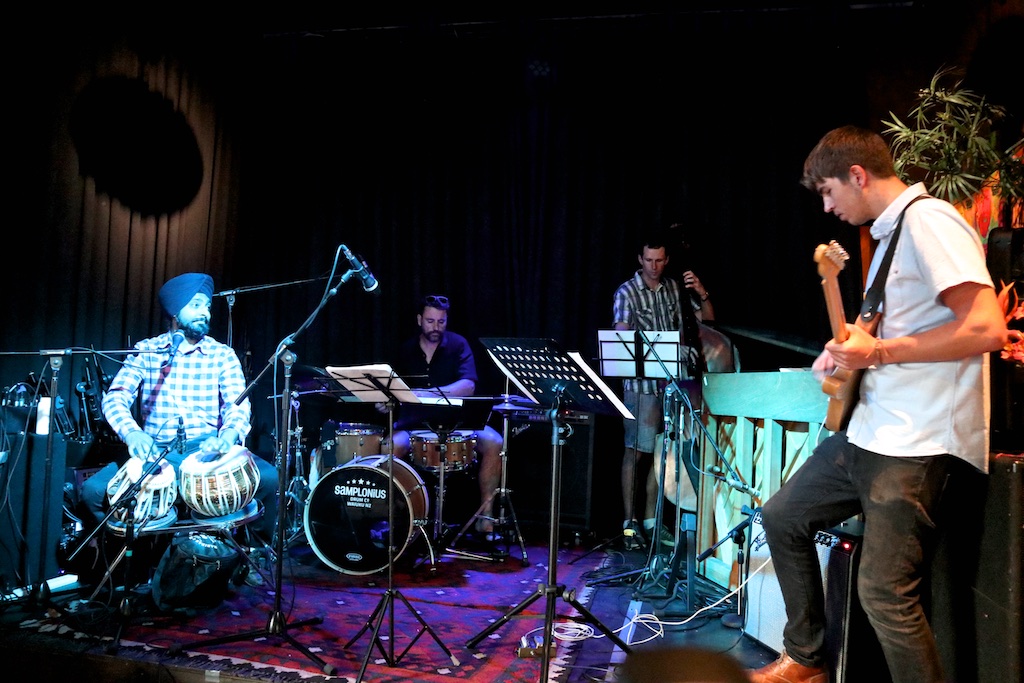
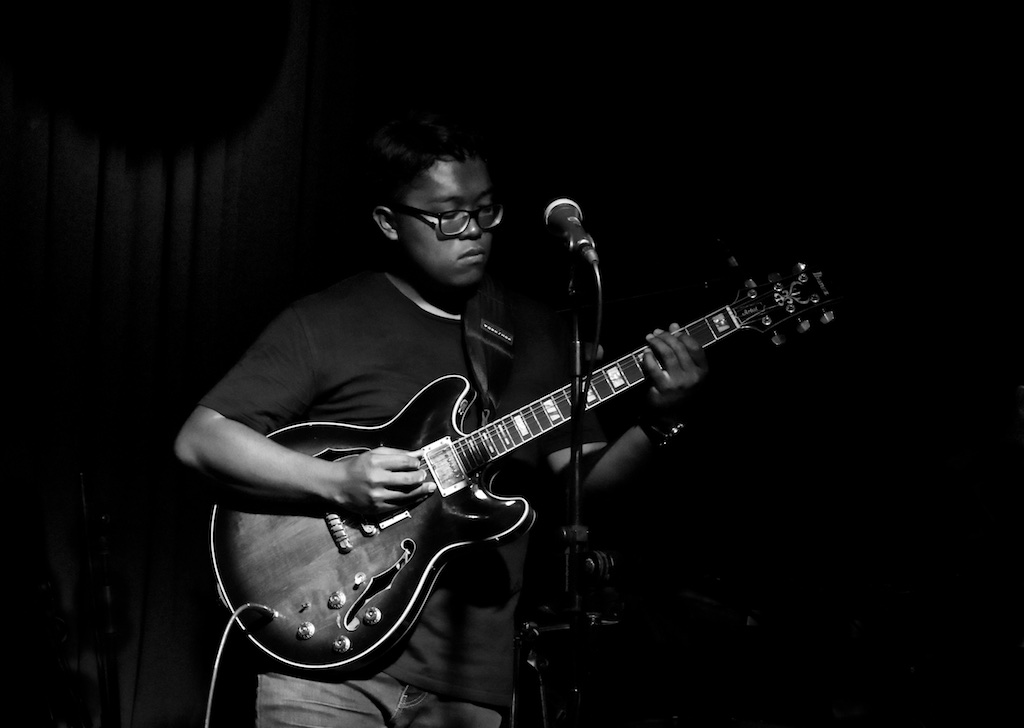
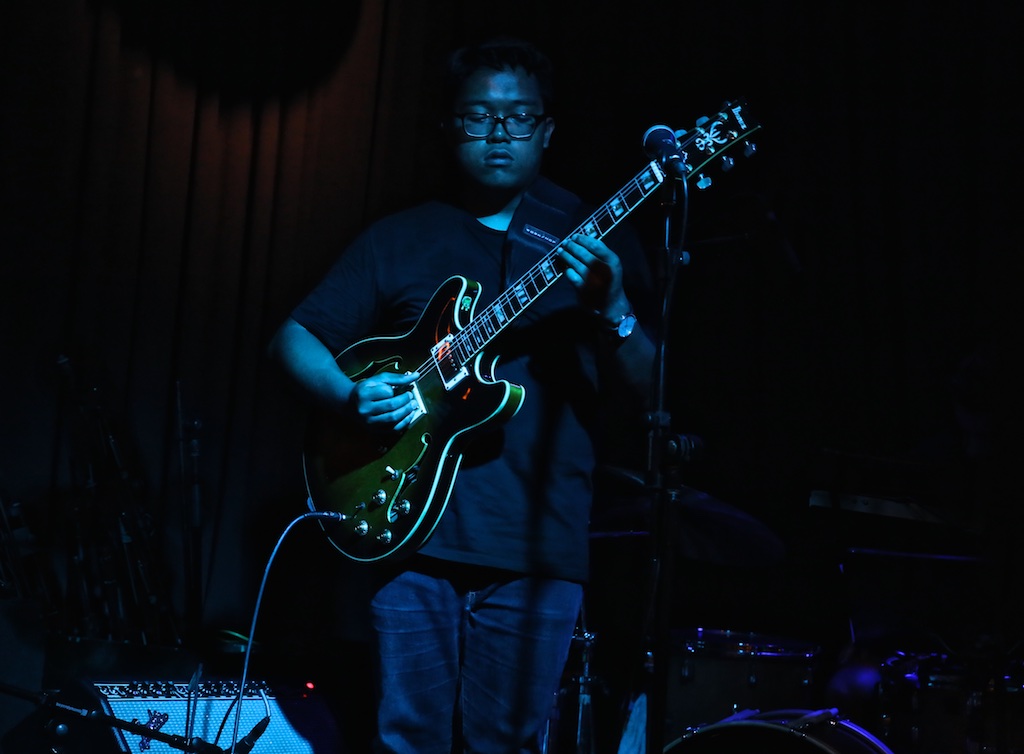
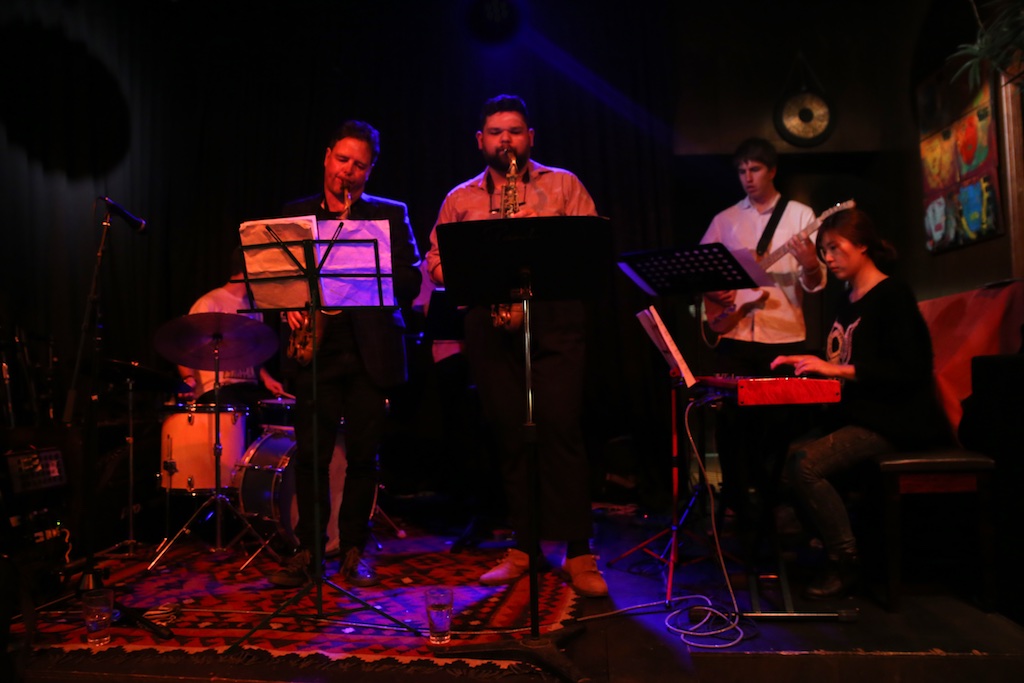 At some point in human evolution, the majority of humans decided to stay put. In consequence, the hunter-gatherers and the pastoral nomads became outliers. As civilizations grew, agriculture grew and large enclosures and granaries grew along with them. Beyond the walls and the jumble of enclosures; largely unnoticed, often unseen, foraging continued unabated. The homeless on the streets forage, philosophers forage, writers forage, wild and domestic animals forage and above all improvisers forage.
 On Wednesday, his charts were for a larger ensemble. This time offering fresh insights; taking us further down the Rabbit hole. The pieces were of variable lengths and sometimes in parts. At some point during the second set, he played a piece titled ‘Ligeti’s Goat (I first heard that back in 2013). While the piece has melodic hooks and a basic structure, it is more, a surrealistic journey. A place where imagining, spoken narrative and musical narrative meet. Ligeti’s goat is vividly embedded in my memory; it is not a piece easily forgotten, a goat wandering through pastures, locating carrots (perhaps forbidden carrots), digesting the vegetables in that mysterious way of all ruminants.
  When Marjan stepped up to the microphone, she owned the room from that moment on. Her previous association with the Jazz club had been peripheral, but this gig changed everything. I have sometimes engaged with her about Persian music or Sufi poetry and I have heard her performing in the Kevin Field ‘A List’ band. She is always impressive when she sings, but this was impressive in a different way. It was her first Jazz club gig as a leader and suddenly, here she was delighting a capacity audience, every bit the seasoned professional; exuding an easy-going confidence. It was tempting to think that she had magically transformed herself into this fully formed artist, but her back story offers deeper insights. Marjan is of Persian descent and while this breathes exoticism into her music, it is only a fragment of her story. In truth, she has been a performer for much of her life; an established presence in the world of film, an in-demand voiceover artist, a teacher of music, dance, and drama. She draws on many strengths but on Wednesday they coalesced; a marvellous voice and a formidable stage presence the outcome.
 If her choice of a first number was to make a bold statement, then she succeeded admirably. Stepping out from behind the black curtains, accompanied by a shimmering Rhodes, she embarked on her engrossing journey. The first few bars of her ‘Desert Remains’ were straight out of the Sufi Jazz tradition; it was a call for universal tolerance: arising from her belief that music provides a pathway to transcend the banal. Almost imperceptibly, the tune became a love song, settling into new and funky rhythms. This was a nice piece of writing and the rhythmic interplay gave her much to work with. The influences in many of her compositions are generational; Stevie Wonder, Michael Jackson, Brian Wilson and of course her indigenous roots. All of this is filtered through a Jazz lens. Although her approach is modern, she doesn’t shy away from the traditional fare of Jazz singers.
 Looking to popular music for new material is not a recent phenomenon for Jazz vocalists. Ella tackled ‘A Tisket a Tasket’, Louis appropriated a multitude of pop songs. The great American songbook is a selection of one-time popular songs. It is what Jazz musicians do; explore, steal and transform. The more diverse the influences the richer the music. When she tackled the lovely Jazz standard ‘Detour Ahead’ (Ellis/Frigo) she owned it completely. That hint of smokey voice, that delicate phrasing; being adventurous while showing deep respect to the composition. It was hard not to think of Norah Jones; an artist who is traditional and modern in equal parts. I would also give her top marks for her set list; the numbers included ‘The look of love’ (Burt Bacharach), ‘God only knows’ (Brian Wilson), ‘I’ll be free’ (Donny Hathaway) and of course her own compositions and one of Kevin Field’s.
 In spite of his relative youth, Stephen Thomas is counted as one of New Zealand's better Jazz drummers. He approaches his craft with care and intelligence and it shows in his playing. While his technical skills are superb, he can also communicate on a human level and this is important as it speaks of character. Thomas is a regular on the scene, but like many sidemen and most drummers, he prefers to remain in the shadows. On Wednesday he changed that focus and convincingly staked his claim as band leader.
 The ingredients that contribute to a successful gig are often intangible, but this gig ticked a number of those boxes. While tailored to suit a Jazz audience, it did so without being remote or elitist. Another reason the gig worked was because Thomas used humour to good effect; not just his on stage banter but in the music as well. In a live setting this is important – interacting with the listeners on some level, bringing them inside the circle.
 Thomas has an abiding interest in the Ellington/Mingus/Roach, 'Money Jungle' recording and Wednesday provided him with a further opportunity to explore that project. While unusual as a source of standards material, it is a great album to focus on – the perfect vehicle for deconstruction. At the time it was recorded, it stood out for a number of reasons. In fact it shouldn't have worked at all, as the trio members reputedly disliked each other. Each had marked stylistic differences and Ellington was of an earlier generation. Ellington told the others that what they would play on the record should be a collective decision; then he turned up with a set list of his own tunes. The one tune which was not Ellington's was by Juan Tizol – a man who Mingus had once been in a knife fight with and because of whom, he was sacked by Ellington. What should have been a disaster for many reasons was a success. A brave post-bop recording by artists firmly rooted in other eras.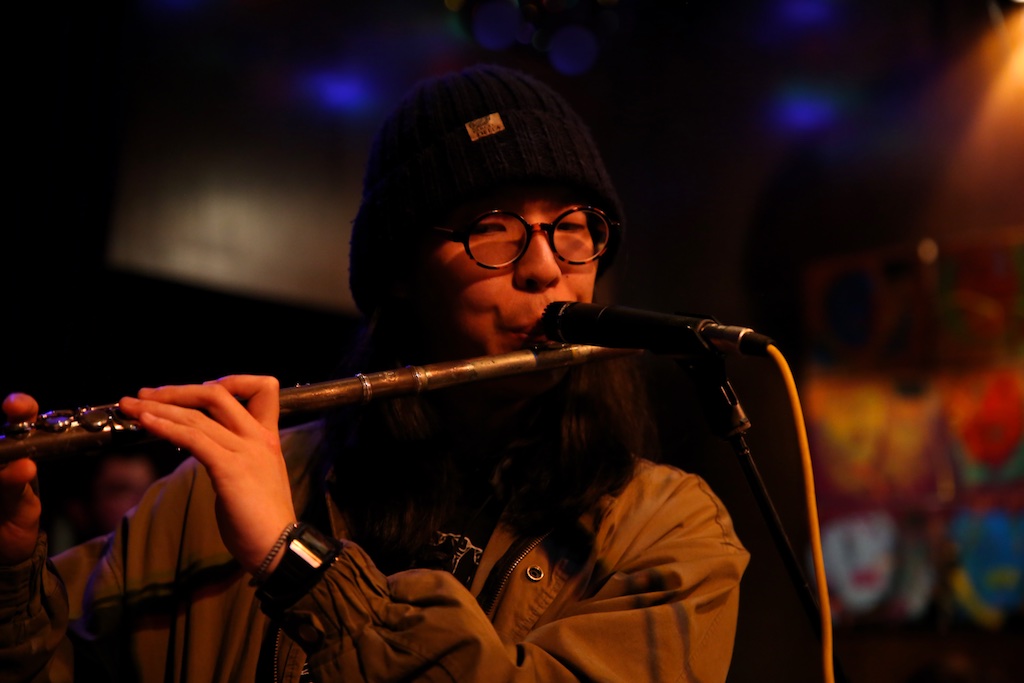
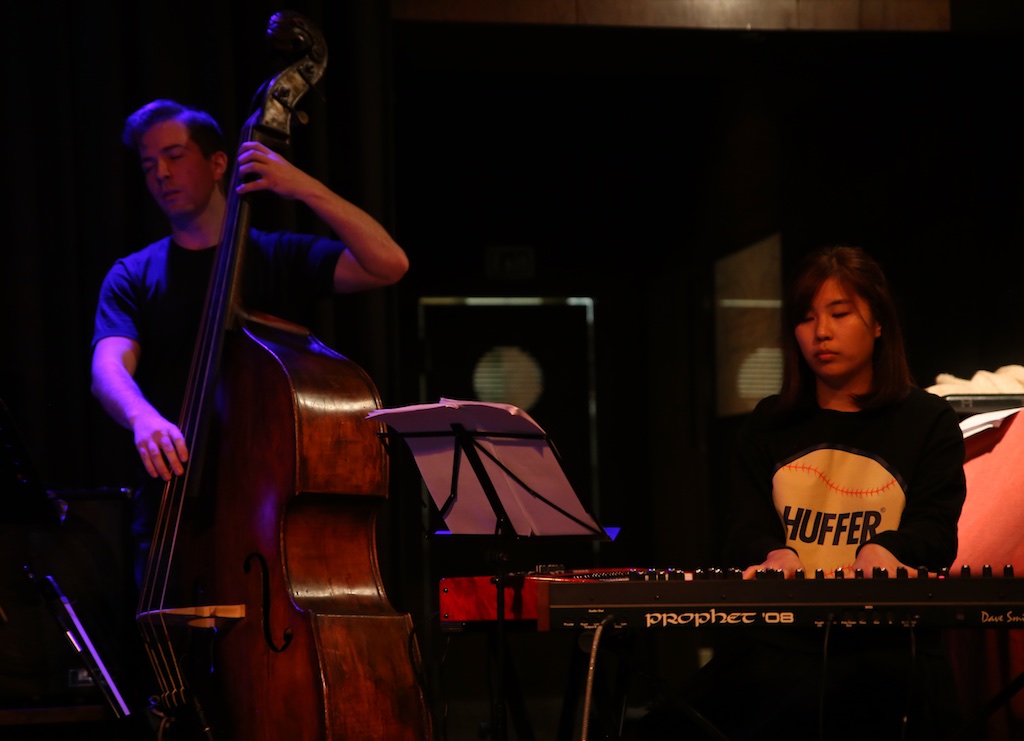
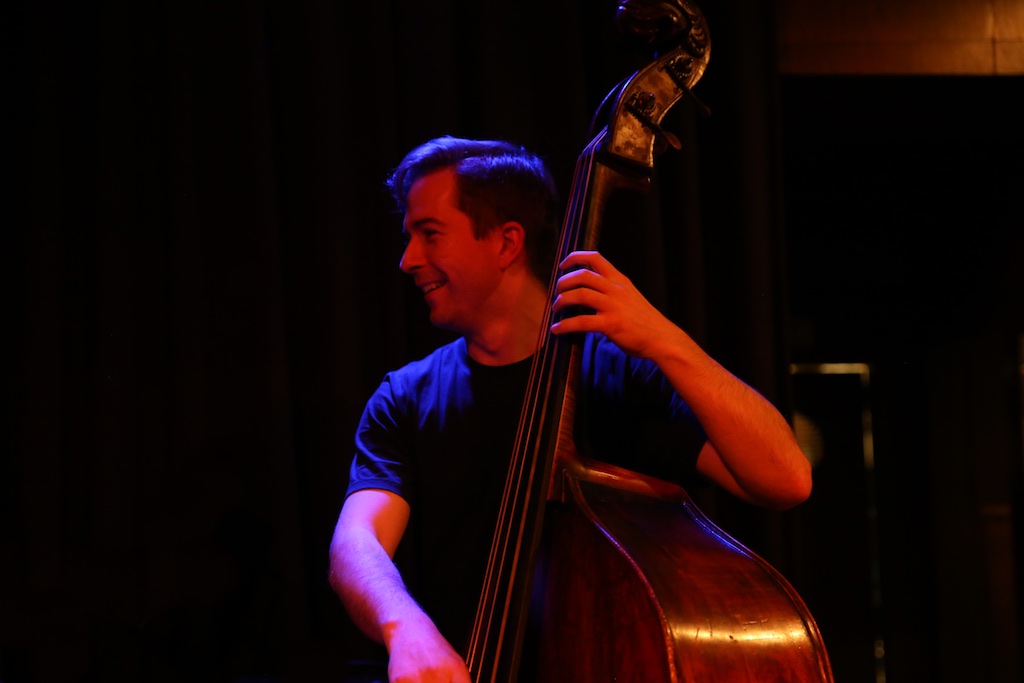
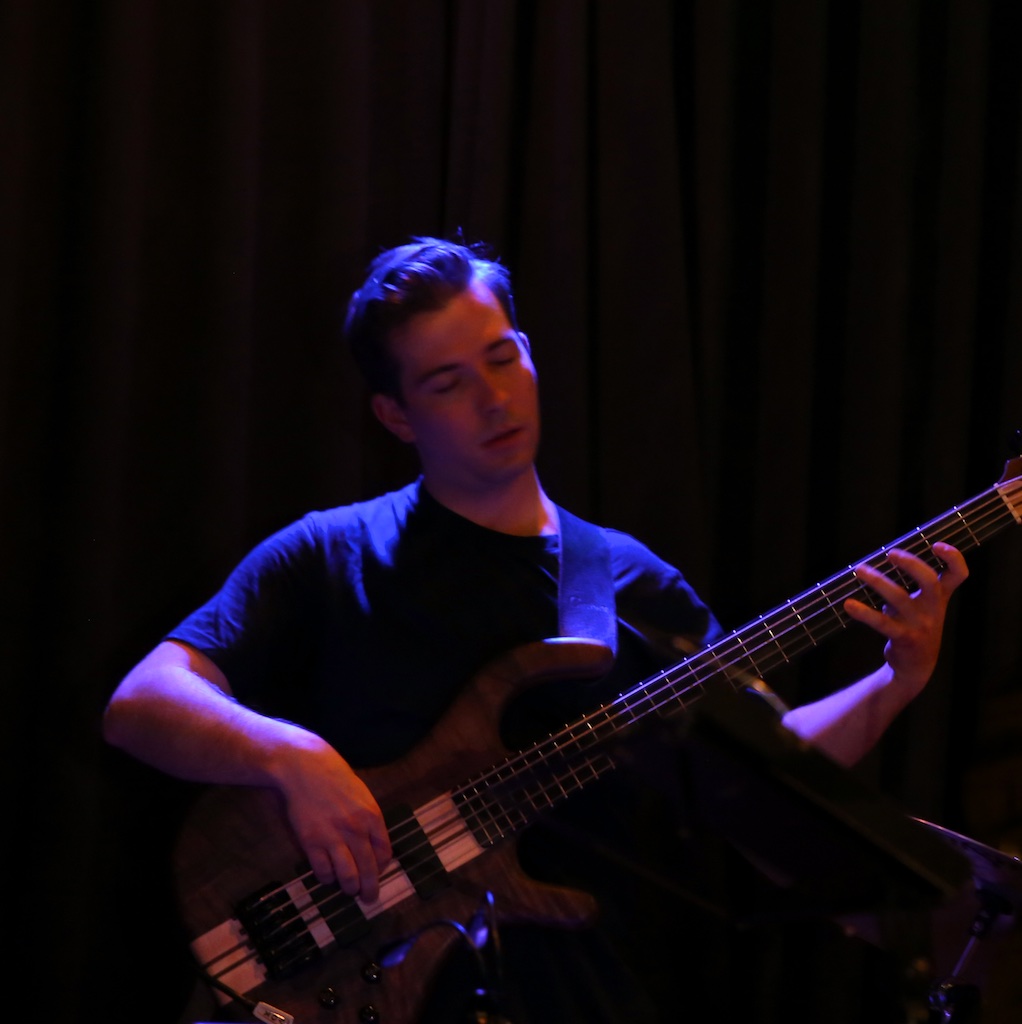 Dennison is a first class musician and someone we don’t hear nearly enough of on the Jazz circuit. He rarely gets to the CJC but when he does it is always a treat. These days he is mostly found doing session work or backing visiting artists and it is hardly surprising that he is a bass player of choice. Whether on upright bass or electric bass he is equally proficient; always an engaging presence, always demonstrating a deep musicality. He has one more string to his bow which can’t be overlooked and that is composition. His tunes are often whimsical, but whatever the mood, a deftly crafted structure sits beneath every phrase. Never over done, bass driven and just right. There is also a thread of melancholia and wistfulness in his ballad writing: these are difficult emotions to evoke and anyone with knowledge of poetry will know, that only the most skilful poets do the moods justice. Dennison can.
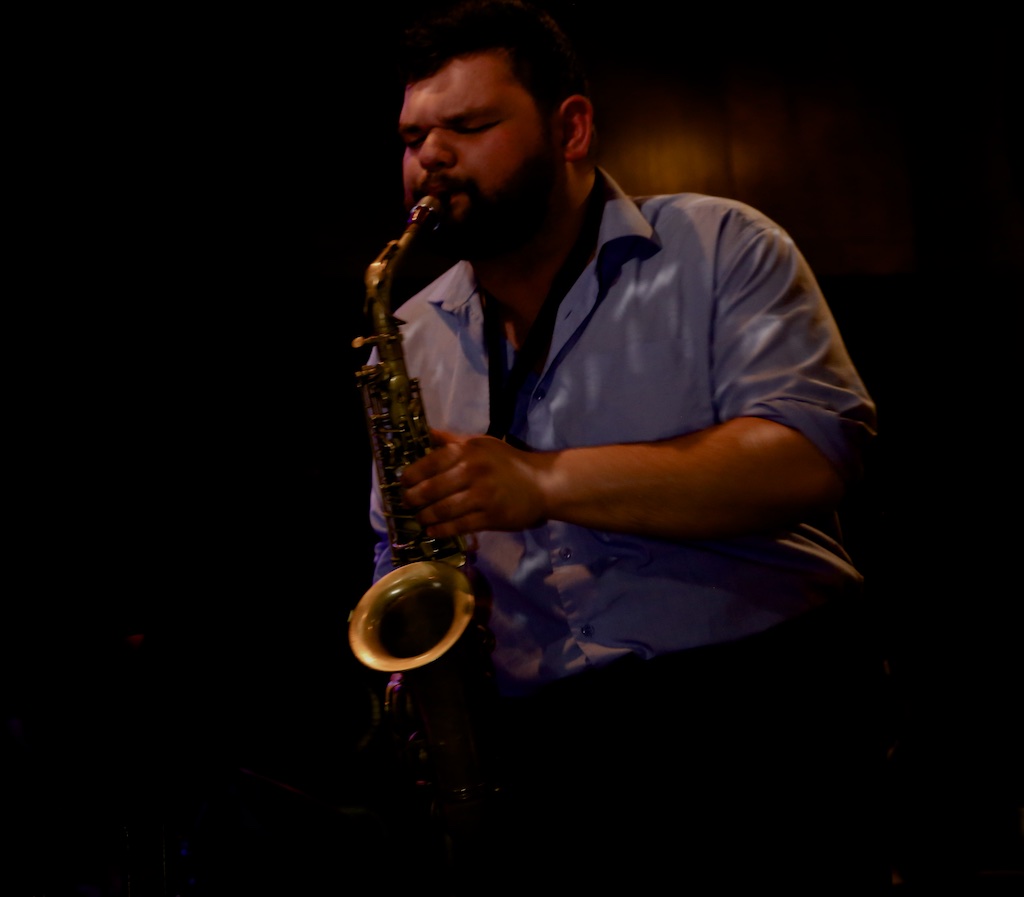 Passels playing was another high point of the evening for me. He just gets better every time we hear him. He is also exactly the right person to interpret mood. I liked the way he approached the tunes, working his way inside them methodically. Sometimes angular, at other times teasing at the melody. During the ballads, he often began with sparse phrasing, establishing mood without overstatement; then, slowly telling his story as if looking at the theme from differing viewpoints. Although he plays decisively, he carefully modulates; generally without flourish or vibrato – pushing at a note until subtle multiphonic textures form – his paper-thin Konitz-like tone saying more than any honk. His versatility is also an asset. Any player who can comfortably move outside and inside while still maintaining a theme is a person worth listening to.
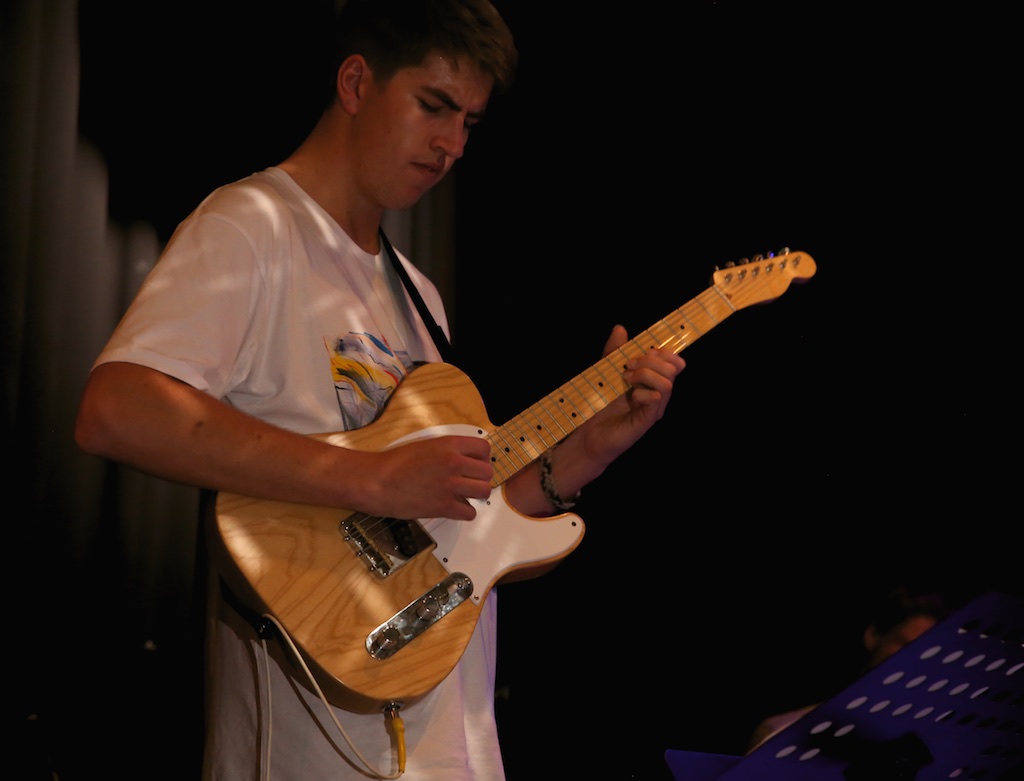 McAneny, who initially faced a cable problem, overcame it quickly and delivered a fine performance. Having a Rhodes and a guitar together can be problematical, but the charts and McAneny’s nimbleness enabled him to avoid crowding the space. Howell gave a nice performance and his lines are terrific; He knows what he’s doing but I’d like to hear him bite into his solos a bit more. Drummer Adam Tobeck was on solid ground with this group, he obviously enjoyed the company and reacted well to whatever was thrown his way. After not playing here for a few years, he is now a regular on the bandstand. I like his drum work very much.
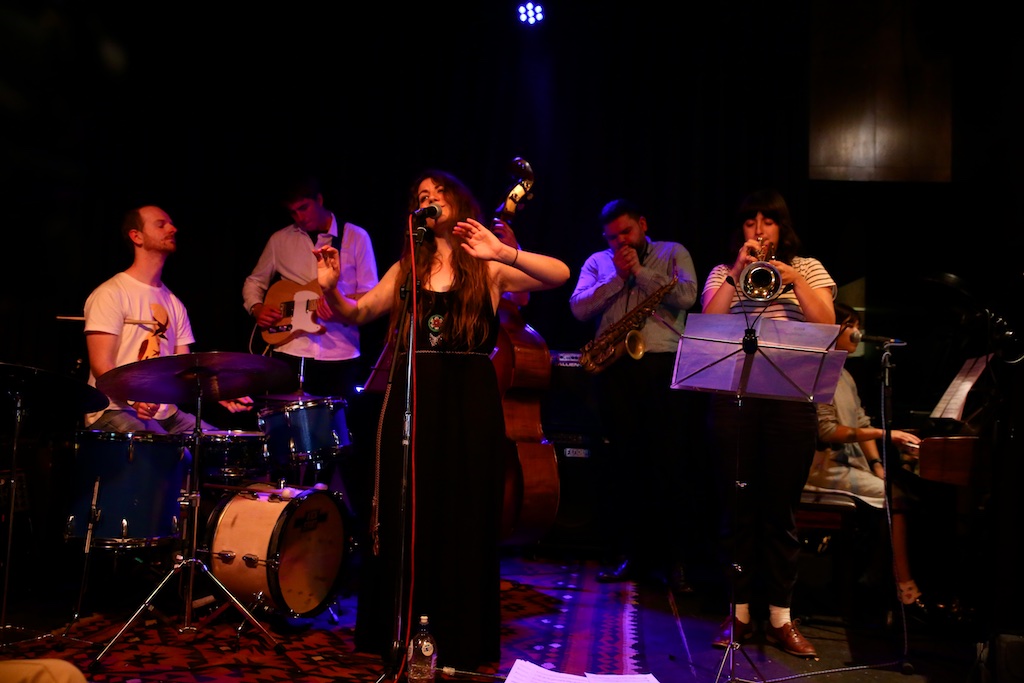 ‘Leda’s Dream’ has been around for some time, but this is the ensemble’s first appearance at the CJC. When vocalist Chelsea Prastiti first conceived of the project, she saw it as a vehicle for unfettered collective improvisation. Her writing cleverly expands on that concept, encompassing real places, the past, abstract ideas, and opening the listener to endless possibility. There is a structure to her vision, but to grasp it you must let go of what you think you know. The pieces are mirage-like; if you look too closely they will disappear. As you listen, fragments of the familiar appear, then dissolve. These are seamless journeys; cleverly fusing reality with dreamscapes. Leda’s Dream is to be experienced and enjoyed, not pigeonholed.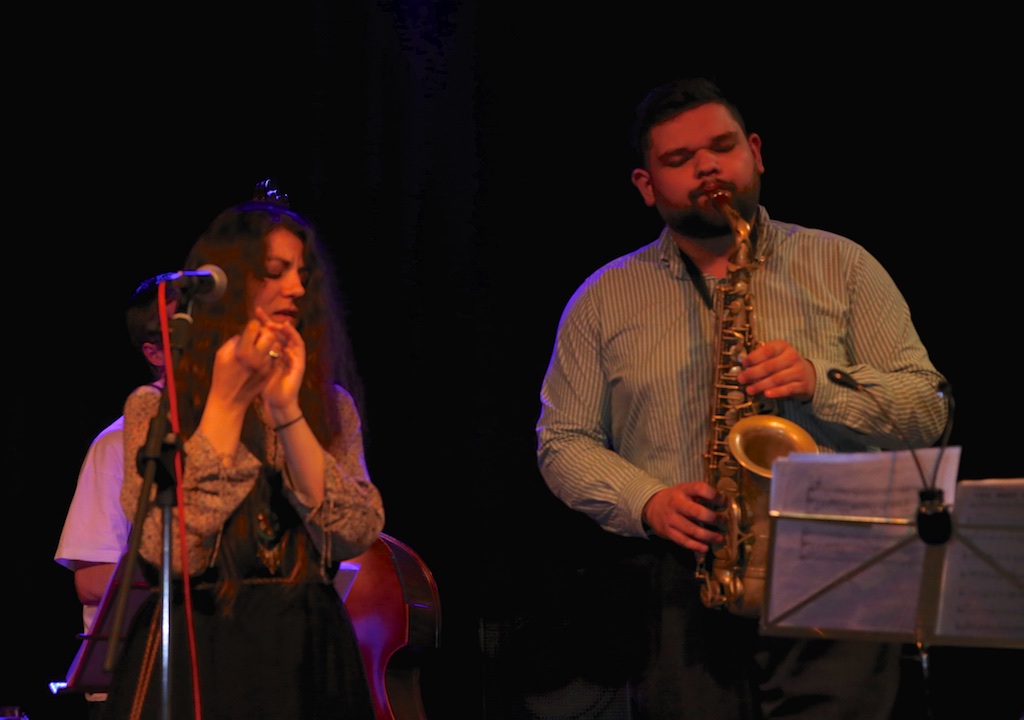
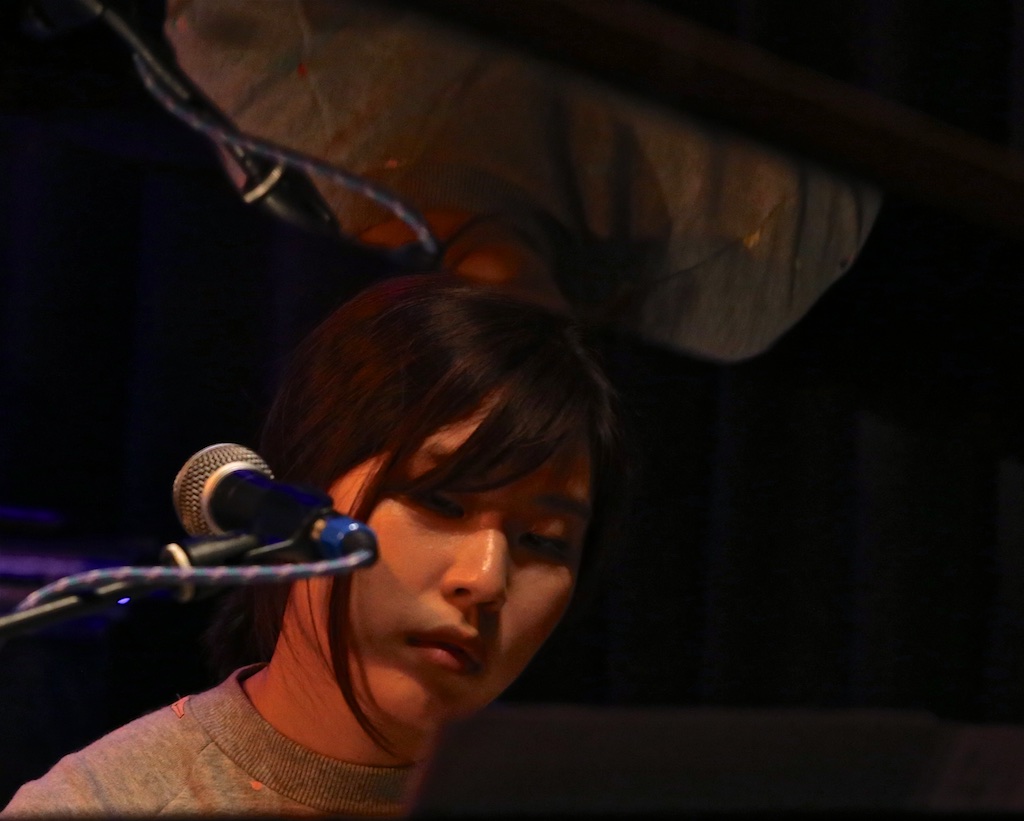 Prastiti’s ‘Time Lapse Photography’ was filmic. Revealing the essence of unfolding plants – magical realism – biology expressed as music. In a similar vein was her piece,’Rain Flood’. As she sang, you experienced the droplets of water – falling slowly at first, then faster until they became a deluge. Communicating in this way is a gift few possess, the images seeming to emerge from nature or from experience, not from the musical form. I immediately thought of my favourite Bengali filmmaker Satyajit Ray and his mystical Monsoon scene from ‘Pather Panchali’. The effect created by Ray there, also swept us to the heart of a poignant interaction between man & nature (musically assisted in that case by Ravi Shankar and Mingus alumni Charlie Mariano).
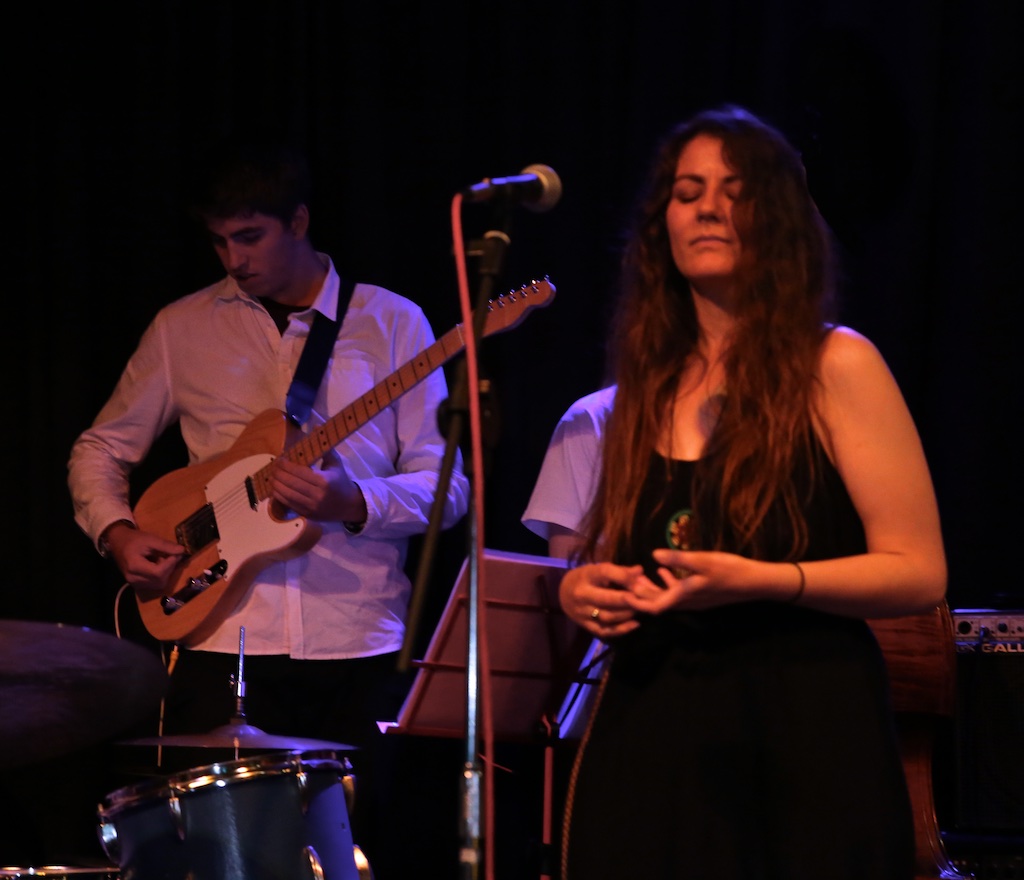 The Leda’s Dream ensemble are alumni from the UoA Jazz School. A lot of talent emerged during the years they attended and during this particular gig it coalesced. It was a pleasant surprise to see Crystal Choi playing this innovative abstract music. Choi is a musician who is fast evolving and growing in interesting ways. At Jazz school she stayed closer to traditional forms, or those referencing the folk infused ECM albums. Later I saw her giving a concert on solo piano, Jarrett like in its scope and quite wonderful. On Wednesday she embraced freedom. She was innovative, interactive and confident.
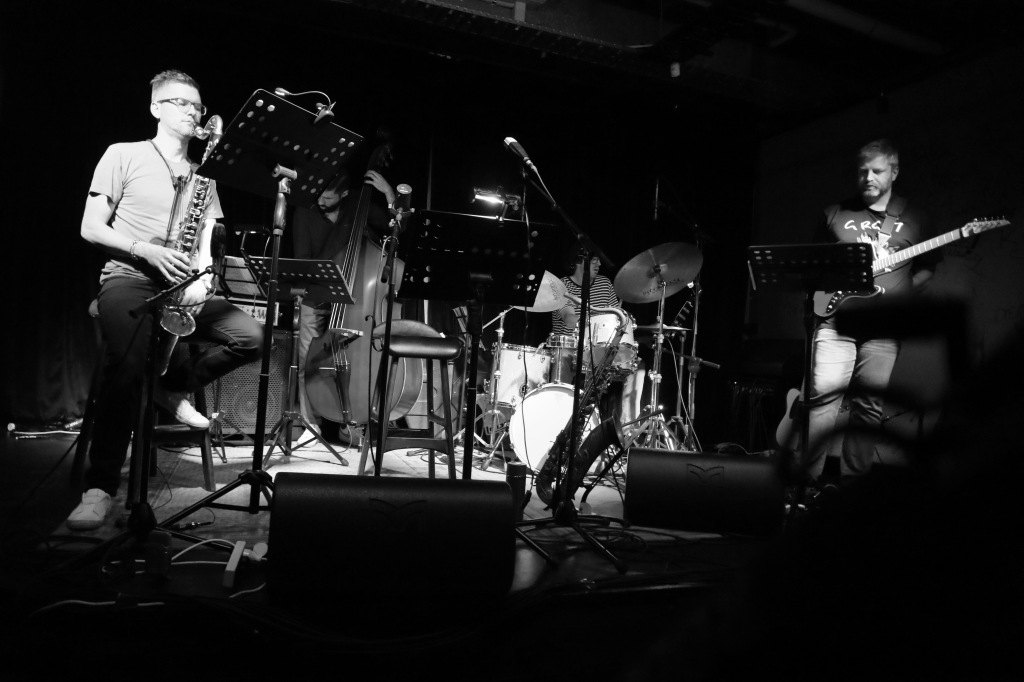
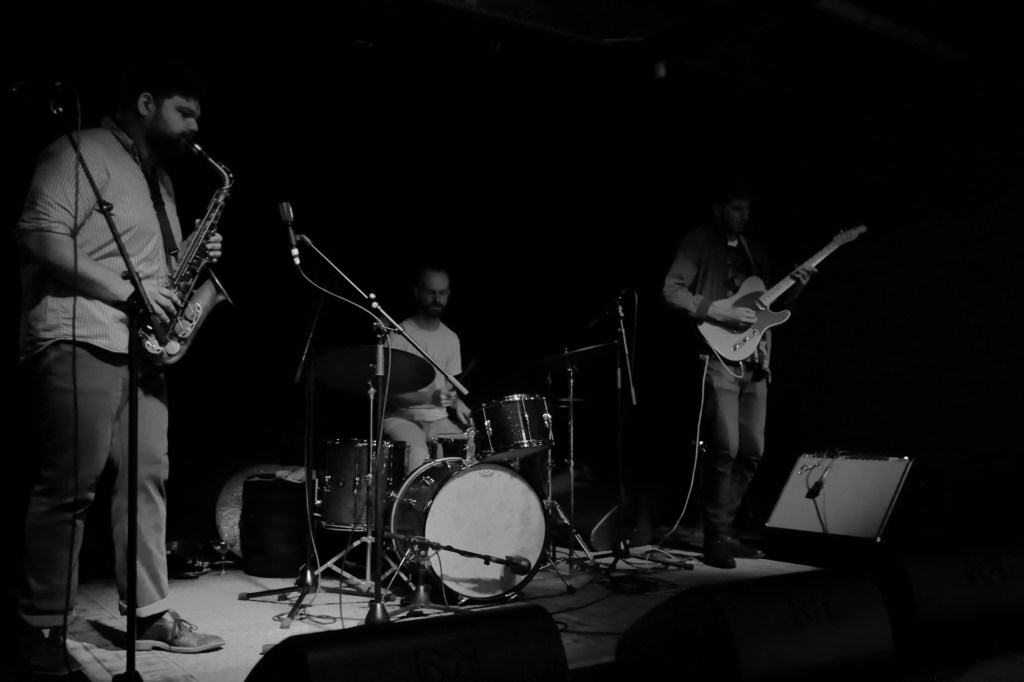
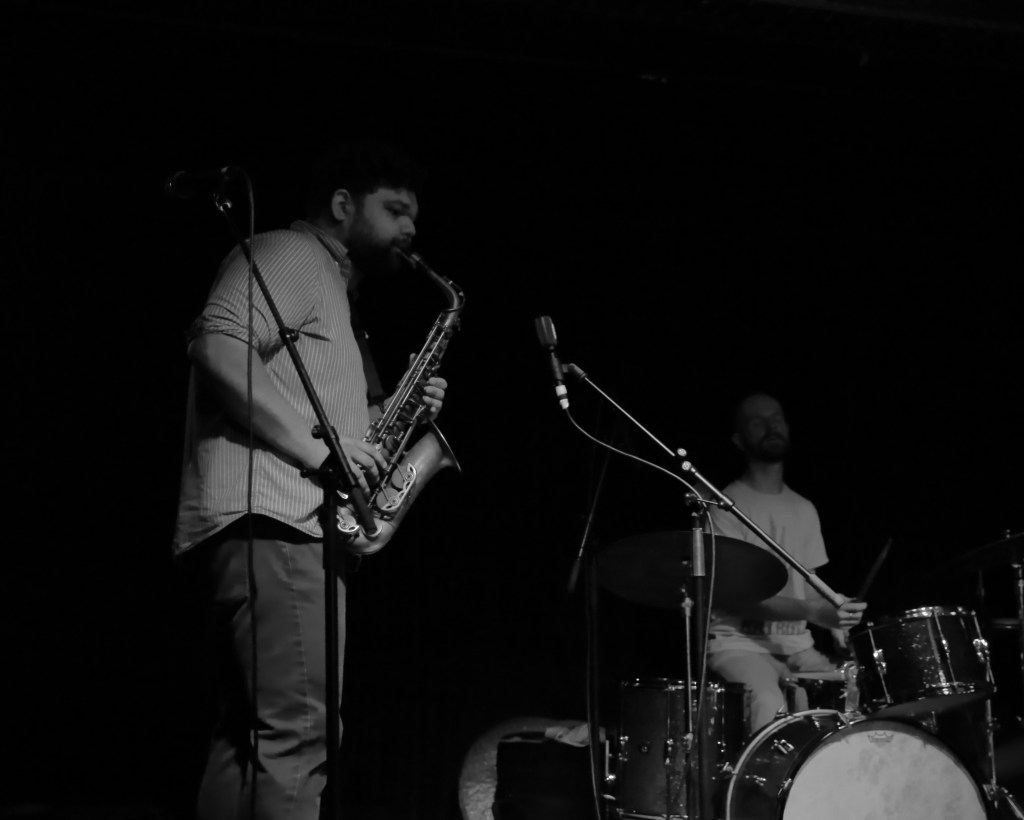
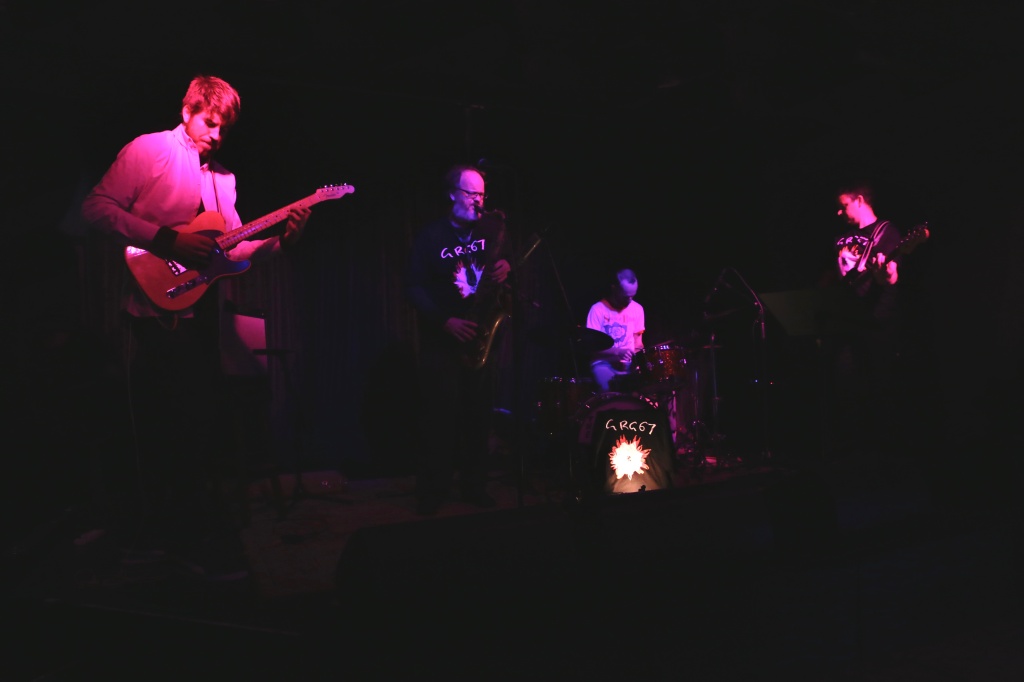
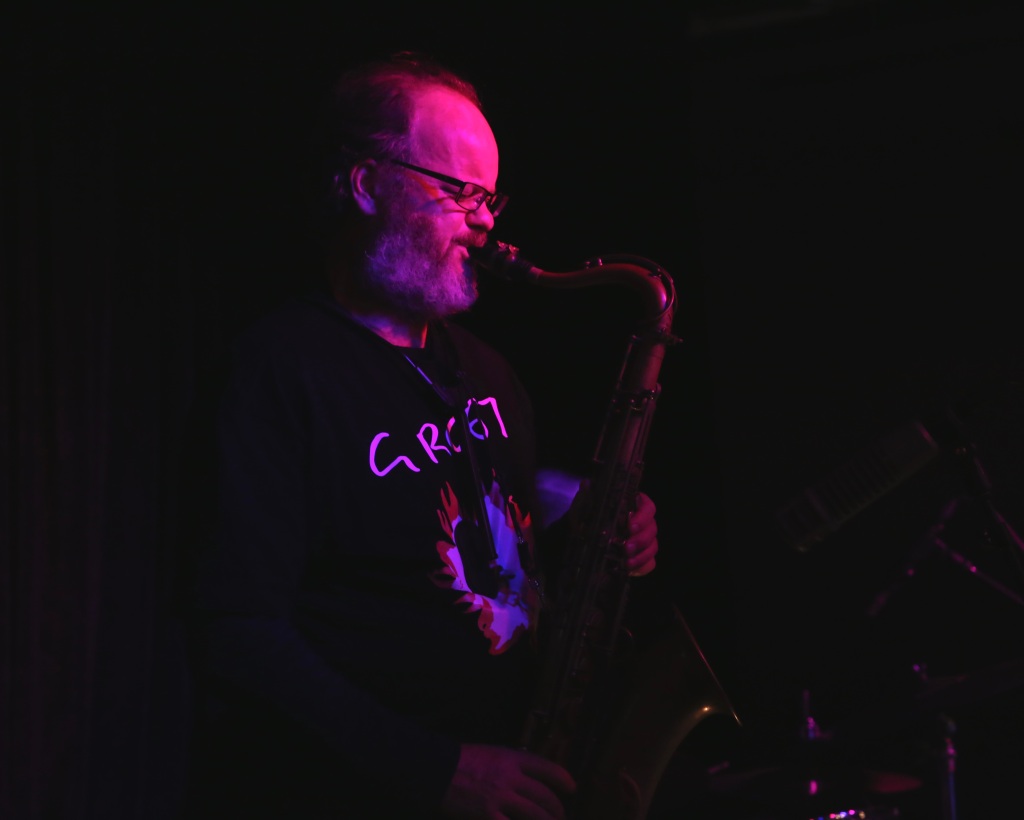
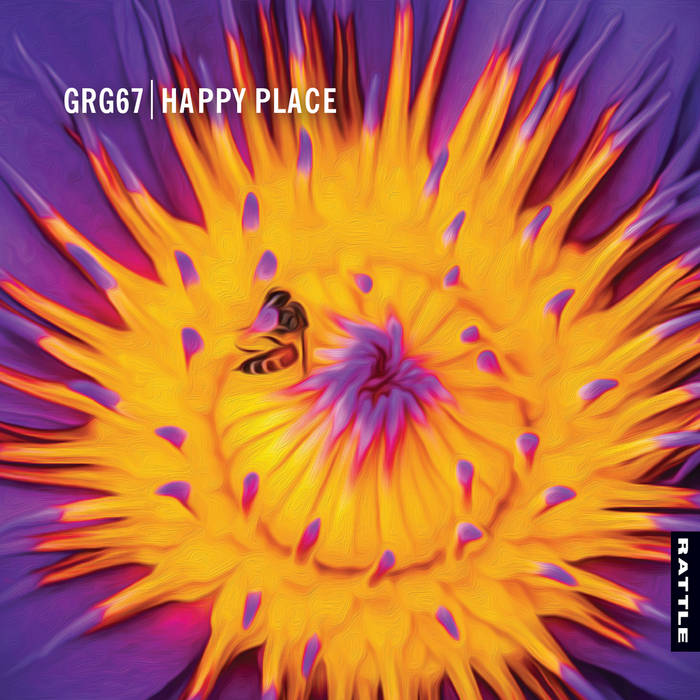
 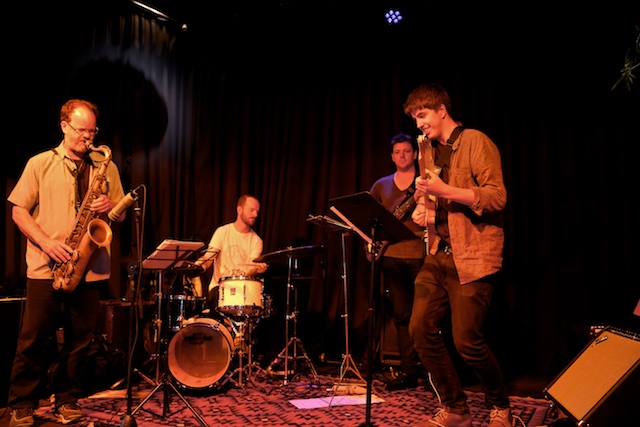 Against a background of complacency in regard to the ever declining biodiversity on the planet, one band is determined to raise our awareness. Those who have encountered the quartet on prior occasions will know the back story, connect the dots. GRG67 arose out of an impulse of crustacean empathy, an emotion usually confined to marine biologists and not Jazz musicians. However, once you grasp the fact that the band’s founder is Roger Manins, the rest falls into place. A sustainable fisher and co-manager of a small menagerie, Manins could best be described as the David Attenborough of the tenor saxophone. His world is strewn with animals and that’s the way he prefers it.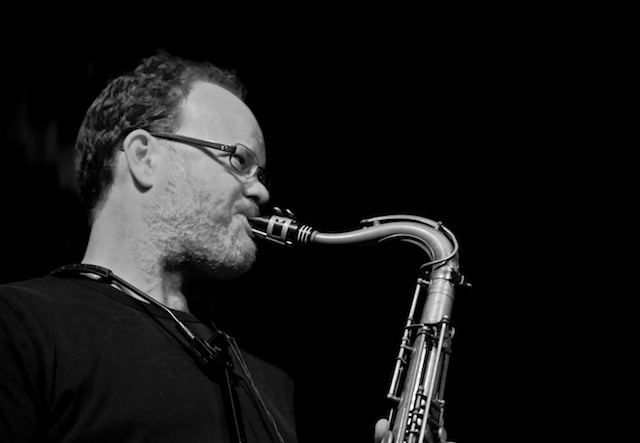
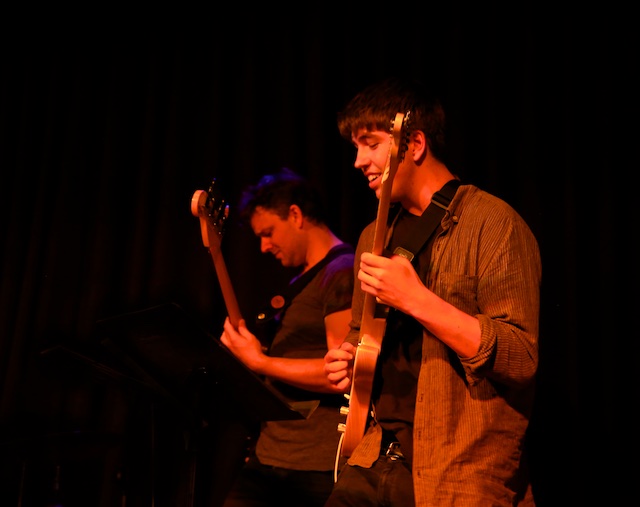 Each tune title was accompanied by a personal story or zoological insight; each bird was treated with deep respect. With titles like ‘chook empathy’, ‘chook 40’, ‘ginger chook’, ‘dark chook sin’ we were afforded some rare insights into the avian world. ‘Chook 40’ was not about the 40th chook as you might suppose. It opened our eyes to the fact that chooks have one more chromosome than humans. During that particular tune you could really sense that extra chromosome. ‘Dark chook sin’ was an invitation to anthropomorphism. What would a chook sin look like? Manins felt that Mallard ducks were more likely to sin than a chook (anyone living near ducks who has a deck will have a view on this).
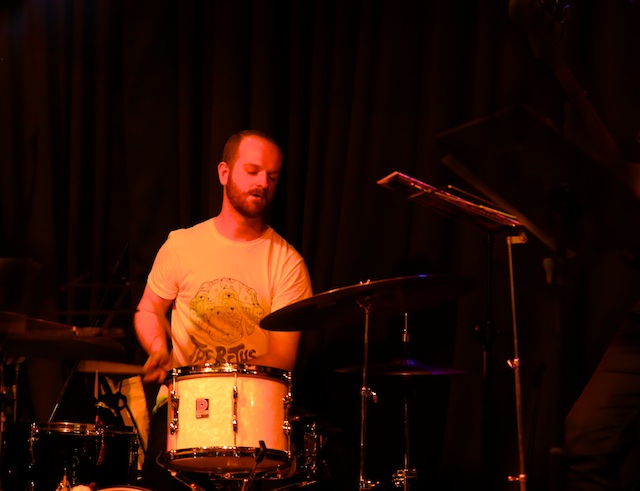 The quartet played with wild enthusiasm in both sets and the good humour of the evening was infectious. Given the subject matter it was only fitting that the gig took place at the Thirsty Dog (dogs are also a recurring theme with Manins). The venue was congenial and the acoustics good. What more could you want on the last night of Spring. This band is a rallying cry, reminding us that in this troubled world we shouldn’t take the good things for granted. At a time when we are buffeted by the ill winds of international politics, the arts matter more than ever. New Zealand Jazz rewards us in so many ways and the diversity of improvised music in our city is a treasure. You get good musicianship and fun combined – and if you’re lucky a musical insight into the natural world around us.
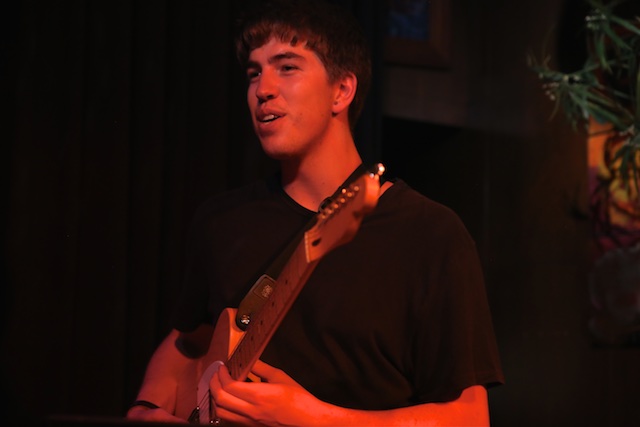 I have posted the bands signature tune GRG67 as it simply crackled (cackled) with life (and it broke a previous speed record). These guys are fine musicians and GRG67 was never better than on this night. These guys sizzle.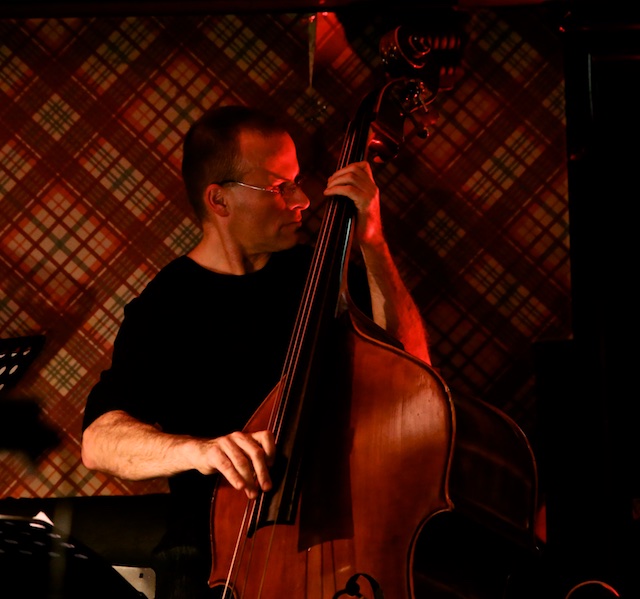
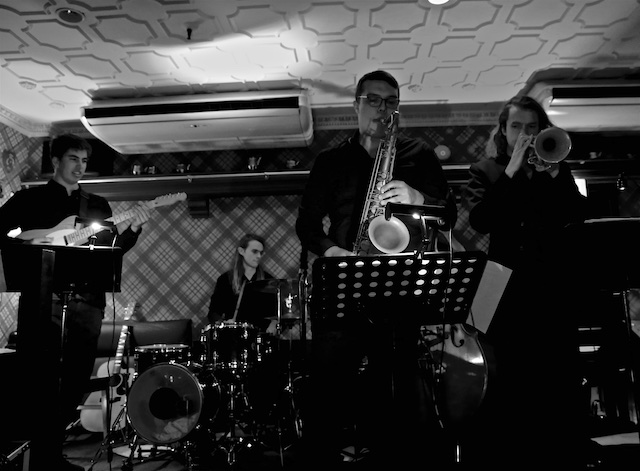 From early in the first set, I felt the passion behind the performances, the sheer exuberance that is generated when a group know that they are performing effectively. Seasoned touring musicians sometimes sacrifice this – perhaps the effort of being on the road, the effects of jet lag, robbing them of warmth. It reinforces my view as a listener, that an artist needs more than chops to fully engage with an audience. When a band is comfortable on stage, properly rehearsed and above all up for a riotous night, magic can happen.
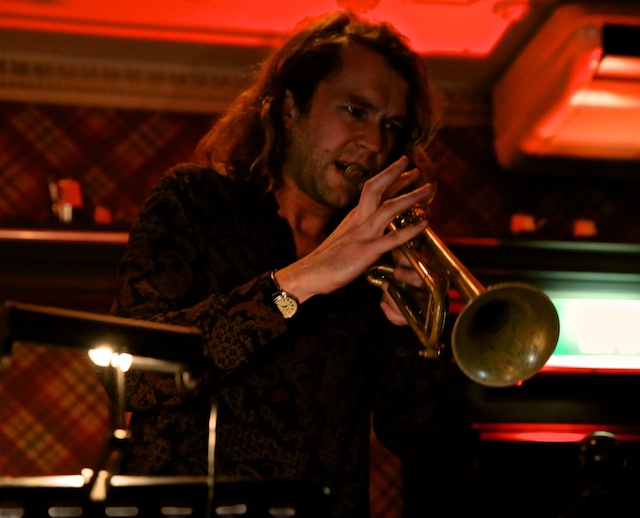 Trumpeter Finn Scholes can always surprise and over recent years he has impressed me increasingly. His vibrantly brassy ‘south of the border’ sound in the Carnivorous Plant Society is well-known, but anyone who thought that was all there was to him, hasn’t been paying due attention. He is raw and raspy on avant-garde gigs, mellow and moody on vibes and in this lineup reminiscent of the young Freddie Hubbard. His solo’s had bite and narrative, his ensemble playing was tight; above all, he generated palpable excitement, the sort that brings people back to live music again and again.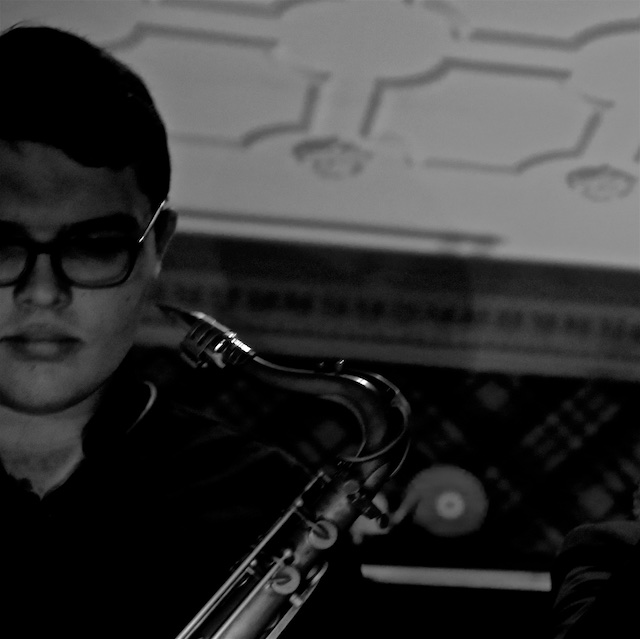
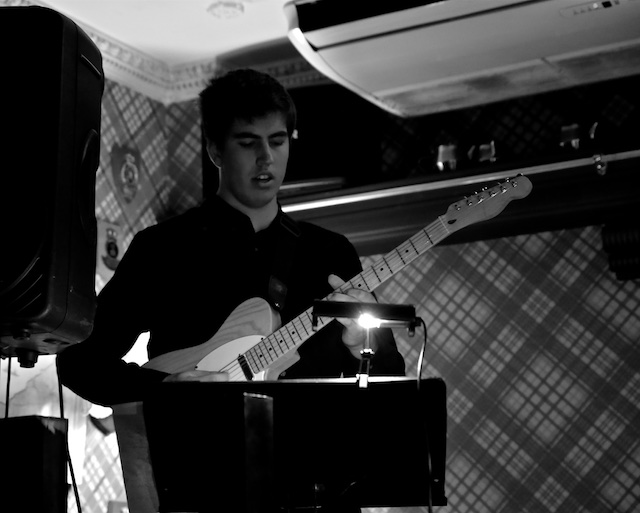
 Alex Ward has been on the scene for a few years now and he has appeared at the CJC a number of times. This time he appeared with a group of formidable younger musicians; all respected about town. His programme was pleasantly challenging as it offered contrasting tunes. From the quirky Carla Bley composition ‘King Korn’ to the perennially popular Disney tune ‘Never never land’. Then, for the second time in as many weeks we heard a Cold Play cover – this time ‘Daylight’ (arr. by Taylor Egsti). Rounding off the set list were a number of his own compositions including the appealing ‘Rakino’ which I have heard before. Wards compositions have a definite melodicism about them.
 I am a real Carla Bley fan and so it surprised and pleased me to hear ‘King Korn’. I also have a real liking for her ‘Ida Lupino’. Bley’s repertoire is not played anywhere near enough for my liking. Her tunes are often closer to the avant-garde, but still accessible to main stream listeners. Ward showed no fear in tackling the angular jerky rhythms of King Korn and the result was pleasing. He had surrounded himself with exactly the right musicians for the task. On bass was Cameron McArthur, a perennial favourite who must now be considered a heavyweight about town in spite of his youth. The drummer was Cameron Sangster and again a highly experienced and gifted musician. Sangster is a multi faceted drummer who can move between soul, big band and small ensemble work with ease. We recently saw him with the Auckland Jazz Orchestra where he put on a stunning performance.
 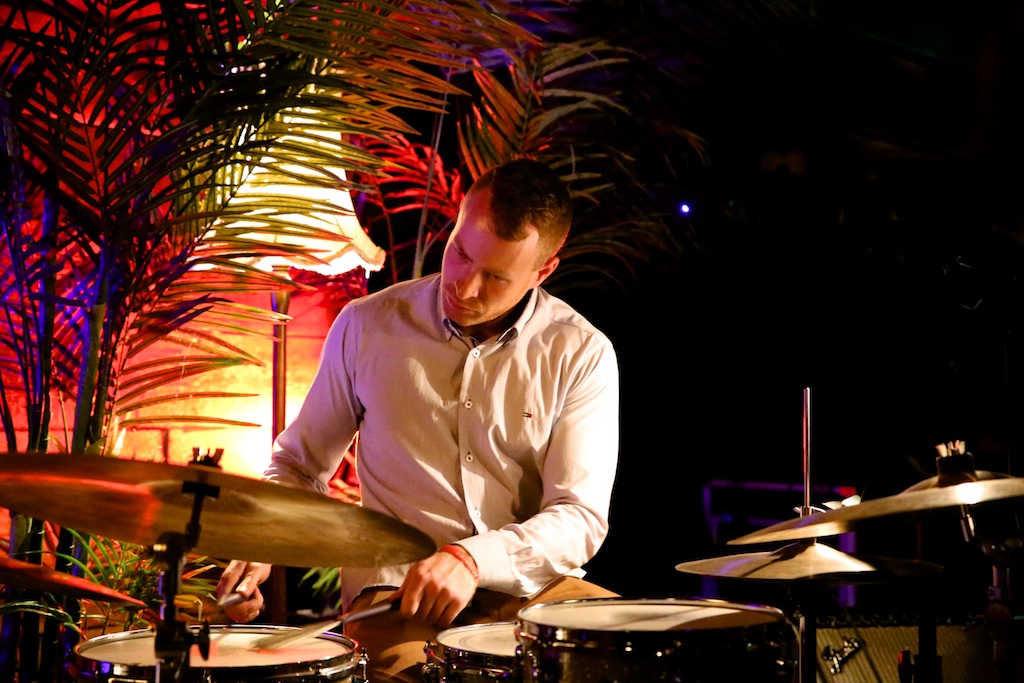 Additional musicians came to the bandstand at various points; Kushal Talele on tenor saxophone and flute and Michael Howell on guitar. I had previously only encountered Ward playing in a trio format and this was a chance for us to see what he would do with an expanded ensemble. The diversity of material worked for them – none of it highly arranged but allowing for free-flowing interaction.
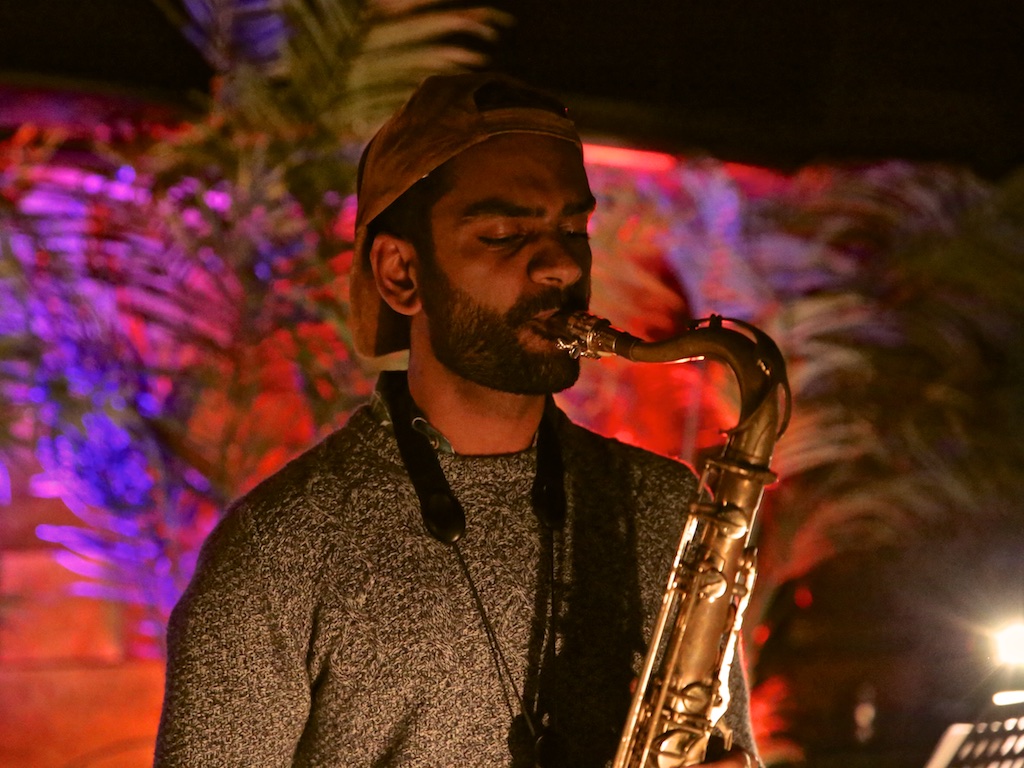 I had only heard Talele once before and he naturally sounded different on this gig. Here he was appropriately the competent sideman, not the hard-driving Coltrane referencing leader. I like both aspects of his playing. He is a musician that I am definitely keen to see more of – especially when he dives deep into that denser material he favours. The ever smiling Howell is well liked and respected as an up and coming young guitarist. He is seen to greatest effect in Roger Manins ‘Grg67’ band.
 Whether by accident or design, Ward celebrates Carla Bley in an important year. 2015 saw Bley receive the highest public honour in Jazz, as she was the recipient of the NEA (National Endowment of the Arts) Jazz Masters Award.
 There are a lot of interesting stories on the Jazz circuit and some of them more improbable than others. None more so than a gig dedicated to the Manukau Harbour mud crab Grg67 (Varunidae:Helice). This ten legged estuarine creature has inspired Roger Manins to name a band after him and to compose a significant number of tunes
 in his honour. I could say that environmental activism fuelled the gig (and in part it was), but the affection and respect Manins exhibits towards these crustaceans is more complex than that. It is the respect of a dedicated Flounder fisherman; coloured by the quirkiness of an improvising musician. To quote: “When we play these compositions there are sharp claws and a soft underbelly; at times we can move unpredictably sideways at great speed”. Manins demonstrated this to great effect as he swiftly shuffled in alternate directions. You couldn’t make this stuff up. As the gig unfolded he delighted the audience with his antics and with the subsequent ‘crab’ influenced compositions.
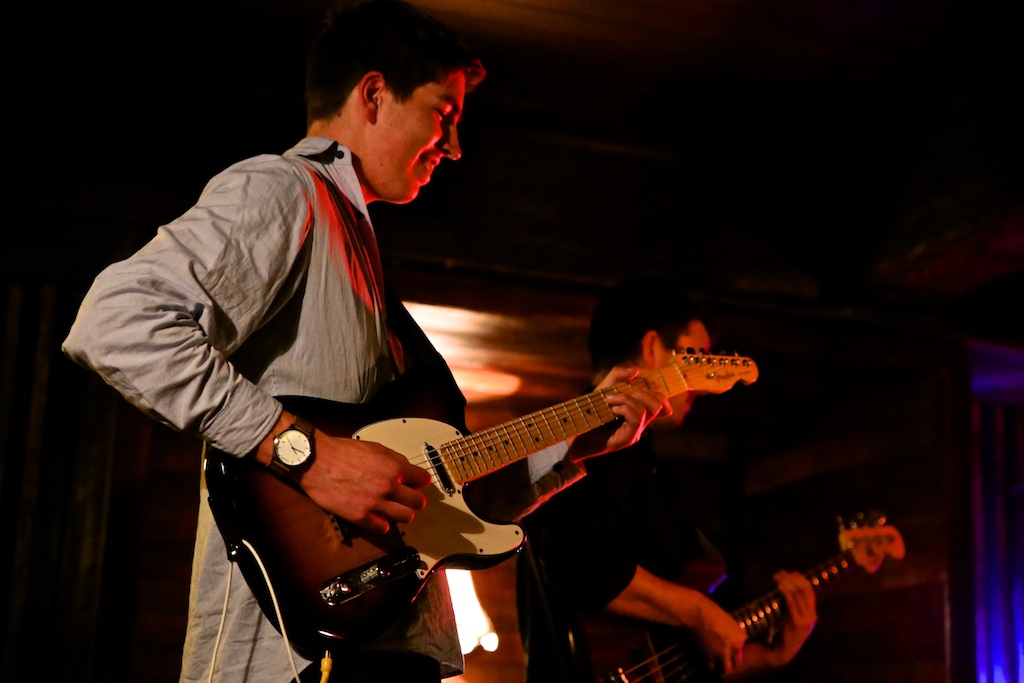 Underneath the crusty carapace were a bunch of good tunes and as Manins inferred, they were tangentially tricky and replete with interesting musical twists. Good improvisers are always on the look out for new challenges, new ways to interpret the world about them. In putting together ‘Grg67’ a fresh vehicle for improvisation is born. By bringing in several less experienced musicians Manins has fulfilled an older imperative. To challenge and encourage those beginning the improvising journey. This is how it should work, but many older musicians forget that and remain in their comfort zones. Everyone stepped up here under Manins watchful eye.
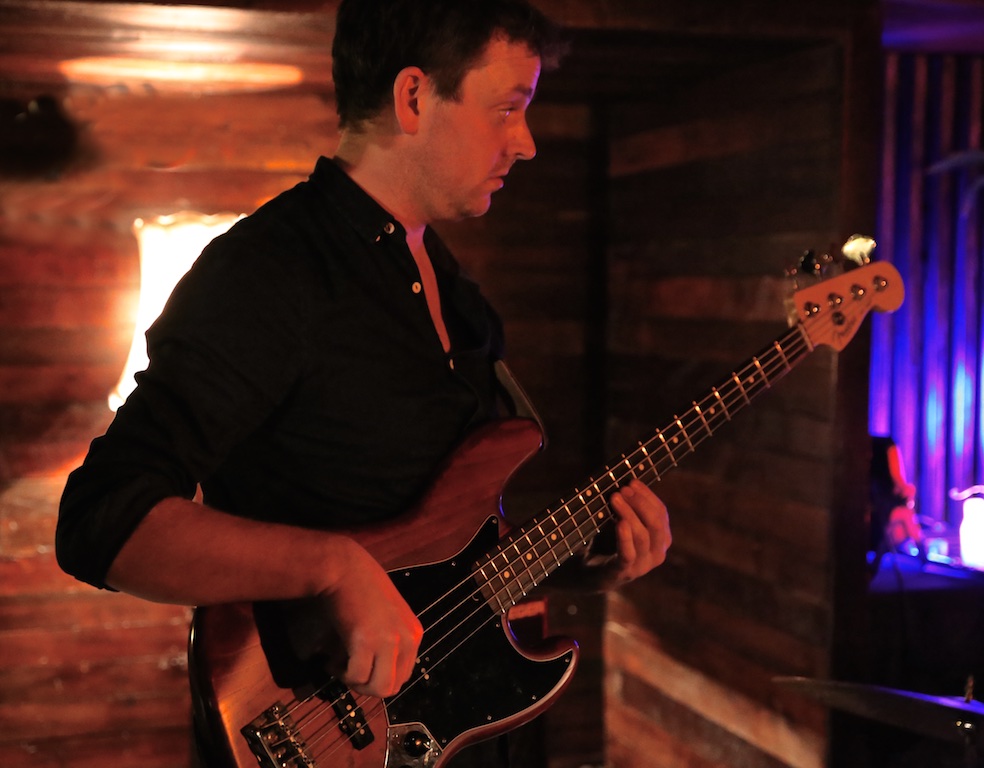 The crab which is the central focus of these sets is Greg, but as Manins so eloquently explains “Crabs don’t use the letter ‘E’. It something to do with their waste not want not utilitarianism”. Other tunes had titles like ‘Crab Empathy’. These tunes and the stories that surrounded them evoked powerful mental images. As the music washed over us you could sense the ebb and flow of the tides. You could easily imagine a predatory Flounder sending the ever watchful crabs scuttling into their burrows (Flounder are none too bright according to net fisherman).
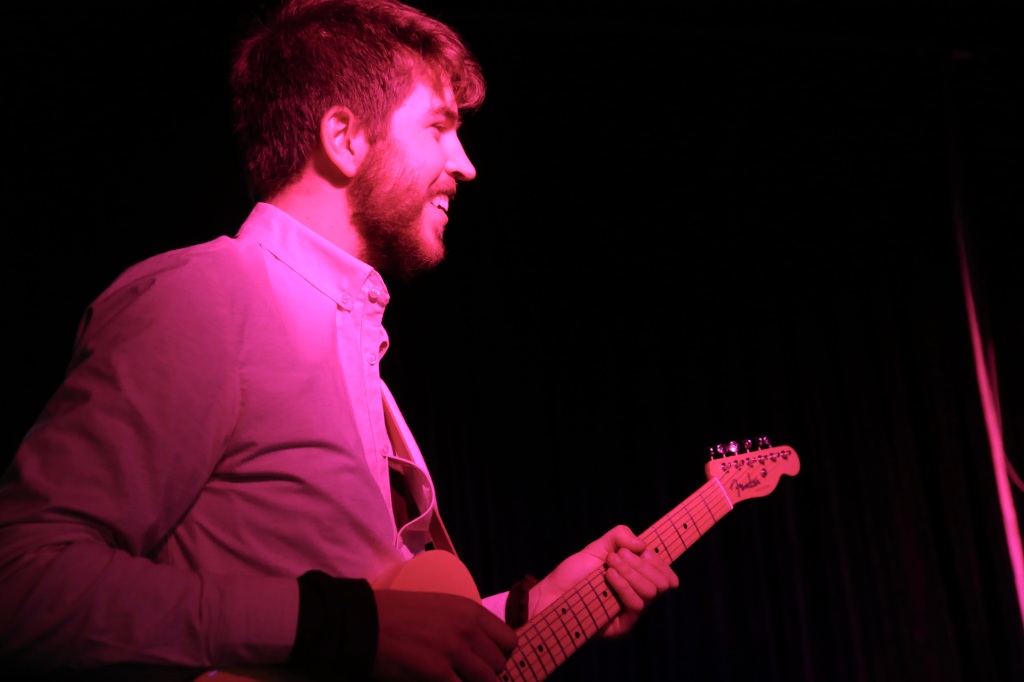
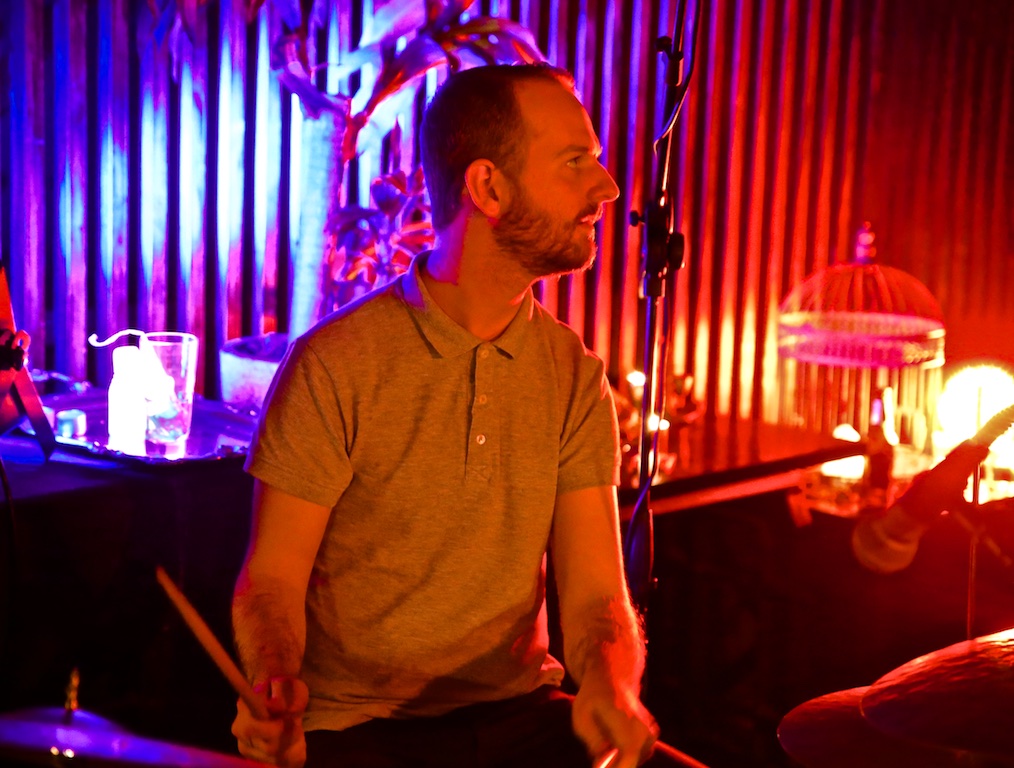 Michael Howell and Tristan Deck are the youngest members of the ensemble. Howell is a Jazz student and with each month his guitar work grows more impressive. As his confidence grows he stretches himself and playing with Manins is exactly what he needs. He is ready for the deep end of the crab pool. On this gig he played a borrowed Fender and it sat well with him. That Tristan Deck played so well did not surprise me at all; his career trajectory assured as he increasingly takes his place among the better Jazz drummers of the city. He was good when I saw him two years ago; now he is very good. For the second time this month Mostyn Cole appears at the CJC. This time he held the groove with electric bass. He is reliable and multi faceted. Again Manins showed how seamlessly he slots into very different situations. He presented a complex set of tunes to good effect, navigating break-neck tempos and fusing complexities with an inexhaustible supply of good humour.
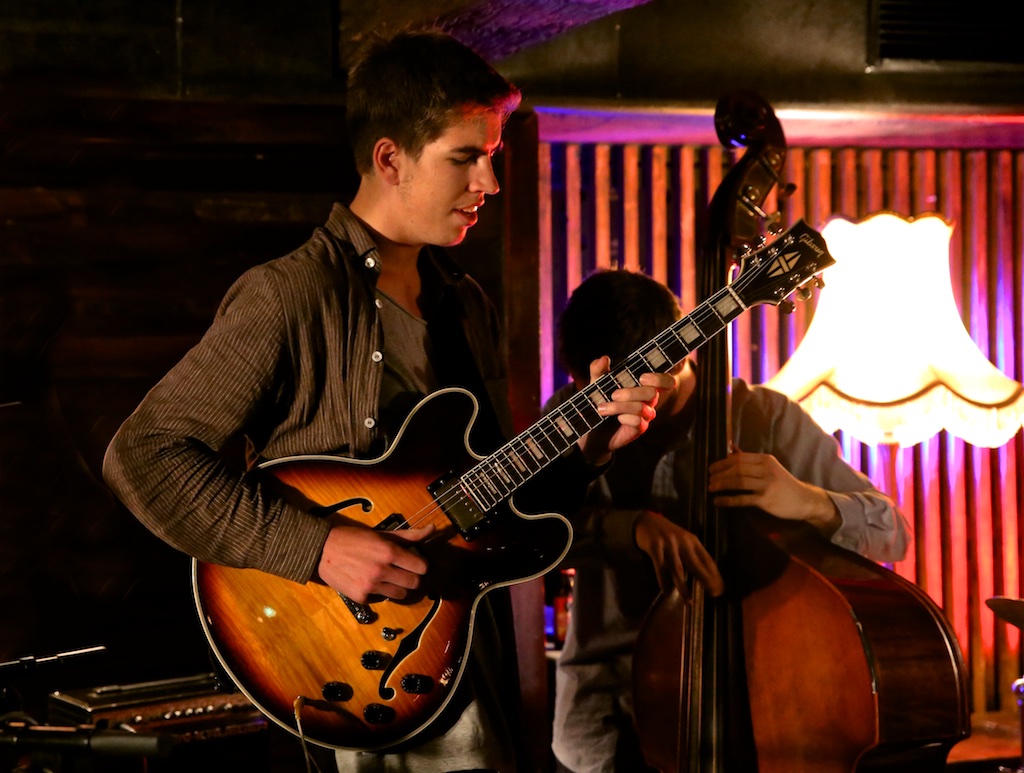 This was ’emerging artists’ night and you wouldn’t have thought so. The club had packed to capacity and the performances were far beyond what you’d expect from students. The artists approached their sets differently, but the end results were equally satisfying. Both study at the Auckland University Jazz School and if that institution is turning out students of this quality it certainly reflects well on the faculty.
 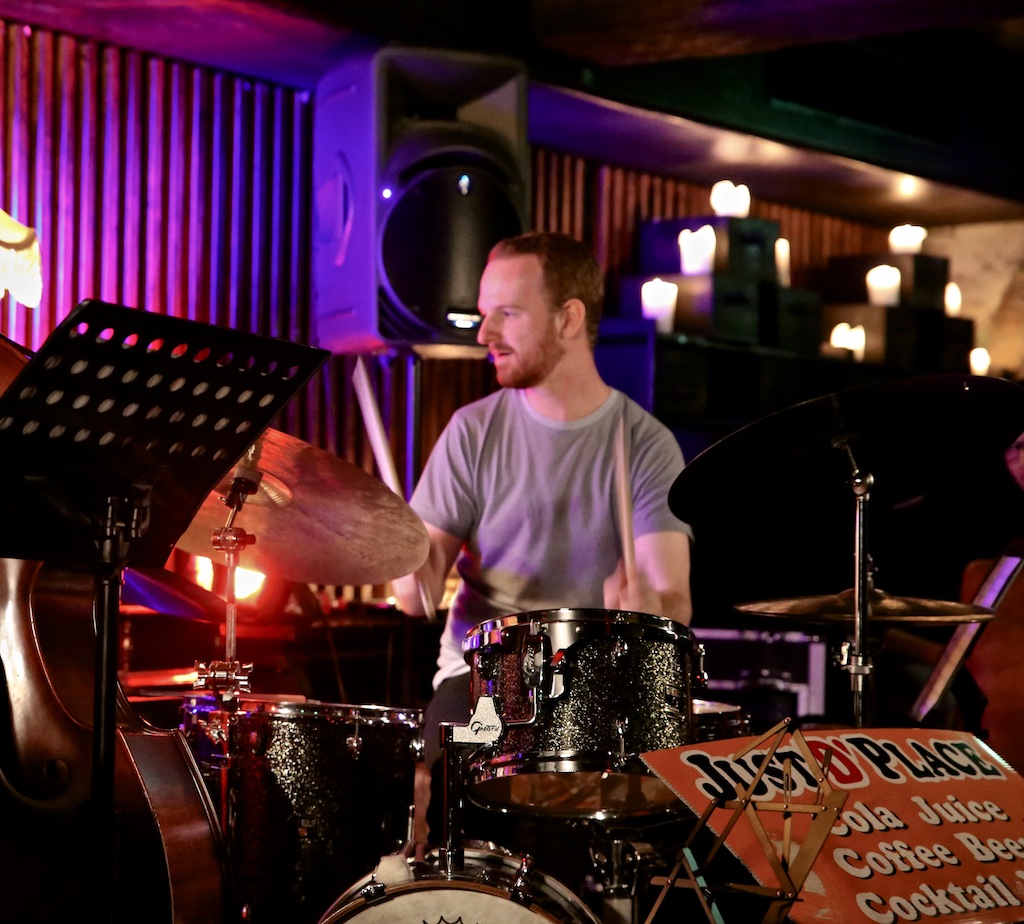 Michael Howell is from West Auckland and for some reason a number of excellent guitarists emerge from that quadrant. Growing up in the Waitakere ranges seems to have gifted his playing with an expansiveness and it is not hard to imagine big vistas and tree-clad hills during his ballad numbers. Howells set opened with a ballad and edged into the faster tempos later. His thoughtful opening took us deep inside the music and this was a good way to start a set. As well as his own tunes he featured compositions by Ben Monder, Sam Rivers and John Scofield. When a guitar trio doesn’t use an organ or piano there is more space to work in. This was well utilised by Howell although he is also adept in larger group situations. I heard him a few days later when he sat in with a number of very experienced musicians and he stepped into that space effortlessly. There were two numbers with piano and fellow student Crystal Choi sat in for these (also adding a vocal line). The other musicians were Eamon Edmundson-Wells on Bass (who also played bass in the second set) and Tristan Deck on drums. These former UoA students have already made their mark on the scene.
 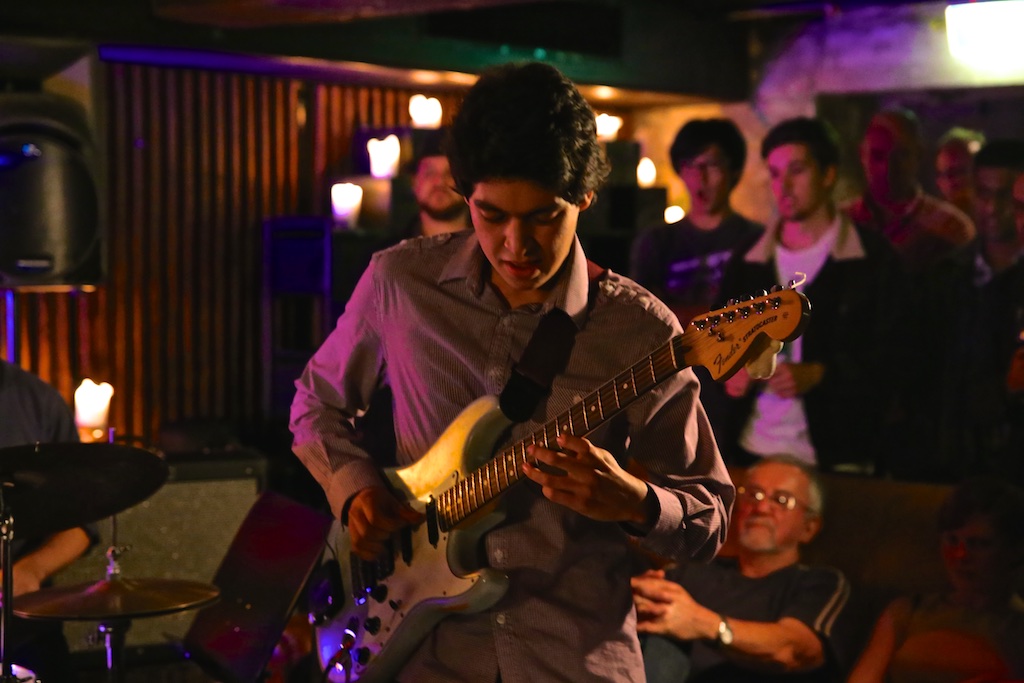 Kenji Holdaway led the second set and his approach was quite different. Most of the tunes he chose favoured collective improvisation and they draw upon diverse genres. His bandstand presence and the way he approached tunes oozed confidence. He had also chosen some former UoA students to accompany him and his choice was right on the money. J Y Lee is a gifted alto player and he can work the spectrum from avant-garde through to the lyrical ballads that give sentiment a good name. His musicality shone through during this gig and he just gets better and better. On Rhodes and piano was Conner Mcaneny and he often pushed the group into a freewheeling fusion space. Once again It impressed me how well his playing served the music as it was far from formulaic. When the others were playing his comping chords acted as clever punctuation; urging them to reach further and deeper. Another surprise was Tom Legget on drums and perhaps I have not been paying proper attention. I recall him sitting in during the CJC Jam Sessions of 2012. Now he is a fully formed drummer. His contributions tasteful and decisive. Eamon Edmundson-Wells was on bass once again and he showed what a tasteful player he is. While the band was good it was Holdaway who dominated. It was not that he injected himself into others solos for he would regularly lay out respectfully. It was his impressive command of the guitar, that and the sense that he was really across this gig.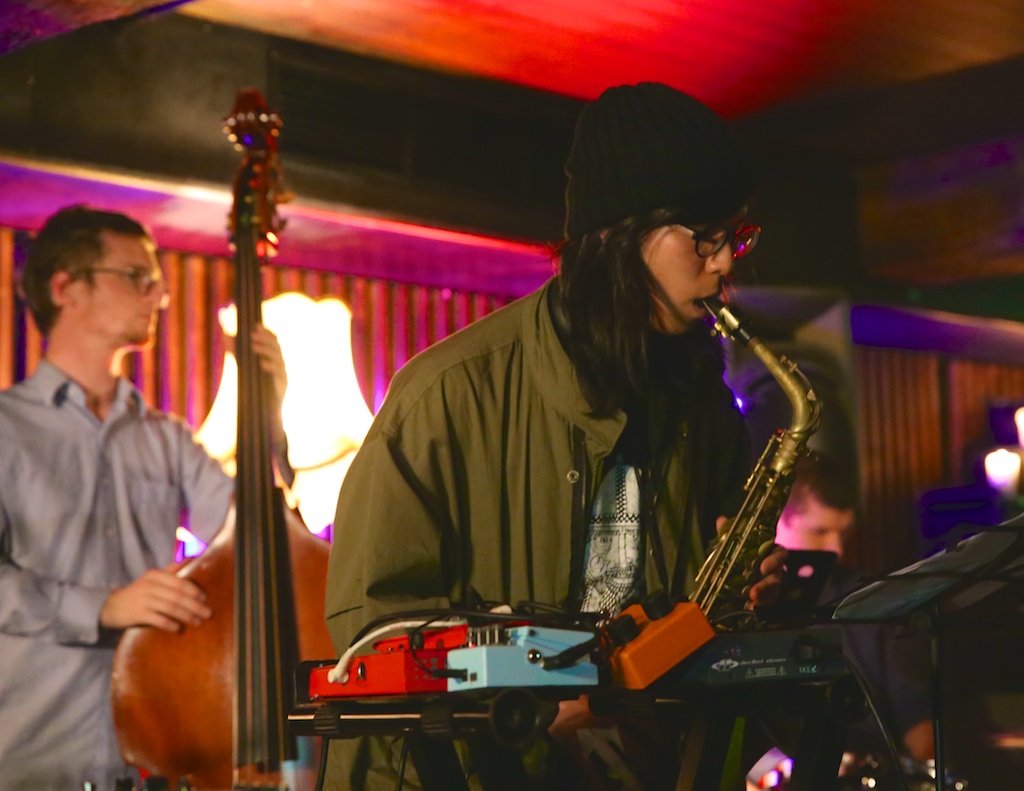
 JazzLocal32.com