Jonathan Crayford Interview (part one)
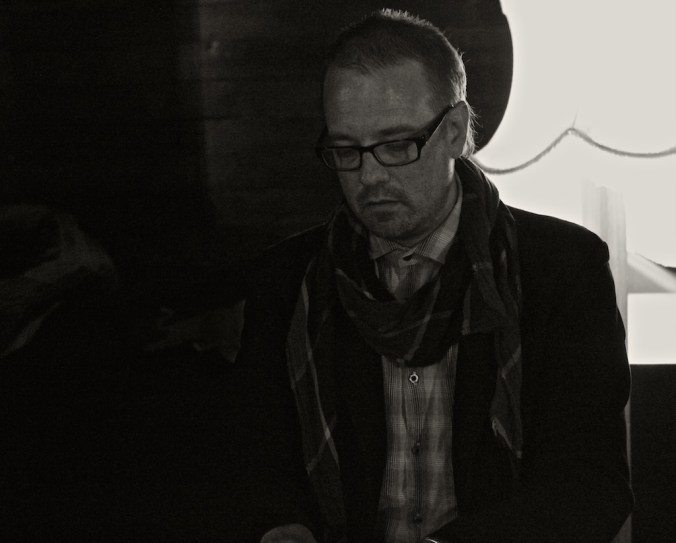
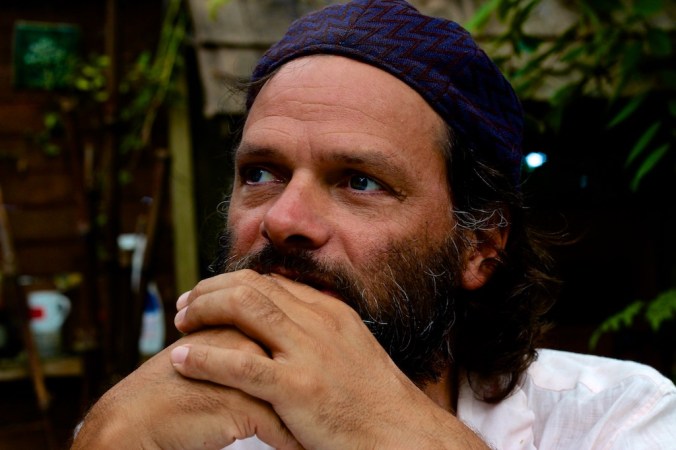 When the luck runs your way, an interview with a musician will mysteriously transform itself into something more. If you know how to read the signals and respond appropriately, you find yourself traversing musical galaxies; places where words and musical ideas merge. I was acutely aware of this when I interviewed Jonathan Crayford recently. He is the ideal person to spend time with if you like to explore the improbable connections between seemingly unrelated things. It was an interview where the rhythms of the moment guided what we discussed and the best part of a day flew by before I knew it. This cerebral world is where Crayford prefers to live. He is perpetually on the road, dreaming up and shaping musical projects as he goes. His life is truly the troubadour’s life. As I probed him for insights, one episode in particular threw light on how serendipity and happenstance can guide him.
While living in Paris a few years ago, he reached the conclusion that the time had come to move on. Around this time he met a Catalan photographer and she invited him to perform at a Catalonian arts festival. When he asked how well it paid, she replied that they had no budget, but offered him a jar of marmite. Impulsively he packed up his belongings and moved to Spain. That began a fruitful creative collaboration that led to the photographer and Crayford doing gigs together in a number of European cities like Vienna.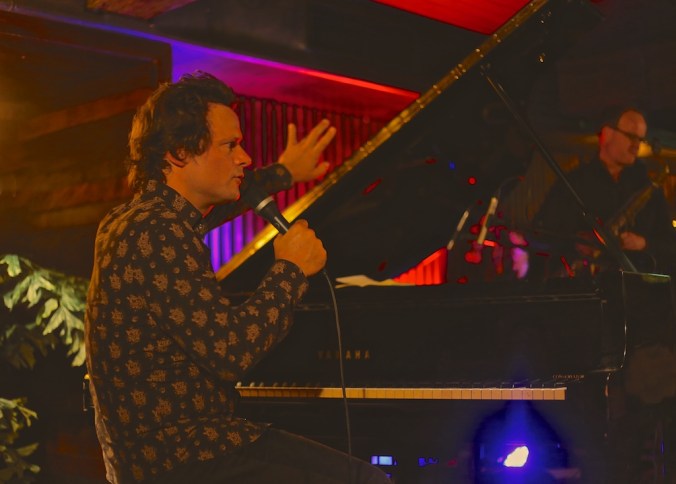 I asked him why this type of project drew him so strongly. “I’ve been travelling for years and it’s the excitement of new projects and the risks associated with being in unfamiliar places that lures me. I like being in a new place, an exotic place, somewhere outside of my life’s experience. It is like a rebirth. New loves, new sounds new smells, new food and a new vantage point from which view life. The grist of creativity comes directly out of this”.
I had recently attended his concert at the Te Uru Waitakere Gallery where he was one of the featured artists in the ‘Black Rainbow’ concert series. I asked him about that and the carved piano, but as we talked the topic shifted to his quest for the perfect piano. His sense of reverence when talking pianos was palpable and he needed no encouragement to elaborate. “The acoustics of the room worked well for solo piano and the instruments bones are high-end Steinway. Here is a paradox though; the musician in me is always uncomfortable with carved or painted pianos. I understand that this is a wonderful piece of art, but the piano is already the ultimate piece of furniture. It is perfect in form and highly functional. Any alterations or adjustments should serve the sound.
Pianos sing for me and I can hear when pianos are sad. I feel their sadness and work with it, but it still troubles me”.
He talked of pianos so reverently and I wanted more on this topic, so I asked him about some of his favourite types of piano; the special ones. “I find the Australian made Stuart & Sons piano extremely interesting. With such a presence of upper harmonics you really need a different approach to playing. That was my impression of the one I played. A wonderfully crafted instrument. A few months ago I travelled to Australia to meet up with Barney McAll who is back from New York. He is currently artist in residence for a year, having been awarded a Glanville-Hicks residency. They have a custom made Stuart & Sons piano there. It’s a wonderful instrument. Of course I love the high-end Steinways, Bosendorfers and Fazioli. I have also played a wonderful Schimmel.
(Note) The Stuart & Sons Piano is innovative, a breakthrough in mechanical design. The piano has more keys and possesses amazing harmonic accuracy at the high end. No one has managed to change the acoustics and range of a piano in a very long time. Many pianists who have played the instrument claim that Stewart and Sons have done just that.
I couldn’t resist teasing this theme out further; wanting his reaction to a strange story of piano destruction, so I asked. “I recently saw a short film of a man playing a nice Steinway piano beside the Red Sea. ‘Red Sea, Dead Sea’ it was called and I suppose it was an allegory for the conflict in the Middle East. After five minutes a hooded man appeared out of nowhere and started smashing the piano with a sledgehammer. What do you think of artists who smash a piano to make a political statement?”
”A momentary look of surprise crossed his face as he pondered on what I’d said. “What is that destruction shit about man? I just don’t get it. The point of a piano is to be played and played well. Played by someone who understands what a piano is about. I once saw a pianist slowly, respectfully and carefully dismantling a piano at a concert. As each piece was removed he would tap it or pluck it. Each section had a very distinct sound, a note, resonance. This was a deconstruction, but I understood that because it was an exploration of the instruments capability, not an act of wanton destruction. That piano was still singing. That particular act of dismantling was a musical chart”. 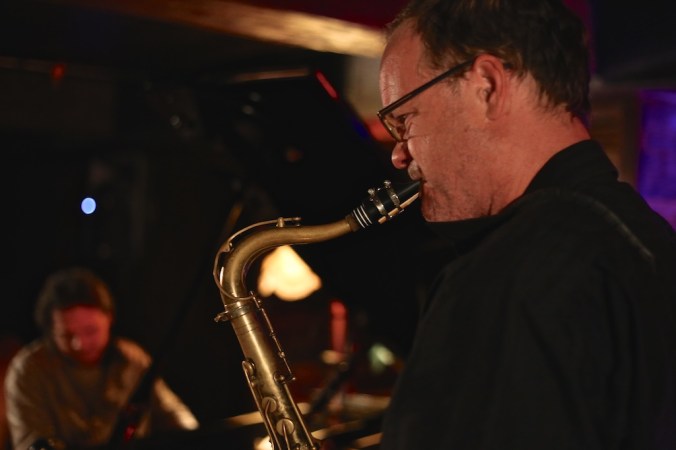
Smashing pianos for political ends is definitely not Crayford’s thing.
During the afternoon we traversed everything from Pythagoras to planetary formation. The relationship between harmonic intervals and physical objects was especially fascinating to him, as was higher mathematics. “I will compose a piece based upon prime numbers one day”, he said. He also talked of constructing a new ‘mode’ map. His love for stories about quirky historical characters and for mathematics came together in his latest album ‘Dark Light’. ‘Galois Candle’ tells of a hapless mathematical genius and his struggle for recognition. The poignancy of the tale is reflected in every note. I have heard this played in a trio setting and solo. It is sublime either way.
Crayford’s ‘Dark Light’ album was a finalist in the New Zealand 2015 Vodafone music awards. The album is simply stunning and it deserves to be heard more. Crayford feels that the album has legs and he hopes that it has a way to run yet. These days it is not the quality of the music, but distribution and exposure problems that hold an album back. This album certainly deserves wider recognition.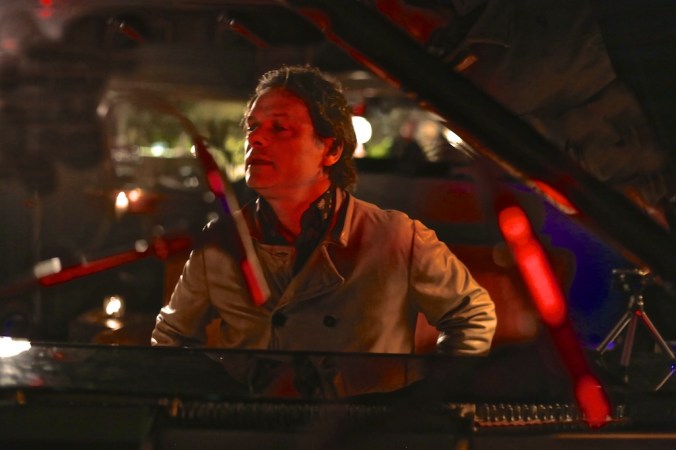 On April 15th Crayford returned to the CJC (Creative Jazz Club), but this time without bass or drums. The gig was billed as ‘solo piano’ with special guest. Roger Manins joining him for the final numbers of the second set. This was a first for the CJC as the club has never hosted a solo piano gig before. Interestingly a slightly higher entry fee was placed on the door, but far from deterring people it signalled that something special was to occur. You could have heard a pin drop during the performance. This audience really listened and they were amply rewarded for their attentiveness. This highlights the growing sophistication of CJC audiences and above all it demonstrates the deep respect that we have for Crayford as a performer.
I have seen Crayford perform many times and his approach to performance is to step free of ego. He described it to me as ‘diving into the sound’. Crayford treats performance like a Zen monk treats a ‘Koan’. His musical puzzles are not solved by wrestling with them, but by absorption, by letting go. Living in a musical moment devoid of superficial baggage. While a modernist in his approach, he also touches upon something timeless. Perhaps Crayford is best described as a cosmic troubadour?
Solo performances are high wire acts and the freedom afforded by the format allows an artist to take us where they may. We heard probing thoughtful interpretations of seldom-heard Jazz compositions, original pieces and compositions from unlikely sources. One moment we were at the edge of the modern classical repertoire and at other times following the fabulous, choppy, stride-infected swing of Monk. Nothing sounded out of place and everything was explored with the same vigour. Crayford’s environmentally referencing composition ‘Earth Prayer’ was simply profound. The musical narrative enveloped us in its utter clarity. Such was its impact that time stood still while audience, piano and artist seemed to breathe as one. The duo numbers with Roger Manins also worked well. These are master musicians and they know how to make the most of freedom and space. When a piano and tenor saxophone perform in duo, certain unique opportunities arise; the musicians must be acutely aware of nuances and the subtleties of interplay. What we heard was a deftly woven tapestry of sound, a respectful satisfying interaction. The duos started with a burner and ended with the perennial favourite ‘The ‘Nearness of You’ (Washington/Carmichael). During the last number there was a flood of noise from the upstairs bar. In spite of that the audience yelled for more; wishing that the gig could go on for ever.
(Part Two of this post to be posted later)
Who: Jonathan Crayford (piano) – guest Roger manins
Where: Interview in Waitakere – Solo Piano gig at the CJC (Creative Jazz Club), Britomart 1885, Auckland 15th April 2015 – Solo Piano, Te Uru Waitakere Gallery.

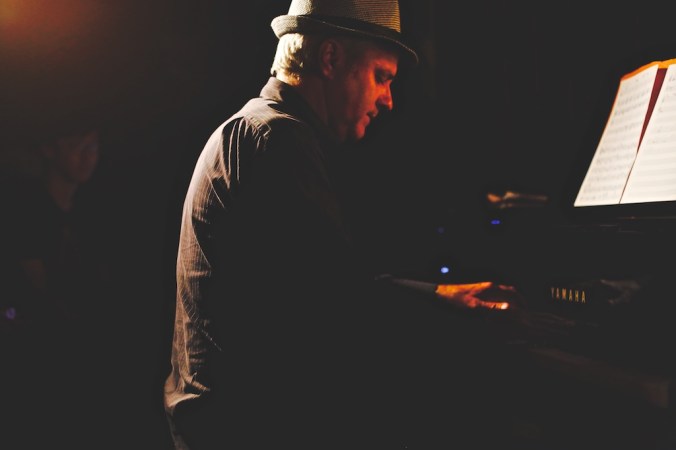 When I saw that pianist Chris Cody was coming to New Zealand I immediately recognised the name. For a moment I couldn’t fill in the blank spots of memory but I sensed that the connection was both Australian and international. My CD collection is huge and I knew that the answer lay buried somewhere in the unruly muddle of music lying about the house. Then it came flooding back; Cody recorded a great ‘Chris Cody Coalition’ album in the nineties. The first international Jazz NAXOS recording titled ‘Oasis’ and produced by Mike Nock; an innovative exotic project brimming with warm middle eastern influences. Some quick
 research told me that the Chris Cody Coalition was still an entity and what equally excited me was to see the name Glenn Ferris on several of the albums credits. ‘Oasis’ featured the Australian Trombonist James Greening and on several of the later Coalition albums Cody features trombonist Ferris (an utterly distinctive player). His whispers, growls and smears are at times otherworldly, but also mysteriously human. Cody works especially well with trombone players and his writing reflects this on the latest album.
 in the front row and this is as much about Cody’s writing skills as the strong confident performances. It is also about the recording quality which is superb. I strongly recommend this album. I first heard the quartet at the Tauranga Jazz Festival. A CJC Jazz stage showcased the finale and the Jazz Tui Awards presentation. I spoke to Cody in a break and quickly learned that he had New Zealand blood running in his veins. Born in Australia of Kiwi parents he studied music before moving to Paris. Based there ever since and gaining a strong reputation on the wider scene. He has very recently move back to Australia but he intends to return to Paris to work periodically.
 often draws on very American sources like Jamal, he is also in the mould of pianists like Jacky Terrasson (also a Parisian). Cody’s compositions are well thought out and replete with interesting asides. We heard many of these at the CJC and the album ‘Conscript’ is all originals. I am a sucker for a Cole Porter tunes and when he opened with ‘I love Paris in the springtime’ I couldn’t have been happier. Happy because I love the song and above all happy because the quartet played it so well. I have posted a video of the CJC performance and the title track from the ‘Conscript’ album with Ferris (the latter an official video release).
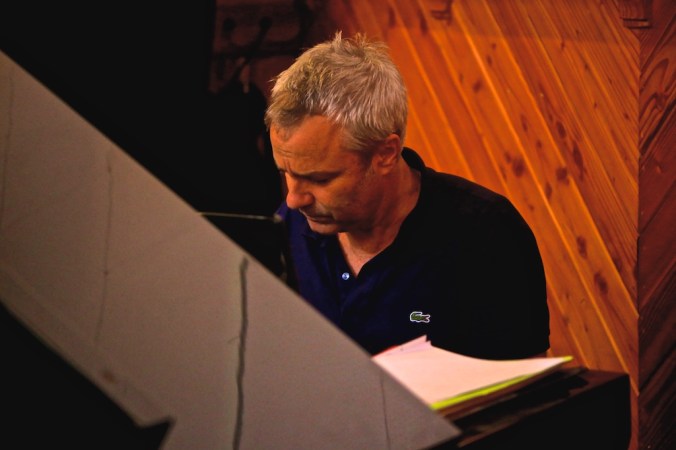 His pick up band are the familiar and popular Roger Manins (tenor), Oli Holland (bass) and Ron Samsom (drums). In the rush of the Tui awards there was little time to rehearse, but it didn’t show. This is 3/4 of DOG and they are the 2015 Jazz Tui winners after all.

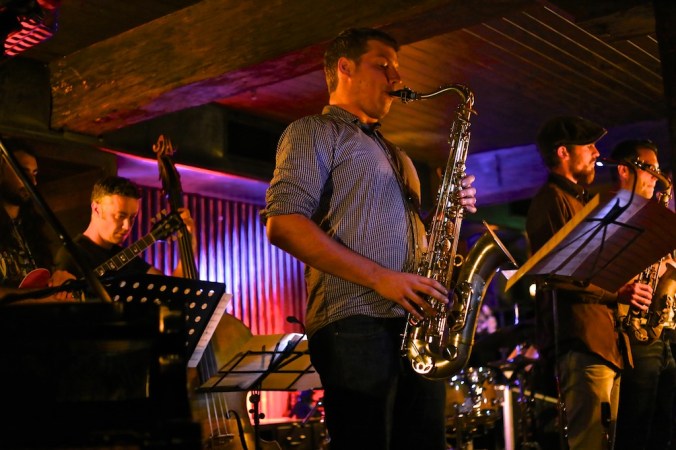 I first heard the JAC two years ago and I liked what I heard immediately. Their sound has textural complexity, but the charts are so well written that the band manifests as if it is a single organic entity. As they move through the pieces, rich horn laden voicings appear, shimmer and fade seamlessly into the next phrase. In spite of the heavy punch of the front line, the band can float airily over passages. This affords them choices that are seldom realised by larger ensembles. They have a real nimbleness
 and this is surprising considering their large musical footprint. A bigger footprint than the size of the band would suggest. The really good nonets and octets achieve this.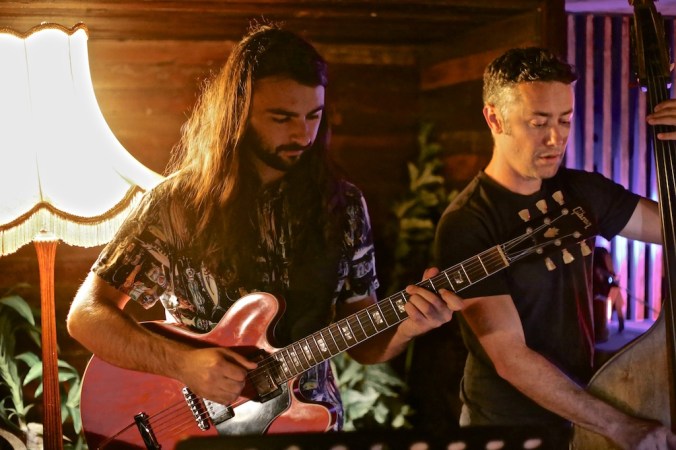

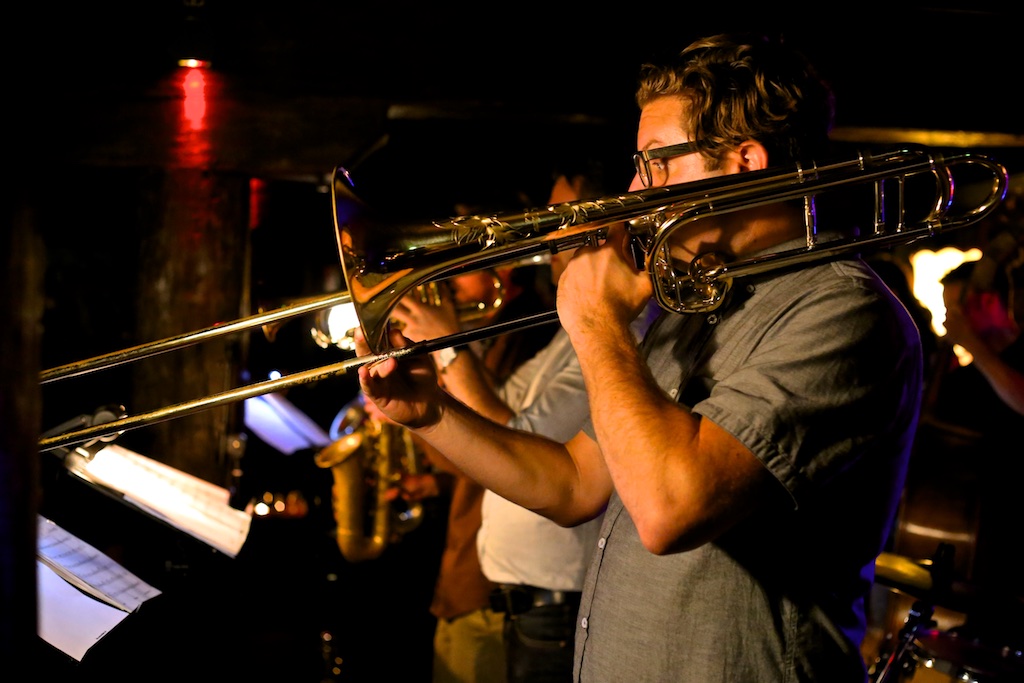
 Frank Gibson Jr’s ‘Hardbopmobile’ has been around for a number of years and the band always delivers uncompromising hard-hitting performances. Gibson and Watson see to that. This no nonsense approach guarantees that Hardbopmobile’s music, even while traversing well worn standards, is fresh. This particular gig was titled ‘Hardbopmobile plays Monk’ and with the interesting addition of vocalist Caroline Moon (Manins) on vocals, it gave us much to enjoy. Familiar and lessor known Monk tunes appeared as the evening progressed. While all of Monk’s recorded material is perennially interesting and seemingly beyond caveat, in the right hands vibrant new interpretations are possible. This is the nature and Monk, the Picasso of modern Jazz; a modernist movement in perpetual progress.
 Ted Gioia pointed out in his book ‘The Jazz Standards’, that only two composers of pure Jazz standards remain in ascendency. One of these is Monk whose stock has risen steadily for many decades now. The other (and that has occurred more recently) is Billy Strayhorn. Both of these composers had an astonishing modernity about them. In spite of some beguiling melodies, neither offered the listener simplicity. What you get with Monk is often jagged and quirky compositions, but for all that his hooks snag deep. Listening to Monk you hear the sounds of New York. The broken lines and
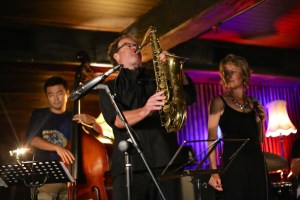 startling dissonance are echoes of traffic and street life. Very human sounds and offered from his unique vantage point. In spite of the difficulties life threw at him the music is somehow tender. Monks was essentially a humanist voice.
 and wild.
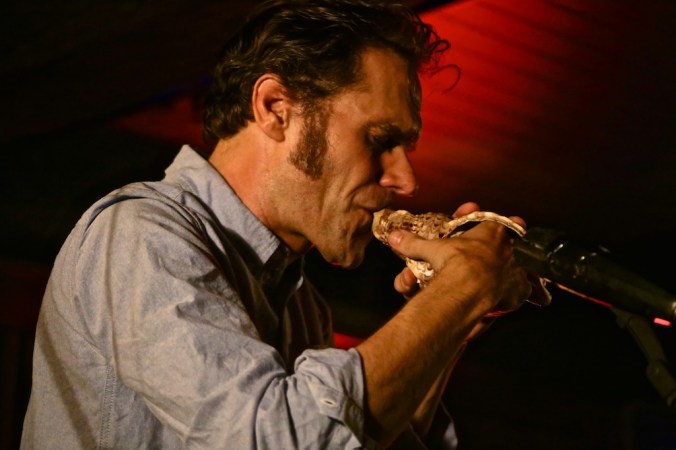 I often detect a unique quality in New Zealand improvised music, but when it comes to defining it, the illusive essence dissolves before I can grab hold. ‘Harry Himself’ has brought me one step closer, connecting me with a tangible manifestation. This band is the perfect example of improvised ‘Kiwiana’. At first hearing you detect a melange of the familiar; elements of World, Fusion, Straight ahead, Post bop, Post millennial Jazz and all served up with a generous dollop of classic country. Listen more closely and you will get strong South Sea references, flashes of musical memory permeating every bar. Everything from Bill Sevesi to the ancient sounds of New Zealand indigenous music. Even song titles revolve around Kiwiana themes . Many of the tunes belong to a place, to the Islands we live on and to the immense swath of sea that surrounds it. Like the harbours and oceans that surround us, this is a mosaic of glittering fragments. A familiar yet unknown music to gladden the heart.
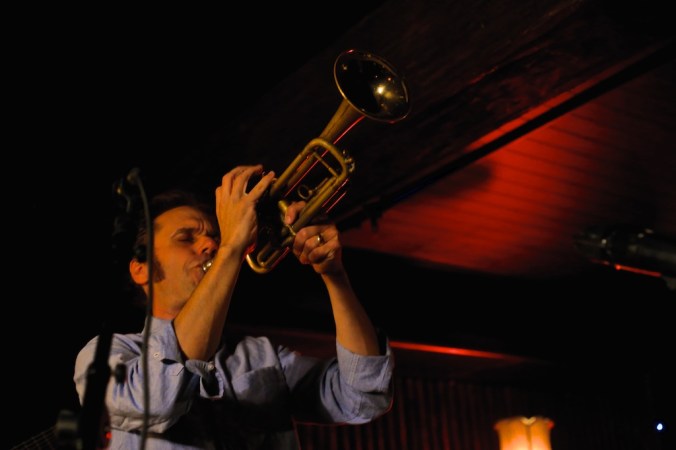
 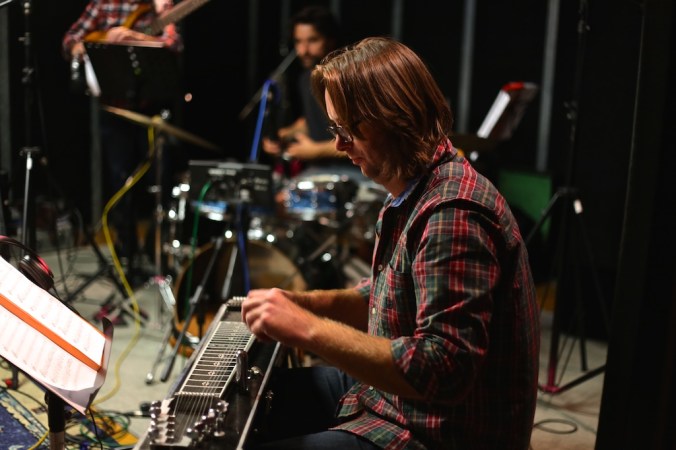 Above all this is a good-natured band, oozing charm and character. The array of instruments and the judicious use of loops and pedals more than doubles their range. The only constant in the sounds are the six string bass and drums. The leader Kingsley Melhuish is sometimes seen in the company of adventurous avant-gardists. He can also be found among the free ranging Ponsonby Road improvising bands. His use of pedals and loops is tasteful and it serves the music not a whim. His pedal effects and electronics are not added randomly, nor for the sake of it. He is an accomplished horn
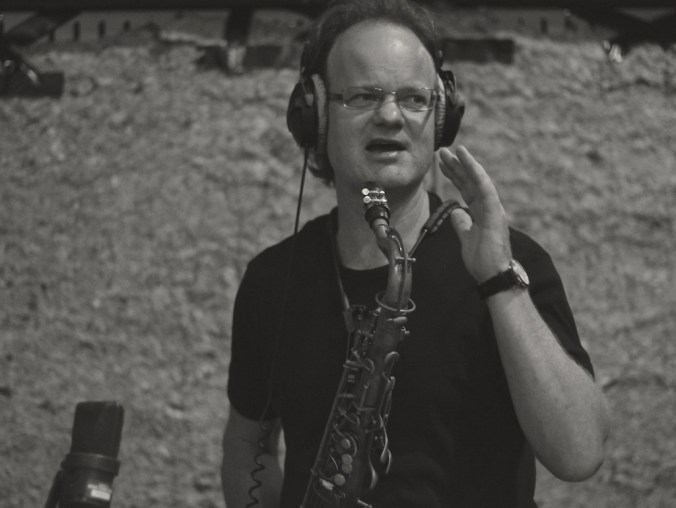
  player, switching seamlessly between trumpet, flugelhorn, tuba, trombone and lately, a vast array of conch shells. Melhuish often sets up loops and then he plays over them with different horns. This layering of sound is achieved well and the real-time harmonic overlay enables him to add considerable texture and breadth. Neil Watson does likewise, as he frequently moves between Fender guitar and pedal steel guitar. The day after the gig I called into the MAINZ recording studio to grab a few shots of the group laying down an album. I overheard the recording technician asking the band after a take, “How do you feel that went; do you want to listen before moving on”? Immediately a voice came from the studio speaker, “No, I think we’ll do that one again. The Fender and the conch will work better together than the pedal steel on this track”. A huge smile crossed the technicians face, “I’ve never heard that said in a studio before” he said. They were
  right and it reinforced a long-held view of mine; that no instrument is beyond the reach of Jazz and that no sound should remain un-pillaged. I always appreciate Sam Giles electric bass playing and I am always left with the feeling that he is scandalously under-utilised. Solid and groove based was what the band needed and solid and groove based was what they got. On drums was premier drummer Ron Samsom. He worked these beats like he always does, purposefully, skilfully and making it look second nature. I’m glad the band is recording this material and I have a feeling that the album could grow legs with the right exposure. I hope so, they are fun.
  I have added two video clips of the band, which demonstrate the diversity of their material. While diverse, it never-the-less hangs together nicely. The fist clip is ‘Cy’s Eyes’ a tune composed for one of Melhuish’s children. The second tune is the wilder freer ‘Zornithology’. A tribute to John Zorn (with an obvious play on the title of a Bird tune). There was one tune I wish I’d captured on video and that was ‘Rose Selavy’ by Enrico Rava. Man, what a hard-edged powerhouse romp that was.
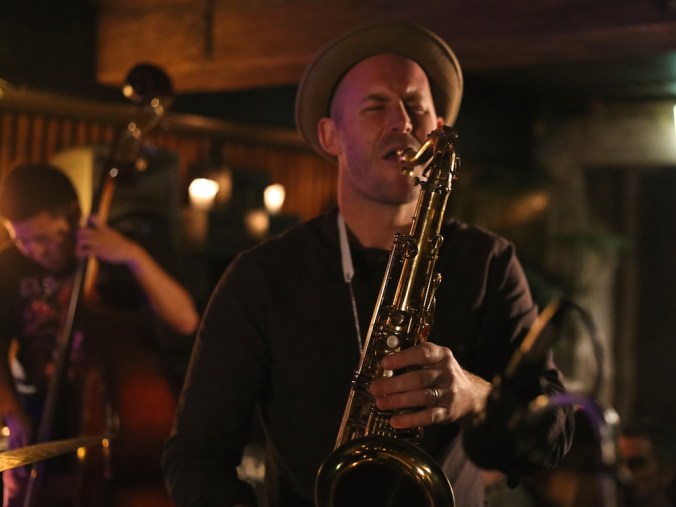 Any astronomer worth their salt will tell you that it is paradoxical for a sun to embark on a circular orbit. The last time this happened was during the Spanish Inquisition. On Wednesday the paradox increased when the Circling Sun departed their orbit to play at the CJC (Creative Jazz Club). This gig had been a long time coming and we welcomed it. Hearing them away from the babble of the hard-drinking Ponsonby Road crowd was a treat for us. The Circling Sun always give of their best, but this time we could hear the quirks and subtleties unfiltered. This is a band with a vast soundscape and the Jazz club echoed to the sounds of doogan, Tuba, analogue keyboards, digital keyboards, piano, trumpet, flugel horn, flute, tenor
  saxophone, upright bass, drums and electronics. This is the type of music that sits well with me.
 times; then out of nowhere come tasty arranged melodic heads. Deftly extracted from the frequent mesmerising groove laden vamps.
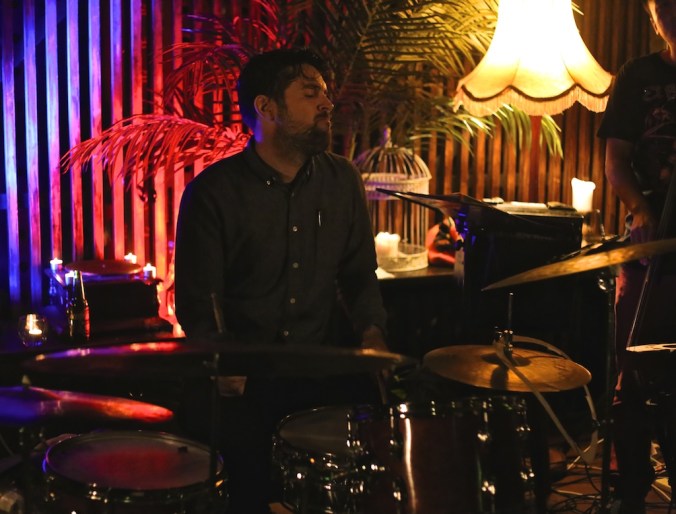 The most powerful presence is drummer Julien Dyne. A versatile gifted artist who has travelled and recorded widely. His beats while often referencing his multi genre background, urge the band to greater heights. It is a privilege to see drummers of this calibre and I hope that he continues with open-ended Jazz projects like this. I have heard him on numerous occasions and I like what I hear. As a unit, this combination takes no prisoners and the audience were glad of it. The first guest to join them was J Y Lee who quickly settled in on baritone saxophone. He often plays with the Circling Sun and is a popular addition.
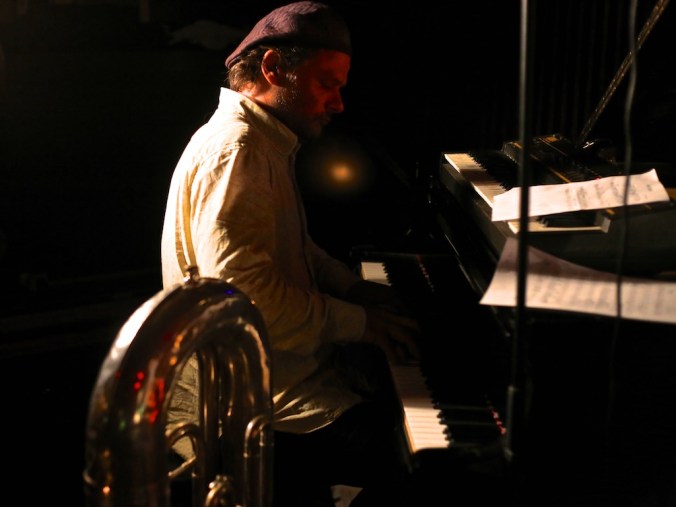 During the second set a great gig got even better. Jonathan Crayford arrived and without too much persuading, sat in on piano. This was met with obvious delight by the audience, as Crayford is extremely popular. He knew none of the tunes as they were mostly originals and there was virtually no sheet music to guide him. It didn’t matter. Someone would announce the key and then a few chords in he would locate the heart of the tune. A musician of his experience and gifts is no stranger to situations like this. The audience, clearly wild about the gig, were by now whooping with enthusiasm between numbers. When Crayford sat in they felt like they’d won the lottery. He doesn’t get home often, but improvised music fans are eager to soak up what ever they can get of him.
 In the coming months there will be a new Phil Broadhurst album released, ‘Panacea’. Broadhurst is an enduring musical presence, a backbone of the Auckland Jazz scene. Running the Massey School of Music Jazz programme in Auckland keeps him busy, but he somehow finds time to write interesting new material and to perform gigs about town. A prolific writer and arranger, he has released a number of albums in recent years and all have done well. His tribute to Michel Petrucciani ‘Delayed Reaction’ garnered favourable reviews here and offshore and his 2014 album ‘Flaubert’s Dance’ was short listed for a Jazz Tui.
 poorly kept secret, anticipated and not puzzled over. As the band set up, the shiny pedal-steel guitar and the battle-worn fender dispelled any remaining doubts. The band was Phil Broadhurst, Roger Manins, Mike Booth, Oli Holland, Cameron Sangster and of course Neil Watson (AKA the mystery guest).
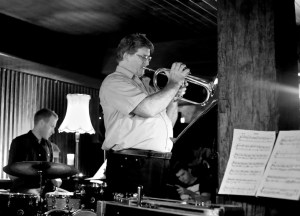 began the process of mechanically purging duplicate copies of old tunes. By this point all had been given titles and saved elsewhere. Rescued from the lonely obscurity of the ‘untitled’ nomenclature. As he deleted them one by one he spotted an anomaly. One particular tune was mysteriously labeled ‘untitled-untitled’. He opened it, liked the look of it but didn’t recognise it, so he played it. He recalls wondering who had written it until the penny dropped. ‘Untitled-Untitled’, the tune rescued in the eleventh hour, was later shown to Neil Watson who was wrangling with his new pedal steel guitar. There are so many levers to operate he complained to Broadhurst, who replied, “I think that you’ve just named my lost tune’. ‘Lever’ is a great tune and its improbable genesis gives it that added piquancy.
 The more I listen to Alan Brown bands, the more I realise just how original his music is. The gig promised to be a reprise of ‘Between the Spaces’ and that was a drawcard which pulled in a good audience. We soon realised however that we were getting a lot more. As well as the familiar there were new compositions and a few that had not made the cut for the album. Brown is an extraordinarily gifted musician and in settings like this he always sounds fresh. The familiar numbers sounded as exciting as when we first heard them and the unfamiliar held the attention with siren like allure. This is music to gladden the heart.
 accessible. As the tunes unfold you fall into them, feeling that you are on a journey of logical progression; the enveloping arms of groove guiding you inexorably towards some beating voodoo heart.
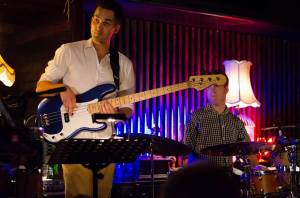 The relative newcomer is electric bass player David Hodkinson. He is no stranger to Brown’s bands but he was not on the album. it would be daunting to step into Marika Hodgson’s shoes but Hodkinson held the groove and punched out a mesmerising pulse.
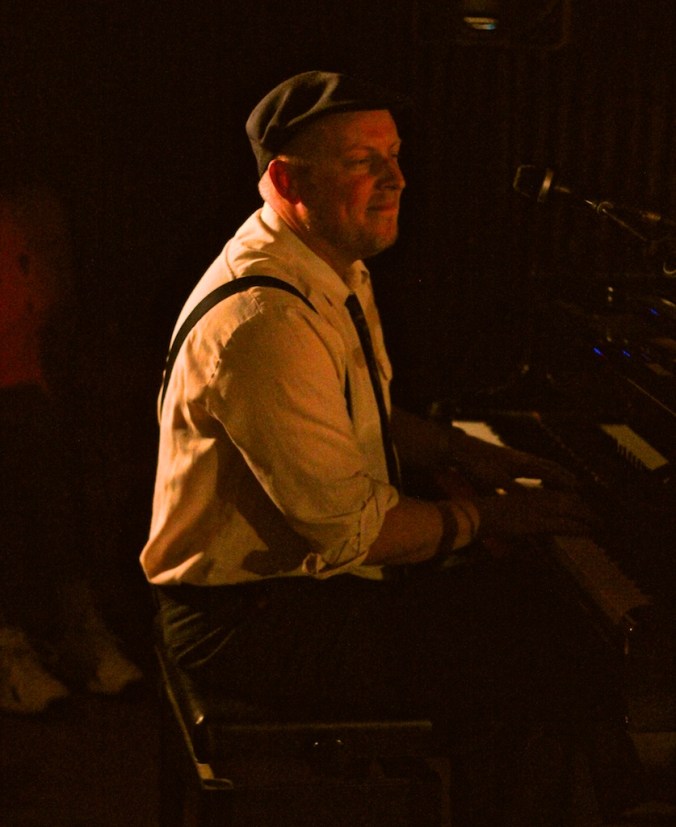 Thomas ‘Fats’ Waller and Errol Garner can install a smile on your face in two jaunty bars. It is the same with Wellington’s ‘The Jelly Rolls’. Waller and Garner are widely loved but seldom imitated; probably because what they do is extremely difficult. The original recordings also stand up so well that mere clones would be a redundancy. The Jelly Rolls have achieved something special by locating the spirit of this cheerful Harlem Stride influenced music; achieving this through a clever synthesis of the leading stylists. For good measure they have thrown in a touch of the more modern Ahmed Jamal and a pinch of Oscar Peterson. This is the sound of joy, wild unbounded exuberance.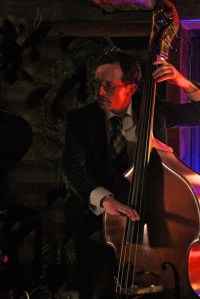
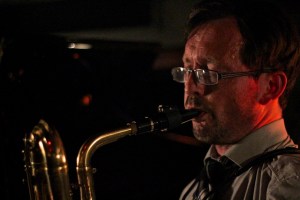

 I have long been drawn to middle eastern music, having commented on it in earlier blog posts. There are many reasons to like this rich musical stream, but what draws me are the interactions that occur when eastern and western improvised traditions meet in mutual respect. This is often labeled as World/Jazz, but implying that it is new hybrid is somewhat problematic. Both improvised traditions have deep roots and a successful meeting acknowledges this. The blend of Jazz and middle eastern music is mainstream in the Mediterranean regions but not as well-known elsewhere. Adventurous artists like Dhafer Youssef, Rabih Abou-Khalil and Anouar Brahem have gained prominence in the west through collaborations with the likes of Kenny Wheeler, Charlie Mariano, Steve Swallow, Tigran Hamasyan, Marcin Wasilewski and others. Jazz lovers in New Zealand and Australia have already experienced the ancient Sephardic music of Spain through Caroline Manins ‘Mother Tongue’ projects. Also through Kiwi Jazz harpist Natalia Mann’s Turkish projects.
  Much of this music derives from the Sufi tradition but Sicilian and Flamenco Jazz fusions should not be overlooked either; both having rich Islamic and Jewish sources feeding them. The Moors ruled Sicily for 400 years and southern Spain for 500 years. Under the various Caliphates there was great religious tolerance and a spirit of scientific curiosity. The arts and musical traditions merged and flourished in that benign space.
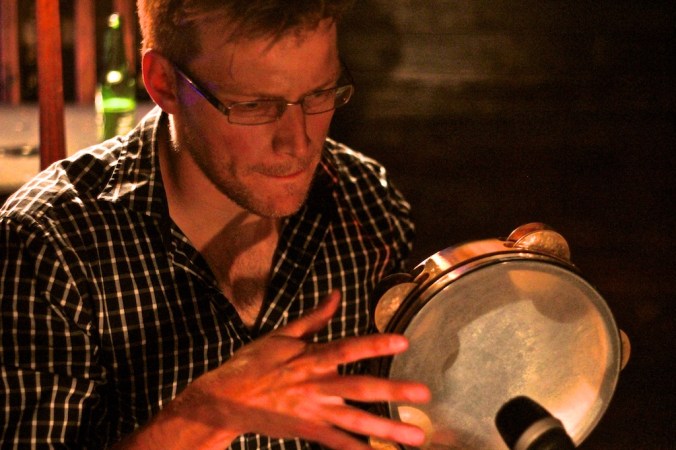
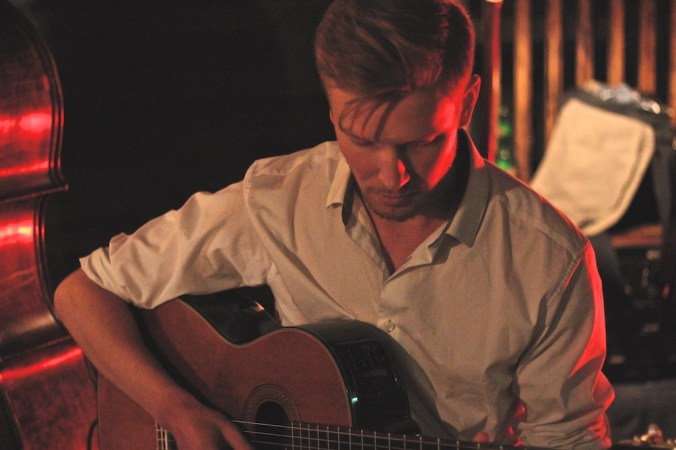 Watching Tim Sellars on percussion is eye-opening as he coaxes so many complex rhythms and sounds from his array of percussion instruments, that it beggars belief. At times he used the Cajon (of African/Peruvian origin) but mostly he played frame drums (middle eastern). I love to hear the frame drum as it is the oldest instrument known to man. The genre includes the Riq (tambourine) which Tim played to perfection. Being an amplified acoustic ensemble the sound worked well in the club space. The guitar perhaps needed turning up a touch, to give it more bite.
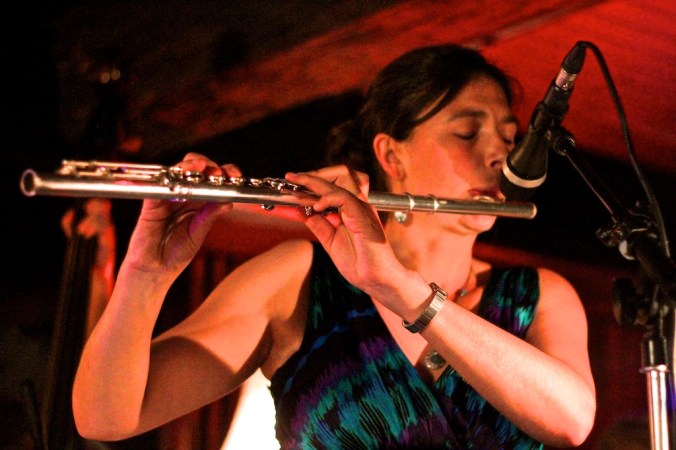
 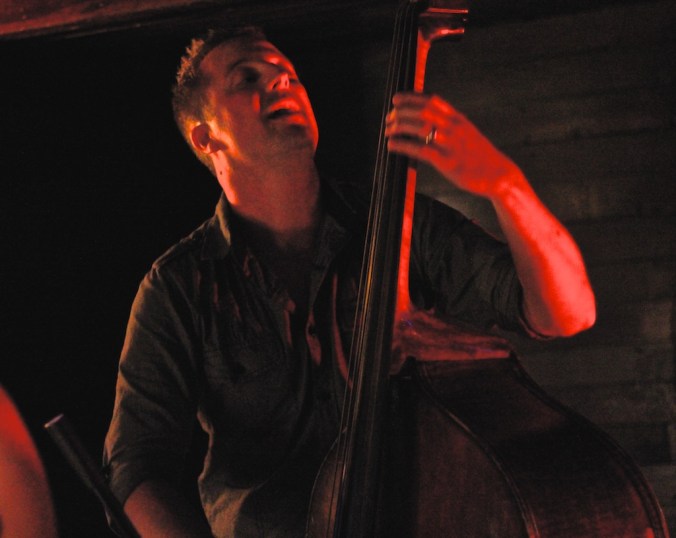 Tamara was her usual impressive self and her control and mastery of the instrument was evident throughout. She alternated between bass flute and alto flute; the tonal richness of both horns blending perfectly with the upright bass. Bass player Michael Story understood the cues and worked with Tamara; resisting any impulse to overplay. Acoustic ensembles like this require discipline and subtlety; overly showy solos can dominate and obscure the filigree of woven sound. Mukhlisa got that right and the solo work although appealing, was rightly subordinate to the overall integrity of the music. Glen Wagstaff is popular in Auckland and his charts for large ensembles have impressed club goers. It was good to see him in a different context and many of us eagerly await his album, which is due out in a month or so.
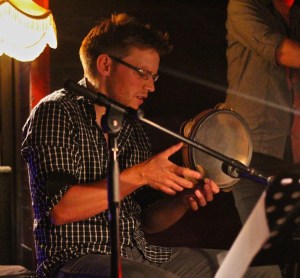 There is ample scope for a larger ensemble to grow out of this; perhaps one including arco Cello and Oud.
 cleverness your ideas. It is about integrity. Musical integrity is rare but universally available.
 makes you glad that you’re alive. Touring New Zealand with Nock were James ‘Pug’ Waples (drums) and Brett Hirst (bass)’. These musicians while deeply attuned to each other were always full of surprises. 5 stars. *****
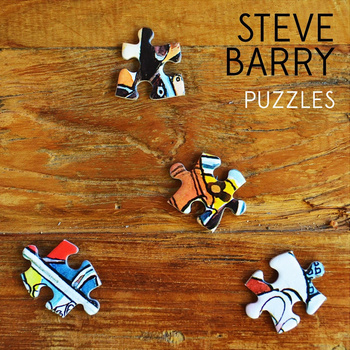
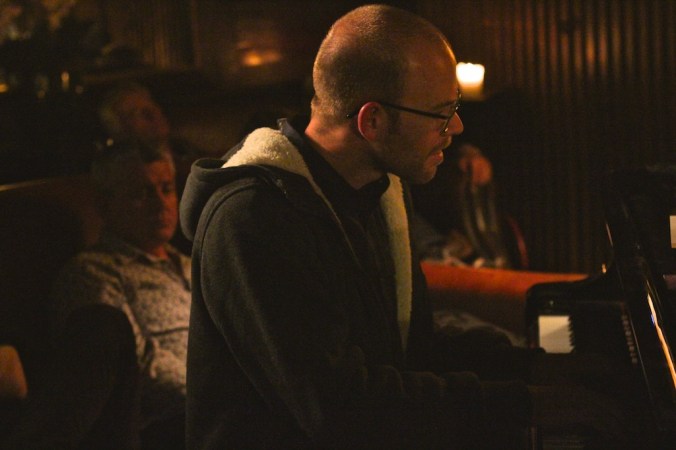
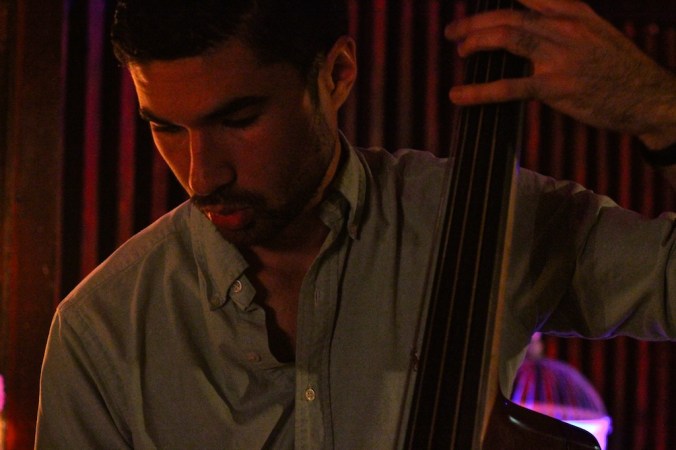
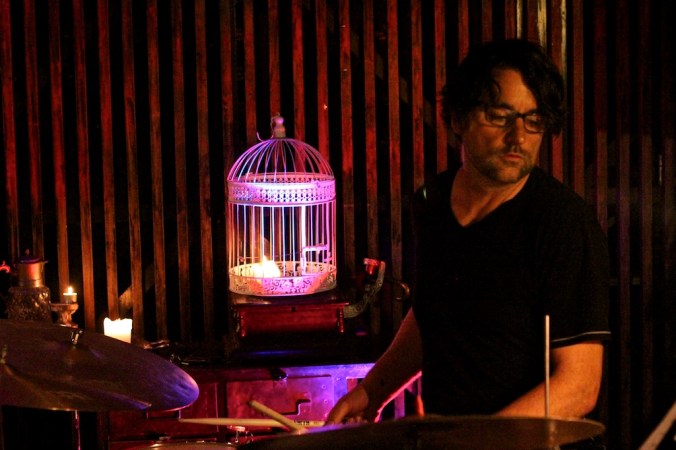
 Whether as accompanist or soloist, Field shines. His work in 2014 on ‘Dog’, with Caitlin Smith and with the Australian saxophonist Jamie Oehlers stand out as high points. Adam Ponting (Aust) (Hip Flask ‘1’ & ’11’). Ponting is an unusual but compelling pianist. An original stylist who appears to approach tunes from an oblique angle, at first impressionistic, but leading you into a world of funky satisfying grooves. This guy is definitely someone I would like to hear again. It was also great to hear more of Alan Brown (NZ) on piano during 2014. He has some interesting piano and keys projects underway and we will hear more of those soon. Steve Barry (Aust). Barry is an ex pat Auckland pianist now based in Australia. He visited New Zealand twice during 2014. His visits and albums are always received enthusiastically. Barry is a musician who works hard and produces the goods. His new album ‘Puzzles’ with Dave Jackson (alto), Alex Boneham (bass) and Tim Firth, lifts the bar for up and coming local musicians. We had a number of visitors in 2014 and to bring us a European perspective was the Benny Lackner Trio (Germany/USA). The pianist Benny Lackner has visited New Zealand on several previous occasions and the aesthetic he brings is finely honed. The band has a similar feel to EST. There is the occasional use of electronics and they quickly find tasty grooves that could only emanate from a European Band.
 winner Broadbent is our best known improvising export and he has spent the last year touring Europe and America to great acclaim. The solo album was given a rare 5 star rating by downbeat and ‘America The Beautiful’ was recently voted one of the 10th best albums of 2014.
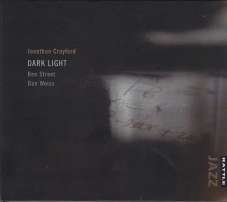
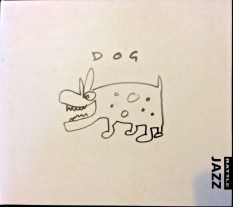 Samsom. It sizzles, swings and while hinting at the vibe of a bygone era, it still sounds fresh & modern (and very Kiwi). ‘Dark Light’ (Rattle Jazz) This excellent album is one of two that Jonathan Crayford released in 2014 – Recorded at ‘Systems Two Studio’ NY with Crayford (piano), Ben Street (bass), Dan Weiss (drums). Don’t expect repetition from Crayford. This master musician takes us on many journey’s, each unlike the last and all brilliant. Hip Flask 2 (Rattle Jazz) A funk unit led by Australasian saxophone giant Roger Manins. Accompanied by Adam Ponting (piano), Stu Hunter (organ), Brendan Clarke (bass) and Toby Hall (drums). A thoroughly appealing album and a welcome follow-up to Hip Flask 1 (Hip Flask 1 included with the album).
 biography is the weakest link in Jazz Writing. If that is true then the mould has truly been broken with this work. Crouch has placed the story of Parker’s early life into a fuller historical context. In learning things about the times, we learn a lot about the man. This is a book that could be appreciated by anyone interested in the history of African-American life in the Mid-West. I suspect that its significance will grow as time passes. Above all the book is beautifully written and for me that counts.
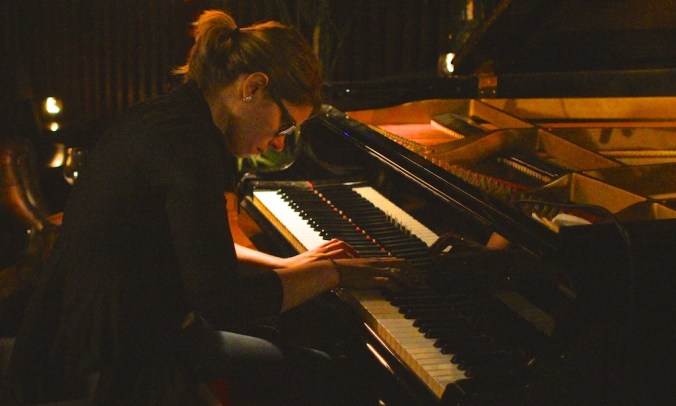 Any mention of Quebec catches my attention as I really like that part of Canada, so when I learned that a highly rated Montreal piano-trio was coming to town I knew that it would be a good experience. I had not encountered the Emie Roussel Trio before, but a quick glance at the accolades they have garnered and the numerous You Tube clips that have sprung up over the past year, gave me all the information that I needed. The group had attracted particular attention at the Montreal Jazz Festival and from what I saw online, deservedly so.
 As you move about that city, the familiar and the exotic coexist at every street corner. I came to realise that this almost subliminal familiarity was the manifestation of a spiritual kinship. The sort that exists between certain special cities, a connection that is not about trade, mayoral visits or geography; a connection of musical and artistic synergies.
  The Emie Roussel Trio are part European and part American in aesthetic. They are wholly Montreal. Their music has a pulse and a vibe which draws on european classical music traditions and the deep earthy Jazz grooves that arose from the American continent. In the hands of improvisers like Roussel these influences communicate a universal language. As the pieces unfold there is a sense that this band works as an organic whole. What we heard was tight and full of vibrancy or as a musician I spoke to during the break put it. “We are hearing the result of rehearsal, dedication to a project, discipline and road time”. While I love the free-flowing loose feel of New Zealand improvising bands, I must acknowledge that we seldom hear trio’s which sound like this.
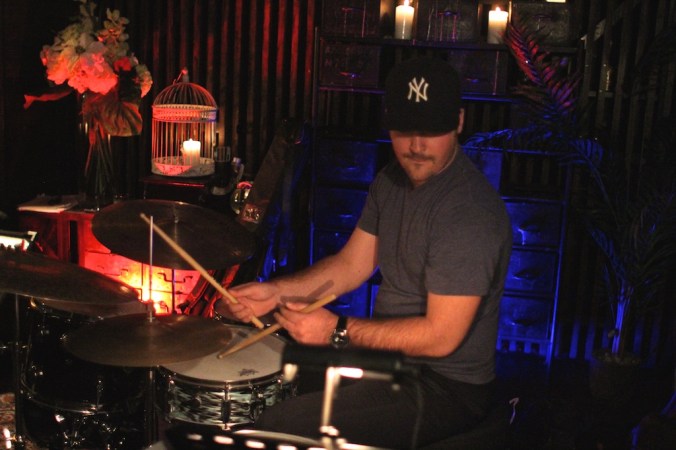
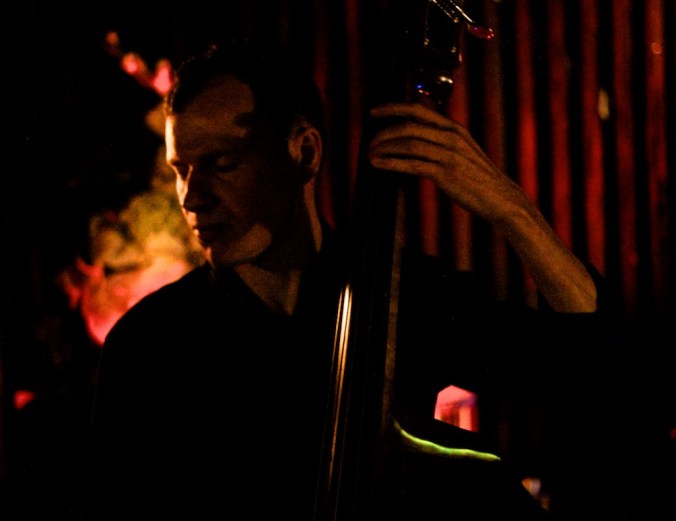
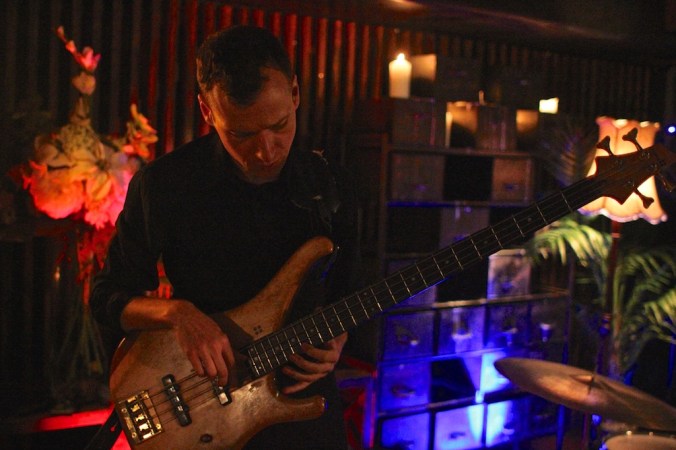 The bass player Nicolas Bedard and drummer Dominic Cloutier never faltered. They wove in and around the tunes with consummate skill and were the perfect interpreters of Roussel’s music. These men are versatile and skilled and whether on brushes, sticks, upright or electric bass, they knew exactly what would serve the music best.
 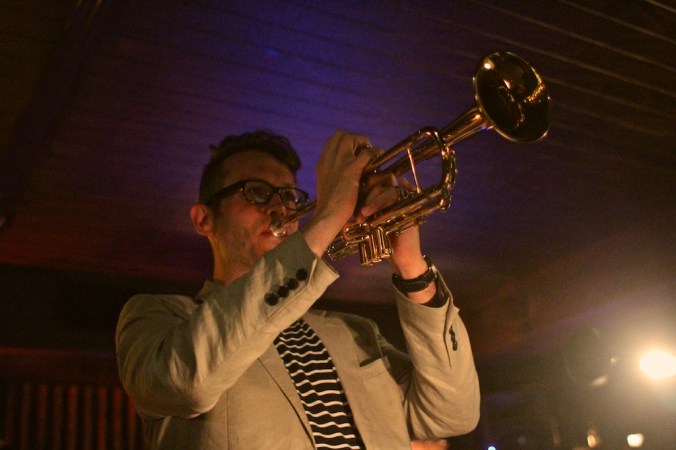 The second set brought us an added treat as the Kiwi trumpeter Lex French came to the bandstand. I have long rated French as one of our finest trumpeters. He completed his studies in Montreal and was already well acquainted with several of the band members. His addition changed the pace once again, opening the way for harder blowing. As the sets progressed the constantly evolving moods worked well for them, giving the gig real breadth.
 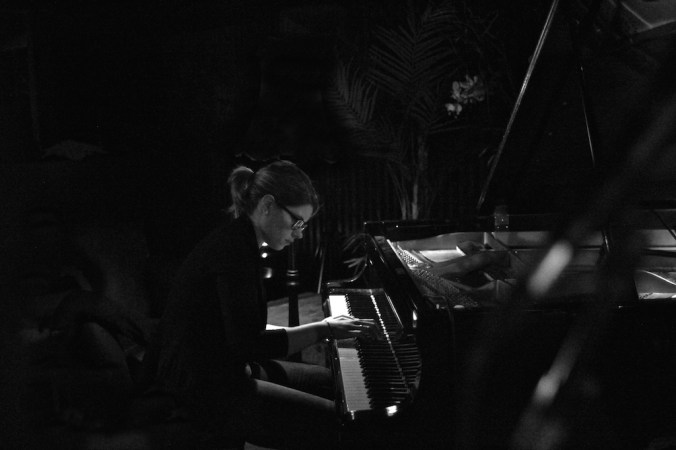 The trio’s recent album ‘Transit’, includes many of the numbers heard on the tour but with one significant difference; The inclusion of a string section, the ‘Quatuor St-Germain’ and a percussionist Julie Quimper. Roussel’s charts in the hands of this larger ensemble are very different to the trio. I particularly like her compositions like ‘L’ attente du chat’ and ‘La timbale et la fourmi’. The mood of the ballad is cat-like in its grace and time feel. The latter, a delightful shape-shifter of a piece full of contrasts and propulsion. I look forward to the new album which is just the trio but with some Rhodes tracks as well as piano.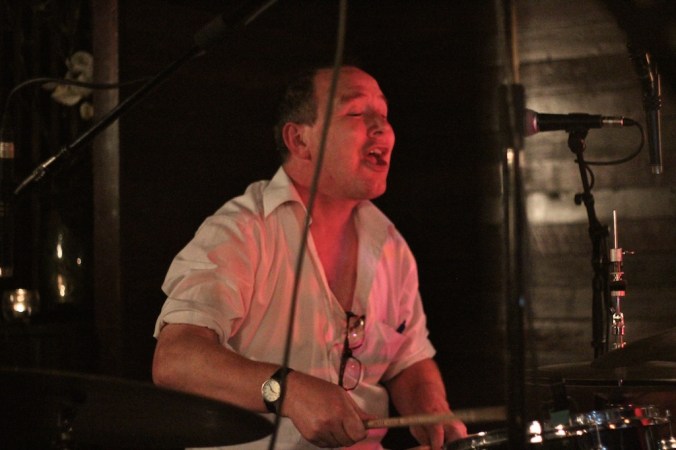
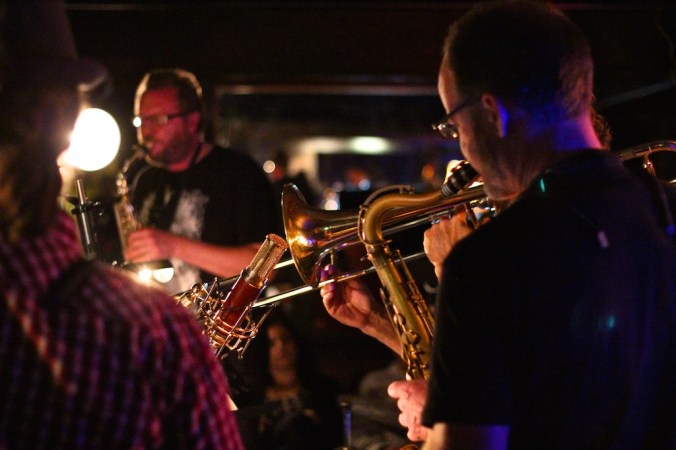 This was too good an opportunity not to record and Rattle did just that. Capturing chordal instruments in a space like the CJC is challenging as the sound has a number of hard edges to bounce off. Recording a live performance of this particular brand of ‘Troubles’ might work well.
  Guiding the proceedings with his well-known brand of anti-establishment megaphone diplomacy was ring master John Rae, ‘Troubles’ co-founder. He shepherded the ensemble through a constantly shifting landscape. His effervescent flow of joyous and often irreverent cries only stemmed by Patrick Bleakley’s timely interjections. Rae is the supercharged engine room, but Bleakley is clearly the anchor. Like Rae he’s an original member.
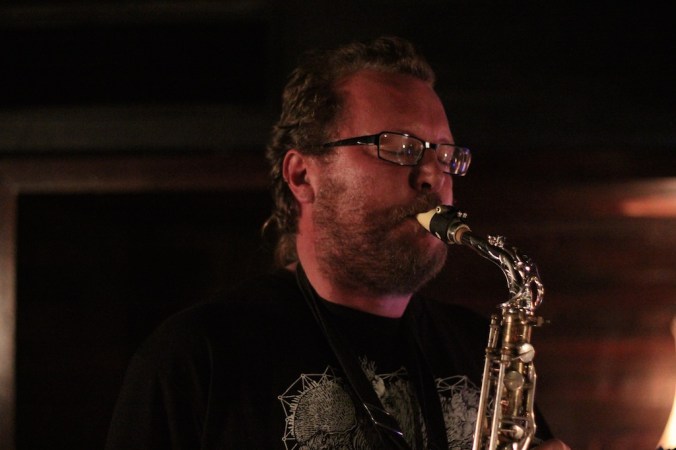
 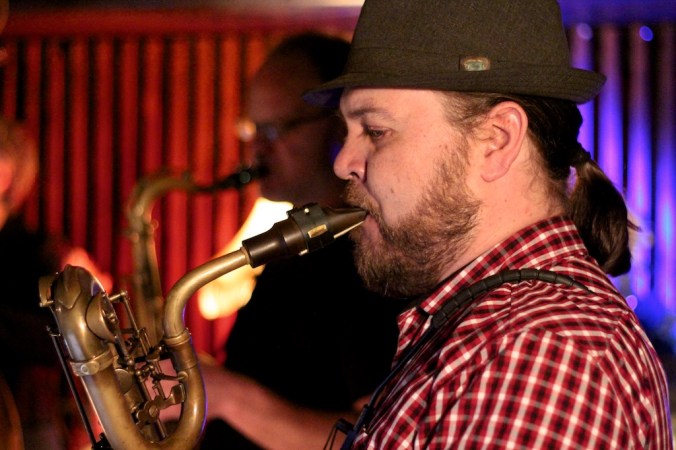 With this Auckland horn section in place, a new front had opened and the tweaked charts took maximum advantage of that. On baritone was Ben McNicoll and his presence gave the sound added bottom. Roger Manins, who had stunned us with his wild death-defying solo’s at the Troubles Portland Public House gig was on tenor again. Jeff Henderson took the alto spot and that was a significant addition. His ultra powerful unblinking delivery was the x-factor. Unafraid of repeated motifs but able to negotiate the music without ever resorting to the familiar. That is the Henderson brand, original clear-cut and uncompromising. In no way diminished by the powerful reed instruments surrounding him was Kingsley Melhuish on trumpet. Melhuish has a rich burnished sound and like the others, he is no stranger to musical risk taking.
 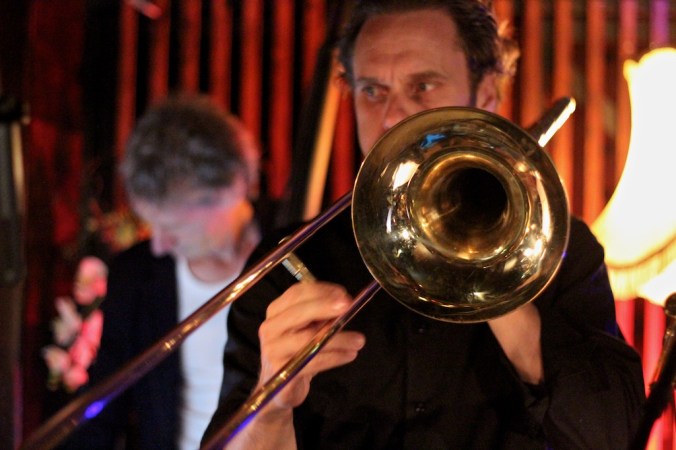 Together they evoked a spirit close to the earlier manifestations of the Liberation Jazz Orchestra. Not just the rich and at times delightfully ragged sound, but the cheerful defiance of convention and discarding of political niceties. Rae’s introductions were gems and I hope some of them survive in the recording. He told the audience that it had been a difficult year for him. “It was tough experiencing two elections in as many months and in both cases the got it woefully wrong” (referring to the Scottish referendum and the recent New Zealand Parliamentary elections). “there are winners and losers in politics and there are many assholes”.
 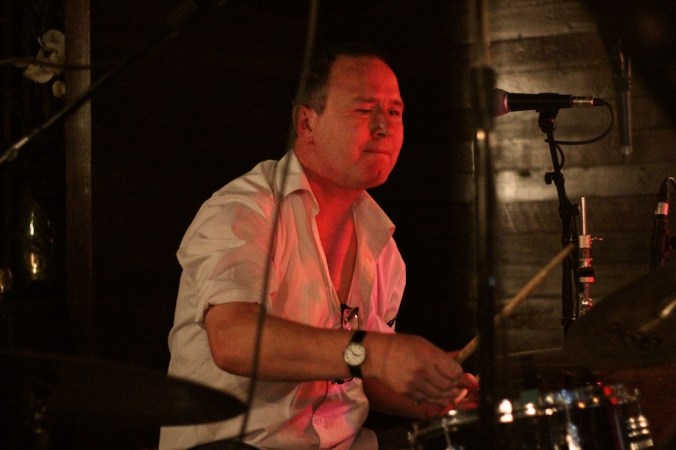 It wouldn’t be the ‘Troubles’ if there wasn’t a distinct nod to some of the worlds trouble spots or to political events that confound us. I have chosen a clip ‘Arab Spring Roll’ (John Rae), a title which speaks for itself. Following the establishment of a compelling ostinato bass line, the musicians build a convincing modal bridge to the freedom which follows. Chaotic freedom is the perfect metaphor for the ‘Arab Spring’ uprising. The last number performed was the ANC National anthem and as it concluded, fists rose in remembrance of the anti-apartheid struggle. It is right that we should celebrate the struggles for equality, but sobering to reflect on how far we have to go. The Troubles keep our feet to the flame, while gifting us the best in musical enjoyment.
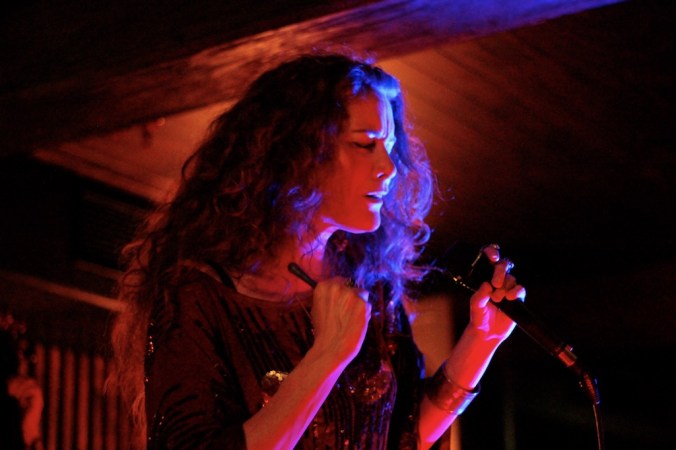 Caitlin Smith is a vocalist who can quickly put a smile on your face or shamelessly tug at your heart-strings. She always finds a way to connect her audience to the essence of a song; deftly locating that illusive sweet spot. While there is often power in her delivery, there is also remarkable subtlety. You could describe her voice in many ways; pitch perfect, having an almost operatic range, but there is much more to Smith than chops. In the parlance she owns each song she sings and embeds it with a uniqueness. Like a seasoned saxophonist she tells beguiling stories in a distinctive way.
 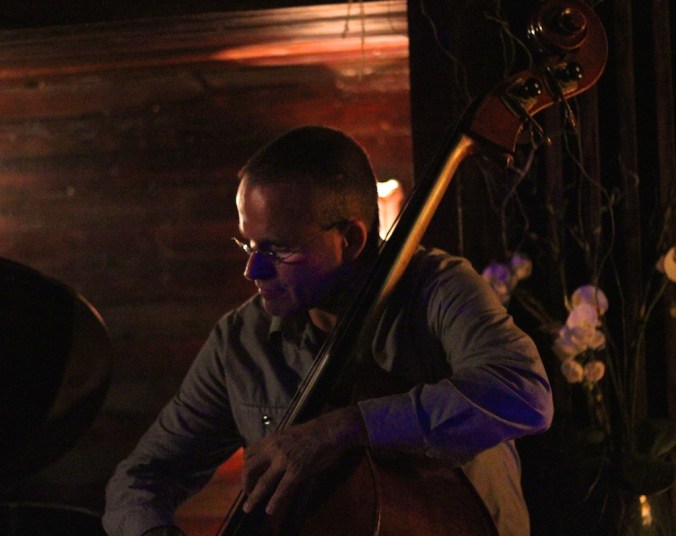 There is a well-worn cliché that vocalists hog the limelight and in truth many go through their careers with barely a reference to the musicians that they work with. Caitlin Smith is the opposite. You are left in no doubt that her gigs are a shared project as she interacts with band and audience, picking up on every nuance from either. She works with a band as a vocalist should and she is comfortable giving them space to solo. There is a generosity of spirit about her persona and this manifests in the music. I have also witnessed her solid support for emerging artists. The ultimate litmus test for me, is that gifted improvising musicians enjoy playing in Caitlin Smith lineups.
 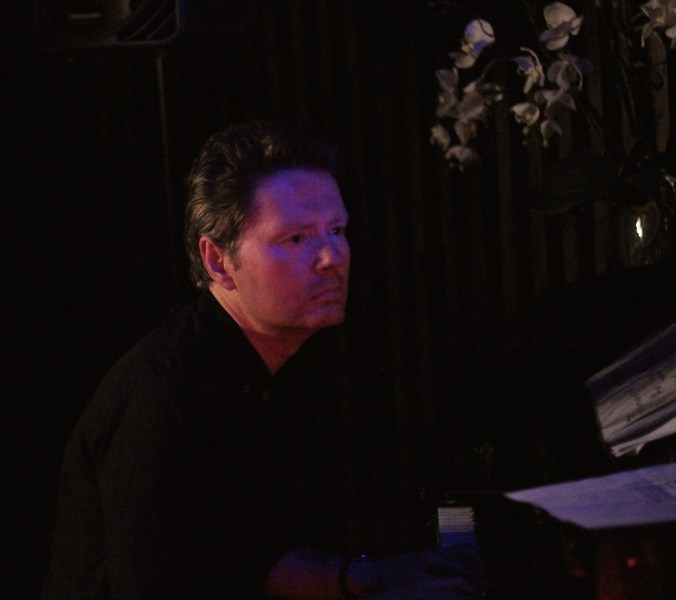 While Smith is widely acknowledged as a gifted singer-songwriter, it is her Jazz repertoire that is turning heads of late. Her performance with the AJO at the Tauranga Jazz festival won her many new fans. She is a wonderful interpreter of Jazz standards and this aspect of her repertoire deserves critical attention. Her vocal gifts and incredible musicality thrive with this space; of particular note is the delightful way she plays with lyrics.
 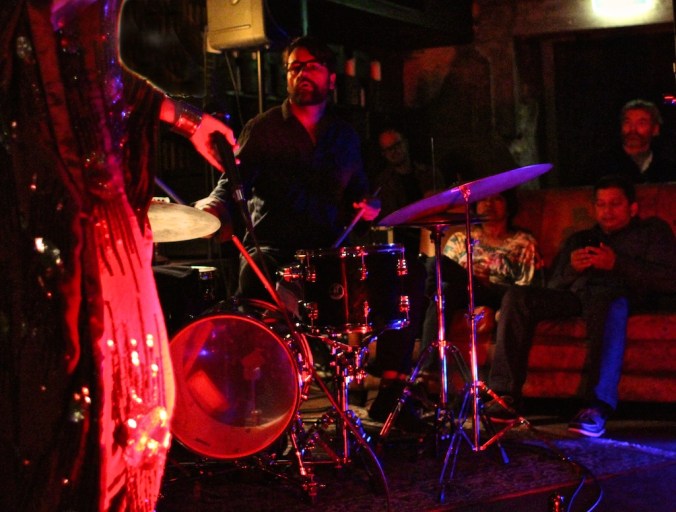 Smith is a natural performer and there is something wonderfully theatrical and engaging about her stage presence. This gives her gigs an added spark of life. On Wednesday she included some of her own compositions like the beautiful ‘In between’, but the audience was particularly wowed by her take on jazz standards such as Ellington’s ‘I like the sunshine’. I have heard her sing Ellington and Strayhorn at other gigs and I am always impressed by the way she freshens these standards up.
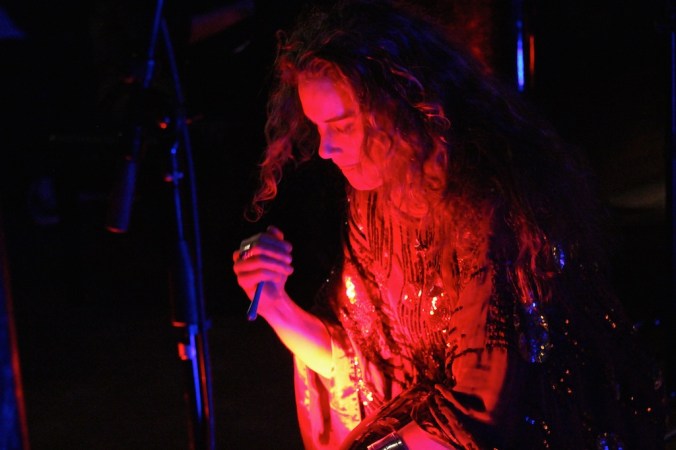 Another song from a different genre was ‘River’ (Joni Mitchell). This classic Mitchell song was recently reinterpreted by Herbie Hancock and Wayne Shorter. As Smith delivered her version she phrased it in such a way that I could hear those elided Shorter fills in my head. Her delivery was crystalline and it brought her two worlds together perfectly.
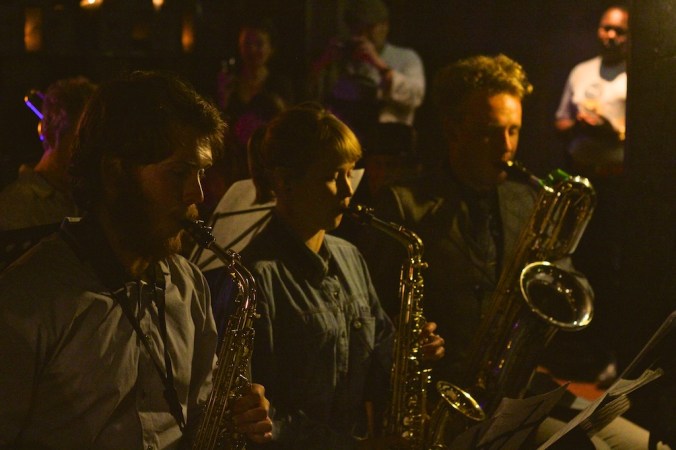
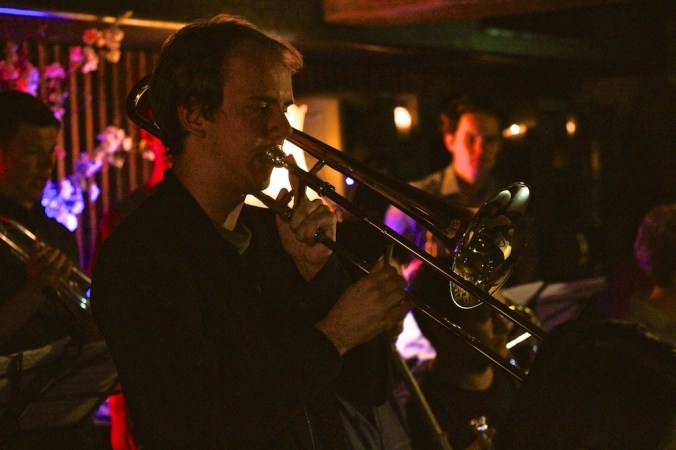
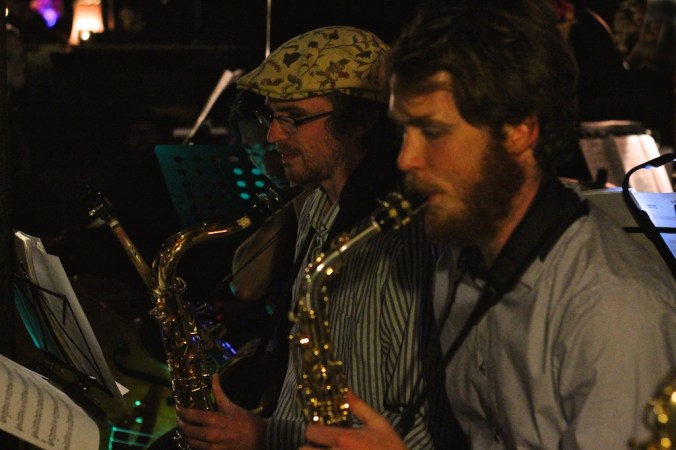
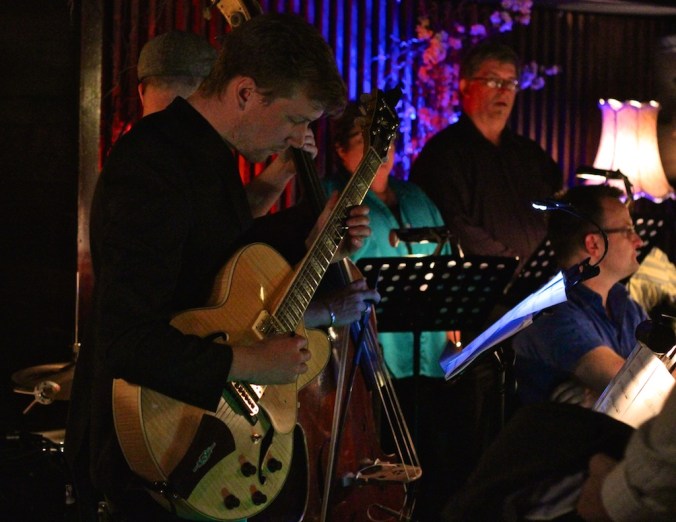

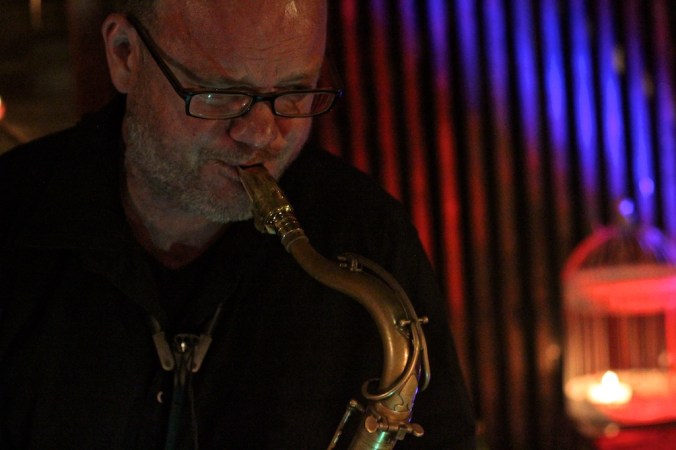
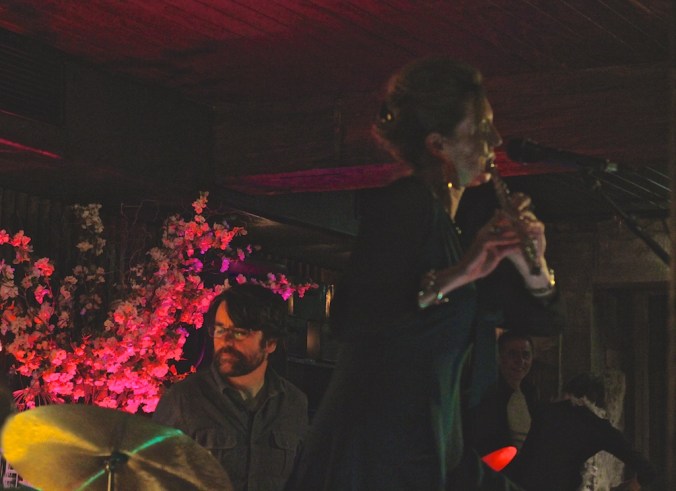
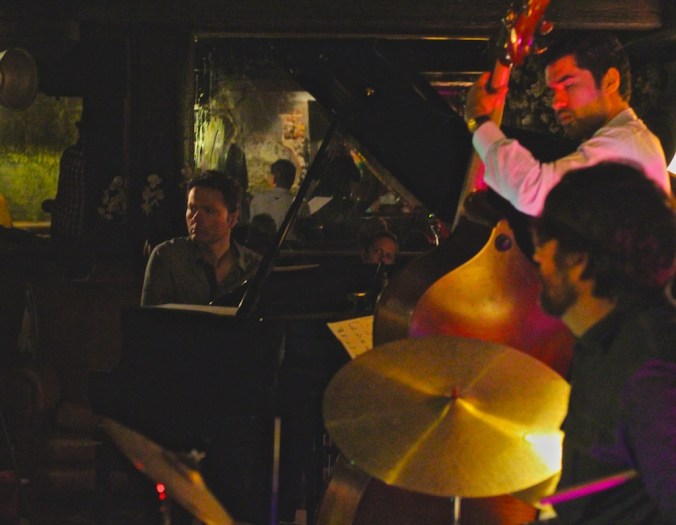
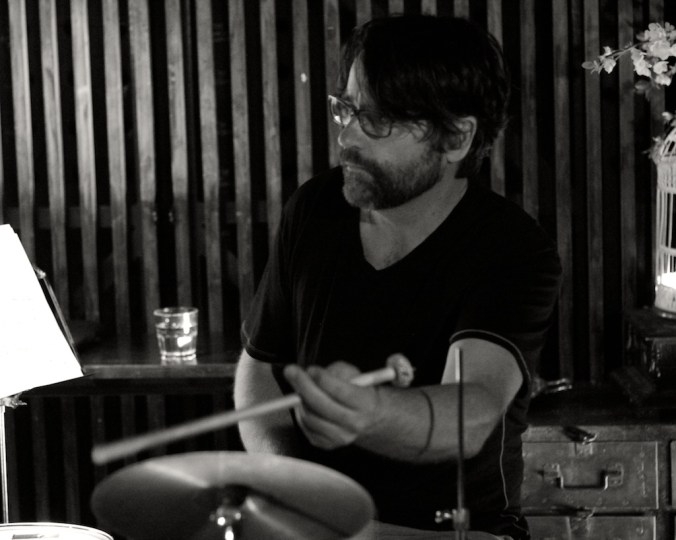
 e
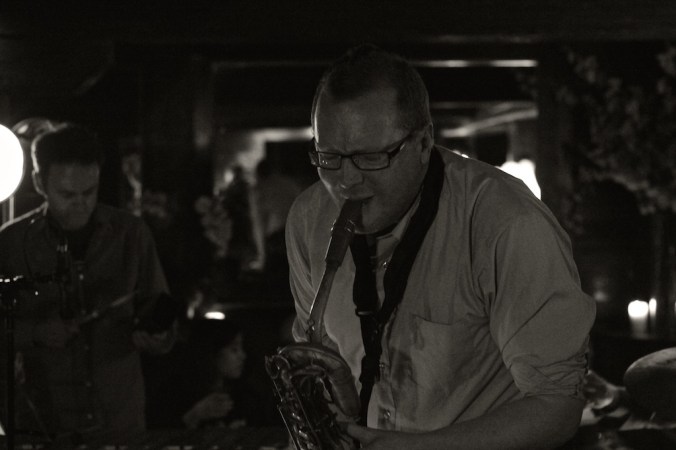
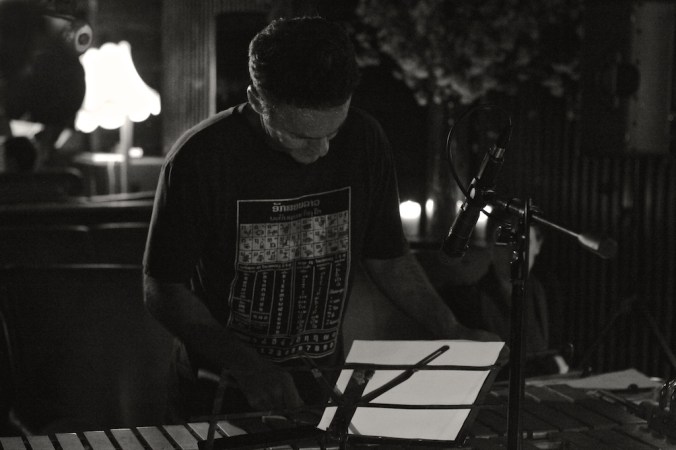
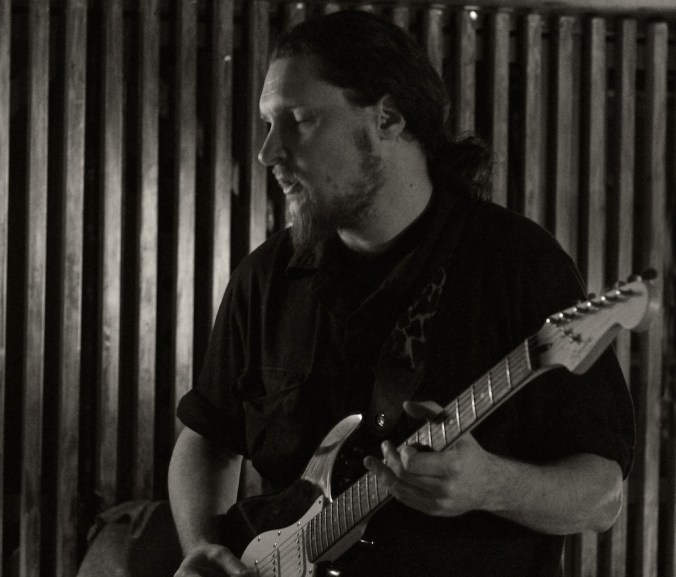
e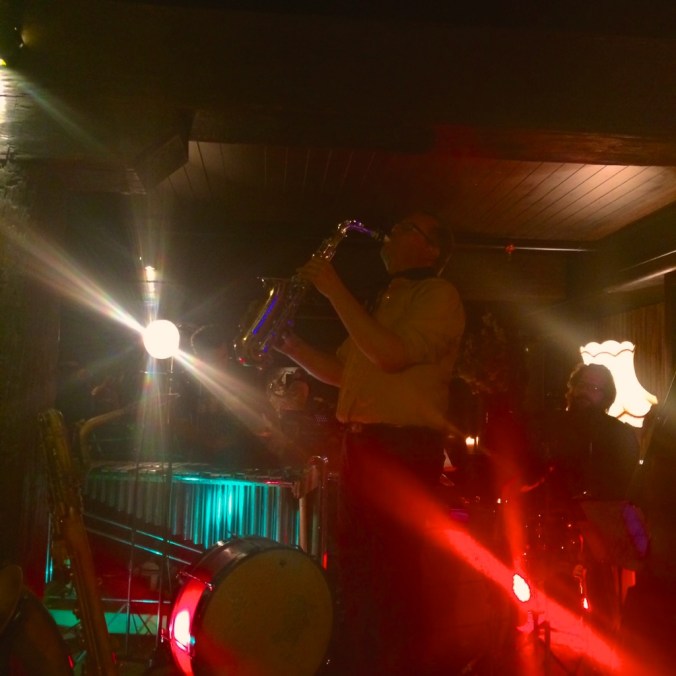 There is a rawness and a primal quality to it, a strong sense of performance. Who would prefer a recording of an Arkestra or an Art Ensemble of Chicago performance over a live show? This was all jazz and all music decoded, not for the cocktail party. The next day I was watching the 1956 Jean Bach film ‘Great Day in Harlem’ and there was Roy ‘Little Jazz’ Eldridge squealing out high note after high note on his trumpet. Again and again, he pushed out a flurry of wild free multi-phonic sounds. Even in the swing era, this had a great effect.




 JazzLocal32.com