Those lucky enough to attend any of Jake Baxendale’s ‘Waypeople’ concerts last year will have anxiously awaited the release of this album and his release tour. It is music brimming with exotic textures and tasteful arrangements, but it is more besides. When I attended the concert, I sensed that I was hearing something important. It made a statement about the maturity and evolution of Aotearoa’s improvised music scene and also conveyed a message that the world needs to hear right now. This spoke to our times and cut deep.
Before the advent of written language, and for a good while after, important stories were poetised and sung. This enabled generations to memorise and pass on vital cultural knowledge. In fact, poems were sung and accompanied by musicians long after the arrival of the written word, and the practice of silent reading didn’t occur in the West until well into the Middle Ages (sometime between 900-1200 BCE), and in China, during the Song Dynasty (around 1100 CE).
To the ancients, reading was a communal activity, and so it was with the Tao Te Ching. It spread through oral transmission much like Homer’s epics. Therefore, while various texts are available today, hearing it with musical accompaniment feels right. To the Taoists, music deepened the connection with the natural world and awakened ancient memories. As the Tang Poet Li Bai wrote:
‘The monk from Shu with his green silk lute . . .
Has brought me by one touch of the strings,
The breath of pines in a thousand valleys’
‘Waypeople’ is an album that joins a journey begun over 2,500 years ago, and in doing so, it incorporates the cultural expressions and voices found on that journey. Here, the ancient wisdom of the Tao Te Ching is clothed in a contemporary jazz idiom, utilising the oldest of instruments, the human voice and accompanied by saxophones, clarinets, piano, vibraphone, trumpet, drums, flute, oboe and guzheng. The use of the guzheng is particularly relevant here, as it dates back to the time of Tao Te Ching itself.
Throughout the album, selected passages of the Tao Te Ching are sung or intoned. Some verses are urgent and imploring, others reflective–opposites are brought into balance. It is therefore entirely appropriate that the translation is that of beloved contemporary author, Ursula Le Guin. What these musicians have captured is the ebb, flow and essence of these important verses. A balance has been found between the old and new, and the ‘old master’ Lao Tzu would surely smile on this endeavour.
Our world today is like it was in the Warring States (475-221 BCE)– it is out of balance. It is obvious that humanity has again taken many wrong turns, so now is the time to retrace our steps and heed this ancient wisdom. Choose peace over war, quiet and reflection over clamour. So, attend the gig if it comes to your town, buy the album on Bandcamp, listen deeply and reflect. There is no time to lose. https://jakebaxendale.bandcamp.com/album/waypeople – or check out the teaser on YouTube
The musicians are from Wellington and Auckland. Chelsea Prastiti (voice), Jia Ling, (guzheng), Jake Baxendale (compositions, alto, tenor & baritone saxophones, clarinet & bass clarinet), Callum Passells (sopranino & alto saxophones), Daniel Hayles (piano & vibraphone), Johnny Lawrence (double bass), Cory Champion (drums & effects), Louisa Williamson (flute tk 2), Ben Hunt (trumpet tk 5), Kaito Walley (trombone tks 2 & 5), J Y Lee (flute tk 10), Millie Mannins (oboe tk 10) – btw how nice to see Roger Manins daughter in this lineup.
“No competition, no blame” – Tao Te Ching
JazzLocal32.com was rated as one of the 50 best Jazz Blogs in the world by Feedspot. The author is a professional member of the Jazz Journalists Association, a Judge in the 7VJC International Jazz Competition, and a poet & writer. Some of these posts appear on other sites with the author’s permission.
Aaron Parks’ latest album, ‘Little Big III’, is the third in a series titled Little Big and his fourth album featuring a guitarist. The album (and series) also expands the soundscapes and ideas explored on his successful first Blue Note release, Invisible Cinema (2008). It is an album with a big heart which embraces the listener with rich textures and a tapestry of gorgeous melodic lines. Parks is highly regarded as a pianist and composer and never appears to rest on his laurels, reaching further with each new recording.
The band is in perfect sync, and each player is given the space they deserve. Parks’ compositions are always compelling, but they reach for the heartstrings here. There is considerable technical mastery, but a sense of humanity strikes you most. The tune titles tell you this, ‘ Locked Down’, or ‘Heart Stories’, inviting you into an expansive and unfolding narrative. It feels like a story of our times, but one reminding us of the beauty we may have overlooked amidst the turmoil.
Parks is a distinctive pianist who has never had trouble finding the best musicians to accompany him. Jazz lovers in Aotearoa New Zealand can rightly feel proud in this regard. ‘Invisible Cinema’ and ‘James Farm’, featured bassist Matt Penman. On Little Big 111 and the two earlier iterations, we hear guitarist Greg Tuohey (who first recorded with fellow Kiwi Penman over twenty-five years ago). Tuohey’s playing is magnificent and, along with his bandmates, he contributes tunes too.
The sharing of the compositional duties has yielded riches. Parks has a distinct style; his tunes are as compelling as they are memorable. I particularly like ‘Flyways’; a pulsating ostinato chant that frees the drums and bass, while the breathtaking melodic lines soar. There are four Parks compositions, all interestingly different. Oriental references are evident in ‘Delusions’ while the lovely ballad ‘Ashé’ has a wistful, folkish vibe.
Three tunes are Tuoheys, expanding the palette to include funk and Americana. His tune ‘Willamina’ is a joy, it is here in particular that you hear what a great guitarist and composer he is. It evokes tumbleweed towns and gentler times; memories we hold onto lest they slip from our grasp. Bass player David Ginyard Jr’s ’Little Beginnings’ has a beguiling loping pulse and uses a larger palette, to great effect. The drummer, Jongkuk Kim, is new to me, crisp, imaginative and impressive. I hope there is a Little Big IV in the wings. ‘Blue Note Records ~ available in stores and by streaming.
Hania Rani (Hanna Raniszewska)
I subscribe to jazz author Ted Gioia’s Substack posts, as all improvised music lovers should. In a recent issue, Gioia highlighted a handful of modern Polish improvisers he suspected would be unknown to audiences outside of Northern Europe. He particularly liked Hania Rani, who he described as his new favourite pianist.
There is something ethereal and achingly beautiful about her music and everyone who stumbles across it, feels like they’ve uncovered a secret. What initially strikes you as a few simple fragments of melody on repeat, is music for deep listening. Underlying the ostinato phrases are endless changes, finely wrought. She layers and loops while catching her listeners in a silken web of sound; sometimes reaching inside a grand piano, using an upright piano for percussion and adding small digital effects. It is an ever-expanding pedal point over a pulsing drone which may be the key to its appeal. She magics up something complex and deeply satisfying, crafted out of simplicity. As if that were not enough, she also sings beautifully.
Although not a household name, she gets 7 million views for her YouTube clips, performs at the Louvre and has appeared in an NPR Tiny Desk concert. I have included a clip from a recording she made in Studio 2 in Warsaw, a favourite venue due to its acoustic properties. Sometimes the best things are hiding in plain sight. This is improvised music, but genreless, touching on classical, Jazz and house, but somehow free of those confines.
Rani mainly records for Gondwana Records with seven albums released. It is worth checking her out on YouTube.
JazzLocal32.com was rated as one of the 50 best Jazz Blogs in the world by Feedspot. The author is a professional member of the Jazz Journalists Association, a Judge in the 7VJC International Jazz Competition, and a poet & writer. Some of these posts appear on other sites with the author’s permission.
The Bird of a Thousand Voices is an astonishing project, and as I listened and wrote, I weighed up the various superlatives. No other term sufficed. And, to describe it as a concept or a themed album would woefully undervalue it too. The depth and breadth of Tigran Hamasyan’s project is breathtaking and evaluating it requires fulsome engagement. I am not implying that it is unapproachable as there are delightful melodies as light as air, and exotic rhythms to engage, but underlying every note are other worlds, endlessly unfolding–worlds that beg exploration.
It is a transmedia project with the parts slotting together like pieces of a deliciously exotic puzzle. There is a film, an ancient manuscript, imaginative artworks, an interactive game, a stage show, and a timeless story, all wrapped in and around the extraordinary music of Tigran. It is utterly unique. His sound, touch, and visionary approach as he creates improvised music is singular, and few could pull this off so convincingly.
The project was inspired by an ancient Armenian folktale (Hazaran Blbul), involving an anthropomorphic bird. The fable tells of an era of great unrest, so the bird embarks on a spiritual quest, seeking world harmony. Still, as with all great quests, physical, spiritual and psychological difficulties are encountered along the way. Tigran states in his summary, that it struck him as a metaphor for the problems confronting today’s world; conflict, inequality and ecological disasters.
While the project references an ancient Armenian folktale, the bird theme is universal. Birds are sacred to most Middle Eastern, Mediterranean and Northern European cultures. They are frequently seen as messengers from the gods who can predict the future. Some believe they represent the soul or beauty and offer hope of peace. And, it is not just in myths. They warn us today of biodiversity loss, begging us to do better.
Among the promotional material is a video referencing a medieval illuminated manuscript from Armenia. Inside the manuscript, birds dance out of the vellum pages as Tigran’s Steinway is filmed being airlifted to a mountaintop, and the music dances too. Tigran’s distinctive pianism is immediately recognisable, but a deeper otherworldly quality appears during this recording. His delicate filigree motifs repeat and evolve, choirs or a single voice, echo key phrases and staccato percussive interludes rise, then fade; however, what stays with you is not technique but something more elemental. The project is a prime example of improvised music reaching beyond the familiar as improvised music should.
illustration excerpted from Armenian archives image
The album engages on many levels and should be enjoyed as the creators intended; by listening, watching, gaming, and contemplating. In collaboration with Tigran, Dutch filmmaker Ruben Van Leer has created cinematographic wonders integral to the music, as has illustrator Khoren Matevosyan. As you enter the website to participate in the game or to enjoy the illustrations and installations, you will find dozens of gifted collaborators credited. While there are too many to mention, the principal musicians are Tigran Hamasyan (piano, keyboards, drum programming, compositions, concept), Areni Agbabian (vocals), Sofia Jernberg (vocals), Vahram Sargsyan (vocals), Nate Wood (drums and bass).
The vinyl album can be purchased via tigranhamasyan.com His music is also available on the usual streaming platforms.
JazzLocal32.com was rated as one of the 50 best Jazz Blogs in the world by Feedspot. The author is a professional member of the Jazz Journalists Association, a Judge in the 7VJC International Jazz Competition, and a poet & writer. Some of these posts appear on other sites with the author’s permission.
Earlier this month ‘Blue Note in My Suitcase’ was released by B3 Master Michel Bénébig. It is his sixth album and his first with a Jazz orchestra. The album hits the groove spot immediately, and as you listen you realise what a perfect pairing Bénébig’s B3 and the Le Grande B3 Orchestra is, aided convincingly by Lachlan Davidson’s lovely arrangements. The charts are well constructed, giving free rein to the soloists and never overwhelming the organ. Davidson is a respected Australian arranger, teacher, band leader and multi-instrumentalist and his influence is strongly felt here.
It is always a pleasure to hear Bénébig’s in-the-pocket playing but with an orchestra like this charging the atmosphere, he digs deeper than ever into the groove. The ten tunes on the album are excellent groove vehicles, all written by Bénébig, with Davidson credited as co-composer on ‘Try To Explain’. I have always appreciated Bénébig’s writing but he has excelled himself here.
The opener ‘Alenka’s Mood’ is warm and funky, immediately infecting you with its slinky rhythm. It offers up a promise which is fulfilled throughout. As you work through the tunes you are drawn back to the days when infectious danceable music like this was loaded onto jukeboxes and played in steamy groove joints pulsating with dancers. The music brings a smile to your face and fills you with joy and, like his earlier ‘Shuffle’ album, you will reach for it repeatedly. Joining him is Bénébig’s daughter Lucia who is responsible for designing the album cover and creating animation for a promotional YouTube clip. I have posted the YouTube cut ‘Black Cat’ from the album.
A time-honoured B3 big band tradition is followed here, featuring 13 horns which lends considerable heft to the rhythm section. It would be easy to drown out soloists and to eclipse the organ with a behemoth like this but the soloists get plenty of room to shine, and shine they do. The album is available now on Spotify and a vinyl edition is on the way for audiophiles.
Mick Fraser (trumpet 1), Shane Gillard (trumpet 2), Gianni Mariucci (trumpet 3), Rob Planck (trumpet 4), Roger Schmidl (trombone 1), Ben Gillespie (trombone 2), Jessica Jacobs (trombone 3), Adrian Sherriff (bass trombone), Lachlan Davidson (alto sax 1/flute 1/sop sax), Rob Simone (alto sax 2/flute 2), Anton Delecca (tenor Sax 1/clarinet 2), Paul Cornelius (tenor sax 2/clarinet 1), Stuart Byrne (baritone sax/bass clarinet), Jack Pantazis (guitar), Gideon Marcus (drums), Michel Bénébig (A105 Hammond organ Leslie 147), Phil Noy (recording engineer), Lachlan Carrick (mastering Engineer), Lucia Bénébig (front cover art)
~Random Delights~
Sambandha: Heartcore For Nepal
Recently, I received a press release from colleague Arlette Hovinga. The project outlined was the vision of Mikaela Bokova, the manager of Kurt Rosenwinkel’s independent music label, Heartcore Records. The object was to raise money for disadvantaged children in Nepal, and on board for this recording are an impressive list of jazz and world music luminaries: John McLaughlin, Christian McBride, Terri Lyne Carrington, Gerald Clayton, Kit Downes, Anmol Mahara and Dinesh Pun. Sambandha was written by combining two traditional Nepalese folk tunes, and it’s performed by the 20-piece children’s choir Bokova organised while running a music workshop at Mangala School, Babiyachaur, Nepal.
The revenue from the release will go towards buying the children’s musical instruments. In your browser or here, click on heartcore-records.com then once opened, locate Sabandha and purchase your download (5 Euros). It can also be purchased in Bandcamp. Please pass on the word and enjoy. I play this often. You will also find a delightful video on YouTube on the making of this by typing Heartcore for Nepal Sambandha. There is a deficit of joy in today’s world, but giving to those in the greatest need is a sure way to top up the supply.
Skilaa: Tiger In The Water
The cut I am posting is tagged ‘psychedelic R&B’ and the descriptor is intriguing. Everyone featured in this band is an accomplished jazz musician and it shows. Boundaries have been deliberately blurred until a new, fresh kind of music emerges, which catches your attention because it is familiar but not familiar. The concept, compositions and delightful artwork are those of vocalist Chelsea Prastiti. Her boundless energy is evident here. In Aotearoa, it is not unusual for Jazz-trained musicians to make inroads into Indie-Rock, Soul-Funk and Indie-Pop and do it well, even better (think The Beths). Skilaa will be a band to watch. The band are Chelsea Prastiti (vocals, compositions, artwork), Tom Denison (bass), Adam Tobeck (drums), and Michael Howell (guitar) with guest vocalist Crystal Choi (recorded by Callum Passels).
The ‘Astounding Eyes of Rita’ – Trio Natalino Marchetti, Francesco Savoretti, Mauro Sigura
I have previously posted on Mauro Sigura, an oud improviser. He recently sent me this clip of his trio featuring oud, with accordion and percussion. The tune is a well-known composition by Anouar Brahem, ‘The Astounding Eyes of Rita’. Improvised music like this is prevalent across the Mediterranean region and deserves a wider audience. This is such a lovely tune and so beautifully realised here. Mauro Sigura (oud), Francesca Savoretti (percussioni), Natalino Marchetti (fisarmonica). Recorded in Rome.
There is something about the oud that awakens the deepest of emotions. Like the sound of an ancient temple gong, it resonates soulfully. It is primarily a modal instrument, using ‘Maqams scales’, a system as complex and varied as the modes used by Coltrane. So, when the chance arose to interview a Jazz oud player, I jumped at it.
Mauro Sigura was born in Turin, where he began his Jazz career playing the bouzouki and guitar. Later, he moved to the island of Sardinia where he found a uniquely ancestral form of music, one for which he developed a deep musical connection. Since then, he has performed throughout the world and participated in numerous festivals. His ensembles reach beyond the confines of genre. They have originality, depth, rhythm and groove. Younger listeners especially, are hungry for such music.
I heard Sigura’s current Quartet while judging the Italian-based 7VirtualJazzClub competition. His entry enthused the judging panel and he deservedly picked up first prize in the Pros & Amateurs section. Shortly after, we exchanged contact details and set up the interview.
~ ~ ~
Mauro, congratulations again on your, 7VirtualJazzClub Competition win. Your music has a rare beauty which pulls on the heartstrings. It is as if you have unearthed a forgotten memory from the distant past. This effect may be evident because the oud is the forbear of many stringed instruments like the guitar, mandolin, bouzouki, lute etc. It is like an echo flowing through time, bringing past and present together.
Q. Could you tell me what the oud means to you, and why you chose it?
A. First of all, thank you for your kind words! As you said, the oud is an instrument that somehow crosses time, has an ancestral link with the cultures of the past, [it] tells of trade exchanges, travels, and meetings between cultures. I came to oud through bouzouki and Greek music, where it is easy to listen to an oud. Then, I started studying Ottoman classical music.
Q Your last album, Terravetro, paired the oud with a minimalist piano. On your recent album, Dunia, there was a Fender electric guitar and an electric bass. Did you have that relationship between ancient and modern in mind?
A. Yes, all my music always tries to connect distant places not only in space but also in time. everything must tie together, but the challenge is to try to do it in the most natural way possible.
Carthago (from Terravetro)
Q. Your recent quartet is great. It could be viewed as either mainstream jazz or as World Jazz. The contrasts and textures are interesting. Especially so with ‘La Danza di Amarech’. Notable are the tight bass lines and edgy drum rhythms, the oud’s earthiness against the electric guitar’s brighter sounds, and that hint of funk over Middle Eastern rhythms and melodies. Could you tease that out and provide an insight into your compositional approach?
A. It depends on the compositions. For example, in ‘La Danza di Amarech’ I started from the bass line and its connection with the drums, the theme came last. I often start from the bass line to then create the theme, then, once a basic theme has been defined, I intervene by inserting more jazz-like modulations. However, it is not a fixed rule, in fact sometimes I have an oud groove or a theme in my mind and that becomes the starting point, or it can start from a traditional rhythm of Ottoman music. For example, ‘Dunia’ is built on a traditional Ottoman rhythm in 10/8, [called] the ‘semai’.
Q. Tell me about your current quartet drummer. She is amazing.
A. Evita is amazing! She has ability,and creativity, she is an excellent composer, so she was able to give us useful advice in [the] studio. In Italy, she plays with the best musicians, such as Enrico Rava, but she often also plays with DeeDee Bridgewater. I saw her play in Sardinia in 2021 and I said: “this girl must play on my record at all costs!” and I succeeded. This year she released her first solo album as a singer-drummer, for Paolo Fresu’s record label. She has a great career ahead.
Q. Do you have any ongoing projects with this particular quartet?
A. It is a quartet that I created for Italy and Western Europe. In fact, with the acoustic quartet, I often play in Eastern Europe and I needed something more attractive to Central-Western Europe. So I’m working to try to propose it to these geographical areas. The album was released on October 8th, so we are still in a phase where Dunia is looking for the best direction.
Q. You record on ’S’Ard’, a Sardinian label but I see you were born in Turin.
Are your forebears from Sardinia?
A. My father was born in Sardinia, but my mother was born near Turin. In 2005 I moved to Sardinia, retracing the path taken by my grandparents in the 1950s, when they left Sardinia to go work in Turin.
Q. Sardinia has produced jazz greats like Paulo Fresu. It evokes an ancient past and a Phoenician connection. The bagpipes may have originated there, but is there an oud tradition?
A. No, there is a tradition of the guitar, but not of the oud, although some elements of the traditional Sardinian guitar certainly have a North African origin.
Q. You have a distinctive sound and approach. Different from Dhafer Youssef or Anouar Brahem. Part of that is due to the pairing of the instruments, but there appear to be regional influences too. Would you like to comment?
A. Yes, certainly, Sardinia, with its ancestral atmospheres, has a strong influence on my compositions. The spaces, the light, the nature are much stronger here than in other parts of Italy and the musical tradition is also very strong, alive and wild and this more or less unconsciously influences me every time. My next challenge will be to look for the influences that Phoenician, Carthaginian and Arab music have left in the Sardinian musical tradition, in particular in the vocal tradition. I would like to start from there, building a Sardinian project that justifies the presence of oud.
Q. Who are your musical influences?
A. Obviously, the ones already mentioned by you Dhafer Youssef or Anouar Brahem influenced me a lot, but also Jan Garbarek and Eivind Aarset. I am used to listening to all good music, from rock, to jazz, to pop to metal and I let myself be influenced by everything without prejudice. I have listened to a lot of Pat Metheny, Miles Davis, Kenny Garrett, but also traditional Greek music (rebetiko), Ottoman classical music, Arabic and Kurdish music, but in general I like all the traditional music. I am very interested in music played with a few simple instruments, especially the music of nomadic people. My music comes out of all this.
Q. I see you studied philosophy. Did any particular philosopher inform your approach to music?
A. No. Perhaps philosophy has influenced my approach to the concepts of my albums. I try to create the album around a concept, but beyond this, no. No philosopher has influenced me by directing me to music.
Q. You performed throughout Europe, but what grabbed my attention was that you performed in Petra, ‘the city that time forgot’. Tell me about that experience.
A. It was an amazing experience! We were invited by the Amman Jazz Festival and the Dante Alighieri Society in Jordan. When they [approached] us about the option for a concert in Petra, I couldn’t believe it. We played for the Bedouin community that lives inside the site. It was a concert for a few close friends, in a unique atmosphere suspended in time. While I was playing I found myself in a sort of emotional trance and I lost the sense of the duration of the concert. It was a strange sensation, but it was as if those rocks were carrying the music forward independently of us [as the players].
Q. Do you see yourself as being in or extending the Sufi oud tradition?
A. I’m very flattered by your question, but I don’t know the Sufi tradition well enough and I always want to have a respectful approach towards those elements of traditional cultures that I don’t know in depth. So, to answer your question I would say no, even if a certain idea of mystical-transcendent trance is present in many of my compositions. If we can take people to another, different, new place, where everyone is on the same level, then we can start talking again.
Q. Who was the vocalist on Dunia and were there any guest artists?
A. Her name is Elena Ledda and she is the most famous Sardinian singer and, also, one of the most famous in the Italian world music panorama. She gave me a great gift of herself by putting her splendid and unmistakable voice in the song. Elena is the only guest in Dunia.
Q. I look forward to hearing more of your albums. Thank you for your time and for the detailed and illuminating answers.
A. It has been my pleasure!
You can order these recordings from Mauro Sigura’s website, from S’Ard records, or locate them on Deezer, Spotify or Apple Music.
JazzLocal32.com was rated as one of the 50 best Jazz Blogs in the world by Feedspot. The author is a professional member of the Jazz Journalists Association, a Judge in the 7VJC International Jazz Competition, and a poet & writer. Some of these posts appear on other sites with the author’s permission.
In the early 1970s, I recall picking up Rolling Stone magazine and seeing the end of year headline, ‘What A Long Weird Trip It’s Been. I thought of that headline yesterday because it felt relevant. It referred to many things, to the psychedelic music which had fuelled a movement, Miles’ fusion band or The Jefferson Airplane, to the out-prose of Hunter S Thompson and Alan Ginsberg, but mostly it referred to the seismic upheavals of a troubled interregnum when the old order cracked open. A time when the planet was searching for a different axis.
It was a time of collision between an old-world order and a hyper-energised counter-culture movement. The combatants on both sides had grown weary as the pitch battles grew uglier. Bullets flew at Kent State U and the Vietnam War stumbled on pointlessly as the death count rose; and back on the west coast of the USA, Manson drove a dagger through the summers of love and hope. In turbulent times tidy resolutions are evasive, and so it’s been these past few years.
Jim Langabeer Aotearoa/New Zealand
Then, as now, the arts flourished and improvised-music especially so; interpreting the sounds and moods of the times instinctively. Improvisers will always find fresh ways to examine the world about them because change is what drives them; to succeed they must be open to the endless possibilities of the moment. They will guide us to havens, to secret Islands on the margins if we listen with care.
I spent much of the recent lockdown listening to music from the wider Jazz diaspora. Initially, the musicians fell silent, then, as they came to terms with their new reality most reached out, connecting digitally with the like-minded, or with those they didn’t know at all.
From Ethiopia
Language barriers and visa issues quickly faded into irrelevance as cultural connections were navigated between living rooms. The independent recording labels also stepped up and digital review copies of lockdown albums hit my inbox daily; arriving from Iceland, Poland, Ethiopia, Russia, Belarus, Czechoslovakia and many other countries. Most of them were from well outside of my usual orbit. Cultures were colliding and assimilating new ideas at speed.
Around that time I was contacted by a Jazz Studies pupil who asked if New Zealand had a recognisable Jazz voice. That is a hard one to answer. I hear individual players with distinctive voices, but that is not the same thing. It is inarguable that Jazz arose as an American art form over 100 years ago and that it arose out of oppression, slavery, and a collision of cultures. But as it spread adaption was inevitable and in each country, cross-fertilisation occurs. In this age of hyper-connectivity, that process is accelerating at warp speed.
French improvisers
As I listened to the many albums from elsewhere there was a jazz sensibility, but I also fancied that heard elements of indigeneity, of improvisers referencing their folk music, native anthems and landscapes. This gave me pause for thought. What constitutes an original voice in the modern Jazz world? We hear it or think we do but how is it defined? And isn’t musical nationalism a contentious topic? I am inclined to Dave Hollands point of view in this regard, that musical nationalism should be acknowledged but not over analysed. The negative consequences of nationalism are everywhere about us and the extreme forms are seldom healthy. Jazz is a humanistic, hybridised and multi-lateral entity.
Improvising on traditional tunes Norway/Finland
Aotearoa is a colonised land filled with a great many cultures. In the past, Polynesian voices were sidelined by dominant European cultures, but the indigenous voices grow stronger every day. I only have my ears to guide me, but if I was asked to highlight an authentic Kiwi Jazz voice, it would most likely come from our ever-growing underground free-jazz movement and it would probably reference indigenous music in some form. Musicians like Jeff Henderson and Jim Langabeer come immediately to mind, but there are others as well.
I have included a few clips which invite people to form their own opinions. Included is a track from Secret Islands, Jim Langabeer’s extraordinary album, a telling of Kiwi stories. Also, a beautiful Ethiopian clip, a French genre-busting improvising band that could hardly have come from anywhere else, an extraordinary offering of Spiritual Jazz from Lahore, and some current Nordic folk-Jazz.
Improvised music from Lahore
The journey through the pandemic feels interminable right now, but the music will guide us through, and if we listen well enough, the time will not have been wasted. Search Bandcamp or wherever for something unknown, let the music paint pictures as you study new landscapes through your ears. Is this the new travel? We will hopefully emerge better informed, and what a long weird trip it will have been.
You can purchase many of these albums on Bandcamp; the place where interesting music lands.
JazzLocal32.com is rated as one of the 50 best Jazz Blogs in the world by Feedspot. The author is a professional member of the Jazz Journalists Association, poet & writer.Some of these posts appear on related sites.
As Aotearoa’s Jazz musicians become increasingly confident of their place in the world, it is timely to acknowledge those who paved the way. A significant figure in this journey is saxophonist and winds player Brian Smith. I had been meaning to interview him for some time and the recent lockdown provided the ideal opportunity. I have long been aware of just how innovative London Jazz was during the 60s and 70s. The output was considerable, different from what was happening elsewhere and it stands up well to this day and there is an increasing interest among jazz fans and Jazz historians in pouring over this material. Over a lengthy Zoom call, we discussed his musical career and in particular his involvement in the UK Jazz scene. What follows is extracted from that wide-ranging discussion.
Where Smith grew up and how he first engaged with music was the obvious place to start, but then as we proceeded I was struck by how modest Smith was, quietly brushing aside his considerable achievements in true Kiwi fashion. And the more we talked, the more I realised that a colourful piece of Jazz history was unravelling.
JL32: Hi Brian, thanks for agreeing to the interview.
Smith: Greetings John, where would you like to start?
JL32: Where were you born?
Smith: I was born in Wellington but I grew up in Stratford, Taranaki. It was there that I learned piano and later switched to the saxophone.
JL32: Did you start gigging in the Naki?
Smith: Yes as a schoolboy I was part of a band that played for local dances. It was so much fun that I stayed at school an extra year; beyond when I’d intended to leave.
JL32: what were your musical interests at that time?
Smith: It was then that my friends and I encountered 78s by the likes of Humphrey Littleton, Bennie Goodman, Louis Armstong, Lionel Hampton. I still have those under my bed (laughs and points). So, my first jazz interest was more Eddie Condon and I particularly liked the clarinet player Edmund Hall. It was his ‘feel’. It was hard to get records here then. But also among those recordings, I soon discovered Joe Newman, Wardall Grey, and early Miles.
JL32: Did Wardall Grey lead you to discover Dexter?
Smith: No, I discovered Dexter later, also Miles album ‘Around Midnight’ a little later again, those was significant albums for me.
After playing in a few small bands, Smith moved to Auckland (1958) and it was there, that he joined the Bob Paris dance band, later moving to Australia with them. During his time in Auckland, he became increasingly active on the jazz scene, playing at places like Trades Hall. When the Bob Paris band moved across the ditch, he went with them, joining the exodus of Kiwi musicians like Mike Nock who had left for Australia a few years earlier.
JL32: When we were discussing the Auckland clubs and musicians, you mentioned trumpeter Dave Ironside. I knew Dave well and I often wonder what became of him as I went to Sydney with him in 1967.
Smith: Yeah, Dave was a great bloke, he had a really good sense of humour, very funny.
JL32: And when was your move to Australia?
Smith: It was in 1960, I went on the Wanganella with Rick Laird, Barry Woods, Neddy Sullivan and Mike Walker, I was sick for two or three days as I recall (laughs). The trip cost us £30 each, a fortune in those days.
JL32: Did you get much work across the ditch?.
Smith: Well, after moving to Australia with the band, I met up with lots of musicians, such as Kiwi pianist Dave McCrae and our association was to continue later in London. (reaches into a box and produces a few Bob Paris recordings – one with vocalist Ricky May ). Later I obtained a residency on the Gold Coast through Bob Paris. That was where I met my wife. We were given accommodation and a percentage of the door. My wife was a receptionist at that hotel, she made sure that I was fed.
JL32: You connected with a lot of interesting Jazz musicians while in Sydney, notable Aussies, Kiwis such as Mike Nock, and others from much further afield.
JL32: Did you by any chance meet up with a blind multi-instrumentalist Claude Papesch while you were there?
Smith: Yes, I was driven around Kings Cross by him. (much laughter as we reminisced about this as we had both been nervous passengers while Papesch drove). Bob Gillett, Andy Brown, and I lived near Claude, and once after he’d painted his flat, he asked us to check the bits he’d missed and tap the wall to show him. He was such a character, a nice guy, he would call around and knock, and we would sit there quietly, then he would enter and find us one by one, feeling our ears and faces and naming us. I heard that he eventually became mayor of the Blue Mountains. Anyhow, after two years of gigging around Australia I moved back to Auckland. Once back home I played regularly with the likes of Tony Hopkins.
JL32: Lachie Jamieson was around then, did you know him?
Smith: Oh yes, a great drummer and vibes player. I played with him a bit too, and another drummer back from the USA, Ray Edmundson. Lochie was a big deal in Auckland as he’d played with Sonny Rollins, Ira Sullivan, and bands around Chicago. And apart from Tony Hopkins, I played regularly with Mike Walker, Marlene Tong, different people. Some tours happening around then.
Then a few years later, I packed up and decided to move to the UK as my wife came from Lancashire. On the way, I had a one-night stopover in New York, and during that night, I attended three gigs. I heard John Coltrane, Charles Mingus, and Herbie Hancock. Clifford Jorden was the tenor player with Mingus which was at the Half Note.
JL32: What was your first destination in the UK?
Smith: I went to Manchester and met a few people on the scene. One of them was a bloke called Ernie Garside, who managed a Jazz Club there. I would sit in from time to time and my wife’s brother would come with me. He eventually became Maynard Ferguson’s manager. At that time Maynard was playing in Manchester. This was not long before his London concerts. Ernie Garside asked if I wanted to play in Maynard’s band and I did. It got busy as I was juggling three bands.
JL32: If it’s 69/70 you would have been playing with Nucleus, Tubby Hayes Big Band, and Maynard Ferguson.
Smith: Yes, and one or two other things were happening. I was playing with Alan Price as well.
JL32: I have listened to recordings of Tubby Hayes from that period. Nice band.
Smith: There was a TV Show and bits that were recorded. I had no solos but I was in the saxophone section with Alan Skidmore and Peter King. Peter King was great, I played with him quite a bit, a real nice guy.
JL32: I have jotted down a list of the significant UK bandleaders of that era you’ve played and recorded with: Graham Collier (70), Maynard Ferguson (65-75), Michael Gibbs (63-70), Keith Tippett (78), Mike Westbrook (69), Humphrey Littleton, Tubby Hayes, and particularly the Scottish horn player and composer Ian Carr (69-82). You have regularly played alongside UK-based Jazz greats like Kenny Wheeler, Stan Sulzman, John Marshall, Alan Holdsworth, Peter King, Tony Oxley, Stan Tracey Barre Philips, Jack Bruce, John Surman, and many more. And course Alexis Korner, the proto blues unit that influenced John Mayal, the Stones, etc. That’s some list.
Smith: It was a busy time.
JL32: I want to spend a bit of time on ‘Nucleus’, but before I do, I see you played regularly with Kenny Wheeler.
Smith: Yes and he was such a humble guy. He would come away from a concert or recording session after playing well, look concerned and ask us if he played alright.
JL32: At around that time was Kenny working with John Taylor and Norma Winstone, right?
Smith: Yes Norma Winstone and John Taylor were actually in Nucleus at one point, during my time the only other vocalist was Joy Yates (a Kiwi). But back when I first arrived, there were other people important to me. Rick Laird was in London by then and he was working at Ronnie Scotts. He introduced me to a drummer, percussionist called John Stephens who ran the Spontaneous Music Ensemble.
JL32: He was a notable early free player. Tell me more?
Smith: He was good to me. He had a caretaker flat off Harley Street. He let me stay there and I played with him at the ‘Little Theatre Club’, with Trevor Watts. I played with the Spontaneous Music Ensemble a bit at that time. Dave Holland would come up, Kenny Wheeler, Jeff Klien, Evan Parker. One night Chick Corea turned up and sat in and I didn’t know who he was at the time. We were playing a lot of free stuff and he was stomping and slapping the piano sides.
JL32: Anyone else?
Smith: Oh yes I was with Alexis Korner between 1965-66).
JL32: Did you ever encounter the legendary Phil Seaman?
Smith: yes, once I recall we were on the same gig.
Note: Alexis Korner Blues Incorporated was a very important band at the time and the great British blues bands like the Stones and John Mayal were all heavily influenced by it. Musicians like Jack Bruce, Mick Jagger, Charlie Watts, Ginger Baker, and Graham Bond were all in the band at some point. The Alexis Korner band moved freely between jazz and blues venues and included Jazz standards in the repertoire.
JL32: Was the 1970 album ‘Elastic Rock’ the first Nucleus album you were on? I think that you were a founding member of that band.
Smith: I was. The band was formed by the Scottish trumpeter and arranger Ian Carr and multi-instrumentalist (Sir) Karl Jenkins, I was with them right up to when I left the UK and on many of the albums between 1970-82, except when I was touring with Maynard Ferguson.
JL32: It was very successful. I arrived in London in 1985 and it was still popular then. Don’t you think the term Jazz-Rock Fusion was a bit of a marketing exercise? To my ears, you were a jazz unit edging at times into free territory. Not nearly as rock-sounding as in the guitar-heavy fusion bands. Listening again I find stronger synergies between Nucleus and the late 70’s output by Bennie Maupin or Eddie Henderson etc. And it sounded like a true collective with no egos dominating.
Smith: Yes we were a collective and you could argue that there was a synergy between our music and the era you mention. Nucleus did do well and there were a few other Kiwis who joined the band after I did. Billy Kristian, Dave McCrae, Roger Sellers, Joy Yates.
JL32: Overall, 45 members are listed as passing through the band, and there were 21 albums by my count. You are credited on many of those albums. And some well-known figures from the London Jazz scene came and went; Kenny Wheeler, Tim Whitehead, Tony Coe, Gordon Beck, John Taylor, Norma Winstone, Allan Holdsworth, Neil Ardley and so many more. And of course, you were in the core group. I notice that your playing attracted favourable mentions from reviewers.
Smith: Oh well (downplaying it), I got along with Ian and it worked out for me. There were quite a few of us (Kiwis) in London during the 70s, Frank Gibson and Bruce Lynch for example. We were all doing different things. Anyhow, the last tour I did with Maynard was March 75, and I went back to Nucleus and played with them right up until when I returned home. Bob Bertles the Australian saxophonist filled in while I was touring with Maynard.
During his time in London, Smith was often in brass sections accompanying well-known popular musicians or visiting artists. These included: Gladys Night And The Pips, Donavan, Dusty Springfield, Nancy Wilson, T Bone Walker, Georgie Fame, Alan Price.
JL32: You played tenor, soprano, and alto flute. Your soprano sounded great and the arrangements were interesting. Did you write any of the tunes?
Smith: Yes I wrote a few.
JL32: I’m guessing that the tune Taranaki would be you, there’s a clue there.
Smith: Yes that’s me (laughs).
JL32: What about arranging?
Smith: The arranging was basically whoever wrote the tune and then everyone had input.
JL32: And so not long after, Nucleus won the Best European Band competition at Montreux.
Smith: Yes that was 1970 around the time we released Elastic Rock, our first album. The big radio stations used to sponsor bands, all of the big European stations, and our sponsors were the BBC and we won (laughs). So because we won at the Montreux Jazz Festival, as best European band, the prize was an appearance at the Newport Jazz Festival.
JL32: How was that?
Smith: Fantastic, yeah, so after Montreux, we travelled to Newport. It was in the afternoon, I can’t remember which day, but it was funny actually, because Dave McCrae and Rick Laird were there also with the Buddy Rich band. And Mike Nock with Fourth Way on the same weekend as well.
JL32: So you got together for a hang?
Smith: Yeah, because we hadn’t seen each other for quite a while. And then we played one night in New York at the Village Gate. It was amazing.
JL32: Did this lead to more work for Nucleus?
Smith: After we returned, we toured a lot, Italy and Germany in particular, Festivals and clubs. It became a regular thing.
Nucleus gained a significant following and after Elastic Rock, many successful albums followed. They reflected the times and the restlessness of 70s youth culture, complete with psychedelic cover art and cross-genre appeal, but they were firmly grounded in the Jazz tradition. The albums following: We’ll Talk About it Later, Solar Plexis, Belladonna, Roots, Labyrinth, Under The Sun, Snakehips Etcetera, Alleycat, In Flagranti Delicto, Out of The Long Dark, Awakening (and more after Brian Smith left). The labels during the 70s were Vertigo, Capitol, Mood. Some are still on issue and most will be available on streaming sites (one Nucleus album is also available on Bandcamp featuring Smith)
JL32: You played with Kieth Tippett’s Frames around then? You are credited on ‘Music for Imaginary Films. With Stan Tracey.
Smith: Yes I played with Stan a few times, but there was a trombonist named Malcolm Griffiths. He and I got a quintet together for just a little while in 1977, and we did a couple of gigs and a broadcast and Stan Tracey was on that with Brian Spring and Dave Green. And another one I did some playing with was a great piano player, Gordon Beck. I was in a band with him called Gyroscope right at the beginning. At around that time I started touring America with Maynard and Gyroscope hired Stan Sulzmann.
JL32: I associate him most strongly with Kenny Wheeler’s ‘Music for Small and Large Ensembles’. (we agree that this double album is an essential desert island disk)
Smith: yeah Stan and I were pretty good friends and still keep in touch. Oh, and in the late 70s, Dave McCrae put a band together called ‘Pacific Eardrum’. That band did two or three albums, one before I joined, and several later, including one after I returned which we all did back here in New Zealand.
JL32: So looking back over that period, what gave you the most satisfaction?
Smith: Well playing Nucleus, but playing with Maynard especially so. I’d always had this thing about the big band era, the bands that toured America constantly, and (having) the chance to do that in 1974. I spent a whole year in America and I was touring around the whole time. It was just that whole road thing, being on the bus with a bunch of guys and having a good time, playing some good music. Once upon a time, it was like going to school, that’s where musicians made a name for themselves. I learned a lot playing with that band. Sometimes it was the incidental things, like playing at the Bulls Head in Barnes, playing with small units, like the Tony Lee Trio as a guest, or with Martin Drew. And Paz, that was a Latin Band run by Dick Crouch and we recorded a few things. That was a great band and I enjoyed that.
JL32: Do you think that it gives you an edge playing with big bands?
Smith: Well it depends on the person, but it is a good training ground, and for young players, they must play with lots of different people, whether in small ensembles or large. Learning to read but also learning to blend in, hearing the phrasing, and knowing how to react.
JL32: When you returned to New, Zealand I guess people wanted to take lessons. I heard somewhere that you taught Roger Manins for a while.
Smith: He used to come to my place in Glenfield when I lived there, maybe for a year or so. I like Roger, we get along fine.
JL32: And in the years after you returned I recall the Brian Smith Band and an album ‘Southern Excursions’.
Smith: Yes that was with Frank (Gibson) and Billy (Kristian), and my friend Jeff Castle, a pianist from England. He came out here and lived with us for a year in 1984. And then there was the collective ‘Space Case’. We did three or four albums with that band. There was Kim Paterson on trumpet, Murray McNabb on piano and Bruce Lynch on bass (and later on, Andy Brown) and George Chisholm did some trumpet things as well, that was around 84-86. I also did an album with Jacqui Fitzgerald in the 80s. Then there was the time when Roger Fox brought Anita O’Day out and Louis Bellson and we did a brief tour. Lastly my album Taupo (Ode), with Billy Kristian, Kevin Field, Kim Paterson, Lance Sua, Kevin Haines, Alain Koetsier. The two Moonlight Sax albums did pretty well also.
JL32: Have you done much teaching?
Smith: Yes I’ve done a lot. I taught at Northcote College for 20 years and other schools, Papakura, Rosehill College, Kings College. The last school I worked at was Whangaparaoa College.
JL32: I don’t suppose musicians ever retire because I’ve seen you doing gigs about town over recent years.
Smith: Yes there have been a few, and I had a regular gig at a local bar called the Paroa Bar until this lockdown. With Frank, Dean Kerr, and Neville Grenfell on trumpet. Then we had a band with Dean and his brother and a Sunday spot at Muldoon’s in Orewa for a time. Again that was with Frank and Dean, and an occasional gig at Downbeat as well. We don’t know what will happen at present, but I’m hoping the Paroa Bar opens up soon. They’ve got a nice big stage.
JL32: We’ve covered a bit of ground.
Smith: Yes that’s about all I can recall at the moment but there may be a few holes in it.
JL32: Thanks for giving me so much of your time Brian.
Smith: Well, I’m off to play a few notes.
The interview covered a lot of ground, but I knew that there would be much more to uncover. I have always had an interest in British Jazz and so when a new Bandcamp label, Jazz in Britain Archival Project was launched, I took note. Going through it this morning I have located four albums featuring Brian Smith. Some of these contain never-before-released material. Smith expressed a particular fondness for Paz and there is a Paz recording among the Ron Mathewson archival tapes. There is an unreleased Live Nucleus session titled Solar, and best of all Neil Ardley’s ‘Kaleidoscope’ and Alan Cohen’s band Oracle. Here is the lineup on the Oracle Album: Kenny Wheeler, Henry Lowther, Mike Osborne, Alan Skidmore, Brian Smith, John Surman, Chris Pine, Mike Gibbs, Martin Fry, Ron Mathewson, Trever Tomkins. I will watch this space with keen interest.
I can’t help but wonder if the kids’ Smith taught, realised, that he’d once played a part in the wild and heady days of London’s music scene.
Additional sources: The Penguin Guide to Jazz on CD, The Rough Guide to Jazz, The British Jazz Project, ephemera such as posters and pamphlets. Acknowledgments British Jazz Archives.
JazzLocal32.com is rated as one of the 50 best Jazz Blogs in the world by Feedspot. The author is a professional member of the Jazz Journalists Association, poet & writer.Some of these posts appear on related sites.
In September 2014, the Scottish guitarist Simon Thacker brought Ritmata to Auckland. I recall that night clearly, as his innovative genre-defying music and entertaining banter enchanted the CJC audience. Since that time, I have followed his endeavors with interest and there has been much to marvel at. As one reviewer put it “(Thacker) is one of the most important musicians of his generation”. He has toured widely, is classical guitar tutor in a number of prestigious universities and has appeared as a soloist with leading orchestras.
Along the way, he has formed various ensembles as he reimagines cultural musical traditions. He is a master of the unexpected and each performance arises from his pan-cultural journeys. At first his music sounds familiar, but upon further listening, you realise that you were mistaken. What you are hearing is something new.
This is a musician with boundless imagination and although his music may be fed by diverse streams and is respectful, it is not confined by the past. The last time we communicated he made that point beautifully. “At no point in history is music more exciting than what we will hear tomorrow”.
His latest project Pashyanti began as a solo project in 2019 and he toured it through the Indian subcontinent, appearing at two of the biggest Indian Jazz festivals along the way. That was to be followed by an appearance at last year’s Edinburgh Festival Fringe (cancelled due to covid), but as with all of Thacker’s projects there is constant evolution underway. This year he has invited contemporary dancer Aishwarya Raut (from the Rambert dance school) to collaborate with him. Together, aided by skillful camerawork and gorgeous lighting, they have conjured up a sonic and visual feast.
There are four segments to the show: MunaSata, Omanjana, Ekla Chalo Re and Nirjanavana. I loved them all, but perhaps because I lived through the sixties, I found Nirjanavana the most compelling. The musicianship and dancing and effects were astounding, as was the otherworldly lighting. Throughout, you will experience the vibe of flamenco or the displaced time of latin music, some Jazz harmonies, slick references to a multitude of eastern traditions and above all, high wire artistry.
The concert is on until 29 August. Pashyanti appears as the Made in Scotland Showcase, an Edinburgh Festival Fringe event. And best of all, it is available online to viewers worldwide via the ticketing Fringe Player app (follow the link). I urge anyone with a love of acoustic guitar, dance or astonishing musicianship to grab a ticket immediately.
JazzLocal32.com is rated as one of the 50 best Jazz Blogs in the world by Feedspot. The author is a professional member of the Jazz Journalists Association, poet & writer.Some of these posts appear on related sites.
It’s impossible to over-estimate the influence that the CJC (Creative Jazz Club) has had on the Auckland and wider New Zealand Jazz scene. For those unfamiliar with its history, the club was set up over a decade ago, as a place to bring original improvised music to discriminating listening audiences. A secondary function was to ensure that emerging artists were given a shot on select gig nights. Last week brought two bands, the Ben Frater Band and the Rachel Clarke band.
Frater is an undergraduate at the UoA Jazz School and for an emerging performer, his drum-work shows surprising maturity. In common with many up-and-coming performers, his approach is not confined to any particular style and this openness has informed his approach. The gig was billed as swing influenced, but leaning towards fusion, and the descriptor was accurate. Frater is a compelling drummer and he will further enrich the local scene.
The leader enrolled former and current students for this gig and in consequence, a shared vision was evident. CJC audiences are by now quite familiar with guitarist Michael Gianan and with keyboard wiz Joe Kaptein; both have featured often during the last year. The other band members were Jimmy Olsen on electric bass, Andrew Isdale on tenor saxophone and Jack Thirtle on trumpet.
Olson was a powerhouse with those urgent pumping bass-lines; the sounds of Jazz-fusion deserve slippery grooves like that. And Kaptein impressed as he always does, his calm demeanour belying what was flowing from his fingertips. He backed into the pieces like a pro and established grooves on top of grooves; then he reached underneath the bonnet and messed with the sound in a good way.
The groove tunes took a bold step in the direction of improvised Jazz electronica; the direction of Eivind Aaset in particular. I hope that Frater takes us further down that road. It has until now been a Nordic sound and it is extremely popular in the northern regions. This band gave it a Kiwi flavour, and I for one am ready for more. I have posted a clip titled ‘Montgomery’ (Frater).
The second set brought us, vocalist, Rachel Clarke’s band. Clarke had assembled some formidable firepower. Ben Frater and Jimmy Olsen were present again, Gretel Donnelly and Chelsea Prastiti as backing vocalists, Nathan Haines on flute, Alex Pies on guitar and Ron Samsom on percussion. Clarke is a recent graduate from the UoA Jazz Programme and I first heard her when she was called on at short notice to replace Caitlin Smith at a live gig, just days before the first lockdown.
All of the tunes in Clarke’s set had a Latin flavour and more specifically, a Portuguese flavour. Many of the tunes were sung in Portuguese. Again, it is a credit to the Auckland University Jazz School that they nurture such diversity within their programme structure. Out of this diversity, an Auckland sound is being forged.
It can be daunting to find yourself in front of a large discriminating Jazz audience, but Clarke demonstrated her ability to win an audience over. She has a fine voice and she mastered the rhythmic complexities of her Latin tunes with ease. Alex Pipes also nailed the rhythms, with Olsen, Samsom and Frater adding counter pulse and texture. Nathan Haines provided perfect fills and a gorgeous solo or two. His Latin Flute chops are legendary.
JazzLocal32.com was rated as one of the 50 best Jazz Blogs in the world by Feedspot. The author is a professional member of the Jazz Journalists Association.
Any jazz club gig involving Nathan Haines, Jonathan Crayford and Manjit Singh is bound to catch the attention. It was programmed to occur months ago and unsurprisingly tickets sold out so quickly that many missed out. Then, out of the blue, the virus crept back among us and we found ourselves back in lockdown. There was a new date suggested, but for safety reasons that did not transpire, and we waited. October brought us warm weather, freedom of movement, and above all, it gave us our gigs back. This time the Haines/Crayford/Singh gig actually happened and more tickets were released as restrictions no longer applied.
The gig was a fusion of Jazz and the Indian musical traditions and in particular the northern styles. Accompanying them on harmonium and with vocals as a guest artist was Daljeet Kaur, the wife of Tabla player Manjit Singh. Chelsea Prastiti also appeared as a guest artist on one number. To pull off this type of fusion and yet do so respectfully, requires careful programming and good musicianship. The three co-leaders were particularly suited to this task.
Singh was a respected Tabla player and teacher long before he travelled from the Punjab region to New Zealand. He has since completed a musicology degree at Auckland University and his involvement with the UoA Jazz School brought him into frequent contact with local jazz musicians. Haines and Crayford are internationally renowned and together they are a versatile dream-team. Bringing Singh into their orbit made perfect sense as both can comfortably play outside of the strictures of genre.
There are particular subtleties to Indian music and perhaps most formidably the rhythms. The scales, although model, and thus familiar to Jazz practitioners also have aspects of difference. The northern Indian scale has twelve notes and is moveable. When western harmonies are added, unusual challenges crop up. Jazz, however, is the art form of flexibility and its practitioners thrive on playing over drones and exploring harmonies. I believe that is why this worked so well.
As soon as I heard the harmonium and tabla together I was transported back in time; back to a night in the Himalayan foothills where I once heard a wandering troupe play. Two youths who we had befriended in Katmandu, called by late one night and led us up into the mountains. We walked in the moonlight and eventually arrived at a rustic farmhouse; cattle on the ground floor, a farmer ushering us up a ladder to the first level. A troupe of wandering musicians who crossed borders secretly at night and played in private homes by invitation only. A four-piece unit of sitar, tambura, flute, harmonium and vocals. They were brilliant. Not the sort of thing anyone could forget.
I had always assumed that that the harmonium was a traditional Indian instrument, but I have since learned, that it came from the West around 250 years ago. Once adopted by Indian musicians, it was modified, and it entered the repertoire of the northern part of the sub-continent. Its entry was not without controversy. Because it sits at the juncture between east and west, it feels an appropriate instrument to bring to an Indian, Jazz fusion gig.
There were a number of original tunes, a classical piece, a Beatles tune and an old Pakistani folk tune. The arrangement of Norwegian Wood was well adapted. The Beatles had been exploring modal Indian music at the time. When Chelsea Prastiti joined them, she and Daljeet Kaur sang a New Zealand composition, Olympic Girl. That number received wild applause, but my favourite segment was when the trio played Heitor Villa-Lobos Bachianas Brasileiras No 5. This gorgeous tune with its sensual Latin rhythms and Spanish tinge has been played and adapted by Jazz musicians before – notably by Wayne Shorter. The trio’s version paid it homage in the very best way.
Nathan Haines|flutes, soprano saxophone – Jonathan Crayford | piano & keys – Manjit Sigh | Tabla, tala & percussion – Daljeet Kaur | harmonium & vocals – Chelsea Prastiti | vocals
The gig took place at Anthology K’Road for the CJC Creative Jazz Club, October 21, 2020
JazzLocal32.com was rated as one of the 50 best Jazz Blogs in the world by Feedspot. The author is a professional member of the Jazz Journalists Association.Many of these posts also appear on Radio13.co.nz – check it out.
Music is the highest form of communication. It is universal. It reveals truths, tells stories, entertains, and in Mark de Clive-Lowe’s case, it evokes other realities. This was a masterclass in storytelling; an unfolding kaleidoscope where the contradictions and sublime realisations about the human condition were brought into focus. ‘Heritage 1 + 2’ the albums reflect his personal story, a journey of reconnection, an exploration of culture and of family history. He revealed it through moments of spoken narrative, but above all through his reverential musical examination of Japanese art forms. This was a musical journey where the highly personal overlapped the philosophical. It was a journey back to his Jazz roots and undertaken entirely on his own terms.
At least twenty years have passed since I last heard MdCL perform in Auckland. Back then he was regarded as a youthful Jazz prodigy and people flocked to hear him.Accompanying such acclaim comes expectations and that can be a straight jacket. It was the era of the media-hyped ‘young lions’, when up and coming Jazz musicians were expected to showcase standards and reclaim a glorious past. While the die-hards repeated their time-worn mantras, something else bubbled beneath the surface; musicians like MdCL shucked off others expectations; in his case moving a world away to engage with the hybrid music/dance scene in London. From there he moved on to LA where he built a solid and enduring reputation. These days Auckland has a flourishing improvised music scene and audiences value innovation. In this space, Jazz and other genres merge effortlessly. Because of that, it was exactly the right moment for MdCL to bring this project home. Auckland heard the call and the concerts reached capacity club audiences.
When MdCL introduced the sets he talked about his childhood and of cultural disconnection. Experiences like this although disquieting feed the creative spirit. The recent album and the tour follow a time spent in Japan where he immersed himself in his mother’s culture. The album opens with ‘The Offering’ an apt and beguiling introduction piece. Like a ritual washing of hands before a tea ceremony, a moment to sweep away preconceptions. Another standout honoured his mother by evoking her family name. ‘Mizugaki’ is perhaps the most reflective and personal tune of the sets. This cross-cultural feel is evident from the opener to the tunes which follow. While the scales and moods speak of Japan, the interpretations belong to an improviser. Throughout, MdCL maintains this fine balancing act. Evoking the unique moods of the haiku or ink wash. Illusory moods that are best described in the Japanese as no English phrase is adequate. And to all of this, he brings his lived experience. A kiwi-born musician with a foot in many camps.
With the exception of two traditional folk tunes, the compositions (and arrangements) are his own, other elements of his musical journey are also evident: tasteful electronics, drum & bass, Jazz. For copies of the two albums and MdCL’s other recordings go to Bandcamp (links below). Perhaps we can lure him back more often as he certainly has a following here. On the New Zealand leg of his tour, he was joined by Marika Hodgson on electric bass, Myele Manzanza on drums (and in Auckland by Lewis McCallum on flute and alto). The Kiwi contingent sounded good alongside MdCL and for a return-home tour, there was a rightness to utilising Kiwi musicians. I have posted a tune from the Auckland gig titled ‘Silk Road’. The Silk Road carried music, ideas, goods and culture, travelling by any means and from Japan to Spain; and now New Zealand.
Again, the CJC Creative Jazz Club has made good on its promise to deliver diverse and interesting projects.Last week saw a collaboration between the Bengali born sitar maestro Purbayan Chatterjee and the Auckland based World-Jazz fusion group Takadimi.What at first glance may appear to be an improbable collaboration – a famous Indian classical master and a Jazz fusion group was, in fact, a perfect alignment.Having Alan Brown on keys with Cam McArthur on bass and with the nimble, talented Daniel Waterson on drum kit, plus leader Manjit Singh on tabla – we expected and heard excellent music.
These two great improvising traditions, one ancient, the other emerging just over 100 years ago, are able to comprehend each other’s basic forms. Both traditions produce talented and versatile musicians who are thoroughly trained in song cycles, scales, and rhythms. A perfect illustration of this occurred last Wednesday when Maestro Chatterjee and Takadimi decided to create a spontaneous improvisation. With nothing prearranged, it began with an audience member asking about an ancient Greek scale called the Lydian Mode. All of the musicians were familiar with this mode and Maestro Chatterjee said that it was practically identical to the fundamentals of a particular Raga mode. He fingered the scale briefly on his sitar and then asked Alan Brown to form a motif using that scale. Thus began a cross-discipline, cross-cultural musical conversation like few I have heard.
Purbayan Chatterjee is a Bengali born musician residing in Mumbai. He has an international reputation and has performed in concert halls all over the world. The recipient of prestigious awards including the President of India award and with a discography which includes best selling albums. He was trained from a young age in the Northern or Hindustani School of Indian classical music. Like the famous tabla player Ustad Zakir Hussain (who he has performed with), he has frequently ventured into the Jazz/World fusion space. Auckland’s Takadimi, under the able leadership of the highly respected tabla player Manjit Singh, has for some years been exploring that same fusion space. Putting Maestro Chatterjee together with Takadimi was inspired. Together, they brought transcendent joy to our club and in a troubled world, this is a precious commodity.
The tone of the evening was set by the first offering which was a beautiful meditative raga performed in a classical style on sitar and tabla. I have been listening to Indian classical music since age 14, but I am certainly no authority. To the best of my knowledge, the basics are as follows. There are two main branches, the northern Hindustani and the southern or Carnatic branch. These, in turn, have many sub-genres and sub-styles, especially in the North. Both schools use the raga (usually a 7 note scale) performed over a drone. The structure begins with the Alap (in 3 sections) which is performed without the tabla and is a preparation or gradual development towards a climax. In this first phase, melodic ornaments and shapes are formed.The second major segment is the Gat (and Dhrupad) which is where the tabla joins in. The tabla introduces the complex meters that characterise Indian classical music and these are called tala (a cycle of weak and strong beats). Improvisation and interplay occur mainly in this second stage. Although the music is referred to as classical it does not refer to a fixed point in time. It is a constantly evolving music and new styles are still being developed within the classical framework.
I have posted an excerpt from the raga and also the spontaneous improvisation piece. This intensely beautiful music brought fitting closure to our tenure at Backbeat. We will miss the staff and the small club vibe, but it’s time to move to our new home, Anthology. The audiences have followed the club to new venues 5 times over the last 11 years. With such great music on offer, I am sure that this will continue. Purbayan Chatterjee summed up the vibe perfectly when he praised the audience. He plays in the worlds great concert halls but he told us that intimate clubs like this, with engaged cheerful audiences, are the best of places. His gift of the raga – perhaps an evening raga, felt like it was performed just for such an occasion. Thank you musicians – see you at Anthology for the All-Star, 3 Saxophone opening night. Click through to the CJC Creative Jazz Club web site.
Karangahape Road and the precincts around it are a natural home for adventurous and alternative music. If you walk the length, you are assailed by sights and sounds at variance to each other. Taken in their entirety they are oddly compatible. The jumble of colour and the bursts of noise as you pass a Karaoke bar or an uber cool eatery is counterbalanced by the languid notes from Shanghai Lils or the soft chatter emanating from Hookah smoking Kebab shop doorways. Woven into this oddness of streetwalkers and urban cool, are the alternative music joints. Down in basements, under the street or up narrow stairways. Thirsty Dog, Anthology, Audio Foundation, Wine Cellar. And at the top end of the strip, next to the old Jewish graveyard is the Backbeat Bar. High-quality alternative improvised music resides here on Wednesdays.
Takadimi is the brainchild of the gifted tabla player Manjit Singh and the CJC featured his band last Wednesday. This is a fusion band in the very best sense of the word as it fuses styles and complex rhythms with apparent ease. The music’s origins are clear but the tunes are not unduly anchored to them. We are living in an age when classical forms are not nailed down and in the west, the whole notion of musical purity is frequently overstated. The higher purpose of music is to connect on a human level and not to impress by showing off technical prowess. Takadimi connected deeply and spoke directly to our senses. They played improvised music but worked into the complex structures of Indian Talas. It felt as if both forms were respected.
The tunes were all introduced by the leader Manjit Singh, who would establish the rhythm by chanting a tala (or taal); then he would guide the ensemble into the open and freer air of jazz harmonies where collective (or solo) improvisation occurred. I have seen this band before and this felt like a step up. The soloists, in particular, showed a readiness to work with and enjoy the challenges presented by the complex polyrhythms. All of the musicians held the line and made it appear easy – it certainly was not.
Underpinning everything were the rhythms and colours provided on the Tabla – an instrument long embedded into the Jazz repertoire. Anyone who has heard John McLoughlin, Jean Luc Ponty and Zakir Hussain together will understand how profound the association can be. It is therefore great to have such a fine tabla player in our midst and it our good luck that he is up for cross-genre collaborations.
The last time I heard Takadimi was at the Thirsty Dog; way down the other end of K’ Road. On that gig the lineup was different, this time the band had no guitar and the pianist Alan Brown had joined them. Singh could not have chosen better. Brown is well versed in the output of East European wunderkind Tigran Hamasyan. Hamasyan often counts in with talas and his beautiful Armenian styled rhythms are at times, very close to Indian forms. Brown is a master of complex rhythmic structures and capable of executing them without ever losing the groove. There were many fine performances but a standout was from Lukas Fritsch. His alto danced expertly through the tunes and for a young musician, he handled the complexities like a veteran.
The clip that I have posted is a beautiful composition by the guru Ustad Fazal Qureshi and arranged by Manjit Singh. The Taal is Mishra Jaati – rendered as a polyrhythmic 7 over 4/4 time. On this track, Brown plays a synth instead of piano.
Takadimi: Manjit Singh (leader, tabla, arrangements), Alan Brown (piano, keyboards), Lukas Fritsch (alto saxophone), Denholm Orr (bass), Daniel Waterson (drums). The gig was at the Backbeat Bar, K’ Road, Auckland, CJC Creative Jazz Club, July 11, 2018.
There is an inescapable charm surrounding any Besser performance and Wednesday’s Zestniks gig at the Backbeat bar was no exception. While his music has many strands feeding it and although it can be hard to categorise, it is never the less rooted in the Jewish musical traditions. Besser is somewhat of an icon in Arts circles and deservedly so. The arc of his work has a momentum that few could emulate. As it alights on various styles or genres it borrows their raiment, and seemingly without compromising what lies at the music’s heart; gathering what is necessary and no more. Over the years he has collaborated with leading conceptual artists, filmmakers, symphony orchestras, electronic adventurers and Jazz musicians. The Zestnics performance reflected much of this fascinating journey.
I am always drawn to performers who leaven their gigs with an appropriate portion of banter and Besser’s comments and asides were delightful. They were delivered with a deadpan expression and consequently were nicely understated. As with music, timing and delivery are everything. Many of the tunes were from his ‘Gimel Suite’ and a quick investigation of the word leads you to a cornucopia of meanings. It is the third letter of the Hebrew alphabet, it is a letter imbued with special qualities and it this case it is a footing or foundation for composition. This is an ancient to modern music and I suspect that those listening will have conjured their own associations. Because I have recently travelled through eastern Europe, I heard the warp and weft of Polish or Czech street music.
The other ensemble members came from a variety of disciplines and this was fitting. Caro Manins on vocals with her deep knowledge of ancient Sephardic Ladino music; Nigel Gavin, an adventurous ‘World music’ musician who ignores artificial boundaries; John Bell, a Vibes player from the free to groove or ‘World’ end of town; Eamon Edmundson-Wells on bass, a versatile bass player and also frequently seen in avant-garde settings; Alistair Deverick on drums, navigating those exhilarating rhythms. Lastly were two from the expanded Black Quartet; Peau Halapua on violin and Sophie Buxton on viola – popular classical musicians and sometimes seen with Jazz or ‘World’ ensembles. Besser, of course, was on piano.
Some of the tunes were nostalgic or even mournful, some were brimming with joy – all were enjoyable. The tunes never strayed too far from the notation, but there were some brief improvised sections which balanced things up nicely. I have posted the last number of the gig and while I am not sure of the title, I know that it brought the house down.
The gig took place on the 4th of July, 2018 at the Backbeat Bar, K’Road, for the CJC Creative Jazz Club.
I have listened to John Bell over a number of years and I have always marvelled at his inventiveness. Bell (along with Jeff Henderson), is widely acknowledged as the experimental music guy, the free improvisation guy. He is a musician who takes risks as he aims for clear skies; a musician who involves himself in interesting cross-cultural collaborations, a vibraharp player who doubles on brass instruments. He is an artist who you always associate with innovation – consequently, other musicians look up to him.
In spite of his wide-ranging credentials, I had never seen him perform this type of material and I anticipated it keenly. His latest project, the Aldebaran Quartet, dove into the explorations of a specific era. The warm modal music of the late sixties and seventies. A time in Jazz when the behemoth of Rock dominated the airwaves and filled record shelves – eclipsing everything else in view. It is unfortunate that audiences looked away just then because out of that era came a heady brew of fresh ideas. Hidden in plain sight were improvising trailblazers; laying down wonderful music, incorporating new freedoms, and embracing a quasi-secular space age spirituality. This was the era when Bobby Hutcherson and Herbie Hancock took a new direction with ‘Oblique’ – when Chick Corea cut ‘Tones for Jones Bones’; both albums featuring the scandalously underrated drummer (and vibes player) Joe Chambers: an era when Eddie Henderson released ‘Sunburst’, Bernie Maupin ‘The Jewel in the Lotus’, and when Alice Coltrane and Don Pullen broke new ground. And all the while looking toward some distant star system or an inner world; all bringing a new flavour to the improvised music scene.
This was a gig filled with mesmerizing soulfulness, but underneath the shimmering sound lay some very clever compositions and great musicianship; referencing a time when modal music stepped free from the formulaic. An era ripe for further exploration. This was complex music made to sound simple; a visceral music that took you to its heart without the need for pointy-headed insider knowledge. The track I have posted is a good example, the lessons of eastern and western music, absorbed, expanded and all without a hint of contrivance. Melodic patterns over a crisp undulating drum pulse, piano and bass picking up the pattern, in unison or in response, freeing the vibraharp to explore the possibilities as they opened up space. The tune in question ‘Atagato’ (Bell) is a wonderful composition. It resonates deeply, the complexity artfully hidden behind simple themes, throwing up a melody line that is merely implied. The clever musical devices employed were endless but for the listeners, that was not important – it was the immediacy, the resonance which touched us. Bell is a true tintinnabulist and we are lucky to have him home.
When Vibes and piano play together they often take a different tack from that of guitar and piano. Occupying the same tonal range is avoided in the latter case but with piano and vibes, a unison approach is frequently employed. When either piano or vibes are comping the chords can become mirrors – reflecting each other but varying fractionally to add texture; completing each other through the harmonics arising from their different timbres. In this respect and others, the pianist Phil Broadhurst was superb. Again, I am very familiar with his output, but I had never heard him in this context. His solos were in the pocket and his sensitive comping concise, supportive.
Bass player Eamon Edmundson-Wells was just right for this gig. Like Bell, Edmundson-Wells has a firm foothold in the avant-garde scene. The more I hear him the higher my regard for his musicality. He is an extraordinary young bass player and capable in any given situation. The remaining quartet member was drummer Steve Cournane. From the first few beats, he stamped his authority. His rhythmic feel interesting and a little different from other drummers about town. He lived in South America for some time and it’s really good to see him back on the scene. There is something of the classic Jazz fusion drummer about him but more besides (he sometimes reminds me of Peter Erskine or perhaps Lenny White). Together they form a great unit. I hope that they record this material and perhaps exchange the keyboards for an acoustic piano when they do. These compositions and this unit are far too enjoyable to disappear from earshot.
John Bell: Aldebaran Quartet – Bell (vibraharp, compositions), Phil Broadhurst (keyboards, compositions), Eamon Edmundson-Wells (upright bass), Steve Cournane (drums). The gig took place at the CJC Creative Jazz Club, Backbeat Bar, K’Road, Auckland March 2018.
The Australian saxophonist Paul Van Ross is a regular visitor to New Zealand, but there was a four-year gap between his recent Auckland gigs. He is a talented improviser, an interesting composer and an artist brimming with ideas, so his gigs are always worth catching when he passes through. As he did last time, he toured with drummer Mark Lockett, a friend and longtime collaborator. They were joined in Auckland by the in-demand bass player Cameron McArthur. Van Ross’s last visit featured Alan Brown on organ; this trip, however, was pianoless, providing him with clear skies and lots of space to stretch out in. All three grabbed at the opportunity enthusiastically and the audience benefited from the subsequent aerobatics.
While the tour focussed on his trio chops there was a secondary purpose; to showcase his Cuban Album “Mi Alma Cubana’. The trio played mostly originals and a number of tunes from the album. As much as I enjoyed the trio (and I did), it was the Cuban septet which really floored me. I have put up a video excerpt from the chordless trio gig, and I can’t resist adding two sound clips from the album. What an album this is – what unbounded joy and groove. It was almost impossible to choose which track to put up as they are all so great – ‘Break a Tune’ (an earlier composition), La Negra Tomasa (G. Rodriguez) the only non-original, the ballad ‘Melody for Mum? In the end I opted for ‘Swami in the house’ and ‘Hacienda de la Salsa’ (the latter containing hints of tango under infectious Cuban rhythms – a truly spicy salsa.
‘Mi Alama Cubana’ was recorded in Cuba during a visit in 2013. All of the musicians were hired in Cuba and the recording took place over two days in the EGREM studios Havana. In between tunes, Van Ross regaled us with stories of the recording session. No wonder the album turned out so well. The picture he painted was compelling; tales of wonderfully colourful musicians; the epitome good humour and remembered with real fondness. The pianist who didn’t need charts. the scantily clad percussionist, the innate professionalism.
It is our good fortune that these talented people came together at this time and that they injected such joyful enthusiasm into the Van Ross Australian/Cubano project. I highly recommend the album – it will make you smile and cause your feet to move unbidden. The weave of the clave will work its magic on body and soul. making summer that little bit brighter. It is important to support such endeavours right now; each time we embrace this extraordinary music we give a one finger salute to the bigotry that keeps such projects away from our ears.
Trio: Paul Van Ross (saxophones, compositions), Mark Lockett (drums), Cameron McArthur (bass). CJC Creative Jazz Club, Thirsty Dog, Auckland, 13 Dember 2017
Mi Alma Cubana: Paul Van Ross (saxophones, flute), Alejandro Falcon (piano), Jorje Aragon (piano 3-5), Gaston Joya Perellada (bass), Oliver Valdes (drums), Jose Luis Quintana (timbales), Yoraldy Abreu Robles (conga, shekere, shaker, guiro)
The album was crowd-funded and released by the artists. Purchase from iTunes or from the Paul Van Ross website.
With emerging artists gigs you modify your expectations, but in this case, it was completely unnecessary. Both sets showcased great musicianship and originality. The first set was Manjit Singh and Takadimi; an Indian music/Jazz fusion project. Manjit Singh is not an emerging artist in the strictest sense, he is a highly experienced tabla player, composer and teacher in the two main traditional schools of Indian music (Northern and Carnatic). He has recently been doing a Jazz studies course at the UoA and this project arises from that. The traditional music he teaches is not that dissimilar to Jazz, as it has improvisation aspects and complex interwoven rhythms at its core. Singh also gave us an insight into another tradition, the ecstatic Sufi-influenced music of northwest India, Pakistan and central Asia – Again, a tradition that has fed the rich streams of Indian music and more recently, Jazz.
His first number was a Dhafer Youssef composition ‘Odd Elegy’, to my ears the ultimate expression of Jazz, middle eastern fusion. When Singh opened with a Konnakol to establish the metre, the tune took on a more Indian feel and it worked well. This verbal method of laying down rhythmic patterns at the start of a piece has often been adopted by Jazz musicians; notably John McLoughlin and Tigran Hamasyan. The inclusion of a drum kit added to the complexity of the rhythmic structure, but the two percussionists navigated these potentially perilous waters with aplomb (Singh setting the patterns and Ron Samsom working colour and counter rhythms around that).
The rest of Takadimi were younger musicians, but they handled the charts and the improvisational opportunities well. With bass player Denholm Orr anchoring them, the two chordal instruments and saxophone (Markus Fritsch) handled the melodic lines; mostly playing in unison, and in keeping with the music style – relying more on melodic interaction than on harmonic complexity. Michael Howell used his pedals judiciously, winding the reverb and sustain right back, his guitar sounding closer to an Oud. The pianist Nick Dow was a pleasant surprise to me. He had an intuitive feel for this complex music. After ‘Odd Elegy’ we heard an original composition of Singh’s, then a wonderful Trilok Gurtu composition. This project is worthy of continuance – I hope that the talented Manjit Singh builds on what he has begun here.
The second set was guitarist Michael Gianan’s first CJC gigs as a leader. Again you’d hardly have known it. He looked comfortable on the bandstand and this confidence manifested in his playing. He had the finest of Auckland musicians backing him and while this can enhance a performance it can also expose a less experienced player. He fitted into the unit perfectly and the band obviously enjoyed playing his material. His set was nicely paced and offered contrast, but he favoured the stronger numbers – those with bite.
Gianan is clearly a modernist in his approach, but the history is there also. His compositions providing plenty of ideas for the more experienced musicians to work with. You could see Olivier Hollands enthusiasm as he expanded on the themes and responded to phrases. I am a long time fan of Jazz guitar and I anticipate good things ahead for Gianan. His bandmates: Kevin Field (piano & Rhodes), Olivier Holland (upright bass) and Ron Samsom (drums).
Takadimi: Manjit Singh (Tabla, Konnakol), Michael Howell (guitar), Nick Dow (piano), Marcus Fritsch (saxophone), Denholm Orr (bass), Ron Samsom (drums)
Michael Gianan Quartet: Micael Gianan (guitar), Kevin Field (piano, Rhodes), Olivier Holland (bass), Ron Samsom (drums).
During the apartheid era in South Africa, a heady brew of danceable Jazz bubbled up from the townships. The all white National Party hated it and a game of ‘whack-a-mole’ followed. As soon as one venue was shut down by the police, another would spring up. The music was resilient and hopeful. No racist or repressive regime likes Jazz because it has rebellion, hope and joyous defiance in its DNA. The Zimbabwean born Thabani Gapara imbibed South African Jazz from his earliest days, eventually taking up the saxophone, that most anti establishment of instruments. Since then, he has performed in Zimbabwean, South African and New Zealand projects.
The powerful influence of Cape Town Jazz is especially evident – the cradle of South African improvised music. Since coming to live in New Zealand he has collaborated with many well-known musicians; The Hipstamatics, Batucada Sound Machine, Stan Walker and others. He has recently completed a B. Mus. in Jazz at the New Zealand School of Music and after graduating, he formed this group. Unbelievably, this was their first gig.
There were a few ballads during the night but the music was mainly of a danceable, high-octane, delightfully groove based type. The key to the vibe was leader Thabani Gapara. What a great stage presence he has; the ready smile that he flashes when someone mines a groove. It is also his tone on all three horns, the marvellous compositions and tight arrangements. His compositions all reference his life’s journey and they strike a nice balance between groove hooks and flights into melodic ecstasy. I am always drawn to musicians who dance while they play. This is not an easy thing to pull off; it can affect concentration and in a reeds or winds player, it can affect the embouchure. Gapara skillfully utilises body movements to enhance the groove and he does so without a hint of contrivance. He wowed them and the audience gave back, and during that interaction, the spirit of live improvised music glowed like a fire.
There is no doubt that the band was well rehearsed. No group can generate that sort of energy or negotiate changes or tricky rhythms without being comfortable with each other. I have heard guitarist Nathan James once before; on this gig he was wonderful. The interplay between he and Gapara was conversational, the sort of conversation that friends might have on good night out. When his solo’s intensified they never strayed far from the groove. The other chordal instruments were played by Peter Leupolu, nice effects and in the pocket; subtly pushing the others; urging them on. Lastly, we come to electric bass player Issac Etimeni and drummer Elijah White. The audience was wildly enthusiastic about both. The punchy post-Jaco electric bass; the groove-based drumming bravura.
They played a number of Gapara’s compositions; ‘The Journey’ (which I have posted), ‘Places and Faces’, ‘Tears’, ‘Family’, and ‘On The Beach’. All of these strongly referenced Southern African Jazz. To my delight, they also played Roy Hargrove’s fabulous ‘Strasbourg St Denis’ – a great tune and executed with such verve and Joy. The remaining numbers were, ‘Spanish Joint’ (D’Angelo), ‘Time Will Tell’ (Bobby Watson), ‘I Can’t Help It’ (Stevie Wonder), and ‘I Want You Back’ (Jackson Five). I still have a 45rpm of that at home (the Jacksons first’ break-through Motown recording).
After the gig, I talked to Gapara about his music. I told him that I had experienced this style in Paris where it thrives in clubs like the New Dawn: played by the likes of Etienne Mbappe, Hugh Masekela etc. He agreed, saying that Paris is the new centre for experiencing these Jazz blended, bass heavy, African influenced styles. Now, as migration increases, the styles are evolving again; evolving as they move around the planet. Influences are never static; they bounce back and forth endlessly.
If you see this group playing anywhere, grab a ticket and experience the fun. They truly deserve to do well and I hope they stay together for the long haul. Another great night, in an already wonderful CJC, Thirsty Dog season. Get down there on a Wednesday folks.
Thabani Gapara Project: Thabani Gapara (alto, tenor, soprano saxophones), Issac Etimeni (electric bass), Peter Leupolu (keyboard & piano), Nathan James (guitar), Elijah White (drums) – CJC Creative Jazz Club, Thirsty Dog, K’Rd Auckland, 13 September 2017.
This was trippy stuff. A band that gnawed at the bones of form while the music swept us along; taking us ever deeper, forcing us to loosen our grip, as the waterfalls of sound consumed us. This was most definitely filmic music; throwing up subliminal specters like a Burroughs cut-up montage: an indie soundtrack, Voodoo but with four Papa Docs urging us toward trance.Attempts to confine improvised music within historic boundaries is plain foolishness. Never has this been more obvious to me than at last week’s ‘Monsters of The Deep’ gig. Superficially it sounded like, looked like classic fusion; but it was and it wasn’t. The keyboard instruments were classic analog, the lighting otherworldly; various delays, distortions or effects echoed across the room. While the overall vibe nodded in the direction of Jazz/Rock, the musical language was that of deep improvisation. The accessibility hiding worlds of complexity and there’s the wonder of it. Few local musicians could pull this off as well as Crayford and Haines did.The collaboration between Crayford and Haines is certainly not their first; that took place in New York a long time ago. Since then they have both gained international reputations, recording in the UK or in New York. Both have separately won the Best New Zealand Jazz album of the year during the last decade, both attract sizable audiences. These artists are generally offshore but we caught a break this year – they are domiciled in Auckland at the moment. While the project draws on various inspirational sources like Alice Coltrane and Igor Stravinsky it is also brimming with originality. This is ‘spiritual music’ of the highest order and it uses the devices of the Shaman: long intensifying vamps and hypnotic beats which slip deftly into the consciousness. Throughout the night, it was Haines who took the melodic path while Crayford provided magnificent architectural structures. If even one element was removed, the edifice could fail; this was a music built from layers, each balancing delicately on the one beneath; only exposed incrementally, like a nested Russian doll. Marika Hodgson was the perfect choice for running those long ostinato bass lines. Her time feel is impeccable and she creates a gut punch while blending seamlessly into the mix. Not many know it, but Crayford is also a gifted bass player – he knows exactly what is needed and he trusts Hodgson to deliver. The one musician that I had not seen before was Mickey Ututaonga. He has a long history with Haines and again he was a good choice. Because the music was so carefully balanced, the last thing it needed was a busy splashy drummer. Ututaonga synced with the others, his every beat enhancing the overall hypnotic effect. The other stars of the show were the instruments and pedals. For Crayford a Fender Rhodes and an equally vintage Clavinet; for Haines, his beautiful horns fed through a vintage SM7 Shure Microphone, then into a preamp and guitar FX board.
I have put up a clip titled ‘Stravinsky Thing‘ (Crayford). The piece is inspired by Igor Stravinsky; first an intro, then building slowly over a vamp, ratcheting up the tension on keyboards as an ostinato theme builds – the insistent bass line, the hypnotic drums, these freeing up the horns – soprano and tenor saxophones exploring; weaving in threads of vibrant colour. If only Stravinsky had been there – he was never afraid of modernity. These musicians are real monsters and their music is deep. I hope that they hang around in Auckland long enough to do it again.
Monsters of the Deep: Jonathan Crayford/Nathan Haines. Crayford (Clavinet, Rhodes, effects, compositions), Haines (tenor saxophone, soprano saxophone, flute, effects, compositions), Marika Hodgson (electric bass), Mickey Ututaonga (drums). CJC Creative Jazz Club, Thirsty Dog, K’Road, Auckland, June 21, 2017.
Two years have passed since Mukhlisa was last in Auckland and locals jumped at the chance to see them again. They are not your usual improvising group, fusing an exotic blend of middle eastern music, folk, and Jazz in a way that sounds totally authentic. While far from being mere novelty entertainment, the music is still fun, and because of its integrity and musicianship, other musicians flock to hear them play. It is rare to see such complex music communicated so convincingly and that is the key to their longevity and success.
With rhythmically complex music like this, it is easy to misstep. With Mukhlisa there is no evidence of that; years of playing together has allowed them to play as if one entity. While faithful to the old melodies and rhythms, a newer genre resides here. This is hopeful music for the new millennium; in these times of willful ignorance and political tomfoolery, the best way to understand our fellow humans is through the universality of art. When political systems fail us, the arts always come to our rescue.
Tim Sellars is the group’s leader and he has kept Mukhlisa together for many years. That the music at this gig sounded so fresh, is a tribute to him. Sellars is a master of middle eastern percussion instruments, and on Wednesday he had four hand drums with him; a frame drum, Darabuka, Riq, and Cajon. The Riq while the smallest of his percussion instruments, is the most fascinating. In the right hands, it is astonishingly versatile and Sellars takes full advantage of its possibilities. The soundscape created, often polyrhythmic, is impressive enough, but when Sellars plays his hands dance as if choreographed.
On amplified acoustic guitar was Glen Wagstaff, a leader in his own right, his softer acoustic sound enhancing the ensemble. His unison lines and counterpoint, adding just the right touch – balancing out the brighter sound of the flute, augmenting the bass and percussion. Few local bass players could pull this music off as well as Michael Story, his lines requiring the utmost precision. Lastly, there was Tamara Smith on flute. What a joy to see her back in town. A wonderful musician who breathes fire and magic into her instrument and who delivers tight ensemble playing and marvelous solos. I wish we saw her more often.
The set list drew on three Sellars originals (all terrific tunes – especially his ‘Strategic Point’), a number of middle eastern tunes, a Bulgarian and a Korean tune. Mukhlisa has an album out titled ‘The Puzzle’.
Mukhlisa: Tim Sellars (leader, percussion), Glen Wagstaff (guitar), Tamara Smith (flute), Michael Story (double bass) – CJC Creative Jazz Club, Thirsty Dog, March 10, 2017
Last Wednesday saw the Venezuelan-born vocalist Jennifer Zea performing at the CJC. Her appearance was long overdue, the audience enthusiastic in anticipation of spicy South American Rhythms and the warm tones of the Spanish language in song form. When you look at where Venezuela sits on the map, you learn a lot about its music. Located in the northeast of South America, bordered by the Caribbean and by Brazil, positioned on a unique musical axis. Music blithely ignores the artificial barriers imposed by cartographers and politicians. Even Trump’s insulting wall could never be built high enough to stem musical cross-pollination. Music goes where people go, and remains as an echo long after they have moved on. Jennifer Zea is an embodiment of her country’s music; folk traditions, newer forms (Jaropo), Jazz, Soul, Bossa influences from Brazil and a pinch of Mambo, Salsa or Merengue.The Caribbean region is the prime example of musical cross-pollination; rhythms and melodies, vocal forms and hybrid harmonization, a constant evolution into new and vibrant forms while updating and preserving the discrete pockets of older folk music styles. A weighty tome titled ‘Music and the Latin American Culture – Regional Traditions’ makes two observations; the music of the Venezuelan region is mostly hot or vibrant (see the definition of Salsa) and there is a strong underlying tradition of shamanism (manifest in musical form). The hypnotic rhythms and chants remain largely intact according to Schecter. With percussionist, Miguel Fuentes backing her, Zea conveyed the compellingly hypnotic soulful quality of her traditional music to good effect. Fuentes was born in the USA but grew up in Puerto Rico. These days like Zea, he lives in Auckland. Music like this demands high-quality authentic latin percussion and that’s exactly what happened. Traps drums were not needed here. Regular Zea accompanist, Jazz Pianist Kevin Field was also in the lineup. Field plays in many contexts and his accompanist credentials are second to none. He has regularly worked with Zea and (like Fuentes) most notably on her lovely 2012 release ‘The Latin Soul’. If you have a love of Cubano or Caribean style music, grab a copy of this album. Even on straight-ahead gigs, I have heard Field sneak in tasty clave rhythms. If you want to hear cross-rhythms at their best – skillfully woven by Field and Fuentes, it is on this album. An added incentive are the compositions, mostly by Field and Zea (and Jonathan Crayford). On upright bass for this gig was Mostyn Cole, an experienced bassist now residing in the Auckland region.The gig featured some Zea compositions, three standards and to my delight some authentic Bossa. The Bossa tunes were mostly by the Brazilian genius Tom Jobim and sung in Portuguese (which is not her native language). Although Portuguese is the most commonly spoken language in Latin America, it is only the main spoken language of one country, Brazil. To learn Bossa she spent time with a teacher in order to understand the nuances and deep meanings. While respecting the Bossa song form she had the confidence to bring the music closer to her own Venezuelan musical traditions. Even her intonation was redolent of her region, unmistakably Hispanic South American.
While hearing strong elements of Cuban or Brazilian music, North American standards (or a spicy salsa of the above) you also felt that each influence was deftly filtered through a Venezuelan cloth. Her rendering of ‘Fever’ (Cooley/Davenport) and ‘Georgia on my Mind’ (Carmichael) exemplified this. There was even a little Kiwi influence in there. I would like to think so because we all need happy music like this in our lives.
Jennifer Zea; (Vocals), Kevin Field (piano), Miguel Fuentes (percussion), Mostyn Cole (bass). CJC (Creative Jazz Club), Albion Hotel Basement, Wednesday 3rd August 2016.
A seasoned New York veteran when asked to comment on the quality of playing by young artists emerging from the Jazz Schools said, “Man they’re such great players. Many of them have chops to burn, but what is lacking is ‘character’. That is not taught in Jazz schools, you gain it inch by inch out of life experience”. To paraphrase Lester Young who put it best, ‘I hear the notes, but what is your story’. The character of a musician (or the lack of it), shows up in the music. Jim Langabeer has ‘character’ to burn. He tells wonderfully human musical stories and they are utterly beguiling.Langabeer is hugely respected on the scene and deservedly so. He has worked with greats like Gary Peacock and Jaco Pastorius and in spite of absorbing the essence of North American Jazz, his ideas and sound possess a Kiwi authenticity. When he plays his tenor there is often a street-raw raspy intonation. The sound is at times reminiscent of Archie Shepp, but the story and flow of ideas are entirely his own. His flute playing is soulful and as soft as silk in the breeze. Because he is so comfortable in his own space he can incorporate everything from the avant-garde to indigenous music without it sounding contrived. These seamless references work beautifully in his hands. We talked of this after the gig and agreed that many of the earliest attempts at blending middle eastern, far eastern or ethnic music were less successful than now. As the boundaries between cultures blur in a globalised world, the mutual respect between improvising traditions grows. I have posted an example of this effortless genre-blending in a clip from the CJC gig titled ‘Ananda’s Midnight Blues’. Those who are familiar with Buddhism will grasp the meaning immediately. Ananda was Gautama Buddha’s childhood friend and later his disciple. Beloved, worldly and yet never afraid to challenge his enlightened teacher. There is a feeling of deep questing spirituality in the piece – reaching beyond mere form.Whether Langabeer plays flutes or reeds, everything serves the composition. His spare lines (which are devoid of undue ornamentation) establish a theme and then vanish like a will-o-the-wisp, giving a nudge to the imagination and enriching the piece as a whole. There are no wild flurries of notes on the saxophone or flute because the story resides elsewhere. His writing creates an over-arching logic and the ensemble has the freedom to move in and around tonality. In some pieces ostinato patterns create a drone effect, becoming a single note over which to restate the melody. This freedom allows for an organic interaction, free or inside and with a deep gut-felt pulse.When putting a band like this together the choice of musicians is supremely important. Not every musician could handle such freedom. Needless to say, Langabeer chose well. The ensemble was rich in contrasting colour, rich in character. It was our good fortune that Jim Langabeer’s daughter Rosie Langabeer was back in town. I can’t imagine a better-qualified pianist for this role. A leading avant-gardist and experimental musician who crafts compelling filigree and rich beauty into her music. Rosie Langabeer can play outside one minute and the next you hear a deep subtle swing, a rare kind of pulse that you can feel in your bones. A gifted composer and leader in her own right, an extraordinary sides-women when required. Moving from percussive, richly dissonant voicings to heart-stopping arpeggiated runs – somewhat reminiscent of Alice Coltrane’s later piano offerings. Her iconoclastic playing delighted the audience.On alto was Roger Manins. Although the alto is not his main horn he is extraordinarily fluent on the instrument. Langabeer has been focussing on multiphonics and microtonality of late and he and Manins showcased some atmospheric numbers utilising various blowing techniques. Manins has long impressed by playing in a variety of styles with equal facility. On guitar and pedal steel guitar was Neil Watson, bringing his mix of blues, Jazz punk, and avant-garde to the fore. Another iconoclast and one we love hearing. The pedal steel guitar has been in his possession for a year now and his rapid mastery of the instrument is impressive. A difficult beast tamed beautifully. On Bass was Eamon Edmundson-Wells. A versatile young bass player most often found in the company of experimental musicians. His performance on this gig was right on the money.On drums and percussion was Chris O’Connor. Perhaps more than anyone else O’Connor personifies this free-ranging music. Of all the New Zealand drummers, his are the widest-ranging skills. Colourist, minimalist, indie rocker, straight-ahead jazz, avant-garde, experimental percussion and film work. There is nothing he won’t tackle and everything he touches benefits from his musicianship. When a piece titled ‘Tapu’ was played O’Connor stole the show. While Langabeer played the difficult and wonderfully atmospheric Putorino (a traditional Maori flute of the Taonga Puoro family), O’Connor simulated the Tawhirimatea (A traditional whirring instrument dedicated to the god of winds). The effect was eerie and electrical. Later in the piece he blew through the stem of his snare stand – recreating the effects of the Pututara (a conch trumpet). Only O,Conner could have pulled this off so well. Like Langabeer, he has a deep awareness of multicultural issues.The one standard was Strobe Road (Sonny Rollins). A lesser known standard and played with enthusiasm. The remainder was a selection of Langabeer tunes, many referencing Maori of Kiwi themes. His tune Rata Flower was a stunner – it deserves to become a local standard. He has obtained funding from Creative New Zealand for this project and we might see a ‘Sketches of Aotearoa’ album soon. I truly hope this occurs and I will be the first to purchase one.
Sketches of Aotearoa: Jim Langabeer (flutes, Taonga Puoro, tenor saxophone, compositions), Rosie Langabeer (piano, keys), Roger Manins (alto saxophone), Neil Watson (Fender guitar, steel guitar), Eamon Edmundson-Wells (bass), Chris O’Connor (drums, percussion). Performed at the CJC (Creative Jazz Club), Albion Hotel, Auckland, New Zealand – 20th April 2016.
When I recently interviewed visiting Flamenco dancer Isabel Rivera Cuenca she told me that she had met some wonderful New Zealand improvising musicians and, in particular, she mentioned Jonathan Crayford. They met at a party and briefly discussed doing a project together. As they had not been able to make contact since I supplied email addresses and the project quickly took shape. A talented sensuous Flamenco dancer from Barcelona and a gifted Kiwi improviser; irresistible.Jonathan Crayford has long been one of my favourite musicians and any project of his I will follow with enthusiasm. The thought of him doing a Jazz/Flamenco project filled me with joy. It takes a particular type of musician to reach across genres, and to do so with authenticity is a challenge. If anyone could pull this together at short notice it was Crayford; with his open ears and extraordinary musicality, he ticked all of the boxes. In recent years, he has performed in Spain, but only on Jazz projects. When I spoke to him two weeks before the gig he told me how pleased he was to work on this project, but that he knew little of Spanish music; I had no doubts that he would locate a pure essence and work with it and Isabel Cuenca was the perfect foil. As soon as they appeared on the bandstand the chemistry was obvious. There is a real synergy between Jazz and Flamenco; they are musical cousins. Both musical forms fuse North African Rhythms with unique harmonic approaches, both created out of harsh repression. Underlining the driving rhythms of Flamenco is pure passion, contrasting a sad but beautiful dissonance. The musicians and dancers frequently call to each other in encouragement and this is not so different from the call and response in jazz. That they are similar in essence is hardly surprising – when the chants, dance and polyrhythms of Congo Square met with Creole melody, fed by a multitude of European influences (including Spanish music), Jazz was born.
Early in the first set, Crayford played a variant of his composition ‘Galois Candle’. This appears on his ‘Dark Light’ album nominated for a Jazz Tui award last year. This memorable tune although rhythmic is not the first thing that comes to mind when you think of danceability. The synergy between dancer and pianist soon located a sweet-spot in the heart of the tune. I recall Cuenca telling me that everything else in Flamenco was subordinate to honest deeply felt emotion. That is where the Duende resides. A little later we heard an innovative and compelling version of ‘Will o’ the Wisp’ (from El Amor Brujo) by Manuel De Falla. Not the brooding version that Gil Evans used on Sketches in Spain but a paired down version. Stripped to the barest essentials of melody and rhythm. Crayford dampened the strings with one hand and created a simple clipped strumming effect, while Cuenca sang gently over this, softly clapping all the while. It could not have been more effective. After that came a tune by Fredrica Garcia Lorca, the poet who died at the hands of Franco’s Nationalists. This tune ‘Los Cuatro Muleres’ sounds pretty, even jaunty, but it hides a deep sadness as with all Lorca poems and tunes. Again done movingly, and both Crayford and Cuenca sang verses.During the second set we heard tunes which moved closer to the Flamenco idiom. In these free-ranging highly improvised tunes Crayford has few peers. Towards the end of the evening, the two were in absolute lock-step; Cuenca reacting to every nuance of the music and bringing her fluid kinetic brilliance to bear, dancing her way into the hearts of everyone there. The communication was simply electric.
I have posted a video clip from the first set (Galois Candle [Crayford]) and an audio clip from near the end of the second set. I hope that Crayford records some of these tunes as they were magical. Cuenca has many fans in new Zealand and she says that she will return here soon. I hope so because more of this project would please us.
This week my copy of John McLoughlin’s ‘Black Light’ arrived (ARI X 050). A vibrant stream of groove fused with ancient oriental sources. All transformed utterly. Talas sounding like rap, deep groove and the reflective fusing with virtuosic Jazz bravura. In McLoughlin’s hands stylistic purity is a will of the wisp. Every note is fresh; past, present and future rolled into one. I feel the same way about ‘Dream Logic’ by Eivind Aaset and ‘Cartography’ by Arve Henriksen (both on ECM). Superficially the Mcloughlin album is a lot busier than the Aaset or the Henriksen but there are strong threads of commonality. Both draw on deep wells of music, shaping sounds derived from primal and untapped sources in equal parts.
All musical styles originate from another place. If music stands still it risks becoming a museum piece and whether it’s Mozart, Lennon, Bartok, Ayler or Miles Davis the influences are there. Forward looking musicians comprehend this instinctively and explore the vastness of sonic possibilities; knowing that musical innovation comes from open-minded exploration. Innovation never emerges from stasis. When people confine an improvised music like Jazz to a particular style or era they miss the point. Jazz like Latin music or Flamenco is a spicy fusion of rich influences. As older familiar tributaries recede to a trickle, new ones flow; filling the space. It is an immutable law of nature and of improvised music.
In the improvisers hands, nothing should survive unscathed because improvisers are shape shifters. They pirate, parody, transmute, transcend and remake. From older forms come newer forms; sometimes as illusive as silence. This artistic alchemy does not imply a lack of reverence for the past, it is the reverse. Finding new ways of interpreting the world is the highest calling of any artist and no matter what the change the DNA is never lost.
Four years ago happenstance led me to the Nordic improvising minimalists and the fascinating influences that inspired them. There are threads connecting these artists and these run in interesting and often unexpected ways. The ‘Eastern influence’ is an obvious source but there are so many more. Following the 1950’s recordings of Miles and Coltrane either playing over a drone or utilising other scales (like the Phrygian mode), new grooves entered the mainstream Jazz lexicon.
The musicians influenced by Kind of Blue are legion, but the connections are not always obvious. The Byrds, Beatles, Animals, Stones and the Who all made use of modal scales post Kind of Blue. I was surprised to read that U2 claimed that album as a prime influence. Terry Riley is an important figure in the minimalist school and he makes no bones about the effect of Coltrane and Kind of Blue on his thinking. Riley’s ‘In C’ was composed before the term minimalism and his stunning ‘A Rainbow in Curved Air’ took improvised minimalism to a new place. In the late 60’s the serialist trumpeter Jon Hassell met Riley and soon after they studied under the Indian master singer Pundit Pran Nath. Their increased awareness of what is now referred to as World Music became an added factor in their musical development. Along with Riley, Hassell experimented with electronics.
Later both Riley and Hassell worked with Brian Eno and David Sylvian (ECM’s Manfred Eicher was paying attention). Eno credits Hassell with shifting his perspective considerably. Both coming out of experimental traditions and both unafraid of fusing lesser known ‘world’ musics with electronic music. Out of these discussions arose the concept of ‘Fourth World Music’ and ‘Coffee Coloured Music’ (World Music was not a common term at that time). Eno is a major figure in experimental Rock and World Music having collaborated extensively with David Bowie, Roxy Music and others.
The Nordic Improvisers are the most interesting development for Jazz audiences. Perhaps due to the influence of Jon Hassell, an incredibly strong Ambient trumpet tradition has developed in countries like Norway. Arve Henriksen, Nils Petter Molvaer and Matthias Eik. Eik is less associated with the Ambient improvisers, but his soft rich and at times flute-like sound places him in their ambit. The leading Experimental/Jazz/Electronica ambient improvisers are Eivind Aaset (guitars, programming), Jan Bang (live sampling, Beats, programming, bass), Erik Honore (synthesiser, Live field recording, samples), Arve Henriksen (Trumpets, field recording, voice) Lars Danielson (bass), Sidsel Endresen, (voice), Nils Petter Molvaer (trumpet) and Bugge Wesseltoft (piano, keyboards, electronics). Into this mix add a number of leading European, American and especially British Jazz and avant-garde experimenters like David Sylvian (voice, Programming,samples).
New Zealand Jazz has a foot in this camp with the fine work by Alan Brown on ‘Silent Observer’. Also Browns work with Kingsley Melhuish (‘Alargo’). To that I would add the experimental work of the Korean based kiwi improvising musician John Bell. The local offerings are as good as anything on offer elsewhere. We should trust ourselves to listen rather than struggle with genres. Too much time is spent worrying about definitions. This is ambient but it is not elevator music. It is a music of profound subtlety and if you relax into it, the grooves and pulses will take you deep inside. This is profound music that understands space and utilises silence. In Eno’s words, “an emphasis on atmosphere and tone replaces that of rhythm and melody”. This is a music that rewards careful listening and it goes where it wants without being time bound. Above all it engages the senses in new ways – it is utterly filmic in quality. I highly recommend Eivind Aaset’s Dream Logic on ECM as a starting point. I will keep you posted on New Zealand developments.
The Clips: Terry Riley, ‘A Rainbow in Curved Air 1969’ – Arve Henriksen, ‘Recording Angel’ from ‘Dream Logic’ (ECM) – Jan Bang, ‘Passport Control’ from ‘And Poppies from Kandahar’ (Samadhi Music) – ‘Alargo’ live are Alan Brown/Kingsley Melhuish – Gaya Day is by John Bell.
Sources: (Eno interview) The debt I owe to Jon Hassell – The Guardian. The Blue Moment – Richard Williams (Faber & Faber).
Any astronomer worth their salt will tell you that it is paradoxical for a sun to embark on a circular orbit. The last time this happened was during the Spanish Inquisition. On Wednesday the paradox increased when the Circling Sun departed their orbit to play at the CJC (Creative Jazz Club). This gig had been a long time coming and we welcomed it. Hearing them away from the babble of the hard-drinking Ponsonby Road crowd was a treat for us. The Circling Sun always give of their best, but this time we could hear the quirks and subtleties unfiltered. This is a band with a vast soundscape and the Jazz club echoed to the sounds of doogan, Tuba, analogue keyboards, digital keyboards, piano, trumpet, flugel horn, flute, tenor saxophone, upright bass, drums and electronics. This is the type of music that sits well with me.
In spite of the name, the Circling Sun is not solipsistic. Not locked into an inwards gazing spiral. A dictionary definition tells us that Solipsism is a spiralling madness that no-one else can enter. Theirs is an inclusive madness of serendipitous happenstance. A band where personnel changes are as seamless as flowing water and where the only truly unchanging thing is the name. A band that can appropriate sounds and recreate them into new musical forms and all achieved without fear or favour. Another-world to experience.
The group cited influences as far-flung as Alice Coltrane, Yusef Lateef, Randy Western and Tom Waits. Although the link is possibly fanciful on my part, perhaps the influence Cosmic Jazz/Funk is present, an obscure genre close to my heart. They are chaotic, loose and free at times; then out of nowhere come tasty arranged melodic heads. Deftly extracted from the frequent mesmerising groove laden vamps.
Cameron Allen should be heard more often in settings like this. He is a gifted saxophonist and winds player with great musical ideas, often imparting a raw energy. He is also drawn to home-assembled electronic wizardry as many in this band are. Finn Scholes on horns is another who doubles atypically (including tuba, keys and piano). He has recently been overseas and since returning I have seen him perform on a number of occasions. His articulation is always interesting and he has a rich sound. Tinged with the vibrato of the mariachi trumpet. A sound which he owns and one that fits the bands vibe perfectly.
Neil Watson like Cameron Allen is a mainstay of this band. His classic fender, augmented lately by pedal steel guitar. The latter adding colour and texture and above all adding that warm embracing feel of country. Anyone who has followed Frisell’s journeys, fusing Jazz with country americana will get this. Rui Inaba on bass is often encountered with Watson and frequently in this lineup. Here he sits solidly at the heart of the storm, maintaining the rhythmic groove unfazed. The most powerful presence is drummer Julien Dyne. A versatile gifted artist who has travelled and recorded widely. His beats while often referencing his multi genre background, urge the band to greater heights. It is a privilege to see drummers of this calibre and I hope that he continues with open-ended Jazz projects like this. I have heard him on numerous occasions and I like what I hear. As a unit, this combination takes no prisoners and the audience were glad of it. The first guest to join them was J Y Lee who quickly settled in on baritone saxophone. He often plays with the Circling Sun and is a popular addition.During the second set a great gig got even better. Jonathan Crayford arrived and without too much persuading, sat in on piano. This was met with obvious delight by the audience, as Crayford is extremely popular. He knew none of the tunes as they were mostly originals and there was virtually no sheet music to guide him. It didn’t matter. Someone would announce the key and then a few chords in he would locate the heart of the tune. A musician of his experience and gifts is no stranger to situations like this. The audience, clearly wild about the gig, were by now whooping with enthusiasm between numbers. When Crayford sat in they felt like they’d won the lottery. He doesn’t get home often, but improvised music fans are eager to soak up what ever they can get of him.
Who: Circling Sun – Cameron Allen (tenor sax, flute, keys, doogan), Finn Scholes (Trumpet, Flugel, tuba, Piano, Keys), Neil Watson (Fender guitar, pedal steel guitar), Rui Inaba (upright bass), Julien Dyne (drums, electronics) – guests: Jonathan Crayford (piano, keys), J Y Lee (alto sax, baritone sax).

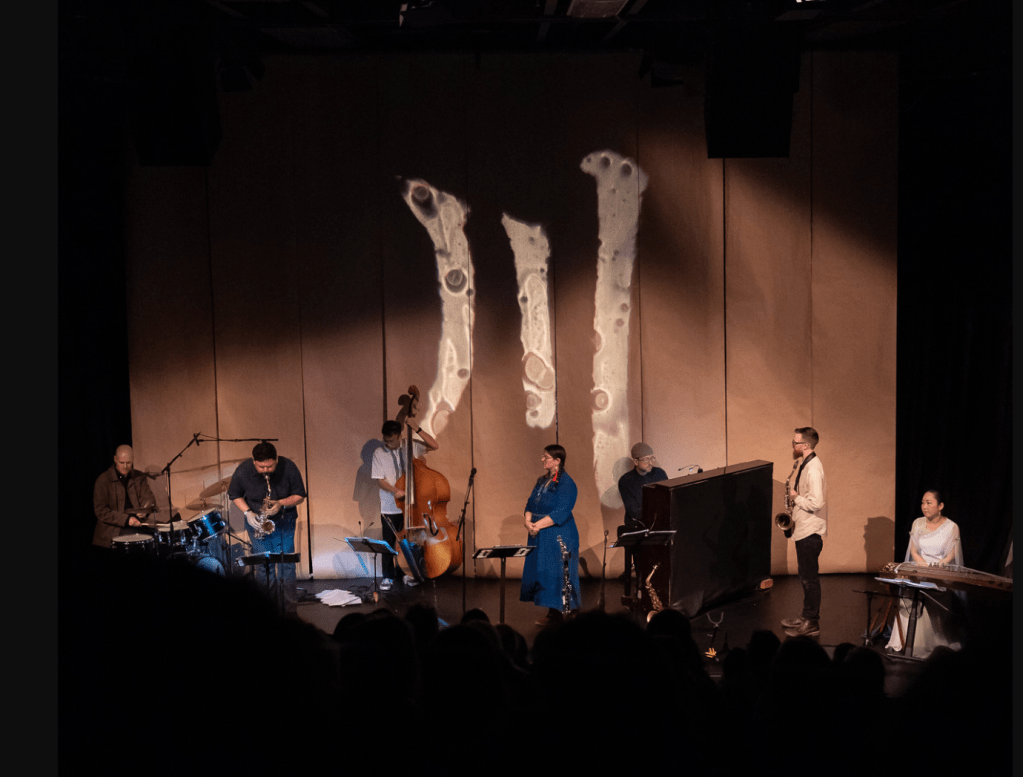

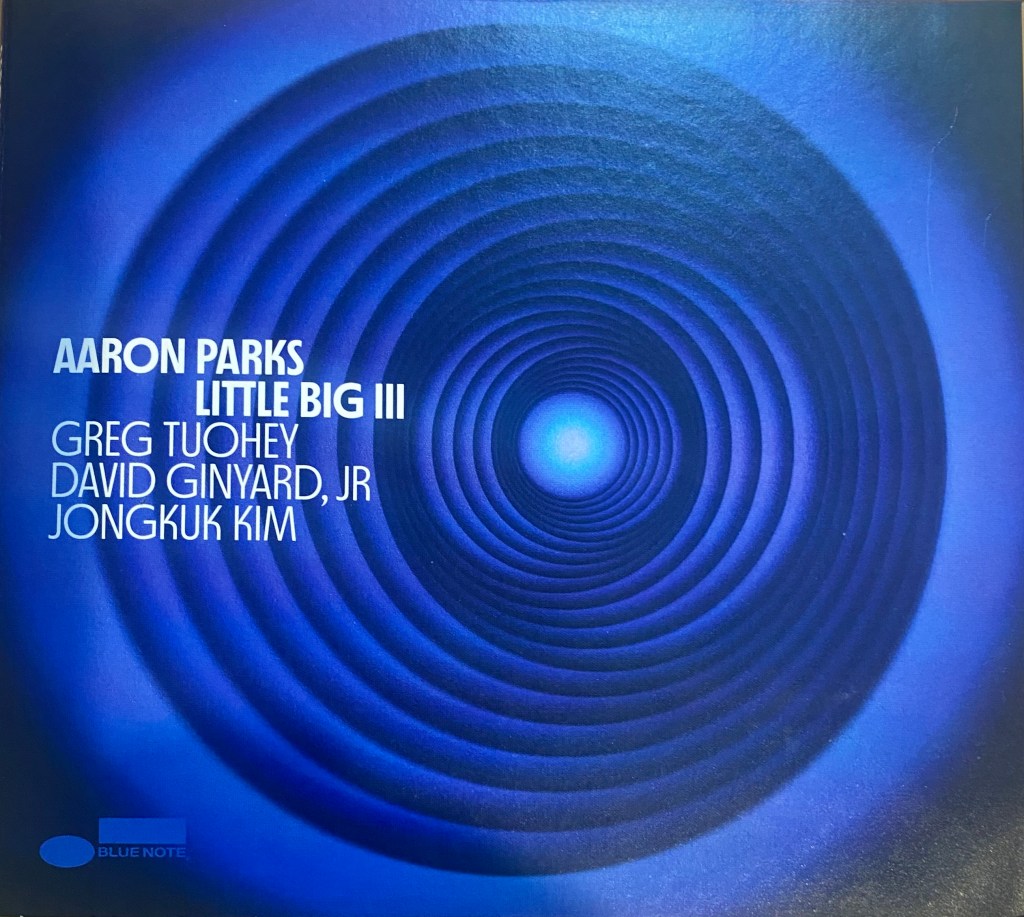
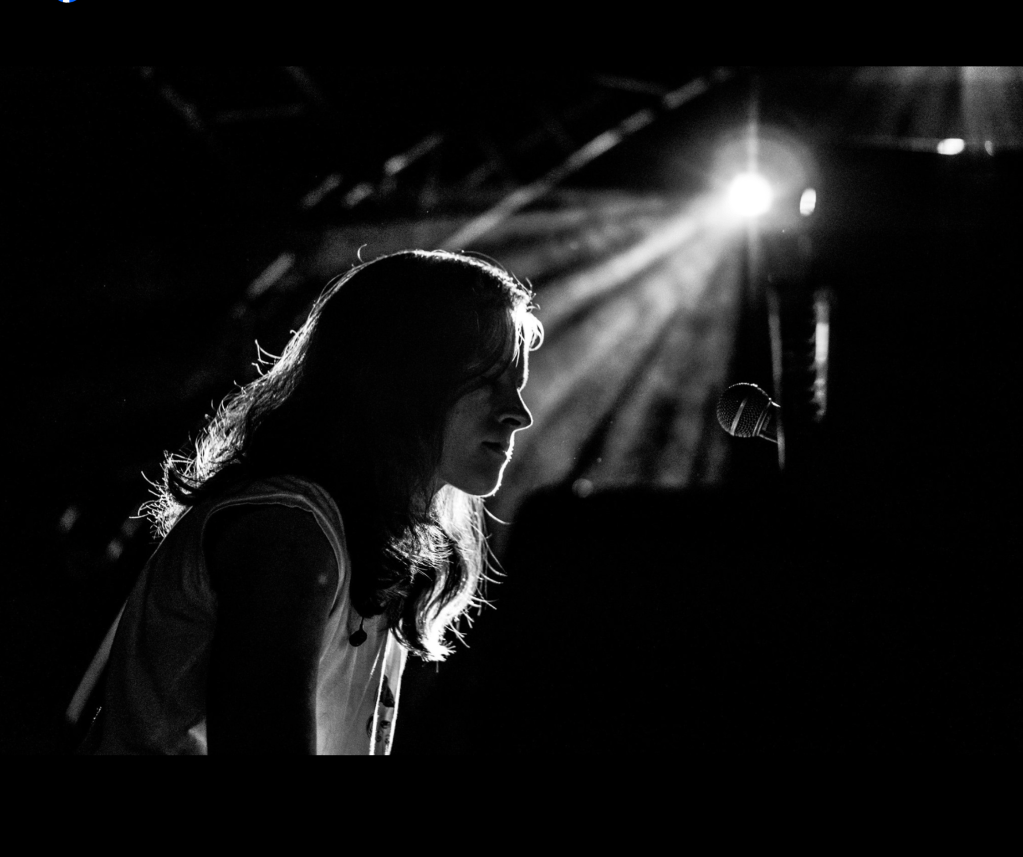
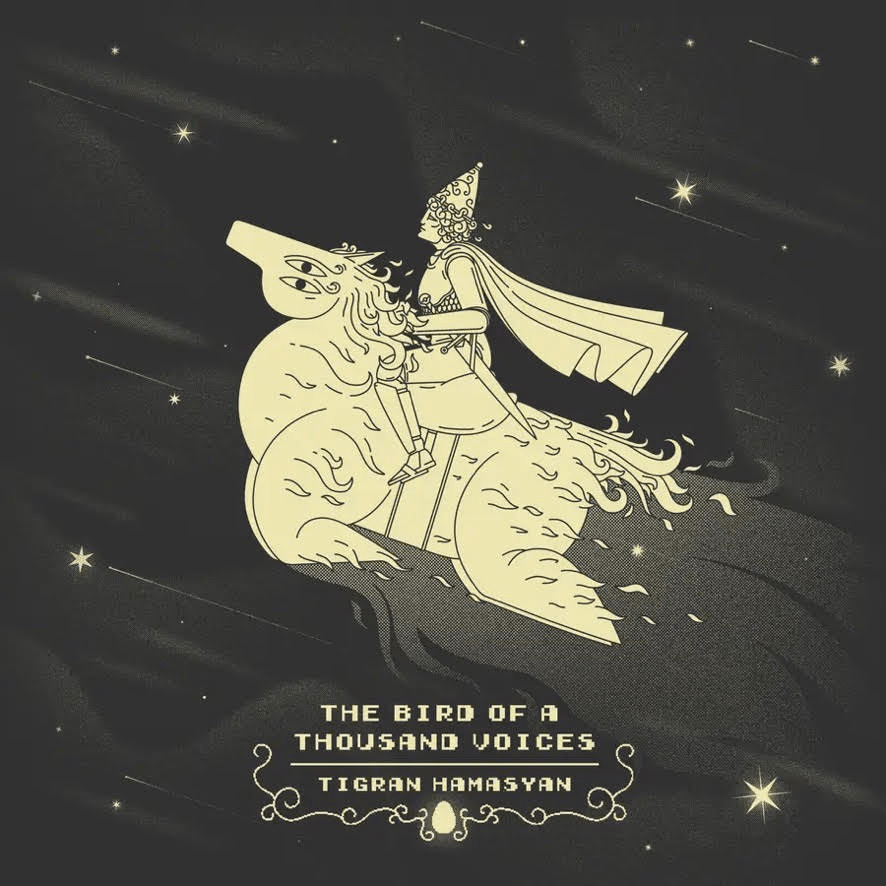
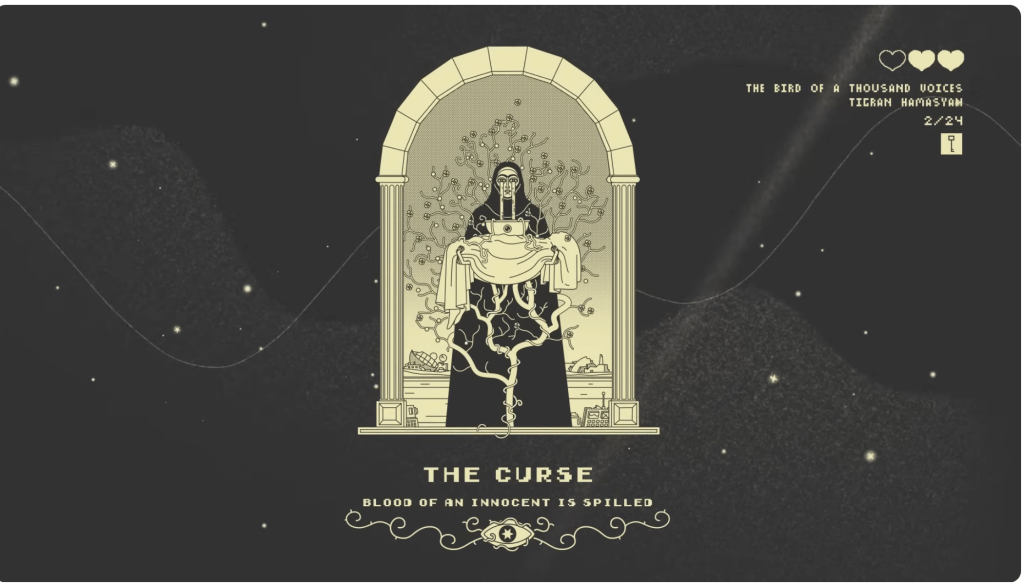
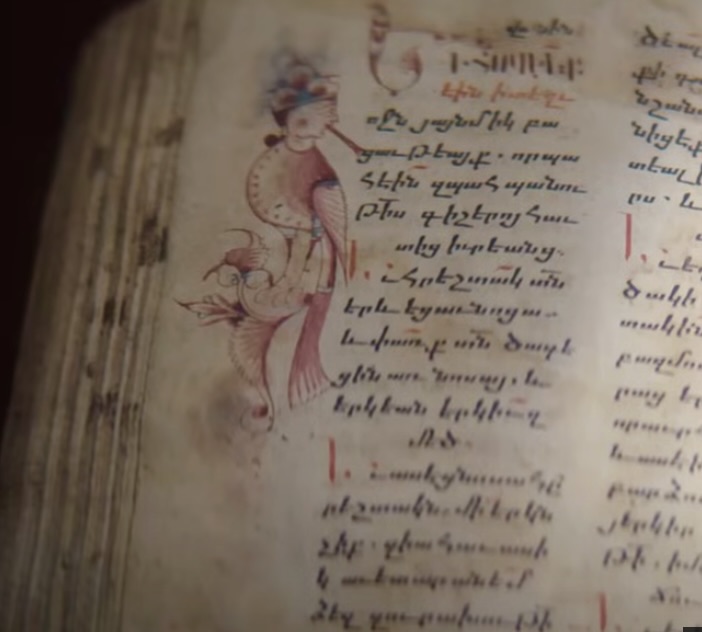
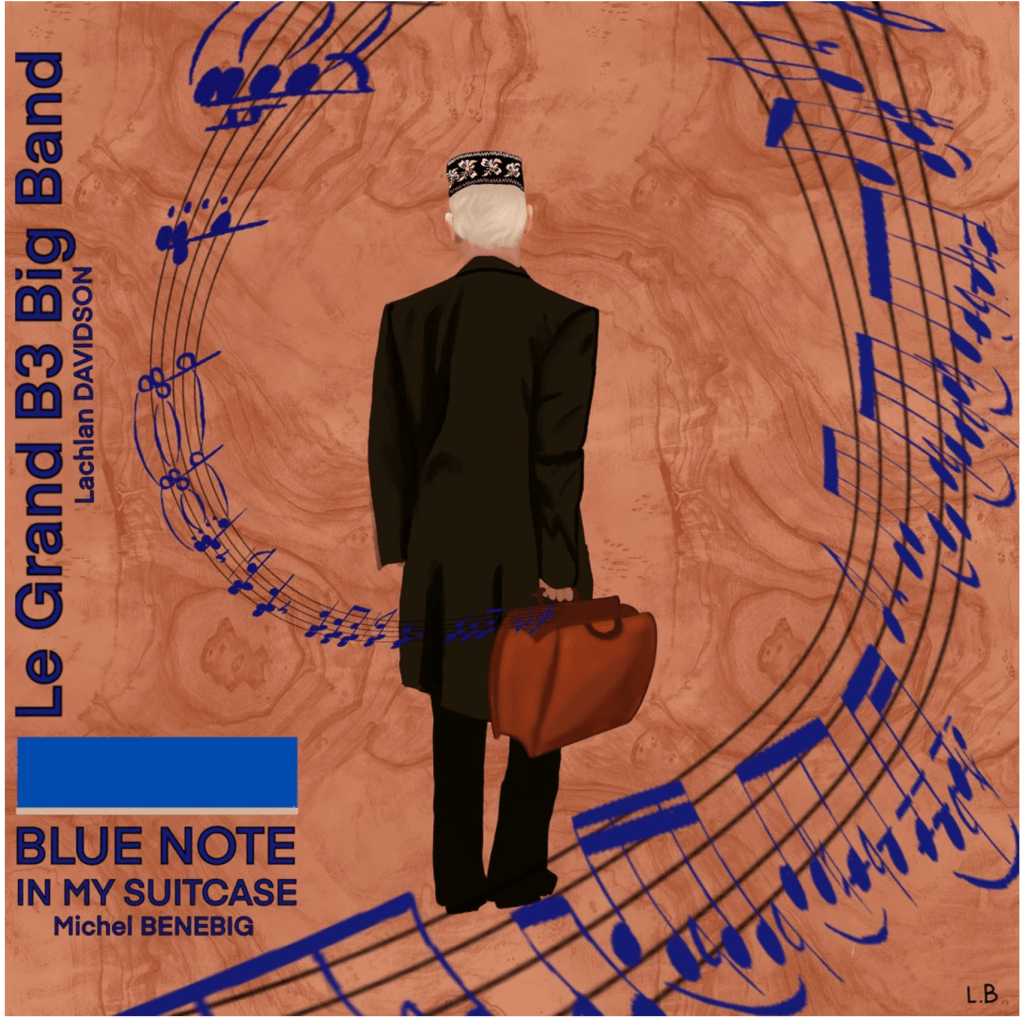


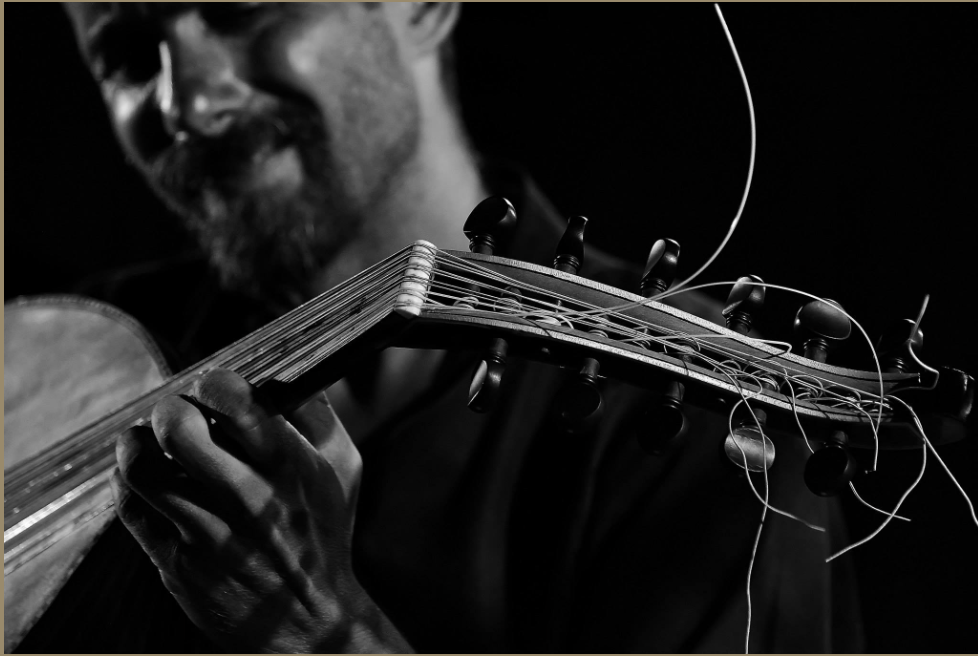

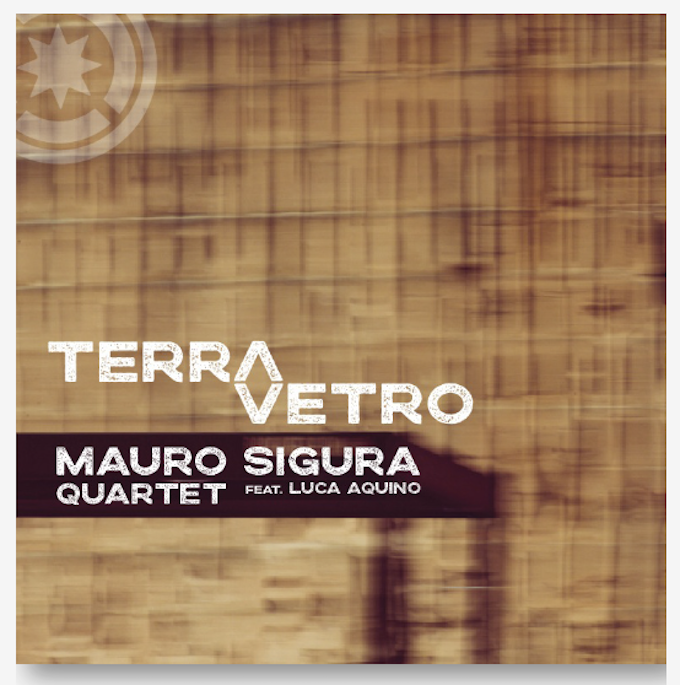


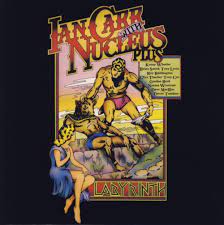
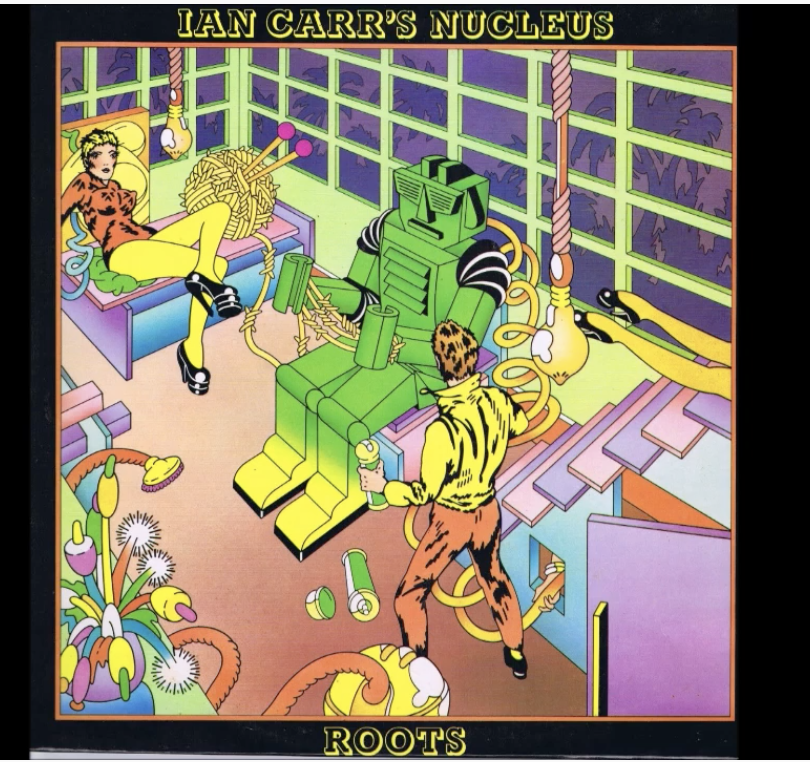
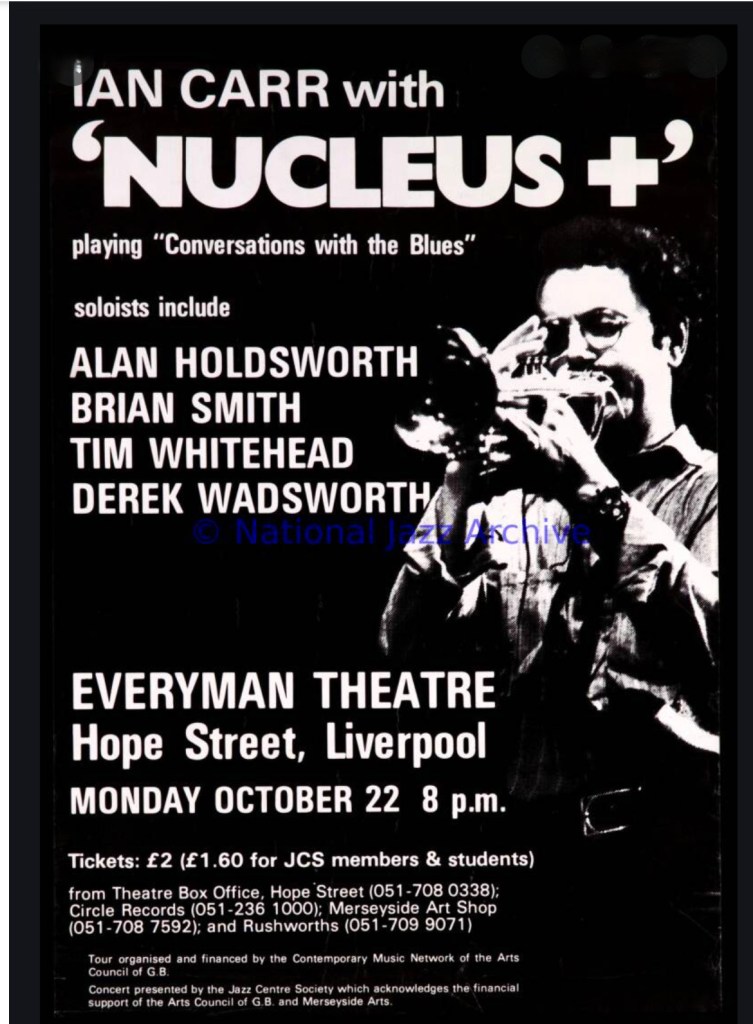
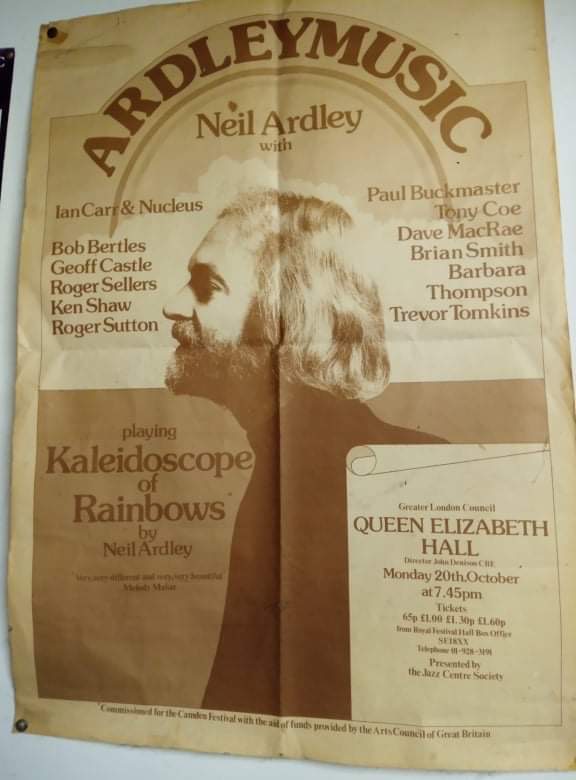
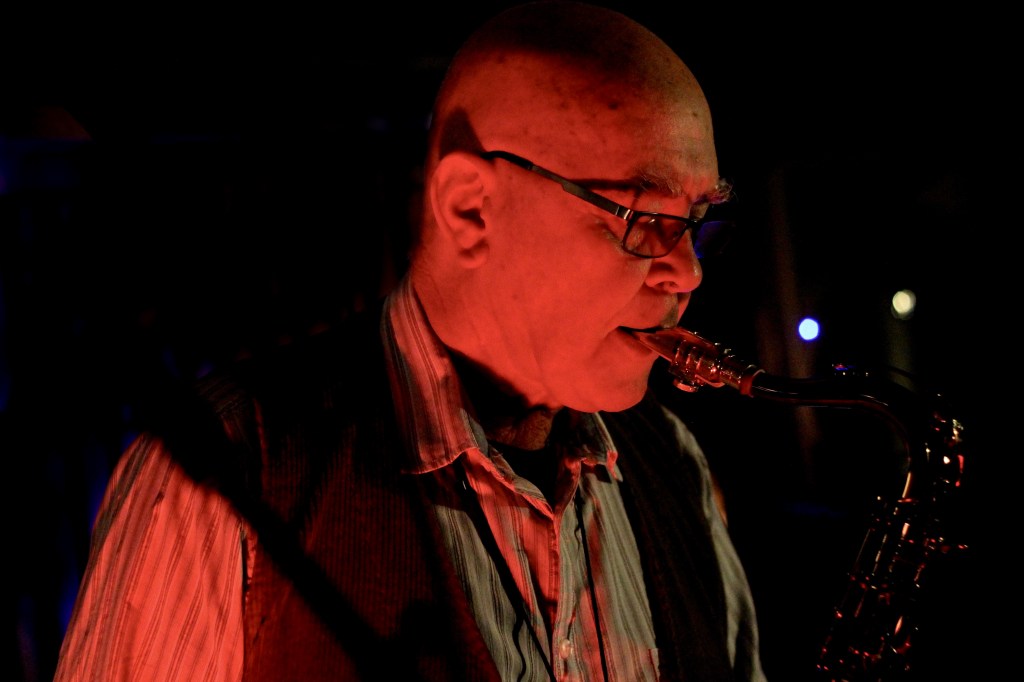
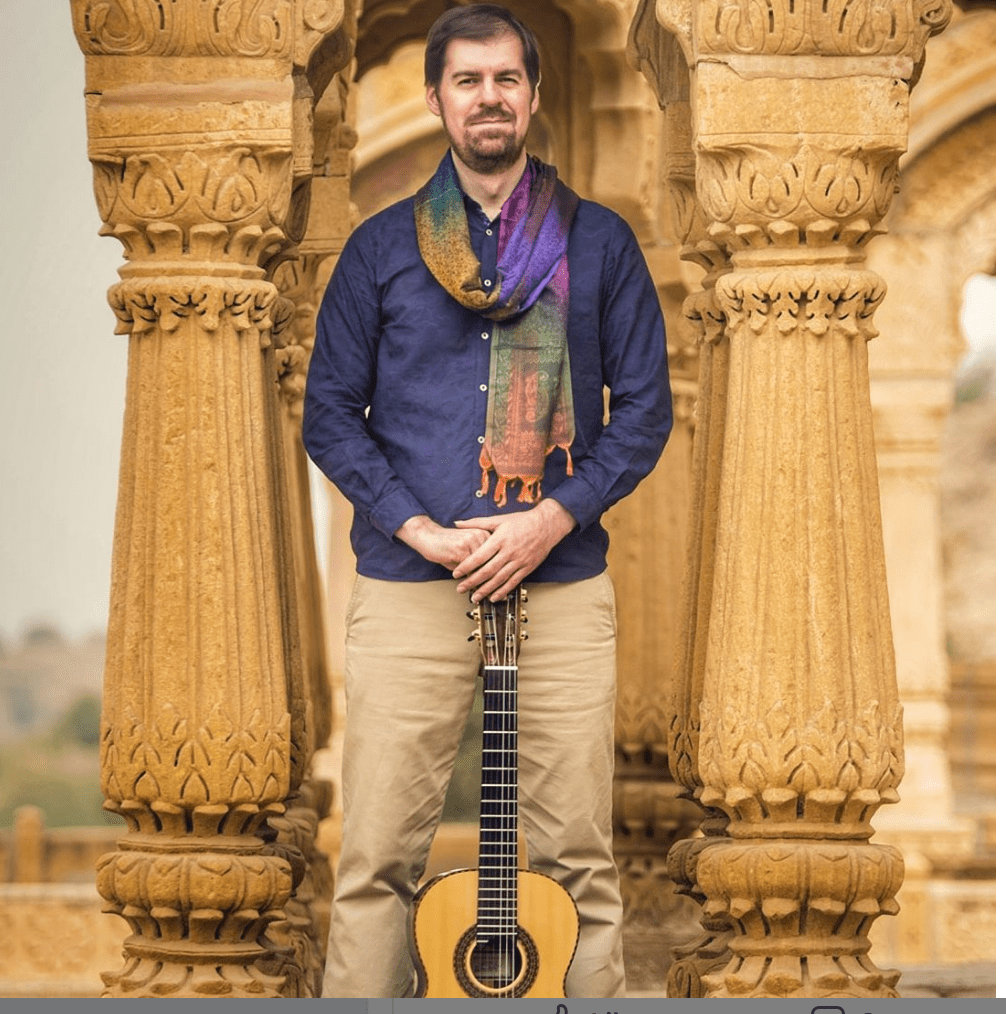
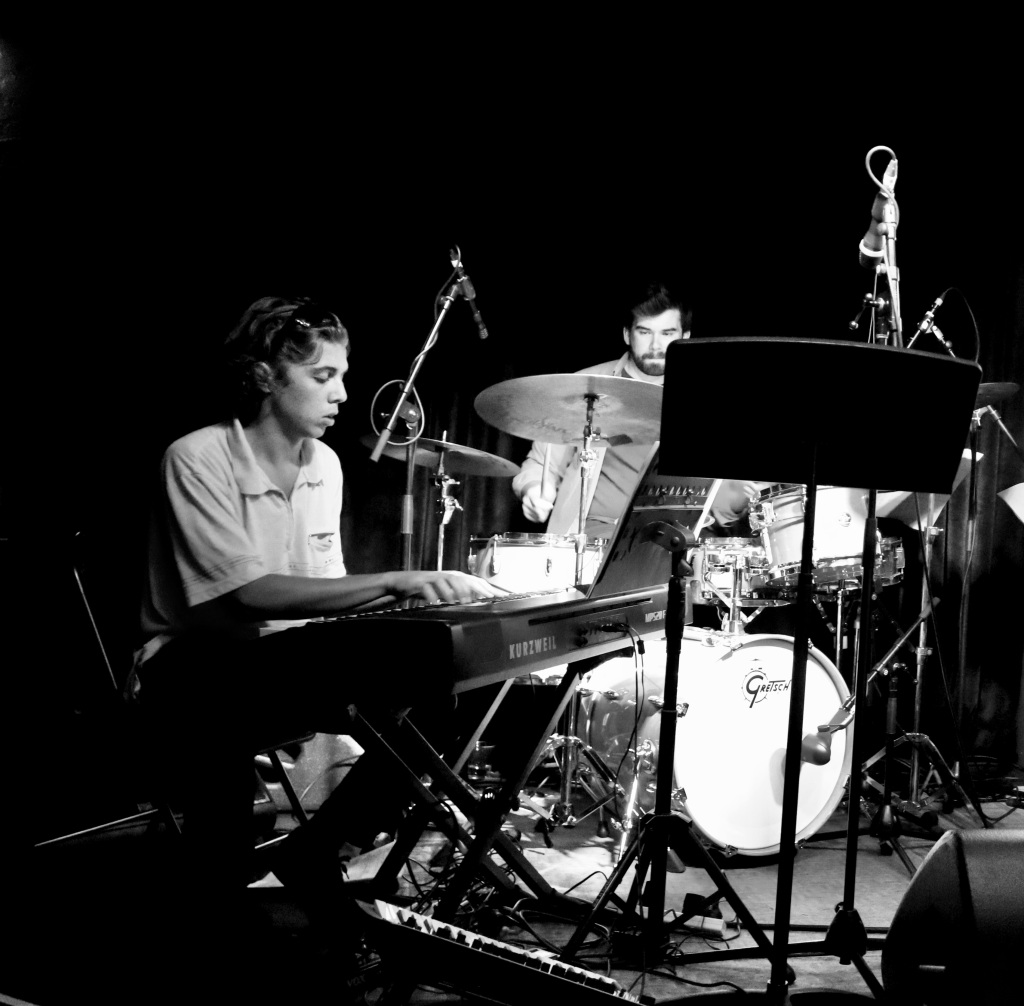


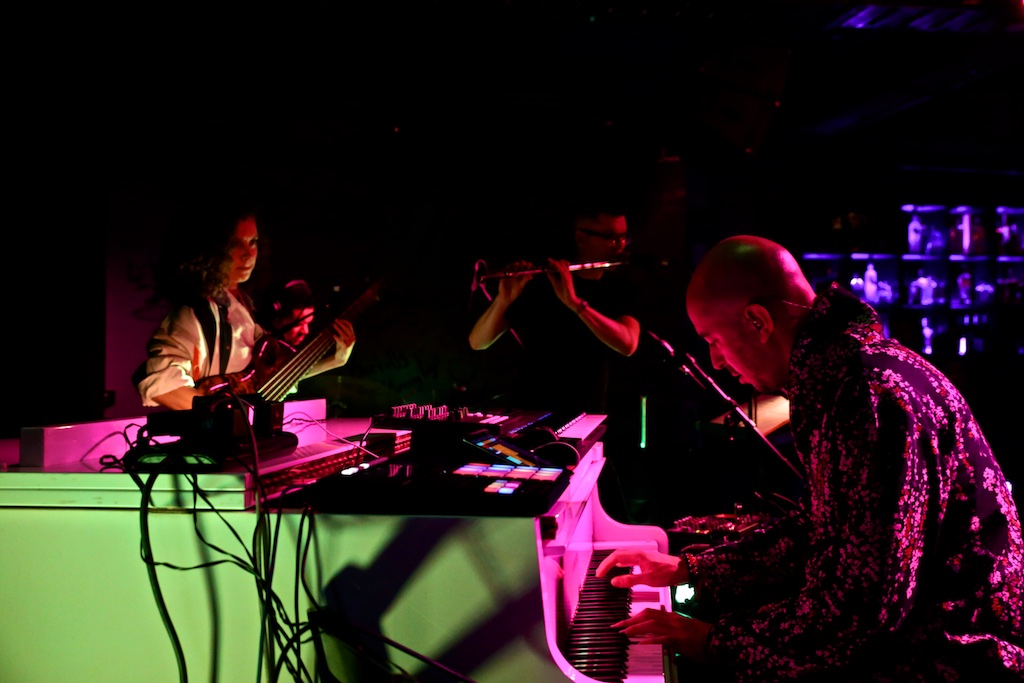 Music is the highest form of communication. It is universal. It reveals truths, tells stories, entertains, and in Mark de Clive-Lowe’s case, it evokes other realities. This was a masterclass in storytelling; an unfolding kaleidoscope where the contradictions and sublime realisations about the human condition were brought into focus. ‘Heritage 1 + 2’ the albums reflect his personal story, a journey of reconnection, an exploration of culture and of family history. He revealed it through moments of spoken narrative, but above all through his reverential musical examination of Japanese art forms. This was a musical journey where the highly personal overlapped the philosophical. It was a journey back to his Jazz roots and undertaken entirely on his own terms.
 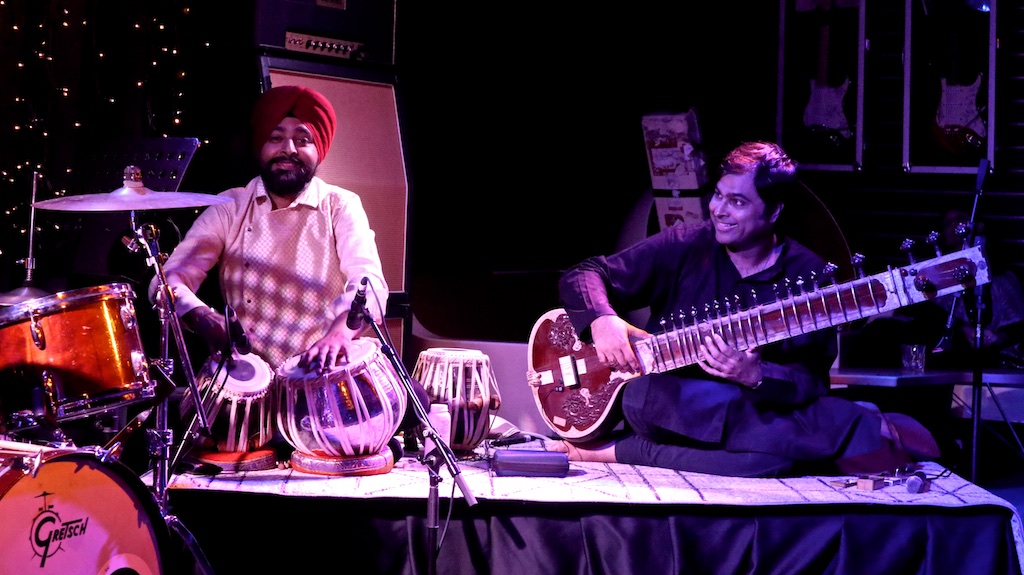 Again, the CJC Creative Jazz Club has made good on its promise to deliver diverse and interesting projects.
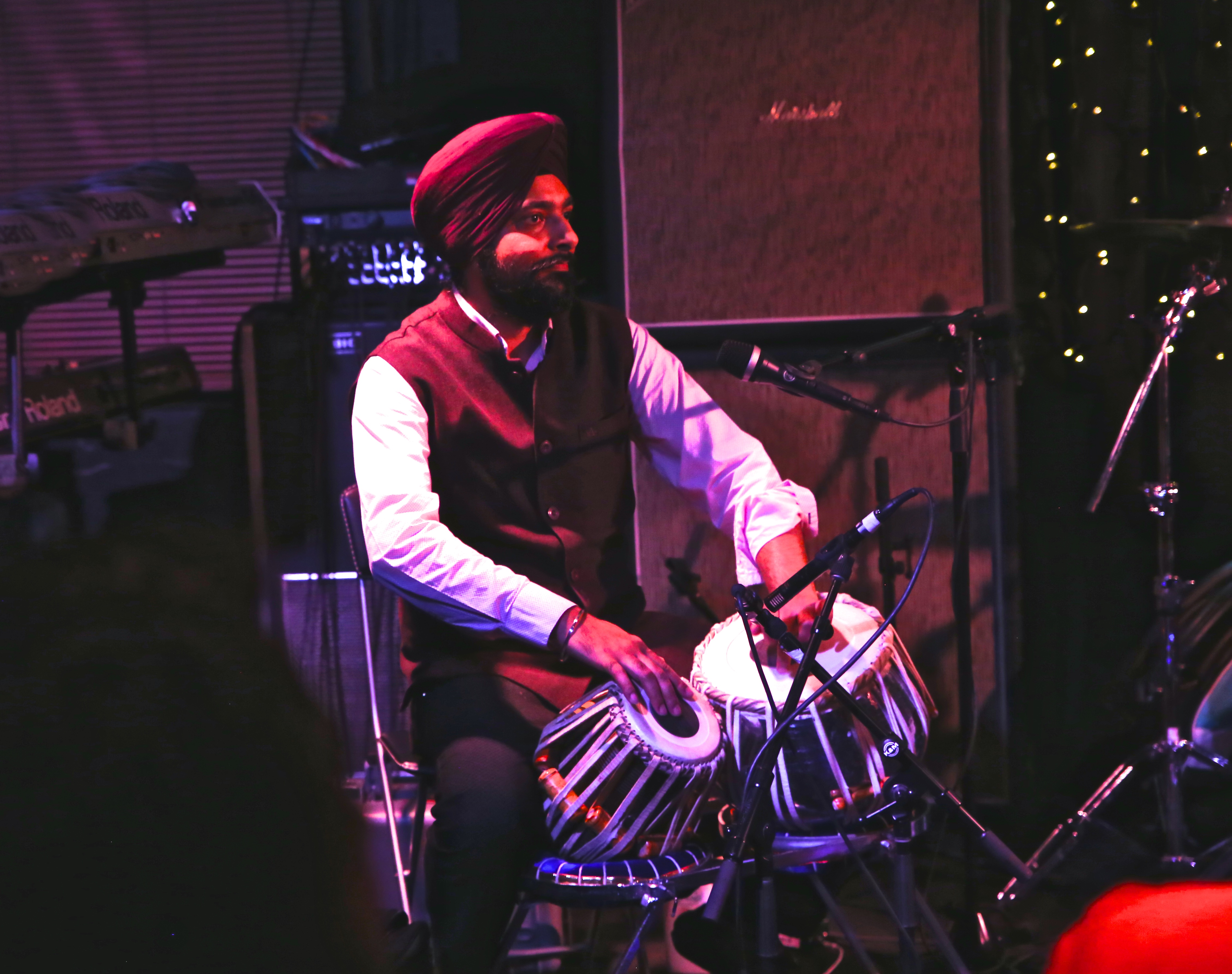 Karangahape Road and the precincts around it are a natural home for adventurous and alternative music. If you walk the length, you are assailed by sights and sounds at variance to each other. Taken in their entirety they are oddly compatible. The jumble of colour and the bursts of noise as you pass a Karaoke bar or an uber cool eatery is counterbalanced by the languid notes from Shanghai Lils or the soft chatter emanating from Hookah smoking Kebab shop doorways. Woven into this oddness of streetwalkers and urban cool, are the alternative music joints. Down in basements, under the street or up narrow stairways. Thirsty Dog, Anthology, Audio Foundation, Wine Cellar. And at the top end of the strip, next to the old Jewish graveyard is the Backbeat Bar. High-quality alternative improvised music resides here on Wednesdays.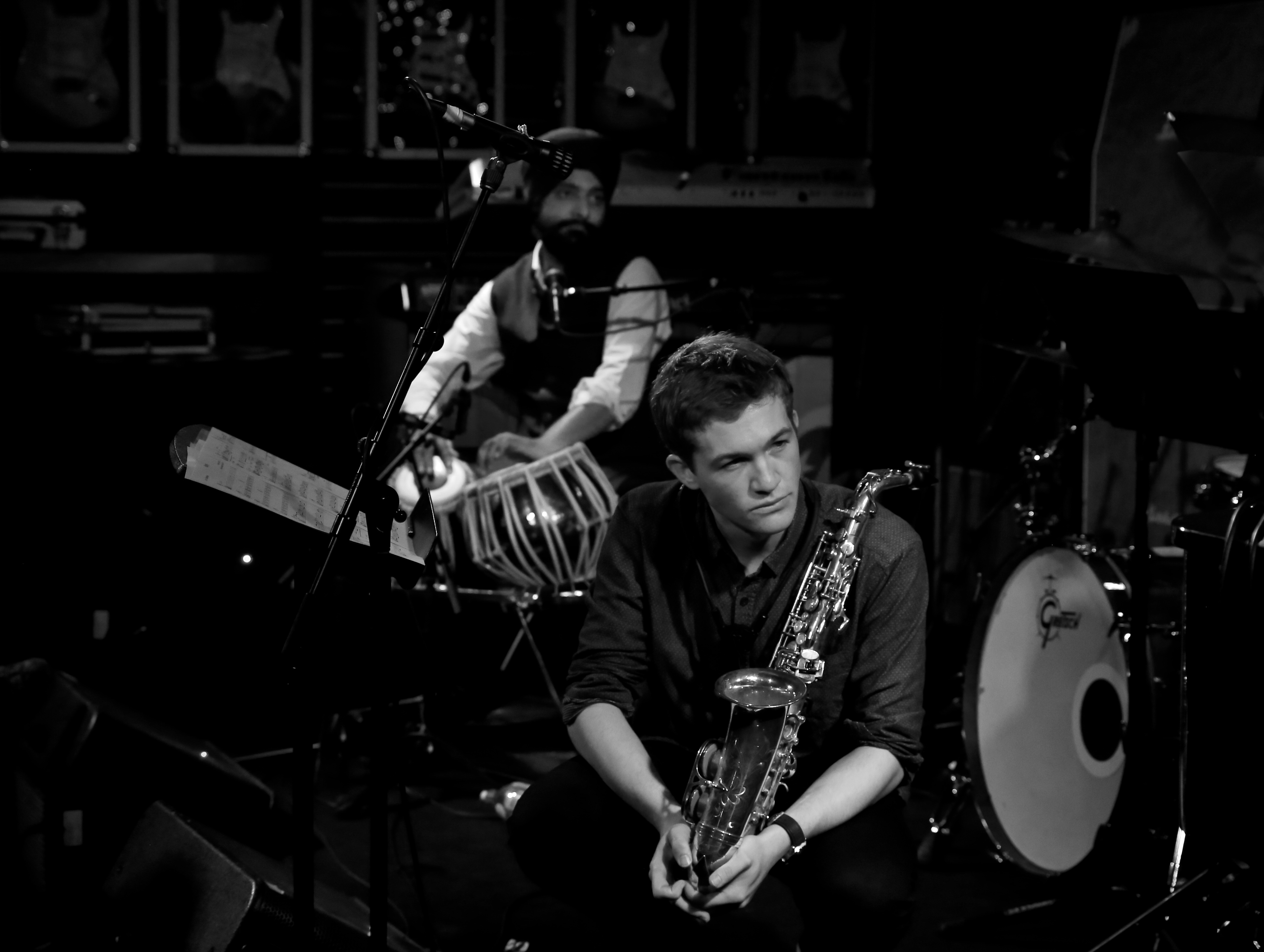
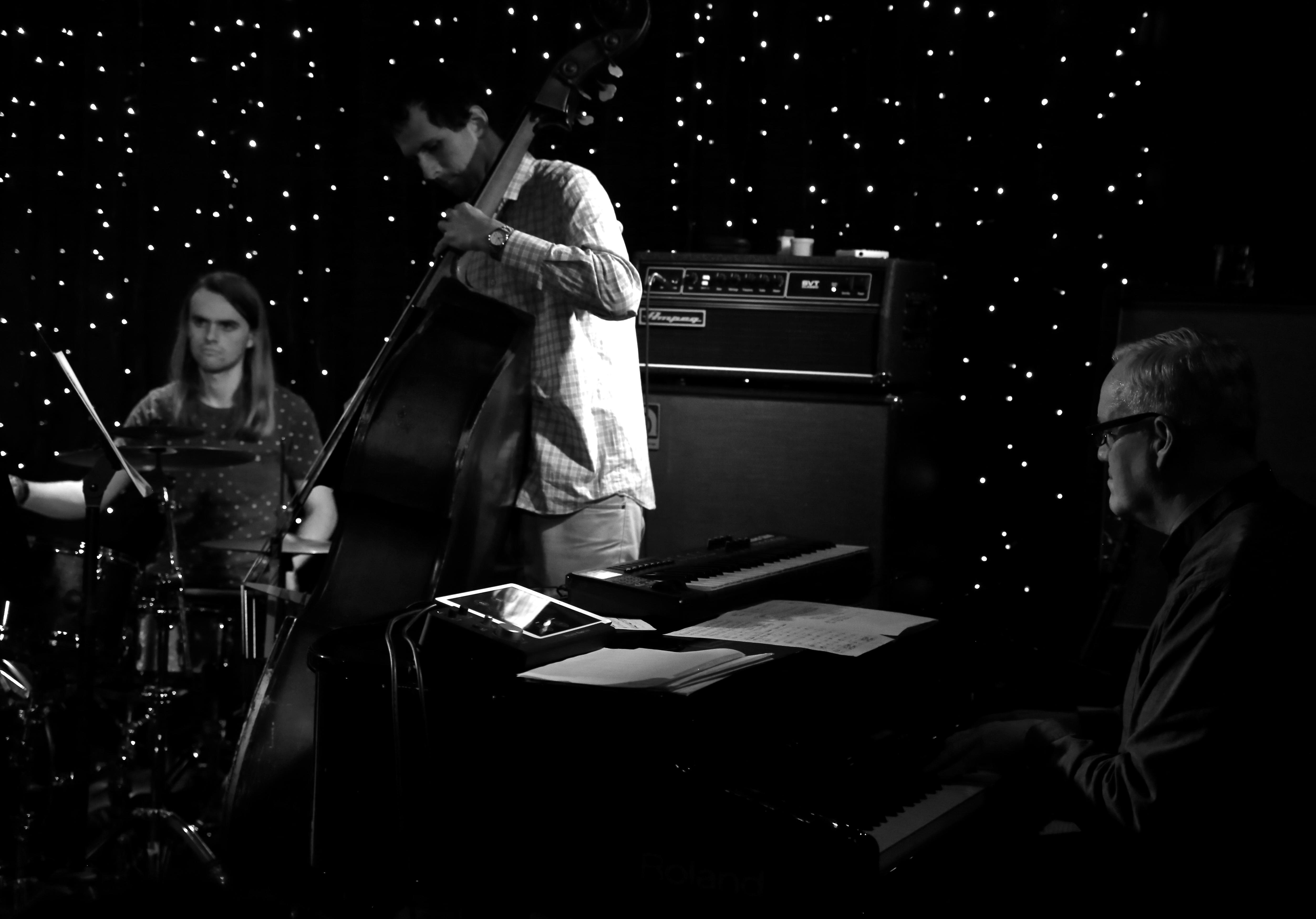
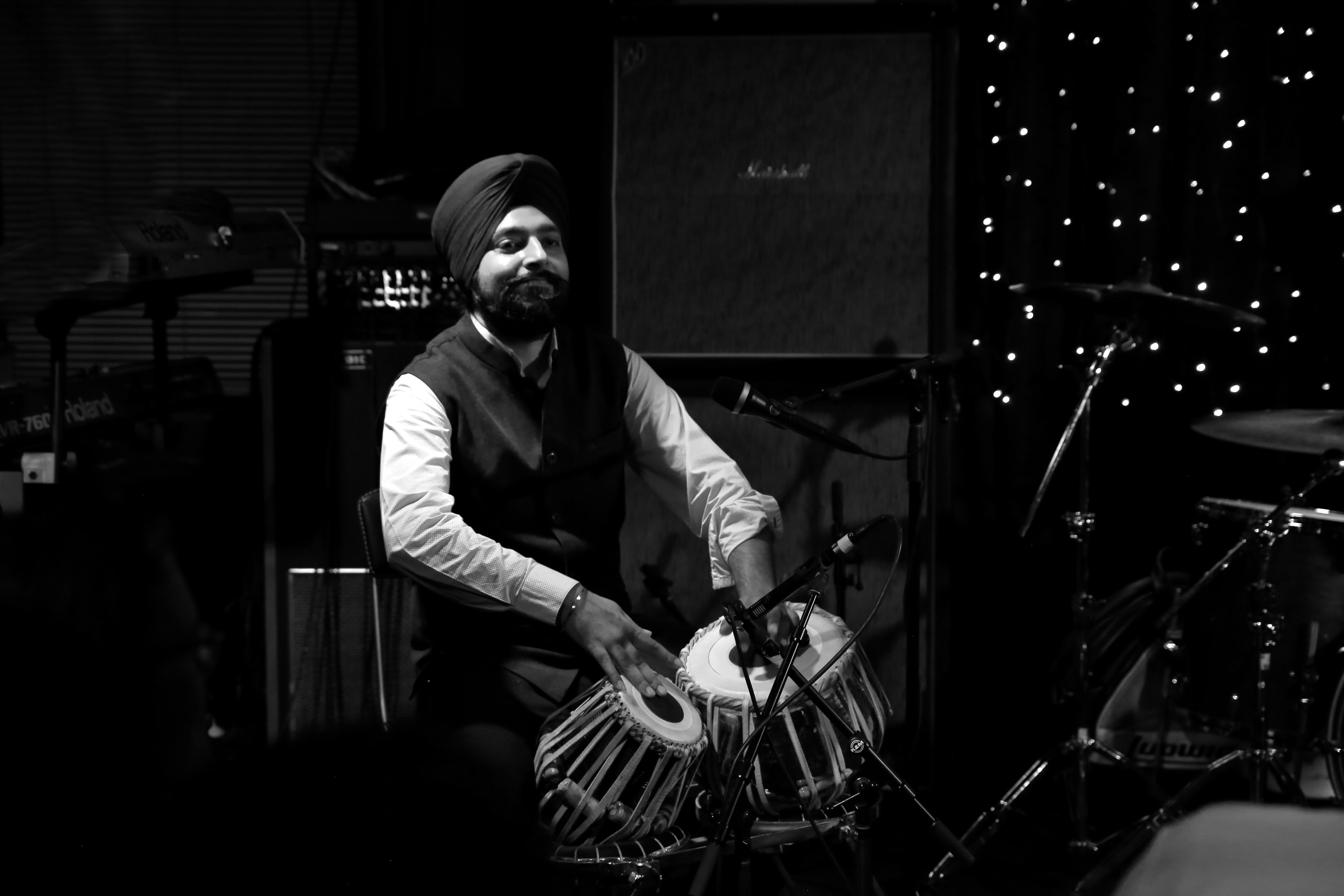
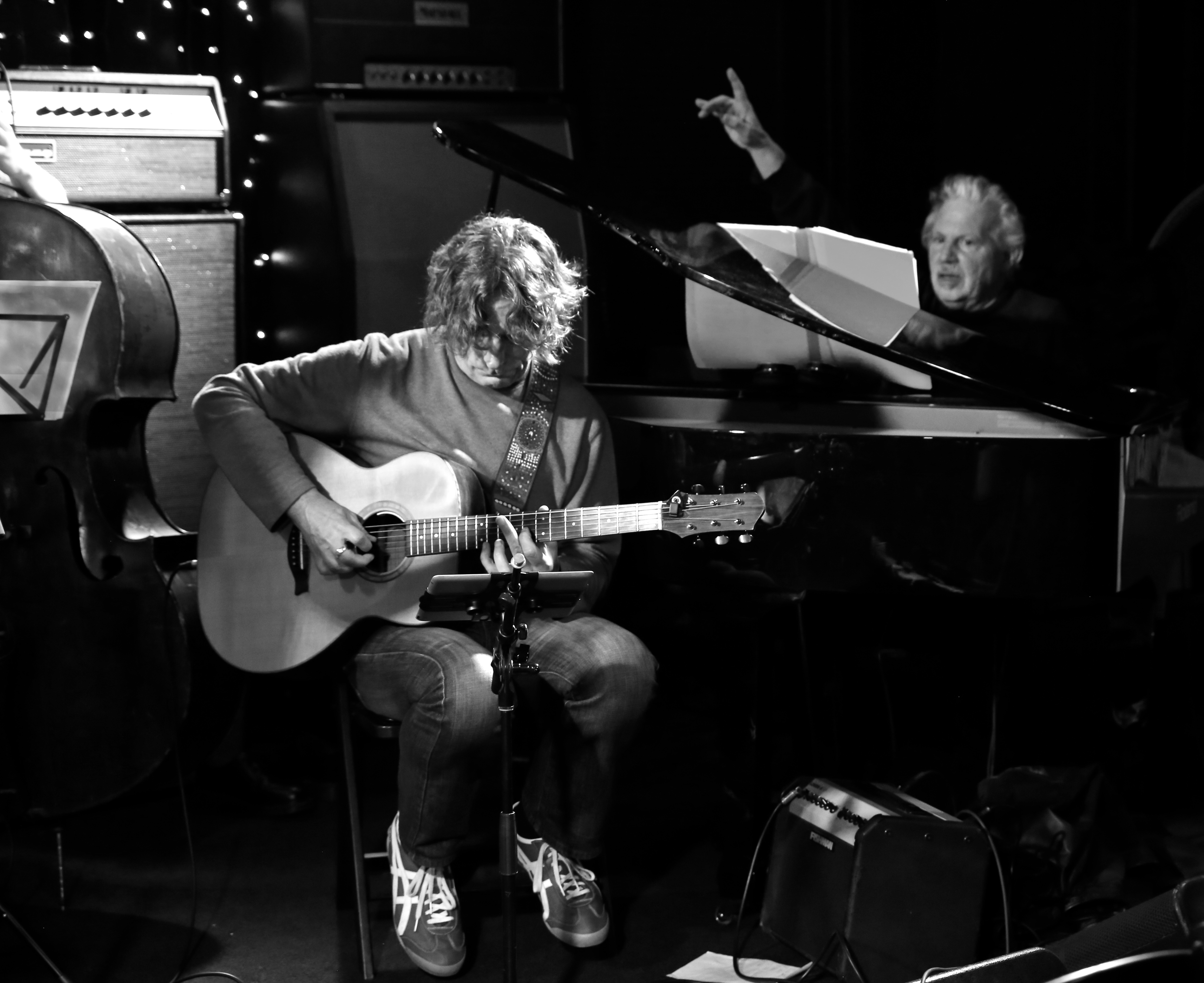 There is an inescapable charm surrounding any Besser performance and Wednesday’s Zestniks gig at the Backbeat bar was no exception. While his music has many strands feeding it and although it can be hard to categorise, it is never the less rooted in the Jewish musical traditions. Besser is somewhat of an icon in Arts circles and deservedly so. The arc of his work has a momentum that few could emulate. As it alights on various styles or genres it borrows their raiment, and seemingly without compromising what lies at the music’s heart; gathering what is necessary and no more. Over the years he has collaborated with leading conceptual artists, filmmakers, symphony orchestras, electronic adventurers and Jazz musicians. The Zestnics performance reflected much of this fascinating journey.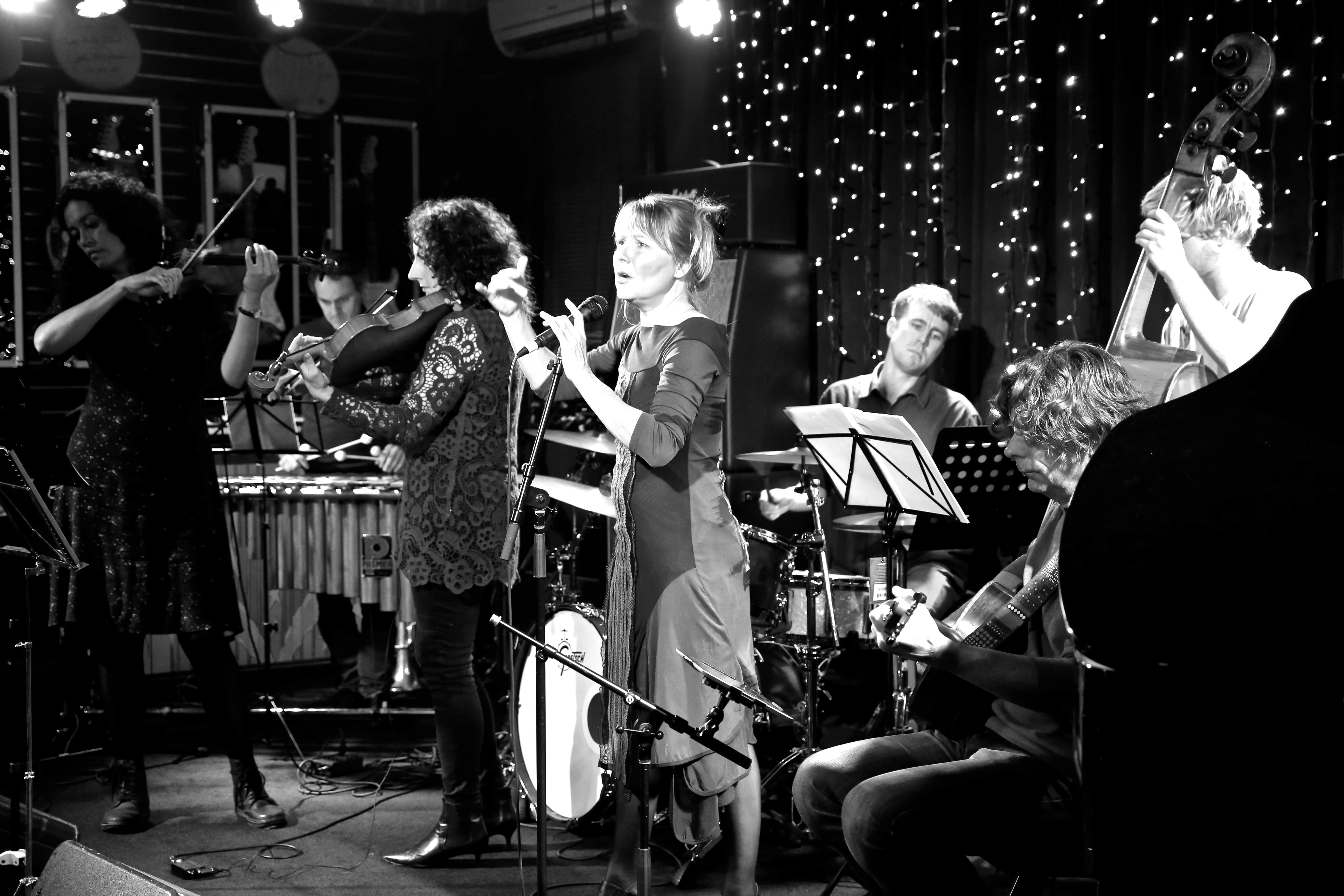
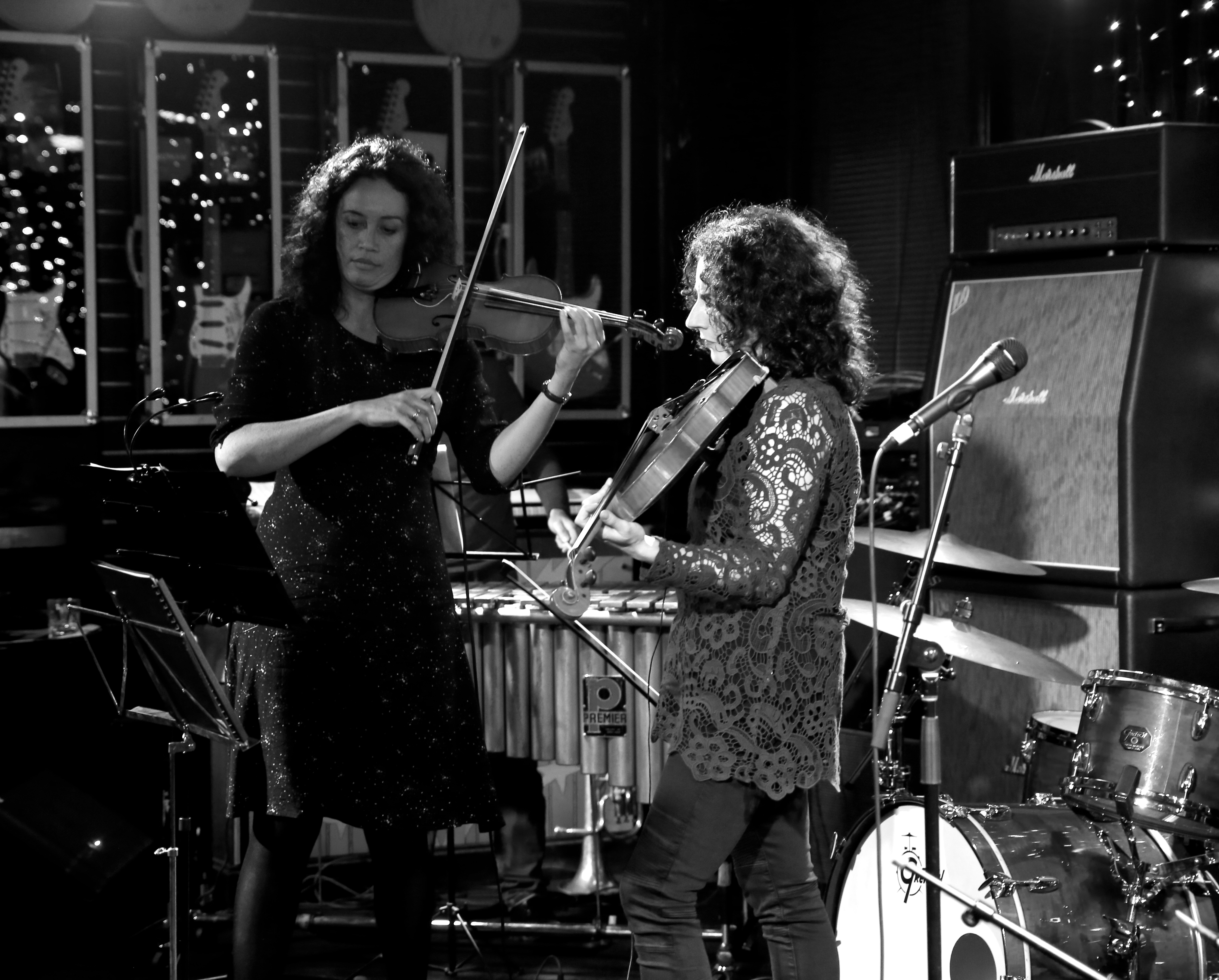
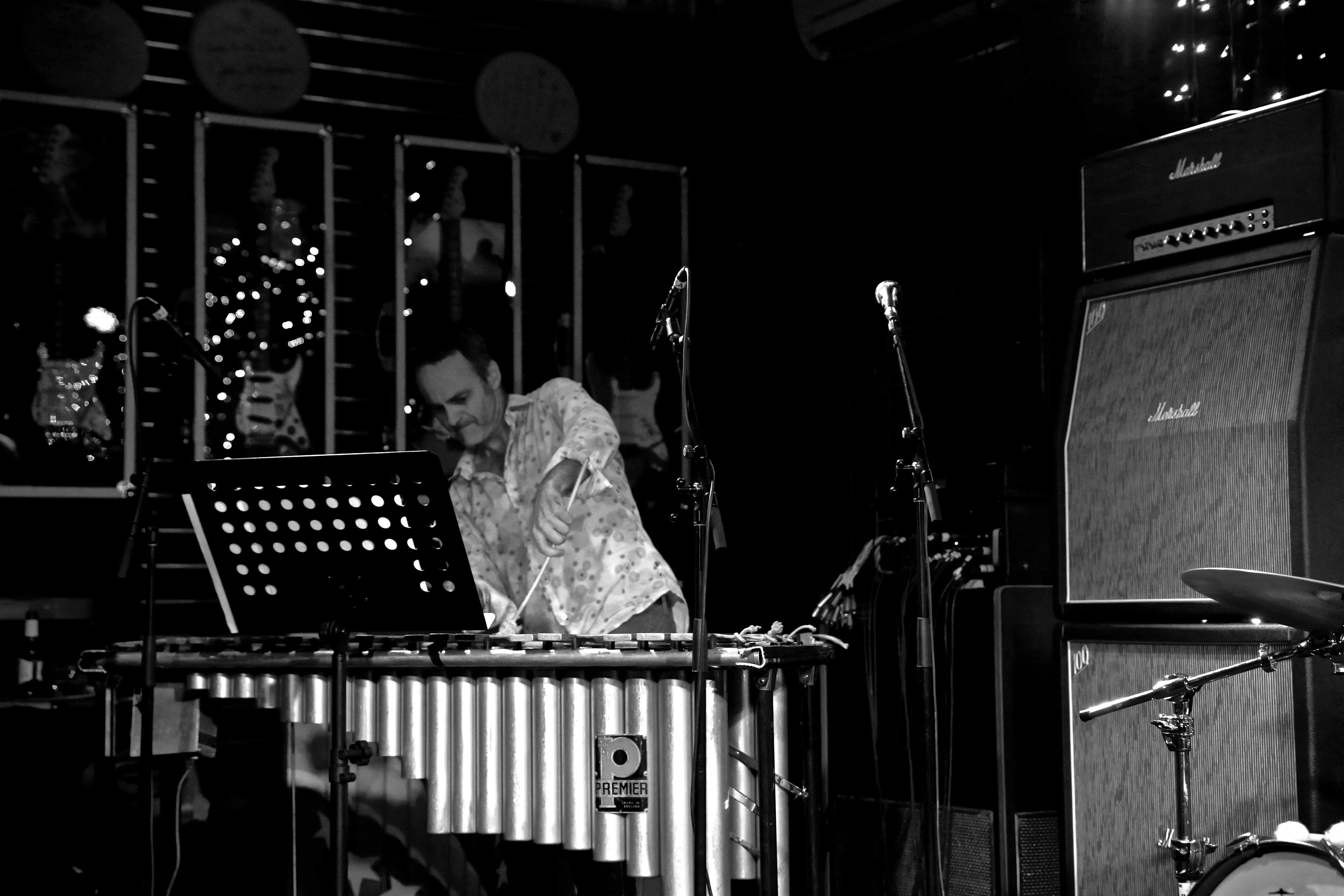 I have listened to John Bell over a number of years and I have always marvelled at his inventiveness. Bell (along with Jeff Henderson), is widely acknowledged as the experimental music guy, the free improvisation guy. He is a musician who takes risks as he aims for clear skies; a musician who involves himself in interesting cross-cultural collaborations, a vibraharp player who doubles on brass instruments. He is an artist who you always associate with innovation – consequently, other musicians look up to him.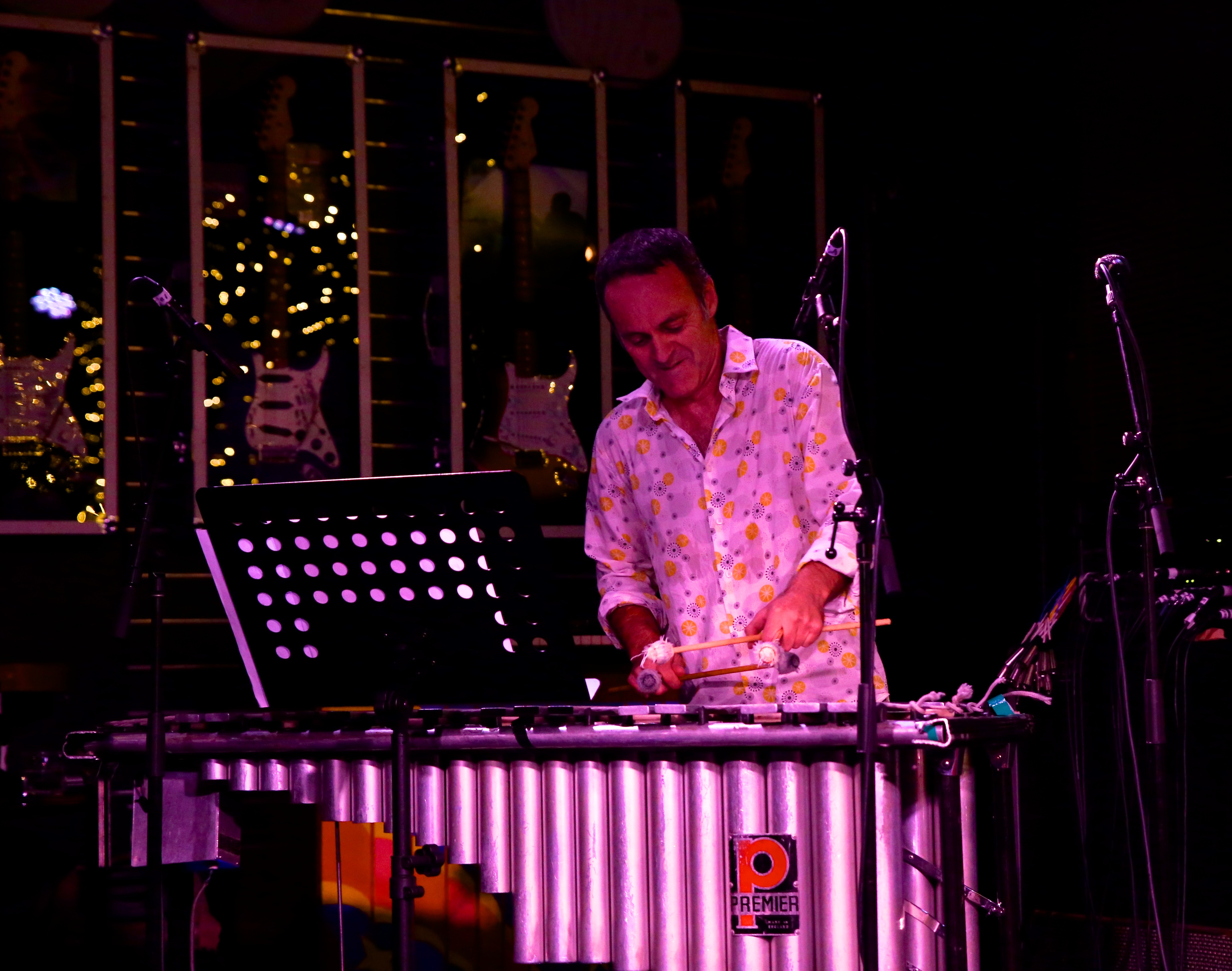
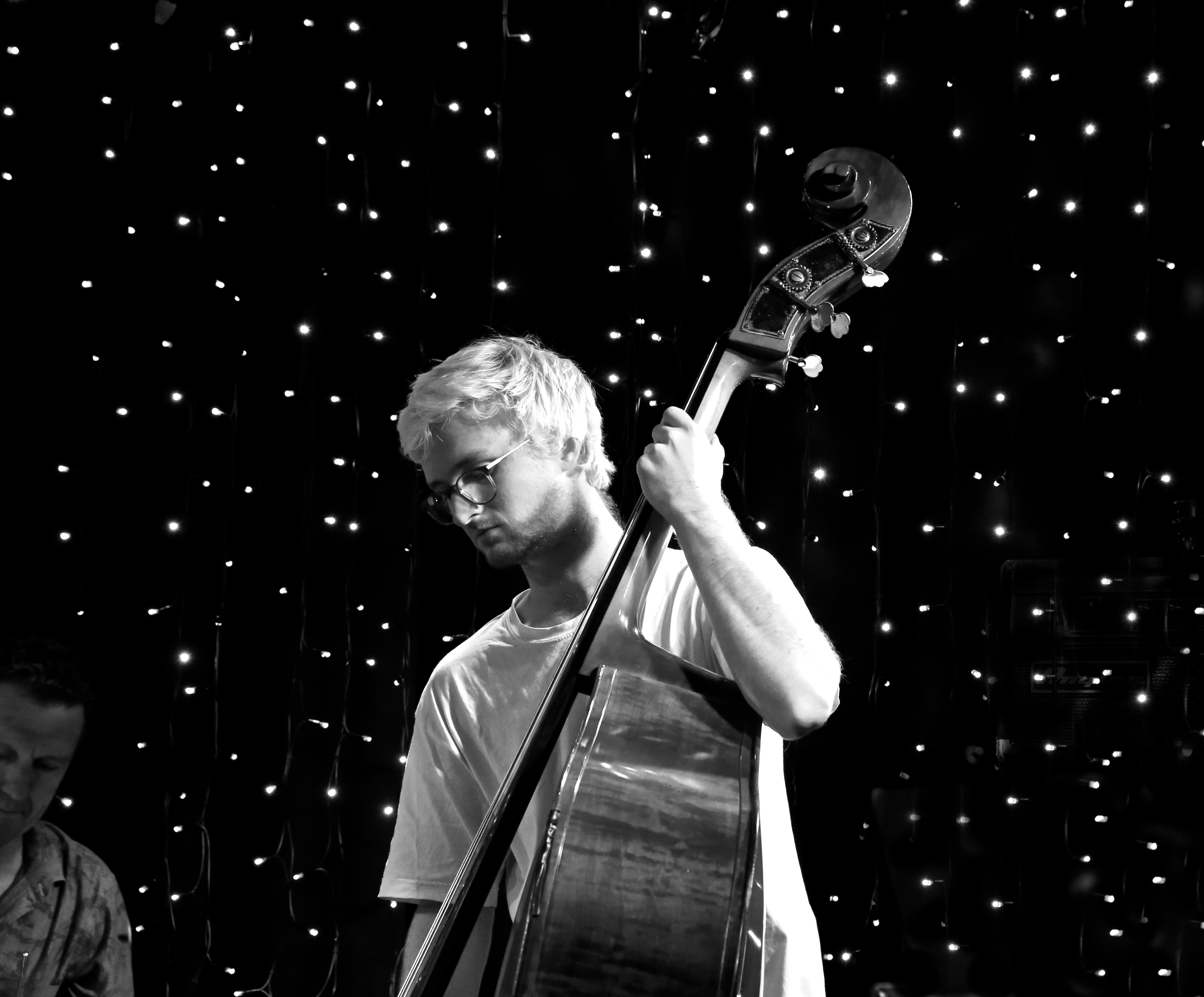
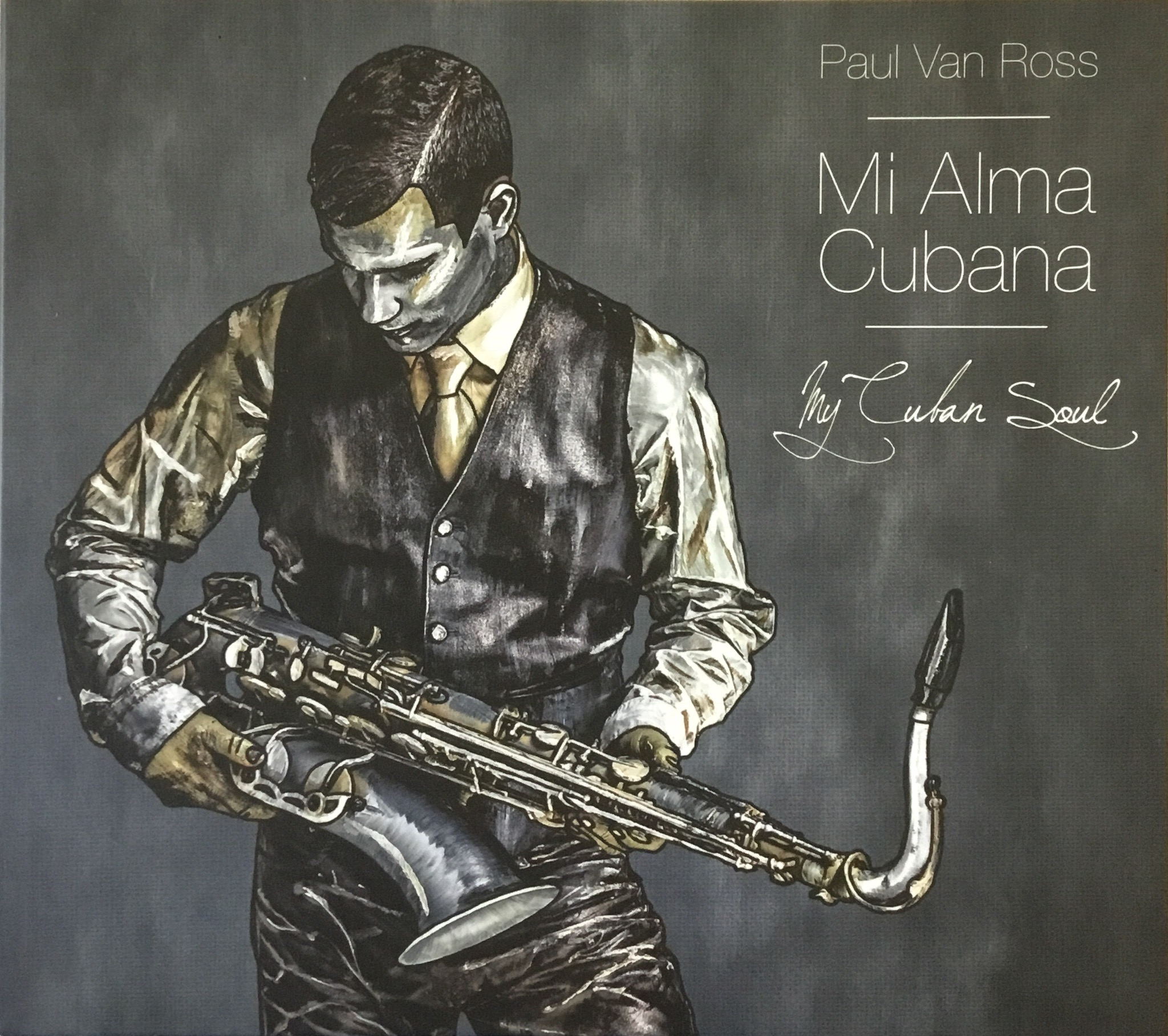
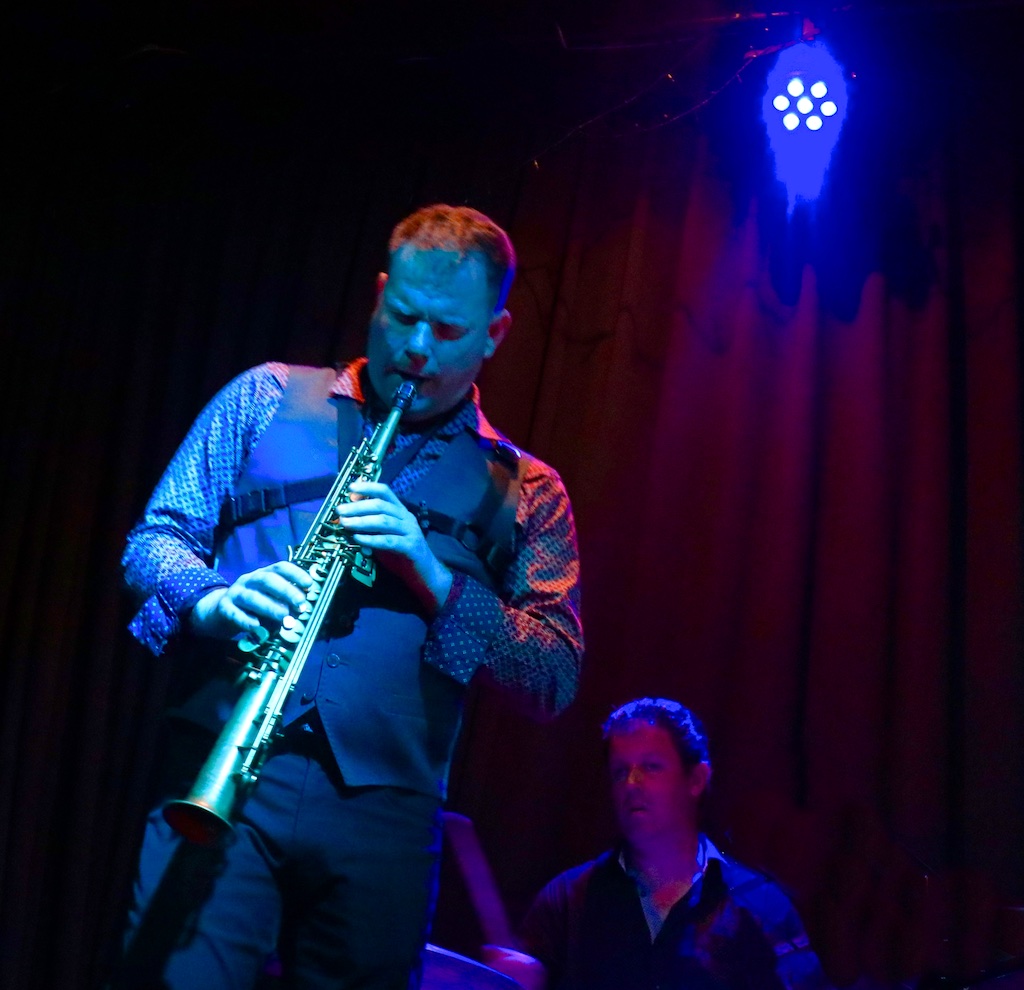
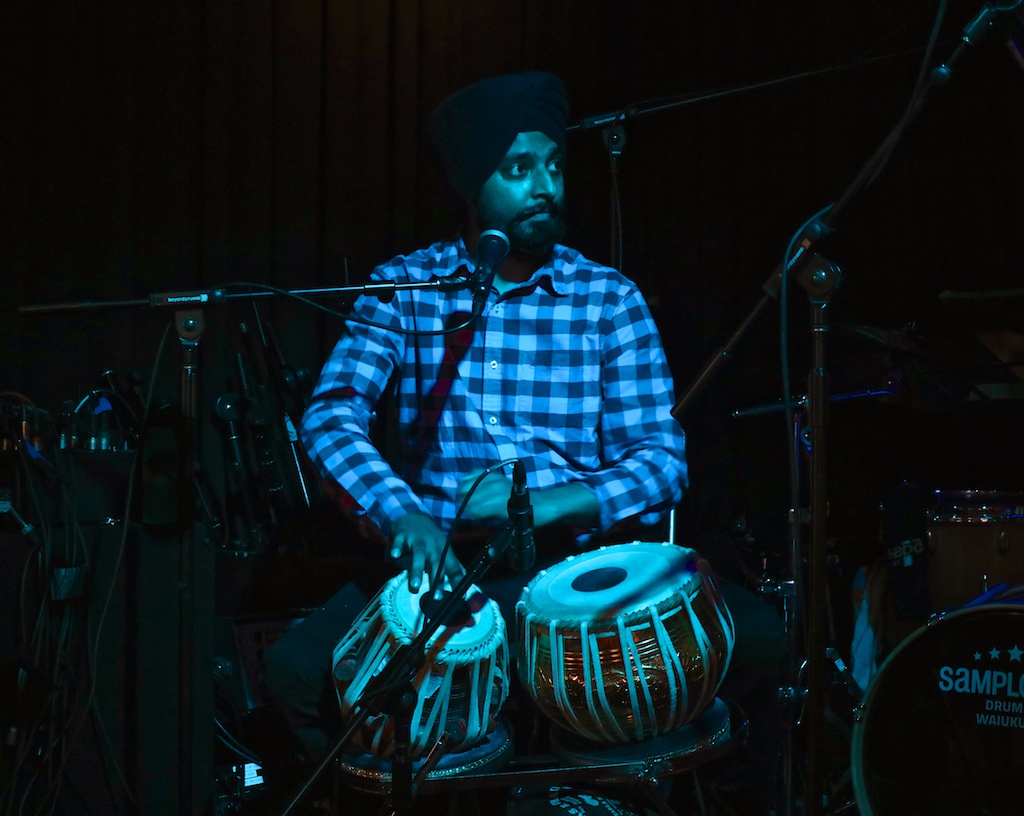 With emerging artists gigs you modify your expectations, but in this case, it was completely unnecessary. Both sets showcased great musicianship and originality. The first set was Manjit Singh and Takadimi; an Indian music/Jazz fusion project. Manjit Singh is not an emerging artist in the strictest sense, he is a highly experienced tabla player, composer and teacher in the two main traditional schools of Indian music (Northern and Carnatic). He has recently been doing a Jazz studies course at the UoA and this project arises from that. The traditional music he teaches is not that dissimilar to Jazz, as it has improvisation aspects and complex interwoven rhythms at its core. Singh also gave us an insight into another tradition, the ecstatic Sufi-influenced music of northwest India, Pakistan and central Asia – Again, a tradition that has fed the rich streams of Indian music and more recently, Jazz.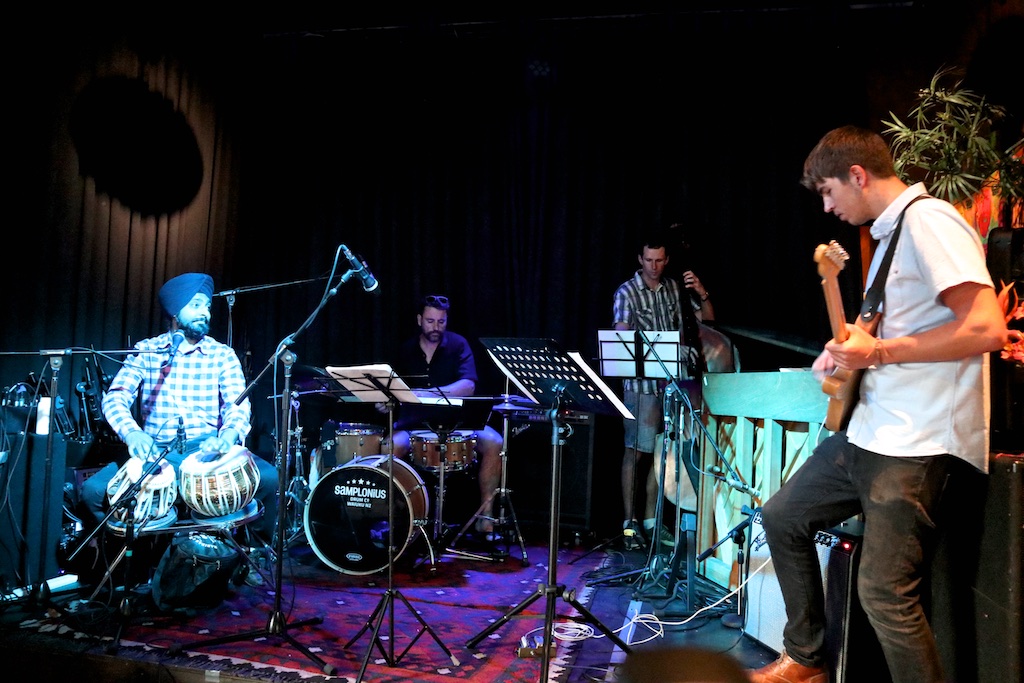
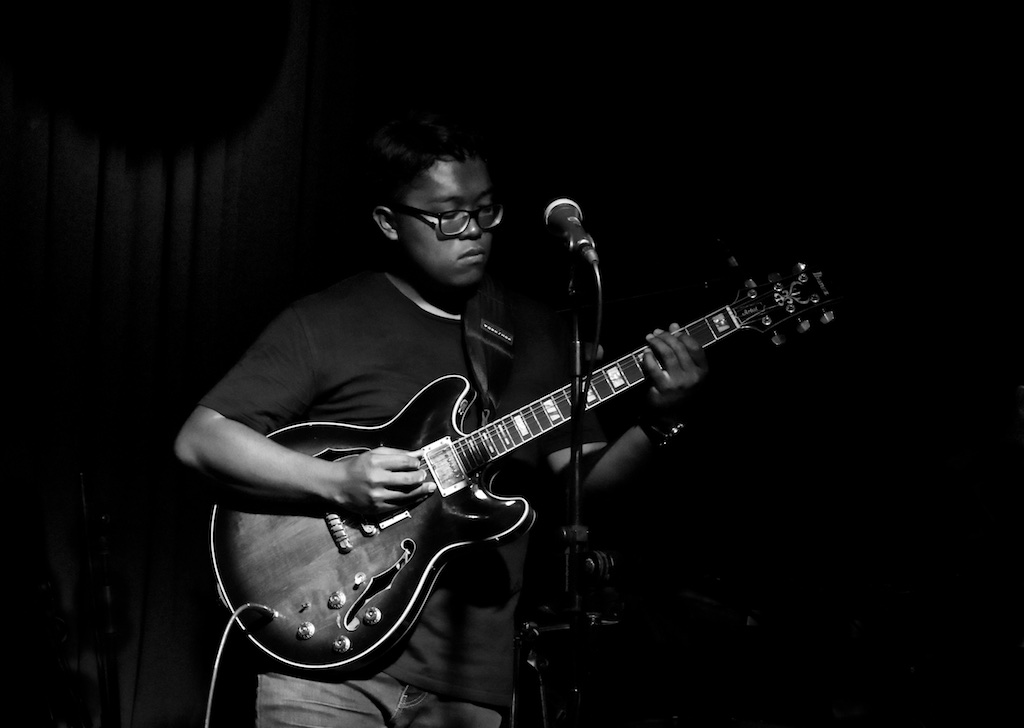
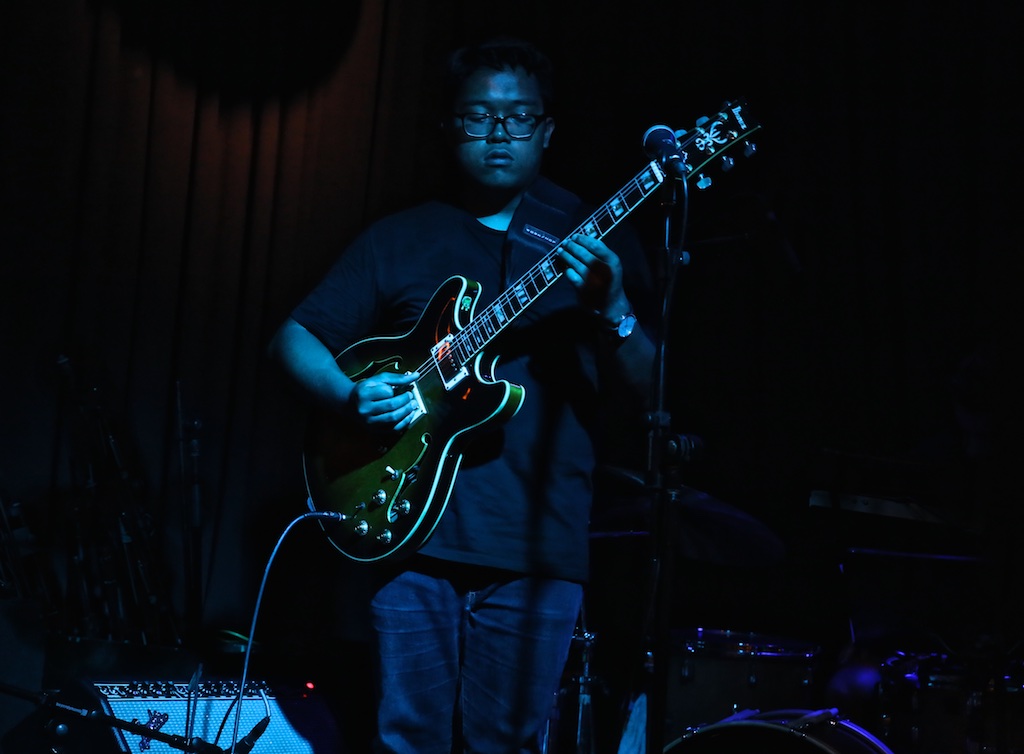
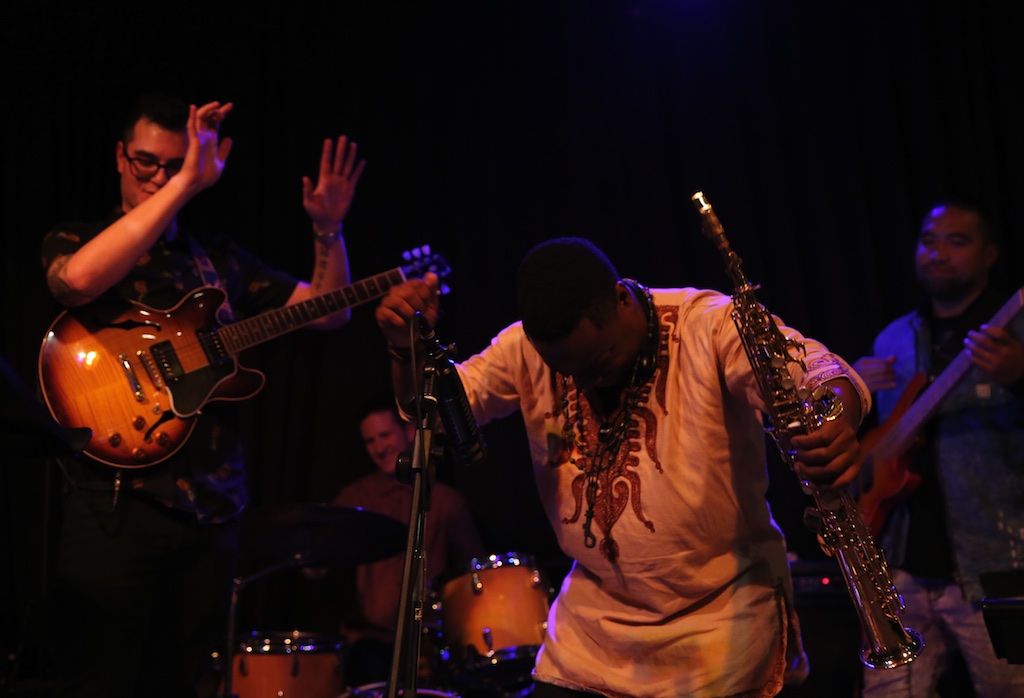 During the apartheid era in South Africa, a heady brew of danceable Jazz bubbled up from the townships. The all white National Party hated it and a game of ‘whack-a-mole’ followed. As soon as one venue was shut down by the police, another would spring up. The music was resilient and hopeful. No racist or repressive regime likes Jazz because it has rebellion, hope and joyous defiance in its DNA. The Zimbabwean born Thabani Gapara imbibed South African Jazz from his earliest days, eventually taking up the saxophone, that most anti establishment of instruments. Since then, he has performed in Zimbabwean, South African and New Zealand projects.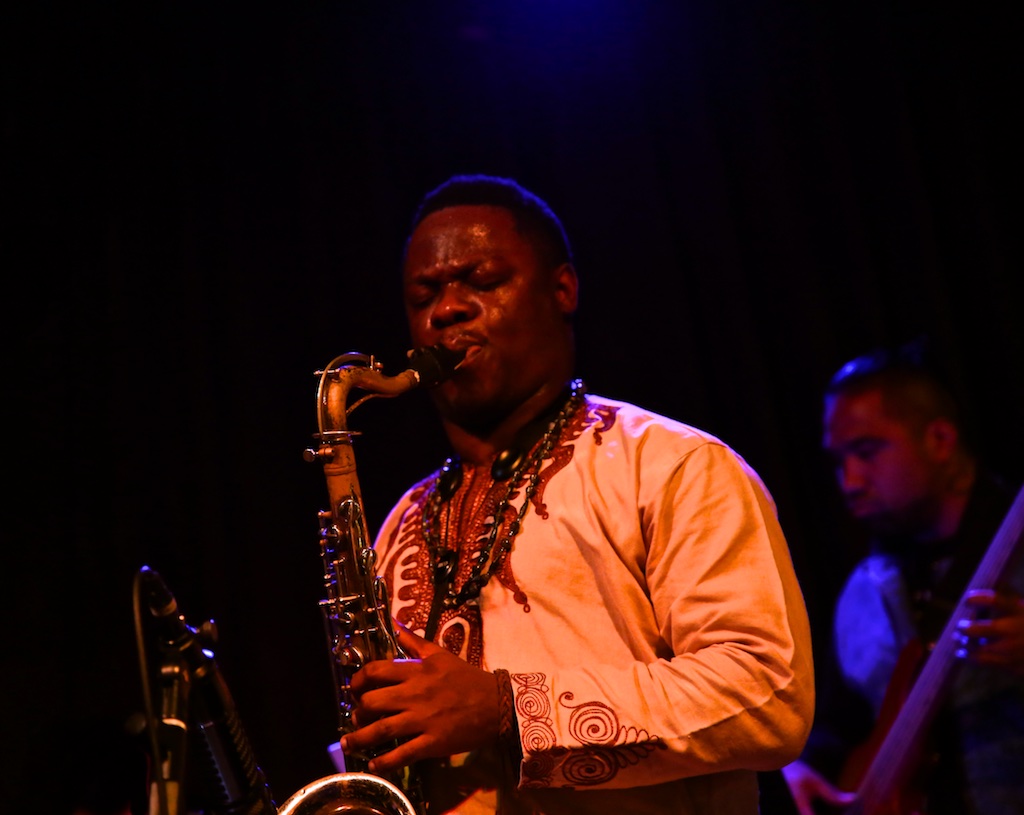
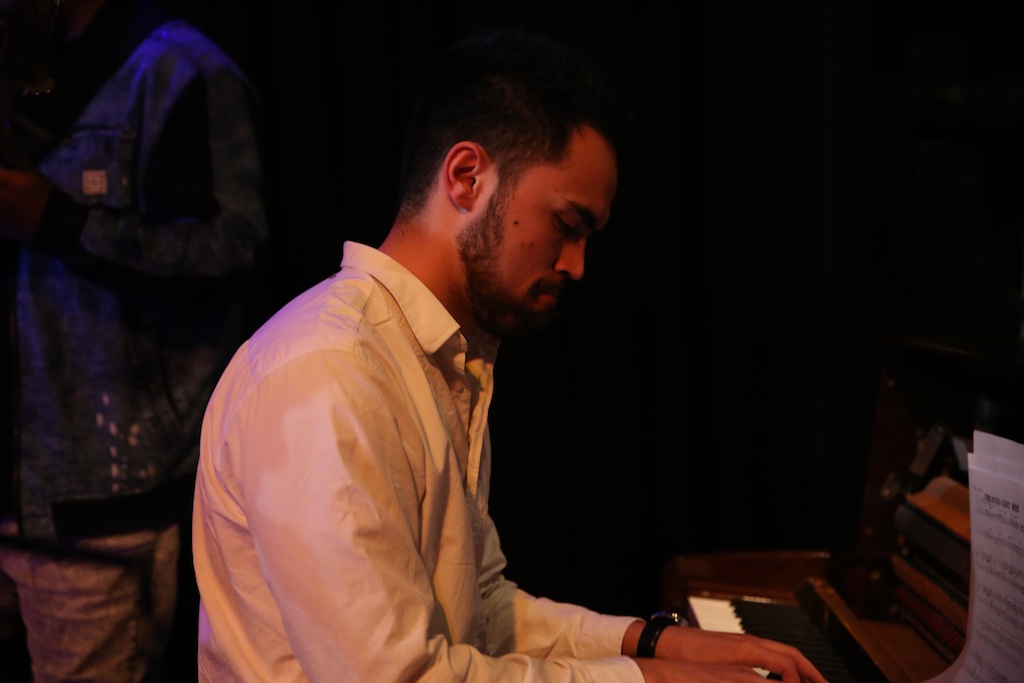
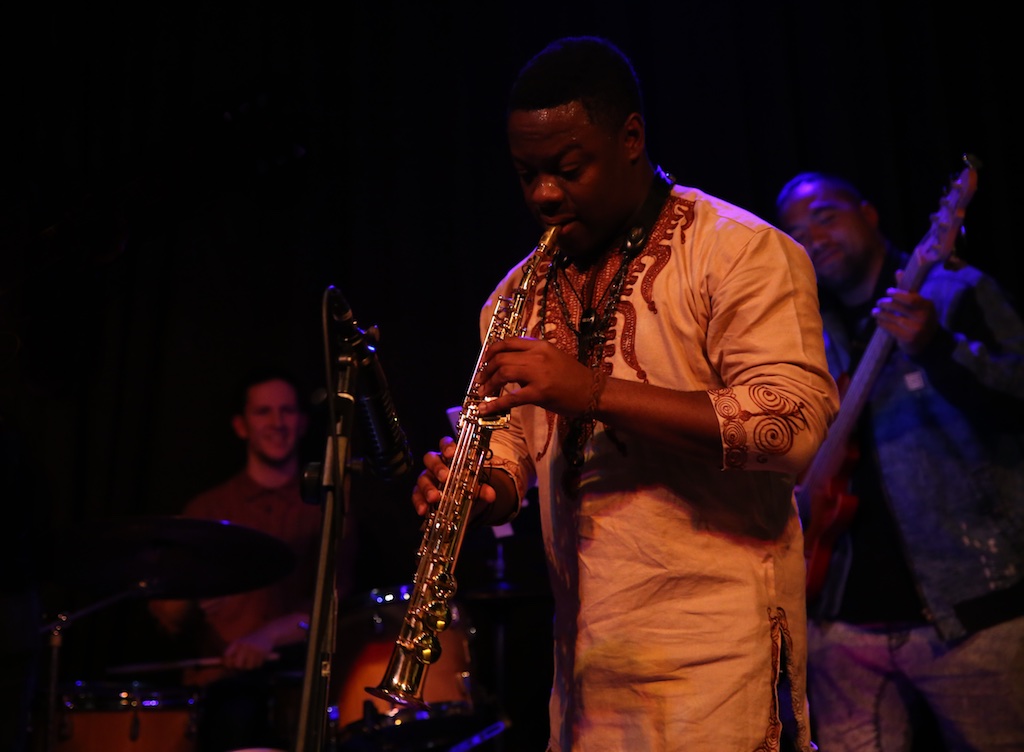
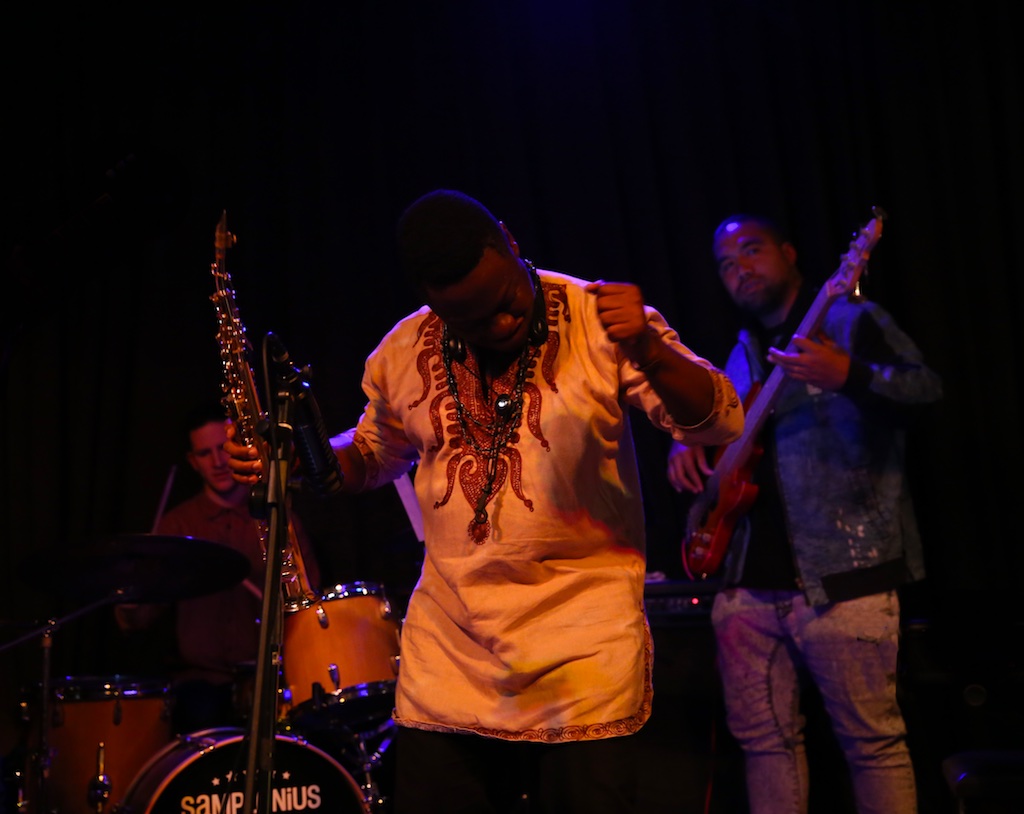
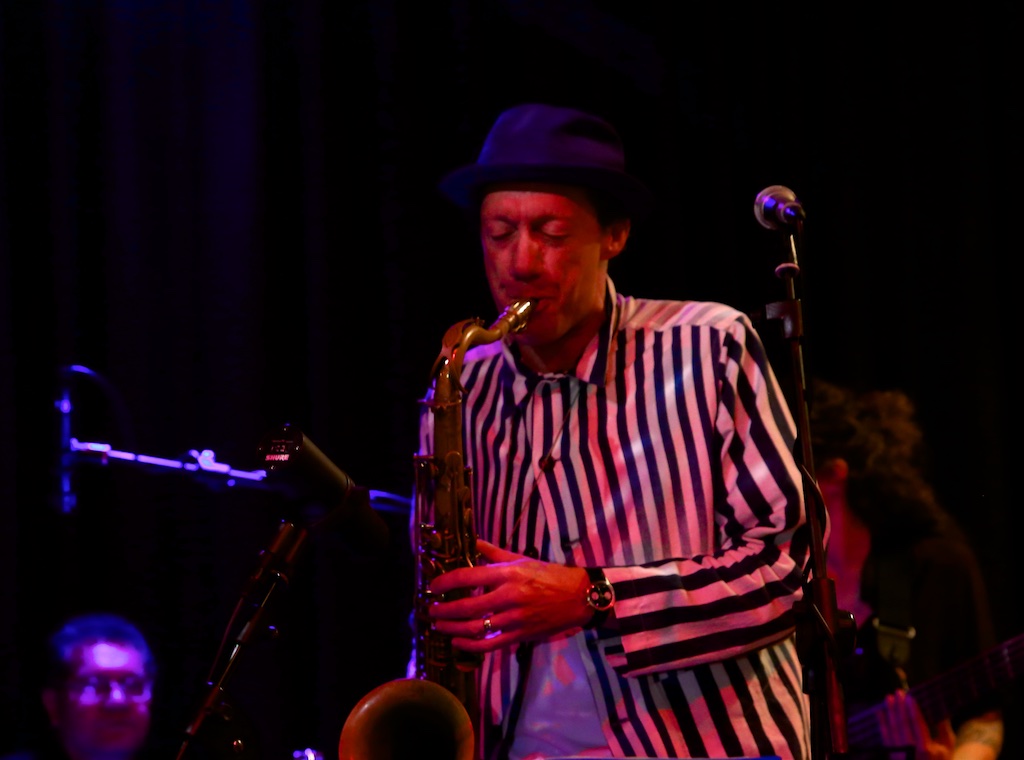 This was trippy stuff. A band that gnawed at the bones of form while the music swept us along; taking us ever deeper, forcing us to loosen our grip, as the waterfalls of sound consumed us. This was most definitely filmic music; throwing up subliminal specters like a Burroughs cut-up montage: an indie soundtrack, Voodoo but with four Papa Docs urging us toward trance.
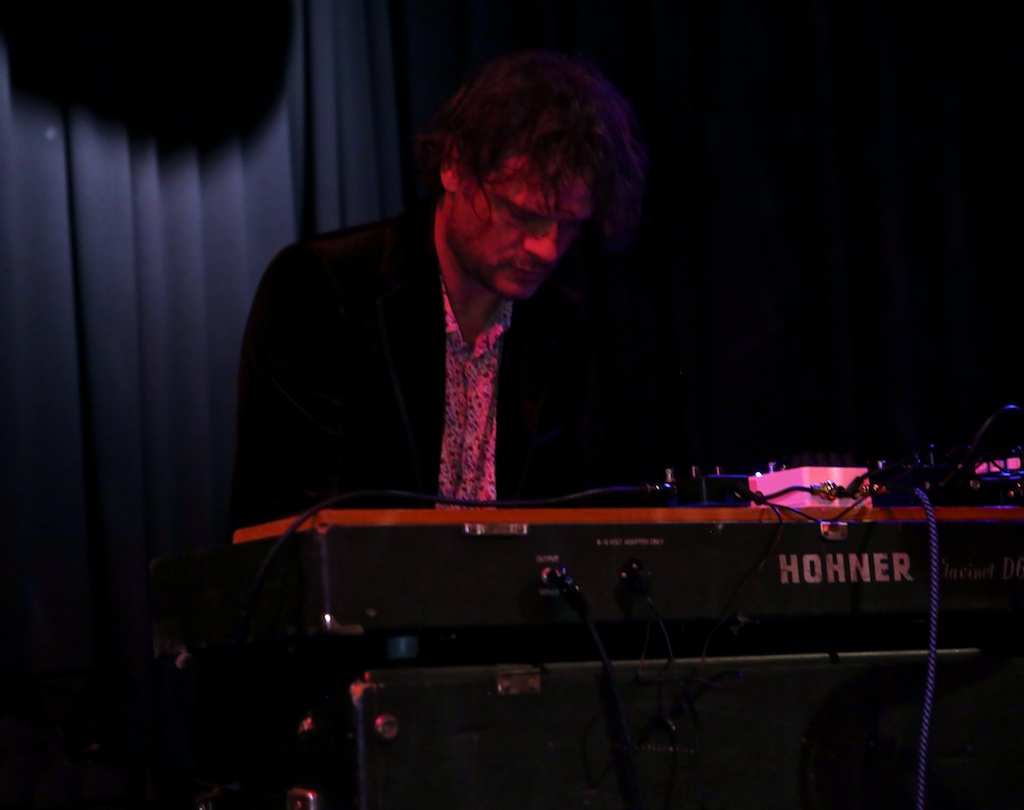 Attempts to confine improvised music within historic boundaries is plain foolishness. Never has this been more obvious to me than at last week’s ‘Monsters of The Deep’ gig. Superficially it sounded like, looked like classic fusion; but it was and it wasn’t. The keyboard instruments were classic analog, the lighting otherworldly; various delays, distortions or effects echoed across the room. While the overall vibe nodded in the direction of Jazz/Rock, the musical language was that of deep improvisation. The accessibility hiding worlds of complexity and there’s the wonder of it. Few local musicians could pull this off as well as Crayford and Haines did.
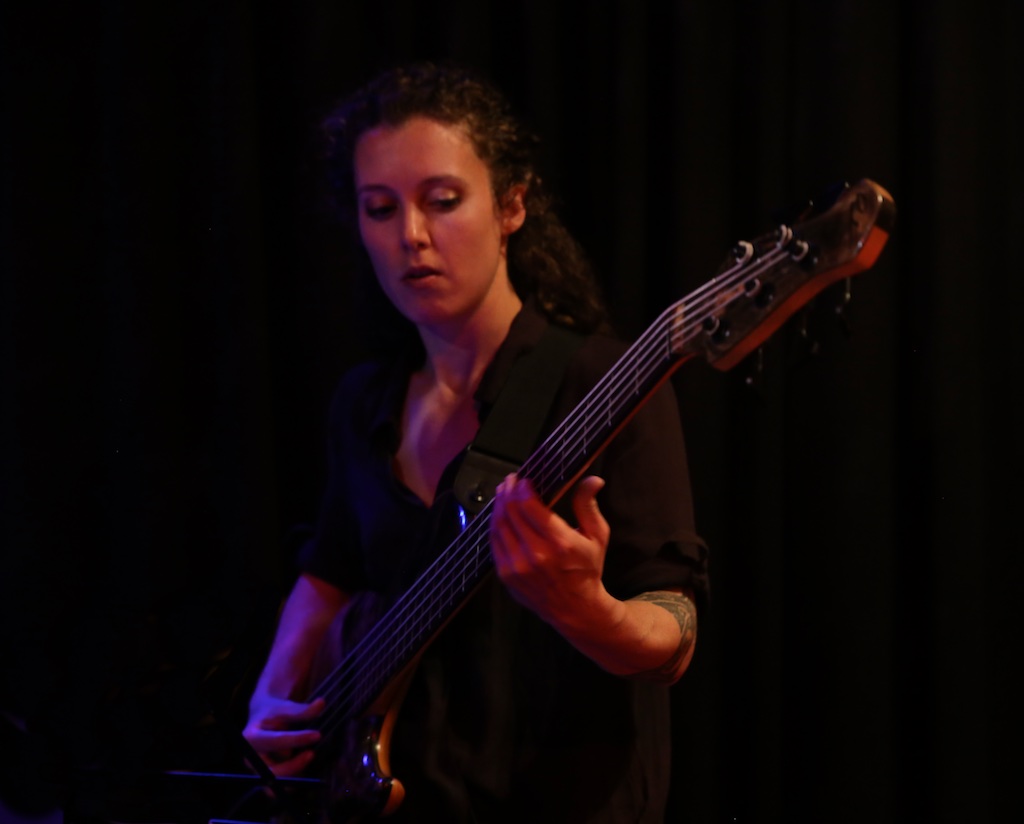 The collaboration between Crayford and Haines is certainly not their first; that took place in New York a long time ago. Since then they have both gained international reputations, recording in the UK or in New York. Both have separately won the Best New Zealand Jazz album of the year during the last decade, both attract sizable audiences. These artists are generally offshore but we caught a break this year – they are domiciled in Auckland at the moment.
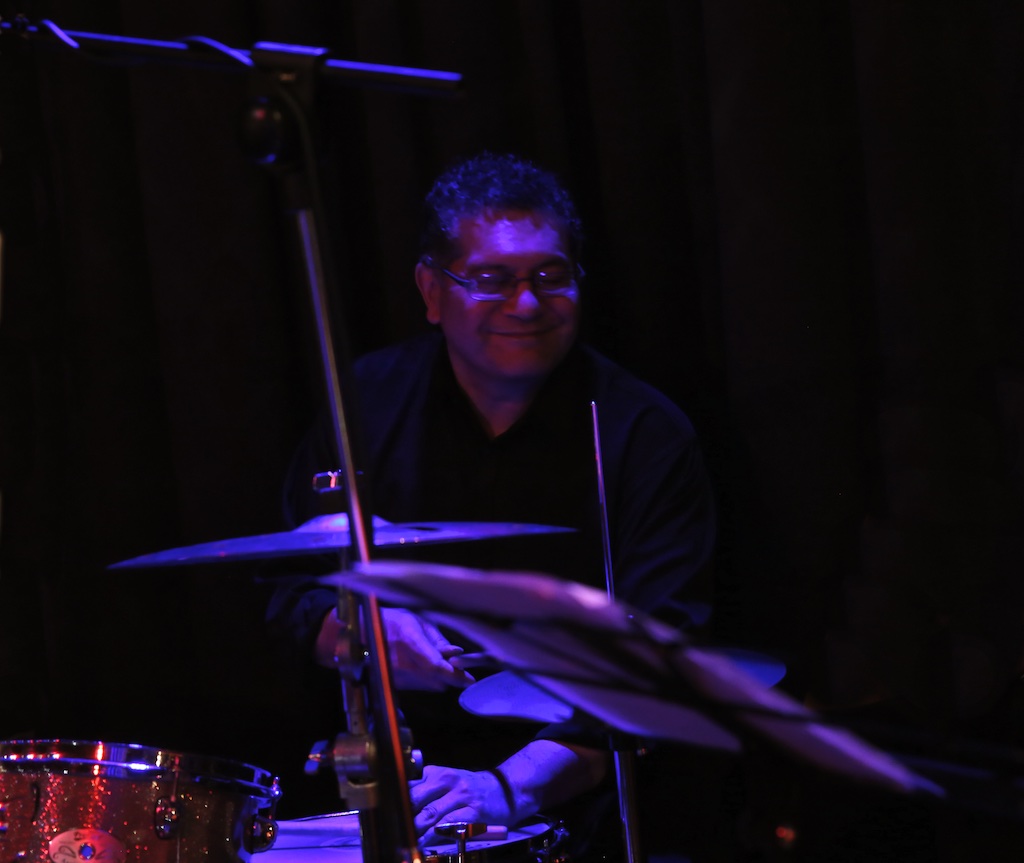 While the project draws on various inspirational sources like Alice Coltrane and Igor Stravinsky it is also brimming with originality. This is ‘spiritual music’ of the highest order and it uses the devices of the Shaman: long intensifying vamps and hypnotic beats which slip deftly into the consciousness. Throughout the night, it was Haines who took the melodic path while Crayford provided magnificent architectural structures. If even one element was removed, the edifice could fail; this was a music built from layers, each balancing delicately on the one beneath; only exposed incrementally, like a nested Russian doll. Marika Hodgson was the perfect choice for running those long ostinato bass lines. Her time feel is impeccable and she creates a gut punch while blending seamlessly into the mix. Not many know it, but Crayford is also a gifted bass player – he knows exactly what is needed and he trusts Hodgson to deliver. The one musician that I had not seen before was Mickey Ututaonga. He has a long history with Haines and again he was a good choice. Because the music was so carefully balanced, the last thing it needed was a busy splashy drummer. Ututaonga synced with the others, his every beat enhancing the overall hypnotic effect.
 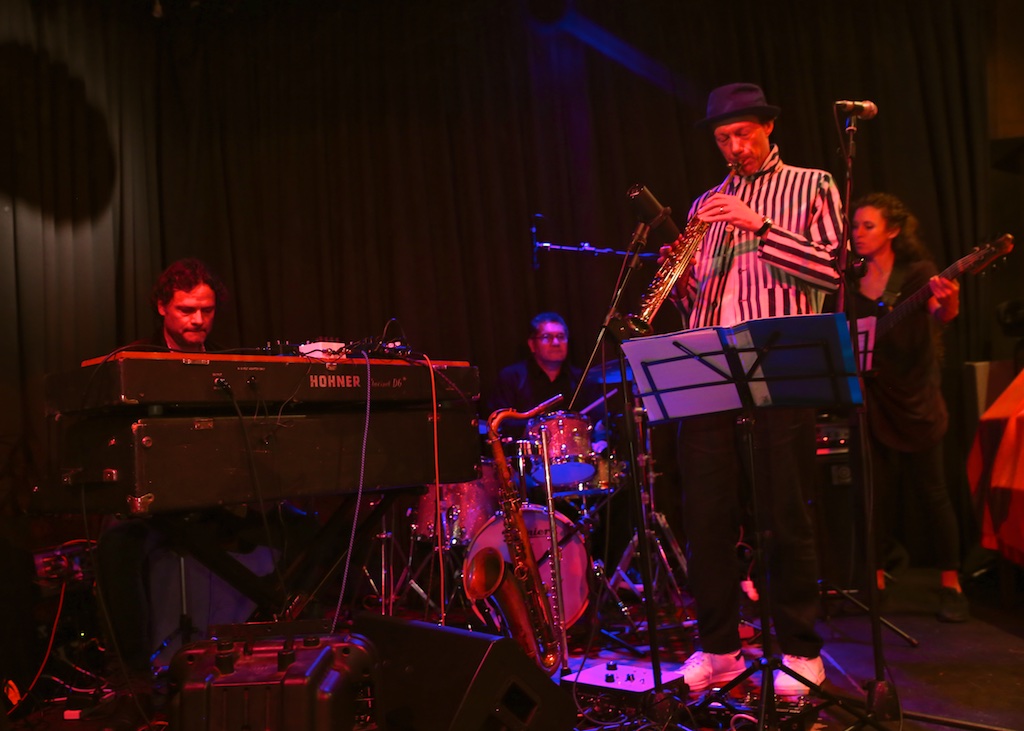 The other stars of the show were the instruments and pedals. For Crayford a Fender Rhodes and an equally vintage Clavinet; for Haines, his beautiful horns fed through a vintage SM7 Shure Microphone, then into a preamp and guitar FX board.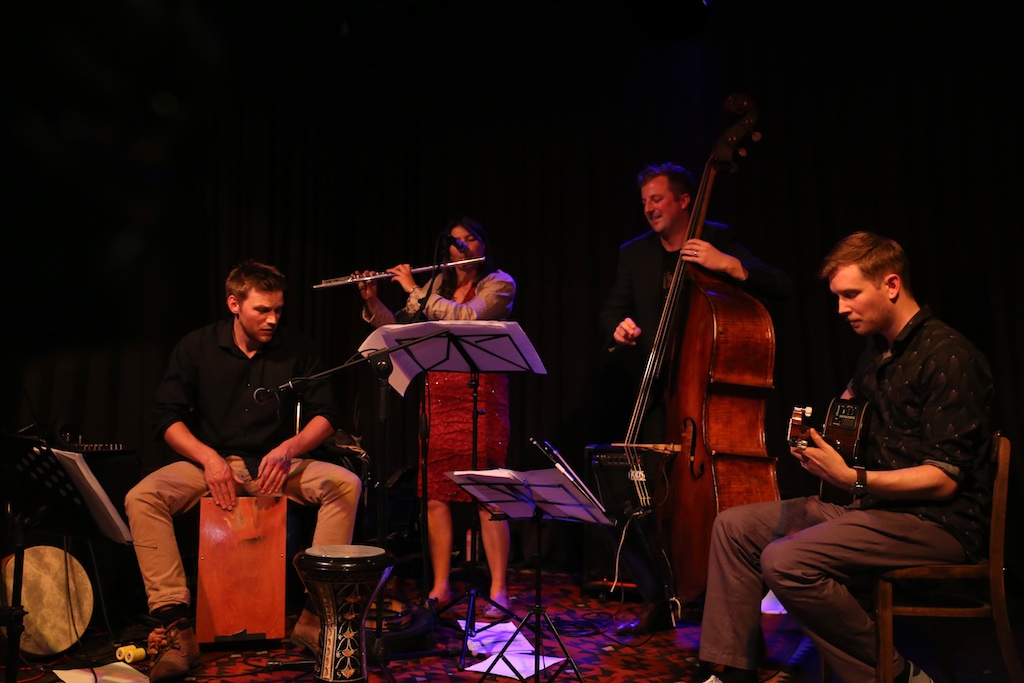
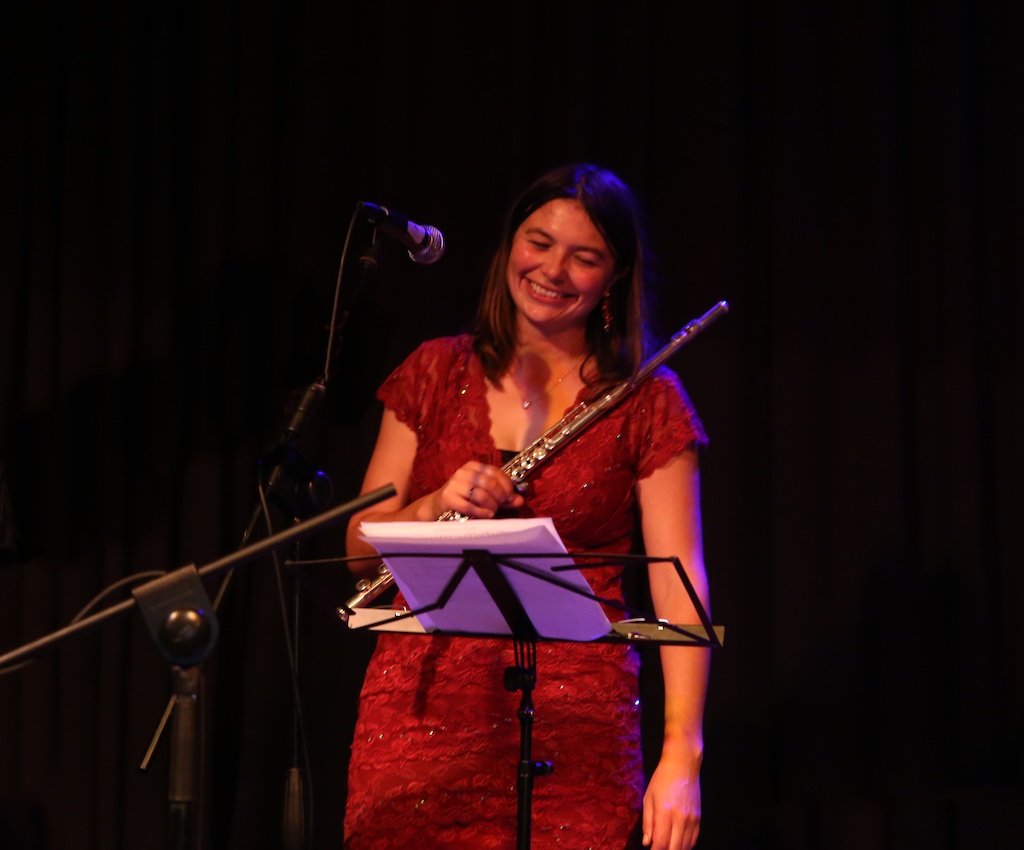
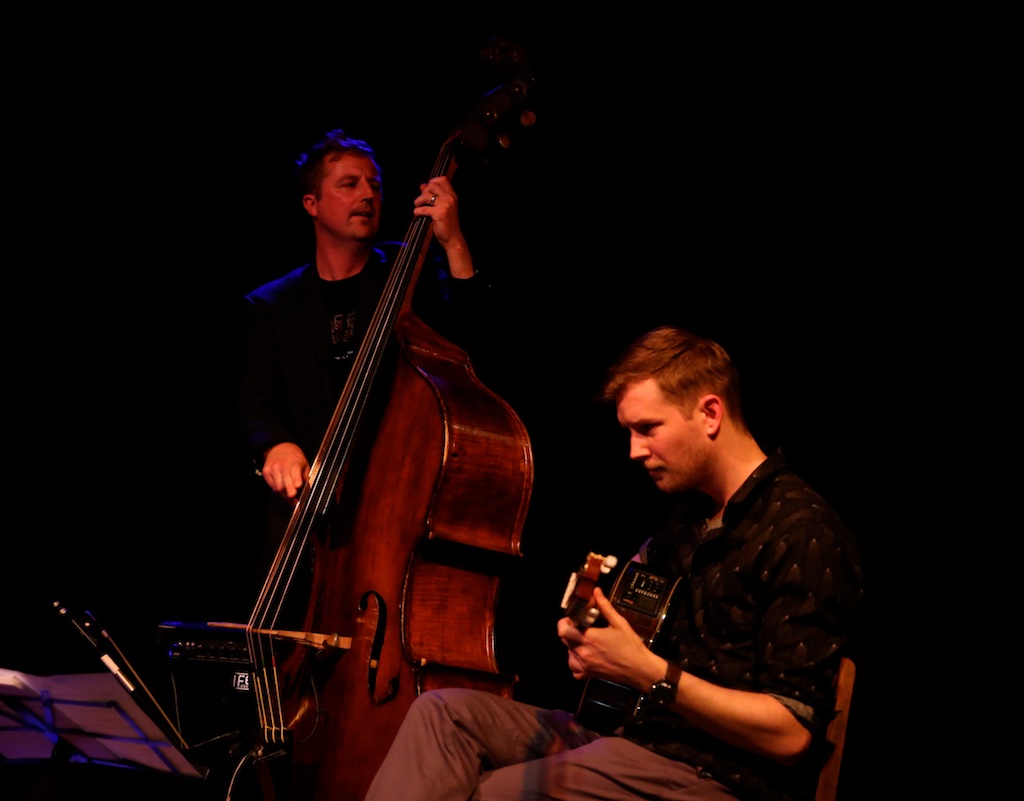
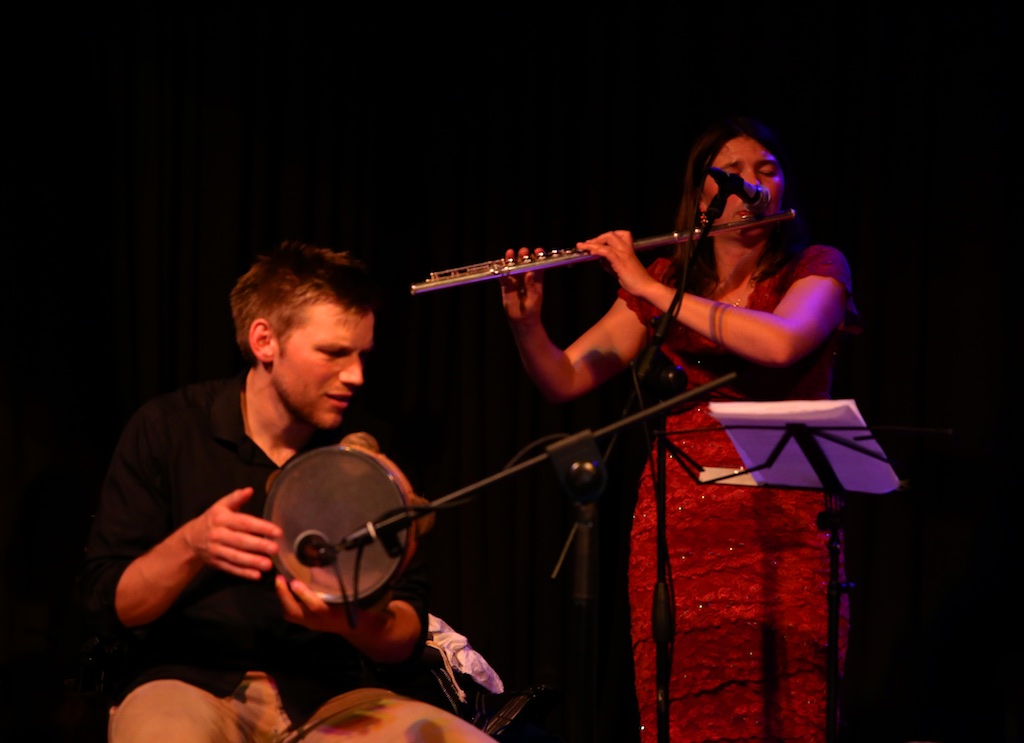
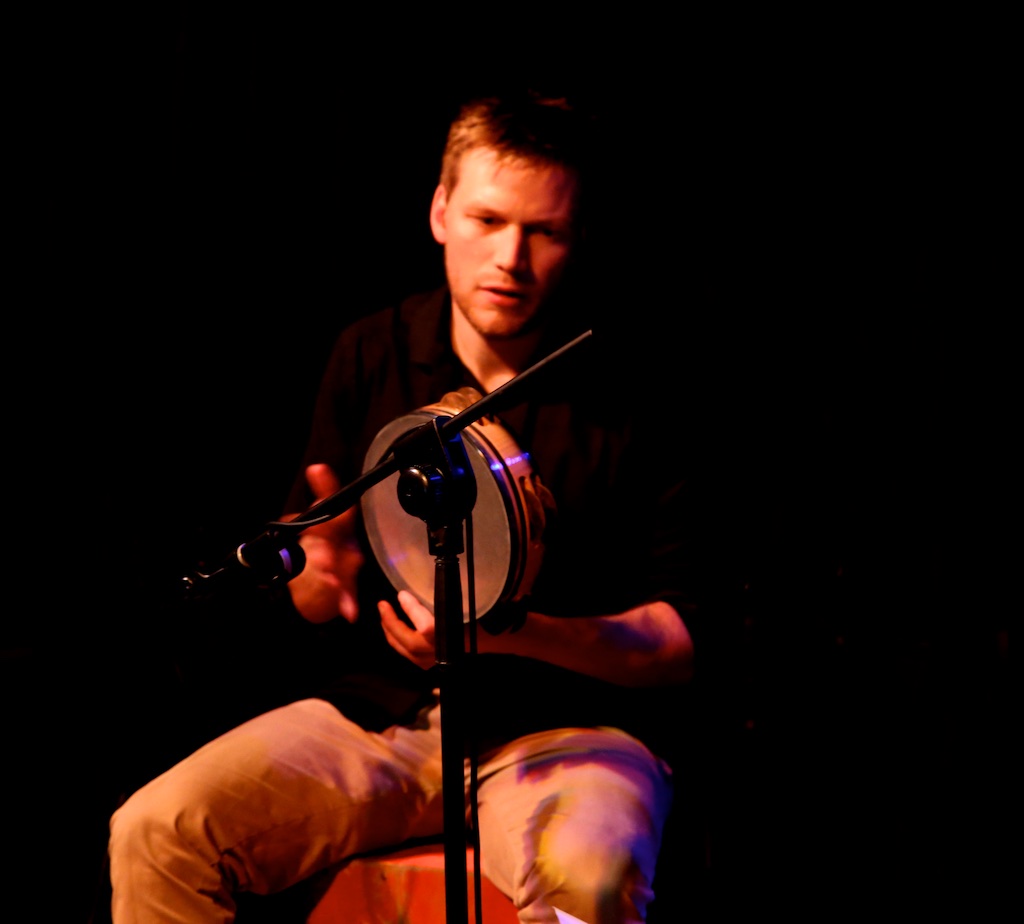
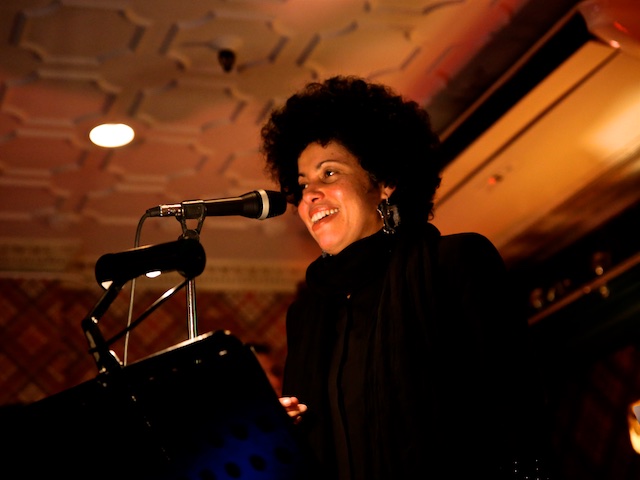 Last Wednesday saw the Venezuelan-born vocalist Jennifer Zea performing at the CJC. Her appearance was long overdue, the audience enthusiastic in anticipation of spicy South American Rhythms and the warm tones of the Spanish language in song form. When you look at where Venezuela sits on the map, you learn a lot about its music. Located in the northeast of South America, bordered by the Caribbean and by Brazil, positioned on a unique musical axis. Music blithely ignores the artificial barriers imposed by cartographers and politicians. Even Trump’s insulting wall could never be built high enough to stem musical cross-pollination. Music goes where people go, and remains as an echo long after they have moved on. Jennifer Zea is an embodiment of her country’s music; folk traditions, newer forms (Jaropo), Jazz, Soul, Bossa influences from Brazil and a pinch of Mambo, Salsa or Merengue.
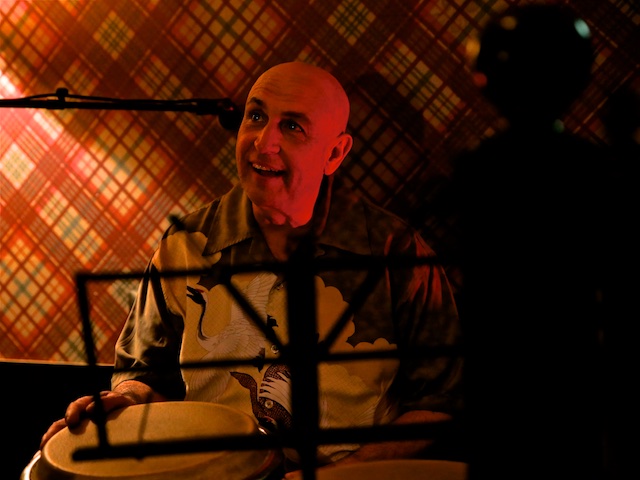 The Caribbean region is the prime example of musical cross-pollination; rhythms and melodies, vocal forms and hybrid harmonization, a constant evolution into new and vibrant forms while updating and preserving the discrete pockets of older folk music styles. A weighty tome titled ‘Music and the Latin American Culture – Regional Traditions’ makes two observations; the music of the Venezuelan region is mostly hot or vibrant (see the definition of Salsa) and there is a strong underlying tradition of shamanism (manifest in musical form). The hypnotic rhythms and chants remain largely intact according to Schecter. With percussionist, Miguel Fuentes backing her, Zea conveyed the compellingly hypnotic soulful quality of her traditional music to good effect.
 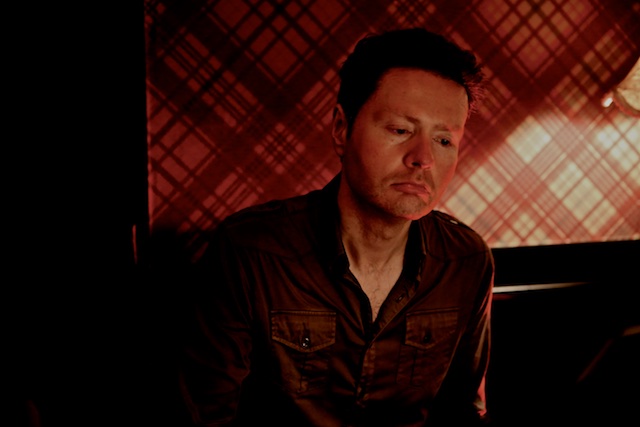 Fuentes was born in the USA but grew up in Puerto Rico. These days like Zea, he lives in Auckland. Music like this demands high-quality authentic latin percussion and that’s exactly what happened. Traps drums were not needed here. Regular Zea accompanist, Jazz Pianist Kevin Field was also in the lineup. Field plays in many contexts and his accompanist credentials are second to none. He has regularly worked with Zea and (like Fuentes) most notably on her lovely 2012 release ‘The Latin Soul’. If you have a love of Cubano or Caribean style music, grab a copy of this album. Even on straight-ahead gigs, I have heard Field sneak in tasty clave rhythms. If you want to hear cross-rhythms at their best – skillfully woven by Field and Fuentes, it is on this album. An added incentive are the compositions, mostly by Field and Zea (and Jonathan Crayford). On upright bass for this gig was Mostyn Cole, an experienced bassist now residing in the Auckland region.
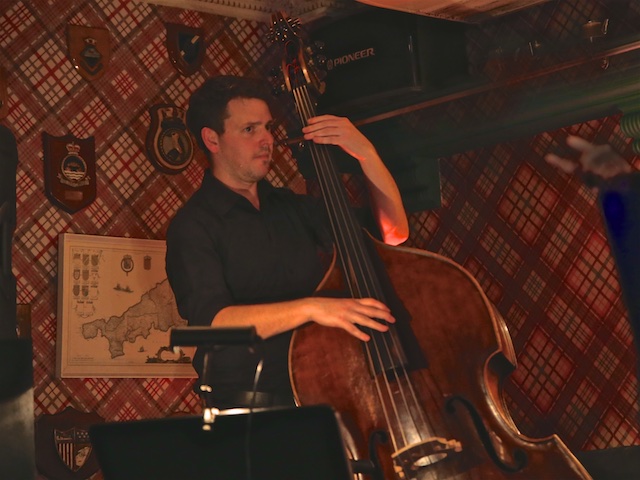 The gig featured some Zea compositions, three standards and to my delight some authentic Bossa. The Bossa tunes were mostly by the Brazilian genius Tom Jobim and sung in Portuguese (which is not her native language). Although Portuguese is the most commonly spoken language in Latin America, it is only the main spoken language of one country, Brazil. To learn Bossa she spent time with a teacher in order to understand the nuances and deep meanings. While respecting the Bossa song form she had the confidence to bring the music closer to her own Venezuelan musical traditions. Even her intonation was redolent of her region, unmistakably Hispanic South American.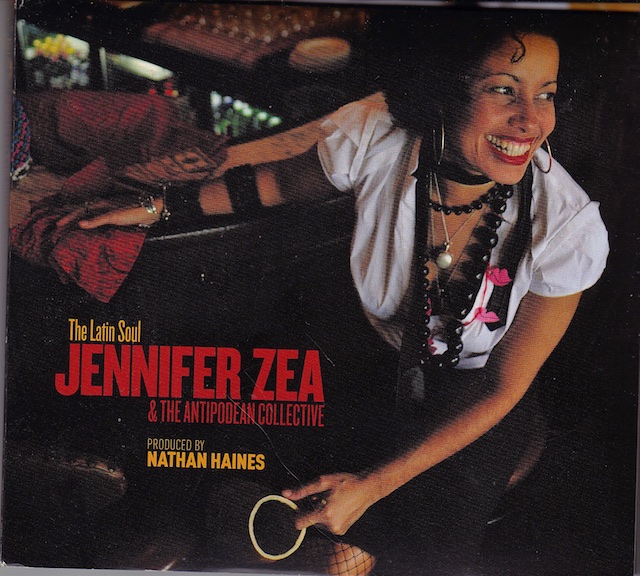
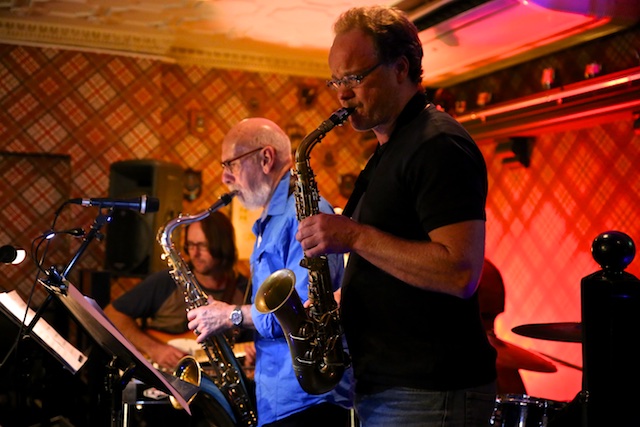 A seasoned New York veteran when asked to comment on the quality of playing by young artists emerging from the Jazz Schools said, “Man they’re such great players. Many of them have chops to burn, but what is lacking is ‘character’. That is not taught in Jazz schools, you gain it inch by inch out of life experience”. To paraphrase Lester Young who put it best, ‘I hear the notes, but what is your story’. The character of a musician (or the lack of it), shows up in the music. Jim Langabeer has ‘character’ to burn. He tells wonderfully human musical stories and they are utterly beguiling.
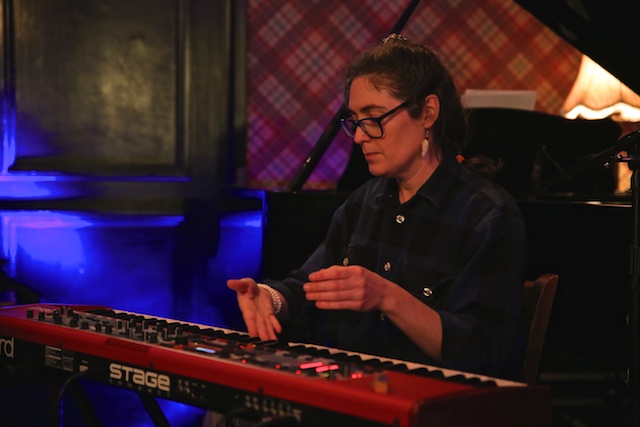 Langabeer is hugely respected on the scene and deservedly so. He has worked with greats like Gary Peacock and Jaco Pastorius and in spite of absorbing the essence of North American Jazz, his ideas and sound possess a Kiwi authenticity. When he plays his tenor there is often a street-raw raspy intonation. The sound is at times reminiscent of Archie Shepp, but the story and flow of ideas are entirely his own. His flute playing is soulful and as soft as silk in the breeze. Because he is so comfortable in his own space he can incorporate everything from the avant-garde to indigenous music without it sounding contrived. These seamless references work beautifully in his hands. We talked of this after the gig and agreed that many of the earliest attempts at blending middle eastern, far eastern or ethnic music were less successful than now.
  As the boundaries between cultures blur in a globalised world, the mutual respect between improvising traditions grows. I have posted an example of this effortless genre-blending in a clip from the CJC gig titled ‘Ananda’s Midnight Blues’. Those who are familiar with Buddhism will grasp the meaning immediately. Ananda was Gautama Buddha’s childhood friend and later his disciple. Beloved, worldly and yet never afraid to challenge his enlightened teacher. There is a feeling of deep questing spirituality in the piece – reaching beyond mere form.
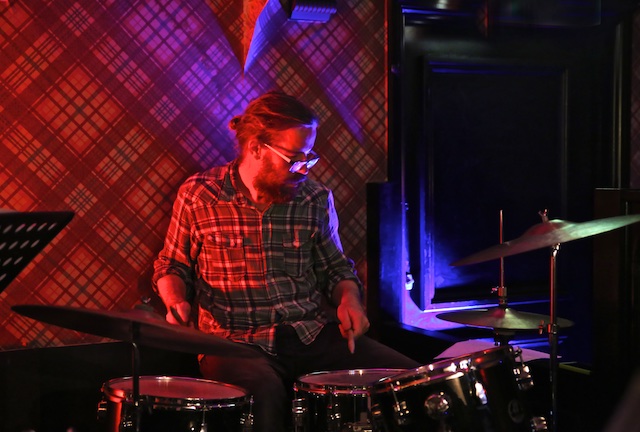 Whether Langabeer plays flutes or reeds, everything serves the composition. His spare lines (which are devoid of undue ornamentation) establish a theme and then vanish like a will-o-the-wisp, giving a nudge to the imagination and enriching the piece as a whole. There are no wild flurries of notes on the saxophone or flute because the story resides elsewhere. His writing creates an over-arching logic and the ensemble has the freedom to move in and around tonality. In some pieces ostinato patterns create a drone effect, becoming a single note over which to restate the melody. This freedom allows for an organic interaction, free or inside and with a deep gut-felt pulse.
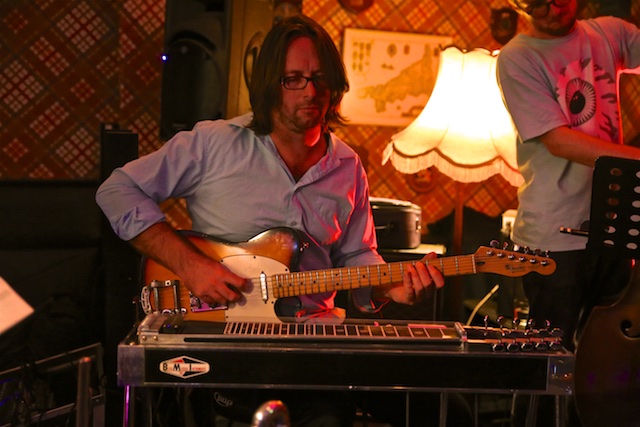 When putting a band like this together the choice of musicians is supremely important. Not every musician could handle such freedom. Needless to say, Langabeer chose well. The ensemble was rich in contrasting colour, rich in character. It was our good fortune that Jim Langabeer’s daughter Rosie Langabeer was back in town. I can’t imagine a better-qualified pianist for this role. A leading avant-gardist and experimental musician who crafts compelling filigree and rich beauty into her music. Rosie Langabeer can play outside one minute and the next you hear a deep subtle swing, a rare kind of pulse that you can feel in your bones. A gifted composer and leader in her own right, an extraordinary sides-women when required. Moving from percussive, richly dissonant voicings to heart-stopping arpeggiated runs – somewhat reminiscent of Alice Coltrane’s later piano offerings. Her iconoclastic playing delighted the audience.
 On alto was Roger Manins. Although the alto is not his main horn he is extraordinarily fluent on the instrument. Langabeer has been focussing on multiphonics and microtonality of late and he and Manins showcased some atmospheric numbers utilising various blowing techniques. Manins has long impressed by playing in a variety of styles with equal facility. On guitar and pedal steel guitar was Neil Watson, bringing his mix of blues, Jazz punk, and avant-garde to the fore. Another iconoclast and one we love hearing. The pedal steel guitar has been in his possession for a year now and his rapid mastery of the instrument is impressive. A difficult beast tamed beautifully. On Bass was Eamon Edmundson-Wells. A versatile young bass player most often found in the company of experimental musicians. His performance on this gig was right on the money.
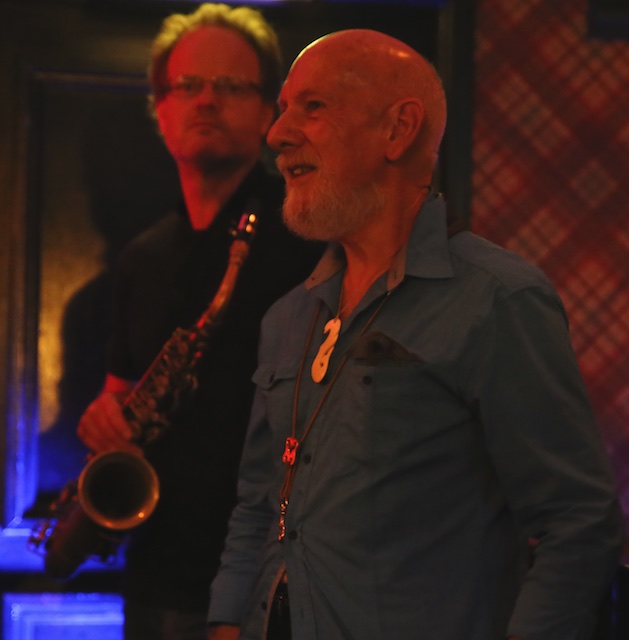 On drums and percussion was Chris O’Connor. Perhaps more than anyone else O’Connor personifies this free-ranging music. Of all the New Zealand drummers, his are the widest-ranging skills. Colourist, minimalist, indie rocker, straight-ahead jazz, avant-garde, experimental percussion and film work. There is nothing he won’t tackle and everything he touches benefits from his musicianship. When a piece titled ‘Tapu’ was played O’Connor stole the show. While Langabeer played the difficult and wonderfully atmospheric Putorino (a traditional Maori flute of the Taonga Puoro family), O’Connor simulated the Tawhirimatea (A traditional whirring instrument dedicated to the god of winds). The effect was eerie and electrical. Later in the piece he blew through the stem of his snare stand – recreating the effects of the Pututara (a conch trumpet). Only O,Conner could have pulled this off so well. Like Langabeer, he has a deep awareness of multicultural issues.
 The one standard was Strobe Road (Sonny Rollins). A lesser known standard and played with enthusiasm. The remainder was a selection of Langabeer tunes, many referencing Maori of Kiwi themes. His tune Rata Flower was a stunner – it deserves to become a local standard. He has obtained funding from Creative New Zealand for this project and we might see a ‘Sketches of Aotearoa’ album soon. I truly hope this occurs and I will be the first to purchase one.
 When I recently interviewed visiting Flamenco dancer Isabel Rivera Cuenca she told me that she had met some wonderful New Zealand improvising musicians and, in particular, she mentioned Jonathan Crayford. They met at a party and briefly discussed doing a project together. As they had not been able to make contact since I supplied email addresses and the project quickly took shape. A talented sensuous Flamenco dancer from Barcelona and a gifted Kiwi improviser; irresistible.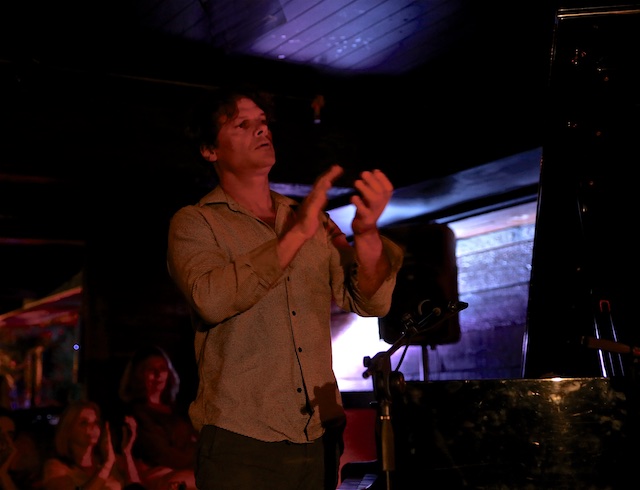
 There is a real synergy between Jazz and Flamenco; they are musical cousins. Both musical forms fuse North African Rhythms with unique harmonic approaches, both created out of harsh repression. Underlining the driving rhythms of Flamenco is pure passion, contrasting a sad but beautiful dissonance. The musicians and dancers frequently call to each other in encouragement and this is not so different from the call and response in jazz. That they are similar in essence is hardly surprising – when the chants, dance and polyrhythms of Congo Square met with Creole melody, fed by a multitude of European influences (including Spanish music), Jazz was born.
 During the second set we heard tunes which moved closer to the Flamenco idiom. In these free-ranging highly improvised tunes Crayford has few peers. Towards the end of the evening, the two were in absolute lock-step; Cuenca reacting to every nuance of the music and bringing her fluid kinetic brilliance to bear, dancing her way into the hearts of everyone there. The communication was simply electric.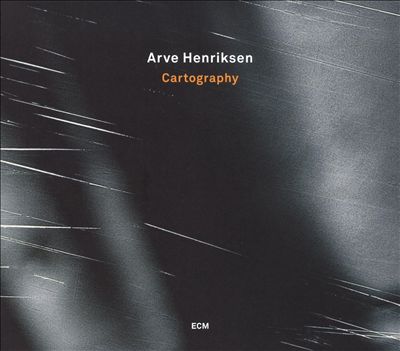
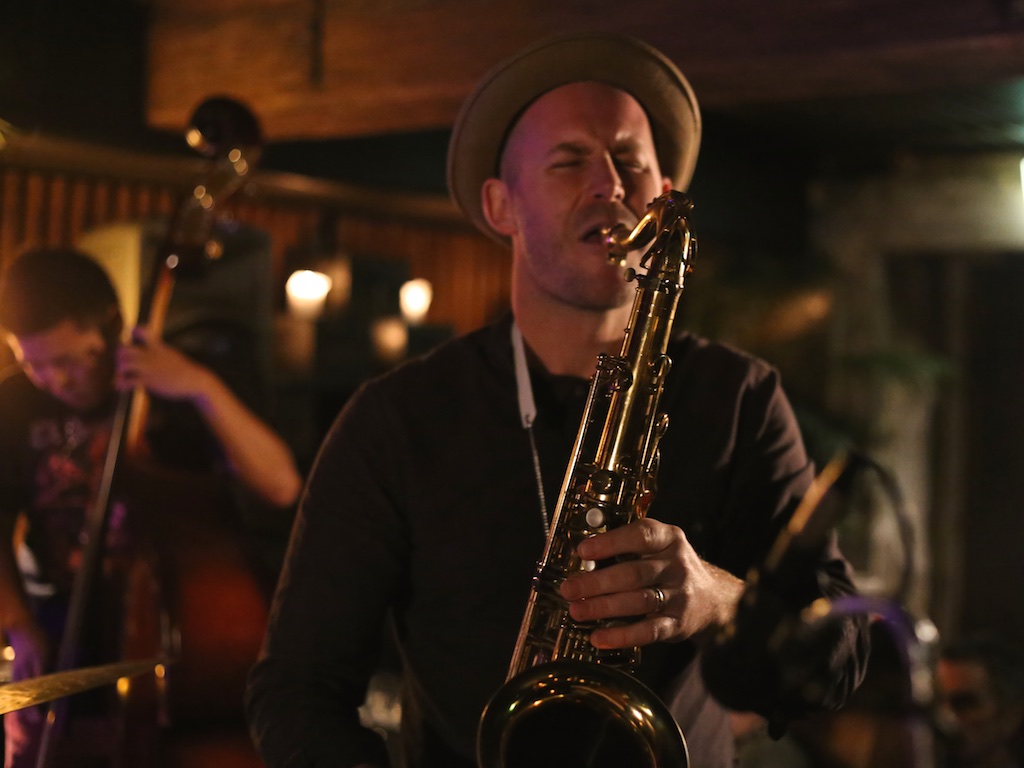 Any astronomer worth their salt will tell you that it is paradoxical for a sun to embark on a circular orbit. The last time this happened was during the Spanish Inquisition. On Wednesday the paradox increased when the Circling Sun departed their orbit to play at the CJC (Creative Jazz Club). This gig had been a long time coming and we welcomed it. Hearing them away from the babble of the hard-drinking Ponsonby Road crowd was a treat for us. The Circling Sun always give of their best, but this time we could hear the quirks and subtleties unfiltered. This is a band with a vast soundscape and the Jazz club echoed to the sounds of doogan, Tuba, analogue keyboards, digital keyboards, piano, trumpet, flugel horn, flute, tenor
  saxophone, upright bass, drums and electronics. This is the type of music that sits well with me.
 times; then out of nowhere come tasty arranged melodic heads. Deftly extracted from the frequent mesmerising groove laden vamps.
 The most powerful presence is drummer Julien Dyne. A versatile gifted artist who has travelled and recorded widely. His beats while often referencing his multi genre background, urge the band to greater heights. It is a privilege to see drummers of this calibre and I hope that he continues with open-ended Jazz projects like this. I have heard him on numerous occasions and I like what I hear. As a unit, this combination takes no prisoners and the audience were glad of it. The first guest to join them was J Y Lee who quickly settled in on baritone saxophone. He often plays with the Circling Sun and is a popular addition.
 During the second set a great gig got even better. Jonathan Crayford arrived and without too much persuading, sat in on piano. This was met with obvious delight by the audience, as Crayford is extremely popular. He knew none of the tunes as they were mostly originals and there was virtually no sheet music to guide him. It didn’t matter. Someone would announce the key and then a few chords in he would locate the heart of the tune. A musician of his experience and gifts is no stranger to situations like this. The audience, clearly wild about the gig, were by now whooping with enthusiasm between numbers. When Crayford sat in they felt like they’d won the lottery. He doesn’t get home often, but improvised music fans are eager to soak up what ever they can get of him.
 JazzLocal32.com