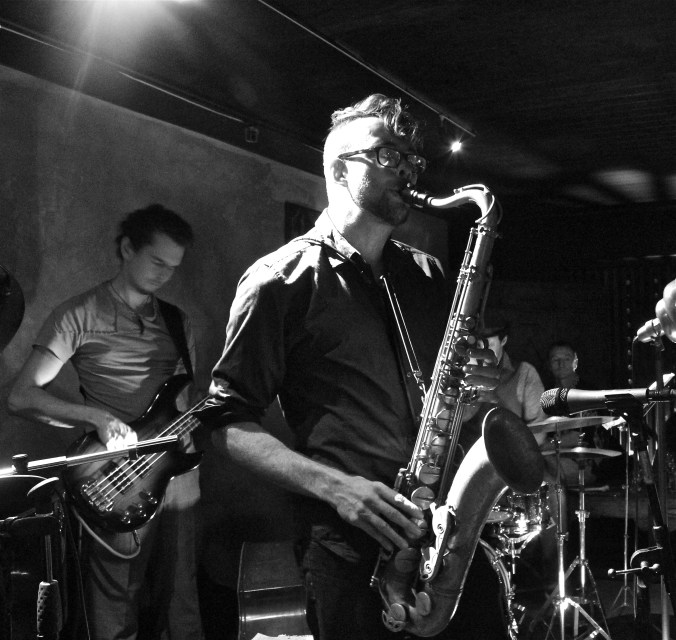
‘Troubles’ hit the CJC

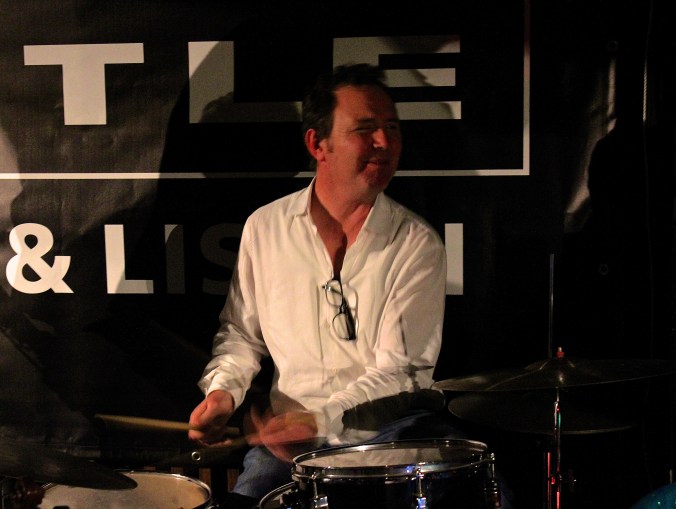
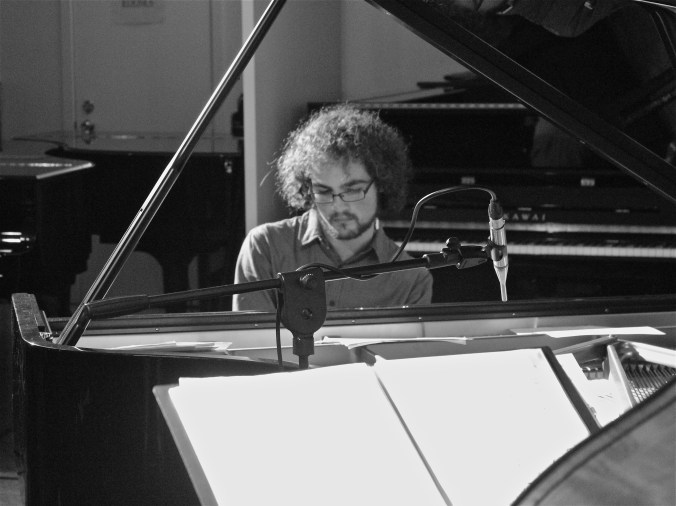
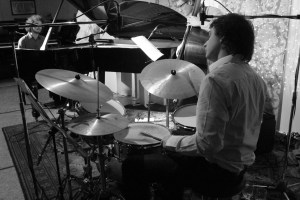
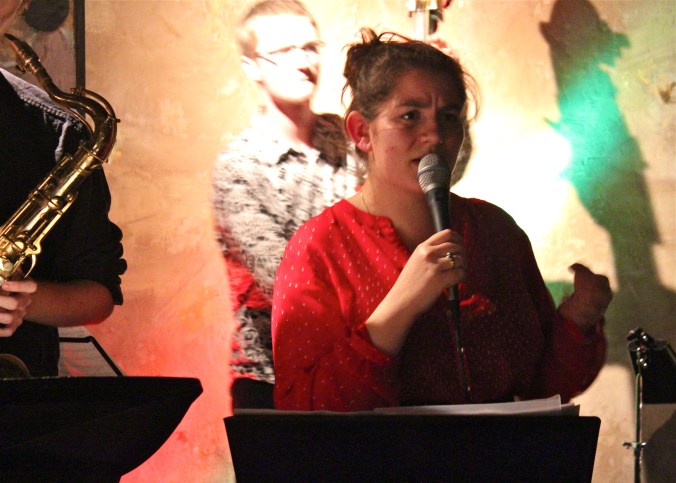
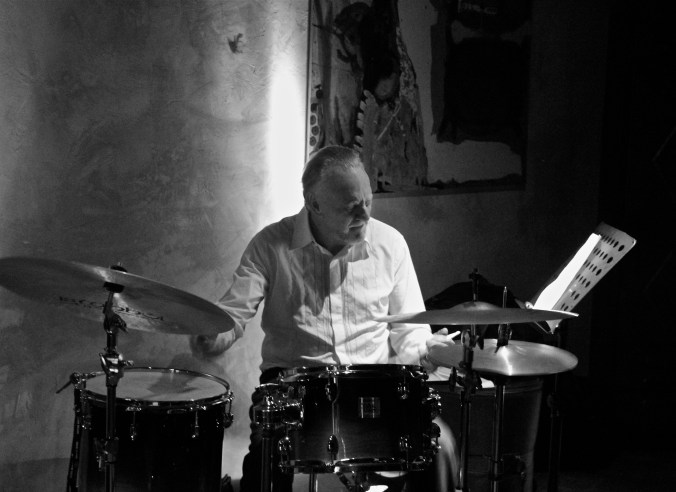
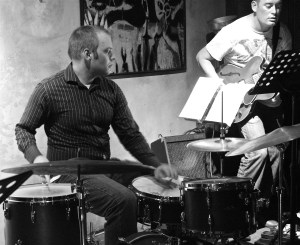
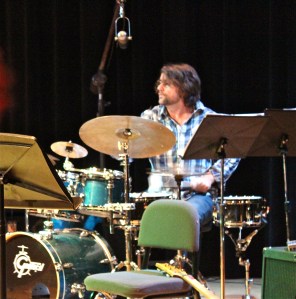
John Rae exhorting everyone; call & response

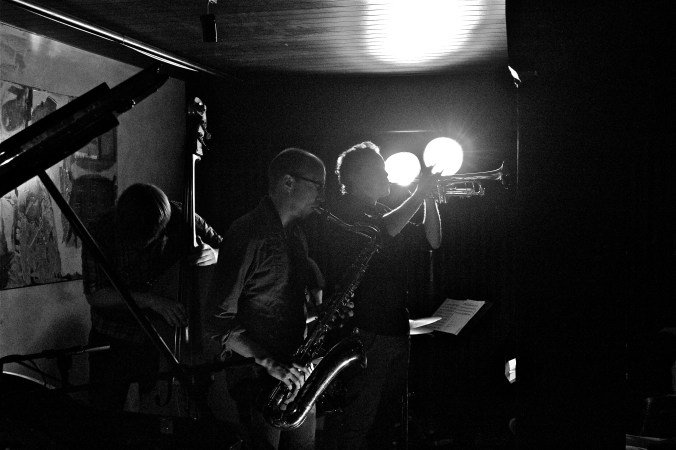
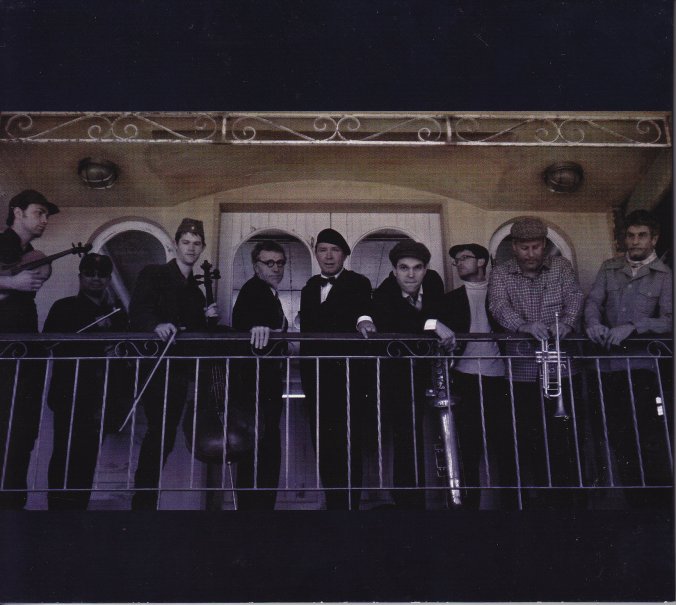
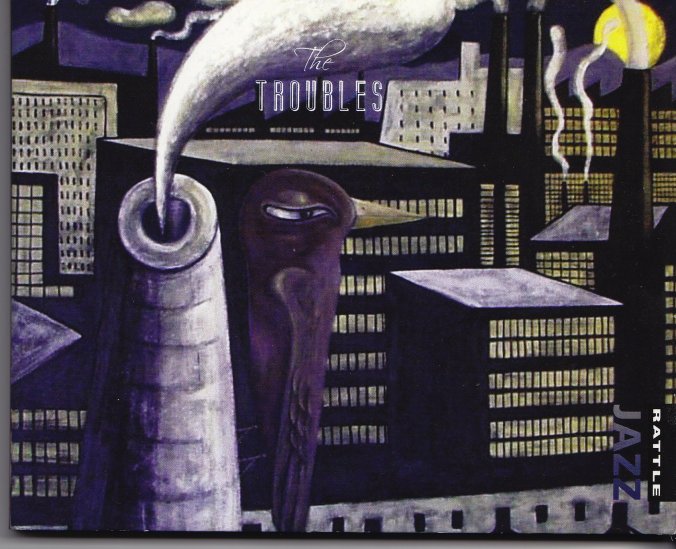
It has always been said that troubles arrive in pairs.   In this case the old adage was woefully awry as ‘The Troubles’ arrived in nonet form.  Their arrival may have ‘Rattled’ us somewhat, but we are built of stern stuff in Auckland.   We fortified our ourselves with strong liquor and pep talks, adjusted our parental lockout settings to allow for some serious swearing and settled in for the realpolitik of John Rae’s and Lucien Johnson’s crazy-happy Jazz.     ‘Oh Yeah’, we told ourselves, ‘We are ready to handle anything a Wellington band can throw our way’.

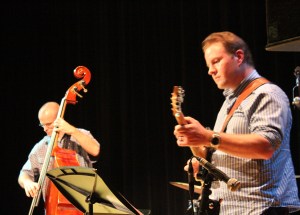
The Troubles-  call & response

There are bands that I like, bands that I respect and bands which drive me wild with pleasure.   ‘The Troubles’ are of the latter kind.   I’m besotted with this band and their deliberately ragged, madly political, quasi-serious satire.    This band digs deep into the well-springs of life and what bubbles up is a joyous lake of barely controlled madness.   The anarchic overtones are deliberate, but there is a scream-in-your-face humour that overshadows all else.   This is about chiaroscuro; a bunch of opposites vying with each other for attention.

This band is about plunging us without warning into the troubled spots of the world and then showing us humour where we thought none existed.  The overt political messages were a joy to me as I have never quite understood why this space is not filled more often.   The history of Jazz is intensely political and to describe ‘The Troubles’ music as a continuation of the work done by Carla Bley, Charlie Haden and especially Charles Mingus (even Benny Goodman) is not too far-fetched.    This band is a talented group of clowns shaking us by the scruff and saying; laugh or cry but for god’s sake look at the world about you.   There is no solace for Lehman Bros, Merrill Lynch, Barclay’s or John Key here.  For Jazz lovers with big ears there is joy aplenty.

This band is about call & response; not just between instrumentalists, but by the band vocally responding to John Rae’s trade mark exhortations.  Although he leads from the drum kit, that doesn’t prevent him standing up and shouting at the band (or the audience) to elicit stronger reactions.  During one of the middle Eastern sounding numbers (which appeared to lay the Wests hypocrisy bare), he shouted in what I can only assume was faux Arabic.  A flow of equally Arabic sounding responses flowed back .   It was the string section verbally responding as they wove their melodies around the theme.

On another occasion John Rae announced that we would be celebrating an often ignored trouble spot.   “I will now express solidarity with the North Americans”, he announced.  “The Sioux, Cherokee, Iroquois, Apache, Mohave etc”.   He began with a corny war dance drum beat which quickly morphed into a tune from ‘Annie Get Your Gun’.   As the melodic structure unwound into free-Jazz chaos we all understood the history lesson and laughed at the outrageousness of the portrayal.

Another Tango melody written by Lucien gradually reached a joyous fever pitch.  During the out-chorus the instruments dropped out one by one and as each instrument stopped playing the musicians raised a closed fist in a revolutionary salute.   Although it was quite dark in the club we had all picked up the cues.  This was a musical night beyond glib definition.

Like life, the music gave us lighter and then more thoughtful moments.  Musically it was amazing fun and after a difficult week I was suddenly glad I was alive.

Mission accomplished I think John and Lucien – keep shaking us up please.

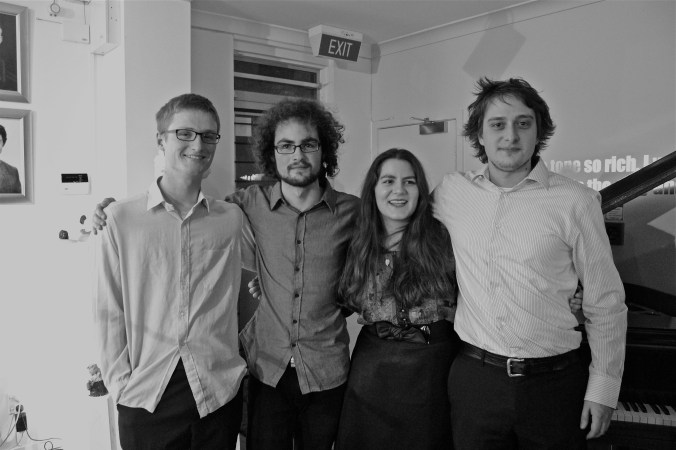
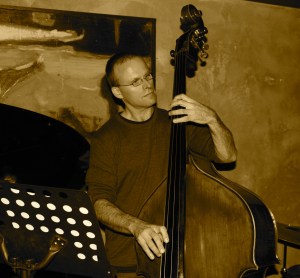
John Rae (drums, co-leader, co-writer, co-arranger).  Lucien Johnson (sax, co-leader, co-arranger, co-writer).  Patrick Bleakley (double bass).  Daniel Yeabsley (Clarinet). Jake Baxendale (saxes). Hanna Fraser (violin). Charley Davenport (cello), Tristan Carter (violin). Andrew Filmer (viola).   Buy a copy of ‘The Troubles’ today at Rattle Records Ltd.  Venue – CJC Jazz Club Auckland.

The Auckland Jazz Orchestra @ CJC 20th June

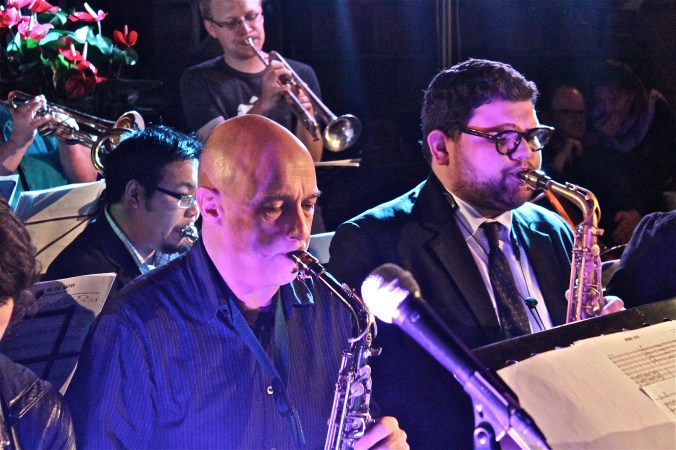
Steve Sheriff & Callum Passells (Altos)

I love Jazz big bands and couldn’t have been more pleased when Roger engaged the AJO to play on awards night. It is more than possible that I had dropped a hint. Nothing underscores an occasion like a Jazz orchestra and having a 17 piece band in an intimate space is the best of listening experiences. Those surges of raw power always please, but it is something else that I look for. It is their collective agility , the tension and release and the quality of their ensemble playing. This is quickly revealed if the charts are well written, and they were.

People like to compare big bands and as a spectator sport it has some currency. I can’t help wondering however if eggs are always being compared with eggs. There are rehearsal bands like the Village Vanguard Orchestra (Thad Jones Big Band) who meet once a week (but with ever-changing personnel). Less common are the professional or semi professional units who get regular work and whose core personnel are less likely change (The WDR, Mingus Big Band, Roger Fox Big Band). Lastly there are all-star bands which come together for a recording, a gig, a concept or just for fun (Bob Beldens ‘Miles Espanol’ Jazz Orchestra, The Kenny Wheeler Big Band).

The AJO falls mostly into the first group but there is another dimension to what they do: they are a writing band and part of their reason for existence is to write charts and/or to create original arrangements. Quite a few in the band write and that gives the band an Auckland flavour. The compositions tell our city’s story. As a city we need to value them more and ensure that they get the work and the recognition they deserve. The City Council needs to have them on their radar and call on them for appropriate official functions? Knowing Jazz musicians pay packets, the public purse would be left largely intact if they did.

Mike Booth

The AJO is a mix of seasoned players and new talent and this gives them a certain flavour. With their unfamiliar charts they perform a high wire act and because of that there is a hint of risk; to pull this off and at the same time entertain, requires a deftness of touch. The AJO has this as the co-founders Tim Atkinson and Mike Booth manage to inspire and guide without stifling creativity.

During the night we heard tight ensemble playing, a number of nice solos (particularly from Mike Booth, Theo Clearwater, Steve Sherriff, Andrew Hall, Callum Passells, Jono Tan and Matt Steele). Vanessa McGowen was terrific on bass and her presence was felt in just the right way. Andrea Groenewald on guitar demonstrated her soloing and comping skills. The latter added just the right Freddie Green touch to the overall mix. Swinging a big band is not always easy but this band swung.

There were two sets and thirteen numbers – among them were ‘It doesn’t Snow There’ – Atkinson, ‘On the Water’ – Booth, ‘All the things you are‘ – Kern/Hammerstein, ‘Those Nights’ – Hall. I have included a You Tube clip of there AJO performing Tim Atkinson’s composition and arrangement of ‘It Doesn’t Snow There’ – see below.

The AJO’s personnel are: Mike Booth (lead trumpet, arranger, composer, co-founder), Tim Atkinson (conductor, arranger, composer, co-founder)

Tim Atkinson

Altos; Steve Sheriff, Callum Passells – Tenors; Andrew Hall, Teo Clearwater – Baritone; Andrew Baker – Trumpets; Matthew Verrill, Mike Booth, Jo Spiers, Oliver Furneaux – Trombones; Mike Young, Mike Ashton, Jono Tan, Darrell Farley – Guitar; Andrea Groenewald – Piano; Matt Steele – Bass; Vanessa McGowen – Drums; Cameron Sangster

The AJO on awards night

Vanessa McGowan

Brian Smith Quintet featuring Pete Barwick @ CJC

Brian Smith & Pete Barwick

Lets face it, no one will be disappointed by a Brian Smith Band and this particular lineup was an all-star affair.  Man did they deliver.

You expect Brian to deliver royally as he has had such a successful output as evidenced by his 2006 (Taupo’ album).   This also goes for Kevin Field (‘Field of Dreams’ album), Kevin Haines (‘Oxide’ album) and Frank Gibson Jnr (‘Rainbow Bridge‘ album), but a question mark may have lingered in some minds over Pete Barwick’s inclusion as he was the lessor known band member.  He is a veteran sideman and widely respected among musicians; Brian knew exactly what he was doing.  Pete was amazing on the night and he more than earned his place in this star studied lineup.

Brian Smith

In spite of their respective pedigree’s this was a band of equals and out of that amalgam came a night of exceptional Jazz.  A Hard Bop devotee in the audience said after the show, “I have been to Jazz clubs and concerts all over the world, but this may have been the best I have seen”.

The band played a number of Hard Bop standards as expected, but there were a few new originals as well.  An original number featured at the end of the first set titled ‘CJC’ delighted everyone.   Brian had penned this composition in the weeks preceding the gig and he dedicated it to Roger & Caroline Manins.  Before playing the number Brian paid tribute to them and to the CJC club.  The crowd loved this and applauded wildly.

In fact the audience was enthusiastic throughout the night and as tunes by Horace Silver, Heyman/Green, Brian Smith and others filled the club they could not have been happier.

The Creative Jazz Club (CJC) came into being for the express purpose of enabling such interactions and on nights like this both musicians and audiences are especially thankful for the clubs existence.

Pete Barwick

If any of you haven’t yet obtained a copy of Brian Smiths 2006 album ‘Taupo’ (Ode label) you need to remedy that situation immediately.   This last gig may begin a buying frenzy and as the world has recently learned to its cost regarding in demand commodities – scarcity drives prices up.  It is truly a marvelous album.  If you can’t find a copy in Marbecks or JB HiFi then try Real Groovy Records or Trade Me – just buy it.

Motif – (Norway)

Motif

We get a number international acts breezing through Auckland and a few of them play at the CJC.  On Wednesday 6th June we were lucky enough to have the Norwegian ensemble Motif at the club and they lived up to their considerable international reputation.   This is a band which plays highly original but accessible improvised/composed avant-garde music .   They are a killing band and above all they are highly entertaining.

Motif played in America a few years ago where they received excellent reviews in the New York Times (Nate Chinen), Jazzwise and in All About Jazz.  They have been around since 1999 in one form or another and were founded by the seriously out-cat Ole Morten Vagan.

Ole & Atle

It is obvious that this group has big ears as their compositions contain the distant echoes of American and Euro-centric Jazz while still sounding fresh and original.   This is as far from a covers band as you could get, because they gather in the myriad of sounds about them and fashion these into a fresh and exciting soundscapes.  The band may have achieved critical acclaim but they are certainly not above poking fun at themselves.  Ole Mortan Vagan joked several times about their earning potential.   This is a group of musicians who do what they do well and primarily perform for the love of the music.

Havard Wiik

The music was often rambunctious, but the band always drew you back to a collaborative theme after their stratospheric flights of fancy.   The magic woven by individual performers during solos was never at the expense of the ensemble.  It was organised chaos in the best possible way.

I was also delighted to discover that Norwegian humor translates perfectly for a New Zealand audience.  The music was leavened with countless jokes which had us in fits of laughter.   Ole Morten Vagan said that his father had recently accused him of being a bohemian.  When he asked his father to explain he was told, “A bohemian is someone who regards the rent as an unforeseen event”.

The band members were all incredible musicians whether playing as an ensemble or exploring the edge of reason.

The band was: Ole Morten Vagan (bass, jokes), Atle Nymo (saxophone), Eivind Lonning (Trumpet), Harvard Wiik (piano), Hakon Johansen (drums).

At the end of the second set they filed off the band-stand to the sounds of loud enthusiastic applause.  The clapping eventually subsided, but a few determined souls carried on until the band reappeared for a last number.    “That was strange”‘ said Ole.   “At first we heard clapping followed by what sounded like half a dozen potatoes rolling down the stairs – then clapping again.

Roger Manins summed it up perfectly in a recent Face Book post: “Just a heads up for those in Sydney Tomorrow.  MOTIF will be at SIMA– and seriously worth checking out. They were at CJC in Auckland last week and were great– very funny guys too”.    I concur.

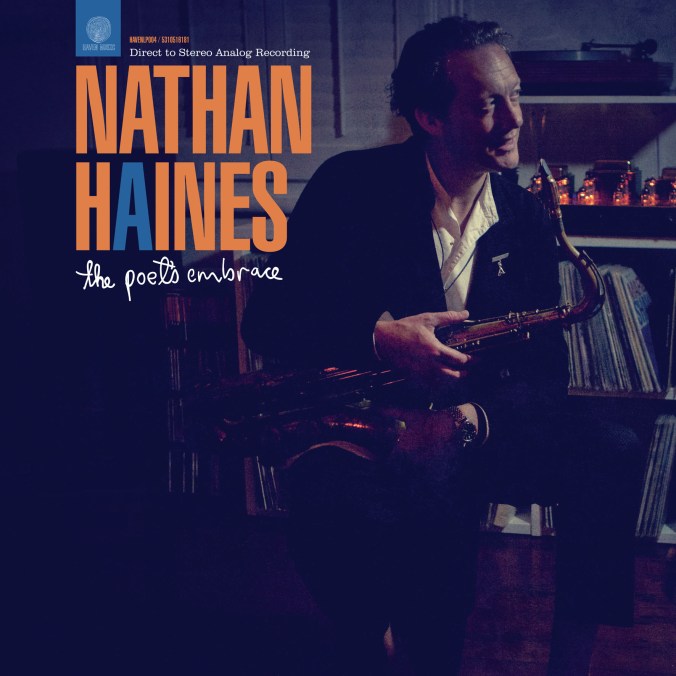
Nathan Haines ‘Poets Embrace’ reprise

Nathan, Ben, & Steve

Last week saw the Nathan Haines Fourtet return to the CJC with an altered line-up.  Alain Koetsier the former drummer is now running a language school in China and Thomas Botting has packed up his bass and moved to Australia.   Above all we knew that this would also be the last time that we would see Nathan for while as he moves back to the UK in July.

In place of the departed musicians we heard Stephen Thomas on drums and Ben Turua on bass.    There had also been some changes made in the club configuration and it was surprising how the rearrangement of furniture subtly altered the sound.    The sight lines were also greatly improved for those standing along the bar and near to the entrance.     I have heard this material at four different gigs now, but for accessibility and quality of sound this gig worked the best for me.  It was great to be able to watch Kevin Field at work as the piano was no longer obscured by the bar.

Kevin Field

Those of us who have been listening to the ‘Poets Embrace’ album for months knew the material backwards, but with new personnel, such keen improvisers and an extremely enthusiastic audience we were always going to get something different.  We did.

I like every track on the album but if pushed I would single out ‘Ancestral Dance’ as a favourite.  The version on the night was blistering and it captured the drive and ethos of the band perfectly.   As Nathan mines deeper into this material he constantly finds new ideas and it has been a real privilege to watch this project grow from its inception to this final CJC gig three-quarters of a year later.

This album has achieved a rare feat in New Zealand.   It rose to number three on the best-selling album list and tracks from the album rocketed up the charts to unprecedented heights.  To those of us who have rated the album highly this has not been surprising, but here’s the interesting thing.  This is no-holds-barred model jazz of the sort that came out on the Impulse Label.

Younger listeners found this no barrier and embraced it whole heartedly, which was evidenced by the age of the audience at the gigs.   Nathan has always had a diverse following, but this journey took us to a new place in our Kiwi Jazz journey.  For that he deserves our deepest respect and we wish him the best as he returns to London.   This era that is so faithfully evoked was the high water-mark of analogue sound and the warmth and glow is evident in the recording (see earlier blogs on Jazz Local 32 for the methodology of ‘The Poets Embrace’ recording).

An undoubted highlight of the evening was the tenor battle between Nathan and Roger Manins.   It was our own version of the Sony Stitt and Gene Ammons tenor sessions.   The crowds whooped in delight as this full-throated exchange occurred.   It was a night never to be forgotten.

The clip I have included here was filmed in the weeks before Alain left for China and so Stephen is not yet in the band.  The lineup on the night was Nathan Haines (tenor sax), Kevin Field (piano), Ben Turua (bass), Stephen Thomas (drums) – guest Roger Manins (tenor sax).

Matt Steele Trio

Matt Steele at the Steinway

About a year ago I was at a gig when my attention was drawn to a young pianist.   I soon learned that his name was Matt Steele and I wrote it down in a notebook; knowing that he would be one to watch.  As the months rolled by I would occasionally bump into him in the CJC Jazz Club or see him playing piano at the late night CJC Jam Sessions.

I had a strong feeling even then that he would develop into a really good pianist and my instincts were right.  At that time he was probably a first year Jazz Studies student, but now in the midpoint of his second year, we are seeing a mature and confident performer emerge.  He has the talent, taste and commitment to go where ever he wants.

Jarad Desvaux de Marigny

While having chops is an obvious advantage there are other subtler factors which impress discerning listeners.  Matt can demonstrate a strong two-handed swinging-approach when called for, but it is his lightness of touch and his awareness of space that impresses most.   He has grasped the most important lesson of all and that is what to leave out.

Matt attends the University of Auckland Jazz Studies course and the tuition that he receives from Kevin Field is obviously yielding dividends.

Eamon Edmunson-Wells

On the 23rd of May Matt appeared as part of the Lewis Eady Emerging Talent series, which has a strong classical focus and doesn’t generally include a slot for jazz pianists.  They could not have chosen better than Matt as his playing was superb and the repertoire was perfectly suited to the occasion.

The program featured several works by the Polish Jazz trumpeter Tomasz Stanko and his wonder-kind pianist Marcin Wasilewski.  I was extremely pleased to see these masterpieces of modern Jazz included.  There is a real space for performing this material and there is not nearly enough of it.   Matt played some of his own compositions and they fitted in beside the Stanko, Bjork, Wasilewski, Kuhn and Carmichael perfectly.

It was also an added bonus that a lovely Steinway piano was available for the performance.

The clip below is from the Lewis Eady performance.  The number was composed by Bjork and played by Marcin Wasilewski on his album titled ‘Trio” (ECM).   Matt’s interpretation here is impressive.  I must also praise the sensitive drumming and great bass lines.  we should be under no illusion; pieces like this are difficult to execute.   Unlike a fast burner everything is revealed.   There were brave choices in the program but it worked extremely well.

I had not seen Eamon and Jared before but I will watch for them in future.    This trio belongs together as their awareness of what is required of each other is highly developed.  I urge everyone to check them out.    Chelsea Prastiti joined them for one number and that was also great.

Alain Koetsier a top class drummer saw the clip and emailed me the following: “great stuff all round and very subtle drumming”.

Eamon, Matt, Chelsea & Jared

The Chelsea Prastiti Septet

Chelsea

There are a surprising number of good Jazz musicians living in New Zealand and that is why the CJC is able to provide a varied and interesting programme at the club.  With Roger Manins as programme director the quality of the music is consistently high.  I may have come to expect that, but I can still be pleasantly surprised.

Chelsea Prastiti is studying Jazz at the University of Auckland and I have heard her sing once or twice before.   I knew that she was good but what took me by surprise was just how good.   This was not your routine standards programme but fresh and original Jazz singing at the highest level.   It was the sort of programme that a Sheila Jordan or a Norma Winstone might have embarked upon and in spite of the risks it was perfectly executed.

Matt Steele

Matt Steele is a pianist I enjoy greatly and he certainly justified his place in the band on this night.  Matt is in his third year and each time I see him play he gets better and better. His extended solo on ‘Bells’ was extraordinary and I cursed the gods for allowing my HD video tape to run out just before that.

Callum Passells was also in great form and he showed us again why he is so well-regarded as a musician.  His alto needed little coaxing as he worked the changes and the ideas flowed in happy succession.  Any band with Callum in can count itself lucky.

The band members were; Chelsea Prastiti (leader, vocals, arranger, composer), Callum Passells (alto sax), Matt Steele (piano), Elizabeth Stokes (Trumpet, Flugal), Asher Truppman Lattie (tenor sax), Eamon Edmunson-Wells (bass), Jared Desvaux de Marigny (drums).

Chelsea had arranged the numbers in the set and five of the songs were originals composed by her.  I will mention three numbers in particular as the contrast between these illustrates how well thought-out the programme was.  Second in the set was ‘Bells’ ( C Prastiti) and it was mind-blowing.   The band blew like crazy and each band member seemed to urge the others to greater heights.  Chelsea, Matt and Callum excelled themselves .   This is one of Chelsea’s compositions and it had all of the elements of great Jazz contained within its structure.   A tight arrangement, harmonic inventiveness, room for hard blowing and a structure that lent itself to out-improvisation.  I was standing near to Caroline (who teaches her at the University) and after the number we looked at each other in disbelief.   Even in the subdued lighting I could see tears in her eyes.

Callum Passells

The fourth number was a skillful arrangement of Maurice Ravel‘s.  The airy – ‘La Vallee Des Cloches’.   This was a fully arranged piece and with vocalese in the mix it was the perfect counterweight to what had preceded it.   Drums, bass, piano, voice, alto sax, tenor sax and fugal horn in perfect concert.

It was the last tune that had us all wishing that the music would never stop.  The composition was once again by Chelsea and called ‘Santa Muerte’ (the Mexican ‘Saint Death‘).    It  immediately brought to mind the madness and the wild beauty that is Mexico.    A hint of mariachi and a lot of jazz chops were on display.    I have included that as a You Tube Clip.

That a student so perfectly executed such difficult and exciting material is breathtaking – more please Chelsea and soon.

The ‘Troubles’ – John Rae & Lucien Johnson interview

The Troubles Nonet

This e-interview was conducted over the 7th and 8th May 2012 – interviewer John Fenton for Jazz Local 32.    Those interviewed were John Rae (drummer, composer, arranger) and Lucien Johnson (alto & soprano saxophones, flute, composer, arranger).  ‘The Troubles’ is out on ‘Rattle Records‘ and was supported by Creative New Zealand.

Question: Time and place are important to both artists and audience and the interplay between them. I know that Wellington’s ‘Happy Bar’ has been a place to hear free improvised and experimental music for some time. The location and the vibe seem to be connected in this recording?

Lucien: I would say that Happy has been a largely supportive place and it’s nice to play on a stage, which is quite rare for jazz gigs in Wellington. Other than that though, since Happy stopped being a musician run place and turned into a business the vibe wasn’t quite the same – except for our Sunday nights! John may see things differently as he didn’t know it before, but I would say that any place that we have the capacity to virtually take over for the night we would see the same result. (A regular crowd of 50-80 enthusiastic and attentive listeners).

John Rae: All the above are true. Time and place are important. I’d been playing at Happy since I arrived in Wellington three years ago as the composer in residence at Victoria University and The Troubles are a part of a lineage. If there had been no Happy, Lucian wouldn’t have sat in with the group I was playing with, I may not have met Patrick, Dan or any of the other musicians who now make up The Troubles. But things move on. We now have another regular gig at Meow in Wellington and it’s going fantastically well. On a wider note, in Scotland we had a similar gig called Henry’s that ended up being an art’s council funded venue for jazz. We all know the financial difficulties of running a jazz gig and it is shameful that we have no problem funding classical venues to the tune of millions of dollars but can’t find what would be relative peanuts in comparison to support a jazz venue!

Question: While comparisons can be odious I was put in mind of an iconic and (at the time) controversial album that came out in 1969 “The Music Liberation Orchestra” Charlie Haden. Is that a fair comparison?

Lucien: I’m a big fan of the Liberation Music Orchestra, and the latter-day “Dream Keeper” is a personal favourite. I don’t know how aware John is of it though.

John Rae: It’s a wonderful comparison but purely accidental….

Question: You have no Carla Bley or Sam Browne on chordal instruments. Was that deliberate or happenstance?

Lucien: It was definitely a conscious decision. For a start there are no pianos at any venues in Wellington and we didn’t feel that there was anyone on piano or guitar who quite fit the bill anyway. We thought it would be more fun to have the strings acting as harmony players and/or have more open improvisations. I have avoided chordal instruments in my acoustic jazz groups except when I play with Jonathan Crayford.

John Rae: Yes it is. We like the freedom of not having a fixed harmonic instrument like guitar or piano.

Question: With a Nonet the sound palette and textures can have a big band feel. I sense that there has been serious writing and arranging done here. Is that my imagination or are there some well-arranged charts involved?

Lucien: There is very precise notation going on most of the time. The illusion of anarchy is due to familiarity and comfort with the material and the group.

John Rae: Lucian and I put a lot of thought into the writing. Personally I like my music to have a life of its own after my initial bit. So it’s important to write music that has an opportunity to breath and grow the more the musicians understand it. Or in other words, to treat the music with the contempt it deserves!

Question: How much of what we hear is free or changes based improvisation?

Lucien: A mixture, although when it’s free there is usually a tonal center present.

John Rae: A bit of both. I like musicians to dictate their own harmonic structures whilst soloing. Not always though and I have written tunes with changes but I hope that the improvisational aspects of my music allow the soloist to expand the harmonic possibilities as far or as simple as they want.

Question: I loved the way the band hinted at serious political topics but then appeared to instill humour and even an element is piss taking. Can you comment on that?

Lucien: John is quite political in this sense and contributes much of the humour (although musically Anthony’s percussion also adds this element). I prefer to leave both these things alone in music, without being extremely serious about it either. That’s just the way the group went with John’s personality present and I’m up for a laugh.

John Rae: I am a political animal but it’s important for me that people enjoy themselves whilst hearing my music. I’ve been around and played with ‘serious’ musicians most of my life and to be honest they now bore the pants of me. That’s not to say what I’m doing isn’t serious. It’s just that I’m over all the bullshit and let’s face it, in the current political climate if you didn’t laugh you’d cry.

Question: Is there anything you want to add?

John Rae: I love the jazz community here in New Zealand. It has some wonderful musicians and a lot going for it. On the other hand though it is really shit. No one seems to be asking the big questions. There is a lack of co-ordination, organization and vision. I look at what’s going on in Scotland and can’t help but compare it to here. No national jazz orchestra, no national jazz federation, jazz touring schemes, international profile etc and yet you can’t move for degree courses! As Niels-Henning Ørsted Pedersen the Danish jazz bassist said many years ago with regard to the Danish jazz scene, ‘it won’t improve until we stop making excuses’. The life of a jazz musician in NZ is incredibly hard. I believe it needn’t be soooo hard. It’s never going to be easy but through vision and togetherness we could make the living condition for jazz musicians a lot better. Ask any of the salaried brothers playing in any of the state funded orchestras if it’s possible!!!! I plan to have a gathering later this year of jazz musicians and people with an interest in the music to discuss some of the above and come out of it with a strategy on how to move the New Zealand Jazz scene forward. All together for the good fight….

Thanks guys that was an incredibly worthwhile exercise.

John Fenton – Jazz Local 32

‘The Troubles’ – Review

This is part one of two posts on ‘The Troubles’; An interview with John Rae and Lucien Johnson to follow in a day.

When I received a brief email from Steve at Rattle Records informing me that he was sending me two very interesting disks I sensed that he was excited about what was on offer.  When the tightly wrapped package arrived I wrestled ‘The Troubles’ from its box.  Putting it straight on, I was stunned by what I heard and I played it through twice, letting the sound wash over me.  Steve was right; this was special.

Jazz is supposed to be fresh and to convey the ‘sound of surprise’ and this was bloody surprising.  It immediately put me in mind of ‘The Liberation Music Orchestra’ or even Charles Mingus in the various incarnations of those bands.  Having said that this is very much a New Zealand sound.

The Troubles is performed by a Nonet with the instrumentation hinting at the albums context.  Adding a texture to the music; its wild but perfectly placed brush strokes marking it apart.

There is a string section of violin, cello and viola (Tristan Carter, Andrew Filmer, Charley Davenport) which contrasts nicely with the winds and reeds.  Lucien Johnson plays tenor sax, soprano and flute – Nick Van Dijk doubles on trumpet and trombone while Daniel Yeabsley plays alto, baritone and clarinet.   Add to the above the insistent drumming and shouts of John Rae, the bass of Patrick Bleakley and especially the percussion of Anthony Donaldson and you have a band that is capable of much.

The band had been playing at ‘Happy’ (a Wellington Bar renowned for experimental music) for some time and for a number of reasons this proved to be serendipitous.  What came together during those months is perfectly captured here.  This was recorded on one particular night and due to the exceptional musicianship of the band, the skillful writing and connectedness of everyone involved (including the loyal audience) we have a very special album.

Against the odds New Zealand Jazz is rapidly becoming identifiable as a separate and interesting entity.  Perhaps a subset of the Australasian-Pacific Jazz sound.  On the best Kiwi albums and in the clubs I hear this certain something and I want to confront the musical establishment and say, “Are you freakin deaf…can’t you hear this”?    This thing is ours, it can be wonderful and it is certainly worthy of proper attention.  New Zealand music is very diverse and this is a healthy thing.   Original and exciting bands are continually being formed, but in order for this vibrancy and originality to flourish the music must be better supported.     Here is an album that exemplifies this diversity and it says something unique about us and our place in a sometimes troubled world .

Support the band, buy the album but above all relax and enjoy it.  I defy anyone to dislike this roller-coaster ride through the worlds troubled spots.  It is a journey undertaken with deep humanity but also with a liberal helping of humour throughout.   A warm echo derived from the cacophony about us and filtered through an anarchic but sharply focussed Kiwi lens.

Purchase from Marbecks, JB HiFi, Real Groovy, or leading record stores – otherwise purchase directly from Rattle Records.

‘Dr Dog’ takes the Jazz Pulse of Auckland

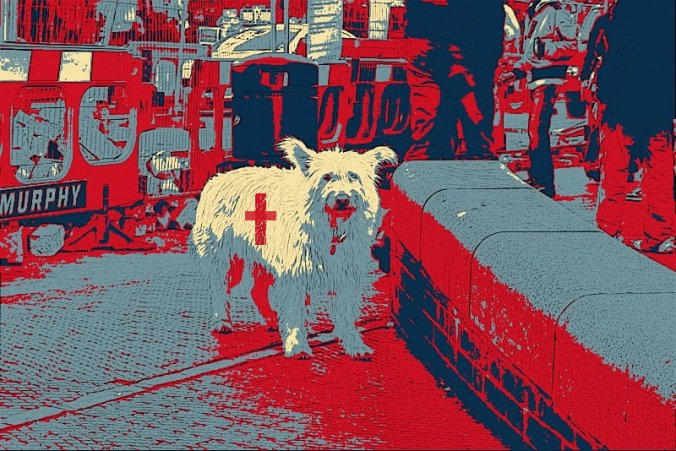
Animal lovers, children and Jazzers alike were delighted to learn that the ‘Dr Dog’ Jazz quartet would be performing in the Creative Jazz Club (CJC). This was somewhat of a dream band as it featured ‘I cani popolari‘ from the halls of academia; Roger Manins (tenor), Kevin Field (piano, Rhodes), Oli Holland (Bass) and Ron Samsom (drums).

The band having no clear leaders could follow their noses, but in spite of that they worked as one throughout the evening. In Jazz-dog years they represented around 317.4 years of experience and so their ability to act in a disciplined manner was hardly surprising. They took their lead from each other.

Roger had managed to sniff out the microphone first and so the job of introducing the band members and the numbers fell to him. An endless stream of puns and dog stories followed and at one point some frank observations on the variability of dog intelligence risked causing serious offense to Afghan owners. As none appeared to be present the crises was averted and the dog related compositions flowed in happy succession.

If anyone thought this to be a frivolous exercise, they should be disabused of that notion. This was a band which had ‘chops’ (OK I had to put that in), the ability to delight a crowd and a string of intelligent compositions to shine over.

It is expected that the canine metaphors and jokes will continue to dog this band for some years; peaking around 2014 before eventually subsiding. As a departure from the normal CD prize there was a meat raffle. A cat named Jason took that prize.

The music that we heard was so good that a few of us are going to lay a trail of sausages; leading from the Auckland University School of Music Jazz Programme to the nearest recording studio (Yorkie Street studios or Ratter Records).

In researching this Canine Jazz phenomena I recalled another dog band which had performed at the CJC . Guitarist Neil Watson’s ‘Zen Dogs’ performed at the club about a year ago. When I ran into Neil months later I asked him if ‘Zen Dogs’ would be performing again soon. He answered in that enigmatic way of all Zen masters. “Oh that was a concept band”. “But will they be performing again”, I asked?. “No the band was literally a concept – not an actual band”. Confused and pondering the meaning of this Koan, I could not help wondering. Had I imagined the entire gig?

‘Dr Dog’ on the other hand is a band grounded in realty. A cartoon dog band entirely relevant to our times.

Footnotes: I have used sepia photographs to show respect, as they add a certain gravitas befitting the age and experience of the band. All photos are mine including ‘Dr Dog’ who was caught in Chelsea London and subjected to Photoshop without his permission. You will be pleased to learn that I managed to avoid using the following: barking up the wrong tree, woofers and Roger was a wag.

Kevin Field – ‘Field of Vision’ gig & album

Some die-hard Jazz fans complain that the modern jazz scene doesn’t produce enough music that sounds like that of the ‘classic era’.    This mythical era that they remember so fondly didn’t exist in the way they thought.  They forget that Louis Armstrong accused Dizzy Gillespie of playing ‘Chinese music’ and that Bill Evans was accused of not swinging.

The Jazz in any defined era has always sounded surprisingly different from the music that preceded it.   Jim Hall circa 2012 sounds nothing like the Jim Hall of the early ‘Pacific Jazz’ Era and why should he.   This is not a music to be set in aspic or to be kept in a hermetically sealed container to protect it from impurities.  Jazz is not a fragile dying art form but a vibrant improvised restless music that lives perpetually in the now.  As Whitney Balliett so famously said it is ‘the sound of surprise’.

Kevin Fields new album illustrates this premise perfectly. 

On Wednesday 25th April the CJC (Creative Jazz Club of Aotearoa) featured pianist Kevin Field as he promoted his ‘Field of Vision’ album.   Being a fan of Kevin’s, I had been quick to obtain a copy of the album and I was delighted by what I heard.  This was music with a deep groove and an unmistakable pulse.  The banks of synthesizers, the singers and the electric bass lines had given it a distinct Soul Jazz context.  Out of this came a series of mesmerizing grooves, which engulfed us in a way that made definitions quite meaningless.  As the band played at the CJC we sunk happily into a warm vibe that made the Autumn night seem very far away.  

The club gig kicked off with ‘See Happen’; a number that drew us deeper and deeper into a vamp while figures on the piano created a pleasing filigree by way of contrast.   The next number ‘imaginary friend’, opened the vistas wider.  On the album this was especially noticeable as the Steinway Grand, Fender Rhodes, Prophet T8 and Roland Jupiter 8 worked beautifully over the four piece string section

It had an almost cinematic feel to it and I could not help but be reminded of the work of Creed Taylor’s CTI label.  Instead of CTI’s Don Sebesky this album had utilised the services of Wayne Senior who arranged the string section.   The first airing of this material had been in the Kenneth Myers Centre and it was therefore fitting that Wayne Senior had been involved as his connection with the KMC goes back a long way.

The album was produced by Nathan Haines and his handiwork is evident throughout.  He plays alto flute, an ARP synth and is credited as co-composer on 4 of the 11 numbers.  The rest of the numbers were written by Kevin and they are probably his best work to date.

The band that Kevin brought to the CJC was a smaller unit than on the album and that is just as well because the club was packed.  A small club has a very different sound to a recording studio and the warmth and intimacy is the obvious benefit of being in that space.   When you buy the disk (and you should) you will notice a broader sound palette, a bigger line up and a crisper sound.  Both experiences are complimentary and anyone attending who has also purchased the album will count themselves lucky.  

Stephen Thomas had been brought in as drummer for the CJC gig and he had sweetened the deal by a congratulatory email that he sent to Kevin after the initial release.   “Man those were some sick grooves” he had messaged.  Kevin immediately confirmed him as right drummer for the gig.  Stephen is a terrific drummer and the choice was a good one.

Once again we saw Dixon Nacey perform and as always we watched open-mouthed.   This man is so good that it is frightening.  Completing the lineup were guests; Nathan Haines, Marjan Gorgani and Clo Chaperon (the latter had great soul voices).   All added something essential to the rich mix and in Nathan’s case this is only to be expected.

I would also like to mention Karika Turua.  He played a big Fender bass and his grooves although loud, were as big as his guitar.

There were a few quieter piano passages as well and on these we hear the crisp touch, the harmonic exploration and the crunched chords that have become so familiar to us in Kevin’s playing.  Kevin has many fans in New Zealand and most will have heard his previous piano trio album ‘Irony’ (Rattle Records).  Although different I would regard both as essential purchases as we follow Kevin Fields career.

The CJC band was: Kevin Field (Leader, Yamaha piano, Fender Rhodes, Synth) – Dixon Nacey (guitar) – Stephen Thomas (drums) – Karika Turua (bass) – Marjan Gorgani / Clo Chaperon (vocals) – guest Nathan Haines (alto flute, soprano sax).

On the album were: Kevin Field (Leader, Steinway piano, Fender Rhodes, Roland Jupiter 8, ARP Odyssey,Prophet T8  ) – Nathan Haines (ARP Odyssey, alto flute) – Dixon Nacey (guitar) – Joel Haines (guitar) – Mickey Ututaonga (drums) – Migual Fuentes (percussion) – Karika Turua (bass) – Bex Nabouta/ Marjan Gorgani/Kevin Mark Trail (vocals) – Cherie Matheson (backing vocals) – Miranda Adams/Justine Cormack (violins) – Robert Ashworth Viola) – Ashley Brown (Cello) – Chris Cox – (drum programming).

This album can be purchased in any major record store or for more information contact ‘Haven Music’ a division of ‘Warners Music NZ’.

All photographs by Peter Koopman – Gig venue/CJC Jazz club Auckland

Alan Brown@CJC (KMC Live launch)- C3 organ/guitar/drums

Alan Brown & C3

When ever Alan Brown brings a band to the CJC, the club fills to capacity.  Alan is well-known, deeply respected and he swings like crazy.  The ‘KMC Live’ release was always going to be a significant musical occasion, but on this night the sparks of inspiration flew between the band members and we witnessed something transcendent .  This was an incendiary gig that lifted our spirits; causing us to tap our feet uncontrollably and for some, to dance with abandon in the flickering shadows.   Alan had arrived earlier in the day, because dragging a heavy C3 organ down into a basement presented challenges.   The patience of Job and the strength of Hercules are required.  These wonderful organs with their bass pedals, wood-paneled console and double keyboard have probably caused preachers to swear when moving then.   It would not surprise me if some elected to rebuild the church round the organ rather than drag it up front.  It is our gain entirely that Alan achieved the translocation.   Hearing the wonderful bluesy phrases flow effortlessly from his fingers as they flew over the keyboards and seeing his feet pedaling out compelling bass lines was a rare treat.

Josh Sorenson

Dixon Nacey is without a shadow of doubt one of the best guitarists in New Zealand and it is a joy to watch him solo and interact with the other musicians.  During solos he will often close his eyes while weighing up the next step and his facial expressions reveal his commitment to the process as he dives ever deeper into the tune.  It is also a revelation to watch him in call and response situations.    When he and Alan are batting each other ideas, this often turns into good-natured un-armed combat.    Dixon watches intently while waiting for a challenge.  Occasionally calling to the others as if to say, “do your worst”.  When a musical phrase is tossed into the air he will smile gleefully and pounce on it, turning it about until it is fashioned into a thing of his own.  Josh Sorenson proved to be the perfect groove drummer as he locked down the beat and pulled the unit together.    This type of drumming requires specialist skills and Josh most certainly possesses these.

Tonight was the launch of Alan’s album ‘Live at the KMC’.   This was recorded at the Kenneth Meyers Centre back in September 2010 and choice of venue was fortuitous.    The venue is of historic importance as it has nurtured radio and TV in its infancy.    It is now part of the Auckland University School of Music (Creative Arts Section).  An acoustic gem.  Alan had recorded this gig thinking only that it could prove useful as a private resource.   One listen convinced him that he needed to release the material at some future date.

The set list at the CJC gig (and on the album) was a mix of Alan’s original tunes with three standards thrown in.   The standards  were ‘Maiden Voyage‘(Herbie Hancock) and ‘All Blues‘ (Miles Davis) and ‘Chank’ (John Scofield) – all arranged by Alan.   The rest of Alan’s compositions were; ‘Mr Raven’ (from the Blue Train days), ‘Charlie’s Here’, ‘Shades of Blue’, ‘In Fluence’, ‘Slight Return’, ‘Inciteful’.    ‘Shades of Blue’ was the best known of the originals while Alan’s interpretation of ‘Maiden Voyage’ was delightfully brooding and moody.  It was a nice take on this well-loved tune.  If I had to choose which of the tunes I liked best however I would probably say ‘Inciteful’.   This was played in extended form and it teased every ounce of inventiveness and musicianship out of the band.

On this night the stream of ideas kept coming, as fresh musical vistas were revealed.   Each one holding us in suspense until the next gem appeared.  This was organ/guitar/drum music at its best; intelligent, highly charged and full of joyous abandon.  A groove jazz trio of the sort you might find in East Philly or Montreal had been formed on our own doorstep.  This gig took place at the Creative Jazz Club (CJC) in Auckland New Zealand on the 18th April 2012

Dixon Nacey

Craig Walters/Mike Booth Project @ the CJC in Auckland

Craig Walters

During Jazz Week it was appropriate that the Creative Jazz Club (CJC) featured a band that was in some ways a metaphor for the greater Auckland scene.   Jazz week is about Jazz in our neighborhoods but it also about how we connect to the wider Jazz community.

  The co-leader of this nights band, Craig Walters has lived in Australia since 1985.    Craig has an impressive background in Jazz, as he trained at the Berklee School of Music before going on the road as an in demand tenor player.  He has performed world-wide and with top rated acts.  Over the years he has earned a place as one of Australia’s foremost tenor players.   Australia claims him because he has lived and worked there for the last 27 years, but he was actually born in New Zealand.   
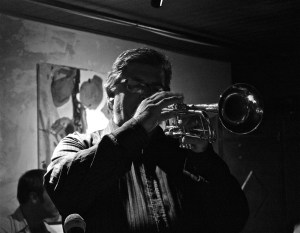
Mike Booth (trumpet player & co-leader) has a story that in some ways parallels Craig’s because he also travelled overseas and ended up working in the European Jazz scene for a decade or more.  Unlike Craig he returned to New Zealand a few years ago and since then he has been busy teaching, gigging and running a big band in Auckland.

The band was completed by a local rhythm section, Phil Broadhurst (piano), Oli Holland (bass) and Alain Koetsier (drums).   With this rhythm section in your corner the sound is going to be great and the band will back you up exactly when you want them to.  They are among our best.  As for Craig Walters and Mike Booth, they have known each other for years and this collaboration is merely an extension of their earlier projects.

Why do I consider this band to be a metaphor for the Auckland Jazz scene?  Craig Walters was born here and started playing tenor here.   I am fairly certain that there were no Jazz Schools in the city then and so he eventually ended up in the USA where he studied at the Berklee School of Music.   This is roughly the route that Mike Nock , Alan Broadbent and Matt Penman took (stellar musicians who left the Auckland scene to conquer the world).  This is what generally happens to our best and brightest but they do return.
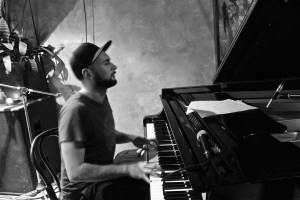
The pianist Phil Broadhurst is a stalwart of the NZ scene but he was born in the UK and so his story is the reverse of the above.  Oli Holland is also overseas born, as he was an established bass player in Germany before migrating to NZ.  Lastly there is Alain Koetsier who is the youngest in the band.  This was his last gig in Auckland as he departs for foreign shores in two weeks.  Such is the ebb and flow of the New Zealand Jazz scene but in many ways this disruption brings benefits.  Almost all of the musicians that we lose to Australia or to the USA eventually return and they enrich us with what they bring back.  Now that we have two Jazz schools and a youthful vibrant Jazz scene in the city (and a great club), the future is promising.  I also have no doubt that the departing musicians take a special something with them which is Auckland.

Craig and Mikes band were great and as long as these ex-pat to local match ups keep occurring we will be just fine.

This gig occurred at the Creative Jazz Club (CJC)  in Auckland, New Zealand on the 11th April 2012.  Remember to keep visiting the Jazz Journalists Association (JJA) pages during the next few months as there are a number of activities that will include us. These are; the Jazz week Blogathon, International Jazz day 30th April – Jazz heroes announcement, JJA Awards in June – Auckland Satellite party.
Dan Kennedy Quintet @ CJC – JJA Jazz Week Blogathon entry

Dan Kennedy

Greetings to the world Jazz community on USA Jazz week from Auckland New Zealand,

This is snapshot of a gig held at the CJC Jazz club in Auckland just over a week ago
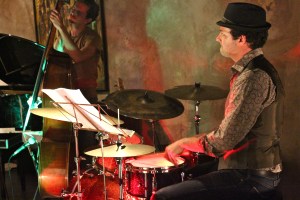
I have known Dan Kennedy for some time now and I have always enjoyed his propulsive energetic drumming.    He has played at the CJC on a number of occasions and most often as drummer for the late night jam sessions.  Dan is popular on the New Zealand scene and he has played beside some prestigious visiting artists and top flight locals.   On this night he brought his own quintet to the CJC for a gig, where they entertained the audience with a mix of originals and lessor known but intriguing Jazz tunes by artists like Chris Potter and Dave Douglas.
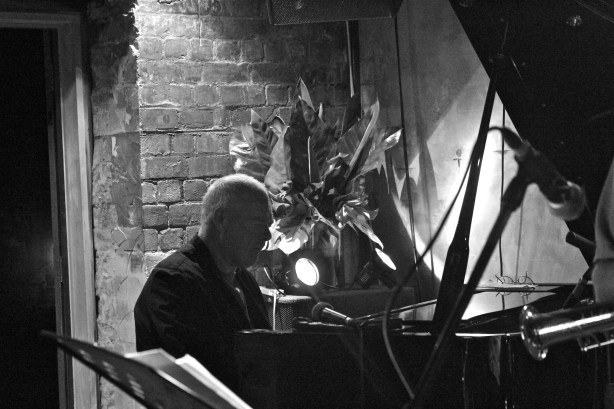
I like to see a quintet playing well-arranged heads and this band had put together a number of well crafted vehicles.   There were two numbers composed by Dan (leader and drummer), but the majority of the originals were composed and arranged by Finn Scholes (trumpet).   This was a varied and original program and it created nice contrasts.    They are a relatively young band with the oldest member being Cam Allen at 32 years.
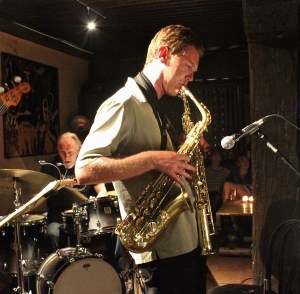
Cam and Finn

Finn Scholes & Andy Smith

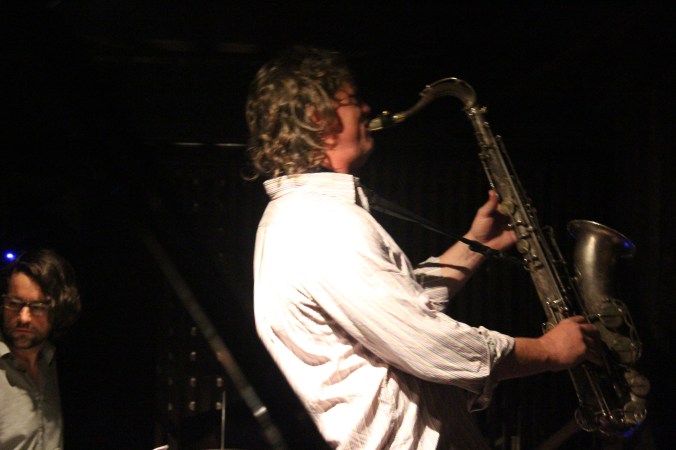
Cam Allen (Tenor) is an interesting musician, having played in New York and at other offshore locations.    His maturity of style was evident from the start and like many of our good tenor men he does not hold back during solos.   He can excoriate the audience or woo them with a set of ballad phrases and he is obviously a good reader as his playing on the head and out-chorus is always tight.

Andy Smith (guitar) has experienced a steady rise in popularity during the last year and it is no wonder.    His sound is pleasing and often rock inflected.    While the lines are pure jazz he uses the vocabulary of his day and this is a common trend with many younger guitarists.    Guitarists like Lage Lund or Mike Moreno are 100% Jazz but they are not afraid of taking a different route to reach their destination.    Andy’s tenure in the Alan Brown band has done him no harm at all and a good way to sample his playing is to locate a copy of Alan’s ‘Between the Spaces Album’ album.  Read my review of this album).  https://jon4jaz.wordpress.com/2011/10/09/alan-brown-between-the-spaces-cjc/

I knew who Finn Scholes (trumpet) was, but I had not previously heard him play.  I am pleased that this omission has been remedied.  He has a commanding presence on the band-stand and he can throw in the odd valve slur and muted growl when required.   I hope that he comes down to club again as I am keen to hear more of him.

The electric bass was played by Cass Mitchell and she showed her chops and more importantly her good taste as she played through the sets.   While she did not do too many solo’s, she never-the-less delivered the bass lines like a veteran.   Electric bass players are often tempted to use ‘loud’ as their default volume level but Cass stayed exactly where she should be in the mix.   At times it was hard to believe that she was not playing an upright bass so smooth were her lines.

Dan told the obligatory funny stories from the bandstand and his account of how he came to write ‘The Bouncer’ was a classic.    “I often struggle to write tunes quickly” said Dan, “but after being beaten up by a night club bouncer for no good reason I managed to write this peaceful ballad in no time flat, go figure”.

Cass Mitchel

I also liked ‘Awakening’ by Andy, ‘Pleasure Arp’ by Finn (“I made him change the title just before the gig”, explained Dan, “because the original sounded too bloody soppy”).  The one genuine standard was ‘Oliloqui Valley’ by Herbie Hancock.  They certainly did this tune justice and it fitted in mid-set as if it had always belonged there.   Tune placement is important if the flow of a gig is to be maintained.   It was Finn Scholes tune “Fast Swing’ that had me on the edge of my seat.   To say that they stretched out and blew hard would be an understatement.    Dan is soon to head to Australia and we wish him well (a little begrudgingly).    We wish he would stay, but that is how it works between us and Australia.   We loan them some of our best musicians and they do well there; only to return home and dazzle us at regular intervals.    The stolen generation I call them. but they invariably make us proud.

The Dan Kennedy Band are: Dan Kennedy (drums), Finn Scholes (trumpet), Cam Allen (tenor saxophone), Andy Smith (guitar), Cass Mitchell (electric bass).    The gig took place at the CJC Jazz club on Wednesday 4th April 2012.  To connect with the CJC gigs guide  http://www.creativejazzclub.co.nz/

Important Note:  This post is to feed into the Jazz Journalists Association 2012 Awards program.   Auckland is now part of a world-wide ‘blogathon’ occurring this week.   The program kick’s off today because it is the start of USA Mayoral designated Jazz Week.   Please visit the website of the JJA Awards Page and view the ongoing activities.    On the UNESCO designated World Jazz Day (which is the 30th April), we will be announcing the Jazz Heroes candidates from around the world.

NZ will be featured and I can’t praise the JJA highly enough for making a real effort to include Auckland and New Zealand in its scheduled events.    As a professional member I find the organisation to be helpful and incredibly supportive of what we do.    This is just the beginning Jazzers, as the world-wide outreach (connecting us to New York and them-to-us) can only get better as technology assists us in reducing the tyranny of distance.

The judging panel has also been meeting via a closed group FB page and the nominees for best artists are now posted on the Awards Page.    Along with other professional members I will be part of the final judging panel that determines the category winners.   That will be announced at a party which is to be held at a top venue in New York.    The good news for us is that Auckland Jazz fans will be participating through a Satellite Party.

That will be held in June and the details will be circulated through the CJC Jazz Club and the Jazz Journalists Association Awards page.  If you look through the Jazz Photography page you will notice a pic of our own Thomas Botting glancing lovingly at the neck of his bass.  I have also submitted a short You Tube doco about 3 nights at the CJC Jazz club.     I will post it at the end of this blog but do visit the JJA site over the next few months:

.  Jazz Journalists Association Announces Nominees for 16th Annual JJA Jazz Awards (theurbanflux.com)

Phil Broadhurst Quartet updated

Phil Broadhurst

I last saw this band at the launch of Phil’s ‘Delayed Reaction’ album.    That was September 25th 2011 and things have moved on apace since than.   For a start the album has had universally good reviews, reasonable airplay and attracted interest from offshore.  For a number of reasons it was bound to do well.  I suspect that the quality of the interpretations and the musicianship of the band clinched the deal.    While a number of well-chosen Petrucciani tunes are featured in the album, it is Phil’s own material that best focuses us on the diminutive masters work.

Oli, Alain & Roger

It is ironic that it has taken someone from the antipodes to put a fine lens on the inner workings of Petrucciani’s music.  Step by step as the material progresses we are granted the most intimate of glimpses.  Guided into a private world that only Phil Broadhurst has been able to reveal. This is the power of Jazz at its best.  Being able to dive deeper into the meaning of a tune as inner forms and colours unfold.   What is already wonderful is somehow made better or revealed afresh.

Petrucciani may have been small in stature but his percussive playing and unusually bold voicings have marked him out as a heavyweight.  His legacy is in fact so strong as to be virtually unassailable.  A few European tribute bands have recycled his compositions but there are few if any sound-a-likes (as happened with Evans).  Phil and the band made no attempt at slavish imitation; they did better than that.  They captured the essence of the music.

I suspect that Phil Broadhurst is one of the worlds foremost authorities on Michel Petrucciani and this is our good fortune.

We heard many of the tunes from the album, such as Phil Broadhurst’s own composition ‘Orange’ and Petrucciani’s  ‘Brazilian like’.   The material had not only been updated but we also heard some new material which Phil had written.  The band was playing up a storm and it was great to see Roger back after a successful trip gigging in Australia.  His tenor is always on fire and Phil and he sparked off each other as the night progressed.  Roger always watches the others carefully during gigs.  He watches them until he is ready to solo.  Then he leans back and takes off like a Titan rocket, leaving an open-mouthed audience in his slipstream.

Roger laying out before he unleashes hellfire

With Alain on drums delivering a flurry of beats, a fiery solo or whispering poetically on brushes the traps could not have been in better hands (he has become a favourite of mine and he will be missed when he goes overseas).  Oli’s playing is always worth hearing and he delivered strong bass lines and gave the band the support they needed.  He had been a little low in the mix for the first few numbers and that is a pity because what he has to say is worth hearing.   Once the sound had been adjusted it was if the jazz universe had suddenly fallen into place.

This was to be the bands last outing before Tauranga.  The group is finalists in the Jazz Tui awards and a play-off will occur Saturday night between The Phil Broadhurst Quartet (Delayed Reaction), The Tim Hopkins Trio (Seven) and the Roger Fox Big Band (Journey Home).  I have heard and reviewed all three bands and I know most of the musicians. This will be a tough call for the judges.

The Band is: Phil Broadhurst (leader, comp, piano), Roger Manins (tenor), Oli Holland (bass), Alain Koetsier (drums).

Callum Passells, trio, quartet, quintet

Callum, Cameron & Adam

A few days ago the CJC presented the Callum Passells group.   Callum is a third year student at the Auckland University School of Music (Jazz Studies) and so are his band mates.  If anyone harboured the briefest thought that this group should be cut some slack on account of age or experience, forget it.   What we saw was a slick act, a great programme and the sort of discipline that generally comes with seasoned performers.   This band did the business and they held us in the palm of their hand throughout.

I had only seen Callum perform a few times; once at a house party and once during a jam season.  Those brief encounters had not been enough for me to form a clear view of his abilities and so I arrived with an open mind and no fixed expectations.   I now recall Roger Manins saying that Callum was a terrific saxophonist and that he had the hunger to succeed.  That should have clued me up.

Cameron

Callum is a very nice altoist and his tone is as sweet or as hard-edged as the tune calls for.  Once in a while I could hear a hint of Cannonball Adderley.  Not a copied lick, but more of a bluesy swagger and the stuttering way that he would burst into a phrase.  During one such moment I must have uttered the word ‘Cannonball’ to myself.  The person sitting next to me suddenly said, “yeah, I heard that too”.

The band was well rehearsed and they had paid attention to the smallest of details including how they presented themselves on the bandstand.  Their programme was quite varied and each number fitted into its place and told its own story.   There were piano-less trio numbers, quartet numbers and quintet numbers.   The tunes were all originals and they were well written.

I have to comment on the quintet arrangements which were simply sublime.  Some of the better arrangers like Marty Paich or Kenny Wheeler could arrange tunes in such a way that smaller ensembles sounded as if they were much bigger.   The advantage of this is that it leaves the listener with a feeling of airiness.  A sense of the space around each instrument.   

When I first heard the quintet I was surprised at how big the sound was.  There were only two horns, Cullam Passells (as) and Liz Stokes (t, fh).   This is the illusion created by good arranging.  Liz Stokes was especially fluent in the second set and a Wheeler-esk slur added colour to the performance.

I have seen Cameron play before and he really stepped up a notch with this gig.  I think that he enjoyed it and it was a challenging workout for bass.  The drummer Adam Tobeck was comfortable throughout and he pushed himself harder in the second half.   A blistering solo earned him his stripes with the CJC audience.

The band member I am most familiar with is Matt Steele.   I have liked his playing from the first time I heard it and he was even better at this gig.   He has a mature style but it is different to many of the pianists I hear as his touch is often light and crisp.   His comping is breathtaking as he urges the soloists to greater heights.  While you are always aware of his right hand soaring in chromatic invention during his solos, his left hand weaves its own chordal magic.  If I needed a single word to describe his playing it would have to be melodic.  

The set list was a work of art in itself.  On the page it read like an Imagist poem by Langston Hughes or William Carlos Williams.

The set list was as follows:

Race-car Red Red Race-car, Molasses, What the Fuck is a Persimmon, Money Grubber, I’ve, So This is What it’s Like,  Magnetic North, Wrack, Candied Carrots, Elysium, Greens Waltz, Up Up Down Down Left Left Right Right AB

The band was in order of appearance – Trio:  Callum Passells (leader, arranger, composer, alto saxophone), Cameron MacArthur (double bass), Adam Tobeck (drums).  Quartet add; Matt Steele (piano), Quintet add: Liz Stokes (trumpet flugal horn).

Callum presided over the night with that easy confidence of a born leader. He told very funny stories (especially the WTF is a Persimmon story) and he encouraged his band in a way that ensured they gave their best.   If that is the calibre of students emerging from the city’s Jazz schools then we are in for an exciting future.   Big ups to the band and especially to Callum.


Frank Gibson – ‘Hardbopmobile’

Frank Gibson Jnr

Frank Gibson Jnr is New Zealand’s best known drummer as he has been playing and teaching for most of his life. He has accompanied numerous artists such as Milt Jackson, Emily Remler, Sonny Stitt, Joe Henderson, Randy Brecker, Slide Hampton, Mike Nock and the list goes on. He has also occupied the drum chair for many of Alan Broadbent’s recordings. Whether laying down sensitive brush work or powering an orchestra, Frank has long been a presence on the scene. He is a seasoned leader and it was in this role that he returned to the CJC with his ‘Hardbopmobile’ band. As leader he was able guide the proceedings without being overly dominant. He trusted his band to do the business and they responded in kind.

The ‘Hardbopmobile’ lineup is: Frank Gibson Jnr (leader, drums), Neil Watson (guitar), Ben Turua (double bass), Cameron Allen (tenor saxophone).

Neil and Frank have been playing together for some time and the ease with which they communicate on the band stand is translated into good musical outcomes. I noticed straight away that Neil was not playing his usual solid-body Fender, but he was stroking chords and runs out of a modern version of the D’Angelo 1947 arch-top. Man it looked beautiful, just lying on the piano during set-up.

The set list was mostly out of the Hardbop songbook but a few earlier placed numbers were tackled as well (‘Boplicity’ – Miles Davis). A spirited Wes Montgomery tune was played early on and Neil negotiated the changes and the octave chords in the best possible way. A straight out imitation would have sounded clichéd, but this was a respectful modern take on a classic sound. Like all gifted guitarists, he is able to negotiate complex tunes with apparent ease; dancing and leaning into the music as he delivers a storm of fresh ideas. This is wonderful to listen to, great to watch and but the very devil to photograph.

Two monk tunes were played: ‘Ask Me Now’ and ‘I Mean You’. This is where the tenor player Cameron Allen took the lead. In the former tune he took an angular approach, unravelling it as improvisers do and then diving deep inside the melody. I should probably have been aware of this tenor player before now, because he is very good. We appear to have a tradition of producing good saxophone players in New Zealand – getting wider recognition for them and finding them enough gigs is the real problem.

A couple of hard bop classics were played; Joe Henderson’s ‘Isotope’ and Horace Silvers ‘Senior Blues’. The band interpreted these tunes in their own way and to hear a ‘Hendrix’ like riff being mixed into ‘Senior Blues’ was as surprising as it was effective. I would also like to mention the bass player Ben Turua here. He took a few solos and above all he swung hard.

D'Angelo Archtop

Alain Koetsier Band @ Finding Kiwi ‘Standards’

I have watched drummer Alain Koetsier perform over the last year and his credentials on the traps are unimpeachable.  Alain is a drummer with a modern feel and it is plain to see why so many of our top Jazz groups utilise him.  This was probably his first outing as leader and he had chosen wisely on two fronts.  His band mates were consummate professionals and their approach to the music was intuitive.  They interacted as if with one mind.  The second thing Alain did well was to select a set list of recent compositions by New Zealand Jazz Musicians.  I liked the concept.

People expect a band to play their own originals but when a set list focuses on a wider spectrum of Kiwi Jazz compositions it feels respectful.  It somehow lifts the tunes to another level of availability; a place of wider appreciation.  Doing this is a good start point in identifying our own ‘standards’ and some of the tunes played could well reach that bench mark.  As the scene continues to mature this will surely happen.

Alain & Dixon

Alain & Dixon

I was pleased to hear two tunes which had impressed me at recent gigs; ‘Dicey Moments’ by Oli Holland and the wonderful ‘Ancestral Dance’ by Nathan Haines.   Both of these new compositions are distinctive, clever and memorable.  Dixon Nacey compositions also catch the attention as he has a knack for locating the right hooks while providing a solid base for improvisation.The first set had contained ‘Bad Lamb’ (Dixon Nacey).    The tune had nice chordal voicings and the way it unfolded led us easily into the heart of the tune.

Another memorable number was ‘Tree Hugger’ by the Auckland-born bass player Matt Penman.   Matt has moved into the upper echelons of Jazz bass, occupying a respected place on the world scene.   Maybe he will return the compliment one day and acquaint North America with a few of the other compositions.

The gig was fun to experience and obviously fun to play as the musicians enjoyment of what they were doing was easy to discern.  Like many Jazz gigs there was a high degree of spontaneity and perhaps this came from being thrown in at the deep end.   Working musicians seldom have a lot of time to rehearse and when confronted by complex charts they appear to relish the prospect.

The musician that I was unfamiliar with was Pete France on tenor.   I know that he has played the CJC before and my friends tell me that they had hoped for his return one day.    His tone is rich and full and his improvised lines meaningful.   He is also relaxed on the bandstand and when you consider the calibre of his band mates this ease of manner speaks volumes.

Oli Holland

The band featured Oli Holland on bass.  His approach and focus drew you in inexorably as he demonstrated chops, impeccable timing and melodic invention.  His skills are considerable, as he can move from contrapuntal walking bass to melodic invention in an eye blink.   Oli gave his best, but then he always dies.

Pete France & Oli's hand

Lastly I come to Dixon Nacey.  His playing is widely appreciated throughout the NZ Jazz scene. As good as he is, he always strives to do better.   His compositions sing to us and his chordal work and rapidly executed lines astound.    It is good to be in a town where this man is playing and long may it continue.

Well done Alain – more please.

Nathan Haines – ‘The Poets Embrace’

On the 29th November 2011, those lucky enough to be at Nathan Haines CJC gig heard him playing ‘The Poets Embrace’ material.  As far as I know, this was the first public outing for the band and everyone who attended quickly grasped the importance of the event.   Hearing Nathan exclusively playing tenor (and not just any tenor) was intriguing because he is noted for being a multi reeds and winds player.   This gig was somehow different and it had a focus that was palpable.  It was about authenticity and it was about a deeper exploration of Nathan’s music.

Nathan’s approach to his music is a comment on his professionalism.  He divides his time between the UK and New Zealand and he recently headlined at Ronny Scotts Jazz Club in London.  Nathan is one our most talented musicians and I have learned that he never does things half heartedly.

Following that gig Nathan and the band cut an album.     The producer was flown in from London, the vinyl was pressed at Abbey Road, the tenor was a Selmer Mk 6 (ex Brian Smith), The piano was a Steinway B, The recording was made at the York Street studios on analog equipment and using classic microphones….I think you get the picture….glowing valves….absolute authenticity.     Above all this is terrific music and it may become the bench mark for future New Zealand Jazz albums.  The album will be released by Haven Records a division of Warners Music and it should be widely available.

The album is to be released on the 19th March (available on CD or limited edition vinyl)  The promo video is also worth watching as it conveys a real sense of the music we are about to experience.   The attention to detail is evident and one senses that the narrative is an important part of this journey.  People should book now for the launch, which is on Friday March 23rd, 8pm at the Monte Christo Room (behind the TVNZ building Nelson Street).    The entry price for the official launch is $25 pre-sales/$30 at door.  For those who are otherwise engaged on Friday why not get down to JB Hi Fi between 12pm – 12:30pm (any day 19th – 23rd).  If you do you will hear the full band.   It is impressive that a mainstream outlet like JB’s has been so supportive.    Please turn up if you can and this will encourage the store to support more Jazz releases in the future.  If it is wet outside so what, there is no cost to attending and what could be better; Jazz on an Autumn Day.

 These are all great musicians as you will soon hear.  They are; Nathan Haines (ts), Kevin Field (p), Thomas Botting (db) Alain Koetsier (d).

For the gig review see my earlier blog post “The Nathan Haines Fourtet”.

Oli Holland’s Shortland Street Gig

Oli Holland - Roger Manins

I recently received an invitation to Jazz Bassist Olivier Hollands DMA (Doctor of Musical Arts) recital.  It was titled ‘Dicey Moments’.  The gig was held in the Kenneth Myers centre at the top of Shortland Street.   This ornate crenellated building has a solid place in the history of New Zealand Music as it was formerly the home of the old Shortland Street TV studios. In its time the studio had hosted various radio orchestras and a few Jazz programs had emanated from there.  Stephen Small

When an experienced musician and gifted educator like Oli is performing a Doctorate recital it is bound to be an extraordinary gig.  Just playing a few standards would never cut it as the judging panel would certainly be looking for something unique and innovative.  In my view the performance easily met the required standard and all those who attended (mainly musicians) were deeply impressed.  Oli had written a number of complex charts for the recital and these conveyed a profound understanding of how improvised music can work.  While they were undoubtedly a challenge to play, they were still incredibly accessible to the listener.  The tunes flowed as fresh as a mountain stream and better yet they provided wonderful vehicles for the musicians to interpret and blow over.  Ron Samsom

I assume that the brief would be to choose band mates with considerable experience, solid reading skills and depth.  Band mates who would augment the vision, excel, but never overpower the lead instrument or the music.  These musicians were among the best on offer and they understood very well that this was about the music.  Oli remained firmly in control while encouraging the musicians and loosening the reigns when required; this is what a good leader does.

Oli had split the recital into two district halves; so to achieve a chiaroscuro effect and the appropriate contrast in styles, he had chosen two different bands.  One was a straight ahead jazz unit with Roger Manins on tenor, Kevin Field on piano and Ron Samsom on drums (Oli on upright bass).    The second unit was a fusion band with Dr Stephen Small keys, Nick Granville solid body guitar and Stephen Thomas drums.  Once again Oli played an upright bass, which worked exceptionally well, as the slap and bite provided a real contrast to the non acoustic instruments.  In the manner of all good leaders he joked with the audience.   “I used to agonise about the tune titles” he said, “but one day I had the profound realisation that it doesn’t matter what you name a tune. The next tune title has nothing what-so-ever to do with the music”.

The musicians gave their best and I have seldom heard any of them play better. The fusion half had the audience gasping in delight, as Nick Granville’s guitar, soared around Stephen Smalls fusion keyboard flurries.  The success of this recital is a tribute to the musicians but above all it is a tribute to Oli Holland.  His bass lines whether soloing or underpinning his charts worked perfectly.  Dr Oli it is then.

Nick & Oli

Nick Granville & Oli Holland

‘Seven’ – Tim Hopkins Trio

Interaction - Tim & Dixon

I purchased a copy of ‘Seven’ from Rattle Records not long after it was completed.   The cover art portrayed black sand, which is strange to those unfamiliar with it.   For those who have not encountered it before, black sand can also be surprising.  Subtle light-shifts can throw up a myriad of purple and blue hues, and the textures revealed by the drift patterns are in constant flux.   ‘Seven’ reflects Tim Hopkins’ music in much the same way.

Tim Hopkins is well-known to those us who have followed the New Zealand Jazz diaspora.   He has recorded extensively as a sideman with the likes of Mike Nock (and many others) and he has recorded a significant number of albums as leader.  Tim lived in Sydney for many years but he eventually returned to New Zealand where he is now based.  He teaches and performs in the capital city.  His long experience as a tenor player has taught him to throw caution to the wind.   He is adept at developing free-flowing Post Bop lines, but he is not limited by that.  While quite capable of playing sweet and low he does not invite complacency, as he can just as suddenly deliver a scalding declamation.   His style is to conduct an honest conversation with the audience and few punches are pulled.  This is not to say that he is too serious for he has a highly developed sense of humour which he uses to advantage.

Tim started the gig by explaining some of the concepts behind the ‘Seven’ band.   “Someone is missing from this band” he said gesturing behind him and I initially thought that he was referring to Richard Nunns (who had appeared on a few tracks of the album).  Tim meanwhile continued to explain, “He wasn’t invited, (pausing) it is the bass player”.   A bass player is the compass and when a band plays adventurous and complex music the lack of a bass places a heavier burden on the remaining musicians.  These guys were fully aware of the job in hand.   It is often the case that an experienced leader will develop an uncanny knack for selecting just the right sidemen and this was evident here.

Dixon Nacey is not only a versatile and superb guitarist but he is a musical free spirit.   His eyes light up when he is thrown a challenge and he soon throws a challenge back.    This guy is one of our finest musicians and the younger guitarists watch his every move.    I suspect that a lot of the weight fell to Dixon in this gig, but you wouldn’t have known it to see him smiling as he dared Tim or John to answer his challenges.    This was call and response at its best.

Dixon Nacey

The drummer was also perfect for the role.  It was the first time that I had seen John Rae on traps and I hope that it will not be the last.  He is unlike many of the drummers we see, as his approach is loose and organic.  If he wants to up the ante he will suddenly shout at the others; exhorting them to give even more.  He is also far from a locked-in drummer as he will punctuate and change the groove at will.  I really liked this approach as it was the ideal foil to Tim and Dixon.

I also sensed that the band was unafraid of being overt and about confronting the political realities of our times.  This flowed through the music and I loved that about them.

At the beginning of the second set Tim was about to introduce the number when he looked into the audience and said, “Can someone bring a bouncer and throw out that old man talking in the front row”. The talking continued and Tim said in a slightly menacing northern Irish accent, “old man – go home to your wife – go home to your children”.   A short silence followed and then “Dad shut up”.   The smiling offender was Tony Hopkins his father.   Tony is much-loved on the Auckland scene for his skillful drumming.    I saw him when I was young and I would like to acknowledge his influence on my generation and beyond.

Another good example of Tim not taking himself too seriously was the introduction to ‘23rd century love song‘.   He explained that this was the result of endless navel gazing and that the market he was aiming for was probably chemistry professors.

While aspects of the gig were challenging, the night has left me with a lot to think about.   Music should occasionally challenge us and it should make us think.   I find myself going back to the album to re-examine a track or a phrase and this is a good thing. The communication is still happening.  John Rae

The numbers that have stuck with me are ‘Road From Perdition’, ‘All Blacks & Blues’ and the lovely ‘The Sleeping Giants’.   for a copy of this go directly to Rattle Records at http://www.rattle.co.nz – failing that try ‘Real Groovy’ ‘JB HiFi’ or ‘Marbecks’.

The Jam: After the gig there was a jam session and it quickly morphed into a mammoth affair.    Drummers, saxophonists, guitarists and singers crowded the band stand while fours and honks were traded to the delight of the audience.  I don’t think that I could name everyone who played but I will try: Roger Manins(ts), Tim Hopkins(ts), Noel Clayton(g), Aron Ottignon(p), Matt Steele(p) Tyson Smith(g), Dan Kennedy(d), Tony Hopkins(d), Tim ?(d), a young drummer (?), Dixon Nacey(g), Callum Passells(as), Holly Smith(v).    Roger played a lovely breathy Ben Webster sounding ‘Sunny Side if The Street’, Holly sung a fabulous bluesy ‘Summertime’ while Tony played just like he always does.  Sitting just a fraction behind the beat and in perfect time.

Ottignon Bros Tour – Crazy in the moment

Ottignon band @ CJC

Matt, Eden & Dan

Seeing the Ottignon Brothers perform is to be put in mind of a very clever vaudeville act. There may have been more gags in a vaudeville act (well that is not strictly true) but the interaction between band and audience was honed to perfection.  The jokes were often of a musical nature and none of them missed the mark. This was great fun, highly inventive music and above all top class entertainment.

I first saw the Ottignon brothers when they were living in New Zealand and again some years later after they had moved to Australia. Aron was regarded as a prodigy on piano and I recall seeing Matt performing high wire saxophone acts somewhere. The brothers are now scattered around the globe, with Aron living in Paris and Eden & Matt based in Sydney (but gigging all over). The Australasian tour gave us a chance to connect with their new music and for the brothers it was a chance to play together again after 8 years.   The audiences responded by packing out their gigs.

Watching them communicate on stage was fascinating because they didn’t appear to need the cues that others rely on.   This apparent telepathy was advantageous to them as they responded to each other with lightning speed. The spontaneous twists and turns of the gig required them to be fleet-footed.

Aron

The way they had arrived at their set list was fairly post-modern and to lesser musicians it would have been challenging.  Only days away from the first gig in Australia they had put up a Facebook post; requesting ‘friends’ to nominate the tunes they should play. To be selected, each tune needed to attract at least two votes and predictably the suggestions were quirky. ‘Black and Crazy Blues’ (Roland Kirk), ‘Eden’s ukulele Song’ (Eden singing with ukulele, composed days before the gig), ‘African Mailman’ (Nina Simone), ‘Running Up That Hill’ (Kate Bush), a Medley of Sly & The Family Stone numbers, The poem ‘Trees’ which had been suggested by their Grandmother (Edwardian war poet Joyce Kilmer), ‘God save the Goat’ etc.  You get the idea.

The diversity of the material held the audience’s attention throughout, but it was their good humour and the solid musicianship which clinched the deal.Eden & Dan

Each number was a little crazier than the last but there were a few numbers which will linger in my memory for quite some time.  When Matt played the ‘Sly and the Family Stone’ medley the tone on his tenor morphed into a deep breathy rich sound.   On ‘Its a Family Affair’ he reminded me of Pharaoh Sanders and I asked him about that after the gig.   He told me he had been taking an interest in some Ethiopian tenor players of late and that they cultivated that particular sound.  The other number that I liked was more of a novelty and that was when Matt played his iPhone using the ‘Gyro Synth’ app.   This looked easy but it is not (I know because I have the app).  Matt has played with Lou Reed, Brain Wilson and Mike Nock among others.

Throughout Aron laid down solid percussive grooves on the piano and lived up to his considerable reputation.  In Europe he fronts a group called ‘Aronas’ and is featured in a number of well-known bands.   Eden showed his chops on double bass and electric bass, but also ventured into song and ukulele as the set list demanded.   Eden is the leader of the ‘Sun Searchers Collective’.  Dan Kennedy was on drums for the New Zealand leg of the tour and Kiwi’s are familiar with his tight propulsive, energetic style.    Dan is a favourite at the CJC and they could not have picked better for this gig.

Matt performing on iPhone.

Aron pleasing large crowds in the South of France

Astral Surfers – Murray McNabb Band @ CJC

Murray McNabb

I have seen Murray McNabb perform many times over the years and it has often been said that he plots a course at variance to the mainstream.   If this is true it could also be said of many top Jazz musicians; they understand that Jazz audiences seldom want to hear endless note-perfect repetitions of previously played music.   Improvisation demands musical bravery and the Murray McNabb band has this essential quality.   The sharp-witted Zoot Sims summed up the sentiment when he said, “Jazz is the music where you never play the same way once”.

Auckland has of late been experiencing an explosion of Jazz creativity and the ‘Astral Surfers’ album is a fine example of this.   The album came out over a year ago and for some reason I had never located a copy.   I should have tried harder because the album is marvelous.  It gives a nod to the best Jazz of the 1960’s but the album is also very contempory.   This is a musical narrative (like ‘Zoo’) and the overall vibe is essential to the journey which unfolds. It is exactly as the title and track list suggests; a journey through exotic and often surreal landscapes. I am always up for this if the music is good and it is.

The album was created with a much larger pallete than the live band used at the CJC.   Apart from the core band of Murray McNabb (keyboards), Frank Gibson (drums), Neil Hannan (bass) and Stephen Morton-Jones (saxophones), additional members were present on the album.  Martin Winch (guitar), Basant Madhur (Tabla), William Yu (dulcimer) and Tanya Li (erhu).  All of the compositions are Murray McNabbs.

For me, there is a powerful presiding spirit hovering over this album and that is guitarist Martin Winch.   His passing late last year was felt deeply in the Auckland Jazz community and to have him recorded to such advantage here, makes the album a treasure for that reason alone.

The first two tracks on the album are ‘Marco Polo’s Return’ and Sub Continental’ .    These tracks draw on the shifting sounds and colours of the silk road.    Stephan Morton-Jones weaves engagingly in and out of a solid groove laid down by Murray, Frank and Neil, occasionally extracting microtonal effects from his soprano as he traverses foreign sounding scales.    The richness and diversity of the musical palette does not divert us from the core theme and that is as much down to Murray’s writing as to the musicianship of the band.   Adding tabla, dulcimer and erhu into the mix works, as they fit in well and enrich without overpowering.

The title track ‘Astral Surfers is also brilliant with Frank Gibson putting his experience and chops to the best possible use.   He makes sure that he does not overshadow the tabla while never-the-less blending in a few percussive tricks of his own.

It is the track ‘Snake’ that I like best.  It has a solid bass line and a nice melodic hook while providing a vehicle for improvisation.   Martin Winch can be heard playing against Murray’s engaging vamps while Stephen extracts alto gold from the deep groove.  Martin and Murray also provide convincing solos.

Many of Murray McNabbs compositions are modal or give the impression of being so.   He has developed the art of extracting profound messages from apparently simple progressions and the fact that they are so satisfying is due to his writing skills.

The band that fronted the CJC gig was the basic McNabb, Gibson, Hannan & Morton-Jones unit.   They got down to business and showed us that they did not need the extra instruments to create a big sound.   Murray had thrown a curve ball at Stephen by writing parts for two saxophones (to be played simultaneously) and Stephen in true Roland Kirk fashion had risen to the challenge.  I asked him after the gig if it had been daunting to play two saxophones at the same time and he admitted that he had needed to work hard in order to get there.   The fingering on a soprano and on an alto is the same, but a fourth apart.   This unison playing worked well and at times Stephen also used one of the instruments as a drone.   He joked afterwards that the biggest challenge would be playing counterpoint to himself.   Maybe that wasn’t a joke.

Many of the tunes played were not from the album and the first tune Scarborough Fair (trad) was a knockout.    This had been reworked into a near modal form and the rich voicings and nice ballad groove gave the band a freedom which they used to advantage.  Another tune that appealed was ‘Turkish Like’.    I intend to follow the McNabb band more closely in future but I will not be expecting more of the same as they tend not to do that.

James Ryan – Jazz without a parachute

James Ryan is a Sydney based tenor player and he has appeared at the CJC before.  On Wednesday nights gig he fronted a trio of saxophone, drums and bass.   In configurations like this where chordal instruments are absent, a band is taking a more adventurous route.   Guitars, pianos, horn-sections and jazz orchestras provide a safety net for horn soloists and in addition they tend to fill in much of the soundscape with colour and a variety of textures.  Without this underpinning, clean open spaces can be revealed and the bones of melodies can be unraveled or looked at afresh in their raw beauty.    This is jazz without a parachute.

The precedent for such trios goes back a long way.   Gerry Mulligan came close with his famous piano-less quartet of the 1950’s, but the addition of another horn (Chet Baker or Bobby Brookmeyer) allowed for chords and complex counterpoint.  The most notable historic piano-less trios were Sonny RollinsWay Out West‘, Lee Konitz, ‘Motion’ and the drummer led Elvin Jones ‘Ultimate’.    There are many others and I should also mention the Max RoachDizzy Gillespie duos with just trumpet and drums.  Our own Roger Manins has also explored saxophone trios and his well received album ‘Hip Flask’ is a notable example.

I did not hear James the last time he appeared, but I was soon to be impressed by what was on offer.  His choice of band-mates proved to be fortuitous as Tom Botting (bass) and Ron Samsom (drums) rose to the challenge with enthusiasm.   In this blue-sky environment each artist knew what needed to be done and more importantly what must be avoided.  The was no overplaying and the flow of musical ideas was engaging.

James introduced the first set by playing solo for a number of bars and we could hear immediately that he was brim full of interesting ideas.  This was a good way to open because when the bass and drums came in, their addition filled the space with possibilities.  The fourth tune of the night ‘Micky B’ (Ryan) was a good example of this interplay.   In this case the tune had been set up by the bass and it soon developed into a hard-driving bluesy exploration of the theme.   James drove deeper and deeper into the changes and freed of the need to avoid piano or guitar, he took the music where he wanted it to go.   While James took care of business Tom Botting found just the right responses and Ron Samsom showed us again why he is a master of the drum kit.

After a number of interesting originals had been performed the band switched seamlessly to the well-known standard ‘You and The Night And The Music”.    James explained afterward that this had not been on the set list, but because Tom had quoted from it during an earlier bass solo he added it on impulse.   It is when we hear a standard that  we can form the strongest views and make comparisons.    The audience will know where the tune has gone before and be interested to see just where this band is taking it.   This particular exploration was inventive without being disrespectful.   It had an element of surprise in the familiar and that is what the best Jazz is about.

As is so often the case when Ron Samsom is on the bandstand, the percussion work was extraordinary.   His use of mallets and his inventiveness riveted the audience again and again.   He can play tightly in the pocket or with an understated but completely engaging looseness.  We saw him as more than a drummer in this set up.  He was an instrumentalist capable of filling any space.

There was one free number during the night and it was a riot.    James announced that he would play a tune of his titled ‘Rocket No 7’.    This was an homage to Sun Ra and his much admired composition ‘Rocket No 9’.   A few bars in James just let rip and the band quickly followed him into what were obviously unchartered waters.  This decoupling from the changes was soon evident and the organic freedom took us on a wild and delightful ride.   While the music was as free as a skylark it was never directionless.    Both band and audience were smiling at the end and everyone in the room knew that they had experienced something special.

After the number James wiped the sweat from his brow and pulled the mike towards him.   “That was nothing like ‘Rocket No 7” he said to our delight.

As with many of the Australian visitors we look forward to his return.

Natalia Mann interview

Hi Natalia,

I would like to thank you for agreeing to this written interview as I know how busy you are.   This will serve as an addenda to the post on your album ‘Pacif.ist‘ and give context to the Pacifica/Turkish connection.  Above all it will provide an insight into the charts and your choice of ancient and modern instruments. (read in conjunction with previous blog)
Q. Can you tell me a little about the harp you played at the launch?     It seemed smaller like the Celtic harp and wonderfully ornate.  Was that the one that you played on the recording?
Hi John.
 The harp I played at the launch is a nylon strung harp made by Andrew Thom in Tasmania.  It is a standard size for larger celtic harps – 36 strings –  though they can come in any size.  The ornamentation is actually quite industrial – a silver aluminium frame with black dots, and some subtle functional wooden detail. It has a carbon fiber soundboard and an aluminium soundbox covered with leather. But the shape of the arch and column itself is amazingly organic, comparable to dripping glass, with a koru curl.  The “Holden Red” colour makes it quite sexy, like a stiletto.
I played this harp on one piece on the album – Time.  Although most of the pieces were written on lever harp, when it came to recording I preferred to use the concert harp – the sound is richer and deeper.  I used the lever harp on Time because the composition includes string bends that are a sounds you get particularly with levers.  For the rest of the recordings I used my Lyon & Healy Style 23 Concert Grand (a big classic ornate wooden harp like those you see in the orchestra).
Q. Is some of that music improvised or were you following a score (or Jazz chart)?
There is improvisation in all of the pieces except for Interlude for Grozda, which I wrote out very quickly one day and I played that from the notes because I really liked them.  Usually I make a kind of jazz chart with melody, and we go from there.  Generally my aim is to improvise, so we’ll play the first round from the sheet and then expand on the ideas after that.  I love the way Aksam Duasiturned out because there’s so much improvisation in it.  It had one of the most minimal charts.   Greenstones is a piece that is usually ‘set’, ie, I usually play pretty much the same thing every time. In this version on the album, there was an extra melody chasing me all the way to the studio that day.  It wanted to be included in the recording. So when I got there, I tried to make room for the extra phrase.  It resulted in an improvised introduction of 2 or 3 minutes which I think worked very nicely with Richard NunnsTaonga Puoro.
I love improvising, and if I’m not improvising, I don’t mind making mistakes so that I have to improvise my way out of them.  Even if I’m playing the set tune, it’s still got to feel like an improvisation.  That’s the good music.  That’s what I’m chasing.
Q. Were those compositions originals or created out of traditional motifs?
That begs the question ‘Is there such a thing as a completely original work’?  I try to keep things as original as possible.  I try to let the music tell me how it goes rather than the other way around.
The only piece in which I really used a particular template is the first part of Akşam Duasi (Evening Prayer).  That melody came about one day when Izzet and I were looking at a traditional Turkish rhythm called Hafif which is a single bar of 32 counts.  You say “Dum tek tek, Dum tek tek, Du-um te-ka du-um tek tek-a…”  like this.  I made up a melody to help me remember the rhythm, we liked it and it became one of our tunes.  The second half of that piece came about when we were having a lukewarm jam one afternoon and the ezan (call to prayer) began. Suddenly the instruments got hot and took off as if on their own accord, jamming along with the ezan.  It’s simple and it feels good – familiar but from where?
Certainly in my early compositions, I used things that were ‘evocative’ for me, colours and feels from genres I’m familiar with. Greenstones has obvious Celtic influences, but begins with what for me is a bassy Polynesian rowing rhythm.  I recall now that it’s melody was influenced by speech and the motivic nature of the Kanun (Turkish zither).  As I got more comfortable with composing, I became more excited by melodic or harmonic movements that would surprise me.  These days I spend more time trying to figure out what it is that I wrote.
Q. The quality of the percussion work was extraordinary and I gather that your husband is the drummer.   How many percussion instruments were used apart from a normal drum kit.
Yes, Izzet Kizil is an extraordinary percussionist, and is my husband, and is a big influence on my work.  He has a very advanced, distinctive, intuitive personal style.  In fact he is not really a drummer, even though he played kit on these recordings.  He specialises in Middle Eastern hand percussions.  His main instrument is the Turkish Darbuka.  The other instruments he used were Turkish Bendir (a frame drum similar to the Irish Bodhran, which he plays with hands and brushes),  Daf, a Kurdish and Persian frame drum like the bendir but with dangling rings on the inside of the drum which makes the thunder sound that I love.  You can hear him play Kanjira (a small hand-held Indian drum with one zil) and Kup or Gattam (Indian clay pot) on Uc Adim.  He also plays a number of small effects percussions like clusters of seeds and bells.  He sets himself up a little kit made of the above instruments and a small snare and cymbals, which he plays with hands, brushes and sticks.  In Butterfly Effect he also plays percussion with his voice and fingers hitting his mouth and throat.
There is another drummer on the album and that is Riki Gooch.  Because Izzet isn’t a regular drummer, Riki noticed that some of the grooves could use some firmer ‘laying down’, (Gul Cayi, Sunshine Sister, Uc Adim), and he added in some very sensitive cymbal and highhat to complement what Izzet had already done.  Riki and Izzet met in Wellington, spent time and played together, so it was a nice vibe rhythm section even though the recordings happened on either side of the globe.
Q. Is there any connection between your music and the Sufi musical tradition.    Many Jazz groups in southern Europe now use an Oud (Italy especially) and some extraordinary Sufi trained musicians like Dhafer Youseff are having an impact.   I have seen him perform twice and it was a profound musical experience.
I have been very influenced by the sounds of Sufi music and musicians in Turkey, primarily the guitarist Erkan Ogur, and his albumsFuad and  Hiç, the title of which is a Sufi concept meaning ‘anything and nothing’.  In fact Mevlana or Rumi, the father of Sufism, was based in the town of Konya in southern Turkey during his enlightenment period with the philosopher Şemş.  Today Konya is called ‘the kitchen’ of pure Turkish classical music particularly because it is connected strongly with the study of Mevlana.  When I first came to Istanbul, I played mainly with Turkish classical musicians in Sufistic concerts. I will add here that the reason I was very attracted to Turkish music was not only for it’s beauty, but also the fact that it is an artform which melds improvisation with the written note. Recently I performed repertoire from the Sufi composer Yunus Emre with a singer at a Mystical Music Festival.  At that performance I was encouraged to improvise deeply and generously, because this is one of the expressions of union with the divine.
Izzet comes from a Sufistic tradition – his father played percussion for religious reasons. Sufism is a liberal and mystical branch of Islam. Living in an Islamic country with lots of philosophical artists around, Sufism is an underlying feeling.  I think it has been entwined in the development of Turkish music over the centuries, recognisable in the sense of expansive space and melodies of emotional longing for the divine.  I work towards deepening this kind of energy in my music.
Q. Is there a strong Jazz community in Turkey?
Yes there is. It’s relatively small but dedicated.  There’s a club in Istanbul called Nardis which is a dedicated seven night quality jazz place where lots of great Turkish musicians play.   Izzet plays for a group called “Ilhan Erşahin’s Istanbul Sessions” which is a New York-Istanbul jazz triphop outfit which is very popular.  A lot of international jazz artists tour through Istanbul. There are lots of great Jazz festivals going on, musicians coming over from Europe and the states.
Q. I understand that you were born in New Zealand and are of Samoan descent.  Is that correct?   Is there a Pacific influence in your music?
I was born and grew up in Wellington, witha seven stint in Los Angeles in my childhood. My mother is Samoan and my father is Australian – Scottish English descent.  The album is entitled Pasif.ist because I think of it as Istanbul through a Pasifikan’s experience.  The music is my response to the local environment as someone who is from ‘somewhere else’ and far away.  This is the manner of the Pacific influence in my music.  It is also in the concept of feeling the vibe of the environment and being in harmony with it.  Taonga Puoro is the ultimate example of this in my opinion.  If I’m in Aotearoa with a harp, I’m inclined to play clean air music with intervals inspired by tui calls. In the Pacific Islands I’m inspired by the warmth and rhythms of the water and trees.  In fact, these experiences are my references.  The antipodes are fierce with nature.  So moving into the densely populated, polluted, urban environment and foreign soundscape of Istanbul, I both absorbed the experience and reacted to it.
Some things that are particularly Pacific to me are the introduction of Migration, inspired by bird calls and contemporary NZ classical music.  Greenstones is another one.  Seeing the social-political situation between Kurdish and Turkish communities here, it made me think about Maori and the other communities which have journeyed to Aotearoa.  In that piece I always imagine the West Coast of NZ, clear starry skies and cold air. Sunshine Sister (my homesick song) is a sunny island tune about laughing and joy, as is the second part of Aksam Duasi.  Like that, the influence weaves its way through the music.
One of the reasons I started writing tunes here was to find a middle ground where I could communicate better with my Turkish musician friends. One time at a first gig, I said to the band, “let’s just jam this one on a dub groove.”  Well, I started, the bass player came in with something slightly different, the drummer joined with something different again, the violinist changed it more and by the time it got to the second tabla player, I had no idea what we were playing, but it wasn’t any kind of dub that I recognised.  There were suddenly all these alien rhythms my ears were trying to process. It was pretty funny.  So I figured out that we all have different vocabularies according to our experiences. I wrote music that mixed my perspective with a local vibe – where there weren’t too many preset rules and everyone could bring their own interpretations.
Q How many strings on the violin like instrument?  It sounds similar to the Chinese Erhu.
The violin like instrument is the Classic Kemençe (keh-men-cheh) played by Sercan Halili.  It has a three string and a four string version, and in Time, Sercan plays an Alto Kemençe which he had designed for himself.  It is the first and only recording of that instrument.  I love it because it sounds like a raspy old man.  I love all the kemençes for their soulful vocal sound – so etheric.  The instrument is played with a bow, but balances between the knees rather than on the shoulder.  It has gut strings, and the tones are created by pressing against the strings with the backs of the fingernails. It is a very highly regarded Turkish instrument for its delicate and emotional nature. Mostly it is played in Turkish classical music settings; Sercan is quite adventurous.  He is a talented young player fluent in the Turkish classical world and working on a number of cross-over projects.
Q Have you considered doing an even more Jazz influenced album one day?   Your music on Pacif.ist swings.
Thanks man.  I like swinging. I love jazz.  I’m doing a Masters degree in Jazz at the moment, so I reckon there will be a few new tunes popping out that are more jazz influenced.
In fact the first piece of the next album is a jazz tune already.  We were going to put it on this album but felt it needed more time to mature.  That was a session with the great bass player Dine Doneff (aka Kostas Theodorou) from Thessaloniki.  I met him out in Skopje which is where I study jazz with the guitarist Toni Kitanovksi.  Dine later came to Istanbul to record on some pieces and it was such a great experience working with him.
Q.  Could you tell me your link with Rattle Records?   Steve is doing a fabulous job of recording NZ Music and a number of those albums are absolutely world-class (‘Zoo’ by Tom Dennison is my very favourite).
Steve Garden and Rattle Records have been fantastic.  I approached them with my demo a couple of years ago and asked if they’d be interested to release it on their label.  Happily, they said yes, and they’ve been really supportive throughout the process.  There are many artists for whom I have huge respect and admiration on the Rattle label, so I’m honoured to have my album in the same catalogue.  The recent output by Rattle of artists and new music is phenomenal and gorgeous.  Really a cool support for art music in NZ.  Many thanks to them.
Q. What is your connection to Bic – I gather that you have been recording with her?
I’ve been playing with Bic Runga since about 2006, when we did the Acoustic Winery Tour and I played in her band.  Since then we’ve worked together when we get the opportunity.  I recorded on Belle, the title track of her new album.  She invited me to play support for her recent national tour.  So I did the support performance, releasing Pasif.ist, and then I joined her and the band on stage for a couple of numbers.  We had a great tour, with Kody Neilsen and Michael Logie in the band.  I admire Bic’s stellar output and her musicality.  She’s always encouraged me to get my music out there.
I must thank you for the thought that you put into your answers Natalia.   I look forward to your next visit home and to any future albums.
Best wishes
John (Jazz Local 32)