 Jamie Oehlers is a tenor saxophone heavyweight who earns widespread respect. His playing is conversational, and like all good conversationalists, he listens as well as he articulates his own point of view. An unashamed melodicist, a musician of subtlety, a dream weaver with a bell-like clarity of tone. Oehlers tours regularly and we are lucky enough to be on his touring circuit. This trip, he was accompanied by Tal Cohen; an Israeli born, New York-based pianist; an artist increasingly coming to the favourable attention of reviewers; an artist praised by fellow musicians. Cohen and Oehlers have been playing together for years and over that time they have built an uncanny rapport. Out of that has emerged something special; their 2016 duo album titled ‘Innocent dreamer’.
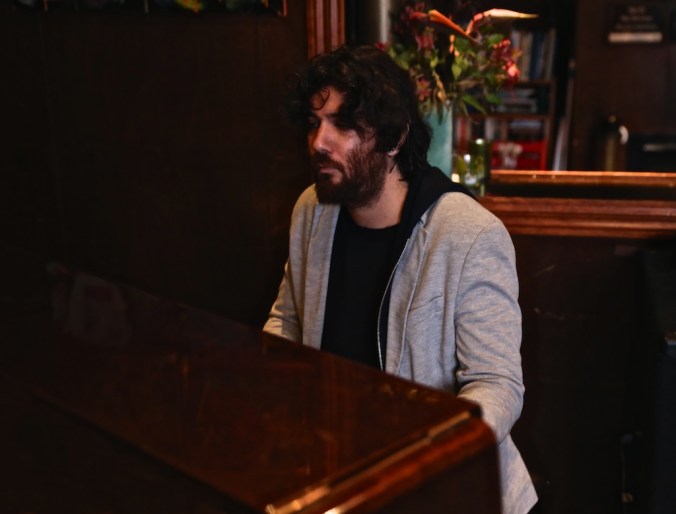 As far as I know, this was Cohen’s first visit to New Zealand and it was certainly his first visit to the CJC. He’s a compelling pianist and the perfect counter-weight for Oehlers. On duo numbers, they responded to each other as good improvisers should, each giving the other space and expanding the conversation as the explorations deepened. Intimate musical exchanges of this type work best when the musicians care deeply about the project. They work best between friends. We saw two sides to Cohen on this tour. The thoughtful, unhurried, deep improviser and the percussive player who found a groove and worked it to the bone. The second half of the gig brought a rhythm section to the bandstand; Olivier Holland and Ron Samsom. Having such an interesting contrast between sets made both halves work better. The second set was approached with vigour; Oehlers digging into a standard, often preceded by a nice intro, through the head and then… boom. This was when the fireworks happened.
The chemistry between Oehlers and Cohen was obvious in the duo set, but adding in the hard-swinging Holland and on-fire Samsom shook up the dynamic once again. Suddenly there were new and wild interactions occurring, short staccato responses, dissonant asides, crazy interjections; these guys were bouncing off each other and above all, they were enjoying themselves. When musicians live in the moment, and the audience feels that magic, they feed it back. The virtuous loop that sustains all performance art. I spoke to Cohen later and talked about playing styles. He is not impressed by pianists who strive to sound like the past. You can respect the past, bring it to your fingertips but still sound like your taking it somewhere new. He did. This night was the proof of the pudding; the standards performed were all living breathing entities.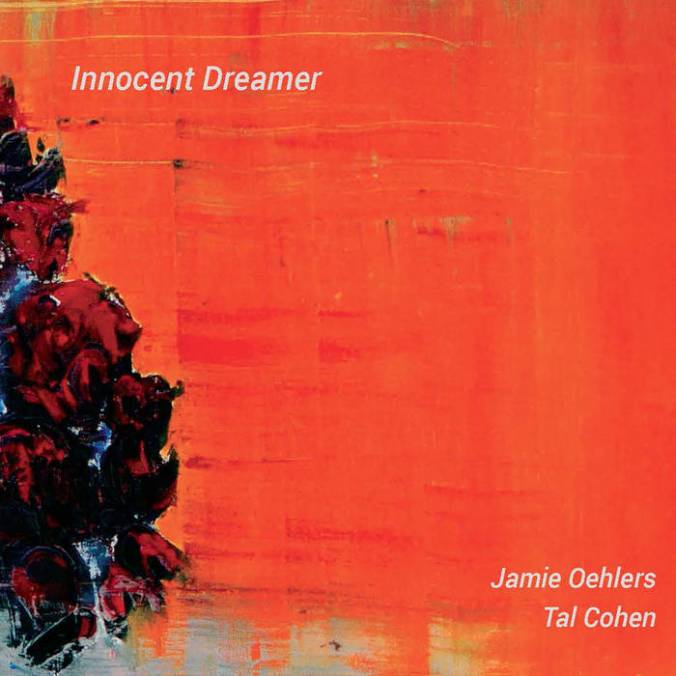 The first set opened with a heartfelt ‘Body & Soul’ (Green) which set the tone. The tune that really took my attention though was Oehlers ‘Armistice’. A beautiful piece conjuring up powerful images and telling its story unequivocally. There was also a nice tune referencing Cohens family. The first set finished with the lively Ellington tribute – ‘Take the Coltrane’ . The second set (the quartet) opened with the lovely ‘It could happen to You’ (Van Heusen), followed by a tune that Oehlers has made his own; ‘On a Clear Day’ (Learner/Lane) – (a recent Oehlers album title). Next, the quartet performed ‘Nardis’ (Evans/Davis) – this was wonderful and it reminded me of the endless re-evaluation and probing of that tune by Evans in his final years. This version did not sound like Evans – it was born again – if any modal tune deserves to live forever, it is surely this one.
Lastly, and in keeping with their tradition, Oehlers invited tenor player Roger Manins to the stand. After a quick discussion, they settled on ‘I remember April’ (de Paul). Back and forth they went, weaving arpeggios in and out of each other’s lines – moving like dancers; counterpoint, trading fours, all of the band responding to the challenge and reacting in turns. A KC set piece at the bottom of the Pacific.
Jamie Oehlers (tenor saxophone), Tal Cohen (piano), plus Olivier Holland (bass) and Ron Samsom (drums) – for the CJC Creative Jazz Club, Thirsty Dog, K’Rd Auckland, 27 September 2017. Google Jamie Oehlers Bandcamp.com for a copy of the album.
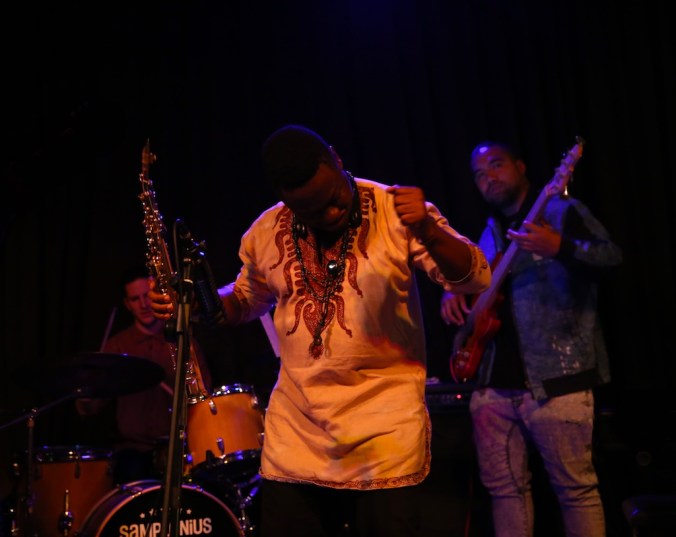
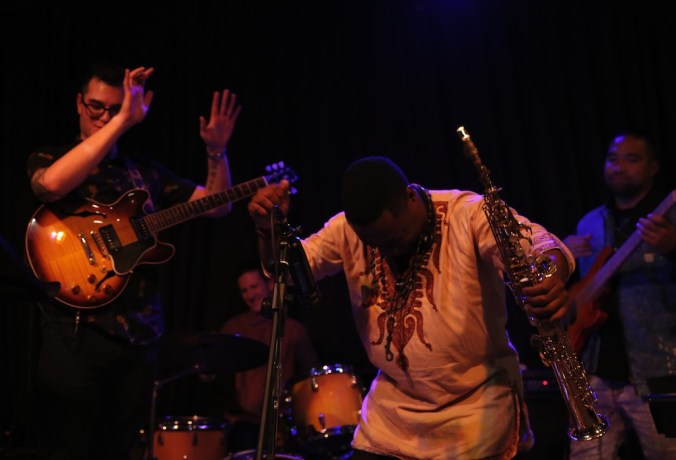 During the apartheid era in South Africa, a heady brew of danceable Jazz bubbled up from the townships. The all white National Party hated it and a game of ‘whack-a-mole’ followed. As soon as one venue was shut down by the police, another would spring up. The music was resilient and hopeful. No racist or repressive regime likes Jazz because it has rebellion, hope and joyous defiance in its DNA. The Zimbabwean born Thabani Gapara imbibed South African Jazz from his earliest days, eventually taking up the saxophone, that most anti establishment of instruments. Since then, he has performed in Zimbabwean, South African and New Zealand projects.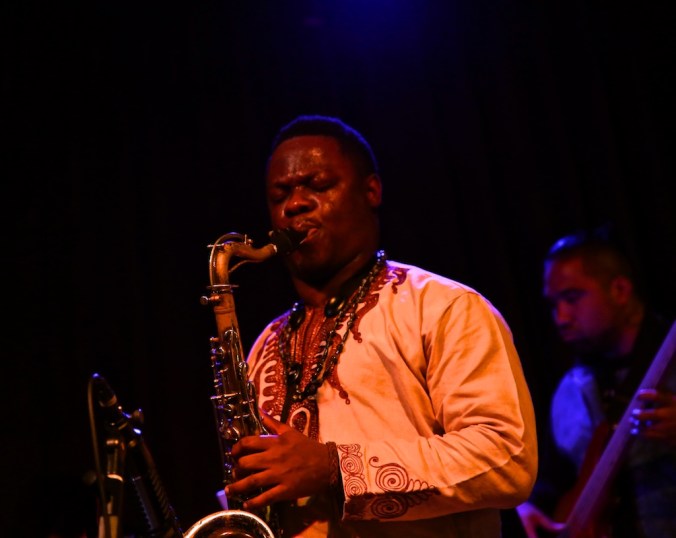


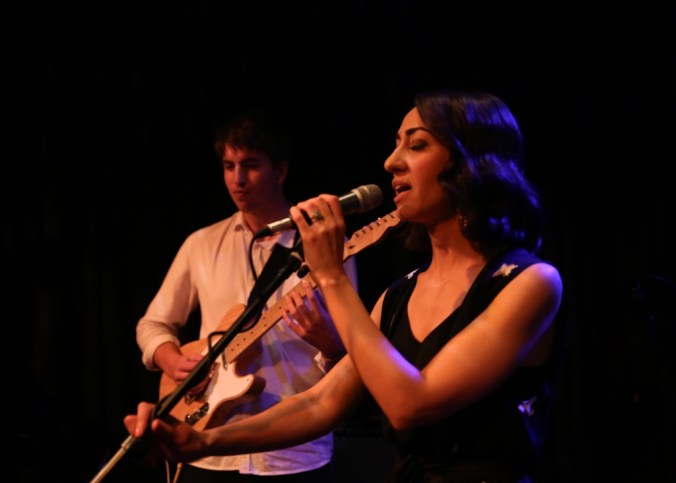 When Marjan stepped up to the microphone, she owned the room from that moment on. Her previous association with the Jazz club had been peripheral, but this gig changed everything. I have sometimes engaged with her about Persian music or Sufi poetry and I have heard her performing in the Kevin Field ‘A List’ band. She is always impressive when she sings, but this was impressive in a different way. It was her first Jazz club gig as a leader and suddenly, here she was delighting a capacity audience, every bit the seasoned professional; exuding an easy-going confidence. It was tempting to think that she had magically transformed herself into this fully formed artist, but her back story offers deeper insights. Marjan is of Persian descent and while this breathes exoticism into her music, it is only a fragment of her story. In truth, she has been a performer for much of her life; an established presence in the world of film, an in-demand voiceover artist, a teacher of music, dance, and drama. She draws on many strengths but on Wednesday they coalesced; a marvellous voice and a formidable stage presence the outcome.
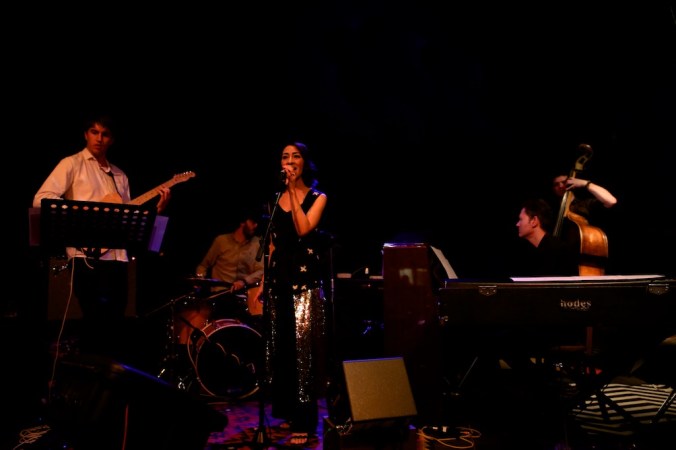 If her choice of a first number was to make a bold statement, then she succeeded admirably. Stepping out from behind the black curtains, accompanied by a shimmering Rhodes, she embarked on her engrossing journey. The first few bars of her ‘Desert Remains’ were straight out of the Sufi Jazz tradition; it was a call for universal tolerance: arising from her belief that music provides a pathway to transcend the banal. Almost imperceptibly, the tune became a love song, settling into new and funky rhythms. This was a nice piece of writing and the rhythmic interplay gave her much to work with. The influences in many of her compositions are generational; Stevie Wonder, Michael Jackson, Brian Wilson and of course her indigenous roots. All of this is filtered through a Jazz lens. Although her approach is modern, she doesn’t shy away from the traditional fare of Jazz singers.
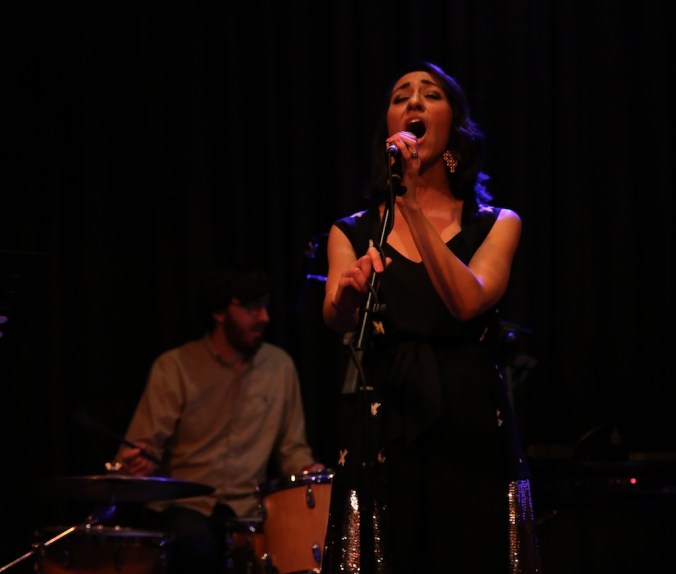 Looking to popular music for new material is not a recent phenomenon for Jazz vocalists. Ella tackled ‘A Tisket a Tasket’, Louis appropriated a multitude of pop songs. The great American songbook is a selection of one-time popular songs. It is what Jazz musicians do; explore, steal and transform. The more diverse the influences the richer the music. When she tackled the lovely Jazz standard ‘Detour Ahead’ (Ellis/Frigo) she owned it completely. That hint of smokey voice, that delicate phrasing; being adventurous while showing deep respect to the composition. It was hard not to think of Norah Jones; an artist who is traditional and modern in equal parts. I would also give her top marks for her set list; the numbers included ‘The look of love’ (Burt Bacharach), ‘God only knows’ (Brian Wilson), ‘I’ll be free’ (Donny Hathaway) and of course her own compositions and one of Kevin Field’s.
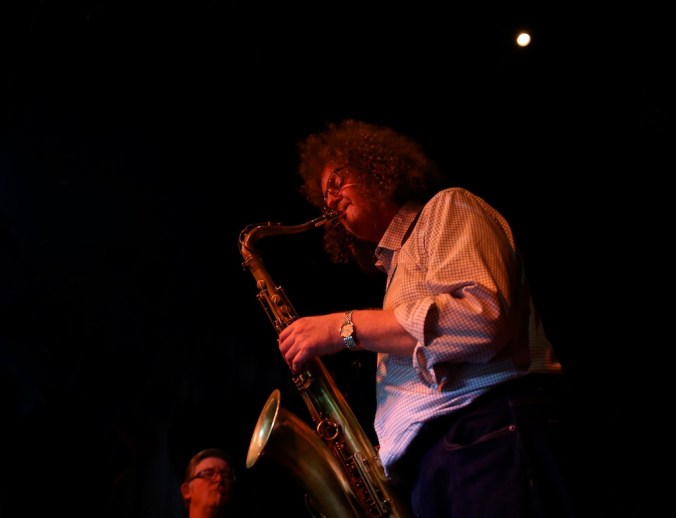 The popularity of ‘hardbop’ is enduring but we seldom hear it on the band stand. The probable reason is its very familiarity; if you play this music you will be judged against the source. There is also the evolutionary factor: improvised music strives to outlive its yesterdays. It is even less common for musicians to write new music in that idiom or to create a vibe that calls back the era. Such an enterprise invariably falls to experienced musicians; those with the wisdom to reverence the glories without it being merely slavish. Booth and Walters are especially well suited to that task. They have the chops, charts and the imagination and above all, they make things interesting. If you closed your eyes during this gig, you could easily imagine that you were listening to an undiscovered Blue Note album. It was warm, swinging and accessible.
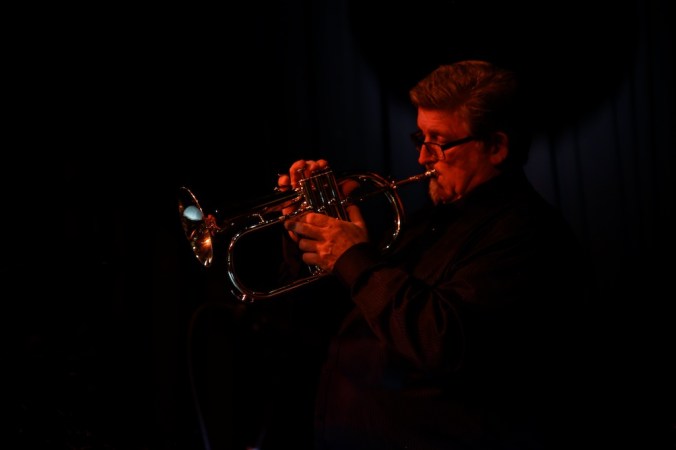 Booth and Walters are gifted composers and on Wednesday the pair reinforced their compositional reputations. Some of Booth’s tunes have appeared recently in orchestral charts. Walters’ tunes while heard less often are really memorable (‘as good as it gets’ stuck in my head a long time ago). These guys write and arrange well. Notable among Booth’s compositions were ‘Deblaak’, “A Kings Ransome’ and ‘On track’. From Walters; ‘Begin Again’, ‘Queenstown’ and ‘Wellesley Street Mission’. There was also a lovely version of the Metheney/Scofield ‘No Matter What’ from the ‘I Can See Your House From Here’ album. I have posted Booth’s ‘A Kings Ransom’ as a video clip, as it captures their vibe perfectly. Booth has such a lovely burnished tone – a sound production that no doubt comes with maturity and a lot of hard work.
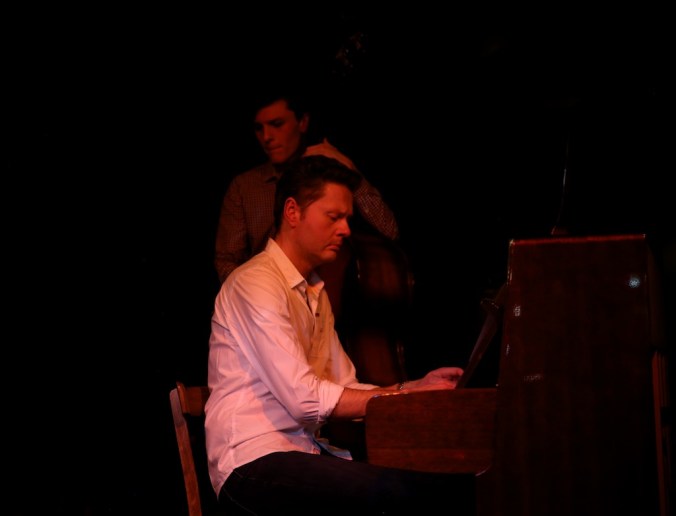 The last number was Walters ‘Wellesley Street Mission’ and I would have posted that, but my video battery ran out. This is a clear reference to the appalling homeless problem which blights our towns and cities. The bluesy sadness and the deep compassion just flowed out of Walters’ horn – capturing the issue and touching our innermost beings, challenging our better selves. I may be able to extract a cut of this and post it later – we’ll see!
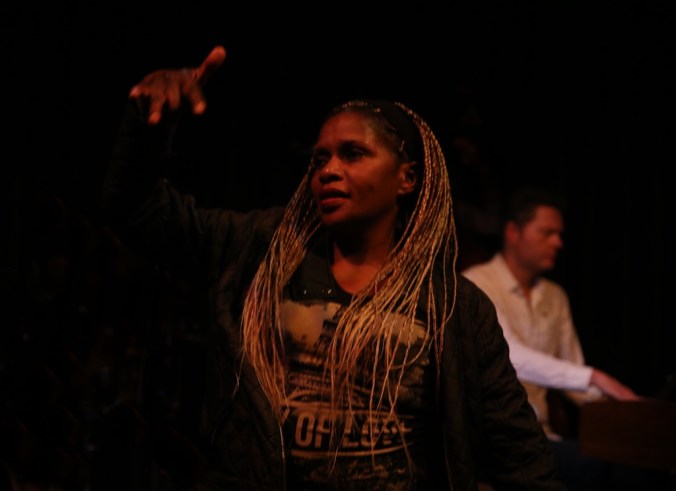 Lastly, there was that mysterious dancer, appearing from nowhere, drawing sustenance from the music until the street swallowed her again.
  Roger Manins uncoupled the microphone and looked around the club. It was winter outside but you wouldn’t have known it. The windows were steamed up from the heat of a capacity crowd; all eyes were fixed on the stage and the stocky man holding the tenor saxophone. “You know how lucky you are …. right,” Manins asked the audience? A loud cheer went up accompanied by whistles and foot stomping. George Garzone was in town and no one was in any doubt.
 Most of the tunes were in long form and most were Garzone originals. All were perfect for the occasion. As you might expect, the Garzone tunes were springboards for deep improvisation; the heads, however, were memorable and so well-arranged that they stood out. I failed to catch all of the titles because the applause often drowned out the announcements. There was a catchy tune referencing Bourbon Street, A moving tribute to his friend Michael Brecker and a tune titled ‘The Mingus that I know’. They all had pithy stories attached. The two standards were Billy Eckstine’s ‘I want to talk about you’ and a wonderful earthy take on John Coltrane’s ‘Impressions’. I read somewhere that Garzone plays like he talks, in a Bostonian/Calabrian dialect. The cadences and rhythms of speech are part of who we are, it is, therefore, logical that they encompass how musicians express themselves and especially on a vocal instrument like the saxophone.
 His pick up band were Kevin Field, Ron Samsom, Mostyn Cole and Roger Manins. Like every international who passes through, he heaped praise on the local musicians. Coming from Garzone this really counts. He and Manins go back a way and the synergies between them are evident (the Garzone influence is worldwide and Manins is no exception). Whether playing in unison or in counterpoint, they sounded right together – tenors who knew just how to compliment or when to keep clear. This was a very big sound and when trading fours they cajoled each other as friends might. The rhythm section was energised as well; Cole, Samsom and Field providing rhythmic and harmonic trickery. And at one point, ‘Hey great, I heard some Salsa in that solo’, said Garzone looking in Fields direction.
 Since ‘Songbook’ was released three months ago the accolades have come pouring in and it’s no wonder. This is a superb album and destined to remain forever embedded in the Jazz songbook lexicon. The worldwide release was timed to coincide with Broadbent’s seventieth birthday; opening to an enthusiastic audience at Ronnie Scotts; then touring the major clubs and festivals throughout Europe and New York. Much about ‘Songbook’ is classic Broadbent; warm, lyrical, and intimate; not to take anything away from the co-credited Georgia Mancio, a highly acclaimed UK-based vocalist.
 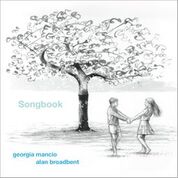 This pairing of voice and harmony, lyrics and melody could hardly be improved upon: it is therefore unsurprising that comparisons are made with the classic songbook era. Here, Broadbent has found the ideal foil for his engaging brand of lyrical Jazz, and as a first, every one of his tunes has accompanying lyrics crafted by Mancio. In Songbook, Broadbent’s Quartet West classic, ‘The Long Goodbye’ has become ‘The Last Goodbye’; a moving reference to the passing of Mancio’s father. Tunes like that have long begged such lyrics and it’s nice to see them penned so beautifully. Back in New Zealand, we watch Broadbent’s ever unfolding story with wonder.
 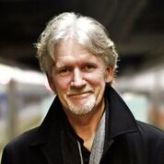 We are proud of him here in his hometown, understanding that his many projects keep him busy; so busy that so we seldom see him these days. As long as we have his albums it is enough, they all have a generous portion of New Zealand buried deep within them. Last month he recorded a new album in the Abbey Road studios, an album with former Woody Herman band mate, drummer Peter Erskine and the amazing bassist Harvie S – plus the London Metropolitan Orchestra. These arrangements could only be Broadbent’s – lush and achingly beautiful. Could there be more Grammy’s on the way?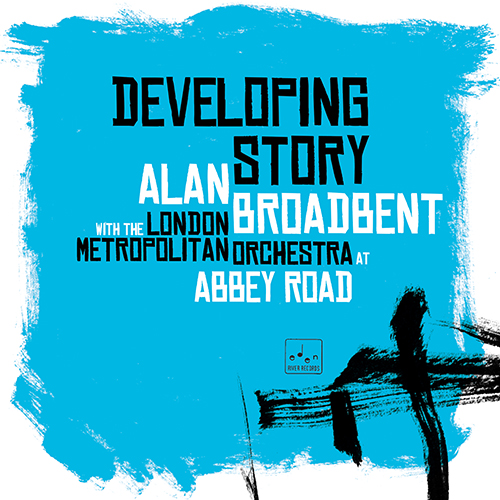
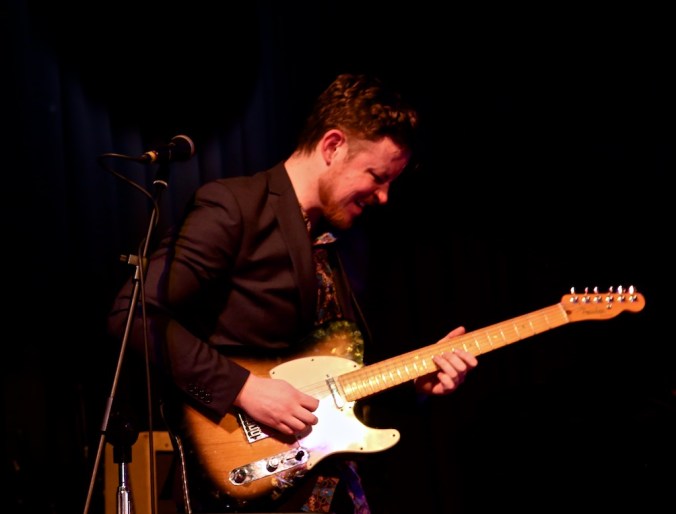
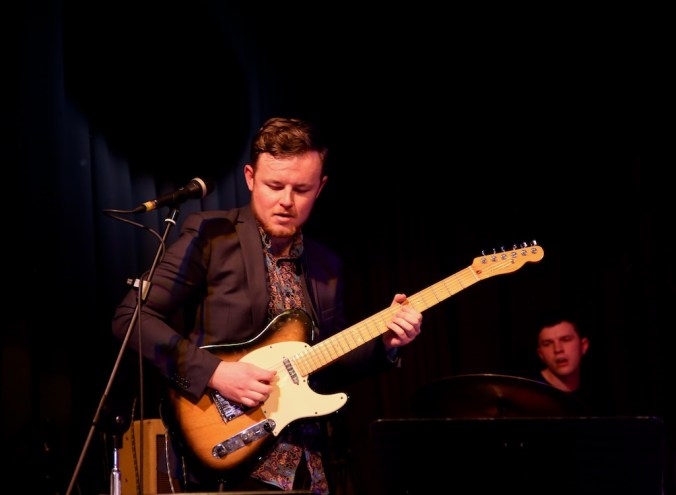 During the first half of 2017, a significant number of respected international artists and established local artists appeared at the CJC Creative Jazz Club. While everyone enjoys such a cornucopia of riches, it is also important to keep sight of emerging artists, those who are just below the radar. No local venue manages to showcase the rich diversity of improvising talent as well as the CJC. This is no accident, as there is a guiding philosophy behind the programming of gigs. No artist, however good, gets an ongoing residency; the gigs, therefore, are different every week, are identifiable projects, and this keeps the audiences engaged. An important part of this is showcasing emerging artists.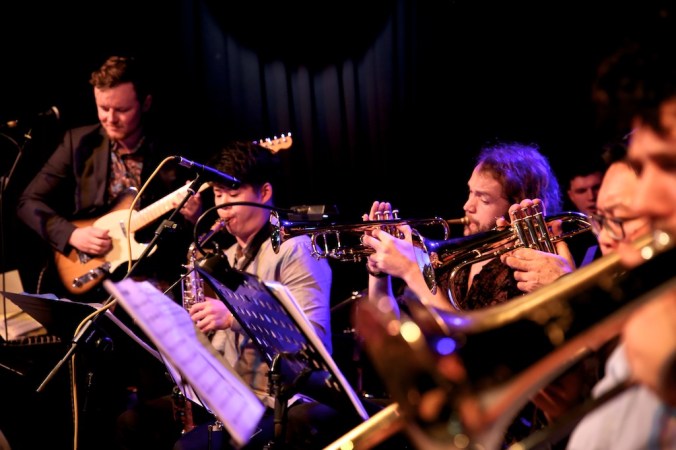
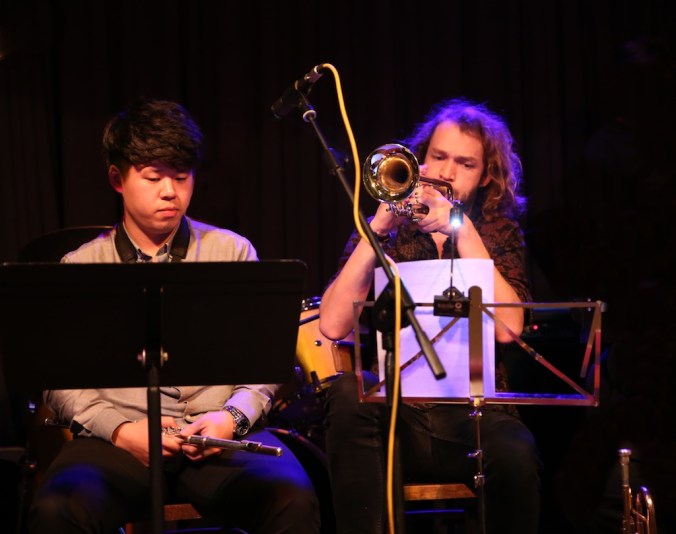
 The first number was ‘Tulle’ from the Scofield album, after that we heard a number of his own compositions interspersed with standards. His ‘Who is Kenneth Meyers?’ appealed as did an angular rendition of ‘Surrey with the Fringe on Top (Hammerstein). Given the project in hand, it was unsurprising that he included ‘Boplicity’ by Miles Davis; ‘Birth of The Cool’ being the springboard from which all such arranging sprang. In the second half we heard trumpeter Mike Booth’s ‘Major Event’ – Booth is a skilled arranger and an experienced ensemble composer. It is possible that he has also influenced Swindells’ direction.
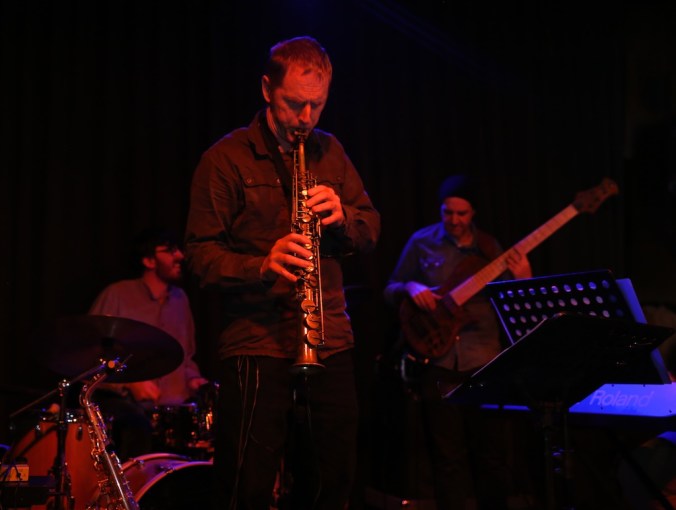
 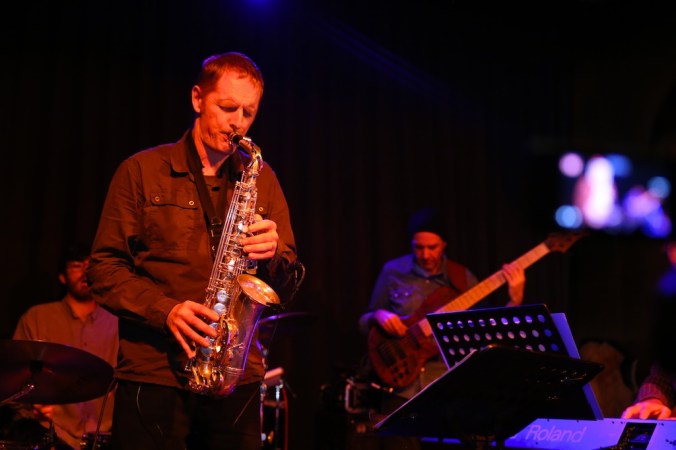 Hearing people talk about the Chris Mason-Battley Group reminds me of the Hindu parable – the blind man and the Elephant. “Oh yeah, that guy has a smooth sweet sound’ one said as if that settled the matter. Well yes, he has got a smooth sound when playing a ballad, but anyone who thinks that defines his music has simply not been paying attention. This band has enormous depth; playing anything from a melodic ballad to music that is way off the grid. What we experienced on Wednesday was music with integrity; at times raw and inventive, drawing us into its heart, emotionally engaging and above all satisfying.
  The first number was ‘Mountain Song’ (by CMB); then they moved to a series of pieces from the CMB John Psathas project ‘Dialogos’ (progressing through excerpts from ‘Song for Simon’ and ‘Demonic Thesis’). As that set progressed we heard a new composition or two and lastly ‘Tahuna Caravan Park’ from his ‘Two Tides’ album. This gave us a broad sweep of his past projects and the Psathas album in particular. Dialogos was widely acclaimed as an exciting and bold step forward for the band – I can highly recommend the album (out on Rattle). Before the band left the stage for a break, Mason-Battley said; “That was the nice half – the second set is nasty half” (quoting from an album titled ‘The Jaberwocky comes to Town’ which had a ‘nice side’ and a ‘nasty side’.)
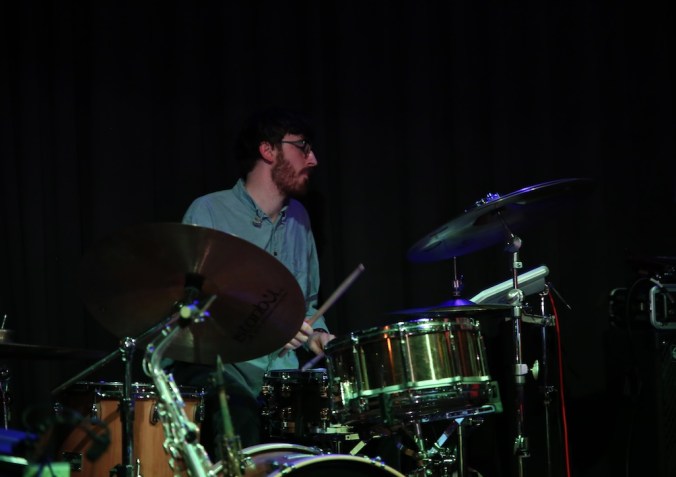 As pleasing as the band were in the first set, they reached much deeper for the second; pulling out an utterly engaging and masterful performance. It began with several of the blacker pieces from ‘Dialogos’, ‘The Calenture Suite’. The drummer Stephen Thomas must be mentioned at this point – His work was integral to the overall performance and it underlined his maturity as a musician. At times subtle, at others incredibly complex – and all made to look easy in his hands. Thomas was extraordinary throughout and although a relative newcomer to this long-established band, his searing flames licked at their underbelly, an indispensible presence. In perfect contrast to the complex drum flurries was Sam Giles on electric bass. Giles is a master of the ostinato – repeated motifs, perfect time feel and the voodoo factor writ large. He is also an influence on the bands direction; favouring Zorn like explorations and paths less trodden.
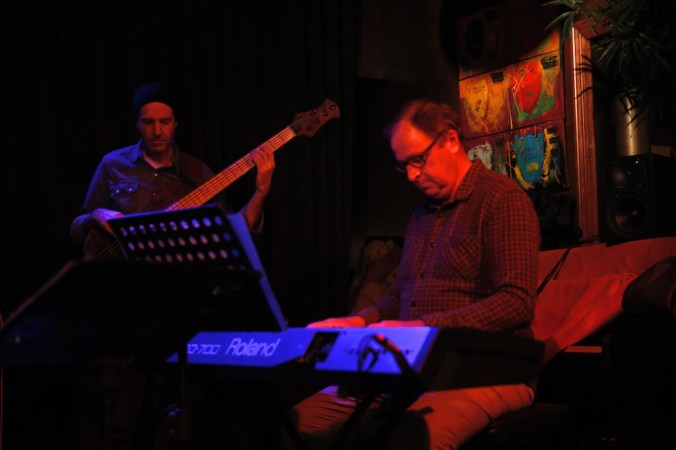
  The CMB Group keyboardest is David Lines, an intersting and in my view under-rated musician. On this gig he played a Roland RD-700. What a beautiful piano and Rhodes sound. A machine hardly heard these days, replaced by the Nord Stage or modern Korgs. While the newer keyboards have more bells and whistles, I am unconvinced that their piano sound is an improvement. Perhaps it sounded so good because of Lines touch? He is not a busy pianist and every note counts, in this gig his often voice leading role was perfect for the project (his solos were stunning). I only wish we saw him more often.
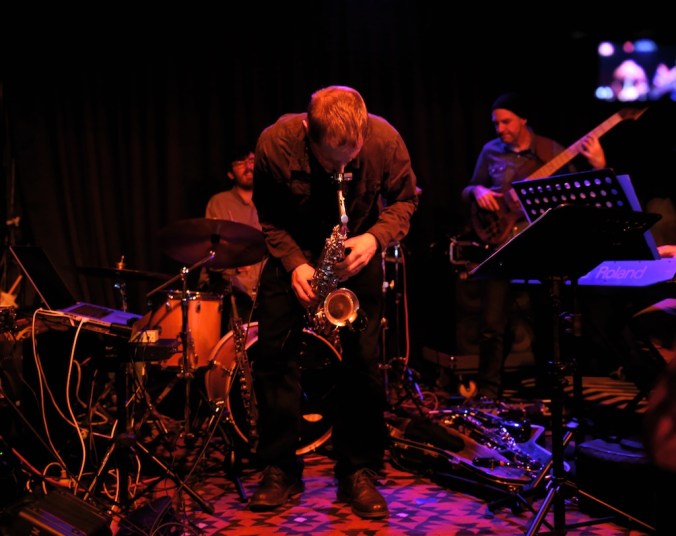 The last tune of the evening was free and political. It was titled ‘The Emperor Has No Clothes’; an obvious reference to the greedy authoritarian amoral elites that hold sway in the world; particularly the Trump administration. It was free and it was raw emotion – in the background a loop recited ‘billions and billions’ – then, faintly at first, we heard the strains of ‘The Star Spangled Banner’. The band read the mood of the audience well with that one – people stomped and cheered afterwards as if someone had taken the words right out of their mouths and rendered them into abstract musical form.
 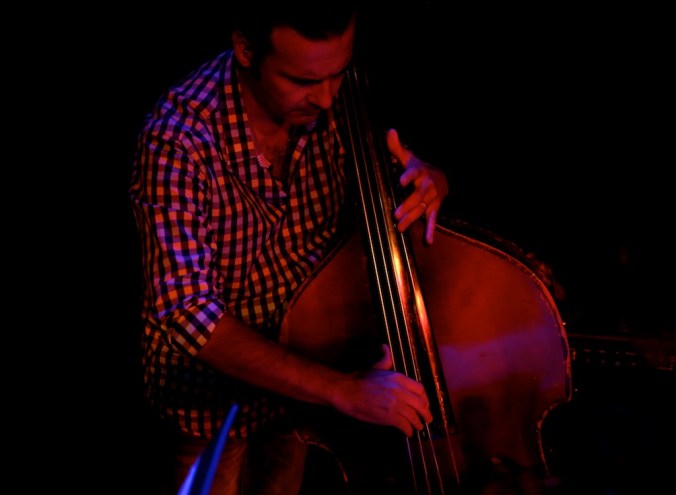 There have been two bass-player led groups at the CJC in as many months and both have been excellent. Last weeks featured group was a trio led by Rubim de Toledo: a Canadian from Alberta, of Brazilian origin and a well-established musician. Like many modern improvisers, his influences are diverse; that said his music fits squarely into the Jazz mainstream. The first thing to grab me was his big rounded tone, gifting the tunes with a richness and beauty that captivated from start to finish. While most bass sits deep within the mix, de Toledo’s voice spoke clearly; not by overcrowding his band-mates nor by punching through the others as an electric bassist might, but because every musical utterance sounded right. His melodicism and clarity of ideas were enhanced by devices which I found appealing; his occasional and appropriate use of vibrato at the end of a line, sometimes, rarely, he combined this with a slight bending of the note. He is definitely a successor to the Evans trio model; a bassist who communicates as an equal.
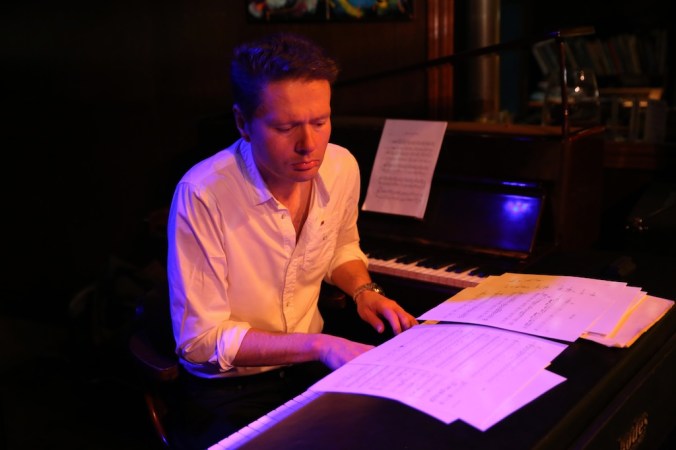 In a live setting and with unfamiliar sidemen, the best plan is to loosen the reigns. This he did and with Kevin Field on Rhodes and fellow Canadian and long time friend Ron Samsom on drums the gig gelled. Much of the gig showcased his compositions, some from his 2014 album ‘The Bridge”. The three standards he played were a killing version of Maiden Voyage (Herbie Hancock), Work Song (Nat Adderly) and a rendering of ‘Recordeme’ (Joe Henderson). His own compositions ranged from the thoughtful ‘Autumn Celeste’ to evocative panoramic tunes like ‘The Gap’ (about the Rockies) and ‘Red Eye’ (about a Brazilian train known locally as the train of death). The gig was a pleasure from start to finish and the enthusiastic audience response said it all.
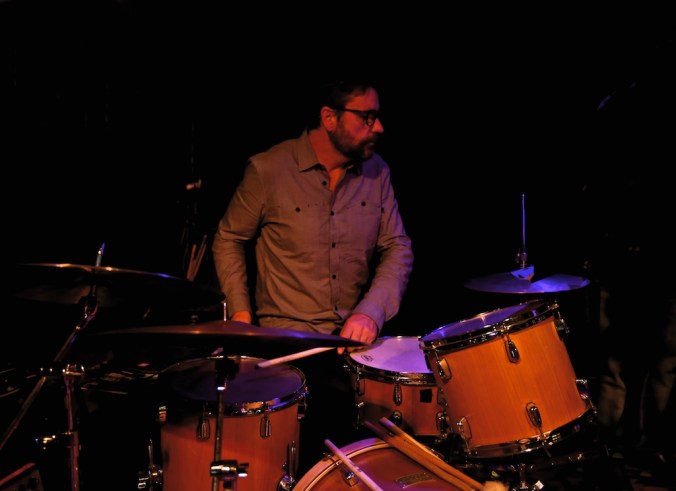 As I was leaving de Toledo handed me a copy of his recent album ‘The Bridge’ and it wasn’t until yesterday that I found time to play it. What a truly beautiful album this is; beautifully crafted arrangements and tunes which burn with a quiet intensity at any tempo. On ‘The Bridge’, he is surrounded by an ensemble of talented Albertans and a guest artist from the USA. The lineup of bass, trumpet, saxophone, trombone, keyboards, drums (and on track 8 a vocal) is well conceived – balancing airiness with textural richness. The musicianship throughout is noteworthy; particularly Sean Jones on trumpet, a well respected musician from the USA: the keyboardist and everyone making this album memorable. As you would expect with an ensemble and with an album as skillfully recorded as this, de Toledo is less dominant. Here he lets his charts tell the story and they certainly do.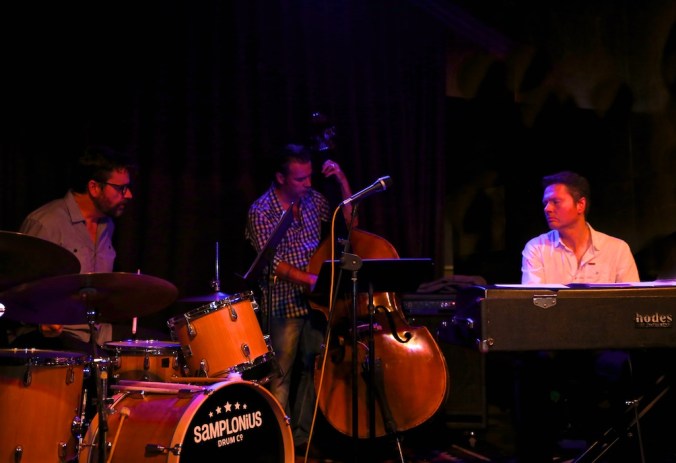
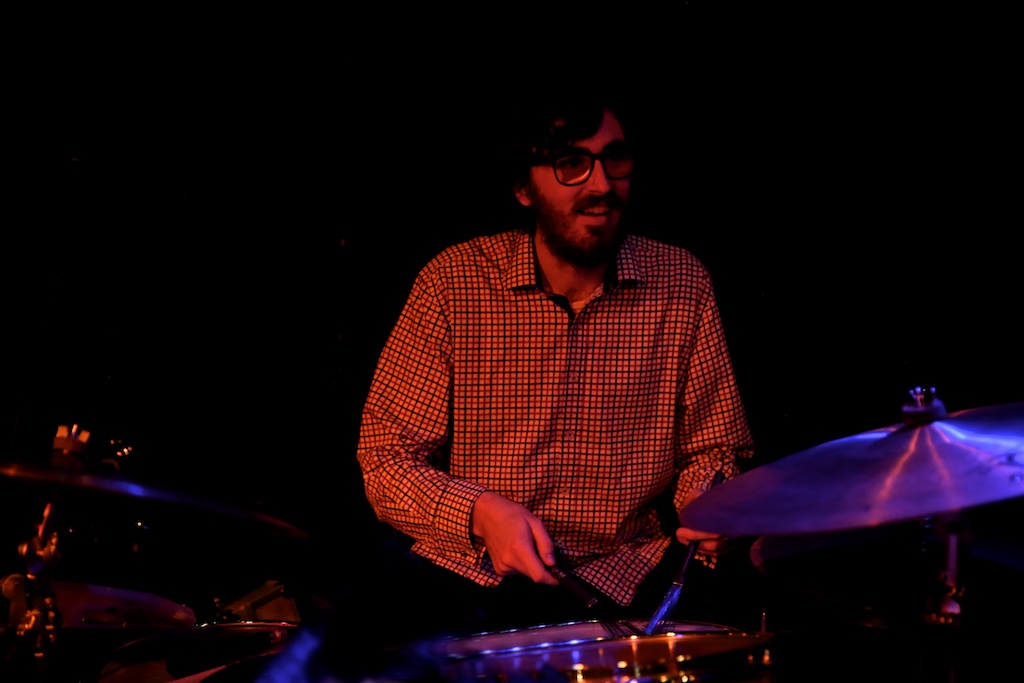 In spite of his relative youth, Stephen Thomas is counted as one of New Zealand's better Jazz drummers. He approaches his craft with care and intelligence and it shows in his playing. While his technical skills are superb, he can also communicate on a human level and this is important as it speaks of character. Thomas is a regular on the scene, but like many sidemen and most drummers, he prefers to remain in the shadows. On Wednesday he changed that focus and convincingly staked his claim as band leader.
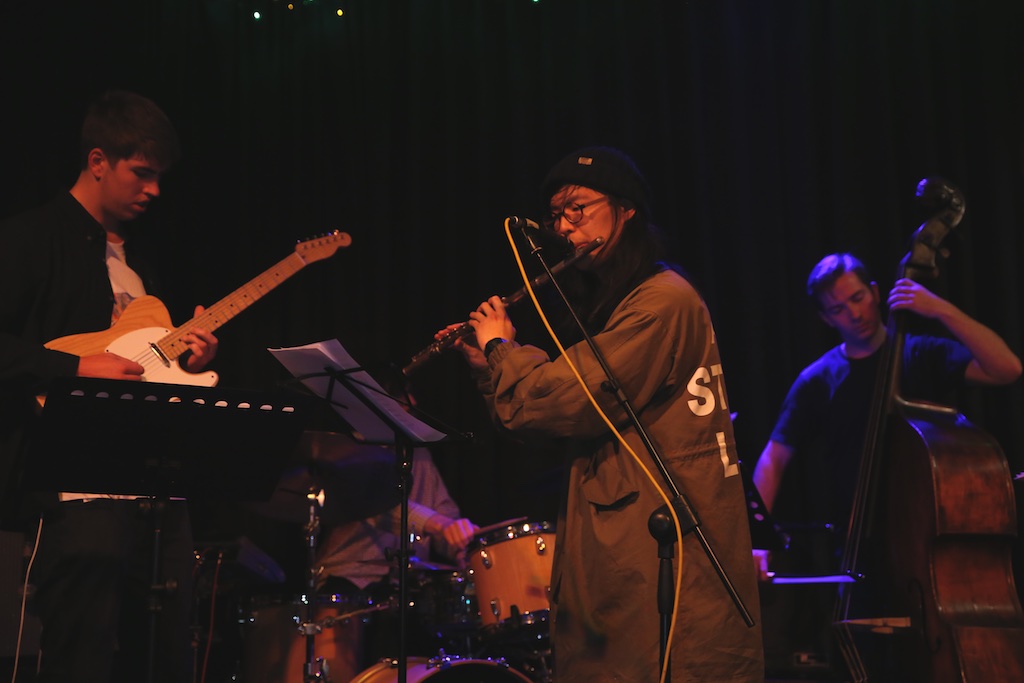 The ingredients that contribute to a successful gig are often intangible, but this gig ticked a number of those boxes. While tailored to suit a Jazz audience, it did so without being remote or elitist. Another reason the gig worked was because Thomas used humour to good effect; not just his on stage banter but in the music as well. In a live setting this is important – interacting with the listeners on some level, bringing them inside the circle.
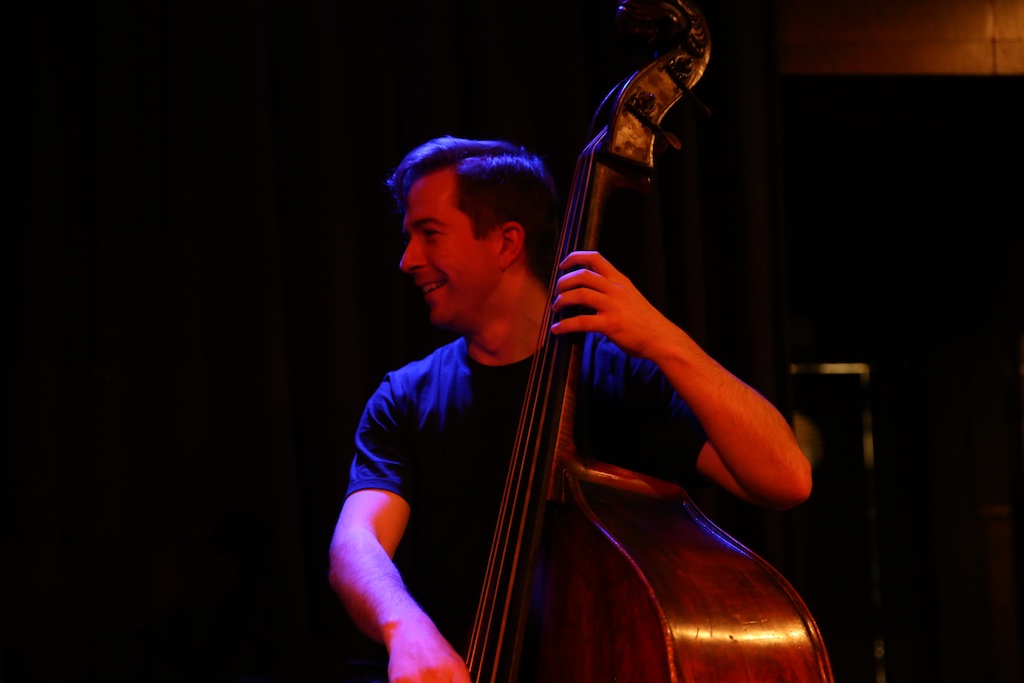 Thomas has an abiding interest in the Ellington/Mingus/Roach, 'Money Jungle' recording and Wednesday provided him with a further opportunity to explore that project. While unusual as a source of standards material, it is a great album to focus on – the perfect vehicle for deconstruction. At the time it was recorded, it stood out for a number of reasons. In fact it shouldn't have worked at all, as the trio members reputedly disliked each other. Each had marked stylistic differences and Ellington was of an earlier generation. Ellington told the others that what they would play on the record should be a collective decision; then he turned up with a set list of his own tunes. The one tune which was not Ellington's was by Juan Tizol – a man who Mingus had once been in a knife fight with and because of whom, he was sacked by Ellington. What should have been a disaster for many reasons was a success. A brave post-bop recording by artists firmly rooted in other eras.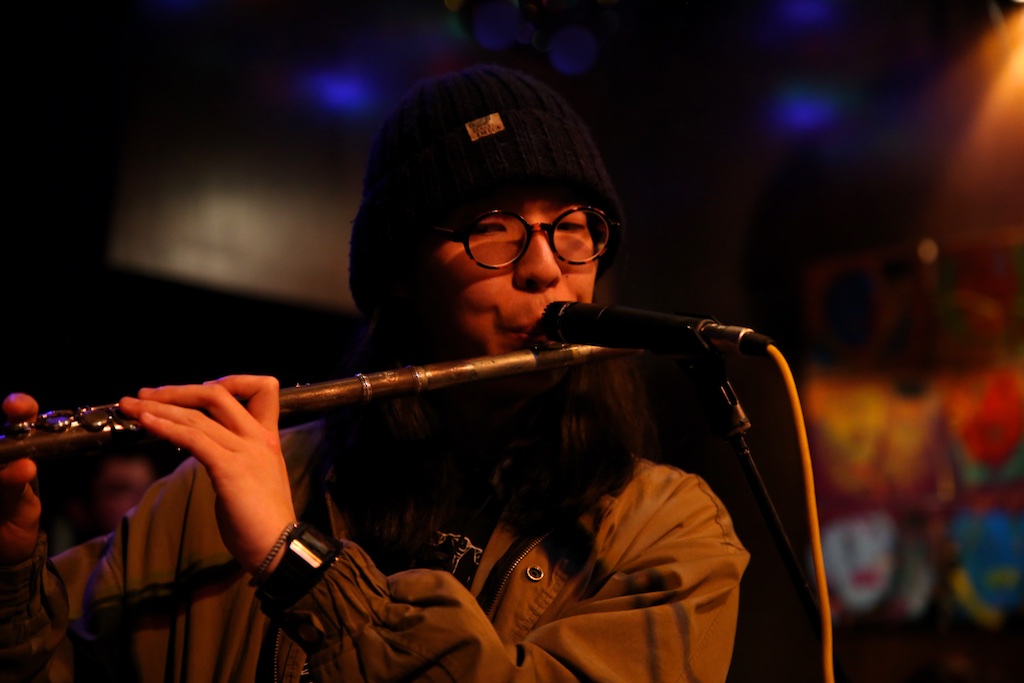
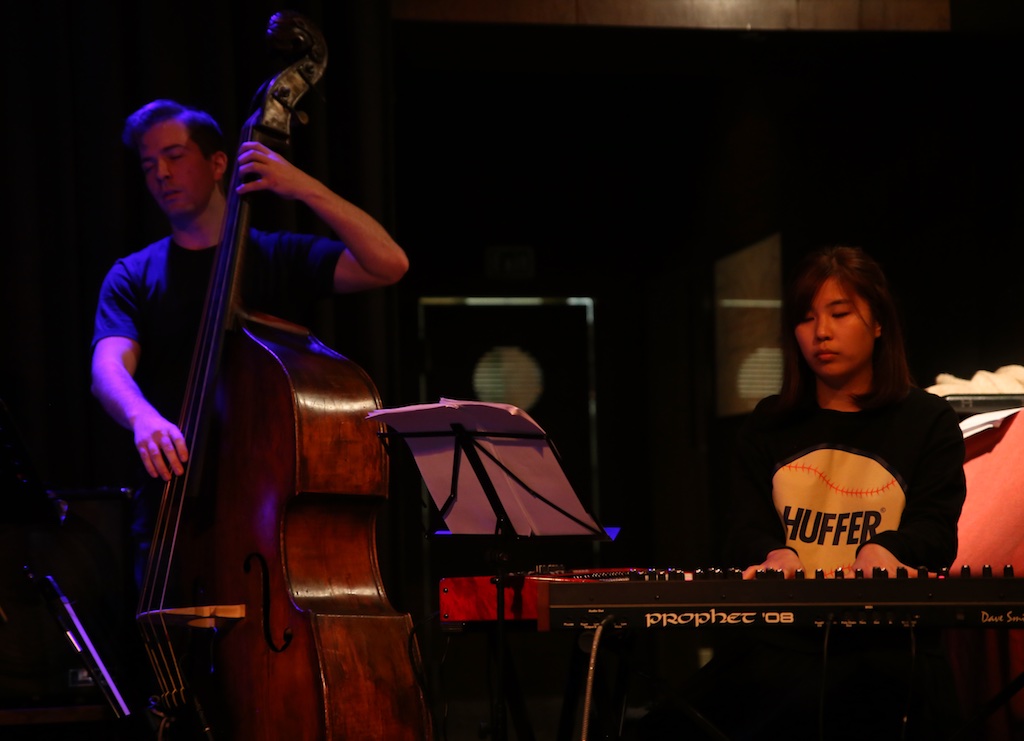
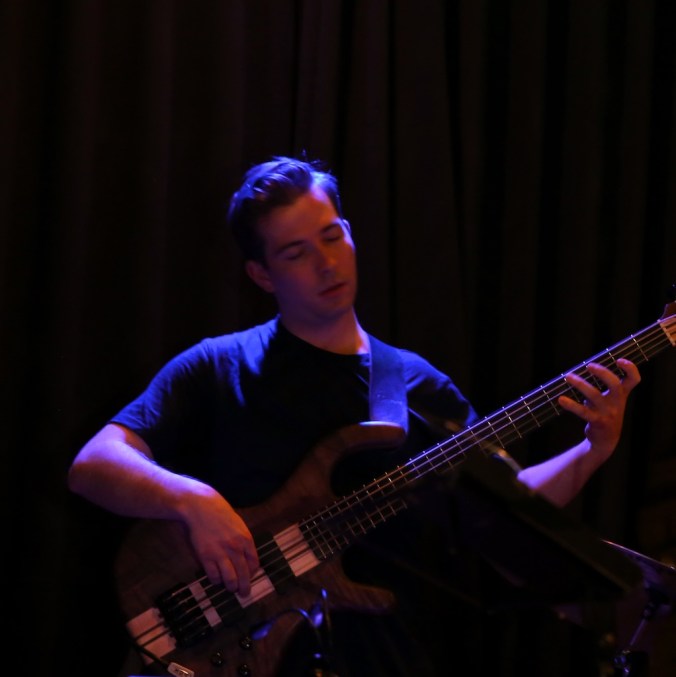 Dennison is a first class musician and someone we don’t hear nearly enough of on the Jazz circuit. He rarely gets to the CJC but when he does it is always a treat. These days he is mostly found doing session work or backing visiting artists and it is hardly surprising that he is a bass player of choice. Whether on upright bass or electric bass he is equally proficient; always an engaging presence, always demonstrating a deep musicality. He has one more string to his bow which can’t be overlooked and that is composition. His tunes are often whimsical, but whatever the mood, a deftly crafted structure sits beneath every phrase. Never over done, bass driven and just right. There is also a thread of melancholia and wistfulness in his ballad writing: these are difficult emotions to evoke and anyone with knowledge of poetry will know, that only the most skilful poets do the moods justice. Dennison can.
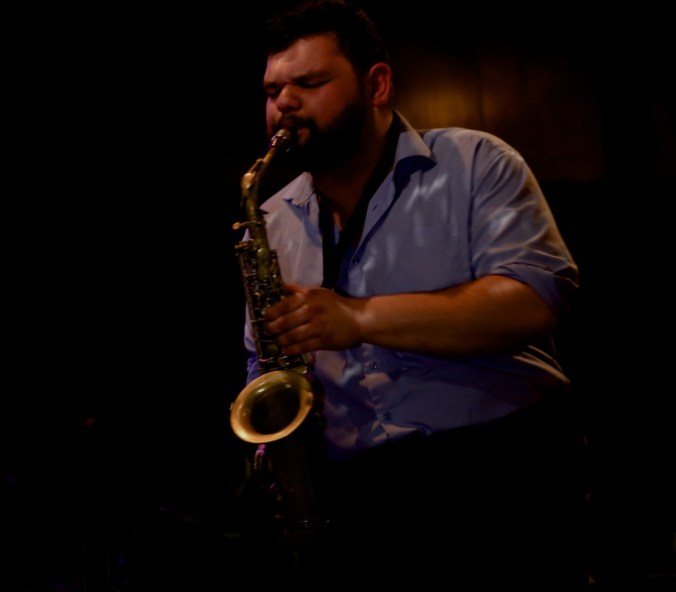 Passels playing was another high point of the evening for me. He just gets better every time we hear him. He is also exactly the right person to interpret mood. I liked the way he approached the tunes, working his way inside them methodically. Sometimes angular, at other times teasing at the melody. During the ballads, he often began with sparse phrasing, establishing mood without overstatement; then, slowly telling his story as if looking at the theme from differing viewpoints. Although he plays decisively, he carefully modulates; generally without flourish or vibrato – pushing at a note until subtle multiphonic textures form – his paper-thin Konitz-like tone saying more than any honk. His versatility is also an asset. Any player who can comfortably move outside and inside while still maintaining a theme is a person worth listening to.
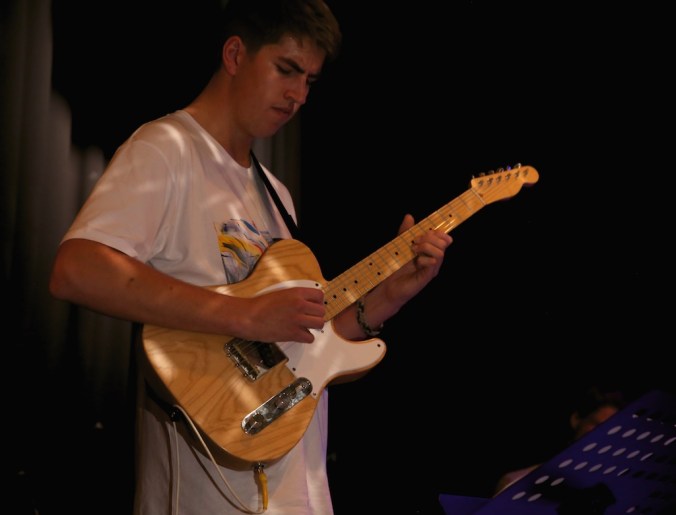 McAneny, who initially faced a cable problem, overcame it quickly and delivered a fine performance. Having a Rhodes and a guitar together can be problematical, but the charts and McAneny’s nimbleness enabled him to avoid crowding the space. Howell gave a nice performance and his lines are terrific; He knows what he’s doing but I’d like to hear him bite into his solos a bit more. Drummer Adam Tobeck was on solid ground with this group, he obviously enjoyed the company and reacted well to whatever was thrown his way. After not playing here for a few years, he is now a regular on the bandstand. I like his drum work very much.
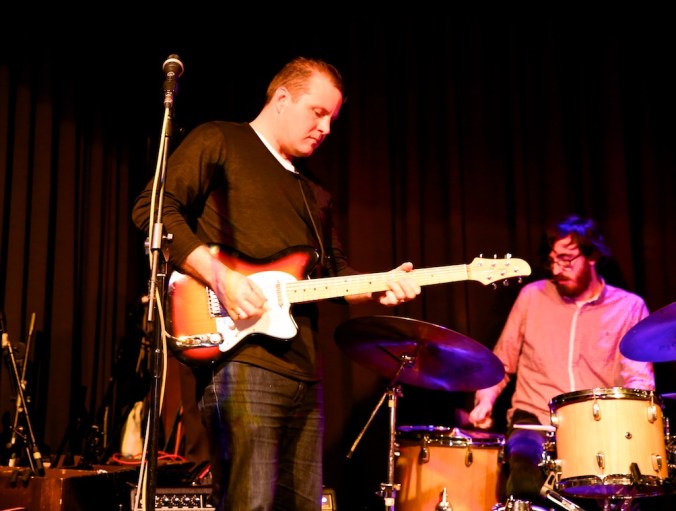 The last time Nick Granville played in Auckland was 2014. A year prior to that he released his Rattle Jazz album ‘Refractions’ here At that time the CJC was located in an old downtown basement venue and that feels like a lifetime ago. Wellington is his home base and Wellington keeps Granville busy. He teaches, he gigs about town, he backs visiting artists, he plays in shows, he records, he tours and he is the featured guitarist in the Rodger Fox Big Band. The last time I saw him play was in Wellington, but that was a few years ago. Much water has passed under the bridge since then and his reputation has meantime grown apace. I have also kept an eye on his teaching clips, and his ongoing evolution as a musician is evident in these. Almost everything Granville plays is coloured by the blues in some way; that is his thing. On a mid-winter night, it is my thing as well.
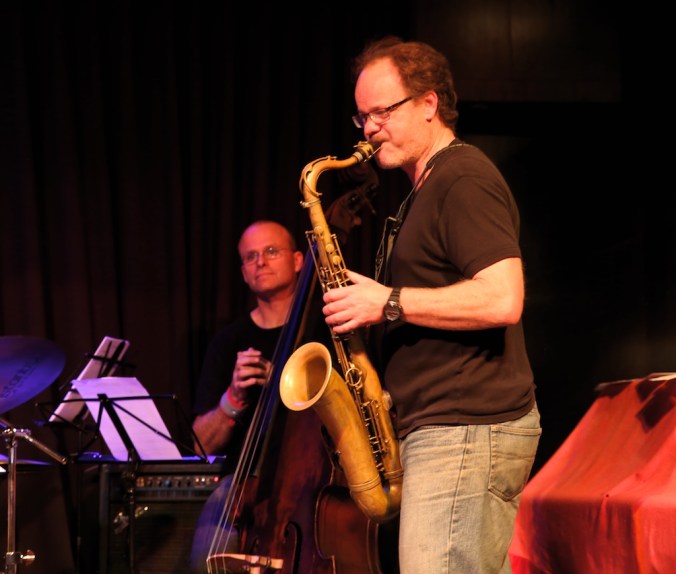 With the exception of ‘Alone Together’ by Schwartz/Dietz, all compositions were Grenville’s. Some were from his Rattle Album, such as Tossed Salad & Scrambled Eggs or Blues For Les, while others were much newer. The compositions were all ear-grabbing and most appeared to reference geographical locations or old TV programs. ‘Funky New Orleans Groove Thing’ was certainly true to label; a rhythm-driven groove piece that generated white heat. With Stephen Thomas on the job, the New Orleans beat never sounded better. Thomas is an exceptional drummer.
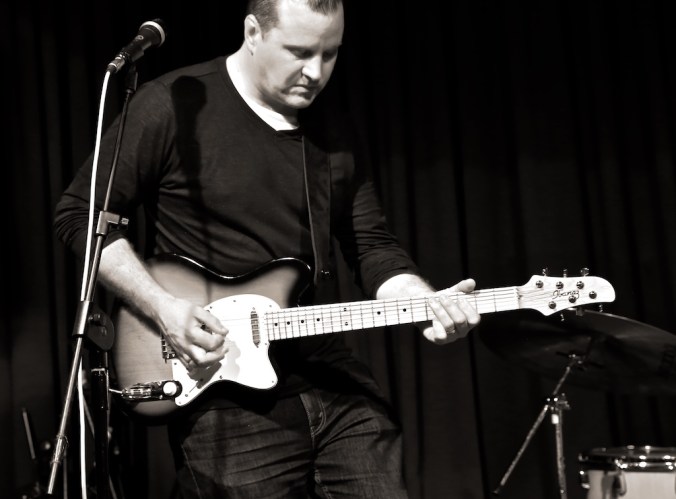 A tune that I have heard Granville play previously is ‘Somewhere You’ve Been’. The title is a clever play on Wayne Shorter’s ‘Footprints’. The tune, although not a contrafact of Footprints is close enough to bring it to mind, It is nicely constructed and a good vehicle for a band to play off. For this gig Granville had wisely engaged old friends; Roger Manins, Oli Holland and Steven Thomas. Together on the bandstand, they represented genuine firepower and everyone dug deep when it came to delivering solos
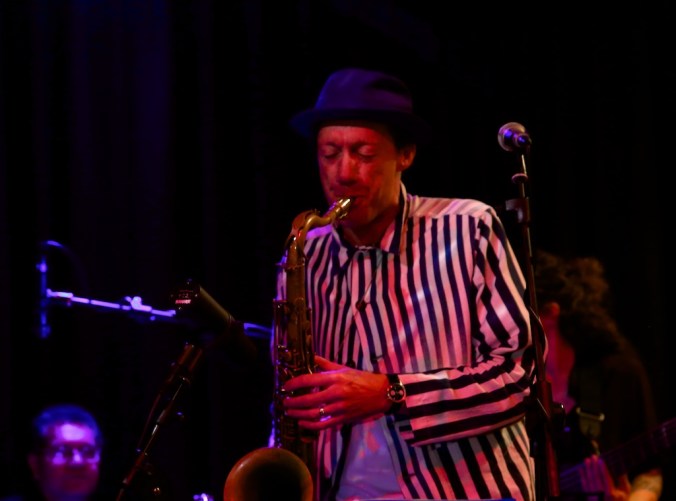 This was trippy stuff. A band that gnawed at the bones of form while the music swept us along; taking us ever deeper, forcing us to loosen our grip, as the waterfalls of sound consumed us. This was most definitely filmic music; throwing up subliminal specters like a Burroughs cut-up montage: an indie soundtrack, Voodoo but with four Papa Docs urging us toward trance.
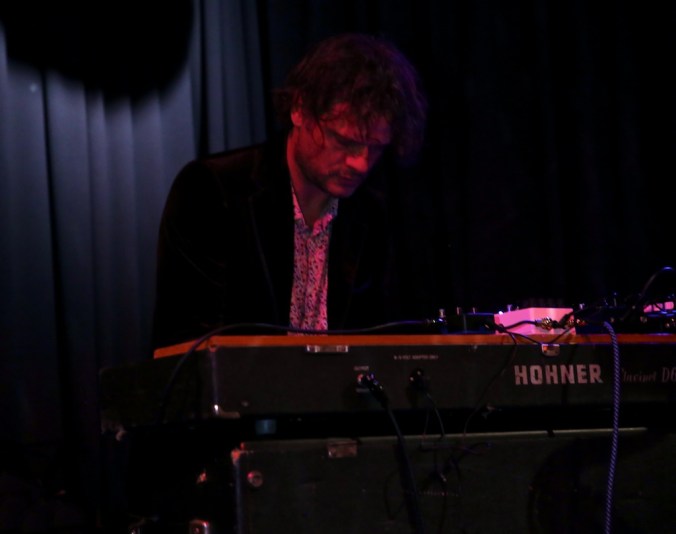 Attempts to confine improvised music within historic boundaries is plain foolishness. Never has this been more obvious to me than at last week’s ‘Monsters of The Deep’ gig. Superficially it sounded like, looked like classic fusion; but it was and it wasn’t. The keyboard instruments were classic analog, the lighting otherworldly; various delays, distortions or effects echoed across the room. While the overall vibe nodded in the direction of Jazz/Rock, the musical language was that of deep improvisation. The accessibility hiding worlds of complexity and there’s the wonder of it. Few local musicians could pull this off as well as Crayford and Haines did.
 The collaboration between Crayford and Haines is certainly not their first; that took place in New York a long time ago. Since then they have both gained international reputations, recording in the UK or in New York. Both have separately won the Best New Zealand Jazz album of the year during the last decade, both attract sizable audiences. These artists are generally offshore but we caught a break this year – they are domiciled in Auckland at the moment.
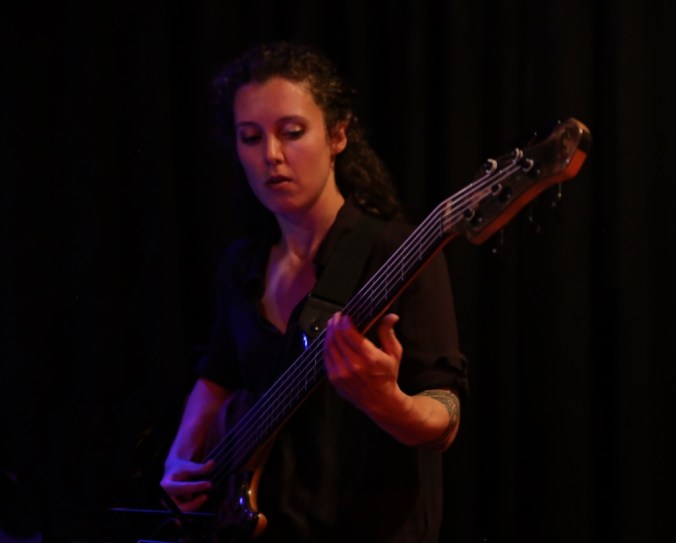
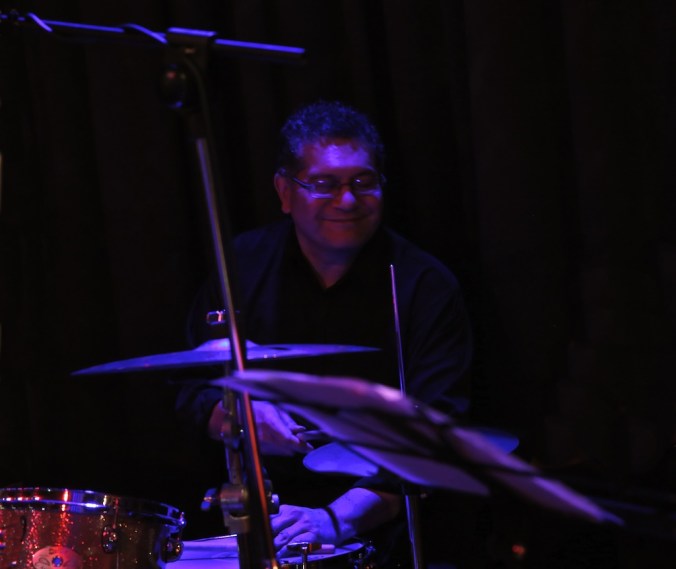 While the project draws on various inspirational sources like Alice Coltrane and Igor Stravinsky it is also brimming with originality. This is ‘spiritual music’ of the highest order and it uses the devices of the Shaman: long intensifying vamps and hypnotic beats which slip deftly into the consciousness. Throughout the night, it was Haines who took the melodic path while Crayford provided magnificent architectural structures. If even one element was removed, the edifice could fail; this was a music built from layers, each balancing delicately on the one beneath; only exposed incrementally, like a nested Russian doll. Marika Hodgson was the perfect choice for running those long ostinato bass lines. Her time feel is impeccable and she creates a gut punch while blending seamlessly into the mix. Not many know it, but Crayford is also a gifted bass player – he knows exactly what is needed and he trusts Hodgson to deliver. The one musician that I had not seen before was Mickey Ututaonga. He has a long history with Haines and again he was a good choice. Because the music was so carefully balanced, the last thing it needed was a busy splashy drummer. Ututaonga synced with the others, his every beat enhancing the overall hypnotic effect.
 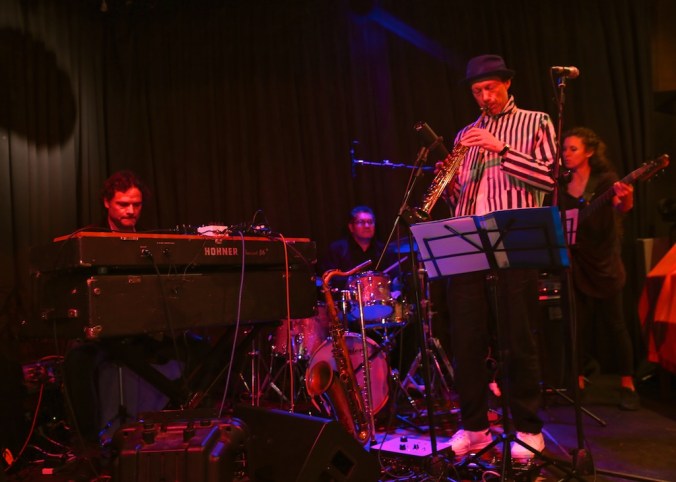 The other stars of the show were the instruments and pedals. For Crayford a Fender Rhodes and an equally vintage Clavinet; for Haines, his beautiful horns fed through a vintage SM7 Shure Microphone, then into a preamp and guitar FX board.
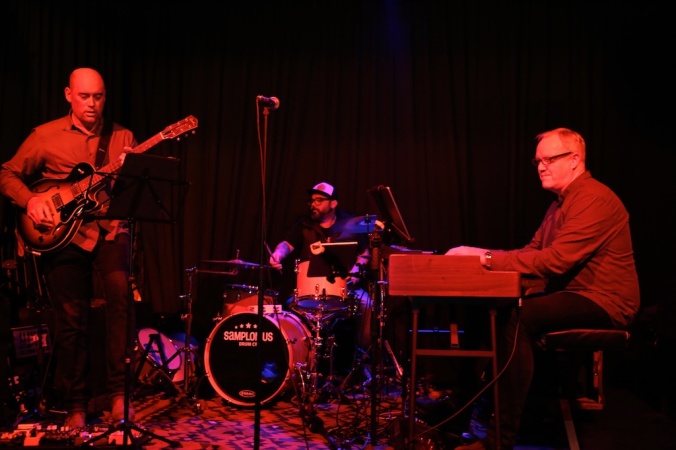 While some of us didn’t make it to the Wellington Jazz Festival, we had no need to cry into our beer. What Auckland had on offer was the Alan Brown Trio, returning to the Creative Jazz Club after a long hiatus, and in very good form. I have long thought that an organ trio is the best dish to serve up on a wet winter’s night. This trio proved the pudding with its down-home goodness, tasty grooves, and with all the trimmings. While Brown is across many genres, this is the one most music lovers associate him with. His deft touch calling down the good times and bathing us in a warm orb of sound.
 We heard mostly new material with a few well-chosen standards thrown in; all of it sounding fresh, the arrangements for the standards updated and interesting. Brown is a prolific composer – he always writes interesting tunes. His Between the Spaces album came out years ago, but I can still remember the tunes note for note. He is never afraid of melody either, balancing it nicely with his rich harmonies and all the while providing a solid improvisational vehicle. His final strength, and perhaps his greatest, is his feel for a groove. Although rooted firmly in the organ groove tradition, much of the new material felt evolutionary – taking us in a similar direction to that of Lonnie Smith. There is a lot to like about this direction.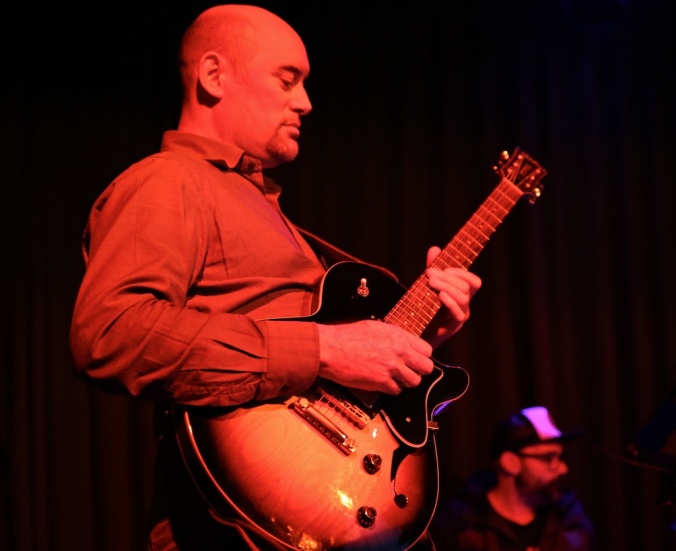
 It was good to see Melville perform again. I had not seen him on the bandstand since the Grand Central days. He’s an in-demand vocalist these days and deservedly so. I think that it was on his insistence that ‘I didn’t know what time it was’ was included (the Cecile McLauren-Salvant treatment). I have always loved his wonderful ”Come what may’ (Melville/Nacey) – surprisingly it is seldom heard.
 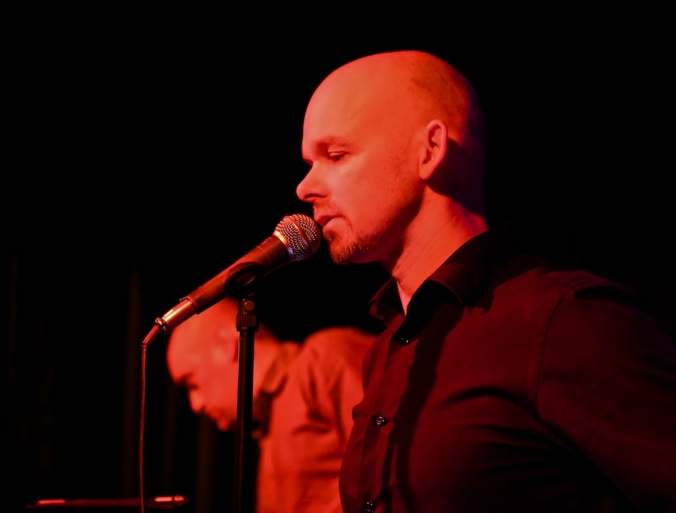 Although my battery died half way through, I have uploaded a clip from the gig – one of Alan Brown’s newer compositions. The trio’s incredibly warm vibe is well captured on this clip – a sound enhanced by the use of a Leslie Unit and of course by Nacey’s Godin guitar. This was the place to be; as the woody tones and warmth enveloped us, Winter was dispelled from our lives.

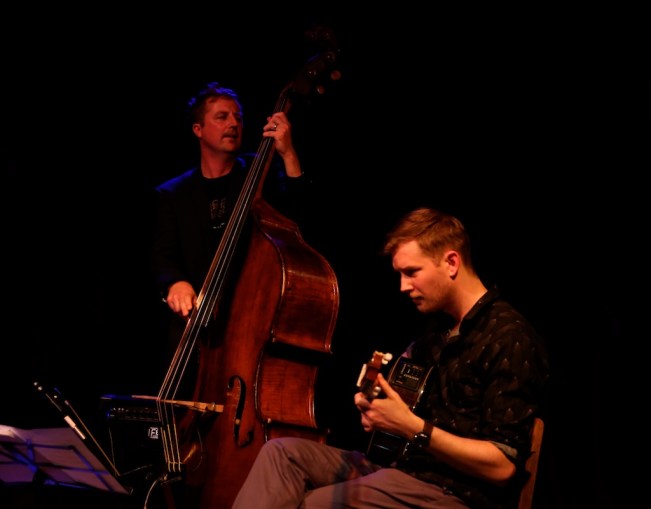
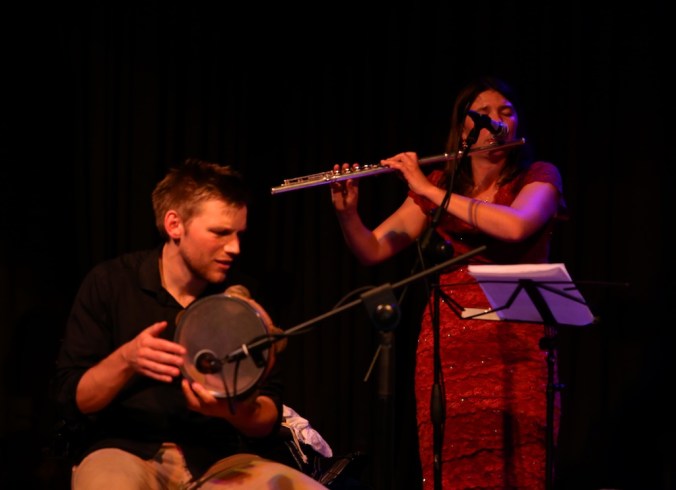
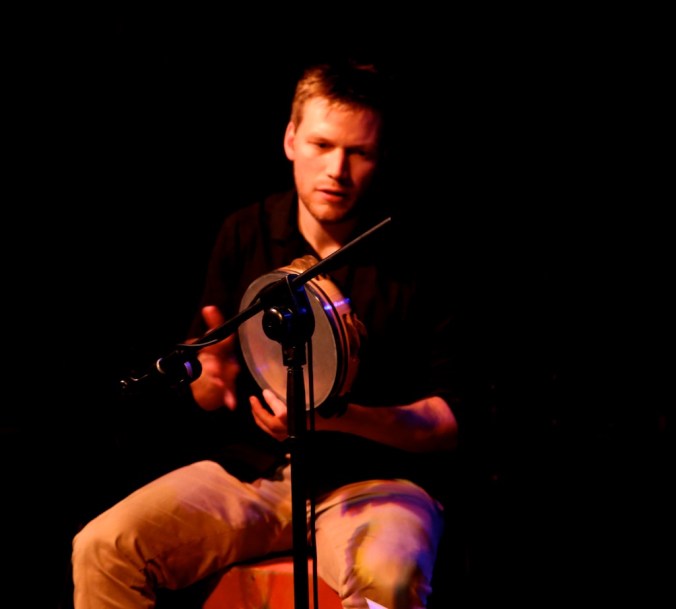
 I always look forward to emerging artists nights at the CJC. They don’t happen often but when they do, they’re fun, full of surprise and most importantly they are hopeful events. It is usual for emerging artists to salt the mine with seasoned players. Both of the bands did well in that regard. The first band up was Misha Kourkov’s ‘Equitable Grooves’, a six-piece unit playing multi-genre Jazz focused music. The material was well written and at times ambitious. Aiming high on the bandstand is good because that is where real learning occurs. If you wish to extend your reach, then having Alan Brown on the piano is exactly what you need. With that sort of experience and groove behind you, you have a fail-safe mechanism. The set opened a little tentatively, but they quickly found their groove; the last two numbers were especially enjoyable.
 The second set featured the ‘Exploding Rainbow Orchestra‘. This was a very different type of ensemble. Freer ranging, a bigger sound palette and an electric bass with the heavyweight punch of Bona. The bass player Joshua Worthington-Church who led the ensemble is accurately described as a maverick. His set list contained genuinely diverse material; gripping vamp-driven originals plus tunes from ‘Radiohead’ and ‘The Mint Chicks’. Under the leader’s guidance, the band took the material to a place close to my heart; a fusion of Jazz and psychedelia. I am happy to see this done, as the genre is all but forgotten. During the mid-seventies, that style of music was sacrificed on the altar of Jazz purism, a pompous battleground that tried to stifle genre exploration.
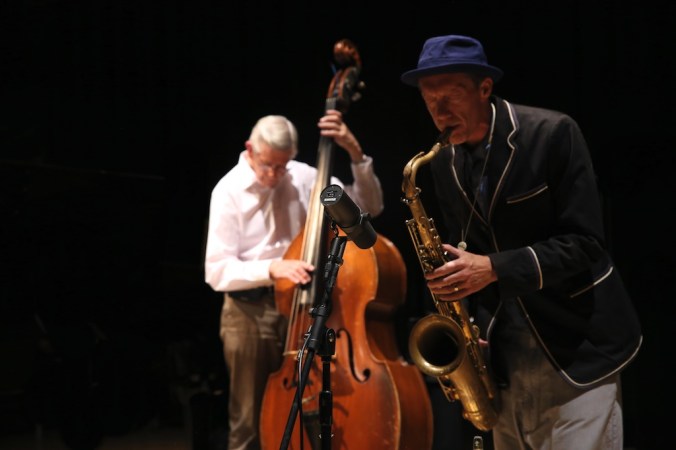 Long after the ANZAC commemorations had finished, when The World Masters Games contestants were either celebrating their success or limping toward the nearest A&E, a largely unheralded gig took place at the KMC in Shortland Street. It was fitting, that on a day of remembrance, the faithful old war horses, the standards, were honoured. It is surprisingly rare to see a standards only instrumental gig these days. The event was curated by Kevin Haines and what a treat it was. The definition of what makes a Jazz standard is a moveable feast, but the safest definition is that the tunes are, or were, from the standard repertoire. Most, but not all standards come from the Great American Songbook, e.g. Irving Berlin, Cole Porter, Victor Young, Duke Ellington Ira & George Gershwin etc. Many of them, and often the best, from failed musicals. Other Jazz standards come from the pen of gifted composers like Sonny Rollins.
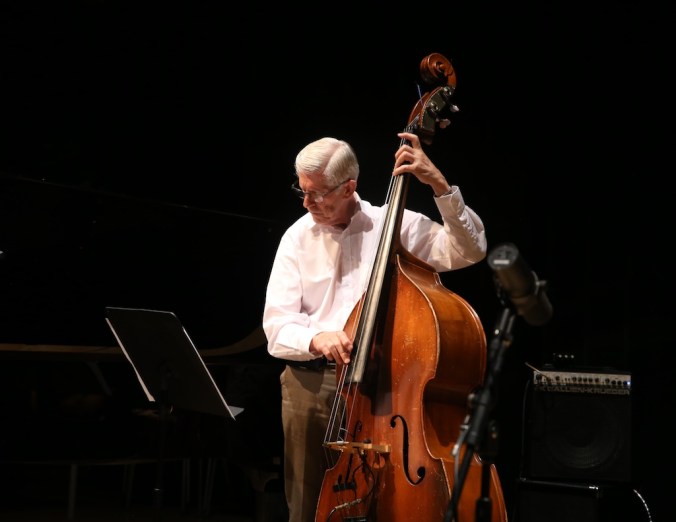 When introducing the band, Haines stated,” The ability to play the standards well, is the benchmark against which Jazz musicians are ultimately judged”. Assembled on the bandstand were some of New Zealand’s finest musicians. Kevin Haines (bass), Nathan Haines (tenor & soprano saxophones, vocal), Kevin Field (piano), Dixon Nacey (guitar), Ron Samsom (drums). The band gave it everything and the exchanges were beautiful – Nacey and Field conjuring up the Evans/Hall duos, Nathan Haines making his tenor sound like the Desmond Alto. The night was well attended and it will certainly be remembered.


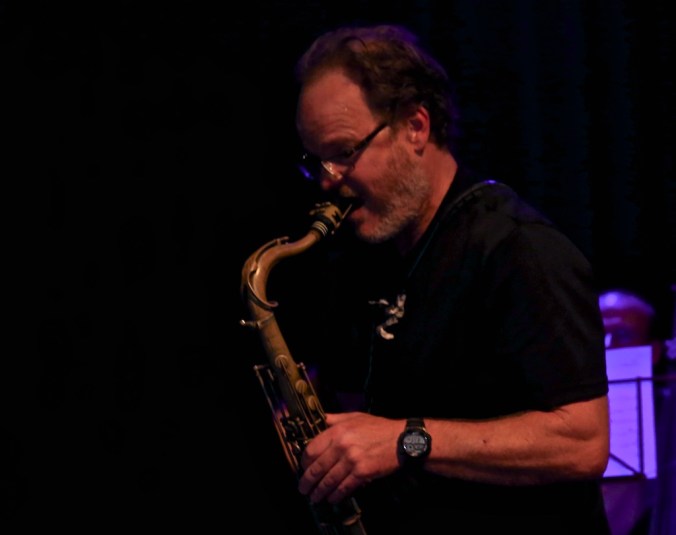 There is never a guarantee that two good acts blended into one will work. This one did. DOG and the various iterations of the Peter Koopman trio are each in their way self-contained; exuding a confidence born out of time spent with familiar musicians. Bands that play together over long periods anticipate and react instinctively. Stepping outside of that circle can be a risk, but that is a large part of what improvised music is about. DOG are a tight unit with quick-fire lines and nimble moves. By adding a guitar, DOG risked crowding their musical space; with Koopman, this did not happen. He is an aware and thoughtful musician. The pairing aided by some well-written charts, a pinch of crazy and good humour. The result was a looser sound, but the joy and respect provided all the glue it needed for the gig to work well.
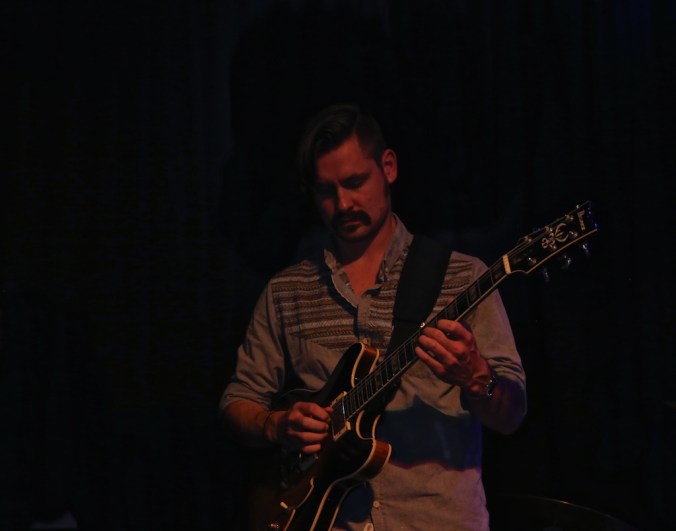 The unison lines and exchanges between guitar, tenor saxophone and Rhodes were just lovely. Kevin Field is always on form and the Rhodes with its chiming clarity was the perfect foil for Koopman and Manins. Field is the complete musician, tasteful, original and with impeccable time feel; Koopman’s guitar benefitting from the well-voiced chords, gently and sparsely comping beneath. Manins also gave a nice solo, and as we have come to expect, he reached for a place beyond the known world. Olivier Holland had a slightly different approach to Koopman’s regular bassist Alduca. Both approaches worked well on Judas Boogie. The interplay between Holland and Samsom was also instructive. As is often the case with good Jazz; the complicated was made to sound easy.
 Around Christmas, I discovered that I could not upload video to ‘YouTube’. I spent a few weeks trying to figure out what was causing the problem and then I made a fatal error – I consulted grown-up experts and that only delayed the problem. I should have asked a 12-year-old because none of the experts had the faintest idea what was occurring. After three months I finally nutted it out for myself, old as I am. FYI – when you upgrade your operating system, the default setting on power-saver puts the machine to sleep half an hour after the last keystroke.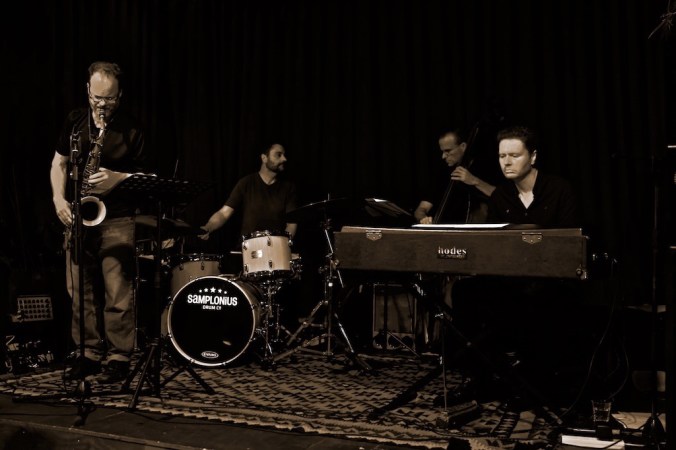
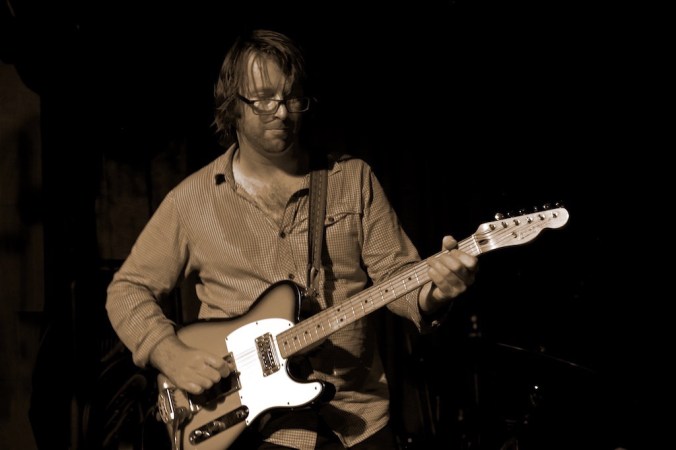
 Guitarist Peter Koopman has long been established on the Australian Jazz scene. He returns once or twice a year and when he does he brings interesting projects with him. This tour was no exception; with new compositions, some refocused standards, and a re-jigged trio lineup he hit the mark. Some musicians reach a permanent plateau, and then make only incremental advances from there on. To date, Koopman has been on a steady upwards trajectory; and with little sign of slowing. It’s noticeable in the detail, but also in the overall impression. He is matter of fact on the bandstand, there’s even a hint of diffidence about him, but this only reinforces the impression that he is all about the music. From the first few notes, band and audience are subsumed in the performance.
 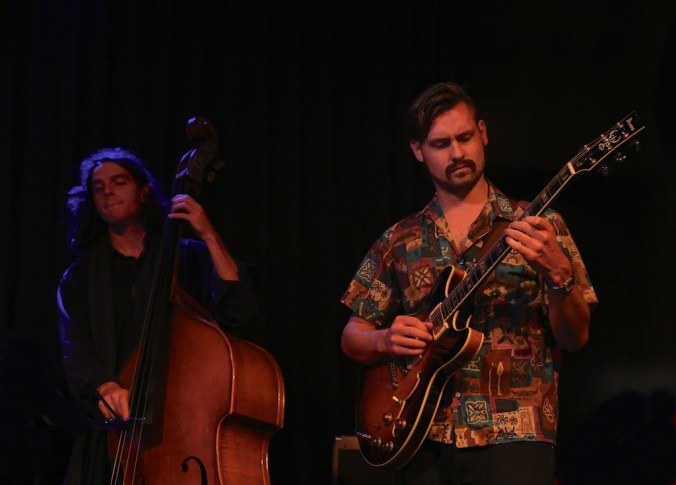 One of the subtleties that I noticed between visits is in his tone. It is cleaner but broader, conveying more information, allowing listeners to hear nuance and micro changes in modulation. And on some numbers gentle harmonics, rising off the upper end of a rapid run. His newer compositions also enhanced the project; nicely paced, making room for the whole trio and very appealing to the ear. I was not alone in observing this trajectory. One of our best New Zealand guitarists was later heard to mutter, only half-jokingly, “Damn, I’m off home to burn my guitar”. Australia has a number of excellent guitarists and some are equal to the best in the world. The challenges and opportunities of working in such an environment, have obviously suited Koopman.
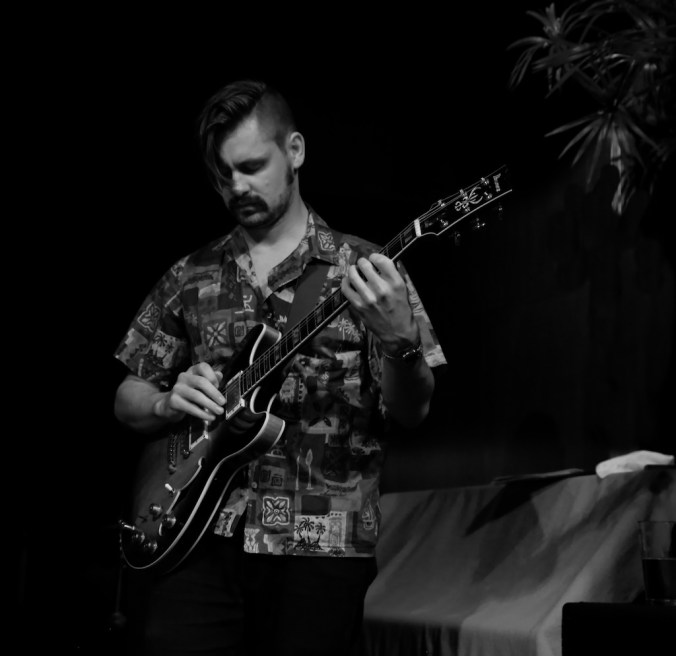 Judas Boogie, Meth Blue, Dog Annoyance, and Hypochondria were Koopman’s tunes. The band also played a sizzling version of ‘Airegin’ (Sonny Rollins). ‘Airegin’ (Nigeria spelled backward) is a relentlessly upbeat tune and often tackled by guitarists – at least those brave enough. Another Rollins tune was ‘Paradox’. The others ranged from the familiar ‘The best things in life are free’ (De Silva), and ‘The things we did last summer’ (Styne/Cahn) – to the less familiar – ‘The big push’ (by Shorter from his little known ‘Soothsayer’ album) and ‘Montara’ by Bobby Hutcherson (from his amazing latin album of the same name). Why we do not hear more Hutcherson is quite beyond me (thanks for this one PJK).
 Australia produces some distinctive, muscular tenor players and Andy Sugg is an example of that phenomena. The first thing that grabs a listener is an awareness of the raw power that fills a room when he blows. I am not just referring to volume or his fat rounded sound, but to the way he communicates an innate sense of musical purpose. This comes across as something beyond mere confidence. Deftly progressing through each tune; no over thinking, just a flow of connected ideas – and all carried on that delicious sound.
 It is always tempting to look for comparisons or patterns, it is what listeners do (and probably what many players wish they didn’t do). It is part of how music works, our subconscious looking for a framework, for some reference point – a launching pad, a place of departure where the known departs for the unknown. In Sugg’s playing you could could hear them all. Name a great tenor player and that player was in there, listen harder and suddenly they were gone. Perhaps this is the hall mark of truly innovative players; they channel the essence of others and then dismiss them just as easily.
 One of the joys of improvised music is the eternal conflict between the tangible and the intangible. You hear a phrase or a voicing that is maddeningly familiar, you feel a tingle of anticipation, you are on the verge of naming it – but before it takes form it is gone; dissolved into the intangible. Listening to Sugg is to catch a piece of Brecker, but listening to Sugg is also to hear an original. Tradition and innovation co-existing but ultimately spoken in his own dialect.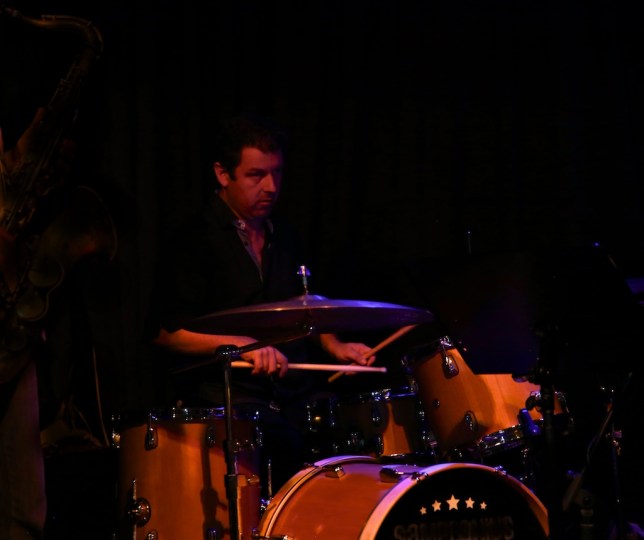
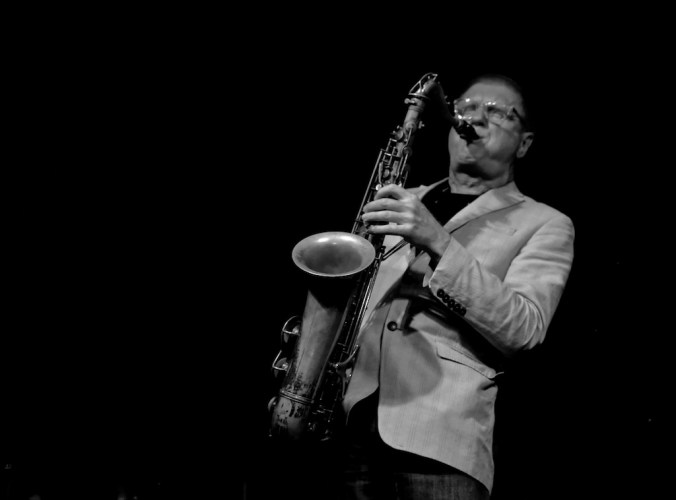
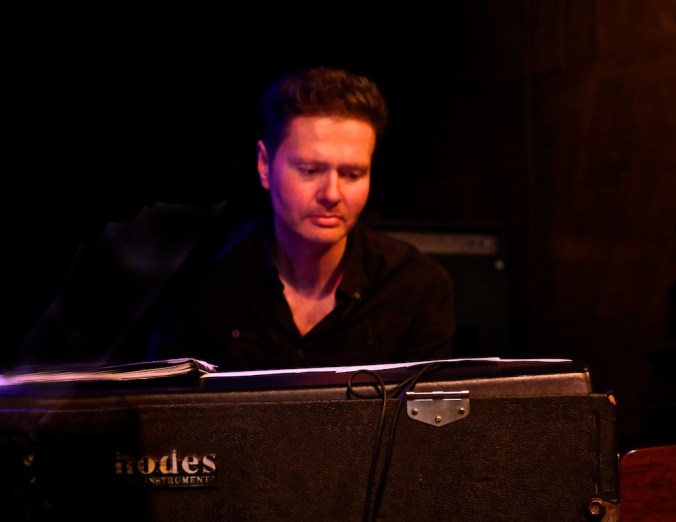 It was appropriate that Warners ‘A List’ recording artist Kevin Field brought with him local A listers Dixon Nacey, Cam McArthur, Roger Manins and Stephen Thomas. Field has a substantial following in New Zealand and his innovative music attracts musicians and fans alike. Since his last ‘A List’ gig he’d clearly been busy – writing new material and rendering the familiar into something altogether different. Zoot Sims once quipped, “Jazz is a music where you never play the same thing once’. Field certainly exemplifies that tongue in cheek descriptor. Commentators and visiting musicians often remark on his innovative approach to harmony and rhythm. It is as if he has invented a new musical language out of the old. In truth, there are strong elements of related genres like R & B, latin and even disco funk there; under his fingers they become unique vehicles for improvisation.
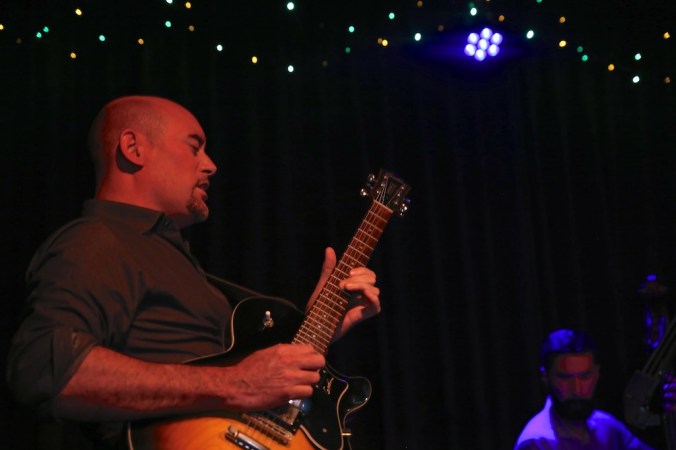 Unlike Janet Jackson, Field never suffers from wardrobe malfunctions. He does however occasionally suffer from equipment malfunctions. I mention it only because his Rhodes had failed him during a previous weeks CJC gig. No one listening comprehended that he had lost some of the middle-register. No one noticed because he re-voiced mid improvisation to work around the problem. I have heard of old timers doing this but seldom modern pianists. Field can effortlessly jump over obstacles and find a sweet spot.
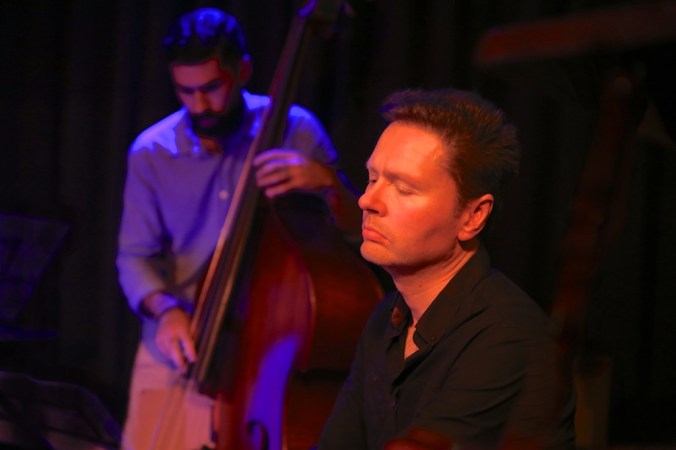 There were old favourites reworked like ‘Game Changer’, ‘Good Friday’ and ‘Left Field’, but the rest were recent compositions. Among the newer numbers were ‘Rain check’ and ‘Acme Music Corporation’ (the latter featuring Manins on soprano – a rare event). Another new number ‘Unconditional love’ was introduced by Field with the following story. ‘There are many types of love in the world and today an unusual example came up in my twitter feed, – ‘Trumps deportation threats make my in-laws fearful. They live at 2b/34 Main St, Phoenix. My Mother in law arrives home from work at 4:30’ “.
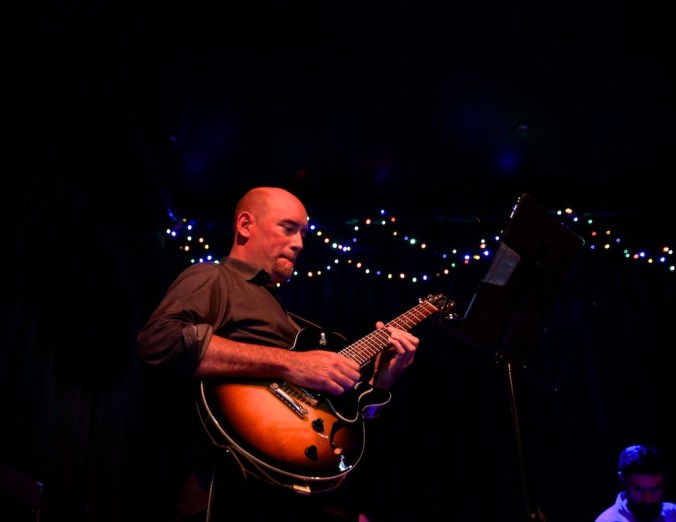 The last tune ‘Home Schooled’ was the best possible number to finish the evening with. Far from being a wind-down number, the musicians reached inside themselves, each giving magnificent performances. Manins back for a second number was on tenor, and he sounded happy to be back on his favourite horn. Nacey was at his best, making his guitar soar, as if he had found an ancient alchemy, a way to condense sunlight into music; the epitome of sonic clarity, invention and virtuosity. McArthur and Thomas each in step and reacting to the challenges. With material like this good musicians can achieve wonders.
 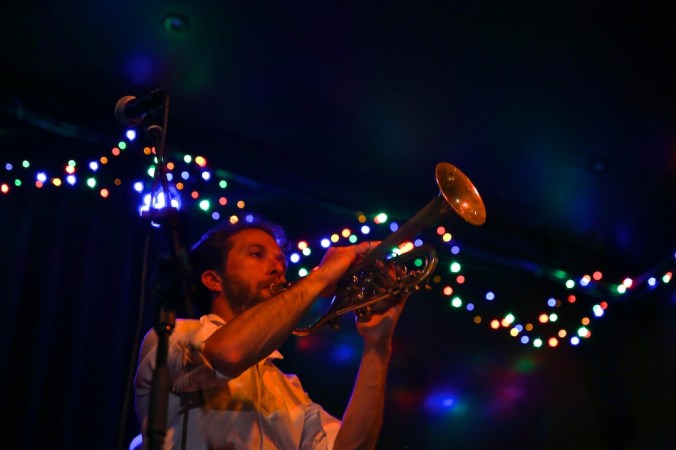 Improvised music is a never-ending contest between the familiar and the unexpected. Everything is valid on the journey, but sometimes we forget that tradition can be a springboard and not a straightjacket. We had a good example of that on Wednesday. Because he lives far from here, few if any locals had previously encountered Marc Osterer, but few who heard him will forget his exuberant CJC gig. Born in New York, Osterer has led an interesting musical life. Broadway Shows, New York clubs, principal trumpet (Mexico City Philharmonic) and the Salzburg Festival Austria. While he attended prestigious musical conservatories in New York, there is something else in his sound – something that can’t be learnt purely from academic institutions. Osterer’s Jazz has a firm foothold in the tradition. Louis Armstrong and the great swing-to-bop trumpeters like Sweets Edison. It made perfect sense therefore that the standards he played were from the Songbook and that his own compositions reached deep inside that era.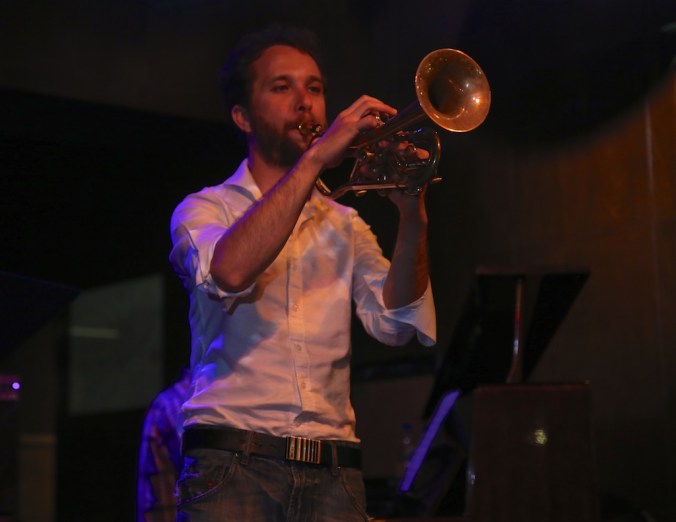
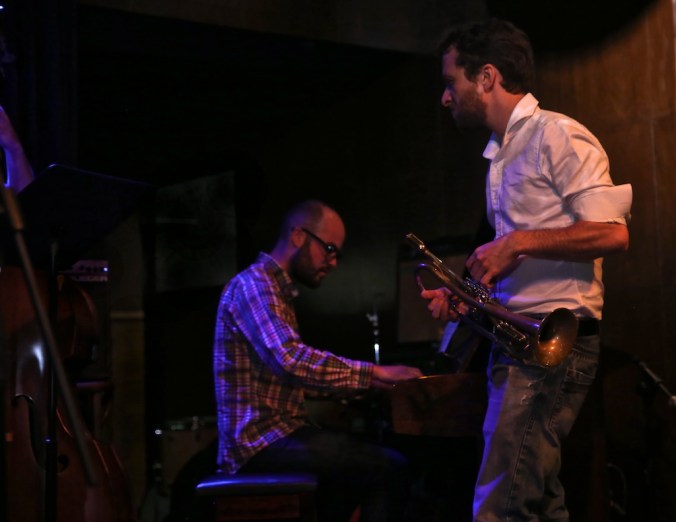 We also witnessed good chemistry between the visiter and his pick up band. It was not the band advertised but what we got was terrific. Matt Steele was flown up from Wellington and locals (fellow UoA Jazz School alumni) Eamon Edmundson-Wells and Tristan Deck completed the rhythm section. Pianist Steele has been gone from Auckland for over a year and is seldom heard here these days. We do hear Edmundson-Wells (bass) and Deck (drums), but to the best of my knowledge, none of them have performed in this context. Absent were the complex time signatures and post bop harmonies. The tunes stayed closer to the melody and the rhythmic requirements were often two-beat or even something closer to second line. As they played through the sets the joy of discovery showed on their faces and we felt it too.
 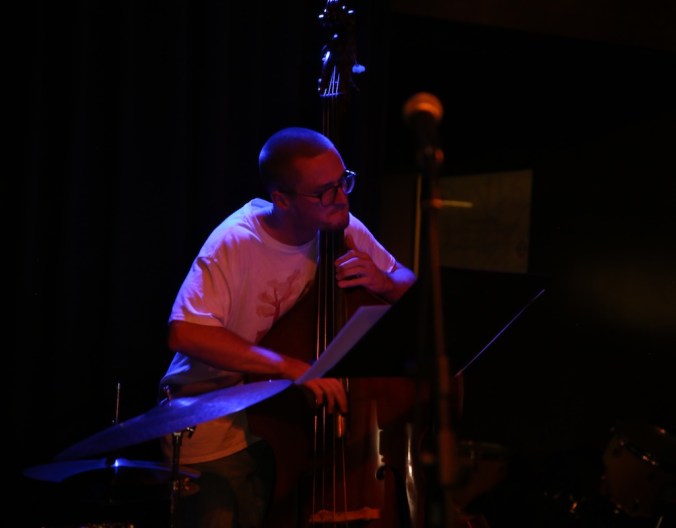 These musicians were still students three years ago but their skills are now well honed. They met the challenge and more. Locals who had not seen Steele play for a while, were buzzing; especially after the blistering Cole Porter standard , ‘It’s alright by me’. Steele’s fleet fingered solo was terrific, and matched by Deck’s bop drumming (complete with appropriately placed bombs and fluid accents). Edmundson-Wells dropped right in behind, pumping out his lines, and it was obvious they were enjoying themselves. Osterer’s compositions tell us how
  comfortable he is with this style of music. His ‘What’s that smell’ (Jazz should be ‘stinky’ he explained) – a New Orleans referencing tune, then ‘Tune for today’ and ‘Bite her back’ based on a Bix Beiderbecke tune. Among the standards was Chet Baker’s version of the little known ‘This is always’, a steamrolling syncopated version of ‘Limehouse Blues’ (Braham) [Note: I have only seen one Kiwi attempt that, Neil Watson on fender] and a version of Hoagy Carmichael’s ‘New Orleans’.
 After years traveling the wider Jazz world, Jasmine Lovell-Smith came home; launching her latest album ‘Yellow Red Blue’ at the CJC last Wednesday. The Album features a quintet ‘Towering Poppies’; a group she formed in New York over five years ago. Her New Zealand gig featured locals Roger Manins, Kevin Field, Eamon Edmundson-Wells and Chris O’Connor. After her New York release she garnered a number of favourable reviews and no wonder. This is a lovely album, her compositions and arrangements outstanding, the recording immaculate.
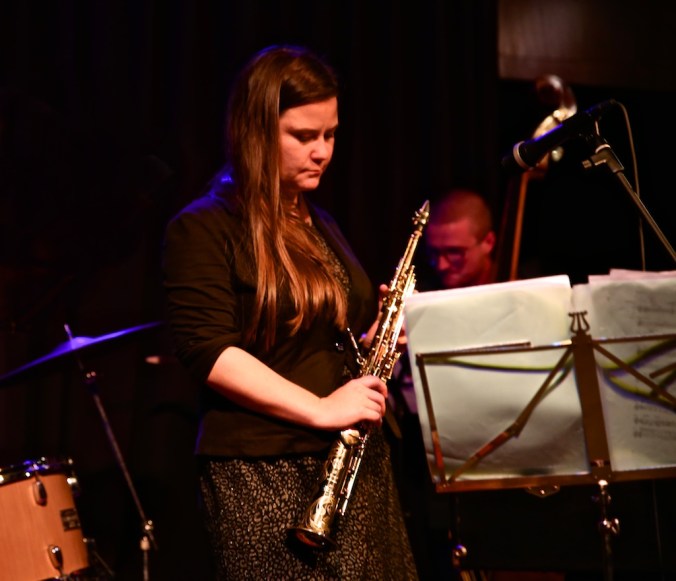 Her soprano sound is warm and enveloping, the cleaner tone of her straight horn nicely counterbalancing with the woody earthiness of the bass clarinet, the well constructed charts coming into their own when these delightful interactions occur. The rich textures are never overwhelming, even when strings enter the mix. This is chamber Jazz at it’s best, engaging the listener without resorting to cliché.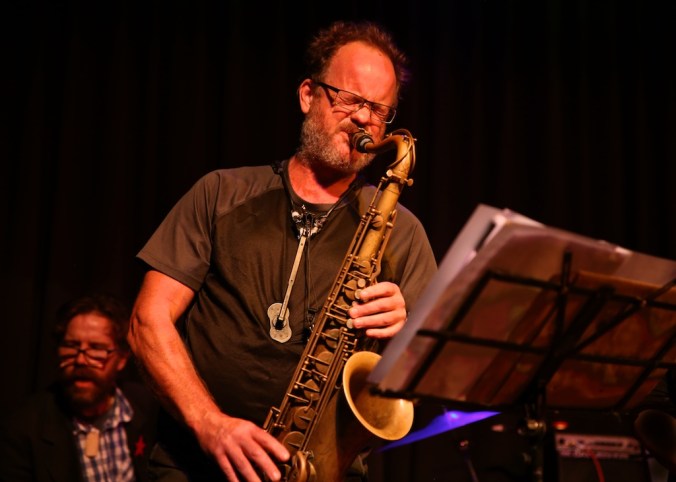

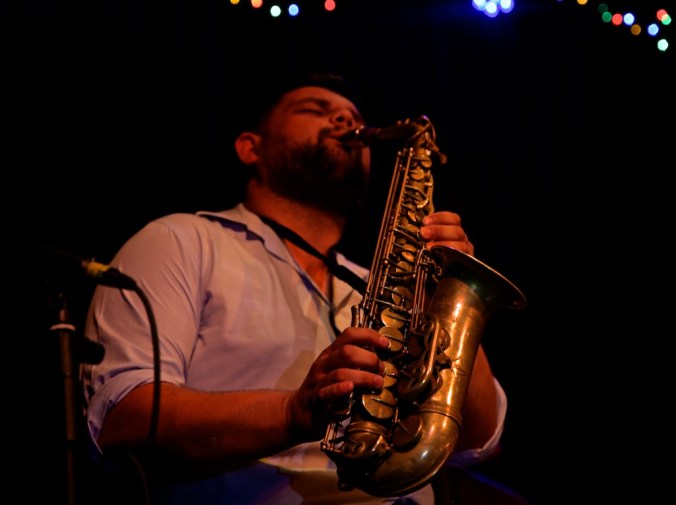 Callum Passells’ newest project was an exploration which took us to the outer edges of Bebop. The title ‘Flightless Birds’ a wordplay; a pebble tossed into the pond, suggesting many possibilities. The obvious Jazz reference is a comparison between flightless New Zealand birds and Charlie ‘Bird’ Parker – his musical descendants especially. A cohort that tried and often failed to catch his musical coattails. For a time after his death, alto saxophones were laid aside in favour of the tenor; only a brave few risked comparison with the troubled prodigy. As his legend grew he seemed unassailable. Attempts to demystify, to separate the legend from his musical legacy came later. In the post millennium era few such sensitivities remain. Parker is deeply admired for his genius, then deconstructed unselfconsciously. The gifted altoist Rudresh Mahanthappa immediately comes to mind.
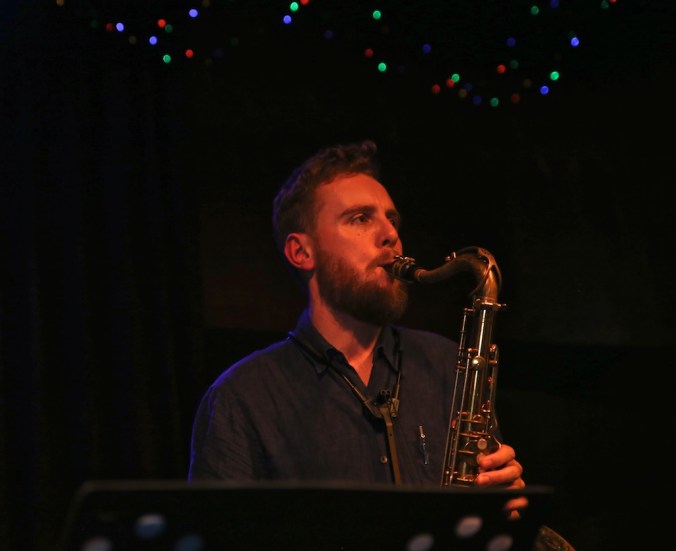 The two things that draw me to Passells are his tone and his communication of ideas. For a musician who leans toward the avant-garde he has a remarkably clean tone. This works well for him when he heads into uncharted choppy waters, cutting though the turbulent air incisively. There is obvious precedent for this in Albert Ayler (who strove to sound like Desmond or Konitz while tearing at the very fabric of harmony and form).
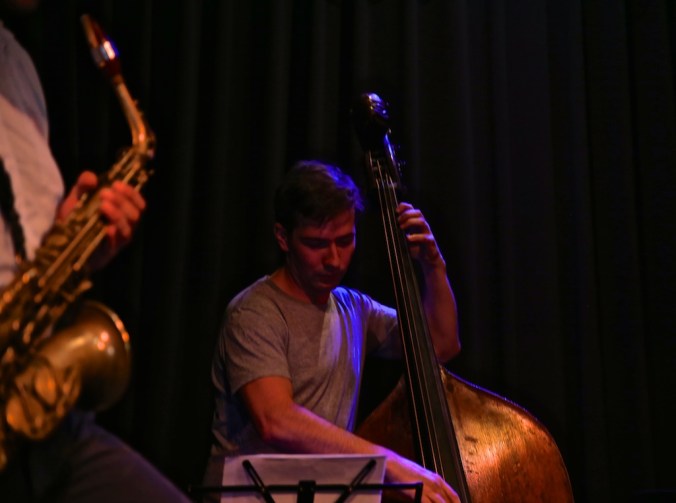 The tunes were all ‘contrafacts’ and cleverly constructed. I am crap at working out the mother tunes – a job best suited to musicians fed a rich diet of standards’ changes. The pieces had titles like “The Punisher” (Sinclair), or ‘Buy a Car’ (Passells). The Punisher was written over the changes of ‘In a Mellow Tone’ (Ellington) and ‘Buy a Car’ over ‘Take the A Train’ (Strayhorn). After each tune the original was announced, then people got it immediately, cursing themselves for not getting the connection quicker. The tunes were close enough to hint at familiarity, but far enough away from the original to cause some head scratching. One tune needed no guesswork. “I’ve got it bad and so I’m obliged to notify all previous sexual partners” (Passells) – no prize for attributing that one.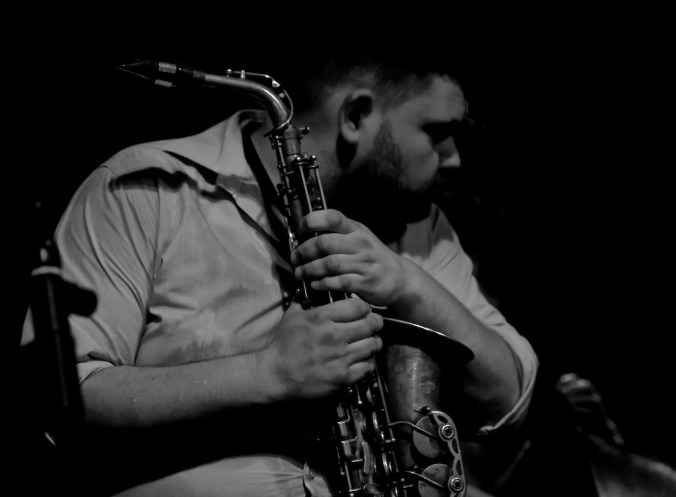
 JazzLocal32.com