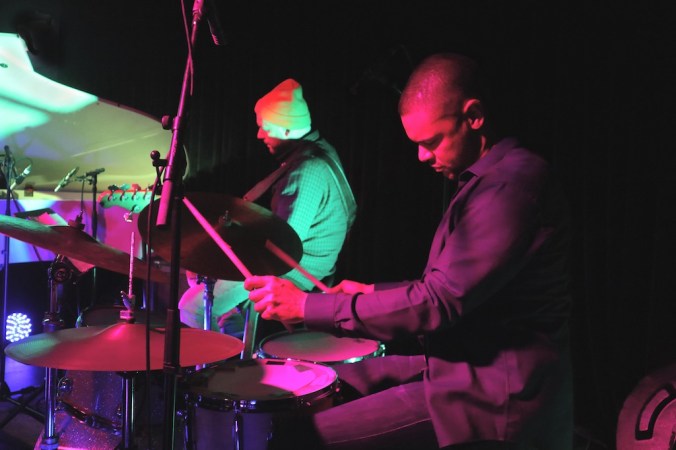
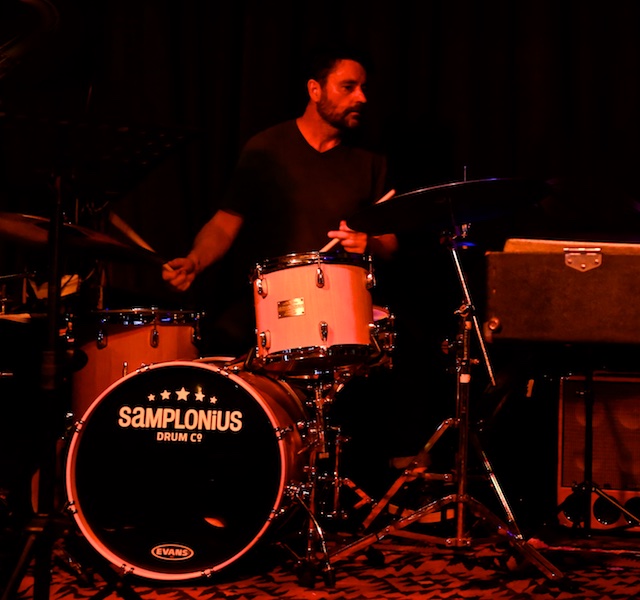
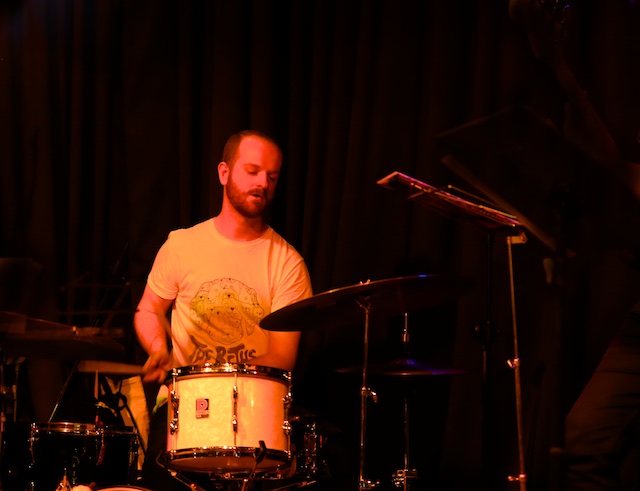
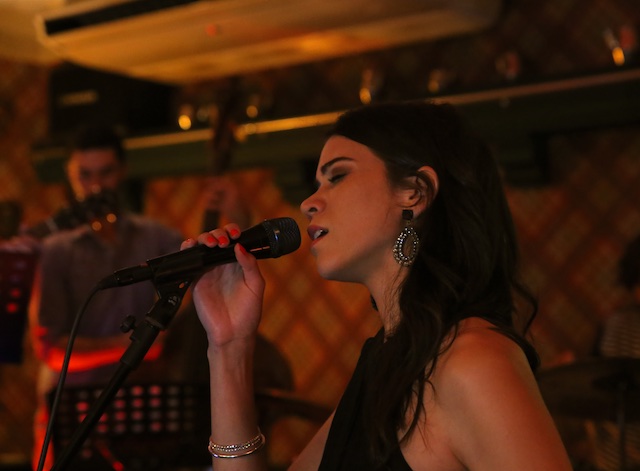
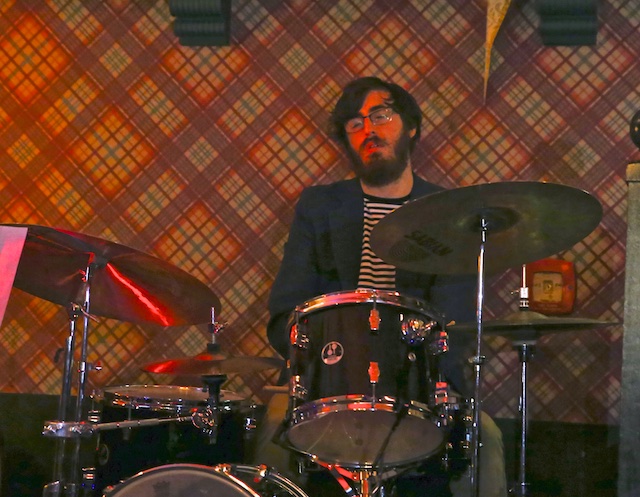
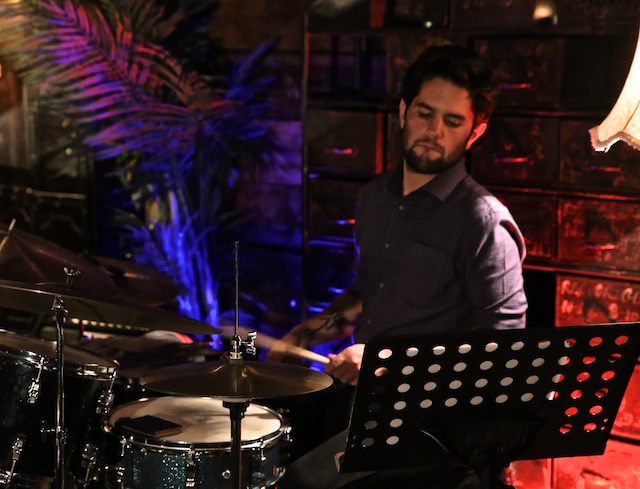
The Myele Manzanza ‘A Love Requited’ gig opened with a heart-stopping rendition of his tune ‘Ritual’. As the leader’s beats drove out the grey of winter, it left no room for doubt; this was a drummer gig. He moved his body to the music and rained down rhythms and everyone was mesmerised. As drummers move, their feet and hands blur and dance, but few move their upper bodies like Manzanza. This gig was all about sublime motion; kinetic transportation into pulsing parallel worlds. It was very ancient, eternally present, and futuristic. As he bent close to the kit or circled the snare he looked like a hawk circling his prey. This was different drumming and while it was firmly rooted in Jazz, it also mined deeper timeless roots. It also felt intensely personal.
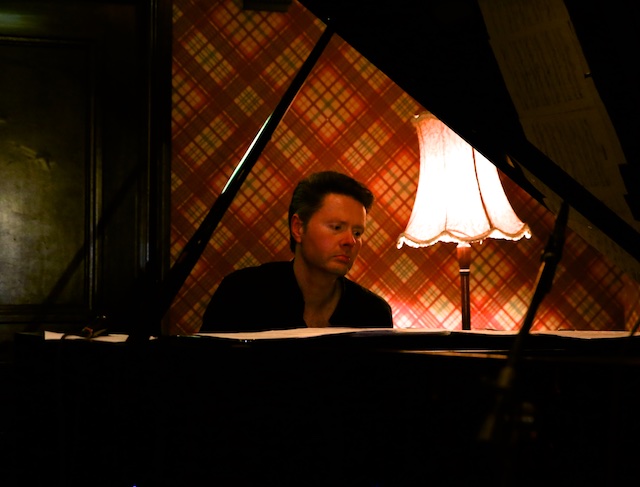
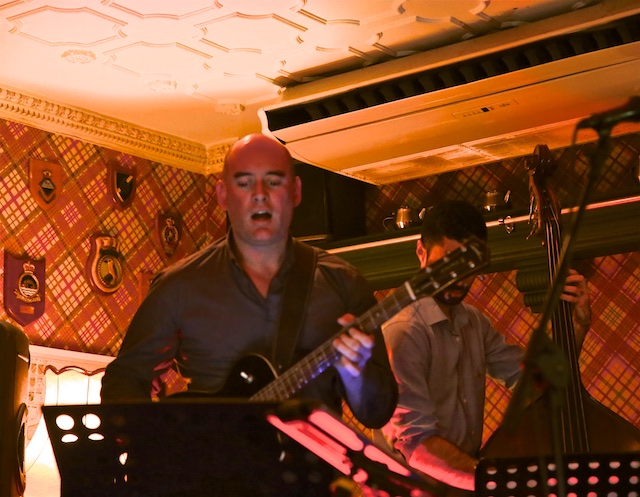
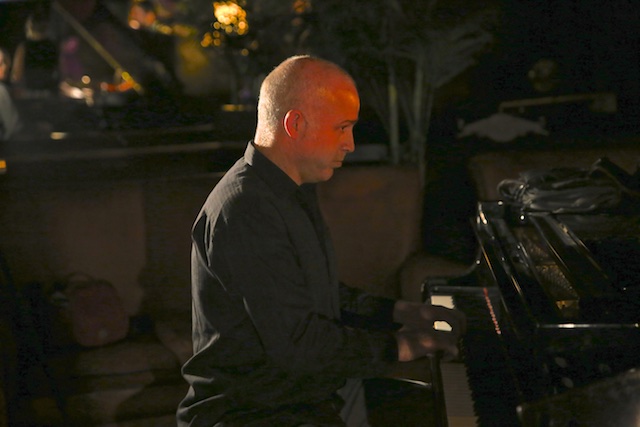
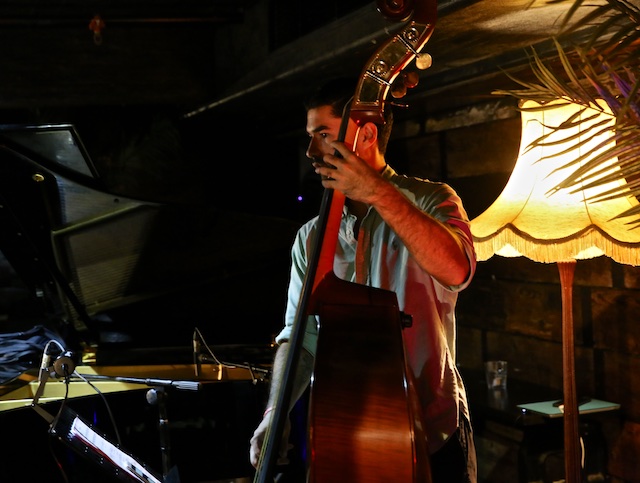
With him on the New Zealand leg of the tour were genius pianist Jonathan Crayford and the powerhouse Wellington bass player Johnny Lawrence. His bandmates needed to be chosen well, because what was on offer was not your usual piano trio music. Everything about the compositions centred around the percussive and was juxtaposed against compelling rhythms; whether soft or loud, piano or bass. Powerful ostinato patterns established, evolving into figures or melodic lines before turning back on themselves. This had the effect of intensifying the vibe and drawing the audience deeper into the soundscape. The drums on the gig were often loud and at times really loud, but when the quieter more reflective passages occurred the intensity remained.
Manzanza is the son of a Congolese master percussionist and the name Manzanza derives from beat out rhythms. All of that is implicit in his compositions, but it is also a doorway into a bigger story. ‘A Love Requited’ is also about fine composition and superb arranging. Out of that rich rhythmic brew and long evolving history comes an album filled with surprising subtlety. The album is well mixed and the individual players in the ensemble are given ample room to breathe. There are various arrangers credited and all serve the music well. That said, Manzanza arranging Manzanza is what stands out for me.
The album features a medium-sized ensemble with additional players appearing on certain tracks. This band has connections far and wide but it is mainly an Australasian affair. Manzanza and Jake Baxendale are from New Zealand as is ex-pat Mark de Clive-Lowe. The remaining band members, mostly Australian, feature talents such a Matthew Sheens (full personnel list below) and co-producer Ross McHenry. A number of the above musicians are either resident in or regular performers on the USA scene.
If you get a chance, catch the live gigs. More importantly, grab a copy of the album as it is one that you will want to keep on hand for repeat plays. The best option is to visit Bandcamp, where you can order a physical copy or grab an uncompressed download; available in many high-quality formats. In the nineteen fifties Ellington and Strayhorn penned a suite titled Such Sweet Thunder. They were referencing Shakespeare’s ‘A Midsummer night dream’; the full quotation being, ‘So musical a discord, such sweet thunder’. Such sweet thunder certainly applies to this album.
‘A Love Requited’ Auckland: Myele Manzanza (drums, leader), Jonathan Crayford (keys), Johnny Lawrence (bass). CJC Creative Jazz Club, Anthology, K’Road, 10 July 2019
Album: Myele Manzanza, Matthew Sheens, Jake Baxendale, Ben Harrison, James Macauley, Jason McMahon, Adam Page, Django Rowe, Mark de Clive-Lowe, Brenton Foster, Jack Strempel
 The original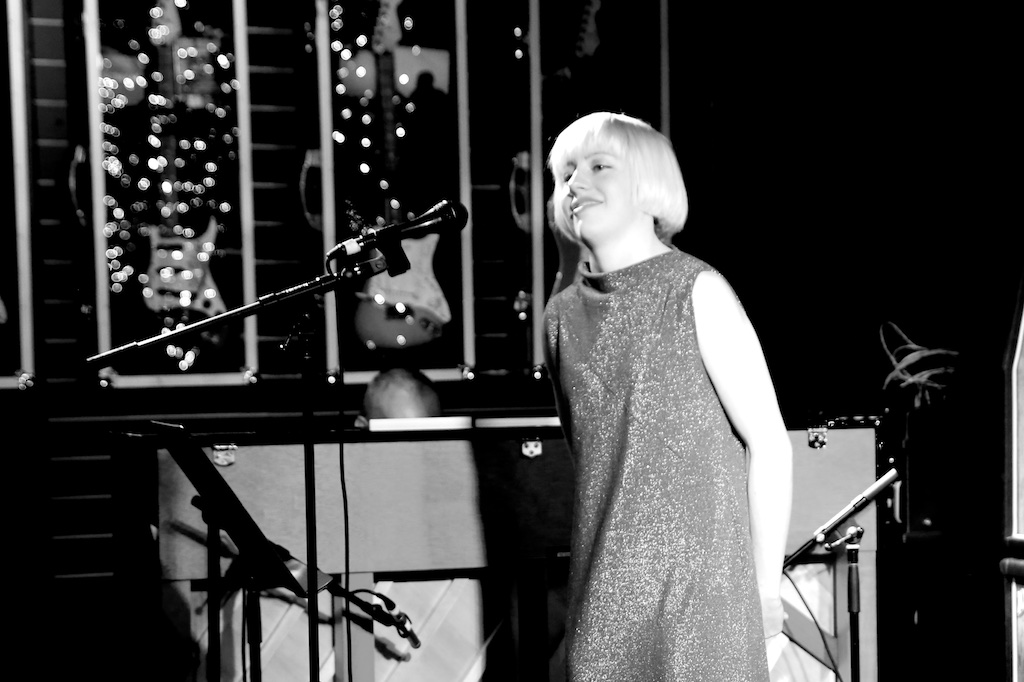
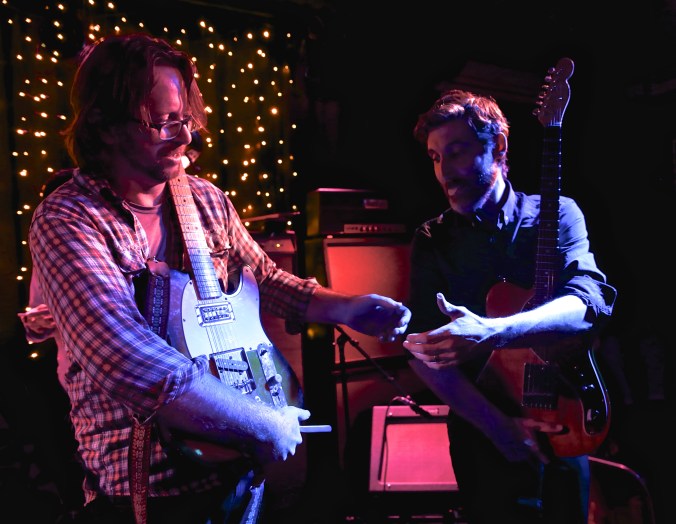 It is not often that you attend a gig where a set list covers such a range of styles but still pays due respect to each. If anyone could pull off such a gig; traversing the heights of Monk, Murray McNabb, Frantz Casseus, Bill Frisell and Ornette Colman it was these two. In lesser hands, the trajectory would have faltered, the items come across as disembodied. Here, the connecting threads, however improbable, made perfect sense. The centre held and the arc of the journey was a joyous adventure.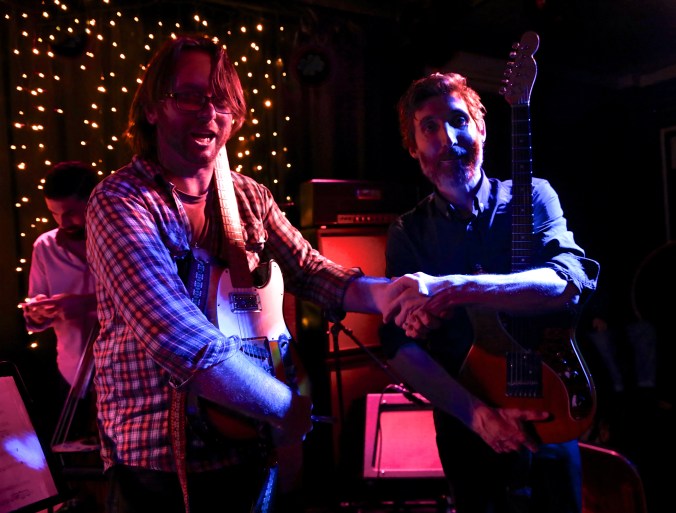
 Viata
Viata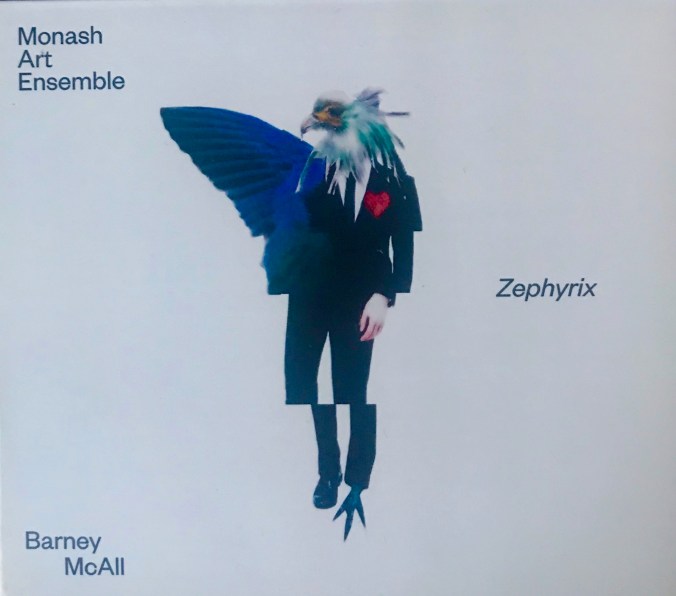 Zephyrix
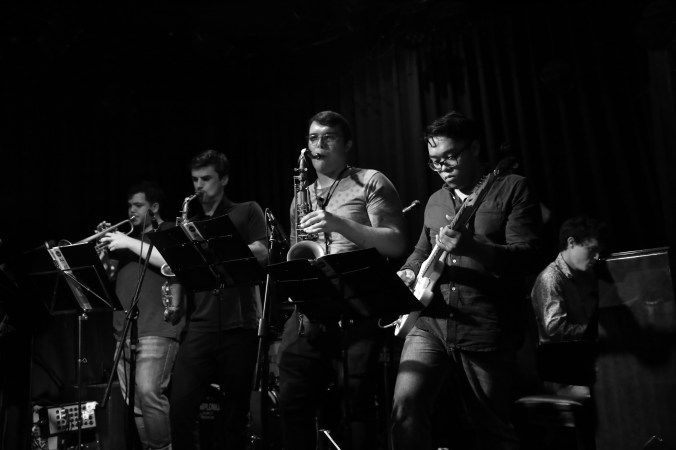 In keeping with the longstanding CJC tradition of keeping twice yearly slots open for emerging artists, late March featured two such sets. First up was a group led by bassist Denholm Orr. Orr has appeared in lineups a number of times, but this was his first appearance playing his own material and as a leader. His recent compositional work has placed increasing focus on arco-bass and consequently, the charts reached into that territory. Arco is not the default style for Jazz bassists but I am seeing a lot more of it lately and I welcome that.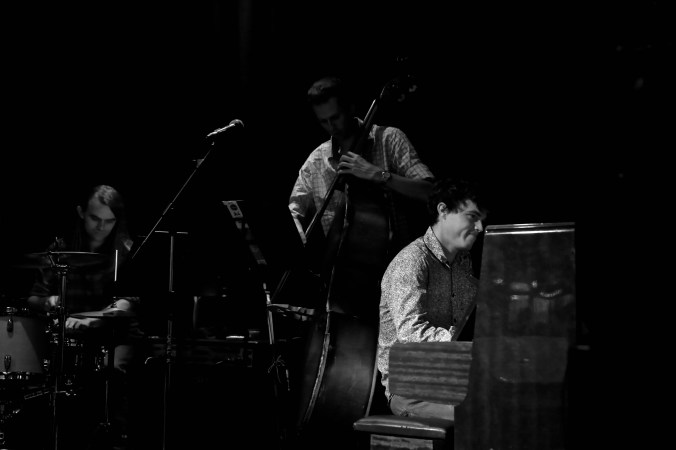
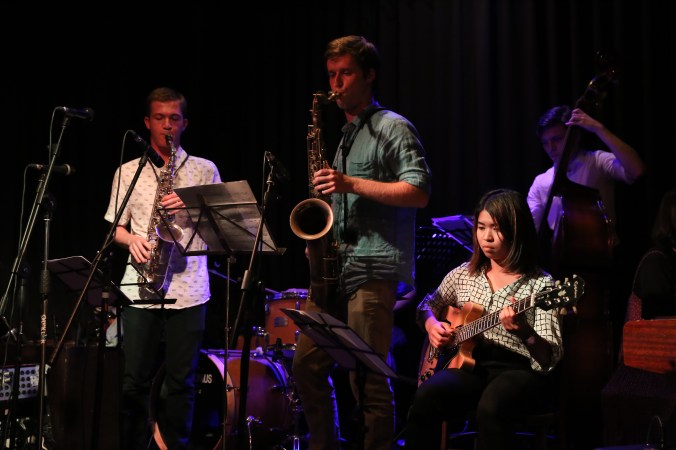
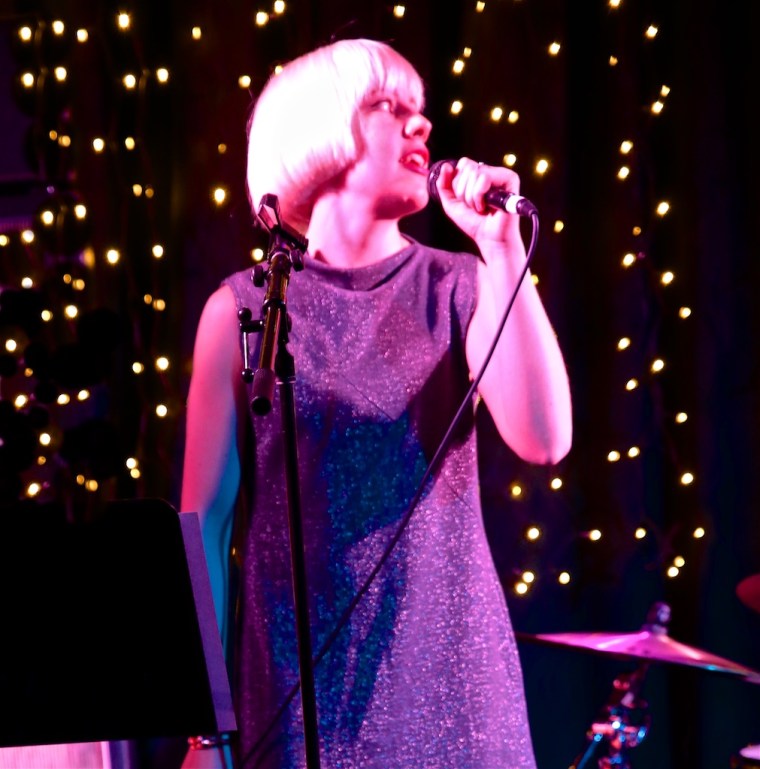
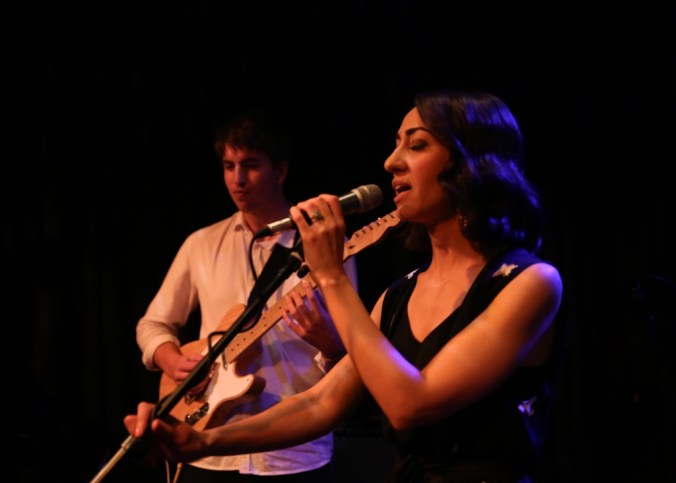 When Marjan stepped up to the microphone, she owned the room from that moment on. Her previous association with the Jazz club had been peripheral, but this gig changed everything. I have sometimes engaged with her about Persian music or Sufi poetry and I have heard her performing in the Kevin Field ‘A List’ band. She is always impressive when she sings, but this was impressive in a different way. It was her first Jazz club gig as a leader and suddenly, here she was delighting a capacity audience, every bit the seasoned professional; exuding an easy-going confidence. It was tempting to think that she had magically transformed herself into this fully formed artist, but her back story offers deeper insights. Marjan is of Persian descent and while this breathes exoticism into her music, it is only a fragment of her story. In truth, she has been a performer for much of her life; an established presence in the world of film, an in-demand voiceover artist, a teacher of music, dance, and drama. She draws on many strengths but on Wednesday they coalesced; a marvellous voice and a formidable stage presence the outcome.
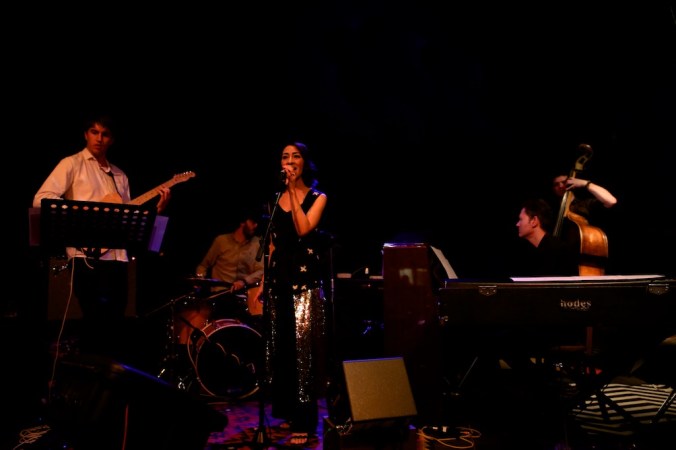 If her choice of a first number was to make a bold statement, then she succeeded admirably. Stepping out from behind the black curtains, accompanied by a shimmering Rhodes, she embarked on her engrossing journey. The first few bars of her ‘Desert Remains’ were straight out of the Sufi Jazz tradition; it was a call for universal tolerance: arising from her belief that music provides a pathway to transcend the banal. Almost imperceptibly, the tune became a love song, settling into new and funky rhythms. This was a nice piece of writing and the rhythmic interplay gave her much to work with. The influences in many of her compositions are generational; Stevie Wonder, Michael Jackson, Brian Wilson and of course her indigenous roots. All of this is filtered through a Jazz lens. Although her approach is modern, she doesn’t shy away from the traditional fare of Jazz singers.
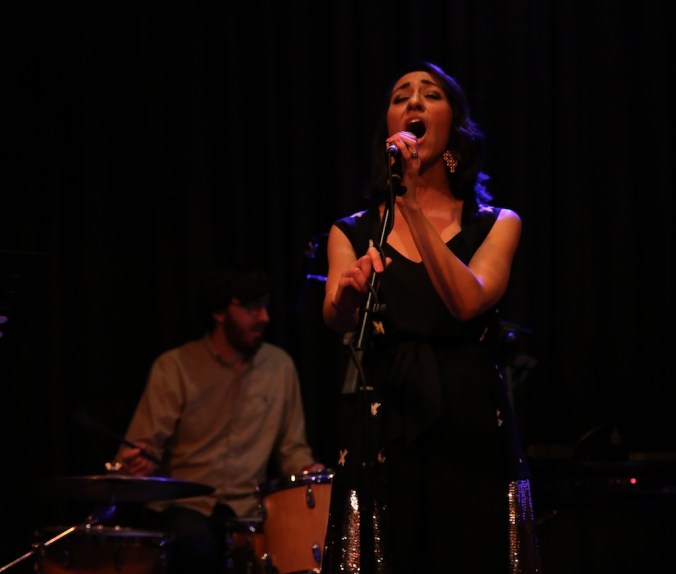 Looking to popular music for new material is not a recent phenomenon for Jazz vocalists. Ella tackled ‘A Tisket a Tasket’, Louis appropriated a multitude of pop songs. The great American songbook is a selection of one-time popular songs. It is what Jazz musicians do; explore, steal and transform. The more diverse the influences the richer the music. When she tackled the lovely Jazz standard ‘Detour Ahead’ (Ellis/Frigo) she owned it completely. That hint of smokey voice, that delicate phrasing; being adventurous while showing deep respect to the composition. It was hard not to think of Norah Jones; an artist who is traditional and modern in equal parts. I would also give her top marks for her set list; the numbers included ‘The look of love’ (Burt Bacharach), ‘God only knows’ (Brian Wilson), ‘I’ll be free’ (Donny Hathaway) and of course her own compositions and one of Kevin Field’s.
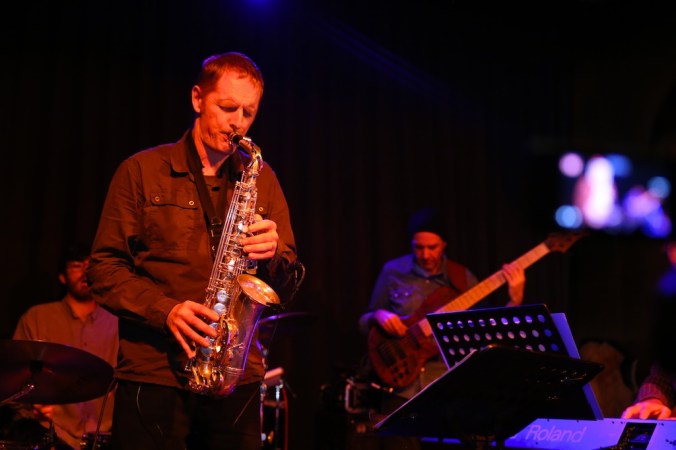 Hearing people talk about the Chris Mason-Battley Group reminds me of the Hindu parable – the blind man and the Elephant. “Oh yeah, that guy has a smooth sweet sound’ one said as if that settled the matter. Well yes, he has got a smooth sound when playing a ballad, but anyone who thinks that defines his music has simply not been paying attention. This band has enormous depth; playing anything from a melodic ballad to music that is way off the grid. What we experienced on Wednesday was music with integrity; at times raw and inventive, drawing us into its heart, emotionally engaging and above all satisfying.
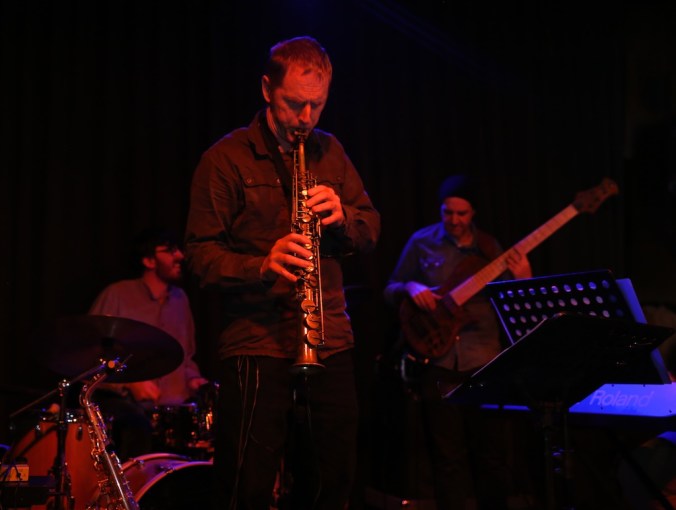
  The first number was ‘Mountain Song’ (by CMB); then they moved to a series of pieces from the CMB John Psathas project ‘Dialogos’ (progressing through excerpts from ‘Song for Simon’ and ‘Demonic Thesis’). As that set progressed we heard a new composition or two and lastly ‘Tahuna Caravan Park’ from his ‘Two Tides’ album. This gave us a broad sweep of his past projects and the Psathas album in particular. Dialogos was widely acclaimed as an exciting and bold step forward for the band – I can highly recommend the album (out on Rattle). Before the band left the stage for a break, Mason-Battley said; “That was the nice half – the second set is nasty half” (quoting from an album titled ‘The Jaberwocky comes to Town’ which had a ‘nice side’ and a ‘nasty side’.)
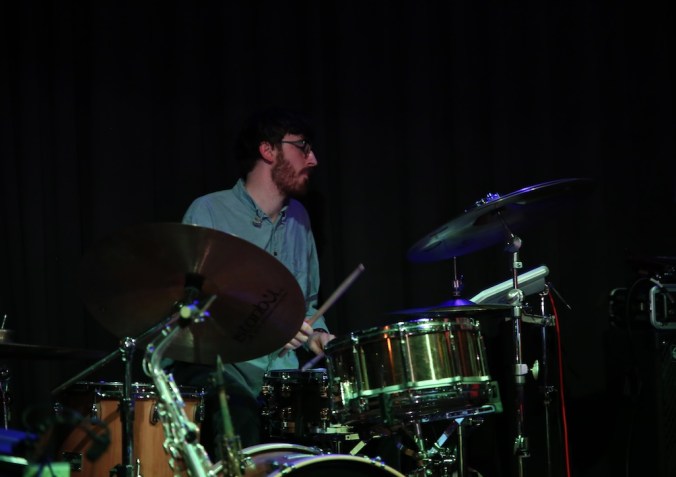 As pleasing as the band were in the first set, they reached much deeper for the second; pulling out an utterly engaging and masterful performance. It began with several of the blacker pieces from ‘Dialogos’, ‘The Calenture Suite’. The drummer Stephen Thomas must be mentioned at this point – His work was integral to the overall performance and it underlined his maturity as a musician. At times subtle, at others incredibly complex – and all made to look easy in his hands. Thomas was extraordinary throughout and although a relative newcomer to this long-established band, his searing flames licked at their underbelly, an indispensible presence. In perfect contrast to the complex drum flurries was Sam Giles on electric bass. Giles is a master of the ostinato – repeated motifs, perfect time feel and the voodoo factor writ large. He is also an influence on the bands direction; favouring Zorn like explorations and paths less trodden.
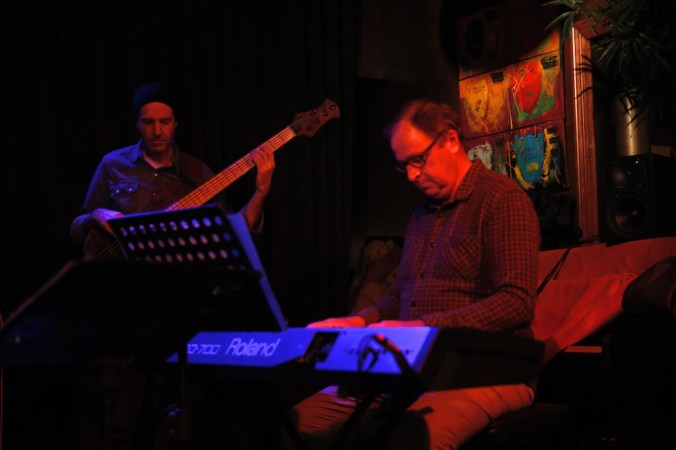
  The CMB Group keyboardest is David Lines, an intersting and in my view under-rated musician. On this gig he played a Roland RD-700. What a beautiful piano and Rhodes sound. A machine hardly heard these days, replaced by the Nord Stage or modern Korgs. While the newer keyboards have more bells and whistles, I am unconvinced that their piano sound is an improvement. Perhaps it sounded so good because of Lines touch? He is not a busy pianist and every note counts, in this gig his often voice leading role was perfect for the project (his solos were stunning). I only wish we saw him more often.
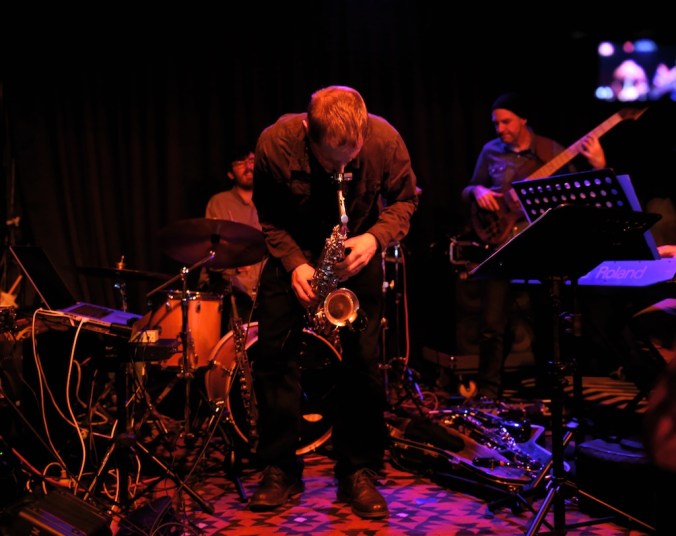 The last tune of the evening was free and political. It was titled ‘The Emperor Has No Clothes’; an obvious reference to the greedy authoritarian amoral elites that hold sway in the world; particularly the Trump administration. It was free and it was raw emotion – in the background a loop recited ‘billions and billions’ – then, faintly at first, we heard the strains of ‘The Star Spangled Banner’. The band read the mood of the audience well with that one – people stomped and cheered afterwards as if someone had taken the words right out of their mouths and rendered them into abstract musical form.
 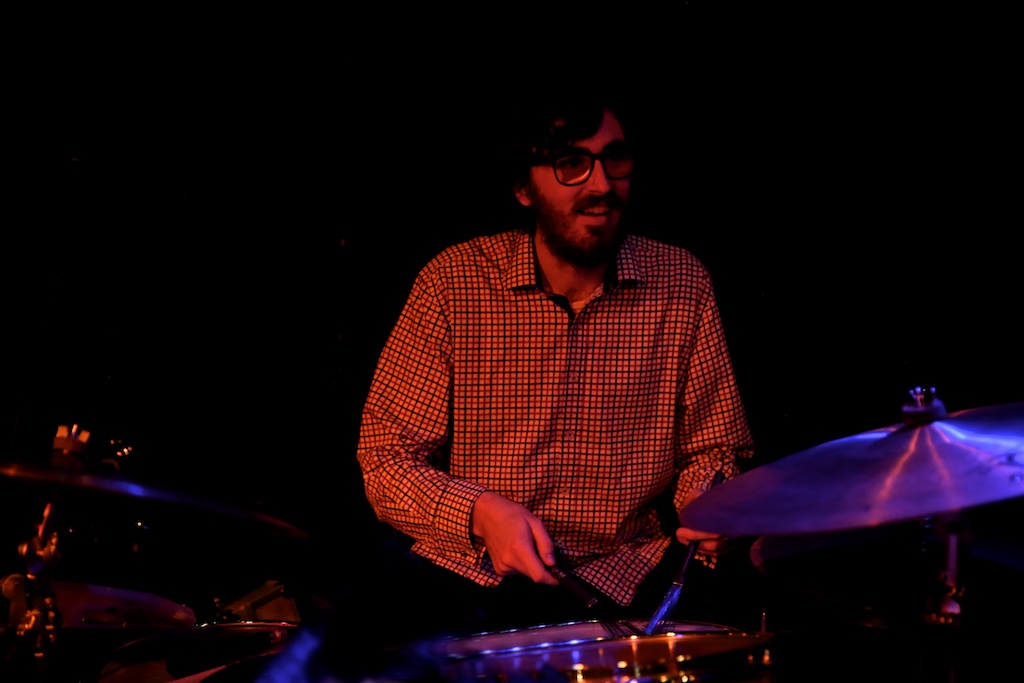 In spite of his relative youth, Stephen Thomas is counted as one of New Zealand's better Jazz drummers. He approaches his craft with care and intelligence and it shows in his playing. While his technical skills are superb, he can also communicate on a human level and this is important as it speaks of character. Thomas is a regular on the scene, but like many sidemen and most drummers, he prefers to remain in the shadows. On Wednesday he changed that focus and convincingly staked his claim as band leader.
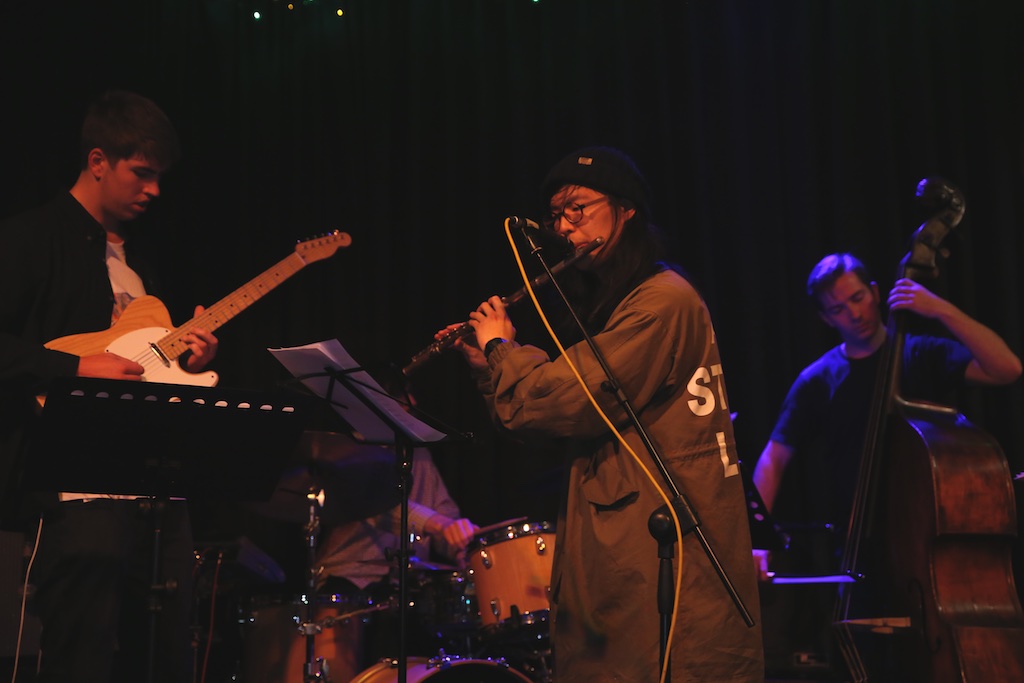 The ingredients that contribute to a successful gig are often intangible, but this gig ticked a number of those boxes. While tailored to suit a Jazz audience, it did so without being remote or elitist. Another reason the gig worked was because Thomas used humour to good effect; not just his on stage banter but in the music as well. In a live setting this is important – interacting with the listeners on some level, bringing them inside the circle.
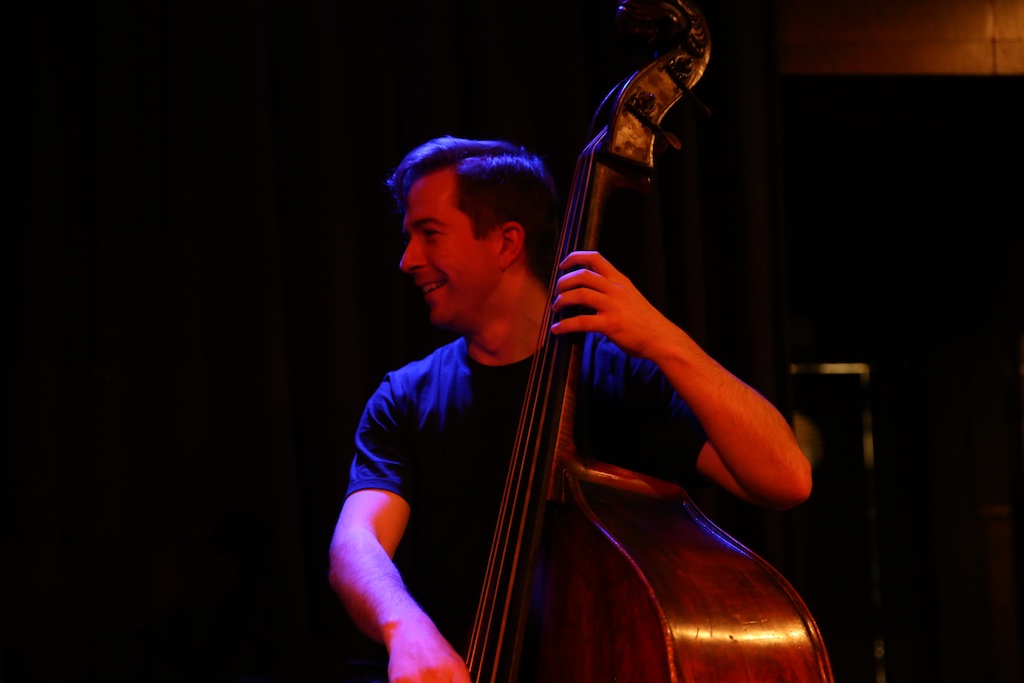 Thomas has an abiding interest in the Ellington/Mingus/Roach, 'Money Jungle' recording and Wednesday provided him with a further opportunity to explore that project. While unusual as a source of standards material, it is a great album to focus on – the perfect vehicle for deconstruction. At the time it was recorded, it stood out for a number of reasons. In fact it shouldn't have worked at all, as the trio members reputedly disliked each other. Each had marked stylistic differences and Ellington was of an earlier generation. Ellington told the others that what they would play on the record should be a collective decision; then he turned up with a set list of his own tunes. The one tune which was not Ellington's was by Juan Tizol – a man who Mingus had once been in a knife fight with and because of whom, he was sacked by Ellington. What should have been a disaster for many reasons was a success. A brave post-bop recording by artists firmly rooted in other eras.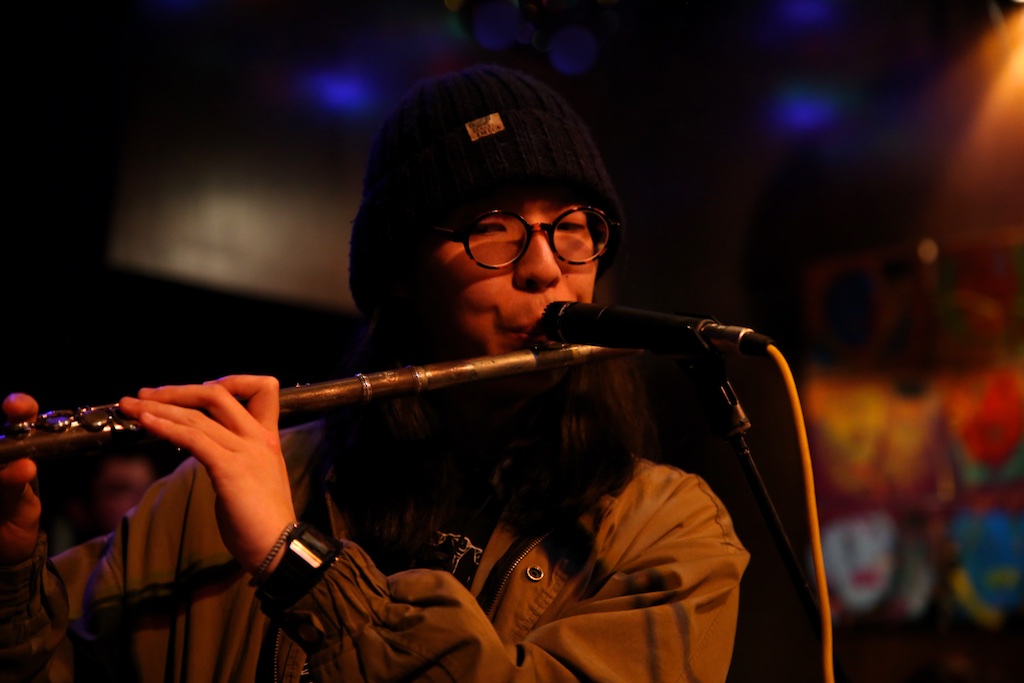
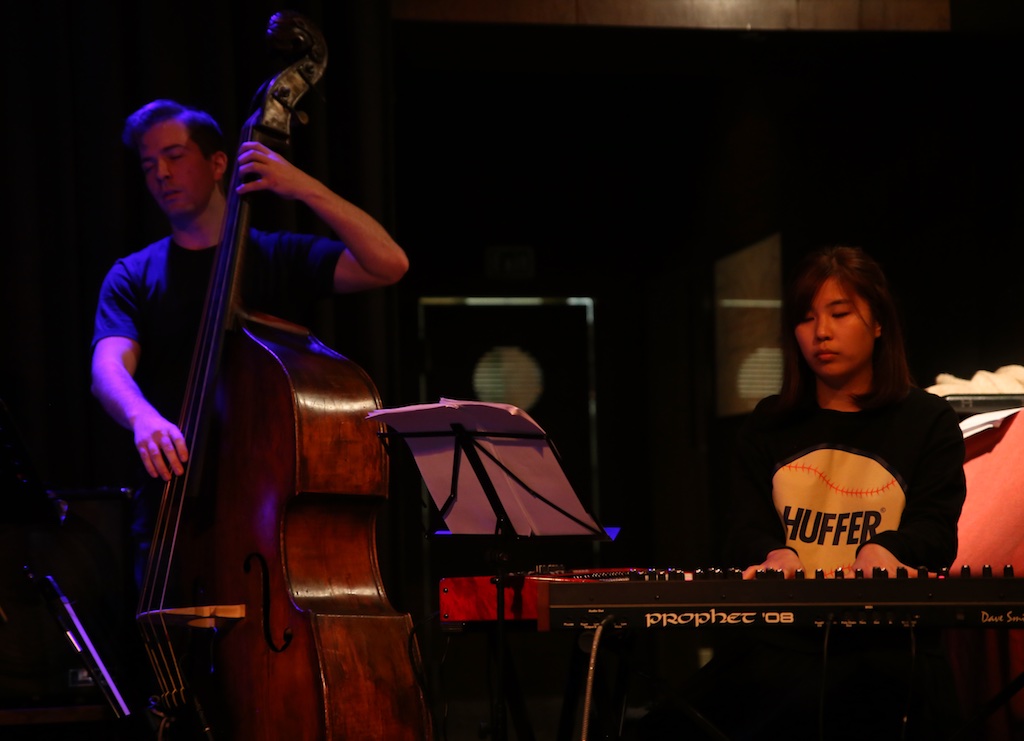
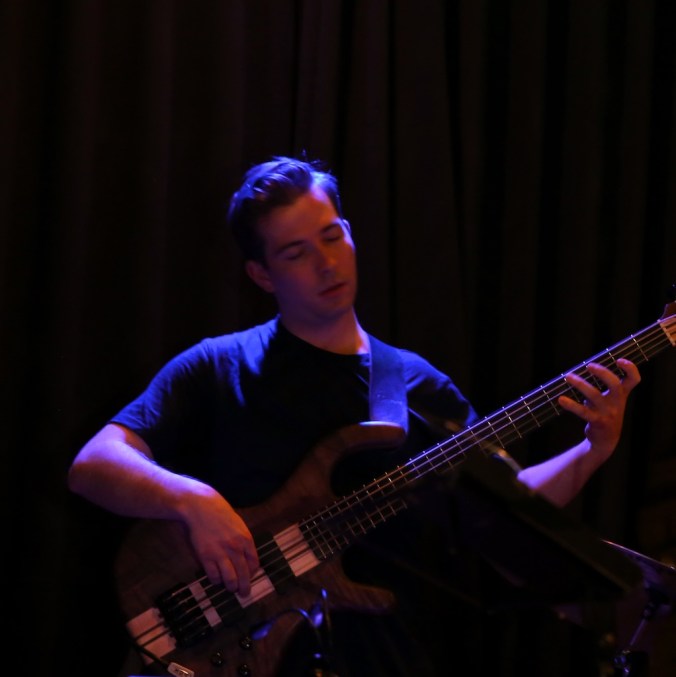 Dennison is a first class musician and someone we don’t hear nearly enough of on the Jazz circuit. He rarely gets to the CJC but when he does it is always a treat. These days he is mostly found doing session work or backing visiting artists and it is hardly surprising that he is a bass player of choice. Whether on upright bass or electric bass he is equally proficient; always an engaging presence, always demonstrating a deep musicality. He has one more string to his bow which can’t be overlooked and that is composition. His tunes are often whimsical, but whatever the mood, a deftly crafted structure sits beneath every phrase. Never over done, bass driven and just right. There is also a thread of melancholia and wistfulness in his ballad writing: these are difficult emotions to evoke and anyone with knowledge of poetry will know, that only the most skilful poets do the moods justice. Dennison can.
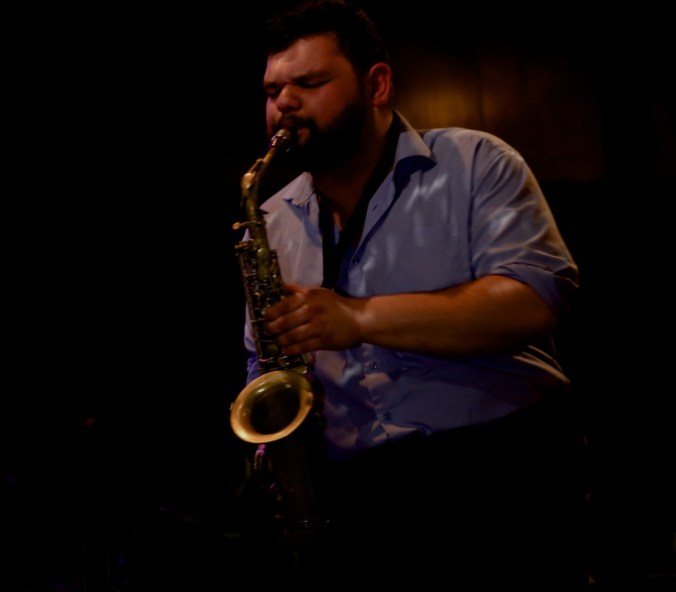 Passels playing was another high point of the evening for me. He just gets better every time we hear him. He is also exactly the right person to interpret mood. I liked the way he approached the tunes, working his way inside them methodically. Sometimes angular, at other times teasing at the melody. During the ballads, he often began with sparse phrasing, establishing mood without overstatement; then, slowly telling his story as if looking at the theme from differing viewpoints. Although he plays decisively, he carefully modulates; generally without flourish or vibrato – pushing at a note until subtle multiphonic textures form – his paper-thin Konitz-like tone saying more than any honk. His versatility is also an asset. Any player who can comfortably move outside and inside while still maintaining a theme is a person worth listening to.
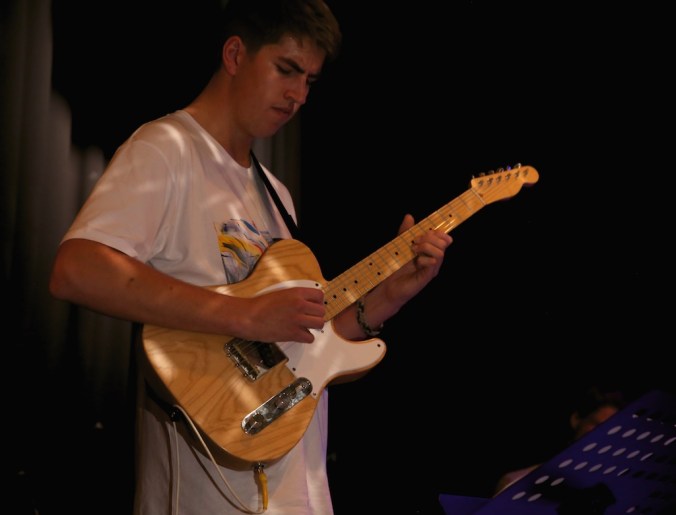 McAneny, who initially faced a cable problem, overcame it quickly and delivered a fine performance. Having a Rhodes and a guitar together can be problematical, but the charts and McAneny’s nimbleness enabled him to avoid crowding the space. Howell gave a nice performance and his lines are terrific; He knows what he’s doing but I’d like to hear him bite into his solos a bit more. Drummer Adam Tobeck was on solid ground with this group, he obviously enjoyed the company and reacted well to whatever was thrown his way. After not playing here for a few years, he is now a regular on the bandstand. I like his drum work very much.
 I always look forward to emerging artists nights at the CJC. They don’t happen often but when they do, they’re fun, full of surprise and most importantly they are hopeful events. It is usual for emerging artists to salt the mine with seasoned players. Both of the bands did well in that regard. The first band up was Misha Kourkov’s ‘Equitable Grooves’, a six-piece unit playing multi-genre Jazz focused music. The material was well written and at times ambitious. Aiming high on the bandstand is good because that is where real learning occurs. If you wish to extend your reach, then having Alan Brown on the piano is exactly what you need. With that sort of experience and groove behind you, you have a fail-safe mechanism. The set opened a little tentatively, but they quickly found their groove; the last two numbers were especially enjoyable.
 The second set featured the ‘Exploding Rainbow Orchestra‘. This was a very different type of ensemble. Freer ranging, a bigger sound palette and an electric bass with the heavyweight punch of Bona. The bass player Joshua Worthington-Church who led the ensemble is accurately described as a maverick. His set list contained genuinely diverse material; gripping vamp-driven originals plus tunes from ‘Radiohead’ and ‘The Mint Chicks’. Under the leader’s guidance, the band took the material to a place close to my heart; a fusion of Jazz and psychedelia. I am happy to see this done, as the genre is all but forgotten. During the mid-seventies, that style of music was sacrificed on the altar of Jazz purism, a pompous battleground that tried to stifle genre exploration.
 There is never a guarantee that two good acts blended into one will work. This one did. DOG and the various iterations of the Peter Koopman trio are each in their way self-contained; exuding a confidence born out of time spent with familiar musicians. Bands that play together over long periods anticipate and react instinctively. Stepping outside of that circle can be a risk, but that is a large part of what improvised music is about. DOG are a tight unit with quick-fire lines and nimble moves. By adding a guitar, DOG risked crowding their musical space; with Koopman, this did not happen. He is an aware and thoughtful musician. The pairing aided by some well-written charts, a pinch of crazy and good humour. The result was a looser sound, but the joy and respect provided all the glue it needed for the gig to work well.
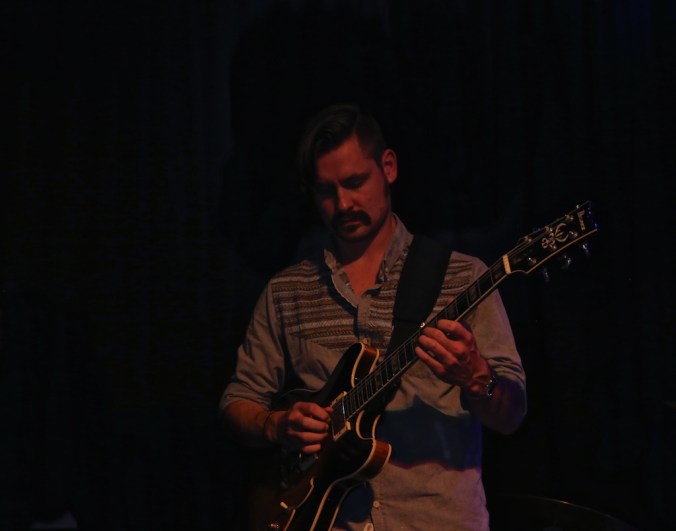 The unison lines and exchanges between guitar, tenor saxophone and Rhodes were just lovely. Kevin Field is always on form and the Rhodes with its chiming clarity was the perfect foil for Koopman and Manins. Field is the complete musician, tasteful, original and with impeccable time feel; Koopman’s guitar benefitting from the well-voiced chords, gently and sparsely comping beneath. Manins also gave a nice solo, and as we have come to expect, he reached for a place beyond the known world. Olivier Holland had a slightly different approach to Koopman’s regular bassist Alduca. Both approaches worked well on Judas Boogie. The interplay between Holland and Samsom was also instructive. As is often the case with good Jazz; the complicated was made to sound easy.
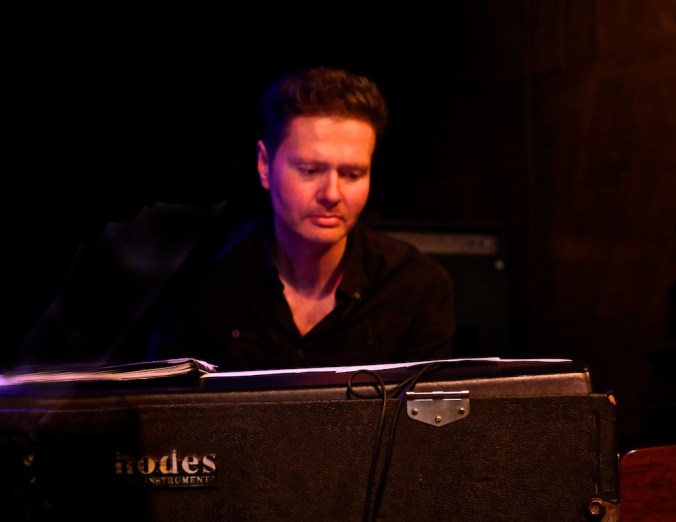 It was appropriate that Warners ‘A List’ recording artist Kevin Field brought with him local A listers Dixon Nacey, Cam McArthur, Roger Manins and Stephen Thomas. Field has a substantial following in New Zealand and his innovative music attracts musicians and fans alike. Since his last ‘A List’ gig he’d clearly been busy – writing new material and rendering the familiar into something altogether different. Zoot Sims once quipped, “Jazz is a music where you never play the same thing once’. Field certainly exemplifies that tongue in cheek descriptor. Commentators and visiting musicians often remark on his innovative approach to harmony and rhythm. It is as if he has invented a new musical language out of the old. In truth, there are strong elements of related genres like R & B, latin and even disco funk there; under his fingers they become unique vehicles for improvisation.
 Unlike Janet Jackson, Field never suffers from wardrobe malfunctions. He does however occasionally suffer from equipment malfunctions. I mention it only because his Rhodes had failed him during a previous weeks CJC gig. No one listening comprehended that he had lost some of the middle-register. No one noticed because he re-voiced mid improvisation to work around the problem. I have heard of old timers doing this but seldom modern pianists. Field can effortlessly jump over obstacles and find a sweet spot.
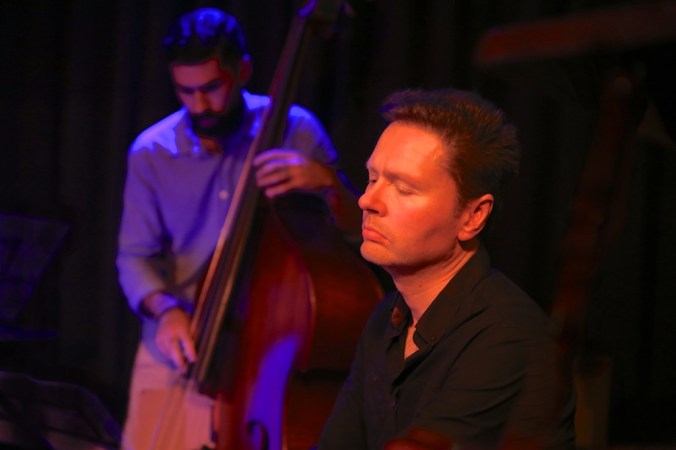 There were old favourites reworked like ‘Game Changer’, ‘Good Friday’ and ‘Left Field’, but the rest were recent compositions. Among the newer numbers were ‘Rain check’ and ‘Acme Music Corporation’ (the latter featuring Manins on soprano – a rare event). Another new number ‘Unconditional love’ was introduced by Field with the following story. ‘There are many types of love in the world and today an unusual example came up in my twitter feed, – ‘Trumps deportation threats make my in-laws fearful. They live at 2b/34 Main St, Phoenix. My Mother in law arrives home from work at 4:30’ “.
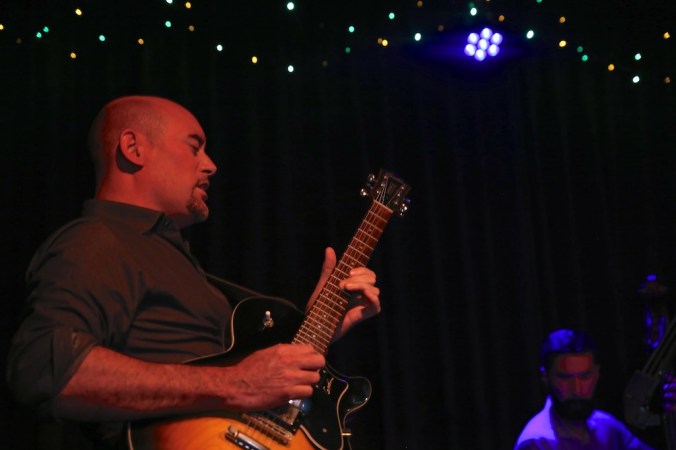
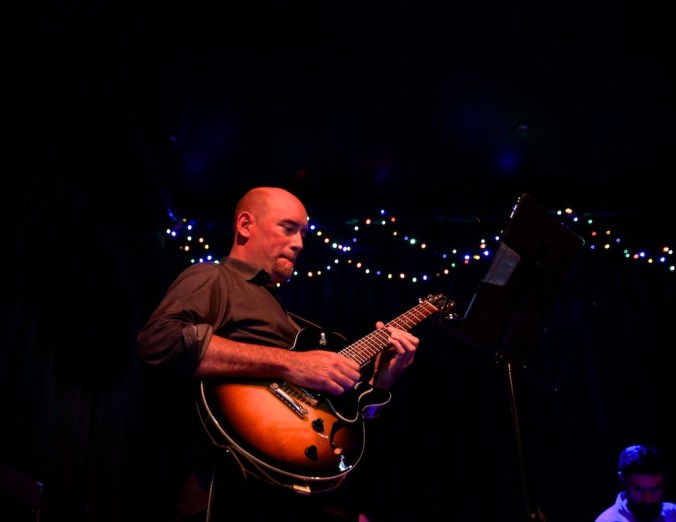 The last tune ‘Home Schooled’ was the best possible number to finish the evening with. Far from being a wind-down number, the musicians reached inside themselves, each giving magnificent performances. Manins back for a second number was on tenor, and he sounded happy to be back on his favourite horn. Nacey was at his best, making his guitar soar, as if he had found an ancient alchemy, a way to condense sunlight into music; the epitome of sonic clarity, invention and virtuosity. McArthur and Thomas each in step and reacting to the challenges. With material like this good musicians can achieve wonders.
  After years traveling the wider Jazz world, Jasmine Lovell-Smith came home; launching her latest album ‘Yellow Red Blue’ at the CJC last Wednesday. The Album features a quintet ‘Towering Poppies’; a group she formed in New York over five years ago. Her New Zealand gig featured locals Roger Manins, Kevin Field, Eamon Edmundson-Wells and Chris O’Connor. After her New York release she garnered a number of favourable reviews and no wonder. This is a lovely album, her compositions and arrangements outstanding, the recording immaculate.
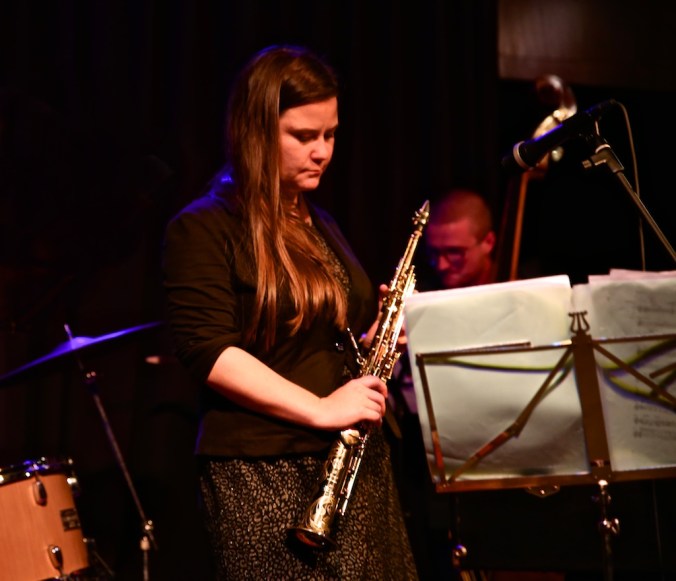 Her soprano sound is warm and enveloping, the cleaner tone of her straight horn nicely counterbalancing with the woody earthiness of the bass clarinet, the well constructed charts coming into their own when these delightful interactions occur. The rich textures are never overwhelming, even when strings enter the mix. This is chamber Jazz at it’s best, engaging the listener without resorting to cliché.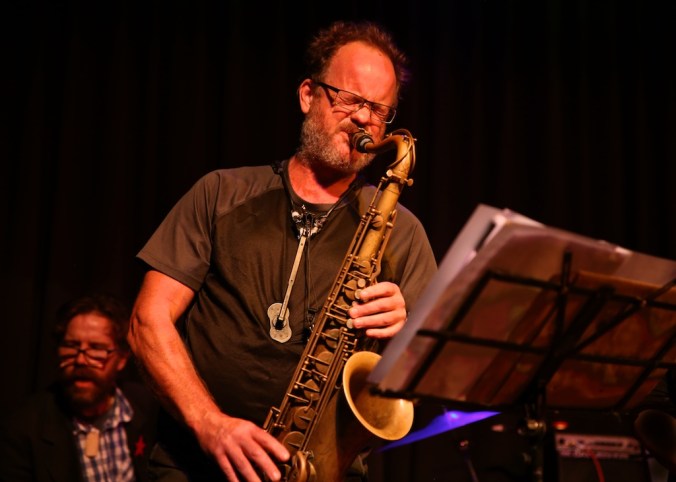

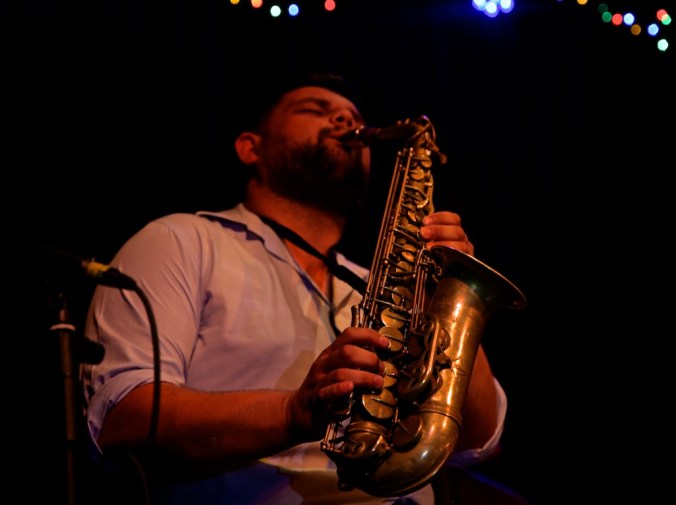 Callum Passells’ newest project was an exploration which took us to the outer edges of Bebop. The title ‘Flightless Birds’ a wordplay; a pebble tossed into the pond, suggesting many possibilities. The obvious Jazz reference is a comparison between flightless New Zealand birds and Charlie ‘Bird’ Parker – his musical descendants especially. A cohort that tried and often failed to catch his musical coattails. For a time after his death, alto saxophones were laid aside in favour of the tenor; only a brave few risked comparison with the troubled prodigy. As his legend grew he seemed unassailable. Attempts to demystify, to separate the legend from his musical legacy came later. In the post millennium era few such sensitivities remain. Parker is deeply admired for his genius, then deconstructed unselfconsciously. The gifted altoist Rudresh Mahanthappa immediately comes to mind.
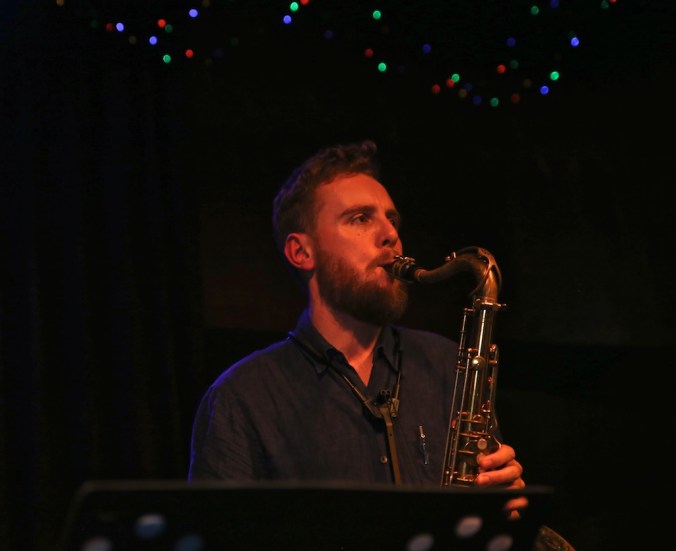 The two things that draw me to Passells are his tone and his communication of ideas. For a musician who leans toward the avant-garde he has a remarkably clean tone. This works well for him when he heads into uncharted choppy waters, cutting though the turbulent air incisively. There is obvious precedent for this in Albert Ayler (who strove to sound like Desmond or Konitz while tearing at the very fabric of harmony and form).
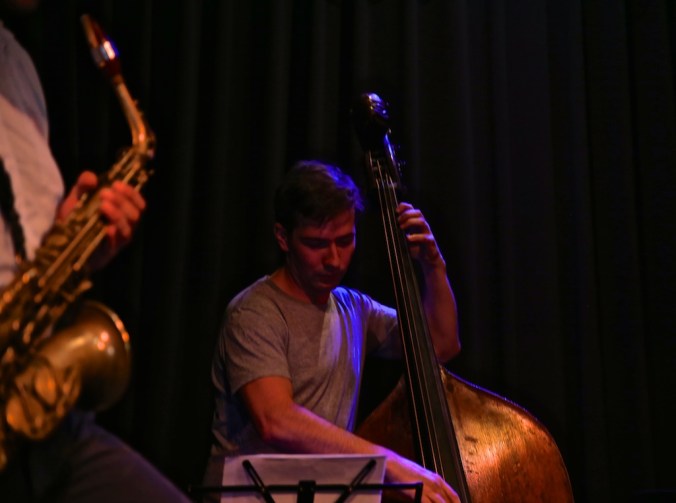 The tunes were all ‘contrafacts’ and cleverly constructed. I am crap at working out the mother tunes – a job best suited to musicians fed a rich diet of standards’ changes. The pieces had titles like “The Punisher” (Sinclair), or ‘Buy a Car’ (Passells). The Punisher was written over the changes of ‘In a Mellow Tone’ (Ellington) and ‘Buy a Car’ over ‘Take the A Train’ (Strayhorn). After each tune the original was announced, then people got it immediately, cursing themselves for not getting the connection quicker. The tunes were close enough to hint at familiarity, but far enough away from the original to cause some head scratching. One tune needed no guesswork. “I’ve got it bad and so I’m obliged to notify all previous sexual partners” (Passells) – no prize for attributing that one.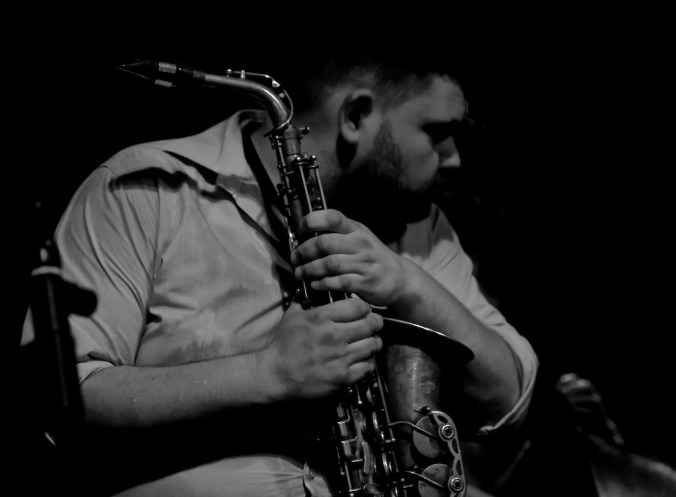
 As another DOG night approached I could feel the excitement in my bones. I had followed their tracks from the groups inception, enjoying every moment along the trail. I was at their first gig in February 2013 and it amazed me then just how rounded and complete they were. If you search for the ‘(Dr) Dog’ post in this blog site you will find a video from that gig. Man that blew me away. I just couldn’t get the tunes and the excitement of that night out of my head. Later I used a cut ‘Dideldideldei’ (Holland) as the signature for my YouTube site. I also sent the cut to a Jazz DJ friend Eddie B in LA and he played it on his show. Unsurprisingly people phoned in immediately wanting to know, “who were those amazing cats”? Before long the group decided to record – everyone who heard them wanted more. DOG seemed to encapsulate everything that was good and exciting about the local scene – DOG was, and still is, something special.
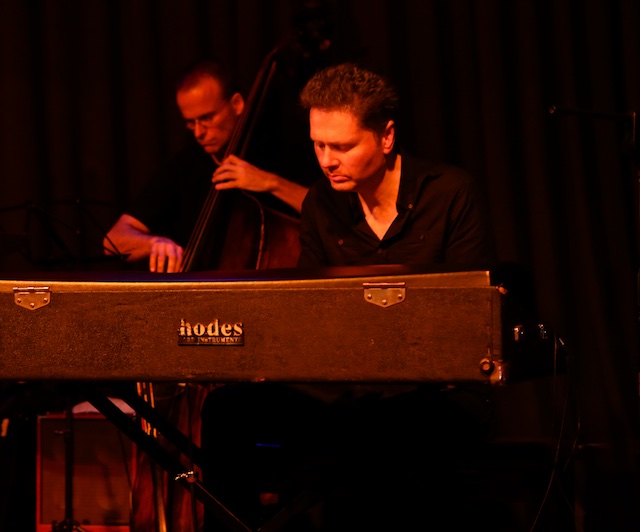 There are so many aspects to this group that it is hard enumerate them all; of course there are the outrageous dog jokes, the brilliant compositions from each band member, the powerful stage presence, but it is something else that excites me the most. This is a band that could gig anywhere in the world and we could hold our heads up, knowing that they would do us proud, tell our story. I felt excited when they were nominated for ‘album of the year’ and as pleased as a dog with two tails when they won the ‘Jazz Tui’. Now it is rumoured that a new DOG album is on the way. I can’t wait.
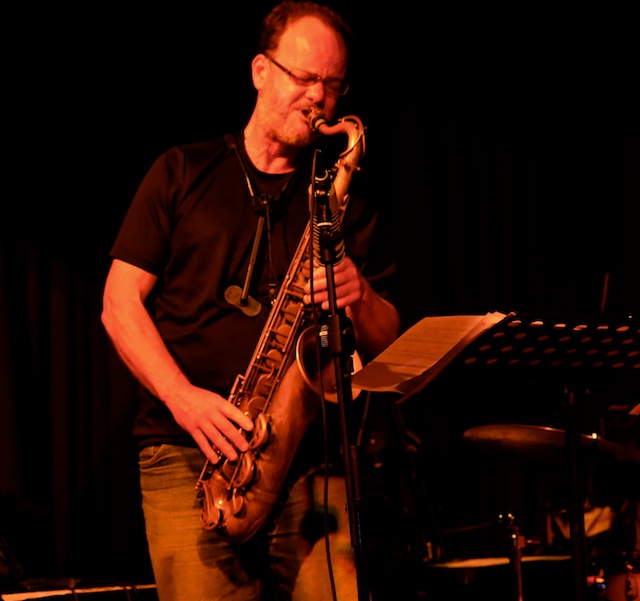 Throughout the sets were a scattering of familiar DOG compositions – plus a few new ones (like ‘Merde’ by Samsom and Hollands ‘Shceibenwischer’). All of the tunes sounded fresh and somehow different, perhaps because Kevin Field was playing a Rhodes and not a piano. I love the Rhodes in all its antique glory and in Field’s hands it is especially wonderful. It cut through the room like crystal. Hearing the familiar tunes like ‘Peter the Magnificent’ (Manins), ‘Icebreaker’ (Field) and ‘Sounds like Orange’ was like meeting old friends. The last track of the evening was the familiar ‘Dideldideldei'(Holland). DOG ripped into it with the usual abandon, leaving us shaking our heads in disbelief and grinning like Cheshire cats.
 The Thirsty Dog works well as a venue, having good acoustics, good sight-lines and a sizeable bandstand. They also serve snack food and they are most welcoming. The first DOG album is available at
 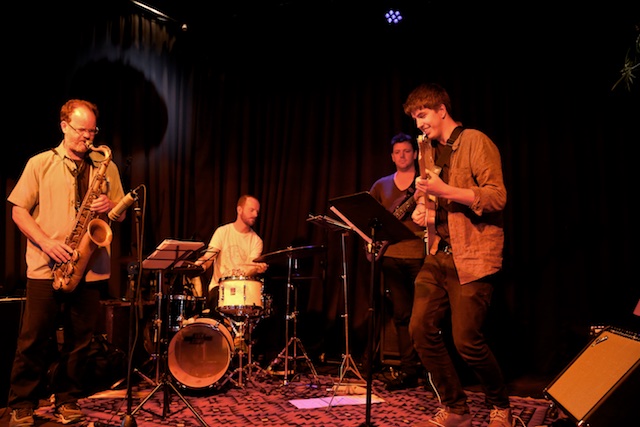 Against a background of complacency in regard to the ever declining biodiversity on the planet, one band is determined to raise our awareness. Those who have encountered the quartet on prior occasions will know the back story, connect the dots. GRG67 arose out of an impulse of crustacean empathy, an emotion usually confined to marine biologists and not Jazz musicians. However, once you grasp the fact that the band’s founder is Roger Manins, the rest falls into place. A sustainable fisher and co-manager of a small menagerie, Manins could best be described as the David Attenborough of the tenor saxophone. His world is strewn with animals and that’s the way he prefers it.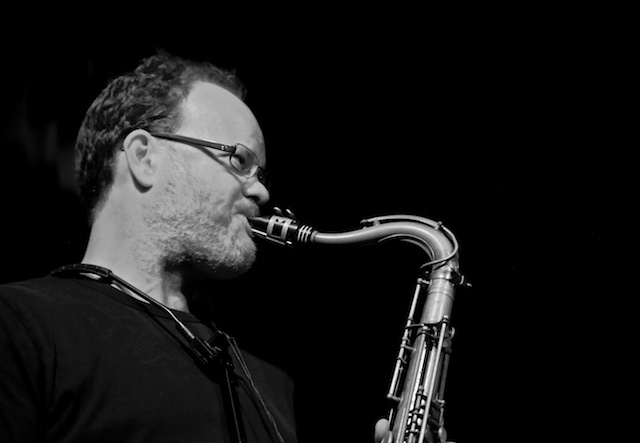
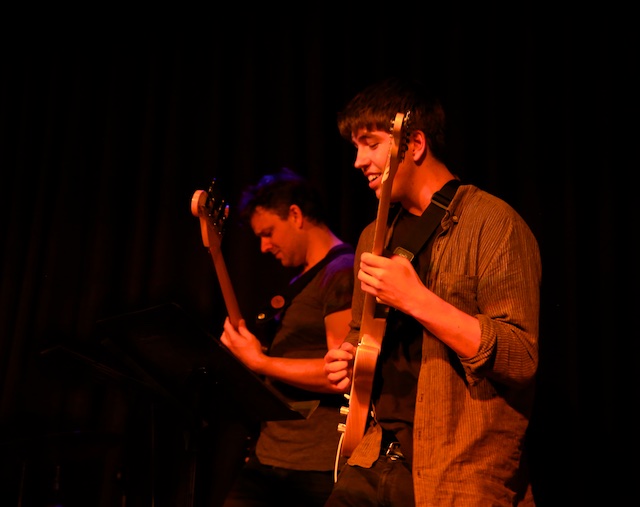 Each tune title was accompanied by a personal story or zoological insight; each bird was treated with deep respect. With titles like ‘chook empathy’, ‘chook 40’, ‘ginger chook’, ‘dark chook sin’ we were afforded some rare insights into the avian world. ‘Chook 40’ was not about the 40th chook as you might suppose. It opened our eyes to the fact that chooks have one more chromosome than humans. During that particular tune you could really sense that extra chromosome. ‘Dark chook sin’ was an invitation to anthropomorphism. What would a chook sin look like? Manins felt that Mallard ducks were more likely to sin than a chook (anyone living near ducks who has a deck will have a view on this).
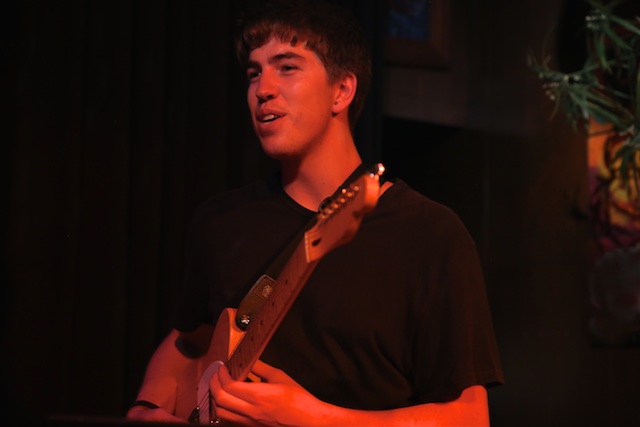
 The quartet played with wild enthusiasm in both sets and the good humour of the evening was infectious. Given the subject matter it was only fitting that the gig took place at the Thirsty Dog (dogs are also a recurring theme with Manins). The venue was congenial and the acoustics good. What more could you want on the last night of Spring. This band is a rallying cry, reminding us that in this troubled world we shouldn’t take the good things for granted. At a time when we are buffeted by the ill winds of international politics, the arts matter more than ever. New Zealand Jazz rewards us in so many ways and the diversity of improvised music in our city is a treasure. You get good musicianship and fun combined – and if you’re lucky a musical insight into the natural world around us.
 I have posted the bands signature tune GRG67 as it simply crackled (cackled) with life (and it broke a previous speed record). These guys are fine musicians and GRG67 was never better than on this night. These guys sizzle.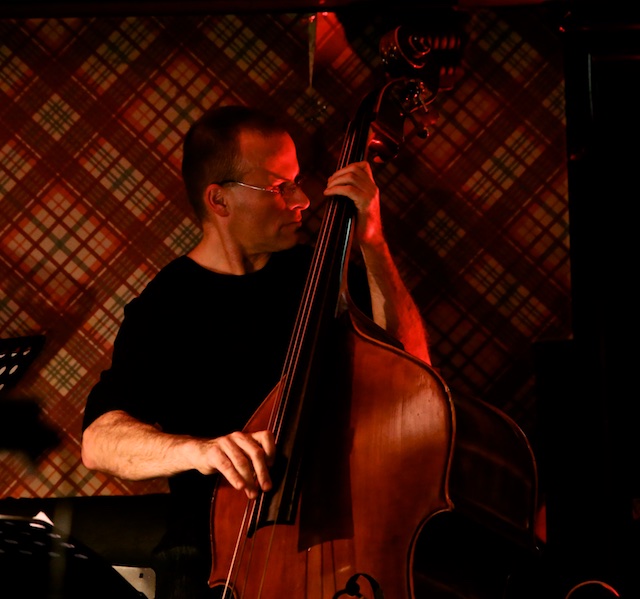
 From early in the first set, I felt the passion behind the performances, the sheer exuberance that is generated when a group know that they are performing effectively. Seasoned touring musicians sometimes sacrifice this – perhaps the effort of being on the road, the effects of jet lag, robbing them of warmth. It reinforces my view as a listener, that an artist needs more than chops to fully engage with an audience. When a band is comfortable on stage, properly rehearsed and above all up for a riotous night, magic can happen.
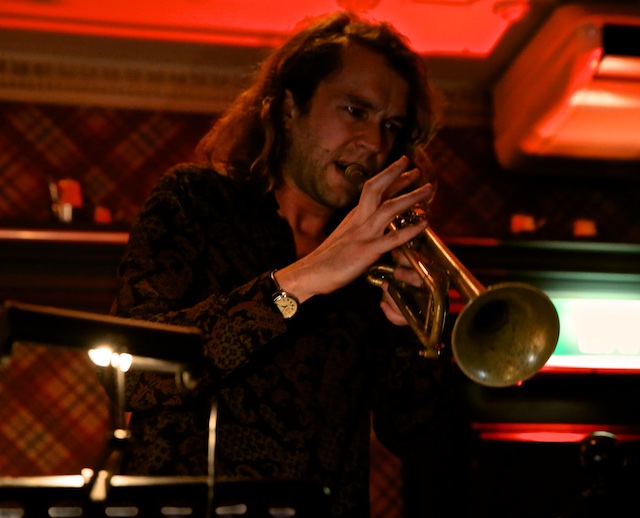 Trumpeter Finn Scholes can always surprise and over recent years he has impressed me increasingly. His vibrantly brassy ‘south of the border’ sound in the Carnivorous Plant Society is well-known, but anyone who thought that was all there was to him, hasn’t been paying due attention. He is raw and raspy on avant-garde gigs, mellow and moody on vibes and in this lineup reminiscent of the young Freddie Hubbard. His solo’s had bite and narrative, his ensemble playing was tight; above all, he generated palpable excitement, the sort that brings people back to live music again and again.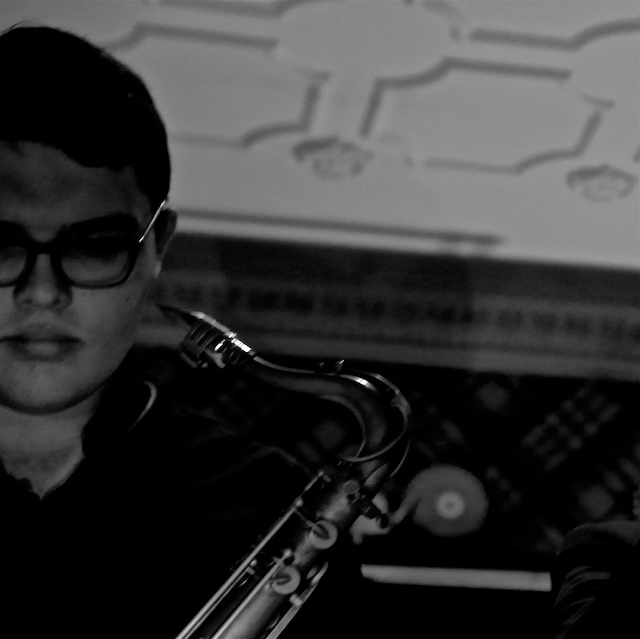
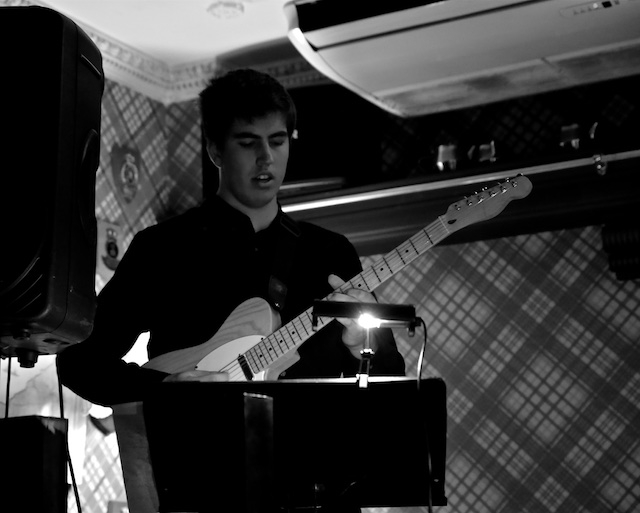
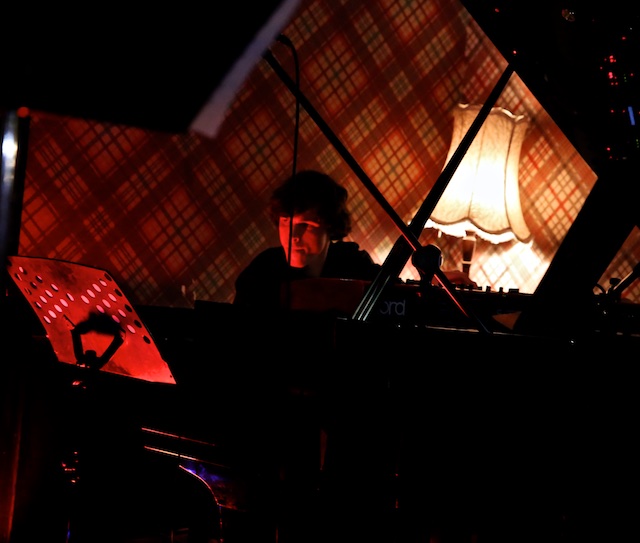
 Kevin Field has for many years been regarded as a phenomenon on the New Zealand Jazz scene. A gifted pianist and composer whose approach to composition and harmony is strikingly original. When you listen to many pianists you can hear their influences, discern the pathways that led them to where they are. With Field, those influences are less obvious. I suspect that this independence, originality, makes it easier for him to strike out in any direction of his choosing. On his ‘Field of Vision’ album, he moved into uncrowded space, one occupied by very few Jazz pianists. It was Jazz without compromise but utilising grooves, rhythms, and melodies of other genres. The music contained distinct echoes of the disco/Jazz/funk era, crafting it carefully and forging a new post-millennial sound.
 The tunes were all memorable and within a few listenings, you could hum the themes. This is not so common in modern Jazz and less so with music (like Fields) which retains its Jazz complexity. In Fields case, the clean melodic hooks do not come at the expense of harmonic invention. That is a tricky balancing act and one he achieves convincingly. His co-leadership of ‘DOG’ took him in a different direction again, but the same deftly crafted grooves astounded us. His recent album ‘The A-List’, was a further excursion into the disco/Jazz/funk realm. It is slightly tongue in cheek while still challenging the listener to think outside the square. Artists like this take the music forward, it is up to us to catch up.
 They played at the Wellington Jazz festival recently and for many Wellingtonians, this was their first exposure to the group. I saw that show and I immediately noticed how the familiar tunes had subtly changed. ‘Perfect Disco’ with its energised danceable funk momentum was recast as a duo piece. Field and vocalist Chaperon wowed them with that number. We also heard this duo version last week. Other familiar tunes had developed into profoundly interactive exchanges. The sort that can only occur between highly attuned musicians. This is where the guitar mastery and the deep listening of Nacey came into its own. His Godin guitar soaring with stunning clarity while Field reacted in kind, urging them further out with each challenge.
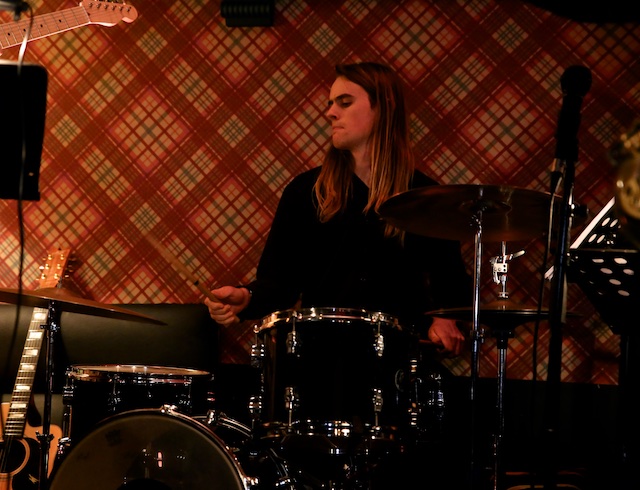
 Again we see Thomas and McArthur doing what they do best. Working hard and rising to the challenge. Thomas laying down the tricky rhythms and while McArthur runs his bass lines. While pleasant to the ear, there is not doubt at all that these compositions required skill and concentration. It is on gigs like this that the musicians familiarity with the material and each other pays dividends. It was also nice to hear Chaperon on some new and old material. She is a real crowd pleaser – she looks great on stage and sings up a storm.
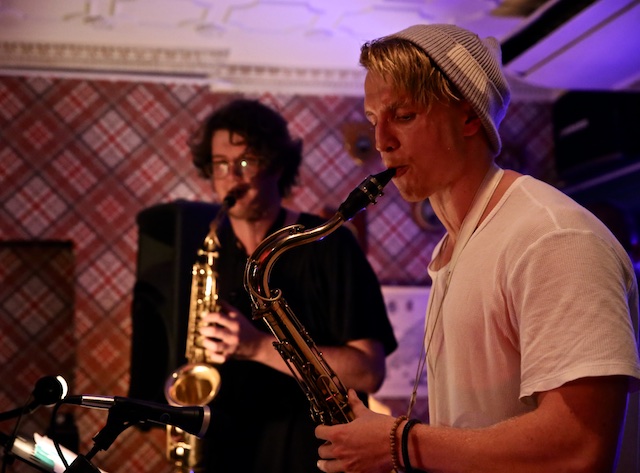 This year has seen a lot of international acts through the CJC (Creative Jazz Club), compelling musicians with interesting stories to tell and often with serious gig miles under their belt. As exciting as it is to see the high-end performers of the scene, it is just as important to recognise and evaluate those who might one day take their place. Not all will last the course, but the persistent and the passionate can make that journey. Standing in front of a discerning club audience tests young musicians in ways not easily replicated. Unlike the Jazz School environment, the musicians technical prowess is subservient to the authenticity they bring to the bandstand. Fluffing a line is more likely forgiven than delivering a technically perfect but lifeless performance. Sam Weeks and Sean Martin-Buss tested themselves and came through the fire relatively unscathed.
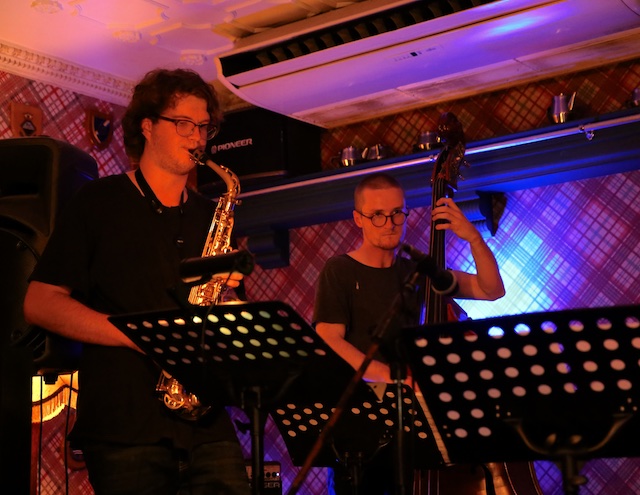 The gig was part of the emerging artists series and the musicians first time at the CJC as leaders. Both have previously played as sidemen at the club, but standing anonymously in a horn line is a different thing entirely. I am happy to give this gig the thumbs up as they performed well. It took the first few numbers for them to warm up properly, but warm up they did. The rest of the first set and the one after that delivered crackling performances. All of the material was their own and their writing skills were favourably displayed (especially those of Weeks). A piece titled ‘Missing Together’ by Weeks was a gem – opening with some tricky unison lines, followed by a few bars of counterpoint. They made it sound easy, but clearly, many of these compositions were not. The act of embracing the difficult is how a musician grows. I am glad they took some risks, as Jazz functions best in the absence of complacency.
 Sean Martin-Buss was on alto saxophone with Sam Weeks on tenor saxophone. Each gave the other ample room and the contrast between the horns was therefore amplified. They also differed stylistically and this gave an added piquancy to the gig. They made good use of interactive Banter, musician to audience and to each other. Off the wall comments came out of nowhere, and the audience included in the joke. The humour was not in the lines but in the offhand delivery. A very Kiwi type of onstage banter – self-effacing, mumblingly casual.
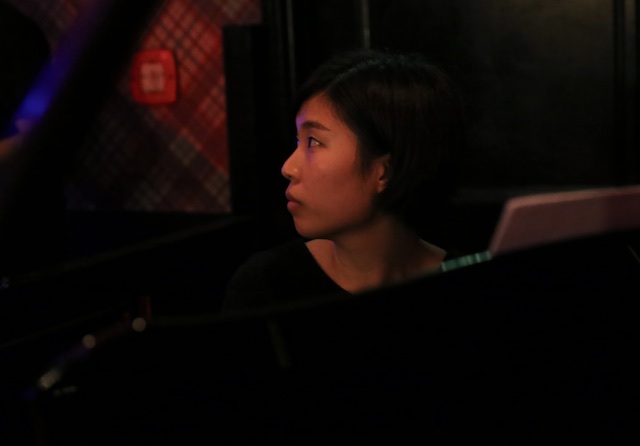
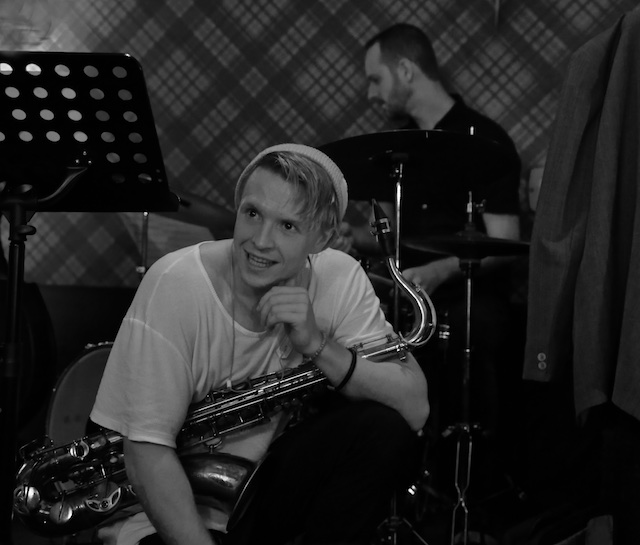 Emerging musicians are often tempted to rely heavily on musicians from their own graduate class. There is nothing wrong with that per se, but the first question is always, which musicians will serve the gig best? Again the co-leaders made good choices in Tristan Deck (drums) and Eamon Edmundson-Wells (upright bass). The remaining band member was Crystal Choi on piano. Deck and Edmundson-Wells perform in public regularly and both have earned considerable respect. They personify good musical taste. They have talent and better yet, they work extraordinarily well together. It was this combination that tightened up the performance – real assets. Choi was extremely interesting on this gig. I have sometimes noticed a tiny hesitancy in her delivery. On this night, her performance exuded confidence and several of her solos were stunning. The enthusiastic audience responded throughout the night.
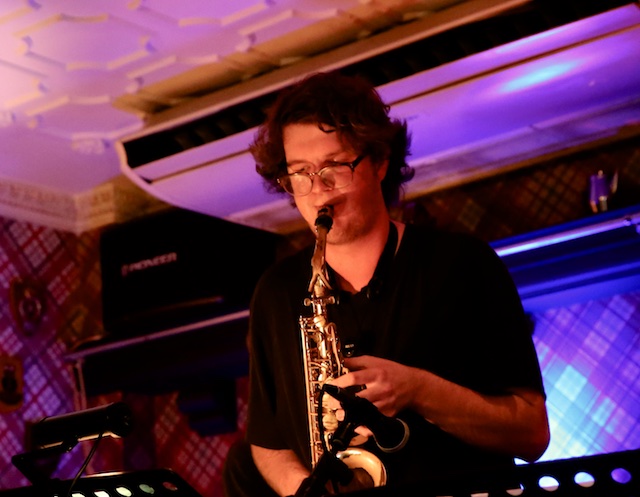 Although the leaders possess perfect vision and are clearly not Venetian, the project was ‘The Blind Venetians’. This was also the name of the final number of the last set; a roistering finale bringing down the cantilevered shutters at gigs end.
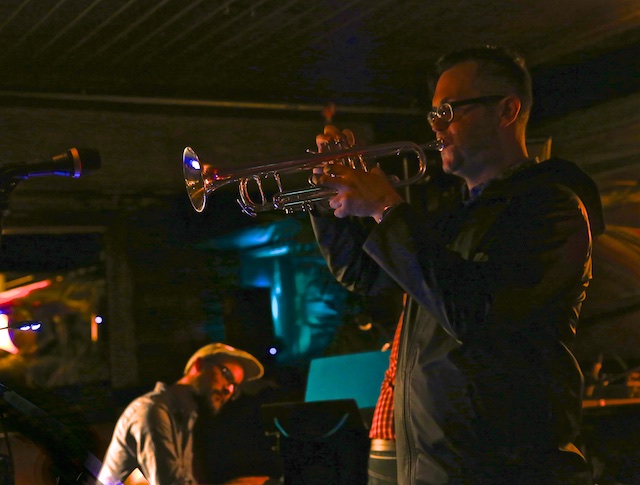 In spite of living at the other end of the Island, Lex French is a regular fixture at the CJC. It is hardly surprising since his popularity with Jazz audiences is ever-growing. There are not many trumpeters of French’s stature in New Zealand and it is our good fortune that he remains. He obtained his Masters from McGill University in Montreal, a university with a strong focus on brass. A university which had an ongoing association with the UK-based Canadian trumpeter Kenny Wheeler while he was among us. I mention Wheeler, because as I walked down the stairs to the club to set up my gear, I heard the unmistakable opening phrase from ‘Smatter’ coming out of the darkness. Just the opening phrase and then silence.
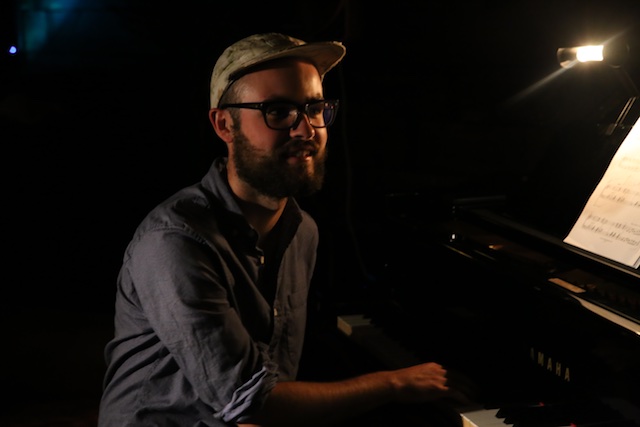 It was so Wheeler-like, that I assumed someone was setting up a Wheeler album on the club sound system. As my eyes accustomed to the low light I saw French standing alone – repeating the phrase. French is not a one-trick pony; he is as modern as tomorrow, but at other times, old school respectful. He can punch out high notes or swing hard bop like a Blue Note artist back in the day. This is not a musician to pass up on.
 I particularly liked French’s compositions ‘Kasid’ from the first set. There were many reasons to like this; the musicians innovative explorations of the theme, the evocative middle-eastern mode underpinning it, and the fact that it referenced the wonderful Iraqi poet Abdulkareen Kasid. An achingly beautiful melody tinged through with bittersweet sadness, establishing itself delicately over a quietly incessant bass motif. When Steele came in, his opening chords were Oud like – giving the impression of soft strings jangling sweetly in the night air. I listen to a lot of middle-eastern improvised music and this performance stands beside the best of those. In the background, the drums tap tapped (like stones tumbling in a stream, and every so often swooshes).
 The poet Abdulkareem Kasid is new to me (and I have a huge collection of poetry). To discover a poet like this is exciting and I thank Lex French for this. What could be better than to experience a night of interesting music, and at the end, find a poet? I finish this with some words from that poet – listen to the piece as you read the lines – I did.
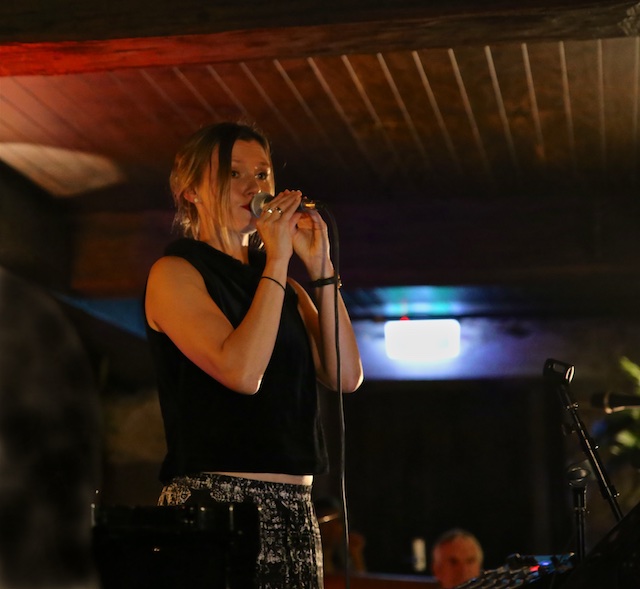 The Briana Cowlishaw/Gavin Ahearn gig is the second CJC gig featuring international artists in a month. For those who follow Australian improvised music, these are familiar names. Both have rock solid credentials as both have traveled extensively with their music and attracted glowing critical reviews. This is a fortuitous musical pairing, and it is particularly obvious during duets. There is a mutual awareness of space and nuance and an understanding of just where interplay works best; neither over-crowding the other. There are a lot of pianists who accompany vocalists convincingly, but the true art of accompaniment is rarely seen. Ahearn is a fine accompanist and soloist. Unusually, you could say the same for Cowlishaw – an aware musician who watches and listens to her collaborators carefully – works with what she hears. Never greedy to hog the limelight and making every line count.
 For an artist barely past her mid twenties Cowlishaw has achieved much. Performing at festivals all over the world and being nominated for prestigious awards along the way. She has studied with top rated teachers in three continents and it shows (including Gretchen Parlato, Aaron Goldberg, Kurt Elling). Her confidence, compositional abilities and musicianship shine through on the bandstand. Hers is a modern voice and more importantly a fresh young voice. What worked so well so well for Gretchen Parlato also works for her; a clean delivery, imaginative interpretations and an interesting approach.
 The first set saw Cowlishaw and Ahearn performing as a duo. This format gifts artists with a degree of freedom and it was well utilised. As they took us through a mix of standards and originals, we saw just how attuned they are. The Cowlishaw compositions are particularly interesting, with words, wordless vocalising and interesting harmonic underpinnings from Ahearn – a subtle weave, blending threads to create evocative soundscapes.
 Both have visited Norway and the sparse honest northern sound was particularly evident in their first set. A recent collaborative album recorded in Norway arose out of an earlier trip there. More recently they performed at the Hemnes Jazz Festival in that country. As Cowlishaw said of these compositions, “After spending a lot of time on the road and in big cities, I found myself in the Fjords. The wild lonely freshness was so appealing that the thought arose – was this a place that I would want to live in one day”? Arising from that proposition came the compositions on their ‘Fjord’ album. Cowlishaw is obviously keen on the outdoors. She told an audience member that she intended to explore a few of New Zealand wildness places as the chance presented itself.
 The second set swelled the bands numbers to a quintet – joining the duo were Mike Booth on trumpet, Cameron McArthur on bass and Adam Tobeck on drums. All fine musicians and well able to rise to any challenge. The expanded unit gave her much to work with and Ahearn in particular jumped at the opportunity; utilising a more aggressive hard-swinging style. There were more standards in this second half and Cole Porters wonderful 1943 composition from ‘Something to shout about’ – ‘You’d be so Nice to Come Home to’ stood out as a rollicking swinger. The other memorable standard came from the duo – Michel Legrand’s 1932 composition ‘You must believe in Spring’. To Jazz audiences this means one thing – The achingly beautiful Bill Evans Warners album of that name. The rendition was remarkably beautiful – Cowlishaw tackled the number as Norma Winstone might, while Ahearn stamped his own authority on the ballad while allowing Evans to shine through.
 2015 was an amazing year for the CJC (Creative Jazz Club) and just when we thought the gigs couldn’t get any better this gig happened. It was an unexpected bonus, appearing out of nowhere. During the break of the CJC’s penultimate gig, Roger informed us that an extra gig would occur just two days before Christmas. Matt Penman was in town and he would appear with Kevin Field, Dixon Nacey and Steve Thomas. A buzz of excitement ran through the room and within a few days the gig was booked out. A second gig was quickly announced and that sold out as well.
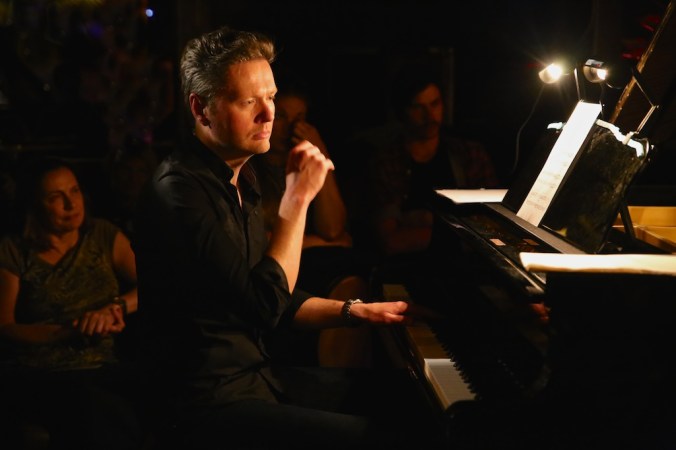 Fittingly the gig opened with ‘Two Steps’ (Penman) which is from the second James Farm album. Everything about the number is compelling and it oozes a post millennial Americana vibe – close to that espoused by artists like Brad Mehldau. James Farm are an extraordinary group co-led by Joshua Redman, Aaron Parks, Matt Penman & Eric Harland. A super-group where everyone is a gifted writer and virtuosic player. This is the pinnacle of modern American Jazz and we were lucky enough to get an up close taste of it. A warm glow swiftly enveloped us and from the first pull on the bass strings and we sensed on mass that this a different type of bass playing; supremely authoritative, melodic and with more momentum than a downhill freight train. We were especially fascinated to hear that Split Enz inspired him to write this tune. We heard other James Farm compositions – the moody ‘Juries Out’ (Penman) and Otherwise (Aaron Parks). Delightful Penman originals dominated the rest of the set (with the exception of a haunting Jewish folk song).
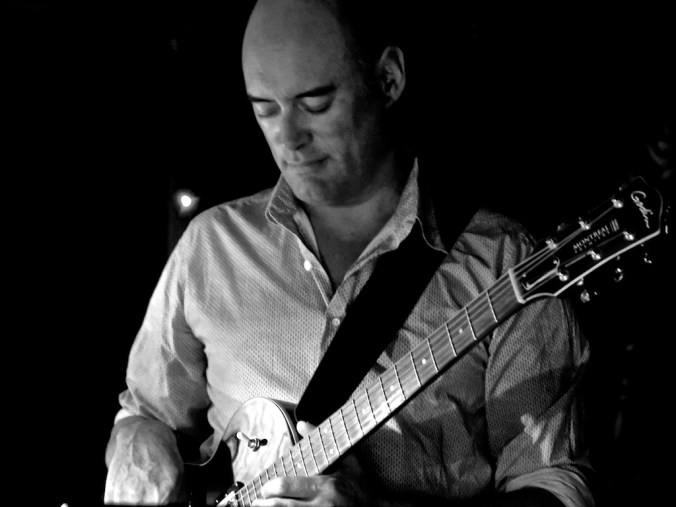 As approachable as this music is, there are many rhythmic and textural complexities. Putting such a set list together with a band not used to playing the material, perilous. Two factors undoubtedly assisted here. Penman, Field and Nacey are old friends. Nacey attended Avondale college with Penman and Field has known him since his time at Auckland University. Field also recorded with Penman in New York on his recent Warners album ‘The A List’. The remaining band member was Stephen Thomas, the youngest of the quartet. He only met Penman the day of gig. When you examine Penman’s contributions to James Farm, the SF Jazz Collective and other albums, you realise that he writes with unusually gifted improvising musicians in mind. For a young drummer to step into the space occupied by Eric Harland and Obed Calviare and not only pull it off but to do it well is a credit to him. Penman singled him out for praise and told us we were lucky to have a young drummer of his ability on the scene.
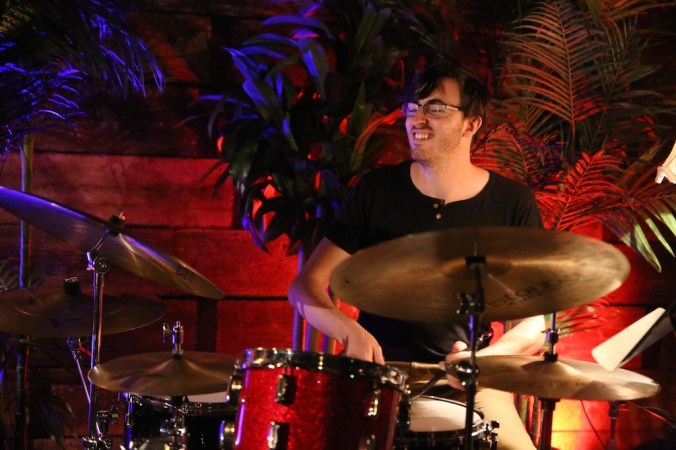 Of Field and Nacey we expect only the best and we got it. Replacing Redman, Moreno or Rosenwinkel with Nacey’s singing Godin Guitar felt a natural choice. I have heard Mike Moreno perform and Nacey is heading for that level of virtuosity. He is a good reader and a master musician and he always delivers. Field was also at his best that night and his best is something to behold. Losing himself in a music quite different from his own and doing it with utter conviction. Collectively they brought Christmas joy to everyone present. The best of Christmas presents from the best of Jazz clubs. I hope the CJC features Penman again soon – we love him down under.
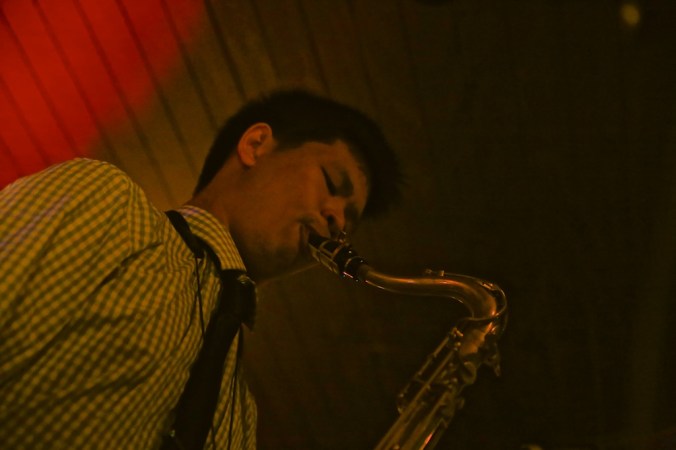 Richard Thai was on the first JAC album but by the time I saw the ensemble live he had left New Zealand for America to complete his postgraduate studies. Recently he returned to his hometown of Wellington where he now teaches and leads the Richard Thai 5. While the ensemble is a basic line up of saxophone, piano, guitar, bass and drums it is never the less forward-looking. This is post millennial music.
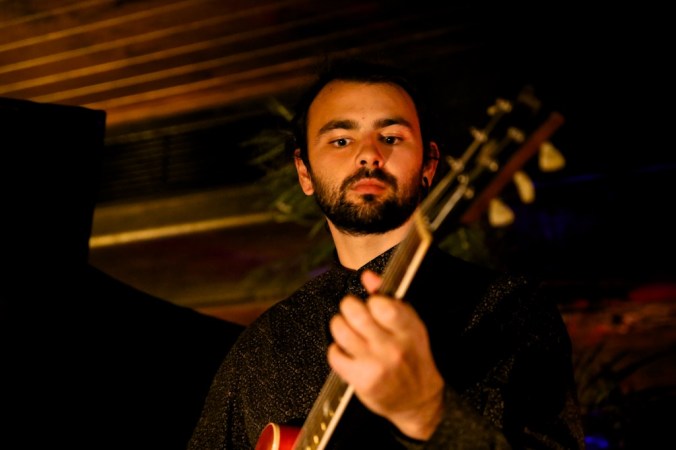 The best illustration of this was heard in his second tune, ‘Capricorn’. A marvellous composition. Like much of Thai’s material it has powerful hooks to draw you in. What sounds simple is in truth anything but, as it shifts between major and minor keys with disarming ease. Many tunes do this, but with Capricorn the device is extraordinarily well conceived. The shifts in focus are pleasing, but what sets the tune apart is a sweet over-arching dissonance; diminished chords acting as a bridge to carry you across the major-minor divide. The arranged head is especially tantalising; setting the listener up expectantly for the explorations that promise to follow.
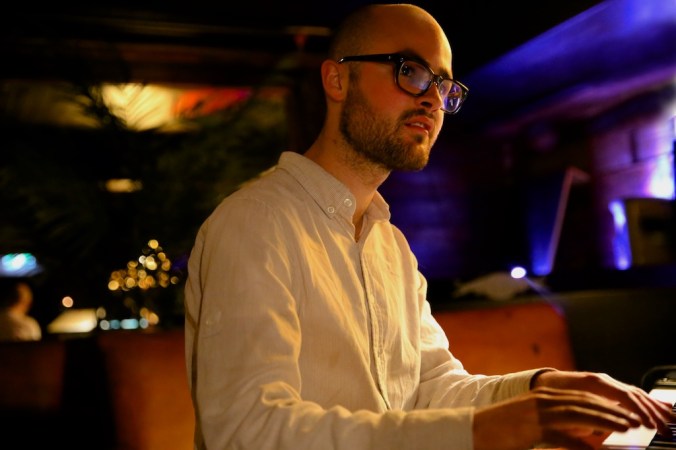 Capricorn’s momentum is that of a multi-hued butterfly in a tropical storm; pushing against the cross winds, never losing its way, pulse, or sense of purpose. Thai’s tenor picks at the tune, peeling the layers back, exposing the heart. This contrasts with pianist Matt Steele’s oblique approach. Steele clearly took the difficult route and along the way it yielded gold. You were with him note by note as he undid the knots of the puzzle confronting him. Steele is always an interesting pianist and always one to watch. It is his determination, his preparedness to take risks and his ability to learn on the bandstand that marks him out from many of his peers. He grows as an artist each time I see him.
  The last to solo on Capricorn was guitarist Callum Allardice. After the long complex solos preceding his, he wisely chose to linger nearer to the melody. His tight elliptical figures rounding out the earlier solos and bringing us gradually back to the outro. His time to shine as soloist came on the last number where his guitar soared as if free of gravity (much to the delight of the audience). Allardice has many fans in Auckland.
 The remaining two band members Shuan Anderson and Scott Maynard are also established musicians from the Wellington area. Anderson (like Allardice) was also a member of the Tui nominated JAC and he has played at the CJC before. A responsive drummer who interacted well and picked up on the subtle nuances of the material. The bass player Scott Maynard has been a member of various leading Wellington units (e.g. Myele Manzanza, Lex French). He has played at the CJC before and he never disappoints. His role in giving a heart beat to this often complex material was vital. I look forward to hearing more of this ensemble and above all I would like to some hear more Thai compositions. With a few more years of performance under their belt the unit could achieve even more.
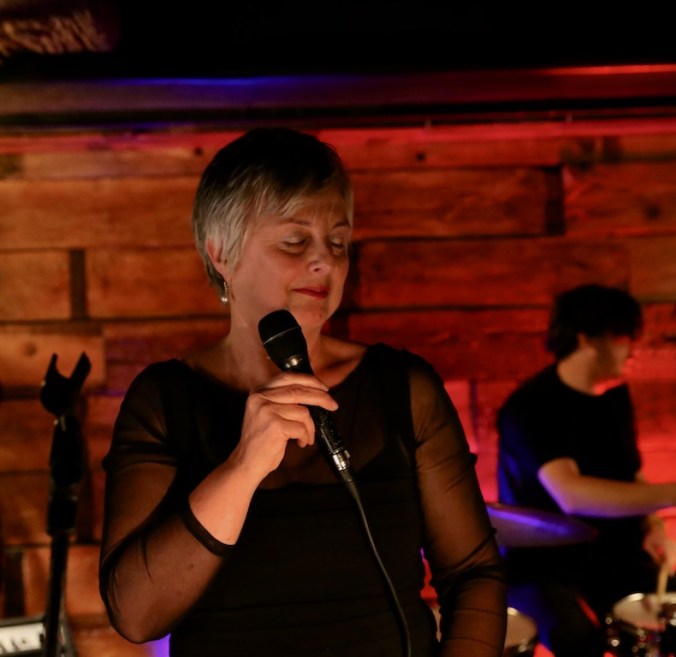 On Wednesday the UK-based vocalist, arranger composer Louise Gibbs brought her Seven Deadly Sins project to Auckland’s CJC (Creative Jazz Club). The audience, unrepentant antipodean sinners that they are, found much to enjoy. When premiered in the UK the project received much acclaim and in 2013 the ‘Seven Deadly Sins’ album’ was released. As I glanced through the liner note credits one name jumped out, Tim Whitehead; an important English saxophonist with equal facility on soprano, alto and tenor. For any number of reasons this is an album worth having.
  The song suite has seven parts plus prologue & epilogue. This aggregation of cardinal sins does not originate with Peter Cook (as someone hilariously suggested) but comes to us from the fourth century AD. These very human failings were the obsession of the middle ages and Chaucer, Dante and Brueghel utilised the themes to great artistic effect (and often with rye humour). Debates on morality are still very much part of the public discourse as the dreadful events of Paris, the Lebanon and Mali remind us.
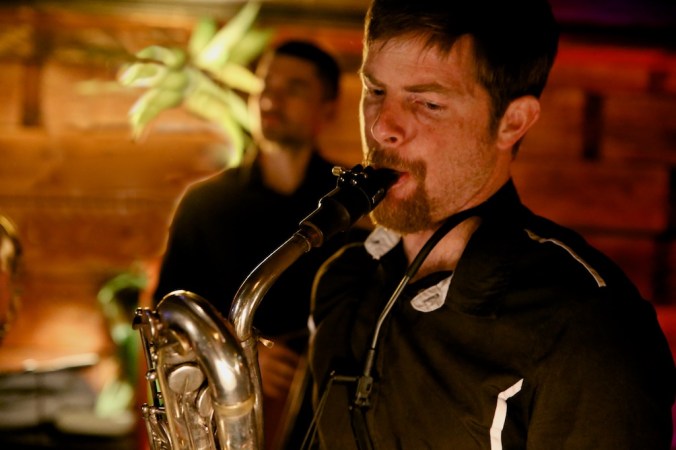
 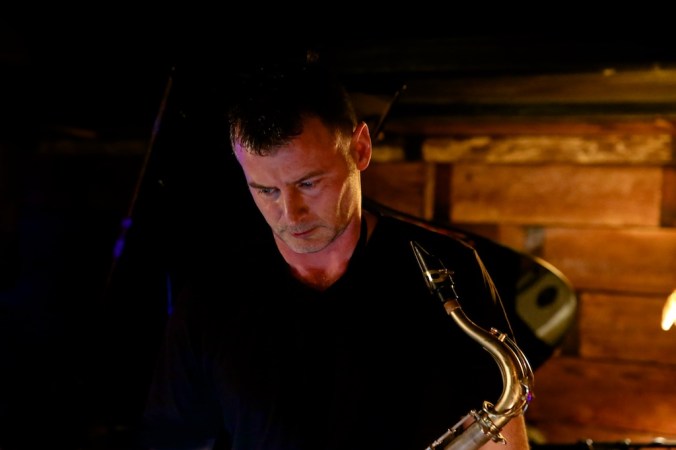 Gibbs invited us to examine the sins afresh; a parade of human failings as seen through a jazz lens. Her evocative contrasting pieces leaving us in little doubt as to which sin they represented; a strident drum solo during anger, the fulsome sound of the trombone for gluttony etc. It is unsurprising that the tenor saxophone portrayed lust; an entirely appropriate pairing given the repeated historic accusations of lasciviousness levelled against that sensual instrument.
 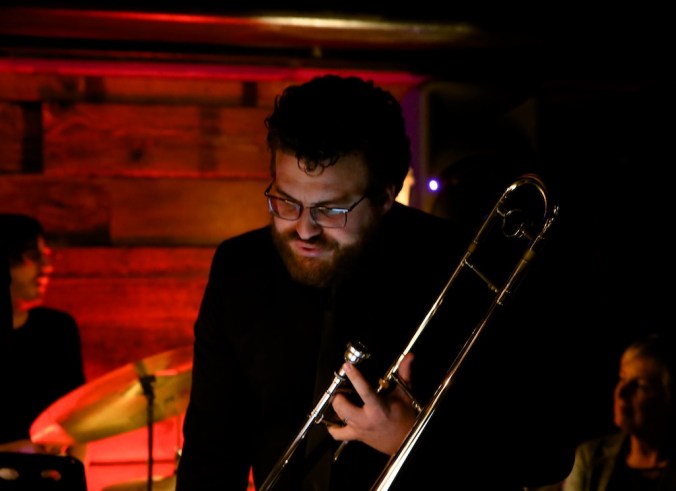 The suite while highly arranged gave ample room for the soloists to demonstrate their particular vice. Crystal Choi was ‘pride’ on piano, Pete France was ‘lust’ on tenor, Haydn Godfrey was gluttony on ‘trombone’, Mike Booth was ‘envy’ on trumpet, Cameron McArthur was ‘sloth’ on bass, Steve Thomas was ‘anger’ on drums, Andrew Hall was ‘greed’ on alto & baritone. Gibbs was vocalist on all numbers including a prologue and epilogue. Many of the band members like Booth, McArthur, Choi and Thomas are regulars but we see Hall, France and Godfrey less often. That is a shame because they were amazing.
 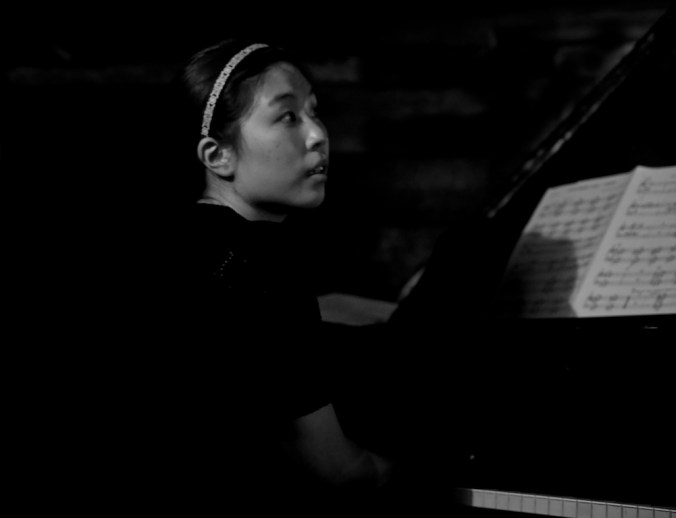 A shorter first set preceded the ‘Seven Deadly Sins’ suite – all Monk compositions. The band used stock arrangements but there was a sense of boisterous freedom in the renditions. This provided an appropriate segue to the second half. While everyone embraces Monk these days, his dissonant choppy lines certainly raised eyebrows back in his heyday. Monk was an iconoclast who channeled the rawness of the human condition through pen and piano. With the Seven Deadly Sins and its often dissonant passages we also experienced that.
 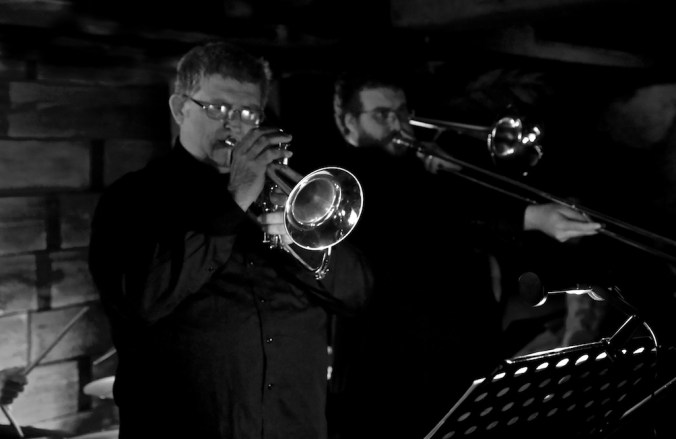 Louise Gibbs has been teaching and performing in the UK for 30 years, but she grew up in Auckland. In recent years she moved away from a distinguished career in academia to concentrate on performance and composition. There is a confidence about her work and she is unafraid as a performer. Her voice can move from silk to raspy as appropriate to the piece. Footnote: Earlier I drew attention to Tim Whitehead (on the Gibbs album). He was once a member of Ian Cars ground breaking and popular group ‘Nucleus’ – the highly respected Kiwi born saxophonist Brian Smith was a founder member of that group.
 JazzLocal32.com