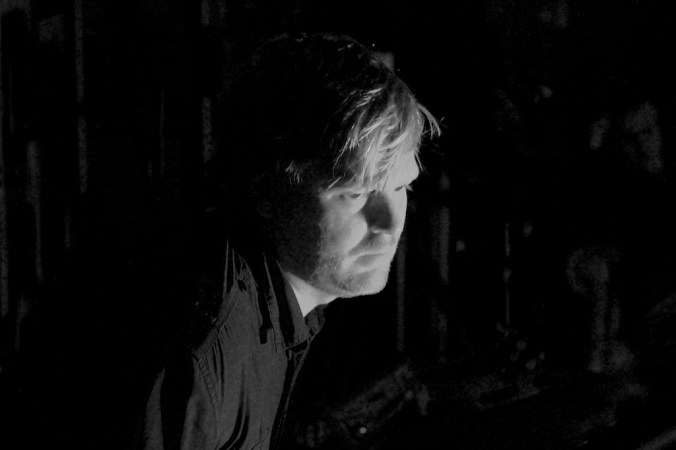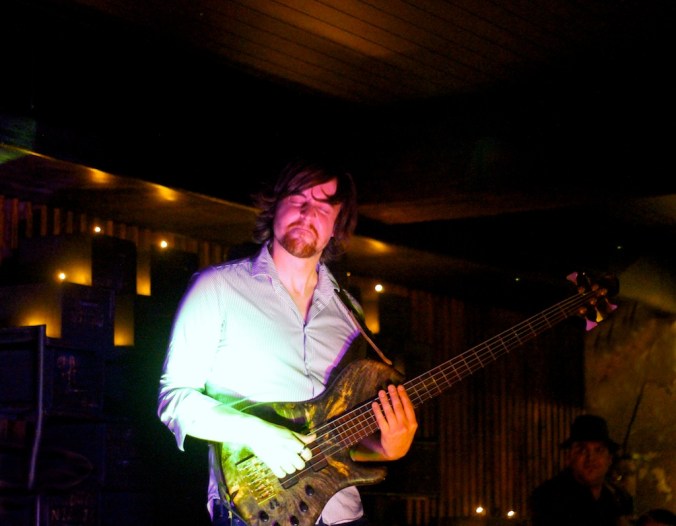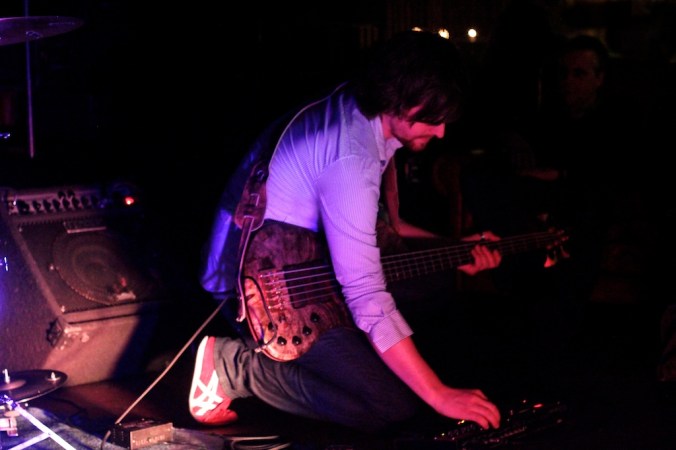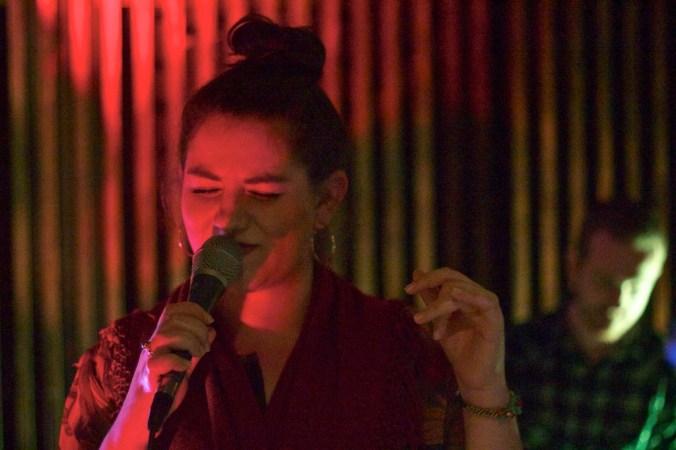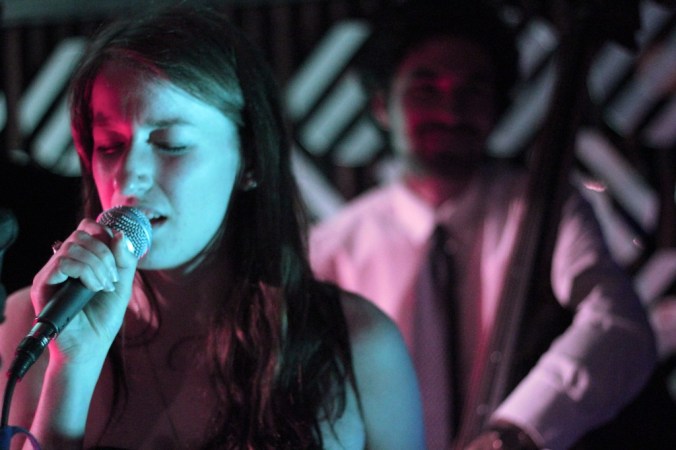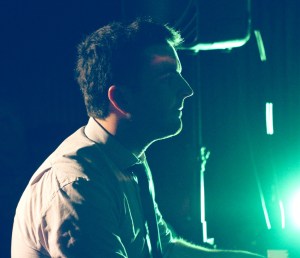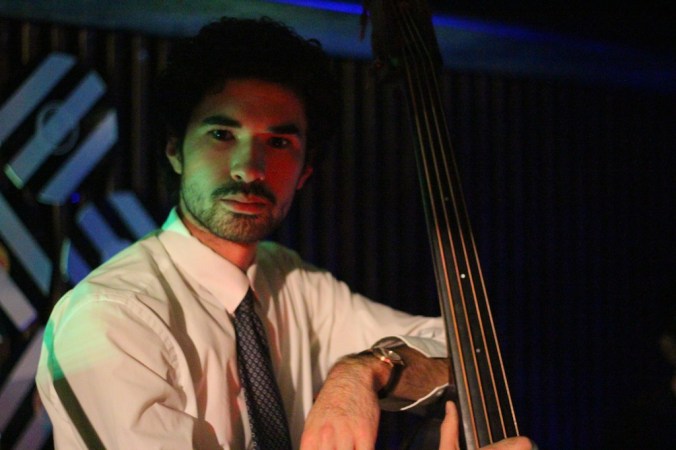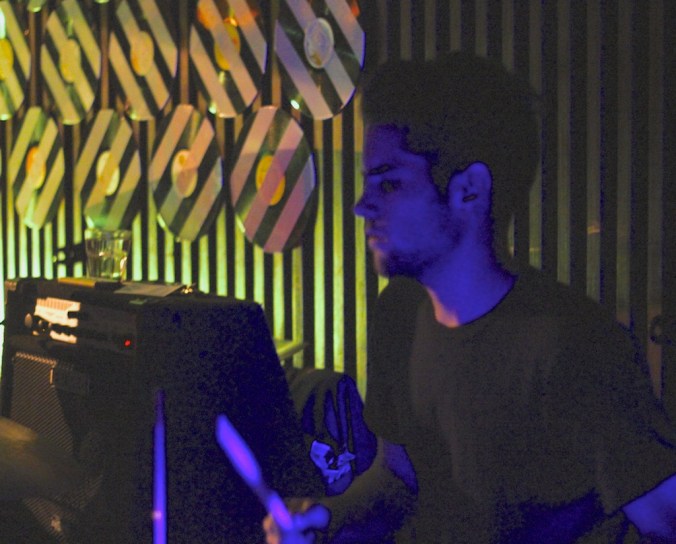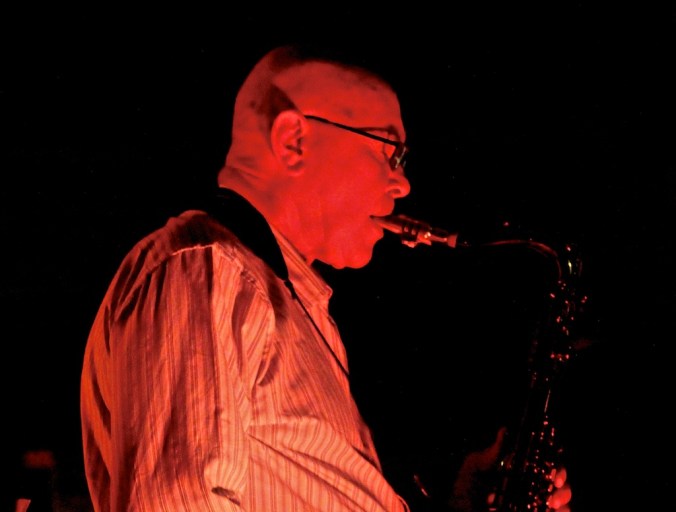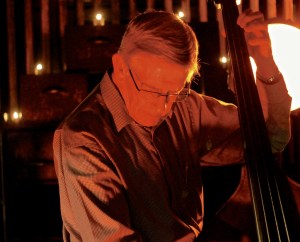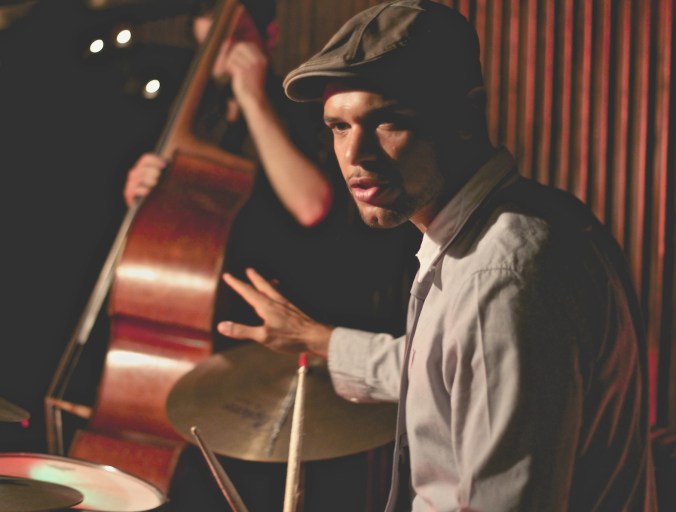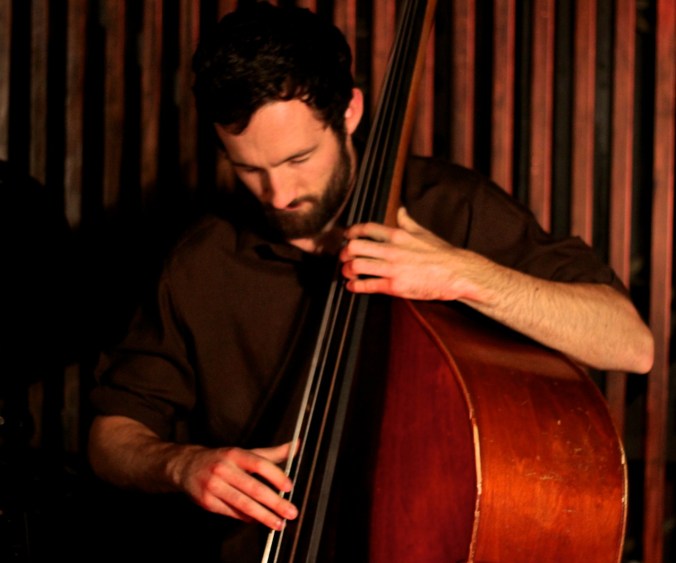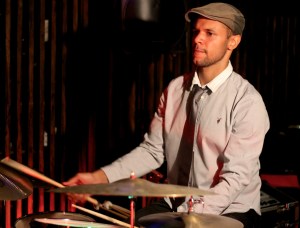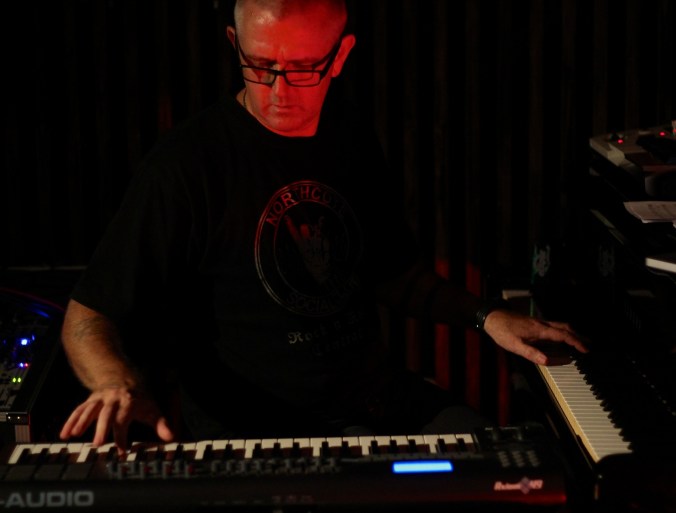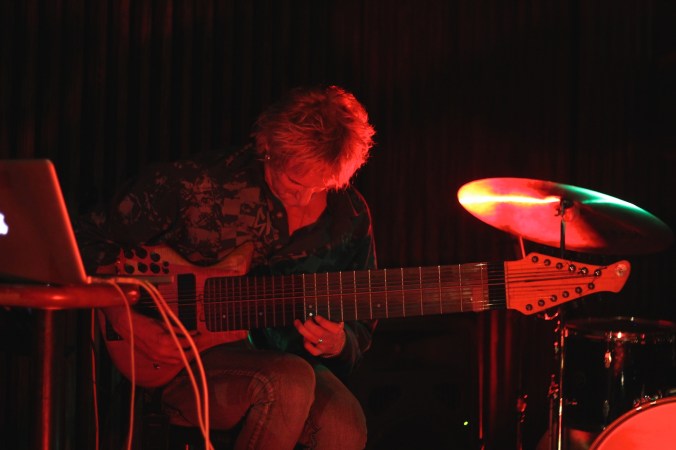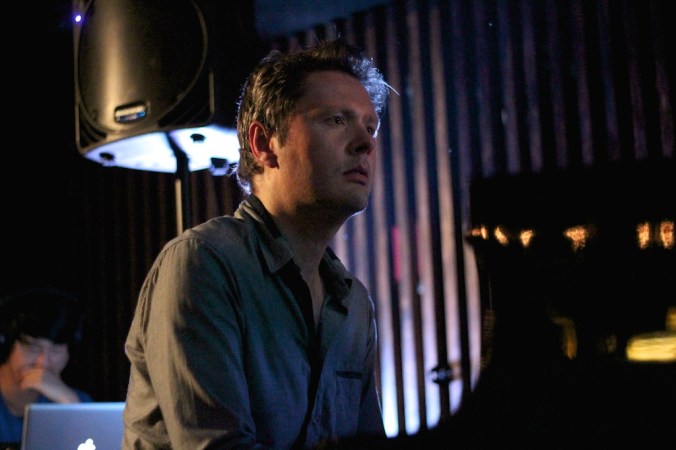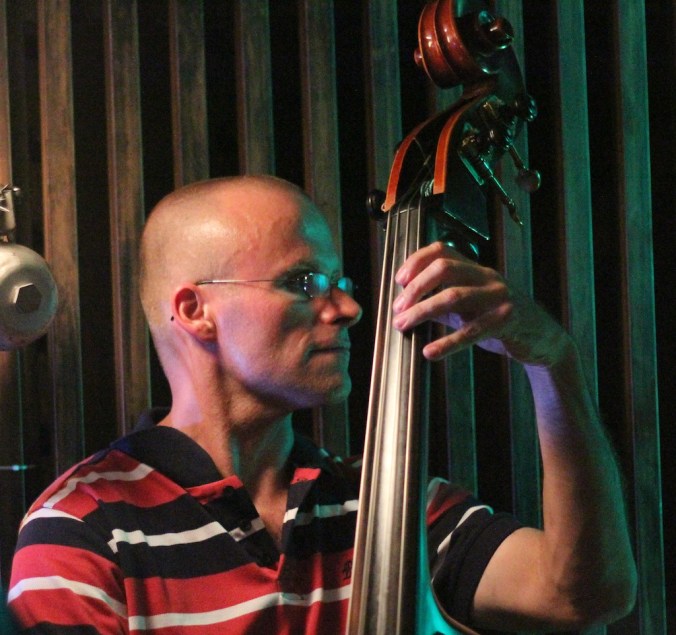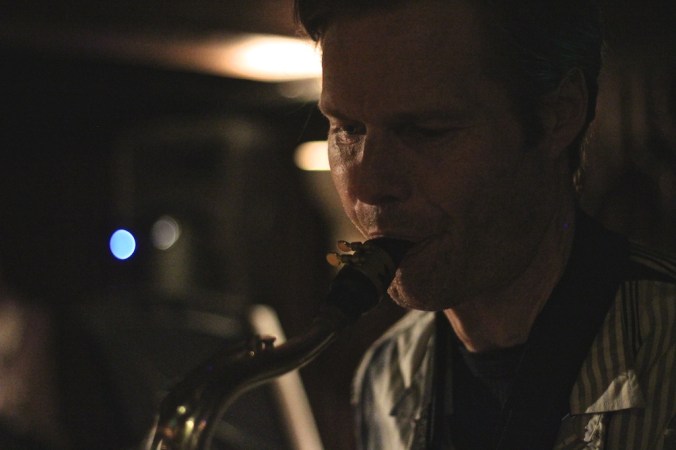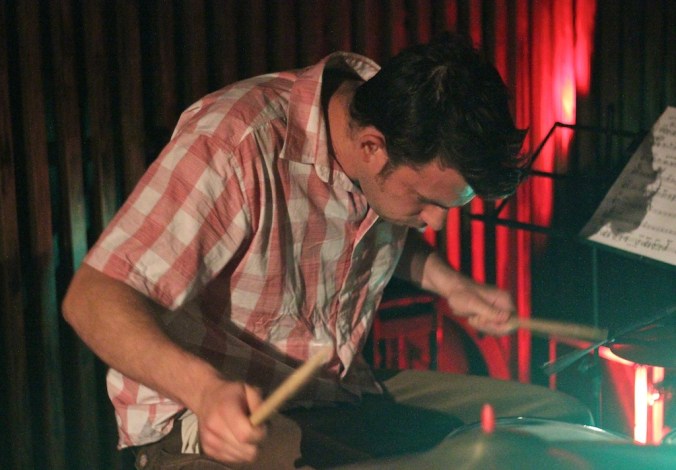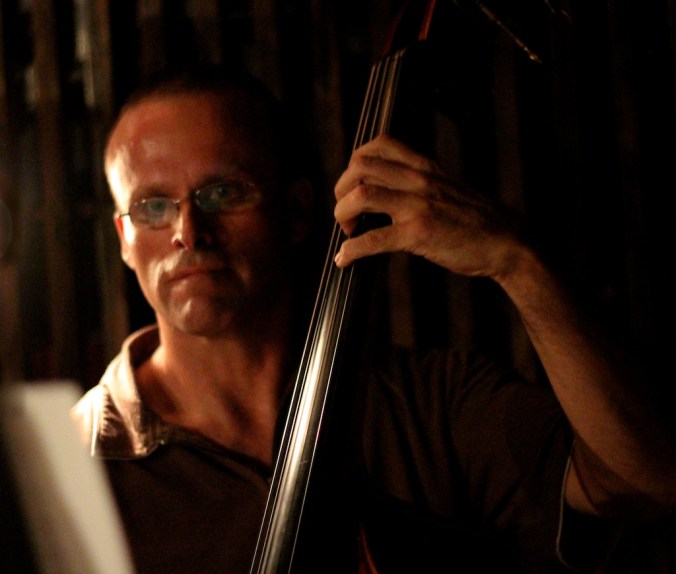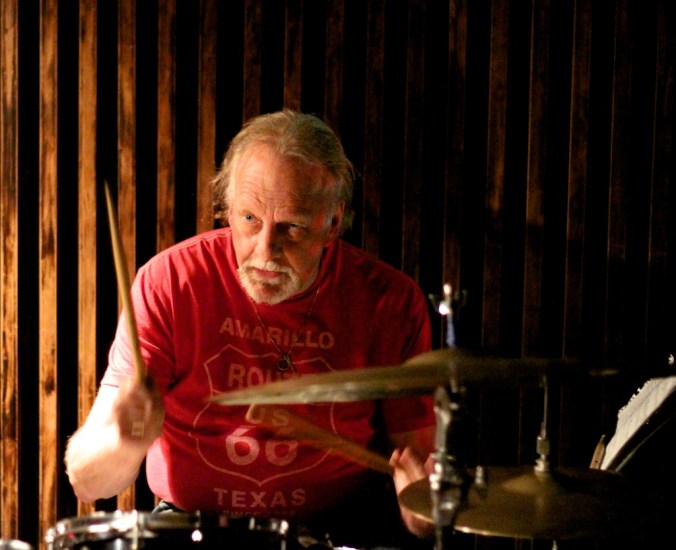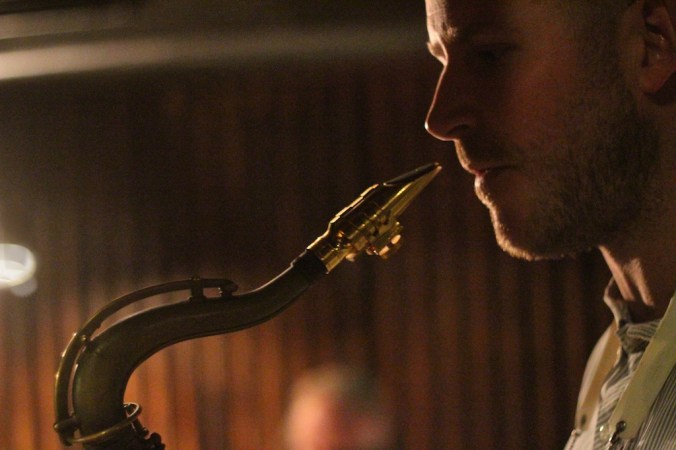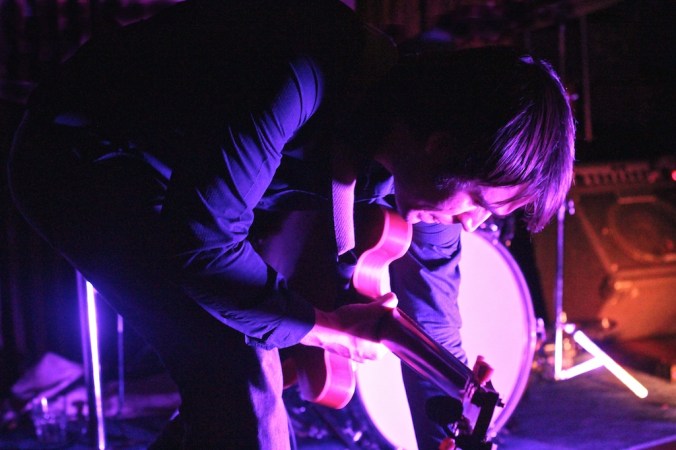
Sean Wayland & David Berkman @ CJC Winter International Series

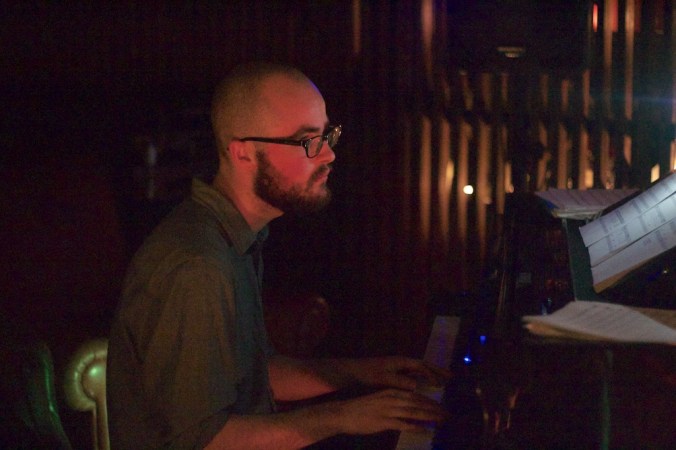
Sean Wayland

Sean Wayland

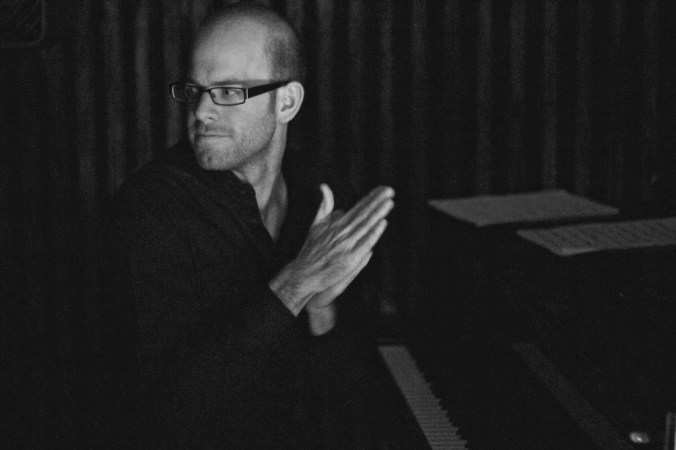
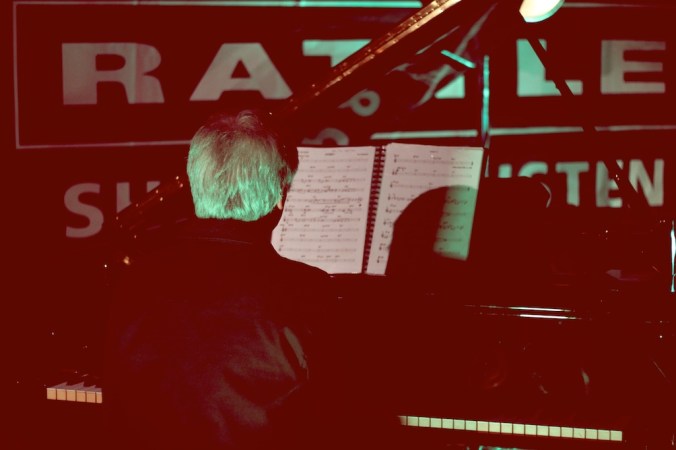
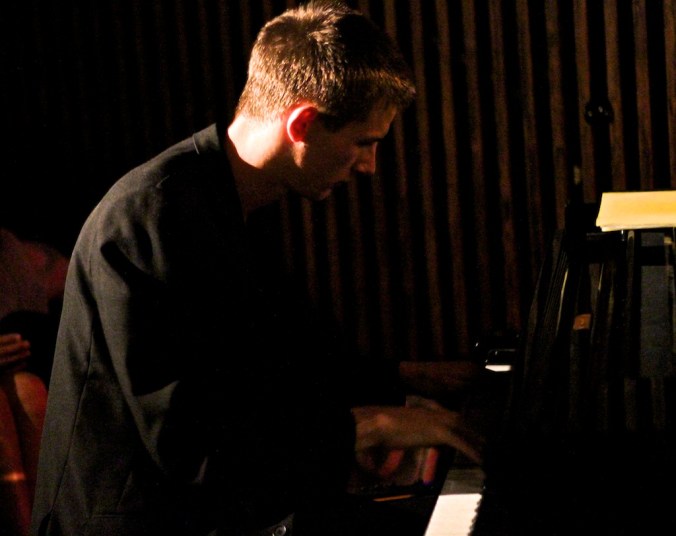
We don’t get many offshore Jazz pianists visiting New Zealand, but we have seen quite a few over recent weeks. This particular gig comes hot on the heals of hearing Sean Wayland appearing as featured guest artist with the marvellous Jazzgroove Mothership Orchestra. Sean had impressed me at the JMO gig and so I really looked forward to hearing him play at the CJC (Creative Jazz Club).

Before he had played a note Sean Wayland won us over with his easy-going banter. Especially when he thanked us for Mike Nock and mentioned band mate Matt Penman. These are two of Auckland’s best-loved sons and I suspect that Kiwi’s, like Canadians, enjoy our worth acknowledged by the big country next door. This generous acknowledgement by a respected New York based (Aussie born) pianist reveals an interesting truth about Australasian Jazz.

There may be a struggle to meet the financial realities, deal with lack of good pianos and the paucity of gigs, but the two scenes continually produce world-class Jazz musicians. The Scenes are in fact so intermingled that it is often hard to know who is an Aussie and who is a New Zealander. Steve Barry and Mike Nock illustrate this perfectly as they live and work in Australia. Roger Manins lives in New Zealand but gigs across the Tasman every other week.

In spite of the difficulties there is no lack of great music coming out of Australasia and the main problem is that of distribution. An upside of this changing business model is that bands travel more. For the keen Jazz fan live music is once again king. We don’t have to wait for a multi-national recording label to tell us what we should or shouldn’t like, we can explore ‘You Tube’ or ‘Bandcamp’ and hear from the artists directly.

IMG_7530 - Version 2

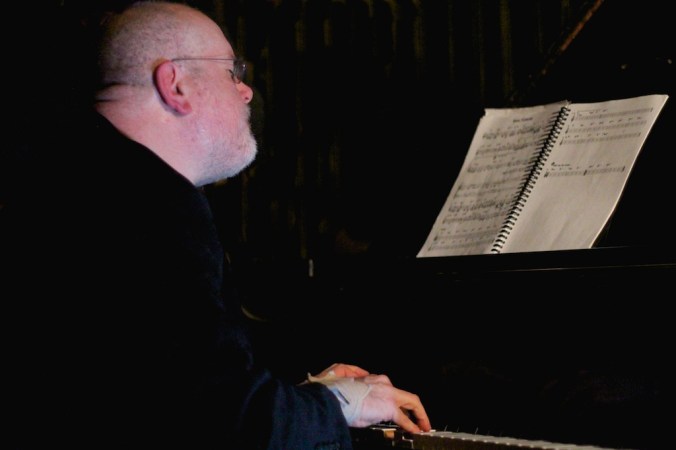
Sean Wayland is a hugely respected figure on the Australian scene and in New Zealand as well. He is a very modern pianist, as he moves in circles where new approaches are constantly being explored and new sounds developed. After listening to his compositions I was not in the least surprised to find him supported by the likes of Matt Penman, Jochen Rueckert, Will Vinsen, and James Muller. This is essentially the Rosenwinkel generation. While he speaks that language fluently he is unmistakably an individual stylist. No one sounds quite like Sean.

Sean’s tunes are very melodic. Often unfolding over a simple bass line as with ‘eenan’ off his ‘Lurline’ album. What sounds catchy and accessible can actually be quite complex as his approach to rhythm gives the tunes that unique feel. This is tension and release at its sophisticated best. I have put up a version of ‘eenan’ as a ‘You Tube’ clip which unfolds in subtle and beguiling ways. So beguiling in fact that I dreamed the tune two nights in row. Such powerful hooks are not accidental but the result of careful craftsmanship. There is a strong sense of pulse or swing to his tunes, but approached from a different perspective to that of the more traditional pianist.

This intergenerational shift is one that I hear more often as the changing of the guard occurs. Other tunes played to great effect were his, ‘Trane plus Molly equals countdown” and the solo piece ‘Little Bay’. Both of those tunes are found on the ‘Expensive Habit’ album. ‘Trane plus Molly equals countdown’ hints at McCoy Tyner, but you quickly realise that the voicings have very modern in feel. I can however certainly imagine Kurt Rosenwinkel doing the tune. It is an extraordinary composition where the left hand continuously punctuates the flow with oblique accents. I was left wanting more than the single set and I certainly hope that we get to see Sean again on his next trip back to Australia.

IMG_7520 - Version 2 (1)

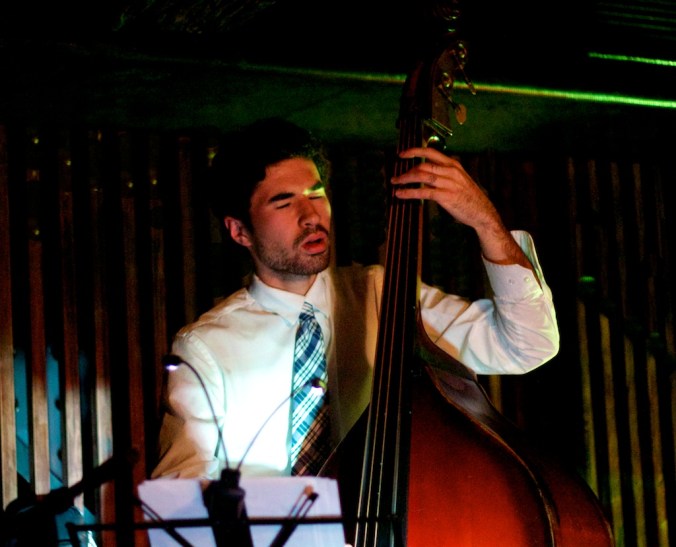
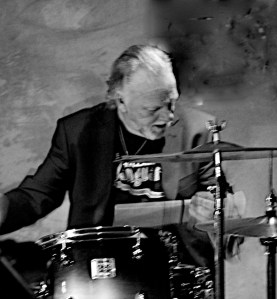
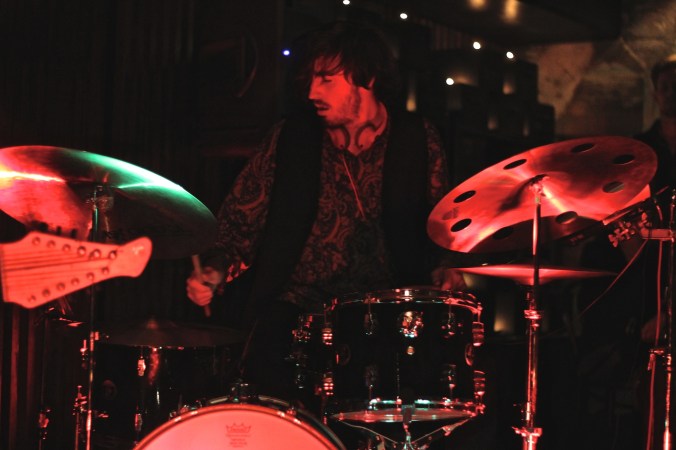
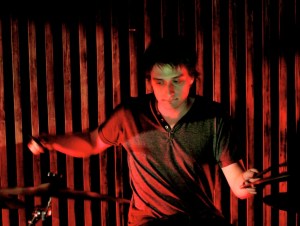
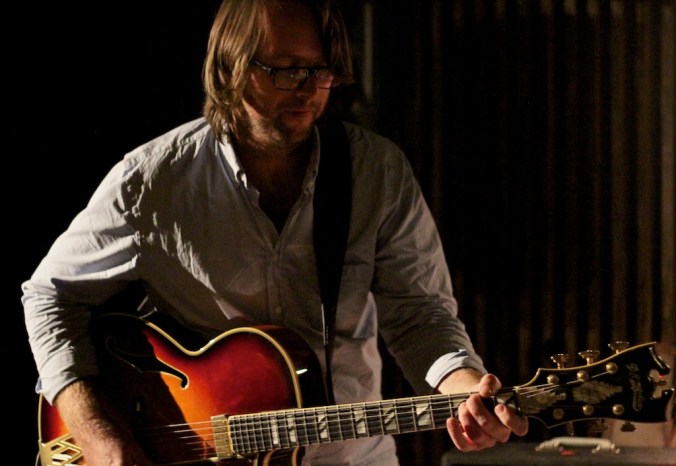
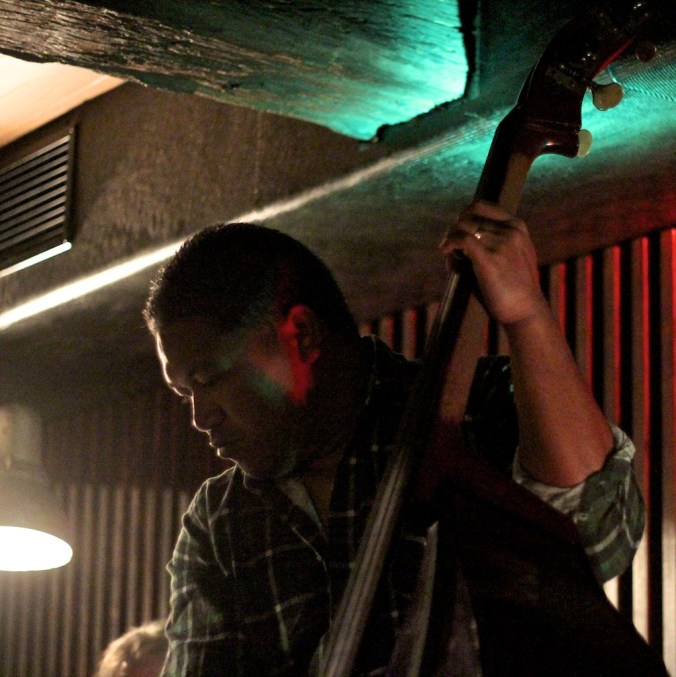
Accompanying Sean were Cameron MacArthur (bass) and Jason Orme (drums). Both accomplished musicians who quickly slotted into the challenges of supporting a world-class and highly inventive pianist.

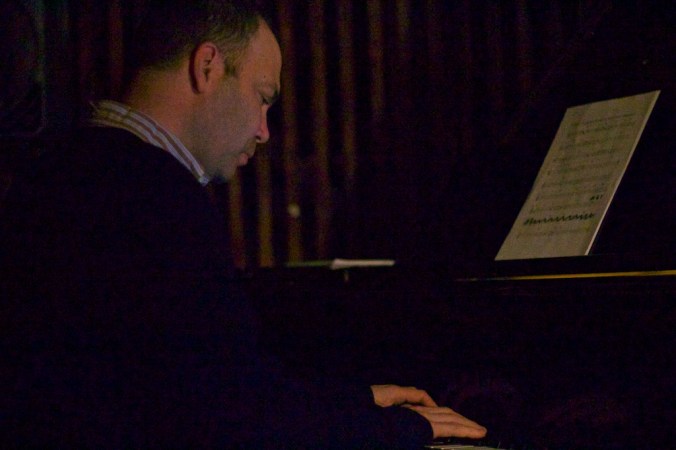
The next artist up was David Berkman. He has been to New Zealand before and anyone who saw him last time would have jumped at the opportunity of seeing this top flight New York Pianist in action. There is a fluidity to his playing and above all an impeccable sense of timing. This hard-driving post bop fluidity and the big bluesy chords is what most characterises his work.

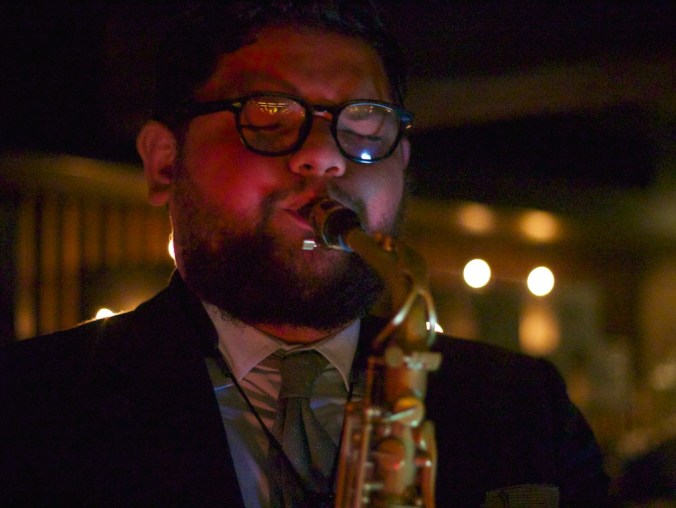
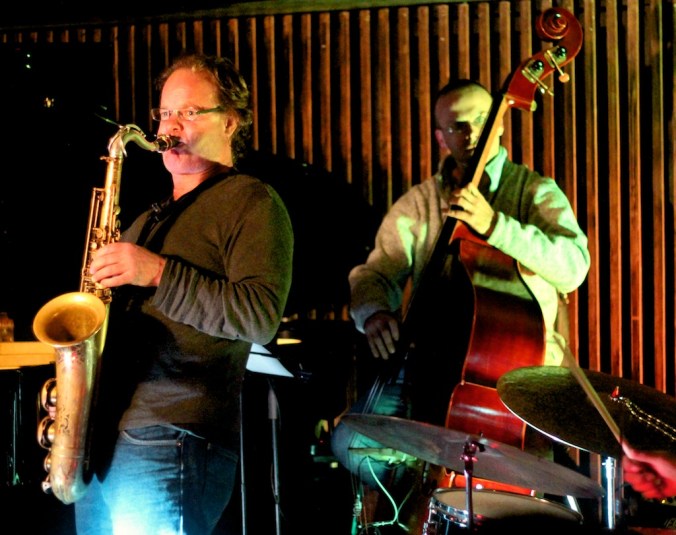
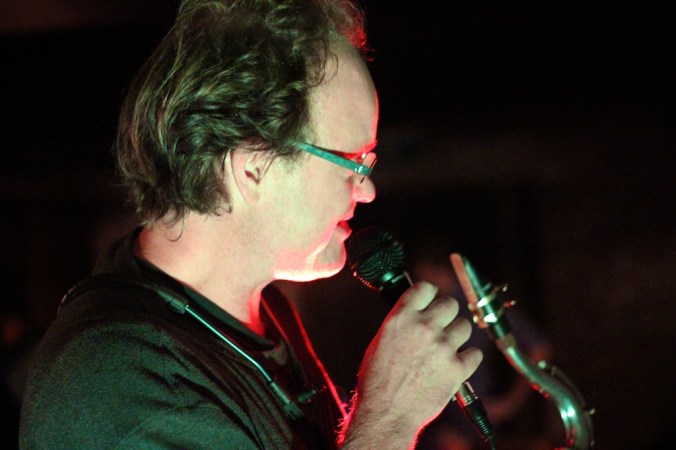
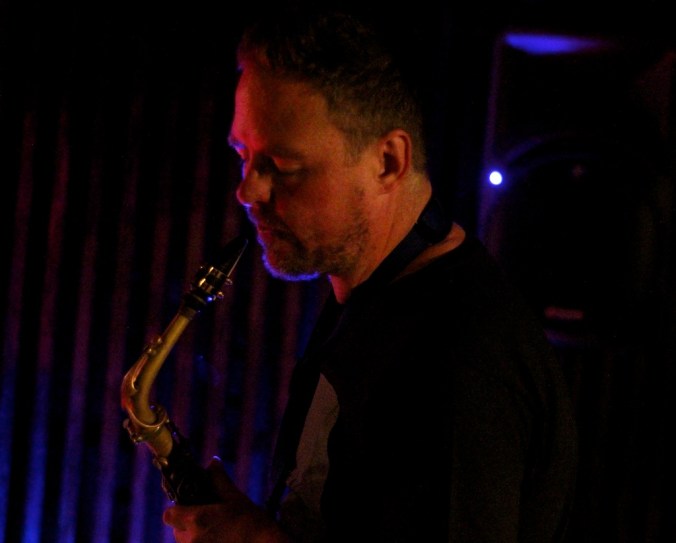
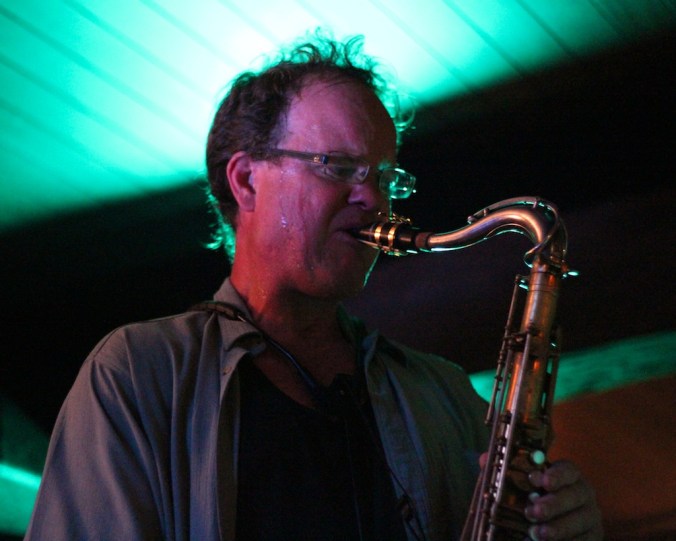
The Kiwi members of the quartet were Roger Manins (tenor), Olivier Holland (bass) and Ron Samsom (drums). Together they formed a powerhouse of inventiveness and Roger in particular seemed to benefit from this grouping. His solo’s were so incendiary as to cause gasps of surprise and from an audience who are used to such pyrotechnics. While we expect Rogers high wire acts he is always able to surprise us and this night saw him really on fire. David Berkman certainly knows how to amp up the tension and his ability to extol a horn player to reach deeper and deeper is impressive. He worked the room with as much enthusiasm as he would have done in a prime New York club and everyone there appreciated that commitment. This was the kind of gig where you sat back and let the sound wash over you, tapping your feet uncontrollably and yelling enthusiastically between numbers.

David Berkman

David Berkman

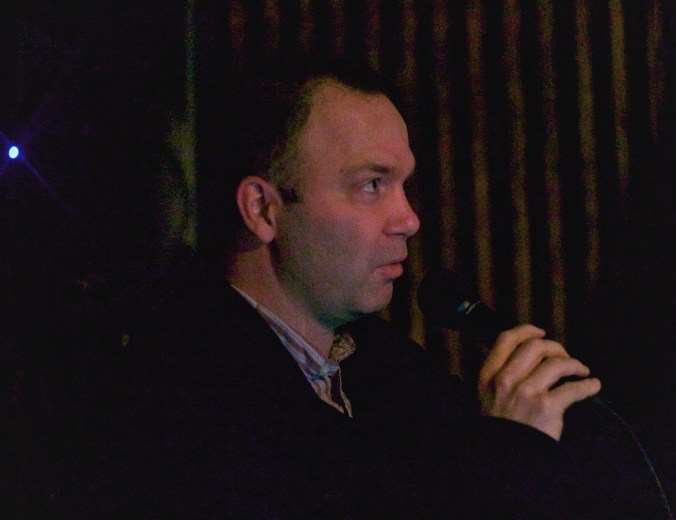
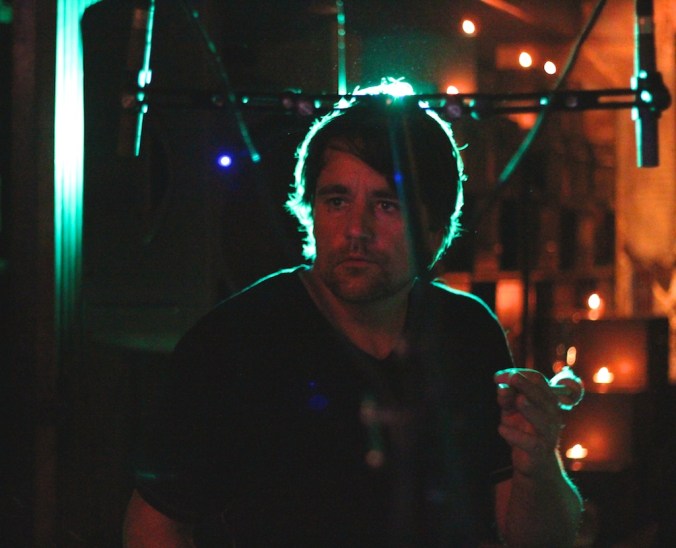
David Berkman’s repertoire was a well-balanced mix of his own compositions and some lessor known standards. During the gig he talked about his mentor, the much respected pianist Mulgrew Miller (who sadly passed away that very evening). He has worked with a wide variety of artists such as trumpeters Tom Harrell and Dave Douglas and his contribution to Jazz education is well-known. Having moved to New York some years ago he quickly settled into the routines of gigging, recording and teaching and since then he has been a fixture on the local scene. He travels extensively and is a Palmetto recording artist.

IMG_7554 - Version 2

The two pianists were very different, but both were amazing in their way. In David Berkman we heard the history of the post bop era and in Sean Wayland we glimpsed the future.

What: Sean Wayland and David Berkman Winter International Series.

Who: Sean Wayland (p) (leader) Cameron McArthur (b) Jason Orme (d). – David Berkman (p) (leader), Roger Manins (s), Oli Holland (b), Ron Samsom (d)

Where: CJC (Creative Jazz Club) 29th May 2013

Jazzgroove Mothership Orchestra – CJC Winter International Series 2013

IMG_7493 - Version 2

Travelling with an 18 piece jazz orchestra is an exercise in logistics that would confound military experts. Luckily this herculean task was assigned to Jazz musicians who have no idea about what is possible and impossible. As they have done for the past 10 years the Jazzgroove Mothership Orchestra (JMO) set out on tour, but this time, as if to tempt the fates, they decided to cross an ocean. The trip across the Tasman was certainly not without mishap, as one of the orchestra members had become ill at the airport and an urgent replacement was required. The first New Zealand concert was to begin in a matter of hours. I am unsure of just how much panic ensued, but the bands Director David Theak was tasked with locating a trumpeter. They required an excellent reader who could play some of the most difficult charts ever devised and with little or no rehearsal time.

It was guest conductor, ‘ringleader’ and composer Darcy James Argue (who is evidently also a magician) who proposed the solution. He quickly conjured up the brilliant New York based trumpet player Nadje Noordhuis who just happened to be attending a wedding in Australia. She had worked with Darcy for many years and was familiar with his work. Nadja changed her plans and flew to join the JMO in Auckland. I can only surmise that various music gods received generous offerings that day. IMG_7516 - Version 2

The ‘Jazzgroove Mothership Orchestra‘ is one of the most valuable creative assets that Australia has on offer and since its inception 10 years ago it has picked up many scholarships and prizes. It is regarded as the best Jazz Orchestra in Australia and it has gained a solid international reputation. Because of the respect the orchestra garners it is now able to attract the best soloists, conductors, arrangers and composers. World acclaimed Jazz masters like John Hollenbeck and Maria Schneider are just two examples of guest arrangers invited to work with the JMO. While drawing upon a myriad of inspirational sources from offshore, the orchestra still maintains a strong focus on showcasing the best of Australian Artists. Recent programs have featured the works of Mike Nock and the New York based Australian born pianist Sean Wayland.

Our own Roger Manins plays tenor saxophone for the current JMO tour and he will appear as guest artist with them at the Melbourne Festival (with the incomparable and frequent poll winning Maria Schneider conducting). Roger is a typical self-effacing Kiwi male who seldom talks up his own achievements (I will happily take on that job). This is big news and he is to be congratulated. Better yet fly to Melbourne and enjoy the JMO with Roger and Maria.

The first concert was at the Kenneth Meyers Centre and I watched with interest as the various musicians about town tweeted words like ‘freaking amazing’ and ‘wow’. The main Auckland gig was on the next night at the Auckland Jazz & Blues Club located in the Point Chevalier Returned Services Association. This large rectangular space has acoustics that are often challenging for smaller bands but not so for the sonic blast of an 18 piece orchestra. By the time I turned up the venue was packed. Everyone there looked expectant, understanding that a rare treat was in store.

IMG_7482 - Version 2

The gig was split into two distinct halves with the first set featuring Sean Wayland’s music. I have long heard praise of Sean and to my shame I had not previously checked him out as thoroughly as I should have. He’s a revered figure on the Australian Jazz scene and with good reason. He often plays with the cream of New York musicians and his discography is jaw-droppingly impressive. Sean’s compositions have a particular ebb and flow that works well with an orchestra like this.  For all that, he is a friendly approachable guy and this easygoing manner communicates itself well to an audience. Sean has worked with the JMO before and it is not surprising that they invited him back as guest pianist, composer and arranger. IMG_7503 - Version 2

The second set featured the works of guest conductor Darcy James Argue who like Sean Wayland lives in Brooklyn. He has steadily been amassing tributes over recent years, first for his ‘Infernal Machines’ album and more recently for ‘Brooklyn Babylon’. Darcy James Argue describes himself variously as ringmaster, composer, arranger and head of a ‘Secret Society’. Dan Brown can’t hold candle to this guy, as he tells better stories and navigates the social media like a latter-day Machiavelli.

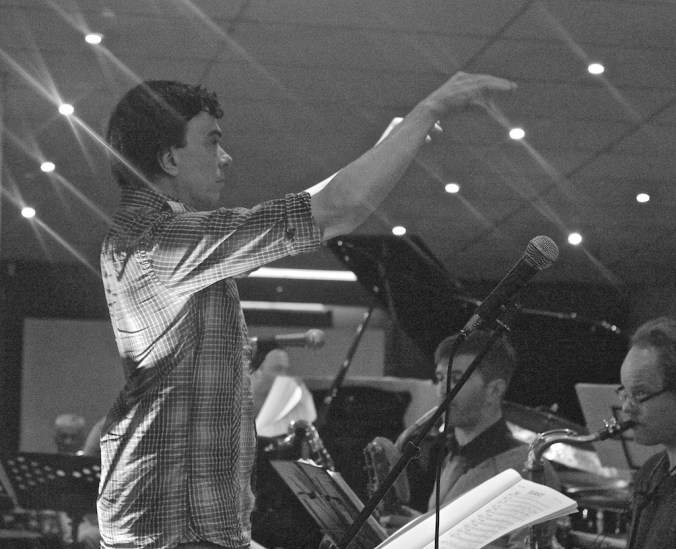
When Darcy was ushered onto the bandstand he emerged in true Secret Society fashion. Swirling out the shadows and giving the appearance of being 7 feet tall. My only disappointment was that he didn’t have a cape. According to rumours the Secret Society first aired their music in a small punk bar in Brooklyn, violating fire and safety regulations in the process. As with all the best secrets word soon leaked out and as time went by they performed at the Lincoln Centre and many other key venues. It must be troubling for a secret society to become so famous, but that is exactly what has happened. They are five-time winners of the DownBeat Critics Poll, a JJA best-of award, appearing in innumerable best-of-the-year lists, and being nominated for both GRAMMY and JUNO awards. IMG_7515 - Version 2

This is a composer who understands musical alchemy.  Under his pen and baton a new form of magic has emerged. The textures, orchestral voicings and raw energy carry the listener to places unimagined. It feels fresh and exciting, but somehow (and perhaps this is the essence of the magic) the past is still evident in ways that are never hackneyed. Warmth and vibrancy vie with starkness, gentle and raucous coexist. These are the sounds of a big city in the twenty-first century, but a big city constantly examining its roots. It is hard to adequately describe the impact of this, but a careful listener will discern hints of Copeland, Rock music, Thad Jones and even Cage. More importantly they are drawn forever into the strangely accessible but deceptively complex world of Darcy James Argue and his co-conspirators.

Darcy James Argue has woven us a convincing narrative and his multi media smarts are an integral part of this journey. His websites lead listeners inexorably to the music in pied piper fashion, where they are held fast. He is positioned exactly where he should be, at the cutting edge of new orchestral Jazz.

I sat down with Sean Wayland after to gig and watched with interest as he ordered a schooner. “We don’t have those in New Zealand love” said the barmaid.”What do you call a big glass of beer then?” asked Sean. “A glass” she said. Aussies abbreviate everything (a barbecue is a ‘barbi’ and Melbourne is ‘Melbs’) but this is the only time that I have seen an Australian out-abbreviated by a Kiwi. Sean is an easy guy to talk to and from him I gained a number of interesting insights into the performance. “Was Darcy’s material difficult to play”, I asked him. “Yes” he said, “Almost impossible. To do it real justice it needs to be played a lot and then memorised”. Sean’s piano parts sounded just fine to my ears, he is after all well-known for his work with unique harmony and rhythm.

Where: Point Chevalier RSA, Auckland New Zealand – brought to you by the CJC (Creative Jazz Club), The Auckland Jazz and Blues Club and Pete McGregor Entertainment on the 28th May 2013

Who: The Jazzgroove Mothership Orchestra with Sean Wayland and Darcy James Argue

The Dilworths@CJC Winter International Series

IMG_7394 - Version 2

When the CJC (Creative Jazz Club) posted information about their Winter International Series, the first group up was the ‘Dilworths’.   I quickly scanned the information and zeroed in on the two Kiwi band members.  Not just because they are Kiwi’s but because they are superb musicians and well known to me.  The Dilworths current Pianist Steve Barry is an expat Aucklander, as is bass player Tom Botting.   Both had established solid reputations for themselves before leaving this city and both have since built new ones in Sydney.  On that basis alone locals knew that this was the sort of gig that you brave a rainy night for.   Steve Barry in particular has strong audience pulling power in Auckland and many are aware that he has just won the prestigious Bell Award.

IMG_7381 - Version 3 (1)

Sydney-sider Eamon Dilworth was relatively unknown to me prior to the Dilworths tour, but it is not a name that I will forget in a hurry.  His band is something else.  Eamon plays a formidable trumpet and he has long been recognised as a musician with much of interest to communicate.  He is a Bell award nominee and the recipient of various scholarships which have led to him traveling overseas and studying in Italy.  He has performed in Romania, Austria, Italy and England and his compositions reflect some of the influences that he has soaked up on those journeys.  While we have some terrific trumpeters around New Zealand we can not match the breadth and depth of the Australians.  Having a trumpeter of this calibre visiting is a rare treat.

Leaders need to exert a strong sense of influence but at the same time they need to know when to stand back and let things happen organically.  The Dilworths appear to have the settings just right.  The camaraderie and the consequent collective output is what works so well for them.  This is at least the second line up for the band and the mix is perfect.  The observant will have noticed how carefully these guys listen to each other, tossing challenges and giving support in equal measure.   What is also evident is how much fun they are having.  There is nothing more off-putting than being confronted by a grim-faced group of musicians whose only purpose is convincing you just how seriously they take their music.  This band was fun, lively and extraordinary.  We all felt that we had witnessed a great show and more importantly been part of one.   This is the essence of good performance and of good Live Jazz

.  IMG_7404 - Version 2 (1)

Everyone in the band contributed at least one tune to the gig and the set list was fluid.   The band would play a few numbers and then quickly confer on what to play next.  They had a grab bag of compositions to draw upon and although a random selection process was applied, the set lists formed a surprisingly cohesive whole.  Thomas Botting’s ‘Balclutha’ was just great with Tom and Steve working a groove to the marrow while Dave Jackson (alto sax), Paul Derricott (drums) and Eamon Dilworth (trumpet) created delicious mayhem.  Tom has a following in New Zealand and deservedly so.  IMG_7391 - Version 2

Steve Barry’s pianistic and compositional skills are greatly admired in New Zealand and anyone who has purchased his album ‘Steve Barry‘ (Jazzgroove) will understand why.  Last Wednesday we saw yet another facet to his playing.  Not as leader or accompanist but as ‘A’-grade ensemble member.  As with all of this line up he added maximum value without overcrowding his band mates.  Paul Derricott also contributed a great composition and his album ‘Big Sea-Arrow’ (Jazzgroove) is really worth purchasing.  I have hardly had it off my Hi Fi since picking up a copy.  These are all bands to track down and see again and again.  Altoist Dave Jackson is a great soloist, with a lyricism that sets him apart.  There is also something compelling about his tone production (quite like John Surmon’s alto sound).  He and Eamon often crouch on the floor when others are soloing.  I like this as it signals the ebb and flow of performance; as if choreographed.  I love musicians who move and dance and these guys executed their dance moves perfectly.

The influences were many and varied and while you could hear flashes of Eick, Stanko, Douglas and many others, the band still sounded very Australasian.  I have come to value this local sound and I miss it when I travel.   There is an honesty that comes from living so far from the so-called mainstream Jazz world.  Jazz is now finding a universal voice and New Zealand and Australia are feeding into that just as the Europeans have done for some years.  Good music has no borders.  While comparisons are often redundant I do have one to make.  It came to me while I was listening to the Dilworths EP.  They have captured a vibe very close to that of the 65 Miles Quintet.  In short they had a controlled looseness that can only arise when a band intuitively knows exactly where they need to be minute by minute.   ‘If I were a Bell’ was the one standard of the night, with the melody barely expressed before they were paring it back to the bone.  Using the changes as occasional touchstones, working with space, colour and texture as if they were commodities not to be squandered.    IMG_7445 - Version 2

Most of the tunes were fast paced but we did have one or two ballads to round them out.  The last set finished with a tune by Eamon.   The musicians put their instruments aside and chanted and we were instantly mesmerised.  While it had some of the feel of an ancient Peyote chant it was subtler than Jim Peppers Witchi-Tai-To.   We loved it and many of us are still talking about it a week later.  The perfect out chorus to a perfect evening.

What: The Dilworths (Australia)

Where: CJC (Creative Jazz Club) Winter International Series – 1885 building basement, Auckland, New Zealand.  Wed 22nd June 2013

Purchase Details: Jazzgroove records

Rosie & The Riveters@CJC

Rosie & the Riveters

Rosie & the Riveters

The name ‘Rosie & The Riveters’ grabbed my attention immediately as I come from an activist family. The derivation goes back to WW2 when women had to work on the production lines while their men were away fighting. When the men returned after the war they were expected to return to obedient domesticity but many resisted and the ‘Rosie’ symbol became a potent feminist statement. Roseann Payne understands this history as she referred to it in her introduction but she also had a more prosaic explanation on offer. “My name is Rosie and I hope we will be riveting”.

Rosie Payne had graduated from the Auckland University Jazz School on the day of the CJC gig and her upbeat mood reflected this achievement. She had assembled her support band mainly from fellow students and alumni: Ben Devery (p), Cameron McArthur (b), Adam Tobeck (d), Callum Passells (alto & baritone sax), Asher Truppman-Lattie (tenor sax) and Elizabeth Stokes (trumpet & flugal). It was a night of celebration and the cheerfulness communicated itself to everyone present. IMG_7072 - Version 2

The set list alluded to the time-honoured influences such as Ella Fitzgerald but mainly it spoke of the forces that are shaping young singers post millennium. The influence of Sera Serpa and Esperanza Spalding were evident in the source material, interpretations and compositions. Along with Gretchen Parlato, these are the new influences on Jazz singing and they bring a vibe that is modern and in some ways quite nuanced. At times there is a hint of Blossom Dearie in this new way of singing and I make no judgement about that (I like Blossom Dearie and her ability to poke subtle digs at the male hegemony while singing in that wispy girlie voice). Jazz singing is as much a journey as jazz instrumental playing and good improvisers should dive into the sounds about them for fresh inspiration. Interpretation and authenticity is everything and while it is important to acknowledge the past it is not necessary to dwell there permanently.

I have put up a You Tube Clip from the night, which is a slightly reharmonised version of ‘Body & Soul’ sung in Spanish (probably influenced by the Spalding version). This interpretation ably illustrates the juxtaposition between past and present. ‘Body & Soul’ (Johnny Green Edward Heyman, Robert Sour) is one of the oldest jazz standards and for a long while it was the most recorded song in the history of music. Standards survive because they have depth and subtle hooks. Just possessing a hummable melody will not cut the mustard as many a pretty tune has fallen by the wayside. There must be an ‘X’ factor and in Jazz the tune needs to be a good springboard for improvisation. It was the great tenor player Colman Hawkins who again elevated it from obscurity and its wide appeal caught him by surprise (1940). “It’s funny how it [body & Soul] has become such a classic” he mused. “It is the first and only Jazz record that all the squares dig as much as the a Jazz people”. Hawkins hadn’t even bothered to listen to it after the recording session and it surprised him to learn that he had such a big hit. His version only briefly toyed with the melody which makes it all the more surprising. The song was written in haste by the relatively unknown Johnny Green; commissioned by Gertrude Lawrence who quickly rejected it. Whiteman, Goodman, Tatum, Hawkins, Holiday and a thousand others are glad it survived (source references Ted Gioia). IMG_7053 - Version 2

Young musicians like Rosie are acknowledging the history while giving us their own perspective and that is as it should be. The band was right for her and as they moved through the sets we heard flashes of brilliance. Callum on Baritone sax really stood out, especially when you consider that this is not his principal horn. Adam Tobeck is a drummer that engages the attention and Cameron McArthur is fast becoming a fixture at the CJC (Creative Jazz Club). New to me was Pianist Ben Devery and tenor player Asher Truppman-Lattie. Both did well by Rosie. Lastly there was Liz Stokes who had also graduated on that day. Her skills gave an added dimension to the line up.IMG_7061 - Version 2 (1)

Phil Broadhurst ‘Flauberts Dance’@CJC

IMG_6910 - Version 3

Phil Broadhurst is a regular at the CJC (Creative Jazz Club) just as he was at the ‘London Bar’ in its hey day.   He is also the compiler and presenter of the well-known Jazz radio slot ‘The Art of Jazz’.  His last album titled ‘Delayed Reaction’ was well received and shortlisted in the Jazz Tui Awards.  It was dedicated to the music of Michel Petrucciani, the diminutive and wonderfully brilliant French pianist whose life was blighted by ‘brittle bone syndrome’.  That project was obviously a labour of love, as Phil had long been immersed in Petrucciani’s music.  The album, (out on IA-Rattle), outlined a very personal journey for Phil and while showcasing the project about New Zealand he must have pondered ‘what next’?   The what-next is ‘Flaubert’s Dance’.

IMG_6870 - Version 2

From ‘Delayed Reaction’ it was a logical step to examine other artists who had influenced him and for whom he had a deep affinity.  Not all are pianists but all take a pianistic approach to their music.  All are currently at the top of their game.  The compositions on ‘Flauberts Dance are all Phil Broadhurst’s and they are dedicated to the following musicians:  Herbie Hancock, Manu Katche, Enrico Pieranunzi, Eliane Elias, Kieth Jarrett and Tomasz Stanko.   What these artists have in common is striking originality, a modern approach to harmony and the fact that none of them are easy to compartmentalise.  They are consequently quite different from each other.    A Tomasz Stanko tune and a Manu Katche tune could hardly be confused even though they have worked together.  IMG_6922 - Version 2

It is obvious from the above list that Phil often reaches outside of the Americas for musical inspiration.  While Jarrett and Hancock have influenced most modern pianists their ubiquitous presence tends to eclipse others of equal importance.   It is therefore fitting that the latin infused Brazilian born Eliane Elias and the two Europeans give counterweight to the North Americans.   The composition ‘First Shot’ dedicated to Hancock looks at a particular tune rather than the scope of his career to date.   I truly like this number as it has the distinct feel of a European or an Antipodean acknowledging Herbies work, not an American.

Phil has had no trouble in assembling top class musicians for the album and with Roger Manins (tenor sax), Olivier Holland (bass)  and Cameron Sangster (drums) his quartet had depth and experience.   He also enlisted trumpeter Mike Booth for three numbers.

The title track on the album is dedicated to the scandalously underrated and utterly brilliant Italian Pianist Enrico Pieranunzi.   This track ‘Flaubert’s Dance’ had everyone listening in rapt silence and even though the club filled to bursting point you could have heard a  pin drop.  With unerring accuracy he has dived right into the essence of the man he pays homage to.   The voicings, the phrasing and a unique sense of weightless swing that is so European.  When Roger Manins comes in the Pieranunzi connection deepens.  Bringing to mind the Italian tenor player Stefano de Anna who along with Hein Van de Geyn featured so strongly on the classic Pieranunzi album ‘Don’t Forget the Poet’.  IMG_6927 - Version 2

Tenor player Roger Manins always gives of his best and he showed us once again that he can wring deep sentiment and even prettiness out of ballads while never sounding cliched.  In the mid tempo tunes he imparts that intensity and locomotive drive that he is so well-known for.  When the tunes are explorations, it is only fitting to have a born story-teller like Roger onboard.  Olivier Holland (bass) has often played in Phil Broadhurst line ups and his approach is that of the consummate professional.   These days it is not uncommon to hear bass players vocalising lines an octave above the pitch.   Once the preserve of Major Holley and Slam Stewart, Oli has increasingly been employing that technique (but not so much arco bass).   His improvisational approach has always been solid but the vocalising appears to extend that.   It is perhaps like a saxophone player having the words of a standard firmly in their head as they lay down the melody.   It changes the dynamic in positive ways.   Cameron Sangster (drums) works across many genres and he is one of the few drummers to appear regularly with big bands in Auckland.   He has a strong sense of space and dynamics and can switch to a more colourist mode if the number requires that.   He is also able to moderate his sound to a room.   A tasteful drummer.  The remaining band member is trumpeter Mike Booth who played on three numbers.  His soloing and ensemble work is great and musicians about town are often utilising him for his impressive and varied skills.   He and Roger in lock-step are a force to behold.   Both the quartet and quintet gave Phil Broadhurst adequate room to shine and he did.

What: The Phil Broadhurst Quartet

Who: Phil Broadhurst (piano), Roger Manins (tenor sax), Olivier Holland (bass), Cameron Sangster (drums) – guest Mike Booth (trumpet).

Where and What: ‘Fauberts Dance’ album released by Rattle Records  –   CJC (Creative Jazz Club) basement 1885 Brittomart building, Auckland

Number filmed by Jennie Sol

Song FWAA@CJC – A Jazz April Event

IMG_6836 - Version 2

The Auckland Jazz gigs during Jazz April have been high quality (see last four posts).  Above all they have encompassed the breadth of improvised music.  Song FWAA from Australia was therefore a perfect choice to round off a smorgasbord of tasty events.  They (Song FWAA) are quite possibly the illegitimate love children of ‘Sun Ra‘ and while no DNA evidence has validated that theory the lineage is manifest in their music.

As a scene matures listening ears get tweaked through exposure to new sounds.  The demand for a wider range of musical experiences follows that.   This doesn’t happen by accident.  It begins with musicians stepping into uncharted territory and ends with the listener reacting.  The mere mention of ‘adventurous music’ can cause cold sweats from venue management and all the more so if an ‘out’ gig is proposed.  Happily for us Roger Manins of the CJC (Creative Jazz Club) takes some risks  and as the club audiences continue to grow that policy is vindicated.  It is the job of artists to confront or challenge and listeners should welcome this.  Settling for bland entertainment leads to musical confection, not jazz, not art.  Some people are perfectly happy leading the lush life in some small piano bar, but that is not where the music develops.  Improvised music is as much about audience engagement as about performing and without the feedback loop a musical project would become an unheard conversation between band members.  Those who heard Song FWAA, heard edge, originality and musical humour so cunning that no weasel could better it.  IMG_6812 - Version 2

The band has garnered rave revues around Australia and their 2011 album ‘Ligeti’s Goat’ is highly recommended.  If you listen to the album you feel that you are listening to a much bigger unit.  At first this seems attributable to the rhythm instrument, which is of the guitar family but quite different in timbre.  This is a specially made 8 string ‘Frame’ played by David Reaston.  The voicings, pickups and pedals used (i.e Moog pedal) give it distinct and very different sound.  Not loud but other-worldly; a strangely subtle sound that can impart real richness.

Martin Kay plays alto saxophone and although this is a standard instrument he also manages to coax a range of different sounds from it.  Martins multi-phonics and extended techniques give depth to the performance, just as drummer Jamie Cameron’s colourist approach and extended drum technique added depth.  At the end of the evening I felt that the musicianship more than the instrumentation created this special groove.

The gig (and the album) was replete with compositional parables about animals and their epic adventures.   Martin is adept at telling these tales; which have a ‘Hunter S Thompson’ quality about them.   ‘Ligeti’s Goat‘ the title track for instance explores the eating-cycle of a goat.   “Tonight” said Martin, “we will only be playing the second section – ‘digesting carrots’ “.   Another number was a moving tribute to a peripatetic Polar Bear.  To quote from the liner notes regarding the tune ‘Olefeig’ (AKA that which should not be shot): ‘Documents the transformation of scenery through the eyes of a Polar Bear, drifting on a shard of ice from Greenland to Iceland, where his destiny finds a bullet’.   IMG_6811 - Version 2 

A number titled ‘Mugwump‘ was most enjoyable.  The gist of the introduction by Martin was that Aliens had come to earth to seek Moroccan desert fuel and somehow this referenced William Burroughs and the Dogon people of neighbouring Mali.  He had me hooked as soon as he mentioned Morocco and Burroughs.

Song FWAA’s  music is at times ‘free’ and at other times working long ostinato grooves.   This moving ‘outside’ one minute and then playing ‘inside’ or following a melodic hook to its conclusion works.  The group has something to say and they say it with genuine originality.  I hope that they come back soon and share more animal sagas with us.

Their promo material describes them as the ‘wrong band for the right people’.  I love that descriptor, but the one sour note struck was their failure to paint their faces ‘Art Ensemble of Chicago Style’ for the gig.   This is how their webpage profile shows them and we are mature enough in NZ to handle that.  As Roger Manins says, ‘truth in advertising is at the heart of jazz’.  I have no idea what that means but we do love face paint.

What & Who: ‘Song FWAA‘ – Martin Kay (alto sax), David Reaston (frame guitar), Jamie Cameron (drums). Buy the album from www.songfwaa.com

Where: CJC (Creative Jazz Club), 1885 Building, Brittomart Auckland 24th April 2013

This was a CJC Jazz April gig

K’Party Spoilers of Utopia Album@Vitamin ‘S’

IMG_6765 - Version 2

I am writing this on International Jazz Day and reflecting on the diversity of improvised music occurring in my city of Auckland, New Zealand.  We have straight ahead Jazz, free improvised music and everything in between.  For me a livable community is better defined by its relationship to the arts than by any other measure.  Having venues like ‘The Wine Cellar’ and the ‘CJC (Creative Jazz Club)’ is at the heart of this relationship, for that is where artistic experimentation and community interactions occur.

IMG_6770 - Version 2

There is a tendency to compartmentalise music and it is the way humans like to view the world.  These subdivisions are sometimes unhelpful but in the end the meanings we invest in the descriptors are largely subjective.  I agree with the premise of semiotician, writer (and experimental Jazz liner notes author) Umberto Ecco.  His viewpoint is that humans feel compelled make endless lists in order to plot their way through a chaotic world.  It is a way of remembering ancient pathways, while embarking upon new and often scary ones.  In the world of improvised music the riskier path is always taken and the charts are abandoned at some point.  This music embraces the chaos and seeks out new patterns and motifs, however fleeting.  Using charts (whether Braxton like or traditional notation) the form is merely the starting point.  In this way both ancient & future are embraced.

IMG_6747 - Version 2

The K’Party Spoilers of Utopia (formerly T’Party Spoilers of Utopia) is a nonet led by vibist, tenor horn player and musical explorer John Bell.   His vision has been the guiding force for this extraordinary grouping of musicians and it is respect for him that spurs them on.  I have known John for less than a year and I find him an immensely likeable and down to earth person.  Beneath that matter of fact exterior lurks a keen mind, teaming with profound musical insights.  I have read and re-read his exegesis on the Albert Ayler legacy and his views on alternative music are well-developed and worthy of examination.   Like all musicians he has many facets to his character.   When I asked him recently how long he had been a musician he casually replied, “quite a long while, but at one point I abandoned music for motorcycle racing”.   “Do you still race motorbikes” I asked incredulously.  “Definitely not he said”.  I wanted to probe him further on this fascinating topic but the conversation turned back to music.   On reflection I cannot think of a better career path for an avant-garde musician than motor cycle racing.  Both are high-wire acts.   I am wondering now if I imagined the whole exchange. Time will tell.  IMG_6744 - Version 2

I’ve been aware of the ‘Spoilers’ for a year or more and have seen them play on a number of occasions.  The collective began as a vehicle to explore Albert Ayler’s legacy and for a while you could hear brassy interpretations of the ‘The Truth Goes Marching In’ or other compositions by Ayler.  There is however no such thing as a cover band of free Jazz offerings and band was always centred around John’s own compositions or his interpretations of Salvation Army and various evangelical hymns.  In more recent times the repertoire has evolved to include compositions by band members.  With John on hand to arrange, contribute his own charts and encourage, the project has finally been shaped into the ‘Spoilers of Utopia’  album.  There are so many good compositions and vignettes in this music that singling out the individual musicians for praise would be a Herculean task.  I can only congratulate them all and hope that there is more to come.

I have seen the band described as the purveyors of ‘apocalyptic’ sounds or ‘tongue in cheek’.  I am not so sure about that, as there is is both structure and chaos in their music.  The familiar sits comfortably with the unruly and the sweet with the sour.  That sounds more like modern life than doom and gloom.   Out of the completely free you will hear snatches of raw beauty and just as quickly the beauty dissolves into dissonance.   I would call that a Zen koan – Life is a deadly serious stupidly happy joke.

There is no crying  declamatory saxophone voice on this album (as there would be with an Ayler recording).   This is a brassy sound closer to the military bands and to the street bands of the church militant.  Any analysis of New Zealand’s colonial history will reveal a proliferation of such bands.  Add in a Moog, squeeze horns and a skittering electric guitar and you have arrived at the Spoilers doorstep, Jazz April 2013.  This is a manifestation of avant-garde New Zealand.

The Wine Cellar (Vitamin ‘S’) is a place for experimental and improvised music and under the watchful eye of out-guru Jeff Henderson it flourishes against all commercial odds.   It is like the CJC located in a basement and in this case, deep in the bowels of Karangahape Road.   Visit the website and call by some night.   The music is can be utterly ‘free’ or follow a more structured pathway.   It is always experimental though and improvisation is at its core.
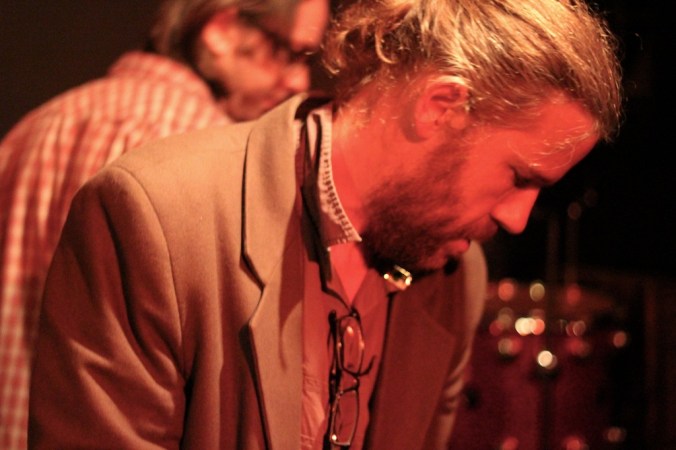
John Bell left New Zealand for Korea two days after the album release gig, our loss.  He will be sorely missed in New Zealand but the music goes marching on.  We have a lot to hear from his band mates yet and I am already picking up whispers of new projects.

IMG_6796 - Version 2

What: ‘Spoilers of Utopia’ Album release gig.  To purchase a copy visit iii xv or the ‘Spoilers of Utopia‘ FB site

Where: The Wine Cellar – Vitamin ‘S’ St Kevin’s Arcade off K’Road

Who: K’Party Spoilers of Utopia – led by John Bell (vibes, tenor horn, misc sounds), Finn Scholes (trumpet, flugal horn), Ben Zilber (trombone), Don McGlashan (euphonium), Neil Watson (guitar), Owen Melhuish (tuba), Darren Hannah (double bass), Chris O’Connor (drums), Kingsley Melhuish (trumpet, flugal horn, trombone, tuba) + Cameron Allen (Moog), Gerard Crewdson (trombones), Jacob Unuia (pau), L J Unuia (pate), Tua Meti (pati)

This has been a Jazz April gig

Kevin Field Trio@CJC Jazz April Event

IMG_6679 - Version 2

Jazz was famously described by Whitney Balliett as the ‘sound of surprise’.    This is at the very essence of improvised music as it strives to unravel, reveal, polish and at times shock.   What you think you know is often challenged and this confrontation is the primary role of art and improvised music.  When a familiar tune is reinterpreted and presented afresh it’s pleasing (if done well), but there are many ways that music can surprise.  What we sometimes hear is an aggregation of profound subtleties and that is harder to define.  We need ears attuned to nuance and a memory capable of recalling just what has preceded these vignettes.   It is in these less obvious corners that we often find the most profound of revelations.

The Kevin Field trio (plus guest) appeared at the CJC (Creative Jazz Club) on the 17th April.  This was an important CJC/Jazz April event.  Everyone on the New Zealand Jazz scene is familiar with Kevin Field the pianist, composer, teacher, and gifted accompanist.  He delivers and so good sized crowds turn up.

IMG_6684 - Version 2

Kevin had earlier humped his Fender Rhodes down into club and it sat nestled respectfully against the grand piano.   The bass was lying on its side like an expectant whale and the drum kit was sparkling out of the gloom.  Behind the drum kit you could barely make out the image of a guitar on a stand.  Those gifted with 20-20 vision would have discerned that this was a Godin Guitar which can only mean one thing in Auckland; Dixon Nacey would be sitting in for a few numbers.

When Kevin Field and his trio filed to the band stand I experienced a tinge of anticipation.  I had been looking forward to the gig because Kevin Field never settles for a mediocre performance and he is certainly no journeyman.  With Cameron McArthur on bass and Stephen Thomas on drums we hoped for sparks.  While Kevin often appears in support of others, or fronts bigger lineups he had not brought a piano trio to the club for a quite a while.

What happened next caught me quite off guard and perhaps it shouldn’t have.   When you rate an artist highly you can easily fall into the trap of thinking that you know everything about them and that is plain foolish.  There is also something about the CJC that urges musicians reach deep and many visiting artists have commented on that.  The CJC is more than just a benign space, it is an enabling one.  A performance space that says to an artist, ‘there I’ve created the ambiance for you, now make it happen’.   It would take a subterranean ‘Feng Shui’ specialist to analyse this phenomenon .

IMG_6682 - Version 2

The Kevin Field that we saw perform was quite extraordinary.   It is hard to put into words but he approached the keyboards with such confidence and invention that was almost supernatural.   At times I thought that I heard hints of Hamp Hawes or the modern Europeans (rich, spacious and original), but mostly I heard Kevin Field, alive to the moment and brim full of fresh ideas.  His voice is definitely post Herbie Hancock and it engages with the realities of the post millennial world.   This is a voice that marks Kevin Field out as an original stylist.

The numbers were all originals and while a few were written for his recent ‘Warners’ album ‘Field of Vision’  (shortlisted for a Tui award), many were new to me.   They came bundled up with stories and anecdotes and to see Kevin in the role of raconteur was delightful.  When commenting on his second number of the evening ‘Complex Blue’, he told us that it was written with a Simply Red cover-band in mind.  “Complex Blue could be a new type of Simply Red cover-band who would play everything but Simply Red tunes, thus giving them a broader repertoire”.  The hilariously improbable tall stories and the incredible music made this a perfect evening of Jazz.   I asked Kevin later if he had plans to record this new material and he indicated that he would be doing so shortly.   If he captures half of what we experienced it will be well worth buying.

Cameron McArthur (bass) has experienced a meteoric rise to prominence and he has achieved this while still a student at the Auckland University School of Jazz.  I can clearly recall his first tentative performance steps.  Confidence, chops  and musicality have become the default for him now and he is increasingly accompanying our best musicians.    Stephen Thomas has been studying drums and performing at a high level for some time and he was an obvious choice for Kevin.   We are seeing more and more of what he is capable of and as with Cameron there will be a lot more yet.  This band works exceptionally well together and while Kevin is clearly in control as leader there is plenty of room for the others to shine.  IMG_6708 - Version 2

In guest slot was Dixon Nacey.  A guitarist who attracts superlatives and accolades as few others do.  He always injects that special ‘Dix’ quality into a performance; brilliance tinged with unalloyed happiness.

Sometimes when the stars align the gods of music breathe extra life into a performance.   When this occurs, those who are there feel incredibly fortunate and vow never to forget it.  This was such a night.

Because this was the main CJC – Jazz April gig night the audience learned what the month stands for, who’s involved and why it is important.  Everyone was challenged to do three things, (1) visit and ‘like’ the JJA Jazz April pages and International Jazz Day site (2) bring one or more friends to future gigs and spread the word (3) Hug and thank a Jazz musician tonight and in the following days.  By sharing and growing this wonderful music we will see it survive.

This has been a Jazz April Event;  visit the Jazz Journalists Association Web Site and JJA Facebook page, plus International Jazz Day page and all of the Jazz April gig review pages on this JazzLocal32.com site.   Please ‘like’ all sites as it helps.

What: Kevin Field Trio (plus guest) -Kevin Field (piano and fender rhodes), Cameron McArthur (bass), Stephen Thomas (drums), guest Dixon Nacey (guitar)

Where and When:  CJC (Creative Jazz Club) 1885 building, Brittomart, Auckland. April 17th 2013

224006_552282744794057_1209529108_n-1

jazzapril-rectangle

Brian Smith @ CJC Jazz April gig

IMG_6571 - Version 3

It is always great to see the renowned tenor player Brian Smith performing in the intimate space of the CJC (Creative Jazz Club) and whenever he plays older and newer fans turn up to see him.   While it is tempting to refer to him as being ‘seasoned’ or ‘an elder statesman’, any notion of that has a built-in redundancy factor.   He is a ball of energy and ageless on the bandstand.

Brian has played with so many great artists over his long career that it would chew up serious bandwidth to enumerate even half of them.  Being a member of the Maynard Ferguson band and numerous other well-known line-ups saw him playing across the world.    His co-led genre stretching ‘Nucleus’ (with Ian Carr) won the top European band award at the Montreux Jazz Festival (1970).  Since returning to New Zealand to settle (if a musician ever really does that) he has worked on numerous film scores and put out some well received (and commercially successful) albums.  IMG_6561 - Version 2

Accompanying him on the 10th April gig were Kevin Field (piano), Kevin Haines (bass) and Frank Gibson Jr (drums).    With this particular lineup he could dive deeper into his favoured repertoire of Hard Bop Jazz standards (with a few originals thrown in).  When ‘Footprints’ was played Brian Smith approached the warhorse in an interestingly oblique manner; giving us a tune that contained the merest hint of familiarity and a large dollop of brooding mystery.  This was a highpoint of the sets and a good example of how good musicians can extract new wine from old bottles.  The introduction began with a very personalised statement on tenor which caught the attention while offering no insight into where it was going.  Then out of nowhere the melody was stated, only to disappear as quickly as it had appeared; merged in probing re-haromonisations and oblique explorations.

The tunes of Wayne Shorter have remained perennially popular with Jazz audiences and they are constantly being reworked and updated.  I have heard two versions of ‘Footprints’ performed in recent weeks and both mixed the familiar with the the new.  These re-workings of familiar tunes have always been the bread & butter of Jazz and in the case of reworked ‘Footprints,’ Wayne Shorter sets the bar high.  I saw him perform this in Verona, Italy a few years ago and after laying out a pathway to the melody he suddenly plunged us into a world of elision; forcing us to fill in the gaps as we listened.  A familiar tune floating between chasms of crystalline emptiness; a tune more implied than played.   I have posted a You Tube clip of the Brian Smith band playing  ‘Footprints’  at the 10th April CJC gig.

IMG_6564 - Version 3Accompanying Brian on piano was Kevin Field who is so well-respected about town that he is a real drawcard in his own right.   I have often mentioned his ability to add value to any band he plays with and this night was no exception (A post on his April 17th gig will be up shortly).  On bass was Kevin Haines who is not only the most experienced bass player about town but one of the best.  lastly there was Frank Gibson Jr on drums who is another respected and talented veteran Jazz identity about Auckland.     Frank Gibson Jr, Kevin Field and Kevin Haines have all appeared recently leading groups.  These guys will always impress and they proved that on this gig.

This particular CJC gig fitted in perfectly with the wider Jazz April ethos which is about profiling Jazz & Improvised music in all its diversity.    The month had kicked off with a co-led trio featuring guitar, bass and drums (all original music by Samsom/Nacey/Haines), A few days later we saw Nathan Haines at the ‘Q’ Theatre (a tentet complete with French horns and vibes) – a few days after that the Auckland ‘Jazz & Blues club’ featured a gig with a Caribbean-Jazz ensemble. The Kevin Field trio on the 17th.  Auckland benefits from a rich sonic diversity and clubs like the CJC, The Auckland Jazz & Blues Club and Vitamin ‘S’ deserve our ongoing support.  The month of Jazz April will conclude with two avant-garde bands (one local, the ‘Kparty Spoilers of Utopia’) at Vitamin ‘S’ on the 23rd at 8pm and one visiting from Australia (Song FWAA) which is a CJC gig on the 24th at 8pm.   This is a cornucopia of riches and not one of these gigs should be missed.  Note: The Vitamin ‘S’ gig is the last chance to see John Bell vibist, who departs for Korea on Thursday.

IMG_2428 - Version 3

Who: the Brian Smith Quartet – Brian Smith (tenor), Kevin Field (piano), Kevin Haines (bass), Frank Gibson Jr (drums)

Where and When: The CJC (Creative Jazz Club), 1885 Building, Brittomart 10th April 2013

This is a Jazz April 2013 gig : links Jazz April or Jazz Journalists Assn FB page.

Vermillion Skies Launch – A Jazz April Highlight

IMG_6542 - Version 3

After the success of ‘Poets Embrace’ it is hardly surprising that Nathan Haines new album ‘Vermillion Skies’ has climbed so high in the charts.   The album was the fifth best selling New Zealand album the last time I looked and this happened within days of its release by Warners.  For a modern Jazz album anywhere to achieve this success is unprecedented.  This has followed hot on the heals of ‘Poets Embrace’ winning the Tui Awards ‘Best Jazz Album of 2012’. IMG_5902 - Version 2

Anyone who knows Nathan will hardly be surprised to learn of his obsessive commitment to the last two projects.  His approach has been Ghandalf like, as it involved a long period of woodshedding, an epic journey in search of analogue equipment and a reconciliation with the gods of past times.  While Poets Embrace plumbed the depths of Coltrane’s vocabulary, Vermillion Skies has opened up the perspective and tapped into the wider ethos of 1950’s Jazz.  What Vermillion Skies is not however is a cosy journey down memory lane.

It is about examining the epiphanies and sounds of the 50’s era and interpreting them with modern sensibilities.  With the exception of one number, these are fresh compositions; a happy synthesis between past and present.  Deliberately retro though is the analogue recording methodology.  A one-take take approach and sound augmented by the use of reverb (not using a plate).

I followed the Vermillion Skies project from its inception and because I was in contact with the musicians via Face Book it was not difficult to keep abreast of progress.  Alain Koetsier was returning from China, Nathan was returning from the UK and to use ‘GCSB speak’ there was a heightened level of ‘chatter’ about town.

Their fist gig was at the CJC (Creative Jazz Club) and at this point the tunes had never been aired before.   Some tunes were in embryonic form and they had only been rehearsed briefly.  We were a focus group Nathan informed us; musical crash test dummies.  The audience loved the gig but they knew that even better was to come.  644217_10152395531247588_299377990_n

A month later the musicians and veteran London Producer Mike Patto headed into the York Street studios to cut the tracks.  The album was recorded in around two days of mostly live takes.  To obtain an authentic reverb sound Nathan used the studio car-park, which is a huge cavernous brick building, resembling a stripped out Victorian cathedral.  The neighbours in the posh Edwardian apartments next to the studio lacked the cool to appreciate this innovation.  The reverberating horns made one of them complain (in tears) as the fulsome brassy sounds echoed across Parnell rise.

A few weeks after the recording Nathan contacted me and asked if I would interview him at York Street for the promotional video.   I turned up a few hours before the appointed time and asked Jeremy (who runs the studio) if I could hear the masters.  Hearing the material in its final form and in that space was a revelation.  I quizzed Jeremy and Nathan about aspects of recording.  I learned that the piano was isolated in a booth, but the drums and horn section were in the larger space with the saxophone.  When it came to the vocals the band went home; those tracks were recorded without onlookers.

Nathan has sung on a previous album but he readily admits that it is not his comfort zone.   It interested me that he didn’t have the same degree of confidence in his singing abilities as his voice is simply superb.   In my view it compares favourably with Mark Murphy’s.  The charts are well written and the hooks in ‘Navareno Street’ are so powerful that I am still hearing them in my head weeks later.

Interviewing Nathan Haines is a pleasure as he is knowledgeable, articulate and expansive when prompted.   Because he is across his topic he can talk at length about the minutia of the project, but what was surprising was they way he allowed me to discuss his vulnerabilities.  His warmth and often self-effacing commentary gave the interview an added depth.

On April 9th the official launch occurred at the ‘Q’ Theatre in Queen Street Auckland.  The tickets sold out quickly.  The theatre is well suited for such a performance as it has the space, sight-lines and well padded surfaces.  This enabled good sound control.  Unlike the CJC gig, there were twelve musicians appearing (not quite the full album line-up which had a 15 piece band on one track).   The first half featured the basic quartet with a few guest artists such as brother Joel Haines on guitar and two others.  Joel can channel the rock god thing while fitting perfectly into a Jazz ensemble.   His sound is modern but his lines are Jazz.  Also on stage was John Bell the multi talented vibist.  John Bell’s contribution added texture and depth.  He does not rely on heavy vibrato, favouring a more minimalist approach.  I reflected that I had last seen him in a decidedly avant-garde setting.   This was far from Albert Ayler but as always his musicianship impressed.  Mike Booth (lead trumpet in the horn section) also appeared in the first half.   Mike Booth has a clean tone on trumpet and flugal and is the go to guy for anything involving horn sections or Jazz orchestras.  His sight-reading skills are as impressive as his performance skills.

by John Chapman

by John Chapman

In the second set, a six piece horn section joined in and the arranger Wayne Senior conducted the ten piece band.   Wayne Senior is part of the history of New Zealand Jazz and he is especially renowned for his work with TV and Radio orchestras.  His ensemble arranging is legendary.  The six piece horn-section was two French horns, Two trumpet/flugal horns, a trombone and a bass trombone.

I love nonets and tentets as they have a big sound while leaving room for a band to breathe.   The textural qualities of this tentet and the rich voicings were particularly noteworthy.  ‘Frontier West’ (by Nathan Haines) left the audience gasping in delight as the ‘Birth of the Cool’ vibe in modern clothing gave us a rare treat.  Such wonders are seldom heard in this country.  The last item (and the only tune not written by Nathan) was the aching beautiful ballad ‘Lament’ by J. J. Johnson.   The best known version of this is on the ‘Miles Ahead’ album.  That Gil Evans arrangement involves a 20 piece orchestra.  Wayne Senior re-arranged this for tentet and the results are amazing.  Nathan caught every nuance of the tune as he built his improvisation around the rich voicings.   I am in no doubt that the ‘Lament’ on ‘Vermillion Skies’ compares favourably with the best historic versions (Miles, JJ Johnson, Rahsaan Roland Kirk).

The performances on the album and at the various gigs have all been different.  This is because it is Jazz where ‘you never play anything the same way once’ and because there have been personnel changes along the way.  As leader and player, Nathan Haines always seems to squeeze that bit extra out of each performance.  His intense focus on the tenor of late has been good for him and good for us as his approach to this material while fluid, never looses its edge.   He is arriving at that enviable place where people will say after one bar, “oh….that has to be Nathan Haines”.

Kevin Field and Nathan go back a long way and their chemistry is evident.  Kevin is the pianist of choice for many local and visiting bands.  As an accompanist he never looses sight of what an accompanist is there for.  He can shine during the piano solos, but his fills, deftly placed chords and subtle comping speak to his other strengths.  It was often necessary for him to keep out-of-the-way of the other instruments (such as the horn section which occupied a register that he would normally utilise).  Drummer Alain Koetsier returned to New Zealand for the recording and his drum chops and musicality had not subsided during his sabbatical away from Jazz performance.   He is a fine musician and sorely missed on the Auckland scene now that he resides in China.   The bass player Ben Turua is also rock solid on the recording.   I have heard him play often but never better than here.  Sadly he has since departed for Sydney, where he will no doubt flourish as do many Kiwi Jazz expats.

The departure of Alain Koetsier and Ben Turua left a gap and so the original recording lineup was amended for the gigs to include Stephen Thomas on drums and Cameron MacArthur on bass.  I cannot speak highly enough of Stephen Thomas.  He has been on the scene for a few years and if anyone was going to fill Alain’s shoes it would be him.  He is a hard-working young drummer who demonstrates his passion and skill every time he sits at the kit.   The other replacement was Cameron McArthur who is still a student at Auckland university.   This was a big step up for him and he took it with ease.   His bass solo at the ‘Q’ Theatre brought a huge applause and like Stephen Thomas we can expect great things of him.

This album marks another high watermark in New Zealand Jazz as it is brave enough to confront the past without being captured by it.  Nathan Haines is heading back to London in a few weeks and we can’t begrudge him that.   His ascendency offshore is our gain and we should never forget that these two great albums have been recorded in Auckland, New Zealand and with Kiwi musicians.

Who: The Nathan Haines Band.  Album – Nathan Haines (tenor sax, vocals, leader, composer). Kevin Field (piano), Ben Turua (bass) , Alain Koetsier (drums), Joel Haines (guitar – 2,5), Leon Stenning (guitars -5), Mickey Utugawa (Drums – 5), Mike Booth (lead trumpet, flugal), Paul Norman (trumpet, flugal), David Kay (French horn), Simon Williams (French horn), Haydn Godfrey (trombone), John Gluyas (bass trombone), John Bell (vibraphone 2-5), ‘Big’ Cody Wilkington (steel guitar, vocals, percussion – 5), Wayne senior (arranger, session/launch gig conductor). ‘Q’ Theatre and later gigs replace Koetsier with Stephen Thomas (drums), replace Ben Turua with Cameron McArthur (bass).

This is a Jazz April post – support Jazz April and International Jazz Day by visiting the Jazz Journalists Association website and JJA Facebook page

What & Where: ‘Vermillion Skies’ album gigs,  CJC (Creative Jazz Club) Brittomart, ‘Q’ Theatre Queen Street Auckland, various festivals and concerts.

Navareno Street audio clip:  

Samsom/Nacey/Haines – Jazz April

IMG_6509 - Version 3

The first ‘Jazz April gig was at the CJC (Creative Jazz Club) featuring the ‘Samsom/Nacey/Haines’ band. I can’t think of a better way to kick off Jazz April 2013 than by hearing seasoned musicians having fun, while at the same time stretching themselves as players and composers. The group formed in 2008 with the idea of providing a vehicle for new compositions. The outcome of these collaborations was an album named ‘Open to Suggestions‘ and later the 2010 ‘Oxide‘ album was released (with guests Kevin Field, Chris Melville, Neville Grenfell and Roger Manins). The albums have all been extremely well received with ‘Open to Suggestions‘ ending up as a finalist in the Tui Music Awards and ‘Oxide‘ (Rattle Records 2010) receiving critical acclaim from far & wide. The name ‘Oxide‘ arose from John Ruskin’s writings on crystals (artist, author, patron of the Pre Raphaelite Brotherhood and proto-socialist philosopher). This album is still available in record shops or from Rattle Records and I highly recommend it.

IMG_6530 - Version 3

It is hardly surprising that there was an expectation of a third album. The new release titled ‘Cross Now’ has no guest artists appearing. Left to bounce off each others ideas and in an uncluttered musical space, the three musicians made the most of the situation. This spirit of collaboration was particularly evident at the gig as they joked and constantly acknowledged each others skills while downplaying their own input. That is a very Kiwi thing and audiences take it as good form. No one would dare do this if they were uncomfortable with their performance. It is a matter of reading the cultural codes. When they were improvising, the interaction between players was both cerebral and intuitive. There were moments when they appeared as one entity.

As soon as the first set kicked off a sense of joy and playfulness emanated from the bandstand. Some the best music arises from joy and good humour; musicians tapping into an unconscious wellspring of creative goodwill and being at one with the world.

IMG_6510 - Version 2

The material on ‘Cross Now’ is new and like ‘Oxide’ some tunes were only finished days before recording them (or even polished in the studio car park). This is Dixon Nacey’s forte; to write brilliant tunes in the eleventh hour. Someone told me that his ‘The Lion” was written on the way to the ‘Oxide‘ recording sessions. Kevin Haines informed us that Dixon’s moving tribute to the recently diseased and much-loved drummer Tony Hopkins, was likewise written days before the recording. The compositions represent the styles of the originators and even though the compositions are jointly attributed, it is possible to detect just whose hand has had the greatest influence over each number.

So often the back stories behind tunes can enrich a listening experience, but I am not sure how many musicians appreciate this fact. While it is true up to a point that the music should speak for itself, that liner notes or background stories are an added superfluity, that received wisdom obscures a deeper story. To many of us music is an experience extending way beyond the auditory senses. We pick up cues from the musicians movements, we absorb colours from the lights glancing off the instruments and we gain insights from the stories. To me improvised music is like a good film and a well shot film is like improvised music. A place to occupy empathetically for that one hyper-sensitised moment in time. No sensory input should therefore be denied.

Kevin Haines wrote ‘…With Eyes Averted…’ (which began with a poem about relationships) and this added a perspective to the tune that would not otherwise have been evident (I have posted a video of this which features Matt Bray on 2nd guitar) . His tune ‘Cross Now’ was about a particularly irritating crossing signal outside of a Tokyo hotel. In Kevin Haines hands the annoying beeps became a polyrhythmic pulse to build a tune upon. He also contributed ‘Broken Tones’. IMG_6521 - Version 2

Drummer Ron Samsom’s, ‘Happy Dance’ (a fast samba) was fabulous. Written about his dog, we could feel the exuberant bounding energy as the tune progressed. Ron Samsom had begun with the tongue in cheek announcement, “yes drummers write tunes too”. After ‘Happy Dance’ we heard ‘Seiko (in 13/8 time) and a ballad ‘Qua’. I heard someone murmur that drummers needed to write more tunes and in Ron’s case I agree (See You Tube Clip by Jen Sol).

Dixon’s contributions were ‘Song for Xavier’ (written for his son) and ‘Conversations with Mr Small’ which he explained as arising from, ” Well perhaps this won’t be such an interesting reason for title…ah…it is about my musical theory conversations with Dr Stephen Small”. In comedy and music, timing is everything and these guys had it down pat. The tune that we will never forget is Dixon Nacey’s moving tribute to the beloved and much lamented Jazz drummer Tony Hopkins. I found myself glancing at the places where Tony had sat and imagined him at the kit; knitting the band together in that particular way of his. This is the power of Jazz. The musicians interpret while we see, feel and hear a story unfold. The tune was, ‘The Remarkable Mr Hopkins’ and by the end a few of us were tearing up. From the bottom of my heart, thanks Dix.

The new album will be in the record outlets shortly, but your best bet is to contact Rattle online and order a copy.

Who: Samsom/Nacey/Haines (guest Matt Bray)

Where & When: The (CJC Creative Jazz Club) Brittomart 3rd April

This was a Jazz April event – visit the JJA Website by following this link.

John Fenton

Member-button

224006_552282744794057_1209529108_n-1

jazzapril-rectangle

Paul Van Ross – Album Release

IMG_6497

On Wednesday 27th March several visitors arrived in town from Melbourne Australia.  Visitors but not strangers, because saxophone player Paul Van Ross has played in New Zealand four or five times previously and drummer Mark Lockett is an expat New Zealander, originally from Wellington.

These are very friendly guys.  Actually I find most Jazz musicians unfailingly cheerful and friendly.  It is unlikely that this good humour arises from job security or because they have just managed to upgrade the Porsche .  I stick cameras in their faces, ask searching questions during set breaks and pin them down for set lists when they are suffering from jet lag.   Instead being told to clear off they indulge me.  This goodwill must be pumped through the air conditioning unit of the CJC (Creative Jazz Club).  It is a place like ‘Cheers’ where everyone has a smile and ‘everybody knows your name’.

IMG_6492

One of those who indulges me is Steve Garden of Rattle records.  A few weeks ago I received a tidy package of CD’s from him and among them was ‘The Buck Stops Here‘ led by Paul Van Ross.  I had a lot of material to write-up at the time and I was working on the ‘Jazz Month’ program with the Jazz Journalists Association.  I played my way slowly through the pile of releases as time allowed.  It was not until I had received the CJC newsletter that I realised that Paul Van Ross would be doing an album release there in three days.   I sorted through the CD’s and put it out to listen to but it was not until the day before the gig that it finally reached my Hi Fi.   It was a really great album and I played it through three times.

How had a missed this I thought.  This should have been one of the first things that I put on.  Apart from a John Zorn obsession, I also suffer from an excessive liking for B3 combos.  This album featured B3, guitar, drums and saxophone.  I listened over and again while the textures and compositions reeled me further in.  This is a very good example of the ‘new sound’ in organ/guitar/saxophone/drums.

IMG_6463

Make no mistake, I love ‘chitlin circuit’ groove Jazz of the sort that Brother Jack, Joey ‘D’, Pat Martino, Wes and Grant Green created.  My friend Michel Benebig is a B3 master in this field and he can groove you to the depths of your soul.   That music will roll you out of bed and have you dancing like a fool before you gain your sea legs.

There is however another type of B3 sound and that reaches for new horizons.  Jamie Saft (Zorn’s Dreamers), Tom Watson (Manu Katche’s new album) and Dr Lonnie Smith (Jungle Soul album),  come to mind.    The music still has a deep groove but there are no locked in drums and this subtle loosening up of the vibe makes space for a particular type of guitar work and gives a horn some room for exploration.  This is a sound that absorbs influences from a diverse Jazz palette while still retaining a solid groove context.  The Paul Van Ross Trio (and quartet) are of this latter kind.  Their music draws on a wide spectrum of post and pre millennial Jazz; not just tugging at the heart and feet, but engaging the intellect as well.

Paul Van Ross is an exciting tenor player and I can’t help wondering if he studied under George Garzone.   There is something different about tenor players who have studied under Garzone and Paul fits that bill.  His rapid fire lines and fluidity never obscure the musical ideas that flow from his horn.  On ballads he could wring a tear from a walnut and when playing uptempo he navigates the terrain with ease.  His compositions are engaging.

The CJC launch gig employed a smaller lineup than on the album.   Organist Alan Brown subbed for Kim Kelaart on the New Zealand leg of the tour and he needs no introduction to New Zealand audiences.  Alan is another musician who takes the groove genre to new and exciting places.  His keyboard skills are legendary.   Choosing him was a sensible choice and while his style is a little different to Kelaart’s, it afforded Ross and Lockett opportunities to stretch out in different ways.  Mark Lockett is a delight as he imparts humour into everything he does.   His drumming is quirky in the best possible way and he is the drummer of choice for many bands.  Like Paul Van Ross and Alan Brown he has also recorded as leader.

IMG_6455

The first track on the album is the title track ‘The Buck Stops Here”.  It was the first number up on the night (all of the material has been written by Ross).  On this track in particular Lockett’s contribution was noteworthy.  A solid New Orleans beat is laid down while edgy post-bop lines blow over that; the organ under Alan’s hands comps insistently in the background and this gave the tune a great feel.  I saw a ‘second line’ parade in San Francisco a few months ago and this particular drum beat tells that kind of story.  A story about a beat that bounced between the Americas and Africa until it became pure voodoo.  I like everything on this album and so choosing video clips was hard.   In the end I have opted for ‘The Buck Stops Here’ (filmed by Jenny Sol).   Other standout tunes from the album are ‘Swami in the House’ and the beautiful ballad “Uncle DJ’.  A number performed on the night but which is not on the album is ‘Break a Tune’ (filmed by John Fenton)

I must also mention the guitarist Hugh Stuckey who knows when to shine and when to merge into the mix.  His lines are clean and impressive, with an approach to melody that is modern.  This is the direction that Rosenwinkel and Moreno mapped out and it sits well with this lineup.   A guest guitarist Craig Fermanis appears on track one only.

You can buy the album now from ‘Rattle‘ at http://www.rattle.co.nz        I recommend it highly.

Who: Paul Van Ross trio; Paul Van Ross – tenor sax, Alan Brown – C3 hammond organ, Mark Lockett – drums ( add Hugh Stuckey and Craig Fermanis – album)

Where: The CJC (Creative Jazz Club) Auckland.

What: Album Release by ‘Rattle‘.

John Fenton

Member-button

jazzapril-rectangle

‘Jazz April’ – How to avoid being an April Fool

575853_4764740081101_953922536_n 8ecff88f-7e03-49d0-a690-ae0042ecbe3b-1

Notwithstanding the obvious resemblance between these grizzled old guys, Jazz April is no joking matter.   To avoid being an April Fool participate in as many Jazz April activities as you can.  Remember to ‘like‘ and ‘share‘ this and any other Jazz April pages that you come across.  Don’t monkey about; ape the trend-setters and brand your Face Book picture with a Jazz April badge like cousin Boris (left) and I (right) did.  This is a month set aside to promote and honour Jazz and its practitioners.  The best way of achieving this is by sharing our enjoyment with others.  If they see and hear what we experience they will want to participate.  Take the pledge and agree that you will visit as many Jazz events as possible during April.  If that is difficult you should at least participate online.

224006_552282744794057_1209529108_n-1

I have posted some logos which you should share indiscriminately.   If the internet slows down due to the volume of ‘shares‘ we will know that you have done your bit.  Think of it as a ‘Wikileaks’ for music lovers.  The world needs to know this secret. 485163_335421036512615_1393706890_a

There will be hundreds of Jazz April celebrations occurring world-wide and the events will culminate in UNESCO’s  ‘International Jazz Day‘ which is April 30th 2013.  The venue for the main Jazz Day event this year is Istanbul Turkey and Herbie Hancock is joined by a number of Jazz Luminaries like Hugh Masakela, Marcus Miller and Manu Katche.  If your city does not have an event planned you could consider hosting one.  If you do let me know and I will pass the information on to the Jazz Journalists Association.

In New Zealand the ‘Waiheke Jazz Festival’ and the ‘Tauranga Jazz Festival’ can be considered a good segue into Jazz April as they are both held over Easter weekend.  Auckland has a number of Jazz April events occurring and there will be a satellite party celebration at the CJC (Creative Jazz Club) during April.  Check out the CJC website as there is a good gig guide.

jazzapril-rectangle

The best place to locate the logo badges and banners (twibbons) and to find out how best to participate, is to click on this link to the Jazz Journalists Associations Jazz April Website   or the   Jazz Journalist Jazz April Face Book page .    

logo

In Auckland the CJC (Creative Jazz Club) will be featuring some spectacular Jazz April Gigs and we will be making a presentation to a few deserving local musicians at a JJA Satellite Party (date to be announced shortly).    The CJC line up so far is Nacey/Samsom/Haines (3rd April), Brian Smith Quartet (10th April), Kevin Field Trio (17th April) …more gigs to come.  For those who missed last years satellite party at the CJC, Roger Manins was inducted as a ‘Jazz Hero‘ by the Jazz Journalists Association.

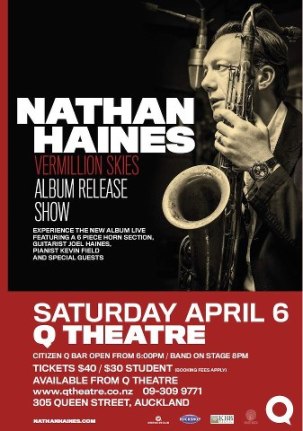
A highlight event will be the Nathan Haines ‘Vermillion Skies’ album Release on the  6th April at the ‘Q Theatre’, Queen Street, Auckland.  This amazing album involves a number of our best-loved Jazz musicians and it will be a high point in the Auckland Jazz calendar.  Don’t miss this event or forget to buy the album (available in download/CD/vinyl).  644217_10152395531247588_299377990_n

There will also be gigs at the ‘Ponsonby Social Club‘, the ‘Grand Central‘ (both in Ponsonby Road) and for experimental improvised music ‘The Wine Bar ‘Vitamin S‘ St Kevin’s Arcade, The Auckland Jazz and Blues Club (Tuesday evenings Pt Chevalier RSA), The ‘Titirangi Music Festival’ Titirangi Village (where the Alan Brown band is playing in the ‘Tool Room” on Friday the 5th April@ 7: 30pm).

Jazz April is now a world-wide event and I know that NZ will not let the side down.  My April posts will be profiled on the JJA Facebook page and or webpage.  The choices Auckland is offering over April 2013 are many and varied.  Locals have absolutely no excuse for not supporting Jazz this month, so see you all there.  

John Fenton

JazzLocal32.com    –   Jazz Journalists Association member

Myele Manzanza Trio

IMG_6454

The CJC (Creative Jazz Club) is increasingly on the world Jazz circuit, but it also attracts a number of artists from around New Zealand.   This outreach is exactly what Roger Manins, Caroline Manins and Ben McNicholl had envisaged when the collective began.  The CJC’s prime purpose is to further Jazz and improvised music as an art form and to create an intimate performance space where projects can be realised.    This space is suited to listening audiences, which in turn spurs the musicians on.  The trio who performed on Wednesday appreciated that.  IMG_6436 - Version 2

On Wednesday we heard the Wellington based Myele Manzanza trio.  A drummer led band has a different feel to a piano led trio.  When a drummer is leader the drums are generally more forward in the mix than is otherwise the case.  This is the way of things and whether it’s Max Roach or Matt Wilson we expect to have the drums as a strong focus.  Myele Manzanza is a captivating drummer and I was immediately struck by how different he is to most Auckland drummers.  When I spoke to him later I went out on a limb by suggesting that his style was reminiscent of Manu Katche.  He told me that he had not heard him, but that others had said the same.

IMG_6434

According to Myele, Roger Manins suggested that they should push the boundaries.   Rising to that challenge the band hastily composed a tune for the gig.   The gig was a mix of standards, interesting takes on tunes not usually associated with jazz and a few originals.  The originals were often subjected to an angular approach and with pared back melody.   Their take on the Ellington tune ‘Caravan’ was probably the most conventional of their tunes but even then it was given individual treatment.  The pianist approached the tune in a percussive manner, but with right hand runs that were definitely post bop (a little like Michel Petrucciani was fond of doing).  Led by the drummer, time signatures morphed into various new patterns.

The Pianist Daniel Hayles often begins pieces with long ostinato intro’s and while not quite a minimalist, he never-the-less avoids excessive ornamentation.  I really warmed to him as the evening progressed and I found his approach modern and fresh (and often North European).  With Scott Maynard on bass the unit knitted together well.  Because of the way the tunes unfolded it was essential that he made his presence felt and he did.   In situations like this the bass often has to carry some extra weight.IMG_6431

Myele has spent time working in New York and he has studied under Jazz drummer E J Strickland.  I also know that he is passionate about Jazz, but why his band sounds different is because other very modern influences have seeped into the mix.   Myele Manzanza works with many ground breaking non-Jazz lineups and that is probably what he is best known for.   This brings me back to Manu Katche who is a very modern jazz drummer, but one who works across a variety of genres (Peter Gabriel and Sting).  Katche’s Jazz drumming is atypical and madly engaging.   Jazz should never stand still and this window on yet another approach to our music tells me that the exploration continues.

I hope that the band returns again as they expand our horizons while making us smile.   After thanking his band Myele Manzanza turned to the audience and said, “Thank you Auckland and the CJC.   This is an unusual situation for us.  An audience that listens appreciatively and doesn’t talk through the gig.   This is what Wellington lacks”.

Every city needs a CJC …and lots of nights like this.

Who: Myele Manzanza (Leader, drums), Daniel Hayles (Keys, Piano), Scott Maynard (bass).

When and Where: CJC (Creative Jazz Club) 1885 building Brittomart, 20th march 2013

Note: Jazz April and International Jazz Day are nearly upon us.  Do your bit by supporting as much jazz as you can during April.

224006_552282744794057_1209529108_n-1 jazzapril-rectangle 485163_335421036512615_1393706890_a

Stephen Small – special guest Hugh Masekela

IMG_6358 - Version 2

The 13th of March was a night of surprises.   I had been urging Roger Manins to lure Dr Stephen Small down to the CJC (Creative Jazz Club ) for months and here he was.  I told a friend that we would be in for an interesting and varied program.  How prescient I was.  Considering that he is such a well-rounded and accomplished pianist (and keyboardist) it often surprises me that knowledge of him in Jazz circles is not as great as it should be.  Stephen Small has a number of irons in the fire and his work across many musical genres can sometimes eclipse his accomplishments in specific  areas.  No one however should disregard his straight ahead or experimental Jazz playing abilities.

IMG_6374

His quartet set up their equipment, completed a brief sound check and then faded back into the darkness of the club while Stephen made last-minute adjustments to his keyboards.  Having set up his two keyboards he moved to the grand piano and picked up the microphone.   Some artists impart scant information about their set lists (even omitting to tell you what they have played).   Stephen is generous with information and his expansive discourse set up the evening nicely.

IMG_6388

He played solo piano for three or four numbers and the tunes came mainly from the Great American Songbook.  The focus for these pieces was the earlier half of the twentieth century.  During his introduction he talked about the interface between jazz, classical and popular music and to illustrate this melting pot he began with two standards.   First up was the perennial favourite,  ‘Spring Can Really Hang You up the Most’.   The beautiful version he settled on was Oscar Peterson’s.  The second tune ‘Angel Eyes’ (Matt Dennis) has a bluesy feel and the lush right hand voicings accented the subtle hints of stride in the lower register.  I love this standard and it was a delight to hear, as it is seldom played by instrumentalists these days.  More’s the pity.  The last piece in his solo set was an extract from George Gershwin’s ‘Rhapsody in Blue’ (see video clip).    All three were beautifully executed and they illustrated his point perfectly that Jazz is in a continuous process of renewal and will happily absorb the sounds of the day.   What is sometimes under-appreciated is that Jazz also influences and enriches other genres.  Modern pop or rock without its Jazz roots would arguably be a chirpy wasteland devoid of back beats.   Classical music is certainly not exempt either (e.g. Stravinsky and Ravel). IMG_6382 (1)

His next set shifted our focus to experimental music.  Stephen Small on two keyboards & piano, Johnny Fleury on Chapman Stick 12 string guitar, MC Chinga Style voice and Stephan Thomas drums.  I am particularly interested in such electronic explorations when they’re done well and these were.  The chordal instruments fed into an array of pedals and the whole set up was something that Bob Moog would have gone into orgasmic ecstasies over.   The Chapman Stick looks daunting to play as the fret board is double the width of most guitars.   It is largely tapped and not picked; giving rich voicings and strong resonant bass lines.   MC Chinga Style added an unusual dimension to the mix and his inclusion was spot on.    He was a benign presence, never dominating.   His contributions were occasional but extremely interesting.  A combination of scatting, boom box, subtle pops and clicks and always reinforcing what was occurring around him.   I have long thought that the human voice as an instrument, playing lines in an ensemble, is terribly under-utilised in Jazz.  ECM gets this right and we need more Norma Winstone’s in our line ups.

Hugh Masekela

Hugh Masekela

Somewhere in the middle of this set Caroline Manins went up to Stephen and whispered in his ear.   Stephen looked startled for a few seconds and then proceeded with his electronic wizardry.     Caroline then whispered in my ear, “there is someone I think you should meet”.    Leaning against the bar was Hugh Masekela, anti apartheid hero, Jazz icon, Afro Beat star.  In the subdued lighting with its soft red overtones it all seemed surreal.  The short 74 year old man stuck his hand out and smiled widely.  Then before I knew it he had enveloped me in a hug.   The great man hugged quite a few strangers that night and I suspect that all were enriched by the experience.    This was Hugh Masekela’s way of telling us that in a diverse and complex world, music can remove any barriers between us.  To paraphrase Herbie Hancock, “Music is what I do but finding a common cause with humanity is my real work”.   He has just been honoured by President Obama for his life’s work.

Cameron Ward

Cameron Ward

After the last of Stephen’s numbers Hugh Masekela asked Stephen to sit in while he, his guitarist and drummer played three numbers.  The crowd stood open-mouthed and a little star struck as the band began playing.   A guitar player from South Africa , a groove drummer from America and a Kiwi pianist – working with a Jazz hero.   Hugh placed the flugal horn to his lips and showed us that simple melody can say as much as complex harmony.  He never strayed too far from the melody but somehow his solo’s were all the more profound for that.  IMG_6412

He ended the set with Herbie Hancock’s ‘Cantaloupe Island’ and thanked us.  We slipped out into the warm night, feeling very pleased with ourselves for being in that place at the right time.

I have included a link to the Hugh Masekela concert review from N Z Musician.  The concert was a blast.

Who: Stephen Small (Keys) – with Johnny Fleury (stick), Stephen Thomas (traps) – Also: Hugh Masekela (flugal horn) plus two members of his band.

When: Wed 13th March 2013

Where: CJC (Creative Jazz Club) – 1885 building basement Brittomart

Foot Note From an Observer Interview – extract:

Q.”There was one occasion when the apartheid government tried to invite you back as an ‘honorary white’. How did that feel?

It was not only insulting, but it was like the height of comedy, right out of the fucking Marx Brothers.  The apartheid people were actors and they had to act out their part in their beliefs every day. That’s why we always saw them as being comedic.”

WE SHALL NOT BE QUIET

2nd Line parade taking it to the philistines. All music is political but some more so.

ausjazz's avatarAusjazz Blog

FLASH MOB MARKS MOMENTOUS OCCASION: The Melbourne Jazz Co-operative’s 30th anniversary, Fed Square to City Square, Friday 25 January 2013

I was half expecting a loud protest, with discordant horns blaring their displeasure at the sudden cessation of funds to the co-op from Arts Victoria, accompanied perhaps by deep grumbles of drums and strident sounds of reeds run dry.

What eventuated was a demonstration that an improvised gathering of musicians can add to the life of a city, as well as a signal to the holders of purse strings that jazz musicians will not sit quietly in a corner and come out to play only at festival time.

It was great to see so many musicians in procession from Fed Square towards the much diminished City Square space across Collins Street from the town hall. But in my heart of hearts I yearned for the megaphones and banners and chanted…

View original post 647 more words

Blue Train – 2013

IMG_6313

I suspect that Blue Train has a following way beyond the traditional Jazz audiences and I can understand why.  Their hard-driving funk laden grooves are impossible to resist and so people tend to flock to any Blue Train gig.   Their audience occupies a broad age spectrum.  Blue Train mostly plays music that you can dance to and just occasionally the set list includes some Jazz space funk.   I’m a huge fan of this type of tripped out Jazz fusion, so if you like this sub-genre then find yourself some Blue Train recordings.  There is of course much more to Blue Train than Funk Fusion and their Jazz chops show in everything that they do.   Only highly competent Jazz musicians can play like this and only talented experienced musicians can write the material Alan does.   This band is an Auckland cultural institution, they are jaw droppingly good and that’s why people love them.  The Blue Train gigs are rare these days, as the band members all have other projects on the go.  Any whisper of gigs should put an urgent blip across your radar.   Tip: they will be at the Waiheke Jazz Festival this year – be there.

IMG_6336 - Version 2

The CJC (Creative Jazz Club) filled to capacity on the night and they soon stood three deep at the bar.   Blue Train was here again – the word had travelled.

Post millennium Jazz is a broad church and the younger audiences (and a few older ones like me) find this exciting.  Blue Train has been around for more than 20 years and in spite of a few attempts to pension the band off, the fans just wont let it die.  As a part of New Zealand’s improvised music heritage it deserves our ongoing support and respect.   Don’t for a minute expect a mere cover band recycling the glory days.  Blue Train are wisely resistant of resting on their laurels and after the ‘head’ of a tune they unravel the material in new and interesting ways.   They play older material and new.  Alan Brown’s compositions just keep on coming and they get better and better.   He is a seasoned performer and his keyboard skills will always astound.  As you listen you will  hear new ideas being tried and old ideas being turned on their head.  He is widely acknowledged as a great keyboardist but his piano skills are also considerable.  This was very evident on the 6th of March 2013.

IMG_6348

It was obvious that the band were thoroughly enjoying themselves and they stretched out as the tunes unfolded.  The CJC gig edged closer to its Jazz roots than would have been the case at Deschlers in the 90’s.  Those in the line up were mostly veteran band members, but there were some newer additions.   Dixon Nacey on guitar has played with Alan for years and he has previously appeared in Blue Train line ups.  He does not however go back as far as Jason Orme (drums) or Steve Sherriff (tenor and soprano saxophones).   The newer band member is Karika Turua (electric bass).

IMG_6335

Having Dixon Nacey in any band is always a treat and I always watch as his eyes fix on the other musicians – exhorting them to challenge him.  He listens carefully to what is unfolding and is always ready to back someone up or to step out with new ideas.   This is invariably done with a mile-wide grin and the looks of delight when he and Alan lock into an exchange is priceless.  As on his three previous gigs, he had his gorgeous Godin Guitar with him and once again I will confirm that this is a match made in heaven.

Many of the Blue Train musicians have contributed compositions over time and Steve Sherriff deserves special mention there.  He is well rounded horn player who can fit seamlessly into many situations (big band, straight ahead Jazz or funk).   His tenor and soprano work were especially captivating on this gig and when he and Dixon played unison lines it was hard to believe that there was not an additional horn in the line up.  Before the gig I ran into my niece and told her that it was nice to see her in the club.  She then told me that a former teacher of hers was in the band.   Who’s that I asked. “Mr Sherriff” she said.   When I saw her later she summed up her impression  “Wow who knew he played like that”.    He does.

IMG_6331

Jason Orme worked the grooves with finesse and enthusiasm and he knew how to play to the room.   The same applies to Karika Turua who dug into serious grooves that echoed in your mind for days afterwards.

The sound levels were just right for the club and this is where the bands experience played a part . Some younger (and a few older musicians) forget to adjust their volume to the room and the CJC is lively; especially if the drums and bass are overly loud.  Being professionals – Alan and Ben McNicoll (CJC sound and IT) got the job done properly.  IMG_6332

What and Who: ‘Blue Train’ – Alan Brown (keys), Steve Sherriff (saxes), Dixon Nacey (guitar), Karika Turua (electric bass), Jason Orme (drums).

When: Wednesday 6th March 2013

Where: CJC (Creative Jazz Club) – basement of the 1885 building Brittomart

Rebecca Melrose Super Band @ CJC

IMG_6272

Rebecca Melrose is fairly new to the Auckland scene but she is already gaining a reputation for excellence about town.  Although young she has several recordings under her belt and her career is gaining momentum.  She is a singer/songwriter with an engaging voice and this gives her considerable scope.  It means that her own material gets aired alongside that of Gretchen Parlato and Esperanza Spalding during a gig.  This was her second performance at the CJC (Creative Jazz Club)

Parlato and Spalding are clearly strong influences for her but she can also sing challenging standards from an earlier era.  She not only choses well when adding standards but executes tricky numbers superbly.  Like many emerging singers of the post millennium she has a multi genre appeal and whether she moves into a more ‘soul’ space is a moot point.   On this night she was a primarily a jazz singer and if the enthusiasm of the audience is anything to go by that route will work very well for her.

IMG_6268 - Version 2

Last year she was more tentative during her between number introductions, but that hesitancy has now fallen completely away.   The Rebecca that we saw tonight was sassy, confident and on top of her game.   She played with the audience and tried out various lines of patter.   Not all of the jokey asides worked as intended (some went over very well) but it didn’t matter a damn and her good-natured handling of the audience captivated everyone.   She is on the right track here and I encourage her to keep going in this vein.   Music is a performance art after all and Jazz and banter go together like the reverse sides of a rich tapestry.  IMG_6273

The last time I saw her perform she had Dixon Nacey on guitar and Andrew Keegan on drums.  This time with a much bigger line up she utilised the additional scope that this afforded her .  She performed several times with singer Chelsea Prastiti (once in duo doing the Esperanza Spalding arrangement of the Jobim Tune ‘Inutil Paisagem‘ – which was magical to say the least ).  In other numbers as a quartet, quintet or octet  This set list struck out for higher ground and the risk paid off.

On trumpet and flugal was Liz Stokes, who stepped up with an impressive solo in the second set.  Alex Ward did a great job on piano and especially on ‘Lush Life‘.  I have not seen him play very often and enjoyed his contribution as he tackled numbers that were often demanding.  It was also good to see Jarad Desvaux de Marigny (drums) and Eamon Edmunson-Wells (bass) teamed up again.  This pair work extremely well together and have a more subtle colourist approach which is especially suited to singers and the less percussive of piano players.  On guitar,Manaf Ibrahim and on Tenor Scott Thomas.

In guest spot was Callum Passells who played a couple of numbers which absolutely floored me; especially his masterful alto solo on ‘Lush Life‘.   Every note in that solo was perfectly placed and with the rhythm section meeting the challenge, we were given a rare treat.   I will say more about Lush life later.  IMG_6288 (1)

Rebecca’s own compositions are interesting as are the modern standards she likes, but I have especially singled out the two older standards for praise.  ‘Tea for Two‘ is not terribly challenging as written, but as a singer you immediately fall under the shadow of Ella, Anita and Frankie.   The tune was written in 1930 by Tin Pan Alley song plugger Vincent Youmans,who was unsure if he liked it at first.  The lyricist Irving Caesar later admitted that his lyrics were intended only as a stop-gap. they never were replaced thank goodness.  The song is from the musical ‘No, No, Nanette‘ and it quickly became a runaway success.   Why this song works so well for Jazz is exactly for the reason Youmans worried about it; a simple form.  There is so much an improvising musician can do with it.  Before long Art Tatum had played it (1933), Benny Goodman (1937), Fats Waller (1937),  Django Reinhardt (1937), Dave Brubeck (1949), Bud Powell (1950) and Thelonious Monk 1963.   The singers who performed it were legion but Anita O’Day absolutely tagged it as her own in ‘Jazz on a Summers Day‘.   Rebecca quoted from Anita, took the number at the same fast pace, but wisely interpreted it in her own way.

The other track that I can’t resist posting is Rebecca’s ‘Lush Life‘ by Billy Strayhorn.  This song is the antithesis of  ‘Tea for Two‘ as it didn’t emerge from the Great American Songbook and it is very challenging to perform.   To my sensibilities it is almost the perfect song.  This is one of the great Jazz Standards and apart from Frank Sinatra’s version it has not been sung much outside of Jazz.  Sinatra only performed it once and refused thereafter, which is one of the enigmas of his musical life.  Recently unearthed rehearsal tapes from the recording session with Nelson Riddle provide an answer.  He struggled with it and at one stage blamed fly dirt on the page for making ‘a very hard song harder’ (Google Sinatra, ‘Lush Life’ and you can hear that rehearsal).

The definitive version for most is probably the Johnny Hartman/John Coltrane Impulse recording (1958).   IMG_6286 (1)My personal favourite is the more recent Fred Hersch /Andy Bey version (from the ‘Passion Flower’ album on Nonsuch) – quietly dedicated to gay Jazz musicians past and present.   Strayhorn was of course an out-gay man at a time when this was almost unheard of.   Ellington revered Strayhorn and regarded him as his chief calibrator (‘my other hand’).   Oddly this tune which written in 1936 remained unperformed until 1948 when Strayhorn performed it in a duet with Kay Davis.   The song was never adopted into the Ellington repertoire and did not become famous until the 50’s.   Its gay innuendoes is probably one reason but its sophisticated complexity is certainly the other.  Well done Rebecca and well done her accompanists’.    Callum Passell’s alto solo was to die for as he breathed the musical history of the song into the solo.   I liked the drums and bass contributions and especially Alex Ward’s sensitive but firm rendition.

Rebecca is a young woman with a big voice.   It will be interesting to see whether she keeps her Jazz chops honed or whether she’s tempted toward singing mostly soul.  Either way the best of luck to her.

IMG_6261 (1)

Where: CJC (Creative Jazz Club) 1885 Bar Auckland

When: 27th March 2013

Who: Rebecca Melrose Super Band

Dr Dog Unleashed @ CJC

IMG_4413 (1)

A few weeks ago someone had whispered, “Dr Dog is back”.  What started as a mere dog whistle soon became an insistent rumour; confirmed beyond doubt when I saw a red van cruising the streets with ‘who let the dogs out’ emblazoned on its side.    I checked the CJC (Creative Jazz Club) website and sure enough there was the gig listing.   Dr Dog are the business or as the vernacular will have it ‘the dogs bollocks’.   We had all been hanging out for this return gig.  This was a risky outing for them as there would almost certainly be an attempt to capture them live during the performance.  The sight of determined looking technicians carrying a tangle of cables and heavy suitcases down the 1885 staircase club confirmed this.  IMG_6222

‘Dr Dog’ are some of the best musicians that the Auckland Jazz Scene has to offer.   Roger Manins – tenor,  Kevin Field – piano, Oli Holland – bass and Ron Samsom – drums.   They all teach at the Auckland University Jazz Studies course where Ron Samsom is program director.    They are teachers, but they also gig regularly.   These guys have honed their skills over many years of playing with the best.  Suffice it to say that expectations are always high when any one of them performs, but when all four appear on the same stage it is a noteworthy event.

Dr Dog is a showcase for the talents of the four band members, all of whom have written original material for the occasion.  I suspect that these compositions are not for the faint hearted and a sneak look at the heavily annotated scores confirmed that.   It was dog eat dog on the bandstand as each musician tried to outdo the other.  Heads would occasionally bend low over the charts in mock dismay and between numbers quick animated conferences were held.  This was not a set list designed to give band members an easy ride.   It was the audience who got the best of these exchanges and while the sweat poured off the band we lapped up the music.  This was a rare treat, just as we knew it would be.

IMG_6219

As you would expect from a dog band there were cool licks a playful approach to the music, a meat raffle and stick chasing.   I filmed most of the sets and I was particularly impressed with the first number up.  It was obvious that these guys had their eye on the ball.  I have put up that clip titled ‘Dideldideldei’.   Being Oli Holland’s composition I knew that it would be well written and have a back story (perhaps involving fishing?).  Oli has a strong sense of irony which is in his titles.   Dideldideldei was evidently a phrase uttered by a Jazz hating apartment dweller in a German comedy, who had the misfortune to live above a Jazz club.  He would shower the band with rotten fruit while yelling, “this is not music it’s just dideldideldei”.    All of the tunes had equally illusive or improbable titles and that only added to the fun.

IMG_6243

Roger contributed ‘Peter the Magnificent’ which he had written in honour of Peter Koopman and tune called ‘Evolution’ (dog evolution).  He gave an explanation of the titles but as I was near the back I couldn’t hear because the people up front were laughing so hard.  Kevin contributed a few tunes and one named ‘Synaesthesia’ referenced the unusual condition which he tells me afflicted one of the great classical composers.  Synaesthesia is a rare condition where colours are heard as sounds or sounds as colours.   Pat Martino Jazz guitar master uses this affliction as a vehicle to assist his improvisation.  In the end I lost track of who had composed what because the dogs only wanted to play.    While this was occurring they were captured by a sound man named John.  An album and a properly attributed track list should result from that.   This band is long overdue in recording and I am hoping that the live take is adequate to purpose.  If the sound is not good enough then they should shake their tails and get to the studio ASAP.   I for one can’t wait.

IMG_6235 - Version 2

Who: Dr Dog – Roger Manins, Kevin Field, Oli Holland, Ron Samson

Where: CJC Creative Jazz Club February 20th 2013

Dixon Nacey – Zauberberg IV

IMG_6080

Dixon Nacey always exudes enthusiasm.   He is one of those musicians who you cannot think of separately from his music.   He is articulate, a family man and a thoroughly well-rounded human being, but music never the less defines him.  He is one of New Zealand’s great guitar talents and so people trip over themselves to attend his gigs.  Dixon appears in a variety of contexts: teacher, composer, sideman (to the likes of Alan Brown and sometimes up & coming musicians like Rebecca Melrose) but most often as leader or co-leader.   This is the guitar go to guy.

IMG_6081

We tend to associate Dixon with the more up tempo pieces where the changes are gleefully eaten up, but like Marc Ribot he can surprise with thoughtful acoustic offerings.  When this occurs there is a hush because the nuanced story telling and the rich voicings take us to warmer place than we ever imagined possible.   We heard both facets during the Zauberberg IV sets and the contrast spoke volumes about Dixon.  A number of originals (composed by  he and Oli Holland) were reharmonised versions of standards.   ‘Gutted and Gilled’ could only have come from the pen of Ollie Holland the obsessive fisher.   It is a metaphor for what this band can do with a tune; paring it to the bone.  Dixon’s red Gibson was no where to be seen and he playing another brand of guitar during the 13th February CJC gig.  He was trying out a handsome looking custom-made guitar (the name alludes me).   This was a wonderful instrument with the warmth of a Les Paul and the bite of Strat.

IMG_6067

‘Day and Night’ made references to ‘Night & Day’ but they emerged as glimpses arising from a darker tapestry.   ‘Conversations with Dr Small’, (another great title) had quirky adventurous twists and pointed squarely at Dr Stephen Small (pianist), who I presume this number was referencing.  ‘If I Should Lose You’, ‘Recordame’, ‘Everything Happens to Me‘, ‘Softy as a Morning Sunrise” and ‘Have You Met Miss Jones were a sampling of the standards played.  ‘Softly as a Morning Sunrise’ was played with such high-octane and at such a velocity that we were pulling ‘G’ forces.  On the other hand the beautiful ballad ‘Everything Happens to Me’ was approached in a loving and respectful manner.  Jason Jones has a gorgeous tone and when Dixon comped behind him with warm soft chords the mood was perfect.   It is right to place such numbers in juxtaposition, as contrast is a vital ingredient of any rich palette.  IMG_6079

Oli Holland on Bass has long occupied an unassailable position on the Auckland scene.  It was a good day for New Zealand when a long sea voyage washed him up on our shores.  He is increasingly providing compositions for the more experienced musicians about town.   Compositions which both challenge and please.   I have often witnessed band members commenting, “Oh this is challenging”, but the results speak for them selves.

Andrew Keegan on drums may be a relative newcomer to Auckland but he has made his mark already.   He brings with him a wealth of experience (including from offshore).  CJC audiences are always pleased to welcome him back.  His posture when drumming is compact and that makes him great to photograph.   It is as if he is drawing all of his energy into a circumscribed arc before unleashing its power.

Jason Jones is the last member of the group and he is somewhat of an enigma.   People who have been around the scene for a while remember him well, but his public appearances have been scant in recent years.   He teaches at the Auckland University Jazz School and was Berklee Trained.

There is often an interesting back story to a band and so I asked Dixon hoping to get gain a few insights.  His reply was typically self effacing but actually yielded rich pickings.  Many years ago Oli had been in a band in Germany named the ‘Zauberberg III’ and they had recorded several times.   This gig was actually booked over a year ago as the ‘Alain Koetsier Quartet’s’ second appearance.    That particular line up was Alain, Dixon, Pete France and Oli (see earlier review).  As the time got closer Alain unexpectedly found himself booked for a week of recording for the second Nathan Haines Warners album.  Pete France had to drop out suddenly and that left Oli Holland and Dixon Nacey with a week to go and short by two band members.   When in doubt re-invent yourself and above all improvise.   The new name came from Oli, Jason Jones was coaxed back into performing and the often complex set list (typical of Dixon and Oli) emerged in the nick of time.

Jazz line ups are often conjured out of thin air and I have witnessed quite a few such manifestations.   It is my observation that flying by the seat of your pants can  often yield the best results.   This is how humankind has always moved the paradigm: our advances over the millennia have always come from risk taking.  In life and Jazz improvisation is everything.

I have posted the Matt Denis tune because it is so beautiful that I even managed to shed a tear through a very bad cold.

Where: Creative Jazz Club Auckland

When: 13th February 2013

What: Zauberberg IV

Frank Gibson – HardBopMobile

IMG_5926

Drummer Frank Gibson Jr has been a feature of the New Zealand Jazz scene for over 40 years.  He has accompanied and recorded with many of the greats and was one of a small cadre of Jazz musicians who remained visible at a time when Jazz was going through some very lean years.  These days we are most likely to hear him performing with his own unit the ‘HardBopMobile’ or with long time friends like keyboardist Murray McNabb or Neil Watson.

.  IMG_5940

I have seen this line up quite a few times and they offer up a solid programme of Hard Bop as the name suggests.   While they sometimes play perennial favourites, they generally prefer to dig into the overlooked tunes by the likes of Joe Henderson, Horace Silver or Monk.   With this material the band is on very firm ground.  Because of their familiarity with the genre and the material, they are able to bring fresh interpretations to the tunes.  Their approach is often surprisingly oblique.

Neil Watson

Neil Watson

Neil Watson is always adventurous on guitar and he has a joyfully quirky approach to tunes, while Cameron Allen (who is a well-respected saxophonist about town) approaches them from a more angular perspective.  The remaining band member is the popular Ben Turua (bass) and this turned out to be his last CJC (Creative Jazz Club) gig as he left for Australia soon after.

The gig was heavy on Monk compositions which were explored and probed from every angle.  It is not often that Monk’s ‘Hackensack’ is played; by a guitarist even less so.  To take it further out they loosened up the vibe and gave it a New Orleans feel.  This worked particularly well.  Other Monk tunes such as ‘Brilliant Corners’ (why this is not done more is beyond me) and ‘Ask Me Now’ occupied much of the set material.    They played Wes Montgomery’s ‘Jingles’, Ge Gee Gryce’s ‘Minority’ and a Sonny Sharrock tune ‘Little Rock’.  The free guitarist Sonny Sharrock is seldom heard these days and more is the pity.  Perhaps his hard edge and free fusion infused lines have faded with his passing?  I detect Neil’s deft hand in this last choice as he has a great liking for Sharrock.  Neil Watson also contributed a composition of his own and this probably confirms the rumour that he has been writing some new material of late.

IMG_5921 - Version 2

Nathan Haines 2013

IMG_5887 - Version 2

My recent travels to the USA led to many musical adventures, but as good as those experiences were I had missed the CJC (Creative Jazz Club) and our local musicians.   There is a passion and sometimes a raw edge in New Zealand Jazz which I find compelling.

The first gig I attended upon my return was the Nathan Haines CJC gig.  This had been widely anticipated and after the success of ‘Poets Embrace’ the rumours of a new album had started to circulate.   Just before Christmas Nathan Haines returned from London for a month or so and not long after Alain Koetsier returned from China.  The rumours became fact as there is definitely a new album in the making.  The band was well received at London’s ‘Ronnie Scotts‘ last year and an overwhelmingly positive review appeared in the influential ‘London Jazz’.  That gig had reunited most of the ‘Poets Embrace’ band.  IMG_5880 - Version 2

By the time of the ‘Ronny’s’ gig Nathan had moved back to London, while Kevin Field and Alain Koetsier flew in to join him.  When a good band like this travels exposure to wider markets occurs.  This can bring rewards.  Having Warners behind Nathan proved fortuitous and ‘Poets Embrace’ has now been released in Europe as well as Australasia.  With a follow-up album coming the expectations are rising again.

Nathan is no stranger to success (here or offshore) but to break into a difficult market releasing analogue classic 50’s style Jazz demonstrates his appeal.  This is not just a lucky break but the result of hard work, Savvy, skilfully written charts and knowing who to choose as bandmates.   Although Alain Koetsier (drums) has been working in China for a year he had already gained a solid reputation in New Zealand before he left.  He can be heard on a number of top quality recordings where his chops and musicality are self-evident.   Pianist Kevin Field has released a few albums of his own as leader and of particular note is his  last release ‘Field of Vision’ (Produced by Nathan and released on the Warners label).    The original bass player Thomas Botting is no longer with the band and in his place is the talented Ben Turua.   This is the second time that I have seen Ben play with this band and he is a good choice.  Sadly he is moving to Sydney after the recording.

On the night of the CJC gig we heard a mix of tunes from ‘Poets Embrace’ and some new compositions.   Some were so new that they had never been played before in public.   I assume that at least a few of these will end up on the new album.  The first set started with a selection from Poets Embrace and it was immediately obvious that they were back on familiar ground and ready to notch it up a level.   Nathan quickly established the melody and just as quickly moved to explore what lay beyond.  Together they mined the material for new stories and the level of confidence was noticeable. The newer material was a little more tentative but this was a first outing.    With the recording session due very shortly I have no doubt that we will hear an album every bit as exciting as the last.   This music has its echoes in the era of 50’s Coltrane and others but here’s the interesting thing;  Nathan has a young and an older fan base.   This is a timeless music for the universal man (and woman).  IMG_5902 - Version 2

Nathan is hopefully going to include a few of the vocal numbers he performed on the new album.  His song ‘Impossible Beauty’ from ‘Sound Travels’ was an attractive haunting tune that stuck in the memory.  I rate his (slightly husky) voice highly and I hope he adds vocals to his repertoire more often.  The male Jazz singer is sadly an endangered species.

Last weekend the band played ‘The Sawmill’ in Leigh.   The seats sold out quickly and to all accounts the gig was amazing.  If there is anyone who hasn’t yet purchased a copy of ‘Poets Embrace’ do so immediately and grab up the new album upon release (in Vinyl or CD).  I can promise you endless replays.

Who: Nathan Haines Band with Kevin Field, Alain Koetsier & Ben Turua.

Where: The CJC (Creative Jazz Club) the basement 1885 -Britomart – downtown Auckland

When: Wednesday 30th January 2013

SFJAZZ Centre Opening

John Fenton

John Fenton is a Jazz Blogger covering the Auckland, New Zealand and South Pacific beat.  He has listened to more jazz than is healthy for any human being and he started writing, supporting local artists and Jazz in general to give something back.  He loves poetry, the creative arts and is a member of the Jazz Journalists Association.  His Blog is JazzLocal32.com  

IMG_5417

January 21st 2013 signalled a seismic event in the Jazz world.  The opening of the 35,000 sq. ft. purpose-built San Francisco Jazz Centre.  The New York Times proclaimed, ” We get the feeling that this will approximate how Jazz will look in 2013“.  This is the only free-standing Jazz facility of its kind in America and it is a tribute to all who have worked towards its completion.  The idea for this  centre was conceived 30 years ago by a few prescient dreamers who visualised a future home for the Jazz community.  At the heart of this group was Randall Kline who founded ‘SF Jazz’ out of an earlier incarnation ‘Jazz in the City'(the acclaimed SF Jazz Festivals followed).   Randall Kline is now the Executive Artistic Director of SF Jazz but he will quickly acknowledge that the project would have been impossible without widespread community involvement.

SFJC

At first glance the SF Jazz Centre appears modest in design as it is not an ornate building.   It is however a fine example of SF modernism, which sits happily in its surroundings, inviting deeper inspection.  As the detail’s revealed you begin to see it with different eyes.  The well-known Californian architect Mark Cavagnero designed the building and part of his remit was to integrate the activities with the community.  He succeeded in this.  Artists in residence (and others) will rehearse in the Joe Henderson Lab, which is at street level, has glass on two sides and is open to public gaze.  The public will also be able to glimpse the performances in the main auditorium as they pass by.
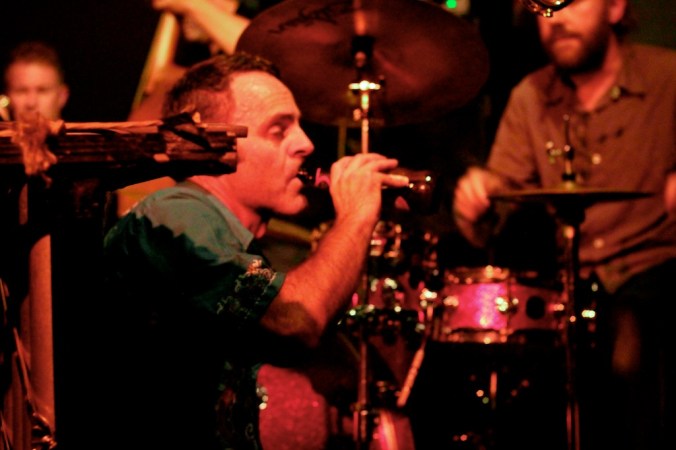
Herman Leonard pics This exchange between onlookers and musicians is at the heart of the design concept.  The main performance auditorium is build in the shape of an amphitheatre which allows eye contact between audience and performers (and obviously making for unimpeded sight lines from every seat).  The acoustics are state of the art and the sound can also be dampened.

Situated in Hayes Valley, the SF Jazz Centre is only a few blocks from the from the famous Fillmore Music District.   More importantly it shares the precinct with the SF Ballet, Davis Auditorium (SF Symphony) and SF Opera.  Immediately opposite is an imposing brick building being renovated to house the School of the Arts.  Huge Herman Leonard pictures emblazon the side of that building, causing Lionel Hampton, Billie Holiday and other greats to smile across at the Jazz centre.  This tells passers-by in unequivocal terms that the Corner of Franklin & Fell is where Jazz lives.

I collected my press pass and was given a tour of the building, suddenly aware of the welcoming friendliness of the interior.  Bearing witness were thousands of musicians names – etched into the glass.  I would assume that all are associated with ‘Jazz in the City’ and ‘SF Jazz’ in some way.

tile mural 2 039Upstairs a large tiled mural gave the history of the Bay area Jazz scene.  Names like Hampton Hawes and clubs like the Black Hawk will resonate strongly with Jazz lovers.  This town has a commendable history of producing fine musicians and with SF Jazz’s focus on education we can expect this to continue.

The day unfolded like most San Francisco winter days with sunshine streaming out of an azure blue sky.  Everyone was smiling and back slapping and then out of nowhere came a joyous blast of music.  It was hardly as if the collective mood needed further elevation, but just in case, the ‘Bourbon Kings’ came marching up the street New Orleans style.  At their forefront were mesmerising dancers twirling colourful ribbon-trimmed umbrellas, who swayed and whirled like dervishes in a trance.  Just how many musicians were playing it was impossible to discern, as the scene quickly became a melee of musicians, crowd and excited dogs.   It was the first time that I had witnessed a Second Line style marching band and I will not forget it in a hurry.   It was like watching the history of Jazz marching into the present.

Just before the ceremony a work by Jacob Garchik (The Heavens: Atheist Gospel Choir) was performed – titled ‘Creations Creation’.   This was call and response and when the street musicians called, those on the various balconies responded.  At one point a small terrier dog joined in (two calls on trombone elicited two happy barks, three calls three barks).   This was not planned for, but entirely appropriate in a city that has so many cheerful dogs.

The speeches that followed acknowledged all of those who had worked toward this end and congratulatory messages from the likes of Nancy Pelosi the Democratic Leader gave the proceedings a sense of moment.   The audience overflowed with local dignitaries, among them Jazz legend Bobby Hutcherson and the much respected former Mayor Hon Willie Brown Jr. (also a former member of the State Legislature). His commitment to SF Jazz goes back a long way.  I spoke to Bobby Huthcherson briefly after the ceremony.   He is not in good health but will be performing with McCoy Tyner and others this week at his SF Jazz Centre birthday celebration.  Before we parted company he looked at me with a smile and said.  “When you return to New Zealand, don’t let them put you on a plane to Oakland”.  San Franciscans love the story about the man who purchased an air ticket for Oakland and ended up in Auckland much to his surprise.  SFJC 033
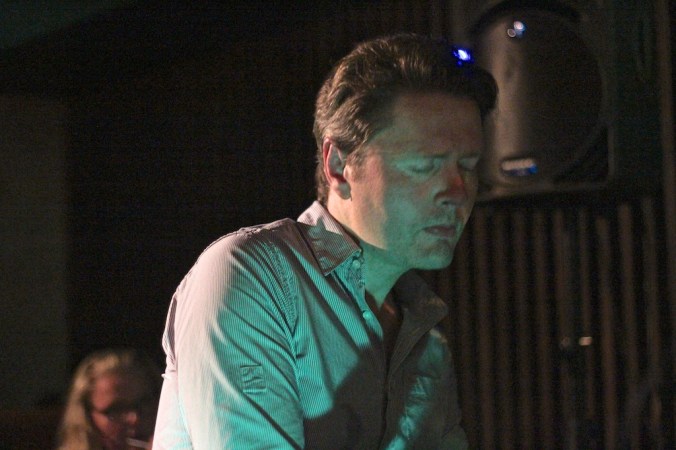
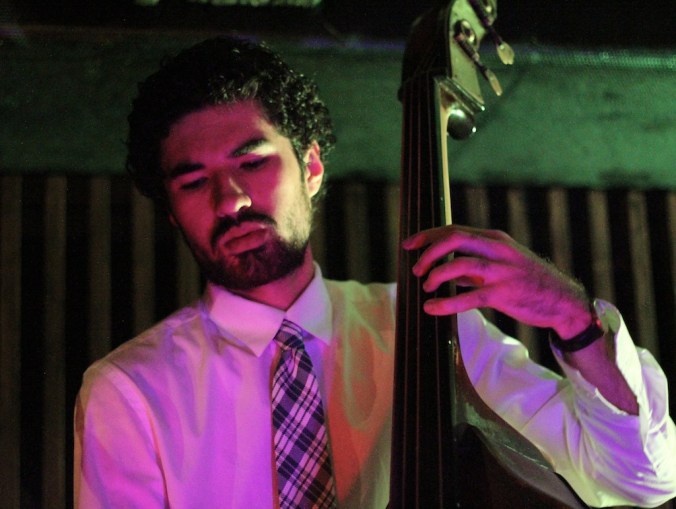
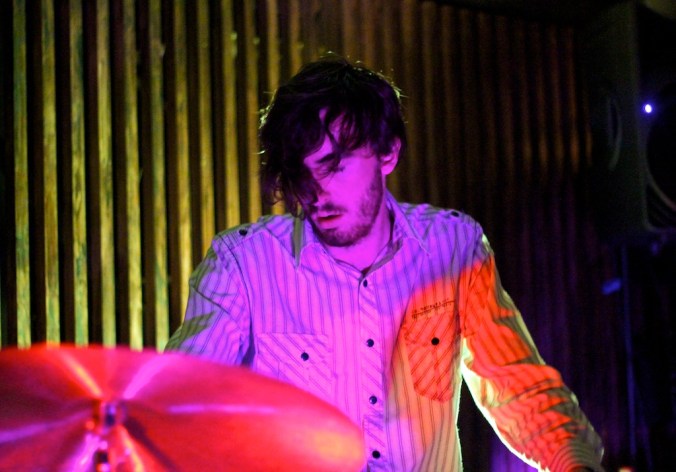
John Santos (Resident Musical Director) said with emotion, “San Francisco you got your soul back”.  Randall Kline also spoke powerfully. “They told us that this couldn’t be done, that the market was not geared toward assisting the arts at this time.  We involved the community and they said go ahead and we succeeded.  This is a powerful message to the markets – markets need to follow the community not the other way round”.  Inside there was a short film and live music performed by the SF Jazz High School All Stars.   If this performance sets the standard then Jazz is in very good shape.  Education, performance, and community involvement are at the heart of this establishment.   With rotating Resident Artistic Directors like Regina Carter, Jason Moran, John Santos, Bill Frisell and others the centre can only do well.

A poet laureate and a photography laureate have also been appointed and this impresses me no end.   Jazz, poetry and photography belong together and especially in San Francisco.

In the coming months the following musicians will have residencies:  Bill Frisell, Dave Holland, Hiromi, Zakir Hussain,Brad Melhdau, Bela Fleck and John Santos.  This is interspersed with a program of visiting and local artists.

The opening was on Martin Luther King Jr day and that was no accident.  Martin Luther King understood very well the importance of Jazz and he spoke movingly of its importance.

“Much of our power in the Freedom Movement has come from this music.  It has strengthened us with its sweet rhythms when courage began to fail.  It has calmed us with its rich harmonies when spirits were down. And now, Jazz is exported to the world, for in the struggle of the Negro in America there is something akin to the universal struggle of modern man”.

I urge Jazz lovers everywhere to visit San Francisco (and the SF Jazz Centre).  It is certainly an ideal destination for New Zealanders.  The eleven hour flight is not that onerous and the fact that you can bypass the hell of LAX is the icing on the cake.  Do it people and don’t forget to support the artists in the Jazz clubs and other venues.

The opening night is streamed below by NPR (KQED) and you can listen by following the link.  Grab a beer and nibbles and enjoy – I sure did.

http://www.kqed.org/arts/music/sfjazzcenteropeningnight.jsp

IMG_1648drummer Bourbon Kings 037dancing girl

Happy New Year – JazzLocal32.com

IMG_1535

Thanks to everyone who reads and visits JazzLocal32.com and particularly the musicians and Jazz lovers who let me into their lives, many of whom are close friends.

Improvised music is a profound manifestation of the human condition and a loadstone to guide us on. It tells us that we can reach beyond the known and touch an illusive world of new possibilities; but only if we adjust our perspective.

It is the job of musicians, writers, visual artists and poets to challenge, interpret and shock. Jazz musicians understand this better than many Jazz fans. Life can be stunningly beautiful and ordered but profound realisations can also arise from discord. These conditions are not separate but co-dependent refractions from life’s experience.

I dedicate this post to the musical risk takers who ride currents that we cannot see but which we experience through them.

Early Jazz confounded listeners as it was unknown to them. Swing took ten years to replace two beat Jazz and beBop ten years to displace the later. Jazz does not stand still anymore than life does. It is not a museum.

Whether we listen to avant-garde, fusion, funk, swing or post bop it comes from the same restless explorations if played with integrity. My wish for everyone who enjoys this music is that they will become more adventurous.

The Creative Jazz Club in Auckland has a genius for expanding our horizons and by feeding club goers a varied diet it stretches our ears. We don’t have to like everything we hear but we should be respectful of the act of creation.

IMG_5266

I am writing this from one of the great Jazz cities of the world (San Francisco) and Jazz is deep in the DNA of this place. On New Year’s Eve there were a lot of unimaginative ear splitting DJ events but Jazz coexisted and held its ground.

To paraphrase John Zorn there are blocks of sound everywhere – it just needs someone to interpret and arrange them. No manifestation of sound is invalid. The musicians do the rest and we are an integral part of the result.

We are all poets and musicians in our way if we stretch out observe and above all listen with fresh ears.

I was in a nice eatery two nights ago and a fine musician Terrance Brewer was playing smoking Jazz guitar. In the first break I went up and told him how much I had enjoyed the group and his playing. Next break he came and spoke with us – giving me two of his CDs as gifts.

The Jazz community is truly a universal family and because I listened and acknowledged the music we connected as kindred spirits.

Happy new year to my jazz family – I love you all.

listen LISTEN

Written on the road from the wonderful liberal San Francisco ( as a guide book said – Republicans and the unhip risk being run out of town).

John Fenton

PS – I now own the domain name JazzLocal32.com

20130101-120539.jpg

Alan Brown Band – The interview part two

The interview with Alan Brown & his band continued………

David Hodkinson 004

Q.  Alan the world and its dog loves ‘Blue Train’.   Is there any truth to the buzz about town that there will be a Blue Train reunion in 2013?
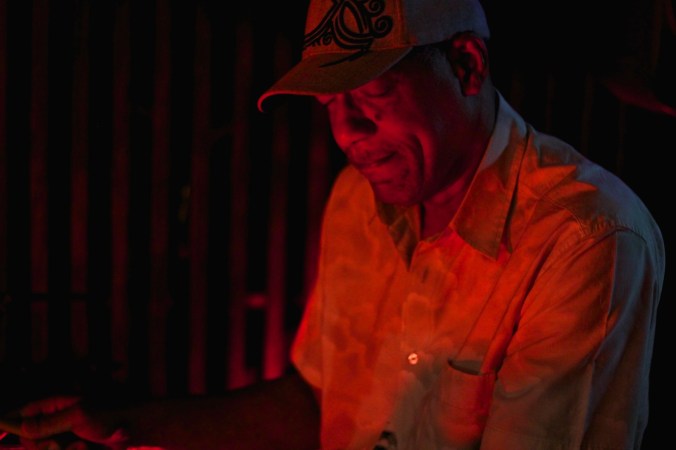
A.  At least somewhat of a reunion concert is planned for the Waiheke Jazz Festival in Easter. Steve Sherriff, Jason Orme and myself recently played a lot of the Blue Train tunes at the Taste Of Auckland festival, and it all felt really good, so I thought “why not?” Once I also found out that Aaron Nevezie will be in town at the time, and was keen to do the gig, I made it happen. Aaron played guitar on the Never You Mind album back in 1998 and is a fantastic musician, and engineer/producer based in New York with his own studio, Bunker Studios. Bassist Matt Gruebner will also be visiting but won’t be here at Easter, and will only have a window of a couple of days when he and Aaron will both be here, but if I can wrangle another gig in that time frame, I will!

Q.  I would love to do an updated photo essay on Blue Train.  Do you have much archival material of this seminal Auckland Jazz Groove band?

A.  Yes I do – I have a box of clippings, magazine articles etc, going right back to the early days when a young Matt Penman was playing with us! I also have a lot of print-outs documenting our success on the former mp3.com website back around 2000. So you’re welcome to have a sift through all that.

Q.  You own the Jazz Groove space in Auckland and you are enormously well-respected about town.   Do you feel a little cheated that music as well received and as popular as yours has not been picked up for wider distribution?

A.  Thanks John. As Blue Train we did reasonably well and had a certain amount of recognition, but I guess it was hard for venues, labels etc to categorise us – not traditional ‘jazz’ enough for some, or too jazz for the groove crowd. Not having a singer also limited our ‘acceptance’ in the gig scene. You need to remember that NZ is still quite small, and even though there are fantastic jazz musicians and bands around, the general public don’t really get exposed to the diversity that exists. So the average New Zealanders perception of jazz is fairly limited and safe, thus it’s hard for many great artists to get a voice or get picked up. Yes it can be frustrating, but I really appreciate what people like Roger & Caroline are doing with CJC to raise the profile of what’s happening in NZ. I’ve seen many jazz bars come and go, but these guys have got it right. If anything,THEY need the wider exposure! However, I know the market is much bigger overseas, and when you check out sites like nextbop.com, you realise just how much incredible cutting-edge jazz is out there. The international market is definitely somewhere I will be focussing more on in 2013. In any case, the ability to create, produce and play ones own music is such an incredible privilege, and at the end of the day, as long as it touches or inspires even one other person, I’m happy.

Q.  Tell me about a few of your favourite local musicians both in and out of your band.
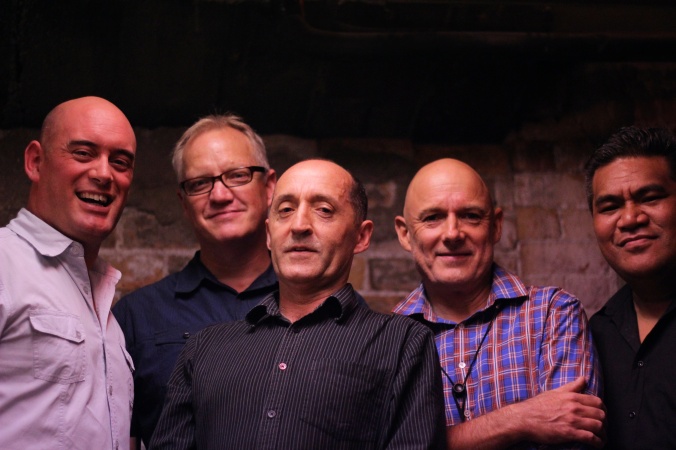
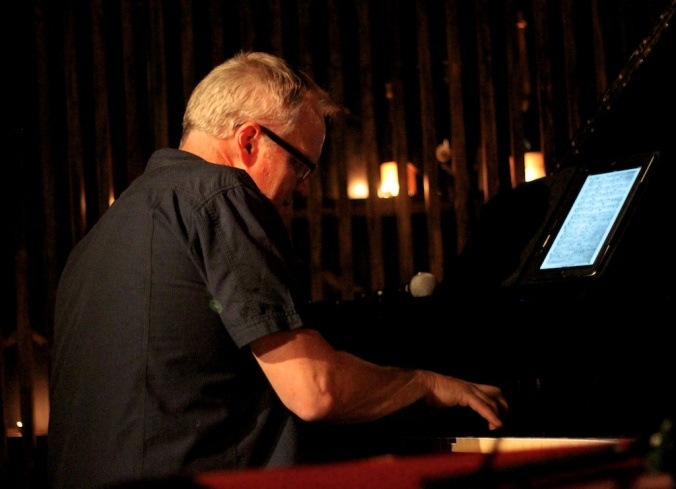
A.  In the band? Well, everyone! Truly, each of these players are inspiring to me, which is why I chose to work with them. Jono is an incredible drummer with an intuitive grasp of time, so with the odd-time stuff, he was the perfect choice. Plus, he shares a similar passion for Radiohead, and has a lot of good musical input, hence his assistant production role on the album. Marika has just an amazing feel and sense of groove – she knows precisely where to put the notes but also has a strong melodic sensibility. And Andy has all the rock, jazz influences but is unique. He’s a stunning guitarist and has a playfulness which works so well in this context. I have been working with David Hodkinson in bass duties of late, and he’s also a very good, keen, passionate player. He has slotted in perfectly with the band.
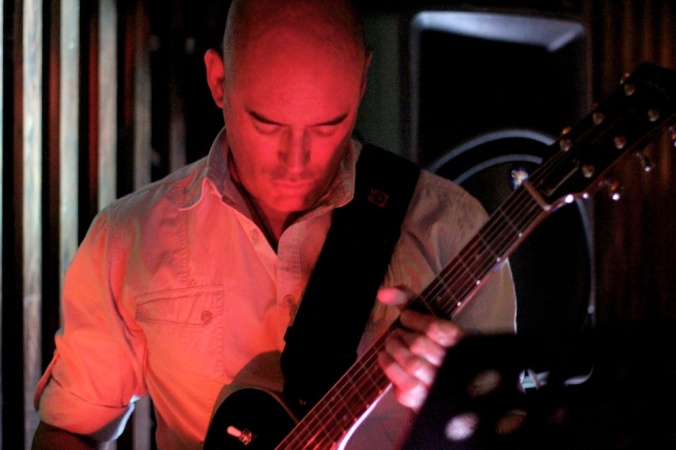
Outside of the band? There honestly are SO many local musicians that have inspired, or continue to inspire me. Of course Matt Penman was an early inspiration, and still is. It’s been inspiring just to see his incredible growth as a musician over the years, and he’s such a nice guy. Brian Smith was also a big inspiration – we did a number of gigs together in my early jazz years, and I learned so much from just playing with him. The list goes on: Dixon Nacey, Kevin Field, Roger Manins, Nathan & Joel Haines…in fact I really draw inspiration from all of the local players!  Some of the young players coming through now, like Matt Steel, just blow me away too.

Q.  You have a deep interest in many of the cutting edge Israeli Jazz musicians and in Middle Eastern folk melody.   You were recently doing a masters and focusing on these works.  Tell us a little about Yaron Herman and others?

A.  Actually I haven’t completed my Masters yet! Still a work in progress. I did my Honours study on Avishai Cohen, as I was fascinated how he managed to blend the Middle Eastern elements of rhythm & melody, with classical and jazz, and create something that was very fresh and exciting. I’ve had a long-term love of Middle eastern music, especially the rhythm, but also the structure of it in terms of the various modes or maqams; the use of quarter-tones etc. So discovering artists like Cohen, Tigran Hamasyan, Shai Maestro & Yaron Herman has been an epiphany in jazz for me! My Masters study is partly on Yaron’s music, but also on the way he was taught.

He only starting learning piano at age 16, under the tutelage of Opher Brayer, who used mathematics, philosophy & psychology! At age 18, with a scholarship, he went to Berklee music school in the US, decided he didn’t like it, returned home via Paris, and at a jam session was offered a gig then and there. How Yaron so quickly reached such an incredible level interests me, but also the use of aspects such as psychology in the process – obviously it enabled Yaron to connect on a deep level which I’m sure is part of his rapid development. Shai Maestro, who played piano with Avishai Cohen for a while, also was taught under Opher Brayer. I’m also really digging Tigran Hamasyan at the moment – he incorporates Armenian folk tunes into his tunes, but is an incredible and passionate player. Very exciting stuff.

Q.  Your music is very contemporary and reflects new streams of Jazz influence.  Finally tell us about your interest in and the use of material by Bjork, Radio Head, Parks etc?

A.  I’ve touched on some of these artists in terms of how aspects of their styles has been a direct influence on writing for the quartet, but I guess what attracts me is their total uniqueness, and in many cases, such as Bjork, flying in the face of trends and expectations. Radiohead did the same with Kid A. Their writing also resonates with me – and aside from adapting specific aspects of that, the emotional & spiritual affinity I have with the music is what moves and inspires me. My goal is to similarly express my heart & passion in the most complete way I can – whatever musical form that takes.

Thank you for your time Alan.  Best wishes for 2013.

Andy Smith

I also asked drummer Jono Sawyer the following questions:

Q.  Jono you have played with Alan Brown for a long time and certainly from the beginning of the ‘Between the Spaces’ lineup.  How did you two team up?

 A.  Alan was actually a key part of my love of jazz as I grew up – I used to listen to the cassette of the debut ‘Blue Train’ album in the car with my Dad when I was about 6 or so! (This album also featured my great drum teacher Jason Orme). Alan and I got to play together after I approached him to see if he’d be interested in playing on my first Honours recital when I was studying at NZSM, and I think he liked the tunes I was hoping to do for the performance so he agreed. I was actually really nervous when I approached him and never thought he’d actually do it, here was a guy I listened to from when I was a boy and helped to shape my love of music, yet he was super into it! We’ve been playing together a lot ever since cause I think we both are on the same wavelength when it comes to contemporary jazz and the exciting stuff coming out of the modern scenes, particularly New York.

Q.  One day I asked you about your role in playing a groove beat across differing time signatures.  You told me then that it was instinctive.   Are you able to articulate the process of locating those grooves?

A. Half of the grooves are actually already written in their basic form when Alan brings a new tune to the group. He’ll demo a tune up on Logic so we get a good idea of the vibe he’s going for, and then as we practice the tune the groove becomes more refined and I add my own variances and subtleties to make it into the product… Of course, what Alan, Andy and Marika were doing would shape this; I remember the groove from ‘Sustainable Resources’ being slightly less related to the bass line at first, but as we jammed it just felt right to really articulate most of the bass line between the kick and snare, which in turn helped the flow of the tune, despite it being in 15/8 – I guess that’s where the instinct part comes in!

Q.  Tell me a little about who impresses you the most from among modern drummers.

A. I have a real passion for odd time playing through my love of 70s prog rock particularly, but what really impresses me from guys like Eric Harland, Ari Hoenig and this drummer called Gavin Harrison, is how they can navigate these odd times with such flow and ease. As well as this, they never let what they’re doing get in the way of the groove and the overall musicality of the tune. Ari is certainly one of my favourite players he has such control over the drum set that he can essentially play anything he wants! But also understands that sometimes, laying back on the groove, whether it be swing or more contemporary stuff, can be all that’s necessary for a tune to become perfection. All of these great players also have a wide knowledge of the greats that have come before them, and I’m finally starting to understand the importance of this too.

Q.  Where to from here?

A. Hopefully another Alan Brown album! I know Alan’s really passionate about trying to get some international gigs under our belt so that will be exciting if we get some dates lined up. I’m also keeping busy with Batucada Sound Machine, and we’re looking ahead to our European summer tour… I’m also involved in a project with the APO for a concert they’re doing in May, which should be good fun!  Lots of work to do for all those things though so I’d better get practicing.

Jono Sawyer 006

Lastly I interviewed David Hodkinson about his role on bass

I thought that I would ask a few of the other band members questions as well. The newest member of the lineup is David Hodkinson who plays electric bass. The original BTS album had Marika Hodgson on it and she had quite a following as her intense goove lines were compelling. David has seemlessly stepped into the role which was big ask and so I asked him what that was like.

Q.  David, I am impressed by how you handle your bass duties in this band.  How are you enjoying playing with an Alan Brown band?

A. I am really loving being a part of this group, the combination of a strong groove, interesting harmony, and odd meters make it fun on many levels! Also I consider these guys a ‘dream team‘ to play with, I have a huge amount of respect for them.

Q.  How did that happen.  Were you recommended by a friend, apply or were you approached directly?

A. I have known Alan for some time now, through University and playing with Trudy Lile/Mojave when he had filled in. I met Andy and Jono whilst studying too, and played in Andy’s Masters Combo. I was very excited when Alan approached me to be a part of it.

Q.  Tell a me a little about who impresses you most and your influences.

A. I am a big fan of Juan Nelson from Ben Harpers ‘Innocent Criminals’ band, also players like Bakithi Kumalo from the Graceland album, and Incognito. A big thing for me in regards to musicians is what kind of person they are, I would rather work with an absolute beginner with a good attitude than the opposite.

As far as influences go, I grew up playing Jamiroquai, Red Hot Chilli Peppers, Rage Against the Machine, and then it was really Paul Norman who introduced me to jazz/funk. I credit Paul as the biggest influence in my musical life. I was lucky enough to go through Avondale College and witness players like Ben Turua, and have Max Stowers as my tutor, so I was very fortunate.

Q.  I watched you play those bass groove lines once when you had no drummer in the Alan Brown band.  That is a lot of weight to fall on a bass players shoulders.   Was that a challenge?

A. It wasn’t really a challenge, just a shift in method. I try to get the pulse in my body through movement, which can then give me the seperation mentally to process it in the same way as if there was a drummer, good fun!

Q.  Where to from here?

A. Well I’ve bought some pedals so have been enjoying experimenting with different sounds. I play in the bands dDub, and Spiral as well so I am quite content at the moment. I have also been enjoying playing double bass again so I would like to do more of that in the future.

I would like to thank Alan Brown and his band for their indulgence with this.  I believe it to have been an incredibly worthwhile exercise as it gives insights into an important aspect of music within the Auckland Jazz spectrum.  Sadly Andy Smith was out of town but his contribution is considerable and acknowledged here.

John Fenton

Jazz Local 32.com