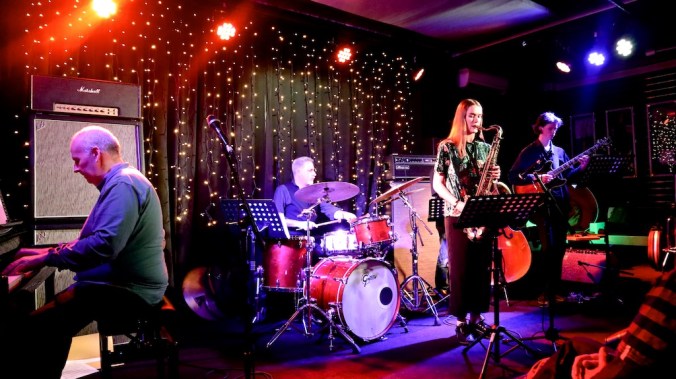
 The UK born Mark Donlon is an internationally renowned musician who joined the New Zealand School of Music as a senior lecturer in Jazz Piano in 2013. He has previously appeared at Auckland’s CJC, but never with a quintet. The small ensemble format is clearly a forte as it revealed his many skills. After hearing his recent recording and attending the CJC gig it was evident to me that this particular project hit a sweet spot. What we heard on Wednesday was something special. An evocative programme built around stories of displaced peoples.
There is no separating a good musician from their musical origins and Donlon wears his origins on his compositional sleeve. I am not referring to nationality but to something more ethereal. That wellspring of melodic and harmonic invention that bubbles from the musical homeland and feeds sonic identity. If I didn’t pick it up before I certainly did this time, an unmistakable sound. A sound manifest in John Taylor, John Surman and expat Canadian, Kenny Wheeler – perhaps it is strongest in Guildhall musicians. Wheeler was referenced several times and early into the first set the quintet played a superb version of his ‘Kind Folk’. Donlon’s original compositions, the rest, also capturing that very English and often wistful vibe. That and the slick head arrangements setting the tone – perfect vehicles for the tales he told.
This type of composition is sometimes characterised as sad (or dark), but I hear more than that in Donlon (or Wheeler). I prefer the word melancholy in its Shakespearian sense. “A melancholy of mine own, compounded of many simples, extracted from many objects, and indeed the sundry contemplation of my travels, which by rumination, wraps me in the most humorous sadness”. Shakespeare knew that emotion is seldom one dimensional.
The music also speaks of human dignity in the face of oppression, the titles traversing the sweep of history – of personal loss. There’s ‘Aleppo’, a lovely tune about a tragic city, trampled under the boots of sectarian and superpower violence – this, aptly told by juxtaposing dissonance and sweetness. There’s ‘Windrush’, the story of the Jamaican immigrants and their history of mistreatment – more recently at the hands of Brexiteer Amber Rudd. Then there’s ‘Zanj’, the old word for an African slave. While the topic may be grim, the musical treatment is not devoid of hope. Good composers do not resile from such difficult topics; they aim to touch our hearts, offer up hope, and this did. 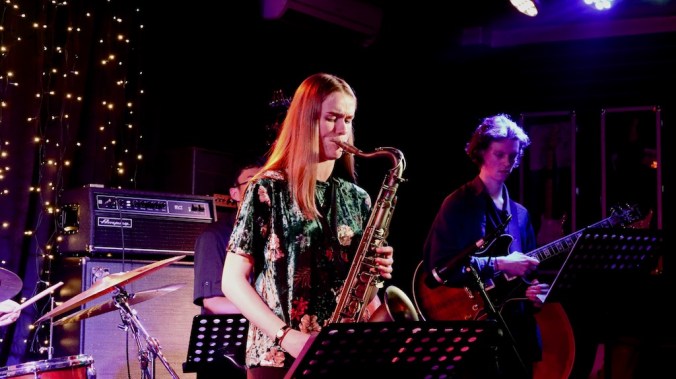
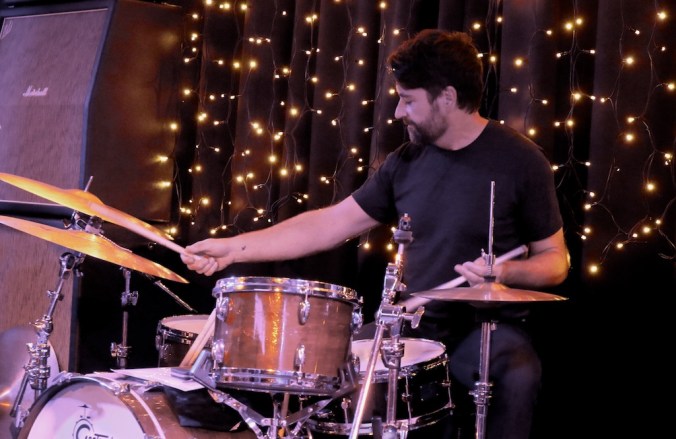
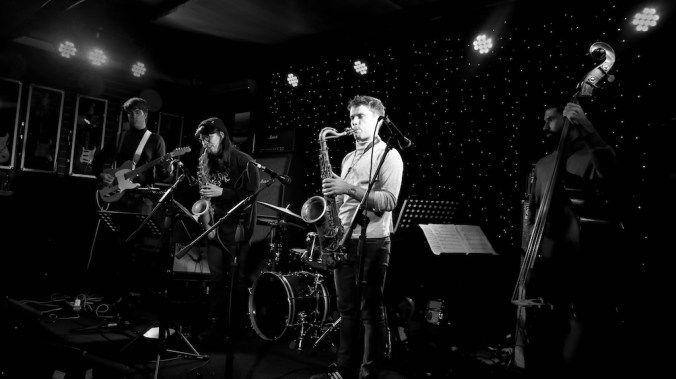
That the album is so good is not surprising, given the New York heavyweights on board; Alex Sipiagin and Seamus Blake for starters. Appearing at the CJC was a Wellington lineup; Mark Donlon (piano), Louisa Williamson (saxophone), Luca Sturney (guitar), Lance Philip (drums) and Seth Boy (bass). It’s been a while since I heard Louisa Williamson and these days, she is everything that she is hyped to be. A stunning performer with a silky tone and a plethora of coherent ideas flowing from her horn. Her use of dynamics is minimal, but this is not a deficit. She conveys her message through skillful phrasing and the delivery of imaginative lines. I had not seen Luca Sturney before but his musical abilities are unmistakeable (what a nice sound and what solid solos). The same with Seth Boy. Lastly, there is Lance Philip, who along with Donlon, is the veteran in the lineup. An incredibly able drummer who covers all styles and who lifts any performance. Donlon was obviously thrilled to have him on the tour, and no wonder.
The track I have posted on YouTube is from the CJC gig and titled ‘Zanj’ – ‘The NY album is available from fuzzymoonrecords.co.uk or from Mark Donlon, New Zealand School of Music, Victoria University Wellington – he has a facebook page – The gig took place at Backbeat, for the CJC Creative Jazz Club, Auckland, 8 May 2019.
Album: Mark Donlon (piano, compositions), Alex Sipiagin (trumpet, flugelhorn), Seamus Blake(saxophone), Boris Kozlov (Bass), Donald Edwards (drums).
Auckland gig: Mark Donlon (piano), Louisa Williamson (saxophone), Luca Sturney (guitar), Seth Boy (bass), Lance Philip (drums)

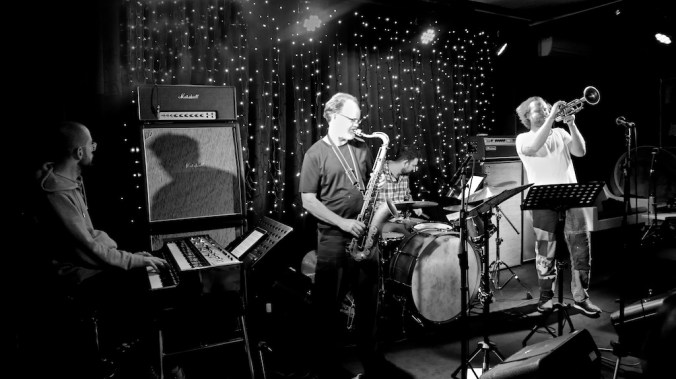
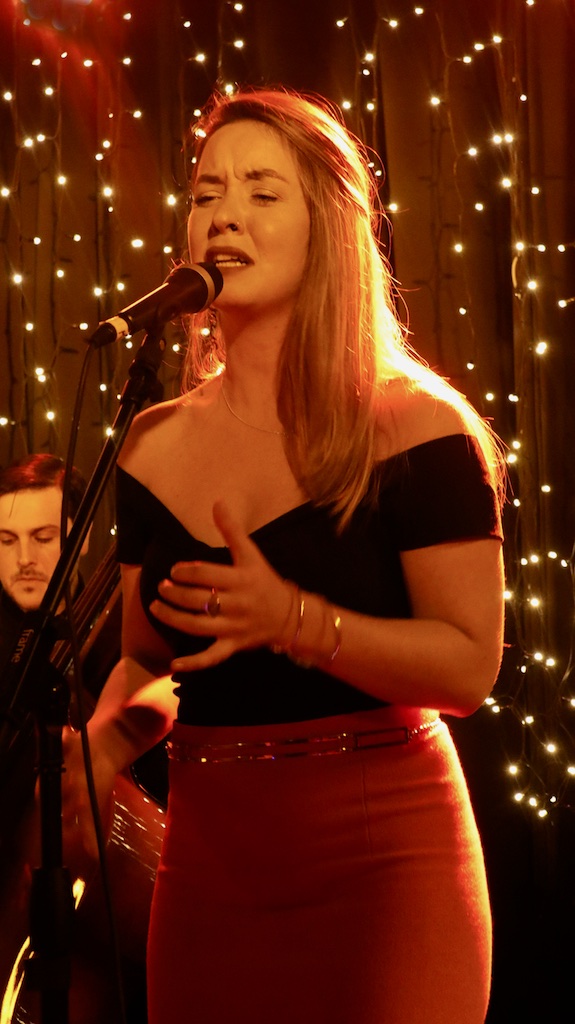

 I reviewed the ‘Shuffle’ album in January and the band is now on the road, sharing its groove throughout the North Island.
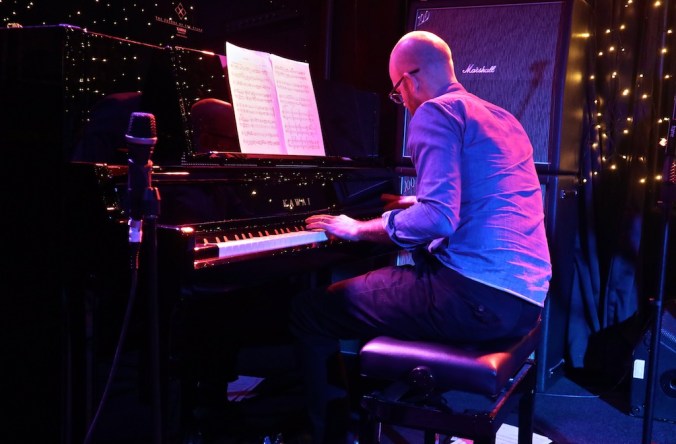 Steve Barry left these shores many years ago and these days Australians count him as their own. It is hardly surprising that they do because since his departure he has raked in the accolades, won numerous awards and completed a Doctorate. Given the above, we can hardly begrudge his move. Music is like water it will always find its level, no matter where the wellspring. Everyone on the New Zealand Jazz scene looks forward to Barry’s yearly trips home as he never rests on his laurels. He brings us new and diverse projects and above all he showcases innovation.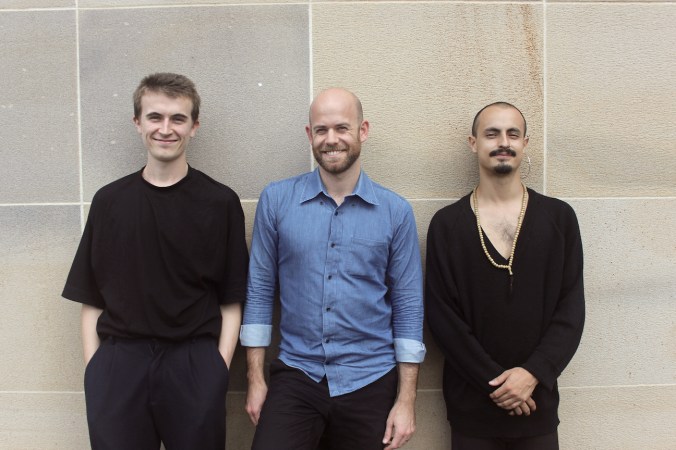
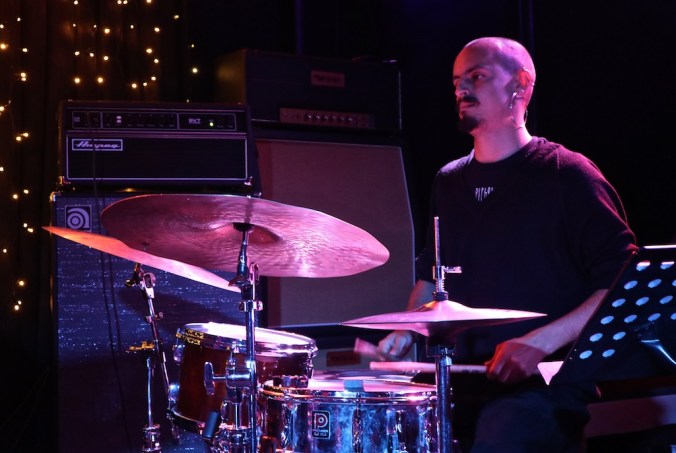 The Steve Barry ‘Blueprints’ Trio appeared at Backbeat, 100 K’Road, for the
  March fifteenth began as good days should, with sunshine, a cool breeze off the ocean, and a message from a Jazz Journalist colleague in Australia. ‘Would I like to meet some award-winning Greek Jazz musicians’? I had stuff planned, but the plans were easily shelved and I drove from my leafy hilltop retreat into the city. The musicians had flown into Auckland to join a passing cruise ship and were only in town for eight hours. Ahead of them lay four months of playing standards, original material (if lucky), and the inevitable but often regrettable requests. We met up in a central city cafe. ‘John’, they yelled as I walked around the corner. For the briefest second, I wondered how they had recognised me, ascribing it to a Jazz sixth sense, then remembering my tee shirt was emblazoned with the words Prahu Jazz. We introduced ourselves, and headed for the waterfront at my suggestion, chatting as if we’d known each other for years. That’s the way in the Jazz community. You travel to a place you’ve never been before and someone will message you with the contact details of ‘cats’ to hang with. Such hangs generally follow a well-trodden path. ‘Do you know this or that cat – killing?’ Always followed by outrageous road stories and laughter.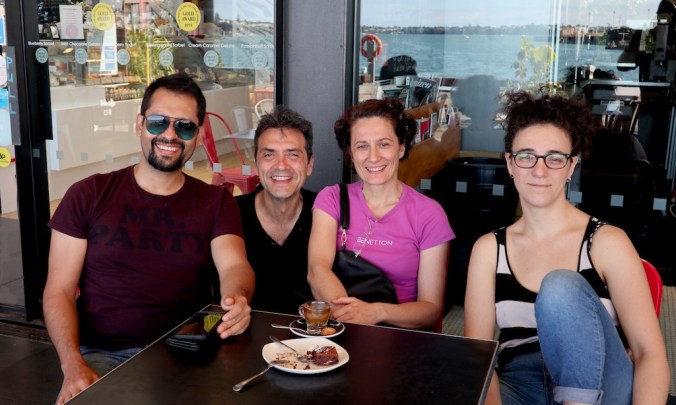
 Lou’ana is a vocalist on route to wider recognition. During the last few years she has been performing at festivals throughout the country and she is billed to appear at the Waiheke Jazz Festival this month.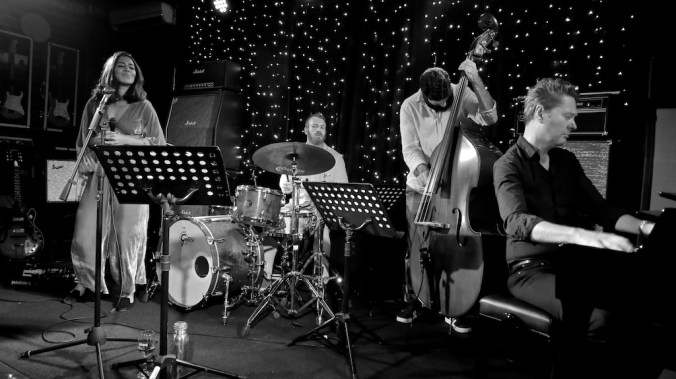

 In the late 1950s and early ’60s, anyone with an ounce of cool wore a coarse-knit black polo neck jersey. While they sat there feeling cool their necks would start to itch and angry red rashes would creep up to their chins. Chins made all the itchier by the regulation chinstrap beards or ‘hip’ goatees.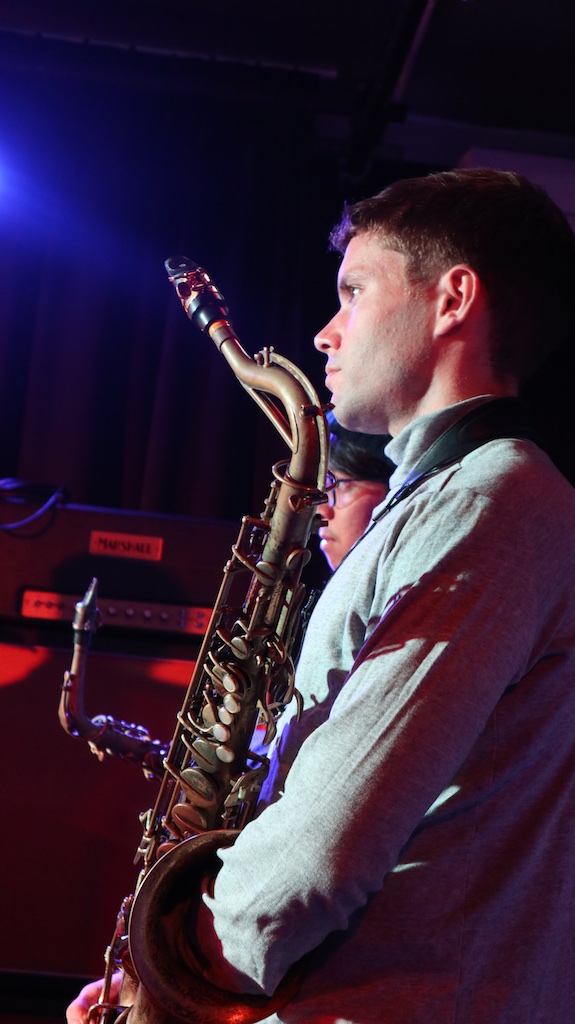
 From a young age, I chose improvised music as my soundtrack. The harmonies, in particular, intrigued as they sounded like real life. Full of rich contrasts and polyrhythms. By comparison, the endless radio replays of popular songs offered diminishing returns. The miracle of improvised music is that it promises depth, and if done well it reveals more with each listening. This sets a high bar for innovation, so when I hear musicians described as compelling and original, I check them out. Ben van Gelder and Reinier Baas are so described and after attending their gig I agree without reservation.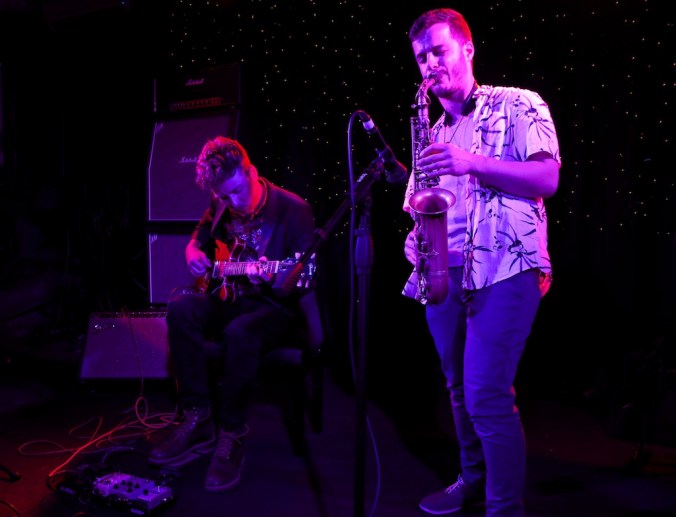



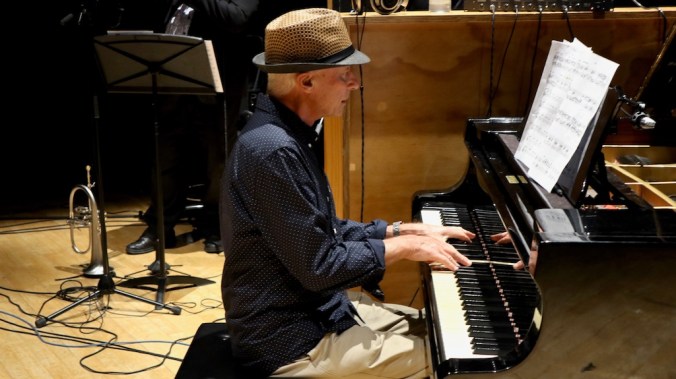

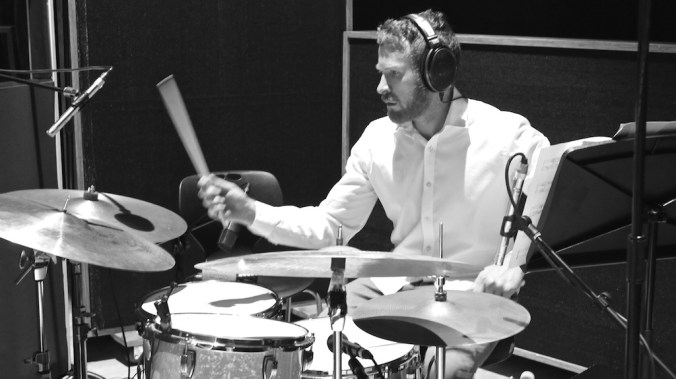
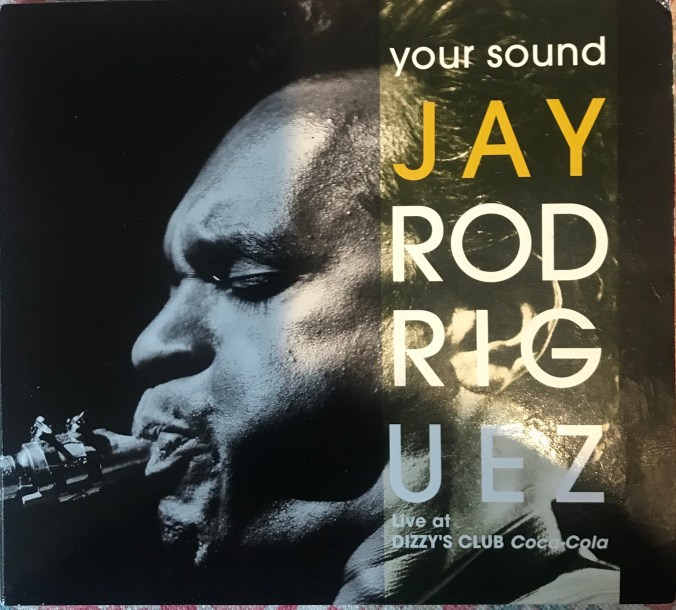
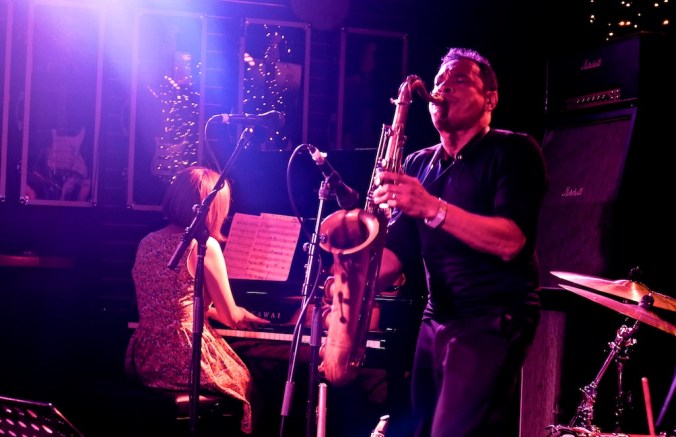 Anyone who saw Jay Rodriguez play the last time he was in town will have tripped over themselves to catch him again last week. Rodriguez is a talented and engaging improviser and when he steps onto the bandstand he wins hearts from the get-go. This seemingly innate ability arises from a keen understanding of what will work best with a particular audience. He picks ups on and feeds off the energies in the room. He is also a skilled technician, but he is not there to show off his undoubted chops. His purpose is to involve and to engage at the deepest level; offering musicians and audience alike an unforgettable musical experience.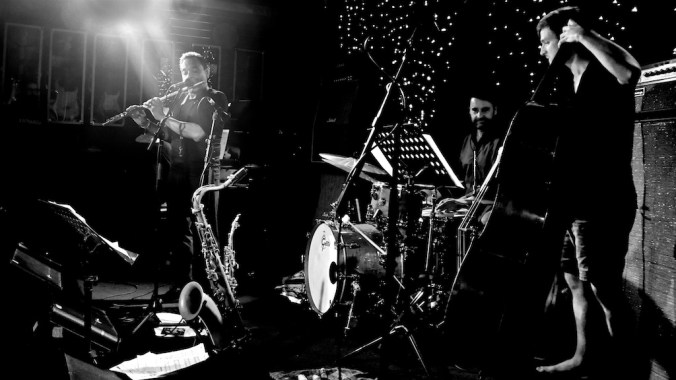
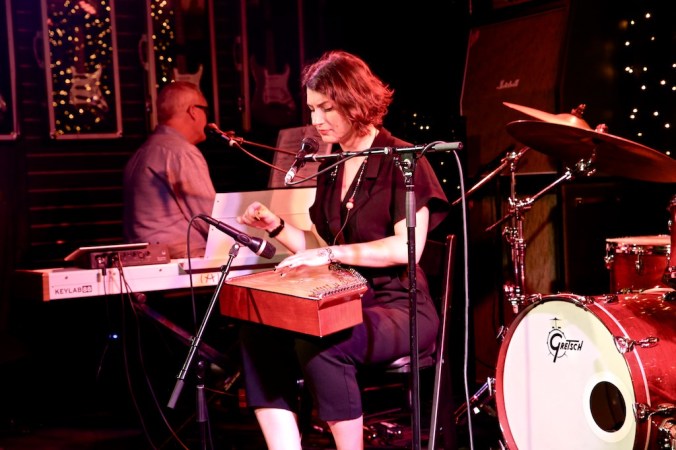 This was New York artist, Simona Minns second visit to the CJC, her appearances occurring one year apart to the day. Her 2018 show ‘The Hunger Games’ referenced a Kafka short story. This tour was billed ‘My Urban Spells’, expanding her ever-evolving themes of universality and free-spirited improvisation.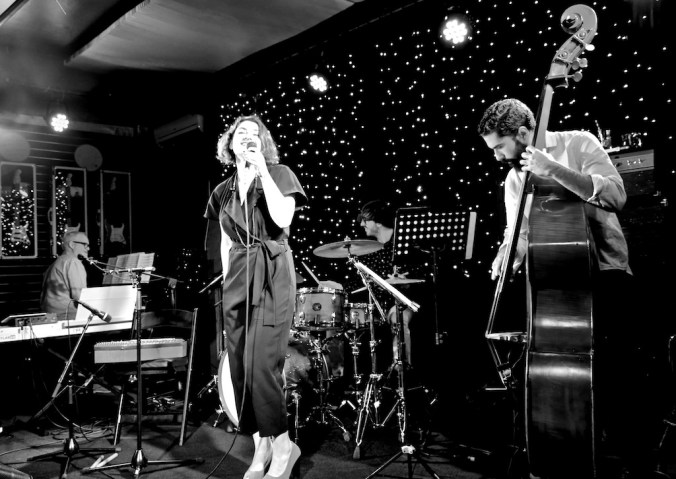
 Admin
Admin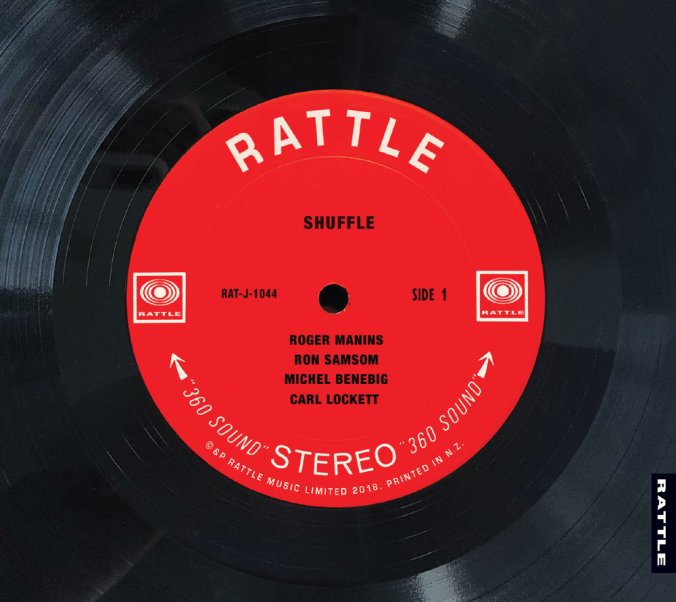 Sometimes an album blows straight into your heart like a warm breeze off the summer ocean. ‘Shuffle’ is exactly that album. There is an easy-going familiarity to it and you instantly feel good as your body connects with the rhythms. Shuffle achieves that rare feat of sounding both new and familiar. This is the sound that I grew to love many years ago, as practitioners like Jimmy Smith, Big John Patton, Gene Ammons, and Brother Jack McDuff fused Soul and Jazz into a rare amalgam. To appreciate this music you need no acclimatisation; no understanding of Jazz. To appreciate this music you only need one prerequisite, a human heart. It’s ‘groove’, it is sensual and it’s my guilty pleasure.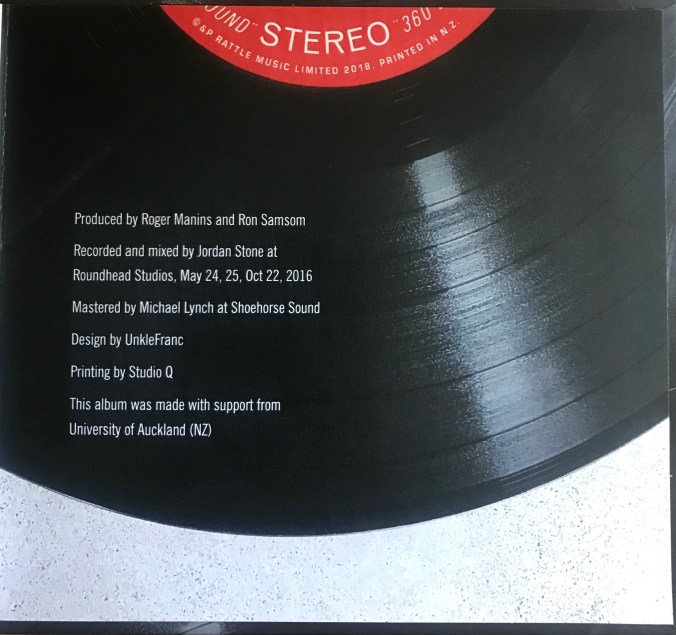
 I was out of the country when Umar Zakaria came to the Backbeat Bar in September. I was particularly sorry to have missed Zakaria’s Fearless Music Tour as they had just won the 2018 Jazz Album Of The Year. Because I was away it took me a while to get my hands on the album and when I did I was deeply impressed. While the name Zakaria may be unfamiliar to many outside of Wellington, he is hardly a newcomer to the scene. He is a graduate from the New Zealand School of Music and the Boston Conservatory and he has performed and studied with significant improvisers from around the globe. Already, accolades are coming his way and when you consider the fact that he is at the beginning of his career, you comprehend just how significant that is.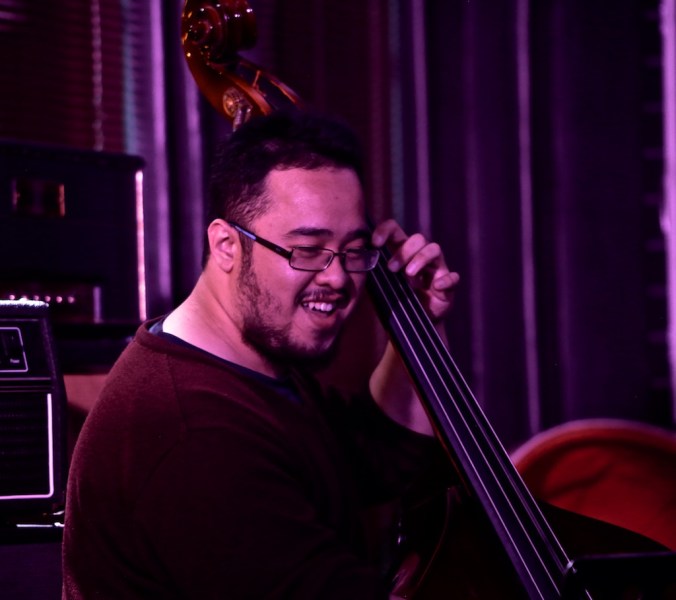
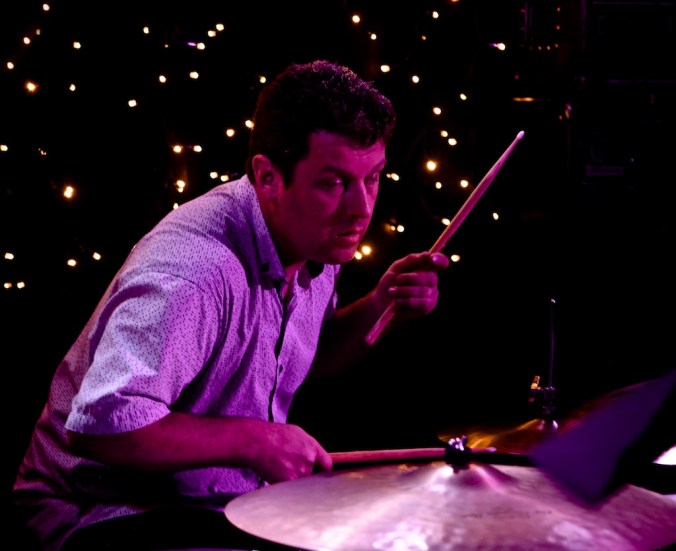
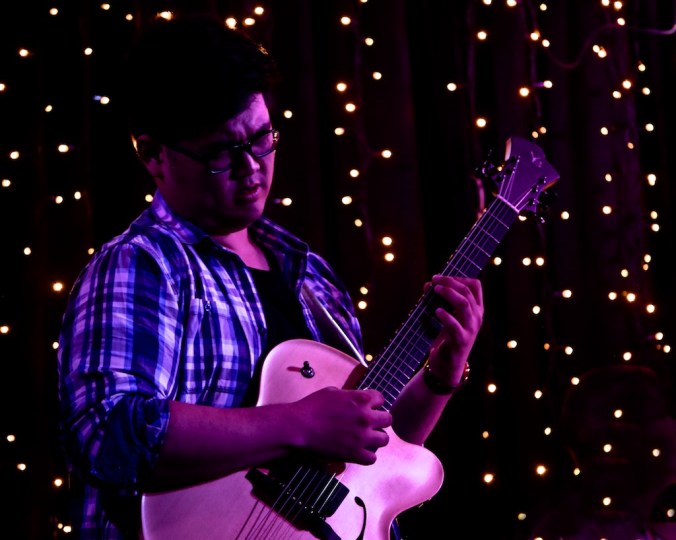
 Sometimes I step into the shadows to locate a light that is otherwise denied me. A place where anti-art hides real art and where music appears in bizarre disguises. It can feel like an unnatural place but if you walk on, your eyes soon become accustomed to the half-light. It is only then that the ghosts in the machine become visible. This is the strange world of Anti Pop; a place where those striving to earn a living from popular music bite the hand that pretends to feed them. It is digital Dada – it is an off note brought to a knife fight.
 Yesterday primo Jazz trickster Barney McAll sent me a link to this anti-pop album titled Global Intimacy. This ‘revolution is under the radar – ‘it will not be televised’. I recognised many of the names – Sia, Gian Slater, Ben Monder, Barney McAll, Kool A.D. Musicians who come from across the musical spectrum. It was a message disguised as popular music, but the sort that is often confined to student radio or oddball playlists. It was political but not everyone will have the ears to hear the message. The material will not suit every taste but everyone should try a bite. I got the message, understood the flavour, and I hope others do.
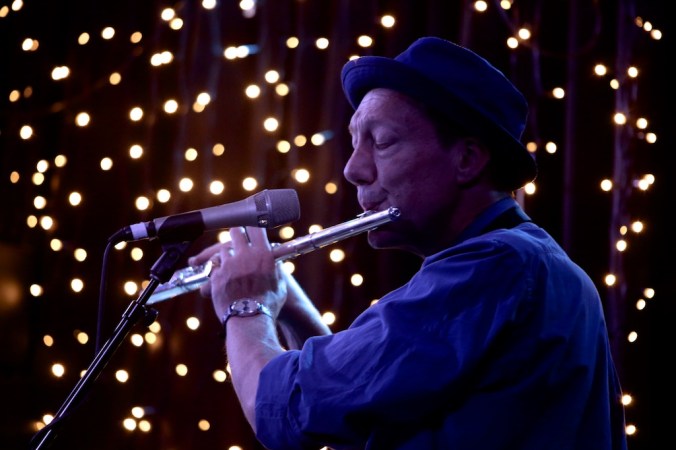 A lot of great live music happened this year but this gig was a favourite. It was danceable, visceral and the deeply rhythmic pulse found its way straight to your heart. As the band played the room radiated an infectious joy and the swaying of the audience amplified it. One by one the feet tapped and the hands moved until no one was left unaffected. Yes, this was music to wash away your cares but underneath that was something of real substance. Latin music that misses its groove is unsatisfying but when it’s done well like this was, it’s simply wonderful. No one in New Zealand could pull this off better than Jonathan Crayford and with co-leader Nathan Haines on board, it was locked down. The final ingredient to this potent tropical brew was master percussionist Miguel Fuentes.
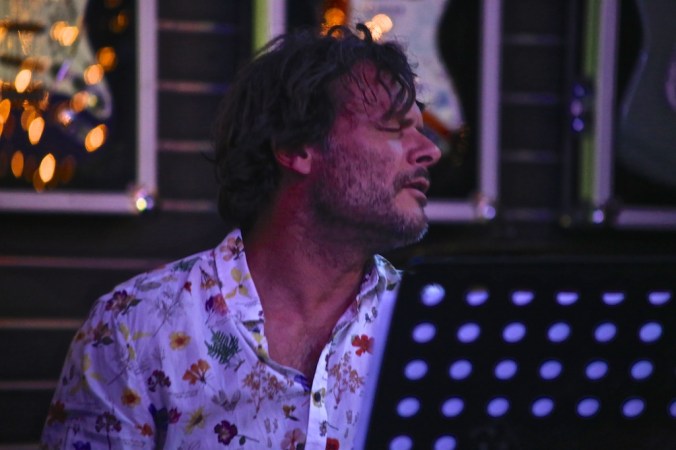 The songbook was a heady fusion of Bebop and Afro-Cuban (or more accurately Afro-Rican as Vidal was from Puerto Rica). When Crayford initially agreed to take the Vidal gig he knew little about Latin music, but a quick phone call to his friend Barney McAll gave him valuable tips. Fast forward to 2018 and it is obvious to anyone who hears him that he absorbed the complexities and rhythms of the music beyond caveat. Although the rhythmic patterns are fixed, for the music to work well it needs something else – a controlled fluidity – the ability to react to the other musicians. Crayford once described it as being a weave which can be tightened and loosened at precise times – without the shape being lost. When you hear the clave patterns skilfully executed and interwoven, the experience is unforgettable.
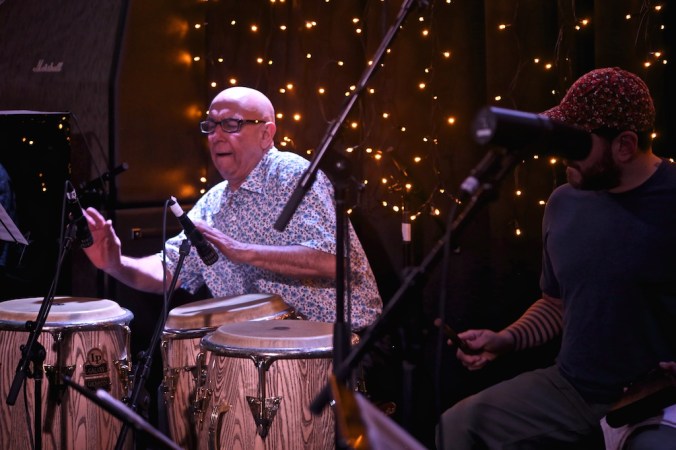 Many Jazz musicians avoided the flute, believing it to be expressionless, but when Haines blows, it has life, character, and edge. As a horn, it has pride of place in Latin ensembles and Latin lineups are diminished without it. Watching these two feed off each other’s lines or grooves is to attend a masterclass. Many years of collaboration has gifted them an acute situational awareness. An awareness that is now instinctual.
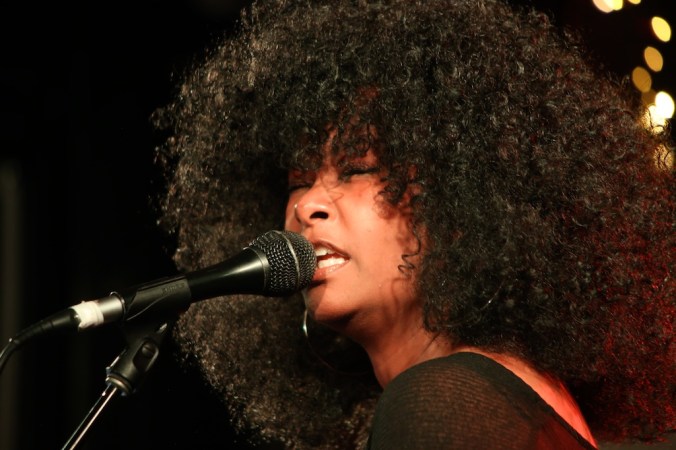 When the Soulful vocalist Vivian Sessoms visited in June last year, we were stunned by her voice and by her powerhouse delivery. We seldom get to experience American R & B styled vocalists in New Zealand and if we do we never see them in intimate settings like the Backbeat Bar. Her voice carries the history of her music and her vocal range and control are approaching the operatic. Sessoms is a vocalist with serious chops and an interesting backstory. Last week she returned.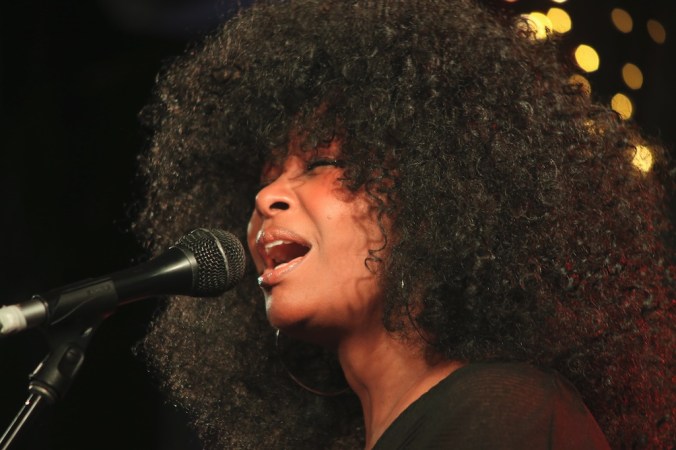
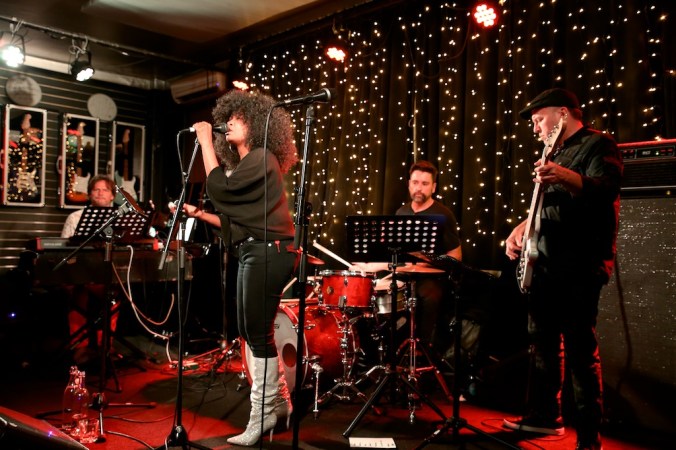
 The interesting diversity in the CJC programming was again on display last week with two international acts as different musically as acts could be. Wednesday featured a multinational mostly free-improvised music ensemble Kira Kira and Thursday the Harlem born Jazz/Soul Singer Vivian Sessoms. Both attracted good audiences, once again proving the value of adventurous programming.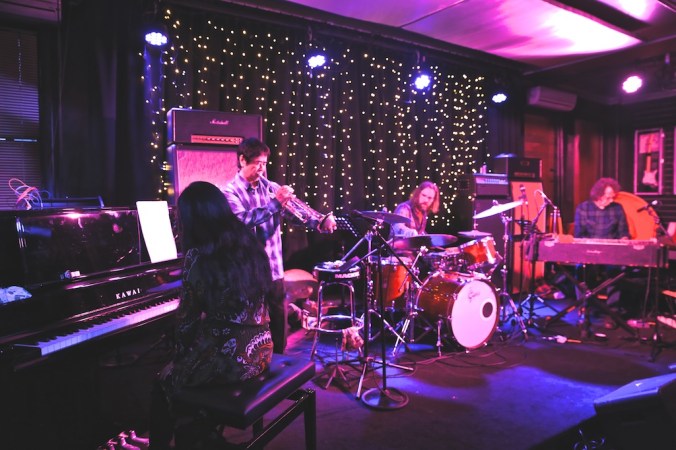

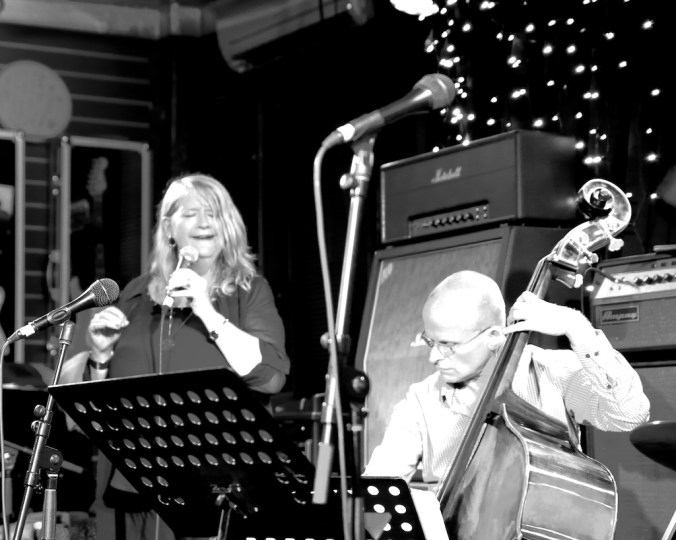
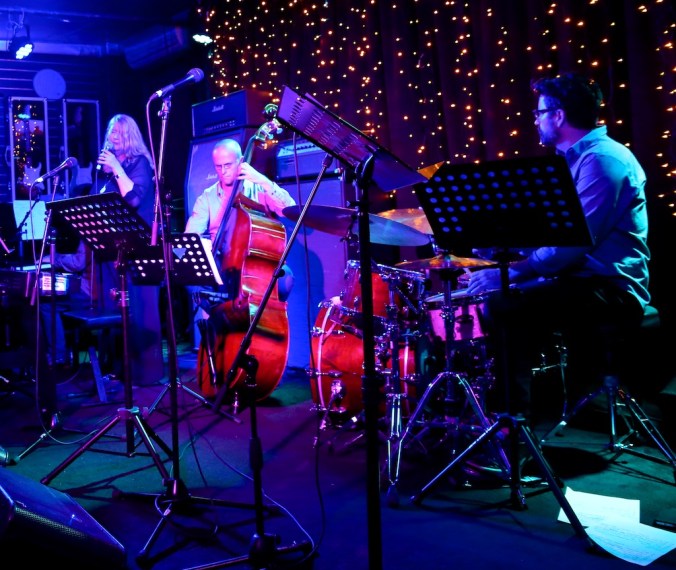
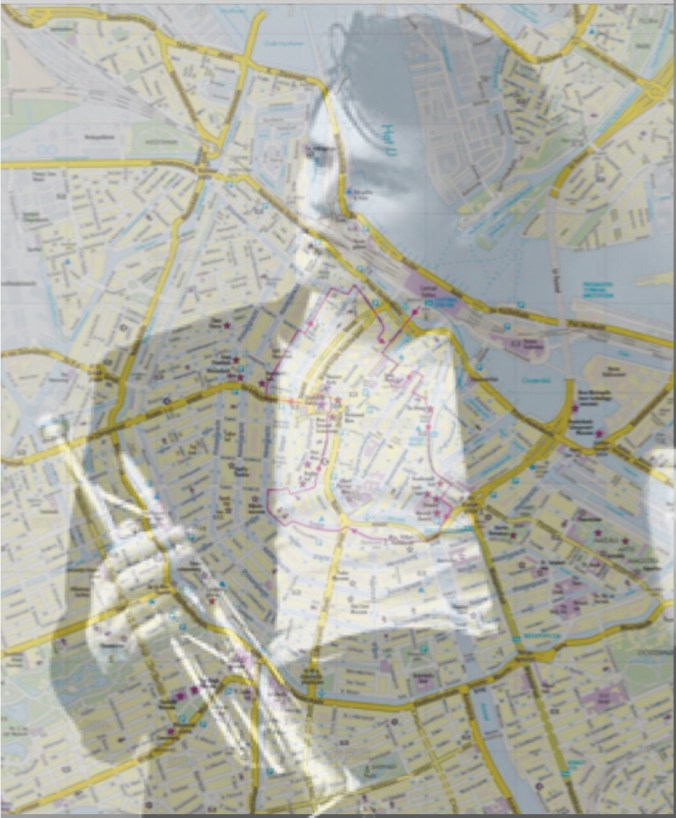 I had been to Amsterdam before but never tracked down Chet Baker. I blame the city for this oversight because it swallows travellers whole, reorders their plans and confuses them with a multiplicity of temptations. You arrive, you drift through the alleys and before you know it, it’s time to check out. This time I was not to be distracted. As soon as I awoke I grabbed an early breakfast, noted down Chet’s address and headed for the red light district. His hotel was located in Prins Hendrikkade, a street on the edge of sanity. A quarter where bored-looking sex-workers knit cardigans in dimly lit shop windows.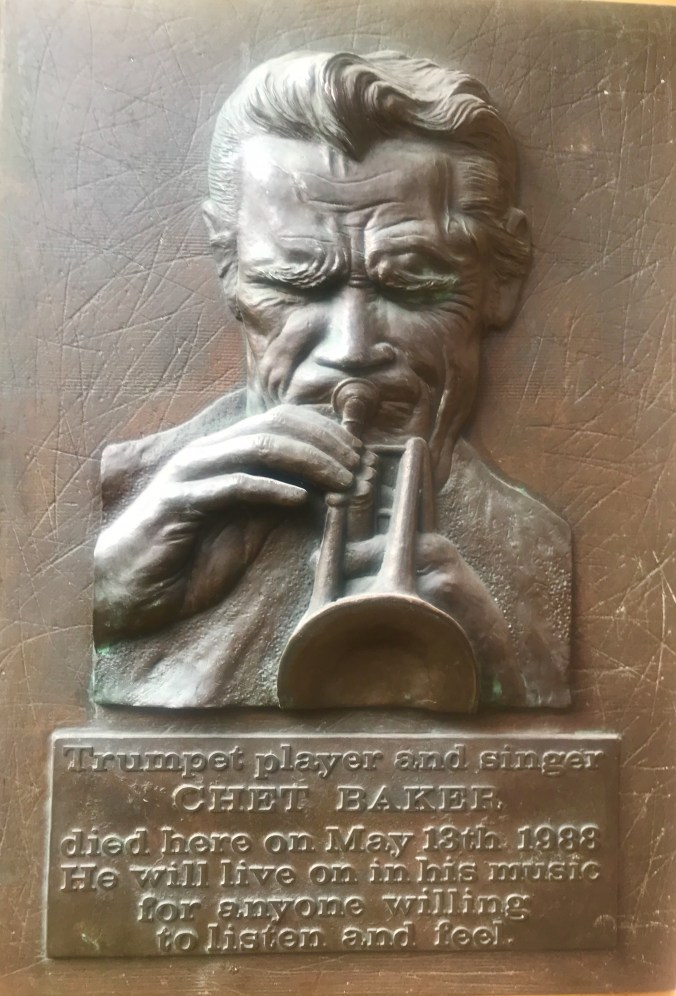

 JazzLocal32.com