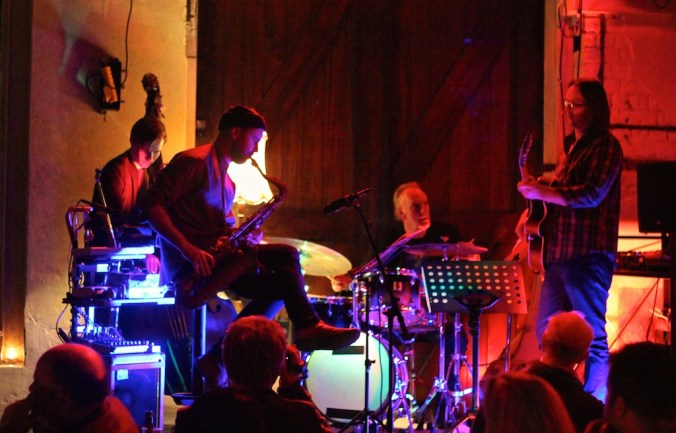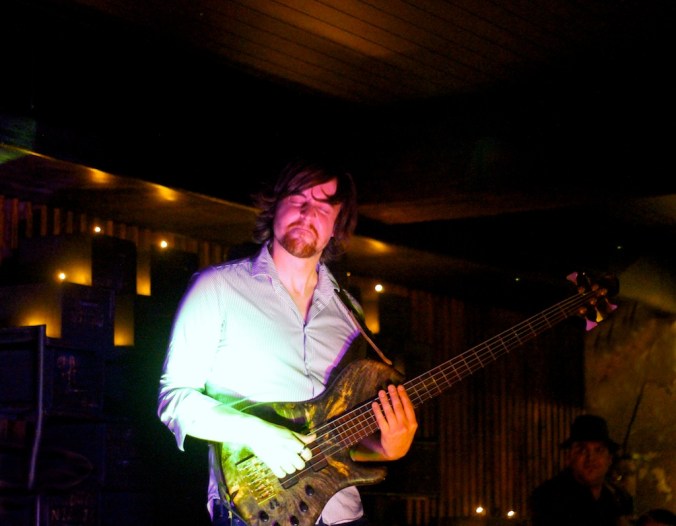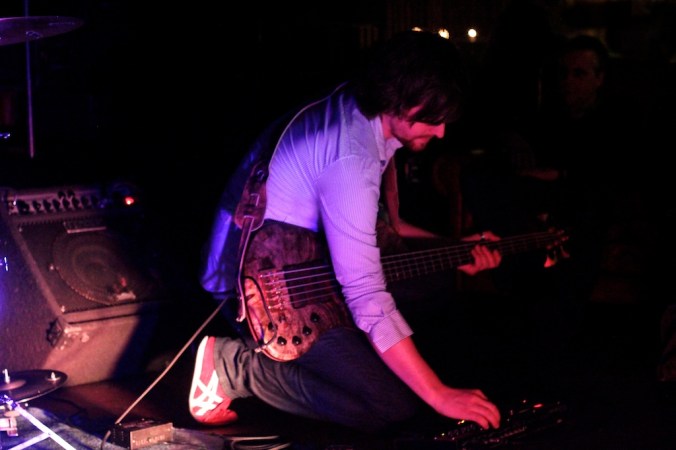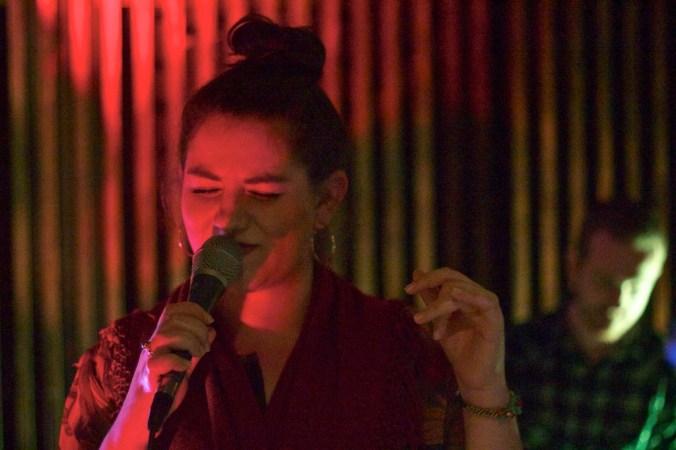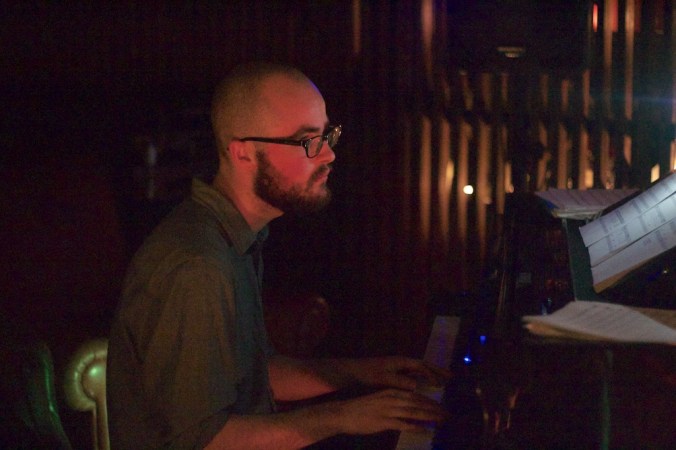
Reuben Derrick’s Hound Dogs @ CJC

IMG_8243 - Version 2

Dog bands are a recurring theme in New Zealand jazz.  There was Neil Watson’s ‘Zen Dogs’, ‘Dr Dog’ (Roger Manins, Kevin Field, Oli Holland & Ron Samsom) and now Reuben Derrick’s ‘Hound Dogs’.   To redress any perceived species imbalance, I was glad to see that visiter Mike Stern recently put out an album titled ‘Who Let the Cats Out’.

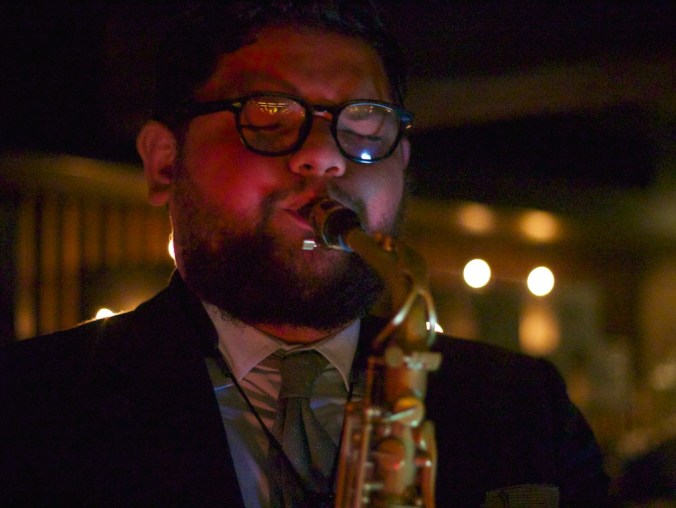
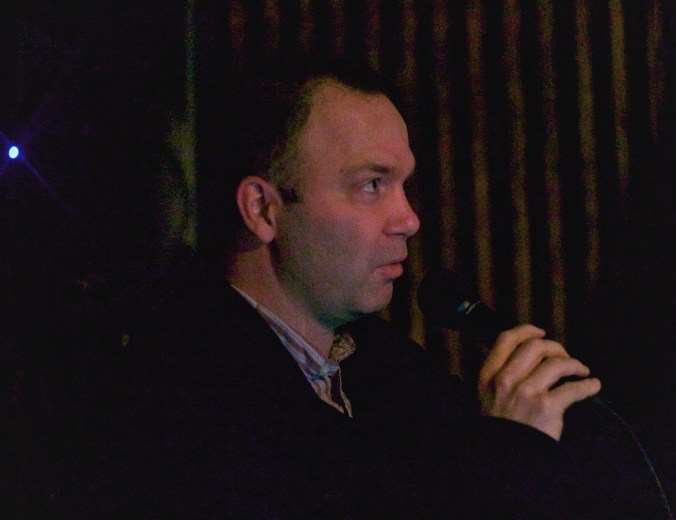
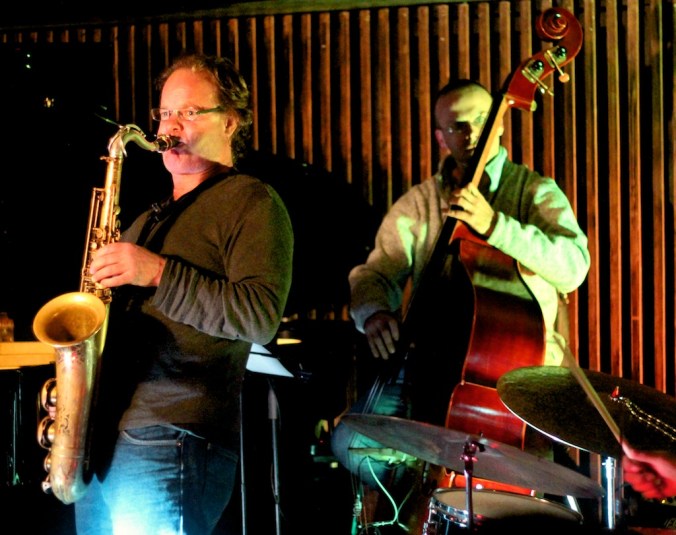
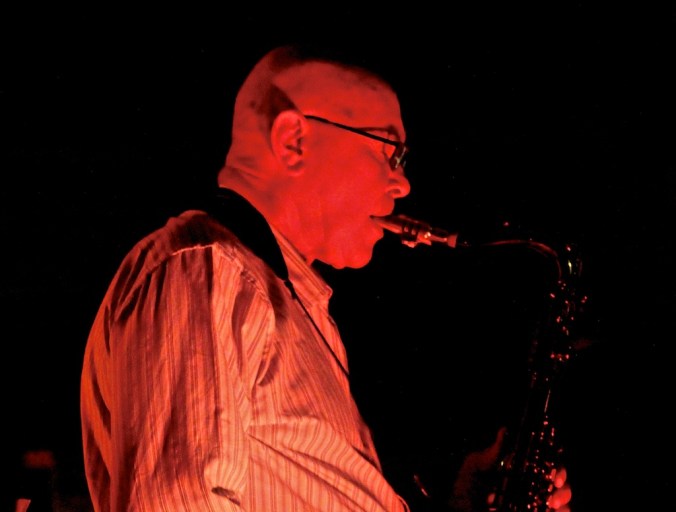
Reuben has played in Auckland before but I missed that gig.  I was glad that I did not miss this one.   With the exception of Alan Brown, all of the band have either lived in or have some strong connection with Christchurch.   Reuben Derrick is an important part of the Christchurch Jazz scene and with the Christchurch Festival underway very shortly we were lucky to lure him up for the gig.  In hound dog fashion he had tracked down an impressive set list, including several tunes each by Monk, Steve Lacy and Charles Mingus.  The two Monk tunes were ‘Ask me Now’ and ‘Bolivar Blues’.

IMG_8225 - Version 3

Both are familiar to me but it took me a moment to realise what they were.  They breathed new life into these much-loved but less-often-heard tunes and amazingly they made them sound as fresh as paint.  They did so without reharmonising, nor tackling them in an especially angular way (That would be pointless as you can’t out-Monk, Monk).  There were not so many jagged edges but these were great renditions.  Authentic and so accessible that their ‘Bolivar Blues’ has been singing in my head ever since.

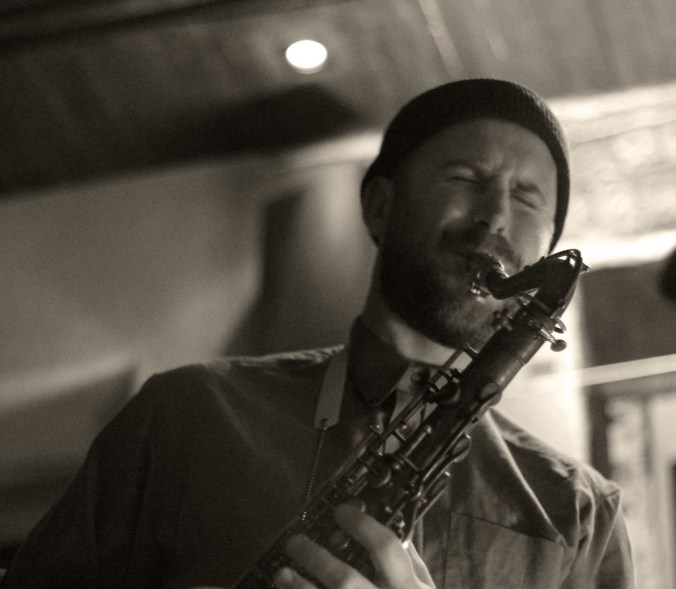
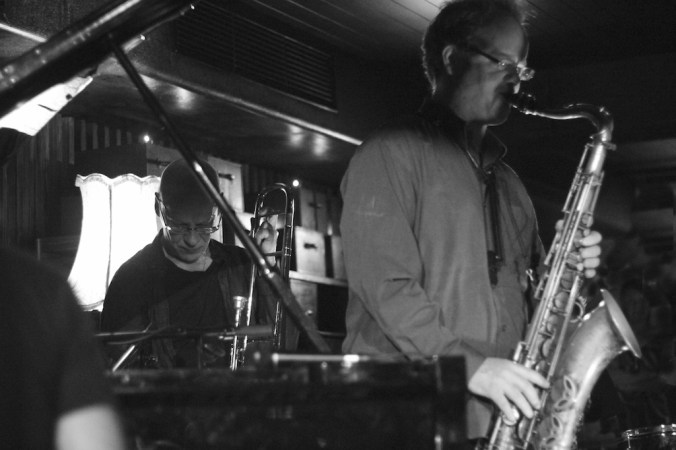
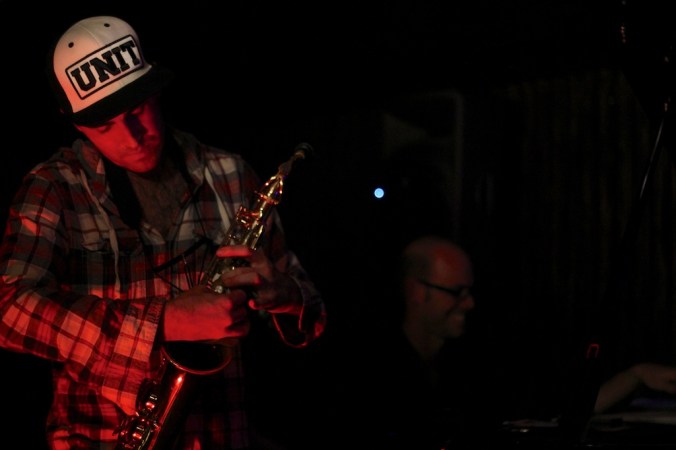
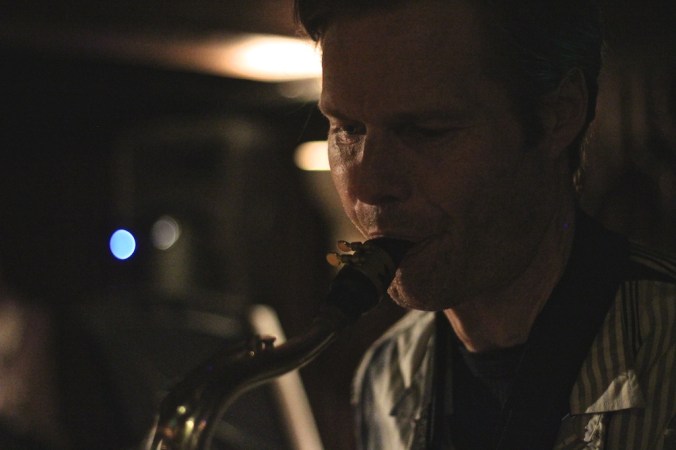
Reuben plays an older instrument and the character of that tenor really suits his bluesy-earthy approach.   Some tenor players depart the melody before it is stated but Reuben stands on confident ground.  He is a an intensely melodic player but there is nothing clichéd about his approach.  This is most often seen in the older bop era players, who were able to stay close to the melody but still tell a great story.   Another thing that I liked was the way that his improvisations unfolded with an inner logic.  A logic that allowed you to trace the steps back in your mind.   A journey shared.

IMG_8239 - Version 2

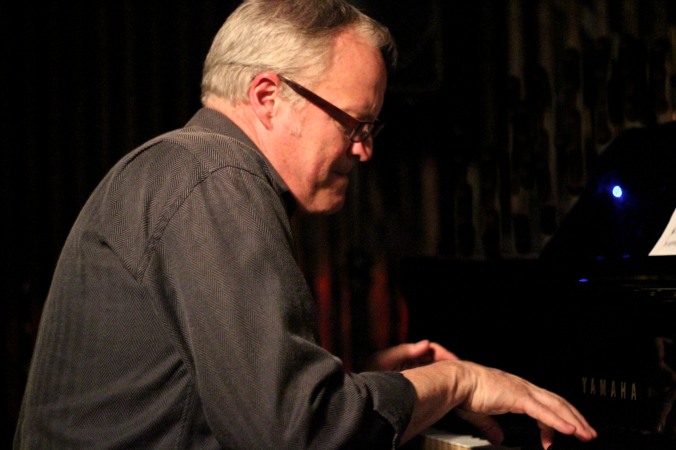
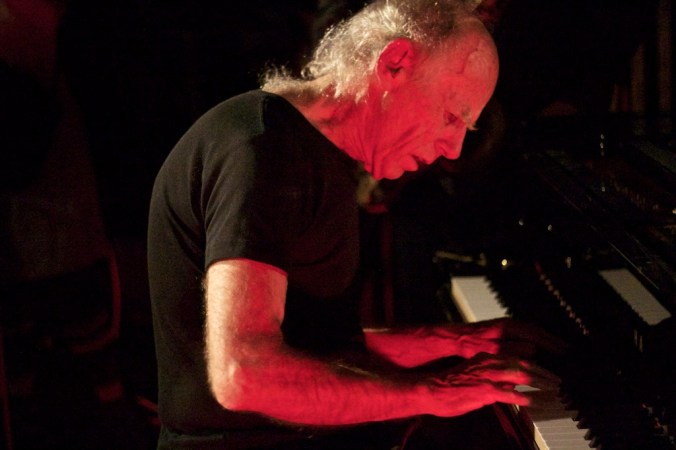
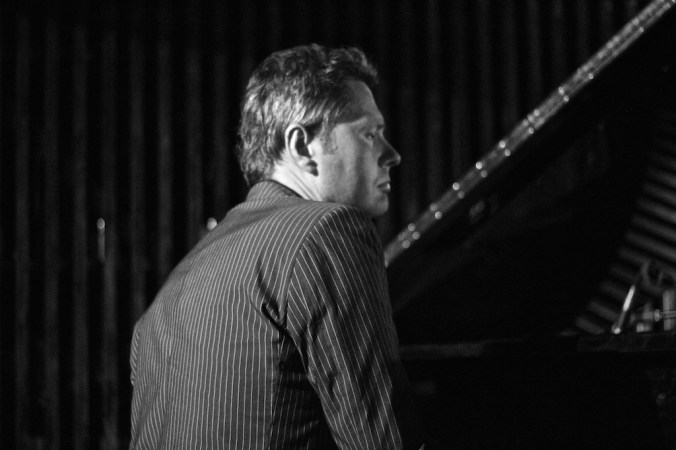
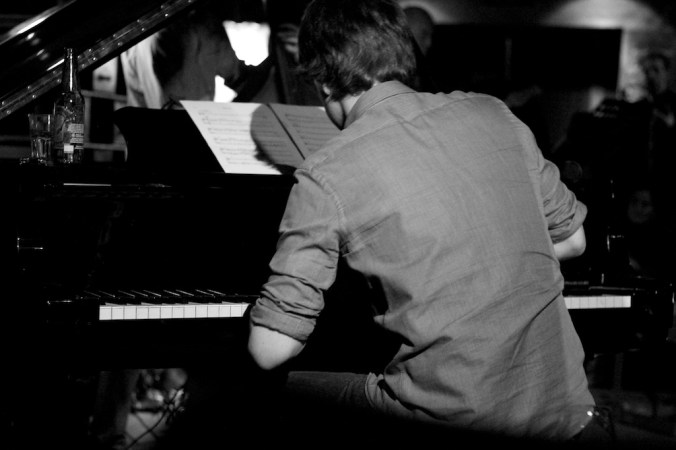
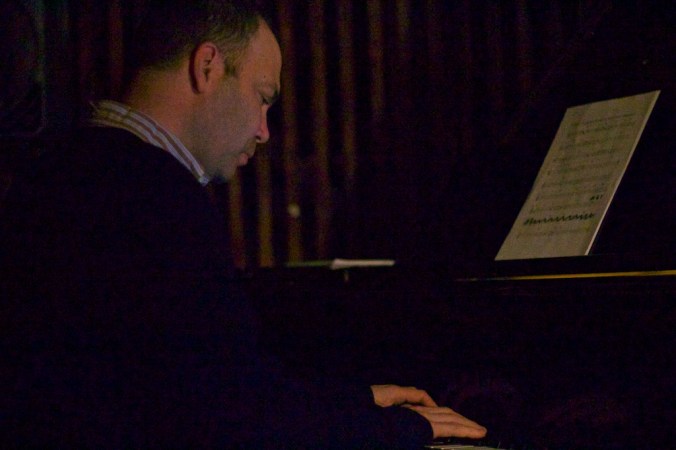
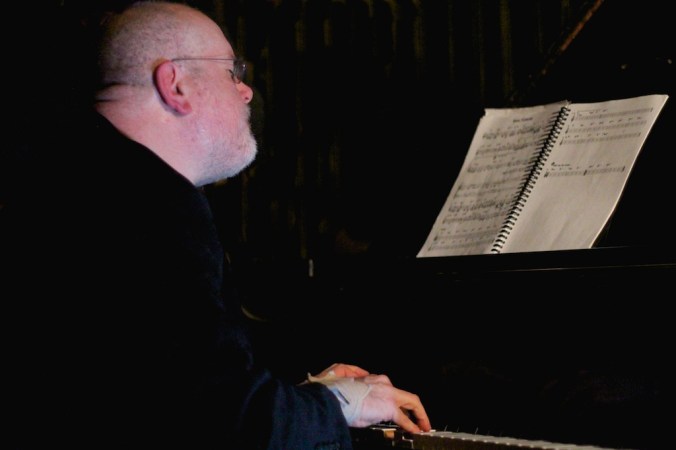
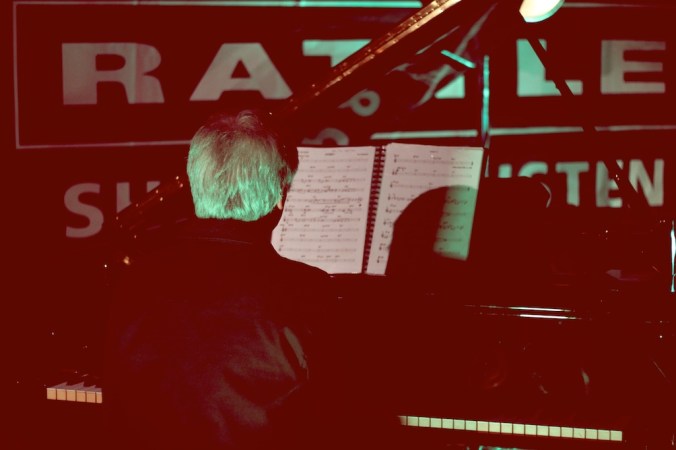
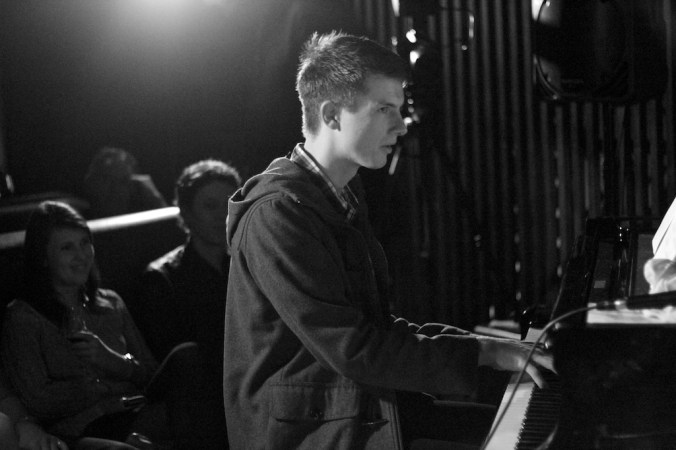
I am not sure whether Alan Brown has played with Reuben before, but he couldn’t have fitted in better.   I have learned over the years that Alan is not only gifted on keys and piano but he is able to adapt to a multitude of styles.   I have not heard him play Monk before but he gave the band exactly what they required.   Solid decisive chord work and inventive solo’s.  He navigated Monk’s choppy lines with the same ease that he tackled the very different compositions of Steve Lacy.  IMG_8231 - Version 2

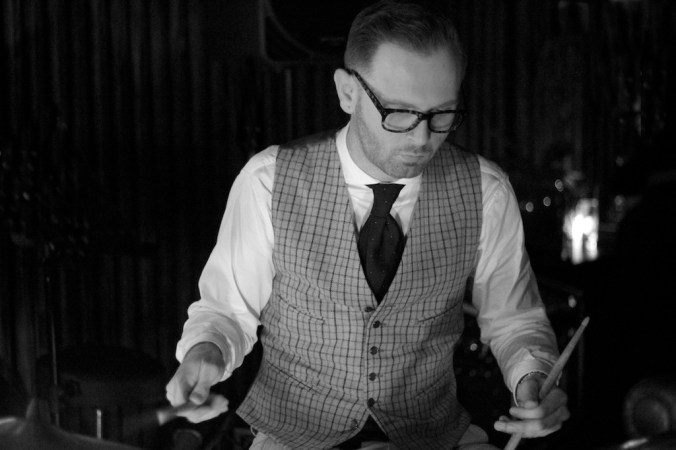
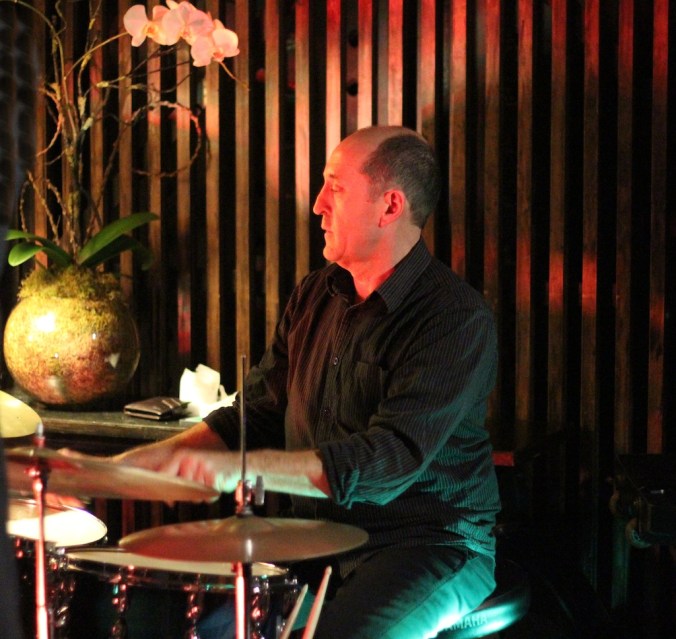
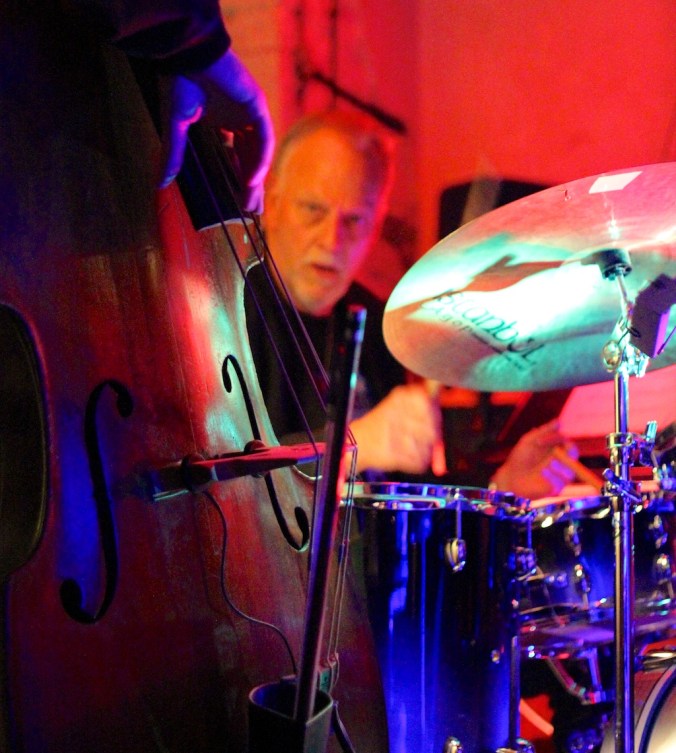
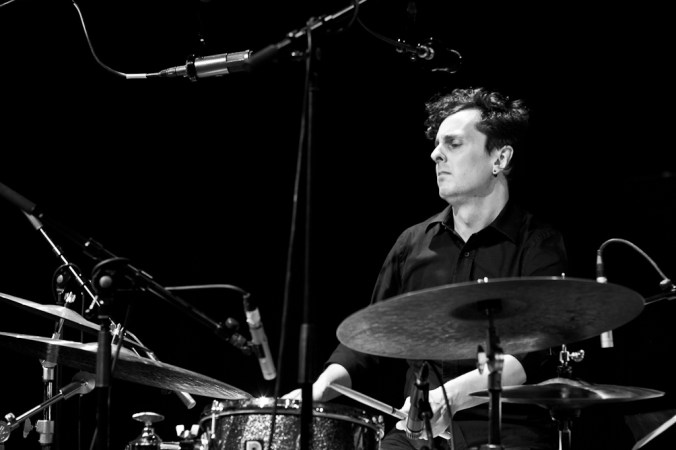
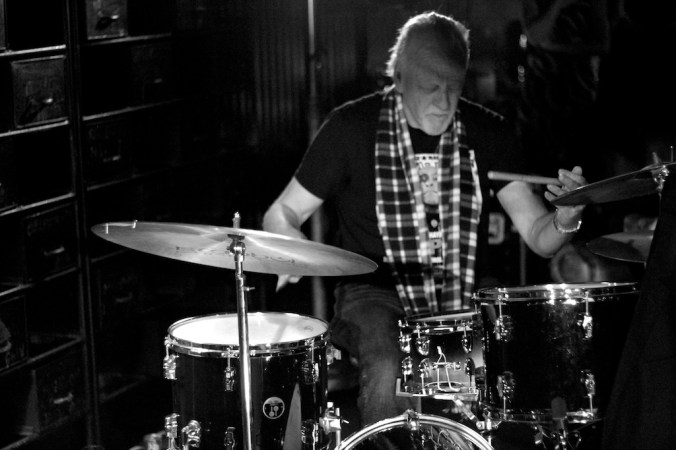
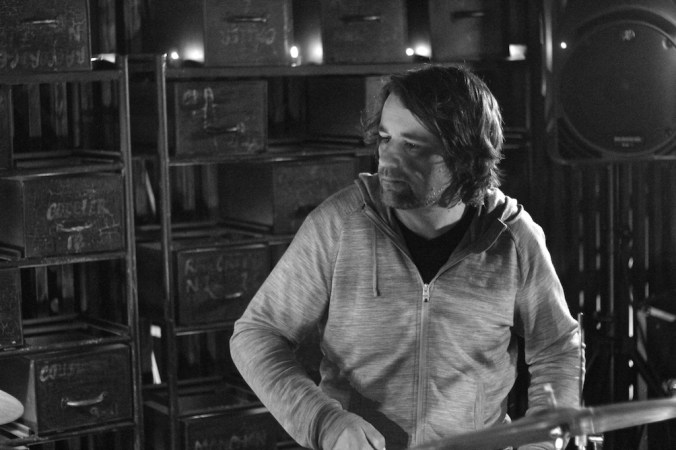
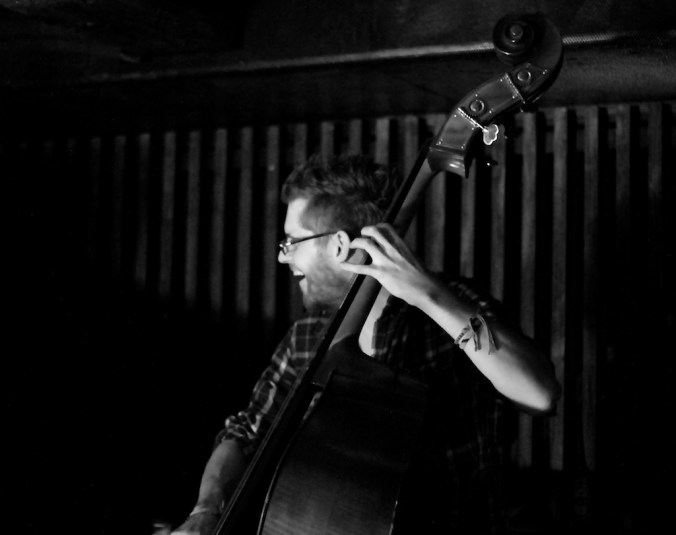
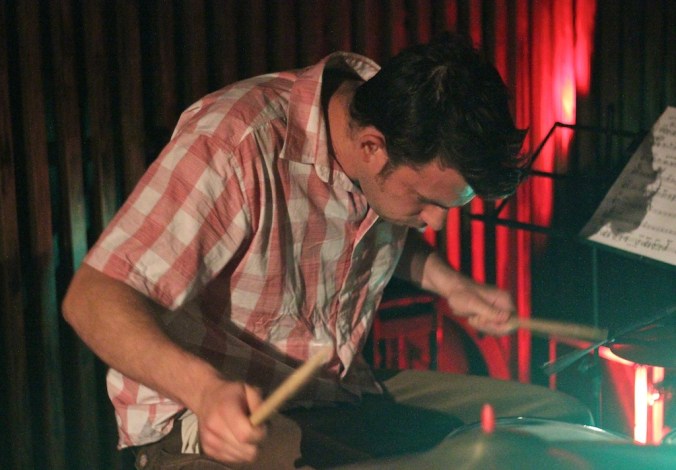
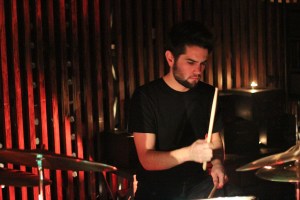
There were two familiar faces in the lineup, Andy Keegan and Richie Pickard.   Andy has played a number of gigs about town since moving up from Christchurch and he is often at the CJC.  He is a versatile drummer and we saw that demonstrated as he moved effortlessly from colourist to bop drummer during the gig.   I like his time feel and the fact that he lays down a solid beat without drowning out the others.  He plays to the room.   I often tease him by saying that he is a very photographer friendly drummer, as he often leans forward as he gets into a number.

IMG_8260 - Version 2 (1)

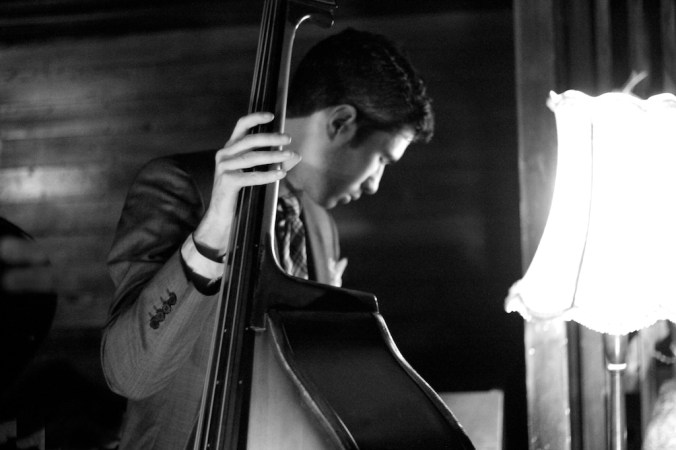
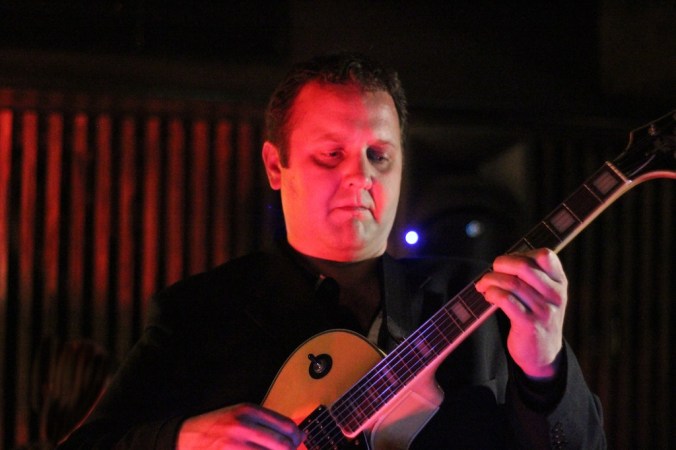
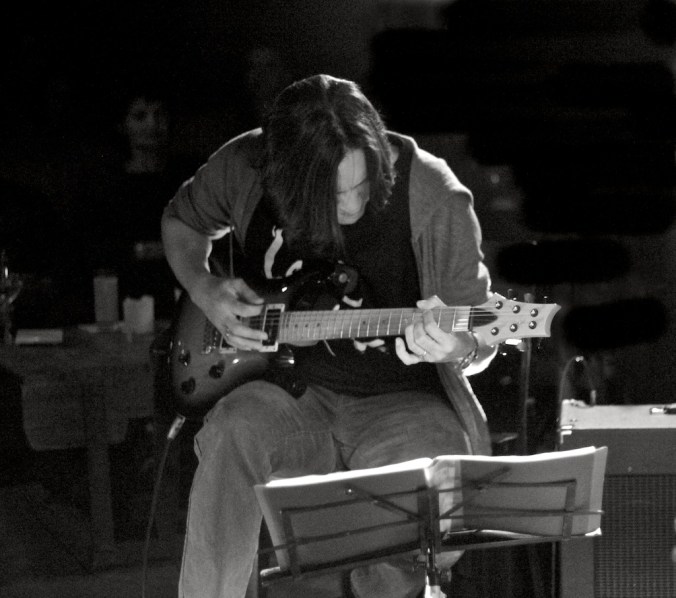
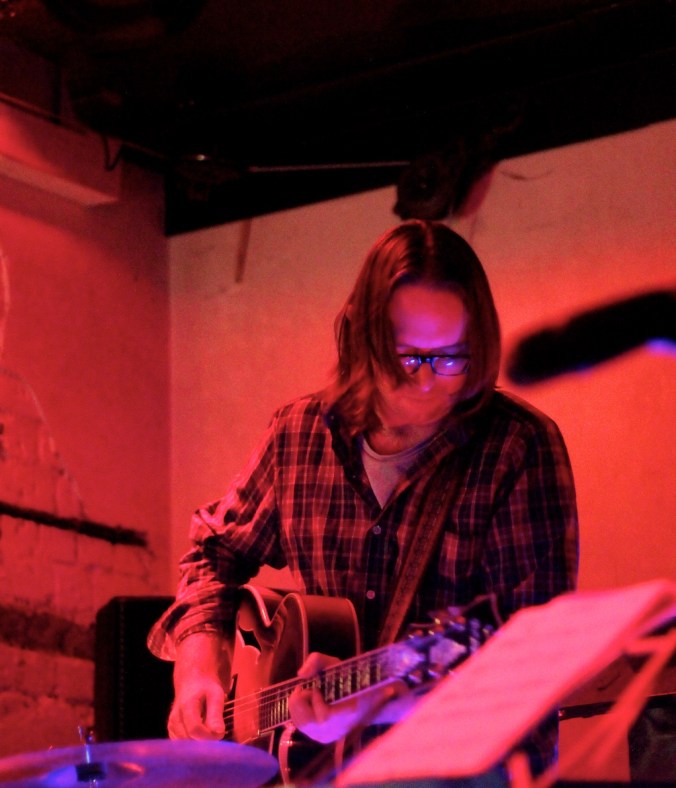
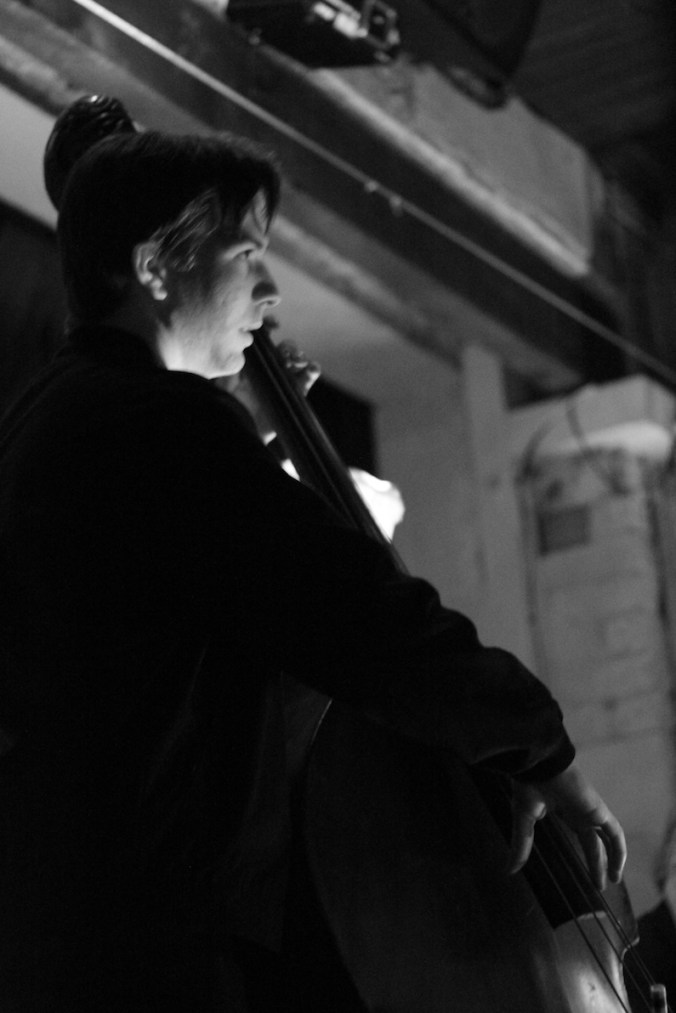
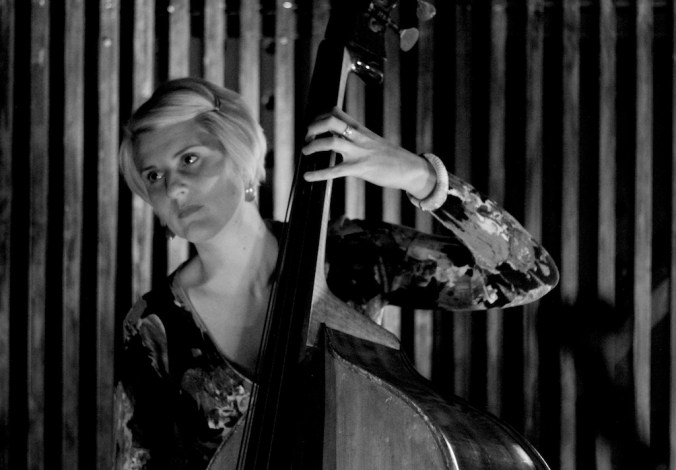
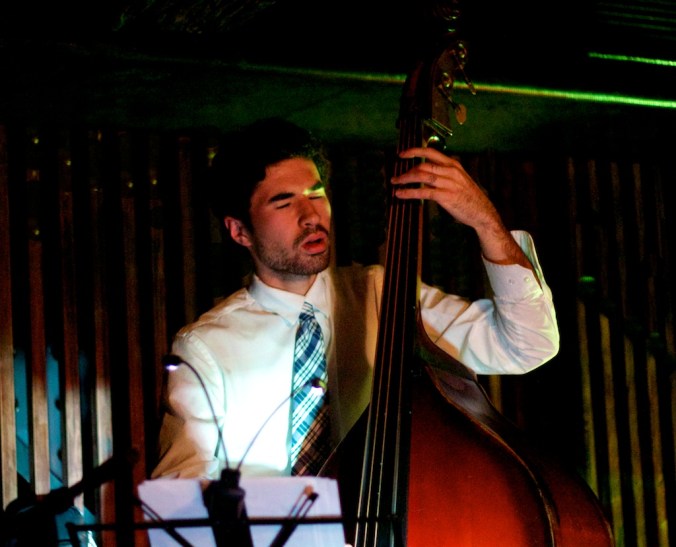
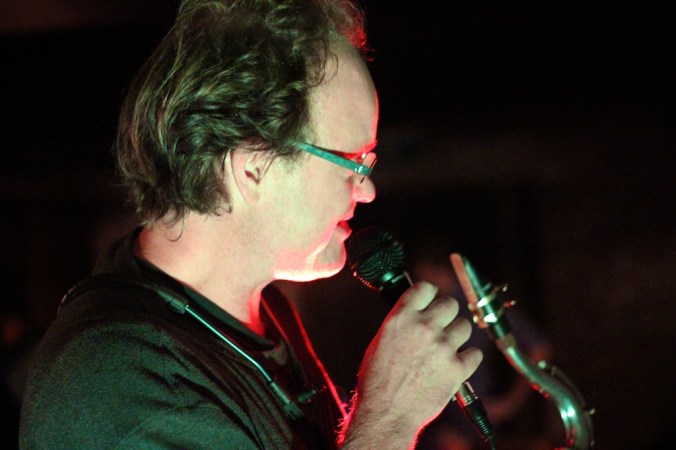
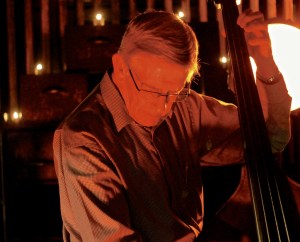
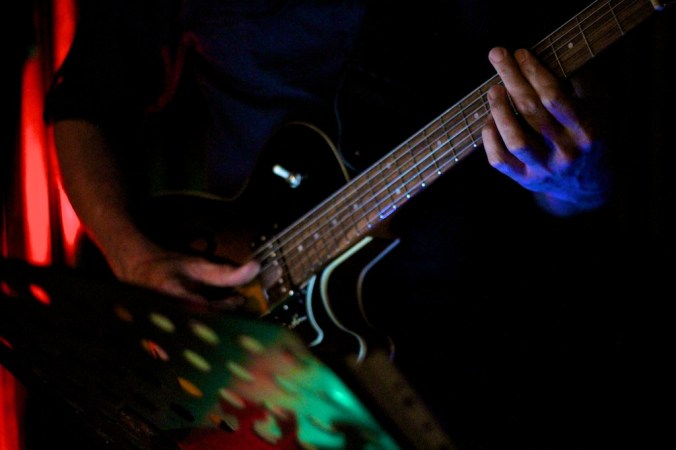
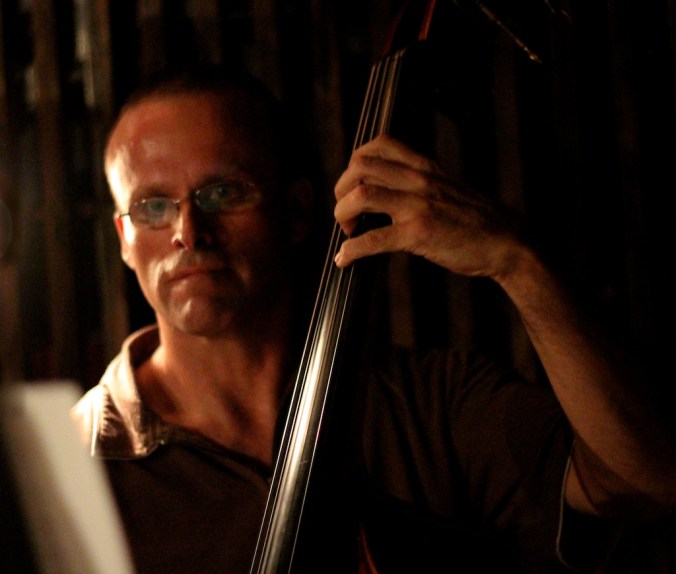
Ritchie has also played the CJC before and the last time I saw him was with Dixon Nacey.   This is very different material to the high-octane tunes that Dixon was playing and so I saw another side of him in the Hound Dogs.  I found him especially strong on the ballad material like the quirky ‘Ask Me Now’.   The other member of the Hound Dogs is guitarist Sam Taylor and he is not seen in the CJC very often.   That is a pity because his sound is different from many of the Auckland guitarists.  He draws more deeply on traditional Jazz guitar and he does so convincingly.  At times his comping was very reminiscent of Freddy Green’s; a quiet rhythmic strum that pulled back slightly on the beat and gave the number a deep swing feel.  His comping may reference swing but his lines are pure Be bop or Post bop.

These guys may not get together very often but when they do they are a solid unit.  With a great sound like that, I hope that they come and play the club again

Who: Reuben Derrick’s Hound Dogs:  Reuben Derrick (tenor), Alan Brown (piano), Sam Taylor (guitar), Richie Pickard (bass), Andy Keegan (drums).

Where: CJC (Creative Jazz Club), Brittomart 1885 Building Basement, Auckland 4th September 2013
Joel Haines trio @ CJC

IMG_8210 - Version 2

At its best Jazz is a place of unexpected intersections.  Being the music of appropriation there are deliberate collisions with other art forms and out of this comes new ideas and rich pickings.  The Joel Haines gig last week caught us by surprise as Joel seldom gigs these days.   He’s embedded deep within the session, film and TV world and his work will be known to most of us without realising it.   I have seen him perform a number of times over the years, but these outings are often in the role of sideman.  The last time I saw him was when his brother Nathan was in town.

IMG_8211 - Version 2

I really like his playing which infuses Rock and Country voicings into an open-ended Jazz vocabulary.   He musical lineage is impeccable as he comes from one of the most respected Jazz dynasties in New Zealand.  Father Kevin is a highly regarded and well recorded bass player, while brother Nathan is one of New Zealand’s best known and most respected Jazz exports.   This family has all bases covered with talent shared equally.

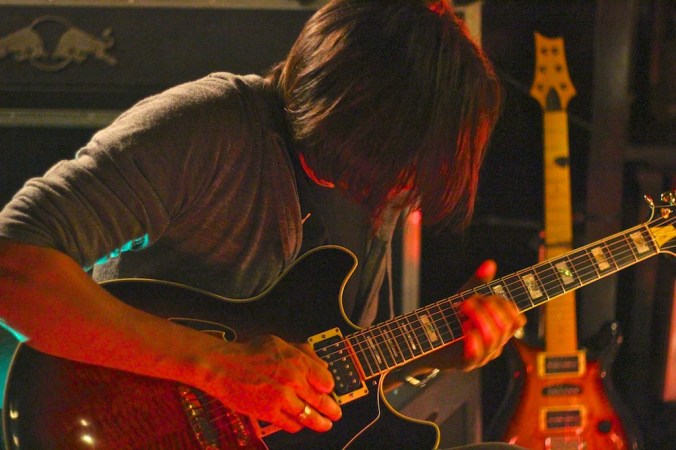
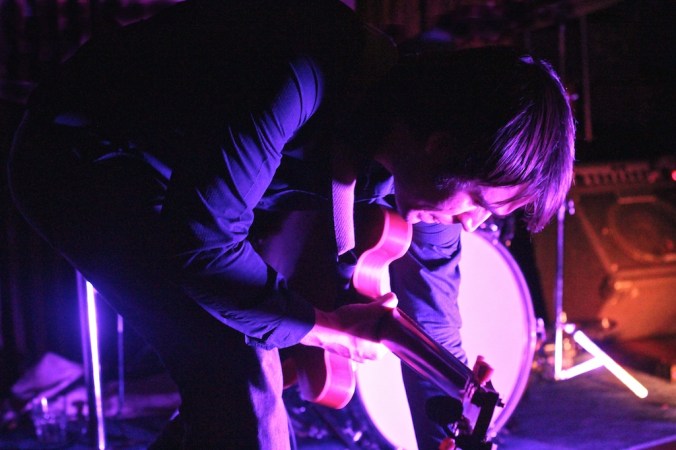
Joel is certainly not an extrovert and at this gig he sat huddled, as if subsumed by his rich-toned Ibanez.   When he leans forward to play, his long hair falls across his face and the effect is complete.  His sound however tells the opposite story, the shrinking of physical presence enables him to become the notes and the lines he plays.  There was only one announcement and there was only one number identified.

‘No introductions, lets just play”, he said quietly and they did.   On stage Joel is all about the music.

This is Jazz informed by Joel’s years at the ‘Cause Celebre’ and above all by his musical influences.  At times you can hear the echoes of Jimi Hendrix voicings or perhaps Bill Frisell, but the truth is that all of these influences arise from a deep well of ideas.  His material is predominantly lyrical and warm at heart.  You cannot separate this type of music from the film scores that have engaged us over the years.  Jazz and Movie sound tracks have been inextricably linked since Ellington’s ‘Anatomy of Murder’ or Miles ‘Escalator to the Scaffold’.   Joel works successfully in this world and a number of TV shows feature his music.  I am one of those people who remain after a movie is over, waiting for the music credits to scroll.  You would be surprised who you find in those fleeting glimpses.  I recently watched a great Sicilian move where John Surmon wrote and performed the soundtrack.  With the paucity of earning ability in Jazz, going into the studios or becoming a session musician has always been a good option.

IMG_8198 - Version 2

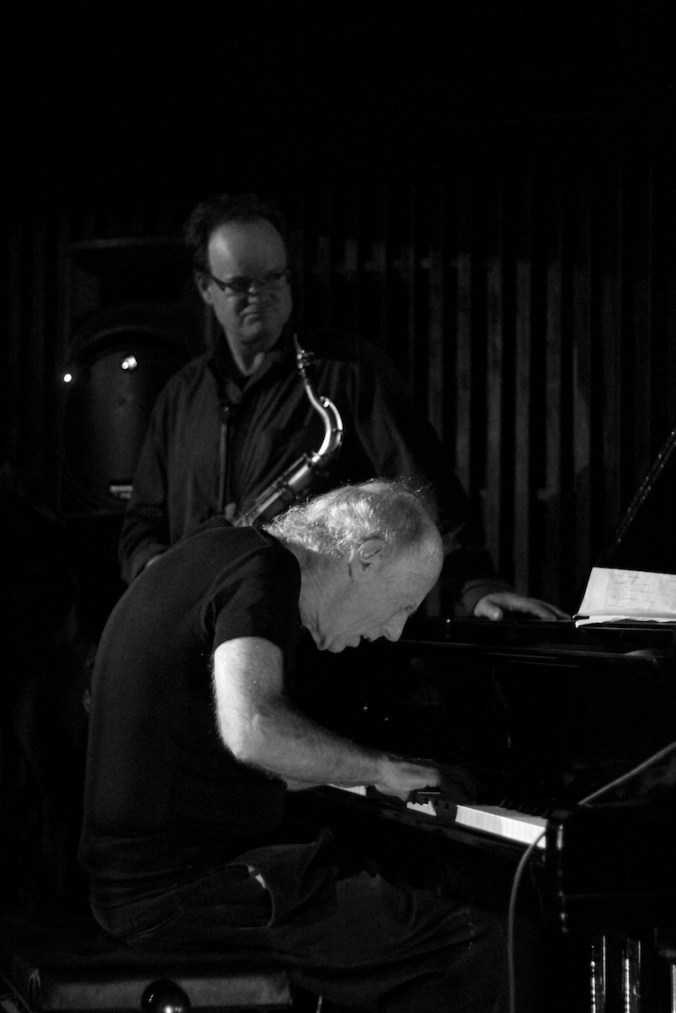
For the last two numbers Roger Manins joined them on tenor.  The tune ‘Lady Lywa’ (by brother Nathan) was wonderfully performed and I am glad it was in the mix (as the only tune composed by someone other than Joel).  This would be a contender for a New Zealand Jazz standard if given a chance.  It was not surprising that Roger blended in seamlessly, as he Ron, and Oli are constantly playing together and the material gave them a solid spring-board for improvising.

I can recall Nathan once putting a cupped hand to his ear during a gig and saying, “Listen to that, the warm hum of valves).   That hum was also evident between numbers at this gig, but for the main part the warmth emanated from the compositions and the ebb and flow of a solid performance.

Where: CJC (Creative Jazz Club) 1885 building, downtown Auckland

Who: Joel Haines (guitars), Oli Holland (bass), Ron Samsom (drums) – with guest Roger Manins (tenor).

Neil Watson Four @ CJC

IMG_8034 - Version 2

I love any music that can be termed ‘Space Jazz’ or ‘Space Funk’.  I have no idea if this is a real genre but I follow it anyhow.  Living through the era of Sputnik and being caught up in the excitement that followed I was nudged in that direction by the events of the day.  After that I zeroed in on space themed music.  Some of it was corny (Telstar) and some was grandiose (Gustav Holst’s ‘The Planets’).  Not long after this I stumbled across Jazz and the sonic explorations perfectly fitted my longing for a music that evoked the wonders of space while encompassing the quirks of our humanity.   Music performed by artists who stood in awe at the edge of the universe and then stepped free of its limits.  IMG_8030 - Version 2

The Neil Watson Four is a recently formed Auckland band who have no fear of galactic explorations.  With the aid of a doogon (explained later), tenor saxophone, drum kit, upright bass and four overly fertile imaginations, they bent and pulled at the fabric of the universe.  This is a band that defies the norms and swallows genres whole.  There is no sense of deliberate eclecticism here and no self-conscious navel gazing.  It is original and you get the sense that what happens sometimes surprises the musicians.

The feeling is often that of organised chaos, a loose organic vibe that works well because they have entered into a collective state of being.  While Neil Watson pilots the ship there is no heavy controlling hand but his benign presence presides.  He has gifted his vision and let the possibilities unravel as they may.  IMG_8057 - Version 2

Neil Watson is not only a great guitarist but his sense of humour is original.  A sort of postmodern Zen; dropping casual asides into the banter in ways that confound.   The You Tube clip that I will post is ‘Renamed’.  When Neil announced that tune he casually added, “I hated the original name”.  This sort of humour leaves you momentarily confused and then laughing out loud.  They also played a lot of tunes named after children, girlfriends or spouses.   The tunes were all great and particularly ‘Renamed’ (Watson), ‘Eleanor’ (Dennison), ‘Rosie My Dear’ (Gibson) and ‘Theo’ (Allen).  There were ballads and country fare as well.  their rendition of ‘Danny Boy’ was so poignant that any Scots in the audience would have been fumbling in their sporrans for a tartan hanky.

Neil Watson is an original guitarist and he is at his best when a leader.  He brings a rag-tag of interesting sounds and ideas to the bandstand and then knits them together.  There is also something akin to Zorn in much of this material.  Once the skeletal structure and the overall concept is in place the music is liberated.  The interactions between men and machines are fluid and what the audience sees will never be repeated.   For this to work well he needs the right collaborators and he has certainly struck gold this time.  IMG_8044

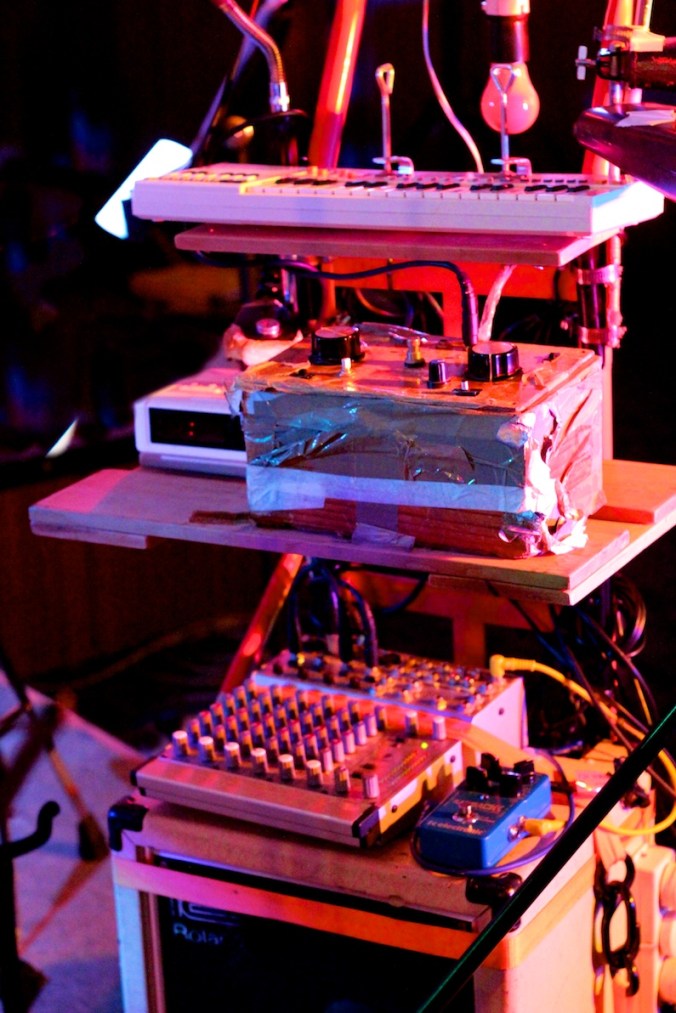
Cam Allen usually plays alto but he is also a fine tenor player.   I have also seen him manipulate a Moog to great effect.  On Wednesday night he played a Buescher ‘Big B’ Aristocrat and it gave out an earthy, and slightly raspy sound.  Word has it that it is a tricky beast to play but it sounded just right for this gig.   I risk committing heresy here but a Selmer would have been too clean for this music.  His interesting modal explorations and his flow of ideas mark him out as a gifted player.  This is hardly surprising as he honed his craft on the highly competitive American Jazz scene.  In this band he doubled on ‘doogon’.   This is very much a ‘Kiwi’ thing and it is best described as an array of electronic and acoustic sound enhancements strapped to a hardware-store hand truck.  Resembling a cross between a Dalek and an IED with its glowing blue lights, digital clock console and multiple knobs (many strapped on with duct tape); it can envelop the audience with shrieks that resemble a Banshee at a rocket launch.  IMG_8075 - Version 2

All of the instruments including the drums feed into this machine and the effects are astounding.  On upright bass was the respected Tom Dennison who used his arco technique to very good effect.  This bowing worked well with the Doogon, which under Allen’s guidance resonated in ways that would have astounded the instruments makers.  Dennison has a lovely rich tone and we heard plenty of that.  What can never be overlooked are his compositional skills (See an earlier post on his ‘Zoo’ album).  For this gig he contributed the lovely ‘Eleanor’ which he dedicated to his girlfriend.  He seldom appears at the CJC these days and it was a pleasure to see him there again.

Perhaps the biggest masterstroke was adding Frank Gibson Jr into the mix.  This inclusion of a drummer most known for his Post Bop chops may have raised a few eyebrows at first, but Gibson is no stranger to fusion.  He demonstrated just how perfectly he can execute this material and he showed us all what free and imaginative drumming looks like.  I heard a band member saying later that having Frank behind them, lifted the whole performance.   IMG_8050 - Version 2

I am an unreformed devotee of music like this and whether you call it Space Funk, Space Jazz, Eclectic Fusion or just wild music I will be its cheer leader.   This is an itch that just begged to be scratched and I am glad that Neil gave us a taste of it.  Besides the wilder numbers there were one or two ballads to balance out the program.  Overall it was a very satisfying experience.

It was somehow fitting that the band performed on the day that NASA verified that Voyager One had left our solar system and entered interstellar space.  

Who: The Neil Watson Four.  Neil Watson (guitar), Cam Allen (tenor, doogon), Tom Dennison (bass), Frank Gibson Jr (drums).

Where: The CJC (Creative Jazz Club), 1885 Building, Brittomart, Auckland.

Photographs by John Fenton & Ben McNicoll

Trudy Lile Quartet @ CJC

IMG_7997 - Version 2

Trudy Lile has unerring radar when it comes to locating tunes from the lessor known jazz lexicon.  Tunes that she skilfully transforms into glowing vibrant flute friendly arrangements. Her choice of ‘Steppin Out’ is a good example.  Kurt Elling recently sung this wonderful (but difficult) Joe Jackson tune on his ‘At The Gate’ album.  Not only was it a great choice and well executed but her new lineup rose to the occasion; giving her all the support she needed and more.

Trudy Lile last performed at the CJC about 8 months ago and she had a different line-up then.  Last Wednesday she had assembled a particularly solid rhythm section in Alan Brown (piano), Cameron McArthur (bass) and Ron Samsom (drums).  Trudy is often adventurous in her choice of material, mixing reworked standards, originals and virtually unknown tunes scavenged from interesting nooks and crannies.  On Wednesday she held to this course and it paid off.  IMG_8013 - Version 2

Among the other numbers performed was a beautiful rendition of ‘Niama’ (Coltrane), ‘Flute Salad’ (Lile) – I love this tune with its swinging happy vibe and another Lile original ‘Domestic Bliss’.   Trudy explained that this number was somewhat tongue in cheek, as her own experiences of domestic bliss at times resembled the TV character Miranda’s.

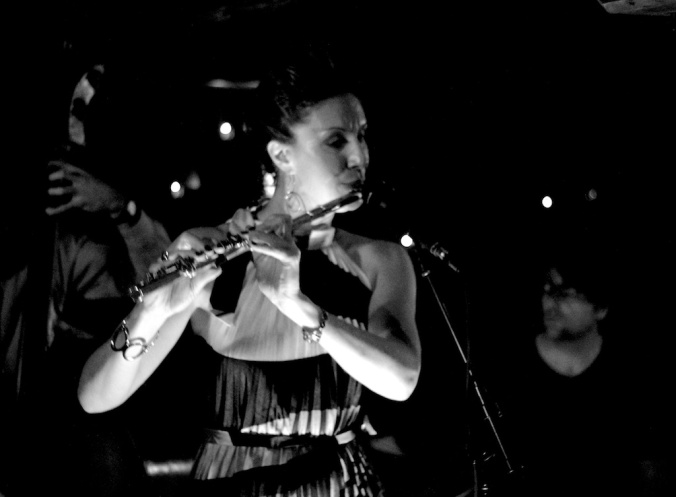
Trudy Lile is well-known about New Zealand as a gifted flutist.   While the flute is her prime instrument she also demonstrates impressive vocal skills.  We saw both on Wednesday.  I have always sensed a pied-piper quality to her work and as she dances and sways during the flute solos it is impossible not to be captivated.  Dedicated Jazz-flute players have been rare over the years and some critics have been disparaging about the lack of expression in that horn.   If they listened to Trudy they would shut up, sit down and recant.   In her hands the flute has all of the expression you could ever want

.IMG_8017 - Version 2

I must zero in on Alan Brown here as he was just superb.  OK, Alan always puts on a great performance but this facet of his playing is not seen as often.  Alan is rightly famous for his soul infused Jazz funk.  He was a power house of inventiveness on Wednesday,but more importantly he established beyond a shred of doubt that he is a stellar straight-ahead Jazz pianist.   His playing is always strongly rhythmic and that is what we expect from Alan, but to see him as an accompanist in this context was revealing.  Anyone hearing a Kurt Elling number such as ‘Steppin out’, notices his arranger and pianist Laurence Hobgood.   Hobgood is a dedicated accompanist of the highest order.   Alan communicated a special quality also.  He supported vocals (and flute) in the way Hobgood does and it was pure gold.  After seeing him in this context I would really like to hear him do a piano trio gig sometime, complete with a few straight-ahead standards.

Cameron McArthur has become the first choice bass player for Auckland gigs and every time he appears (which is often) he impresses afresh.   He is gaining a substantial group of supporters about town and his solos always elicit enthusiastic calls and strong applause.

IMG_8012 - Version 2

Ron Samsom is quite simply the best there is on traps and his tasteful underpinning of any band is inspiring.  On this gig he alternated between quieter brush or mallets work and power house grooves which lifted the others to greater heights.   Sometimes when I hear Ron’s drumming I can discern a pulse that goes way beyond the room.  Perhaps it is the pulse of the Jazz tradition itself, the history and the future rolled together in a beat.

This band was the perfect foil for Trudy and she took full advantage of it.

Who: The Trudy Lile Quartet – Trudy Lile (leader, vocals, flute).  Alan Brown (piano), Cameron McArthur (bass), Ron Samsom (drums).

Where: The CJC (Creative Jazz Club) Brittomart 1885, Wednesday 7th August 2013.

Reuben Bradley trio @ CJC + Mantis Album

Reuben Mantis

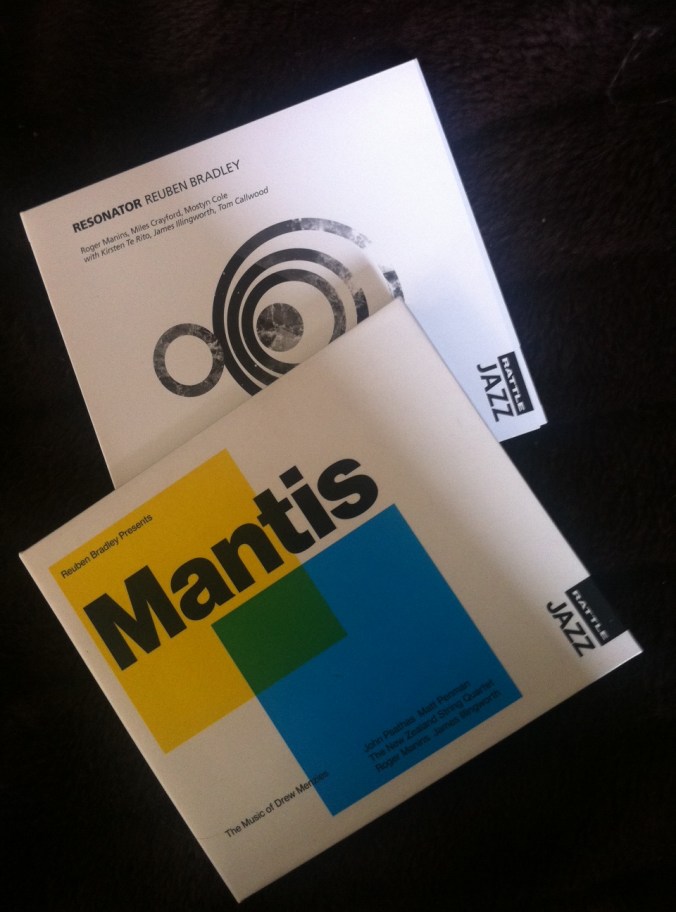
After the success of ‘Mantis’ and ‘Resonator’, Auckland audiences were keen to see a Reuben Bradley band perform again.   Reuben is one of those musical drummers that Wellington seems to specialise in and he clearly has an eye for an epic project.  For ‘Mantis’ he engaged some real heavyweights.  Roger Manins (tenor), Matt Penman (bass), James Illingworth (piano), John Psathas (arrangements) and the New Zealand String Quartet.  The tunes were all Drew Menzies originals, with arrangements by Reuben Bradley and John Psathas.

Mantis is a celebration of the works of Drew Menzies, a highly respected bass player in both the Jazz and Classical spheres and whose compositions had never been recorded before.  What is well communicated during this project is the connection that the musicians have with the material and what also comes across is Reuben’s obvious affection for his departed friend.  Reuben’s liner notes give us a fascinating account how the pieces came back to life, drawing us into a kaleidoscope of quirky lead sheets and a musicians world.  In some cases the tunes re-evolved from embryonic beginnings, coaxed by Reuben’s pen.   I urge everyone to buy the album.  The tunes are fresh but at the same time strangely familiar and this quality anoints them as being timeless, potential local standards.

While no added incentives are needed to purchase ‘Mantis’, it is worth pointing out that the proceeds of the sale go to the Drew Menzies Memorial Scholarship for young New Zealand bass players.  ‘Mantis’ was featured as a key event at the recent Wellington Jazz festival and this week it was a highlight of the Nelson Jazz Festival.  Credit to Creative New Zealand for funding such an important project and to Rattle Records for the album.  It is hardly surprising that musicians of this quality delivered so royally, but a nod to John Psathas and the New Zealand String Quartet is appropriate here.  No matter how experienced a classical string quartet, there is always a challenge when playing Jazz compositions.   The quartet’s unmistakeable chops and John Psathas airy charts took this exactly where it needed to go.

Having Matt Penman aboard was a huge coup.  This expat Kiwi bass player is now one of the real heavyweights of the North American scene.  His work with the San Francisco Jazz Collective, James Farm, Kurt Rosenwinkel, Kenny Werner, Joe Lovano, Fred Hersch, plus his own ground breaking albums, mark him out as one New Zealand’s greatest Jazz exports.  His Bass playing on this album is simply wonderful and no superlatives can do it justice.   Drew would have been extremely pleased.

Reuben won the Tui Best Jazz Album of the Year with his ‘Resonator’ album in 2010.   Roger Manins was also on that album and these two musicians work together whenever possible.  Both of the above albums are adventurous and in their different ways lay down benchmarks for what’s good and original about New Zealand Jazz.

mantis_image-reuben-bradley_wjf13

When Reuben came to the CJC on the 31st July, the working unit was pared back to drums, tenor sax and bass.   On Sax was Roger Manins who has shown time and again that he can give of his best in any configuration.  This sort of trio is wide open for possibilities and the lack of any chordal underpinning leaves the musicians open to risk, but completely free to explore melody and form.  None of the trio were strangers to this format.

I have often watched Roger stepping free of the boundaries, like an anarchic motorist on some long empty highway who has just realised that the normal road rules will not apply there.  I was also delighted to see Roger using his Radio Model, Cigar Cutter Selmer for the first time.  A sleek silvery goddess of bygone years which oozes charm.  In Rogers hands it purrs dangerously like an ancient vixen, brought back to life to seduce us all.

Brett Hirst is a popular Australian bassist and a list his former band mates would read like the who’s who of Aussie Jazz.  He has a big sound and an instinctive rhythmic feel which lent itself perfectly to this gig.  In their usual fashion Australia has claimed him as their own but he is originally from New Zealand like so many artists doing well across the Tasman.

Reuben, Roger and Brett work extremely well together and so it was fitting that they should tackle the work of Drew Menzies from a fresh angle.   While there was a tune or so from ‘Resonator’ in the set list, the bulk of the material played was from ‘Mantis’.  It is Reuben’s hope that these tunes will become mainstays in the Kiwi Jazz repertoire and I hope that this comes to pass.  I have heard at least one rendition of ‘Ladies Man’ played recently at a gig and so the trend may gather steam.

Who: Reuben Bradley Trio – Reuben Bradley (drums) (arrangements), Roger Manins (tenor sax), Brett Hirst (bass).

What: ‘Mantis’ (and ‘Resonator’) both available from Rattle.

Where: CJC (Creative Jazz Club) Brittomart 1885 Building downtown Auckland

Mike Nock + Roger Manins, Frank Gibson@ CJC

IMG_7906 - Version 2

It was sometime in early June when I first heard the news.  I was sitting with Roger, talking music and shooting the breeze about who we rated.  Suddenly he half turned and said, “Mikes coming back to do a CJC gig”.  The words hung in the air like a siren song and for me the impatient waiting began from that moment.  If Mike Nock was coming to town there would be magic aplenty.  That’s what it meant.  That is what it has always meant.

The word seeped out, first to the music students and then to the wider world, like ripples in an ever-widening arc.  The club would be full that night.

Closer to the gig Roger asked Mike who he wanted in the band.  They quickly settled on a trio format, not your usual piano trio but one with piano, tenor saxophone and drums.   Roger Manins on tenor, Frank Gibson on drums.  Mike had jettisoned the anchor for this gig and he was quite definite about that, no bass.   This is a challenging lineup for a pianist (and for the other band members) because no-one is there to hold the centre.   If you slip there is greater distance to fall.  In this different space wonderful things can also happen and they did.  This was a night among nights.

IMG_7932 - Version 2

Barely able to contain my impatience I rolled into the club foyer three-quarters of an hour early.   The queue was already snaking back past the basement stairway and well into the upstairs bar.  A seething mass of eager faces.  When the doors finally opened there was Mike sitting sideways on the piano stool and Roger was blowing a few scales nearby.  The music stand sitting to one side abandoned, an unnecessary distraction, in a free ranging gig going where the music took it.

Before the first set I caught up with Mike, talking about his various projects (he was playing with a New Zealand string quartet the next night).  He told me that he was coming back to the CJC with his newest Australian trio in a few months.  Next time bass and drums.  We talked a bit about Jazz musicians from the past, Kiwi’s that he had played with and then the discussion shifted to the older pianists who straddled the swing to bop era.  Like all great pianists Mike lets the entire history of Jazz fall under his fingers and so I asked him about players like Hank Jones and Mary Lou Williams.  When I listen to them I hear such strong left hands, walking chords, syncopation, hinting at a time when ‘harlem stride’ was still an influence.  “The newer and stronger bass players changed that” said Mike.  “As the bass lines become stronger and pickups better the need for such dominant left hand work fell away.  There was too much conflict”.   As a non musician I had never considered that and it all made perfect sense.  I marvelled all the more that Be Bop/Post Bop greats like Hank Jones kept a touch of this earlier style and even when accompanied by strong bass players like Ray Brown, George Mraz and Ron Carter.   I wondered if we would ever see those strong left hand stylists again.   I soon got my answer.

IMG_7897 - Version 2

The set list was not really planned and it changed and evolved as the evening wore on.   The numbers selected were all standards, but they were somehow fresh, as if revealed for the very first time.   The first number was ‘When Your Smiling’ (Shay/Fisher/Goodwin 1889) and the second number was ‘Gone With The Wind’ (Allie Wrubel 1937).  Those two numbers coming together had me wracking my brain as to where I had heard them, heard them played together.  Then it came to me, they were both on one of the earliest of the Brubeck Quartet albums.   ‘Dave Brubeck at Storyville 1954’ was a wild live recording that lacked polish but oozed soul and immediacy.  Afterwards Mike announced  that a Brubeck album had inspired him to play that number – bingo.  These are the connections we love.   If you ingest a large dollop of Jazz history the memories will reward you.  IMG_7901 - Version 2

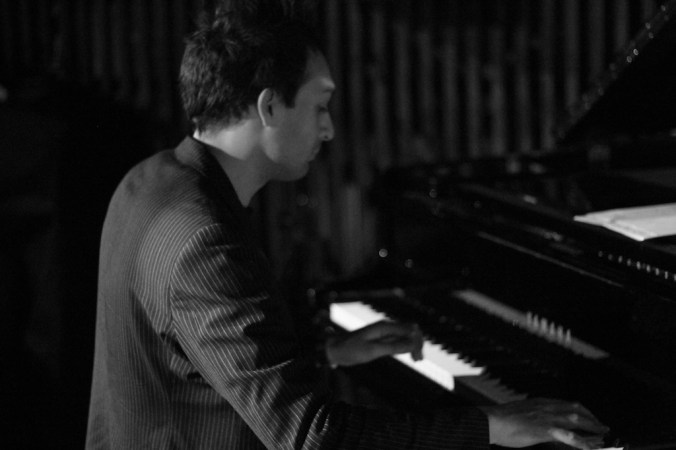
As they played through the first set I realised that the lack of a bass had not impeded them at all.  There it was, that strong left hand of Hank Jones, working the mid lower register while wonderful modern chords and runs flew from his darting right hand.   This was a master class for the senses to grapple with, giving us an unparalleled taste of Jazz piano mastery from an oblique angle.  No matter what Mike threw his way Roger matched it as they danced in and out of reach like well matched prize fighters .  These two have an uncanny level of communication.  It was even more evident later when they played ‘Softly as a Morning Sunrise” (Romberg/Hammerstein).  They had been considering what to play next when Frank Gibson suggested it.  Heads nodded in agreement and Frank set the number up nicely with a melodic intro on his traps.   “We will just see where this goes” said Mike, “could be anywhere”and he proceeded to pick at the bones of the melody.   Where it went was somewhere wonderful.  This is where the magic truly occurred, a moment to be savoured by all present.

They had begun the number, sparingly at first, soon more purposefully.  The level of interplay increased as they unpicked the tune.  Soon all three were working and pulling at the tune like it was a joyful game.  As Roger soloed I watched the trio inching up the intensity by degrees.  At first Roger had tapped out time with his right foot as he played, now he was pawing at the ground like a bull about to charge.   Mike was rocking madly and then standing and dancing some crazy dance.  Frank too was rolling with the beat.  By now they were way outside – blowing free of all constraints.   It was a moment to savour.  The moment.

IMG_7891 - Version 2

As I watched these three, so attuned, a thought struck me,  Mike Nock is originally from Ngaruawahia, Roger from Waiuku.   These two small country towns are close to each other.  What are the odds that rural New Zealand would produce two musicians of this quality.  Maybe it was something in the upper Waikato water supply?

When Jazz musicians are enjoying themselves there are always moments of hilarity, but on this night the best moment came from an unexpected quarter.   The CJC was full, so full  that dozens of people were turned away at the door due to the fire regulations. Outside it was winter, but inside it was hot as hell.  Mike by now stripped to his T-shirt asked if there was any talcum powder for his hands, which were slippery from the exertion.   Caro Manins duly produced a talcum powder container.  Mike wrestled with the lid for a few minutes and then handed it to someone else to unscrew.   Bigger and younger blokes stepped forward in turn, each saying that they were up to the task, but none could dislodge that damn lid.  “Take it back to the shop” said one, “it’s a faulty product”.  At this point a diminutive young woman took the container from the frustrated men, gently flicked off the child proof lock and opened it.  Men often forget the golden rule in these situations, ask a woman.  IMG_7936 - Version 2

During the second set Kim Paterson and Brian Smith sat in for a number or two.   Kim and Brian go back a long way with Mike and both have recorded with him.

As the enjoyment washed over me I could hear the words of Sean Wayland from a month earlier as he announced his gig.  “New Zealand I would like to thank you for Mike Nock”.   With you on that brother.

Who: Mike Nock with: Roger Manins & Frank Gibson Jr.

Where: CJC (Creative Jazz Club) 24th July 2013
And a clip by Jen Sol from the same gig:

Caitlin Smith @ CJC (with Kevin Field trio)

IMG_7827

Caitlin Smith is well-known to those who follow the Auckland music scene, where she is highly respected as a vocalist and voice coach.  Scrolling down her resumé reveals just how active she has been over the years and just how far-reaching her influence is.

She sits comfortably on the Soul to Jazz spectrum, often occupying a stylistic space similar to that of Joanie Mitchell or Ricky Lee Jones.  Her material’s drawn from a mix of originals, standards and pop covers but all interpreted in her own unique way.  She has an impressive vocal range and she can captivate an audience with incredible ease.   She is a true performer and her elegance and professionalism are immediately evident.  It takes years for a performer to look this comfortable in front of an audience and many never achieve it.  The fact that she has a severe vision impairment just adds to her allure.

IMG_7826 - Version 2

The set list was mainly from her latest album ‘Stories to tell: The Thorndon Project’.  Sponsored by The Disabilities Commission and PVINZ (Parents of Vision Impaired New Zealand).  Caitlin and the drummer on the album Mark Lockett (also vision impaired) had pulled together an impressive lineup for the session.    Caitlin (vocals), Alan Brown (organ), Paul Van Ross (saxophone, flute), Mark Lockett (drums).   The purpose of the album is to raise awareness around disability issues and to highlight the dedication of the parents caring for those with disabilities.  This hit me right where I live, because my granddaughter has cerebral palsy and I know just how incredibly hard it is for her.  I am also hyper aware of the sacrifices that her mother (my daughter) lovingly makes each day.

The creative arts are often at the forefront of such campaigns and this one is personal and special.  The personnel assembled for the album are all renowned musicians and while three hail from New Zealand, they are a truly international lineup.   Paul Van Ross is from Melbourne, but he is currently in New York.   Mark Lockett is originally from Wellington but he recently moved to New York.  Alan Brown has a legendary status on the New Zealand music scene and works, performs and teaches around Auckland.

IMG_7836 - Version 2

Caitlin had a different band when she appeared at the CJC.  Kevin Field, a regular accompanist for Caitlin had just returned from recording in New York (I am particularly excited about that, as he recorded with Matt Penman and Nir Felder).   Kevin is an extraordinary pianist and leader but he also knows how to accompany a singer.  Anything involving Kevin Field will be worth hearing.  On bass was Vanessa McGowan who bowled me over with her sound and musicality.  I have heard her before but with bigger groups, where she had blended into the mix as a good bass player should in such situations.  In this trio setting she shone.  Her lines were great, but it was the fat warm sound that really captivated me.   She can sing as well.   More of her in trio settings please.  The remaining member was Ron Samsom and he can bring out the best in any band. Whether on mallets, sticks or brushes, Ron is the person you want in your band.   He is simply one of the best traps drummers in New Zealand.  IMG_7830 - Version 2

Caitlin’s own composition ‘In Between’ was impressive and her interpretation of ‘I Don’t Want to Waist my Time on Music you Don’t Really Need’ (Over the Rhine) was edgy and soul infused.    I have chosen a video clip from her CJC band to post; Leonard Cohen’s ‘Hallelujah’.   When I panned to the audience, what the camera failed to pick up out of the darkness was Trudy Lile coming in on the chorus.  Vanessa McGowan also sang beautiful harmony on the chorus.  Jazz singing is evolving and while perhaps this was not Jazz singing in the traditional sense it was a pleasure to hear.   The feel good factor should never be overlooked and Caitlin delivered this.

Dedicated to those with severe disabilities and to their support networks – for Mala and Jennie especially

Who: Caitlin Smith (vocals, leader, composition), Kevin Field (piano), Vanessa McGowan (bass, vocals), Ron Samsom (drums).

Where: The CJC (Creative Jazz Club), 1885 Building, Brittomart, Auckland.

Album: ‘Stories to Tell: The Thorndon Project’  PVINZ imprint – available from www.caitlinsmith.com

Conner McAneny @ CJC (+Nacey/McArthur/Samsom)

IMG_7813 - Version 2

Conner McAneny has played at the CJC on previous occasions, but this is the first time that he has done two sets as leader.  He was ably abetted by the Dixon Nacey trio (with Ron Samsom and Cameron Mc Arthur).   The sets were a mix of standards and originals.   It was particularly nice to hear the fabulous Dixon Nacey composition ‘The Lion’ played again and even better to hear Connor tackle the Lennon/McCartney composition ‘And I love Her’.

For me these two tunes stood out, but for very different reasons.   ‘The Lion’ is from Oxide the second Samsom/Nacey/Haines album and it is a great composition.   The tune moves through several distinct phases, drawing the listener ever deeper as the melody unfolds.  The structure lends itself well to improvisation.  Conner took a different approach to that of Kevin Field (who appeared with Dixon, Ron and Kevin Haines on Oxide) and it worked well.  I like to see local compositions being taken up by other local bands , especially if they are compelling.  We must create our own standards, because we have musicians with good writing skills in our midst.  Having two of the Oxide band in his support group made this an obvious choice.

IMG_7804 - Version 2

The Lennon/McCartney composition ‘And I Love Her’ worked very well as a Jazz ballad and if the arrangement was Connors particularly big ups to him.   I can clearly recall the Diana Krall version (2009), arranged beautifully by John Clayton.  There was also a John Abercrombie version from around that time.  Both were terrific in different ways, but the Sarah Vaughn cover of 1969 sits very awkwardly in her repertoire.  As much as I love Sarah Vaughn, this particular rendering sank like a stone.

I think time is the vital ingredient here.   It was as if there was a musical ‘Wallace Line’ that separated older players from younger in this regard.   For my generation (those alive when the Beatles arrived on the scene) the idea of their material ever becoming jazz standards was strange.  When musicians of the 50’s and 60’s attempted Beatles or Rolling Stones tunes there was an awkwardness and a self-consciousness about what they were attempting.   This is not at all evident in a younger generation of musicians like Uri Caine whose ‘Blackbird’ (McCartney) from the 2001 album ‘Solitaire’, stands up perfectly against any Tin Pan Ally tune.  In my view only a Brad Mehldau could pull off a version of ‘Hey Joe’ so convincingly.  He is young enough to see the tune for what it is and what it could be.  My generation saw such massive hits as the enemy of Jazz; brilliant, compelling but still the enemy.  Perhaps Gil Evans was the exception.  IMG_7799 - Version 2

Connor works hard at his craft and each time he appears we see a more rounded artist.   I have often written about the skills of the other band members and suffice to say, where they go good improvised music follows.

What: Conner McAneny (piano) with Dixon Nacey (guitar), Cameron McArthur (bass), Ron Samsom (drums).

Where: The CJC (Creative Jazz Club), 1885 Basement, Auckland July 10th 2013
Aaron Blakey (Sydney) @ CJC

IMG_7744

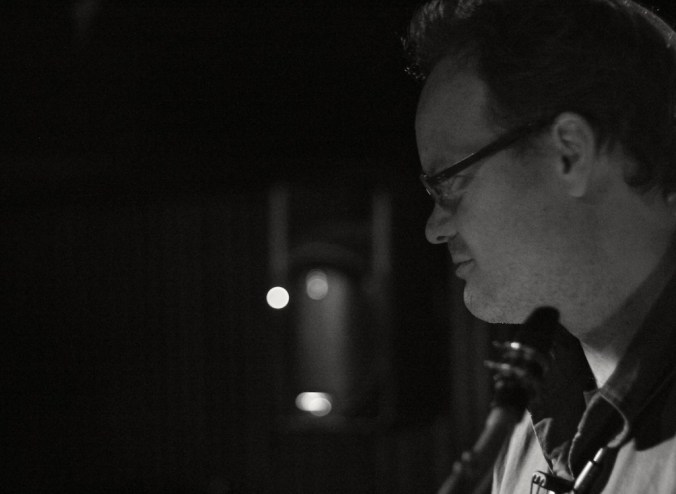
Aaron Blakey is someone you warm to instantly.  He communicates with ease and has a relaxed manner about him.  The same applies to his approach to music.  I have heard pianists who feel that they must astound with every note and while that is all well and good, it can be exhausting for everyone.  The more experienced musicians understand that performance is not only about original ideas, but also about communication.  The latter involves working with an audience while you tell an interesting musical story.  I would place Aaron in that category.

Aaron left Auckland for Japan in 2008 and he gigged regularly around Tokyo.  After a few years he returned to study in Auckland before moving to Sydney in 2011.   On this gig his accompanists were Roger Manins on tenor saxophone, Cameron McArthur on bass and Adam Tobeck on drums.  Roger Manins is at the peak of his powers and after his very successful stint with the JMO in New Zealand and Australia, he is more on fire than ever.   He is one of the best saxophonists in Australasia and so having him in any group lifts their game.  Putting him with a fine musician like Aaron Blakey produces especially rewarding results.  IMG_7746 - Version 2

Anyone who has read these reviews or spent some time at Auckland Jazz gigs in the last six months will know just how swiftly Cameron McArthur is rising through the ranks.    He is one of a small handful of must-have bass players when visitors come to town.   Adam Tobeck is fast becoming a regular at the CJC and his abilities were evident at this gig

With two notable exceptions Aaron played his own material and the compositions were all named after people he knows.  With each song, we were ushered into Aaron’s private world.  A world peopled by close friends, eccentric waiters, babies and delightful dancing children.  At the end of the two sets I felt that I would recognise these people if I saw them; so convincing was the imagery.  Live improvised music creates shapes and forms which you can almost grasp, but which evaporate and dissolve in unpredictable ways.  What remains is a series of impressions, a filigree journey imprinted on the ether.  IMG_7759 - Version 2

A good example of this was a tune called ‘Sinclair’s Routine’.  Aaron named this after a waiter who worked at a  busy Surrey Hills restaurant.  He was using the establishments piano to practice one morning and trying out a few ideas, when the waiter said, “I like that, it helps me to go about my routine” .    Not your usual musical commentary but it ended up as great tune and gave us a window into that particular moment in time.   It worked for me on several levels but primarily because I could picture and hear the event in my mind’s eye.   There was a song ‘Jonathan B’ dedicated to an old friend from New Zealand.  As Aaron was explaining the origins of the tune he looked up and said, ” Oh there he is, he just walked in – hi man”,  Once again we connected the song to time and place and this gave added weight to the number.

The track that I have recorded on video is “One for Steve”, which is a dedication to the much admired Steve Barry.   This was certainly a connection that hung in the air as the band played through the number.  Steve (another ex-pat Aucklander) had been playing that very piano only a few weeks earlier and the echo of his gigs was relived through the tribute.

The first of two standards was ‘My Song’ (Keith Jarrett).  It amazes me that ‘My Song’ is hardly ever performed.  There is a view that Jarrett’s three recorded versions are so contained, that musicians shy away from it.  More is the pity because most jazz lovers rate it highly.  During the introduction Roger Manins helpfully suggested that Aaron would actually be doing the Elton John “My Song’.   This was a solo performance and you could have heard a pin drop.  It was great to hear it done and great to hear it done so well.  IMG_7719

The second standard was the Cole Porter tune ‘I Love You’ from the musical Mexican Hayride, placed squarely in the Jazz Lexicon by John Coltrane (Lush Life album).  While Coltrane’s version was with Saxophone, Bass and drums, The version on this night was a duo featuring piano and tenor saxophone (Manins and Blakey).   That these two have been friends for years and that they have worked together many times before, became evident on this number.   The sensitive interplay between them was truly extraordinary and although they took quite different approaches to the task in hand the synergy was uncanny.  It was one of the wow moments which Jazz audiences live for and to my annoyance I had run out of HD video-tape just a moment before it started.   I am sure that they will play it again sometime, as Aaron has promised to return. We hope that he will not leave it two and a half years this time.

For those wanting more there was a Roger Manins gig down at Frankie’s Bar in Wyndom Street two nights later.   This was a similar lineup, but with premier drummer Ron Samsom at the kit.  For this gig Aaron had brought his Fender Rhodes along.  They swung mightily and as I listened I could hear Ron pulling back on the beat.  There is some fine music around Auckland.  All it needs is our continued support.

Who: Aaron Blakey (piano) with – Roger Manins (tenor sax), Cameron MacArthur (bass), Adam Tobeck (drums).

Where: The CJC (Creative Jazz Club) Auckland 3rd July 2013

Mike Nock – albums reviewed

photo - Version 2

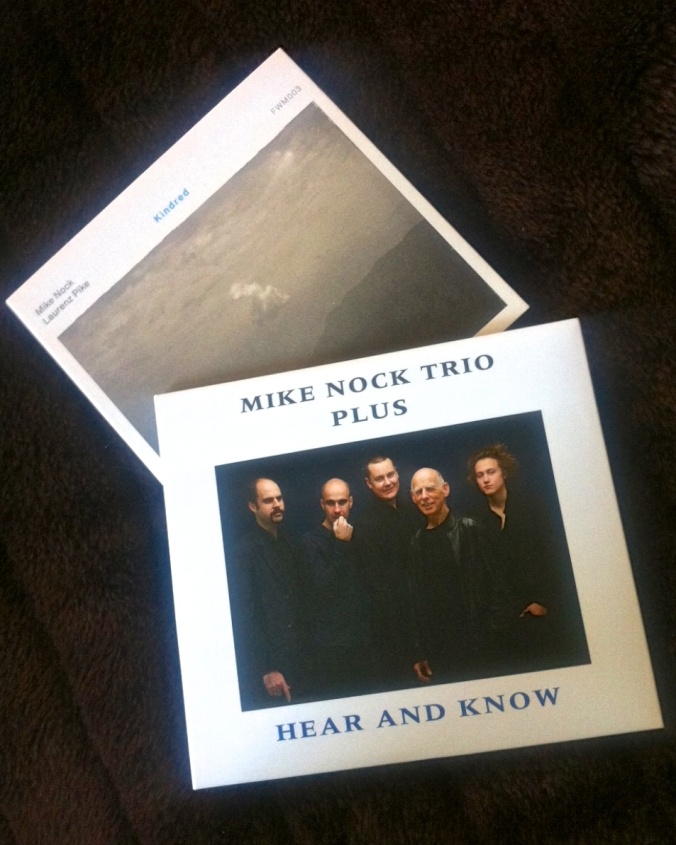
Mike Nock: Hear & Know / Kindred

Mike Nock is always capable of surprising and this has long been his hallmark.  A restless innovator and improviser who never settles on his laurels, Nock is surpassing himself yet again.  ‘Hear and Know’ was recorded in 2011 following his aptly named and deeply satisfying ‘Accumulation of Subtleties’ album.

On ‘Hear & Know’ he is again accompanied by brothers Ben Waples (Bass) & James Waples (drums).  There is an unmistakable synergy between these three and so adding Karl Laskowski (tenor sax) and Ken Allars (trumpet) had its risks.  While there is a different dynamic and altered textural qualities, the magic of intimacy is maintained.   It carries over much of the subtle interplay of the earlier album but creates a different range of moods as well.

I was always impressed by the subtle and profound sub-divisions of mood in the ancient Japanese Haiku.  The almost untranslatable ‘wabi-sabi’ are the moods invoked when we can almost touch something profound, sense it and appreciate the mood, but know that it will be forever illusive.  A further subdivision is ‘yugen’, which is the sense of mystery which underpins profound moments.  To define them more accurately is to lose the moment.    Mike Nock has achieved this for me compositionally and through his recording.   The moods are profound invoking deep and somehow unnamable emotions.

I felt this most strongly on the beautifully named and wonderfully crafted ‘The Sibylline Fragrance’ and later while listening to ‘After Satie’.   In the former piece there was an obvious reference to memory and our sense of smell, which is closely aligned with that.  Beyond that was something else, a sense of the history of this music.  Touching briefly on the past but rooted firmly in the now.   When music achieves this it is especially satisfying.   I have seen the trio performing and I have seen Ken Allars with the wonderful Jazzgroove  Mothership Orchestra.  Karl Laskowski was not previously known to me.   All of these musicians must feel pleased with this album.

‘Kindred’ is the more recent album and one with a pared back line up.  Featuring just Mike Nock on piano and drummer Lorenz Pike, this album seems denser in texture and more introspective.  Lorenz Pike is an interesting drummer and well-chosen; he is obviously colourist in tendency and that is the only choice for this music.  Once again Mike Nock has made a virtue out of contrast.  First impressions are often deceptive though and there is a degree of space and subtlety if we listen.  The stories unfolding are at times free and open but there is always an underlying thread.  The titles also fascinate me as they refer (as with the previous album) to a mixture of things past (references to the classical world), nature untamed and various private worlds.  I am a strong believer that improvised music benefits from narratives, not to define, but to augment the journey.

Mike has created subtle narratives out of the whole, which sit in the consciousness like Haiku.  There is something special about these two albums and I am certain that only Mike Nock could tell these particular stories.

What: Mike Nock – ‘Hear & Know’ and ‘Kindred’ albums FWM Records or visit http://www.mikenock.com

Where: You be able to hear Mike Nock in Auckland on Tuesday 23rd July 2013 at the CJC (Creative Jazz Club).
‘The Grid’ off the grid at the CJC

Tim Jago

Tim Jago

This band shakes all conceptions in the known musical universe and they do it by pillaging pieces of reality and cunningly re-assembling them into new and abstract forms. They are as brilliant as they are disarming. Getting under your skin with outrageous banter and constantly evolving story lines. Perhaps this is the future, laughing back at us, as we live in our bubbles of musical complacency?

It’s a little hard to define ‘The Grid’ by using existing musical terminology, so I will do so by drawing upon disparate references. If you were to add a pinch of Marc Ribot, Dvorak, R2D2, Kraftwork, Radiohead, Andre 3000, Willie Nelson and John Zorn into a crucible, you might create something approximating this band. In spite of the bands modernity, they have embarked upon a musical odyssey of classical proportions. Like Odysseus they’re building strange narratives as they navigate Siren’s and Cyclopes. Ever drifting into uncharted waters.

IMG_7621 - Version 2

The first number up was ‘Commodore 64’ from their first album. Since its inception this story has evolved into a saga (see video clip). The setting is somewhere in the future at a time when humans are replaced by robotic machines. The cyber children of these evolving machines have become bored with life and in order to alleviate that boredom they start copying human pop culture. A hipster culture develops and the young male machines start attending nightclubs in order to pick up cool hipster machine chicks. The goal is locating their ideal, a female robot dressed as a ‘Commodore 64’. I don’t think that Phillip K Dick could have bettered that storyline and the music is machine referencing, freaked out cyber nostalgia.

IMG_7612 - Version 2

Some other outrageous story-lines were as follows: Ben Vanderwal; “Don’t you just hate it when people make pretentious statements like – If Bach were alive today he would be an improviser” or “If Charlie Parker were alive today he would be in a ‘metal’ band“. He proceeded to say how distasteful and silly this sort statement was and then with a straight face announced his next tune as Dvorak’s third Symphony, the scherzo movement. Pausing before launching into their digitally enhanced heavy-metal tinged phantasy he added, “Of course if Dvorak were alive today he would be playing in this band”. Another tune intro was; “I am proud to relate that UNESCO has just voted this the tune most likely to bring about world peace”. They also told us that they would be playing a number from Ellington’s occult period ‘Satan’s doll’. It took a minute to sink in but when we heard the opening chords of Satin Doll we fell about laughing.

IMG_7608 - Version 2

There is much more to this band than outrageous humour, there is also outrageous music. They can slip between Willie Nelson and thrash-punk hardcore in ways that defy logic and in spite of the yawning stylistic chasms it all makes perfect sense at the time. It is later when the enormity of what you have just witnessed sinks in and you find yourself sitting in a confused state on the edge of your bed that you mutter WTF.

There is electronic wizardry aplenty at their disposal but that is not what stays with you. It is their musicality, their ability to connect and their cleverness. This band really can play and they impart strangely apposite history lessons as they go. The music can also turn on a dime, moving from the outer reaches of sanity to a gentle jazz ballad played over clever loops. I am absolutely certain that this sub genre of guitar trio will soon become more mainstream. Marc Ribot (Ceramic Dog) and Australia’s Song FWAA tread similar paths.

This is intelligent music and it requires mastery of the instruments plus mastery of a bewildering array of pedals, rattly things and clips. Making drums imitate machines or making guitars imitate an angel or a banshee is not a job for amateurs. All three band members are highly regarded on the world scene where they have gathered a multitude of accolades, awards and scholarships. Individually they have accompanied the cream of American artists such as Terrance Blanchard, Chris Potter, Chic Corea, Victor Wooten, Joe Lovano and others.

The Grid is primarily known as a Perth Band, but the USA could also claim them. In reality the band members now live in three cities and two countries. Ben Vanderwal (drums) is originally from Perth and so is Dane Alderson (electric bass) but Tim Jago (guitar) is from the USA where he lives and works at present. He has recently been working on a doctorate and teaching in Miami. Ben Vanderwal (who told the stories at the CJC) regularly plays with top US musicians and our own Frank Gibson Jr is credited as being his original teacher. Dane Alderson is the son of a jazz drummer and the winner of various prestigious awards. He plays an Aryel 5 string bass and like Tim Jago conjures up a world of wonderful sounds. My final comment on The Grid is; I hope that they comeback….soon.

Both of these clips are from earlier gigs – the stories and the instruments have evolved since then. The music is great as always.

Where: The CJC Creative Jazz Club 12th June 2013
What: The Grid

Who: Tim Jago, Ben Vanderwal, Dane Alderson

Chelsea Prastiti band @ CJC

IMG_7556 - Version 2

Chelsea has only just graduated from the Auckland University Jazz School but she is already somewhat of a veteran performer about town.  I often spot her name in gig notifications and I have seen her in the role of leader at the CJC (Creative Jazz Club) at least three times.   Chelsea is popular, original and able to assemble good lineups.

I have avoided using the correct descriptor for her most recent band after Chelsea ran into an unexpected problem with the name. The band is actually called the Chelsea Prastiti sextet, but Facebook abbreviated it to read; Chelsea Prastiti Sex…….   As she later bantered with the audience, “If your here for that go home”.  There is a sense of easy-going effervescence that permeates all Chelsea’s gigs and audiences quickly warm to her.  It is a credit to her that this is so, because her specialty is wordless singing (or a mix of wordless singing and lyrics).   Thus following in the not so well-worn path of Eddie Jefferson, Norma Winstone and others.  This adventurous exploration of vocal sounds is not all that she does, but it is a hallmark of her repertoire.

IMG_7573 - Version 2

Her style of singing moves the focus to the timbre of the human voice.  Using it as another instrument, adding colour, tight unison lines and performing solos much like a guitar or horn would do.   Like other young singers Chelsea often includes numbers from the likes of Sera Serpa, Gretchen Parlato or Esperanza Spalding.   At this last gig those influences were felt in different way, more as reference points.  Most of the material (if not all of it) was Chelsea’s own.  Her composition skills are developing fast as she reveals her own musical stories.  Modern in sound, touching on the history of Jazz singing, but above all communicating the intensely personal.

IMG_7568 - Version 2

As with previous gigs she has drawn upon musicians from her own generation.  Friends from the Auckland University Jazz School and especially those she had been most closely associated with.  Matt Steele (piano),  Callum Passells (alto), Liz Stokes (trumpet & flugal), Eamon Edmunson-Wells (bass).  Newer to the line up was drummer Tristan Deck – this was his first appearance at the CJC and on the basis of his performance this night I’m sure we will see him more often.  Liz Stokes, Matt Steele and Callum Passells were all in good form, each delivering some great audience pleasing solos.  It was also good to see Eamon Edmunson-Wells, who is a bass player we don’t see often enough.  As friends they feed off each others energies and the familiarity works well for them.  The ultimate test will come when they plunge in at the deep end beside highly experienced ultra challenging musicians.

It was particularly nice to hear Chelsea’s composition ‘Bells’ performed once again.   The interwoven melodic lines and the lovely harmonies are deeply compelling.  I like her compositions and the CJC crowd certainly shared that view.

What: Chelsea Prastiti sextet

Where: CJC (Creative Jazz Club) 5th June 2013

Who: Chelsea Prastiti (vocals) (leader) (compositions), Matt Steele (piano), Eamon Edmunson-Wells (bass), Tristan Deck (drums), Elizabeth Stokes (trumpet), Callum Passells (alto saxophone).

Sean Wayland & David Berkman @ CJC Winter International Series

Sean Wayland

Sean Wayland

We don’t get many offshore Jazz pianists visiting New Zealand, but we have seen quite a few over recent weeks. This particular gig comes hot on the heals of hearing Sean Wayland appearing as featured guest artist with the marvellous Jazzgroove Mothership Orchestra. Sean had impressed me at the JMO gig and so I really looked forward to hearing him play at the CJC (Creative Jazz Club).

Before he had played a note Sean Wayland won us over with his easy-going banter. Especially when he thanked us for Mike Nock and mentioned band mate Matt Penman. These are two of Auckland’s best-loved sons and I suspect that Kiwi’s, like Canadians, enjoy our worth acknowledged by the big country next door. This generous acknowledgement by a respected New York based (Aussie born) pianist reveals an interesting truth about Australasian Jazz.

There may be a struggle to meet the financial realities, deal with lack of good pianos and the paucity of gigs, but the two scenes continually produce world-class Jazz musicians. The Scenes are in fact so intermingled that it is often hard to know who is an Aussie and who is a New Zealander. Steve Barry and Mike Nock illustrate this perfectly as they live and work in Australia. Roger Manins lives in New Zealand but gigs across the Tasman every other week.

In spite of the difficulties there is no lack of great music coming out of Australasia and the main problem is that of distribution. An upside of this changing business model is that bands travel more. For the keen Jazz fan live music is once again king. We don’t have to wait for a multi-national recording label to tell us what we should or shouldn’t like, we can explore ‘You Tube’ or ‘Bandcamp’ and hear from the artists directly.

IMG_7530 - Version 2

Sean Wayland is a hugely respected figure on the Australian scene and in New Zealand as well. He is a very modern pianist, as he moves in circles where new approaches are constantly being explored and new sounds developed. After listening to his compositions I was not in the least surprised to find him supported by the likes of Matt Penman, Jochen Rueckert, Will Vinsen, and James Muller. This is essentially the Rosenwinkel generation. While he speaks that language fluently he is unmistakably an individual stylist. No one sounds quite like Sean.

Sean’s tunes are very melodic. Often unfolding over a simple bass line as with ‘eenan’ off his ‘Lurline’ album. What sounds catchy and accessible can actually be quite complex as his approach to rhythm gives the tunes that unique feel. This is tension and release at its sophisticated best. I have put up a version of ‘eenan’ as a ‘You Tube’ clip which unfolds in subtle and beguiling ways. So beguiling in fact that I dreamed the tune two nights in row. Such powerful hooks are not accidental but the result of careful craftsmanship. There is a strong sense of pulse or swing to his tunes, but approached from a different perspective to that of the more traditional pianist.

This intergenerational shift is one that I hear more often as the changing of the guard occurs. Other tunes played to great effect were his, ‘Trane plus Molly equals countdown” and the solo piece ‘Little Bay’. Both of those tunes are found on the ‘Expensive Habit’ album. ‘Trane plus Molly equals countdown’ hints at McCoy Tyner, but you quickly realise that the voicings have very modern in feel. I can however certainly imagine Kurt Rosenwinkel doing the tune. It is an extraordinary composition where the left hand continuously punctuates the flow with oblique accents. I was left wanting more than the single set and I certainly hope that we get to see Sean again on his next trip back to Australia.

IMG_7520 - Version 2 (1)

Accompanying Sean were Cameron MacArthur (bass) and Jason Orme (drums). Both accomplished musicians who quickly slotted into the challenges of supporting a world-class and highly inventive pianist.

The next artist up was David Berkman. He has been to New Zealand before and anyone who saw him last time would have jumped at the opportunity of seeing this top flight New York Pianist in action. There is a fluidity to his playing and above all an impeccable sense of timing. This hard-driving post bop fluidity and the big bluesy chords is what most characterises his work.

The Kiwi members of the quartet were Roger Manins (tenor), Olivier Holland (bass) and Ron Samsom (drums). Together they formed a powerhouse of inventiveness and Roger in particular seemed to benefit from this grouping. His solo’s were so incendiary as to cause gasps of surprise and from an audience who are used to such pyrotechnics. While we expect Rogers high wire acts he is always able to surprise us and this night saw him really on fire. David Berkman certainly knows how to amp up the tension and his ability to extol a horn player to reach deeper and deeper is impressive. He worked the room with as much enthusiasm as he would have done in a prime New York club and everyone there appreciated that commitment. This was the kind of gig where you sat back and let the sound wash over you, tapping your feet uncontrollably and yelling enthusiastically between numbers.

David Berkman

David Berkman

David Berkman’s repertoire was a well-balanced mix of his own compositions and some lessor known standards. During the gig he talked about his mentor, the much respected pianist Mulgrew Miller (who sadly passed away that very evening). He has worked with a wide variety of artists such as trumpeters Tom Harrell and Dave Douglas and his contribution to Jazz education is well-known. Having moved to New York some years ago he quickly settled into the routines of gigging, recording and teaching and since then he has been a fixture on the local scene. He travels extensively and is a Palmetto recording artist.

IMG_7554 - Version 2

The two pianists were very different, but both were amazing in their way. In David Berkman we heard the history of the post bop era and in Sean Wayland we glimpsed the future.

What: Sean Wayland and David Berkman Winter International Series.

Who: Sean Wayland (p) (leader) Cameron McArthur (b) Jason Orme (d). – David Berkman (p) (leader), Roger Manins (s), Oli Holland (b), Ron Samsom (d)

Where: CJC (Creative Jazz Club) 29th May 2013

The Dilworths@CJC Winter International Series

IMG_7394 - Version 2

When the CJC (Creative Jazz Club) posted information about their Winter International Series, the first group up was the ‘Dilworths’.   I quickly scanned the information and zeroed in on the two Kiwi band members.  Not just because they are Kiwi’s but because they are superb musicians and well known to me.  The Dilworths current Pianist Steve Barry is an expat Aucklander, as is bass player Tom Botting.   Both had established solid reputations for themselves before leaving this city and both have since built new ones in Sydney.  On that basis alone locals knew that this was the sort of gig that you brave a rainy night for.   Steve Barry in particular has strong audience pulling power in Auckland and many are aware that he has just won the prestigious Bell Award.

IMG_7381 - Version 3 (1)

Sydney-sider Eamon Dilworth was relatively unknown to me prior to the Dilworths tour, but it is not a name that I will forget in a hurry.  His band is something else.  Eamon plays a formidable trumpet and he has long been recognised as a musician with much of interest to communicate.  He is a Bell award nominee and the recipient of various scholarships which have led to him traveling overseas and studying in Italy.  He has performed in Romania, Austria, Italy and England and his compositions reflect some of the influences that he has soaked up on those journeys.  While we have some terrific trumpeters around New Zealand we can not match the breadth and depth of the Australians.  Having a trumpeter of this calibre visiting is a rare treat.

Leaders need to exert a strong sense of influence but at the same time they need to know when to stand back and let things happen organically.  The Dilworths appear to have the settings just right.  The camaraderie and the consequent collective output is what works so well for them.  This is at least the second line up for the band and the mix is perfect.  The observant will have noticed how carefully these guys listen to each other, tossing challenges and giving support in equal measure.   What is also evident is how much fun they are having.  There is nothing more off-putting than being confronted by a grim-faced group of musicians whose only purpose is convincing you just how seriously they take their music.  This band was fun, lively and extraordinary.  We all felt that we had witnessed a great show and more importantly been part of one.   This is the essence of good performance and of good Live Jazz

.  IMG_7404 - Version 2 (1)

Everyone in the band contributed at least one tune to the gig and the set list was fluid.   The band would play a few numbers and then quickly confer on what to play next.  They had a grab bag of compositions to draw upon and although a random selection process was applied, the set lists formed a surprisingly cohesive whole.  Thomas Botting’s ‘Balclutha’ was just great with Tom and Steve working a groove to the marrow while Dave Jackson (alto sax), Paul Derricott (drums) and Eamon Dilworth (trumpet) created delicious mayhem.  Tom has a following in New Zealand and deservedly so.  IMG_7391 - Version 2

Steve Barry’s pianistic and compositional skills are greatly admired in New Zealand and anyone who has purchased his album ‘Steve Barry‘ (Jazzgroove) will understand why.  Last Wednesday we saw yet another facet to his playing.  Not as leader or accompanist but as ‘A’-grade ensemble member.  As with all of this line up he added maximum value without overcrowding his band mates.  Paul Derricott also contributed a great composition and his album ‘Big Sea-Arrow’ (Jazzgroove) is really worth purchasing.  I have hardly had it off my Hi Fi since picking up a copy.  These are all bands to track down and see again and again.  Altoist Dave Jackson is a great soloist, with a lyricism that sets him apart.  There is also something compelling about his tone production (quite like John Surmon’s alto sound).  He and Eamon often crouch on the floor when others are soloing.  I like this as it signals the ebb and flow of performance; as if choreographed.  I love musicians who move and dance and these guys executed their dance moves perfectly.

The influences were many and varied and while you could hear flashes of Eick, Stanko, Douglas and many others, the band still sounded very Australasian.  I have come to value this local sound and I miss it when I travel.   There is an honesty that comes from living so far from the so-called mainstream Jazz world.  Jazz is now finding a universal voice and New Zealand and Australia are feeding into that just as the Europeans have done for some years.  Good music has no borders.  While comparisons are often redundant I do have one to make.  It came to me while I was listening to the Dilworths EP.  They have captured a vibe very close to that of the 65 Miles Quintet.  In short they had a controlled looseness that can only arise when a band intuitively knows exactly where they need to be minute by minute.   ‘If I were a Bell’ was the one standard of the night, with the melody barely expressed before they were paring it back to the bone.  Using the changes as occasional touchstones, working with space, colour and texture as if they were commodities not to be squandered.    IMG_7445 - Version 2

Most of the tunes were fast paced but we did have one or two ballads to round them out.  The last set finished with a tune by Eamon.   The musicians put their instruments aside and chanted and we were instantly mesmerised.  While it had some of the feel of an ancient Peyote chant it was subtler than Jim Peppers Witchi-Tai-To.   We loved it and many of us are still talking about it a week later.  The perfect out chorus to a perfect evening.

What: The Dilworths (Australia)

Where: CJC (Creative Jazz Club) Winter International Series – 1885 building basement, Auckland, New Zealand.  Wed 22nd June 2013

Purchase Details: Jazzgroove records

Phil Broadhurst ‘Flauberts Dance’@CJC

IMG_6910 - Version 3

Phil Broadhurst is a regular at the CJC (Creative Jazz Club) just as he was at the ‘London Bar’ in its hey day.   He is also the compiler and presenter of the well-known Jazz radio slot ‘The Art of Jazz’.  His last album titled ‘Delayed Reaction’ was well received and shortlisted in the Jazz Tui Awards.  It was dedicated to the music of Michel Petrucciani, the diminutive and wonderfully brilliant French pianist whose life was blighted by ‘brittle bone syndrome’.  That project was obviously a labour of love, as Phil had long been immersed in Petrucciani’s music.  The album, (out on IA-Rattle), outlined a very personal journey for Phil and while showcasing the project about New Zealand he must have pondered ‘what next’?   The what-next is ‘Flaubert’s Dance’.

IMG_6870 - Version 2

From ‘Delayed Reaction’ it was a logical step to examine other artists who had influenced him and for whom he had a deep affinity.  Not all are pianists but all take a pianistic approach to their music.  All are currently at the top of their game.  The compositions on ‘Flauberts Dance are all Phil Broadhurst’s and they are dedicated to the following musicians:  Herbie Hancock, Manu Katche, Enrico Pieranunzi, Eliane Elias, Kieth Jarrett and Tomasz Stanko.   What these artists have in common is striking originality, a modern approach to harmony and the fact that none of them are easy to compartmentalise.  They are consequently quite different from each other.    A Tomasz Stanko tune and a Manu Katche tune could hardly be confused even though they have worked together.  IMG_6922 - Version 2

It is obvious from the above list that Phil often reaches outside of the Americas for musical inspiration.  While Jarrett and Hancock have influenced most modern pianists their ubiquitous presence tends to eclipse others of equal importance.   It is therefore fitting that the latin infused Brazilian born Eliane Elias and the two Europeans give counterweight to the North Americans.   The composition ‘First Shot’ dedicated to Hancock looks at a particular tune rather than the scope of his career to date.   I truly like this number as it has the distinct feel of a European or an Antipodean acknowledging Herbies work, not an American.

Phil has had no trouble in assembling top class musicians for the album and with Roger Manins (tenor sax), Olivier Holland (bass)  and Cameron Sangster (drums) his quartet had depth and experience.   He also enlisted trumpeter Mike Booth for three numbers.

The title track on the album is dedicated to the scandalously underrated and utterly brilliant Italian Pianist Enrico Pieranunzi.   This track ‘Flaubert’s Dance’ had everyone listening in rapt silence and even though the club filled to bursting point you could have heard a  pin drop.  With unerring accuracy he has dived right into the essence of the man he pays homage to.   The voicings, the phrasing and a unique sense of weightless swing that is so European.  When Roger Manins comes in the Pieranunzi connection deepens.  Bringing to mind the Italian tenor player Stefano de Anna who along with Hein Van de Geyn featured so strongly on the classic Pieranunzi album ‘Don’t Forget the Poet’.  IMG_6927 - Version 2

Tenor player Roger Manins always gives of his best and he showed us once again that he can wring deep sentiment and even prettiness out of ballads while never sounding cliched.  In the mid tempo tunes he imparts that intensity and locomotive drive that he is so well-known for.  When the tunes are explorations, it is only fitting to have a born story-teller like Roger onboard.  Olivier Holland (bass) has often played in Phil Broadhurst line ups and his approach is that of the consummate professional.   These days it is not uncommon to hear bass players vocalising lines an octave above the pitch.   Once the preserve of Major Holley and Slam Stewart, Oli has increasingly been employing that technique (but not so much arco bass).   His improvisational approach has always been solid but the vocalising appears to extend that.   It is perhaps like a saxophone player having the words of a standard firmly in their head as they lay down the melody.   It changes the dynamic in positive ways.   Cameron Sangster (drums) works across many genres and he is one of the few drummers to appear regularly with big bands in Auckland.   He has a strong sense of space and dynamics and can switch to a more colourist mode if the number requires that.   He is also able to moderate his sound to a room.   A tasteful drummer.  The remaining band member is trumpeter Mike Booth who played on three numbers.  His soloing and ensemble work is great and musicians about town are often utilising him for his impressive and varied skills.   He and Roger in lock-step are a force to behold.   Both the quartet and quintet gave Phil Broadhurst adequate room to shine and he did.

What: The Phil Broadhurst Quartet

Who: Phil Broadhurst (piano), Roger Manins (tenor sax), Olivier Holland (bass), Cameron Sangster (drums) – guest Mike Booth (trumpet).

Where and What: ‘Fauberts Dance’ album released by Rattle Records  –   CJC (Creative Jazz Club) basement 1885 Brittomart building, Auckland

Number filmed by Jennie Sol

Brian Smith @ CJC Jazz April gig

IMG_6571 - Version 3

It is always great to see the renowned tenor player Brian Smith performing in the intimate space of the CJC (Creative Jazz Club) and whenever he plays older and newer fans turn up to see him.   While it is tempting to refer to him as being ‘seasoned’ or ‘an elder statesman’, any notion of that has a built-in redundancy factor.   He is a ball of energy and ageless on the bandstand.

Brian has played with so many great artists over his long career that it would chew up serious bandwidth to enumerate even half of them.  Being a member of the Maynard Ferguson band and numerous other well-known line-ups saw him playing across the world.    His co-led genre stretching ‘Nucleus’ (with Ian Carr) won the top European band award at the Montreux Jazz Festival (1970).  Since returning to New Zealand to settle (if a musician ever really does that) he has worked on numerous film scores and put out some well received (and commercially successful) albums.  IMG_6561 - Version 2

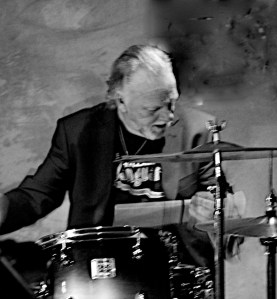
Accompanying him on the 10th April gig were Kevin Field (piano), Kevin Haines (bass) and Frank Gibson Jr (drums).    With this particular lineup he could dive deeper into his favoured repertoire of Hard Bop Jazz standards (with a few originals thrown in).  When ‘Footprints’ was played Brian Smith approached the warhorse in an interestingly oblique manner; giving us a tune that contained the merest hint of familiarity and a large dollop of brooding mystery.  This was a highpoint of the sets and a good example of how good musicians can extract new wine from old bottles.  The introduction began with a very personalised statement on tenor which caught the attention while offering no insight into where it was going.  Then out of nowhere the melody was stated, only to disappear as quickly as it had appeared; merged in probing re-haromonisations and oblique explorations.

The tunes of Wayne Shorter have remained perennially popular with Jazz audiences and they are constantly being reworked and updated.  I have heard two versions of ‘Footprints’ performed in recent weeks and both mixed the familiar with the the new.  These re-workings of familiar tunes have always been the bread & butter of Jazz and in the case of reworked ‘Footprints,’ Wayne Shorter sets the bar high.  I saw him perform this in Verona, Italy a few years ago and after laying out a pathway to the melody he suddenly plunged us into a world of elision; forcing us to fill in the gaps as we listened.  A familiar tune floating between chasms of crystalline emptiness; a tune more implied than played.   I have posted a You Tube clip of the Brian Smith band playing  ‘Footprints’  at the 10th April CJC gig.

IMG_6564 - Version 3Accompanying Brian on piano was Kevin Field who is so well-respected about town that he is a real drawcard in his own right.   I have often mentioned his ability to add value to any band he plays with and this night was no exception (A post on his April 17th gig will be up shortly).  On bass was Kevin Haines who is not only the most experienced bass player about town but one of the best.  lastly there was Frank Gibson Jr on drums who is another respected and talented veteran Jazz identity about Auckland.     Frank Gibson Jr, Kevin Field and Kevin Haines have all appeared recently leading groups.  These guys will always impress and they proved that on this gig.
This particular CJC gig fitted in perfectly with the wider Jazz April ethos which is about profiling Jazz & Improvised music in all its diversity.    The month had kicked off with a co-led trio featuring guitar, bass and drums (all original music by Samsom/Nacey/Haines), A few days later we saw Nathan Haines at the ‘Q’ Theatre (a tentet complete with French horns and vibes) – a few days after that the Auckland ‘Jazz & Blues club’ featured a gig with a Caribbean-Jazz ensemble. The Kevin Field trio on the 17th.  Auckland benefits from a rich sonic diversity and clubs like the CJC, The Auckland Jazz & Blues Club and Vitamin ‘S’ deserve our ongoing support.  The month of Jazz April will conclude with two avant-garde bands (one local, the ‘Kparty Spoilers of Utopia’) at Vitamin ‘S’ on the 23rd at 8pm and one visiting from Australia (Song FWAA) which is a CJC gig on the 24th at 8pm.   This is a cornucopia of riches and not one of these gigs should be missed.  Note: The Vitamin ‘S’ gig is the last chance to see John Bell vibist, who departs for Korea on Thursday.

IMG_2428 - Version 3

Who: the Brian Smith Quartet – Brian Smith (tenor), Kevin Field (piano), Kevin Haines (bass), Frank Gibson Jr (drums)

Where and When: The CJC (Creative Jazz Club), 1885 Building, Brittomart 10th April 2013

This is a Jazz April 2013 gig : links Jazz April or Jazz Journalists Assn FB page.

Dixon Nacey – Zauberberg IV

IMG_6080

Dixon Nacey always exudes enthusiasm.   He is one of those musicians who you cannot think of separately from his music.   He is articulate, a family man and a thoroughly well-rounded human being, but music never the less defines him.  He is one of New Zealand’s great guitar talents and so people trip over themselves to attend his gigs.  Dixon appears in a variety of contexts: teacher, composer, sideman (to the likes of Alan Brown and sometimes up & coming musicians like Rebecca Melrose) but most often as leader or co-leader.   This is the guitar go to guy.

IMG_6081

We tend to associate Dixon with the more up tempo pieces where the changes are gleefully eaten up, but like Marc Ribot he can surprise with thoughtful acoustic offerings.  When this occurs there is a hush because the nuanced story telling and the rich voicings take us to warmer place than we ever imagined possible.   We heard both facets during the Zauberberg IV sets and the contrast spoke volumes about Dixon.  A number of originals (composed by  he and Oli Holland) were reharmonised versions of standards.   ‘Gutted and Gilled’ could only have come from the pen of Ollie Holland the obsessive fisher.   It is a metaphor for what this band can do with a tune; paring it to the bone.  Dixon’s red Gibson was no where to be seen and he playing another brand of guitar during the 13th February CJC gig.  He was trying out a handsome looking custom-made guitar (the name alludes me).   This was a wonderful instrument with the warmth of a Les Paul and the bite of Strat.

IMG_6067

‘Day and Night’ made references to ‘Night & Day’ but they emerged as glimpses arising from a darker tapestry.   ‘Conversations with Dr Small’, (another great title) had quirky adventurous twists and pointed squarely at Dr Stephen Small (pianist), who I presume this number was referencing.  ‘If I Should Lose You’, ‘Recordame’, ‘Everything Happens to Me‘, ‘Softy as a Morning Sunrise” and ‘Have You Met Miss Jones were a sampling of the standards played.  ‘Softly as a Morning Sunrise’ was played with such high-octane and at such a velocity that we were pulling ‘G’ forces.  On the other hand the beautiful ballad ‘Everything Happens to Me’ was approached in a loving and respectful manner.  Jason Jones has a gorgeous tone and when Dixon comped behind him with warm soft chords the mood was perfect.   It is right to place such numbers in juxtaposition, as contrast is a vital ingredient of any rich palette.  IMG_6079

Oli Holland on Bass has long occupied an unassailable position on the Auckland scene.  It was a good day for New Zealand when a long sea voyage washed him up on our shores.  He is increasingly providing compositions for the more experienced musicians about town.   Compositions which both challenge and please.   I have often witnessed band members commenting, “Oh this is challenging”, but the results speak for them selves.

Andrew Keegan on drums may be a relative newcomer to Auckland but he has made his mark already.   He brings with him a wealth of experience (including from offshore).  CJC audiences are always pleased to welcome him back.  His posture when drumming is compact and that makes him great to photograph.   It is as if he is drawing all of his energy into a circumscribed arc before unleashing its power.

Jason Jones is the last member of the group and he is somewhat of an enigma.   People who have been around the scene for a while remember him well, but his public appearances have been scant in recent years.   He teaches at the Auckland University Jazz School and was Berklee Trained.

There is often an interesting back story to a band and so I asked Dixon hoping to get gain a few insights.  His reply was typically self effacing but actually yielded rich pickings.  Many years ago Oli had been in a band in Germany named the ‘Zauberberg III’ and they had recorded several times.   This gig was actually booked over a year ago as the ‘Alain Koetsier Quartet’s’ second appearance.    That particular line up was Alain, Dixon, Pete France and Oli (see earlier review).  As the time got closer Alain unexpectedly found himself booked for a week of recording for the second Nathan Haines Warners album.  Pete France had to drop out suddenly and that left Oli Holland and Dixon Nacey with a week to go and short by two band members.   When in doubt re-invent yourself and above all improvise.   The new name came from Oli, Jason Jones was coaxed back into performing and the often complex set list (typical of Dixon and Oli) emerged in the nick of time.

Jazz line ups are often conjured out of thin air and I have witnessed quite a few such manifestations.   It is my observation that flying by the seat of your pants can  often yield the best results.   This is how humankind has always moved the paradigm: our advances over the millennia have always come from risk taking.  In life and Jazz improvisation is everything.

I have posted the Matt Denis tune because it is so beautiful that I even managed to shed a tear through a very bad cold.

Where: Creative Jazz Club Auckland

When: 13th February 2013

What: Zauberberg IV

Nathan Haines 2013

IMG_5887 - Version 2

My recent travels to the USA led to many musical adventures, but as good as those experiences were I had missed the CJC (Creative Jazz Club) and our local musicians.   There is a passion and sometimes a raw edge in New Zealand Jazz which I find compelling.

The first gig I attended upon my return was the Nathan Haines CJC gig.  This had been widely anticipated and after the success of ‘Poets Embrace’ the rumours of a new album had started to circulate.   Just before Christmas Nathan Haines returned from London for a month or so and not long after Alain Koetsier returned from China.  The rumours became fact as there is definitely a new album in the making.  The band was well received at London’s ‘Ronnie Scotts‘ last year and an overwhelmingly positive review appeared in the influential ‘London Jazz’.  That gig had reunited most of the ‘Poets Embrace’ band.  IMG_5880 - Version 2

By the time of the ‘Ronny’s’ gig Nathan had moved back to London, while Kevin Field and Alain Koetsier flew in to join him.  When a good band like this travels exposure to wider markets occurs.  This can bring rewards.  Having Warners behind Nathan proved fortuitous and ‘Poets Embrace’ has now been released in Europe as well as Australasia.  With a follow-up album coming the expectations are rising again.

Nathan is no stranger to success (here or offshore) but to break into a difficult market releasing analogue classic 50’s style Jazz demonstrates his appeal.  This is not just a lucky break but the result of hard work, Savvy, skilfully written charts and knowing who to choose as bandmates.   Although Alain Koetsier (drums) has been working in China for a year he had already gained a solid reputation in New Zealand before he left.  He can be heard on a number of top quality recordings where his chops and musicality are self-evident.   Pianist Kevin Field has released a few albums of his own as leader and of particular note is his  last release ‘Field of Vision’ (Produced by Nathan and released on the Warners label).    The original bass player Thomas Botting is no longer with the band and in his place is the talented Ben Turua.   This is the second time that I have seen Ben play with this band and he is a good choice.  Sadly he is moving to Sydney after the recording.

On the night of the CJC gig we heard a mix of tunes from ‘Poets Embrace’ and some new compositions.   Some were so new that they had never been played before in public.   I assume that at least a few of these will end up on the new album.  The first set started with a selection from Poets Embrace and it was immediately obvious that they were back on familiar ground and ready to notch it up a level.   Nathan quickly established the melody and just as quickly moved to explore what lay beyond.  Together they mined the material for new stories and the level of confidence was noticeable. The newer material was a little more tentative but this was a first outing.    With the recording session due very shortly I have no doubt that we will hear an album every bit as exciting as the last.   This music has its echoes in the era of 50’s Coltrane and others but here’s the interesting thing;  Nathan has a young and an older fan base.   This is a timeless music for the universal man (and woman).  IMG_5902 - Version 2

Nathan is hopefully going to include a few of the vocal numbers he performed on the new album.  His song ‘Impossible Beauty’ from ‘Sound Travels’ was an attractive haunting tune that stuck in the memory.  I rate his (slightly husky) voice highly and I hope he adds vocals to his repertoire more often.  The male Jazz singer is sadly an endangered species.

Last weekend the band played ‘The Sawmill’ in Leigh.   The seats sold out quickly and to all accounts the gig was amazing.  If there is anyone who hasn’t yet purchased a copy of ‘Poets Embrace’ do so immediately and grab up the new album upon release (in Vinyl or CD).  I can promise you endless replays.

Who: Nathan Haines Band with Kevin Field, Alain Koetsier & Ben Turua.

Where: The CJC (Creative Jazz Club) the basement 1885 -Britomart – downtown Auckland

When: Wednesday 30th January 2013