“What often distinguishes a poetic list from a practical one is only the intention with which we contemplate it’ – Umberto Ecco (The Infinity of Lists).
At this time of year Jazz Journalists post their ‘best of’ lists. By tradition, this provides a platform for the writers to focus on something that took their fancy (or not). It is seldom an exhaustive analyses of the years musical offerings, but a time to indulge in a few well-honed prejudices with impunity. I make no apology for the antipodean bias.
A look back at some pianists who impressed in 2014:
There has been a lot of ink spilt in analysing Jazz piano over the years and the task is always daunting. In recent years all too many masters of the keyboard have passed on such as the inimitable Hank Jones. He encompassed a vast era of jazz, ever fresh and endlessly tasteful; bringing with him something of stride, bebop and hardbop and above all the blues. At the passing of Jones and other acknowledged masters, there is an increased awareness of other great pianists still with us (a good example is the belated and welcome attention being given to George Cables). Many of these artists have been hiding in plain view and paying them due attention is increasingly important. As musical tastes mature, and new directions emerge, the field ever broadens.
Jazz fans who live outside of the USA generally have a reasonable awareness of pan-American, European, Scandinavian and (perhaps) Antipodean Jazz musicians. If you live at the hub of the wheel, the USA, it will probably be less likely. Pianism is not about how many notes you play, where you come from or the  cleverness your ideas. It is about integrity. Musical integrity is rare but universally available.
There is a ‘sound’ that belongs to certain locations, perhaps to great cities; where an assimilation of environment occurs unwittingly, coalescing within an artist. This is not planned, as self-conscious cleverness is the road to perdition. The mindless recycling of others cleverness a greater anathema. Mary Lou Williams once said (to slightly paraphrase): “Once a pianist comes to grips with the instrument and can master its capabilities, stop taking formal lessons. Risk taking explorations should occur next”.
Pianists like Mike Nock, Barney McAll and Jonathan Crayford all have a unique quality, one that reflects where they come from. They are musicians of the world having honed their craft on the road, but distinctly Australasian for all that. No English, Italian, Scandinavian or Australian pianist is going to sound like Randy Weston and nor should they. Musicians of integrity will bring something of themselves to the mix and a select few will bring a sense of place. The three pianists I have mentioned have lived and worked in the USA (often extensively) but not at the expense of their roots voice. Each found a groove that only they could unlock. There are 88 notes on the standard piano keyboard, but in the spaces between the notes and in the choices made, there are subliminal messages. That is where the real magic lies.
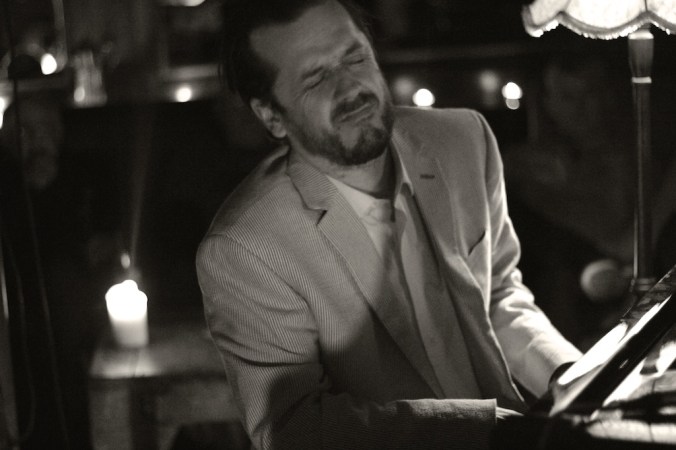
The Mike Nock Trio. (Aust) Gig at the ‘2014 Auckland Jazz Festival’, CJC (Creative Jazz Club). Mike Nock is one of New Zealand’s favourite musical sons and perhaps the improvising musician we most admire. Although he has not lived here for many years, he often visits from Australia. Many will know him from his ‘Fourth Way’ band, his recordings as sideman with people like Yusef Lateef or his long years as a celebrated member of the New York scene. That said, his post USA work needs better examination and it is in Australia that people can gain a fuller sense of his body of work. Nock is a truly gifted artist and he goes from strength to strength. “Nock’s ringing iconoclasm pervades all his music, taps a deep well of melody that transcends jazz and informs and ignites his every encounter.” – Fred Bouchard, Downbeat (USA). His live trio gigs are humour-filled and quirky, focussing on an eclectic mix of originals, standards turned upside down and almost forgotten tunes (i.e. Sweet Pumpkin). The joy that Nock breathes into his gigs is infectious and it  makes you glad that you’re alive. Touring New Zealand with Nock were James ‘Pug’ Waples (drums) and Brett Hirst (bass)’. These musicians while deeply attuned to each other were always full of surprises. 5 stars. *****
Barney McAll (USA) gigs in Auckland & Wellington NZ – Trio and Solo piano at the CJC (Creative Jazz Club) and ‘The Wellington Jazz Festival 2014’. McAll (an Australian) has lived in Brooklyn New York for many years, but he has never been forgotten in his home country Australia. His visit to New Zealand won him many new fans. There is an expansiveness and yet a completeness about McAll compositions. He sounds like no one else and as he digs into those earthy blues filled tunes, you hear the unmistakable echoes of real antipodean soul. 5 stars. *****
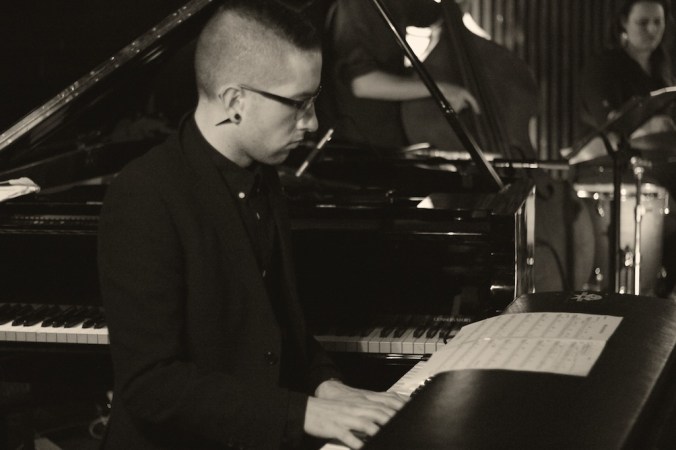
Jonathan Crayford, ‘Dark Light’ Trio (USA). It was Auckland’s good luck that the album release gig for Crayford’s ‘Dark Light’ Trio took place at the CJC (Creative Jazz Club). A few weeks prior to that a local version of his ‘Biggish Band’ featured at the same venue (and at the Golden Dawn). I attended all three gigs. Jonathan Crayford is a peripatetic wonderer and a troubadour of immense talent. His endless travels in music often bring him home to New Zealand and the lucky get to hear his imaginative projects. 4 stars ****
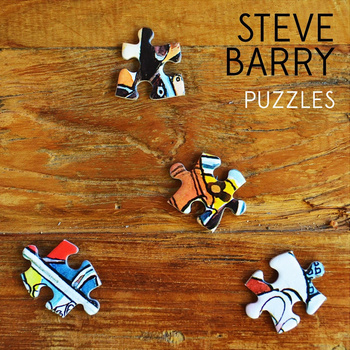
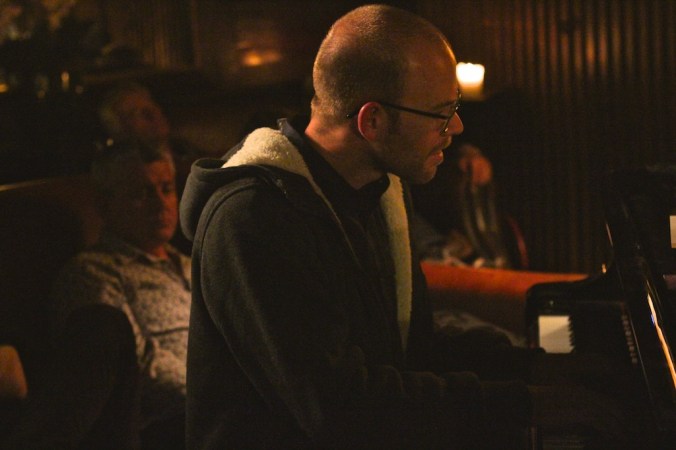
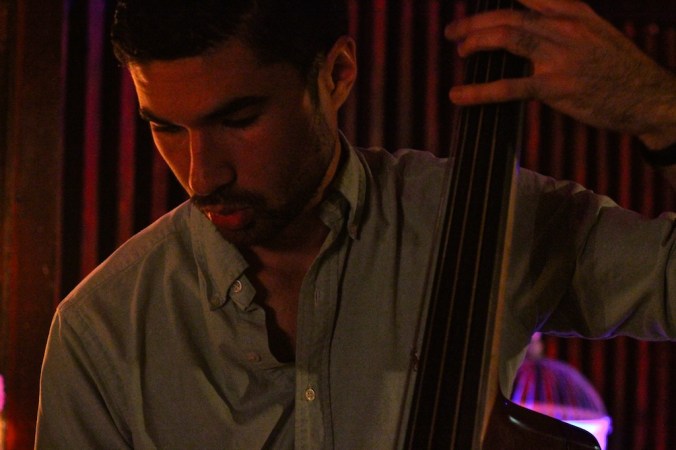
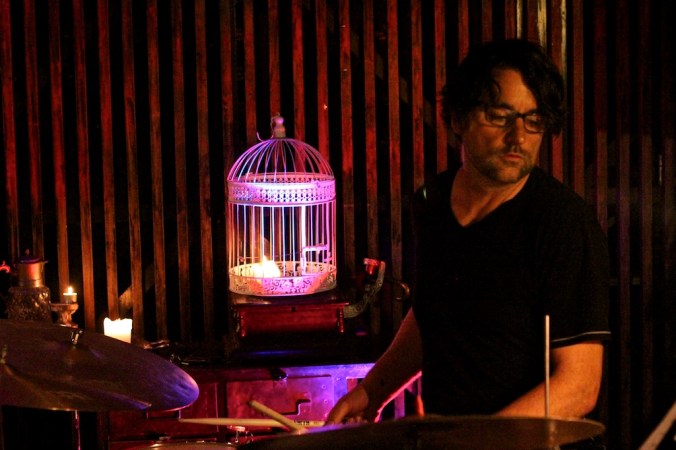
Other pianists of note: Kevin Field (NZ). Field on piano or keys is a musical force to reckoned with. His taste is impeccable. This year saw him record an album in New York with expat New Zealand bassist Matt Penman, drummer Obed Calvaire and guitarist Nir Felder. The album will probably be released sometime during 2015 and is eagerly anticipated.  Whether as accompanist or soloist, Field shines. His work in 2014 on ‘Dog’, with Caitlin Smith and with the Australian saxophonist Jamie Oehlers stand out as high points. Adam Ponting (Aust) (Hip Flask ‘1’ & ’11’). Ponting is an unusual but compelling pianist. An original stylist who appears to approach tunes from an oblique angle, at first impressionistic, but leading you into a world of funky satisfying grooves. This guy is definitely someone I would like to hear again. It was also great to hear more of Alan Brown (NZ) on piano during 2014. He has some interesting piano and keys projects underway and we will hear more of those soon. Steve Barry (Aust). Barry is an ex pat Auckland pianist now based in Australia. He visited New Zealand twice during 2014. His visits and albums are always received enthusiastically. Barry is a musician who works hard and produces the goods. His new album ‘Puzzles’ with Dave Jackson (alto), Alex Boneham (bass) and Tim Firth, lifts the bar for up and coming local musicians. We had a number of visitors in 2014 and to bring us a European perspective was the Benny Lackner Trio (Germany/USA). The pianist Benny Lackner has visited New Zealand on several previous occasions and the aesthetic he brings is finely honed. The band has a similar feel to EST. There is the occasional use of electronics and they quickly find tasty grooves that could only emanate from a European Band.
Alan Broadbent (USA) has had a truly amazing year with the release of a solo album ‘Heart to Heart’ and his NDR Big band album ‘America The Beautiful’. Multiple Grammy  winner Broadbent is our best known improvising export and he has spent the last year touring Europe and America to great acclaim. The solo album was given a rare 5 star rating by downbeat and ‘America The Beautiful’ was recently voted one of the 10th best albums of 2014.
Miscellaneous Gigs and projects:
Mike Moreno trio (USA) – for sheer guitar artistry and taste, Moreno is hard to beat. His beautiful (often mournful) sound, compelling lines and clarity of vision left the Sydney audience in awe. His Australian trio were Alex Boneham (bass) and Ben Vanderwal (drums). the choice of sidemen was solid, as they complimented and responded to every nuance of Moreno’s playing. This was a class act all round. The Troubles (Wellington, NZ), Portland Public House, ‘Auckland Jazz Festival’. This Wellington ensemble is a machine of wondrous invention. Its anarchic dissing of powerful institutions, cheerful irreverence and inappropriate humour, carves it out a special place in the hearts of rebellious souls. Iconoclast drummer and composer John Rae (ex-Edinburgh) had added the heavy weight presence of saxophonist Roger Manins (Auckland) to the mix for recent gigs. That was an inspired choice. Jeff Henderson’s ‘Dreamville’ project (Auckland, NZ) CJC (Creative Jazz Cub). This avant-garde gig, billed as superconscious Jazzmares, was a triumph by any measure. Like a dream, the gig moved forward under its own internal momentum. Surreal themes constantly dissolving until exhausted, forms shifting without seeming to. What made this journey so evanescent, but so compelling, was that certain motifs remained deep in our consciousness throughout; totems of sound embedding themselves. This gig won many to Henderson’s cause.
Notable local Albums of 2014: (in no particular order)
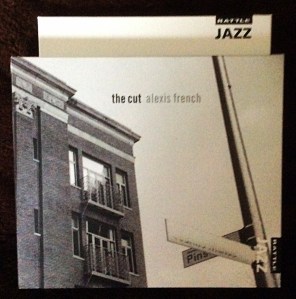
‘Dog’ (Rattle Jazz) Recorded in the now defunct and much-loved York Street studios Auckland. This album is the realisation of a project by Manins, Field, Holland &  Samsom. It sizzles, swings and while hinting at the vibe of a bygone era, it still sounds fresh & modern (and very Kiwi). ‘Dark Light’ (Rattle Jazz) This excellent album is one of two that Jonathan Crayford released in 2014 – Recorded at ‘Systems Two Studio’ NY with Crayford (piano), Ben Street (bass), Dan Weiss (drums). Don’t expect repetition from Crayford. This master musician takes us on many journey’s, each unlike the last and all brilliant. Hip Flask 2 (Rattle Jazz) A funk unit led by Australasian saxophone giant Roger Manins. Accompanied by Adam Ponting (piano), Stu Hunter (organ), Brendan Clarke (bass) and Toby Hall (drums). A thoroughly appealing album and a welcome follow-up to Hip Flask 1 (Hip Flask 1 included with the album).
Best Jazz Writing
The Parker Biography (part one): Stanley Crouch’s ‘Kansas City Lightning’ is a great read and a possible game changer. It has sometimes been observed that Jazz  biography is the weakest link in Jazz Writing. If that is true then the mould has truly been broken with this work. Crouch has placed the story of Parker’s early life into a fuller historical context. In learning things about the times, we learn a lot about the man. This is a book that could be appreciated by anyone interested in the history of African-American life in the Mid-West. I suspect that its significance will grow as time passes. Above all the book is beautifully written and for me that counts.
Best Jazz DVD
Charles Lloyd’s ‘Arrows to Infinity’ is a beautiful and informative document. It is packed with important music and astute observations. The filming is tasteful and painterly and Dorothy Darr (artist and long time partner of Lloyd) has been the obvious guiding force (assisted Jeffery Morse). Lloyd the musician is beyond caveat, but Lloyd the narrator also holds us in rapt attention. The reborn, Big Sur Lloyd, communicates his deep calm with ease and his spiritual approach to music and life is compelling. As he reflects honestly on the momentous times he lived through, we feel enriched by sharing the experience. He sums up his approach to improvising and the duty of sharing his music as follows; “The winds of grace are always blowing, so set the sails high”.
Most anticipated events for the coming months.
Glen Wagstaff & the Symposium Orchestra Project. (NZ) 2015 album release (subject to sufficient funding levels being reached on kick starter). This young guitarist references the writing of Kenny Wheeler and Brian Blade. There is a deep melancholic beauty in his charts and the material soars. The album features many gifted New Zealand musicians. Christchurch, like Auckland & Wellington, has a deep reservoir of Jazz talent.
The Auckland Jazz Orchestra (NZ) – ‘Darkly Dreaming Suite’ by AJO conductor Tim Atkinson. I witnessed the recording of this suite and what I heard sounds amazing. While there is a dark brooding quality of the music it is also strangely warm; like a glass of claret held up to stained glass window at dusk. The album is due out in 2015 and the work marks step-up for the orchestra.
Maria Schneider conducts the Jazz Mothership Orchestra (USA/Aust) Our highly respected saxophonist Roger Manins is to feature with the JMO under Schneider’s batten. I don’t have all of the information yet, but the JMO will certainly be touring Australia.
CJC (Creative Jazz Club) 2015 events. The club had a great 2014 year in spite of the odds and difficulties. This is in large part due to JJA Jazz-Hero Roger Manins role as musical director (aided and abetted by Caro Manins and Ben McNicoll). The task of keeping a not-for-profit Jazz Club float in a relatively small city is challenging, but Manins has managed to secure a solid programme and he did so while juggling his demanding teaching gig at the Auckland University Jazz School and his numerous live gigs and recording gigs around the pacific rim. Having a brand new Auckland Jazz Festival (organised by Ben McNicoll) rounded the years events out perfectly.
Biggest Regrets of 2014 – missing the John Zorn gig in Adelaide – The passing of Kenny Wheeler whose music has given me so much pleasure over the years.
Video clips of Mike Nock & Barney McAll – filmed for this blog at the CJC (Creative Jazz Club) 2014.
http://youtu.be/zBd2yZZdvL4?list=UUvm6sdXjGJULG9k2nYZ9udA
http://youtu.be/m_oA8iLshNg?list=UUvm6sdXjGJULG9k2nYZ9udA
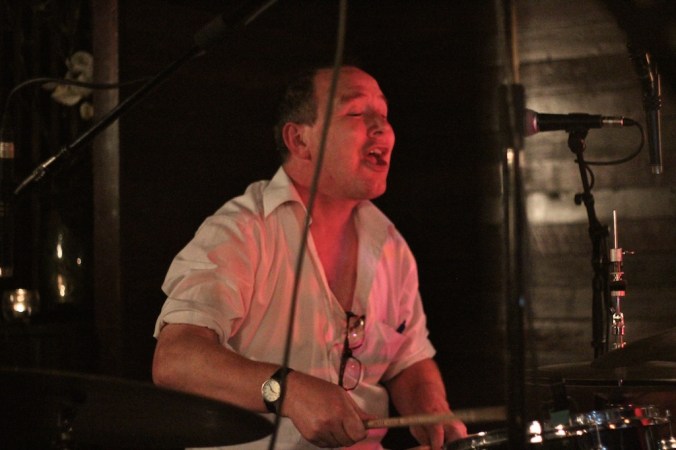
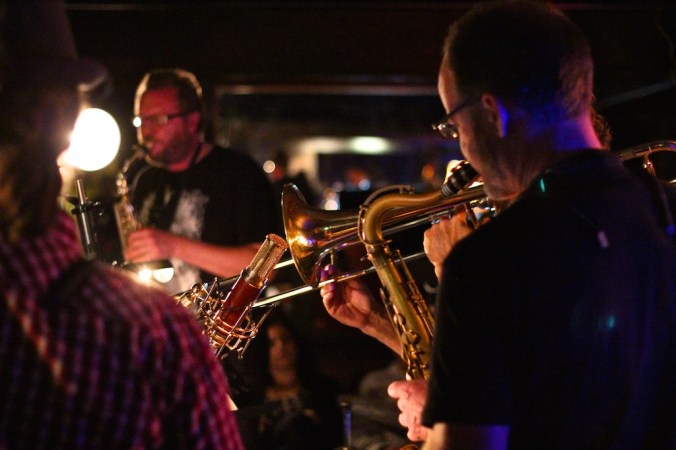 This was too good an opportunity not to record and Rattle did just that. Capturing chordal instruments in a space like the CJC is challenging as the sound has a number of hard edges to bounce off. Recording a live performance of this particular brand of ‘Troubles’ might work well.
 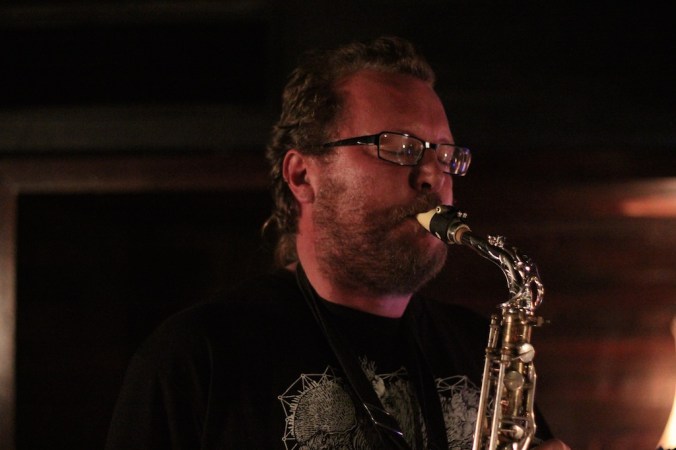 Guiding the proceedings with his well-known brand of anti-establishment megaphone diplomacy was ring master John Rae, ‘Troubles’ co-founder. He shepherded the ensemble through a constantly shifting landscape. His effervescent flow of joyous and often irreverent cries only stemmed by Patrick Bleakley’s timely interjections. Rae is the supercharged engine room, but Bleakley is clearly the anchor. Like Rae he’s an original member.
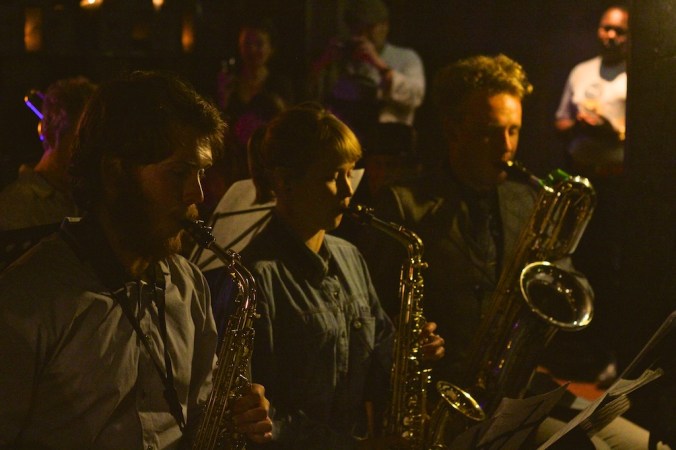
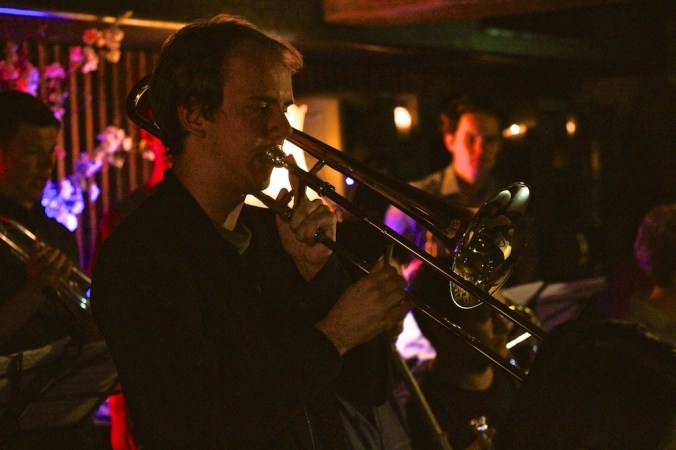
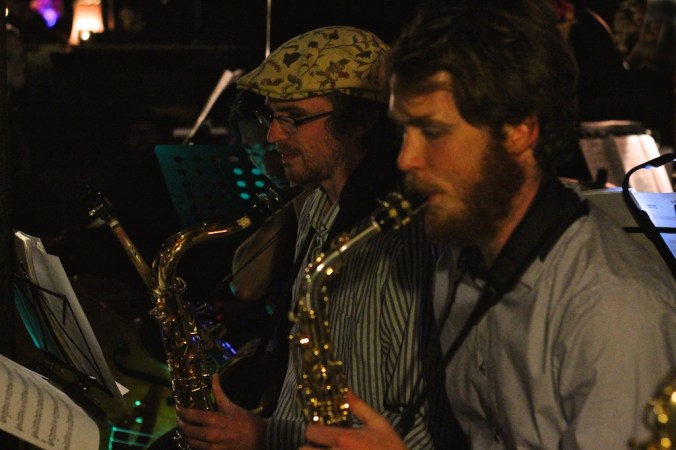
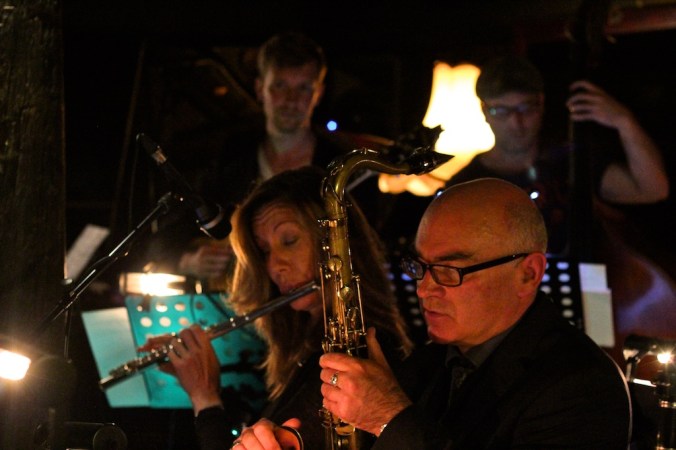
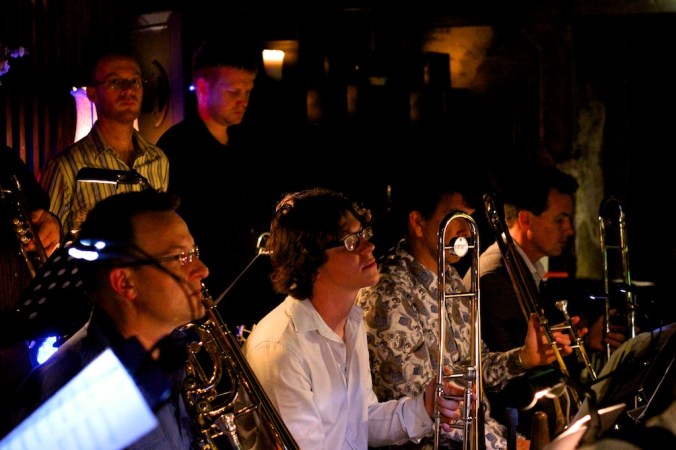
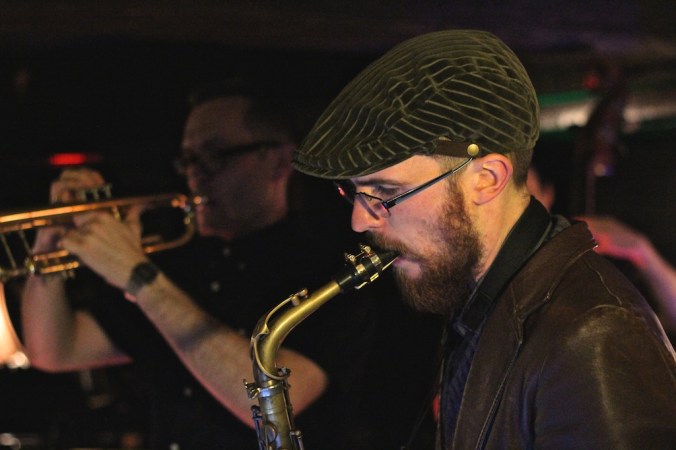
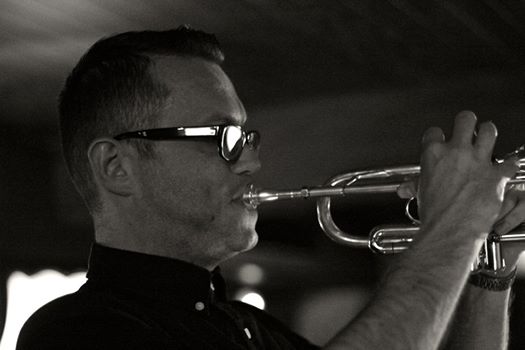
 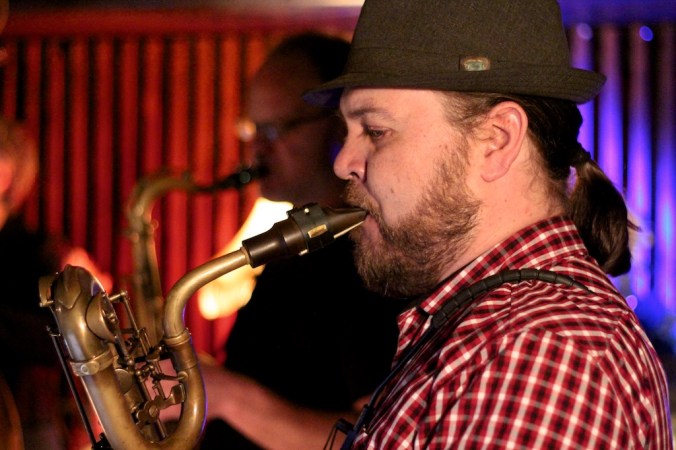 With this Auckland horn section in place, a new front had opened and the tweaked charts took maximum advantage of that. On baritone was Ben McNicoll and his presence gave the sound added bottom. Roger Manins, who had stunned us with his wild death-defying solo’s at the Troubles Portland Public House gig was on tenor again. Jeff Henderson took the alto spot and that was a significant addition. His ultra powerful unblinking delivery was the x-factor. Unafraid of repeated motifs but able to negotiate the music without ever resorting to the familiar. That is the Henderson brand, original clear-cut and uncompromising. In no way diminished by the powerful reed instruments surrounding him was Kingsley Melhuish on trumpet. Melhuish has a rich burnished sound and like the others, he is no stranger to musical risk taking.
 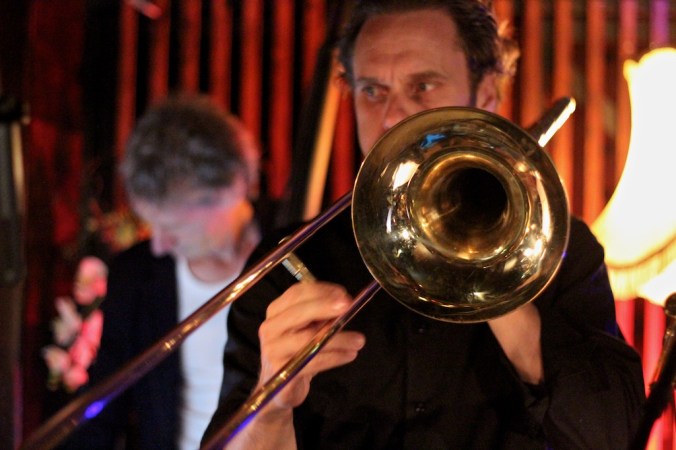 Together they evoked a spirit close to the earlier manifestations of the Liberation Jazz Orchestra. Not just the rich and at times delightfully ragged sound, but the cheerful defiance of convention and discarding of political niceties. Rae’s introductions were gems and I hope some of them survive in the recording. He told the audience that it had been a difficult year for him. “It was tough experiencing two elections in as many months and in both cases the got it woefully wrong” (referring to the Scottish referendum and the recent New Zealand Parliamentary elections). “there are winners and losers in politics and there are many assholes”.
 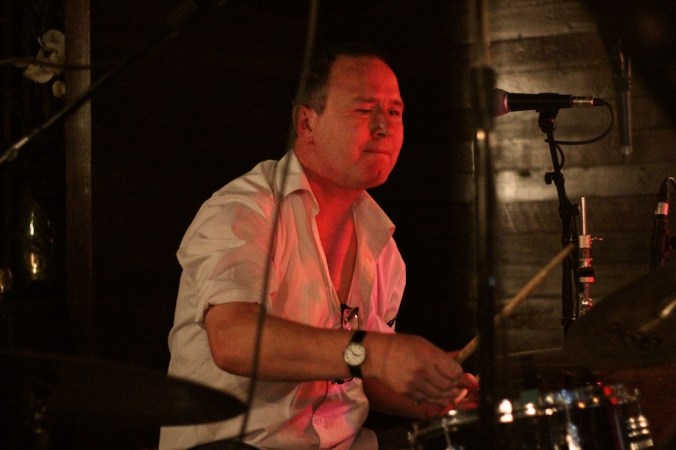 It wouldn’t be the ‘Troubles’ if there wasn’t a distinct nod to some of the worlds trouble spots or to political events that confound us. I have chosen a clip ‘Arab Spring Roll’ (John Rae), a title which speaks for itself. Following the establishment of a compelling ostinato bass line, the musicians build a convincing modal bridge to the freedom which follows. Chaotic freedom is the perfect metaphor for the ‘Arab Spring’ uprising. The last number performed was the ANC National anthem and as it concluded, fists rose in remembrance of the anti-apartheid struggle. It is right that we should celebrate the struggles for equality, but sobering to reflect on how far we have to go. The Troubles keep our feet to the flame, while gifting us the best in musical enjoyment.
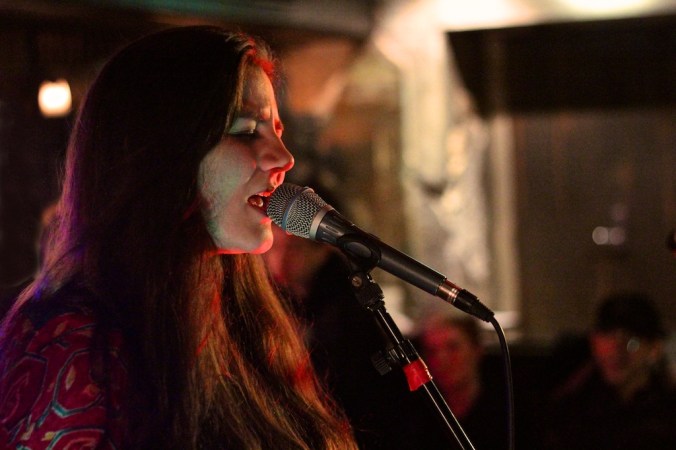
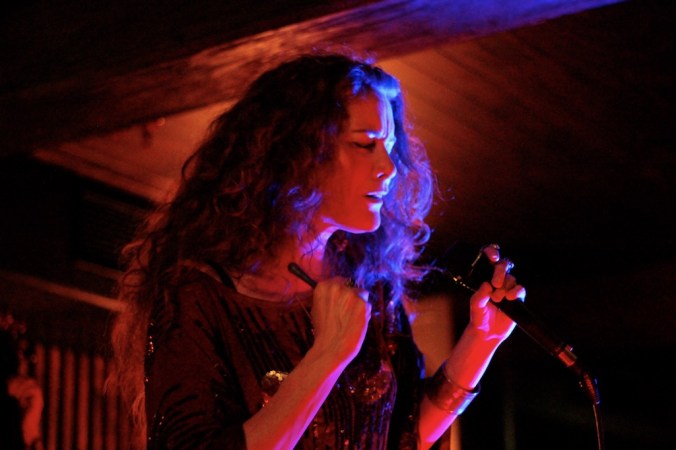 Caitlin Smith is a vocalist who can quickly put a smile on your face or shamelessly tug at your heart-strings. She always finds a way to connect her audience to the essence of a song; deftly locating that illusive sweet spot. While there is often power in her delivery, there is also remarkable subtlety. You could describe her voice in many ways; pitch perfect, having an almost operatic range, but there is much more to Smith than chops. In the parlance she owns each song she sings and embeds it with a uniqueness. Like a seasoned saxophonist she tells beguiling stories in a distinctive way.
 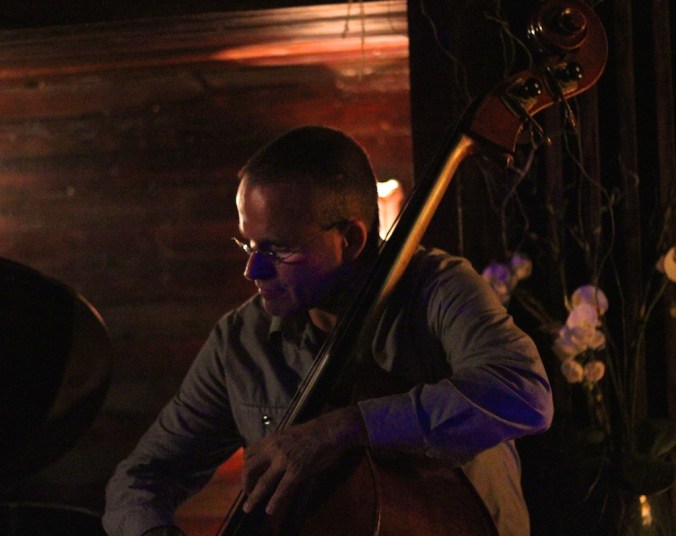 There is a well-worn cliché that vocalists hog the limelight and in truth many go through their careers with barely a reference to the musicians that they work with. Caitlin Smith is the opposite. You are left in no doubt that her gigs are a shared project as she interacts with band and audience, picking up on every nuance from either. She works with a band as a vocalist should and she is comfortable giving them space to solo. There is a generosity of spirit about her persona and this manifests in the music. I have also witnessed her solid support for emerging artists. The ultimate litmus test for me, is that gifted improvising musicians enjoy playing in Caitlin Smith lineups.
 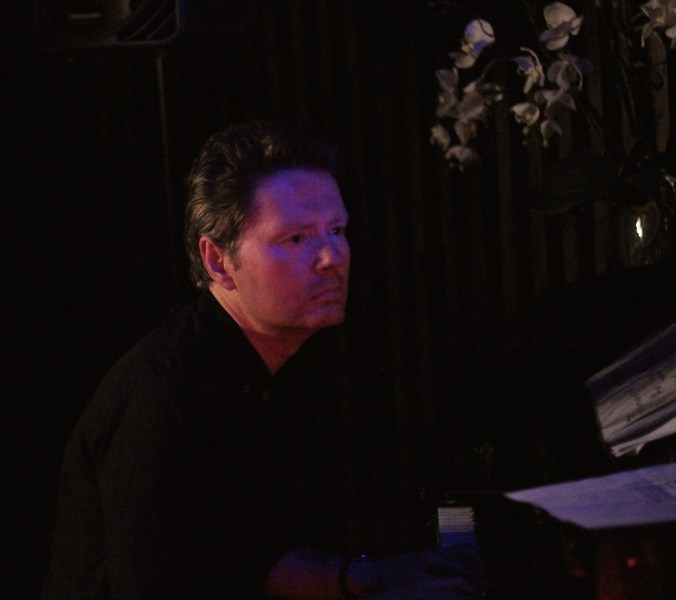 While Smith is widely acknowledged as a gifted singer-songwriter, it is her Jazz repertoire that is turning heads of late. Her performance with the AJO at the Tauranga Jazz festival won her many new fans. She is a wonderful interpreter of Jazz standards and this aspect of her repertoire deserves critical attention. Her vocal gifts and incredible musicality thrive with this space; of particular note is the delightful way she plays with lyrics.
 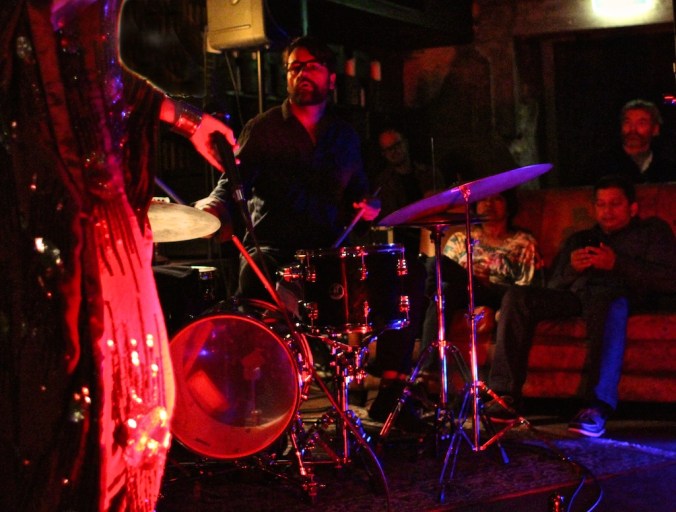 Smith is a natural performer and there is something wonderfully theatrical and engaging about her stage presence. This gives her gigs an added spark of life. On Wednesday she included some of her own compositions like the beautiful ‘In between’, but the audience was particularly wowed by her take on jazz standards such as Ellington’s ‘I like the sunshine’. I have heard her sing Ellington and Strayhorn at other gigs and I am always impressed by the way she freshens these standards up.
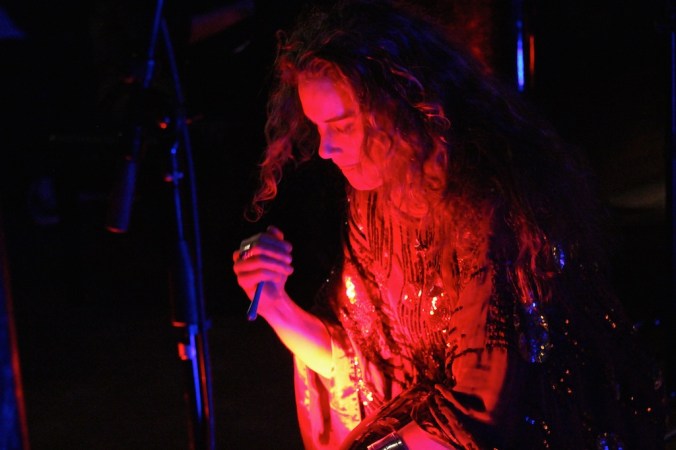 Another song from a different genre was ‘River’ (Joni Mitchell). This classic Mitchell song was recently reinterpreted by Herbie Hancock and Wayne Shorter. As Smith delivered her version she phrased it in such a way that I could hear those elided Shorter fills in my head. Her delivery was crystalline and it brought her two worlds together perfectly.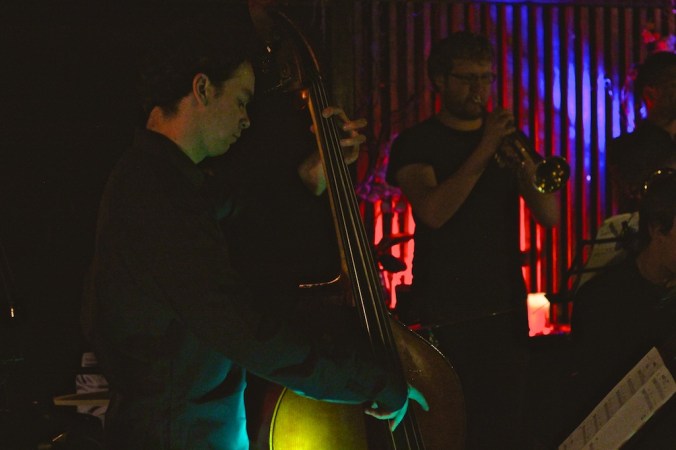
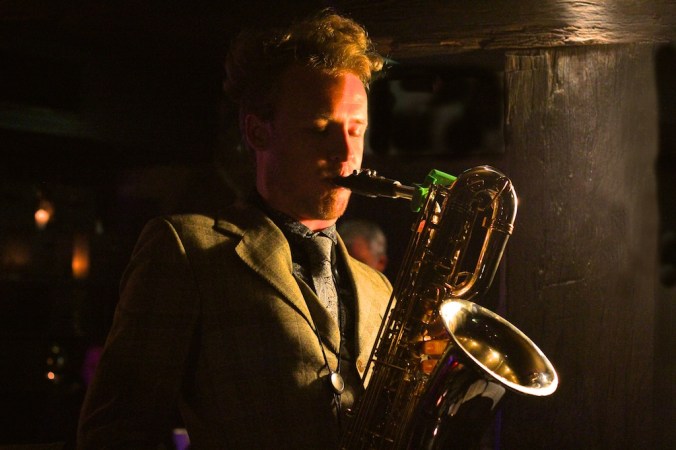

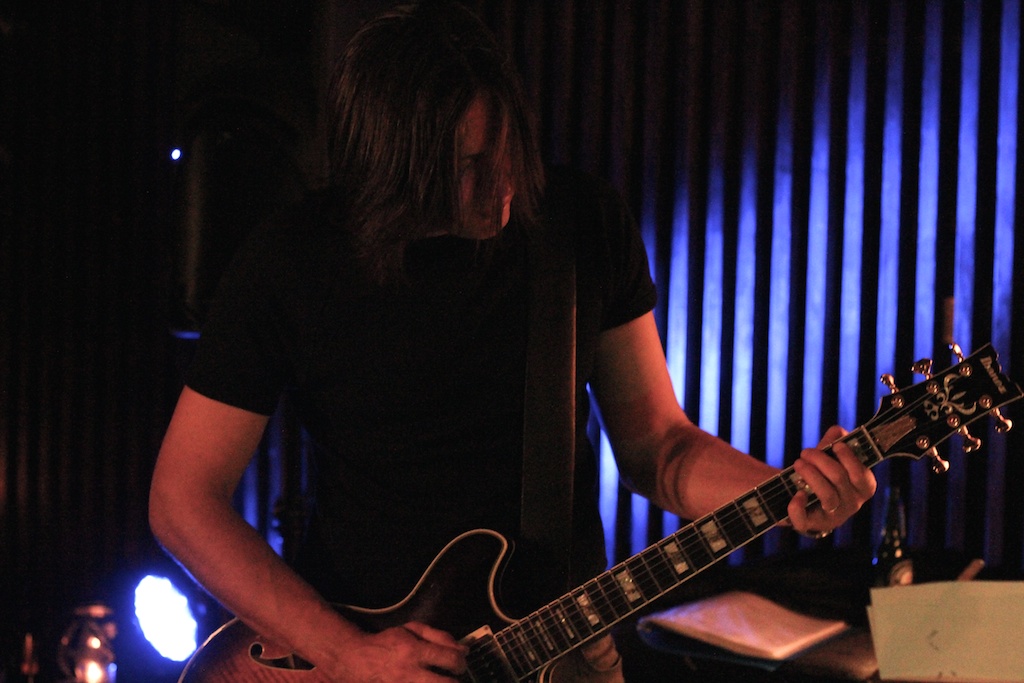
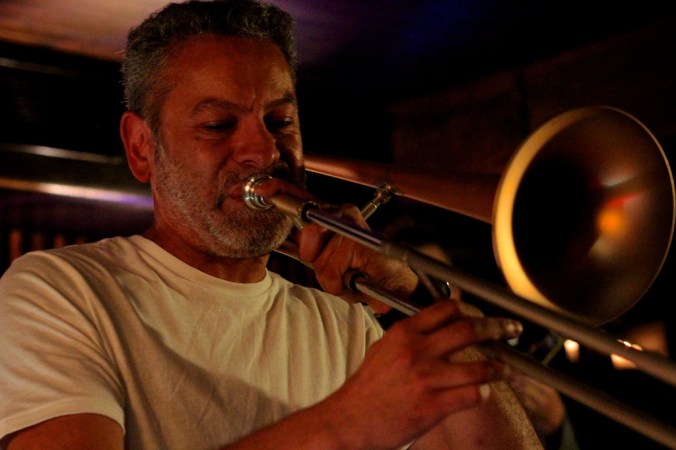
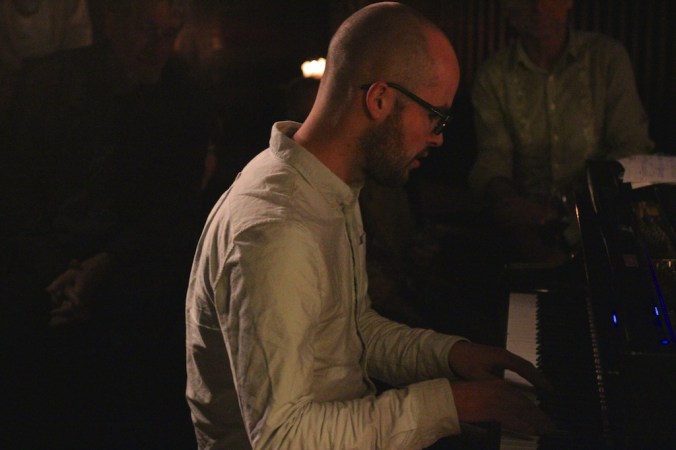
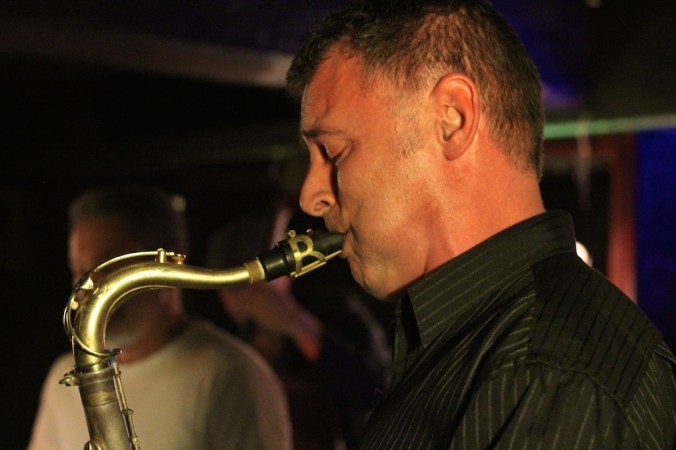
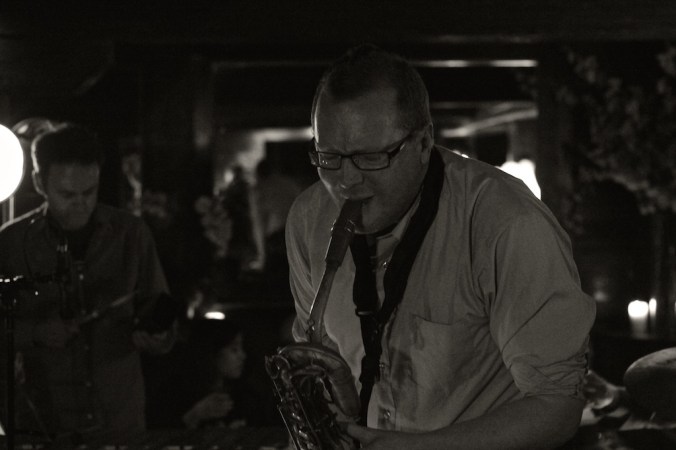
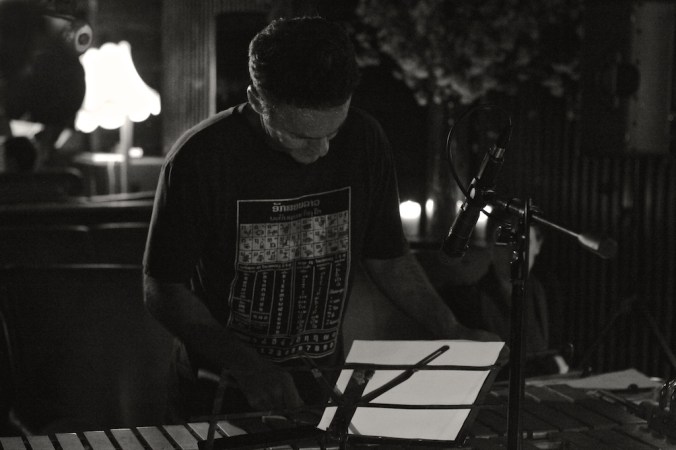
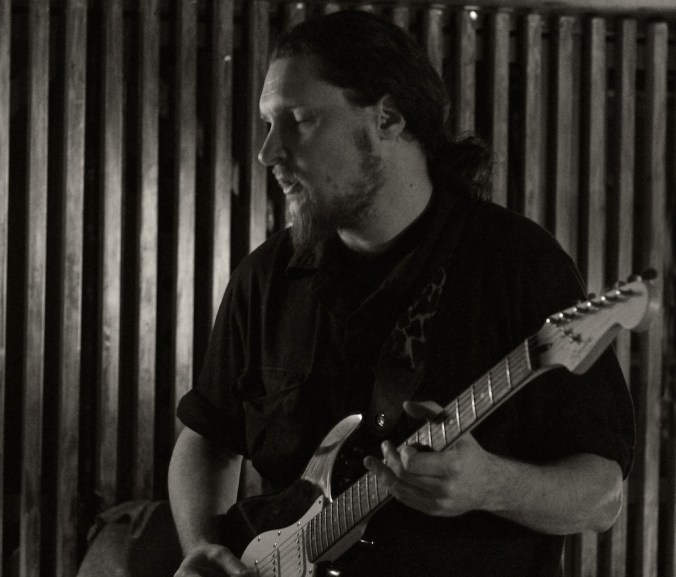 e
e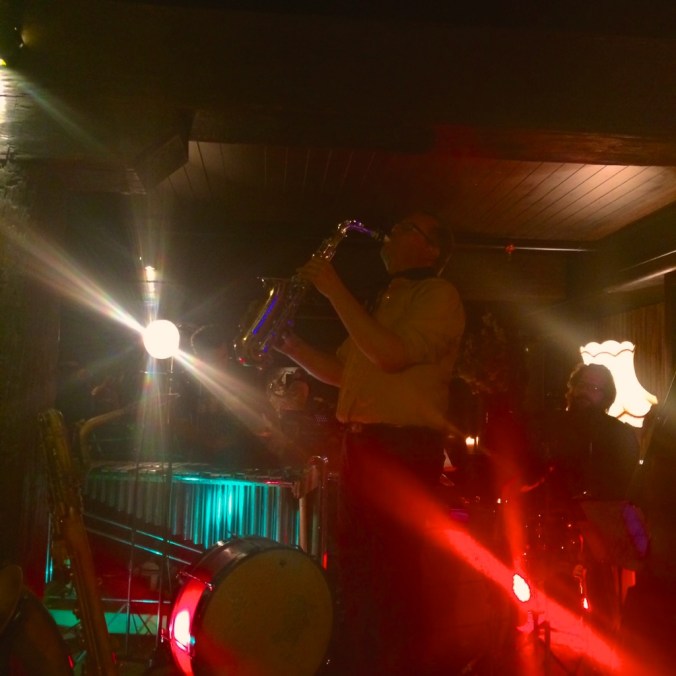 There is a rawness and a primal quality to it, a strong sense of performance. Who would prefer a recording of an Arkestra or an Art Ensemble of Chicago performance over a live show? This was all jazz and all music decoded, not for the cocktail party. The next day I was watching the 1956 Jean Bach film ‘Great Day in Harlem’ and there was Roy ‘Little Jazz’ Eldridge squealing out high note after high note on his trumpet. Again and again, he pushed out a flurry of wild free multi-phonic sounds. Even in the swing era, this had a great effect.










 JazzLocal32.com