SFJAZZ Centre Opening

John Fenton

John Fenton is a Jazz Blogger covering the Auckland, New Zealand and South Pacific beat.  He has listened to more jazz than is healthy for any human being and he started writing, supporting local artists and Jazz in general to give something back.  He loves poetry, the creative arts and is a member of the Jazz Journalists Association.  His Blog is JazzLocal32.com  

IMG_5417

January 21st 2013 signalled a seismic event in the Jazz world.  The opening of the 35,000 sq. ft. purpose-built San Francisco Jazz Centre.  The New York Times proclaimed, ” We get the feeling that this will approximate how Jazz will look in 2013“.  This is the only free-standing Jazz facility of its kind in America and it is a tribute to all who have worked towards its completion.  The idea for this  centre was conceived 30 years ago by a few prescient dreamers who visualised a future home for the Jazz community.  At the heart of this group was Randall Kline who founded ‘SF Jazz’ out of an earlier incarnation ‘Jazz in the City'(the acclaimed SF Jazz Festivals followed).   Randall Kline is now the Executive Artistic Director of SF Jazz but he will quickly acknowledge that the project would have been impossible without widespread community involvement.

SFJC

At first glance the SF Jazz Centre appears modest in design as it is not an ornate building.   It is however a fine example of SF modernism, which sits happily in its surroundings, inviting deeper inspection.  As the detail’s revealed you begin to see it with different eyes.  The well-known Californian architect Mark Cavagnero designed the building and part of his remit was to integrate the activities with the community.  He succeeded in this.  Artists in residence (and others) will rehearse in the Joe Henderson Lab, which is at street level, has glass on two sides and is open to public gaze.  The public will also be able to glimpse the performances in the main auditorium as they pass by.

Herman Leonard pics This exchange between onlookers and musicians is at the heart of the design concept.  The main performance auditorium is build in the shape of an amphitheatre which allows eye contact between audience and performers (and obviously making for unimpeded sight lines from every seat).  The acoustics are state of the art and the sound can also be dampened.
Situated in Hayes Valley, the SF Jazz Centre is only a few blocks from the from the famous Fillmore Music District.   More importantly it shares the precinct with the SF Ballet, Davis Auditorium (SF Symphony) and SF Opera.  Immediately opposite is an imposing brick building being renovated to house the School of the Arts.  Huge Herman Leonard pictures emblazon the side of that building, causing Lionel Hampton, Billie Holiday and other greats to smile across at the Jazz centre.  This tells passers-by in unequivocal terms that the Corner of Franklin & Fell is where Jazz lives.

I collected my press pass and was given a tour of the building, suddenly aware of the welcoming friendliness of the interior.  Bearing witness were thousands of musicians names – etched into the glass.  I would assume that all are associated with ‘Jazz in the City’ and ‘SF Jazz’ in some way.

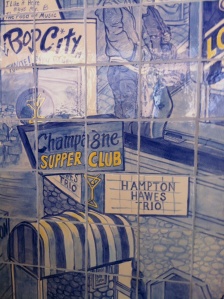
tile mural 2 039Upstairs a large tiled mural gave the history of the Bay area Jazz scene.  Names like Hampton Hawes and clubs like the Black Hawk will resonate strongly with Jazz lovers.  This town has a commendable history of producing fine musicians and with SF Jazz’s focus on education we can expect this to continue.
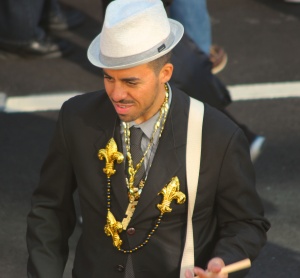
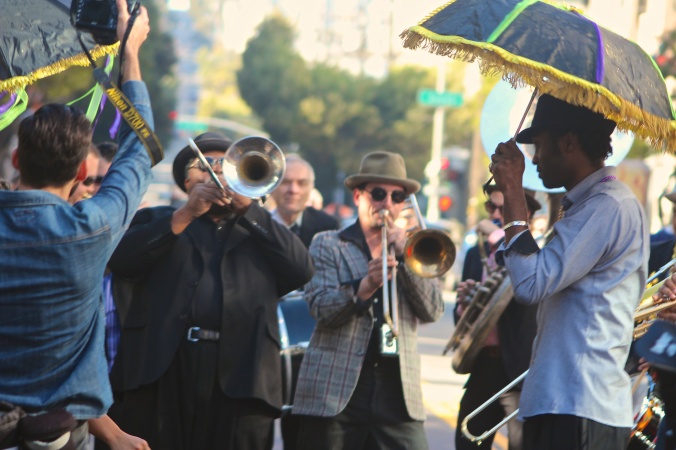
The day unfolded like most San Francisco winter days with sunshine streaming out of an azure blue sky.  Everyone was smiling and back slapping and then out of nowhere came a joyous blast of music.  It was hardly as if the collective mood needed further elevation, but just in case, the ‘Bourbon Kings’ came marching up the street New Orleans style.  At their forefront were mesmerising dancers twirling colourful ribbon-trimmed umbrellas, who swayed and whirled like dervishes in a trance.  Just how many musicians were playing it was impossible to discern, as the scene quickly became a melee of musicians, crowd and excited dogs.   It was the first time that I had witnessed a Second Line style marching band and I will not forget it in a hurry.   It was like watching the history of Jazz marching into the present.

Just before the ceremony a work by Jacob Garchik (The Heavens: Atheist Gospel Choir) was performed – titled ‘Creations Creation’.   This was call and response and when the street musicians called, those on the various balconies responded.  At one point a small terrier dog joined in (two calls on trombone elicited two happy barks, three calls three barks).   This was not planned for, but entirely appropriate in a city that has so many cheerful dogs.

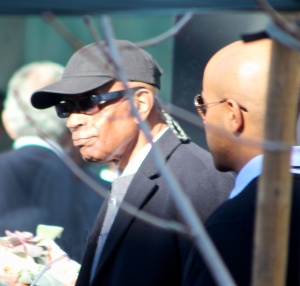
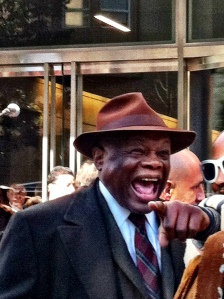
The speeches that followed acknowledged all of those who had worked toward this end and congratulatory messages from the likes of Nancy Pelosi the Democratic Leader gave the proceedings a sense of moment.   The audience overflowed with local dignitaries, among them Jazz legend Bobby Hutcherson and the much respected former Mayor Hon Willie Brown Jr. (also a former member of the State Legislature). His commitment to SF Jazz goes back a long way.  I spoke to Bobby Huthcherson briefly after the ceremony.   He is not in good health but will be performing with McCoy Tyner and others this week at his SF Jazz Centre birthday celebration.  Before we parted company he looked at me with a smile and said.  “When you return to New Zealand, don’t let them put you on a plane to Oakland”.  San Franciscans love the story about the man who purchased an air ticket for Oakland and ended up in Auckland much to his surprise.  SFJC 033

John Santos (Resident Musical Director) said with emotion, “San Francisco you got your soul back”.  Randall Kline also spoke powerfully. “They told us that this couldn’t be done, that the market was not geared toward assisting the arts at this time.  We involved the community and they said go ahead and we succeeded.  This is a powerful message to the markets – markets need to follow the community not the other way round”.  Inside there was a short film and live music performed by the SF Jazz High School All Stars.   If this performance sets the standard then Jazz is in very good shape.  Education, performance, and community involvement are at the heart of this establishment.   With rotating Resident Artistic Directors like Regina Carter, Jason Moran, John Santos, Bill Frisell and others the centre can only do well.

A poet laureate and a photography laureate have also been appointed and this impresses me no end.   Jazz, poetry and photography belong together and especially in San Francisco.

In the coming months the following musicians will have residencies:  Bill Frisell, Dave Holland, Hiromi, Zakir Hussain,Brad Melhdau, Bela Fleck and John Santos.  This is interspersed with a program of visiting and local artists.

The opening was on Martin Luther King Jr day and that was no accident.  Martin Luther King understood very well the importance of Jazz and he spoke movingly of its importance.

“Much of our power in the Freedom Movement has come from this music.  It has strengthened us with its sweet rhythms when courage began to fail.  It has calmed us with its rich harmonies when spirits were down. And now, Jazz is exported to the world, for in the struggle of the Negro in America there is something akin to the universal struggle of modern man”.

I urge Jazz lovers everywhere to visit San Francisco (and the SF Jazz Centre).  It is certainly an ideal destination for New Zealanders.  The eleven hour flight is not that onerous and the fact that you can bypass the hell of LAX is the icing on the cake.  Do it people and don’t forget to support the artists in the Jazz clubs and other venues.

The opening night is streamed below by NPR (KQED) and you can listen by following the link.  Grab a beer and nibbles and enjoy – I sure did.

http://www.kqed.org/arts/music/sfjazzcenteropeningnight.jsp

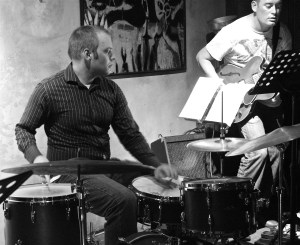
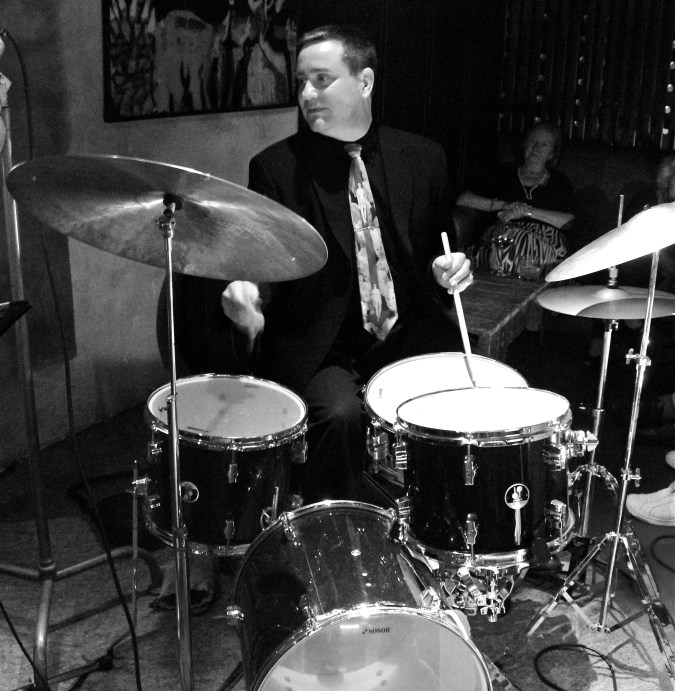
IMG_1648drummer Bourbon Kings 037dancing girl

Happy New Year – JazzLocal32.com

IMG_1535

Thanks to everyone who reads and visits JazzLocal32.com and particularly the musicians and Jazz lovers who let me into their lives, many of whom are close friends.

Improvised music is a profound manifestation of the human condition and a loadstone to guide us on. It tells us that we can reach beyond the known and touch an illusive world of new possibilities; but only if we adjust our perspective.

It is the job of musicians, writers, visual artists and poets to challenge, interpret and shock. Jazz musicians understand this better than many Jazz fans. Life can be stunningly beautiful and ordered but profound realisations can also arise from discord. These conditions are not separate but co-dependent refractions from life’s experience.

I dedicate this post to the musical risk takers who ride currents that we cannot see but which we experience through them.

Early Jazz confounded listeners as it was unknown to them. Swing took ten years to replace two beat Jazz and beBop ten years to displace the later. Jazz does not stand still anymore than life does. It is not a museum.

Whether we listen to avant-garde, fusion, funk, swing or post bop it comes from the same restless explorations if played with integrity. My wish for everyone who enjoys this music is that they will become more adventurous.

The Creative Jazz Club in Auckland has a genius for expanding our horizons and by feeding club goers a varied diet it stretches our ears. We don’t have to like everything we hear but we should be respectful of the act of creation.

IMG_5266

I am writing this from one of the great Jazz cities of the world (San Francisco) and Jazz is deep in the DNA of this place. On New Year’s Eve there were a lot of unimaginative ear splitting DJ events but Jazz coexisted and held its ground.

To paraphrase John Zorn there are blocks of sound everywhere – it just needs someone to interpret and arrange them. No manifestation of sound is invalid. The musicians do the rest and we are an integral part of the result.

We are all poets and musicians in our way if we stretch out observe and above all listen with fresh ears.

I was in a nice eatery two nights ago and a fine musician Terrance Brewer was playing smoking Jazz guitar. In the first break I went up and told him how much I had enjoyed the group and his playing. Next break he came and spoke with us – giving me two of his CDs as gifts.

The Jazz community is truly a universal family and because I listened and acknowledged the music we connected as kindred spirits.

Happy new year to my jazz family – I love you all.

listen LISTEN

Written on the road from the wonderful liberal San Francisco ( as a guide book said – Republicans and the unhip risk being run out of town).

John Fenton

PS – I now own the domain name JazzLocal32.com

20130101-120539.jpg

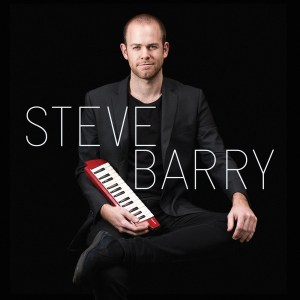
Steve Barry trio @ CJC – Album Release Tour

Steve Barry

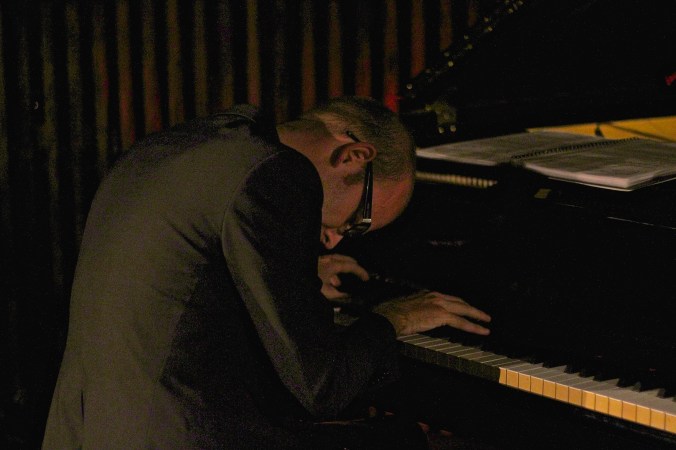
Steve Barry the Auckland born Jazz pianist left New Zealand a few years ago and with him he carried our highest expectations.  That can be a distraction to an emerging artist, but Steve possesses a faculty that overrides distractions.  He is one of the better pianists that I have heard and there is a back story to that.  His focus is unwavering to the point of obsession and he is an artist that won’t be  hurried.  We impatiently awaited his first album, the eponymously named ‘Steve Barry‘; always urging him to record.  He resisted all entreaties, practicing and refining while an innate sense of timing guided him.

He was right and we were wrong – now is the perfect time.  The album launch at the CJC (Creative Jazz Club) and the album itself fulfilled every expectation.

This is an artist who puts the integrity of the music before any rapid career path.  This is the right time for the album release, placed as it is firmly within the ambit of work being done by Aaron Parks, Matt Penman, Kurt Rosenwinkel and other ground breaking younger artists.  This new sound is gaining ascendency and with adherents like Will Vinson, Lage Lund and Mike Moreno it will continue to do so (‘James Farm’ are perhaps the epitome).  This music is mainstream Jazz but it references sources as diverse as Lenny Tristano, Indie Rock and even Hip Hop.  The fractured and complex rhythms are juxtaposed with soaring fluid guitar lines.  Against that are the textures and layers of melody.   Only the best musicians can pull this material off and only the best composers can write such material.

While Steve is clearly influenced by this ‘new sound’ he is no slavish imitator.   He has found something that often alludes younger pianists; a recognisable and original voice.Tim Firth

One listen to this album explains everything about this artist and this incredible band.  All of the tunes on the new album are composed by Steve Barry and the compositions are sometimes dense and multi-layered.  This is a musical journey of the profoundest sort.  One that demands your fullest attention and perhaps a little knowledge of what is happening in the Jazz world.  The highest rewards in Jazz occur when we understand something of what is going on.   This is not background music for cocktail parties.  This is up to the minute real.

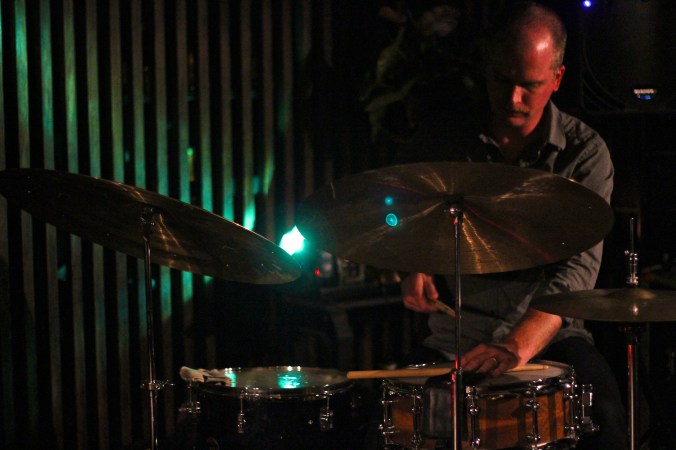
Jazz musicians tell me that the ones who succeed are those with an almost monomaniacal focus; Steve is such a musician.  He works harder than most as do the band members.   These guys have been playing together for a number of years and they respond to each others every nuance.   If you close your eyes when Tim Firth is playing, you blink them open just to make sure that Eric Harland hasn’t jumped into the drum chair.  His ability to chop up rhythms and channel trip-hop beats is nothing less than astonishing.  I have seen drummers watch him in open-mouthed amazement.  He can also launch a flurry of quiet brush work which is never-the-less as propulsive as a whispering rocket.

Alex Boneham is another stellar musician and he has long been a favourite with New Zealand bass players and Jazz fans.  He is the glue holding these often complex compositions in place and he does so with unwavering certainty.  As the charts unfold the musicians pull away from the known – taking different routes as they stretch against the boundaries.  In spite of the complexity and the risk taking, the implied centre always holds firm.   One musician said to me that he had never heard a band hold such a tight centre while reaching so far into the unknown.  Alex Boneham

The program was nicely balanced and to do this the band deviated from the album on occasion.   There were three lessor known standards performed on the night and the one that stood out was Wayne Shorter’s achingly beautiful ballad ‘Teru’ (from ‘Adams Apple’).   There were two Shorter tunes and that did not surprise me.  Shorter’s works are deceptively complex and they fitted tidily into the repertoire.   As nice as the Shorter was, Steve Barry’s own compositions are the most deserving of praise.   Many of us in Auckland are familiar with these as he has been refining them over several years.  Each time I hear a tune like ‘Parks’, Unconcious-lee (yes referencing Tristano) or ‘Clusters’, I find that the works have evolved.   This is what good Jazz is about.  A restless exploration into the heart of the music.

The highlight of the evening came at the beginning of the second set.   The trio launched into a spirited up-tempo number ‘Changes’ which segued into a long probing introduction.   The solo introduction was of a quality that we seldom hear – no one breathed as the piece unfolded delicately.  The new tune was ‘Vintage’ (also from the album).  At a point so delicately balanced that no one saw it coming we suddenly became aware of the pulse of brushes.  The moment was so perfectly executed  that a gentle gasp arose from the audience.  There were fleeting glances left and right as everyone acknowledged the moment they had witnessed.  The brushes played a solid 4/4 groove over the tune which is in 7/4.

An older woman next to me had tears of joy in her eye; “It was so wonderful that I dared not breathe” she said.  “I was his original piano teacher and as a pupil he was one in a thousand.  He worked harder than most and was relentlessly passionate about music”.  This confirmed the source of the magic, hard work endless commitment….and chops.

There is an additional member on the album who did not make the New Zealand leg of the release tour, Carl Morgan.   His work is also extraordinary and very much in the style of Lage Lund, Kurt Rosenwinkel and Mike Moreno.  The album deserves to do well and if it’s distributed widely enough it will.   Don’t just take my word for it; buy a copy and judge for yourself.   Be quick because the copies will go fast.  This is a must for any Jazz Lovers stocking whether you’re from Oceania or further afield.     CD Art - Front Cover

WHAT: ‘Steve Barry’ Cd  Jazz Groove Records, http://www.stevebarrymusic.com

WHO: Steve Barry (piano), Alex Boneham (bass), Tim Firth (drums), Carl Morgan (Guitar 3,4,9)

WHERE: Launch tour at CJC (Creative Jazz Club)

WHEN: November 28-11-2012

Sean Coffin (AUS)@ CJC

On Wednesday the 24th October we had an overseas visitor playing at the club, tenor saxophonist Sean Coffin.   This has been a great year for the Auckland Jazz scene and especially for the CJC (Creative Jazz Club) as a number of interesting local bands, out-of -towner’s, and overseas acts have appeared.  It’s the clubs imperative to offer genuine diversity, and this has caused the CJC to extend its reach.   Because Roger Manins has such a well established Australasian reputation and because the CJC is increasingly seen as a great club to play in, the net is ever-widening.   We are on the Oceania Jazz circuit fair and square.  

Sean Coffin is known in his native Australia for his stellar educational work, but it is his high level tenor playing that draws people to him.  He is among the best that Australia has to offer.   For many years he has been accompanied by his brother Greg (piano) and the work of this formidable pair is well recorded.   Sean studied at the Berklee School of Music and later as a postgraduate at the Manhattan  School of Music.  Among his many teachers I would single out George Garzone, as this world leading tenor player appears to have created a cadre of exceptional students in Australasia.  

At the CJC Sean showcased his most recent compositions and they were mostly themed around his children.  This proved a good source of inspiration as the numbers ranged from heart-felt ballads to some faster paced offerings (one referenced children at play).   These lovingly drawn compositions were well crafted and executed and no one had difficulty relating to them.   It is arguably risky to focus exclusively on family material, but the gamble paid off because the improvisations were tender without once descending into introspective noodling.   The integrity of the compositions as Jazz vehicles was always evident.  A lovely ballad to ‘Garz’ (dedicated to George Garzone) rounded things off nicely.

A local rhythm section was put together for this gig and in due deference to the visitor he was given the best.  Ron Sampsom (drums) and Oli Holland (upright bass).  With Kevin Field overseas, Dr Stephen Small took the piano chair.  No one needs to puzzle over my views on Ron Sampson and Oli Holland as my support for their work has been constant over time.  These two go way beyond the merely competent; they are solid, reliable musicians and they are also gutsy enough to handle new challenges without flinching.   Listening to them live or in a recorded situation will tell you everything you need to know.

Seeing Stephen Small again was an unexpected pleasure, as the patch he normally patrols is on the periphery of the Jazz world.  Because he teaches classical piano at Auckland University it would be easy to overlook the fact that he has other strings to his bow.   He is a madman on keyboards and I have seen him cut loose on banks of synthesisers during a Jazz fusion gig.   To say that his fusion performance was riveting would be an understatement.  He created textural layers of sound which swirled and soared alternatively.  Put him together with a fusion versed guitarist like Nick Granville or Dixon Nacey and he will take your ears apart in the best possible way.  Stephen is also a highly talented, straight-ahead, post-bop pianist and judging by the whoops of delight as he negotiated his solo’s he needs to get down to the CJC more often.   I am casting my vote for one of his Jazz fusion gigs.

Sean worked hard all evening and at the end he invited Roger Manins to the bandstand.   There was obvious respect between the two men but that didn’t stop them from going hard out.  When the best tenor players occupy the same bandstand, it generally ends up being a joyful celebration rather than a cutting contest.   This was respectful but no quarter was given.

Trudy Lile Quartet @ CJC

Jazz Flute is sometimes relegated to a place of lessor importance in the scheme of things and a few say that the instrument lacks the expression of the more ubiquitous reeds.   As with all things in Jazz it depends entirely on who is playing the instrument and how they apply themselves to the task.  If such naysayers had witnessed Trudy Lile on Wednesday the 10th of October 2012 at the CJC (Creative Jazz Club) they’d have swallowed their words.   This was expressive and extremely lively flute playing and no one with half a brain could doubt Lile’s supremacy on the instrument.  She is a master of extended flute technique but the effects are always applied tastefully.  

As well as being a premier Jazz flutist, Trudy Lile is also a composer and vocalist .  These three skills were all evident at the CJC gig as she showcased many of her own compositions.   The numbers were engaging and tended toward the melodic (as you would expect of flute compositions).

I have selected one of these compositions as a typical example (see You Tube clip).   Her ‘Kingston 787’ has a well-arranged head, which as it develops, becomes the perfect springboard for extended improvisation. With the vague promise of summer in the offing I was in the mood for this type of number.  Swinging and soaring like a skylark – a tune that pleased the ear and invited you along for the journey without losing you before the end.

‘Kingston 787’ is a great composition, referring to the famous South Island steam engine of that name.  There is ample precedent in Jazz for writing charts about steam trains and two of the most notable examples are Gerry Mulligan’s ‘The Age of Steam’ (who could forget ‘K-9 Pacific) and Oscar Peterson’s memorable ‘Night Train’.   Trains and jazz have always been linked as musicians rushed between gigs; writing charts to the clickity-clack.  

While there were a few numbers by other people there were seven Trudy Lile originals.   First up was a feisty tune named ‘Flute Salad’ (Lile), followed by ‘Winter Wind’ (Parlato), ‘Night Bird’ (Enrico Pieranunzi), ‘Emily’ (Lile), ‘If I Fell’ (Lennon/McCartney), ‘Kingston 787’ (Lile), ‘Hammond Sandwich’ (Lile), ‘The Laughing Song’ (Lile), ‘Smile Like That’ (E.Spaulding), ‘Frodo’s Mojo’ (Lile), ‘Gone By Lunchtime’ (Lile).  The choice of lessor known tunes by well-known musicians worked well as a contrast.  It offered comparisons and her own compositions stood up well against the likes of Pieranunzi.  For ‘If I Fell’ Trudy played piano and sang, accompanied only by a first year student Sam Swindells on guitar.  

Her regular band is Mark Baynes (piano), Jo Shum (upright bass) and Jason Orme (drums).   This unit has been together for some time and it shows.   I have caught Jo and Jason many times at gigs but this was the first time that I had heard Mark.   It proved a good introduction to his playing and the musical rapport between he and Trudy worked well.  Mark’s touch and voicings are different from the pianists we see regularly at the club and it is encouraging to see such stylistic diversity in our city.   Mark is a keen student of Brad Mehldau and this focus has undoubtedly shaped his approach to the instrument.

Jo gets better and better every time I see her as she has the ability to provide a solid cushion beneath the piano and flute – freeing up both as she holds the centre.  By contrast her soloing was highly melodic and perhaps it is this which makes her so right for working with Trudy.  When her amp failed mid number her loss from the mix was noticeable although the rest of the band played on without faltering.

Jason Orme is the other regular and he and Trudy go back a long way.   Jason is a versatile drummer who knows exactly what his job is.   For this gig he shared the drum duties with first year student Michael Harray.  Michael played drums for one number and percussion for several more.   On ‘Kingston 787’ we heard both drums and percussion.   They worked extremely well together – I like gigs with a percussionist and a drummer and Michael was superb.

Another student Joel Griffin played alto on one number and a jazz choir joined Trudy on another.   None of these students let Trudy down.

There is a significant thing to appreciate about Trudy Lile and that is her role as an enabler.   She teaches Jazz studies at the NZSM Massey Campus and is on a perpetual quest to promote, challenge and push her students into playing in situations like this.  Sharing your prized gigs with beginning students has its risks but the rewards are far greater.   It is only through being tested against more experienced players that they learn.

Trudy gives a lot to the Jazz scene but I’m not sure that it is always acknowledged.  When it comes to the academic world such dedication is all too often overlooked.  I have pondered this and wonder if old fashioned misogyny is at play.

The leading Jazz flute players in the world are now predominately women (Nicole Mitchell and Jamie Baum just won the Down Beat critics poll).   The students understand this issue perfectly as many have voiced it to me.   Progression in teaching or on the bandstand must be merit based and gender blind.

The CJC and especially Roger Manins set a very good example in this regard.

Jamie Oehlers NZ quartet@CJC

There are good gigs, bad gigs, predictable gigs and everything in between. Mostly we appreciate what is before us but just occasionally, we attend a gig that is every kind of wonderful. This was it.

Jamie Oehlers has the sort of reputation that scares aspiring tenor players and creates life-long fans. This man is a monster on the tenor saxophone and no amount of scrambling for adjectives on my part is ever going to capture the intensity of his performance. Luckily I filmed much of the gig and so I will put up a number of cuts on You Tube over the coming weeks. This gig won’t be forgotten as it fizzed and washed over us like a blissful tsunami of sound.

Typical of many Australasian musicians Jamie Oehlers is self-effacing, and quietly humorous, but his down to earth persona remains intact only until he puts the horn in his mouth. Then we see confidence, elegance, fire-breathing and effortless virtuosity of a sort that almost defies belief. He is one of those musicians who reaches beyond the known, bringing the rhythm section and the audience along with him. His solos have an almost mystical coherence; as if guided by a universal logic that he is able to share with the audience.

Those who saw the performance at the CJC on the 19th September 2012 will understand exactly what I am saying.

As marvellous as Jamie was, his local rhythm section was there for him every inch of the way. Not for the first time I marvelled as Kevin Field (piano) responded to every challenge, managing to inject a sense of originality and invention into a number of almost unassailable standards. Kevin stands out as a pianist as he understands perfectly which chords to accent, when to lay out and when to work harder behind the soloist. He is exactly the right pianist to play behind a talented visitor.

Oli Holland was so good during this gig that I embarrassed him with a bear hug afterwards. He could have been Reggie Garrison at one point as the urgent stabbing notes from his bass propelled the others on. Listen to the first clip below and particularly where Kevin is soloing. This unit was never less than in perfect lockstep.

Frank Gibson on drums was equally marvellous. You never know how drummers will respond to high-octane material like this but he responded by reaching deep within and capturing every nuance of the set. I have never heard him perform better.

The first set began with the standard ‘On a Clear Day’ (Lane), ‘Alina’ AKA ‘Variation 11 from Suspended Night’ (Tomasz Stanko) [one of my favourite tunes], ‘Aisha’ (John Coltrane), ‘Take the Coltrane'( Ellington-Coltrane) , Portrait in Black and White ( Jobim) and more.

Near the end of the second set the band decided to play John Coltrane’s ‘Resolution’ from ‘A Love Supreme’ (1962). ‘A Love Supreme’ is hardly ever played and more is the pity. This avoidance relates to the holy grail status of ‘A Love Supreme’ among post Coltrane saxophonists. My view is that we should honour it and especially in this week. John Coltrane was born on September 23rd. It is a shame not to have all four movements performed together though; ‘Resolution’ is after all only a part of a mystical four piece puzzle which makes perfect sense when heard in its entirety.

Jamie stated the theme over and again, but each time working in subtle re-harmonisations and embarking upon brief angular explorations. We knew intuitively that we would end up in a place of almost unbearable intensity and we were on the edges of our seats in expectation. This was not a gate to be rushed and although we understood that, the anticipation was palpable. Tension and release is at the very essence of Jazz and Jamie achieve this end by stalking his prey in measured steps like a confident hunter.

‘Resolution’ is an Everest of a tune utilising Coltrane’s new-found ideas which were somewhere between hard bop and free. Jamie interpreted intelligently without trying to out do Coltrane. He made it his ‘Resolution’ as well. Kevin field was the same, as he took a more oblique approach than McCoy Tyner. This was a perfect homage without being a slavish imitation.

At the end of the gig we received an additional treat when Jamie asked Roger Manins to play. The best moment was when they played ‘On Green Dolphin Street‘ (Washington). With these two masters working the changes and probing every hidden corner of the melody, it reminded us that standards interpreted with integrity can sound as fresh as at first hearing.

Jamie Oehlers lives in Australia where he runs a Jazz School. He has so many awards that storage must be problem (including being judged winner of the ‘World Saxophone Competition’ in Montreux by Charles Lloyd and Bruce Lundvall of Blue Note). He has put out 10 albums as leader as well as being sideman for the whose who of the Jazz world.

I ran into Jazz guitarist Dixon Nacey as I was leaving and he summed it up nicely. “Man I have just received a series of Jazz upper-cuts”.

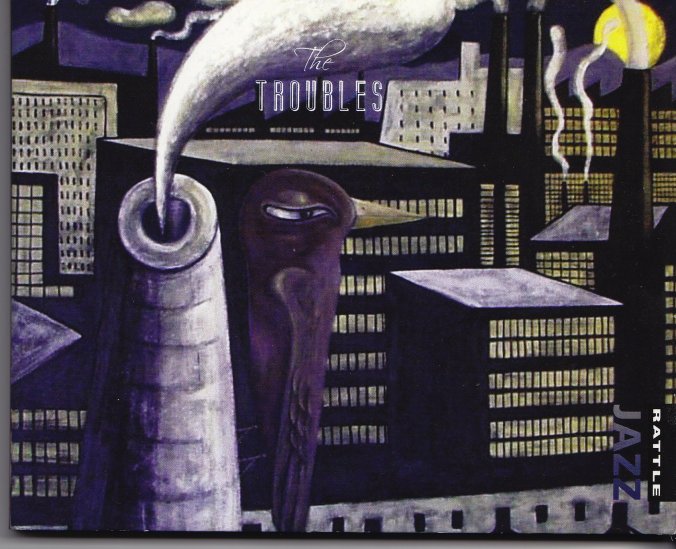
‘Troubles’ hit the CJC

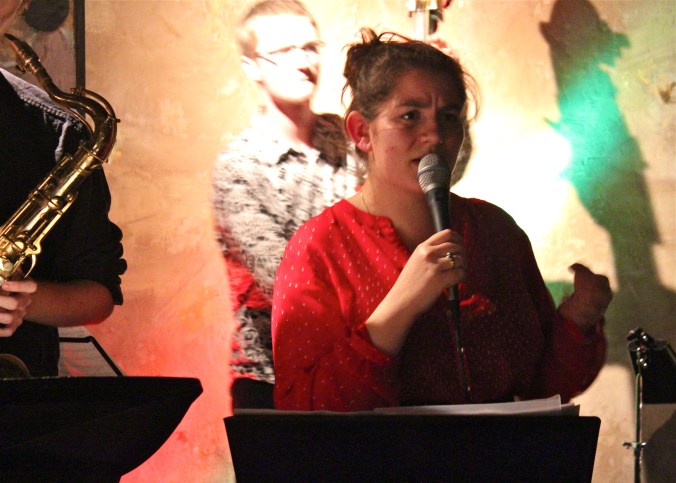
John Rae exhorting everyone; call & response

It has always been said that troubles arrive in pairs.   In this case the old adage was woefully awry as ‘The Troubles’ arrived in nonet form.  Their arrival may have ‘Rattled’ us somewhat, but we are built of stern stuff in Auckland.   We fortified our ourselves with strong liquor and pep talks, adjusted our parental lockout settings to allow for some serious swearing and settled in for the realpolitik of John Rae’s and Lucien Johnson’s crazy-happy Jazz.     ‘Oh Yeah’, we told ourselves, ‘We are ready to handle anything a Wellington band can throw our way’.

The Troubles-  call & response

There are bands that I like, bands that I respect and bands which drive me wild with pleasure.   ‘The Troubles’ are of the latter kind.   I’m besotted with this band and their deliberately ragged, madly political, quasi-serious satire.    This band digs deep into the well-springs of life and what bubbles up is a joyous lake of barely controlled madness.   The anarchic overtones are deliberate, but there is a scream-in-your-face humour that overshadows all else.   This is about chiaroscuro; a bunch of opposites vying with each other for attention.

This band is about plunging us without warning into the troubled spots of the world and then showing us humour where we thought none existed.  The overt political messages were a joy to me as I have never quite understood why this space is not filled more often.   The history of Jazz is intensely political and to describe ‘The Troubles’ music as a continuation of the work done by Carla Bley, Charlie Haden and especially Charles Mingus (even Benny Goodman) is not too far-fetched.    This band is a talented group of clowns shaking us by the scruff and saying; laugh or cry but for god’s sake look at the world about you.   There is no solace for Lehman Bros, Merrill Lynch, Barclay’s or John Key here.  For Jazz lovers with big ears there is joy aplenty.

This band is about call & response; not just between instrumentalists, but by the band vocally responding to John Rae’s trade mark exhortations.  Although he leads from the drum kit, that doesn’t prevent him standing up and shouting at the band (or the audience) to elicit stronger reactions.  During one of the middle Eastern sounding numbers (which appeared to lay the Wests hypocrisy bare), he shouted in what I can only assume was faux Arabic.  A flow of equally Arabic sounding responses flowed back .   It was the string section verbally responding as they wove their melodies around the theme.

On another occasion John Rae announced that we would be celebrating an often ignored trouble spot.   “I will now express solidarity with the North Americans”, he announced.  “The Sioux, Cherokee, Iroquois, Apache, Mohave etc”.   He began with a corny war dance drum beat which quickly morphed into a tune from ‘Annie Get Your Gun’.   As the melodic structure unwound into free-Jazz chaos we all understood the history lesson and laughed at the outrageousness of the portrayal.

Another Tango melody written by Lucien gradually reached a joyous fever pitch.  During the out-chorus the instruments dropped out one by one and as each instrument stopped playing the musicians raised a closed fist in a revolutionary salute.   Although it was quite dark in the club we had all picked up the cues.  This was a musical night beyond glib definition.

Like life, the music gave us lighter and then more thoughtful moments.  Musically it was amazing fun and after a difficult week I was suddenly glad I was alive.

Mission accomplished I think John and Lucien – keep shaking us up please.

John Rae (drums, co-leader, co-writer, co-arranger).  Lucien Johnson (sax, co-leader, co-arranger, co-writer).  Patrick Bleakley (double bass).  Daniel Yeabsley (Clarinet). Jake Baxendale (saxes). Hanna Fraser (violin). Charley Davenport (cello), Tristan Carter (violin). Andrew Filmer (viola).   Buy a copy of ‘The Troubles’ today at Rattle Records Ltd.  Venue – CJC Jazz Club Auckland.

The Auckland Jazz Orchestra @ CJC 20th June

Steve Sheriff & Callum Passells (Altos)

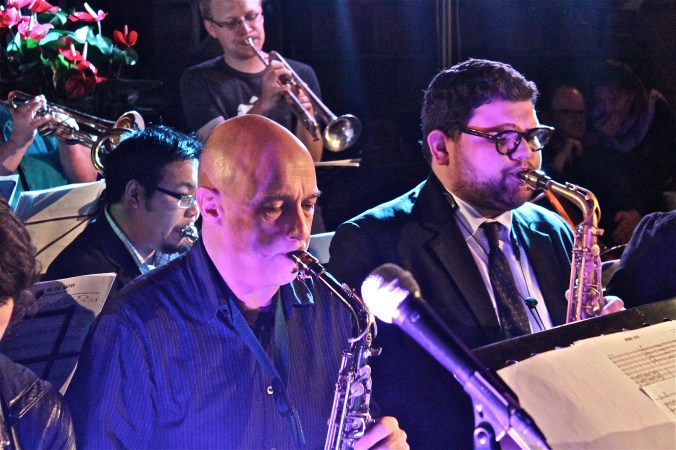
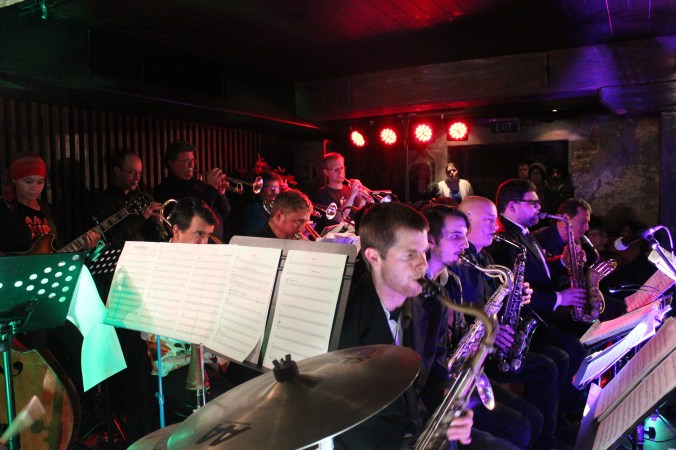
I love Jazz big bands and couldn’t have been more pleased when Roger engaged the AJO to play on awards night. It is more than possible that I had dropped a hint. Nothing underscores an occasion like a Jazz orchestra and having a 17 piece band in an intimate space is the best of listening experiences. Those surges of raw power always please, but it is something else that I look for. It is their collective agility , the tension and release and the quality of their ensemble playing. This is quickly revealed if the charts are well written, and they were.

People like to compare big bands and as a spectator sport it has some currency. I can’t help wondering however if eggs are always being compared with eggs. There are rehearsal bands like the Village Vanguard Orchestra (Thad Jones Big Band) who meet once a week (but with ever-changing personnel). Less common are the professional or semi professional units who get regular work and whose core personnel are less likely change (The WDR, Mingus Big Band, Roger Fox Big Band). Lastly there are all-star bands which come together for a recording, a gig, a concept or just for fun (Bob Beldens ‘Miles Espanol’ Jazz Orchestra, The Kenny Wheeler Big Band).

The AJO falls mostly into the first group but there is another dimension to what they do: they are a writing band and part of their reason for existence is to write charts and/or to create original arrangements. Quite a few in the band write and that gives the band an Auckland flavour. The compositions tell our city’s story. As a city we need to value them more and ensure that they get the work and the recognition they deserve. The City Council needs to have them on their radar and call on them for appropriate official functions? Knowing Jazz musicians pay packets, the public purse would be left largely intact if they did.

Mike Booth

The AJO is a mix of seasoned players and new talent and this gives them a certain flavour. With their unfamiliar charts they perform a high wire act and because of that there is a hint of risk; to pull this off and at the same time entertain, requires a deftness of touch. The AJO has this as the co-founders Tim Atkinson and Mike Booth manage to inspire and guide without stifling creativity.

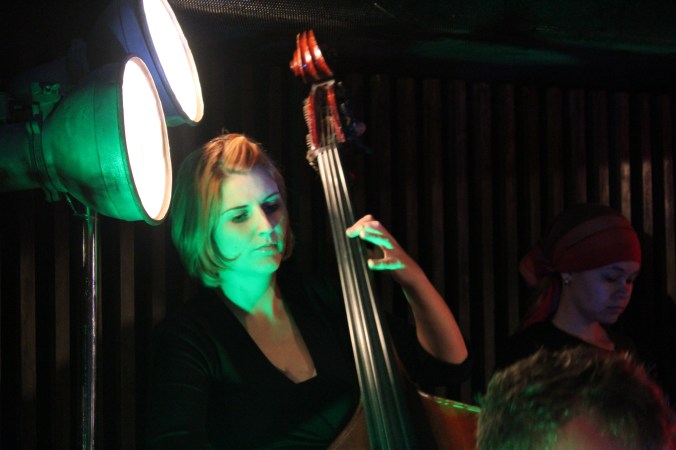
During the night we heard tight ensemble playing, a number of nice solos (particularly from Mike Booth, Theo Clearwater, Steve Sherriff, Andrew Hall, Callum Passells, Jono Tan and Matt Steele). Vanessa McGowen was terrific on bass and her presence was felt in just the right way. Andrea Groenewald on guitar demonstrated her soloing and comping skills. The latter added just the right Freddie Green touch to the overall mix. Swinging a big band is not always easy but this band swung.

There were two sets and thirteen numbers – among them were ‘It doesn’t Snow There’ – Atkinson, ‘On the Water’ – Booth, ‘All the things you are‘ – Kern/Hammerstein, ‘Those Nights’ – Hall. I have included a You Tube clip of there AJO performing Tim Atkinson’s composition and arrangement of ‘It Doesn’t Snow There’ – see below.

The AJO’s personnel are: Mike Booth (lead trumpet, arranger, composer, co-founder), Tim Atkinson (conductor, arranger, composer, co-founder)

Tim Atkinson

Altos; Steve Sheriff, Callum Passells – Tenors; Andrew Hall, Teo Clearwater – Baritone; Andrew Baker – Trumpets; Matthew Verrill, Mike Booth, Jo Spiers, Oliver Furneaux – Trombones; Mike Young, Mike Ashton, Jono Tan, Darrell Farley – Guitar; Andrea Groenewald – Piano; Matt Steele – Bass; Vanessa McGowen – Drums; Cameron Sangster

The AJO on awards night

Vanessa McGowan

AJO @ JJA Awards celebration

Front line of the AJO

 Stop Press: Tonight Auckland held its inaugural Jazz Journalists Association Awards Satellite Party.     The Creative Jazz Club of Aotearoa (CJC) hosted the event and the club was packed to capacity.  The CJC is the first Jazz club in the world to see the moon as there is nothing much between the club door and the International Date Line except ocean.   In spite of the wet outside it soon became apparent that the Auckland Jazz community was going to turn up in force.  No Jazz lover in their right mind would let an opportunity like this slip away and the club was soon filled up with a seething mass of Jazz fans; check to jowl with the who’s who of Auckland Jazz musicians.

Brian Smith & Roger Manins

During the evening Roger Manins was awarded the JJA Jazz Hero Award and this met with strong approval from the audience.  Roger has been a popular choice as his work in promoting Jazz, teaching, mentoring and acting as programme director for the CJC have endeared him to everyone.  Then there is his musicianship which astonishes and inspires, while setting the bar high.  The work that Roger, Caroline and Ben do in running the CJC should not be overestimated.  Having Roger in town and having a club like the CJC has been a game changer.  More and more students are emerging from the Jazz schools and they need clubs like this to play in.  Being tested is part of the journey.

Jazz musicians are the alchemists of the modern age: they forge a raw beauty out of the world about us.  Musicians like Roger are the keepers of the magic.

This was a night of magic from start to finish and the Auckland Jazz Orchestra were superb.  This nimble hard-swinging seventeen piece orchestra played its heart out and the audience never stopped smiling or tapping their feet.  Sitting in front of a Jazz orchestra and feeling that surge of  power is like nothing else I know.  Tonight Auckland felt like the luckiest city on the planet.

Credit must go to the JJA who have been incredibly supportive throughout.   Auckland is proud to have hosted its first JJA Jazz Awards Satellite Party and this is only the beginning.

The party continued long after the AJO had packed up and before long a Jam session was in full swing.  To have Roger Manins (tenor), P J Koopman (guitar) and Brian Smith (tenor) on the band stand together was the icing on the cake.   One by one the students got up to join them.  Some looked nervous but they got up anyway.  It is nights like this that guarantee the viability of this music we love.

A full review will follow soon – thanks to Jenny and Deepak for assisting.

The AJO

Callum Passells

Matt Steele

John & Roger (centre)

Brian Smith Quintet featuring Pete Barwick @ CJC

Brian Smith & Pete Barwick

Lets face it, no one will be disappointed by a Brian Smith Band and this particular lineup was an all-star affair.  Man did they deliver.

You expect Brian to deliver royally as he has had such a successful output as evidenced by his 2006 (Taupo’ album).   This also goes for Kevin Field (‘Field of Dreams’ album), Kevin Haines (‘Oxide’ album) and Frank Gibson Jnr (‘Rainbow Bridge‘ album), but a question mark may have lingered in some minds over Pete Barwick’s inclusion as he was the lessor known band member.  He is a veteran sideman and widely respected among musicians; Brian knew exactly what he was doing.  Pete was amazing on the night and he more than earned his place in this star studied lineup.

Brian Smith

In spite of their respective pedigree’s this was a band of equals and out of that amalgam came a night of exceptional Jazz.  A Hard Bop devotee in the audience said after the show, “I have been to Jazz clubs and concerts all over the world, but this may have been the best I have seen”.

The band played a number of Hard Bop standards as expected, but there were a few new originals as well.  An original number featured at the end of the first set titled ‘CJC’ delighted everyone.   Brian had penned this composition in the weeks preceding the gig and he dedicated it to Roger & Caroline Manins.  Before playing the number Brian paid tribute to them and to the CJC club.  The crowd loved this and applauded wildly.

In fact the audience was enthusiastic throughout the night and as tunes by Horace Silver, Heyman/Green, Brian Smith and others filled the club they could not have been happier.

The Creative Jazz Club (CJC) came into being for the express purpose of enabling such interactions and on nights like this both musicians and audiences are especially thankful for the clubs existence.

Pete Barwick

If any of you haven’t yet obtained a copy of Brian Smiths 2006 album ‘Taupo’ (Ode label) you need to remedy that situation immediately.   This last gig may begin a buying frenzy and as the world has recently learned to its cost regarding in demand commodities – scarcity drives prices up.  It is truly a marvelous album.  If you can’t find a copy in Marbecks or JB HiFi then try Real Groovy Records or Trade Me – just buy it.

The Chelsea Prastiti Septet

Chelsea

There are a surprising number of good Jazz musicians living in New Zealand and that is why the CJC is able to provide a varied and interesting programme at the club.  With Roger Manins as programme director the quality of the music is consistently high.  I may have come to expect that, but I can still be pleasantly surprised.

Chelsea Prastiti is studying Jazz at the University of Auckland and I have heard her sing once or twice before.   I knew that she was good but what took me by surprise was just how good.   This was not your routine standards programme but fresh and original Jazz singing at the highest level.   It was the sort of programme that a Sheila Jordan or a Norma Winstone might have embarked upon and in spite of the risks it was perfectly executed.

Matt Steele

Matt Steele is a pianist I enjoy greatly and he certainly justified his place in the band on this night.  Matt is in his third year and each time I see him play he gets better and better. His extended solo on ‘Bells’ was extraordinary and I cursed the gods for allowing my HD video tape to run out just before that.

Callum Passells was also in great form and he showed us again why he is so well-regarded as a musician.  His alto needed little coaxing as he worked the changes and the ideas flowed in happy succession.  Any band with Callum in can count itself lucky.

The band members were; Chelsea Prastiti (leader, vocals, arranger, composer), Callum Passells (alto sax), Matt Steele (piano), Elizabeth Stokes (Trumpet, Flugal), Asher Truppman Lattie (tenor sax), Eamon Edmunson-Wells (bass), Jared Desvaux de Marigny (drums).

Chelsea had arranged the numbers in the set and five of the songs were originals composed by her.  I will mention three numbers in particular as the contrast between these illustrates how well thought-out the programme was.  Second in the set was ‘Bells’ ( C Prastiti) and it was mind-blowing.   The band blew like crazy and each band member seemed to urge the others to greater heights.  Chelsea, Matt and Callum excelled themselves .   This is one of Chelsea’s compositions and it had all of the elements of great Jazz contained within its structure.   A tight arrangement, harmonic inventiveness, room for hard blowing and a structure that lent itself to out-improvisation.  I was standing near to Caroline (who teaches her at the University) and after the number we looked at each other in disbelief.   Even in the subdued lighting I could see tears in her eyes.

Callum Passells

The fourth number was a skillful arrangement of Maurice Ravel‘s.  The airy – ‘La Vallee Des Cloches’.   This was a fully arranged piece and with vocalese in the mix it was the perfect counterweight to what had preceded it.   Drums, bass, piano, voice, alto sax, tenor sax and fugal horn in perfect concert.

It was the last tune that had us all wishing that the music would never stop.  The composition was once again by Chelsea and called ‘Santa Muerte’ (the Mexican ‘Saint Death‘).    It  immediately brought to mind the madness and the wild beauty that is Mexico.    A hint of mariachi and a lot of jazz chops were on display.    I have included that as a You Tube Clip.

That a student so perfectly executed such difficult and exciting material is breathtaking – more please Chelsea and soon.

‘The Troubles’ – Review

This is part one of two posts on ‘The Troubles’; An interview with John Rae and Lucien Johnson to follow in a day.

When I received a brief email from Steve at Rattle Records informing me that he was sending me two very interesting disks I sensed that he was excited about what was on offer.  When the tightly wrapped package arrived I wrestled ‘The Troubles’ from its box.  Putting it straight on, I was stunned by what I heard and I played it through twice, letting the sound wash over me.  Steve was right; this was special.

Jazz is supposed to be fresh and to convey the ‘sound of surprise’ and this was bloody surprising.  It immediately put me in mind of ‘The Liberation Music Orchestra’ or even Charles Mingus in the various incarnations of those bands.  Having said that this is very much a New Zealand sound.

The Troubles is performed by a Nonet with the instrumentation hinting at the albums context.  Adding a texture to the music; its wild but perfectly placed brush strokes marking it apart.

There is a string section of violin, cello and viola (Tristan Carter, Andrew Filmer, Charley Davenport) which contrasts nicely with the winds and reeds.  Lucien Johnson plays tenor sax, soprano and flute – Nick Van Dijk doubles on trumpet and trombone while Daniel Yeabsley plays alto, baritone and clarinet.   Add to the above the insistent drumming and shouts of John Rae, the bass of Patrick Bleakley and especially the percussion of Anthony Donaldson and you have a band that is capable of much.

The band had been playing at ‘Happy’ (a Wellington Bar renowned for experimental music) for some time and for a number of reasons this proved to be serendipitous.  What came together during those months is perfectly captured here.  This was recorded on one particular night and due to the exceptional musicianship of the band, the skillful writing and connectedness of everyone involved (including the loyal audience) we have a very special album.

Against the odds New Zealand Jazz is rapidly becoming identifiable as a separate and interesting entity.  Perhaps a subset of the Australasian-Pacific Jazz sound.  On the best Kiwi albums and in the clubs I hear this certain something and I want to confront the musical establishment and say, “Are you freakin deaf…can’t you hear this”?    This thing is ours, it can be wonderful and it is certainly worthy of proper attention.  New Zealand music is very diverse and this is a healthy thing.   Original and exciting bands are continually being formed, but in order for this vibrancy and originality to flourish the music must be better supported.     Here is an album that exemplifies this diversity and it says something unique about us and our place in a sometimes troubled world .

Support the band, buy the album but above all relax and enjoy it.  I defy anyone to dislike this roller-coaster ride through the worlds troubled spots.  It is a journey undertaken with deep humanity but also with a liberal helping of humour throughout.   A warm echo derived from the cacophony about us and filtered through an anarchic but sharply focussed Kiwi lens.

Purchase from Marbecks, JB HiFi, Real Groovy, or leading record stores – otherwise purchase directly from Rattle Records.

Auckland Jazz Hero – Roger Manins – World Jazz Day 30th April

Auckland Celebrates World Jazz Day

 The 30th of April 2012 has recently been designated World Jazz Day by UNESCO. This significant recognition of our music is great and we will be celebrating this in Auckland along with the worldwide Jazz Community.

The Jazz Journalists Association is actively celebrating this world event and as part of their programme, members have been asked to nominate a Local Jazz Hero. To follow events go to www.jjajazzawards.org/.  Here in Auckland, New Zealand we have nominated Saxophonist, Jazz educator Roger Manins as our first Jazz Hero. Roger is also the programme director and co-founder of the not-for-profit ‘CJC ‘Creative Jazz Club of Aotearoa’ (along with his wife Carolina Moon and friend Ben McNicoll).

Roger has been nominated for a number of reasons. He is certainly one of New Zealand’s (and indeed Australasia’s) best tenor players and as such he is an inspiration to up and coming Jazz Musicians. Of equal importance though is his role as an educator and enabler. Roger lived and worked extensively in Australia for 10 years (he also lived in New York for 2 years), and even though he returned to NZ in 2004 he is still very much in demand across the Tasman, gigging and touring at regular intervals. 

Roger teaches at the Auckland University School Of Music Jazz Programme. Anyone who listens to Roger will quickly identify him as a person with killer chops, but he also has the ability to tell a compelling story on his horn.

“He is an outstandingly gifted musician with a warmly passionate sound, remarkable instrumental ability and total musical integrity”. Mike Nock

This story telling in almost any given context draws listeners to him again and again – a skill that was very evident in the likes of Lester Young or Dexter Gordon, but which is not always evident in modern players. Roger can play convincingly in any Jazz genre from free through post bop to mainstream traditional.

Roger is often generous with his time when it comes to nurturing up-and-comers. He will encourage and push those who he thinks need that, while gently insisting that they meet the required standard. With lots of younger players coming out of the two local Jazz Schools, it is essential that they get this real-world feedback in a way that keeps them challenged but not discouraged.

Having a world-class venue is part of this mix and the CJC is just that. Its vision is to stimulate and encourage the development of excellence in the creative improvised / jazz scene, and as programme director, Roger ensures that the diversity of the music scene is represented. The gigs are varied every week and feature prominent ex-pat Kiwis and international artists as well as national and local talents. It is Roger’s connections with the wider scene and the esteem in which musicians hold him that helps to make this happen.

Finally, I want to mention his very Kiwi sense of humour, which is evident both on and off the bandstand. He often slips in sly jokes or asides when introducing acts and his You Tube videos on ‘How to Play Smooth Jazz’ are simply hilarious. These have a cult following in NZ and Australia and the tongue in cheek delivery is so convincing that pupils of smooth jazz sometimes contact him to seek instruction without realising that it is all a delicious joke.

Roger is in demand in both Australia and New Zealand as a tenor player, multi reeds and winds player. He has recorded on many albums as an essential sideman and also as leader. He is married to fellow musician Carolina Moon (Manins) and has a daughter Milli.

His discography and website is: www.rogermanins.com

Selected Discography

Personal Recordings

Trio – Rattle Records 2010

Latitude – Roger Manins featuring Bernie McGann / Rufus Records (Aus) 2010

Roger Manins – Hip Flask Jazzgroove (Aus) 2002 / Ode Records (NZ) 2005

Recordings as Sideman

Andrew Dickerson Quintet – Weaver of Dreams

Resonator – Reuben Bradley

Carolina Moon – Mother Tongue

Phil Broadhurst – Delayed Reaction

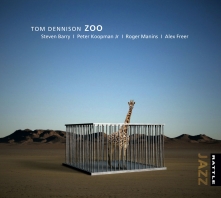
Tom Dennison – Zoo

Solar – Bernie McGann Quintet featuring Roger Manins

James Muller Quartet -Thrum

Jazzgroove Mothership Orchestra with Florian Ross – Dreamwheel Ashley Turner – Beautiful Open Spaces

Mike Nock’s Big Small Band – Live

Carolina Moon – East of the Sun

Andrew Atwill – 3 Sides of the Same Coin

Leonie Cohen Plus – Jerusalem

Simon Sweeney – Emerald CityBlues

Vaughn Roberts – Grrreat Stuff

Paul Dyne – Shelter of the Ti Tree

Jann Rutherford – The Scented Garden

Julie Mason – 12 O’ Clock Tales

Steve Hunter – Condition Human

Karen Hunter- Rubble

D Dub- Awake at Dawn

Trans Tasman – a journey into New Zealand music compilation CD

Pending Release, Manins/Muller/Nock/Bradley

John Fenton

Jazz Journalists Association  /  Jazz Local 32 (Blog)

Craig Walters/Mike Booth Project @ the CJC in Auckland

Craig Walters

During Jazz Week it was appropriate that the Creative Jazz Club (CJC) featured a band that was in some ways a metaphor for the greater Auckland scene.   Jazz week is about Jazz in our neighborhoods but it also about how we connect to the wider Jazz community.

  The co-leader of this nights band, Craig Walters has lived in Australia since 1985.    Craig has an impressive background in Jazz, as he trained at the Berklee School of Music before going on the road as an in demand tenor player.  He has performed world-wide and with top rated acts.  Over the years he has earned a place as one of Australia’s foremost tenor players.   Australia claims him because he has lived and worked there for the last 27 years, but he was actually born in New Zealand.   

Mike Booth (trumpet player & co-leader) has a story that in some ways parallels Craig’s because he also travelled overseas and ended up working in the European Jazz scene for a decade or more.  Unlike Craig he returned to New Zealand a few years ago and since then he has been busy teaching, gigging and running a big band in Auckland.

The band was completed by a local rhythm section, Phil Broadhurst (piano), Oli Holland (bass) and Alain Koetsier (drums).   With this rhythm section in your corner the sound is going to be great and the band will back you up exactly when you want them to.  They are among our best.  As for Craig Walters and Mike Booth, they have known each other for years and this collaboration is merely an extension of their earlier projects.

Why do I consider this band to be a metaphor for the Auckland Jazz scene?  Craig Walters was born here and started playing tenor here.   I am fairly certain that there were no Jazz Schools in the city then and so he eventually ended up in the USA where he studied at the Berklee School of Music.   This is roughly the route that Mike Nock , Alan Broadbent and Matt Penman took (stellar musicians who left the Auckland scene to conquer the world).  This is what generally happens to our best and brightest but they do return.

The pianist Phil Broadhurst is a stalwart of the NZ scene but he was born in the UK and so his story is the reverse of the above.  Oli Holland is also overseas born, as he was an established bass player in Germany before migrating to NZ.  Lastly there is Alain Koetsier who is the youngest in the band.  This was his last gig in Auckland as he departs for foreign shores in two weeks.  Such is the ebb and flow of the New Zealand Jazz scene but in many ways this disruption brings benefits.  Almost all of the musicians that we lose to Australia or to the USA eventually return and they enrich us with what they bring back.  Now that we have two Jazz schools and a youthful vibrant Jazz scene in the city (and a great club), the future is promising.  I also have no doubt that the departing musicians take a special something with them which is Auckland.

Craig and Mikes band were great and as long as these ex-pat to local match ups keep occurring we will be just fine.

This gig occurred at the Creative Jazz Club (CJC)  in Auckland, New Zealand on the 11th April 2012.  Remember to keep visiting the Jazz Journalists Association (JJA) pages during the next few months as there are a number of activities that will include us. These are; the Jazz week Blogathon, International Jazz day 30th April – Jazz heroes announcement, JJA Awards in June – Auckland Satellite party.

Jazz Cats – Facing a world without Plum

Plum

This morning my small sleek black and white cat Plum died while I stroked her silky old head.   This cat had been deeply loved by my family and she always appeared to share my love of Jazz.   Whether scientific or not I will continue to believe in Jazz Cats; magical animals who occupy a revered place in the Jazz pantheon.   I am not alone in making this connection as the linkage between Jazz and the cat is cemented forever in the hipster argot.   Plum always appeared when I was about to put a CD on and she would ‘lay-out’ hassling for food until the music was finished.    She always spent time sitting on the knees of my Jazz buddies when they called by for a night of music.    Any Jazz activity seemed to please her and she especially liked my friend Stu.

The ‘hang’ will never be quite the same without her; diminished by her absence.   Her soft footfall and shadowy presence filled a room to capacity.    She and I were all the company we needed if my partner was out-of-town.  Jazz cats, digging the sounds and hanging loose in the vibe.

I would watch her with interest if Dolphy or Sun Ra emanated from the sound system.   Nothing was too challenging and no chord too dissonant.   As long as they were Jazz chords and the pulse was right she was fine with it.   I never tried her with Kenny G as I don’t believe in cruelty to animals and I don’t own such music – Plum and I had an understanding of what was cool and that trust was never knowingly violated.

I miss her so much it hurts and every shadow that falls causes me to start suddenly as my hand involuntarily stretches out to stroke her.

She now lies in the cold garden earth below the Coral Tree and I realise that there is only one remedy.   To play Jazz tunes about cats.

‘Baby Plum’ – Jacky Terrasson (What it is),  The Cat’ –  Tom Dennison (Zoo album).    That’s my friend Roger player tenor on the second track – I am so glad that he blew his horn so movingly on that song.

I loves ya Jazz Cat Plum.

Alain Koetsier Band @ Finding Kiwi ‘Standards’

I have watched drummer Alain Koetsier perform over the last year and his credentials on the traps are unimpeachable.  Alain is a drummer with a modern feel and it is plain to see why so many of our top Jazz groups utilise him.  This was probably his first outing as leader and he had chosen wisely on two fronts.  His band mates were consummate professionals and their approach to the music was intuitive.  They interacted as if with one mind.  The second thing Alain did well was to select a set list of recent compositions by New Zealand Jazz Musicians.  I liked the concept.

People expect a band to play their own originals but when a set list focuses on a wider spectrum of Kiwi Jazz compositions it feels respectful.  It somehow lifts the tunes to another level of availability; a place of wider appreciation.  Doing this is a good start point in identifying our own ‘standards’ and some of the tunes played could well reach that bench mark.  As the scene continues to mature this will surely happen.

Alain & Dixon

Alain & Dixon

I was pleased to hear two tunes which had impressed me at recent gigs; ‘Dicey Moments’ by Oli Holland and the wonderful ‘Ancestral Dance’ by Nathan Haines.   Both of these new compositions are distinctive, clever and memorable.  Dixon Nacey compositions also catch the attention as he has a knack for locating the right hooks while providing a solid base for improvisation.The first set had contained ‘Bad Lamb’ (Dixon Nacey).    The tune had nice chordal voicings and the way it unfolded led us easily into the heart of the tune.

Another memorable number was ‘Tree Hugger’ by the Auckland-born bass player Matt Penman.   Matt has moved into the upper echelons of Jazz bass, occupying a respected place on the world scene.   Maybe he will return the compliment one day and acquaint North America with a few of the other compositions.

The gig was fun to experience and obviously fun to play as the musicians enjoyment of what they were doing was easy to discern.  Like many Jazz gigs there was a high degree of spontaneity and perhaps this came from being thrown in at the deep end.   Working musicians seldom have a lot of time to rehearse and when confronted by complex charts they appear to relish the prospect.

The musician that I was unfamiliar with was Pete France on tenor.   I know that he has played the CJC before and my friends tell me that they had hoped for his return one day.    His tone is rich and full and his improvised lines meaningful.   He is also relaxed on the bandstand and when you consider the calibre of his band mates this ease of manner speaks volumes.

Oli Holland

The band featured Oli Holland on bass.  His approach and focus drew you in inexorably as he demonstrated chops, impeccable timing and melodic invention.  His skills are considerable, as he can move from contrapuntal walking bass to melodic invention in an eye blink.   Oli gave his best, but then he always dies.

Pete France & Oli's hand

Lastly I come to Dixon Nacey.  His playing is widely appreciated throughout the NZ Jazz scene. As good as he is, he always strives to do better.   His compositions sing to us and his chordal work and rapidly executed lines astound.    It is good to be in a town where this man is playing and long may it continue.

Well done Alain – more please.

‘Pasif.ist’ Natalia Mann – an Oriental Dreamscape

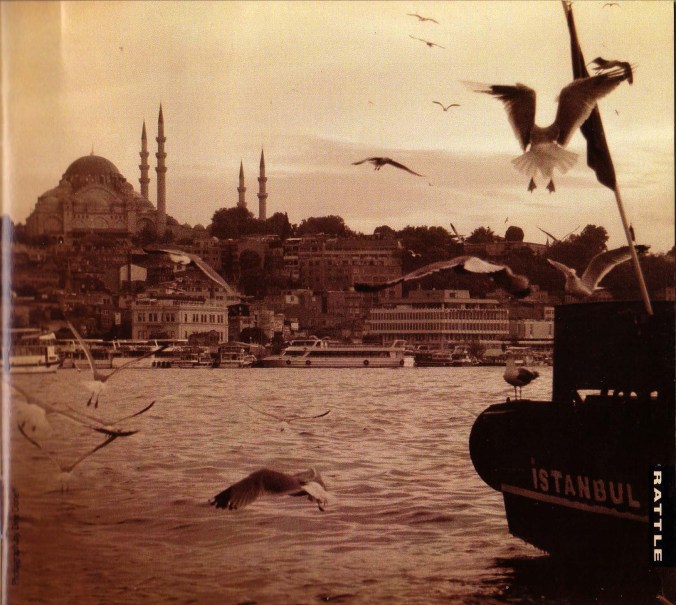
The music I cover here may not be Jazz in the purest sense but it is music that transcends the limitations of musical boundaries.  It has its own pulses and rhythms and it is improvised around themes.    This is a delicious orientalist dreamscape of the sort painted by Lord Leighton, Alma Tadema, Edward Lear and Eugene Delacroix.  It is redolent of sultry afternoons in an Ottoman palace or of the winding streets of Istanbul.   In the unfolding subtleties, one can hear the merest snatches of older themes; Constantinople and even Byzantium are hinted at but never confined.   This is not traditional Turkish music but an exotic vision of a landscape just beyond our reach.  This achieves what all great music does – connects us with a world that we would want to explore further.

In early December I received an email from Rattle Records inviting me to the ‘Pacif.ist’ CD launch and at that point I had scant information on the event.    I had every intention of requesting more details but the workaday world drowned me in trivia and I soon forgot.    One week later I was sitting in a meeting when the reminder flashed up on my iPhone; the launch was starting in an hour.

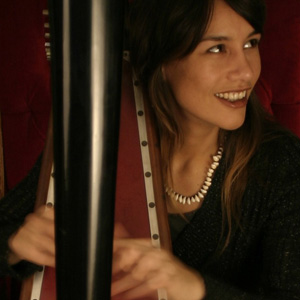
The venue was the spectacular Iron Bank building.   An imposing piece of modernist architecture towering far above the rainy Auckland streets.   The launch was held in an intimate minimalist space and the invited guests were mainly musicians associated with Rattle.  To one side of the dimly lit room was a beautiful red lacquered harp and beside it the barest bones of a drum kit (snare and cymbals).   Soon, harpist, Natalia Mann sat down to conduct a brief sound check and when she had finished I spoke to her about the lovely voicings that she was creating as she plucked and stroked the strings.   They were pianistic Jazz chords, but with all of the extensions added.   In the conversation that followed, we spoke of BeBop harpist Dorothy Ashby and of the later avant-garde stylist Alice Coltrane.   At this point, I was intrigued to hear the music, as this was a gap in my musical knowledge that I was very happy to fill.

I have long been a fan of Mediterranean, Middle Eastern Jazz and its Jazz/World Music offshoots, but I can’t recall ever hearing Turkish Musicians.   The launch used only a duo but they captured the mood perfectly – Natalia Mann (harp) and the well-known local, multi-instrumentalist Kody Neilson on drums. The album could perhaps be described as improvised World-Music but with Jazz inflexions – the sort that ECM presents so convincingly.   With top rated musicians like Tigran Hamasyan and Dhafer Youssef bridging the World/Jazz continuum we will see a lot more of this music on offer.   If you open your ears Jazzers and listen carefully, this gentle melodic music with its rich percussion will get to you.

After Natalia had returned to her busy life in Istanbul I conducted an email interview with her and this will be posted as an addendum to this post in a few days.

The Album Pacif.ist is available in download or hard copy from Rattle Records.    I would strongly urge buying the CD, as the artwork and liner notes are so good that it would be a crime against art to circumvent them. http://www.rattle.co.nz

The musicians on the album are; Natalia Mann (harp, compositions), Izzet Kizil (percussion & drums), Sercan Halili (classic Kemence & Alto Kemence), Abdullah Shakar (fretless bass & electric bass), Dine Doneff (double bass), Richard Nunns (taonga puoro [6]), Lucien Johnson (soprano & tenor sax [3]), Riki Gooch (percussion [1,2,3]), Naomi Jean O’Sullivan (gongs [9], co- writer), Serdar Pazarcioglu (violon [5]), Deniz Gungor (aqua [5]).   The album was mainly recorded in Turkey but with some instruments recorded in New Zealand.  That rich-voiced exotic string instrument you hear is the ancient Kemence (see interview).

After I had written this, I saw an article in the latest Downbeat about the growing Jazz scene in Turkey titled ‘Emerging Turks’.  The New York times has also highlighted this in a recent article.     Natalia is New Zealand born and of Samoan/European descent.   She is at present doing a master’s degree in Jazz at Skopje and is in demand with various European orchestras.   She loves Jazz and has projects on the way which will lean more in that direction.     

Istanbul – Pacif.ist cover art

Weaver of Dreams – Andrew Dickeson Quintet

For those Aucklanders addicted to live Jazz, the month over which the CJC Jazz club was closed for Christmas seemed like an eternity.   The first of the New Years bookings made up for it though as premier Australian drummer Andrew Dickeson came to town and he brought with him a solid lineup (including a couple of ex-pat New Zealanders now living in Australia).  It was Andrews first time at the CJC but it will hopefully not be his last.
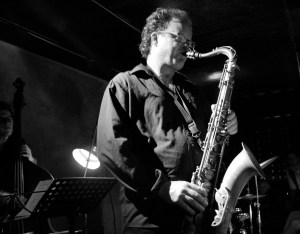
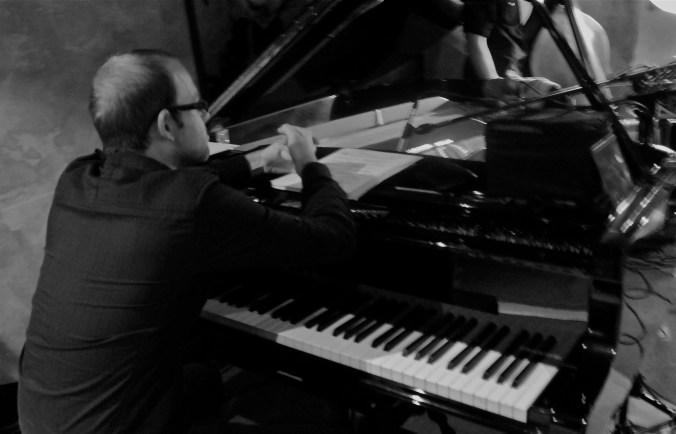
Andrew Dickeson is one of the most respected drummers in Australasia and in stepping out as a leader he has enhanced his already solid credentials.   Andrew has for some time been regarded as the drumming lynch pin of the Australian Jazz scene and when a visiting artist requires a percussionist he would be the first choice.

The band began with the fabulous number ‘Ill Wind‘ (Arlen/Koehler) and it was obvious from the get-go that the tasteful drumming was a cushion of energy powering the group.   As good as the musicians were it was the drummer that caught the attention first; not by showing off his chops but by his sheer musicality.   You were also aware of his powerhouse propulsive swing.   The drums managed to preside without ever overwhelming the rest of the band and to achieve this takes real skill.    This is the sort of maturity that experienced drummers like Jeff Hamilton bring to their gigs and it was nice to witness.

A point which illustrates this perfectly occurred when I spoke to Andrew the next day.    After listening to the CD I had wondered how he had managed to obtain such a crisp but soft sound from his ride cymbal on the ‘Weaver of Dreams’ track (Young/Elliot).    I asked him if he had muffled the cymbal in some way or ‘miked’ it down during mixing.   “No’ he said, “It is all about awareness of the situation.  I just play very gently when that is required”.    I had not known that you could play so gently on a ride cymbal without losing clarity of sound.   At this point Roger Manins leaned over and said, “this is what separates a good drummer from a great drummer.  The ability to fit perfectly into any given situation and to adjust your volume accordingly”.

Those appearing on the album are: Andrew Dickeson (drums, leader, arranger), Roger Manins (tenor sax), Steve Barry (piano), Alex Boneham (bass), Eamon McNelis (trumpet).    For this gig the latter two were replaced by Tom Botting (bass), Pete Barwick (trumpet, flugal horn).  The two acquitted themselves well.

Andrew had used Roger Manins on the album and witnessing his performance at this gig it was easy to see why.    Roger is undoubtably the best tenor man in New Zealand but we sometimes forget how well-regarded he is beyond these shores.    I have written about his playing many times and each time I see him I wonder if he will better his last performance.  He usually does.   As a born story-teller he can captivate from the first few phrases, but the magic he weaves is also due in part to his stage presence.   On ‘Ill Wind’ the pianist had laid-out for a number of bars and in this space Roger mined the bones of the tune to the marrow.  That is his way and as the solo developed there was an increasingly ecstatic quality to his performance.   I have witnessed this before and it draws me to his playing again and again.   In Jazz authenticity is everything.

Pianist Steve Barry grew up in Auckland but he later migrated to Australia in search of greater opportunity.   He is no stranger to the CJC and his occasional gigs at the club are happily anticipated by his ever-increasing fan base.   For some years now he has been working on the Australian scene and he is exceptionally well-regarded there.   Some pianists have an X-factor and Steve is one of those.   The history of Jazz piano is somehow referenced in his playing but he is more than that.  While unafraid of the past he is not owned by it.   This is a journey of stylistic development that we are privileged to witness and it is an ongoing story.    In this setting he was not only a good soloist but the perfect sideman, as his comping and sense of timing were superb.   We get one more chance to hear Steve before he returns to Australia; next week he is co-leader of a quartet performing at the club.

Tom Botting and Pete Barwick had been engaged for this one gig and they fitted in seamlessly.   I had not seen Pete Barwick play before tonight but he handled the charts with ease and performed each solo convincingly.   His strongest performance was on the Strayhorn balad ‘Isfahan.    His burnished ringing tone and clear articulation were just great.   Tom was a fixture at the club before moving to Australia and his bass playing is familiar to CJC attendees.     He is a reliable time-keeper but he can also be adventurous when challenged.  On this night he injected a sense of urgency into the uptempo numbers.  Sitting in for Alex Boneham would be quite intimidating to many bass players but Tom took it in his stride.   He had returned to New Zealand in disguise (no beard and shorter hair) but his signature bandstand persona was fully in tact.   Tom always looks and sounds extremely convincing and it is nice to have him back for a few weeks.

The other stand out number was ‘Soy Califa’ (Dexter Gordon).   To have Roger play a Dexter Gordon number is a no brainer.  He aced it and then some.  This was a great night out and once again it reinforced the strength of the Trans-Tasman Jazz alliance.

This album is well worth buying : ‘Weaver of Dreams’ – The Andrew Dickeson Quintet – Rufus Records (a division of Universal Music group).     rufusrecords.com.au – or  – andrewdickeson.com

Final Score 2011

A personal view on the best of the best Jazz albums of 2011.

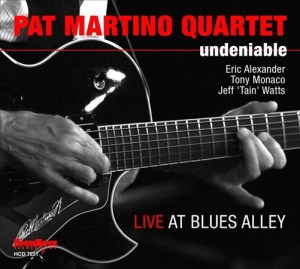
(1) My pick for best album of the year is – ‘Undeniable’Pat Martino Quartet – Live at Blues Alley *****. This is as close to a perfect album as it is possible to get and the move from ‘Blue Note’ to the ‘High Note’ label has worked well for Pat. Because it is a live recording and because there is a magical interplay between the band members and the audience the band drops deeper into the groove than ever. I love Jazz guitar and I love Pat Martino for his warm groove vibe. He is always superb but on this album he has reached new heights.

The trade mark sound is still there but the musical ideas appear fresh and exciting. While every track is near perfect, the last track ‘Side Effect’ is simply astonishing. After two listens I realised that the tune was based upon the changes to Cal Massey’s ‘These are Soulful Days’. Lee Morgan Played this tune and for a while it dropped out of the repertoire. It later appeared on a Joey DeFrancesco album on which Pat was the guest artist. It hardly seems possible to improve upon that groove Jazz classic but Pat has done so. Late last year I heard this band play in Birdland and during the break I spoke to Pat. For months ‘These are Soulful Days’ had been stuck in my brain and I could not recall who had recorded it. Thinking it was Grant Green or Wes Montgomery I asked him. ‘Oh I think it cropped up on a Joey D’ album’, he said. Then it all came back to me – it was Pat on guitar on that CD. I felt embarrassed and said, ‘you were on guitar I recall’. He smiled and told me that he had been working on a new version with a changed head. Now I realise that this was the tune Pat spoke of and that is the icing on the cake for me.

It is not only Pats extraordinary soloing but his comping that commands attention here. When the others are soloing he appears to comp a walking bass line in unison with the foot pedal bass line of Tony Monaco’s fiery B3. To me this comping feels as solid as Freddie Greens. The other band members are Tony Monaco (B3), Eric Alexander (ts), Jeff ‘Tain’ Watts (drums). Tony Monaco just gets better and better and my friend B3 player Michel Benebig regards him as being up there with the all time greats. Eric Alexander is also superb here. He has had a long tenure with Pat and Tony and he is the perfect fit for this music. Lastly there is Jeff ‘Tain’ Watts. His credentials are second to none and because he is such a versatile drummer he was the perfect choice. His drumming is responsive and inventive and it may be his inclusion that lifts the album to perfection.

(2) My pick of first equal for the best New Zealand Jazz Album of the year is Alan Brown’s – Between The Spaces. **** For a review of this album see my earlier post. I play this album every week and my enjoyment has not diminished over the months of listening. I have purchased a number of copies to give to family as Christmas presents. Support New Zealand Jazz and purchase a few copies for presents now. There are copies available from JB Hi Fi in Queen Street. Other than that order from Ode Records online. The recipients will love you for it and you will put a groove into Christmas that can never be erased.

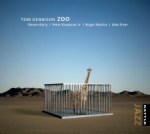
(3) The other pick for the best New Zealand Jazz album of the year (first equal) is Tom Dennison’s –Zoo. **** This album works on so many levels and every New Zealand Jazz lover should rush out and buy a copy. For more information read my review in an earlier post in this blog. I especially enjoyed writing that review and even though I may have resorted to hyperbole it was justified. The CD launch of ‘Zoo‘ is to be held at the CJC on Wednesday 25th January 2012. Again I would urge you to rush out to JB Hi Fi and grab a few copies as gifts. You can also purchase from Rattle Records online or download. Your Christmas holidays would be the poorer without these two albums and so if you want the love and admiration of your most difficult relatives – buy New Zealand Jazz as gifts.

(4) Best Jazz Club of the Year; no contest – the CJC. Thanks Roger, Caro and Ben for the music and the place to enjoy it in.

(5) Best New Zealand Record label – Rattle Records. Keep doing what you do Steve you are growing our music in the best possible way. You have the touch and the vision.

(6) Best World Music/Jazz album – Natalia Mann’s – Pacif.ist. This is also recorded by Rattle Records and it is an extraordinary and exotic journey to embark on. I will be doing a review of this fabulous album shortly. One rainy night I turned up to the launch of this album and was entranced from the first chord. Natalia Mann plays harp and on this album she is accompanied by 10 musicians (mostly Turkish musicians playing traditional instruments). Her husband is the drummer and the array of Turkish percussion instruments at his command is impressive.

(7) Best Jazz House Party of the year was when Roger Manins rocked Mt Wellington to its core with the help of Michel & Shem Benebig (B3 and voice) – plus a large and very enthusiastic horn section. It took me nearly a month to get ‘Every Day I Sing The Blues’ out of my head. I am not complaining though.

(8) Best Jazz anecdote of the year is from Peter Kings new biography on living the Jazz life. Peter is an alto player and he was playing at one of the better London clubs in the early 60’s when a very drunken Peter O’Toole sauntered over during a break and plonked himself down at the drum kit. The drummer yelled “Hey get off now” to which O’Toole starchily informed him that he was Peter O’Toole the actor. The drummer fired back immediately, “I don’t care if you’re Lawrence of Arabia, you can get off those fucking drums immediately”.

Lastly I must thank the musicians, many of whom have become close friends. Jazz musicians are the unsung heroes of music because they reach beyond the ordinary every time they play. They do this for the sake of creating something magical and best of all we get to participate in that magic. None gets rich or even earn a basic living from their playing but they do it anyhow. When walking a tightrope, backwards steps are not an option.

Thanks to all who read this blog which has been running now for around ten months. I have had over 6000 hits during that time and that is what keeps the momentum. The site has followers from many countries and that is satisfying, as it promotes New Zealand Jazz beyond these shores. Keep visiting the site, make comments and forgive my occasional typos. This blog is about promoting and analyzing the music we all love – Jazz and improvised music in all its forms.

These are soulful days – Pat Martino in 2009.               

Yours in the Music and have a happy and safe Festive Season.

John Fenton – Jazz Local 32.

Nathan Haines Fourtet – live@CJC

Some weeks ago it was posted on the CJC website that Nathan Haines would be bringing his new band to the club and that this particular band was to be an acoustic Jazz lineup.   The talk among local musicians was that Nathan had been wrestling with some bold musical ideas and that after a trip to France and three months of wood-shedding he was now ready to unleash those ideas on a Jazz audience.

Anyone interested in the Auckland music scene will have followed Nathan Haines career and know that he has wide crossover appeal (here and overseas).   As a multi-reedist and flutist he is proficient on a number of horns and for a while people wondered which instrument he would play for this gig.  That was soon made clear when the details were posted.  He would be playing a classic 1963 Selmer Mk VI – purchased from Brian Smith earlier in the year.   This is an instrument with real provenance and in a way that set the bar even higher.        

The acoustic feel that the band are striving for goes way beyond the choice of instruments, because they intend to record in a few weeks and will wherever possible avoid using modern equipment.    It is Nathan’s view that recording technology has deteriorated over the years and so they are intending to use old style Neuman mics, the fabled EMI Neve desk and to record directly to tape with no mixing or overdubs.  There is also talk of them hiring a Steinway B for the recording.

As the threads of information gradually came together it was clear that this would not be any run of the mill gig and in line with expectations the band attracted the biggest crowd the club has yet seen.

The members of this band are all well-known to club attendees, but Nathan Haines and Kevin Field (piano) are obviously the veterans here.    The name Kevin Field alone is enough to pull a good crowd, but couple his name with Nathan Haines and a capacity standing room only audience is the result.  On bass was Thomas Botting (who has recently taken Movember to its extreme limits).    He may be young but he is a terrific bass player.   I often stay back for the Jam Sessions just to hear Thomas and his friends, (usually playing alongside Peter Koopman and Dan Kennedy).    Thomas can edge up the tension by executing a well placed pedal point or walk his bass lines in a way that is reminiscent of Jimmy Garrison.   This makes him a good choice for this uber-acoustic hard-driving lineup.    The remaining band member is drummer Alain Koetsier.  This is the third time that I have seen Alain play and I have always been impressed.   His ability to lay down complex polyrhythms and push a band hard is well-known.   On this night he was at his fiery best.

The first number ‘Universal Man’ (by Nathan Haines) was intense and up tempo and this signaled the get-down-to business mood of the band.    They were ready for this gig and clearly ready to push at the boundaries.  While they conveyed a strong sense of purpose this did not constrict them in any way as they ate up the changes; hungry for the next layer of the tune to be unraveled.   Nathan soared on this and on other numbers, reaching into the past for reference points but more importantly bringing all of his recent experience and learning to the moment.    This was a 2011 version of a classic jazz lineup.

Next came a ballad ‘Poet’s embrace’ which was both lyrical and deeply probing.   Nathan continuously mined the tune for newer and deeper meanings.   His tone was luminous and his playing (even on the ballads) conveyed the intensity of the moment.

That chiaroscuro effect established the vibe; which became a hallmark of the programme.    These contrasts in tempo and mood were well placed as they kept the audience focused.    Two pieces perfectly illustrate this skillful placement.

While Nathan had written and arranged most of the pieces, the fourth number, Ravel’s Pavan (Pavane pour une infante défunte) deserves comment.     This famous piece was a miniature of perfection.     To have added another bar or even another note would have ruined the mood.     Very few bands can resist the inclination to over-egg-the-pudding in situations like this and I congratulate the band for keeping to the spirit of the piece.    What was added was subtle and it revealed a deep understanding of the music.    Colourist drumming, well placed bass lines and skilful minimalist chord placement; giving Nathan the platform he needed.  This illustrated perfectly the maxim that less is sometimes more.

The last piece ‘Consequence’ was a powerhouse performance.   So intense was the mood and so up-tempo was the pace that the audience seemed to lean back; as if a freight train was passing.   Each instrument soloing often and with each solo the tension increasing.    The drumming was so powerful that one of the audience swore that the kit remained airborne throughout.   This was an in-the-pocket performance and over that crescendo of sound Nathan blew up a storm.

At one point Brian Smith had joined the band and to see him and Nathan performing Wayne Shorter’s  ‘Speak no Evil’ was great (I have always loved Shorter’s material).   Two of our best tenor players belting out the unison lines and constantly challenging each other during solos.    Kevin Field had also contributed one piece ‘Raincheck’.  Kevin’s compositions are well constructed and appealing.

The band finished after two long sets looking exhausted but satisfied. So were we.

I will await the new recording with great interest.  This was a performance that it would be hard to improve on, but with a band this focused that may just occur.

Zoo: Tom Dennison

‘Zoo’ is bassist Tom Dennison’s first album as leader and it is a thing of beauty. This is a concept album and such albums focus around a theme. The very best of them stimulate the imaginings as well; leading the listener into subtle dreamscapes that can shift and change endlessly. ‘Zoo’ does that.

Five of the seven tracks are named after animals, but we get no sense that these are the anthropomorphic playthings of humans. The Stingray, Owl, Llama, Cat and Antelope all gain distinct lives of their own; that not withstanding the whole is greater than the sum of its parts.

The first thing that the purchaser will notice is the exceptional art-work & design (by Caravan + Vivienne Frances Long). While the album can be purchased as a download, it would be a shame to miss out on the 3-fold cover or the best fidelity option. Every part of this album belongs together and perhaps that is its genius.

Once again the Auckland Jazz scene has surpassed itself and with these musicians it is hardly surprising. I know and admire most of the band members and Tom could hardly have picked better. There are a number of firsts as far as I can see and this being Toms debut album, the most obvious one. I have seen Tom Dennison play around town, but the first time I saw him was at an ‘Alan Broadbent‘ concert in the Auckland town hall. When the trio played ‘My Foolish heart‘ I could imagine Scotty La Faro nodding in approval – so perfectly did Tom execute the piece. He also played with pianist Mike Nock and not long after that went to New York to study with Larry Grenadier and the equally renowned Kiwi Bass player Matt Penman. It was after this sabbatical that he returned home to work on the ‘Zoo’ album and the results of his efforts are available for all Jazz lovers to enjoy. With chops and writing skills like this he was never going to disappoint.

I am pleased that the album features the New Zealand born but Sydney based pianist Steven Barry on piano. He is an astonishing musician and to have him recorded this well is pure bliss. While comparisons are often odious I cannot help but place him stylistically somewhere between Steve Kuhn and Brad Mehldau. When he played at the CJC a few months ago he floored us all. Those that knew him nodded with an “I told you so” look – while those who were less familiar became fans for life. This guy can breathe new life into any old warhorse and his own compositions amaze. He is a shaman of the keyboard and a perfect foil for the other players. He demonstrates this time and again as the album unfolds.

We also get to hear him in trio format on the final track. ‘The secret life of Islands‘ is intensely beautiful and it leaves you wanting more. This is the perfect bookend to the album. Introducing a song about an Island rounds off the ‘Zoo’ concept perfectly and gives it another Kiwi reference point. In my view the song could not have been written by anyone other than a Kiwi.

Also appearing is the gifted and much admired guitarist Peter Koopman Jr. Peter is both tasteful and innovative on this album and his long intelligent probing lines mark him out as a born improviser. His maturity as a player is more than evident here. Sadly for us he is to depart for Sydney in a week and that is Australia’s gain.

The veteran of the lineup is Roger Manins and he always pleases. We have come to expect Roger to play like there is no tomorrow and to play what is appropriate to whatever lineup he is in. On this recording he gives us his best and that is most evident on the ballad (track 5). Any song called the ‘The cat’ was always going to work for me and I was especially pleased with this composition. Roger plays this so convincingly that it sounds like a much-loved and familiar tune. That is also due to the skill of the writing.

The drummer Alex Freer is the remaining quintet member. I have not seen him play live, but he is like his band-mates, perfectly suited to the job in hand. I realise now that Alex, Tom, Peter and Steven have played together for a long time, because You Tube clips show them performing in their mid teens.

This album is New Zealand’s own version of ‘Empyrean Isles‘ and like Herbie’s album I am hoping that a ‘part two’ will be recorded someday . Perhaps featuring a rare and secretive pelagic bird like the New Zealand Storm Petrel?. Those particular birds were hidden in plain view and lived a secret life on nearby islands for 100 years. This album has been discovered from the moment of its inception and it will hopefully suffer no such fate.

Once again thanks to Rattle Records’ and to Steve Garden for recording this so beautifully. Order from http://www.rattlejazz.com

Resonator; Reuben Bradley

It is well-known on the New Zealand Jazz scene that Resonator won this years ‘Jazz Tui’ award.  As this is drummer Reuben Bradley’s first album that is no mean feat.  The band played at the CJC earlier in the week as part of their Australasian tour and pulled a good audience for the gig.

The band we saw on Wednesday did not have the full complement of band members present on the album, as the pianist Miles Crayford who had played piano, Fender Rhodes & synth had been replaced by guitarist Tyson Smith.   Also absent were guest artists Tom Callwood (arco bass), James Illingworth (synth) and Kirsten Te Rito (vocals).

This was a paired down hard-driving unit and they took the high energy, high volume route.   The band was: Reuben Bradley (drums, percussion), Mostyn Cole (electric bass), Roger Manins (tenor saxophone) Tyson Smith (guitar).   It was also obvious that this was a drummers band because Reuben seemed to direct all aspects of the music; the band taking their cues from the complex rhythms he was laying down.   I had heard much about his ascendancy as a drummer and his chops were certainly evident at this gig.    He was also an engaging presence as he bantered with the audience.  Jazz musicians are capable of delivering knock out one liners, self-deprecating asides and sly insider jokes from the bandstand.   I am happy to see that tradition continue at the CJC.

While most of the pieces swiftly morphed into full-on blowing numbers there was one ballad.    In situations like this a band could not do better than call on Roger Manins to execute the key lines and he delivered in spades.   Reuben introduced the number by saying, ” I had always wanted to write a dark evil sounding ballad because I figured that there was a real market for this”.    This number ‘Search in progress’ gave us an insight into the subtler aspects of the band’s repertoire.

Every Kiwi (and offshore) Jazz fan should contact ‘Rattle Records’ http://www.rattlejaz.com and purchase the ‘Resonator’ album.   It can also be purchased at ‘Marbecks Records’, ‘Slow Boat Records’ and ‘Parsons Records & Books’ and is available as a download on iTunes.   ‘Rattle Records Ltd.’ are to be congratulated for their burgeoning catalogue of top quality NZ Jazz and I urge all Jazz lovers to support this label.    It must be pleasing to the band that Mike Nock has praised the group. He saw this album as being ample evidence that “The new generation of New Zealand Jazz musicians have moved up several notches”.

After the gig I sought out Mostyn Cole the bass player to apologise for wrongly naming him as the bassist at the previous weeks gig.   I could not find him but the guitarist Tyson Smith said, “It doesn’t matter man because I am credited as being in the band but I was not on the album we are touring to promote and so it all equals out”.   That caused me to recall Roger Manins tongue in cheek announcement the previous week. “We believe in truth in advertising tonight and this is one of the rare examples where the people on the album are actually the people performing on the promotional tour,  Get a signed copy of the CD now as this may never happen again”.    Jazz humour is the best.

‘Mother Tongue’ – Carolina Moon (the Sephardic music of medieval Spain)

Carolina’s wonderful album ‘Mother Tongue’ is beguiling and all it takes is a single listen, for the mysterious beauty of this ancient music to stay with you forever.   This album speaks of medieval Spanish Sephardic culture with absolute authority and in partaking of the journey we are connected to a time and place most New Zealanders know little about.
The Moors ruled much of Southern Spain (Al Andalus) for nearly 700 years and what is little known is that they welcomed the Jewish diaspora to live among them.     This tolerance by Islamic Spain lasted until the Reconquista by the Catholic Christian armies of the north and after their arrival (15th century), the Judeo-Spanish faced the ultimatum of expulsion, conversion or death.  The songs of the Sepahardic Jewish are rich in imagery and the cadences of their unique language are evident in these sensual and often wistful songs.     Contained in this music are the rhythms of Arab, Hebrew and Spanish life.    A truelly blended music that has been deeply enriched by the streams that have fed it.    Ladino (Latin) is the term for this ancient language, which has also helped form the distinct Catalan variant of Spanish.

Carolina Moon (Mannins) is a fine Jazz singer but she is also a multi-lingual singer and well versed in other musical genres.  She is British by birth but has worked extensively as a musician and music teacher in the UK, Australia and for some time now New Zealand.   This is our gain.   The excellent arrangements on ‘Mother Tongue’ are Carolina’s and it is this factor, coupled with her unmistakably rich voice,  that gives the album that extra depth and authenticity.  It is obvious that she has invested everything in these performances.   This has never been just another gig for her

I would like to make mention of several songs that are on the album.  The first is the wonderful ‘Ondas’ (13th century Spanish).  The word in Spanish means wave or ripple and she could not have chosen a better track to open with.  The timbre of her voice is rich and filled with the passion and longing of the song.   At certain points the emotion is so visceral that it sends a shiver down the spine.     I have not reacted to a voice in that way since I last heard Sassy on ‘tenderly’.  The second and contrasting song is ‘Tres Hermanicas’ (track 8).    This is a traditional Sephardic song and the full band is used to very good effect.    Because of the arrangement and the rhythm it sounds closer to the Manouche traditions.

The accompanying musicians are all top rated and many are the cream of the Jazz world.   New Zealand’s finest acoustic guitarist Nigel Gavin is the only choice for this music, as his Manouche credentials and guitar chops are impeccable.    Kevin Field is on piano and once again he has managed to be the perfect accompanist. Caroline’s husband Roger Manins weaves his usual magic and his abilities as a multi reedist are manifest here.   Ron Samsom and Chris O’Connor (percussion and drums), Jessica Hindin (violin), Matthias Erdrich, Mostyn Cole, Steve Haines (acoustic bass).

Every music lover should purchase a copy of this, which is produced and mixed by Steve Garden for Ode records (with the assistance of Creative NZ).    To learn more about this gifted artist go to;  http://www.moonmusik.com – better yet come and hear her perform live during the tour – underway at present.   The next performance is at the CJC (Basement of 1885 Galway St) Wednesday 2nd November.

Footnote: The first merger of western music and African Music was always thought to be Jazz, but musico- ethnologists are now pointing to Moorish Spain (over a 1000 years before), as the first time this occurred.    The improvising traditions are deep streams within all good music.

Brian Smith Band & Hard Bop heaven

Brian Smith - CJC gig

To list all of the famous artists that Brian Smith has accompanied in the Jazz/Soul/Pop world would make this a very long post. To name a few (Soul) Gladys Knight & the Pips, Dusty Springfield, (Jazz) Jon Hendricks, Annie Ross, Nat Adderly, Mark Murphy. Brian was also a founder member of ‘Nucleus’ with Ian Carr. He was for many years one of our most successful Jazz/Soul exports but in 1980 he returned to New Zealand. His ‘Moonlight Sax’ (1990) went platinum, was the album of the year and sold over 40,000 copies which is astounding for a Kiwi Album.

Last night this Jazz icon played at the CJC and with him were a number of well-known New Zealand Jazz musicians. The band was; Brian Smith (tenor sax, soprano sax), Kevin Field (piano), Kevin Haines (double bass), Frank Gibson Jnr (drums). They started with one of Brian’s own compositions titled ‘Blues for Teo‘ and the band got down to serious business immediately. They are a hard swinging unit and as they unpicked the tunes they wove a collective magic.

Brian was a commanding presence in the mix (which was hardly surprising) but his band-mates could not be faulted either for their ability to shine beside him. It struck me (and not for the first time) just how strong a presence Kevin Haines is. He and Frank were obviously on comfortable ground and they pushed boundaries because they could, and because they found new and interesting things to say. I have seldom heard Frank play better. Kevin Field is a very popular and talented local pianist and to have him in any band is simply to have the best. His crisp chord work and soaring solos are never less than perfect.

Jazz Musicians are often natural comedians and Brian is no exception. When introducing the second tune he said, “the band will practice for four bars and by then we should have a hang of it”. The tune was a George Chisholm original and in spite of the intro we heard no missteps. The tune ‘Seriously flawed (floored?)‘ was the first of a number of new charts by George Chisholm. These were great vehicles for the band and when they played the lovely Chisholm ballad ‘One for Martin‘ they struck the mother-lode. This piece was penned in remembrance of the much-loved Kiwi Jazz guitarist Martin Winch who died in May of this year. It was suggested to me recently that we only have the sudden influx of very promising Jazz guitarists around Auckland because of Martin’s influence and example.

This and other Chisholm tunes deserve to be played often (plea to local musicians). * George is a well-known trumpeter from the local scene having recorded in his own right and as a sideman with locals like Phil Broadhurst.

We heard fresh versions of standards like ‘My Funny Valentine‘ and best of all a few Wayne Shorter tunes. The darkly brooding and deep Shorter compositions are favourites of mine and any group who attempts them and executes them well has my appreciation. The groups rendition of ‘Black Nile‘. ‘Lester Leaves Town‘ and ‘Speak no Evil‘ were well done and as these are difficult tunes to get inside of, they must be commended.

The New Fuse Box – The Wakem/Nielson Project

The Wakem/Nielson Project

When I received this CD in the post I knew very little about ‘The new Fuse Box‘ as I had only seen a few mentions of them online.     Happily I will never be in that state of ignorance again.     While this may not be your typical Jazz offering it is never-the-less highly enjoyable and as the Jazz scene in Auckland matures we are learning to appreciate a diversity of soundscapes.     This is not quite the raw and highly energised music of a live band but it is enjoyable, well arranged and beautifully articulated.   The music has a depth that may elude the listener at first play, but listen again and it will get under your skin and stay there.

This is essentially Kiwi music (Auckland music), and a sense of space and sunlight pervades the album.   Over the years I have come to recognise that there is a certain discernible quality when Jazz has developed in remote-from-the-centre locations; this sense of place exists in juxtaposition to the usual traditional aspects.    Scandinavian,  French, Italian, Sardinian, Spanish and German Jazz all have a unique something that would not have arisen had the music been made in America.   New Zealand Jazz is now claiming its own space.

There are fifteen tracks on the album and they skillfully mine a number of vibes.   There are funk infused tracks and soulfully slow tracks but they all seem to work as part of a cohesive whole.   Above all this music does not take itself too seriously as there is musical humour as well.   While I have many favourite tracks I simply cannot resist the intentionally over-the-top and utterly delightful ‘Bossa Tossa‘.     This track will put a big smile on your face.   There is also a filmic quality to this material and the best of Jazz movie-score writing is conjured up here.

All of the material has been composed and arranged by Lindsay Wakem (horns arranged by Chris Nielson).   Lindsay is terrific on piano and keyboards and I hope that he will give us longer solos on future releases as the piano is often back in the mix.   His piano playing has a crispness and clarity to it and I am keen to hear more.   ‘The New Fuse Box‘ is a multi- talented band and Chris Nielson the co-leader needs a mention at this point.   When I looked at the credits and I saw, ‘horns- Chris Nielson’ I was puzzled.   I phoned Lindsay and asked him if there were uncredited horn players.   I quickly learned that Chris is not only the trumpet section but that he plays all of the saxophone parts as well.   The charts are gorgeous and the multi-tracking so seamless that it is a struggle to imagine him playing all of these parts.   The drummer, on all tracks except one, is the well known and much respected Jason Orme (Blue Train etc).  Jason can take on any task in Jazz drumming and he is a an asset here.  The bass player is Phil Scorgie.  He and Lindsay go back a long way.  Other artists appear on single tracks and they are guitarists, Dean Kerr & Frans Huysmans – Kody Nielson drums.

Jazz is a music which teaches us something of history and struggle, but more importantly it is a music founded in the desire for change.   It is not a museum piece and so it should always explore and challenge the world around it.   This album does that and I look forward to more from them.   The ACT and ECM labels (both German) have profiled this sort of jazz to great advantage.     There is a real market for this material and I hope to see more of it.

ACT’s Lars Dannielson, Blue Note’s Bob Beldon and ECM’s Mathias Eick have paved the way and our own bands should now be welcomed into this interesting space.   The album is self produced and so for a copy contact:  lgwakem@xtra.co.nz